Russ Allbery: Review: Beyond the Galaxy
| Publisher: | World Scientific |
| Copyright: | 2016 |
| ISBN: | 981-4667-16-1 |
| Format: | Kindle |
| Pages: | 370 |
| Publisher: | World Scientific |
| Copyright: | 2016 |
| ISBN: | 981-4667-16-1 |
| Format: | Kindle |
| Pages: | 370 |
If you never heard of the 10x engineer myth, it's a pretty great concept. It boils down to the idea where an engineer could be 10x more efficient than a random engineer. I find this fantastically twisted.Last week, I sat and chat with Alexis Monville in Le Podcast a podcast that equips you to make positive change in your organization. We talked about that 10x Engineer myth, and from there we digressed on how to grow your career and handle the different aspects of it.This was a very interesting exchange. Alexis is actually going to publish a new book next month (May 2020) entitled I am a Software Engineer and I am in charge.
Like each month, here comes a report about the work of paid contributors to Debian LTS.
Individual reports
In March, 252 work hours have been dispatched among 14 paid contributors. Their reports are available:
No comment Liked this article? Click here. My blog is Flattr-enabled.
TLDR: setxkbmap -layout us -variant altgr-intl and become a happier programmer./etc/default/keyboardXKBLAYOUT="us"
XKBVARIANT="altgr-intl"
After restarting the X server, you can check that the settings have been applied withsetxkbmap -print -verbose 10If using Gnome, you can also set the keyboard layout and variant by changing the schema org.gnome.desktop-inputsources, which will override the desktop-agnostic settings of /etc/default/keyboard.dconf write /org/gnome/desktop/input-sources/sources "[('xkb', 'us+altgr-intl')]"
or navigate with the gui tool dconf-settings to org.gnome.desktop-inputsources and set the value there.
" 'Boa constrictors swallow their prey whole, without chewing it. After that they are not able to move, and they sleep through the six months that they need for digestion.'
I pondered deeply, then, over the adventures of the jungle. And after some work with a colored pencil I succeeded in making my first drawing.
My Drawing Number One.
It looked something like this:

I showed my masterpiece to the grown-ups, and asked them whether the drawing frightened them.
But they answered: 'Frighten? Why should any one be frightened by a hat?'
My drawing was not a picture of a hat. It was a picture of a boa constrictor digesting an elephant. But since the grown-ups were not able to understand it, I made another drawing: I drew the inside of a boa constrictor, so that the grown-ups could see it clearly. They always need to have things explained.
My Drawing Number Two looked like this:

The grown-ups' response, this time, was to advise me to lay aside my drawings of boa constrictors, whether from the inside or the outside, and devote myself instead to geography, history, arithmetic, and grammar.
That is why, at the age of six, I gave up what might have been a magnificent career as a painter. I had been disheartened by the failure of my Drawing Number One and my Drawing Number Two.
Grown-ups never understand anything by themselves, and it is tiresome for children to be always and forever explaining things to them."
from The Little Prince by Antoine de Saint Exup ry
from the Corona Fun with Statistics department at Worldometers
(source, archive.org link)
I was gonna use this blog post to share about the migrant worker woes as there has been multiple stories doing the rounds. For e.g. a story which caught the idea of few people but most of us, i.e. middle-class people are so much into our own thing that we care a fig leaf about what happens to migrants. This should not be a story coming from a humane society but it seems India is no different than any other country of the world and in not a good way. Allow me to share
Or for those who don t like youtube, here s an alternative link
https://www.invidio.us/watch?v=JGEgZq_1jmc
Now the above two editorial shares two stories, one of Trump retaliatory threat to India in the Q&A of the journalist. In fact, Trump has upped the ante on visa sanctions as India buckled so easily under pressure.
There have been other stories doing the rounds how people who have illnesses who need HCQ in India are either dying or are close to death because of unavailability of HCQ in the medicine shop. There have been reports in Pune as well as South Mumbai (one of the poshest localities in Mumbai/Bombay) that medicine shops are running empty or emptier. There have been so many stories on that, with reporters going to shops and asking owners of the medicine shops and shop-owners being clueless.
I think the best article which vividly describes the Government of India (GOI) response to the pandemic is the free-to-read article shared by Arundhati Roy in Financial Times. It has reduced so much of my work or sharing that it s unbelievable. And she has shared it with pictures and all so I can share other aspects of how the pandemic has been affecting India and bringing the worst out in the Government in its our of need. In fact, not surprisingly though, apparently there was also a pro-Israel similar thing which happened in Africa too . As India has too few friends now globally, hence it decided to give a free pass to them.
News Broadcasters Association reply to Mrs. Gandhi
Aryan Plastic bottle
Dhauladhar range Northern Punjab Copyright CNN.Com

Intel's Dynamic Platform and Thermal Framework (DPTF) is a feature that's becoming increasingly common on highly portable Intel-based devices. The adaptive policy it implements is based around the idea that thermal management of a system is becoming increasingly complicated - the appropriate set of cooling constraints to place on a system may differ based on a whole bunch of criteria (eg, if a tablet is being held vertically rather than lying on a table, it's probably going to be able to dissipate heat more effectively, so you should impose different constraints). One way of providing these criteria to the OS is to embed them in the system firmware, allowing an OS-level agent to read that and then incorporate OS-level knowledge into a final policy decision.
Welcome to the 25nd post in the randomly recurring R recitations series, or R4 for short.
Just yesterday, we posted a short post along with a video and supporting slides. It covered how to test the soon-to-be-released R 4.0.0 on a custom Ubuntu 18.04 Rocker container.
A container for Ubuntu 20.04, which is itself in final beta stages, was being built while the video was made. As it is available now, we created a quick follow-up video showing the use under Ubuntu 20.04:
The updated supporting slides from the video are still at this link. What we showed in both videos does of course also work directly on Ubuntu (or Debian, using those source repos) installations; the commands shown in the Rocker use case generally apply equally to a normal installation. If you like this or other open-source work I do, you can now sponsor me at GitHub. For the first year, GitHub will match your contributions.
This post by Dirk Eddelbuettel originated on his Thinking inside the box blog. Please report excessive re-aggregation in third-party for-profit settings.
Welcome to the 24nd post in the relentlessly regular R ravings series, or R4 for short.
R 4.0.0 will be released in less than two weeks, and testing is very important. I had uploaded two alpha release builds (at the end of March and a good week ago) as well as a first beta release yesterday, all to the Debian experimental distribution (as you can see here) tracking the release schedule set by Peter Dalgaard. Because R 4.0.0 will require reinstallation of all packages, it makes some sense to use a spare machine. Or a Docker container. So to support that latter mode, I have now complemented the binaries created from the r-base source package with all base and recommended packages, providing a starting point for actually running simple tests. Which is what we do in the video, using again the R on Ubuntu (18.04) Rocker container:
Slides from the video are at this link. This container based on 18.04 is described here on the Docker Hub; a new 20.04 container with the pre-release of the next Ubuntu LTS should be there shortly once it leaves the build queue. What we showed does of course also work on direct Ubuntu (or Debian, using those source repos) installations; the commands shown in the Rocker use case generally apply equally to a normal installation. If you like this or other open-source work I do, you can now sponsor me at GitHub. For the first year, GitHub will match your contributions.
This post by Dirk Eddelbuettel originated on his Thinking inside the box blog. Please report excessive re-aggregation in third-party for-profit settings.
I have lately been using org-mode literate programming to generate
example code and beamer slides from the same source. I hit a wall
trying to re-use functions in multiple files, so I came up with the
following hack. Thanks 'ngz' on #emacs and Charles Berry on the
org-mode list for suggestions and discussion.
(defun db-extract-tangle-includes ()
(goto-char (point-min))
(let ((case-fold-search t)
(retval nil))
(while (re-search-forward "^#[+]TANGLE_INCLUDE:" nil t)
(let ((element (org-element-at-point)))
(when (eq (org-element-type element) &aposkeyword)
(push (org-element-property :value element) retval))))
retval))
(defun db-ob-tangle-hook ()
(let ((includes (db-extract-tangle-includes)))
(mapc #&aposorg-babel-lob-ingest includes)))
(add-hook &aposorg-babel-pre-tangle-hook #&aposdb-ob-tangle-hook t)
#+SETUPFILE: presentation-settings.org
#+SETUPFILE: tangle-settings.org
#+TANGLE_INCLUDE: lecture21.org
#+TITLE: GC V: Mark & Sweep with free list
%.tangle-stamp: %.org
emacs --batch --quick -l org -l $ HOME /.emacs.d/org-settings.el --eval "(org-babel-tangle-file \"$<\")"
touch $@
First of all, congratulations to all those who got us 2022 Debconf, so we will finally have a debconf in India. There is of course, lot of work to be done between now and then. For those who would be looking forward to visit India and especially Kochi I would suggest you to hear this enriching tale
I am sorry I used youtube link but it is too good a podcast not to be shared. Those who don t want youtube can use the invidio.us link for the same as shared below.
https://www.invidio.us/watch?v=BvjgKuKmnQ4
I am sure there are lot more details, questions, answers etc. but would direct them gently to Praveen, Shruti, Balasankar and the rest who are from Kochi to answer if you have any questions about that history.
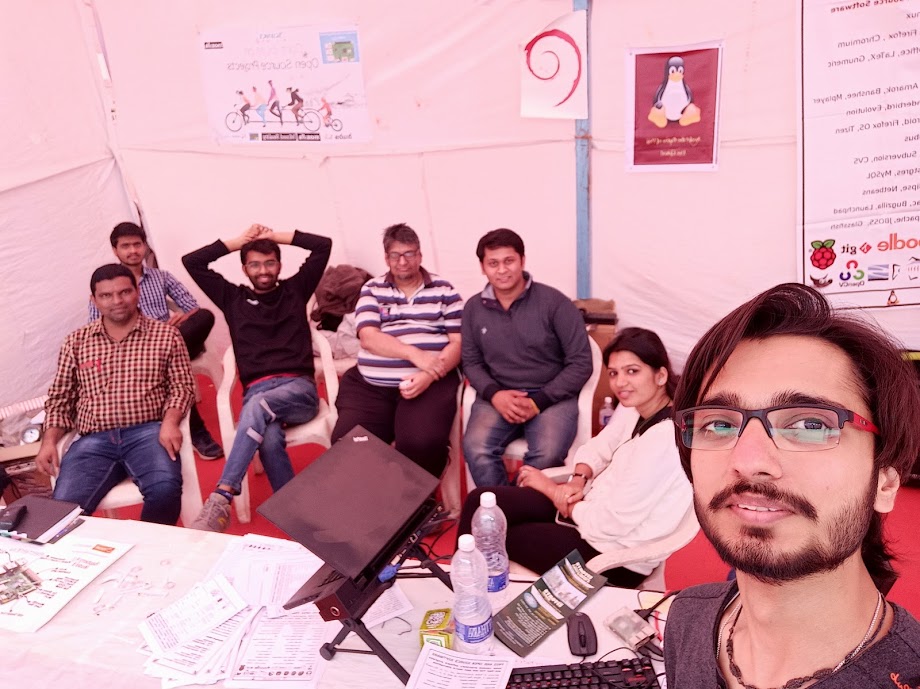
National Science Day, GMRT 2020
. Of course in another stall few students had used RPI s as part of their projects so at times we did tell some of the newbies to go to those stalls and see and ask about those projects so they would have a much wider experience of things. The Mozilla people were pushing VR as well as Mozilla lite the browser for the mobile.
We also gossiped quite a bit. I shared about indicatelts , a third-party certificate extension although I dunno if I should file a wnpp about it or not. We didn t have a good experience of when I had put an RFP (Request for Package) which was accepted for an extension which had similar functionality which we later come to know was sharing the sites people were using the extension to call home and share both the URL and the IP Address they were using it from. Sadly, didn t leave a good taste in mouth
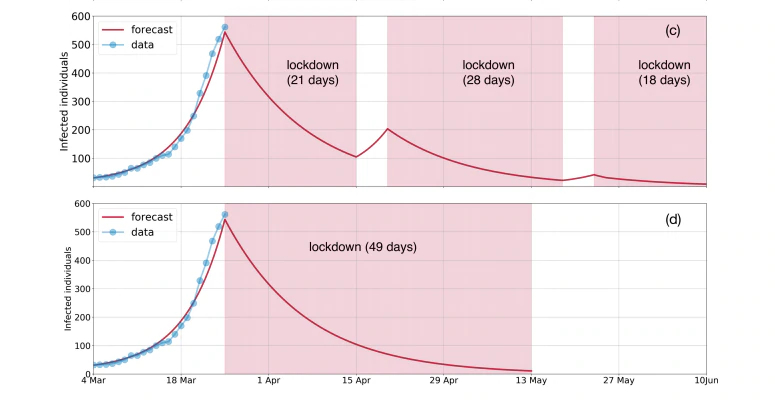
Predictions of the outcome of the current 21-day lockdown (Source: Rajesh Singh, R. Adhikari, Cambridge University)
Alternative lockdown strategies suggested by the Cambridge model (Source: Rajesh Singh, R. Adhikari, Cambridge University)
One of the original promises of open source software is that distributed peer review and transparency of process results in enhanced end-user security.
However, whilst anyone may inspect the source code of free and open source software for malicious flaws, almost all software today is distributed as pre-compiled binaries. This allows nefarious third-parties to compromise systems by injecting malicious code into ostensibly secure software during the various compilation and distribution processes.
The report from our recent summit in Marrakesh was published and is now available in both PDF and HTML formats. A sincere thank you to all of the Reproducible Builds community for the input to the event a sincere thank you to Aspiration for preparing and collating this report.
Harmut Schorrig published a detailed document on how to compile Java applications in such as way that the .jar build artefact is reproducible across builds. A practical and hands-on guide, it details how to avoid unnecessary differences between builds by explicitly declaring an encoding as the default value differs across Linux and MS Windows systems and ensuring that the generated .jar a variant of a .zip archive does not embed any nondeterministic filesystem metadata, and so on.
Janneke gave a quick presentation on GNU Mes and reproducible builds during the lighting talk session at LibrePlanet 2020. [ ]
Vagrant Cascadian presented There and Back Again, Reproducibly! video at SCaLE 18x in Pasadena in California which generated some attention on Twitter.
Herv Boutemy mentioned on our mailing list in a thread titled Rebuilding and checking Reproducible Builds from Maven Central repository that since the update of a central build script (the parent POM ) every Apache project using the Maven build system should build reproducibly. A follow-up discussion regarding how to perform such rebuilds was also started on the Apache mailing list.
The Telegram instant-messaging platform announced that they had updated their iOS and Android OS applications and claim that they are reproducible according to their full instructions, verifying that its original source code is exactly the same code that is used to build the versions available on the Apple App Store and Google Play distribution platforms respectfully.
Herv Boutemy also reported about a new project called reproducible-central which aims to allow anyone to rebuild a component from the Maven Central Repository that is expected to be reproducible and check that the result is as expected.
In last month s report we detailed Omar Navarro Leija s work in and around an academic paper titled Reproducible Containers which describes in detail the workings of a user-space container tool called dettrace (PDF). Since then, the PhD student from the University Of Pennsylvania presented on this tool at the ASPLOS 2020 conference in Lausanne, Switzerland. Furthermore, there were contributions to dettrace from the Reproducible Builds community itself. [ ][ ]
In openSUSE, Bernhard M. Wiedemann published his monthly Reproducible Builds status update as well as made the following changes within the distribution itself:
avfs (report build problem in %post script)arj (fix incorrect use of strcpy, submitted upstream)brickv (update get upstream fix)fvwm-themes (delta between architectures in noarch package)libpeas (report build failure in single-CPU mode)pmix (update to incoporate upstream fix)pw3270 (date variation, forwarded upstream)python-mailmanclient (report build failure in single-CPU mode)ripgrep (CPU, forwarded upstream)tensorflow2 (avoid random temporary directory path)tesseract-ocr (drop native architecture optimisations)vlc (fixed ghost file size and sort archive, already upstream)
Chris Lamb further refined his merge request for the debian-installer component to allow all arguments from sources.list files (such as [check-valid-until=no] ) in order that we can test the reproducibility of the installer images on the Reproducible Builds own testing infrastructure. (#13)
Holger Levsen filed a number of bug reports against the debrebuild tool that attempts to rebuild a Debian package given a .buildinfo file as input, including:
.buildinfo files. (#955050)nondeterministic_gtk_icon_cache [ ]nondeterministic_ordering_in_documentation_generated_by_doxygen [ ]nondeterministic_vo_files_generated_by_coq [ ]
utputrandomness_in_browserify_lite_output [ ]buildinfos.debian.net (#955434) and Chris Lamb kept isdebianreproducibleyet.com up to date. [ ]
Chris Lamb made the following changes to diffoscope, the Reproducible Builds project s in-depth and content-aware diff utility that can locate and diagnose reproducibility issues, including preparing and uploading version 138 to Debian:
readelf. (#93)dumppdf from the python3-pdfminer if we do not see any other differences from pdftext, etc. (#92).rdx files directly as the get_member method will return a file even if the file is missing. [ ]--help output or in the package long description. [ ]--list-debian-substvars when we want them for debian/tests/control generation. [ ]upstream-metadata-in-native-source as we are upstream. [ ]RequiredToolNotFound.get_package method s functionality as it is only used once. [ ]py36 = [..] argument in the pyproject.toml file. [ ]pmemkv (forwarded upstream)ndisc6.infernal.beep.node-nodedbi.node-browserify-lite.font-manager.pdb2pqr.gucharmap.cloudkitty.
There was further work performed on our documentation and website this month including Alex Wilson adding a section regarding using Gradle for reproducible builds in JVM projects [ ] and Holger Levsen added the report from our recent summit in Marrakesh [ ][ ].
In addition, Chris Lamb made a number of changes, including correcting the syntax of some CSS class formatting [ ], improved some filed against copy a little better [ ] and corrected a reference to calendar.monthrange Python method in a utility function. [ ]
We operate a large and many-featured Jenkins-based testing framework that powers tests.reproducible-builds.org that, amongst many other tasks, tracks the status of our reproducibility efforts as well as identifies any regressions that have been introduced.
This month, Chris Lamb reworked the web-based package rescheduling tool to:
POST method in the web-based scheduler as not only should HTTP GET requests be idempotent but this will allow many future improvements in the user interface. [ ][ ][ ]ath97 subtarget for the OpenWrt distribution.i386 architecture. [ ][ ]
#reproducible-builds on irc.oftc.net.
rb-general@lists.reproducible-builds.org
This month s report was written by Bernhard M. Wiedemann, Chris Lamb, Holger Levsen and Vagrant Cascadian. It was subsequently reviewed by a bunch of Reproducible Builds folks on IRC and the mailing list.
I just had a weekend full of very successful serious geekery. On a whim I thought: Wouldn't it be nice if people could interact with my game Kaleidogen also via a telegram bot? This led me to learn about how I write a Telegram bot in Haskell and how I can deploy such a Haskell program to Amazon Lambda. In particular the latter bit might be interesting to some of my readers, so here is how went about it.
KaleidogenBot in action
bootstrap that queries the Lambda Runtime Interface for the next request to handle. The Lambda documentation is phrased as if this runtime has to be a dispatcher that calls the separate function s handler. But it could just do all the things directly.
I found the Haskell package aws-lambda-haskell-runtime which provides precisely that: A function
runLambda :: (LambdaOptions -> IO (Either String LambdaResult)) -> IO ()
that talks to the Lambda Runtime API and invokes its argument on each message. The package also provides Template Haskell magic to collect handlers of any JSON-able type and generates a dispatcher, like you might expect from other, more dynamic languages. But that was too much magic for me, so I ignored that and just wrote the handler manually:
main :: IO ()
main = runLambda run
where
run :: LambdaOptions -> IO (Either String LambdaResult)
run opts = do
result <- handler (decodeObj (eventObject opts)) (decodeObj (contextObject opts))
either (pure . Left . encodeObj) (pure . Right . LambdaResult . encodeObj) result
data Event = Event
path :: T.Text
, body :: Maybe T.Text
deriving (Generic, FromJSON)
data Response = Response
statusCode :: Int
, headers :: Value
, body :: T.Text
, isBase64Encoded :: Bool
deriving (Generic, ToJSON)
handler :: Event -> Context -> IO (Either String Response)
handler Event body, path context =
Event, listing only the fields I care about), and it will respond with a Response, again as JSON.
The handler can then simply pattern-match on the path to decide what to do. For example this code handles URLs like /img/CAFFEEFACE.png, and responds with an image.
handler :: TC -> Event -> Context -> IO (Either String Response)
handler Event body, path context
Just bytes <- isImgPath path >>= T.decodeHex = do
let pngData = genPurePNG bytes
pure $ Right Response
statusCode = 200
, headers = object [ "Content-Type" .= ("image/png" :: String) ]
, isBase64Encoded = True
, body = T.decodeUtf8 $ LBS.toStrict $ Base64.encode pngData
isImgPath :: T.Text -> Maybe T.Text
isImgPath = T.stripPrefix "/img/" >=> T.stripSuffix ".png"servant, or bridging towards wai apps (amost like wai-lamda, but that still assumes an existing runtime, instead of simply being the runtime). But for my purposes, no extra layers of indirection or abstraction are needed!
aws-lambda-haskell-runtime package, and similar projects like serverless-haskell, solve this using stack and Docker two technologies that are probably great, but I never warmed up to them.
So instead adding layers and complexities, can I solve this instead my making things simpler? If I compiler my bootstrap into a static Linux binary, it should run on any Linux, including Amazon Linux.
Unfortunately, building Haskell programs statically is also notoriously tricky. But it is made much simpler by the work of Niklas Hamb chen and others in the context of the Nix package manager, coordinated in the static-haskell-nix project. The promise here is that once you have set up building your project with Nix, then getting a static version is just one flag away. The support is not completely upstreamed into nixpkgs proper yet, but their repository has a nix file that contains a nixpkgs set with their patches:
let pkgs = (import (sources.nixpkgs-static + "/survey/default.nix") ).pkgs; in
This, plus a fairly standard nix setup to build the package, yields what I was hoping for:
$ nix-build -A kaleidogen
/nix/store/ppwyq4d964ahd6k56wsklh93vzw07ln0-kaleidogen-0.1.0.0
$ file result/bin/kaleidogen-amazon-lambda
result/bin/kaleidogen-amazon-lambda: ELF 64-bit LSB executable, x86-64, version 1 (SYSV), statically linked, stripped
$ ls -sh result/bin/kaleidogen-amazon-lambda
6,7M result/bin/kaleidogen-amazon-lambda
If we put this file, named bootstrap, into a zip file and upload it to Amazon Lambda, then it just works! Creating the zip file is easily scripted using nix:
function-zip = pkgs.runCommandNoCC "kaleidogen-lambda"
buildInputs = [ pkgs.zip ];
''
mkdir -p $out
cp $ kaleidogen /bin/kaleidogen-amazon-lambda bootstrap
zip $out/function.zip bootstrap
'';
So to upload this, I use this one-liner (line-wrapped for your convenience):
nix-build -A function-zip &&
aws lambda update-function-code --function-name kaleidogen \
--zip-file fileb://result/function.zip
Thanks to how Nix pins all dependencies, I am fairly confident that I can return to this project in 4 months and still be able to build it.
Of course, I want continuous integration and deployment. So I build the project with GitHub Actions, using a cachix nix cache to significantly speed up the build, and auto-deploy to Lambda using aws-lambda-deploy; see my workflow file for details.
telegram-api package provides bindigs for the Telegram Bot API (although I had to use the repository version, as the version on Hackage has some bitrot). Slightly simplified I can write a handler for an Update:
handleUpdate :: Update -> TelegramClient ()
handleUpdate Update message = Just m = do
let c = ChatId (chat_id (chat m))
liftIO $ printf "message from %s: %s\n" (maybe "?" user_first_name (from m)) (maybe "" T.unpack (text m))
if "/start" T.isPrefixOf fromMaybe "" (text m)
then do
rm <- sendMessageM $ sendMessageRequest c "Hi! I am @KaleidogenBot. "
return ()
else do
m1 <- sendMessageM $ sendMessageRequest c "One moment "
withPNGFile $ \pngFN -> do
m2 <- uploadPhotoM $ uploadPhotoRequest c
(FileUpload (Just "image/png") (FileUploadFile pngFN))
return ()
handleUpdate _ u =
liftIO $ putStrLn $ "Unhandled message: " ++ show u
and call this from the handler that I wrote above:
path == "/telegram" =
case eitherDecode (LBS.fromStrict (T.encodeUtf8 (fromMaybe "" body))) of
Left err ->
Right update -> do
runTelegramClient token manager $ handleUpdate Nothing update
pure $ Right Response
statusCode = 200
, headers = object [ "Content-Type" .= ("text/plain" :: String) ]
, isBase64Encoded = False
, body = "Done"
Note that the Lambda code receives the request as JSON data structure with a body that contains the original HTTP request body. Which, in this case, is itself JSON, so we have to decode that.
All that is left to do is to tell Telegram where this code lives:
curl --request POST \
--url https://api.telegram.org/bot<token>/setWebhook
--header 'content-type: application/json'
--data ' "url": "https://api.kaleidogen.nomeata.de/telegram" '
As a little add on, I also created a Telegram game for Kaleidogen. A Telegram game is nothing but a webpage that runs inside Telegram, so it wasn t much work to wrap the Web version of Kaleidogen that way, but the resulting Telegram game (which you can access via https://core.telegram.org/bots/games) still looks pretty neat.
/dev/dri/renderD128. Amazon does not provide that to Lambda code, and neither do the other big Function-as-a-service providers. So I had to swallow my pride and reimplement the rendering in pure Haskell.
So if you think the bot is kinda slow, then that s why. Despite properly optimizing the pure implementation (the inner loop does not do allocations and deals only with unboxed Double# values), the GL shader version is still three times as fast. Maybe in a few years GPU access will be so ubiquitous that it s even on Amazon Lambda; then I can easily use that.
| Publisher: | The New Press |
| Copyright: | 2019 |
| ISBN: | 1-62097-437-1 |
| Format: | Kindle |
| Pages: | 247 |
What many black women were angry about was how I located myself in what I'd written. I said, blithely as a matter of observable fact, that I am unattractive. Because I am unattractive, the argument went, I have a particular kind of experience of beauty, race, racism, and interacting with what we might call the white gaze. I thought nothing of it at the time I was writing it, which is unusual. I can usually pinpoint what I have said, written, or done that will piss people off and which people will be pissed off. I missed this one entirely.What follows is one of the best essays on the social construction of beauty I've ever read. It barely pauses at the typical discussion of unrealistic beauty standards as a feminist issue, instead diving directly into beauty as whiteness, distinguishing between beauty standards that change with generations and the more lasting rules that instead police the bounds between white and not white. McMillan Cottom then goes on to explain how beauty is a form of capital, a poor and problematic one but nonetheless one of the few forms of capital women have access to, and therefore why black women have fought to be included in beauty despite all of the problems with judging people by beauty standards. And the essay deepens from there into a trenchant critique of both capitalism and white feminism that is both precise and illuminating.
When I say that I am unattractive or ugly, I am not internalizing the dominant culture's assessment of me. I am naming what has been done to me. And signaling who did it. I am glad that doing so unsettles folks, including the many white women who wrote to me with impassioned cases for how beautiful I am. They offered me neoliberal self-help nonsense that borders on the religious. They need me to believe beauty is both achievable and individual, because the alternative makes them vulnerable.I could go on. Every essay in this book deserves similar attention. I want to quote from all of them. These essays are about racism, feminism, capitalism, and economics, all at the same time. They're about power, and how it functions in society, and what it does to people. There is an essay about Obama that contains the most concise explanation for his appeal to white voters that I've read. There is a fascinating essay about the difference between ethnic black and black-black in U.S. culture. There is so much more.
We do not share much in the U.S. culture of individualism except our delusions about meritocracy. God help my people, but I can talk to hundreds of black folks who have been systematically separated from their money, citizenship, and personhood and hear at least eighty stories about how no one is to blame but themselves. That is not about black people being black but about people being American. That is what we do. If my work is about anything it is about making plain precisely how prestige, money, and power structure our so-called democratic institutions so that most of us will always fail.I, like many other people in my profession, was always more comfortable with the technical and scientific classes in college. I liked math and equations and rules, dreaded essay courses, and struggled to engage with the mandatory humanities courses. Something that I'm still learning, two decades later, is the extent to which this was because the humanities are harder work than the sciences and I wasn't yet up to the challenge of learning them properly. The problems are messier and more fluid. The context required is broader. It's harder to be clear and precise. And disciplines like sociology deal with our everyday lived experience, which means that we all think we're entitled to an opinion. Books like this, which can offer me a hand up and a grounding in the intellectual rigor while simultaneously being engaging and easy to read, are a treasure. They help me fill in the gaps in my education and help me recognize and appreciate the depth of thought in disciplines that don't come as naturally to me. This book was homework, but the good kind, the kind that exposes gaps in my understanding, introduces topics I hadn't considered, and makes the time fly until I come up for air, awed and thinking hard. Highly recommended. Rating: 9 out of 10
A new (upstream) simdjson release was announced by Daniel Lemire earlier this week, and my Twitter mentions have been running red-hot ever since as he was kind enough to tag me. Do look at that blog post, there is some impressive work in there. We wrapped up the (still very simple) rcppsimdjson around it last night and shipped it this morning.
RcppSimdJson wraps the fantastic and genuinely impressive simdjson library by Daniel Lemire. Via some very clever algorithmic engineering to obtain largely branch-free code, coupled with modern C++ and newer compiler instructions, it results in parsing gigabytes of JSON parsed per second which is quite mindboggling. For illustration, I highly recommend the video of the recent talk by Daniel Lemire at QCon (which was also voted best talk). The best-case performance is faster than CPU speed as use of parallel SIMD instructions and careful branch avoidance can lead to less than one cpu cycle use per byte parsed.
This release brings upstream 0.3 (and 0.3.1) plus a minor tweak (also shipped back upstream). Our full NEWS entry follows.
But because Daniel is such a fantastic upstream developer to collaborate with, he even filed a full feature-request maybe you can consider upgrading as issue #8 at our repo containing the fully detailed list of changes. As it is so impressive I will simple quote the upper half of just the major changes:Changes in version 0.0.4 (2020-04-03)
For questions, suggestions, or issues please use the issue tracker at the GitHub repo. Courtesy of CRANberries, there is also a diffstat report for this release. If you like this or other open-source work I do, you can now sponsor me at GitHub. For the first year, GitHub will match your contributions.Highlights
- Multi-Document Parsing: Read a bundle of JSON documents (ndjson) 2-4x faster than doing it individually. API docs / Design Details
- Simplified API: The API has been completely revamped for ease of use, including a new JSON navigation API and fluent support for error code and exception styles of error handling with a single API. Docs
- Exact Float Parsing: Now simdjson parses floats flawlessly without any performance loss (https://github.com/simdjson/simdjson/pull/558). Blog Post
- Even Faster: The fastest parser got faster! With a shiny new UTF-8 validator and meticulously refactored SIMD core, simdjson 0.3 is 15% faster than before, running at 2.5 GB/s (where 0.2 ran at 2.2 GB/s).
This post by Dirk Eddelbuettel originated on his Thinking inside the box blog. Please report excessive re-aggregation in third-party for-profit settings.
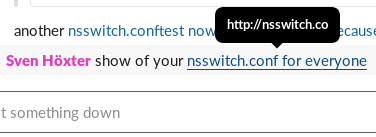
.co domains.
Leading to this auto linking:
Now I'm not sure if someone enocountered the same issue, or people just registered
random domains just because they could. I found registrations for
.conf files in /etc which could be interesting in an IT environment, but for the sake of playing with
it I registered nsswitch.co at godaddy. I do not want to endorse them in
anyway, but for the first year it's only 13.08EUR right now, which is okay to
pay for a stupid demo. So if you feel like it, you can probably register something stupid for yourself to play around with. I do not intent to renew this domain next year, so
be aware of what happens then with the next owner.
This post is an open question to the wide range of GNU/Linux site admins out there. Possibly some of you have the joy of maintaining GNU/Linux also on user endpoint devices (i.e. user workstations, user notebooks, etc.), not only on corporate servers.
TL;DR; In the context of a customer project, I am researching ways of mimicking (or inventing anew) a feature well known (and sometimes also well hated) from the MS Windows world: Roaming User Profiles. If anyone does have any input on that, please contact me (OFTC/Freenode IRC, Telegram, email). I am curious what your solution may be.
The Use Case Scenario
In my use case, all user machines shall be mobile (notebooks, convertibles, etc). The machines maybe on-site most of the time, but they need offline capabilities so that the users can transparently move off-site and continue their work. At the same time, a copy of the home directory (or the home directory itself) shall be stored on some backend fileservers (for central backups as well as for providing the possibility to the user to login to another machine and be up-and-running +/- out-of-the-box).
The Vision
Initial Login
Ideally, I'd like to have a low level file system feature for this that handles it all. On corporate user logon (which must take place on-site and uses some LDAP database as backend), the user credentials get cached locally (and get re-mapped and re-cached with every on-site login later on), and the home directory gets mounted from a remote server at first.
Shortly after having logged in everything in the user's home gets sync'ed to a local cache in the background without the user noticing. At the end of the sync a GUI user notification would be nice, e.g. like "All user data has been cached locally, you are good to go and leave off-site now with this machine."
Moving Off-Site
A day later, the user may be travelling or such, the user logs into the machine again, the machine senses being offline or on some alien (not corporate) network, but the user can just continue their work, all in local cache.
Several days later, the same user with the same machine returns back to office, logs into the machine again, and immediately after login, all cached data gets synced back to the user's server filespace.
Possible Conflict Policies
Now there might be cases where the user has been working locally for a while and all the profile data received slight changes. The user might have had the possibility to log into other corporate servers from the alien network he*she is on and with that login, some user profile files probably will have gotten changed.
Regarding client-server sync policies, one could now enforce a client-always-wins policy that leads to changes being dropped server-side once the user's mobile workstation returns back on-site. One could also set up a bi-directional sync policy for normal data files, but a client-always-wins policy for configuration files (.files and .folders). Etc.pp.
Request for Feedback and Comments
I could go on further and further with making up edges and corner cases of all this. We had a little discussion on this some days ago on the #debian-devel IRC channel already. Thanks to all contributors to that discussion.
And again, if you have solved the above riddle on your site and are corporate-wise allowed to share the concept, I'd be happy about your feedback.
Plese get in touch!
light+love
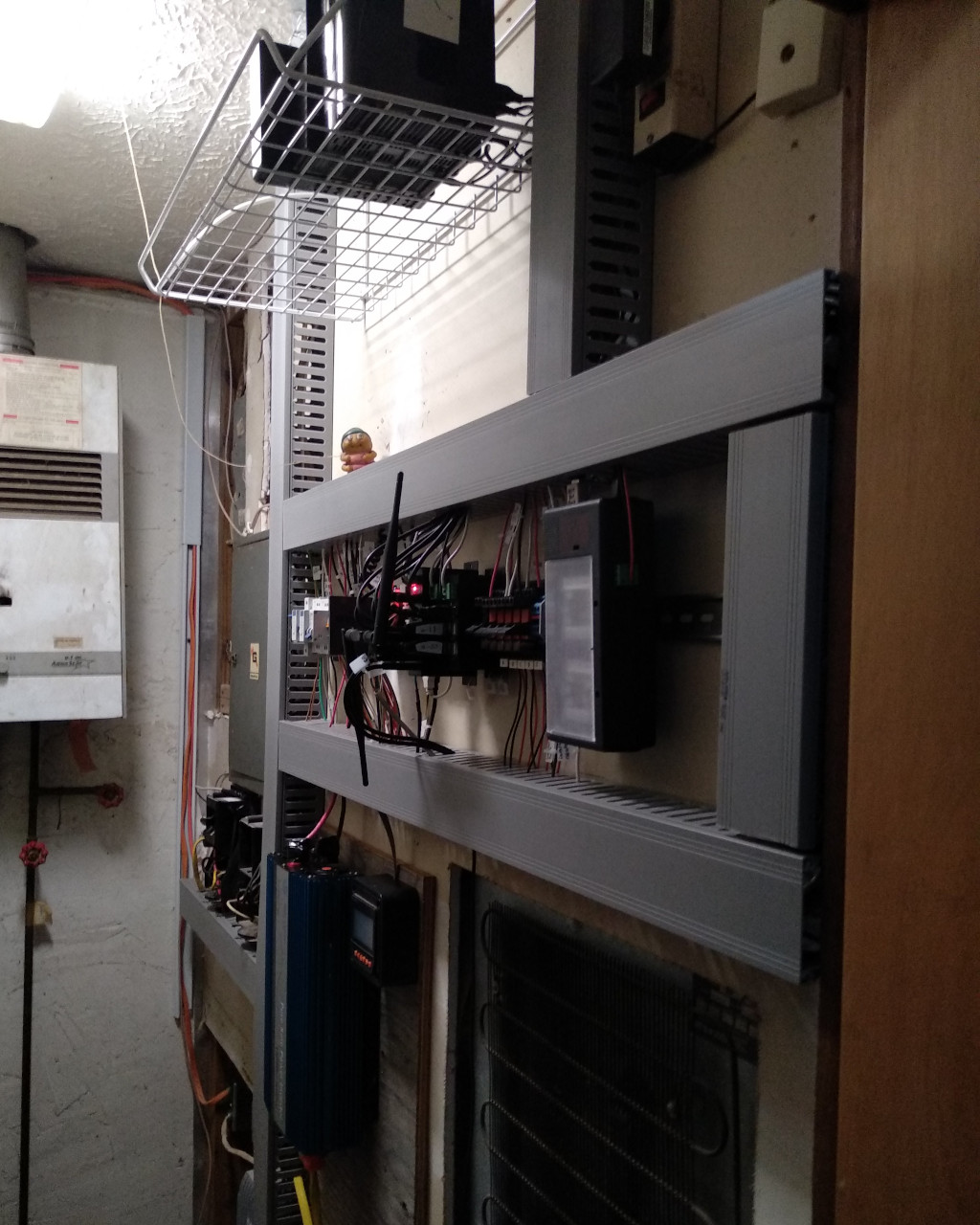
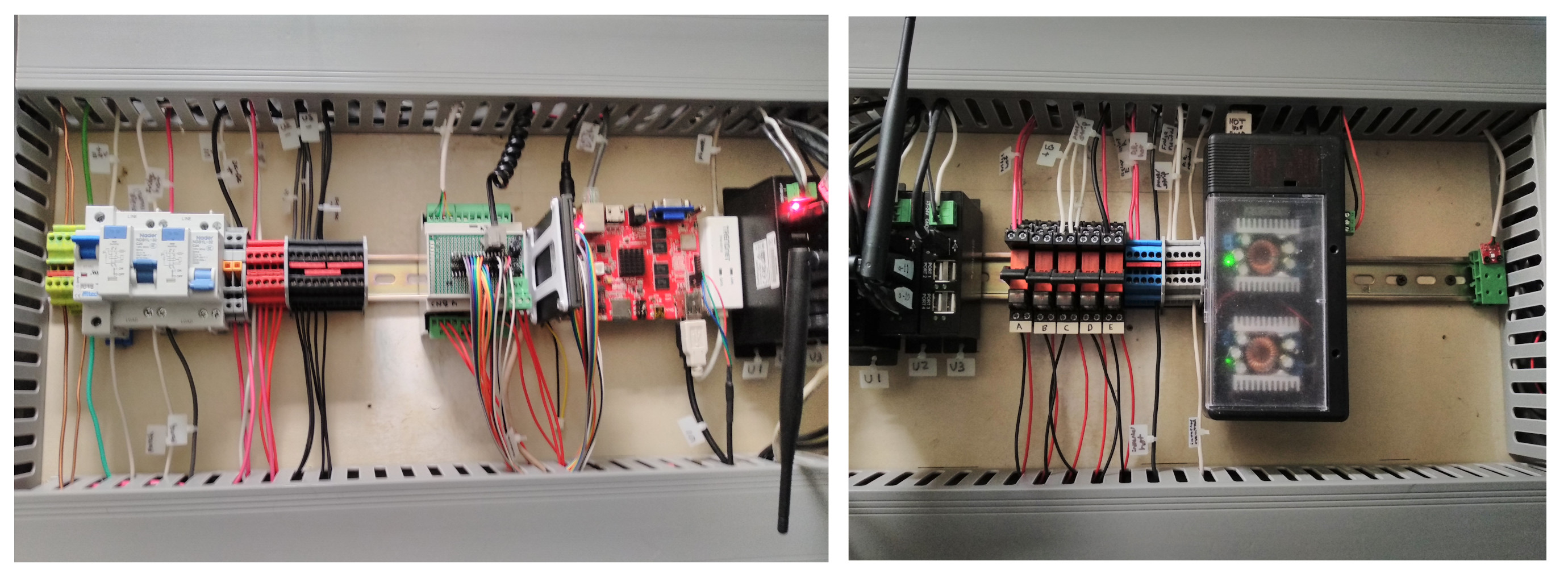
My offgrid house has an industrial automation panel.
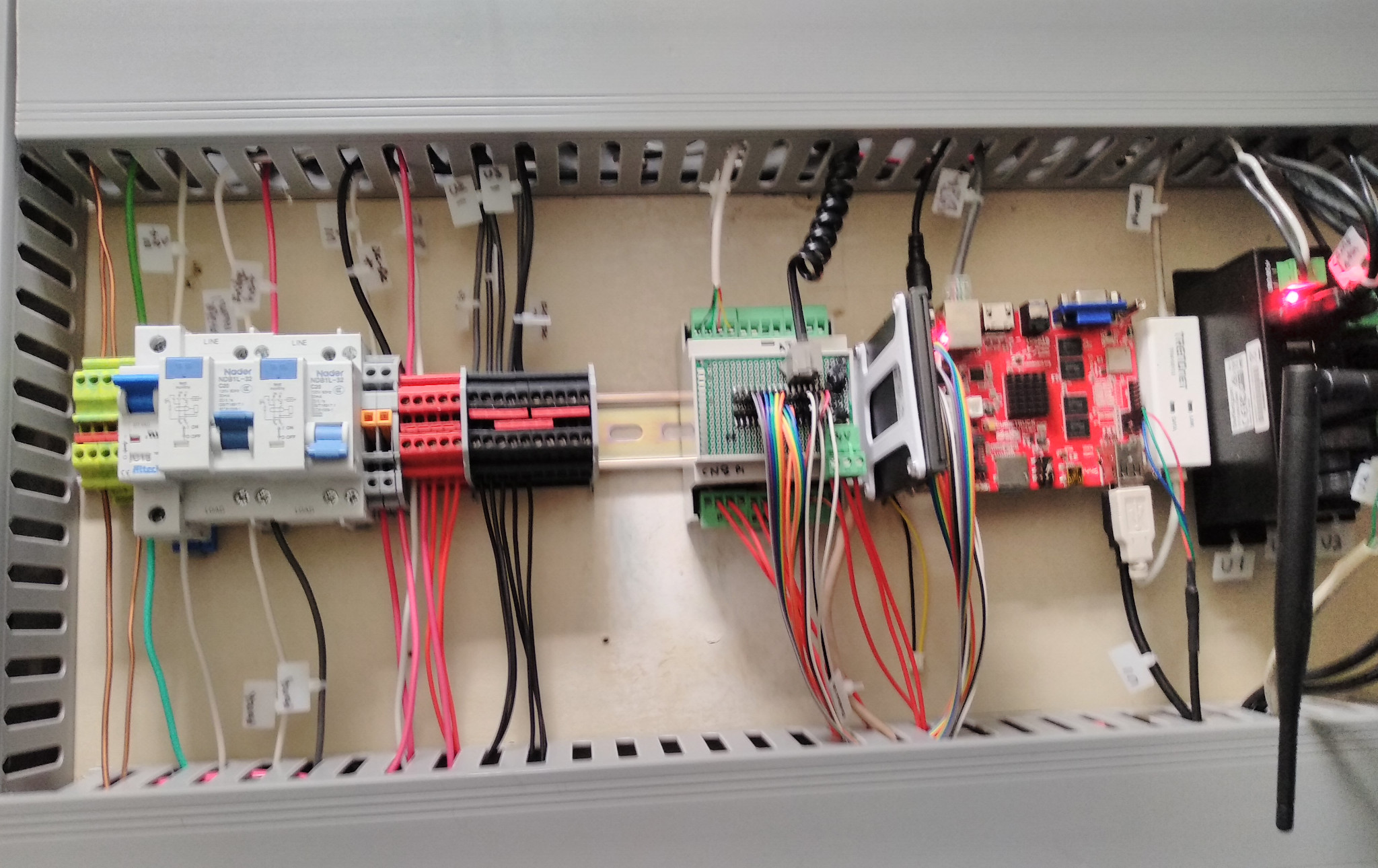
I started building this in February, before covid-19 was impacting us here,
when lots of mail orders were no big problem, and getting an unusual
3D-printed DIN rail bracket for a SSD was just a couple clicks.
I finished a month later, deep into social isolation and quarentine,
scrounging around the house for scrap wire, scavenging screws from unused
stuff and cutting them to size, and hoping I would not end up in a "need
just one more part that I can't get" situation.
It got rather elaborate, and working on it was often a welcome distraction
from the news when I couldn't concentrate on my usual work. I'm posting
this now because people sometimes tell me they like hearing about my offfgrid
stuff, and perhaps you could use a distraction too.
The panel has my house's computer on it, as well as both AC and DC power
distribution, breakers, and switching. Since the house is offgrid, the panel
is designed to let every non-essential power drain be turned off, from
my offgrid fridge to the 20 terabytes of
offline storage to the
inverter and satellite dish,
the spring pump for my gravity flow water system, and
even the power outlet by the kitchen sink.
Saving power is part of why I'm using old-school relays and stuff and not
IOT devices, the other reason is of course: IOT devices are horrible
dystopian e-waste. I'm taking the utopian Star Trek approach, where I
can command "full power to the vacuum cleaner!"
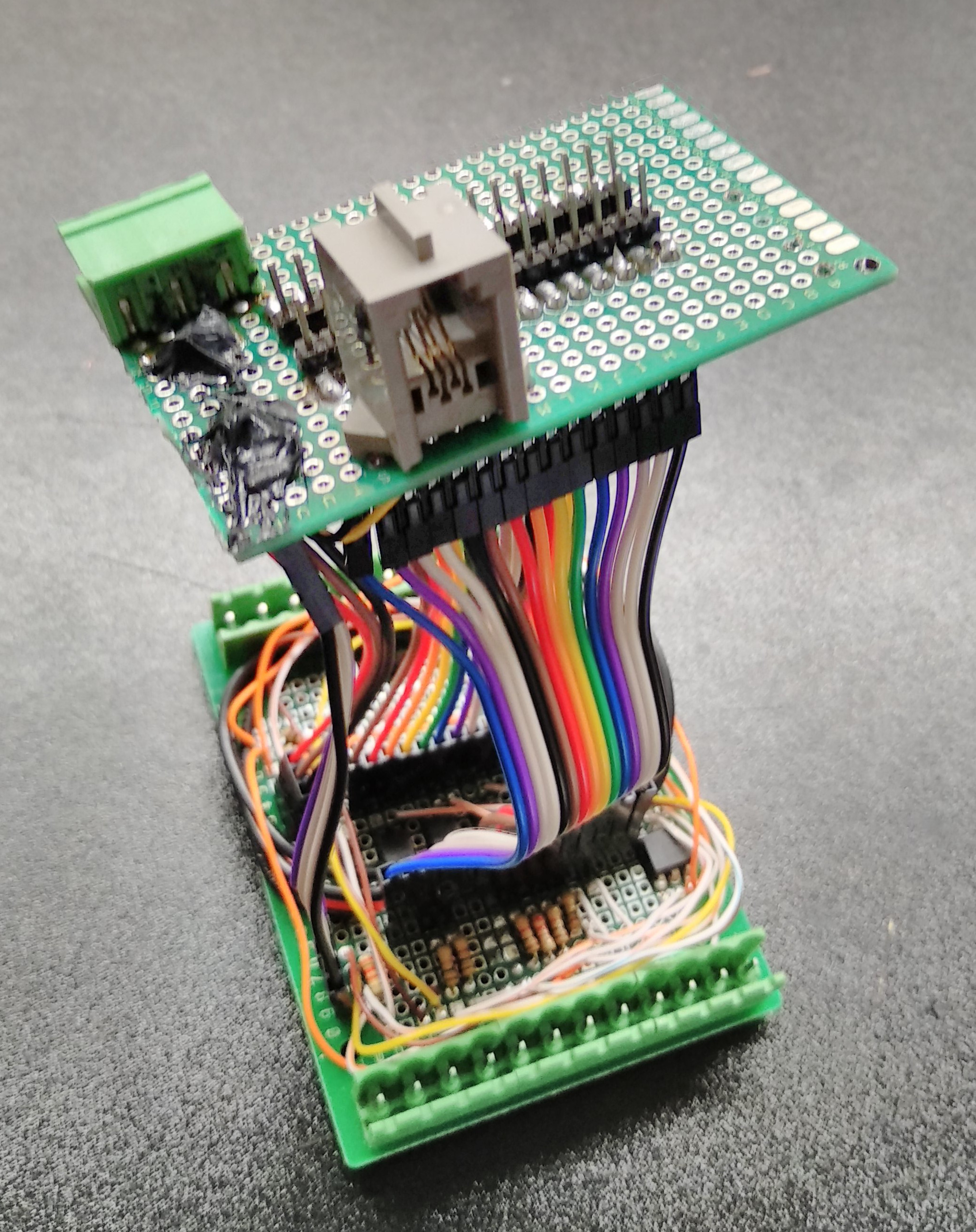
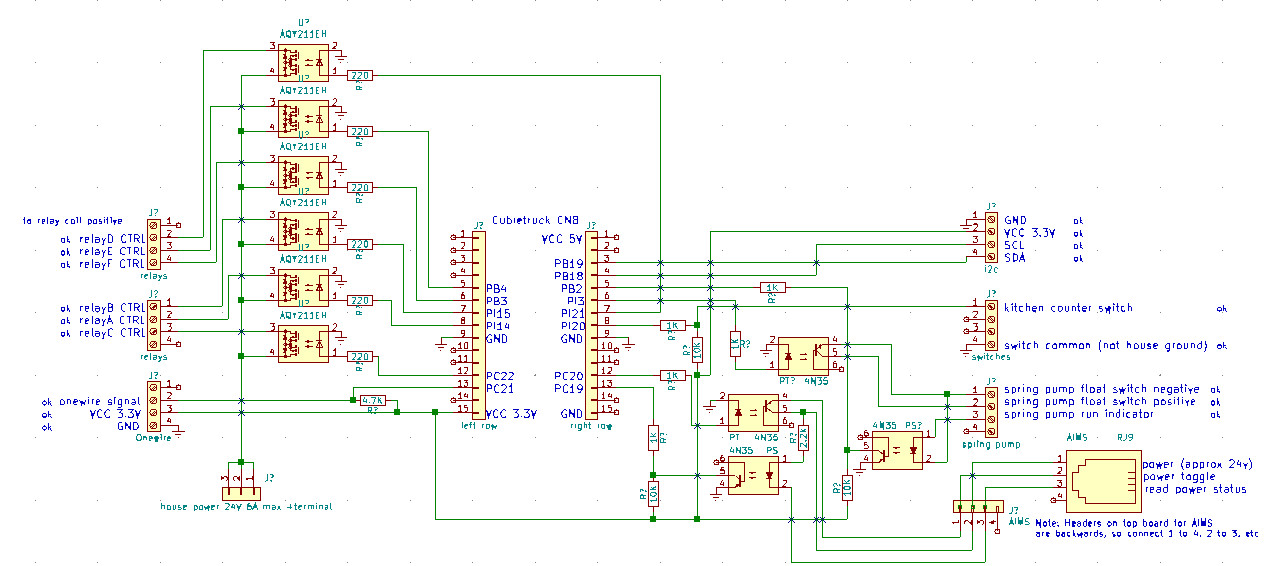
At the core of the panel, next to the cubietruck arm board, is a custom
IO daughterboard. Designed and built by hand to fit into a DIN mount case,
it uses every GPIO pin on the cubietruck's main GPIO header. Making
this board took 40+ hours, and was about half the project. It got
pretty tight in there.
This was my first foray into DIN rail mount, and it really is industrial
lego -- a whole universe of parts that all fit together and are immensely
flexible. Often priced more than seems reasonable for a little bit of
plastic and metal, until you look at the spec sheets and the ratings.
(Total cost for my panel was $400.) It's odd that it's not more used
outside its niche -- I came of age in the Bay Area, surrounded by rack
mount equipment, but no DIN mount equipment. Hacking the hardware in
a rack is unusual, but DIN invites hacking.
Admittedly, this is a second system kind of project, replacing some
unsightly shelves full of gear and wires everywhere with something kind
of overdone. But should be worth it in the long run as new gear gets
clipped into place and it evolves for changing needs.
Also, wire gutters, where have you been all my life?
Finally, if you'd like to know what everything on the DIN rail is, from
left to right: Ground block, 24v DC disconnect, fridge GFI, spare GFI, USB
hub switch, computer switch, +24v block, -24v block, IO daughterboard, 1tb
SSD, arm board, modem, 3 USB hubs, 5 relays, AC hot block, AC neutral
block, DC-DC power converters, humidity sensor.
Next.