Search Results: "ana"

1 June 2020

Paul Wise: FLOSS Activities May 2020

Focus This month I didn't have any particular focus. I just worked on issues in my info bubble.

Changes

Issues

Review

Administration
  • nsntrace: talk to upstream about collaborative maintenance
  • Debian: deploy changes, debug issue with GPS markers file generation, migrate bls/DUCK from alioth-archive to salsa
  • Debian website: ran map cron job, synced mirrors
  • Debian wiki: approve accounts, ping folks with bouncing email

Communication

Sponsors The apt-offline work and the libfile-libmagic-perl backports were sponsored. All other work was done on a volunteer basis.

31 May 2020

Enrico Zini: Controversial inventors

Paul-F lix Armand-Delille (3 July 1874 in Fourchambault, Ni vre 4 September 1963) was a physician, bacteriologist, professor, and member of the French Academy of Medicine who accidentally brought about the collapse of rabbit populations throughout much of Europe and beyond in the 1950s by infecting them with myxomatosis.
Charles Franklin Kettering (August 29, 1876 November 25, 1958) sometimes known as Charles "Boss" Kettering[1] was an American inventor, engineer, businessman, and the holder of 186 patents.[2] He was a founder of Delco, and was head of research at General Motors from 1920 to 1947. Among his most widely used automotive developments were the electrical starting motor[3] and leaded gasoline.[4][5] In association with the DuPont Chemical Company, he was also responsible for the invention of Freon refrigerant for refrigeration and air conditioning systems. At DuPont he also was responsible for the development of Duco lacquers and enamels, the first practical colored paints for mass-produced automobiles. While working with the Dayton-Wright Company he developed the "Bug" aerial torpedo, considered the world's first aerial missile.[6] He led the advancement of practical, lightweight two-stroke diesel engines, revolutionizing the locomotive and heavy equipment industries. In 1927, he founded the Kettering Foundation, a non-partisan research foundation. He was featured on the cover of Time magazine on January 9, 1933.
John Charles Cutler (June 29, 1915 February 8, 2003) was a senior surgeon, and the acting chief of the venereal disease program in the United States Public Health Service. After his death, his involvement in several controversial and unethical medical studies of syphilis was revealed, including the Guatemala and the Tuskegee syphilis experiments.
Ivy Ledbetter Lee (July 16, 1877 November 9, 1934) was an American publicity expert and a founder of modern public relations. Lee is best known for his public relations work with the Rockefeller family. His first major client was the Pennsylvania Railroad, followed by numerous major railroads such as the New York Central, the Baltimore and Ohio, and the Harriman lines such as the Union Pacific. He established the Association of Railroad Executives, which included providing public relations services to the industry. Lee advised major industrial corporations, including steel, automobile, tobacco, meat packing, and rubber, as well as public utilities, banks, and even foreign governments. Lee pioneered the use of internal magazines to maintain employee morale, as well as management newsletters, stockholder reports, and news releases to the media. He did a great deal of pro bono work, which he knew was important to his own public image, and during World War I, he became the publicity director for the American Red Cross.[1]

Chris Lamb: Free software activities in May 2020

Here is my monthly update covering what I have been doing in the free software world during May 2020 (previous month): In Lintian, the static analysis tool for Debian packages:
Reproducible builds One of the original promises of open source software is that distributed peer review and transparency of process results in enhanced end-user security. However, whilst anyone may inspect the source code of free and open source software for malicious flaws, almost all software today is distributed as pre-compiled binaries. This allows nefarious third-parties to compromise systems by injecting malicious code into ostensibly secure software during the various compilation and distribution processes. The motivation behind the Reproducible Builds effort is to ensure no flaws have been introduced during this compilation process by promising identical results are always generated from a given source, thus allowing multiple third-parties to come to a consensus on whether a build was compromised. The initiative is proud to be a member project of the Software Freedom Conservancy, a not-for-profit 501(c)(3) charity focused on ethical technology and user freedom. Conservancy acts as a corporate umbrella allowing projects to operate as non-profit initiatives without managing their own corporate structure. If you like the work of the Conservancy or the Reproducible Builds project, please consider becoming an official supporter.
Elsewhere in our tooling, I made the following changes to diffoscope, our in-depth and content-aware diff utility that can locate and diagnose reproducibility issues, including preparing and uploading versions 142, 143, 144, 145 and 146 to Debian: I also performed a huge overhaul of diffoscope's website:
Lastly, I made a large number of changes to the main Reproducible Builds website and documentation:
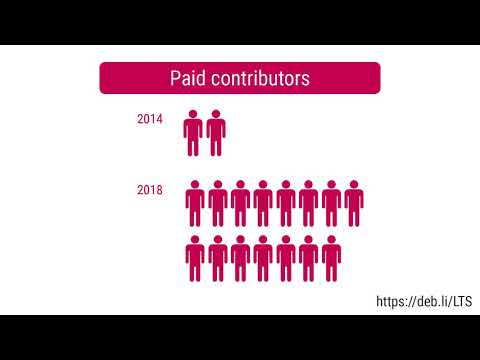
Debian LTS This month I contributed 17 hours to Debian Long Term Support (LTS) and 9 hours on its sister Extended LTS project. You can find out more about the two projects via the following video:
Debian I filed the following bug reports in Debian this month: I also filed a number of bugs against packages that are not compatible with Django 3.x, (organised around a single master bug) including django-taggit, sorl-thumbnail, django-simple-captcha, django-cas-server, django-cors-headers, python-django-csp, django-pipeline, python-django-jsonfield, python-django-contact-form, django-model-utils, django-fsm, django-modeltranslation, django-oauth-toolkit, libthumbor, python-django-extensions, python-django-imagekit, python-django-navtag, python-django-tagging, djangorestframework, django-haystack, django-taggit, django-simple-captcha, python-django-registration, python-django-pyscss, python-django-compressor, python-django-crispy-forms & python-django-mptt,
Lastly, I made the following uploads to Debian: I also sponsored an upload for adminer (4.7.7-1), also uploading it to buster-backports.

Dirk Eddelbuettel: T^4 #4: Introducing Byobu

The next video (following the announcement, and shells sessions one, two, and three) is up in the T^4 series of video lightning talks with tips, tricks, tools, and toys. This time we introduce the wonderful byobu tool which is called both a text-based window manager and a terminal multiplexer :

The slides are here. This repo at GitHub support the series: use it to open issues for comments, criticism, suggestions, or feedback. If you like this or other open-source work I do, you can now sponsor me at GitHub. For the first year, GitHub will match your contributions.

This post by Dirk Eddelbuettel originated on his Thinking inside the box blog. Please report excessive re-aggregation in third-party for-profit settings.

29 May 2020

Gunnar Wolf: Heads up Online MiniDebConf is Online

I know most Debian people know about this already But in case you don t follow the usual Debian communications channels, this might interest you! Given most of the world is still under COVID-19 restrictions, and that we want to work on Debian, given there is no certainty as to what the future holds in store for us Our DPL fearless as they always are had the bold initiative to make this weekend into the first-ever miniDebConf Online (MDCO)! miniDebConf Online So, we are already halfway through DebCamp (which means, you can come and hang out with us in the debian.social DebCamp Jitsi lounge, where some impromptu presentations might happen (or not). Starting tomorrow morning (11AM UTC), we will have a quite interesting set of talks. I am reproducing the schedule here:

Saturday 2020.05.30
Time (UTC) Speaker Talk
11:00 - 11:10 MDCO team members Hello + Welcome
11:30 - 11:50 Wouter Verhelst Extrepo
12:00 - 12:45 JP Mengual Debian France, trust european organization
13:00 - 13:20 Arnaud Ferraris Bringing Debian to mobile phones, one package at a time
13:30 - 15:00 Lunch Break A chance for the teams to catch some air
15:00 - 15:45 JP Mengual The community team, United Nations Organizations of Debian?
16:00 - 16:45 Christoph Biedl Clevis and tang - overcoming the disk unlocking problem
17:00 - 17:45 Antonio Terceiro I m a programmer, how can I help Debian

Sunday 2020.05.31
Time (UTC) Speaker Talk
11:00 - 11:45 Andreas Tille The effect of Covid-19 on the Debian Med project
12:00 - 12:45 Paul Gevers BoF: running autopkgtest for your package
13:00 - 13:20 Ben Hutchings debplate: Build many binary packages with templates
13:30 - 15:00 Lunch break A chance for the teams to catch some air
15:00 - 15:45 Holger Levsen Reproducing bullseye in practice
16:00 - 16:45 Jonathan Carter Striving towards excellence
17:00 - 17:45 Delib* Organizing Peer-to-Peer Debian Facilitation Training
18:00 - 18:15 MDCO team members Closing
  • subject to confirmation

Timezone Remember this is an online event, meant for all of the world! Yes, the chosen times seem quite Europe-centric (but they are mostly a function of the times the talk submitters requested). Talks are 11:00 18:00UTC, which means, 06:00 13:00 Mexico (GMT-5), 20:00 03:00 Japan (GMT+9), 04:00 11:00 Western Canada/USA/Mexico (GMT-7) and the rest of the world, somewhere in between. (No, this was clearly not optimized for our dear usual beer team. Sorry! I guess we need you to be fully awake at beertime!)

[update] Connecting! Of course, I didn t make it clear at first how to connect to the Online miniDebConf, silly me!
  • The video streams are available at: https://video.debconf.org/
  • Suggested: tune in to the #minidebconf-online IRC channel in OFTC.
That should be it. Hope to see you there! (Stay home, stay safe )

28 May 2020

Antoine Beaupr : Upgrading my home server uplink

For more than a few decades now (!), I've been running my own server. First it was just my old Pentium 1 squatting on university networks, but eventually grew into a real server somewhere at the dawn of the millenia. Apart from the university days, the server was mostly hosted over ADSL links, first a handful of megabits, up to the current 25 Mbps down, 6 Mbps up that the Bell Canada network seems to allow to its resellers (currently Teksavvy Internet, or TSI).

Why change? Obviously, this speed is showing its age, and especially in this age of Pandemia where everyone is on videoconferencing all the time. But it's also inconvenient when I need to upload large files on the network. I also host a variety of services on this network, and I always worry that any idiot can (rather trivially) DoS my server, so I often feel I should pack a little more punch at home (although I have no illusions about my capacity of resisting any sort of DoS attack at home of course). Also, the idea of having gigabit links at home brings back the idea of the original internet, that everyone on the internet is a "peer". "Client" and "servers" are just a technical distinction and everyone should be able to run a server.

Requirements So I'm shopping for a replacement. The requirements are:
  1. higher speed than 25/6, preferably 100mbps down, 30mbps up, or more. ideally 1gbps symmetric.
  2. static or near-static IP address: I run a DNS server with its IP in the glue records (although the latter could possibly be relaxed). ideally a /29 or more.
  3. all ports open: I run an SMTP server (incoming and outgoing) along with a webserver and other experiments. ideally, no firewall or policy should be blocking me from hosting stuff, unless there's an attack or security issue, obviously.
  4. clean IP address: the SMTP server needs to have a good reputation, so the IP address should not be in a "residential space" pool.
  5. IPv6 support: TSI offers IPv6 support, but it is buggy (I frequently have to restart the IPv6 interface on the router because the delegated block stops routing, and they haven't been able to figure out the problem). ideally, a /56.
  6. less than 100$/mth, ideally close to the current 60$/mth I pay.
(All amounts in $CAD.)

Contestants I wrote a similar message asking major ISPs in my city for those services, including business service if necessary: I have not contacted those providers:
  • Bell Canada: i have sworn, two decades ago, never to do business with that company ever again. They have a near-monopoly on almost all telcos in Canada and I want to give them as little money as possible.
  • Videotron: I know for a fact they do not allow servers on their network, and their IPv6 has been in beta for so long it has become somewhat of a joke now
I might have forgotten some, let me know if you're in the area and have a good recommendation. I'll update this post with findings as they come in. Keep in mind that I am in a major Canadian city, less than a kilometer from a major telco exchange site, so it's not like I'm in a rural community. This should just work.

TSI First answer from TSI was "we do not provide 30mbps upload on residential services", even though they seem to have that package on their website. They confirmed that they "don't have a option more than 10 mbps upload." TSI were the first to respond, within 24h.

Oricom They offer a 100/30 link for 65$ plus 25$ for a static IP. No IPv6 yet, unlikely to come soon. No services blocked, they have their own PoP within Videotron's datacenters so clients come out from their IP address space. I can confirm that the IP is fairly static from the office. Oricom were the second to respond, within 24h, but required a phone call instead of an email exchange. Responded within 6 hours after leaving a voicemail.

Ebox Ebox claims my neighborhood supports 400mbps down, but offered me a 100/30 package with 350Go bandwidth per month for 54.95$/mth or unlimited for 65$/mth. Many ports are blocked, which makes it impossible for me to use their service:
  • port 25 blocked incoming
  • port 25 filtered outgoing (only allowed to their servers)
  • port 53 blocked incoming (!)
No static IP addressing, shared dynamic space so no garantee on reputation. IPv6 only on DSL, so no high speed IPv6. Ebox took the longest to respond, about 48 hours.

Beanfield / Openface Even though they have a really interesting service (50$/mth for unlimited 1gbps), they are not in my building. I did try to contact them over chat, they told me to call, and I left a message. They responded saying they mostly offer business services for now, no residential in Montreal.

Bits from Debian: New Debian Developers and Maintainers (March and April 2020)

The following contributors got their Debian Developer accounts in the last two months: The following contributors were added as Debian Maintainers in the last two months: Congratulations!

Elana Hashman: Presenter mode in LibreOffice Impress without an external display

I typically use LibreOffice Impress for my talks, much to some folks' surprise. Yes, you can make slides look okay with free software! But there's one annoying caveat that has bothered me for ages. Impress makes it nearly impossible to enter presenter mode with a single display, while also displaying slides. I have never understood this limitation, but it's existed for a minimum of seven years. I've tried all sorts of workarounds over the years, including a macro that forces LibreOffice into presenter mode, which I never was able to figure out how to reverse once I ran it... This has previously been an annoyance but never posed a big problem, because when push came to shove I could leave my house and use an external monitor or screen when presenting at meetups. But now, everything's virtual, I'm in lockdown indefinitely, and I don't have another display available at home. And about 8 hours before speaking at a meetup today, I realized I didn't have a way to share my slides while seeing my speaker notes. Uh oh. So I got this stupid idea. ...why don't I just placate LibreOffice with a FAKE display? Virtual displays with xrandr My GPU had this capability innately, it turns out, if I could just whisper the right incantations to unlock its secrets:
ehashman@red-dot:~$ cat /usr/share/X11/xorg.conf.d/20-intel.conf 
Section "Device"
    Identifier "intelgpu0"
    Driver "intel"
    Option "VirtualHeads" "1"
EndSection
After restarting X to allow this newly created config to take effect, I now could see two new virtual displays available for use:
ehashman@red-dot:~$ xrandr
Screen 0: minimum 8 x 8, current 3840 x 1080, maximum 32767 x 32767
eDP1 connected primary 1920x1080+0+0 (normal left inverted right x axis y axis) 310mm x 170mm
   1920x1080     60.01*+  59.93  
   ...
   640x360       59.84    59.32    60.00  
DP1 disconnected (normal left inverted right x axis y axis)
DP2 disconnected (normal left inverted right x axis y axis)
HDMI1 disconnected (normal left inverted right x axis y axis)
HDMI2 disconnected (normal left inverted right x axis y axis)
VIRTUAL1 disconnected (normal left inverted right x axis y axis)
VIRTUAL2 disconnected (normal left inverted right x axis y axis)
Nice. Now, to actually use it:
ehashman@red-dot:~$ xrandr --addmode VIRTUAL1 1920x1080
ehashman@red-dot:~$ xrandr --output VIRTUAL1 --mode 1920x1080 --right-of eDP1
And indeed, after running these commands, I found myself with a virtual display, very happy to black hole all my windows, available to the imaginary right of my laptop screen. This allowed me to mash that "Present" button in LibreOffice and get my presenter notes on my laptop display, while putting my actual slides in a virtual time-out that I could still screenshare! Wouldn't it be nice if LibreOffice just fixed the actual bug? Well, actually... I must forgive myself for my stage panic. The talk ended up going great, and the immediate problem was solved. But it turns out this bug has been addressed upstream! It's just... not well-documented. A couple years ago, there was a forum post on ask.libreoffice.org that featured this exact question, and a solution was provided!
Yes, use Open Expert Configuration via Tools > Options > LibreOffice > Advanced. Search for StartAlways. You should get a node org.openoffice.Office.PresenterScreen with line Presenter. Double-click that line to toggle the boolean value to true.
I tested this out locally and... yeah that works. But it turns out the bug from 2013 had not been updated with this solution until just a few months ago. There are very limited search results for this configuration property. I wish this was much better documented. But so it goes with free software; here's a hack and a real solution as we all try to improve things :)

27 May 2020

Kees Cook: security things in Linux v5.5

Previously: v5.4. I got a bit behind on this blog post series! Let s get caught up. Here are a bunch of security things I found interesting in the Linux kernel v5.5 release: restrict perf_event_open() from LSM
Given the recurring flaws in the perf subsystem, there has been a strong desire to be able to entirely disable the interface. While the kernel.perf_event_paranoid sysctl knob has existed for a while, attempts to extend its control to block all perf_event_open() calls have failed in the past. Distribution kernels have carried the rejected sysctl patch for many years, but now Joel Fernandes has implemented a solution that was deemed acceptable: instead of extending the sysctl, add LSM hooks so that LSMs (e.g. SELinux, Apparmor, etc) can make these choices as part of their overall system policy. generic fast full refcount_t
Will Deacon took the recent refcount_t hardening work for both x86 and arm64 and distilled the implementations into a single architecture-agnostic C version. The result was almost as fast as the x86 assembly version, but it covered more cases (e.g. increment-from-zero), and is now available by default for all architectures. (There is no longer any Kconfig associated with refcount_t; the use of the primitive provides full coverage.) linker script cleanup for exception tables
When Rick Edgecombe presented his work on building Execute-Only memory under a hypervisor, he noted a region of memory that the kernel was attempting to read directly (instead of execute). He rearranged things for his x86-only patch series to work around the issue. Since I d just been working in this area, I realized the root cause of this problem was the location of the exception table (which is strictly a lookup table and is never executed) and built a fix for the issue and applied it to all architectures, since it turns out the exception tables for almost all architectures are just a data table. Hopefully this will help clear the path for more Execute-Only memory work on all architectures. In the process of this, I also updated the section fill bytes on x86 to be a trap (0xCC, int3), instead of a NOP instruction so functions would need to be targeted more precisely by attacks. KASLR for 32-bit PowerPC
Joining many other architectures, Jason Yan added kernel text base-address offset randomization (KASLR) to 32-bit PowerPC. seccomp for RISC-V
After a bit of long road, David Abdurachmanov has added seccomp support to the RISC-V architecture. The series uncovered some more corner cases in the seccomp self tests code, which is always nice since then we get to make it more robust for the future! seccomp USER_NOTIF continuation
When the seccomp SECCOMP_RET_USER_NOTIF interface was added, it seemed like it would only be used in very limited conditions, so the idea of needing to handle normal requests didn t seem very onerous. However, since then, it has become clear that the overhead of a monitor process needing to perform lots of normal open() calls on behalf of the monitored process started to look more and more slow and fragile. To deal with this, it became clear that there needed to be a way for the USER_NOTIF interface to indicate that seccomp should just continue as normal and allow the syscall without any special handling. Christian Brauner implemented SECCOMP_USER_NOTIF_FLAG_CONTINUE to get this done. It comes with a bit of a disclaimer due to the chance that monitors may use it in places where ToCToU is a risk, and for possible conflicts with SECCOMP_RET_TRACE. But overall, this is a net win for container monitoring tools. EFI_RNG_PROTOCOL for x86
Some EFI systems provide a Random Number Generator interface, which is useful for gaining some entropy in the kernel during very early boot. The arm64 boot stub has been using this for a while now, but Dominik Brodowski has now added support for x86 to do the same. This entropy is useful for kernel subsystems performing very earlier initialization whre random numbers are needed (like randomizing aspects of the SLUB memory allocator). FORTIFY_SOURCE for MIPS
As has been enabled on many other architectures, Dmitry Korotin got MIPS building with CONFIG_FORTIFY_SOURCE, so compile-time (and some run-time) buffer overflows during calls to the memcpy() and strcpy() families of functions will be detected. limit copy_ to,from _user() size to INT_MAX
As done for VFS, vsnprintf(), and strscpy(), I went ahead and limited the size of copy_to_user() and copy_from_user() calls to INT_MAX in order to catch any weird overflows in size calculations. Other things
Alexander Popov pointed out some more v5.5 features that I missed in this blog post. I m repeating them here, with some minor edits/clarifications. Thank you Alexander! Edit: added Alexander Popov s notes That s it for v5.5! Let me know if there s anything else that I should call out here. Next up: Linux v5.6.

2020, Kees Cook. This work is licensed under a Creative Commons Attribution-ShareAlike 3.0 License.
Creative Commons License

Russ Allbery: Review: Middlegame

Review: Middlegame, by Seanan McGuire
Publisher: Tor
Copyright: May 2019
ISBN: 1-250-19551-9
Format: Kindle
Pages: 528
Roger and Dodger are cuckoo children, alchemical constructs created by other alchemical constructs masquerading as humans. They are halves of the primal force of the universe, the Doctrine of Ethos (which is not what the Doctrine of Ethos is, but that is one of my lesser problems with this book), divided into language and math and kept separate to properly mature. In this case, separate means being adopted by families on opposite coasts of the United States, ignorant of each other's existence and closely monitored by agents Reed controls. None of that prevents Roger and Dodger from becoming each other's invisible friends at the age of seven, effortlessly communicating psychically even though they've never met. That could have been the start of an enjoyable story that hearkened back to an earlier age of science fiction: the secret science experiments discover that they have more power than their creators expected, form a clandestine alliance, and fight back against the people who are trying to control them. I have fond memories of Escape to Witch Mountain and would have happily read that book. Unfortunately, that isn't the story McGuire wanted to tell. The story she told involves ripping Roger and Dodger apart, breaking Dodger, and turning Roger into an abusive asshole. Whooboy, where to start. This book made me very angry, in a way that I would not have been if it didn't contain the bones of a much better novel. Four of them, to be precise: four other books that would have felt less gratuitously cruel and less apparently oblivious to just how bad Roger's behavior is. There are some things to like. One of them is that the structure of this book is clever. I can't tell you how it's clever because the structure doesn't become clear until more than halfway through and it completely changes the story in a way that would be a massive spoiler. But it's an interesting spin on an old idea, one that gave Roger and Dodger a type of agency in the story that has far-ranging implications. I enjoyed thinking about it. That leads me to another element I liked: Erin. She makes only fleeting appearances until well into the story, but I thought she competed with Dodger for being the best character of the book. The second of the better novels I saw in the bones of Middlegame was the same story told from Erin's perspective. I found myself guessing at her motives and paying close attention to hints that led to a story with a much different emotional tone. Viewing the ending of the book through her eyes instead of Roger and Dodger's puts it in a different, more complicated, and more thought-provoking light. Unfortunately, she's not McGuire's protagonist. She instead is one of the monsters of this book, which leads to my first, although not my strongest, complaint. It felt like McGuire was trying too hard to write horror, packing Middlegame with the visuals of horror movies without the underlying structure required to make them effective. I'm not a fan of horror personally, so to some extent I'm grateful that the horrific elements were ineffective, but it makes for some frustratingly bad writing. For example, one of the longest horror scenes in the book features Erin, and should be a defining moment for the character. Unfortunately, it's so heavy on visuals and so focused on what McGuire wants the reader to be thinking that it doesn't show any of the psychology underlying Erin's decisions. The camera is pointed the wrong way; all the interesting storytelling work, moral complexity, and world-building darkness is happening in the character we don't get to see. And, on top of that, McGuire overuses foreshadowing so much that it robs the scene of suspense and terror. Again, I'm partly grateful, since I don't read books for suspense and terror, but it means the scene does only a fraction of the work it could. This problem of trying too hard extends to the writing. McGuire has a bit of a tendency in all of her books to overdo the descriptions, but is usually saved by narrative momentum. Unfortunately, that's not true here, and her prose often seems overwrought. She also resorts to this style of description, which never fails to irritate me:
The thought has barely formed when a different shape looms over him, grinning widely enough to show every tooth in its head. They are even, white, and perfect, and yet he somehow can't stop himself from thinking there's something wrong with them, that they're mismatched, that this assortment of teeth was never meant to share a single jaw, a single terrible smile.
This isn't effective. This is telling the reader how they're supposed to feel about the thing you're describing, without doing the work of writing a description that makes them feel that way. (Also, you may see what I mean by overwrought.) That leads me to my next complaint: the villains. My problem is not so much with Leigh, who I thought was an adequate monster, if a bit single-note. There's some thought and depth behind her arguments with Reed, a few hints of her own motives that were more convincing for not being fully shown. The descriptions of how dangerous she is were reasonably effective. She's a good villain for this type of dark fantasy story where the world is dangerous and full of terrors (and reminded me of some of the villains from McGuire's October Daye series). Reed, though, is a storytelling train wreck. The Big Bad of the novel is the least interesting character in it. He is a stuffed tailcoat full of malicious incompetence who is only dangerous because the author proclaims him to be. It only adds insult to injury that he kills off a far more nuanced and creative villain before the novel starts, replacing her ambiguous goals with Snidely Whiplash mustache-twirling. The reader has to suffer through extended scenes focused on him as he brags, monologues, and obsesses over his eventual victory without an ounce of nuance or subtlety. Worse is the dynamic between him and Leigh, which is only one symptom of the problem with Middlegame that made me the most angry: the degree to this book oozes patriarchy. Every man in this book, including the supposed hero, orders around the women, who are forced in various ways to obey. This is the most obvious between Leigh and Reed, but it's the most toxic, if generally more subtle, between Roger and Dodger. Dodger is great. I had absolutely no trouble identifying with and rooting for her as a character. The nasty things that McGuire does to her over the course of the book (and wow does that never let up) made me like her more when she tenaciously refuses to give up. Dodger is the math component of the Doctrine of Ethos, and early in the book I thought McGuire handled that well, particularly given how difficult it is to write a preternatural genius. Towards the end of this book, her math sadly turns into a very non-mathematical magic (more on this in a moment), but her character holds all the way through. It felt like she carved her personality out of this story through sheer force of will and clung to it despite the plot. I wanted to rescue her from this novel and put her into a better book, such as the one in which her college friends (who are great; McGuire is very good at female friendships when she writes them) stage an intervention, kick a few people out of her life, and convince her to trust them. Unfortunately, Dodger is, by authorial fiat, half of a bound pair, and the other half of that pair is Roger, who is the sort of nice guy everyone likes and thinks is sweet and charming until he turns into an emotional trap door right when you need him the most and dumps you into the ocean to drown. And then somehow makes you do all the work of helping him feel better about his betrayal. The most egregious (and most patriarchal) thing Roger does in this book is late in the book and a fairly substantial spoiler, so I can't rant about that properly. But even before that, Roger keeps doing the the same damn emotional abandonment trick, and the book is heavily invested into justifying it and making excuses for him. Excuses that, I should note, are not made for Dodger; her failings are due to her mistakes and weaknesses, whereas Roger's are natural reactions to outside forces. I got very, very tired of this, and I'm upset by how little awareness the narrative voice showed for how dysfunctional and abusive this relationship is. The solution is always for Dodger to reunite with Roger; it's built into the structure of the story. I have a weakness for the soul-bound pair, in part from reading a lot of Mercedes Lackey at an impressionable age, but one of the dangerous pitfalls of the concept is that the characters then have to have an almost flawless relationship. If not, it can turn abusive very quickly, since the characters by definition cannot leave each other. It's essentially coercive, so as soon as the relationship shows a dark side, the author needs to be extremely careful. McGuire was not. There is an attempted partial patch, late in the book, for the patriarchal structure. One of the characters complains about it, and another says that the gender of the language and math pairs is random and went either way in other pairs. Given that both of the pairs that we meet in this story have the same male-dominant gender dynamic, what I took from this is that McGuire realized there was a problem but wasn't able to fix it. (I'm also reminded of David R. Henry's old line that it's never a good sign when the characters start complaining about the plot.) The structural problems are all the more frustrating because I think there were ways out of them. Roger is supposedly the embodiment of language, not that you'd be able to tell from most scenes in this novel. For reasons that I do not understand, McGuire expressed that as a love of words: lexicography, translation, and synonyms. This makes no sense to me. Those are some of the more structured and rules-based (and hence mathematical) parts of language. If Roger had instead been focused on stories collecting them, telling them, and understanding why and how they're told he would have had a clearer contrast with Dodger. More importantly, it would have solved the plot problem that McGuire solved with a nasty bit of patriarchy. So much could have been done with Dodger building a structure of math around Roger's story-based expansion of the possible, and it would have grounded Dodger's mathematics in something more interesting than symbolic magic. To me, it's such an obvious lost opportunity. I'm still upset about this book. McGuire does a lovely bit of world-building with Asphodel Baker, what little we see of her. I found the hidden alchemical war against her work by L. Frank Baum delightful, and enjoyed every excerpt from the fictional Over the Woodward Wall scattered throughout Middlegame. But a problem with inventing a fictional book to excerpt in a real novel is that the reader may decide that the fictional book sounds a lot better than the book they're reading, and start wishing they could just read that book instead. That was certainly the case for me. I'm sad that Over the Woodward Wall doesn't exist, and am mostly infuriated by Middlegame. Dodger and Erin deserved to live in a better book. Should you want to read this anyway (and I do know people who liked it), serious content warning for self-harm. Rating: 4 out of 10

26 May 2020

Russell Coker: Cruises and Covid19

Problems With Cruises GQ has an insightful and detailed article about Covid19 and the Diamond Princess [1], I recommend reading it. FastCompany has a brief article about bookings for cruises in August [2]. There have been many negative comments about this online. The first thing to note is that the cancellation policies on those cruises are more lenient than usual and the prices are lower. So it s not unreasonable for someone to put down a deposit on a half price holiday in the hope that Covid19 goes away (as so many prominent people have been saying it will) in the knowledge that they will get it refunded if things don t work out. Of course if the cruise line goes bankrupt then no-one will get a refund, but I think people are expecting that won t happen. The GQ article highlights some serious problems with the way cruise ships operate. They have staff crammed in to small cabins and the working areas allow transmission of disease. These problems can be alleviated, they could allocate more space to staff quarters and have more capable air conditioning systems to put in more fresh air. During the life of a cruise ship significant changes are often made, replacing engines with newer more efficient models, changing the size of various rooms for entertainment, installing new waterslides, and many other changes are routinely made. Changing the staff only areas to have better ventilation and more separate space (maybe capsule-hotel style cabins with fresh air piped in) would not be a difficult change. It would take some money and some dry-dock time which would be a significant expense for cruise companies. Cruises Are Great People like social environments, they want to have situations where there are as many people as possible without it becoming impossible to move. Cruise ships are carefully designed for the flow of passengers. Both the layout of the ship and the schedule of events are carefully planned to avoid excessive crowds. In terms of meeting the requirement of having as many people as possible in a small area without being unable to move cruise ships are probably ideal. Because there is a large number of people in a restricted space there are economies of scale on a cruise ship that aren t available anywhere else. For example the main items on the menu are made in a production line process, this can only be done when you have hundreds of people sitting down to order at the same time. The same applies to all forms of entertainment on board, they plan the events based on statistical knowledge of what people want to attend. This makes it more economical to run than land based entertainment where people can decide to go elsewhere. On a ship a certain portion of the passengers will see whatever show is presented each night, regardless of whether it s singing, dancing, or magic. One major advantage of cruises is that they are all inclusive. If you are on a regular holiday would you pay to see a singing or dancing show? Probably not, but if it s included then you might as well do it and it will be pretty good. This benefit is really appreciated by people taking kids on holidays, if kids do things like refuse to attend a performance that you were going to see or reject food once it s served then it won t cost any extra. People Who Criticise Cruises For the people who sneer at cruises, do you like going to bars? Do you like going to restaurants? Live music shows? Visiting foreign beaches? A cruise gets you all that and more for a discount price. If Groupon had a deal that gave you a cheap hotel stay with all meals included, free non-alcoholic drinks at bars, day long entertainment for kids at the kids clubs, and two live performances every evening how many of the people who reject cruises would buy it? A typical cruise is just like a Groupon deal for non-stop entertainment from 8AM to 11PM. Will Cruises Restart? The entertainment options that cruises offer are greatly desired by many people. Most cruises are aimed at budget travellers, the price is cheaper than a hotel in a major city. Such cruises greatly depend on economies of scale, if they can t get the ships filled then they would need to raise prices (thus decreasing demand) to try to make a profit. I think that some older cruise ships will be scrapped in the near future and some of the newer ships will be sold to cruise lines that cater to cheap travel (IE P&O may scrap some ships and some of the older Princess ships may be transferred to them). Overall I predict a decrease in the number of middle-class cruise ships. For the expensive cruises (where the cheapest cabins cost over $1000US per person per night) I don t expect any real changes, maybe they will have fewer passengers and higher prices to allow more social distancing or something. I am certain that cruises will start again, but it s too early to predict when. Going on a cruise is about as safe as going to a concert or a major sporting event. No-one is predicting that sporting stadiums will be closed forever or live concerts will be cancelled forever, so really no-one should expect that cruises will be cancelled forever. Whether companies that own ships or stadiums go bankrupt in the mean time is yet to be determined. One thing that s been happening for years is themed cruises. A group can book out an entire ship or part of a ship for a themed cruise. I expect this to become much more popular when cruises start again as it will make it easier to fill ships. In the past it seems that cruise lines let companies book their ships for events but didn t take much of an active role in the process. I think that the management of cruise lines will look to aggressively market themed cruises to anyone who might help, for starters they could reach out to every 80s and 90s pop group those fans are all old enough to be interested in themed cruises and the musicians won t be asking for too much money. Conclusion Humans are social creatures. People want to attend events with many other people. Covid 19 won t be the last pandemic, and it may not even be eradicated in the near future. The possibility of having a society where no-one leaves home unless they are in a hazmat suit has been explored in science fiction, but I don t think that s a plausible scenario for the near future and I don t think that it s something that will be caused by Covid 19.

25 May 2020

Elana Hashman: Beef and broccoli

Beef and broccoli is one of my favourite easy weeknight meals. It's savoury, it's satisfying, it's mercifully quick, and so, so delicious. The recipe here is based on this one but with a few simplifications and modifications. The ingredients are basically the same, but the technique is a little different. Oh, and I include some fermented black beans because they're yummy :3 and Serves 3. Active time: 20-30m. Total time: 30m. Ingredients: For the marinade: For the sauce: For the rice: Recipe:
  1. Begin by preparing the rice: combine rice, water, and salt in a small saucepan and bring to a boil. Once it reaches a boil, cover and reduce to a simmer for 20 minutes. Then turn off the heat and let it rest.
  2. Mix the marinade in a bowl large enough to hold the meat.
  3. Thinly slice the beef. Place slices in the marinade bowl and toss to evenly coat.
  4. Start heating a wok or similar pan on medium-high to high heat. This will ensure you get a good sear.
  5. Prep the garlic, black beans, and broccoli. If you use frozen broccoli, you can save some time here :)
  6. Combine the ingredients for the sauce and mix well to ensure the corn starch doesn't form any lumps.
  7. By this point the beef should have been marinating for about 10-15m. Add a tablespoon of neutral cooking oil (like canola or soy) to the meat, give it one more toss to ensure it's thoroughly coated, then add a layer of meat to the dry pan. You may need to sear in batches. On high heat, cooking will take 1-2 minutes per side, ensuring each is nicely browned. Once the strips are cooked, remove from the pan and set aside.
  8. While the beef is cooking, steam the broccoli until it's almost (but not quite) cooked through. I typically do this by putting it in a large bowl, adding 2 tbsp water, covering it and microwaving: 3 minutes on high if frozen, 1 minutes on high if fresh, pausing halfway through to stir.
  9. Once all the beef is cooked and set aside, spray the pan or add oil to coat and add the garlic and black bean (if using). Stir and cook for 30-60 seconds until fragrant.
  10. When the garlic is ready, give the sauce a quick stir and add it to the pan, using it to deglaze. Once there are no more bits stuck to the bottom and the sauce is thick to your liking, add the broccoli and beef to the pan. Mix until thoroughly coated in sauce and heated through. Taste and adjust seasoning (salt, pepper, soy, etc.) if necessary.
  11. Fluff the rice and serve. Enjoy!
But I am a vegetarian??? Seitan can substitute for the beef relatively easily. Finding a substitute for oyster sauce is a little bit trickier, especially since it's the star ingredient. You can buy vegetarian or vegan oyster sauce (they're usually mushroom-based), but I have no idea how good they taste. You can also try making it at home! If you do, let me know how it turns out?

Bits from Debian: DebConf20 registration is open!

DebConf20 banner We are happy to announce that registration for DebConf20 is now open. The event will take place from August 23rd to 29th, 2020 at the University of Haifa, in Israel, and will be preceded by DebCamp, from August 16th to 22nd. Although the Covid-19 situation is still rather fluid, as of now, Israel seems to be on top of the situation. Days with less than 10 new diagnosed infections are becoming common and businesses and schools are slowly reopening. As such, we are hoping that, at least as far as regulations go, we will be able to hold an in-person conference. There is more (and up to date) information at the conference's FAQ. Which means, barring a second wave, that there is reason to hope that the conference can go forward. For that, we need your help. We need to know, assuming health regulations permit it, how many people intend to attend. This year probably more than ever before, prompt registration is very important to us. If after months of staying at home you feel that rubbing elbows with fellow Debian Developers is precisely the remedy that will salvage 2020, then we ask that you do register as soon as possible. Sadly, things are still not clear enough for us to make a final commitment to holding an in-person conference, but knowing how many people intend to attend will be a great help in making that decision. The deadline for deciding on postponing, cancelling or changing the format of the conference is June 8th. To register for DebConf20, please visit our website and log into the registration system and fill out the form. You can always edit or cancel your registration, but please note that the last day to confirm or cancel is July 26th, 2020 23:59:59 UTC. We cannot guarantee availability of accommodation, food and swag for unconfirmed registrations. We do suggest that attendees begin making travel arrangements as soon as possible, of course. Please bear in mind that most air carriers allow free cancellations and changes. Any questions about registrations should be addressed to registration@debconf.org. Bursary for travel, accomodation and meals In an effort to widen the diversity of DebConf attendees, the Debian Project allocates a part of the financial resources obtained through sponsorships to pay for bursaries (travel, accommodation, and/or meals) for participants who request this support when they register. As resources are limited, we will examine the requests and decide who will receive the bursaries. They will be destined: Giving a talk, organizing an event or helping during DebConf20 is taken into account when deciding upon your bursary, so please mention them in your bursary application. For more information about bursaries, please visit Applying for a Bursary to DebConf Attention: deadline to apply for bursaries using the registration form before May 31st, 2019 23:59:59 UTC. This deadline is necessary in order to the organisers to have some time to analyze the requests. To register for the Conference, either with or without a bursary request, please visit: https://debconf20.debconf.org/register Participation to DebConf20 is conditional to your respect of our Code of Conduct. We require you to read, understand and abide by this code. DebConf would not be possible without the generous support of all our sponsors, especially our Platinum Sponsor Lenovo and Gold Sponsors deepin and Matanel Foundation. DebConf20 is still accepting sponsors; if you are interested, or think you know of others who would be willing to help, please get in touch!

Russ Allbery: Review: The Last Emperox

Review: The Last Emperox, by John Scalzi
Series: Interdependency #3
Publisher: Tor
Copyright: April 2020
ISBN: 0-7653-8917-7
Format: Kindle
Pages: 318
This is the conclusion of the Interdependency trilogy, which is a single story told in three books. Start with The Collapsing Empire. You don't want to read this series out of order. All the pieces and players are in place, the causes and timeline of the collapse of the empire she is accidentally ruling are now clear, and Cardenia Wu-Patrick knows who her friends and enemies are. What she doesn't know is what she can do about it. Her enemies, unfettered Cardenia's ethics or desire to save the general population, have the advantage of clearer and more achievable goals. If they survive and, almost as important, remain in power, who cares what happens to everyone else? As with The Consuming Fire, the politics may feel a bit too on-the-nose for current events, this time for the way that some powerful people are handling (or not handling) the current pandemic. Also as with The Consuming Fire, Scalzi's fast-moving story, likable characters, banter, and occasional humorous descriptions prevent those similarities from feeling heavy or didactic. This is political wish fulfillment to be sure, but it doesn't try to justify itself or linger too much on its improbabilities. It's a good story about entertaining people trying (mostly) to save the world with a combination of science and political maneuvering. I picked up The Last Emperox as a palate cleanser after reading Gideon the Ninth, and it provided exactly what I was looking for. That gave me an opportunity to think about what Scalzi does in his writing, why his latest novel was one of my first thoughts for a palate cleanser, and why I react to his writing the way that I do. Scalzi isn't a writer about whom I have strong opinions. In my review of The Collapsing Empire, I compared his writing to the famous description of Asimov as the "default voice" of science fiction, but that's not quite right. He has a distinct and easily-recognizable style, heavy on banter and light-hearted description. But for me his novels are pleasant, reliable entertainment that I forget shortly after reading them. They don't linger or stand out, even though I enjoy them while I'm reading them. That's my reaction. Others clearly do not have that reaction, fully engage with his books, and remember them vividly. That indicates to me that there's something his writing is doing that leaves substantial room for difference of personal taste and personal reaction to the story, and the sharp contrast between The Last Emperox and Gideon the Ninth helped me put my finger on part of it. I don't feel like Scalzi's books try to tell me how to feel about the story. There's a moment in The Last Emperox where Cardenia breaks down crying over an incredibly difficult decision that she's made, one that the readers don't find out about until later. In another book, there would be considerably more emotional build-up to that moment, or at least some deep analysis of it later once the decision is revealed. In this book, it's only a handful of paragraphs and then a few pages of processing later, primarily in dialogue, and less focused on the emotions of the characters than on the forward-looking decisions they've made to deal with those emotions. The emotion itself is subtext. Many other authors would try to pull the reader into those moments and make them feel what the characters are feeling. Scalzi just relates them, and leaves the reader free to feel what they choose to feel. I don't think this is a flaw (or a merit) in Scalzi's writing; it's just a difference, and exactly the difference that made me reach for this book as an emotional break after a book that got its emotions all over the place. Calling Scalzi's writing emotionally relaxing isn't quite right, but it gives me space to choose to be emotionally relaxed if I want to be. I can pick the level of my engagement. If I want to care about these characters and agonize over their decisions, there's enough information here to mull over and use to recreate their emotional states. If I just want to read a story about some interesting people and not care too much about their hopes and dreams, I can choose to do that instead, and the book won't fight me. That approach lets me sidle up on the things that I care about and think about them at my leisure, or leave them be. This approach makes Scalzi's books less intense than other novels for me. This is where personal preference comes in. I read books in large part to engage emotionally with the characters, and I therefore appreciate books that do a lot of that work for me. Scalzi makes me do the work myself, and the result is not as effective for me, or as memorable. I think this may be part of what I and others are picking up on when we say that Scalzi's writing is reminiscent of classic SF from decades earlier. It used to be common for SF to not show any emotional vulnerability in the main characters, and to instead focus on the action plot and the heroics and martial virtues. This is not what Scalzi is doing, to be clear; he has a much better grasp of character and dialogue than most classic SF, adds considerable light-hearted humor, and leaves clear clues and hooks for a wide range of human emotions in the story. But one can read Scalzi in that tone if one wants to, since the emotional hooks do not grab hard at the reader and dig in. By comparison, you cannot read Gideon the Ninth without grappling with the emotions of the characters. The book will not let you. I think this is part of why Scalzi is so consistent for me. If you do not care deeply about Gideon Nav, you will not get along with Gideon the Ninth, and not everyone will. But several main characters in The Last Emperox (Mance and to some extent Cardenia) did little or nothing for me emotionally, and it didn't matter. I liked Kiva and enjoyed watching her strategically smash her way through social conventions, but it was easy to watch her from a distance and not get too engrossed in her life or her thoughts. The plot trundled along satisfyingly, regardless. That lack of emotional involvement precludes, for me, a book becoming the sort of work that I will rave about and try to press into other people's hands, but it also makes it comfortable and gentle and relaxing in a way that a more emotionally fraught book could not be. This is a long-winded way to say that this was a satisfying conclusion to a space opera trilogy that I enjoyed reading, will recommend mildly to others, and am already forgetting the details of. If you liked the first two books, this is an appropriate and fun conclusion with a few new twists and a satisfying amount of swearing (mostly, although not entirely, from Kiva). There are a few neat (albeit not horribly original) bits of world-building, a nice nod to and subversion of Asimov, a fair bit of political competency wish fulfillment (which I didn't find particularly believable but also didn't mind being unbelievable), and one enjoyable "oh no she didn't" moment. If you like the thing that Scalzi is doing, you will enjoy this book. Rating: 8 out of 10

24 May 2020

Fran ois Marier: Printing hard-to-print PDFs on Linux

I recently found a few PDFs which I was unable to print due to those files causing insufficient printer memory errors: I found a detailed explanation of what might be causing this which pointed the finger at transparent images, a PDF 1.4 feature which apparently requires a more recent version of PostScript than what my printer supports. Using Okular's Force rasterization option (accessible via the print dialog) does work by essentially rendering everything ahead of time and outputing a big image to be sent to the printer. The quality is not very good however.

Converting a PDF to DjVu The best solution I found makes use of a different file format: .djvu Such files are not PDFs, but can still be opened in Evince and Okular, as well as in the dedicated DjVuLibre application. As an example, I was unable to print page 11 of this paper. Using pdfinfo, I found that it is in PDF 1.5 format and so the transparency effects could be the cause of the out-of-memory printer error. Here's how I converted it to a high-quality DjVu file I could print without problems using Evince:
pdf2djvu -d 1200 2002.04049.pdf > 2002.04049-1200dpi.djvu

Converting a PDF to PDF 1.3 I also tried the DjVu trick on a different unprintable PDF, but it failed to print, even after lowering the resolution to 600dpi:
pdf2djvu -d 600 dow-faq_v1.1.pdf > dow-faq_v1.1-600dpi.djvu
In this case, I used a different technique and simply converted the PDF to version 1.3 (from version 1.6 according to pdfinfo):
ps2pdf13 -r1200x1200 dow-faq_v1.1.pdf dow-faq_v1.1-1200dpi.pdf
This eliminates the problematic transparency and rasterizes the elements that version 1.3 doesn't support.

22 May 2020

Bits from Debian: Debian welcomes the 2020 GSOC interns

GSoC logo We are very excited to announce that Debian has selected nine interns to work under mentorship on a variety of projects with us during the Google Summer of Code. Here are the list of the projects, students, and details of the tasks to be performed.

Project: Android SDK Tools in Debian Deliverables of the project: Make the entire Android toolchain, Android Target Platform Framework, and SDK tools available in the Debian archives.
Project: Packaging and Quality assurance of COVID-19 relevant applications Deliverables of the project: Quality assurance including bug fixing, continuous integration tests and documentation for all Debian Med applications that are known to be helpful to fight COVID-19
Project: BLAS/LAPACK Ecosystem Enhancement Deliverables of the project: Better environment, documentation, policy, and lintian checks for BLAS/LAPACK.
Project: Quality Assurance and Continuous integration for applications in life sciences and medicine Deliverables of the project: Continuous integration tests for all Debian Med applications, QA review, and bug fixes.
Project: Systemd unit translator Deliverables of the project: A systemd unit to OpenRC init script translator. Updated OpenRC package into Debian Unstable.
Project: Architecture Cross-Grading Support in Debian Deliverables of the project: Evaluate, test, and develop tools to evaluate cross-grade checks for system and user configuration.
Project: Upstream/Downstream cooperation in Ruby Deliverables of the project: Create guide for rubygems.org on good practices for upstream maintainers, develop a tool that can detect problems and, if possible fix those errors automatically. Establish good documentation, design the tool to be extensible for other languages.
Congratulations and welcome to all the interns! The Google Summer of Code program is possible in Debian thanks to the efforts of Debian Developers and Debian Contributors that dedicate part of their free time to mentor interns and outreach tasks. Join us and help extend Debian! You can follow the interns' weekly reports on the debian-outreach mailing-list, chat with us on our IRC channel or reach out to the individual projects' team mailing lists.

18 May 2020

Arturo Borrero Gonz lez: A better Toolforge: upgrading the Kubernetes cluster

Logos This post was originally published in the Wikimedia Tech blog, and is authored by Arturo Borrero Gonzalez and Brooke Storm. One of the most successful and important products provided by the Wikimedia Cloud Services team at the Wikimedia Foundation is Toolforge. Toolforge is a platform that allows users and developers to run and use a variety of applications that help the Wikimedia movement and mission from the technical point of view in general. Toolforge is a hosting service commonly known in the industry as a Platform as a Service (PaaS). Toolforge is powered by two different backend engines, Kubernetes and GridEngine. This article focuses on how we made a better Toolforge by integrating a newer version of Kubernetes and, along with it, some more modern workflows. The starting point in this story is 2018. Yes, two years ago! We identified that we could do better with our Kubernetes deployment in Toolforge. We were using a very old version, v1.4. Using an old version of any software has more or less the same consequences everywhere: you lack security improvements and some modern key features. Once it was clear that we wanted to upgrade our Kubernetes cluster, both the engineering work and the endless chain of challenges started. It turns out that Kubernetes is a complex and modern technology, which adds some extra abstraction layers to add flexibility and some intelligence to a very old systems engineering need: hosting and running a variety of applications. Our first challenge was to understand what our use case for a modern Kubernetes was. We were particularly interested in some key features: Soon enough we faced another Kubernetes native challenge: the documentation. For a newcomer, learning and understanding how to adapt Kubernetes to a given use case can be really challenging. We identified some baffling patterns in the docs. For example, different documentation pages would assume you were using different Kubernetes deployments (Minikube vs kubeadm vs a hosted service). We are running Kubernetes like you would on bare-metal (well, in CloudVPS virtual machines), and some documents directly referred to ours as a corner case. During late 2018 and early 2019, we started brainstorming and prototyping. We wanted our cluster to be reproducible and easily rebuildable, and in the Technology Department at the Wikimedia Foundation, we rely on Puppet for that. One of the first things to decide was how to deploy and build the cluster while integrating with Puppet. This is not as simple as it seems because Kubernetes itself is a collection of reconciliation loops, just like Puppet is. So we had to decide what to put directly in Kubernetes and what to control and make visible through Puppet. We decided to stick with kubeadm as the deployment method, as it seems to be the more upstream-standardized tool for the task. We had to make some interesting decisions by trial and error, like where to run the required etcd servers, what the kubeadm init file would look like, how to proxy and load-balance the API on our bare-metal deployment, what network overlay to choose, etc. If you take a look at our public notes, you can get a glimpse of the number of decisions we had to make. Our Kubernetes wasn t going to be a generic cluster, we needed a Toolforge Kubernetes service. This means we don t use some of the components, and also, we add some additional pieces and configurations to it. By the second half of 2019, we were working full-speed on the new Kubernetes cluster. We already had an idea of what we wanted and how to do it. There were a couple of important topics for discussions, for example: We will describe in detail the final state of those pieces in another blog post, but each of the topics required several hours of engineering time, research, tests, and meetings before reaching a point in which we were comfortable with moving forward. By the end of 2019 and early 2020, we felt like all the pieces were in place, and we started thinking about how to migrate the users, the workloads, from the old cluster to the new one. This migration plan mostly materialized in a Wikitech page which contains concrete information for our users and the community. The interaction with the community was a key success element. Thanks to our vibrant and involved users, we had several early adopters and beta testers that helped us identify early flaws in our designs. The feedback they provided was very valuable for us. Some folks helped solve technical problems, helped with the migration plan or even helped make some design decisions. Worth noting that some of the changes that were presented to our users were not easy to handle for them, like new quotas and usage limits. Introducing new workflows and deprecating old ones is always a risky operation. Even though the migration procedure from the old cluster to the new one was fairly simple, there were some rough edges. We helped our users navigate them. A common issue was a webservice not being able to run in the new cluster due to stricter quota limiting the resources for the tool. Another example is the new Ingress layer failing to properly work with some webservices s particular options. By March 2020, we no longer had anything running in the old Kubernetes cluster, and the migration was completed. We then started thinking about another step towards making a better Toolforge, which is introducing the toolforge.org domain. There is plenty of information about the change to this new domain in Wikitech News. The community wanted a better Toolforge, and so do we, and after almost 2 years of work, we have it! All the work that was done represents the commitment of the Wikimedia Foundation to support the technical community and how we really want to pursue technical engagement in general in the Wikimedia movement. In a follow-up post we will present and discuss more in-depth about some technical details of the new Kubernetes cluster, stay tuned! This post was originally published in the Wikimedia Tech blog, and is authored by Arturo Borrero Gonzalez and Brooke Storm.

17 May 2020

Erich Schubert: Contact Tracing Apps are Useless

Some people believe that automatic contact tracing apps will help contain the Coronavirus epidemic. They won t. Sorry to bring the bad news, but IT and mobile phones and artificial intelligence will not solve every problem. In my opinion, those that promise to solve these things with artificial intelligence / mobile phones / apps / your-favorite-buzzword are at least overly optimistic and blinder Aktionismus (*), if not naive, detachted from reality, or fraudsters that just want to get some funding. (*) there does not seem to be an English word for this doing something just for the sake of doing something, without thinking about whether it makes sense to do so Here are the reasons why it will not work:
  1. Signal quality. Forget detecting proximity with Bluetooth Low Energy. Yes, there are attempts to use BLE beacons for indoor positioning. But these use that you can learn fingerprints of which beacons are visible at which points, combined with additional information such as movement sensors and history (you do not teleport around in a building). BLE signals and antennas apparently tend to be very prone to orientation differences, signal reflections, and of course you will not have the idealized controlled environment used in such prototypes. The contacts have a single device, and they move this is not comparable to indoor positioning. I strongly doubt you can tell whether you are close to someone, or not.
  2. Close vs. protection. The app cannot detect protection in place. Being close to someone behind a plexiglass window or even a solid wall is very different from being close otherwise. You will get a lot of false contacts this way. That neighbor that you have never seen living in the appartment above will likely be considered a close contact of yours, as you sleep next to each other every day
  3. Low adoption rates. Apparently even in technology affine Singapore, fewer than 20% of people installed the app. That does not even mean they use it regularly. In Austria, the number is apparently below 5%, and people complain that it does not detect contact But in order for this approach to work, you will need Chinese-style mass surveillance that literally puts you in prison if you do not install the app.
  4. False alerts. Because of these issues, you will get false alerts, until you just do not care anymore.
  5. False sense of security. Honestly: the app does not pretect you at all. All it tries to do is to make the tracing of contacts easier. It will not tell you reliably if you have been infected (as mentioned above, too many false positives, too few users) nor that you are relatively safe (too few contacts included, too slow testing and reporting). It will all be on the quality of about 10 days ago you may or may not have contact with someone that tested positive, please contact someone to expose more data to tell you that it is actually another false alert .
  6. Trust. In Germany, the app will be operated by T-Systems and SAP. Not exactly two companies that have a lot of fans SAP seems to be one of the most hated software around. Neither company is known for caring about privacy much, but they are prototypical for business first . Its trust the cat to keep the cream. Yes, I know they want to make it open-source. But likely only the client, and you will still have to trust that the binary in the app stores is actually built from this source code, and not from a modified copy. As long as the name T-Systems and SAP are associated to the app, people will not trust it. Plus, we all know that the app will be bad, given the reputation of these companies at making horrible software systems
  7. Too late. SAP and T-Systems want to have the app ready in mid June. Seriously, this must be a joke? It will be very buggy in the beginning (because it is SAP!) and it will not be working reliably before end of July. There will not be a substantial user before fall. But given the low infection rates in Germany, nobody will bother to install it anymore, because the perceived benefit is 0 one the infection rates are low.
  8. Infighting. You may remember that there was the discussion before that there should be a pan-european effort. Except that in the end, everybody fought everybody else, countries went into different directions and they all broke up. France wanted a centralized systems, while in Germany people pointed out that the users will not accept this and only a distributed system will have a chance. That failed effort was known as Pan-European Privacy-Preserving Proximity Tracing (PEPP-PT) vs. Decentralized Privacy-Preserving Proximity Tracing (DP-3T) , and it turned out to have become a big clusterfuck . And that is just the tip of the iceberg.
Iceleand, probably the country that handled the Corona crisis best (they issued a travel advisory against Austria, when they were still happily spreading the virus at apres-ski; they massively tested, and got the infections down to almost zero within 6 weeks), has been experimenting with such an app. Iceland as a fairly close community managed to have almost 40% of people install their app. So did it help? No: The technology is more or less I wouldn t say useless [ ] it wasn t a game changer for us. The contact tracing app is just a huge waste of effort and public money. And pretty much the same applies to any other attempts to solve this with IT. There is a lot of buzz about solving the Corona crisis with artificial intelligence: bullshit! That is just naive. Do not speculate about magic power of AI. Get the data, understand the data, and you will see it does not help. Because its real data. Its dirty. Its late. Its contradicting. Its incomplete. It is all what AI currently can not handle well. This is not image recognition. You have no labels. Many of the attempts in this direction already fail at the trivial 7-day seasonality you observe in the data For example, the widely known John Hopkins Has the curve flattened trend has a stupid, useless indicator based on 5 day averages. And hence you get the weekly up and downs due to weekends. They show pretty up and down indicators. But these are affected mostly by the day of the week. And nobody cares. Notice that they currently even have big negative infections in their plots? There is no data on when someone was infected. Because such data simply does not exist. What you have is data when someone tested positive (mostly), when someone reported symptons (sometimes, but some never have symptoms!), and when someone dies (but then you do not know if it was because of Corona, because of other issues that became just worse because of Corona, or hit by a car without any relation to Corona). The data that we work with is incredibly delayed, yet we pretend it is live . Stop reading tea leaves. Stop pretending AI can save the world from Corona.

16 May 2020

Russ Allbery: DocKnot 3.04

This is a relatively small feature release of my tool for managing software documentation and releases. I'm slowly moving all of my packages from Travis-CI to GitHub Workflows for automated CI. GitHub Workflows is much easier to configure and control, and I've been a bit worried about the future of Travis-CI since their acquisition. It seems unlikely that GitHub Workflows is going anywhere. It would be nice to use a fully free software solution for CI, but there doesn't seem to be anything out there that's nearly as easy and straightforward to use, and I have neither the time nor the energy to cobble something together myself. The configuration is fairly straightforward and should be portable to any fully free solution that might materialize in the future. Anyway, as part of that migration I needed to make some changes to DocKnot to generate status badges from GitHub Workflows instead of Travis-CI. This release includes those changes. There is a backward-incompatible change to make the semantics of the package metadata a bit more straightforward: vcs.travis needs to be changed to vcs.status.travis. You can get the latest release from the DocKnot distribution page. Debian packages have been uploaded to my personal repository. I plan on uploading DocKnot to Debian proper once I change the metadata format to use YAML instead of relaxed JSON.

Next.

Previous.