Search Results: "ag"

17 December 2009

Stefano Zacchiroli: quotation of mine in 2009 free software timeline

last year DPL campaign strikes back You might remember that last year I standed for DPL, ... and yeah, it didn't go well :-) A funny event of last week is that LWN has taken a quotation of mine from the campaign, to become part of the Linux and free software timeline. The quotation is on last week LWN issue, and has been extracted from a reply of mine to a question posed by AJ on -vote. Looking back, that quotation sounds a tad sad, but true nevertheless. (The purpose of this post? Vanity, what else?)
... and thanks to Faidon for having spotted the quotation!

Vincent Sanders: What is it with embedded computing?

Last week I was given a development board for a system on chip (SoC) we were looking at using. All i had to do was ensure I could get a reasonable, supportable, bootloader and Linux kernel running on it.

Now I am a fairly competent engineer, I have worked with the ARM processors and SoC for many years. It should not therefor take me four days of almost continuous frustration to get a bootloader and kernel onto a system, but it has.

Firstly the system arrives and we look it over, the hardware design is not exactly elegant but seems like it will get the job done. That is at least a step up from several previous offerings which have been just plain broken. So I power it up and it boots into Fedora core 8, possibly not my first OS choice for a diskless system, but it does work.

Perhaps its worth mentioning that my experience with doing any Open Source development has caused me to have a severe aversion to software which is not upstream, especially kernels. The effort required to run your own patch series and keep it up to date is nothing short of Herculean.

Let us be honest, how many developers do you know who are talented enough to generate good code and patient enough to separately maintain it over a long period of time? I shall not belabor this point as others have repeatedly made it for me in much more eloquent ways. Lets us just say from my point of view. Upstream - good. Long term forks - bad.

With this in mind, the solutions Simtec develop are always with a view to our customers being able to simply download and use the standard upstream software wherever possible. Here is where the story stops being smooth and becomes a rant.

The system was running 2.6.22, one that was patched all which ways. "maybe they just shipped an old kernel" I thought. I opened the CD they provided and...oh, OK its just zips and tarballs of the binaries and source they used (actually that in itself is a minor miracle with a lot of vendors right now - see the almost continuous stream of copyright infringement litigation from the FSF) but sill stuck back in July 2007.

So i did teh normal thing, entered the URL printed on the outside of the box and went looking for the updates. No dice, just the same old stuff. So I contacted the company and recived the news that no there were no updates, that was what was published for the device, thats what I could have.

My initial reaction was of tired resignation...this would not be my first SoC port (probably around the fifth or sixth!) So I responded with cd linux-2.6;git checkout master;git pull and went to see what I could see. and lo and behold, there in the kernel, was full support for not only the SoC but for the other version of the very board I had.

Fortunately after mentioning this on IRC my giraffe loving friend. pointed me at the correct community git tree to find the tiny patch required to support my board.

So the vendor was not only shipping old code but actively dissuading customers from even looking for new stuff, which it turns out was mainline anyway! To add to this somewhere along the lines the company name on the box and contact information has changed and...well confusion reigned.

Right Plain sailing from here on? not quite...that would have been too easy. So you can build a mainline kernel...but you cannot boot it. you guessed it the bootloader they ship on the board is ancient, specifically a u-boot fork from December 2005. Having finally figured out how this was going to go, I went to the uboot repo, pulled the latest and built it for my target. And then I needed to upgrade the u-boot and joy of joys bricked the system.

Fortunately the system has a integrated FDTI serial/JTAG port so re-writing the flash should be as simple as running openOCD configured correctly. Of course this did not work...in the end I resorted to running their binary built versions from the CD (tarfile inside a zip inside a tarfile...whatever) and wrote their original image back to the board...which worked.

Long story short, next day I discover that i need a magic different uboot target (make u-boot.kwb for those that care) write this with the binary openocd build and...success
From then on its all been a bit anticlimactic and straightforward and I now have a system capable of starting a kernel over the network and a root fs on network, disc or flash.

My main complaint from all of this is what the hell are vendors doing shipping crap like this? Why do they all insist on taking a dreadful code drop from the SoC manufacturer when they first brought the part up and shipping that prototype junk until the part reaches the end of its life?!?

All the usual excuses about support etc. will come out, but seriously, you recive *no* support from vendors unless you pay for it and even then they will simply tell you whats on the CD is "it". Btw the diff for u-boot to support this board is larger than the original sources and the 2.6.22 is attacked with a 65MB diff which cannot be good.

The Open Source option is continuously innovating and improving, producing ever better software...but the embedded world seems to be forever stuck shipping crap. Is this just me? Does anyone have any solutions? Or am I stuck with this until I change profession?

Kees Cook: headache empathy

Run gstreamer-properties , click the Video tab, change Default Input Plugin to Custom , and add this Pipeline:
v4l2src ! ffmpegcolorspace ! vertigotv ! ffmpegcolorspace
Now when Empathy video-chatting with a friend, you can give them a headache! Or give yourself a headache by trying it directly from the command line:
gst-launch v4l2src ! ffmpegcolorspace ! vertigotv ! ffmpegcolorspace ! xvimagesink
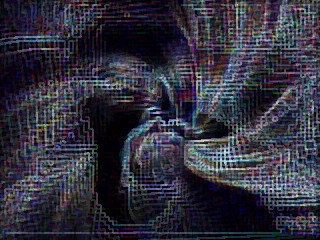
Feel free to replace vertigotv with any other or more of the video effects listed in gst-inspect effectv . Here s me with edgetv ! vertigotv: Edge Vertigo

16 December 2009

Gintautas Miliauskas: Android apps

I've recently gotten myself an Android phone. The Android app market is not as mature as iPhone's App Store, but there is a lot of applications, and plenty of chaff to separate the wheat from. I found most of the apps I use by browsing "top Android apps" lists on the web, so I am putting up a similar list here in case someone finds it useful.

Daniel Baumann: Syslinux Themes for Debian

10 days ago, I uploaded syslinux-themes-debian. It is sitting in the NEW queue ever since, and aparently I cannot rely on it being accepted anytime soon (it can be installed from the repository mentioned on the maintainers homepage, though). However, while being still a first working version only that needs some improvements (especially until it could be used as a generic ressource for any other tool to make use of it, like live-helper or debian-cd, eventually), here's a screenshot from the squeeze theme, credits and a big thanks for the awesome graphics to Agnieszka Czajkowska. Syslinux Theme Debian Squeeze

MJ Ray: Thunderbird 3 Introduces Reply-To List

I ve kept a page of email clients that support mailing lists for a while and it s been a bit disappointing that I couldn t suggest Mozilla Thunderbird or its freer derivatives (IceDove?) as good clients. They work fine in most other ways and it s nice having something good that we can suggest to users on MacOS and Windows, but there was a long-standing bug requesting support for the List-Post header. In an email discussion on ALUG s main list, a couple of people mentioned that Thunderbird 3 was released last week with a working reply to list command. This is excellent news, removing the need for the Reply To List add-on. I hope we ll see it in IceDove soon. Fantastic work. I wish it was in the release notes so we d spotted it sooner. Now there is even less excuse for MUNGing the Reply-To header, even on lists where Windows users are present.

Raphael Geissert: what could you tell about spammers after receiving one billion messages?

This is a question that Project Honey Pot's report answers.

They have released a report of the analysis of not only spam messages, but also of the harvesters behind spam.
Available with a simple overview the complete report provides some rather interesting details.

Do spammers take holidays?
The volume of spam drops approximately 21% on Christmas Day and 32% on New Year's Day. Saturday is the quietest day of the week.


And for those sending mails to public mailing lists, the BTS, etc:
How much harm does a harvester visiting my site do?
You can expect to receive 869 spam email messages every time a harvester picks up your email address from a website online.


The interesting bits are really worth the five-ten minutes it takes to read the complete report, enjoy it (and yay, it is CC-BY).

15 December 2009

John Goerzen: Review: A Christmas Carol

I guess you can say that A Christmas Carol by Charles Dickens has been a success. It was published in 1843 and has never been out of print since then. It s spawned all manner of plays, films, adaptations, and spoofs. It s been adapted at least twice by Disney, once featuring Mickey Mouse and another time featuring Jim Carey. We re almost inundated with the story I m not sure how many ways I ve seen it. Yet I had never read the original story by Dickens until just now. And I must say, what a treat it was. Despite knowing the plot in advance, it was a very good read. The 19th century London setting was done well. It wasn t some idealized London as is often portrayed in film adaptations. It had depth, as did the characters. Dickens Scrooge had a troubled childhood, the son of poor and apparently abusive parents. He turned to business, with which he was successful. Along the way, he lost sight of family, and really of his humanity in general, striving to be a richer and more successful businessman at the cost of all else. How apropos this story is for us in the 21st century. Our large banks define success in terms of profits made for their shareholders, while adding more gotchas to the terms of the credit cards held by their customers. Our governments play geopolitical games over weapons, oil, and gas, while unwilling to sacrifice anything to prevent a climate disaster. Our politicians, even in the season of Christmas, turn a blind eye and a cold heart to the suffering of those that can t afford health care for naught but political reasons, rather than trying their hardest to make a plan that will help them reality as soon as possible. And what of us, the citizens of the 21st century? We consume ever flashier cars, houses, computers, and cellphones with data plans, while poverty intensifies across the globe in this economic downturn. Well, count me among those many inspired and reminded by Dickens to be a more empathetic person, to remember how good even many of the poor in the West have it compared to other parts of the world, and to try to do more for others. And that, perhaps, is part of the genius of Dickens. He inspired a complete change of how people looked at Christmas in his time. And his work is no less relevant today; perhaps it hits even closer to home these days. He invites us to carefully consider the question: what does it mean to achieve success in life? And he deftly illustrates that wealth is wrong answer. Here s hoping that many others will also learn a small bit about life from Dickens. How to find it: A Christmas Carol is available for free from Project Gutenberg for reading online, printing, or reading on an ebook reader such as the Kindle. Be careful when buying printed editions. Many have been abridged or improved for a modern audience , and thus lose a lot of the quality of the original. I found at least one edition that looks true to the original; I m sure there are others. [This review also posted to Goodreads]

Tollef Fog Heen: N900 first impressions

Collabora was kind enough to buy N900s for all its employees. Yay! I got mine on Friday and has been playing around with it quite a bit. It's very shiny and the user experience is a lot better than the N810. There are a few graphical glitches, it seems it's XDamage damaging a bit of a window and it's just not quick enough to repaint. Not a problem, and it has far fewer instances of just hanging for half a second which my iPhone has. That is, it hasn't had any of those yet. The screen is good, but resistive. Takes a short while to get used to when you're used to capacative, but it's not a problem at all. The keyboard is good, but I need to map something as the compose key. Having US/UK key caps and using the Norwegian layout is a bit confusing. Not really the fault of the device though. The web browser is generally quite good. The gestures take a bit of time to get used to, but they're not hard as such. Some of the default "applications" are implemented as just links to the web pages of services like Twitter, which is a bit silly as you don't even get a version that's optimised for the N900. They're not useless, but they are absolutely nowhere near a real application. Also, the "Store" (Ovi Store) application/web page says "coming soon", which is quite odd. I'm not sure if I can change the selection of applications on the default application list, but modifying the desktop is easy. There seems to be few themes and background images available so far, at least in anything resembling official repositories. Hopefully this will improve over time. So far, I haven't actually written any code for the N900. I have some applications I want to write, mostly widget-style apps like "when does the next bus home leave from a bus stop close to me and where is the bus stop", but also some other ones. Battery life is not great. It almost did 48 hours today with a bit of use underway, and I did charge it before it ran completely out, but when I'm used to closer to a week, it's not that good. Camera seems good and is quite fast, I think it took less than five seconds from opening the camera shutter until I had taken a picture. Shutter delay is quite bad at about a third or half a second, but this is a mobile phone (or mobile computer, as Nokia likes to call it) and not a DSLR, so I'm quite happy with it. As a phone, it seems fine so far. I can make calls and accept calls and there's no noticeable problems with it. It also functions as a modem/DUN over bluetooth, which is quite useful. Build quality seems good, there's a good feeling when sliding the keyboard in and out, but only time will tell how good it actually is. So far, I'm happy with it, it's a big step up from my previous UK phone (which is a Nokia E70; my iPhone is a 2G phone so I can't use it here with the provider I'm using). Hopefully I'll post more happy stories about it in the days to come.

Russell Coker: Play Machine Online Again

I have returned from the US and my SE Linux Play Machine [1] is online again. It was unfortunate that I forgot to pack one of my Play machine shirts, I ended up attending a meeting of the SDForum [2] on the topic of Cloud Security (it was a joint meeting of the Cloud Services and Security SIGs) and it would have been good to have been wearing a root password.

14 December 2009

Vincent Sanders: Two pussies, one box

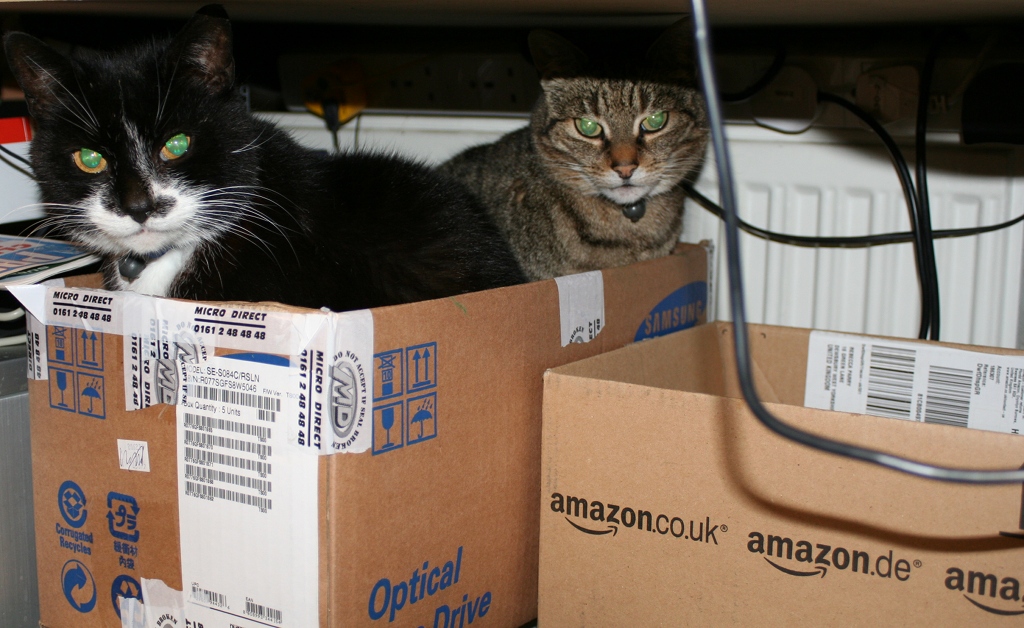
Our household contains two felis catus. These evil creatures (sorry I repeat myself, I already mentioned they were cats) are not sweet kittens, they are grumpy old animals who spend the majority of their lives sleeping indoors and rarely venturing out.

Historically they have had free reign of the house and slept wherever it suited them but with the arrival of the children they were confined to the lower half of the house and provided simple cardboard boxes in which they can reside completely undisturbed.

All well and good you might say and indeed this has produced happy cats for the last eight years. however I recently caused a great deal of discord in the household by providing new boxes never imagining this could possibly cause as much trouble as it has. Currently the two of them are attempting to occupy a single box and win some form of passive aggressive fight for occupancy.

This has been going on for a month now and shows no sign of easing. I do wonder what I need to do to aleviate this situation before it results in a full blown outbreak of evil. Any ideas?

Jo Shields: FOSDEM 2010

I will be at FOSDEM in February next year. It should hopefully be awesome. Anyone who packages Mono on any distro should definitely come, or does any Mono-related stuff in general, since not only will I be there, but the fabulous Mirco Bauer too and perhaps other wonderful people. Definitely a fine use of your moneycash.

Russell Coker: Nagios and SSL in Debian

I was doing some work on NRPE (the Nagios Remote Plugin Executor) and I noticed bug report #547092 [1] which concerns the fact that the default configuration uses the same SSL certificate for all Debian servers and provides a patch to fix the problem. After building the patched package I followed the advice of the DebianAdministration.org article on creating self-signed SSL certificates [2]. cert_file=/etc/ssl/certs/FOO-cert.pem
privatekey_file=/etc/ssl/private/FOO-key.pem
cacert_file=/etc/ssl/certs/cacert.pem Then I added the above lines to /etc/nagios/nrpe.cfg to instruct the nrpe to use the certificates. For the Nagios server I had the problem that most of the systems I monitor run old versions of NRPE while only a few are recent Debian systems that allow me to easily install a new SSL checking nrpe. So I installed the following script as /usr/lib/nagios/plugins/check_nrpe to run either the old or the new check_nrpe: #!/bin/sh -e
if echo $2 egrep -q server0\ server2\ mail ; then
/usr/local/sbin/check_nrpe -C /etc/cert/cert.pem -k /etc/cert/key.pem -r /etc/cert/cacert.pem $*
else
/usr/lib/nagios/plugins/check_nrpe.orig $*
fi The reason I started working on Nagios was to try and solve bug #560002 [3] which I filed. The bug concerns the fact that applications such as mailq which are run as part of Nagios checks were inheriting a TCP socket file handle from the nrpe. SE Linux prevents such file handles from being inherited, but it does mean that I get audit messages (and this is not a good case for a dontaudit rule). Update:
One thing I forgot to mention is that the SSL key checking requires that the server common name used in the SSL certificate of the nrpe system matches the name that is used by the check_nrpe program. So if you check by IP address then you need to use the IP address in the certificate name which is rather ugly. So I have moved to putting the hostname of each server in /etc/hosts on the NAGIOS system and using the hostname in the SSL certificate. This required using $HOSTNAME$ instead of $HOSTADDRESS$ in the NAGIOS configuration (thanks to John Slee for a tip in that regard). Update2:
I removed some printf debugging from the script. It seems that I included a pre-production version of the script in the first version of this blog post.

Phil Hands: arduino for the java challenged

Having excitedly bought an Arduino from the nice folks at tuxbrain.com while they were at DebConf9, I was then a little deflated to discover (while attending the UKUUG's Arduino Workshop in August), that the IDE is written in Java. While I can see that the authors might perceive this as the easiest way to provide cross-platform pointy-clicky-ness, JREs have a half-life of about an hour on my systems.Anyway, I fought with Java to show willing, until I'd determined that the IDE didn't seem to be happy running under xmonad (rendering menus so that they were unclickable) and gave up -- spending the rest of the tutorial proving to myself that I could compile and upload C code for the little beastie, but failing to compile Arduino sketches on the command line.Ever since, I've been meaning to work out the required CLI incantations, and finally made time over the weekend. The incantations turn out to be rather simple, if not very obvious, so I thought the world could benefit from a package that encapsulates the required knowledge.I've pared the source tree down to the c++ code and some examples and tweaked the Makefile so that it'll do it's work out of tree, referring to the files that the package installs for you, which allows you to apt-get install aurduino-core and then cut&paste a few lines from the contained README.Debian in order to get an LED blinking for the first time.The resulting git repo is now on Alioth. The binary-indep package it produces I've called arduino-core -- hopefully I've left enough room for any fan of the Java IDE to shove that back into the upstream branch and add packages for the full IDE, and maybe throwing in another package for the GTK IDE that's out there.I'm very mildly concerned by the fact that Arduino is a trademark of the Arduino Team, but that trademark is for the circuits, not the software, so this is probably irrelevant. If you think I should care enough to rename the package to freeduino, say, please get in touch.Anyway, if you have an Arduino (or similar) please grab a copy and test it.

Stefano Zacchiroli: RC bugs of the week - week 14

RCBW - week #14 Here are thislast week squashes, by yours truly: Some highlights:

Ondřej Čertík: ESCO 2010 conference

An interesting conference 2nd European Seminar on Coupled Problems (ESCO) will be held on June 28 July 2, 2010 in Pilsen, Czech Republic.
Among the topics are solving PDEs and applications and using Python for scientific computing. In particular, Ga l Varoquaux is the keynote speaker.

Unfortunately, it was later announced that the SciPy 2010 conference is going to be at the same time, which is really unfortunate. But here are some reasons why you should consider going to ESCO 2010 instead:


If you have time, I can fully recommend to go to ESCO 2010.

Kumar Appaiah: For Hindi Debian users

(English translation below. Indian Debian community, please spread the word!) ! , , KDE, GNOME . . (Debian Installer) Lenny , . , , . , , , . ! ; . : akumar@ . ( ) ;-) !TranslationFellow Debian users (who know Hindi)! Maybe you aren't aware yet, but several parts of Debian have been localized and are available in several Indian languages, and KDE and GNOME and several programs are available natively in those languages. This has been possible only due to dedicated volunteers spending time in translating the programs. I have been translating the strings in the Debian Installer to Hindi, since Lenny, and will continue with the translations. But like others, I am short on both time, and my knowledge of technical Hindi words and phrases is limited. So, I'd request fellow users to chip in with some translations to the Debian Installer strings, if they have the time. That way, not only will you earn fame and glory, you'll also earn the gratitude of the Hindi Debian user community.You don't need to be an expert in the language and grammar to help out with the translations. All you need is some working Hindi knowledge and a bit of time.For more information, email me at akumar followed by debian.orgThank you!

Joey Hess: two films

I've been watching some good films recently. Two I especially liked. baby camel in sidecar man in taxi Goodbye Solo starts in Winston-Salem and ends up at Blowing Rock. Both settings, as well as the taxi in between, are very familiar. The characters could easily be people I've met. Tulpan is set in a steppe in Kazakhstan. The desert and dust devils mostly reminded me of Mars. Particularly of this amazing shot taken by the Spirit rover. dust devils on Mars! Still, I felt so much more at home in Tulpan. Kept pausing it to check out how the family had their yurt set up and furnished, and watched their very real-seeming life unfold, right down to the lambing scene. While Solo took the very familiar, and confounded expectations and biases at every step. They're both fine films, from directors I want to see more of. I've seen Ramin Bahrani's work before Solo, and especially liked Man Push Cart. Don't know if I will ever find any of Sergei Dvortsevoy's earlier films.

13 December 2009

Dirk Eddelbuettel: RQuantLib 0.3.1 released

A new version of RQuantLib is now out at CRAN and in Debian. It updates the package to the 0.9.9 release of QuantLib and is mostly a maintenance release with a few minor fixes along the way. Full changelog details, examples and more details about this package are at my RQuantLib page.

Russell Coker: Links December 2009

Dan Gilbert gave an insightful TED talk about our mistaken expectations of happiness [1]. Don Marti has an insightful post about net neutrality and public property [2]. When net access requires access to public property then it should be sold in a neutral manner. Rachel Pike gave an interesting TED talk about the scientific research behind a climate headline [3]. The people who claim to be skeptical of the science should watch this. Mark Peters wrote an interesting article A Happy Writer Is a Lousy Writer about the correlation between emotional state and work quality [4]. Apparently watching a film about cancer will make people more careful and focussed on details. CERIAS has an interesting short article about Firefox security as well as some philosophy on why web browser security generally sucks [5]. Cory Doctorow writes in the Guardian about Peter Mandelson s new stupidity in trying to legislate against file sharing [6]. This is going to seriously damage the economy of every country that implements it. Charles Stross has been blogging a series of non-fiction essays about space colonisation, in The Myth of the Starship he describes how most ideas of space travel are bad and how the word ship is always going to be unsuitable [7]. Brent T. White is an associate professor of law at the University of Arizona who has written an interesting paper about mortgages [8]. He says that anyone who is underwater (IE owing more than the value of their house) should walk away. The credit damage from abandoning a bad mortgage apparently isn t that bad, and there is the possibility of negotiating with the bank to reduce the value of the loan to match the value of the house. Mako is working on a project to allow prisoners to blog [9]. It s basically a snail-mail to web gateway as the prisonsers are not allowed Internet access. PracticalEthicsnews.com has an article about the special status that homeopathy is given [10]. It also notes that homeopathic medicines include arsenic and mercury. Such quackery should be outlawed, a life sentence for homeopathy would be appropriate IMHO. Cory Doctorow wrote an interesting essay about why he is not selling one of his books in audio form (he s giving it away) [11]. He concludes by noting that he wants no license agreement except don t violate copyright law . The fact that he can t get anyone to sell an audio book under such terms is a good demonstration of how broken the marketplace is. Thulasiraj Ravilla gave an inspiring TED talk about the Aravind Eye Care System a program to bring the efficiency of McDonalds to eye surgery [12]. Hopefully that program can spawn similar programs for other branches of medicine and spread to more countries. In many ways they are providing better service (both in quality and speed) than people in first-world countries who pay a lot of money can expect to receive. Scott Kim gave an interesting TED talk about his work designing puzzles [13]. He is also a big fan of social networking, unfortunately (for people like me who don t like social networking) his web site ShuffleBrain.com relies on Facebook. Gordon Brown (UK Prime Minister) gave an inspiring TED talk about global ethic vs the national interest [14], with a particular focus on the global effort required to tackle the climate change problem. Now if only we could get Kevin Rudd to listen to that. Brough has written an interesting analysis of the AT&T network problems that are blamed on the iPhone [15]. His essential claim is that the problem is due to overly large buffers which don t cause TCP implementations to throttle the throughput. This seems similar to my observations of the Three network in Australia where ping times of 8 seconds or more will periodically occur. One particularly nasty corner case with this is when using a local DNS server I can have a DNS packet storm where basic requests time out while BIND uses a significant portion of available bandwidth (including ICMP messages from receiving ports that BIND has closed). To alleviate this I am now using the Google public DNS service [16] (the Three DNS servers never worked properly).

Next.

Previous.