Search Results: "ema"

18 August 2017

Raphaël Hertzog: Freexian s report about Debian Long Term Support, July 2017

A Debian LTS logoLike each month, here comes a report about the work of paid contributors to Debian LTS. Individual reports In July, about 181 work hours have been dispatched among 11 paid contributors. Their reports are available: Evolution of the situation The number of sponsored hours increased slightly with two new sponsors: Leibniz Rechenzentrum (silver sponsor) and Catalyst IT Ltd (bronze sponsor). The security tracker currently lists 74 packages with a known CVE and the dla-needed.txt file 64. The number of packages with open issues increased of almost 50% compared to last month. Hopefully this backlog will get cleared up when the unused hours will actually be done. In any case, this evolution is worth watching. Thanks to our sponsors New sponsors are in bold.

No comment Liked this article? Click here. My blog is Flattr-enabled.

17 August 2017

Sean Whitton: DebCamp/DebConf17: reports on sprints and BoFs

In addition to my personal reflections on DebCamp/DebConf17, here is a brief summary of the activities that I had a hand in co-ordinating. I won t discuss here many other small items of work and valuable conversations that I had during the two weeks; hopefully the fruits of these will show themselves in my uploads to the archive over the next year. Debian Policy sprint & BoF Debian Emacs Team meeting/sprint Unfortunately we didn t make any significant progress towards converting all addons to use dh_elpa, as the work is not that much fun. Might be worth a more focused sprint next year. Report on team website Git for Debian packaging BoF & follow-up conversations The BoF was far more about dgit than I had wanted; however, I think that this was mostly because people had questions about dgit, rather than any unintended lecturing by me. I believe that several people came away from DebConf thinking that starting to use dgit would improve Debian for themselves and for users of their packages.

Sean Whitton: I went all the way to Montr al for DebConf17, and all I got was a new MUA

This year s group photo (by Aigars Mahinovs). I really like the tagline
On Sunday night I got back from Montr al, where I attended both DebCamp17 and DebConf17. It was a wonderful two weeks. All I really did was work on Debian for roughly eight hours per day, interspersed with getting to know both people I ve been working with since I first began contributing to Debian in late 2015, and people I didn t yet know. But this was all I really needed to be doing. There was no need to engage in distracting myself. I enjoyed the first week more. There were sufficiently few people present that you could know at least all of their faces, and interesting-sounding talks didn t interrupt making progress on one s own work or unblocking other people s work. In the second week it was great to meet people who were only present for the second week, but it felt more like regular Debian, in that I was often waiting on other people or they were waiting on me. While I spent one morning actually writing fresh code, and I did a fair amount of pure packaging work, the majority of my time was poured into (i) Debian Policy; (ii) discussions within the Emacs team; and (iii) discussions about dgit. This was as I expected. During DebConf, it s not that useful to seclude oneself and sufficiently reacquaint oneself with a codebase that one can start producing patches, because that can be done anywhere in the world, without everyone else around. It s far more useful to bring different people together to get projects unblocked. I did some of that for my own work, and also tried to help other people s, including those who weren t able to attend the conference. In my ordinary life, taking a step back from the methods by which I protect my PGP keys and other personal data, I can appear to myself as a paranoid extremist, or some kind of data hoarder. It was comforting to find at DebConf plenty of people who go way further than me: multiple user accounts on their laptop, with separate X servers, for tasks of different security levels; PGP keys on smartcards; refusal to sign my PGP key based on government-issued ID alone; use of Qubes OS. One thing that did surprise me was to find myself in a minority for using the GNOME desktop; I had previously assumed that most people deep in Debian development didn t bother with tiling window managers. Turns out they are enthusiastic to talk about the trade-offs between window managers while riding the subway train back to our accommodation at midnight who knew such people existed? I was pleased to find them. One evening, I received a tag-teamed live tutorial in using i3 s core keybindings, and the next morning GNOME seemed deeply inelegant. The insinuation began, but I was immediately embroiled in inner struggle over the fact that i3 is a very popular tiling window manager, so it wouldn t be very cool if I were to start using it. This difficulty was compounded when I learned that the Haskell team lead still uses xmonad. The struggle continues. I hope that I ve been influenced by the highly non-judgemental and tolerant attitudes of the attendees of the conference. While most people at the conference were pretty ordinary aside from wanting to talk about the details of Debian packaging and processes! there were several people who rather visibly rejected social norms about how to present themselves. Around these people there was nothing of the usual tension. Further, in contrast with my environment as a graduate student, everyone was extremely relaxed about how everyone was spending their time. People drinking beer in the evenings were sitting at tables where other people were continuing to silently work on Debian. It is nice to have my experience in Montr al as a reference to check my own judgemental tendencies. I came away with a lot more than a new MUA: a certainty that I want to try to get to next year s conference; friends; a real life community behind what was hitherto mostly a hobby; a long list of tasks and the belief that I can accomplish them; a list of PGP fingerprints to sign; a new perspective on the arguments that occur on Debian mailing lists; an awareness of the risk of unconsciously manipulating other community members into getting work done. With regard to the MUA, I should say that I did not waste a lot of DebConf time messing with its configuration. I had actually worked out a notmuch configuration some months ago, but couldn t use it because I couldn t figure out how to incorporate my old mail archives into its index. Fortunately notmuch s maintainer is also on the Emacs team he was able to confirm that the crazy solution I d come up with was not likely to break notmuch s operating assumptions, and so I was able to spend about half an hour copying and pasting the configuration and scripts I d previously developed into my homedir, and then start using notmuch for the remainder of the conference. The main reason for wanting to use notmuch was to handle Debian mailing list volume more effectively than I m able to with mutt, so I was very happy to have the opportunity to pester David with newbie questions. Many, many thanks to all the volunteers whose efforts made DebCamp17 and DebConf17 possible.

Reproducible builds folks: Reproducible Builds: Weekly report #120

Here's what happened in the Reproducible Builds effort between Sunday 6th and Saturday 12th August 2017: Notes about reviews of unreproducible packages 13 package reviews have been added, 7 have been updated and 34 have been removed in this week, adding to our knowledge about identified issues. Packages reviewed and fixed, and reproducibility related bugs filed Upstream packages: Other bugs filed diffoscope development trydiffoscope development tests.reproducible-builds.org Misc. This week's edition was written by Chris Lamb & Holger Levsen & reviewed by a bunch of Reproducible Builds folks on IRC & the mailing lists.

Shirish Agarwal: Composers are not given due recognition

Update Some youtube links are not viewable or even seen on planet.debian.org. Seems p.d.o. tries its best to remove external links, sorry for the breakage. Beware some youtube-links would be shared in this entry, sorry couldn t find a better/easier media platform to work with. If anyone knows any other platform or wants to suggest, feel free to either mail me or let me know in comments. I want to start today s sharing with a picture of Ganesha I saw today. It is and was public art hence sharing it without an issue. Sketch of Ganesha/Ganapati This is starting of festivities time in India and Ganesha or Ganpati is looked up as a good omen in India. The festival of Ganesh Chaturthi would be starting on the 25th of August and is a sight to behold. Just like Rio has its carnival, Ganesh Chaturthi is also a carnival. We also have parades where people come with Pandals (or temporary structures) The mythology says he has a sweet tooth (hence lot of distribution of sweets, especially modak) and anything which might be troubling people, he creates solutions for them. Here is one video of how people celebrate his immersion in India. This is from my home-town few years ago, every year the madness and the celebrations are becoming more and more. People from far off come to see how we celebrate and see how different people make their Pandals. While some are with music, others are with social messages. Usually people start going to see these structures after dusk and return home way after midnight or early morning. I hope to do this endeavour after many years. One is drunk from hearing all sorts of different kids of music, decoration, messages, a feast and a strain to all the senses. Ganesha immersion celebrations https://www.youtube.com/watch?v=hjWfpGUryho If one is interested one can find more info. at https://en.wikipedia.org/wiki/Ganesh_Chaturthi After quite a bit of time, I wrote an article about various foss internships which I knew besides GSOC over the years. I finally penned them down at https://itsfoss.com/best-open-source-internships/ Interestingly, I was amazed to see that all FOSS U.S. projects (outside of GSOC) are for students who are either living or studying in U.S. and have a student work visa (which from private discussions I came to know is lot harder to get nowadays than before). Except for the National Science Foundation (NSF) which probably has U.S. defence relations and hence they might be sensitive, I fail to understand other institutes preferences for only getting people from the U.S. and hence having a lesser talent pool of people. This also affects the growth of the projects themselves. Just think how limited Debian would have been if it had decided to only have people from only any one community develop it. Dunno if this is due to the present President Trump or these policies had been there before. It would be nice and interesting if people in the know can share. What has also been interesting to watch is Mr. Trump blaming low-cost manufacturing centres like India and China when as far as I recall, lot of manufacturing, specifically auto-mobiles manufacturing was shifted out of the U.S. to Ireland and other places years before which are relatively high-cost places (at least compared to India). I *believe* the change was as early as in 1980 s itself where India was insulated and had a limited market for everything (similar to Russian communism as shown in popular media but not so bad.) Interestingly, it took almost a month for the perl 2.56 to make the transition smoothly. It took quite a bit of time for all the components to work together and be installable. Also saw this few days back http://fortune.com/2017/04/12/auto-industry-decline/ While Tesla is expensive even by American standards the idea of lesser parts, lesser complexity and hence lower costs to use, maintain is good. I do hope that he and his team or any of the competitors do overcome the significant challenges. Any significant improvement in battery technology is bound to have huge impact in almost everything that is used in 21st century. Two recent articles tell me the future may become present very quickly. https://www.purdue.edu/newsroom/releases/2017/Q2/instantly-rechargeable-battery-could-change-the-future-of-electric-and-hybrid-automobiles.html Toyota could finally start mass producing electric cars thanks to China I do hope to see EV being prevalent before the next decade is over otherwise we don t have any hope due to climate change. As for my health, I am much better than before. Just to share some stats, before my illness for lack of better word, I was 120 kgs. , when I was kept in the hospital for about 2-2.5 weeks I came down to 95 kgs. and now back upto 108 kgs. Do go for exercising every other day and trying to get back the strength, stamina and increasing a bit of both. Doctors have given me another 4-5 months after which a brain scan will reveal if there are any remaining blood clots in the brain or not. Lastly, while it has become somewhat of a sensitive issue to love Muslims or to talk about their work in any field in the current political climate, there are 4-5 music pieces I listen whenever I can, especially before going to bed. While almost all the pieces have been sung and written by Muslims, sadly I don t know who the composers of these beautiful songs are. While it is much easier to get the names of the singer and the lyricist, one of the more important roles in my view is the composer or/and music arranger. Without them, the songs would not have the same haunting quality that the songs have. While I have been lucky to find the names of the composer/music arranger for the pieces below but this is not the case if and when the songs comes on television. I do remember in old times at least on Radio they used to mention about who has given the music as well, dunno in modern times. I am sharing the songs, and hopefully will also share the translations if I find on the web, please see the lyrics. The numbering is for convenience only and am torn in these 4-5 songs which is the best. Just to share these are all sufi love songs except the last one which I am sharing. 1. Lyrical song https://www.youtube.com/watch?v=ehqN6oTpmb8 Translation with video of song http://www.bollynook.com/en/lyrics/6443/aaj-din-chadheya/ While there probably are stories with each song, I was lucky to find the story about this one. The lyrics of the song are actually a love lost Punjabi poet who writes in the memory of his beloved to which he could not marry and he pens those when standing in line for his liquor. The story goes on that he marries a girl later in life who bears a resemblance to his beloved whom he couldn t forget till his dying day. 2. Lyrical song https://www.youtube.com/watch?v=uTC_2c83qn0 The same song has been sung by different people and I love them all the more for it. Another video https://www.youtube.com/watch?v=3G7Qg4LJ7WE Another video https://www.youtube.com/watch?v=kOsvNuR3m5Y Translation http://www.bollynook.com/en/lyrics/10703/o-re-piya/ 3. Lyrical song https://www.youtube.com/watch?v=qG7Kms_YA5Q The translation http://www.filmyquotes.com/songs/885 The translation of the song is a bit crude but then translations are supposed to be crude  Anyways, the above song is what would be called a perfect Sufi song. I hope people enjoy the longing and the silence which follows this piece. Another classic one 4. Lyrical song https://www.youtube.com/watch?v=Ube5XhN_lpM English translation http://www.ardhamy.com/song/aye-dil-e-naadan While the song is from the movie Razia Sultana and was a flop as the movie was about Race and controversial then as it probably would be now. As seen in the other songs of the same genre, it has strands of longing, loneliness as seen of the above. 5. Lyrical song https://www.youtube.com/watch?v=tv242qOnHJA This one is not a sufi song but I love all the women and the girls and the way they enhanced the song. I dunno how much they must have practised as it s a very fast and peppy song and doesn t give time to the singer to breathe except for that one section which has a bit of Carnatic music. At the very end I would like to share http://www.globalrhythm.net/ I have found some interesting sounds on the site. Hope the site enriches you as well. FWIW I have no links with the site except as somebody who likes to diversify his music listening. Lastly, for a long period of time, I had been hearing the criticism, especially for FOSS games that they don t have AAA quality assets. Recently I came across a game called Starship Theory (sadly its only for MS-Windows) Game video https://www.youtube.com/watch?v=imaL2pjNURg You look at the game and see the number of videos the guy has made. What FOSS game developers can learn from this, you don t need high-end 2.5/3d models, clipart will do but need depth in gameplay which can make FOSS games be popular and also earn a pretty bundle. I do hope some FOSS game upstream developers take note and use that game s inspiration to bring more depth. That doesn t mean games like 0ad are not liked by people but it takes huge amount of time and resources. 0ad video https://www.youtube.com/watch?v=DHx5XBtypcQ Hope you have a good time with all the ideas, anecdotes and videos I shared above.
Filed under: Miscellenous Tagged: #FOSS Internships, #Ganesh Chaturthi, #Ganeshji, #planet-debian, #Sufi Bollywood Music, FOSS, FOSS games, politics

14 August 2017

Reproducible builds folks: Reproducible Builds: Weekly report #119

Here's what happened in the Reproducible Builds effort between Sunday July 30 and Saturday August 5 2017: Media coverage We were mentioned on Late Night Linux Episode 17, around 29:30. Packages reviewed and fixed, and bugs filed Upstream packages: Debian packages: Reviews of unreproducible packages 29 package reviews have been added, 72 have been updated and 151 have been removed in this week, adding to our knowledge about identified issues. 4 issue types have been updated: Weekly QA work During our reproducibility testing, FTBFS bugs have been detected and reported by: diffoscope development Version 85 was uploaded to unstable by Mattia Rizzolo. It included contributions from: as well as previous weeks' contributions, summarised in the changelog. There were also further commits in git, which will be released in a later version: Misc. This week's edition was written by Ximin Luo, Bernhard M. Wiedemann and Chris Lamb & reviewed by a bunch of Reproducible Builds folks on IRC & the mailing lists.

Jamie McClelland: Diversity doesn't help the bottom line

A Google software engineer's sexist screed against diversity has been making the rounds lately. Most notable are the offensive and mis-guided statements about gender essentialism, which honestly make the thing hard to read at all. What seems lost in the hype, however, is that his primary point seems quite accurate. In short: If Google successfully diversified it's workforce, racial and gender tensions would increase not decrease, divisiveness would spread and, with all liklihood, Google could be damaged. Imagine what would happen if the thousands of existing, mostly male, white and Asian engineers, the majority of whom are convinced that they play no part in racism and sexism, were confronted with thousands of smart and ambitious women, African Americans and Latinos who were becoming their bosses, telling them to work in different ways, and taking "their" promotions. It would be a revolution! I'd love to see it. Google's bosses definitely do not. That's why none of the diversity programs at Google or any other major tech company are having any impact - because they are not designed to have an impact. They are designed to boost morale and make their existing engineers feel good about what they do. Google has one goal: to make money. And one strategy: to design software that that people want to use. One of their tactics that is highly effective is building tight knit groups of programmers who work well together. If the creation of hostile, racist and sexist environments is a by-product - well, it's not one that affects their bottom line. Would Google make better software with a more diverse group of engineers? Definitely! For one, if African American engineers were working on their facial recognition software, it's doubtful it would have mistaken people with black faces for gorillas. However, if the perceived improvement in software outweighed the risks of diversification, then Google would not waste any time on feel-good programs and trainings - they would simply build a jobs pipeline and change their job outreach programs to recruit substantially more female, African Americans and Latino candidates. In the end, this risk avoidance and failure to perceive the limitations of homogeneity is the achiles heel of corporate software design. Our challenge is to see what we can build outside the confines of corporate culture that prioritizes profits, production efficiency, and stability. What can we do with teams that are willing to embrace racial and gender tension, risk diviseveness and be willing to see benefits beyond releasing version 1.0?

Holger Levsen: 20170812-reproducible-policy

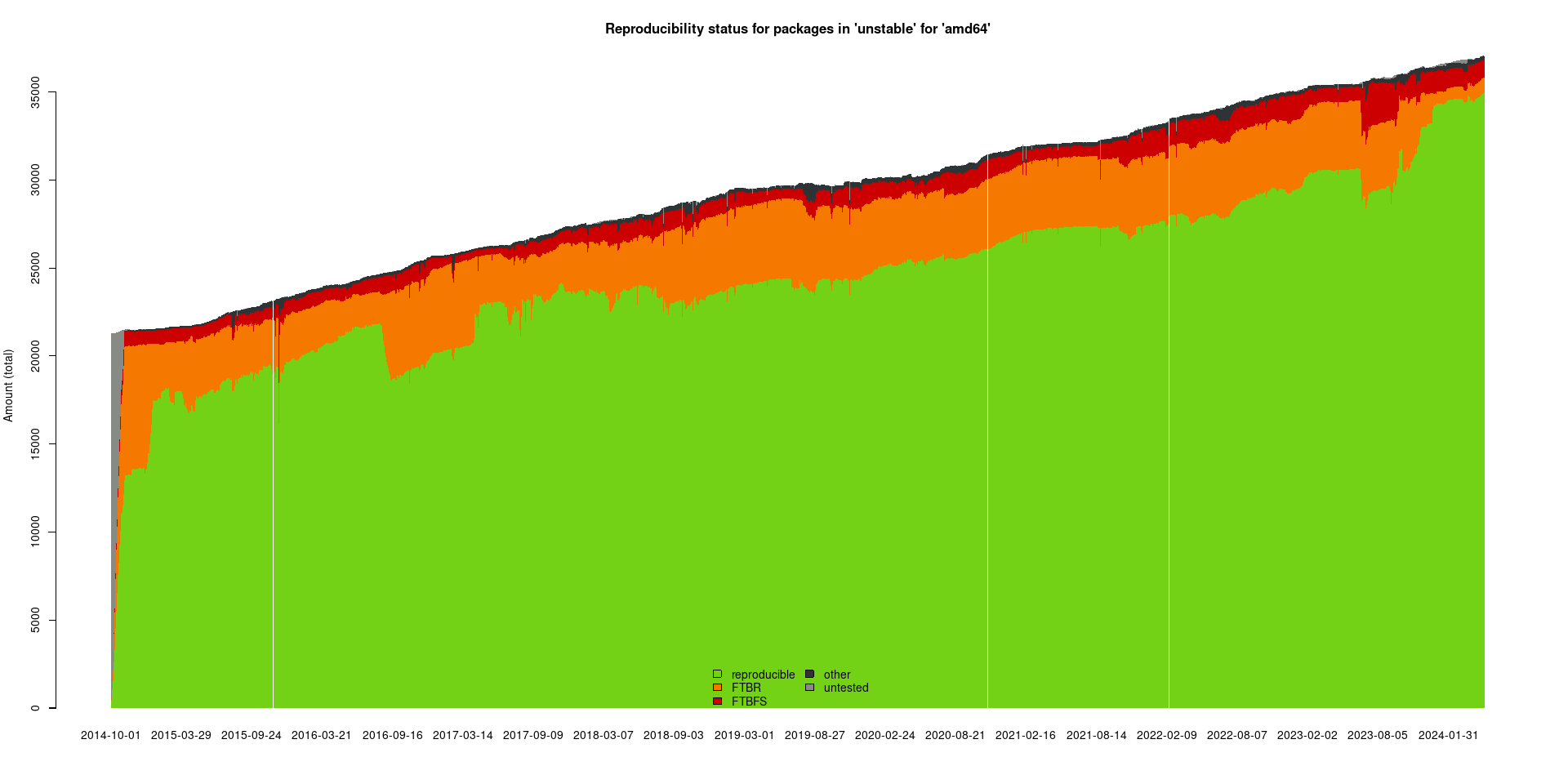
"packages should build reproducibly" - after 4 years this work of many is in debian-policy now This post was written roughly 44h ago and now that the fix for #844431 has been merged into the git master branch, I'm publishing it - hoping you'll enjoy this as much as I do! So today is the last (official) day of DebConf17 and it looks like #844431: "packages should build reproducibly" will be merged into debian-policy today! So I'm super excited, super happy, quite tired and a bit sad (DebConf is ending ) right now! :-) Four years ago Lunar held a BoF at DebConf13 which started the initiative in Debian. I only got involved in September 2014 with setting up continuous tests, rebuilding each package twice with some variations and then comparing the results using diffoscope, which back then was still called debbindiff and which we renamed as part of our efforts to make Reproducible Builds the norm in Free Software. Many people have worked on this, and I'm also very happy how visible this has been in our talk here yesterday. You people rock and I'm very thankful and proud to be part of this team. Thank you everyone! And please understand: we are not 94% done yet (which our reproducibility stats might have made you think), rather more like half done or so. We still need tools and processes to enable anyone to indepently verify that a given binary comes from the sources it is said to be coming, this will involve distributing .buildinfo files and providing user interfaces in APT and elsewhere. And probably also systematic rebuilds by us and other parties. And 6 or 7% of the archive are a lot of packages still, eg in Buster we currently still have 273 unreproducible key packages and for a large part we don't have patches yet. So there is still a lot of work ahead. This is what was added to debian-policy now:
Reproducibility
---------------
Packages should build reproducibly, which for the purposes of this
document [#]_ means that given
- a version of a source package unpacked at a given path;
- a set of versions of installed build dependencies;
- a set of environment variable values;
- a build architecture; and
- a host architecture,
repeatedly building the source package for the build architecture on
any machine of the host architecture with those versions of the build
dependencies installed and exactly those environment variable values
set will produce bit-for-bit identical binary packages.
It is recommended that packages produce bit-for-bit identical binaries
even if most environment variables and build paths are varied.  It is
intended for this stricter standard to replace the above when it is
easier for packages to meet it.
.. [#]
   This is Debian's precisification of the  reproducible-builds.org
   definition  _.
For now violating this part of policy may result in a severity: normal bug, though I think we should still only file them if we have patches, else it's probably better to just take a note in our notes.git, like we did before the policy change. Finally one last comment: we could do reproducible security updates for Stretch now too, for those 94% of the packages which are reproducible. It just needs to be done by someones and the first step would be publishing those .buildinfo files from those builds

13 August 2017

Lars Wirzenius: Retiring Obnam

This is a difficult announcement to write. The summary is if you use Obnam you should switch to another backup program in the coming months. The first commit to Obnam's current code base is this:
commit 7eaf5a44534ffa7f9c0b9a4e9ee98d312f2fcb14
Author: Lars Wirzenius <liw@iki.fi>
Date:   Wed Sep 6 18:35:52 2006 +0300
    Initial commit.
It's followed by over 5200 more commits until the latest one, which is from yesterday. The NEWS file contains 58 releases. There are 20761 lines of Python, 15384 words in the English language manual, with translations in German and French. The yarn test suite, which is a kind of a manual, is another 13382 words in English and pseudo-English. That's a fair bit of code and prose. Not all of it mine, I've had help from some wonderful people. But most of it mine. I wrote all of that because backups were fun. It was pleasing to use my own program to guarantee the safety of my own data. The technical challenges of implmenting the kind of backup program I wanted were interesting, and solving interesting problems is a big part of why I am a programmer. Obnam has a kind user base. It's not a large user base: the Debian "popularity contest" service estimates it at around 500. But it's a user base that is kind and has treated me well. I have tried to reciprocate. Unfortunately, I have not had fun while developing Obnam for some time now. This has changed. A few years ago, I lived in Manchester, UK, and commuted by train to work. It was a short train ride, about 15 minutes. At times I would sit on the floor with my laptop on my knees, writing code or the manual. Back then Obnam was a lot of fun. I was excited, and enthusiastic. In the past two years or so, I've not been able to feel that excitement again. My native language, Finnish, has an expression describing unpleasant tasks: something is as much fun as drinking tar. That describes Obnam in recent years for me. Obnam has not turned out well, from a maintainability point of view. It seems that every time I try to fix something, I break something else. Usuaully what breaks is speed or memory use: Obnam gets slower or starts using even more memory. For several years now I've been working on a new repository format for Obnam, code names GREEN ALBATROSS. It was meant to solve Obnam's problems as far as extensibility, performance, and resource use were concerned. It seems to have failed. I'm afraid I've had enough. I'm going to retire Obnam as a project and as a program, and move on to doing something else, so I can feel excitement and pleasure again. After some careful thought, I fear that the maintainability problems of Obnam can realistically only be solved by a complete rewrite from scratch, and I'm not up to doing that. If you use Obnam, you should migrate to some other backup solution. Don't worry, you have until the end of the year. I will be around and I intend to fix any serious bugs in Obnam; in particular, security flaws. But you should start looking for a replacement sooner rather than later. I will be asking Obnam to be removed from the Debian unstable and testing branches. The next Debian release (buster, Debian 10) won't include Obnam. The Obnam mailing lists are kindly hosted by Daniel Silverstone, and they will remain, but later this year I will change them to be moderated. The Obnam git repository will remain. The web site will remain, but I will add a note that Obnam is no longer maintained. Other Obnam online resources may disappear. If you would like to take over the Obnam project, and try to resolve the various issues, please contact me to discuss that. Thank you, and may you never need to restore.

Enrico Zini: Consensually doing things together?

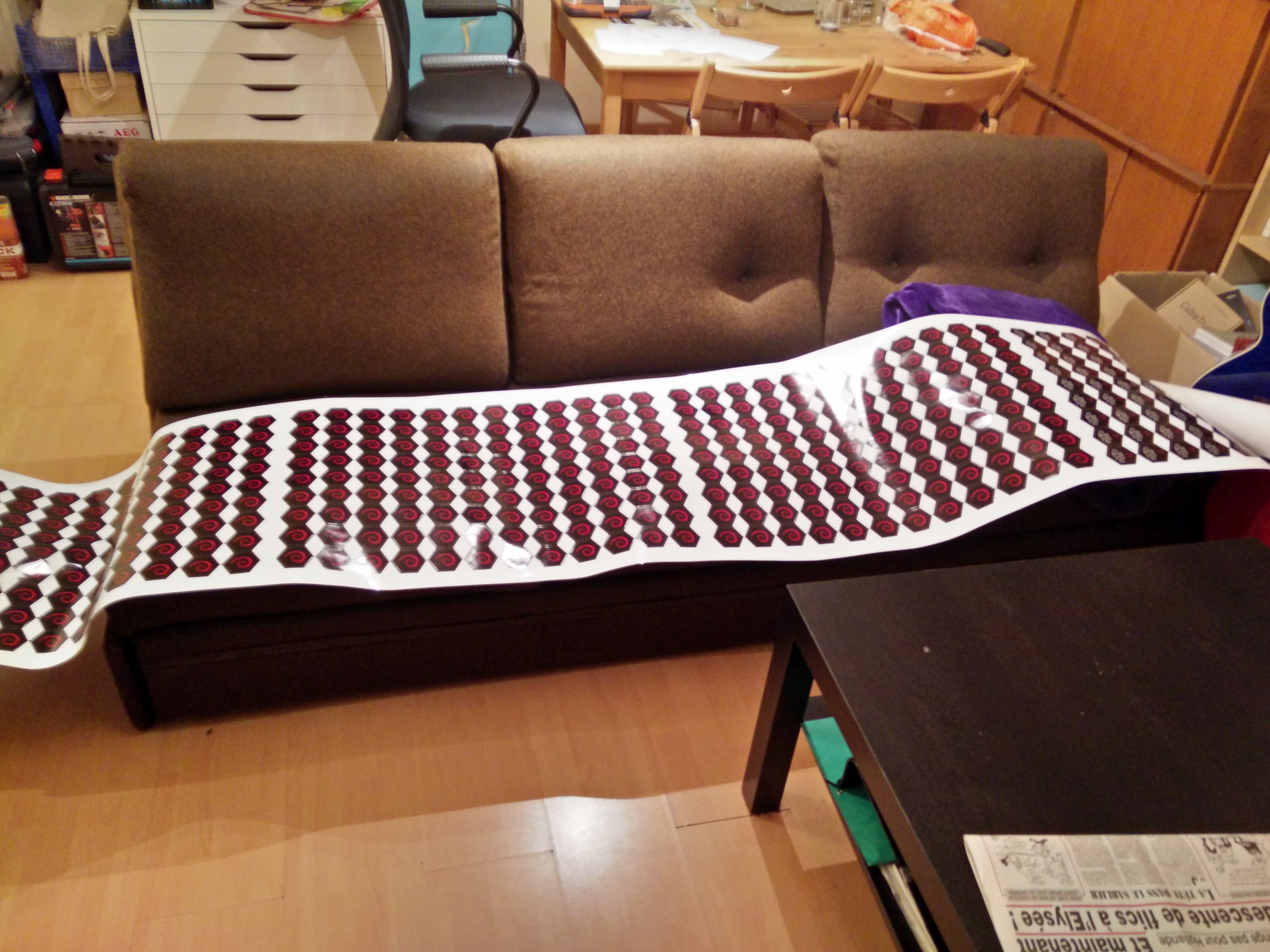
On 2017-08-06 I have a talk at DebConf17 in Montreal titled "Consensually doing things together?" (video). Here are the talk notes. Abstract At DebConf Heidelberg I talked about how Free Software has a lot to do about consensually doing things together. Is that always true, at least in Debian? I d like to explore what motivates one to start a project and what motivates one to keep maintaining it. What are the energy levels required to manage bits of Debian as the project keeps growing. How easy it is to say no. Whether we have roles in Debian that require irreplaceable heroes to keep them going. What could be done to make life easier for heroes, easy enough that mere mortals can help, or take their place. Unhappy is the community that needs heroes, and unhappy is the community that needs martyrs. I d like to try and make sure that now, or in the very near future, Debian is not such an unhappy community. Consensually doing things together I gave a talk in Heidelberg. Valhalla made stickers Debian France distributed many of them. There's one on my laptop. Which reminds me of what we ought to be doing. Of what we have a chance to do, if we play our cards right. I'm going to talk about relationships. Consensual relationships. Relationships in short. Nonconsensual relationships are usually called abuse. I like to see Debian as a relationship between multiple people. And I'd like it to be a consensual one. I'd like it not to be abuse. Consent From wikpedia:
In Canada "consent means the voluntary agreement of the complainant to engage in sexual activity" without abuse or exploitation of "trust, power or authority", coercion or threats.[7] Consent can also be revoked at any moment.[8] There are 3 pillars often included in the description of sexual consent, or "the way we let others know what we're up for, be it a good-night kiss or the moments leading up to sex." They are:
  • Knowing exactly what and how much I'm agreeing to
  • Expressing my intent to participate
  • Deciding freely and voluntarily to participate[20]
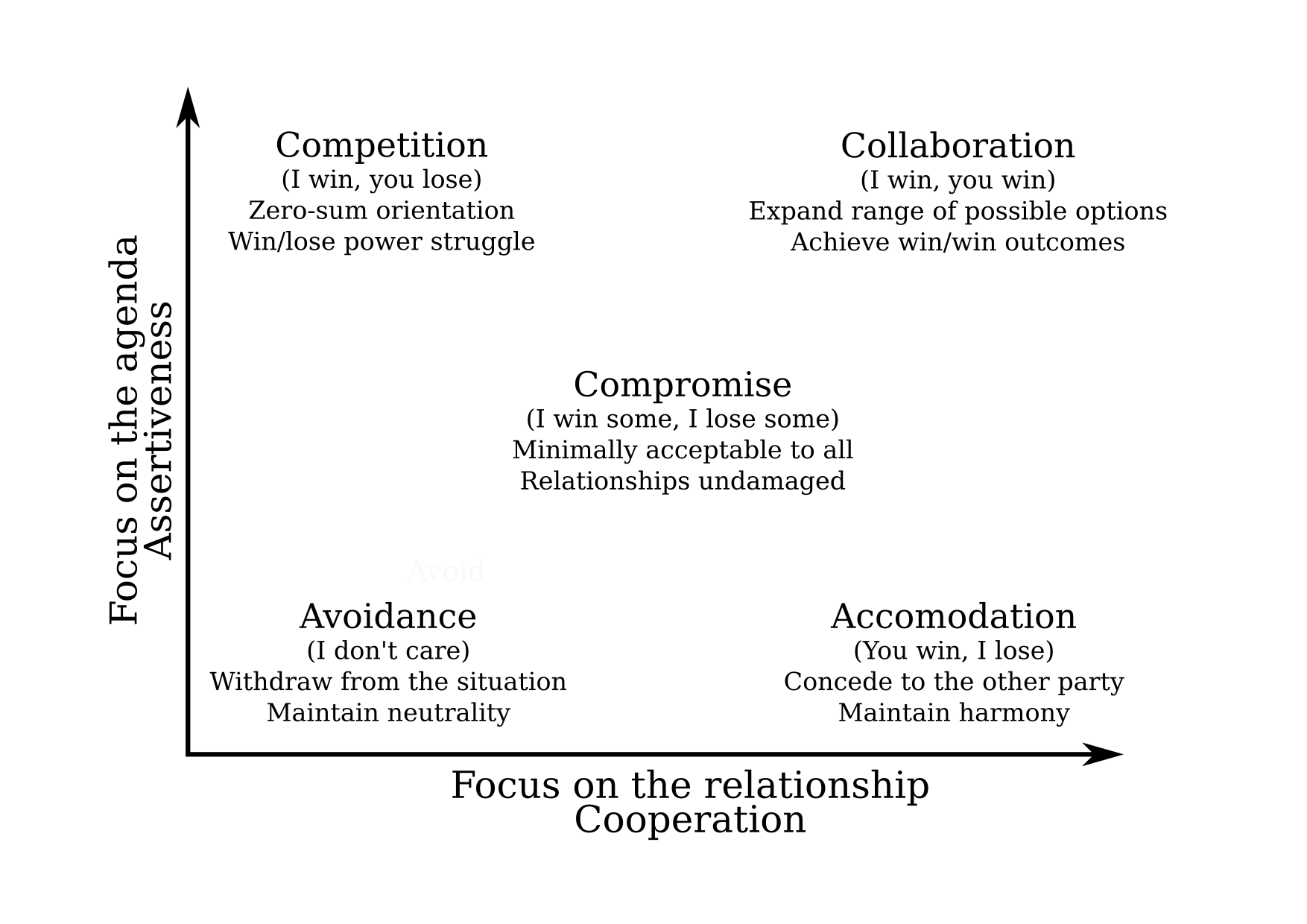
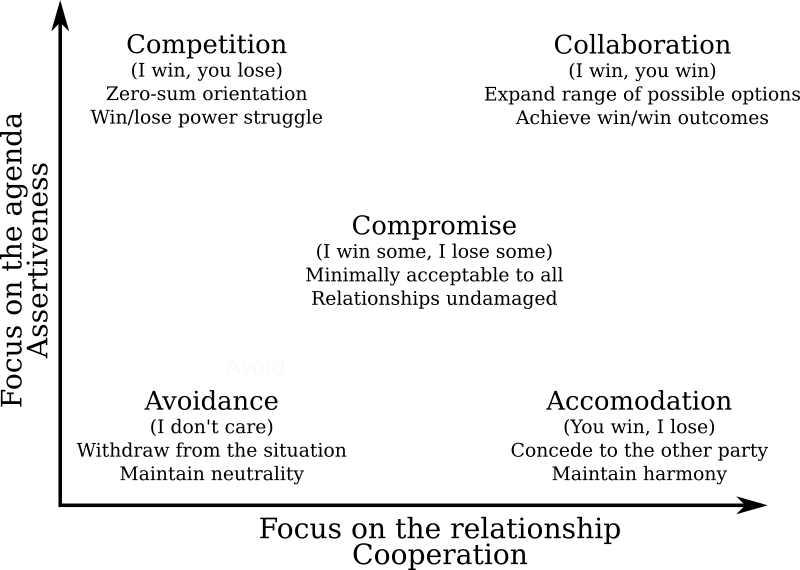
Saying "I've decided I won't do laundry anymore" when the other partner is tired, or busy doing things. Is different than saying "I've decided I won't do laundry anymore" when the other partner has a chance to say "why? tell me more" and take part in negotiation. Resources: Relationships Debian is the Universal Operating System. Debian is made and maintained by people. The long term health of debian is a consequence of the long term health of the relationship between Debian contributors. Debian doesn't need to be technically perfect, it needs to be socially healthy. Technical problems can be fixed by a healty community. graph showing relationship between avoidance, accomodation, compromise, competition, collaboration The Thomas-Kilmann Conflict Mode Instrument: source png. Motivations Quick poll: What are your motivations to be in a relationship? Which of those motivations are healthy/unhealthy? "Galadriel" (noun, by Francesca Ciceri): a task you have to do otherwise Sauron takes over Middle Earth See: http://blog.zouish.org/nonupdd/#/22/1 What motivates me to start a project or pick one up? What motivates me to keep maintaning a project? What motivates you? What's an example of a sustainable motivation? Is it really all consensual in Debian? Energy Energy that thing which is measured in spoons. The metaphore comes from people suffering with chronic health issues:
"Spoons" are a visual representation used as a unit of measure used to quantify how much energy a person has throughout a given day. Each activity requires a given number of spoons, which will only be replaced as the person "recharges" through rest. A person who runs out of spoons has no choice but to rest until their spoons are replenished.
For example, in Debian, I could spend: What is one person capable of doing? Have reasonable expectations, on others: Have reasonable expectations, on yourself: Debian is a shared responsibility When spoons are limited, what takes more energy tends not to get done As the project grows, project-wide tasks become harder Are they still humanly achievable? I don't want Debian to have positions that require hero-types to fill them Dictatorship of who has more spoons: Perfectionism You are in a relationship that is just perfect. All your friends look up to you. You give people relationship advice. You are safe in knowing that You Are Doing It Right. Then one day you have an argument in public. You don't just have to deal with the argument, but also with your reputation and self-perception shattering. One things I hate about Debian: consistent technical excellence. I don't want to be required to always be right. One of my favourite moments in the history of Debian is the openssl bug Debian doesn't need to be technically perfect, it needs to be socially healthy, technical problems can be fixed. I want to remove perfectionism from Debian: if we discover we've been wrong all the time in something important, it's not the end of Debian, it's the beginning of an improved Debian. Too good to be true There comes a point in most people's dating experience where one learns that when some things feel too good to be true, they might indeed be. There are people who cannot say no: There are people who cannot take a no: Note the diversity statement: it's not a problem to have one of those (and many other) tendencies, as long as one manages to keep interacting constructively with the rest of the community Also, it is important to be aware of these patterns, to be able to compensate for one's own tendencies. What happens when an avoidant person meets a narcissistic person, and they are both unaware of the risks? Resources: Note: there are problems with the way these resources are framed: Red flag / green flag http://pervocracy.blogspot.ca/2012/07/green-flags.html Ask for examples of red/green flags in Debian. Green flags: Red flags: Apologies / Dealing with issues I don't see the usefulness of apologies that are about accepting blame, or making a person stop complaining. I see apologies as opportunities to understand the problem I caused, help fix it, and possibly find ways of avoiding causing that problem again in the future. A Better Way to Say Sorry lists a 4 step process, which is basically what we do when in bug reports already: 1, Try to understand and reproduce the exact problem the person had. 2. Try to find the cause of the issue. 3. Try to find a solution for the issue. 4. Verify with the reporter that the solution does indeed fix the issue. This is just to say
My software ate
the files
that where in
your home directory and which
you were probably
needing
for work Forgive me
it was so quick to write
without tests
and it worked so well for me
(inspired by a 1934 poem by William Carlos Williams) Don't be afraid to fail Don't be afraid to fail or drop the ball. I think that anything that has a label attached of "if you don't do it, nobody will", shouldn't fall on anybody's shoulders and should be shared no matter what. Shared or dropped. Share the responsibility for a healthy relationship Don't expect that the more experienced mates will take care of everything. In a project with active people counted by the thousand, it's unlikely that harassment isn't happening. Is anyone writing anti-harassment? Do we have stats? Is having an email address and a CoC giving us a false sense of security?
When you get involved in a new community, such as Debian, find out early where, if that happens, you can find support, understanding, and help to make it stop. If you cannot find any, or if the only thing you can find is people who say "it never happens here", consider whether you really want to be in that community.
(from http://www.enricozini.org/blog/2016/debian/you-ll-thank-me-later/)
There are some nice people in the world. I mean nice people, the sort I couldn t describe myself as. People who are friends with everyone, who are somehow never involved in any argument, who seem content to spend their time drawing pictures of bumblebees on flowers that make everyone happy. Those people are great to have around. You want to hold onto them as much as you can. But people only have so much tolerance for jerkiness, and really nice people often have less tolerance than the rest of us. The trouble with not ejecting a jerk whether their shenanigans are deliberate or incidental is that you allow the average jerkiness of the community to rise slightly. The higher it goes, the more likely it is that those really nice people will come around less often, or stop coming around at all. That, in turn, makes the average jerkiness rise even more, which teaches the original jerk that their behavior is acceptable and makes your community more appealing to other jerks. Meanwhile, more people at the nice end of the scale are drifting away.
(from https://eev.ee/blog/2016/07/22/on-a-technicality/) Give people freedom If someone tries something in Debian, try to acknowledge and accept their work. You can give feedback on what they are doing, and try not to stand in their way, unless what they are doing is actually hurting you. In that case, try to collaborate, so that you all can get what you need. It's ok if you don't like everything that they are doing. I personally don't care if people tell me I'm good when I do something, I perceive it a bit like "good boy" or "good dog". I rather prefer if people show an interest, say "that looks useful" or "how does it work?" or "what do you need to deploy this?" Acknowledge that I've done something. I don't care if it's especially liked, give me the freedom to keep doing it. Don't give me rewards, give me space and dignity. Rather than feeding my ego, feed by freedom, and feed my possibility to create.

12 August 2017

Bits from Debian: DebConf17 closes in Montreal and DebConf18 dates announced

DebConf17 group photo - click to enlarge Today, Saturday 12 August 2017, the annual Debian Developers and Contributors Conference came to a close. With over 405 people attending from all over the world, and 169 events including 89 talks, 61 discussion sessions or BoFs, 6 workshops and 13 other activities, DebConf17 has been hailed as a success. Highlights included DebCamp with 117 participants, the Open Day,
where events of interest to a broader audience were offered, talks from invited speakers (Deb Nicholson, Matthew Garrett and Katheryn Sutter), the traditional Bits from the DPL, lightning talks and live demos and the announcement of next year's DebConf (DebConf18 in Hsinchu, Taiwan). The schedule has been updated every day, including 32 ad-hoc new activities, planned
by attendees during the whole conference. For those not able to attend, talks and sessions were recorded and live streamed, and videos are being made available at the Debian meetings archive website. Many sessions also facilitated remote participation via IRC or a collaborative pad. The DebConf17 website will remain active for archive purposes, and will continue to offer links to the presentations and videos of talks and events. Next year, DebConf18 will be held in Hsinchu, Taiwan, from 29 July 2018 until 5 August 2018. It will be the first DebConf held in Asia. For the days before DebConf the local organisers will again set up DebCamp (21 July - 27 July), a session for some intense work on improving the distribution, and organise the Open Day on 28 July 2018, aimed at the general public. DebConf is committed to a safe and welcome environment for all participants. See the DebConf Code of Conduct and the Debian Code of Conduct for more details on this. Debian thanks the commitment of numerous sponsors to support DebConf17, particularly our Platinum Sponsors Savoir-Faire Linux, Hewlett Packard Enterprise, and Google. About Savoir-faire Linux Savoir-faire Linux is a Montreal-based Free/Open-Source Software company with offices in Quebec City, Toronto, Paris and Lyon. It offers Linux and Free Software integration solutions in order to provide performance, flexibility and independence for its clients. The company actively contributes to many free software projects, and provides mirrors of Debian, Ubuntu, Linux and others. About Hewlett Packard Enterprise Hewlett Packard Enterprise (HPE) is one of the largest computer companies in the world, providing a wide range of products and services, such as servers, storage, networking, consulting and support, software, and financial services. HPE is also a development partner of Debian, and provides hardware for port development, Debian mirrors, and other Debian services. About Google Google is one of the largest technology companies in the world, providing a wide range of Internet-related services and products as online advertising technologies, search, cloud computing, software, and hardware. Google has been supporting Debian by sponsoring DebConf since more than ten years, at gold level since DebConf12, and at platinum level for this DebConf17.

Bastian Blank: Network caps in cloud environments

Providing working network is not easy. All the cloud providers seem to know how to do that most of the time. Providing enough troughput is not easy either. Here it get's interresting as the cloud providers tackle that problem with completely different results. There are essentially three large cloud providers. The oldest and mostly known cloud provider is Amazon Web Services (AWS). Behind that follow Microsoft with Azure and the Google Cloud Platform (GCP). Some public instances of OpenStack exist, but they simply don't count anyway. So we remain with three and they tackle this problem with widely different results. Now, what network troughput is necessary for real world systems anyway? An old friend gives the advice: 1Gbps per Core of uncongested troughput within the complete infrastructure is the minimum. A generalization of this rule estimates around 1bps per clock cycle and core, so a 2GHz core would need 2Gbps. Do you even get a high enough network cap at your selected cloud provider to fill any of these estimates? Our first provider, AWS, publishes a nice list of network caps for some of there instance types. The common theme in this list is: for two cores (all the *.large types) you get 500Mbps, for four cores (*.xlarge) you get 750Mbps and for eight cores (*.2xlarge) you get 1000Mbps. This is way below our estimate shown above and does not even raise linear with the number of cores. But all of this does not really matter anyway, as the performance of AWS is the worst of the three providers. Our second provider, Azure, seems to not publish any real information about network caps at all. From my own knowledge it is 50MBps (500Mbps) per core for at least the smaller instances. At least is scales linear with instance size, but is still way below our estimates. Our third provider, GCP, documents a simple rule for network caps: 2Gbps per core. This matches what we estimated. Now the most important question: does this estimate really work and can we actually fill it. The answer is not easy. A slightly synthetic test of a HTTP server with cached static content showed that it can easily reach 7Gbps on a 2GHz Intel Skylake core. So yes, it gives a good estimate on what network troughput is needed for real world applications. However we still could easily file pipe that is larger by a factor of three.

9 August 2017

Joey Hess: unifying OS installation and configuration management

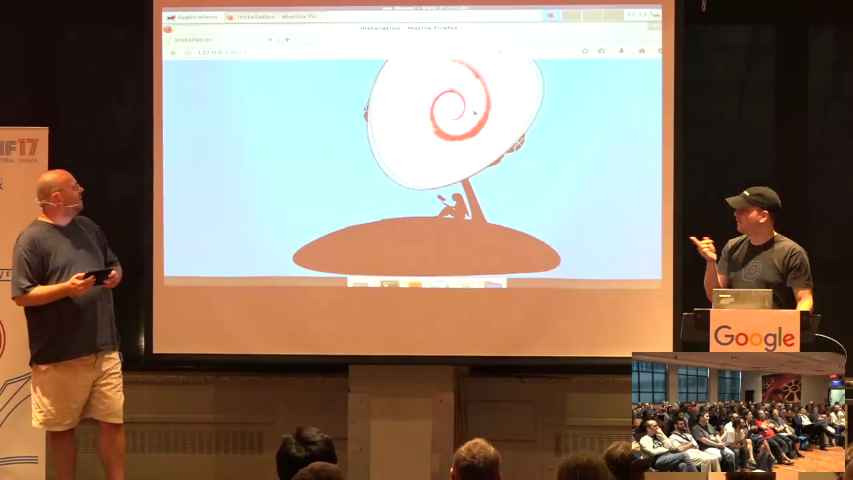
Three years ago, I realized that propellor (my configuration management system that is configured using haskell) could be used as an installer for Debian (or other versions of Linux). In propellor is d-i 2.0, I guessed it would take "a month and adding a few thousand lines of code". I've now taken that month, and written that code, and I presented the result at DebConf yesterday. I demoed propellor building a live Debian installation image, and then handed it off to a volenteer from the audience to play with its visual user interface and perform the installation. The whole demo took around 20 minutes, and ended with a standard Debian desktop installation. (Video) The core idea is to reuse the same configuration management system for several different purposes.
  1. Building a bootable disk image that can be used as both a live system and as an OS installer.
  2. Running on that live system, to install the target system. Which can just involve copying the live system to the target disk and then letting the configuration management system make the necessary changes to get from the live system configuration to the target system configuration.
  3. To support such things as headless arm boards, building customized images tuned for the target board and use case, that can then simply be copied to the board to install.
  4. Optionally, running on the installed system later, to futher customize it. Starting from the same configuration that produced the installed system in the first place.
There can be enourmous code reuse here, and improvements made for one of those will often benefit all the rest as well. Once everything is handled by configuration management, all user interface requirements become just a matter of editing the configuration. Including: That's the gist of it. Configuration management reused for installation and image building, and multiple editor interfaces to make it widely usable. I was glad, sitting in to a BoF session before my talk, that several people in Debian are already thinking along similar lines. And if Debian wanted to take this work and run with it, I'd be glad to assist as propellor's maintainer. But the idea is more important than the code and I hope my elaboration of it helps point a way if not the way. While what I've built installs Debian, little of it is Debian-specific. It would probably be easy to port it to Arch Linux, which propellor already supports. There are Linux-specific parts, so porting to FreeBSD would be harder, but propellor knows, at the type level which OSs properties support, which will ease porting. GuixSD and NixOS already use configuration management for installation, and were part of my inspiration. I've extended what they do in some ways (in other ways they remain far ahead).
The code is here. And here are some links to more details about what I built, and ideas encountered along the way:

7 August 2017

Rapha&#235;l Hertzog: My Free Software Activities in July 2017

My monthly report covers a large part of what I have been doing in the free software world. I write it for my donors (thanks to them!) but also for the wider Debian community because it can give ideas to newcomers and it s one of the best ways to find volunteers to work with me on projects that matter to me. Debian LTS This month I was allocated 12 hours but I only managed to work for 7 hours (due to vacation and unanticipated customer work). I gave back the remaining hours to the pool as I didn t want to carry them over for August which will be also short due to vacation (BTW I m not attending Debconf). I spent my 7 hours doing CVE triaging during the week where I was in charge of the LTS frontdesk (I committed 22 updates to the security tracker). I did publish DLA-1010-1 on vorbis-tools but the package update had been prepared by Petter Reinholdtsen. Misc Debian work zim. I published an updated package in experimental (0.67~rc2-2) with the upstream bug fixes on the current release candidate. The final version has been released during my vacation and I will soon upload it to unstable. Debian Handbook. I worked with Petter Reinholdtsen to finalize the paperback version of the Norwegian translation of the Debian Administrator s Handbook (still covering Debian 8 Jessie). It s now available. Bug reports. I filed a few bugs related to my Kali work. #868678: autopkgtest s setup-testbed script is not friendly to derivatives. #868749: aideinit fails with syntax errors when /etc/debian_version contains spaces. debian-installer. I submitted a few d-i patches that I prepared for a customer who had some specific needs (using the hd-media image to boot the installer from an ISO stored in an LVM logical volume). I made changes to debian-installer-utils (#868848), debian-installer (#868852), and iso-scan (#868859, #868900). Thanks See you next month for a new summary of my activities.

No comment Liked this article? Click here. My blog is Flattr-enabled.

6 August 2017

Joachim Breitner: Communication Failure

I am still far from being a professor, but I recently got a glimps of what awaits you in that role
From: Sebastian R. < @gmail.com>
To: joachim@cis.upenn.edu
Subject: re: Errors I've spotted a basic error in your course on Haskell (https://www.seas.upenn.edu/~cis194/fall16/). Before I proceed, it's cool if you're not receptive to errors being indicated; I've come across a number of professors who would rather take offense than admit we're all human and thus capable of making mistakes... My goal is to find a resource that might be useful well into the future, and a good indicator of that is how responsive the author is to change. In your introduction note you have written:
n contrast to a classical intro into Haskell, we do not start with numbers, booleans, tuples, lists and strings, but we start with pictures. These are of course library-defined (hence the input CodeWorld) and not part of the language . But that does not make them less interesting, and in fact, even the basic boolean type is library defined it just happens to be the standard library.
Howeverm there is no input CodeWorld in the code above. Have you been made aware of this error earlier? Regards, ...
Nice. I like when people learn from my lectures. The introduction is a bit werid, but ok, maybe this guy had some bad experiences. Strangley, I don t see a mistake in the material, so I respond:
From: Joachim Breitner <noscript>joachim at cis dot upenn dot edu</noscript>
To: Sebastian R. < @gmail.com>
Subject: Re: Errors Dear Sebastian, thanks for pointing out errors. But the first piece of code under Basic Haskell starts with
 -# LANGUAGE OverloadedStrings #- 
import CodeWorld
so I am not sure what you are referring to. Note that these are lecture notes, so you have to imagine a lecturer editing code live on stage along with it. If you only have the notes, you might have to infer a few things. Regards, Joachim
A while later, I receive this response:
From: Sebastian R. < @gmail.com>
To: Joachim Breitner <noscript>joachim at cis dot upenn dot edu</noscript>
Subject: Re: Errors Greetings, Joachim. Kindly open the lecture slides and search for "input CodeWorld" to find the error; it is not in the code, but in the paragraph that implicitly refers back to the code. You might note that I quoted this precisely from the lectures... and so I repeat myself... this came from your lectures; they're not my words!
In contrast to a classical intro into Haskell, we do not start with numbers, booleans, tuples, lists and strings, but we start with pictures. These are of course library-defined (hence the input CodeWorld) and not part of the language . But that does not make them less interesting, and in fact, even the basic boolean type is library defined it just happens to be the standard library.
This time around, I've highlighted the issue. I hope that made it easier for you to spot... Nonetheless, I got my answer. Don't reply if you're going to fight tooth and nail about such a basic fix; it's simply a waste of both of our time. I'd rather learn from somewhere else... On Tue, Aug 1, 2017 at 11:19 PM, Joachim Breitner <noscript>joachim at cis dot upenn dot edu</noscript> wrote:
I am a bit reminded of Sean Spicer they re not my words! but clearly I am missing something. And indeed I am: In the code snippet, I wrote correctly import CodeWorld, but in the text I had input CodeWorld. I probably did write LaTeX before writing the lecture notes. Well, glad to have that sorted out. I fixed the mistake and wrote back:
From: Joachim Breitner <noscript>joachim at cis dot upenn dot edu</noscript>
To: Sebastian R. < @gmail.com>
Betreff: Re: Errors Dear Sebastian, nobody is fighting, and I see the mistake now: The problem is not that the line is not in the code, the problem is that there is a typo in the line and I wrote input instead of import . Thanks for the report, although you did turn it into quite a riddle a simple you wrote import when it should have been import would have been a better user of both our time. Regards, Joachim Am Donnerstag, den 03.08.2017, 13:32 +1000 schrieb Sebastian R.:
(And it seems I now made the inverse typo, writing import instead of input . Anyways, I did not think of this any more until a few days later, when I found this nice message in my mailbox:
From: Sebastian R. < @gmail.com>
To: Joachim Breitner <noscript>joachim at cis dot upenn dot edu</noscript>
Subject: Re: Errors
a simple you wrote import when it should have been import would have been a better user of both our time.
We're both programmers. How about I cut ALL of the unnecessary garbage and just tell you to s/import/input/ on that last quotation (the thing immediately before this paragraph, in case you didn't know). I blatantly quoted the error, like this:
In your introduction note you have written:
n contrast to a classical intro into Haskell, we do not start with numbers, booleans, tuples, lists and strings, but we start with pictures. These are of course library-defined (hence the input CodeWorld) and not part of the language . But that does not make them less interesting, and in fact, even the basic boolean type is library defined it just happens to be the standard library.
Howeverm there is no input CodeWorld in the code above.
Since that apparently wasn't clear enough, in my second email to you I had to highlight it like so:
You might note that I quoted this precisely from the lectures... and so I repeat myself... this came from your lectures; they're not my words!
In contrast to a classical intro into Haskell, we do not start with numbers, booleans, tuples, lists and strings, but we start with pictures. These are of course library-defined (hence the input CodeWorld) and not part of the language . But that does not make them less interesting, and in fact, even the basic boolean type is library defined it just happens to be the standard library.
This time around, I've highlighted the issue. I hope that made it easier for you to spot...
I'm not sure if you're memeing at me or not now, but it seems either your reading comprehension, or your logical deduction skills might be substandard. Unfortunately, there isn't much either of us can do about that, so I'm happy to accept that some people will be so stupid; after all, it's to be expected and if we don't accept that which is to be expected then we live our lives in denial. Happy to wrap up this discusson here, Seb... On Fri, Aug 4, 2017 at 12:22 AM, Joachim Breitner <noscript>joachim at cis dot upenn dot edu</noscript> wrote:
Well, I chose to be amused by this, and I am sharing my amusement with you.

5 August 2017

Daniel Silverstone: USB Device Stacks, on RTFM, part 2

Previously we talked about all the different kinds of descriptors which USB devices use to communicate their capability. This is important stuff because to write any useful USB device firmware we need to be able to determine how to populate our descriptors. However, having that data on the device is entirely worthless without an understanding of how it gets from the device to the host so that it can be acted upon. To understand that, let's look at the USB wire protocol.
Note, I'll again be talking mostly about USB2.0 low- and full-speed. I believe that high speed is approximately the same but with faster wires, except not quite that simple.

Down to the wire I don't intend to talk about the actual electrical signalling, though it's not un-reasonable for you to know that USB is a pair of wires forming a differentially signalled bidirectional serial communications link. The host is responsible for managing all the framing and timing on the link, and for formatting the communications into packets. There are a number of packet types which can appear on the USB link:
Packet type Purpose
Token Packet When the host wishes to send a message to the Control endpoint to configure the device, read data IN, or write data OUT, it uses this to start the transaction.
Data(0/1) Packet Following a Setup, In, or Out token, a Data packet is a transfer of data (in either direction). The 0 and 1 alternate to provide a measure of confidence against lost packets.
Handshake Packet Following a data packet of some kind, the other end may ACK the packet (all was well), NAK the packet (report that the device cannot, temporarily, send/receive data, or that an interrupt endpoint isn't triggered), or STALL the bus in which case the host needs to intervene.
Start of Frame Every 1ms (full-speed) the host will send a SOF packet which carries a frame number. This can be used to help keep time on very simple devices. It also divides the bus into frames within which bandwidth is allocated.
As an example, when the host wishes to perform a control transfer, the following packets are transacted in turn:
  1. Setup Token - The host addresses the device and endpoint (OUT0)
  2. Data0 Packet - The host transmits a GET_DESCRIPTOR for the device descriptor
  3. Ack Packet - The device acknowledges receipt of the request
This marks the end of the first transaction. The device decodes the GET_DESCRIPTOR request and prepares the device descriptor for transmission. The transmission occurs as the next transaction on the bus. In this example, we're assuming 8 byte maximum transmission sizes, for illustrative purposes.
  1. In Token - The host addresses the device and endpoint (IN0)
  2. Data1 Packet - The device transmits the first 8 bytes of the descriptor
  3. Ack Packet - The host acknowledges the data packet
  4. In Token - The host addresses the device and endpoint (IN0)
  5. Data0 Packet - The device transmits the remaining 4 bytes of the descriptor (padded)
  6. Ack Packet - The host acknowledges the data packet
The second transaction is now complete, and the host has all the data it needs to proceed. Finally a status transaction occurs in which:
  1. Out Token - The host addresses the device and endpoint (OUT0)
  2. Data1 Packet - The host transmits a 0 byte data packet to indicate successful completion
  3. Ack Packet - The device acknowledges the completion, indicating its own satisfaction
And thus ends the full control transaction in which the host retrieves the device descriptor. From a high level, we need only consider the activity which occurs at the point of the acknowledgement packets. In the above example:
  1. On the first ACK the device prepares IN0 to transmit the descriptor, readying whatever low level device stack there is with a pointer to the descriptor and its length in bytes.
  2. On the second ACK the low levels are still thinking.
  3. On the third ACK the transmission from IN0 is complete and the endpoint no longer expects to transfer data.
  4. On the fourth ACK the control transaction is entirely complete.

Thinking at the low levels of the control interface Before we can build a high level USB stack, we need to consider the activity which might occur at the lower levels. At the low levels, particularly of the device control interface, work has to be done at each and every packet. The hardware likely deals with the token packet for us, leaving the data packets for us to process, and the resultant handshake packets will be likely handled by the hardware in response to our processing the data packets. Since every control transaction is initiated by a setup token, let's look at the setup requests which can come our way...
Setup Packet (Data) Format
Field Name Byte start Byte length Encoding Meaning
bmRequestType 0 1 Bitmap Describes the kind of request, and the target of it. See below.
bRequest 1 1 Code The request code itself, meanings of the rest of the fields vary by bRequest
wValue 2 2 Number A 16 bit value whose meaning varies by request type
wIndex 4 2 Number A 16 bit value whose meaning varies by request type but typically encodes an interface number or endpoint.
wLength 6 2 Number A 16 bit value indicating the length of the transfer to come.
Since bRequest is essentially a switch against which multiple kinds of setup packet are selected between, here's the meanings of a few...
GET_DESCRIPTOR (Device) setup packet
Field Name Value Meaning
bmRequestType 0x08 Data direction is IN (from device to host), recipient is the device
bRequest 0x06 GET_DESCRIPTOR (in this instance, the device descriptor is requested)
wValue 0x0001 This means the device descriptor
wIndex 0x0000 Irrelevant, there's only 1 device descriptor anyway
wLength 12 This is the length of a device descriptor (12 bytes)
SET_ADDRESS to set a device's USB address
Field Name Value Meaning
bmRequestType 0x00 Data direction is OUT (from host to device), recipient is the device
bRequest 0x05 SET_ADDRESS (Set the device's USB address)
wValue 0x00nn The address for the device to adopt (max 127)
wIndex 0x0000 Irrelevant for address setting
wLength 0 There's no data transfer expected for this setup operation
Most hardware blocks will implement an interrupt at the point that the Data packet following the Setup packet has been receive. This is typically called receiving a 'Setup' packet and then it's up to the device stack low levels to determine what to do and dispatch a handler. Otherwise an interrupt will fire for the IN or OUT tokens and if the endpoint is zero, the low level stack will handle it once more. One final thing worth noting about SET_ADDRESS is that it doesn't take effect until the completion of the zero-length "status" transaction following the setup transaction. As such, the status request from the host will still be sent to address zero (the default for new devices).

A very basic early "packet trace" This is an example, and is not guaranteed to be the packet sequence in all cases. It's a good indication of the relative complexity involved in getting a fresh USB device onto the bus though... When a device first attaches to the bus, the bus is in RESET state and so the first event a device sees is a RESET which causes it to set its address to zero, clear any endpoints, clear the configuration, and become ready for control transfers. Shortly after this, the device will become suspended. Next, the host kicks in and sends a port reset of around 30ms. After this, the host is ready to interrogate the device. The host sends a GET_DESCRIPTOR to the device, whose address at this point is zero. Using the information it receives from this, it can set up the host-side memory buffers since the device descriptor contains the maximum transfer size which the device supports. The host is now ready to actually 'address' the device, and so it sends another reset to the device, again around 30ms in length. The host sends a SET_ADDRESS control request to the device, telling it that its new address is nn. Once the acknowledgement has been sent from the host for the zero-data status update from the device, the device sets its internal address to the value supplied in the request. From now on, the device shall respond only to requests to nn rather than to zero. At this point, the host will begin interrogating further descriptors, looking at the configuration descriptors and the strings, to build its host-side representation of the device. These will be GET_DESCRIPTOR and GET_STRING_DESCRIPTOR requests and may continue for some time. Once the host has satisfied itself that it knows everything it needs to about the device, it will issue a SET_CONFIGURATION request which basically starts everything up in the device. Once the configuration is set, interrupt endpoints will be polled, bulk traffic will be transferred, Isochronous streams begin to run, etc.

Okay, but how do we make this concrete? So far, everything we've spoken about has been fairly abstract, or at least "soft". But to transfer data over USB does require some hardware. (Okay, okay, we could do it all virtualised, but there's no fun in that). The hardware I'm going to be using for the duration of this series is the STM32 on the blue-pill development board. This is a very simple development board which does (in theory at least) support USB device mode. If we view the schematic for the blue-pill, we can see a very "lightweight" USB interface which has a pullup resistor for D+. This is the way that a device signals to the host that it is present, and that it wants to speak at full-speed. If the pullup were on D- then it would be a low-speed device. High speed devices need a little more complexity which I'm not going to go into for today. The USB lines connect to pins PA11 and PA12 which are the USB pins on the STM32 on the board. Since USB is quite finicky, the STM32 doesn't let you remap that function elsewhere, so this is all looking quite good for us so far. The specific STM32 on the blue-pill is the STM32F103C8T6. By viewing its product page on ST's website we can find the reference manual for the part. Jumping to section 23 we learn that this STM32 supports full-speed USB2.0 which is convenient given the past article and a half. We also learn it supports up to eight endpoints active at any one time, and offers double-buffering for our bulk and isochronous transfers. It has some internal memory for packet buffering, so it won't use our RAM bandwidth while performing transfers, which is lovely. I'm not going to distill the rest of that section here, because there's a large amount of data which explains how the USB macrocell operates. However useful things to note are:
  • How IN OUT and SETUP transfers work.
  • How the endpoint buffer memory is configured.
  • That all bus-powered devices MUST respond to suspend/resume properly
  • That the hardware will prioritise endpoint interrupts for us so that we only need deal with the most pressing item at any given time.
  • There is an 'Enable Function' bit in the address register which must be set or we won't see any transactions at all.
  • How the endpoint registers signal events to the device firmware.
Next time, we're going to begin the process of writing a very hacky setup routine to try and initialise the USB device macrocell so that we can see incoming transactions through the ITM. It should be quite exciting, but given how complex this will be for me to learn, it might be a little while before it comes through.

2 August 2017

Markus Koschany: PDFsam: How to upgrade a Maven application for Debian

In the coming weeks and months I intend to write a mini series about packaging Java software for Debian. The following article basically starts in the middle of this journey because the PDFsam upgrade is still fresh in my mind. It requires some preexisting knowledge about build tools like Maven and some Java terminology. But do not fear. Hopefully it will make sense in the end when all pieces fall into place. A month ago I decided to upgrade PDFsam, a Java application to split, merge, extract, mix and rotate PDF documents. The current version 1.1.4 is already seven years old and uses Ant as its build system. Unfortunately up to now nobody was interested enough to invest the time to upgrade it to the latest version. A quick internet search unveils that the current sources can be found on github.com. Another brief look reveals we are dealing with a Maven project here because we can find a pom.xml file in the root directory and there is no sign of Ant s typical build.xml file anymore. Here are some general tips how to proceed from this point by using the PDFsam upgrade as an example. Find out how many new dependencies you really need The pom.xml file declares its dependencies in the <dependencies> section. It is good practice to inspect the pom.xml file and determine how much work will be required to upgrade the package. A seasoned Java packager will quickly find common dependencies like Hibernate or the Apache Commons libraries. Fortunately for you they are already packaged in Debian because a lot of projects depend on them. If you are unsure what is and what is not packaged for Debian, tracker.debian.org and codesearch.debian.net are useful tools to search for those packages. If in doubt just ask on debian-java@lists.debian.org. There is no automagical tool (yet) to find out what dependencies are really new (we talk about mh_make soon) but if you use the aforementioned tools and websites you will notice that in June 2017 one could not find the following artifacts: fontawesomefx, eventstudio, sejda-* and jackson-jr-objects. There are also jdepend and testFx but notice they are marked as <scope>test</scope> meaning they are only required if you would like to run upstream s test suite as well. For the sake of simplicity, it is best to ignore them for now and to focus on packaging only dependencies which are really needed to compile the application. Test dependencies can always be added later. This pom.xml investigation leads us to the following conclusion: PDFsam depends on Sejda, a PDF library. Basically Sejda is the product of a major refactoring that happened years ago and allows upstream to develop PDFsam faster and in multiple directions. For Debian packagers it is quite clear now that the upgrade of PDFsam is in reality more like packaging a completely new application. The inspection of Sejda s pom.xml file (another Maven project) reveals we also have to package imgscalr, Twelvemonkeys and SAMBox. We continue with these pom.xml analyses and end up with these new source packages: jackson-jr, libimgscalr-java, libsambox-java, libsejda-java, libsejda-injector-java, libsejda-io-java, libsejda-eventstudio-java, libtwelvemonkeys-java, fontawesomefx and libpdfbox2-java. Later I discovered that gettext-maven-plugin was also required. This was not obvious at first glance if you only check the pom.xml in the root directory but PDFsam and Sejda are multi-module projects! In this case every subdirectory (module) contains another pom.xml with additional information, so ideally you should check those too before you decide to start with your packaging. But don t worry it is often possible to ignore modules with a simple ignore rule inside your debian/*.poms file. The package will have less functionality but it can be still useful if you only need a subset of the modules. Of course in this case ignoring the gettext-maven-plugin artifact would result in a runtime error. C est la vie. A brief remark about Java package names: Java library packages must be named like libXXX-java. This is important for binary packages to avoid naming collisions. We are more tolerant when it comes to source package names but in general we recommend to use the exact same name as for the binary package. There are exceptions like prefixing source packages with their well known project name like jackson-XXX or jboss-XXX but this should only be used when there are already existing packages that use such a naming scheme. If in doubt, talk to us. mh_make or how to quickly generate an initial debian directory Packaging a Maven library is usually not very difficult even if it consists of multiple modules. The tricky part is to get the maven.rules, maven.IgnoreRules and your *.poms file right but debian/rules often only consists of a single dh line and the rest is finding the build-dependencies and adding them to debian/control. A small tool called mh_make, which is included in maven-debian-helper, can lend you a helping hand. The tool is not perfect yet. It requires that most build-dependencies are already installed on your local system, otherwise it won t create the initial debian directory and will only produce some unfinished (but in some cases still useful) files. A rule of thumb is to start with a package that does not depend on any other new dependency and requires the fewest build-dependencies. I have chosen libtwelvemonkeys-java because it was the simplest package and met the aforementioned criteria. Here is how mh_make looks like in action. (The animated GIF was created with Byzanz) First of all download the release tarball, unpack it and run mh_make inside the root directory. Ok, what is happening here? First you can choose a source and binary package name. Then disable the tests and don t run javadoc to create the documentation. This will simplify things a little. Tests and javadoc settings can be added later. Choose the version you want to package and then you can basically follow the default recommendations and confirm them by hitting the Enter key. Throughout the project we choose to transform the upstream version with the symbolic debian version. Remember that Java/Maven is version-centric. This will ensure that our Maven dependencies are always satisfied later and we can simply upgrade our Maven libraries and don t have to change the versions by hand in various pom.xml files; maven-debian-helper will automatically transform them for us to debian . Enable all modules. If you choose not to, you can select each module individually. Note that later on some of the required build-dependencies cannot be found because they are either not installed (libjmagick6-java) or they cannot be found in Debian s Maven repository under /usr/share/maven-repo. You can fix this by entering a substitution rule or, as I did in this case, you can just ignore these artifacts for now. They will be added to maven.IgnoreRules. In order to successfully compile your program you have to remove them from this file later again, create the correct substitution rule in maven.rules and add the missing build-dependencies to debian/control. For now we just want to quickly create our initial debian directory. If everything went as planned a complete debian directory should be visible in your root directory. The only thing left is to fix the substitution rule for the Servlet API 3.1. Add libservlet3.1-java to Build-Depends and the following rule to maven.rules: javax.servlet s/servlet-api/javax.servlet-api/ * s/.*/3.1/ * *
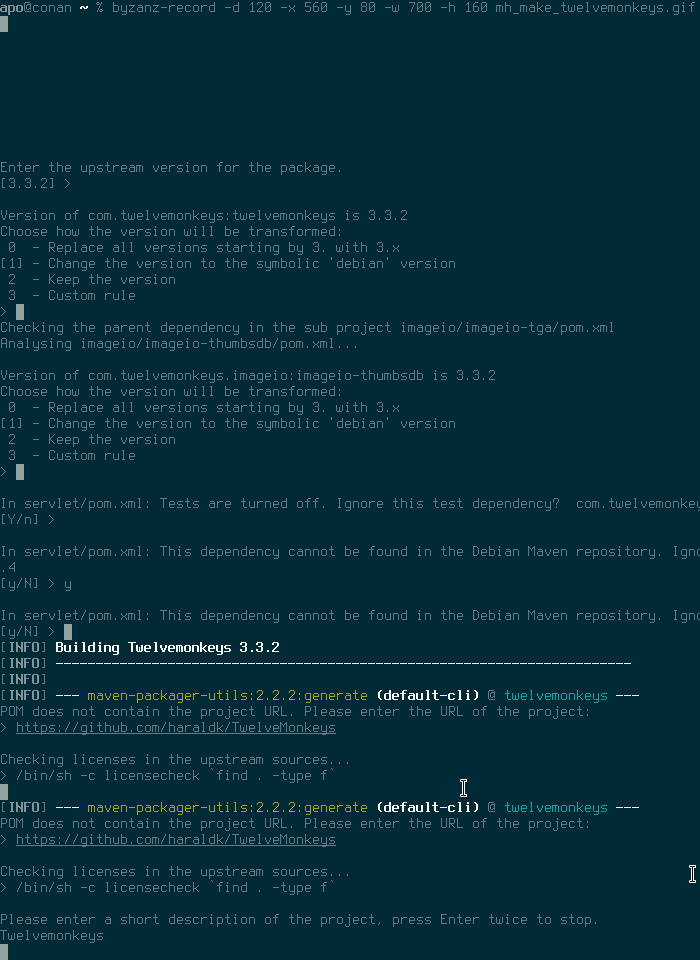
s/javax.servlet/javax.servlet.jsp/ s/jsp-api/javax.servlet.jsp-api/ * s/.*/2.3/ * * The maven.rules file consists of multiple rows separated by six columns. The values represent groupId, artifactId, type, version number and two fields which I never use.  You can just use an asterisk to match any value. Every value can be substituted. This is necessary when the value of upstream s pom.xml file differs from Debian s system packages. This happens frequently for API packages which are uploaded to Maven Central multiple times under a different groupId/artifactId but provide the same features. In this case the Twelvemonkeys pom requires an older API version but Debian is already at version 3.1. Note that we require a strict version number in this case because libservlet3.1-java does not use a symbolic debian version since we provide more than one Servlet API in the archive and this measure prevents conflicts. Thanks for reading this far. More articles about Java packaging will follow in the near future and hopefully they will clarify some terms and topics which could only be briefly mentioned in this post.
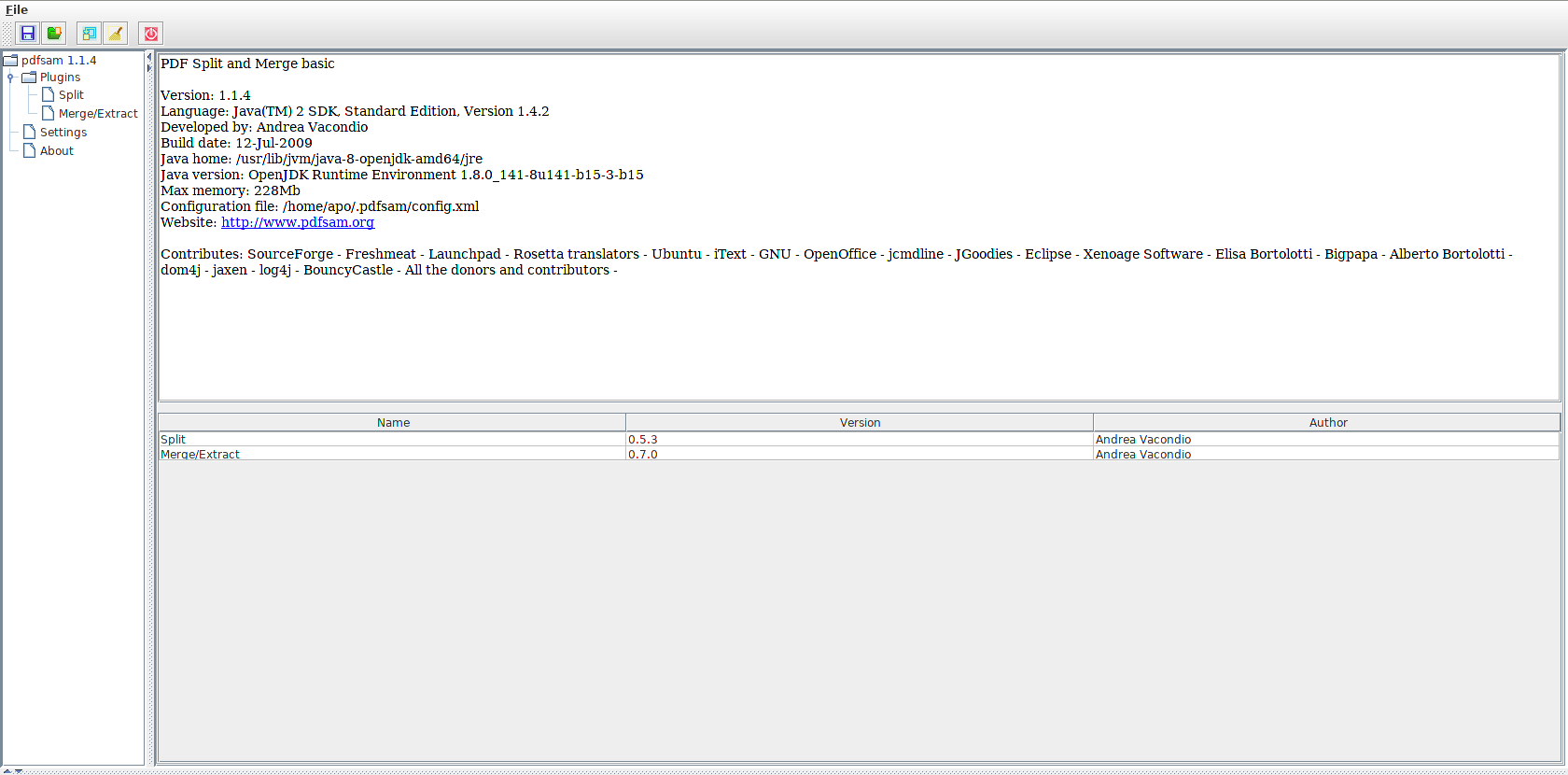
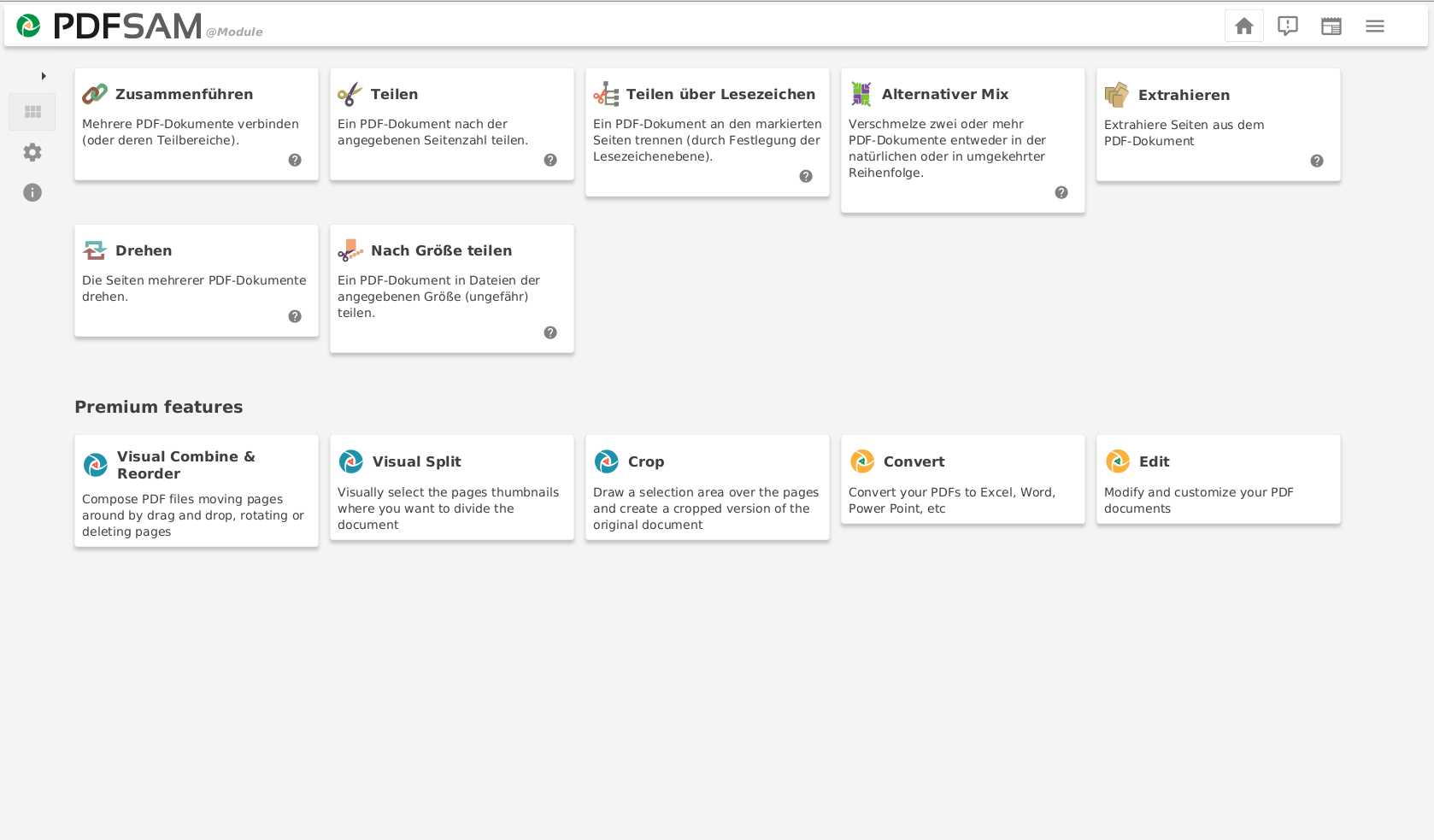
before

and after

1 August 2017

Paul Wise: FLOSS Activities July 2017

Changes

Issues

Review

Administration
  • Debian: fsck/reboot a buildd, reboot a segfaulting buildd, report/fix broken hoster contact, ping hoster about down machines, forcibly reset backup machine, merged cache patch for network-test.d.o, do some samhain dances, fix two stunnel services, update an IP address in LDAP, fix /etc/aliases on one host, reboot 1 non-responsive VM
  • Debian mentors: security updates, reboot
  • Debian wiki: whitelist several email addresses
  • Debian build log scanner: deploy my changes
  • Debian PTS: deploy my changes
  • Openmoko: security updates & reboots

Communication
  • Ping Advogato users on Planet Debian about updating/removing their feeds since it shut down
  • Invite deepin to the Debian derivatives census
  • Welcome Deepin to the Debian derivatives census
  • Inquire about the status of GreenboneOS, HandyLinux

Sponsors All work was done on a volunteer basis.

Reproducible builds folks: Reproducible Builds: Weekly report #118

Here's what happened in the Reproducible Builds effort between Sunday July 23 and Saturday July 29 2017: Toolchain development and fixes Packages reviewed and fixed, and bugs filed Reviews of unreproducible packages 4 package reviews have been added, 2 have been updated and 24 have been removed in this week, adding to our knowledge about identified issues. Weekly QA work During our reproducibility testing, FTBFS bugs have been detected and reported by: diffoscope development Misc. This week's edition was written by Chris Lamb, Mattia Rizzolo & reviewed by a bunch of Reproducible Builds folks on IRC & the mailing lists.

31 July 2017

Chris Lamb: Free software activities in July 2017

Here is my monthly update covering what I have been doing in the free software world during July 2017 (previous month): I also blogged about my recent lintian hacking and installation-birthday package.
Reproducible builds

Whilst anyone can inspect the source code of free software for malicious flaws, most software is distributed pre-compiled to end users. The motivation behind the Reproducible Builds effort is to permit verification that no flaws have been introduced either maliciously or accidentally during this compilation process by promising identical results are always generated from a given source, thus allowing multiple third-parties to come to a consensus on whether a build was compromised. (I have generously been awarded a grant from the Core Infrastructure Initiative to fund my work in this area.) This month I:
  • Assisted Mattia with a draft of an extensive status update to the debian-devel-announce mailing list. There were interesting follow-up discussions on Hacker News and Reddit.
  • Submitted the following patches to fix reproducibility-related toolchain issues within Debian:
  • I also submitted 5 patches to fix specific reproducibility issues in autopep8, castle-game-engine, grep, libcdio & tinymux.
  • Categorised a large number of packages and issues in the Reproducible Builds "notes" repository.
  • Worked on publishing our weekly reports. (#114 #115, #116 & #117)

I also made the following changes to our tooling:
diffoscope

diffoscope is our in-depth and content-aware diff utility that can locate and diagnose reproducibility issues.

  • comparators.xml:
    • Fix EPUB "missing file" tests; they ship a META-INF/container.xml file. [ ]
    • Misc style fixups. [ ]
  • APK files can also be identified as "DOS/MBR boot sector". (#868486)
  • comparators.sqlite: Simplify file detection by rewriting manual recognizes call with a Sqlite3Database.RE_FILE_TYPE definition. [ ]
  • comparators.directory:
    • Revert the removal of a try-except. (#868534)
    • Tidy module. [ ]

strip-nondeterminism

strip-nondeterminism is our tool to remove specific non-deterministic results from a completed build.

  • Add missing File::Temp imports in the JAR and PNG handlers. This appears to have been exposed by lazily-loading handlers in #867982. (#868077)

buildinfo.debian.net

buildinfo.debian.net is my experiment into how to process, store and distribute .buildinfo files after the Debian archive software has processed them.

  • Avoid a race condition between check-and-creation of Buildinfo instances. [ ]


Debian My activities as the current Debian Project Leader are covered in my "Bits from the DPL emails to the debian-devel-announce mailing list.
Patches contributed
  • obs-studio: Remove annoying "click wrapper" on first startup. (#867756)
  • vim: Syntax highlighting for debian/copyright files. (#869965)
  • moin: Incorrect timezone offset applied due to "84600" typo. (#868463)
  • ssss: Add a simple autopkgtest. (#869645)
  • dch: Please bump $latest_bpo_dist to current stable release. (#867662)
  • python-kaitaistruct: Remove Markdown and homepage references from package long descriptions. (#869265)
  • album-data: Correct invalid Vcs-Git URI. (#869822)
  • pytest-sourceorder: Update Homepage field. (#869125)
I also made a very large number of contributions to the Lintian static analysis tool. To avoid duplication here, I have outlined them in a separate post.

Debian LTS

This month I have been paid to work 18 hours on Debian Long Term Support (LTS). In that time I did the following:
  • "Frontdesk" duties, triaging CVEs, etc.
  • Issued DLA 1014-1 for libclamunrar, a library to add unrar support to the Clam anti-virus software to fix an arbitrary code execution vulnerability.
  • Issued DLA 1015-1 for the libgcrypt11 crypto library to fix a "sliding windows" information leak.
  • Issued DLA 1016-1 for radare2 (a reverse-engineering framework) to prevent a remote denial-of-service attack.
  • Issued DLA 1017-1 to fix a heap-based buffer over-read in the mpg123 audio library.
  • Issued DLA 1018-1 for the sqlite3 database engine to prevent a vulnerability that could be exploited via a specially-crafted database file.
  • Issued DLA 1019-1 to patch a cross-site scripting (XSS) exploit in phpldapadmin, a web-based interface for administering LDAP servers.
  • Issued DLA 1024-1 to prevent an information leak in nginx via a specially-crafted HTTP range.
  • Issued DLA 1028-1 for apache2 to prevent the leakage of potentially confidential information via providing Authorization Digest headers.
  • Issued DLA 1033-1 for the memcached in-memory object caching server to prevent a remote denial-of-service attack.

Uploads
  • redis:
    • 4:4.0.0-1 Upload new major upstream release to unstable.
    • 4:4.0.0-2 Make /usr/bin/redis-server in the primary package a symlink to /usr/bin/redis-check-rdb in the redis-tools package to prevent duplicate debug symbols that result in a package file collision. (#868551)
    • 4:4.0.0-3 Add -latomic to LDFLAGS to avoid a FTBFS on the mips & mipsel architectures.
    • 4:4.0.1-1 New upstream version. Install 00-RELEASENOTES as the upstream changelog.
    • 4:4.0.1-2 Skip non-deterministic tests that rely on timing. (#857855)
  • python-django:
    • 1:1.11.3-1 New upstream bugfix release. Check DEB_BUILD_PROFILES consistently, not DEB_BUILD_OPTIONS.
  • bfs:
    • 1.0.2-2 & 1.0.2-3 Use help2man to generate a manpage.
    • 1.0.2-4 Set hardening=+all for bindnow, etc.
    • 1.0.2-5 & 1.0.2-6 Don't use upstream's release target as it overrides our CFLAGS & install RELEASES.md as the upstream changelog.
    • 1.1-1 New upstream release.
  • libfiu:
    • 0.95-4 Apply patch from Steve Langasek to fix autopkgtests. (#869709)
  • python-daiquiri:
    • 1.0.1-1 Initial upload. (ITP)
    • 1.1.0-1 New upstream release.
    • 1.1.0-2 Tidy package long description.
    • 1.2.1-1 New upstream release.

I also reviewed and sponsored the uploads of gtts-token 1.1.1-1 and nlopt 2.4.2+dfsg-3.

Debian bugs filed
  • ITP: python-daiquiri Python library to easily setup basic logging functionality. (#867322)
  • twittering-mode: Correct incorrect time formatting due to "84600" typo. (#868479)

Next.

Previous.