Search Results: "ag"

7 March 2024

Petter Reinholdtsen: Plain text accounting file from your bitcoin transactions

A while back I wrote a small script to extract the Bitcoin transactions in a wallet in the ledger plain text accounting format. The last few days I spent some time to get it working better with more special cases. In case it can be useful for others, here is a copy:
#!/usr/bin/python3
#  -*- coding: utf-8 -*-
#  Copyright (c) 2023-2024 Petter Reinholdtsen
from decimal import Decimal
import json
import subprocess
import time
import numpy
def format_float(num):
    return numpy.format_float_positional(num, trim='-')
accounts =  
    u'amount' : 'Assets:BTC:main',
 
addresses =  
    '' : 'Assets:bankkonto',
    '' : 'Assets:bankkonto',
 
def exec_json(cmd):
    proc = subprocess.Popen(cmd,stdout=subprocess.PIPE)
    j = json.loads(proc.communicate()[0], parse_float=Decimal)
    return j
def list_txs():
    # get all transactions for all accounts / addresses
    c = 0
    txs = []
    txidfee =  
    limit=100000
    cmd = ['bitcoin-cli', 'listtransactions', '*', str(limit)]
    if True:
        txs.extend(exec_json(cmd))
    else:
        # Useful for debugging
        with open('transactions.json') as f:
            txs.extend(json.load(f, parse_float=Decimal))
    #print txs
    for tx in sorted(txs, key=lambda a: a['time']):
#        print tx['category']
        if 'abandoned' in tx and tx['abandoned']:
            continue
        if 'confirmations' in tx and 0 >= tx['confirmations']:
            continue
        when = time.strftime('%Y-%m-%d %H:%M', time.localtime(tx['time']))
        if 'message' in tx:
            desc = tx['message']
        elif 'comment' in tx:
            desc = tx['comment']
        elif 'label' in tx:
            desc = tx['label']
        else:
            desc = 'n/a'
        print("%s %s" % (when, desc))
        if 'address' in tx:
            print("  ; to bitcoin address %s" % tx['address'])
        else:
            print("  ; missing address in transaction, txid=%s" % tx['txid'])
        print(f"  ; amount= tx['amount'] ")
        if 'fee'in tx:
            print(f"  ; fee= tx['fee'] ")
        for f in accounts.keys():
            if f in tx and Decimal(0) != tx[f]:
                amount = tx[f]
                print("  %-20s   %s BTC" % (accounts[f], format_float(amount)))
        if 'fee' in tx and Decimal(0) != tx['fee']:
            # Make sure to list fee used in several transactions only once.
            if 'fee' in tx and tx['txid'] in txidfee \
               and tx['fee'] == txidfee[tx['txid']]:
                True
            else:
                fee = tx['fee']
                print("  %-20s   %s BTC" % (accounts['amount'], format_float(fee)))
                print("  %-20s   %s BTC" % ('Expences:BTC-fee', format_float(-fee)))
                txidfee[tx['txid']] = tx['fee']
        if 'address' in tx and tx['address'] in addresses:
            print("  %s" % addresses[tx['address']])
        else:
            if 'generate' == tx['category']:
                print("  Income:BTC-mining")
            else:
                if amount < Decimal(0):
                    print(f"  Assets:unknown:sent:update-script-addr- tx['address'] ")
                else:
                    print(f"  Assets:unknown:received:update-script-addr- tx['address'] ")
        print()
        c = c + 1
    print("# Found %d transactions" % c)
    if limit == c:
        print(f"# Warning: Limit  limit  reached, consider increasing limit.")
def main():
    list_txs()
main()
It is more of a proof of concept, and I do not expect it to handle all edge cases, but it worked for me, and perhaps you can find it useful too. To get a more interesting result, it is useful to map accounts sent to or received from to accounting accounts, using the addresses hash. As these will be very context dependent, I leave out my list to allow each user to fill out their own list of accounts. Out of the box, 'ledger reg BTC:main' should be able to show the amount of BTCs present in the wallet at any given time in the past. For other and more valuable analysis, a account plan need to be set up in the addresses hash. Here is an example transaction:
2024-03-07 17:00 Donated to good cause
    Assets:BTC:main                           -0.1 BTC
    Assets:BTC:main                       -0.00001 BTC
    Expences:BTC-fee                       0.00001 BTC
    Expences:donations                         0.1 BTC

It need a running Bitcoin Core daemon running, as it connect to it using bitcoin-cli listtransactions * 100000 to extract the transactions listed in the Wallet. As usual, if you use Bitcoin and want to show your support of my activities, please send Bitcoin donations to my address 15oWEoG9dUPovwmUL9KWAnYRtNJEkP1u1b.

Guido G nther: Phosh Nightly Package Builds

Tightening the feedback loop Link to heading One thing we notice ever so often is that although Phosh s source code is publicly available and upcoming changes are open for review the feedback loop between changes being made to the development branch and users noticing the change can still be quiet long. This can be problematic as we ideally want to catch a regression or broken use case triggered by a change on the development branch (aka main) before the general availability of a new version.


Gunnar Wolf: Constructed truths truth and knowledge in a post-truth world

This post is a review for Computing Reviews for Constructed truths truth and knowledge in a post-truth world , a book published in Springer Link
Many of us grew up used to having some news sources we could implicitly trust, such as well-positioned newspapers and radio or TV news programs. We knew they would only hire responsible journalists rather than risk diluting public trust and losing their brand s value. However, with the advent of the Internet and social media, we are witnessing what has been termed the post-truth phenomenon. The undeniable freedom that horizontal communication has given us automatically brings with it the emergence of filter bubbles and echo chambers, and truth seems to become a group belief. Contrary to my original expectations, the core topic of the book is not about how current-day media brings about post-truth mindsets. Instead it goes into a much deeper philosophical debate: What is truth? Does truth exist by itself, objectively, or is it a social construct? If activists with different political leanings debate a given subject, is it even possible for them to understand the same points for debate, or do they truly experience parallel realities? The author wrote this book clearly prompted by the unprecedented events that took place in 2020, as the COVID-19 crisis forced humanity into isolation and online communication. Donald Trump is explicitly and repeatedly presented throughout the book as an example of an actor that took advantage of the distortions caused by post-truth. The first chapter frames the narrative from the perspective of information flow over the last several decades, on how the emergence of horizontal, uncensored communication free of editorial oversight started empowering the netizens and created a temporary information flow utopia. But soon afterwards, algorithmic gatekeepers started appearing, creating a set of personalized distortions on reality; users started getting news aligned to what they already showed interest in. This led to an increase in polarization and the growth of narrative-framing-specific communities that served as echo chambers for disjoint views on reality. This led to the growth of conspiracy theories and, necessarily, to the science denial and pseudoscience that reached unimaginable peaks during the COVID-19 crisis. Finally, when readers decide based on completely subjective criteria whether a scientific theory such as global warming is true or propaganda, or question what most traditional news outlets present as facts, we face the phenomenon known as fake news. Fake news leads to post-truth, a state where it is impossible to distinguish between truth and falsehood, and serves only a rhetorical function, making rational discourse impossible. Toward the end of the first chapter, the tone of writing quickly turns away from describing developments in the spread of news and facts over the last decades and quickly goes deep into philosophy, into the very thorny subject pursued by said discipline for millennia: How can truth be defined? Can different perspectives bring about different truth values for any given idea? Does truth depend on the observer, on their knowledge of facts, on their moral compass or in their honest opinions? Zoglauer dives into epistemology, following various thinkers ideas on what can be understood as truth: constructivism (whether knowledge and truth values can be learnt by an individual building from their personal experience), objectivity (whether experiences, and thus truth, are universal, or whether they are naturally individual), and whether we can proclaim something to be true when it corresponds to reality. For the final chapter, he dives into the role information and knowledge play in assigning and understanding truth value, as well as the value of second-hand knowledge: Do we really own knowledge because we can look up facts online (even if we carefully check the sources)? Can I, without any medical training, diagnose a sickness and treatment by honestly and carefully looking up its symptoms in medical databases? Wrapping up, while I very much enjoyed reading this book, I must confess it is completely different from what I expected. This book digs much more into the abstract than into information flow in modern society, or the impact on early 2020s politics as its editorial description suggests. At 160 pages, the book is not a heavy read, and Zoglauer s writing style is easy to follow, even across the potentially very deep topics it presents. Its main readership is not necessarily computing practitioners or academics. However, for people trying to better understand epistemology through its expressions in the modern world, it will be a very worthy read.

Valhalla's Things: Jeans, step two. And three. And four.

Posted on March 7, 2024
Tags: madeof:atoms, FreeSoftWear
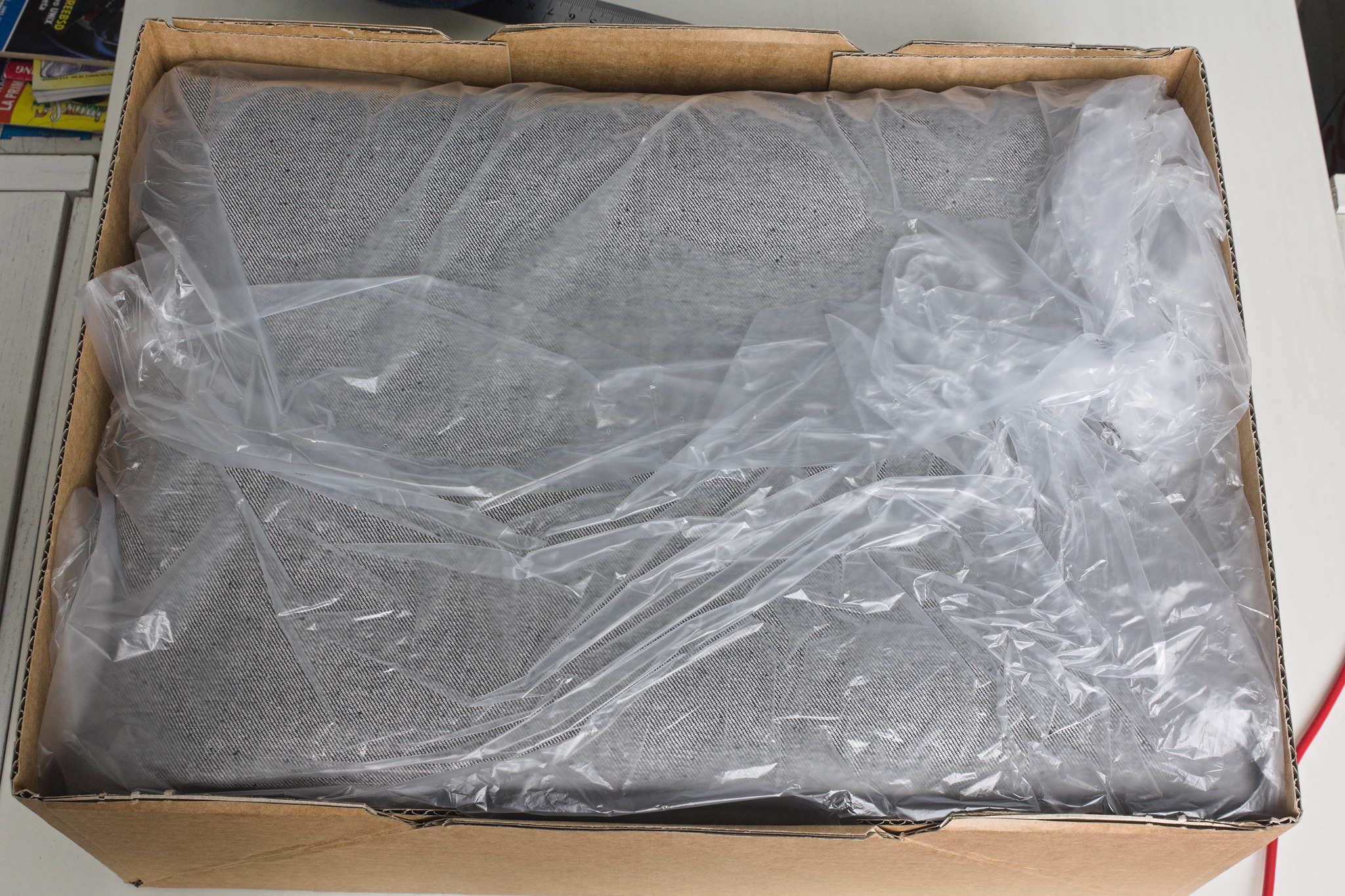
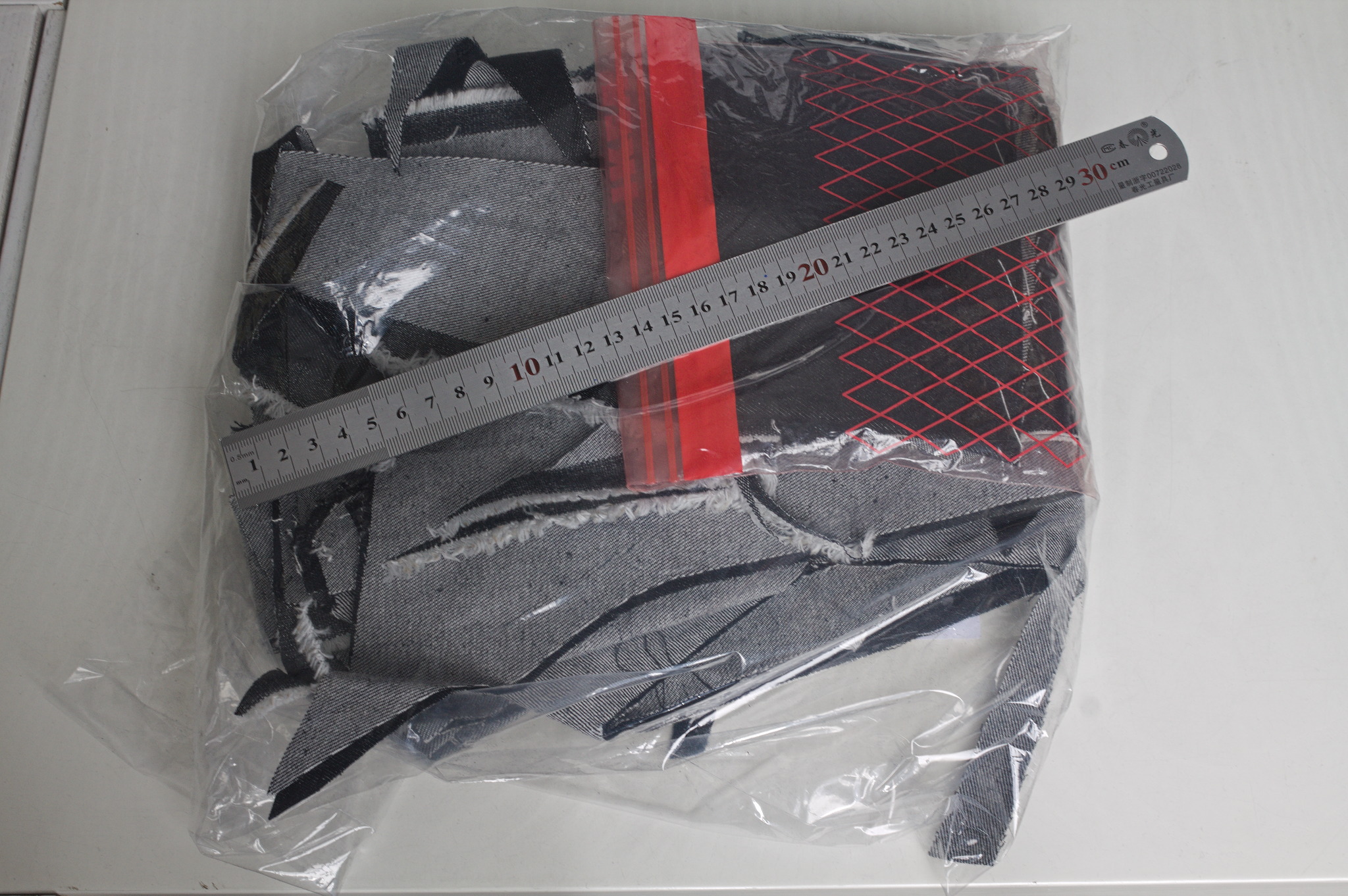
A woman wearing a regular pair of slim-cut black denim jeans. I was working on what looked like a good pattern for a pair of jeans-shaped trousers, and I knew I wasn t happy with 200-ish g/m cotton-linen for general use outside of deep summer, but I didn t have a source for proper denim either (I had been low-key looking for it for a long time). Then one day I looked at an article I had saved about fabric shops that sell technical fabric and while window-shopping on one I found that they had a decent selection of denim in a decent weight. I decided it was a sign, and decided to buy the two heaviest denim they had: a 100% cotton, 355 g/m one and a 97% cotton, 3% elastane at 385 g/m 1; the latter was a bit of compromise as I shouldn t really be buying fabric adulterated with the Scourge of Humanity, but it was heavier than the plain one, and I may be having a thing for tightly fitting jeans, so this may be one of the very few woven fabric where I m not morally opposed to its existence. And, I d like to add, I resisted buying any of the very nice wools they also seem to carry, other than just a couple of samples. Since the shop only sold in 1 meter increments, and I needed about 1.5 meters for each pair of jeans, I decided to buy 3 meters per type, and have enough to make a total of four pair of jeans. A bit more than I strictly needed, maybe, but I was completely out of wearable day-to-day trousers. a cardboard box with neatly folded black denim, covered in semi-transparent plastic. The shop sent everything very quickly, the courier took their time (oh, well) but eventually delivered my fabric on a sunny enough day that I could wash it and start as soon as possible on the first pair. The pattern I did in linen was a bit too fitting, but I was afraid I had widened it a bit too much, so I did the first pair in the 100% cotton denim. Sewing them took me about a week of early mornings and late afternoons, excluding the weekend, and my worries proved false: they were mostly just fine. The only bit that could have been a bit better is the waistband, which is a tiny bit too wide on the back: it s designed to be so for comfort, but the next time I should pull the elastic a bit more, so that it stays closer to the body. The same from the back, showing the applied pockets with a sewn logo. I wore those jeans daily for the rest of the week, and confirmed that they were indeed comfortable and the pattern was ok, so on the next Monday I started to cut the elastic denim. I decided to cut and sew two pairs, assembly-line style, using the shaped waistband for one of them and the straight one for the other one. I started working on them on a Monday, and on that week I had a couple of days when I just couldn t, plus I completely skipped sewing on the weekend, but on Tuesday the next week one pair was ready and could be worn, and the other one only needed small finishes. A woman wearing another pair of jeans; the waistband here is shaped to fit rather than having elastic. And I have to say, I m really, really happy with the ones with a shaped waistband in elastic denim, as they fit even better than the ones with a straight waistband gathered with elastic. Cutting it requires more fabric, but I think it s definitely worth it. But it will be a problem for a later time: right now three pairs of jeans are a good number to keep in rotation, and I hope I won t have to sew jeans for myself for quite some time. A plastic bag with mid-sized offcuts of denim; there is a 30 cm ruler on top that is just wider than the bag I think that the leftovers of plain denim will be used for a skirt or something else, and as for the leftovers of elastic denim, well, there aren t a lot left, but what else I did with them is the topic for another post. Thanks to the fact that they are all slightly different, I ve started to keep track of the times when I wash each pair, and hopefully I will be able to see whether the elastic denim is significantly less durable than the regular, or the added weight compensates for it somewhat. I m not sure I ll manage to remember about saving the data until they get worn, but if I do it will be interesting to know. Oh, and I say I ve finished working on jeans and everything, but I still haven t sewn the belt loops to the third pair. And I m currently wearing them. It s a sewist tradition, or something. :D


  1. The links are to the shop for Italy; you can copy the Codice prodotto and look for it on one of the shop version for other countries (where they apply the right vat etc., but sadly they don t allow to mix and match those settings and the language).

4 March 2024

Paulo Henrique de Lima Santana: Bits from FOSDEM 2023 and 2024

Link para vers o em portugu s

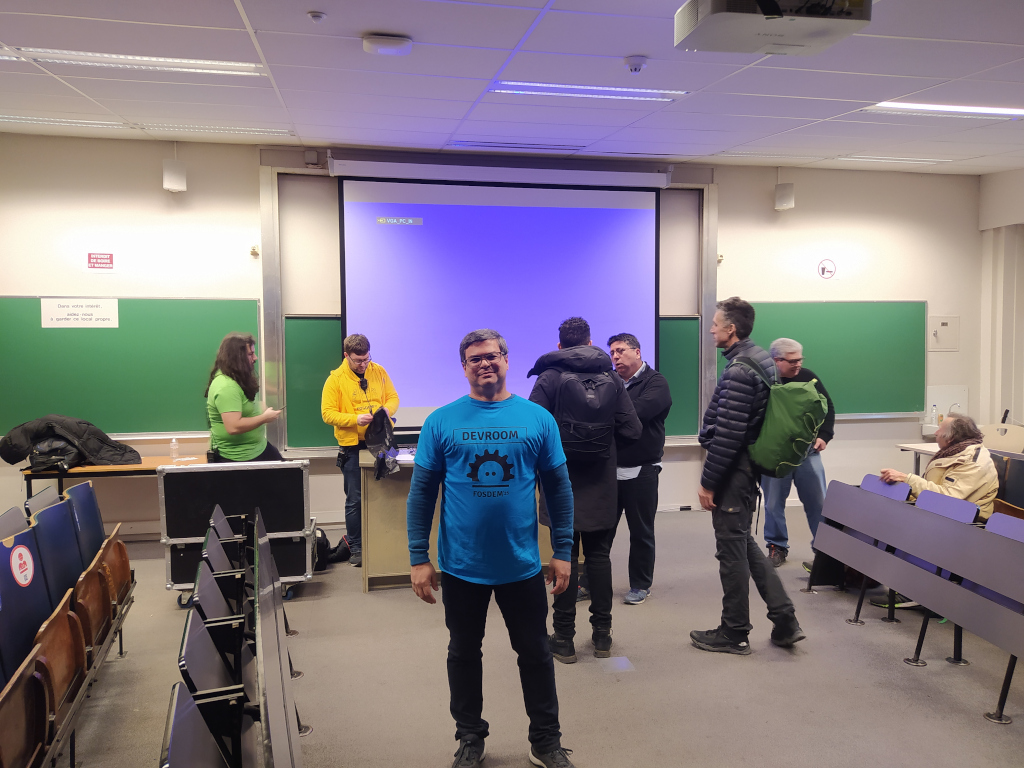
Intro Since 2019, I have traveled to Brussels at the beginning of the year to join FOSDEM, considered the largest and most important Free Software event in Europe. The 2024 edition was the fourth in-person edition in a row that I joined (2021 and 2022 did not happen due to COVID-19) and always with the financial help of Debian, which kindly paid my flight tickets after receiving my request asking for help to travel and approved by the Debian leader. In 2020 I wrote several posts with a very complete report of the days I spent in Brussels. But in 2023 I didn t write anything, and becayse last year and this year I coordinated a room dedicated to translations of Free Software and Open Source projects, I m going to take the opportunity to write about these two years and how it was my experience. After my first trip to FOSDEM, I started to think that I could join in a more active way than just a regular attendee, so I had the desire to propose a talk to one of the rooms. But then I thought that instead of proposing a tal, I could organize a room for talks :-) and with the topic translations which is something that I m very interested in, because it s been a few years since I ve been helping to translate the Debian for Portuguese.

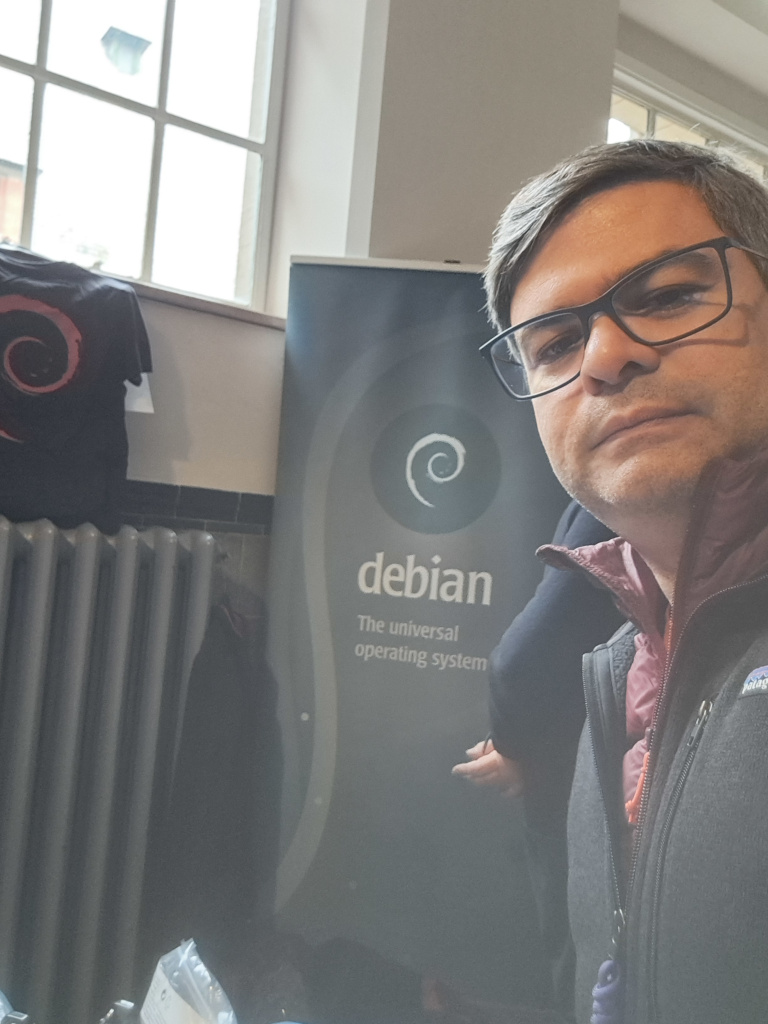
Joining FOSDEM 2023 In the second half of 2022 I did some research and saw that there had never been a room dedicated to translations, so when the FOSDEM organization opened the call to receive room proposals (called DevRoom) for the 2023 edition, I sent a proposal to a translation room and it was accepted! After the room was confirmed, the next step was for me, as room coordinator, to publicize the call for talk proposals. I spent a few weeks hoping to find out if I would receive a good number of proposals or if it would be a failure. But to my happiness, I received eight proposals and I had to select six to schedule the room programming schedule due to time constraints . FOSDEM 2023 took place from February 4th to 5th and the translation devroom was scheduled on the second day in the afternoon. Fosdem 2023 The talks held in the room were these below, and in each of them you can watch the recording video. And on the first day of FOSDEM I was at the Debian stand selling the t-shirts that I had taken from Brazil. People from France were also there selling other products and it was cool to interact with people who visited the booth to buy and/or talk about Debian.
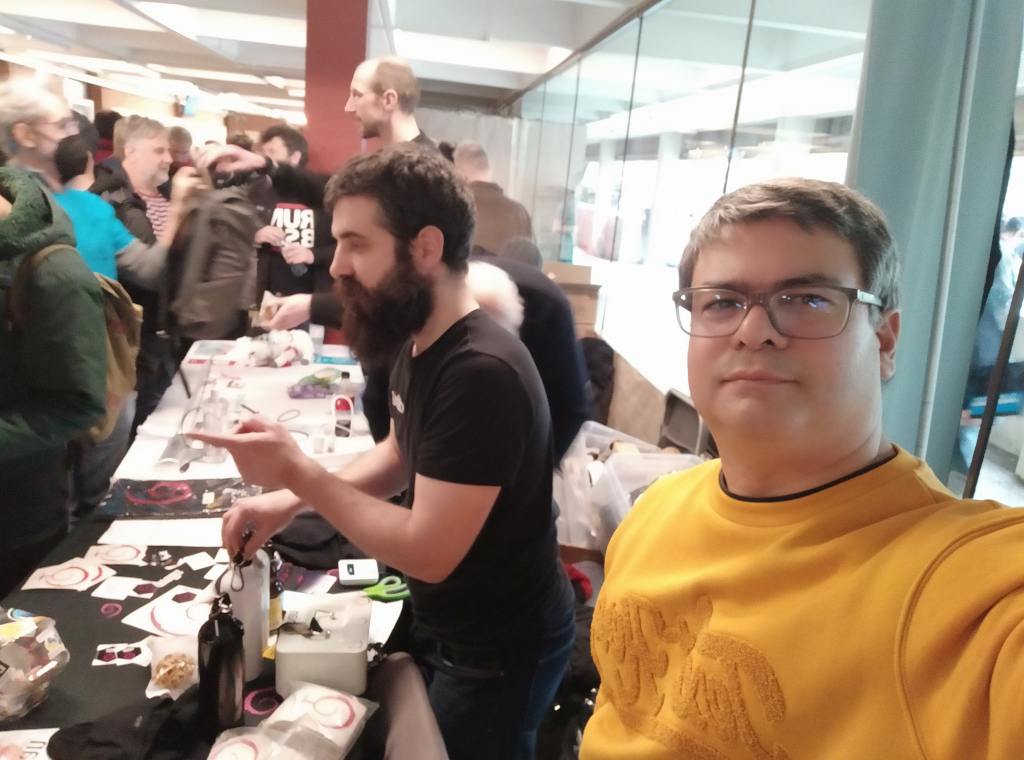
Fosdem 2023

Fosdem 2023
Photos

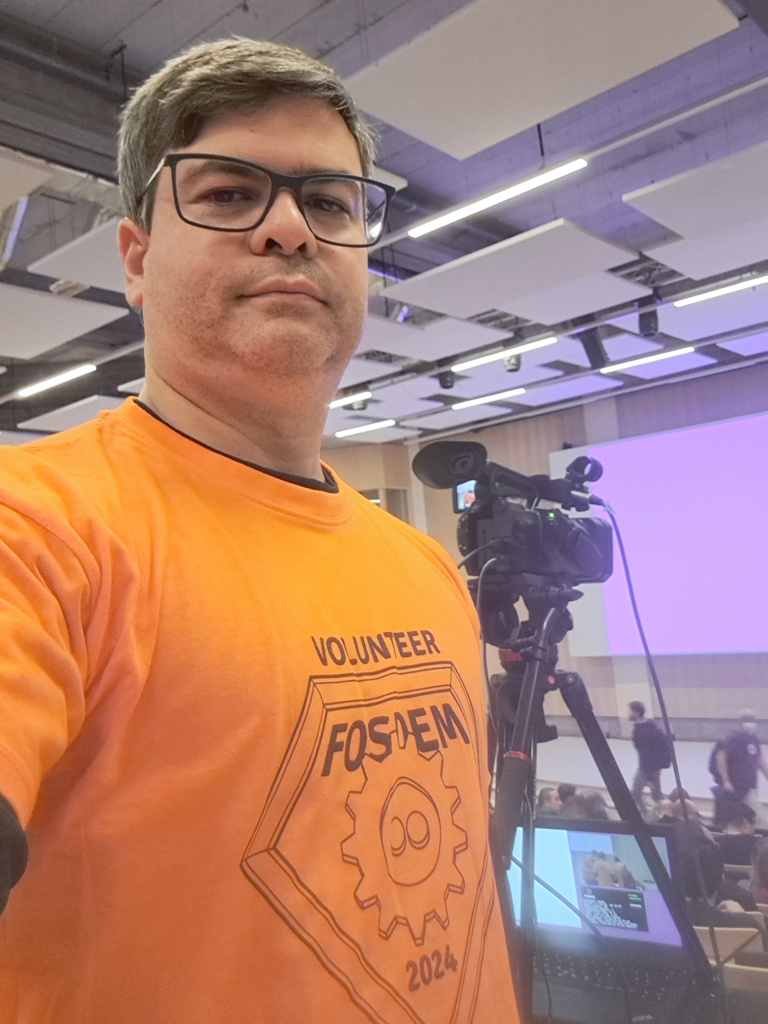
Joining FOSDEM 2024 The 2023 result motivated me to propose the translation devroom again when the FOSDEM 2024 organization opened the call for rooms . I was waiting to find out if the FOSDEM organization would accept a room on this topic for the second year in a row and to my delight, my proposal was accepted again :-) This time I received 11 proposals! And again due to time constraints, I had to select six to schedule the room schedule grid. FOSDEM 2024 took place from February 3rd to 4th and the translation devroom was scheduled for the second day again, but this time in the morning. The talks held in the room were these below, and in each of them you can watch the recording video. This time I didn t help at the Debian stand because I couldn t bring t-shirts to sell from Brazil. So I just stopped by and talked to some people who were there like some DDs. But I volunteered for a few hours to operate the streaming camera in one of the main rooms.
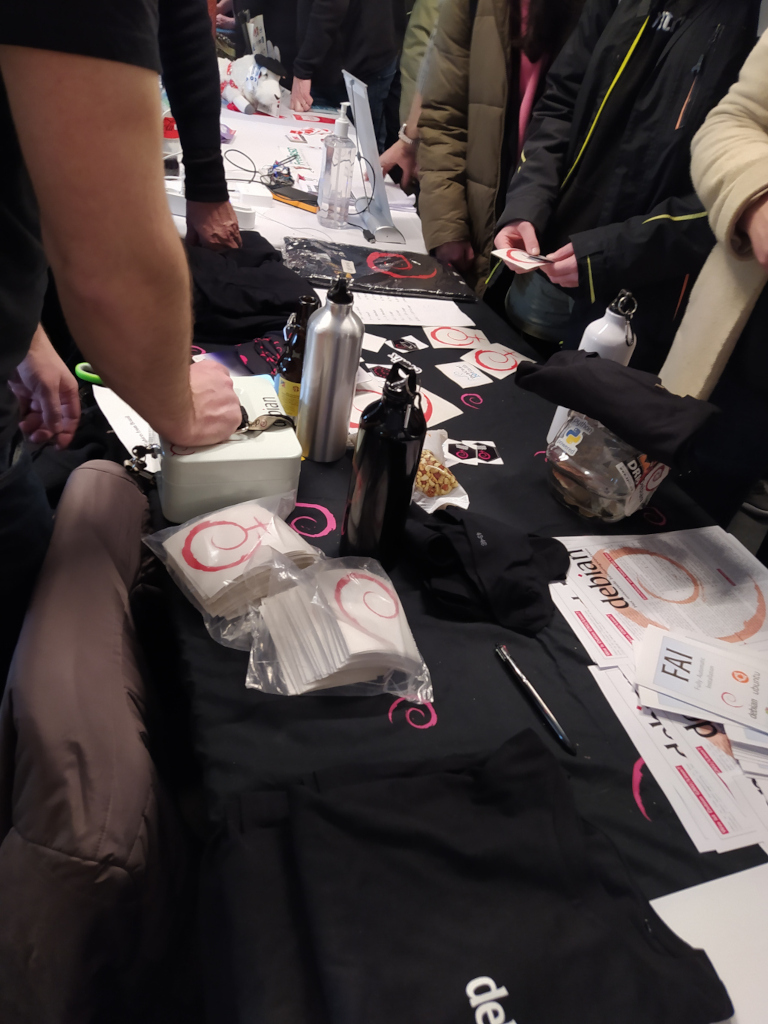
Fosdem 2024

Fosdem 2024
Photos

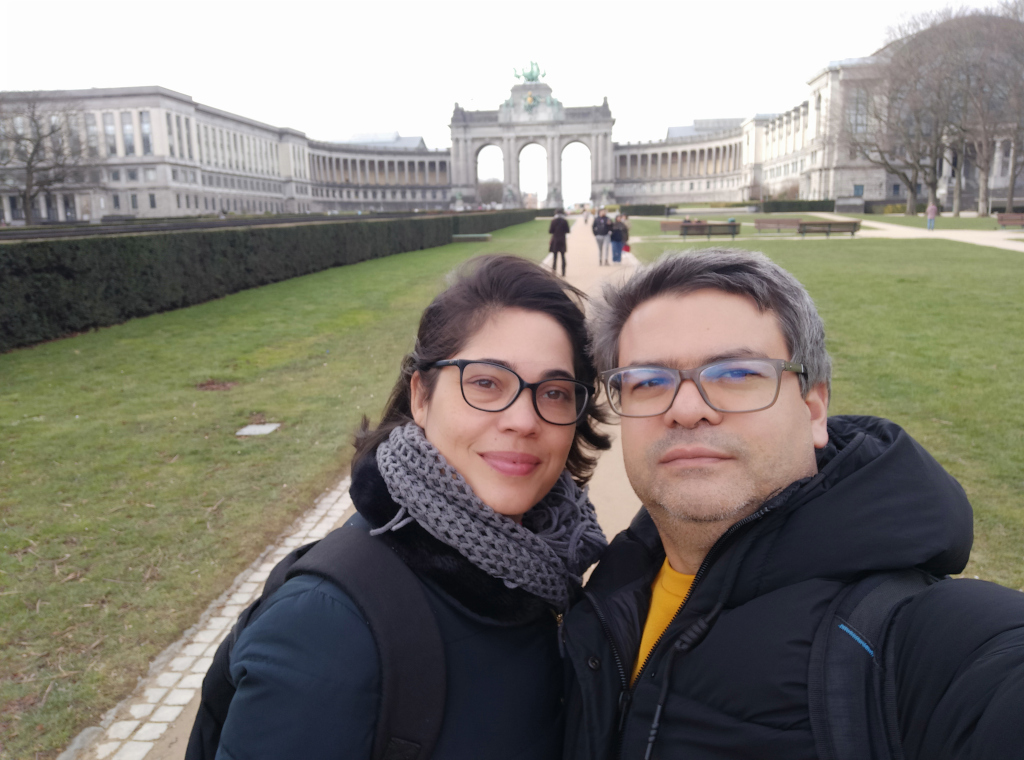
Conclusion The topics of the talks in these two years were quite diverse, and all the lectures were really very good. In the 12 talks we can see how translations happen in some projects such as KDE, PostgreSQL, Debian and Mattermost. We had the presentation of tools such as LibreTranslate, Weblate, scripts, AI, data model. And also reports on the work carried out by communities in Africa, China and Indonesia. The rooms were full for some talks, a little more empty for others, but I was very satisfied with the final result of these two years. I leave my special thanks to Jonathan Carter, Debian Leader who approved my flight tickets requests so that I could join FOSDEM 2023 and 2024. This help was essential to make my trip to Brussels because flight tickets are not cheap at all. I would also like to thank my wife Jandira, who has been my travel partner :-) Bruxelas As there has been an increase in the number of proposals received, I believe that interest in the translations devroom is growing. So I intend to send the devroom proposal to FOSDEM 2025, and if it is accepted, wait for the future Debian Leader to approve helping me with the flight tickets again. We ll see.

Dirk Eddelbuettel: tinythemes 0.0.2 at CRAN: Maintenance

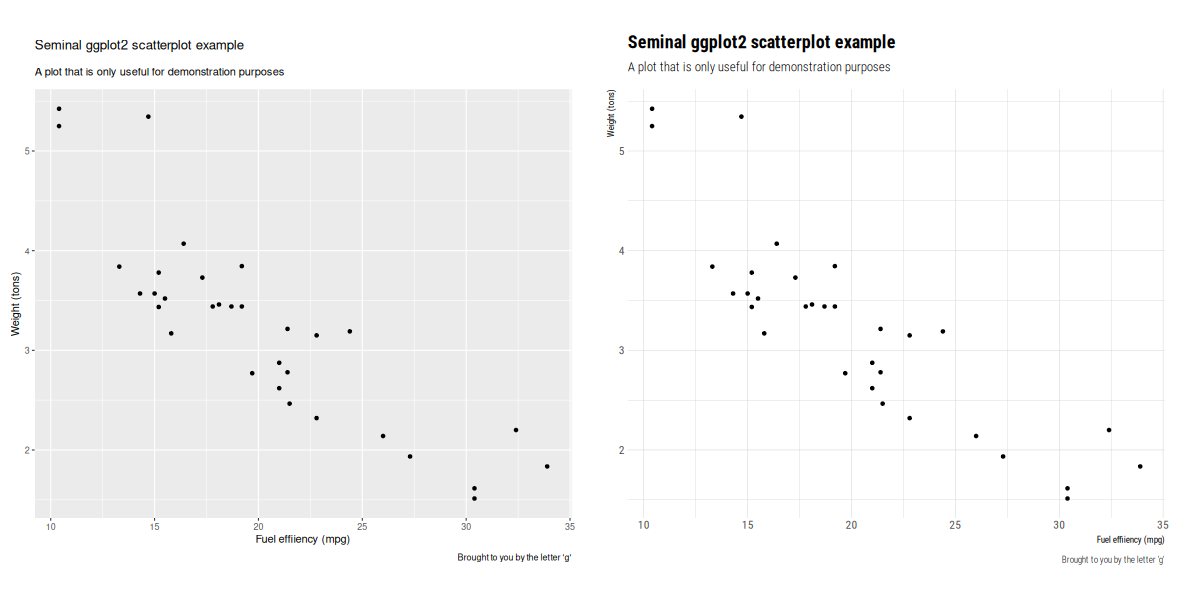
A first maintenance of the still fairly new package tinythemes arrived on CRAN today. tinythemes provides the theme_ipsum_rc() function from hrbrthemes by Bob Rudis in a zero (added) dependency way. A simple example is (also available as a demo inside the package) contrasts the default style (on left) with the one added by this package (on the right): This version mostly just updates to the newest releases of ggplot2 as one must, and takes advantage of Bob s update to hrbrthemes yesterday. The full set of changes since the initial CRAN release follows.
Changes in spdl version 0.0.2 (2024-03-04)
  • Added continuous integrations action based on r2u
  • Added demo/ directory and a READNE.md
  • Minor edits to help page content
  • Synchronised with ggplot2 3.5.0 via hrbrthemes

Courtesy of my CRANberries, there is a diffstat report relative to previous release. More detailed information is on the repo where comments and suggestions are welcome. If you like this or other open-source work I do, you can sponsor me at GitHub.

This post by Dirk Eddelbuettel originated on his Thinking inside the box blog. Please report excessive re-aggregation in third-party for-profit settings.

Colin Watson: Free software activity in January/February 2024

Two months into my new gig and it s going great! Tracking my time has taken a bit of getting used to, but having something that amounts to a queryable database of everything I ve done has also allowed some helpful introspection. Freexian sponsors up to 20% of my time on Debian tasks of my choice. In fact I ve been spending the bulk of my time on debusine which is itself intended to accelerate work on Debian, but more details on that later. While I contribute to Freexian s summaries now, I ve also decided to start writing monthly posts about my free software activity as many others do, to get into some more detail. January 2024 February 2024

3 March 2024

Iustin Pop: New corydalis 2024.9.0 release!

Obligatory and misused quote: It s not dead, Jim! I ve kind of dropped by ball lately on organising my own photo collection, but February was a pretty good month and I managed to write some more code for Corydalis, ending up with the aforementioned new release. The release is not a big one, but I did manage to solve one thing that was annoying me greatly: that lack of ability to play videos inline in one of the two picture viewing modes (in my preferred mode, in fact). Now, whether you re browsing through pictures, or looking at pictures one-by-one, you can in both cases play videos easily, and to some extent, as it should be . No user docs for that, yet (I actually need to split the manual in user/admin/developer parts) I did some more internal cleanups, and I ve enabled building release zips (since that s how GitHub actions creates artifacts), which means it should be 10% easier to test this. The rest 90% is configuring it and pointing to picture folders and and and, so this is definitely not plug-and-play. The diff summary between 2023.44.0 and 2024.9.0 is: 56 files changed, 1412 insertions(+), 700 deletions(-). Which is not bad, but also not too much. The biggest churn was, as expected, in the viewer (due to the aforementioned video playing). The scary part is that the TypeScript code is not at 7.9% (and a tiny more JS, which I can t convert yet due to lack of type definitions upstream). I say scary in quotes, because I would actually like to know Typescript better, but no time. The new release can be seen in action on demo.corydalis.io, and as always, just after release I found two minor issues: Well, there will be future releases. For now, I ve made an open-source package release, which I didn t do in a while, so I m happy . See you!

Petter Reinholdtsen: RAID status from LSI Megaraid controllers using free software

The last few days I have revisited RAID setup using the LSI Megaraid controller. These are a family of controllers called PERC by Dell, and is present in several old PowerEdge servers, and I recently got my hands on one of these. I had forgotten how to handle this RAID controller in Debian, so I had to take a peek in the Debian wiki page "Linux and Hardware RAID: an administrator's summary" to remember what kind of software is available to configure and monitor the disks and controller. I prefer Free Software alternatives to proprietary tools, as the later tend to fall into disarray once the manufacturer loose interest, and often do not work with newer Linux Distributions. Sadly there is no free software tool to configure the RAID setup, only to monitor it. RAID can provide improved reliability and resilience in a storage solution, but only if it is being regularly checked and any broken disks are being replaced in time. I thus want to ensure some automatic monitoring is available. In the discovery process, I came across a old free software tool to monitor PERC2, PERC3, PERC4 and PERC5 controllers, which to my surprise is not present in debian. To help change that I created a request for packaging of the megactl package, and tried to track down a usable version. The original project site is on Sourceforge, but as far as I can tell that project has been dead for more than 15 years. I managed to find a more recent fork on github from user hmage, but it is unclear to me if this is still being maintained. It has not seen much improvements since 2016. A more up to date edition is a git fork from the original github fork by user namiltd, and this newer fork seem a lot more promising. The owner of this github repository has replied to change proposals within hours, and had already added some improvements and support for more hardware. Sadly he is reluctant to commit to maintaining the tool and stated in my first pull request that he think a new release should be made based on the git repository owned by hmage. I perfectly understand this reluctance, as I feel the same about maintaining yet another package in Debian when I barely have time to take care of the ones I already maintain, but do not really have high hopes that hmage will have time to spend on it and hope namiltd will change his mind. In any case, I created a draft package based on the namiltd edition and put it under the debian group on salsa.debian.org. If you own a Dell PowerEdge server with one of the PERC controllers, or any other RAID controller using the megaraid or megaraid_sas Linux kernel modules, you might want to check it out. If enough people are interested, perhaps the package will make it into the Debian archive. There are two tools provided, megactl for the megaraid Linux kernel module, and megasasctl for the megaraid_sas Linux kernel module. The simple output from the command on one of my machines look like this (yes, I know some of the disks have problems. :).
# megasasctl 
a0       PERC H730 Mini           encl:1 ldrv:2  batt:good
a0d0       558GiB RAID 1   1x2  optimal
a0d1      3067GiB RAID 0   1x11 optimal
a0e32s0     558GiB  a0d0  online   errs: media:0  other:19
a0e32s1     279GiB  a0d1  online  
a0e32s2     279GiB  a0d1  online  
a0e32s3     279GiB  a0d1  online  
a0e32s4     279GiB  a0d1  online  
a0e32s5     279GiB  a0d1  online  
a0e32s6     279GiB  a0d1  online  
a0e32s8     558GiB  a0d0  online   errs: media:0  other:17
a0e32s9     279GiB  a0d1  online  
a0e32s10    279GiB  a0d1  online  
a0e32s11    279GiB  a0d1  online  
a0e32s12    279GiB  a0d1  online  
a0e32s13    279GiB  a0d1  online  
#
In addition to displaying a simple status report, it can also test individual drives and print the various event logs. Perhaps you too find it useful? In the packaging process I provided some patches upstream to improve installation and ensure a Appstream metainfo file is provided to list all supported HW, to allow isenkram to propose the package on all servers with a relevant PCI card. As usual, if you use Bitcoin and want to show your support of my activities, please send Bitcoin donations to my address 15oWEoG9dUPovwmUL9KWAnYRtNJEkP1u1b.

Dirk Eddelbuettel: RcppArmadillo 0.12.8.1.0 on CRAN: Upstream Fix, Interface Polish

armadillo image Armadillo is a powerful and expressive C++ template library for linear algebra and scientific computing. It aims towards a good balance between speed and ease of use, has a syntax deliberately close to Matlab, and is useful for algorithm development directly in C++, or quick conversion of research code into production environments. RcppArmadillo integrates this library with the R environment and language and is widely used by (currently) 1130 other packages on CRAN, downloaded 32.8 million times (per the partial logs from the cloud mirrors of CRAN), and the CSDA paper (preprint / vignette) by Conrad and myself has been cited 578 times according to Google Scholar. This release brings a new upstream bugfix release Armadillo 12.8.1 prepared by Conrad yesterday. It was delayed for a few hours as CRAN noticed an error in one package which we all concluded was spurious as it could be reproduced outside of the one run there. Following from the previous release, we also use the slighty faster Lighter header in the examples. And once it got to CRAN I also updated the Debian package. The set of changes since the last CRAN release follows.

Changes in RcppArmadillo version 0.12.8.1.0 (2024-03-02)
  • Upgraded to Armadillo release 12.8.1 (Cortisol Injector)
    • Workaround in norm() for yet another bug in macOS accelerate framework
  • Update README for RcppArmadillo usage counts
  • Update examples to use '#include <RcppArmadillo/Lighter>' for faster compilation excluding unused Rcpp features

Courtesy of my CRANberries, there is a diffstat report relative to previous release. More detailed information is on the RcppArmadillo page. Questions, comments etc should go to the rcpp-devel mailing list off the Rcpp R-Forge page. If you like this or other open-source work I do, you can sponsor me at GitHub.

This post by Dirk Eddelbuettel originated on his Thinking inside the box blog. Please report excessive re-aggregation in third-party for-profit settings.

Ben Hutchings: FOSS activity in February 2024

Paul Wise: FLOSS Activities Feb 2024

Focus This month I didn't have any particular focus. I just worked on issues in my info bubble.

Changes

Issues

Review
  • Spam: reported 1 Debian bug report
  • Debian BTS usertags: changes for the month

Administration
  • Debian BTS: unarchive/reopen/triage bugs for reintroduced packages: ovito, tahoe-lafs, tpm2-tss-engine
  • Debian wiki: produce HTML dump for a user, unblock IP addresses, approve accounts

Communication
  • Respond to queries from Debian users and contributors on the mailing lists and IRC

Sponsors The SWH work was sponsored. All other work was done on a volunteer basis.

2 March 2024

Ravi Dwivedi: Malaysia Trip

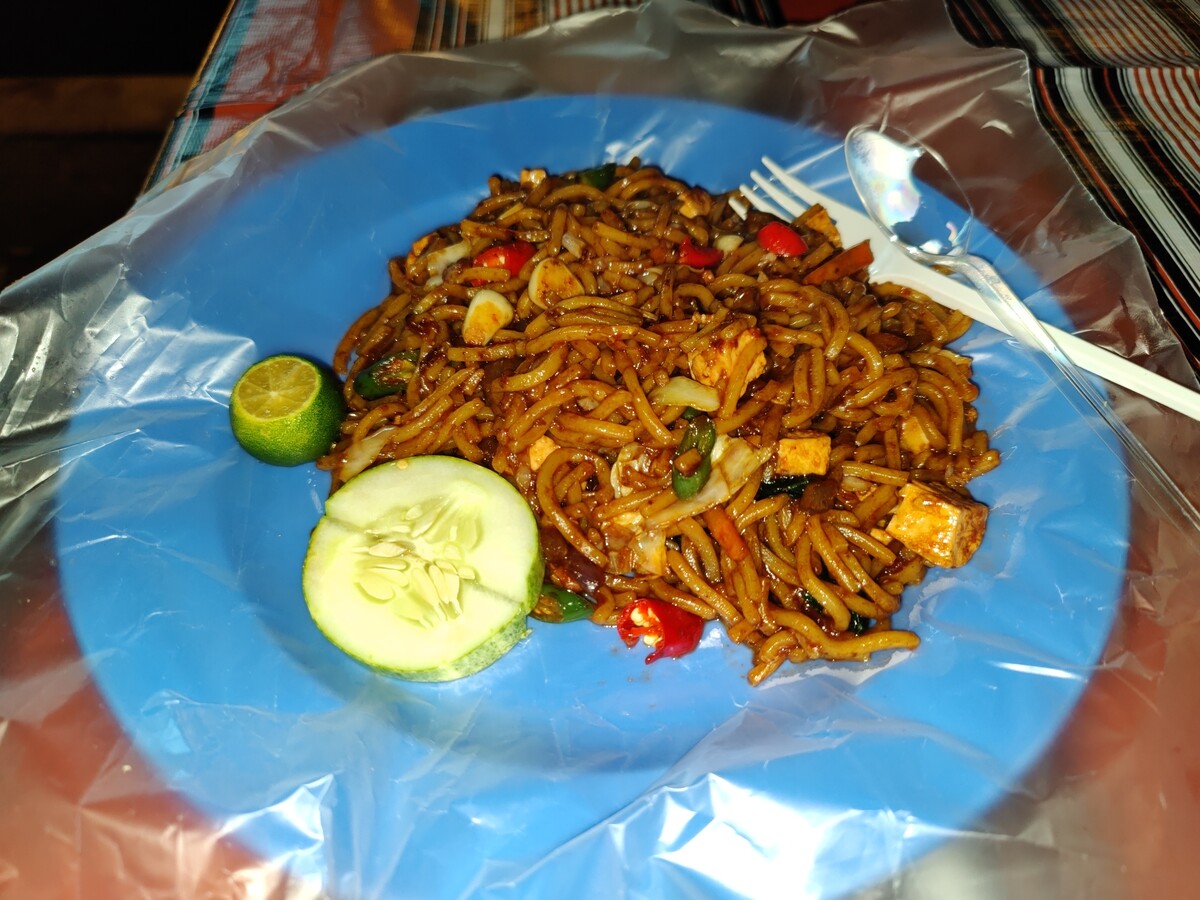
Last month, I had a trip to Malaysia and Thailand. I stayed for six days in each of the countries. The selection of these countries was due to both of them granting visa-free entry to Indian tourists for some time window. This post covers the Malaysia part and Thailand part will be covered in the next post. If you want to travel to any of these countries in the visa-free time period, I have written all the questions asked during immigration and at airports during this trip here which might be of help. I mostly stayed in Kuala Lumpur and went to places around it. Although before the trip, I planned to visit Ipoh and Cameron Highlands too, but could not cover it during the trip. I found planning a trip to Malaysia a little difficult. The country is divided into two main islands - Peninsular Malaysia and Borneo. Then there are more islands - Langkawi, Penang island, Perhentian and Redang Islands. Reaching those islands seemed a little difficult to plan and I wish to visit more places in my next Malaysia trip. My first day hostel was booked in Chinatown part of Kuala Lumpur, near Pasar Seni LRT station. As soon as I checked-in and entered my room, I met another Indian named Fletcher, and after that we accompanied each other in the trip. That day, we went to Muzium Negara and Little India. I realized that if you know the right places to buy what you want, Malaysia could be quite cheap. Malaysian currency is Malaysian Ringgit (MYR). 1 MYR is equal to 18 INR. For 2 MYR, you can get a good masala tea in Little India and it costs like 4-5 MYR for a masala dosa. The vegetarian food has good availability in Kuala Lumpur, thanks to the Tamil community. I also tried Mee Goreng, which was vegetarian, and I found it fine in terms of taste. When I checked about Mee Goreng on Wikipedia, I found out that it is unique to Indian immigrants in Malaysia (and neighboring countries) but you don t get it in India!
Mee Goreng, a dish made of noodles in Malaysia.

For the next day, Fletcher had planned a trip to Genting Highlands and pre booked everything. I also planned to join him but when we went to KL Sentral to take the bus, his bus tickets were sold out. I could take a bus at a different time, but decided to visit some other place for the day and cover Genting Highlands later. At the ticket counter, I met a family from Delhi and they wanted to go to Genting Highlands but due to not getting bus tickets for that day, they decided to buy a ticket for the next day and instead planned for Batu Caves that day. I joined them and went to Batu Caves. After returning from Batu Caves, we went our separate ways. I went back and took rest at my hostel and later went to Petronas Towers at night. Petronas Towers is the icon of Kuala Lumpur. Having a photo there was a must. I was at Petronas Towers at around 9 PM. Around that time, Fletcher came back from Genting Highlands and we planned to meet at KL Sentral to head for dinner.
Me at Petronas Towers.
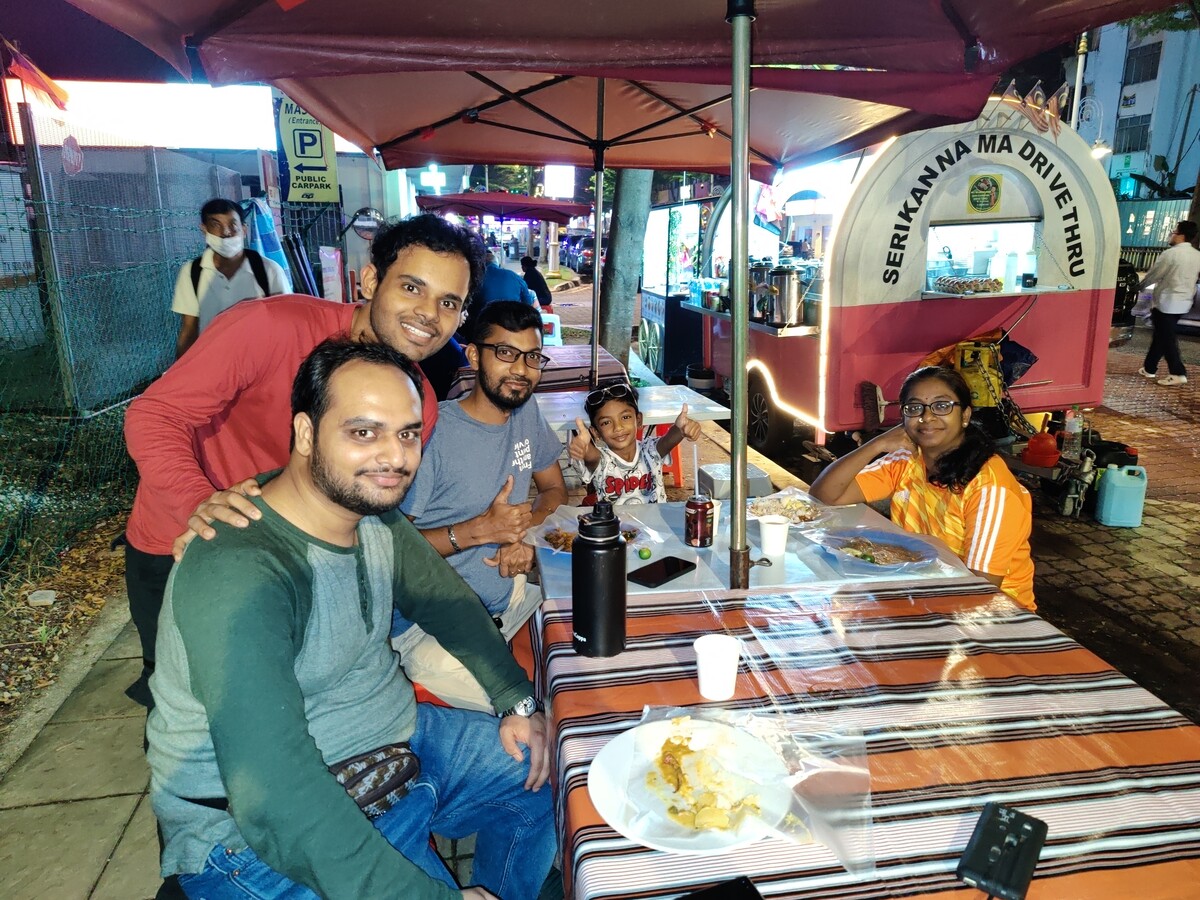
We went back to the same place as the day before where I had Mee Goreng. This time we had dosa and a masala tea. Their masala tea from the last day was tasty and that s why I was looking for them in the first place. We also met a Malaysian family having Indian ancestry dining there and had a nice conversation. Then we went to a place to eat roti canai in Pasar Seni market. Roti canai is a popular non-vegetarian dish in Malaysia but I took the vegetarian version.
Photo with Malaysians.
The next day, we went to Berjaya Time Square shopping place which sells pretty cheap items for daily use and souveniers too. However, I bought souveniers from Petaling Street, which is in Chinatown. At night, we explored Bukit Bintang, which is the heart of Kuala Lumpur and is famous for its nightlife. After that, Fletcher went to Bangkok and I was in Malaysia for two more days. Next day, I went to Genting Highlands and took the cable car, which had awesome views. I came back to Kuala Lumpur by the night. The remaining day I just roamed around in Bukit Bintang. Then I took a flight for Bangkok on 7th Feb, which I will cover in the next post. In Malaysia, I met so many people from different countries - apart from people from Indian subcontinent, I met Syrians, Indonesians (Malaysia seems to be a popular destination for Indonesian tourists) and Burmese people. Meeting people from other cultures is an integral part of travel for me. My expenses for Food + Accommodation + Travel added to 10,000 INR for a week in Malaysia, while flight costs were: 13,000 INR (Delhi to Kuala Lumpur) + 10,000 INR (Kuala Lumpur to Bangkok) + 12,000 INR (Bangkok to Delhi). For OpenStreetMap users, good news is Kuala Lumpur is fairly well-mapped on OpenStreetMap.

Tips
  • I bought local SIM from a shop at KL Sentral station complex which had news in their name (I forgot the exact name and there are two shops having news in their name) and it was the cheapest option I could find. The SIM was 10 MYR for 5 GB data for a week. If you want to make calls too, then you need to spend extra 5 MYR.
  • 7-Eleven and KK Mart convenience stores are everywhere in the city and they are open all the time (24 hours a day). If you are a vegetarian, you can at least get some bread and cheese from there to eat.
  • A lot of people know English (and many - Indians, Pakistanis, Nepalis - know Hindi) in Kuala Lumpur, so I had no language problems most of the time.
  • For shopping on budget, you can go to Petaling Street, Berjaya Time Square or Bukit Bintang. In particular, there is a shop named I Love KL Gifts in Bukit Bintang which had very good prices. just near the metro/monorail stattion. Check out location of the shop on OpenStreetMap.

1 March 2024

Guido G nther: Free Software Activities February 2024

A short status update what happened last month. Work in progress is marked as WiP: GNOME Calls Phosh and Phoc As this often overlaps I've put them in a common section: Phosh Tour Phosh Mobile Settings Phosh OSK Stub Livi Video Player Phosh.mobi Website If you want to support my work see donations.

Scarlett Gately Moore: Kubuntu: Week 4, Feature Freeze and what comes next.

First I would like to give a big congratulations to KDE for a superb KDE 6 mega release  While we couldn t go with 6 on our upcoming LTS release, I do recommend KDE neon if you want to give it a try! I want to say it again, I firmly stand by the Kubuntu Council in the decision to stay with the rock solid Plasma 5 for the 24.04 LTS release. The timing was just to close to feature freeze and the last time we went with the shiny new stuff on an LTS release, it was a nightmare ( KDE 4 anyone? ). So without further ado, my weekly wrap-up. Kubuntu: Continuing efforts from last week Kubuntu: Week 3 wrap up, Contest! KDE snaps, Debian uploads. , it has been another wild and crazy week getting everything in before feature freeze yesterday. We will still be uploading the upcoming Plasma 5.27.11 as it is a bug fix release  and right now it is all about the finding and fixing bugs! Aside from many uploads my accomplishments this week are: What comes next? Testing, testing, testing! Bug fixes and of course our re-branding. My focus is on bug triage right now. I am also working on new projects in launchpad to easily track our bugs as right now they are all over the place and hard to track down. Snaps: I have started the MRs to fix our latest 23.08.5 snaps, I hope to get these finished in the next week or so. I have also been speaking to a prospective student with some GSOC ideas that I really like and will mentor, hopefully we are not too late. Happy with my work? My continued employment depends on you! Please consider a donation http://kubuntu.org/donate Thank you!
Ravi Dwivedi: Fixing Mobile Data issue on Lineage OS

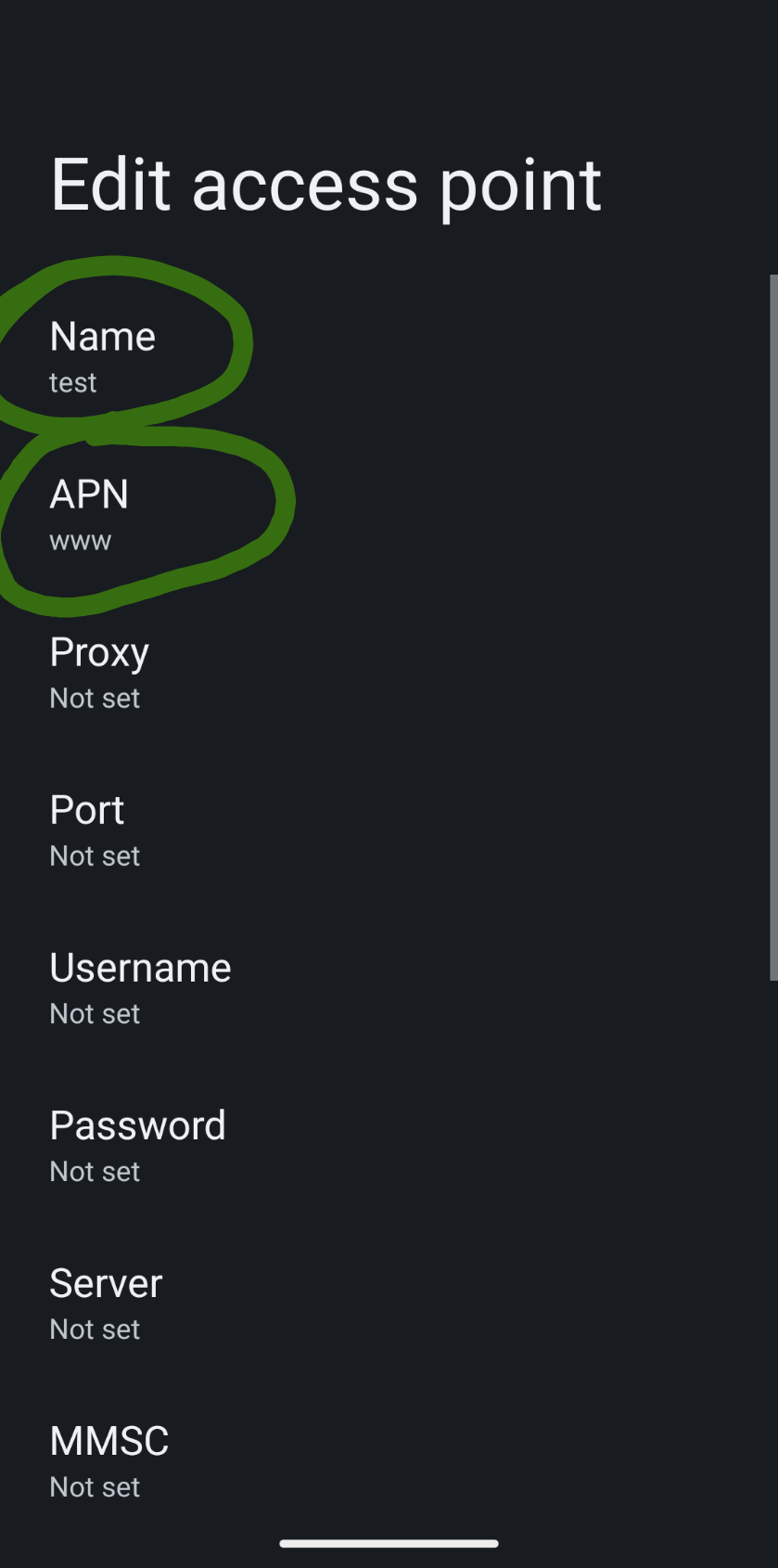
I have used Lineage OS on a couple of phones, but I noticed that internet using my mobile data was not working well on it. I am not sure why. This was the case in Xiaomi MI A2 and OnePlus 9 Pro phones. One day I met contrapunctus and they looked at their phone settings and used the same in mine and it worked. So, I am going to write here what worked for me. The trick is to add an access point. Go to Settings -> Network Settings -> Your SIM settings -> Access Point Names -> Click on + symbol. In the Name section, you can write anything, I wrote test. And in the APN section write www, then save. Below is a screenshot demonstrating the settings you have to change.
APN settings screenshot. Notice the circled entries.
This APN will show in the list of APNs and you need to select this one. After this, my mobile data started working well and I started getting speeds according to my data plan. This is what worked for me in Lineage OS. Hopefully, it was of help to you :D I will meet you in the next post.

Reproducible Builds (diffoscope): diffoscope 259 released

The diffoscope maintainers are pleased to announce the release of diffoscope version 259. This version includes the following changes:
[ Chris Lamb ]
* Don't error-out with a traceback if we encounter "struct.unpack"-related
  errors when parsing .pyc files. (Closes: #1064973)
* Fix compatibility with PyTest 8.0. (Closes: reproducible-builds/diffoscope#365)
* Don't try and compare rdb_expected_diff on non-GNU systems as %p formatting
  can vary. (Re: reproducible-builds/diffoscope#364)
You find out more by visiting the project homepage.

29 February 2024

Russell Coker: Links February 2024

In 2018 Charles Stross wrote an insightful blog post Dude You Broke the Future [1]. It covers AI in both fiction and fact and corporations (the real AIs) and the horrifying things they can do right now. LongNow has an interesting article about the concept of the Magnum Opus [2]. As an aside I ve been working on SE Linux for 22 years. Cory Doctorow wrote an insightful article about the incentives for enshittification of the Internet and how economic issues and regulations shape that [3]. CCC has a lot of great talks, and this talk from the latest CCC about the Triangulation talk on an attak on Kaspersky iPhones is particularly epic [4]. GoodCar is an online sales site for electric cars in Australia [5]. Ulrike wrote an insightful blog post about how the reliance on volunteer work in the FOSS community hurts diversity [6]. Cory Doctorow wrote an insightful article about The Internet s Original Sin which is misuse of copyright law [7]. He advocates for using copyright strictly for it s intended purpose and creating other laws for privacy, labor rights, etc. David Brin wrote an interesting article on neoteny and sexual selection in humans [8]. 37C3 has an interesting lecture about software licensing for a circular economy which includes environmental savings from better code [9]. Now they track efficiency in KDE bug reports!

28 February 2024

Dirk Eddelbuettel: RcppEigen 0.3.4.0.0 on CRAN: New Upstream, At Last

We are thrilled to share that RcppEigen has now upgraded to Eigen release 3.4.0! The new release 0.3.4.0.0 arrived on CRAN earlier today, and has been shipped to Debian as well. Eigen is a C++ template library for linear algebra: matrices, vectors, numerical solvers, and related algorithms. This update has been in the works for a full two and a half years! It all started with a PR #102 by Yixuan bringing the package-local changes for R integration forward to usptream release 3.4.0. We opened issue #103 to steer possible changes from reverse-dependency checking through. Lo and behold, this just stalled because a few substantial changes were needed and not coming. But after a long wait, and like a bolt out of a perfectly blue sky, Andrew revived it in January with a reverse depends run of his own along with a set of PRs. That was the push that was needed, and I steered it along with a number of reverse dependency checks, and occassional emails to maintainers. We managed to bring it down to only three packages having a hickup, and all three had received PRs thanks to Andrew and even merged them. So the plan became to release today following a final fourteen day window. And CRAN was convinced by our arguments that we followed due process. So there it is! Big big thanks to all who helped it along, especially Yixuan and Andrew but also Mikael who updated another patch set he had prepared for the previous release series. The complete NEWS file entry follows.

Changes in RcppEigen version 0.3.4.0.0 (2024-02-28)
  • The Eigen version has been upgrade to release 3.4.0 (Yixuan)
  • Extensive reverse-dependency checks ensure only three out of over 400 packages at CRAN are affected; PRs and patches helped other packages
  • The long-running branch also contains substantial contributions from Mikael Jagan (for the lme4 interface) and Andrew Johnson (revdep PRs)

Courtesy of CRANberries, there is also a diffstat report for the most recent release. If you like this or other open-source work I do, you can sponsor me at GitHub.

This post by Dirk Eddelbuettel originated on his Thinking inside the box blog. Please report excessive re-aggregation in third-party for-profit settings.

Daniel Lange: Opencollective shutting down

Update 28.02.2024 19:45 CET: There is now a blog entry at https://blog.opencollective.com/open-collective-official-statement-ocf-dissolution/ trying to discern the legal entities in the Open Collective ecosystem and recommending potential ways forward.
Gee, there is nothing on their blog yet, but I just [28.02.2023 00:07 CET] received this email from Mike Strode, Program Officer at the Open Collective Foundation: Dear Daniel Lange, It is with a heavy heart that I'm writing today to inform you that the Board of Directors of the Open Collective Foundation (OCF) has made the difficult decision to dissolve OCF, effective December 31, 2024. We are proud of the work we have been able to do together. We have been honored to build community with you and the hundreds of other collectives hosted at the Open Collective Foundation. What you need to know: We are beginning a staged dissolution process that will allow our over 600 collectives the time to close or transition their work. Dissolving OCF will take many months, and involves settling all liabilities while spending down all funds in a legally compliant manner. Our priority is to support our collectives in navigating this change. We want to provide collectives the longest possible runway to wind down or transition their operations while we focus on the many legal and financial tasks associated with dissolving a nonprofit. March 15 is the last day to accept donations. You will have until September 30 to work with us to develop and implement a plan to spend down the money in your fund. Key dates are included at the bottom of this email. We know this is going to be difficult, and we will do everything we can to ease the transition for you. How we will support collectives: It remains our fiduciary responsibility to safeguard each collective's charitable assets and ensure funds are used solely for specified charitable purposes. We will be providing assistance and support to you, whether you choose to spend out and close down your collective or continue your work through another 501(c)(3) organization or fiscal sponsor. Unfortunately, we had to say goodbye to several of our colleagues today as we pare down our core staff to reduce costs. I will be staying on staff to support collectives through this transition, along with Wayne Kleppe, our Finance Administrator. What led to this decision: From day one, OCF was committed to experimentation and innovation. We were dedicated to finding new ways to open up the nonprofit space, making it easier for people to raise and access funding so they can do good in their communities. OCF was created by Open Collective Inc. (OCI), a company formed in 2015 with the goal of "enabling groups to quickly set up a collective, raise funds and manage them transparently." Soon after being founded by OCI, OCF went through a period of rapid growth. We responded to increased demand arising from the COVID-19 pandemic without taking the time to establish the appropriate systems and infrastructure to sustain that growth. Unfortunately, over the past year, we have learned that Open Collective Foundation's business model is not sustainable with the number of complex services we have offered and the fees we pay to the Open Collective Inc. tech platform. In late 2023, we made the decision to pause accepting new collectives in order to create space for us to address the issues. Unfortunately, it became clear that it would not be financially feasible to make the necessary corrections, and we determined that OCF is not viable. What's next: We know this news will raise questions for many of our collectives. We will be making space for questions and reactions in the coming weeks. In the meantime, we have developed this FAQ which we will keep updated as more questions come in. What you need to do next: Dates to know: In Care & Accompaniment,
Mike Strode
Program Officer
Open Collective Foundation Our mailing address has changed! We are now located at 440 N. Barranca Avenue #3717, Covina, CA 91723, USA

Next.

Previous.