Search Results: "mt"

19 February 2008

Jonathan McDowell: Epic IPv6/DG834G fail

Since I've moved to Castlerock I've started using my DG834G to provide my ADSL again, as it was quick to setup and easily found in all the boxes. Up until now I've just been using it with the normal Netgear firmware, but I'm getting to the point where enough of the rest of the house is sorted that I want to think about the network layout. Part of that is enabling IPv6 (I'm with an Entanet reseller these days, and Enta claim to do IPv6), part of it is not bridging the wireless and wired networks (I'd like to be able to trust the wired one a bit more) and part of it is just being able to run useful bits on the router itself. Anyway. I had built up an OpenWRT SVN image last month and tonight I decided was the time to try it, having been putting it off for ages. Epic fail. Managed to get the backup of the Netgear image done fine, eventually got the new image on there, waited and waited and no joy. Wouldn't even ping on the LAN side. Further investigation showed that it would ping for a few seconds when first power cycled and then die. So I had to find my serial console level shifter so I could have a look. All signs point to it failing when loading the wireless or ADSL firmware blobs. Bah. I spent a while trying to get the old firmware back on it; ADAM2 seems really unhappy if it receives unexpected traffic (like, say, DNS requests because my network thinks the router is the DNS server/gateway) while you're ftping an MTD image. I got there, but decided I'd try out my WGT634U setup again, which is what I used in Norwich. Found the frog, fired up the router, changed my old Black Cat details to the new Enta ones and crossed my fingers. At first all appeared well (well, except for no IPv6 PPP; must email Enta to see if they need to tweak settings at their end for my username), but after a while it became apparent that the ADSL connection was flakey; it was resyncing every couple of minutes. Bum. It might just be the frog; I do have another one somewhere, but I ended up just falling back to the DG834G with the stock Netgear firmware ie exactly where I started this evening. I've pulled latest OpenWRT SVN and I see a few kernel/VLYNQ patches regarding AR7, so I shall try another build and see what happens. Epic fail. I shouldn't play with networking on a school night.

18 February 2008

Sune Vuorela: digital cameras

Dear lazyweb I have been looking for a small nice digital camera, one that of course takes nice pictures, but besides that have the following technical features: I want it to be using a generic cable for charging and transfering pictures because I am not that good at not loosing cables and chargers and such so a replacement cable should be very easy to get. And I want it to be a usb mass storage because I want it working with any computer. It kind of seems hard to figure out what devices to look at. Most “technical specifications” doesn’t contain information on wether it is a USB A => USB mini B cable or some vendor specific cable, nor do they contain information on wether it is a usb mass storage device or a device requiring mtp/ptp. Canon looks like it is doing mtp/ptp over a generic cable - and with a external charger.
Samsung tells deep inside their manuals that it uses the usb mass storage driver. Samsung uses a vendor specific cable, but is also charged thru this cable.
Kodak seems to be using a generic cable, a external charger and undefined how the communication with the computer is.
Olympus seems to be using a vendor specific cable and a external charger. But it is a bit unclear. Seems to be able to do both mtp and usb mass storage
HP seems to use a generic cable, standard AA batteries and no charger bundled, seems to be configured to use usb mass storage.
Sony uses memory sticks which are just too expensive.
Casio seems to use a generic cable, a external charger and is a bit unclear about communication. Could be usb mass storage though.
Nikon seems to use generic cable, mtp protocol and a external charger Argf. What have I missed?

13 February 2008

Bernhard R. Link: IPv6 strikes again

If you ever wondered, why exim4 needs so long to start when you have no net access, though you were sure that configured as satellite for a smarthost it should have nothing to lookup as the smarthost in in /etc/hosts, you might just have forgotten to put a
     disable_ipv6 = true
   
in your exim4.conf. (I'm not sure, but that might also help to actually deliver mail to hosts which also have ipv6 addresses on servers with outgoing smtp when you forgot to blacklist the ipv6 module).

12 February 2008

Eddy Petrișor: wpa2-psk with aes on a broadcom wlan0 (2.6.24)

Update: I managed to find out why the wpa_action stuff was needed. Please ignore the lines written like this; they are there just for reference.

One more update: it seems that the firmware needs to be in sync. I ended up using the wireless-2.6 kernel from the everything branch.


I just managed to get my wlan from my laptop to work with WPA2-PSK with AES with the free Broadcom driver (now named b43, formerly bcm43xx).

0b:00.0 Network controller: Broadcom Corporation BCM94311MCG wlan mini-PCI (rev 01)

0b:00.0 0280: 14e4:4311 (rev 01)

In order to do this I needed linux 2.6.24-1 from unstable and the b43 driver.
bounty:/home/eddy# lsmod   grep b43
b43 119976 0
rfkill 12816 3 rfkill_input,b43
mac80211 132236 1 b43
led_class 10120 1 b43
input_polldev 9872 1 b43
ssb 39428 2 b43,b44
pcmcia 45720 2 b43,ssb
pcmcia_core 46500 2 b43,pcmcia
firmware_class 15232 2 b43,pcmcia

The final trick was to convince wpasupplicat to reload the config with:
bounty:/home/eddy# wpa_action wlan0 reload
wpa_action: reloading wpa_supplicant configuration file via HUP signal

This is the wpasupplicant.conf file that I used:
bounty:/home/eddy# cat /etc/wpa_supplicant/wpasupplicant.conf   grep -v '^\s*#'   sed 's/psk=.*/psk=aaabbb___ENCRIPTED_SEE_wpa_password___cccddd/'
ctrl_interface=/var/run/wpa_supplicant
ap_scan=1
network=
ssid="toblerone"
scan_ssid=1
proto=RSN
key_mgmt=WPA-PSK
pairwise=CCMP
group=CCMP
psk=aaabbb___ENCRIPTED_SEE_wpa_password___cccddd


and this is the relevant interfaces area:
auto wlan0
allow-hotplug wlan0
iface wlan0 inet dhcp
wpa-driver wext
wpa-conf /etc/wpa_supplicant/wpasupplicant.conf
wpa-ap-scan 2


This is what it looks like when is working:

bounty:/home/eddy# iwconfig wlan0
wlan0 IEEE 802.11g ESSID:"toblerone"
Mode:Managed Frequency:2.412 GHz Access Point: 00:1B:FC:45:33:70
Bit Rate=48 Mb/s Tx-Power=27 dBm
Retry min limit:7 RTS thr:off Fragment thr=2346 B
Encryption key:1337-0000-C121-d73D-0207-RE41-0000-3210 [2]
Link Quality=98/100 Signal level=-36 dBm Noise level=-68 dBm
Rx invalid nwid:0 Rx invalid crypt:0 Rx invalid frag:0
Tx excessive retries:0 Invalid misc:0 Missed beacon:0
And here's the result of a scan (relevant section):
  Cell 02 - Address: 00:1B:FC:45:33:70
ESSID:"toblerone"
Mode:Master
Channel:1
Frequency:2.412 GHz (Channel 1)
Quality=93/100 Signal level=-42 dBm Noise level=-68 dBm
Encryption key:on
IE: IEEE 802.11i/WPA2 Version 1
Group Cipher : CCMP
Pairwise Ciphers (1) : CCMP
Authentication Suites (1) : PSK
Bit Rates:1 Mb/s; 2 Mb/s; 5.5 Mb/s; 11 Mb/s; 18 Mb/s
24 Mb/s; 36 Mb/s; 54 Mb/s; 6 Mb/s; 9 Mb/s
12 Mb/s; 48 Mb/s
Extra:tsf=0000000072ff542d
and here is proof it works:
bounty:/home/eddy# route -n
Kernel IP routing table
Destination Gateway Genmask Flags Metric Ref Use Iface
192.168.77.0 0.0.0.0 255.255.255.0 U 0 0 0 wlan0
0.0.0.0 192.168.77.254 0.0.0.0 UG 0 0 0 wlan0

bounty:/home/eddy# ping debian.org
PING debian.org (192.25.206.10) 56(84) bytes of data.
64 bytes from gluck.debian.org (192.25.206.10): icmp_seq=1 ttl=36 time=201 ms
64 bytes from gluck.debian.org (192.25.206.10): icmp_seq=2 ttl=36 time=199 ms
64 bytes from gluck.debian.org (192.25.206.10): icmp_seq=3 ttl=36 time=200 ms

--- debian.org ping statistics ---
3 packets transmitted, 3 received, 0% packet loss, time 1999ms
rtt min/avg/max/mdev = 199.691/200.519/201.046/0.786 ms

Woooohooo! :-)

Thanks to all people involved in b43 development and all the ones made this possible (Debian developers).

Posted from bed, via wlan.


Update: You need the firmware blob, which can be extracted from a Windows driver with bcm43xx-fwcutter (now called b43-fwcutter); I already had it from my previous attempts to configure wlan with bcm43xx. I am not sure if I should use the new tool. You really need the firmware and driver to be in sync.

Update: it seems the b43 driver page (the entire linuxwireless.org site) went down sometime yesterday evening, since yesterday afternoon I was browsing through the site without any issues. (Note: I live in Europe, for reference)

Miriam Ruiz: Gnash: State of the packages

As many people keep asking me about the state of the current packages of Gnash, I’ll give a quick overview of it. As Qt 3.3.8 has now entered Debian (it is triple licensed under the QPL, GPL 2 and GPL 3), the license incompatibility problem is already solved (Gnash is GPL 3, which is incompatible with strict GPL 2). I’ve added the code for generating the KDE-based flash player (Klash) and the Konqueror plugin again. The only missing bit right now is some kind of problem related to the usage of gstreamer, with the result that Youtube videos do not work right now. I hope to have that bug fixed soon, and to be able to upload the newer packages to the repositories.

10 February 2008

Robert Collins: 11 Feb 2008

For simpler tracing of python code than my snippet...: python -mtrace -t program.py

8 February 2008

Gunnar Wolf: cat STDERR rot13

Cannot help but laugh and share.
I've been triaging and trying to reproduce some oldish bugs on pkg-perl's packages. Some bugs are no longer there, some have to be forwarded upstream, and so on. Usual tasks, yes.
Until I stumbled with #406227. I just have to laugh and share! Hope nobody feels ashamed - The bug is the result of different people coding maybe under pressure and with quite different mindsets :)
For some reason I fail to understand, the submitter's test case (rot13 implemented over a HTTP proxy) is invoked in the report as ./rot13 2>/dev/null. Of course, when trying to debug a bug report, the first thing to do is not to ignore STDERR. So, off goes the 2>/dev/null. What happens next? 0 gwolf@mosca[2]/tmp$ perl ./rot13 &
[1] 4394
0 gwolf@mosca[3]/tmp$ GET -p http://localhost:8080/ http://www.debian.org/
Can't locate object method "filter" via package "UGGC::Cebkl::ObqlSvygre::fvzcyr=UNFU(0k604160)" (perhaps you forgot to load "UGGC::Cebkl::ObqlSvygre::fvzcyr=UNFU(0k604160)"?) at /usr/share/perl5/HTTP/Proxy/FilterStack.pm line 126.
500 EOF when chunk header expected
WTF... Well, at least the program name gives me a clue... Lets try to "decrypt" the error message... gwolf@mosca[4]/tmp$ echo 'UGGC::Cebkl::ObqlSvygre::fvzcyr=UNFU(0k604160)' rot13
HTTP::Proxy::BodyFilter::simple=HASH(0x604160)
hrm... How comes the filter is filtering its own code and only then refusing to find itself!? Ok, time to open up the manpage - Remember, I'm only group-maintaining this pacakge, I am not yet at all familiar with it! Ok, so the core of the filter is when the submitter states: my $proxy = new HTTP::Proxy();
$proxy->push_filter(response => new HTTP::Proxy::BodyFilter::simple(sub tr/a-zA-z/n-za-mN-ZA-M/; ));
While the manpage states it should be invoked as: my $filter = HTTP::Proxy::BodyFilter::simple->new( sub $ $_[1] =~ s/foo/bar/g; );
$proxy->push_filter( response => $filter );
Of course, once looking at it, the answer is simple: The submitter left out which element to act on in the anonymous function body - The $ $_[1] =~ part. Adding it makes gur svygre jbex nf rkcrpgrq... Err, sorry - makes the filter work as expected. Now, bonus points: For the non-Perlers out ther: How come we get the namespace translated as well? Oh, that's very simple: In Perl, as in Python (and concievably other languages I'm unaware of), the object is passed to any of its methods as the first argument. Functions in Perl receive their arguments via @_ (read: the default array). And, of course, the tr (regex-based transliteration) takes by default the first thing it sees - the object itself. And what happens when you apply a (string-oriented) regex to an object? Of course, it gets stringified - which, by default, in Perl means converting it to the closest possible description: "a hash reference blessed as an object of the class such-and-such at this memory location". That string gets worked on, and we get UGGC::Cebkl::ObqlSvygre::fvzcyr=UNFU(0k604160). This proxy does not die on very-very-short web pages, where the whole content fits on one iteration of the code (although it does not work correctly - the text remains unaltered, of course, as it was not worked on), but if the request spans several chunks, the second time the filter is called, it will be... just gibberish. Oh, and what about the extra $ (...) around $_[1]? Oh, simple: The string is passed as a scalar reference, so it can be modified in place. Yes, it's the Perl way of pass-by-reference instead of pass-by-value (the default behaviour): Of course the parameter is only passed as a value. Only that the value is incidentally a reference - but who cares? ;-) Anyway... Many oddities. I would implement the module in a completely different way, and it looks quite backwardish in my book. But then again, TIMTOWTDI.

Aigars Mahinovs: (Latvian) Velost vvietas R gas centr

(This blog post is in Latvian and is about a public discussion that the capital of Latvia, Riga is having about where to put new bicycle racks in the center of the city. In the post I point to an article describing where to send in suggestions, point out a few possible locations for such racks and suggest installing racks with build-in locks that would require inserting a refundable coin to remove the key locking a bike in place) R gas dome v c ierosin jumus par jaunu velost vvietu novietojumu R gas centr . Es tur nos t ju sekojo us ieteikumus, parosieties ar j s. Vislab k velovietnes b tu izvietot t d viet , kas b tu p rredzama no ce iem, pa kuriem iet daudz cilv ku un ar kur b tu novietotas dro bas nov ro anas kameras, lai minimiz tu z dz bu risku. Viena vietne var tu atrasties Str lnieku laukum vai t tuvum , jo tur ir viegla piek uve no Krasta ielas. Vieta starp RTU ku Ka u 1 un
Krasta ielu var tu b t oti piem rota. Tas ar ierosin s studentus lietot velotransportu pa ce am uz lekcij m Ka u iel . Alberta laukuma var tu atrasties vieta velosip du novieto anai - vieta ir viegli pieejama no Stacijas puses un ir tuvu vair k m viesn c m. Ja ir pl ni izveidot Pay&Ride autom tisko velosip du nomu, tad is var tu b t par vienu no vislab kajiem punktiem dai iecerei. Pils laukums ir viegli sasniedzams no P rdaugavas pa Van u tiltu. Ja tur izveidotu velost vvietu, tad tas iev rojami atvieglotu iesp ju atbraukt ar velosip du pa J rmalas veloceli u p ri Van u tiltam, nogriezties pa labi un uzreiz dro i noparkoties. T pat l dzu apv rt ideju pielietot velovietnes ar ieb v tu atsl gu, lai neb tu nepiecie ams vest l dzi savu sl dzeni. Katrai vietai var tu b t sava sl dzene (bieza un pietieko i gara cietmet la trose) un atsl ga. Atsl gu var tu iz emt no sl dzenes tikai tad, kad sl dzene ir aiztais ta un sl dzenes meh nism ir ielikta 1 Ls mon ta. Atsl dzot sl dzeni ar atsl gu mon ta tiktu atdota atpaka . Tas nodro in s pret vand lismu, kad vienk r i vis m sl dzen m tiktu iz emtas atsl gas un aizmestas prom. Ta u jebkur gad jum j b t vieglam veidam k aizvietot nozaud t s atsl gas gan gad jumos kad velosip da pa nieks to pieprasa (tas var aiz emt vair kas dienas un pras t 5-10 Ls un iesnieguma uzrakst anu) vai ar kad velosip ds ir pamests piesl gt st vokl . Jaunas atsl gas izgatavo anai nevajadz tu pras t vair k k 1 Ls no pils tas bud eta, tad tas 1 Ls sl dzen os izdevumus atmaks s.

6 February 2008

Filip Van Raemdonck: PyGTK exception handler

A little utility that has been collecting dust on my harddrive over the past two years is an enhanced version of a PyGTK exception handling module that was originally posted to the PyGTK mailing list by Gustavo Carneiro. I've now uploaded it to the sysfs download area; it is essentially unlicensed, considered public domain by Gustavo according to his email message.

Besides fixing a API incompatibility with recent PyGTK releases, there are two main differences with the original functionality.
First, I've modified the traceback formatting to include two lines of context to each line in the traceback, one before and one after the called line. Also included is a printout of the identifiers referenced in the traceback lines — variables, usually. On my personal wishlist was also syntax coloring in the debug window, but this was both non-trivial to implement, and it would likely add considerably to the complexity of the error handler, thus increasing the chances that the error handler itself would fail.
The other main functionality change is possibility to email feedback to a predefined address — mainly meant for deployment and debugging of company-internal applications. To enable this feature, two identifiers feedback and smtphost must be set on the module. This can be either by modifying the code, or, better, by adding them after module import:
import gtkexcepthook
gtkexcepthook.feedback = 'valid@email.address.here'
gtkexcepthook.smtphost = 'relay.smtp.hostname'
Bugfixes, enhancements and feedback welcome at mechanix on rack66.net.

Uwe Hermann: LinuxBIOS is now called coreboot

Public Service Announcement: The LinuxBIOS project, a Free Software project which intends to replace the proprietary BIOS found in most computers these days, has been renamed to coreboot. The old name has become quite a misnomer in recent years; the name LinuxBIOS created the impression that it's a drop-in BIOS-replacement and that it's using Linux or is Linux-specific in any way. Neither is the case. The initial author and project leader of LinuxBIOS/coreboot, Ron Minnich, explains in more detail why the renaming was done in his original announcement on the coreboot mailing list.

3 February 2008

Matthew Garrett

Hello! I am in San Francisco. Offers of beer, entertainment and marriage will be given appropriate consideration. Interestingly, moving from Melbourne to here seems to have left me back on GMT, which I'm sure isn't quite what I want.

My LCA presentation isn't up yet. I seem to have this effect on technology.

25 January 2008

Steve Kemp: Painted wings and giant rings make way for other toys.

This week has mostly involved me getting my live mail filtering site up and running with a guineapig or two. This uses a custom user interface to allow users to manage the filtering settings for an entire domain: In terms of implementation this is an SMTP proxy which is built upon the qpsmtpd framework. I've got both the user interface and a collection of plugins reading all data from an MySQL database. The practical upshot is that if you use the service you'll get less spam, and anything that has been rejected will appear in an online browsable quarantine for a period of times allowing you to view mistakes/rejected mails. Any mail you didn't want, providing you've got the spam-filtering plugin enabled for your domain, you may send back to be trained as spam. It scales nicely, doesn't appear to have lost any mail ever in real-world testing, and could be useful.

Ian Haken: Snail-mail is (arguably) less buggy

If anyone tried to email me via ianhaken.com in the last three weeks, you probably met with little success. My contract for dedicated hosting ended at the beginning of the year, and for my small personal uses it wasn't worth the cost to renew it. Since I already had an always-on file server at home, I decided to move my hosting services to my own server. After some downtime associated with transfering domain registrars, I was able to get this much setup.

Since I'm just hosting on a cheap ISP connection, I of course don't get a static IP. Many free DNS services offer dynamic IP update clients which solve this problem, but of course you can't quite take advantage of your personal domain name. I took advantage of a tip I received to redirect all hostname lookups with a CNAME entry to my dynamic DNS domain name, which stays up-to-date with the free client. So in short, a little indirection was able to solve the dynamic IP problem.

What I failed to realize is the affect this would have on my MX records. While I had them properly configured for my domain name, I realized that mail was still not getting through. It took me longer than it should have to perform a manual MX lookup and figure out that my CNAME was being resolved and then MX records were being searched for this canonical name rather than ianhaken.com. So after adding identical MX records to my dynamic IP service all seems to be well again.

On a related note, I've also been trying to get exim working on my internal server. Since I do run a dynamic IP I can't run a full-blown mail-server, but I'll I really want to do is be able to send outbound messages anyway. I've been able to make this happen by configuring exim use gmail as a smarthost. Ideally, I would also like local mail to be delivered to my external mailbox. I figured this would do it:

echo myname@gmail.com > ~/.forward

and it seems to get half way there. Sending a message to myname@localhost results in the following lines in my log:

2008-01-06 13:50:46 1JBdOI-0005sm-4Q = myname@localhost U=myname P=local S=388
2008-01-06 13:50:48 1JBdOI-0005sm-4Q => myname@gmail.com R=smarthost T=remote_smtp_smarthost H=gmail-smtp.l.google.com [209.85.199.109] X=TLS-1.0:RSA_3DES_EDE_CBC_SHA1:24 DN="C=US,ST=California,L=Mountain View,O=Google Inc,CN=smtp.gmail.com"
2008-01-06 13:50:48 1JBdOI-0005sm-4Q Completed


By the look of it, exim realizes it is supposed to be delivering out to the smarthost, but it's still sending to myname@localhost. At any rate, I'm definitely not seeing anything in my inbox on either end. Anyone know if I'm just not understanding the .forward file or is there something in the exim config I need to change? It's not particularly critical, but it would be nice to see error mail go to my inbox.

24 January 2008

David Pashley: Phisher aren't even trying

Phishers aren't even trying these days: The following things stand out:
  • The date header is +0900. Suspicion rating: 2/10
  • The recorded log in time is in EST. The Halifax and myself are in GMT. Suspicion rating: 6/10
  • The recorded log in time hadn't occured by the time I get the email. Suspicion rating: 8/10
  • I don't bank with the Halifax. Suspicion rating: 10 million/10
Read Comments (0)

22 January 2008

Matthew Johnson: Packaging Java with Javatools

I have just uploaded javatools 0.5 to unstable and it is currently waiting in NEW. Anyone wishing to try it out earlier can find source and packages (it's arch: all) at http://www.srcf.ucam.org/~mjj29/javatools/ . Javatools replaces the existing jarwrapper package and also contains programs to help packagers in creating packages for Java programs and libraries. Packaging tools The javahelper package consists of several small programs which make packaging Java programs and libraries easier. They are generally designed to work in the same fashion as the debhelper programs, but start with the jh_ prefix. All of the programs have their command line arguments documented in manpages. jh_build Many Java programs and libraries are distributed without sane build systems. jh_build provides a simple interface for building Java source code into Jars, including setting the appropriate entries in the manifest. In almost all cases all that needs to be done to call jh_build is to set JAVA_HOME and CLASSPATH and then call jh_build with the name of the jar and the directory containing the source.
JAVA_HOME=/usr/lib/jvm/java-gcj
CLASSPATH=/usr/share/java/esd.jar:/usr/share/java/jsch.jar
jh_build weirdx.jar src
   
This command will compile all the Java files under src , set the classpath in the manifest and build it all into weirdx.jar. A couple of other options are worth mentioning. If this jar contains an application rather than a library then the -m or --main option can be used to set the Main-Class attribute in the manifest which will allow the resulting jar file to be be executed jh_build also provides a --clean parameter which should be called in the clean target of debian/rules . jh_libs For library packages Debian Java policy currently requires that the libraries be installed to /usr/share/java in a versioned format and with an unversioned symlink. jh_libs will take a jar and correctly install it. As with debhelper programs, this can either take a jar as a parameter, or read a list of jars from a file in the Debian directory. It also follows the -p , -i and -s semantics of debhelper for selecting which packages to install the jar to. When operating on a package, jh_libs will read the list of library jars from debian/package.jlibs or debian/jlibs . The jlibs file is a list of jars to install, one per line, and works exactly the same as listing them on the command line. Each jar is installed to debian/package/usr/share/java/ in the appropriate versioned and unversioned forms. jh_depends jh_depends works like dpkg-shlibdeps, but for jar files. For each jar in the package it takes the jars on which it depends and finds the packages to which they belong. These are included in the debhelper substvars as $ java:Depends . The control file can then just list that variable which is filled in automatically. This is done by reading the Class-Path attribute from the manifest of each jar. Jar files should include this attribute to prevent applications which use them from needing a full recursive classpath in their startup scripts and to prevent unneccessary transitions when the library changes its dependencies. If the package is not built with jh_build and the upstream build system doesn't set it correctly then jh_manifest can be used to fix this. If the application uses executable jars (see Runtime support below) then jh_depends will also add the appropriate depends on jarwrapper and the correct Java runtime. jh_manifest Many upstream build systems do not set the Class-Path attribute in the jars they create. This leads to several unwanted problems, such as expanding the classpath which applications have to use and introducing unneccessary transitions. They also may not set the Main-Class attribute. Both of these are required for running jars with the -jar parameter. jh_manifest can fix the manifest files of jars. It can either read from a manifest file in the Debian directory or run in a mode which updates all the jars with the CLASSPATH environment variable. The manifest files can either be debian/package.manifest or debian/manifest . The format of this file is a list of jars and indented below each one a list of manifest elements to set:
usr/share/weirdx/weirdx.jar:
 Main-Class: com.jcraft.weirdx.WeirdX
 Debian-Java-Home: /usr/lib/jvm/java-gcj
   
jh_exec The Runtime support section below describes running executable jars directly. jh_exec will scan package directories for jars in the paths, or symlinks to jar from the paths, and ensure that they have been set executable if necessary. jh_makepkg jh_makepkg will create template Debian packages for Java programs and libraries similar to dh-make . It should be run in the source directory and it will create the orig.tar.gz and most of the files in the Debian directory, which need only small changes neccessary to build the package. java-propose-classpath Some upstreams have complicated classpaths which may not be obvious to the packager when using jh_manifest to set the Class-Path attribute. java-propose-classpath will unpack a jar and look at the symbols imported to the class files, then scan all the jars in /usr/share/java . This shouldn't be run in the build since it is slow, and there may be ambiguities that the packager must resolve. It is still very useful for the packager as most of the time it will get it right automatically. Runtime support Javatools also provides some runtime support. Unlike compiled programs, or purely interpreted programs with hash-bang lines, Java programs cannot be directly executed. Many upstreams expect them to be run using java -jar jarname or java classname . This is not generally acceptible in systems which expect to just be able to run the command or launch it from a menu. As a result, many packagers are writing wrapper scripts which just call java with the correct classpath, jar and main class. jarwrapper There is an alternative to wrapper scripts, however. The binfmt_misc kernel module allows the kernel to call out to a program in userspace to execute specific types of file. jarwrapper registers itself as a handler for executable jars. This is done by reading values from the manifest file. In order for executable jars to work the following attributes must or may be defined in the manifest. These attributes can be set using jh_build and jh_manifest . Putting it together This section shows the debian packaging generated by jh_makepkg for an application and a library using jh_build . Sample Library Packaging debian/control
Source: jsch
Section: libs
Priority: optional
Maintainer: Matthew Johnson 
Build-Depends: debhelper (>= 5), javahelper, java-gcj-compat-dev, libzlib-java
Standards-Version: 3.7.3
Homepage: http://www.jcraft.com/jsch/
Package: libjsch-java
Architecture: all
Depends: $ java:Depends , $ misc:Depends 
Description: Java secure channel
 JSch is a pure Java implementation of SSH2. JSch allows you to
 connect to an sshd server and use port forwarding, X11 forwarding,
 file transfer, etc., and you can integrate its functionality
 into your own Java programs. JSch is licensed under a BSD style
 license.
   
debian/rules
#!/usr/bin/make -f
export JAVA_HOME=/usr/lib/jvm/java-gcj
export CLASSPATH=/usr/share/java/zlib.jar
build: build-stamp
build-stamp:
	dh_testdir
	jh_build jsch.jar src
	touch $@
clean:
	dh_testdir
	dh_testroot
	jh_build --clean
	dh_clean
	rm -f build-stamp jsch.jar
install: build
	dh_testdir
	dh_testroot
	dh_clean -k
	dh_installdirs
binary-arch: build install
	# Java packages are arch: all, nothing to do here
binary-indep: build install
	# Create the package here
	dh_testdir
	dh_testroot
	dh_clean -k
	dh_install -i
	dh_installdocs -i
	dh_installchangelogs -i
	dh_javadoc -i --sourcedir=src 
	jh_libs -i
	jh_depends -i
	dh_compress -i
	dh_fixperms -i
	dh_installdeb -i
	dh_gencontrol -i
	dh_md5sums -i
	dh_builddeb -i
binary: binary-indep binary-arch
.PHONY: build clean binary-indep binary-arch binary install
   
debian/libjsch-java.jlibs
jsch.jar
   
Sample Application Packaging debian/control
Source: salliere
Section: misc
Priority: optional
Maintainer: Matthew Johnson 
Build-Depends: debhelper (>= 5), java-gcj-compat-dev, fastjar, 
               libmatthew-debug-java, libcsv-java,
               libitext-java, javahelper
Standards-Version: 3.7.3
Package: salliere
Architecture: all
Depends: $ java:Depends , $ misc:Depends 
Description: Short Description
 Long Description
   
debian/rules
#!/usr/bin/make -f
export JAVA_HOME=/usr/lib/jvm/java-gcj
export CLASSPATH=/usr/share/java/csv.jar:/usr/share/java/debug-disable.jar:/usr/share/java/itext.jar
build: build-stamp
build-stamp:
   dh_testdir
   # Build the package
   jh_build salliere.jar src
   touch $@
clean:
   dh_testdir
   dh_testroot
   jh_build --clean
   dh_clean
   rm -f build-stamp salliere.jar
install: build
   dh_testdir
   dh_testroot
   dh_clean -k
   dh_installdirs
binary-arch: build install
   # Java packages are arch: all, nothing to do here
binary-indep: build install
   # Create the package here
   dh_testdir
   dh_testroot
   dh_clean -k
   dh_install -i
   dh_installdocs -i
   dh_installchangelogs -i
   jh_manifest -i
   dh_link -i
   jh_exec -i
   jh_depends -i
   dh_compress -i
   dh_fixperms -i
   dh_installdeb -i
   dh_gencontrol -i
   dh_md5sums -i
   dh_builddeb -i
binary: binary-indep binary-arch
.PHONY: build clean binary-indep binary-arch binary install
   
debian/salliere.install
salliere.jar usr/share/salliere
   
debian/salliere.links
usr/share/salliere/salliere.jar usr/bin

   

Robert Collins: 22 Jan 2008

I send mail from my laptop by a local smarthost-with-auth install of exim4. Recently I got motivated to setup smtp submission port for this, as I got tired of borked hotel wifi intercepting smtp, and was behind a firewall that allowed no smtp out... It was pretty simple - on my mail server, enable listening on port 587 by putting: 'daemon_smtp_ports = smtp : 587' in before the local_interfaces line. And on my laptop, edit the 'remote_smtp_smarthost' stanza to add 'port = 587'. Yay to less mail headaches.

19 January 2008

Biella Coleman: Classic in Internet Studies

One might think that it is too early to declare the existence of a “classic” work on the Internet given how the Internet as a widely accessible communications networks is barely out of its pre-teen years, But if there is one book that I would say is a classic, it’s Julian Dibbell’s My Tiny Life. There were plans underway to release it under a libre license but after I ran into Julian at the AAAs in November, I got the scoop that things had come to a screeching halt. So a few days ago I was surprised to find in my inbox, this nicely crafted announcement that My Tiny Life is more or less (more more than less) free as a free bird. This is good news and his story about the trials and tribulations of getting My Tiny Life out of the noose of copyright, is an interesting one, involving among other things, outsourced Indian Labor. Who knew. And while I am on the topic, I meant to write about who, among the many authors I assigned this last fall, took the cake among students as their favorite book/article. Somewhat, unsurprisingly, Dibbell’s more recent Play Money was the champion. Most of the comments were relayed in class but here is one of the more amusing comments indicating the love:
Reading Julian Dibbell s Real Money, Or How I quit My Day Job and Made Millions Trading Virtual Loot was exceedingly more interesting than I expected.
And then just yesterday, another student wrote me an email telling me he read and re-read the book over his holiday break and wants to get Dibbell inivited to NYU to speak (which would be great, though I admittedly have no idea how to make that happen given my recent arrival here). But clearly, there is another classic in the making. Thankfully students liked many other readings and I think there were two other clear winners: Carl Elliot’s Better than Well , Michael Warner’s The Trouble with Normal. and Michael Sandel’s The Case against Perfection. This is of course no surprise to me as I picked these books because I knew they would teach themselves.

15 January 2008

Joey Hess: high country

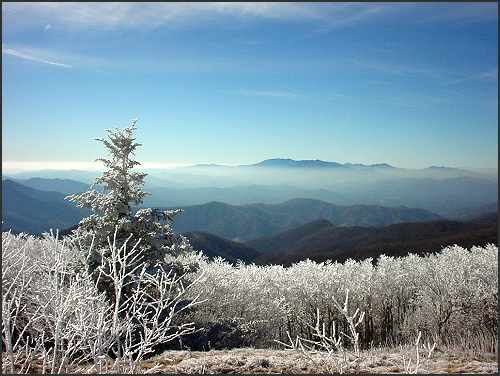
The past few weekends I've been drawn to the mountains. Two weeks ago I went up on Holston mtn after the snow had melted down here, and enjoyed a snowy hike on the AT. From there I drove over to Shady valley, and found the only gas station I've seen with a wood stove in it. I've never enved a gas station attendant their workplace before, but that was nice. Last weekend Maggie and I went up to Roan mtn. On road up we began to get glimpses of the peak in between the fog, and it looked strange, almost like there was snow, but not as white as you'd expect. While the ground was clear of snow, the windward side of each pine, rhododendron, and leaf of grass in the balds was outlined in a thick coat of frost. Gorgeous. As a sheltered Southerner, I've never seen anything like it, but I think it was soft rime, formed from the fog. We wished we'd brought a camera, but thanks to the magic of the 'net, here's a similar rime on Roan: rimeonroan.jpg
14 January 2008

Andrew Pollock: [tech/security] Tracking email address harvesters

Erich Schubert's two posts about embedding spamtraps in web pages got me wondering about trying to track the web crawlers that harvest such addresses. If the pages that had the embedded spamtraps could be dynamically generated, it'd be interesting to generate email addresses that encoded the time of the crawl (well the page load I guess) and the IP address of the remote host. I expect that most of the harvesting is done by botnets, so it possibly wouldn't tell you a lot, but it'd be kind of cool to maintain a central blacklist of known harvesting IP addresses, that sites like mailing list archives could use to try and block the harvesters with.

9 January 2008

Tollef Fog Heen: Choosing a nonce in CTR mode

I am currently working on implementing a cryptographic file system using FUSE. It is different from EncFS and similar in that it just mirrors a normal directory tree, but encrypts the contents of the files as they are read or decrypted as they are written. My use case is backups. I have some machines where I and only I have access, machines which may contain proprietary information, personal emails and so on. Of course, I want backups of those, so when the hard drives stop working, I don't lose any data. The machine(s) I am backing up to, however are not always machines where I trust all the people with physical access to not make a copy of my data. In addition, I don't want broken hard drives returned under warranty to contain unencrypted data. This use case is the reason for why I'm encrypting on read rather than on write. I have chosen to use CTR (counter) mode together with AES which should give acceptable security. One of the requirements CTR needs to work well is a nonce, typically 64 bits (for 128 bit AES) which must not ever be used twice. If you use it twice, you leak information about your plaintext, which is, for obvious reasons, bad. My current design headache is how to choose a good nonce. Ideally, I believe it should be persistent for each version of the file and unique per file. Using the inode number takes up 64 bits (on AMD64 at any take, or when using -D_FILE_OFFSET_BITS=64 on 32 bit platforms). So while this gives me the latter, it doesn't give me the former at all. I am wondering if I should use the inode number modulo 2^32 (effectively choosing the lower 32 bits of the inode number) and then something which is fairly sure to never be the same, such as mtime (or at least the lower 32 bits of it, when time_t becomes 64 bit). The reason for not just choosing a completely random value is I don't want a command like diff file1 file1 to claim there are differences in the file. My hope was I'd get a great idea on how to solve the problem as part of writing it down. Alas, that hasn't happened, so if you happen to come across a great solution (or a reason to avoid a particular choice), feel free to email me

Next.

Previous.




