Search Results: "bod"

28 June 2014

Russ Allbery: Review: The Emergency Sasquatch Ordinance

Review: The Emergency Sasquatch Ordinance, by Kevin Underhill
Publisher: American Bar Association
Copyright: 2013
ISBN: 1-62722-269-3
Format: Trade paperback
Pages: 334
First, if you have not read Lowering the Bar, you should do so. There aren't many blogs where I will start reading, end up reading numerous posts out loud to anyone in the vicinity, and then find myself systematically reading the entire backlog (which, in this case, is substantial). Kevin Underhill is a lawyer with civil libertarian leanings, a wicked sense of humor, and a knack for finding the most absurd legal stories. He varies between weary incredulity and caustic sarcasm, almost always manages to make me smile, and often makes me laugh out loud. The Emergency Sasquatch Ordinance, and Other Real Laws that Human Beings Have Actually Dreamed Up, Enacted, and Sometimes Even Enforced is, as one might expect, more of the same sort of thing that one gets from Lowering the Bar. However, unlike a lot of books released by long-standing bloggers, it is not a collection of previously published material. This is an entirely new collection of legal absurdities, drawing on history, US federal, state, and local law, and some non-US laws, and complete with Underhill's trademark commentary. Long-time readers of Lowering the Bar have seen several posts about this sort of thing before, which also means there's a great sample up on the web. See posts tagged "Law (Dumb)" for a preview of the sort of thing you'll get, although as mentioned the material in the book is original. My one complaint about the book version of this post type is that I think the blog posts tend to be longer and contain a bit more analysis. Underhill gets in about one punch line per law in the book, and I frequently wished for a somewhat longer analysis. The blog posts tend to get funnier and more biting once he works up a head of steam on a topic. The book is, alas, a bit uniform in its style. It's composed of a large number of "chapters," each of which is usually a page or two and covers a single law. Those are divided into ancient, pre-modern, US federal, US state, US city, and non-US laws, but with considerably funnier section headings than those. Each chapter has a title that's usually a brief summary of the law (often funny), an introduction, a quote (or several), and a punch line. There's not much variation, which makes it good bathroom reading you can pick it up anywhere, read a few pages, and put it back down without fear of losing context but lacks variety when read in large gulps. I find Lowering the Bar itself funnier than this book. I think that's because the blog posts are longer, more varied, and mix weird laws with caustic political commentary and entertaining stories of the extremely ill-advised things people do around, within, and against the law. The odd laws are entertaining; the stories of defendants, the accounts of weird legal proceedings, and Underhill's exasperated sarcasm about legal and political stupidities are even funnier. If you had to choose between the book and the blog, I'd go with the blog. That said, you don't have to choose, and if you've been reading the blog for a while, more material is always welcome. A book also has the substantial advantage of being a way to throw some money at a blogger as a reward for hours of entertainment, with a bonus of getting an enjoyable physical object in return. I certainly don't regret the purchase, and I've already had an opportunity to mention Millard Fillmore's State of the Union address on guano. I'm not sure if that means the book made me smarter, but I do believe it made me more entertaining. TL,DR version: Read Lowering the Bar. If you like that, there's this book. I think you can figure out the rest from there. Rating: 7 out of 10

Gunnar Wolf: Forms of communication

I stared at Noodles' Emptiness, where I found a short rant on the currently most used forms of communication. No, into the most socially-useful forms of communication. No, into what works best for him. And, as each person's experience is unique, I won't try to correct him Noodles knows himself much, much, much, much better than I do. But some people have wondered recently (i.e. at conferences I have been at) why I give such an atypical use to social networks (...a term which I still hold to be grossly misused, but that's a topic for a different rant...One that's been had too many times). So, although my blog is syndicated at Planet Debian, and I know a good deal of readers come from there, this post is targetted at the rest of the world population: Those that don't understand why many among us prefer other ways of communication. Noodles mentions seven forms of communication he uses, arguably sorted by their nowadayness, low to high: Phone call, text (SMS) message, email, IRC, Skype, Google Hangouts and Facebook messenger. Among those, I strongly dislike two: Phone call and Skype (or any voice-based service, FWIW). I do most of my communication while multitasking, usually at work. I enjoy the quasi-real-timeliness of IRC and the instant messengers, but much more, I like the ability to delay an answer for seconds or minutes without it breaking the rules of engagement. Second, if the ordering is based on what I found, the reason for my little rant should become obvious: We had kept a great job so far building interoperable technology.1 Up until now, you could say drop me a mail , and no matter if you had your mail with GMail and I insisted on self-hosting my gwolf.org, as long as our communications adhered to simple and basic standards, we would be perfectly able to communicate. Skype is a bit of a special case here: They did build a great solution, ~ten years ago, when decent-quality VoIP was nowhere to be found. They have kept their algorithm and mechanisms propietary, and deliberately don't operate with others. And, all in all, there is a case for them remaining closed. But Google Hangouts and Facebook Messenger do piss me off. More the first than the second. Both arrived to the instant messenger scene long after the experimentation and early stages, so they both took Jabber / XMPP, a well tried and tested protocol made with interoperability and federability in mind. And... They closed it, so they can control their whole walled garden. So, yes, I do use them both Because in both there are many people which I value, and which I want to be in touch with. And no, I won't try to change the ways of everybody so they can talk with me on IRC. I'm an asshole, but everything has its limits! :) Of course, I can (still?) use them from my trusty old multiprotocol chat manager, Pidgin. And it's so much better to have one small program gobbling up moderate heaps of memory than to be connected to the Facebook site, spending much more memory and CPU cycles via Javascript in a Web browser. Bah. PS- Interestingly, he left out the face-to-face communication.I am quite an anchorite in my daily life, but I still think it's worth at least a mention ;-) So, Noodles: Thanks for the excuse to let me vent a rant ;-)

27 June 2014

Russ Allbery: Review: Due Diligence

Review: Due Diligence, by David Roodman
Publisher: Center for Global Development
Copyright: 2012
ISBN: 1-933286-48-2
Format: Trade paperback
Pages: 335
Due Diligence: An Impertinent Inquiry into Microfinance is a detailed analysis of the effects, philosophy, approaches, and merits of microfinance as an institution and as, increasingly, a charitable focus of the developed world. The author, David Roodman, was a senior fellow at the Center for Global Development at the time of writing this book, and is an expert in microfinance and economic development. This book starts as an overview and a history of the spectrum of microfinance institutions (something I found very valuable, since I knew very little about microfinance prior to Kiva's popularity), and then attempts a critical, data-driven analysis of whether, to what extent, and by which measures microfinance is successful. The most common aspect of microfinance, made popular and prominent by Kiva among others, is microcredit: small loans to people in developing countries. The underlying theory of microcredit is that lack of financial services handicaps prospective entrepreneurs and business owners in the third world, preventing them from growing businesses, funding expansion, and moving out of poverty. By extending relatively small amounts of credit to these people, or so the theory goes, they can better smooth out the uncertainties of day-to-day life and get the necessary capital to expand small local business. Microcredit is not the only type of microfinance, though, and Roodman's careful discussion of that point was one of the most informative parts of this book for me. It can also come in the form of microsavings tiny bank accounts or small-scale savings plans or microinsurance. Roodman makes a very interesting argument that these three forms of microfinance form two opposing continuums. Microcredit is the easiest to provide and microinsurance is the hardest, for many reasons he discusses including some that were surprising to me, but microinsurance is arguably the most helpful and beneficial to the individual poor and microcredit is the least. The opening history and survey does an excellent job showing the range of techniques and approaches used in microfinance, and showing the challenges of providing it. I had some vague understanding of the logistical challenges in serving areas far away from traditional infrastructure. I had much less understanding of the fascinating array of techniques in use, both inside and outside what's become the microfinance industry. Some of these techniques are brilliant examples of human economic creativity and skill at balancing incentives with risk protection. There are a much wider variety of approaches and instruments available than the individual or group loans that one typically sees on a site like Kiva, all with different trade-offs in group size, flexibility, rigidity, risk, and complexity. This book is well worth reading just to get a feel for the huge array of financial arrangements possible outside of the traditional banking structures that most readers of this review are used to. Another question Roodman answers thoroughly is why microfinance is so focused on microcredit. My vague unease with that was strengthened by reading David Graeber's Debt, which among many other things makes clear some of the social perils and power imbalances in lending. Due Diligence both crystallized that discomfort and explained why alternatives are difficult. Both microsavings and microinsurance necessarily involve considerably more regulation (which has both advantages and complexity), since they involve taking and safeguarding people's money and promising service in the future. Lenders require less trust; lenders instead extend trust and assume that risk themselves, and are in a position to do so. Microinsurance is also harder to explain and harder to target, although it is potentially the most helpful financial instrument when well-targeted. And microcredit can absorb huge influxes of capital from the outside, lending it out in a region, while both microsavings and microinsurance are necessarily built on the money already in the local economy and are inherently more resistant to external involvement. (I'm of the opinion this is a significant feature, but it makes it far harder for them to catch on as a charitable trend.) The heart of the book is a hard look at whether microfinance, and particularly microcredit, works. Roodman attempts this analysis for three different definitions of working: lifting people out of poverty (the most commonly claimed success), giving people more freedom and control over their lives even if their poverty level does not change in absolute terms, and developing the local economy. Sadly for charities like Kiva, microcredit does surprisingly poorly on the first two metrics. There is still little clear data, and the degree to which data from one region is applicable to a different region is highly debatable, but what evidence we have does not support the theory that microcredit lifts people out of poverty. In fact, the more intense the microcredit, the more likely it appears to be that credit pathologies common in the developed world, such as taking out loans from one organization to pay off loans from another, spirals of debt that is unlikely to ever be repaid, and aggressive debt collection methods, turn up in microcredit as well. The vision of the entrepreneur who succeeds through new-found access to capital is largely a myth. Indeed, the current packaging and presentation of loans to distant charities in developed countries means that even the supposed purpose of the loans is dubious. Loans are almost always presented as being for some sort of business activity, since that's what external charities want to fund, but money is fungible and the funds are more often used for all the things people normally need to use funds for: weddings, funerals, food for the family in hard times, paying off other loans to relatives, and other daily expenses. On the empowerment front, microcredit fairs little better, and here I particularly appreciated Roodman's clear-eyed and honest portrayal of common microcredit practices and their benefits for the creditors. For example, microcredit makes much of loaning to women, and presents this as a story of female empowerment. Roodman argues that there is some reality behind that, but it's also clear that microcredit organizations loan to women because women are more likely to repay not due to any inherent gender trait, but because women are easier to intimidate and shame into repaying. Similarly, the much-vaunted group loans, usually presented as a way for the community to support each other and teach each other financial skills, are most common in the poorest regions because they represent an outsourcing of costs. The main risk to the lender is that poor people have no such thing as credit histories, and detailed investigations of someone's trustworthiness is expensive. Groups are jointly liable and therefore will police themselves and check each other's reliability at no cost to the lender. Groups will also use intimidation tactics and even violence against members who don't or can't repay their share, without the lender having to get involved or have any responsibility for those tactics. Roodman takes a philosophical tone on this topic, noting several times that services for the very poor are generally of low quality and finance is no exception. I'm less inclined to be philosophical; after reading this book, I find it very hard to support group loans. This leaves economic development as the most compelling argument left for microcredit. This is weak tea for people like myself who wanted to believe in the transformative power of microcredit, but Roodman does a solid job explaining why it's still important. There is a great deal to be said for the perspective that only industrialization actually lifts people out of poverty on any substantial scale, and therefore the most useful type of aid is aid that somehow contributes towards industrialization. Building a native financial industry could arguably be such a step. And there seems to be some real merit and lasting effect to having a richer and more capable set of local financial institutions. However, here, it's not at all clear that external money helps. In fact, there's quite a bit of evidence that external money hurts, since it pushes microfinance institutions to find ways of using that money and pleasing external donors instead of building their infrastructure and capabilities as financial institutions. The earlier institutions, such as the Grameen Bank, seem to have done a better job at being local institutions woven into the local economy than have the later organizations that are largely supported by western donors. Roodman makes a good case for the usefulness of microfinance as a part of economic development, but it comes with a strong argument against too much external funding, and particularly against the practice of developed world donors funding specific loans. I came away from this book feeling like I had a much better understanding of the core problems and techniques of financial services for the poor, and with a strong desire to see more microsavings than microcredit. The two are closer in nature than I had expected, and Roodman's analysis of the similarities was fascinating, but microsavings seems less vulnerable to some of the credit pathologies. There is also some statistical evidence that microsavings does provide some modest reductions in poverty, while the evidence for microcredit is much less compelling. Sadly, from the perspective of a resident of the developed world such as myself who would very much like to help, neither microsavings nor effective microcredit seems likely to benefit from my contributions, and particularly not in the form of a site like Kiva. The end of this book is a long appendix that reprints multiple blog posts on related topics, including additional discussion of the problems with the Kiva model. Effectively, Kiva is a way for people like myself to subsidize microcredit organizations. It's not at all clear that subsidies are needed, and there's some reason to believe that they encourage negative and destructive behavior. The way they are marketed involves a certain amount of lying, or at least distortion, on the part of multiple actors in the microcredit picture. And they're a distraction from microsavings, and from microcredit based on loaning out savings from within the same local economy, both of which seem to have considerably more positive properties. Due Diligence is a book with a somewhat narrow target audience. It will appeal primarily to people with an interest in economics, particularly development economics, or who are evaluating microfinance charities or analyzing their support of groups like Kiva. But within that context, this is an excellent book, and I recommend it to your attention. Roodman is clear, thorough, and fair within my ability to measure that, and while no one book can be the final word on a topic, he adds considerable data and thoughtful analysis. If you are a supporter of Kiva, like I was, I fear you'll find this book rather discouraging. But it's better to have the information than not, and I found it a good reminder of the inherent drawbacks of loans and debt. There is, sadly, nothing magical about microcredit that removes those problems. Rating: 9 out of 10

26 June 2014

Russ Allbery: Review: A People's History of the Supreme Court

Review: A People's History of the Supreme Court, by Peter Irons
Publisher: Penguin
Copyright: 1999, 2006
Printing: 2006
ISBN: 0-14-303738-2
Format: Trade paperback
Pages: 553
I first encountered Peter Irons via his Teaching Company course, The History of the Supreme Court. I listened to that and enjoyed it, and would recommend it as an excellent overview. When I later ran across this book, I was excited: I usually prefer books to lectures on topics that can benefit from greater depth, and A People's History of the United States is one of my favorite history books. A book that talked about the Supreme Court from a similar bottom-up approach was appealing. Unfortunately, I think the title oversells this book. It is a history of the Supreme Court, and, as with Zinn's book, it carries its bias openly (if not as forcefully or compellingly as Zinn). It is a legal history concerned with individual rights, and Irons openly expresses his opinions of the merits of certain decisions. But it's not the full-throated cry for justice and for the voice of the general population that Zinn's book was, nor did I think it entirely delivered on the introductory promise to look at the people and situations underlying the case. It does provide more background and biographical sketch of the litigants in famous cases than some other histories, but those sketches are generally brief and focused on the background and relevant facts for the case. This is, in short, a history of the Supreme Court, with some attention paid to the people involved and open comfort with an authorial viewpoint, but without the eye-opening and convention-defying freshness of Zinn's refusal to point the camera at the usual suspects. It also largely duplicates Irons's course for the Teaching Company. That's only really a problem for those, like me, who listened to that course already and came to this book looking for additional material. If you haven't listened to the course, this is a reasonable medium in which to provide the same content, although you do miss the audio recordings of actual Supreme Court argument in some of the most famous cases. But after having listened or read both, I think I prefer the course. It felt a bit more focused; the book is not padded, but the additional material is also not horribly memorable. That said, as a history, I found this a solid book. Irons opens with a surprisingly detailed look at the constitutional convention and the debates over the wording of the US Constitution, focusing on those sections that will become the heart of later controversy. Some of them were known to be controversial at the time and were discussed and argued at great length, such as anything related to slavery and the role of a bill of rights. But others, including many sections at the heart of modern controversies, were barely considered. Despite being a bit off-topic for the book, I found this section very interesting and am now wanting to seek out a good, full history of the convention. Irons's history from there is primarily chronological, although he does shift the order slightly to group some major cases into themes. He doesn't quite provide the biographies of each Supreme Court justice that he discussed in the introduction, but he comes close, along with discussion of the surrounding politics of the nomination and the political climate in which they were sitting. There's a bit of an overview of the types of cases each court saw, although not as much as I would have liked. Most of the history is, as one might expect, focused on more detailed histories of the major cases. Here, I was sometimes left satisfied and sometimes left a bit annoyed. The discussion of the Japanese internment cases is excellent, as you might expect given Irons's personal role in getting them overturned. The discussion of the segregation cases is also excellent; in general, I found Section V the strongest part of this book. Irons also does a good job throughout in showing how clearly political the court was and has always been, and the degree to which many major decisions were pre-decided by politics rather than reasoned legal judgment. Where I think he fails, however, is that much of this book has little sense of narrative arc. This is admittedly difficult in a history of a body that takes on widely varying and almost random cases, but there are some clear narratives that run through judicial thinking, and I don't think Irons does a good enough job telling those stories for the readers. For example, I remembered the evolution of interpretation of the 14th Amendment from freedom of contract to the keystone of application of the Bill of Rights to the states as a compelling and coherent story from his course, and here it felt scattered and less clear. In general, I liked the earlier sections of this book better than the later, with Section V on the Warren court as the best and last strong section. Beyond that point in the history, it felt like Irons was running out of steam, and it was harder and harder to see an underlying structure to the book. He would describe a few cases, in a factual but somewhat dry manner, make a few comments on the merits of the decision that felt more superficial than earlier sections of the book, and then move on to another case that might be largely unrelated. Recent judicial history is fascinating, but I don't think this is the book for that. Irons is much stronger in the 19th and first half of the 20th centuries; beyond that, I prefer Jeffrey Toobin's The Nine, which also has far deeper and more interesting biographies of recent justices. This is not a bad history of the Supreme Court. If you're looking for one, I can recommend it. But if you're flexible about format, I recommend Irons's course more. I think it's less dry, better presented, and flows better, and I don't feel like you'll miss much in the transformation of this book into an 18 hour course. It's also remarkable to hear the actual voices of the lawyers and justices in some of the landmark cases of the middle of the 20th century. But if you specifically want a book, this does the job. Do also read The Nine, though. It's a good complement to Irons's straight history, showing much more of the inner workings, political maneuverings, and day-to-day struggles of the justices. Rating: 7 out of 10

25 June 2014

Russ Allbery: Review: Face of the Enemy

Review: Face of the Enemy, by Sandra Barret
Series: Terran-Novan #1
Publisher: Digital Mindancer
Copyright: 2007
Printing: 2009
ISBN: 1-934452-36-X
Format: Kindle
Pages: 216
Set in a future SF world of an alliance of breakaway human colonies and a smoldering war between the Terrans (who focus on technology and implants) and the Novans (who have embraced genetic engineering), Face of the Enemy is military SF with a side of lesbian romance. Or vice versa. It was mentioned in a Tor.com roundup of SFF lesbian romance, and since I'd had good luck with lesbian romance and was looking for more light SF, I picked it up and read it between other things. Flaws first for this review: Face of the Enemy is not going to impress anyone with its originality. Technology versus bioengineering is an old, old bit of world-building. Barret doesn't bring much new to it other than enhanced pheromones, which provoked a bit of an eye roll. One protagonist is from a military family and is passionate about joining the family tradition, particularly since her mother is frequently blamed for the loss of a major battle. The other protagonist is the beautiful daughter of a diplomat but is half-Novan and hiding it, since the bioengineered Novans are second-class citizens viewed with suspicion and repulsion by the Terrans. You can doubtless make some good guesses about where the rest of the story goes. It's also the sort of story in which the protagonists are always the people you want to know: talented, eager, better than other cadets, but usually modest and loyal friends. Obviously, in a romance I want to like the protagonists and root for them. But the complex friendships of military cadets at the top of their class is another story that I've read many times before. That said, while it might sound like you could write the rest of the story from the setup, I was surprised several times. Barret throws in some twists and behind-the-scenes maneuvering, the complications generated by the backgrounds of both protagonists don't always follow expected patterns, and I was impressed by the degree to which the story manages to avoid clear-cut villains. I don't think it fully engages with the underclass on which both sides have built their societies, but there's at least some movement in that direction. The opening had set my expectations low, but there's more to this world than it first appears. I thought Barret did a reasonably good job staying consistent with the backgrounds of her characters: they have some connections, and those are somewhat helpful, but they're still trainees and never get unrealistic amounts of real responsibility. And I did like these people and enjoyed reading about them. The romance itself has significant love-at-first-sight elements and lots of missed communication and unspoken uncertainty, which aren't my favorite plot elements. As you might imagine, the dark secret aspect of hidden genetic engineering angle is played to the hilt, with lots of failed communication and jumping to incorrect conclusions on both sides. It's the kind of story where people have to knock the heads of the protagonists together to get them to open up to each other, but at least that does happen, and is rewarding when it does. Overall, I wouldn't recommend this book. It has significant flaws, some paint-by-numbers world-building, and some romantic stupidity. It's a minor work. But it did satisfy the reason I picked it up: light and unchallenging reading when I wanted something quick, optimistic, and with a happy ending. And although the romance isn't very original, it has the constant plus of lesbian romance: a refreshing deficit of standard sexist stereotypes. Rating: 5 out of 10

23 June 2014

Wouter Verhelst: The art of soccer, and ivory towers

Twenty years ago, I was sixteen and in high school. The school at the time, if memory serves right, was the "Kunsthumaniora voor muziek en woord van het gemeenschapsonderwijs" in Brussels (which translates approximately to "art high school for music and word of the communal educational branch"... that's not entirely right, but it's late and I'm too tired to look for a dictionary). I was taking drama classes there. No, I'm not making this up. Except maybe the sixteen bit I might be off by one or two years. Hey, I did a lot of things during high school. Stop looking at me like that. At one point in time during my stint in drama, a group of educational interns the sort of people who would be teaching some sort of stuff somewhere after their graduation cooperated with our school to come up with a whole day of classes around one subject. I'll never forget the title: "Can art rescue the democracy?" If that sounds pompous and silly, that's because it was. However, I was at art school, fer crying out loud, so I drank it up like it was cool-aid. Which it wasn't. It was worse. At the end of the day (literally, that is), the educational interns had booked some hot shot art person for a debate. I've since completely forgotten his name. He must've been not that hot shot after all, since I never even once read anything about him in the next few years. Of course I can't exclude the most recent decade, not remembering him and all, but whatever. I also don't remember whether he was a hot shot art critic, a hot shot artist, or just some random hot shot person who writes about art, but doesn't actually do it himself. Whatever. One of the main topics during the whole day was the point about how artsy people find it extremely difficult to define what art actually is. I mean, it's all they do all day, but they can't come up with a decent definition of the damn thing. During the afternoon break, just before the debate with this maybe-sortof-semi hot shot art person, I walk around the playground and think about the whole thing. And come up with some personal definition of art. My definition. As the time of the debate comes up, the hot shot art person sits in the front of the gym behind some table, and the whole school (literally) is sitting in chairs in the rest of the gym. Some questions are asked. Many of those are just shot down. At some point, I raise my finger when it's asked if anyone has further questions. I walk up to the microphone. I ask him: "Could we maybe define art as that thing that, though it might be easy to reproduce, in no case is easy to produce?" He sits (he never got up, really). He thinks. I stand, and wait. After a few seconds of this, he answers. He seems impressed. His reply is something along the lines of "that's not a perfect definition, but it's pretty good. There's a lot to be said for that, and I urge you to write about art when you grow older". I never followed his advice. I got a bit more interested in art, but quickly found out that art consists of one group of people who spend their time doing things other people find pretty, and another group of people who spend their time doing things that makes other people "think", whatever that is. They may not have a brain, they may be silly as hell, but they still want to "think". It's not for me, it's never been. Art, that is -- not the think bit. That is something I don't mind doing. Don't get me wrong. I still like art. I like going to museums from time to time; I like the performing arts. I mean, I play the flute. Not the piano, not the guitar, not the flipping drums, the flute. Which I like, for what it's worth. But if the intent is to make people think, there are better ways to do that. If I want to make people think, I'm not going to make some obscure object that may or may not have a message, in the hope that a millionaire with no better use for his money would buy it just to make his friends jealous, after which he's going to put it in a safe for a few years so he can sell it at a higher value. Without thinking about it. If I want to make people think, I'm not going to write a play or piece of music that's so obscure it will make people all confused, so they can fill their evening afterwards drinking cocktails at a reception, claiming it was all nice and thought-provoking, quoting little parts of it to people they've never met, just so they can make their social status look more than it actually is. Good thing I never finished drama school, I suppose. No, if I want to make people think, I'll try doing so where it actually matters. Like, say, in politics. Not that I have any political ambitions, mind you. But I think the answer to that question of twenty years ago should be a firm "no." Art cannot rescue democracy. Not if they don't have a lot of interesting things to say to anyone but themselves. Maybe the reverse is true, though; maybe democracy can rescue art. Not that I care much. Why is all this relevant today? A few days ago, as I was driving somewhere, there was some show on the radio relating to the current exploits of the Belgian national soccer team. There are a lot of them these days. Radio shows about that subject, that is not Belgian national soccer teams. I suppose having a lot of competition makes it hard to find a new angle to come up with, and still keep things interesting. I also suppose having a lot of stuff going on about that squad gets people annoyed if they're not the least bit interested. I suppose that could be a new angle. Presumably that radio host supposed the same, because he'd been looking for, and asking questions of, people who didn't like soccer and who weren't going to watch the match. Most of them said they weren't interested and added one or two words about what they were going to be doing instead. One of them said that "they" would be better off spending money on "art and culture", rather than on soccer. No, I don't know who "they" were, he didn't say. Never mind that, let me go on now. I don't know who this dude was; they the radio people didn't say. He sounded like someone between 50 and 65, and had a somewhat tenor-y voice. I suspect he had two kids, and a mercedes. Yes, I just made that up. The part about the kids. And the car. No, it doesn't matter. But it's still likely. He sounded like that sort of guy. Whoever this dude was, though, I'd like to just say one thing: Dude, you're an idiot. There's a time and a place for everything. The time and place for art is "everywhen", and "in any random art gallery, opera house, or theatre, out of the public eye". Not because the rest of us doesn't want to deal with art, but because artsy people like it that way. They like to feel all pompous and important, and therefore use difficult words. Words that nobody except those along with them in their ivory tower like to use. Words that don't actually mean anything. But in doing so, they make this Art thing uninteresting to look at for people who don't care about their pompous and silly words. And strengthen the walls of their ivory tower. Only to complain later on that nobody ever shows up at art galleries, and that the really good ones keep going out of business. The time and place for the world championship soccer is "once every four years", and "everywhere". Not because soccer people want to annoy you although, yes, I'll grant you that the KBVB has gone a little overboard with the merchandising this time around but rather because it's so simple. You kick the ball, and you hit the goal. There, done. Everyone can do it. Yes, true, there are some pompous people talking about it on TV, too. And yes, true, some people are better at it than others. But nobody claims you can't do soccer unless you're part of the "in" club. There are plenty of people who claim you can't do art unless you are. And if everyone can do it, then everyone can understand it. If you can understand it, it's easier to enjoy it. This is why so few people enjoy cricket or baseball outside of the few countries where it's popular. That's also why so few people enjoy art: because you make it so difficult. And people just don't care. They want to be entertained. I'm not saying that soccer is the best sport in the world, or that watching it is the most entertaining thing one can do. It isn't. In fact, beyond the national team, I'm not really following it all that well myself. If through some weird spacial anomaly the world championship would suddenly cease to exist and I would be the only person alive remembering it, I don't think I'd spend a lot of time trying to get it back. But don't compare it to art. Because, well, in the grand scheme of things, neither of those two really matters all that much. That is all.

Steve Kemp: So I accidentally ... a service.

This post is partly introspection, and partly advertising. Skip if it either annoys you. Back in February I was thinking about what to do with myself. I had two main options "Get a job", and "Start a service". Because I didn't have any ideas that seemed terribly interesting I asked people what they would pay for. There were several replies, largely based "infrastructure hosting" (which was pretty much 50/50 split between "DNS hosting", and project hosting with something like trac, redmine, or similar). At the time DNS seemed hard, and later I discovered there were already at least two well-regarded people doing DNS things, with revision control. So I shelved the idea, after reaching out to both companies to no avail. (This later lead to drama, but we'll pretend it didn't.) Ultimately I sought and acquired gainful employment. Then, during the course of my gainful employment I was exposed to Amazons Route53 service. It looked like I was going to be doing many things with this, so I wanted to understand it more thoroughly than I did. That lead to the creation of a Dynamic-DNS service - which seemed to be about the simplest thing you could do with the ability to programatically add/edit/delete DNS records via an API. As this was a random hack put together over the course of a couple of nights I didn't really expect it to be any more popular than anything else I'd deployed, and with the sudden influx of users I wanted to see if I could charge people. Ultimately many people pretended they'd pay, but nobody actually committed. So on that basis I released the source code and decided to ignore the two main missing features - lack of MX records, and lack of sub-sub-domains. (Isn't it amazing how people who claim they want "open source" so frequently mean they want something with zero cost, they can run, and never modify and contribute toward?) The experience of doing that though, and the reminder of the popularity of the original idea made me think that I could do a useful job with Git + DNS combined. That lead to DNS-API - GitHub based DNS hosting. It is early days, but it looks like I have a few users, and if I can get more then I'll be happy. So if you want to to store your DNS records in a (public) GitHub repository, and get them hosted on geographically diverse anycasted servers .. well you know where to go: Github-based DNS hosting.

Daniel Pocock: Bendigo: a risk of becoming the Australian capital of Islamophobia?

I spent most of my high-school years in a small town called Bendigo in Australia. These days, I'm living in the centre of Europe, Switzerland. Oddly enough, a more than trivial number of people in Bendigo are now trying to imitate one of the darkest moments in Switzerland's history, a crusade to prevent the construction of a mosque. At least in Switzerland, they tried to be slightly diplomatic: the official question on the referendum was about banning minarets rather than a whole religion. The placards in the street were more explicit, with the silhouette of blackened minarets arranged to resemble a field of inter-continental ballistic missiles: In Bendigo, however, the gloves are off. One councillor has already declared "I wouldn't want to live near a mosque. Would you?" Will Bendigo ban the internet too? In Australia and Britain, the press has been fascinated with the recent release of a Jihad video on Youtube created by Brits and Aussies fighting in Syria. Fear-mongering fanatics claim the mosque will bring jihadists to Bendigo. If they genuinely believe that, shouldn't they be pushing to censor or ban the internet too, so that the children of Bendigo won't get their hands on these recruitment videos? Weeds will grow if nobody plucks them out The fact is, most of these anti-Islam campaigners are nutcases or opportunists looking for a political career. Hundreds of millions of muslims worship their God in peace every day. As the referendum in Switzerland demonstrates, if good people do nothing, the nutcases will flourish like weeds. Only 30% of Swiss people voted to ban minarets, but with 47% of people not voting at all, the nutcases won. Citizens of Bendigo who value their human rights (which includes freedom of religion) would be wise to avoid complacency. Even though the mosque may now have council approval, sinister groups from around the whole country are now conspiring to overturn the decision or perhaps just make the town a focal point for their Islamophobia campaigns.

22 June 2014

Gunnar Wolf: Yo tampoco / #yotampoco / neither do I A bit of local action

Only a very short summary in English: I am Mexican. I am Jewish. I am almost completely disconnected from the local Jewish communities. And understanding the local Jewish communities is hard. There is a very interesting and brave campaign, recently started, called Neither do I The Mexican Jewish gay activist group Guimel, started off with this video (with English subtitles, if you are interested in following along). But how did I learn about this very bold initiative? By getting a hateful spam, inviting people to join a hate campaign. Right, the hate mail is not calling to violence, but it is based on premises as stupid as everybody's right not to include (to begin with). So, the least I can do about this is to share both said hate mail and publicly denounce my shock on reading this nonsense nowadays. And, also in Spanish (I know many people following me don't understand it Sorry, it would just take too long, and after all, it's mainly for local "consumption"), this is the reply I sent to them (and to the other recipients). Sorry in advance to the Spanish speakers for my exabrupts :) This was written "as is", without much prior thought, and quite angry about what I had just read.
Buf... Expresiones como esta, que hacen evidente la cerraz n de tanta gente en las comunidades jud as, justifican claramente por qu tantos nos hemos ido abriendo, integr ndonos a la sociedad circundante. Me da verg enza ser asociado como jud o a comunidades donde se defienden estos puntos de vista; si bien yo no soy de la comunidad Monte Sinai (como resultar obvio por mi nombre), para la sociedad en su conjunto s soy un jud o (as , a secas: Jud o). Mucho nos hemos quejado colectivamente a lo largo de los siglos acerca de la discriminaci n, de que seamos considerado la "basura" del mundo, los "apestados". Y es precisamente esa actitud, ante todo y en todo momento, lo que me ha llevado a alejarme del juda smo. Soy un ser humano m s, con una historia personal nica, con una historia cultural compartida pero tambi n nica, con algunas elecciones y algunas caracter sticas que me son inherentes nicas. Algo de eso no le gusta a alguien? Por motivos racionales o irracionales? No lo puedo ni pienso evitar. Pero el que una comunidad completa sea llamada a ignorar, humillar, alienar a sus hijos, por una estupidez as de anacr nica (en el caso que lo presenta el video al que hacen referencia, y a la gente que valientemente ha conformado Guimel) me parece que simplemente va m s all de toda estupidez. Piensen bien antes de adherirse a esta campa a de odio. Substituyan la sexualidad por cualquier otra raz n en la que somos minor a. No les da asco vivir con un vendedor de telas? Con un jud o apestoso? Y s , aqu ya estoy yo tambi n dejando ir a esos demonios... que hay que mantener bajo control. Porque somos hombres y mujeres de nuestro siglo, y porque el mundo y las nuevas generaciones merecen nuestro mejor esfuerzo para ir colectivamente destruyendo la estupidez de nuestros ancestros. Seamos m s racionales. Dejemos el odio, dejemos los prejuicios. Aceptemos a los diferentes, porque todos queremos que nos acepten. Porque todos somos diferentes.
AttachmentSize
tambien.txt8.55 KB

18 June 2014

Ritesh Raj Sarraf: Laptop Mode Tools 1.65

I am very pleased to announce the release of Laptop Mode Tools, at version 1.65 This release took a toll given things have been changing for me, both personally and professionally. 1.64 was released on September 1st, 2013. So it was a full 9 month period, of which a good 2-3 months were procrastination. That said, this release has some pretty good bug fixes and I urge all distribution packagers to push it to their repositories soon. While I'd thank all contributors who have helped make this release, a special thank you to Stefan Huber. Stefan found/fixed many issues, did the messy code clean up etc.. Thank you. Worthy changes are mentioned below. For full details, please refer to the git commit logs. 1.65 - Wed Jun 18 19:22:35 IST 2014
* fix grep error on missing $device/uevent
* ethernet: replace sysfs/enabled by 'ip link down'
* wireless-iwl-power: sysfs attr enbable -> enabled
* wireless-iwl-power: Add iwlwifi support
* Use Runtime Power Managemet Framework is more robust now. Deprecates module
usb-autosuspend

* Fix multiple hibernate issue
* When resuming, run LMT in force initialization mode
* Add module for Intel PState driver
* GUI: Implement suspend/hibernate interface


AddThis:

Categories:

Keywords:

15 June 2014

Daniel Pocock: Should Ireland rejoin the UK?

US President Obama has been widely quoted questioning Scottish independence. Does he have similar doubts about the Irish Republic? Ireland's decision to leave the UK was proclaimed in 1916 and ratified by elections and a decision in 1919. England finally signed the Anglo-Irish Treaty in 1921, simultaneously downgrading themselves from being the British Empire to the British Commonwealth of Nations. For a small nation, Ireland packs a big punch. What does the President have to say about Free Ireland? The US Embassy in Dublin is happy to share President Obama's insights like those below:
Some wise Irish man or woman once said that broken Irish is better than clever English. So here goes: T thas orm bheith in irinn I am happy to be in Ireland! I'm happy to be with so many cairde.
Mr Obama then switches into a more personal context:
if you believe the Corrigan Brothers, there s no one more Irish than me.
He is referring to his Irish roots in the village of Moneygall. He then goes on to look at the impact the free Irish spirit had on the way Americans gained the freedom they have over their own country today:
When the father of our country, George Washington, needed an army, it was the fierce fighting of your sons that caused the British official to lament, We have lost America through the Irish.
and America's freedom to move beyond our planet too:
it was our first Irish President our first Catholic President, John F. Kennedy, who made us believe 50 years ago this week that mankind could do something big and bold and ambitious as walk on the moon. He made us dream again.
In fact, US presidents traditionally have lunch with the Irish leadership for St Patrick's day each year. This year they discussed international issues like Ukraine - maybe the complexities of Northern Ireland provide insights into the challenges of the Crimea? Will Scotland choose to sit at this table and will they bring a good Scotch with them? US President Obama, Guinness/></p> </body></html>

11 June 2014

Daniel Pocock: Protest or Uber marketing stunt?

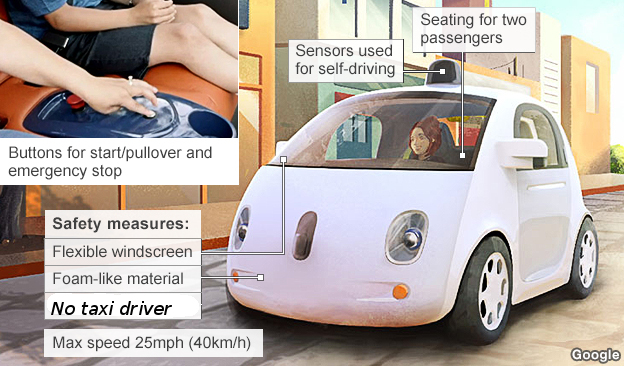
London's taxi "strike" today has been so successful that Uber claims to have had an 850% increase in new customer registrations this week. Well, that is a big success if you believe the strike may have been a guerrilla marketing tactic organised by Uber itself. No sympathy Personally, I have no sympathy for the taxi drivers. There is no city I have ever visited where I haven't encountered at least one taxi driver who tried to overcharge me. Honest drivers who give their customers value for money have less to fear from new technology than those who are unscrupulous. When I broke a leg a few years ago and was getting about on crutches for 6 weeks we decided to go out for dinner one night. This was the first time I went anywhere after having a long stint in hospital followed by a period of time I was confined to the house. The taxi driver deliberately skipped two turns leading directly to the restaurant, went another 1km past it and then followed a small street that winds back and forth and eventually demanded I pay him double what the fare should have been. This is exactly the type of abusive and despicable practice that is being eradicated by Uber's live GPS mapping technology. Although not every driver behaves so shamefully, this type of abuse of the weak or vulnerable is replicated in one way or another the world over. For example, in Melbourne, Australia, wheelchair taxis that have worked out they can make more money collecting families with suitcases at the airport leave genuine wheelchair users without a ride. Will Google be targeted next week? Google has just announced a step-change in plans to build their own self driving cars. Will Google offices around the world, including London be targetted by these crude blockades too? Political protest or anti-competitive mischief? Why were taxi drivers not arrested for their protest today? Given that the roads are the place where taxis and their competitors do business, can this blockade really be considered a political protest or is it an anti-competitive practice in blatant disregard of the law? Weapons of mass destruction Before even having breakfast you could probably find 10,000 cyclists in central London willing to sign a petition declaring taxis are a weapon of mass destruction. Once again, while there are honest drivers, there is a more than trivial number of taxi drivers who are a genuine danger to the lives of cyclists, scooters, motorcycles and occasionally pedestrians. I have personally experienced one of these thugs ramming my bicycle from behind (his hard-nosed insurer eventually paid up but without admitting liability). The police who attended the incident even told me they had seen so many accidents like this they wouldn't dare cycle themselves. The web is full of examples that appear to show malicious and criminal behavior by taxi drivers, thanks to Youtube and helmet cams: Will hotels protest about AirBNB? Now the taxi drivers have had their chance to cause mayhem, will hotel operators be next? What could they do though? Will they seek out AirBNB apartments and try to obstruct them somehow? Making mischief outside somebody's home is not a good way to make a point. Chances are, they would be prosecuted or served with restraining orders. So why do the taxi drivers get to jam up whole cities and get away with it? The Uber taxi meter loophole Will the courts decide that the Uber app is a taxi meter? This is actually a tough question. Even if courts rule against apps that perform live metering, Uber could simply remove all metering functions from the app itself and perform the metering calculations in the cloud. The app would just send start and finish locations to the cloud and the cloud would send a message back to the phone confirming the charge. The phone is then nothing more than a communication and positioning device. Remember the elevator man? When the automobile was first invented, laws were made requiring every car to be accompanied through public streets by a man carrying a flag. That job, like many others, no longer exists. elevator attendant In the good old days, every elevator had a man or woman who would sit on a stool and press buttons to operate the doors and motors. Some up-market department stores and hotels still have an elevator man to add a touch of nostalgia. The vast majority, however, have eliminated these jobs thanks to automatic elevators. Now, even aircraft can land automatically on a ship at sea. Look at all those people manning the deck in the video and contemplate how many of them might potentially be out of a job too in 50 years time as Terminator-style automated battleships patrol the seas. Technology, like the Terminator, is not going to stop.

10 June 2014

Gunnar Wolf: Tor: I'm shutting down my relay only after four days

Some days ago, I bit the bullet and accepted the Tor Challenge. Sadly, after only four days of having a Tor relay node happily sitting at home (and, of course, giving a nice function to this little friend). The inconveniences were too many. I understand anonimity can be used for many nefarious things, but I was surprised and saddened to see the amount of blocking services. Most notorious to me were the Freenode IRC network, friendly home to many free software projects, and the different Wikimedia projects, which ban editting from IP addresses idenitfied as Tor relays. I'm saddened to say that, while I could perfectly survive (and even be a bit proud about supporting a project I believe in) by jumping through some hoops (i.e. by setting up a SOCKS over ssh tunnel to my office to do my Wikipedia edits while at home), after only four days, I decided to shut down my relay. And the main reason... Was something I'm not going to fight against. And it's not even from a nice, friendly free software project. One thing I am not willing to part with is the one tool that keeps my wife well in contact with her friends and family back in Argentina. Yes, I know I could set up one or many different flavors of SIP or Jabber-based VoIP for her But it's also her parents, brother, sisters, and friends who use Skype. So, Skype's banning of Tor relay nodes made me decide to shut down my relay. Sigh... And for somebody obsessed with graphing stuff, this is the graph of the short lifespan of the "Lobazal" Tor node: [update] I will do another blog post. Good news: My Tor node is alive again! Just no longer as an exit relay, as properly pointed out by many, but as a Tor bridge.
AttachmentSize
tor-challenge-1.png23.97 KB
tor1.png27.84 KB
tor2.png18.3 KB

9 June 2014

Konstantinos Margaritis: SIMD book, second update!

From the Indiegogo page: https://www.indiegogo.com/projects/simd-engines-comparative-reference-guide/x/4966960#activity
  • Added titlepage (simple, but will do the job)
  • Reorganized ALL instructions to include both unsigned/signed in the same entity
  • Added Saturated Addition, Subtraction and Saturated Subtraction
  • Added ARMv8 NEON instructions taken from ARM infocenter draft
  • Fixed some instructions (added 64-bit arithmetic for NEON)
  • Added some special addition/subtraction, like add/sub with carry(vmx/vsx), addsub(SSE3/AVX)
  • Added some in-vector sum additions, sum reductions but no descriptions yet
  • Added diagram for 8-bit addition/subtraction (still need lots more).
  • Removed VMX128, couldn't find enough information, an email to some IBM toolchain developers was left unanswered, so I guess noone really will really care if that engine is left out, if enough people insist on it, please also be kind enough to provide some documentation on it.

Daniel Pocock: reSIProcate v1.9 with WebRTC now available for Fedora 20 users

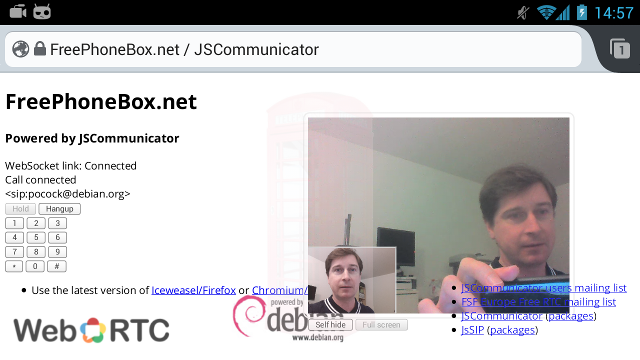
reSIProcate v1.9 has now moved from testing to stable and is available for Fedora 20 users. Version 1.9.7 has also propagated to Debian testing and wheezy-backports, delivering improved stability as discussed in my previous blog. Ready to try WebRTC? The quickest way to set up your own WebRTC trial is to install the repro (reSIProcate SIP proxy) packages for your preferred Linux distribution and then copy JSCommunicator into a directory on your web server. My earlier blog get WebRTC going faster gives specific examples of entries needed in repro.config.. WebRTC Calling from Android I've continued to have success making and receiving calls with both the Firefox and Chrome apps on Android. This is a great way to reach out to friends and family using free software for communication. More details and some screenshots are available in my earlier blog on Android WebRTC.

8 June 2014

Wouter Verhelst: Is Debian non-free?

According to the Free Software Foundation, the Debian distribution is not a Free System Distribution. While I, as a Debian Developer, disagree with that point of view, it should be obvious that the opinion of an organization that engages in politics (or, at the very least, in political lobbying) and of which I am not a member should not be my concern. However, it has long irked me the wrong way that these claims exist. A few weeks ago, I found the System distribution commitments page on Wikipedia. This does change the situation somewhat; I cannot say that a page explaining an opinion of the FSF is wrong; but if that opinion is copied nearly verbatim to a website which claims neutrality as one of its "Core content policies", then the situation is significantly different. When I originally found that page, it was immediately obvious where the content came from, but there was no reference listed, so I added a "citation needed" tag, the first time I ever did so on Wikipedia. Now, a few weeks later, a reference has been added, and the "citation needed" tag removed. However, as expected, the only reference which has been added is the highly opinionated document on the FSF's website, which is hardly neutral. I've added another tag (this time a "which" tag, asking for more clarification) and added a Talk page listing my concerns with the article. But I can't really explain in Wikipedia why I think the whole premise is wrong; that's what a blog is for. So, here goes. The FSF lists two reasons why they do not endorse Debian:
  1. The non-free and contrib repositories
  2. An unsubstantiated claim that "the installer in some cases recommends [...] non-free firmware files for the peripherals on the machine."
Let's have a look at them, each in turn.

Non-free and contrib It is true that Debian provides non-free software in separate repositories, and that software in these repositories does not comply with either the Debian Free Software Guidelines (DFSG) or the FSF's Free Software Definition. However, the non-free and contrib repositories are fairly small:
wouter@carillon:/var/lib/apt/lists$ awk -F':' 'BEGIN total=0 /^Size/ total+=$2 END print total ' ftp.be.debian.org_debian_dists_sid_non-free_binary-amd64_Packages
4398812934
That is, the non-free repository contains just over 4G of software (after installation). Contrib is even smaller:
wouter@carillon:/var/lib/apt/lists$ awk -F':' 'BEGIN total=0 /^Size/ total+=$2 END print total ' ftp.be.debian.org_debian_dists_sid_contrib_binary-amd64_Packages 
306578636
While, combined, this is approximately the same size as some other distributions, free and non-free together, it pales in comparison with the "main" repository:
wouter@carillon:/var/lib/apt/lists$ awk -F':' 'BEGIN total=0 /^Size/ total+=$2 END print total ' ftp.be.debian.org_debian_dists_sid_main_binary-amd64_Packages
60025033622
i.e., the "main" repository contains just shy of 60G of software. Of course, whether non-free is large or not should not matter at all; the fact that it exists in the first place is a problem for free software advocates. But of those 4 gigabytes, what exactly is the non-free repository used for? For that, the Debian popularity contest has a page specifically for the non-free section. Looking at this page, and ignoring the packages that are listed as "Not in sid" (which either means they were installed from third-party suppliers and therefore cannot be attributed to Debian, or were only available in older distributions so should not be held against the Debian of today anymore), we see three main uses of non-free:
  1. Various implementations of non-free algorithms (unrar, libfaac0, etc)
  2. A lot of packages containing non-free firmware
  3. A number of packages containing non-free documentation
The first package which does not fit any of those descriptions is iozone3, currently on the 64th position of the popularity contest (including packages "Not in sid"). The first item in this list is something which most free software advocates will try to avoid. After all, for all of those algorithms, alternatives exist, and so there is no real reason why one would want to use such software, other than "someone sent me a file encoded according to that algorithm, and I want to decode it". Debian gives you the option to do so, but a valid case could be made for not doing so. The second item in that list is really an alternate version of "the installer recommends non-free software", so I'll come back on that in the next section. The 3rd item in the above list deserves some special attention. Just over 10 years ago, Debian clarified its position where it clearly specified that documentation and programs (as both are interpreted as "software") should follow the same set of guidelines regarding freedom. The FSF disagrees with this position, and chose to release some of its documentation under the GFDL with invariant sections, which Debian decided is a non-free license in 2006. Since then, such GNU documentation would no longer be available were Debian to ditch the non-free repository.

Recommending non-free firmware As I said above, the FSF's page claims that the Debian installer recommends non-free firmware "in some cases", without going into much detail. Special care should be taken in understanding the word "recommend" here; wiktionary defines it as follows:
recommend (third-person singular simple present recommends, present participle recommending, simple past and past participle recommended)
  1. (transitive) To bestow commendation on; to represent favourably; to suggest, endorse or encourage as an appropriate choice.
The board recommends Philips, given his ample experience in similar positions.
  1. (transitive) To make acceptable; to attract favor to.
  2. (transitive) To advise, propose, counsel favorably
The therapist recommends resting the mind and exercising the body.
  1. (transitive, archaic) To commit, confide to another's care, confidence or acceptance, with favoring representations
A medieval oblate's parents recommended the boy for life to God and the monastery
However, according to the FSF, merely showing a firmware filename in unencrypted form counts as a recommendation. I've always found that use of the word "recommendation" to be dubious, at best. Ignoring that part, we can make the following observations: The debian-installer module ("udeb") which is responsible for configuring apt is called apt-mirror-setup (code in the apt-setup git repository). The actual debconf templates which allow the user to enable the non-free or contrib repositories are the apt-setup/non-free and apt-setup/contrib templates, and they look like this:
Template: apt-setup/non-free
Type: boolean
Default: false
# :sl1:
_Description: Use non-free software?
 Some non-free software has been made to work with Debian. Though this
 software is not at all a part of Debian, standard Debian tools can be used
 to install it. This software has varying licenses which may prevent you
 from using, modifying, or sharing it.
 .
 Please choose whether you want to have it available anyway.
Template: apt-setup/contrib
Type: boolean
Default: false
# :sl1:
_Description: Use contrib software?
 Some additional software has been made to work with Debian. Though this
 software is free, it depends on non-free software for its operation. This
 software is not a part of Debian, but standard Debian tools can be
 used to install it.
 .
 Please choose whether you want this software to be made available to you.
Note the lines Default: false, which imply that the default answer to these questions is to disable the non-free and contrib repositories. A question which defaults to false isn't a recommendation, nor do I read the text as any form of recommendation to install these repositories (quite the contrary, in fact). More important than whether the default is to enable or disable these repositories is whether this question is even shown to the user in normal installations. Whether this is the case isn't decided by any template; instead, it is decided by the code that calls the templates. That code currently looks like this:
STATE=1
while true; do
        case "$STATE" in
            1)
                db_input low apt-setup/non-free   true
                ;;
            2)
                # If they chose not to use non-free, ask about
                # contrib, with a default of no. If they chose to
                # use non-free, they get contrib too..
                db_get apt-setup/non-free
                if [ "$RET" = false ]; then
                        db_fget apt-setup/contrib seen
                        if [ "$RET" = false ]; then
                                db_set apt-setup/contrib false
                        fi
                        db_input low apt-setup/contrib   true
                else
                        db_fget apt-setup/contrib seen
                        if [ "$RET" = false ]; then
                                db_set apt-setup/contrib true
                        fi
                fi
                ;;
            *)
                break
                ;;
        esac
        if db_go; then
                STATE=$(($STATE + 1))
        else
                STATE=$(($STATE - 1))
        fi
done
Note the "low" in the db_input lines; it means the question is only shown at low priority, i.e., in "expert" mode. The result is that, unless you enable expert mode, you won't even see the question about the non-free repository, and it will be disabled by default. There won't even be any mention of it in your sources.list file. Of course, the above isn't about firmware files, which is what the FSF website claims. So, there is a second part to this story. If you run a system with hardware for which there is a non-free firmware package in the non-free repository, and you provided firmware for this hardware to the installer through various means, then the hw-detect module comes into play. This has code which currently looks like this:
# install cached firmware debs
if [ -d /var/cache/firmware ]; then
    for deb in /var/cache/firmware/*.deb; do
            if [ -f "$deb" ]; then
                    cp -a "$deb" /target/tmp
                    # TODO debconf passthrough
                    if ! in-target dpkg -i "/tmp/$(basename "$deb")"; then
                            # dpkg failed, force removal of package
                            in-target dpkg --force-depends --remove "$(deb_package "$deb")"   true
                    fi
                    rm -f "/target/tmp/$deb"
                    need_nonfree=1
            fi
    done
fi
if [ "$need_nonfree" ]; then
    db_set apt-setup/non-free true
fi
As can bee seen, if any firmware .deb files exist under /var/cache/firmware in the installer environment, then these will be installed on the target system and default answer to the apt-setup/non-free question will be changed to enable the non-free repository. How do such packages end up there? Well, that's done by the same hw-detect udeb, in a different script. The code there is a bit too long to quote in this already far too long blog post, but it boils down to:
  • If the installer detects missing firmware, the user is asked whether (s)he wants to install firmware, with the following template:
    Template: hw-detect/load_firmware
    Type: boolean
    Default: true
    # :sl2:
    _Description: Load missing firmware from removable media?
     Some of your hardware needs non-free firmware files to operate. The
     firmware can be loaded from removable media, such as a USB stick or
     floppy.
     .
     The missing firmware files are: $ FILES 
     .
     If you have such media available now, insert it, and continue.
    
  • If the user agreed to doing so (and to me, the above template does not read as a recommendation), any firmware .deb files that are provided to the installer are tested for the missing firmware files.
  • If any of those files are found, these .deb files are copied to the /var/cache/firmware directory, and the firmware files are made available to the running kernel.

Conclusion In my opinion, while some of the claims on the FSF website are correct, others are at the very least misleading. Debian does not recommend the use of non-free software; and while providing non-free firmware to the installer isn't too difficult, it isn't documented very well; and as such installing a system with non-free enabled isn't something you can easily do by accident. Debian and the FSF clearly disagree on certain things, and this disagreement, not any policies by the Debian project, is the main reason why the FSF won't encourage Debian as a free distribution. I don't think the Debian project will easily agree to get rid of the non-free repository while the FSF still produces non-free documentation or while non-free firmware is still a fact of life in this world. However, I do think the following should happen:
  1. The FSF should relicense its non-free documentation so it becomes truly free.
  2. Once that has happened, Debian should rename its non-free repository to a "hardware-support" repository (or something along those lines), and remove everything that does not exist solely for the support of proprietary hardware (i.e., non-free drivers, non-free firmware, etc).
  3. The installer could be clearer on the fact that if non-free firmware is found to be in use for the system, the user is using software that cannot be properly supported by the Debian project.
While the above wouldn't necessarily bring the opinions of the FSF and Debian 100% in line, it would at least bring their positions closer to eachother. Unfortunately, however, I doubt that this will happen; and that's a shame, because in the end, both Debian and the FSF want the same thing: a world where Free Software is the norm, not the exception.

Update
  • The first version of this text said that providing firmware is not very easy. As was pointed out to me, it isn't too hard, but it's not very well documented and not part of the 'regular' installer images.
  • Add contrib too, when we compare non-free and main
  • Clarify when GFDL is non-free

7 June 2014

Steve Kemp: setuid/setgid binaries in Debian's Wheezy release?

If anybody has access to a complete mirror of the Debian Wheezy release, and was willing to share a list of all setuid/setgid binaries that would be greatly appreciated. It doesn't seem to be something you can find online, so you need to manually unpack each .deb file and look at the permissions. I don't have access to a (complete) local mirror, and so I cannot easily build such a thing, unless I go to ebay and buy a random DVD-archive. This list would be useful for folk wanting to direct their audits ..

6 June 2014

Gunnar Wolf: What defines an identity?

I must echo John Sullivan's post: GPG keysigning and government identification. John states some very important reasons for people everywhere to verify the identities of those parties they sign GPG keys with in a meaningful way, and that means, not just trusting government-issued IDs. As he says, It's not the Web of Amateur ID Checking. And I'll take the opportunity to expand, based on what some of us saw in Debian, on what this means. I know most people (even most people involved in Free Software development not everybody needs to join a globally-distributed, thousand-people-strong project such as Debian) are not that much into GPG, trust keyrings, or understand the value of a strong set of cross-signatures. I know many people have never been part of a key-signing party. I have been to several. And it was a very interesting experience. Fun, at the beginning at least, but quite tiring at the end. I was part of what could very well constitute the largest KSP ever in DebConf5 (Finland, 2005). Quite awe-inspiring We were over 200 people, all lined up with a printed list on one hand, our passport (or ID card for EU citizens) in the other. Actwally, we stood face to face, in a ribbon-like ring. And, after the basic explanation was given, it was time to check ID documents. And so it began. The rationale of this ring is that every person who signed up for the KSP would verify each of the others' identities. Were anything fishy to happen, somebody would surely raise a voice of alert. Of course, the interaction between every two people had to be quick More like a game than like a real check. "Hi, I'm #142 on the list. I checked, my ID is OK and my fingerprint is OK." "OK, I'm #35, I also printed the document and checked both my ID and my fingerprint are OK." The passport changes hands, the person in front of me takes the unique opportunity to look at a Mexican passport while I look at a Somewhere-y one. And all is fine and dandy. The first interactions do include some chatter while we grab up speed, so maybe a minute is spent Later on, we all get a bit tired, and things speed up a bit. But anyway, we were close to 200 people That means we surely spent over 120 minutes (2 full hours) checking ID documents. Of course, not all of the time under ideal lighting conditions. After two hours, nobody was checking anything anymore. But yes, as a group where we trust each other more than most social groups I have ever met, we did trust on others raising the alarm were anything fishy to happen. And we all finished happy and got home with a bucketload of signatures on. Yay! One year later, DebConf happened in Mexico. My friend Martin Krafft tested the system, perhaps cheerful and playful in his intent but the flaw in key signing parties such as the one I described he unveiled was huge: People join the KSP just because it's a social ritual, without putting any thought or judgement in it. And, by doing so, we ended up dilluting instead of strengthening our web of trust. Martin identified himself using an official-looking ID. According to his recount of the facts, he did start presenting a German ID and later switched to this other document. We could say it was a real ID from a fake country, or that it was a fake ID. It is up to each person to judge. But anyway, Martin brought his Transnational Republic ID document, and many tens of people agreed to sign his key based on it Or rather, based on it plus his outgoing, friendly personality. I did, at least, know perfectly well who he was, after knowing him for three years already. Many among us also did. Until he reached a very dilligent person, Manoj, that got disgusted by this experiment and loudly denounced it. Right, Manoj is known to have strong views, and using fake IDs is (or, at least, was) outside his definition of fair play. Some time after DebConf, a huge thread erupted questioning Martin's actions, as well as questioning what do we trust when we sign an identity document (a GPG key). So... We continued having traditional key signing parties for a couple of years, although more carefully and with more buzz regarding these issues. Until we finally decided to switch the protocol to a better one: One that ensures we do get some more talk and inter-personal recognition. We don't need everybody to cross-sign with everyone else A better trust comes from people chatting with each other and being able to actually pin-point who a person is, what do they do. And yes, at KSPs most people still require ID documents in order to cross-sign. Now... What do I think about this? First of all, if we have not ever talked for at least enough time for me to recognize you, don't be surprised: I won't sign your key or request you to sign mine (and note, I have quite a bad memory when it comes to faces and names). If it's the first conference (or social ocassion) we come together, I will most likely not look for key exchanges either. My personal way of verifying identities is by knowing the other person. So, no, I won't trust a government-issued ID. I know I will be signing some people based on something other than their name, but hey I know many people already who live pseudonymously, and if they choose for whatever reason to forgo their original name, their original name should not mean anything to me either. I know them by their pseudonym, and based on that pseudonym I will sign their identities. But... *sigh*, this post turned out quite long, and I'm not yet getting anywhere ;-) But what this means in the end is: We must stop and think what do we mean when we exchange signatures. We are not validating a person's worth. We are not validating that a government believes who they claim to be. We are validating we trust them to be identified with the (name,mail,affiliation) they are presenting us. And yes, our signature is much more than just a social rite It is a binding document. I don't know if a GPG signature is legally binding anywhere (I'm tempted to believe it is, as most jurisdictions do accept digital signatures, and the procedure is mathematically sound and criptographically strong), but it does have a high value for our project, and for many other projects in the Free Software world. So, wrapping up, I will also invite (just like John did) you to read the E-mail self-defense guide, published by the FSF in honor of today's Reset The Net effort.

4 June 2014

Daniel Pocock: Trialing the xTuple/PostBooks next generation web UI

For some time I've been using PostBooks to keep track of finances. The traditional PostBooks system has a powerful Qt GUI. The xTuple team have been hard at work creating a shiny new web-based user interface. The traditional UI has no dedicated server - all users communicate directly with the PostgreSQL database where stored procedures and triggers ensure the correct logic is applied. The new model provides an xTuple application server that can handle requests from web users and potentially other third-party apps too. Who is it for? Some people may feel that the web UI is intended to appeal to mobile users. While it is useful for mobile and tablet devices, this is not strictly the aim, John has discussed this in a blog. One benefit of the web UI is that accountants and book-keepers do not need to have a copy of every exact PostBooks version that every client is using. Given that many people only need their accountant to look at their books for just a few hours at the end of each year, the ease of access with a web UI will make a big difference. Installing it quickly The xTuple Git repository provides a script to install the whole server quickly. Initially it just supported a single Ubuntu release, I just contributed some tweaks to generalize it for Debian wheezy and potentially other releases. It doesn't appear too difficult to generalize it further for Fedora or RHEL users. To get going, I recommend trying it in a fresh virtual machine, either in a server environment or desktop VirtualBox solution. The installation script will install various packages on the machine and mess about with the PostgreSQL setup so you will not want to run the automated setup script on any machine where you have existing databases. Once the virtual machine is setup, make sure sudo is installed and configured:
# apt-get install sudo
# visudo
and then run the install as your normal user:
git clone --recursive git://github.com/xtuple/xtuple.git
cd xtuple
git remote add XTUPLE git://github.com/xtuple/xtuple.git
git fetch XTUPLE
git checkout git describe --abbrev=0
chmod a+x scripts/install_xtuple.sh
scripts/install_xtuple.sh
If all goes well, 5-10 minutes later it is ready to run:
cd node-datasource
node main.js
The port numbers will appear on the screen and you can connect with a web browser. Trying it out Despite my comments above to the effect that this is not primarily aimed at mobile, the first and second device I tested with were both mobile devices, Samsung Galaxy S3 and a Samsung Galaxy Note 3. I feel the Note is far better for this type of application, primarily due to screen size and the fact that most of the forms in the application have fields that launch popup menus. It appears to work in both Chrome and Firefox on these devices. One handy feature is that the mobile device can dial numbers directly from the CRM address book, this is facilitated with the tel URI. My impression is that this is still a product that is in the final stages of development, although some people will be able to use it almost immediately. One significant thing to note is that the database schema is very stable due to the long history of the traditional xTuple/PostBooks products.

3 June 2014

Konstantinos Margaritis: SIMD book, first draft published!

Check activity here: https://www.indiegogo.com/projects/simd-engines-comparative-reference-guide/x/4966960#activity From the update: Ok, I've been busy the past days, I started writing the book (using LaTeX :), and I'd like to say that progress has been good. I fixed the current list of SIMD engines that I'm going to include and it's a long one:

Next.

Previous.