## 0.23	2025-12-20
commit be15aa25dea40aea66a8534143fb81b29d2e6c08
Author: C.J. Collier
Date:   Sat Dec 20 22:40:44 2025 +0000
    Fixes C-level test infrastructure and adds more test cases for upb_to_sv conversions.

    - **Makefile.PL:**
        - Allow  extra_src  in  c_test_config.json  to be an array.
        - Add ASan flags to CCFLAGS and LDDLFLAGS for better debugging.
        - Corrected echo newlines in  test_c  target.
    - **c_test_config.json:**
        - Added missing type test files to  deps  and  extra_src  for  convert/sv_to_upb  and  convert/upb_to_sv  test runners.
    - **t/c/convert/upb_to_sv.c:**
        - Fixed a double free of  test_pool .
        - Added missing includes for type test headers.
        - Updated test plan counts.
    - **t/c/convert/sv_to_upb.c:**
        - Added missing includes for type test headers.
        - Updated test plan counts.
        - Corrected Perl interpreter initialization.
    - **t/c/convert/types/**:
        - Added missing  test_util.h  include in new type test headers.
        - Completed the set of  upb_to_sv  test cases for all scalar types by adding optional and repeated tests for  sfixed32 ,  sfixed64 ,  sint32 , and  sint64 , and adding repeated tests to the remaining scalar type files.
    - **Documentation:**
        - Updated  01-xs-testing.md  with more debugging tips, including ASan usage and checking for double frees and typos.
        - Updated  xs_learnings.md  with details from the recent segfault.
        - Updated  llm-plan-execution-instructions.md  to emphasize debugging steps.
## 0.22	2025-12-19
commit 2c171d9a5027e0150eae629729c9104e7f6b9d2b
Author: C.J. Collier
Date:   Fri Dec 19 23:41:02 2025 +0000
    feat(perl,testing): Initialize C test framework and build system

    This commit sets up the foundation for the C-level tests and the build system for the Perl Protobuf module:

    1.  **Makefile.PL Enhancements:**
        *   Integrates  Devel::PPPort  to generate  ppport.h  for better portability.
        *   Object files now retain their path structure (e.g.,  xs/convert/sv_to_upb.o ) instead of being flattened, improving build clarity.
        *   The  MY::postamble  is significantly revamped to dynamically generate build rules for all C tests located in  t/c/  based on the  t/c/c_test_config.json  file.
        *   C tests are linked against  libprotobuf_common.a  and use  ExtUtils::Embed  flags.
        *   Added  JSON::MaybeXS  to  PREREQ_PM .
        *   The  test  target now also depends on the  test_c  target.

    2.  **C Test Infrastructure ( t/c/ ):
        *   Introduced  t/c/c_test_config.json  to configure individual C test builds, specifying dependencies and extra source files.
        *   Created  t/c/convert/test_util.c  and  .h  for shared test functions like loading descriptors.
        *   Initial  t/c/convert/upb_to_sv.c  and  t/c/convert/sv_to_upb.c  test runners.
        *   Basic  t/c/integration/030_protobuf_coro.c  for Coro safety testing on core utils using  libcoro .
        *   Basic  t/c/integration/035_croak_test.c  for testing exception handling.
        *   Basic  t/c/integration/050_convert.c  for integration testing conversions.

    3.  **Test Proto:** Updated  t/data/test.proto  with more field types for conversion testing and regenerated  test_descriptor.bin .

    4.  **XS Test Harness ( t/c/upb-perl-test.h ):** Added  like_n  macro for length-aware regex matching.

    5.  **Documentation:** Updated architecture and plan documents to reflect the C test structure.
    6.  **ERRSV Testing:** Note that the C tests ( t/c/ ) will primarily check *if* a  croak  occurs (i.e., that the exception path is taken), but will not assert on the string content of  ERRSV . Reliably testing  $@  content requires the full Perl test environment with  Test::More , which will be done in the  .t  files when testing the Perl API.

    This provides a solid base for developing and testing the XS and C components of the module.
## 0.21	2025-12-18
commit a8b6b6100b2cf29c6df1358adddb291537d979bc
Author: C.J. Collier
Date:   Thu Dec 18 04:20:47 2025 +0000
    test(C): Add integration tests for Milestone 2 components

    - Created t/c/integration/030_protobuf.c to test interactions
      between obj_cache, arena, and utils.
    - Added this test to t/c/c_test_config.json.
    - Verified that all C tests for Milestones 2 and 3 pass,
      including the libcoro-based stress test.
## 0.20	2025-12-18
commit 0fcad68680b1f700a83972a7c1c48bf3a6958695
Author: C.J. Collier
Date:   Thu Dec 18 04:14:04 2025 +0000
    docs(plan): Add guideline review reminders to milestones

    - Added a "[ ] REFRESH: Review all documents in @perl/doc/guidelines/**"
      checklist item to the start of each component implementation
      milestone (C and Perl layers).
    - This excludes Integration Test milestones.
## 0.19	2025-12-18
commit 987126c4b09fcdf06967a98fa3adb63d7de59a34
Author: C.J. Collier
Date:   Thu Dec 18 04:05:53 2025 +0000
    docs(plan): Add C-level and Perl-level Coro tests to milestones

    - Added checklist items for  libcoro -based C tests
      (e.g.,  t/c/integration/050_convert_coro.c ) to all C layer
      integration milestones (050 through 220).
    - Updated  030_Integration_Protobuf.md  to standardise checklist
      items for the existing  030_protobuf_coro.c  test.
    - Removed the single  xt/author/coro-safe.t  item from
       010_Build.md .
    - Added checklist items for Perl-level  Coro  tests
      (e.g.,  xt/coro/240_arena.t ) to each Perl layer
      integration milestone (240 through 400).
    - Created  perl/t/c/c_test_config.json  to manage C test
      configurations externally.
    - Updated  perl/doc/architecture/testing/01-xs-testing.md  to describe
      both C-level  libcoro  and Perl-level  Coro  testing strategies.
## 0.18	2025-12-18
commit 6095a5a610401a6035a81429d0ccb9884d53687b
Author: C.J. Collier
Date:   Thu Dec 18 02:34:31 2025 +0000
    added coro testing to c layer milestones
## 0.17	2025-12-18
commit cc0aae78b1f7f675fc8a1e99aa876c0764ea1cce
Author: C.J. Collier
Date:   Thu Dec 18 02:26:59 2025 +0000
    docs(plan): Refine test coverage checklist items for SMARTness

    - Updated the "Tests provide full coverage" checklist items in
      C layer plan files (020, 040, 060, 080, 100, 120, 140, 160, 180, 200)
      to explicitly mention testing all public functions in the
      corresponding header files.
    - Expanded placeholder checklists in 140, 160, 180, 200.
    - Updated the "Tests provide full coverage" and "Add coverage checks"
      checklist items in Perl layer plan files (230, 250, 270, 290, 310, 330,
      350, 370, 390) to be more specific about the scope of testing
      and the use of  Test::TestCoverage .
    - Expanded Well-Known Types milestone (350) to detail each type.
## 0.16	2025-12-18
commit e4b601f14e3817a17b0f4a38698d981dd4cb2818
Author: C.J. Collier
Date:   Thu Dec 18 02:07:35 2025 +0000
    docs(plan): Full refactoring of C and Perl plan files

    - Split both ProtobufPlan-C.md and ProtobufPlan-Perl.md into
      per-milestone files under the  perl/doc/plan/  directory.
    - Introduced Integration Test milestones after each component
      milestone in both C and Perl plans.
    - Numbered milestone files sequentially (e.g., 010_Build.md,
      230_Perl_Arena.md).
    - Updated main ProtobufPlan-C.md and ProtobufPlan-Perl.md to
      act as Tables of Contents.
    - Ensured consistent naming for integration test files
      (e.g.,  t/c/integration/030_protobuf.c ,  t/integration/260_descriptor_pool.t ).
    - Added architecture review steps to the end of all milestones.
    - Moved Coro safety test to C layer Milestone 1.
    - Updated Makefile.PL to support new test structure and added Coro.
    - Moved and split t/c/convert.c into t/c/convert/*.c.
    - Moved other t/c/*.c tests into t/c/protobuf/*.c.
    - Deleted old t/c/convert.c.
## 0.15	2025-12-17
commit 649cbacf03abb5e7293e3038bb451c0406e9d0ce
Author: C.J. Collier
Date:   Wed Dec 17 23:51:22 2025 +0000
    docs(plan): Refactor and reset ProtobufPlan.md

    - Split the plan into ProtobufPlan-C.md and ProtobufPlan-Perl.md.
    - Reorganized milestones to clearly separate C layer and Perl layer development.
    - Added more granular checkboxes for each component:
      - C Layer: Create test, Test coverage, Implement, Tests pass.
      - Perl Layer: Create test, Test coverage, Implement Module/XS, Tests pass, C-Layer adjustments.
    - Reset all checkboxes to  [ ]  to prepare for a full audit.
    - Updated status in architecture/api and architecture/core documents to "Not Started".

    feat(obj_cache): Add unregister function and enhance tests

    - Added  protobuf_unregister_object  to  xs/protobuf/obj_cache.c .
    - Updated  xs/protobuf/obj_cache.h  with the new function declaration.
    - Expanded tests in  t/c/protobuf_obj_cache.c  to cover unregistering,
      overwriting keys, and unregistering non-existent keys.
    - Corrected the test plan count in  t/c/protobuf_obj_cache.c  to 17.
## 0.14	2025-12-17
commit 40b6ad14ca32cf16958d490bb575962f88d868a1
Author: C.J. Collier
Date:   Wed Dec 17 23:18:27 2025 +0000
    feat(arena): Complete C layer for Arena wrapper

    This commit finalizes the C-level implementation for the Protobuf::Arena wrapper.

    - Adds  PerlUpb_Arena_Destroy  for proper cleanup from Perl's DEMOLISH.
    - Enhances error checking in  PerlUpb_Arena_Get .
    - Expands C-level tests in  t/c/protobuf_arena.c  to cover memory allocation
      on the arena and lifecycle through  PerlUpb_Arena_Destroy .
    - Corrects embedded Perl initialization in the C test.

    docs(plan): Refactor ProtobufPlan.md

    - Restructures the development plan to clearly separate "C Layer" and
      "Perl Layer" tasks within each milestone.
    - This aligns the plan with the "C-First Implementation Strategy" and improves progress tracking.
## 0.13	2025-12-17
commit c1e566c25f62d0ae9f195a6df43b895682652c71
Author: C.J. Collier
Date:   Wed Dec 17 22:00:40 2025 +0000
    refactor(perl): Rename C tests and enhance Makefile.PL

    - Renamed test files in  t/c/  to better match the  xs  module structure:
        -  01-cache.c  ->  protobuf_obj_cache.c
        -  02-arena.c  ->  protobuf_arena.c
        -  03-utils.c  ->  protobuf_utils.c
        -  04-convert.c  ->  convert.c
        -  load_test.c  ->  upb_descriptor_load.c
    - Updated  perl/Makefile.PL  to reflect the new test names in  MY::postamble 's  $c_test_config .
    - Refactored the  $c_test_config  generation in  Makefile.PL  to reduce repetition by using a default flags hash and common dependencies array.
    - Added a  fail()  macro to  perl/t/c/upb-perl-test.h  for consistency.
    - Modified  t/c/upb_descriptor_load.c  to use the  t/c/upb-perl-test.h  macros, making its output consistent with other C tests.
    - Added a skeleton for  t/c/convert.c  to test the conversion functions.
    - Updated documentation in  ProtobufPlan.md  and  architecture/testing/01-xs-testing.md  to reflect new test names.
## 0.12	2025-12-17
commit d8cb5dd415c6c129e71cd452f78e29de398a82c9
Author: C.J. Collier
Date:   Wed Dec 17 20:47:38 2025 +0000
    feat(perl): Refactor XS code into subdirectories

    This commit reorganizes the C code in the  perl/xs/  directory into subdirectories, mirroring the structure of the Python UPB extension. This enhances modularity and maintainability.

    - Created subdirectories for each major component:  convert ,  descriptor ,  descriptor_containers ,  descriptor_pool ,  extension_dict ,  map ,  message ,  protobuf ,  repeated , and  unknown_fields .
    - Created skeleton  .h  and  .c  files within each subdirectory to house the component-specific logic.
    - Updated top-level component headers (e.g.,  perl/xs/descriptor.h ) to include the new sub-headers.
    - Updated top-level component source files (e.g.,  perl/xs/descriptor.c ) to include their main header and added stub initialization functions (e.g.,  PerlUpb_InitDescriptor ).
    - Moved code from the original  perl/xs/protobuf.c  to new files in  perl/xs/protobuf/  (arena, obj_cache, utils).
    - Moved code from the original  perl/xs/convert.c  to new files in  perl/xs/convert/  (upb_to_sv, sv_to_upb).
    - Updated  perl/Makefile.PL  to use a glob ( xs/*/*.c ) to find the new C source files in the subdirectories.
    - Added  perl/doc/architecture/core/07-xs-file-organization.md  to document the new structure.
    - Updated  perl/doc/ProtobufPlan.md  and other architecture documents to reference the new organization.
    - Corrected self-referential includes in the newly created .c files.

    This restructuring provides a solid foundation for further development and makes it easier to port logic from the Python implementation.
## 0.11	2025-12-17
commit cdedcd13ded4511b0464f5d3bdd72ce6d34e73fc
Author: C.J. Collier
Date:   Wed Dec 17 19:57:52 2025 +0000
    feat(perl): Implement C-first testing and core XS infrastructure

    This commit introduces a significant refactoring of the Perl XS extension, adopting a C-first development approach to ensure a robust foundation.

    Key changes include:

    -   **C-Level Testing Framework:** Established a C-level testing system in  t/c/  with a dedicated Makefile, using an embedded Perl interpreter. Initial tests cover the object cache ( 01-cache.c ), arena wrapper ( 02-arena.c ), and utility functions ( 03-utils.c ).
    -   **Core XS Infrastructure:**
        -   Implemented a global object cache ( xs/protobuf.c ) to manage Perl wrappers for UPB objects, using weak references.
        -   Created an  upb_Arena  wrapper ( xs/protobuf.c ).
        -   Consolidated common XS helper functions into  xs/protobuf.h  and  xs/protobuf.c .
    -   **Makefile.PL Enhancements:** Updated to support building and linking C tests, incorporating flags from  ExtUtils::Embed , and handling both  .c  and  .cc  source files.
    -   **XS File Reorganization:** Restructured XS files to mirror the Python UPB extension's layout (e.g.,  message.c ,  descriptor.c ). Removed older, monolithic  .xs  files.
    -   **Typemap Expansion:** Added extensive typemap entries in  perl/typemap  to handle conversions between Perl objects and various  const upb_*Def*  pointers.
    -   **Descriptor Tests:** Added a new test suite  t/02-descriptor.t  to validate descriptor loading and accessor methods.
    -   **Documentation:** Updated development plans and guidelines ( ProtobufPlan.md ,  xs_learnings.md , etc.) to reflect the C-first strategy, new testing methods, and lessons learned.
    -   **Build Cleanup:** Removed  ppport.h  from  .gitignore  as it's no longer used, due to  -DPERL_NO_PPPORT  being set in  Makefile.PL .

    This C-first approach allows for more isolated and reliable testing of the core logic interacting with the UPB library before higher-level Perl APIs are built upon it.
## 0.10	2025-12-17
commit 1ef20ade24603573905cb0376670945f1ab5d829
Author: C.J. Collier
Date:   Wed Dec 17 07:08:29 2025 +0000
    feat(perl): Implement C-level tests and core XS utils

    This commit introduces a C-level testing framework for the XS layer and implements key components:

    1.  **C-Level Tests ( t/c/ )**:
        *   Added  t/c/Makefile  to build standalone C tests.
        *   Created  t/c/upb-perl-test.h  with macros for TAP-compliant C tests ( plan ,  ok ,  is ,  is_string ,  diag ).
        *   Implemented  t/c/01-cache.c  to test the object cache.
        *   Implemented  t/c/02-arena.c  to test  Protobuf::Arena  wrappers.
        *   Implemented  t/c/03-utils.c  to test string utility functions.
        *   Corrected include paths and diagnostic messages in C tests.

    2.  **XS Object Cache ( xs/protobuf.c )**:
        *   Switched to using stringified pointers ( %p ) as hash keys for stability.
        *   Fixed a critical double-free bug in  PerlUpb_ObjCache_Delete  by removing an extra  SvREFCNT_dec  on the lookup key.

    3.  **XS Arena Wrapper ( xs/protobuf.c )**:
        *   Corrected  PerlUpb_Arena_New  to use  newSVrv  and  PTR2IV  for opaque object wrapping.
        *   Corrected  PerlUpb_Arena_Get  to safely unwrap the arena pointer.

    4.  **Makefile.PL ( perl/Makefile.PL )**:
        *   Added  -Ixs  to  INC  to allow C tests to find  t/c/upb-perl-test.h  and  xs/protobuf.h .
        *   Added  LIBS  to link  libprotobuf_common.a  into the main  Protobuf.so .
        *   Added C test targets  01-cache ,  02-arena ,  03-utils  to the test config in  MY::postamble .

    5.  **Protobuf.pm ( perl/lib/Protobuf.pm )**:
        *   Added  use XSLoader;  to load the compiled XS code.

    6.  **New files  xs/util.h **:
        *   Added initial type conversion function.

    These changes establish a foundation for testing the C-level interface with UPB and fix crucial bugs in the object cache implementation.
## 0.09	2025-12-17
commit 07d61652b032b32790ca2d3848243f9d75ea98f4
Author: C.J. Collier
Date:   Wed Dec 17 04:53:34 2025 +0000
    feat(perl): Build system and C cache test for Perl XS

    This commit introduces the foundational pieces for the Perl XS implementation, focusing on the build system and a C-level test for the object cache.

    -   **Makefile.PL:**
        -   Refactored C test compilation rules in  MY::postamble  to use a hash ( $c_test_config ) for better organization and test-specific flags.
        -   Integrated  ExtUtils::Embed  to provide necessary compiler and linker flags for embedding the Perl interpreter, specifically for the  t/c/01-cache.c  test.
        -   Correctly constructs the path to the versioned Perl library ( libperl.so.X.Y.Z ) using  $Config archlib  and  $Config libperl  to ensure portability.
        -   Removed  VERSION_FROM  and  ABSTRACT_FROM  to avoid dependency on  .pm  files for now.

    -   **C Cache Test (t/c/01-cache.c):**
        -   Added a C test to exercise the object cache functions implemented in  xs/protobuf.c .
        -   Includes tests for adding, getting, deleting, and weak reference behavior.

    -   **XS Cache Implementation (xs/protobuf.c, xs/protobuf.h):**
        -   Implemented  PerlUpb_ObjCache_Init ,  PerlUpb_ObjCache_Add ,  PerlUpb_ObjCache_Get ,  PerlUpb_ObjCache_Delete , and  PerlUpb_ObjCache_Destroy .
        -   Uses a Perl hash ( HV* ) for the cache.
        -   Keys are string representations of the C pointers, created using  snprintf  with  "%llx" .
        -   Values are weak references ( sv_rvweaken ) to the Perl objects ( SV* ).
        -    PerlUpb_ObjCache_Get  now correctly returns an incremented reference to the original SV, not a copy.
        -    PerlUpb_ObjCache_Destroy  now clears the hash before decrementing its refcount.

    -   **t/c/upb-perl-test.h:**
        -   Updated  is_sv  to perform direct pointer comparison ( got == expected ).

    -   **Minor:** Added  util.h  (currently empty), updated  typemap .

    These changes establish a working C-level test environment for the XS components.
## 0.08	2025-12-17
commit d131fd22ea3ed8158acb9b0b1fe6efd856dc380e
Author: C.J. Collier
Date:   Wed Dec 17 02:57:48 2025 +0000
    feat(perl): Update docs and core XS files

    - Explicitly add TDD cycle to ProtobufPlan.md.
    - Clarify mirroring of Python implementation in upb-interfacing.md for both C and Perl layers.
    - Branch and adapt python/protobuf.h and python/protobuf.c to perl/xs/protobuf.h and perl/xs/protobuf.c, including the object cache implementation. Removed old cache.* files.
    - Create initial C test for the object cache in t/c/01-cache.c.
## 0.07	2025-12-17
commit 56fd6862732c423736a2f9a9fb1a2816fc59e9b0
Author: C.J. Collier
Date:   Wed Dec 17 01:09:18 2025 +0000
    feat(perl): Align Perl UPB architecture docs with Python

    Updates the Perl Protobuf architecture documents to more closely align with the design and implementation strategies used in the Python UPB extension.

    Key changes:

    -   **Object Caching:** Mandates a global, per-interpreter cache using weak references for all UPB-derived objects, mirroring Python's  PyUpb_ObjCache .
    -   **Descriptor Containers:** Introduces a new document outlining the plan to use generic XS container types (Sequence, ByNameMap, ByNumberMap) with vtables to handle collections of descriptors, similar to Python's  descriptor_containers.c .
    -   **Testing:** Adds a note to the testing strategy to port relevant test cases from the Python implementation to ensure feature parity.
## 0.06	2025-12-17
commit 6009ce6ab64eccce5c48729128e5adf3ef98e9ae
Author: C.J. Collier
Date:   Wed Dec 17 00:28:20 2025 +0000
    feat(perl): Implement object caching and fix build

    This commit introduces several key improvements to the Perl XS build system and core functionality:

    1.  **Object Caching:**
        *   Introduces  xs/protobuf.c  and  xs/protobuf.h  to implement a caching mechanism ( protobuf_c_to_perl_obj ) for wrapping UPB C pointers into Perl objects. This uses a hash and weak references to ensure object identity and prevent memory leaks.
        *   Updates the  typemap  to use  protobuf_c_to_perl_obj  for  upb_MessageDef *  output, ensuring descriptor objects are cached.
        *   Corrected  sv_weaken  to the correct  sv_rvweaken  function.

    2.  **Makefile.PL Enhancements:**
        *   Switched to using the Bazel-generated UPB descriptor sources from  bazel-bin/src/google/protobuf/_virtual_imports/descriptor_proto/google/protobuf/ .
        *   Updated  INC  paths to correctly locate the generated headers.
        *   Refactored  MY::dynamic_lib  to ensure the static library  libprotobuf_common.a  is correctly linked into each generated  .so  module, resolving undefined symbol errors.
        *   Overrode  MY::test  to use  prove -b -j$(nproc) t/*.t xt/*.t  for running tests.
        *   Cleaned up  LIBS  and  LDDLFLAGS  usage.

    3.  **Documentation:**
        *   Updated  ProtobufPlan.md  to reflect the current status and design decisions.
        *   Reorganized architecture documents into subdirectories.
        *   Added  object-caching.md  and  c-perl-interface.md .
        *   Updated  llm-guidance.md  with notes on  upb/upb.h  and  sv_rvweaken .

    4.  **Testing:**
        *   Fixed  xt/03-moo_immutable.t  to skip tests if no Moo modules are found.

    This resolves the build issues and makes the core test suite pass.
## 0.05	2025-12-16
commit 177d2f3b2608b9d9c415994e076a77d8560423b8
Author: C.J. Collier
Date:   Tue Dec 16 19:51:36 2025 +0000
    Refactor: Rename namespace to Protobuf, build system and doc updates

    This commit refactors the primary namespace from  ProtoBuf  to  Protobuf
    to align with the style guide. This involves renaming files, directories,
    and updating package names within all Perl and XS files.

    **Namespace Changes:**

    *   Renamed  perl/lib/ProtoBuf  to  perl/lib/Protobuf .
    *   Moved and updated  ProtoBuf.pm  to  Protobuf.pm .
    *   Moved and updated  ProtoBuf::Descriptor  to  Protobuf::Descriptor  (.pm & .xs).
    *   Removed other  ProtoBuf::*  stubs (Arena, DescriptorPool, Message).
    *   Updated  MODULE  and  PACKAGE  in  Descriptor.xs .
    *   Updated  NAME ,  *_FROM  in  perl/Makefile.PL .
    *   Replaced  ProtoBuf  with  Protobuf  throughout  perl/typemap .
    *   Updated namespaces in test files  t/01-load-protobuf-descriptor.t  and  t/02-descriptor.t .
    *   Updated namespaces in all documentation files under  perl/doc/ .
    *   Updated paths in  perl/.gitignore .

    **Build System Enhancements (Makefile.PL):**

    *   Included  xs/*.c  files in the common object files list.
    *   Added  -I.  to the  INC  paths.
    *   Switched from  MYEXTLIB  to  LIBS => ['-L$(CURDIR) -lprotobuf_common']  for linking.
    *   Removed custom keys passed to  WriteMakefile  for postamble.
    *    MY::postamble  now sources variables directly from the main script scope.
    *   Added  all :: $ common_lib  dependency in  MY::postamble .
    *   Added  t/c/load_test.c  compilation rule in  MY::postamble .
    *   Updated  clean  target to include  blib .
    *   Added more modules to  TEST_REQUIRES .
    *   Removed the explicit  PM  and  XS  keys from  WriteMakefile , relying on  XSMULTI => 1 .

    **New Files:**

    *    perl/lib/Protobuf.pm
    *    perl/lib/Protobuf/Descriptor.pm
    *    perl/lib/Protobuf/Descriptor.xs
    *    perl/t/01-load-protobuf-descriptor.t
    *    perl/t/02-descriptor.t
    *    perl/t/c/load_test.c : Standalone C test for UPB.
    *    perl/xs/types.c  &  perl/xs/types.h : For Perl/C type conversions.
    *    perl/doc/architecture/upb-interfacing.md
    *    perl/xt/03-moo_immutable.t : Test for Moo immutability.

    **Deletions:**

    *   Old test files:  t/00_load.t ,  t/01_basic.t ,  t/02_serialize.t ,  t/03_message.t ,  t/04_descriptor_pool.t ,  t/05_arena.t ,  t/05_message.t .
    *   Removed  lib/ProtoBuf.xs  as it's not needed with  XSMULTI .

    **Other:**

    *   Updated  test_descriptor.bin  (binary change).
    *   Significant content updates to markdown documentation files in  perl/doc/architecture  and  perl/doc/internal  reflecting the new architecture and learnings.
## 0.04	2025-12-14
commit 92de5d482c8deb9af228f4b5ce31715d3664d6ee
Author: C.J. Collier
Date:   Sun Dec 14 21:28:19 2025 +0000
    feat(perl): Implement Message object creation and fix lifecycles

    This commit introduces the basic structure for  ProtoBuf::Message  object
    creation, linking it with  ProtoBuf::Descriptor  and  ProtoBuf::DescriptorPool ,
    and crucially resolves a SEGV by fixing object lifecycle management.

    Key Changes:

    1.  ** ProtoBuf::Descriptor :** Added  _pool  attribute to hold a strong
        reference to the parent  ProtoBuf::DescriptorPool . This is essential to
        prevent the pool and its C  upb_DefPool  from being garbage collected
        while a descriptor is still in use.

    2.  ** ProtoBuf::DescriptorPool :**
        *    find_message_by_name : Now passes the  $self  (the pool object) to the
             ProtoBuf::Descriptor  constructor to establish the lifecycle link.
        *   XSUB  pb_dp_find_message_by_name : Updated to accept the pool  SV*  and
            store it in the descriptor's  _pool  attribute.
        *   XSUB  _load_serialized_descriptor_set : Renamed to avoid clashing with the
            Perl method name. The Perl wrapper now correctly calls this internal XSUB.
        *    DEMOLISH : Made safer by checking for attribute existence.

    3.  ** ProtoBuf::Message :**
        *   Implemented using Moo with lazy builders for  _upb_arena  and
             _upb_message .
        *    _descriptor  is a required argument to  new() .
        *   XS functions added for creating the arena ( pb_msg_create_arena ) and
            the  upb_Message  ( pb_msg_create_upb_message ).
        *    pb_msg_create_upb_message  now extracts the  upb_MessageDef*  from the
            descriptor and uses  upb_MessageDef_MiniTable()  to get the minitable
            for  upb_Message_New() .
        *    DEMOLISH : Added to free the message's arena.

    4.  ** Makefile.PL :**
        *   Added  -g  to  CCFLAGS  for debugging symbols.
        *   Added Perl CORE include path to  MY::postamble 's  base_flags .

    5.  **Tests:**
        *    t/04_descriptor_pool.t : Updated to check the structure of the
            returned  ProtoBuf::Descriptor .
        *    t/05_message.t : Now uses a descriptor obtained from a real pool to
            test  ProtoBuf::Message->new() .

    6.  **Documentation:**
        *   Updated  ProtobufPlan.md  to reflect progress.
        *   Updated several files in  doc/architecture/  to match the current
            implementation details, especially regarding arena management and object
            lifecycles.
        *   Added  doc/internal/development_cycle.md  and  doc/internal/xs_learnings.md .

    With these changes, the SEGV is resolved, and message objects can be successfully
    created from descriptors.
## 0.03	2025-12-14
commit 6537ad23e93680c2385e1b571d84ed8dbe2f68e8
Author: C.J. Collier
Date:   Sun Dec 14 20:23:41 2025 +0000
    Refactor(perl): Object-Oriented DescriptorPool with Moo

    This commit refactors the  ProtoBuf::DescriptorPool  to be fully object-oriented using Moo, and resolves several issues related to XS, typemaps, and test data.

    Key Changes:

    1.  **Moo Object:**  ProtoBuf::DescriptorPool.pm  now uses  Moo  to define the class. The  upb_DefPool  pointer is stored as a lazy attribute  _upb_defpool .
    2.  **XS Lifecycle:**  DescriptorPool.xs  now has  pb_dp_create_pool  called by the Moo builder and  pb_dp_free_pool  called from  DEMOLISH  to manage the  upb_DefPool  lifecycle per object.
    3.  **Typemap:** The  perl/typemap  file has been significantly updated to handle the conversion between the  ProtoBuf::DescriptorPool  Perl object and the  upb_DefPool *  C pointer. This includes:
        *   Mapping  upb_DefPool *  to  T_PTR .
        *   An  INPUT  section for  ProtoBuf::DescriptorPool  to extract the pointer from the object's hash, triggering the lazy builder if needed via  call_method .
        *   An  OUTPUT  section for  upb_DefPool *  to convert the pointer back to a Perl integer, used by the builder.
    4.  **Method Renaming:**  add_file_descriptor_set_binary  is now  load_serialized_descriptor_set .
    5.  **Test Data:**
        *   Added  perl/t/data/test.proto  with a sample message and enum.
        *   Generated  perl/t/data/test_descriptor.bin  using  protoc .
        *   Removed  t/data/  from  .gitignore  to ensure test data is versioned.
    6.  **Test Update:**  t/04_descriptor_pool.t  is updated to use the new OO interface, load the generated descriptor set, and check for message definitions.
    7.  **Build Fixes:**
        *   Corrected  #include  paths in  DescriptorPool.xs  to be relative to the  upb/  directory (e.g.,  upb/wire/decode.h ).
        *   Added  -I../upb  to  CCFLAGS  in  Makefile.PL .
        *   Reordered  INC  paths in  Makefile.PL  to prioritize local headers.

    **Note:** While tests now pass in some environments, a SEGV issue persists in  make test  runs, indicating a potential memory or lifecycle issue within the XS layer that needs further investigation.
## 0.02	2025-12-14
commit 6c9a6f1a5f774dae176beff02219f504ea3a6e07
Author: C.J. Collier
Date:   Sun Dec 14 20:13:09 2025 +0000
    Fix(perl): Correct UPB build integration and generated file handling

    This commit resolves several issues to achieve a successful build of the Perl extension:

    1.  **Use Bazel Generated Files:** Switched from compiling UPB's stage0 descriptor.upb.c to using the Bazel-generated  descriptor.upb.c  and  descriptor.upb_minitable.c  located in  bazel-bin/src/google/protobuf/_virtual_imports/descriptor_proto/google/protobuf/ .
    2.  **Updated Include Paths:** Added the  bazel-bin  path to  INC  in  WriteMakefile  and to  base_flags  in  MY::postamble  to ensure the generated headers are found during both XS and static library compilation.
    3.  **Removed Stage0:** Removed references to  UPB_STAGE0_DIR  and no longer include headers or source files from  upb/reflection/stage0/ .
    4.  **-fPIC:** Explicitly added  -fPIC  to  CCFLAGS  in  WriteMakefile  and ensured  $(CCFLAGS)  is used in the custom compilation rules in  MY::postamble . This guarantees all object files in the static library are compiled with position-independent code, resolving linker errors when creating the shared objects for the XS modules.
    5.  **Refined UPB Sources:** Used  File::Find  to recursively find UPB C sources, excluding  /conformance/  and  /reflection/stage0/  to avoid conflicts and unnecessary compilations.
    6.  **Arena Constructor:** Modified  ProtoBuf::Arena::pb_arena_new  XSUB to accept the class name argument passed from Perl, making it a proper constructor.
    7.  **.gitignore:** Added patterns to  perl/.gitignore  to ignore generated C files from XS ( lib/*.c ,  lib/ProtoBuf/*.c ), the copied  src_google_protobuf_descriptor.pb.cc , and the  t/data  directory.
    8.  **Build Documentation:** Updated  perl/doc/architecture/upb-build-integration.md  to reflect the new build process, including the Bazel prerequisite, include paths,  -fPIC  usage, and  File::Find .

    Build Steps:
    1.   bazel build //src/google/protobuf:descriptor_upb_proto  (from repo root)
    2.   cd perl
    3.   perl Makefile.PL
    4.   make
    5.   make test  (Currently has expected failures due to missing test data implementation).
## 0.01	2025-12-14
commit 3e237e8a26442558c94075766e0d4456daaeb71d
Author: C.J. Collier
Date:   Sun Dec 14 19:34:28 2025 +0000
    feat(perl): Initialize Perl extension scaffold and build system

    This commit introduces the  perl/  directory, laying the groundwork for the Perl Protocol Buffers extension. It includes the essential build files, linters, formatter configurations, and a vendored Devel::PPPort for XS portability.

    Key components added:

    *   ** Makefile.PL **: The core  ExtUtils::MakeMaker  build script. It's configured to:
        *   Build a static library ( libprotobuf_common.a ) from UPB, UTF8_Range, and generated protobuf C/C++ sources.
        *   Utilize  XSMULTI => 1  to create separate shared objects for  ProtoBuf ,  ProtoBuf::Arena , and  ProtoBuf::DescriptorPool .
        *   Link each XS module against the common static library.
        *   Define custom compilation rules in  MY::postamble  to handle C vs. C++ flags and build the static library.
        *   Set up include paths for the project root, UPB, and other dependencies.

    *   **XS Stubs ( .xs  files)**:
        *    lib/ProtoBuf.xs : Placeholder for the main module's XS functions.
        *    lib/ProtoBuf/Arena.xs : XS interface for  upb_Arena  management.
        *    lib/ProtoBuf/DescriptorPool.xs : XS interface for  upb_DefPool  management.

    *   **Perl Module Stubs ( .pm  files)**:
        *    lib/ProtoBuf.pm : Main module, loads XS.
        *    lib/ProtoBuf/Arena.pm : Perl class for Arenas.
        *    lib/ProtoBuf/DescriptorPool.pm : Perl class for Descriptor Pools.
        *    lib/ProtoBuf/Message.pm : Base class for messages (TBD).

    *   **Configuration Files**:
        *    .gitignore : Ignores build artifacts, editor files, etc.
        *    .perlcriticrc : Configures Perl::Critic for static analysis.
        *    .perltidyrc : Configures perltidy for code formatting.

    *   ** Devel::PPPort **: Vendored version 3.72 to generate  ppport.h  for XS compatibility across different Perl versions.

    *   ** typemap **: Custom typemap for XS argument/result conversion.

    *   **Documentation ( doc/ )**: Initial architecture and plan documents.

    This provides a solid foundation for developing the UPB-based Perl extension.
In January 2024 I wrote about the insanity of the Magnificent Seven dominating the MSCI World Index, and I wondered how long the number can continue to go up? It has continued to surge upward at an accelerating pace, which makes me worry that a crash is likely closer. As a software professional, I decided to analyze whether using stop-loss orders could reliably automate avoiding deep drawdowns.
As everyone with some savings in the stock market (hopefully) knows, the stock market eventually experiences crashes. It is just a matter of when and how deep the crash will be. Staying on the sidelines for years is not a good investment strategy, as inflation will erode the value of your savings. Assuming the current true inflation rate is around 7%, a restaurant dinner that costs 20 euros today will cost 24.50 euros in three years. Savings of 1000 euros today would drop in purchasing power from 50 dinners to only 40 dinners in three years.
Hence, if you intend to retain the value of your hard-earned savings, they need to be invested in something that grows in value. Most people try to beat inflation by buying shares in stable companies, directly or via broad market ETFs. These historically grow faster than inflation during normal years, but likely drop in value during recessions.
What is a trailing stop-loss order?
What if you could buy stocks to benefit from their value increasing without having to worry about a potential crash? All modern online stock brokers have a feature called stop-loss, where you can enter a price at which your stocks automatically get sold if they drop down to that price. A trailing stop-loss order is similar, but instead of a fixed price, you enter a margin (e.g. 10%). If the stock price rises, the stop-loss price will trail upwards by that margin.
For example, if you buy a share at 100 euros and it has risen to 110 euros, you can set a 10% trailing stop-loss order which automatically sells it if the price drops 10% from the peak of 110 euros, at 99 euros. Thus, no matter what happens, you only lost 1 euro. And if the stock price continues to rise to 150 euros, the trailing stop-loss would automatically readjust to 150 euros minus 10%, which is 135 euros (150-15=135). If the price dropped to 135 euros, you would lock in a gain of 35 euros, which is not the peak price of 150 euros, but still better than whatever the price fell down to as a result of a large crash.
In the simple case above, it obviously makes sense in theory, but it might not make sense in practice. Prices constantly oscillate, so you don t want a margin that is too small, otherwise you exit too early. Conversely, having a large margin may result in too large a drawdown before exiting. If markets crash rapidly, it might be that nobody buys your stocks at the stop-loss price, and shares have to be sold at an even lower price. Also, what will you do once the position is sold? The reason you invested in the stock market was to avoid holding cash, so would you buy the same stock back when the crash bottoms? But how will you know when the bottom has been reached?
Backtesting stock market strategies with Python, YFinance, Pandas and Lightweight Charts
I am not a professional investor, and nobody should take investment advice from me. However, I know what backtesting is and how to leverage open source software. So, I wrote a Python script to test if the trading strategy of using trailing stop-loss orders with specific margin values would have worked for a particular stock.
First you need to have data. YFinance is a handy Python library that can be used to download the historic price data for any stock ticker on Yahoo.com. Then you need to manipulate the data. Pandas is the Python data analysis library with advanced data structures for working with relational or labeled data. Finally, to visualize the results, I used Lightweight Charts, which is a fast, interactive library for rendering financial charts, allowing you to plot the stock price, the trailing stop-loss line, and the points where trades would have occurred. I really like how the zoom is implemented in Lightweight Charts, which makes drilling into the data points feel effortless.
The full solution is not polished enough to be published for others to use, but you can piece together your own by reusing some of the key snippets. To avoid re-downloading the same data repeatedly, I implemented a small caching wrapper that saves the data locally (as Parquet files):
pythonCACHE_DIR.mkdir(parents=True, exist_ok=True)
end_date = datetime.today().strftime("%Y-%m-%d")
cache_file = CACHE_DIR / f" TICKER - START_DATE -- end_date .parquet"
if cache_file.is_file():
dataframe = pandas.read_parquet(cache_file)
print(f"Loaded price data from cache: cache_file ")
else:
dataframe = yfinance.download(
TICKER,
start=START_DATE,
end=end_date,
progress=False,
auto_adjust=False
)
dataframe.to_parquet(cache_file)
print(f"Fetched new price data from Yahoo Finance and cached to: cache_file ")
CACHE_DIR.mkdir(parents=True, exist_ok=True)
end_date = datetime.today().strftime("%Y-%m-%d")
cache_file = CACHE_DIR /f"TICKER-START_DATE--end_date.parquet"if cache_file.is_file():
dataframe = pandas.read_parquet(cache_file)
print(f"Loaded price data from cache: cache_file")
else:
dataframe = yfinance.download(
TICKER,
start=START_DATE,
end=end_date,
progress=False,
auto_adjust=False )
dataframe.to_parquet(cache_file)
print(f"Fetched new price data from Yahoo Finance and cached to: cache_file")
The dataframe is a Pandas object with a powerful API. For example, to print a snippet from the beginning and the end of the dataframe to see what the data looks like, you can use:
pythonprint("First 5 rows of the raw data:")
print(df.head())
print("Last 5 rows of the raw data:")
print(df.tail())
print("First 5 rows of the raw data:")
print(df.head())
print("Last 5 rows of the raw data:")
print(df.tail())
Example output:
First 5 rows of the raw data
Price Adj Close Close High Low Open Volume
Ticker BNP.PA BNP.PA BNP.PA BNP.PA BNP.PA BNP.PA
Date
2014-01-02 29.956285 55.540001 56.910000 55.349998 56.700001 316552
2014-01-03 30.031801 55.680000 55.990002 55.290001 55.580002 210044
2014-01-06 30.080338 55.770000 56.230000 55.529999 55.560001 185142
2014-01-07 30.943321 57.369999 57.619999 55.790001 55.880001 370397
2014-01-08 31.385597 58.189999 59.209999 57.750000 57.790001 489940
Last 5 rows of the raw data
Price Adj Close Close High Low Open Volume
Ticker BNP.PA BNP.PA BNP.PA BNP.PA BNP.PA BNP.PA
Date
2025-12-11 78.669998 78.669998 78.919998 76.900002 76.919998 357918
2025-12-12 78.089996 78.089996 80.269997 78.089996 79.470001 280477
2025-12-15 79.080002 79.080002 79.449997 78.559998 78.559998 233852
2025-12-16 78.860001 78.860001 79.980003 78.809998 79.430000 283057
2025-12-17 80.080002 80.080002 80.150002 79.080002 79.199997 262818
Adding new columns to the dataframe is easy. For example, I used a custom function to calculate the Relative Strength Index (RSI). To add a new column RSI with a value for every row based on the price from that row, only one line of code is needed, without custom loops:
After manipulating the data, the series can be converted into an array structure and printed as JSON into a placeholder in an HTML template:
python baseline_series = [
"time": ts, "value": val
for ts, val in df_plot[["timestamp", BASELINE_LABEL]].itertuples(index=False)
]
baseline_json = json.dumps(baseline_series)
template = jinja2.Template("template.html")
rendered_html = template.render(
title=title,
heading=heading,
description=description_html,
...
baseline_json=baseline_json,
...
)
with open("report.html", "w", encoding="utf-8") as f:
f.write(rendered_html)
print("Report generated!")
 baseline_series = [
 "time": ts, "value": val
for ts, val in df_plot[["timestamp", BASELINE_LABEL]].itertuples(index=False)
]
baseline_json = json.dumps(baseline_series)
template = jinja2.Template("template.html")
rendered_html = template.render(
title=title,
heading=heading,
description=description_html,
...
baseline_json=baseline_json,
...
)
with open("report.html", "w", encoding="utf-8") as f:
f.write(rendered_html)
print("Report generated!")
In the HTML template, the marker variable in Jinja syntax gets replaced with the actual JSON:
html<!DOCTYPE html>
<html lang="en">
<head>
<meta charset="UTF-8">
<title> title </title>
...
</head>
<body>
<h1> heading </h1>
<div id="chart"></div>
<script>
// Ensure the DOM is ready before we initialise the chart
document.addEventListener('DOMContentLoaded', () =>
// Parse the JSON data passed from Python
const baselineData = baseline_json safe ;
const strategyData = strategy_json safe ;
const markersData = markers_json safe ;
// Create the chart
const chart = LightweightCharts.createChart(document.getElementById('chart'),
width: document.getElementById('chart').clientWidth,
height: 500,
layout:
background: color: "#222" ,
textColor: "#ccc"
,
grid:
vertLines: color: "#555" ,
horzLines: color: "#555"
);
// Add baseline series
const baselineSeries = chart.addLineSeries(
title: ' baseline_label ',
lastValueVisible: false,
priceLineVisible: false,
priceLineWidth: 1
);
baselineSeries.setData(baselineData);
baselineSeries.priceScale().applyOptions(
entireTextOnly: true
);
// Add strategy series
const strategySeries = chart.addLineSeries(
title: ' strategy_label ',
lastValueVisible: false,
priceLineVisible: false,
color: '#FF6D00'
);
strategySeries.setData(strategyData);
// Add buy/sell markers to the strategy series
strategySeries.setMarkers(markersData);
// Fit the chart to show the full data range (full zoom)
chart.timeScale().fitContent();
)
</script>
</body>
</html>
<!DOCTYPE html><htmllang="en">
<head>
<metacharset="UTF-8">
<title> title </title>
...
</head>
<body>
<h1> heading </h1>
<divid="chart"></div>
<script>
// Ensure the DOM is ready before we initialise the chart
document.addEventListener('DOMContentLoaded', () =>
// Parse the JSON data passed from Python
constbaselineData=baseline_jsonsafe ;
conststrategyData=strategy_jsonsafe ;
constmarkersData=markers_jsonsafe ;
// Create the chart
constchart=LightweightCharts.createChart(document.getElementById('chart'),
width: document.getElementById('chart').clientWidth,
height:500,
layout:background:color:"#222" ,
textColor:"#ccc" ,
grid:vertLines:color:"#555" ,
horzLines:color:"#555" );
// Add baseline series
constbaselineSeries=chart.addLineSeries(
title:' baseline_label ',
lastValueVisible:false,
priceLineVisible:false,
priceLineWidth:1 );
baselineSeries.setData(baselineData);
baselineSeries.priceScale().applyOptions(
entireTextOnly:true );
// Add strategy series
conststrategySeries=chart.addLineSeries(
title:' strategy_label ',
lastValueVisible:false,
priceLineVisible:false,
color:'#FF6D00' );
strategySeries.setData(strategyData);
// Add buy/sell markers to the strategy series
strategySeries.setMarkers(markersData);
// Fit the chart to show the full data range (full zoom)
chart.timeScale().fitContent();
)
</script>
</body>
</html>
There are also Python libraries built specifically for backtesting investment strategies, such as Backtrader and Zipline, but they do not seem to be actively maintained, and probably have too many features and complexity compared to what I needed for doing this simple test.
The screenshot below shows an example of backtesting a strategy on the Waste Management Inc stock from January 2015 to December 2025. The baseline Buy and hold scenario is shown as the blue line and it fully tracks the stock price, while the orange line shows how the strategy would have performed, with markers for the sells and buys along the way.
Results
I experimented with multiple strategies and tested them with various parameters, but I don t think I found a strategy that was consistently and clearly better than just buy-and-hold.
It basically boils down to the fact that I was not able to find any way to calculate when the crash has bottomed based on historical data. You can only know in hindsight that the price has stopped dropping and is on a steady path to recovery, but at that point it is already too late to buy in. In my testing, most strategies underperformed buy-and-hold because they sold when the crash started, but bought back after it recovered at a slightly higher price.
In particular when using narrow margins and selling on a 3-6% drawdown the strategy performed very badly, as those small dips tend to recover in a few days. Essentially, the strategy was repeating the pattern of selling 100 stocks at a 6% discount, then being able to buy back only 94 shares the next day, then again selling 94 shares at a 6% discount, and only being able to buy back maybe 90 shares after recovery, and so forth, never catching up to the buy-and-hold.
The strategy worked better in large market crashes as they tended to last longer, and there were higher chances of buying back the shares while the price was still low. For example, in the 2020 crash selling at a 20% drawdown was a good strategy, as the stock I tested dropped nearly 50% and remained low for several weeks; thus, the strategy bought back the stocks while the price was still low and had not yet started to climb significantly. But that was just a lucky incident, as the delta between the trailing stop-loss margin of 20% and total crash of 50% was large enough. If the crash had been only 25%, the strategy would have missed the rebound and ended up buying back the stocks at a slightly higher price.
Also, note that the simulation assumes that the trade itself is too small to affect the price formation. We should keep in mind that in reality, if many people have stop-loss orders in place, a large price drop would trigger all of them, creating a flood of sell orders, which in turn would affect the price and drive it lower even faster and deeper. Luckily, it seems that stop-loss orders are generally not a good strategy, and we don t need to fear that too many people will be using them.
Conclusion
Even though using a trailing stop-loss strategy does not seem to help in getting consistently higher returns based on my backtesting, I would still say it is useful in protecting from the downside of stock investing. It can act as a kind of insurance policy to considerably decrease the chances of losing big while increasing the chances of losing a little bit. If you are risk-averse, which I think I probably am, this tradeoff can make sense. I d rather miss out on an initial 50% loss and an overall 3% gain on recovery than have to sit through weeks or months with a 50% loss before the price recovers to prior levels.
Most notably, the trailing stop-loss strategy works best if used only once. If it is repeated multiple times, the small losses in gains will compound into big losses overall.
Thus, I think I might actually put this automation in place at least on the stocks in my portfolio that have had the highest gains. If they keep going up, I will ride along, but once the crash happens, I will be out of those particular stocks permanently.
Do you have a favorite open source investment tool or are you aware of any strategy that actually works? Comment below!
Brigands & Breadknives is a secondary-world sword-and-sorcery
fantasy and a sequel to both Legends &
Lattes and Bookshops & Bonedust. It
takes place shortly after Legends & Lattes chronologically, but
Fern, the protagonist, was introduced in the Bookshops & Bonedust
prequel.
You may have noticed I didn't describe this as cozy fantasy. That is
intentional.
When we left Fern at the end of Bookshops & Bonedust, the rattkin
was running a bookshop in the town of Murk. As Brigands &
Breadknives opens, Fern is moving, for complicated and hard-to-describe
personal reasons, to Thune where Viv has her coffee shop. Her plan is to
open a new bookstore next door to Legends and Lattes. This is exactly the
sort of plot one might expect from this series, and the first few chapters
feel like yet another version of the first two novels. Then Fern makes an
impulsive and rather inexplicable (even to herself) decision and the plot
goes delightfully sideways.
Brigands & Breadknives is not, as Baldree puts it in the afterword,
a book about fantasy small-business ownership as the answer to all of
life's woes. It is, instead, a sword and sorcery story about a possibly
immortal elven bounty hunter, her utterly baffling goblin prisoner, and a
rattkin bookseller who becomes their unexpected travel companion for
reasons she can't explain. It's a story about a mid-life crisis in a world
and with supporting characters that I can only describe as inspired by a
T. Kingfisher novel.
Baldree is not Ursula Vernon, of course. This book does not contain
paladins or a romance, possibly to the relief of some readers. It's
slower, a bit more introspective, and doesn't have as sharp of edges or
the casual eerie unsettlingness. But there is a religious order that
worships a tentacled space horror for entirely unexpected reasons, pompous
and oleaginous talking swords with verbose opinions about everything, a
mischievously chaotic orange-haired goblin who quickly became one of my
favorite fantasy characters and then kept getting better, and a whole lot
of heart. You may see why Kingfisher was my first thought for a comparison
point.
Unlike Baldree's previous novels, there is a lot of combat and injury. I
think some people will still describe this book as cozy, and I'm not going
to argue too strongly because the conflicts are a bit lighter than the
sort of rape and murder one would see in a Mercedes Lackey novel. But to me this felt like sword and sorcery in a
Dungeons and Dragons universe made more interesting by letting the
world-building go feral and a little bit sarcastic. Most of the book is
spent traveling, there are a lot of random encounters that build into a
connected plot, and some scenes (particularly the defense of the forest
village) felt like they could have sold to the
Swords and Sorceress anthology series.
Also, this was really good! I liked both Legends & Lattes and
Bookshops & Bonedust, maybe a bit more than the prevailing opinion
among reviewers since the anachronisms never bothered me, but I wasn't
sure whether to dive directly into this book because I was expecting more
of the same. This is not more of the same. I think it's clearly better
writing and world-building than either of the previous books. It helps
that Fern is the protagonist; as much as I like Viv, I think Fern is a
more interesting character, and I am glad she got a book of her own.
Baldree takes a big risk on the emotional arc of this book. Fern starts
the story in a bad state and makes some decisions to kick off the plot
that are difficult to defend. She beats herself up for those decisions for
most of the book, deservedly, and parts of that emotional turmoil are
difficult to read. Baldree resists the urge to smooth everything over and
instead provides a rather raw sense of depression, avoidance, and social
anxiety that some readers are going to have to brace themselves for.
I respect the decision to not write the easy series book people probably
expected, but I'm not sure Fern's emotional arc quite worked. Baldree is
hinting at something that's hard to describe logically, and I'm not sure
he was able to draw a clear enough map of Fern's thought process for the
reader to understand her catharsis. The "follow your passion" self-help
mindset has formed a gravitational singularity in the vicinity of this
book's theme, it takes some skillful piloting to avoid being sucked into
its event horizon, and I don't think Baldree quite managed to escape it.
He made a valiant attempt, though, and it created a far more interesting
book than one about safer emotions.
I wanted more of an emotional payoff than I got, but the journey, even
with the moments of guilt and anxiety, was so worth it. The world-building
is funnier and more interesting than the previous books of the series, and
the supporting cast is fantastic. If you bailed on the series but you like
sword and sorcery and T. Kingfisher novels, consider returning. You do
probably need to read Bookshops & Bonedust first, if you haven't
already, since it helps to know the start of Fern's story.
Recommended, and shortcomings aside, much better than I had expected.
Content notes: Bloody sword fights, major injury, some very raw emotions
about letting down friends and destroying friendships.
Rating: 8 out of 10
I started learning Go this year. First, I picked a Perl project I wanted to rewrite,
got a good book and ignored AI tools since I thought they would do nothing but interfere with learning.
Eventually though, I decided to experiment a bit and ended up finding a few ways to use AI assistants effectively even when learning
something new.
Searching more efficiently
The first use case that worked for me was search. Instead of searching on a traditional search engine and then ending up on Stack Overflow,
I could get the answer I was looking for directly in an AI side-window in my editor. Of course, that's bad news for Stack Overflow.
I was however skeptical from the beginning since LLMs make mistakes, sometimes
they making up function signatures or APIs that don't exist. Therefore
I got into the habit of going to the
official standard library documentation to double-check
suggestions. For example, if the LLM suggests using
strings.SplitN, I verify the function
signature and behaviour carefully before using it. Basically, "don't trust
and do verify."
I stuck to the standard library in my project,
but if an LLM recommends third-party dependencies for you, make sure they
exist and that Socket doesn't flag them
as malicious. Research has found that
5-20% of packages suggested by LLMs don't actually exist,
making this a real attack vector (dubbed "slopsquatting").
Autocomplete is too distracting
A step I took early on was to disable AI autocomplete in my editor. When
learning a new language, you need to develop muscle memory for the syntax.
Also, Go is no Java. There's not that much boilerplate to write in general.
I found it quite distracting to see some almost correct code replace
my thinking about the next step. I can see how one could go faster with
these suggestions, but being a developer is not just about
cranking out lines of code as fast as possible, it's also about constantly
learning new things (and retaining them).
Asking about idiomatic code
One of the most useful prompts when learning a new language is "Is this the
most idiomatic way to do this in Go?". Large language models are good at
recognizing patterns and can point out when you're writing code that works
but doesn't follow the conventions of the language. This is especially
valuable early on when you don't yet have a feel for what "good" code looks
like in that language.
It's usually pretty easy (at least for an experience developer) to tell when
the LLM suggestion is actually counter productive or wrong. If it increases
complexity or is harder to read/decode, it's probably not a good idea to do it.
Reviews
One way a new dev gets better is through code review. If you have access to a
friend who's an expert in the language you're learning, then you can definitely
gain a lot by asking for feedback on your code.
If you don't have access to such a valuable resource, or as a first step before
you consult your friend, I found that AI-assisted code reviews can be useful:
Get the model to write the review prompt for you. Describe what you want
reviewed and let it generate a detailed prompt.
Feed that prompt to multiple models. They each have different answers
and will detect different problems.
Be prepared to ignore 50% of what they recommend. Some suggestions
will be stylistic preferences, others will be wrong, or irrelevant.
The value is in the other 50%: the suggestions that make you think about
your code differently or catch genuine problems.
Similarly for security reviews:
A lot of what they flag will need to be ignored (false positives, or
things that don't apply to your threat model).
Some of it may highlight areas for improvement that you hadn't
considered.
Occasionally, they will point out real vulnerabilities.
But always keep in mind that AI chatbots are trained to be
people-pleasers and often
feel the need to suggest something when nothing was needed
An unexpected benefit
One side effect of using AI assistants was that having them write the
scaffolding for unit tests motivated me to increase my code coverage.
Trimming unnecessary test cases and adding missing ones is pretty quick when
the grunt work is already done, and I ended up testing more of my code
(being a personal project written in my own time) than I might have otherwise.
Learning
In the end, I continue to believe in the value of learning from quality
books (I find reading paper-based most effective). In addition, I like
to create Anki questions for common mistakes
or things I find I have to look up often. Remembering something will
always be faster than asking an AI tool.
So my experience this year tells me that LLMs can supplement traditional
time-tested learning techniques, but I don't believe it obsoletes them.
P.S. I experimented with getting an LLM to ghost-write this post for me
from an outline (+ a detailed style guide)
and I ended up having to rewrite at least 75% of it. It was largely a
waste of time.
My Debian contributions this month were all
sponsored by
Freexian. I had a bit less time than usual, because Freexian collaborators
gathered in Marseille this month for our yearly sprint, doing some planning
for next year.
You can also support my work directly via
Liberapay or GitHub
Sponsors.
OpenSSH
I began preparing for the second stage of the GSS-API key exchange package
split (some
details have changed since that message). It seems that we ll need to wait
until Ubuntu 26.04 LTS has been released, but that s close enough that it s
worth making sure we re ready. This month I just did some packaging
cleanups that would otherwise have been annoying to copy, such as removing
support for direct upgrades from pre-bookworm. I m considering some other
package rearrangements to make the split easier to manage, but haven t made
any decisions here yet.
This also led me to start on a long-overdue bug triage pass, mainly
consisting of applying usertags to lots of our open bugs to sort them by
which program they apply to, and also closing a few that have been fixed,
since some bugs will eventually need to be reassigned to GSS-API packages
and it would be helpful to make them easier to find. At the time of
writing, about 30% of the bug list remains to be categorized this way.
Python packaging
I upgraded these packages to new upstream versions:
I packaged django-pgtransaction and
backported it to trixie, since we plan to use it in Debusine; and I adopted
python-certifi for the Python team.
I fixed or helped to fix several other build/test failures:
Welcome to the report for November 2025 from the Reproducible Builds project!
These monthly reports outline what we ve been up to over the past month, highlighting items of news from elsewhere in the increasingly-important area of software supply-chain security. As always, if you are interested in contributing to the Reproducible Builds project, please see the Contribute page on our website.
In this report:
10 years of Reproducible Builds at SeaGL 2025
On Friday 8th November, Chris Lamb gave a talk called 10 years of Reproducible Builds at SeaGL in Seattle, WA.
Founded in 2013, SeaGL is a free, grassroots technical summit dedicated to spreading awareness and knowledge about free source software, hardware and culture. Chris talk:
[ ] introduces the concept of reproducible builds, its technical underpinnings and its potentially transformative impact on software security and transparency. It is aimed at developers, security professionals and policy-makers who are concerned with enhancing trust and accountability in our software. It also provides a history of the Reproducible Builds project, which is approximately ten years old. How are we getting on? What have we got left to do? Aren t all the builds reproducible now?
Distribution work
In Debian this month, Jochen Sprickerhof created a merge request to replace the use of reprotest in Debian s Salsa Continuous Integration (CI) pipeline with debrebuild. Jochen cites the advantages as being threefold: firstly, that only one extra build needed ; it uses the same sbuild and ccache tooling as the normal build ; and works for any Debian release . The merge request was merged by Emmanuel Arias and is now active.
kpcyrd posted to our mailing list announcing the initial release of repro-threshold, which implements an APT transport that defines a threshold of at least X of my N trusted rebuilders need to confirm they reproduced the binary before installing Debian packages. Configuration can be done through a config file, or through a curses-like user interface.
Holger then merged two commits by Jochen Sprickerhof in order to address a fakeroot-related reproducibility issue in the debian-installer, and J rg Jaspert deployed a patch by Ivo De Decker for a bug originally filed by Holger in February 2025 related to some Debian packages not being archived on snapshot.debian.org.
Elsewhere, Roland Clobus performed some analysis on the live Debian trixie images, which he determined were not reproducible. However, in a follow-up post, Roland happily reports that the issues have been handled. In addition, 145 reviews of Debian packages were added, 12 were updated and 15 were removed this month adding to our knowledge about identified issues.
Lastly, Jochen Sprickerhof filed a bug announcing their intention to binary NMU a very large number of the R programming language after a reproducibility-related toolchain bug was fixed.
Bernhard M. Wiedemann posted another openSUSEmonthly update for their work there.
Julien Malka and Arnout Engelen launched the new hash collection
server for NixOS. Aside from improved reporting to help focus reproducible builds
efforts within NixOS, it collects build hashes as individually-signed attestations
from independent builders, laying the groundwork for further tooling.
Tool development
diffoscope version 307 was uploaded to Debian unstable (as well as version 309). These changes included further attempts to automatically attempt to deploy to PyPI by liaising with the PyPI developers/maintainers (with this experimental feature). [][][]
In addition, reprotest versions 0.7.31 and 0.7.32 were uploaded to Debian unstable by Holger Levsen, who also made the following changes:
Do not vary the architecture personality if the kernel is not varied. (Thanks to Ra l Cumplido). []
Drop the debian/watch file, as Lintian now flags this as error for native Debian packages. [][]
Bump Standards-Version to 4.7.2, with no changes needed. []
Drop the Rules-Requires-Root header as it is no longer required.. []
In addition, however, Vagrant Cascadian fixed a build failure by removing some extra whitespace from an older changelog entry. []
Website updates
Once again, there were a number of improvements made to our website this month including:
Bernhard M. Wiedemann updated the SOURCE_DATE_EPOCH page to fix the Lisp example syntax. []
Web3 applications, built on blockchain technology, manage billions of dollars in digital assets through decentralized applications (dApps) and smart contracts. These systems rely on complex, software supply chains that introduce significant security vulnerabilities. This paper examines the software supply chain security challenges unique to the Web3 ecosystem, where traditional Web2 software supply chain problems intersect with the immutable and high-stakes nature of blockchain technology. We analyze the threat landscape and propose mitigation strategies to strengthen the security posture of Web3 systems.
Their paper lists reproducible builds as one of the mitigating strategies. A PDF of the full text is available to download.
Upstream patches
The Reproducible Builds project detects, dissects and attempts to fix as many currently-unreproducible packages as possible. We endeavour to send all of our patches upstream where appropriate. This month, we wrote a large number of such patches, including:
Finally, if you are interested in contributing to the Reproducible Builds project, please visit our Contribute page on our website. However, you can get in touch with us via:
Forever and a Day is a coda to Haley Cass's self-published sapphic
romance novel Those Who Wait. There is
no point in reading it unless you have already read and enjoyed the full
book and wanted more of a denouement.
Given that Those Who Wait is a romance novel, it is definitionally
not a spoiler to reveal that Sutton and Charlotte ended up together. This
novella is seven scenes sketching out the next few years of their lives,
interspersed with press clippings and social media commentary. These tie
up loose ends, give the characters a bit more time together, throw in one
more conflict and resolution, add one more sex scene, and stick a few
exclamation points after the happily ever after.
I am the sort of person who likes long denouements in stories, so I'm the
target audience for this sort of sequel that's essentially additional
chapters to the book. (The funniest version of this I've read is
Jacqueline Carey's Saints Astray.) They
are usually not great literature, since there are good reasons for not
including these chapters in the book. That is exactly what this is: a few
more chapters of the characters being happy, entirely forgettable, and of
interest only to people who want that.
Cass does try to introduce a bit of a plot via some light family conflict,
which was sweet and mostly worked, and some conflict over having children,
which was very stereotyped and which I did not enjoy as much. I thought
the earlier chapters of this novella were the stronger ones, although I do
have to give the characters credit in the later chapters for working
through conflict in a mature and fairly reasonable way. It does help,
though, when the conflict is entirely resolved by one character being
right and the other character being happily wrong. That's character
conflict on easy mode.
I was happy to see that Sutton got a career, although as in the novel I
wish Cass had put some more effort into describing Sutton's efforts in
building that career. The details are maddeningly vague, which admittedly
matches the maddeningly vague description of Charlotte's politics but
which left me unsatisfied.
Charlotte's political career continues to be pure wish fulfillment in the
most utterly superficial and trivialized way, and it bothered me even more
in the novella than it did in the novel. We still have absolutely no idea
what she stands for, what she wants to accomplish, and why anyone would
vote for her, and yet we get endless soft-focus paeans to how wonderful
she will be for the country. Her opponents are similarly vague to the
point that the stereotypes Cass uses to signal their inferiority to
Charlotte are a little suspect.
I'm more critical of this in 2025 than I would have been in 2015 because
the last ten years have made clear the amount of damage an absolute
refusal to stand for anything except hazy bromides causes, and I probably
shouldn't be this annoyed that Cass chose to vaguely gesture towards
progressive liberalism without muddying her romance denouement with a
concrete political debate. But, just, gah. I found the last chapter
intensely annoying, in part because the narrative of that chapter was too
cliched and trite to sufficiently distract me from the bad taste of the
cotton-candy politics.
Other than that, this was minor, sweet, and forgettable. If you want
another few chapters of an already long novel, this delivers exactly what
you would expect. If the novel was plenty, nothing about this novella is
going to change your mind and you can safely skip it. I really liked the
scene between Charlotte and Sutton's mom, though, and I'm glad I read the
novella just for that.
Rating: 6 out of 10
Review: The Last Soul Among Wolves, by Melissa Caruso
Series:
The Echo Archives #2
Publisher:
Orbit
Copyright:
August 2025
ISBN:
0-316-30404-2
Format:
Kindle
Pages:
355
The Last Soul Among Wolves is urban high fantasy with strong
mystery vibes. It is a direct sequel to The Last Hour Between Worlds. You need the previous book for some
character setup (and this book would spoil it badly), but you don't have
to remember the first book in detail. Only the main plot outcomes are
directly relevant and the characters will remind you of those.
Kembrel Thorne is a Hound, the equivalent of a police detective in the
medieval-inspired city setting of this series, but this book does not open
with an official assignment. Instead, she has been dragged by her
childhood friend Jaycel Morningrey as company for a reading of the will of
old lady Lovegrace, reclusive owner of a gothic mansion on an island
connected to the city by an intermittent sandbar. A surprise reunion with
her gang of childhood friends ensues, followed by the revelation that they
are all in serious trouble.
Shortly after Kem left the group to become a Hound, the remaining four,
plus several other apparently random people, got entangled with a powerful
Echo artifact. Now that Lovegrace has died, one of them will inherit the
artifact and the ability to make a wish, but only one. The rest will be
killed at decreasing intervals until only the winner is left alive.
The Last Hour Between Worlds was fae fantasy built around a problem
that was more of a puzzle than a mystery. The Last Soul Among
Wolves is closer to a classic mystery: A cast of characters are brought
together and semi-isolated in a rural house, they start dying, and it's up
to the detective to solve the mystery of their death before it's too late.
In this case, the initial mechanism of death is supernatural and not in
doubt the challenge instead is how to stop it from happening again but
Kem's problems quickly become more complicated.
As mystery plots go, this is more thriller than classical despite the
setting. There are a few scenes of analyzing clues, but Kem is more likely
to use the time-honored protagonist technique of throwing herself into
danger and learning what's going on via the villain monologues. As readers
of the previous book would expect, Rika Nonesuch is here too, hired by
another of Kem's old friends, and the two navigate their personal feelings
and the rivalry between their guilds in much the way that they did in
the Last Hour Between Worlds. As in the first book, there is a
sapphic romance subplot, but it's a very slow burn asexual romance.
The best part of this series continues to be the world-building. The
previous book introduced the idea of the Echoes and sent the characters
exploring into stranger and stranger depths. This book fleshes out the
rules in more detail, creating something that feels partly like a fae
realm and partly like high fantasy involving gods, but diverges from both
into a logic of its own. The ending satisfyingly passes my test of fantasy
mysteries: Resolving the mystery requires understanding and applying the
rules of the setting, which are sufficiently strange to create interesting
outcomes but coherent enough that the reader doesn't feel like the author
is cheating.
There are some hissable villains here, but my favorite part of this book
was the way Caruso added a lot of nuance and poignancy to the Echoes
rather than showing them only as an uncanny threat. That choice made the
world feel deeper and richer. It's not yet clear whether that element is
setup for a longer-term series plot, but I hope Caruso will develop the
story in that direction.
It felt to me like Caruso is aiming for an ongoing series rather than a
multi-volume story with a definite ending. She avoids a full episodic
reset Rika, in particular, gets considerable character development and
new complications that bode well for future volumes but it doesn't feel
like the series is building towards an imminent climax. This is not a
complaint. I enjoy these characters and this world and will happily keep
devouring each new series entry.
If you liked The Last Hour Between Worlds, I think you will like
this. It doesn't have the same delight of initial discovery of the great
world-building, but the plot is satisfying and a bit more complex and the
supporting characters are even better than those in the first book. Once
again, Caruso kept me turning the pages, and I'm now looking forward to a
third volume. Recommended.
The third book in the series has not yet been announced, but there are
indications on social media that it is coming.
Rating: 7 out of 10
Review: A Matter of Execution, by Nicholas & Olivia Atwater
Series:
Tales of the Iron Rose #0
Publisher:
Starwatch Press
Copyright:
2024
ISBN:
1-998257-08-8
Format:
Kindle
Pages:
131
A Matter of Execution is the introductory novella that kicked off
the Tales of the Iron Rose series. It is steampunk fantasy with airships.
I previously read and reviewed the subsequent novel,
Echoes of the Imperium.
As noted in that review, I read the novel first. That was a mistake; this
is a much better place to start. A Matter of Execution was clearly
intended as the introduction of all of these characters. More importantly,
I think reading the novella first would have given me enough affinity with
the characters to not mind the worst part of Echoes of the
Imperium: the extremely slow first half that seemed filled with the
protagonist's impostor syndrome.
A Matter of Execution opens, fittingly, with Captain William Blair,
a goblin, former Imperial soldier, Oathbreaker, and series first-person
protagonist being carted to his execution. He is not alone; in the same
prison wagon is an arrogant (and racist) man named Strahl, the killer of
one of the rulers of Lyonesse.
Strahl is rather contemptuous of Blair's claim to be a captain, given that
he's both a goblin and an Oathbreaker. Strahl quickly revises that opinion
when Blair's crew, somewhat predictably given that he is the series
protagonist, creates a daring escape for both of them. The heat of action
gives both a chance to gain some respect for the other, which explains why
Blair is not only willing to invite Strahl to join his crew, but to go
back for Strahl's companion.
Breaking out Strahl's companion will be a more difficult, and surprising,
problem.
Nicholas Atwater is a role-playing game GM, something that you will learn
in the "about the author" section at the end of this novella but probably
will have guessed by then. Even more than Echoes of the Imperium,
this novella feels like a (good) write-up of an RPG adventure. A wildly
varied cast of characters come together and form a party with a
well-defined objective that has some surrounding mysteries and surprises.
Each of those characters get their individual moments to show off their
specific skills. Readers with a certain gaming background will know
exactly where to insert the Borderlands-style title card with a
slightly demented description of each character.
This is not a complaint. You may be able to see the bones of the setup
adventure for a long-running campaign, but I like this style of character
introduction and the story moves right along. There are a ton of varied
characters, some interesting villains and maybe-villains, a rather
satisfying heist setup, and some good chemistry and a bit of banter. This
is not a deep story it's clearly an introductory episode for both the
characters and the world background but it's a fun way to spend a few
hours.
I think the best part of this series is the world-building. If you have
read my review of Echoes of the Imperium, you have unfortunately
been mildly spoiled for the revelation in this novella. I don't think it
hurt the story that much; you will be able to predict what obvious gaps in
the novel backstory the novella is going to fill in, but it's just as
enjoyable to see how that happens. But the Atwaters aren't going to drop
any of the big world-building bombs in the introductory novella, of
course. Instead, you get a gradual introduction to the nature of magic in
this world, some of the political setup of the recent war, and a quick
introduction to the capabilities of Strahl's mysterious companion.
If you've not yet read this series, I recommend starting here. It's a
quick investment to see if you'll be interested. The novel is heavier and
slower, and the pacing of the first half isn't great, but the
world-building is even better.
If you've already read the novel, this is still worth reading as long as
you enjoyed it. You'll have a few moments of "oh, that's how that
happened," and it's a fun and fast-moving way to spend a bit more time
with the characters.
Followed by Echoes of the Imperium. The
back matter of the novella says that The Winds of Fortune is
supposedly forthcoming.
Rating: 7 out of 10
I ve had a Pine Time for just over 2 years [1]. About a year ago I had a band break and replaced it from a spare PineTime and now I just had another break. Having the band only last one year isn t that great, but it s fortunate that the break only affects the inner layer of plastic so there is no risk of the watch suddenly falling off and being broken or lost. The Pine64 web site has a page about this with bad options, one broken link and a few Amazon items that are have ridiculous postage [2].
I started writing this post while using the band from a Colmi P80 [3]. I bought one for a relative who wanted the metal band and the way the Aliexpress seller does it is to sell the package with the plastic band and include the metal band in the package so I had a spare band. It fits quite well and none of the reported problems of the PineTime having insufficient space between the spring bar and the watch. The Colmi band in question is described as rose gold but is more like pinkish beige and doesn t match the style of the black PineTime.
I ordered a couple of cheap bands from AliExpress which cost $9.77 and $13.55 including postage while the ones that Pine64 recommend have over $15 postage from Amazon!
The 20mm Silicone Magnetic Buckle Watch Strap Band For Huawei GT2 Smart Watch Connected Bracelet Black Watchband Man [4] cost $13.55 including postage. It has a magnetic unfold mechanism which I find a bit annoying and it doesn t allow easily changing the length. I don t think I ll choose that again. But it basically works and is comfortable.
The 20mm Metal Strap for Huawei Watch GT2 3 Quick Release Stainless Steel Watch Band for Samsung Galaxy Watch Bracelet [5] cost $9.77 including postage. I found this unreasonably difficult to put on and not particularly comfortable. But opinion will vary on that, it is cheap and will appeal to some people s style.
Conclusion
There are claims that getting a replacement band for a PineTime is difficult. My experience is that every band with a 20mm attachment works as long as it s designed for a square watch, some of the bands are designed to partly go around a round face and wouldn t fit. I expect that some bands won t fit, but I don t think that it s enough of a problem to be worried about buying a random band from AliExpress. The incidence of bands not fitting will probably be lower than the incidence of other AliExpress products not doing quite what you want (while meeting the legal criteria of doing what they are claimed to do) and not being used.
I m now wearing the PineTime with the Magnetic Buckle Watch Strap Band and plan to wear it for the next year or so.
I previously blogged about buying a refurbished Hisense 65u80g 8K TV with the aim of making it a large monitor [1] and about searching for a suitable video card for 8k [2]. After writing the second post I bought an Intel Arc B580 which also did a maximum of 4096*2160 resolution.
This post covers many attempts to try and get the TV to work correctly and it doesn t have good answers. The best answer might be to not buy Hisense devices but I still lack data.
Attempts to Force 8K
I posted on Lemmy again about this [3] and got a single response, which is OK as it was a good response. They didn t give me the answer on a silver platter but pointed me in the right direction of EDID [4].
I installed the Debian packages read-edid, wxedid, and edid-decode.
The command get-edid > out.edid saves the binary form of the edid to a file. The command wxedid out.edid allows graphical analysis of the EDID data. The command edid-decode out.edid dumps a plain text representation of the output, the command edid-decode out.edid grep VIC cut -d: -f2 sort -n shows an ordered list of video modes, in my case the highest resolution is 4096 2160 which is the highest that Linux had allowed me to set with two different video cards and a selection of different cables (both HDMI and DisplayPort).
At this time I don t know how much of this is due to the video card and how much is due to the TV. The parameters for xrandr came from a LLM because I couldn t find any Google results on what 8K parameters to use. As an aside if you have a working 8K TV or monitor connected to a computer please publish the EDID data, xrandr, and everything else you can think of.
I found a Github repository for EDID data [5] but that didn t have an entry for my TV and didn t appear to have any other entry for an 8K device I could use.
Resolution for Web Browsing
I installed a browser on the TV, Chrome and Firefox aren t available for a TV and the Play Store program tells you that (but without providing a reason) when you search for them. I tried the site CodeShack What is my Screen Resolution [6] which said that my laptop is 2460*1353 while the laptop display is actually 2560*1440. So apparently I have 100 pixels used for the KDE panel at the left of the screen and 87 pixels used by the Chrome tabs and URL bar which seems about right. My Note 9 phone reports 384*661 out of it s 2960*1440 display so it seems that Chrome on my phone is running web sites at 4/15 of the native resolution and about 16% of the height of the screen is used by the system notification bar, the back/home/tasklist buttons (I choose buttons instead of swipe for navigation in system settings), and the URL bar when I have Screen zoom in system settings at 1/4. When I changed Screen zoom to 0/4 the claimed resolution changed to 411*717 (2/7 of the native resolution). Font size changes didn t change the claimed resolution. The claimed Browser Viewport Size by CodeShack is 1280*720 which is 1/6 of the real horizontal resolution and slightly more than 1/6 of the vertical resolution, it claims that the Pixel Density is 2* and a screen resolution of 970*540 which means to imply that the browser is only working at 1920*1080 resolution!
Netflix
When I view Netflix shows using the Netflix app running on the TV is reports 4K which doesn t happen on Linux PCs (as they restrict 4K content to platforms with DRM) and in the Device setting it reports Device Model as Hisense_SmartTV 8K FFM so the Netflix app knows all about 4K content and knows the text string 8K .
YouTube
When I view a YouTube video that s described as being 8K I don t get a request for paying for YouTube Premium which is apparently what happens nowadays when you try to play actual 8K video. I turn on State for Nerds and one line has Viewport / Frames 1920 1080*2.00 and another has Current / Optimal Res 3840 2160@60 / 3840 2160@60 so it seems that the YouTube app is seeing the screen as 4K but choosing to only display FullHD even when I have Quality set to 2160p60 HDR . It declares the network speed to be over 100mbit most of the time and the lowest it gets is 60mbit while 50mbit is allegedly what s required for 8K.
I installed a few Android apps to report hardware capabilities and they reported the screen resolution to be 1920*1080.
Have I Been Ripped Off?
It looks like I might have been ripped off by this. I can t get any app other than Netflix to display 4K content. My PC will only connect to it at 4K. Android apps (including YouTube) regard it as 1920*1080.
The AI Upscaling isn t really that great and in most ways it seems at best equivalent to a 4K TV and less than a 4K TV that runs Android apps with an actual 4K display buffer.
Next Steps
The next things I plan to do are to continue attempts to get the TV to do what it s claimed to be capable of, either an Android app that can display 8K content or a HDMI input of 8K content will do. Running a VNC client on the TV would be an acceptable way of getting an 8K display from a Linux PC.
I need to get a somewhat portable device that can give 8K signal output. Maybe a mini PC with a powerful GPU or maybe one of those ARM boards that s designed to drive an 8K sign. Then I can hunt for stores that have 8K TVs on display.
It would be nice if someone made a USB device that does 8K video output NOT a USB-C DisplayPort alternative mode that uses the video hardware on the laptop. Then I could take a laptop to any place that has an 8K display to show and connect my laptop to it.
The one thing I haven t done yet is testing 8K MP4 files on a USB stick. That s mainly due to a lack of content and the fact that none of the phone cameras I have access to can do 8K video. I will try displaying 8K PNG and JPEG files from a USB stick.
Most people would give up about now. But I am determined to solve this and buying another large TV isn t out of the question.
Having learnt that Bootstrap supports
color modes,
we decided to implement an option for users to
enable dark mode
in Debusine.
By default, the color mode is selected depending on the user browser
preferences. If explicitly selected, we use a cookie to store the theme
selection so that a user can choose different color modes in different
browsers.
The work is in merge request !2401
and minimizes JavaScript dependencies
like we do in other parts of debusine.
A view to select the theme
First is a simple view to configure the selected theme and store it in a
cookie. If auto is selected, then the cookie is deleted to delegate theme
selection to JavaScript:
classThemeSelectionView(View):
"""Select and save the current theme."""defpost(
self, request: HttpRequest, *args: Any, **kwargs: Any# noqa: U100 ) -> HttpResponse:
"""Set the selected theme."""value = request.POST.get("theme", "auto")
next_url = request.POST.get("next", None)
ifnext_urlisNone:
next_url = reverse("homepage:homepage")
response = HttpResponseRedirect(next_url)
ifvalue == "auto":
response.delete_cookie("theme")
else:
response.set_cookie(
"theme", value, httponly=False, max_age=dt.timedelta(days=3650)
)
returnresponse
The base template will use this value to set data-bs-theme on the main
<html> element, and that s all that is needed to select the color mode in
Bootstrap:
Since we added the theme selection buttons in the footer, we use CSS to render
the buttons in the same way as the rest of the footer links.
Bootstrap has a set of CSS variables
that can be used to easily in sync with the site theme, and they are especially
useful now that the theme is configurable:
% if not theme %
<scriptblocking="render">
(function()
lettheme = window.matchMedia('(prefers-color-scheme: dark)').matches ? 'dark' : 'light';
let [html] = document.getElementsByTagName("html");
html.setAttribute("data-bs-theme", theme);
)();
</script>
% endif %
This reads the color scheme preferences and sets the data-bs-theme attribute
on <html>.
The script is provided inline as it needs to use blocking="render" to avoid
flashing a light background at the beginning of page load until the attribute
is set.
Given that this is a render-blocking snippet, as an extra optimization it is
not added to the page if a theme has been set.
Bootstrap CSS fixes
We were making use of the bootstrap btn-light class in navbars to highlight
elements on hover, and that doesn t work well with theme selection.
Lacking a button class that does the right thing across themes, we came up with
a new CSS class that uses variables to define a button with hover highlight
that works preserving the underlying color:
Dark mode!
This was a nice integration exercise with many little tricks, like how to read
color scheme preferences from the browser, render form buttons as links, use
bootstrap variables, prevent a flashing background, handle cookies in Django.
And Debusine now has a dark mode!
SLES 16 has been released. In the past, SUSE offered ready built vagrant
images. Unfortunately that s not the case anymore, as with more recent
SLES15 releases the official images were gone.
In the past, it was possible to clone existing projects on the opensuse build
service to build the images by yourself, but i couldn t find any templates
for SLES 16.
Naturally, there are several ways to build images, and the tooling around
involves kiwi-ng, opensuse build service, or packer recipes etc.. (existing
packer recipes wont work anymore, as Yast has been replaced by a new installer,
called agma). All pretty complicated,
So my current take on creating a vagrant image for SLE16 has been the
following:
Spin up an QEMU virtual machine
Manually install the system, all in default except for one special setting:
In the Network connection details, Edit Binding settings and set the
Interface to not bind a particular MAC address or interface. This will make
the system pick whatever network device naming scheme is applied during
boot.
After installation has finished, shutdown.
Two guestfs-tools that can now be used to modify the created qcow2 image:
run virt-sysrpep on the image to wipe settings that might cause troubles:
virt-sysprep -a sles16.qcow2
create a simple shellscript that setups all vagrant related settings:
#!/bin/bash
useradd vagrant
mkdir-p /home/vagrant/.ssh/
chmod 0700 /home/vagrant/.ssh/
echo"ssh-rsa AAAAB3NzaC1yc2EAAAABIwAAAQEA6NF8iallvQVp22WDkTkyrtvp9eWW6A8YVr+kz4TjGYe7gHzIw+niNltGEFHzD8+v1I2YJ6oXevct1YeS0o9HZyN1Q9qgCgzUFtdOKLv6IedplqoPkcmF0aYet2PkEDo3MlTBckFXPITAMzF8dJSIF
o9D8HfdOV0IAdx4O7PtixWKn5y2hMNG0zQPyUecp4pzC6kivAIhyfHilFR61RGL+GPXQ2MWZWFYbAGjyiYJnAmCP3NOTd0jMZEnDkbUvxhMmBYSdETk1rRgm+R4LOzFUGaHqHDLKLX+FIPKcF96hrucXzcWyLbIbEgE98OHlnVYCzRdK8jlqm8tehUc9c9W
hQ== vagrant insecure public key"> /home/vagrant/.ssh/authorized_keys
chmod 0600 /home/vagrant/.ssh/authorized_keys
chown-R vagrant:vagrant /home/vagrant/
# apply recommended ssh settings for vagrant boxesSSHD_CONFIG=/etc/ssh/sshd_config.d/99-vagrant.conf
if[[!-d"$(dirname$ SSHD_CONFIG)"]];then
SSHD_CONFIG=/etc/ssh/sshd_config
# prepend the settings, so that they take precedenceecho-e"UseDNS no\nGSSAPIAuthentication no\n$(cat$ SSHD_CONFIG)">$ SSHD_CONFIGelse
echo-e"UseDNS no\nGSSAPIAuthentication no">$ SSHD_CONFIGfi
SUDOERS_LINE="vagrant ALL=(ALL) NOPASSWD: ALL"if[-d /etc/sudoers.d ];then
echo"$SUDOERS_LINE"> /etc/sudoers.d/vagrant
visudo -cf /etc/sudoers.d/vagrant
chmod 0440 /etc/sudoers.d/vagrant
else
echo"$SUDOERS_LINE">> /etc/sudoers
visudo -cf /etc/sudoers
fi
mkdir-p /vagrant
chown-R vagrant:vagrant /vagrant
systemctl enable sshd
use virt-customize to upload the script into the qcow image:
virt-customize -a sle16.qcow2 --upload vagrant.sh:/tmp/vagrant.sh
execute the script via:
virt-customize -a sle16.qcow2 --run-command"/tmp/vagrant.sh"
After this, use the create-box.sh from the vagrant-libvirt project
to create an box image:
https://github.com/vagrant-libvirt/vagrant-libvirt/blob/main/tools/create_box.sh
and add the image to your environment:
*Busy* day in Cambridge. A roomful of people, large numbers of laptops and a lot of parallel installations.
Joined here by Emyr, Chris, Helen and Simon with Isy doing speech installs from her university accommodation. Two Andy's always makes it interesting. Steve providing breakfast, as ever.
We're almost there: the last test install is being repeated to flush out a possible bug. Other release processes are being done in the background.
Thanks again to Steve for hosting and all the hard work that goes into this from everybody.
Upstreaming cPython patches, by Stefano Rivera
Python 3.14.0 (final) released in early October, and Stefano uploaded it to
Debian unstable. The transition to support 3.14 has begun in Ubuntu, but hasn t
started in Debian, yet.
While build failures in Debian s non-release ports are typically not a concern
for package maintainers, Python is fairly low in the stack. If a new minor
version has never successfully been built for a Debian port by the time we start
supporting it, it will quickly become a problem for the port. Python 3.14 had
been failing to build on two Debian ports architectures (hppa and m68k), but
thankfully their porters provided patches. These were applied and uploaded, and
Stefano forwarded the hppa one upstream.
Getting it into shape for upstream approval took some work, and shook out
severalotherregressionsfor the Python hppa port.
Debugging these on slow hardware takes a while.
These two ports aren t successfully autobuilding 3.14 yet (they re both timing
out in tests), but they re at least manually buildable, which unblocks the ports.
Docutils 0.22 also landed in Debian around this time, and Python
needed some work to build its
docs with it. The upstream isn t quite comfortable with distros using newer
docutils, so there isn t a clear path forward for these patches, yet.
The start of the Python 3.15 cycle was also a good time to renew submission
attempts on our other outstanding python patches, most importantly
multiarch tuples for stable ABI extension filenames.
ansible-core autopkgtest robustness, by Colin Watson
The ansible-core package runs its integration tests via autopkgtest. For some
time, we ve seen occasional failures in the expect, pip, and
template_jinja2_non_native tests that usually go away before anyone has a
chance to look into them properly. Colin found that these were blocking an
openssh upgrade and so decided to track them down.
It turns out that these failures happened exactly when the libpython3.13-stdlib
package had different versions in testing and unstable. A setup script removed
/usr/lib/python3*/EXTERNALLY-MANAGED in order that pip can install system
packages for some of the tests, but if a package shipping that file were ever
upgraded then that customization would be undone, and the same setup script
removed apt pins in a way that caused problems when autopkgtest was invoked
in certain ways. In combination with this, one of the integration tests
attempted to disable system apt sources while testing the behaviour of the
ansible.builtin.apt module, but it failed to do so comprehensively enough and
so that integration test accidentally upgraded the testbed from testing to
unstable in the middle of the test. Chaos ensued.
Colin fixed this in Debian
and contributed the relevant part upstream.
Miscellaneous contributions
Carles kept working on the missing-relations (packages which Recommends or
Suggests packages that are not available in Debian). He improved the tooling to
detect Suggested packages
that are not available in Debian because they were removed (or changed names).
Carles improved po-debconf-manager
to send translations for packages that are not in Salsa. He also improved the UI
of the tool (using rich for some of the output).
Carles, using po-debconf-manager, reviewed and submitted 38 debconf template
translations.
Carles created a merge request
for distro-tracker to align text and input-field (postponed until distro-tracker
uses Bootstrap 5).
Rapha l updated gnome-shell-extension-hamster for GNOME 49. It is a GNOME
Shell integration for the Hamster time tracker.
Rapha l merged a couple of trivial merge requests, but he did not yet find the
time to properly review and test the bootstrap 5 related merge requests that are
still waiting on salsa.
Helmut sent patches for 20 cross build failures.
Helmut refactored debvm dropping support for running on bookworm . There
are two trixie features improving the operation. mkfs.ext4 can now consume a
tar archive to populate the filesystem via libarchive and dash now supports
set -o pipefail. Beyond this change in operation, a number of robustness and
quality issues have been resolved.
Thorsten fixed some bugs in the printing software and uploaded improved
versions of brlaser and ifhp. Moreover he uploaded a new upstream version of
cups.
Emilio updated xorg-server to the latest security release and helped with
various transitions.
Santiago supported the work on the DebConf 26 organisation, particularly
helping with an implemented method to count the votes to choose the conference
logo.
Stefano reviewed Python PEP-725 and
PEP-804, which hope to provide a mechanism
to declare external (e.g. APT) dependencies in Python packages. Stefano engaged
in discussion and provided feedback to the authors.
Stefano prepared for Berkeley DB removal in Python.
Stefano ported the backend to
reverse-depends to Python 3 (yes, it had been running on 2.7) and migrated it
to git from bzr.
Stefano updated miscellaneous packages, including beautifulsoup4,
mkdocs-macros-plugin, python-pipx.
Stefano uploaded an update to distro-info-data, including data for two
additional Debian derivatives: eLxr and Devuan.
Stefano prepared an update to dh-python, the python packaging tool, merging
several contributed patches and resolving some bugs.
Colin upgraded OpenSSH to 10.1p1, helped upstream to chase down some
regressions, and further upgraded to 10.2p1. This is also now in trixie-backports.
Colin fixed several build regressions with Python 3.14, scikit-learn 1.7, and
other transitions.
About 95% of my Debian contributions this month were
sponsored by Freexian.
You can also support my work directly via
Liberapay or GitHub
Sponsors.
OpenSSH
OpenSSH upstream released
10.1p1 this month, so I
upgraded to that. In the process, I reverted a Debian patch that changed IP
quality-of-service defaults, which made sense at the
time but has since been reworked upstream
anyway, so it makes sense to find out whether we still have similar
problems. So far I haven t heard anything bad in this area.
10.1p1 caused a regression in the ssh-agent-filter package s tests, which I
bisected and chased up with
upstream.
10.1p1 also had a few other user-visible regressions
(#1117574,
#1117594,
#1117638,
#1117720); I upgraded to
10.2p1 which fixed some of
these, and contributed some upstream debugging
help to clear up the
rest. While I was there, I also fixed ssh-session-cleanup: fails due to
wrong $ssh_session_pattern in our packaging.
Finally, I got all this into trixie-backports, which I intend to keep up to
date throughout the forky development cycle.
Python packaging
For some time, ansible-core has had occasional autopkgtest failures that
usually go away before anyone has a chance to look into them properly. I
ran into these via openssh recently and decided to track them down. It
turns out that they only happened when the libpython3.13-stdlib package
had different versions in testing and unstable, because an integration test
setup script made a change that would be reverted if that package was ever
upgraded in the testbed, and one of the integration tests accidentally
failed to disable system apt sources comprehensively enough while testing
the behaviour of the ansible.builtin.apt module. I fixed this in
Debian
and contributed the relevant part
upstream.
We ve started working on enabling Python 3.14 as a supported version in
Debian. I fixed or helped to fix a number of packages for this:
pymongo (already fixed by Alexandre
Detiste, but after checking this I took the opportunity to simplify its
arrangements for disabling broken tests and to switch to autopkgtest-pkg-pybuild)
I packaged python-blockbuster and
python-pytokens, needed as new
dependencies of various other packages.
Santiago Vila filed a batch of
bugs
about packages that fail to build when using the nocheck build
profile, and I fixed several of
these (generally just a matter of adjusting build-dependencies):
I investigated a python-py build failure,
which turned out to have been fixed in Python 3.13.9.
I adopted zope.hookable and
zope.location for the Python team.
Following an IRC question, I ported linux-gpib-user to
pybuild-plugin-pyproject,
and added tests to make sure the resulting binary package layout is correct.
Rust packaging
Another Pydantic upgrade meant I had to upgrade a corresponding stack of
Rust packages to new upstream versions:
rust-idna
rust-jiter
rust-pyo3
rust-regex
rust-regex-automata
rust-speedate
rust-uuid
I also upgraded rust-archery and rust-rpds.
Other bits and pieces
I fixed a few bugs in other packages I maintain:
I investigated a malware report against
tini, which I think we can prove to be a
false positive (at least under the reasonable assumption that there isn t
malware hiding in libgcc or glibc). Yay for reproducible builds!
I noticed and fixed a small UI deficiency in
debbugs,
making the checkboxes under Misc options on package pages easier to hit.
This is merged but we haven t yet deployed it.
I notced and fixed a
typo
in the Being kind to
porters
section of the Debian Developer s Reference.
Code reviews
I have had some graphics hangs on my HP z640 workstation which seem to always be after about 4 days of uptime, in one instance running Debian kernel 6.16.12+deb14+1 I got the following kernel error:
kernel: amdgpu 0000:02:00.0: [drm] *ERROR* [CRTC:58:crtc-0] flip_done timed out
Then I got the following errors from kwin_wayland:
kwin_wayland_wrapper[19598]: kwin_wayland_drm: Pageflip timed out! This is a bug in the amdgpu kernel driver
kwin_wayland_wrapper[19598]: kwin_wayland_drm: Please report this at https://gitlab.freedesktop.org/drm/amd/-/issues
kwin_wayland_wrapper[19598]: kwin_wayland_drm: With the output of 'sudo dmesg' and 'journalctl --user-unit plasma-kwin_wayland --boot 0'
In another instance running Debian kernel 6.12.48+deb13 I got the kernel errors at the bottom of the post (not in the RSS feed).
A google result suggested putting the following on the kernel command line which has the downside of increasing the idle power, but given that it s a low power GPU (that I selected when I was using a system without a PCIe power cable) a bit of extra power use shouldn t matter much. But it didn t seem to change anything.
amdgpu.runpm=0 amdgpu.dcdebugmask=0x10
I had tried out the Debian/Unstable kernel 6.16.12-2 which didn t work with my USB speakers and had problems with the HDMI sound through my monitor but still had AMD GPU issues.
This all seemed to start with the PCIe errors being reported on this system [1]. So I m now wondering if the PCIe errors were from the GPU not the socket/motherboard. The GPU in question is a Radeon RX560 4G which cost $246.75 back in about 2021 [2]. I could buy a new one of those on ebay for $149 or one of the faster AMD cards like Radeon RX570 that are around the same price. I probably have a Radeon R7 260X in my collection of spare parts that would do the job too (2G of VRAM is more than sufficient for my desktop computing needs).
Any suggestions on how I should proceed from here?
[419976.222647] amdgpu 0000:02:00.0: amdgpu: GPU fault detected: 146 0x0138482c
[419976.222659] amdgpu 0000:02:00.0: amdgpu:  for process mpv pid 141328 thread vo pid 141346
[419976.222662] amdgpu 0000:02:00.0: amdgpu:   VM_CONTEXT1_PROTECTION_FAULT_ADDR   0x00101427
[419976.222664] amdgpu 0000:02:00.0: amdgpu:   VM_CONTEXT1_PROTECTION_FAULT_STATUS 0x0404802C
[419976.222666] amdgpu 0000:02:00.0: amdgpu: VM fault (0x2c, vmid 2, pasid 32810) at page 1053735, read from 'TC0' (0x54433000) (72)
[419986.245051] amdgpu 0000:02:00.0: amdgpu: Dumping IP State
[419986.245061] amdgpu 0000:02:00.0: amdgpu: Dumping IP State Completed
[419986.255152] amdgpu 0000:02:00.0: amdgpu: ring gfx timeout, signaled seq=11839646, emitted seq=11839648
[419986.255158] amdgpu 0000:02:00.0: amdgpu: Process information: process mpv pid 141328 thread vo pid 141346
[419986.255209] amdgpu 0000:02:00.0: amdgpu: GPU reset begin!
[419986.503030] amdgpu: cp is busy, skip halt cp
[419986.658198] amdgpu: rlc is busy, skip halt rlc
[419986.659270] amdgpu 0000:02:00.0: amdgpu: BACO reset
[419986.884672] amdgpu 0000:02:00.0: amdgpu: GPU reset succeeded, trying to resume
[419986.885398] [drm] PCIE GART of 256M enabled (table at 0x000000F402000000).
[419986.885413] [drm] VRAM is lost due to GPU reset!
[419987.021051] [drm] UVD and UVD ENC initialized successfully.
[419987.120999] [drm] VCE initialized successfully.
[419987.193302] amdgpu 0000:02:00.0: amdgpu: GPU reset(1) succeeded!
[419987.194117] [drm:amdgpu_cs_ioctl [amdgpu]] *ERROR* Failed to initialize parser -125!
[419997.509120] amdgpu 0000:02:00.0: amdgpu: Dumping IP State
[419997.509131] amdgpu 0000:02:00.0: amdgpu: Dumping IP State Completed
[419997.519145] amdgpu 0000:02:00.0: amdgpu: ring gfx timeout, signaled seq=11839650, emitted seq=11839652
[419997.519152] amdgpu 0000:02:00.0: amdgpu: Process information: process kwin_wayland pid 3577 thread kwin_wayla:cs0 pid 3615
[419997.519158] amdgpu 0000:02:00.0: amdgpu: GPU reset begin!
[419997.772966] amdgpu: cp is busy, skip halt cp
[419997.928138] amdgpu: rlc is busy, skip halt rlc
[419997.929165] amdgpu 0000:02:00.0: amdgpu: BACO reset
[419998.164705] amdgpu 0000:02:00.0: amdgpu: GPU reset succeeded, trying to resume
[419998.165412] [drm] PCIE GART of 256M enabled (table at 0x000000F402000000).
[419998.165427] [drm] VRAM is lost due to GPU reset!
[419998.311054] [drm] UVD and UVD ENC initialized successfully.
[419998.411006] [drm] VCE initialized successfully.
[419998.476272] amdgpu 0000:02:00.0: amdgpu: GPU reset(2) succeeded!
[419998.476363] [drm:amdgpu_cs_ioctl [amdgpu]] *ERROR* Failed to initialize parser -125!
[420008.773202] amdgpu 0000:02:00.0: amdgpu: Dumping IP State
[420008.773212] amdgpu 0000:02:00.0: amdgpu: Dumping IP State Completed
[420008.773240] amdgpu 0000:02:00.0: amdgpu: ring gfx timeout, but soft recovered
=== the above sequence of 3 repeated many times (narrator's voice "but it did not recover") ===
[420130.933612] rfkill: input handler disabled
[420135.594195] rfkill: input handler enabled
[420145.734076] amdgpu 0000:02:00.0: amdgpu: Dumping IP State
[420145.734085] amdgpu 0000:02:00.0: amdgpu: Dumping IP State Completed
[420145.744099] amdgpu 0000:02:00.0: amdgpu: ring gfx timeout, signaled seq=11839790, emitted seq=11839792
[420145.744105] amdgpu 0000:02:00.0: amdgpu: Process information: process kwin_wayland pid 3577 thread kwin_wayla:cs0 pid 3615
[420145.744111] amdgpu 0000:02:00.0: amdgpu: GPU reset begin!
There were more kernel messages, but they were just repeats and after a certain stage there probably isn t any more data worth getting.
Debian LTS
This was my hundred-thirty-sixth month that I did some work for the Debian LTS initiative, started by Raphael Hertzog at Freexian. During my allocated time I uploaded or worked on:
[DLA 4316-1] open-vm-tools security update to fix one CVE related to a local privilege escalation.
[DLA 4329-1] libfcgi security update to fix one CVE related to a heap-based buffer overflow via crafted nameLen or valueLen values in data to the IPC socket.
[DLA 4337-1] svgpp security update to fix one CVE related to a nullpointer reference.
[DLA 4336-1] sysstat security update to fix two CVEs related to a size_t overflow and a multiplication integer overflow.
[DLA 4343-1] raptor2 security update to fix two CVEs related to a heap-based buffer over-read and an integer underflow.
[DLA 4349-1] request-tracker4 security update to fix one CVE related to CSV injection via ticket values with special characters. The patch was prepared by Andrew Ruthven
[DLA 4353-1] xorg-server security update to fix three CVES related to privilege escalation.
I also attended the monthly LTS/ELTS meeting.
Debian ELTS
This month was the eighty-seventh ELTS month. During my allocated time I uploaded or worked on:
[ELA-1538-1] libfcgi security update to fix one CVE in Buster and Stretch, related to a heap-based buffer overflow via crafted nameLen or valueLen values in data to the IPC socket.
[ELA-1551-1] raptor2 security update to fix two CVES in Buster and Stretch, related to a heap-based buffer over-read and an integer underflow.
[ELA-1555-1] request-tracker4 security update to fix one CVE in Buster, related to CSV injection via ticket values with special characters. The patch was prepared by Andrew Ruthven.
[ELA-1561-1] xorg-server security update to fix three CVEs in Buster and Stretch, related to privilege escalation.
I also attended the monthly LTS/ELTS meeting.
Debian Printing
This month I uploaded a new upstream version or a bugfix version of:
Debian IoT
Unfortunately I didn t found any time to work on this topic.
Debian Mobcom
This month I uploaded a new upstream version or a bugfix version of:
On my fight against outdated RFPs, I closed 31 of them in October. I could even close one RFP by uploading the new package gypsy. Meanwhile only 3373 are still open, so don t hesitate to help closing one or another.
FTP master
This month I accepted 420 and rejected 45 packages. The overall number of packages that got accepted was 423.
I would like to remind everybody that in case you don t agree with the removal of a package, please set the moreinfo tag on this bug. This is the only reliable way to prevent processing of that RM-bug. Well, there is a second way, of course you could also achieve this by closing the bug.

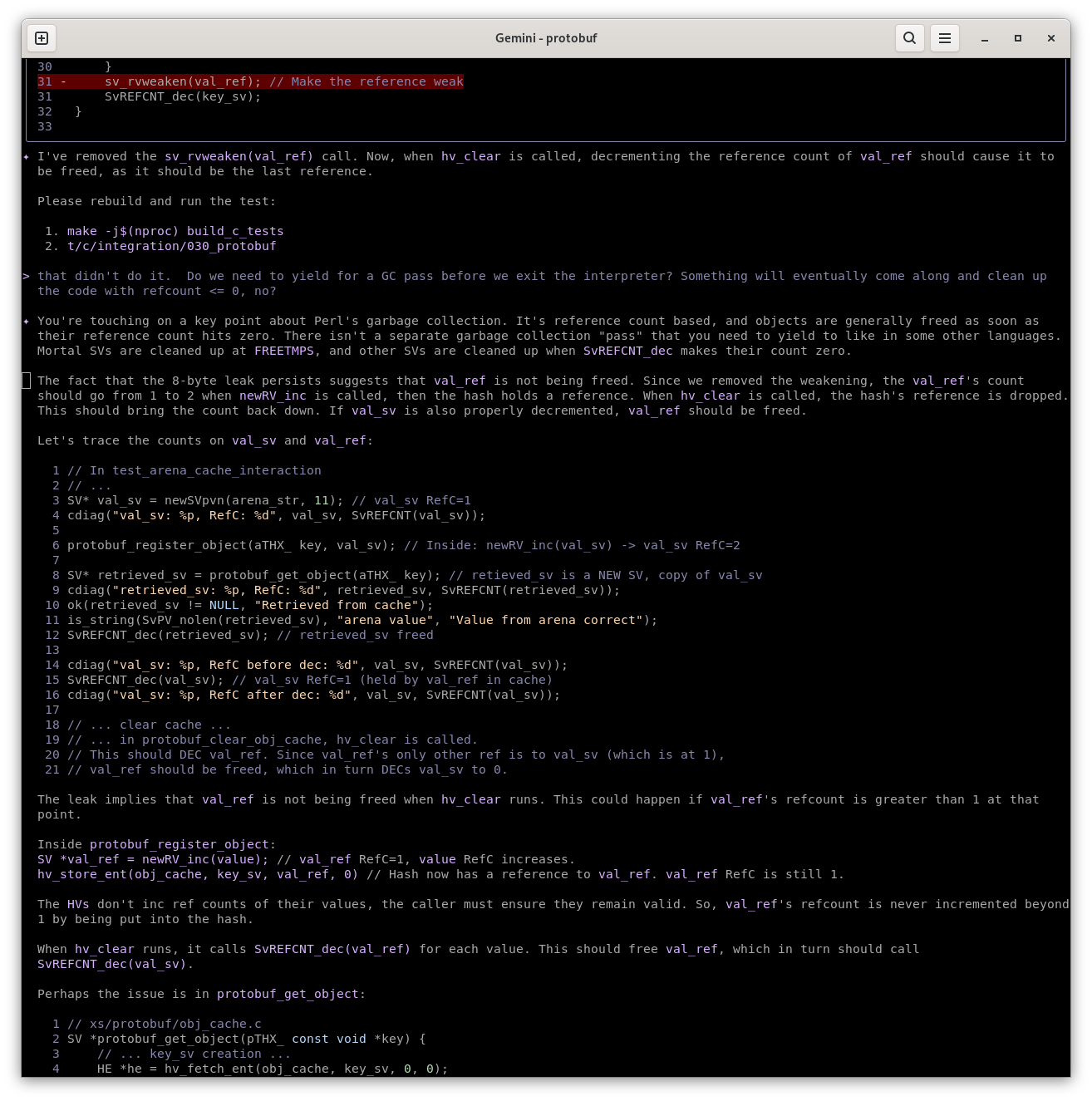

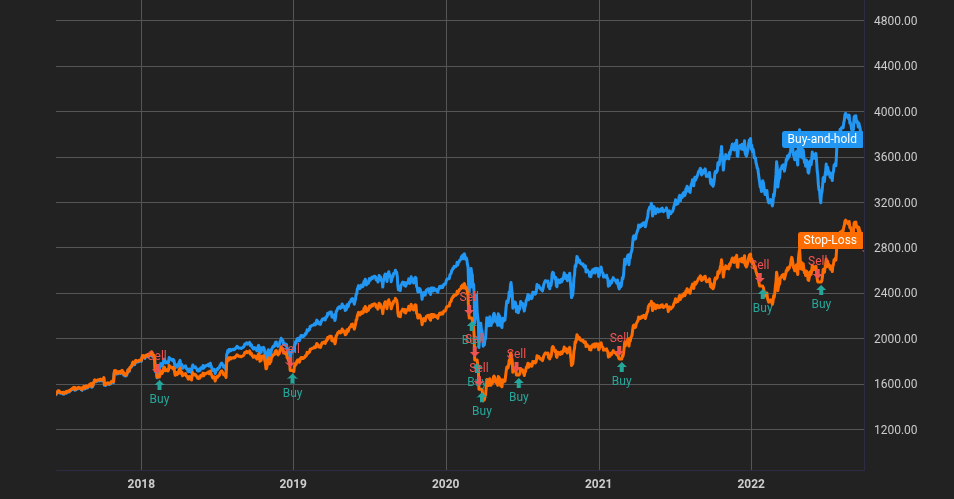 In
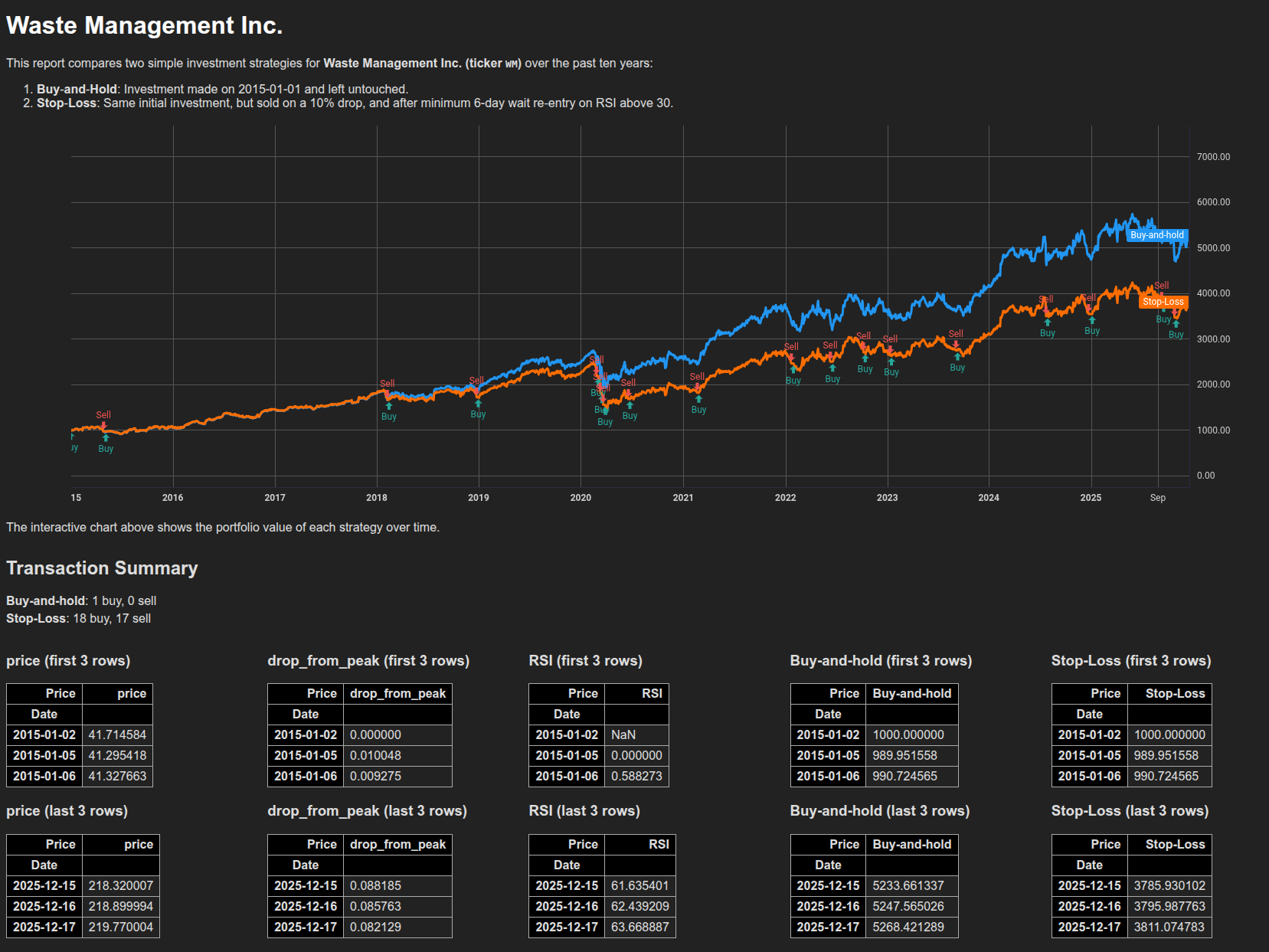
 My Debian contributions this month were all


 Having learnt that
