Search Results: "storm"

13 March 2016

Antoine Beaupr : State of Mapping on the Debian Desktop

TL;DR: Mapbox Studio classic is not as good as Tilemill, Mapbox studio is very promising, but you still need to signup for access, and kosmtik seems to be working right now. Use kosmtik and help getting it in Debian.

The requirement I have been following the development of fascinating tools from the Development seed people, now seemingly all focused on the Mapbox brand. They created what seemed to me a revolutionary desktop tool called Tilemill. Tilemill allowed you to create custom map stylesheets on your desktop to outline specific areas or patterns or "things". My interest was to create outdoor maps - OSM has pretty good biking maps, but no generic outdoor tiles out there (I need stuff for skiing, canoeing, biking)... Mapbox has Mapbox outdoors but that's a paid plan as well. Oh and there's a place to download Garmin data files especially made for outdoors as well, and that could be loaded in Qmapshack, but they don't have coverage in Canada at all. Besides, I would like to print maps, I know, crazy... So I have been looking forward to seeing Tilemill packaged in Debian given how annoying it is to maintain Node apps (period). Unfortunately, by the time Debian people figured out all the Node dependencies, the Tilemill project stopped and has been stalled since 2012. It seems the Mapbox people have now been working on other products, and in the meantime, the community, scratching their heads, just switched to other projects.

Overview of alternatives I wrote this long post to the Debian bugtrackers to try to untangle all of this, but figured this would be interesting to a wider community than the narrow group of people working on Javascript packages, so I figured I would send this on Debian planet. So Here's a summary of what happened so far, after Tilemill development stopped. Hang on to your tiles boys and girls, there's a lot going on!

Mapbox Studio classic Mapbox people have released a new product in September 2014 named Mapbox studio classic. The code is still freely available and seems to be a fork of tilemill. Mapbox classic still has releases on github, last one is from November 2015. It looks like Mapbox studio classic has some sort of Mapbox.com lock-in, and there are certainly new copyright issues, if only with the bundled fonts, but it could probably be packaged after addressing those issues. There is an ITP for Mapbox Studio classic as well.

Mapbox Studio Then there's Mapbox Studio, which is a full rewrite of Mapbox Studio classic. You need to "signup" somehow to get access, even though parts of the code are free, namely the Mapbox GL studio project. It is an interesting project because it aims to make all this stuff happen in a web browser, which means it "should" work everywhere. Unfortunately for us, it means it doesn't work anywhere without a signup form, so that's out for me at least. There is an [ITP for Mapbox-studio][] yet it is unclear to me what that one means because the source code to Mapbox-studio doesn't seem to be available, as far as i can tell (and the ITP doesn't say either). That is actually the ITP for Mapbox studio classic.

Kosmtik The Openstreetmap-carto developers have mostly switched to kosmtik instead of Mapbox. Kosmtik is another Node desktop app that seems fairly lightweight and mostly based on plugins. Ross has an ITP for kosmtik. The package is waiting on other node dependencies to be uploaded (yes, again).

The future of Tilemill And there's still this RFP for tilemill, which should probably be closed now because the project seems dead and plenty of alternatives exist. I wonder if node some dependencies that were packaged for Tilemill actually now need to be removed from Debian, because they have become useless leaf packages... I am leaving the Tilemill RFP open for someone to clean that up.

CartoCSS Oh, and finally one could mention another Mapbox project, Carto, a command line CSS tools that implements some sort of standard CSS language that all those tools end up using to talk to Mapnik, more or less. There are no RFPs for that.

4 March 2016

Mike Gabriel: My FLOSS activities in February 2016

February 2016 has been a very active month regarding me contributing to the FLOSS world. Honouring my Sponsors I am happy to share that this month's FLOSS work has been sponsored by various sponsors. Thanks to all people and companies sponsoring my work on FLOSS projects. This month's MATE uploads to Debian With regards to the Beta 1 Freeze date of Ubuntu 16.04 LTS (18th Feb 2016), Martin Wimpress, Vangelis Mouhtsis and I performed quite some work on Debian MATE. Uploads to Debian unstable: The Debian MATE Packaging Team also took over maintenance of the GTK-2+ legacy package libwnck [13]. The first upload introducing some major changes and package clean-ups caused a slight wave [14] because of a missing dependency in libwnck-dev (that fell victim to some clean-ups in debian/control). Those issues have been addressed immediately and have now been settled. The main reason for working on a legacy package like libwnck was the need for having gir1.2-wnck-1.0 (back) in Debian. The new MATE dock applet requires the libwnck GIR package to be present at runtime. One of the novelties in Ubuntu MATE 16.04 LTS will be the option to adapt the look and feel of the MATE desktop to how a Unity-based desktop looks like. Martin Wimpress is giving intense work to providing a dock applet and topmenu support as one alternative among the various Ubuntu MATE desktop experiences provided. The alternative desktop layouts can be configured with the MATE Tweak tool. Work on RDP related packages Work on FreeRDP 1.1 as currently in Debian I finally managed to give some priority (and thus time) to fixing various issues in the freerdp package in Debian [15]. Many people had provided patches and solutions to open issues and I tried to honour as many of those, as possible. Please note that I had to disable the GStreamer support in FreeRDP for the recent uploads, as the currently used Git snapshot of FreeRDP only supports GStreamer 0.10's API whereas the security team is in the process of having gstreamer0.10-* packages removed from the Debian stretch/unstable archives. Work on FreeRDP 2.0, coming to Debian soon Furthermore, Bernhard Miklautz is currently working on a freerdp2 package, which will bring the latest Git snapshot of FreeRDP upstream into Debian (and also re-introduce GStreamer support, based on GStreamer 1.0). Bernhard invested a lot of time on pushing the current HEAD of FreeRDP upstream [16] towards a FreeRDP 2.x version. Starting with FreeRDP 2.x it will be possible to install different FreeRDP versions on one system without file naming conflicts. For March 2016, I have doing the final freerdp2 reviewing on my todo list (possibly together with H ctor Or n Mart nez who is highly interested in the RDP backend support in Wayland/Weston), so that we can provide first uploads to Debian experimental sometime the coming month. The packaging progress is continuously discussed on the #freerdp channel on Freenode and can also be viewed on Github [17]. Review of revised XRDP package Recently, Dominik George from Teckids e.V. [18] contacted me about reviewing their effort of updating the Debian package xrdp, which currently is in ITA state [19]. Feedback has been provided and I am waiting for a ping from his side so that I can take some (ideally) final looks at the package and sponsor the upload. Work on Debian Edu related packages This month, I spent a couple of hours of work on several Debian Edu related tasks, some of them induced by problems at local school sites we support. Work on Debian LTS My 8h-portion of work for the Debian LTS Project, I performed at the very end of February. With the Debian squeeze LTS EOL date on 29th February, I saw to finalizing my personal open todos regarding Debian squeeze LTS, which basically was getting two CVE issues fixed in the lxc package [26]. The rest of the work hours has been spent on helping out the Security Team of Debian with open CVE issues in Debian wheezy packages: The gosa .debdiff has been approved by a member of the Security Team, the upload will happen today. With my LTS frontdesk hat on (during week 9 / 2016) I also spent some time providing help regarding SVN checkout problems and raised a couple of questions on how to coordinate the work phase between the Debian squeeze LTS EOL and the official launch of the Debian wheezy LTS project phase [27]. Work on nx-libs At the end of February, I finally managed to propose a way of dropping the libNX_Xrender.so bundled library from the nx-libs code base. I filed a PR [28] against nx-libs that proposes its removal and provides a patch for using X.Org's libXrender.so version. As a preview for nx-libs work in March 2016... I have started with removing the complete libNX_X11.so library from nx-libs and using X.Org's X11 client library. This will introduce a code removal of around 160.000 lines of code to nx-libs. More to come on this later... light+love,
Mike [1] http://ubuntu-mate.org/
[2] https://www.freexian.com/
[3] http://www.qindel.com/ [4] (caja)
https://lists.debian.org/debian-devel-changes/2016/02/msg00468.html
https://lists.debian.org/debian-devel-changes/2016/02/msg02080.html
https://lists.debian.org/debian-devel-changes/2016/02/msg02086.html
https://lists.debian.org/debian-devel-changes/2016/02/msg02183.html [5] (mate-menu)
https://lists.debian.org/debian-devel-changes/2016/02/msg00469.html [6] (mate-panel)
https://lists.debian.org/debian-devel-changes/2016/02/msg01900.html [7] (mate-dock-applet)
https://lists.debian.org/debian-devel-changes/2016/02/msg01935.html
https://lists.debian.org/debian-devel-changes/2016/02/msg02481.html
https://lists.debian.org/debian-devel-changes/2016/02/msg03097.html [8] (mate-polkit)
https://lists.debian.org/debian-devel-changes/2016/02/msg01936.html
https://lists.debian.org/debian-devel-changes/2016/02/msg02395.html [9] (eom)
https://lists.debian.org/debian-devel-changes/2016/02/msg02073.html [10] (pluma)
https://lists.debian.org/debian-devel-changes/2016/02/msg02128.html [11] (topmenu-gtk)
https://lists.debian.org/debian-devel-changes/2016/02/msg02399.html
https://lists.debian.org/debian-devel-changes/2016/02/msg02501.html [12] (mate-tweak)
https://lists.debian.org/debian-devel-changes/2016/02/msg03086.html [13] (libwnck)
https://lists.debian.org/debian-devel-changes/2016/02/msg01248.html
https://lists.debian.org/debian-devel-changes/2016/02/msg01404.html
https://lists.debian.org/debian-devel-changes/2016/02/msg01825.html [14] https://bugs.debian.org/cgi-bin/bugreport.cgi?bug=814585
https://bugs.debian.org/cgi-bin/bugreport.cgi?bug=814588
https://bugs.debian.org/cgi-bin/bugreport.cgi?bug=814697 [15] (freerdp)
https://lists.debian.org/debian-devel-changes/2016/02/msg02487.html
https://lists.debian.org/debian-devel-changes/2016/02/msg02630.html [16] https://github.com/FreeRDP/FreeRDP
[17] https://github.com/bmiklautz/debian-freerdp2 [18] https://www.teckids.org/ [19] https://bugs.debian.org/cgi-bin/bugreport.cgi?bug=719624 [20] (gosa)
https://lists.debian.org/debian-devel-changes/2016/02/msg01554.html
https://lists.debian.org/debian-devel-changes/2016/02/msg01954.html [21] https://sunweavers.net/blog/node/34 [22] (ldap2zone)
https://lists.debian.org/debian-devel-changes/2016/02/msg01966.html
https://lists.debian.org/debian-devel-changes/2016/02/msg01967.html [23] (shutdown-at-night)
https://lists.debian.org/debian-devel-changes/2016/02/msg03605.html [24] (italc)
https://lists.debian.org/debian-devel-changes/2016/02/msg01944.html [25] https://bugs.debian.org/cgi-bin/bugreport.cgi?bug=815948 [26] (lxc, Debian squeeze LTS)
https://lists.debian.org/debian-lts-changes/2016/02/msg00037.html [27] https://lists.debian.org/debian-lts/2016/02/msg00155.html
(The thread continues in March 2016) [28] https://github.com/ArcticaProject/nx-libs/pull/93

Arturo Borrero Gonz lez: How are we training to climb Mulhacen

Alcazaba, Punta de la Cornisa and Mulhac n 3.479 m

I have been in some adventures with a group of friends for a couple of years now. We call ourselves Los Extraviaos (a quick translation to english is perhaps The Wanderers).

We like nature adventures. During summer we use to do water adventures (like rivers trekking, waterfall climbing, snorkeling, canyoning, rafting, kayaking and so on). During winter and spring, we use to do trekking, hiking and mountaineering (low altitudes, keep reading).

For this sport season, one of our main milestones is to climb the second most prominent mountain in Spain: Mulhacen, with 3.479 m over sea level, during summer (June).
From an alpinist point of view, this isn't a very big deal, since most of the mountain's snow and ice is completely melted and the altitude is not that high.
However, from our amateur mountaineering point of view we will be taking a lot of kilometres to walk and a lot of elevation gain uphill (almost 1.600 m), which is in fact a thing to take into account.
Anyway, Mulhacen is considered 'high mountaineering' and all cautions should be taken both during preparation/training and during the climbing of the mountain itself.

To train our bodies and minds we are climbing lower mountains. We have climbed 3 or 4 already, and will continue to climb more in upcoming moths until we go to Mulhacen.
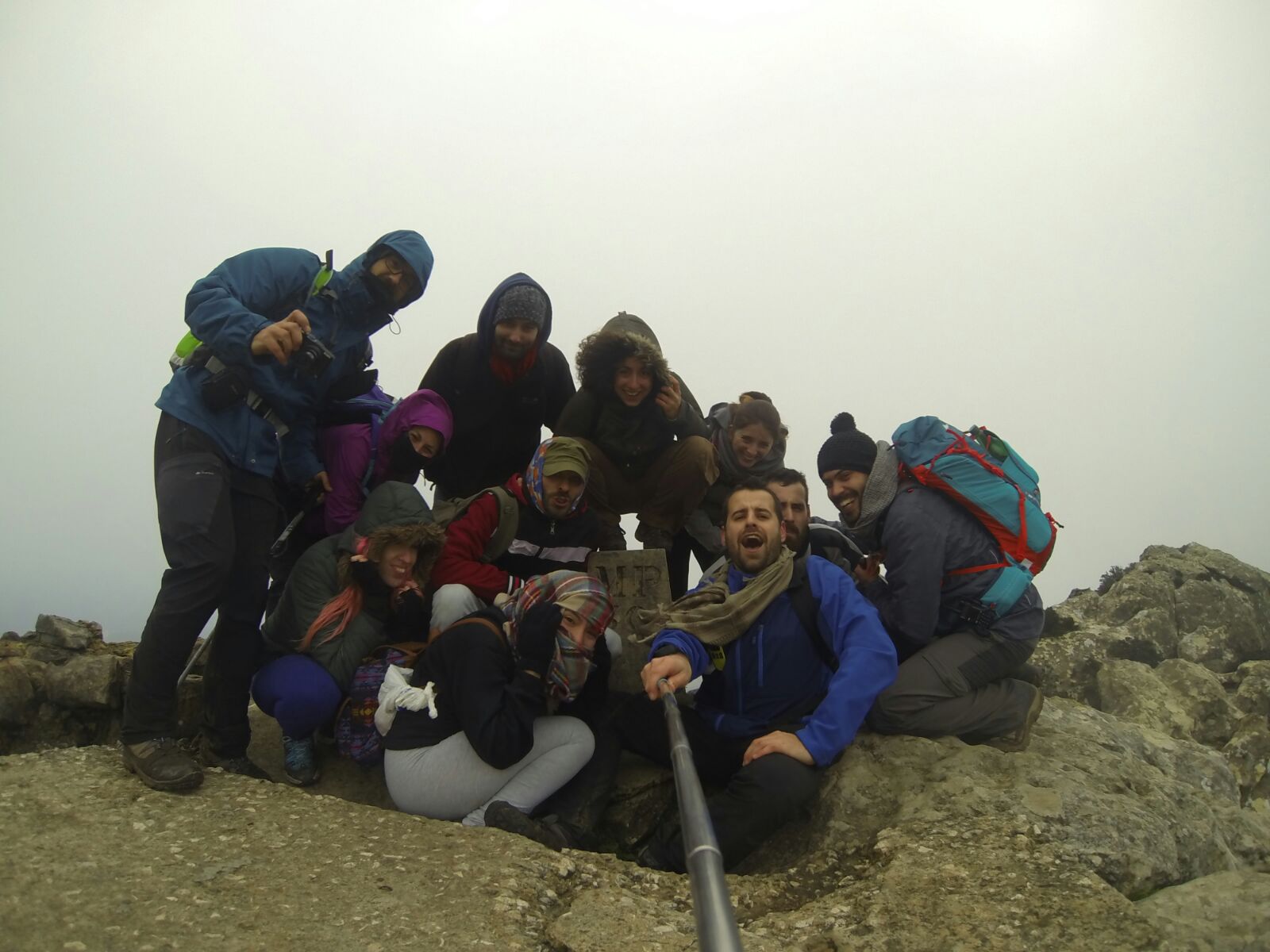
Also, it's important to climb mountains in different weather conditions. We need to train how to overcome wind, snow, storm, cold, night situations. The way we learn most is facing new, challenging situations.

We started by going to the summit of 'El Aljibe', 1.094 m over sea level, with about 500 m elevation gain uphill during 13 km.
This time, the weather was very windy. A video of the summit moment:


A pic of the group:


Next was the 'Torrecilla' peak. The summit is at 1.919 m over sea level, with about 900 m elevation gain uphill during 15 km.
This time we faced a snowy trekking.
Here a music video of that day:


The Torrecilla peak is in fact challenging with snow, so we went a second time, with even more snow and wind:


This second time we faced winds of 70km/h which, due to wind-chill, resulted in a very cold day.

We also went to Sierra de Grazalema Natural Park, in a hard trekking under snowfall:


This time we walked about 15 km with about 500m elevation gain uphill, while enjoying this kind of environment:


What's next: more mountains! We plan to reach 2.069 m over sea level next week in 'La Maroma' and keep doing steep trekking in upcoming months until we go in June to Mulhacen.

It should be very funny to do some FLOSS contribution from the summit of a mountain. Do you know of someone who did that?

21 February 2016

Lunar: Reproducible builds: week 43 in Stretch cycle

What happened in the reproducible builds effort between February 14th and February 20th 2016:

Toolchain fixes Yaroslav Halchenko uploaded cython/0.23.4+git4-g7eed8d8-1 which makes its output deterministic. Original patch by Chris Lamb. Didier Raboud uploaded pyppd/1.0.2-3 to experimental which now serialize PPD deterministically. Lunar submitted two patches for lcms to add a way for clients to set the creation date/time in profile headers and initialize all bytes when writing named colors.

Packages fixed The following packages have become reproducible due to changes in their build dependencies: dbconfig-common, dctrl-tools, dvdwizard, ekg2, expeyes, galternatives, gpodder, icewm, latex-mk, libiio, lives, navit, po4a, tasksel, tilda, vdr-plugin-infosatepg, xaos. The following packages became reproducible after getting fixed: Some uploads fixed some reproducibility issues, but not all of them: Unknown status:
  • tomcat7/7.0.68-1 by Emmanuel Bourg (test suite fails in test environment).
Patches submitted which have not made their way to the archive yet:
  • #814840 on tor by Petter Reinholdtsen: use the UTC timezone when calling asciidoc.
  • #815082 on arachne-pnr by Dhole: use the C locale to format the changelog date.
  • #815192 on manpages-de by Reiner Herrmann: tell grep to always treat the input as text so that it works with non-UTF-8 locales.
  • #815193 on razorqt by Reiner Herrmann: tell grep to always treat the input as text so that it works with non-UTF-8 locales.
  • #815250 on jacal by Reiner Herrmann: use the C locale to format the build date.
  • #815252 on colord by Lunar: remove extra timestamps when generating CMF and spectra and implement support for SOURCE_DATE_EPOCH.

reproducible.debian.net Two new package sets have been added: freedombox and freedombox_build-depends. (h01ger)

diffoscope development diffoscope version 49 was released on February 17th. It continues to improve handling of debug symbols for ELF files. Their content will now be compared separately to make them more readable. The search for matching debug packages is more efficient by looking only for .deb files in the same parent directory. Alongside more bug fixes, support for ICC profiles has been added, and libarchive is now also used to read metadata for ar archives.

strip-nondeterminism development Reiner Herrmann added support to normalize Gettext .mo files.

Package reviews 170 reviews have been removed, 172 added and 54 updated in the previous week. 34 new FTBFS bugs have been opened by Chris Lamb, h01ger and Reiner Herrmann. New issues added this week: lxqt_translate_desktop_binary_file_matched_under_certain_locales, timestamps_in_manpages_generated_by_autogen. Improvements to the prebuilder script: avoid ccache, skip disorderfs hook if device nodes cannot be created, compatibility with grsec trusted path execution (Reiner Herrmann), code cleanup (Esa Peuha).

Misc. Steven Chamberlain highlighted reproducibility problems due to differences in how Linux and FreeBSD handle permissions for symlinks. Some possible ways forward have been discussed on the reproducible-builds mailing list. Bernhard M. Wiedemann reported on some reproducibility tests made on OpenSuse mentioning the growing support for SOURCE_DATE_EPOCH. If you are eligible for Outreachy or Google Summer of Code, consider spending the summer working on reproducible builds!

15 February 2016

Sven Hoexter: distribution specific details

To state the obvious: my personal preference is to run Debian GNU/Linux. My current workplace is a CentOS shop and usually I'm the first to claim that it doesn't matter at all, and distribution specific implementation details are irrelevant for what we do (running a JVM). Let's take a short detour to the RedHat network-scripts. Two weeks ago we found some systems we originally installed in a different network segment, with different DNS servers and different search domains, came back up after a reboot with a rewritten 'resolv.conf'. Later on cfengine replaced the generated 'resolv.conf' with the intended one, so it wasn't that obvious to spot in the first place. A colleague found the origin of the rewritten 'resolv.conf' in a device specific configuration file that defined the 'DNS 1,2 ' variables with the installation time DNS server IPs from the other segment. I expected to experience the same behaviour (resolv.conf rewritten during startup and replaced by cfengine later on) in other locations, but assumed we just didn't notice it because the main difference would be a slightly different list of search domains. And I was wrong. I checked the timestamps of several 'resolv.conf' files and their cfengine backup file. None were recently created or related somehow to a reboot. grep-ing through parts of the network-scripts I found the following conditional in '/etc/sysconfig/network-scripts/ifup'
if [ "$PEERDNS" != "no" ]  [ -n "$RESOLV_MODS" -a "$RESOLV_MODS" != "no" ]; then
   [ -n "$MS_DNS1" ] && DNS1=$MS_DNS1
   [ -n "$MS_DNS2" ] && DNS2=$MS_DNS2
      if [ -n "$DNS1" ] && ! grep -q "^nameserver $DNS1" /etc/resolv.conf &&
         tr=$(mktemp /tmp/XXXXXX) ; then
 ...
So if you adjust only the second nameserver IP you stored in "DNS2" in your configuration you end up without an update to your 'resolv.conf'. Now knowing that, I'd say this is relevant distribution specific knowledge, and I'm wondering how many of such subtle behaviours we've hidden in Debian specific solutions? Maybe knowledge about distribution specific implementation details even matters after all. Regardig the 'resolv.conf' issue itself the fault is on us. We as the responsible team did not read the documentation properly and thus deployed a configuration that later on let to some unexpected consequences. I try to remember those issues as an example for the next NetworkManager/systemd-networkd vs old-school-network-scripts argument.

9 February 2016

Sven Hoexter: examine gpg key properties

Note to myself so I don't have to search for it the next time I've to answer security audit questions. If you're lucky and you're running Debian you can install pgpdump and use
gpg --export-options export-minimal --export $KEYID   pgpdump
to retrieve a human friendly output. If you're unlucky you have to use
gpg --export-options export-minimal --export $KEYID   gpg --list-packets
and match the CIPHER_ALGO_ and DIGEST_ALGO_ numbers with those in include/cipher.h. Found the information in this thread. Update: anarcat suggested to take a look at the tools contained in hopenpgp-tools.

3 February 2016

Sven Hoexter: Moby

Maybe my favourite song of Moby - "That's when I reach for my revolver" - is one of the more unsual ones, slightly more rooted in his Punk years and a cover version. Great artist anyway.

25 January 2016

Sven Hoexter: blabladns.xyz DynDNS service

In case someone is in need of a free DynDNS service which allows you to configure AAAA recods and the TTL, you might want to look at BLABLADNS. It's rather HTTP API centric so you can configure everything with curl if you like.

14 January 2016

Sven Hoexter: call for trouble aka RM xchat

Well we want to freeze later this year so I started with the axing now. Maybe a bit premature like Mattia pointed out correctly in #debian-qa, because we've some maintained plugins for xchat around. cwirc a morse code via IRC plugin xchat-xsys system statistics output to a channel Update: There is a xsys plugin included with hexchat. xchat-guile GNU Scheme scripting plugin Update: Lionel agreed and created a RM bug. Thanks! I can survive without them, so I'd be fine with another three RM bugs. Now feel free to flame me, I promise to wear my finest asbestos underwear.

11 January 2016

Sven Hoexter: grep wc -l

I did some musings on my way home about a line of shell scripting similar to
if [  grep foobar somefile    wc -l  -gt 0 ]; then ...
Yes it's obvious that silencing grep and working with the return code is way more elegant and the backticks are also deprecated, or at least discouraged, nowadays. For this special case "grep -c" is not the right replacement. Just in case. So I wanted to know how widespread the "grep wc -l" chaining actually is. codesearch.d.n to the rescue! At least in some codebases it seems to be rather widespread, so maybe "grep -c" is not POSIX compliant? Nope. Traveling back a few years and looking at a somewhat older manpage also lists a "-c" option. At least for now I doubt that this is some kind of backwards compatiblity thing. Even busybox supports it. As you can obviously deduce from the matching lines, and my rather fuzzy search pattern, there are valid cases among the result set where "grep" is just the first command and some "awk/sed/tr" (you name it) is in between the final "wc -l". But quite some " wc -l" could be replaced by a "-c" added to the "grep" invocation.

7 January 2016

Sven Hoexter: Failing with F5: stderr, stdout - who cares

[root@adc:Standby:In Sync] config # tmsh save /sys ucs /var/tmp/foo.ucs
Saving active configuration...
/var/tmp/foo.ucs is saved.
[root@adc:Standby:In Sync] config # tmsh save /sys ucs /var/tmp/foo.ucs > /dev/null
Saving active configuration...
[root@adc:Standby:In Sync] config # tmsh save /sys ucs /var/tmp/foo.ucs 2> /dev/null
/var/tmp/foo.ucs is saved.
[root@adc:Standby:In Sync] config #
Seems F5 is not alone with such glorious ideas. A coworker pointed out that the "ipspace list" command on our old NetApps outputs a space and a backspace in some places.

Daniel Pocock: Do you own your phone or does it own you?

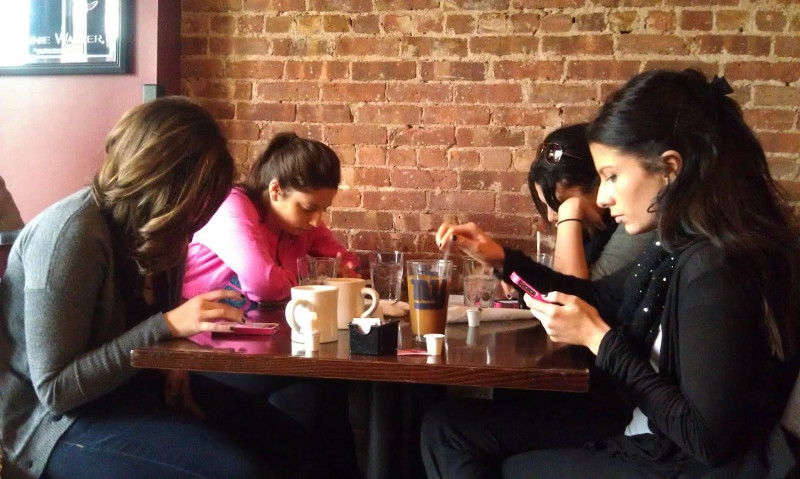
Have you started thinking about new year's resolutions for 2016? Back to the gym or giving up sugary drinks? Many new year's resolutions have a health theme. Unless you have a heroin addiction, there may not be anything else in your life that is more addictive and has potentially more impact on your health and quality of life than your mobile phone. Almost every week there is some new report about the negative impact of phone use on rest or leisure time. Children are particularly at risk and evidence strongly suggests their grades at school are tanking as a consequence. Can you imagine your life changing for the better if you switched off your mobile phone or left it at home for one day per week in 2016? If you have children, can you think of anything more powerful than the example you set yourself to help them stay in control of their phones? Children have a remarkable ability to emulate the bad habits they observe in their parents. Are you in control? Turning it off is a powerful act of showing who is in charge. If you feel you can't live without it, then you are putting your life in the hands of the people who expect an immediate answer of their calls, your phone company and the Silicon Valley executives who make all those apps you can't stop using. As security expert Jacob Appelbaum puts it, cell phones are tracking devices that also happen to make phone calls. Isn't that a chilling thought to reflect on the next time you give one as Christmas gift? For your health, your children and your bank balance Not so long ago we were having lunch in a pizza restaurant in Luzern, a picturesque lakeside town at the base of the Swiss Alps. Luzern is a popular first stop for tourists from all around the world. A Korean family came along and sat at the table next to us. After ordering their food, they all immediately took out their mobile devices and sat there in complete silence, the mother and father, a girl of eight and a boy of five, oblivious to the world around them and even each other, tapping and swiping for the next ten minutes until their food arrived. We wanted to say hello to them, I joked that I should beep first, initiating communication with the sound of a text message notification. Is this how all holidays will be in future? Is it how all families will spend time together? Can you imagine your grandchildren and their children sharing a meal like this in the year 2050 or beyond? Which gadgets does Bond bring to Switzerland? On Her Majesty's Secret Service is one of the more memorable Bond movies for its spectacular setting in the Swiss Alps, the location now transformed into a mountain-top revolving restaurant visited by thousands of tourists every day with a comfortable cable car service and hiking trails with breathtaking views that never become boring. Can you imagine Bond leaving behind his gun and his skis and visiting Switzerland with a smartphone instead? Eating a pizza with one hand while using the fingertips of the other to operate an app for making drone strikes on villains, swiping through Tinder for a new girl to replace the one who died (from boredom) in his previous "adventure" and letting his gelati melt while engrossed in a downhill ski or motorcycle game in all the glory of a 5.7" 24-bit colour display? Of course its absurd. Would you want to live like that yourself? We see more and more of it in people who are supposedly in Switzerland on the trip of a lifetime. Would you tolerate it in a movie? The mobile phone industry has paid big money to have their technology appear on the silver screen but audience feedback shows people are frustrated with movies that plaster the contents of text messages across the screen every few minutes; hopefully Bond movies will continue to plaster bullets and blood across the screen instead. Time for freedom How would you live for a day or a weekend or an entire holiday without your mobile phone? There are many small frustrations you may experience but the biggest one and the indirect cause of many other problems you will experience may be the inability to tell the time. Many people today have stopped wearing a watch, relying instead upon their mobile phone to tell the time. Without either a phone or a watch, frustration is not far away. If you feel apprehension just at the thought of leaving your phone at home, the lack of a watch may be a subconcious factor behind your hesitation. Trying is better than reading Many articles and blogs give opinions about how to buy a watch, how much to spend and what you can wear it with. Don't spend a lot of time reading any of it, if you don't know where to start, simply go down to the local high street or mall and try them. Start with the most glamorous and expensive models from Swiss manufacturers, as these are what everything else is compared to and then perhaps proceed to look more widely. While Swiss brands tend to sell through the stores, vendors on Amazon and eBay now distribute a range of watches from manufacturers in Japan, China and other locations, such as Orient and Invicta, at a fraction of the price of those in the stores. You still need to try a few first to identify your preferred style and case size though. Google can also turn up many options for different budgets.

Copying or competition? Similarity of Invicta (from Amazon) and Rolex Submariner You may not know whether you want a watch that is manually wound, automatically wound or battery operated. Buying a low-cost automatic model online could be a good way to familiarize yourself before buying anything serious. Mechanical watches have a smoother and more elegant second-hand movement and will survive the next Carrington event but may come to grief around magnets - a brief encounter with a low-cost de-gausser fixes that. Is it smart to buy a smart watch? If you genuinely want to have the feeling of complete freedom and control over technology, you may want to think twice about buying a smart watch. While it may be interesting to own and experiment with it some of the time, being free from your phone means being free from other electronic technology too. If you do go for a smart watch (and there are many valid reasons for trying one some of the time), maybe make it a second (or third) watch. Smart watches are likely to be controversial for some time to come due to their impact in schools (where mobile phones are usually banned) and various privacy factors. Help those around you achieve phone freedom in 2016 There will be further blogs on this theme during 2016, each looking at the pressures people face when with or without the mobile phone. As a developer of communications technology myself, you may be surprised to see me encouraging people not to use it every waking minute. Working on this technology makes me more conscious of its impact on those around me and society in general. A powerful factor to consider when talking about any communications technology is the presence of peer pressure and the behavior of those around you. Going phone-free may involve helping them to consider taking control too. Helping them out with a new watch as a gift (be careful to seek advice on the style that they are likely to prefer or ensure the purchase can be exchanged) may be an interesting way to help them engage with the idea and every time they look at the time, they may also be reminded of your concern for their freedom.

15 December 2015

Sven Hoexter: Some helpful commands from the CentOS yum and rpm world

Today I learned from my coworkers about a few helpful sub commands of yum and some other things from the rpm world. Just jotting them down here so I don't forget about them. Oh and why did we've to do it? Well CentOS 6 got a grep update from 2.6 to 2.20. That upgrade lost the --mmap option and some very old stuff started to fall apart because of the now unknown option. Update: There are some interesting issues related to this update in the RedHat Bugzilla. #1287074 #1256756 I added #1291714 just for the sake of completeness.
# yum history
ID       Login user                 Date and time      Action(s)        Altered
-------------------------------------------------------------------------------
124   xxx                        2015-12-15 11:51   Downgrade           1
123   yyy                        2015-12-15 11:02   E, O, U           244 EE
122   zzz                        2015-12-15 10:57   I, O, U           255 **
Provides an overview of the last actions done with yum. On CentOS 7 (this one is from CentOS 6) the output seems to have changed slighty and it provides the commandline instead of the username.
# yum list installed   grep epel
bash-completion.noarch             1:1.3-7.el6                      @epel-Mirror
eventlog.x86_64                    0.2.13-1.el6                     @epel-Mirror
libnet.x86_64                      1.1.6-7.el6                      @epel-Mirror
pylint.noarch                      1.3.1-1.el6                      @epel-Mirror
python-astroid.noarch              1.2.1-2.el6                      @epel-Mirror
python-logilab-common.noarch       0.62.1-2.el6                     @epel-Mirror
python-unittest2.noarch            0.5.1-3.el6                      @epel-Mirror
Helps you to find out from which repository you installed which package.
# repoquery -i grep
Name        : grep
Version     : 2.20
Release     : 3.el6_7.1
Architecture: x86_64
Size        : 1197808
Packager    : CentOS BuildSystem <http://bugs.centos.org>
Group       : Applications/Text
URL         : http://www.gnu.org/software/grep/
Repository  : update
Summary     : Pattern matching utilities
Source      : grep-2.20-3.el6_7.1.src.rpm
Description : [ ... ]
Kind of the rpm -q ... stuff on a repository level instead of the local rpm database. Update: T.P. provided a small shell snippet to show updates. Thanks.

2 December 2015

Andrea Veri: Three years and counting

It s been a while since my last what s been happening behind the scenes e-mail so I m here to report on what has been happening within the GNOME Infrastructure, its future plans and my personal sensations about a challenge that started around three (3) years ago when Sriram Ramkrishna and Jeff Schroeder proposed my name as a possible candidate for coordinating the team that runs the systems behind the GNOME Project. All this followed by the official hiring achieved by Karen Sandler back in February 2013. The GNOME Infrastructure has finally reached stability both in terms of reliability and uptime, we didn t have any service disruption this and the past year and services have been running smoothly as they were expected to in a project like the one we are managing. As many of you know service disruptions and a total lack of maintenance were very common before I joined back in 2013, I m so glad the situation has dramatically changed and developers, users, passionates are now able to reach our websites, code repositories, build machines without experiencing slowness, downtimes or
unreachability. Additionally all these groups of people now have a reference point they can contact in case they need help when coping with the infrastructure they daily use. The ticketing system allows users to get in touch with the members of the Sysadmin Team and receive support right away within a very short period of time (Also thanks to Pagerduty, service the Foundation is kindly sponsoring) Before moving ahead to the future plans I d like to provide you a summary of what has been done during these roughly three years so you can get an idea of why I define the changes that happened to the infrastructure a complete revamp:
  1. Recycled several ancient machines migrating services off of them while consolidating them by placing all their configuration on our central configuration management platform ran by Puppet. This includes a grand total of 7 machines that were replaced by new hardware and extended warranties the Foundation kindly sponsored.
  2. We strenghten our websites security by introducing SSL certificates everywhere and recently replacing them with SHA2 certificates.
  3. We introduced several services such as Owncloud, the Commits Bot, the Pastebin, the Etherpad, Jabber, the GNOME Github mirror.
  4. We restructured the way we backup our machines also thanks to the Fedora Project sponsoring the disk space on their backup facility. The way we were used to handle backups drastically changed from early years where a magnetic tape facility was in charge of all the burden of archiving our data to today where a NetApp is used together with rdiff-backup.
  5. We upgraded Bugzilla to the latest release, a huge thanks goes to Krzesimir Nowak who kindly helped us building the migration tools.
  6. We introduced the GNOME Apprentice program open-sourcing our internal Puppet repository and cleansing it (shallow clones FTW!) from any sensitive information which now lives on a different repository with restricted access.
  7. We retired Mango and our OpenLDAP instance in favor of FreeIPA which allows users to modify their account information on their own without waiting for the Accounts Team to process the change.
  8. We documented how our internal tools are customized to play together making it easy for future Sysadmin Team members to learn how the infrastructure works and supersede existing members in case they aren t able to keep up their position anymore.
  9. We started providing hosting to the GIMP and GTK projects which now completely rely on the GNOME Infrastructure. (DNS, email, websites and other services infrastructure hosting)
  10. We started providing hosting not only to the GIMP and GTK projects but to localized communities as well such as GNOME Hispano and GNOME Greece
  11. We configured proper monitoring for all the hosted services thanks to Nagios and Check-MK
  12. We migrated the IRC network to a newer ircd with proper IRC services (Nickserv, Chanserv) in place.
  13. We made sure each machine had a configured management (mgmt) and KVM interface for direct remote access to the bare metal machine itself, its hardware status and all the operations related to it. (hard reset, reboot, shutdown etc.)
  14. We upgraded MoinMoin to the latest release and made a substantial cleanup of old accounts, pages marked as spam and trashed pages.
  15. We deployed DNSSEC for several domains we manage including gnome.org, guadec.es, gnomehispano.es, guadec.org, gtk.org and gimp.org
  16. We introduced an account de-activation policy which comes into play when a contributor not committing to any of the hosted repositories at git.gnome.org since two years is caught by the script. The account in question is marked as inactive and the gnomecvs (from the old cvs days) and ftpadmin groups are removed.
  17. We planned mass reboots of all the machines roughly every month for properly applying security and kernel updates.
  18. We introduced Mirrorbrain (MB), the mirroring service serving GNOME and related modules tarballs and software all over the world. Before introducing MB GNOME had several mirrors located in all the main continents and at the same time a very low amount of users making good use of them. Many organizations and companies behind these mirrors decided to not host GNOME sources anymore as the statistics of usage were very poor and preferred providing the same service to projects that really had a demand for these resources. MB solved all this allowing a proper redirect to the closest mirror (through mod_geoip) and making sure the sources checksum matched across all the mirrors and against the original tarball uploaded by a GNOME maintainer and hosted at master.gnome.org.
I can keep the list going for dozens of other accomplished tasks but I m sure many of you are now more interested in what the future plans actually are in terms of where the GNOME Infrastructure should be in the next couple of years. One of the main topics we ve been discussing will be migrating our Git infrastructure away from cgit (which is mainly serving as a code browsing tool) to a more complete platform that is surely going to include a code review tool of some sort. (Gerrit, Gitlab, Phabricator) Another topic would be migrating our mailing lists to Mailman 3 / Hyperkitty. This also means we definitely need a staging infrastructure in place for testing these kind of transitions ideally bound to a separate Puppet / Ansible repository or branch. Having a different repository for testing purposes will also mean helping apprentices to test their changes directly on a live system and not on their personal computer which might be running a different OS / set of tools than the ones we run on the GNOME Infrastructure. What I also aim would be seeing GNOME Accounts being the only authentication resource in use within the whole GNOME Infrastructure. That means one should be able to login to a specific service with the same username / password in use on the other hosted services. That s been on my todo list for a while already and it s probably time to push it forward together with Patrick Uiterwijk, responsible of Ipsilon s development at Red Hat and GNOME Sysadmin. While these are the top priority items we are soon receiving new hardware (plus extended warranty renewals for two out of the three machines that had their warranty renewed a while back) and migrating some of the VMs off from the current set of machines to the new boxes is definitely another task I d be willing to look at in the next couple of months (one machine (ns-master.gnome.org) is being decommissioned giving me a chance to migrate away from BIND into NSD). The GNOME Infrastructure is evolving and it s crucial to have someone maintaining it. On this side I m bringing to your attention the fact the assigned Sysadmin funds are running out as reported on the Board minutes from the 27th of October. On this side Jeff Fortin started looking for possible sponsors and came up with the idea of making a brochure with a set of accomplished tasks that couldn t have been possible without the Sysadmin fundraising campaign launched by Stormy Peters back in June 2010 being a success. The Board is well aware of the importance of having someone looking at the infrastructure that runs the GNOME Project and is making sure the brochure will be properly reviewed and published. And now some stats taken from the Puppet Git Repository:
$ cd /git/GNOME/puppet && git shortlog -ns
3520 Andrea Veri
506 Olav Vitters
338 Owen W. Taylor
239 Patrick Uiterwijk
112 Jeff Schroeder
71 Christer Edwards
4 Daniel Mustieles
4 Matanya Moses
3 Tobias Mueller
2 John Carr
2 Ray Wang
1 Daniel Mustieles Garc a
1 Peter Baumgarten
and from the Request Tracker database (52388 being my assigned ID):
mysql> select count(*) from Tickets where LastUpdatedBy = '52388';
+----------+
  count(*)  
+----------+
  3613  
+----------+
1 row in set (0.01 sec)
mysql> select count(*) from Tickets where LastUpdatedBy = '52388' and Status = 'Resolved';
+----------+
  count(*)  
+----------+
  1596  
+----------+
1 row in set (0.03 sec)
It s been a long run which made me proud, for the things I learnt, for the tasks I ve been able to accomplish, for the great support the GNOME community gave me all the time and most of all for the same fact of being part of the team responsible of the systems hosting the GNOME Project. Thank you GNOME community for your continued and never ending backing, we daily work to improve how the services we host are delivered to you and the support we receive back is fundamental for our passion and enthusiasm to remain high!

23 November 2015

Lunar: Reproducible builds: week 30 in Stretch cycle

What happened in the reproducible builds effort this week: Toolchain fixes Mattia Rizzolo uploaded a version of perl to the reproducible repository including the patch written by Niko Tyni to add support for SOURCE_DATE_EPOCH in Pod::Man. Dhole sent an updated version of his patch adding support for SOURCE_DATE_EPOCH in GCC to the upstream mailing list. Several comments have been made in response which have been quickly addressed by Dhole. Dhole also forwarded his patch adding support for SOURCE_DATE_EPOCH in libxslt upstream. Packages fixed The following packages have become reproducible due to changes in their build dependencies: antlr3/3.5.2-3, clusterssh, cme, libdatetime-set-perl, libgraphviz-perl, liblingua-translit-perl, libparse-cpan-packages-perl, libsgmls-perl, license-reconcile, maven-bundle-plugin/2.4.0-2, siggen, stunnel4, systemd, x11proto-kb. The following packages became reproducible after getting fixed: Some uploads fixed some reproducibility issues, but not all of them: reproducible.debian.net Vagrant Cascadian has set up a new armhf node using a Raspberry Pi 2. It should soon be added to the Jenkins infrastructure. diffoscope development diffoscope version 42 was release on November 20th. It adds a missing dependency on python3-pkg-resources and to prevent similar regression another autopkgtest to ensure that the command line is functional when Recommends are not installed. Two more encoding related problems have been fixed (#804061, #805418). A missing Build-Depends has also been added on binutils-multiarch to make the test suite pass on architectures other than amd64. Package reviews 180 reviews have been removed, 268 added and 59 updated this week. 70 new fail to build from source bugs have been reported by Chris West, Chris Lamb and Niko Tyni. New issue this week: randomness_in_ocaml_preprocessed_files. Misc. Jim MacArthur started to work on a system to rebuild and compare packages built on reproducible.debian.net using .buildinfo and snapshot.debian.org. On December 1-3rd 2015, a meeting of about 40 participants from 18 different free software projects will be held in Athens, Greece with the intent of improving the collaboration between projects, helping new efforts to be started, and brainstorming on end-user aspects of reproducible builds.

17 November 2015

Sven Hoexter: The 2015 version of Alanis Morissette Ironic

Something that made my day this week was a 2015 version of Alanis Morissette Ironic. It's even a bit more ironic when you're partially cought in a hands clean situation.

Sven Hoexter: Failing with F5: assign a http profile and an irule at the same time

Beside of an upgrade to TMOS 11.4.1HF9 I wanted to use a maintenance today to assign some specific irule to a VS. Within the irule I use some HTTP functions so when I tried to add the irule to the already existing VS the tmsh correctly told me that I also need a http profile on this VS. Thanks tmsh you're right, oversight by myself. So what I did was:
tmsh modify ltm virtual mySpecialVS rules   mySpecialiRule   profiles add   company-http-profile  
tmsh accepted but all my tests ended at the VS. I could connect but got no reply at all. That was strange because I tested this irule extensively. So I reverted back to the known good state with just plain tcp forwarding. My next try was to assign only the http profile without the irule.
tmsh modify ltm virtual mySpecialVS profiles add   company-http-profile  
Tested that and it worked. So what on earth was wrong with my irule? I added some debug statements and readded the irule like this:
tmsh modify ltm virtual mySpecialVS rules   mySpecialiRule  
And now it worked as intended. So I went on and removed my debug statements, tested again and it still works. Let's see if I can reproduce that case some time later this week to fill a proper bugreport with F5. Update: Turns out it was all my fault. Due to a misunderstanding about RULE_INIT and the static namespace, I managed to overwrite important variables globally. Lesson learned: Be very careful if you use "static::" or better avoid it. Also think twice if you start to set things on the RULE_INIT event. Since it's only called on saving an irule or restarts of the device, your errors might show only later when you do not expect that.

15 November 2015

Manuel A. Fernandez Montecelo: Work on aptitude

Midsummer for me is also known as Noite do Lume Novo (literally New Fire Night ), one of the big calendar events of the year, marking the end of the school year and the beginning of summer. On this day, there are celebrations not very unlike the bonfires in the Guy Fawkes Night in England or Britain [1]. It is a bit different in that it is not a single event for the masses, more of a friends and neighbours thing, and that it lasts for a big chunk of the night (sometimes until morning). Perhaps for some people, or outside bigger towns or cities, Guy Fawkes Night is also celebrated in that way and that's why during the first days of November there are fireworks rocketing and cracking in the neighbourhoods all around. Like many other celebrations around the world involving bonfires, many of them also happening around the summer solstice, it is supposed to be a time of renewal of cycles, purification and keeping the evil spirits away; with rituals to that effect like jumping over the fire when the flames are not high and it is safe enough. So it was fitting that, in the middle of June (almost Midsummer in the northern hemisphere), I learnt that I was about to leave my now-previous job, which is a pretty big signal and precursor for renewal (and it might have something to do with purifying and keeping the evil away as well ;-) ). Whatever... But what does all of this have to do with aptitude or Debian, anyway? For one, it was a question of timing. While looking for a new job (and I am still at it), I had more spare time than usual. DebConf 15 @ Heidelberg was within sight, and for the first time circumstances allowed me to attend this event. It also coincided with the time when I re-gained access to commit to aptitude on the 19th of June. Which means Renewal. End of June was also the time of the announcement of the colossal GCC-5/C++11 ABI transition in Debian, that was scheduled to start on the 1st of August, just before the DebConf. Between 2 and 3 thousand source packages in Debian were affected by this transition, which a few months later is not yet finished (although the most important parts were completed by mid-end September). aptitude itself is written in C++, and depends on several libraries written in C++, like Boost, Xapian and SigC++. All of them had to be compiled with the new C++11 ABI of GCC-5, in unison and in a particular order, for aptitude to continue to work (and for minimal breakage). aptitude and some dependencies did not even compile straight away, so this transition meant that aptitude needed attention just to keep working. Having recently being awarded again with the Aptitude Hat, attending DebConf for the first time and sailing towards the Transition Maelstrom, it was a clear sign that Something Had to Be Done (to avoid the sideways looks and consequent shame at DebConf, if nothing else). Happily (or a bit unhappily for me, but let's pretend...), with the unexpected free time in my hands, I changed the plans that I had before re-gaining the Aptitude Hat (some of them involving Debian, but in other ways maybe I will post about that soon). In July I worked to fix the problems before the transition started, so aptitude would be (mostly) ready, or in the worst case broken only for a few days, while the chain of dependencies was rebuilt. But apart from the changes needed for the new GCC-5, it was decided at the last minute that Boost 1.55 would not be rebuilt with the new ABI, and that the only version with the new ABI would be 1.58 (which caused further breakage in aptitude, was added to experimental only a few days before, and was moved to unstable after the transition had started). Later, in the first days of the transition, aptitude was affected for a few days by breakage in the dependencies, due to not being compiled in sequence according to the transition levels (so with a mix of old and new ABI). With the critical intervention of Axel Beckert (abe / XTaran), things were not so bad as they could have been. He was busy testing and uploading in the critical days when I was enjoying a small holiday on my way to DebConf, with minimal internet access and communicating almost exclusively with him; and he promptly tended the complaints arriving in the Bug Tracking System and asked for rebuilds of the dependencies with the new ABI. He also brought the packaging up to shape, which had decayed a bit in the last few years. Gruesome Challenges But not all was solved yet, more storms were brewing and started to appear in the horizon, in the form of clouds of fire coming from nearby realms. The APT Deities, which had long ago spilled out their secret, inner challenge (just the initial paragraphs), were relentless. Moreover, they were present at Heidelberg in full force, in or close to their home grounds, and they were Marching Decidedly towards Victory: apt BTS Graph, 2015-11-15 In the talk @ DebConf This APT has Super Cow Powers (video available), by David Kalnischkies, they told us about the niceties of apt 1.1 (still in experimental but hopefully coming to unstable soon), and they boasted about getting the lead in our arms race (should I say bugs race?) by a few open bug reports. This act of provocation further escalated the tensions. The fierce competition which had been going on for some time gained new heights. So much so that APT Deities and our team had to sit together in the outdoor areas of the venue and have many a weissbier together, while discussing and fixing bugs. But beneath the calm on the surface, and while pretending to keep good diplomatic relations, I knew that Something Had to Be Done, again. So I could only do one thing jump over the bonfire and Keep the Evil away, be that Keep Evil bugs Away or Keep Evil APT Deities Away from winning the challenge, or both. After returning from DebConf I continued to dedicate time to the project, more than a full time job in some weeks, and this is what happened in the last few months, summarised in another graph, showing the evolution of the BTS for aptitude: aptitude BTS Graph, 2015-11-15 The numbers for apt right now (15th November 2015) are: The numbers for aptitude right now are: The Aftermath As we can see, for the time being I could keep the Evil at bay, both in terms of bugs themselves and re-gaining the lead in the bugs race the Evil APT Deities were thwarted again in their efforts. ... More seriously, as most of you suspected, the graph above is not the whole truth, so I don't want to boast too much. A big part of the reduction in the number of bugs is because of merging duplicates, closing obsolete bugs, applying translations coming from multiple contributors, or simple fixes like typos and useful suggestions needing minor changes. Many of remaining problems are comparatively more difficult or time consuming that the ones addressed so far (except perhaps avoiding the immediate breakage of the transition, that took weeks to solve), and there are many important problems still there, chief among those is aptitude offering very poor solutions to resolve conflicts. Still, even the simplest of the changes takes effort, and triaging hundreds of bugs is not fun at all and mostly a thankless effort althought there is the occasionally kind soul that thanks you for handling a decade-old bug. If being subjected to the rigours of the BTS and reading and solving hundreds of bug reports is not Purification, I don't know what it is. Apart from the triaging, there were 118 bugs closed (or pending) due to changes made in the upstream part or the packaging in the last few months, and there are many changes that are not reflected in bugs closed (like most of the changes needed due to the C++11 ABI transition, bugs and problems fixed that had no report, and general rejuvenation or improvement of some parts of the code). How long this will last, I cannot know. I hope to find a job at some point, which obviously will reduce the time available to work on this. But in the meantime, for all aptitude users: Enjoy the fixes and new features! Notes [1] ^ Some visitors of the recent mini-DebConf @ Cambridge perhaps thought that the fireworks and throngs gathered were in honour of our mighty Universal Operating System, but sadly they were not. They might be, some day. In any case, the reports say that the visitors enjoyed the fireworks.

5 November 2015

Sven Hoexter: dh, dpkg-buildflags, LDFLAGS and the ugly way to stop overlinking

I just got asked by someone I help out with sponsoring uploads from time to time how to get rid of overlinking. Since wheezy or maybe even earlier dpkg-shlipdeps will complain with a warning like this:
dpkg-shlibdeps: warning: package could avoid a useless dependency if debian/
foobar/usr/bin/foobar was not linked against libatk-1.0.so.0 (it uses none of the
library's symbols)
That usually requires some build system fixes, or pkg-config fixes or something else. This one should provide a starting point if you'd like to read a bit more. But in case you're lucky, and you use debhelper, and the buildsystem is sane enough to read the LDCONFIG environment variable
export DEB_LDFLAGS_MAINT_PREPEND := -Wl,-z,defs -Wl,--as-needed
in your debian/rules can be enough. I admit that's still a bit of a hack that requires some luck to work out and can break in strange and nasty ways. But if it work's I'm fine with it. man 1 dpkg-buildflags hold the details to the mechanics in use here regarding the environment variables.

2 November 2015

Sven Hoexter: Systemadministration and education

USENIX lately started a new journal called JESA to tackle the issue of education for Systemadministrators. For the first issue Tom Limoncelli wrote an open letter which tries to summarize the current situation the industry faces. For me it's kind of a problem statement one can use to start thinking about solutions. Currently I don't see something like a formal education to call yourself Systemadministrator or Systemengineer anywhere near. And I don't think it's required. But still the expectations I see on both ends - employer and employee - often differ a lot in all kind of directions. In Germany we've a very organized (some call it bureaucratic) system of non academic education, organized as an apprenticeship. And like Tom wrote in the open letter mentioned above many IT departments do not follow best practise, and even more do so unintentionally because they never got that far. But what kind of people can you expect from this system when they got formed for three years in a rather sloppy environment? So there is a lot to fix, but as usual I've doubts when I think about possible solutions. Do I expect too much from the education system and/or the people? Do I look at the wrong people? Is this education system the right system to educate this kind of people I'd like to work with?

Next.

Previous.