Clint Adams: Measure once, devein twice

I am boarding my flight to Brussels to attend FOSDEM.

The Desktops DevRoom will be a blast again this year. While I have been in charge of it for 6? years already, the last two (since my twins) were born I had organized remotely and local duties were carried on by the Desktops DevRoom team (thank you Christophe Fergeau, Philippe Caseiro and others!).
I am anxious at meeting old friends again. I will be at the beer event today.
Video streaming will be available thanks to the Video Team. If you want to help, please contact us in the desktops-devroom@lists.fosdem.org mailing list, or directly at the devroom.
Also, this year will be the first for me using the job corner to recruit: my company (everis) is recruiting globally for many open positions. Drop us a mail at fosdem@everis.com with your CV, desired position and location (we have direct presence in 13 countries and indirect in 40 countries) and I will make sure it reaches the right inbox.
The Budget
The story which I wanted to share is there are few friends (from Debian as well as elsewhere) who shared that they didn t get the whole demonetisation play or what the Government is/was trying to do. As budget is just round the corner (India will be presenting its yearly budget on 1st of February), thought it is prudent to share at least some basics, ideas and theories of what goals the Finance Minister would be looking at when presenting his budget. I would NOT talk of Inflation targeting or some such exotica as those topics would require their own blog-posts altogether. I would mainly be talking a bit about Taxation and in that Personal Income Tax. I would also not use words like Receivables and like which thought bit more accurate are not used in everyday language.
Just like Private Companies and increasingly public utilities, The Government of the day has two-three different aims when it is presenting a budget
a. The first is to give an update about how things went last year. Did all the incomes that were projected, did it happen or was there a short-fall ? If there was a short-fall what were the reasons for the shortfall.
Similarly, did all the budgeted expenditure earmarked for the year was spent and were it spent under the heads they were supposed to ? If not what went wrong there ? There is usually a tussle between Planned and Unplanned expenditure and one of the hallmarks of good governance is that unplanned expenditure is kept at minimum, while planned expenditure and projects completion or/and assets coming on-line were within the estimated time-frames.
So these updates are given to the Parliament and hence public at large.
The second and the more interesting part are the plans for the immediate future, 1 year down-the-line. Based on the performance last year, a bit of crystal-ball gazing of external and internal conditions of the country, the Finance Minister along with her/his colleagues of Finance Ministry.
Trivia There hasn t been a female finance minister till date in India.
The Finance Ministry as a whole also holds consultations with most sections of the society before sharing/putting his Fiscal Policy (Planned Expenditure) for debate and passage in form of the Budget. While the budget itself is a technical exercise, it is also a Political exercise as both the budget and the finance bill (which contains the taxation proposals) need to be passed in Lok Sabha (Lower house).
After passing scrutiny of Lok Sabha (Lower House having people s representatives directly elected) and Rajya Sabha (Upper House, indirectly elected), the taxation proposals becomes the law. It isn t that simple but for our understanding, keeping it simple. This Political model of governance with two houses is modeled under the British (Westminister) model since 1947.
The Government, just like any other Organization gives a similar Profit and Loss Account and a Balance Sheet.

How A country s budget is made. A representational and simplified version of how things flow was made using Graphviz. Click on it to see image in detail.
graph Budget
subgraph tier1
node [color="limegreen",style="filled",group="tier1"]
Country_Budget
......
Country_Budget -- Profit_and_Loss_Account [type=s];
It might be possible to make the graph much better than it is currently .
The Profit and Loss Account of the Government tells what Incomes it is projected to earn in the upcoming year and whatever Expenditures it hopes to do this year.
The Income and Expenditure independently can be bifurcated into two, Revenue Income and Capital Income and Revenue Expenditure and Capital Expenditure.
Indian Railways EMU local train

INR 2000 Rupees
I wanted to write a more in-depth post about
RetroPie the Retro Gaming Appliance OS for Raspberry
Pis, either technically or more positively, but unfortunately I don't have much
positive to write.
What I hoped for was a nice appliance that I could use to play old games from
the comfort of my sofa. Unfortunately, nine times out of ten, I had a
malfunctioning Linux machine and the time I'd set aside for jumping on goombas
was being spent trying to figure out why bluetooth wasn't working. I have enough
opportunities for that already, both at work and at home.
I feel a little bad complaining about an open source, volunteer project: in its
defence I can say that it is iterating fast and the two versions I tried in a
relatively short time span were rapidly different. So hopefully a lot of my woes
will eventually be fixed. I've also read a lot of other people get on with it
just fine.
Instead, I decided the Nintendo Classic NES Mini was the plug-and-play
appliance for me. Alas, it became the "must have" Christmas toy for 2016 and
impossible to obtain for the recommended retail price. I did succeed in finding
one in stock at Toys R Us online at one point, only to have the checkout
process break and my order not go through. Checking Stock
Informer
afterwards, that particular window of opportunity was only 5 minutes wide. So
no NES classic for me!
My adventures in RetroPie weren't entirely fruitless, thankfully: I discovered
two really nice pieces of hardware.
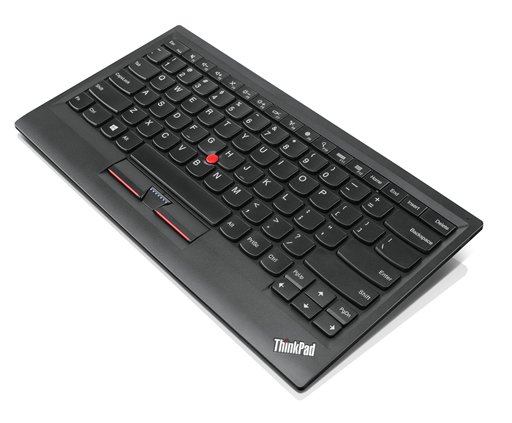
The first is Lenovo's ThinkPad Compact Bluetooth Keyboard with
TrackPoint, a very
compact but pleasant to use Bluetooth keyboard including a trackpoint. I miss
the trackpoint from my days as a Thinkpad laptop user. Having a keyboard and
mouse combo in such a small package is excellent. My only two complaints would be
the price (I was lucky to get one cheaper on eBay) and the fact it's bluetooth
only: there's a micro-USB port for charging, but it would be nice if it could be
used as a USB keyboard too. There's a separate, cheaper USB model.
The second neat device is a clone of the SNES gamepad by HK company 8bitdo called
the SFC30. This looks and feels very much like the
classic Nintendo SNES controller, albeit slightly thicker from front to back. It
can be used in a whole range of different modes, including attached USB; Bluetooth
pretending to be a keyboard; Bluetooth pretending to be a controller; and a bunch
of other special modes designed to work with iOS or Android devices in various
configurations. The manufacturer seem to be actively working on firmware updates
to further enhance the controller. The firmware is presently closed source, but it
would not be impossible to write an open source firmware for it (some people have
figured out the basis for the official firmware).
I like the SFC30 enough that I spent some time trying to get it working for
various versions of Doom. There are just enough buttons to control a 2.5D
game like Doom, whereas something like Quake or a more modern shooter would not
work so well. I added support for several 8bitdo controllers directly into
Chocolate Doom (available from 2.3.0 onwards)
and into SDL2, a popular library for game development, which
I think is used by Steam, so Steam games may all gain
SFC30 support in the future too.
Burkeman: Why time management is ruining our lives
Over the past semester I ve been trying to convince one graduate
student and one professor in my department to use Inbox Zero
to get a better handle on their e-mail inboxes. The goal is not to be
more productive. The two of them get far more academic work done than
I do. However, both of them are far more stressed than I am. And in
the case of the graduate student, I have to add items to my own to-do
list to chase up e-mails that I ve sent him, which only spreads this
stress and tension around.
The graduate student sent me this essay by Oliver Burkeman about how
these techniques can backfire, creating more stress, tension and
anxiety. It seems to me that this happens when we think of these
techniques as having anything to do with productivity. Often people
will say use this technique and you ll be less stressed, more
productive, and even more productive because you re less stressed.
Why not just say use this technique and you ll be less anxious and
stressed ? This is a refusal to treat lower anxiety as merely a means
to some further end. People can autonomously set their own ends, and
they ll probably do a better job of this when they re less anxious.
Someone offering a technique to help with their sense of being
overwhelmed need not tell them what to do with their new calm.
It might be argued that this response to Burkeman fails to address the
huge sense of obligation that an e-mail inbox can generate. Perhaps
the only sane response to this infinite to-do list is to let it pile
up. If we follow a technique like Inbox Zero, don t we invest our
inbox with more importance than it has? Like a lot of areas of life,
the issue is that the e-mails that will advance truly valuable
projects and relationships, projects of both ourselves and of others,
are mixed in with reams of stuff that doesn t matter. We face this
situation whenever we go into a supermarket, or wonder what to do
during an upcoming vacation. In all these situations, we have a
responsibility to learn how to filter the important stuff out, just as
we have a responsibility to avoid reading celebrity gossip columns
when we are scanning through a newspaper. Inbox Zero is a technique
to do that filtering in the case of e-mail. Just letting our inbox
pile up is an abdication of responsibility, rather than an intelligent
response to a piece of technology that most of the world abuses.

Swacch Bharat Indian Railways Copyright: Indian Express
To add to the above, it is still cheaper than air travel, although that is changing a bit as Indian Railways seeks to modernize Railways and make it into world-class bullet trains.
Indian Railways has a long, rich culture and some of the most interesting nuggets you learn over time adds to the fascination of the Railways. For instance I m sharing this letter which I read first in book and then saw in the New Delhi Railway Museum. The letter I am sharing below was written by a certain Shri Okhil Chandra Sen to the Sahibganj Railway Office in year 1909, almost 38 years before India became independent.
I am arrive by passenger train Ahmedpur station and my belly is too much swelling with jackfruit. I am therefore went to privy. Just I doing the nuisance that guard making whistle blow for train to go off and I am running with lotah in one hand and dhoti in the next when I am fall over and expose all my shocking to man and female women on plateform. I am got leaved at Ahmedpur station.
This too much bad, if passenger go to make dung that dam guard not wait train five minutes for him. I am therefore pray your honour to make big fine on that guard for public sake. Otherwise I am making big report! to papers.
If it were not for Mr. Okhil Chandra Sen we would still be running with water bottle (improvement) and jeans/shorts/whatever (again improvement) while the possibility of falling over would always be omnipresent in a hurry. Now we do have toilets and some of the better trains even have Bio-toilets which should make things better as well.(/NSFW)
For the plane bit, most of my flights have been domestic flying. Some of my most memorable flights is when flying from Mumbai on a clear sky overlooking the Queen s necklace, loving it and landing in Bangalore during mist or rain or both. Delhi is also good as airports go but nothing much adventurous about it. It was only with the experience of my first international flight, I realized the same feeling again, nervousness and sense of adventure as you meet new people. Nowadays every week I do try and broaden my horizon by seeking and learning a bit about International Travel.

Copyright: National Geographic Magazine

Photo Courtesy Changi International Airport, Singapore

Queues get longer, patience runs out- Copyright Indian Express Group.

Mobile ATM Copyright PTI
I continue to be a big user of Perl, and for many of my sites I avoid
the use of MySQL which means that I largely store data in flat files,
SQLite databases, or in memory via Redis.

One of my servers was recently struggling with RAM, and the suprising
cause was "too much data" in Redis. (Surprising because I'd not been
paying attention and seen how popular it was, and also because ASCII text
compresses pretty well).
Read/Write speed isn't a real concern, so I figured I'd move the data into an
SQLite database, but that would require rewriting the application.
The client library for Perl is pretty awesome, and simple usage looks like this:
# Connect to localhost.
my $r = Redis->new()
# simple storage
$r->set( "key", "value" );
# Work with sets
$r->sadd( "fruits", "orange" );
$r->sadd( "fruits", "apple" );
$r->sadd( "fruits", "blueberry" );
$r->sadd( "fruits", "banannanananananarama" );
# Show the set-count
print "There are " . $r->scard( "fruits" ) . " known fruits";
# Pick a random one
print "Here is a random one " . $r->srandmember( "fruits" ) . "\n";
I figured, if I ignored the Lua support and the other more complex operations,
creating a compatible API implementation wouldn't be too hard. So rather
than porting my application to using SQLite directly I could juse use a
different client-library.
In short I change this:
use Redis;
my $r = Redis->new();
To this:
use Redis::SQLite;
my $r = Redis::SQLite->new();
And everything continues to work. I've implemented all the set-related
functions except one, and a random smattering of the other simple operations.
The appropriate test-cases in the Redis client library (i.e. removing all
references to things I didn't implement) pass, and my own new tests also
make me confident.
It's obviously not a hard job, but it was a quick solution to a real problem
and might be useful to others.
My image hosting site, and my markdown sharing site now both use this wrapper and seem to be performing well - but with more free RAM.
The post continues from the last post shared.
Let me get some interesting tit-bits not related to the day-trip out-of-the-way first
I don t know whether we had full access to see all parts of fuller hall or not. Couple of days I was wondering around Fuller Hall, specifically next to where clothes were pressed. Came to know of the laundry service pretty late but still was useful. Umm next to where the ladies/gentleman pressed our clothes, there is a stairway which goes down. In fact even on the opposite side there is a stairway which goes down. I dunno if other people explored them or not.
2. The OpenContent Initiative by UCT This would have been also something worth exploring.
One more interesting thing which I saw was the French council in Cape Town from outside
In fact one of the more interesting things I looked at and could look day and night is the variety of vehicles on display in Cape Town. In hindsight, I should have bought a couple of 128 GB MMC cards for my mobile rather than the 64 GB one. It was just plain inadequate to capture all that was new and interesting.
The above picture is taken from Wikipedia from the article Miami Beach, Florida for comparison.
.
| Series: | Thessaly #1 |
| Publisher: | Tor |
| Copyright: | 2014 |
| Printing: | January 2015 |
| ISBN: | 0-7653-3266-3 |
| Format: | Hardcover |
| Pages: | 368 |
Before proceeding, here is some context: When building new things, it is usually better to use the Elliptic Curve technology algorithm Ed25519 instead of RSA. There is also ECDSA which has had a comparatively slow uptake, for a number of reasons that is widely available and is a reasonable choice when Ed25519 is not available. There are also post-quantum algorithms, but they are newer and adopting them today requires a careful cost-benefit analysis.
First some background. RSA is an asymmetric public-key scheme, and relies on generating private keys which are the product of distinct prime numbers (typically two). The size of the resulting product, called the modulus n, is usually expressed in bit length and forms the key size. Historically RSA key sizes used to be a couple of hundred bits, then 512 bits settled as a commonly used size. With better understanding of RSA security levels, the common key size evolved into 768, 1024, and later 2048. Today s recommendations (see keylength.com) suggest that 2048 is on the weak side for long-term keys (5+ years), so there has been a trend to jump to 4096. The performance of RSA private-key operations starts to suffer at 4096, and the bandwidth requirements is causing issues in some protocols. Today 2048 and 4096 are the most common choices.
My preference for non-2048/4096 RSA key sizes is based on the simple and na ve observation that if I would build a RSA key cracker, there is some likelihood that I would need to optimize the implementation for a particular key size in order to get good performance. Since 2048 and 4096 are dominant today, and 1024 were dominent some years ago, it may be feasible to build optimized versions for these three key sizes.
My observation is a conservative decision based on speculation, and speculation on several levels. First I assume that there is an attack on RSA that we don t know about. Then I assume that this attack is not as efficient for some key sizes than others, either on a theoretical level, at implementation level (optimized libraries for certain characteristics), or at an economic/human level (decision to focus on common key sizes). Then I assume that by avoiding the efficient key sizes I can increase the difficulty to a sufficient level.
Before analyzing whether those assumptions even remotely may make sense, it is useful to understand what is lost by selecting uncommon key sizes. This is to understand the cost of the trade-off.
A significant burden would be if implementations didn t allow selecting unusual key sizes. In my experience, enough common applications support uncommon key sizes, for example GnuPG, OpenSSL, OpenSSH, FireFox, and Chrome. Some applications limit the permitted choices; this appears to be rare, but I have encountered it once. Some environments also restrict permitted choices, for example I have experienced that LetsEncrypt has introduced a requirement for RSA key sizes to be a multiples of 8. I noticed this since I chose a RSA key size of 3925 for my blog and received a certificate from LetsEncrypt in December 2015 however during renewal in 2016 it lead to an error message about the RSA key size. Some commercial CAs that I have used before restrict the RSA key size to one of 1024, 2048 or 4096 only. Some smart-cards also restrict the key sizes, sadly the YubiKey has this limitation. So it is not always possible, but possible often enough for me to be worthwhile.
Another cost is that RSA signature operations are slowed down. This is because the exponentiation function is faster than multiplication, and if the bit pattern of the RSA key is a 1 followed by several 0 s, it is quicker to compute. I have not done benchmarks, but I have not experienced that this is a practical problem for me. I don t notice RSA operations in the flurry of all of other operations (network, IO) that is usually involved in my daily life. Deploying this on a large scale may have effects, of course, so benchmarks would be interesting.
Back to the speculation that leads me to this choice. The first assumption is that there is an attack on RSA that we don t know about. In my mind, until there are proofs that the currently known attacks (GNFS-based attacks) are the best that can be found, or at least some heuristic argument that we can t do better than the current attacks, the probability for an unknown RSA attack is therefor, as strange as it may sound, 100%.
The second assumption is that the unknown attack(s) are not as efficient for some key sizes than others. That statement can also be expressed like this: the cost to mount the attack is higher for some key sizes compared to others.
At the implementation level, it seems reasonable to assume that implementing a RSA cracker for arbitrary key sizes could be more difficult and costlier than focusing on particular key sizes. Focusing on some key sizes allows optimization and less complex code.
At the mathematical level, the assumption that the attack would be costlier for certain types of RSA key sizes appears dubious. It depends on the kind of algorithm the unknown attack is. For something similar to GNFS attacks, I believe the same algorithm applies equally for a RSA key size of 2048, 2730 and 4096 and that the running time depends mostly on the key size. Other algorithms that could crack RSA, such as some approximation algorithms, does not seem likely to be thwarted by using non-standard RSA key sizes either. I am not a mathematician though.
At the economical or human level, it seems reasonable to say that if you can crack 95% of all keys out there (sizes 1024, 2048, 4096) then that is good enough and cracking the last 5% is just diminishing returns of the investment. Here I am making up the 95% number. Currently, I would guess that more than 95% of all RSA key sizes on the Internet are 1024, 2048 or 4096 though. So this aspect holds as long as people behave as they have done.
The final assumption is that by using non-standard key sizes I raise the bar sufficiently high to make an attack impossible. To be honest, this scenario appears unlikely. However it might increase the cost somewhat, by a factor or two or five. Which might make someone target a lower hanging fruit instead.
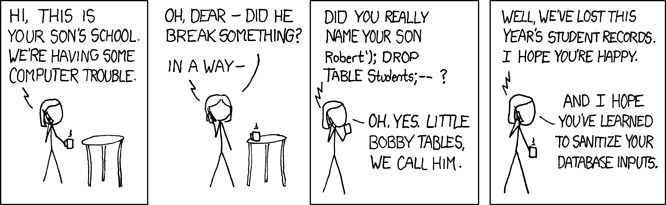
Putting my argument together, I have 1) identified some downsides of using non-standard RSA Key sizes and discussed their costs and implications, and 2) mentioned some speculative upsides of using non-standard key sizes. I am not aware of any argument that the odds of my speculation is 0% likely to be true. It appears there is some remote chance, higher than 0%, that my speculation is true. Therefor, my personal conservative approach is to hedge against this unlikely, but still possible, attack scenario by paying the moderate cost to use non-standard RSA key sizes. Of course, the QA engineer in me also likes to break things by not doing what everyone else does, so I end this with an ObXKCD.
Today marks the 13th anniversary since the last passenger flight from New York arrived in the UK. Every seat was filled, a feat that had become increasingly rare for a plane that was a technological marvel but a commercial flop .
Thats So Raven
If I could sum up the past year in one word, that word would be distraction. There have been so many strange, confusing or simply unforseen things going on I have had trouble focusing like never before.
For instance, on the opposite side of the street from me is one of Jersey City's old resorvoirs. It's not used for drinking water anymore and the city eventually plans on merging it into the park on the other side. In the meantime it has become something of a wildlife refuge. Which is nice except one of the newly settled critters was a bird of prey -- the consensus is possibly some kind of hawk or raven. Starting your morning commute under the eyes of a harbinger of death is very goth and I even learned to deal with the occasional piece of deconstructed rodent on my doorstep but nighttime was a big problem. For contrary to popular belief, ravens do not quoth "nevermore" but "KRRAAAA". Very loudly. Just as soon as you have drifted of to sleep. Eventually my sleep-deprived neighbors and I appealed to the NJ division of enviromental protection to get it removed but by the time they were ready to swing into action the bird had left for somewhere more congenial like Transylvania or Newark.
Or here are some more complete wastes of time: I go the doctor for my annual physical. The insurance company codes it as Adult Onset Diabetes by accident. One day I opened the lid of my laptop and there's a "ping" sound and a piece of the hinge flies off. Apparently that also severed the connection to the screen and naturally the warranty had just expired so I had to spend the next month tethered to an external monitor until I could afford to buy a new one. Mix in all the usual social, political, family and work drama and you can see that it has been a very trying time for me.
Dovecot
I have managed to get some Debian work done. On Dovecot, my principal package, I have gotten tremendous support from Apollon Oikonomopolous who I belatedly welcome as a member of the Dovecot maintainer team. He has been particularly helpful in fixing our systemd support and cleaning out a lot of the old and invalid bugs. We're in pretty good shape for the freeze. Upstream has released an RC of 2.2.26 and hopefully the final version will be out in the next couple of days so we can include it in Stretch. We can always use more help with the package so let me know if you're interested.
Debian-IN
Most of the action has been going on without me but I've been lending support and sponsoring whenever I can. We have several new DDs and DMs but still no one north of the Vindhyas I'm afraid.
Debian Perl Group
gregoa did a ping of inactive maintainers and I regretfully had to admit to myself that I wasn't going to be of use anytime soon so I resigned. Perl remains my favorite language and I've actually been more involved in the meetings of my local Perlmongers group so hopefully I will be back again one day. And I still maintain the Perl modules I wrote myself.
Debian-Axe-Murderers*
May have gained a recruit.
*Stricly speaking it should be called Debian-People-Who-Dont-Think-Faults-in-One-Moral-Domain-Such-As-For-Example-Axe-Murdering-Should-Leak-Into-Another-Moral-Domain-Such-As-For-Example-Debian but come on, that's just silly.
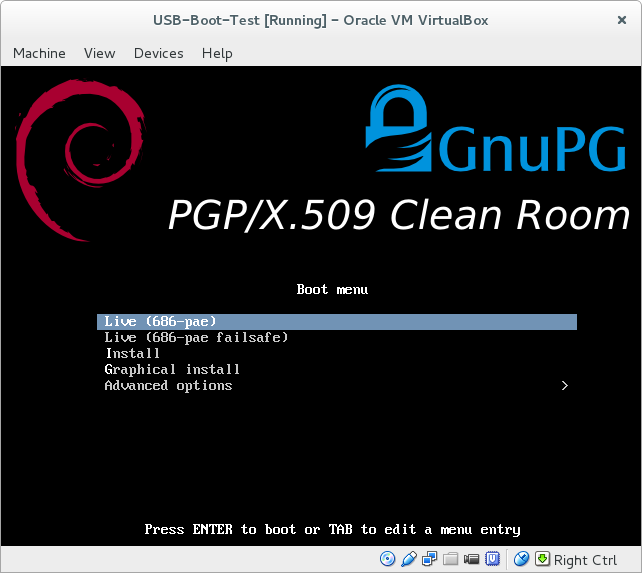
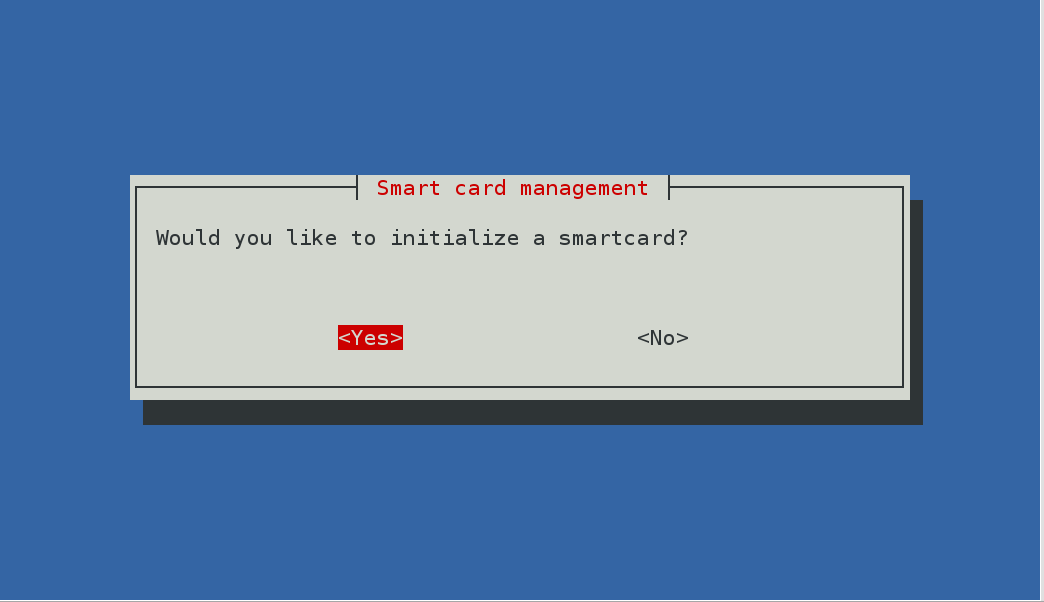
At the moment, it contains a number of packages likely to be useful in a PKI clean room, including GnuPG, smartcard drivers, the lightweight pki utility from StrongSWAN and OpenSSL.
I've been trying it out with an SPR-532, one of the GnuPG-supported smartcard readers with a pin-pad and the OpenPGP card.
| Series: | Sarantine Mosaic #1 |
| Publisher: | HarperPrism |
| Copyright: | 1998 |
| Printing: | January 2000 |
| ISBN: | 0-06-105990-0 |
| Format: | Mass market |
| Pages: | 533 |
At the end of August 2012, I announced my
Early Retirement
from HP. Two years later, my friend and former boss Martin Fink
successfully recruited me to return to what later became
Hewlett Packard Enterprise, as an
HPE Fellow
working on open source strategy in his Office of the CTO.
I'm proud of what I was was able to accomplish in the 25 months since then,
but recent efforts to "simplify" HPE actually made things complicated for
me. Between the announcement in late June that
Martin intended to retire himself,
and the two major spin-merger announcements involving
Enterprise Services
and
Software... well...
The bottom line is that today, 30 September 2016, is my last day at HPE.
My plan is to "return to retirement" and work on some fun projects with my wife
now that we are "empty nesters". I do intend to remain involved in the Free
Software and open hardware worlds, but whether that might eventually involve
further employment is something I'm going to try and avoid thinking about
for a while...
There is a rocket launch scheduled nearby this weekend, after all!
Every year since 2010 the Whitley Bay Film
Festival has put on a programme of movies
in my home town, often with some quirk or gimmick. A few years back we watched
"Dawn Of The Dead" in a shopping centre the last act was interrupted by a fake
film-reel break, then a load of zombies emerged from the shops. Sometime after
that, we saw "The Graduate" within a Church as part of their annual "Secret
Cinema" showing. Other famous stunts (which I personally did not witness)
include a screening of Jaws on the beach and John Carpenter's "The Fog" in
Whitley Bay Lighthouse.
This year I only went to one showing, Fritz Lang's Metropolis. Two twists this time: it was being shown in The Rendezvous Cafe, an Art-Deco themed building on the sea front; the whole film was accompanied by a live, improvised synthesizer jam by a group of friends and synth/sound enthusiasts who branded themselves "The Mediators" for the evening.Massive thanks to Hunter North Recruitment for sponsoring Metropolis https://t.co/mphzHPCQ6O @snattaz pic.twitter.com/S9MNQmeLWZ Whitley Film Fest (@wbayfilmfest) August 14, 2016
I've been meaning to watch Metropolis for a long time (I've got the Blu-Ray still sat in the shrink-wrap) and it was great to see the newly restored version, but the live synth accompaniment was what really made the night special for me. They used a bunch of equipment, most notably a set of Korg Volcas. The soundtrack varied in style and intensity to suit the scenes, with the various under-city scenes backed by a pumping, industrial-style improvisation which sounded quite excellent. I've had an interest in playing with synthesisers and making music for years, but haven't put the time in to do it properly. I left newly inspired and energised to finally try to make the time to explore it.Metropolis live soundtrack preparations at the Rendezvous Cafe. Doors open 19.30 #metropolis pic.twitter.com/AdAqNVdEdx Whitley Film Fest (@wbayfilmfest) August 14, 2016
Next.