Search Results: "mt"

23 October 2024

Jonathan Dowland: Why hardware synths?

Russell wrote a great comment on my last post (thanks!):
What benefits do these things offer when a general purpose computer can do so many things nowadays? Is there a USB keyboard that you can connect to a laptop or phone to do these things? I presume that all recent phones have the compute power to do all the synthesis you need if you have the right software. Is it just a lack of software and infrastructure for doing it on laptops/phones that makes synthesisers still viable?
I've decided to turn my response into a post of its own. The issue is definitely not compute power. You can indeed attach a USB keyboard to a computer and use a plethora of software synthesisers, including very faithful emulations of all the popular classics. The raw compute power of modern hardware synths is comparatively small: I ve been told the modern Korg digital synths are on a par with a raspberry pi. I ve seen some DSPs which are 32 bit ARMs, and other tools which are roughly equivalent to arduinos. I can think of four reasons hardware synths remain popular with some despite the above:
  1. As I touched on in my original synth post, computing dominates my life outside of music already. I really wanted something separate from that to keep mental distance from work.
  2. Synths have hard real-time requirements. They don't have raw power in compute terms, but they absolutely have to do their job within microseconds of being instructed to, with no exceptions. Linux still has a long way to go for hard real-time.
  3. The Linux audio ecosystem is complex. Dealing with pipewire, pulseaudio, jack, alsa, oss, and anything else I've forgotten, as well as their failure modes, is too time consuming.
  4. The last point is to do with creativity and inspiration. A good synth is more than the sum of its parts: it's an instrument, carefully designed and its components integrated by musically-minded people who have set out to create something to inspire. There are plenty of synths which aren't good instruments, but have loads of features: they re boxes of "stuff". Good synths can't do it all: they often have limitations which you have to respond to, work around or with, creatively. This was expressed better than I could by Trent Reznor in the video archetype of a synthesiser:

15 October 2024

Jonathan Dowland: Whisper (pipewire tool)

It's time to mint a new blog tag I want to write to pour praise on some software I recently discovered. I'm not up to speed on Pipewire the latest piece of Linux plumbing related to audio nor how it relates to the other bits (Pulseaudio, ALSA, JACK, what else?). I recently tried to plug something into the line-in port on my external audio interface, and wished to hear it on the machine. A simple task, you'd think. I'll refrain from writing about the stuff that didn't work well and focus on the thing that did: A little tool called Whisper, which is designed to let you listen to a microphone through your speakers.
_Whisper_'s UI. Screenshot from upstream. Whisper's UI. Screenshot from upstream.
Whisper does a great job of hiding the complexity of what lies beneath and asking two questions: which microphone, and which speakers? In my case this alone was not quite enough, as I was presented with two identically-named "SB Live Extigy" "microphone" devices, but that's easily resolved with trial and error. More stuff like this please!

12 October 2024

Jonathan Dowland: Code formatting in documents

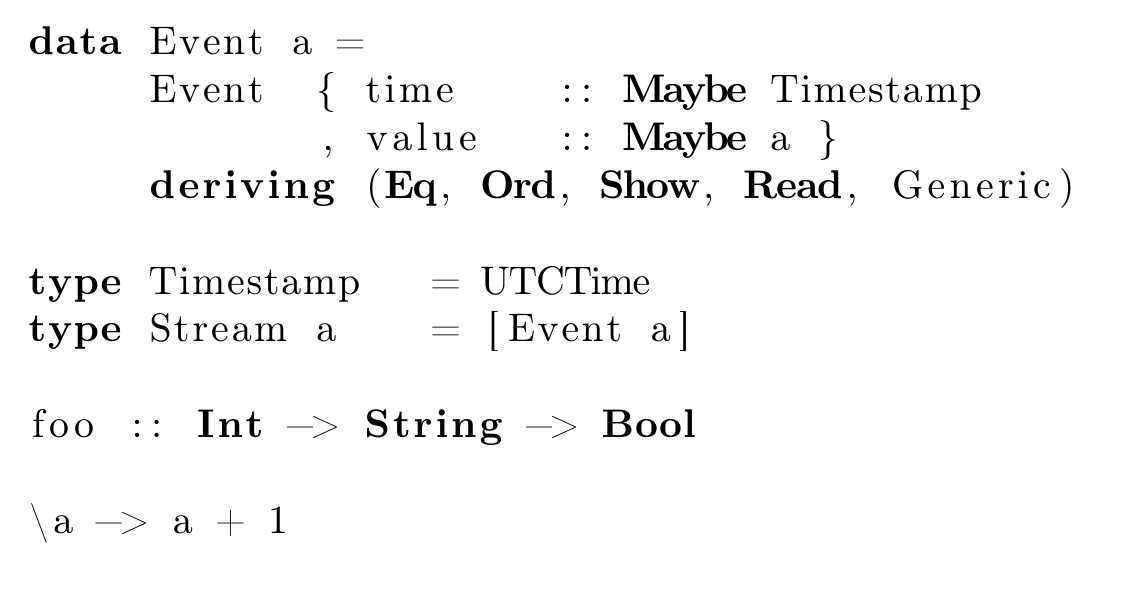
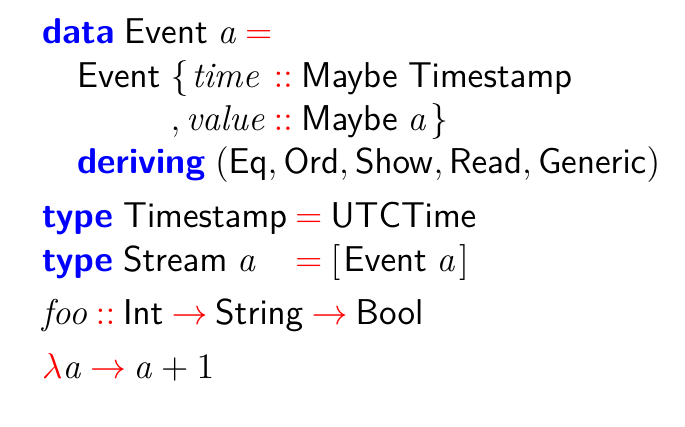
I've been exploring typesetting and formatting code within text documents such as papers, or my thesis. Up until now, I've been using the listings package without thinking much about it. By default, some sample Haskell code processed by listings looks like this (click any of the images to see larger, non-blurry versions):
default output of listings on a Haskell code sample
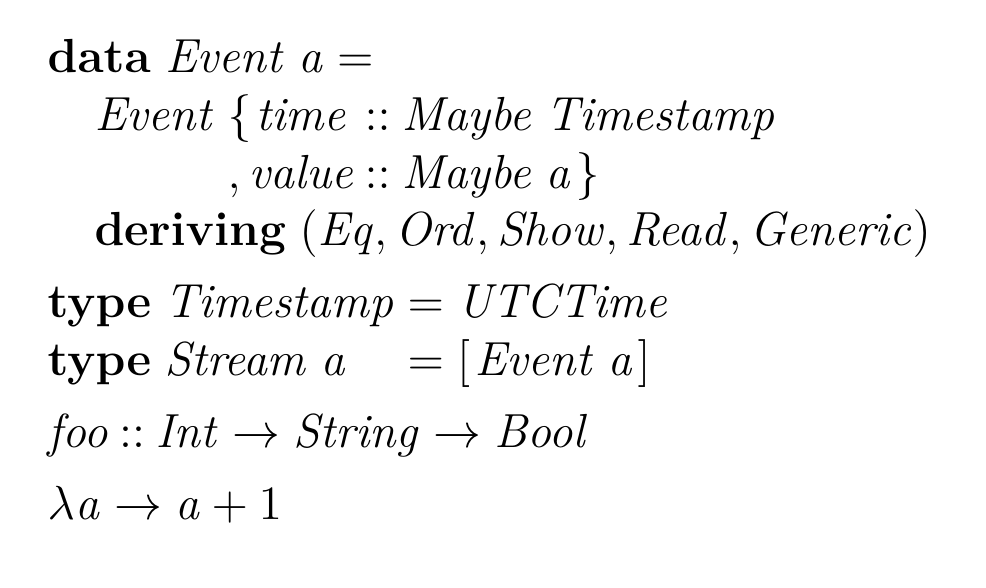
It's formatted with a monospaced font, with some keywords highlighted, but not syntactic symbols. There are several other options for typesetting and formatting code in LaTeX documents. For Haskell in particular, there is the preprocessor lhs2tex, The default output of which looks like this:
default output of lhs2tex on a Haskell code sample
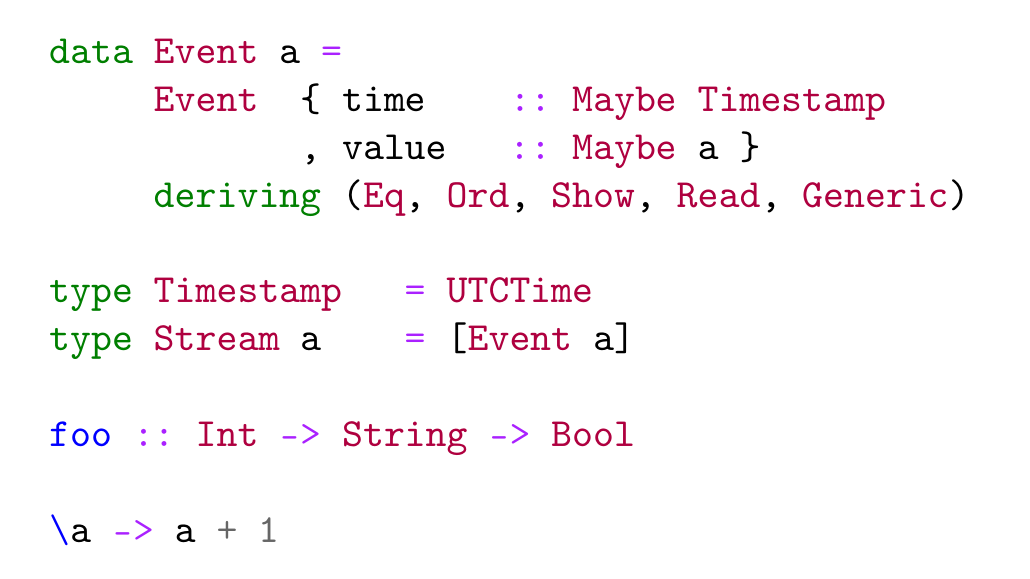
A proportional font, but it's taken pains to preserve vertical alignment, which is syntactically significant for Haskell. It looks a little cluttered to me, and I'm not a fan of nearly everything being italic. Again, symbols aren't differentiated, but it has substituted them for more typographically pleasing alternatives: -> has become , and \ is now . Another option is perhaps the newest, the LaTeX package minted, which leverages the Python Pygments program. Here's the same code again. It defaults to monospace (the choice of font seems a lot clearer to me than the default for listings), no symbolic substitution, and liberal use of colour:
default output of minted on a Haskell code sample
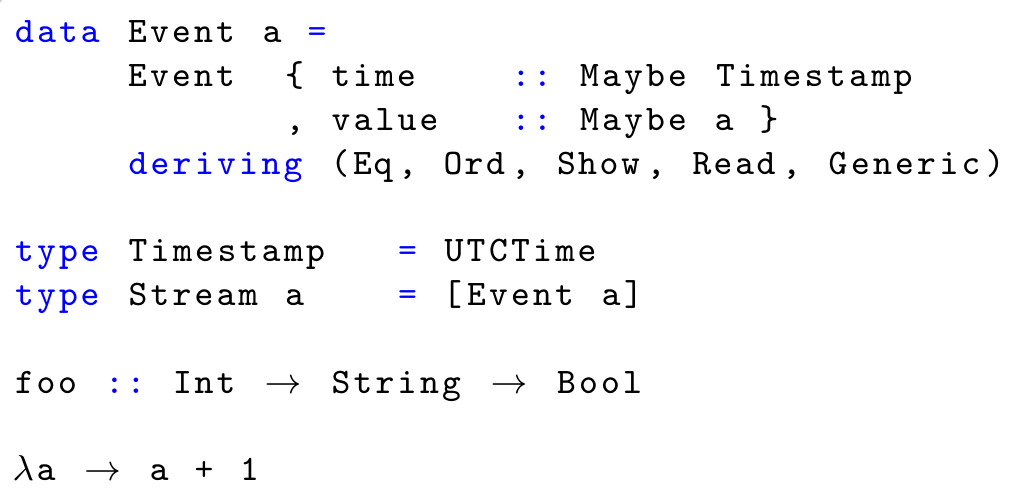
An informal survey of the samples so far showed that the minted output was the most popular. All of these packages can be configured to varying degrees. Here are some examples of what I've achieved with a bit of tweaking
_listings_ adjusted with colour and some symbols substituted (but sadly not the two together) listings adjusted with colour and some symbols substituted (but sadly not the two together)
_lhs2tex_ adjusted to be less italic, sans-serif and use some colour lhs2tex adjusted to be less italic, sans-serif and use some colour
All of this has got me wondering whether there are straightforward empirical answers to some of these questions of style. Firstly, I'm pretty convinced that symbolic substitution is valuable. When writing Haskell, we write ->, \, /= etc. not because it's most legible, but because it's most practical to type those symbols on the most widely available keyboards and popular keyboard layouts.1 Of the three options listed here, symbolic substitution is possible with listings and lhs2tex, but I haven't figured out if minted can do it (which is really the question: can pygments do it?) I'm unsure about proportional versus monospaced fonts. We typically use monospaced fonts for editing computer code, but that's at least partly for historical reasons. Vertical alignment is often very important in source code, and it can be easily achieved with monospaced text; it's also sometimes important to have individual characters (., etc.) not be de-emphasised by being smaller than any other character. lhs2tex, at least, addresses vertical alignment whilst using proportional fonts. I guess the importance of identifying individual significant characters is just as true in a code sample within a larger document as it is within plain source code. From a (brief) scan of research on this topic, it seems that proportional fonts result in marginally quicker reading times for regular prose. It's not clear whether those results carry over into reading computer code in particular, and the margin is slim in any case. The drawbacks of monospaced text mostly apply when the volume of text is large, which is not the case for the short code snippets I am working with. I still have a few open questions:

  1. The Haskell package Data.List.Unicode lets the programmer use a range of unicode symbols in place of ASCII approximations, such as instead of elem, instead of /=. Sadly, it's not possible to replace the denotation for an anonymous function, \, with this way.

10 October 2024

Gunnar Wolf: Started a guide to writing FUSE filesystems in Python

As DebConf22 was coming to an end, in Kosovo, talking with Eeveelweezel they invited me to prepare a talk to give for the Chicago Python User Group. I replied that I m not really that much of a Python guy But would think about a topic. Two years passed. I meet Eeveelweezel again for DebConf24 in Busan, South Korea. And the topic came up again. I had thought of some ideas, but none really pleased me. Again, I do write some Python when needed, and I teach using Python, as it s the language I find my students can best cope with. But delivering a talk to ChiPy? On the other hand, I have long used a very simplistic and limited filesystem I ve designed as an implementation project at class: FIUnamFS (for Facultad de Ingenier a, Universidad Nacional Aut noma de M xico : the Engineering Faculty for Mexico s National University, where I teach. Sorry, the link is in Spanish but you will find several implementations of it from the students ). It is a toy filesystem, with as many bad characteristics you can think of, but easy to specify and implement. It is based on contiguous file allocation, has no support for sub-directories, and is often limited to the size of a 1.44MB floppy disk. As I give this filesystem as a project to my students (and not as a mere homework), I always ask them to try and provide a good, polished, professional interface, not just the simplistic menu I often get. And I tell them the best possible interface would be if they provide support for FIUnamFS transparently, usable by the user without thinking too much about it. With high probability, that would mean: Use FUSE. Python FUSE But, in the six semesters I ve used this project (with 30-40 students per semester group), only one student has bitten the bullet and presented a FUSE implementation. Maybe this is because it s not easy to understand how to build a FUSE-based filesystem from a high-level language such as Python? Yes, I ve seen several implementation examples and even nice web pages (i.e. the examples shipped with thepython-fuse module Stavros passthrough filesystem, Dave Filesystem based upon, and further explaining, Stavros , and several others) explaining how to provide basic functionality. I found a particularly useful presentation by Matteo Bertozzi presented ~15 years ago at PyCon4 But none of those is IMO followable enough by itself. Also, most of them are very old (maybe the world is telling me something that I refuse to understand?). And of course, there isn t a single interface to work from. In Python only, we can find python-fuse, Pyfuse, Fusepy Where to start from? So I setup to try and help. Over the past couple of weeks, I have been slowly working on my own version, and presenting it as a progressive set of tasks, adding filesystem calls, and being careful to thoroughly document what I write (but maybe my documentation ends up obfuscating the intent? I hope not and, read on, I ve provided some remediation). I registered a GitLab project for a hand-holding guide to writing FUSE-based filesystems in Python. This is a project where I present several working FUSE filesystem implementations, some of them RAM-based, some passthrough-based, and I intend to add to this also filesystems backed on pseudo-block-devices (for implementations such as my FIUnamFS). So far, I have added five stepwise pieces, starting from the barest possible empty filesystem, and adding system calls (and functionality) until (so far) either a read-write filesystem in RAM with basicstat() support or a read-only passthrough filesystem. I think providing fun or useful examples is also a good way to get students to use what I m teaching, so I ve added some ideas I ve had: DNS Filesystem, on-the-fly markdown compiling filesystem, unzip filesystem and uncomment filesystem. They all provide something that could be seen as useful, in a way that s easy to teach, in just some tens of lines. And, in case my comments/documentation are too long to read, uncommentfs will happily strip all comments and whitespace automatically! So I will be delivering my talk tomorrow (2024.10.10, 18:30 GMT-6) at ChiPy (virtually). I am also presenting this talk virtually at Jornadas Regionales de Software Libre in Santa Fe, Argentina, next week (virtually as well). And also in November, in person, at nerdear.la, that will be held in Mexico City for the first time. Of course, I will also share this project with my students in the next couple of weeks And hope it manages to lure them into implementing FUSE in Python. At some point, I shall report! Update: After delivering my ChiPy talk, I have uploaded it to YouTube: A hand-holding guide to writing FUSE-based filesystems in Python, and after presenting at Jornadas Regionales, I present you the video in Spanish here: Aprendiendo y ense ando a escribir sistemas de archivo en espacio de usuario con FUSE y Python.

9 October 2024

Ben Hutchings: FOSS activity in September 2024

7 October 2024

Reproducible Builds: Reproducible Builds in September 2024

Welcome to the September 2024 report from the Reproducible Builds project! Our reports attempt to outline what we ve been up to over the past month, highlighting news items from elsewhere in tech where they are related. As ever, if you are interested in contributing to the project, please visit our Contribute page on our website. Table of contents:
  1. New binsider tool to analyse ELF binaries
  2. Unreproducibility of GHC Haskell compiler 95% fixed
  3. Mailing list summary
  4. Towards a 100% bit-for-bit reproducible OS
  5. Two new reproducibility-related academic papers
  6. Distribution work
  7. diffoscope
  8. Other software development
  9. Android toolchain core count issue reported
  10. New Gradle plugin for reproducibility
  11. Website updates
  12. Upstream patches
  13. Reproducibility testing framework

New binsider tool to analyse ELF binaries Reproducible Builds developer Orhun Parmaks z has announced a fantastic new tool to analyse the contents of ELF binaries. According to the project s README page:
Binsider can perform static and dynamic analysis, inspect strings, examine linked libraries, and perform hexdumps, all within a user-friendly terminal user interface!
More information about Binsider s features and how it works can be found within Binsider s documentation pages.

Unreproducibility of GHC Haskell compiler 95% fixed A seven-year-old bug about the nondeterminism of object code generated by the Glasgow Haskell Compiler (GHC) received a recent update, consisting of Rodrigo Mesquita noting that the issue is:
95% fixed by [merge request] !12680 when -fobject-determinism is enabled. [ ]
The linked merge request has since been merged, and Rodrigo goes on to say that:
After that patch is merged, there are some rarer bugs in both interface file determinism (eg. #25170) and in object determinism (eg. #25269) that need to be taken care of, but the great majority of the work needed to get there should have been merged already. When merged, I think we should close this one in favour of the more specific determinism issues like the two linked above.

Mailing list summary On our mailing list this month:
  • Fay Stegerman let everyone know that she started a thread on the Fediverse about the problems caused by unreproducible zlib/deflate compression in .zip and .apk files and later followed up with the results of her subsequent investigation.
  • Long-time developer kpcyrd wrote that there has been a recent public discussion on the Arch Linux GitLab [instance] about the challenges and possible opportunities for making the Linux kernel package reproducible , all relating to the CONFIG_MODULE_SIG flag. [ ]
  • Bernhard M. Wiedemann followed-up to an in-person conversation at our recent Hamburg 2024 summit on the potential presence for Reproducible Builds in recognised standards. [ ]
  • Fay Stegerman also wrote about her worry about the possible repercussions for RB tooling of Debian migrating from zlib to zlib-ng as reproducibility requires identical compressed data streams. [ ]
  • Martin Monperrus wrote the list announcing the latest release of maven-lockfile that is designed aid building Maven projects with integrity . [ ]
  • Lastly, Bernhard M. Wiedemann wrote about potential role of reproducible builds in combatting silent data corruption, as detailed in a recent Tweet and scholarly paper on faulty CPU cores. [ ]

Towards a 100% bit-for-bit reproducible OS Bernhard M. Wiedemann began writing on journey towards a 100% bit-for-bit reproducible operating system on the openSUSE wiki:
This is a report of Part 1 of my journey: building 100% bit-reproducible packages for every package that makes up [openSUSE s] minimalVM image. This target was chosen as the smallest useful result/artifact. The larger package-sets get, the more disk-space and build-power is required to build/verify all of them.
This work was sponsored by NLnet s NGI Zero fund.

Distribution work In Debian this month, 14 reviews of Debian packages were added, 12 were updated and 20 were removed, all adding to our knowledge about identified issues. A number of issue types were updated as well. [ ][ ] In addition, Holger opened 4 bugs against the debrebuild component of the devscripts suite of tools. In particular:
  • #1081047: Fails to download .dsc file.
  • #1081048: Does not work with a proxy.
  • #1081050: Fails to create a debrebuild.tar.
  • #1081839: Fails with E: mmdebstrap failed to run error.
Last month, an issue was filed to update the Salsa CI pipeline (used by 1,000s of Debian packages) to no longer test for reproducibility with reprotest s build_path variation. Holger Levsen provided a rationale for this change in the issue, which has already been made to the tests being performed by tests.reproducible-builds.org. This month, this issue was closed by Santiago R. R., nicely explaining that build path variation is no longer the default, and, if desired, how developers may enable it again. In openSUSE news, Bernhard M. Wiedemann published another report for that distribution.

diffoscope diffoscope is our in-depth and content-aware diff utility that can locate and diagnose reproducibility issues. This month, Chris Lamb made the following changes, including preparing and uploading version 278 to Debian:
  • New features:
    • Add a helpful contextual message to the output if comparing Debian .orig tarballs within .dsc files without the ability to fuzzy-match away the leading directory. [ ]
  • Bug fixes:
    • Drop removal of calculated os.path.basename from GNU readelf output. [ ]
    • Correctly invert X% similar value and do not emit 100% similar . [ ]
  • Misc:
    • Temporarily remove procyon-decompiler from Build-Depends as it was removed from testing (via #1057532). (#1082636)
    • Update copyright years. [ ]
For trydiffoscope, the command-line client for the web-based version of diffoscope, Chris Lamb also:
  • Added an explicit python3-setuptools dependency. (#1080825)
  • Bumped the Standards-Version to 4.7.0. [ ]

Other software development disorderfs is our FUSE-based filesystem that deliberately introduces non-determinism into system calls to reliably flush out reproducibility issues. This month, version 0.5.11-4 was uploaded to Debian unstable by Holger Levsen making the following changes:
  • Replace build-dependency on the obsolete pkg-config package with one on pkgconf, following a Lintian check. [ ]
  • Bump Standards-Version field to 4.7.0, with no related changes needed. [ ]

In addition, reprotest is our tool for building the same source code twice in different environments and then checking the binaries produced by each build for any differences. This month, version 0.7.28 was uploaded to Debian unstable by Holger Levsen including a change by Jelle van der Waa to move away from the pipes Python module to shlex, as the former will be removed in Python version 3.13 [ ].

Android toolchain core count issue reported Fay Stegerman reported an issue with the Android toolchain where a part of the build system generates a different classes.dex file (and thus a different .apk) depending on the number of cores available during the build, thereby breaking Reproducible Builds:
We ve rebuilt [tag v3.6.1] multiple times (each time in a fresh container): with 2, 4, 6, 8, and 16 cores available, respectively:
  • With 2 and 4 cores we always get an unsigned APK with SHA-256 14763d682c9286ef .
  • With 6, 8, and 16 cores we get an unsigned APK with SHA-256 35324ba4c492760 instead.

New Gradle plugin for reproducibility A new plugin for the Gradle build tool for Java has been released. This easily-enabled plugin results in:
reproducibility settings [being] applied to some of Gradle s built-in tasks that should really be the default. Compatible with Java 8 and Gradle 8.3 or later.

Website updates There were a rather substantial number of improvements made to our website this month, including:

Upstream patches The Reproducible Builds project detects, dissects and attempts to fix as many currently-unreproducible packages as possible. We endeavour to send all of our patches upstream where appropriate. This month, we wrote a large number of such patches, including:

Reproducibility testing framework The Reproducible Builds project operates a comprehensive testing framework running primarily at tests.reproducible-builds.org in order to check packages and other artifacts for reproducibility. In September, a number of changes were made by Holger Levsen, including:
  • Debian-related changes:
    • Upgrade the osuosl4 node to Debian trixie in anticipation of running debrebuild and rebuilderd there. [ ][ ][ ]
    • Temporarily mark the osuosl4 node as offline due to ongoing xfs_repair filesystem maintenance. [ ][ ]
    • Do not warn about (very old) broken nodes. [ ]
    • Add the risc64 architecture to the multiarch version skew tests for Debian trixie and sid. [ ][ ][ ]
    • Mark the virt 32,64 b nodes as down. [ ]
  • Misc changes:
    • Add support for powercycling OpenStack instances. [ ]
    • Update the fail2ban to ban hosts for 4 weeks in total [ ][ ] and take care to never ban our own Jenkins instance. [ ]
In addition, Vagrant Cascadian recorded a disk failure for the virt32b and virt64b nodes [ ], performed some maintenance of the cbxi4a node [ ][ ] and marked most armhf architecture systems as being back online.

Finally, If you are interested in contributing to the Reproducible Builds project, please visit our Contribute page on our website. However, you can get in touch with us via:

4 October 2024

Jonathan Dowland: synths

Although I've never written about them, I've been interested in music synthesisers for ages. My colleagues know this. Whilst I've been off sick, they had a whip-round and bought me a voucher for Andertons, a UK-based music store, to cheer me up. I'm absolutely floored by this generosity. And so, I'm now on a quest to buy a synthesizer! Although, not my first one.
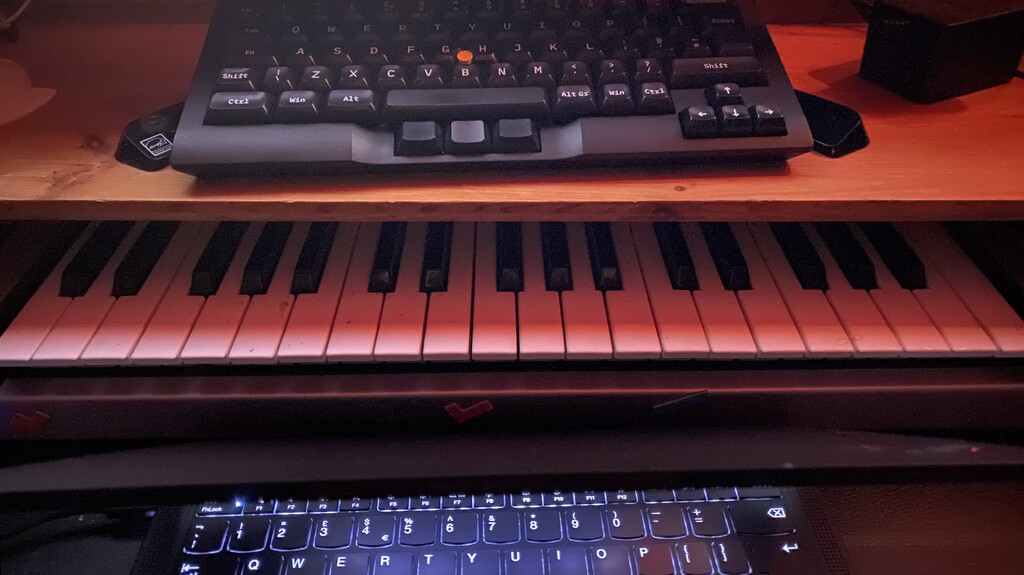
Alesis Micron on my desk, taunting me Alesis Micron on my desk, taunting me
I bought my first synth, an Alesis Micron, from a colleague at $oldjob, 16 years ago. For various reasons, I've struggled to engage with it, and it's mostly been gathering dust on my desk in all that time. (I might write more about the Micron in a later blog post). "Bad Gear" sums it up better than I could:
So, I'm not truly buying my "first" synth, but for all intents and purposes I'm on a similar journey to if I was, and I thought it might be fun to write about it. Goals I want something which has as many of its parameters presented physically, as knobs or sliders etc., as possible. One reason I've failed to engage with the Micron (so far) is it's at the other end of this spectrum, with hundreds of tunable parameters but a small handful of knobs. To change parameters you have to go diving into menus presented on a really old-fashioned, small LCD display. If you know what you are looking for, you can probably find it; but if you just want to experiment and play around, it's off-putting. Secondly, I want something I can use away from a computer, as much as possible. Computers are my day-job, largely dominate my existing hobbies, and are unavoidable even in some of the others (like 3d printing). Most of the computers I interact with run Linux. And for all its strengths, audio management is not one of them. If I'm going to carve out some of my extremely limited leisure time to explore this stuff, I don't to spend any of it (at least now) fighting Pulseaudio/ALSA/Pipewire/JACK/OSS/whatever, or any of the other foibles that might crop up1. Thirdly, I'd like something which, in its soul, is an instrument. You can get some amazing little synth boxes with a huge number of features in them. Something with a limited number of features but which really feels well put together would suit me better. So next time, I'll write about the 2-3 top candidates on my list. Can you guess what they might be?

  1. To give another example. The other day I sat down to try and use the Micron, which had its audio out wired into an external audio interface, in turn plugged into my laptop's Thunderbolt dock. For a while I couldn't figure out why I couldn't hear anything, until I realised the Thunderbolt dock was having "a moment" and not presenting its USB devices to the laptop. Hobby time window gone!

3 October 2024

Mike Gabriel: Creating (a) new frontend(s) for Polis

After (quite) a summer break, here comes the 4th article of the 5-episode blog post series on Polis, written by Guido Berh rster, member of staff at my company Fre(i)e Software GmbH. Have fun with the read on Guido's work on Polis,
Mike
Table of Contents of the Blog Post Series
  1. Introduction
  2. Initial evaluation and adaptation
  3. Issues extending Polis and adjusting our goals
  4. Creating (a) new frontend(s) for Polis (this article)
  5. Current status and roadmap
4. Creating (a) new frontend(s) for Polis Why a new frontend was needed... Our initial experiences of working with Polis, the effort required to implement more invasive changes and the desire of iterating changes more rapidly ultimately lead to the decision to create a new foundation for frontend development that would be independent of but compatible with the upstream project. Our primary objective was thus not to develop another frontend but rather to make frontend development more flexible and to facilitate experimentation and rapid prototyping of different frontends by providing abstraction layers and building blocks. This also implied developing a corresponding backend since the Polis backend is tightly coupled to the frontend and is neither intended to be used by third-party projects nor supporting cross-domain requests due to the expectation of being embedded as an iframe on third-party websites. The long-term plan for achieving our objectives is to provide three abstraction layers for building frontends: The Particiapp Project Under the umbrella of the Particiapp project we have so far developed two new components: Both the participation frontend and backend are fully compatible and require an existing Polis installation and can be run alongside the upstream frontend. More specifically, the administration frontend and common backend are required to administrate conversations and send out notifications and the statistics processing server is required for processing the voting results. Particiapi server For the backend the Python language and the Flask framework were chosen as a technological basis mainly due to developer mindshare, a large community and ecosystem and the smaller dependency chain and maintenance overhead compared to Node.js/npm. Instead of integrating specific identity providers we adopted the OpenID Connect standard as an abstraction layer for authentication which allows delegating authentication either to a self-hosted identity provider or a large number of existing external identity providers. Particiapp Example Frontend The experimental example frontend serves both as a test bed for the client library and as a tool for better understanding the needs of frontend designers. It also features a completely redesigned user interface and results visualization in line with our goals. Branded variants are currently used for evaluation and testing by the stakeholders. In order to simplify evaluation, development, testing and deployment a Docker Compose configuration is made available which contains all necessary components for running Polis with our experimental example frontend. In addition, a development environment is provided which includes a preconfigured OpenID Connect identity provider (KeyCloak), SMTP-Server with web interface (MailDev), and a database frontend (PgAdmin). The new frontend can also be tested using our public demo server.

30 September 2024

Russell Coker: Links September 2024

CNA Insider has an insightful documentary series about Chinese illegal immigrants to the US [1]. They should migrate to Australia, easier to get in and a better place to live. Linus tech tips has an informative video about using Windows on Snapdragon ARM64 laptops. [2]. Maybe I should get one for running Linux. They are quite expensive on ebay now which is presumably a good sign about their quality. A web site for comparing monospace fonts so you can find the one that best suits yuor coding [3]. Roboto works well for me. Noema has an interesting article about nationhood comparing the attitudes towards European colonisation in Africa and Russian colonisation in Ukraine [4]. Insightful lecture by Grace Hopper (then Captain) about the future of computers [5]. The second part is linked from the first part. Published by the NSA. Tony Hoare gave an insightful lecture titled The Billion Dollar Mistake about his work on designing the Algol language in 1965 [6]. The lecture was recorded in about 2005. But it still has a lot of relevance to computer science. Jascha Sohl-Dickstein wrote an interesting blog post about Goodhart s law, Machine Learning models, and how to try and mitigate problems in society [7]. Cory Doctorow wrote an insightful article on the Marshmallow test and long term thinking [8]. The rich fail this test badly. Insightful interview with Justice Breyer about interpreting the US constitution and the problems with textualism and originalism [9]. Cory Doctorow wrote an informative article about Google s practices of deleting Gmail accounts for no apparent reason and denying people access to their data [10]. We need more laws like the Digital Markets Act in the EU and we need them to apply to eBay/PayPal and AWS/Amazon.

18 September 2024

Jamie McClelland: Gmail vs Tor vs Privacy

A legit email went to spam. Here are the redacted, relevant headers:
[redacted]
X-Spam-Flag: YES
X-Spam-Level: ******
X-Spam-Status: Yes, score=6.3 required=5.0 tests=DKIM_SIGNED,DKIM_VALID,
[redacted]
	*  1.0 RCVD_IN_XBL RBL: Received via a relay in Spamhaus XBL
	*      [185.220.101.64 listed in xxxxxxxxxxxxx.zen.dq.spamhaus.net]
	*  3.0 RCVD_IN_SBL_CSS Received via a relay in Spamhaus SBL-CSS
	*  2.5 RCVD_IN_AUTHBL Received via a relay in Spamhaus AuthBL
	*  0.0 RCVD_IN_PBL Received via a relay in Spamhaus PBL
[redacted]
[very first received line follows...]
Received: from [10.137.0.13] ([185.220.101.64])
        by smtp.gmail.com with ESMTPSA id ffacd0b85a97d-378956d2ee6sm12487760f8f.83.2024.09.11.15.05.52
        for <xxxxx@mayfirst.org>
        (version=TLS1_3 cipher=TLS_AES_128_GCM_SHA256 bits=128/128);
        Wed, 11 Sep 2024 15:05:53 -0700 (PDT)
At first I though a Gmail IP address was listed in spamhaus - I even opened a ticket. But then I realized it wasn t the last hop that Spamaus is complaining about, it s the first hop, specifically the ip 185.220.101.64 which appears to be a Tor exit node. The sender is using their own client to relay email directly to Gmail. Like any sane person, they don t trust Gmail to protect their privacy, so they are sending via Tor. But WTF, Gmail is not stripping the sending IP address from the header. I m a big fan of harm reduction and have always considered using your own client to relay email with Gmail as a nice way to avoid some of the surveillance tax Google imposes. However, it seems that if you pursue this option you have two unpleasant choices: I supposed you could also use a VPN, but I doubt the IP reputation of most VPN exit nodes are going to be more reliable than Tor.

17 September 2024

Jonathan Dowland: ouch, part 2

Things developed since my last post. Some lesions opened up on my ankle which was initially good news: the pain substantially reduced. But they didn t heal fast enough and so medics decided on surgical debridement. That was last night. It seemed to be successful and I m in recovery from surgery as I write. It s hard to predict the near-future, a lot depends on how well and fast I heal. I ve got a negative-pressure dressing on it, which is incredible: a constantly maintained suction to aid in debridement and healing. Modern medicine feels like a sci fi novel.

Jonathan Dowland: ouch, part 3

The debridement operation was a success: nothing bad grew afterwards. I was discharged after a couple of nights with crutches, instructions not to weight-bear, a remarkable, portable negative-pressure "Vac" pump that lived by my side, and some strong painkillers. About two weeks later, I had a skin graft. The surgeon took some skin from my thigh and stitched it over the debridement wound. I was discharged same-day, again with the Vac pump, and again with instructions not to weight-bear, at least for a few days. This time I only kept the Vac pump for a week, and after a dressing change (the first time I saw the graft), I was allowed to walk again. Doing so is strangely awkward, and sometimes a little painful. I have physio exercises to help me regain strength and understanding about what I can do. The donor site remained bandaged for another week before I saw it. I was expecting a stitched cut, but the surgeons have removed the top few layers only, leaving what looks more like a graze or sun-burn. There are four smaller, tentative-looking marks adjacent, suggesting they got it right on the fifth attempt. I'm not sure but I think these will all fade away to near-invisibility with time, and they don't hurt at all. I've now been off work for roughly 12 weeks, but I think I am returning very soon. I am looking forward to returning to some sense of normality. It's been an interesting experience. I thought about writing more about what I've gone through, in particular my experiences in Hospital, dealing with the bureaucracy and things falling "between the gaps". Hanif Kureishi has done a better job than I could. It's clear that the NHS is staffed by incredibly passionate people, but there are a lot of structural problems that interfere with care.

11 September 2024

Dirk Eddelbuettel: RcppSpdlog 0.0.18 on CRAN: Updates

Version 0.0.18 of RcppSpdlog arrived on CRAN today and has been uploaded to Debian. RcppSpdlog bundles spdlog, a wonderful header-only C++ logging library with all the bells and whistles you would want that was written by Gabi Melman, and also includes fmt by Victor Zverovich. You can learn more at the nice package documention site. This releases updates the code to the version 1.14.1 of spdlog which was released as an incremental fix to 1.14.0, and adds the ability to set log levels via the environment variable SPDLOG_LEVEL. The NEWS entry for this release follows.

Changes in RcppSpdlog version 0.0.18 (2024-09-10)
  • Upgraded to upstream release spdlog 1.14.1
  • Minor packaging upgrades
  • Allow logging levels to be set via environment variable SPDLOG_LEVEL

Courtesy of my CRANberries, there is also a diffstat report. More detailed information is on the RcppSpdlog page, or the package documention site. If you like this or other open-source work I do, you can sponsor me at GitHub.

This post by Dirk Eddelbuettel originated on his Thinking inside the box blog. Please report excessive re-aggregation in third-party for-profit settings.

10 September 2024

Ben Hutchings: FOSS activity in August 2024

4 September 2024

Jonathan Dowland: loading (unintended consequences?)

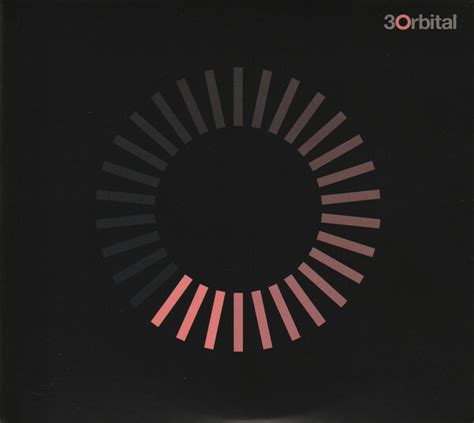
For their 30th anniversary (ish; the Covid pandemic pushed the date out a bit) British electronic music duo Orbital released the compilation 30 something. The track list mostly looks like a best hits list, which given their prior compilation celebrating 20 years looks much the same would appear superfluous. However, they ve rearranged and re-recorded all their songs for 30, to reflect their live arrangements. The reworkings are sufficiently distinct from the original versions (in some cases I prefer them) and elevate the release. The couple of new tracks are also fun, and many of the remixes on the second disc are worth a listen too.
cover art from Orbital - 30 Something
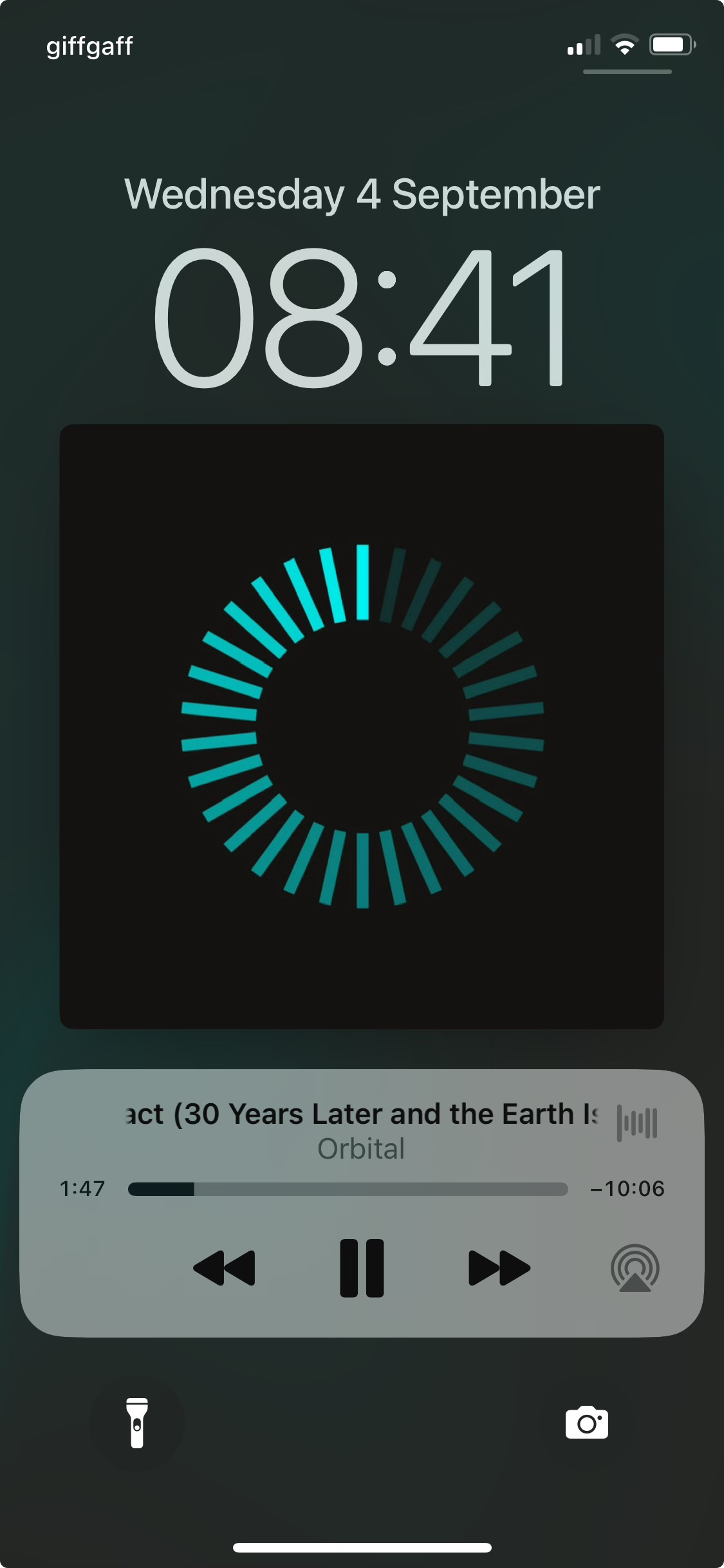
But what I actually sat down to write about was the cover artwork. They often have designs which riff on the notion of a circle (given their name) and the 30-something art (both for the album and single takes from it) adapts a loading spinner-like device from computing (I suppose it mostly closely resembles the spinner from macOS). A possibly unintended effect of the pattern occurs when you view it on a display which is adjusting its brightness, such as if you re listening to it on a phone, the screen is off, and you pick it up. The brightest part of the spinner is visible first, and the rest fade into visibility in sequence. The first time you see this is unexpected and very cool. (I've tried to recreate it in the picture below, but I don't think it's worked.) Although I've suffixed the titled of this post unintended consequences?, It's quite possible this was deliberate.
screenshot of the artwork displayed on my phone
I ve got the pattern on a t-shirt and my kids love to call out Daddy s loading! In my convalescence it s taken on a special sort of resonance because at times I ve felt I m in a holding state: waiting for an appointment to be made; waiting a polite interval before chasing an appointment; waiting for treatment to start after attending an appointment. Thankfully I m at the end of that now, I hope.

24 August 2024

Jonathan Dowland: Fediverse and feeds

It's clear that Twitter has been circling the drain for years, but things have been especially bad in recent times. I haven't quit (I have some sympathy with the viewpoint don't cede territory to fascists) but I try to read it much less, and I certainly post much less. Especially at the moment, I really appreciate distractions. Last time I wrote about Mastodon (by which I meant the Fediverse1), I was looking for a new instance to try. I settled on Debian's social instance2. I'm now trying to put any energy I might spend engaging on Twitter, into engaging in the Fediverse instead. (You can follow me via the handle @jon@dow.land, I think, which should repoint to my actual handle, @jmtd@pleroma.debian.social.) There are other potential successors to Twitter: two big ones are Bluesky and Facebook-owned Threads. They are effectively cookie-cutter copies of the Twitter model, and so, we will repeat the same mistakes there. Sadly I see the majority of communities and sub-cultures I follow are migrating to one or the other of these. The Fediverse (or the Mastodon-ish bits of it) should avoid the fate of Twitter. JWZ puts it better and more succinctly than I can. The Fedi experience is, sadly, pretty clunky. So I want to try and write a bit from time to time with tips and tricks that might improve people's experiences. First up, something I discovered only today about Mastodon instances. As JWZ noted, If you are worried about picking the "right" Mastodon instance, don't. Just spin the wheel.. You can spend too much time trying to guess a good answer to this. Better to just get started. At the same time, individual instances are supposed to cater to specific niches. So it could be useful to sample the public posts from an entire instance. For example, to find people to follow, or decide to hop over to that instance yourself. You can't (I think) follow an entire instance from within yours, but, they usually have a public page which shows you the latest traffic. For example, the infosec-themed instance infosec.exchange has one here: https://infosec.exchange/public/local These pages don't provide RSS or Atom feeds3, sadly. I hope that's on the software's roadmap, and hasn't been spurned for ideological reasons. For now at least, OpenRSS provide RSS/Atom feeds for many Mastodon instances. For example, an RSS/Atom feed of the above: https://openrss.org/infosec.exchange/public/local One can add these feeds to your Feed reader and over time get a flavour for the kind of discourse that takes place on given instances. I think the OpenRSS have to manually add Mastodon instances to their service. I tried three instances and only one (infosec.exchange) worked. I'm not sure but I think trying an instance that doesn't work automatically puts it on OpenRSS's backlog.

  1. the Fediverse-versus-Mastodon nomenclature problem is just the the tip of the iceberg, in terms of adoption problems. Mastodon provides a twitter-like service that participates in the Fediverse. But it isn't correct to call the twitter-like service "Mastodon" because other softwares also participate in/provide that service. And it's not correct to call it "Fediverse" because that describes a bigger thing, with e.g. youtube clones also taking part. I'm not sure what the right term should be for "the twitter-like thing". Also, everything I wrote here is probably subtly wrong.
  2. Debian's instance actually runs Pleroma, an alternative to Mastodon. Why should it matter? I think it's healthy for there to be more than one implementation in an open ecosystem. However the experience can be janky, as the features don't perfectly align, some Mastodon features/APIs are not documented/standardised/etc.
  3. I have to remind myself that the concept of RSS/Atom feeds and Feedreaders might need explaining to a modern audience too. Perhaps in another blog post.

16 August 2024

Antoine Beaupr : Why I should be running Debian unstable right now

So a common theme on the Internet about Debian is so old. And right, I am getting close to the stage that I feel a little laggy: I am using a bunch of backports for packages I need, and I'm missing a bunch of other packages that just landed in unstable and didn't make it to backports for various reasons. I disagree that "old" is a bad thing: we definitely run Debian stable on a fleet of about 100 servers and can barely keep up, I would make it older. And "old" is a good thing: (port) wine and (any) beer needs time to age properly, and so do humans, although some humans never seem to grow old enough to find wisdom. But at this point, on my laptop, I am feeling like I'm missing out. This page, therefore, is an evolving document that is a twist on the classic NewIn game. Last time I played seems to be #newinwheezy (2013!), so really, I'm due for an update. (To be fair to myself, I do keep tabs on upgrades quite well at home and work, which do have their share of "new in", just after the fact.)

New packages to explore Those tools are shiny new things available in unstable or perhaps Trixie (testing) already that I am not using yet, but I find interesting enough to list here.
  • backdown: clever file deduplicator
  • codesearch: search all of Debian's source code (tens of thousands of packages) from the commandline! (see also dcs-cli, not in Debian)
  • dasel: JSON/YML/XML/CSV parser, similar to jq, but different syntax, not sure I'd grow into it, but often need to parse YML like JSON and failing
  • fyi: notify-send replacement
  • git-subrepo: git-submodule replacement I am considering
  • gtklock: swaylock replacement with bells and whistles, particularly interested in showing time, battery and so on
  • hyprland: possible Sway replacement, but there are rumors of a toxic community (rebuttal, I haven't reviewed either in detail), so approach carefully)
  • kooha: simple screen recorder with audio support, currently using wf-recorder which is a more.. minimalist option
  • linescroll: rate graphs on live logs, mostly useful on servers though
  • ruff: faster Python formatter and linter, flake8/black/isort replacement, alas not mypy/LSP unfortunately, designed to be ran alongside such a tool, which is not possible in Emacs eglot right now, but is possible in lsp-mode
  • sfwbar: pretty status bar, may replace waybar, which i am somewhat unhappy with (my UTC clock disappears randomly)
  • spytrap-adb: cool spy gear

New packages I won't use Those are packages that I have tested because I found them interesting, but ended up not using, but I think people could find interesting anyways.
  • kew: surprisingly fast music player, parsed my entire library (which is huge) instantaneously and just started playing (I still use Supersonic, for which I maintain a flatpak on my Navidrome server)
  • mdformat: good markdown formatter, think black or gofmt but for markdown), but it didn't actually do what I needed, and it's not quite as opinionated as it should (or could) be)

Backports already in use Those are packages I already use regularly, which have backports or that can just be installed from unstable:
  • asn: IP address forensics
  • markdownlint: markdown linter, I use that a lot
  • poweralertd: pops up "your battery is almost empty" messages
  • sway-notification-center: used as part of my status bar, yet another status bar basically, a little noisy, stuck in a libc dep update
  • tailspin: used to color logs

Out of date packages Those are packages that are in Debian stable (Bookworm) already, but that are somewhat lacking and could benefit from an upgrade.

Last words If you know of cool things I'm missing out of, then by all means let me know! That said, overall, this is a pretty short list! I have most of what I need in stable right now, and if I wasn't a Debian developer, I don't think I'd be doing the jump now. But considering how easier it is to develop Debian (and how important it is to test the next release!), I'll probably upgrade soon. Previously, I was running Debian testing (which why the slug on that article is why-trixie), but now I'm actually considering just running unstable on my laptop directly anyways. It's been a long time since we had any significant instability there, and I can typically deal with whatever happens, except maybe when I'm traveling, and then it's easy to prepare for that (just pin testing).

13 August 2024

Jonathan Dowland: ouch

Pain (The Soft Moon Remix) by Boy Harsher 1 In mid-June I picked up an unknown infection in my left ankle which turned out to be antibiotic resistant. The infection caused cellulitis. After five weeks of trial and error and treatment, the infection is beaten but I am still recovering from the cellulitis. I don t know how long it will take to be fully recovered, nor how long before I can be useful again: I m currently off work (and thus off my open source and other commitments too). Hopefully soon! That s why I ve been quiet.

  1. RIP Jose Luis Vasquez

9 August 2024

Kalyani Kenekar: One Backpack, One Passport: My First Solo Trip

Planing A Self Organized Solo Trip You know the movie Queen? The actor Kangana Ranaut plays in that movie the role of Rani Mehra, a 24-year-old Punjabi woman, who was a simple, homely girl that was always reliant on her family. Similar to Rani I too rarely ventured out without my parents and often needed my younger sibling by my side. Inspired by her transformation, I decided it was time to take control of my own story and discover who I truly am. Queen movie picture Of Kangana

Trip Requirements

My First Passport The journey began with a significant first step: Obtaining my first passport Never having had one before, I scheduled the nearest available interview date on June 29 2022. This meant traveling to Solapur, a city 309 km from my hometown, accompanied by my father. After successfully completing the interview, I received my passport on July 14 2022.

Select A Country, Booking Flights And Accommodation Excited and ready to embark on my adventure, I planed trip to Albania and booked the flight tickets. Why? I had heard from friends that it was a beautiful European country with beaches and other attractions, and importantly, it didn t require a visa for Indian citizens and was more affordable than other European destinations. Before heading to Albania, I planned a overnight stop in Abu Dhabi with a transit visa, thanks to friend who knew the process for obtaining it. Some of my friends did travel also to Europe at the same time and quite close to my plannings, but that I realized just later the trip.

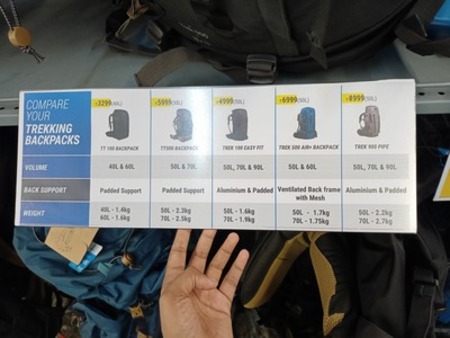
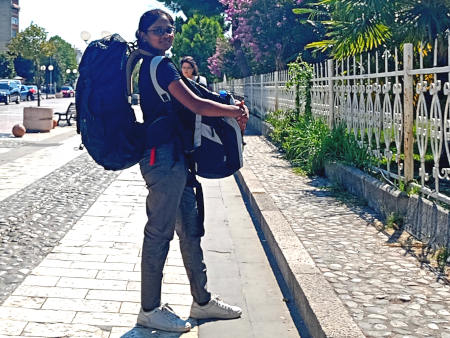
Day 1, Starting The Experience On July 20, 2022, I started my journey by traveling from Pune, Maharashtra, to Delhi, where my brother lives. He came to see me off at the airport, adding a touch of warmth and support to the beginning of my solo adventure. Upon arriving in Delhi, with my next flight scheduled for July 21, I stayed at a backpacker hostel named Zostel, Paharganj, Delhi to rest. During my stay, I noticed that many travelers at the hostel carried rucksacks, which sparked a desire in me to get one for my own trip to Europe. Up until then, I had always shopped with my mom and had never bought anything on my own. Inspired by the travelers, I set out to find a suitable rucksack. I traveled alone by metro from Paharganj to Rohini to visit a Decathlon store, where I purchased a 50-liter rucksack. This was a significant step in preparing for my European adventure and marked a milestone in my journey of self reliance. Rucksack description tag Kalyani s packpacker

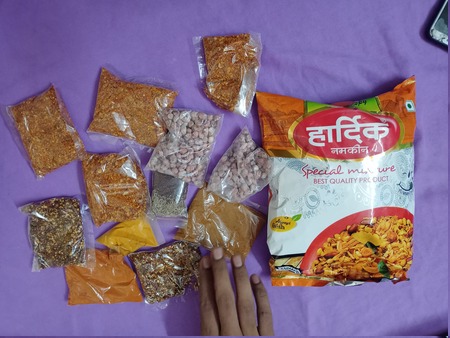
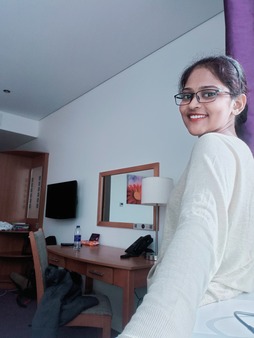
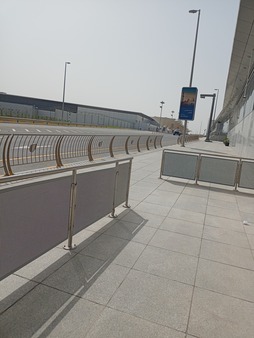
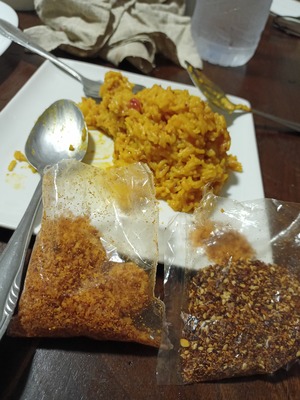
Day 2, Flying To Abu Dhabi The following day, July 21 2024, I had a flight to Abu Dhabi. I spent the night at the hostel to rest before my journey. On the day of the flight, I needed to reach the airport by 3 PM, and a friend kindly came to drop me off. With my rucksack packed and excitement building, I was ready for the next leg of my adventure. When we arrived at the airport, my friend saw me off, marking the start of my international journey. With mom made spices, chutneys, and chilly flakes packed for comfort, I completed my immigration process in about two and a half hours. I then settled at the gate for my flight, feeling a mix of excitement and anxiety as thoughts raced through my mind. mom-made spices Passport and boarding pass To ease my nerves, I struck up a conversation with a man seated nearby who was also traveling to Abu Dhabi for work. He provided helpful information about safety and transportation in Abu Dhabi, which reassured me. With the boarding process complete and my anxiety somewhat eased. I found my window seat on the flight and settled in, excited for the journey ahead. Next to me was a young man from Ranchi(Zarkhand, India), heading to Abu Dhabi for work at a mining factory. We had an engaging conversation about work culture in Abu Dhabi and recruitment from India. Upon arriving in Abu Dhabi, I completed my transit, collected my luggage, and began finding my way to the hotel Premier Inn AbuDhabi, which was in the airport area. To my surprise, I ran into the same man from the flight, now in a cab. He kindly offered to drop me at my hotel, which I gladly accepted since navigating an unfamiliar city with a short acquaintance felt safer. At the hotel gate, he asked if I had local currency (Dirhams) for payment, as sometimes online transactions can fail. That hadn t crossed my mind, and I realized I might be left stranded if a transaction failed. Recognizing his help as a godsend, I asked if he could lend me some Dirhams, promising to transfer the amount later. He kindly assured me to pay him back once I reached the hotel room. With that relief, I checked into the hotel, feeling deeply grateful for the unexpected assistance and transferred the money to him after getting to my room. dhiramm money hotel room Kalyani in hotel room

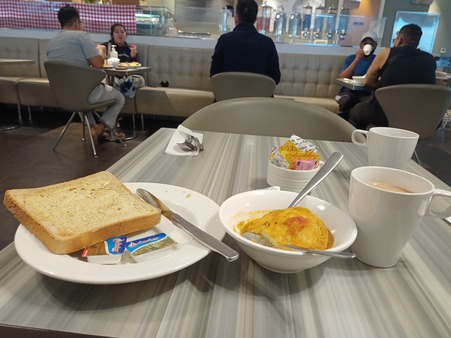
Day 3, Flying And Arrive In Tirana Once in the hotel room, I found it hard to sleep, anxious about waking up on time for my flight. I set an alarm to wake up early, but my subconscious mind kept me alert, and I woke up before the alarm went off. I got freshened up and went down for breakfast, where I found some vegetarian options like Idli-Sambar and bread with butter, along with some morning tea. After breakfast, I headed back to the airport, ready to catch my flight to my final destination: Tirana, Albania. Breakfast at hotel Airport area I reached Tirana, Albania after a six hours flight, feeling exhausted and I was suffering from a headache. The air pressure had blocked my ears, and jet lag added to my fatigue. After collecting my checked luggage, I headed to the first ATM machine at the airport. Struggling to insert my card, I asked a nearby gentleman for help. He tried his best, but my card got stuck inside the machine. Panic set in as I worried about how I would survive without money. Taking a deep breath, I found an airport employee and explained the situation. The gentleman stayed with me, offering support and repeatedly apologizing for his mistake. However, it wasn t his fault, the ATM was out of order, which I hadn t noticed. My focus was solely on retrieving my ATM card. The airport employee worked diligently, using a hairpin to carefully extract my card. Finally, the card was freed, and I felt an immense sense of relief, grateful for the help of these kind strangers. I used another ATM, successfully withdrew money, and then went to an airport mobile SIM shop to buy a new SIM card for local internet and connectivity. sim plans

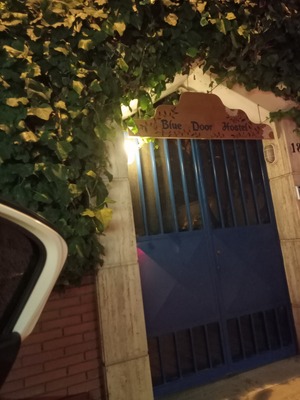
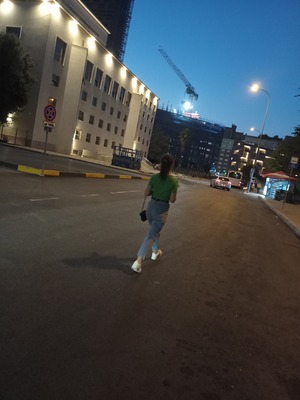
Day 4, Arriving In Tirana, Facing Challenges In A Foreign Country I had booked a stay at a backpacker hostel near the city center of Tirana. After sorting out the ATM and SIM card issues, I searched for a bus or any transport to get there. It was quite late, around 8:30 PM, and being in a new city, I was in a hurry. I saw a bus nearly leaving the airport, stopped it, and asked if it went to the city center. They gave me the green flag, so I boarded the airport service bus and reached the city center. Feeling very tired, I discovered that the hostel was about an hour and a half away by walking. Deciding to take a cab, I faced a challenge as the driver couldn t understand my English or accent. Using a mobile translator to convert my address from English to Albanian, I finally communicated my destination to him. With that sorted out, I headed to the Blue Door Backpacker Hostel and arrived around 9 PM, relieved to have finally reached my destination and I checked in. Hostel gate Street in Tirana I found my top bunk bed, only to realize I had booked a mixed-gender dormitory. This detail had completely escaped my notice during the booking process. I felt unsure about how to handle the situation. Coincidentally, my experience mirrored what Kangana faced in the movie Queen . Feeling acidic due to an empty stomach and the exhaustion of heavy traveling, I wasn t up to cooking in the hostel s kitchen. I asked the front desk about the nearest restaurant. It was nearly 9:30 PM, and the streets were deserted. To avoid any mishaps like in the movie Queen, I kept my passport securely locked in my bag, ensuring it wouldn t be a victim of theft. Venturing out for dinner, I felt uneasy on the quiet streets. I eventually found a restaurant recommended by the hostel, but the menu was almost entirely non-vegetarian. I struggled to ask about vegetarian options and was uncertain if any dishes contained eggs, as some people consider eggs to be vegetarian. Feeling frustrated and unsure, I left the restaurant without eating. I noticed a nearby grocery store that was about to close and managed to get a few extra minutes to shop. I bought some snacks, wafers, milk, and tea bags (though I couldn t find tea powder to make Indian-style tea). Returning to the hostel, I made do with wafers, cookies, and milk for dinner. That day was incredibly tough for me, I filled with exhaustion and struggle in a new country, I was on the verge of tears . I made a video call home before sleeping on the top bunk bed. It was a new experience for me, sharing a room with both unknown men and women. I kept my passport safe inside my purse and under my pillow while sleeping, staying very conscious about its security.
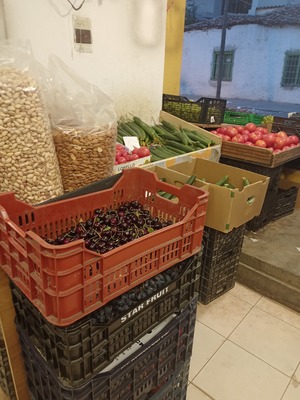
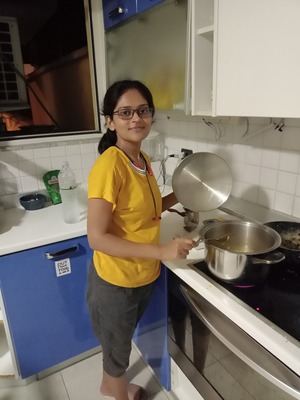
Day 5, Exploring Nearby Places I woke up the next day at noon. After having some coffee, the hostel management girl asked if I wanted breakfast. She offered curd with cornflakes, which I refused because I don t like curd. Instead, I ordered a pizza from a vegetarian pizza place with her help, and I started feeling better. I met some people in the hostel, some from Syria and others from Italy. I struggled to understand their accents but kept pushing myself to get involved in their discussions. Despite the challenges, I felt more at ease and was slowly adapting to my new environment. I went out from the hostel in the evening to buy some vegetables to cook something. I searched for shops and found some potatoes, tomatoes, and rice. I decided to cook Khichdi, an Indian dish made with rice, and added some chili flakes I brought from home. After preparing my dinner, I ate and then went to sleep again. vegetable shop cooking in kitchen Food

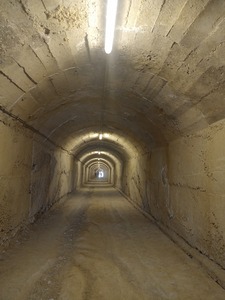
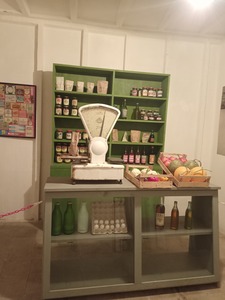
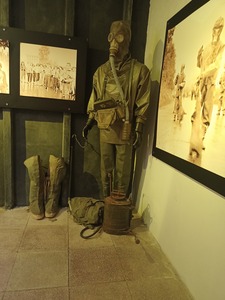
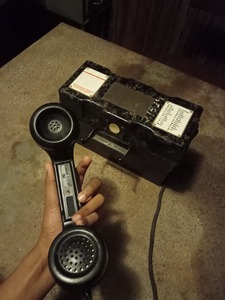
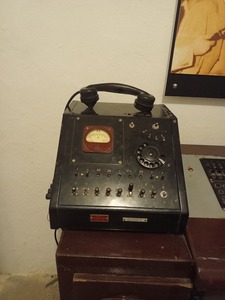
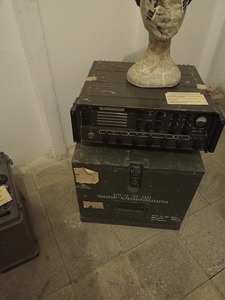
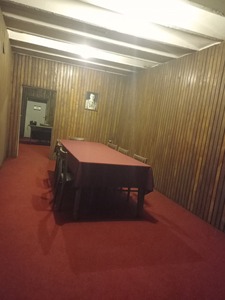
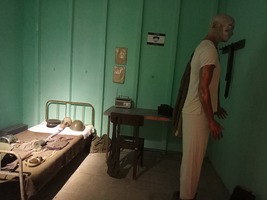
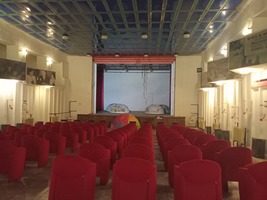
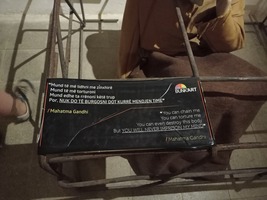
Day 6, Tiranas Recent History The next day, I planned to explore the city and visited Bunkart-1, a fascinating museum in a massive underground bunker from the communist era. Originally built as a shelter for Albania s political and military elite, it now offers a unique glimpse into the country s history under Enver Hoxha s oppressive regime. The museum s exhibits include historical artifacts, photographs, and multimedia displays that detail the lives of Albanians during that time. Walking through the dimly lit corridors, I felt the weight of history and gained a deeper understanding of Albania s past. Bunkart Bunkart Bunkart Bunkart Bunkart Bunkart Bunkar Bunkart Bunkart Bunkart Bunkart

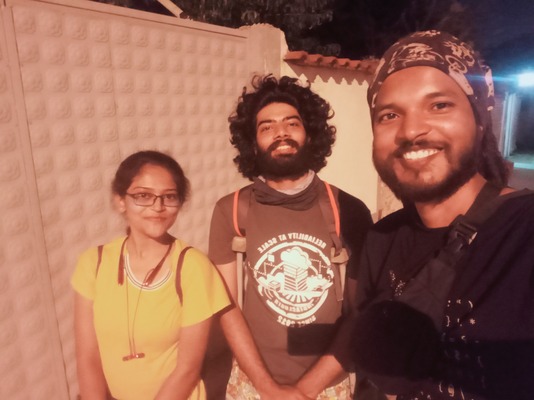
Day 7-8, Meeting Friends From India The next day, I accidentally met with Chirag, who was returning from the Debian Conference 2022 held in Prizren, Kosovo, and staying at the same hostel. When I encountered him, he was talking on the phone, and I recognized he was Indian by his accent. I introduced myself, and we discovered we had some mutual friends. Chirag told me that our common friend, Raju, was also coming to stay at the hostel the next day. This news made me feel relaxed and happy to have known people around. When Raju arrived, the three of us, Chirag, Raju, and I planned to have dinner at an Indian restaurant and explore Tirana city. I had a great time talking and enjoying their company. Friends on street

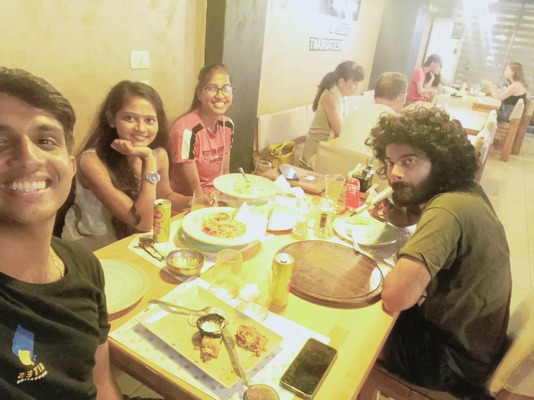
Day 9-10, Meeting More Friends Raju had a ticket to leave soon, so Chirag and I made a plan to visit Shkod r and the nearby Komani Lake for kayaking. We started our journey early in the morning by bus and reached Shkod r. There, we met new friends from the conference, Pavit and Abraham, who were already there. We had dinner together and enjoyed an ice cream treat from Chirag. Friends on dinner

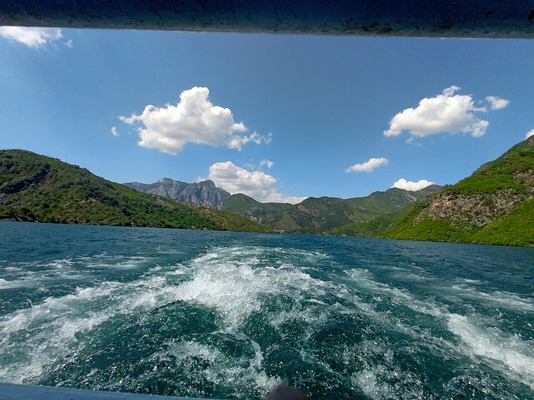
Day 12, Kayaking And Say Good Bye To Friends The next day, Pavit and Abraham had a flight back to India, so Chirag and I went to Komani Lake. We had an adventurous time kayaking, even though neither of us knew how to swim. We took a ferry through the backwaters to the island on Komani Lake and enjoyed a fantastic adventure together. After our trip, Chirag returned to Tirana for his flight back to India, leaving me to continue my journey alone. Lake with mountain Kayak

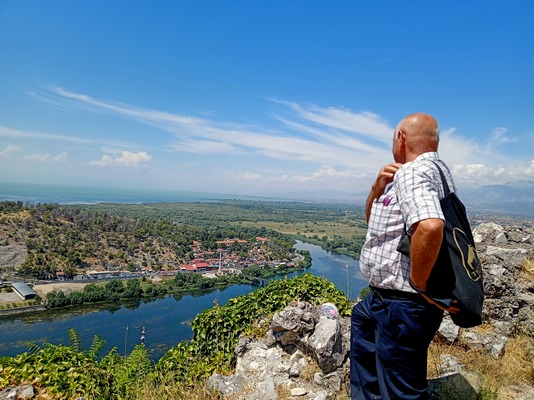
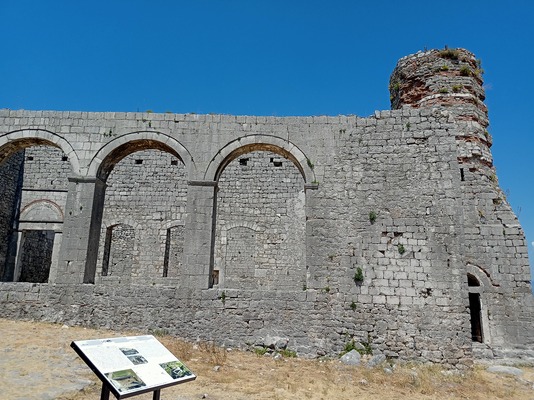
Day 13, Climbing Rozafa Castel By stopping at Shkod r, I visited Rozafa Castle. Despite the language barrier, as most locals only spoke Albanian, people around me guided me correctly on how to get there. At times, I used applications like Google Translate to communicate. To read signs or hotel menus, I used Google Photos' language converter. I even used the audio converter to understand and speak some basic Albanian phrases. View from top of Castel Rozafa castel I took a bus from Shkod r to the southern part of Albania, heading to Sarand . The journey lasted about five to six hours, and I had booked a stay at Mona s Hostel. Upon arrival, I met Eliza from America, and we went together to Ksamil Beach, spending a wonderful day there.

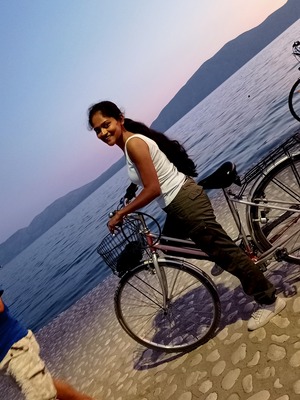
Day 14, Vlora Beach: Beach Side Cycling Next, I traveled to Vlor , where I stayed for one day. During my time there, I enjoyed beach side cycling with a cycle provided by the hostel owner and spent some time feeding fish. I also met a fellow traveler from Delhi who had brought along some preserved Indian curry. He kindly shared it with me, which was a welcome change after nearly 15 days without authentic Indian cuisine, except for what I had cooked myself in various hostels. Sunset on BeachKalyani on Beach Beach with streetBeach side cycling

Day 15-16 Visiting Durress, Travelling Back To Tirana I then visited Durr s, exploring its beautiful beaches, before heading back to Tirana one day before my flight home. On the day of my flight, my alarm didn t go off, and I woke up late at the hostel. In a frantic rush, I packed everything in just five minutes and dashed toward the city center to catch the bus to the airport. If I had been just five minutes later, I would have missed the bus. Thankfully, I managed to stop it just in time and began my journey back home, reflecting on the incredible adventure I had experienced. Fortunately, I wasn t late; I arrived at the airport just in time. After clearing immigration, I boarded my flight, which had a layover in Warsaw, Poland. The journey from Tirana to Warsaw took about two and a half hours, followed by a seven to eight-hour flight from Poland back to India. Once I arrived in Delhi, I returned to Zostel and booked a train ticket to Aurangabad for the next three days.

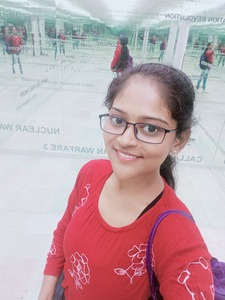
Backview This trip was an incredible adventure for me. I never imagined I could accomplish something like this, but I did. Meeting diverse people, experiencing different cultures, and learning so much made this journey truly unforgettable. Looking back, I realize how much I ve grown from this experience. Although I may have more opportunities to travel abroad in the future, this trip will always hold a special place in my heart. The memories I made and the incredible people I met along the way are irreplaceable. This experience goes beyond what I can express through this blog or words; it was incredibly precious to me. Every moment of this journey is etched in my memory, and I am grateful for every part of it.

8 August 2024

Reproducible Builds: Reproducible Builds in July 2024

Welcome to the July 2024 report from the Reproducible Builds project! In our reports, we outline what we ve been up to over the past month and highlight news items in software supply-chain security more broadly. As always, if you are interested in contributing to the project, please visit our Contribute page on our website. Table of contents:
  1. Reproducible Builds Summit 2024
  2. Pulling Linux up by its bootstraps
  3. Towards Idempotent Rebuilds?
  4. AROMA: Automatic Reproduction of Maven Artifacts
  5. Community updates
  6. Android Reproducible Builds at IzzyOnDroid with rbtlog
  7. Extending the Scalability, Flexibility and Responsiveness of Secure Software Update Systems
  8. Development news
  9. Website updates
  10. Upstream patches
  11. Reproducibility testing framework


Reproducible Builds Summit 2024 Last month, we were very pleased to announce the upcoming Reproducible Builds Summit, set to take place from September 17th 19th 2024 in Hamburg, Germany. We are thrilled to host the seventh edition of this exciting event, following the success of previous summits in various iconic locations around the world, including Venice, Marrakesh, Paris, Berlin and Athens. Our summits are a unique gathering that brings together attendees from diverse projects, united by a shared vision of advancing the Reproducible Builds effort. During this enriching event, participants will have the opportunity to engage in discussions, establish connections and exchange ideas to drive progress in this vital field. Our aim is to create an inclusive space that fosters collaboration, innovation and problem-solving. If you re interesting in joining us this year, please make sure to read the event page, which has more details about the event and location. We are very much looking forward to seeing many readers of these reports there.

Pulling Linux up by its bootstraps (LWN) In a recent edition of Linux Weekly News, Daroc Alden has written an article on bootstrappable builds. Starting with a brief introduction that
a bootstrappable build is one that builds existing software from scratch for example, building GCC without relying on an existing copy of GCC. In 2023, the Guix project announced that the project had reduced the size of the binary bootstrap seed needed to build its operating system to just 357-bytes not counting the Linux kernel required to run the build process.
The article goes onto to describe that now, the live-bootstrap project has gone a step further and removed the need for an existing kernel at all. and concludes:
The real benefit of bootstrappable builds comes from a few things. Like reproducible builds, they can make users more confident that the binary packages downloaded from a package mirror really do correspond to the open-source project whose source code they can inspect. Bootstrappable builds have also had positive effects on the complexity of building a Linux distribution from scratch [ ]. But most of all, bootstrappable builds are a boon to the longevity of our software ecosystem. It s easy for old software to become unbuildable. By having a well-known, self-contained chain of software that can build itself from a small seed, in a variety of environments, bootstrappable builds can help ensure that today s software is not lost, no matter where the open-source community goes from here

Towards Idempotent Rebuilds? Trisquel developer Simon Josefsson wrote an interesting blog post comparing the output of the .deb files from our tests.reproducible-builds.org testing framework and the ones in the official Debian archive. Following up from a previous post on the reproducibility of Trisquel, Simon notes that typically [the] rebuilds do not match the official packages, even when they say the package is reproducible , Simon correctly identifies that the purpose of [these] rebuilds are not to say anything about the official binary build, instead the purpose is to offer a QA service to maintainers by performing two builds of a package and declaring success if both builds match. However, Simon s post swiftly moves on to announce a new tool called debdistrebuild that performs rebuilds of the difference between two distributions in a GitLab pipeline and displays diffoscope output for further analysis.

AROMA: Automatic Reproduction of Maven Artifacts Mehdi Keshani, Tudor-Gabriel Velican, Gideon Bot and Sebastian Proksch of the Delft University of Technology, Netherlands, have published a new paper in the ACM Software Engineering on a new tool to automatically reproduce Apache Maven artifacts:
Reproducible Central is an initiative that curates a list of reproducible Maven libraries, but the list is limited and challenging to maintain due to manual efforts. [We] investigate the feasibility of automatically finding the source code of a library from its Maven release and recovering information about the original release environment. Our tool, AROMA, can obtain this critical information from the artifact and the source repository through several heuristics and we use the results for reproduction attempts of Maven packages. Overall, our approach achieves an accuracy of up to 99.5% when compared field-by-field to the existing manual approach [and] we reveal that automatic reproducibility is feasible for 23.4% of the Maven packages using AROMA, and 8% of these packages are fully reproducible.

Community updates On our mailing list this month:
  • Nichita Morcotilo reached out to the community, first to share their efforts to build reproducible packages cross-platform with a new build tool called rattler-build, noting that as you can imagine, building packages reproducibly on Windows is the hardest challenge (so far!) . Nichita goes onto mention that the Apple ecosystem appears to be using ZERO_AR_DATE over SOURCE_DATE_EPOCH. [ ]
  • Roland Clobus announced that the Debian bookworm 12.6 live images are nearly reproducible , with more detail in the post itself and input in the thread from other contributors.
  • As reported in last month s report, Pol Dellaiera completed his master thesis on Reproducibility in Software Engineering at the University of Mons, Belgium. This month, Pol announced this on the list with more background info. Since the master thesis sources have been available, it has received some feedback and contributions. As a result, an updated version of the thesis has been published containing those community fixes.
  • Daniel Gr ber asked for help in getting the Yosys documentation to build reproducibly, citing issues in inter alia the PDF generation causing differing CreationDate metadata values.
  • James Addison continued his long journey towards getting the Sphinx documentation generator to build reproducible documentation. In this thread, James concerns himself with the problem that even when SOURCE_DATE_EPOCH is configured, Sphinx projects that have configured their copyright notices using dynamic elements can produce nonsensical output under some circumstances. James query ended up generating a number of replies.
  • Allen gunner Gunner posted a brief update on the progress the core team is making towards introducing a Code of Conduct (CoC) such that it is in place in time for the RB Summit in Hamburg in September . In particular, gunner asks if you are interested in helping with CoC design and development in the weeks ahead, simply email rb-core@lists.reproducible-builds.org and let us know . [ ]

Android Reproducible Builds at IzzyOnDroid with rbtlog On our mailing list, Fay Stegerman announced a new Reproducible Builds collaboration in the Android ecosystem:
We are pleased to announce Reproducible Builds, special client support and more in our repo : a collaboration between various independent interoperable projects: the IzzyOnDroid team, 3rd-party clients Droid-ify & Neo Store, and rbtlog (part of my collection of tools for Android Reproducible Builds) to bring Reproducible Builds to IzzyOnDroid and the wider Android ecosystem.

Extending the Scalability, Flexibility and Responsiveness of Secure Software Update Systems Congratulations to Marina Moore of the New York Tandon School of Engineering who has submitted her PhD thesis on Extending the Scalability, Flexibility and Responsiveness of Secure Software Update Systems. The introduction outlines its contributions to the field:
[S]oftware repositories are a vital component of software development and release, with packages downloaded both for direct use and to use as dependencies for other software. Further, when software is updated due to patched vulnerabilities or new features, it is vital that users are able to see and install this patched version of the software. However, this process of updating software can also be the source of attack. To address these attacks, secure software update systems have been proposed. However, these secure software update systems have seen barriers to widespread adoption. The Update Framework (TUF) was introduced in 2010 to address several attacks on software update systems including repository compromise, rollback attacks, and arbitrary software installation. Despite this, compromises continue to occur, with millions of users impacted by such compromises. My work has addressed substantial challenges to adoption of secure software update systems grounded in an understanding of practical concerns. Work with industry and academic communities provided opportunities to discover challenges, expand adoption, and raise awareness about secure software updates. [ ]

Development news In Debian this month, 12 reviews of Debian packages were added, 13 were updated and 6 were removed this month adding to our knowledge about identified issues. A new toolchain issue type was identified as well, specifically ordering_differences_in_pkg_info.
Colin Percival filed a bug against the LLVM compiler noting that building i386 binaries on the i386 architecture is different when building i386 binaries under amd64. The fix was narrowed down to x87 excess precision, which can result in slightly different register choices when the compiler is hosted on x86_64 or i386 and a fix committed. [ ]
Fay Stegerman performed some in-depth research surrounding her apksigcopier tool, after some Android .apk files signed with the latest apksigner could no longer be verified as reproducible. Fay identified the issue as follows:
Since build-tools >= 35.0.0-rc1, backwards-incompatible changes to apksigner break apksigcopier as it now by default forcibly replaces existing alignment padding and changed the default page alignment from 4k to 16k (same as Android Gradle Plugin >= 8.3, so the latter is only an issue when using older AGP). [ ]
She documented multiple available workarounds and filed a bug in Google s issue tracker.
Lastly, diffoscope is our in-depth and content-aware diff utility that can locate and diagnose reproducibility issues. This month, Chris Lamb uploaded version 272 and Mattia Rizzolo uploaded version 273 to Debian, and the following changes were made as well:
  • Chris Lamb:
    • Ensure that the convert utility is from ImageMagick version 6.x. The command-line interface has seemingly changed with the 7.x series of ImageMagick. [ ]
    • Factor out version detection in test_jpeg_image. [ ]
    • Correct the import of the identify_version method after a refactoring change in a previous commit. [ ]
    • Move away from using DSA OpenSSH keys in tests as support has been deprecated and removed in OpenSSH version 9.8p1. [ ]
    • Move to assert_diff in the test_openssh_pub_key package. [ ]
    • Update copyright years. [ ]
  • Mattia Rizzolo:
    • Add support for ffmpeg version 7.x which adds some extra context to the diff. [ ]
    • Rework the handling of OpenSSH testing of DSA keys if OpenSSH is strictly 9.7, and add an OpenSSH key test with a ed25519-format key [ ][ ][ ]
    • Temporarily disable a few packages that are not available in Debian testing. [ ][ ]
    • Stop ignoring the results of Debian testing in the continuous integration system. [ ]
    • Adjust options in debian/source to make sure not to pack the Python sdist directory into the binary Debian package. [ ]
    • Adjust Lintian overrides. [ ]

Website updates There were a number of improvements made to our website this month, including:

Upstream patches The Reproducible Builds project detects, dissects and attempts to fix as many currently-unreproducible packages as possible. We endeavour to send all of our patches upstream where appropriate. This month, we wrote a large number of such patches, including:

Reproducibility testing framework The Reproducible Builds project operates a comprehensive testing framework running primarily at tests.reproducible-builds.org in order to check packages and other artifacts for reproducibility. In July, a number of changes were made by Holger Levsen, including:
  • Grant bremner access to the ionos7 node. [ ][ ]
  • Perform a dummy change to force update of all jobs. [ ][ ]
In addition, Vagrant Cascadian performed some necessary node maintenance of the underlying build hosts. [ ]

If you are interested in contributing to the Reproducible Builds project, please visit our Contribute page on our website. However, you can get in touch with us via:

Next.

Previous.