Search Results: "Benjamin Mako Hill"

5 January 2009

Benjamin Mako Hill: Lookalike

Is Richard Stallman leading a secret life as Serbian Nationalist "Chetnik" Zoran Radovanovic? /copyrighteous/images/lookalike_rms_zoran.png

24 December 2008

Benjamin Mako Hill: European Tour

Mika and I are going to be in Europe for the next few weeks. The tentative plan seems to include these stops: I've got very little planned in the ways of talks or meetings with free software folks and would, as always, be open to arranging these. If you are in or near any of these places and want to plan a dinner, drinks, keysigning, talk, etc., don't hesitate to get in contact with me. I'll try to keep this wiki page updated with details on the latest plans.

30 November 2008

Benjamin Mako Hill: Kosher

This bottle was found in Mika's biosafety level 2 laboratory. Isoamyl alcohol Certified Kosher To address any confusion, isoamyl alcohol is not drinking alcohol and this bottle was bought for use in a scientific lab from a scientific lab supply company. Explanations are welcome.

28 November 2008

Benjamin Mako Hill: Fashion

At Kinokuyina in New York, I noticed that Playboy was sorted into the "Men's Fashion" section of the magazine rack. Funny. I wasn't under the impression that Playboy's primary selling points included either either men or clothing.

10 November 2008

Benjamin Mako Hill: Wikimedia and GFDL 1.3

I spent more time than I would like to admit massaging the process that ultimately led to the release of the the GNU Free Documentation License 1.3 (GFDL) by the Free Software Foundation (FSF). Hours counted, it was probably one of my biggest personal projects this year. The effect is to allow wikis under the GFDL to migrate to the Creative Commons BY-SA license or, as Wikimedia's Erik M ller has proposed, to some sort of dual-license arrangement. There are many reasons for this change but the most important is that the move reduces very real barriers to collaboration between wikis and free culture projects due to license compatibility. BY-SA has become the GPL of the free culture world and Wikimedia wikis were basically locked out from sharing with a larger community, and vice-versa; projects will no longer have to choose between sharing with Wikipedia and sharing with essentially everyone else. The GFDL has done a wonderful job of helping get Wikimedia projects to where they are today and M ller's proposed switch seems, in my opinion, the best option to continue that work going forward. The FSF gets a lot of credit (and a lot of flack) for what it does. Offering to "let go" of Wikipedia -- without question the crown jewel of the free culture world -- represents a real relinquishing of a type of political control and power for the FSF. Doing so was not done lightly. But giving communities the choice to increase compatibility and collaboration by switching to a fundamentally similar license was and is, in my opinion, the right thing to do. Everyone who has worked hard to make this happen deserves the free culture movement's thanks. This list includes Richard Stallman, Brett Smith and Peter Brown of the FSF; James Vasile and Eben Moglen of the SFLC; Erik M ller, Mike Godwin and Shunling Chen of the Wikimedia Foundation. The FSF in general, and RMS in particular, deserves a huge amount of credit for what it has decided to not do in this case and for giving up control in a way that was responsible and accountable to its principles and to GFDL authors and in the interest of free culture movement more generally. It has not been easy or quick. If you support or appreciate work like this, please support the FSF and express this while doing so. Doing so is an important way to support these essential and almost inherently underappreciated efforts.

29 October 2008

Benjamin Mako Hill: An Invisible Handful of Stretched Metaphors

The following list is merely a small selection of scholarly articles listed in the ISI Web of Knowledge with "invisible hand" in their title: And, finally:

26 October 2008

Benjamin Mako Hill: Eric von Hippel

For those that are curious as to I've been up to recently, you might be interested to read this portrait of Eric von Hippel on Linux.com. The article mentions that I'm currently studying with von Hippel in my own effort to try to help build a more evidence-based understanding of how free software works and explore some of the ways I might help it work better.

25 October 2008

Benjamin Mako Hill: Recent and Upcoming Talks

I've been a bit remiss about keeping this space up to date with my upcoming talks over the last month or so. Here's me playing catchup. On Monday October 20th, I gave a talk on Selectricity for the IEEE Boston Section's Society on Social Implications of Technology. It covered more or less the same ground I coverd in my OSCON talk on the same subject. Then next day, Tuesday October 21st, I gave a short talk on Revealing Errors as part of the MIT-Harvard-Yale Cyberscholars meeting. There was nothing new or ground-breaking in either but it was good to spread the word on the projects -- work continues on both. I also have one more coming up: another Revealing Errors talk in Amherst, Massachusetts at my alma mater on October 31st (Halloween). If you are in Western Massachusetts and would like to meet up or attend the talk, let me know.

24 October 2008

Benjamin Mako Hill: Punditry

On the morning after the final US presidential debate that happened a week ago, I was invited onto the excellent new WNYC morning show The Takeaway -- syndicated by Public Radio International. One of the hosts, John Hockenberry, was in Boston to tape that edition of the show. I was on to talk about Selectricity and some of other ways that we might use election technologies. I was on and off (mostly off) air for the whole second hour (7:00-8:00 AM) of taping and had a bit of a segment just into the second half of the hour. You can check out the website or download the podcast. Although it's definitely not as fun to listen to as my a last gig on public radio, it's certainly more consequential. The role of the techno-pundit was also -- unfortunately? --- easier for me to fill.

4 October 2008

Y Giridhar Appaji Nag: One for revealingerrors.com

This one derives inspiration from revealing errors site that Benjamin Mako Hill runs.

27092008440 medium/large 27092008441 medium/large 27092008442 medium/large


The kid in the picture was trying to use the Tata Indicom kiosk at Richmond Road (Bangalore) and suddenly a Windows start menu turned up on the screen. Sound and tested technology backing is what the kiosk reads in bold; well, if you insist!

20 September 2008

Benjamin Mako Hill: Software Freedom Day Boston

It's late notice but Boston area folks should drop by the local Software Freedom Day events today. It goes from 10:00-16:00 and is located in a great space in Chinatown. More information in on the wiki. I'm teaming up with John Sullivan of the FSF to talk about free software on in your pocket on unexecpted platforms. We'll show off CHDK (for cameras), the FreeRunner (a phone), and probably also talk about RockBox, iPodLinux, and more. It should be laid back and fun! The whole point of SFD (and this SFD event in particular) is create a space that's appropriate to folks that don't already know about free and open source software and that aren't necessary technical. If you are a hacker or an advocate, show up and meet some like minded folks and introduce new people to the ideas that inspire you. If you are just curious about this stuff this event is designed for you. If you're not in Boston, check the SFD webpage. There are hundreds of events around the world and may even be one near you!

12 September 2008

Benjamin Mako Hill: What I'm Up To

It's been a year or so since I last reported what I was up to in my "day job." The last year has been a productive, if sometimes schizophrenic, period. I've had a good time working with Eric von Hippel (innovation and free and open source software research guru) and have decided I'd like to do a bit more of that. So I'm taking classes again -- mostly sociological methods courses -- to try to learn a bit about becoming a social scientist. To do so, I've enrolled in the Technology, Innovation and Entrepreneurship PhD program at the MIT Sloan School of Management and am working on putting together an interdisciplinary -- probably even interdepartmental -- research program. My basic research questions remain the ones that have motivated all my work: How can I get a better understanding of communities producing free stuff? How can I help those communities do so more effectively? MIT has a large number of people who share these goals and interests. Who knows, if I can put together enough of them and an academically rigorous research proposal that will provide a real benefit to the free software and free culture communities I care about, I might even manage to get a degree out of it! I'll also be staying on as a fellow at the MIT Center for Future Civic Media where I'll continue to maintain and expand Selectricity, work on Revealing Errors, and more.

6 September 2008

Benjamin Mako Hill: Happy Birthday GNU

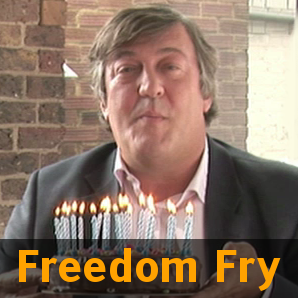
Nearly a week after its release, I suspect most of my audience has seen the FSF's Freedom Fry video of Stephen Fry wishing the GNU project and the free software movement a happy birthday. While I'm not usually one for birthdays, I thought I'd at least reflect on it briefly. Certainly, it's a wonderful video -- for which Matt Lee at others at the FSF should be proud. But it's fact that the GNU project is now twenty-five years old that is truly noteworthy. /copyrighteous/images/freedom_fry.png Wikipedia says that a generation (i.e., the average interval between the birth of parents and of their offspring) is somewhere between 25-30 years in most of the Western world. Twenty-five years isn't just a big number divisible by five, it marks a generational shift. Certainly, GNU has matured and accomplished wonderful things in last quarter-century. More importantly perhaps, it's produced wonderful progeny. It has spawned hundreds of thousands of free software projects, thousands of free or nearly-free operating systems, and an unbelievably vibrant global free and open source software community. Beyond the software realm, the free culture movement, most free licensing projects, and much of the access to knowledge movement can trace a connection back to GNU. We are living, and building, a new generation of the free software movement. It's not been an entirely smooth ride, feelings have been hurt, and it's hard for GNU's proponents -- myself included -- to not wince at some of what has been done in GNU's name and because of its example. But even cynics must admit: the world is an undeniably better place because of GNU and the efforts and ideas that it has motivated. I turn 28 in December and have spent my entire computing life in world where free software was a viable option and an active form of resistance. Here's to another generation! May we be half as productive and positive as the last!

27 August 2008

Benjamin Mako Hill: Feminism in Practice

When my friends Karen and Annina were confronted with an offensive sticker on the laptop of someone working at our lab, they organized a very constructive and effective intervention. I was so impressed that I made a short illustrated write-up of the story on my wiki.

22 August 2008

Benjamin Mako Hill: Free Software Project Management HOWTO

I took a little time today to make a new release of the Free Software Project Management HOWTO. Nearly eight years after I wrote it, much of the document is out of date or has been replaced with better, more comprehensive write-ups. In particular, I think Karl Fogel's book, Producing Open Source Software says everything insightful I say in the HOWTO, a whole lot clearly -- plus adds a lot I missed. That said, my HOWTO is short and is apparently still useful to folks. I updated it to include links to a new German translation courtesy to Robert F. Schmitt, to fix a bunch of links that time broke, and to address a few obvious mistakes that readers have pointed out. Thinking about the documents' future, I'm happy to release it under Creative Commons BY-SA in addition to GFDL and would love to help out on a wiki book project to merge a few of related efforts into a comprehensive wiki reference work.

21 August 2008

Benjamin Mako Hill: Story of Josephville

After a late-night IRC conversation about egg corns, shaggy dog stories and feghoots the idea for a short story came to me in the bathtub this morning. I give you, The Story of Josephville. Apologies in advance.

18 August 2008

Benjamin Mako Hill: Charles Kane and Jim Gettys

I watched Citizen Kane several weeks ago and was shocked to learn that the major villian in the film is a political boss named Jim Gettys. Of course, a real Jim Gettys is a well known X Window System contributor who is currently working at an OLPC manager. Last night someone reminded me that OLPC's new President and COO -- who I'd always just thought of as Chuck -- is named Charles Kane! Here's a short clip from a video of the fictional Charles Kane giving a rather long speech decrying the fictional Jim Gettys! (Also in Ogg.) I haven't been this amused since I learned that the head villian in the cartoon Jem was named Eric Raymond!

14 August 2008

Benjamin Mako Hill: Vaporizer

Nothing is more embarrassing than a website announcing that something will happen on a particular date -- e.g., a product will be released, a feature will be turned on -- after the date has come and gone! Even worse, putting things off repeatedly can be a lot of work! To help such people, I just did a very quick 10 minute hack I'm calling The Vaporizer. It looks like just a date on a webpage. However, if the date originally listed has come and gone, a little bit of Javascript will change the site so that it shows tomorrow's date instead. Vaporware providers of all types can use it to safely (and effortlessly) put things off without worrying about looking overdue! I have seen the future, and the future is tomorrow.

11 August 2008

Benjamin Mako Hill: Making Wiki Images More Wiki

One thing that has always annoyed me about most wiki is the way they handle images. MediaWiki, like most wikis, allows users to upload images and embed pictures. However, if you want to change an image, you need to download the file, open it up in GIMP, Inkscape, or Photoshop, edit it, save it, and re-upload it. Somewhere in this long process, the ease of editing that makes wikis so wonderful gets lost. Basically, I'm annoyed because images in wikis aren't very "wiki." I had a talk with Brianna Laugher at Wikimania about ways to make it easier to folks to edit pictures from within the browser -- even if it is only simple stuff. Yesterday I took the afternoon to write a new MediaWiki extension which gives a working example of in-browser image editing. It provides the ability to crop images using David Spurr's wonderful Javascript cropping user interface and uses ImageMagick to do the actual image manipulation. It is in the form of an extension to Mediawiki I've called EditImage. It's an afternoon hack from an under-qualified PHP hacker so it's nothing special. You can read it about on its page in the Mediawiki wiki and you can try it out on my personal wiki where I have it installed. I'm certainly not the first person to think about doing this. In fact, some old pages in the MediaWiki wiki imply that I'm not even the first person to play around with the idea of using Spurr's code to do image cropping for MediaWiki. Hopefully though, my code can act as a nice first step and a framework for folks wanting to add additional image manipulation features. For example, I think it would be quick to add the ability to do in-browser brightness and contrast manipulation and I would love to see this in a future version of the extension.

8 August 2008

Benjamin Mako Hill: Revealing Errors OSCON Keynote

When I gave a Revealing Errors talk at Lug Radio Live USA, I had the misfortune of being up against Robert Love's talk on Android which many people at the conference wanted to see -- myself included! One person who showed up to my talk anyway was Allison Randall. She was apparently entertained enough to invite me to give a short version of the talk as one of the keynote presentations at OSCON 2008! In the talk, I covered the ideas behind my Revealing Errors project and quickly walked through a few examples that showcase what I'm trying to do. I'm happy with the result: a couple thousand people showed up for the talk despite the fact that it was at 8:45 AM after the biggest "party night" of the conference! For those that missed it for whatever reason, you can watch a video recording that O'Reilly made and that I've embedded below. A larger version of the Flash video as well as a QuickTime version is over on blip.tv and I've created an OGG Theora version for all my freedom loving readers.

Next.

Previous.