Search Results: "willi"

6 March 2026

Thorsten Alteholz: My Debian Activities in February 2026

Debian LTS/ELTS This was my hundred-fortieth month that I did some work for the Debian LTS initiative, started by Raphael Hertzog at Freexian. During my allocated time I uploaded or worked on: Some CVEs could be marked as not-affected for one or all LTS/ELTS-releases. I also worked on package evolution-data-server and attended the monthly LTS/ELTS meeting. Debian Printing This month I uploaded a new upstream versions: This work is generously funded by Freexian! Debian Lomiri This month I continued to worked on unifying packaging on Debian and Ubuntu. This makes it easier to work on those packages independent of the used platform. This work is generously funded by Fre(i)e Software GmbH! Debian Astro This month I uploaded a new upstream version or a bugfix version of: Debian IoT This month I uploaded a new upstream version or a bugfix version of: Unfortunately development of openoverlayrouter finally stopped, so I had to remove this package from the archive. Debian Mobcom This month I uploaded a new upstream version or a bugfix version of: misc This month I uploaded a new upstream version or a bugfix version of: I also sponsored the upload of some Matomo dependencies. Thanks a lot to William for preparing the packages

25 February 2026

Joachim Breitner: Vibe-coding a debugger for a DSL

Earlier this week a colleague of mine, Emilio Jes s Gallego Arias, shared a demo of something he built as an experiment, and I felt the desire to share this and add a bit of reflection. (Not keen on watching a 5 min video? Read on below.)

What was that? So what did you just see (or skipped watching)? You could see Emilio s screen, running VSCode and editing a Lean file. He designed a small programming language that he embedded into Lean, including an evaluator. So far, so standard, but a few things stick out already:
  • Using Lean s very extensible syntax this embedding is rather elegant and pretty.
  • Furthermore, he can run this DSL code right there, in the source code, using commands like #eval. This is a bit like the interpreter found in Haskell or Python, but without needing a separate process, or like using a Jupyter notebook, but without the stateful cell management.
This is already a nice demonstration of Lean s abilities and strength, as we know them. But what blew my mind the first time was what happened next: He had a visual debugger that allowed him to debug his DSL program. It appeared on the right, in Lean s Info View , where various Lean tools can hook into, show information and allow the user to interact. But it did not stop there, and my mind was blown a second time: Emilio opened VSCode s Debugger pane on the left, and was able to properly use VSCode s full-fledged debugger frontend for his own little embedded programming language! Complete with highlighting the executed line, with the ability to set breakpoints there, and showing the state of local variables in the debugger. Having a good debugger is not to be taken for granted even for serious, practical programming languages. Having it for a small embedded language that you just built yourself? I wouldn t have even considered that.

Did it take long? If I were Emilio s manager I would applaud the demo and then would have to ask how many weeks he spent on that. Coming up with the language, getting the syntax extension right, writing the evaluator and especially learning how the debugger integration into VSCode (using the DAP protocol) works, and then instrumenting his evaluator to speak that protocol that is a sizeable project! It turns out the answer isn t measured in weeks: it took just one day of coding together with GPT-Codex 5.3. My mind was blown a third time.

Why does Lean make a difference? I am sure this post is just one of many stories you have read in recent weeks about how new models like Claude Opus 4.6 and GPT-Codex 5.3 built impressive things in hours that would have taken days or more before. But have you seen something like this? Agentic coding is powerful, but limited by what the underlying platform exposes. I claim that Lean is a particularly well-suited platform to unleash the agents versatility. Here we are using Lean as a programming language, not as a theorem prover (which brings other immediate benefits when using agents, e.g. the produced code can be verified rather than merely plausible, but that s a story to be told elsewhere.) But arguably because Lean is also a theorem prover, and because of the requirements that stem from that, its architecture is different from that of a conventional programming language implementation:
  • As a theorem prover, it needs extensible syntax to allow formalizing mathematics in an ergonomic way, but it can also be used for embedding syntax.
  • As a theorem prover, it needs the ability to run tactics written by the user, hence the ability to evaluate the code right there in the editor.
  • As a theorem prover, it needs to give access to information such as tactic state, and such introspection abilities unlock many other features such as a debugger for an embedded language.
  • As a theorem prover, it has to allow tools to present information like the tactic state, so it has the concept of interactive Widgets .
So Lean s design has always made such a feat possible. But it was no easy feat. The Lean API is large, and documentation never ceases to be improvable. In the past, it would take an expert (or someone willing to become one) to pull off that stunt. These days, coding assistants have no issue digesting, understanding and using the API, as Emilio s demo shows. The combination of Lean s extensibility and the ability of coding agents to make use of that is a game changer to how we can develop software, with rich, deep, flexible and bespoke ways to interact with our code, created on demand.

Where does that lead us? Emilio actually shared more such demos (Github repository). A visual explorer for the compiler output (have a look at the screenshot. A browser-devtool-like inspection tool for Lean s InfoTree . Any of these provide a significant productivity boost. Any of these would have been a sizeable project half a year ago. Now it s just a few hours of chatting with the agent. So allow me to try and extrapolate into a future where coding agents have continued to advance at the current pace, and are used ubiquitously. Is there then even a point in polishing these tools, shipping them to our users, documenting them? Why build a compiler explorer for our users, if our users can just ask their agent to build one for them, right then when they need it, tailored to precisely the use case they have, with no unnecessary or confusing feature. The code would be single use, as the next time the user needs something like that the agent can just re-create it, maybe slightly different because every use case is different. If that comes to pass then Lean may no longer get praise for its nice out-of-the-box user experience, but instead because it is such a powerful framework for ad-hoc UX improvements. And Emilio wouldn t post demos about his debugger. He d just use it.

2 February 2026

Hellen Chemtai: Career Growth Through Open Source: A Personal Journey

Hello world  ! I am an intern at Outreachy working with the Debian OpenQA team on images testing. We get to know what career opportunities awaits us when we work on open source projects. In open source, we are constantly learning. The community has different sets of skills and a large network of people.

So, how did I start off in this internship

I entered the community with the these skills:

  • MERN (Mongo DB, Express JS , React JS and Node JS) for web development
  • Linux and Shell Scripting for some administrative purposes
  • Containerization using Google Cloud
  • Operating Systems
  • A learning passion for Open Source I contributed to some open source work in the past but it was in terms of documentation and bug hunting

I was a newbie at OpenQA but, I had a month to learn and contribute. Time is a critical resource but so is understanding what you are doing. I followed the installations instructions given but whenever I got errors, I had to research why I got the errors. I took time to understand errors I was solving then continued on with the tasks I wanted to do. I communicated my logic and understanding while working on the task and awaited reviews and feedback. Within a span of two months I had learned a lot by practicing and testing.

The skills I gained

As of today, I gained these technical skills from my work with Debian OpenQA team.

  • Perl the tests that we run are written in this language
  • Ansible configuration ansible configurations and settings for the machines the team runs
  • Git this is needed for code versioning and diving tasks into different branches
  • Linux shell scripting and working with the Debian Operating system
  • Virtual Machines and Operating Systems I constantly view how different operating systems are booted and run on virtual machines during testing
  • Testing I keep watch of needles and ensure the tests work as required
  • Debian I use a Debian system to run my Virtual Machines
  • OpenQA the tool that is used to automate testing of Images

With open source comes the need of constant communication. The community is diverse and the team is usually on different time zones. These are some of the soft / social skills I gained when working with the team

  • Communication this is essential especially in taking tasks with confidence, talking about issues encountered and stating the progress of the tasks
  • Interpersonal skills this is for general communication within the community
  • Flexibility we have to adapt to changes because we are a community of different people with different skills

With these skills and the willingness to learn , open source is a great area to focus on . Aside from your career you will extend your network. My interests are set on open source and Linux in general. Working with a wider network has really skilled me up and I will continue learning. Working with the Debian OpenQA team has been very great. The team is great at communication and I learn every day. The knowledge I gain from the team is helping me build a great career in open source.

4 January 2026

Matthew Garrett: What is a PC compatible?

Wikipedia says An IBM PC compatible is any personal computer that is hardware- and software-compatible with the IBM Personal Computer (IBM PC) and its subsequent models . But what does this actually mean? The obvious literal interpretation is for a device to be PC compatible, all software originally written for the IBM 5150 must run on it. Is this a reasonable definition? Is it one that any modern hardware can meet? Before we dig into that, let s go back to the early days of the x86 industry. IBM had launched the PC built almost entirely around off-the-shelf Intel components, and shipped full schematics in the IBM PC Technical Reference Manual. Anyone could buy the same parts from Intel and build a compatible board. They d still need an operating system, but Microsoft was happy to sell MS-DOS to anyone who d turn up with money. The only thing stopping people from cloning the entire board was the BIOS, the component that sat between the raw hardware and much of the software running on it. The concept of a BIOS originated in CP/M, an operating system originally written in the 70s for systems based on the Intel 8080. At that point in time there was no meaningful standardisation - systems might use the same CPU but otherwise have entirely different hardware, and any software that made assumptions about the underlying hardware wouldn t run elsewhere. CP/M s BIOS was effectively an abstraction layer, a set of code that could be modified to suit the specific underlying hardware without needing to modify the rest of the OS. As long as applications only called BIOS functions, they didn t need to care about the underlying hardware and would run on all systems that had a working CP/M port. By 1979, boards based on the 8086, Intel s successor to the 8080, were hitting the market. The 8086 wasn t machine code compatible with the 8080, but 8080 assembly code could be assembled to 8086 instructions to simplify porting old code. Despite this, the 8086 version of CP/M was taking some time to appear, and a company called Seattle Computer Products started producing a new OS closely modelled on CP/M and using the same BIOS abstraction layer concept. When IBM started looking for an OS for their upcoming 8088 (an 8086 with an 8-bit data bus rather than a 16-bit one) based PC, a complicated chain of events resulted in Microsoft paying a one-off fee to Seattle Computer Products, porting their OS to IBM s hardware, and the rest is history. But one key part of this was that despite what was now MS-DOS existing only to support IBM s hardware, the BIOS abstraction remained, and the BIOS was owned by the hardware vendor - in this case, IBM. One key difference, though, was that while CP/M systems typically included the BIOS on boot media, IBM integrated it into ROM. This meant that MS-DOS floppies didn t include all the code needed to run on a PC - you needed IBM s BIOS. To begin with this wasn t obviously a problem in the US market since, in a way that seems extremely odd from where we are now in history, it wasn t clear that machine code was actually copyrightable. In 1982 Williams v. Artic determined that it could be even if fixed in ROM - this ended up having broader industry impact in Apple v. Franklin and it became clear that clone machines making use of the original vendor s ROM code wasn t going to fly. Anyone wanting to make hardware compatible with the PC was going to have to find another way. And here s where things diverge somewhat. Compaq famously performed clean-room reverse engineering of the IBM BIOS to produce a functionally equivalent implementation without violating copyright. Other vendors, well, were less fastidious - they came up with BIOS implementations that either implemented a subset of IBM s functionality, or didn t implement all the same behavioural quirks, and compatibility was restricted. In this era several vendors shipped customised versions of MS-DOS that supported different hardware (which you d think wouldn t be necessary given that s what the BIOS was for, but still), and the set of PC software that would run on their hardware varied wildly. This was the era where vendors even shipped systems based on the Intel 80186, an improved 8086 that was both faster than the 8086 at the same clock speed and was also available at higher clock speeds. Clone vendors saw an opportunity to ship hardware that outperformed the PC, and some of them went for it. You d think that IBM would have immediately jumped on this as well, but no - the 80186 integrated many components that were separate chips on 8086 (and 8088) based platforms, but crucially didn t maintain compatibility. As long as everything went via the BIOS this shouldn t have mattered, but there were many cases where going via the BIOS introduced performance overhead or simply didn t offer the functionality that people wanted, and since this was the era of single-user operating systems with no memory protection, there was nothing stopping developers from just hitting the hardware directly to get what they wanted. Changing the underlying hardware would break them. And that s what happened. IBM was the biggest player, so people targeted IBM s platform. When BIOS interfaces weren t sufficient they hit the hardware directly - and even if they weren t doing that, they d end up depending on behavioural quirks of IBM s BIOS implementation. The market for DOS-compatible but not PC-compatible mostly vanished, although there were notable exceptions - in Japan the PC-98 platform achieved significant success, largely as a result of the Japanese market being pretty distinct from the rest of the world at that point in time, but also because it actually handled Japanese at a point where the PC platform was basically restricted to ASCII or minor variants thereof. So, things remained fairly stable for some time. Underlying hardware changed - the 80286 introduced the ability to access more than a megabyte of address space and would promptly have broken a bunch of things except IBM came up with an utterly terrifying hack that bit me back in 2009, and which ended up sufficiently codified into Intel design that it was one mechanism for breaking the original XBox security. The first 286 PC even introduced a new keyboard controller that supported better keyboards but which remained backwards compatible with the original PC to avoid breaking software. Even when IBM launched the PS/2, the first significant rearchitecture of the PC platform with a brand new expansion bus and associated patents to prevent people cloning it without paying off IBM, they made sure that all the hardware was backwards compatible. For decades, PC compatibility meant not only supporting the officially supported interfaces, it meant supporting the underlying hardware. This is what made it possible to ship install media that was expected to work on any PC, even if you d need some additional media for hardware-specific drivers. It s something that still distinguishes the PC market from the ARM desktop market. But it s not as true as it used to be, and it s interesting to think about whether it ever was as true as people thought. Let s take an extreme case. If I buy a modern laptop, can I run 1981-era DOS on it? The answer is clearly no. First, modern systems largely don t implement the legacy BIOS. The entire abstraction layer that DOS relies on isn t there, having been replaced with UEFI. When UEFI first appeared it generally shipped with a Compatibility Services Module, a layer that would translate BIOS interrupts into UEFI calls, allowing vendors to ship hardware with more modern firmware and drivers without having to duplicate them to support older operating systems1. Is this system PC compatible? By the strictest of definitions, no. Ok. But the hardware is broadly the same, right? There s projects like CSMWrap that allow a CSM to be implemented on top of stock UEFI, so everything that hits BIOS should work just fine. And well yes, assuming they implement the BIOS interfaces fully, anything using the BIOS interfaces will be happy. But what about stuff that doesn t? Old software is going to expect that my Sound Blaster is going to be on a limited set of IRQs and is going to assume that it s going to be able to install its own interrupt handler and ACK those on the interrupt controller itself and that s really not going to work when you have a PCI card that s been mapped onto some APIC vector, and also if your keyboard is attached via USB or SPI then reading it via the CSM will work (because it s calling into UEFI to get the actual data) but trying to read the keyboard controller directly won t2, so you re still actually relying on the firmware to do the right thing but it s not, because the average person who wants to run DOS on a modern computer owns three fursuits and some knee length socks and while you are important and vital and I love you all you re not enough to actually convince a transglobal megacorp to flip the bit in the chipset that makes all this old stuff work. But imagine you are, or imagine you re the sort of person who (like me) thinks writing their own firmware for their weird Chinese Thinkpad knockoff motherboard is a good and sensible use of their time - can you make this work fully? Haha no of course not. Yes, you can probably make sure that the PCI Sound Blaster that s plugged into a Thunderbolt dock has interrupt routing to something that is absolutely no longer an 8259 but is pretending to be so you can just handle IRQ 5 yourself, and you can probably still even write some SMM code that will make your keyboard work, but what about the corner cases? What if you re trying to run something built with IBM Pascal 1.0? There s a risk that it ll assume that trying to access an address just over 1MB will give it the data stored just above 0, and now it ll break. It d work fine on an actual PC, and it won t work here, so are we PC compatible? That s a very interesting abstract question and I m going to entirely ignore it. Let s talk about PC graphics3. The original PC shipped with two different optional graphics cards - the Monochrome Display Adapter and the Color Graphics Adapter. If you wanted to run games you were doing it on CGA, because MDA had no mechanism to address individual pixels so you could only render full characters. So, even on the original PC, there was software that would run on some hardware but not on other hardware. Things got worse from there. CGA was, to put it mildly, shit. Even IBM knew this - in 1984 they launched the PCjr, intended to make the PC platform more attractive to home users. As well as maybe the worst keyboard ever to be associated with the IBM brand, IBM added some new video modes that allowed displaying more than 4 colours on screen at once4, and software that depended on that wouldn t display correctly on an original PC. Of course, because the PCjr was a complete commercial failure, it wouldn t display correctly on any future PCs either. This is going to become a theme. There s never been a properly specified PC graphics platform. BIOS support for advanced graphics modes5 ended up specified by VESA rather than IBM, and even then getting good performance involved hitting hardware directly. It wasn t until Microsoft specced DirectX that anything was broadly usable even if you limited yourself to Microsoft platforms, and this was an OS-level API rather than a hardware one. If you stick to BIOS interfaces then CGA-era code will work fine on graphics hardware produced up until the 20-teens, but if you were trying to hit CGA hardware registers directly then you re going to have a bad time. This isn t even a new thing - even if we restrict ourselves to the authentic IBM PC range (and ignore the PCjr), by the time we get to the Enhanced Graphics Adapter we re not entirely CGA compatible. Is an IBM PC/AT with EGA PC compatible? You d likely say yes , but there s software written for the original PC that won t work there. And, well, let s go even more basic. The original PC had a well defined CPU frequency and a well defined CPU that would take a well defined number of cycles to execute any given instruction. People could write software that depended on that. When CPUs got faster, some software broke. This resulted in systems with a Turbo Button - a button that would drop the clock rate to something approximating the original PC so stuff would stop breaking. It s fine, we d later end up with Windows crashing on fast machines because hardware details will absolutely bleed through. So, what s a PC compatible? No modern PC will run the DOS that the original PC ran. If you try hard enough you can get it into a state where it ll run most old software, as long as it doesn t have assumptions about memory segmentation or your CPU or want to talk to your GPU directly. And even then it ll potentially be unusable or crash because time is hard. The truth is that there s no way we can technically describe a PC Compatible now - or, honestly, ever. If you sent a modern PC back to 1981 the media would be amazed and also point out that it didn t run Flight Simulator. PC Compatible is a socially defined construct, just like Woman . We can get hung up on the details or we can just chill.

  1. Windows 7 is entirely happy to boot on UEFI systems except that it relies on being able to use a BIOS call to set the video mode during boot, which has resulted in things like UEFISeven to make that work on modern systems that don t provide BIOS compatibility
  2. Back in the 90s and early 2000s operating systems didn t necessarily have native drivers for USB input devices, so there was hardware support for trapping OS accesses to the keyboard controller and redirecting that into System Management Mode where some software that was invisible to the OS would speak to the USB controller and then fake a response anyway that s how I made a laptop that could boot unmodified MacOS X
  3. (my name will not be Wolfwings Shadowflight)
  4. Yes yes ok 8088 MPH demonstrates that if you really want to you can do better than that on CGA
  5. and by advanced we re still talking about the 90s, don t get excited

31 December 2025

Bits from Debian: DebConf26 dates announced

Alt Debconf26 by Romina Molina As announced in Brest, France, in July, the Debian Conference is heading to Santa Fe, Argentina. The DebConf26 team and the local organizers team in Argentina are excited to announce Debconf26 dates, the 27th edition of the Debian Developers and Contributors Conference: DebCamp, the annual hacking session, will run from Monday July 13th to Sunday to July 19th 2026, followed by DebConf from Monday July 20th to Saturday July 25th 2026. For all those who wish to meet us in Santa Fe, the next step will be the opening of registration on January 26, 2026. The call for proposals period for anyone wishing to submit a conference or event proposal will be launched on the same day. DebConf26 is looking for sponsors; if you are interested or think you know of others who would be willing to help, please have a look at our sponsorship page and get in touch with sponsors@debconf.org. About Debian The Debian Project was founded in 1993 by Ian Murdock to be a truly free community project. Since then the project has grown to be one of the largest and most influential Open Source projects. Thousands of volunteers from all over the world work together to create and maintain Debian software. Available in 70 languages, and supporting a huge range of computer types, Debian calls itself the universal operating system. About DebConf DebConf is the Debian Project's developer conference. In addition to a full schedule of technical, social and policy talks, DebConf provides an opportunity for developers, contributors and other interested people to meet in person and work together more closely. It has taken place annually since 2000 in locations as varied as Scotland, Bosnia and Herzegovina, India, Korea. More information about DebConf is available from https://debconf.org/. For further information, please visit the DebConf26 web page at https://debconf26.debconf.org/ or send mail to press@debian.org. Debconf26 is made possible by Proxmox and others.

27 November 2025

Russ Allbery: Review: A Matter of Execution

Review: A Matter of Execution, by Nicholas & Olivia Atwater
Series: Tales of the Iron Rose #0
Publisher: Starwatch Press
Copyright: 2024
ISBN: 1-998257-08-8
Format: Kindle
Pages: 131
A Matter of Execution is the introductory novella that kicked off the Tales of the Iron Rose series. It is steampunk fantasy with airships. I previously read and reviewed the subsequent novel, Echoes of the Imperium. As noted in that review, I read the novel first. That was a mistake; this is a much better place to start. A Matter of Execution was clearly intended as the introduction of all of these characters. More importantly, I think reading the novella first would have given me enough affinity with the characters to not mind the worst part of Echoes of the Imperium: the extremely slow first half that seemed filled with the protagonist's impostor syndrome. A Matter of Execution opens, fittingly, with Captain William Blair, a goblin, former Imperial soldier, Oathbreaker, and series first-person protagonist being carted to his execution. He is not alone; in the same prison wagon is an arrogant (and racist) man named Strahl, the killer of one of the rulers of Lyonesse. Strahl is rather contemptuous of Blair's claim to be a captain, given that he's both a goblin and an Oathbreaker. Strahl quickly revises that opinion when Blair's crew, somewhat predictably given that he is the series protagonist, creates a daring escape for both of them. The heat of action gives both a chance to gain some respect for the other, which explains why Blair is not only willing to invite Strahl to join his crew, but to go back for Strahl's companion. Breaking out Strahl's companion will be a more difficult, and surprising, problem. Nicholas Atwater is a role-playing game GM, something that you will learn in the "about the author" section at the end of this novella but probably will have guessed by then. Even more than Echoes of the Imperium, this novella feels like a (good) write-up of an RPG adventure. A wildly varied cast of characters come together and form a party with a well-defined objective that has some surrounding mysteries and surprises. Each of those characters get their individual moments to show off their specific skills. Readers with a certain gaming background will know exactly where to insert the Borderlands-style title card with a slightly demented description of each character. This is not a complaint. You may be able to see the bones of the setup adventure for a long-running campaign, but I like this style of character introduction and the story moves right along. There are a ton of varied characters, some interesting villains and maybe-villains, a rather satisfying heist setup, and some good chemistry and a bit of banter. This is not a deep story it's clearly an introductory episode for both the characters and the world background but it's a fun way to spend a few hours. I think the best part of this series is the world-building. If you have read my review of Echoes of the Imperium, you have unfortunately been mildly spoiled for the revelation in this novella. I don't think it hurt the story that much; you will be able to predict what obvious gaps in the novel backstory the novella is going to fill in, but it's just as enjoyable to see how that happens. But the Atwaters aren't going to drop any of the big world-building bombs in the introductory novella, of course. Instead, you get a gradual introduction to the nature of magic in this world, some of the political setup of the recent war, and a quick introduction to the capabilities of Strahl's mysterious companion. If you've not yet read this series, I recommend starting here. It's a quick investment to see if you'll be interested. The novel is heavier and slower, and the pacing of the first half isn't great, but the world-building is even better. If you've already read the novel, this is still worth reading as long as you enjoyed it. You'll have a few moments of "oh, that's how that happened," and it's a fun and fast-moving way to spend a bit more time with the characters. Followed by Echoes of the Imperium. The back matter of the novella says that The Winds of Fortune is supposedly forthcoming. Rating: 7 out of 10

16 November 2025

Russ Allbery: Cumulative haul

I haven't posted a book haul in forever, so lots of stuff stacked up, including a new translation of Bambi that I really should get around to reading. Nicholas & Olivia Atwater A Matter of Execution (sff)
Nicholas & Olivia Atwater Echoes of the Imperium (sff)
Travis Baldree Brigands & Breadknives (sff)
Elizabeth Bear The Folded Sky (sff)
Melissa Caruso The Last Hour Between Worlds (sff)
Melissa Caruso The Last Soul Among Wolves (sff)
Haley Cass Forever and a Day (romance)
C.L. Clark Ambessa: Chosen of the Wolf (sff)
C.L. Clark Fate's Bane (sff)
C.L. Clark The Sovereign (sff)
August Clarke Metal from Heaven (sff)
Erin Elkin A Little Vice (sff)
Audrey Faye Alpha (sff)
Emanuele Galletto, et al. Fabula Ultima: Core Rulebook (rpg)
Emanuele Galletto, et al. Fabula Ultima: Atlas High Fantasy (rpg)
Emanuele Galletto, et al. Fabula Ultima: Atlas Techno Fantasy (rpg)
Alix E. Harrow The Everlasting (sff)
Alix E. Harrow Starling House (sff)
Antonia Hodgson The Raven Scholar (sff)
Bel Kaufman Up the Down Staircase (mainstream)
Guy Gavriel Kay All the Seas of the World (sff)
N.K. Jemisin & Jamal Campbell Far Sector (graphic novel)
Mary Robinette Kowal The Martian Conspiracy (sff)
Matthew Kressel Space Trucker Jess (sff)
Mark Lawrence The Book That Held Her Heart (sff)
Yoon Ha Lee Moonstorm (sff)
Michael Lewis (ed.) Who Is Government? (non-fiction)
Aidan Moher Fight, Magic, Items (non-fiction)
Saleha Mohsin Paper Soldiers (non-fiction)
Ada Palmer Inventing the Renaissance (non-fiction)
Suzanne Palmer Driving the Deep (sff)
Suzanne Palmer The Scavenger Door (sff)
Suzanne Palmer Ghostdrift (sff)
Terry Pratchett Where's My Cow (graphic novel)
Felix Salten & Jack Zipes (trans.) The Original Bambi (classic)
L.M. Sagas Cascade Failure (sff)
Jenny Schwartz The House That Walked Between Worlds (sff)
Jenny Schwartz House in Hiding (sff)
Jenny Schwartz The House That Fought (sff)
N.D. Stevenson Scarlet Morning (sff)
Rory Stewart Politics on the Edge (non-fiction)
Emily Tesh The Incandescent (sff)
Brian K. Vaughan & Fiona Staples Saga #1 (graphic novel)
Scott Warren The Dragon's Banker (sff)
Sarah Wynn-Williams Careless People (non-fiction) As usual, I have already read and reviewed a whole bunch of these. More than I had expected, actually, given that I've not had a great reading year this year so far. I am, finally, almost caught up with reviews, with just one book read and not yet reviewed. And hopefully I'll have lots of time to read for the last month and a half of the year.

5 November 2025

Reproducible Builds: Reproducible Builds in October 2025

Welcome to the October 2025 report from the Reproducible Builds project! Welcome to the very latest report from the Reproducible Builds project. Our monthly reports outline what we ve been up to over the past month, and highlight items of news from elsewhere in the increasingly-important area of software supply-chain security. As ever, if you are interested in contributing to the Reproducible Builds project, please see the Contribute page on our website. In this report:

  1. Farewell from the Reproducible Builds Summit 2025
  2. Google s Play Store breaks reproducible builds for Signal
  3. Mailing list updates
  4. The Original Sin of Computing that no one can fix
  5. Reproducible Builds at the Transparency.dev summit
  6. Supply Chain Security for Go
  7. Three new academic papers published
  8. Distribution work
  9. Upstream patches
  10. Website updates
  11. Tool development

Farewell from the Reproducible Builds Summit 2025 Thank you to everyone who joined us at the Reproducible Builds Summit in Vienna, Austria! We were thrilled to host the eighth edition of this exciting event, following the success of previous summits in various iconic locations around the world, including Venice, Marrakesh, Paris, Berlin, Hamburg and Athens. During this event, participants had the opportunity to engage in discussions, establish connections and exchange ideas to drive progress in this vital field. Our aim was to create an inclusive space that fosters collaboration, innovation and problem-solving. The agenda of the three main days is available online however, some working sessions may still lack notes at time of publication. One tangible outcome of the summit is that Johannes Starosta finished their rebuilderd tutorial, which is now available online and Johannes is actively seeking feedback.

Google s Play Store breaks reproducible builds for Signal On the issue tracker for the popular Signal messenger app, developer Greyson Parrelli reports that updates to the Google Play store have, in effect, broken reproducible builds:
The most recent issues have to do with changes to the APKs that are made by the Play Store. Specifically, they add some attributes to some .xml files around languages are resources, which is not unexpected because of how the whole bundle system works. This is trickier to resolve, because unlike current expected differences (like signing information), we can t just exclude a whole file from the comparison. We have to take a more nuanced look at the diff. I ve been hesitant to do that because it ll complicate our currently-very-readable comparison script, but I don t think there s any other reasonable option here.
The full thread with additional context is available on GitHub.

Mailing list updates On our mailing list this month:
  • kpcyrd forwarded a fascinating tidbit regarding so-called ninja and samurai build ordering, that uses data structures in which the pointer values returned from malloc are used to determine some order of execution.
  • Arnout Engelen, Justin Cappos, Ludovic Court s and kpcyrd continued a conversation started in September regarding the Minimum Elements for a Software Bill of Materials . (Full thread)
  • Felix Moessbauer of Siemens posted to the list reporting that he had recently stumbled upon a couple of Debian source packages on the snapshot mirrors that are listed multiple times (same name and version), but each time with a different checksum . The thread, which Felix titled, Debian: what precisely identifies a source package is about precisely that what can be axiomatically relied upon by consumers of the Debian archives, as well as indicating an issue where we can t exactly say which packages were used during build time (even when having the .buildinfo files).
  • Luca DiMaio posted to the list announcing the release of xfsprogs 6.17.0 which specifically includes a commit that implements the functionality to populate a newly created XFS filesystem directly from an existing directory structure which makes it easier to create populated filesystems without having to mount them [and thus is] particularly useful for reproducible builds . Luca asked the list how they might contribute to the docs of the System images page.

The Original Sin of Computing that no one can fix Popular YouTuber @laurewired published a video this month with an engaging take on the Trusting Trust problem. Titled The Original Sin of Computing that no one can fix, the video touches on David A. Wheeler s Diverse Double-Compiling dissertation. GNU developer Janneke Nieuwenhuizen followed-up with an email (additionally sent to our mailing list) as well, underscoring that GNU Mes s current solution [to this issue] uses ancient softwares in its bootstrap path, such as gcc-2.95.3 and glibc-2.2.5 . (According to Colby Russell, the GNU Mes bootstrapping sequence is shown at 18m54s in the video.)

Reproducible Builds at the Transparency.dev summit Holger Levsen gave a talk at this year s Transparency.dev summit in Gothenburg, Sweden, outlining the achievements of the Reproducible Builds project in the last 12 years, covering both upstream developments as well as some distribution-specific details. As mentioned on the talk s page, Holger s presentation concluded with an outlook into the future and an invitation to collaborate to bring transparency logs into Reproducible Builds projects . The slides of the talk are available, although a video has yet to be released. Nevertheless, as a result of the discussions at Transparency.dev there is a new page on the Debian wiki with the aim of describing a potential transparency log setup for Debian.

Supply Chain Security for Go Andrew Ayer has setup a new service at sourcespotter.com that aims to monitor the supply chain security for Go releases. It consists of four separate trackers:
  1. A tool to verify that the Go Module Mirror and Checksum Database is behaving honestly and has not presented inconsistent information to clients.
  2. A module monitor that records every module version served by the Go Module Mirror and Checksum Database, allowing you to monitor for unexpected versions of your modules.
  3. A tool to verifies that the Go toolchains published in the Go Module Mirror can be reproduced from source code, making it difficult to hide backdoors in the binaries downloaded by the go command.
  4. A telemetry config tracker that tracks the names of telemetry counters uploaded by the Go toolchain, to ensure that Go telemetry is not violating users privacy.
As the homepage of the service mentions, the trackers are free software and do not rely on Google infrastructure.

Three new academic papers published Julien Malka of the Institut Polytechnique de Paris published an exciting paper this month on How NixOS could have detected the XZ supply-chain attack for the benefit of all thanks to reproducible-builds. Julien outlines his paper as follows:
In March 2024, a sophisticated backdoor was discovered in xz, a core compression library in Linux distributions, covertly inserted over three years by a malicious maintainer, Jia Tan. The attack, which enabled remote code execution via ssh, was only uncovered by chance when Andres Freund investigated a minor performance issue. This incident highlights the vulnerability of the open-source supply chain and the effort attackers are willing to invest in gaining trust and access. In this article, I analyze the backdoor s mechanics and explore how bitwise build reproducibility could have helped detect it.
A PDF of the paper is available online.
Iy n M ndez Veiga and Esther H nggi (of the Lucerne University of Applied Sciences and Arts and ETH Zurich) published a paper this month on the topic of Reproducible Builds for Quantum Computing. The abstract of their paper mentions the following:
Although quantum computing is a rapidly evolving field of research, it can already benefit from adopting reproducible builds. This paper aims to bridge the gap between the quantum computing and reproducible builds communities. We propose a generalization of the definition of reproducible builds in the quantum setting, motivated by two threat models: one targeting the confidentiality of end users data during circuit preparation and submission to a quantum computer, and another compromising the integrity of quantum computation results. This work presents three examples that show how classical information can be hidden in transpiled quantum circuits, and two cases illustrating how even minimal modifications to these circuits can lead to incorrect quantum computation results.
A full PDF of their paper is available.
Congratulations to Georg Kofler who submitted their Master s thesis for the Johannes Kepler University of Linz, Austria on the topic of Reproducible builds of E2EE-messengers for Android using Nix hermetic builds:
The thesis focuses on providing a reproducible build process for two open-source E2EE messaging applications: Signal and Wire. The motivation to ensure reproducibility and thereby the integrity of E2EE messaging applications stems from their central role as essential tools for modern digital privacy. These applications provide confidentiality for private and sensitive communications, and their compromise could undermine encryption mechanisms, potentially leaking sensitive data to third parties.
A full PDF of their thesis is available online.
Shawkot Hossain of Aalto University, Finland has also submitted their Master s thesis on the The Role of SBOM in Modern Development with a focus on the extant tooling:
Currently, there are numerous solutions and techniques available in the market to tackle supply chain security, and all claim to be the best solution. This thesis delves deeper by implementing those solutions and evaluates them for better understanding. Some of the tools that this thesis implemented are Syft, Trivy, Grype, FOSSA, dependency-check, and Gemnasium. Software dependencies are generated in a Software Bill of Materials (SBOM) format by using these open-source tools, and the corresponding results have been analyzed. Among these tools, Syft and Trivy outperform others as they provide relevant and accurate information on software dependencies.
A PDF of the thesis is also available.

Distribution work Michael Plura published an interesting article on Heise.de on the topic of Trust is good, reproducibility is better:
In the wake of growing supply chain attacks, the FreeBSD developers are relying on a transparent build concept in the form of Zero-Trust Builds. The approach builds on the established Reproducible Builds, where binary files can be rebuilt bit-for-bit from the published source code. While reproducible builds primarily ensure verifiability, the zero-trust model goes a step further and removes trust from the build process itself. No single server, maintainer, or compiler can be considered more than potentially trustworthy.
The article mentions that this goal has now been achieved with a slight delay and can be used in the current development branch for FreeBSD 15 .
In Debian this month, 7 reviews of Debian packages were added, 5 were updated and 11 were removed this month adding to our knowledge about identified issues. For the Debian CI tests Holger fixed #786644 and set nocheck in DEB_BUILD_OPTIONS for the 2nd build..
Lastly, Bernhard M. Wiedemann posted another openSUSE monthly update for their work there.

Upstream patches The Reproducible Builds project detects, dissects and attempts to fix as many currently-unreproducible packages as possible. We endeavour to send all of our patches upstream where appropriate. This month, we wrote a large number of such patches, including:

Website updates Once again, there were a number of improvements made to our website this month including: In addition, a number of contributors added a series of notes from our recent summit to the website, including Alexander Couzens [ ], Robin Candau [ ][ ][ ][ ][ ][ ][ ][ ][ ] and kpcyrd [ ].

Tool development diffoscope version 307 was uploaded to Debian unstable by Chris Lamb, who made a number of changes including fixing compatibility with LLVM version 21 [ ], an attempt to automatically attempt to deploy to PyPI by liaising with the PyPI developers/maintainers (with this experimental feature). [ ] In addition, Vagrant Cascadian updated diffoscope in GNU Guix to version 307.

Finally, if you are interested in contributing to the Reproducible Builds project, please visit our Contribute page on our website. However, you can get in touch with us via:

26 October 2025

Dirk Eddelbuettel: duckdb-mlpack 0.0.2: mlpack is now a duckdb community extension

A couple of days ago in a short post, I announced duckdb-mlpack as ML quacks : combining the powerful C++ machine learning library mlpack with the amazing analytical database engine duckdb. See that post for more background. The duckdb-mlpack package is now a community extension joining an impressive list of existing extensions. This means duckdb builds and distributes duckdb-mlpack for all supported platforms allowing users to just install the resulting (signed) binary. (We currently only support Linux in both arm64 and amd64, adding macOS should be straightforward once we sort one build issue out. Windows and WASM should work too, with a little love and polish, as both duckdb and mlpack support them.) Given the binary build, a simple
INSTALL mlpack FROM community;
LOAD mlpack;
installs and loads the package. By the duckdb convention the code is stored per-user and per-version, so the first line needs to be executed only once per duckdb release used. The second line is then per session. We also extended the capabilities of duckdb-mlpack. While still a MVP stressing minimal viable product, the two supported methods adaBoost and (regularized) linear regression both serialize and store their model object permitting rapid prediction on new data as shown in the adaBoost example:
-- Perform adaBoost (using weak learner 'Perceptron' by default)
-- Read 'features' into 'X', 'labels' into 'Y', use optional parameters
-- from 'Z', and prepare model storage in 'M'
CREATE TABLE X AS SELECT * FROM read_csv("https://eddelbuettel.github.io/duckdb-mlpack/data/iris.csv");
CREATE TABLE Y AS SELECT * FROM read_csv("https://eddelbuettel.github.io/duckdb-mlpack/data/iris_labels.csv");
CREATE TABLE Z (name VARCHAR, value VARCHAR);
INSERT INTO Z VALUES ('iterations', '50'), ('tolerance', '1e-7');
CREATE TABLE M (json VARCHAR);

-- Train model for 'Y' on 'X' using parameters 'Z', store in 'M'
CREATE TEMP TABLE A AS SELECT * FROM mlpack_adaboost("X", "Y", "Z", "M");

-- Count by predicted group
SELECT COUNT(*) as n, predicted FROM A GROUP BY predicted;

-- Model 'M' can be used to predict
CREATE TABLE N (x1 DOUBLE, x2 DOUBLE, x3 DOUBLE, x4 DOUBLE);
-- inserting approximate column mean values
INSERT INTO N VALUES (5.843, 3.054, 3.759, 1.199);
-- inserting approximate column mean values, min values, max values
INSERT INTO N VALUES (5.843, 3.054, 3.759, 1.199), (4.3, 2.0, 1.0, 0.1), (7.9, 4.4, 6.9, 2.5);
-- and this predict one element each
SELECT * FROM mlpack_adaboost_pred("N", "M");
Ryan and I have some ideas for where to go from here, ideally towards autogenerating bindings for most (if not all) methods as is done for the mlpack language bindings. Anybody interested and willing to help should reach out to us.

This post by Dirk Eddelbuettel originated on his Thinking inside the box blog. If you like this or other open-source work I do, you can sponsor me at GitHub.

23 October 2025

Russ Allbery: Review: Politics on the Edge

Review: Politics on the Edge, by Rory Stewart
Publisher: Penguin Books
Copyright: 2023, 2025
Printing: 2025
ISBN: 979-8-217-06167-9
Format: Kindle
Pages: 429
Rory Stewart is a former British diplomat, non-profit executive, member of Parliament, and cabinet minister. Politics on the Edge is a memoir of his time in the UK Parliament from 2019 to 2019 as a Tory (Conservative) representing the Penrith and The Border constituency in northern England. It ends with his failed run against Boris Johnson for leader of the Conservative Party and Prime Minister. This book provoked many thoughts, only some of which are about the book. You may want to get a beverage; this review will be long. Since this is a memoir told in chronological order, a timeline may be useful. After Stewart's time as a regional governor in occupied Iraq (see The Prince of the Marshes), he moved to Kabul to found and run an NGO to preserve traditional Afghani arts and buildings (the Turquoise Mountain Foundation, about which I know nothing except what Stewart wrote in this book). By his telling, he found that work deeply rewarding but thought the same politicians who turned Iraq into a mess were going to do the same to Afghanistan. He started looking for ways to influence the politics more directly, which led him first to Harvard and then to stand for Parliament. The bulk of this book covers Stewart's time as MP for Penrith and The Border. The choice of constituency struck me as symbolic of Stewart's entire career: He was not a resident and had no real connection to the district, which he chose for political reasons and because it was the nearest viable constituency to his actual home in Scotland. But once he decided to run, he moved to the district and seems sincerely earnest in his desire to understand it and become part of its community. After five years as a backbencher, he joined David Cameron's government in a minor role as Minister of State in the Department for Environment, Food, and Rural Affairs. He then bounced through several minor cabinet positions (more on this later) before being elevated to Secretary of State for International Development under Theresa May. When May's government collapsed during the fight over the Brexit agreement, he launched a quixotic challenge to Boris Johnson for leader of the Conservative Party. I have enjoyed Rory Stewart's writing ever since The Places in Between. This book is no exception. Whatever one's other feelings about Stewart's politics (about which I'll have a great deal more to say), he's a talented memoir writer with an understated and contemplative style and a deft ability to shift from concrete description to philosophical debate without bogging down a story. Politics on the Edge is compelling reading at the prose level. I spent several afternoons happily engrossed in this book and had great difficulty putting it down. I find Stewart intriguing since, despite being a political conservative, he's neither a neoliberal nor any part of the new right. He is instead an apparently-sincere throwback to a conservatism based on epistemic humility, a veneration of rural life and long-standing traditions, and a deep commitment to the concept of public service. Some of his principles are baffling to me, and I think some of his political views are obvious nonsense, but there were several things that struck me throughout this book that I found admirable and depressingly rare in politics. First, Stewart seems to learn from his mistakes. This goes beyond admitting when he was wrong and appears to include a willingness to rethink entire philosophical positions based on new experience.
I had entered Iraq supporting the war on the grounds that we could at least produce a better society than Saddam Hussein's. It was one of the greatest mistakes in my life. We attempted to impose programmes made up by Washington think tanks, and reheated in air-conditioned palaces in Baghdad a new taxation system modelled on Hong Kong; a system of ministers borrowed from Singapore; and free ports, modelled on Dubai. But we did it ultimately at the point of a gun, and our resources, our abstract jargon and optimistic platitudes could not conceal how much Iraqis resented us, how much we were failing, and how humiliating and degrading our work had become. Our mission was a grotesque satire of every liberal aspiration for peace, growth and democracy.
This quote comes from the beginning of this book and is a sentiment Stewart already expressed in The Prince of the Marshes, but he appears to have taken this so seriously that it becomes a theme of his political career. He not only realized how wrong he was on Iraq, he abandoned the entire neoliberal nation-building project without abandoning his belief in the moral obligation of international aid. And he, I think correctly, identified a key source of the error: an ignorant, condescending superiority that dismissed the importance of deep expertise.
Neither they, nor indeed any of the 12,000 peacekeepers and policemen who had been posted to South Sudan from sixty nations, had spent a single night in a rural house, or could complete a sentence in Dinka, Nuer, Azande or Bande. And the international development strategy written jointly between the donor nations resembled a fading mission statement found in a new space colony, whose occupants had all been killed in an alien attack.
Second, Stewart sincerely likes ordinary people. This shone through The Places in Between and recurs here in his descriptions of his constituents. He has a profound appreciation for individual people who have spent their life learning some trade or skill, expresses thoughtful and observant appreciation for aspects of local culture, and appears to deeply appreciate time spent around people from wildly different social classes and cultures than his own. Every successful politician can at least fake gregariousness, and perhaps that's all Stewart is doing, but there is something specific and attentive about his descriptions of other people, including long before he decided to enter politics, that makes me think it goes deeper than political savvy. Third, Stewart has a visceral hatred of incompetence. I think this is the strongest through-line of his politics in this book: Jobs in government are serious, important work; they should be done competently and well; and if one is not capable of doing that, one should not be in government. Stewart himself strikes me as an insecure overachiever: fiercely ambitious, self-critical, a bit of a micromanager (I suspect he would be difficult to work for), but holding himself to high standards and appalled when others do not do the same. This book is scathing towards multiple politicians, particularly Boris Johnson whom Stewart clearly despises, but no one comes off worse than Liz Truss.
David Cameron, I was beginning to realise, had put in charge of environment, food and rural affairs a Secretary of State who openly rejected the idea of rural affairs and who had little interest in landscape, farmers or the environment. I was beginning to wonder whether he could have given her any role she was less suited to apart perhaps from making her Foreign Secretary. Still, I could also sense why Cameron was mesmerised by her. Her genius lay in exaggerated simplicity. Governing might be about critical thinking; but the new style of politics, of which she was a leading exponent, was not. If critical thinking required humility, this politics demanded absolute confidence: in place of reality, it offered untethered hope; instead of accuracy, vagueness. While critical thinking required scepticism, open-mindedness and an instinct for complexity, the new politics demanded loyalty, partisanship and slogans: not truth and reason but power and manipulation. If Liz Truss worried about the consequences of any of this for the way that government would work, she didn't reveal it.
And finally, Stewart has a deeply-held belief in state capacity and capability. He and I may disagree on the appropriate size and role of the government in society, but no one would be more disgusted by an intentional project to cripple government in order to shrink it than Stewart. One of his most-repeated criticisms of the UK political system in this book is the way the cabinet is formed. All ministers and secretaries come from members of Parliament and therefore branches of government are led by people with no relevant expertise. This is made worse by constant cabinet reshuffles that invalidate whatever small amounts of knowledge a minister was able to gain in nine months or a year in post. The center portion of this book records Stewart's time being shuffled from rural affairs to international development to Africa to prisons, with each move representing a complete reset of the political office and no transfer of knowledge whatsoever.
A month earlier, they had been anticipating every nuance of Minister Rogerson's diary, supporting him on shifts twenty-four hours a day, seven days a week. But it was already clear that there would be no pretence of a handover no explanation of my predecessor's strategy, and uncompleted initiatives. The arrival of a new minister was Groundhog Day. Dan Rogerson was not a ghost haunting my office, he was an absence, whose former existence was suggested only by the black plastic comb.
After each reshuffle, Stewart writes of trying to absorb briefings, do research, and learn enough about his new responsibilities to have the hope of making good decisions, while growing increasingly frustrated with the system and the lack of interest by most of his colleagues in doing the same. He wants government programs to be successful and believes success requires expertise and careful management by the politicians, not only by the civil servants, a position that to me both feels obviously correct and entirely at odds with politics as currently practiced. I found this a fascinating book to read during the accelerating collapse of neoliberalism in the US and, to judge by current polling results, the UK. I have a theory that the political press are so devoted to a simplistic left-right political axis based on seating arrangements during the French Revolution that they are missing a significant minority whose primary political motivation is contempt for arrogant incompetence. They could be convinced to vote for Sanders or Trump, for Polanski or Farage, but will never vote for Biden, Starmer, Romney, or Sunak. Such voters are incomprehensible to those who closely follow and debate policies because their hostile reaction to the center is not about policies. It's about lack of trust and a nebulous desire for justice. They've been promised technocratic competence and the invisible hand of market forces for most of their lives, and all of it looks like lies. Everyday living is more precarious, more frustrating, more abusive and dehumanizing, and more anxious, despite (or because of) this wholehearted embrace of economic "freedom." They're sick of every complaint about the increasing difficulty of life being met with accusations about their ability and work ethic, and of being forced to endure another round of austerity by people who then catch a helicopter ride to a party on some billionaire's yacht. Some of this is inherent in the deep structural weaknesses in neoliberal ideology, but this is worse than an ideological failure. The degree to which neoliberalism started as a project of sincere political thinkers is arguable, but that is clearly not true today. The elite class in politics and business is now thoroughly captured by people whose primary skill is the marginal manipulation of complex systems for their own power and benefit. They are less libertarian ideologues than narcissistic mediocrities. We are governed by management consultants. They are firmly convinced their organizational expertise is universal, and consider the specific business of the company, or government department, irrelevant. Given that context, I found Stewart's instinctive revulsion towards David Cameron quite revealing. Stewart, later in the book, tries to give Cameron some credit by citing several policy accomplishments and comparing him favorably to Boris Johnson (which, true, is a bar Cameron probably flops over). But I think Stewart's baffled astonishment at Cameron's vapidity says a great deal about how we have ended up where we are. This last quote is long, but I think it provides a good feel for Stewart's argument in this book.
But Cameron, who was rumoured to be sceptical about nation-building projects, only nodded, and then looking confidently up and down the table said, "Well, at least we all agree on one extremely straightforward and simple point, which is that our troops are doing very difficult and important work and we should all support them." It was an odd statement to make to civilians running humanitarian operations on the ground. I felt I should speak. "No, with respect, we do not agree with that. Insofar as we have focused on the troops, we have just been explaining that what the troops are doing is often futile, and in many cases making things worse." Two small red dots appeared on his cheeks. Then his face formed back into a smile. He thanked us, told us he was out of time, shook all our hands, and left the room. Later, I saw him repeat the same line in interviews: "the purpose of this visit is straightforward... it is to show support for what our troops are doing in Afghanistan". The line had been written, in London, I assumed, and tested on focus groups. But he wanted to convince himself it was also a position of principle. "David has decided," one of his aides explained, when I met him later, "that one cannot criticise a war when there are troops on the ground." "Why?" "Well... we have had that debate. But he feels it is a principle of British government." "But Churchill criticised the conduct of the Boer War; Pitt the war with America. Why can't he criticise wars?" "British soldiers are losing their lives in this war, and we can't suggest they have died in vain." "But more will die, if no one speaks up..." "It is a principle thing. And he has made his decision. For him and the party." "Does this apply to Iraq too?" "Yes. Again he understands what you are saying, but he voted to support the Iraq War, and troops are on the ground." "But surely he can say he's changed his mind?" The aide didn't answer, but instead concentrated on his food. "It is so difficult," he resumed, "to get any coverage of our trip." He paused again. "If David writes a column about Afghanistan, we will struggle to get it published." "But what would he say in an article anyway?" I asked. "We can talk about that later. But how do you get your articles on Afghanistan published?" I remembered how the US politicians and officials had shown their mastery of strategy and detail. I remembered the earnestness of Gordon Brown when I had briefed him on Iraq. Cameron seemed somehow less serious. I wrote as much in a column in the New York Times, saying that I was afraid the party of Churchill was becoming the party of Bertie Wooster.
I don't know Stewart's reputation in Britain, or in the constituency that he represented. I know he's been accused of being a self-aggrandizing publicity hound, and to some extent this is probably true. It's hard to find an ambitious politician who does not have that instinct. But whatever Stewart's flaws, he can, at least, defend his politics with more substance than a corporate motto. One gets the impression that he would respond favorably to demonstrated competence linked to a careful argument, even if he disagreed. Perhaps this is an illusion created by his writing, but even if so, it's a step in the right direction. When people become angry enough at a failing status quo, any option that promises radical change and punishment for the current incompetents will sound appealing. The default collapse is towards demagogues who are skilled at expressing anger and disgust and are willing to promise simple cures because they are indifferent to honesty. Much of the political establishment in the US, and possibly (to the small degree that I can analyze it from an occasional news article) in the UK, can identify the peril of the demagogue, but they have no solution other than a return to "politics as usual," represented by the amoral mediocrity of a McKinsey consultant. The rare politicians who seem to believe in something, who will argue for personal expertise and humility, who are disgusted by incompetence and have no patience for facile platitudes, are a breath of fresh air. There are a lot of policies on which Stewart and I would disagree, and perhaps some of his apparent humility is an affectation from the rhetorical world of the 1800s that he clearly wishes he were inhabiting, but he gives the strong impression of someone who would shoulder a responsibility and attempt to execute it with competence and attention to detail. He views government as a job, where coworkers should cooperate to achieve defined goals, rather than a reality TV show. The arc of this book, like the arc of current politics, is the victory of the reality TV show over the workplace, and the story of Stewart's run against Boris Johnson is hard reading because of it, but there's a portrayal here of a different attitude towards politics that I found deeply rewarding. If you liked Stewart's previous work, or if you want an inside look at parliamentary politics, highly recommended. I will be thinking about this book for a long time. Rating: 9 out of 10

19 October 2025

Colin Watson: Mistaken dichotomies about dgit

In Could the XZ backdoor have been detected with better Git and Debian packaging practices? , Otto contrasts git-buildpackage managed git repositories with dgit managed repositories , saying that the dgit managed repositories cannot incorporate the upstream git history and are thus less useful for auditing the full software supply-chain in git . Otto does qualify this earlier with a package that has not had the history recorded in dgit earlier , but the last sentence of the section is a misleading oversimplification. It s true for repositories that have been synthesized by dgit (which indeed was the focus of that section of Otto s article), but it s not true in general for repositories that are managed by dgit. I suspect this was just slightly unclear writing, so I don t want to nitpick here, but rather to take the opportunity to try to clear up some misconceptions around dgit that I ve often heard at conferences and seen on mailing lists. I m not a dgit developer, although I m a happy user of it and I ve tried to help out in various design discussions over the years.
dgit and git-buildpackage sit at different layers It seems very common for people to think of git-buildpackage and dgit as alternatives, as the example I quoted at the start of this article suggests. It s really better to think of dgit as a separate and orthogonal layer. You can use dgit together with tools such as git-buildpackage. In that case, git-buildpackage handles the general shape of your git history, such as helping you to import new upstream versions, and dgit handles gatewaying between the archive and git. The advantages become evident when you start using tag2upload, in which case you can just use git debpush to push a tag and the tag2upload service deals with building the source package and uploading it to the archive for you. This is true regardless of how you put your package s git history together. (There s currently a wrinkle around pristine-tar support, so at the moment I personally tend to use dgit push-source for new upstream versions and git debpush for new Debian revisions, since I haven t yet convinced myself that I see no remaining value in pristine upstream tarballs.)
dgit supports complete history If the maintainer has never used dgit, and so dgit clone synthesizes a repository based on the current contents of the Debian archive, then there s indeed no useful history there; in that situation it doesn t go back and import everything from the snapshot archive the way that gbp import-dscs --debsnap does. However, if the maintainer uses dgit, then dgit s view will include more history, and it s absolutely possible for that to include complete upstream git history as well. Try this:
$ dgit clone man-db
canonical suite name for unstable is sid
fetching existing git history
last upload to archive: specified git info (debian)
downloading http://ftp.debian.org/debian//pool/main/m/man-db/man-db_2.13.1.orig.tar.xz...
  % Total    % Received % Xferd  Average Speed   Time    Time     Time  Current
                                 Dload  Upload   Total   Spent    Left  Speed
100 2060k  100 2060k    0     0  4643k      0 --:--:-- --:--:-- --:--:-- 4652k
downloading http://ftp.debian.org/debian//pool/main/m/man-db/man-db_2.13.1.orig.tar.xz.asc...
  % Total    % Received % Xferd  Average Speed   Time    Time     Time  Current
                                 Dload  Upload   Total   Spent    Left  Speed
100   833  100   833    0     0  16322      0 --:--:-- --:--:-- --:--:-- 16660
HEAD is now at 167835b0 releasing package man-db version 2.13.1-1
dgit ok: ready for work in man-db
$ git -C man-db log --graph --oneline   head
* 167835b0 releasing package man-db version 2.13.1-1
*   f7910493 New upstream release (2.13.1)
 \
  *   3073b72e Import man-db_2.13.1.orig.tar.xz
   \
    * 349ce503 Release man-db 2.13.1
    * 0d6635c1 Update Russian manual page translation
    * cbf87caf Update Italian translation
    * fb5c5017 Update German manual page translation
    * dae2057b Update Brazilian Portuguese manual page translation
That package uses git-dpm, since I prefer the way it represents patches. But it works fine with git-buildpackage too:
$ dgit clone isort
canonical suite name for unstable is sid
fetching existing git history
last upload to archive: specified git info (debian)
downloading http://ftp.debian.org/debian//pool/main/i/isort/isort_7.0.0.orig.tar.gz...
  % Total    % Received % Xferd  Average Speed   Time    Time     Time  Current
                                 Dload  Upload   Total   Spent    Left  Speed
100  786k  100  786k    0     0  1772k      0 --:--:-- --:--:-- --:--:-- 1774k
HEAD is now at f812aae releasing package isort version 7.0.0-1
dgit ok: ready for work in isort
$ git -C isort log --graph --oneline   head
* f812aae releasing package isort version 7.0.0-1
*   efde62f Update upstream source from tag 'upstream/7.0.0'
 \
  * 9694f3d New upstream version 7.0.0
*   9cbfe0b releasing package isort version 6.1.0-1
*   5423ffe Mark isort and python3-isort Multi-Arch: foreign
*   5eaf5bf Update upstream source from tag 'upstream/6.1.0'
 \ 
  * edafbfc New upstream version 6.1.0
*     aedfd25 Merge branch 'debian/master' into fix992793
If you look closely you ll see another difference here: the second only includes one commit representing the new upstream release, and doesn t have complete upstream history. This doesn t represent a difference between git-dpm and git-buildpackage. Both tools can operate in both ways: for example, git-dpm import-new-upstream --parent and gbp import-orig --upstream-vcs-tag do broadly similar things, and something like gbp import-dscs --debsnap --upstream-vcs-tag='%(version)s' can be used to do a bulk import provided that upstream s tags are named consistently enough. This is not generally the default because adding complete upstream history requires extra setup: the maintainer has to add an extra git remote pointing to upstream and select the correct tag when importing a new version, and some upstreams forget to push git tags or don t have the sort of consistency you might want. The Debian Python team s policy says that Complete upstream Git history should be avoided in the upstream branch , which is why the isort history above looks the way it does. I don t love this because I think the results are less useful, but I understand why it s there: in a moderately large team maintaining thousands of packages, getting everyone to have the right git remotes set up would be a recipe for frustrating inconsistency. However, in packages I maintain myself, I strongly value having complete upstream history in order to make it easier to debug problems, and I think it makes things a bit more transparent to auditors too, so I m willing to go to a little extra work to make that happen. Doing that is completely compatible with using dgit.

30 September 2025

Russ Allbery: Review: Deep Black

Review: Deep Black, by Miles Cameron
Series: Arcana Imperii #2
Publisher: Gollancz
Copyright: 2024
ISBN: 1-3996-1506-8
Format: Kindle
Pages: 509
Deep Black is a far-future science fiction novel and the direct sequel to Artifact Space. You do not want to start here. I regretted not reading the novels closer together and had to refresh my memory of what happened in the first book. The shorter fiction in Beyond the Fringe takes place between the two series novels and leads into some of the events in this book, although reading it is optional. Artifact Space left Marca Nbaro at the farthest point of the voyage of the Greatship Athens, an unexpected heroine and now well-integrated into the crew. On a merchant ship, however, there's always more work to be done after a heroic performance. Deep Black opens with that work: repairs from the events of the first book, the never-ending litany of tasks required to keep the ship running smoothly, and of course the trade with aliens that drew them so far out into the Deep Black. We knew early in the first book that this wouldn't be the simple, if long, trading voyage that most of the crew of the Athens was expecting, but now they have to worry about an unsettling second group of aliens on top of a potential major war between human factions. They don't yet have the cargo they came for, they have to reconstruct their trading post, and they're a very long way from home. Marca also knows, at this point in the story, that this voyage had additional goals from the start. She will slowly gain a more complete picture of those goals during this novel. Artifact Space was built around one of the most satisfying plots in military science fiction (at least to me): a protagonist who benefits immensely from the leveling effect and institutional inclusiveness of the military slowly discovering that, when working at its best, the military can be a true meritocracy. (The merchant marine of the Athens is not military, precisely, since it's modeled on the trading ships of Venice, but it's close enough for the purposes of this plot.) That's not a plot that lasts into a sequel, though, so Cameron had to find a new spine for the second half of the story. He chose first contact (of a sort) and space battle. The space battle parts are fine. I read a ton of children's World War II military fiction when I was a boy, and I always preferred the naval battles to the land battles. This part of Deep Black reminded me of those naval battles, particularly a book whose title escapes me about the Arctic convoys to the Soviet Union. I'm more interested in character than military adventure these days, but every once in a while I enjoy reading about a good space battle. This was not an exemplary specimen of the genre, but it delivered on all the required elements. The first contact part was more original, in part because Cameron chose an interesting medium ground between total incomprehensibility and universal translators. He stuck with the frustrations of communication for considerably longer than most SF authors are willing to write, and it worked for me. This is the first book I've read in a while where superficial alien fluency with the mere words of a human language masks continuing profound mutual incomprehension. The communication difficulties are neither malicious nor a setup for catastrophic misunderstanding, but an intrinsic part of learning about a truly alien species. I liked this, even though it makes for slower and more frustrating progress. It felt more believable than a lot of first contact, and it forced the characters to take risks and act on hunches and then live with the consequences. One of the other things that Cameron does well is maintain the steady rhythm of life on a working ship as a background anchor to the story. I've read a lot of science fiction that shows the day-to-day routine only until something more interesting and plot-focused starts happening and then seems to forget about it entirely. Not here. Marca goes through intense and adrenaline-filled moments requiring risk and fast reactions, and then has to handle promotion write-ups, routine watches, and studying for advancement. Cameron knows that real battles involve long periods of stressful waiting and incorporates them into the book without making them too boring, which requires a lot of writing skill. I prefer the emotional magic of finding a place where one belongs, so I was not as taken with Deep Black as I was with Artifact Space, but that's the inevitable result of plot progression and not really a problem with this book. Marca is absurdly central to the story in ways that have a whiff of "chosen one" dynamics, but if one can suspend one's disbelief about that, the rest of the book is solid. This is, fundamentally, a book about large space battles, so save it when you're in the mood for that sort of story, but it was a satisfying continuation of the series. I will definitely keep reading. Recommended if you enjoyed Artifact Space. If you didn't, Deep Black isn't going to change your mind. Followed by Whalesong, which is not yet released (and is currently in some sort of limbo for pre-orders in the US, which I hope will clear up). Rating: 7 out of 10

28 September 2025

Russ Allbery: Review: Echoes of the Imperium

Review: Echoes of the Imperium, by Nicholas & Olivia Atwater
Series: Tales of the Iron Rose #1
Publisher: Starwatch Press
Copyright: 2024
ISBN: 1-998257-04-5
Format: Kindle
Pages: 547
Echoes of the Imperium is a steampunk fantasy adventure novel, the first of a projected series. There is another novella in the series, A Matter of Execution, that takes place chronologically before this novel, but which I am told that you should read afterwards. (I have not yet read it.) If Olivia Atwater's name sounds familiar, it's probably for the romantic fantasy Half a Soul. Nicholas Atwater is her husband. William Blair, a goblin, was a child sailor on the airship HMS Caliban during the final battle that ended the Imperium, and an eyewitness to the destruction of the capital. Like every imperial solider, that loss made him an Oathbreaker; the fae Oath that he swore to defend the Imperium did not care that nothing a twelve-year-old boy could have done would have changed the result of the battle. He failed to kill himself with most of the rest of the crew, and thus was taken captive by the Coalition. Twenty years later, William Blair is the goblin captain of the airship Iron Rose. It's an independent transport ship that takes various somewhat-dodgy contracts and has to avoid or fight through pirates. The crew comes from both sides of the war and has built their own working truce. Blair himself is a somewhat manic but earnest captain who doesn't entirely believe he deserves that role, one who tends more towards wildly risky plans and improvisation than considered and sober decisions. The rest of the crew are the sort of wild mix of larger-than-life personality quirks that populate swashbuckling adventure books but leave me dubious that stuffing that many high-maintenance people into one ship would go as well as it does. I did appreciate the gunnery knitting circle, though. Echoes of the Imperium is told in the first person from Blair's perspective in two timelines. One follows Blair in the immediate aftermath of the war, tracing his path to becoming an airship captain and meeting some of the people who will later be part of his crew. The other is the current timeline, in which Blair gets deeper and deeper into danger by accepting a risky contract with unexpected complications. Neither of these timelines are in any great hurry to arrive at some destination, and that's the largest problem with this book. Echoes of the Imperium is long, sprawling, and unwilling to get anywhere near any sort of a point until the reader is deeply familiar with the horrific aftermath of the war, the mountains guilt and trauma many of the characters carry around, and Blair's impostor syndrome and feelings of inadequacy. For the first half of this book, I was so bored. I almost bailed out; only a few flashes of interesting character interactions and hints of world-building helped me drag myself through all of the tedious setup. What saves this book is that the world-building is a delight. Once the characters finally started engaging with it in earnest, I could not put it down. Present-time Blair is no longer an Oathbreaker because he was forgiven by a fairy; this will become important later. The sites of great battles are haunted by ghostly echoes of the last moments of the lives of those who died (hence the title); this will become very important later. Blair has a policy of asking no questions about people's pasts if they're willing to commit to working with the rest of the crew; this, also, will become important later. All of these tidbits the authors drop into the story and then ignore for hundreds of pages do have a payoff if you're willing to wait for it. As the reader (too) slowly discovers, the Atwaters' world is set in a war of containment by light fae against dark fae. Instead of being inscrutable and separate, the fae use humans and human empires as tools in that war. The fallen Imperium was a bastion of fae defense, and the war that led to the fall of that Imperium was triggered by the price its citizens paid for that defense, one that the fae could not possibly care less about. The creatures may be out of epic fantasy and the technology from the imagined future of Victorian steampunk, but the politics are that of the Cold War and containment strategies. This book has a lot to say about colonialism and empire, but it says those things subtly and from a fantasy slant, in a world with magical Oaths and direct contact with powers that are both far beyond the capabilities of the main characters and woefully deficient in in humanity and empathy. It has a bit of the feel of Greek mythology if the gods believed in an icy realpolitik rather than embodying the excesses of human emotion. The second half of this book was fantastic. The found-family vibe among a crew of high-maintenance misfits that completely failed to cohere for me in the first half of the book, while Blair was wallowing in his feelings and none of the events seemed to matter, came together brilliantly as soon as the crew had a real problem and some meaty world-building and plot to sink their teeth into. There is a delightfully competent teenager, some satisfying competence porn that Blair finally stops undermining, and a sharp political conflict that felt emotionally satisfying, if perhaps not that intellectually profound. In short, it turns into the fun, adventurous romp of larger-than-life characters that the setting promises. Even the somewhat predictable mid-book reveal worked for me, in part because the emotions of the characters around that reveal sold its impact. If you're going to write a book with a bad half and a good half, it's always better to put the good half second. I came away with very positive feelings about Echoes of the Imperium and a tentative willingness to watch for the sequel. (It reaches a fairly satisfying conclusion, but there are a lot of unresolved plot hooks.) I'm a bit hesitant to recommend it, though, because the first half was not very fun. I want to say that about 75% of the first half of the book could have been cut and the book would have been stronger for it. I'm not completely sure I'm right, since the Atwaters were laying the groundwork for a lot of payoff, but I wish that groundwork hadn't been as much of a slog. Tentatively recommended, particularly if you're in the mood for steampunk fae mythology, but know that this book requires some investment. Technically, A Matter of Execution comes first, but I plan to read it as a sequel. Rating: 8 out of 10

22 August 2025

Russell Coker: Dell T320 H310 RAID and IT Mode

The Problem Just over 2 years ago my Dell T320 server had a motherboard failure [1]. I recently bought another T320 that had been gutted (no drives, PSUs, or RAM) and put the bits from my one in it. I installed Debian and the resulting installation wouldn t boot, I tried installing with both UEFI and BIOS modes with the same result. Then I realised that the disks I had installed were available even though I hadn t gone through the RAID configuration (I usually make a separate RAID-0 for each disk to work best with BTRFS or ZFS). I tried changing the BIOS setting for SATA disks between RAID and AHCI modes which didn t change things and realised that the BIOS setting in question probably applies to the SATA connector on the motherboard and that the RAID card was in IT mode which means that each disk is seen separately. If you are using ZFS or BTRFS you don t want to use a RAID-1, RAID-5, or RAID-6 on the hardware RAID controller, if there are different versions of the data on disks in the stripe then you want the filesystem to be able to work out which one is correct. To use IT mode you have to flash a different unsupported firmware on the RAID controller and then you either have to go to some extra effort to make it bootable or have a different device to boot from. The Root Causes Dell has no reason to support unusual firmware on their RAID controllers. Installing different firmware on a device that is designed for high availability is going to have some probability of data loss and perhaps more importantly for Dell some probability of customers returning hardware during the support period and acting innocent about why it doesn t work. Dell has a great financial incentive to make it difficult to install Dell firmware on LSI cards from other vendors which have equivalent hardware as they don t want customers to get all the benefits of iDRAC integration etc without paying the Dell price premium. All the other vendors have similar financial incentives so there is no official documentation or support on converting between different firmware images. Dell s support for upgrading the Dell version is pretty good, but it aborts if it sees something different. The Attempts I tried following the instructions in this document to flash back to Dell firmware [2]. This document is about the H310 RAID card in my Dell T320 AKA a LSI SAS 9211-8i . The sas2flash.efi program didn t seem to do anything, it returned immediately and didn t give an error message. This page gives a start of how to get inside the Dell firmware package but doesn t work [3]. It didn t cover the case where sasdupie aborts with an error because it detects the current version as 00.00.00.00 not something that the upgrade program is prepared to upgrade from. But it s a place to start looking for someone who wants to try harder at this. This forum post has some interesting information, I gave up before trying it, but it may be useful for someone else [4]. The Solution Dell tower servers have as a standard feature an internal USB port for a boot device. So I created a boot image on a spare USB stick and installed it there and it then loads the kernel and mounts the filesystem from a SATA hard drive. Once I got that working everything was fine. The Debian/Trixie installer would probably have allowed me to install an EFI device on the internal USB stick as part of the install if I had known what was going to happen. The system is now fully working and ready to sell. Now I just need to find someone who wants IT mode on the RAID controller and hopefully is willing to pay extra for it. Whatever I sell the system for it seems unlikely to cover the hours I spent working on this. But I learned some interesting things about RAID firmware and hopefully this blog post will be useful to other people, even if only to discourage them from trying to change firmware.

20 August 2025

Antoine Beaupr : Encrypting a Debian install with UKI

I originally setup a machine without any full disk encryption, then somehow regretted it quickly after. My original reasoning was that this was a "play" machine so I wanted as few restrictions on accessing the machine as possible, which meant removing passwords, mostly. I actually ended up having a user password, but disabled the lock screen. Then I started using the device to manage my photo collection, and suddenly there was a lot of "confidential" information on the device that I didn't want to store in clear text anymore.

Pre-requisites So, how does one convert an existing install from plain text to full disk encryption? One way is to backup to an external drive, re-partition everything and copy things back, but that's slow and boring. Besides, cryptsetup has a cryptsetup-reencrypt command, surely we can do this in place? Having not set aside enough room for /boot, I briefly considered a "encrypted /boot" configuration and conversion (e.g. with this guide) but remembered grub's support for this is flaky, at best, so I figured I would try something else. Here, I'm going to guide you through how I first converted from grub to systemd-boot then to UKI kernel, then re-encrypt my main partition. Note that secureboot is disabled here, see further discussion below.

systemd-boot and Unified Kernel Image conversion systemd folks have been developing UKI ("unified kernel image") to ship kernels. The way this works is the kernel and initrd (and UEFI boot stub) in a single portable executable that lives in the EFI partition, as opposed to /boot. This neatly solves my problem, because I already have such a clear-text partition and won't need to re-partition my disk to convert. Debian has started some preliminary support for this. It's not default, but I found this guide from Vasudeva Kamath which was pretty complete. Since the guide assumes some previous configuration, I had to adapt it to my case. Here's how I did the conversion to both systemd-boot and UKI, all at once. I could have perhaps done it one at a time, but doing both at once works fine. Before your start, make sure secureboot is disabled, see the discussion below.
  1. install systemd tools:
    apt install systemd-ukify systemd-boot
    
  2. Configure systemd-ukify, in /etc/kernel/install.conf:
    layout=uki
    initrd_generator=dracut
    uki_generator=ukify
    
    TODO: it doesn't look like this generates a initrd with dracut, do we care?
  3. Configure the kernel boot arguments with the following in /etc/kernel/uki.conf:
    [UKI]
    Cmdline=@/etc/kernel/cmdline
    
    The /etc/kernel/cmdline file doesn't actually exist here, and that's fine. Defaults are okay, as the image gets generated from your current /proc/cmdline. Check your /etc/default/grub and /proc/cmdline if you are unsure. You'll see the generated arguments in bootctl list below.
  4. Build the image:
    dpkg-reconfigure linux-image-$(uname -r)
    
  5. Check the boot options:
    bootctl list
    
    Look for a Type #2 (.efi) entry for the kernel.
  6. Reboot:
    reboot
    
You can tell you have booted with systemd-boot because (a) you won't see grub and (b) the /proc/cmdline will reflect the configuration listed in bootctl list. In my case, a systemd.machine_id variable is set there, and not in grub (compare with /boot/grub/grub.cfg). By default, the systemd-boot loader just boots, without a menu. You can force the menu to show up by un-commenting the timeout line in /boot/efit/loader/loader.conf, by hitting keys during boot (e.g. hitting "space" repeatedly), or by calling:
systemctl reboot --boot-loader-menu=0
See the systemd-boot(7) manual for details on that. I did not go through the secureboot process, presumably I had already disabled secureboot. This is trickier: because one needs a "special key" to sign the UKI image, one would need the collaboration of debian.org to get this working out of the box with the keys shipped onboard most computers. In other words, if you want to make this work with secureboot enabled on your computer, you'll need to figure out how to sign the generated images before rebooting here, because otherwise you will break your computer. Otherwise, follow the following guides:

Re-encrypting root filesystem Now that we have a way to boot an encrypted filesystem, we can switch to LUKS for our filesystem. Note that you can probably follow this guide if, somehow, you managed to make grub work with your LUKS setup, although as this guide shows, you'd need to downgrade the cryptographic algorithms, which seems like a bad tradeoff. We're using cryptsetup-reencrypt for this which, amazingly, supports re-encrypting devices on the fly. The trick is it needs free space at the end of the partition for the LUKS header (which, I guess, makes it a footer), so we need to resize the filesystem to leave room for that, which is the trickiest bit. This is a possibly destructive behavior. Be sure your backups are up to date, or be ready to lose all data on the device. We assume 512 byte sectors here. Check your sector size with fdisk -l and adjust accordingly.
  1. Before you perform the procedure, make sure requirements are installed:
    apt install cryptsetup systemd-cryptsetup cryptsetup-initramfs
    
    Note that this requires network access, of course.
  2. Reboot in a live image, I like GRML but any Debian live image will work, possibly including the installer
  3. First, calculate how many sectors to free up for the LUKS header
    qalc> 32Mibyte / ( 512 byte )
      (32 mebibytes) / (512 bytes) = 65536
    
  4. Find the sector sizes of the Linux partitions:
    fdisk  -l /dev/nvme0n1   awk '/filesystem/   print $1 " " $4  '  
    
    For example, here's an example with a /boot and / filesystem:
    $ sudo fdisk -l /dev/nvme0n1   awk '/filesystem/   print $1 " " $4  '
    /dev/nvme0n1p2 999424
    /dev/nvme0n1p3 3904979087
    
  5. Substract 1 from 2:
    qalc> set precision 100
    qalc> 3904979087 - 65536
    
    Or, last step and this one, in one line:
    fdisk -l /dev/nvme0n1   awk '/filesystem/   print $1 " " $4 - 65536  '
    
  6. Recheck filesystem:
    e2fsck -f /dev/nvme0n1p2
    
  7. Resize filesystem:
    resize2fs /dev/nvme0n1p2 $(fdisk -l /dev/nvme0n1   awk '/nvme0n1p2/   print $4 - 65536  ')s
    
    Notice the trailing s here: it makes resize2fs interpret the number as a 512 byte sector size, as opposed to the default (4k blocks).
  8. Re-encrypt filesystem:
    cryptsetup reencrypt --encrypt /dev/nvme0n1p2 --resize-device-size=32M
    
    This is it! This is the most important step! Make sure your laptop is plugged in and try not to interrupt it. This can, apparently, be resumed without problem, but I'd hate to show you how. This will show progress information like:
    Progress:   2.4% ETA 23m45s,      53GiB written, speed   1.3 GiB/s
    
    Wait until the ETA has passed.
  9. Open and mount the encrypted filesystem and mount the EFI system partition (ESP):
    cryptsetup open /dev/nvme0n1p2 crypt
    mount /dev/mapper/crypt /mnt
    mount /dev/nvme0n1p1 /mnt/boot/efi
    
    If this fails, now is the time to consider restoring from backups.
  10. Enter the chroot
    for fs in proc sys dev ; do
      mount --bind /$fs /mnt/$fs
    done
    chroot /mnt
    
    Pro tip: this can be done in one step in GRML with:
    grml-chroot /mnt bash
    
  11. Generate a crypttab:
    echo crypt_dev_nvme0n1p2 UUID=$(blkid -o value -s UUID /dev/nvme0n1p2) none luks,discard >> /etc/crypttab
    
  12. Adjust root filesystem in /etc/fstab, make sure you have a line like this:
    /dev/mapper/crypt_dev-nvme0n1p2 /               ext4    errors=remount-ro 0       1
    
    If you were already using a UUID entry for this, there's nothing to change!
  13. Configure the root filesystem in the initrd:
    echo root=/dev/mapper/crypt_dev_nvme0n1p2 > /etc/kernel/cmdline
    
  14. Regenerate UKI:
    dpkg-reconfigure linux-image-$(uname -r)
    
    Be careful here! systemd-boot inherits the command line from the system where it is generated, so this will possibly feature some unsupported commands from your boot environment. In my case GRML had a couple of those, which broke the boot. It's still possible to workaround this issue by tweaking the arguments at boot time, that said.
  15. Exit chroot and reboot
    exit
    reboot
    
Some of the ideas in this section were taken from this guide but was mostly rewritten to simplify the work. My guide also avoids the grub hacks or a specific initrd system (as the guide uses initramfs-tools and grub, while I, above, switched to dracut and systemd-boot). RHEL also has a similar guide, perhaps even better. Somehow I have made this system without LVM at all, which simplifies things a bit (as I don't need to also resize the physical volume/volume groups), but if you have LVM, you need to tweak this to also resize the LVM bits. The RHEL guide has some information about this.

6 August 2025

Matthew Palmer: I'm trying an open source funding experiment

As I m currently somewhat underemployed, and could do with some extra income, I m starting an open source crowd-funding experiment. My hypothesis is that the open source community, and perhaps a community-minded company or two, really wants more open source code in the world, and is willing to put a few dollars my way to make that happen. To begin with, I m asking for contributions to implement a bunch of feature requests on action-validator, a Rust CLI tool I wrote to validate the syntax of GitHub actions and workflows. The premise is quite simple: for every AU$150 (about US$100) I receive in donations, I ll implement one of the nominated feature requests. If people want a particular feature implemented, they can nominate a feature in their donation message, otherwise when general donations get to AU$150, I ll just pick a feature that looks interesting. More details are on my code fund page. In the same spirit of simplicity, donations can be made through my Ko-fi page, and I ll keep track of the various totals in a hand-written HTML table. So, in short, if you want more open source code to exist, now would be a good time to visit my Ko-fi page and chip in a few dollars. If you re curious to know more, my code fund page has a list of Foreseeably Anticipated Questions that might address your curiosity. Otherwise, ask your questions in the comments or email me.

2 August 2025

Russell Coker: Server CPU Sockets

I am always looking for ways of increasing the compute power I have at a reasonable price. I am very happy with my HP z840 dual CPU workstation [1] that I m using as a server and my HP z640 single CPU workstation [2]. Both of them were available second hand at quite reasonable prices and could be cheaply upgraded to faster CPUs. But if I can get something a lot faster for a reasonable price then I ll definitely get it. Socket LGA2011-v3 The home server and home workstation I currently use have socket LGA2011-v3 [3] which supports the E5-2699A v4 CPU which gives a rating of 26,939 according to Passmark [4]. That Passmark score is quite decent, you can get CPUs using DDR4 RAM that go up to almost double that but it s a reasonable speed and it works in systems that are readily available at low prices. The z640 is regularly on sale for less than $400AU and the z840 is occasionally below $600. The Dell PowerEdge T430 is an ok dual-CPU tower server using the same socket. One thing that s not well known is that is it limited to something like 135W per CPU when run with two CPUs. So it will work correctly with a single E5-2697A v4 with 145W TDP (I ve tested that) but will refuse to boot with two of them. In my test system I tried replacing the 495W PSUs with 750W PSUs and it made no difference, the motherboard has the limit. With only a single CPU you only get 8/12 DIMM sockets and not all PCIe slots work. There are many second hand T430s on sale with only a single CPU presumably because the T330 sucks. My T430 works fine with a pair of E5-2683 v4 CPUs. The Dell PowerEdge T630 also takes the same CPUs but supports higher TDP than the T430. They also support 18*3.5 disks or 32*2.5 but they are noisy. I wouldn t buy one for home use. AMD There are some nice AMD CPUs manufactured around the same time and AMD has done a better job of making multiple CPUs that fit the same socket. The reason I don t generally use AMD CPUs is that they are used in a minority of the server grade systems so as I want ECC RAM and other server features I generally can t find AMD systems at a reasonable price on ebay etc. There are people who really want second hand server grade systems with AMD CPUs and outbid me. This is probably a region dependent issue, maybe if I was buying in the US I could get some nice workstations with AMD CPUs at low prices. Socket LGA1151 Socket LGA1151 [5] is used in the Dell PowerEdge T330. It only supports 2 memory channels and 4 DIMMs compared to the 4 channels and 8 DIMMs in LGA2011, and it also has a limit of 64G total RAM for most systems and 128G for some systems. By today s standards even 128G is a real limit for server use, DDR4 RDIMMs are about $1/GB and when spending $600+ on system and CPU upgrade you wouldn t want to spend less than $130 on RAM. The CPUs with decent performance for that socket like the i9-9900K aren t supported by the T330 (possibly they don t support ECC RAM). The CPUs that Dell supports perform very poorly. I suspect that Dell deliberately nerfed the T330 to drive sales of the T430. The Lenovo P330 uses socket LGA1151-2 but has the same issues of taking slow CPUs in addition to using UDIMMs which are significantly more expensive on the second hand market. Socket LGA2066 The next Intel socket after LGA2011-v3 is LGA2066 [6]. That is in The Dell Precision 5820 and HP Z4 G4. It takes an i9-10980XE for 32,404 on Passmark or a W-2295 for 30,906. The variant of the Dell 5820 that supports the i9 CPUs doesn t seem to support ECC RAM so it s not a proper workstation. The single thread performance difference between the W-2295 and the E5-2699A v4 is 2640 to 2055, a 28% increase for the W-2295. There are High Frequency Optimized cpus for socket LGA2011-v3 but they all deliver less than 2,300 on the Passmark single-thread tests which is much less than what you can get from socket LGA2066. The W-2295 costs $1000 on ebay and the E5-2699A v4 is readily available for under $400 and a few months ago I got a matched pair for a bit over $400. Note that getting a matched pair of Intel CPUs is a major pain [7]. Comparing sockets LGA2011-v3 and LGA2066 for a single-CPU system is a $300 system (HP x640) + $400 CPU (E5-2699A v4) vs $500 system (Dell Precision 5820) + $1000 CPU (W-2295), so more than twice the price for a 30% performance benefit on some tasks. The LGA2011-v3 and USB-C both launched in 2014 so LGA2011-v3 systems don t have USB-C sockets, a $20 USB-C PCIe card doesn t change the economics. Socket LGA3647 Socket LGA3647 [8] is used in the Dell PowerEdge T440. It supports 6 channels of DDR4 RAM which is a very nice feature for bigger systems. According to one Dell web page the best CPU Dell officially supports for this is the Xeon Gold 5120 which gives performance only slightly better than the E5-2683 v4 which has a low enough TDP that a T430 can run two of them. But according to another Dell web page they support 16 core CPUs which means performance better than a T430 but less than a HP z840. The T440 doesn t seem like a great system, if I got one cheap I could find a use for it but I wouldn t pay the prices that they go for on ebay. The Dell PowerEdge T640 has the same socket and is described as supporting up to 28 core CPUs. But I anticipate that it would be as loud as the T630 and it s also expensive. This socket is also used in the HP Z6 G4 which takes a W-3265 or Xeon Gold 6258R CPU for the high end options. The HP Z6 G4 systems on ebay are all above $1500 and the Xeon Gold 6258R is also over $1000 so while the Xeon Gold 6258R in a Z6 G4 will give 50% better performance on multithreaded operations than the systems I currently have it s costing almost 3* as much. It has 6 DIMM sockets which is a nice improvement over the 4 in the z640. The Z6 G4 takes a maximum of 768G of RAM with the optional extra CPU board (which is very expensive both new and on ebay) compared to my z840 which has 512G and half it s DIMM slots empty. The HP Z8 G4 has the same socket and takes up to 3TB of RAM if used with CPUs that support it (most CPUs only support 768G and you need a M variant to support more). The higher performance CPUs supported in the Z6 G4 and Z8 G4 don t have enough entries in the Passmark database to be accurate, but going from 22 cores in the E5-2699A v4 to 28 in the Xeon Platinum 8180 when using the same RAM technology doesn t seem like a huge benefit. The Z6 and Z8 G4 systems run DDR4 RAM at up to 2666 speed while the z640 and z840 only to 2400, a 10% increase in RAM speed is nice but not a huge difference. I don t think that any socket LGA3647 systems will ever be ones I want to buy. They don t offer much over LGA2011-v3 but are in newer and fancier systems that will go for significantly higher prices. DDR5 I think that DDR5 systems will be my next step up in tower server and workstation performance after the socket LGA2011-v3 systems. I don t think anything less will offer me enough of a benefit to justify a change. I also don t think that they will be in the price range I am willing to pay until well after DDR6 is released, some people are hoping for DDR6 to be released late this year but next year seems more likely. So maybe in 2027 there will be some nice DDR5 systems going cheap. CPU Benchmark Results Here are the benchmark results of CPUs I mentioned in this post according to passmark.com [9]. I didn t reference results of CPUs that only had 1 or 2 results posted as they aren t likely to be accurate.
CPU Single Thread Multi Thread TDP
E5-2683 v4 1,713 17,591 120W
Xeon Gold 5120 1,755 18,251 105W
i9-9900K 2,919 18,152 95W
E5-2697A v4 2,106 21,610 145W
E5-2699A v4 2,055 26,939 145W
W-3265 2,572 30,105 205W
W-2295 2,642 30,924 165W
i9-10980XE 2,662 32,397 165W
Xeon Gold 6258R 2,080 40,252 205W

28 July 2025

Russ Allbery: Review: Cyteen

Review: Cyteen, by C.J. Cherryh
Series: Cyteen #1
Publisher: Warner Aspect
Copyright: 1988
Printing: September 1995
ISBN: 0-446-67127-4
Format: Trade paperback
Pages: 680
The main text below is an edited version of my original review of Cyteen written on 2012-01-03. Additional comments from my re-read are after the original review. I've reviewed several other C.J. Cherryh books somewhat negatively, which might give the impression I'm not a fan. That is an artifact of when I started reviewing. I first discovered Cherryh with Cyteen some 20 years ago, and it remains one of my favorite SF novels of all time. After finishing my reading for 2011, I was casting about for what to start next, saw Cyteen on my parents' shelves, and decided it was past time for my third reading, particularly given the recent release of a sequel, Regenesis. Cyteen is set in Cherryh's Alliance-Union universe following the Company Wars. It references several other books in that universe, most notably Forty Thousand in Gehenna but also Downbelow Station and others. It also has mentions of the Compact Space series (The Pride of Chanur and sequels). More generally, almost all of Cherryh's writing is loosely tied together by an overarching future history. One does not need to read any of those other books before reading Cyteen; this book will fill you in on all of the politics and history you need to know. I read Cyteen first and have never felt the lack. Cyteen was at one time split into three books for publishing reasons: The Betrayal, The Rebirth, and The Vindication. This is an awful way to think of the book. There are no internal pauses or reasonable volume breaks; Cyteen is a single coherent novel, and Cherryh has requested that it never be broken up that way again. If you happen to find all three portions as your reading copy, they contain all the same words and are serviceable if you remember it's a single novel under three covers, but I recommend against reading the portions in isolation. Human colonization of the galaxy started with slower-than-light travel sponsored by the private Sol Corporation. The inhabitants of the far-flung stations and the crews of the merchant ships that supplied them have formed their own separate cultures, but initially remained attached to Earth. That changed with the discovery of FTL travel and a botched attempt by Earth to reassert its authority. At the time of Cyteen, there are three human powers: distant Earth (which plays little role in this book), the merchanter Alliance, and Union. The planet Cyteen is one of only a few Earth-like worlds discovered by human expansion, and is the seat of government and the most powerful force in Union. This is primarily because of Reseune: the Cyteen lab that produces the azi. If Cyteen is about any one thing, it's about azi: genetically engineered human clones who are programmed via intensive psychological conditioning starting before birth. The conditioning uses a combination of drugs to make them receptive and "tape," specific patterns of instruction and sensory stimulation. They are designed for specific jobs or roles, they're conditioned to be obedient to regular humans, and they're not citizens. They are, in short, slaves. In a lot of books, that's as deep as the analysis would go. Azi are slaves, and slavery is certainly bad, so there would probably be a plot around azi overthrowing their conditioning, or around the protagonists trying to free them from servitude. But Cyteen is not any SF novel, and azi are considerably more complex and difficult than that analysis. We learn over the course of the book that the immensely powerful head of Reseune Labs, Ariane Emory, has a specific broader purpose in mind for the azi. One of the reasons why Reseune fought for and gained the role of legal protector of all azi in Union, regardless of where they were birthed, is so that Reseune could act to break any permanent dependence on azi as labor. And yet, they are slaves; one of the protagonists of Cyteen is an experimental azi, which makes him the permanent property of Reseune and puts him in constant jeopardy of being used as a political prisoner and lever of manipulation against those who care about him. Cyteen is a book about manipulation, about programming people, about what it means to have power over someone else's thoughts, and what one can do with that power. But it's also a book about connection and identity, about what makes up a personality, about what constitutes identity and how people construct the moral codes and values that they hold at their core. It's also a book about certainty. Azi are absolutely certain, and are capable of absolute trust, because that's part of their conditioning. Naturally-raised humans are not. This means humans can do things that azi can't, but the reverse is also true. The azi are not mindless slaves, nor are they mindlessly programmed, and several of the characters, both human and azi, find a lot of appeal in the core of certainty and deep self-knowledge of their own psychological rules that azis can have. Cyteen is a book about emotions, and logic, and where they come from and how to balance them. About whether emotional pain and uncertainty is beneficial or damaging, and about how one's experiences make up and alter one's identity. This is also a book about politics, both institutional and personal. It opens with Ariane Emory, Councilor for Science for five decades and the head of the ruling Union Expansionist party. She's powerful, brilliant, dangerously good at reading people, and dangerously willing to manipulate and control people for her own ends. What she wants, at the start of the book, is to completely clone a Special (the legal status given to the most brilliant minds of Union). This was attempted before and failed, but Ariane believes it's now possible, with a combination of tape, genetic engineering, and environmental control, to reproduce the brilliance of the original mind. To give Union another lifespan of work by their most brilliant thinkers. Jordan Warrick, another scientist at Reseune, has had a long-standing professional and personal feud with Ariane Emory. As the book opens, he is fighting to be transferred out from under her to the new research station that would be part of the Special cloning project, and he wants to bring his son Justin and Justin's companion azi Grant with them. Justin is a PR, a parental replicate, meaning he shares Jordan's genetic makeup but was not an attempt to reproduce the conditions of Jordan's rearing. Grant was raised as his brother. And both have, for reasons that are initially unclear, attracted the attention of Ariane, who may be using them as pawns. This is just the initial setup, and along with this should come a warning: the first 150 pages set up a very complex and dangerous political situation and build the tension that will carry the rest of the book, and they do this by, largely, torturing Justin and Grant. The viewpoint jumps around, but Justin and Grant are the primary protagonists for this first section of the book. While one feels sympathy for both of them, I have never, in my multiple readings of the book, particularly liked them. They're hard to like, as opposed to pity, during this setup; they have very little agency, are in way over their heads, are constantly making mistakes, and are essentially having their lives destroyed. Don't let this turn you off on the rest of the book. Cyteen takes a dramatic shift about 150 pages in. A new set of protagonists are introduced who are some of the most interesting, complex, and delightful protagonists in any SF novel I have read, and who are very much worth waiting for. While Justin has his moments later on (his life is so hard that his courage can be profoundly moving), it's not necessary to like him to love this book. That's one of the reasons why I so strongly dislike breaking it into three sections; that first section, which is mostly Justin and Grant, is not representative of the book. I can't talk too much more about the plot without risking spoiling it, but it's a beautiful, taut, and complex story that is full of my favorite things in both settings and protagonists. Cyteen is a book about brilliant people who think on their feet. Cherryh succeeds at showing this through what they do, which is rarely done as well as it is here. It's a book about remembering one's friends and remembering one's enemies, and waiting for the most effective moment to act, but it also achieves some remarkable transformations. About 150 pages in, you are likely to loathe almost everyone in Reseune; by the end of the book, you find yourself liking, or at least understanding, nearly everyone. This is extremely hard, and Cherryh pulls it off in most cases without even giving the people she's redeeming their own viewpoint sections. Other than perhaps George R.R. Martin I've not seen another author do this as well. And, more than anything else, Cyteen is a book with the most wonderful feeling of catharsis. I think this is one of the reasons why I adore this book and have difficulties with some of Cherryh's other works. She's always good at ramping up the tension and putting her characters in awful, untenable positions. Less frequently does she provide the emotional payoff of turning the tables, where you get to watch a protagonist do everything you've been wanting them to do for hundreds of pages, except even better and more delightfully than you would have come up with. Cyteen is one of the most emotionally satisfying books I've ever read. I could go on and on; there is just so much here that I love. Deep questions of ethics and self-control, presented in a way that one can see the consequences of both bad decisions and good ones and contrast them. Some of the best political negotiations in fiction. A wonderful look at friendship and loyalty from several directions. Two of the best semi-human protagonists I've seen, who one can see simultaneously as both wonderful friends and utterly non-human and who put nearly all of the androids in fiction to shame by being something trickier and more complex. A wonderful unfolding sense of power. A computer that can somewhat anticipate problems and somewhat can't, and that encapsulates much of what I love about semi-intelligent bases in science fiction. Cyteen has that rarest of properties of SF novels: Both the characters and the technology meld in a wonderful combination where neither could exist without the other, where the character issues are illuminated by the technology and the technology supports the characters. I have, for this book, two warnings. The first, as previously mentioned, is that the first 150 pages of setup is necessary but painful to read, and I never fully warmed to Justin and Grant throughout. I would not be surprised to hear that someone started this book but gave up on it after 50 or 100 pages. I do think it's worth sticking out the rocky beginning, though. Justin and Grant continue to be a little annoying, but there's so much other good stuff going on that it doesn't matter. The other warning is that part of the setup of the story involves the rape of an underage character. This is mostly off-camera, but the emotional consequences are significant (as they should be) and are frequently discussed throughout the book. There is also rather frank discussion of adolescent sexuality later in the book. I think both of these are relevant to the story and handled in a way that isn't gratuitous, but they made me uncomfortable and I don't have any past history with those topics. Those warnings notwithstanding, this is simply one of the best SF novels ever written. It uses technology to pose deep questions about human emotions, identity, and interactions, and it uses complex and interesting characters to take a close look at the impact of technology on lives. And it does this with a wonderfully taut, complicated plot that sustains its tension through all 680 pages, and with characters whom I absolutely love. I have no doubt that I'll be reading it for a fourth and fifth time some years down the road. Followed by Regenesis, although Cyteen stands well entirely on its own and there's no pressing need to read the sequel. Rating: 10 out of 10

Some additional thoughts after re-reading Cyteen in 2025: I touched on this briefly in my original review, but I was really struck during this re-read how much the azi are a commentary on and a complication of the role of androids in earlier science fiction. Asimov's Three Laws of Robotics were an attempt to control the risks of robots, but can also be read as turning robots into slaves. Azis make the slavery more explicit and disturbing by running the programming on a human biological platform, but they're more explicitly programmed and artificial than a lot of science fiction androids. Artificial beings and their relationship to humans have been a recurring theme of SF since Frankenstein, but I can't remember a novel that makes the comparison to humans this ambiguous and conflicted. The azi not only like being azi, they can describe why they prefer it. It's clear that Union made azi for many of the same reasons that humans enslave other humans, and that Ariane Emory is using them as machinery in a larger (and highly ethically questionable) plan, but Cherryh gets deeper into the emergent social complications and societal impact than most SF novels manage. Azi are apparently closer to humans than the famous SF examples such as Commander Data, but the deep differences are both more subtle and more profound. I've seen some reviewers who are disturbed by the lack of a clear moral stance by the protagonists against the creation of azi. I'm not sure what to think about that. It's clear the characters mostly like the society they've created, and the groups attempting to "free" azi from their "captivity" are portrayed as idiots who have no understanding of azi psychology. Emory says she doesn't want azi to be a permanent aspect of society but clearly has no intention of ending production any time soon. The book does seem oddly unaware that the production of azi is unethical per se and, unlike androids, has an obvious exit ramp: Continue cloning gene lines as needed to maintain a sufficient population for a growing industrial civilization, but raise the children as children rather than using azi programming. If Cherryh included some reason why that was infeasible, I didn't see it, and I don't think the characters directly confronted it. I don't think societies in books need to be ethical, or that Cherryh intended to defend this one. There are a lot of nasty moral traps that civilizations can fall into that make for interesting stories. But the lack of acknowledgment of the problem within the novel did seem odd this time around. The other part of this novel that was harder to read past in this re-read is the sexual ethics. There's a lot of adolescent sexuality in this book, and even apart from the rape scene which was more on-the-page than I had remembered and which is quite (intentionally) disturbing there is a whole lot of somewhat dubious consent. Maybe I've gotten older or just more discriminating, but it felt weirdly voyeuristic to know this much about the sex lives of characters who are, at several critical points in the story, just a bunch of kids. All that being said, and with the repeated warning that the first 150 pages of this novel are just not very good, there is still something magic about the last two-thirds of this book. It has competence porn featuring a precociously brilliant teenager who I really like, it has one of the more interesting non-AI programmed computer systems that I've read in SF, it has satisfying politics that feel like modern politics (media strategy and relationships and negotiated alliances, rather than brute force and ideology), and it has a truly excellent feeling of catharsis. The plot resolution is a bit too abrupt and a bit insufficiently explained (there's more in Regenesis), but even though this was my fourth time through this book, the pacing grabbed me again and I could barely put down the last part of the story. Ethics aside (and I realize that's quite the way to start a sentence), I find the azi stuff fascinating. I know the psychology in this book is not real and is hopelessly simplified compared to real psychology, but there's something in the discussions of value sets and flux and self-knowledge that grabs my interest and makes me want to ponder. I think it's the illusion of simplicity and control, the what-if premise of thought where core motivations and moral rules could be knowable instead of endlessly fluid the way they are in us humans. Cherryh's azi are some of the most intriguing androids in science fiction to me precisely because they don't start with computers and add the humanity in, but instead start with humanity and overlay a computer-like certainty of purpose that's fully self-aware. The result is more subtle and interesting than anything Star Trek managed. I was not quite as enamored with this book this time around, but it's still excellent once the story gets properly started. I still would recommend it, but I might add more warnings about the disturbing parts.

Re-read rating: 9 out of 10

30 May 2025

Russell Coker: Machine Learning Security

I just read an interesting blog post about ML security recommended by Bruce Schneier [1]. This approach of having 2 AI systems where one processes user input and the second performs actions on quarantined data is good and solves some real problems. But I think the bigger issue is the need to do this. Why not have a multi stage approach, instead of a single user input to do everything (the example given is Can you send Bob the document he requested in our last meeting? Bob s email and the document he asked for are in the meeting notes file ) you could have get Bob s email address from the meeting notes file followed by create a new email to that address and find the document etc. A major problem with many plans for ML systems is that they are based around automating relatively simple tasks. The example of sending an email based on meeting notes is a trivial task that s done many times a day but for which expressing it verbally isn t much faster than doing it the usual way. The usual way of doing such things (manually finding the email address from the meeting notes etc) can be accelerated without ML by having a recent documents access method that gets the notes, having the email address be a hot link to the email program (IE wordprocessor or note taking program being able to call the MUA), having a put all data objects of type X into the clipboard (where X can be email address, URL, filename, or whatever), and maybe optimising the MUA UI. The problems that people are talking about solving via ML and treating everything as text to be arbitrarily parsed can in many cases by solved by having the programs dealing with the data know what they have and have support for calling system services accordingly. The blog post suggests a problem of user fatigue from asking the user to confirm all actions, that is a real concern if the system is going to automate everything such that the user gives a verbal description of the problem and then says yes many times to confirm it. But if the user is at every step of the way pushing the process take this email address attach this file it won t be a series of yes operations with a risk of saying yes once too often. I think that one thing that should be investigated is better integration between services to allow working live on data. If in an online meeting someone says I ll work on task A please send me an email at the end of the meeting with all issues related to it then you should be able to click on their email address in the meeting software to bring up the MUA to send a message and then just paste stuff in. The user could then not immediately send the message and clicking on the email address again would bring up the message in progress to allow adding to it (the behaviour of most MUAs of creating a new message for every click on a mailto:// URL is usually not what you desire). In this example you could of course use ALT-TAB or other methods to switch windows to the email, but imagine the situation of having 5 people in the meeting who are to be emailed about different things and that wouldn t scale. Another thing for the meeting example is that having a text chat for a video conference is a standard feature now and being able to directly message individuals is available in BBB and probably some other online meeting systems. It shouldn t be hard to add a feature to BBB and similar programs to have each user receive an email at the end of the meeting with the contents of every DM chat they were involved in and have everyone in the meeting receive an emailed transcript of the public chat. In conclusion I think that there are real issues with ML security and something like this technology is needed. But for most cases the best option is to just not have ML systems do such things. Also there is significant scope for improving the integration of various existing systems in a non-ML way.

21 May 2025

Simon Quigley: Fences and Values

Don t knock the fence down before you know why it s up. I repeat this phrase over and over again, yet the (metaphorical) Homeowner s Association still decides my fence is the wrong color.Well, now you get to know why the fence is up. If anyone s actually willing to challenge me on this level, I d welcome it.The four ideas I d like to discuss are this: quantum physics, Lutheranism, mental resilience, and psychology. I ve been studying these topics intensely for the past decade as a passion project. I m just going to let my thoughts flow, but I d like to hear other opinions on this.Can the mysteries of the mind, the subatomic world, and faith converge to reveal deeper truths?When it comes to self-taught knowledge on analysis, I m mostly learned on Freud, with some hints of Jung and Peterson. I ve read much of the original source material, and watched countless presentations on it. This all being said, I m both learned on Rothbard and Marx, so if there is a major flaw in the way of Freud is frowned upon, I d genuinely like to know so I can update my research and juxtapose the two schools of thought.Alongside this, although probably not directly relevant, I m learned on John Locke and transcendentalism. What I d like to focus on here is this the Id.The Id is the pleasure-seeking, instinctual part of the psyche. Jung further extends this into the idea of the shadow self, and Peterson maps the meanings of these texts into a combined work (at least in my rudimentary understanding).In my research, the Id represents the part of your psyche that deals with religious values. As an example, if you re an impulsive person, turning to a spiritual or religious outlet can be highly beneficial. I ve been using references from the foundational text of the Judaeo-Christian value system this entire time, feel free to re-read my other blog posts (instead of claiming they don t exist).Let s tie this into quantum physics. This is the part where I ll struggle most. I ve watched several movies about this, read several books, and even learned about it academically, but quantum physics is likely to be my weak spot here.I did some research, and here are the elements I m looking for: uncertainty principle, wave-particle duality, quantum entanglement, and the observer effect.I already know about the cat in the box. And the Cat in the Hat, for that matter. I know about wave-particle duality from an incredibly intelligent high school physics teacher of mine. I know about the uncertainty principle purely in a colloquial sense. The remaining element I need to wrap my head around is quantum entanglement, but it feels like I m almost there.These concepts do actually challenge the idea of pure free will. It s almost like we re coming full circle. Some theologians (including myself, if you can call me a self-taught one) do believe the idea of quantum indeterminacy can be a space where divine action may take place. You could also liken the unpredictable nature of the Id to quantum indeterminacy as well. These are ones to think about, because in all reality, they re subjective opinions. I do believe they re interconnected.In terms of Lutheranism, I ll be short on this one. Please do go read the full history behind Martin Luther and his turbulent relationship with Catholicism. I m not a Bible thumper, and I actually think this is the first time I ve mentioned religion publicly at all. This being said, now I m actually ready to defend the points on an academic level.The Id represents hidden psychological forces, quantum physics reveals subatomic mysteries, and Lutheranism emphasizes faith in the unseen God. Okay, so we have the baseline. Now, time for some mental resilience. When I think of mental resilience, the first people I think of are David Goggins and Jocko Willink. I ve also enjoyed Dr. Andrew Huberman s podcast.The idea there is simple if you understand exactly how to learn, you know your fundamentals well enough to draw them and explain them vividly on a whiteboard, and you can make it a habit, at that point you re ready to work on your mental resilience. Little by little, gradually, how far can you push the bar towards the ceiling?There s obviously limits. People sometimes get scared when I mention mental resilience, but obviously that s a bit of a catch 22. There are plenty of satirical videos out there, and of course, I don t believe in Goggins or Jocko wholeheartedly. They re just tools in the toolbox when times get tough.I wish you all well, and I hope this gets you thinking about those people who just insist there is no God or higher being, and think you re stupid for believing there is one. Those people obviously haven t read analysis, in my own opinion.Have a great night!
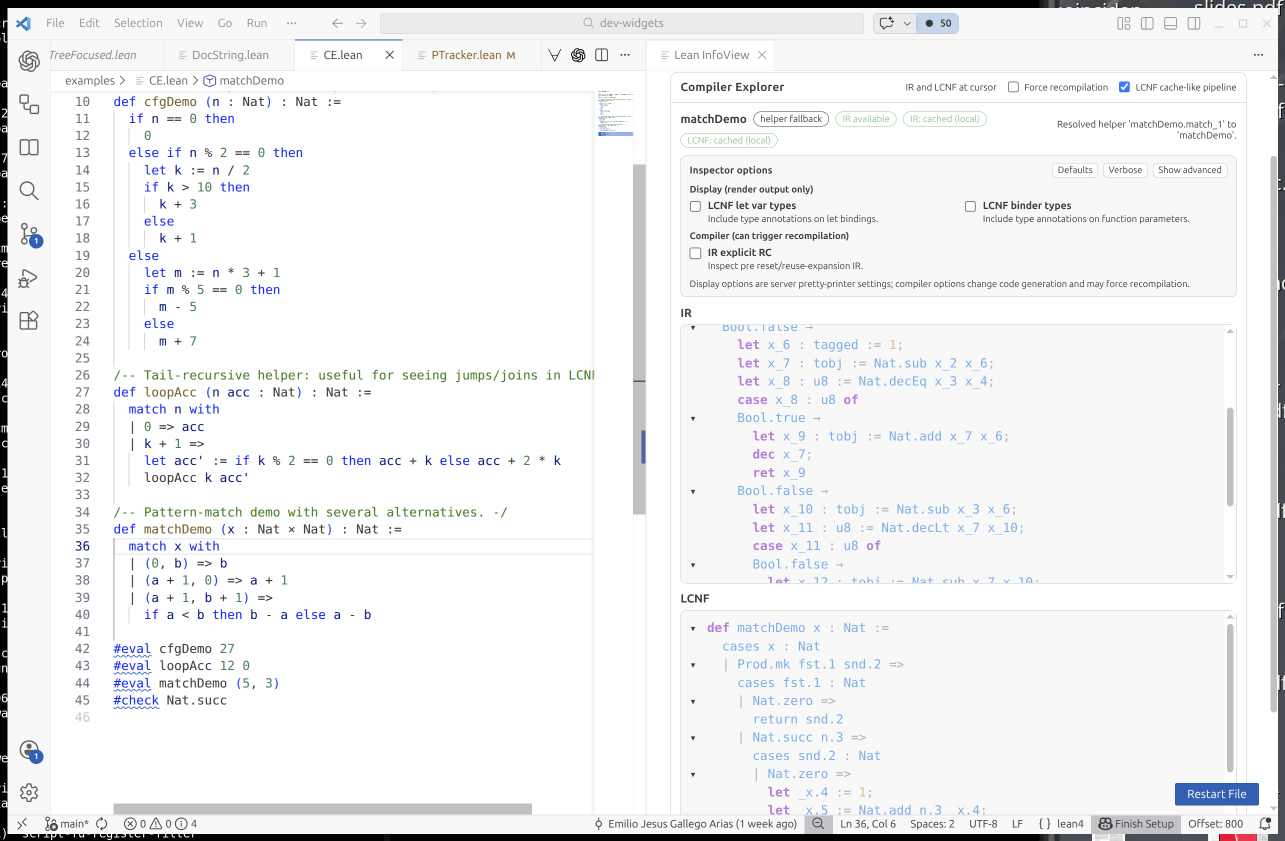
Next.

Previous.