I m finishing typing up this blog entry hours before my last 13 hour leg back home, after I spent 2 weeks in Busan, South Korea for DebCamp24 and DebCamp24. I had a rough year and decided to take it easy this DebConf. So this is the first DebConf in a long time where I didn t give any talks. I mostly caught up on a bit of packaging, worked on DebConf video stuff, attended a few BoFs and talked to people. Overall it was a very good DebConf, which also turned out to be more productive than I expeced it would.
In the welcome session on the first day of DebConf, Nicolas Dandrimont mentioned that a benefit of DebConf is that it provides a sort of caffeine for your Debian motivation. I could certainly feel that affect swell as the days went past, and it s nice to be excited about some ideas again that would otherwise be fading.
Recovering DPL
It s a bit of a gear shift being DPL for 4 years, and DebConf Committee for nearly 5 years before that, and then being at DebConf while some issue arise (as it always does during a conference). At first I jump into high alert mode, but then I have to remind myself it s not your problem anymore and let others deal with it.
It was nice spending a little in-person time with Andreas Tille, our new DPL, we did some more handover and discussed some current issues. I still have a few dozen emails in my DPL inbox that I need to collate and forward to Andreas, I hope to finish all that up by the end of August.
During the Bits from the DPL talk, the usual question came up whether Andreas will consider running for DPL again, to which he just responded in a slide Maybe . I think it s a good idea for a DPL to do at least two terms if it all works out for everyone, since it takes a while to get up to speed on everything.
Also, having been DPL for four years, I have a lot to say about it, and I think there s a lot we can fix in the role, or at least discuss it. If I had the bandwidth for it I would have scheduled a BoF for it, but I ll very likely do that for the next DebConf instead!
Video team
I set up the standby loop for the video streaming setup. We call it loopy, it s a bunch of OBS scenes that provide announcements, shows sponsors, the schedule and some social content. I wrote about it back in 2020, but it s evolved quite a bit since then, so I m probably due to write another blog post with a bunch of updates on it. I hope to organise a video team sprint in Cape Town in the first half of next year, so I ll summarize everything before then.
It would ve been great if we could have some displays in social areas that could show talks, the loop and other content, but we were just too pressed for time for that. This year s DebConf had a very compressed timeline, and there was just too much that had to be done and that had to be figured out on the last minute. This put quite a lot of strain on the organisers, but I was glad to see how, for the most part, most attendees were very sympathetic to some rough edges (but I digress ).
I added more of the OBS machine setup to the videoteam s ansible repository, so as of now it just needs an ansible setup and the OBS data and it s good to go. The loopy data is already in the videoteam git repository, so I could probably just add a git pull and create some symlinks in ansible and then that machine can be installed from 0% to 100% by just installing via debian-installer with our ansible hooks.
This DebConf I volunteered quite a bit for actual video roles during the conference, something I didn t have much time for in recent DebConfs, and it s been fun, especially in a session or two where nearly none of the other volunteers showed up. Sometimes chaos is just fun :-)
Baekyongee is the university mascot, who s visible throughout the university. So of course we included this four legged whale creature on the loop too!
Packaging
I was hoping to do more packaging during DebCamp, but at least it was a non-zero amount:
Uploaded gdisk 1.0.10-2 to unstable (previously tested effects of adding dh-sequence-movetousr) (Closes: #1073679).
Worked a bit on bcachefs-tools (updating git to 1.9.4), but has a build failure that I need to look into (we might need a newer bindgen) update: I m probably going to ROM this package soon, it doesn t seem suitable for packaging in Debian.
Calamares: Tested a fix for encrypted installs, and uploaded it.
Calamares: Uploaded (3.3.8-1) to backports (at the time of writing it s still in backports-NEW).
Pixelorama 1.0 I did some initial packaging for Pixelorama back when we did the MiniDebConf Gaming Edition, but it had a few stoppers back then. Version 1.0 seems to fix all of that, but it depends on Godot 4.2 and we re still on the 3 series in Debian, so I ll upload this once Godot 4.2 hits at least experimental. Godot software/games is otherwise quite easy to run, it s basically just source code / data that is installed and then run via godot-runner (godot3-runner package in Debian).
BoFs
Python Team BoF
Link to the etherpad / pad archive link and video can be found on the talk page: https://debconf24.debconf.org/talks/31-python-bof/
The session ended up being extended to a second part, since all the issues didn t fit into the first session.
I was distracted by too many thing during the Python 3.12 transition (to the point where I thought that 3.11 was still new in Debian), so it was very useful listening to the retrospective of that transition.
There was a discussion whether Python 3.13 could still make it to testing in time for freeze, and it seems that there is consensus that it can, although, likely with new experimental features like disabling the global interpreter lock and the just in time compiler disabled.
I learned for the first time about the dead batteries project, PEP-0594, which removes ancient modules that have mostly been superseded, from the Python standard library.
There was some talk about the process for changing team policy, and a policy discussion on whether we should require autopkgtests as a SHOULD or a MUST for migration to testing. As with many things, the devil is in the details and in my opinion you could go either way and achieve a similar result (the original MUST proposal allowed exceptions which imho made it the same as the SHOULD proposal).
There s an idea to do some ongoing remote sprints, like having co-ordinated days for bug squashing / working on stuff together. This is a nice idea and probably a good way to energise the team and also to gain some interest from potential newcomers.
Louis-Philipe V ronneau was added as a new team admin and there was some discussion on various Sphinx issues and which Lintian tags might be needed for Python 3.13. If you want to know more, you probably have to watch the videos / read the notes :)
Debian.net BoF
Link to the etherpad / pad archive link can be found on the talk page: https://debconf24.debconf.org/talks/37-debiannet-team-bof
Debian Developers can set up services on subdomains on debian.net, but a big problem we ve had before was that developers were on their own for hosting those services. This meant that they either hosted it on their DSL/fiber connection at home, paid for the hosting themselves, or hosted it at different services which became an accounting nightmare to claim back the used funds. So, a few of us started the debian.net hosting project (sometimes we just call it debian.net, this is probably a bit of a bug) so that Debian has accounts with cloud providers, and as admins we can create instances there that gets billed directly to Debian.
We had an initial rush of services, but requests have slowed down since (not really a bad thing, we don t want lots of spurious requests). Last year we did a census, to check which of the instances were still used, whether they received system updates and to ask whether they are performing backups. It went well and some issues were found along the way, so we ll be doing that again.
We also gained two potential volunteers to help run things, which is great.
Debian Social BoF
Link to the etherpad / pad archive link can be found on the talk page: https://debconf24.debconf.org/talks/34-debiansocial-bof
We discussed the services we run, you can view the current state of things at: https://wiki.debian.org/Teams/DebianSocial
Pleroma has shown some cracks over the last year or so, and there are some forks that seem promising. At the same time, it might be worth while considering Mastodon too. So we ll do some comparison of features and maintenance and find a way forward. At the time when Pleroma was installed, it was way ahead in terms of moderation features.
Pixelfed is doing well and chugging along nicely, we should probably promote it more.
Peertube is working well, although we learned that we still don t have all the recent DebConf videos on there. A bunch of other issues should be fixed once we move it to a new machine that we plan to set up.
We re removing writefreely and plume. Nice concepts, but it didn t get much traction yet, and no one who signed up for these actually used it, which is fine, some experimentation with services is good and sometimes they prove to be very popular and other times not.
The WordPress multisite instance has some mild use, otherwise haven t had any issues.
Matrix ended up to be much, much bigger than we thought, both in usage and in its requirements. It s very stateful and remembers discussions for as long as you let it, so it s Postgres database is continuously expanding, this will also be a lot easier to manage once we have this on the new host.
Jitsi is also quite popular, but it could probably be on jitsi.debian.net instead (we created this on debian.social during the initial height of COVID-19 where we didn t have the debian.net hosting yet), although in practice it doesn t really matter where it lives.
Most of our current challenges will be solved by moving everything to a new big machine that has a few public IPs available for some VMs, so we ll be doing that shortly.
Debian Foundation Discussion BoF
This was some brainstorming about the future structure of Debian, and what steps might be needed to get there. It s way too big a problem to take on in a BoF, but we made some progress in figuring out some smaller pieces of the larger puzzle. The DPL is going to get in touch with some legal advisors and our trusted organisations so that we can aim to formalise our relationships a bit more by the time it s DebConf again.
I also introduced my intention to join the Debian Partners delegation. When I was DPL, I enjoyed talking with external organisations who wanted to help Debian, but helping external organisations help Debian turned out to be too much additional load on the usual DPL roles, so I m pursuing this with the Debian Partners team, more on that some other time.
This session wasn t recorded, but if you feel like you missed something, don t worry, all intentions will be communicated and discussed with project members before anything moves forward. There was a strong agreement in the room though that we should push forward on this, and not reach another DebConf where we didn t make progress on formalising Debian s structure more.
Social
Conference Dinner
Conference Dinner Photo from Santiago
The conference dinner took place in the university gymnasium. I hope not many people do sports there in the summer, because it got HOT. There was also some interesting observations on the thermodynamics of the attempted cooling solutions, which was amusing. On the plus side, the food was great, the company was good, and the speeches were kept to a minimum, so it was a great conference dinner, even though it was probably cut a bit short due to the heat.
Cheese and Wine
Cheese and Wine happened on 1 August, which happens to be the date I became a DD at DebConf17 in Montr al seven years before, so this was a nice accidental celebration of my Debiversary :)
Since I m running out of time, I ll add some more photos to this post some time after publishing it :P
Group Photo
As per DebConf tradition, Aigars took the group photo. You can find the high resolution version on Debian s GitLab instance.
Debian annual conference Debconf 24, Busan, South Korea Photography: Aigars Mahinovs aigarius@debian.org License: CC-BYv3+ or GPLv2+
Talking
Ah yes, talking to people is a big part of DebConf, but I didn t keep track of it very well.
I mostly listened to Alper a bit about his ideas for his talk about debian installer.
I talked to Rhonda a bit about ActivityPub and MQTT and whether they could be useful for publicising Debian activity.
Listened to Gunnar and Julian have a discussion about GPG and APT which was interesting.
We had the usual continuous keysigning party. Besides it s intended function, this is always a good ice breaker and a way to for shy people to meet other shy people.
and many other fly-by discussions.
Stuff that didn t happen this DebConf
loo.py A simple Python script that could eventually replace the obs-advanced-scene-switcher sequencer in OBS. It would also be extremely useful if we d ever replace OBS for loopy. I was hoping to have some time to hack on this, and try to recreate the current loopy in loo.py, but didn t have the time.
toetally This year videoteam had to scramble to get a bunch of resistors to assemble some tally light. Even when assembled, they were a bit troublesome. It would ve been nice to hack on toetally and get something ready for testing, but it mostly relies on having something like a rasbperry pi zero with an attached screen in order to work on further. I ll try to have something ready for the next mini conf though.
extrepo on debian live I think we should have extrepo installed by default on desktop systems, I meant to start a discussion on this, but perhaps it s just time I go ahead and do it and announce it.
Live stream to peertube server It would ve been nice to live stream DebConf to PeerTube, but the dependency tree to get this going got a bit too huge. Following our plans discussed in the Debian Social BoF, we should have this safely ready before the next MiniDebConf and should be able to test it there.
Desktop Egg there was this idea to get a stand-in theme for Debian testing/unstable until the artwork for the next release is finalized (Debian bug: #1038660), I have an idea that I meant to implement months ago, but too many things got in the way. It s based on Juliette Taka s Homeworld theme, and basically transforms the homeworld into an egg. Get it? Something that hasn t hatched yet? I also only recently noticed that we never used the actualhomeworld graphics (featuring the world image) in the final bullseye release. lol.
So, another DebConf and another new plush animal. Last but not least, thanks to PKNU for being such a generous and fantastic host to us! See you again at DebConf25 in Brest, France next year!
Dear Debian community,
this are my bits from DPL written at my last day at another great
DebConf.
DebConf attendance
At the beginning of July, there was some discussion with the bursary and
content team about sponsoring attendees. The discussion continued at
DebConf.
I do not have much experience with these discussions. My summary is that
while there is an honest attempt to be fair to everyone, it did not seem to
work for all, and some critical points for future discussion remained. In
any case, I'm thankful to the bursary team for doing such a time-draining
and tedious job.
Popular packages not yet on Salsa at all
Otto Kek l inen did some interesting investigation about
Popular packages not yet on Salsa at all.
I think I might provide some more up to date list soon by some UDD query
which considers more recent uploads than the trends data soon. For
instance wget was meanwhile moved to Salsa (thanks to No l K the for this).
Keep on contacting more teams
I kept on contacting teams in July. Despite I managed to contact way
less teams than I was hoping I was able to present some conclusions in
the Debian Teams exchange BoF and Slide 16/23 of my
Bits from the DPL talk.
I intend to do further contacts next months.
Nominating Jeremy B cha for GNOME Advisory Board
I've nominated Jeremy B cha to
GNOME Advisory Board.
Jeremy has volunteered to represent Debian at
GUADEC in Denver.
DebCamp / DebConf
I attended DebCamp starting from 22 July evening and had a lot of fun with
other attendees. As always DebConf is some important event nearly
every year for me. I enjoyed Korean food, Korean bath, nature at the
costline and other things.
I had a small event without video coverage
Creating web galleries including maps from a geo-tagged photo collection.
At least two attendees of this workshop confirmed success in creating their
own web galleries.
I used DebCamp and DebConf for several discussions. My main focus was on
discussions with FTP master team members Luke Faraone, Sean Whitton, and
Utkarsh Gupta. I'm really happy that the four of us absolutely agree on
some proposed changes to the structure of the FTP master team, as well
as changes that might be fruitful for the work of the FTP master team
itself and for Debian developers regarding the processing of new
packages.
My explicit thanks go to Luke Faraone, who gave a great introduction to
FTP master work in their
BoF.
It was very instructive for the attending developers to understand how the
FTP master team checks licenses and copyright and what workflow is used
for accepting new packages.
In the first days of DebConf, I talked to representatives of DebConf
platinum sponsor WindRiver, who announced the derivative
eLxr. I warmly welcome
this new derivative and look forward to some great cooperation. I also
talked to the representative of our gold sponsor, Microsoft.
My first own event was the
Debian Med BoF.
I'd like to repeat that it might not only be interesting for people
working in medicine and microbiology but always contains some hints how
to work together in a team.
As said above I was trying to summarise some first results of my team
contacts and got some further input from other teams in the
Debian Teams exchange BoF.
Finally, I had my
Bits from DPL talk.
I received positive responses from attendees as well as from remote
participants, which makes me quite happy. For those who were not able to
join the events on-site or remotely, the videos of all events will be
available on the DebConf site soon. I'd like to repeat the explicit need
for some volunteers to join the Lintian team. I'd also like to point out
the "Tiny tasks" initiative I'd like to start (see below).
BTW, if someone might happen to solve my quiz for the background images
there is a
summary page
in my slides which might help to assign every slide to some DebConf. I
could assume that if you pool your knowledge you can solve more than just
the simple ones. Just let me know if you have some solution. You can add
numbers to the rows and letters to the columns and send me:
 2000/2001:  Uv + Wx
 2002: not attended
 2003: Yz
 2004: not attended
 2005:
 2006: not attended
 2007:
 ...
 2024: A1
This list provides some additional information for DebConfs I did not
attend and when no video stream was available. It also reminds you about
the one I uncovered this year and that I used two images from 2001 since
I did not have one from 2000. Have fun reassembling good memories.
Tiny tasks: Bug of the day
As I mentioned in my
Bits from DPL talk,
I'd like to start a "Tiny tasks" effort within Debian. The first type of
tasks will be the
Bug of the day
initiative. For those who would like to join, please join the corresponding
Matrix channel. I'm
curious to see how this might work out and am eager to gain some initial
experiences with newcomers. I won't be available until next Monday, as I'll
start traveling soon and have a family event (which is why I need to leave
DebConf today after the formal dinner).
Kind regards from DebConf in Busan
Andreas.
Dear Debian community,
Statement on Daniel Pocock
The Debian project has successfully taken action to secure its
trademarks and interests worldwide, as detailed in our press
statement. I would like
to personally thank everyone in the community who was involved in this
process. I would have loved for you all to have spent your volunteer
time on more fruitful things.
Debian Boot team might need help
I think I've identified the issue that finally motivated me to contact
our teams: for a long time, I have had the impression that Debian is
driven by several "one-person teams" (to varying extents of individual
influence and susceptibility to burnout). As DPL, I see it as my task to
find ways to address this issue and provide support.
I received private responses from Debian Boot team members, which
motivated me to kindly invite volunteers to some prominent and highly
visible fields of work that you might find personally challenging. I
recommend subscribing to the
Debian Boot mailing list to see
where you might be able to provide assistance.
/usrmerge
Helmut Grohne confirmed
that the last remaining packages shipping aliased files inside the package set
relevant to debootstrap were uploaded. Thanks a lot for Helmut and all
contributors that helped to implement
DEP17.
Contacting more teams
I'd like to repeat that I've registered a BoF for DebConf24 in Busan
with the following description:
This BoF is an attempt to gather as much as possible teams inside
Debian to exchange experiences, discuss workflows inside teams, share
their ways to attract newcomers etc.
Each participant team should prepare a short description of their work
and what team roles ( openings ) they have for new contributors. Even
for delegated teams (membership is less fluid), it would be good to
present the team, explain what it takes to be a team member, and what
steps people usually go to end up being invited to participate. Some
other teams can easily absorb contributions from salsa MRs, and at some
point people get commit access. Anyway, the point is that we work on the
idea that the pathway to become a team member becomes more clear from an
outsider point-of-view.
I'm lagging a bit behind my team contacting schedule and will not manage
to contact every team before DebConf. As a (short) summary, I can draw
some positive conclusions about my efforts to reach out to teams. I was
able to identify some issues that were new to me and which I am now
working on. Examples include limitations in Salsa and Salsa CI. I
consider both essential parts of our infrastructure and will support
both teams in enhancing their services.
Some teams confirmed that they are basically using some common
infrastructure (Salsa team space, mailing lists, IRC channels) but that
the individual members of the team work on their own problems without
sharing any common work. I have also not read about convincing
strategies to attract newcomers to the team, as we have established, for
instance, in the Debian Med team.
DebConf attendance
The amount of money needed to fly people to South Korea was higher than
usual, so the DebConf bursary team had to make some difficult decisions
about who could be reimbursed for travel expenses. I extended the budget
for diversity and newcomers, which enabled us to invite some additional
contributors. We hope that those who were not able to come this year can
make it next year to Brest or to MiniDebConf
Cambridge or
Toulouse
tag2upload
On June 12, Sean Whitton requested comments on the debian-vote list
regarding a General Resolution (GR) about
tag2upload.
The discussion began with technical details but unfortunately, as often
happens in long threads, it drifted into abrasive language, prompting
the community team to address the behavior of an opponent of the GR
supporters. After 560 emails covering technical details, including a
detailed security review
by Russ Allbery, Sean finally proposed the
GR
on June 27, 2024 (two weeks after requesting comments).
Firstly, I would like to thank the drivers of this GR and acknowledge
the technical work behind it, including the security review. I am
positively convinced that Debian can benefit from modernizing its
infrastructure, particularly through stronger integration of Git into
packaging workflows.
Sam Hartman provided some historical context
[1],
[2],
[3],
[4],
noting that this discussion originally took place five years ago with no
results from several similarly lengthy threads. My favorite
summary of the
entire thread was given by Gregor Herrmann, which reflects the same gut
feeling I have and highlights a structural problem within Debian that
hinders technical changes. Addressing this issue is definitely a matter
for the Debian Project Leader, and I will try to address it during my
term.
At the time of writing these bits, a
proposal
from ftpmaster, which is being continuously discussed, might lead to a
solution. I was also asked to extend the
GR discussion periods
which I will do in separate mail.
Talk: Debian GNU/Linux for Scientific Research
I was invited to have a
talk
in the Systems-Facing Track of University of British Columbia (who is
sponsoring rack space for several Debian servers). I admit it felt a bit
strange to me after working more than 20 years for establishing Debian in
scientific environments to be invited to such a talk "because I'm DPL".
Kind regards
Andreas.
The voting period for the Debian Project Leader election has ended. Please join
us in congratulating Andreas Tille as the new Debian Project Leader.
The new term for the project leader started on 2024-04-21.
369 of 1,010 Debian Developers voted using the Condorcet method.
More information about the results of the voting are available on the Debian Project Leader Elections 2024 page.
Many thanks all of our Developers for voting.
The Debian Project Developers will shortly vote for a new Debian Project Leader
known as the DPL.
The Project Leader is the official representative of The Debian Project tasked with
managing the overall project, its vision, direction, and finances.
The DPL is also responsible for the selection of Delegates, defining areas of
responsibility within the project, the coordination of Developers, and making
decisions required for the project.
Our outgoing and present DPL Jonathan Carter served 4 terms, from 2020
through 2024. Jonathan shared his last Bits from the DPL
post to Debian recently and his hopes for the future of Debian.
Recently, we sat with the two present candidates for the DPL position asking
questions to find out who they really are in a series of interviews about
their platforms, visions for Debian, lives, and even their favorite text
editors. The interviews were conducted by disaster2life (Yashraj Moghe) and
made available from video and audio transcriptions:
Voting for the position starts on April 6, 2024.
Editors' note:
This is our official return to Debian interviews, readers should stay tuned
for more upcoming interviews with Developers and other important figures in
Debian as part of our "Meet your Debian Developer" series. We used the
following tools and services: Turboscribe.ai for the
transcription from the audio and video files, IRC: Oftc.net for
communication, Jitsi meet for interviews, and
Open Broadcaster Software (OBS) for editing and
video. While we encountered many technical difficulties in the return to this
process, we are still able and proud to present the transcripts of the
interviews edited only in a few areas for readability.
2024 Debian Project Leader Candidate: Andrea Tille
Andreas' Interview
Who are you? Tell us a little about yourself.
[Andreas]:
How am I? Well, I'm, as I wrote in my platform, I'm a proud grandfather doing a
lot of free software stuff, doing a lot of sports, have some goals in mind which
I like to do and hopefully for the best of Debian.
And How are you today?
[Andreas]:
How I'm doing today? Well, actually I have some headaches but it's fine for the
interview.
So, usually I feel very good. Spring was coming here and today it's raining and
I plan to do a bicycle tour tomorrow and hope that I do not get really sick but
yeah, for the interview it's fine.
What do you do in Debian? Could you mention your story here?
[Andreas]:
Yeah, well, I started with Debian kind of an accident because I wanted to have
some package salvaged which is called WordNet. It's a monolingual dictionary and
I did not really plan to do more than maybe 10 packages or so. I had some kind
of training with xTeddy which is totally unimportant, a cute teddy you can put
on your desktop.
So, and then well, more or less I thought how can I make Debian attractive for
my employer which is a medical institute and so on. It could make sense to
package bioinformatics and medicine software and it somehow evolved in a
direction I did neither expect it nor wanted to do, that I'm currently the most
busy uploader in Debian, created several teams around it.
DebianMate is very well known from me. I created the Blends team to create teams
and techniques around what we are doing which was Debian TIS, Debian Edu, Debian
Science and so on and I also created the packaging team for R, for the
statistics package R which is technically based and not topic based. All these
blends are covering a certain topic and R is just needed by lots of these
blends.
So, yeah, and to cope with all this I have written a script which is routing an
update to manage all these uploads more or less automatically. So, I think I had
one day where I uploaded 21 new packages but it's just automatically generated,
right? So, it's on one day more than I ever planned to do.
What is the first thing you think of when you think of Debian?
Editors' note: The question was misunderstood as the worst thing you think of when you
think of Debian
[Andreas]:
The worst thing I think about Debian, it's complicated. I think today on Debian
board I was asked about the technical progress I want to make and in my opinion
we need to standardize things inside Debian. For instance, bringing all the
packages to salsa, follow some common standards, some common workflow which is
extremely helpful.
As I said, if I'm that productive with my own packages we can adopt this in
general, at least in most cases I think. I made a lot of good experience by the
support of well-formed teams. Well-formed teams are those teams where people
support each other, help each other.
For instance, how to say, I'm a physicist by profession so I'm not an IT expert.
I can tell apart what works and what not but I'm not an expert in those
packages. I do and the amount of packages is so high that I do not even
understand all the techniques they are covering like Go, Rust and something like
this.
And I also don't speak Java and I had a problem once in the middle of the night
and I've sent the email to the list and was a Java problem and I woke up in the
morning and it was solved. This is what I call a team. I don't call a team some
common repository that is used by random people for different packages also but
it's working together, don't hesitate to solve other people's problems and
permit people to get active.
This is what I call a team and this is also something I observed in, it's hard
to give a percentage, in a lot of other teams but we have other people who do
not even understand the concept of the team. Why is working together make some
advantage and this is also a tough thing. I [would] like to tackle in my term if
I get elected to form solid teams using the common workflow. This is one thing.
The other thing is that we have a lot of good people in our infrastructure like
FTP masters, DSA and so on. I have the feeling they have a lot of work and are
working more or less on their limits, and I like to talk to them [to ask] what
kind of change we could do to move that limits or move their personal health to
the better side.
The DPL term lasts for a year, What would you do during that you couldn't do now?
[Andreas]:
Yeah, well this is basically what I said are my main issues. I need to admit I
have no really clear imagination what kind of tasks will come to me as a DPL
because all these financial issues and law issues possible and issues [that]
people who are not really friendly to Debian might create. I'm afraid these
things might occupy a lot of time and I can't say much about this because I
simply don't know.
What are three key terms about you and your candidacy?
[Andreas]:
As I said, I like to work on standards, I d like to make Debian try [to get
it right so] that people don't get overworked, this third key point is be
inviting to newcomers, to everybody who wants to come. Yeah, I also mentioned in
my term this diversity issue, geographical and from gender point of view. This
may be the three points I consider most important.
Preferred text editor?
[Andreas]:
Yeah, my preferred one? Ah, well, I have no preferred text editor. I'm using the
Midnight Commander very frequently which has an internal editor which is
convenient for small text. For other things, I usually use VI but I also use
Emacs from time to time. So, no, I have not preferred text editor. Whatever
works nicely for me.
What is the importance of the community in the Debian Project? How would
like to see it evolving over the next few years?
[Andreas]:
Yeah, I think the community is extremely important. So, I was on a lot of
DebConfs. I think it's not really 20 but 17 or 18 DebCons and I really enjoyed
these events every year because I met so many friends and met so many
interesting people that it's really enriching my life and those who I never met
in person but have read interesting things and yeah, Debian community makes
really a part of my life.
And how do you think it should evolve specifically?
[Andreas]:
Yeah, for instance, last year in Kochi, it became even clearer to me that the
geographical diversity is a really strong point. Just discussing with some women
from India who is afraid about not coming next year to Busan because there's a
problem with Shanghai and so on. I'm not really sure how we can solve this but I
think this is a problem at least I wish to tackle and yeah, this is an
interesting point, the geographical diversity and I'm running the so-called
mentoring of the month.
This is a small project to attract newcomers for the Debian Med team which has
the focus on medical packages and I learned that we had always men applying for
this and so I said, okay, I dropped the constraint of medical packages.
Any topic is fine, I teach you packaging but it must be someone who does not
consider himself a man. I got only two applicants, no, actually, I got one
applicant and one response which was kind of strange if I'm hunting for women or
so.
I did not understand but I got one response and interestingly, it was for me one
of the least expected counters. It was from Iran and I met a very nice woman,
very open, very skilled and gifted and did a good job or have even lose contact
today and maybe we need more actively approach groups that are underrepresented.
I don't know if what's a good means which I did but at least I tried and so I
try to think about these kind of things.
What part of Debian has made you smile? What part of the project has kept
you going all through the years?
[Andreas]:
Well, the card game which is called Mao on the DebConf made me smile all the
time. I admit I joined only two or three times even if I really love this kind
of games but I was occupied by other stuff so this made me really smile. I also
think the first online DebConf in 2020 made me smile because we had this kind of
short video sequences and I tried to make a funny video sequence about every
DebConf I attended before. This is really funny moments but yeah, it's not only
smile but yeah.
One thing maybe it's totally unconnected to Debian but I learned personally
something in Debian that we have a do-ocracy and you can do things which you
think that are right if not going in between someone else, right? So respect
everybody else but otherwise you can do so.
And in 2020 I also started to take trees which are growing widely in my garden
and plant them into the woods because in our woods a lot of trees are dying and
so I just do something because I can. I have the resource to do something, take
the small tree and bring it into the woods because it does not harm anybody. I
asked the forester if it is okay, yes, yes, okay. So everybody can do so but I
think the idea to do something like this came also because of the free software
idea. You have the resources, you have the computer, you can do something and
you do something productive, right? And when thinking about this I think it was
also my Debian work.
Meanwhile I have planted more than 3,000 trees so it's not a small number but
yeah, I enjoy this.
What part of Debian would you have some criticisms for?
[Andreas]:
Yeah, it's basically the same as I said before. We need more standards to work
together. I do not want to repeat this but this is what I think, yeah.
What field in Free Software generally do you think requires the most work
to be put into it? What do you think is Debian's part in the field?
[Andreas]:
It's also in general, the thing is the fact that I'm maintaining packages which
are usually as modern software is maintained in Git, which is fine but we have
some software which is at Sourceport, we have software laying around somewhere,
we have software where Debian somehow became Upstream because nobody is caring
anymore and free software is very different in several things, ways and well, I
in principle like freedom of choice which is the basic of all our work.
Sometimes this freedom goes in the way of productivity because everybody is free
to re-implement. You asked me for the most favorite editor. In principle one
really good working editor would be great to have and would work and we have
maybe 500 in Debian or so, I don't know.
I could imagine if people would concentrate and say five instead of 500 editors,
we could get more productive, right? But I know this will not happen, right? But
I think this is one thing which goes in the way of making things smooth and
productive and we could have more manpower to replace one person who's [having]
children, doing some other stuff and can't continue working on something and
maybe this is a problem I will not solve, definitely not, but which I see.
What do you think is Debian's part in the field?
[Andreas]:
Yeah, well, okay, we can bring together different Upstreams, so we are building
some packages and have some general overview about similar things and can say,
oh, you are doing this and some other person is doing more or less the same, do
you want to join each other or so, but this is kind of a channel we have to our
Upstreams which is probably not very successful.
It starts with code copies of some libraries which are changed a little bit,
which is fine license-wise, but not so helpful for different things and so I've
tried to convince those Upstreams to forward their patches to the original one,
but for this and I think we could do some kind of, yeah, [find] someone who
brings Upstream together or to make them stop their forking stuff, but it costs
a lot of energy and we probably don't have this and it's also not realistic that
we can really help with this problem.
Do you have any questions for me?
[Andreas]:
I enjoyed the interview, I enjoyed seeing you again after half a year or so.
Yeah, actually I've seen you in the eating room or cheese and wine party or so,
I do not remember we had to really talk together, but yeah, people around, yeah,
for sure. Yeah.
The Debian Project Developers will shortly vote for a new Debian Project Leader
known as the DPL.
The DPL is the official representative of representative of The Debian Project tasked with managing the overall project, its vision, direction, and finances.
The DPL is also responsible for the selection of Delegates, defining areas of
responsibility within the project, the coordination of Developers, and making
decisions required for the project.
Our outgoing and present DPL Jonathan Carter served 4 terms, from 2020
through 2024. Jonathan shared his last Bits from the DPL
post to Debian recently and his hopes for the future of Debian.
Recently, we sat with the two present candidates for the DPL position asking
questions to find out who they really are in a series of interviews about
their platforms, visions for Debian, lives, and even their favorite text
editors. The interviews were conducted by disaster2life (Yashraj Moghe) and
made available from video and audio transcriptions:
Voting for the position starts on April 6, 2024.
Editors' note:
This is our official return to Debian interviews, readers should stay tuned
for more upcoming interviews with Developers and other important figures in
Debian as part of our "Meet your Debian Developer" series. We used the
following tools and services: Turboscribe.ai for the
transcription from the audio and video files, IRC: Oftc.net for
communication, Jitsi meet for interviews, and
Open Broadcaster Software (OBS) for editing and
video. While we encountered many technical difficulties in the return to this
process, we are still able and proud to present the transcripts of the
interviews edited only in a few areas for readability.
2024 Debian Project Leader Candidate: Sruthi Chandran
Sruthi's interview
Hi Sruthi, so for the first question, who are you and could you tell us a little
bit about yourself?
[Sruthi]:
I usually talk about me whenever I am talking about answering the question who
am I, I usually say like I am a librarian turned free software enthusiast and
a Debian Developer. So I had no technical background and I learned, I was
introduced to free software through my husband and then I learned Debian
packaging, and eventually I became a Debian Developer. So I always give my
example to people who say I am not technically inclined, I don't have technical
background so I can't contribute to free software.
So yeah, that's what I refer to myself.
For the next question, could you tell me what do you do in Debian, and could
you mention your story up until here today?
[Sruthi]:
Okay, so let me start from my initial days in Debian. I started contributing to
Debian, my first contribution was a Tibetan font. We went to a Tibetan place
and they were saying they didn't have a font in Linux.
So that's how I started contributing. Then I moved on to Ruby packages, then I
have some JavaScript and Go packages, all dependencies of GitLab. So I was
involved with maintaining GitLab for some time, now I'm not very active there.
But yeah, so GitLab was the main package I was contributing to since I
contributed since 2016 to maybe like 2020 or something. Later I have come
[over to] packaging. Now I am part of some of the teams, delegated teams, like
community team and outreach team, as well as the Debconf committee. And the
biggest, I think, my activity in Debian, I would say is organizing Debconf
2023. So it was a great experience and yeah, so that's my story in Debian.
So what are three key terms about you and your candidacy?
[Sruthi]:
Okay, let me first think about it. For candidacy, I can start with diversity is
one point I started expressing from the first time I contested for DPL. But to
be honest, that's the main point I want to bring.
[Yashraj]:
So for diversity, if you could break down your thoughts on diversity and make
them, [about] your three points including diversity.
[Sruthi]:
So in addition to, eventually when starting it was just diversity. Now I have
like a bit more ideas, like community, like I want to be a leader for the
Debian community. More than, I don't know, maybe people may not agree, but I
would say I want to be a leader of Debian community rather than a Debian operating system.
I connect to community more and third point I would say.
The term of a DPL lasts for an year. So what do you think during, what would you
try to do during that, that you can't do from your position now?
[Sruthi]:
Okay. So I, like, I am very happy with the structure of Debian and how things
work in Debian. Like you can do almost a lot of things, like almost all things
without being a DPL.
Whatever change you want to bring about or whatever you want to do, you can do
without being a DPL. Anyone, like every DD has the same rights. Only things I
feel [the] DPL has hold on are mainly the budget or the funding part, which like,
that's where they do the decision making part.
And then comes like, and one advantage of DPL driving some idea is that somehow
people tend to listen to that with more, like, tend to give more attention to
what DPL is saying rather than a normal DD. So I wanted to, like, I have
answered some of the questions on how to, how I plan to do the financial
budgeting part, how I want to handle, like, and the other thing is using the
extra attention that I get as a DPL, I would like to obviously start with the
diversity aspect in Debian. And yeah, like, I, what I want to do is not, like,
be a leader and say, like, take Debian to one direction where I want to go, but
I would rather take suggestions and inputs from the whole community and go about
with that.
So yes, that's what I would say.
And taking a less serious question now, what is your preferred text editor?
[Sruthi]:
Vim.
[Yashraj]:
Vim, wholeheartedly team Vim?
[Sruthi]:
Yes.
[Yashraj]:
Great. Well, this was made in Vim, all the text for this.
[Sruthi]:
So, like, since you mentioned extra data, I'll give my example, like, it's just
a fun note, when I started contributing to Debian, as I mentioned, I didn't have
any knowledge about free software, like Debian, and I was not used to even
using Linux. So, and I didn't have experience with these text editors. So, when
I started contributing, I used to do the editing part using gedit.
So, that's how I started. Eventually, I moved to Nano, and once I reached Vim,
I didn't move on.
Team Vim. Next question. What, what do you think is the importance of
the Debian project in the world today? And where would you like to see it in
10 years, like 10 years into the future?
[Sruthi]:
Okay. So, Debian, as we all know, is referred to as the universal operating
system without, like, it is said for a reason. We have hundreds and hundreds of
operating systems, like Linux, distributions based on Debian.
So, I believe Debian, like even now, Debian has good influence on the, at least
on the Linux or Linux ecosystem. So, what we implement in Debian has, like, is
going to affect quite a lot of, like, a very good percentage of people using
Linux. So, yes.
So, I think Debian is one of the leading Linux distributions. And I think in
10 years, we should be able to reach a position, like, where we are not, like,
even now, like, even these many years after having Linux, we face a lot of
problems in newer and newer hardware coming up and installing on them is a big
problem. Like, firmwares and all those things are getting more and more
complicated.
Like, it should be getting simpler, but it's getting more and more complicated.
So, I, one thing I would imagine, like, I don't know if we will ever reach
there, but I would imagine that eventually with the Debian, we should be able
to have some, at least a few of the hardware developers or hardware producers
have Debian pre-installed and those kind of things. Like, not, like, become,
I'm not saying it's all, it's also available right now.
What I'm saying is that it becomes prominent enough to be opted as, like, default
distro.
What part of Debian has made you And what part of the project has kept you going
all through these years?
[Sruthi]:
Okay. So, I started to contribute in 2016, and I was part of the team doing
GitLab packaging, and we did have a lot of training workshops and those kind of
things within India. And I was, like, I had interacted with some of the Indian
DDs, but I never got, like, even through chat or mail.
I didn't have a lot of interaction with the rest of the world, DDs. And the 2019
Debconf changed my whole perspective about Debian. Before that, I wasn't, like,
even, I was interested in free software.
I was doing the technical stuff and all. But after DebConf, my whole idea has
been, like, my focus changed to the community. Debian community is a very
welcoming, very interesting community to be with.
And so, I believe that, like, 2019 DebConf was a for me. And that kept, from
2019, my focus has been to how to support, like, how, I moved to the community
part of Debian from there. Then in 2020 I became part of the community team,
and, like, I started being part of other teams.
So, these, I would say, the Debian community is the one, like, aspect of Debian
that keeps me whole, keeps me held on to the Debian ecosystem as a whole.
Continuing to speak about Debian, what do you think, what is the first thing that
comes to your mind when you think of Debian, like, the word, the community,
what's the first thing?
[Sruthi]:
I think I may sound like a broken record or something.
[Yashraj]:
No, no.
[Sruthi]:
Again, I would say the Debian community, like, it's the people who makes
Debian, that makes Debian special.
Like, apart from that, if I say, I would say I'm very, like, one part of Debian
that makes me very happy is the, how the governing system of Debian works, the
Debian constitution and all those things, like, it's a very unique thing for
Debian. And, and it's like, when people say you can't work without a proper,
like, establishment or even somebody deciding everything for you, it's
difficult. When people say, like, we have been, Debian has been proving
it for quite a long time now, that it's possible.
So, so that's one thing I believe, like, that's one unique point. And I am very
proud about that.
What areas do you think Debian is failing in, how can it (that standing) be improved?
[Sruthi]:
So, I think where Debian is failing now is getting new people into Debian.
Like, I don't remember, like, exactly the answer. But I remember hearing
someone mention, like, the average age of a Debian Developer is, like, above 40
or 45 or something, like, exact age, I don't remember.
But it's like, Debian is getting old. Like, the people in Debian are getting old
and we are not getting enough of new people into Debian. And that's very
important to have people, like, new people coming up.
Otherwise, eventually, like, after a few years, nobody, like, we won't have
enough people to take the project forward. So, yeah, I believe that is where we
need to work on. We are doing some efforts, like, being part of GSOC or
outreachy and having maybe other events, like, local events. Like, we used to
have a lot of Debian packaging workshops in India. And those kind of, I think,
in Brazil and all, they all have, like, local communities are doing. But we are
not very successful in retaining the people who maybe come and try out things.
But we are not very good at retaining the people, like, retaining people who
come. So, we need to work on those things. Right now, I don't have a solid
answer for that.
But one thing, like, I was thinking about is, like, having a Debian specific
outreach project, wherein the focus will be about the Debian, like, starting
will be more on, like, usually what happens in GSOC and outreach is that people
come, have the, do the contributions, and they go back. Like, they don't have
that connection with the Debian, like, Debian community or Debian project. So,
what I envision with these, the Debian outreach, the Debian specific outreach
is that we have some part of the internship, like, even before starting the
internship, we have some sessions and, like, with the people in Debian having,
like, getting them introduced to the Debian philosophy and Debian community and
Debian, how Debian works.
And those things, we focus on that. And then we move on to the technical
internship parts. So, I believe this could do some good in having, like, when
you have people you can connect to, you tend to stay back in a project mode.
When you feel something more than, like, right now, we have so many technical
stuff to do, like, the choice for a college student is endless. So, if they
want, if they stay back for something, like, maybe for Debian, I would say, we
need to have them connected to the Debian project before we go into technical
parts. Like, technical parts, like, there are other things as well, where they
can go and do the technical part, but, like, they can come here, like, yeah.
So, that's what I was saying. Focused outreach projects is one thing. That's
just one.
That's not enough. We need more of, like, more ideas to have more new people
come up. And I'm very happy with, like, the DebConf thing. We tend to get more
and more people from the places where we have a DebConf. Brazil is an example.
After the Debconf, they have quite a good improvement on Debian contributors.
And I think in India also, it did give a good result. Like, we have more people
contributing and staying back and those things. So, yeah.
So, these were the things I would say, like, we can do to improve.
For the final question, what field in free software do you, what
field in free software generally do you think requires the most work to be
put into it? What do you think is Debian's part in that field?
[Sruthi]:
Okay. Like, right now, what comes to my mind is the free software licenses
parts. Like, we have a lot of free software licenses, and there are non-free
software licenses.
But currently, I feel free software is having a big problem in enforcing these
licenses. Like, there are, there may be big corporations or like some people who
take up the whole, the code and may not follow the whole, for example, the GPL
licenses. Like, we don't know how much of those, how much of the free softwares
are used in the bigger things.
Yeah, I agree. There are a lot of corporations who are afraid to touch free
software. But there would be good amount of free software, free work that
converts into property, things violating the free software licenses and those
things.
And we do not have the kind of like, we have SFLC, SFC, etc. But still, we do
not have the ability to go behind and trace and implement the licenses. So,
enforce those licenses and bring people who are violating the licenses forward
and those kind of things is challenging because one thing is it takes time,
like, and most importantly, money is required for the legal stuff.
And not always people who like people who make small software, or maybe big,
but they may not have the kind of time and money to have these things enforced.
So, that's a big challenge free software is facing, especially in our current
scenario. I feel we are having those, like, we need to find ways how we can get
it sorted.
I don't have an answer right now what to do. But this is a challenge I felt
like and Debian's part in that. Yeah, as I said, I don't have a solution for
that.
But the Debian, so DFSG and Debian sticking on to the free software licenses is
a good support, I think.
So, that was the final question, Do you have anything else you want to mention
for anyone watching this?
[Sruthi]:
Not really, like, I am happy, like, I think I was able to answer the questions.
And yeah, I would say who is watching. I won't say like, I'm the best DPL
candidate, you can't have a better one or something.
I stand for a reason. And if you believe in that, or the Debian community and
Debian diversity, and those kinds of things, if you believe it, I hope you
would be interested, like, you would want to vote for me. That's it.
Like, I'm not, I'll make it very clear. I'm not doing a technical leadership
part here. So, those, I can't convince people who want technical leadership to
vote for me.
But I would say people who connect with me, I hope they vote for me.
Dear Debianites
This morning I decided to just start writing Bits from DPL and send
whatever I have by 18:00 local time. Here it is, barely proof read,
along with all it's warts and grammar mistakes! It's slightly long and
doesn't contain any critical information, so if you're not in the mood,
don't feel compelled to read it!
Get ready for a new DPL!
Soon, the voting period will start to elect our next DPL, and my time
as DPL will come to an end. Reading the questions posted to the new
candidates on debian-vote, it takes quite a bit of restraint to not
answer all of them myself, I think I can see how that aspect contributed
to me being reeled in to running for DPL! In total I've done so 5 times
(the first time I ran, Sam was elected!).
Good luck to both Andreas and Sruthi, our current
DPL candidates! I've already started working on preparing handover, and
there's multiple request from teams that have came in recently that will
have to wait for the new term, so I hope they're both ready to hit the
ground running!
Things that I wish could have gone better
Communication
Recently, I saw a t-shirt that read:
Adulthood is saying, 'But after this week things will slow down a bit'
over and over until you die.
I can relate! With every task, crisis or deadline that appears, I think
that once this is over, I'll have some more breathing space to get back
to non-urgent, but important tasks. "Bits from the DPL" was something I
really wanted to get right this last term, and clearly failed
spectacularly. I have two long Bits from the DPL drafts that I never
finished, I tend to have prioritised problems of the day over
communication. With all the hindsight I have, I'm not sure which is
better to prioritise, I do rate communication and transparency very
highly and this is really the top thing that I wish I could've done
better over the last four years.
On that note, thanks to people who provided me with some kind words
when I've mentioned this to them before. They pointed out that there
are many other ways to communicate and be in touch with the community,
and they mentioned that they thought that I did a good job with that.
Since I'm still on communication, I think we can all learn to be more
effective at it, since it's really so important for the project. Every
time I publicly spoke about us spending more money, we got more
donations. People out there really like to see how we invest funds in
to Debian, instead of just making it heap up. DSA just spent a nice
chunk on money on hardware, but we don't have very good visibility on
it. It's one thing having it on a public line item in SPI's reporting,
but it would be much more exciting if DSA could provide a write-up on
all the cool hardware they're buying and what impact it would have on
developers, and post it somewhere prominent like debian-devel-announce,
Planet Debian or Bits from Debian (from the publicity team).
I don't want to single out DSA there, it's difficult and affects many
other teams. The Salsa CI team also spent a lot of resources (time and
money wise) to extend testing on AMD GPUs and other AMD hardware. It's
fantastic and interesting work, and really more people within the
project and in the outside world should know about it!
I'm not going to push my agendas to the next DPL, but I hope that they
continue to encourage people to write about their work, and hopefully
at some point we'll build enough excitement in doing so that it becomes
a more normal part of our daily work.
Founding Debian as a standalone entity
This was my number one goal for the project this last term, which was a
carried over item from my previous terms.
I'm tempted to write everything out here, including the problem
statement and our current predicaments, what kind of ground work needs
to happen, likely constitutional changes that need to happen, and the
nature of the GR that would be needed to make such a thing happen, but
if I start with that, I might not finish this mail.
In short, I 100% believe that this is still a very high ranking issue
for Debian, and perhaps after my term I'd be in a better position to
spend more time on this (hmm, is this an instance of "The grass is
always better on the other side", or "Next week will go better until I
die?"). Anyway, I'm willing to work with any future DPL on this, and
perhaps it can in itself be a delegation tasked to properly explore
all the options, and write up a report for the project that can lead to
a GR.
Overall, I'd rather have us take another few years and do this
properly, rather than rush into something that is again difficult to
change afterwards. So while I very much wish this could've been
achieved in the last term, I can't say that I have any regrets here
either.
My terms in a nutshell
COVID-19 and Debian 11 era
My first term in 2020 started just as the COVID-19 pandemic became
known to spread globally. It was a tough year for everyone, and Debian
wasn't immune against its effects either. Many of our contributors got
sick, some have lost loved ones (my father passed away in March 2020
just after I became DPL), some have lost their jobs (or other earners
in their household have) and the effects of social distancing took a
mental and even physical health toll on many. In Debian, we tend to do
really well when we get together in person to solve problems, and when
DebConf20 got cancelled in person, we understood that that was
necessary, but it was still more bad news in a year we had too much of
it already.
I can't remember if there was ever any kind of formal choice or
discussion about this at any time, but the DebConf video team just kind
of organically and spontaneously became the orga team for an online
DebConf, and that lead to our first ever completely online DebConf. This
was great on so many levels. We got to see each other's faces again,
even though it was on screen. We had some teams talk to each other face
to face for the first time in years, even though it was just on a Jitsi
call. It had a lasting cultural change in Debian, some teams still have
video meetings now, where they didn't do that before, and I think it's a
good supplement to our other methods of communication.
We also had a few online Mini-DebConfs that was fun, but DebConf21 was
also online, and by then we all developed an online conference fatigue,
and while it was another good online event overall, it did start to
feel a bit like a zombieconf and after that, we had some really nice
events from the Brazillians, but no big global online community events
again. In my opinion online MiniDebConfs can be a great way to develop
our community and we should spend some further energy into this, but
hey! This isn't a platform so let me back out of talking about the
future as I see it...
Despite all the adversity that we faced together, the Debian 11 release
ended up being quite good. It happened about a month or so later than
what we ideally would've liked, but it was a solid release nonetheless.
It turns out that for quite a few people, staying inside for a few
months to focus on Debian bugs was quite productive, and Debian 11 ended
up being a very polished release.
During this time period we also had to deal with a previous Debian
Developer that was expelled for his poor behaviour in Debian, who
continued to harass members of the Debian project and in other free
software communities after his expulsion. This ended up being quite a
lot of work since we had to take legal action to protect our community,
and eventually also get the police involved. I'm not going to give him
the satisfaction by spending too much time talking about him, but you
can read our official statement regarding Daniel Pocock here:
https://www.debian.org/News/2021/20211117
In late 2021 and early 2022 we also discussed our general resolution
process, and had two consequent votes to address some issues that have
affected past votes:
In my first term I addressed our delegations that were a bit behind, by
the end of my last term all delegation requests are up to date. There's
still some work to do, but I'm feeling good that I get to hand this
over to the next DPL in a very decent state. Delegation updates can be
very deceiving, sometimes a delegation is completely re-written and it
was just 1 or 2 hours of work. Other times, a delegation updated can
contain one line that has changed or a change in one team member that
was the result of days worth of discussion and hashing out differences.
I also received quite a few requests either to host a service, or to
pay a third-party directly for hosting. This was quite an admin
nightmare, it either meant we had to manually do monthly reimbursements
to someone, or have our TOs create accounts/agreements at the multiple
providers that people use. So, after talking to a few people about
this, we founded the DebianNet team (we could've admittedly chosen a
better name, but that can happen later on) for providing hosting at two
different hosting providers that we have agreement with so that people
who host things under debian.net have an easy way to host it, and then
at the same time Debian also has more control if a site maintainer goes
MIA.
More info:
https://wiki.debian.org/Teams/DebianNet
You might notice some Openstack mentioned there, we had some intention
to set up a Debian cloud for hosting these things, that could also be
used for other additional Debiany things like archive rebuilds, but
these have so far fallen through. We still consider it a good idea and
hopefully it will work out some other time (if you're a large company
who can sponsor few racks and servers, please get in touch!)
DebConf22 and Debian 12 era
DebConf22 was the first time we returned to an in-person DebConf. It
was a bit smaller than our usual DebConf - understandably so,
considering that there were still COVID risks and people who were at
high risk or who had family with high risk factors did the sensible
thing and stayed home.
After watching many MiniDebConfs online, I also attended my first ever
MiniDebConf in Hamburg. It still feels odd typing that, it feels like I
should've been at one before, but my location makes attending them
difficult (on a side-note, a few of us are working on bootstrapping a
South African Debian community and hopefully we can pull off
MiniDebConf in South Africa later this year).
While I was at the MiniDebConf, I gave a talk where I covered the
evolution of firmware, from the simple e-proms that you'd find in old
printers to the complicated firmware in modern GPUs that basically
contain complete operating systems- complete with drivers for the
device their running on. I also showed my shiny new laptop, and
explained that it's impossible to install that laptop without non-free
firmware (you'd get a black display on d-i or Debian live). Also that
you couldn't even use an accessibility mode with audio since even that
depends on non-free firmware these days.
Steve, from the image building team, has said for a while that we need
to do a GR to vote for this, and after more discussion at DebConf, I
kept nudging him to propose the GR, and we ended up voting in favour of
it. I do believe that someone out there should be campaigning for more
free firmware (unfortunately in Debian we just don't have the resources
for this), but, I'm glad that we have the firmware included. In the
end, the choice comes down to whether we still want Debian to be
installable on mainstream bare-metal hardware.
At this point, I'd like to give a special thanks to the ftpmasters,
image building team and the installer team who worked really hard to
get the changes done that were needed in order to make this happen for
Debian 12, and for being really proactive for remaining niggles that
was solved by the time Debian 12.1 was released.
The included firmware contributed to Debian 12 being a huge success,
but it wasn't the only factor. I had a list of personal peeves, and as
the hard freeze hit, I lost hope that these would be fixed and made
peace with the fact that Debian 12 would release with those bugs. I'm
glad that lots of people proved me wrong and also proved that it's
never to late to fix bugs, everything on my list got eliminated by the
time final freeze hit, which was great! We usually aim to have a
release ready about 2 years after the previous release, sometimes there
are complications during a freeze and it can take a bit longer. But due
to the excellent co-ordination of the release team and heavy lifting
from many DDs, the Debian 12 release happened 21 months and 3 weeks
after the Debian 11 release. I hope the work from the release team
continues to pay off so that we can achieve their goals of having
shorter and less painful freezes in the future!
Even though many things were going well, the ongoing usr-merge effort
highlighted some social problems within our processes. I started typing
out the whole history of usrmerge here, but it's going to be too long
for the purpose of this mail. Important questions that did come out of
this is, should core Debian packages be team maintained? And also about
how far the CTTE should really be able to override a maintainer. We had
lots of discussion about this at DebConf22, but didn't make much
concrete progress. I think that at some point we'll probably have a GR
about package maintenance. Also, thank you to Guillem who very
patiently explained a few things to me (after probably having have to
done so many times to others before already) and to Helmut who have
done the same during the MiniDebConf in Hamburg. I think all the
technical and social issues here are fixable, it will just take some
time and patience and I have lots of confidence in everyone involved.
UsrMerge wiki page: https://wiki.debian.org/UsrMerge
DebConf 23 and Debian 13 era
DebConf23 took place in Kochi, India. At the end of my Bits from the
DPL talk there, someone asked me what the most difficult thing I had to
do was during my terms as DPL. I answered that nothing particular stood
out, and even the most difficult tasks ended up being rewarding to work
on. Little did I know that my most difficult period of being DPL was
just about to follow. During the day trip, one of our contributors,
Abraham Raji, passed away in a tragic accident. There's really not
anything anyone could've done to predict or stop it, but it was
devastating to many of us, especially the people closest to him. Quite
a number of DebConf attendees went to his funeral, wearing the DebConf
t-shirts he designed as a tribute. It still haunts me when I saw his
mother scream "He was my everything! He was my everything!", this was
by a large margin the hardest day I've ever had in Debian, and I really
wasn't ok for even a few weeks after that and I think the hurt will be
with many of us for some time to come. So, a plea again to everyone,
please take care of yourself! There's probably more people that love
you than you realise.
A special thanks to the DebConf23 team, who did a really good job
despite all the uphills they faced (and there were many!).
As DPL, I think that planning for a DebConf is near to impossible, all
you can do is show up and just jump into things. I planned to work with
Enrico to finish up something that will hopefully save future DPLs some
time, and that is a web-based DD certificate creator instead of having
the DPL do so manually using LaTeX. It already mostly works, you can
see the work so far by visiting
https://nm.debian.org/person/ACCOUNTNAME/certificate/ and replacing
ACCOUNTNAME with your Debian account name, and if you're a DD, you
should see your certificate. It still needs a few minor changes and a
DPL signature, but at this point I think that will be finished up when
the new DPL start. Thanks to Enrico for working on this!
Since my first term, I've been trying to find ways to improve all our
accounting/finance issues. Tracking what we spend on things, and
getting an annual overview is hard, especially over 3 trusted
organisations. The reimbursement process can also be really tedious,
especially when you have to provide files in a certain order and
combine them into a PDF. So, at DebConf22 we had a meeting along with
the treasurer team and Stefano Rivera who said that it might be
possible for him to work on a new system as part of his Freexian work.
It worked out, and Freexian funded the development of the system since
then, and after DebConf23 we handled the reimbursements for the
conference via the new reimbursements site:
https://reimbursements.debian.net/
It's still early days, but over time it should be linked to all our TOs
and we'll use the same category codes across the board. So, overall,
our reimbursement process becomes a lot simpler, and also we'll be able
to get information like how much money we've spent on any category in
any period. It will also help us to track how much money we have
available or how much we spend on recurring costs. Right now that needs
manual polling from our TOs. So I'm really glad that this is a big
long-standing problem in the project that is being fixed.
For Debian 13, we're waving goodbye to the KFreeBSD and mipsel ports.
But we're also gaining riscv64 and loongarch64 as release
architectures! I have 3 different RISC-V based machines on my desk here
that I haven't had much time to work with yet, you can expect some blog
posts about them soon after my DPL term ends!
As Debian is a unix-like system, we're affected by the
Year 2038 problem, where systems that uses 32 bit time in seconds
since 1970 run out of available time and will wrap back to 1970 or have
other undefined behaviour. A detailed wiki page explains how this
works in Debian, and currently we're going through a rather large
transition to make this possible.
I believe this is the right time for Debian to be addressing this,
we're still a bit more than a year away for the Debian 13 release, and
this provides enough time to test the implementation before 2038 rolls
along.
Of course, big complicated transitions with dependency loops that
causes chaos for everyone would still be too easy, so this past weekend
(which is a holiday period in most of the west due to Easter weekend)
has been filled with dealing with an upstream bug in xz-utils, where a
backdoor was placed in this key piece of software. An Ars Technica
covers it quite well, so I won't go into all the details here. I
mention it because I want to give yet another special thanks to
everyone involved in dealing with this on the Debian side. Everyone
involved, from the ftpmasters to security team and others involved were
super calm and professional and made quick, high quality decisions.
This also lead to the archive being frozen on Saturday, this is the
first time I've seen this happen since I've been a DD, but I'm sure
next week will go better!
Looking forward
It's really been an honour for me to serve as DPL. It might well be my
biggest achievement in my life. Previous DPLs range from prominent
software engineers to game developers, or people who have done things
like complete Iron Man, run other huge open source projects and are
part of big consortiums. Ian Jackson even authored dpkg and is now
working on the very interesting tag2upload service!
I'm a relative nobody, just someone who grew up as a poor kid in South
Africa, who just really cares about Debian a lot. And, above all, I'm
really thankful that I didn't do anything major to screw up Debian for
good.
Not unlike learning how to use Debian, and also becoming a Debian
Developer, I've learned a lot from this and it's been a really valuable
growth experience for me.
I know I can't possible give all the thanks to everyone who deserves
it, so here's a big big thanks to everyone who have worked so hard and
who have put in many, many hours to making Debian better, I consider
you all heroes!
-Jonathan
Introduction
DebConf23, the 24th annual Debian Conference, was held in India in the city of Kochi, Kerala from the 3rd to the 17th of September, 2023. Ever since I got to know about it (which was more than an year ago), I was excited to attend DebConf in my home country. This was my second DebConf, as I attended one last year in Kosovo. I was very happy that I didn t need to apply for a visa to attend. I got full bursary to attend the event (thanks a lot to Debian for that!) which is always helpful in covering the expenses, especially if the venue is a five star hotel :)
For the conference, I submitted two talks. One was suggested by Sahil on Debian packaging for beginners, while the other was suggested by Praveen who opined that a talk covering broader topics about freedom in self-hosting services will be better, when I started discussing about submitting a talk about prav app project. So I submitted one on Debian packaging for beginners and the other on ideas on sustainable solutions for self-hosting.
My friend Suresh - who is enthusiastic about Debian and free software - wanted to attend the DebConf as well. When the registration started, I reminded him about applying. We landed in Kochi on the 28th of August 2023 during the festival of Onam. We celebrated Onam in Kochi, had a trip to Wayanad, and returned to Kochi. On the evening of the 3rd of September, we reached the venue - Four Points Hotel by Sheraton, at Infopark Kochi, Ernakulam, Kerala, India.
Suresh and me celebrating Onam in Kochi.
Hotel overview
The hotel had 14 floors, and featured a swimming pool and gym (these were included in our package). The hotel gave us elevator access for only our floor, along with public spaces like the reception, gym, swimming pool, and dining areas. The temperature inside the hotel was pretty cold and I had to buy a jacket to survive. Perhaps the hotel was in cahoots with winterwear companies? :)
Four Points Hotel by Sheraton was the venue of DebConf23. Photo credits: Bilal
Photo of the pool. Photo credits: Andreas Tille.
View from the hotel window.
Meals
On the first day, Suresh and I had dinner at the eatery on the third floor. At the entrance, a member of the hotel staff asked us about how many people we wanted a table for. I told her that it s just the two of us at the moment, but (as we are attending a conference) we might be joined by others. Regardless, they gave us a table for just two. Within a few minutes, we were joined by Alper from Turkey and urbec from Germany. So we shifted to a larger table but then we were joined by even more people, so we were busy adding more chairs to our table. urbec had already been in Kerala for the past 5-6 days and was, on one hand, very happy already with the quality and taste of bananas in Kerala and on the other, rather afraid of the spicy food :)
Two days later, the lunch and dinner were shifted to the All Spice Restaurant on the 14th floor, but the breakfast was still served at the eatery. Since the eatery (on the 3rd floor) had greater variety of food than the other venue, this move made breakfast the best meal for me and many others. Many attendees from outside India were not accustomed to the spicy food. It is difficult for locals to help them, because what we consider mild can be spicy for others. It is not easy to satisfy everyone at the dining table, but I think the organizing team did a very good job in the food department. (That said, it didn t matter for me after a point, and you will know why.) The pappadam were really good, and I liked the rice labelled Kerala rice . I actually brought that exact rice and pappadam home during my last trip to Kochi and everyone at my home liked it too (thanks to Abhijit PA). I also wished to eat all types of payasams from Kerala and this really happened (thanks to Sruthi who designed the menu). Every meal had a different variety of payasam and it was awesome, although I didn t like some of them, mostly because they were very sweet. Meals were later shifted to the ground floor (taking away the best breakfast option which was the eatery).
This place served as lunch and dinner place and later as hacklab during debconf. Photo credits: Bilal
The excellent Swag Bag
The DebConf registration desk was at the second floor. We were given a very nice swag bag. They were available in multiple colors - grey, green, blue, red - and included an umbrella, a steel mug, a multiboot USB drive by Mostly Harmless, a thermal flask, a mug by Canonical, a paper coaster, and stickers. It rained almost every day in Kochi during our stay, so handing out an umbrella to every attendee was a good idea.
Picture of the awesome swag bag given at DebConf23. Photo credits: Ravi Dwivedi
A gift for Nattie
During breakfast one day, Nattie (Belgium) expressed the desire to buy a coffee filter. The next time I went to the market, I bought a coffee filter for her as a gift. She seemed happy with the gift and was flattered to receive a gift from a young man :)
Being a mentor
There were many newbies who were eager to learn and contribute to Debian. So, I mentored whoever came to me and was interested in learning. I conducted a packaging workshop in the bootcamp, but could only cover how to set up the Debian Unstable environment, and had to leave out how to package (but I covered that in my talk). Carlos (Brazil) gave a keysigning session in the bootcamp. Praveen was also mentoring in the bootcamp. I helped people understand why we sign GPG keys and how to sign them. I planned to take a workshop on it but cancelled it later.
My talk
My Debian packaging talk was on the 10th of September, 2023. I had not prepared slides for my Debian packaging talk in advance - I thought that I could do it during the trip, but I didn t get the time so I prepared them on the day before the talk. Since it was mostly a tutorial, the slides did not need much preparation. My thanks to Suresh, who helped me with the slides and made it possible to complete them in such a short time frame.
My talk was well-received by the audience, going by their comments. I am glad that I could give an interesting presentation.
My presentation photo. Photo credits: Valessio
Visiting a saree shop
After my talk, Suresh, Alper, and I went with Anisa and Kristi - who are both from Albania, and have a never-ending fascination for Indian culture :) - to buy them sarees. We took autos to Kakkanad market and found a shop with a great variety of sarees. I was slightly familiar with the area around the hotel, as I had been there for a week. Indian women usually don t try on sarees while buying - they just select the design. But Anisa wanted to put one on and take a few photos as well. The shop staff did not have a trial saree for this purpose, so they took a saree from a mannequin. It took about an hour for the lady at the shop to help Anisa put on that saree but you could tell that she was in heaven wearing that saree, and she bought it immediately :) Alper also bought a saree to take back to Turkey for his mother. Me and Suresh wanted to buy a kurta which would go well with the mundu we already had, but we could not find anything to our liking.
Selfie with Anisa and Kristi. Photo credits: Anisa.
Cheese and Wine Party
On the 11th of September we had the Cheese and Wine Party, a tradition of every DebConf. I brought Kaju Samosa and Nankhatai from home. Many attendees expressed their appreciation for the samosas. During the party, I was with Abhas and had a lot of fun. Abhas brought packets of paan and served them at the Cheese and Wine Party. We discussed interesting things and ate burgers. But due to the restrictive alcohol laws in the state, it was less fun compared to the previous DebConfs - you could only drink alcohol served by the hotel in public places. If you bought your own alcohol, you could only drink in private places (such as in your room, or a friend s room), but not in public places.
Me helping with the Cheese and Wine Party.
Party at my room
Last year, Joenio (Brazilian) brought pastis from France which I liked. He brought the same alocholic drink this year too. So I invited him to my room after the Cheese and Wine party to have pastis. My idea was to have them with my roommate Suresh and Joenio. But then we permitted Joenio to bring as many people as he wanted and he ended up bringing some ten people. Suddenly, the room was crowded. I was having good time at the party, serving them the snacks given to me by Abhas. The news of an alcohol party at my room spread like wildfire. Soon there were so many people that the AC became ineffective and I found myself sweating.
I left the room and roamed around in the hotel for some fresh air. I came back after about 1.5 hours - for most part, I was sitting at the ground floor with TK Saurabh. And then I met Abraham near the gym (which was my last meeting with him). I came back to my room at around 2:30 AM. Nobody seemed to have realized that I was gone. They were thanking me for hosting such a good party. A lot of people left at that point and the remaining people were playing songs and dancing (everyone was dancing all along!). I had no energy left to dance and to join them. They left around 03:00 AM. But I am glad that people enjoyed partying in my room.
This picture was taken when there were few people in my room for the party.
Sadhya Thali
On the 12th of September, we had a sadhya thali for lunch. It is a vegetarian thali served on a banana leaf on the eve of Thiruvonam. It wasn t Thiruvonam on this day, but we got a special and filling lunch. The rasam and payasam were especially yummy.
Sadhya Thali: A vegetarian meal served on banana leaf. Payasam and rasam were especially yummy! Photo credits: Ravi Dwivedi.
Sadhya thali being served at debconf23. Photo credits: Bilal
Day trip
On the 13th of September, we had a daytrip. I chose the daytrip houseboat in Allepey. Suresh chose the same, and we registered for it as soon as it was open. This was the most sought-after daytrip by the DebConf attendees - around 80 people registered for it.
Our bus was set to leave at 9 AM on the 13th of September. Me and Suresh woke up at 8:40 and hurried to get to the bus in time. It took two hours to reach the venue where we get the houseboat.
The houseboat experience was good. The trip featured some good scenery. I got to experience the renowned Kerala backwaters. We were served food on the boat. We also stopped at a place and had coconut water. By evening, we came back to the place where we had boarded the boat.
Group photo of our daytrip. Photo credits: Radhika Jhalani
A good friend lost
When we came back from the daytrip, we received news that Abhraham Raji was involved in a fatal accident during a kayaking trip.
Abraham Raji was a very good friend of mine. In my Albania-Kosovo-Dubai trip last year, he was my roommate at our Tirana apartment. I roamed around in Dubai with him, and we had many discussions during DebConf22 Kosovo. He was the one who took the photo of me on my homepage. I also met him in MiniDebConf22 Palakkad and MiniDebConf23 Tamil Nadu, and went to his flat in Kochi this year in June.
We had many projects in common. He was a Free Software activist and was the designer of the DebConf23 logo, in addition to those for other Debian events in India.
A selfie in memory of Abraham.
We were all fairly shocked by the news. I was devastated. Food lost its taste, and it became difficult to sleep. That night, Anisa and Kristi cheered me up and gave me company. Thanks a lot to them.
The next day, Joenio also tried to console me. I thank him for doing a great job. I thank everyone who helped me in coping with the difficult situation.
On the next day (the 14th of September), the Debian project leader Jonathan Carter addressed and announced the news officially. THe Debian project also mentioned it on their website.
Abraham was supposed to give a talk, but following the incident, all talks were cancelled for the day. The conference dinner was also cancelled.
As I write, 9 days have passed since his death, but even now I cannot come to terms with it.
Visiting Abraham s house
On the 15th of September, the conference ran two buses from the hotel to Abraham s house in Kottayam (2 hours ride). I hopped in the first bus and my mood was not very good. Evangelos (Germany) was sitting opposite me, and he began conversing with me. The distraction helped and I was back to normal for a while. Thanks to Evangelos as he supported me a lot on that trip. He was also very impressed by my use of the StreetComplete app which I was using to edit OpenStreetMap.
In two hours, we reached Abraham s house. I couldn t control myself and burst into tears. I went to see the body. I met his family (mother, father and sister), but I had nothing to say and I felt helpless. Owing to the loss of sleep and appetite over the past few days, I had no energy, and didn t think it was good idea for me to stay there. I went back by taking the bus after one hour and had lunch at the hotel. I withdrew my talk scheduled for the 16th of September.
A Japanese gift
I got a nice Japanese gift from Niibe Yutaka (Japan) - a folder to keep papers which had ancient Japanese manga characters. He said he felt guilty as he swapped his talk with me and so it got rescheduled from 12th September to 16 September which I withdrew later.
Thanks to Niibe Yutaka (the person towards your right hand) from Japan (FSIJ), who gave me a wonderful Japanese gift during debconf23: A folder to keep pages with ancient Japanese manga characters printed on it. I realized I immediately needed that :)
This is the Japanese gift I received.
Group photo
On the 16th of September, we had a group photo. I am glad that this year I was more clear in this picture than in DebConf22.
Click to enlarge
Volunteer work and talks attended
I attended the training session for the video team and worked as a camera operator. The Bits from DPL was nice. I enjoyed Abhas presentation on home automation. He basically demonstrated how he liberated Internet-enabled home devices. I also liked Kristi s presentation on ways to engage with the GNOME community.
Bits from the DPL. Photo credits: Bilal
Kristi on GNOME community. Photo credits: Ravi Dwivedi.
Abhas' talk on home automation. Photo credits: Ravi Dwivedi.
I also attended lightning talks on the last day. Badri, Wouter, and I gave a demo on how to register on the Prav app. Prav got a fair share of advertising during the last few days.
I was roaming around with a QR code on my T-shirt for downloading Prav.
The night of the 17th of September
Suresh left the hotel and Badri joined me in my room. Thanks to the efforts of Abhijit PA, Kiran, and Ananthu, I wore a mundu.
Me in mundu. Picture credits: Abhijith PA
I then joined Kalyani, Mangesh, Ruchika, Anisa, Ananthu and Kiran. We took pictures and this marked the last night of DebConf23.
Departure day
The 18th of September was the day of departure. Badri slept in my room and left early morning (06:30 AM). I dropped him off at the hotel gate. The breakfast was at the eatery (3rd floor) again, and it was good.
Sahil, Saswata, Nilesh, and I hung out on the ground floor.
From left: Nilesh, Saswata, me, Sahil. Photo credits: Sahil.
I had an 8 PM flight from Kochi to Delhi, for which I took a cab with Rhonda (Austria), Michael (Nigeria) and Yash (India). We were joined by other DebConf23 attendees at the Kochi airport, where we took another selfie.
Ruchika (taking the selfie) and from left to right: Yash, Joost (Netherlands), me, Rhonda
Joost and I were on the same flight, and we sat next to each other. He then took a connecting flight from Delhi to Netherlands, while I went with Yash to the New Delhi Railway Station, where we took our respective trains. I reached home on the morning of the 19th of September, 2023.
Joost and me going to Delhi. Photo credits: Ravi.
Big thanks to the organizers
DebConf23 was hard to organize - strict alcohol laws, weird hotel rules, death of a close friend (almost a family member), and a scary notice by the immigration bureau. The people from the team are my close friends and I am proud of them for organizing such a good event.
None of this would have been possible without the organizers who put more than a year-long voluntary effort to produce this. In the meanwhile, many of them had organized local events in the time leading up to DebConf. Kudos to them.
The organizers also tried their best to get clearance for countries not approved by the ministry. I am also sad that people from China, Kosovo, and Iran could not join. In particular, I feel bad for people from Kosovo who wanted to attend but could not (as India does not consider their passport to be a valid travel document), considering how we Indians were so well-received in their country last year.
Note about myself
I am writing this on the 22nd of September, 2023. It took me three days to put up this post - this was one of the tragic and hard posts for me to write. I have literally forced myself to write this. I have still not recovered from the loss of my friend. Thanks a lot to all those who helped me.
PS: Credits to contrapunctus for making grammar, phrasing, and capitalization changes.
There are a lot of people talking about the Russian invasion of Ukraine and a lot of moving goalposts in such discussions. I think that everyone who wants to advocate for it should publish what they expect to happen and what specific things they consider as victory conditions.
When Russia first invaded I thought they would win in a matter of weeks. I underestimated the determination of the Ukrainian people and the corruption and the incompetence and corruption of the Russian military. The first time I thought that Ukraine could win was when I read an analysis of the tires on Russian military vehicles breaking because of the cheapest available tires being bought and then not stored correctly to avoid damage, which led to the long stalled convoy. A successful military campaign requires many more difficult tasks than buying good tires and maintaining them correctly. An army that is too corrupt to buy the bare minimum of usable equipment and too incompetent to adapt to failures is not going to do well.
The Ukrainians have done very well with the equipment available, one example is their use of off the shelf drones for dropping grenades into armoured vehicles and for targeting artillery. While the Russians have responded by buying Iranian military drones because they lack the industrial capacity to make their own ones. From the time when the Russians first got bogged down the Ukrainians have been mostly retaking their territory slowly and steadily.
The Russians started the invasion with a significant advantage in aircraft, armoured vehicles, artillery, and ammunition. This advantage has been significantly decreased due to losses of vehicles and artillery, high rates of ammunition use, and Ukrainian capture of Russian equipment. The Ukrainians are getting new vehicles, aircraft, artillery, and ammunition from western countries while sanctions are preventing Russians from importing or manufacturing much.
Currently one important factor for Russia is the ability of their airforce to attack Ukrainian positions while out of range of Ukrainian air defence systems. The MANPAD systems are good for close support but not good for long range. A problem that the Russians will have in the long term is running out of spare parts and being unable to properly maintain aircraft. This will result in loss of aircraft due to accidents and the inability to repair aircraft that has even minor damage.
Here are my specific predictions:
I predict that by the end of 2023 Russia will have a much smaller number of military aircraft through maintenance problems even if Ukraine doesn t get long-range SAM systems.
I predict that by mid 2024 Ukraine will have air superiority. They will destroy many Russian SAM systems and be able to bomb Russian targets with little risk.
I predict that Russia won t impose any significant new conscription programs on their population. Such programs are extremely unpopular and Russia doesn t have the industrial capacity to equip a larger army as they can t properly equip their current army.
Currently Ukraine is making slow but steady progress in retaking their territory in the East. I predict that before the end of 2023 they will have cut all supply lines to Crimea from the mainland by having artillery that can accurately cover all the distance to the coast of the Sea of Azov. I also predict that the bridge over the Kerch strait will be mostly unusable from now on (on average less than 1/3 the bridge capacity usable). As fast as the Russians can repair it the Ukrainians will bomb it again. At most they will have half of the road lanes available to cars and will be unable to transport any significant amount of military equipment.
Due to Russians lacking supplies I predict that Ukraine will recapture at least half the Crimean land area by the end of 2023.
The regions of Luhansk and Donetsk will be the most difficult to capture as they have been held the longest. I predict that the war will not end until Ukraine controls everything within their 2013 borders including Luhansk and Donetsk. The final victory may happen due to the Russian military collapsing or due to a new Russian government ordering a withdrawal.
I predict that Russia will make significant efforts to help Trump get elected in 2024. But even if they succeed it will be too late for him to help them much or change the outcome.
I predict that Ukraine will win this war before the end of 2025. Even if some of my other predictions turn out to be incorrect I predict that by the end of 2025 the military forces of Russia and Ukraine will not be fighting and that it will be because Ukraine has given the Russian military a proper spanking. If something like the Troubles in Ireland happens (which is a real possibility) that doesn t count as a war.
I predict that Ukraine will not deploy any significant attack inside Russian territory. They will launch small scale attacks on specific military targets but do nothing that the Russian population might consider to be full scale war.
I predict that Putin will not lead Russia 2 months after Ukraine recaptures all their territory. He may not live for long after Ukraine wins, or the Russian withdrawal might happen because Putin dies of apparently natural causes.
After the war I predict that Ukraine will control all their territory from 2013 and there will be a demilitarised zone or no-fly zone in Russian territory.
I predict that after the war some parts of the Russian Federation will break free. There are many different groups who would like to be free of Russia and Ukraine destroying most of the Russian military will make things easy for them. A Russian civil war is a possibility.
I predict that the US will give minimal support to Russia after the war as a strategic plan to block China. I predict that the quality and efficacy of such support will be comparable to the US actions in the Middle East.
I welcome comments disagreeing with this. But please make specific predictions that can be tested and sign your name to them. If you don t think that a certain event will happen when I predict it then provide a date when you think it will happen or a date by which the opposite will have happened. Also please show enough confidence to make multiple predictions. I ve made 12 specific predictions, if you think I m doing badly then make at least 3 specific competing predictions. If you think that Russia will win then define what a win means in terms of territory occupied when fighting between armies ends and when that will happen. Also if you think that Russia will win then please make a prediction about whether there will be a Ukrainian equivalent of the IRA and if so what they will do.
I grew up with the Internet and its ethics and politics have always
been important in my life. But I have also been involved at other
levels, against police brutality, for Food, Not Bombs,
worker autonomy, software freedom, etc. For a long time,
that all seemed coherent.
But the more I look at the modern Internet -- and the
mega-corporations that control it -- and the less confidence I have in
my original political analysis of the liberating potential of
technology. I have come to believe that most of our technological
development is harmful to the large majority of the population of the
planet, and of course the rest of the biosphere. And now I feel this
is not a new problem.
This is because the Internet is a neo-colonial device, and has been
from the start. Let me explain.
What is Neo-Colonialism?
The term "neo-colonialism" was coined by Kwame Nkrumah,
first president of Ghana. In Neo-Colonialism, the Last Stage of
Imperialism (1965), he wrote:
In place of colonialism, as the main instrument of imperialism, we
have today neo-colonialism ... [which] like colonialism, is an
attempt to export the social conflicts of the capitalist
countries. ...
The result of neo-colonialism is that foreign capital is used for
the exploitation rather than for the development of the less
developed parts of the world. Investment, under neo-colonialism,
increases, rather than decreases, the gap between the rich and the
poor countries of the world.
So basically, if colonialism is Europeans bringing genocide, war,
and its religion to the Africa, Asia, and the Americas,
neo-colonialism is the Americans (note the "n") bringing capitalism to
the world.
Before we see how this applies to the Internet, we must therefore make
a detour into US history. This matters, because anyone would be
hard-pressed to decouple neo-colonialism from the empire under which
it evolves, and here we can only name the United States of America.
US Declaration of Independence
Let's start with the United States declaration of independence
(1776). Many Americans may roll their eyes at this, possibly because
that declaration is not actually part of the US constitution and
therefore may have questionable legal standing. Still, it was
obviously a driving philosophical force in the founding of the
nation. As its author, Thomas Jefferson, stated:
it was intended to be an expression of the American mind, and to
give to that expression the proper tone and spirit called for by the
occasion
In that aging document, we find the following pearl:
We hold these truths to be self-evident, that all men are created
equal, that they are endowed by their Creator with certain
unalienable Rights, that among these are Life, Liberty and the
pursuit of Happiness.
As a founding document, the Declaration still has an impact in the
sense that the above quote has been called an:
"immortal declaration", and "perhaps [the] single phrase" of the
American Revolutionary period with the greatest "continuing
importance." (Wikipedia)
Let's read that "immortal declaration" again: "all men are created
equal". "Men", in that context, is limited to a certain number of
people, namely "property-owning or tax-paying white males, or about
6% of the population". Back when this was written, women didn't
have the right to vote, and slavery was legal. Jefferson himself owned
hundreds of slaves.
The declaration was aimed at the King and was a list of
grievances. A concern of the colonists was that the King:
has excited domestic insurrections amongst us, and has endeavoured
to bring on the inhabitants of our frontiers, the merciless Indian
Savages whose known rule of warfare, is an undistinguished
destruction of all ages, sexes and conditions.
This is a clear mark of the frontier myth which paved the way for
the US to exterminate and colonize the territory some now call the
United States of America.
The declaration of independence is obviously a colonial document,
having being written by colonists. None of this is particularly
surprising, historically, but I figured it serves as a good reminder
of where the Internet is coming from, since it was born in the US.
A Declaration of the Independence of Cyberspace
Two hundred and twenty years later, in 1996, John Perry Barlow
wrote a declaration of independence of cyberspace. At this
point, (almost) everyone has a right to vote (including women),
slavery was abolished (although some argue it still exists in the
form of the prison system); the US has made tremendous
progress. Surely this text will have aged better than the previous
declaration it is obviously derived from. Let's see how it reads today
and how it maps to how the Internet is actually built now.
Borders of Independence
One of the key ideas that Barlow brings up is that "cyberspace does
not lie within your borders". In that sense, cyberspace is the final
frontier: having failed to colonize the moon, Americans turn
inwards, deeper into technology, but still in the frontier
ideology. And indeed, Barlow is one of the co-founder of the
Electronic Frontier Foundation (the beloved EFF), founded six
years prior.
But there are other problems with this idea. As Wikipedia quotes:
The declaration has been criticized for internal
inconsistencies.[9] The declaration's assertion that
'cyberspace' is a place removed from the physical world has also
been challenged by people who point to the fact that the Internet is
always linked to its underlying geography.[10]
And indeed, the Internet is definitely a physical object. First
controlled and severely restricted by "telcos" like AT&T, it was
somewhat "liberated" from that monopoly in 1982 when an anti-trust
lawsuitbroke up the monopoly, a key historical event that,
one could argue, made the Internet possible.
(From there on, "backbone" providers could start competing and emerge,
and eventually coalesce into new monopolies: Google has a monopoly on
search and advertisement, Facebook on communications for a few
generations, Amazon on storage and computing, Microsoft on hardware,
etc. Even AT&T is now pretty much as consolidated as it was
before.)
The point is: all those companies have gigantic data centers and
intercontinental cables. And those are definitely prioritizing the
western world, the heart of the empire. Take for example Google's
latest 3,900 mile undersea cable: it does not connect Argentina to
South Africa or New Zealand, it connects the US to UK and
Spain. Hardly a revolutionary prospect.
Private Internet
But back to the Declaration:
Do not think that you can build it, as though it were a public
construction project. You cannot. It is an act of nature and it
grows itself through our collective actions.
In Barlow's mind, the "public" is bad, and private is good,
natural. Or, in other words, a "public construction project" is
unnatural. And indeed, the modern "nature" of development is private:
most of the Internet is now privately owned and operated.
I must admit that, as an anarchist, I loved that sentence when I read
it. I was rooting for "us", the underdogs, the revolutionaries. And,
in a way, I still do: I am on the board of Koumbit and work for a
non-profit that has pivoted towards censorship and surveillance
evasion. Yet I cannot help but think that, as a whole, we have failed
to establish that independence and put too much trust in private
companies. It is obvious in retrospect, but it was not, 30 years
ago.
Now, the infrastructure of the Internet has zero accountability to
traditional political entities supposedly representing the people, or
even its users. The situation is actually worse than when the US was
founded (e.g. "6% of the population can vote"), because the owners of the
tech giants are only a handful of people who can override any
decision. There's only one Amazon CEO, he's called Jeff Bezos, and he
has total control. (Update: Bezos actually ceded the CEO role to Andy
Jassy, AWS and Amazon music founder, while remaining executive
chairman. I would argue that, as the founder and the richest man
on earth, he still has strong control over Amazon.)
Social Contract
Here's another claim of the Declaration:
We are forming our own Social Contract.
I remember the early days, back when "netiquette" was a word, it
did feel we had some sort of a contract. Not written in standards of
course -- or barely (see RFC1855) -- but as a tacit
agreement. How wrong we were. One just needs to look at Facebook to
see how problematic that idea is on a global network.
Facebook is the quintessential "hacker" ideology put in practice. Mark
Zuckerberg explicitly refused to be "arbiter of truth" which
implicitly means he will let lies take over its platforms.
He also sees Facebook as place where everyone is equal, something
that echoes the Declaration:
We are creating a world that all may enter without privilege or
prejudice accorded by race, economic power, military force, or
station of birth.
(We note, in passing, the omission of gender in that list, also
mirroring the infamous "All men are created equal" claim of the US
declaration.)
As the Wall Street Journal's (WSJ) Facebook files later shown,
both of those "contracts" have serious limitations inside Facebook. There are
VIPs who systematically bypass moderation systems including
fascists and rapists. Drug cartels and human traffickers
thrive on the platform. Even when Zuckerberg himself tried to
tame the platform -- to get people vaccinated or to make it
healthier -- he failed: "vaxxer" conspiracies multiplied and
Facebook got angrier.
This is because the "social contract" behind Facebook and those large
companies is a lie: their concern is profit and that means
advertising, "engagement" with the platform, which causes increased
anxiety and depression in teens, for example.
Facebook's response to this is that they are working really hard on
moderation. But the truth is that even that system is severely
skewed. The WSJ showed that Facebook has translators for only 50
languages. It's a surprisingly hard to count human languages but
estimates range the number of distinct languages between 2500
and 7000. So while 50 languages seems big at first, it's actually a
tiny fraction of the human population using Facebook. Taking the first
50 of the Wikipedia list of languages by native speakers we omit
languages like Dutch (52), Greek (74), and Hungarian (78), and that's
just a few random nations picks from Europe.
As an example, Facebook has trouble moderating even a major language
like Arabic. It censored content from legitimate Arab news sources
when they mentioned the word al-Aqsa because Facebook associates
it with the al-Aqsa Martyrs' Brigades when they were talking
about the Al-Aqsa Mosque... This bias against Arabs also shows
how Facebook reproduces the American colonizer politics.
The WSJ also pointed out that Facebook spends only 13% of its
moderation efforts outside of the US, even if that represents 90% of
its users. Facebook spends three more times moderating on "brand
safety", which shows its priority is not the safety of its users, but
of the advertisers.
Military Internet
Sergey Brin and Larry Page are the Lewis and Clark of
our generation. Just like the latter were sent by Jefferson (the same)
to declare sovereignty over the entire US west coast, Google declared
sovereignty over all human knowledge, with its mission statement "to
organize the world's information and make it universally accessible
and useful". (It should be noted that Page somewhat questioned that
mission but only because it was not ambitious enough, Google
having "outgrown" it.)
The Lewis and Clark expedition, just like Google, had a scientific
pretext, because that is what you do to colonize a world,
presumably. Yet both men were military and had to receive scientific
training before they left. The Corps of Discovery was made up of
a few dozen enlisted men and a dozen civilians, including York an
African American slave owned by Clark and sold after the
expedition, with his final fate lost in history.
And just like Lewis and Clark, Google has a strong military
component. For example, Google Earth was not originally built at
Google but is the acquisition of a company called Keyhole which had
ties with the CIA. Those ties were brought inside Google during
the acquisition. Google's increasing investment inside the
military-industrial complex eventually led Google to workers
organizing a revolt although it is currently unclear to me how
much Google is involved in the military apparatus. Other companies,
obviously, do not have such reserve, with Microsoft, Amazon, and
plenty of others happily bidding on military contracts all the time.
Spreading the Internet
I am obviously not the first to identify colonial structures in the
Internet. In an article titled The Internet as an Extension of
Colonialism, Heather McDonald correctly identifies fundamental
problems with the "development" of new "markets" of Internet
"consumers", primarily arguing that it creates a digital divide
which creates a "lack of agency and individual freedom":
Many African people have gained access to these technologies but not
the freedom to develop content such as web pages or social media
platforms in their own way. Digital natives have much more power and
therefore use this to create their own space with their own norms,
shaping their online world according to their own outlook.
But the digital divide is certainly not the worst problem we have to
deal with on the Internet today. Going back to the Declaration, we
originally believed we were creating an entirely new world:
This governance will arise according to the conditions of our
world, not yours. Our world is different.
How I dearly wished that was true. Unfortunately, the Internet is
not that different from the offline world. Or, to be more accurate,
the values we have embedded in the Internet, particularly of free
speech absolutism, sexism, corporatism, and exploitation, are now
exploding outside of the Internet, into the "real" world.
The Internet was built with free software which, fundamentally, was
based on quasi-volunteer labour of an elite force of white men with
obviously too much time on their hands (and also: no children). The
mythical writing of GCC and Emacs by Richard Stallman is a good
example of this, but the entirety of the Internet now seems to be
running on random bits and pieces built by hit-and-run programmers
working on their copious free time. Whenever any of those fails,
it can compromise or bring down entire systems. (Heck, I wrote
this article on my day off...)
This model of what is fundamentally "cheap labour" is spreading out
from the Internet. Delivery workers are being exploited to the bone by
apps like Uber -- although it should be noted that workers organise
and fight back. Amazon workers are similarly exploited beyond
belief, forbidden to take breaks until they pee in bottles, with
ambulances nearby to carry out the bodies. During peak of the
pandemic, workers were being dangerously exposed to the virus in
warehouses. All this while Amazon is basically taking over the entire
economy.
The Declaration culminates with this prophecy:
We will spread ourselves across the Planet so that no one can arrest
our thoughts.
This prediction, which first felt revolutionary, is now chilling.
Colonial Internet
The Internet is, if not neo-colonial, plain colonial. The US colonies
had cotton fields and slaves, we have disposable cell phones and
Foxconn workers. Canada has its cultural genocide, Facebook
has his own genocides in Ethiopia, Myanmar, and mob violence
in India. Apple is at least implicitly accepting the Uyghur
genocide. And just like the slaves of the colony, those atrocities
are what makes the empire run.
The Declaration actually ends like this, a quote which I have in my
fortune cookies file:
We will create a civilization of the Mind in Cyberspace. May it be
more humane and fair than the world your governments have made
before.
That is still inspiring to me. But if we want to make "cyberspace"
more humane, we need to decolonize it. Work on cyberpeace instead of
cyberwar. Establish clear code of conduct, discuss ethics, and
question your own privileges, biases, and culture. For me the first
step in decolonizing my own mind is writing this article. Breaking
uptech monopolies might be an important step, but it won't be
enough: we have to do a culture shift as well, and that's the hard
part.
Appendix: an apology to Barlow
I kind of feel bad going through Barlow's declaration like this, point
by point. It is somewhat unfair, especially since Barlow passed away a
few years ago and cannot mount a response (even humbly assuming that
he might read this). But then again, he himself recognized he was
a bit too "optimistic" in 2009, saying: "we all get older and
smarter":
I'm an optimist. In order to be libertarian, you have to be an
optimist. You have to have a benign view of human nature, to believe
that human beings left to their own devices are basically good. But
I'm not so sure about human institutions, and I think the real point
of argument here is whether or not large corporations are human
institutions or some other entity we need to be thinking about
curtailing. Most libertarians are worried about government but not
worried about business. I think we need to be worrying about
business in exactly the same way we are worrying about government.
And, in a sense, it was a little naive to expect Barlow to not be a
colonist. Barlow is, among many things, a cattle rancher who grew up
on a colonial ranch in Wyoming. The ranch was founded in 1907 by his
great uncle, 17 years after the state joined the Union, and only a
generation or two after the Powder River War (1866-1868) and
Black Hills War (1876-1877) during which the US took over lands
occupied by Lakota, Cheyenne, Arapaho, and other native American
nations, in some of the last major First Nations Wars.
Appendix: further reading
There is another article that almost has the same title as this one:
Facebook and the New Colonialism. (Interestingly, the <title>
tag on the article is actually "Facebook the Colonial Empire" which I
also find appropriate.) The article is worth reading in full, but I
loved this quote so much that I couldn't resist reproducing it here:
Representations of colonialism have long been present in digital
landscapes. ( Even Super Mario Brothers, the video game designer
Steven Fox told me last year. You run through the landscape, stomp
on everything, and raise your flag at the end. ) But web-based
colonialism is not an abstraction. The online forces that shape a
new kind of imperialism go beyond Facebook.
It goes on:
Consider, for example, digitization projects that focus primarily on
English-language literature. If the web is meant to be humanity s new
Library of Alexandria, a living repository for all of humanity s
knowledge, this is a problem. So is the fact that the vast majority of
Wikipedia pages are about a relatively tiny square of the planet. For
instance, 14 percent of the world s population lives in Africa, but
less than 3 percent of the world s geotagged Wikipedia articles
originate there, according to a 2014 Oxford Internet Institute
report.
And they introduce another definition of Neo-colonialism, while
warning about abusing the word like I am sort of doing here:
I m loath to toss around words like colonialism but it s hard to
ignore the family resemblances and recognizable DNA, to wit, said
Deepika Bahri, an English professor at Emory University who focuses
on postcolonial studies. In an email, Bahri summed up those
similarities in list form:
ride in like the savior
bandy about words like equality, democracy, basic rights
mask the long-term profit motive (see 2 above)
justify the logic of partial dissemination as better than nothing
partner with local elites and vested interests
accuse the critics of ingratitude
In the end, she told me, if it isn t a duck, it shouldn t quack
like a duck.
Another good read is the classic Code and other laws of
cyberspace (1999, free PDF) which is also critical of
Barlow's Declaration. In "Code is law", Lawrence Lessig argues that:
computer code (or "West Coast Code", referring to Silicon Valley)
regulates conduct in much the same way that legal code (or "East
Coast Code", referring to Washington, D.C.) does (Wikipedia)
And now it feels like the west coast has won over the east coast, or
maybe it recolonized it. In any case, Internet now christens
emperors.
Paladin's Strength is a sequel of sorts to
Paladin's Grace, but it has different
protagonists. It picks up a subplot from that novel with another former
follower of the Saint of Steel. You can safely read the books in any
order; there are some minor spoilers for the Paladin's Grace
subplot in this book, but nothing that would matter for the enjoyment of
the story.
Istvhan and his fellow brother Galen are acting as the head of a mercenary
band, which has hired on to escort Master Distiller Brant and his
collection of Emperor Oak barrels. In truth, they have another mission
from the Temple of the White Rat: to track down a disturbing monster that
leaves a trail of beheaded bodies.
Clara is a lay sister of St. Ursa, a convent that was raided by slavers
who hauled away the nuns. She was left for dead in Arral territory when
she fell sick, and was taken as a house slave after they nursed her back
to life. The story opens with her holding a sword in front of Istvhan's
tent, part of the fallout of Istvhan killing a young Arral in
self-defense. The politics of that fallout are not at all what Istvhan
expects. They end with Clara traveling with Istvhan's company, at least
for a while.
Both Istvhan and Clara are telling the truth: Istvhan is escorting a
merchant, and Clara is hoping to rescue her sisters. Both of them are
also hiding a great deal. Istvhan's quiet investigation of the trail of a
monster is easy enough to reveal once he knows Clara well enough. That
he's a berserker who no longer has a god in control of his battle rage is
another matter; the reader knows that, and of course so does Galen, but
Istvhan has no intention of telling anyone else. Clara has her own
secrets about herself and the sisters of St. Ursa, ones that neither the
reader nor Istvhan knows.
This is a T. Kingfisher novel about paladins, so of course it's also a
romance. If you've read Kingfisher's other books, you know she writes
slow burn romances, but Paladin's Strength is next level. Istvhan
and Clara have good reasons to not want to get involved and to doubt the
other person's attraction or willingness, but this goes far beyond the
obvious to become faintly absurd. If you like the sort of romance where
both leads generate endless reasons to not pursue the relationship (some
legitimate, some not) while steadfastly refusing to talk to each other
about them and endlessly rehashing hints and interpretations, you're in
for a treat. For me, it was too much and crossed over into irritation.
By the two-thirds point, Kingfisher was gleefully throwing obstacles in
their way to drag out the suspense, and I just wanted everyone to shut up
about having sex and get on with the rest of the story.
That's unfortunate because I really liked Clara. She isn't the same type
as Grace, Halla from Swordheart, or even
Slate from Clockwork Boys and
The Wonder Engine, the other novels set
in this universe. She's self-contained, physically intimidating,
cautious, deliberate, and very good at keeping her own counsel. I won't
spoil her secret, since it's fun to work it out at the start of the book,
but it's a lovely bit of characterization and world-building that
Kingfisher handles with a thoughtful eye for its ramifications and effect
on Clara's psychology. I would happily read more books about Clara.
I liked Istvhan well enough when he was doing anything other than mooning
over Clara. As with all of Kingfisher's paladins, he's not a very subtle
person, but he's a good straight man for Clara's quiet bemusement. He
fills the paladin slot in this story, which is all he needs to do.
There's enough else going on with Clara and with the plot two separate
major plotlines, plus a few subplots that Paladin's Strength can
use a protagonist who heads straight forward and hits things until they
fall down.
The mooning, though... this is going to be a matter of personal taste. I
think the intent was to contrast Istvhan's rather straightforward lustful
appreciation with Clara's nuanced and trauma-laced reservations, and to
play Istvhan's reactions in part for humor. I'm sure it works for some
people, but I found Istvhan juvenile and puerile (albeit, to be clear, in
a respectful and entirely consensual way), which didn't help me invest in
a romance plot that I already thought dragged on too long. Thankfully the
characters finally get past this in time for a dramatic and satisfying
conclusion to the plot.
The joy of Paladin's Grace (and Swordheart for that matter)
was the character dynamics and quirky female lead, which made the romance
work even when Stephen was being dense. The joy of Paladin's
Strength for me was primarily Clara's matter-of-fact calm bemusement and
secondarily the plot and the world-building. (Kingfisher's gnoles
continue to be the best thing about this setting.) None of that helps the
romance as much, and the slow burn was far, far too slow for me, which
lowers this one a notch. Still, this was fun, and I'll keep reading books
about the Temple of the White Rat and their various friends and encounters
for as long as Kingfisher keeps writing them.
Rating: 7 out of 10
DebConf8
This tshirt is 12 years old and from DebConf8.
DebConf8 was my 6th DebConf and took place in Mar de la Plata, Argentina.
Also this is my 6th post in this series of posts about DebConfs and for the
last two days for the first time I failed my plan to do one post per day.
And while two days ago I still planned to catch up on this by doing more than one
post in a day, I have now decided to give in to realities, which mostly
translates to sudden fantastic weather in Hamburg and other summer
related changes in life. So yeah, I still plan to do short posts about all the
DebConfs I was lucky to attend, but there might be days without a blog post.
Anyhow, Mar de la Plata.
When we held DebConf in Argentina it was winter there, meaning locals and other folks
would wear jackets, scarfs, probably gloves, while many Debian folks not so much.
Andreas Tille freaked out and/or amazed local people by going swimming in the sea
every morning. And when I told Stephen Gran that even I would find it a bit cold with
just a tshirt he replied "na, the weather is fine, just like british summer", while
it was 14 celcius and mildly raining.
DebConf8 was the first time I've met Valessio Brito, who I had worked together
since at least DebConf6. That meeting was really super nice, Valessio is such a lovely person.
Back in 2008 however, there was just one problem: his spoken English was worse than
his written one, and that was already hard to parse sometimes. Fast forward
eleven years to Curitiba last year and boom, Valessio speaks really nice English now.
And, you might wonder why I'm telling this, especially if you were exposed to my Spanish
back then and also now. So my point in telling this story about Valessio is to illustrate two things:
a.) one can contribute to Debian without speaking/writing much English, Valessio did
lots of great artwork since DebConf6 and b.) one can learn English by doing Debian stuff. It worked
for me too!
During set up of the conference there was one very memorable moment, some time after the
openssl maintainer, Kurt Roeckx arrived at the venue: Shortly
before DebConf8 Luciano Bello, from Argentina no less, had found
CVE-2008-0166 which
basically compromised the security of sshd of all Debian and Ubuntu installations done in the last
4 years (IIRC two Debian releases were affected) and which was
commented heavily and noticed everywhere.
So poor Kurt arrived and
wondered whether we would all hate him, how many toilets he would have to clean and what not...
And then, someone rather quickly noticed this, approached some people and suddenly
a bunch of people at DebConf were group-hugging Kurt
and then we were all smiling and continuing doing set up of the conference.
That moment is one of my most joyful memories of all DebConfs and partly explains
why I remember little about the conference itself, everything else pales in comparison and
most things pale over the years anyway. As I remember it, the conference ran
very smoothly in the end, despite quite some organisational problems right before the start.
But as usual, once the geeks arrive and are happily geeking, things start to run smooth,
also because Debian people are kind and smart and give hands and brain were needed.
And like other DebConfs, Mar de la Plata also had moments which I want to share but I will only hint
about, so it's up to you to imagine the special leaves which were brought to that cheese and wine party! Update: added another xkcd link, spelled out Kurt's name after talking to him and added a link to a video of the group hug.
I know most Debian people know about this already But in case you
don t follow the usual Debian communications channels, this might
interest you!
Given most of the world is still under COVID-19 restrictions, and that
we want to work on Debian, given there is no certainty as to what the
future holds in store for us Our DPL fearless as they always are
had the bold initiative to make this weekend into the first-ever
miniDebConf
Online
(MDCO)!
So, we are already halfway through DebCamp (which means, you can come
and hang out with us in the debian.social DebCamp Jitsi
lounge, where some
impromptu presentations might happen (or not).
Starting tomorrow morning (11AM UTC),
we will have a quite interesting set of talks. I am reproducing the
schedule here:
Saturday 2020.05.30
Time (UTC)
Speaker
Talk
11:00 - 11:10
MDCO team members
Hello + Welcome
11:30 - 11:50
Wouter Verhelst
Extrepo
12:00 - 12:45
JP Mengual
Debian France, trust european organization
13:00 - 13:20
Arnaud Ferraris
Bringing Debian to mobile phones, one package at a time
13:30 - 15:00
Lunch Break
A chance for the teams to catch some air
15:00 - 15:45
JP Mengual
The community team, United Nations Organizations of Debian?
16:00 - 16:45
Christoph Biedl
Clevis and tang - overcoming the disk unlocking problem
17:00 - 17:45
Antonio Terceiro
I m a programmer, how can I help Debian
Sunday 2020.05.31
Time (UTC)
Speaker
Talk
11:00 - 11:45
Andreas Tille
The effect of Covid-19 on the Debian Med project
12:00 - 12:45
Paul Gevers
BoF: running autopkgtest for your package
13:00 - 13:20
Ben Hutchings
debplate: Build many binary packages with templates
13:30 - 15:00
Lunch break
A chance for the teams to catch some air
15:00 - 15:45
Holger Levsen
Reproducing bullseye in practice
16:00 - 16:45
Jonathan Carter
Striving towards excellence
17:00 - 17:45
Delib*
Organizing Peer-to-Peer Debian Facilitation Training
18:00 - 18:15
MDCO team members
Closing
subject to confirmation
Timezone
Remember this is an online event, meant for all of the world! Yes, the
chosen times seem quite Europe-centric (but they are mostly a function
of the times the talk submitters requested).
Talks are 11:00 18:00UTC, which means, 06:00 13:00 Mexico (GMT-5),
20:00 03:00 Japan (GMT+9), 04:00 11:00 Western
Canada/USA/Mexico (GMT-7) and the rest of the world, somewhere in
between.
(No, this was clearly not optimized for our dear usual beer
team. Sorry! I
guess we need you to be fully awake at beertime!)
[update] Connecting!
Of course, I didn t make it clear at first how to connect to the
Online miniDebConf, silly me!
The video streams are available at: https://video.debconf.org/
Suggested: tune in to the #minidebconf-online IRC channel in OFTC.
That should be it. Hope to see you there!
(Stay home, stay safe )
Previously: v5.4.
I got a bit behind on this blog post series! Let s get caught up. Here are a bunch of security things I found interesting in the Linux kernel v5.5 release:
restrict perf_event_open() from LSM
Given the recurring flaws in the perf subsystem, there has been a strong desire to be able to entirely disable the interface. While the kernel.perf_event_paranoid sysctl knob has existed for a while, attempts to extend its control to block all perf_event_open() calls have failed in the past. Distribution kernels have carried the rejected sysctl patch for many years, but now Joel Fernandes has implemented a solution that was deemed acceptable: instead of extending the sysctl, add LSM hooks so that LSMs (e.g. SELinux, Apparmor, etc) can make these choices as part of their overall system policy.
generic fast full refcount_t
Will Deacon took the recent refcount_t hardening work for both x86 and arm64 and distilled the implementations into a single architecture-agnostic C version. The result was almost as fast as the x86 assembly version, but it covered more cases (e.g. increment-from-zero), and is now available by default for all architectures. (There is no longer any Kconfig associated with refcount_t; the use of the primitive provides full coverage.)
linker script cleanup for exception tables
When Rick Edgecombe presented his work on building Execute-Only memory under a hypervisor, he noted a region of memory that the kernel was attempting to read directly (instead of execute). He rearranged things for his x86-only patch series to work around the issue. Since I d just been working in this area, I realized the root cause of this problem was the location of the exception table (which is strictly a lookup table and is never executed) and built a fix for the issue and applied it to all architectures, since it turns out the exception tables for almost all architectures are just a data table. Hopefully this will help clear the path for more Execute-Only memory work on all architectures. In the process of this, I also updated the section fill bytes on x86 to be a trap (0xCC, int3), instead of a NOP instruction so functions would need to be targeted more precisely by attacks.
KASLR for 32-bit PowerPC
Joining many other architectures, Jason Yan added kernel text base-address offset randomization (KASLR) to 32-bit PowerPC.
seccomp for RISC-V
After a bit of long road, David Abdurachmanov has added seccomp support to the RISC-V architecture. The series uncovered some more corner cases in the seccomp self tests code, which is always nice since then we get to make it more robust for the future!
seccomp USER_NOTIF continuation
When the seccomp SECCOMP_RET_USER_NOTIF interface was added, it seemed like it would only be used in very limited conditions, so the idea of needing to handle normal requests didn t seem very onerous. However, since then, it has become clear that the overhead of a monitor process needing to perform lots of normal open() calls on behalf of the monitored process started to look more and more slow and fragile. To deal with this, it became clear that there needed to be a way for the USER_NOTIF interface to indicate that seccomp should just continue as normal and allow the syscall without any special handling. Christian Brauner implemented SECCOMP_USER_NOTIF_FLAG_CONTINUE to get this done. It comes with a bit of a disclaimer due to the chance that monitors may use it in places where ToCToU is a risk, and for possible conflicts with SECCOMP_RET_TRACE. But overall, this is a net win for container monitoring tools.
EFI_RNG_PROTOCOL for x86
Some EFI systems provide a Random Number Generator interface, which is useful for gaining some entropy in the kernel during very early boot. The arm64 boot stub has been using this for a while now, but Dominik Brodowski has now added support for x86 to do the same. This entropy is useful for kernel subsystems performing very earlier initialization whre random numbers are needed (like randomizing aspects of the SLUB memory allocator).
FORTIFY_SOURCE for MIPS
As has been enabled on many other architectures, Dmitry Korotin got MIPS building with CONFIG_FORTIFY_SOURCE, so compile-time (and some run-time) buffer overflows during calls to the memcpy() and strcpy() families of functions will be detected.
limit copy_ to,from _user() size to INT_MAX
As done for VFS, vsnprintf(), and strscpy(), I went ahead and limited the size of copy_to_user() and copy_from_user() calls to INT_MAX in order to catch any weird overflows in size calculations.
Other things Alexander Popov pointed out some more v5.5 features that I missed in this blog post. I m repeating them here, with some minor edits/clarifications. Thank you Alexander!
KASan support for vmap memory expands KASan s features to include analysis of memory allocated with vmalloc(). More specifically, this means KASan can examine the stack again, since it can be in that region since CONFIG_VMAP_STACK was introduced.
(image shamelessly copied from Noodles' Emptiness)
This year I will only make it to DebConf, not to DebCamp. But, still, I am very very happy and excited as the travel date looms nearer! I have ordered some of the delicacies for the Cheese and Wine party, signed up for the public bicycle system of Montreal, and done a fair share of work with the Content Team; finally today we sent out the announcement for the schedule of talks. Of course, there are several issues yet to fix, and a lot of things to do before traveling... But, no doubt about this: It will be an intense week!
Oh, one more thing while we are at it: The schedule as it was published today does not really look like we have organized stuff into tracks But we have! This will be soon fixed, adding some color-coding to make tracks clearer on the schedule.
This year, I pushed for the Content Team to recover the notion of tracks as an organizative measure, and as something that delivers value to DebConf as a whole. Several months ago, I created a Wiki page for the DebConf tracks, asking interested people to sign up for them. We currently have the following tracks registered:
Blends
Andreas Tille
Debian Science
Michael Banck
Cloud and containers
Luca Filipozzi
Embedded
Pending
Systems administration, automation and orchestation
Pending
Security
Gunnar Wolf
We have two tracks still needing a track coordinator. Do note that most of the tasks mentioned by the Wiki have already been carried out; what a track coordinator will now do is to serve as some sort of moderator, maybe a recurring talkmeister, ensuring continuity and probably providing for some commentary, giving some unity to its sessions. So, the responsibilities for a track coordinator right now are quite similar to what is expected for video team volunteers but to a set of contiguous sessions.
If you are interested in being the track coordinator/moderator for Embedded or for Systems administration, automation and orchestation or even to share the job with any of the other, registered, coordinators, please speak up! Mail content@debconf.org and update the table in the Wiki page.
See you very soon in Montreal!
I mean, it is easy to make fun of Trump, he is just too stupid and incapable and uneducated. But what the French president Emmanuel Macron did on Bastille Day, in presence of the usual Trumpies, was just above the usual level of making fun of Trump. The French made Trump watch a French band playing a medley of Daft Punk. And as we know Trump seemed to be very unimpressed, most probably because he doesn t have a clue.
I mean, normally you play these pathetic rubbish, look at the average US (or Chinese or North Korean) parades, and here we have the celebration of an event much older then anything the US can put on the table, and they are playing Daft Punk!
France, thanks. You made my day actually not only one!
h01ger and lynxis gave a talk called "From Reproducible Debian builds to
Reproducible OpenWrt, LEDE" (video, slides) at the OpenWrt Summit
2016 held in Berlin, together with ELCE,
held by the Linux Foundation.
A discussion on debian-devel@ resulted in a
nice quotable
comment
from Paul Wise: "(Reproducible) builds from source (with continuous
rechecking) is the only way to have enough confidence that a Debian user has
the freedoms promised to them by the Debian social contract."
Chris Lamb will present a talk at Software Freedom Kosovo on reproducible builds on Saturday 22nd October.
Documentation update
After discussions with HW42, Steven Chamberlain, Vagrant Cascadian, Daniel
Shahaf, Christopher Berg, Daniel Kahn Gillmor and others, Ximin Luo has started
writing up more concrete and detailed design plans for
setting SOURCE_ROOT_DIR for reproducible debugging symbols,
buildinfo security semantics
and buildinfo security infrastructure.
Toolchain development and fixes
Dmitry Shachnev noted that our patch for #831779 has been temporarily
rejected by docutils upstream; we
are trying to persuade them again.
Tony Mancill uploaded javatools/0.59 to unstable containing original patch by Chris Lamb. This fixed an issue where documentation Recommends:
substvars would not be reproducible.
Ximin Luo filed bug 77985
to GCC as a pre-requisite for future patches to make debugging symbols
reproducible.
Packages reviewed and fixed, and bugs filed
The following updated packages have become reproducible - in our current test
setup - after being fixed:
The following updated packages appear to be reproducible now, for reasons we
were not able to figure out. (Relevant changelogs did not mention reproducible
builds.)
Reviews of unreproducible packages
101 package reviews have been added, 49 have been updated and 4 have been
removed in this week, adding to our knowledge about identified
issues.
3 issue types have been updated:
Weekly QA work
During of reproducibility testing, some FTBFS bugs have been detected and
reported by:
Anders Kaseorg (1)
Chris Lamb (18)
tests.reproducible-builds.org
Debian:
h01ger has turned off the "Scheduled in testing+unstable+experimental" regular IRC notifications and turned them into emails to those running jenkins.d.n.
Re-add opi2a armhf node and 3 new builder jobs for a total of 60 build jobs for armhf. (h01ger and vagrant)
vagrant suggested to add a variation of init systems effecting the build, and h01ger added it to the TODO list.
Steven Chamberlain submitted a patch so that now all buildinfo files are collected (unsigned yet) at submit@buildinfo.kfreebsd.eu.
Holger enabled CPU type variation (Intel Haswell or AMD Opteron 62xx) for i386. Thanks to Profitbricks.com for their great and continued support!
Openwrt/LEDE/NetBSD/coreboot/Fedora/archlinux:
Increase memory on the 2 build nodes from 12 to 16gb, thanks to profitbricks.com
 I m finishing typing up this blog entry hours before my last 13 hour leg back home, after I spent 2 weeks in Busan, South Korea for DebCamp24 and DebCamp24. I had a rough year and decided to take it easy this DebConf. So this is the first DebConf in a long time where I didn t give any talks. I mostly caught up on a bit of packaging, worked on DebConf video stuff, attended a few BoFs and talked to people. Overall it was a very good DebConf, which also turned out to be more productive than I expeced it would.
In the welcome session on the first day of DebConf, Nicolas Dandrimont mentioned that a benefit of DebConf is that it provides a sort of caffeine for your Debian motivation. I could certainly feel that affect swell as the days went past, and it s nice to be excited about some ideas again that would otherwise be fading.
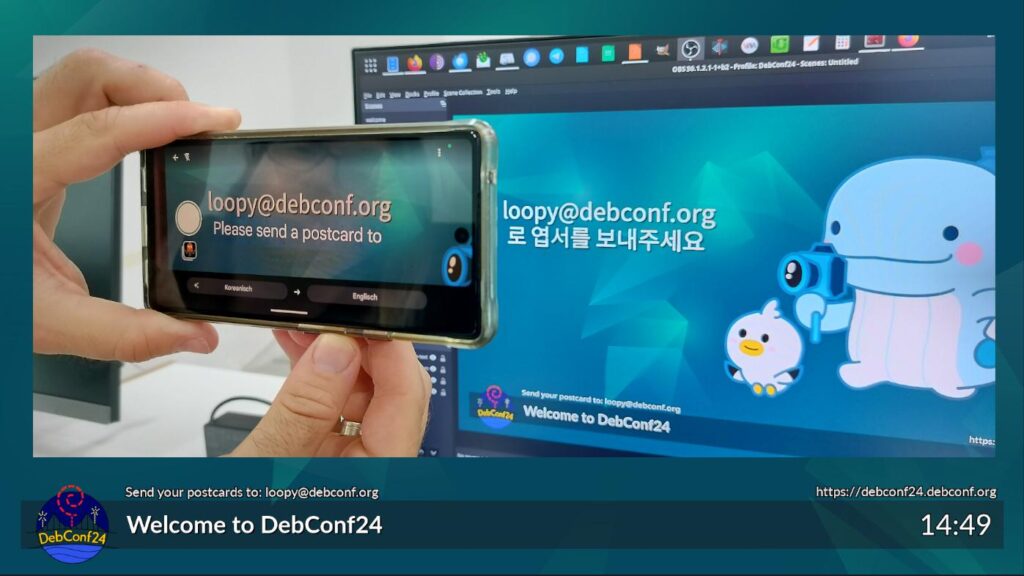
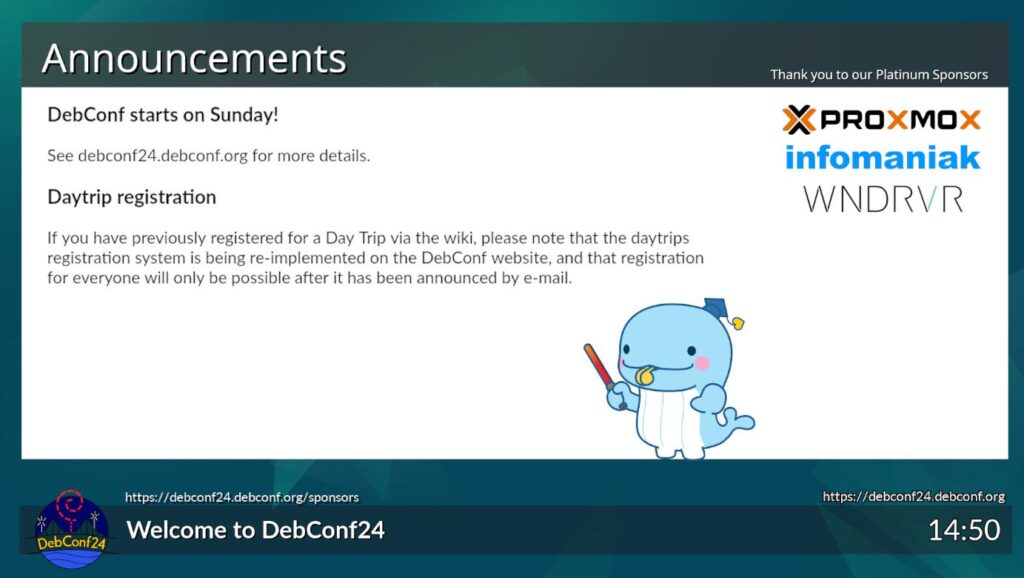
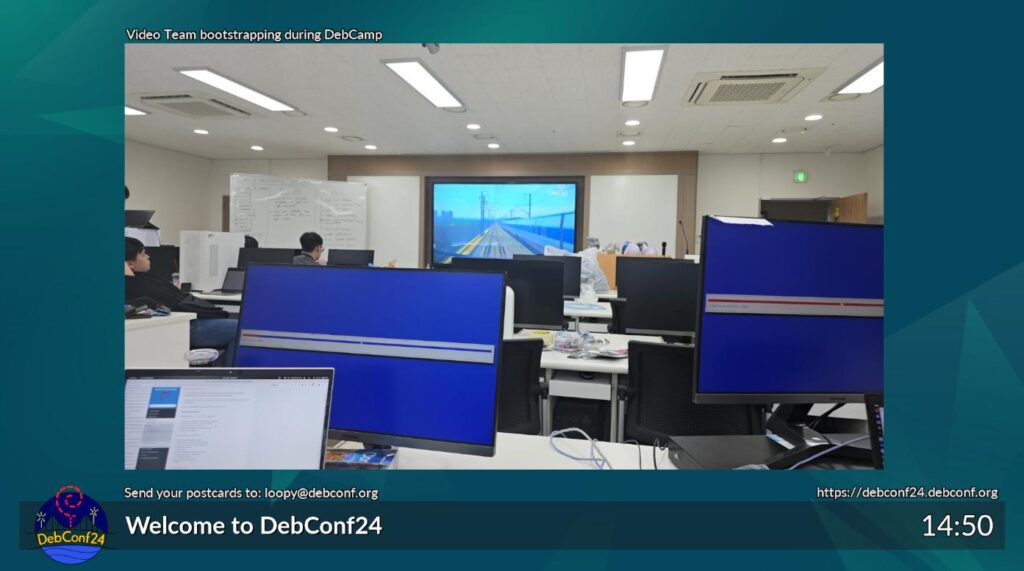

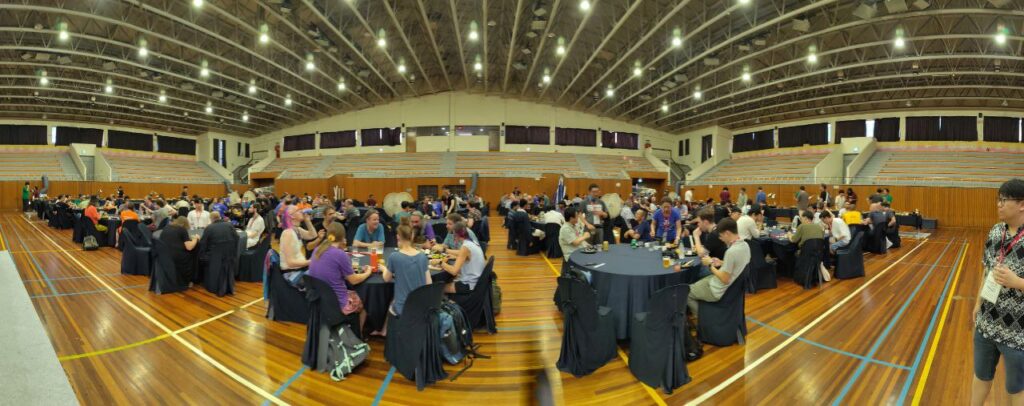 Conference Dinner Photo from Santiago
 Debian annual conference Debconf 24, Busan, South Korea

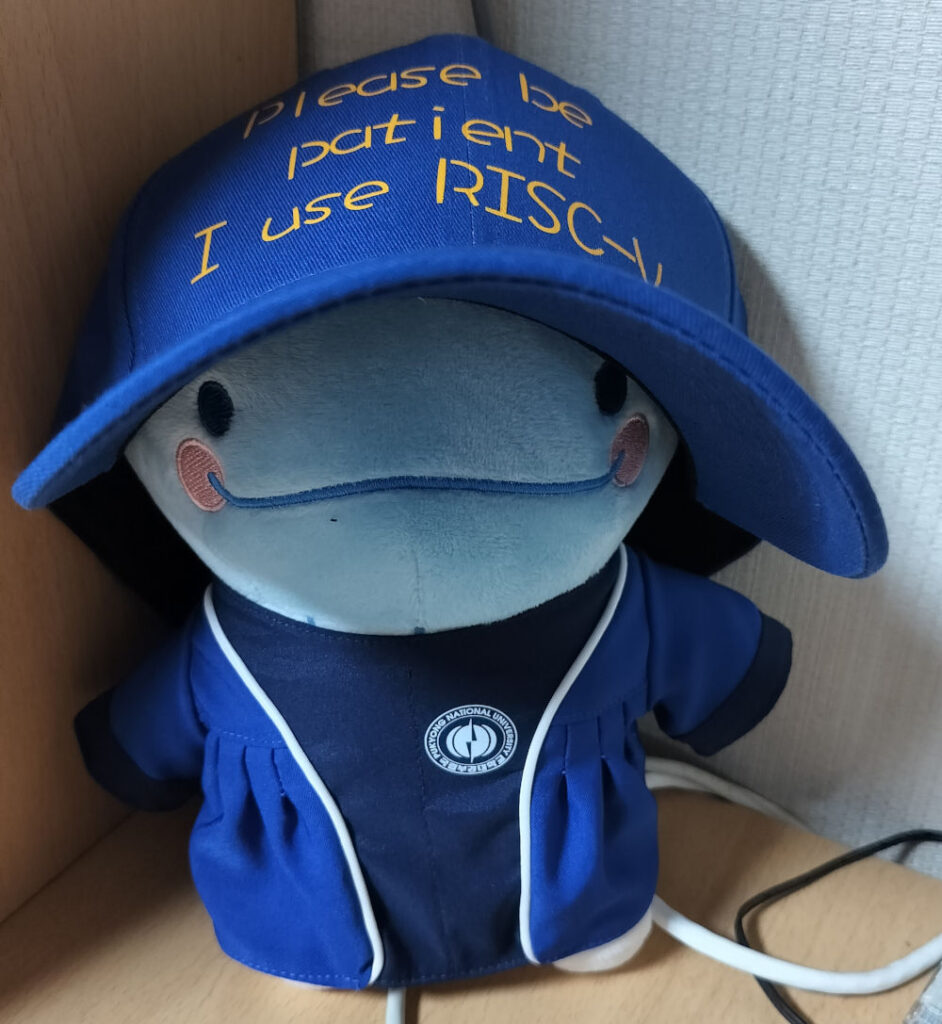
 Debian annual conference Debconf 24, Busan, South Korea
 Dear Debian community,
this are my bits from DPL written at my last day at another great
DebConf.
DebConf attendance
At the beginning of July, there was some discussion with the bursary and
content team about sponsoring attendees. The discussion continued at

 Official logo of DebConf23
 Suresh and me celebrating Onam in Kochi.
 Four Points Hotel by Sheraton was the venue of DebConf23. Photo credits: Bilal
 Photo of the pool. Photo credits: Andreas Tille.
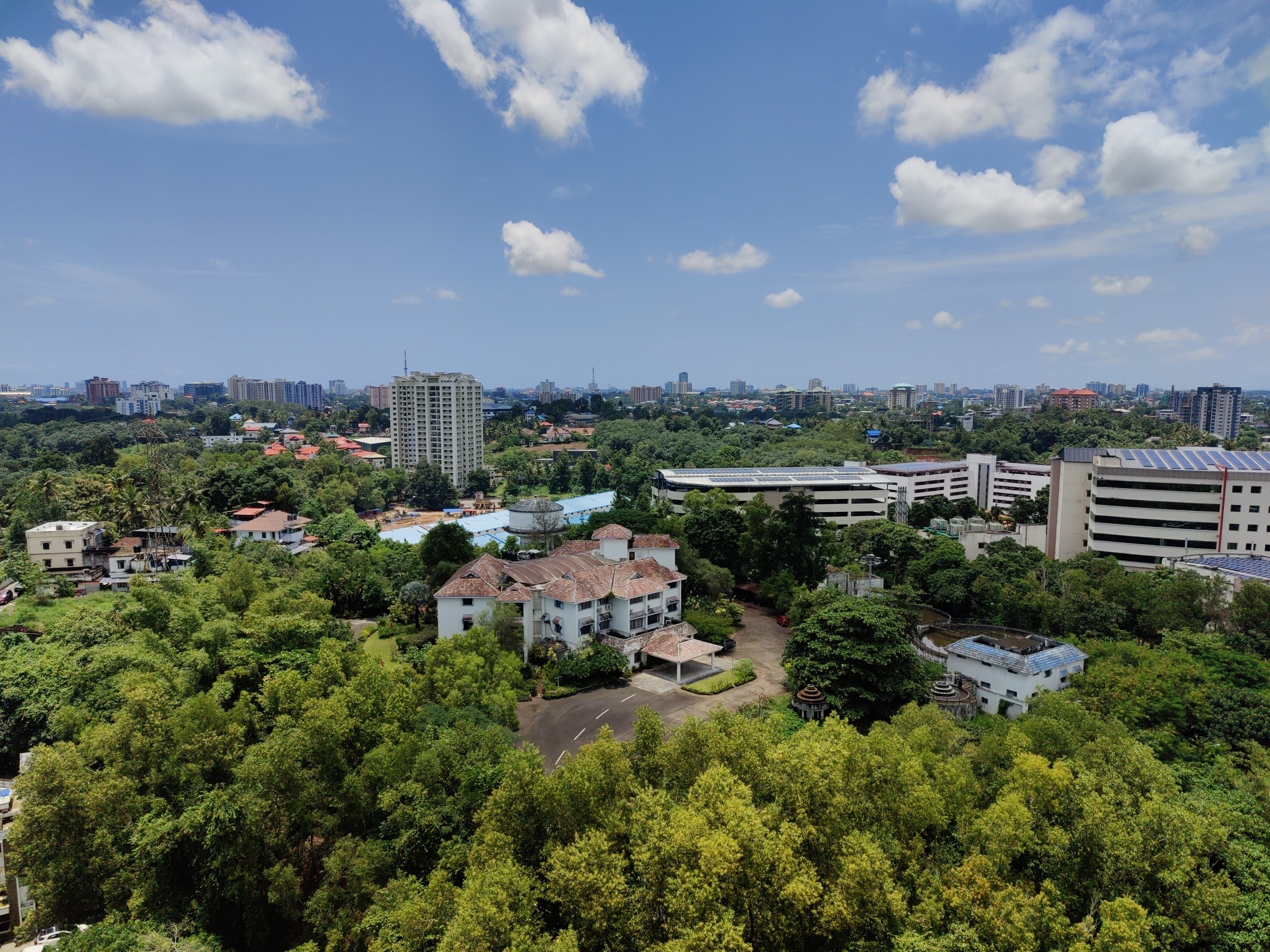 View from the hotel window.
 This place served as lunch and dinner place and later as hacklab during debconf. Photo credits: Bilal
 Picture of the awesome swag bag given at DebConf23. Photo credits: Ravi Dwivedi
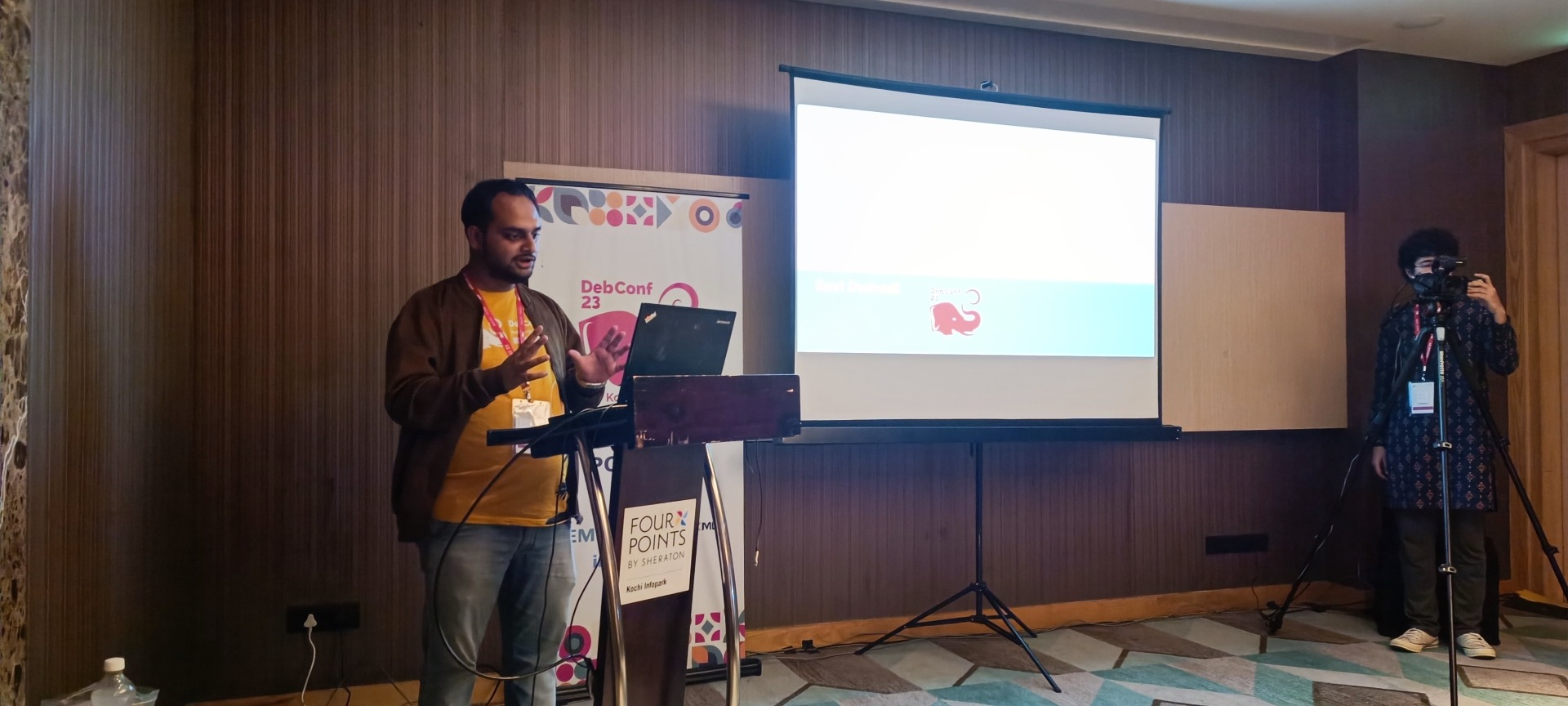 My presentation photo. Photo credits: Valessio
 Selfie with Anisa and Kristi. Photo credits: Anisa.
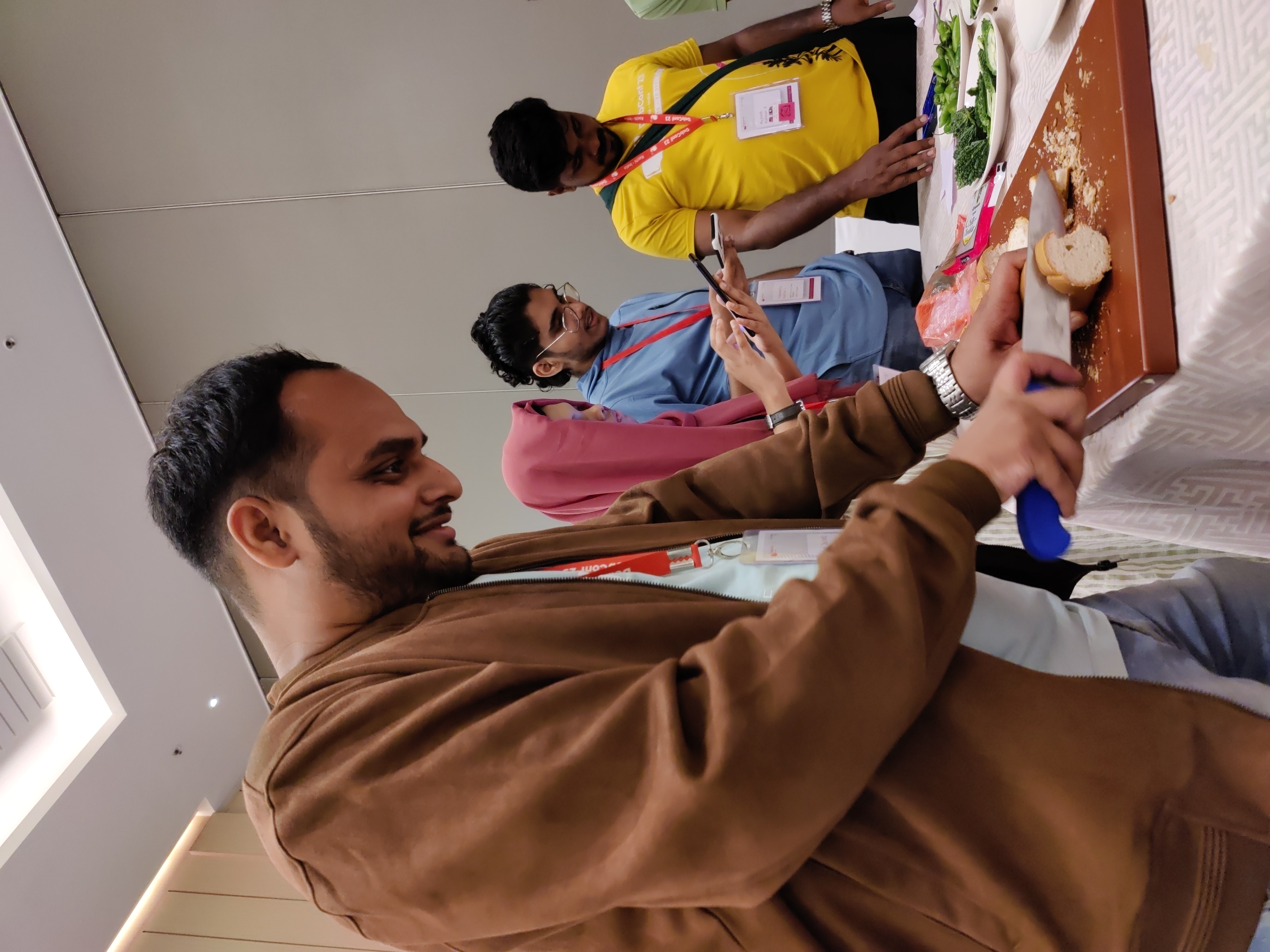 Me helping with the Cheese and Wine Party.
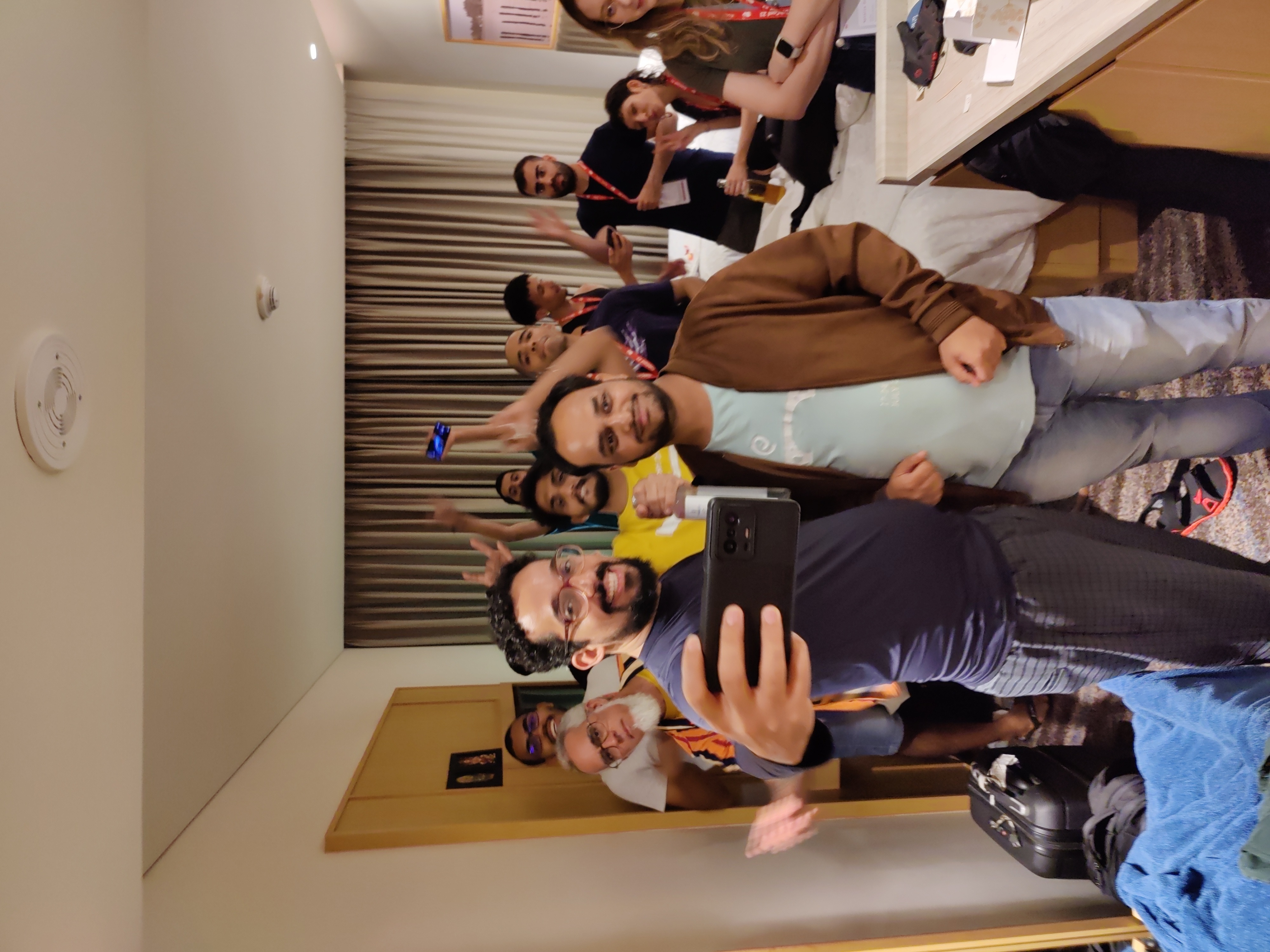 This picture was taken when there were few people in my room for the party.
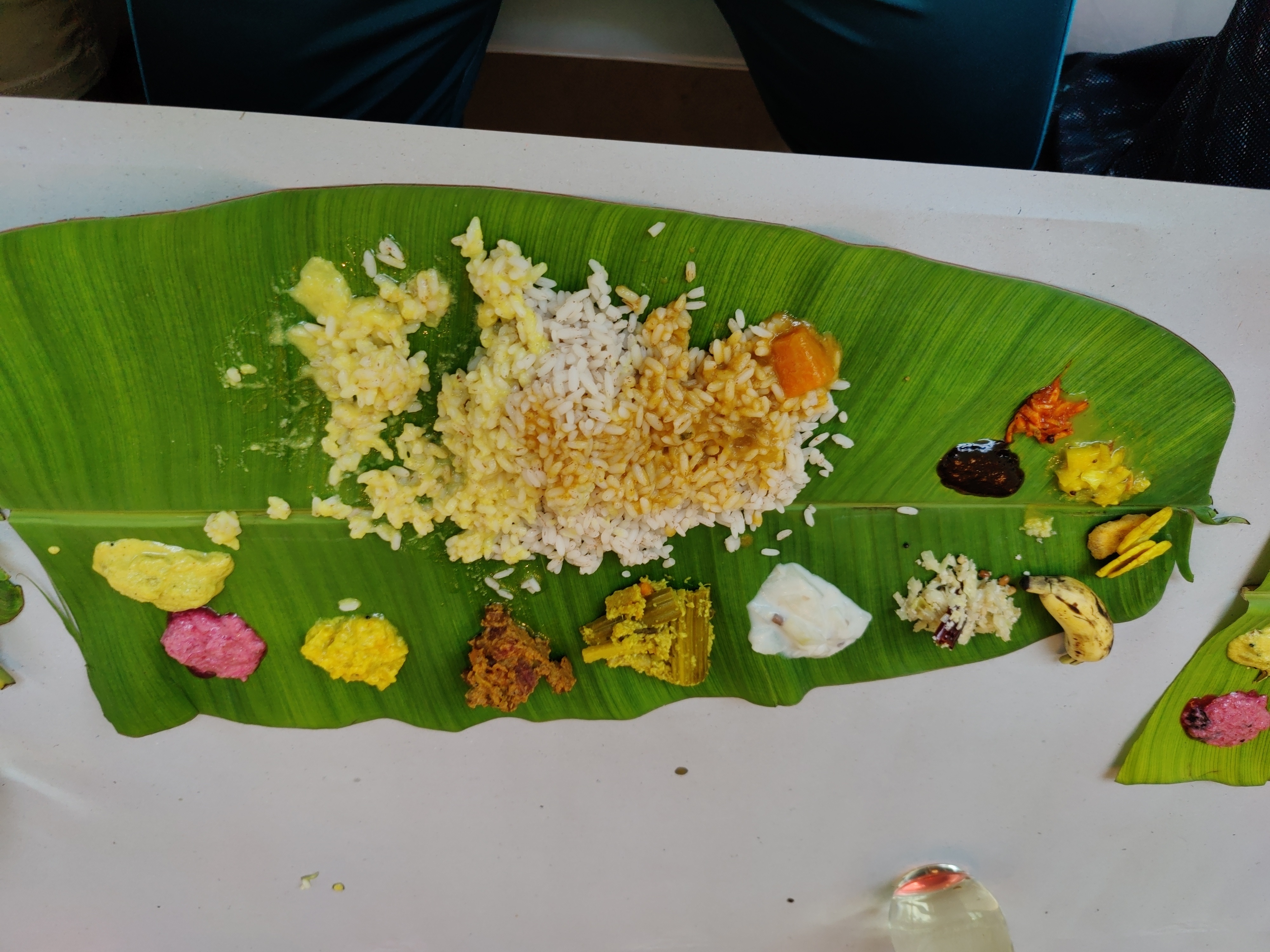 Sadhya Thali: A vegetarian meal served on banana leaf. Payasam and rasam were especially yummy! Photo credits: Ravi Dwivedi.
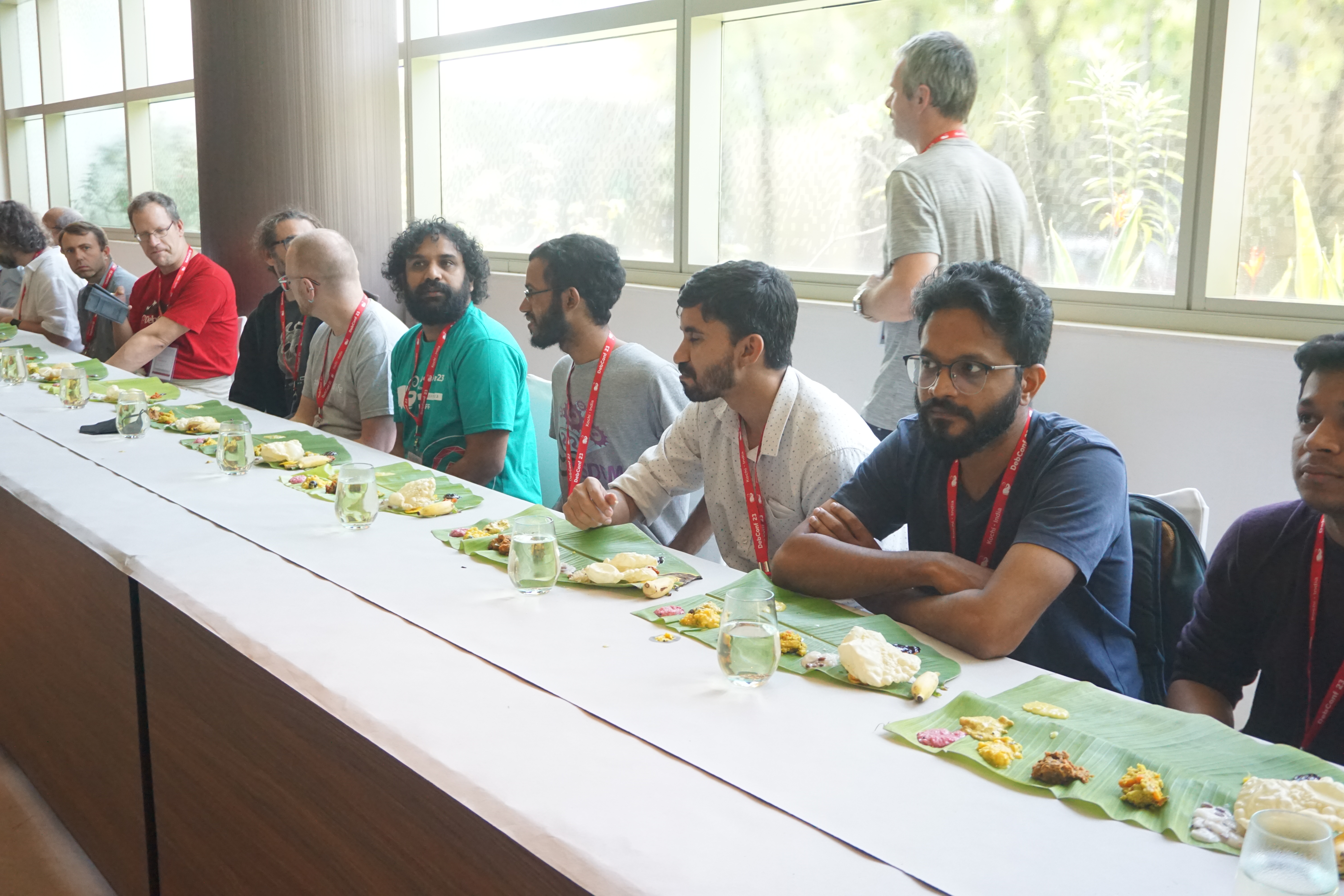 Sadhya thali being served at debconf23. Photo credits: Bilal
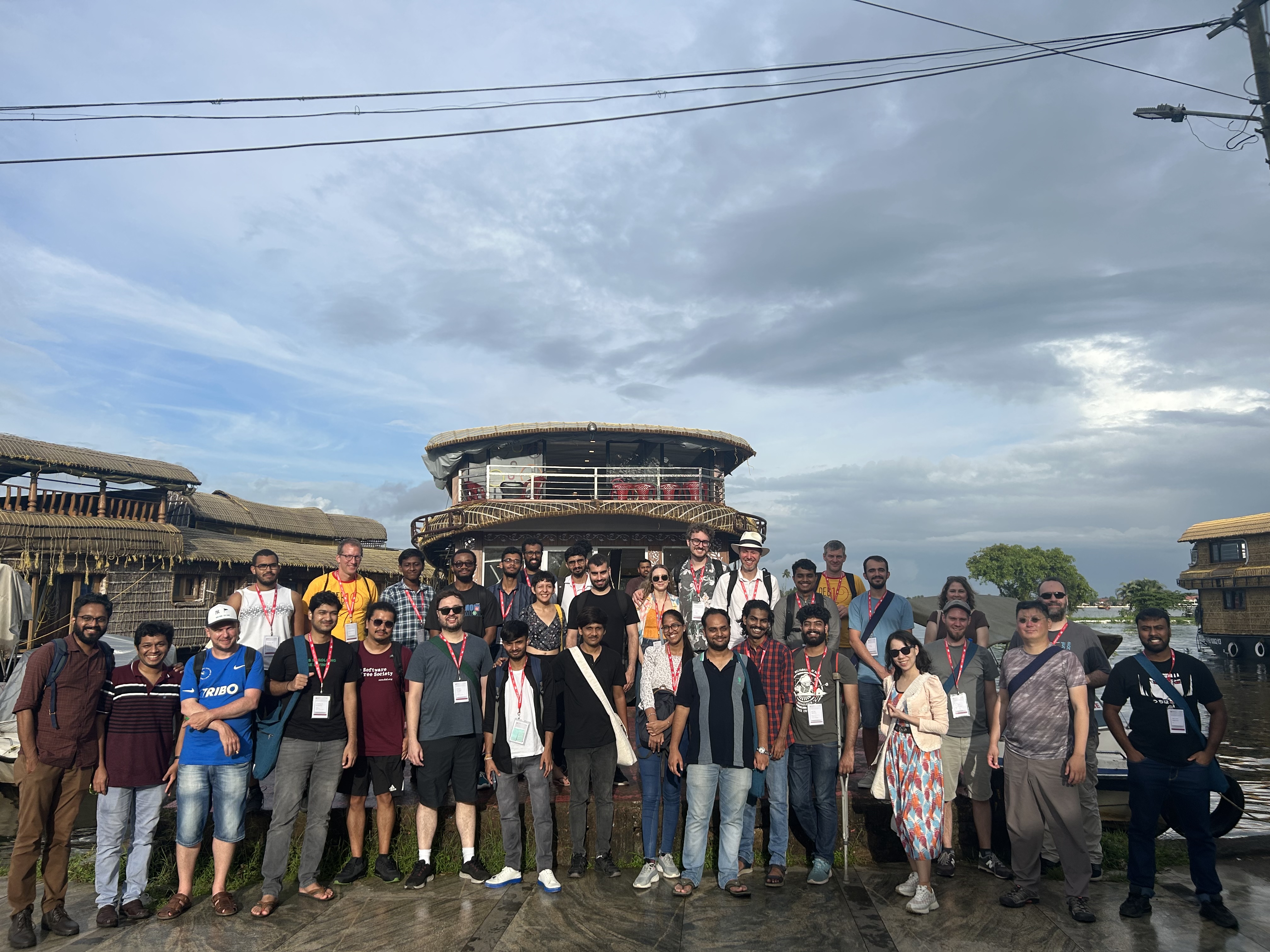 Group photo of our daytrip. Photo credits: Radhika Jhalani
 A selfie in memory of Abraham.
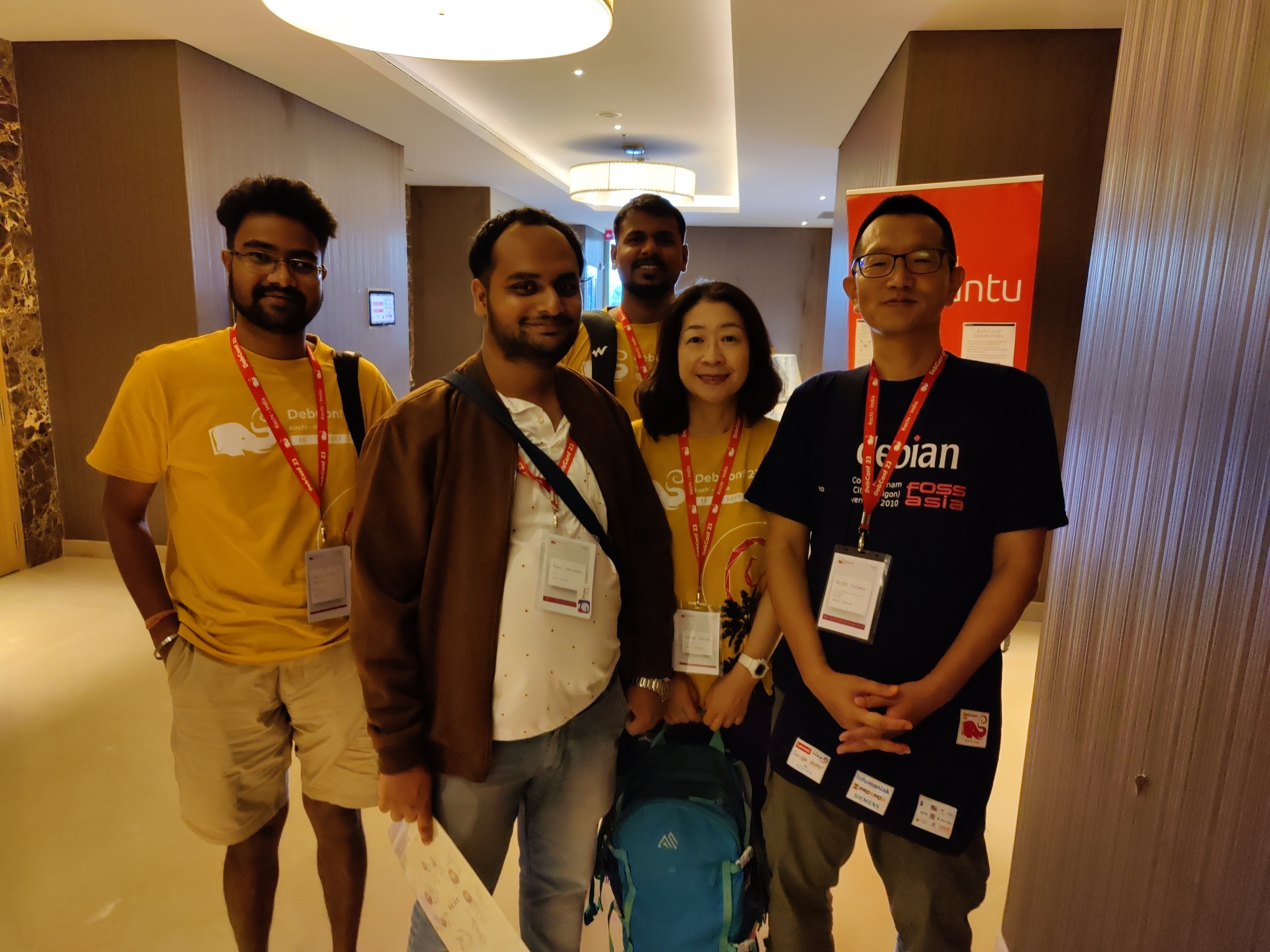 Thanks to Niibe Yutaka (the person towards your right hand) from Japan (FSIJ), who gave me a wonderful Japanese gift during debconf23: A folder to keep pages with ancient Japanese manga characters printed on it. I realized I immediately needed that :)
 This is the Japanese gift I received.
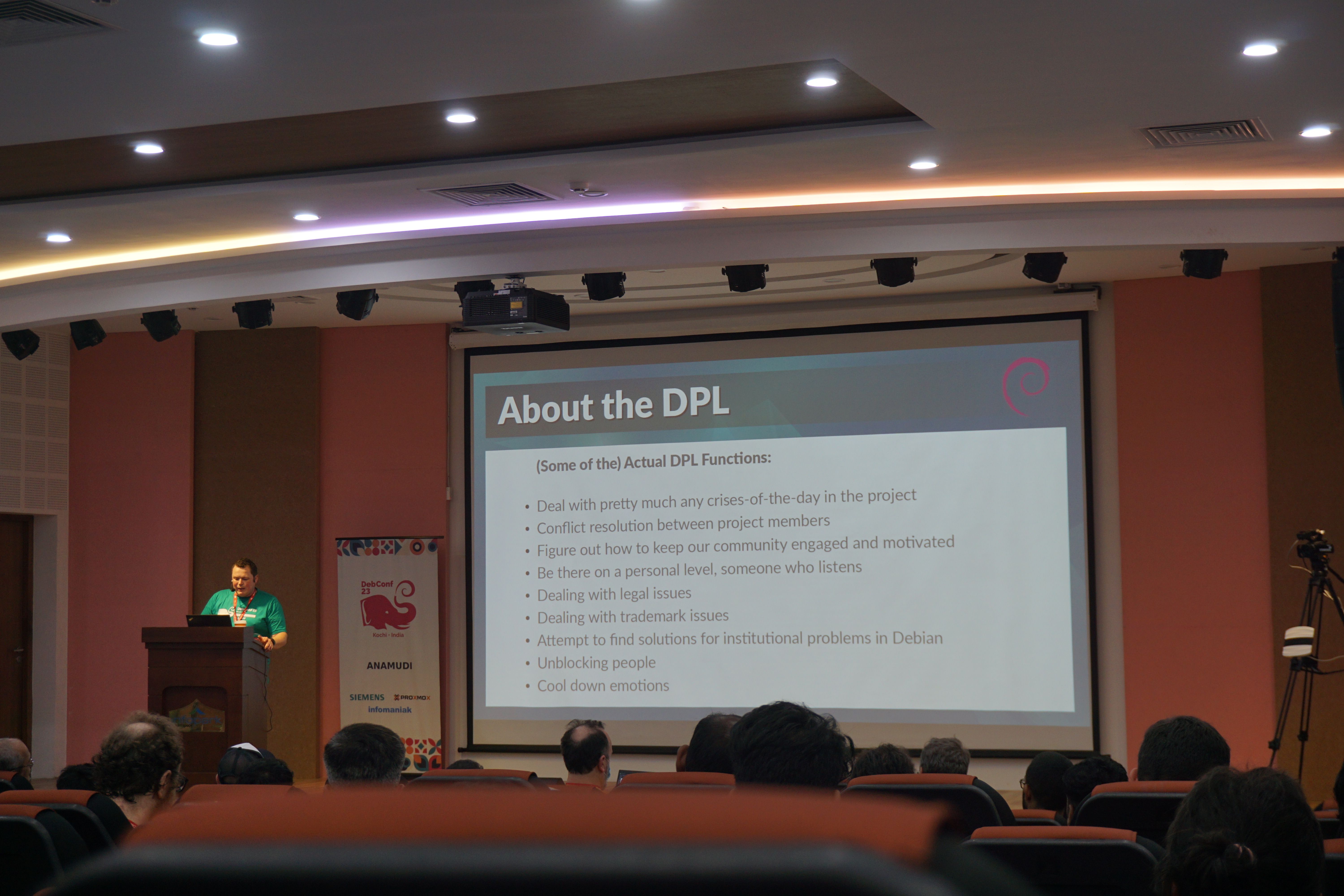 Bits from the DPL. Photo credits: Bilal
 Kristi on GNOME community. Photo credits: Ravi Dwivedi.
 Abhas' talk on home automation. Photo credits: Ravi Dwivedi.
 I was roaming around with a QR code on my T-shirt for downloading Prav.
 Me in mundu. Picture credits: Abhijith PA
 From left: Nilesh, Saswata, me, Sahil. Photo credits: Sahil.
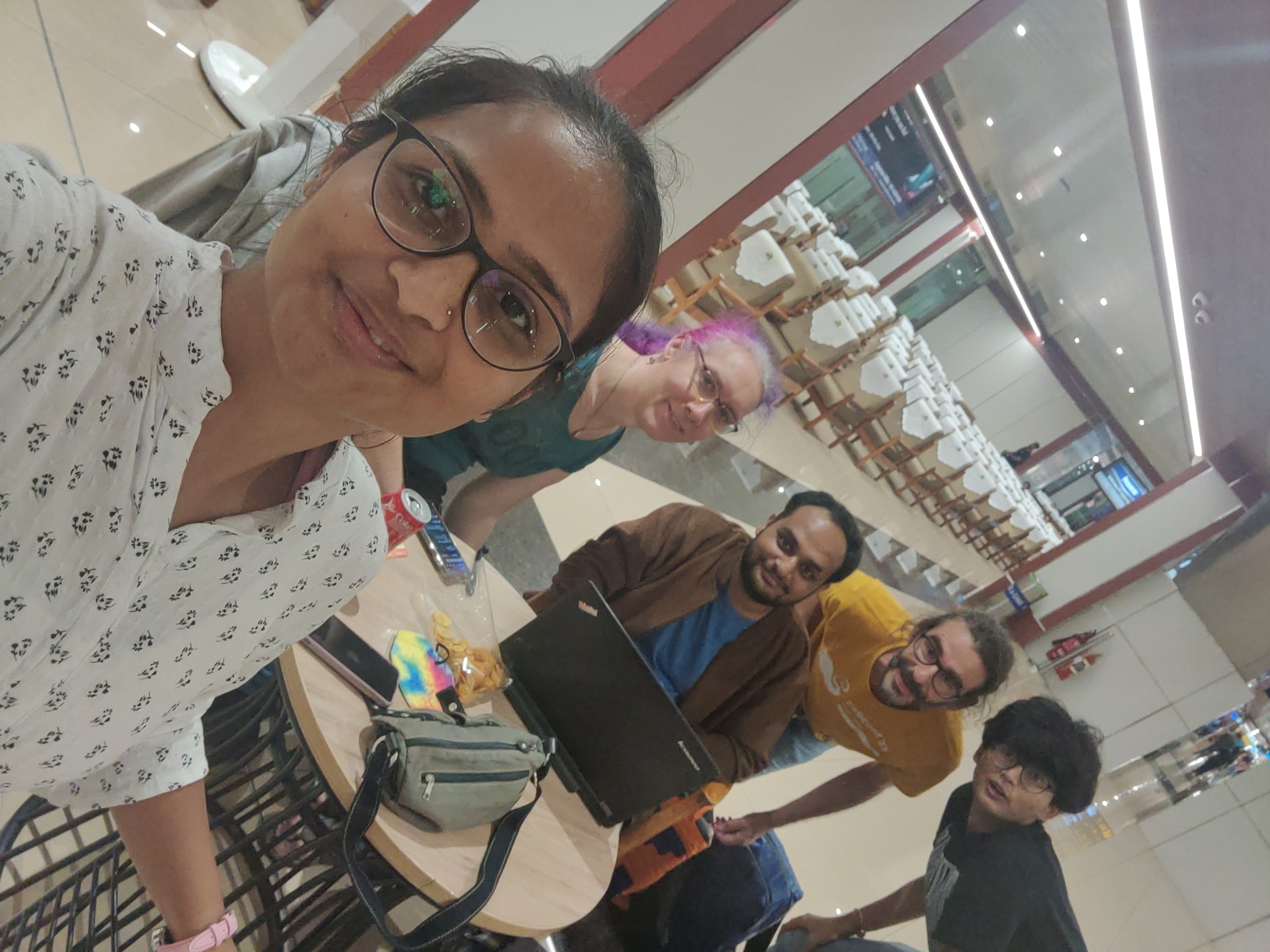 Ruchika (taking the selfie) and from left to right: Yash,
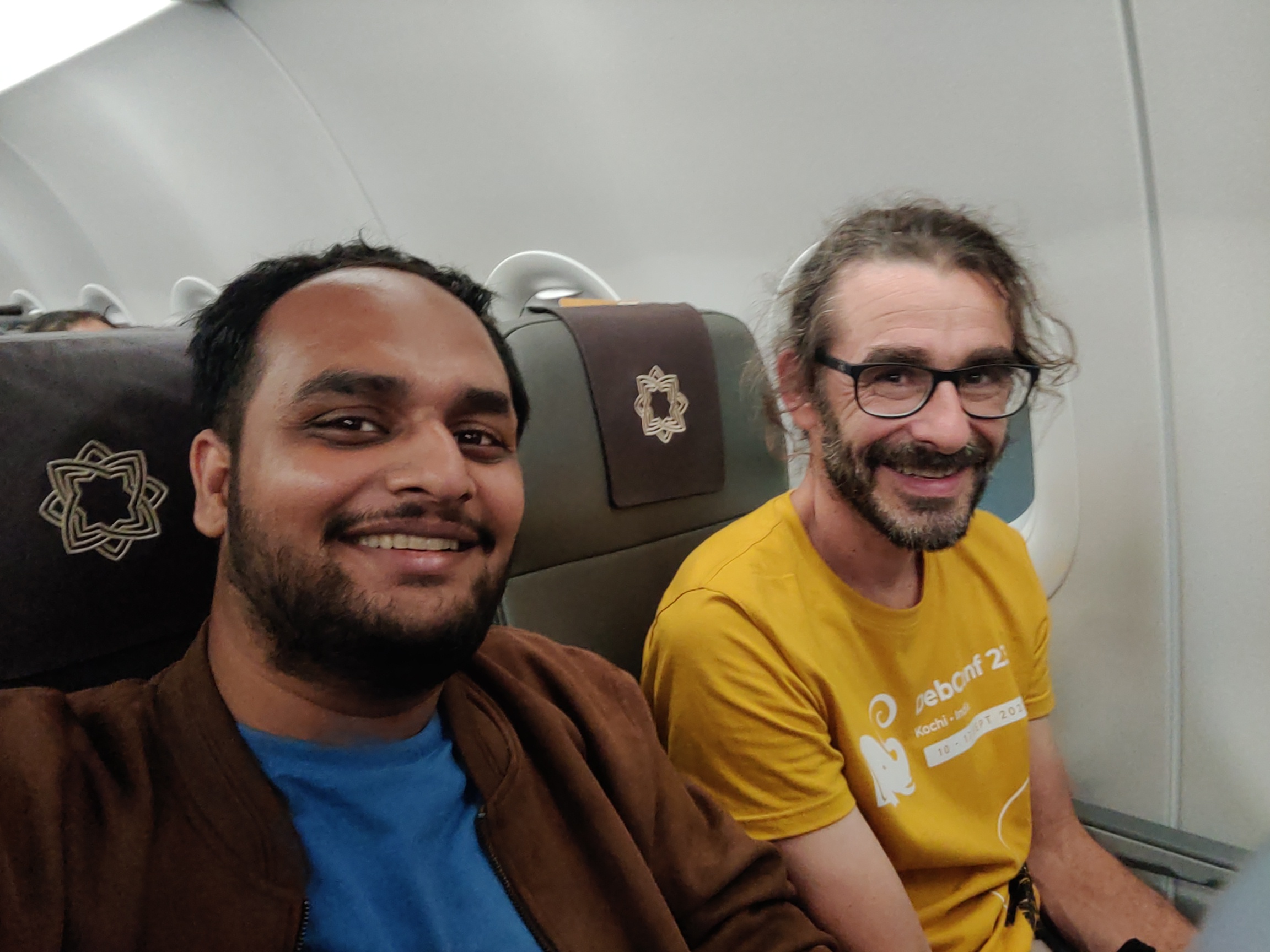 Joost and me going to Delhi. Photo credits: Ravi.
 DebConf8
This tshirt is 12 years old and from DebConf8.

 Update: added another xkcd link, spelled out Kurt's name after talking to him and added a link to a video of the group hug.
 I know most Debian people know about this already But in case you
don t follow the usual Debian communications channels, this might
interest you!
Given most of the world is still under COVID-19 restrictions, and that
we want to work on Debian, given there is no certainty as to what the
future holds in store for us Our DPL fearless as they always are
had the bold initiative to make this weekend into the first-ever
 So, we are already halfway through DebCamp (which means, you can come
and hang out with us in the
 Previously:


 I mean, it is easy to make fun of Trump, he is just too stupid and incapable and uneducated. But what the French president