setuptools 84 is now in Debian and no longer contains pkg_resources. Removing uses of that module has been an ongoing project for a while now, but I did another batch of fixes this month:
A new python-coverage version triggered several build regressions due to a known problem in pytest-cov. I worked around these by setting COVERAGE_CORE=ctrace:
A new and exciting version of our still-new package myman reached CRAN this morning, and has been
built for r2u and on
r-universe. The
matching Python package
has also been updated. The package offers nineteen hundred eighty four
My man posts by Kevin Kruse
made on bsky during the summer of 2026.
Each wave picked at one particular public persona. This package wrapse
these up in the style of packages like fortunes or gaussfacts.
A sample usage illustration shows how to extract by pattern, and
shows posts from the two most recent waves:
>library(myman)>myman("maitre")My man looks like he's inquiring with the maitre'd about the house curly fries.-- about Howard Lutnick on 2026-08-28My man looks like a maitre'd who deeply doubts you have a reservation. -- about Scott Bessent on 2026-08-31My man looks like he's asked the maitre'd to remove a party of four he finds visuallyunpleasant. -- about Scott Bessent on 2026-08-31My man looks like the maitre'd at a very exclusive restaurant called The Berghof.-- about JD Vance on 2026-09-13My man looks like he's asking the maitre'd where they source their corn dogs.-- about Palmer Luckey on 2026-10-02My man looks like Data had to borrow a sports jacket from the maitre'd. -- about Elon Musk on 2026-10-05>
One can also subset by target , or sample randomly (which is the
default).
As noted during the initial
announcement last week, wave eight did not make it into the initial
CRAN release as it happened
while the package was under review. Waves nine and ten occured more or
less while I was out of town last weekend so this release now brings
three new waves to the CRAN package! We also added two new helper
functions to extract the underlying data frame object, and tabulate the
targetted men.
To align the version number with the count of post waves , we
switched to version 0.10.0 for this release and the corresponding Python package release so
that both implementations now have the same version number.
The NEWS entry for this release follows.
Changes in version 0.10.0
(2026-10-08)
New waves nine (100 posts) and ten (190 posts) made last week;
total is now 1984 posts
New helper functions posts() and men()
retrieving data.frame of posts and tabulation of targets
Internal post gathering and aggregation functions have been
updated and generalized
Versioning scheme now goes with post waves (also for Python
sibbling)
I ve tested the DBUS interfaces for Kdeconnect (the system for connecting a KDE desktop to a phone or another computer). Unlike most DBUS interfaces it has a significant tree of interfaces so the busctl command to get the tree is important. Here s the useful things I discovered:
# list basic interfaces for kdeconnect
qdbus6 org.kde.kdeconnect.daemon /modules/kdeconnect
# get tree of interfaces for kdeconnect
busctl --user tree org.kde.kdeconnect.daemon
# get list of devices
qdbus6 --literal org.kde.kdeconnect.daemon /modules/kdeconnect org.kde.kdeconnect.daemon.deviceNames
# list interfaces for a device (DEVID is a hex string from the above command)
qdbus6 org.kde.kdeconnect.daemon /modules/kdeconnect/devices/$DEVID
# get battery charge
qdbus6 org.kde.kdeconnect.daemon /modules/kdeconnect/devices/$DEVID/battery org.kde.kdeconnect.device.battery.charge
Sending an SMS apparently requires using the QVariantList type which is more pain than I wanted so I tried the kdeconnect-cli command. Here s a quick summary of how to use it:
# list devices
kdeconnect-cli -l
# send a SMS
kdeconnect-cli -d $DEVID --send-sms "the message" --destination $NUMBER
# find device (ring)
kdeconnect-cli --ring -d $DEVID
# send a notification message
kdeconnect-cli --ping-msg "this is the message" -d $DEVID
# unlock and lock screen (only works on Debian devices for me not Android devices)
kdeconnect-cli --unlock -d $DEVID
kdeconnect-cli --lock -d $DEVID
There doesn t seem to be support for making phone calls via kdeconnect which is a significant omission. It s a very common situation to want to call a number that s listed on a web site or in some other data source that s easier to access on a PC than on a phone. The clipboard could be used but that s needless pain.
Related posts:
Nheko DBUS Nheko is my current favourite client for the Matrix IM...
Moving Between Devices I previously wrote about the possibility of transferring work between...
dbus error Strange dbus error from the KDE power monitoring tool...
netip.Addr features an Unmap()
method returning the unwrapped IPv4 contained in an IPv4-mapped IPv6
address: from ::ffff:203.0.113.10 or ::ffff:cb00:710a, it returns
203.0.113.10.1 There is no Map() or To6() method for the reverse
direction. Such a method is trivial to implement, but Go maintainers have
rejected it on the grounds that users should write
netip.AddrFrom16(ip.As16()) and let the compiler optimize it.2 Today,
this pattern is eight times slower than a native method. How can we teach the
compiler to optimize this sequence?
The alternatives
Let s explore three ways to implement the map semantics for netip.Addr. My
favorite is to add it to the Go standard library. Go maintainers prefer a small
external helper chaining netip.AddrFrom16() and netip.Addr.As16(), hoping
the compiler eventually optimizes it. The unsafe package
opens a third path, with the same performance as the first solution.
Modifying the Go standard library
Internally, netip.Addr stores any IP address as a
128-bit value with an extra field z to encode the family and the zone:
typeAddrstructaddruint128zunique.Handle[addrDetail]typeaddrDetailstructisV6bool// IPv4 is false, IPv6 is true.zoneV6string// != "" only if IsV6 is true.var(z0unique.Handle[addrDetail]z4=unique.Make(addrDetail )z6noz=unique.Make(addrDetailisV6:true ))
AddrFrom4() encodes an IPv4 address as an
IPv4-mapped IPv6 address and sets z to the unique value z4:
// AddrFrom4 returns the address of the IPv4 address given by the bytes in addr.funcAddrFrom4(addr[4]byte)AddrreturnAddraddr:uint1280,0xffff00000000uint64(addr[0])<<24uint64(addr[1])<<16uint64(addr[2])<<8uint64(addr[3]) ,z:z4,
Unmap() turns an IPv4-mapped IPv6 address into an
IPv4 address by setting the z field to z4:
Implementing the reverse direction inside the Go standard library is trivial: we
set the z field to z6noz if the address is IPv4.
// To6 maps an IPv4 address to an IPv4-mapped IPv6 address. It returns an// IPv6 address unmodified.func(ipAddr)To6()Addrifip.Is4()ip.z=z6nozreturnip
As a helper
We can t access the z field from outside the net/netip package. Instead, we
build a small helper around the netip.AddrFrom16(ip.As16()) pattern:
// AddrTo6 maps an IPv4 address to an IPv4-mapped IPv6 address. It returns an// IPv6 address unmodified.funcAddrTo6(ipnetip.Addr)netip.Addrifip.Is4()ip=netip.AddrFrom16(ip.As16())returnip
As an unsafe function
Another solution uses the unsafe package to alter the Addr struct through
a proxy with the same memory layout:3
// addrProxy has the same memory layout as netip.Addr.typeaddrProxystructaddr[2]uint64// netip.uint128zunsafe.Pointer// unique.Handle[netip.addrDetail]var(anyIPv6=netip.IPv6Unspecified()netipZ6noz=(*addrProxy)(unsafe.Pointer(&anyIPv6)).z)// AddrTo6 maps an IPv4 address to an IPv4-mapped IPv6 address. It returns an// IPv6 address unmodified.funcAddrTo6(ipnetip.Addr)netip.Addrif!ip.Is4()returnip(*addrProxy)(unsafe.Pointer(&ip)).z=netipZ6nozreturnip
Benchmarks
On my computer, with Go 1.27.1, the standard library solution costs 0.88 ns per
operation, while the solution favored by Go maintainers costs 7.14 ns. The
unsafe solution matches the performance of the first one.
Assembly code
Let s check the assembly code the compiler generates for each solution.4
The one built into the standard library looks like this:5
// AX = input.addr.hi, BX = input.addr.lo, CX = input.zCMPQnet/netip z4(SB),CX; check "z" if this is an IPv4 addressJNEend; if not, stop hereMOVQnet/netip z6noz(SB),CX; CX = netip.z6nozend:RET// return value = Addr hi: AX, lo: BX, z: CX
Go s assembly language is not a direct representation of the underlying
machine language: it operates on a semi-abstract instruction set derived from
Plan 9 s assembler. It has four pseudo-registers: FP (frame pointer
for function arguments), PC (program counter), SB (static base pointer for
global symbols), and SP (stack pointer). It also has architecture-specific
registers like AX, CX, DX, BX, SI, DI, and R8 to R15.
Instructions storing data use their last argument as the destination.
Instructions can carry an explicit size suffix: MOVB moves a byte, MOVW 16
bits, MOVL 32 bits, and MOVQ 64 bits. In the example above, the first
instruction compares the 64-bit value z4 with the CX register.
The unsafe solution looks almost the same:
// AX = input.addr.hi, BX = input.addr.lo, CX = input.zCMPQnet/netip z4(SB),CX; check "z" if this is an IPv4 addressJNEend; if not, stop hereMOVQnetipZ6noz(SB),CX; CX = netip.z6nozend:RET// return value = Addr hi: AX, lo: BX, z: CX
The helper solution has far more instructions. To understand why, let s look at
the code for As16() and
AddrFrom16(). They are short enough for the compiler
to inline them.
We can already guess the pattern to optimize: the code packs the IP address into
an array, copies it, then unpacks it. If we inline the Go code by hand, we get:
Unfortunately, as of Go 1.26.8, the compiler is not smart enough to do the same:
// AX = input.addr.hi, BX = input.addr.lo, CX = input.z; Push the stack (32 bytes):; 0(SP) addr netip.uint128; 16(SP) a16 [16]bytePUSHQBPMOVQSP,BPSUBQ$32,SPCMPQnet/netip z4(SB),CX; check "z" if this is an IPv4 addressJNEend; if not, stop here; Pack: byteorder.BEPutUint64(a16[:8], input.addr.hi); byteorder.BEPutUint64(a16[8:], input.addr.lo)MOVBEQAX,net/netip a16+16(SP)MOVBEQBX,net/netip a16+24(SP); addr = a16, 16 bytes at once through the vector register X0MOVUPSnet/netip a16+16(SP),X0MOVUPSX0,net/netip addr(SP); CX = netip.z6nozMOVQnet/netip z6noz(SB),CX; Unpack: output.addr.hi = byteorder.BEUint64(addr[:8]); output.addr.lo = byteorder.BEUint64(addr[8:])MOVBEQnet/netip addr(SP),AXMOVBEQnet/netip addr+8(SP),BXend:ADDQ$32,SPPOPQBPRET// return value = Addr hi: AX, lo: BX, z: CX
The compiler does a decent job on the byte shuffling: the eight byte stores of
BEPutUint64() become a single MOVBEQ, which stores a register byte-swapped.
The eight byte loads of BEUint64() become a single MOVBEQ the other way
round.6 Three groups of instructions remain: a pack, a copy, and an
unpack.
Hacking the Go compiler
The Go compiler has several phases:
The compiler converts the syntax tree and its types into its own intermediate
representation (IR). This process, called noding, goes through
a serialization format named unified IR.
This phase runs two steps: order of evaluation decomposes complex
statements into simpler ones, and desugaring transforms higher-level Go
constructs, like switch or channels, into more primitive instructions or
calls to the runtime.
The compiler rewrites the SSA form into machine-specific variants,
allocates registers, and applies more optimization passes. At the end, the
assembler turns the generated instructions into machine code.
The hammer
My first idea is to replace occurrences of netip.AddrFrom16(ip.As16()) with
netip.Addr addr: ip.addr, z: netip.z6noz as early as possible, during the
noding process. Before that, the type checking phase prevents
us from accessing unexported struct fields.
Go 1.27 introduced a convenient debug option to dump the IR of a function at
interesting points during compilation:
$ GOTOOLCHAIN=go1.27.1GOAMD64=v3gobuild-a-gcflags="-d=astdump=AddrTo6Safe".
Writing text ast output for AddrTo6Safe to AddrTo6Safe.astWriting html ast output for AddrTo6Safe to AddrTo6Safe.htmlWriting html syntax output for AddrTo6Safe to AddrTo6Safe.syntax.html
In the HTML file, the first column shows the IR as it comes out of noding:
In the body of the if statement, we spot the calls to the method
netip.Addr.As16() and to the function netip.AddrFrom16(). Our goal is to
patch them with a struct literal:
In noder s reader.go, the expr() method builds the IR tree for
an expression. At the end of the exprCall case, we add a call to a
rewriteAddrFrom16As16() function. It takes the current node and returns the
struct literal on success, or nil if the rewrite is not possible. First, we
check that we have the expected pattern: a call to the netip.AddrFrom16()
function with a call to the netip.Addr.As16() method as its only argument:
Have a look at the complete patch.7 We can test it
with the following commands:
$ cdsrc
$ ./make.bash
Building Go cmd/dist using /usr/lib/go-1.27. (go1.27.1 linux/amd64)Building Go toolchain1 and bootstrap cmd/go (go_bootstrap) using /usr/lib/go-1.27.Building Go toolchain2 using go_bootstrap and Go toolchain1.Building Go toolchain3 and commands using go_bootstrap and Go toolchain2.Checking command staleness for linux/amd64.---Installed Go for linux/amd64 in /home/bernat/code/free/goInstalled commands in /home/bernat/code/free/go/bin*** You need to add /home/bernat/code/free/go/bin to your PATH.$ exportPATH=$PWD/../bin:$PATH$ goversion
go version go1.28-devel_9834516e20 Sat Sep 12 08:23:11 2026 -0700 linux/amd64$ gotestnet/netip/...
ok net/netip 0.224s$ cd../../go-netip-addrto6
$ gotest.
ok github.com/vincentbernat/go-netip-addrto6 0.062s
The generated code for the helper is now the shortest possible version!
// AX = input.addr.hi, BX = input.addr.lo, CX = input.zCMPQnet/netip z4(SB),CX; check "z" if this is an IPv4 addressJNEend; if not, stop hereMOVQnet/netip z6noz(SB),CX; CX = netip.z6nozend:RET// return value = Addr hi: AX, lo: BX, z: CX
Go maintainers are unlikely to accept this change. It relies on the internal
structure of net/netip.Addr. It s an ugly hack in the noder, whose job is to
faithfully translate the type-checked AST into the IR. And it s harder to
maintain than adding a To6() method.
The screwdriver
The right place for such an optimization is the generic SSA phase. One of
the last machine-independent passes is memcombine. With the appropriate debug
flag, the compiler dumps the SSA form after this pass:8
The result of the memcombine pass follows the same structure as the assembly
code for AddrTo6Safe()we looked at earlier: two stores,
one move, and two loads we would like to optimize away.
Each line features a value identifier (v442), an operation with its type
(Bswap64 <uint64>), and its arguments (v490).9 Values are the basic
building blocks of SSA and are defined exactly once. Square brackets enclose
integer parameters ([8]) and curly braces contain auxiliary arguments
( netip.addr ). Operations writing to memory produce a new memory state. Every
memory operation takes the current state as its last argument, which keeps them
in order.
To simplify this code, we could apply three rewriting rules:
The first one adds a shortcut when loading through a move: (Load (OffPtr
[o] p) (Move p src mem)) => (Load (OffPtr [o] src) mem). This matches v174
with its arguments v415 and v286 and creates a new value v600:
The second one simplifies a load following a store: (Load p (Store p x
_)) => x. The load is forwarded: the stored value replaces it and no memory
access remains. It matches v174. It notices that v600 and v173 are the
same address and replaces v174 with a copy of v442:
To optimize it away, we also apply three rewriting rules:
The first one also adds a shortcut when loading through a move, but
without an offset: (Load p (Move p src mem)) => (Load src mem). This rewrites v416
to use arguments from v286:
The second rule forwards a value stored one step earlier, skipping over a
store to another address: (Load p (Store q _ (Store p x _))) => x. This
matches v416: x is v542, p is v22 (&a16), q is v173
(&a16[8]), and p and q do not overlap for uint64.
In practice
Most of these rules already exist in generic.rules. They use
conditions to validate their context: ssa.IsSamePtr() for the same address,
ssa.Disjoint() for addresses that do not overlap. The rule forwarding a stored
value to a load already exists with three variants looking through several other
stores. Here are the two we need:
There is no generic rule to cancel two byte swaps, but the AMD64 lowering
pass includes this rule:
(BSWAP(Q L)(BSWAP(Q L)p))=>p
After switching to Go s development branch and adding the missing
rule, the generated assembly code is worse than with Go 1.26.8,
even though our additional rule slightly improves the situation at the end:
// AX = input.addr.hi, BX = input.addr.lo, CX = input.z; Push the stack (16 bytes):; 0(SP) a16 [16]bytePUSHQBPMOVQSP,BPSUBQ$16,SPCMPQnet/netip z4(SB),CX; check "z" if this is an IPv4 addressJNEend; if not, stop here; The four forwarded bytes: the low half of input.addr.lo is taken apart and; put back together in registersMOVQBX,DX; DX = input.addr.loSHRQ$24,BX; BX = input.addr.lo >> 24MOVQDX,SI; SI = input.addr.loSHRQ$16,DX; DX = input.addr.lo >> 16MOVQSI,DI; DI = input.addr.lo, kept for the packSHRQ$8,SI; SI = input.addr.lo >> 8MOVBLZXDIB,R8; R8 = byte(input.addr.lo)MOVBLZXSIB,SI; SI = byte(input.addr.lo >> 8)SHLQ$8,SIORQR8,SI; SI = two low bytes of input.addr.loMOVBLZXDL,DX; DX = byte(input.addr.lo >> 16)SHLQ$16,DXORQSI,DXMOVBLZXBL,BX; BX = byte(input.addr.lo >> 24)SHLQ$24,BXORQDX,BX; BX = input.addr.lo & 0xffffffff; Pack: byteorder.BEPutUint64(a16[:8], input.addr.hi); byteorder.BEPutUint64(a16[8:], input.addr.lo)MOVBEQAX,net/netip a16(SP)MOVBEQDI,net/netip a16+8(SP); The four other bytes of input.addr.lo, read one by one from a16MOVBLZXnet/netip a16+11(SP),DX; a16[11]SHLQ$32,DXORQDX,BXMOVBLZXnet/netip a16+10(SP),DX; a16[10]SHLQ$40,DXORQDX,BXMOVBLZXnet/netip a16+9(SP),DX; a16[9]SHLQ$48,DXORQDX,BXMOVBLZXnet/netip a16+8(SP),DX; a16[8]SHLQ$56,DX; output.z = netip.z6nozMOVQnet/netip z6noz(SB),CX; output.addr.hi = byteorder.BEUint64(a16[:8])MOVBEQnet/netip a16(SP),AX; output.addr.lo assembled from the previous stepsORQDX,BXend:LEAVEQRET// return value = Addr hi: AX, lo: BX, z: CX
The rule loading through a move, added in Go 1.27, introduced this regression.
Out of order
Let s not give up now! In reality, the rewriting rules run before memcombine,
notably in the late opt pass. At this point, the inlined versions of
BEPutUint64() and BEUint64() still expand to sixteen byte stores and sixteen
byte loads, matching their source code:
funcBEUint64(b[]byte)uint64_=b[7]// bounds check hint to compiler; see golang.org/issue/14808returnuint64(b[7])uint64(b[6])<<8uint64(b[5])<<16uint64(b[4])<<24uint64(b[3])<<32uint64(b[2])<<40uint64(b[1])<<48uint64(b[0])<<56
Let s follow two bytes of output.addr.lo: addr[15] and addr[11]. Here is
a simplified SSA form before late opt:
The first rule loads through the move: (Load (OffPtr [o] p) (Move p src mem))
=> (Load (OffPtr [o] src) mem). It matches both loads, which now read a16
with the memory state before the copy:
The second rule shortcuts a load following a store: (Load p (Store p x _)) =>
x. It matches v435, as v282 stores a16[15]. It does not match v481:
v235 stores a16[11] four stores earlier in the chain, while the variants of
this rule look through three stores at most.
The same happens to the other bytes: the rule forwards the four bytes stored
last, a16[12] to a16[15]. The twelve other loads now read a16 instead of
addr.
BEUint64() becomes a chain of Or64, each one adding a byte shifted into
place. memcombine is a pass written in Go, not a set of rewrite
rules. It starts from the last Or64 of the chain and collects up to eight
terms. If each term is a byte load, extended to 64 bits and shifted, and if the
eight loads read consecutive addresses from the same pointer with the same
memory state, it replaces the whole chain with a single 64-bit load and a byte
swap. Otherwise, it tries again with four, then two terms, and from each
intermediate Or64. Here is the loop checking each term in a simplified version
of combineLoads():
From v520, four of the eight terms are forwarded bytes, not loads from memory,
and memcombine can t combine them. It doesn t merge the four remaining loads
either, as they sit on top of the forwarded bytes.
Back in order
In summary, the rewriting rules run too early to be effective. A quick
workaround exists: run an earlier round of memcombine before late opt. After
this change, the generated code for the helper is back to the
shortest possible version:
// AX = input.addr.hi, BX = input.addr.lo, CX = input.zCMPQnet/netip z4(SB),CX; check "z" if this is an IPv4 addressJNEend; if not, stop hereMOVQnet/netip z6noz(SB),CX; CX = netip.z6nozend:RET// return value = Addr hi: AX, lo: BX, z: CX
Next steps
I think Go maintainers would reject this change because of the additional
memcombine pass. Instead, I plan to publish this blog post and bring up the
subject again as a follow-up to issue #54365. Either the sheer complexity and
the Go 1.27 regression convince the maintainers that adding a To6() method is
simpler and more efficient, or they advise me on how to move forward. Either
way, digging into this subject taught me a lot about the Go compiler!
IPv4-mapped IPv6 addresses let you handle only IPv6 addresses in your code
and keep conversions at a few well-defined boundaries. I use them in
Akvorado.
This is not strictly equivalent. The zero value becomes :: while it would
make more sense to leave it untouched.
To avoid catastrophic bugs when netip.Addr s layout changes, you must add
tests to detect it. This is more dangerous if you put this code in a
package. Either ask users to run the tests themselves, or detect the change
at run time and panic. Hiding this optimization behind a build tag would
make users aware of this potential trap.
I produced the assembly code with GOTOOLCHAIN=go1.26.8 GOAMD64=v3 ./go-asm
'\.asm' from the companion repository, then edited it a bit to keep this
article from turning into an endless rabbit hole. Due to an unfortunate
sequence of events, we switch between versions: Go 1.27 introduced a
regression that blurs the point of this article.
The function is short enough for the compiler to inline it, so the assembly
code may vary depending on the surrounding code.
MOVBEQ requires GOAMD64=v3, matching the x86-64-v3
microarchitecture from 2013. Otherwise, the compiler translates
BEPutUint64() to BSWAPQ+MOVQ and BEUint64() to MOVQ+BSWAPQ.
When the call is used as a statement, a struct literal alone is invalid. The
patch then turns it into _ = netip.Addr .
The compiler can also write an HTML file with the result of each pass:
$ GOSSAFUNC=AddrTo6Safe\> GOTOOLCHAIN=go1.26.8\> GOAMD64=v3gobuild-a.
dumped SSA for AddrTo6Safe,1 to ./ssa.html
Source line numbers in parentheses follow value identifiers, but I removed
them from the examples. The SSA form also features branches, but we don t
need them to understand our optimizations.
netip.Addr features an Unmap()
method returning the unwrapped IPv4 contained in an IPv4-mapped IPv6
address: from ::ffff:203.0.113.10 or ::ffff:cb00:710a, it returns
203.0.113.10.1 There is no Map() or To6() method for the reverse
direction. Such a method is trivial to implement, but Go maintainers have
rejected it on the grounds that users should write
netip.AddrFrom16(ip.As16()) and let the compiler optimize it.2 Today,
this pattern is eight times slower than a native method. How can we teach the
compiler to optimize this sequence?
The alternatives
Let's explore three ways to implement the map semantics for netip.Addr. My
favorite is to add it to the Go standard library. Go maintainers prefer a small
external helper chaining netip.AddrFrom16() and netip.Addr.As16(), hoping
the compiler eventually optimizes it. The unsafe package
opens a third path, with the same performance as the first solution.
Modifying the Go standard library
Internally, netip.Addr stores any IP address as a
128-bit value with an extra field z to encode the family and the zone:
typeAddrstructaddruint128zunique.Handle[addrDetail]typeaddrDetailstructisV6bool// IPv4 is false, IPv6 is true.zoneV6string// != "" only if IsV6 is true.var(z0unique.Handle[addrDetail]z4=unique.Make(addrDetail )z6noz=unique.Make(addrDetailisV6:true ))
AddrFrom4() encodes an IPv4 address as an
IPv4-mapped IPv6 address and sets z to the unique value z4:
// AddrFrom4 returns the address of the IPv4 address given by the bytes in addr.funcAddrFrom4(addr[4]byte)AddrreturnAddraddr:uint1280,0xffff00000000uint64(addr[0])<<24uint64(addr[1])<<16uint64(addr[2])<<8uint64(addr[3]) ,z:z4,
Unmap() turns an IPv4-mapped IPv6 address into an
IPv4 address by setting the z field to z4:
Implementing the reverse direction inside the Go standard library is trivial: we
set the z field to z6noz if the address is IPv4.
// To6 maps an IPv4 address to an IPv4-mapped IPv6 address. It returns an// IPv6 address unmodified.func(ipAddr)To6()Addrifip.Is4()ip.z=z6nozreturnip
Update (2026-10)
Instead of patching Go, we can use the -overlay flag of go
build to hijack any package, including the standard library. In our case,
it can add To6() to net/netip. Yet it is
cumbersome:3 the flag expects a JSON file mapping absolute
paths in GOROOT to replacement files, and you need to add it to every go
command.
As a helper
We can't access the z field from outside the net/netip package. Instead, we
build a small helper around the netip.AddrFrom16(ip.As16()) pattern:
// AddrTo6 maps an IPv4 address to an IPv4-mapped IPv6 address. It returns an// IPv6 address unmodified.funcAddrTo6(ipnetip.Addr)netip.Addrifip.Is4()ip=netip.AddrFrom16(ip.As16())returnip
As an unsafe function
Another solution uses the unsafe package to alter the Addr struct through
a proxy with the same memory layout:4
// addrProxy has the same memory layout as netip.Addr.typeaddrProxystructaddr[2]uint64// netip.uint128zunsafe.Pointer// unique.Handle[netip.addrDetail]var(anyIPv6=netip.IPv6Unspecified()netipZ6noz=(*addrProxy)(unsafe.Pointer(&anyIPv6)).z)// AddrTo6 maps an IPv4 address to an IPv4-mapped IPv6 address. It returns an// IPv6 address unmodified.funcAddrTo6(ipnetip.Addr)netip.Addrif!ip.Is4()returnip(*addrProxy)(unsafe.Pointer(&ip)).z=netipZ6nozreturnip
Benchmarks
On my computer, with Go 1.27.1, the standard library solution costs 0.88 ns per
operation, while the solution favored by Go maintainers costs 7.14 ns. The
unsafe solution matches the performance of the first one.
Assembly code
Let's check the assembly code the compiler generates for each solution.5
The one built into the standard library looks like this:6
// AX = input.addr.hi, BX = input.addr.lo, CX = input.zCMPQnet/netip z4(SB),CX; check "z" if this is an IPv4 addressJNEend; if not, stop hereMOVQnet/netip z6noz(SB),CX; CX = netip.z6nozend:RET// return value = Addr hi: AX, lo: BX, z: CX
Go's assembly language is not a direct representation of the underlying
machine language: it operates on a semi-abstract instruction set derived from
Plan 9's assembler. It has four pseudo-registers: FP (frame pointer
for function arguments), PC (program counter), SB (static base pointer for
global symbols), and SP (stack pointer). It also has architecture-specific
registers like AX, CX, DX, BX, SI, DI, and R8 to R15.
Instructions storing data use their last argument as the destination.
Instructions can carry an explicit size suffix: MOVB moves a byte, MOVW 16
bits, MOVL 32 bits, and MOVQ 64 bits. In the example above, the first
instruction compares the 64-bit value z4 with the CX register.
The unsafe solution looks almost the same:
// AX = input.addr.hi, BX = input.addr.lo, CX = input.zCMPQnet/netip z4(SB),CX; check "z" if this is an IPv4 addressJNEend; if not, stop hereMOVQnetipZ6noz(SB),CX; CX = netip.z6nozend:RET// return value = Addr hi: AX, lo: BX, z: CX
The helper solution has far more instructions. To understand why, let's look at
the code for As16() and
AddrFrom16(). They are short enough for the compiler
to inline them.
We can already guess the pattern to optimize: the code packs the IP address into
an array, copies it, then unpacks it. If we inline the Go code by hand, we get:
Unfortunately, as of Go 1.26.8, the compiler is not smart enough to do the same:
// AX = input.addr.hi, BX = input.addr.lo, CX = input.z; Push the stack (32 bytes):; 0(SP) addr netip.uint128; 16(SP) a16 [16]bytePUSHQBPMOVQSP,BPSUBQ$32,SPCMPQnet/netip z4(SB),CX; check "z" if this is an IPv4 addressJNEend; if not, stop here; Pack: byteorder.BEPutUint64(a16[:8], input.addr.hi); byteorder.BEPutUint64(a16[8:], input.addr.lo)MOVBEQAX,net/netip a16+16(SP)MOVBEQBX,net/netip a16+24(SP); addr = a16, 16 bytes at once through the vector register X0MOVUPSnet/netip a16+16(SP),X0MOVUPSX0,net/netip addr(SP); CX = netip.z6nozMOVQnet/netip z6noz(SB),CX; Unpack: output.addr.hi = byteorder.BEUint64(addr[:8]); output.addr.lo = byteorder.BEUint64(addr[8:])MOVBEQnet/netip addr(SP),AXMOVBEQnet/netip addr+8(SP),BXend:ADDQ$32,SPPOPQBPRET// return value = Addr hi: AX, lo: BX, z: CX
The compiler does a decent job on the byte shuffling: the eight byte stores of
BEPutUint64() become a single MOVBEQ, which stores a register byte-swapped.
The eight byte loads of BEUint64() become a single MOVBEQ the other way
round.7 Three groups of instructions remain: a pack, a copy, and an
unpack.
Hacking the Go compiler
The Go compiler has several phases:
The compiler converts the syntax tree and its types into its own intermediate
representation (IR). This process, called "noding," goes through
a serialization format named unified IR.
This phase runs two steps: order of evaluation decomposes complex
statements into simpler ones, and desugaring transforms higher-level Go
constructs, like switch or channels, into more primitive instructions or
calls to the runtime.
The compiler rewrites the SSA form into machine-specific variants,
allocates registers, and applies more optimization passes. At the end, the
assembler turns the generated instructions into machine code.
The hammer
My first idea is to replace occurrences of netip.AddrFrom16(ip.As16()) with
netip.Addr addr: ip.addr, z: netip.z6noz as early as possible, during the
"noding" process. Before that, the type checking phase prevents
us from accessing unexported struct fields.
Go 1.27 introduced a convenient debug option to dump the IR of a function at
interesting points during compilation:
$ GOTOOLCHAIN=go1.27.1GOAMD64=v3gobuild-a-gcflags="-d=astdump=AddrTo6Safe".
Writing text ast output for AddrTo6Safe to AddrTo6Safe.astWriting html ast output for AddrTo6Safe to AddrTo6Safe.htmlWriting html syntax output for AddrTo6Safe to AddrTo6Safe.syntax.html
In the HTML file, the first column shows the IR as it comes out of noding:
In the body of the if statement, we spot the calls to the method
netip.Addr.As16() and to the function netip.AddrFrom16(). Our goal is to
patch them with a struct literal:
In noder's reader.go, the expr() method builds the IR tree for
an expression. At the end of the exprCall case, we add a call to a
rewriteAddrFrom16As16() function. It takes the current node and returns the
struct literal on success, or nil if the rewrite is not possible. First, we
check that we have the expected pattern: a call to the netip.AddrFrom16()
function with a call to the netip.Addr.As16() method as its only argument:
Have a look at the complete patch.8 We can test it
with the following commands:
$ cdsrc
$ ./make.bash
Building Go cmd/dist using /usr/lib/go-1.27. (go1.27.1 linux/amd64)Building Go toolchain1 and bootstrap cmd/go (go_bootstrap) using /usr/lib/go-1.27.Building Go toolchain2 using go_bootstrap and Go toolchain1.Building Go toolchain3 and commands using go_bootstrap and Go toolchain2.Checking command staleness for linux/amd64.---Installed Go for linux/amd64 in /home/bernat/code/free/goInstalled commands in /home/bernat/code/free/go/bin*** You need to add /home/bernat/code/free/go/bin to your PATH.$ exportPATH=$PWD/../bin:$PATH$ goversion
go version go1.28-devel_9834516e20 Sat Sep 12 08:23:11 2026 -0700 linux/amd64$ gotestnet/netip/...
ok net/netip 0.224s$ cd../../go-netip-addrto6
$ gotest.
ok github.com/vincentbernat/go-netip-addrto6 0.062s
The generated code for the helper is now the shortest possible version!
// AX = input.addr.hi, BX = input.addr.lo, CX = input.zCMPQnet/netip z4(SB),CX; check "z" if this is an IPv4 addressJNEend; if not, stop hereMOVQnet/netip z6noz(SB),CX; CX = netip.z6nozend:RET// return value = Addr hi: AX, lo: BX, z: CX
Go maintainers are unlikely to accept this change. It relies on the internal
structure of net/netip.Addr. It's an ugly hack in the noder, whose job is to
faithfully translate the type-checked AST into the IR. And it's harder to
maintain than adding a To6() method.
The screwdriver
The right place for such an optimization is the generic SSA phase. One of
the last machine-independent passes is memcombine. With the appropriate debug
flag, the compiler dumps the SSA form after this pass:9
The result of the memcombine pass follows the same structure as the assembly
code for AddrTo6Safe()we looked at earlier: two stores,
one move, and two loads we would like to optimize away.
Each line features a value identifier (v442), an operation with its type
(Bswap64 <uint64>), and its arguments (v490).10 Values are the basic
building blocks of SSA and are defined exactly once. Square brackets enclose
integer parameters ([8]) and curly braces contain auxiliary arguments
( netip.addr ). Operations writing to memory produce a new memory state. Every
memory operation takes the current state as its last argument, which keeps them
in order.
To simplify this code, we could apply three rewriting rules:
The first one adds a shortcut when loading through a move: (Load (OffPtr
[o] p) (Move p src mem)) => (Load (OffPtr [o] src) mem). This matches v174
with its arguments v415 and v286 and creates a new value v600:
The second one simplifies a load following a store: (Load p (Store p x
_)) => x. The load is forwarded: the stored value replaces it and no memory
access remains. It matches v174. It notices that v600 and v173 are the
same address and replaces v174 with a copy of v442:
To optimize it away, we also apply three rewriting rules:
The first one also adds a shortcut when loading through a move, but
without an offset: (Load p (Move p src mem)) => (Load src mem). This rewrites v416
to use arguments from v286:
The second rule forwards a value stored one step earlier, skipping over a
store to another address: (Load p (Store q _ (Store p x _))) => x. This
matches v416: x is v542, p is v22 (&a16), q is v173
(&a16[8]), and p and q do not overlap for uint64.
In practice
Most of these rules already exist in generic.rules. They use
conditions to validate their context: ssa.IsSamePtr() for the same address,
ssa.Disjoint() for addresses that do not overlap. The rule forwarding a stored
value to a load already exists with three variants looking through several other
stores. Here are the two we need:
There is no generic rule to cancel two byte swaps, but the AMD64 lowering
pass includes this rule:
(BSWAP(Q L)(BSWAP(Q L)p))=>p
After switching to Go's development branch and adding the missing
rule, the generated assembly code is worse than with Go 1.26.8,
even though our additional rule slightly improves the situation at the end:
// AX = input.addr.hi, BX = input.addr.lo, CX = input.z; Push the stack (16 bytes):; 0(SP) a16 [16]bytePUSHQBPMOVQSP,BPSUBQ$16,SPCMPQnet/netip z4(SB),CX; check "z" if this is an IPv4 addressJNEend; if not, stop here; The four forwarded bytes: the low half of input.addr.lo is taken apart and; put back together in registersMOVQBX,DX; DX = input.addr.loSHRQ$24,BX; BX = input.addr.lo >> 24MOVQDX,SI; SI = input.addr.loSHRQ$16,DX; DX = input.addr.lo >> 16MOVQSI,DI; DI = input.addr.lo, kept for the packSHRQ$8,SI; SI = input.addr.lo >> 8MOVBLZXDIB,R8; R8 = byte(input.addr.lo)MOVBLZXSIB,SI; SI = byte(input.addr.lo >> 8)SHLQ$8,SIORQR8,SI; SI = two low bytes of input.addr.loMOVBLZXDL,DX; DX = byte(input.addr.lo >> 16)SHLQ$16,DXORQSI,DXMOVBLZXBL,BX; BX = byte(input.addr.lo >> 24)SHLQ$24,BXORQDX,BX; BX = input.addr.lo & 0xffffffff; Pack: byteorder.BEPutUint64(a16[:8], input.addr.hi); byteorder.BEPutUint64(a16[8:], input.addr.lo)MOVBEQAX,net/netip a16(SP)MOVBEQDI,net/netip a16+8(SP); The four other bytes of input.addr.lo, read one by one from a16MOVBLZXnet/netip a16+11(SP),DX; a16[11]SHLQ$32,DXORQDX,BXMOVBLZXnet/netip a16+10(SP),DX; a16[10]SHLQ$40,DXORQDX,BXMOVBLZXnet/netip a16+9(SP),DX; a16[9]SHLQ$48,DXORQDX,BXMOVBLZXnet/netip a16+8(SP),DX; a16[8]SHLQ$56,DX; output.z = netip.z6nozMOVQnet/netip z6noz(SB),CX; output.addr.hi = byteorder.BEUint64(a16[:8])MOVBEQnet/netip a16(SP),AX; output.addr.lo assembled from the previous stepsORQDX,BXend:LEAVEQRET// return value = Addr hi: AX, lo: BX, z: CX
The rule loading through a move, added in Go 1.27, introduced this regression.
Out of order
Let's not give up now! In reality, the rewriting rules run before memcombine,
notably in the late opt pass. At this point, the inlined versions of
BEPutUint64() and BEUint64() still expand to sixteen byte stores and sixteen
byte loads, matching their source code:
funcBEUint64(b[]byte)uint64_=b[7]// bounds check hint to compiler; see golang.org/issue/14808returnuint64(b[7])uint64(b[6])<<8uint64(b[5])<<16uint64(b[4])<<24uint64(b[3])<<32uint64(b[2])<<40uint64(b[1])<<48uint64(b[0])<<56
Let's follow two bytes of output.addr.lo: addr[15] and addr[11]. Here is
a simplified SSA form before late opt:
The first rule loads through the move: (Load (OffPtr [o] p) (Move p src mem))
=> (Load (OffPtr [o] src) mem). It matches both loads, which now read a16
with the memory state before the copy:
The second rule shortcuts a load following a store: (Load p (Store p x _)) =>
x. It matches v435, as v282 stores a16[15]. It does not match v481:
v235 stores a16[11] four stores earlier in the chain, while the variants of
this rule look through three stores at most.
The same happens to the other bytes: the rule forwards the four bytes stored
last, a16[12] to a16[15]. The twelve other loads now read a16 instead of
addr.
BEUint64() becomes a chain of Or64, each one adding a byte shifted into
place. memcombine is a pass written in Go, not a set of rewrite
rules. It starts from the last Or64 of the chain and collects up to eight
terms. If each term is a byte load, extended to 64 bits and shifted, and if the
eight loads read consecutive addresses from the same pointer with the same
memory state, it replaces the whole chain with a single 64-bit load and a byte
swap. Otherwise, it tries again with four, then two terms, and from each
intermediate Or64. Here is the loop checking each term in a simplified version
of combineLoads():
From v520, four of the eight terms are forwarded bytes, not loads from memory,
and memcombine can't combine them. It doesn't merge the four remaining loads
either, as they sit on top of the forwarded bytes.
Back in order
In summary, the rewriting rules run too early to be effective. A quick
workaround exists: run an earlier round of memcombine before late opt. After
this change, the generated code for the helper is back to the
shortest possible version:
// AX = input.addr.hi, BX = input.addr.lo, CX = input.zCMPQnet/netip z4(SB),CX; check "z" if this is an IPv4 addressJNEend; if not, stop hereMOVQnet/netip z6noz(SB),CX; CX = netip.z6nozend:RET// return value = Addr hi: AX, lo: BX, z: CX
Next steps
I think Go maintainers would reject this change because of the additional
memcombine pass. Instead, I plan to publish this blog post and bring up the
subject again as a follow-up to issue #54365. Either the sheer complexity and
the Go 1.27 regression convince the maintainers that adding a To6() method is
simpler and more efficient, or they advise me on how to move forward. Either
way, digging into this subject taught me a lot about the Go compiler!
Update (2026-10)
I opened issue #81994 to propose Addr.To6(). Give it a if you want
it in Go!
IPv4-mapped IPv6 addresses let you handle only IPv6 addresses in your code
and keep conversions at a few well-defined boundaries. I use them in
Akvorado.
This is not strictly equivalent. The zero value becomes :: while it would
make more sense to leave it untouched.
I suppose Go maintainers keep it inconvenient on purpose: they don't want
random packages to patch the standard library or other packages.
To avoid catastrophic bugs when netip.Addr's layout changes, you must add
tests to detect it. This is more dangerous if you put this code in a
package. Either ask users to run the tests themselves, or detect the change
at run time and panic. Hiding this optimization behind a build tag would
make users aware of this potential trap.
I produced the assembly code with GOTOOLCHAIN=go1.26.8 GOAMD64=v3 ./go-asm
'\.asm' from the companion repository, then edited it a bit to keep this
article from turning into an endless rabbit hole. Due to an unfortunate
sequence of events, we switch between versions: Go 1.27 introduced a
regression that blurs the point of this article.
The function is short enough for the compiler to inline it, so the assembly
code may vary depending on the surrounding code.
MOVBEQ requires GOAMD64=v3, matching the x86-64-v3
microarchitecture from 2013. Otherwise, the compiler translates
BEPutUint64() to BSWAPQ+MOVQ and BEUint64() to MOVQ+BSWAPQ.
When the call is used as a statement, a struct literal alone is invalid. The
patch then turns it into _ = netip.Addr .
The compiler can also write an HTML file with the result of each pass:
$ GOSSAFUNC=AddrTo6Safe\> GOTOOLCHAIN=go1.26.8\> GOAMD64=v3gobuild-a.
dumped SSA for AddrTo6Safe,1 to ./ssa.html
Source line numbers in parentheses follow value identifiers, but I removed
them from the examples. The SSA form also features branches, but we don't
need them to understand our optimizations.
Thrilled to share that our new package myman reached CRAN a few days ago. The package
offers sixteen hundred ninety four My man posts by Kevin Kruse
made on bsky during the summer of 2026.
Each wave picked at one particular public persona. This package wrapse
these up in the style of packages like fortunes or gaussfacts.
A sample usage illustration shows how to extract by pattern:
>library(myman)>myman("maitre")My man looks like he's inquiring with the maitre'd about the house curly fries.-- about Howard Lutnick on 2026-08-28My man looks like a maitre'd who deeply doubts you have a reservation. -- about Scott Bessent on 2026-08-31My man looks like he's asked the maitre'd to remove a party of four he finds visuallyunpleasant. -- about Scott Bessent on 2026-08-31My man looks like the maitre'd at a very exclusive restaurant called The Berghof.-- about JD Vance on 2026-09-13>
One can also subset by target , or simple sample randomly (which is
the default).
As CRAN review for new
package takes a little longer these days, the GitHub repo was updated
once more with one (eighth !!) wave of posts since the submission was
made. CRAN version 0.1.0
corresponds to the stock of messages from waves one to seven. We will
update the CRAN version shortly
but if you would like more posts right now consider installing
from the repo.
We include the full NEWS file since the package was started, this
also includes an entry for the eights wave we will bring to CRAN
soon.
Changes in version 0.1.0
(2026-09-27)
Initial CRAN version (minus the 0.0.8 changes which were made
while CRAN reviewed the package)
Add an aspell dictionary to aid DESCRIPTION text
Changes in version 0.0.8
(2026-09-18)
Data set now comprises 1694 posts aiming at eight different
'men'
The number of 'sample()' object returned can not be set with
'posts'
Changes in version 0.0.7
(2026-09-14)
Data set now comprises 1494 posts aiming at seven different
'men'
Changes in version 0.0.6
(2026-09-07)
Data set now comprises 1394 posts aiming at six different 'men'
Changes in version 0.0.5
(2026-09-01)
Data set now comprises 1194 posts aiming at five different
'men'
The myman() function can now now subset by target
permitting more focussed randlom sampling
Changes in version 0.0.4
(2026-08-28)
Data set now comprises 1040 posts aiming at four different
'men'
Changes in version 0.0.3
(2026-08-19)
Data set now comprises 916 posts aiming at three different
'men'
Csv file, processing and display extended to three columns also
showing post creating date (in UTC) and 'man'
Changes in version 0.0.2
(2026-07-30)
Updated with full week of posts leading to a corpus of 698
posts
Added support for simple regular-expression lookup
ability
This article appears in a Communications of the ACM series devoted to
showcasing relevant examples where federal funding of academic research
resulted in widely impacting, clearly identifiable technological advances
that have visibly improved or at least changed life far beyond the
technological arena.
The road is far from trivial from the first parallel computing
technologies built completely for research, to a phase that was
preeminently directed at gaming, to the current graphics processing units
(GPUs) that are basically massively parallel supercomputers used for large
language model (LLM) training and inference and other artificial
intelligence (AI) tasks and the authors do a good job outlining it in just
a few pages. The article is written in a clearly divulgatory way, staying
as clear of technical language as possible.
The authors present three main enabling technologies for current GPU
technologies: parallel computing, parallel graphics systems, and stream
processing.
Coming from a technical formation myself, although clearly better grounded
in the software side of computer engineering than the electronics side, the
most interesting nugget of information I took is that parallel computing
was born due to the fact that transistor switching consumes very little
energy, whereas communication along wires consumes much more. Thus, the
more simultaneous operations can be carried out on-chip at once, the less
power will be dissipated as heat (and the less time that will be lost due
to data stores and loads).
Graphics systems are a natural match for parallel systems, as rendering
realistic images basically requires repeating the same blocks of
instructions to a large array of items. Early GPU implementations were
built on fixed-function graphics pipelines. However, by the turn of the
century, when nVidia spun off the research labs at Stanford and started
marketing their product, introducing along the way the GPU term, they
enabled it to implement the full OpenGL graphics pipeline on a single chip.
Stream processing is the arrangement of in-chip electronics so that they
can better exploit producer-consumer locality between stages in order to
achieve greater arithmetic intensity (this is, a greater
computation-to-bandwidth ratio), reducing the total number of memory
accesses.
The authors explain in broad terms the described technologies and how they
fit together, as well as how the technology was transferred from the
universities to the companies behind today s top trending technologies.
The article is engaging and easy to read. As a technologist, I did miss
more details dates when specific advances were made, how some of the
advances led to future inventions, and so on but I also understand the
series is written for outsiders. And, as such, this work very well explains
how trillion-dollar technologies are often the result of decades of funding
research ideas.
I've always known that the browser uses the Domain Name Resolution (DNS) system to convert domain names like aezign.com.au into raw IP addresses, but have never actually understood how it works, outside of making sure my network config uses 1.1.1.1 or 8.8.8.8 instead of the crappy one the ISP provides. In this article, I set out to understand what nameservers do, and how they help anything that uses the internet find the right records.
DNS in a nutshellA well-used analogy is a phonebook; when you have someone's name and need to find their phone number, you look through the phonebook. Overall, DNS does the same thing: when you enter an address like example.com, your browser will contact a DNS server (the "phonebook") to determine its IP addresses. On Linux (or MacOS) systems, you can use dig on the command line to perform a DNS lookup and see what this looks like:
$ dig example.com
; <<>> DiG 9.20.29-1-Debian <<>> example.com
;; global options: +cmd
;; Got answer:
;; ->>HEADER<<- opcode: QUERY, status: NOERROR, id: 42782
;; flags: qr rd ra; QUERY: 1, ANSWER: 2, AUTHORITY: 0, ADDITIONAL: 1
;; OPT PSEUDOSECTION:
; EDNS: version: 0, flags:; udp: 1232
;; QUESTION SECTION:
;example.com.                   IN      A
;; ANSWER SECTION:
example.com.            221     IN      A       104.20.23.154
example.com.            221     IN      A       172.66.147.243
;; Query time: 20 msec
;; SERVER: 1.1.1.1#53(1.1.1.1) (UDP)
;; WHEN: Sun Sep 27 21:07:50 AWST 2026
;; MSG SIZE  rcvd: 72
Here, you can see the DNS server being used is 1.1.1.1 (Cloudflare's DNS server), and that it found the IPs 104.20.23.154 and 172.66.147.243 associated with the domain name example.com. Your browser will then contact these IP addresses directly to load the website you are trying to open.
Configuring DNS serversYou can configure DNS servers through your operating system's network settings, and for some applications such as Firefox, with the application itself. If you don't manually set a DNS server, your computer will use the ones provided by your modem. If those are not configured, the default defined by the modem manufacturer or your ISP will be used.The most well-used and reliable DNS servers you can use are Cloudflare's (1.1.1.1 and 1.0.0.1) and Google's (8.8.8.8 and 8.8.4.4). Having more than one DNS server means that if the first one in the list doesn't work or doesn't find the matching IPs for a domain name, it will move to the next one in the list, a backup DNS server.DNS servers must be configured as IP addresses. If your computer tried to use a DNS server at a domain name, then where would your computer find the IP address for that domain name? It wouldn't be able to, as this is the exact gap that DNS servers fulfill.
RecordsDNS is not used only to find IPs for a domain, but a whole host of other things. Collectively they are referred to as "records" (or "DNS records"). Each record is associated to a domain (e.g. example.com) or a subdomain (e.g. bar.example.com, foo.bar.example.com) Here are some of the most common and important types:
A - Map to an IPv4 address (e.g. 104.20.23.154).This is the fundamental function of DNS: to map from a domain name to a server's IP address. Multiple A records leads to load balancing, where browsers will randomly select one of the returned IP addresses such that traffic is evenly split between them.
AAAA - Map to an IPv6 address (e.g. 2606:4700:10::6814:179a).This serves the same purpose as A records but for IPv6. Multiple AAAA records results in the same load balancing behaviour. All modern websites should have both an A record for legacy compatibility, and an AAAA record to future-proof for the gradual shift towards IPv6 addresses.
CNAME - Alias to another domain name (e.g. example.com).DNS servers will recursively lookup records for the aliased domain name until they reach an IP address (in an A or AAAA record).
MX - Specify a Mail Exchange server (e.g. mail.example.com).This record tells email SMTP servers where to direct emails to. For instance, the MX record for aezign.com.au is mail.aezign.au; this directs SMTP servers like Gmail and Outlook to send emails to the mailserver running at mail.aezign.au. This also allows specifying a priority field, so that you can define multiple MX records (such as a main and a backup) and consumers will try to connect to the listed mailservers from lowest priority to highest.
TXT - Store arbitrary text dataThis is most commonly used for site verification (for instance, to link your website to Google Search Console) and for email security measures like DKIM, DMARC, and SPF.
NS - Specify the nameservers for a domain (e.g. zeus.ns.cloudflare.com).These authoritative nameservers are responsible for providing all the other record types when needed.
dig lets you query each of these. For instance, to list the MX records against aezign.com.au:
Here you can see there is only one mailserver configured for aezign.com.au, which is mail.aezign.au, and it has a priority of 10.If you compare this against something like gmail.com:
You can see that gmail.com has several mailservers configured as redundancies due to the Gmail's sheer scale. gmail-smtp-in.l.google.com has the highest priority of 5, so SMTP servers will attempt to contact that mailserver first, followed by alt1.gmail-smtp-in.l.google.com and so on.
NameserversNow there needs to be somewhere for DNS records against a domain name to be defined, right? This is where nameservers come in.Nameservers are DNS servers that answer queries about the domains they are authoritative for i.e. the domains they are in charge of. For example, the authoritative nameservers for example.com are hera.ns.cloudflare.com and elliott.ns.cloudflare.com, which means Cloudflare's nameservers are the source of truth when looking up DNS records for example.com. You can check this with dig:
Nameservers are configured with your domain name's registrar. The nameserver you set dictates where your remaining DNS records will live. For example.com, this means you would configure all your records on Cloudflare's dashboard, since they are responsible for the domain's DNS records.
Recursive resolutionThe DNS servers that our computers use follow a recursive resolution process behind-the-scenes to find the authoritative nameservers for a domain, followed by the records you are querying.
Finding the root nameserversDue to the recursive nature of the resolution process, there needs to be a starting point: the root (.) nameservers. The resolver uses a fixed list of root nameservers called root hints issued by IANA (named.root), to locate and contact the root nameservers. Resolvers will have this provided to them initially, and can dynamically update it themselves by querying one of the root nameservers for the root NS records to obtain a fresh list. For instance, we can query 198.41.0.4 (a.root-servers.net) to obtain a new list of root nameservers:
$ dig @198.41.0.4 NS .
; <<>> DiG 9.20.29-1-Debian <<>> @198.41.0.4 NS .
; (1 server found)
;; global options: +cmd
;; Got answer:
;; ->>HEADER<<- opcode: QUERY, status: NOERROR, id: 43677
;; flags: qr aa rd; QUERY: 1, ANSWER: 13, AUTHORITY: 0, ADDITIONAL: 27
;; WARNING: recursion requested but not available
;; OPT PSEUDOSECTION:
; EDNS: version: 0, flags:; udp: 4096
;; QUESTION SECTION:
;.				IN	NS
;; ANSWER SECTION:
.			518400	IN	NS	l.root-servers.net.
.			518400	IN	NS	j.root-servers.net.
.			518400	IN	NS	f.root-servers.net.
.			518400	IN	NS	h.root-servers.net.
.			518400	IN	NS	d.root-servers.net.
.			518400	IN	NS	b.root-servers.net.
.			518400	IN	NS	k.root-servers.net.
.			518400	IN	NS	i.root-servers.net.
.			518400	IN	NS	m.root-servers.net.
.			518400	IN	NS	e.root-servers.net.
.			518400	IN	NS	g.root-servers.net.
.			518400	IN	NS	c.root-servers.net.
.			518400	IN	NS	a.root-servers.net.
;; ADDITIONAL SECTION:
l.root-servers.net.	518400	IN	A	199.7.83.42
l.root-servers.net.	518400	IN	AAAA	2001:500:9f::42
j.root-servers.net.	518400	IN	A	192.58.128.30
j.root-servers.net.	518400	IN	AAAA	2001:503:c27::2:30
f.root-servers.net.	518400	IN	A	192.5.5.241
f.root-servers.net.	518400	IN	AAAA	2001:500:2f::f
h.root-servers.net.	518400	IN	A	198.97.190.53
h.root-servers.net.	518400	IN	AAAA	2001:500:1::53
d.root-servers.net.	518400	IN	A	199.7.91.13
d.root-servers.net.	518400	IN	AAAA	2001:500:2d::d
b.root-servers.net.	518400	IN	A	170.247.170.2
b.root-servers.net.	518400	IN	AAAA	2801:1b8:10::b
k.root-servers.net.	518400	IN	A	193.0.14.129
k.root-servers.net.	518400	IN	AAAA	2001:7fd::1
i.root-servers.net.	518400	IN	A	192.36.148.17
i.root-servers.net.	518400	IN	AAAA	2001:7fe::53
m.root-servers.net.	518400	IN	A	202.12.27.33
m.root-servers.net.	518400	IN	AAAA	2001:dc3::35
e.root-servers.net.	518400	IN	A	192.203.230.10
e.root-servers.net.	518400	IN	AAAA	2001:500:a8::e
g.root-servers.net.	518400	IN	A	192.112.36.4
g.root-servers.net.	518400	IN	AAAA	2001:500:12::d0d
c.root-servers.net.	518400	IN	A	192.33.4.12
c.root-servers.net.	518400	IN	AAAA	2001:500:2::c
a.root-servers.net.	518400	IN	A	198.41.0.4
a.root-servers.net.	518400	IN	AAAA	2001:503:ba3e::2:30
;; Query time: 476 msec
;; SERVER: 198.41.0.4#53(198.41.0.4) (UDP)
;; WHEN: Mon Sep 28 00:01:08 AWST 2026
;; MSG SIZE  rcvd: 811
Querying the root nameserversFor example.com, the first step is to query the root (.) nameservers to find the nameservers for the .com top-level domain (TLD). Using a.root-servers.net again:
$ dig @198.41.0.4 NS com
; <<>> DiG 9.20.29-1-Debian <<>> @198.41.0.4 NS com
; (1 server found)
;; global options: +cmd
;; Got answer:
;; ->>HEADER<<- opcode: QUERY, status: NOERROR, id: 22528
;; flags: qr rd; QUERY: 1, ANSWER: 0, AUTHORITY: 13, ADDITIONAL: 27
;; WARNING: recursion requested but not available
;; OPT PSEUDOSECTION:
; EDNS: version: 0, flags:; udp: 4096
;; QUESTION SECTION:
;com.				IN	NS
;; AUTHORITY SECTION:
com.			172800	IN	NS	l.gtld-servers.net.
com.			172800	IN	NS	j.gtld-servers.net.
com.			172800	IN	NS	h.gtld-servers.net.
com.			172800	IN	NS	d.gtld-servers.net.
com.			172800	IN	NS	b.gtld-servers.net.
com.			172800	IN	NS	f.gtld-servers.net.
com.			172800	IN	NS	k.gtld-servers.net.
com.			172800	IN	NS	m.gtld-servers.net.
com.			172800	IN	NS	i.gtld-servers.net.
com.			172800	IN	NS	g.gtld-servers.net.
com.			172800	IN	NS	a.gtld-servers.net.
com.			172800	IN	NS	c.gtld-servers.net.
com.			172800	IN	NS	e.gtld-servers.net.
;; ADDITIONAL SECTION:
l.gtld-servers.net.	172800	IN	A	192.41.162.30
l.gtld-servers.net.	172800	IN	AAAA	2001:500:d937::30
j.gtld-servers.net.	172800	IN	A	192.48.79.30
j.gtld-servers.net.	172800	IN	AAAA	2001:502:7094::30
h.gtld-servers.net.	172800	IN	A	192.54.112.30
h.gtld-servers.net.	172800	IN	AAAA	2001:502:8cc::30
d.gtld-servers.net.	172800	IN	A	192.31.80.30
d.gtld-servers.net.	172800	IN	AAAA	2001:500:856e::30
b.gtld-servers.net.	172800	IN	A	192.33.14.30
b.gtld-servers.net.	172800	IN	AAAA	2001:503:231d::2:30
f.gtld-servers.net.	172800	IN	A	192.35.51.30
f.gtld-servers.net.	172800	IN	AAAA	2001:503:d414::30
k.gtld-servers.net.	172800	IN	A	192.52.178.30
k.gtld-servers.net.	172800	IN	AAAA	2001:503:d2d::30
m.gtld-servers.net.	172800	IN	A	192.55.83.30
m.gtld-servers.net.	172800	IN	AAAA	2001:501:b1f9::30
i.gtld-servers.net.	172800	IN	A	192.43.172.30
i.gtld-servers.net.	172800	IN	AAAA	2001:503:39c1::30
g.gtld-servers.net.	172800	IN	A	192.42.93.30
g.gtld-servers.net.	172800	IN	AAAA	2001:503:eea3::30
a.gtld-servers.net.	172800	IN	A	192.5.6.30
a.gtld-servers.net.	172800	IN	AAAA	2001:503:a83e::2:30
c.gtld-servers.net.	172800	IN	A	192.26.92.30
c.gtld-servers.net.	172800	IN	AAAA	2001:503:83eb::30
e.gtld-servers.net.	172800	IN	A	192.12.94.30
e.gtld-servers.net.	172800	IN	AAAA	2001:502:1ca1::30
;; Query time: 772 msec
;; SERVER: 198.41.0.4#53(198.41.0.4) (UDP)
;; WHEN: Mon Sep 28 00:09:25 AWST 2026
;; MSG SIZE  rcvd: 828
Querying the TLD nameserversNow the resolver has .com nameservers and their IPs. We can use one of these, such as 192.5.6.30 (a.gtld-servers.net) to find the nameservers for example.com:
$ dig @192.5.6.30 NS example.com
; <<>> DiG 9.20.29-1-Debian <<>> @192.5.6.30 NS example.com
; (1 server found)
;; global options: +cmd
;; Got answer:
;; ->>HEADER<<- opcode: QUERY, status: NOERROR, id: 37419
;; flags: qr rd; QUERY: 1, ANSWER: 0, AUTHORITY: 2, ADDITIONAL: 13
;; WARNING: recursion requested but not available
;; OPT PSEUDOSECTION:
; EDNS: version: 0, flags:; udp: 4096
;; QUESTION SECTION:
;example.com.                   IN      NS
;; AUTHORITY SECTION:
example.com.            172800  IN      NS      hera.ns.cloudflare.com.
example.com.            172800  IN      NS      elliott.ns.cloudflare.com.
;; ADDITIONAL SECTION:
hera.ns.cloudflare.com. 172800  IN      A       108.162.192.162
hera.ns.cloudflare.com. 172800  IN      A       172.64.32.162
hera.ns.cloudflare.com. 172800  IN      A       173.245.58.162
hera.ns.cloudflare.com. 172800  IN      AAAA    2606:4700:50::adf5:3aa2
hera.ns.cloudflare.com. 172800  IN      AAAA    2803:f800:50::6ca2:c0a2
hera.ns.cloudflare.com. 172800  IN      AAAA    2a06:98c1:50::ac40:20a2
elliott.ns.cloudflare.com. 172800 IN    A       108.162.195.228
elliott.ns.cloudflare.com. 172800 IN    A       162.159.44.228
elliott.ns.cloudflare.com. 172800 IN    A       172.64.35.228
elliott.ns.cloudflare.com. 172800 IN    AAAA    2606:4700:58::a29f:2ce4
elliott.ns.cloudflare.com. 172800 IN    AAAA    2803:f800:50::6ca2:c3e4
elliott.ns.cloudflare.com. 172800 IN    AAAA    2a06:98c1:50::ac40:23e4
;; Query time: 80 msec
;; SERVER: 192.5.6.30#53(192.5.6.30) (UDP)
;; WHEN: Mon Sep 28 00:12:19 AWST 2026
;; MSG SIZE  rcvd: 359
Finding the domain's nameserverThe response tells the resolver that the nameservers for example.com are hera.ns.cloudflare.com and elliott.ns.cloudflare.com. Now since these Cloudflare nameservers are also .com domains and Cloudflare is so commonly used, the .com nameserver provides optional sibling glue records as defined in RFC 9471 to prevent further roundtrips and optimize the process.If we ignore the sibling glue records provided, the resolver would have to ask the .com nameservers for the nameservers for cloudflare.com:
$ dig @192.5.6.30 NS cloudflare.com
; <<>> DiG 9.20.29-1-Debian <<>> @192.5.6.30 NS cloudflare.com
; (1 server found)
;; global options: +cmd
;; Got answer:
;; ->>HEADER<<- opcode: QUERY, status: NOERROR, id: 40307
;; flags: qr rd; QUERY: 1, ANSWER: 0, AUTHORITY: 5, ADDITIONAL: 21
;; WARNING: recursion requested but not available
;; OPT PSEUDOSECTION:
; EDNS: version: 0, flags:; udp: 4096
;; QUESTION SECTION:
;cloudflare.com.                        IN      NS
;; AUTHORITY SECTION:
cloudflare.com.         172800  IN      NS      ns3.cloudflare.com.
cloudflare.com.         172800  IN      NS      ns5.cloudflare.com.
cloudflare.com.         172800  IN      NS      ns4.cloudflare.com.
cloudflare.com.         172800  IN      NS      ns6.cloudflare.com.
cloudflare.com.         172800  IN      NS      ns7.cloudflare.com.
;; ADDITIONAL SECTION:
ns3.cloudflare.com.     172800  IN      A       162.159.0.33
ns3.cloudflare.com.     172800  IN      A       162.159.7.226
ns3.cloudflare.com.     172800  IN      AAAA    2400:cb00:2049:1::a29f:21
ns3.cloudflare.com.     172800  IN      AAAA    2400:cb00:2049:1::a29f:7e2
ns5.cloudflare.com.     172800  IN      A       162.159.2.9
ns5.cloudflare.com.     172800  IN      A       162.159.9.55
ns5.cloudflare.com.     172800  IN      AAAA    2400:cb00:2049:1::a29f:209
ns5.cloudflare.com.     172800  IN      AAAA    2400:cb00:2049:1::a29f:937
ns4.cloudflare.com.     172800  IN      A       162.159.1.33
ns4.cloudflare.com.     172800  IN      A       162.159.8.55
ns4.cloudflare.com.     172800  IN      AAAA    2400:cb00:2049:1::a29f:121
ns4.cloudflare.com.     172800  IN      AAAA    2400:cb00:2049:1::a29f:837
ns6.cloudflare.com.     172800  IN      A       162.159.3.11
ns6.cloudflare.com.     172800  IN      A       162.159.5.6
ns6.cloudflare.com.     172800  IN      AAAA    2400:cb00:2049:1::a29f:30b
ns6.cloudflare.com.     172800  IN      AAAA    2400:cb00:2049:1::a29f:506
ns7.cloudflare.com.     172800  IN      A       162.159.4.8
ns7.cloudflare.com.     172800  IN      A       162.159.6.6
ns7.cloudflare.com.     172800  IN      AAAA    2400:cb00:2049:1::a29f:408
ns7.cloudflare.com.     172800  IN      AAAA    2400:cb00:2049:1::a29f:606
;; Query time: 163 msec
;; SERVER: 192.5.6.30#53(192.5.6.30) (UDP)
;; WHEN: Mon Sep 28 00:26:53 AWST 2026
;; MSG SIZE  rcvd: 573
Here, the .com nameserver provides in-domain glue records for cloudflare.com's nameservers. Without these, there would be a circular dependency, since the nameserver named is a subdomain of the domain being queried for. This is because nameservers are always defined by name, which means that in order to actually contact the nameserver, your computer needs to obtain its IP address with another DNS lookup.Next, we'd use one of these nameservers, say ns3.cloudflare.com, to obtain the IP for hera.ns.cloudflare.com:
$ dig @162.159.0.33 hera.ns.cloudflare.com
; <<>> DiG 9.20.29-1-Debian <<>> @162.159.0.33 hera.ns.cloudflare.com
; (1 server found)
;; global options: +cmd
;; Got answer:
;; ->>HEADER<<- opcode: QUERY, status: NOERROR, id: 16801
;; flags: qr aa rd; QUERY: 1, ANSWER: 3, AUTHORITY: 0, ADDITIONAL: 1
;; WARNING: recursion requested but not available
;; OPT PSEUDOSECTION:
; EDNS: version: 0, flags:; udp: 1232
;; QUESTION SECTION:
;hera.ns.cloudflare.com.                IN      A
;; ANSWER SECTION:
hera.ns.cloudflare.com. 86353   IN      A       108.162.192.162
hera.ns.cloudflare.com. 86353   IN      A       173.245.58.162
hera.ns.cloudflare.com. 86353   IN      A       172.64.32.162
;; Query time: 123 msec
;; SERVER: 162.159.0.33#53(162.159.0.33) (UDP)
;; WHEN: Mon Sep 28 01:11:37 AWST 2026
;; MSG SIZE  rcvd: 99
Querying the domain's authoritative nameserverNow we've reached the authoritative nameserver for example.com! The last thing to do is to fetch the A record for example.com to obtain its server's IP address:
$ dig @108.162.192.162 example.com
; <<>> DiG 9.20.29-1-Debian <<>> @108.162.192.162 example.com
; (1 server found)
;; global options: +cmd
;; Got answer:
;; ->>HEADER<<- opcode: QUERY, status: NOERROR, id: 43082
;; flags: qr aa rd; QUERY: 1, ANSWER: 2, AUTHORITY: 0, ADDITIONAL: 1
;; WARNING: recursion requested but not available
;; OPT PSEUDOSECTION:
; EDNS: version: 0, flags:; udp: 1232
;; QUESTION SECTION:
;example.com.                   IN      A
;; ANSWER SECTION:
example.com.            300     IN      A       104.20.23.154
example.com.            300     IN      A       172.66.147.243
;; Query time: 123 msec
;; SERVER: 108.162.192.162#53(108.162.192.162) (UDP)
;; WHEN: Mon Sep 28 01:13:47 AWST 2026
;; MSG SIZE  rcvd: 72
At last, we've determined that the IP addresses of the servers behind example.com are 104.20.23.154 and 172.66.147.243. This matches our earlier lookup directly against your computer's configured DNS server.The DNS servers your computer uses encapsulate this recursive resolution process behind the scenes, so that your computer only needs to make one round trip, and the servers can use their much faster data center connections and caching to optimize the process and make the query as fast as possible.
Checking DNS recordsTo check a website's records, the first thing to do is to ensure the domain name is pointed at the correct nameserver. For instance, aezign.com.au is supposed to use Cloudflare, since that is where all the DNS records have been set up. We can verify this using dig, (or alternatively with online tools like dnschecker.org):
If this is not set correctly, the DNS records you configure will not work, as resolvers will be fetching records from somewhere else. In most cases, you can update this in your domain registrar's settings. This is especially common for new domain names, which default to the registrar's nameservers; unless you plan to use their built-in DNS management, you'll need to point them to your chosen provider.Now we can check that the DNS records configured match those your DNS server returns. For aezign.com.au, these are the MX and TXT records configured on Cloudflare. The MX record and some TXT records configured for aezign.com.au on Cloudflare's dashboard.We can check these using dig, and using the +short option to show only the content of the records.
As we can see, this matches, which means that the nameservers for aezign.com.au are correct and the DNS records are what we intend them to be.Note that if you've recently changed the nameserver or DNS records for your domain, it can take anywhere between 10 seconds and 24 hours for the changes to take effect and propagate across the different DNS servers globally. Tools like dnschecker.org can check your records on different DNS servers worldwide to see if they're reflecting your changes. The reason for this is caching: DNS servers like 1.1.1.1 will cache results so it doesn't have to do the full resolution process every time, and uses the Time-To-Live (TTL) you configure in your DNS records as a guideline for caching duration.
The Domain Name System (DNS) is a fundamental piece of technology behind the modern internet. Thanks to its introduction in 1983, you're able to enter domain names like aezign.com.au instead of raw IP addresses in your browser's address bar and when sending emails. This article explains what it is, how it works, and how you can inspect your own website's DNS and ensure it is set up correctly.
DNS in a nutshellA well-used analogy is a phonebook; when you have someone's name and need to find their phone number, you look through the phonebook. Overall, DNS does the same thing: when you enter an address like example.com, your browser will contact a DNS server (the "phonebook") to determine its IP addresses. On Linux (or MacOS) systems, you can use dig on the command line to perform a DNS lookup and see what this looks like:
$ dig example.com
; <<>> DiG 9.20.29-1-Debian <<>> example.com
;; global options: +cmd
;; Got answer:
;; ->>HEADER<<- opcode: QUERY, status: NOERROR, id: 42782
;; flags: qr rd ra; QUERY: 1, ANSWER: 2, AUTHORITY: 0, ADDITIONAL: 1
;; OPT PSEUDOSECTION:
; EDNS: version: 0, flags:; udp: 1232
;; QUESTION SECTION:
;example.com.                   IN      A
;; ANSWER SECTION:
example.com.            221     IN      A       104.20.23.154
example.com.            221     IN      A       172.66.147.243
;; Query time: 20 msec
;; SERVER: 1.1.1.1#53(1.1.1.1) (UDP)
;; WHEN: Sun Sep 27 21:07:50 AWST 2026
;; MSG SIZE  rcvd: 72
Here, you can see the DNS server being used is 1.1.1.1 (Cloudflare's DNS server), and that it found the IPs 104.20.23.154 and 172.66.147.243 associated with the domain name example.com. Your browser will then contact these IP addresses directly to load the website you are trying to open.
Configuring DNS serversYou can configure DNS servers through your operating system's network settings, and for some applications such as Firefox, with the application itself. If you don't manually set a DNS server, your computer will use the ones provided by your modem. If those are not configured, the default defined by the modem manufacturer or your ISP will be used.The most well-used and reliable DNS servers you can use are Cloudflare's (1.1.1.1 and 1.0.0.1) and Google's (8.8.8.8 and 8.8.4.4). Having more than one DNS server means that if the first one in the list doesn't work or doesn't find the matching IPs for a domain name, it will move to the next one in the list, a backup DNS server.DNS servers must be configured as IP addresses. If your computer tried to use a DNS server at a domain name, then where would your computer find the IP address for that domain name? It wouldn't be able to, as this is the exact gap that DNS servers fulfill.
RecordsDNS is not used only to find IPs for a domain, but a whole host of other things. Collectively they are referred to as "records" (or "DNS records"). Each record is associated to a domain (e.g. example.com) or a subdomain (e.g. bar.example.com, foo.bar.example.com) Here are some of the most common and important types:
A - Map to an IPv4 address (e.g. 104.20.23.154).This is the fundamental function of DNS: to map from a domain name to a server's IP address. Multiple A records leads to load balancing, where browsers will randomly select one of the returned IP addresses such that traffic is evenly split between them.
AAAA - Map to an IPv6 address (e.g. 2606:4700:10::6814:179a).This serves the same purpose as A records but for IPv6. Multiple AAAA records results in the same load balancing behaviour. All modern websites should have both an A record for legacy compatibility, and an AAAA record to future-proof for the gradual shift towards IPv6 addresses.
CNAME - Alias to another domain name (e.g. example.com).DNS servers will recursively lookup records for the aliased domain name until they reach an IP address (in an A or AAAA record).
MX - Specify a Mail Exchange server (e.g. mail.example.com).This record tells email SMTP servers where to direct emails to. For instance, the MX record for aezign.com.au is mail.aezign.au; this directs SMTP servers like Gmail and Outlook to send emails to the mailserver running at mail.aezign.au. This also allows specifying a priority field, so that you can define multiple MX records (such as a main and a backup) and consumers will try to connect to the listed mailservers from lowest priority to highest.
TXT - Store arbitrary text dataThis is most commonly used for site verification (for instance, to link your website to Google Search Console) and for email security measures like DKIM, DMARC, and SPF.
NS - Specify the nameservers for a domain (e.g. zeus.ns.cloudflare.com).These authoritative nameservers are responsible for providing all the other record types when needed.
dig lets you query each of these. For instance, to list the MX records against aezign.com.au:
Here you can see there is only one mailserver configured for aezign.com.au, which is mail.aezign.au, and it has a priority of 10.If you compare this against something like gmail.com:
You can see that gmail.com has several mailservers configured as redundancies due to the Gmail's sheer scale. gmail-smtp-in.l.google.com has the highest priority of 5, so SMTP servers will attempt to contact that mailserver first, followed by alt1.gmail-smtp-in.l.google.com and so on.
NameserversNow there needs to be somewhere for DNS records against a domain name to be defined, right? This is where nameservers come in.Nameservers are DNS servers that answer queries about the domains they are authoritative for i.e. the domains they are in charge of. For example, the authoritative nameservers for example.com are hera.ns.cloudflare.com and elliott.ns.cloudflare.com, which means Cloudflare's nameservers are the source of truth when looking up DNS records for example.com. You can check this with dig:
Nameservers are configured with your domain name's registrar. The nameserver you set dictates where your remaining DNS records will live. For example.com, this means you would configure all your records on Cloudflare's dashboard, since they are responsible for the domain's DNS records.
Recursive resolutionThe DNS servers that our computers use follow a recursive resolution process behind-the-scenes to find the authoritative nameservers for a domain, followed by the records you are querying.
Finding the root nameserversDue to the recursive nature of the resolution process, there needs to be a starting point: the root (.) nameservers. The resolver uses a fixed list of root nameservers called root hints issued by IANA (named.root), to locate and contact the root nameservers. Resolvers will have this provided to them initially, and can dynamically update it themselves by querying one of the root nameservers for the root NS records to obtain a fresh list. For instance, we can query 198.41.0.4 (a.root-servers.net) to obtain a new list of root nameservers:
$ dig @198.41.0.4 NS .
; <<>> DiG 9.20.29-1-Debian <<>> @198.41.0.4 NS .
; (1 server found)
;; global options: +cmd
;; Got answer:
;; ->>HEADER<<- opcode: QUERY, status: NOERROR, id: 43677
;; flags: qr aa rd; QUERY: 1, ANSWER: 13, AUTHORITY: 0, ADDITIONAL: 27
;; WARNING: recursion requested but not available
;; OPT PSEUDOSECTION:
; EDNS: version: 0, flags:; udp: 4096
;; QUESTION SECTION:
;.				IN	NS
;; ANSWER SECTION:
.			518400	IN	NS	l.root-servers.net.
.			518400	IN	NS	j.root-servers.net.
.			518400	IN	NS	f.root-servers.net.
.			518400	IN	NS	h.root-servers.net.
.			518400	IN	NS	d.root-servers.net.
.			518400	IN	NS	b.root-servers.net.
.			518400	IN	NS	k.root-servers.net.
.			518400	IN	NS	i.root-servers.net.
.			518400	IN	NS	m.root-servers.net.
.			518400	IN	NS	e.root-servers.net.
.			518400	IN	NS	g.root-servers.net.
.			518400	IN	NS	c.root-servers.net.
.			518400	IN	NS	a.root-servers.net.
;; ADDITIONAL SECTION:
l.root-servers.net.	518400	IN	A	199.7.83.42
l.root-servers.net.	518400	IN	AAAA	2001:500:9f::42
j.root-servers.net.	518400	IN	A	192.58.128.30
j.root-servers.net.	518400	IN	AAAA	2001:503:c27::2:30
f.root-servers.net.	518400	IN	A	192.5.5.241
f.root-servers.net.	518400	IN	AAAA	2001:500:2f::f
h.root-servers.net.	518400	IN	A	198.97.190.53
h.root-servers.net.	518400	IN	AAAA	2001:500:1::53
d.root-servers.net.	518400	IN	A	199.7.91.13
d.root-servers.net.	518400	IN	AAAA	2001:500:2d::d
b.root-servers.net.	518400	IN	A	170.247.170.2
b.root-servers.net.	518400	IN	AAAA	2801:1b8:10::b
k.root-servers.net.	518400	IN	A	193.0.14.129
k.root-servers.net.	518400	IN	AAAA	2001:7fd::1
i.root-servers.net.	518400	IN	A	192.36.148.17
i.root-servers.net.	518400	IN	AAAA	2001:7fe::53
m.root-servers.net.	518400	IN	A	202.12.27.33
m.root-servers.net.	518400	IN	AAAA	2001:dc3::35
e.root-servers.net.	518400	IN	A	192.203.230.10
e.root-servers.net.	518400	IN	AAAA	2001:500:a8::e
g.root-servers.net.	518400	IN	A	192.112.36.4
g.root-servers.net.	518400	IN	AAAA	2001:500:12::d0d
c.root-servers.net.	518400	IN	A	192.33.4.12
c.root-servers.net.	518400	IN	AAAA	2001:500:2::c
a.root-servers.net.	518400	IN	A	198.41.0.4
a.root-servers.net.	518400	IN	AAAA	2001:503:ba3e::2:30
;; Query time: 476 msec
;; SERVER: 198.41.0.4#53(198.41.0.4) (UDP)
;; WHEN: Mon Sep 28 00:01:08 AWST 2026
;; MSG SIZE  rcvd: 811
Querying the root nameserversFor example.com, the first step is to query the root (.) nameservers to find the nameservers for the .com top-level domain (TLD). Using a.root-servers.net again:
$ dig @198.41.0.4 NS com
; <<>> DiG 9.20.29-1-Debian <<>> @198.41.0.4 NS com
; (1 server found)
;; global options: +cmd
;; Got answer:
;; ->>HEADER<<- opcode: QUERY, status: NOERROR, id: 22528
;; flags: qr rd; QUERY: 1, ANSWER: 0, AUTHORITY: 13, ADDITIONAL: 27
;; WARNING: recursion requested but not available
;; OPT PSEUDOSECTION:
; EDNS: version: 0, flags:; udp: 4096
;; QUESTION SECTION:
;com.				IN	NS
;; AUTHORITY SECTION:
com.			172800	IN	NS	l.gtld-servers.net.
com.			172800	IN	NS	j.gtld-servers.net.
com.			172800	IN	NS	h.gtld-servers.net.
com.			172800	IN	NS	d.gtld-servers.net.
com.			172800	IN	NS	b.gtld-servers.net.
com.			172800	IN	NS	f.gtld-servers.net.
com.			172800	IN	NS	k.gtld-servers.net.
com.			172800	IN	NS	m.gtld-servers.net.
com.			172800	IN	NS	i.gtld-servers.net.
com.			172800	IN	NS	g.gtld-servers.net.
com.			172800	IN	NS	a.gtld-servers.net.
com.			172800	IN	NS	c.gtld-servers.net.
com.			172800	IN	NS	e.gtld-servers.net.
;; ADDITIONAL SECTION:
l.gtld-servers.net.	172800	IN	A	192.41.162.30
l.gtld-servers.net.	172800	IN	AAAA	2001:500:d937::30
j.gtld-servers.net.	172800	IN	A	192.48.79.30
j.gtld-servers.net.	172800	IN	AAAA	2001:502:7094::30
h.gtld-servers.net.	172800	IN	A	192.54.112.30
h.gtld-servers.net.	172800	IN	AAAA	2001:502:8cc::30
d.gtld-servers.net.	172800	IN	A	192.31.80.30
d.gtld-servers.net.	172800	IN	AAAA	2001:500:856e::30
b.gtld-servers.net.	172800	IN	A	192.33.14.30
b.gtld-servers.net.	172800	IN	AAAA	2001:503:231d::2:30
f.gtld-servers.net.	172800	IN	A	192.35.51.30
f.gtld-servers.net.	172800	IN	AAAA	2001:503:d414::30
k.gtld-servers.net.	172800	IN	A	192.52.178.30
k.gtld-servers.net.	172800	IN	AAAA	2001:503:d2d::30
m.gtld-servers.net.	172800	IN	A	192.55.83.30
m.gtld-servers.net.	172800	IN	AAAA	2001:501:b1f9::30
i.gtld-servers.net.	172800	IN	A	192.43.172.30
i.gtld-servers.net.	172800	IN	AAAA	2001:503:39c1::30
g.gtld-servers.net.	172800	IN	A	192.42.93.30
g.gtld-servers.net.	172800	IN	AAAA	2001:503:eea3::30
a.gtld-servers.net.	172800	IN	A	192.5.6.30
a.gtld-servers.net.	172800	IN	AAAA	2001:503:a83e::2:30
c.gtld-servers.net.	172800	IN	A	192.26.92.30
c.gtld-servers.net.	172800	IN	AAAA	2001:503:83eb::30
e.gtld-servers.net.	172800	IN	A	192.12.94.30
e.gtld-servers.net.	172800	IN	AAAA	2001:502:1ca1::30
;; Query time: 772 msec
;; SERVER: 198.41.0.4#53(198.41.0.4) (UDP)
;; WHEN: Mon Sep 28 00:09:25 AWST 2026
;; MSG SIZE  rcvd: 828
Querying the TLD nameserversNow the resolver has .com nameservers and their IPs. We can use one of these, such as 192.5.6.30 (a.gtld-servers.net) to find the nameservers for example.com:
$ dig @192.5.6.30 NS example.com
; <<>> DiG 9.20.29-1-Debian <<>> @192.5.6.30 NS example.com
; (1 server found)
;; global options: +cmd
;; Got answer:
;; ->>HEADER<<- opcode: QUERY, status: NOERROR, id: 37419
;; flags: qr rd; QUERY: 1, ANSWER: 0, AUTHORITY: 2, ADDITIONAL: 13
;; WARNING: recursion requested but not available
;; OPT PSEUDOSECTION:
; EDNS: version: 0, flags:; udp: 4096
;; QUESTION SECTION:
;example.com.                   IN      NS
;; AUTHORITY SECTION:
example.com.            172800  IN      NS      hera.ns.cloudflare.com.
example.com.            172800  IN      NS      elliott.ns.cloudflare.com.
;; ADDITIONAL SECTION:
hera.ns.cloudflare.com. 172800  IN      A       108.162.192.162
hera.ns.cloudflare.com. 172800  IN      A       172.64.32.162
hera.ns.cloudflare.com. 172800  IN      A       173.245.58.162
hera.ns.cloudflare.com. 172800  IN      AAAA    2606:4700:50::adf5:3aa2
hera.ns.cloudflare.com. 172800  IN      AAAA    2803:f800:50::6ca2:c0a2
hera.ns.cloudflare.com. 172800  IN      AAAA    2a06:98c1:50::ac40:20a2
elliott.ns.cloudflare.com. 172800 IN    A       108.162.195.228
elliott.ns.cloudflare.com. 172800 IN    A       162.159.44.228
elliott.ns.cloudflare.com. 172800 IN    A       172.64.35.228
elliott.ns.cloudflare.com. 172800 IN    AAAA    2606:4700:58::a29f:2ce4
elliott.ns.cloudflare.com. 172800 IN    AAAA    2803:f800:50::6ca2:c3e4
elliott.ns.cloudflare.com. 172800 IN    AAAA    2a06:98c1:50::ac40:23e4
;; Query time: 80 msec
;; SERVER: 192.5.6.30#53(192.5.6.30) (UDP)
;; WHEN: Mon Sep 28 00:12:19 AWST 2026
;; MSG SIZE  rcvd: 359
Finding the domain's nameserverThe response tells the resolver that the nameservers for example.com are hera.ns.cloudflare.com and elliott.ns.cloudflare.com. Now since these Cloudflare nameservers are also .com domains and Cloudflare is so commonly used, the .com nameserver provides optional sibling glue records as defined in RFC 9471 to prevent further roundtrips and optimize the process.If we ignore the sibling glue records provided, the resolver would have to ask the .com nameservers for the nameservers for cloudflare.com:
$ dig @192.5.6.30 NS cloudflare.com
; <<>> DiG 9.20.29-1-Debian <<>> @192.5.6.30 NS cloudflare.com
; (1 server found)
;; global options: +cmd
;; Got answer:
;; ->>HEADER<<- opcode: QUERY, status: NOERROR, id: 40307
;; flags: qr rd; QUERY: 1, ANSWER: 0, AUTHORITY: 5, ADDITIONAL: 21
;; WARNING: recursion requested but not available
;; OPT PSEUDOSECTION:
; EDNS: version: 0, flags:; udp: 4096
;; QUESTION SECTION:
;cloudflare.com.                        IN      NS
;; AUTHORITY SECTION:
cloudflare.com.         172800  IN      NS      ns3.cloudflare.com.
cloudflare.com.         172800  IN      NS      ns5.cloudflare.com.
cloudflare.com.         172800  IN      NS      ns4.cloudflare.com.
cloudflare.com.         172800  IN      NS      ns6.cloudflare.com.
cloudflare.com.         172800  IN      NS      ns7.cloudflare.com.
;; ADDITIONAL SECTION:
ns3.cloudflare.com.     172800  IN      A       162.159.0.33
ns3.cloudflare.com.     172800  IN      A       162.159.7.226
ns3.cloudflare.com.     172800  IN      AAAA    2400:cb00:2049:1::a29f:21
ns3.cloudflare.com.     172800  IN      AAAA    2400:cb00:2049:1::a29f:7e2
ns5.cloudflare.com.     172800  IN      A       162.159.2.9
ns5.cloudflare.com.     172800  IN      A       162.159.9.55
ns5.cloudflare.com.     172800  IN      AAAA    2400:cb00:2049:1::a29f:209
ns5.cloudflare.com.     172800  IN      AAAA    2400:cb00:2049:1::a29f:937
ns4.cloudflare.com.     172800  IN      A       162.159.1.33
ns4.cloudflare.com.     172800  IN      A       162.159.8.55
ns4.cloudflare.com.     172800  IN      AAAA    2400:cb00:2049:1::a29f:121
ns4.cloudflare.com.     172800  IN      AAAA    2400:cb00:2049:1::a29f:837
ns6.cloudflare.com.     172800  IN      A       162.159.3.11
ns6.cloudflare.com.     172800  IN      A       162.159.5.6
ns6.cloudflare.com.     172800  IN      AAAA    2400:cb00:2049:1::a29f:30b
ns6.cloudflare.com.     172800  IN      AAAA    2400:cb00:2049:1::a29f:506
ns7.cloudflare.com.     172800  IN      A       162.159.4.8
ns7.cloudflare.com.     172800  IN      A       162.159.6.6
ns7.cloudflare.com.     172800  IN      AAAA    2400:cb00:2049:1::a29f:408
ns7.cloudflare.com.     172800  IN      AAAA    2400:cb00:2049:1::a29f:606
;; Query time: 163 msec
;; SERVER: 192.5.6.30#53(192.5.6.30) (UDP)
;; WHEN: Mon Sep 28 00:26:53 AWST 2026
;; MSG SIZE  rcvd: 573
Here, the .com nameserver provides in-domain glue records for cloudflare.com's nameservers. Without these, there would be a circular dependency, since the nameserver named is a subdomain of the domain being queried for. This is because nameservers are always defined by name, which means that in order to actually contact the nameserver, your computer needs to obtain its IP address with another DNS lookup.Next, we'd use one of these nameservers, say ns3.cloudflare.com, to obtain the IP for hera.ns.cloudflare.com:
$ dig @162.159.0.33 hera.ns.cloudflare.com
; <<>> DiG 9.20.29-1-Debian <<>> @162.159.0.33 hera.ns.cloudflare.com
; (1 server found)
;; global options: +cmd
;; Got answer:
;; ->>HEADER<<- opcode: QUERY, status: NOERROR, id: 16801
;; flags: qr aa rd; QUERY: 1, ANSWER: 3, AUTHORITY: 0, ADDITIONAL: 1
;; WARNING: recursion requested but not available
;; OPT PSEUDOSECTION:
; EDNS: version: 0, flags:; udp: 1232
;; QUESTION SECTION:
;hera.ns.cloudflare.com.                IN      A
;; ANSWER SECTION:
hera.ns.cloudflare.com. 86353   IN      A       108.162.192.162
hera.ns.cloudflare.com. 86353   IN      A       173.245.58.162
hera.ns.cloudflare.com. 86353   IN      A       172.64.32.162
;; Query time: 123 msec
;; SERVER: 162.159.0.33#53(162.159.0.33) (UDP)
;; WHEN: Mon Sep 28 01:11:37 AWST 2026
;; MSG SIZE  rcvd: 99
Querying the domain's authoritative nameserverNow we've reached the authoritative nameserver for example.com! The last thing to do is to fetch the A record for example.com to obtain its server's IP address:
$ dig @108.162.192.162 example.com
; <<>> DiG 9.20.29-1-Debian <<>> @108.162.192.162 example.com
; (1 server found)
;; global options: +cmd
;; Got answer:
;; ->>HEADER<<- opcode: QUERY, status: NOERROR, id: 43082
;; flags: qr aa rd; QUERY: 1, ANSWER: 2, AUTHORITY: 0, ADDITIONAL: 1
;; WARNING: recursion requested but not available
;; OPT PSEUDOSECTION:
; EDNS: version: 0, flags:; udp: 1232
;; QUESTION SECTION:
;example.com.                   IN      A
;; ANSWER SECTION:
example.com.            300     IN      A       104.20.23.154
example.com.            300     IN      A       172.66.147.243
;; Query time: 123 msec
;; SERVER: 108.162.192.162#53(108.162.192.162) (UDP)
;; WHEN: Mon Sep 28 01:13:47 AWST 2026
;; MSG SIZE  rcvd: 72
At last, we've determined that the IP addresses of the servers behind example.com are 104.20.23.154 and 172.66.147.243. This matches our earlier lookup directly against your computer's configured DNS server.The DNS servers your computer uses employ this recursive resolution technique behind the scenes, so that your computer only needs to make one round trip, and the servers can use their much faster data center connections and caching to optimize the process and make the query as fast as possible.
Verify your DNS recordsTo check your website's records, the first thing you'll want to do is ensure your domain name is pointed at the correct nameserver. For instance, aezign.com.au is supposed to use Cloudflare, since that is where all the DNS records have been set up. We can verify this using dig, (or alternatively with online tools like dnschecker.org):
If this is not set correctly, the DNS records you configure will not work, as resolvers will be fetching records from somewhere else. In most cases, you can update this in your domain registrar's settings. This is especially common for new domain names, which default to the registrar's nameservers; unless you plan to use their built-in DNS management, you'll need to point them to your chosen provider.Now we can check that the DNS records you've configured match those your DNS server returns. For aezign.com.au, these are the MX and TXT records configured on Cloudflare. The MX record and some TXT records configured for aezign.com.au on Cloudflare's dashboard.We can check these using dig, and using the +short option to show only the content of the records.
As we can see, this matches, which means that the nameservers for aezign.com.au are correct and the DNS records are what we intend them to be.Note that if you've recently changed the nameserver or DNS records for your domain, it can take anywhere between 10 seconds and 24 hours for the changes to take effect and propagate across the different DNS servers worldwide. Tools like dnschecker.org can check your records on different DNS servers worldwide to see if they're reflecting your changes. The reason for this is caching: DNS servers like 1.1.1.1 will cache results so it doesn't have to do the full resolution process every time, and uses the Time-To-Live (TTL) you configure in your DNS records as a guideline for caching duration.
Ode to the Half-Broken is a standalone post-apocalyptic (sort of)
science fiction novel.
As this novel opens, the unnamed first-person protagonist is waking up in
a bathtub in an abandoned building. They are covered in electromagnets and
missing one leg.
Waking up involved a secure reboot from a protected core kernel, so it is
immediately obvious that the protagonist is a robot. That also explains
the electromagnets, which interfere with their ability to control their
body. Or they would, if the protagonist didn't have long-dormant combat
routines available to deploy EM shielding and free themselves from the
bathtub. There are no immediate answers to why someone embedded a virus in
the data attached to a scientific paper on ants, an act so precisely
targeted that it had to be personal. Or what happened to their leg.
"There are a number of electromagnets in the next room," I say. I
point. "Behind that wall with all the holes in it."
"Those are big holes. And fresh, too," the dog says. "I wonder what
made them."
"Electromagnets experiencing sudden velocity."
The dog gives another of its short barks, and I am more convinced now
it is laughing, though I was not attempting to be funny.
Ode to the Half-Broken has a classic science fiction beginning:
in medias res in a future science fiction version of Earth where
nothing is immediately explained, leaving the reader to work out the date
and the setting. Helping us out is the protagonist, who is neither chatty
nor very sociable with other characters but keeps up an analytical
monologue about the world as they narrate events.
We are some decades into a grim future. The United States has largely
collapsed. Large parts of New York City are dangerous to humans due to
disease and radiation. Neither of those hazards bother the large number of
sentient robots; their scarcity, and therefore economy, is instead based
on power. Robots that control solar power stations act as low-level mob
bosses, trading power for information or labor.
Our protagonist doesn't want to care about any of this. They retreated
from the world long ago for a solitary life in the former New York
Botanical Gardens studying ants. But they need a new leg and the best
robot repair person nearby is a human woman outside of the city, so they
reluctantly head in that direction, accompanied somewhat surprisingly by a
cyborg dog.
The typical science fiction apocalypse is caused by something specific.
Classically, that event is a nuclear war, but writers found various
alternatives before, during, and after the Cold War era:
alien invasions,
meteor
showers, plagues,
sea level rise, and peak oil and general environmental collapse, among many others. Less
common is a post-apocalyptic novel where the collapse comes from multiple
overlapping crises and accumulating failures, from a general failure to
meet what Adam Tooze and others call
polycrisis. The first
time I encountered that style of post-apocalyptic story was in Octavia
Butler's Parable of the Sower. It was
one of the choices that made (and still makes) that book feel so
chillingly realistic.
The world background in Ode to the Half-Broken is shaped by that
sort of polycrisis collapse. There is no one reason why New York City is a
dangerous, irradiated ruin and society has collapsed into isolated and
sometimes warring factions. It is not runaway artificial intelligence, or
at least not directly; sentient robots were a late-stage innovation of the
collapsing US civilization and a tool and accelerator of its many wars,
but they were not the cause and may be a critical ingredient in building
some functional replacement. Instead, society fell apart because we failed
to address any of the growing problems and then turned on each other in
the resulting ruins. The reader gets an idiosyncratic view of that
collapse in flashback chapters intermixed with the main narrative of the
initially unnamed robot protagonist, flashbacks told from the perspective
of the man who invented the key component for robot sentience. As you
would expect, those two narratives are linked. The reader will not
discover how they are linked until late in the story.
This book could have been extremely depressing. It is not, which says a
great deal about Palmer's skill in telling it. The clinical distance of
the protagonist in the early chapters helps considerably: They have
rejected involvement in this world and therefore can describe it in
detached, factual terms, aided by the tendency of most robots in this
story to be slightly more precise, logical, and verbose than the human
characters. But as the protagonist's clinical distance fades, as it must
to allow the story's emotional stakes to rise, Palmer fills this book with
moments of beauty and hope. A former nuclear submarine that has become the
mind of a subway car is a key early ally. A collective has turned the
Hudson Bridge into a thriving if chaotic community. Self-regulating
enclaves of humans and robots are working together to try to build a
livable world. Robots oversee pollinator swarms that are attempting to
restore plant life, for no reason other than that they like order and
stability and see this as a way of restoring both. This is a grim,
post-apocalyptic world that does not dwell on either the grimness or the
apocalypse. It is instead full of small moments of hope, collaboration,
and personal connection.
This is a story with villains, danger, pain, and risk. Despite the similar
keywords and cover aesthetics, it bears little resemblance to Becky
Chambers's philosophical Monk and Robot series.
It is not, in any definition of the term, cozy; it's a post-apocalyptic
adventure story about a robot and a dog making their way through a ruined
civilization and fighting people who are trying to build something even
worse on the rubble. But it's also charming and oddly happy. There are
strong found-family vibes in the way that a party coalesces around the
protagonist and eventually gives them a name, there is the quiet happiness
of seeing a grumpy misanthrope slowly come out of their protective shell,
and the rail mechs are an absolute delight.
Like a lot of stories of happy small-group anarchism, I didn't entirely
believe the politics and have some qualms about the realism of the ending,
although perhaps I should strive to be as optimistic as Palmer writes. The
somewhat dry and fussily precise first-person narration will also not be
to everyone's taste; it worked for me by the end of the book, but it took
a bit of reading to get used to it. But those quibbles aside, this was
quietly lovely. It's a satisfying science fiction adventure story in a
world with disturbing parallels to the one we're living in, but which uses
those parallels to focus on small-scale collective efforts to build
something better. And all the small details of the world-building are
delightful: the different tiers of robots and their odd behaviors, the
machine sense of purpose, even the mix of suspicion and generosity. The
plot has large-scale implications, but it was the human-level details that
charmed me.
I still want another Fergus novel, but this was
a highly successful foray outside of that series. Palmer has won two Hugos
for her novellas, so I can't really say she's overlooked, but her novels
aren't getting anywhere near the attention they deserve. Highly
recommended.
There is plenty of world-building room here for a sequel, but Ode to
the Half-Broken reaches a satisfying standalone conclusion. So far as I
know, no sequel is currently planned.
Rating: 8 out of 10
In 2016, I removed Google Analytics from this blog to avoid being
complicit in feeding the biggest machine for harvesting personal data. Instead,
I relied on GoAccess to analyze my server logs.1 For the past couple
of years, the statistics have made no sense, despite my attempts to filter bots:
AI scrapers inflate the number of visitors to around 2,000 per
day. Eventually, I settled on GoatCounter, an open-source, privacy-friendly
web analytics platform. I replaced the JavaScript client to filter bots more
aggressively and added a CSS fallback. To improve reliability, I implemented a
local proxy running on each of the five web servers serving this blog. The rest
of this post details how these pieces fit together and how I deploy them on
NixOS.
Why GoatCounter?
GoatCounter does not collect personal data: instead of storing the reader s
IP address or relying on cookies, it creates a session identifier valid for 8
hours from the user agent and the IP address. Its feature set is modest but
sufficient for a blog. If you want to look at the interface, GoatCounter s
author runs a public instance for his site. A hosted
version lets you try it before running your own instance. With a single binary
and an SQLite database, GoatCounter is one of the lightest self-hosted
solutions. Privacy-friendly alternatives, in increasing order of complexity,
include Umami, Plausible, and Rybbit.
Custom JavaScript client
GoatCounter includes a small JavaScript client 2,189 bytes minified and
gzipped. It ships some features I don t use: a visitor counter, tracking clicks,
configurable settings, etc. I replace it with this function to register a hit:
If a reader has disabled JavaScript in their browser, I record the hit using a
CSS image. The :hover pseudo-class loads it only after an interaction, another
trick stolen from Bear Blog. About 2% of my visitors fit into this
bucket.3
<!DOCTYPE html><htmllang="en"class="nojs"><head><script>// The JavaScript code for this blog requires ES6if("noModule"inHTMLScriptElement.prototype)document.documentElement.classList.remove("nojs");</script></head><body><!-- ... --><style>.nojsbody:hoverborder-width:0;border-image:url('/count?p=/en/blog/2026-kpi-goodhart&t=Building...&r=NoJS&e=false');</style></body></html>
Where GoAccess reported around 2,000 visitors a day, GoatCounter counts fewer
than 200 humans.4 I assume AI scrapers use a low-effort approach: if the
content is available without barriers, as on this blog, they don t spawn a
complex mechanized browser that could trigger a page view. Even crawlers running
JavaScript, like Googlebot with its headless Chromium, do not
interact with the page and never trigger the events I listen
to. The interaction-based proof of humanity I use is likely to keep
working.5
Local proxy
Five servers across the world in Europe and in North
America serve the content of this website, but GoatCounter runs on only
one of them. To avoid losing track of visitors when GoatCounter is down, I run a
local proxy listening on the same /count endpoint. On each server, it stores
the hits in memory with a buffer large enough to survive several days of
downtime. It sends them in batches to the upstream backend using the
/api/v0/count authenticated endpoint.
Servers on a map. web02 is in Paris, web03 in Helsinki, web04 in Nuremberg,
web05 in Ashburn, web06 in Chicago.
I proposed the code for the proxy in pull request #909. GoatCounter s
maintainer declined to maintain so much code for such a niche use case. As a
fellow open-source developer, I often hold the same position for my own
projects: a one-time contributor effort may translate into a long-term
maintainer commitment.
I expose the endpoint for the proxy on the domain of this website to evade ad
blockers. This sounds like I don t respect the reader s choice, but as
GoatCounter is privacy-friendly, I find it acceptable.
Deploying on NixOS
My web servers run NixOS, a declarative Linux distribution with built-in
configuration management. I manage this small fleet with Colmena, a
stateless deployment tool for NixOS. My configuration is available on
GitHub.
Deploying applications in containers
For better isolation, each application runs inside an ephemeral lightweight
container, powered by systemd-nspawn. Each container runs a stripped-down
NixOS instance. A module wraps NixOS s containers options to
avoid repeating the same options for each application.6 The containers
share their network namespace with the host: the additional isolation is not
worth the increased complexity. For a smaller footprint, I also disable a few
non-essential services.
To configure a GoatCounter instance running in a container and listening on
127.0.0.4:8088, we import the module7 and declare the container in the
config.luffy.containers attribute set:
As the containers are ephemeral, we need to keep persistent data in directories
on the host. We add a mounts option and ask NixOS s containers to expose the
configured directories through the bindMounts option.
For example, to persist GoatCounter s database in the /var/db/goatcounter
directory on the host, we add the directory to the mounts option and alter the
service definition to tell GoatCounter where the database is.
A container may also need some secrets. Colmena can upload secrets without
storing them in the Nix store. We add a keys option to our containers. It
takes an attribute set mapping secret names to the commands to populate them.
Then, the module declares the required secrets to Colmena in the
deployment.keys option, makes the container depend on the presence of the
secrets, and exposes them to the container.
config, lib,... :letcfg= config.luffy.containers;in
options.luffy.containers= lib.mkOption type= lib.types.attrsOf (lib.types.submodule options=keys= lib.mkOption type= lib.types.attrsOf (lib.types.listOf lib.types.str);default= ;description="Secrets, as a command to run locally. They are mounted in /etc."; ; ; ); ;config=# Colmena uploads each secret in /var/keys and make them available# to the group "keys".
deployment.keys= lib.concatMapAttrs
(_: container: lib.mapAttrs
(_: keyCommand:inherit keyCommand;group="keys";permissions="0640";destDir="/var/keys"; )
container.keys)
cfg;# The container can only start if the required secrets are available.
systemd.services= lib.mapAttrs'
(name: container:letunits=map(key:"$ key-key.service")(lib.attrNames container.keys);in
lib.nameValuePair "container@$ name"requires= units;after= units; )
cfg;# Mount each secret inside the container.containers= lib.mapAttrs
(name: container:bindMounts= lib.mapAttrs'
(key: _: lib.nameValuePair "/etc/$ key"hostPath="/var/keys/$ key";isReadOnly=true; )
container.keys; )
cfg; ;
For example, GoatCounter needs credentials to download the GeoIP database. I
provide a local command to fetch the secret from my password manager and expose
it inside the container through the /etc/goatcounter.env environment file.
GoatCounter server
Nixpkgs already packages GoatCounter. By overriding the src and vendorHash
attributes, I reuse its definition for my custom version with the proxy:
I wrote a NixOS module to encapsulate GoatCounter: the
container definition, the service definition, and the secrets. The module
accepts the following options: package, serve.enable, serve.listenAddress,
serve.port, and serve.databaseFile. I already detailed the container
configuration in the previous section. In the end, I chose not to reuse the
GoatCounter module from NixOS: it s small, so it s better to insulate my module
from unexpected future changes.
config, pkgs, lib,... :letcfg= config.luffy.goatcounter;databaseDirectory=builtins.dirOf cfg.serve.databaseFile;chown="$ pkgs.coreutils/bin/chown -R";in
config.luffy.containers.goatcounter=
config.systemd.services.goatcounter=description="GoatCounter Web Analytics";wantedBy=["multi-user.target"];serviceConfig=EnvironmentFile="/etc/goatcounter.env";SupplementaryGroups=["keys"];DynamicUser=true;Restart="always";ExecStart= lib.escapeShellArgs [(lib.getExe cfg.package)"serve""-listen=$ cfg.serve.listenAddress:$ toString cfg.serve.port""-tls=none""-db=sqlite+$ cfg.serve.databaseFile""-automigrate"];# Transfer database ownership to dynamically assigned user "goatcounter".ExecStartPre="+$ chown goatcounter:goatcounter $ databaseDirectory";ReadWritePaths= databaseDirectory; ; ; ;
The following snippet configures GoatCounter to listen on 127.0.0.4:8088:
GoatCounter proxy
The same NixOS module configures the local proxy, with the
following options: proxy.enable, proxy.listenAddress, proxy.port, and
proxy.site the site receiving the batches of page views. The local proxy has
no persistent data, but it needs the API key to authenticate to the main
GoatCounter instance: its container uses the keys option but not the mounts
option.
config, pkgs, lib,... :letcfg= config.luffy.goatcounter;keyCommand= _:[" "];in
config.luffy.containers.goatcounter-proxy= keys."goatcounter-proxy.env"= keyCommand "GOATCOUNTER_API_KEY"; config.systemd.services.goatcounter=description="GoatCounter Proxy.";wantedBy=["multi-user.target"];serviceConfig=EnvironmentFile="/etc/goatcounter-proxy.env";SupplementaryGroups=["keys"];DynamicUser=true;Restart="always";ExecStart= lib.escapeShellArgs [(lib.getExe cfg.package)"proxy""-site=$ cfg.proxy.site""-listen=$ cfg.proxy.listenAddress:$ toString cfg.proxy.port""-ratelimit=10/1"# 10 requests per second per IP]; ; ; ;
For each server, I enable the local proxy with the following snippet. The
nginx configuration shown earlier exposes the /count endpoint under the same
domain as my blog.
Backup of the SQLite database with Litestream
Litestream is a streaming replication tool for SQLite databases. It
compresses the changes committed to the write-ahead log (WAL) next to the
database and sends them to a remote destination. I encapsulate its configuration
in a NixOS module, which takes an attribute set databases
mapping a name to the path of the database to back up.
Litestream also runs in a container. I mount the databases to replicate, as well
as the secrets to push the backups to a Hetzner storage box using SFTP:
We can restore the database from the backup with a few shell commands. First, we
stop the containers. Then, we move the damaged database away, invoke litestream
restore from the right environment, and restart the containers.9
Ten years after removing Google Analytics, JavaScript-based analytics is
back on this blog, but without storing cookies or IP addresses, and without
involving a third party. I still write for myself first, notably because it lets
me dig into a topic and refer back to it years later. But knowing a bit more
about my fellow human readers is a nice bonus, even the ones disabling
JavaScript.
Nginx scrambles IP addresses before storing them, thanks to the ipscrub
nginx module.
GoatCounter already filters some bots based on the user agent or the IP
address. But AI scrapers lie about their user agent and hide behind
residential proxies.
Without JavaScript, I cannot send the real referrer. I insert NoJS
instead.
I am missing the humans reading the RSS feed. I am not comfortable adding a
tracking pixel, and bots are likely to fetch it, compromising the
statistics. I ll live without counting these readers.
In February 2025, I tested another CSS-only approach without the interaction
trick: each page loaded an empty image as a background. Over a month, it
recorded up to ten times fewer page views than the nginx logs, even after
removing user agents identifying as bots. Compared to this experiment,
GoatCounter counts about three times fewer views, 18 months later. As the
time ranges differ, this is not an apples-to-apples comparison, but it gives
a hint about how efficient bot filtering is.
A NixOS module is a function receiving the configuration of the whole
system as config and returning three attributes:
imports adds other modules to import,
options declares user-configurable settings, each with a type and a default value, and
config sets values for options declared by any module, like containers from NixOS.
If a module does not need to declare options, you can return the config attribute
set directly. When a module does not require any argument, you can define it as an attribute
set instead.
Most of the time, you don t need an explicit import. NixOS automatically
imports the modules shipped with Nixpkgs. For my own
modules, some machinery also imports them automatically.
Litestream warns against using the auto-recover option as
it can cause data loss. But I don t properly monitor my servers and I prefer
uninterrupted backups to a slight chance of losing the last few records.
In my case, the process is slow: around 20 minutes for a 20 MiB database.
You can test by restoring to a copy with the -o option, but you still need
to stop the Litestream container.
As a graduate of a liberal arts university, I wound up, unsurprisingly, taking a
lot of classes in every possible academic discipline. Thinking back to the
person that I was going into university, I don t think I would have chosen to
take them after all, my degree was in the sciences; I d have been stoked to
do nothing more than wall-to-wall computer science until I ran out of
coursework and filled the rest of my hours with research and independent
studies with my professors (which, I guess I did actually do, just not as
much as I would have otherwise).
Even this blog s CSS theme (now 18 years old and starting to look it) was
something I wrote after receiving and repeatedly re-reading a tattered
third-hand copy of The Laws of Thought by George Boole. It was gifted to me
by a college friend majoring in philosophy while I was crashing at his rental
on the beach. He gave it to me because he knew I liked that shit and, while
it was definitely computer science in nature, I would not have read it
otherwise. I have vivid memories of sleeping on his la-z-boy surrounded by
towers of books he was working through. He went on to do incredible work,
getting his PhD, doing research, brilliant writing his death in 2023 has
robbed humanity of more time with him. The Laws of Thought sits behind me in
my office, and is one of my most valued possessions.
My friends mean more to me than I could ever express, and I definitely don t
show it enough. Each of my classes made me a more thoughtful person. My
professors made me a better, more well-rounded person and a person who
attempts to live up to the oft repeated credo of being men and women for
others . I did the best I could, even though I was never a particularly good
student. Without liberal arts, I don t think I would, dispositionally, have
been capable of pushing myself to this day to continue to learn on nights
and weekends, for no reason other than wanting to learn. I refuse to stop
expanding my perspective, and do my best to approach new problems with as much
humility and curiosity as I can muster.
Every few days for the last year or so, I have been thinking back to a reading
assignment from my junior year that, at the time, I thought was a borderline
throwaway filler assignment for the class. The reading is an essay from 1947 by
the french existentialist philosopher and libertarian marxist, Jean-Paul Sartre
(as some of the more erudite may have now already worked out given the blog s
title), Why Write? . I re-read it this week. It is not filler. I remember this
essay better than some of the classwork I considered more important at the
time.
Why Write?
Why Write? starts off by describing the ways in which writing trying to
communicate your thoughts, opinions, or feelings to others is an act of
projection. The writer will only ever draw from a place of their own
subjectivity writing is taking your person and putting it on display.
You re choosing what words to use, how to use them, pulling from knowledge
you ve accumulated (based on how you ve chosen to spend your time). Spending
any amount of your finite existence in order to convey a thought is, itself,
announcing to the world that you believe it to be a thought worth sharing.
Meanwhile, the act of reading is not simply turning letters into words.
Reading is engaging with the work, and understanding the work in a process
that looks more like what Sartre terms re-invention or discovery the
literary object, though realized through language, is never given in
language . It is not enough to read the words in a book end-to-end; you must,
as a reader, actively engage with the work to understand what is being
communicated by those words. Reading is to take the words on the page, and
exceed the mere words through what he calls directed creation . The reader
is re-inventing / discovering the writer s thoughts by following their
landmarks in the void .
And this all makes pretty good sense to me I know if someone is being
sarcastic because I know the writer; I have read their words and have read
into their words, allowing myself to be directed by the writer into
discovering the thought they have left me in their work. I understand that
their words are humorous, not irate. Knowing who the author of a work is
can completely change the point of a sentence. The fact I m writing about
Sartre at all, or that this very writing has been constrained for presentation
in this blog s CSS is only happening because of who I am, what things I ve
experienced in life, and what has made me, me. Sartre argues that this dyadic
coupling between writer and writing means that I, as a writer, can never truly
read my own writing. I will never be capable of reading my own work and
getting something out of it the work is already an extension of my own
person. I can discover no thought in my own works.
Of course, Sartre, as an existentialist, is honor bound to go one step further
here the reader, by participating in reading a work, is asserting their
own freedom. Every time a writer writes [ ] the writer appeals to the
reader s freedom to collaborate in the production of [their] work . The
creative act may only be complete if both writer and reader have recognized one
another and made a choice to do so. No one is compelled to complete the
creative act. The things you read matter. Reading something fundamentally
alters you as a person you can not simply un-read a thought. Everything you
read changes your universe. I have a hunch Sartre would find things like the
(original early 2010s era) tl;dr reply to obviously terrible writing
absolutely hilarious as a reader s expression of freedom (not to be confused
with modern 2020s era usage as shorthand for summary section ). Using your
freedom to choose to complete the writer s creative act (or not) is inherently
asserting your humanity.
I m a bit fuzzy on the specifics of this quote, but I think it was
sj who told me at one year s
Mystery Hunt that A puzzle is a contract between
puzzle author and puzzle solver, the author promises that the puzzle is
solvable if you re clever enough . The puzzle author and puzzle solver are
engaging in a collaborative production of the work that is only possible by
recognizing one another. Similarly, Sartre whatever connections [the
reader] may establish among the different parts of the book among the chapters
or the words [the reader] has a guarantee, namely, that they have been
expressly willed .
Wall Drawing #123
It follows, Sartre argues, that the act of writing, as a means to convey a
thought to a reader, may only be completed through the act of reading.
Reading can only be done by others; writing, therefore, only exists to be
read it can serve no other purpose. Writing and reading are two halves of
the same creative, collaborative act, only satisfied when both writer and
reader acknowledge one another. Combined, writing and reading are the act of
recognizing one another s humanity, thoughts, experiences, consciousness the
act of co-creation of thought is the critical aspect of writing and reading
reconstructing the author s perspective, thought, intent, point. The
co-creation is the point of both reading and writing.
Writing without anyone to read the work leaves the writer s bid for
co-creation unsatisfied and humanity unrecognized. No thought has been conveyed
to any reader, no one has understood the reason behind the landmarks in the
void you ve carefully placed, leaving you to either [ ] put down [your] pen
or despair . Writing is an appeal to the reader s freedom, and the nature of
that freedom is the writer can not control it never being understood is
always a possibility any time anyone sets out to write.
Nearly 12 years ago, I attempted to read the text on the git manpage
generator for the first time
I remember the exact feeling of my brain going into git manpage parsing
mode where every word was dragging git plumbing megaliths through the sand
from their far-flung homes. I can still feel the surface of my desk as I
instinctually started to trace out logical connections between git internals
referenced as I read along. It took me a good 20 seconds to realize what I was
reading made no sense. This website broke Sartre s writer-reader agreement I
was attempting to read this website, but there was nothing there. You can
mechanically read the git-man-page-generator, but you can never read it
it is not possible to read it. It was funny unsettling. Each grasp at a
real-looking image in front of me misses, my hand coming back empty. I
couldn t get enough of it. I must have tried to read a dozen generations in a
row. I had never had something quite that broken pass that far into my
consciousness before. Although I kept trying, it never did feel quite the same
as that first time; I think fundamentally, I couldn t forget that it was
random.
While never having anyone read your writing drives them to put down your
pen or despair , Sartre never had to contend with the opposite problem being
asked to read that which was not written. Reading that which was not
written does not merely leave someone unrecognized when a reader makes a
choice; instead, it is an inherent violation of the contract between reader
and writer. Not only is no humanity being recognized through attempting to
read words which were not written, but the reader, not the writer,
is the one who bears the burden of unexpected apophenia. The reader,
while engaging in co-creation, must now contort themselves to uphold their end
of the Sartrean agreement, scrutinizing text to ascribe consciousness,
thought and intent only to come back up with pareidolia-fueled echos of
one s own self and disfigured half-thoughts of others. The reality is, the
modern reader must now mechanically read most written work they come
across, scrutinizing text for any signs of thought before truly attempting
to read the work. Failing to do this correctly changes our person
each time it happens, a small part of us is irrevocably altered. Choosing to
engage in this ballet because you wish to do so is one thing this is
your right and freedom as a reader but passing words which were not
written as your own in an attempt to wrestle a reader s freedom of
co-creation from them is another entirely.
If you didn t write it, I don t want to read it (dw;dr). Send me your prompt instead.
I ve long been interested in hardware key material storage devices. I ve been
a fan of yubikeys (I still remember
when my fancy new NEO-N showed up), PIV
(and its associated
smattering of
additionalfields),
SaaS HSMs,
the kernel keyring, some tooling
I ve fairly satisfied with the design of at prior companies, and of course,
our dear friend, the TPM. All that is not even to mention the scores of exotic
hardware security modules one generally comes across from time to time when
you re keeping a sharp eye out that you wind up playing with.
The concept of storing private key material on a disk, or even having it in
RAM has always skeeved me out, so I have a natural inclination to hardware
modules, and how shifting keying material around can change your risks
and threat model(s) in interesting ways.
I don t remember when I first came across the
MIFARE DESFire EV3, but a few weeks ago
I did a deep-dive into the state of the art of authentication schemes using
ID cards. My complete overview of what tradeoffs exist is pretty extensive
(and likely not interesting to the vast majority of the world), but the tl;dr
wound up being one of use PIV or use MIFARE DESFire EV3 . I wound up
picking DESFire for a recent project, and figured it s worth talking
a bit about what I learned, share some thoughts, and some code. That code is
published on crates.io/desox, and docs,
as is our custom, may be found at
docs.rs/desox
DESFire supports DES (I m sure most readers saw that one coming), 3DES (I
didn t bother playing with 3DES at all) or AES-128 (AFAICT always use this?)
keying material. It s worth noting that the DESFire only supports symmetric
keys and is not designed for public key cryptography, and operates exclusively
using shared symmetric key material. The DESFire EV series use those keys and
related authentication schemes to interact with files stored on the on-chip
EEPROM (2k, 4k, 8k, and 16k versions exist), or applications (groups of files
and authentication keys).
Talking to a DESFire EV3
Interactions with the card are done over NFC (ISO/IEC 14443 Type A), and
commands to/from the card may be in the usual ISO/IEC 7816-4 APDU format, or
unencapsulated bytes sent to/from the card are sent using a fixed instruction
set and return code structure saving a few bytes per message. I ve opted to
use their undocumented and proprietary format I found it easier to work
with and with a maximum message of 60 bytes, the savings matter a lot.
While powered via NFC, the card maintains a small amount of state about the
connection between the reader and the card in its RAM, including if the
session is authenticated or unauthenticated. I ll dig into how authentication
happens later, but it s worth knowing that sessions can become authenticated
using one of the symmetric keys shared by the card and the reader. The vast
majority of the
DESFire commands
I know about tend to work while either authenticated or unauthenticated,
with a few exceptions (GetUid, ChangeKey, and ChangeKeySettings
for example).
In general, I found working with this card particularly pleasant. There is a
fair amount of backwards-compatible behavior and multiple methods of
communication that confuse things a bit, but overall, it was better than
average to integrate with. Kudos to the NXP team. If the docs on this chip
were public, things would be orders of magnitude easier it s not entirely
clear to my why they re keeping so much of the interface documentation under
NDA, but it s the largest knock against the chip, by far.
Authentication
I found a lot of really great resources outlining how the handshake and
protocol works for a DESFire EV3, especially from
Ridrix,
some public datasheetsThrRealRevK
and posts from AndroidCrypto.
The gist here is that, because the DESFire only does symmetric key operations,
the key exchange (a type of SKA Symmetric Key Agreement) uses symmetric keys
to establish a unique session key which is used to sign or encrypt data
exchanged between the reader and the card. I m not going to get too in-depth
here, since there s a ton of other resources out there to dig into but I
will do a quick high-level description to keep this post mostly self-contained.
The authentication protocol serves two main functions to verify that both
parties know the same shared secret, as well as to act as a SKA to construct a
new session shared secret key. Here s a quick overview of how a shared session
key is derived between the reader and the card using our symmetric keys
(AES-128 in the case below).
the reader requests to start authentication with the card (something like
AA 00 to start an AES Authentication handshake with keyslot 0x00).
The card will then reply with AF (a status code that indicates more data
is to follow), followed by 16 bytes (in the case of AES-128) of encrypted
(using CBC) data.
The hosts then decrypts this block with the symmetric key from keyslot 0,
returning the card s session nonce.
The host generates 16 bytes (usually random) for its session
nonce.
The host sends an instruction of AF (indicating a continuation of
the previous command), followed by 32 bytes of encrypted data. When decrypted,
the first 16 bytes are our nonce generated in step #4, followed by the 16 bytes
provided by the card, decrypted in step #3, except where every byte is shifted
to the left by one place (the 0th byte is copied to the end).
The card will reply with 00 indicating a successful operation, followed
by 16 bytes, which when decrypted, is our session nonce from step #4, shifted
to the left by one byte in the same way that we did in step #5 with the card s
nonce.
At this point, both the reader and card have confirmed the other party has
the same symmetric secret key. The session is now authenticated and a
session key is derived using the two nonce blocks. Two hashing keys (K1
and K2) are derived from this key, which is used to maintain an ongoing
CMAC hash of the messages
coming and going to/from the card.
From here on out, the session is authenticated , and responses from the card
which were previously plain will now contain a 8-byte CMAC signature,
which can be used to ensure that the replies in question come from the
active session.
In my implementation of the handshake
I opted to encode the handshake state into rust types, just so I wouldn t make
any mistakes. The Handshake type contains the session internals (session
nonce values, keying state, to include IV, etc). This means the authentication
flow (from within my code) uses the Handshake struct to generate the commands
to send to the card in order:
/// Create a new Handshake , and return the
/// start auth command (something like AA 00 )
fnHandshake::<Initial>::begin(
output: &mut [u8],
key: [u8; 16],
key_id: u8,
) -> (Self, &[u8]);
After we get a reply back from the card (the encrypted version of the card s
session nonce, sometimes called Rnd_B in code I ve seen), we transition
states from Initial into HalfOpen.
/// Given the card's encrypted response, generate
/// our session nonce and generate a reply
/// (something that starts with AF followed by
/// 32 bytes of encrypted data).
fnHandshake::<Initial>::rnd_b(
self,
output: &mut [u8],
input: &[u8]
) -> (Handshake::<HalfOpen>, &[u8]);
Now that we re HalfOpen , we re waiting to hear back from the card to ensure
that it, too, can byte-shift our provided nonce. Once we have the card s reply,
we can check it using our complete helper, transitioning from HalfOpen to
Successful.
/// Check to ensure that the card replied with
/// our nonce byte-shifted by one place, indicating
/// that they know the symmetric secret in
/// this key slot.
fnHandshake::<HalfOpen>::complete(
self,
input: &[u8]
) -> Handshake::<Successful>;
Once the Handshake is successful, the only thing left to do is consume
the Handshake struct and turn it into the shared session key by running
it through the key derivation function.
/// Consume the Handshake struct and return the
/// new shared session secret key.
fnHandshake::<Successful>::into_key(self) -> [u8; 16];
From here on out we can use this session key for the remainder of our
interactions with the card signing messages from (and sometimes to!) the
card, or encrypted messages to and from the card. This key is used in CBC block
mode, where the session IV is updated with the last block of the encrypted
data.
Unit Testing
A nice proprietary of the SKA scheme we re using as part of DESFire is that the
derived session key is actually deterministic if you control your nonce RNG
(ok, actually, pretty true for most key agreements, but anyway), which means it
is possible to capture traffic over the NFC interface, and replay the NFC I/O
with cooked RNGs and ensure byte-identical messages and keys are generated.
Within desox-rs this is called replay (I m creative), and I ve got a few
replay sessions checked into VCS, which exercise a signficant amount fo the API
surface. All were derived from an actual session with a real DESFire card, and
can be updated with a live card and a --cfg flag.
Each replay file is a set of lines (request-response transactions), each
containing two space-delimited hex encoded NFC messages. For instance,
here s an authentication handshake in replay format:
The code that generated that exchange came from the test stored adjacent
to that file a handshake with the default DES key (all zeros), and
an RndA value hardcoded to 32c28fdafd3960de.
Since the card s RndB is similarly unchanging (I m replaying this file every
time), this will always derive the same session key, which means messages
(including encrypted ones or CMAC signed responses) will be identical, as well.
If you re playing with the DESFire yourself, feel free to grab my replay
files if you need a
known good baseline.
By default this will run using the
MockBackend,
replaying each file expecting a byte-identical request, and responding with
the harcoded customary reply. If the code (or test!) needs to change, updating
the tests is done by swapping the MockBackend out for a real one. Since I
had to do this a bunch during development, running cargo test
with RUSTFLAGS="--cfg desox_replay_rw" will, on run, overwrite the replay
file(s) for the executed test(s), ensuring all line-protocol changes are
explicitly caught and reviewed.
Observations
Most commands, even ones which require authentication, are transmitted without
CMAC signature(s) or encryption. CMAC signatures from the reader to the card
are not really used (except for writes to a file which specifies communication
must be CMAC signed), ditto for encryption (although that one is used for key
change operations, in addition to file writes on files that specify encrypted
communication must be used). The vast majority of commands take a plain
request from the reader, and return a CMAC signed response.
By my eye, this means that a malicious reader, or something otherwise capable
of holding the card online after communication with an authentic reader is
complete are able to execute privilaged commands (since one can simply ignore
the CMAC signatures on responses), so long as the command doesn t require the
reader to provide CMAC signatures (or encryption), or allow the card to power
down.
Fun with DESFire
I ve played around a bit with ways to use the DESFire cards in interesting
configurations, given what they re capable of. Here s some half-baked thoughts
I had while mucking around with the cards these are all poorly thought out
sketches of some things we can do given the specific tradeoffs I see with the
DESFire card. It s also worth noting that I don t have any of the actual
documentation, and am not a cryptographic grown-up, so take these sketches with
a massive grain of salt.
The first thing that came to mind when implementing this is how the
authentication scheme can shift the boundary of what is and is not trusted
(assuming good secure keying, and provided the key slots and card/application
permissions are configured correctly). Rather than push the key material out to
the machine connected to the NFC reader ( reader machine ), I instead tried
turning the NFC reader and computer into something psuedo-untrusted by merely
having it pass messages from the card to a trusted remote system ( remote
machine ). This means that the reader machine is exchanging NFC data with the
card, but that data is being decrypted, encrypted and processed by the trusted
remote machine the reader is unable to derive the session key.
For each of these, I wind up needing to authenticate so there s still a few
latent risks, but these can mostly be mitigated by asking for a readbacks of
any changed file(s), setting key permissions carefully, and requesting the
card s UID via the encrypted channel all of which would require the
symmetric secrets (which undermine the whole security model if comprimised).
This general construction is also subject to a hostile takeover of the
untrusted reader machine , since most commands (including destructive ones!)
are sent in PLAIN mode the reader machine can wait until authentication
is complete and then inject commands into the card and simply ignore the CMAC
signatures on responses, severing ties with the remote machine. As such, we
also need to take steps to ensure that the key being used is not one that
allows any access beyond what is allowed. Here were some ideas I sketched out
off the back of this theory.
The second-factor
Given some established (and authenticated) connection, part of the initial
authentication flow may use the DESFire card to prove physical control over it
as part of a handshake. This can serve as a second factor during some
authentication flow, requiring physical card presence at a reader to fully
initialize a connection. This does have one glaring downside, however it s
phishable. To use this for real , we d need to take some steps to prevent
obvious MITM flows (XOR the NFC messages with the URI as seen by the client?),
but maybe there s something interesting there.
This also has a second interesting attribute when used as part of a physical
system authentication flow, this becomes a logical place to inject access
control, being able to determine if some person is permitted to operate some
device at that particular time (Is Joe current on his Laser Cutter
certifications?) I think of the ideas I landed on, while conceptually
interesting (using an employee id card as a 2FA token, it s very fast), this
one is the least likely to turn into something real.
The encrypted-cookie
This construction, when paired with an encrypted DESFire file, allows the
remote machine to read/write an encrypted cookie to the card storing
small amount of encrypted data that the remote machine can read/write, but
not the reader machine , since this uses an encrypted and authenticated
channel from the remote machine directly to the DESFire card, without any
intermediate hosts needing to be fully trusted. I keep calling this the
encrypted cookie in my head because it feels conceptually similar to how Ruby
on Rails and Laravel handles cookies.
We d need to take a few extra steps here (for instance, ensure that you read
the cookie back over the encrypted channel after writing to prevent a malicious
reader from dropping writes) to secure the system, but it feels like the
structure of this is definitely decent.
The takeover
This time, let s say the computer attached to the NFC reader ( reader machine )
is semi-trusted. For this scheme, our trusted remote machine and the
reader machine pass messages over the network to handle authentication to the
card (as above), where the handshake data is being decrypted, encrypted and
processed by the trusted remote machine as usual. However, once the
authentication handshake is complete and a session key has been derived, the
remote system return the session key to the reader machine , giving it a
one-time-use key and authenticated session to the card.
We need to be careful about global/application permissions and key access
control to files but in this construction, we can allow the reader machine
to take over privileged actions using a scope-limited DESFire key without
handing over the card s true keying material (preventing cloning of the card).
This can be helpful to ensure messages to/from the card are truely from the
card (verifying CMAC signatures), enables the reader machine to directly
read/write to/from encrypted file(s), but allows the symmetric key material to
remain in as few places as possible which is critical given compromising
that secret will undermine the security of the entire system.
Vagrant Cascadian: Could you tell me a bit about yourself? What sort of things do you work on?
Jochen Sprickerhof:
I am a freelance programmer working on Open Source. Mainly doing Debian, F-Droid and some smaller software projects. In general I made it a habit to look into every software I use and try to fix bugs or add features I need. In Debian, I maintain about 180 packages with topics covering home banking, build systems and robotics. Most of my time, I currently work on reproduce.debian.net, where we try to bit-for-bit reproduce the packages distributed by Debian.
Vagrant: Could you describe the path that lead you to working on reproducible builds?
Jochen:
I started my Debian journey as a teenager, converting my school to Debian and serving as its system administrator for 13 years. After studying Applied System Science, I joined the university s robotics labs, where I worked on the Robot Operating System (ROS) and the Point Cloud Library (PCL). In the end, I enjoyed programming more than writing papers, so I eventually left academia for a robotics startup. Some years ago, I realized that the open source work I was doing in my spare time was actually the work I cared most about. Nowadays I am really grateful that I can spend my days working on things I find important and have lots of fun with.
Vagrant: What projects did you recently make big progress on?
Jochen:
A recent example is metasnap.debian.net. It is a meta archive of
snapshot.debian.org which is itself archive of all packages in Debian. But let
me explain it the other way round: with reproduce.debian.net, we try to reproduce the packages as they are distributed by the Debian archive. For that, we need the same build environment (compilers, libraries, build tools, etc) that was used by Debian back when the original package was compiled. Luckily, snapshot.debian.org has all those packages, but they are not easily accessible via apt, Debian s package manager. So, metasnap provides a mapping from a package name and version pair to the APT repo on snapshot.debian.org needed to download it from. It was created by josch some time ago, and it s awesome work. But when we tried to reproduce more and more packages on reproduce.debian.net, we found that some were missing packages from the build environment even though they where visible on snapshot.debian.org. We found that metasnap excluded some archive areas because they where not expected to be needed. Reimporting all the data took more than two months and surfaced a couple more flaws.
With this fixed, we were able to build more packages, only to find out that metasnap also needs better support for version numbers. Luckily we were able to rewrite the data in a day instead of starting the import again.
Vagrant: You have been working on infrastructure to support reproducible builds for a while. Has recent adoption of reproduce.debian.net into the Debian release tooling changed the focus of your work?
Jochen:
Quite a bit. When we started reproduce.debian.net in 2024, only around 33% of the packages could be reproduced successfully. Today we are above 98%. Most were not bugs in the packages themselves but in the infrastructure. Similar to the metasnap issue I reference above, packages just needed a rebuild because something else, like the toolchain, was fixed in the meantime. In May, people from the Debian release team and the Reproducible Builds project sat together and decided that the overall state is good enough, and now packages that regress on reproducibility are blocked from entering the next Debian release. But that does not mean all the work is on the shoulders of Debian package maintainers. Since then I have been constantly looking at the migration tooling to spot regressions and provide fixes. Furthermore, a couple of maintainers reached out to us for help and I hope more will do so in future.
Vagrant: What is one small thing you (or others) have not yet gotten to that you would really like to see?
Jochen:
The central tool to reproduce Debian packages is debrebuild, also written by josch. Currently it has two ways to retrieve the build dependencies of a package. Either it uses metasnap.debian.net (as explained above), or it can access the Debian unstable APT repository directly. This allows to test packages locally before everything is indexed on metasnap by compiling against Debian unstable. But actually there are many other APT repositories to query, like Debian stable or even derivatives. Adding support for an optional list of APT repositories in debrebuild would be great. That would also be a big step to support reproducing other Debian based distributions.
Vagrant: and one big thing?
Jochen:
It would be great to integrate metasnap.debian.net into snapshot.debian.org. There is some discussion on it already in Debian bug #650783.
Vagrant: What are the tools you use the most?
Jochen:
According to my fish shell history:
$ history   cut -d' ' -f1   sort   uniq -c   sort -nr   head -10
  36199 git
  20941 vi
  12271 rm
   8599 cd
   7917 ls
   6407 apt
   5631 grep
   4249 mv
   3655 dpkg
   2873 cp
Vagrant: So, is the fish shell reproducible? I remember it did not used to be
Jochen:
You can check for yourself it was last time I checked. But looking through the other commands, neovim sadly is not. I hope we can fix that in future.
Vagrant: Oh, that s a nice URL to check for reproducible package you can just pass the source package name to check the current results?
Jochen:
Yes. Another one is udd.debian.org/reproducibility/, where you
can list all packages of a Debian maintainer. It also lists source reproducibility and has nice filters as well.
Vagrant: What tools do you use specifically working on reproducible builds?
Jochen:
I don t have statistics for that, but I would say sbuild to build the package, debrebuild to reproduce it, and diffoscope to analyze the differences. Obviously I also need run apt source <package> or use git-buildpackage to get the sources and all the tools I mentioned above.
Vagrant: So how many packages are left to build reproducibly, and once those are finished, what is next?
Jochen:
Right now, reproduce.debian.net shows over 98% reproducibility, though there are still over 650 package left and some will probably need a lot of work. But actually I think making packages reproducible is just the first step. For me, this is a project to build confidence in the system. To reproduce a package we have two parts: the source of the package and the build environment. Fixing the packages means gaining confidence in the first part but we still rely on the individual build environments for each package as we need to use the same compiler that was used when the package was build initially. Because of this, we have to keep around every historical version of all toolchain packages. I really would like to remove this extra archive, which means we would have to rebuild all of Debian around release time. I am dreaming of a Debian release where you could bit-for-bit reproduce every package just from the released versions. Due to how Debian works, however, this is not a trivial rebuild and it would need some work on the infrastructure. By the way, initially there was a third component to pay attention to: any connection to the outside world during the build. Luckily we fixed the Debian build daemons to not allow network connections during the build some time ago.
Vagrant: Thanks for all that work, and taking the time to tell us a bit about yourself!
Jochen:
Thanks a lot for the interview!
For more information about the Reproducible Builds project, please see our website at
reproducible-builds.org. If you are interested in
ensuring the ongoing security of the software that underpins our civilisation
and wish to sponsor the Reproducible Builds project, please reach out to the
project by emailing
contact@reproducible-builds.org.
Welcome to the August 2026 report from the Reproducible Builds project!
In our reports, we try to outline the most important things that we have been up to over the past month. As a quick recap about what problem our project intends to solve, whilst anyone may inspect the source code of free software for malicious flaws, almost all software is distributed to end users as pre-compiled binaries. The motivation behind the reproducible builds effort is to ensure no flaws have been introduced during this compilation process by promising identical results are always generated from a given source, thus allowing multiple third-parties to come to a consensus on whether a build was compromised or not.
In this month s report, we cover:
New updated SBOM specification from CISA.gov
CISA, the Cybersecurity and Infrastructure Security Agency of the U.S. government published some the joint guidance entitled Minimum Elements for a Software Bill of Materials (SBOM), which updates and supersedes the baseline 2021 version covered in previous editions of these reports.
Whilst the PDF is worth skimming, the interesting changes include that the specification now mandates standard cryptographic hashes: unlike earlier standards that allowed hash omission or manifest-only parsing, hashes must be computed from the output. This is is important for reproducible builds, as it ensures the recording of the metadata required to demonstrate the shipped software matches the build output precisely where applicable. In addition, where the top-level only dependency limitation that was present in the 2021 version has been removed in favour of complete coverage with no minimum depth. That is, SBOMs are expected to reflect all linked libraries, vendored dependencies and other build-time inclusions.
The basic idea behind bootstrappable builds is to create a system that can be built without relying on pre-built artifacts. Can we go from zero to the modern day without having to just assume the existence of these already-built-for-us artifacts? The classic recipe for yogurt requires some yogurt to start the process, which is like how we normally build a C compiler today we start with an existing C compiler binary. You might think about making sourdough bread with your grandmother s starter brought over from the old country; we re basically making C compilers with Dennis Ritchie s starter carried over from Bell Labs .
The reason I like the idea of making reproducible builds work is that I think it can be done in such a way as to not require any work on the part of the producer of a distribution (which is a technical term for sdists or wheels, i.e., the people who upload stuff to PyPI), and thus make reproducible builds very low-friction for people to opt into supporting. []
Brett goes on to outline What s missing from the specs and how reproducibility might be visible on PyPI to consumers:
Assuming all of this comes to pass and we record the where the source code is that went into a distribution and the software used to make the distribution, how do we make it useful to people? Does every person who cares about having a secure supply chain have to rebuild everything they use themselves? Is there some way for even people who don t care about this stuff to benefit? []
Distribution work
In Debian this month, 23 reviews of Debian packages were added, 28 were updated and 27 were removed this month adding to our knowledge about identified issues. A number of issue types have been updated as well, such as the addition of a new toolchain issue related to python-traitlets [], and the note for an existing issue related to texi2html was updated as well [].
Lastly, Bernhard M. Wiedemann posted another openSUSEmonthly update for their reproducibility work there.
Unreproducible builds under EROFS filesystem fixed
Martin Pitt reported on Fosstodon that they had identified an issue where the mkfs ( make filesystem ) command for the EROFS (Enhanced Read-Only File System) subsystem of the Linux kernel did not have sorted extended file attributes, leading to reproducible builds.
Thankfully, Martin also reported that they had fixed this in a commit to the kernel which order[s] each inode s xattrs by name so that images stay reproducible . []
Tool and documentation development
diffoscope is our in-depth and content-aware diff utility that can locate and diagnose reproducibility issues. This month, Chris Lamb made a number of changes, including preparing and uploading versions 327, 328 and 329 to Debian. In particular, he ensured that diffoscope did not require python3-guestfs in the autopkgtests on 32-bit architectures in order to fix Debian bug (#1144372) []. Colin Watson made an additional change, handling a potentially missing openssh-client package when running the autopkgtests [], and Jochen Sprickerhof made a similar change to cope with missing cpio and qemu-img functionality [] whilst also updating the XML comparator to be considered when comparing SVG images [].
Yet again, there were a number of improvements made to our website this month as well. For example:
Chris Lamb added draft for a Gothenburg summit-related news article. [][]
Lastly, a large number of commits were pushed comprising an interview with Reproducible Builds developer Jochen Sprickerhof to be published within the next week. [][][][][][][]
Six new scholarly papers
Jens Dietrich, Spencer Sun, Tim W. White and Behnaz Hassanshahi (the result of a collaboration between Victoria University of Wellington and Oracle Australia published a paper this month entitled No Snake Oil: Verifying Python Package Builds. Drawing on the metaphor of snake oil , that is, a fake or ineffective medicine or solution sold with exaggerated claims of curing or fixing everything, the authors write that
Two tools that are designed to automate [PyPI] rebuilds and run them at scale are macaron and oss-rebuild. We study 12,180 popular releases from PyPI and find that the byte-for-byte equivalence rate is generally low. We analyse the reasons why they produce different wheels, and find that equivalence between the original and rebuilt wheels can often still be established, preserving most of the guarantees users expect from rebuildable releases. We present and evaluate daleq4py, a tool to establish the equivalence of Python wheels through the kernel of a normalisation function that is based on provenance-preserving datalog rules. Experimental results show that daleq4py substantially expands the set of rebuilds that can be accepted as equivalent.
pose a persistent threat to opensource software. Known attempts to inject such backdoors into widely used projects through malicious commits, tampered release packages, or compromised third-party dependencies, were stopped only by luck and manual review. Existing Continuous Integration (CI) pipelines cannot detect these attacks, and downstream binary analysis tools require substantial manual effort. In this work, we present Lily, an automated approach that strengthens open-source development and release processes against backdoor injection. Lily integrates a backdoor detection mechanism into (1) CI pipelines to block malicious commits, and (2) release vetting workflows to prevent tampered releases or compromised dependencies from entering large ecosystems, such as Linux distributions.
The full PDF can be read online.
Ranindya Paramitha and Laurie Williams of North Carolina State University along with Christian K stner of Carnegie Mellon University published a paper this month with the title of The Software Supply Chain as a Market for Lemons: A Multivocal Review of Trust Signal Collapse. (A lemon in American English, is a vehicle that turns out to have several manufacturing defects .) Their abstract is as follows:
Practitioners evaluating open-source dependencies rely on cheap trust signals, e.g., stars, download counts, and contributor activity, as substitutes for direct code inspection, assuming those signals reflect genuine trustworthiness. Prior work has documented individual signal gaming, but the landscape of collapses across all dependency-adoption signals, as well as the ecosystem s response, remains unexplored. The goal of this study is to aid software practitioners in understanding the reliability of dependency adoption trust signals, such as download counts and contributor activity, by conducting a multivocal review of 252 Google Search sources and 870 Reddit threads.
Worryingly, after their review, the authors conclude that cheap trust signals collapse under three simultaneous forces: adversarial manipulation, gaming techniques indistinguishable from legitimate behavior, and non-adversarial AI-driven inflation.
The full PDF of the paper is available online.
Julien Malka, Aman Sharma, Martin Monperrus, Stefano Zacchiroli and Th o Zimmermann published a paper this month on Trusting-Trust Attack against an Entire Linux Distribution through Binary Manipulation:
Ken Thompson s trusting-trust attack, in which a compromised compiler backdoors the programs it builds and reproduces the backdoor in subsequent rebuilds of itself, is widely regarded as a threat specific to compilers. We show that it is not. We construct a complete trusting-trust attack around GNU strip, an ordinary build utility that neither inspects nor generates source code, using only manipulations of finished ELF files.
Scarily, in the authors example, a single tampered strip in the binary seed implants a payload that propagates from one generation of strip to the next and survives into the final standard environment after the seed leaves the dependency closure [ ] without failures and backdoors .
A full PDF of the paper is available for download online.
Mehdi Keshanimm, Amirhossein Rahmati, Mohammad Hossein Aref and Abbas Heydarnoori published a paper that is currently under review at Emperical Software Engineering titled AROMA+: A Study of Factors Affecting Reproducible Builds in the Maven Ecosystem. (Maven is a/the build automation tool used for Java projects.) In their paper, the authors note that
[ ] reusing external software in a project presents a security risk when the source of the component is unknown or the consistency of a component cannot be verified. The SolarWinds attack serves as a popular example in which the injection of malicious code into a library affected thousands of customers and caused a loss of billions of dollars. [ ] Our research aims to support [reproducibility] efforts in the Maven ecosystem through automation. We investigate the feasibility of automatically finding the source code of a library from its Maven release and recovering information about the original release environment. Our tool, AROMA+, can obtain this critical information from the artifact and the source repository through several heuristics and we use the results for reproduction attempts of packages on Maven Central.
[A]rtifact verification requires more than deterministic builds: a verifier must also recover the source state, build environment, dependencies, and build instructions that produced the artifact. Decentralized-build ecosystems make this difficult because artifacts are produced through heterogeneous tools, maintainer-controlled workflows, and fragmented metadata. As a result, it remains unclear how often artifacts in these ecosystems can be independently verified. This paper studies artifact verifiability across four popular decentralized-build package ecosystems. We define an independent verifier model that relies only on registry-derivable metadata and an artifact comparison model with tiered equivalence levels. We implement these models in an Artifact Verification Pipeline and use it to measure artifact verifiability across the target ecosystems.
The authors conclude that beyond build determinism, verifiability is limited by missing source and build metadata, implicit release transformations, and unconventional build practices .
A PDF of their paper can be reviewed online.
Patches
The Reproducible Builds project detects, dissects and attempts to fix as many currently-unreproducible packages as possible. We endeavour to send all of our patches upstream where applicable or possible. This month, we wrote a large number of such patches, including:
Two weeks ago, I released AppStream 1.2.0. This release contains a lot of great changes, but one of the most important ones concerns how media are being handled, and AppStream s default image export format.
AppStream is a Freedesktop metadata standard to describe software components. That can be anything from system services over fonts to console and graphical applications. AppStream metadata is supposed to give users enough information to decide whether they want to install a piece of software, to represent that piece of software, and to give the operating system enough information to decide whether a software component should be installed automatically and (to some extent) what capabilities and relations it has, to provide the user with sensible options.
Especially for the first two goals, and especially for GUI applications, AppStream supports icons and screenshots, which are used to showcase applications. Today, AppStream is used by all kinds of services, from Linux distributions over firmware updates to Flatpak and desktops directly. AppStream s original design however comes from the perspective of Linux distributions in 2011, where you may want to browse the software catalog offline, without delay, and without pinging an external server (which could be a privacy concern).
Therefore, a common way to deploy an AppStream-enabled software repository is to ship all icons of all applications in the repository to the user as part of the repository metadata download. AppStream does support remote icon downloads nowadays, and for a while I thought that this would become the default eventually. However, especially in today s world, having a bandwidth-saving, instantly responsive, privacy-protecting application browsing experience seems more important that ever.
PNG images are great!
The only format that AppStream supports for icons and screenshots (which are downloaded on-demand from your distributor s CDN) has always been exclusively PNG. PNG images are perfect for icons, because they compress well (especially for common icon shapes), are fast and simple to load, and can be loaded anywhere, by any toolkit or webbrowser. They also ensure we deliver faithful screenshot images, even though we may have scaled or re-rendered them. Still though, PNG images are less great for screenshots, as they are not very efficient, which puts strain on any CDN that has to deliver them, as well as on people s internet connections when browsing screenshots. Having smaller thumbnails alleviates that problem a little, but does not fully solve it.
But even for icons, PNG could be improved upon: In many cases, icons are re-downloaded with the repository metadata again and again, so having a large icon tarball adds up to the data transferred during metadata refreshes. AppStream also now supports large 128x128px icons, which nobody in 2012 expected we would need, adding even more data that will be re-downloaded. Saving some space here translates directly to lower bandwidth costs as well as faster downloads for users.
To improve PNG file sizes, the AppStream Compose library, which handles all image processing and metadata catalog composition, was running optipng on all generated PNG images. That does create smaller PNG images, but they were still relatively large compared to other image formats.
For a long time though, there was no alternative to PNG images for icons: There was no lossless image compression format that could give us the same quality as PNG images and that was also widely supported.
JPEG-XL vs PNG in AppStream
Since 2021 we have JPEG-XL (JXL), which offers a true lossless mode with often better compression than PNG. The issue was that JPEG-XL wasn t widely supported. Then, in 2025, the PDF Association selected JPEG-XL as the preferred image format for HDR images in PDFs, and now we are finally getting browser support and more ubiquitous availability of the format (you can try it right now in Firefox!).
For screenshots, using JXL s lossy mode, it has obvious and extreme size advantages over PNG, so supporting JXL or WebP for screenshot images was an obvious choice. If JXL would support the lossless case very well as well though, we could serve many use cases with the same exported image format, which is very attractive to me.
So, the obvious next question was whether it was worth the pain of switching the icon format, so I did some measurements on real icons. For that I used the AppStream component icon pool that Debian Unstable ships, which is almost 5000 application icons of various sizes, and converted them to PNG:
Icon size
Icons
PNG total
JXL total
Pool saved
PNG avg
JXL avg
Median saved
Mean saved
Worst
Best
Larger as JXL
48 48
1544
3.7 MiB
3.0 MiB
17.8%
2.4 KiB
2.0 KiB
17.9%
16.7%
-118.7%
60.0%
206
64 64
2018
7.0 MiB
5.8 MiB
17.8%
3.6 KiB
2.9 KiB
18.0%
15.8%
-112.7%
70.0%
279
128 128
1411
11.2 MiB
8.7 MiB
22.0%
8.1 KiB
6.3 KiB
20.1%
17.5%
-89.7%
61.0%
209
TOTAL
4973
21.9 MiB
17.5 MiB
19.9%
4.5 KiB
3.6 KiB
18.6%
16.6%
-118.7%
70.0%
694
PNG images saved with libpng at effort=4, compression=9, then optimized using optipng -o2, JXL images encoded using vips jxlsave lossless=1 effort=7 strip=1 via VIPS/libjxl.
As the table shows, using lossless JXL images over size-optimized PNG images (using optipng s default settings) provides a roughly 20% gain. This does not look like much, until you consider how often these files are downloaded: A 20% file size reduction may only save 1-2 MiB of disk space, but if they are downloaded over and over again by many clients, it will save a lot of bandwidth.
Interesting JXL encoding findings
As a sidequest, I was curious why some images were larger than their PNG counterparts when encoded with JXL, and what the ones that were significantly smaller were.
In short, the biggest size reductions for JXL existed on images that were already small as PNG, and contained large, flat color surfaces with hard edges and simple shapes. They were not very interesting, and much of JXL s wins come from accumulating smaller gains across all files, which compound the bigger icons get (especially at 128x128px, where JXL truly shines).
The events were JXL loses to PNG are more interesting: For example, it does quite poorly with pixel-art images that have a lot of repeating patterns. Those are encoded well by PNG, but less efficiently by JXL. Take for example Vonsh:
Icon of Vonsh, an SDL-based snake game, which PNG compresses better than JXL
My guess is that while PNG can exploit the repeating pixel patterns for compression, JXL s predicts surrounding pixels from its neighbours, which fails too often and makes it pay almost full entropy per pixel. In this single rare case, the PNG is at 5.4 KiB, while the JXL is almost 8 KiB in size.
Other cases I looked at were arguably buggy input data, where color channels were hidden under the alpha channel of the input image. PNG could probably again exploit repeats, while we were forcing JXL to encode pixels that were invisible in the final image. This is arguably a problem with the original input data. Currently, AppStream does not make any changes to icons at all, but in future we might add a filter that removes invisible colors from images to solve this pathological case (it was only two icons out of 5000 though, so it is not a high priority).
The third case I found where JXL loses to PNG were icons with checkerboard-like patterns:
Icon of x3270, an IBM 3270 Terminal Emulator
For those, PNG can likely again exploit the repeating patterns, while a checkerboard layout is pretty bad for left/top predictors like JXL s. However, in this case the size difference (and loss for JXL) is only 450 bytes, so even though JXL loses to PNG, it does so not by much.
JXL in AppStream
Given these findings, JPEG-XL is the default image format starting with AppStream 1.2.0. AppStream Compose will encode all images losslessly as JXL, while screenshots are encoded in lossy mode at Q=90 effort=7. Since the optipng step does not happen for JXL images, this comes at no speed penalty and is even a bit faster on modern x86_64 CPUs (where libjxl can use SIMD). PNG is still available, and Compose can be told to switch between the two formats.
Upsides of JXL in AppStream right now
If you use JXL in Compose or the recent release of appstream-generator, you will get much smaller images and, for screenshots, will benefit from other JPEG-XL features such as progressive decoding, providing a far nicer user experience. libAppStream has supported JXL icons since version 1.1.3, so your clients will need that version or a newer one, and all software centers will have to support loading JXL images (which all of them do, provided the right plugins are installed).
Downsides of switching to JXL too quickly
JXL is a very new format, so web browsers might not yet display it if you are serving webpages. Your clients may also have bugs in processing JXL images, as the format is still new . For example, switching on JXL in Debian sent KDE Discover into an infinite loop on startup while trying to load the icons (an issue which has been fixed, but clients will need that patch first before JXL is switched on).
This currently makes JXL enablement only possible when you know that your clients can support it. This is the case for me in Debian Unstable and Debian 14, which are using JXL images for a few weeks now, but not for any older releases. Platforms like Flatpak have it even harder, because they do know even less about their clients. So, even though it has big advantages, you may want to hold off on using JXL right away, and force PNG by setting the ImageFormat key to png in appstream-generator s configuration, or passing --image-format=png to appstreamcli compose.
It is also worth mentioning that JPEG-XL is much, much slower on systems that do not have SIMD instructions or for which the libjxl/jxl-rs library does not have them (such as apparently riscv64 right now). If this is a concern, you might not want to switch to JXL right away.
Media pipeline improvements
Besides the JXL default change, AppStream 1.2.0 also comes with a complete overhaul of its media processing pipeline. While libappstream, AppStream s main library, does not do any media processing and comes with very minimal dependencies to be embedded in client applications and used on servers, the same can not be said about libappstream-compose, AppStream s library to build metadata generating applications (the server-side part, usually).
The compose library has to render fonts into font specimen cards, inspect translation files, render SVG images, decode all kinds of raster images, inspect video files, etc. Especially the fonts, and the fact that fonts can appear in SVG images, has caused issues in the past, as libappstream-compose is a heavily threaded library and most font libraries can only work from a single thread. This forced the library to essentially go into single-thread mode anytime anything that could touch a font was being processed.
AppStream also originally was created for a safe world where applications were vetted by the distributors before their metadata was processed. This is increasingly not the case, so it made sense to put at least a few guardrails on the most complex part of the pipeline: The media processing. As part of the change, media processing was split out into a separate worker process. This solved two problems at once: Font handling was isolated in a single-threaded binary if we wanted to handle fonts in parallel, we could simply spawn more workers. And, being in a separate process, the media processing could now be sandboxed.
As part of the multiprocess changes, Compose also switched from using GdkPixbuf to VIPS for image processing. The latter allows for much more fine-grained control over the image output and encoding, and comes with a lot of well-maintained filters and operations, which made it possible to eliminate a fair chunk of AppStream s hand-rolled image processing operations. As part of this transition, we unfortunately lost the ability to read XPM images, which dropped about 20-30 applications from the pool at Debian. But in the name of security, this is a sensible choice, especially since most XPM icons were very small and low-resolution, and applications using them could benefit from adding a high-quality PNG icon anyway. With VIPS, we also now restrict the amount of image formats we can load to a sensible set, so extremely niche or unexpected formats will be outright rejected (this includes sane-but-unusual formats for screenshots and icons, such as TIFF images).
The Compose library, with all of these changes, will now just request high-level operations (e.g. render a font card for this font to a JXL image ) from the worker, and provide it with input data in sealed memfds and output locations as FDs as well. On Linux systems, the worker will use Landlock if available, to block all write access to the filesystem, deny device access and deny TCP and UDP as well. The sandbox can certainly be tightened a fair bit in future, but this was a good and safe start to gain some experience with it without having things break too easily, given the many places Compose is used in (also, Landlock s API is surprisingly nice to use, so it was easier than I thought to add in this early version).
With all of these changes, the libappstream-compose library is now also officially marked API-stable, so you should be able to rely on it in future to build new things (its API has barely changed in the past, and now with the new media API and defaults change in place, it was time to declare it stable).
I want to see / try this!
Currently, the easiest way to have a look at the new data is to check out Debian Unstable. If you have a JXL-enabled browser, you can also see the icons in AppStream Generator s HTML pages for Debian Sid. If you are using appstream-generator for your distribution, you will also get much more pleasant statistics and HTML pages, as well as fully deterministic media output and a whole bunch of security updates, so, update to its recent 1.0 release.
Please keep in mind that if you switch to JXL, the client tools receiving the image data have to support it. Support varies depending on the Linux distribution, so, test it first and switch the default back to PNG in case you encounter any issues.
What s next?
With so many features and changes landed, the next changes in AppStream will focus on improving what already exists and fixing any issues (there will be more blogposts about the other features 1.2.x delivers!). Testing with the entire Debian archive as data source makes me fairly confident though that there will not be many problems. In the longer term, tightening the media processing sandbox will also be something we might want to do, e.g. by hiding parts of the filesystem tree or filtering syscalls.
For JPEG-XL, one obvious question is Will you add support for it to the Freedesktop icon-theme specification as supported format alongside PNG, SVG(Z), and XPM? . For on-disk icon repositories, JXL s space-savings are less compelling, and it being HDR-capable is also not necessarily a killer feature (PNG can go a long way!). However, JPEG-XL s ability to immediately decode larger images at reduced resolution without resampling could legitimately be very powerful here, as applications could ship a single large image and quickly decode it at 1/2, 1/4 or 1/8 the size for different purposes in their UI. JPEG-XL also supports spot-color extra channels, which applications could use as masks to recolor raster icons at render time. This could be incredibly nice to color symbolic icons on-the-fly without any SVG and CSS. JXL also provides richer metadata, which might be neat for (license/author) documentation. So, the answer here is: Maybe it makes sense to allow another format, but this will have to be discussed first, as it would force JXL into every toolkit and desktop, which is a much bigger ask than supporting it only in AppStream.
As always, let me know what you think and please report any issues or bugs directly against AppStream or AppStream Generator if you encounter problems that are with the tools, and not with a project s metadata.
Debian LTS/ELTS
This was my hundred-forty-sixth month that I did some work for the Debian LTS initiative, started by Raphael Hertzog at Freexian.
Unfortunately the number of distributed working hours had been rather low this month, so the list contains much less entries than normal. During my allocated time I uploaded or worked on:
[DLA 4713-1] sslh security update to fix one CVE in Bookworm related to a so-called link following
vulnerability.
[DLA 4714-1] libmodbus security update to fix one CVEs in Bookworm related to a stack-based Buffer Overflow vulnerability.
[DLA 4715-1] kissfft security update to fix two CVEs in Bookworm related to integer overflows.
Last but not least I spent days with FD work at the beginning of the month. The last remaining hours I continued to work on cups and hplip. Unfortunately this work did not result in an upload yet.
Debian Printing
This month I did not upload any package but just worked on some bugs.
This work is generously funded by Freexian!
Debian Lomiri
This month I worked on new Lomiri Apps. Due to a broken disk, the progress was not as expected. But stay tuned!
Not really related to Lomiri, but to Debian EDU, I fixed an incus related bug in sitesummary.
This work is generously funded by Fre(i)e Software GmbH!
Debian Astro
This month I uploaded a new upstream version or a bugfix version of:
supernovas to unstable, sponsored upload of a new upstream version.
Debian IoT
Unfortunately I had no time to work in this category this month.
Debian Mobcom
This month I uploaded a new upstream version or a bugfix version of:
This post is part of a series called "Pigeon". If this is the first post
you've found, it'd be worth reading the
intro post first and then looking over
all posts in the series.
The final step to all of this was to tie together all my PHY RF
code, Link layer parsers, and my
background with operating systems
to make this all feel like a normal thing my computer should be doing.
At the end of the day, I want my host system to know how to talk with a
pigeon daemon, so I don t have to reimplement basically everything else.
My ability to use normal tools like curl or ping6 is pretty important
here, so I need to reach for my old friend, the
TUN interface. The
TAP/TUN interface allows the kernel to route ethernet frames (TAP) or ip
packets (TUN) to a userspace program responsible for handling delivery and
reception avoiding the need for a kernelspace driver for something that
can be handled in userland.
wondering if doing this violates FCC Part 97 rules? I wrote up
notes on my test setup
for exactly this question, but the short answer is "no"!
I m nostranger to
playing with TAP/TUN, so this was pretty easy to snap together although this
time I avoided the whole ethernet proxying thing (to side-step lossy
translations, maintaining two sets of mac address tables, and handle proxying
NDP/ARP messages) it was kinda a bad idea last time so I just used TUN
and straight IP for now. While implementing this, I decided I d make a key
assertion about all pigeon networks namely, all pigeon IPv6 networks are a
/64 in size, no more, no less. The reason why I m doing this here is that,
since pigeond does still does need a MAC address for the pigeon layer 2
protocol, we can write our daemon to always use
SLAAC
to set the TUN IP address without any new information.
Which leads us to a bit of an aside, but I have a point, I swear. A few years
ago, my recreational RF adventures have lead me down a path where I decided to
engage with ARIN to solve (once and
for all) the massive headache I was running into with IPv6 numbering (really:
always renumbering) my multi-site radio processing networks. It s a lot
of work to keep running correctly, but it s solved a huge amount of
problems for me.
The only internal thing we really need to outline for this post is that, at
the highest level, my network (paultag.net) is split into an IP plan that
looks roughly like:
64 "sites" per region. A "site" is assigned to a physical or logical location.
/64
1024 subnets per site. A subnet used by directly attached devices.
For this exercise, I used IP space from paultag.net s experimental region
( region 8 ), named side.band (2602:810:6008::/48) to connect my RF lab
( site 1 - 2602:810:6008:400::/54), and my two pigeon-specific subnets,
subnet 0 (2602:810:6008:400::/64) and subnet 1 (2602:810:6008:401::/64)
to my wider network. The first subnet ( subnet 0 ) is a simple ethernet network
to enable my RF-only nodes to communicate with the side.band gateway. The
second subnet ( subnet 1 ) is an RF-only pigeon network local to my lab.
back to radios
With all that set up, I assigned my first two nodes their MAC addresses, and
set up the local RF only network segment. The nodes I brought online were the
following:
Callsign
IP
K3XEC/MN
2602:810:6008:401:8e1f:64ff:fe35:4001
K3XEC/TH
2602:810:6008:401:8e1f:64ff:fe35:4002
testing the pigeon network
And with that, I could begin to test that the host operating systems and RF
links could properly exchange data locally from SDR to SDR. We can use
ping6 to see if a plain-ole ICMPv6 ping round trips between hosts correctly:
$ ping6 2602:810:6008:401:8e1f:64ff:fe35:4001
PING 2602:810:6008:401:8e1f:64ff:fe35:4001 (2602:810:6008:401:8e1f:64ff:fe35:4001) 56 data bytes
64 bytes from 2602:810:6008:401:8e1f:64ff:fe35:4001: icmp_seq=1 ttl=64 time=426 ms
64 bytes from 2602:810:6008:401:8e1f:64ff:fe35:4001: icmp_seq=2 ttl=64 time=397 ms
64 bytes from 2602:810:6008:401:8e1f:64ff:fe35:4001: icmp_seq=3 ttl=64 time=419 ms
64 bytes from 2602:810:6008:401:8e1f:64ff:fe35:4001: icmp_seq=4 ttl=64 time=418 ms
64 bytes from 2602:810:6008:401:8e1f:64ff:fe35:4001: icmp_seq=5 ttl=64 time=436 ms
64 bytes from 2602:810:6008:401:8e1f:64ff:fe35:4001: icmp_seq=6 ttl=64 time=391 ms
64 bytes from 2602:810:6008:401:8e1f:64ff:fe35:4001: icmp_seq=7 ttl=64 time=397 ms
And it does! Latency is horrid (and there s a bunch of tx artifacts that
cause issues for us) but both of those things are problems for later. Let s
see how it handles a TCP connection by firing off a quick cURL across the
Pigeon network:
$ curl http://[2602:810:6008:401:8e1f:64ff:fe35:4001]:8000/testing.txt
The rock dove (Columba livia), also known as the common pigeon or rock pigeon
(but see also Petrophassa), is a member of the bird family Columbidae (doves
and pigeons).
As expected, our remote end here running the server reports the correct peer
IP address, which is another indication (beyond the log messages and blinking
LEDs) that we re routing over our TUN interface.
Serving HTTP on 2602:810:6008:401:8e1f:64ff:fe35:4001 port 8000 (http://[2602:810:6008:401:8e1f:64ff:fe35:4001]:8000/) ...
2602:810:6008:401:8e1f:64ff:fe35:4002 - - [28/May/2026 12:53:21] "GET /testing.txt HTTP/1.1" 200 -
That worked? First shot! Nice! It s pretty slow and seems like we have a
lot of packet loss, but it does, however, beg the question can it nethack?
nethack!
Yes! It can nethack! No clickbait here. The way I went about this one is a bit
anit-cimatic I set up a nethack server (using inetd in this case) on one
of the hosts pigeon0 network interface, and hit that port over RF from
the other:
However, when playing it, it becomes very obvious (as you can likely see) that
there s a fair amount of packet loss (understandable) and probably some packet
collisions taking place.
iperf
Let s try and put a number to exactly how bad the bandwidth and packet loss
is by running iperf between the two pigeon hosts over rf:
$ iperf -c 2602:810:6008:401:8e1f:64ff:fe35:4002
------------------------------------------------------------
Client connecting to 2602:810:6008:401:8e1f:64ff:fe35:4002, TCP port 5001
TCP window size: 16.0 KByte (default)
------------------------------------------------------------
[ 1] local 2602:810:6008:401:: port 58248 connected with 2602:810:6008:401:8e1f:64ff:fe35:4002 port 5001
[ ID] Interval Transfer Bandwidth
[ 1] 0.0000-20.2348 sec 76.8 KBytes 31.1 Kbits/sec
Shockingly, not nearly as bad as I thought it was going to be. Given I ve
spent exactly zero time making this operate to a level that I would call
acceptable, this is a very fucking solid start. I expect I could get that
number up if I spent a few weeks on it it s just not been a priority
at any point yet (and the first time I ve instrumented it, even!).
This ll be good enough to get started. Let s see what else we can pull
off here.
IP multicast to some rtl-sdrs
Back when I designed what I wanted Mode A to
look like, I intentionally picked a signal bandwidth that could be received
by an rtl-sdr so let s put that to use. It may go without saying,
but just to say it the rtl-sdr can not transmit, so this will be capable
of receiving pigeon frames but not sending any in reply.
However, this means I can use a bunch of low-cost computers (raspberry
pi-class), and low-cost SDRs (rtl-sdr) and still receive IP traffic from
transmitting pigeon network stations. This could be a lot of fun for things
like fountain coding a data
stream, or adapting multicast streaming protocols to work over RF links.
Anywho, I swapped my far end to an rtl-sdr (one config file change!), and
figured I d start with some (basic) multicast traffic, transmitting the time
once a second:
If I had more time to burn, I was planning on bridging
APRS traffic
to UDP multicast within a pigeon network subnet. However, since I m already 4
years late on this blog post, I figured this would be enough for now (and you
can imagine that fun project in this space if you so wish!)
I fired up pigeond again (except this time connected to an rtl-sdr),
and was pleasantly surprised to be greeted by some decoded traffic right
off the bat:
Looks great! tcpdump is showing multicast packets show up (as we assumed they
would), on the pigeon0 interface, on the machine connected to an rtl-sdr. Of
course, any replies will get sent to the
bit bucket, but it can definitely
decode things just fine! Very fucking cool.
Well right, ok! Let s go back to two rx/tx radios, and see what we can do with
our newfound network stack over ham radio frequencies let s try to do some
fun (and traditional!) ham radio things with it!
Winlink
Winlink is a ham radio mail relay system for ham radio
operators to send, receive or relay mail over the internet, or RF (usually HF
or VHF/2M). Winlink relays are accessible via whatever transport you can
find most commonly telnet (using the internet), ax.25 (usually 2m VHF)
or VARA HF (unsurprisingly, on HF). I use pat as my
Winlink client it s written in Go, doesn t require windows, and is just
generally nice to work with.
Let s try the easy thing first let s connect by proxying the Winlink server
into the pigeon network using socat (lightly edited to remove date/times)
$ pat connect pigeon
Connecting to WL2K (telnet)...
Connected to [2602:810:6008:401:8e1f:64ff:fe35:4002]:8772 (tcp)
[WL2K-5.0-B2FWIHJM$]
;PQ: 54509561
CMS>
>FC EM OLU6BP5HKMG2 240 205 0
>F> 95
FS Y
Remote accepted OLU6BP5HKMG2
Transmitting [Hello, World] [offset 0]
Hello, World: 100%
FF
>FQ
Disconnected.
$
Lo and behold, shortly after, I got this delightful message to my
email address, relayed in from WINLINK:
The only shame is I won t be able to check in to a winlink
wednesday using this scheme unless I further
proxy this message over AX.25 instead of relaying to Winlink s servers over
telnet (which, to be fair, is definitely also possible I just got lazy when
I glued this one together see note above about being 4 years late on this
post).
But, you know, connecting to a host that is using socat to proxy a
connection to an internet resource is interesting but you know what, fuck it
hang on, dear reader let s bang a hard left turn and just ship this thing
hard and directly connect it to the internet. Let s take our dinky,
home-built PHY and Layer 2 and see if we can wire it directly into the internet
something that, every time I go to think about it, reminds me of
Tim FitzHigham and his crapper.
Crossing the english channel in a bathtub
Ok, ok. I decided to bury the lede a bit here I didn t mention that the
side.band network is currently
BGP announced. Although we
haven t used it this does mean that we re most of the way to sending packets
to the wider internet, and we should be able to just fix a few routing
tables, and see packets begin to flow.
After tweaking the local routing tables (and restarting pigeond for good
measure), I decided to test my newfound connectivity by pinging something over
our new network transport.
ping github
Why don t we start with the world s premier software engineering platform,
operated by one of the largest companies in the world, GitHub! After all,
they have an all knowing (and, apparently, arguably sentiant?) AI on hand to
instantly and automatically fix any stray
reliability issues in the
background, so we should definitely see replies right off the bat:
$ ping6 github.com
ping6: github.com: Address family for hostname not supported
Wait, oh no that can t be right?
After all, it s 2026, and both
Google
and CloudFlare
(in North America) are reporting
over half of all traffic they see is IPv6 and GitHub still doesn t support
IPv6? Definitely not, this is for sure a bug with my code or network.
lets ping something that supports ipv6 instead
That being said, just for completeness sake, since that error is also given
when there s no IPv6 DNS record, let s go ahead and double check with
Hurricane Electric too, you know, just to be sure.
$ ping6 he.net
PING he.net (2001:470:0:503::2)56 data bytes
64 bytes from he.net (2001:470:0:503::2): icmp_seq=1 ttl=53 time=514 ms
64 bytes from he.net (2001:470:0:503::2): icmp_seq=2 ttl=53 time=230 ms
64 bytes from he.net (2001:470:0:503::2): icmp_seq=3 ttl=53 time=248 ms
64 bytes from he.net (2001:470:0:503::2): icmp_seq=4 ttl=53 time=246 ms
64 bytes from he.net (2001:470:0:503::2): icmp_seq=5 ttl=53 time=265 ms
64 bytes from he.net (2001:470:0:503::2): icmp_seq=6 ttl=53 time=240 ms
Well, shit. Right, OK, i ll be damned. 18 years in and GitHub still can t crack
that nut.
cURL works!
Right, anyway, yes, back on track good news! Our uplink is up and routing,
and wait, holy shit! Check it out! pigeon is
exchanging packets with the internet and no one is any the wiser!
Literlaly amazing. Let s try a cURL across the internet now (although no
TLS allowed, so, http only for now):
IRC works, too
Sweeeeet. That all works! Forget HTTP, let s do some other 90 s era
stuff, it s high-time to log into IRC with a quick /connect -notls, and see
what s going on in the #debian-hams channel pleased that I got online
fairly quickly, and was able to even talk to myself!
THE GOPHERSPACE
Naturally, let s keep this train of nostalga running, and give
the 2026 gopherspace a
shot.
I know the kind folks over at tilde.town (hello,
townies!) have a robust gopherspace, so let s give it a dial! Let s try and see
if we can load vilmibm s
slug over gopher:
Yes! I forgot to make this one a video, so no gif. I did wind up having a bit
if trouble with a few gopher clients and IPv6 support I may send some
patches if I can find the time.
So, what s next?
Alright, that s it. I have a few more fun ideas but they re going to have to
wait for another day. Carrying IP is fun and all but kinda not the point behind
pigeon, after all. Rather than trying to make this into a thing , I m planning
on exploring the loose ends first different types of modulation schemes
(like QAM-NUC), implementing LDPC error correction and some layer 2 logic
into the pigeond (like switching traffic, and gain control). I also plan
on spending some time with my (currently, very basic) simulator to better dial
in tradeoffs throughout the stack.
Since, structurally, pigeon is something I feel like I can work with, I m
hoping i ll be able to find the time for some (much smaller!) followup posts
without it taking 4 years this time. If I do, they ll show up under the
pigeon tag and I ll be sure to update this post with
a link below (and the intro post).
I m hoping that this series (which was supposed to be one post) was helpful
to someone out there if it was, feel free to reach out and let me know!
This post is part of a series called "Pigeon". If this is the first post
you've found, it'd be worth reading the
intro post first and then looking over
all posts in the series.
If you're looking for it, the intro to the PHY (layer 1) that this belongs at a
high level and listing of the parts that make it up (including this one) is on
the phy post.
The time has come.
If you re following along at home, we now have all the basics we need to glue
these parts together and see what this looks like.
We re going to build the highest-level constructs for the PHY in code
something that takes some number of bytes in and writes out IQ samples fit for
transmit over the airwaves (we ll call this the Encoder), and something that
takes chunks of IQ samples in, writing out decoded bytes (which we ll call the
Decoder).
Encoder
Let s begin with the Encoder, since it s slightly less involved. I ve tried
to make this a bit more accessible by drawing a diagram out before describing
the order of operations, so that it s possible to follow along visually.
While the process here can look like a lot, it s really not that bad.
We begin by taking the incoming bytes, converting the bytes into bits, and chunk
those bits into parts which are sized to fit completely within an LDPC message. We will then
encode incoming data into LDPC messages, using our
configured LDPC Matrix (the table we appropriated from 802.3an). Next, we
apply whitning over all the bits in our
encoded (and packed) LDPC messages, using our configured whitening constant. In
the case of QPSK, pairs of bits will then be
modulated into a QAM subcarrier, where each
QAM point represents a range of bits in the message. We ll go through each of
those modulated IQ subcarriers, and
set each corresponding data subcarrier
in order, for each OFDM symbol contained in the pigeon Burst. The preamble configuration
is then used to generate (or, more likely, can be used at startup to precompute)
the Schmidl-Cox preamble, which is written to the
first IQ samples in our output IQ buffer. Finally, we will do a series of
inverse FFT operations to convert each
OFDM symbol to the time domain, including their cyclic prefix.
Let s take a look at doing that, but in code this time now:
// (lightly edited for clarity)
impl Encoder
../// Encode the provided bits into the output time-domain IQ samples.
fnencode(
&mut self,
dst: &mut [IQ],
src: &Vector,
) -> Result<Burst, Error>let src =letmut raw = Vector::new(self.fec.message_len());
// Set raw 's data bits, compute and set LDPC
// checkbits.
self.fec.add(&mut raw, src);
// Apply whitening, and return
raw.xor(&self.whitening)
;
// copy in the precomputed schmidl-cox preamble to dst
let preamble_len = self.preamble_iq.len();
dst[..preamble_len].copy_from_slice(&self.preamble_iq);
// allocate a new (frequency domain) 'Burst' container.
letmut burst = Burst::new(
&self.mode.ofdm.plan,
self.mode.ofdm.symbols
);
// modulate bits from 'src' as iq, and set each
// data subcarrier for each ofdm symbol in the
// burst.
self.burst_encoder.multiplex(&mut burst, &src);
// convert from frequency-domain data into time
// domain iq samples, writing out ofdm symbols
// and cyclic prefixes to dst .
self.burst_encoder
.transform(&mut dst[preamble_len..], &burst)?;
// normalize all IQ samples; the maximum magnitude
// in the IQ buffer may be very small, which weakens
// our transmitted signal. Scale all IQ samples such
// that the maximum IQ sample magnitude will be '1.0'.
dst.norm();
Ok(burst)
Using the Encoder should hopefully be fairly straightforward we ll
give it a bag of bytes, and get back some IQ samples that we can ask our
nearest SDR to transmit.
As for what happens on the other end?
Decoder
Next up is the mirror image of our Encoder the, imaginatively named,
Decoder. The Decoder is slightly more involved (since it has to find the
packet in the IQ stream, as well as correct for channel error(s)), so we ll do
the same thing as above start with a diagram. My hope is going over the
Encoder first helps us only really focus on the new stuff, otherwise it
should feel like running the Encoder backwards.
Here, we start with an incoming stream of IQ, where we will process
scan detections as they come in
from our Schmidl-Cox detector and burst Scanner. This will give us a snippit
of IQ, sized to exactly our Burst. We ll begin to correct our IQ samples by
first doing
frequency estimation and correction
in the time domain using our preamble and ofdm configuration. We ll then do
a series of inverse FFTs to extract each OFDM symbol
in our Burst, where we can then do
channel estimation and correction.
With the OFDM symbols (hopefully) good enough, we can now
map each data subcarrier back to bits, and
unapply whitning. The resulting
bits are then chunked back up into LDPC messages,
which are then checked, and concatanated data extracted. Finally the bits
are turned back into bytes, which are written to our output buffer.
However, before we get into the code to do this there s one last detail. We
know bursts won t overlap (if they do, it s likely not possible to recover
right now even though other PHYs can and do), so any time we see something we believe
to be a burst, we can skip ahead by the burst s (constant) length within
the IQ, and avoid trying to decode anything else in there.
The nice side-effect here is this also gives us an interesting property for the
Decoder namely, we know the maximum number of Burst detections we can
get for a given block of incoming IQ data if they were packed end-to-end and
we can pre-allocate the memory we need, avoiding allocations for every
demodulation attempt (which may or may not even be a valid Burst).
This pre-allocated block of memory to hold the burst s data is something that
I ve called a frame buffer internally. Each frame buffer contains exactly
sized buffers to hold decoded information from the burst an iq buffer
that is exactly the same number of samples required to encode the preamble
and data, exactly the number of bits needed to store pre and post FEC data,
pre-allocated byte array, etc.
Not shockingly, the code looks like this:
#[derive(Clone)]pubstructFrameBuffer/// Corrected IQ samples
pub samples: Samples,
/// post-correction OFDM burst
pub burst: Burst,
/// demodulated bits from the OFDM burst
pub bits: Vector,
/// demodulated bits from the OFDM burst,
/// after FEC, and cleaned
pub raw_bits: Vector,
/// Layer 2 contents of the Frame
pub contents: Vec<u8>,
Of course, that alone is handy but we need to use them. So let s go ahead
and do what we promised above each Decoder uses a fixed number of
pre-allocated FrameBuffers to store packets in-flight, packed into what
is, creatively, called FrameBuffers within my code.
As an aside, I likely should have called this a
Memory Pool, since that s the
commonand accepted
name for this design pattern but being stuck with unfortunate names is
the burden of those of us who stumble into sensible ideas over time. The only
nuance here is that I use the pools strictly sequentially we only save
the FrameBuffer if the LDPC checksum is correct, allowing us to only keep
track of how many successful packets we have and being able to get the valid
FrameBuffers, rather than storing a handle to each FrameBuffer as we go
a promise that most memory pools do not make, since blocks can usually be
taken and returned in any order.
Let s go ahead and do the whole Decoder dance now:
// (lightly edited for clarity)
impl Decoder
../// Process incoming IQ for Pigeon Bursts, and
/// demodulate them.
pubfndecode(
&mut self,
buf: &[IQ],
) -> Result<Vec<(Detection, &FrameBuffer)>, Error>letmut ret = Vec::new();
let mode = self.scanner.mode().clone();
// reset the "valid frame buffer count" back to 0
self.frames.reset();
// call the scanner and get scan detections for
// this block of iq ( buf )
for detection in self.scanner.scan(buf)
// for each detection, we're (only) going to process
// the iq snippit, but pass along the metadata
// such as SNR.
let ScanDetection
snippit,
snr,
range,
m,
= detection;
// grab the next free frame buffer to work within.
let frame_buffer = self.frames.next_mut();
// Copy the snippit into the frame buffer (a mutable
// location)
frame_buffer.samples.copy_from_slice(snippit);
// estimate the frequency offset based on the
// Burst's Schmidl-Cox preamble.
let preamble_fo = preamble::estimate_frequency_offset(
&mode.preamble,
mode.rate,
&frame_buffer.samples[..mode.preamble.samples()],
);
// Shift the IQ stream by the estimated frequency
// offset -- hopefully we're closer to 0Hz
frame_buffer.samples.shift(mode.rate, preamble_fo);
// estimate the frequency offset based on the
// each burst's **cyclic prefix** -- exactly like
// we did with the Burst Schmidl-Cox preamble,
// but this time on each OFDM symbol.
let ofdm_fo = ofdm::estimate_frequency_offset(
&mode.ofdm,
mode.rate,
&frame_buffer.samples[mode.preamble.samples()..],
);
// Shift the IQ stream closer yet; hopefully this
// is a very small nudge even closer still to 0Hz.
frame_buffer.samples.shift(mode.rate, ofdm_fo);
// Do a bunch of inverse fft operations for each
// OFDM symbol, filling the frequency-domain Symbol
// structs in frame_buffer.burst (Burst) struct.
//
// this will also do channel estimation and
// correction before returning.
self
.decoder
.transform(
&mut frame_buffer.burst,
&frame_buffer.samples[mode.preamble.samples()..],
)?;
// "demultiplex" each data subcarrier's frequency-domain
// IQ constellation point, setting the correct bit range.
self.decoder.demultiplex(
&mut frame_buffer.raw_bits,
&frame_buffer.burst
);
// unapply whitening by XOR-ing the buffer with
// the well-known whitening vector.
frame_buffer.raw_bits = frame_buffer.raw_bits.xor(
&self.whitening);
// verify that the LDPC message(s) are all correct,
// and if so, concatanate the the data bits (no check
// bits) to the bits vector.
if self.fec.decode(
&mut frame_buffer.bits,
&frame_buffer.raw_bits
).is_err()
// this is where invalid packets fail. we gave it a good go.
// next packet please.
continue;
// copy the raw bits out, as bytes, to the contents buffer.
frame_buffer.bits.copy_as_bytes(&mut frame_buffer.contents);
// store metadata/metrics on the demodulation.
ret.push(Detection
m,
snr,
index: range.start,
);
// save the contents of this frame buffer (don't
// reuse this buffer next go-around).
self.frames.save();
// We're going to take out the borrow on the frame at
// the end since we don't want to deal with telling the
// compiler via code gymnastics that the mut and non-mut
// borrows are OK since they're non-overlapping.
Ok(ret.into_iter().zip(self.frames.iter()).collect())
Phew. That was kinda a lot. In fact it s basically the whole thing. This
function is as close to how do you read an OFDM packet as it gets, and
perhaps the most important part of this whole series. Beyond that, though, this
is a huge conceptual unlock. This means we now have an incredibly powerful
primitive; the ability to take bytes and go to/from IQ samples over the air.
Let s talk about pigeon modes
 My Debian contributions this month were all sponsored by Freexian.
You can also support my work directly via Liberapay or GitHub Sponsors.
OpenSSH
I worked with upstream to remove libselinux linkage from
 A new and exciting version of our still-new package

 The MX record and some TXT records configured for

 As a graduate of a liberal arts university, I wound up, unsurprisingly, taking a
lot of classes in every possible academic discipline. Thinking back to the
person that I was going into university, I don t think I would have chosen to
take them after all, my degree was in the sciences; I d have been stoked to
do nothing more than wall-to-wall computer science until I ran out of
coursework and filled the rest of my hours with research and independent
studies with my professors (which, I guess I did actually do, just not as
much as I would have otherwise).
Even this blog s CSS theme (now 18 years old and starting to look it) was
something I wrote after receiving and repeatedly re-reading a tattered
third-hand copy of The Laws of Thought by George Boole. It was gifted to me
by a college friend majoring in philosophy while I was crashing at his rental
on the beach. He gave it to me because he knew I liked that shit and, while
it was definitely computer science in nature, I would not have read it
otherwise. I have vivid memories of sleeping on his la-z-boy surrounded by
towers of books he was working through. He went on to do incredible work,
getting his PhD, doing research, brilliant writing his death in 2023 has
robbed humanity of more time with him. The Laws of Thought sits behind me in
my office, and is one of my most valued possessions.
My friends mean more to me than I could ever express, and I definitely don t
show it enough. Each of my classes made me a more thoughtful person. My
professors made me a better, more well-rounded person and a person who
attempts to live up to the oft repeated credo of being men and women for
others . I did the best I could, even though I was never a particularly good
student. Without liberal arts, I don t think I would, dispositionally, have
been capable of pushing myself to this day to continue to learn on nights
and weekends, for no reason other than wanting to learn. I refuse to stop
expanding my perspective, and do my best to approach new problems with as much
humility and curiosity as I can muster.
Every few days for the last year or so, I have been thinking back to a reading
assignment from my junior year that, at the time, I thought was a borderline
throwaway filler assignment for the class. The reading is an essay from 1947 by
the french existentialist philosopher and libertarian marxist, Jean-Paul Sartre
(as some of the more erudite may have now already worked out given the blog s
title), Why Write? . I re-read it this week. It is not filler. I remember this
essay better than some of the classwork I considered more important at the
time.
 The Reproducible Builds project


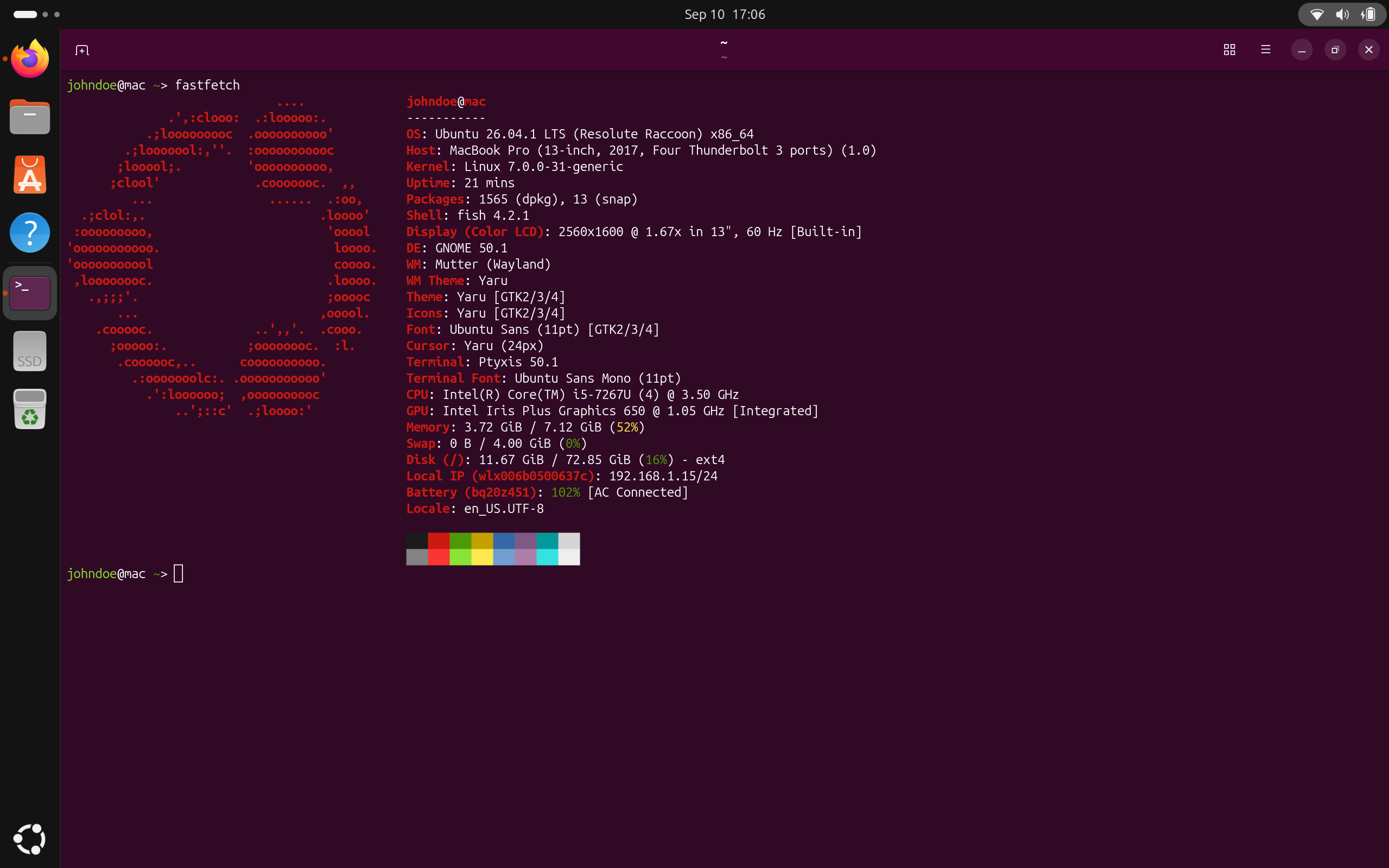 Just some notes about fixing some issues while installing Ubuntu on Macbook Pro 2017
 However, when playing it, it becomes very obvious (as you can likely see) that
there s a fair amount of packet loss (understandable) and probably some packet
collisions taking place.
 After tweaking the local routing tables (and restarting

 Yes! I forgot to make this one a video, so no gif. I did wind up having a bit
if trouble with a few gopher clients and IPv6 support I may send some
patches if I can find the time.
 While the process here can look like a lot, it s really not that bad.
We begin by taking the incoming bytes, converting the bytes into bits, and chunk
those bits into parts which are sized to fit completely within an LDPC message. We will then
 Here, we start with an incoming stream of IQ, where we will process
 Not shockingly, the code looks like this:
 As an aside, I likely should have called this a