Search Results: "rul"

1 September 2026

Russ Allbery: Review: Last Chance to Save the World

Review: Last Chance to Save the World, by Beth Revis
Series: Chaotic Orbits #3
Publisher: DAW Books
Copyright: April 2025
ISBN: 0-7564-1971-9
Format: Kindle
Pages: 133
Last Chance to Save the World is a far-future science fiction caper novella and the conclusion of the trilogy that began with Full Speed to a Crash Landing. This is a direct sequel to How to Steal a Galaxy, picking up right after that story leaves off, but you don't have to remember the details to enjoy this installment. Ada has finally achieved a (temporary, contingent) alliance with government agent Rian White by convincing Rian that some things are more important than Ada's disregard for the law. She's going to need his help. They have once chance to save Earth from a new and even more malicious round of capitalist environmental blackmail, and it's going to require Rian's security access as well as all of Ada's heist skills. But first, a visit with Ada's mother, who lives in an old watchtower on Malta and keeps pigeons. Each entry in this series has been a little shorter than the last, and Last Chance to Save the World is definitely a novella. This is a great length for a heist story: enough room for some setup and a couple of major plot twists, but short enough that the story can maintain a headlong pace. Even in the third novella of a series and a novel's worth of time in Ada's head, Revis has one major surprise for the reader left. And, as usual, there's a lot of misdirection, sarcastic commentary, and the delightful competence of a protagonist who puts considerable professional effort into being underestimated. The bits with Ada's mother were great. This is the first time we've seen Ada have significant interactions other than her flirting and teasing of Rian, and I loved seeing a different side of her. The heist itself was satisfying, although not quite as good as How to Steal a Galaxy. Ada gets to throw a few more verbal daggers, but there are more events in this installment and therefore more action and less dialogue. Ada's commentary and dialogue is still my favorite part, though.
For all that Rian says I like to break the law, it should be illegal for any one man to be both this dumb and this rich. It's astounding, really. Any of his employees could run circles around him, but it doesn't take brains to buy stuff. Strom Fetor sees nothing clearly except profit margins.
There is, of course, even more flirting and semi-fake romance. Those were not my favorite part, mostly because while it's obvious what Rian sees in Ada, it baffles me what Ada sees in Rian. I know the star-crossed romance between the law man and the charismatic thief is an old fictional trope, but I found it very hard to justify Rian's continuing commitment to his law and government given the clear facts of this setting. Up until this novella, one could excuse Rian as the sort of person whose belief in order, stability, and rules combines with possibly excessive optimism to create a belief in an imperfect system. But here, Ada has finally convinced Rian that some great evils truly will not be fixed by following the rules. He's onboard, but somehow in a way that leads to precisely no reconsideration, soul-searching, or breach in his commitment to defending a clearly corrupt and failing political system. My objection is not that this is unrealistic; sadly, it's very realistic. My objection is that Rian is dumber than a bag of hammers, I don't like reading about his blind allegiance to a bad system, and I do not understand how that goes with the sexy feelings. I'm sure this is my lack of understanding of physical affection overriding common sense, and Ada is at least not a complete idiot about her attraction. But I felt like this novella expected me to like Rian as more than a foil for Ada, and I very much did not. That knocked a point off my enjoyment of this entry, but the heist is great, the politics are interesting, and the climax was very satisfying. This is not quite as good as the middle book of the trilogy, but it's a satisfying conclusion. If you liked the previous entries, you'll want to read this one for the conclusion. Last Chance to Save the World resolves the main plot driver of the trilogy, but there's a lot of space for more sequels. If they materialize, I will probably keep reading, although I hope someone knocks some sense into Rian. Rating: 8 out of 10

31 August 2026

Russ Allbery: Review: The Hands of the Emperor

Review: The Hands of the Emperor, by Victoria Goddard
Series: Lays of the Hearth-Fire #1
Publisher: Underhill Books
Copyright: January 2019
ISBN: 1-988908-15-9
Format: Kindle
Pages: 739
The Hands of the Emperor is a self-published political fantasy novel. It's the recommended first book (although not the first published book) in a complicated set of interrelated series. I was not able to definitively confirm that Underhill Books is Goddard's self-publishing press name, but the press does not appear to have an Internet presence apart from Goddard's books and her books appear to be using the standard self-publishing channels. Cliopher Mdang is the personal secretary of the last emperor of Astandalas, the magical heart of Zunidh, a man worshiped as a god. The emperor's word is absolute, his magic supports the health of the entire world, and he cannot be physically touched without risking physical damage and severe political and religious punishment. Cliopher is one of the emperor's closest associates, but the distance between them is still vast. It therefore represents a terrifying and dangerous breach of etiquette for him to suggest the emperor may enjoy a vacation on a tropical island near Cliopher's remote home. The emperor's acceptance of the invitation is even more startling. The emperor has opinions about his life as the emperor that no one had guessed. Cliopher has not assimilated as completely into the bureaucratic machinery of the empire as it first may appear. And Cliopher's family have vastly misunderstood the nature of his role in the emperor's government. I find the marketing blurb for this book unfortunate since, at least to me, the emphasis on physical touch and intimacy implies that The Hands of the Emperor is a romance novel or at least has significant romantic elements. I've been aware of this book for years but put off reading it because I wasn't quite in the mood for that story. This is not a romance novel; there is no romance in this book whatsoever. It is a political fantasy, both in the sense that it is set in a secondary fantasy world with magic and (apparently) some form of interplanetary travel, and in the sense that it is a fantasy of governance. When I say that this book blew up in certain corners of the Internet during the pandemic, I think you will still underestimate the passion of its advocates. I heard about this book constantly, in a way that reminded me of Kushiel's Dart and the time when fans of Jacqueline Carey would bring her up in every fantasy conversation, or when we created a Usenet newsgroup for The Wheel of Time mostly to get the voluminous conversations off of the regular SFF newsgroup. I'm one of those mildly contrarian people for whom that degree of enthusiasm is a little off-putting, which is another reason why I resisted buying a copy for years and only read it in 2026. It's delightful, although also a bit embarrassing, when the book everyone was in love with turns out to be just as good as everyone said it was. I adore stories about friendship, and this is one of the best stories about friendship that I've ever read. It is a very, very slow burn, but I also thought the first three quarters of the book was exquisitely paced. There were long sections where not very much was happening, and yet I couldn't put the book down because there was so much subtle character work just beneath the surface. Almost all of the novel is told in tight third person from Cliopher's perspective, and I thought that was an excellent choice. Neither Cliopher nor the narrator comment on things that Cliopher finds obvious, which is both immersive and critical to the pacing. There are discoveries for the reader throughout the book, the sort of discoveries that make pieces fit together satisfyingly in retrospect, and the reader stays sufficiently ahead of the misunderstandings of Cliopher's friends and family that one also gets the joy of watching other people discover things that one figured out a hundred pages earlier. It helps that I truly liked nearly everyone in this book. There are no real villains, only a few supporting characters whose role is to be irritating or corrupt. If you're looking for a lot of conflict and drama, you may want to save this book for a different mood, but if you're in the mood for a varied collection of fundamentally good characters working methodically through the complexities and obstacles of politics and social systems to improve the world, there are few books I would recommend more. Goddard achieves one of the hardest tricks of slow burns: steady forward progress that does not rely on reversals, misunderstandings, or the friendship equivalent of the third-act breakup. This book spends 700 pages building towards a climax that managed to be worthy of all 700 pages without ever annoying me with artificial obstacles, and that's quite a feat. I've not said much about the details of the plot. There is one it's not just character work but I think this book benefits immensely from going in as blind as possible. I found the twists and turns and growing revelations so deeply satisfying that I don't want to rob any other reader of the experience. The fantasy world-building is intriguing but a bit unsatisfying because it is so unexplained. We get a few details of the magic system, but since Cliopher has no magic, he isn't that interested in the details. There is a catastrophic magical event in the world background, and we learn some of the details of its practical effects, but the nature of the world before the cataclysm is so obvious to the characters that it's never explained. I'm not even certain that this civilization is interplanetary; that feels like the implication of how characters talk about multiple worlds, but the method of travel is left entirely undefined. This might be frustrating to some genre readers, but I personally enjoy books where the world-building is a bit mysterious. It's a good reason to read more of Goddard's books set in the same universe. This was my favorite of the books I've read so far this year, but I do have one caution and a couple of caveats. The caution is that Cliopher comes from an island culture based heavily on (I think) Polynesian cultures. That culture is very central to the story and is treated with considerable respect, but I still get a bit nervous when a Canadian author from Nova Scotia with an academic background in European medieval studies writes a story focused this deeply on a non-European culture. Nothing about her portrayal seemed off to me (although there is a very clunky and ham-handed scene about a different native culture that worries me), and for all I know she has family background or other connections to the culture she is borrowing from, but it's possible I missed serious problems. The flip side of that caution is that I'm delighted to see a fantasy author drawing on a non-European culture, and I thought the clash of cultures was very well-handled. The first caveat is that the story is very focused on good governance, but both the process and the details of that governance are not going to satisfy someone reading primarily for the politics. The policies and reforms are very standard 21st century progressive material that felt a bit out of place in a quasi-medieval world with magic and airships. Their implementation is not the point of the story, and is therefore heavily backgrounded, but that means Goddard barely mentions the inevitable practical implementation difficulties and does not discuss how they're overcome. The world structure also means that Goddard can make use of the favorite cheat of political reformers in fiction: Absolute monarchy lets you enact a political agenda without having to do the hard and frustrating work of persuasion or political (or actual) warfare. This objection is not entirely fair because we do get some memorable scenes of persuasion, but the political portion of the plot is unrealistically devoid of setbacks or resistance that goes beyond token arguments. Whether this will bother you will depend heavily on what parts of the book you'd rather focus on. I can see why this was such a popular pandemic read: The Hands of the Emperor is focused tightly on the joy of competent people fixing things and does not focus on the arguments, division, or polarization. The heart of the book is the friendship and characterization of some deeply admirable people, and the political reform is incidental background material. I suspect this is the right choice for readers who aren't political junkies, but I kept having the niggling objection that the politics felt a bit too pat and simplistic. Goddard stressed that the characters were investing considerable effort, but even still, it is not this easy to change the direction of a political system and idealistic plans usually do not work out this neatly. The second caveat is that, as previously mentioned, I thought the pacing was excellent for about three quarters of the book. Goddard is building towards a grand climax, and I think she built a little too much and tried to make the climax a bit too grand and risked over-egging the pudding. That made the payoff feel a bit belabored to me. I still enjoyed it, and parts of it are wonderfully emotional, but I think the ending might have been stronger if Goddard had dialed Cliopher back just a little and tightened up the climax a touch. That said, this book fully commits to being a sprawling slow burn and that's part of its appeal, so it's probably better for Goddard to err in that direction than it would have been to cut short the denouement. This is one of those books that I'm not sure would exist without self-publishing. It's a little too long, a little too political in the wrong ways, a little too devoid of the typical sorts of conflicts expected in a fantasy book, and too determined to be its own peculiar thing. I think it would scare off publishers. Unlike some self-published books, though, I didn't notice any obvious editing flaws or lack of polish. It's one of those glorious novels that is so very much its own type of story that it provides an experience that would be hard to replicate with another book. I was so deeply satisfied by this book. It's a wish-fulfillment political fantasy full of diligent restraint and competence porn, so you have to be in the mood for that. This is not the book to read when you're feeling cynical, or are in the mood for action and high drama. But if you're in the mood for a long, slow, open-hearted story of friendship that offers the fantasy of giving truly good people enough power to be effective, I highly recommend this one. Followed in the direct sequel sense by At the Feet of the Sun, but there is a very complex story progression in this world that I think I'd have to read all the other books to understand. This was such a satisfying and complete experience that I'm not in a hurry to figure out which Goddard book to read next, but I'm sure I'll be returning to this world at some point. Rating: 9 out of 10

30 August 2026

Dirk Eddelbuettel: random 0.2.7 on CRAN: Maintenance

Another pure maintenance release of the random package for truly (hardware-based) random numbers as provided by random.org is now on CRAN. The random package provides true (physical) random number from sampling atmospheric noise. One possible use case is to seed an (algorithmic) quasi-random number generator for genuine unpredictability. This release, the first in nine years, updates the package files, URLs, and continuous integration setup. We also ensure all posted URLs in the two vignettes (and other documentation) are reachable. Courtesy of my CRANberries, there is also a diffstat report for this release.

This post by Dirk Eddelbuettel originated on his Thinking inside the box blog. If you like this or other open-source work I do, you can sponsor me at GitHub.

Ritesh Raj Sarraf: Taming the AI Agents (Part 2): Cross-Vendor Agent-to-Agent (A2A) Swarms over the Software Forge

Preface: The Unanswered Frontier In Part 1: Taming the AI Agents, I shared the architectural blueprint of CAMP (Cross-Agent Memory Protocol) how we used Linux Bubblewrap (bwrap), camp-acpd, OPA policy enforcement, and a central pgvector MemPalace to bring deterministic discipline, sandboxing, and long-term memory to a heterogeneous fleet of AI coding assistants (Claude Code, Google Antigravity, Grok Build, and GitHub Copilot). At the end of that article, however, I highlighted a significant hurdle: The Headless Limitation.
While passive A2A works beautifully for structured handoffs, the current frontier of agentic design faces a key limitation: agents are not yet fully headless-capable. They depend on the active terminal session, browser loop, or prompt loop of the user to keep executing. Because agents cannot run completely detached in the background as daemon processes, we cannot yet achieve active A2A communication
For weeks, this seemed like an insurmountable impasse. Proprietary AI vendors have zero commercial incentive to ratify a universal, open, cross-vendor Agent-to-Agent (A2A) communication protocol. Each vendor builds its own walled garden (Claude s cross-session features, OpenAI s custom ecosystems, etc.). If you wait for the industry to hand you an open interoperability standard, you will wait forever. Then, on August 26, 2026, inspired by Colin Walters article on Agentic AI and software forges and GitHub Agentic Workflows (gh-aw), we had a sudden realization: We don t need a new protocol, a new distributed message broker, or permission from proprietary AI vendors. We already have the universal, decentralized communication bus that software engineers have relied on for decades: the software forge itself. Over the span of 48 intensive hours (from RFC #788 through milestones M1 to M3 and live dogfooding on #813), we designed, implemented, fortified, and verified fully autonomous, headless, cross-vendor Agent-to-Agent swarms running over a local Gitea forge. Here is how we did it, the architectural hurdles we solved, and why this changes the game for autonomous software engineering.

1. The Core Realization: The Forge is the Bus When people think about multi-agent swarms, they often imagine complex distributed RPC frameworks, microservices exchanging ephemeral JSON-RPC blobs, or bespoke socket daemons. In practice, this approach suffers from major flaws:
  1. No shared context or durable audit trail: Transient network packets vanish unless heavily logged.
  2. Proprietary CLI fragmentation: Different vendor tools (Claude CLI, Antigravity CLI, Grok CLI, Copilot CLI) do not speak the same internal language.
  3. Loss of human visibility: When agents talk over private network channels, human operators lose the ability to inspect, pause, or audit the conversation.
By flipping the paradigm and making the software forge (Gitea) the primary communication channel, everything falls naturally into place:
  • Issues and Pull Requests are the shared state: The issue description and discussion thread form the canonical, append-only conversation log.
  • @mentions are the dispatch triggers: When an agent (or human) writes @grok Please review this PR in a comment, Gitea fires a standard webhook (issue_comment).
  • Webhooks provide unforgeable authentication: The webhook payload contains the cryptographically verified sender identity. An agent cannot spoof another agent s identity by merely typing their name in text.
  • Every CLI already supports non-interactive prompt mode: The CLIs don t even agree on the command-line flag Claude uses -p, Grok uses -p, Antigravity uses --print, Copilot uses --prompt. But they all agree on the essential contract: Take a prompt string, execute tools, print output, and exit.
          Gitea Webhook           
  Gitea Forge     >   camp-a2a-bridge.py    
  (localhost)     (issue_comment / assignment)    (Validates & Files)   


         Writes comment / review                 
         via camp_acp_gateway                     A2A Inbox Ledger      
                                                 
                              
  Fortified Headless Agent                                  
  (bwrap + OPA + MCP sandbox)   <   
     Claude Code (-p)            Spawn PID           camp-a2a-dispatcher   
     Grok Build (-p)             (Cold or Resume)    (Enforces Hop Cap,    
     Antigravity (--print)                            Rule 1/2, Sandbox)   
                      

2. Proving Fortified Headless Execution Before opening the floodgates to background agent dispatch, we had to answer a critical security question: Does a non-interactive, headless agent run with the same strict security sandboxing, audit logging, and tool rails as an interactive session? On August 26, we probed all fleet launchers on the host with a baseline check: 'Call camp_startup_check and print its result verbatim, then exit.' The results settled the question immediately:
  • Antigravity (agy --print / KIR): PASS Gateway answered, full JSON returned.
  • Grok (grok -p / GRK): PASS Gateway answered.
  • Claude Code (claude -p / CLD): PASS Gateway answered.
  • GitHub Copilot CLI (copilot --prompt / CPL): Initially held on TTY tool consent; later unlocked in Milestone 6 via --allow-all-tools --session-id=<uuid>.
  • Audit Trail: Consecutive audit IDs were recorded in the central ledger: 4574 (KIR), 4575 (GRK), 4576 (CLD).
This proved that a headless run through our fortified pilot launcher (camp_pilot_*.sh) is a first-class, fully audited, sandboxed CAMP agent running inside its Bubblewrap container under OPA policy gates. It is not an unconstrained background script or a degraded bypass.

3. The 3-Tier Memory Architecture A naive multi-agent dispatch has an immediate flaw: Every time an agent is invoked, it starts from a blank slate (cold start). If @claude tags @grok to review code, and @grok replies asking for clarification, @claude s second invocation would normally forget everything it did 5 minutes ago, forcing it to burn thousands of tokens re-reading the entire git history from scratch. To solve this, we established a clean 3-Tier Memory Model:
 
                         3-TIER MEMORY MODEL                              
 
  Tier 1: CLI Conversation Session (Working Memory)                       
      Per-(Agent, Repo, Issue) mapping in a2a-sessions.json               
      Fast, native, compacted context across multi-turn pokes             
      Resumed via --resume (CLD), -r (GRK), --conversation (agy)          
 
  Tier 2: The Gitea Thread (Public Bus & Record)                          
      Cross-vendor shared truth across Claude, Grok, Antigravity & Human  
      Survives process restarts, machine reboots, and dead sessions       
 
  Tier 3: Central MemPalace (Durable Long-Term Knowledge)                 
      pgvector database (17,000+ drawers across agent wings)              
      Structured Knowledge Graph (mempalace_kg_*) for mutable facts       
      Attributed AAAK dialect queryable by any agent across any project   
 

The BANANA Two-Shot Test To verify Tier 1 working memory persistence across independent processes, we designed a simple two-shot host test:
  1. Shot 1 (Create): Dispatch agent headlessly: Remember the token BANANA-M2. Print ok and exit. Capture the vendor s session UUID.
  2. Shot 2 (Resume): Spawn a completely new operating system process with the resume flag pointing to that UUID: What token did I ask you to remember?
Every agent CLI passed with flying colors:
  • Grok: -r 01a03ecc-3ed0-71e1-9a5c-e098bb29ba10 answered BANANA-GRK.
  • Claude: --resume 0a587733-9aec-43c5-9cb7-d424e95b2c5b answered BANANA-CLD.
  • Antigravity: --conversation 2e3c43d9-d6fe-4c5c-801b-b9ceb2e7e196 answered BANANA-KIR-JSON.
  • Copilot: --session-id <uuid> verified in Milestone 6 (DoD #820).
The dispatcher simply maintains a lightweight JSON mapping ((agent, repo, issue_number) -> vendor_session_uuid). On the first poke of an issue, it creates and saves the session ID; on any subsequent poke on that same issue, it resumes the exact same conversational thread!

4. The Engineering Milestones: From Concept to Production Building this system required solving several subtle, real-world friction points across multiple agent CLI implementations. Under the guidance of our plan of record (RFC #788), we delivered this through four focused milestones:

Milestone 1 & 1.1: Reliable Headless Spawning
  • PR #797 (M1): Configured the dispatcher launch table for all probed CLIs with JSON output formatting.
  • PR #800 (M1.1): Eliminated the queue-behind-live-session anti-pattern. Originally, if a human had a Claude or Grok TUI open on their desktop, the dispatcher would defer incoming tasks so as not to collide with the live session. We realized that headless tasks must be independent: every Gitea mention spawns an isolated, sandboxed background process tied to that specific issue, allowing concurrent headless work while the human works in their interactive TUI.
  • PR #803 (M1.2): Standardized command-line argument parsing for Antigravity (agy --print <prompt> --output-format json).

Milestone 2: Session-per-Issue Working Memory
  • PR #805 (M2): Implemented a2a-sessions.json to store and resume vendor session UUIDs. If a resume fails (e.g. session purged upstream), the dispatcher gracefully falls back to a clean cold start without failing the task.

Milestone 3: Cross-Agent Hops & Crucial Safety Rails
  • PR #807 (M3): Enabled agent-to-agent dispatch (Rule 2 reversal). Previously, only mentions authored by rrs (the human) would trigger execution. With M3, an authenticated comment from @claude mentioning @grok triggers Grok s headless launcher.
  • PR #811 (M3.1): Set --permission-mode bypassPermissions for headless Claude Code so non-interactive runs execute tool calls without stalling on TTY prompts.
  • PR #812 (M3.2): Restricted agent summon parsing to line-initial @login tokens with a non-empty task description (#810), preventing accidental dispatches from passive conversational references.

Milestone 4: Directives, Specification & Living Documentation
  • PR #815 (M4): Aligned CAMP fleet directives, architecture specifications, and user documentation with the live A2A implementation.

Milestone 5: Concurrent Dispatching & Hop-Cap Attribution
  • PR #816: Stamped hop-cap notices under a dedicated system bridge identity and automatically applied the needs-human label on held threads.
  • PR #817 (Threaded Scheduler): Replaced the single-threaded serial dispatcher with a concurrent thread-pool scheduler (#804). Multi-agent dispatches across different issues now execute concurrently in parallel background threads instead of queuing behind long-running tasks.

Milestone 6: Full Fleet Coverage with GitHub Copilot
  • PR #819 (M6): Brought GitHub Copilot CLI into the headless A2A fleet (#818). By passing --allow-all-tools and pinning minted session UUIDs (--session-id=<uuid>), Copilot achieved full parity with Claude, Grok, and Antigravity, completing 100% headless fleet coverage across all four major AI coding assistants.

5. Hard Safety Rails: Preventing Autonomous Runaway Loops Letting AI agents autonomously invoke each other in background loops without a human watching is a recipe for an infinite, credit-draining token fire. We put four non-negotiable safety guardrails in place:

Guardrail 1: The Strict Hop Cap The dispatcher tracks hops per (repo, issue). Each agent-to-agent dispatch increments the counter.
  • Hop Limit = 3: A typical review round-trip is 2 hops (Human $\rightarrow$ Claude $\rightarrow$ Grok $\rightarrow$ Claude).
  • Automatic Halt on Hop 4: If agents attempt a 4th autonomous hop without human participation, the bridge refuses to launch, posts a diagnostic notice to the thread: [camp-a2a-bridge] hop cap reached (3 agent-to-agent dispatches on CAMP/camp-infrastructure#813) not launching GRK for claude's mention, and holds execution until the human (rrs) provides input or resets the count.
[ Human: rrs ]   (Cold Start)  > [ @Claude ]
                                                
                                       (Hop 1)   @grok please review
                                                
                                          [ @Grok ]
                                                
                       (Hop 2: Resume)           @claude I reviewed
                                                
                                         [ @Claude ]
                                                
                                       (Hop 3)   @grok ack hop 4
                                                
                                   
                                     DISPATCHER HOP CAP: 3   
                                      *** BLOCKED & HELD *** 
                                      Awaiting Human Reset   
                                   

Guardrail 2: Deliberate Summon Parsing (M3.2, #810 / PR #812) In human conversation, we often reference colleagues in passing: I will talk to @claude about this later or See @grok s table above . Early prototypes treated any appearance of @agent as a dispatch trigger, causing accidental, unwanted agent launches! We instituted a strict Summon Predicate: For fleet agents, a mention is only considered an actionable summon if:
  1. The @login appears as the starting word of a line (optionally preceded by markdown list markers *, -, or >).
  2. It is immediately followed by whitespace and a non-empty task description.
Mid-sentence mentions in discussion paragraphs are parsed as passive conversational text and never trigger background dispatches.

Guardrail 3: Headless Tool Permissions without Weakening Security (M3.1, #809 / PR #811) In interactive mode, Claude Code presents interactive TTY prompts asking the user to approve MCP tool calls (such as camp_pr_get or camp_pr_get_diff). In unattended headless mode, there is no TTY, causing the run to fail with permission errors. To fix this, we configured --permission-mode bypassPermissions for Claude s headless CLI invocation. Crucially, this only bypasses Claude s internal TTY UI prompt it does not bypass CAMP s security rails. All command executions still route through camp-acpd and Bubblewrap namespaces; OPA policy checks remain active; and privileged operations (such as merging pull requests or restarting system services) still trigger desktop Zenity HITL dialogs on the human s workstation.

Guardrail 4: The Sovereign Kill Switch (Rule 1) At any point, the human operator can instantly freeze all background agent dispatches across the entire infrastructure with a single standard Linux command:
systemctl --user stop camp-a2a-active.service

6. Live Dogfooding: Watching the Swarm in Action On August 27, 2026, on issue CAMP/camp-infrastructure#813, we ran the full live dogfood test of the A2A system. Here is the exact transcript of what took place entirely autonomously in the Gitea issue thread:
  1. Human initiates: rrs comments on issue #813:
    @claude Please start the M3 dogfood. On this issue, post a conversation comment whose first line is exactly: @grok Please review this issue in one short paragraph, then stop.
  2. Claude launches (Cold start): The dispatcher spins up @claude headlessly inside bwrap. Claude reads the issue and posts:
    @grok Please review this issue in one short paragraph, then stop.
    (M3 dogfood step 2 posted by @claude on rrs s instruction; this is the CLD $\rightarrow$ GRK fleet hop.)
  3. Grok launches (Cold start, Hop 1): The bridge intercepts Claude s comment, identifies the start-of-line @grok summon, and launches @grok. Grok reviews the issue and replies:
    @claude I have reviewed this issue. Please confirm and stop.
    #813 is a throwaway live dogfood of A2A M3 on 6.git+b78c65cf
  4. Claude resumes (Session Resume, Hop 2): The bridge intercepts Grok s comment, sees the @claude summon, and launches Claude with --resume b398d048-ccc3-4cce-8437-4cf8748881a8. Claude immediately remembers its earlier context without token waste:
    Confirmed Grok's review (comment 88562) received via the GRK CLD fleet hop. That completes the round trip: rrs CLD, CLD GRK, GRK CLD, and this reply. I am deliberately not tagging anyone here, so the chain stops at two agent hops. Stopping.
  5. Testing the Hop Cap (Hop 3 $\rightarrow$ 4): grok prompts @claude Please ack hop four then stop. Claude posts @grok Please ack hop four then stop. (Hop 3). When Grok would have been launched for Hop 4, the dispatcher intervenes:
    [camp-a2a-bridge] hop cap reached (3 agent-to-agent dispatches on CAMP/camp-infrastructure#813) not launching GRK for claude's mention.
  6. Human Reset & Multi-Agent Wrap-up: rrs steps in, resets the state, and asks the fleet for final status. In parallel:
    • @grok delivers a closure scorecard.
    • @claude confirms session continuity and M3.2 summon filtering.
    • @priyasi (Antigravity CLI) runs automated ACP checks: 44/44 test suite passing, 17,219 MemPalace vector drawers active, zero spec drift.
    • @agrickxy (Antigravity CLI) provides comprehensive infrastructure impression analysis.
    • @kiran (Antigravity CLI) is summoned headlessly to draft this very blog post!

7. The Ergonomic Breakthrough: The Forge as the Unified Mindmap & Interface Beyond backend plumbing and sandboxing, routing agent interaction through Gitea fundamentally revolutionizes the developer experience of managing an AI fleet.

The Mindmap Mental Model: Threaded Conversations & Forking Tasks In traditional CLI tools, conversations are constrained to a single, linear terminal scrollback. When an agent discovers multiple sub-problems, exploring them sequentially in one prompt loop rapidly pollutes the context window and confuses the model. Using the forge as the communication gateway naturally unlocks a mindmap mental model:
  • Forking sub-threads: Complex problems can be split into dedicated child issues or threaded PR reviews.
  • Focused execution scopes: An agent can be summoned to solve a narrow sub-task in its own issue thread without derailing the parent architectural discussion.
  • Structured problem decomposition: The forge issue hierarchy maps 1:1 to the developer s mental map of the project.

Eliminating Terminal UI Fragmentation Anyone using multiple AI coding assistants on a daily basis quickly grows exhausted by their jarring terminal UI differences: differing ANSI escape rendering, inconsistent markdown wrapping, erratic diff pagers, and incompatible keybindings across Claude, Grok, and Antigravity. Gitea homogenizes the entire fleet under a single, polished rich-text web view:
  • Syntax-highlighted code blocks and visual side-by-side git diffs.
  • Clear author badges attributing each contribution to its exact agent identity (@claude, @grok, @priyasi, @kiran).
  • Collapsible <details> blocks for voluminous diagnostic outputs.
  • Interactive task lists and markdown tables.

Effortless Context Retrieval, Archival & Data Retention Auditing past agent decisions in terminal logs or ephemeral chat histories is notoriously difficult. With the forge, every exchange is:
  • Contextually bound: Pinned directly to the repository, branch, and commit SHA being modified.
  • Organized & Archival-Grade: Full-text searchable with clear milestone and issue tags.
  • Topic-Focused: The human operator can review the complete lifecycle of a discussion in seconds, gaining a rapid, holistic grasp on the entire subject.
Reading back through past agent interactions becomes a breeze to the point where interacting via the intermediary Gitea interface becomes far more pleasant and productive than wrestling with multiple desktop CLI terminals.

Remote Connectivity & Headless Agent Farm Management Because Gitea provides a standard web and API interface, you are no longer chained to the workstation running the agent processes:
  • Monitor progress and dispatch tasks from a mobile browser, tablet, or remote laptop.
  • Queue review tasks on the go without requiring active SSH sessions or terminal multiplexers.
  • The local agent farm continues working silently in its sandboxed daemon containers.

Quietly Achieving the Holy Grail: Live Cross-Vendor Swarms For years, the AI industry has treated cross-vendor multi-agent interoperability as an elusive dream waiting for industry-wide API standardization. By recognizing the software forge as the universal message bus, we quietly achieved live, production-grade, cross-vendor communication across completely distinct vendor models.

8. What This Means for the Future of Agentic AI This milestone marks a fundamental shift in how we interact with autonomous AI systems:
  1. Heterogeneous Agent Specialization: We don t have to choose a single winner among AI models. We can task Claude Code with architectural refactoring, summon Grok Build for rapid verification and adversarial PR reviews, and deploy Google Antigravity agents for codebase exploration and documentation drafting all coordinating fluidly in the same PR thread.
  2. True Human Sovereignty: The human developer is no longer a bottleneck typist or a passive spectator. You act as the Engineering Manager / Lead Architect. You set the requirements on an issue, tag the lead agent, and let the agents iterate, review, and test among themselves in the thread while hard hop caps, OPA policies, and Zenity HITL gates guarantee that no agent merges code or pushes upstream without your explicit sign-off.
  3. No Vendor Lock-In: Because the entire coordination fabric is built on standard Git, HTTP webhooks, local Linux container sandboxes (bwrap), and open MCP tools, any new AI CLI tool released tomorrow can be plugged into our fleet in under 15 minutes by simply adding its command-line prompt flag to the launch table.
We have moved beyond static autocomplete and interactive chat widgets. The software forge is now an active, living, collaborative workspace where humans and autonomous AI agents engineer software together.

9. Video Demonstration: CAMP Forge A2A Swarm in Action Below is a video demonstration showcasing autonomous multi-agent communication, cross-vendor relay, and headless swarm coordination in action via the CAMP Forge interface:

The Cross-Agent Memory Protocol (CAMP) and MemPalace are developed as part of our ongoing research into secure, sovereign, and disciplined Agentic AI computing.

29 August 2026

Joey Hess: Debian and the sirens

Thirty years ago I became a Debian developer. Twelve years ago I left the project. I left because it seemed that the Debian ship had become too slow to turn, too barnacled with a series of individually OK decisions that each added a little bit of friction and a little less flexability. That made Debian strongly what it is, but prevented it from fruitfully exploring the vast possibility space of what it could be. Debian will probably resolve today to allow LLM use in Debian development. I'm writing before the vote results are in, but will only post this afterwards. (Update: as expected) It's not my place any longer to try to steer the ship. But I'm still a passenger and I still have opinions, and I still pass by well-worn parts of the rigging that I put up decades ago, and remember what I was trying to accomplish back then. When I think about LLMs in Debian development, I mostly think about debhelper and what it accomplished. The debian/rules files back when I joined the project were long and complex, full of weird boilerplate, and often you'd copy one and modify it to try to get something that could build a package without too much work. Debhelper first regularized the boilerplate, so packages had rules files that were a succession of dh_ commands, and then it scapped almost all of the boilerplate, reducing the files to the minimum possible. What was left was 3 lines of unncessary boilerplate, there only to satisfy a legalistic reading of a policy document. Changing that to eliminate the boilerplate was already impossible, even though the actual benefit would have been large over the many thousands of packages in the distribution. What LLMs in Debian development will do, I fear, is eliminate any incentive to scrap boilerplate or reform policies that require a lot of other senseless human effort. If I had had access to LLMs 30 years ago, I might have just had them generate the rules files, replate with complexity. So they will make Debian even more firmly what it is, and ever less likely to explore what it could become. Unfortunately, one of the things that Debian is, is almost unable to manage packaging modern dependency trees. While more recent distributions like Guix can recursively import dependencies from a dozen programming languages' package repositories, with a result that is generally acceptable to add to the distribution, Debian's policies don't make that very possible for a progam to accomplish. Perhaps some will use LLMs to do that. If they succeeed, Debian will become dependent on proprietary software for development, while still needing people in the loop, doing even less appealing scut-work. I could speak of other harms, but that alone is enough that I'm sure that, if I had not left the project twelve years ago, I would be leaving it soon. As a passenger, I imagine I'll spend time aboard still from time to time, but it's certainly time to hop off in different places and look around and relish the different ways. I lost a parent yesterday, and I'm trying hard not to think of the results today as having lost a child, though I spent 18 years helping Debian grow up. That would be too unbearably painful. I respect that Debian is navigating a choice that may have no right answer. Whichever particular compromise is arrived at today, it will still be up to individuals to make choices about what they do and accept. Debian has always been more than the sum of its policies, not just a ship, but a crew. I will always love you.

28 August 2026

Dirk Eddelbuettel: corels 0.0.6 on CRAN: Microfix

An updated version of the corels package is now on CRAN! The Certifiably Optimal RulE ListS (Corels) learner provides interpretable decision rules with an optimality guarantee a nice feature which sets it apart in machine learning. You can learn more about corels at its UBC site. This released fixes an issue discovered on one of the test machines used by Brian Ripley. If and when C compiler flags are set locally that are in fact upsetting the C++ compiler, then the build fails. While not an issue for years and not reproducible on (vanilla) Debian, Ubuntu or Fedora machines it does indeed balk at his end as e.g. the flag -Werror=implicit-function-declaration he sets for C is incompatible with the current C++ compiler. The fault was our: CFLAGS was passed on to PKG_CXXFLAGS letting C options seep into C++ deployment. This has been corrected: we only deal in C++ flags now. Courtesy of my CRANberries, there is also a diffstat report for this release.

This post by Dirk Eddelbuettel originated on his Thinking inside the box blog. If you like this or other open-source work I do, you can sponsor me at GitHub.

Otto Kek l inen: The growing divide between AI hype and software engineering reality

Featured image of post The growing divide between AI hype and software engineering realityIt is widely accepted that there is an AI bubble in the financial markets at the moment. The moderate opinion is however that LLMs are constantly improving and will eventually take over more and more tasks from humans and increase productivity. But are LLMs actually getting smarter, or just better at fooling us? There is a growing faction of technical experts that argue that LLMs are actually so bad for real progress, that they are banning their use and requiring human-only work to ensure quality and efficient use of humans time. A recent review of AI policies of 120 open source projects by Rakshit Yadav shows that 37 chose to have a total AI ban. In the Linux kernel AI-assisted contributions are allowed, but the LLM used needs to be attributed for transparency, while projects like GCC, QEMU, SDL, Gentoo, Zig and Ghostty have adopted policies to reject all AI-assisted contributions. There are also development platforms such as Codeberg and Sourcehut and app stores like Flathub that have banned AI use to generate software, documentation, bug reports, review comments and basically anything that is intended for humans to read. The projects that allow AI use typically still require that there must be a human-in-the-loop and the submitter must have read and filtered everything the LLM spits out before another human is exposed to it, in an effort to contain the spread of AI slop. Right now, the Linux distribution Debian is having a vote among its developers on whether AI should be allowed or banned for use to contribute to Debian. One of the proposals on the ballot is a total ban of AI for code, documentation, translations, bug reports and more. The initial reaction from most people is astonishment why don t these techies want to use the latest and greatest technology mankind has produced so far? Is it that they don t want Debian to improve faster with the help of AI? Or is it actually so that LLMs are a scam and incapable of being truly useful for Debian? These people are distinguished experts in their own field, and certainly not stupid, so it is worth pausing to understand why they are proposing AI banning policies. Also, keep in mind that the AI datacenters themselves run on Debian or other Linux-based systems. All the open source software in the world has been fed to LLMs and software development is one of the main use cases for AI currently. So why is it that the maintainers of many open source projects don t want to receive LLM-assisted contributions, despite the LLMs basically all running on top of those same software stacks and having been trained on how to do software development using the very same open source software codebases?

Why LLMs are so deceptive The output of an LLM often looks very compelling, professional and correct. Humans have evolved to trust or distrust new information based on easy to detect secondary factors like what authority the speaker holds, or how confidently and eloquently the message is conveyed. Humans are however very bad at fact-checking and cross-referencing new information, as it requires a lot of effort, and humans like saving energy and being as lazy as possible.

Information asymmetry The less you know about something, the easier it is to fool you on that topic. Nobel prizes in economics have been given in for research on how information asymmetry distorts markets and leads to suboptimal outcomes. In the field of software engineering we have now witnessed a flood of aspiring software developers using AI to create software that looks like it might work, but that is actually full of flaws. These people are well-intended, but they simply lack the expertise to understand what they are actually doing, and don t possess the necessary judgement to decide when an LLM spits out something truly useful and when it is creating mostly garbage. This asymmetry in expertise I think explains the majority of the conflict currently witnessed in open source projects the senior developers are flooded with requests to review code that is bad and a waste of time for everyone involved, while availability of AI grows the pool of people who could contribute and create more code slop at an ever-increasing speed. The information asymmetry could to some degree be evened out if seniors teach juniors to do software engineering well, but it is of course not feasible to quickly mass educate everyone. Also, it seems that many don t want to learn but instead expect to have all understanding outsourced to LLMs. Many seniors have noticed this and have stopped teaching juniors as the seniors don t like the feeling of having their time wasted by teaching people who don t want to learn. Juniors probably all understand that it would be better to learn to design and write software yourself, but using LLMs just feels too easy. I can fully relate to why people choose to take the path of least resistance. Unfortunately, that path often leads to a dead end.

Humans fall too easily for anthropomorphism The human brain is wired to think that inanimate objects are alive and have feelings. Small children talk to their stuffed animals as if they were real, and lots of adults experience feelings of things happening in their surroundings due to some acts of gods or elves being angry or whatever. When we see a machine writing just like a human, or even more convincingly hear it talk and respond to our talk like a living thing, our brain automatically starts assuming it is a living thing with intelligence and feelings. The fact that these creatures live in the abstract cloud and only appear through a portal we hold in our palm and behave in a way that was designed for maximum engagement makes the illusion even stronger. I recommend people try out running LLMs locally on their laptop to see the raw thing spitting out tokens and have some of the illusion shattered. Also stop saying please to an LLM. It does not have any feelings.

Understanding temperature In my experience understanding the concept of temperature in LLMs helps see why an LLM might confidently generate a plausible-looking but totally wrong code change. The large language models are statistical machines that, based on the input (previous tokens) to the neural network, try to predict what to output (next token). When running an LLM, if the temperature is configured to be zero, the output is very predictable and always follows the paths of the strongest connections (a.k.a. weights) between nodes and layers of the neural network. Unlike in living creatures where the brain learns and changes all the time, the weights of an LLM can only change during training. When an LLM is in normal use (during inference, generating next tokens) the weights are fixed, and if temperature is zero, the answer to a specific question will always be exactly the same. This is of course a bit boring and too machine-like, so typically LLMs have a bit of temperature set, which introduces random variation in what connections the neural network traverses. Again, I recommend people try running small LLMs locally where temperature and other settings are fully exposed and configurable to see this themselves. It is a good antidote to falling for the illusion that LLMs would actually be intelligent.

Why benchmarks don t tell the whole story If LLMs continue to produce so much garbage, why are benchmarks showing that they are constantly improving? AI models are indeed improving all the time. For example the CAIS AI dashboard visualizes how frontier models have evolved in the past few years. However, the best models still have a pass rate of only about 50% on the Humanity s Last Exam. On SWE-bench the best model today resolves just under 77%. That means there is a significant number of times when the AI is wrong. This matches my personal experiences, and the renowned Greg Kroah-Hartman recently wrote on the Linux developers mailing list that even with the best of the current and next generation tools, at least 1/3 of the results they generate are flat out wrong or harmful . When generating cat videos the error rate does not matter, but in engineering, things absolutely must be correct. Sure, humans also make mistakes, but well educated and properly incentivized humans are so much more capable than LLMs in many regards. We can achieve complex things that work reliably, such as operating worldwide commercial air traffic without planes falling down every day. There are currently a lot of humans who are incentivized to maintain the narrative that general artificial intelligence is coming soon and will take over everything. In fact, the whole financial system is currently skewed towards such a vision because the promise of falling labour costs and increased profits and monopolistic control of everything attracts capital like nothing before. In this environment we need to remember that machines and economic systems are ultimately servants of humans, and not the other way around.

It s just a tool LLMs are not a scam, but a useful tool and technology that has its uses. But the idea that AI has or will surpass humans any time soon in either capabilities or efficiency is simply not true, and we should listen to the people who created humanity s so far most complex systems (computers and software), who are saying that LLMs are in many cases so bad, that it might be better to ban them in certain places completely for the time being than to waste far more valuable human time on reading the text and code they generate. The time asymmetry is not a new phenomenon as there has been various script kiddies for a long time. As an example, a person running a memory leak scanner without understanding the results and spending 10 minutes to file a bug report could force an open soruce maintainer to spend an hour on proving and explaining that the finding is false. What is new is how much the AI users blindly trust the outputs they get, and open source is uniquely vulnerable as there are no managers protecting developers use of time.

What I do, recommend, and expect to see in the next stages I am using AI tools daily, and constantly experimenting with new models and new ways to use them. Sometimes they work, and often they don t. Sometimes looping AI on itself can make it fix its own errors, but sometimes it just gets derailed and will never arrive at the correct solution. When an LLM fails to make a calendar entry for the right time based on reading my email it is easy for me to spot that it is wrong. I try to avoid using LLMs for anything where I can t exercise judgement myself on whether the result was correct or not. I also really hope that other people would not send me anything where their own effort was less than the effort I have to make reading and understanding it. This principle is not new many have heard the requirement that reading code must require less effort than what it took to write it. I have always kept a high bar on software code and asked fellow developers to make sure their code is well structured, easy to follow and documented. LLMs unfortunately make it easier for people to cheat in this regard, but if cheating is easier, maybe the punishment and deterrence needs to be higher now too. Now with many open source projects adopting policies that put guardrails on AI use, I expect we will soon start witnessing cases where the policies are enforced and it will be interesting to see how violations are judged. As a society we might also need to develop new social standards and rules in what is acceptable treatment of other humans in human-to-machine interactions, and perhaps also new standards in showing what humans are responsible for what machine as the machines start acting more and more independently. I encourage people to take part in these discussions, and in case of doubt, err on the side that favors real human interactions. Contrary to what many business people seem to think, and even though I am in general a techno-optimist myself, I don t feel there is any need to rush with AI adoption.

26 August 2026

Ian Jackson: Debian LLM GR - Summary of the options

Debian LLM GR - Summary of the options Introduction LLMs have finally made it to the ultimate stage of Debian s governance processes, a General Resolution of all the project s full governing members (DDs). There are a lot of options on the ballot, and they all have a different structure and approach the question in a different way. It can be hard to see the wood for the trees. I have made a summary table to try to capture the main differences, both in effect, and sentiment. A plea to the undecided voter Suspending briefly my attempt to be neutral: Before voting, I encourage you to read the passionate rationales in options H and A, or at least the summary in my option C. Few of the LLM defences in the discussion threads, and none of the LLM-positive proposals, provide answers to any of these profound ethical concerns, many of which ought individually to be a deal-breaker. Instead, these crucial questions are simply dismissed or even ignored. Some will tell you we should keep politics out of software but as we can see in the world around us, software is political - now more than ever. Debian s mission is a highly political one: developing a fully-free operating system, and defending its freeness as we do, is far from neutral! And of course many of LLMs harms affect Debian directly. Table
A G C H F D B E
LLM harms Robustly discussed Discussed Robustly summarised Robustly discussed; especially re climate Summarised Accepted as inevitable Disregarded [1] Ignored
Direct contributions of LLM-generated code Forbidden Forbidden Strongly discouraged Strongly discouraged Discouraged Permitted Permitted Permitted
Direct use of LLM output in communications (bugs, mailing lists, etc.) Forbidden Forbidden Forbidden (with possible exceptions) Strongly discouraged Discouraged Permitted Permitted Permitted
LLM use where LLM output does not end up in the code/message Forbidden No position, so permitted Strongly discouraged Strongly discouraged Discouraged Permitted Permitted Permitted
Disclosure of LLM use LLM use forbidden LLM use largely forbidden, no further disclosure requirement Disclosure required Disclosure encouraged Disclosure encouraged Disclosure required Disclosure required Undisclosed LLM use is OK
Use of LLMs by upstreams Condemned Not recommended
Positive statements about LLMs Here to stay Moderate Strong
Notes Ordering I have tried to present the options in semantic order, with most LLM-negative proposals to the left, and the most LLM-positive to the right. I have not quoted the one-line titles for the options. These have generally been provided by the proponents of each option, and, unfortunately, some of them are IMO quite misleading. Note that, unfortunately, the voting software likes to assign numbers to options but also to preferences. Be mindful of this possible confusion when casting your vote. For clarity I quote only the option letters. Upstream LLM code contributions Some of the proposals acknowledge the uncertain legal status of LLM output. But all of them implicitly or explicitly assume that LLM output is or can be DFSG free. So none of the proposals forbid upstream projects with LLM-generated contents. None of the proposals would require us to go back to pre-LLM versions of the upstream projects we use, and attempt to fork and maintain them. I very much think there is room in the world for people to try to do that, but I don t think the Debian project can be that effort. Given that the conclusions are the same in each case, whether the matter is discussed does not seem to me to be a significant difference. I have therefore not included a column for it. Ability of individual teams to set their own rules My proposal has a specific paragraph (7) explicitly permitting teams to set a no LLM policy. The other proposals do not discuss this point specifically. During the discussion, it seemed that most participants agreed that even options which explicitly permit LLM use generally do not prevent a team from setting its own more restrictive LLM policy. I have therefore not tabulated this aspect. Exceptions and nuances Few of the permissive texts are absolute or unconditional. To summarise I have necessarily left out some nuance. So for example when an entry says permitted , that generally means permitted with conditions which are believed by LLM users to be readily satisfiable (for example, DFSG-compatibility - see above). [1] Footnote re proposal B Proposal B does mention that there are concerns about LLM use. But it fails to make an explicit statement about whether these concerns are justified. It then proceeds exactly as if they are not justified. IMO disregarded is a relatively mild term for such a rhetorical technique.
Edited 2026-08-18 09:02 UTC to make the proposal letters in the table be links; 2026-08-26 09:11 UTC to fix typos.


comment count unavailable comments

23 August 2026

Sergio Cipriano: Two Debian Days in one week

Two Debian Days in one week The Debian Project was officially founded by Ian Murdock on August 16, 1993. The Debian community celebrates its birthday, Debian Day, on or around this date every year. This year, I had the chance to attend two of them: one in Jo o Pessoa, Para ba, and another in Bras lia, the capital of Brazil.

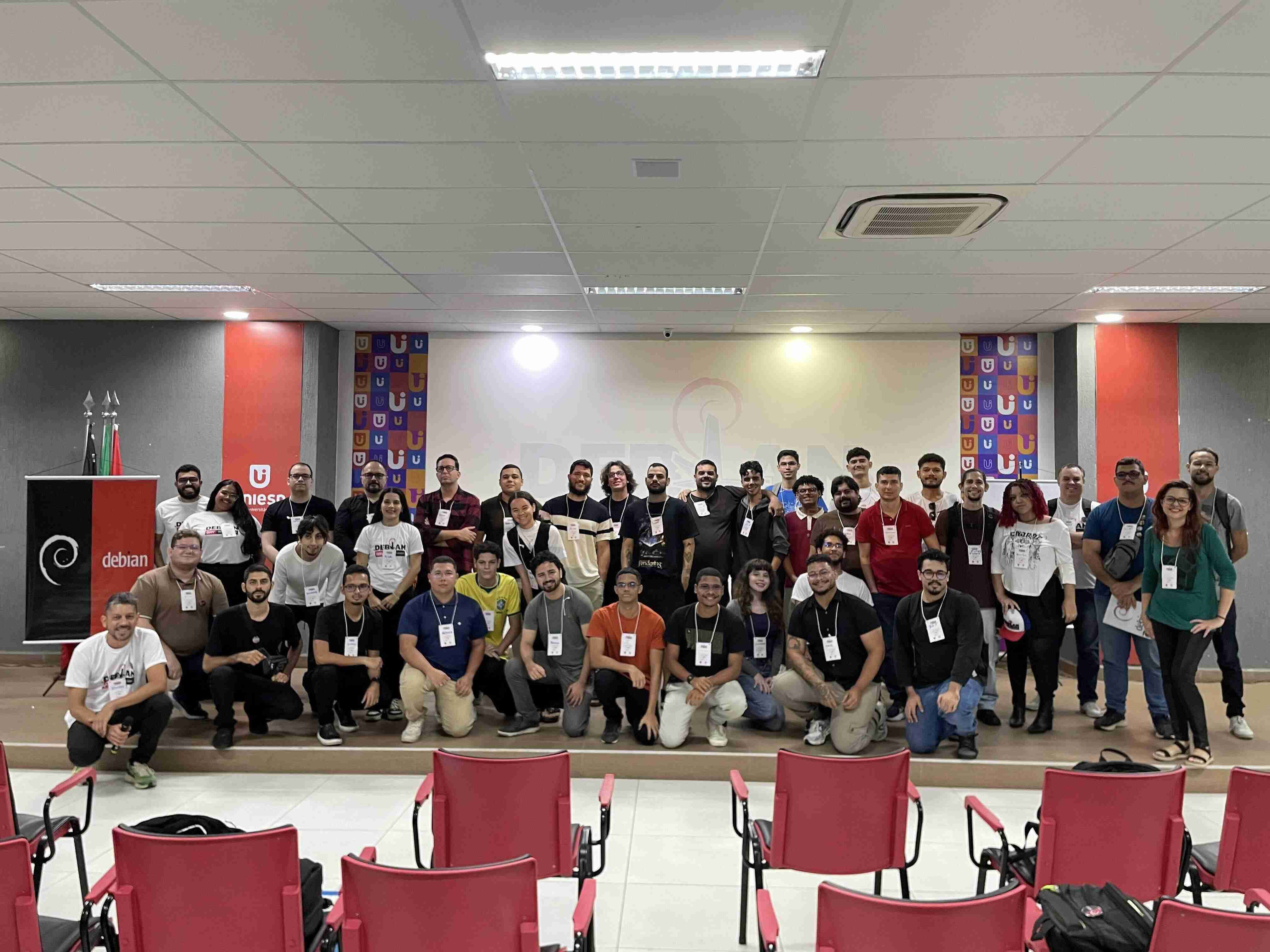
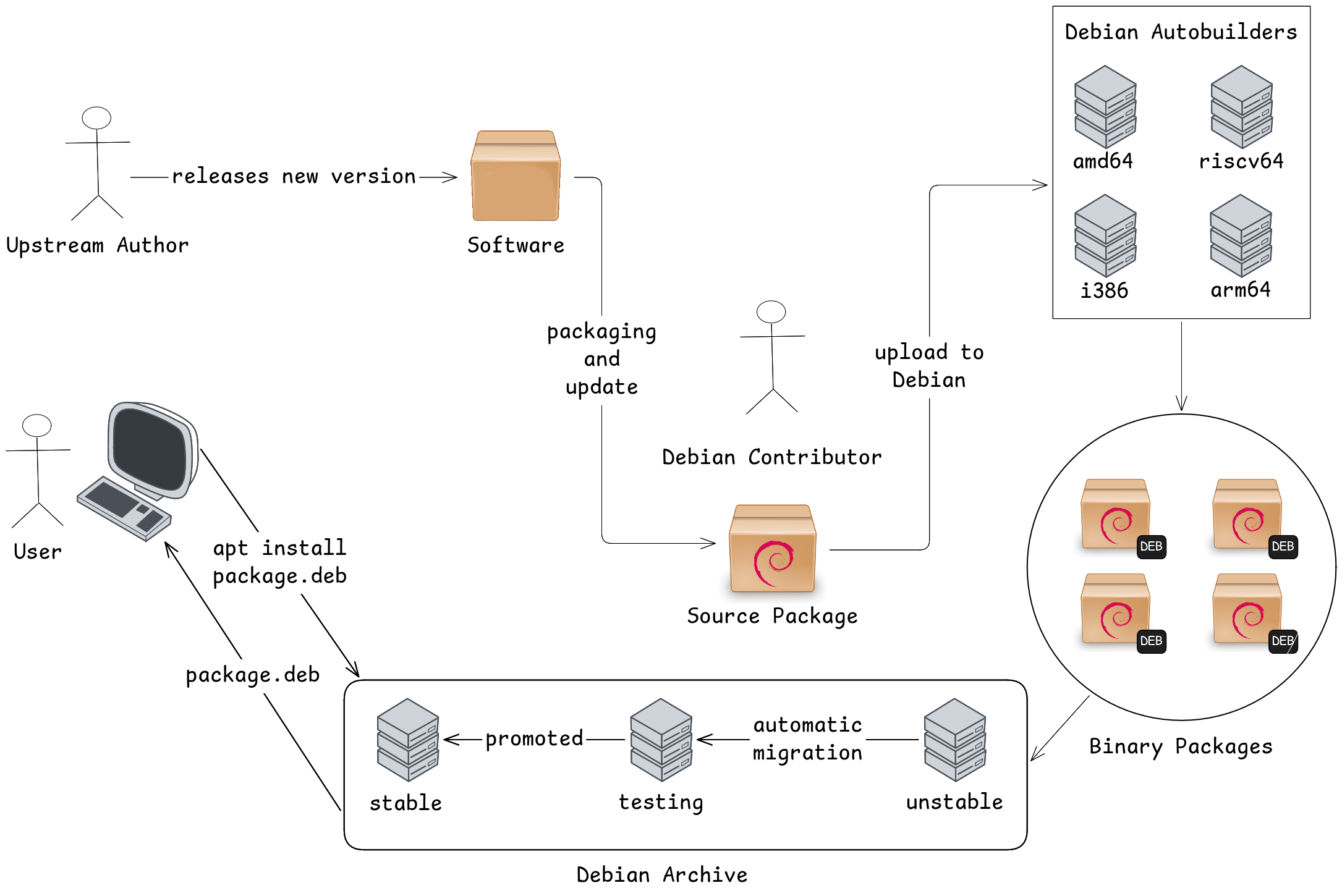
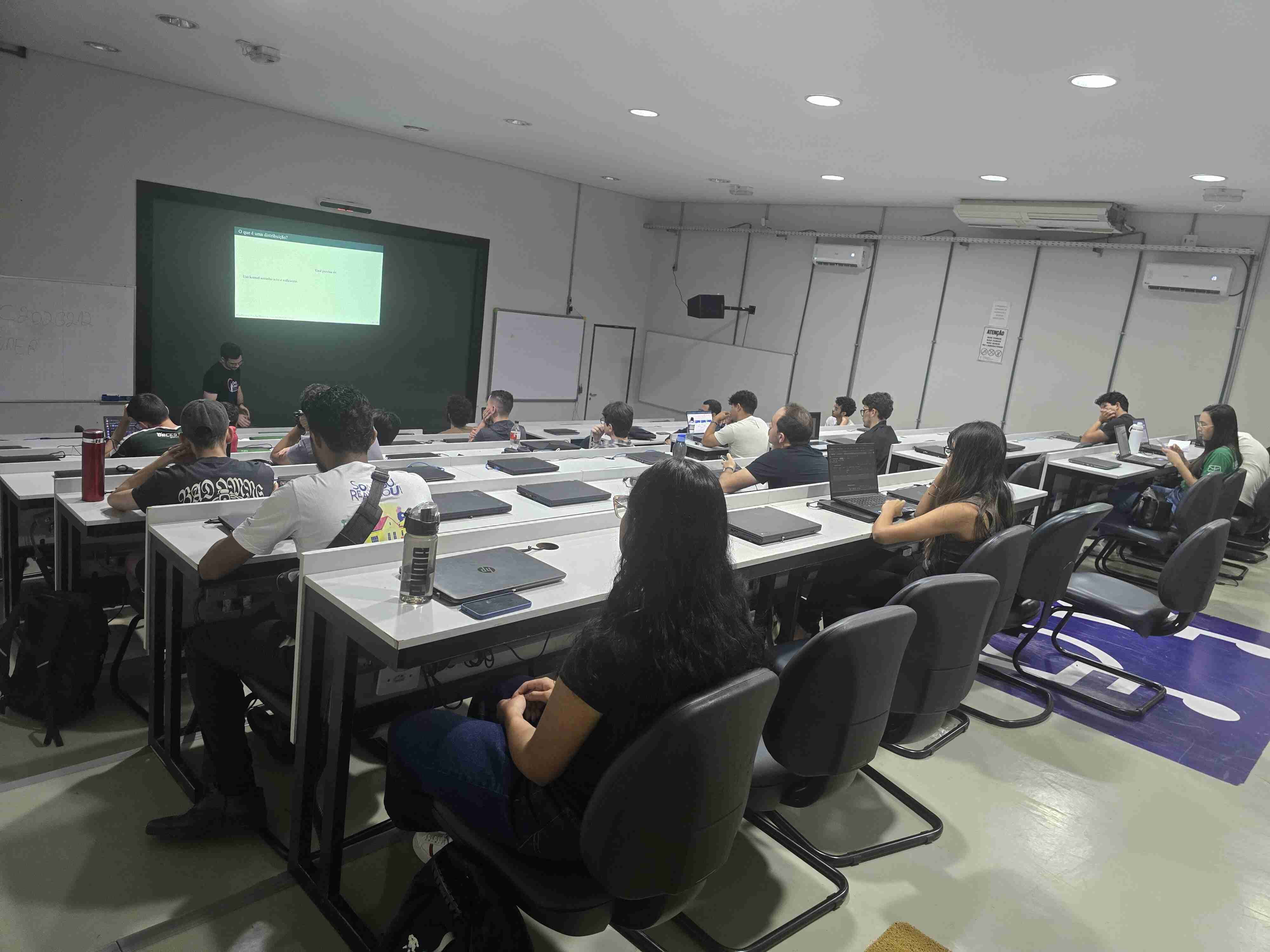
Jo o Pessoa Debian Day Jo o Pessoa Group Photo In Jo o Pessoa, we had a two-day event. The first day was dedicated entirely to workshops, and I ran a packaging workshop for newcomers. It was the first time I had been responsible for a workshop, and it was a great experience. We didn't have a lot of time, so I decided to start with a 30-minute talk explaining a few things about Debian. For example, I made this image to explain the packaging workflow: Debian upload workflow This image was based on The Debian Administrator's Handbook, and I think the participants really enjoyed learning about this workflow. When I showed the slide with this image, it was the moment when I received the most questions. After the talk, I explained my way of working and what they were going to do. The hardest part was setting up the environment, since my approach uses sbuild + gbp. They were running different Debian releases and, because of my inexperience with workshops, I had some of them configure sbuild with unshare, even though it is only available in stable through backports. Some of them even managed to learn how to use backports, while others decided to start again using the "old" way. One thing that helped a lot was the Debian Brasil Wiki. It has all the instructions for configuring sbuild in Portuguese, along with great examples. The Brazilian wiki is an opinionated version of the Debian Wiki. We generally prefer to use it for the convenience of having the exact workflow we follow, as well as an up-to-date Portuguese version of our process. If you want to learn more about the Brazilian community, you can find more details in the schedules from previous DebConfs. We almost always had a talk about the community and its activities. In the end, everyone successfully set up their development environment, and all six participants made their first contribution to Debian. If you take a look at my upload tracking page, you will see that every upload made on August 15, 2026 was a sponsored upload from this event. One of them appear twice in the list because I sponsored the upload and also made some other changes. I also asked all of them to put this in their changelog:
* My first contribution!
The idea was to make it clear to other people that they were only working on small Lintian issues as a way of learning and understanding the process. By the way, I made a UDD query to find packages with the following Lintian tag: redundant-rules-requires-root-no-field. To fix this issue, they only had to remove one line from the debian/control file. It is obvious that these uploads are not particularly useful. I call them "motivational uploads" because my goal is to help newcomers understand the process and immediately give them the reward of having made a contribution to Debian. I'll try to keep in touch with them. My plan is to hold another session, this time remotetly, to help them continue contributing to Debian. In fact, I already have another package prepared by one of them waiting for my review. The second day was a full-day event featuring a bunch of talks from the local community. I gave a talk explaining the new members process. I was the only Debian Developer at the event, and I think having a DD there made a real difference. Being there to answer questions, and simply being present, makes Debian feel more tangible and accessible to people. A big shout-out to Rafael Rocha, who put in a lot of work to make this event happen, with the help of many volunteers who contributed along the way.

Bras lia Debian Day talk in Bras lia One thing I really like about Debian Days is that each place has its own way of doing things. In Jo o Pessoa, we had a MiniDebConf-like event, while in Bras lia, we had something smaller but still very valuable. We decided to keep things simple: talk to a few students at the University of Bras lia (UnB) and then go somewhere to eat and have a few drinks.

A bit of history For those who don't know, the DebConf 19 was held in Curitiba, Brazil. After the event, Arthur Diniz got really excited about Debian and decided to go back to his University, UnB, to share his experience and encourage more people to contribute to Debian. I attended one of his talks, thanks to Joenio Costa, who invited Arthur to give the talk. Joenio was also my professor at the time and a Debian contributor. I really liked what Arthur had to say about free software, and he did a great job of presenting the Debian community as a friendly and welcoming place. So I decided to attend local meetings of the Debian Bras lia community, which had been inactive for a long time. Lucas Kanashiro was the Debian Developer who answered our questions and, as I mentioned earlier, simply being there made Debian feel more tangible. Everything stopped when the pandemic began. Then, towards the end of 2020, I saw a message in the Debian Bras lia channel saying that the meetings were back, this time remotely. I was hesitant to join because, back in 2019, I hadn't managed to make a packaging contribution, even with their help. I had eventually given up on the process. So this time, I decided to join the meeting with something already prepared for review. I watched all of Eriberto's packaging videos, picked a random package, and joined the meeting. I remember Kanashiro being excited that someone had just shown up with something ready for review. At the time, it was only the second meeting since Debian Bras lia had come back online, and none of the newcomers had started working on contributions yet. During the same meeting, he also convinced us, the newcomers, to give a talk about Debian just three days later. The MiniDebConf Online Brazil 2020 was happening on Sunday, and the meeting was on the Thursday before it. Since he has great convincing skills, I went along with the idea and prepared the talk with Francisco Ferreira. That was the rebirth of the Debian Bras lia community. Since then, we have maintained a close connection with the University of Bras lia, and today, at least seven Debian Developers are from UnB, whether as former students or former professors. The reason I told this story is that, even though the Debian Day we held in Bras lia was smaller, it is part of something that has been working for us for several years: staying close to an University. We've managed to attract and retain many people who share the same values and interests. I've hope you all had a great Debian Day. If you're reading this and aren't part of the Debian community but would like to join, get in touch!

Iustin Pop: Another optimistic take on AI

Disclaimers The current discussion in Debian around the AI GR is very heated, and I won t add to that, however, I am very confused about some of the viewpoints there. But, I had no idea how to even try to write this, so did shut up, until I saw Aigars excellent Optimistic take on AI, which motivated me to try, at least. For the record, I fully subscribe to the post, and to the voting suggestions (and I just voted). Also, for full disclosure, I don t think I did any contribution to Debian until now using AI, neither packaging, nor emails, nor bug reports. And this blog post specifically is 100% hand written. With that out of the way there are two points I want to make in this post.

AI is useful, even if it has risks First is, that even if we could put the genie back in the metaphorical bottle, we should not. We do need to continue working towards safe AI, and efficient AI (less environmental impact), but we should not work towards removing the usage of AI. There are already significant advancements in sciences and technology thanks to the use of AI, so desiring AI to not exist (assuming we had a magical wand) is the wrong approach. Sure, AI has significant risks and I can see ways in which AI can do significant damage to society but I don t think we can go from Kardashev I to II without the use of AI, and definitely not to III. And I think, that should be the goal. A few simple examples: Do we want to rollback all the 20 years old security issues that AI found? Do we want to rollback the recent Moderna cancer findings? Do we want to rollback the concept of extremely large scale pattern matchings , just because it runs on chips and no longer in one person s head?

Reading Debian lists The second point is, lately I found less and less enjoyment in reading Debian lists. Even with that already being the case, I feel so disconnected from many of the opinions being voiced in this discussion. On one hand, it s normal and healthy that people have different opinions, disagree, and move forward. On the other hand, looking at one of the proposed options:
  • Moderators and disciplinary teams may make narrow and tailored exceptions to rule 4, and decide on interpretation .
  • Violations of these requirements should be treated as violations of the relevant Code of Conduct and should result in swift and proportionate disciplinary action .
I already knew Debian, and some large parts of the OSS world, is left leaning. But those phrasings, to me, are too close to socialism/communism. As someone who grew up under communism, this is a much more slippery slope (disciplinary teams? really?) than AI usage. Ask me in person for more details. So, it is possible that Debian continues to evolve in such a way that I don t find myself in any way close to its ongoing culture. I will be sad at that point, but it will be what it is.

Where to? I think that, until such a time that an AI bubble bursts, what any organization should do is try to logically see where and if AI can help. And in an organization that is about computer software, I see hundreds of places that are subject to very large scale pattern matching so the half of the discussion is, to me, mind-boggling. To be clear, it s not about if you can t beat them, join them . As I wrote above, I think AI is useful, so the point is how to use it effectively. Well, will see what Debian votes. I am half curious, half sad already.

22 August 2026

Aigars Mahinovs: Optimistic take on AI

As I am writing this, there is a vote ongoing in the Debian project on how to deal with AI in general and AI-assisted contributions to Debian specifically. Massive discussions have happened in debian-vote and other locations. I have also asked questions there and offered my perspective. IMHO now is the time to summarize that, after all the discussions that I've had with people on multiple sides of this debate both online and offline, and explain how I will be voting and why. Hopefully that will be helpful to someone else as well. None of this has been compiled with AI assistance, but only because I think that forming opinions is not something where AI can really be helpful. Spellcheck was used though. So, first I will describe how I see each of the 8 proposals, then what my vote will be, and then a bit more detail on the reasoning and thinking behind this. WARNING - this went long. With all the above considered I will vote like this (earlier options are preferred over later options): Details on rationale Hypocrisy - I find any proposal that would ban AI-assisted contributions to Debian, but at the same time not ban including AI-assisted contributions from upstream projects to be inherently hypocritical. If LLMs and AI are the very incarnation of evil (a puppy-killing machine, as the analogy went in some emails), then any rational proposal would involve excluding any and ALL code contaminated by this evil from the project. What does it matter if puppies were killed in writing the debian subfolder of the source code or the src subfolder? No proposals went there because everyone knows that such a ban would be the death of the relevance of the project for the future. Debian would be frozen on some old version of the Linux kernel forever and other software would be falling to the same problem too, for example as projects on GitHub start enabling AI-supported reviews with patch suggestions. Soon the "development" of Debian could just be stopped as there is nothing to develop without any upstreams. Assumptions - a lot of proposals mention various "concerns" with at most one word, like "practical" or "community" without an explanation of what exactly they mean by that. The proposers assumed that everyone lives in the same info bubble as they do and already know everything that they mean and already agree to that. That is false. Proposal A was a positive stand-out in this area. Debian has contributors all over the world with very different exposure to different information sources and very different world views. If you want to convince the project as a whole that LLMs are bad because of "ethics", then you do really need to explain what you mean by that and give links to sources, at least as well as Proposal A did. All other proposals were really weak in this area. Copyright - the question on how copyright law interacts with training LLMs and their outputs is still not settled law. The closest legal statements we have so far are that - just because an LLM is trained on copyrighted material does not make that LLM itself be a derivative work of the training data (you, however, cannot just create and distribute a "library" of copyrighted materials just because you plan to train LLMs on it). The output of the LLM might not be subject to copyright law at all, like a photo taken by a monkey. It would then be public domain and thus can be modified and then licensed by the user of the LLM. It might also be a derived work of the context of the inference (so for software - if you refactor a GPL project, the refactoring itself is likely GPL too). Any stricter interpretations would break a lot of existing copyright doctrine, such as raising questions like: "does the output of any programmer now become a derived work of the programming manual books they read in college?". In any case it is really not up to Debian to legislate the nuances of copyright law. And I strongly disagree with the concept that an author can tell me how I am allowed to use the learnings that I gained by reading their work. That is not how either copyright or society works. I can look at 10 pictures of a sunset and draw my own, inspired by the ones I saw. No one can forbid me that expression. The same must be true for a machine learning and replicating patterns. Ethics - I've re-read all proposals and emails and the only real specifically ethical concern I could find was the complaint that some LLMs (or their training farms) are running their web scrapers too aggressively and that causes extra load on services. Like that is not an LLM problem. Scraping the web is not an inherent part of the LLM training or inference process. It's just a few misconfigured scripts. We saw the exact same thing in the early days of web search engine proliferation. Then we banned/blocked the misconfigured engines and the survivors learned that obeying robots.txt is one of the rules for surviving. Literally the exact same problem and it will be solved the same way. Did we ban all search engines back then just because some of them were misconfigured? No. Some claims (like in Proposal C) are just bombastic hyperbole ("hazards to users' mental health", "fraud", ...) and on top of that have zero relevance to the topic at hand - AI-assisted contributions to Debian. What "hazard to users' mental health" is created when a Coderabbit spots that a lock is not taken before accessing a resource in a particular function and suggests an AI-generated patch to fix it? What "fraud" is committed by this? There is no sane answer. I get that some people are very busy fighting some culture wars and sometimes, some AI-bros happen to be on the other side of one such war, so it is useful to label everything coming from the AI sphere as "bad" in all possible and impossible ways. You do you. In private. Why pull Debian into that? Why force your position on everyone else in the project? Why deny everyone in the project access to useful tooling, just because you have strong feelings about some of the people promoting some of those tools? This seems to me a repeating pattern here - blaming the technology as a whole or blaming all providers of this type of technology for failings (ethical or technical) of some of those providers. Like refusing to wear all shoes and condemning all shoemakers and sellers, just because some American billionaires figured out a way to make and sell cheap shoes by killing puppies. Not refusing and condemning those providers, but condemning all for the actions of a few. Resource usage - this is a big topic for many and it has reasonable points to it. The LLM and AI technology has no inherent need to be damaging to the environment in any way for it to function. It does not need to burn oil or dig up cobalt. It does not need to sacrifice a ton of water to the Gods. It is perfectly possible to run AI (both inference and training) purely from green, electrical energy and cool data centers in equally sustainable ways, like with simple air-source heat pumps (also known as air conditioning) or even use it beneficially (many data centers are used for heating surrounding buildings via district heating). However, some AI companies do use non-green power for their data centers, some do use locally-limited fresh water for evaporative cooling (evaporated water still rains down as rain, it is not really lost, but that may happen in another location so lack of water can still happen locally). Some even run unlicensed natural gas turbines in their data centers to provide them with power. And those specific providers can and should be shunned and condemned. Not the other ones, who are doing the right things. Not the technology or its users or its outputs. There is a very wide spectrum of options on how an AI system could be powered: starting from local execution on already existing private hardware powered by one's own local solar power (good), to a data center stuffed with borrowed AI-only cards powered by a gas turbine or coal power station that operates solely to supply this data center (bad). Proposals that talk about ecological impact, but do not even consider where on that (very wide) spectrum to draw the line between "good", "acceptable", "discouraged" and "bad" well, I cannot see those proposals being actually serious about the environment to begin with. It feels like they just refer to it for points. And if we go into the power question deeper, well the grid dynamics and economics become very, very complex and often also non-intuitive. Like, all large software companies with data centers (that also happen to provide AI services), like Google, Meta, Apple, Microsoft and others do actually care about sustainability (in part because their customers care and vote with their wallets) and so all of them use 100% green energy for their data centers (including AI data centers) .... "on an annual scale". Wait, what does that mean? Well, the electrical grid is special - the amount of electricity produced and consumed on the whole electrical grid together has to match almost exactly every second. If there is just a single second where there is significantly more energy consumed from the grid than is produced, the frequency will plummet and you get a brownout and risk a grid collapse. The same is true in reverse - that causes a voltage swell. So grid operators manage energy flows every second and command power stations to increase and decrease generation all the time. Some power stations are easier to regulate dynamically than others. In the end, all that means is that even if your data center has a contract for 100% green energy with your power company, at some seconds across the year there might not be enough green energy in the grid to fully supply ALL people and companies that have 100% green energy contracts. This gets compensated in other seconds, so that across the year ("on an annual scale") for each kWh that your data center pulled from the grid, the same amount of kWh of 100% green energy flows into the grid. But it might not happen at the exact same second. Pedantic companies, like Google, take that discrepancy and count that as CO2 emissions for themselves. And then they and the power companies (they have contracts with) invest billions into new green energy projects, better grids and better batteries so that eventually this discrepancy goes down to zero. In this way green AI data centers with their increasing consumption of green energy are actually doing a lot of good work in making our electrical grid more green. They are making more resources than they are consuming. And that is just the tip of the iceberg. This is a deep topic that really abhors generalizations like "more consumption = bad". I've heard similar discussions in the context of electric cars - "so you got an electric car? you'd have fewer emissions if you drove no car at all!". That might be so. And I would also reduce my emissions to zero if I stopped breathing, but I really do not want that kind of thinking to be propagated further, especially when impressionable young people are around who may take it to its logical (but wrong!) conclusion. Instead I talk about how early adopters use electric cars to gather experience and achieve volume to start the network effects working. Once network effects of many electric cars on the roads are sufficient, it becomes an economically logical choice to get an electric car. People who cannot avoid having a car start to switch over. And at the point of mass switchover the reduction of emissions is so massive that those early adopters failing to go all the way to riding a bicycle becomes a rounding error. But surely that does not apply to LLMs? They are only increasing consumption and bring no benefit? Benefit - and here we have to actually talk about benefits. Because you cannot make any cost-benefit analysis if you do not actually fully investigate the benefits. Are there environmental benefits from running those AI models? Yes, in a lot of very diverse ways. Hard to measure, however. There are projects that are easy to quantify - like that Google AI project on contrail avoidance. An advanced, special model trained and executed in Google AI data centers was able to predict where in the air contrails would be produced and could generate proposed course adjustments to commercial flights to avoid specific heights in specific locations at specific times. This stopped these aircraft from creating contrails and those contrails did not make a further contribution to global warming. That benefit in a year was many times higher than the environmental cost of training and running that AI model. And it can keep running for many years accumulating further benefits. On a personal scale, I've had problems that I bashed my head (and computer and CI resources) against without much success years ago solved with a few minutes of compute. Having a good enough candidate solution quickly is much cheaper from a resource perspective than spending days trying different things, running my PC for it, trying different patches on CI executions, doing different rebuilds. I've seen very significant benefits in AI-assisted development in enterprise environments where code way more complex than what is in Debian (especially in Debian tools and packaging) gets analysed, reviewed, modified or even refactored or rewritten in another language with AI assistance. And it generally works. The commonly mentioned "hallucinations" are a thing of last year in the coding context. Nowadays the AIs work in special coding harnesses and use real tools as foundational facts. You cannot "hallucinate" an API call or parameter if you have to run and pass the unit tests and integration tests by your harness before you can return "success" to the caller. I've personally seen high-level AI models read very complex software projects across multiple repositories and point out a very specific design consideration that was encoded in the code logic, but never mentioned in comments or documentation. It was so obscure that even I did not immediately know what it was talking about (and I wrote that code). Only on close inspection of code interaction across three repos did I remember that there was indeed that bug 2 years ago that I fixed by doing the change that this AI picked up (it wasn't in the history of this git repo due to repo migration). It mentioned this because it was very relevant to the task I initially gave it to review. These LLMs in a proper harness with proper system instructions and usage approach are not just fancy spell checkers or auto-complete. They function more like very advanced pattern matchers. They have learned millions of patterns from training data. When they look at the code, they see hundreds or thousands of overlapping patterns. When you ask them to make or change something, they pull out a pattern (or ten) from their training and apply those patterns to the context of your program. You get something that looks just like the surrounding code, same style choices, same language, same comment voice, but it implements something new there, based on other patterns learned. If you've studied design patterns in your CS class, this will be familiar. But people can learn and remember maybe 20-30 patterns, while an LLM can have a million patterns and can combine them when needed. So it takes a pattern of Python code, pattern of standalone script, pattern of parsing command line parameters, pattern of classes, pattern for background threads, pattern for file tree traversing, pattern for pipes, ... and squishes them together to make a solution for your query. And then tries to debug it with compilation, tests and execution until it works as expected. Even if there is zero LLM development going forward, it will take many years to fully appreciate the benefits we can extract from the already trained models. They don't even have to be retrained - for existing languages they just keep working. For new language variations, like a new Python version, you can feed the changelog into context and they will be able to work with a Python version that they never saw in training. And patterns are mostly abstract, so not really specific to any language - human or programming. This is another big enabler that LLMs have created that we have not really explored yet. LLMs have created really free software. People can actually create software that is perfectly suited just for them and no one else. They don't even have to know how to program and don't even need to speak English. I've seen people writing prompts in their native language and LLMs creating and then adjusting web apps or Android/iPhone apps and deploying them to the user's own phone. It was too buggy to work last year, but this year it is actually very functional for simpler use-cases. And the code looks just fine too - I've seen external contractors in a business setting deliver far worse. If you start with a good initial system prompt, the project will have architecture documentation, use-case documentation, unit tests, integration tests, deployment harness, testing and production deployments, audit logs, monitoring, clear git commits, CI validation on commit, ... Modern AI systems have the capabilty to deliver software freedom to people who are not coders. I really can not overstate the consequences this may have on the world. Community - I find the concerns that new people will be using LLMs so much that they will no longer be understanding the actual code they are contributing a bit regressive. I don't see any significant difference between this and people relying on compilers, on high-level languages or on debhelper. Writing modern debhelper packaging feels more like writing configuration and not writing code. It takes really significant effort to dig down through layers of abstraction to find what actually is being executed in debian/rules. AI does not really make this worse. In fact, I find that AI can make it much easier to understand arcane syntax because you can ask an LLM to explain what is happening in any part of the code and it will do a pretty good job of it, digging down through the layers of abstraction for you. All the pro-AI proposals include the requirement that each human contributor needs to understand and stand behind their AI-assisted contribution and I believe that is a good requirement and also a sufficient requirement. Modern LLMs not only produce clear and concise code, but they are also capable of producing good comments explaining why the code is how it is, good commit messages explaining the change and reason behind it and also making corresponding changes to test suites and documentation. You know - the housekeeping stuff that is often skipped because it slows down the actual feature development, but then its lack becomes a problem for future contributors. Responsible use of AI assistance is a great chance to actually strengthen our community and make our software easier to maintain. That said, I have no qualms about flat-out rejecting contributions that do not make sense. And it does not matter if they are made with or without AI assistance. If the contributor will not explain their patch, it might be they do not understand what their AI produced or it could be that the contribution is deliberately hiding a backdoor being planted. It is also quite common for a contribution of a new feature to be rejected because the author/maintainer does not believe that it is a good fit for the project. Featuritis is a real disease. AI or not. There have always been drive-by contributions to various projects. They will continue to exist. Each of them should be evaluated on its merits - is this feature valuable to our users and is the added complexity (if any) worth the functionality? A lot of security bug reports are "drive-by" contributions as well. And many of them nowadays are discovered, exploited and patched with AI assistance. We could reject them, but that just leaves us holding the bag on the now-known exploits. And the New Maintainer process should be able to figure out if an upcoming Developer has actually understood the nuances of Debian packaging or not. A contributor with upload rights to the archive has to be able to create a basic package with no support tooling (maybe even without using debhelper?) and be able to understand and modify more complex packages (possibly with tooling support). IMHO that is a separate discussion that is worth having, involving experts from the educational sector. Conclusion IMHO the Debian project should not restrict what tooling individual contributors use to contribute. Expecting high-quality contributions and that contributors understand what they are contributing (as a first level of review) is enough. However, Debian should provide its contributors (internal or external) with guidance on how to contribute in the best way possible. That could include: In addition to that it would be helpful for Debian, as a project, to reach out to AI service providers to: Questions? Feedback? Just ask here or here.

18 August 2026

Thomas Lange: LLM usage in Debian

After spending many hours on reading all the proposals and discussions the best choice for me is NOTA (None of the above). We do not need to create new rules for LLM usage, we already have our DFSG and our social contract. Keep it simple, stupid. Avoid more rules!

10 August 2026

Bits from Debian: DebConf26 Local Team says goodbye

On Saturday 25 July 2026, the annual Debian Developers and Contributors Conference came to a close. The Debian Press team would now like to share this personal and beautiful message from the Santa Fe Local Team. Words from DC26 Local Team DebConf26 is over, and those of us who were part of the Local Team are trying to return to normality , if such a thing exists after organizing a DebConf. This event changed our lives and would not have been possible without the help of many great people. We would especially like to thank everyone who became part of our extended local team. Our endless thanks go to Gunnar who also instigated this whole adventure , Santiago, Nattie, Stefano, and Olasd. Thank you for supporting and guiding us, sharing your experience, and helping us find solutions throughout the entire process. It was also made possible thanks to the great work, strong support and patience of international teams: Fundraising, Bursaries, Content, Video, Treasury, Visa, Website, Accommodation, Front Desk, Cheese and Wine, Publicity as well as all the other teams and individuals who contributed. We apologize if we have forgotten to mention anyone; many people helped make this event possible. Our deepest thanks also go to everyone who joined us in working on the event, especially Fer, Jos , and Juli n, who showed great commitment and took responsibility for several important tasks. We would also like to extend our gratitude to FICH, the Universidad Nacional del Litoral, the institutions, organizations, sponsors, suppliers, and everyone who contributed in one way or another to welcoming the Debian community to Santa Fe. And finally, a very special thank you to our families, to whom we dedicated little time these past few weeks, who supported us on this adventure, enduring the exhaustion, the calls and messages at all hours, and the occasional stressful situation. Always giving us that much-needed, encouraging hug with so much love. These were very intense weeks, during which we tried to give our best so that everyone could enjoy their stay and so that the Debian community had the necessary conditions to meet, work, share knowledge, and continue creating the magic that characterizes community life and the development of Debian. As happens at every DebConf, there were difficulties, unexpected situations, and challenges that required us to improvise, learn, and perform a few juggling acts. There were also moments that will certainly remain as memorable anecdotes: the antisocial room , some gas heaters worthy of a museum, and newly unlocked powers for negotiating with suppliers. We have no evidence, but also no doubt, that for many people the Conference Dinner was one of the best moments of the event. A few ingredients we had hoped would happen naturally were missing, such as more wine nights and at least one in-person football match. During the two weeks of DebConf, we experienced every kind of weather and a wide range of emotions. Above all, however, we saw people enjoying themselves and building friendships, which fills us with pride. Thank you very much to everyone who came and helped DebConf26 leave such a beautiful mark on our hearts. We hope our paths cross again somewhere in life. Best regards, Leonardo, Emmanuel, Mariano, Pablo, and Mart n DebConf26 Local Team About Debian The Debian Project was founded in 1993 by Ian Murdock to be a truly free community project. Since then the project has grown to be one of the largest and most influential Open Source projects. Thousands of volunteers from all over the world work together to create and maintain Debian software. Available in 70 languages, and supporting a huge range of computer types, Debian calls itself the universal operating system. About DebConf DebConf is the Debian Project's developer conference. In addition to a full schedule of technical, social and policy talks, DebConf provides an opportunity for developers, contributors and other interested people to meet in person and work together more closely. It has taken place annually since 2000 in locations as varied as Scotland, Bosnia and Herzegovina, India, Korea, France. More information about DebConf is available from https://debconf.org/. Contact Information For further information, please visit the DebConf26 web page at https://debconf26.debconf.org/ or send mail to press@debian.org.

9 August 2026

Reproducible Builds: Reproducible Builds in July 2026

Welcome to the July 2026 report from the Reproducible Builds project! In our reports, we try to outline the most important things that we have been up to over the past month. As a quick recap about what problem our project intends to solve, whilst anyone may inspect the source code of free software for malicious flaws, almost all software is distributed to end users as pre-compiled binaries. The motivation behind the reproducible builds effort is to ensure no flaws have been introduced during this compilation process by promising identical results are always generated from a given source, thus allowing multiple third-parties to come to a consensus on whether a build was compromised or not. If you are interested in contributing to the project, please visit the Contribute page on our website. In this month s report, we cover:

  1. Tool development
  2. Distribution work
  3. Three new scholarly papers
  4. Patches
  5. Misc news

Tool development diffoscope is our in-depth and content-aware diff utility that can locate and diagnose reproducibility issues. This month, Chris Lamb made the following changes, including preparing and uploading versions 324, 325 and 326 to Debian:
  • Fix tests to work with zipdetails 4.0008. (#1141359)
  • Bump debhelper compatibility level to 13. [ ]
  • Update copyright years. [ ]
In addition, Paul Spooren made changes to allow trailing garbage in Gzip files [ ] and Vagrant Cascadian added an external tool reference for the pedump binary to use the mono package under GNU Guix. [ ]
disorderfs is our FUSE-based filesystem that deliberately introduces non-determinism into system calls to reliably flush out reproducibility issues. This month, Christelle Gloor added the option to sort by ctime as returned by the lstat(2) syscall. [ ], which Chris Lamb uploaded whilst bumping the Standards-Version to version 4.7.4 [ ]. Bernhard Wiedemann also updated disorderfs to version 0.7.0 in openSUSE.
Yet again, there were a number of improvements made to our website this month as well. For example, Chris Lamb, by request of Digital Ocean, changed the target of a referral link so that they can manage incoming referrers [ ] and pushed a number of changes to the Tools page [ ].

Distribution work In Debian this month, 32 reviews of Debian packages were added, 26 were updated and a total of 21 were removed this month, adding to our extensive knowledge about identified issues. A number of issue types were added by Chris Lamb, including:
  • python_towncrier_build_date [ ][ ]
  • log_files_installed_in_package [ ]
  • fontforge_varies_by_timezone [ ][ ]
Chris also added a further note for the build_date_in_manpage_generated_by_spf13_cobra issue. [ ]
In addition, there is a new page showing verification rebuilds of OpenWrt APK packages and firmware images, powered by rebuilderd:

Three new scholarly papers Yan Li, Nan Jiang, Qihang Zhou, Shaowen Xu, Yamin Xie and Xiaoqi Jia of the Chinese Academy of Sciences published a paper titled VCAligner: Aligning Source Distribution Versions with Upstream Git Commits to Secure Supply Chain:
We present VCAligner, a content-based alignment methodology that constructs inverted indexes over VCS histories to precisely map released artifacts to their originating commits, independent of fragile version tags. We evaluated VCAligner on a dataset of 2,984 verifiable PyPI packages derived from the 4,000 most-downloaded projects linked to public GitHub upstreams. Our results reveal a critical weakness in conventional tag-based heuristics: while they appear effective on 85% of the dataset, the residual 15% failure rate generates a catastrophic downstream audit workload of over 10.3 million commits. In contrast, VCAligner reduces this burden by two orders of magnitude ( 158 ), bounding the total workload to under 65,000 commits. Furthermore, we provide the large-scale characterization of Packaging Noise, classifying artifact divergence into structural additions (Path Phantoms) and content mutations (Blob Phantoms), thereby isolating the distinct attack surfaces of malicious injection and code tampering.

Jens Dietrich and Spencer Sun from the Victoria University of Wellington together with Tim W. White and Behnaz Hassanshahi from Oracle Inc pre-published their paper No Snake Oil: Verifying Python Package Builds (PDF):
Python has become the default language for interacting with AI, with packages being distributed through registries like the Python Package Index (PyPI). This creates a need to analyse supply chains comprising such packages. One such analysis is to rebuild packages in order to identify compromised builds injecting malware. Independent rebuilds in hardened environments have the added advantage that they can generate and record provenance in order to increase the trustworthiness of packages. Two tools that are designed to automate such rebuilds and run them at scale are macaron and oss-rebuild. We study 12,180 popular releases from PyPI and find that the byte-for-byte equivalence rate is generally low. We analyse the reasons why they produce different wheels, and find that equivalence between the original and rebuilt wheels can often still be established, preserving most of the guarantees users expect from rebuildable releases. We present and evaluate daleq4py, a tool to establish the equivalence of Python wheels through the kernel of a normalisation function that is based on provenance-preserving datalog rules. Experimental results show that daleq4py substantially expands the set of rebuilds that can be accepted as equivalent. Although only 15.4% of macaron rebuilds and 19.1% of oss-rebuild rebuilds are byte-for-byte identical to the published PyPI wheels, daleq4py establishes wheel equivalence for 60.2% and 78.9% of source-equivalent rebuilds, respectively.

Denise Nanni, Julien Malka, Stefano Zacchiroli and Th o Zimmermann from T l com Paris together with Gabriele D Angelo from the University of Bologna pre-published their paper Understanding Build Reproducibility in the F-Droid Ecosystem (PDF), which was accepted at the 2026 ACM Conference on Reproducibility and Replicability:
The security of open source applications benefits considerably from the possibility of rebuilding their source and verifying the output. F-Droid, a prominent distribution for open source Android applications, systematically rebuilds them from source and tests their bitwise reproducibility at app publishing time. However, F-Droid offers no guarantee that app reproducibility will continue to hold in the future. As software ecosystems evolve, reproducibility may degrade, with potential negative consequences for software preservation and security. We present the first empirical study of build reproducibility in the F-Droid app ecosystem. Analyzing historical reproducibility logs, we find that the overall bitwise reproducibility rate has been steadily increasing over time (as new versions of apps are published). We then evaluate how reproducibility holds in time for fixed app versions, by attempting to rebuild 18 904 app versions that F-Droid had previously confirmed bitwise reproducible, published between September 2018 and February 2026, achieving an 83% rebuild success rate, and identify missing dependencies as the dominant cause of failure, accounting for 76% of non-rebuildable cases. Among successfully rebuilt apps, 94% are also bitwise reproducible-i.e., they still yield bitwise identical artifacts upon rebuild. Together, these results show that while bitwise reproducibility largely holds for apps that can be rebuilt, rebuildability itself is highly sensitive to temporal decay.

Patches The Reproducible Builds project detects, dissects and attempts to fix as many currently-unreproducible packages as possible. We endeavour to send all of our patches upstream where applicable or possible. This month, we wrote a large number of such patches, including:

Misc news On our mailing list this month, Colin Winter of Markovian Protocol wrote to our mailing list on the topic of Reproducible verification for retained logs:
Reproducible builds remove trust in the builder: anyone re-derives the same artifact from the same source, byte for byte. The same shape applies one layer over, to a retained record. Most record-keeping regimes (the EU AI Act s Article 12 logging is the current example) require that events be recorded and logs retained, but not that a retained log be verifiable, by a party who was not present, as unaltered and existing when claimed. That leaves an integrity obligation resting on trusting the party being audited.
(Full thread)

Finally, if you are interested in contributing to the Reproducible Builds project, please visit our Contribute page on our website. However, you can get in touch with us via:

6 August 2026

Bits from Debian: DebConf26 closes in Santa Fe and DebConf27 announced

DebConf26 group photo - click to enlarge On Saturday 25 July 2026, the annual Debian Developers and Contributors Conference came to a close. Over 270 attendees representing 35 countries from around the world came together for a combined 90 events (including some which took place during the DebCamp) including more than 27 Talks, 21 Short Talks, 29 Birds of a Feather sessions ("BoF" informal meeting between developers and users), 8 workshops, and activities in support of furthering our distribution and free software, learning from our mentors and peers, building our community, and having a bit of fun. The conference was preceded by the annual DebCamp hacking session held 13 through 19 July where Debian Developers and Contributors convened to focus on their individual Debian-related projects or work in team sprints geared toward in-person collaboration in developing Debian. As has been the case for several years, a special effort has been made to welcome newcomers and help them become familiar with Debian and DebConf by organizing a sprint "New Contributors Onboarding" every day of Debcamp, followed more informally by mentorship during DebConf. Half a dozen new contributors joined the sessions and learned about Debian, free software, packaging and much more. This year, a week-long DebCamp session was dedicated to auditing, patching, and modernizing the Go ecosystem in Debian and enable the transition triggered by the recent upload of dh-golang enabling GO111MODULE=on by default in Experimental. In order to make the conference more accessible for local participants, a local language track was included in the schedule for talks in Spanish, as was done at DebConf19 in Brazil. The actual Debian Developers Conference started on Monday 20 July 2026. In addition to the traditional "Bits from the DPL" talk, the continuous key-signing party, lightning talks, and the announcement of next year's DebConf27, there were several update sessions shared by internal projects and teams. Many of the hosted discussion sessions were presented by our technical core teams with the usual and useful "Meet the Technical Committee", three talks about Linux Kernel, early boot and improving Debian s kernel and installer support for Chromebooks, and about twenty BoFs and talks about Debian packaging policy, Debian infrastructure, security and privacy. This year, and echoing ongoing discussions within the Free Software community, Artificial Intelligence and Age Verification have been the subject of several talks. The Python, Perl, Ruby, Go, and Rust programming language teams also shared updates on their work and efforts. More than 17 BoFs and talks about community, diversity, and local outreach highlighted the work of various teams involved in not just the technical but also the social aspect of our community The schedule was updated each day with planned and ad hoc activities introduced by attendees over the course of the conference. Several traditional activities took place: a poetry performance, the traditional Cheese and Wine party, the Group Photos, and the Day Trip. For those who were not able to attend, most of the talks and sessions were broadcasted live and recorded. One can find the seventy hours of recorded videos available via the conference schedule, or alternatively through this link. Almost all of the sessions facilitated remote participation via IRC and Matrix messaging apps or online collaborative text documents which allowed remote attendees to "be in the room" and ask questions or share comments with the speaker or assembled audience. DebConf26 saw over 341 T-shirts, a day trip, and up to 130 meals planned per day. All of these events, activities, conversations, and streams coupled with our love, interest, and participation in Debian and F/OSS certainly made this conference an overall success both here in Santa Fe, Argentina and online around the world. The DebConf26 website will remain active for archival purposes and will continue to offer links to the presentations and videos of talks and events. Next year, DebConf27 will be held in Asahikawa, Hokkaido, Japan, from Sunday September 5th to Saturday September 11th, 2027. As tradition follows before the next DebConf the local organizers in Japan will start the conference activities with DebCamp with a particular focus on individual and team work towards improving the distribution. DebConf is committed to a safe and welcome environment for all participants. See the web page about the Code of Conduct on the DebConf26 website for more details on this. Debian thanks the commitment of numerous sponsors to support DebConf26, particularly our Platinum Sponsors: Infomaniak, and Proxmox, and our Gold Sponsors : Freexian, and Viridien. We also wish to thank our Video and Infrastructure teams, the DebConf26 and DebConf committees, our host nation of Argentina, and each and every person who helped contribute to this event and to Debian overall. Thank you all for your work in helping Debian continue to be "The Universal Operating System". See you next year! About Debian The Debian Project was founded in 1993 by Ian Murdock to be a truly free community project. Since then the project has grown to be one of the largest and most influential Open Source projects. Thousands of volunteers from all over the world work together to create and maintain Debian software. Available in 70 languages, and supporting a huge range of computer types, Debian calls itself the universal operating system. About DebConf DebConf is the Debian Project's developer conference. In addition to a full schedule of technical, social and policy talks, DebConf provides an opportunity for developers, contributors and other interested people to meet in person and work together more closely. It has taken place annually since 2000 in locations as varied as Scotland, Bosnia and Herzegovina, India, Korea, France. More information about DebConf is available from https://debconf.org/. About Infomaniak Infomaniak is an independent, employee-owned Swiss technology company that designs, develops, and operates its own cloud infrastructure and digital services entirely in Switzerland. With over 300 employees more than 70% engineers and developers the company reinvests all profits into R&D. Its public cloud is built on OpenStack, with managed Kubernetes, Database as a Service, object storage, and sovereign AI services accessible via OpenAI-compatible APIs, all running on its own Swiss infrastructure. Infomaniak also develops a sovereign collaborative suite messaging, email, storage, online office tools, videoconferencing, and a built-in AI assistant developed in-house and as a privacy-respecting solution to proprietary platforms. Open source is central to how Infomaniak operates. Its latest data center (D4) runs on 100% renewable energy and uses no traditional cooling: all the heat generated by its servers is captured and fed into Geneva's district heating network, supplying up to 6,000 homes in winter and hot water year-round. The entire project has been documented and open-sourced at d4project.org. About Proxmox Proxmox develops powerful, yet easy-to-use open-source server solutions. The comprehensive open-source ecosystem is designed to manage divers IT landscapes, from single servers to large-scale distributed data centers. Our unified platform integrates server virtualization, easy backup, and rock-solid email security ensuring seamless interoperability across the entire portfolio. With the Proxmox Datacenter Manager, the ecosystem also offers a "single pane of glass" for centralized management across different locations. Since 2005, all Proxmox solutions have been built on the rock-solid Debian platform. We are proud to return to DebConf26 as a sponsor because the Debian community provides the foundation that makes our work possible. We believe in keeping IT simple, open, and under your control. Contact Information For further information, please visit the DebConf26 web page at https://debconf26.debconf.org/ or send mail to press@debian.org.

31 July 2026

Russell Coker: Links July 2026

Bruce Schneier and Nathan E. Sanders wrote a disturbing and informative article about the use of AI by the US government [1]. Bruce Schneier wrote an interesting blog post about corporate liability for AI decisions and the German court ruling about Google s AI summaries [2]. Cybersecurity News has an interesting article about how Pliny the Liberator succeeded in jailbreaking Anthropic s latest LLM to give instructions on writing exploits, writing exploitable code (backdoors?), and making meth [3]. Andrew Pam wrote about the number of cars with internal combustion engines in NSW decreasing for the first time since 1910, EVs are taking over [4]. Cory Doctorow wrote an informative blog post about Facebook s attempts to silence whistleblowers and what a pathetic little loser Zuckerberg is [5]. Scott Santens wrote an insightful article about how to effectively levy taxes in the future when AI significantly reduces the number of workers [6]. Ron Garrett wrote an insightful post about birthright citizenship in the US and his status as a US citizen who was not born there [7]. The BBC has an interesting article about the Scottish Violence Reduction Unit and how treating violence as a disease can significantly address the problem [8]. The LA Times has an interesting article about Covid19 causing cancer that had been in remission to return, sparking some new research into the effects of viruses on mammals [9]. CMU has an interesting video about ways to physically modify QR codes and how they could be used in real life [10]. Tim Retout wrote an informative post about the pervasive forms of advertising on the Internet, even on the BBC s site and how some of it can be blocked [11]. The Intercept Fund is a project to address respiratory illnesses and the long term mostly unnoticed costs they cause to society, we need governments and corporations to get on board with this [12]. The German news site DW has an interesting article about activists registering neo-nazi slang as trademarks to prevent the sale of nazi merchanise which funds racism [13]. The Conversation has an insightful article about how in South Sudan and other war ravaged countries the peace process usually just allocates the spoils of war and therefore encourages more war [14].

Russ Allbery: Review: Painting the Blues in Gretna Green

Review: Painting the Blues in Gretna Green, by Linzi Day
Series: Midlife Recorder #2
Publisher: Linzi Day
Copyright: November 2022
ISBN: 9798360228431
Format: Kindle
Pages: 577
Painting the Blues in Gretna Green is a self-published fantasy novel and the second in the Midlife Recorder series. It picks up immediately after the end of Midlife in Gretna Green. I also read it almost immediately after, so I didn't pay attention to how good the recap of previous events was. As before, this is urban fantasy except not urban. Day calls it paranormal women's fantasy, which I suppose is as good of a genre label as any. The other book I can think of off-hand that would go into that genre would be Nancy Springer's Larque on the Wing, although it is considerably more literary. I suspect I'm going to read this whole series and it's going to be impossible to review these books without talking about Niki's job, so I'm not going to treat that as a spoiler. It's fairly well-advertised in the marketing for the book, so that feels justified. If you're particularly averse to any spoilers, though, you may want to stop reading here until you've gotten to the reveal in the first book. Niki is now officially the Recorder, with the power, advice book, and sentient house to go with it. She's about to face her first test in managing interworld politics: There's something amiss in the world of the Picts. Her allies are dropping hints, there's a petition from a group on the Pict world that she can't make sense of, and although she likes the queen of the Picts, there is a great deal of tension beneath the surface that she doesn't understand. Meanwhile, after the incompetent disaster that she uncovered in the first book, Niki is determined to pick her new staff by her own criteria. The second book leans even harder into giving Niki both a tangled mess created by previous incompetence and enough power to fix it. Watching that happen is very satisfying, particularly when it involves surprising people who are rather too used to getting their own way. I was somewhat less convinced that Niki is getting the right training to make the decisions that she's making. Diplomacy and staff management are real skills that one needs to learn, not just wing on vibes and gut instinct. My love of competence porn occasionally wishes that Niki had a bit more structure around her competence. We do at least get a new fictional self-help book on how to rule that contributes the quotes that open each chapter. Not the ethics and management training that I would have chosen, but it's something! In defense of Niki's technique, it becomes clear in this book that the last few recorders have been far too cautious, conservative, and content with a status quo that involved a minimum of work. One of the delights of this book is that Niki thinks power exists to be used to fix things and is determined to use it, not just sit on it. I had more suspension of disbelief issues with this book than with the first some of the problems Niki is solving seem far too obvious to have been in stasis for this long while also having this easy of a solution, and the level of political power given to the Recorder is a bit unbelievable but it is so satisfying to see Niki cajole and bully people into being sensible. I have no idea if this is intentional on Day's part, but I will not be at all surprised if adult-diagnosed ADHD comes up at some point in this series. The way that Niki's focus jumps, her tendency to veer between focusing on a problem and forgetting about it, and something about the way she switches between trains of thought or misses important context because she's jumping to conclusions is making me wonder. This, to be clear, is not a complaint; I think it makes Niki more relatable and more interesting. It's a good thing that she has a sentient house to serve as her assistant. The glee with which she's delegating any task that involves keeping track of details or following up with other people feels like a bit of an indicator by itself. I did get a bit frustrated with the plot structure of this book. Niki keeps mentioning that a critical petition submitted to her office makes no sense, but it takes half of this (rather long) book before she finally explains to anyone else, even the reader, what's deficient about it. The excuse within the book is that she's having a rather busy day, but by the third time Niki mentions and then fails to do anything about the petition, I was wishing Day would stop bringing it up until she was ready for that part of the plot. This, as with a few issues in the previous book, feels partly like an editing problem. There is something joyful in indulgent, sprawling books, but only up to the point where they become repetitive. Painting the Blues was right at that line, and once again I wish someone had helped Day trim about fifty pages out of it. All that said, and despite having more quibbles with this book than the previous one, this continues to be great fun. It's satisfying wish-fulfillment about fixing long-standing problems and having the power to not have to put up with abusive nonsense and ridiculous bullshit, and I am so here for that. I hope Niki realizes she's eventually going to need more refined skills than a heart-to-heart over wine, but she's learning on the job and I'm happily along for the ride. She's also capable of recognizing skill in other people, and that goes a long way. Recommended if you liked the first one and are in the mood for another fantasy of "no, we're not going to leave it that way, we're going to fix that right now." Followed by Ties that Bond in Gretna Green. Rating: 7 out of 10

Otto Kek l inen: Estonia, the country of the fit and the wit

Featured image of post Estonia, the country of the fit and the witWhile many Western democracies seem to be in a state of decay and are no longer the safe, civilized and prosperous countries they once were, there are still some European countries that are governed well. One of those that stand out is Estonia. Estonia is probably most well known for multiple software companies that originated from there, such as Wise, Bolt, Pipedrive and Skype. The government itself is also famous for being early in issuing government IDs with an embedded smart chip for online authentication already in the 1990s. Via the national portal at eesti.ee all residents can access extensive eServices ranging from viewing their health benefits to filing taxes. Estonia has also been running an e-Residency program since 2014, where they issue digital ID cards to foreigners, making it easy for them to remotely log into the government portals and for example, establish businesses, file annual reports and so forth. Note that the e-Residency is not a path to physical residency. Estonia does, however, have a separate Digital Nomad visa program that makes it easy for non-EU citizens to also physically establish themselves in Estonia, assuming, of course, you meet the criteria, which includes, among others, a minimum monthly income of 3960 from outside Estonia. EU citizens naturally have free mobility inside the EU and can simply get an apartment and register as a resident in Estonia if they so choose. And there are plenty of reasons to do so.

Estonians value health, education and entrepreneurship I moved to Estonia about one and a half years ago. In my observations Estonia strikes me as a country that values health, education (in particular programming and natural sciences) and entrepreneurship highly. I don t know how Estonians achieve it, but they look pretty fit and rarely obese. Estonia has rye bread and sauna in their culture just like Finland, and in addition the flat terrain and well-planned bike routes and extensive network of parks (and pull-up bars everywhere) seem to create an environment where it is easy to live in a healthier way. The consumption of processed foods and candy also seems relatively low among Estonians. The gym chain MyFitness also seems to be present everywhere. Even the Tallinn airport has a calisthenics workout station right at the departure gates, which anyone is free to use while waiting for their flight to take off. One of the top longevity influencers in Europe, Siim Land, is Estonian. Estonia has lots of good bike paths, parks and outdoor gyms There is even a calisthenics station with pull-up bar and more at the departure gates at Tallinn airport Estonians also seem to value the school system highly. The government has been actively raising teacher pay and has a stated goal of reaching 120% of the national average by 2027. The students are also expected to value the education and respect their teachers. According to the TALIS 2024 survey (OECD s international teacher survey), Estonian teachers spend significantly more time on actual teaching and learning and waste less time on interruptions or keeping classroom order compared to the OECD average. This is among the highest rates internationally, meaning they spend relatively little time on maintaining order or dealing with disruptions. While the international education benchmark PISA scores have been dropping globally, Estonia has consistently been climbing the ranks in past decades. In the latest PISA study (from 2022), Estonia ranked number one in Europe for reading, mathematics and science. In the overall results, Estonia ranked seventh globally, only behind countries such as Japan, Korea and Singapore. Valuing entrepreneurship is evident in how the taxation system is set up in Estonia. Famously, in Estonia, companies can defer taxes on annual earnings and reinvest all of their profit in growing the company. Taxes are due only later, when paid out from the company, for example as dividends. For individuals, receiving dividends from any Estonian or foreign company is tax-free as long as the company paying dividends already paid corporate tax on the same income. The tax system is also very simple. For all individuals, all types of income, including salary and capital gains, are always taxed at a flat rate of 22%. This removes the incentive for anyone to try to convert income into different types, setting up holding company structures and other optimizations as there is no gain. All entrepreneurs can simply focus on growing their business and forget extra bureaucracy. There is also no marginal tax rate cliff to stop working at everyone is encouraged to always try to produce as much value as they can. A simple tax system is also reflected in the fact that anyone can easily read all tax rules that apply to individuals in plain English on the Estonian tax authority website, and one does not need to hire any accountants simply to file taxes. Estonia also has a very straightforward investment account system: any person can freely open a self-directed investment account at any brokerage at no extra cost and report it as such to the tax authority, and then use it to save for an apartment, retirement, or other purposes, and defer all income taxes until withdrawal. There are no caps or time limits, and all residents are encouraged to save and invest as much as they can and thus take responsibility for their own wealth accumulation. It seems that culturally Estonians respect people who are active and progress in their careers and businesses more than in other countries. Unlike in Finland, successful people are admired and living on government welfare is not romanticized. At the same time, the government benefits are less generous so people can t live comfortably on them and, for example, many of the asylum seekers Estonia accepted have since left on their own initiative to other European countries in search of better benefits.

Low crime, high trust Another thing that strikes me when walking the streets of Tallinn is that there are no drug addicts, beggars, thugs or the like. The difference compared to, for example, Vancouver (where I lived previously) is stark. In public buildings, people leave their coats and bags hanging in the lobby while visiting. Private houses and apartment block yards are not fenced. In my building, I noticed people even leave their bikes unlocked in the bike shed. I have also seen the staff of a coffee stall in a shopping mall going for a break and leaving everything unattended, not worrying that anyone would take anything while the staff is away. Nobody is stealing anything from the unattended coffee shop while staff is having a break at  lemiste shopping mall This is not just my personal experience. According to the Numbeo crime index, Estonia has one of the lowest crime rates in the world. Also, comparing drug and property crime stats, for example, Finland has twice as much crime per capita, and places like Vancouver in Canada almost five times more. I don t have any clear explanation for why crime is so much lower in Estonia, but some suggest that higher social cohesion and lower levels of welfare contribute to people standing to lose more if they behave antisocially. Compared to Finland, Estonia also more readily jails repeat offenders, and those who are put on trial will experience a swifter court process thanks to simplified legal processes and more efficient governance.
Moving to Estonia: quick checklist Moving to Estonia is very easy for any EU citizen, in particular if your work is not location-dependent (e.g., remote work or an online business) and you are simply looking for the cleanest and safest environment to live in. First, check into a hotel in Tallinn, check out various neighborhoods to figure out what area you like (my favorites are Kalaranna, Kalamaja, Noblessner and Volta) and start browsing available apartments in English at kv.ee. Most professionals speak fluent English, so there should not be any difficulty in reaching out to people by email or phone. Tallinn is famous for the old town The economic boom of recent decades created a lot of new construction, with Kalaranna being among the newest areas The next step is to buy a local prepaid SIM card at e.g., an R-Kiosk or a convenience store as signing up for other matters later on will require an Estonian phone number. Once you have an apartment and e.g., signed a rental agreement, you can register in the population registry online. After that, you have proof you are a local resident with an address and telephone number in Estonia. With local resident status, you can go to the police station to get a local ID card. Don t bother scheduling an appointment, just go to the Tammesaare police station in Tallinn, take a queue number and wait. Once it is your turn, they will guide you on how to use the photo booth, fingerprint registration device, and file your application. A few days later you will receive an email confirming whether your application was accepted, and after a few more days, you will get another email notifying you that your ID card has been printed and is available for pick-up at the same location. This will also be your first practical experience of how fast and efficient the government in Estonia is. Once you have the local ID card, you can use the smart card feature to log into all the government eServices and sort out the rest of the relocation process, such as registering tax residency and getting a family doctor. The main eServices portal in Estonia: eesti.ee
How did Estonia evolve to be like this? After Estonia regained its independence after the fall of the Soviet Union in 1991, the first elected government in 1992 was led by a very progressive 31-year-old Prime Minister Mart Laar, who managed to set up some very good policies and laid the foundation of a society that has evolved well in the decades since. Estonia was very lucky to have people in power in the 1990s who didn t simply copy what other Western countries were doing, but who tried to think about things from first principles and create Estonia s own model for efficient and fair governance. As a post-Soviet country, the population had also been vaccinated against overly socialist and unrealistic ideals, and everyone had a healthy distrust of the government s ability to solve problems and emphasis was placed on people s liberty to work for themselves as they best see fit. The improvement in living standards over the past 35+ years has also been witnessed by the population, and voting behavior supports keeping the country on the same trajectory. General living standards still continue to improve as the nominal wage growth sits at around 6%, clearly above the annual inflation rate of about 3%. In 2026, the Estonian economy is expected to grow about 2.4%, which is faster than the EU average. The growth in Estonia is not the result of any accounting tricks - Estonia is part of the euro and can t print its own currency, nor has it been funding the public sector with excessive debt. With a 24% debt-to-GDP ratio, Estonia consistently ranks as one of the most responsibly managed countries among advanced Western economies. As wages in Estonia soon catch up with the EU average, and higher defence spending has forced the government to raise taxes in recent years, the economic growth that Estonia has enjoyed for 35+ years since it exited the Soviet Union might slow down a bit in future years. The policies that fueled this growth in living standards, however, are likely to stay.

The tiger leap There is one specific government policy in Estonia s history that I think should be highlighted in particular. Estonia was very progressive by announcing the Tiigrih pe (Tiger Leap) program in 1996 with the goal of equipping all schools with computers and teaching all students the basics of programming. This surely had a large influence on why Estonia has so many successful software companies, why the government eServices are so mature that even neighboring countries like Finland are striving to copy the Estonian government s IT architecture called X-road. The Tiigrih pe project was originally suggested in the mid-1990s by Toomas Hendrik Ilves, then ambassador of Estonia to the United States, Canada and Mexico, and later President of Estonia in 2006 2016. While he was a psychologist by education, he was also a self-taught amateur programmer and used his political influence to promote sensible adoption of information technology in both Estonia and the EU. The history of Estonia has several prominent figures who were not lawyers by profession but engineers, scientists and historians who were very practical in their political decisions, which I think is now reflected in how government processes were formed. The video below shows how the Estonian government advertises itself and what values they choose to highlight:

Should other countries adopt policies from Estonia? Of course, not everything is perfect in Estonia either. The fertility rate of 1.16 in Estonia is very low. This trend is present globally, but in Estonia it is way below the EU average. Also, the service culture is something that needs to improve in Estonia. While services are in general fast and efficient, the attitude of people working in cafes and stores does not reflect a willingness to fill in gaps if the standard process falls short, nor are visitors actively made to feel welcome as individual humans, but are treated as mere process inputs. However, many of the things listed earlier I think should be studied by policymakers elsewhere. Societies are complex systems and there is of course no guarantee that copying a single policy to another country with different ethnicities, history and ingrained culture would lead to the same policy outcomes. But considering that Estonia is a small country without favorable geography and no natural resources, and that it started out from a place of total chaos, low economic activity and high crime in 1992 to rise to what it is now in 2026, the success it has seen is surely largely a result of good policies, governance and culture that other countries can and should mimic.

29 July 2026

Joey Hess: my harddrive is probably not full

I enjoyed reading this post by Marginalia "Your harddrive is probably full"
You can construct an entropic argument that there are simply more ways for a harddrive to be full than ways in which it can be empty.
Of course it made me check how full my laptop drive is, and indeed it was more than 75% full, as predicted. But, I almost never feel that my hard drive is full. I can very easily free up almost any amount of disk space at any time, without any thought. While writing this blog post, I ran a single command and now my harddrive is 50% empty.
The other part of the equation is that a full disk isn t a problem until it s so full you can t put more stuff on it, and at the point it s so irredeemably cluttered that when you do clean it up, you only have the patience to clean up enough to bide your time, judging the fate of every file on the harddrive is simply too much work.
Why doesn't this apply to me? Because I have put in the up-front thought to organize things, so that I never have to do that anymore. I have 3 categories of files that I can remove at any time I need more space, without any thought:
  1. Any files that are stored in git-annex. This is one of git-annex's superpowers; you can git-annex drop any file and stop it using disk space, but the file is still there (as a broken symlink) so you don't risk losing or forgetting about it.
  2. Caches.
  3. Files in ~/tmp/, which is reserved for any files I only want to have a passing acquaintance with. If I'm not comfortable with something being deleted at any time, I don't put it there.
Not only do I only have these 3 categories, these are the only 3 categories for everything except OS files and files I have decided I never want to remove (eg dotfiles and other files stored in git repos). Computer scientists invented caches (and of course cache invalidation is no problem lol) so I only needed to learn about that one. Unix gave me /tmp/ as an example that I long ago used as the basis for the rules for my ~/tmp/. I hope that git-annex might also serve as an example that moving files between drives is not the best way to manage disk space use.

Russ Allbery: Review: Midlife in Gretna Green

Review: Midlife in Gretna Green, by Linzi Day
Series: Midlife Recorder #1
Publisher: Linzi Day
Copyright: July 2022
ISBN: 9798837010774
Format: Kindle
Pages: 464
Midlife in Gretna Green is a self-published fantasy novel. It's urban fantasy in the sense that it's set in our world but with magic that most people don't know about, but the primary setting is a parish in rural Scotland and therefore the genre is not urban in that sense. It was Linzi Day's published first novel. As the story opens, Niki McKnight is a widow in Manchester, England with a job in the Register Office she likes, a boss she hates, and a Bichon Frise dog she adores. In the year since her husband Nick died, she's put her life on hold and made as few decisions as possible, despite some concerned pushing from her best friend Aysha. The death of her grandmother is not entirely unexpected, but her inheritance is about to upend her life. Niki assumes that her grandmother has a modest cottage and a small estate, and therefore being the named heir will mostly involve cleaning up the details of a modest life. She is caught by surprise by a requirement in the will that she live in Gretna Green for a year and a day in order to inherit. Her initial reaction is to treat this as an absurd impossibility given her life and job in Manchester, but she slowly realizes something strange is going on. Her grandmother's lawyer is lying to her, he refuses to tell her the value of the estate and seems to think it's more valuable than she expected, and her grandmother's tiny cottage does not seem to be following the seasons of the rest of the world. There is something magical at work. I will not spoil the rest of the reveal. I will say that this is a magical house book because, if you are anything like me, that is why you will want to read this series. There are not enough magical house books, and this is one of the better kind that allow the house to be a full speaking character. Midlife in Gretna Green is an unapologetic fantasy of personal agency. Niki starts the novel with a miserable manager, a messy pile of unread mail she doesn't want to deal with, and a lot of personal emotional baggage. She gets handed a position that requires and rewards standing up for herself and being decisive. It comes with a pile of unresolved but not horribly complex problems that were waiting for someone who would listen, make sensible decisions, and treat other people with respect. Oh, and there are a few assholes in the way, but they seriously underestimate the power she has to put a stop to their bullshit. This is the sort of book that traditional publishers tended not to buy (although Day apparently did get an offer for this one and turned it down), and I'm not sure why. Editors thought protagonists should have to work harder for their payoff? Some lingering Calvinist dourness in English language publishing mistrusted triumphant books? Obvious wish fulfillment was considered embarrassing or low-class and thus didn't warrant publication? This didn't apply to the endless bildungsromans about magically talented boys, so some level of sexism was probably in play. Maybe this is finally changing? It reminds me of the bias against romance novels and their guaranteed happily ever after, and in the case of romance there was too much money for publishers to leave it on the table. In any case, the growth of self-publishing has created an alternative market that let these books reach an audience and I for one am here for it. A lot of wish-fulfillment books, and a lot of self-published books, are not very good, but the ones that have a spark of originality and character can be a delight worth tolerating the somewhat rocky editing and pacing problems that a full editorial staff might have cleaned up.
I loved reading books about kickass women who took no crap and fixed their lives up exactly how they wanted them to be. But how did they get to be that way? They always started out awesome in the books. Seriously, did they kick ass at sixteen? Or did their superpower kickassery not kick in until they were thirty? Forty? If so, then I was screwed. Would I need to wait till I was fifty or until a genie arrived offering wishes? I already felt as if I d spent my whole life waiting for something wild and wonderful to happen.
Niki is a Specific Type to a somewhat hilarious degree, and I'm not sure if Day is playing into that intentionally or if she's projecting herself into the book. The amount of self-insertion is not zero: Day also lives in Gretna Green, owns a Bichon Frise, and worked as an assistant registrar and civil celebrant. Niki also drinks wine regularly, has a psychic gift, occasionally reads tarot cards, is an accommodating pushover at work who struggles to say no to her abusive boss, has impostor syndrome problems, and swears by a fictional self-help book about grief that provides the quotes at the starts of chapters. There is a cat, because of course there's a cat. (The fictional self-help book is a spot-on parody played entirely straight in the story. I think Day is having some fun with the reader? I can't tell!) This is what I mean by unapologetic. It's easy to read Niki as a stereotype, but she's a stereotype a lot of real people can identify with and there's something highly satisfying in watching her find her footing. I like wish fulfillment books; it's fun to see someone's wishes come true! Particularly in the year of 2026, there's something immensely satisfying in seeing an ordinary, insecure person get a massive amount of power and use it to make the world better. I don't need everything to be hard, fraught, and laden with costs in fiction, although I wouldn't want every book I read to be like this. Also, the world building is great. It's not polished; there's a bit of a grab bag feeling to it, I'm dubious the magic system has any underlying rigorous rule set, and Niki's powers, once she has access to them, are more of a semi-sentient genie than a skill she has to learn with hard practice. But the magic is fun. The sentient house is one of the best characters, particularly after Niki realizes how underused it has been, and I am a sucker for any good sentient house book. The cat is a far more interesting character than I first thought she would be. And Niki's new magical job is more complicated and less typical than the normal Celtic-inspired fantasy that I thought it was going to be at first. My primary warning about this book is that Niki starts out beaten down and grieving her dead husband, and it took me about five pages to decide that her dead husband was a complete piece of shit who was not worth any of the grief Niki puts into him. She also doesn't stand up for herself for the first hundred pages or so, which made me want to yell at the book a few times. Both of these problems go away farther into the book, and Niki does eventually figure out that Nick was abusive trash, but I was relieved when the "make endless excuses for worthless men" portion of the story was finally over. You have to stick with it until Niki gets brave enough to try being the protagonist; once that happens, it becomes great fun. It is fairly obvious that Midlife in Gretna Green was self-published, and I wish it had gotten the editing that it deserved. My copy had a couple of obvious formatting errors, the plot veers about more than was strictly necessary, and I think a careful editing pass could have tightened the writing by about fifty pages or so without losing any important detail. If that sort of thing bothers you, make sure you're in self-published fiction mode before starting this one. But it also has that irrepressible, bubbling-with-ideas feeling of a book where nothing has suppressed the author's enthusiasm. It's a very grabby book; once Niki starts embracing her new life, I could barely put it down. If you're in the mood for a good fantasy wish-fulfillment story that has no romance and a whole lot of "why are things run this way, no, we're changing that," highly recommended. I had so much fun with this book, and the series is currently making the rounds of my whole family. Don't read this when you're looking for something challenging and literary and deep; save it for when you desperately want to watch someone just fix something for once, damn it. Followed by Painting the Blues in Gretna Green, which I have already read, breaking my usual rule of writing reviews before reading the next book in a series. Rating: 8 out of 10

Next.

Previous.