About 6 months ago I got a Nissan LEAF ZE1 (2019 model) [1]. Generally it s going well and I m happy with most things about it.
One issue is that as there isn t a lot of weight in the front with the batteries in the centre of the car the front wheels slip easily when accelerating. It s a minor thing but a good reason for wanting AWD in an electric car.
When I got the car I got two charging devices, the one to charge from a regular 240V 10A power point (often referred to as a granny charger ) and a cable with a special EV charging connector on each end. The cable with an EV connector on each end is designed for charging that s faster than the granny charger but not as fast as the rapid chargers which have the cable connected to the supply so the cable temperature can be monitored and/or controlled. That cable can be used if you get a fast charger setup at your home (which I never plan to do) and apparently at some small hotels and other places with home-style EV charging. I m considering just selling that cable on ebay as I don t think I have any need to personally own a cable other than the granny charger .
The key fob for the LEAF has a battery installed, it s either CR2032 or CR2025 mine has CR2025. Some reports on the Internet suggest that you can stuff a CR2032 battery in anyway but that didn t work for me as the thickness of the battery stopped some of the contacts from making a good connection. I think I could have got it going by putting some metal in between but the batteries aren t expensive enough to make it worth the effort and risk. It would be nice if I could use batteries from my stockpile of CR2032 batteries that came from old PCs but I can afford to spend a few dollars on it.
My driveway is short and if I left the charger out it would be visible from the street and at risk of being stolen. I m thinking of chaining the charger to a tree and having some sort of waterproof enclosure for it so I don t have to go to the effort of taking it out of the boot every time I use it. Then I could also configure the car to only charge during the peak sunlight hours when the solar power my home feeds into the grid has a negative price (we have so much solar power that it s causing grid problems).
The cruise control is a pain to use, so much so that I haven t yet got it to work usefully ever. The features look good in the documentation but in practice it s not as good as the Kia one I ve used previously where I could just press one button to turn it on, another button to set the current speed as the cruise control speed, and then just have it work.
The electronic compass built in to the dash turned out to be surprisingly useful. I regret not gluing a compass to the dash of previous cars. One example is when I start google navigation for a journey and it says go South on street X and I need to know which direction is South so I don t start in the wrong direction. Another example is when I know that I m North of a major road that I need to take to get to my destination so I just need to go roughly South and that is enough to get me to a road I recognise.
In the past when there is a bird in the way I don t do anything different, I keep driving at the same speed and rely on the bird to see me and move out of the way. Birds have faster reactions than humans and have evolved to move at the speeds cars travel on all roads other than freeways, also birds that are on roads are usually ones that have an eye in each side of their head so they can t not see my car approaching. For decades this has worked, but recently a bird just stood on the road and got squashed. So I guess that I should honk when there s birds on the road.
Generally everything about the car is fine and I m happy to keep driving it.
Yeah, again three months have passed since my last (trivial) post, and I really
don t know where the time has flown.
I suppose the biggest problem was the long summer vacation, which threw me
off-track, and then craziness started. Work work work, no time for anything,
which kept me fully busy in August, and then you should travel .
So mid-September I went on my first business trip since Covid, again to
Kirkland, which in itself was awesome. Flew out Sunday, and as I was concerned I
was going to lose too much fitness had a half-marathon planned on the weekend
after the return I ran every morning of the four days I was there. And of
course, on the last day, I woke up even earlier (05:30 AM), went out to run
before sunrise, intending to do a very simple run along the road that borders
the lake for 2.5K, then back . And right at the farthest point, a hundred metres
before my goal of turning around, I tripped, started falling, and as I was
falling, I hit sideways a metal pole. I was in a bus station, it was the pole
that has the schedule at the top, and I hit it at relatively full speed, right
across my left-side ribs. The crash took the entire air out of my lungs, and I
don t remember if I ever felt pain/sensation like that I was seriously not able
to breathe for 20 seconds or so, and I was wondering if I m going to pass out at
this rate.
Only 20 seconds, because my Garmin started howling like a police siren, and the
screen was saying something along the lines of: Incident detected; contacting
emergency services in 40 35 and I was fumbling to cancel that, since a) I
wasn t that bad, b) notifying my wife that I had a crash would have not been a
smart idea.
My left leg was scraped in a few places, my left hand pretty badly, or more than
just scraped, so my focus was on limping back, and finding a fountain to wash my
injuries, which I did, so I kept running with blood dripping down my hand. Fun
fun, everything was hurting, I took an Uber for the ~1Km to the office, had many
meetings, took another Uber and flew back to Zurich. Seattle San Francisco
Z rich, I think 14 hours, with my ribs hurting pretty badly. But I got home
(Friday afternoon), and was wondering if I can run or not on Saturday.
Saturday comes, I feel pretty OK, so I said let s try, will stop if the pain is
too great. I pick up my number, I go to the start, of course in the last block
and not my normal block, and I start running. After 50 metres, I knew this won t
be good enough, but I said, let s make it to the first kilometre. Then to the
first fuelling point, then to the first aid point, at which moment I felt good
enough to go to the second one.
Long story short, I ran the whole half marathon, with pain. Every stop for
fuelling was mentally hard, as the pain stopped, and I knew I had to start
running again, and the pain would resume. In the end, managed to finish: two and
a half hours, instead of just two hours, but alive and very happy. Of course, I
didn t know what was waiting for me Sunday I wake up in heavy pain, and despite
painkillers, I was not feeling much better. The following night was terrible,
Monday morning I went to the doctor, had X-rays, discussion with a radiologist.
Not really broken, but more than just bruised. See this angle here? Bones don t
have angles normally . Painkillers, chest/abdomen wrapping, no running! So my
attempts to not lose fitness put me off running for a couple of weeks.
Then October came, and I was getting better, but work was getting even more
crazy. I don t know where November passed, honestly, and now we re already in
December. I did manage to run, quite well, managed to bike a tiny bit and swim a
little, but I m not in a place where I can keep a regular and consistent
schedule.
On the good side, I managed this year, for the first time since Covid, to not
get sick. Hey, a sport injury is 100 better than a sickness, like I had in
previous years, taking me out for two weeks. But life was crazy enough that I
didn t read some of my email accounts for months, and I m just now starting to
catch up to, well, baseline.
Of course, the rib the lowest one on the left side is long-healed, or so I
thought. After some strength training early this week, I was very sore the next
day, and I wanted to test whether my rib is still sore. I touched it at the
point , and it hurt so badly I couldn t believe. Two and a half months, and it s
not done-done.
And now it s just two weeks before Christmas and New Year s, and that time off
will ruin my rhythm again. At least ski vacation is booked, ski service is done,
and slowly, work is getting in good enough shape to actually enjoy thinking
about vacation.
So, in the end, a very adventurous last third of the year, and that wasn t even
all. As I m writing this, my right wrist is bandaged and for the past 24 hours
it hasn t hurt too much, but that s another, and not so interesting, story.
I ll close with a yay for always being behind/backlogged, but alive and
relatively well. My sport injuries are elective injuries so to speak, and I m
very thankful for that. See you in the next post!
Updating old Debian Printing software to meet C23 requirements, by Thorsten Alteholz
The work of Thorsten fell under the motto gcc15 . Due to the introduction of
gcc15 in Debian, the default language version was changed to C23. This means
that for example, function declarations without parameters are no longer allowed.
As old software, which was created with ANSI C (or C89) syntax, made use of such
function declarations, it was a busy month. One could have used something like
-std=c17 as compile flags, but this would have just postponed the tasks. As a
result Thorsten uploaded modernized versions of ink, nm2ppa and rlpr for the
Debian printing team.
Work done to decommission packages.qa.debian.org, by Rapha l Hertzog
Rapha l worked to decommission the old package tracking system
(packages.qa.debian.org). After figuring out
that it was still receiving emails from the bug tracking system
(bugs.debian.org), from multiple debian lists and from
some release team tools, he reached out to the respective teams to either drop
those emails or adjust them so that they are sent to the current Debian Package
Tracker (tracker.debian.org).
rebootstrap uses *-for-host, by Helmut Grohne
Architecture cross bootstrapping is an ongoing effort that has shaped Debian in
various ways over the years. A longereffort to express
toolchain dependencies now bears fruit. When cross compiling, it becomes
important to express what architecture one is compiling for in Build-Depends.
As these packages have become available in trixie , more and more packages add
this extra information and in August, the libtool package
gained
a gfortran-for-host dependency. It was the first package in the essential
build closure to adopt this and required putting the pieces together in
rebootstrap that now has to
build gcc-defaults early on. There still are
hundreds of packages whose dependencies need to be updated
though.
Miscellaneous contributions
Rapha l dropped the Build Log Scan integration in tracker.debian.org
since it was showing stale data for a while as the underlying service has been
discontinued.
Emilio updated pixman to 0.46.4.
Emilio coordinated several transitions, and NMUed guestfs-tools to unblock one.
Stefano uploaded Python 3.14rc3 to Debian unstable. It s not yet used by any
packages, but it allows testing the level of support in packages to begin.
Stefano upgraded almost all of the debian-social infrastructure to Debian trixie .
Stefano attended the Debian Technical Committee meeting.
Stefano uploaded routine upstream updates for a handful of Python packages
(pycparser, beautifulsoup4, platformdirs, pycparser, python-authlib,
python-cffi, python-mitogen, python-resolvelib, python-super-collections,
twine).
Stefano reviewed and responded to DebConf 25 feedback.
Stefano investigated and fixed a request visibility bug in debian-reimbursements
(for admin-altered requests).
Lucas reviewed a couple of merge requests from external contributors for Go
and Ruby packages.
Lucas updated some ruby packages to its latest upstream version (thin,
passenger, and puma is still WIP).
Lucas set up the build environment to run rebuilds of reverse dependencies of
ruby using ruby3.4. As an alternative, he is looking for personal repositories
provided by Debusine to perform this task more easily. This is the preparation
for the transition to ruby3.4 as the default in Debian.
Lucas helped on the next round of the Outreachy internship program.
Helmut sent patches for 30 cross build failures and responded to cross
building support questions on the mailing list.
Helmut continued to maintain rebootstrap.
As gcc version 15 became the default, test jobs for version 14 had to be dropped.
A fair number of patches were applied to packages and could be dropped.
Helmut resumed removing RC-buggy packages from unstable and sponsored a
termrec upload to avoid its deletion. This work was paused to give packages
some time to migrate to forky .
While doing some new upstream release updates, thanks to Debusine s
reverse dependencies autopkgtest
checks, Santiago discovered that paramiko 4.0 will introduce a
regression in libcloud by the drop of support
for the obsolete DSA keys. Santiago finally uploaded to unstable both
paramiko 4.0,
and a regression fix for libcloud.
Santiago has taken part in different discussions and meetings for the
preparation of DebConf 26. The DebConf 26 local team aims to prepare for the
conference with enough time in advance.
Carles kept working on the missing-package-relations and reporting missing
Recommends. He improved the tooling to detect and report bugs creating
269 bugs
and followed up comments. 37 bugs have been resolved, others acknowledged.
The missing Recommends are a mixture of packages that are gone from Debian,
packages that changed name, typos and also packages that were recommended but
are not packaged in Debian.
Carles improved the missing-package-relations to report broken Suggests only
for packages that used to be in Debian but are removed from it now. No bugs have
been created yet for this case but identified 1320 of them.
Colin spent much of the month chasing down build/test regressions in various
Python packages due to other upgrades, particularly relating to pydantic,
python-pytest-asyncio, and rust-pyo3.
Like and subscribe!
Help us get our next thousand (or million) followers!
I was using Linux before it was popular. Back in the day where you had to write Modelines for your XF86Config file and do it properly, or else you might ruin your monitor. Back when there wasn t a word processor (thankfully; that forced me to learn LaTeX, which I used to write my papers in college).
I then ran Linux on an Alpha, a difficult proposition in an era when web browsers were either closed-source or too old to be useful; all sorts of workarounds, including emulating Digital UNIX.
Recently I wrote a deep dive into the DOS VGA text mode and how to achieve it on a modern UEFI Linux system.
Nobody can monetize things like this. I am one of maybe a dozen or two people globally that care about that sort of thing. That s fine.
Today, I m interested in things like asynchronous communication, NNCP, and Gopher. Heck, I m posting these words on a blog. Social media displaced those, right?
Some of the things I write about here have maybe a few dozen people on the planet interested in them. That s fine.
I have no idea how many people read my blog. I have no idea where people hear about my posts from. I guess I can check my Mastodon profile to see how many followers I have, but it s not something I tend to do. I don t know if the number is going up or down, or if it is all that much in Mastodon terms (probably not).
Thank goodness.
Since I don t have to care about what s popular, or spend hours editing video, or thousands of dollars on video equipment, I can just sit down and write about what interests me. If that also interests you, then great. If not, you can find what interests you also fine.
I once had a colleague that was one of these plugged into Silicon Valley types. He would periodically tell me, with a mixture of excitement and awe, that one of my posts had made Hacker News.
This was always news to me, because I never paid a lot of attention over there. Occasionally that would bring in some excellent discussion, but more often than not, it was comments from people that hadn t read or understood the article trying to appear smart by arguing with what it or rather, what they imagined it said, I guess.
The thing I value isn t subscriber count. It s discussion. A little discussion in the comments or on Mastodon that s perfect, even if only 10 people read the article. I have the most fun in a community.
And I ll go on writing about NNCP and Gopher and non-square DOS pixels, with audiences of dozens globally. I have no advertisers to keep happy, and I enjoy it, so why not?
In December 2024, I went on a trip through four countries - Singapore, Malaysia, Brunei, and Vietnam - with my friend Badri. This post covers our experiences in Singapore.
I took an IndiGo flight from Delhi to Singapore, with a layover in Chennai. At the Chennai airport, I was joined by Badri. We had an early morning flight from Chennai that would land in Singapore in the afternoon. Within 48 hours of our scheduled arrival in Singapore, we submitted an arrival card online. At immigration, we simply needed to scan our passports at the gates, which opened automatically to let us through, and then give our address to an official nearby. The process was quick and smooth, but it unfortunately meant that we didn t get our passports stamped by Singapore.
Before I left the airport, I wanted to visit the nature-themed park with a fountain I saw in pictures online. It is called Jewel Changi, and it took quite some walking to get there. After reaching the park, we saw a fountain that could be seen from all the levels. We roamed around for a couple of hours, then proceeded to the airport metro station to get to our hotel.
A shot of Jewel Changi. Photo by Ravi Dwivedi. Released under the CC-BY-SA 4.0.
There were four ATMs on the way to the metro station, but none of them provided us with any cash. This was the first country (outside India, of course!) where my card didn t work at ATMs.
To use the metro, one can tap the EZ-Link card or bank cards at the AFC gates to get in. You cannot buy tickets using cash. Before boarding the metro, I used my credit card to get Badri an EZ-Link card from a vending machine. It was 10 Singapore dollars ( 630) - 5 for the card, and 5 for the balance. I had planned to use my Visa credit card to pay for my own fare. I was relieved to see that my card worked, and I passed through the AFC gates.
We had booked our stay at a hostel named Campbell s Inn, which was the cheapest we could find in Singapore. It was 1500 per night for dorm beds. The hostel was located in Little India. While Little India has an eponymous metro station, the one closest to our hostel was Rochor.
On the way to the hostel, we found out that our booking had been canceled.
We had booked from the Hostelworld website, opting to pay the deposit in advance and to pay the balance amount in person upon reaching. However, Hostelworld still tried to charge Badri s card again before our arrival. When the unauthorized charge failed, they sent an automatic message saying we tried to charge and to contact them soon to avoid cancellation, which we couldn t do as we were in the plane.
Despite this, we went to the hostel to check the status of our booking.
The trip from the airport to Rochor required a couple of transfers. It was 2 Singapore dollars (approx. 130) and took approximately an hour.
Upon reaching the hostel, we were informed that our booking had indeed been canceled, and were not given any reason for the cancelation. Furthermore, no beds were available at the hostel for us to book on the spot.
We decided to roam around and look for accommodation at other hostels in the area. Soon, we found a hostel by the name of Snooze Inn, which had two beds available. It was 36 Singapore dollars per person (around 2300) for a dormitory bed. Snooze Inn advertised supporting RuPay cards and UPI. Some other places in that area did the same. We paid using my card. We checked in and slept for a couple of hours after taking a shower.
By the time we woke up, it was dark. We met Praveen s friend Sabeel to get my FLX1 phone. We also went to Mustafa Center nearby to exchange Indian rupees for Singapore dollars. Mustafa Center also had a shopping center with shops selling electronic items and souvenirs, among other things. When we were dropping off Sabeel at a bus stop, we discovered that the bus stops in Singapore had a digital board mentioning the bus routes for the stop and the number of minutes each bus was going to take.
In addition to an organized bus system, Singapore had good pedestrian infrastructure. There were traffic lights and zebra crossings for pedestrians to cross the roads. Unlike in Indian cities, rules were being followed. Cars would stop for pedestrians at unmanaged zebra crossings; pedestrians would in turn wait for their crossing signal to turn green before attempting to walk across. Therefore, walking in Singapore was easy.
Traffic rules were taken so seriously in Singapore I (as a pedestrian) was afraid of unintentionally breaking them, which could get me in trouble, as breaking rules is dealt with heavy fines in the country. For example, crossing roads without using a marked crossing (while being within 50 meters of it) - also known as jaywalking - is an offence in Singapore.
Moreover, the streets were litter-free, and cleanliness seemed like an obsession.
After exploring Mustafa Center, we went to a nearby 7-Eleven to top up Badri s EZ-Link card. He gave 20 Singapore dollars for the recharge, which credited the card by 19.40 Singapore dollars (0.6 dollars being the recharge fee).
When I was planning this trip, I discovered that the World Chess Championship match was being held in Singapore. I seized the opportunity and bought a ticket in advance. The next day - the 5th of December - I went to watch the 9th game between Gukesh Dommaraju of India and Ding Liren of China. The venue was a hotel on Sentosa Island, and the ticket was 70 Singapore dollars, which was around 4000 at the time.
We checked out from our hostel in the morning, as we were planning to stay with Badri s aunt that night. We had breakfast at a place in Little India. Then we took a couple of buses, followed by a walk to Sentosa Island. Paying the fare for the buses was similar to the metro - I tapped my credit card in the bus, while Badri tapped his EZ-Link card. We also had to tap it while getting off.
If you are tapping your credit card to use public transport in Singapore, keep in mind that the total amount of all the trips taken on a day is deducted at the end. This makes it hard to determine the cost of individual trips. For example, I could take a bus and get off after tapping my card, but I would have no way to determine how much this journey cost.
When you tap in, the maximum fare amount gets deducted. When you tap out, the balance amount gets refunded (if it s a shorter journey than the maximum fare one). So, there is incentive for passengers not to get off without tapping out. Going by your card statement, it looks like all that happens virtually, and only one statement comes in at the end. Maybe this combining only happens for international cards.
We got off the bus a kilometer away from Sentosa Island and walked the rest of the way. We went on the Sentosa Boardwalk, which is itself a tourist attraction. I was using Organic Maps to navigate to the hotel Resorts World Sentosa, but Organic Maps route led us through an amusement park. I tried asking the locals (people working in shops) for directions, but it was a Chinese-speaking region, and they didn t understand English. Fortunately, we managed to find a local who helped us with the directions.
A shot of Sentosa Boardwalk. Photo by Ravi Dwivedi. Released under the CC-BY-SA 4.0.
Following the directions, we somehow ended up having to walk on a road which did not have pedestrian paths. Singapore is a country with strict laws, so we did not want to walk on that road. Avoiding that road led us to the Michael Hotel. There was a person standing at the entrance, and I asked him for directions to Resorts World Sentosa. The person told me that the bus (which was standing at the entrance) would drop me there! The bus was a free service for getting to Resorts World Sentosa. Here I parted ways with Badri, who went to his aunt s place.
I got to the Resorts Sentosa and showed my ticket to get in. There were two zones inside - the first was a room with a glass wall separating the audience and the players. This was the room to watch the game physically, and resembled a zoo or an aquarium. :) The room was also a silent room, which means talking or making noise was prohibited. Audiences were only allowed to have mobile phones for the first 30 minutes of the game - since I arrived late, I could not bring my phone inside that room.
The other zone was outside this room. It had a big TV on which the game was being broadcast along with commentary by David Howell and Jovanka Houska - the official FIDE commentators for the event. If you don t already know, FIDE is the authoritative international chess body.
I spent most of the time outside that silent room, giving me an opportunity to socialize. A lot of people were from Singapore. I saw there were many Indians there as well. Moreover, I had a good time with Vasudevan, a journalist from Tamil Nadu who was covering the match. He also asked questions to Gukesh during the post-match conference. His questions were in Tamil to lift Gukesh s spirits, as Gukesh is a Tamil speaker.
Tea and coffee were free for the audience. I also bought a T-shirt from their stall as a souvenir.
After the game, I took a shuttle bus from Resorts World Sentosa to a metro station, then travelled to Pasir Ris by metro, where Badri was staying with his aunt. I thought of getting something to eat, but could not find any caf s or restaurants while I was walking from the Pasir Ris metro station to my destination, and was positively starving when I got there.
Badri s aunt s place was an apartment in a gated community. On the gate was a security guard who asked me the address of the apartment. Upon entering, there were many buildings. To enter the building, you need to dial the number of the apartment you want to go to and speak to them. I had seen that in the TV show Seinfeld, where Jerry s friends used to dial Jerry to get into his building.
I was afraid they might not have anything to eat because I told them I was planning to get something on the way. This was fortunately not the case, and I was relieved to not have to sleep with an empty stomach.
Badri s uncle gave us an idea of how safe Singapore is. He said that even if you forget your laptop in a public space, you can go back the next day to find it right there in the same spot. I also learned that owning cars was discouraged in Singapore - the government imposes a high registration fee on them, while also making public transport easy to use and affordable. I also found out that 7-Eleven was not that popular among residents in Singapore, unlike in Malaysia or Thailand.
The next day was our third and final day in Singapore. We had a bus in the evening to Johor Bahru in Malaysia. We got up early, had breakfast, and checked out from Badri s aunt s home. A store by the name of Cat Socrates was our first stop for the day, as Badri wanted to buy some stationery. The plan was to take the metro, followed by the bus. So we got to Pasir Ris metro station. Next to the metro station was a mall. In the mall, Badri found an ATM where our cards worked, and we got some Singapore dollars.
It was noon when we reached the stationery shop mentioned above. We had to walk a kilometer from the place where the bus dropped us. It was a hot, sunny day in Singapore, so walking was not comfortable. We had to go through residential areas in Singapore. We saw some non-touristy parts of Singapore.
After we were done with the stationery shop, we went to a hawker center to get lunch. Hawker centers are unique to Singapore. They have a lot of shops that sell local food at cheap prices. It is similar to a food court. However, unlike the food courts in malls, hawker centers are open-air and can get quite hot.
This is the hawker center we went to. Photo by Ravi Dwivedi. Released under the CC-BY-SA 4.0.
To have something, you just need to buy it from one of the shops and find a table. After you are done, you need to put your tray in the tray-collecting spots. I had a kaya toast with chai, since there weren t many vegetarian options. I also bought a persimmon from a nearby fruit vendor. On the other hand, Badri sampled some local non-vegetarian dishes.
Table littering at the hawker center was prohibited by law. Photo by Ravi Dwivedi. Released under the CC-BY-SA 4.0.
Next, we took a metro to Raffles Place, as we wanted to visit Merlion, the icon of Singapore. It is a statue having the head of a lion and the body of a fish. While getting through the AFC gates, my card was declined. Therefore, I had to buy an EZ-Link card, which I had been avoiding because the card itself costs 5 Singapore dollars.
From the Raffles Place metro station, we walked to Merlion. The place also gave a nice view of Marina Bay Sands. It was filled with tourists clicking pictures, and we also did the same.
Merlion from behind, giving a good view of Marina Bay Sands. Photo by Ravi Dwivedi. Released under the CC-BY-SA 4.0.
After this, we went to the bus stop to catch our bus to the border city of Johor Bahru, Malaysia. The bus was more than an hour late, and we worried that we had missed the bus. I asked an Indian woman at the stop who also planned to take the same bus, and she told us that the bus was late. Finally, our bus arrived, and we set off for Johor Bahru.
Before I finish, let me give you an idea of my expenditure. Singapore is an expensive country, and I realized that expenses could go up pretty quickly. Overall, my stay in Singapore for 3 days and 2 nights was approx. 5500 rupees. That too, when we stayed one night at Badri s aunt s place (so we didn t have to pay for accomodation for one of the nights) and didn t have to pay for a couple of meals. This amount doesn t include the ticket for the chess game, but includes the costs of getting there. If you are in Singapore, it is likely you will pay a visit to Sentosa Island anyway.
Stay tuned for our experiences in Malaysia!
Credits: Thanks to Dione, Sahil, Badri and Contrapunctus for reviewing the draft. Thanks to Bhe for spotting a duplicate sentence.
The Release of Debian 13 ("Trixie") last month marked another milestone on the
effort to provide automated test support for Debian packages in their installed
form. We have achieved the mark of 57% of the source packages in the archive
declaring support for autopkgtest.
Release
Packages with tests
Total number of packages
% of packages with tests
wheezy
5
17175
0%
jessie
1112
20596
5%
stretch
5110
24845
20%
buster
9966
28501
34%
bullseye
13949
30943
45%
bookworm
17868
34341
52%
trixie
21527
37670
57%
The code that generated this table is provided at the bottom.
The growth rate has been consistently decreasing at each release after stretch.
That probably means that the low hanging fruit -- adding support en masse for
large numbers of similar packages, such as team-maintained packages for a given
programming language -- has been picked, and from now on the work gets slightly
harder. Perhaps there is a significant long tail of packages that will never
get autopkgtest support.
Looking for common prefixes among the packages missing a Testsuite: field
gives me us the largest groups of packages missing autopkgtest support:
There seems to be a fair amount of Haskell and Python. If someone could figure
out a way of testing installed fonts in a meaningful way, this would a be a
good niche where we can cover 300+ packages.
There is a another analysis that can be made, which I didn't: which percentage
of new packages introduced in a given release have declared autopkgtest
support, compared with the total of new packages in that release? My data only
counts the totals, so we start with the technical debt of the almost all of the
17,000 packages with no tests in wheezy, which was the stable at the time I
started Debian CI. How many of those got tests since
then?
Note that not supporting autopkgtest does not mean that a package is not
tested at all: it can run build-time tests, which are also useful. Not
supporting autopkgtest, though, means that their binaries in the archive
can't be automatically tested in their installed, but then there is a entire
horde of volunteers running testing and unstable on a daily basis who test
Debian and report bugs.
This is the script that produced the table in the beginning of this post:
#!/bin/shset-eu
extract()local release
local url
release="$1"url="$2"if[!-f"$ release"];then
rm-f"$ release.gz"
curl --silent-o$ release.gz "$ url"gunzip"$ release.gz"fi
local with_tests
local total
with_tests="$(grep-dctrl -c-F Testsuite --regex.$release)"total="$(grep-dctrl -c-F Package --regex.$release)"echo" $ release$ with_tests$ total$((100*with_tests/total))% "echo" **Release** **Packages with tests** **Total number of packages** **% of packages with tests** "echo" ------------- ------------------------- ------------------------------ ------------------------------ "for release in wheezy jessie stretch buster;do
extract "$ release""http://archive.debian.org/debian/dists/$ release/main/source/Sources.gz"done
for release in bullseye bookworm trixie;do
extract "$ release""http://ftp.br.debian.org/debian/dists/$ release/main/source/Sources.gz"done
About 95% of my Debian contributions this month were
sponsored by Freexian.
You can also support my work directly via
Liberapay or GitHub
Sponsors.
Python team
forky is
open!
As a result I m starting to think about the upcoming Python
3.14. At some point we ll doubtless do
a full test rebuild, but in advance of that I concluded that one of the most
useful things I could do would be to work on our very long list of packages
with new upstream
versions.
Of course there s no real chance of this ever becoming empty since upstream
maintainers aren t going to stop work for that long, but there are a lot of
packages there where we re quite a long way out of date, and many of those
include fixes that we ll need for 3.14, either directly or by fixing
interactions with new versions of other packages that in turn will need to
be fixed. We can backport changes when we need to, but more often than not
the most efficient way to do things is just to keep up to date.
So, I upgraded these packages to new upstream versions (deep breath):
That s only about 10% of the backlog, but of course others are working on
this too. If we can keep this up for a while then it should help.
I packaged pytest-run-parallel,
pytest-unmagic (still in NEW), and
python-forbiddenfruit (still in NEW),
all needed as new dependencies of various other packages.
setuptools upstream will be removing the setup.py install
command on 31
October. While this may not trickle down immediately into Debian, it does
mean that in the near future nearly all Python packages will have to use
pybuild-plugin-pyproject (note that this does not mean that they
necessarily have to use pyproject.toml; this is just a question of how the
packaging runs the build system). We talked about this a bit at DebConf,
and I said that I d noticed a number of packages where this isn t
straightforward and promised to write up some notes. I wrote the
Python/PybuildPluginPyproject
wiki page for this; I expect to add more bits and pieces to it as I find them.
On that note, I converted several packages to pybuild-plugin-pyproject:
I reviewed Debian defaults: nftables as banaction and systemd as
backend,
but it looked as though nothing actually needed to be changed so we closed
this with no action.
Rust team
Upgrading Pydantic was complicated, and required a rust-pyo3 transition
(which Jelmer Vernoo started and Peter Michael Green has mostly been
driving, thankfully), packaging rust-malloc-size-of (including an upstream
portability fix), and
upgrading several packages to new upstream versions:
DebConf 25, by Stefano Rivera and Santiago Ruano Rinc n
In July, DebConf 25 was held in Brest, France.
Freexian was a gold sponsor and most of the Freexian team attended the event.
Many fruitful discussions were had amongst our team and within the Debian
community.
DebConf itself was organized by a local team in Brest, that included Santiago
(who now lives in Uruguay). Stefano was also deeply involved in the
organization, as a DebConf committee member, core video team, and the lead
developer for the conference website. Running the conference took an enormous
amount of work, consuming all of Stefano and Santiago s time for most of July.
Lucas Kanashiro was active in the DebConf content team, reviewing talks and
scheduling them. There were many last-minute changes to make during the event.
Anupa Ann Joseph was part of the Debian publicity team doing live coverage of
DebConf 25 and was part of the DebConf 25 content team reviewing the talks.
She also assisted the local team to procure the lanyards.
Recorded sessions presented by Freexian collaborators, often alongside other
friends in Debian, included:
OpenSSH upgrades, by Colin Watson
Towards the end of a release cycle, people tend to do more upgrade testing, and
this sometimes results in interesting problems. Manfred Stock reported
No new SSH connections possible during large part of upgrade to Debian Trixie ,
which would have affected many people upgrading from Debian 12 (bookworm), with
potentially severe consequences for people upgrading remote systems. In fact,
there were two independent problems that each led to much the same symptom:
As part of hardening the OpenSSH server, OpenSSH 9.8 split the monolithic
sshd listener process into two pieces: a minimal network listener (still
called sshd), and an sshd-session process dealing with each individual
session. Before this change, when sshd received an incoming connection, it
forked and re-executed itself with some special parameters to deal with it;
after this change, it forks and executes sshd-session instead, and sshd no
longer accepts the parameters it used to accept for this.
Debian package upgrades happen (roughly) in two phases: first we unpack the new
files onto disk, and then we run some configuration steps which usually include
things like restarting services. Normally this is fine, because the old service
keeps on working until it s restarted. In this case, unpacking the new files
onto disk immediately stopped new SSH connections from working: the old sshd
received the connection and tried to hand it off to a freshly-executed copy of
the new sshd binary on disk, which no longer supports this. This wasn t much
of a problem when upgrading OpenSSH on its own or with a small number of other
packages, but in release upgrades it left a large gap when you can t SSH to the
system any more, and if anything fails in that interval then you could be in
trouble.
After trying a couple of other approaches, Colin landed on the idea of having
the openssh-server package divert /usr/sbin/sshd to
/usr/sbin/sshd.session-split before the unpack step of an upgrade from before
9.8, then removing the diversion and moving the new file into place once it s
ready to restart the service. This reduces the period when new connections fail
to a minimum.
Most OpenSSH processes, including sshd, check for a compatible version of
the OpenSSL library when they start up. This check used to be very picky, among
other things requiring both the major and minor part of the version number to
match. OpenSSL 3 has a better versioning policy,
and so OpenSSH 9.4p1 relaxed this check.
Unfortunately, bookworm shipped with OpenSSH 9.2p1, so as soon as you unpacked
the new OpenSSL library during an upgrade, sshd stopped working. This
couldn t be fixed by a change in trixie; we needed to change bookworm in advance
of the upgrade so that it would tolerate newer versions of OpenSSL, and time was
tight if we wanted this to be available before the release of Debian 13.
Fortunately, there s a
stable-updates
mechanism for exactly this sort of thing, and the stable release managers kindly
accepted Colin s proposal to fix this there.
The net result is that if you apply updates to bookworm (including
stable-updates / bookworm-updates, which is enabled by default) before
starting the upgrade to trixie, everything should be fine.
Cross compilation collaboration, by Helmut Grohne
Supporting cross building in Debian packages touches lots of areas of the
archive and quite some of these matters reside in shared responsibility between
different teams. Hence, DebConf was an ideal opportunity to settle long-standing
issues.
The cross building bof
sparked lively discussions as a significant
fraction of developers employ cross builds to get their work done. In the
trixie release, about two thirds of the packages can satisfy their cross
Build-Depends and about half of the packages actually can be cross built.
Miscellaneous contributions
Rapha l Hertzog updated tracker.debian.org to remove
references to Debian 10 which was moved to
archive.debian.org, and had many fruitful discussions
related to Debusine during DebConf 25.
Carles Pina prepared some data, questions and information for the DebConf 25
l10n and i18n BoF.
Carles Pina demoed and discussed possible next steps for
po-debconf-manager
with different teams in DebConf 25. He also reviewed Catalan translations and
sent them to the packages.
Carles Pina started investigating a django-compressor bug:
reproduced the bug consistently and prepared a PR for django-compressor upstream
(likely more details next month). Looked at packaging
frictionless-py.
Stefano Rivera triaged Python CVEs against pypy3.
Stefano prepared an upload of a new upstream release of pypy3 to Debian
experimental (due to the freeze).
Stefano uploaded python3.14 RC1 to Debian experimental.
Thorsten Alteholz uploaded a new upstream version of sane-airscan to
experimental. He also started to work on a new upstream version of hplip.
Colin backported fixes for CVE-2025-50181
and CVE-2025-50182 in python-urllib3, and
fixed several other release-critical or important bugs in Python team packages.
Lucas uploaded ruby3.4 to experimental as a starting point for the
ruby-defaults transition that will happen after Trixie release.
Lucas coordinated with the Release team the fix of the remaining RC bugs
involving ruby packages, and got them all fixed.
Lucas, as part of the Debian Ruby team, kicked off discussions to improve
internal process/tooling.
Lucas, as part of the Debian Outreach team, engaged in multiple discussions
around internship programs we run and also what else we could do to improve
outreach in the Debian project.
Lucas joined the Local groups BoF during DebConf 25 and shared all the good
experiences from the Brazilian community and committed to help to document
everything to try to support other groups.
Helmut reiterated the multiarch policy proposal
with a lot of help from Nattie Mayer-Hutchings, Rhonda D Vine and Stuart Prescott.
Helmut finished his work on the process based unschroot prototype
that was the main feature of his talk (see above).
Helmut analyzed a multiarch-related glibcupgrade failure
induced by a /usr-move mitigation of systemd and sent a patch and regression
fix both of which reached trixie in time. Thanks to Aurelien Jarno and the
release team for their timely cooperation.
Helmut resurrected an earlier discussion about changing the semantics of
Architecture: all packages in a multiarch context in order to improve the
long-standing interpreter problem. With help from Tollef Fog Heen better
semantics were discovered and agreement was reached with Guillem Jover and
Julian Andres Klode to consider this change. The idea is to record a concrete
architecture for every Architecture: all package in the dpkg database and
enable choosing it as non-native.
Debconf 25 photos
Debconf 25 came to the end in Brest, France this year a couple weeks ago.
This has been a very different and unusually interesting Debconf. For me it was for two, related reasons: for one the conference
was close enough in Western Europe that I could simply drive there with a car (which reminds me that I should make a blog post
about the BMW i5, before I am done with it at the end of this year) and for the other - the conference is close enough to Western
Europe that many other Debian developers could join this year who have not been seen at the event for many years. Being able to arrive early, decompress and spend extra time looking around the place made the event itself even more enjoyable than usual.
The French cuisine, especially in its Breton expression, has been a very welcome treat. Even if there were some rough patches
with the food selection, amount, or waiting, it was still a great experience.
I specifically want to say a big thank you to the
organisers for everything, but very explicitly for planning all the talk/BOF rooms in the same building and almost on the same
floor. It saved me a lot of footwork, but also for other participants the short walks between the talks made it possible to always
have a few minutes to talk to people or grab a croissant before running to the next talk.
IMHO we should come back to a tradition of organising Debconf in Europe every 2-3 years. This maximises one of the main goals of
Debconf - bringing as many Debian Developers as possible together in one physical location. This works best when the location is
actually close to large concentrations of existing developers. In other years, the other goal of Debconf can then take priority -
recruiting new developers in new locations. However, these goals could both be achieved at the same time - there are plenty of
locations in Europe and even in Western Europe that still have good potential for attracting new developers. Especially if we focus
on organising the event on the campuses of some larger technically-oriented universities.
This year was also very productive for me a lot of conversations with various people about all kinds of topics, especially technical packaging questions. It has been a long time since the very basic foundations of Debian packaging work have been so fundamentally refactored and modernized as in the past year. Tag2upload has become a catalyst for git-based packaging and for automated workflows via Salsa, and all of that feeds back into focusing on a few best-supported packaging workflows. There is still a bit of a documentation gap
of a new contributor getting to these modern packaging workflows from the point where the New Maintainers Guide stops.
In any case, next year Debconf will be happening in Santa Fe, Argentina. And the year after that it is all still open and in
a close competition
between Japan, Spain, Portugal, Brazil and .. El Salvador? Personally, I would love to travel to Japan (again), but Spain or
Portugal would also be great locations to meet more European developers again.
As for Santa Fe ... it is quite likely that I will not be able to make it there next year, for (planned) health reasons. I guess
I should also write a new blog post about what it means to be a Debconf Photographer, so that someone else could do this as well,
and also reduce the "bus factor" along the way.
But before that - here is the main group photo from this year:
You can also see it on:
Additionally, check out photos from other people on GIT LFS and consider adding your own photos there as well.
Other places I have updated with up-to-date information are these wiki pages:
In July I attended
DebCamp and DebConf in Brest,
France. I very much enjoyed the opportunity to reconnect with other
Debian contributors in person. I had a number of interesting and
fruitful conversations there, besides the formally organised BoFs and
talks.
I also gave my own talk on
What s new in the Linux kernel (and what s missing in Debian).
Here s the usual categorisation of activity:
(You wait ages for an archiving blog post and two come along at once!)
Between 1969-2019, the Newcastle University School of Computing published a
Technical Reports Series. Until 2017-ish, the full list of
individually-numbered reports was available on the School's website, as well as
full text PDFs for every report.
At some time around 2014 I was responsible for migrating the School's website
from self-managed to centrally-managed. The driver was to improve the website from
the perspective of student recruitment. The TR listings (as well as full
listings and texts for awarded PhD theses, MSc dissertations, Director's
reports and various others) survived the initial move. After I left (as staff)
in 2015, anything not specifically about student recruitment degraded and by
2017 the listings were gone.
I've been trying, on and off, to convince different parts of the University
to restore and take ownership of these lists ever since. For one reason or
another each avenue I've pursued has gone nowhere.
Recently the last remaining promising way forward failed, so I gave up and
did it myself. The list is now hosted by the Historic Computing Committee,
here:
https://nuhc.ncl.ac.uk/computing/techreports/
It's not complete (most of the missing entries are towards the end of the run),
but it's a start. The approach that finally yielded results was simply scraping
the Internet Archive Wayback Machine for various pages from back when the
material was represented on the School website, and then filling in the gaps
from some other sources.
What I envisage in the future: per-page reports with the relevant metadata
(including abstracts); authors de-duplicated and cross-referenced; PDFs OCRd;
providing access to the whole metadata DB (probably as as lump of JSON); a
mechanism for people to report errors; a platform for students to perform data
mining projects: perhaps some kind of classification/tagging by automated
content analysis; cross-referencing copies of papers in other venues (lots of
TRs are pre-prints).
This post is based on presentation given at the Validos annual members meeting on June 25th, 2025.
When I started getting into Linux and open source over 25 years ago, the majority of the software development in this area was done by academics and hobbyists. The number of companies participating in open source has since exploded in parallel with the growth of mobile and cloud software, the majority of which is built on top of open source. For example, Android powers most mobile phones today and is based on Linux. Almost all software used to operate large cloud provider data centers, such as AWS or Google, is either open source or made in-house by the cloud provider.
Pretty much all companies, regardless of the industry, have been using open source software at least to some extent for years. However, the degree to which they collaborate with the upstream origins of the software varies. I encourage all companies in a technical industry to start contributing upstream. There are many benefits to having a good relationship with your upstream open source software vendors, both for the short term and especially for the long term. Moreover, with the rollout of CRA in EU in 2025-2027, the law will require software companies to contribute security fixes upstream to the open source projects their products use.
To ensure the process is well managed, business-aligned and legally compliant, there are a few do s and don t do s that are important to be aware of.
Maintain your SBOMs
For every piece of software, regardless of whether the code was done in-house, from an open source project, or a combination of these, every company needs to produce a Software Bill of Materials (SBOM). The SBOMs provide a standardized and interoperable way to track what software and which versions are used where, what software licenses apply, who holds the copyright of which component, which security fixes have been applied and so forth.
A catalog of SBOMs, or equivalent, forms the backbone of software supply-chain management in corporations.
Identify your strategic upstream vendors
The SBOMs are likely to reveal that for any piece of non-trivial software, there are hundreds or thousands of upstream open source projects in use. Few organizations have resources to contribute to all of their upstreams.
If your organization is just starting to organize upstream contribution activities, identify the key projects that have the largest impact on your business and prioritize forming a relationship with them first. Organizations with a mature contribution process will be collaborating with tens or hundreds of upstreams.
Create a written policy with input from business owners, legal and marketing
An upstream contribution policy typically covers things such as who decides what can be contributed upstream from a business point of view, what licenses are allowed or to avoid, how to document copyright, how to deal with projects that require signing copyright assignments (e.g. contributor license agreements), other potential legal guidelines to follow. Additionally, the technical steps on how to prepare a contribution should be outlined, including how to internally review and re-review them, who the technical approvers are to ensure high quality and good reputation and so on.
The policy does not have to be static or difficult to produce. Start with a small policy and a few trusted senior developers following it, and update its contents as you run into new situations that need internal company alignment. For example, don t require staff to create new GitHub accounts merely for the purpose of doing one open source contribution. Initially, do things with minimal overhead and add requirements to the policy only if they have clear and strong benefits. The purpose of a policy should be to make it obvious and easy for employees to do the right thing, not to add obstacles and stop progress or encourage people to break the policy.
Appoint an internal coordinator and champions
Having a written policy on how to contribute upstream will help ensure a consistent process and avoid common pitfalls. However, a written policy alone does not automatically translate into a well-running process. It is highly recommended to appoint at least one internal coordinator who is knowledgeable about how open source communities work, how software licensing and patents work, and is senior enough to have a good sense of what business priorities to optimize for. In small organizations it can be a single person, while larger organizations typically have a full Open Source Programs Office.
This coordinator should oversee the contribution process, track all contributions made across the organization, and further optimize the process by working with stakeholders across the business, including legal experts, business owners and CTOs. The marketing and recruiting folks should also be involved, as upstream contributions will have a reputation-building aspect as well, which can be enhanced with systematic tracking and publishing of activities.
Additionally, at least in the beginning, the organization should also appoint key staff members as open source champions. Implementing a new process always includes some obstacles and occasional setbacks, which may discourage employees from putting in the extra effort to reap the full long-term benefits for the company. Having named champions will empower them to make the first few contributions themselves, setting a good example and encouraging and mentoring others to contribute upstream as well.
Avoid excessive approvals
To maintain a high quality bar, it is always good to have all outgoing submissions reviewed by at least one or two people. Two or three pairs of eyeballs are significantly more likely to catch issues that might slip by someone working alone. The review also slows down the process by a day or two, which gives the author time to sleep on it , which usually helps to ensure the final submission is well-thought-out by the author.
Do not require more than one or two reviewers. The marginal utility goes quickly to zero beyond a few reviewers, and at around four or five people the effect becomes negative, as the weight of each approval decreases and the reviewers begin to take less personal responsibility. Having too many people in the loop also makes each feedback round slow and expensive, to the extent that the author will hesitate to make updates and ask for re-reviews due to the costs involved.
If the organization experiences setbacks due to mistakes slipping through the review process, do not respond by adding more reviewers, as it will just grind the contribution process to a halt. If there are quality concerns, invest in training for engineers, CI systems and perhaps an internal certification program for those making public upstream code submissions. A typical software engineer is more likely to seriously try to become proficient at their job and put effort into a one-off certification exam and then make multiple high-quality contributions, than it is for a low-skilled engineer to improve and even want to continue doing more upstream contributions if they are burdened by heavy review processes every time they try to submit an upstream contribution.
Don t expect upstream to accept all code contributions
Sure, identifying the root cause of and fixing a tricky bug or writing a new feature requires significant effort. While an open source project will certainly appreciate the effort invested, it doesn t mean it will always welcome all contributions with open arms. Occasionally, the project won t agree that the code is correct or the feature is useful, and some contributions are bound to be rejected.
You can minimize the chance of experiencing rejections by having a solid internal review process that includes assessing how the upstream community is likely to understand the proposal. Sometimes how things are communicated is more important than how they are coded. Polishing inline comments and git commit messages help ensure high-quality communication, along with a commitment to respond quickly to review feedback and conducting regular follow-ups until a contribution is finalized and accepted.
Start small to grow expertise and reputation
In addition to keeping the open source contribution policy lean and nimble, it is also good to start practical contributions with small issues. Don t aim to contribute massive features until you have a track record of being able to make multiple small contributions.
Keep in mind that not all open source projects are equal. Each has its own culture, written and unwritten rules, development process, documented requirements (which may be outdated) and more. Starting with a tiny contribution, even just a typo fix, is a good way to validate how code submissions, reviews and approvals work in a particular project. Once you have staff who have successfully landed smaller contributions, you can start planning larger proposals. The exact same proposal might be unsuccessful when proposed by a new person, and successful when proposed by a person who already has a reputation for prior high-quality work.
Embrace all and any publicity you get
Some companies have concerns about their employees working in the open. Indeed, every email and code patch an employee submits, and all related discussions become public. This may initially sound scary, but is actually a potential source of good publicity. Employees need to be trained on how to conduct themselves publicly, and the discussions about code should contain only information strictly related to the code, without any references to actual production environments or other sensitive information. In the long run most employees contributing have a positive impact and the company should reap the benefits of positive publicity. If there are quality issues or employee judgment issues, hiding the activity or forcing employees to contribute with pseudonyms is not a proper solution. Instead, the problems should be addressed at the root, and bad behavior addressed rather than tolerated.
When people are working publicly, there tends to also be some degree of additional pride involved, which motivates people to try their best. Contributions need to be public for the sponsoring corporation to later be able to claim copyright or licenses. Considering that thousands of companies participate in open source every day, the prevalence of bad publicity is quite low, and the benefits far exceed the risks.
Scratch your own itch
When choosing what to contribute, select things that benefit your own company. This is not purely about being selfish - often people working on resolving a problem they suffer from are the same people with the best expertise of what the problem is and what kind of solution is optimal. Also, the issues that are most pressing to your company are more likely to be universally useful to solve than any random bug or feature request in the upstream project s issue tracker.
Remember there are many ways to help upstream
While submitting code is often considered the primary way to contribute, please keep in mind there are also other highly impactful ways to contribute. Submitting high-quality bug reports will help developers quickly identify and prioritize issues to fix. Providing good research, benchmarks, statistics or feedback helps guide development and the project make better design decisions. Documentation, translations, organizing events and providing marketing support can help increase adoption and strengthen long-term viability for the project.
In some of the largest open source projects there are already far more pending contributions than the core maintainers can process. Therefore, developers who contribute code should also get into the habit of contributing reviews. As Linus law states, given enough eyeballs, all bugs are shallow. Reviewing other contributors submissions will help improve quality, and also alleviate the pressure on core maintainers who are the only ones providing feedback. Reviewing code submitted by others is also a great learning opportunity for the reviewer. The reviewer does not need to be better than the submitter - any feedback is useful; merely posting review feedback is not the same thing as making an approval decision.
Many projects are also happy to accept monetary support and sponsorships. Some offer specific perks in return. By human nature, the largest sponsors always get their voice heard in important decisions, as no open source project wants to take actions that scare away major financial contributors.
Starting is the hardest part
Long-term success in open source comes from a positive feedback loop of an ever-increasing number of users and collaborators. As seen in the examples of countless corporations contributing open source, the benefits are concrete, and the process usually runs well after the initial ramp-up and organizational learning phase has passed.
In open source ecosystems, contributing upstream should be as natural as paying vendors in any business. If you are using open source and not contributing at all, you likely have latent business risks without realizing it. You don t want to wake up one morning to learn that your top talent left because they were forbidden from participating in open source for the company s benefit, or that you were fined due to CRA violations and mismanagement in sharing security fixes with the correct parties. The faster you start with the process, the less likely those risks will materialize.
23 years ago I was in a bad place. I'd quit my first attempt at a PhD for various reasons that were, with hindsight, bad, and I was suddenly entirely aimless. I lucked into picking up a sysadmin role back at TCM where I'd spent a summer a year before, but that's not really what I wanted in my life. And then Hanna mentioned that her PhD supervisor was looking for someone familiar with Linux to work on making Dasher, one of the group's research projects, more usable on Linux. I jumped.
The timing was fortuitous. Sun were pumping money and developer effort into accessibility support, and the Inference Group had just received a grant from the Gatsy Foundation that involved working with the ACE Centre to provide additional accessibility support. And I was suddenly hacking on code that was largely ignored by most developers, supporting use cases that were irrelevant to most developers. Being in a relatively green field space sounds refreshing, until you realise that you're catering to actual humans who are potentially going to rely on your software to be able to communicate. That's somewhat focusing.
This was, uh, something of an on the job learning experience. I had to catch up with a lot of new technologies very quickly, but that wasn't the hard bit - what was difficult was realising I had to cater to people who were dealing with use cases that I had no experience of whatsoever. Dasher was extended to allow text entry into applications without needing to cut and paste. We added support for introspection of the current applications UI so menus could be exposed via the Dasher interface, allowing people to fly through menu hierarchies and pop open file dialogs. Text-to-speech was incorporated so people could rapidly enter sentences and have them spoke out loud.
But what sticks with me isn't the tech, or even the opportunities it gave me to meet other people working on the Linux desktop and forge friendships that still exist. It was the cases where I had the opportunity to work with people who could use Dasher as a tool to increase their ability to communicate with the outside world, whose lives were transformed for the better because of what we'd produced. Watching someone use your code and realising that you could write a three line patch that had a significant impact on the speed they could talk to other people is an incomparable experience. It's been decades and in many ways that was the most impact I've ever had as a developer.
I left after a year to work on fruitflies and get my PhD, and my career since then hasn't involved a lot of accessibility work. But it's stuck with me - every improvement in that space is something that has a direct impact on the quality of life of more people than you expect, but is also something that goes almost unrecognised. The people working on accessibility are heroes. They're making all the technology everyone else produces available to people who would otherwise be blocked from it. They deserve recognition, and they deserve a lot more support than they have.
But when we deal with technology, we deal with transitions. A lot of the Linux accessibility support depended on X11 behaviour that is now widely regarded as a set of misfeatures. It's not actually good to be able to inject arbitrary input into an arbitrary window, and it's not good to be able to arbitrarily scrape out its contents. X11 never had a model to permit this for accessibility tooling while blocking it for other code. Wayland does, but suffers from the surrounding infrastructure not being well developed yet. We're seeing that happen now, though - Gnome has been performing a great deal of work in this respect, and KDE is picking that up as well. There isn't a full correspondence between X11-based Linux accessibility support and Wayland, but for many users the Wayland accessibility infrastructure is already better than with X11.
That's going to continue improving, and it'll improve faster with broader support. We've somehow ended up with the bizarre politicisation of Wayland as being some sort of woke thing while X11 represents the Roman Empire or some such bullshit, but the reality is that there is no story for improving accessibility support under X11 and sticking to X11 is going to end up reducing the accessibility of a platform.
When you read anything about Linux accessibility, ask yourself whether you're reading something written by either a user of the accessibility features, or a developer of them. If they're neither, ask yourself why they actually care and what they're doing to make the future better.
This week, I reviewed the last available version of the Linux KMS Color
API.
Specifically, I explored the proposed API by Harry Wentland and Alex Hung
(AMD), their implementation for the AMD display driver and tracked the parallel
efforts of Uma Shankar and Chaitanya Kumar Borah
(Intel)
in bringing this plane color management to life. With this API in place,
compositors will be able to provide better HDR support and advanced color
management for Linux users.
To get a hands-on feel for the API s potential, I developed a fork of
drm_info compatible with the new color properties. This allowed me to
visualize the display hardware color management capabilities being exposed. If
you re curious and want to peek behind the curtain, you can find my exploratory
work on the
drm_info/kms_color branch.
The README there will guide you through the simple compilation and installation
process.
Note: You will need to update libdrm to match the proposed API. You can find
an updated version in my personal repository
here. To avoid
potential conflicts with your official libdrm installation, you can compile
and install it in a local directory. Then, use the following command: export
LD_LIBRARY_PATH="/usr/local/lib/"
In this post, I invite you to familiarize yourself with the new API that is
about to be released. You can start doing as I did below: just deploy a custom
kernel with the necessary patches and visualize the interface with the help of
drm_info. Or, better yet, if you are a userspace developer, you can start
developing user cases by experimenting with it.
The more eyes the better.
KMS Color API on AMD
The great news is that AMD s driver implementation for plane color operations
is being developed right alongside their Linux KMS Color API proposal, so it s
easy to apply to your kernel branch and check it out. You can find details of
their progress in
the AMD s series.
I just needed to compile a custom kernel with this series applied,
intentionally leaving out the AMD_PRIVATE_COLOR flag. The
AMD_PRIVATE_COLOR flag guards driver-specific color plane properties, which
experimentally expose hardware capabilities while we don t have the generic KMS
plane color management interface available.
If you don t know or don t remember the details of AMD driver specific color
properties, you can learn more about this work in my blog posts
[1][2][3].
As driver-specific color properties and KMS colorops are redundant, the driver
only advertises one of them, as you can see in
AMD workaround patch 24.
So, with the custom kernel image ready, I installed it on a system powered by
AMD DCN3 hardware (i.e. my Steam Deck). Using
my custom drm_info,
I could clearly see the Plane Color Pipeline with eight color operations as
below:
 "COLOR_PIPELINE" (atomic): enum  Bypass, Color Pipeline 258  = Bypass
     Bypass
     Color Pipeline 258
         Color Operation 258
             "TYPE" (immutable): enum  1D Curve, 1D LUT, 3x4 Matrix, Multiplier, 3D LUT  = 1D Curve
             "BYPASS" (atomic): range [0, 1] = 1
             "CURVE_1D_TYPE" (atomic): enum  sRGB EOTF, PQ 125 EOTF, BT.2020 Inverse OETF  = sRGB EOTF
         Color Operation 263
             "TYPE" (immutable): enum  1D Curve, 1D LUT, 3x4 Matrix, Multiplier, 3D LUT  = Multiplier
             "BYPASS" (atomic): range [0, 1] = 1
             "MULTIPLIER" (atomic): range [0, UINT64_MAX] = 0
         Color Operation 268
             "TYPE" (immutable): enum  1D Curve, 1D LUT, 3x4 Matrix, Multiplier, 3D LUT  = 3x4 Matrix
             "BYPASS" (atomic): range [0, 1] = 1
             "DATA" (atomic): blob = 0
         Color Operation 273
             "TYPE" (immutable): enum  1D Curve, 1D LUT, 3x4 Matrix, Multiplier, 3D LUT  = 1D Curve
             "BYPASS" (atomic): range [0, 1] = 1
             "CURVE_1D_TYPE" (atomic): enum  sRGB Inverse EOTF, PQ 125 Inverse EOTF, BT.2020 OETF  = sRGB Inverse EOTF
         Color Operation 278
             "TYPE" (immutable): enum  1D Curve, 1D LUT, 3x4 Matrix, Multiplier, 3D LUT  = 1D LUT
             "BYPASS" (atomic): range [0, 1] = 1
             "SIZE" (atomic, immutable): range [0, UINT32_MAX] = 4096
             "LUT1D_INTERPOLATION" (immutable): enum  Linear  = Linear
             "DATA" (atomic): blob = 0
         Color Operation 285
             "TYPE" (immutable): enum  1D Curve, 1D LUT, 3x4 Matrix, Multiplier, 3D LUT  = 3D LUT
             "BYPASS" (atomic): range [0, 1] = 1
             "SIZE" (atomic, immutable): range [0, UINT32_MAX] = 17
             "LUT3D_INTERPOLATION" (immutable): enum  Tetrahedral  = Tetrahedral
             "DATA" (atomic): blob = 0
         Color Operation 292
             "TYPE" (immutable): enum  1D Curve, 1D LUT, 3x4 Matrix, Multiplier, 3D LUT  = 1D Curve
             "BYPASS" (atomic): range [0, 1] = 1
             "CURVE_1D_TYPE" (atomic): enum  sRGB EOTF, PQ 125 EOTF, BT.2020 Inverse OETF  = sRGB EOTF
         Color Operation 297
             "TYPE" (immutable): enum  1D Curve, 1D LUT, 3x4 Matrix, Multiplier, 3D LUT  = 1D LUT
             "BYPASS" (atomic): range [0, 1] = 1
             "SIZE" (atomic, immutable): range [0, UINT32_MAX] = 4096
             "LUT1D_INTERPOLATION" (immutable): enum  Linear  = Linear
             "DATA" (atomic): blob = 0
Note that Gamescope is currently using
AMD driver-specific color properties
implemented by me, Autumn Ashton and Harry Wentland. It doesn t use this KMS
Color API, and therefore COLOR_PIPELINE is set to Bypass. Once the API is
accepted upstream, all users of the driver-specific API (including Gamescope)
should switch to the KMS generic API, as this will be the official plane color
management interface of the Linux kernel.
KMS Color API on Intel
On the Intel side, the driver implementation available upstream was built upon
an earlier iteration of the API. This meant I had to apply a few tweaks to
bring it in line with the latest specifications. You can explore their latest
work
here.
For a more simplified handling, combining the V9 of the Linux Color API,
Intel s contributions, and my necessary adjustments, check out
my dedicated branch.
I then compiled a kernel from this integrated branch and deployed it on a
system featuring Intel TigerLake GT2 graphics. Running
my custom drm_info
revealed a Plane Color Pipeline with three color operations as follows:
 "COLOR_PIPELINE" (atomic): enum  Bypass, Color Pipeline 480  = Bypass
     Bypass
     Color Pipeline 480
         Color Operation 480
             "TYPE" (immutable): enum  1D Curve, 1D LUT, 3x4 Matrix, 1D LUT Mult Seg, 3x3 Matrix, Multiplier, 3D LUT  = 1D LUT Mult Seg
             "BYPASS" (atomic): range [0, 1] = 1
             "HW_CAPS" (atomic, immutable): blob = 484
             "DATA" (atomic): blob = 0
         Color Operation 487
             "TYPE" (immutable): enum  1D Curve, 1D LUT, 3x4 Matrix, 1D LUT Mult Seg, 3x3 Matrix, Multiplier, 3D LUT  = 3x3 Matrix
             "BYPASS" (atomic): range [0, 1] = 1
             "DATA" (atomic): blob = 0
         Color Operation 492
             "TYPE" (immutable): enum  1D Curve, 1D LUT, 3x4 Matrix, 1D LUT Mult Seg, 3x3 Matrix, Multiplier, 3D LUT  = 1D LUT Mult Seg
             "BYPASS" (atomic): range [0, 1] = 1
             "HW_CAPS" (atomic, immutable): blob = 496
             "DATA" (atomic): blob = 0
Observe that Intel s approach introduces additional properties like HW_CAPS
at the color operation level, along with two new color operation types: 1D LUT
with Multiple Segments and 3x3 Matrix. It s important to remember that this
implementation is based on an earlier stage of the KMS Color API and is
awaiting review.
A Shout-Out to Those Who Made This Happen
I m impressed by the solid implementation and clear direction of the V9 of the
KMS Color API. It aligns with the many insightful discussions we ve had over
the past years. A huge thank you to Harry Wentland and Alex Hung for their
dedication in bringing this to fruition!
Beyond their efforts, I deeply appreciate Uma and Chaitanya s commitment to
updating Intel s driver implementation to align with the freshest version of
the KMS Color API. The collaborative spirit of the AMD and Intel developers in
sharing their color pipeline work upstream is invaluable. We re now gaining a
much clearer picture of the color capabilities embedded in modern display
hardware, all thanks to their hard work, comprehensive documentation, and
engaging discussions.
Finally, thanks all the userspace developers, color science experts, and kernel
developers from various vendors who actively participate in the upstream
discussions, meetings, workshops, each iteration of this API and the crucial
code review process. I m happy to be part of the final stages of this long
kernel journey, but I know that when it comes to colors, one step is completed
for new challenges to be unlocked.
Looking forward to meeting you in this year Linux Display Next hackfest,
organized by AMD in Toronto, to further discuss HDR, advanced color management,
and other display trends.
Dear Debian community,
This is bits from the DPL for April.
End of 10
I am sure I was speaking in the interest of the whole project when
joining the "End of 10" campaign. Here is what I wrote to the
initiators:
Hi Joseph and all drivers of the "End of 10" campaign,
On behalf of the entire Debian project, I would like to say that we
proudly join your great campaign. We stand with you in promoting Free
Software, defending users' freedoms, and protecting our planet by
avoiding unnecessary hardware waste.
Thank you for leading this important initiative.
Andreas Tille
Debian Project Leader
I have some goals I would like to share with you for my second term.
Ftpmaster delegation
This splits up into tasks that can be done before and after Trixie release.
Before Trixie:
1. Reducing Barriers to DFSG Compliance Checks
Back in 2002, Debian established a way to distribute cryptographic
software in the main archive, whereas such software had previously been
restricted to the non-US archive. One result of this arrangement which
influences our workflow is that all packages uploaded to the NEW queue
must remain on the server that hosts it. This requirement means that
members of the ftpmaster team must log in to that specific machine,
where they are limited to a restricted set of tools for reviewing
uploaded code.
This setup may act as a barrier to participation--particularly for
contributors who might otherwise assist with reviewing packages for DFSG
compliance. I believe it is time to reassess this limitation and work
toward removing such hurdles.
In October last year, we had some initial contact with SPI's legal
counsel, who noted that US regulations around cryptography have been
relaxed somewhat in recent years (as of 2021). This suggests it may now
be possible to revisit and potentially revise the conditions under which
we manage cryptographic software in the NEW queue.
I plan to investigate this further. If you have expertise in software or
export control law and are interested in helping with this topic, please
get in touch with me.
The ultimate goal is to make it easier for more people to contribute to
ensuring that code in the NEW queue complies with the DFSG.
2. Discussing Alternatives
My chances to reach out to other distributions remained limited.
However, regarding the processing of new software, I learned that
OpenSUSE uses a Git-based workflow that requires five "LGTM" approvals
from a group of trusted developers. As far as I know, Fedora follows a
similar approach.
Inspired by this, a recent community initiative--the Gateway to NEW
project--enables peer review of new packages for DFSG compliance before
they enter the NEW queue. This effort allows anyone to contribute by
reviewing packages and flagging potential issues in advance viaGit.
I particularly appreciate that the DFSG review is coupled with CI,
allowing for both license and technical evaluation.
While this process currently results in some duplication of work--since
final reviews are still performed by the ftpmaster team--it offers a
valuable opportunity to catch issues early and improve the overall
quality of uploads. If the community sees long-term value in this
approach, it could serve as a basis for evolving our workflows.
Integrating it more closely into DAK could streamline the process, and
we've recently seen that merge requests reflecting community suggestions
can be accepted promptly.
For now, I would like to gather opinions about how such initiatives
could best complement the current NEW processing, and whether greater
consensus on trusted peer review could help reduce the burden on the
team doing DFSG compliance checks. Submitting packages for review and
automated testing before uploading can improve quality and encourage
broader participation in safeguarding Debian's Free Software principles.
My explicit thanks go out to the Gateway to NEW team for their valuable
and forward-looking contribution to Debian.
3. Documenting Critical Workflows
Past ftpmaster trainees have told me that understanding the full set of
ftpmaster workflows can be quite difficult. While there is some useful
documentation thanks in particular to Sean Whitton for his work on
documenting NEW processing rules many other important tasks carried
out by the ftpmaster team remain undocumented or only partially so.
Comprehensive and accessible documentation would greatly benefit current
and future team members, especially those onboarding or assisting in
specific workflows. It would also help ensure continuity and
transparency in how critical parts of the archive are managed.
If such documentation already exists and I have simply overlooked it, I
would be happy to be corrected. Otherwise, I believe this is an area
where we need to improve significantly. Volunteers with a talent for
writing technical documentation are warmly invited to contact me--I'd be
happy to help establish connections with ftpmaster team members who are
willing to share their knowledge so that it can be written down and
preserved.
Once Trixie is released (hopefully before DebConf):
4. Split of the Ftpmaster Team into DFSG and Archive Teams
As discussed during the "Meet the ftpteam" BoF at DebConf24, I would
like to propose a structural refinement of the current Ftpmaster team
by introducing two different delegated teams:
DFSG Team
Archive Team (responsible for DAK maintenance and process tooling,
including releases)
(Alternative name suggestions are, of course, welcome.) The primary task
of the DFSG team would be the processing of the NEW queue and ensuring
that packages comply with the DFSG. The Archive team would focus on
maintaining DAK and handling the technical aspects of archive
management.
I am aware that, in the recent past, the ftpmaster team has decided not
to actively seek new members. While I respect the autonomy of each team,
the resulting lack of a recruitment pipeline has led to some friction
and concern within the wider community, including myself. As Debian
Project Leader, it is my responsibility to ensure the long-term
sustainability and resilience of our project, which includes fostering
an environment where new contributors can join and existing teams remain
effective and well-supported. Therefore, even if the current team does
not prioritize recruitment, I will actively seek and encourage new
contributors for both teams, with the aim of supporting openness and
collaboration.
This proposal is not intended as criticism of the current team's
dedication or achievements--on the contrary, I am grateful for the hard
work and commitment shown, often under challenging circumstances. My
intention is to help address the structural issues that have made
onboarding and specialization difficult and to ensure that both teams
are well-supported for the future.
I also believe that both teams should regularly inform the Debian
community about the policies and procedures they apply. I welcome any
suggestions for a more detailed description of the tasks involved, as
well as feedback on how best to implement this change in a way that
supports collaboration and transparency.
My intention with this proposal is to foster a more open and effective
working environment, and I am committed to working with all involved to
ensure that any changes are made collaboratively and with respect for
the important work already being done.
I'm aware that the ideas outlined above touch on core parts of how
Debian operates and involve responsibilities across multiple teams.
These are not small changes, and implementing them will require
thoughtful discussion and collaboration.
To move this forward, I've registered a dedicated BoF for DebConf. To
make the most of that opportunity, I'm looking for volunteers who feel
committed to improving our workflows and processes. With your help, we
can prepare concrete and sensible proposals in advance--so the limited
time of the BoF can be used effectively for decision-making and
consensus-building.
In short: I need your help to bring these changes to life. From my
experience in my last term, I know that when it truly matters, the
Debian community comes together--and I trust that spirit will guide us
again.
Please also note: we had a "Call for volunteers" five years ago, and
much of what was written there still holds true today. I've been told
that the response back then was overwhelming--but that training such a
large number of volunteers didn't scale well. This time, I hope we can
find a more sustainable approach: training a few dedicated people first,
and then enabling them to pass on their knowledge. This will also be a
topic at the DebCamp sprint.
Dealing with Dormant Packages
Debian was founded on the principle that each piece of software should
be maintained by someone with expertise in it--typically a single,
responsible maintainer. This model formed the historical foundation of
Debian's packaging system and helped establish high standards of quality
and accountability. However, as the project has grown and the number of
packages has expanded, this model no longer scales well in all areas.
Team maintenance has since emerged as a practical complement, allowing
multiple contributors to share responsibility and reduce
bottlenecks--depending on each team's internal policy.
While working on the Bug of the Day initiative, I observed a
significant number of packages that have not been updated in a long
time. In the case of team-maintained packages, addressing this is often
straightforward: team uploads can be made, or the team can be asked
whether the package should be removed. We've also identified many
packages that would fit well under the umbrella of active teams, such as
language teams like Debian Perl and Debian Python, or blends like Debian
Games and Debian Multimedia. Often, no one has taken action--not because
of disagreement, but simply due to inattention or a lack of initiative.
In addition, we've found several packages that probably should be
removed entirely. In those cases, we've filed bugs with pre-removal
warnings, which can later be escalated to removal requests.
When a package is still formally maintained by an individual, but shows
signs of neglect (e.g., no uploads for years, unfixed RC bugs, failing
autopkgtests), we currently have three main tools:
The MIA process, which handles inactive or unreachable
maintainers.
Package Salvaging, which allows contributors to take over
maintenance if conditions are met.
Non-Maintainer Uploads (NMUs), which are limited to specific,
well-defined fixes (which do not include things like migration
to Salsa).
These mechanisms are important and valuable, but they don't always allow
us to react swiftly or comprehensively enough. Our tools for identifying
packages that are effectively unmaintained are relatively weak, and the
thresholds for taking action are often high.
The Package Salvage team is currently trialing a process we've
provisionally called "Intend to NMU" (ITN). The name is admittedly
questionable--some have suggested alternatives like "Intent to
Orphan"--and discussion about this is ongoing on debian-devel. The
mechanism is intended for situations where packages appear inactive but
aren't yet formally orphaned, introducing a clear 21-day notice period
before NMUs, similar in spirit to the existing ITS process. The
discussion has sparked suggestions for expanding NMU rules.
While it is crucial not to undermine the autonomy of maintainers who
remain actively involved, we also must not allow a strict interpretation
of this autonomy to block needed improvements to obviously neglected
packages.
To be clear: I do not propose to change the rights of maintainers who
are clearly active and invested in their packages. That model has served
us well. However, we must also be honest that, in some cases,
maintainers stop contributing--quietly and without transition plans. In
those situations, we need more agile and scalable procedures to uphold
Debian's high standards.
To that end, I've registered a BoF session for DebConf25 to discuss
potential improvements in how we handle dormant packages. These
discussions will be prepared during a sprint at DebCamp, where I hope to
work with others on concrete ideas.
Among the topics I want to revisit is my proposal from last November on
debian-devel, titled "Barriers between packages and other people".
While the thread prompted substantial discussion, it understandably
didn't lead to consensus. I intend to ensure the various viewpoints are
fairly summarised--ideally by someone with a more neutral stance than
myself--and, if possible, work toward a formal proposal during the
DebCamp sprint to present at the DebConf BoF.
My hope is that we can agree on mechanisms that allow us to act more
effectively in situations where formerly very active volunteers have,
for whatever reason, moved on. That way, we can protect both Debian's
quality and its collaborative spirit.
Building Sustainable Funding for Debian
Debian incurs ongoing expenses to support its
infrastructure--particularly hardware maintenance and upgrades--as well as
to fund in-person meetings like sprints and mini-DebConfs. These
investments are essential to our continued success: they enable
productive collaboration and ensure the robustness of the operating
system we provide to users and derivative distributions around the
world.
While DebConf benefits from generous sponsorship, and we regularly
receive donated hardware, there is still considerable room to grow our
financial base--especially to support less visible but equally critical
activities. One key goal is to establish a more constant and predictable
stream of income, helping Debian plan ahead and respond more flexibly to
emerging needs.
This presents an excellent opportunity for contributors who may not be
involved in packaging or technical development. Many of us in Debian are
engineers first--and fundraising is not something we've been trained to
do. But just like technical work, building sustainable funding requires
expertise and long-term engagement.
If you're someone who's passionate about Free Software and has
experience with fundraising, donor outreach, sponsorship acquisition, or
nonprofit development strategy, we would deeply value your help.
Supporting Debian doesn't have to mean writing code. Helping us build a
steady and reliable financial foundation is just as important--and could
make a lasting impact.
Kind regards
Andreas.
PS: In April I also planted my 5000th tree and while this is off-topic here
I'm proud to share this information with my fellow Debian friends.
Beyond Pain is a science fiction dystopian erotic romance novel and
a direct sequel to Beyond Control.
Following the romance series convention, each book features new
protagonists who were supporting characters in the previous book. You
could probably start here if you wanted, but there are significant
spoilers here for earlier books in the series. I read this book as part of
the Beyond Series Bundle (Books 1-3), which is what the sidebar
information is for.
Six has had a brutally hard life. She was rescued from an awful situation
in a previous book and is now lurking around the edges of the Sector Four
gang, oddly fascinated (as are we all) with their constant sexuality and
trying to decide if she wants to, and can, be part of their world. Bren is
one of the few people she lets get close: a huge bruiser who likes cage
fights and pain but treats Six with a protective, careful respect that she
finds comforting. This book is the story of Six and Bren getting to the
bottom of each other's psychological hangups while the O'Kanes start
taking over Six's former sector.
Yes, as threatened, I read another entry in the dystopian erotica series
because I keep wondering how these people will fuck their way into a
revolution. This is not happening very quickly, but it seems obvious that
is the direction the series is going.
It's been a while since I've reviewed one of these, so here's another
variation of the massive disclaimer: I think erotica is harder to review
than any other genre because what people like is so intensely personal and
individual. This is not even an attempt at an erotica review. I'm both
wholly unqualified and also less interested in that part of the book,
which should lead you to question my reading choices since that's a good
half of the book.
Rather, I'm reading these somewhat for the plot and mostly for the vibes.
This is not the most competent collection of individuals, and to the
extent that they are, it's mostly because the men (who are, as a rule,
charismatic but rather dim) are willing to listen to the women. What they
are good at is communication, or rather, they're good about banging their
heads (and other parts) against communication barriers until they figure
out a way around them. Part of this is an obsession with consent that goes
quite a bit deeper than the normal simplistic treatment. When you spend
this much time trying to understand what other people want, you have to
spend a lot of time communicating about sex, and in these books that means
spending a lot of time communicating about everything else as well.
They are also obsessively loyal and understand the merits of both
collective action and in making space for people to do the things that
they are the best at, while still insisting that people contribute when
they can. On the surface, the O'Kanes are a dictatorship, but they're run
more like a high-functioning collaboration. Dallas leads because Dallas is
good at playing the role of leader (and listening to Lex), which is
refreshingly contrary to how things work in the real world right now.
I want to be clear that not only is this erotica, this is not the sort of
erotica where there's a stand-alone plot that is periodically interrupted
by vaguely-motivated sex scenes that you can skim past. These people use
sex to communicate, and therefore most of the important exchanges in the
book are in the middle of a sex scene. This is going to make this novel,
and this series, very much not to the taste of a lot of people, and I
cannot be emphatic enough about that warning.
But, also, this is such a fascinating inversion. It's common in media for
the surface plot of the story to be full of sexual tension, sometimes to
the extent that the story is just a metaphor for the sex that the
characters want to have. This is the exact opposite of that: The sex is a
metaphor for everything else that's going on in the story. These people
quite literally fuck their way out of their communication problems, and
not in an obvious or cringy way. It's weirdly fascinating?
It's also possible that my reaction to this series is so unusual as to not
be shared by a single other reader.
Anyway, the setup in this story is that Six has major trust issues and
Bren is slowly and carefully trying to win her trust. It's a classic
hurt/comfort setup, and if that had played out in the way that this story
often does, Bren would have taken the role of the gentle hero and Six the
role of the person he rescued. That is not at all where this story goes.
Six doesn't need comfort; Six needs self-confidence and the ability to
demand what she wants, and although the way Beyond Pain gets her
there is a little ham-handed, it mostly worked for me. As with
Beyond Shame, I felt like the moral of the story is that the O'Kane
men are just bright enough to stop doing stupid things at the last
possible moment. I think Beyond Pain worked a bit better than the
previous book because Bren is not quite as dim as Dallas, so the reader
doesn't have to suffer through quite as many stupid decisions.
The erotica continues to mostly (although not entirely) follow traditional
gender roles, with dangerous men and women who like attention. Presumably
most people are reading these books for the sex, which I am wholly
unqualified to review. For whatever it's worth, the physical descriptions
are too mechanical for me, too obsessed with the precise structural
assemblage of parts in novel configurations. I am not recommending (or
disrecommending) these books, for a whole host of reasons. But I think the
authors deserve to be rewarded for understanding that sex can be
communication and that good communication about difficult topics is
inherently interesting in a way that (at least for me) transcends the
erotica.
I bet I'm going to pick up another one of these about a year from now
because I'm still thinking about these people and am still curious about
how they are going to succeed.
Followed by Beyond Temptation, an interstitial novella. The next
novel is Beyond Jealousy.
Rating: 6 out of 10
Up the Down Staircase is a novel (in an unconventional format,
which I'll describe in a moment) about the experiences of a new teacher in
a fictional New York City high school. It was a massive best-seller in the
1960s, including a 1967 movie, but seems to have dropped out of the public
discussion. I read it from the library sometime in the late 1980s or early
1990s and have thought about it periodically ever since. It was Bel
Kaufman's first novel.
Sylvia Barrett is a new graduate with a master's degree in English, where
she specialized in Chaucer. As Up the Down Staircase opens, it is
her first day as an English teacher in Calvin Coolidge High School. As she
says in a letter to a college friend:
What I really had in mind was to do a little teaching. "And gladly
wolde he lerne, and gladly teche" like Chaucer's Clerke of Oxenford.
I had come eager to share all I know and feel; to imbue the young with
a love for their language and literature; to instruct and to inspire.
What happened in real life (when I had asked why they were taking
English, a boy said: "To help us in real life") was something else
again, and even if I could describe it, you would think I am
exaggerating.
She instead encounters chaos and bureaucracy, broken windows and mindless
regulations, a librarian who is so protective of her books that she
doesn't let any students touch them, a school guidance counselor who
thinks she's Freud, and a principal whose sole interaction with the school
is to occasionally float through on a cushion of cliches, dispensing
utterly useless wisdom only to vanish again.
I want to take this opportunity to extend a warm welcome to all
faculty and staff, and the sincere hope that you have returned from a
healthful and fruitful summer vacation with renewed vim and vigor,
ready to gird your loins and tackle the many important and vital tasks
that lie ahead undaunted. Thank you for your help and cooperation in
the past and future.
Maxwell E. Clarke
Principal
In practice, the school is run by James J. McHare, Clarke's administrative
assistant, who signs his messages JJ McH, Adm. Asst. and who Sylvia
immediately starts calling Admiral Ass. McHare is a micro-managing control
freak who spends the book desperately attempting to impose order over
school procedures, the teachers, and the students, with very little
success. The title of the book comes from one of his detention slips:
Please admit bearer to class
Detained by me for going Up the Down staircase and subsequent
insolence.
JJ McH
The conceit of this book is that, except for the first and last chapters,
it consists only of memos, letters, notes, circulars, and other paper
detritus, often said to come from Sylvia's wastepaper basket. Sylvia
serves as the first-person narrator through her long letters to her
college friend, and through shorter but more frequent exchanges via
intraschool memo with Beatrice Schachter, another English teacher at the
same school, but much of the book lies outside her narration. The reader
has to piece together what's happening from the discarded paper of a
dysfunctional institution.
Amid the bureaucratic and personal communications, there are frequent
chapters with notes from the students, usually from the suggestion box
that Sylvia establishes early in the book. These start as chaotic glimpses
of often-misspelled wariness or open hostility, but over the course of
Up the Down Staircase, some of the students become characters with
fragmentary but still visible story arcs. This remains confusing
throughout the novel there are too many students to keep them entirely
straight, and several of them use pseudonyms for the suggestion box but
it's the sort of confusion that feels like an intentional authorial
choice. It mirrors the difficulty a teacher has in piecing together and
remembering the stories of individual students in overstuffed classrooms,
even if (like Sylvia and unlike several of her colleagues) the teacher is
trying to pay attention.
At the start, Up the Down Staircase reads as mostly-disconnected
humor. There is a strong "kids say the darnedest things" vibe, which didn't
entirely work for me, but the send-up of chaotic bureaucracy is both more
sophisticated and more entertaining. It has the "laugh so that you don't
cry" absurdity of a system with insufficient resources, entirely absent
management, and colleagues who have let their quirks take over their
personalities. Sylvia alternates between incredulity and stubbornness, and
I think this book is at its best when it shows the small acts of practical
defiance that one uses to carve out space and coherence from mismanaged
bureaucracy.
But this book is not just a collection of humorous anecdotes about
teaching high school. Sylvia is sincere in her desire to teach, which
crystallizes around, but is not limited to, a quixotic attempt to reach one
delinquent that everyone else in the school has written off. She slowly
finds her footing, she has a few breakthroughs in reaching her students,
and the book slowly turns into an earnest portrayal of an attempt to make
the system work despite its obvious unfitness for purpose. This part of
the book is hard to review. Parts of it worked brilliantly; I could feel
myself both adjusting my expectations alongside Sylvia to something less
idealistic and also celebrating the rare breakthrough with her. Parts of
it were weirdly uncomfortable in ways that I'm not sure I enjoyed. That
includes Sylvia's climactic conversation with the boy she's been trying to
reach, which was weirdly charged and ambiguous in a way that felt like the
author's reach exceeding their grasp.
One thing that didn't help my enjoyment is Sylvia's relationship with Paul
Barringer, another of the English teachers and a frustrated novelist and
poet. Everyone who works at the school has found their own way to cope
with the stress and chaos, and many of the ways that seem humorous turn
out to have a deeper logic and even heroism. Paul's, however, is to
retreat into indifference and alcohol. He is a believable character who
works with Kaufman's themes, but he's also entirely unlikable. I never
understood why Sylvia tolerated that creepy asshole, let alone kept having
lunch with him. It is clear from the plot of the book that Kaufman at
least partially understands Paul's deficiencies, but that did not help me
enjoy reading about him.
This is a great example of a book that tried to do something unusual and
risky and didn't entirely pull it off. I like books that take a risk, and
sometimes Up the Down Staircase is very funny or suddenly
insightful in a way that I'm not sure Kaufman could have reached with a
more traditional novel. It takes a hard look at what it means to try to
make a system work when it's clearly broken and you can't change it, and
the way all of the characters arrive at different answers that are much
deeper than their initial impressions was subtle and effective. It's the
sort of book that sticks in your head, as shown by the fact I bought it on
a whim to re-read some 35 years after I first read it. But it's not
consistently great. Some parts of it drag, the characters are
frustratingly hard to keep track of, and the emotional climax points are
odd and unsatisfying, at least to me.
I'm not sure whether to recommend it or not, but it's certainly unusual.
I'm glad I read it again, but I probably won't re-read it for another 35
years, at least.
If you are considering getting this book, be aware that it has a lot of
drawings and several hand-written letters. The publisher of the edition I
read did a reasonably good job formatting this for an ebook, but some of
the pages, particularly the hand-written letters, were extremely hard to
read on a Kindle. Consider paper, or at least reading on a tablet or
computer screen, if you don't want to have to puzzle over low-resolution
images.
The 1991 trade paperback had a new introduction by the author, reproduced
in the edition I read as an afterward (which is a better choice than an
introduction). It is a long and fascinating essay from Kaufman about her
experience with the reaction to this book, culminating in a passionate
plea for supporting public schools and public school teachers. Kaufman's
personal account adds a lot of depth to the story; I highly recommend it.
Content note: Self-harm, plus several scenes that are closely adjacent to
student-teacher relationships. Kaufman deals frankly with the problems of
mostly-poor high school kids, including sexuality, so be warned that this
is not the humorous romp that it might appear on first glance. A couple of
the scenes made me uncomfortable; there isn't anything explicit, but the
emotional overtones can be pretty disturbing.
Rating: 7 out of 10
How long has it been since you last saw a conversation over different blogs
syndicated at the same planet? Well, it s one of the good memories of the
early 2010s. And there is an opportunity to re-engage!
I came across Evgeni s post naming things is
hard in Planet
Debian. So, what names have I given my
computers?
I have had many since the mid-1990s I also had several during the decade
before that, but before Linux, my computers didn t hve a formal
name. Naming my computers something nice Linux gave me.
I have forgotten many. Some of the names I have used:
My years in Iztacala: I worked as a sysadmin
between 1999 and 2003. When I arrived, we already had two servers,
campus and tlali, and one computer pending installation, ollin. The
credit for their names is not mine.
campus: A mighty SPARCstation
5! Because it was the
main (and for some time, the only!) server in our campus.
tlali: A regular PC used as a Linux server. Tlali means something
like lands in n huatl, the prehispanic language spoken in central
Mexico. My workplace was Iztacala, which translates as the place
where there are white houses ; tlali and cali are related words.
ollin: was a big IBM RS/6000 system running AIX. It came to us,
probably already obsolete, as a (useless) donation from Fundaci n
UNAM; I don t recall the exact model, but it looked very much like
this one. Ran on
AIX. We had no software for it, and frankly never really got it to
be productive. Funnily, its name Ollin means movement in N huatl.
I added some servers to the lineup during the two years I was in Iztacala:
tlamantli: An Alpha
21164 server that doubled
as my desktop. Given the tradition in Iztacala of naming things in
N huatl, but trying to be somewhat funny, tlamantli just means a
thing; I understand the word is usually bound to a quantifier.
tepancuate: A regular PC system we set up with OpenBSD as a
firewall. It means wall in N huatl.
Following the first CONSOL (National Free Software Conference), I was
invited to work as a programmer at UPN, Universidad Pedag gica
Nacional in 2003 2004. There I was not directly
in charge of any of the servers (I mostly used ajusco, managed by
V ctor, named after the mountain on whose
slopes our campus was). But my only computer there was:
shmate: , meaning old rag in yiddish. The word shmate is used like
thingy, although it would usually mean old and slightly worn-out
thingy. It was a quite nice machine, though. I had a Pentium 4 with
512MB RAM, not bad for 2003!
I started my present work at Instituto de Investigaciones Econ micas,
UNAM 20 years ago(!), in 2005. Here I am a
systems administrator, so naturally I am in charge of the servers. And
over the years, we have had a fair share of machines:
mosca: is my desktop. It has changed hardware several times (of
course) over the years, but it s still the same Debian Sid install I
did in January 2005 (I must have reinstalled once, when I got it
replaced by an AMD64). Its name is the Spanish name for the common
fly. I have often used it to describe my work, since I got in the early
1990s an automated bilingual translator called TRANSLATE; it came on
seven 5.25 floppies. As a teenager, I somehow got my hands on a copy,
and installed it in my 80386SX. Fed it its own README to see how it
fared. And the first sentence made me burst in laughter: TRANSLATE
performs on the fly translation TRADUCE realiza traducci n sobre la
mosca . Starting then, I always think of on the fly as sobre la
mosca . As Groucho said, I guess Time flies like an arrow, but
fruit flies like a banana.
lafa When I got there, we didn t have any servers; for some time, I
took one of the computer lab s systems to serve our web page and
receive mail. But when we got some budget approved, we bought a
fsckin-big server. Big as in four-rack-units. Double CPUs (not
multicore, but two independent early Xeon CPUs, if I m not
mistaken. Still, it was still a 32 bits system). (lafa) is a
big, more flexible kind of Arab bread than pita; I loved it when I
lived in Israel. And there is an album (and song) by
Teapacks, an Israeli group I am very
fond of, hajaim shelja belafa (your life in a lafa), saying, hey,
brother! Your life is in a lafa. You throw everything in a big
pita. You didn t have time to chew, you already swallowed it .
joma: Our firewall. means wall in Hebrew.
baktun: lafa was great, but over the years, it got old. After many
years, I finally got the Institute to buy a second server. We got it in
December 2012. There was a lot of noise around then because the world
was supposed to end on 2012.12.21, as the Mayan calendar reached a
full long cycle. This long cycle is called /baktun/. So, it was fitting
as the name of the new server.
teom: As lafa was almost immediately decomissioned and turned into
a virtual machine in the much bigger baktun,, I wanted to split
services, make off-hardware backups, and such. Almost two years later,
my request was approved and we bought a second server. But instead of
buying it from a regular provider, we got it off a stash of machines
bought by our university s central IT
entity. To my surprise, it had the exact same
hardware configuration as baktun, bought two years earlier. Even the
serial number was absurdly close. So, I had it as baktun s long-lost
twin. Hence, (transliterated as teom), the Hebrew word for
twin. About a year after teom arrived to my life, my twin children
were also born, but their naming followed a completely different logic
process than my computers
At home or on the road: I am sure I am missing several systems over the
years.
pato: The earliest system I had that I remember giving a name to. I
built a 80386SX in 1991, buying each component separately. The box had
a 1-inch square for integrators to put their branding And after some
time, I carefully printed and applied a label that said Catarm quina
PATO (the first word, very small). Pato (duck) is how we d call a
no-brand system. Catarm quina because it was the system where I ran
my BBS, CatarSYS (1992-1994).
malenkaya: In 2008 I got a 9 Acer Aspire One
netbook
(Atom N270 i386, 1GB RAM). I really loved that machine! Although it was
quite limited, it was my main computer while on the road for almost
five years. malenkaya means small (for female) in Russian.
matlalli: After malenkaya started being too limited for my regular
use, I bought its successor Acer Aspire One
model. This
one was way larger (10.1 inches screen) and I wasn t too happy about
it at the beginning, but I ended up loving it. So much, in fact, that
we bought at least four very similar such computers for us and our
family members. This computer was dirt cheap, and endured five further
years of lugging everywhere. matlalli is due to its turquoise color:
it is the N huatl word for blue or green.
cajita: In 2014 I got a beautiful Cubox i4
Pro
computer. It took me some time to get it to boot and be generally
useful, but it ended up being my home server for many years, until I
had a power supply malfunction which bricked it. cajita means little
box in Spanish.
pitentzin: Another 10.1 Acer Aspire One (the last in the lineup; the
CPU is a Celeron 877, so it does run AMD64, and it supports up to 16GB
RAM, I think I have it with 12). We originally bought it for my family
in Argentina, but they didn t really use it much, and after a couple of
years we got it back. We decided it would be the computer for the kids,
at least for the time being. And although it is a 2013 laptop, it s
still our everyday media station driver. Oh, and the name pitentzin?
N huatl for /children/.
tliltik: In 2018, I bought a second-hand Thinkpad X230. It was my
daily driver for about three years. I reflashed its firmware with
CoreBoot, and repeated the experience for seven people IIRC in
DebConf18. With it, I learned to love the Thinkpad keyboard. Naturally
for a thinkpad, tliltik means black in N huatl.
uesebe: When COVID struck, we were all sent home, and my university
lent me a nice recently bought Intel i7 HP laptop. At first, I didn t
want to mess up its Windows install (so I set up a USB-drive-based
installation, hence the name uesebe); when it was clear the lockdown
was going to be long (and that tliltik had too many aches to be used
for my daily work), I transferred the install to its HDD and used it
throughout the pandemic, until mid 2022.
bolex: I bought this computer for my father in 2020. After he passed
away in May 2022, I took his computer, and named it bolex because
that s the brand of the 8mm cinema camera he loved and had since 1955,
and with which he created most of his
films. It is really an entry-level machine,
though (a single-core, dual-threaded Celeron), and it was too limited
when I started distance-teaching again, so I had to store it as an
emergency system.
yogurtu: During the pandemics, I spent quite a bit of time fiddling
with the Raspberry Pi family. But all in all, while they are nice
machines for many uses, they are too limited to be daily drivers. Or
even enough for taking i.e. to Debconf and have them be my conference
computer. I bought an almost-new-but-used ( 2 year old) Yoga C630 ARM
laptop. I
often brag about my happy experience with it, and how it brings a
reasonably powerful ARM Linux system to my everyday life. In our last
DebConf, I didn t even pick up my USB-C power connector every day; the
battery just lasts over ten hours of active work. But I m not here
doing ads, right? yogurtu naturally is derived from the Yoga brand
it has, but is taken from Yogurtu
Ngh , a fictional
character by the Argentinian comical-musical group Les
Luthiers, that has marked my life.
misnenet: Towards mid 2023, when it was clear that bolex would not
be a good daily driver, and considering we would be spending six months
in Argentina, I bought a new desktop system. It seems I have something
for small computers: I decided for a refurbished HP EliteDesk 800 G5
Mini
i7
system. I picked it because, at close to 18 18 3.5cm it perfectly fits
in my DebConf18 bag. A laptop, it is clearly not, but it can easily
travel with me when needed. Oh, and the name? Because for this model,
HP uses different enclosures based on the kind of processor: The i3
model has a flat, black aluminum top But mine has lots of tiny
holes, covering two areas of roughly 15 7cm, with a tiny hole every
~2mm, and with a solid strip between them. Of course,
(misnenet, in Hebrew) means strainer.
Ghostdrift is a science fiction adventure and the fourth (and
possibly final) book of the Finder Chronicles. You should definitely read
this series in order and not start here, even though the plot of this book
would stand alone.
Following The Scavenger Door, in which
he made enemies even more dramatically than he had in the previous books,
Fergus Ferguson has retired to the beach on Coralla to become a tea master
and take care of his cat. It's a relaxing, idyllic life and a much-needed
total reset. Also, he's bored. The arrival of his alien friend Qai, in
some kind of trouble and searching for him, is a complex balance between
relief and disappointment.
Bas Belos is one of the most notorious pirates of the Barrens. He has
someone he wants Fergus to find: his twin sister, who disappeared ten
years ago. Fergus has an unmatched reputation for finding things, so Belos
kidnapped Qai's partner to coerce her into finding Fergus. It's not an
auspicious beginning to a relationship, and Qai was ready to fight once
they got her partner back, but Belos makes Fergus an offer of payment
that, startlingly, is enough for him to take the job mostly voluntarily.
Ghostdrift feels a bit like a return to Finder. Fergus is once again alone among strangers, on an
assignment that he's mostly not discussing with others, piecing together
clues and navigating tricky social dynamics. I missed his friends,
particularly Ignatio, and while there are a few moments with AI ships,
they play less of a role.
But Fergus is so very good at what he does, and Palmer is so very good at
writing it. This continues to be competence porn at its best. Belos's crew
thinks Fergus is a pirate recruited from a prison colony, and he quietly
sets out to win their trust with a careful balance of self-deprecation and
unflappable skill, helped considerably by the hidden gift he acquired in
Finder. The character development is subtle, but this feels like a
Fergus who understands friendship and other people at a deeper and more
satisfying level than the Fergus we first met three books ago.
Palmer has a real talent for supporting characters and Ghostdrift
is no exception. Belos's crew are criminals and murderers, and Palmer does
remind the reader of that occasionally, but they're also humans with
complex goals and relationships. Belos has earned their loyalty by being
loyal and competent in a rough world where those attributes are rare. The
morality of this story reminds me of infiltrating a gang: the existence of
the gang is not a good thing, and the things they do are often
indefensible, but they are an understandable reaction to a corrupt social
system. The cops (in this case, the Alliance) are nearly as bad, as we've
learned over the past couple of books, and considerably more insufferable.
Fergus balances the ethical complexity in a way that I found satisfyingly
nuanced, while quietly insisting on his own moral lines.
There is a deep science fiction plot here, possibly the most complex of
the series so far. The disappearance of Belos's sister is the tip of an
iceberg that leads to novel astrophysics, dangerous aliens, mysterious
ruins, and an extended period on a remote and wreck-strewn planet. I
groaned a bit when the characters ended up on the planet, since treks
across primitive alien terrain with jury-rigged technology are one of my
least favorite science fiction tropes, but I need not have worried. Palmer
knows what she's doing; the pace of the plot does slow a bit at first, but
it quickly picks up again, adding enough new setting and plot
complications that I never had a chance to be bored by alien plants. It
helps that we get another batch of excellent supporting characters for
Fergus to observe and win over.
This series is such great science fiction. Each book becomes my new
favorite, and Ghostdrift is no exception. The skeleton of its plot
is a satisfying science fiction mystery with multiple competing factions,
hints of fascinating galactic politics, complicated technological puzzles,
and a sense of wonder that reminds me of reading Larry Niven's Known Space
series. But the characters are so much better and more memorable than
classic SF; compared to Fergus, Niven's Louis
Wu barely exists and is readily forgotten as soon as the story is over.
Fergus starts as a quiet problem-solver, but so much character depth
unfolds over the course of this series. The ending of this book was
delightfully consistent with everything we've learned about Fergus, but
also the sort of ending that it's hard to imagine the Fergus from
Finder knowing how to want.
Ghostdrift, like each of the books in this series, reaches a
satisfying stand-alone conclusion, but there is no reason within the story
for this to be the last of the series. The author's acknowledgments,
however, says that this the end. I admit to being disappointed, since I
want to read more about Fergus and there are numerous loose ends that
could be explored. More importantly, though, I hope Palmer will write more
novels in any universe of her choosing so that I can buy and read them.
This is fantastic stuff. This review comes too late for the Hugo
nominating deadline, but I hope Palmer gets a Best Series nomination for
the Finder Chronicles as a whole. She deserves it.
Rating: 9 out of 10
A Little Vice is a stand-alone self-published
magical girl novel. It
is the author's first novel.
C is a high school student and frequent near-victim of monster attacks.
Due to the nefarious work of Avaritia Wolf and her allies, his high school
is constantly attacked by Beasts, who are magical corruptions of some
internal desire taken to absurd extremes. Standing in their way are the
Angelic Saints: magical girls who transform into Saint Castitas, Saint
Diligentia, and Saint Temperantia and fight the monsters. The monsters for
some reason seem disposed to pick C as their victim for hostage-taking,
mind control, use as a human shield, and other rather traumatic
activities. He's always rescued by the Saints before any great harm is
done, but in some ways this makes the situation worse.
It is obvious to C that the Saints are his three friends Inessa, Ida, and
Temperance, even though no one else seems able to figure this out despite
the blatant clues. Inessa has been his best friend since childhood when
she was awkward and needed his support. Now, she and his other friends
have become literal heroes, beautiful and powerful and capable, constantly
protecting the school and innocent people, and C is little more than a
helpless burden to be rescued. More than anything else, he wishes he could
be an Angelic Saint like them, but of course the whole idea is impossible.
Boys don't get to be magical girls.
(I'm using he/him pronouns for C in this review because C uses them for
himself for most of the book.)
This is a difficult book to review because it is deeply focused on
portraying a specific internal emotional battle in all of its
sometimes-ugly complexity, and to some extent it prioritizes that
portrayal over conventional story-telling. You have probably already
guessed that this is a transgender coming-out story Elkin's choice of
the magical girl genre was done with deep understanding of its role in
transgender narratives but more than that, it is a transgender
coming-out story of a very specific and closely-observed type. C knows who
he wishes he was, but he is certain that this transformation is absolutely
impossible. He is very deep in a cycle of self-loathing for wanting
something so manifestly absurd and insulting to people who have the
virtues that C does not.
A Little Vice is told in the first person from C's perspective, and
most of this book is a relentless observation of C's anxiety and shame
spiral and reflexive deflection of any possibility of a way out. This is
very well-written: Elkin knows the reader is going to disagree with C's
internalized disgust and hopelessness, knows the reader desperately wants
C to break out of that mindset, and clearly signals in a myriad of adroit
ways that Elkin is on the reader's side and does not agree with C's
analysis. C's friends are sympathetic, good-hearted people, and while
sometimes oblivious, it is obvious to the reader that they're also on the
reader's side and would help C in a heartbeat if they saw an opening. But
much of the point of the book is that it's not that easy, that breaking
out of the internal anxiety spiral is nearly impossible, and that C is
very good at rejecting help, both because he cannot imagine what form it
could take but also because he is certain that he does not deserve it.
In other words, much of the reading experience of this book involves
watching C torture and insult himself. It's all the more effective because
it isn't gratuitous. C's internal monologue sounds exactly like how an
anxiety spiral feels, complete with the sort of half-effective coping
mechanisms, deflections, and emotional suppression one develops to blunt
that type of emotional turmoil.
I normally hate this kind of book. I am a happy ending and competence porn
reader by default. The world is full of enough pain that I don't turn to
fiction to read about more pain. It says a lot about how well-constructed
this book is that I stuck with it. Elkin is going somewhere with the
story, C gets moments of joy and delight along the way to keep the reader
from bogging down completely, and the best parts of the book feel like a
prolonged musical crescendo with suspended chords. There is a
climax coming, but Elkin is going to make you wait for it for far longer
than you want to.
The main element that protects A Little Vice from being too grim is
that it is a genre novel that is very playful about both magical girls and
superhero tropes in general. I've already alluded to one of those
elements: Elkin plays with the Mask Principle (the inability of people to
see through entirely obvious secret identities) in knowing and
entertaining ways. But there are also villains, and that leads me to the
absolutely delightful Avaritia Wolf, who for me was the best character in
this book.
The Angelic Saints are not the only possible approach to magical girl
powers in this universe. There are villains who can perform a similar
transformation, except they embrace a vice rather than a virtue. Avaritia
Wolf embraces the vice of greed. They (Avaritia's pronouns change over the
course of the book) also have a secret identity, which I suspect will be
blindingly obvious to most readers but which I'll avoid mentioning since
it's still arguably a spoiler.
The primary plot arc of this book is an attempt to recruit C to the side
of the villains. The Beasts are drawn to him because he has magical
potential, and the villains are less picky about gender. This initially
involves some creepy and disturbing mind control, but it also brings C
into contact with Avaritia and Avaritia's very specific understanding of
greed. As far as Avaritia is concerned, greed means wanting whatever they
want, for whatever reason they feel like wanting it, and there is
absolutely no reason why that shouldn't include being greedy for their
friends to be happy. Or doing whatever they can to make their friends
happy, whether or not that looks like villainy.
Elkin does two things with this plot that I thought were remarkably
skillful. The first is that she directly examines and then undermines the
"easy" transgender magical girl ending. In a world of transformation
magic, someone who wants to be a girl could simply turn into a girl and
thus apparently resolve the conflict in a way that makes everyone happy. I
think there is an important place for that story (I am a vigorous defender
of escapist fantasy and happy endings), but that is not the story that
Elkin is telling. I won't go into the details of why and how the story
complicates and undermines this easy ending, but it's a lot of why this
book feels both painful and honest to a specific, and very not easy,
transgender experience, even though it takes place in an utterly
unrealistic world.
But the second, which is more happy and joyful, is that Avaritia gleefully
uses a wholehearted embrace of every implication of the vice of greed to
bulldoze the binary morality of the story and question the classification
of human emotions into virtues and vices. They are not a hero, or even all
that good; they have some serious flaws and a very anarchic attitude
towards society. But Avaritia provides the compelling, infectious thrill
of the character who looks at the social construction of morality that is
constraining the story and decides that it's all bullshit and refuses to
comply. This is almost the exact opposite of C's default emotional
position at the start of the book, and watching the two characters play
off of each other in a complex friendship is an absolute delight.
The ending of this book is complicated, messy, and incomplete. It is the
sort of ending that I think could be incredibly powerful if it hits
precisely the right chords with the reader, but if you're not that reader,
it can also be a little heartbreaking because Elkin refuses to provide an
easy resolution. The ending also drops some threads that I wish Elkin
hadn't dropped; there are some characters who I thought deserved a
resolution that they don't get. But this is one of those books where the
author knows exactly what story they're trying to tell and tells it
whether or not that fits what the reader wants. Those books are often not
easy reading, but I think there's something special about them.
This is not the novel for people who want detailed world-building that
puts a solid explanation under events. I thought Elkin did a great job
playing with the conventions of an episodic anime, including starting the
book on Episode 12 to imply C's backstory with monster attacks and hinting
at a parallel light anime story by providing TV-trailer-style plot
summaries and teasers at the start and end of each chapter. There is a
fascinating interplay between the story in which the Angelic Saints are
the protagonists, which the reader can partly extrapolate, and the novel
about C that one is actually reading. But the details of the
world-building are kept at the anime plot level: There's an arch-villain,
a World Tree, and a bit of backstory, but none of it makes that much sense
or turns into a coherent set of rules. This is a psychological novel; the
background and rules exist to support C's story.
If you do want that psychological novel... well, I'm not sure whether to
recommend this book or not. I admire the construction of this book a great
deal, but I don't think appealing to the broadest possible audience was
the goal. C's anxiety spiral is very repetitive, because anxiety spirals
are very repetitive, and you have to be willing to read for the grace
notes on the doom loop if you're going to enjoy this book. The
sentence-by-sentence writing quality is fine but nothing remarkable, and
is a bit shy of the average traditionally-published novel. The main appeal
of A Little Vice is in the deep and unflinching portrayal of a
specific emotional journey. I think this book is going to work if you're
sufficiently invested in that journey that you are willing to read the
brutal and repetitive parts. If you're not, there's a chance you will
bounce off this hard.
I was invested, and I'm glad I read this, but caveat emptor. You
may want to try a sample first.
One final note: If you're deep in the book world, you may wonder, like I
did, if the title is a reference to Hanya Yanagihara's (in)famous A
Little Life. I do not know for certain I have not read that book
because I am not interested in being emotionally brutalized but if it
is, I don't think there is much similarity. Both books are to some extent
about four friends, but I couldn't find any other obvious connections from
some Wikipedia reading, and A Little Vice, despite C's emotional
turmoil, seems to be considerably more upbeat.
Content notes: Emotionally abusive parent, some thoughts of self-harm,
mind control, body dysmorphia, and a lot (a lot) of shame and
self-loathing.
Rating: 7 out of 10

 A shot of Jewel Changi. Photo by Ravi Dwivedi. Released under the CC-BY-SA 4.0.
 A shot of Sentosa Boardwalk. Photo by Ravi Dwivedi. Released under the CC-BY-SA 4.0.
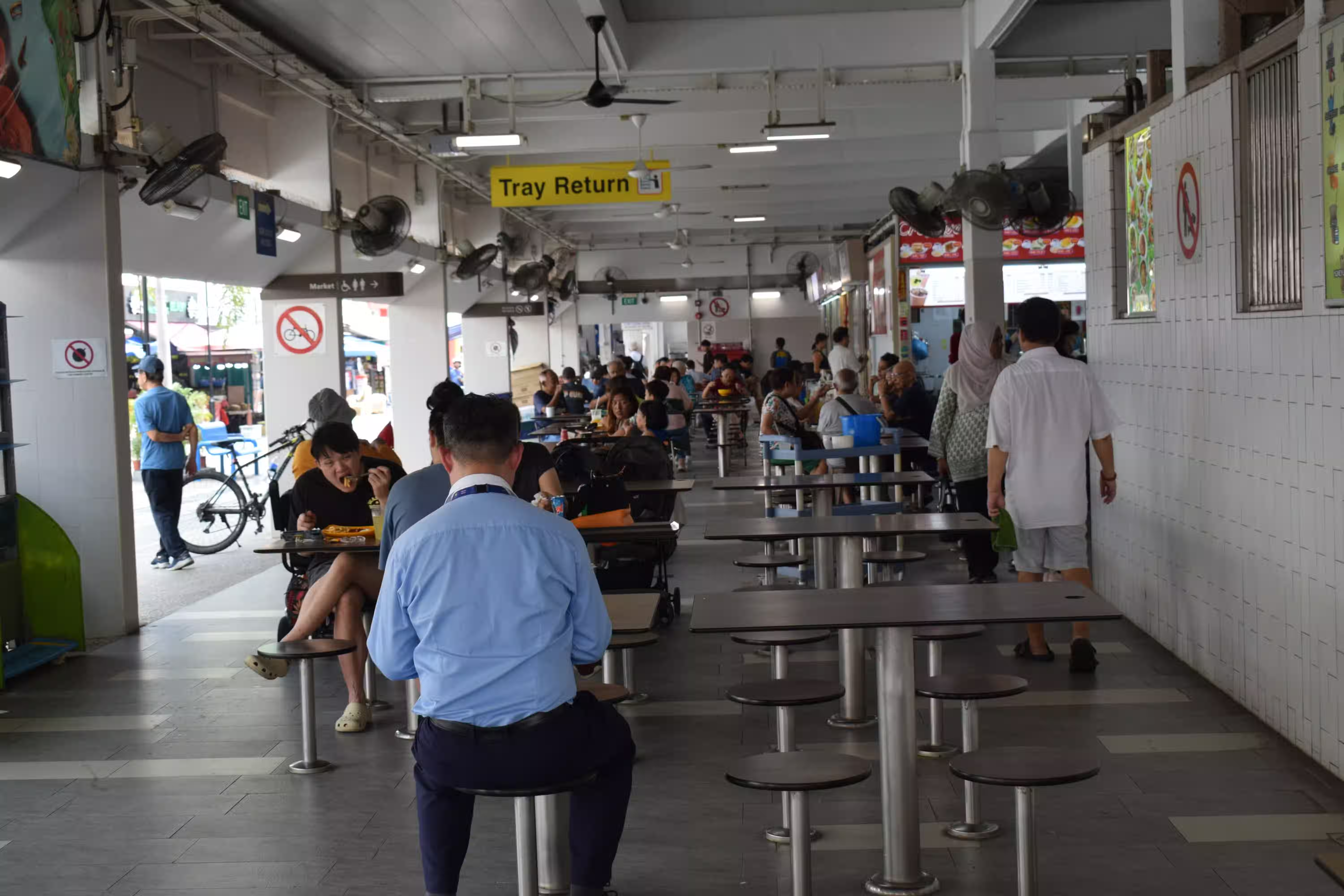 This is the hawker center we went to. Photo by Ravi Dwivedi. Released under the CC-BY-SA 4.0.
 Table littering at the hawker center was prohibited by law. Photo by Ravi Dwivedi. Released under the CC-BY-SA 4.0.
 Merlion from behind, giving a good view of Marina Bay Sands. Photo by Ravi Dwivedi. Released under the CC-BY-SA 4.0.
 About 95% of my Debian contributions this month were
 Debconf 25 photos

 In July I attended
 (You wait ages for an archiving blog post and


 23 years ago I was in a bad place. I'd quit my first attempt at a PhD for various reasons that were, with hindsight, bad, and I was suddenly entirely aimless. I lucked into picking up a sysadmin role back at
 Dear Debian community,
This is bits from the DPL for April.
End of 10
I am sure I was speaking in the interest of the whole project when
joining the
 How long has it been since you last saw a conversation over different blogs
syndicated at the same planet? Well, it s one of the good memories of the
early 2010s. And there is an opportunity to re-engage!
I came across