Search Results: "robert"

16 May 2025

Freexian Collaborators: Monthly report about Debian Long Term Support, April 2025 (by Roberto C. S nchez)


Like each month, have a look at the work funded by Freexian s Debian LTS offering.

Debian LTS contributors In April, 22 contributors have been paid to work on Debian LTS, their reports are available:
  • Adrian Bunk did 56.25h (out of 56.25h assigned).
  • Andreas Henriksson did 15.0h (out of 20.0h assigned), thus carrying over 5.0h to the next month.
  • Andrej Shadura did 10.0h (out of 6.0h assigned and 4.0h from previous period).
  • Bastien Roucari s did 31.5h (out of 31.5h assigned).
  • Ben Hutchings did 8.0h (out of 0.0h assigned and 12.0h from previous period), thus carrying over 4.0h to the next month.
  • Carlos Henrique Lima Melara did 11.0h (out of 12.0h assigned), thus carrying over 1.0h to the next month.
  • Chris Lamb did 18.0h (out of 18.0h assigned).
  • Daniel Leidert did 26.0h (out of 26.0h assigned).
  • Emilio Pozuelo Monfort did 30.0h (out of 39.25h assigned and 0.25h from previous period), thus carrying over 9.5h to the next month.
  • Guilhem Moulin did 8.5h (out of 3.25h assigned and 11.75h from previous period), thus carrying over 6.5h to the next month.
  • Jochen Sprickerhof did 12.5h (out of 20.75h assigned and 9.25h from previous period), thus carrying over 17.5h to the next month.
  • Lee Garrett did 26.25h (out of 7.75h assigned and 31.75h from previous period), thus carrying over 13.25h to the next month.
  • Lucas Kanashiro did 50.0h (out of 0.0h assigned and 52.0h from previous period), thus carrying over 2.0h to the next month.
  • Markus Koschany did 39.5h (out of 39.5h assigned).
  • Roberto C. S nchez did 9.0h (out of 0.0h assigned and 12.0h from previous period), thus carrying over 3.0h to the next month.
  • Santiago Ruano Rinc n did 12.5h (out of 7.5h assigned and 7.5h from previous period), thus carrying over 2.5h to the next month.
  • Sean Whitton did 7.0h (out of 7.0h assigned).
  • Stefano Rivera did 0.5h (out of 0.0h assigned and 10.0h from previous period), thus carrying over 9.5h to the next month.
  • Sylvain Beucler did 39.5h (out of 39.25h assigned and 0.25h from previous period).
  • Thorsten Alteholz did 15.0h (out of 15.0h assigned).
  • Tobias Frost did 12.0h (out of 7.75h assigned and 4.25h from previous period).
  • Utkarsh Gupta did 2.0h (out of 2.0h assigned).

Evolution of the situation In April, we released 46 DLAs.
  • Notable security updates:
    • jetty9, prepared by Markus Koschany, fixes an information disclosure and potential remote code execution vulnerability
    • zabbix, prepared by Tobias Frost, fixes several vulnerabilities, encompassing denial of service, information disclosure or remote code inclusion
    • glibc, prepared by Sean Whitton, fixes a buffer overflow vulnerability
  • Notable non-security updates:
    • tzdata, prepared by Emilio Pozuelo Monfort, brings the latest timezone database release
    • php-horde-editor and php-horde-imp, prepared by Sylvain Beucler, have been updated to switch from CKEditor v3, which is EOL, to CKEditor v4; this builds upon work done last month by Sylvain and Bastien for the complete removal of ckeditor3
    • distro-info-data, prepared by Stefano Rivera, adds information concerning future Debian and Ubuntu releases
The LTS team continues to welcome the collaboration of maintainers and other interested parties from outside the regular team. In April, we had external updates contributed by: Yadd - lemonldap-ng and Moritz Schlarb - libapache2-mod-auth-openidc A point release of the current stable Debian 12 (codename bookworm ) is planned for mid-May and several LTS contributors have prepared packages for this update, many of them prepared in conjunction with related LTS updates of the same packages:
  • glib2.0, haproxy, imagemagick, poppler, and python-h11, prepared by Adrian Bunk
  • rubygems, prepared by Lucas Kanashiro
  • ruby3.1 (in collaboration with Lucas Kanashiro), twitter-bootstrap3, twitterboot-strap4, wpa, and erlang, prepared by Bastien Roucari s (corresponding updates of twitter-bootstrap3 and twitter-bootstrap4 were also uploaded to Debian unstable)
  • abseil, prepared by Tobias Frost (a corresponding update was also uploaded to Debian unstable)
  • vips, prepared by Guilhem Moulin
Additional updates of ruby3.3 and rubygems were prepared for Debian unstable by Lucas Kanashiro. And finally, a highlight of our continued commitment to enhancing long term support efforts in upstream projects. Freexian, as the primary entity behind the management and execution of the LTS project, has partnered with Invisible Things Lab to extend the upstream security support of Xen 4.17, which is shipped in Debian 12 bookworm (the current stable release). This partnership will result in significantly improved lifecycle support for users of Xen on bookworm, and members of the LTS team will play a part in this endeavour. The Freexian announcement has additional details.

Thanks to our sponsors Sponsors that joined recently are in bold.

2 May 2025

Daniel Lange: Cleaning a broken GnuPG (gpg) key

I've long said that the main tools in the Open Source security space, OpenSSL and GnuPG (gpg), are broken and only a complete re-write will solve this. And that is still pending as nobody came forward with the funding. It's not a sexy topic, so it has to get really bad before it'll get better. Gpg has a UI that is close to useless. That won't substantially change with more bolted-on improvements. Now Robert J. Hansen and Daniel Kahn Gillmor had somebody add ~50k signatures (read 1, 2, 3, 4 for the g l ory details) to their keys and - oops - they say that breaks gpg. But does it? I downloaded Robert J. Hansen's key off the SKS-Keyserver network. It's a nice 45MB file when de-ascii-armored (gpg --dearmor broken_key.asc ; mv broken_key.asc.gpg broken_key.gpg). Now a friendly:
$ /usr/bin/time -v gpg --no-default-keyring --keyring ./broken_key.gpg --batch --quiet --edit-key 0x1DCBDC01B44427C7 clean save quit

pub rsa3072/0x1DCBDC01B44427C7
erzeugt: 2015-07-16 verf llt: niemals Nutzung: SC
Vertrauen: unbekannt G ltigkeit: unbekannt
sub ed25519/0xA83CAE94D3DC3873
erzeugt: 2017-04-05 verf llt: niemals Nutzung: S
sub cv25519/0xAA24CC81B8AED08B
erzeugt: 2017-04-05 verf llt: niemals Nutzung: E
sub rsa3072/0xDC0F82625FA6AADE
erzeugt: 2015-07-16 verf llt: niemals Nutzung: E
[ unbekannt ] (1). Robert J. Hansen <rjh@sixdemonbag.org>
[ unbekannt ] (2) Robert J. Hansen <rob@enigmail.net>
[ unbekannt ] (3) Robert J. Hansen <rob@hansen.engineering>

User-ID "Robert J. Hansen <rjh@sixdemonbag.org>": 49705 Signaturen entfernt
User-ID "Robert J. Hansen <rob@enigmail.net>": 49704 Signaturen entfernt
User-ID "Robert J. Hansen <rob@hansen.engineering>": 49701 Signaturen entfernt

pub rsa3072/0x1DCBDC01B44427C7
erzeugt: 2015-07-16 verf llt: niemals Nutzung: SC
Vertrauen: unbekannt G ltigkeit: unbekannt
sub ed25519/0xA83CAE94D3DC3873
erzeugt: 2017-04-05 verf llt: niemals Nutzung: S
sub cv25519/0xAA24CC81B8AED08B
erzeugt: 2017-04-05 verf llt: niemals Nutzung: E
sub rsa3072/0xDC0F82625FA6AADE
erzeugt: 2015-07-16 verf llt: niemals Nutzung: E
[ unbekannt ] (1). Robert J. Hansen <rjh@sixdemonbag.org>
[ unbekannt ] (2) Robert J. Hansen <rob@enigmail.net>
[ unbekannt ] (3) Robert J. Hansen <rob@hansen.engineering>

Command being timed: "gpg --no-default-keyring --keyring ./broken_key.gpg --batch --quiet --edit-key 0x1DCBDC01B44427C7 clean save quit"
User time (seconds): 3911.14
System time (seconds): 2442.87
Percent of CPU this job got: 99%
Elapsed (wall clock) time (h:mm:ss or m:ss): 1:45:56
Average shared text size (kbytes): 0
Average unshared data size (kbytes): 0
Average stack size (kbytes): 0
Average total size (kbytes): 0
Maximum resident set size (kbytes): 107660
Average resident set size (kbytes): 0
Major (requiring I/O) page faults: 1
Minor (reclaiming a frame) page faults: 26630
Voluntary context switches: 43
Involuntary context switches: 59439
Swaps: 0
File system inputs: 112
File system outputs: 48
Socket messages sent: 0
Socket messages received: 0
Signals delivered: 0
Page size (bytes): 4096
Exit status: 0
And the result is a nicely useable 3835 byte file of the clean public key. If you supply a keyring instead of --no-default-keyring it will also keep the non-self signatures that are useful for you (as you apparently know the signing party). So it does not break gpg. It does break things that call gpg at runtime and not asynchronously. I heard Enigmail is affected, quelle surprise. Now the main problem here is the runtime. 1h45min is just ridiculous. As Filippo Valsorda puts it:
Someone added a few thousand entries to a list that lets anyone append to it. GnuPG, software supposed to defeat state actors, suddenly takes minutes to process entries. How big is that list you ask? 17 MiB. Not GiB, 17 MiB. Like a large picture. https://dev.gnupg.org/T4592
If I were a gpg / SKS keyserver developer, I'd That way another key can only be added to the keyserver network if it contains at least one signature from a previously known strong-set key. Attacking the keyserver network would become at least non-trivial. And the web-of-trust thing may make sense again. Updates 09.07.2019 GnuPG 2.2.17 has been released with another set of quickly bolted together fixes:
   gpg: Ignore all key-signatures received from keyservers.  This
    change is required to mitigate a DoS due to keys flooded with
    faked key-signatures.  The old behaviour can be achieved by adding
    keyserver-options no-self-sigs-only,no-import-clean
    to your gpg.conf.  [#4607]
   gpg: If an imported keyblocks is too large to be stored in the
    keybox (pubring.kbx) do not error out but fallback to an import
    using the options "self-sigs-only,import-clean".  [#4591]
   gpg: New command --locate-external-key which can be used to
    refresh keys from the Web Key Directory or via other methods
    configured with --auto-key-locate.
   gpg: New import option "self-sigs-only".
   gpg: In --auto-key-retrieve prefer WKD over keyservers.  [#4595]
   dirmngr: Support the "openpgpkey" subdomain feature from
    draft-koch-openpgp-webkey-service-07. [#4590].
   dirmngr: Add an exception for the "openpgpkey" subdomain to the
    CSRF protection.  [#4603]
   dirmngr: Fix endless loop due to http errors 503 and 504.  [#4600]
   dirmngr: Fix TLS bug during redirection of HKP requests.  [#4566]
   gpgconf: Fix a race condition when killing components.  [#4577]
Bug T4607 shows that these changes are all but well thought-out. They introduce artificial limits, like 64kB for WKD-distributed keys or 5MB for local signature imports (Bug T4591) which weaken the web-of-trust further. I recommend to not run gpg 2.2.17 in production environments without extensive testing as these limits and the unverified network traffic may bite you. Do validate your upgrade with valid and broken keys that have segments (packet groups) surpassing the above mentioned limits. You may be surprised what gpg does. On the upside: you can now refresh keys (sans signatures) via WKD. So if your buddies still believe in limiting their subkey validities, you can more easily update them bypassing the SKS keyserver network. NB: I have not tested that functionality. So test before deploying. 10.08.2019 Christopher Wellons (skeeto) has released his pgp-poisoner tool. It is a go program that can add thousands of malicious signatures to a GNUpg key per second. He comments "[pgp-poisoner is] proof that such attacks are very easy to pull off. It doesn't take a nation-state actor to break the PGP ecosystem, just one person and couple evenings studying RFC 4880. This system is not robust." He also hints at the next likely attack vector, public subkeys can be bound to a primary key of choice.

28 April 2025

Freexian Collaborators: Monthly report about Debian Long Term Support, March 2025 (by Roberto C. S nchez)

Like each month, have a look at the work funded by Freexian s Debian LTS offering.

Debian LTS contributors In March, 20 contributors have been paid to work on Debian LTS, their reports are available:
  • Adrian Bunk did 51.5h (out of 0.0h assigned and 51.5h from previous period).
  • Andreas Henriksson did 20.0h (out of 20.0h assigned).
  • Andrej Shadura did 6.0h (out of 10.0h assigned), thus carrying over 4.0h to the next month.
  • Bastien Roucari s did 20.0h (out of 20.0h assigned).
  • Ben Hutchings did 12.0h (out of 12.0h assigned and 12.0h from previous period), thus carrying over 12.0h to the next month.
  • Chris Lamb did 18.0h (out of 18.0h assigned).
  • Daniel Leidert did 26.0h (out of 23.0h assigned and 3.0h from previous period).
  • Emilio Pozuelo Monfort did 37.0h (out of 36.5h assigned and 0.75h from previous period), thus carrying over 0.25h to the next month.
  • Guilhem Moulin did 8.25h (out of 11.0h assigned and 9.0h from previous period), thus carrying over 11.75h to the next month.
  • Jochen Sprickerhof did 18.0h (out of 24.25h assigned and 3.0h from previous period), thus carrying over 9.25h to the next month.
  • Lee Garrett did 10.25h (out of 0.0h assigned and 42.0h from previous period), thus carrying over 31.75h to the next month.
  • Lucas Kanashiro did 4.0h (out of 0.0h assigned and 56.0h from previous period), thus carrying over 52.0h to the next month.
  • Markus Koschany did 27.25h (out of 27.25h assigned).
  • Roberto C. S nchez did 8.25h (out of 7.0h assigned and 17.0h from previous period), thus carrying over 15.75h to the next month.
  • Santiago Ruano Rinc n did 17.5h (out of 19.75h assigned and 5.25h from previous period), thus carrying over 7.5h to the next month.
  • Sean Whitton did 7.0h (out of 7.0h assigned).
  • Sylvain Beucler did 32.0h (out of 31.0h assigned and 1.25h from previous period), thus carrying over 0.25h to the next month.
  • Thorsten Alteholz did 11.0h (out of 11.0h assigned).
  • Tobias Frost did 7.75h (out of 12.0h assigned), thus carrying over 4.25h to the next month.
  • Utkarsh Gupta did 15.0h (out of 15.0h assigned).

Evolution of the situation In March, we have released 31 DLAs.
  • Notable security updates:
    • linux-6.1 (1 2)and linux, prepared by Ben Hutchings, fixed an extensive list of vulnerabilities
    • firefox-esr, prepared by Emilio Pozuelo Monfort, fixed a variety of vulnerabilities
    • intel-microcode, prepared by Tobias Frost, fixed several local privilege escalation, denial of service, and information disclosure vulnerabilities
    • vim, prepared by Sean Whitton, fixed a multitude of vulnerabilities, including many application crashes, buffer overflows, and out-of-bounds reads
The recent trend of contributions from contributors external to the formal LTS team has continued. LTS contributor Sylvain Beucler reviewed and facilitated an update to openvpn proposed by Aquila Macedo, resulting in the publication of DLA 4079-1. Thanks a lot to Aquila for preparing the update. The LTS Team continues to make contributions to the current stable Debian release, Debian 12 (codename bookworm ). LTS contributor Bastien Roucari s prepared a stable upload of krb5 to ensure that fixes made in the LTS release, Debian 11 (codename bullseye ) were also made available to stable users. Additional stable updates, for tomcat10 and jetty9, were prepared by LTS contributor Markus Koschany. And, finally, LTS contributor Utkarsh Gupta prepared stable updates for rails and ruby-rack. LTS contributor Emilio Pozuelo Monfort has continued his ongoing improvements to the Debian security tracker and its associated tooling, making the data contained in the tracker more reliable and easing interaction with it. The ckeditor3 package, which has been EOL by upstream for some time, is still depended upon by the PHP Horde packages in Debian. Sylvain, along with Bastien, did monumental work in coordinating with maintainers, security team fellows, and other Debian teams, to formally declare the EOL of the ckeditor3 package in Debian 11 and in Debian 12. Additionally, as a result of this work Sylvain has worked towards the removal of ckeditor3 as a dependency by other packages in order to facilitate the complete removal of ckeditor3 from all future Debian releases.

Thanks to our sponsors Sponsors that joined recently are in bold.

28 March 2025

Freexian Collaborators: Monthly report about Debian Long Term Support, February 2025 (by Roberto C. S nchez)

Like each month, have a look at the work funded by Freexian s Debian LTS offering.

Debian LTS contributors In February, 18 contributors have been paid to work on Debian LTS, their reports are available:
  • Abhijith PA did 10.0h (out of 8.0h assigned and 6.0h from previous period), thus carrying over 4.0h to the next month.
  • Adrian Bunk did 12.0h (out of 0.0h assigned and 63.5h from previous period), thus carrying over 51.5h to the next month.
  • Andrej Shadura did 10.0h (out of 6.0h assigned and 4.0h from previous period).
  • Bastien Roucari s did 20.0h (out of 20.0h assigned).
  • Ben Hutchings did 12.0h (out of 8.0h assigned and 16.0h from previous period), thus carrying over 12.0h to the next month.
  • Chris Lamb did 18.0h (out of 18.0h assigned).
  • Daniel Leidert did 23.0h (out of 20.0h assigned and 6.0h from previous period), thus carrying over 3.0h to the next month.
  • Emilio Pozuelo Monfort did 53.0h (out of 53.0h assigned and 0.75h from previous period), thus carrying over 0.75h to the next month.
  • Guilhem Moulin did 11.0h (out of 3.25h assigned and 16.75h from previous period), thus carrying over 9.0h to the next month.
  • Jochen Sprickerhof did 27.0h (out of 30.0h assigned), thus carrying over 3.0h to the next month.
  • Lee Garrett did 11.75h (out of 9.5h assigned and 44.25h from previous period), thus carrying over 42.0h to the next month.
  • Markus Koschany did 40.0h (out of 40.0h assigned).
  • Roberto C. S nchez did 7.0h (out of 14.75h assigned and 9.25h from previous period), thus carrying over 17.0h to the next month.
  • Santiago Ruano Rinc n did 19.75h (out of 21.75h assigned and 3.25h from previous period), thus carrying over 5.25h to the next month.
  • Sean Whitton did 6.0h (out of 6.0h assigned).
  • Sylvain Beucler did 52.5h (out of 14.75h assigned and 39.0h from previous period), thus carrying over 1.25h to the next month.
  • Thorsten Alteholz did 11.0h (out of 11.0h assigned).
  • Tobias Frost did 17.0h (out of 17.0h assigned).

Evolution of the situation In February, we have released 38 DLAs.
  • Notable security updates:
    • pam-u2f, prepared by Patrick Winnertz, fixed an authentication bypass vulnerability
    • openjdk-17, prepared by Emilio Pozuelo Monfort, fixed an authorization bypass/information disclosure vulnerability
    • firefox-esr, prepared by Emilio Pozuelo Monfort, fixed several vulnerabilities
    • thunderbird, prepared by Emilio Pozuelo Monfort, fixed several vulnerabilities
    • postgresql-13, prepared by Christoph Berg, fixed an SQL injection vulnerability
    • freerdp2, prepared by Tobias Frost, fixed several vulnerabilities
    • openssh, prepared by Colin Watson, fixed a machine-in-the-middle vulnerability
LTS contributors Emilio Pozuelo Monfort and Santiago Ruano Rinc n coordinated the administrative aspects of LTS updates of postgresql-13 and pam-u2f, which were prepared by the respective maintainers, to whom we are most grateful. As has become the custom of the LTS team, work is under way on a number of package updates targeting Debian 12 (codename bookworm ) with fixes for a variety of vulnerabilities. In February, Guilhem Moulin prepared an upload of sssd, while several other updates are still in progress. Bastien Roucari s prepared an upload of krb5 for unstable as well. Given the importance of the Debian Security Tracker to the work of the LTS Team, we regularly contribute improvements to it. LTS contributor Emilio Pozuelo Monfort reviewed and merged a change to improve performance, and then dealt with unexpected issues that arose as a result. He also made improvements in the processing of CVEs which are not applicable to Debian. Looking to the future (the release of Debian 13, codename trixie , and beyond), LTS contributor Santiago Ruano Rinc n has initiated a conversation among the broader community involved in the development of Debian. The purpose of the discussion is to explore ways to improve the long term supportability of packages in Debian, specifically by focusing effort on ensuring that each Debian release contains the best supported upstream version of packages with a history of security issues.

Thanks to our sponsors Sponsors that joined recently are in bold.

26 March 2025

Dirk Eddelbuettel: RDieHarder 0.2.7 on CRAN: Fix Bashism in Configure, Maintenance

An new version 0.2.7 of the random-number generator tester RDieHarder (based on the DieHarder suite developed / maintained by Robert Brown with contributions by David Bauer and myself along with other contributors) is now on CRAN. This release contains only internal maintenance changes: continuous integration was updated as was a badge URL, and a bashism issue in configure.ac was addressed (months ago) but as CRAN now sends NOTEs it triggered this update (just like littler and RQuantLib yesterday). Thanks to CRANberries, you can also look at the most recent diff to the previous release. If you like this or other open-source work I do, you can now sponsor me at GitHub.

This post by Dirk Eddelbuettel originated on his Thinking inside the box blog. Please report excessive re-aggregation in third-party for-profit settings.

14 February 2025

Freexian Collaborators: Monthly report about Debian Long Term Support, January 2025 (by Roberto C. S nchez)

Like each month, have a look at the work funded by Freexian s Debian LTS offering.

Debian LTS contributors In January, 20 contributors have been paid to work on Debian LTS, their reports are available:
  • Abhijith PA did 8.0h (out of 14.0h assigned), thus carrying over 6.0h to the next month.
  • Adrian Bunk did 36.5h (out of 47.75h assigned and 52.25h from previous period), thus carrying over 63.5h to the next month.
  • Andrej Shadura did 11.0h (out of 11.0h assigned and 4.0h from previous period), thus carrying over 4.0h to the next month.
  • Arturo Borrero Gonzalez did 9.0h (out of 10.0h assigned), thus carrying over 1.0h to the next month.
  • Bastien Roucari s did 22.0h (out of 22.0h assigned).
  • Ben Hutchings did 8.0h (out of 21.0h assigned and 3.0h from previous period), thus carrying over 16.0h to the next month.
  • Chris Lamb did 18.0h (out of 18.0h assigned).
  • Daniel Leidert did 20.0h (out of 23.0h assigned and 3.0h from previous period), thus carrying over 6.0h to the next month.
  • Emilio Pozuelo Monfort did 34.0h (out of 7.0h assigned and 27.75h from previous period), thus carrying over 0.75h to the next month.
  • Guilhem Moulin did 3.25h (out of 20.0h assigned), thus carrying over 16.75h to the next month.
  • Jochen Sprickerhof did 23.0h (out of 15.0h assigned and 8.0h from previous period).
  • Lee Garrett did 15.75h (out of 8.5h assigned and 51.5h from previous period), thus carrying over 44.25h to the next month.
  • Lucas Kanashiro did 8.0h (out of 32.0h assigned and 32.0h from previous period), thus carrying over 56.0h to the next month.
  • Markus Koschany did 40.0h (out of 40.0h assigned).
  • Roberto C. S nchez did 14.75h (out of 13.5h assigned and 10.5h from previous period), thus carrying over 9.25h to the next month.
  • Santiago Ruano Rinc n did 21.75h (out of 18.75h assigned and 6.25h from previous period), thus carrying over 3.25h to the next month.
  • Sean Whitton did 8.5h (out of 8.5h assigned).
  • Sylvain Beucler did 10.5h (out of 0.0h assigned and 49.5h from previous period), thus carrying over 39.0h to the next month.
  • Thorsten Alteholz did 11.0h (out of 11.0h assigned).
  • Tobias Frost did 12.0h (out of 12.0h assigned).

Evolution of the situation In January, we have released 33 DLAs. There were numerous security and non-security updates to Debian 11 (codename bullseye ) during January.
  • Notable security updates:
    • rsync, prepared by Thorsten Alteholz, fixed several CVEs (including information leak and path traversal vulnerabilities)
    • tomcat9, prepared by Markus Koschany, fixed several CVEs (including denial of service and information disclosure vulnerabilities)
    • ruby2.7, prepared by Bastien Roucari s, fixed several CVEs (including denial of service vulnerabilities)
    • tiff, prepared by Adrian Bunk, fixed several CVEs (including NULL ptr, buffer overflow, use-after-free, and segfault vulnerabilities)
  • Notable non-security updates:
    • linux-6.1, prepared by Ben Hutchings, has been packaged for bullseye (this was done specifically to provide a supported upgrade path for systems that currently use kernel packages from the bullseye-backports suite)
    • debian-security-support, prepared by Santiago Ruano Rinc n, which formalized the EOL of intel-mediasdk and node-matrix-js-sdk
In addition to the security and non-security updates targeting bullseye , various LTS contributors have prepared uploads targeting Debian 12 (codename bookworm ) with fixes for a variety of vulnerabilities. Abhijith PA prepared an upload of puma; Bastien Roucari s prepared an upload of node-postcss with fixes for data processing and denial of service vulnerabilities; Daniel Leidert prepared updates for setuptools, python-asyncssh, and python-tornado; Lee Garrett prepared an upload of ansible-core; and Guilhem Moulin prepared updates for python-urllib3, sqlparse, and opensc. Santiago Ruano Rinc n also worked on tracking and filing some issues about packages that need an update in recent releases to avoid regressions on upgrade. This relates to CVEs that were fixed in buster or bullseye, but remain open in bookworm. These updates, along with Santiago s work on identifying and tracking similar issues, underscore the LTS Team s commitment to ensuring that the work we do as part of LTS also benefits the current Debian stable release. LTS contributor Sean Whitton also prepared an upload of jinja2 and Santiago Ruano Rinc n prepared an upload of openjpeg2 for Debian unstable (codename sid ), as part of the LTS Team effort to assist with package uploads to unstable.

Thanks to our sponsors Sponsors that joined recently are in bold.

29 January 2025

Russ Allbery: Review: The Sky Road

Review: The Sky Road, by Ken MacLeod
Series: Fall Revolution #4
Publisher: Tor
Copyright: 1999
Printing: August 2001
ISBN: 0-8125-7759-0
Format: Mass market
Pages: 406
The Sky Road is the fourth book in the Fall Revolution series, but it represents an alternate future that diverges after (or during?) the events of The Sky Fraction. You probably want to read that book first, but I'm not sure reading The Stone Canal or The Cassini Division adds anything to this book other than frustration. Much more on that in a moment. Clovis colha Gree is a aspiring doctoral student in history with a summer job as a welder. He works on the platform for the project, which the reader either slowly discovers from the book or quickly discovers from the cover is a rocket to get to orbit. As the story opens, he meets (or, as he describes it) is targeted by a woman named Merrial, a tinker who works on the guidance system. The early chapters provide only a few hints about Clovis's world: a statue of the Deliverer on a horse that forms the backdrop of their meeting, the casual carrying of weapons, hints that tinkers are socially unacceptable, and some division between the white logic and the black logic in programming. Also, because this is a Ken MacLeod novel, everyone is obsessed with smoking and tobacco the way that the protagonists of erotica are obsessed with sex. Clovis's story is one thread of this novel. The other, told in the alternating chapters, is the story of Myra Godwin-Davidova, chair of the governing Council of People's Commissars of the International Scientific and Technical Workers' Republic, a micronation embedded in post-Soviet Kazakhstan. Series readers will remember Myra's former lover, David Reid, as the villain of The Stone Canal and the head of the corporation Mutual Protection, which is using slave labor (sort of) to support a resurgent space movement and its attempt to take control of a balkanized Earth. The ISTWR is in decline and a minor power by all standards except one: They still have nuclear weapons. So, first, we need to talk about the series divergence. I know from reading about this book on-line that The Sky Road is an alternate future that does not follow the events of The Stone Canal and The Cassini Division. I do not know this from the text of the book, which is completely silent about even being part of a series. More annoyingly, while the divergence in the Earth's future compared to The Cassini Division is obvious, I don't know what the Jonbar hinge is. Everything I can find on-line about this book is maddeningly coy. Wikipedia claims the divergence happens at the end of The Sky Fraction. Other reviews and the Wikipedia talk page claim it happens in the middle of The Stone Canal. I do have a guess, but it's an unsatisfying one and I'm not sure how to test its correctness. I suppose I shouldn't care and instead take each of the books on their own terms, but this is the type of thing that my brain obsesses over, and I find it intensely irritating that MacLeod didn't explain it in the books themselves. It's the sort of authorial trick that makes me feel dumb, and books that gratuitously make me feel dumb are less enjoyable to read. The second annoyance I have with this book is also only partly its fault. This series, and this book in particular, is frequently mentioned as good political science fiction that explores different ways of structuring human society. This was true of some of the earlier books in a surprisingly superficial way. Here, I would call it hogwash. This book, or at least the Myra portion of it, is full of people doing politics in a tactical sense, but like the previous books of this series, that politics is mostly embedded in personal grudges and prior romantic relationships. Everyone involved is essentially an authoritarian whose ability to act as they wish is only contested by other authoritarians and is largely unconstrained by such things as persuasion, discussions, elections, or even theory. Myra and most of the people she meets are profoundly cynical and almost contemptuous of any true discussion of political systems. This is the trappings and mechanisms of politics without the intellectual debate or attempt at consensus, turning it into a zero-sum game won by whoever can threaten the others more effectively. Given the glowing reviews I've seen in relatively political SF circles, presumably I am missing something that other people see in MacLeod's approach. Perhaps this level of pettiness and cynicism is an accurate depiction of what it's like inside left-wing political movements. (What an appalling condemnation of left-wing political movements, if so.) But many of the on-line reviews lead me to instead conclude that people's understanding of "political fiction" is stunted and superficial. For example, there is almost nothing Marxist about this book it contains essentially no economic or class analysis whatsoever but MacLeod uses a lot of Marxist terminology and sets half the book in an explicitly communist state, and this seems to be enough for large portions of the on-line commentariat to conclude that it's full of dangerous, radical ideas. I find this sadly hilarious given that MacLeod's societies tend, if anything, towards a low-grade libertarianism that would be at home in a Robert Heinlein novel. Apparently political labels are all that's needed to make political fiction; substance is optional. So much for the politics. What's left in Clovis's sections is a classic science fiction adventure in which the protagonist has a radically different perspective from the reader and the fun lies in figuring out the world-building through the skewed perspective of the characters. This was somewhat enjoyable, but would have been more fun if Clovis had any discernible personality. Sadly he instead seems to be an empty receptacle for the prejudices and perspective of his society, which involve a lot of quasi-religious taboos and an essentially magical view of the world. Merrial is a more interesting character, although as always in this series the romance made absolutely no sense to me and seemed to be conjured by authorial fiat and weirdly instant sexual attraction. Myra's portion of the story was the part I cared more about and was more invested in, aided by the fact that she's attempting to do something more interesting than launch a crewed space vehicle for no obvious reason. She at least faces some true moral challenges with no obviously correct response. It's all a bit depressing, though, and I found Myra's unwillingness to ground her decisions in a more comprehensive moral framework disappointing. If you're going to make a protagonist the ruler of a communist state, even an ironic one, I'd like to hear some real political philosophy, some theory of sociology and economics that she used to justify her decisions. The bits that rise above personal animosity and vibes were, I think, said better in The Cassini Division. This series was disappointing, and I can't say I'm glad to have read it. There is some small pleasure in finishing a set of award-winning genre books so that I can have a meaningful conversation about them, but the awards failed to find me better books to read than I would have found on my own. These aren't bad books, but the amount of enjoyment I got out of them didn't feel worth the frustration. Not recommended, I'm afraid. Rating: 6 out of 10

20 January 2025

Divine Attah-Ohiemi: Progress Report: First Half of My Outreachy Internship

Hello everyone!, I m excited to share a progress report on my Outreachy internship with the Debian community. As I reach the halfway point of this journey, I want to reflect on what I ve accomplished so far and outline my modified goals for the second half of the internship. In truth, there wasn t a strict timeline for my project migrating Debian webpage content to Hugo because the original repository contained thousands of pages. The initial goal was to develop a proof of concept for: Thanks to our daily standups, where we brainstorm and revise contributions, we ve made significant progress. The wiki documentation discussing the technical decisions taken to meet these goals is currently in progress here. During the first half of my internship, I have improved and refined my skills in several areas. I learned new Markdown syntaxes, studied and utilized Apache's mod_rewrite, and halfway studied GNU Make to use Perl scripts for processing data for dynamic content. I recommend Managing Projects with GNU Make by Robert Mecklenburg it's a great book for beginners! While I didn t get stuck on any particular goal, the most challenging aspect was adding Hugo aliases to help with Apache's multilingual content negotiation. The way the webwml repository generates multilingual content differs from debianhugo. For instance, in webwml, the structure looks like this: english/index.wml -> /index.en.html (with a symlink from index.html to index.en.html) and french/index.wml -> /index.fr.html. In contrast, debianhugo uses en/_index.md -> /index.html and fr/_index.md -> /fr/index.html. Apache's multilingual content negotiation checks for index.<user preferred lang code>.html in the current directory, which works well with webwml since all related translations are generated in the same directory. However, with debianhugo using subdirectories for languages other than English, we had to set up aliases for every other language page to be generated in the frontmatter. For example, in fr/_index.md, we added this to the front matter:
...
aliases:
  - /index.fr.html
...
This setup allows Hugo to generate multilingual HTML files in the initial home directory solely for the purpose of setting up a 301 redirect to the same page in the language subdirectory. However, if the client sets their preferred language to English, Apache content negotiation tries to find /index.en.html. If it doesn t find it, it defaults to any other language-suffixed file, which can lead to unexpected behavior. For example, if English is set as the preferred language, accessing the site may serve /index.fr.html, which then redirects to /fr/index.html. This was a significant challenge, and you can see a demo of this hosted here. If I were to start the project over, I would document every decision as I make them in the wiki, no matter how rough the documentation turns out. Waiting until the midpoint of the project to document was not a good idea. As I move into the second half of my internship, the goals we ve set include improving our project wiki documentation and continuing the migration process while enhancing the user experience of complicated sections. I m looking forward to making even more progress and sharing my journey with you all. Happy coding!

13 January 2025

Freexian Collaborators: Monthly report about Debian Long Term Support, December 2024 (by Roberto C. S nchez)

Like each month, have a look at the work funded by Freexian s Debian LTS offering.

Debian LTS contributors In December, 19 contributors have been paid to work on Debian LTS, their reports are available:
  • Abhijith PA did 14.0h (out of 14.0h assigned).
  • Adrian Bunk did 47.75h (out of 53.0h assigned and 47.0h from previous period), thus carrying over 52.25h to the next month.
  • Andrej Shadura did 6.0h (out of 17.0h assigned and -7.0h from previous period after hours given back), thus carrying over 4.0h to the next month.
  • Bastien Roucari s did 22.0h (out of 22.0h assigned).
  • Ben Hutchings did 15.0h (out of 0.0h assigned and 18.0h from previous period), thus carrying over 3.0h to the next month.
  • Chris Lamb did 18.0h (out of 18.0h assigned).
  • Daniel Leidert did 23.0h (out of 17.0h assigned and 9.0h from previous period), thus carrying over 3.0h to the next month.
  • Emilio Pozuelo Monfort did 32.25h (out of 40.5h assigned and 19.5h from previous period), thus carrying over 27.75h to the next month.
  • Guilhem Moulin did 22.5h (out of 9.75h assigned and 12.75h from previous period).
  • Jochen Sprickerhof did 2.0h (out of 3.5h assigned and 6.5h from previous period), thus carrying over 8.0h to the next month.
  • Lee Garrett did 8.5h (out of 14.75h assigned and 45.25h from previous period), thus carrying over 51.5h to the next month.
  • Lucas Kanashiro did 32.0h (out of 10.0h assigned and 54.0h from previous period), thus carrying over 32.0h to the next month.
  • Markus Koschany did 40.0h (out of 20.0h assigned and 20.0h from previous period).
  • Roberto C. S nchez did 13.5h (out of 6.75h assigned and 17.25h from previous period), thus carrying over 10.5h to the next month.
  • Santiago Ruano Rinc n did 18.75h (out of 24.75h assigned and 0.25h from previous period), thus carrying over 6.25h to the next month.
  • Sean Whitton did 6.0h (out of 2.0h assigned and 4.0h from previous period).
  • Sylvain Beucler did 10.5h (out of 21.5h assigned and 38.5h from previous period), thus carrying over 49.5h to the next month.
  • Thorsten Alteholz did 11.0h (out of 11.0h assigned).
  • Tobias Frost did 12.0h (out of 12.0h assigned).

Evolution of the situation In December, we have released 29 DLAs. The LTS Team has published updates to several notable packages. Contributor Guilhem Moulin published an update of php7.4, a widely-used open source general purpose scripting language, which addressed denial of service, authorization bypass, and information disclosure vulnerabilities. Contributor Lucas Kanashiro published an update of clamav, an antivirus toolkit for Unix and Linux, which addressed denial of service and authorization bypass vulnerabilities. Finally, contributor Tobias Frost published an update of intel-microcode, the microcode for Intel microprocessors, which well help to ensure that processor hardware is protected against several local privilege escalation and local denial of service vulnerabilities. Beyond our customary LTS package updates, the LTS Team has made contributions to Debian s stable bookworm release and its experimental section. Notably, contributor Lee Garrett published a stable update of dnsmasq. The LTS update was previously published in November and in December Lee continued working to bring the same fixes (addressing the high profile KeyTrap and NSEC3 vulnerabilities) to the dnsmasq package in Debian bookworm. This package was accepted for inclusion in the Debian 12.9 point release scheduled for January 2025. Addititionally, contributor Sean Whitton provided assistance, via upload sponsorships, to the Debian maintainers of xen. This assistance resulted in two uploads of xen into Debian s experimental section, which will contribute to the next Debian stable release having a version of xen with better longterm support from the upstream development team.

Thanks to our sponsors Sponsors that joined recently are in bold.

19 December 2024

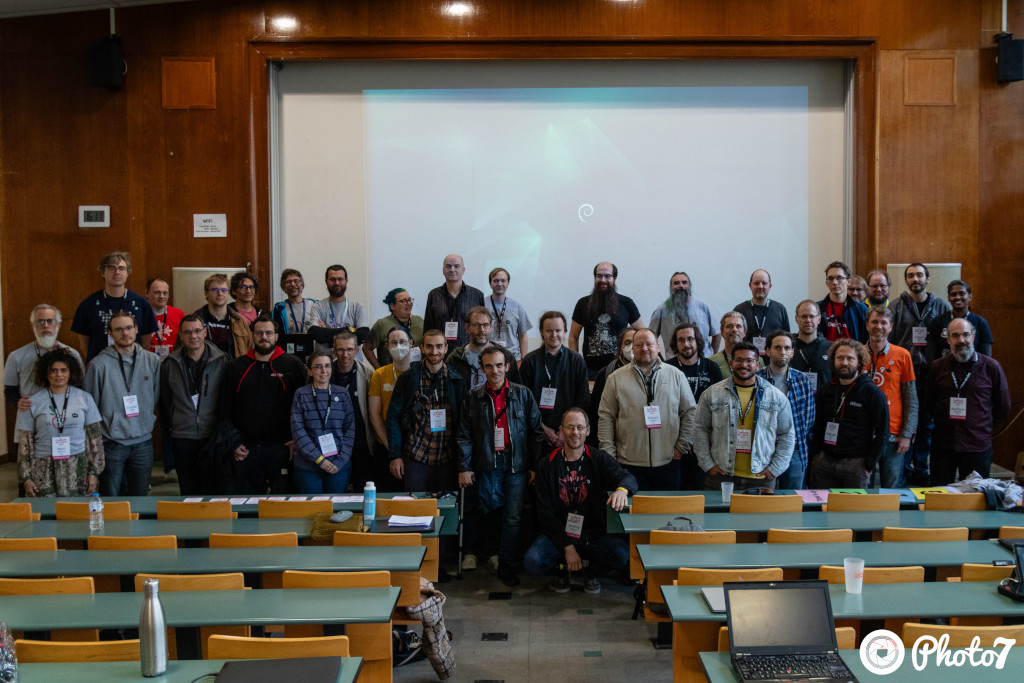
Gregory Colpart: MiniDebConf Toulouse 2024

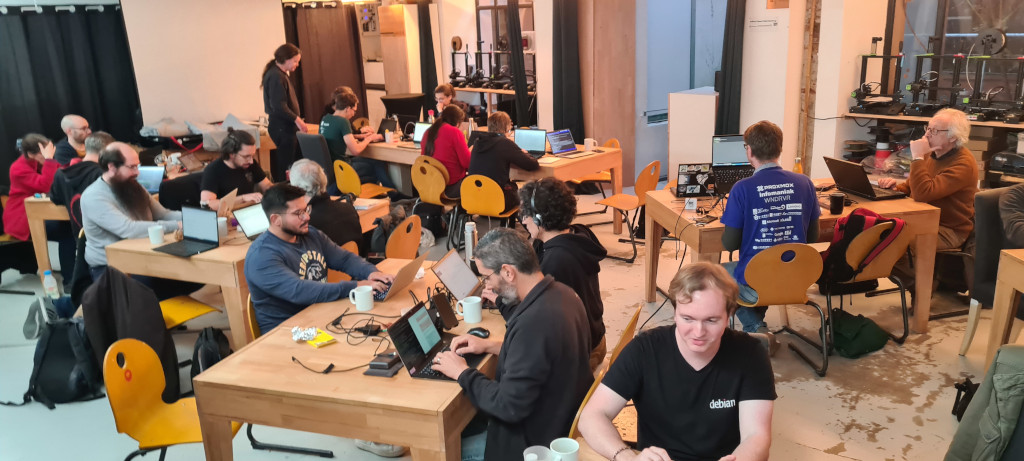
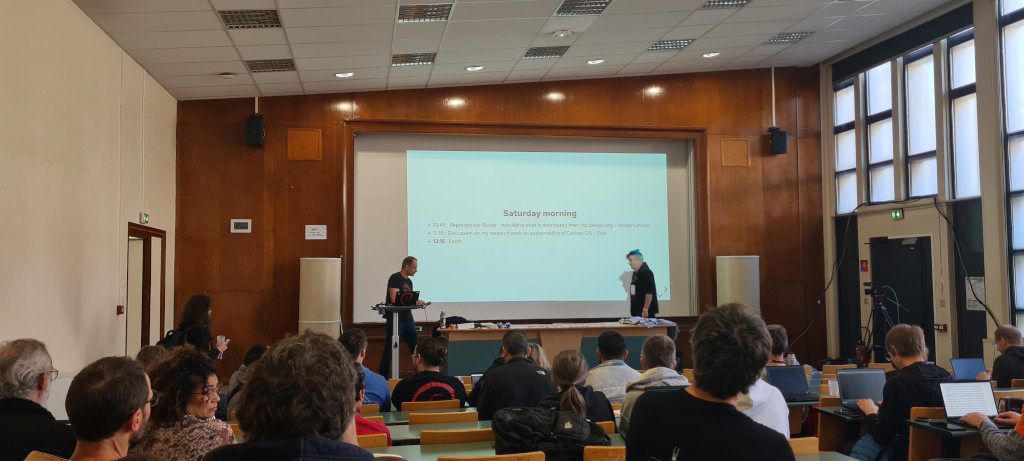
After the MiniDebConf Marseille 2019, COVID-19 made it impossible or difficult to organize new MiniDebConfs for a few years. With the gradual resumption of in-person events (like FOSDEM, DebConf, etc.), the idea emerged to host another MiniDebConf in France, but with a lighter organizational load. In 2023, we decided to reach out to the organizers of Capitole du Libre to repeat the experience of 2017: hosting a MiniDebConf alongside their annual event in Toulouse in November. However, our request came too late for 2023. After discussions with Capitole du Libre in November 2023 in Toulouse and again in February 2024 in Brussels, we confirmed that a MiniDebConf Toulouse would take place in November 2024! We then assembled a small organizing team and got to work: a Call for Papers in May 2024, adding a two-day MiniDebCamp, coordinating with the DebConf video team, securing sponsors, creating a logo, ordering T-shirts and stickers, planning the schedule, and managing registrations. Even with lighter logistics (conference rooms, badges, and catering during the weekend were handled by Capitole du Libre), there was still quite a bit of preparation to do. On Thursday, November 14, and Friday, November 15, 2024, about forty developers arrived from around the world (France, Spain, Italy, Switzerland, Germany, England, Brazil, Uruguay, India, Brest, Marseille ) to spend two days at the MiniDebCamp in the beautiful collaborative spaces of Artilect in Toulouse city center.
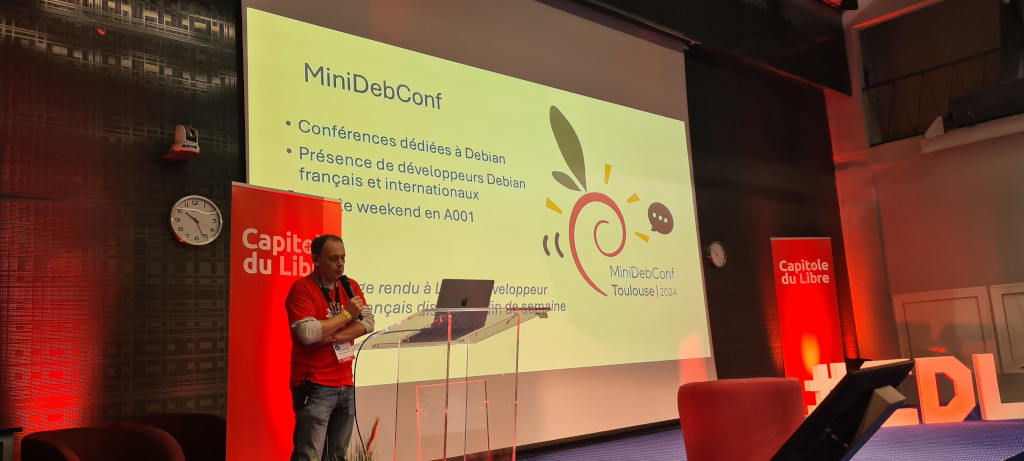
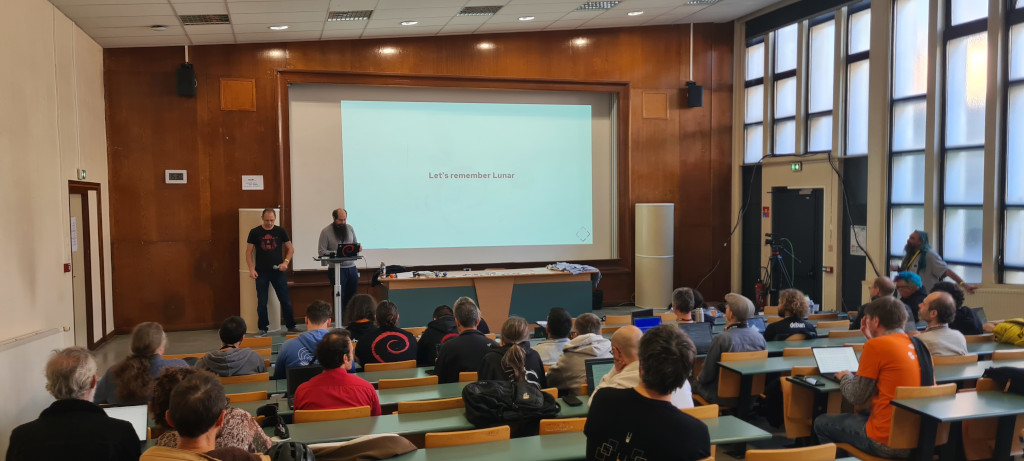
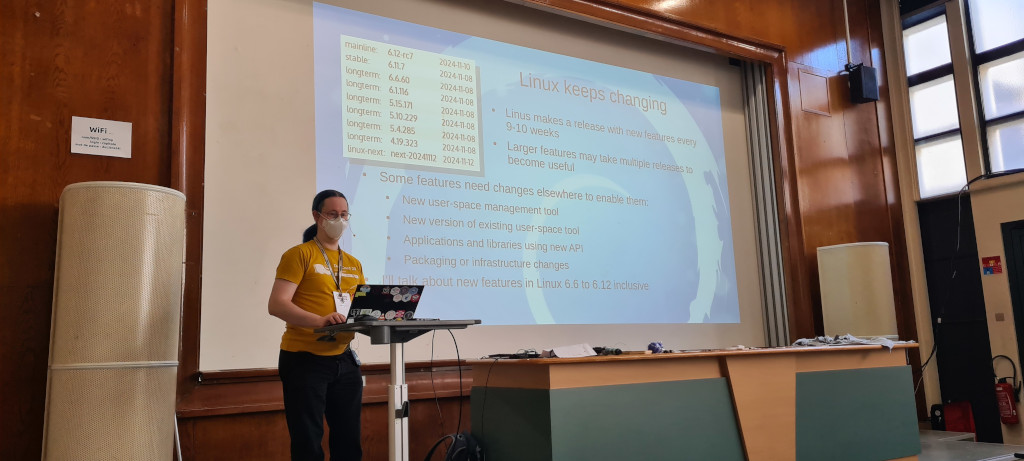
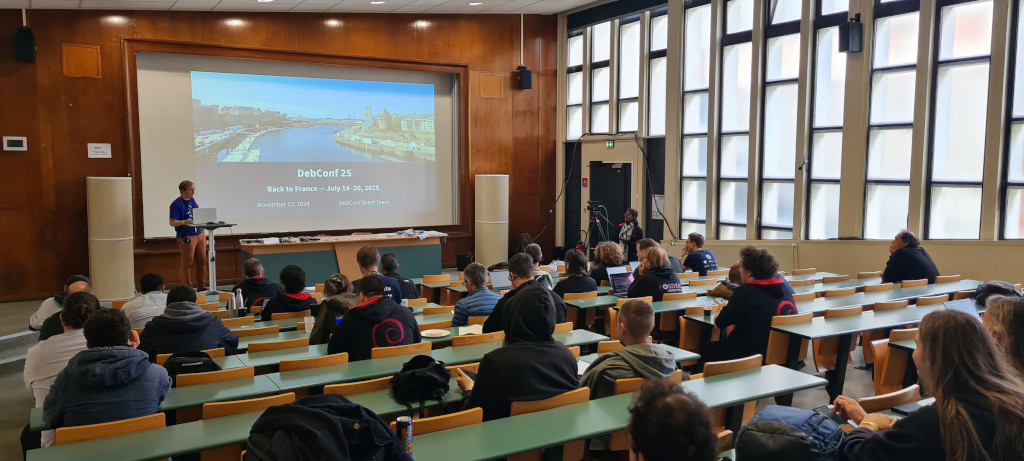
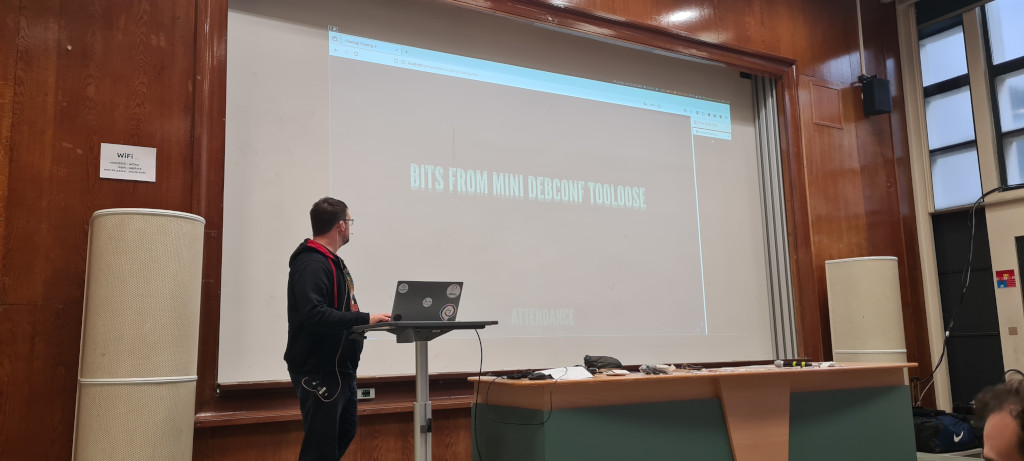
Then, on Saturday, November 16, and Sunday, November 17, 2024, the MiniDebConf took place at ENSEEIHT as part of the Capitole du Libre event. The conference kicked off on Saturday morning with an opening session by J r my Lecour, which included a tribute to Lunar (Nicolas Dandrimont). This was followed by Reproducible Builds Rebuilding What is Distributed from ftp.debian.org (Holger Levsen) and Discussion on My Research Work on Sustainability of Debian OS (Eda). After lunch at the Capitole du Libre food trucks, the intense afternoon schedule began: What s New in the Linux Kernel (and What s Missing in Debian) (Ben Hutchings), Linux Live Patching in Debian (Santiago Ruano Rinc n), Trixie on Mobile: Are We There Yet? (Arnaud Ferraris), PostgreSQL Container Groups, aka cgroups Down the Road (C dric Villemain), Upgrading a Thousand Debian Hosts in Less Than an Hour (J r my Lecour and myself), and Using Debusine to Automate Your QA (Stefano Rivera & co). Sunday marked the second day, starting with a presentation on DebConf 25 (Benjamin Somers), which will be held in Brest in July 2025. The morning continued with talks: How LTS Goes Beyond LTS (Santiago Ruano Rinc n & Roberto C. S nchez), Cross-Building (Helmut Grohne), and State of JavaScript (Bastien Roucari s). In the afternoon, there were Lightning Talks, PyPI Security: Past, Present & Future (Salvo LtWorf Tomaselli), and the classic Bits from DPL (Andreas Tille), before closing with the final session led by Pierre-Elliott B cue. All talks are available on video (a huge thanks to the amazing DebConf video team), and many thanks to our sponsors (Viridien, Freexian, Evolix, Collabora, and Data Bene). A big thank-you as well to the entire Capitole du Libre team for hosting and supporting us see you in Brest in July 2025! Articles about (or mentioning) MiniDebConf Toulouse:

13 December 2024

Freexian Collaborators: Monthly report about Debian Long Term Support, November 2024 (by Roberto C. S nchez)

Like each month, have a look at the work funded by Freexian s Debian LTS offering.

Debian LTS contributors In November, 20 contributors have been paid to work on Debian LTS, their reports are available:
  • Abhijith PA did 14.0h (out of 6.0h assigned and 8.0h from previous period).
  • Adrian Bunk did 53.0h (out of 15.0h assigned and 85.0h from previous period), thus carrying over 47.0h to the next month.
  • Andrej Shadura did 7.0h (out of 7.0h assigned).
  • Arturo Borrero Gonzalez did 1.0h (out of 10.0h assigned), thus carrying over 9.0h to the next month.
  • Bastien Roucari s did 20.0h (out of 20.0h assigned).
  • Ben Hutchings did 0.0h (out of 24.0h assigned), thus carrying over 24.0h to the next month.
  • Chris Lamb did 18.0h (out of 18.0h assigned).
  • Daniel Leidert did 17.0h (out of 26.0h assigned), thus carrying over 9.0h to the next month.
  • Emilio Pozuelo Monfort did 40.5h (out of 60.0h assigned), thus carrying over 19.5h to the next month.
  • Guilhem Moulin did 7.25h (out of 7.5h assigned and 12.5h from previous period), thus carrying over 12.75h to the next month.
  • Jochen Sprickerhof did 3.5h (out of 10.0h assigned), thus carrying over 6.5h to the next month.
  • Lee Garrett did 14.75h (out of 15.25h assigned and 44.75h from previous period), thus carrying over 45.25h to the next month.
  • Lucas Kanashiro did 10.0h (out of 54.0h assigned and 10.0h from previous period), thus carrying over 54.0h to the next month.
  • Markus Koschany did 20.0h (out of 40.0h assigned), thus carrying over 20.0h to the next month.
  • Roberto C. S nchez did 6.75h (out of 9.75h assigned and 14.25h from previous period), thus carrying over 17.25h to the next month.
  • Santiago Ruano Rinc n did 24.75h (out of 23.5h assigned and 1.5h from previous period), thus carrying over 0.25h to the next month.
  • Sean Whitton did 2.0h (out of 6.0h assigned), thus carrying over 4.0h to the next month.
  • Sylvain Beucler did 21.5h (out of 9.5h assigned and 50.5h from previous period), thus carrying over 38.5h to the next month.
  • Thorsten Alteholz did 11.0h (out of 11.0h assigned).
  • Tobias Frost did 12.0h (out of 10.5h assigned and 1.5h from previous period).

Evolution of the situation In November, we have released 38 DLAs. The LTS coordinators, Roberto and Santiago, delivered a talk at the Mini-DebConf event in Toulouse, France. The title of the talk was How LTS goes beyond LTS . The talk covered work done by the LTS Team during the past year. This included contributions related to individual packages in Debian (such as tomcat, jetty, radius, samba, apache2, ruby, and many others); improvements to tooling and documentation useful to the Debian project as a whole; and contributions to upstream work (apache2, freeimage, node-dompurify, samba, and more). Additionally, several contributors external to the LTS Team were highlighted for their contributions to LTS. Readers are encouraged to watch the video of the presentation for a more detailed review of various ways in which the LTS team has contributed more broadly to the Debian project and to the free software community during the past year. We wish to specifically thank Salvatore (of the Debian Security Team) for swiftly handling during November the updates of needrestart and libmodule-scandeps-perl, both of which involved arbitrary code execution vulnerabilities. We are happy to see increased involvement in LTS work by contributors from outside the formal LTS Team. The work of the LTS Team in November was otherwise unremarkable, encompassing the customary triage, development, testing, and release of numerous DLAs, along with some associated contributions to related packages in stable and unstable.

Thanks to our sponsors Sponsors that joined recently are in bold.

9 December 2024

Freexian Collaborators: Debian Contributions: OpenMPI transitions, cPython 3.12.7+ update uploads, Python 3.13 Transition, and more! (by Anupa Ann Joseph, Stefano Rivera)

Debian Contributions: 2024-11 Contributing to Debian is part of Freexian s mission. This article covers the latest achievements of Freexian and their collaborators. All of this is made possible by organizations subscribing to our Long Term Support contracts and consulting services.

Transition management, by Emilio Pozuelo Monfort Emilio has been helping finish the mpi-defaults switch to mpich on 32-bit architectures, and the openmpi transitions. This involves filing bugs for the reverse dependencies, doing NMUs, and requesting removals for outdated (Not Built from Source) binaries on 32-bit architectures where openmpi is no longer available. Those transitions got entangled with a few others, such as the petsc stack, and were blocking many packages from migrating to testing. These transitions were completed in early December.

cPython 3.12.7+ update uploads, by Stefano Rivera Python 3.12 had failed to build on mips64el, due to an obscure dh_strip failure. The mips64el porters never figured it out, but the missing build on mips64el was blocking migration to Debian testing. After waiting a month, enough changes had accumulated in the upstream 3.12 maintenance git branch that we could apply them in the hope of changing the output enough to avoid breaking dh_strip. This worked. Of course there were other things to deal with too. A test started failing due to a Debian-specific patch we carry for python3.x-minimal, and it needed to be reworked. And Stefano forgot to strip the trailing + from PY_VERSION, which confuses some python libraries. This always requires another patch when applying git updates from the maintenance branch. Stefano added a build-time check to catch this mistake in the future. Python 3.12.7 migrated.

Python 3.13 Transition, by Stefano Rivera and Colin Watson During November the Python 3.13-add transition started. This is the first stage of supporting a new version of Python in Debian archive (after preparatory work), adding it as a new supported but non-default version. All packages with compiled Python extensions need to be re-built to add support for the new version. We have covered the lead-up to this transition in the past. Due to preparation, many of the failures we hit were expected and we had patches waiting in the bug tracker. These could be NMUed to get the transition moving. Others had been known about but hadn t been worked on, yet. Some other packages ran into new issues, as we got further into the transition than we d been able to in preparation. The whole Debian Python team has been helping with this work. The rebuild stage of the 3.13-add transition is now over, but many packages need work before britney will let python3-defaults migrate to testing.

Limiting build concurrency based on available RAM, by Helmut Grohne In recent years, the concurrency of CPUs has been increasing as has the demand for RAM by linkers. What has not been increasing as quickly is the RAM supply in typical machines. As a result, we more frequently run into situations where the package builds exhaust memory when building at full concurrency. Helmut initiated a discussion about generalizing an approach to this in Debian packages. Researching existing code that limits concurrency as well as providing possible extensions to debhelper and dpkg to provide concurrency limits based on available system RAM. Thus far there is consensus on the need for a more general solution, but ideas are still being collected for the precise solution.

MiniDebConf Toulouse at Capitole du Libre The whole Freexian Collaborator team attended MiniDebConf Toulouse, part of the Capitole du Libre event. Several members of the team gave talks: Stefano and Anupa worked as part of the video team, streaming and recording the event s talks.

Miscellaneous contributions
  • Stefano looked into packaging the latest upstream python-falcon version in Debian, in support of the Python 3.13 transition. This appeared to break python-hug, which is sadly looking neglected upstream, and the best course of action is probably its removal from Debian.
  • Stefano uploaded videos from various 2024 Debian events to PeerTube and YouTube.
  • Stefano and Santiago visited the site for DebConf 2025 in Brest, after the MiniDebConf in Toulouse, to meet with the local team and scout out the venue. The on-going DebConf 25 organization work of last month also included handling the logo and artwork call for proposals.
  • Stefano helped the press team to edit a post for bits.debian.org on OpenStreetMap s migration to Debian.
  • Carles implemented multiple language support on po-debconf-manager and tested it using Portuguese-Brazilian during MiniDebConf Toulouse. The system was also tested and improved by reviewing more than 20 translations to Catalan, creating merge requests for those packages, and providing user support to new users. Additionally, Carles implemented better status transitions, configuration keys management and other small improvements.
  • Helmut sent 32 patches for cross build failures. The wireplumber one was an interactive collaboration with Dylan A ssi.
  • Helmut continued to monitor the /usr-move, sent a patch for lib64readline8 and continued several older patch conversations. lintian now reports some aliasing issues in unstable.
  • Helmut initiated a discussion on the semantics of *-for-host packages. More feedback is welcome.
  • Helmut improved the crossqa.debian.net infrastructure to fail running lintian less often in larger packages.
  • Helmut continued maintaining rebootstrap mostly dropping applied patches and continuing discussions of submitted patches.
  • Helmut prepared a non-maintainer upload of gzip for several long-standing bugs.
  • Colin came up with a plan for resolving the multipart vs. python-multipart name conflict, and began work on converting reverse-dependencies.
  • Colin upgraded 42 Python packages to new upstream versions. Some were complex: python-catalogue had some upstream version confusion, pydantic and rpds-py involved several Rust package upgrades as prerequisites, and python-urllib3 involved first packaging python-quart-trio and then vendoring an unpackaged test-dependency.
  • Colin contributed Incus support to needrestart upstream.
  • Lucas set up a machine to do a rebuild of all ruby reverse dependencies to check what will be broken by adding ruby 3.3 as an alternative interpreter. The tool used for this is mass-rebuild and the initial rebuilds have already started. The ruby interpreter maintainers are planning to experiment with debusine next time.
  • Lucas is organizing a Debian Ruby sprint towards the end of January in Paris. The plan of the team is to finish any missing bits of Ruby 3.3 transition at the time, try to push Rails 7 transition and fix RC bugs affecting the ruby ecosystem in Debian.
  • Anupa attended a Debian Publicity team meeting in-person during MiniDebCamp Toulouse.
  • Anupa moderated and posted in the Debian Administrator group in LinkedIn.

12 November 2024

Freexian Collaborators: Monthly report about Debian Long Term Support, October 2024 (by Roberto C. S nchez)

Like each month, have a look at the work funded by Freexian s Debian LTS offering.

Debian LTS contributors In October, 20 contributors have been paid to work on Debian LTS, their reports are available:
  • Abhijith PA did 6.0h (out of 7.0h assigned and 7.0h from previous period), thus carrying over 8.0h to the next month.
  • Adrian Bunk did 15.0h (out of 87.0h assigned and 13.0h from previous period), thus carrying over 85.0h to the next month.
  • Arturo Borrero Gonzalez did 10.0h (out of 10.0h assigned).
  • Bastien Roucari s did 20.0h (out of 20.0h assigned).
  • Ben Hutchings did 4.0h (out of 0.0h assigned and 4.0h from previous period).
  • Chris Lamb did 18.0h (out of 18.0h assigned).
  • Daniel Leidert did 29.0h (out of 26.0h assigned and 3.0h from previous period).
  • Emilio Pozuelo Monfort did 60.0h (out of 23.5h assigned and 36.5h from previous period).
  • Guilhem Moulin did 7.5h (out of 19.75h assigned and 0.25h from previous period), thus carrying over 12.5h to the next month.
  • Lee Garrett did 15.25h (out of 0.0h assigned and 60.0h from previous period), thus carrying over 44.75h to the next month.
  • Lucas Kanashiro did 10.0h (out of 10.0h assigned and 10.0h from previous period), thus carrying over 10.0h to the next month.
  • Markus Koschany did 40.0h (out of 40.0h assigned).
  • Ola Lundqvist did 14.5h (out of 6.5h assigned and 17.5h from previous period), thus carrying over 9.5h to the next month.
  • Roberto C. S nchez did 9.75h (out of 24.0h assigned), thus carrying over 14.25h to the next month.
  • Santiago Ruano Rinc n did 23.5h (out of 25.0h assigned), thus carrying over 1.5h to the next month.
  • Sean Whitton did 6.25h (out of 1.0h assigned and 5.25h from previous period).
  • Stefano Rivera did 1.0h (out of 0.0h assigned and 10.0h from previous period), thus carrying over 9.0h to the next month.
  • Sylvain Beucler did 9.5h (out of 16.0h assigned and 44.0h from previous period), thus carrying over 50.5h to the next month.
  • Thorsten Alteholz did 11.0h (out of 11.0h assigned).
  • Tobias Frost did 10.5h (out of 12.0h assigned), thus carrying over 1.5h to the next month.

Evolution of the situation In October, we have released 35 DLAs. Some notable updates prepared in October include denial of service vulnerability fixes in nss, regression fixes in apache2, multiple fixes in php7.4, and new upstream releases of firefox-esr, openjdk-17, and opendk-11. Additional contributions were made for the stable Debian 12 bookworm release by several LTS contributors. Arturo Borrero Gonzalez prepared a parallel update of nss, Bastien Roucari s prepared a parallel update of apache2, and Santiago Ruano Rinc n prepared updates of activemq for both LTS and Debian stable. LTS contributor Bastien Roucari s undertook a code audit of the cacti package and in the process discovered three new issues in node-dompurity, which were reported upstream and resulted in the assignment of three new CVEs. As always, the LTS team continues to work towards improving the overall sustainability of the free software base upon which Debian LTS is built. We thank our many committed sponsors for their ongoing support.

Thanks to our sponsors Sponsors that joined recently are in bold.

11 October 2024

Freexian Collaborators: Monthly report about Debian Long Term Support, September 2024 (by Roberto C. S nchez)

Like each month, have a look at the work funded by Freexian s Debian LTS offering.

Debian LTS contributors In September, 18 contributors have been paid to work on Debian LTS, their reports are available:
  • Abhijith PA did 7.0h (out of 0.0h assigned and 14.0h from previous period), thus carrying over 7.0h to the next month.
  • Adrian Bunk did 51.75h (out of 9.25h assigned and 55.5h from previous period), thus carrying over 13.0h to the next month.
  • Arturo Borrero Gonzalez did 10.0h (out of 0.0h assigned and 10.0h from previous period).
  • Bastien Roucari s did 20.0h (out of 20.0h assigned).
  • Ben Hutchings did 20.0h (out of 12.0h assigned and 12.0h from previous period), thus carrying over 4.0h to the next month.
  • Chris Lamb did 18.0h (out of 18.0h assigned).
  • Daniel Leidert did 23.0h (out of 26.0h assigned), thus carrying over 3.0h to the next month.
  • Emilio Pozuelo Monfort did 23.5h (out of 22.25h assigned and 37.75h from previous period), thus carrying over 36.5h to the next month.
  • Guilhem Moulin did 22.25h (out of 20.0h assigned and 2.5h from previous period), thus carrying over 0.25h to the next month.
  • Lucas Kanashiro did 10.0h (out of 5.0h assigned and 15.0h from previous period), thus carrying over 10.0h to the next month.
  • Markus Koschany did 40.0h (out of 40.0h assigned).
  • Ola Lundqvist did 6.5h (out of 14.5h assigned and 9.5h from previous period), thus carrying over 17.5h to the next month.
  • Roberto C. S nchez did 24.75h (out of 21.0h assigned and 3.75h from previous period).
  • Santiago Ruano Rinc n did 19.0h (out of 19.0h assigned).
  • Sean Whitton did 0.75h (out of 4.0h assigned and 2.0h from previous period), thus carrying over 5.25h to the next month.
  • Sylvain Beucler did 16.0h (out of 42.0h assigned and 18.0h from previous period), thus carrying over 44.0h to the next month.
  • Thorsten Alteholz did 11.0h (out of 11.0h assigned).
  • Tobias Frost did 17.0h (out of 7.5h assigned and 9.5h from previous period).

Evolution of the situation In September, we have released 52 DLAs. September marked the first full month of Debian 11 bullseye under the responsibility of the LTS Team and the team immediately got to work, publishing more than 4 dozen updates. Some notable updates include ruby2.7 (denial-of-service, information leak, and remote code execution), git (various arbitrary code execution vulnerabilities), firefox-esr (multiple issues), gnutls28 (information disclosure), thunderbird (multiple issues), cacti (cross site scripting and SQL injection), redis (unauthorized access, denial of service, and remote code execution), mariadb-10.5 (arbitrary code execution), cups (arbitrary code execution). Several LTS contributors have also contributed package updates which either resulted in a DSA (a Debian Security Announcement, which applies to Debian 12 bookworm) or in an upload that will be published at the next stable point release of Debian 12 bookworm. This list of packages includes cups, cups-filters, booth, nghttp2, puredata, python3.11, sqlite3, and wireshark. This sort of work, contributing fixes to newer Debian releases (and sometimes even to unstable), helps to ensure that upgrades from a release in the LTS phase of its lifecycle to a newer release do not expose users to vulnerabilities which have been closed in the older release. Looking beyond Debian, LTS contributor Bastien Roucari s has worked with the upstream developers of apache2 to address regressions introduced upstream by some recent vulnerability fixes and he has also reached out to the community regarding a newly discovered security issue in the dompurify package. LTS contributor Santiago Ruano Rinc n has undertaken the work of triaging and reproducing nearly 4 dozen CVEs potentially affecting the freeimage package. The upstream development of freeimage appears to be dormant and some of the issues have languished for more than 5 years. It is unclear how much can be done without the aid of upstream, but we will do our best to provide as much help to the community as we can feasibly manage. Finally, it is sometimes necessary to limit or discontinue support for certain packages. The transition of a release from being under the responsibility of the Debian Security Team to that of the LTS Team is an occasion where we assess any pending decisions in this area and formalize them. Please see the announcement for a complete list of packages which have been designated as unsupported.

Thanks to our sponsors Sponsors that joined recently are in bold.

26 September 2024

Melissa Wen: Reflections on 2024 Linux Display Next Hackfest

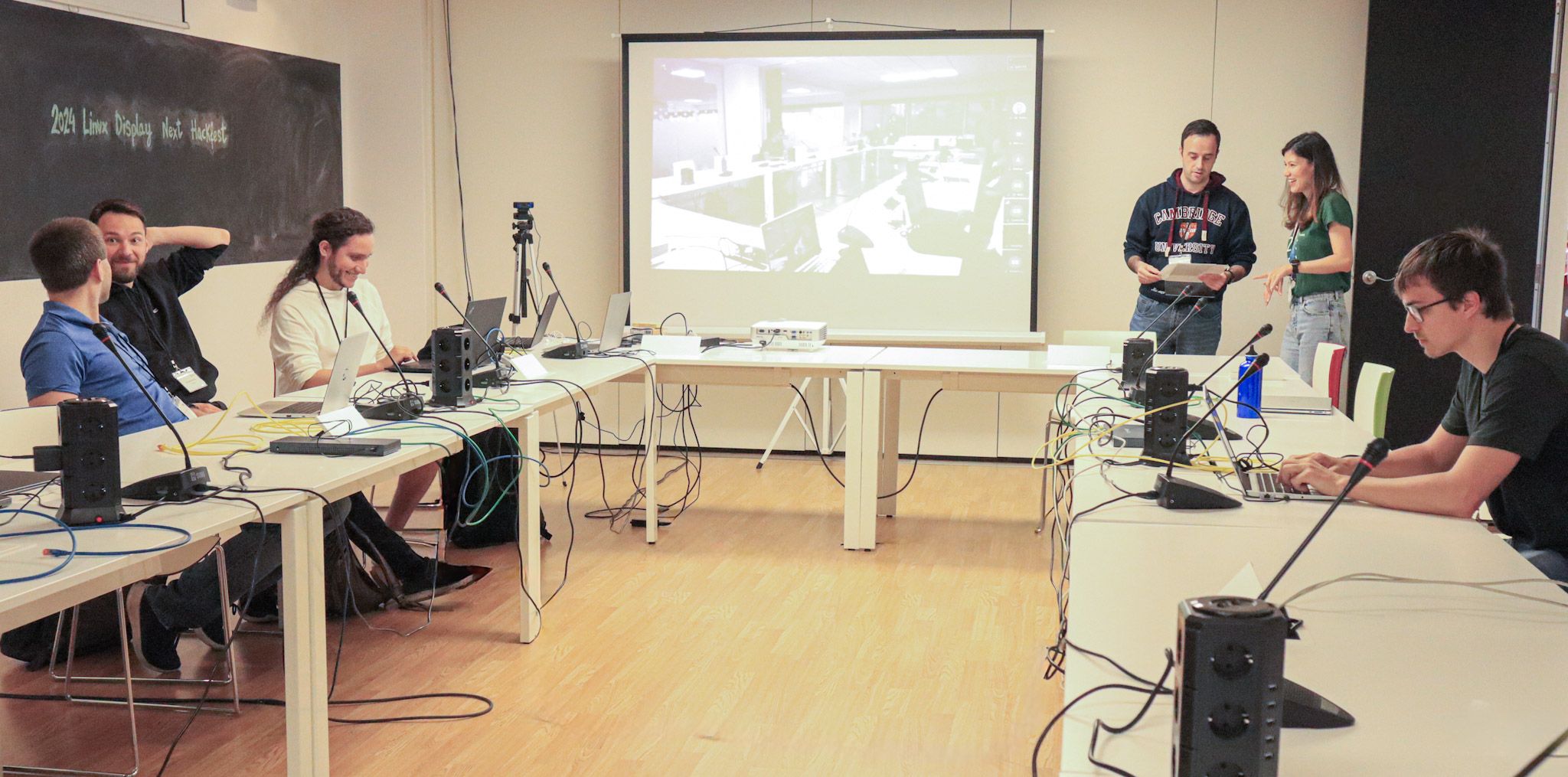
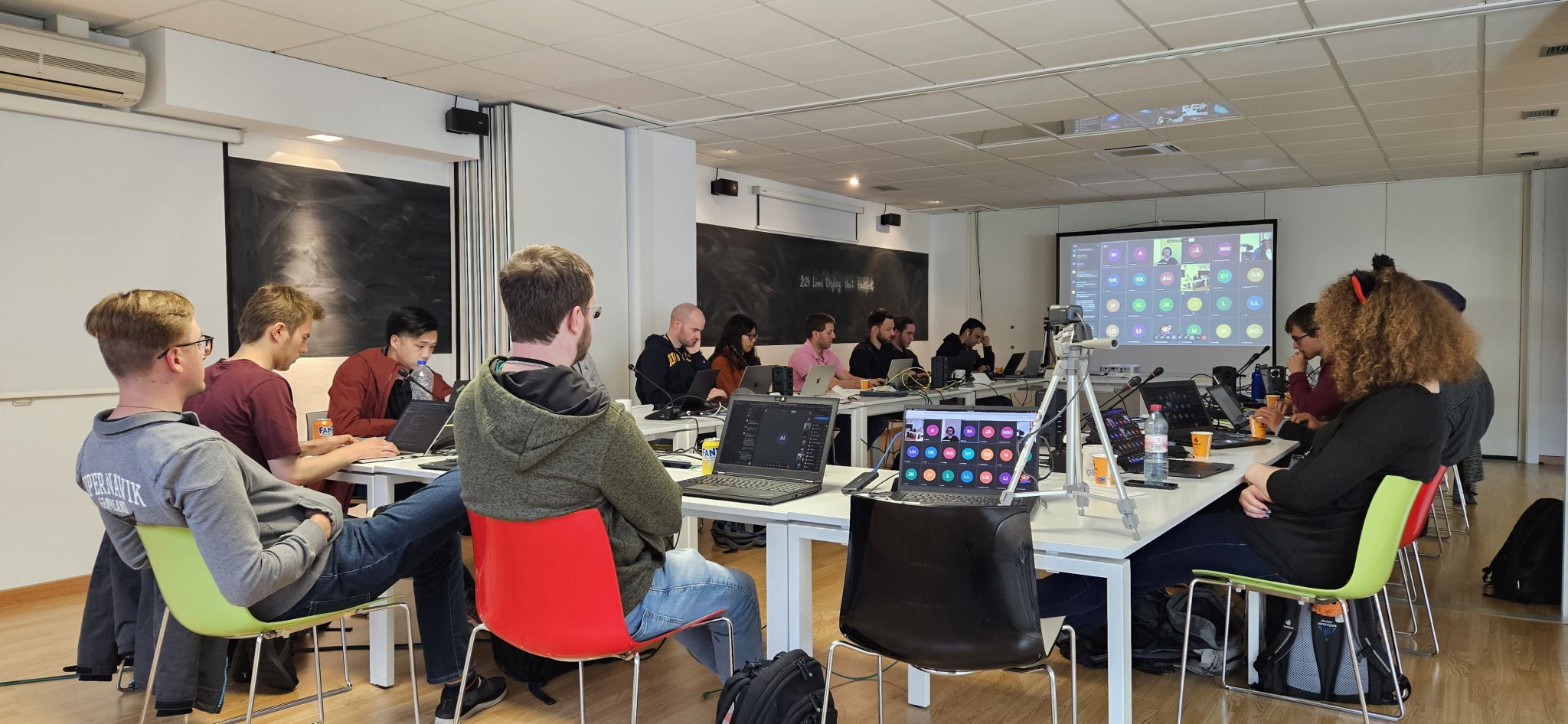
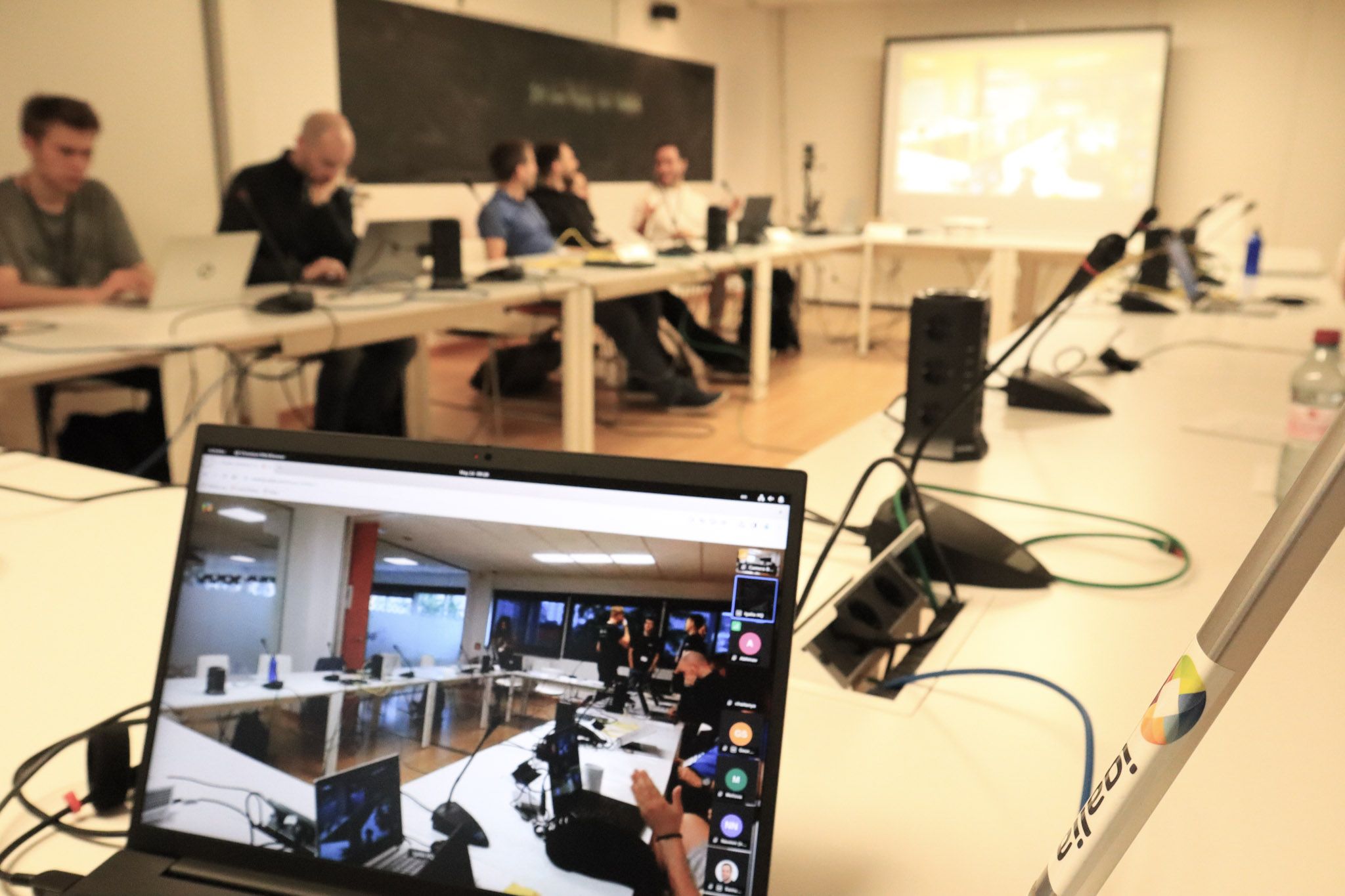
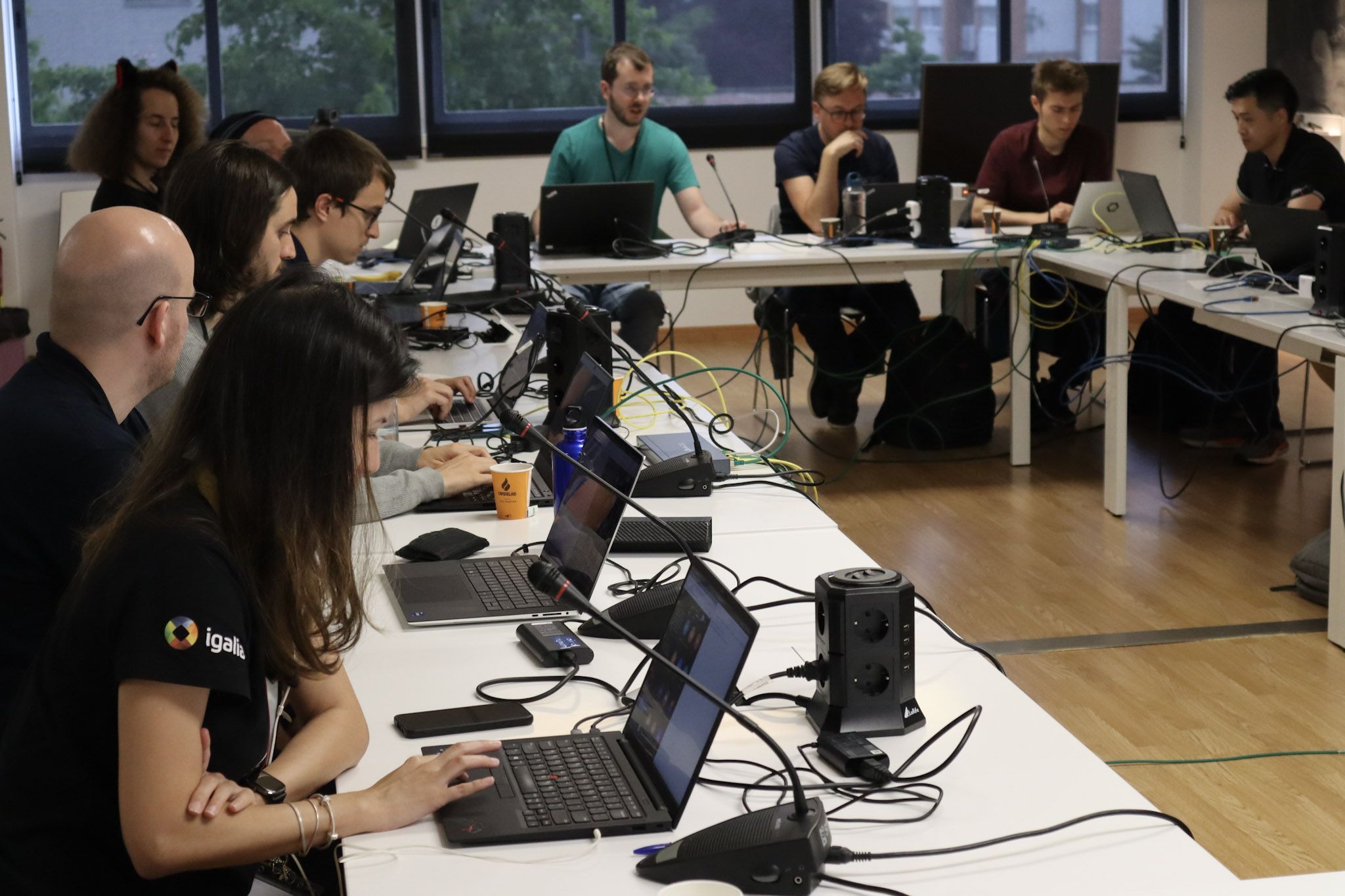
Hey everyone! The 2024 Linux Display Next hackfest concluded in May, and its outcomes continue to shape the Linux Display stack. Igalia hosted this year s event in A Coru a, Spain, bringing together leading experts in the field. Samuel Iglesias and I organized this year s edition and this blog post summarizes the experience and its fruits. One of the highlights of this year s hackfest was the wide range of backgrounds represented by our 40 participants (both on-site and remotely). Developers and experts from various companies and open-source projects came together to advance the Linux Display ecosystem. You can find the list of participants here. The event covered a broad spectrum of topics affecting the development of Linux projects, user experiences, and the future of display technologies on Linux. From cutting-edge topics to long-term discussions, you can check the event agenda here.

Organization Highlights The hackfest was marked by in-depth discussions and knowledge sharing among Linux contributors, making everyone inspired, informed, and connected to the community. Building on feedback from the previous year, we refined the unconference format to enhance participant preparation and engagement. Structured Agenda and Timeboxes: Each session had a defined scope, time limit (1h20 or 2h10), and began with an introductory talk on the topic.
  • Participant-Led Discussions: We pre-selected in-person participants to lead discussions, allowing them to prepare introductions, resources, and scope.
  • Transparent Scheduling: The schedule was shared in advance as GitHub issues, encouraging participants to review and prepare for sessions of interest.
Engaging Sessions: The hackfest featured a variety of topics, including presentations and discussions on how participants were addressing specific subjects within their companies.
  • No Breakout Rooms, No Overlaps: All participants chose to attend all sessions, eliminating the need for separate breakout rooms. We also adapted run-time schedule to keep everybody involved in the same topics.
  • Real-time Updates: We provided notifications and updates through dedicated emails and the event matrix room.
Strengthening Community Connections: The hackfest offered ample opportunities for networking among attendees.
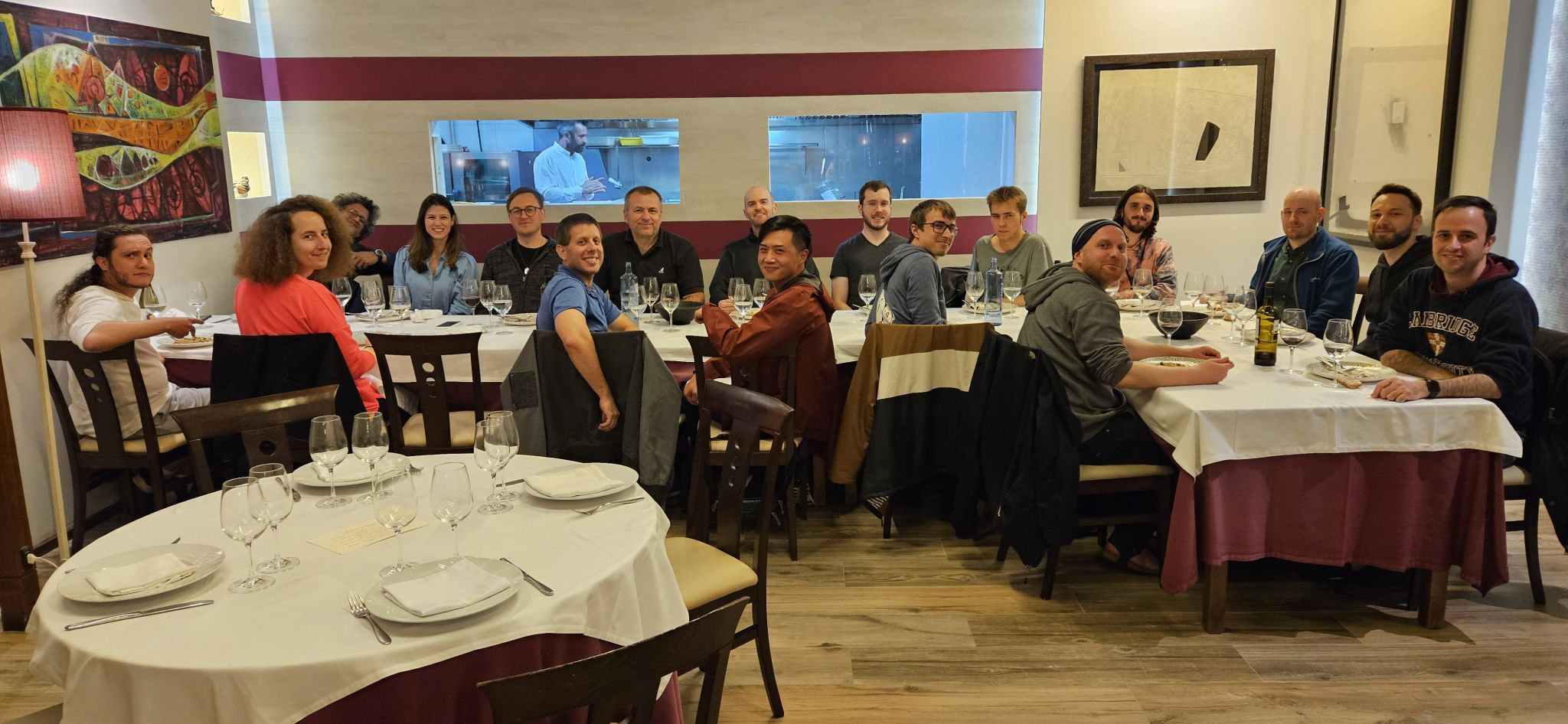
  • Social Events: Igalia sponsored coffee breaks, lunches, and a dinner at a local restaurant.
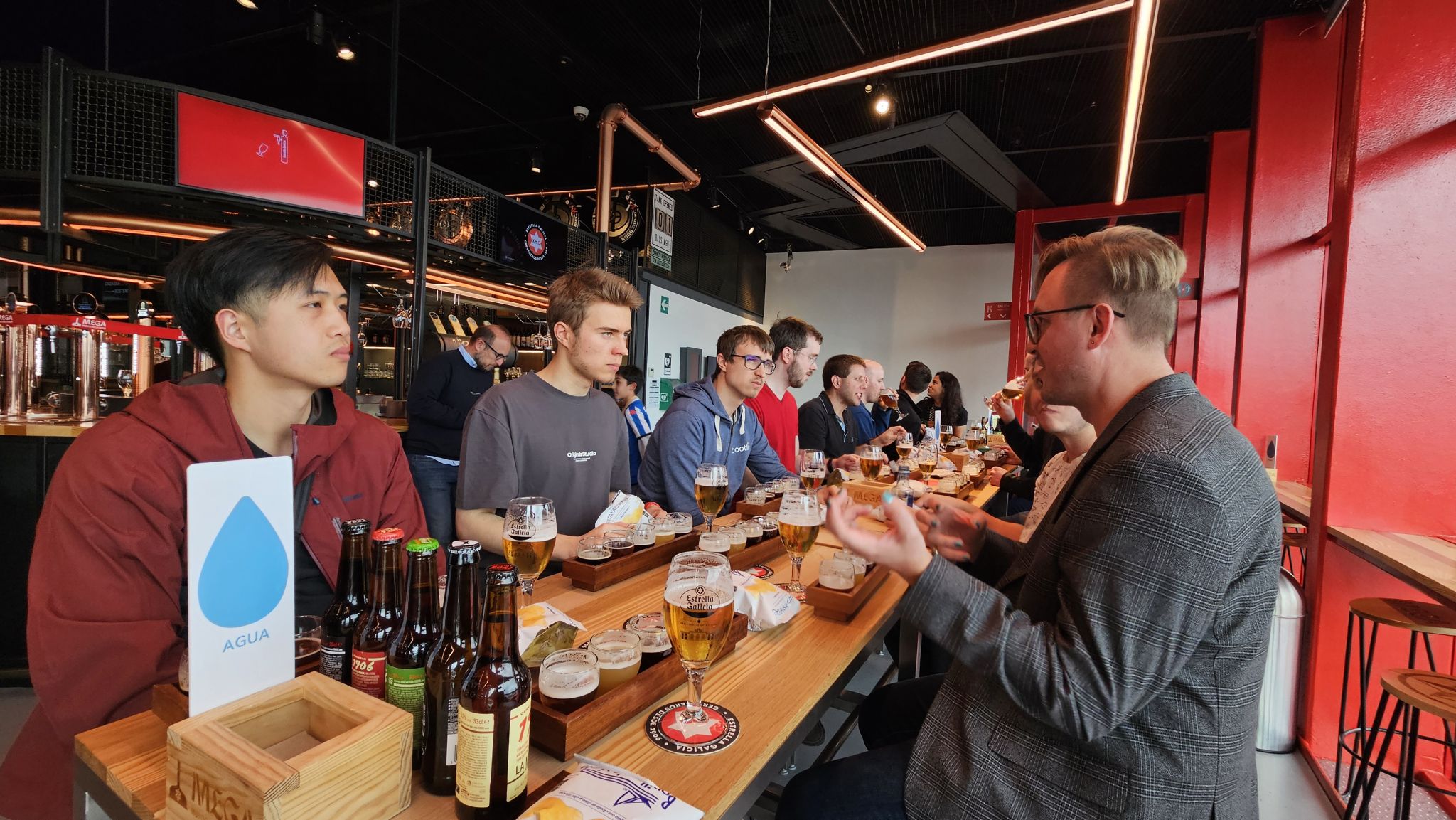
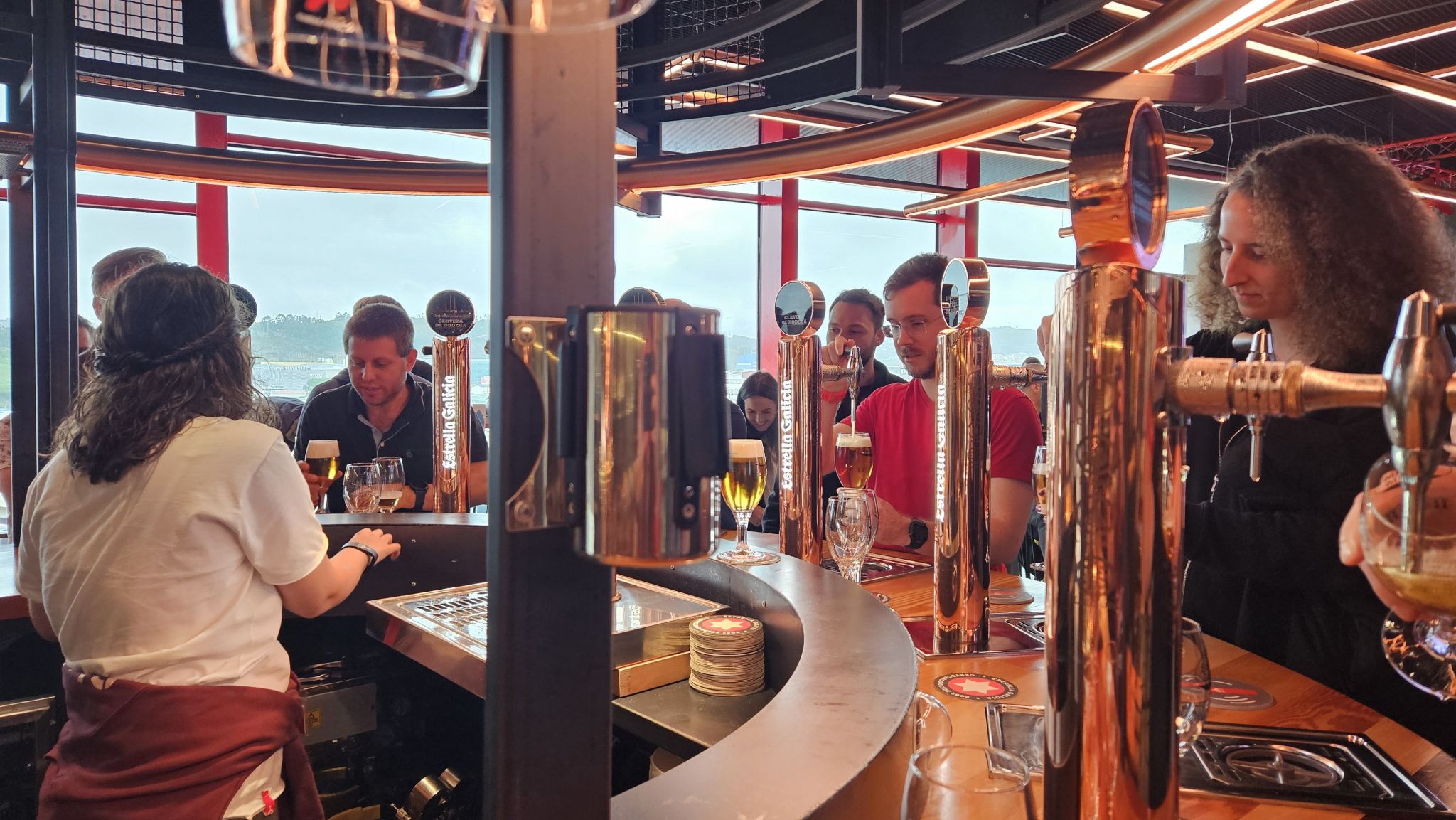
  • Museum Visit: Participants enjoyed a sponsored visit to the Museum of Estrela Galicia Beer (MEGA).

Fruitful Discussions and Follow-up The structured agenda and breaks allowed us to cover multiple topics during the hackfest. These discussions have led to new display feature development and improvements, as evidenced by patches, merge requests, and implementations in project repositories and mailing lists. With the KMS color management API taking shape, we discussed refinements and best approaches to cover the variety of color pipeline from different hardware-vendors. We are also investigating techniques for a performant SDR<->HDR content reproduction and reducing latency and power consumption when using the color blocks of the hardware.

Color Management/HDR Color Management and HDR continued to be the hottest topic of the hackfest. We had three sessions dedicated to discuss Color and HDR across Linux Display stack layers.

Color/HDR (Kernel-Level) Harry Wentland (AMD) led this session. Here, kernel Developers shared the Color Management pipeline of AMD, Intel and NVidia. We counted with diagrams and explanations from HW-vendors developers that discussed differences, constraints and paths to fit them into the KMS generic color management properties such as advertising modeset needs, IN\_FORMAT, segmented LUTs, interpolation types, etc. Developers from Qualcomm and ARM also added information regarding their hardware. Upstream work related to this session:

Color/HDR (Compositor-Level) Sebastian Wick (RedHat) led this session. It started with Sebastian s presentation covering Wayland color protocols and compositor implementation. Also, an explanation of APIs provided by Wayland and how they can be used to achieve better color management for applications and discussions around ICC profiles and color representation metadata. There was also an intensive Q&A about LittleCMS with Marti Maria. Upstream work related to this session:

Color/HDR (Use Cases and Testing) Christopher Cameron (Google) and Melissa Wen (Igalia) led this session. In contrast to the other sessions, here we focused less on implementation and more on brainstorming and reflections of real-world SDR and HDR transformations (use and validation) and gainmaps. Christopher gave a nice presentation explaining HDR gainmap images and how we should think of HDR. This presentation and Q&A were important to put participants at the same page of how to transition between SDR and HDR and somehow emulating HDR. We also discussed on the usage of a kernel background color property. Finally, we discussed a bit about Chamelium and the future of VKMS (future work and maintainership).

Power Savings vs Color/Latency Mario Limonciello (AMD) led this session. Mario gave an introductory presentation about AMD ABM (adaptive backlight management) that is similar to Intel DPST. After some discussions, we agreed on exposing a kernel property for power saving policy. This work was already merged on kernel and the userspace support is under development. Upstream work related to this session:

Strategy for video and gaming use-cases Leo Li (AMD) led this session. Miguel Casas (Google) started this session with a presentation of Overlays in Chrome/OS Video, explaining the main goal of power saving by switching off GPU for accelerated compositing and the challenges of different colorspace/HDR for video on Linux. Then Leo Li presented different strategies for video and gaming and we discussed the userspace need of more detailed feedback mechanisms to understand failures when offloading. Also, creating a debugFS interface came up as a tool for debugging and analysis.

Real-time scheduling and async KMS API Xaver Hugl (KDE/BlueSystems) led this session. Compositor developers have exposed some issues with doing real-time scheduling and async page flips. One is that the Kernel limits the lifetime of realtime threads and if a modeset takes too long, the thread will be killed and thus the compositor as well. Also, simple page flips take longer than expected and drivers should optimize them. Another issue is the lack of feedback to compositors about hardware programming time and commit deadlines (the lastest possible time to commit). This is difficult to predict from drivers, since it varies greatly with the type of properties. For example, color management updates take much longer. In this regard, we discusssed implementing a hw_done callback to timestamp when the hardware programming of the last atomic commit is complete. Also an API to pre-program color pipeline in a kind of A/B scheme. It may not be supported by all drivers, but might be useful in different ways.

VRR/Frame Limit, Display Mux, Display Control, and more and beer We also had sessions to discuss a new KMS API to mitigate headaches on VRR and Frame Limit as different brightness level at different refresh rates, abrupt changes of refresh rates, low frame rate compensation (LFC) and precise timing in VRR more. On Display Control we discussed features missing in the current KMS interface for HDR mode, atomic backlight settings, source-based tone mapping, etc. We also discussed the need of a place where compositor developers can post TODOs to be developed by KMS people. The Content-adaptive Scaling and Sharpening session focused on sharpening and scaling filters. In the Display Mux session, we discussed proposals to expose the capability of dynamic mux switching display signal between discrete and integrated GPUs. In the last session of the 2024 Display Next Hackfest, participants representing different compositors summarized current and future work and built a Linux Display wish list , which includes: improvements to VTTY and HDR switching, better dmabuf API for multi-GPU support, definition of tone mapping, blending and scaling sematics, and wayland protocols for advertising to clients which colorspaces are supported. We closed this session with a status update on feature development by compositors, including but not limited to: plane offloading (from libcamera to output) / HDR video offloading (dma-heaps) / plane-based scrolling for web pages, color management / HDR / ICC profiles support, addressing issues such as flickering when color primaries don t match, etc. After three days of intensive discussions, all in-person participants went to a guided tour at the Museum of Extrela Galicia beer (MEGA), pouring and tasting the most famous local beer.

Feedback and Future Directions Participants provided valuable feedback on the hackfest, including suggestions for future improvements.
  • Schedule and Break-time Setup: Having a pre-defined agenda and schedule provided a better balance between long discussions and mental refreshments, preventing the fatigue caused by endless discussions.
  • Action Points: Some participants recommended explicitly asking for action points at the end of each session and assigning people to follow-up tasks.
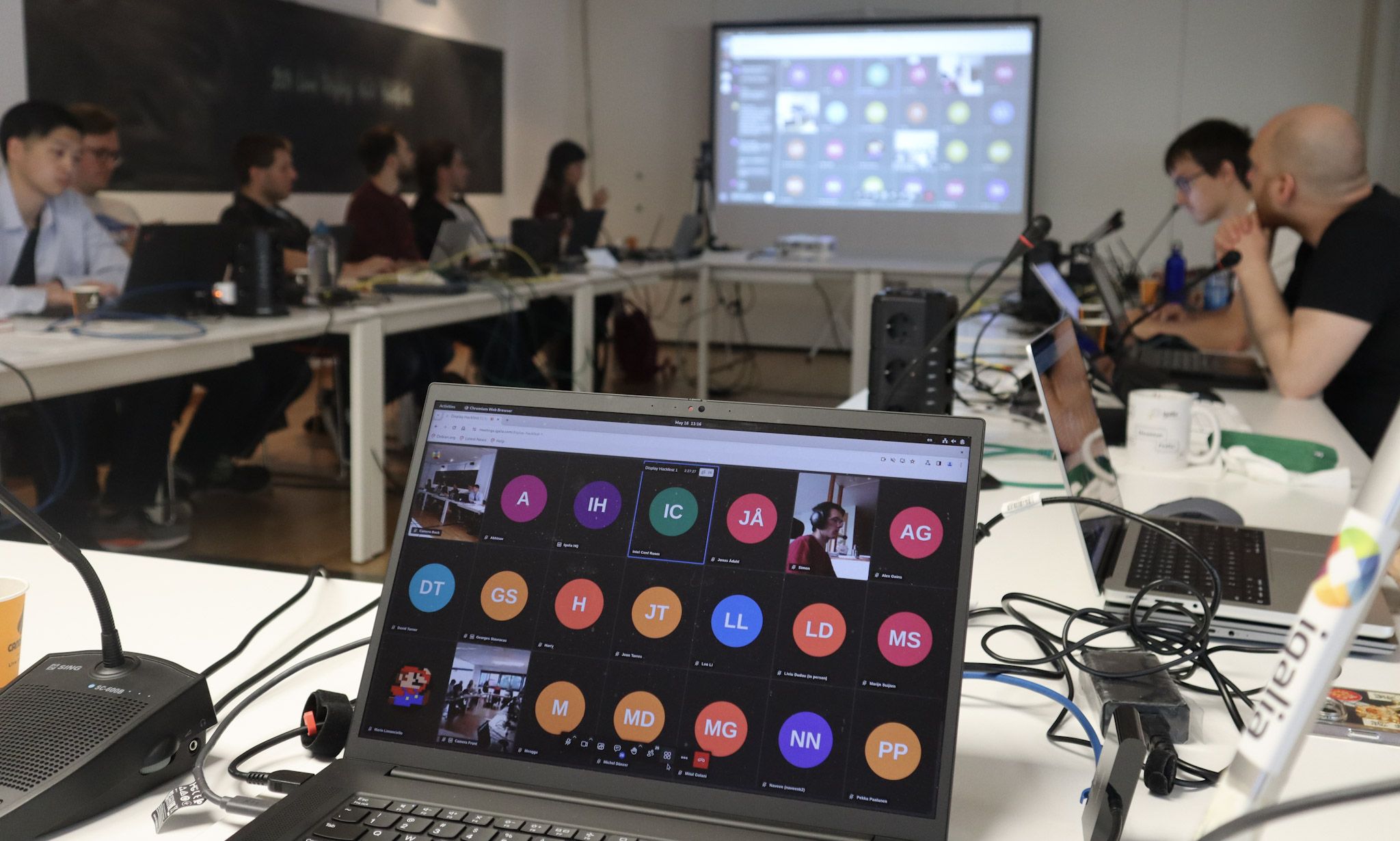
  • Remote Participation: Remote attendees appreciated the inclusive setup and opportunities to actively participate in discussions.
  • Technical Challenges: There were bandwidth and video streaming issues during some sessions due to the large number of participants.

Thank you for joining the 2024 Display Next Hackfest We can t help but thank the 40 participants, who engaged in-person or virtually on relevant discussions, for a collaborative evolution of the Linux display stack and for building an insightful agenda. A big thank you to the leaders and presenters of the nine sessions: Christopher Cameron (Google), Harry Wentland (AMD), Leo Li (AMD), Mario Limoncello (AMD), Sebastian Wick (RedHat) and Xaver Hugl (KDE/BlueSystems) for the effort in preparing the sessions, explaining the topic and guiding discussions. My acknowledge to the others in-person participants that made such an effort to travel to A Coru a: Alex Goins (NVIDIA), David Turner (Raspberry Pi), Georges Stavracas (Igalia), Joan Torres (SUSE), Liviu Dudau (Arm), Louis Chauvet (Bootlin), Robert Mader (Collabora), Tian Mengge (GravityXR), Victor Jaquez (Igalia) and Victoria Brekenfeld (System76). It was and awesome opportunity to meet you and chat face-to-face. Finally, thanks virtual participants who couldn t make it in person but organized their days to actively participate in each discussion, adding different perspectives and valuable inputs even remotely: Abhinav Kumar (Qualcomm), Chaitanya Borah (Intel), Christopher Braga (Qualcomm), Dor Askayo (Red Hat), Jiri Koten (RedHat), Jonas dahl (Red Hat), Leandro Ribeiro (Collabora), Marti Maria (Little CMS), Marijn Suijten, Mario Kleiner, Martin Stransky (Red Hat), Michel D nzer (Red Hat), Miguel Casas-Sanchez (Google), Mitulkumar Golani (Intel), Naveen Kumar (Intel), Niels De Graef (Red Hat), Pekka Paalanen (Collabora), Pichika Uday Kiran (AMD), Shashank Sharma (AMD), Sriharsha PV (AMD), Simon Ser, Uma Shankar (Intel) and Vikas Korjani (AMD). We look forward to another successful Display Next hackfest, continuing to drive innovation and improvement in the Linux display ecosystem!

25 September 2024

Melissa Wen: Reflections on 2024 Linux Display Next Hackfest

Hey everyone! The 2024 Linux Display Next hackfest concluded in May, and its outcomes continue to shape the Linux Display stack. Igalia hosted this year s event in A Coru a, Spain, bringing together leading experts in the field. Samuel Iglesias and I organized this year s edition and this blog post summarizes the experience and its fruits. One of the highlights of this year s hackfest was the wide range of backgrounds represented by our 40 participants (both on-site and remotely). Developers and experts from various companies and open-source projects came together to advance the Linux Display ecosystem. You can find the list of participants here. The event covered a broad spectrum of topics affecting the development of Linux projects, user experiences, and the future of display technologies on Linux. From cutting-edge topics to long-term discussions, you can check the event agenda here.

Organization Highlights The hackfest was marked by in-depth discussions and knowledge sharing among Linux contributors, making everyone inspired, informed, and connected to the community. Building on feedback from the previous year, we refined the unconference format to enhance participant preparation and engagement. Structured Agenda and Timeboxes: Each session had a defined scope, time limit (1h20 or 2h10), and began with an introductory talk on the topic.
  • Participant-Led Discussions: We pre-selected in-person participants to lead discussions, allowing them to prepare introductions, resources, and scope.
  • Transparent Scheduling: The schedule was shared in advance as GitHub issues, encouraging participants to review and prepare for sessions of interest.
Engaging Sessions: The hackfest featured a variety of topics, including presentations and discussions on how participants were addressing specific subjects within their companies.
  • No Breakout Rooms, No Overlaps: All participants chose to attend all sessions, eliminating the need for separate breakout rooms. We also adapted run-time schedule to keep everybody involved in the same topics.
  • Real-time Updates: We provided notifications and updates through dedicated emails and the event matrix room.
Strengthening Community Connections: The hackfest offered ample opportunities for networking among attendees.
  • Social Events: Igalia sponsored coffee breaks, lunches, and a dinner at a local restaurant.
  • Museum Visit: Participants enjoyed a sponsored visit to the Museum of Estrela Galicia Beer (MEGA).

Fruitful Discussions and Follow-up The structured agenda and breaks allowed us to cover multiple topics during the hackfest. These discussions have led to new display feature development and improvements, as evidenced by patches, merge requests, and implementations in project repositories and mailing lists. With the KMS color management API taking shape, we discussed refinements and best approaches to cover the variety of color pipeline from different hardware-vendors. We are also investigating techniques for a performant SDR<->HDR content reproduction and reducing latency and power consumption when using the color blocks of the hardware.

Color Management/HDR Color Management and HDR continued to be the hottest topic of the hackfest. We had three sessions dedicated to discuss Color and HDR across Linux Display stack layers.

Color/HDR (Kernel-Level) Harry Wentland (AMD) led this session. Here, kernel Developers shared the Color Management pipeline of AMD, Intel and NVidia. We counted with diagrams and explanations from HW-vendors developers that discussed differences, constraints and paths to fit them into the KMS generic color management properties such as advertising modeset needs, IN\_FORMAT, segmented LUTs, interpolation types, etc. Developers from Qualcomm and ARM also added information regarding their hardware. Upstream work related to this session:

Color/HDR (Compositor-Level) Sebastian Wick (RedHat) led this session. It started with Sebastian s presentation covering Wayland color protocols and compositor implementation. Also, an explanation of APIs provided by Wayland and how they can be used to achieve better color management for applications and discussions around ICC profiles and color representation metadata. There was also an intensive Q&A about LittleCMS with Marti Maria. Upstream work related to this session:

Color/HDR (Use Cases and Testing) Christopher Cameron (Google) and Melissa Wen (Igalia) led this session. In contrast to the other sessions, here we focused less on implementation and more on brainstorming and reflections of real-world SDR and HDR transformations (use and validation) and gainmaps. Christopher gave a nice presentation explaining HDR gainmap images and how we should think of HDR. This presentation and Q&A were important to put participants at the same page of how to transition between SDR and HDR and somehow emulating HDR. We also discussed on the usage of a kernel background color property. Finally, we discussed a bit about Chamelium and the future of VKMS (future work and maintainership).

Power Savings vs Color/Latency Mario Limonciello (AMD) led this session. Mario gave an introductory presentation about AMD ABM (adaptive backlight management) that is similar to Intel DPST. After some discussions, we agreed on exposing a kernel property for power saving policy. This work was already merged on kernel and the userspace support is under development. Upstream work related to this session:

Strategy for video and gaming use-cases Leo Li (AMD) led this session. Miguel Casas (Google) started this session with a presentation of Overlays in Chrome/OS Video, explaining the main goal of power saving by switching off GPU for accelerated compositing and the challenges of different colorspace/HDR for video on Linux. Then Leo Li presented different strategies for video and gaming and we discussed the userspace need of more detailed feedback mechanisms to understand failures when offloading. Also, creating a debugFS interface came up as a tool for debugging and analysis.

Real-time scheduling and async KMS API Xaver Hugl (KDE/BlueSystems) led this session. Compositor developers have exposed some issues with doing real-time scheduling and async page flips. One is that the Kernel limits the lifetime of realtime threads and if a modeset takes too long, the thread will be killed and thus the compositor as well. Also, simple page flips take longer than expected and drivers should optimize them. Another issue is the lack of feedback to compositors about hardware programming time and commit deadlines (the lastest possible time to commit). This is difficult to predict from drivers, since it varies greatly with the type of properties. For example, color management updates take much longer. In this regard, we discusssed implementing a hw_done callback to timestamp when the hardware programming of the last atomic commit is complete. Also an API to pre-program color pipeline in a kind of A/B scheme. It may not be supported by all drivers, but might be useful in different ways.

VRR/Frame Limit, Display Mux, Display Control, and more and beer We also had sessions to discuss a new KMS API to mitigate headaches on VRR and Frame Limit as different brightness level at different refresh rates, abrupt changes of refresh rates, low frame rate compensation (LFC) and precise timing in VRR more. On Display Control we discussed features missing in the current KMS interface for HDR mode, atomic backlight settings, source-based tone mapping, etc. We also discussed the need of a place where compositor developers can post TODOs to be developed by KMS people. The Content-adaptive Scaling and Sharpening session focused on sharpening and scaling filters. In the Display Mux session, we discussed proposals to expose the capability of dynamic mux switching display signal between discrete and integrated GPUs. In the last session of the 2024 Display Next Hackfest, participants representing different compositors summarized current and future work and built a Linux Display wish list , which includes: improvements to VTTY and HDR switching, better dmabuf API for multi-GPU support, definition of tone mapping, blending and scaling sematics, and wayland protocols for advertising to clients which colorspaces are supported. We closed this session with a status update on feature development by compositors, including but not limited to: plane offloading (from libcamera to output) / HDR video offloading (dma-heaps) / plane-based scrolling for web pages, color management / HDR / ICC profiles support, addressing issues such as flickering when color primaries don t match, etc. After three days of intensive discussions, all in-person participants went to a guided tour at the Museum of Extrela Galicia beer (MEGA), pouring and tasting the most famous local beer.

Feedback and Future Directions Participants provided valuable feedback on the hackfest, including suggestions for future improvements.
  • Schedule and Break-time Setup: Having a pre-defined agenda and schedule provided a better balance between long discussions and mental refreshments, preventing the fatigue caused by endless discussions.
  • Action Points: Some participants recommended explicitly asking for action points at the end of each session and assigning people to follow-up tasks.
  • Remote Participation: Remote attendees appreciated the inclusive setup and opportunities to actively participate in discussions.
  • Technical Challenges: There were bandwidth and video streaming issues during some sessions due to the large number of participants.

Thank you for joining the 2024 Display Next Hackfest We can t help but thank the 40 participants, who engaged in-person or virtually on relevant discussions, for a collaborative evolution of the Linux display stack and for building an insightful agenda. A big thank you to the leaders and presenters of the nine sessions: Christopher Cameron (Google), Harry Wentland (AMD), Leo Li (AMD), Mario Limoncello (AMD), Sebastian Wick (RedHat) and Xaver Hugl (KDE/BlueSystems) for the effort in preparing the sessions, explaining the topic and guiding discussions. My acknowledge to the others in-person participants that made such an effort to travel to A Coru a: Alex Goins (NVIDIA), David Turner (Raspberry Pi), Georges Stavracas (Igalia), Joan Torres (SUSE), Liviu Dudau (Arm), Louis Chauvet (Bootlin), Robert Mader (Collabora), Tian Mengge (GravityXR), Victor Jaquez (Igalia) and Victoria Brekenfeld (System76). It was and awesome opportunity to meet you and chat face-to-face. Finally, thanks virtual participants who couldn t make it in person but organized their days to actively participate in each discussion, adding different perspectives and valuable inputs even remotely: Abhinav Kumar (Qualcomm), Chaitanya Borah (Intel), Christopher Braga (Qualcomm), Dor Askayo, Jiri Koten (RedHat), Jonas dahl (Red Hat), Leandro Ribeiro (Collabora), Marti Maria (Little CMS), Marijn Suijten, Mario Kleiner, Martin Stransky (Red Hat), Michel D nzer (Red Hat), Miguel Casas-Sanchez (Google), Mitulkumar Golani (Intel), Naveen Kumar (Intel), Niels De Graef (Red Hat), Pekka Paalanen (Collabora), Pichika Uday Kiran (AMD), Shashank Sharma (AMD), Sriharsha PV (AMD), Simon Ser, Uma Shankar (Intel) and Vikas Korjani (AMD). We look forward to another successful Display Next hackfest, continuing to drive innovation and improvement in the Linux display ecosystem!

11 September 2024

Freexian Collaborators: Monthly report about Debian Long Term Support, August 2024 (by Roberto C. S nchez)

Like each month, have a look at the work funded by Freexian s Debian LTS offering.

Debian LTS contributors In August, 16 contributors have been paid to work on Debian LTS, their reports are available:
  • Adrian Bunk did 44.5h (out of 46.5h assigned and 53.5h from previous period), thus carrying over 55.5h to the next month.
  • Bastien Roucari s did 20.0h (out of 20.0h assigned).
  • Ben Hutchings did 9.0h (out of 0.0h assigned and 21.0h from previous period), thus carrying over 12.0h to the next month.
  • Chris Lamb did 18.0h (out of 18.0h assigned).
  • Daniel Leidert did 12.0h (out of 7.0h assigned and 5.0h from previous period).
  • Emilio Pozuelo Monfort did 22.25h (out of 6.5h assigned and 53.5h from previous period), thus carrying over 37.75h to the next month.
  • Guilhem Moulin did 17.5h (out of 8.75h assigned and 11.25h from previous period), thus carrying over 2.5h to the next month.
  • Lee Garrett did 11.5h (out of 58.0h assigned and 2.0h from previous period), thus carrying over 48.5h to the next month.
  • Markus Koschany did 40.0h (out of 40.0h assigned).
  • Ola Lundqvist did 14.5h (out of 4.0h assigned and 20.0h from previous period), thus carrying over 9.5h to the next month.
  • Roberto C. S nchez did 8.25h (out of 5.0h assigned and 7.0h from previous period), thus carrying over 3.75h to the next month.
  • Santiago Ruano Rinc n did 21.5h (out of 11.5h assigned and 10.0h from previous period).
  • Sean Whitton did 4.0h (out of 2.25h assigned and 3.75h from previous period), thus carrying over 2.0h to the next month.
  • Sylvain Beucler did 42.0h (out of 46.0h assigned and 14.0h from previous period), thus carrying over 18.0h to the next month.
  • Thorsten Alteholz did 11.0h (out of 11.0h assigned).
  • Tobias Frost did 2.5h (out of 7.75h assigned and 4.25h from previous period), thus carrying over 9.5h to the next month.

Evolution of the situation In August, we have released 1 DLAs. During the month of August Debian 11 "bullseye" officially transitioned to the responsibility of the LTS team (on 2024-08-15). However, because the final point release (11.11) was not made until 2024-08-31, LTS contributors were prevented from uploading packages to bullseye until after the point release had been made. That said, the team was not at all idle, and was busy at work on a variety of tasks which impacted both LTS and the broader Debian community, as well as preparing uploads which will be released during the month of September. Of particular note, LTS contributor Bastien Roucari s prepared updates of the putty and cacti packages for bookworm (1 2) and bullseye (1 2), which were accepted by the old-stable release managers for the August point releases. He also analysed several security regressions in the apache2 package. LTS contributor Emilio Pozuelo Monfort worked on the Rust toolchain in bookworm and bullseye, which will be needed to support the upcoming Firefox ESR and Thunderbird ESR releases from the Mozilla project. Additionally, LTS contributor Thorsten Alteholz prepared bookworm and bullseye updates of the cups package (1 2), which were accepted by the old-stable release managers for the August point releases. LTS contributor Markus Koschany collaborated with Emmanuel Bourg, co-maintainer of the tomcat packages in Debian. Regressions in a proposed security fix necessitated the updating of the tomcat10 package in Debian to the latest upstream release. LTS contributors Bastien and Santiago Ruano Rinc n collaborated with the upstream developers and the Debian maintainer (Bernhard Schmidt) of the FreeRADIUS project towards addressing the BlastRADIUS vulnerability in the bookworm and bullseye versions of the freeradius package. If you use FreeRADIUS in Debian bookworm or bullseye, we encourage you to test the packages following the instructions found in the call for testers to help identifying any possible regression that could be introduced with these updates. Testing is an important part of the work the LTS Team does, and in that vein LTS contributor Sean Whitton worked on improving the documentation and tooling around creating test filesystems which can be used for testing a variety of package update scenarios.

Thanks to our sponsors Sponsors that joined recently are in bold.

12 August 2024

Freexian Collaborators: Monthly report about Debian Long Term Support, July 2024 (by Roberto C. S nchez)

Like each month, have a look at the work funded by Freexian s Debian LTS offering.

Debian LTS contributors In July, 13 contributors have been paid to work on Debian LTS, their reports are available:
  • Bastien Roucari s did 20.0h (out of 20.0h assigned).
  • Chris Lamb did 18.0h (out of 18.0h assigned).
  • Daniel Leidert did 5.0h (out of 4.0h assigned and 6.0h from previous period), thus carrying over 5.0h to the next month.
  • Guilhem Moulin did 8.75h (out of 4.5h assigned and 15.5h from previous period), thus carrying over 11.25h to the next month.
  • Lee Garrett did 51.5h (out of 10.5h assigned and 43.0h from previous period), thus carrying over 2.0h to the next month.
  • Lucas Kanashiro did 5.0h (out of 5.0h assigned and 15.0h from previous period), thus carrying over 15.0h to the next month.
  • Markus Koschany did 40.0h (out of 40.0h assigned).
  • Ola Lundqvist did 4.0h (out of 10.0h assigned and 14.0h from previous period), thus carrying over 20.0h to the next month.
  • Roberto C. S nchez did 5.0h (out of 5.25h assigned and 6.75h from previous period), thus carrying over 7.0h to the next month.
  • Santiago Ruano Rinc n did 6.0h (out of 16.0h assigned), thus carrying over 10.0h to the next month.
  • Sean Whitton did 2.25h (out of 6.0h assigned), thus carrying over 3.75h to the next month.
  • Sylvain Beucler did 39.5h (out of 2.5h assigned and 51.0h from previous period), thus carrying over 14.0h to the next month.
  • Thorsten Alteholz did 11.0h (out of 11.0h assigned).

Evolution of the situation In July, we have released 1 DLA. August will be the month that Debian 11 makes the transition to LTS. Our contributors have already been hard at work with preparatorty tasks and also with making contributions to packages in Debian 11 in close collaboration with the Debian security team and package maintainers. As a result, users and sponsors should not observe any especially notable differences as the transition occurs. While only one DLA was released in July (as a result of the transitional state of Debian 11 bullseye ), there were some notable highlights. LTS contributor Guilhem Moulin prepared an update of libvirt for Debian 11 (in collaboration with the Old-Stable Release Managers and the Debian Security Team) to fix a number of outstanding CVEs which did not rise to the level of a DSA by the Debian Security Team. The update prepared by Guilhem will be included in Debian 11 as part of the final point release at the end of August, one of the final transition steps by the Release Managers as Debian 11 moves entirely to the LTS Team s responsibility. Notable work was also undertaken by contributors Lee Garrett (fixes on the ansible test suite and a bullseye update), Lucas Kanashiro (Rust toolchain, utilized by the clamav, firefox-esr, and thunderbird packages), and Sylvain Beucler (fixes on the ruby2.5/2.7 test suites and CI infrastructure), which will help improve the quality of updates produced during the next LTS cycle. June was the final month of LTS for Debian 10 (as announced on the debian-lts-announce mailing list). No additional Debian 10 security updates will be made available on security.debian.org. However, Freexian and its team of paid Debian contributors will continue to maintain Debian 10 going forward for customers of the Extended LTS offer. Subscribe right away if you still have Debian 10 systems which must be kept secure (and which cannot yet be upgraded).

Thanks to our sponsors Sponsors that joined recently are in bold.

12 July 2024

Freexian Collaborators: Monthly report about Debian Long Term Support, June 2024 (by Roberto C. S nchez)

Like each month, have a look at the work funded by Freexian s Debian LTS offering.

Debian LTS contributors In June, 18 contributors have been paid to work on Debian LTS, their reports are available:
  • Adrian Bunk did 47.0h (out of 74.25h assigned and 11.75h from previous period), thus carrying over 39.0h to the next month.
  • Arturo Borrero Gonzalez did 6.0h (out of 6.0h assigned).
  • Bastien Roucari s did 20.0h (out of 20.0h assigned).
  • Ben Hutchings did 15.5h (out of 16.0h assigned and 8.0h from previous period), thus carrying over 8.5h to the next month.
  • Chris Lamb did 18.0h (out of 18.0h assigned).
  • Daniel Leidert did 4.0h (out of 8.0h assigned and 2.0h from previous period), thus carrying over 6.0h to the next month.
  • Emilio Pozuelo Monfort did 23.25h (out of 49.5h assigned and 10.5h from previous period), thus carrying over 36.75h to the next month.
  • Guilhem Moulin did 4.5h (out of 13.0h assigned and 7.0h from previous period), thus carrying over 15.5h to the next month.
  • Lee Garrett did 17.0h (out of 25.0h assigned and 35.0h from previous period), thus carrying over 43.0h to the next month.
  • Lucas Kanashiro did 5.0h (out of 10.0h assigned and 10.0h from previous period), thus carrying over 15.0h to the next month.
  • Markus Koschany did 40.0h (out of 40.0h assigned).
  • Ola Lundqvist did 10.0h (out of 6.5h assigned and 17.5h from previous period), thus carrying over 14.0h to the next month.
  • Roberto C. S nchez did 5.25h (out of 7.75h assigned and 4.25h from previous period), thus carrying over 6.75h to the next month.
  • Santiago Ruano Rinc n did 22.5h (out of 14.5h assigned and 8.0h from previous period).
  • Sean Whitton did 6.5h (out of 6.0h assigned and 0.5h from previous period).
  • Stefano Rivera did 0.5h (out of 0.0h assigned and 10.0h from previous period), thus carrying over 9.5h to the next month.
  • Sylvain Beucler did 9.0h (out of 24.5h assigned and 35.5h from previous period), thus carrying over 51.0h to the next month.
  • Thorsten Alteholz did 14.0h (out of 14.0h assigned).

Evolution of the situation In June, we have released 31 DLAs. Notable security updates in June included:
  • git: multiple vulnerabilities, which may result in privilege escalation, denial of service, and arbitrary code execution
  • sendmail: SMTP smuggling allowed remote attackers bypass SPF protection checks
  • cups: arbitrary remote code execution
Looking further afield to the broader Debian ecosystem, LTS contributor Bastien Roucari s also patched sendmail in Debian 12 (bookworm) and 11 (bullseye) in order to fix the previously mentioned SMTP smuggling vulnerability. Furthermore, LTS contributor Thorsten Alteholz provided fixes for the cups packages in Debian 12 (bookworm) and 11 (bullseye) in order to fix the aforementioned arbitrary remote code execution vulnerability. Additionally, LTS contributor Ben Hutchings has commenced work on an updated backport of Linux kernel 6.1 to Debian 11 (bullseye), in preparation for bullseye transitioning to the responsibility of the LTS (and the associated closure of the bullseye-backports repository). LTS Lucas Kanashiro also began the preparatory work of backporting parts of the rust/cargo toolchain to Debian 11 (bullseye) in order to make future updates of the clamav virus scanner possible. June was the final month of LTS for Debian 10 (as announced on the debian-lts-announce mailing list). No additional Debian 10 security updates will be made available on security.debian.org. However, Freexian and its team of paid Debian contributors will continue to maintain Debian 10 going forward for the customers of the Extended LTS offer. Subscribe right away if you sill have Debian 10 which must be kept secure (and which cannot yet be upgraded).

Thanks to our sponsors Sponsors that joined recently are in bold.

12 June 2024

Freexian Collaborators: Monthly report about Debian Long Term Support, May 2024 (by Roberto C. S nchez)

Like each month, have a look at the work funded by Freexian s Debian LTS offering.

Debian LTS contributors In May, 17 contributors have been paid to work on Debian LTS, their reports are available:
  • Adrian Bunk did 34.25h (out of 24.0h assigned and 22.0h from previous period), thus carrying over 11.75h to the next month.
  • Bastien Roucari s did 20.0h (out of 20.0h assigned).
  • Ben Hutchings did 16.0h (out of 24.0h assigned), thus carrying over 8.0h to the next month.
  • Chris Lamb did 18.0h (out of 18.0h assigned).
  • Daniel Leidert did 8.0h (out of 10.0h assigned), thus carrying over 2.0h to the next month.
  • Emilio Pozuelo Monfort did 35.5h (out of 46.0h assigned), thus carrying over 10.5h to the next month.
  • Guilhem Moulin did 13.0h (out of 14.75h assigned and 5.25h from previous period), thus carrying over 7.0h to the next month.
  • Lee Garrett did 11.0h (out of 37.25h assigned and 8.75h from previous period), thus carrying over 35.0h to the next month.
  • Lucas Kanashiro did 10.0h (out of 20.0h assigned), thus carrying over 10.0h to the next month.
  • Markus Koschany did 40.0h (out of 40.0h assigned).
  • Ola Lundqvist did 6.5h (out of 22.5h assigned and 1.5h from previous period), thus carrying over 17.5h to the next month.
  • Roberto C. S nchez did 7.75h (out of 11.0h assigned and 1.0h from previous period), thus carrying over 4.25h to the next month.
  • Santiago Ruano Rinc n did 8.0h (out of 16.0h assigned), thus carrying over 8.0h to the next month.
  • Sean Whitton did 5.5h (out of 5.5h assigned and 0.5h from previous period), thus carrying over 0.5h to the next month.
  • Sylvain Beucler did 10.5h (out of 0.75h assigned and 45.25h from previous period), thus carrying over 35.5h to the next month.
  • Thorsten Alteholz did 14.0h (out of 14.0h assigned).
  • Tobias Frost did 7.75h (out of 10.0h assigned and 2.0h from previous period), thus carrying over 4.25h to the next month.

Evolution of the situation In May, we have released 20 DLAs. Notable security updates in May included:
  • apache2: multiple vulnerabilities which may result in HTTP response splitting, denial of service, or authorization bypass (by Bastien Roucari s, in collaboration with apache2 maintainer Yadd)
  • bind9: two vulnerabilities, called KeyTrap and NSEC3, which may result in denial of service (by Santiago Ruano Rinc n)
  • python-pymysql: potential SQL injection attack (by Chris Lamb)
The aforementioned apache2 was prepared by its Debian maintainer Yadd. This update also involved work on the package test suite in buster, which contributor Bastien Roucari s then forwarded to the apache2 package in unstable. More importantly, a regression in fossil was reported, and Bastien prepared a fix for it. Bastien coordinated the upload of both packages to minimize the introduction of regressions. Contributor Daniel Leidert also prepared an upload of runc to Debian 11 in order fix a number of CVEs still affecting that package. Finally, contributor Thorsten Alteholz prepared uploads for qtbase-opensource-src, libjwt, and libmicrohttpd in Debian 11. Note that Debian 11 will pass into the LTS phase of support in August and these updates will improve the state and long-term supportability of Debian 11. Debian 10 is presently in its final month of LTS support (as announced on the debian-lts-announce mailing list, support will end on June 30th), after which no new security updates will be made available on security.debian.org. However, Freexian and its team of paid Debian contributors will continue to maintain Debian 10 going forward for the customers of the Extended LTS offer. Subscribe right away if you sill have Debian 10 which must be kept secure (and which cannot yet be upgraded).

Thanks to our sponsors Sponsors that joined recently are in bold.

Next.

Previous.