Search Results: "garden"

29 December 2022

Chris Lamb: Favourite books of 2022: Memoir/biography

In my two most recent posts, I listed the fiction and classic fiction I enjoyed the most in 2022. I'll leave my roundup of general non-fiction until tomorrow, but today I'll be going over my favourite memoirs and biographies, in no particular order. Books that just missed the cut here include Roisin Kiberd's The Disconnect: A Personal Journey Through the Internet (2019), Steve Richards' The Prime Ministers (2019) which reflects on UK leadership from Harold Wilson to Boris Johnson, Robert Graves Great War memoir Goodbye to All That (1929) and David Mikics's portrait of Stanley Kubrick called American Filmmaker.

Afropean: Notes from Black Europe (2019) Johny Pitts Johny Pitts is a photographer and writer who lives in the north of England who set out to explore "black Europe from the street up" those districts within European cities that, although they were once 'white spaces' in the past, they are now occupied by Black people. Unhappy with the framing of the Black experience back home in post-industrial Sheffield, Pitts decided to become a nomad and goes abroad to seek out the sense of belonging he cannot find in post-Brexit Britain, and Afropean details his journey through Paris, Brussels, Lisbon, Berlin, Stockholm and Moscow. However, Pitts isn't just avoiding the polarisation and structural racism embedded in contemporary British life. Rather, he is seeking a kind of super-national community that transcends the reductive and limiting nationalisms of all European countries, most of which have based their national story on a self-serving mix of nostalgia and postcolonial fairy tales. Indeed, the term 'Afropean' is the key to understanding the goal of this captivating memoir. Pitts writes at the beginning of this book that the word wasn't driven only as a response to the crude nativisms of Nigel Farage and Marine Le Pen, but that it:
encouraged me to think of myself as whole and unhyphenated. [ ] Here was a space where blackness was taking part in shaping European identity at large. It suggested the possibility of living in and with more than one idea: Africa and Europe, or, by extension, the Global South and the West, without being mixed-this, half-that or black-other. That being black in Europe didn t necessarily mean being an immigrant.
In search of this whole new theory of home, Pitts travels to the infamous banlieue of Clichy-sous-Bois just to the East of Paris, thence to Matong in Brussels, as well as a quick and abortive trip into Moscow and other parallel communities throughout the continent. In these disparate environs, Pitts strikes up countless conversations with regular folk in order to hear their quotidian stories of living, and ultimately to move away from the idea that Black history is defined exclusively by slavery. Indeed, to Pitts, the idea of race is one that ultimately restricts one's humanity; the concept "is often forced to embody and speak for certain ideas, despite the fact it can't ever hold in both hands the full spectrum of a human life and the cultural nuances it creates." It's difficult to do justice to the effectiveness of the conversations Pitts has throughout his travels, but his shrewd attention to demeanour, language, raiment and expression vividly brings alive the people he talks to. Of related interest to fellow Brits as well are the many astute observations and comparisons with Black and working-class British life. The tone shifts quite often throughout this book. There might be an amusing aside one minute, such as the portrait of an African American tourist in Paris to whom "the whole city was a film set, with even its homeless people appearing to him as something oddly picturesque." But the register abruptly changes when he visits Clichy-sous-Bois on an anniversary of important to the area, and an element of genuine danger is introduced when Johny briefly visits Moscow and barely gets out alive. What's especially remarkable about this book is there is a freshness to Pitt s treatment of many well-worn subjects. This can be seen in his account of Belgium under the reign of Leopold II, the history of Portuguese colonialism (actually mostly unknown to me), as well in the way Pitts' own attitude to contemporary anti-fascist movements changes throughout an Antifa march. This chapter was an especial delight, and not only because it underlined just how much of Johny's trip was an inner journey of an author willing have his mind changed. Although Johny travels alone throughout his journey, in the second half of the book, Pitts becomes increasingly accompanied by a number of Black intellectuals by the selective citing of Frantz Fanon and James Baldwin and Caryl Phillips. (Nevertheless, Jonny has also brought his camera for the journey as well, adding a personal touch to this already highly-intimate book.) I suspect that his increasing exercise of Black intellectual writing in the latter half of the book may be because Pitts' hopes about 'Afropean' existence ever becoming a reality are continually dashed and undercut. The unity among potential Afropeans appears more-and-more unrealisable as the narrative unfolds, the various reasons of which Johny explores both prosaically and poetically. Indeed, by the end of the book, it's unclear whether Johny has managed to find what he left the shores of England to find. But his mix of history, sociology and observation of other cultures right on my doorstep was something of a revelation to me.

Orwell's Roses (2021) Rebecca Solnit Orwell s Roses is an alternative journey through the life and afterlife of George Orwell, reimaging his life primarily through the lens of his attentiveness to nature. Yet this framing of the book as an 'alternative' history is only revisionist if we compare it to the usual view of Orwell as a bastion of 'free speech' and English 'common sense' the roses of the title of this book were very much planted by Orwell in his Hertfordshire garden in 1936, and his yearning of nature one was one of the many constants throughout his life. Indeed, Orwell wrote about wildlife and outdoor life whenever he could get away with it, taking pleasure in a blackbird's song and waxing nostalgically about the English countryside in his 1939 novel Coming Up for Air (reviewed yesterday).
By sheer chance, I actually visited this exact garden immediately to the publication of this book
Solnit has a particular ability to evince unexpected connections between Orwell and the things he was writing about: Joseph Stalin's obsession with forcing lemons to grow in ludicrously cold climates; Orwell s slave-owning ancestors in Jamaica; Jamaica Kincaid's critique of colonialism in the flower garden; and the exploitative rose industry in Colombia that supplies the American market. Solnit introduces all of these new correspondences in a voice that feels like a breath of fresh air after decades of stodgy Orwellania, and without lapsing into a kind of verbal soft-focus. Indeed, the book displays a marked indifference towards the usual (male-centric) Orwell fandom. Her book draws to a close with a rereading of the 'dystopian' Nineteen Eighty-Four that completes her touching portrait of a more optimistic and hopeful Orwell, as well as a reflection on beauty and a manifesto for experiencing joy as an act of resistance.

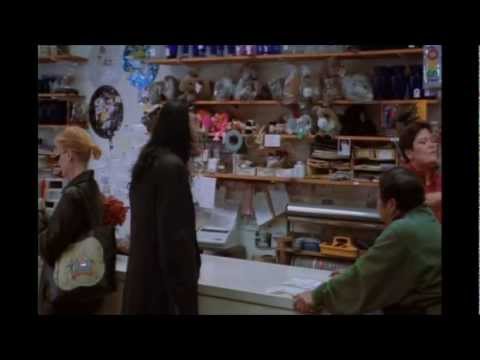
The Disaster Artist (2013) Greg Sestero & Tom Bissell For those not already in the know, The Room was a 2003 film by director-producer-writer-actor Tommy Wiseau, an inscrutable Polish immigr with an impenetrable background, an idiosyncratic choice of wardrobe and a mysterious large source of income. The film, which centres on a melodramatic love triangle, has since been described by several commentators and publications as one of the worst films ever made. Tommy's production completely bombed at the so-called 'box office' (the release was actually funded entirely by Wiseau personally), but the film slowly became a favourite at cult cinema screenings. Given Tommy's prominent and central role in the film, there was always an inherent cruelty involved in indulging in the spectacle of The Room the audience was laughing because the film was astonishingly bad, of course, but Wiseau infused his film with sincere earnestness that in a heartless twist of irony may be precisely why it is so terrible to begin with. Indeed, it should be stressed that The Room is not simply a 'bad' film, and therefore not worth paying any attention to: it is uncannily bad in a way that makes it eerily compelling to watch. It unintentionally subverts all the rules of filmmaking in a way that captivates the attention. Take this representative example:
This thirty-six-second scene showcases almost every problem in The Room: the acting, the lighting, the sound design, the pacing, the dialogue and that this unnecessary scene (which does not advance the plot) even exists in the first place. One problem that the above clip doesn't capture, however, is Tommy's vulnerable ego. (He would later make the potentially conflicting claims that The Room was both an ironic cult success and that he is okay with people interpreting it sincerely). Indeed, the filmmaker's central role as Johnny (along with his Willy-Wonka meets Dracula persona) doesn't strike viewers as yet another vanity project, it actually asks more questions than it answers. Why did Tommy even make this film? What is driving him psychologically? And why and how? is he so spellbinding? On the surface, then, 2013's The Disaster Artist is a book about the making of one the strangest films ever made, written by The Room's co-star Greg Sestero and journalist Tom Bissell. Naturally, you learn some jaw-dropping facts about the production and inspiration of the film, the seed of which was planted when Greg and Tommy went to see an early screening of The Talented Mr Ripley (1999). It turns out that Greg's character in The Room is based on Tommy's idiosyncratic misinterpretation of its plot, extending even to the character's name Mark who, in textbook Tommy style, was taken directly (or at least Tommy believed) from one of Ripley's movie stars: "Mark Damon" [sic]. Almost as absorbing as The Room itself, The Disaster Artist is partly a memoir about Thomas P. Wiseau and his cinematic masterpiece. But it could also be described as a biography about a dysfunctional male relationship and, almost certainly entirely unconsciously, a text about the limitations of hetronormativity. It is this latter element that struck me the most whilst reading this book: if you take a step back for a moment, there is something uniquely sad about Tommy's inability to connect with others, and then, when Wiseau poured his soul into his film people just laughed. Despite the stories about his atrocious behaviour both on and off the film set, there's something deeply tragic about the whole affair. Jean-Luc Godard, who passed away earlier this year, once observed that every fictional film is a documentary of its actors. The Disaster Artist shows that this well-worn aphorism doesn't begin to cover it.

28 December 2022

Chris Lamb: Favourite books of 2022: Classics

As a follow-up to yesterday's post detailing my favourite works of fiction from 2022, today I'll be listing my favourite fictional works that are typically filed under classics. Books that just missed the cut here include: E. M. Forster's A Room with a View (1908) and his later A Passage to India (1913), both gently nudged out by Forster's superb Howard's End (see below). Giuseppe Tomasi di Lampedusa's The Leopard (1958) also just missed out on a write-up here, but I can definitely recommend it to anyone interested in reading a modern Italian classic.

War and Peace (1867) Leo Tolstoy It's strange to think that there is almost no point in reviewing this novel: who hasn't heard of War and Peace? What more could possibly be said about it now? Still, when I was growing up, War and Peace was always the stereotypical example of the 'impossible book', and even start it was, at best, a pointless task, and an act of hubris at worst. And so there surely exists a parallel universe in which I never have and will never will read the book... Nevertheless, let us try to set the scene. Book nine of the novel opens as follows:
On the twelfth of June, 1812, the forces of Western Europe crossed the Russian frontier and war began; that is, an event took place opposed to human reason and to human nature. Millions of men perpetrated against one another such innumerable crimes, frauds, treacheries, thefts, forgeries, issues of false money, burglaries, incendiarisms and murders as in whole centuries are not recorded in the annals of all the law courts of the world, but which those who committed them did not at the time regard as being crimes. What produced this extraordinary occurrence? What were its causes? [ ] The more we try to explain such events in history reasonably, the more unreasonable and incomprehensible they become to us.
Set against the backdrop of the Napoleonic Wars and Napoleon's invasion of Russia, War and Peace follows the lives and fates of three aristocratic families: The Rostovs, The Bolkonskys and the Bezukhov's. These characters find themselves situated athwart (or against) history, and all this time, Napoleon is marching ever closer to Moscow. Still, Napoleon himself is essentially just a kind of wallpaper for a diverse set of personal stories touching on love, jealousy, hatred, retribution, naivety, nationalism, stupidity and much much more. As Elif Batuman wrote earlier this year, "the whole premise of the book was that you couldn t explain war without recourse to domesticity and interpersonal relations." The result is that Tolstoy has woven an incredibly intricate web that connects the war, noble families and the everyday Russian people to a degree that is surprising for a book started in 1865. Tolstoy's characters are probably timeless (especially the picaresque adventures and constantly changing thoughts Pierre Bezukhov), and the reader who has any social experience will immediately recognise characters' thoughts and actions. Some of this is at a 'micro' interpersonal level: for instance, take this example from the elegant party that opens the novel:
Each visitor performed the ceremony of greeting this old aunt whom not one of them knew, not one of them wanted to know, and not one of them cared about. The aunt spoke to each of them in the same words, about their health and her own and the health of Her Majesty, who, thank God, was better today. And each visitor, though politeness prevented his showing impatience, left the old woman with a sense of relief at having performed a vexatious duty and did not return to her the whole evening.
But then, some of the focus of the observations are at the 'macro' level of the entire continent. This section about cities that feel themselves in danger might suffice as an example:
At the approach of danger, there are always two voices that speak with equal power in the human soul: one very reasonably tells a man to consider the nature of the danger and the means of escaping it; the other, still more reasonably, says that it is too depressing and painful to think of the danger, since it is not in man s power to foresee everything and avert the general course of events, and it is therefore better to disregard what is painful till it comes and to think about what is pleasant. In solitude, a man generally listens to the first voice, but in society to the second.
And finally, in his lengthy epilogues, Tolstoy offers us a dissertation on the behaviour of large organisations, much of it through engagingly witty analogies. These epilogues actually turn out to be an oblique and sarcastic commentary on the idiocy of governments and the madness of war in general. Indeed, the thorough dismantling of the 'great man' theory of history is a common theme throughout the book:
During the whole of that period [of 1812], Napoleon, who seems to us to have been the leader of all these movements as the figurehead of a ship may seem to a savage to guide the vessel acted like a child who, holding a couple of strings inside a carriage, thinks he is driving it. [ ] Why do [we] all speak of a military genius ? Is a man a genius who can order bread to be brought up at the right time and say who is to go to the right and who to the left? It is only because military men are invested with pomp and power and crowds of sychophants flatter power, attributing to it qualities of genius it does not possess.
Unlike some other readers, I especially enjoyed these diversions into the accounting and workings of history, as well as our narrow-minded way of trying to 'explain' things in a singular way:
When an apple has ripened and falls, why does it fall? Because of its attraction to the earth, because its stalk withers, because it is dried by the sun, because it grows heavier, because the wind shakes it, or because the boy standing below wants to eat it? Nothing is the cause. All this is only the coincidence of conditions in which all vital organic and elemental events occur. And the botanist who finds that the apple falls because the cellular tissue decays and so forth is equally right with the child who stands under the tree and says the apple fell because he wanted to eat it and prayed for it.
Given all of these serious asides, I was also not expecting this book to be quite so funny. At the risk of boring the reader with citations, take this sarcastic remark about the ineptness of medicine men:
After his liberation, [Pierre] fell ill and was laid up for three months. He had what the doctors termed 'bilious fever.' But despite the fact that the doctors treated him, bled him and gave him medicines to drink he recovered.
There is actually a multitude of remarks that are not entirely complimentary towards Russian medical practice, but they are usually deployed with an eye to the human element involved rather than simply to the detriment of a doctor's reputation "How would the count have borne his dearly loved daughter s illness had he not known that it was costing him a thousand rubles?" Other elements of note include some stunning set literary pieces, such as when Prince Andrei encounters a gnarly oak tree under two different circumstances in his life, and when Nat sha's 'Russian' soul is awakened by the strains of a folk song on the balalaika. Still, despite all of these micro- and macro-level happenings, for a long time I felt that something else was going on in War and Peace. It was difficult to put into words precisely what it was until I came across this passage by E. M. Forster:
After one has read War and Peace for a bit, great chords begin to sound, and we cannot say exactly what struck them. They do not arise from the story [and] they do not come from the episodes nor yet from the characters. They come from the immense area of Russia, over which episodes and characters have been scattered, from the sum-total of bridges and frozen rivers, forests, roads, gardens and fields, which accumulate grandeur and sonority after we have passed them. Many novelists have the feeling for place, [but] very few have the sense of space, and the possession of it ranks high in Tolstoy s divine equipment. Space is the lord of War and Peace, not time.
'Space' indeed. Yes, potential readers should note the novel's great length, but the 365 chapters are actually remarkably short, so the sensation of reading it is not in the least overwhelming. And more importantly, once you become familiar with its large cast of characters, it is really not a difficult book to follow, especially when compared to the other Russian classics. My only regret is that it has taken me so long to read this magnificent novel and that I might find it hard to find time to re-read it within the next few years.

Coming Up for Air (1939) George Orwell It wouldn't be a roundup of mine without at least one entry from George Orwell, and, this year, that place is occupied by a book I hadn't haven't read in almost two decades Still, the George Bowling of Coming Up for Air is a middle-aged insurance salesman who lives in a distinctly average English suburban row house with his nuclear family. One day, after winning some money on a bet, he goes back to the village where he grew up in order to fish in a pool he remembers from thirty years before. Less important than the plot, however, is both the well-observed remarks and scathing criticisms that Bowling has of the town he has returned to, combined with an ominous sense of foreboding before the Second World War breaks out. At several times throughout the book, George's placid thoughts about his beloved carp pool are replaced by racing, anxious thoughts that overwhelm his inner peace:
War is coming. In 1941, they say. And there'll be plenty of broken crockery, and little houses ripped open like packing-cases, and the guts of the chartered accountant's clerk plastered over the piano that he's buying on the never-never. But what does that kind of thing matter, anyway? I'll tell you what my stay in Lower Binfield had taught me, and it was this. IT'S ALL GOING TO HAPPEN. All the things you've got at the back of your mind, the things you're terrified of, the things that you tell yourself are just a nightmare or only happen in foreign countries. The bombs, the food-queues, the rubber truncheons, the barbed wire, the coloured shirts, the slogans, the enormous faces, the machine-guns squirting out of bedroom windows. It's all going to happen. I know it - at any rate, I knew it then. There's no escape. Fight against it if you like, or look the other way and pretend not to notice, or grab your spanner and rush out to do a bit of face-smashing along with the others. But there's no way out. It's just something that's got to happen.
Already we can hear psychological madness that underpinned the Second World War. Indeed, there is no great story in Coming Up For Air, no wonderfully empathetic characters and no revelations or catharsis, so it is impressive that I was held by the descriptions, observations and nostalgic remembrances about life in modern Lower Binfield, its residents, and how it has changed over the years. It turns out, of course, that George's beloved pool has been filled in with rubbish, and the village has been perverted by modernity beyond recognition. And to cap it off, the principal event of George's holiday in Lower Binfield is an accidental bombing by the British Royal Air Force. Orwell is always good at descriptions of awful food, and this book is no exception:
The frankfurter had a rubber skin, of course, and my temporary teeth weren't much of a fit. I had to do a kind of sawing movement before I could get my teeth through the skin. And then suddenly pop! The thing burst in my mouth like a rotten pear. A sort of horrible soft stuff was oozing all over my tongue. But the taste! For a moment I just couldn't believe it. Then I rolled my tongue around it again and had another try. It was fish! A sausage, a thing calling itself a frankfurter, filled with fish! I got up and walked straight out without touching my coffee. God knows what that might have tasted of.
Many other tell-tale elements of Orwell's fictional writing are in attendance in this book as well, albeit worked out somewhat less successfully than elsewhere in his oeuvre. For example, the idea of a physical ailment also serving as a metaphor is present in George's false teeth, embodying his constant preoccupation with his ageing. (Readers may recall Winston Smith's varicose ulcer representing his repressed humanity in Nineteen Eighty-Four). And, of course, we have a prematurely middle-aged protagonist who almost but not quite resembles Orwell himself. Given this and a few other niggles (such as almost all the women being of the typical Orwell 'nagging wife' type), it is not exactly Orwell's magnum opus. But it remains a fascinating historical snapshot of the feeling felt by a vast number of people just prior to the Second World War breaking out, as well as a captivating insight into how the process of nostalgia functions and operates.

Howards End (1910) E. M. Forster Howards End begins with the following sentence:
One may as well begin with Helen s letters to her sister.
In fact, "one may as well begin with" my own assumptions about this book instead. I was actually primed to consider Howards End a much more 'Victorian' book: I had just finished Virginia Woolf's Mrs Dalloway and had found her 1925 book at once rather 'modern' but also very much constrained by its time. I must have then unconsciously surmised that a book written 15 years before would be even more inscrutable, and, with its Victorian social mores added on as well, Howards End would probably not undress itself so readily in front of the reader. No doubt there were also the usual expectations about 'the classics' as well. So imagine my surprise when I realised just how inordinately affable and witty Howards End turned out to be. It doesn't have that Wildean shine of humour, of course, but it's a couple of fields over in the English countryside, perhaps abutting the more mordant social satires of the earlier George Orwell novels (see Coming Up for Air above). But now let us return to the story itself. Howards End explores class warfare, conflict and the English character through a tale of three quite different families at the beginning of the twentieth century: the rich Wilcoxes; the gentle & idealistic Schlegels; and the lower-middle class Basts. As the Bloomsbury Group Schlegel sisters desperately try to help the Basts and educate the rich but close-minded Wilcoxes, the three families are drawn ever closer and closer together. Although the whole story does, I suppose, revolve around the house in the title (which is based on the Forster's own childhood home), Howards End is perhaps best described as a comedy of manners or a novel that shows up the hypocrisy of people and society. In fact, it is surprising how little of the story actually takes place in the eponymous house, with the overwhelming majority of the first half of the book taking place in London. But it is perhaps more illuminating to remark that the Howards End of the book is a house that the Wilcoxes who own it at the start of the novel do not really need or want. What I particularly liked about Howards End is how the main character's ideals alter as they age, and subsequently how they find their lives changing in different ways. Some of them find themselves better off at the end, others worse. And whilst it is also surprisingly funny, it still manages to trade in heavier social topics as well. This is apparent in the fact that, although the characters themselves are primarily in charge of their own destinies, their choices are still constrained by the changing world and shifting sense of morality around them. This shouldn't be too surprising: after all, Forster's novel was published just four years before the Great War, a distinctly uncertain time. Not for nothing did Virginia Woolf herself later observe that "on or about December 1910, human character changed" and that "all human relations have shifted: those between masters and servants, husbands and wives, parents and children." This process can undoubtedly be seen rehearsed throughout Forster's Howards End, and it's a credit to the author to be able to capture it so early on, if not even before it was widespread throughout Western Europe. I was also particularly taken by Forster's fertile use of simile. An extremely apposite example can be found in the description Tibby Schlegel gives of his fellow Cambridge undergraduates. Here, Timmy doesn't want to besmirch his lofty idealisation of them with any banal specificities, and wishes that the idea of them remain as ideal Platonic forms instead. Or, as Forster puts it, to Timmy it is if they are "pictures that must not walk out of their frames." Wilde, at his most weakest, is 'just' style, but Forster often deploys his flair for a deeper effect. Indeed, when you get to the end of this section mentioning picture frames, you realise Forster has actually just smuggled into the story a failed attempt on Tibby's part to engineer an anonymous homosexual encounter with another undergraduate. It is a credit to Forster's sleight-of-hand that you don't quite notice what has just happened underneath you and that the books' reticence to honestly describe what has happened is thus structually analogus Tibby's reluctance to admit his desires to himself. Another layer to the character of Tibby (and the novel as a whole) is thereby introduced without the imposition of clumsy literary scaffolding. In a similar vein, I felt very clever noticing the arch reference to Debussy's Pr lude l'apr s-midi d'un faune until I realised I just fell into the trap Forster set for the reader in that I had become even more like Tibby in his pseudo-scholarly views on classical music. Finally, I enjoyed that each chapter commences with an ironic and self-conscious bon mot about society which is only slightly overblown for effect. Particularly amusing are the ironic asides on "women" that run through the book, ventriloquising the narrow-minded views of people like the Wilcoxes. The omniscient and amiable narrator of the book also recalls those ironically distant voiceovers from various French New Wave films at times, yet Forster's narrator seems to have bigger concerns in his mordant asides: Forster seems to encourage some sympathy for all of the characters even the more contemptible ones at their worst moments. Highly recommended, as are Forster's A Room with a View (1908) and his slightly later A Passage to India (1913).

The Good Soldier (1915) Ford Madox Ford The Good Soldier starts off fairly simply as the narrator's account of his and his wife's relationship with some old friends, including the eponymous 'Good Soldier' of the book's title. It's an experience to read the beginning of this novel, as, like any account of endless praise of someone you've never met or care about, the pages of approving remarks about them appear to be intended to wash over you. Yet as the chapters of The Good Soldier go by, the account of the other characters in the book gets darker and darker. Although the author himself is uncritical of others' actions, your own critical faculties are slowgrly brought into play, and you gradully begin to question the narrator's retelling of events. Our narrator is an unreliable narrator in the strict sense of the term, but with the caveat that he is at least is telling us everything we need to know to come to our own conclusions. As the book unfolds further, the narrator's compromised credibility seems to infuse every element of the novel even the 'Good' of the book's title starts to seem like a minor dishonesty, perhaps serving as the inspiration for the irony embedded in the title of The 'Great' Gatsby. Much more effectively, however, the narrator's fixations, distractions and manner of speaking feel very much part of his dissimulation. It sometimes feels like he is unconsciously skirting over the crucial elements in his tale, exactly like one does in real life when recounting a story containing incriminating ingredients. Indeed, just how much the narrator is conscious of his own concealment is just one part of what makes this such an interesting book: Ford Madox Ford has gifted us with enough ambiguity that it is also possible that even the narrator cannot find it within himself to understand the events of the story he is narrating. It was initially hard to believe that such a carefully crafted analysis of a small group of characters could have been written so long ago, and despite being fairly easy to read, The Good Soldier is an almost infinitely subtle book even the jokes are of the subtle kind and will likely get a re-read within the next few years.

Anna Karenina (1878) Leo Tolstoy There are many similar themes running through War and Peace (reviewed above) and Anna Karenina. Unrequited love; a young man struggling to find a purpose in life; a loving family; an overwhelming love of nature and countless fascinating observations about the minuti of Russian society. Indeed, rather than primarily being about the eponymous Anna, Anna Karenina provides a vast panorama of contemporary life in Russia and of humanity in general. Nevertheless, our Anna is a sophisticated woman who abandons her empty existence as the wife of government official Alexei Karenin, a colourless man who has little personality of his own, and she turns to a certain Count Vronsky in order to fulfil her passionate nature. Needless to say, this results in tragic consequences as their (admittedly somewhat qualified) desire to live together crashes against the rocks of reality and Russian society. Parallel to Anna's narrative, though, Konstantin Levin serves as the novel's alter-protagonist. In contrast to Anna, Levin is a socially awkward individual who straddles many schools of thought within Russia at the time: he is neither a free-thinker (nor heavy-drinker) like his brother Nikolai, and neither is he a bookish intellectual like his half-brother Serge. In short, Levin is his own man, and it is generally agreed by commentators that he is Tolstoy's surrogate within the novel. Levin tends to come to his own version of an idea, and he would rather find his own way than adopt any prefabricated view, even if confusion and muddle is the eventual result. In a roughly isomorphic fashion then, he resembles Anna in this particular sense, whose story is a counterpart to Levin's in their respective searches for happiness and self-actualisation. Whilst many of the passionate and exciting passages are told on Anna's side of the story (I'm thinking horse race in particular, as thrilling as anything in cinema ), many of the broader political thoughts about the nature of the working classes are expressed on Levin's side instead. These are stirring and engaging in their own way, though, such as when he joins his peasants to mow the field and seems to enter the nineteenth-century version of 'flow':
The longer Levin mowed, the more often he felt those moments of oblivion during which it was no longer his arms that swung the scythe, but the scythe itself that lent motion to his whole body, full of life and conscious of itself, and, as if by magic, without a thought of it, the work got rightly and neatly done on its own. These were the most blissful moments.
Overall, Tolstoy poses no didactic moral message towards any of the characters in Anna Karenina, and merely invites us to watch rather than judge. (Still, there is a hilarious section that is scathing of contemporary classical music, presaging many of the ideas found in Tolstoy's 1897 What is Art?). In addition, just like the earlier War and Peace, the novel is run through with a number of uncannily accurate observations about daily life:
Anna smiled, as one smiles at the weaknesses of people one loves, and, putting her arm under his, accompanied him to the door of the study.
... as well as the usual sprinkling of Tolstoy's sardonic humour ("No one is pleased with his fortune, but everyone is pleased with his wit."). Fyodor Dostoyevsky, the other titan of Russian literature, once described Anna Karenina as a "flawless work of art," and if you re only going to read one Tolstoy novel in your life, it should probably be this one.

12 November 2022

Bastian Venthur: Mastodon

Due to recent events around Twitter, I finally decided to give Mastodon a try. Naturally, I find the idea of an open and decentralized platform much more appealing than the privately owned walled gardens that became so hugely popular in the past two decades. I m curious whether Mastodon can keep up the momentum of the last two weeks and eventually establish itself as an alternative to Twitter. On that note, I think it will be interesting to see how well moderation of hate speech etc. works- and scales on Mastodon. I believe that Twitter, Facebook and the likes, spend a significant amount of resources on content moderation, so this may become a huge headache for Mastodon instance admins when it gets more popular. Choosing an Instance For no particular reason, I went with the mastodon.social instance, so my handle is @venthur@mastodon.social. After my first steps, I realized that choosing the instance does have an impact, particularly if you follow the local timeline. mastodon.social is currently one of the biggest instances and therefore the local timeline is very busy and the topics naturally very random. Maybe I ll try out a more specialized instance such as fosstodon at some point one of the awesome features of Mastodon is that it actually supports the migration of accounts between instances! I wonder if there are plans to have an official Debian instance? First Impressions So far I m quite happy with Mastodon. There s good quality content and I already found a few people that I was following on Twitter here on Mastodon too. Interestingly, some of them actually are more active on Mastodon than on Twitter. But truth to be told: many of them do cross-post on both mediums, and most of the people I follow on Twitter are not on Mastodon yet. I do like the concepts of the local- and federated timelines, although they are quite busy. I like that you can set the language of your (individual) toots which allows users to filter their timelines for languages. In practice, this does not work so well yet, and I still see a lot of different languages in my local and federated timelines. I assume the problem is that people just forget to set the language of their toots so the default language is used. This problem should be easily solvable in the frontend by guessing the language once a few words have been typed. I also like the idea that you can follow hashtags, although for me the results were mixed. I tried to follow #debian and #python and got a lot of toots that were not really relevant for me in the case of #python I got quite spammed with job ads so I had to unfollow it again. Unfollwing a hashtag is not very intuitive, as the tags are not in your list of people you follow, so you have to find the page of the hashtag itself (e.g. #debian) and unfollow from there. You see, there are some rough edges here and there, but I find the overall experience much more enjoyable than Twitter. Debian Folks in the Fediverse? Which brings me to: are there any Debian Developers or -Maintainers out there to follow in the fediverse? I found most of the ones I m following on Twitter, but I m sure there s more hiding out there.

4 November 2022

Louis-Philippe V ronneau: Book Review: Chokepoint Capitalism, by Rebecca Giblin and Cory Doctorow

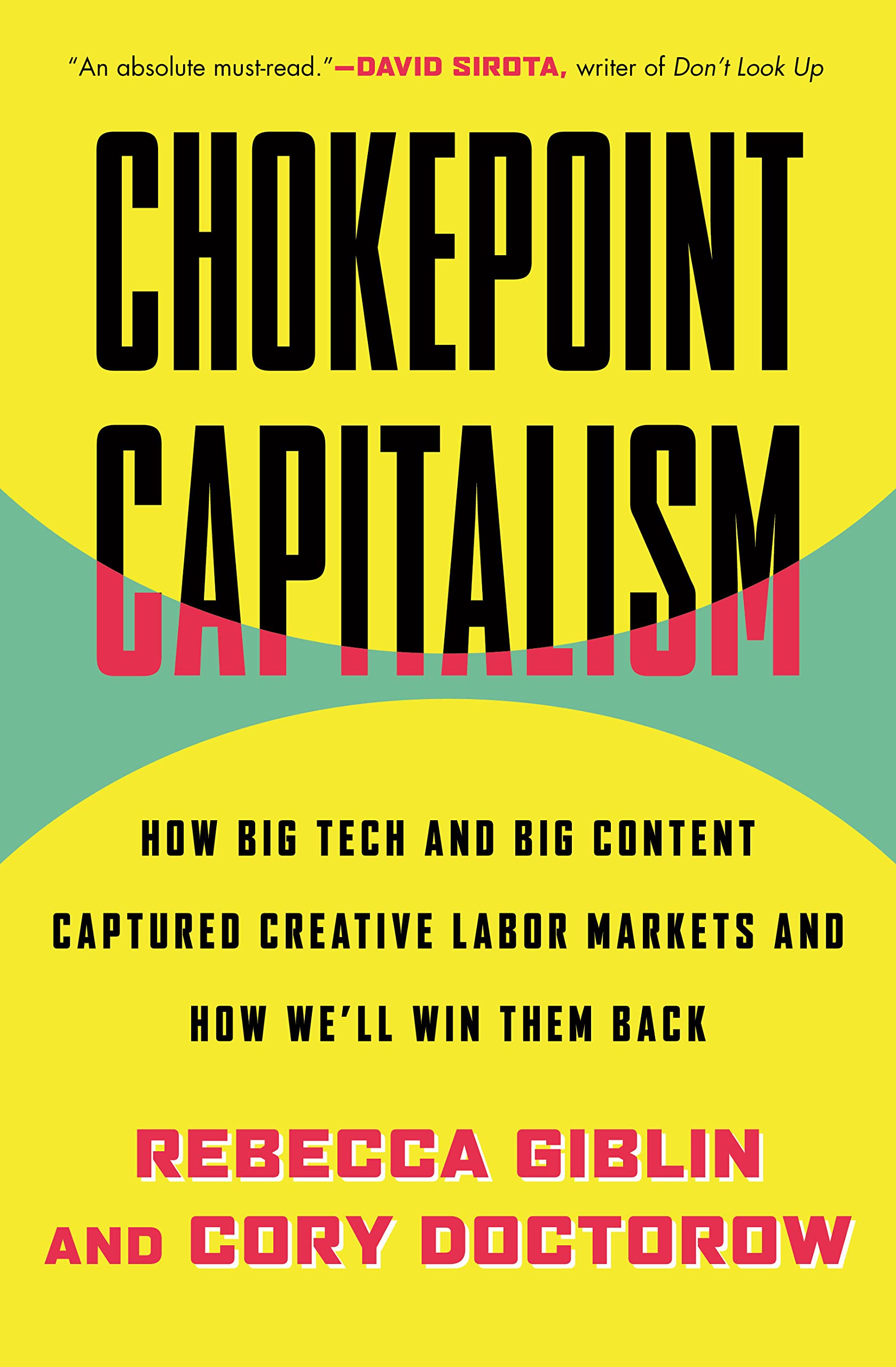
Two weeks ago, I had the chance to go see Cory Doctorow at my local independent bookstore, in Montr al. He was there to present his latest essay, co-written with Rebecca Giblin1. Titled Chokepoint Capitalism: How Big Tech and Big Content Captured Creative Labor Markets and How We'll Win Them Back, it focuses on the impact of monopolies and monopsonies (more on this later) on creative workers. The book is divided in two main parts: A picture of the book cover Although Doctorow is known for his strong political stances, I have to say I'm quite surprised by the quality of the research Giblin and he did for this book. They both show a pretty advanced understanding of the market dynamics they look at, and even though most of the solutions they propose aren't new or groundbreaking, they manage to be convincing and clear. That is to say, you certainly don't need to be an economist to understand or enjoy this book :) As I have mentioned before, the book heavily criticises monopolies, but also monopsonies a market structure that has only one buyer (instead of one seller). I find this quite interesting, as whereas people are often familiar with the concept of monopolies, monopsonies are frequently overlooked. The classic example of a monopsony is a labor market with a single employer: there is a multitude of workers trying to sell their labor power, but in the end, working conditions are dictated by the sole employer, who gets to decide who has a job and who hasn't. Mining towns are good real-world examples of monopsonies. In the book, the authors argue most of the contemporary work produced by creative workers (especially musicians and writers) is sold to monopsonies and oligopsonies, like Amazon2 or major music labels. This creates a situation where the consumers are less directly affected by the lack of competition in the market (they often get better prices), but where creators have an increasingly hard time making ends meet. Not only this, but natural monopsonies3 are relatively rare, making the case for breaking the existing ones even stronger. Apart from the evident need to actually start applying (the quite good) antitrust laws in the USA, some of the other solutions put forward are: Overall, I found this book quite enjoying and well written. Since I am not a creative worker myself and don't experience first-hand the hardships presented in the book, it was the occasion for me to delve more deeply in this topic. Chances are I'll reuse some of the expos s in my classes too.

  1. Professor at the Melbourne Law School and Director of the Intellectual Property Research Institute of Australia, amongst other things. More on her here.
  2. Amazon owns more than 50% of the US physical book retail market and has an even higher market share for ebooks and audiobooks (via Audible). Not only this, but with the decline of the physical book market, audiobooks are an increasingly important source of revenue for authors.
  3. Natural monopolies happen when it does not make economic sense for multiple enterprises to compete in a market. Critical infrastructures, like water supply or electricity, make for good examples of natural monopolies. It simply wouldn't be efficient to have 10 separate electrical cables connecting your house to 10 separate electric grids. In my opinion, such monopolies are acceptable (and even desirable), as long as they are collectively owned, either by the State or by local entities (municipalities, non-profits, etc.).

26 October 2022

Scarlett Gately Moore: KDE Gear snaps round 3!

While trying to stay warm in our first snow of the year, I got several apps tested and released in round 3 of https://www.scarlettgatelymoore.dev/kde-gear-snaps-round-2/ ! All of these are being ( re ) tested on both arm64 and amd64. Hence, the release is going slower than it will in the future. Thank you for your patience. More rounds of bug gardening has been done, if you find bugs, or know one of your bugs is related to it being a snap, please assign to me. https://bugs.kde.org Please consider a donation so I may bring many more apps your way. https://www.patreon.com/sgmoore I am working on one time donations.

20 October 2022

Scarlett Gately Moore: KDE Gear Snaps round 2

As a continuation of https://www.scarlettgatelymoore.dev/new-kde-gear-snaps-in-the-works/ Todays releases, tested on both amd64 and arm64, are: This week has also been a busy week gardening snap bugs in bugs.kde.org. They are all over the place  I am trying to sort out getting them there own section. I have assigned all snap bugs I have found to myself and requested that this is default. If you have bugs, please report them at bugs.kde.org , for now under neon / Snaps. More coming next week!
28 August 2022

Andrew Cater: Debian Barbeque, Cambridge 2022

And here we are: second day of the barbeque in Cambridge. Lots of food - as always - some alcohol, some soft drinks, coffee.Lots of good friends, and banter and good natured argument. For a couple of folk, it's their first time here - but most people have known each other for years. Lots of reminiscing, some crochet from two of us. Multiple technical discussions weaving and overlapping
Not just meat and vegetarian options for food: a fresh loaf, gingerbread of various sorts, fresh Belgian-style waffles.I''m in the front room: four of us silently on laptops, one on a phone. Sounds of a loud game of Mao from the garden - all very normal for this time of year.Thanks to Jo and Steve, to all the cooks and folk sorting things out. One more night and I'll have done my first full BBQ here. Diet and slimming - what diet?

31 July 2022

Russell Coker: Links July 2022

Darren Hayes wrote an interesting article about his battle with depression and his journey to accepting being gay [1]. Savage Garden had some great songs, Affirmation is relevant to this topic. Rorodi wrote an interesting article about the biggest crypto lending company being a Ponzi scheme [2]. One thing I find particularly noteworthy is how obviously scammy it is, even to the extent of having an ex porn star as an executive! Celsuis is now in the process of going bankrupt, 7 months after that article was published. Quora has an interesting discussion about different type casts in C++ [3]. C style casts shouldn t be used! MamaMia has an interesting article about Action Faking which means procrastination by doing tasks marginally related to the end goal [3]. This can mean include excessive study about the topic, excessive planning for the work, and work on things that aren t on the critical path first (EG thinking of a name for a project). Apple has a new Lockdown Mode to run an iPhone in a more secure configuration [4]. It would be good if more operating systems had a feature like this. Informative article about energy use of different organs [5]. The highest metabolic rates (in KCal/Kg/day) are for the heart and kidneys. The brain is 3rd on the list and as it s significantly more massive than the heart and kidneys it uses more energy, however this research was done on people who were at rest. Scientific American has an interesting article about brain energy use and exhaustion from mental effort [6]. Apparently it s doing things that aren t fun that cause exhaustion, mental effort that s fun can be refreshing.

20 July 2022

Enrico Zini: Deconstruction of the DAM hat

Further reading Talk notes Intro Debian Account Managers Responsibility for official membership What DAM is not Unexpected responsibilities DAM warnings DAM warnings? House rules Interpreting house rules Governance by bullying How about the Community Team? How about DAM? How about the DPL? Concentrating responsibility Empowering developers What needs to happen

5 June 2022

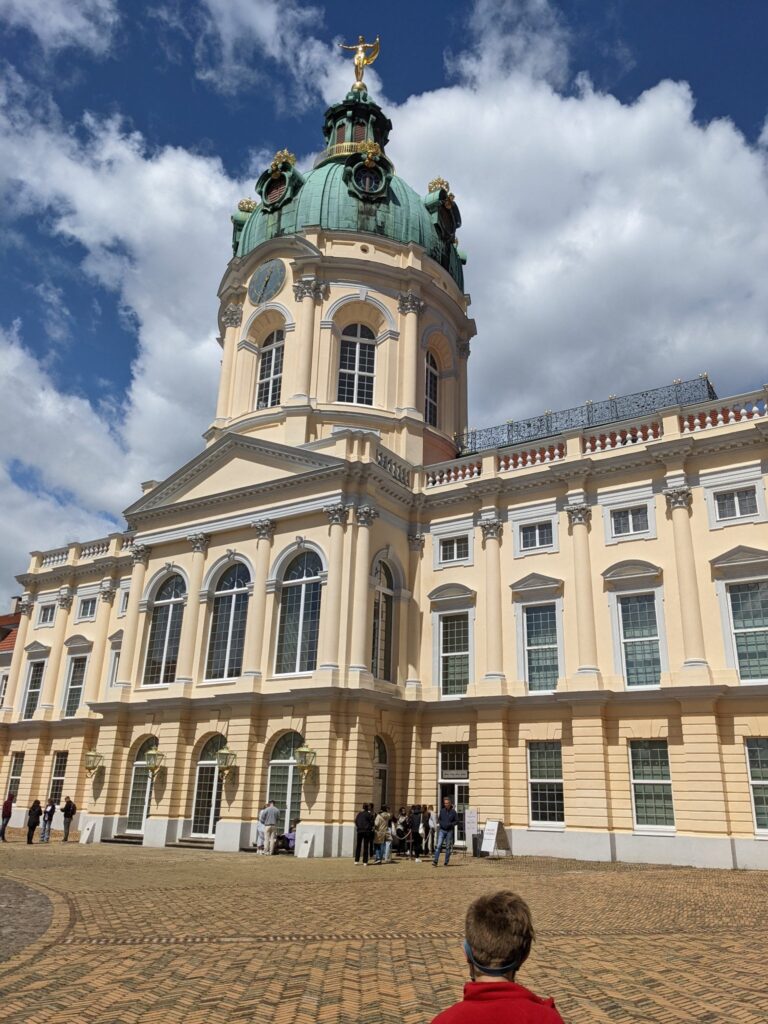
John Goerzen: Visiting Germany: Reflections on Schloss Charlottenburg

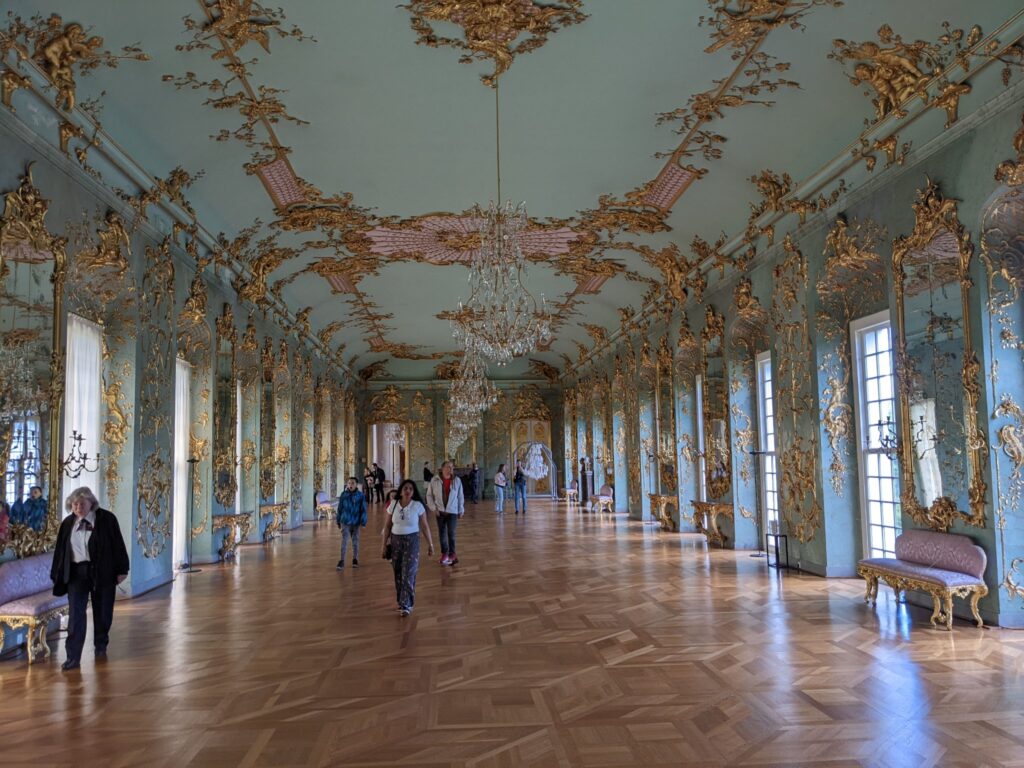
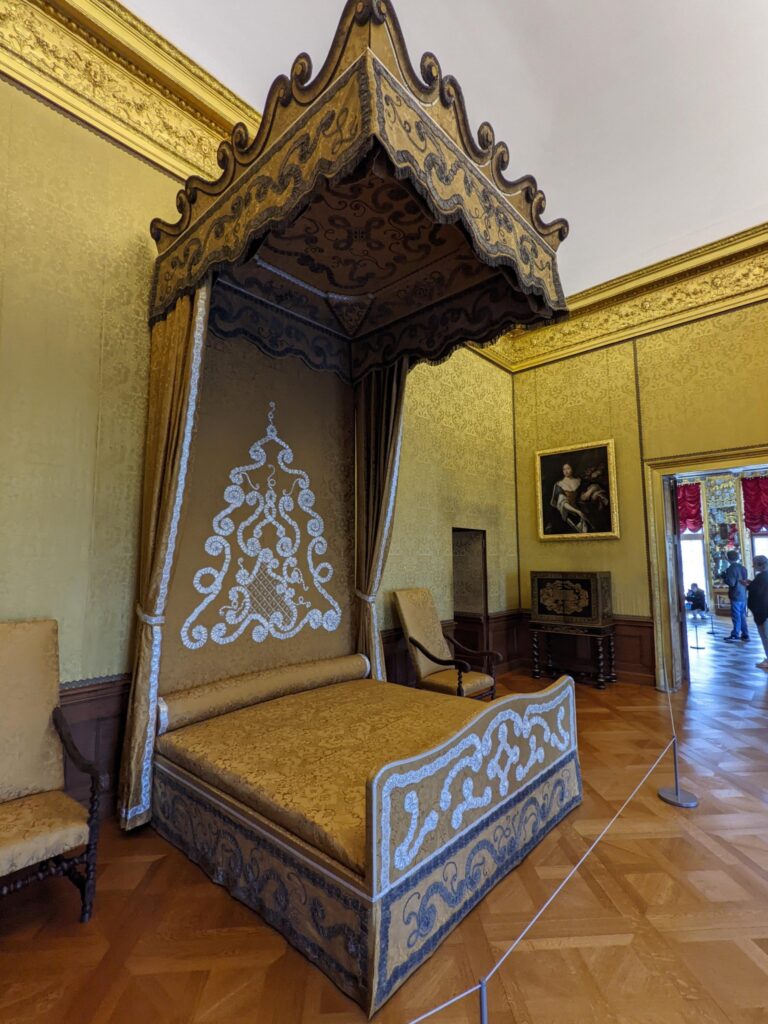
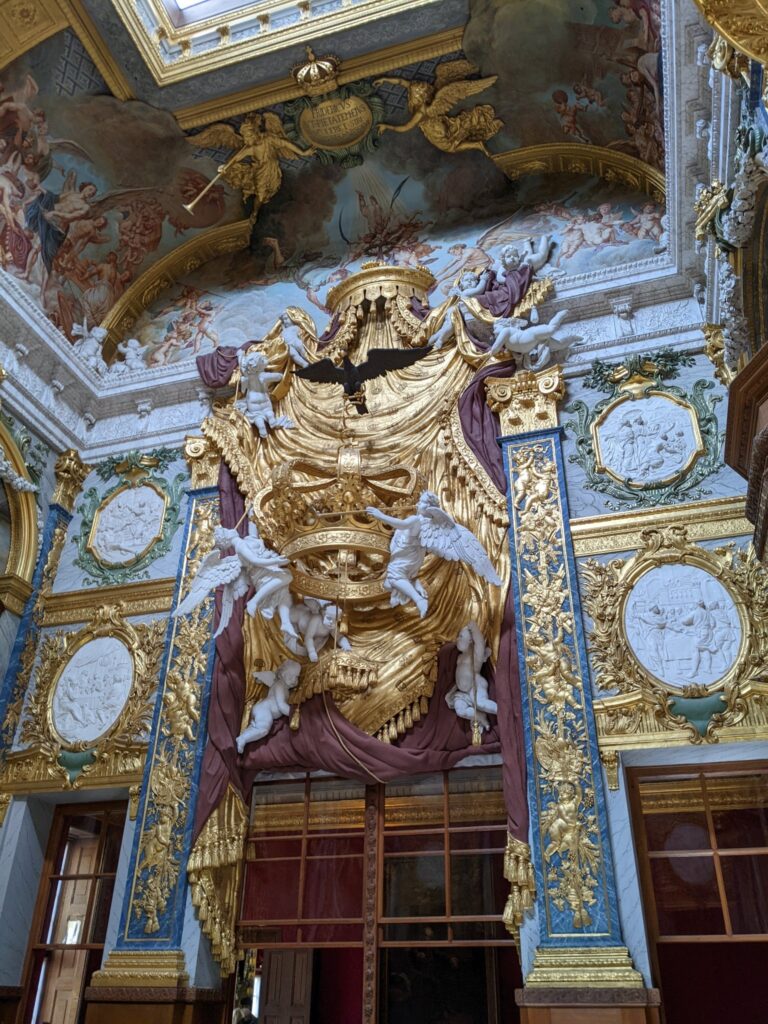
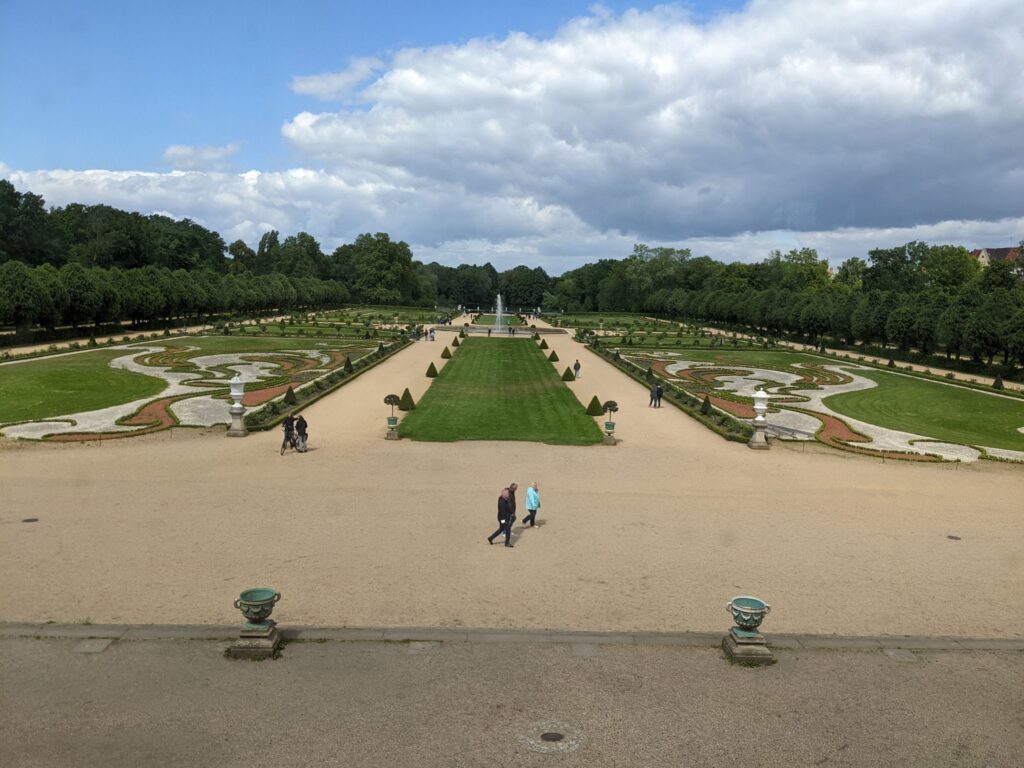
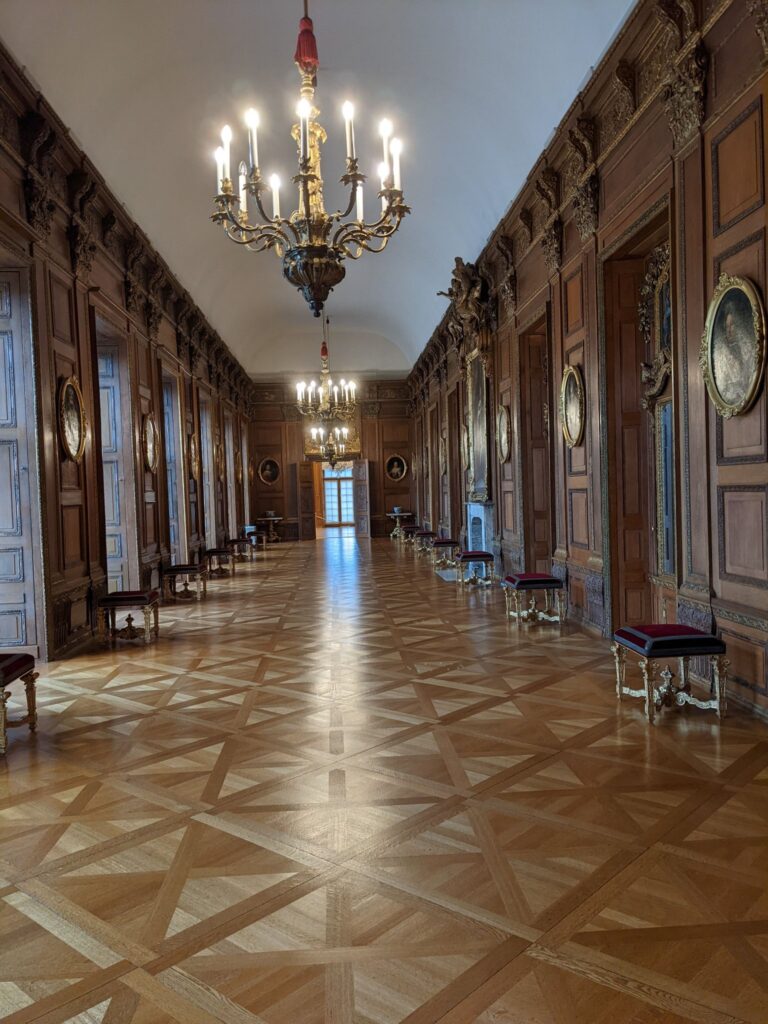
200 years ago, my ancestors migrated from Prussia to Ukraine. They left for many reasons, many of which boiled down to their strong pacifism in the midst of a highly militarized country. Last week, my wife, the boys, and I walked through the favorite palace of Friedrich Wilhelm III, the king of Prussia who was responsible for forcing my ancestors out Charlottenburg Palace in Berlin. Photos can t possibly convey the enormity and the riches of this place, even after being attacked during multiple wars (and used by Napoleon for a time). My ancestors would never have been able to get into to this place. We, on the other hand, walked right through the king s bedroom, audience room, and chapel. The chapel, incidentally, mixing church and state; a fine pipe organ along with a statue of an eagle holding the Prussian crown. I could pause and enjoy the beauty of the place; the oval rooms overlooking the acres of sculpted gardens outside and carefully tree-lined streets leading to the palace, the artwork no doubt worth many millions, the gold and silver place settings, the rare tapestries. And I could also reflect on the problems with such great wealth and power, and the many lives lost and refugees created by the wars the Prussian kings started. (First of several reflections on our wonderful recent trip to Germany with the boys)

6 April 2022

Jonathan Dowland: Hope in a Darkened Heart

I first heard Virginia Astley via Lauren Laverne, who played (I think) "With my eyes wide open" from her first album, "From Gardens Where We Feel Secure". Mostly ambient, a conceptual piece about a garden in an English Summer, spanning dawn to dusk. Bucolic ambient, dream pop. It was a little outside my wheel-house, but I loved it, and wanted to find out more. I soon learned that official, physical copies of it were rare and expensive.
'Hope in a Darkened Heart' spinning on my turntable
Some time later I stumbled across her second album "Hope in a Darkened Heart" (which is possibly the most commonly available of her albums) and bought it blind. It's quite different, with a lot more singing, but whatever drew me to Gardens is present. I love this. It was produced by Ryuichi Sakamoto. Only this week I was enormously pleased to discover a chunk of her discography on Bandcamp, including the two aformentioned albums. Highlights from Darkened:

1 April 2022

Russ Allbery: Review: Princess Floralinda and the Forty-Flight Tower

Review: Princess Floralinda and the Forty-Flight Tower, by Tamsyn Muir
Publisher: Subterranean Press
Copyright: 2020
ISBN: 1-59606-992-9
Format: Kindle
Pages: 111
A witch put Princess Floralinda at the top of a forty-flight tower, but it wasn't personal. This is just what witches do, particularly with princesses with butter-coloured curls and sapphire-blue eyes. Princes would come from miles around to battle up the floors of the tower and rescue the princess. The witch even helpfully provided a golden sword, in case a prince didn't care that much about princesses. Floralinda was provided with water and milk, two loaves of bread, and an orange, all of them magically renewing, to sustain her while she waited. In retrospect, the dragon with diamond-encrusted scales on the first floor may have been a mistake. None of the princely endeavors ever saw the second floor. The diary that Floralinda found in her room indicated that she may not be the first princess to have failed to be rescued from this tower. Floralinda finally reaches the rather astonishing conclusion that she might have to venture down the tower herself, despite the goblins she was warned were on the 39th floor (not to mention all the other monsters). The result of that short adventure, after some fast thinking, a great deal of luck, and an unforeseen assist from her magical food, is a surprising number of dead goblins. Also seriously infected hand wounds, because it wouldn't be a Tamsyn Muir story without wasting illness and body horror. That probably would have been the end of Floralinda, except a storm blew a bottom-of-the-garden fairy in through the window, sufficiently injured that she and Floralinda were stuck with each other, at least temporarily. Cobweb, the fairy, is neither kind nor inclined to help Floralinda (particularly given that Floralinda is not a child whose mother is currently in hospital), but it is an amateur chemist and finds both Floralinda's tears and magical food intriguing. Cobweb's magic is also based on wishes, and after a few failed attempts, Floralinda manages to make a wish that takes hold. Whether she'll regret the results is another question. This is a fairly short novella by the same author as Gideon the Ninth, but it's in a different universe and quite different in tone. This summary doesn't capture the writing style, which is a hard-to-describe mix of fairy tale, children's story, and slightly archaic and long-winded sentence construction. This is probably easier to show with a quote:
"You are displaying a very small-minded attitude," said the fairy, who seemed genuinely grieved by this. "Consider the orange-peel, which by itself has many very nice properties. Now, if you had a more educated brain (I cannot consider myself educated; I have only attempted to better my situation) you would have immediately said, 'Why, if I had some liquor, or even very hot water, I could extract some oil from this orange-peel, which as everyone knows is antibacterial; that may well do my hands some good,' and you wouldn't be in such a stupid predicament."
On balance, I think this style worked. It occasionally annoyed me, but it has some charm. About halfway through, I was finding the story lightly entertaining, although I would have preferred a bit less grime, illness, and physical injury. Unfortunately, the rest of the story didn't work for me. The dynamic between Floralinda and Cobweb turns into a sort of D&D progression through monster fights, and while there are some creative twists to those fights, they become all of a sameness. And while I won't spoil the ending, it didn't work for me. I think I see what Muir was trying to do, and I have some intellectual appreciation for the idea, but it wasn't emotionally satisfying. I think my root problem with this story is that Muir sets up a rather interesting world, one in which witches artistically imprison princesses, and particularly bright princesses (with the help of amateur chemist fairies) can use the trappings of a magical tower in ways the witch never intended. I liked that; it has a lot of potential. But I didn't feel like that potential went anywhere satisfying. There is some relationship and characterization work, and it reached some resolution, but it didn't go as far as I wanted. And, most significantly, I found the end point the characters reached in relation to the world to be deeply unsatisfying and vaguely irritating. I wanted to like this more than I did. I think there's a story idea in here that I would have enjoyed more. Unfortunately, it's not the one that Muir wrote, and since so much of my problem is with the ending, I can't provide much guidance on whether someone else would like this story better (and why). But if the idea of taking apart a fairy-tale tower and repurposing the pieces sounds appealing, and if you get along better with Muir's illness motif than I do, you may enjoy this more than I did. Rating: 5 out of 10

5 November 2021

Jonathan Dowland: 25 things I would like to 3D print

Last year I started collecting ideas of things I would like to 3D print one day, on Twitter. Twitter is fundamentally ephemeral, so I'll collect it here instead. I got up to 14 items on Twitter, and now I'm up to 25. I don't own a 3D printer, but I have access to one at the work office. Perhaps this list is my subconcious trying to convince me to buy one. What am I missing? What else should I be thinking of printing? Let me know!
  1. Some kind of 45 leaning prong to dry bottles and flasks on
  2. A tea tray and coasters
  3. a replacement prop arm/foot for my computer keyboard (something like this but for the Lenovo Ultranav)
  4. some attempted representation of Borges Library of Babel, a la @jwz The Library of Babel, again
  5. an exploration of the geometry of Susanna Clarke s Piranesi
  6. further iterations of my castle
  7. Small tins to keep loose-leaf tea in
  8. Who am I kidding, bound to be a map from DOOM. E1M1 perhaps, or something more regular (MAP07? E2M8?) See also this amazing print of Quake 3: Arena's "Camping Grounds"
  9. replacement bits for kids toy sets, e.g. a bolt with long shank from Early Learning Centre Build It Deluxe Set, without all 4 of which you can't build much of anything
  10. A stand for a decorative Christmas bauble (kid's hand print on it) A roll of cellotape works pretty well in the mean time
  11. DIY bits-and-bobs sorter/storage (nuts and bolts etc)
  12. A space ship from Elite/Frontier. Probably a Cobra mk3 or maybe a Viper mk2. In a glow-in-the-dark PLA which i d overpaint with gunmetal except for the fuselage
  13. A watch stand/holder/storage thing Except it would look nicer in wood (And I m more inclined to get rid of all but one watch instead)
  14. Little tabbed 7 dividers for vinyl records, with A-Z cut into the tabs 12 ones might be a stretch (something like this)
  15. A low-profile custom trackpoint cover like the ones by SaotoTech (e.g.)
  16. A vinyl record. (Not sure that any 3D printer I would have access to would have the necessary resolution. I haven't done any research yet.)
  17. A free-standing inclined vinyl record display stand (e.g.)
  18. A "Settlers of Catan" set. I've got the travel edition which is great but it would be nicer to have a larger-sized set. There are some things I really like about the travel set that the full-size set lacks; so designing and printing a larger set myself could incorporate them. Also I don't feel inclined to buy the full-size set for 50 or so to end up with essentially the same game I already bought. No doubt I'd spent at least that much in PLA.
  19. Little kids trinkets. Pacman ghosts, that sort-of thing. Whatever my daughters come up with next.
  20. Lego storage/sorters.
  21. Some kind of lenticular picture. Perhaps a gift or Christmas card combined in one.
  22. A bracket to install a Gotek drive in my Amiga 500 (e.g.). I've managed without but the fit isn't great.
  23. An attempt at using the 3D printer for 2D drawing. I would never get the same kind of quality results you can get from a proper plotter, but still Take a look at some proper plotter art!
  24. Garden decorations. I like the idea of porous geometric shapes that you can plant mosses or ferns into, but also things which might be taken over and "used" by nature in ways I hadn't thought of.
  25. Floor plans / 3D plans of my house (including variations if I remodelled)

9 October 2021

Ritesh Raj Sarraf: Lotus to Lily

The Lotus story so far My very first experience with water flowering plants was pretty good. I learnt a good deal of things; from setting up the pond, germinating the lotus seeds, setting up the right soil, witnessing the growth of the lotus plant, fish eco-system to take care of the pond. Overall, a lot of things learnt. But I couldn t succeed in getting the Lotus flower. A lot many reasons. The granite container developed some leakage, which I had to fix by emptying it, which might have caused some shock to the lotus. But more than that, in my understanding, the reason for not being able to flower the lotus, was the amount of sunlight. From what I have learned, these plants need a minimum of 6-8 hrs of sunlight to really give you with the flowering result, whereas the setup of my pond was on the ground with hardly 3-4 hrs of sun. And that too, with all the plants growing, resulted in indirect sunlight.

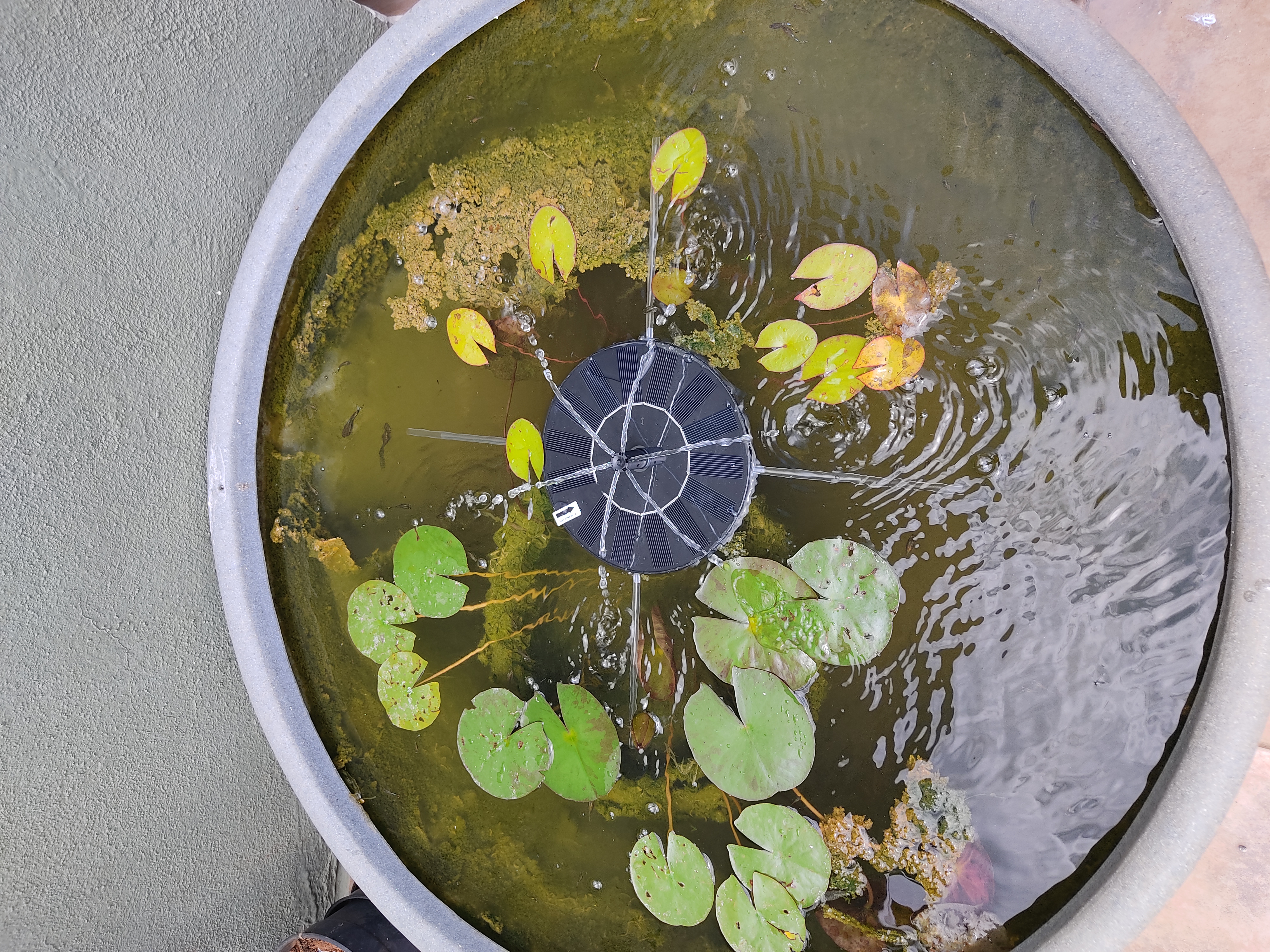
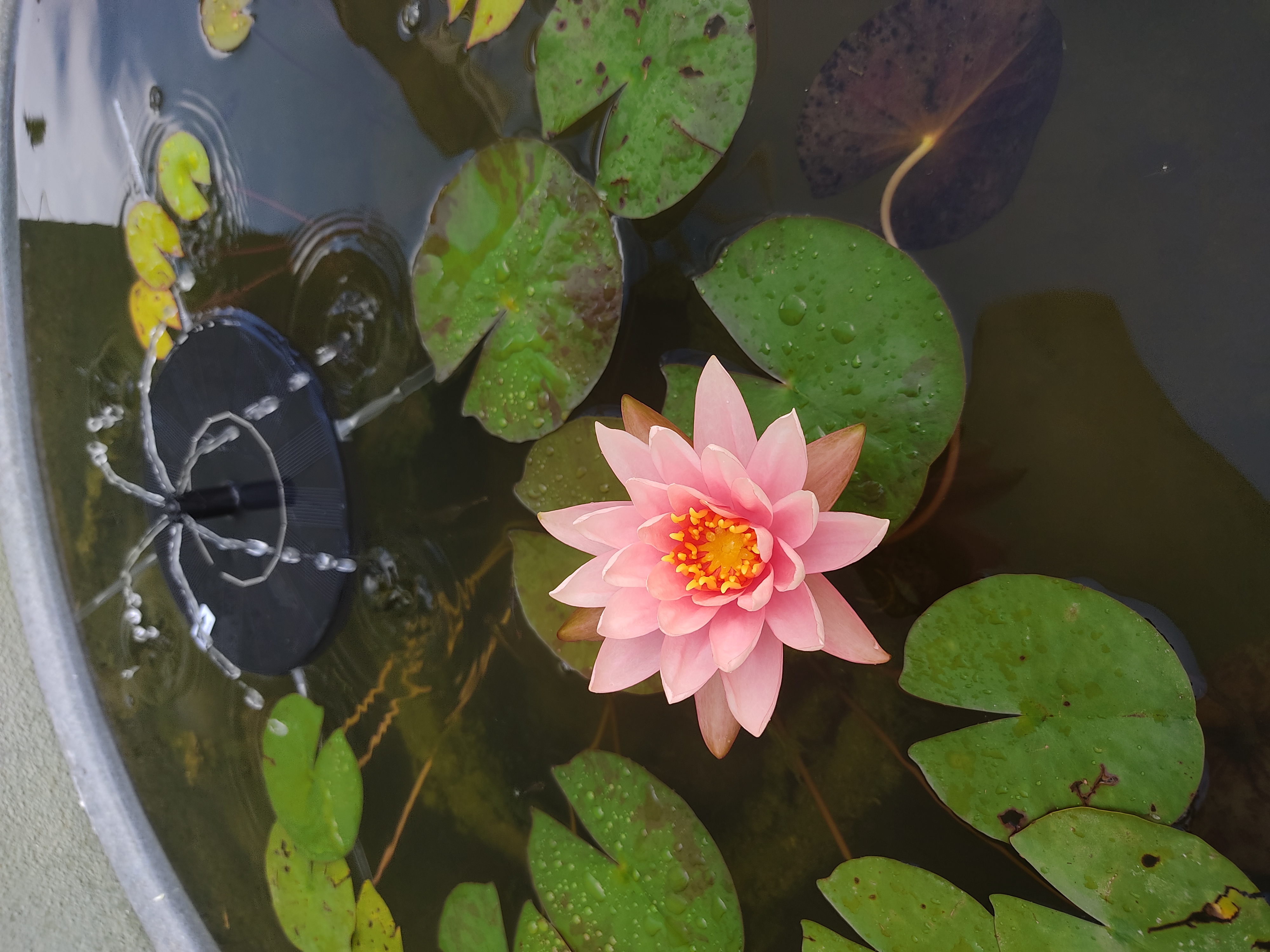
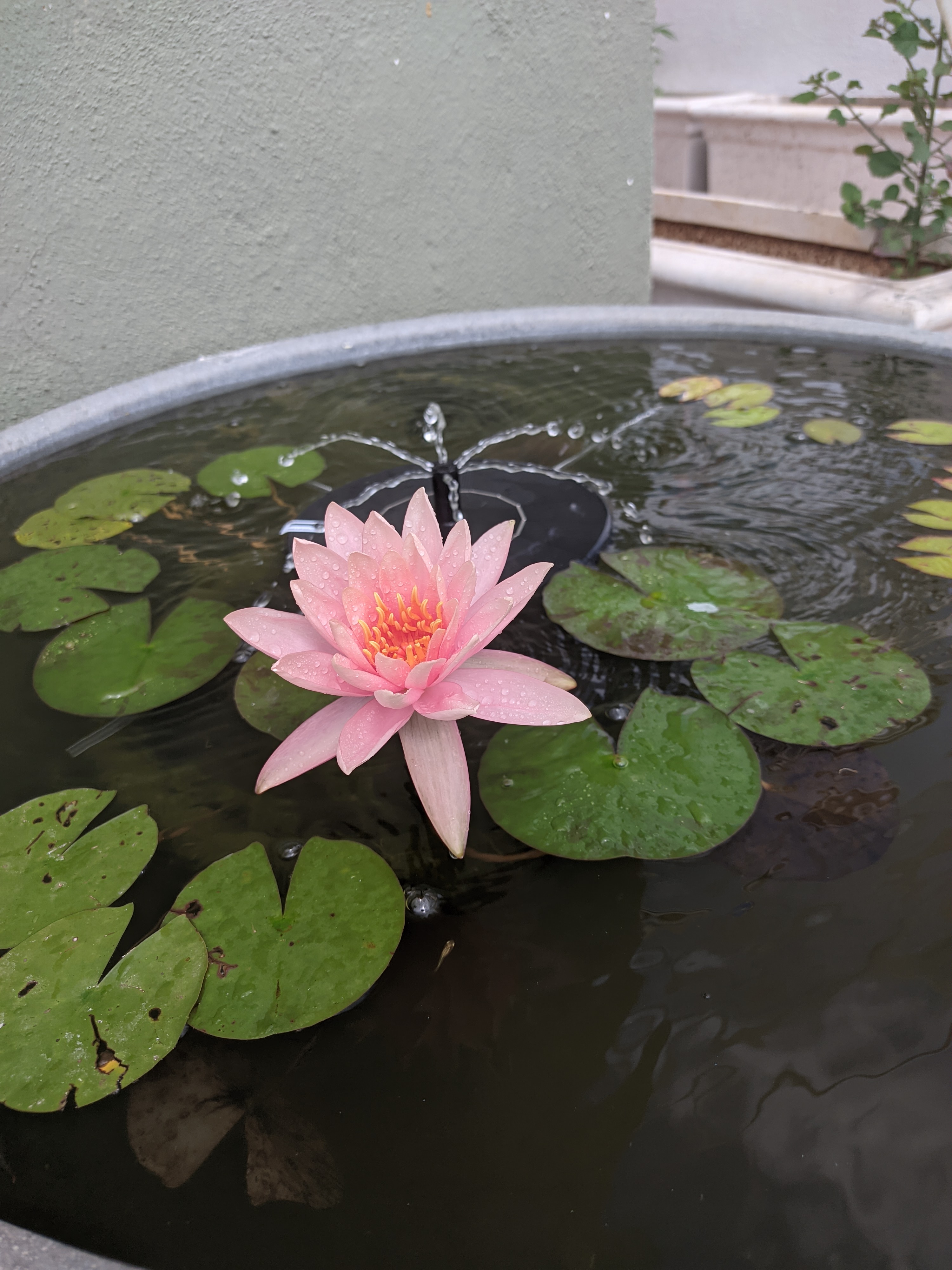
Lotus to Lily For my new setup, I chose a large oval container. And this one, I placed on my terrace, carefully choosing a spot where it d get 6-8 hrs of very bright sun on usual days. Other than that, the rest of the setup is pretty similar to my previous setup in the garden. Guppies, Solar Water Fountain etc.
Initial lily pond setup
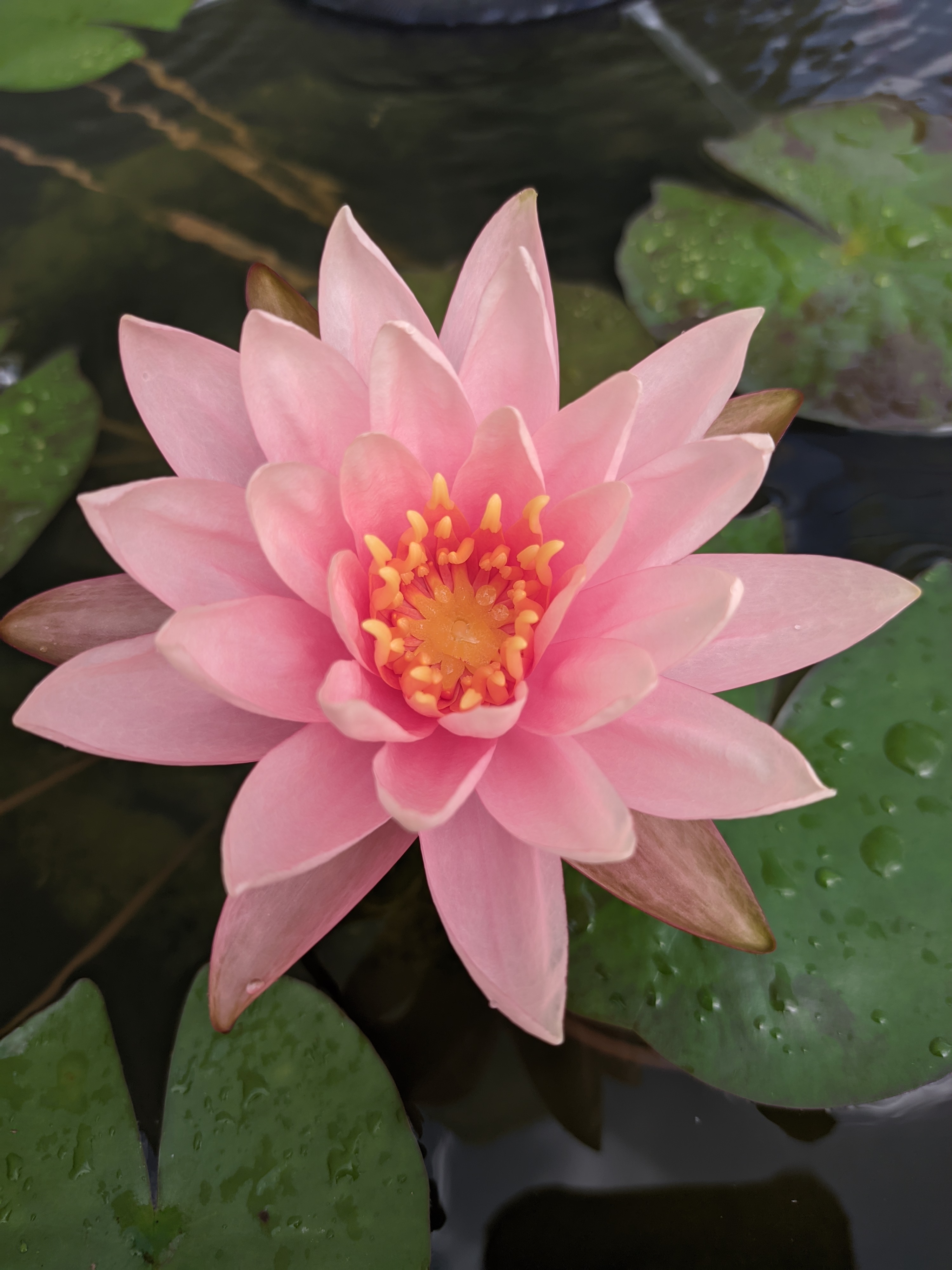
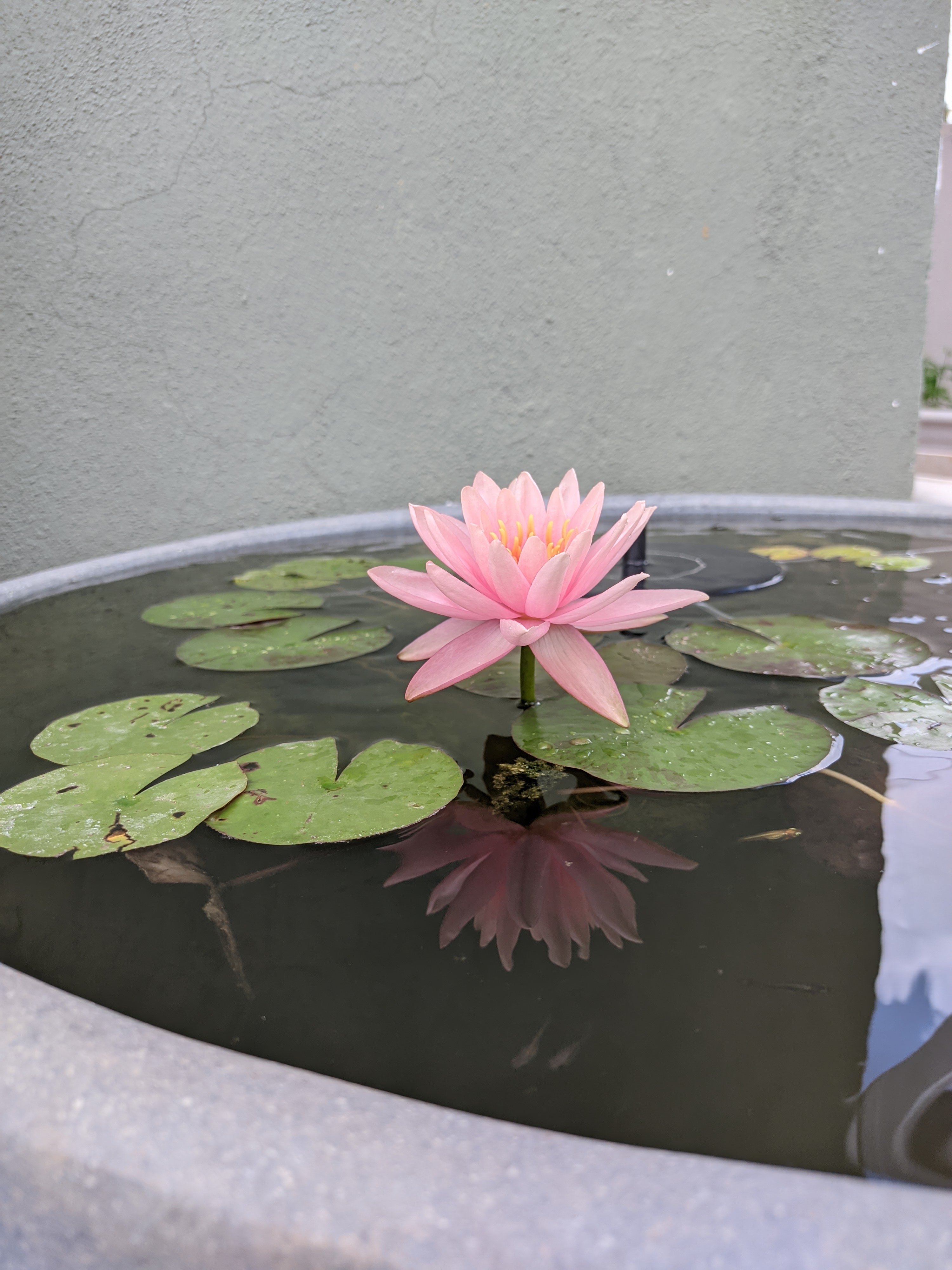
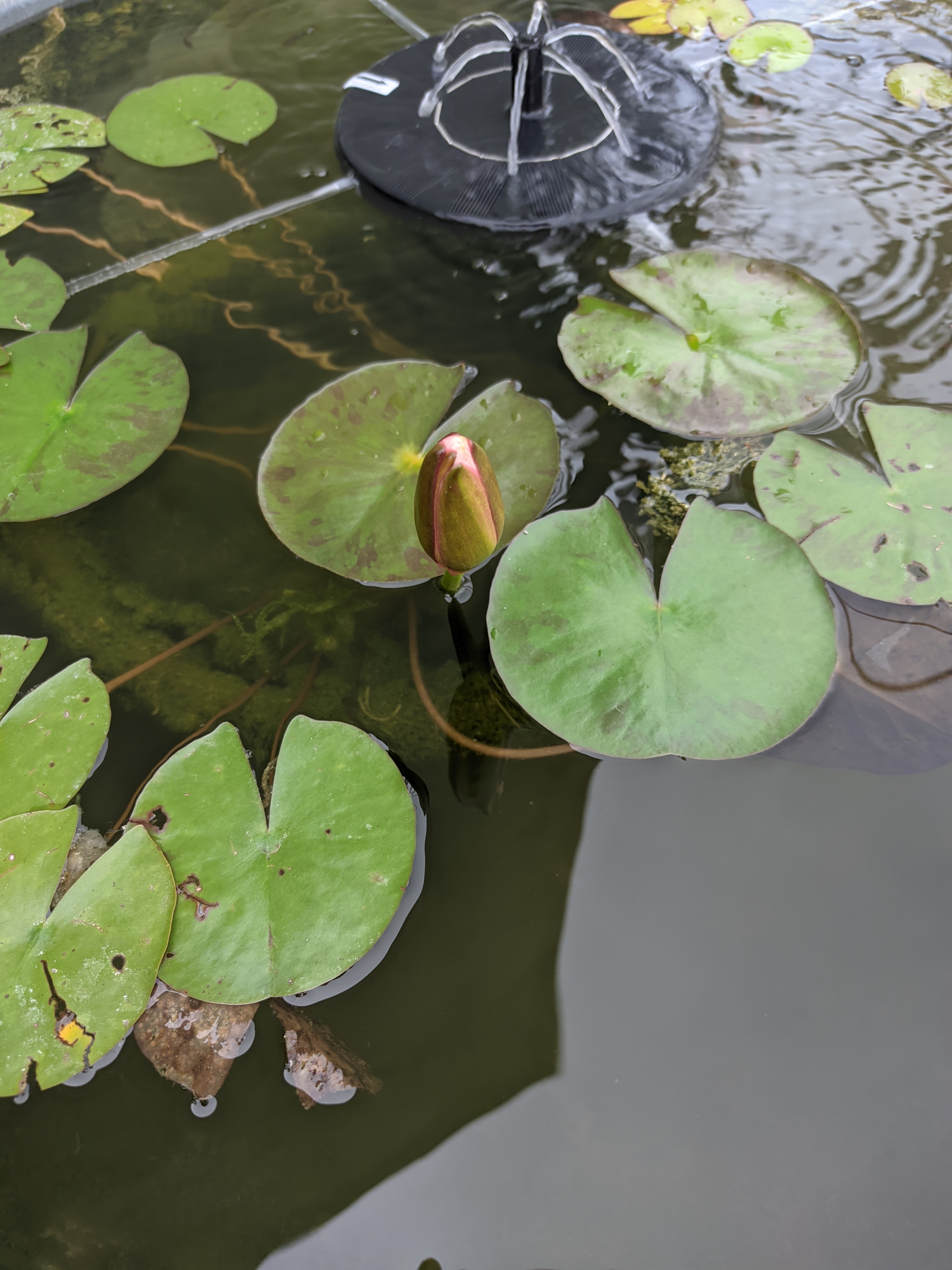
The good thing about the terrace is that the setup gets ample amount of sun. You can see that in the picture above, with the amount of algae that has been formed. Something that is vital for the plant s ecosystem. I must thank my wonderful neighbor who kindly shared a sapling from their lily plant. They already had had success with flowering the lily. So I had high hopes to see the day come when I d be happy to write down my experience in this blog post. Though, a lot of patience is needed. I got the lily some time in January this year. And it blossomed now, in October. So, here s me sharing my happiness here, in particular order of how I documented the process.
Monday morning greeted with a blossomed lily
Lily Blossom Closeup
Beautiful water reflection

Dawn to Dusk The other thing that I learned in this whole lily episode is that the flower goes back to sleeping at dusk. And back to flowering again at dawn. There s so much to learn in the surrounding, only if you spare some time to the little things with mother nature.
Lily status at dusk
Lily status at dusk
Lily the next day
Lily the next day
Not sure how long this phenomenon is to last, but overall witnessing this whole process has been mesmerizing. This past week has been great.

20 September 2021

Andy Simpkins: COVID-19

Nearly 4 weeks after contracting COVID-19 I am finally able to return to work Yes I have had both Jabs (my 2nd dose was back in June), and this knocked me for six. I spent most of the time in bed, and only started to get up and about 10 days ago. I passed this on to both my wife and daughter (my wife has also been double jabbed), fortunately they didn t get it as bad as me and have been back at work / school for the last week. I also passed it on to a friend at the UK Debian BBQ, hosted once again by Sledge and Randombird, before I started showing symptoms. Fortunately (after a lot of PCR tests for attendees) it doesn t look like I passed it to anyone else I wouldn t wish this on anyone. I went on holiday back in August (still in England) thinking that having both jabs we would be fine. We stayed in self catering accommodation and we spent our time outside, we visited open air museums, walked around gardens etc, however we did eat out in relatively empty pubs and restaurants. And yes we did all have face masks on when we went indoors (although obviously we removed them whilst eating). I guess that is when I caught this, but have no idea exactly when or where. Even after vaccination, it is still possible to both catch and spread this virus. Fortunately having been vaccinated my resulting illness was (statistically) less bad than it would otherwise have been. I dread to think how bad I would have been if I had not already been vaccinated, I suspect that I would have ended up in ICU. I am still very tired, and have been told it may take many more weeks to get back to my former self. Other than being overweight, prior to this I have been in good health. If you are reading this and have NOT yet had a vaccine and one is available for you, please, please get it done.
30 August 2021

Andrew Cater: Oh, my goodness, where's the fantastic barbeque [OMGWTFBBQ 2021]

I'm guessing the last glasses will be through the dishwasher (again) and Pepper the dog can settle down without having to cope with so many people.For those who don't know - Steve and his wife Jo (Sledge and Randombird) hold a barbeque in their garden every August Bank Holiday weekend [UK Bank Holiday on the last Monday in August]. The barbeque is not small - it's the dominating feature in the suburban garden, brick built, with a dedication stone, lights, electricity. The garden is small, generally made smaller by forty or so Debian friends and allies standing and sitting around. People are talking, arguing, hugging people they've not seen for (literal) years and putting the world to rights. This is Debian central point - with large quantities of meat and salads, an amount of beer/alcohol and "Cambridge gin" and general goodwill. This year was more than usually atmospheric because for some of us it was the first time with a large group of people in a while. Side conversations abound: for me it was learning something about the high energy particle physics community, how to precision build helicopters, fly quadcopters and precision 3D print anything, the maths of Isy counting crochet stitches to sew together randomly sized squares ... and, of course, obligatory things like how random is random and what's good enough entropy. And a few sessions of the game of our leader.
This is also a place for stuff to get done: I was unashamedly using this to upgrade the storage in my laptop while there were sensible engineers around. A corner of the table, a RattusRattus and it was quickly sorted - then a discussion around the internals of Thinkpads as he took his apart. Then getting a full install - Gb Ethernet to the Debian mirror in the cupboard six feet away is faster bandwidth than a jumbo jet full of tapes. Then getting mail to work again - it's handy when the mailserver owner is next to you, having come in from the garden to help, and finally IRC. And not just me: "You need a GPG key signed - there's three DPLs here, there's a release manager - but you've just missed one of the DAMs." plus an in-depth GPG how-to session on the other side of the table.I was the luckiest one with the most comfortable bed in the house overnight but I couldn't stay for last night. Thanks once again to all involved but especially Steve and Jo who do this for the love of it, and the fun, and the community and the family. Oh, and thanks to Lenovo - not just for being a platinum sponsor of Debconf but also for providing the official laptop of this and most Debian occasions

5 July 2021

Jonathan Dowland: Photos and WhatsApp

I woke up this morning to a lovely little gallery of pictures of our children that my wife had sent me via WhatsApp. This has become the most common way we interact with family photos. We regularly send and receive photos to and from our families via WhatsApp, which re-compresses them for transit and temporary storage across their network. The original photos, wherever they are, will be in a very high quality (as you get on most modern cameras) and will be backed up in perfect fidelity to either Apple or Google s photo storage solutions. But all of that seems moot, when the most frequent way we engage with the pictures is via a method which compresses so aggressively that you can clearly see the artefacts, even thumbnailed on a phone screen. I still don t feel particularly happy with the solution in place for backing up the photos (or even: getting them off the phone). Both Apple and Google make it less than convenient to get them out of their respective walled gardens. I ve been evaluating the nextCloud app and a Nextcloud instance on my home NAS as a possible alternative.

29 June 2021

Ritesh Raj Sarraf: Plant Territorial Behavior

This blog post is about my observations of some of the plants in my home garden. While still a n00b on the subject, these notes are my observations and experiences over days, weeks and months. Thankfully, with the capability to take frequent pictures, it has been easy to do an assessment and generate a report of some of these amazing behaviors of plants, in an easy timeline order; all thanks to the EXIF data embedded. This has very helpfully allowed me to record my, otherwise minor observations, into great detail; and make some sense out of it by correlating the data over time. It is an emotional experience. You see, plants are amazing. When I sow a sapling, water it, feed it, watch it grow, prune it, medicate it, and what not; I build up affection towards it. Though, at the same time, to me it is a strict relationship, not too attached; as in it doesn t hurt to uproot a plant if there is a good reason. But still, I find some sort of association to it. With plants around, it feels I have a lot of lives around me. All prospering, communicating, sharing. And communicate they do. What is needed is just the right language to observe and absorb their signals and decipher what they are trying to say.

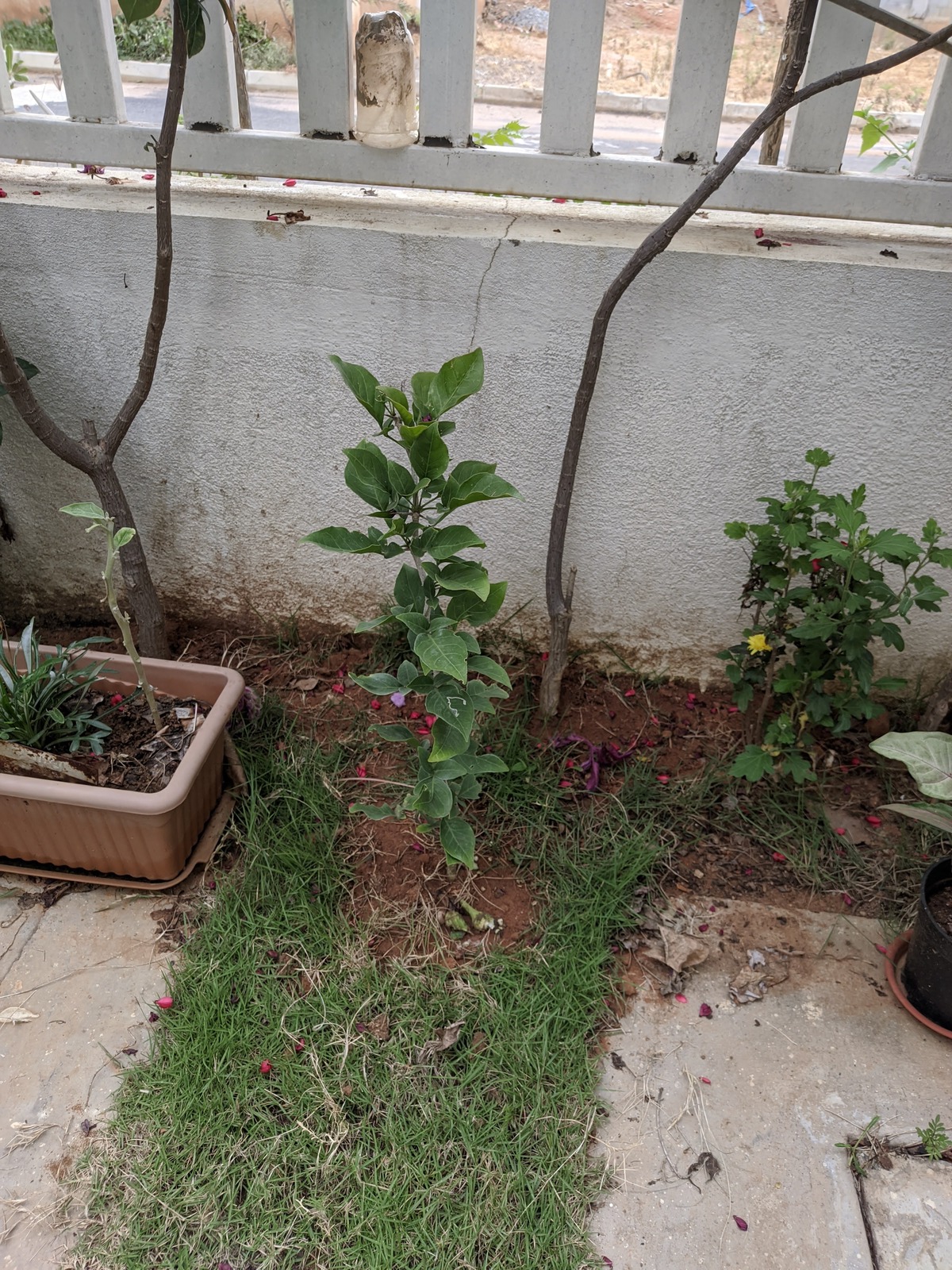
Devastation How in this world, when you are caring for your plants, can it transform:

From This
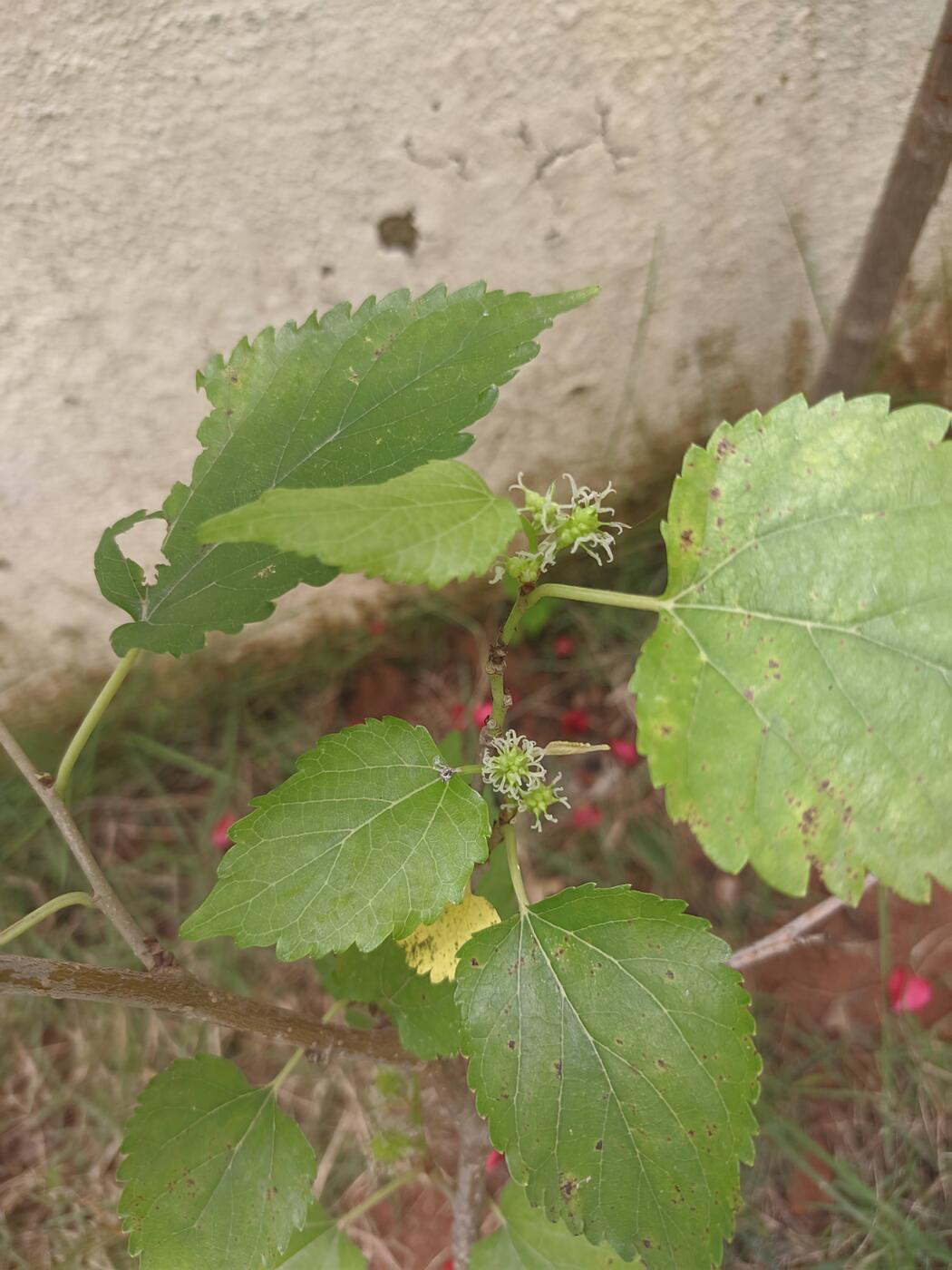
Healthy Mulberry Plant
Healthy Bael Plant
Healthy Bael Plant

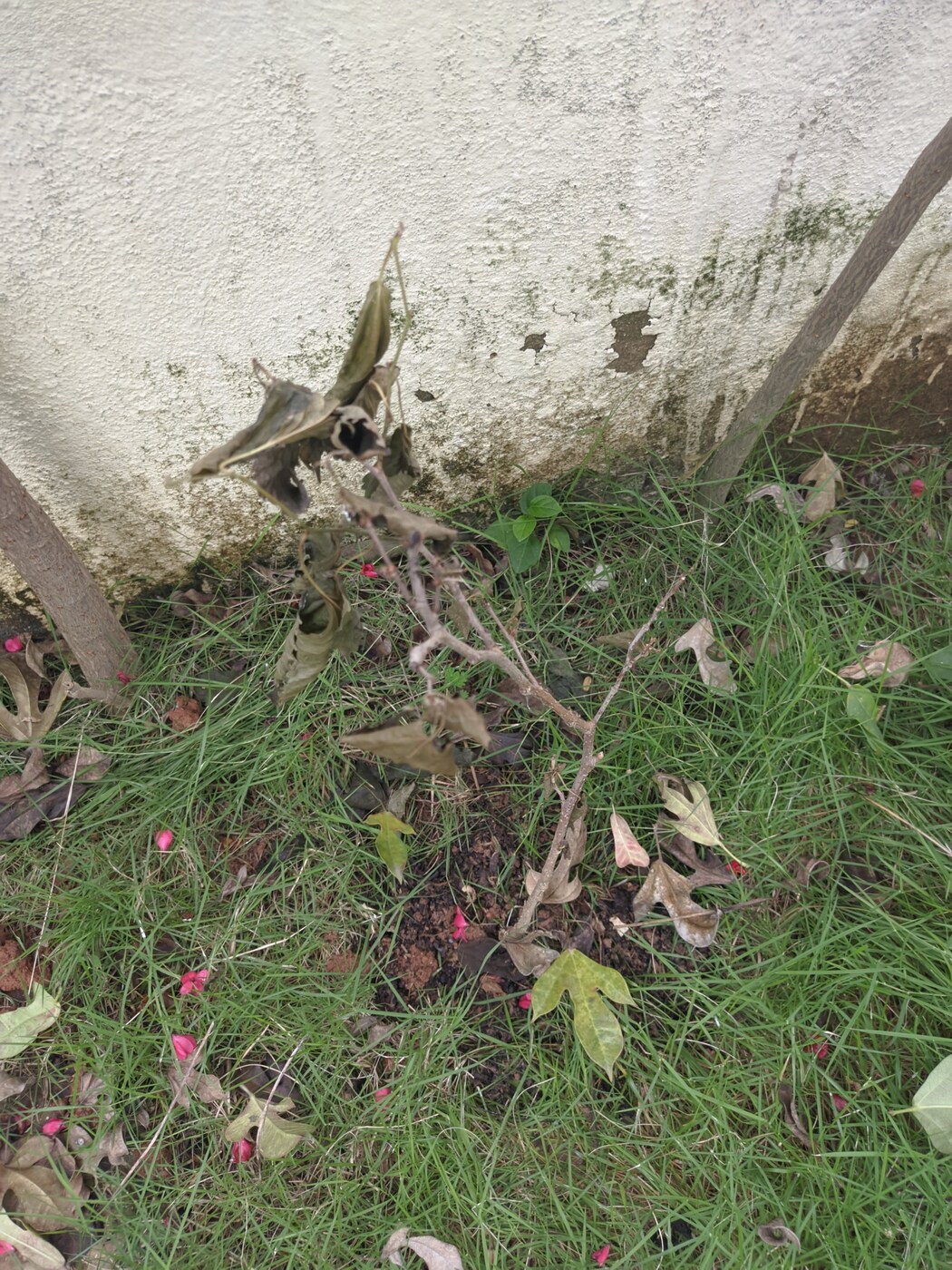
To This
Dead Mulberry Plant
Dead Mulberry Plant
Very Sick Bael Plant
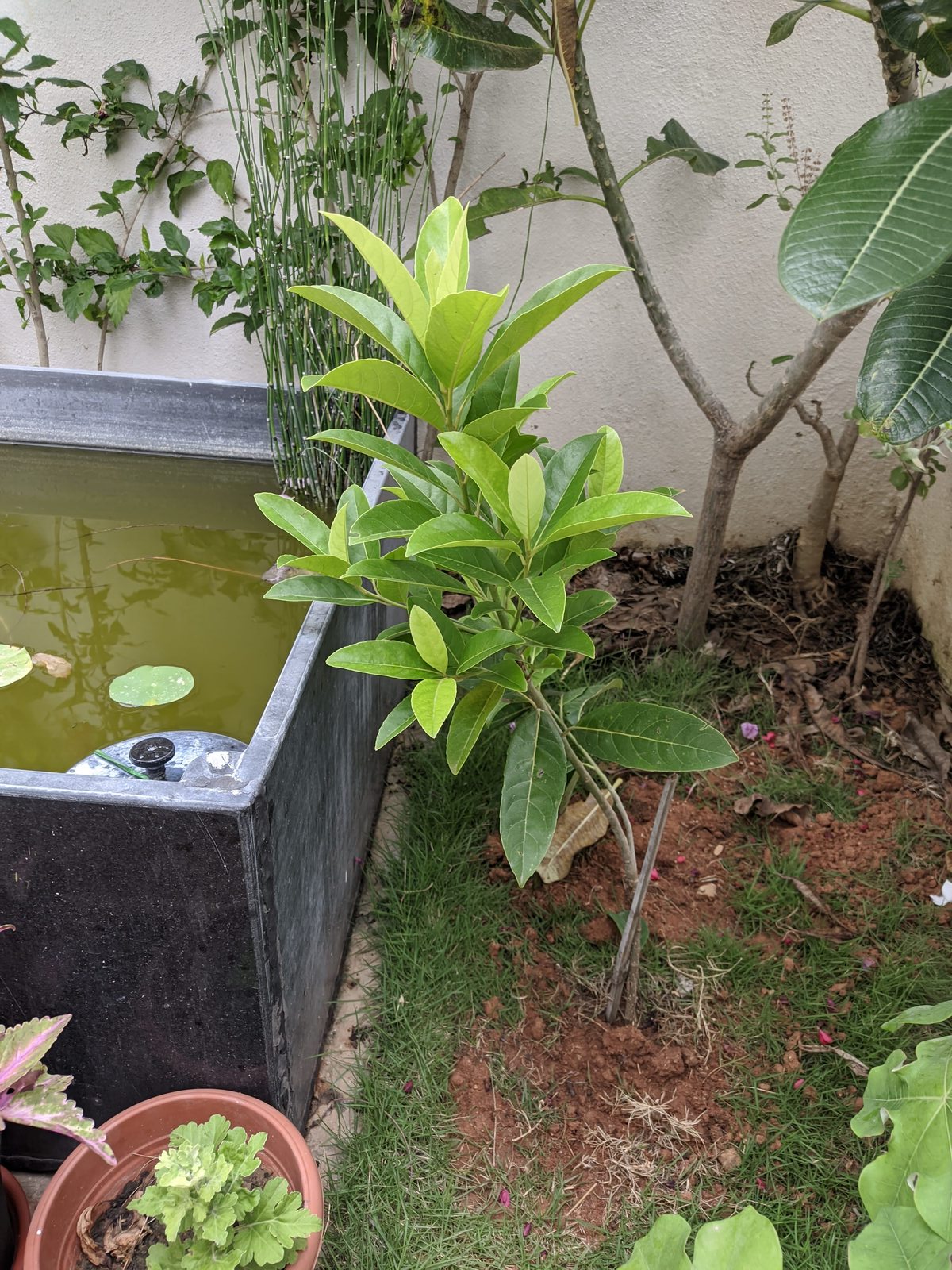
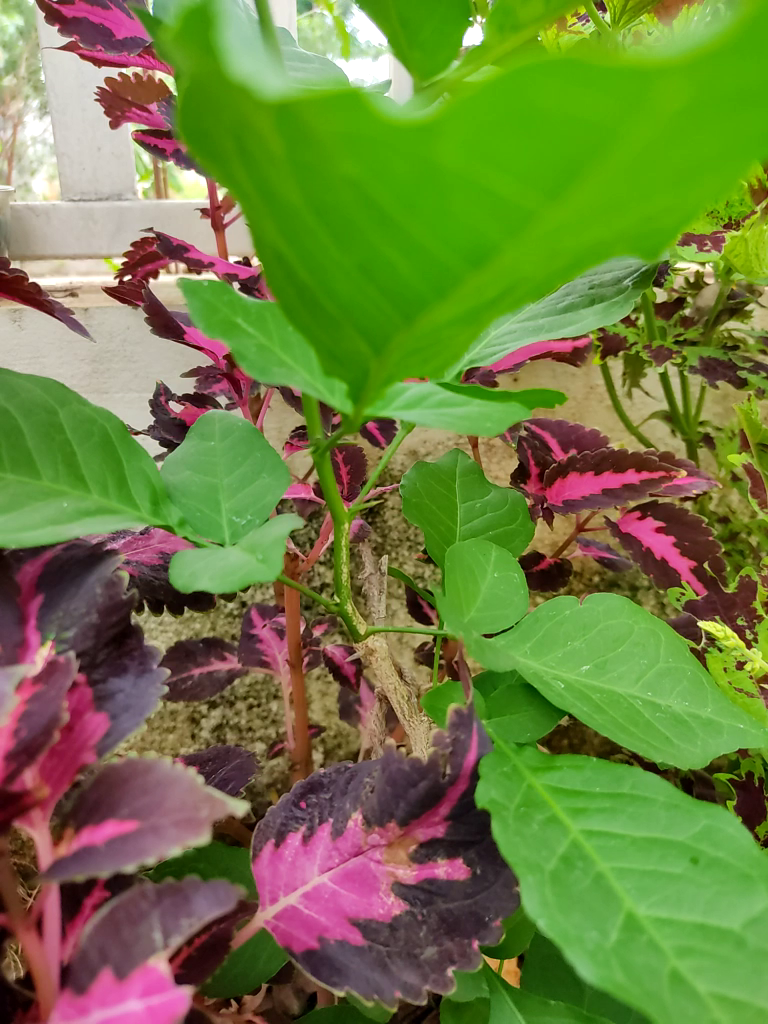
With emotions involved, this can be an unpleasant experience. Bael is a dear plant to me. The plant as a whole has religious values (Shiva). As well, its fruits have lots of health benefits, especially for the intestines. Its leaves have a lot of medicinal properties. When I planted the Bael, there were a lot of emotions that went along. On the other hand, the Mulberry is something I put in with a lot of enthusiasm. Mulberries are now rare to find, especially in urban locations. For one, they have a very short shelf life; But more than that, the way lifestyles are heading towards, I was always worried if my children would ever have a day to see and taste these fruits. The mulberry that I planted, yielded twice; once very soon when I had planted and second, before it died. Infact, it died while during its second yield phase. It was quite saddening to see that happen. It made me wonder why it happened. I had been caring for the plants fairly well. Watering them timely, feeding them the right amount of nutrients. They were getting a good amount of sun. But still their health was deteriorating. And then the demise of the Mulberry. Many thoughts hit my mind. I consulted the claimed experts in the domain, the maali, the gardener. I got a very vague answer; there must be termites in the soil. It didn t make much sense to me. I mean if there are termites they d hit day one. They won t sleep for months and just wake up one fine day and start attacking the roots of particular plants; not all. I wasn t convinced with the termite theory; But still, give the expert the blind hand, I went with his word. When my mulberry was dead, I dug its roots. Looking for proof, to see if there were any termites, I uprooted it. But I couldn t find any trace of termites. And the plant next to it was perfectly healthy and blossoming. So I was convinced that it wasn t the termite but something else. But else what ? I still didn t have an answer to that.

Thinking The Corona pandemic had embraced and there was a lot to worry, and worry not any, if you change the perspective. With plants around in my home, and our close engagement with them, and the helplessness that I felt after seeking help from the experts, it was time again; to build up some knowledge on the subject. But how ? How do you go about a subject you have not much clue about ? A subject which has always been around in the surrounding but very seldom have I dedicated focused thought to it. To be honest, the initial thought of diving on the subject made me clueless. I had no idea where to begin with. But, so, as has been my past history, I chose to take it as a curiosity. I gathered some books, skimmed through a couple of pages. Majority of the books I got hold of were about DIYs and How to do Home Gardening types. It was a decent introduction to a novice but my topic of curiosity was different. Thankfully, with the Internet, and YouTube in particular, a lot of good stuff is available as documentary videos. While going through some, I came across a video which mentioned about carnivore plants. Like, for example, this one.
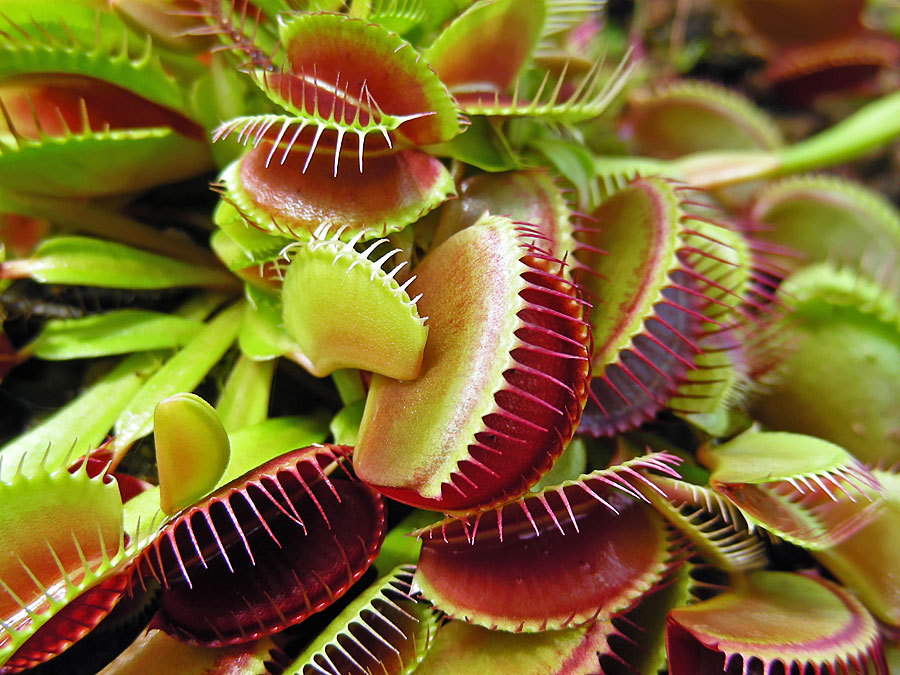
Carnivore Plant
Carnivore Plant
This got me thinking that there could be a possibility of something similar, that did the fate to my Mulberry plant. But who did it ? And how to dive further on this suspicion ? And most of all, if that thought of possibility was actually the reality. Or was I just hitting in the dark ?

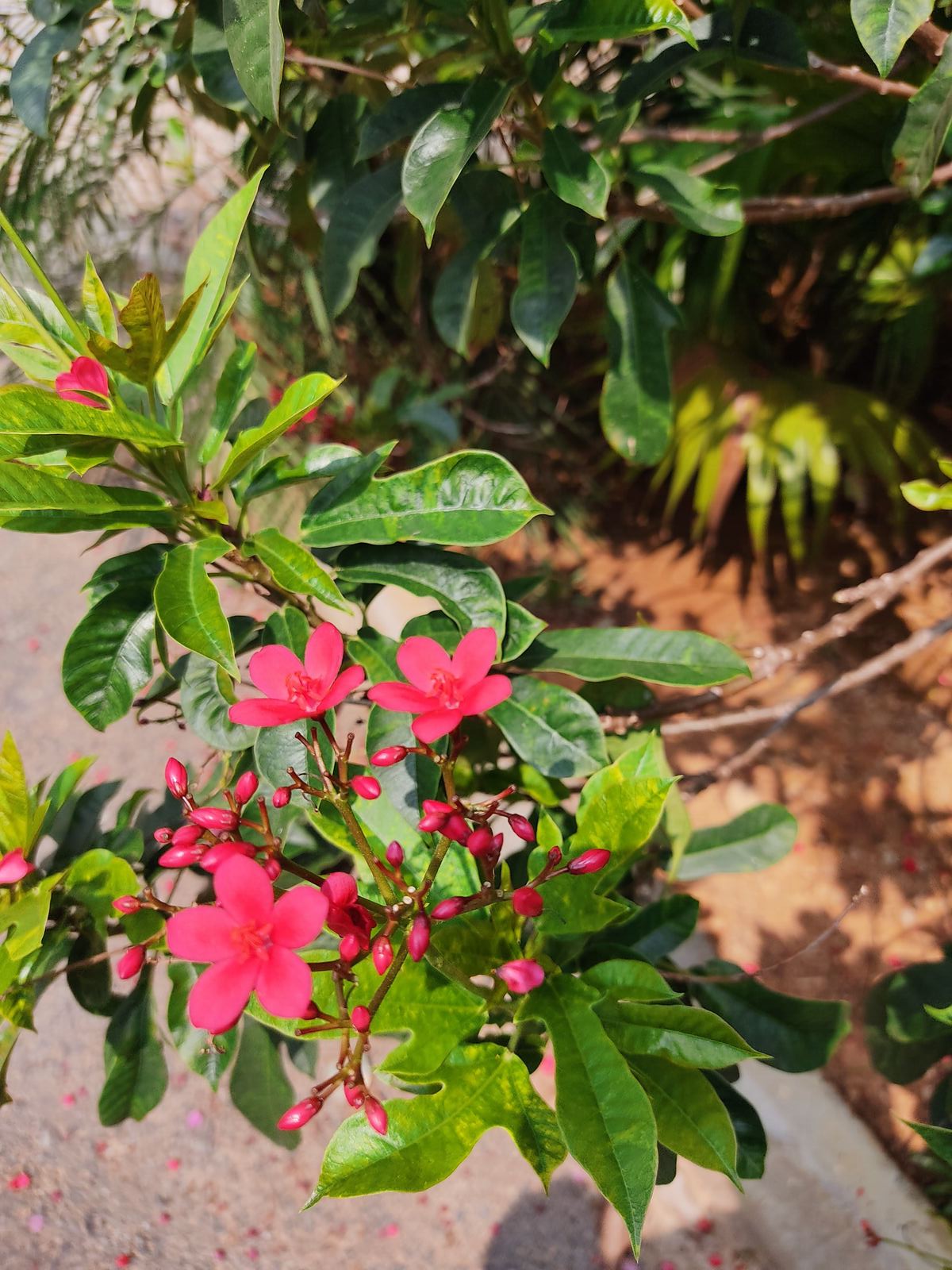
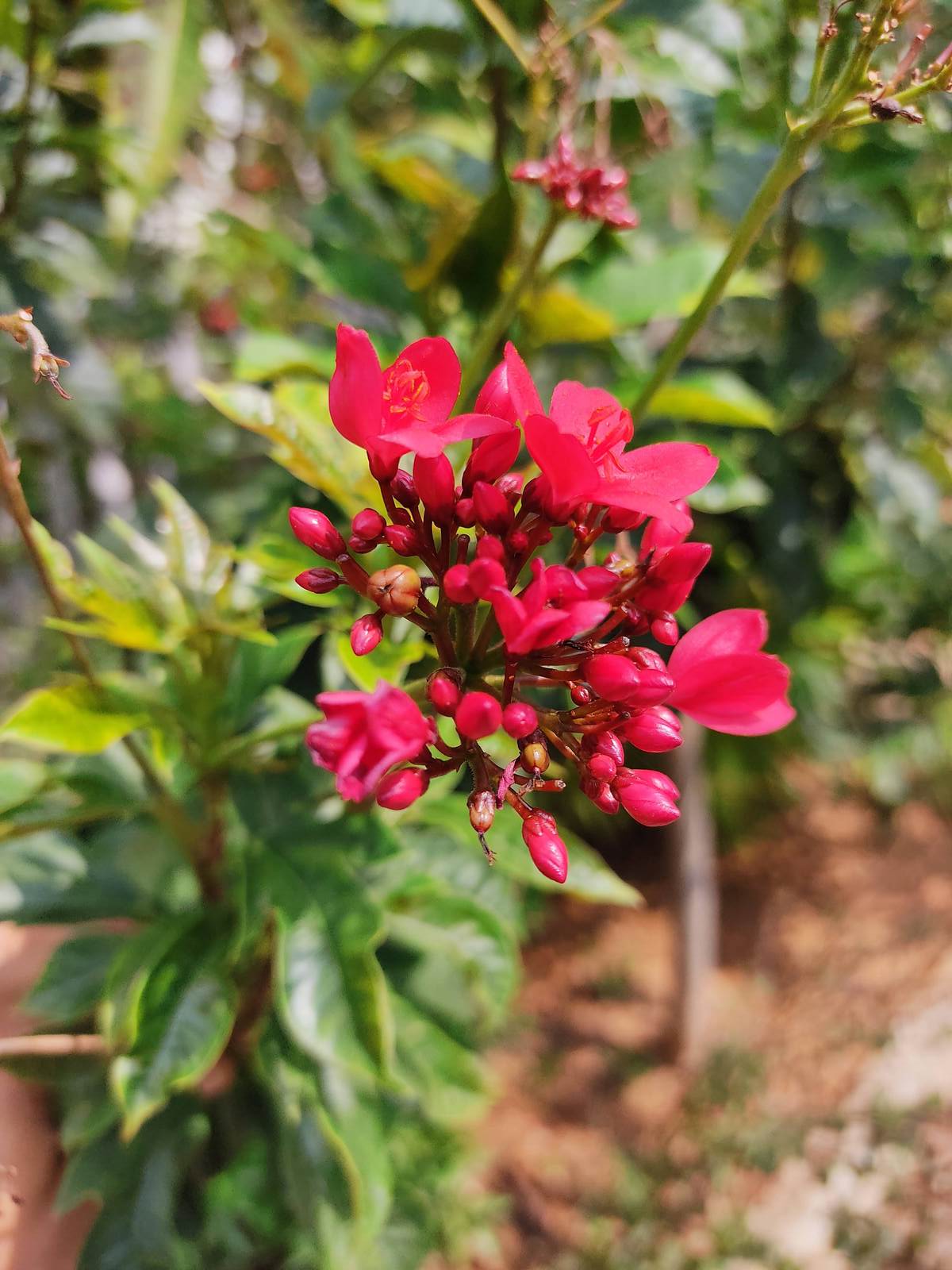
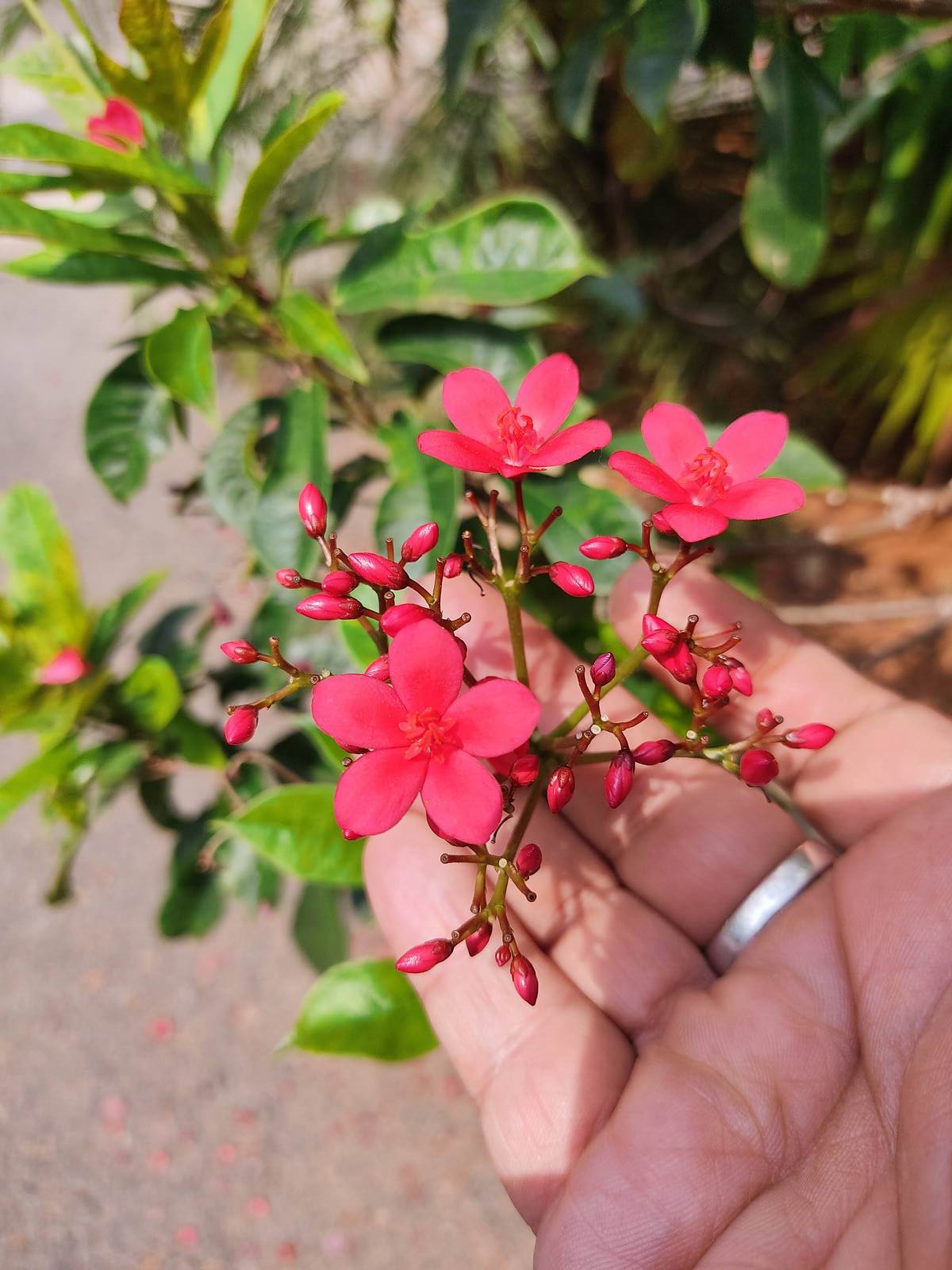
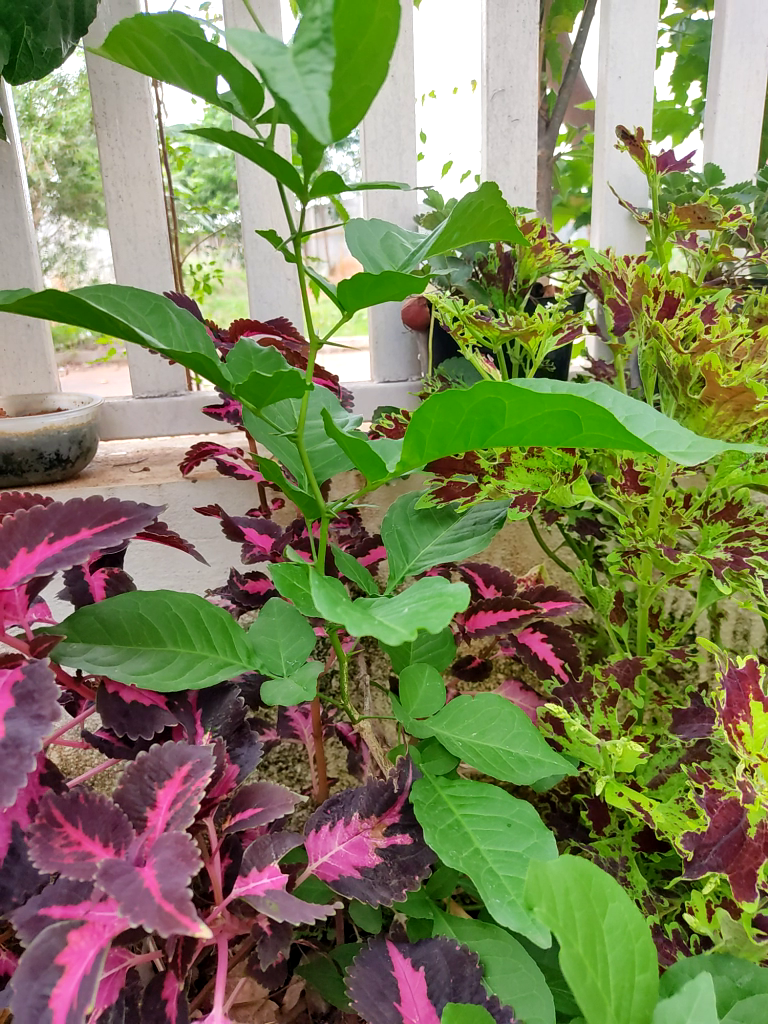
Beginning To put some perspective, here s how it started. When we moved into our home, the gardener put in a couple of plants stock, as part of the property handover. Now, I don t exactly recollect the name of the plants that came in stock, neither English nor Hindi; But at my neighbor s place, the plant is still there. Here are some of the pictures of this beauty. But don t just go by the looks as looks can be deceiving
Dominating Plant
Dominating Plant
Dominating Plant
Dominating Plant
Dominating Plant
Dominating Plant
We hadn t put any serious thought about the plants we were offered by the gardener. After all, we never had ever thought of any mishap either.

Plants we planted Apart from what was offered by the builder/gardener as part of the property handover, in over the next 6 months of we moving in, I planted 3 tree type plants.
  1. Mulberry
  2. Bael
  3. Rudraksha
The Mulberry, as I have described so far, died a tragic death. Bael, on the other hand, fought hard. But very little did we know that the plant was struggling the fight. Our impression was that we must have been given a bad breed of the plant. Or maybe the termite theory had some truth. For the Rudraksha plant, the growth was slow. This was the very first time I had seen a Rudraksha plant, so I had no clue of what its growth rate could be, and what to expect out of it. I wasn t sure if the local climate suited the plant. A quick search showed no objections to the plant in the local climate, but that was it. So my theory has been to put in the plant, and observe. Here s what my Rudraksha plant looked like during the initial days/weeks of its settlement
Rudraksha Plant
Rudraksha Plant

The Hint Days passed and so on. Not much had progressed in gathering information. The plant s health was usual; deteriorating at a slow pace. On day, thinking of the documentaries I had been watching, it hit my mind about the plant behavior.
  • Plants can be Carnivores.
  • Plants can be Aggressive.
  • Plants can be Invaders.
  • Plants can be Territorial.
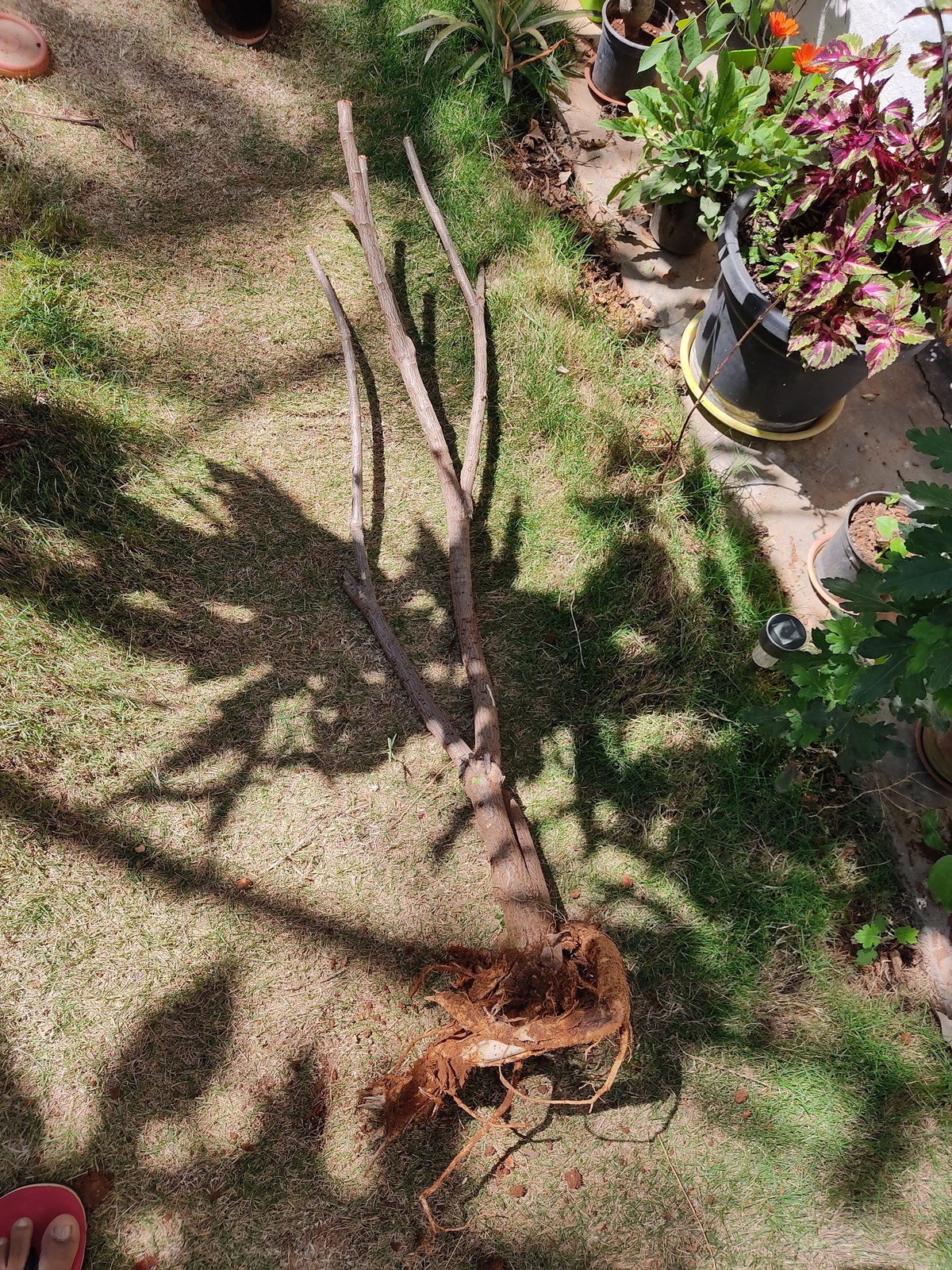
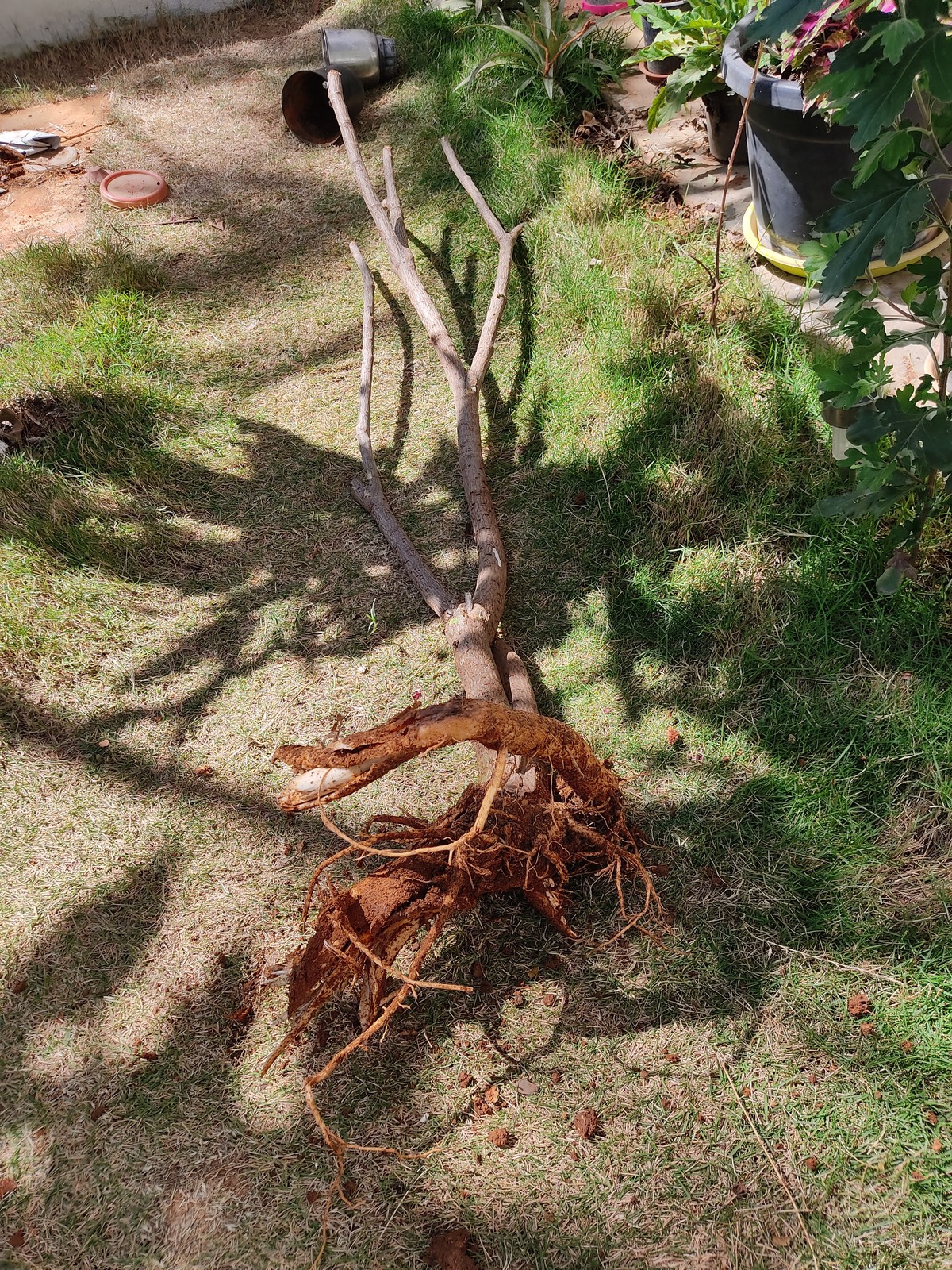
There are many plants where their aggression can be witnessed with bare human eyes. Like creepers. Some of them are good at spreading tentacles, grabbing onto other plants' stems and branches and spread above it. This was my hint from the documentaries. That s one of the many ways plants set their dominance. That is what hit my mind that if plants are aggressive on the out, underneath the soil, they should be having similar behavior. I mean, what we see as humans is just a part of the actual plant. More than half of the actual plant is usually underneath the soil, in most plants. So there s a high chance to get more information out, if you dig the soil and look the roots.

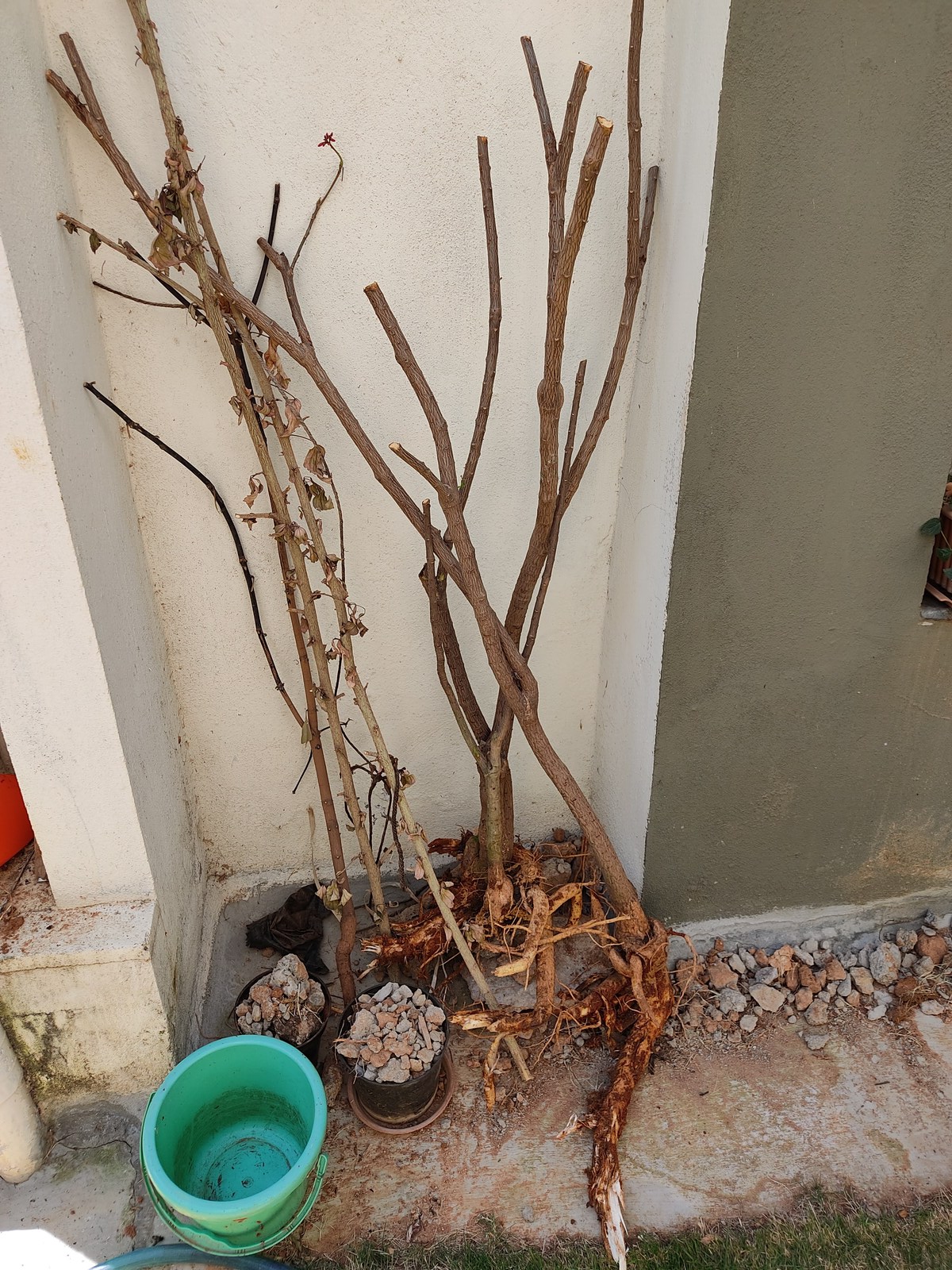
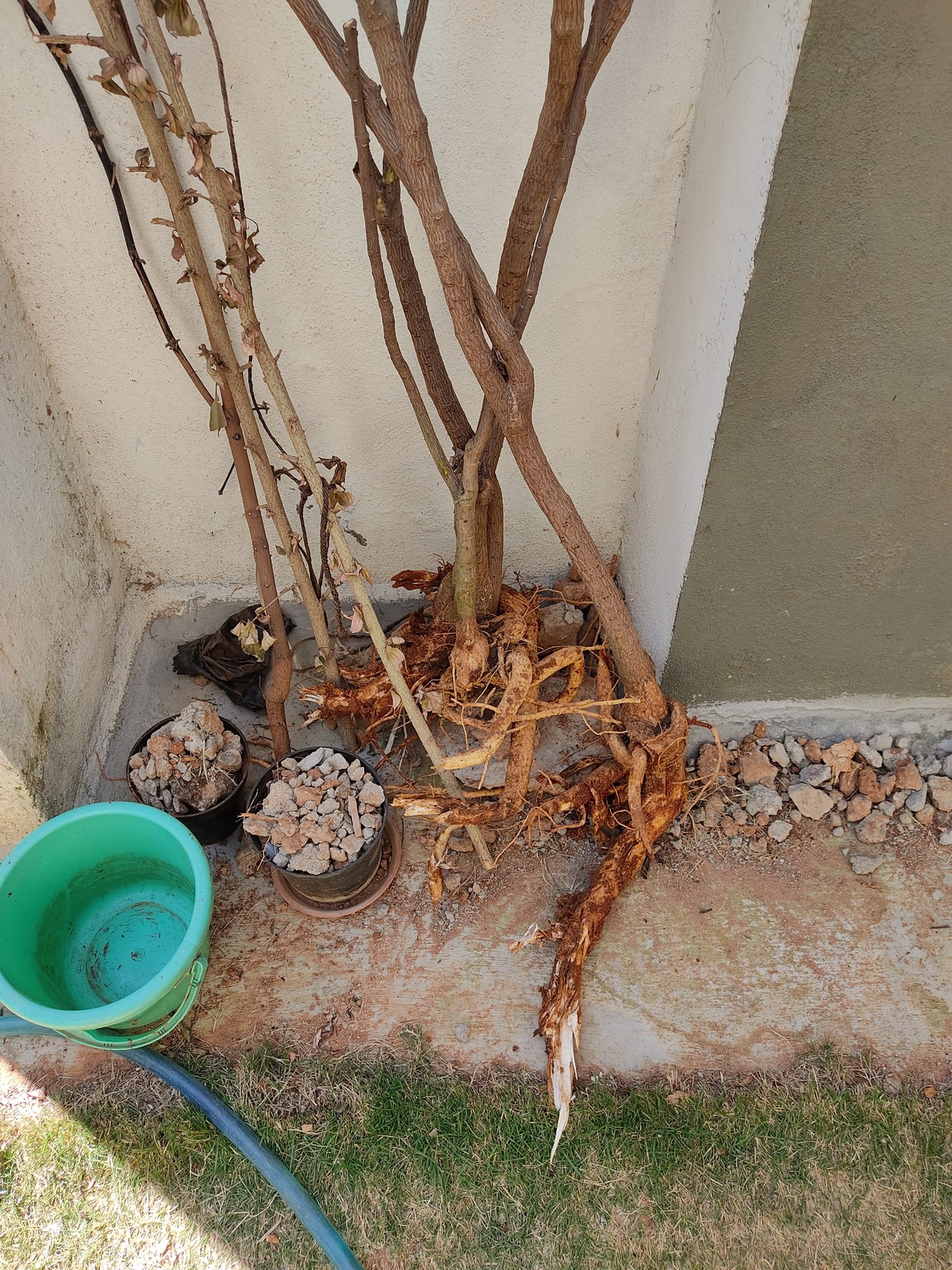
The Digging As I mentioned earlier, I do establish bindings, emotions and attachments. But not much usually comes in the way to curiosity. To dig further on the theory that the problem was elsewhere, with within the plants ecosystem, we needed to pick on another subject - the plant. And the plant we chose was the plant which was planted in the initial offering to us, when we moved into our home. It was the same plant breed which was neighboring all our newly planted trees: Rudraksha, Mulberry and Bael. If you look closely into the pictures above of these plants, you ll notice the stem of another plant, the Territorial Dominator, is close-by to these 3 plants. That s because the gardener put in a good number of them to get his action item complete. So we chose to dig and uproot one of those plant to start with. Now, while they may look gentle on the outside, with nice red colored tiny flowers, these plants were giants underneath. Their roots were huge. It took some sweat shredding to single-handedly remove them.
Dominating Plant Uprooted

Today is brighter

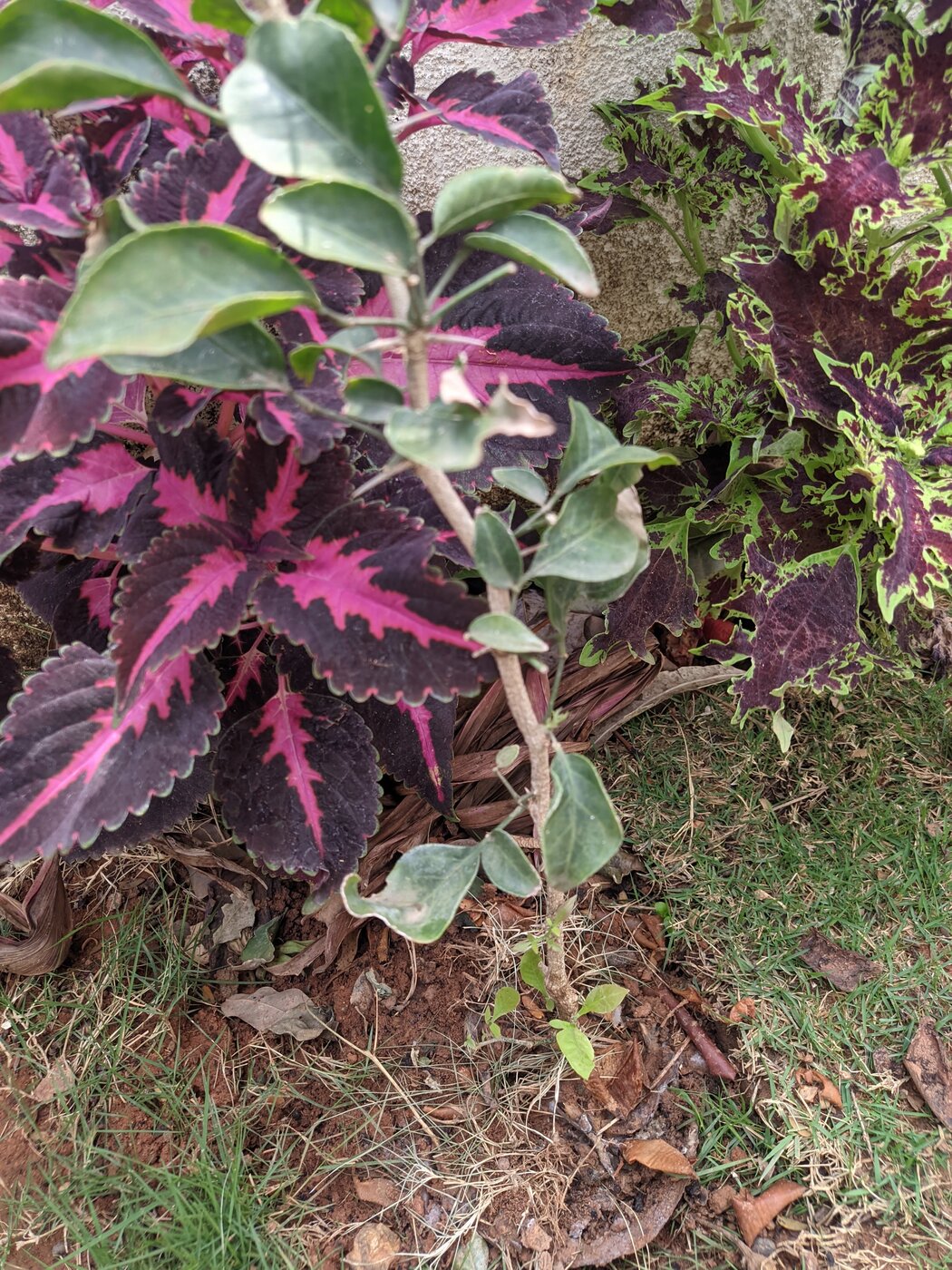
Bael I ll let the pictures do the initial talking today.
Healthy Bael
Healthy Bael
Healthy Bael
Healthy Bael
Healthy Bael
Healthy Bael
Healthy Bael
Healthy Bael
Healthy Bael
Healthy Bael
The above ones are pictures of the same Bael plant, which had struggled to live, for almost 14 months. Back then, this plant was starved of its resources. It was dying a slow death out of starvation. After we uprooted the other dominant species, the Bael has recovered and has regained its charm. In the pictures above of the Bael plant, you can clearly mark out the difference in its stem. The dark colored one is from its months of struggle, while the bright green is from now where it is well nourished and regained its health.

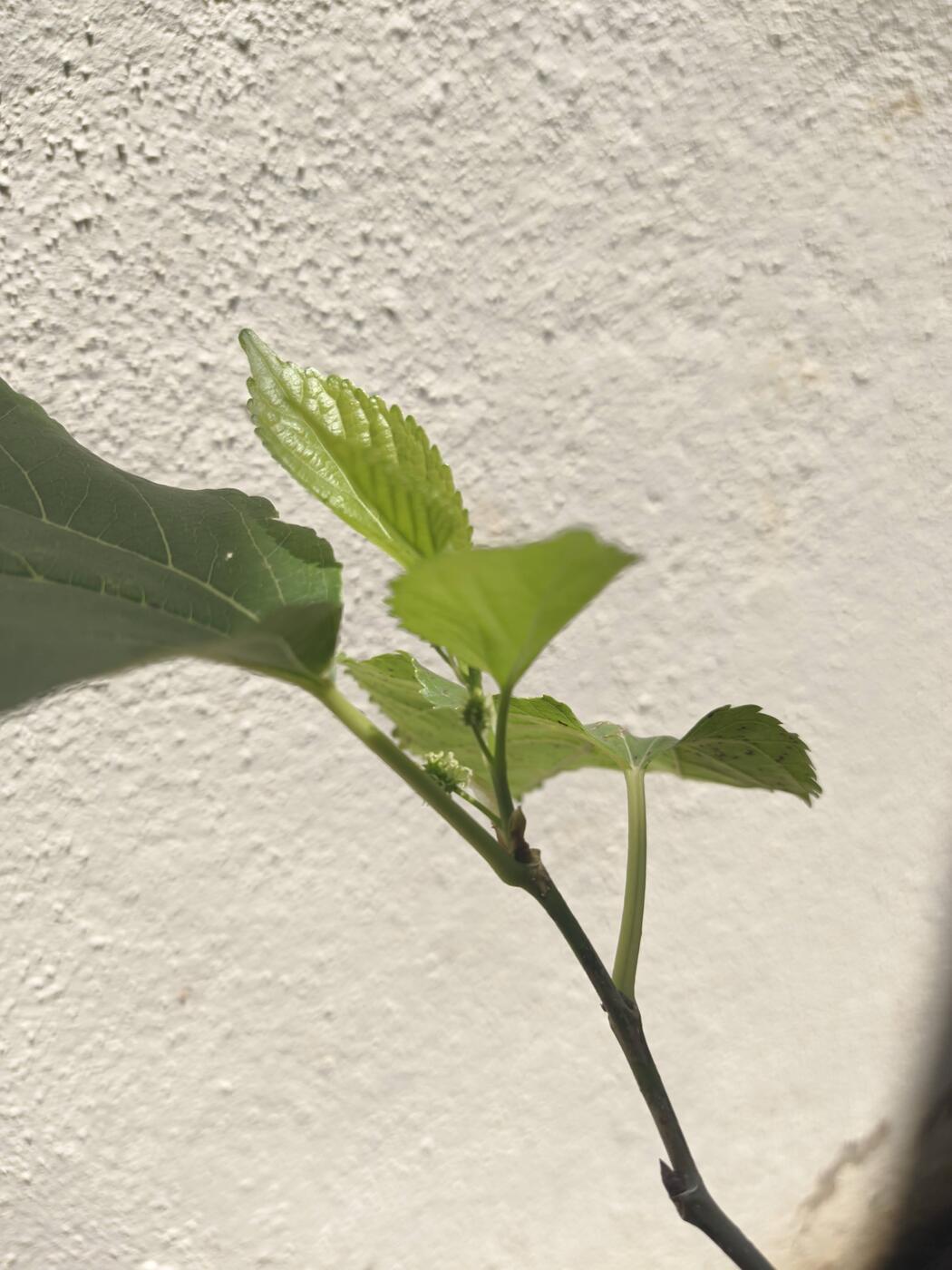
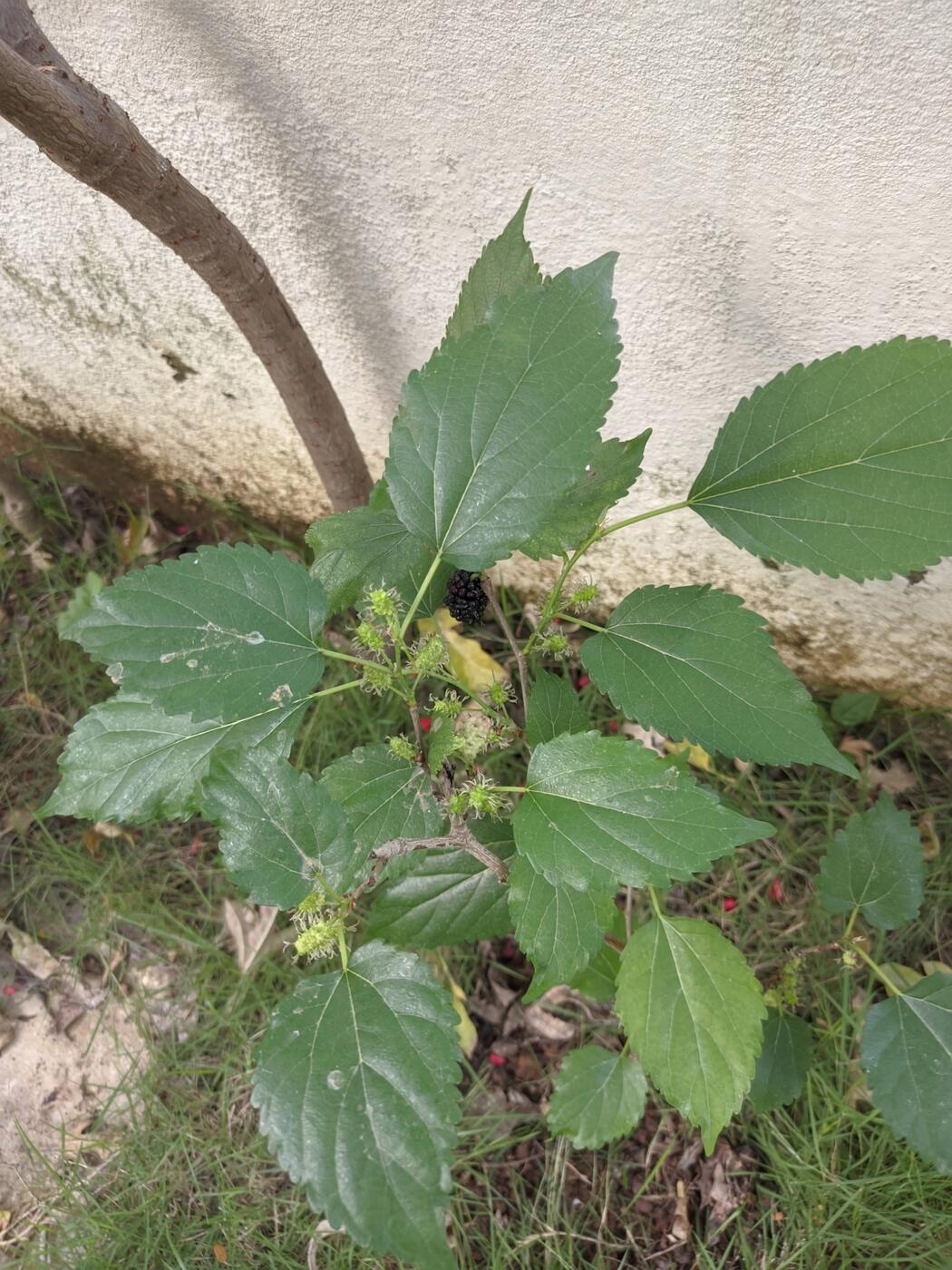
Mulberry As for the Mulberry, I couldn t save it. But I later managed to get another one. But it turns out I didn t take good, full length pictures of the new mulberry when I planted. The only picture I have is this:
Second Mulberry Plant
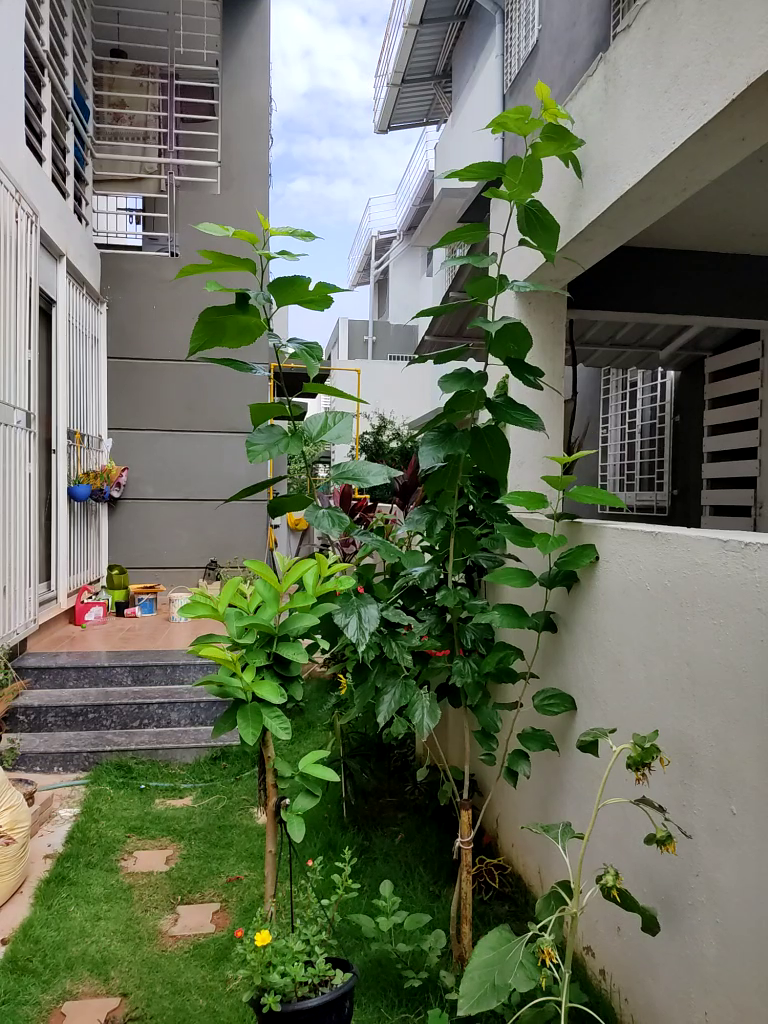
I recollect when I brought it home, it was around 1 - 1.5 feet in length. This is where I have it today: Majestically standing, 12 feet and counting
Second Mulberry Plant 7 feet tall

Rudraksha Then:
Rudraksha Plant
Rudraksha Plant
And now: I feel quite happy about
Rudraksha Plant
Rudraksha Plant
Rudraksha Plant
Rudraksha Plant
Rudraksha Plant
Rudraksha Plant
All these plants are on the very same soil with the very same care taker. What has changed is my experience and learning.

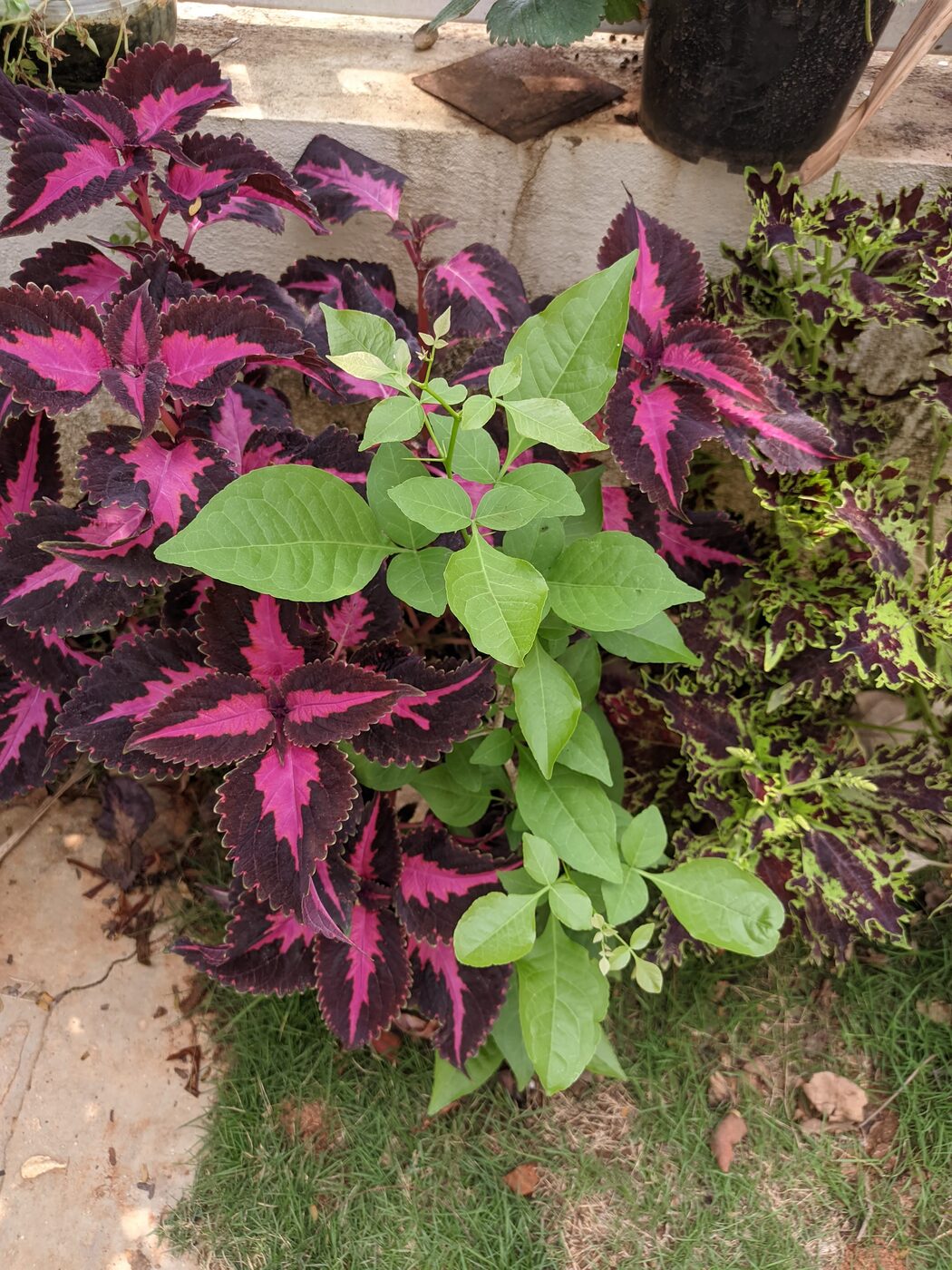
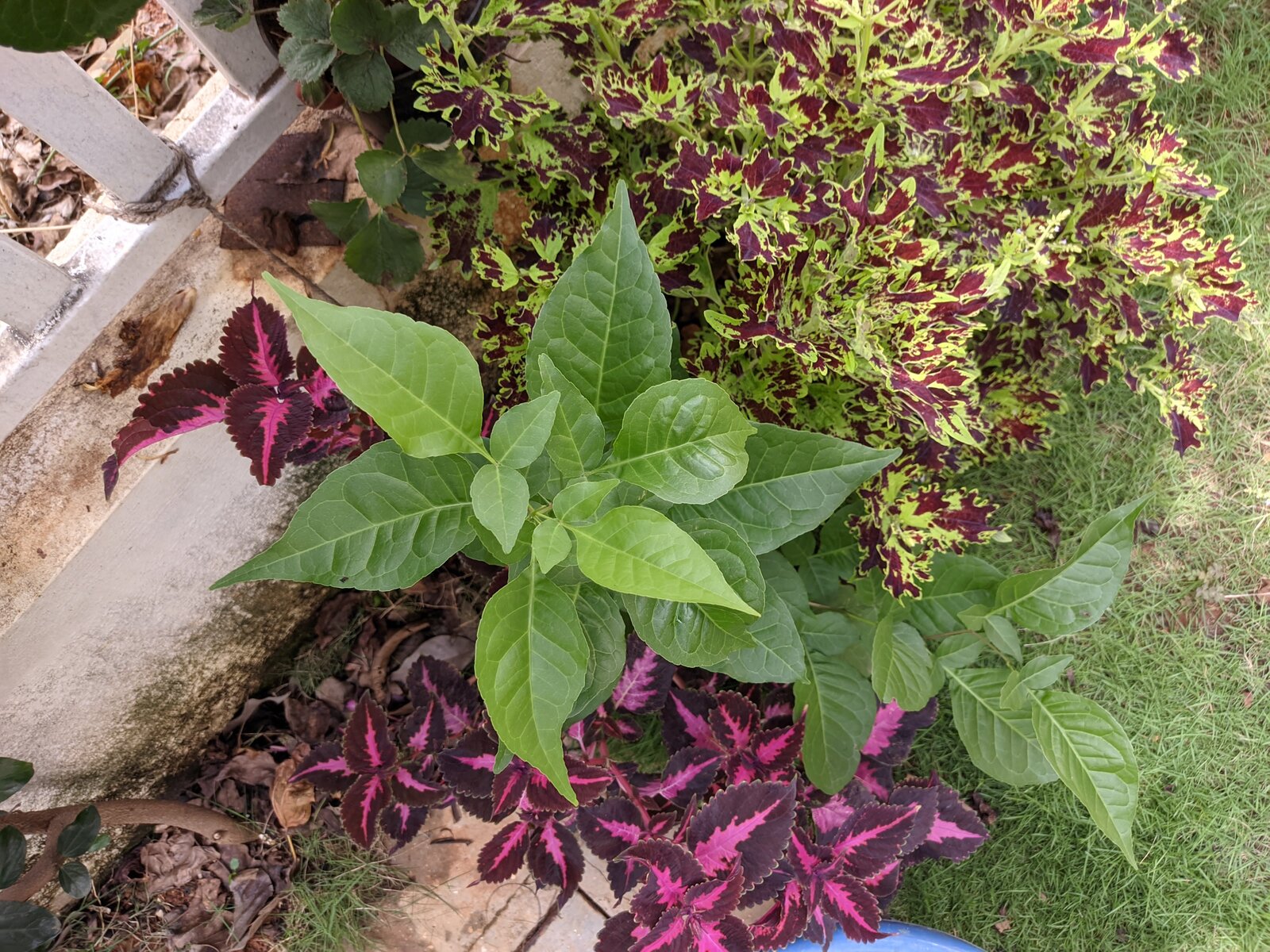
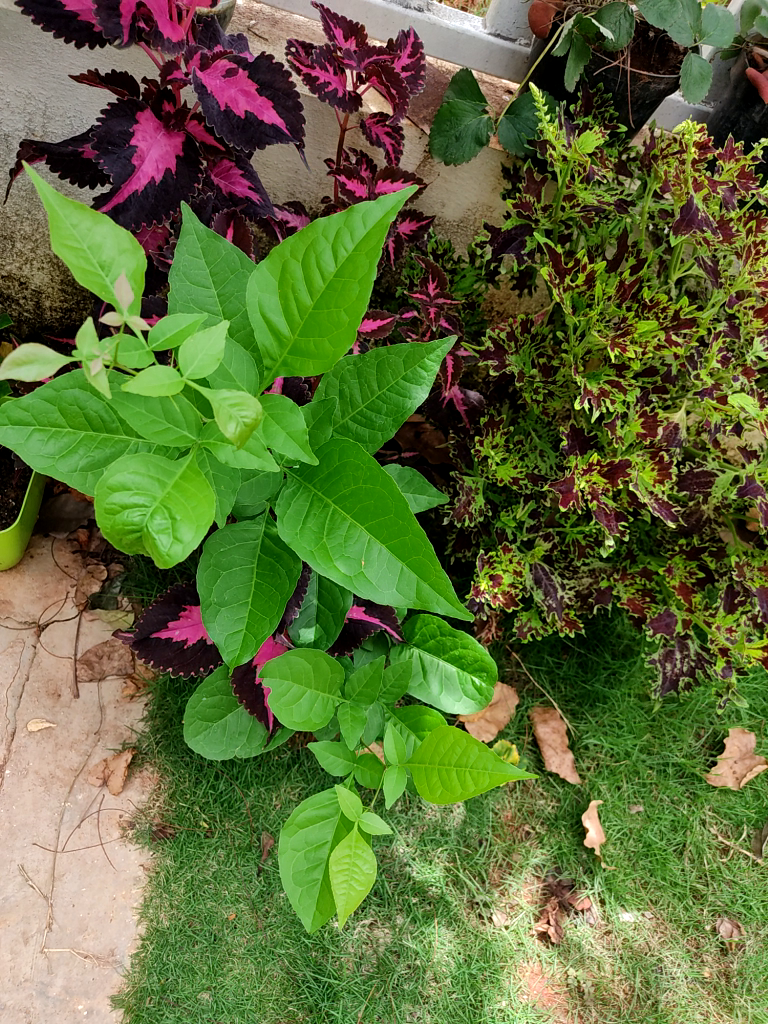
Plant Co-Existence Plant co-existence is a difficult topic. My knowledge on plants is very limited in general, and co-existence is something tricky, unexplored, at times invisible (when underneath the soil). So it is a difficult topic. So far, what I ve learnt is purely observations, experiences and hints from the documentaries. There surely are many many plants that co-exist very well. A good example is my Bael plant itself, which is healthily co-sharing its space with 2 other Croton plants. Same goes for the Rudraksha, which has a close-by neighbor in an Adenium and an Allamanda. The plant world is mesmerizing. How they behave, communicate and many many more signs. There s so much to observe, learn, explore and document. I hope to have more such observations and experiences to share

20 June 2021

Russ Allbery: Review: The Magician's Nephew

Review: The Magician's Nephew, by C.S. Lewis
Illustrator: Pauline Baynes
Series: Chronicles of Narnia #6
Publisher: Collier Books
Copyright: 1955
Printing: 1978
ISBN: 0-02-044230-0
Format: Mass market
Pages: 186
The Magician's Nephew is the sixth book of the Chronicles of Narnia in the original publication order, but it's a prequel, set fifty years before The Lion, the Witch and the Wardrobe. It's therefore put first in the new reading order. I have always loved world-building and continuities and, as a comics book reader (Marvel primarily), developed a deep enjoyment of filling in the pieces and reconstructing histories from later stories. It's no wonder that I love reading The Magician's Nephew after The Lion, the Witch and the Wardrobe. The experience of fleshing out backstory with detail and specifics makes me happy. If that's also you, I recommend the order in which I'm reading these books. Reading this one first is defensible, though. One of the strongest arguments for doing so is that it's a much stronger, tighter, and better-told story than The Lion, the Witch and the Wardrobe, and therefore might start the series off on a better foot for you. It stands alone well; you don't need to know any of the later events to enjoy this, although you will miss the significance of a few things like the lamp post and you don't get the full introduction to Aslan. The Magician's Nephew is the story of Polly Plummer, her new neighbor Digory Kirke, and his Uncle Andrew, who fancies himself a magician. At the start of the book, Digory's mother is bed-ridden and dying and Digory is miserable, which is the impetus for a friendship with Polly. The two decide to explore the crawl space of the row houses in which they live, seeing if they can get into the empty house past Digory's. They don't calculate the distances correctly and end up in Uncle Andrew's workroom, where Digory was forbidden to go. Uncle Andrew sees this as a golden opportunity to use them for an experiment in travel to other worlds. MAJOR SPOILERS BELOW. The Magician's Nephew, like the best of the Narnia books, does not drag its feet getting started. It takes a mere 30 pages to introduce all of the characters, establish a friendship, introduce us to a villain, and get both of the kids into another world. When Lewis is at his best, he has an economy of storytelling and a grasp of pacing that I wish was more common. It's also stuffed to the brim with ideas, one of the best of which is the Wood Between the Worlds. Uncle Andrew has crafted pairs of magic rings, yellow and green, and tricks Polly into touching one of the yellow ones, causing her to vanish from our world. He then uses her plight to coerce Digory into going after her, carrying two green rings that he thinks will bring people back into our world, and not incidentally also observing that world and returning to tell Uncle Andrew what it's like. But the world is more complicated than he thinks it is, and the place where the children find themselves is an eerie and incredibly peaceful wood, full of grass and trees but apparently no other living thing, and sprinkled with pools of water. This was my first encounter with the idea of a world that connects other worlds, and it remains the most memorable one for me. I love everything about the Wood: the simplicity of it, the calm that seems in part to be a defense against intrusion, the hidden danger that one might lose one's way and confuse the ponds for each other, and even the way that it tends to make one lose track of why one is there or what one is trying to accomplish. That quiet forest filled with pools is still an image I use for infinite creativity and potential. It's quiet and nonthreatening, but not entirely inviting either; it's magnificently neutral, letting each person bring what they wish to it. One of the minor plot points of this book is that Uncle Andrew is wrong about the rings because he's wrong about the worlds. There aren't just two worlds; there are an infinite number, with the Wood as a nexus, and our reality is neither the center nor one of an important pair. The rings are directional, but relative to the Wood, not our world. The kids, who are forced to experiment and who have open minds, figure this out quickly, but Uncle Andrew never shifts his perspective. This isn't important to the story, but I've always thought it was a nice touch of world-building. Where this story is heading, of course, is the creation of Narnia and the beginning of all of the stories told in the rest of the series. But before that, the kids's first trip out of the Wood is to one of the best worlds of children's fantasy: Charn. If the Wood is my mental image of a world nexus, Charn will forever be my image of a dying world: black sky, swollen red sun, and endless abandoned and crumbling buildings as far as the eye can see, full of tired silences and eerie noises. And, of course, the hall of statues, with one of the most memorable descriptions of history and empire I've ever read (if you ignore the racialized description):
All of the faces they could see were certainly nice. Both the men and women looked kind and wise, and they seemed to come of a handsome race. But after the children had gone a few steps down the room they came to faces that looked a little different. These were very solemn faces. You felt you would have to mind your P's and Q's, if you ever met living people who looked like that. When they had gone a little farther, they found themselves among faces they didn't like: this was about the middle of the room. The faces here looked very strong and proud and happy, but they looked cruel. A little further on, they looked crueller. Further on again, they were still cruel but they no longer looked happy. They were even despairing faces: as if the people they belonged to had done dreadful things and also suffered dreadful things.
The last statue is of a fierce, proud woman that Digory finds strikingly beautiful. (Lewis notes in an aside that Polly always said she never found anything specially beautiful about her. Here, as in The Silver Chair, the girl is the sensible one and things would have gone better if the boy had listened to her, a theme that I find immensely frustrating because Susan was the sensible one in the first two books of the series but then Lewis threw that away.) There is a bell in the middle of this hall, and the pillar that holds that bell has an inscription on it that I think every kid who grew up on Narnia knows by heart.
Make your choice, adventurous Stranger;
Strike the bell and bide the danger,
Or wonder, till it drives you mad,
What would have followed if you had.
Polly has no intention of striking the bell, but Digory fights her and does it anyway, waking Jadis from where she sat as the final statue in the hall and setting off one of the greatest reimaginings of a villain in children's literature. Jadis will, of course, become the White Witch who holds Narnia in endless winter some thousand Narnian years later. But the White Witch was a mediocre villain at best, the sort of obvious and cruel villain common in short fairy tales where the author isn't interested in doing much characterization. She exists to be evil, do bad things, and be defeated. She has a few good moments in conflict with Aslan, but that's about it. Jadis in this book is another matter entirely: proud, brilliant, dangerous, and creative. The death of everything on Charn was Jadis's doing: an intentional spell, used to claim a victory of sorts from the jaws of defeat by her sister in a civil war. (I find it fascinating that Lewis puts aside his normally sexist roles here.) Despite the best attempts of the kids to lose her both in Charn and in the Wood (which is inimical to her, in another nice bit of world-building), she manages to get back to England with them. The result is a remarkably good bit of villain characterization. Jadis is totally out of her element, used to a world-spanning empire run with magic and (from what hints we get) vaguely medieval technology. Her plan to take over their local country and eventually the world should be absurd and is played somewhat for laughs. Her magic, which is her great weapon, doesn't even work in England. But Jadis learns at a speed that the reader can watch. She's observant, she pays attention to things that don't fit her expectations, she changes plans, and she moves with predatory speed. Within a few hours in London she's stolen jewels and a horse and carriage, and the local police seem entirely overmatched. There's no way that one person without magic should be a real danger to England around the turn of the 20th century, but by the time the kids manage to pull her back into the Wood, you're not entirely sure England would have been safe. A chaotic confrontation, plus the ability of the rings to work their magic through transitive human contact, ends up with the kids, Uncle Andrew, Jadis, a taxicab driver and his horse all transported through the Wood to a new world. In this case, literally a new world: Narnia at the point of its creation. Here again, Lewis translates Christian myth, in this case the Genesis creation story, into a more vivid and in many ways more beautiful story than the original. Aslan singing the world into existence is an incredible image, as is the newly-created world so bursting with life that even things that normally could not grow will do so. (Which, of course, is why there is a lamp post burning in the middle of the western forest of Narnia for the Pevensie kids to find later.) I think my favorite part is the creation of the stars, but the whole sequence is great. There's also an insightful bit of human psychology. Uncle Andrew can't believe that a lion is singing, so he convinces himself that Aslan is not singing, and thus prevents himself from making any sense of the talking animals later.
Now the trouble about trying to make yourself stupider than you really are is that you very often succeed.
As with a lot in Lewis, he probably meant this as a statement about faith, but it generalizes well beyond the religious context. What disappointed me about the creation story, though, is the animals. I didn't notice this as a kid, but this re-read has sensitized me to how Lewis consistently treats the talking animals as less than humans even though he celebrates them. That happens here too: the newly-created, newly-awakened animals are curious and excited but kind of dim. Some of this is an attempt to show that they're young and are just starting to learn, but it also seems to be an excuse for Aslan to set up a human king and queen over them instead of teaching them directly how to deal with the threat of Jadis who the children inadvertently introduced into the world. The other thing I dislike about The Magician's Nephew is that the climax is unnecessarily cruel. Once Digory realizes the properties of the newly-created world, he hopes to find a way to use that to heal his mother. Aslan points out that he is responsible for Jadis entering the world and instead sends him on a mission to obtain a fruit that, when planted, will ward Narnia against her for many years. The same fruit would heal his mother, and he has to choose Narnia over her. (It's a fairly explicit parallel to the Garden of Eden, except in this case Digory passes.) Aslan, in the end, gives Digory the fruit of the tree that grows, which is still sufficient to heal his mother, but this sequence made me angry when re-reading it. Aslan knew all along that what Digory is doing will let him heal his mother as well, but hides this from him to make it more of a test. It's cruel and mean; Aslan could have promised to heal Digory's mother and then seen if he would help Narnia without getting anything in return other than atoning for his error, but I suppose that was too transactional for Lewis's theology or something. Meh. But, despite that, the only reason why this is not the best Narnia book is because The Voyage of the Dawn Treader is the only Narnia book that also nails the ending. The Magician's Nephew, up through Charn, Jadis's rampage through London, and the initial creation of Narnia, is fully as good, perhaps better. It sags a bit at the end, partly because it tries to hard to make the Narnian animals humorous and partly because of the unnecessary emotional torture of Digory. But this still holds up as the second-best Narnia book, and one I thoroughly enjoyed re-reading. If anything, Jadis and Charn are even better than I remembered. Followed by the last book of the series, the somewhat notorious The Last Battle. Rating: 9 out of 10

1 June 2021

Russ Allbery: Review: The Horse and His Boy

Review: The Horse and His Boy, by C.S. Lewis
Illustrator: Pauline Baynes
Series: Chronicles of Narnia #5
Publisher: Collier Books
Copyright: 1954
Printing: 1978
ISBN: 0-02-044200-9
Format: Mass market
Pages: 217
The Horse and His Boy was the fifth published book in the Chronicles of Narnia, but it takes place during the last chapter of The Lion, the Witch and the Wardrobe, in the midst of the golden age of Narnia. It's the only true side story of the series and it doesn't matter much where in sequence you read it, as long as it's after The Lion, the Witch and the Wardrobe and before The Last Battle (which would spoil its ending somewhat). MAJOR SPOILERS BELOW. The Horse and His Boy is also the only book of the series that is not a portal fantasy. The Pevensie kids make an appearance, but as the ruling kings and queens of Narnia, and only as side characters. The protagonists are a boy named Shasta, a girl named Aravis, and horses named Bree and Hwin. Aravis is a Calormene, a native of the desert (and extremely Orientalist, but more on that later) kingdom to the south of Narnia and Archenland. Shasta starts the book as the theoretically adopted son but mostly slave of a Calormene fisherman. The Horse and His Boy is the story of their journey from Calormen north to Archenland and Narnia, just in time to defend Narnia and Archenland from an invasion. This story starts with a great hook. Shasta's owner is hosting a passing Tarkaan, a Calormene lord, and overhears a negotiation to sell Shasta to the Tarkaan as his slave (and, in the process, revealing that he rescued Shasta as an infant from a rowboat next to a dead man). Shasta starts talking to the Tarkaan's horse and is caught by surprise when the horse talks back. He is a Talking Horse from Narnia, kidnapped as a colt, and eager to return to Narnia and the North. He convinces Shasta to attempt to escape with him. This has so much promise. For once, we're offered a story where one of the talking animals of Narnia is at least a co-protagonist and has some agency in the story. Bree takes charge of Shasta, teaches him to ride (or, mostly, how to fall off a horse), and makes most of the early plans. Finally, a story that recognizes that Narnia stories don't have to revolve around the humans! Unfortunately, Bree is an obnoxious, arrogant character. I wanted to like him, but he makes it very hard. This gets even worse when Shasta is thrown together with Aravis, a noble Calormene girl who is escaping an arranged marriage on her own talking mare, Hwin. Bree is a warhorse, Hwin is a lady's riding mare, and Lewis apparently knows absolutely nothing about horses, because every part of Bree's sexist posturing and Hwin's passive meekness is awful and cringe-worthy. I am not a horse person, so will link to Judith Tarr's much more knowledgeable critique at Tor.com, but suffice it to say that mares are not meekly deferential or awed by stallions. If Bree had behaved that way with a real mare, he would have gotten the crap beaten out of him (which might have improved his attitude considerably). As is, we have to put up with rather a lot of Bree's posturing and Hwin (who I liked much better) barely gets a line and acts disturbingly like she was horribly abused. This makes me sad, because I like Bree's character arc. He's spent his whole life being special and different from those around him, and while he wants to escape this country and return home, he's also gotten used to being special. In Narnia, he will just be a normal talking horse. To get everything else he wants, he also has to let go of the idea that he's someone special. If Lewis had done more with this and made Bree a more sympathetic character, this could have been very effective. As written, it only gets a few passing mentions (mostly via Bree being weirdly obsessed with whether talking horses roll) and is therefore overshadowed by Shasta's chosen one story and Bree's own arrogant behavior. The horses aside, this is a passable adventure story with some well-done moments. The two kids and their horses end up in Tashbaan, the huge Calormene capital, where they stumble across the Narnians and Shasta is mistaken for one of their party. Radagast, the prince of Calormen, is proposing marriage to Susan, and the Narnians are in the process of realizing he doesn't plan to take no for an answer. Aravis, meanwhile, has to sneak out of the city via the Tisroc's gardens, which results in her hiding behind a couch as she hears Radagast's plans to invade Archenland and Narnia to take Susan as his bride by force. Once reunited, Shasta, Aravis, and the horses flee across the desert to bring warning to Archenland and then Narnia. Of all the Narnia books, The Horse and His Boy leans the hardest into the personal savior angle of Christianity. Parts of it, such as Shasta's ride over the pass into Narnia, have a strong "Footprints" feel to them. Most of the events of the book are arranged by Aslan, starting with Shasta's early life. Readers of the series will know this when a lion shows up early to herd the horses where they need to go, or when a cat keeps Shasta company in the desert and frightens away jackals. Shasta only understands near the end. I remember this being compelling stuff as a young Christian reader. This personal attention and life shaping from God is pure Christian wish fulfillment of the "God has a plan for your life" variety, even more so than Shasta turning out to be a lost prince. As an adult re-reader, I can see that Lewis is palming the theodicy card rather egregiously. It's great that Aslan was making everything turn out well in the end, but why did he have to scare the kids and horses half to death in the process? They were already eager to do what he wanted, but it's somehow inconceivable that Aslan would simply tell them what to do rather than manipulate them. There's no obvious in-story justification why he couldn't have made the experience much less terrifying. Or, for that matter, prevented Shasta from being kidnapped as an infant in the first place and solved the problem of Radagast in a more direct way. This sort of theology takes as an unexamined assumption that a deity must refuse to use his words and instead do everything in weirdly roundabout and mysterious ways, which makes even less sense in Narnia than in our world given how directly and straightforwardly Aslan has acted in previous books. It was also obvious to me on re-read how unfair Lewis's strict gender roles are to Aravis. She's an excellent rider from the start of the book and has practiced many of the things Shasta struggles to do, but Shasta is the boy and Aravis is the girl, so Aravis has to have girl adventures involving tittering princesses, luxurious baths, and eavesdropping behind couches, whereas Shasta has boy adventures like riding to warn the king or bringing word to Narnia. There's nothing very objectionable about Shasta as a character (unlike Bree), but he has such a generic character arc. The Horse and Her Girl with Aravis and Hwin as protagonists would have been a more interesting story, and would have helpfully complicated the whole Narnia and the North story motive. As for that storyline, wow the racism is strong in this one, starting with the degree that The Horse and His Boy is deeply concerned with people's skin color. Shasta is white, you see, clearly marking him as from the North because all the Calormenes are dark-skinned. (This makes even less sense in this fantasy world than in our world because it's strongly implied in The Magician's Nephew that all the humans in Calormen came from Narnia originally.) The Calormenes all talk like characters from bad translations of the Arabian Nights and are shown as cruel, corrupt slavers with a culture that's a Orientalist mishmash of Arab, Persian, and Chinese stereotypes. Everyone is required to say "may he live forever" after referencing the Tisroc, which is an obvious and crude parody of Islam. This stereotype fest culminates in the incredibly bizarre scene that Aravis overhears, in which the grand vizier literally grovels on the floor while Radagast kicks him and the Tisroc, Radagast's father, talks about how Narnia's freedom offends him and the barbarian kingdom would be more profitable and orderly when conquered. The one point to Lewis's credit is that Aravis is also Calormene, tells stories in the same style, and is still a protagonist and just as acceptable to Aslan as Shasta is. It's not enough to overcome the numerous problems with Lewis's lazy world-building, but it makes me wish even more that Aravis had gotten her own book and more meaningful scenes with Aslan. I had forgotten that Susan appears in this book, although that appearance doesn't add much to the general problem of Susan in Narnia except perhaps to hint at Lewis's later awful choices. She is shown considering marriage to the clearly villainous Radagast, and then only mentioned later with a weird note that she doesn't ride to war despite being the best archer of the four. I will say again that it's truly weird to see the Pevensie kids as (young) adults discussing marriage proposals, international politics, and border wars while remembering they all get dumped back into their previous lives as British schoolkids. This had to have had dramatic effects on their lives that Lewis never showed. (I know, the real answer is that Lewis is writing these books according to childhood imaginary adventure logic, where adventures don't have long-term consequences of that type.) I will also grumble once more at how weirdly ineffectual Narnians are until some human comes to tell them what to do. Calormen is obviously a threat; Susan just escaped from an attempted forced marriage. Archenland is both their southern line of defense and is an ally separated by a mountain pass in a country full of talking eagles, among other obvious messengers. And yet, it falls to Shasta to ride to give warning because he's the human protagonist of the story. Everyone else seems to be too busy with quirky domesticity or endless faux-medieval chivalric parties. The Horse and His Boy was one of my favorites when I was a kid, but reading as an adult I found it much harder to tolerate Bree or read past the blatant racial and cultural stereotyping. The bits with Aslan also felt less magical to me than they did as a kid because I was asking more questions about why Aslan had to do everything in such an opaque and perilous way. It's still not a bad adventure; Aravis is a great character, the bits in Tashbaan are at least memorable, and I still love the Hermit of the Southern March and want to know more about him. But I would rank it below the top tier of Narnia books, alongside Prince Caspian as a book with some great moments and some serious flaws. Followed in original publication order by The Magician's Nephew. Rating: 7 out of 10

Next.

Previous.