Search Results: "eric"

10 September 2026

Raju Devidas: Installing Ubuntu on intel Macbook Pro 2017 with touchbar

Installing Ubuntu on intel Macbook Pro 2017 with touchbarJust some notes about fixing some issues while installing Ubuntu on Macbook Pro 2017

Fix AudioAudio is not working by default after a fresh install.
GitHub - davidjo/snd_hda_macbookpro: Kernel audio driver for Macs with 8409 HDA chip + MAX98706/SSM3515 amps
Kernel audio driver for Macs with 8409 HDA chip + MAX98706/SSM3515 amps - davidjo/snd_hda_macbookpro
johndoe@mac ~> sudo apt install gcc linux-headers-generic make patch wget
johndoe@mac ~> sudo apt install linux-source-7.0.0
johndoe@mac ~/dev> git clone https://github.com/davidjo/snd_hda_macbookpro.git
johndoe@mac ~/dev> cd snd_hda_macbookpro/
johndoe@mac ~/d/snd_hda_macbookpro (master)> sudo ./install.cirrus.driver.sh
johndoe@mac ~/d/snd_hda_macbookpro (master)> sudo reboot

Fix Touchbar

> sudo apt install git dkms build-essential linux-headers-$(uname -r)
> git clone https://github.com/AJ-dev-i60/t1-touchbar.git
> cd t1-touchbar
> sudo ./install.sh
> sudo reboot

Fix Wi-FiWifi actually works out of the box, but the signal strength is usually very bad. We&aposll try to fix that
johndoe@mac ~> cd /tmp
               wget -O brcmfmac43602-pcie.txt \
                     https://raw.githubusercontent.com/jsoyer/MacBookPro14-2/main/firmware/brcm/brcmfmac43602-pcie.txt
--2026-09-10 18:36:39--  https://raw.githubusercontent.com/jsoyer/MacBookPro14-2/main/firmware/brcm/brcmfmac43602-pcie.txt
Resolving raw.githubusercontent.com (raw.githubusercontent.com)... 185.199.109.133, 185.199.111.133, 185.199.110.133, ...
Connecting to raw.githubusercontent.com (raw.githubusercontent.com) 185.199.109.133 :443... failed: Connection timed out.
Connecting to raw.githubusercontent.com (raw.githubusercontent.com) 185.199.111.133 :443... connected.
HTTP request sent, awaiting response... 200 OK
Length: 6051 (5.9K) [text/plain]
Saving to:  brcmfmac43602-pcie.txt 
brcmfmac43602-pcie.txt    100%[=====================================>]   5.91K  --.-KB/s    in 0.04s   
2026-09-10 18:38:53 (163 KB/s) -  brcmfmac43602-pcie.txt  saved [6051/6051]
johndoe@mac /tmp> sed -i &aposs/^macaddr=.*/macaddr=<your-wi-fi-cards-mac-id>/&apos brcmfmac43602-pcie.txt
johndoe@mac /tmp> sudo cp /tmp/brcmfmac43602-pcie.txt \
                        "/lib/firmware/brcm/brcmfmac43602-pcie.Apple Inc.-MacBookPro14,2.txt"
johndoe@mac /tmp> sudo ln -sf \
                        "brcmfmac43602-pcie.Apple Inc.-MacBookPro14,2.txt" \
                        /lib/firmware/brcm/brcmfmac43602-pcie.txt


johndoe@mac /tmp> sudo reboot

8 September 2026

Paul Tagliamonte: IP over Avian Carriers (Part 12/12)

This post is part of a series called "Pigeon". If this is the first post you've found, it'd be worth reading the intro post first and then looking over all posts in the series.
The final step to all of this was to tie together all my PHY RF code, Link layer parsers, and my background with operating systems to make this all feel like a normal thing my computer should be doing. At the end of the day, I want my host system to know how to talk with a pigeon daemon, so I don t have to reimplement basically everything else. My ability to use normal tools like curl or ping6 is pretty important here, so I need to reach for my old friend, the TUN interface. The TAP/TUN interface allows the kernel to route ethernet frames (TAP) or ip packets (TUN) to a userspace program responsible for handling delivery and reception avoiding the need for a kernelspace driver for something that can be handled in userland.
wondering if doing this violates FCC Part 97 rules? I wrote up notes on my test setup for exactly this question, but the short answer is "no"!
I m no stranger to playing with TAP/TUN, so this was pretty easy to snap together although this time I avoided the whole ethernet proxying thing (to side-step lossy translations, maintaining two sets of mac address tables, and handle proxying NDP/ARP messages) it was kinda a bad idea last time so I just used TUN and straight IP for now. While implementing this, I decided I d make a key assertion about all pigeon networks namely, all pigeon IPv6 networks are a /64 in size, no more, no less. The reason why I m doing this here is that, since pigeond does still does need a MAC address for the pigeon layer 2 protocol, we can write our daemon to always use SLAAC to set the TUN IP address without any new information. Which leads us to a bit of an aside, but I have a point, I swear. A few years ago, my recreational RF adventures have lead me down a path where I decided to engage with ARIN to solve (once and for all) the massive headache I was running into with IPv6 numbering (really: always renumbering) my multi-site radio processing networks. It s a lot of work to keep running correctly, but it s solved a huge amount of problems for me. The only internal thing we really need to outline for this post is that, at the highest level, my network (paultag.net) is split into an IP plan that looks roughly like:
Prefix Description
/44my full allocation of IP space
/4815 "regions"
/5464 "sites" per region. A "site" is assigned to a physical or logical location.
/641024 subnets per site. A subnet used by directly attached devices.
For this exercise, I used IP space from paultag.net s experimental region ( region 8 ), named side.band (2602:810:6008::/48) to connect my RF lab ( site 1 - 2602:810:6008:400::/54), and my two pigeon-specific subnets, subnet 0 (2602:810:6008:400::/64) and subnet 1 (2602:810:6008:401::/64) to my wider network. The first subnet ( subnet 0 ) is a simple ethernet network to enable my RF-only nodes to communicate with the side.band gateway. The second subnet ( subnet 1 ) is an RF-only pigeon network local to my lab.

back to radios With all that set up, I assigned my first two nodes their MAC addresses, and set up the local RF only network segment. The nodes I brought online were the following:
Callsign IP
K3XEC/MN2602:810:6008:401:8e1f:64ff:fe35:4001
K3XEC/TH2602:810:6008:401:8e1f:64ff:fe35:4002

testing the pigeon network And with that, I could begin to test that the host operating systems and RF links could properly exchange data locally from SDR to SDR. We can use ping6 to see if a plain-ole ICMPv6 ping round trips between hosts correctly:
$ ping6 2602:810:6008:401:8e1f:64ff:fe35:4001
PING 2602:810:6008:401:8e1f:64ff:fe35:4001 (2602:810:6008:401:8e1f:64ff:fe35:4001) 56 data bytes
64 bytes from 2602:810:6008:401:8e1f:64ff:fe35:4001: icmp_seq=1 ttl=64 time=426 ms
64 bytes from 2602:810:6008:401:8e1f:64ff:fe35:4001: icmp_seq=2 ttl=64 time=397 ms
64 bytes from 2602:810:6008:401:8e1f:64ff:fe35:4001: icmp_seq=3 ttl=64 time=419 ms
64 bytes from 2602:810:6008:401:8e1f:64ff:fe35:4001: icmp_seq=4 ttl=64 time=418 ms
64 bytes from 2602:810:6008:401:8e1f:64ff:fe35:4001: icmp_seq=5 ttl=64 time=436 ms
64 bytes from 2602:810:6008:401:8e1f:64ff:fe35:4001: icmp_seq=6 ttl=64 time=391 ms
64 bytes from 2602:810:6008:401:8e1f:64ff:fe35:4001: icmp_seq=7 ttl=64 time=397 ms
And it does! Latency is horrid (and there s a bunch of tx artifacts that cause issues for us) but both of those things are problems for later. Let s see how it handles a TCP connection by firing off a quick cURL across the Pigeon network:
$ curl http://[2602:810:6008:401:8e1f:64ff:fe35:4001]:8000/testing.txt
The rock dove (Columba livia), also known as the common pigeon or rock pigeon
(but see also Petrophassa), is a member of the bird family Columbidae (doves
and pigeons).
As expected, our remote end here running the server reports the correct peer IP address, which is another indication (beyond the log messages and blinking LEDs) that we re routing over our TUN interface.
Serving HTTP on 2602:810:6008:401:8e1f:64ff:fe35:4001 port 8000 (http://[2602:810:6008:401:8e1f:64ff:fe35:4001]:8000/) ...
2602:810:6008:401:8e1f:64ff:fe35:4002 - - [28/May/2026 12:53:21] "GET /testing.txt HTTP/1.1" 200 -
That worked? First shot! Nice! It s pretty slow and seems like we have a lot of packet loss, but it does, however, beg the question can it nethack?

nethack! Yes! It can nethack! No clickbait here. The way I went about this one is a bit anit-cimatic I set up a nethack server (using inetd in this case) on one of the hosts pigeon0 network interface, and hit that port over RF from the other: However, when playing it, it becomes very obvious (as you can likely see) that there s a fair amount of packet loss (understandable) and probably some packet collisions taking place.

iperf Let s try and put a number to exactly how bad the bandwidth and packet loss is by running iperf between the two pigeon hosts over rf:
$ iperf -c 2602:810:6008:401:8e1f:64ff:fe35:4002
------------------------------------------------------------
Client connecting to 2602:810:6008:401:8e1f:64ff:fe35:4002, TCP port 5001
TCP window size: 16.0 KByte (default)
------------------------------------------------------------
[ 1] local 2602:810:6008:401:: port 58248 connected with 2602:810:6008:401:8e1f:64ff:fe35:4002 port 5001
[ ID] Interval Transfer Bandwidth
[ 1] 0.0000-20.2348 sec 76.8 KBytes 31.1 Kbits/sec
Shockingly, not nearly as bad as I thought it was going to be. Given I ve spent exactly zero time making this operate to a level that I would call acceptable, this is a very fucking solid start. I expect I could get that number up if I spent a few weeks on it it s just not been a priority at any point yet (and the first time I ve instrumented it, even!). This ll be good enough to get started. Let s see what else we can pull off here.

IP multicast to some rtl-sdrs Back when I designed what I wanted Mode A to look like, I intentionally picked a signal bandwidth that could be received by an rtl-sdr so let s put that to use. It may go without saying, but just to say it the rtl-sdr can not transmit, so this will be capable of receiving pigeon frames but not sending any in reply. However, this means I can use a bunch of low-cost computers (raspberry pi-class), and low-cost SDRs (rtl-sdr) and still receive IP traffic from transmitting pigeon network stations. This could be a lot of fun for things like fountain coding a data stream, or adapting multicast streaming protocols to work over RF links. Anywho, I swapped my far end to an rtl-sdr (one config file change!), and figured I d start with some (basic) multicast traffic, transmitting the time once a second:
$ while [ true ]; do
 echo $(date +%s) \
   socat - UDP6-DATAGRAM:[ff02::114%pigeon0]:62804
 sleep 1
done
If I had more time to burn, I was planning on bridging APRS traffic to UDP multicast within a pigeon network subnet. However, since I m already 4 years late on this blog post, I figured this would be enough for now (and you can imagine that fun project in this space if you so wish!) I fired up pigeond again (except this time connected to an rtl-sdr), and was pleasantly surprised to be greeted by some decoded traffic right off the bat:
  [k3xec/mn] 8c:1f:64:35:40:02   00:00:00:00:00:00 ipv6 fe80::23ee:2969:53f7:b332   ff02::114 17 (UDP - User Datagram)
  [k3xec/mn] 8c:1f:64:35:40:02   00:00:00:00:00:00 ipv6 fe80::23ee:2969:53f7:b332   ff02::114 17 (UDP - User Datagram)
  [k3xec/mn] 8c:1f:64:35:40:02   00:00:00:00:00:00 ipv6 fe80::23ee:2969:53f7:b332   ff02::114 17 (UDP - User Datagram)
  [k3xec/mn] 8c:1f:64:35:40:02   00:00:00:00:00:00 ipv6 fe80::23ee:2969:53f7:b332   ff02::114 17 (UDP - User Datagram)
Of course, I took a tcpdump to confirm for completeness sake that the traffic actually made it out of our TUN interface:
$ tcpdump -i pigeon0
22:39:34.808705 IP6 (flowlabel 0x92a0e, hlim 1, next-header UDP (17), payload length 19) fe80::23ee:2969:53f7:b332.35911 > ff02::114.62804: [udp sum ok] UDP, length 11
22:39:36.429887 IP6 (flowlabel 0x4dc84, hlim 1, next-header UDP (17), payload length 19) fe80::23ee:2969:53f7:b332.50026 > ff02::114.62804: [udp sum ok] UDP, length 11
22:39:39.365977 IP6 (flowlabel 0x224d5, hlim 1, next-header UDP (17), payload length 19) fe80::23ee:2969:53f7:b332.36308 > ff02::114.62804: [udp sum ok] UDP, length 11
22:39:40.944889 IP6 (flowlabel 0x4721c, hlim 1, next-header UDP (17), payload length 19) fe80::23ee:2969:53f7:b332.35003 > ff02::114.62804: [udp sum ok] UDP, length 11
Looks great! tcpdump is showing multicast packets show up (as we assumed they would), on the pigeon0 interface, on the machine connected to an rtl-sdr. Of course, any replies will get sent to the bit bucket, but it can definitely decode things just fine! Very fucking cool. Well right, ok! Let s go back to two rx/tx radios, and see what we can do with our newfound network stack over ham radio frequencies let s try to do some fun (and traditional!) ham radio things with it!

Crossing the english channel in a bathtub Ok, ok. I decided to bury the lede a bit here I didn t mention that the side.band network is currently BGP announced. Although we haven t used it this does mean that we re most of the way to sending packets to the wider internet, and we should be able to just fix a few routing tables, and see packets begin to flow. After tweaking the local routing tables (and restarting pigeond for good measure), I decided to test my newfound connectivity by pinging something over our new network transport.

ping github Why don t we start with the world s premier software engineering platform, operated by one of the largest companies in the world, GitHub! After all, they have an all knowing (and, apparently, arguably sentiant?) AI on hand to instantly and automatically fix any stray reliability issues in the background, so we should definitely see replies right off the bat:
$ ping6 github.com
ping6: github.com: Address family for hostname not supported
Wait, oh no that can t be right? After all, it s 2026, and both Google and CloudFlare (in North America) are reporting over half of all traffic they see is IPv6 and GitHub still doesn t support IPv6? Definitely not, this is for sure a bug with my code or network.

lets ping something that supports ipv6 instead That being said, just for completeness sake, since that error is also given when there s no IPv6 DNS record, let s go ahead and double check with Hurricane Electric too, you know, just to be sure.
$ ping6 he.net
PING he.net (2001:470:0:503::2) 56 data bytes
64 bytes from he.net (2001:470:0:503::2): icmp_seq=1 ttl=53 time=514 ms
64 bytes from he.net (2001:470:0:503::2): icmp_seq=2 ttl=53 time=230 ms
64 bytes from he.net (2001:470:0:503::2): icmp_seq=3 ttl=53 time=248 ms
64 bytes from he.net (2001:470:0:503::2): icmp_seq=4 ttl=53 time=246 ms
64 bytes from he.net (2001:470:0:503::2): icmp_seq=5 ttl=53 time=265 ms
64 bytes from he.net (2001:470:0:503::2): icmp_seq=6 ttl=53 time=240 ms
Well, shit. Right, OK, i ll be damned. 18 years in and GitHub still can t crack that nut.

cURL works! Right, anyway, yes, back on track good news! Our uplink is up and routing, and wait, holy shit! Check it out! pigeon is exchanging packets with the internet and no one is any the wiser! Literlaly amazing. Let s try a cURL across the internet now (although no TLS allowed, so, http only for now):
$ curl -6 -I http://facebook.com
HTTP/1.1 301 Moved Permanently
Location: https://facebook.com/
Content-Type: text/plain
Server: proxygen-bolt
Connection: keep-alive
Content-Length: 0

IRC works, too Sweeeeet. That all works! Forget HTTP, let s do some other 90 s era stuff, it s high-time to log into IRC with a quick /connect -notls, and see what s going on in the #debian-hams channel pleased that I got online fairly quickly, and was able to even talk to myself!

THE GOPHERSPACE Naturally, let s keep this train of nostalga running, and give the 2026 gopherspace a shot. I know the kind folks over at tilde.town (hello, townies!) have a robust gopherspace, so let s give it a dial! Let s try and see if we can load vilmibm s slug over gopher: Yes! I forgot to make this one a video, so no gif. I did wind up having a bit if trouble with a few gopher clients and IPv6 support I may send some patches if I can find the time.

So, what s next? Alright, that s it. I have a few more fun ideas but they re going to have to wait for another day. Carrying IP is fun and all but kinda not the point behind pigeon, after all. Rather than trying to make this into a thing , I m planning on exploring the loose ends first different types of modulation schemes (like QAM-NUC), implementing LDPC error correction and some layer 2 logic into the pigeond (like switching traffic, and gain control). I also plan on spending some time with my (currently, very basic) simulator to better dial in tradeoffs throughout the stack. Since, structurally, pigeon is something I feel like I can work with, I m hoping i ll be able to find the time for some (much smaller!) followup posts without it taking 4 years this time. If I do, they ll show up under the pigeon tag and I ll be sure to update this post with a link below (and the intro post). I m hoping that this series (which was supposed to be one post) was helpful to someone out there if it was, feel free to reach out and let me know!

7 September 2026

Vincent Bernat: Sidenotes with CSS anchor positioning

I am a heavy user of sidenotes:1 they keep optional content next to the text instead of sending the reader to the bottom of the page and back. Tufte CSS renders them without JavaScript but only accepts inline content. CSS anchor positioning, now supported by recent browsers,2 is an elegant alternative. Sidenotes can hold several blocks, still without JavaScript, and fall back below the paragraph referencing them on narrow viewports and older browsers. In 2023, Eric Meyer demonstrated this technique in Nuclear Anchored Sidenotes. The main improvement over other solutions is that the notes can sit anywhere in the HTML document. You can place them after the paragraph referencing them, as regular block elements for text browsers, screen readers, feed readers, and reader mode to render them properly:
Sidenotes rendered in Lynx appear after the paragraph they are called from.
Rendering in Lynx, a text browser
When the viewport is too narrow or the browser does not support CSS anchor positioning, you can style them so the reader can skip them or glance at them without losing their position in the text:
Sidenotes rendered on a narrow viewport appear with a distinctive typography after the paragraph they are called from.
Rendering below the paragraph on a narrow viewport
Once the viewport is large enough, they appear in the margin, at the same vertical position as the matching reference mark, unless they would collide with a previous sidenote, as in the example below:3
Sidenotes rendered on a large viewport appear in the margin. There are two of them. The first one is vertically aligned with the matching reference mark, while the second is rendered below as it would collide with the first otherwise.
Rendering in the margin on a large viewport
The gist of CSS anchoring is to position an element relative to another element the anchor. For the sidenotes, the anchor is the reference mark. I use the following markup, with a data attribute to specify the anchor name:
<sup id="fnref:YYY" data-anchor="--lf-sn-YYY">
  <a href="#sidenote-YYY">1</a>
</sup>
The matching note is an <aside> element carrying the same data attribute for the anchor name. We put it after the paragraph holding the reference mark:
<aside role="note" id="sidenote-YYY" data-anchor="--lf-sn-YYY">
  <sup>1</sup>
  <p>A first paragraph.</p>
  <p>A second paragraph.</p>
</aside>
On a narrow viewport or when the browser is too old for CSS anchoring, we style the sidenote, which stays below its paragraph, with a muted color:
aside[role="note"]  
  margin-block: 1rlh;
  color: #444;
 
On a wide viewport and when the browser is recent enough, we move the sidenote to the right margin:
@supports (anchor-name: attr(data-anchor type(<custom-ident>)))  
  @media (min-width: 72rem)  
    main  
      position: relative;
      sup[data-anchor]  
        anchor-name: attr(data-anchor type(<custom-ident>));
        /*   anchor-name: --lf-sn-YYY */
       
      aside[role="note"][data-anchor]  
        anchor-name: --lf-sidenote;
        position: absolute;
        position-anchor: attr(data-anchor type(<custom-ident>));
        /*   position-anchor: --lf-sn-YYY */
        top: max(anchor(top), anchor(--lf-sidenote bottom, -1rlh) + 1rlh);
        left: 100%;
        margin: 0 2rem;
        width: 18rem;
        color: inherit;


attr() extracts the anchor name for the reference mark from the data-anchor attribute. It returns a string, unless we specify a CSS unit or a type, like here: the browser parses the data attribute as a custom identifier, which anchor-name validates as a dashed identifier, a custom identifier starting with two dashes.4 The note itself is absolutely positioned past the right edge of the main block. It selects the matching reference mark as its anchor with position-anchor set to the value of the data-anchor attribute. Each note is also an anchor named --lf-sidenote. We use it to keep the next note from colliding with this one. The anchor() CSS function lets us position the note s top edge relative to its anchor: anchor(top) aligns the top edge of the note with the top edge of the reference mark. It can also take another anchor as a parameter: anchor(--lf-sidenote bottom) would align the top edge of the note with the bottom edge of the closest preceding anchor named --lf-sidenote so the previous note.5 Like attr(), anchor() accepts a fallback value as its second parameter and use it when the named anchor does not exist. The top property handles three cases, illustrated in the following diagram:
Diagram of three sidenotes anchored to their reference marks. The first one is aligned with the top of its own reference mark, as no note comes before it. The second one would overlap the first, so it takes the bottom of the first note as anchor and sits one line below it. The third one comes far enough down the page to align with its own reference mark again.
The three cases for the vertical position of a note
  1. The first note s top edge aligns with the top edge of its reference mark: as there is no previous note, anchor(--lf-sidenote bottom, -1rlh) + 1rlh resolves to 0 and max() returns anchor(top).
  2. When the reference mark of a later note sits above the bottom of the previous note, plus some vertical space, the note goes below the previous one to avoid a collision. max() returns anchor(--lf-sidenote bottom) + 1rlh.
  3. Otherwise, the note s top edge aligns with the reference mark s top edge, as max() returns anchor(top).

Have a look at the complete stylesheet, which also adapts the reference mark to the location of the note: a arrow when the note sits below the paragraph, a arrow when it moves to the margin. Gwern s Sidenotes In Web Design lists more implementations and their trade-offs. Some bloggers aim to write a post in 30 minutes. I planned to publish three web-related articles this weekend. Instead, I spent an inordinate amount of time elsewhere: about 15 commits on the build system, a pull request to update CSS highlighting for nested selectors in Pygments, and a small correction to MDN s article on the anchor() CSS function. The SVG illustration took a bit less than an hour and the article itself a handful of hours. The attr() function came in after I thought inline style looks ugly, isn t there a better way? But, hey, I still think this is worth it!

  1. My PhD advisor told me this is unwise.
  2. The first bits of anchor positioning are supported from Chrome 125 (May 2024), Firefox 147 (January 2026), and Safari 26 (September 2025). Before Safari 26.5, sidenotes may collide due to a bug in how dependency chains are handled. You can detect this situation with some JavaScript. It is, however, not needed in the solution described here as we depend on a more recent feature.
  3. If you noticed the runt in the first note, I share your pain and lament that Firefox does not implement text-wrap: pretty.
  4. Typed attr() is supported from Chrome 133 (February 2025), Firefox 155 (September 2026), and Safari 27 (September 2026). Check Una Kravets article for details. To support more browsers, you can inline the anchor name and the position anchor directly in the HTML:
    <sup id=" " style="anchor-name: --lf-sn- ">
      <a href="#sidenote- ">1</a>
    </sup>
    
    Managing Anchor Associations With Data Attributes and Advanced attr(), by Daniel Schwarz, explores CSS anchors and typed attr() in more detail.
  5. The exact rule for the target anchor element is more complex: if an ancestor of [the note] satisfies the following conditions, return the nearest such element to [the note]. Otherwise, return the last element in tree order that satisfies the conditions. One of these conditions is that [the candidate] is an acceptable anchor element for [the note], which requires that [the candidate] is laid out strictly before [the note], where the relevant clause is that [the candidate] is either not absolutely positioned or occurs earlier in the flat tree order than [the note].

Freexian Collaborators: Debusine can now hand you debug symbols! (by Jugal Patel)

Contributor: Jugal Patel (Jugal59)
Organization: Debian
Project: Provide debuginfod server
Mentor: Colin Watson

About the project and me Your program crashes. You open gdb and get ?? instead of a stack trace. So you go find the right -dbgsym package, for the right version, for the right architecture, install it, and start again. Debuginfod removes that entire detour: gdb asks a server for symbols by the build-ID baked into the binary. Debusine already built packages, already produced -dbgsym files, and already hosted the archives; it just couldn t answer the question. This summer I made it answer. My project was to add debuginfod server functionality to Debusine so that it not only hosts -dbgsym packages, but also serves their debug symbols over the debuginfod(8) protocol. Debian developers can then debug binaries by setting a single URL that gdb uses to fetch the matching debug symbols. This project took me through design, backend work, an extraction pipeline on the worker, HTTP serving, documentation, and testing from the first blueprint all the way to a live demo on debusine.debian.net.

Initial planning and design changes A design first, in !3030. The proposal submitted for GSoC 2026 was just an overview of how things will work, but in reality there were a lot of design questions which needed to be answered before starting with contribution. Debusine keeps development blueprints in its docs tree, reviewed like code, it s basically a blueprint of what feature or new changes are we going to make. I was assigned the work item #957, which was basically about how the idea of implementing a debuginfod server functionality inside Debusine was initially proposed by a fellow member which later became a project idea under GSoC 2026. My developer blueprint pinned down the four decisions everything else depends on: extraction happens on the worker after the build, symbols are stored as artifacts keyed by build-ID, they re published into suites alongside their binaries, and they re served from the archive root rather than per-suite. Settling that up front meant the design discussions happened in a document instead of across three merged branches. Provide debuginfod server work item and all my merged PRs till now One of those arguments became its own fix. My wording implied symbols were unpacked inside the isolated sbuild environment (the consequence was I was handed a bug to be solved in the first week of contribution period), when they re actually extracted afterwards on the worker, where the build output already sits, a distinction that matters, because doing work inside the unshare environment means extra tooling in the chroot and more ways to affect the build. !3119 corrected it before the wrong model spread into the code. Bug raised for inconsistent wordings in developer blueprint

A new artifact type Artifacts are a major concept in Debusine overall, so as per the developer blueprint we introduced a new artifact which was debian:debug-symbols. It holds every .debug file from one -dbgsym package. Its data is a validated list of lowercase 40-character build-IDs, and each file is stored under its build-ID as the path, so answering what are the symbols for this ID? is a direct lookup, with no path translation in the request handler. One artifact per package rather than per file: a util-linux build would otherwise spray hundreds of artifacts, collection items and relations across the database for no benefit. For implementing debian:debug-symbols artifact, I changed the main models.py file, along with that since it s a norm to write unit tests, all mentioned under !3088. sbuild task output showing the new debian:debug-symbols artifact

Publishing workflow and solving a bug Extracting symbols is only useful if they reach the archive people actually install from, so !3180 taught package_publish to follow the relates-to relation: copying binaries into a suite now brings their debug symbols along automatically, with nothing extra for the publisher to configure. Each build-ID becomes its own collection item, for example debugsym:hello_2.10-5_amd64_fcc9064 each carrying the package name, version and architecture copied from the binary, so the item is meaningful on its own without dereferencing anything. Uniqueness is enforced at both the suite and archive level, because the serving URLs are archive-wide and two suites must never disagree about what a build-ID means: republishing an identical file is accepted quietly, while two different files claiming the same ID is an error worth failing on. A partial index on the build-ID keeps the eventual HTTP lookup fast. That looked finished until symbols started arriving in target suites disconnected from their binaries published, but unfindable, because copying items between collections silently dropped their artifact relations, and that relation is the only thing tying the two together. The fix sat one level above my feature, in the generic CopyCollectionItems task that does the copying, and since it was reusable infrastructure rather than anything debuginfod-specific, Colin implemented it himself in !3228. My project needed it to work at all; every other Debusine feature that copies items now gets it for free.

Endpoint and CI tests With symbols in the archive, !3212 added the part users actually touch: GET / scope / workspace /buildid/<build-id>/debuginfo looks the ID up across every suite in that workspace s archive, streams the file, and sets the X-DEBUGINFOD-FILE and X-DEBUGINFOD-SIZE headers the protocol expects. It also handles the two things gdb actually does: a HEAD probe before committing to a download, and ranged requests to pull individual ELF sections instead of the whole file. Scoping it to the archive rather than the suite is what lets one URL cover a whole workspace, so the developer never has to know which suite their binary came from. Fetching debug files from debusine.debian.net Every merge request above landed with unit tests, but those only tell you that the pieces behave correctly. What Colin and I wanted was a real gdb fetching real symbols from a real instance, so !3261 adds an autopkgtest that builds a package, publishes it, checks the HTTP headers, then sets DEBUGINFOD_URLS and makes gdb go and get the symbols, wired into the CI integration tests so it runs on every change. It took me a day to learn that skipping the signing worker doesn t simplify that test, it just hangs until the 30-minute timeout, because update_suites needs signing to produce a usable repository. The last piece, !3301 covers the new artifact, the suite and archive changes, the new archive URL, and a how-to for using it. My first how-to draft explained how everything worked and offered four ways to set DEBUGINFOD_URLS; the version that shipped gives one recommended setup and gets out of the way. The same pass trimmed the blueprint down to only what s still unimplemented, since a design document describing merged code is just an obstacle for the next reader. Setting debuginfod url for gdb and debugging session!

What s left Only one item on my original plan didn t land: an archive-level build_debug_symbols switch, modelled on Launchpad s equivalent, letting an archive skip building -dbgsym packages entirely by passing DEB_BUILD_OPTIONS=noautodbgsym to sbuild. It was always the stretch goal rather than core scope, landing the extract-publish-serve path solidly mattered more than landing it broadly. The design is written up in the blueprint, and I intend to implement it myself. The other gaps were deliberately out of scope from the start, and the blueprint says so. DWZ supplement files aren t ingested, so packages using compressed debug info may render without the alternate strings table; debugging still works, it s just less complete. Source-file serving runs into the same Debian packaging limits that constrain debuginfod.debian.net today, making it a design question rather than a coding one. Executable serving, the metrics and metadata endpoints, and federation to upstream debuginfod servers were excluded for similar reasons, none of them are needed for Debusine s core use case, and each would have crowded out the parts that are. One open bug is left too. On the last day of the coding period, Stefano Rivera found that publishing ledger and linux was failing, because I had told the database that a build-ID identifies one exact debug file which isn t true in Debian, since dh_dwz runs once per binary package, so when one object ships in two binary packages their .debug files differ while describing identical code. How to fix it is still an open discussion #1582, though it may not land before the formal end of the project. None of that is a handoff. GSoC s timeline is ending, my involvement isn t, I m carrying on with Debusine until both the build_debug_symbols switch and DWZ supplement support are merged, and I expect to keep contributing beyond that. This project got me familiar with a codebase I enjoy working in, and the remaining pieces are mine to finish.

Thanks! The biggest thanks go to my mentor, Colin Watson, whose reviews consistently found the thing I hadn t thought about. He also gave me room to get things wrong first and understand why, which taught me more than being handed the answer would have. Thanks as well to Rapha l Hertzog, Enrico Zini, Stefano Rivera, Carles Pina i Estany and Helmut Grohne and everyone else around Debusine and Freexian for reviews, comments and patience with my questions. Special thanks to Freexian for developing Debusine in the open and for giving me access to test on debusine.debian.net. Finally, thanks to the wider Debian community, whose build-ID and -dbgsym conventions did most of the hard work before I arrived and to Google Summer of Code for providing a platform and the time to do this properly.

6 September 2026

Michael Stapelberg: Debian Code Search: Fast TurboPFor with Go SIMD

This August, I accomplished what I wanted for many years: I deleted the last cgo dependency in Debian Code Search! This was made possible by Go s recently introduced SIMD support, because now we can implement the TurboPFor integer compression format as efficiently more efficiently, in fact, by using the newer AVX512 instruction set! as the reference implementation.

Background: Why does DCS need a fast Integer Codec? Debian Code Search (DCS) is a search engine that allows searching all the Open Source source code within Debian, with either literal search expressions or regular expression search queries. A search engine uses an inverted index: a map from term to documents containing the term. Each document is typically represented most efficiently by using an id, so the index consists of many lists of document ids. When searching, it is important to quickly decode these lists to answer the search query. However, there is a point of diminishing returns where the decoding speed, even though it can still be measurably improved quite a bit, no longer influences the overall query duration. From 2012 (its inception) to 2019, Debian Code Search used to use a small index format, and queries were fast because the index was kept entirely in RAM. In 2019, I implemented the new index format, which adds an on-disk positional index. For literal queries (78.2% of DCS queries), querying the positional index on disk is faster than querying the non-positional index in RAM. The efficient encoding of the TurboPFor format makes it possible to fit such an index on a mid-sized Hetzner server, which I rent with two 1 TB SSD disks. The optimized decoder of the C TurboPFor library is what made decoding fast at query time. If you want to dive deeper into the algorithm, see this blog post from February 2019: If you want to learn more about the positional index, see this blog post from September 2019:

SIMD in Go For many years, you had the following options for using SIMD instructions in Go:
  1. Hand-writing Go assembler code. This is only doable for small functions, for example bytes.IndexByte is implemented with hand-written Go assembly (including AVX2).
  2. Generating Go assembler code with tools like Michael McLoughlin s Avo . This is how crypto/internal/fips140/sha256 uses AVX2. While Avo generator code definitely is higher-level than hand-written assembly, it is still too close to assembly for my taste.
  3. Use a C library via cgo so gcc or clang compiles SIMD code. Debian Code Search used to use the powturbo/TurboPFor C library via cgo for the last 7 years.
The C TurboPFor library has served us well, but Debian Code Search was always intended to be a project using Go, so I would prefer it if I did not have any C code in the project. Go 1.26 (released in February 2026) introduced the simd/archsimd package:
Go 1.26 introduces a new experimental simd/archsimd package, which can be enabled by setting the environment variable GOEXPERIMENT=simd at build time. This package provides access to architecture-specific SIMD operations. It is currently available on the amd64 architecture and supports 128-bit, 256-bit, and 512-bit vector types, such as Int8x16 and Float64x8, with operations such as Int8x16.Add. The API is not yet considered stable. Go 1.26 Release Notes
For my 2019 TurboPFor analysis, I implemented goturbopfor, a native Go teaching decoder (without any SIMD), because I find Go code easier to follow than C code, especially optimized C code. My implementation was intentionally not optimized so that the code was easier to study. The TurboPFor format/algorithm has a vector-optimized part: bitpacking comes in a scalar variant (bitunpack32) and a vector variant (bitunpack256v32), where the vector variant is used for full blocks (256 values) and the scalar variant is used for remainder blocks (< 256 values). When Go 1.26 was released, I used Claude Code to explore whether my native Go decoder s bitunpack256v32 function (for the vertical vector layout) could be implemented using Go SIMD, and the answer was yes, it was possible and it was faster than without SIMD, but not quite at the level of C TurboPFor. If you let Claude Code try for long enough, it eventually finds enough optimizations (about 10) to match C performance. I don t want to vibe-code Debian Code Search, though, so I figured I would find some time to review the SIMD code at some point and see if I could implement something similar myself. Before I found enough time and motivation to complete said review, I discovered that to not regress real-life query performance by more than 10 to 100 milliseconds (which seems acceptable), I don t actually need to add SIMD code to my teaching decoder at all; it would be sufficient to reduce allocations in my teaching decoder and specialize it per bit width. Encouraged by the possibility of using the optimized native Go decoder in Debian Code Search, I explored whether I could also implement a native Go encoder so that I could get rid of the C TurboPFor dependency entirely. The answer is yes, it is doable in a few days, and it isn t even that much slower: Go is at 76% of C, see Debian/dcs commit e920dc7. The goal I set myself at that point was to see if I could learn enough SIMD to optimize the native Go encoder such that its performance would match how DCS uses C TurboPFor (via cgo). Beating C TurboPFor was possible in 2-3 commits (SIMD and bit width specialization). To my surprise, Claude Fable 5 pointed out that the encoder s block scanning could be done more efficiently using a technique called positional popcount, and that is another 2x speed-up! To be clear: I am not saying the Go compiler beats C here. Certainly, the C compiler can also produce fast AVX512 code and can be used to implement positional popcount. When comparing apples to apples, i.e. backporting the AVX512 kernels and positional popcount technique to C TurboPFor, Go benchmarks a little slower at 1.4x C. This spectacular result (much faster than what DCS had before) got me curious how far I could push the decoder with SIMD after all. I ended up matching/exceeding the cgo version here, too! The rest of this article explains a few classes of optimizations I encountered along the way.

Starting Point When I wrote my goturbopfor teaching decoder, I named its functions to match the upstream C TurboPFor library, but now I want to get away from names like p4ndec256v32 they make sense from the TurboPFor perspective, but for Debian Code Search, we can use cleaner names. Before writing any code, I audited how DCS uses integer compression / decompression.

API design: BlockEncoder, BlockDecoder and streaming In Debian Code Search, we have the following usage patterns:
  • Partial Indexing: When a new package (or package version) enters Debian, all of its (text) files are indexed. If the hello-2.12.3-1 package (hypothetically) contained only hello.c with printf("hello!\n");, we would assign document ID 1 to hello.c and store in the partial index that trigrams pri, rin, int, ntf, etc. are all found in doc 1 (hello.c).
  • Full Index Merging: The many thousands of partial index files (for each Debian package) are combined into a small handful of large index files: When searching, it would be expensive to consult thousands of indexes. To merge multiple partial index files into one larger index (which can then be efficiently queried), we need to re-encode the partial index files: what used to be document ID 1 in the partial index might be document ID 2531 in the full index.
  • Querying (searching): When users enter search queries, these queries need to be answered as quickly as possible. The relevant entries in the full indexes are decoded (in parallel).
For reading the index, we do keep the decoded uint32s fully in memory, so we only need DecodeN(input []byte, output []uint32) (read int), a function that reads len(output) values (uint32) from input and returns how many bytes it consumed. For writing the index (both in partial indexing, and when merging), keeping the entire index in memory is prohibitively expensive, so we need a streaming API, for decoding and for encoding. Ultimately, I converged on the following API:
package pforenc

type BlockEncoder struct  
    // scratch buffers can go here
 

// EncodeBlock encodes len(vals)<=256 uint32s into dest (one TurboPFor block).
func (*BlockEncoder) EncodeBlock(dest []byte, vals []uint32) []byte  

// EncodeN calls EncodeBlock in a loop.
func (*BlockEncoder) EncodeN(dest []byte, vals []uint32) []byte  

type StreamEncoder struct  
  be   BlockEncoder
  vals [256]uint32
  // scratch buffers
 

// if full, you need to call [EncodeBlock]
func (*StreamEncoder) Add(val uint32) (full bool)

// EncodeBlock must be called after all data was [Add]ed.
//
// Write the returned buffer to file or send it over the network;
// it is only valid until the next [EncodeBlock] call.
func (*StreamEncoder) EncodeBlock() []byte  
  if se.n == 0   return nil   // turn an extra EncodeBlock into a no-op
  //  
 
This API (the decoder works similarly) allows us to process data in TurboPFor format without any memory allocations. The types are not safe for concurrent use by multiple goroutines. The zero value is ready to be used. For the streaming API, the result only stays valid until the next call.

Initial Implementation Before we can optimize anything, we need a working decoder and encoder. The decoder already exists: my goturbopfor teaching decoder. Next up, I needed an encoder. Writing a TurboPFor encoder has a delightfully simple starting point: You can encode all values at bit width 32, in little endian, at which point you only need to add a one-byte TurboPFor block header every 256 values and you re done:
func (be *BlockEncoder) EncodeN(dest []byte, vals []uint32) []byte  
  for len(vals) > 0  
    chunk := min(len(vals), 256)
    dest = be.EncodeBlock(dest, vals[:chunk])
    vals = vals[chunk:]
   
  return dest
 

func (be *BlockEncoder) EncodeBlock(dest []byte, vals []uint32) []byte  
  const bitWidth = 32
  dest = append(dest, bitWidth)
  for _, val := range vals  
    dest = binary.LittleEndian.AppendUint32(dest, val)
   
  return dest
 
Of course, this is a terribly inefficient compressor, so after the first commit, the real work starts: implement each block type until the compression matches the original C TurboPFor implementation (same output file size), or in other words: do the reverse of the decoder.
  1. The TurboPFor bitpacking block type (bitpacking implementation commit) encodes a bit stream of variable bit width (where the bit width is in range 0 bitWidth 32) in little endian byte order. By scanning all values and choosing the smallest bit width that allows representing all values, this technique saves disk space (compresses).
  2. The bitpacking with exceptions block type (bitpacking with exceptions implementation commit) determines two bit widths: one for values, the other bit width for encoding exceptions. This allows choosing a lower bit width (that does not cover all values) compared to the bitpacking block type. A bitmap encodes whether a value has an exception or not.
  3. The bitpacking with VB exceptions block type (bitpacking with VB exceptions implementation commit) is a variant which does not use an exception bitmap and encodes exceptions using a variable byte integer encoding. This is more efficient when there are few exceptions (less than 20) or the exceptions are very different in bit width compared to the other values.
  4. Lastly, the constant block type (constant implementation commit) stores just one value on disk. This is useful for all-zero or all-one blocks, for example.
I found it interesting to realize that the main work of the encoder is to scan the input values and choose the optimal block type, whereas the actual encoding itself is cheap in comparison. At this point, we can look at performance and see that the Go encoder is at 76% of the C encoder. In all honesty, I could have probably stopped here, but now that the milestone of a viable replacement was reached, I got curious to see how far it would be possible to push the encoder (how much work to reach C speeds?) and afterwards, the decoder, too.

Setup

The microarchitecture level: set GOAMD64 The microarchitecture of a CPU determines which instructions it provides, and that includes not just SIMD instruction sets (like AVX2), but also other useful instructions like LZCNT (Leading Zero Count), which can be used to implement math/bits.Len32 more efficiently, which the TurboPFor encoder needs to call on every input value to determine the ideal bit width. Let s walk through how to set the microarchitecture level when using Go on 64-bit x86 (x86-64). Go uses the GOARCH environment variable to configure the target compilation architecture, and I am using the value amd64 to select 64-bit x86 (AVX2 and AVX512 are instruction sets found on x86-64 CPUs). With GOARCH=amd64, the architecture-specific variable GOAMD64 configures the microarchitecture level for which to compile and Go 1.18 introduced these 4 different levels:
GOAMD64=v1 (default): The baseline.
Exclusively generates instructions that all 64-bit x86 processors can execute. GOAMD64=v2: all v1 instructions,
plus CMPXCHG16B, LAHF, SAHF, POPCNT, SSE3, SSE4.1, SSE4.2, SSSE3. GOAMD64=v3: all v2 instructions,
plus AVX, AVX2, BMI1, BMI2, F16C, FMA, LZCNT, MOVBE, OSXSAVE. GOAMD64=v4: all v3 instructions,
plus AVX512F, AVX512BW, AVX512CD, AVX512DQ, AVX512VL.
In 2026, I generally recommend compiling with GOAMD64=v3 so that functions like bits.OnesCount8 are compiled into intrinsics (POPCNT) instead of using a lookup table. For Intel CPUs, setting GOAMD64=v3 means your programs will only start on Haswell CPUs (2013) or newer; for AMD CPUs that means Zen 1 (2017) or newer. In this specific case (DCS), I am even compiling with GOAMD64=v4. The v4 microarchitecture level requires AVX512, which means AMD Zen 4, Zen 5 or newer (Intel s story is complicated). Luckily, both my main development PC (Zen 5) and the Debian Code Search server (Zen 4) are recent enough. Setting GOAMD64=v4 has little effect on Go 1.27 itself: the only change is that maps use one less instruction (VPBROADCASTB instead of PSHUFB). But compiling with GOAMD64=v4 allows us to move one more feature check from runtime to compile time, see SIMD build tags. It makes sense to set the microarchitecture level in your benchmark setup so that you don t measure the slow fallback implementations. I use export GOAMD64=v4 in my Makefile.

Benchmarking setup Go s built-in testing package contains support for benchmarks which are written in functions of the form func BenchmarkXxx(b *testing.B). The simplest way to run such benchmarks is go test -bench=., but I ended up configuring a few convenience make targets, which write results to bench.txt and compare against baseline.txt (the previous commit s results, usually), using the very useful benchstat tool.
GOTEST=go test

# -count=6 gives p 0.002 in benchstat:
# https://pkg.go.dev/golang.org/x/perf/cmd/benchstat
BENCHFLAGS=-run=^$$ -bench=. -benchtime=200000x -count=6

# use taskset -c1 to always pin to the same single core,
# avoiding accidental scheduling on different cores on
# mixed-core CPUs like the Ryzen 9 9950X3D.
TASKSET=taskset -c 1
BENCH=$(TASKSET) $(GOTEST) $(BENCHFLAGS)

.PHONY: all test bench bench-baseline bench-relative

all: test

bench: test
	$(BENCH)   tee bench.txt
# Compares compression ratio between C and Go implementation
	benchstat -col /impl -row '/n /vals' -filter '-/impl:go-stream .unit:(encoded-bytes)' bench.txt
# Compares performance between C (cgo) and Go implementation
	benchstat -col /impl -row '/n /vals' -filter '.unit:(Mval/s)' bench.txt

bench-baseline: test
	$(BENCH)   tee baseline.txt

bench-relative: test
	$(BENCH)   tee bench.txt
	benchstat -filter '-/impl:go-stream .unit:(encoded-bytes)' baseline.txt bench.txt
	benchstat -filter '/impl:go .unit:(Mval/s)' baseline.txt bench.txt
The encoded-bytes and Mval/s units are custom metrics I am reporting from the various sub-benchmarks, which are arranged such that I can filter / report them with benchstat. The main encoder (and decoder) benchmarks compare 3 different implementations (cgo, Go, Go with the StreamEncoder API) with a number of benchmark cases that are designed to cover the different block types and contain a similar mix of values as what we see in Debian Code Search:
// reportMetrics adds Mval/s and encoded-bytes metrics to all benchmarks.
func reportMetrics(b *testing.B, n int, nencoded int)  
   b.ReportMetric(float64(nencoded), "encoded-bytes")
   b.ReportMetric(float64(b.N*n)/1e6/b.Elapsed().Seconds(), "Mval/s")
 

// BenchmarkEncode/n=<N>/vals=<testcase>/impl=<c go go-stream>
//
// e.g. BenchmarkEncode/n=2048/vals=one-constant/impl=go-stream
func BenchmarkEncode(b *testing.B)  
   for _, tc := range allBenchCases()  
     n := len(tc.vals)
     b.Run(fmt.Sprintf("n=%d/vals=%s", n, tc.name), func(b *testing.B)  
       b.Run("impl=c", func(b *testing.B)  
         b.ReportAllocs()
         var encoded []byte
         buf := make([]byte, turbopfor.EncodingSize(n))
         for b.Loop()  
           encoded = turbopfor.P4nenc256v32Buf(buf, tc.vals)
          
         reportMetrics(b, n, len(encoded))
        )
       b.Run("impl=go", func(b *testing.B)  
         b.ReportAllocs()
         var be BlockEncoder
         var encoded []byte
         buf := make([]byte, 0, turbopfor.EncodingSize(n))
         for b.Loop()  
           encoded = be.EncodeN(buf, tc.vals)
          
         reportMetrics(b, n, len(encoded))
        )
       b.Run("impl=go-stream", func(b *testing.B)  
         b.ReportAllocs()
         var se StreamEncoder
         var encoded int
         for b.Loop()  
           encoded = 0
           for _, val := range tc.vals  
             if se.Add(val)  
               encoded += len(se.EncodeBlock())
              
            
           encoded += len(se.EncodeBlock())
          
         reportMetrics(b, n, encoded)
        )
      )


CPU counters: perf Go has included excellent performance tooling for many years, see the Profiling Go Programs blog post (2011) for an example of how to use pprof, a sampling profiler. This profiler can help track down which part of a program runs slow, or where memory allocations happen. Once you identified the slow part of a program, how do you know why it s slow? To learn more about the specific bottlenecks your program encounters, you can consult your CPU s hardware performance counters. For example, you could check the branch predictor counters to see if your program is slow due to a high number of branch mispredicts. On Linux, the perf tool is the best way to access the CPU hardware performance counters. A good starting point for working with perf is the documentation on Top-down analysis with the perf tool , which describes the optimization method that Intel established. In my Makefile, I set up two perf targets:
# GOTEST and TASKSET like shown in the earlier benchmarking setup section:
GOTEST=go test -pgo=encode.cpuprof
TASKSET=taskset -c 1
PERFBENCHFLAGS=-test.bench='Encode/n=2048/vals=debian-mix/impl=go$$' -test.benchtime=200000x

# Use perf(1) to capture AMD IBS (the equivalent to Intel PEBS)
# PipelineL1 is roughly equivalent to Intel TopdownL1
perf:
	$(GOTEST) -c
	$(TASKSET) perf stat -M PipelineL1 ./pforenc.test -test.run=^$$ $(PERFBENCHFLAGS)
	sudo perf record -F 4999 -e ibs_op// --call-graph fp ./pforenc.test -test.run=^$$ $(PERFBENCHFLAGS)
	sudo chmod 644 perf.data

# 488281 iterations   2048 values = 1.000e9 values, so counter/1e9 = per value.
perf-per-value:
	$(GOTEST) -c
	$(TASKSET) perf stat -x, -e cycles:u,instructions:u,branches:u,branch-misses:u ./pforenc.test -test.run=^$$ -test.bench='Encode/n=2048/vals=debian-mix/impl=go$$' -test.benchtime=488281x 2>&1 >/dev/null   awk -F, ' printf "%-16s %6.2f /val\n", $$3, $$1/1e9 '
The perf-per-value numbers are high level numbers that indicate how much work the implementation is doing. Reducing the number usually increases speed. To see the counters for each instruction (and source code lines), I use make perf, followed by perf report. A quick shortcut is perf annotate, which directly shows the hottest function.

Optimizations (scalar) Let s first see how far we can get without reaching for SIMD instructions. (The examples are not necessarily in commit order, but cherry-picked for clarity.)

Profile-Guided Optimization (PGO) PGO stands for Profile-Guided Optimization and is a feature that Go introduced as a preview in Go 1.20 (released in February 2023) and shipped as ready for general production use in Go 1.21 (released in August 2023). The idea is to capture a CPU profile that records where your program spends most of its CPU time, which you then provide to the Go compiler to give it more data to make better decisions. Most importantly, this way the Go compiler can inline functions much more aggressively than its usual heuristics allow, which does have a measurably positive effect in my series of optimization commits. Another optimization that a PGO profile allows the compiler to do is conditional devirtualization but our TurboPFor code does not use any interfaces. My strategy is to enable PGO before doing any other optimizations, so that we have the full inlining budget available that PGO gives us, and can measure the effect of other commits clearly. Surprisingly, turning on PGO actually decreases our performance (-13% geomean), but a closer investigation reveals that we just got unlucky. Let me explain. Aside from inlining and conditional devirtualization, PGO also influences alignment: The Go compiler sets PCALIGNMAX(64, 31) on the first block of a loop (the loop body ) for all loops in hot functions (per the PGO profile), i.e. Go will insert up to 31 bytes of padding to make the block land on a 64-byte boundary. Documentation like AMD s Software Optimization Guide for the AMD Zen5 Microarchitecture (2024, #58455) explicitly recommends aligning hot loops that way:
[ ] for hot loops, some further knowledge of trade-offs can be helpful. Because the processor can read an aligned 64-byte fetch block every cycle, it is suggested to either align the start of the loop to the beginning of a 64-byte cache line [ ]
Indeed, when compiling with -gcflags=all=-d=alignhot=0 to disable the alignment, performance remains as good as without PGO. How can the padding hurt more than help? The answer is: It s not the padding itself! It s a side-effect of the padding moving instructions to different addresses. In the unlucky arrangement, a macro-fused CMPQ+JGE instruction pair now ends up exactly on a 32-byte boundary. However, the Go compiler ensures fused branch sequences must never cross or end at a 32-byte boundary to fix Intel erratum SKX102 (discussion: Go issue #35881) by inserting NOPs. This NOP padding, unlike the loop alignment padding, is not free; these extra instructions slow down our otherwise dispatch-bound loops. Because the commits after the PGO enabling commit change the code, this unlucky situation is avoided for the rest of the optimization series (by chance).

Reducing memory allocations Memory allocations are quite expensive, at least in comparison to encoding/decoding integers, so I followed my usual strategy of first reducing memory allocations as much as possible. In my goturbopfor teaching decoder, whenever the code needed a scratch buffer, it would allocate it right then and there with make():
// p4dec32 decodes one block of TurboPFor-encoded 32 bit ints
func (d *decoder) p4dec32(input []byte, output []uint32) (read int)  
    //  
  switch blockType  
  case blockBitpackingExceptions:
    bx, input := input[0], input[1:]
    n := len(output)

    exmap := input
    nex := 0 // number of exceptions
    for i := 0; i < n; i++  
      if exmap[i/8]&(1<<uint(i%8)) != 0  
        nex++
       
     
    input = input[(n+7)/8:]

    exceptions := make([]uint32, nex)
    input = input[bitunpack32(input, exceptions, bx):]
    input = input[d.bitunpack(input, output, b):]

    for i := 0; i < n; i++  
      if exmap[i/8]&(1<<uint(i%8)) != 0  
        output[i] += exceptions[0] << b
        exceptions = exceptions[1:]


    return before - len(input)
   
 
The Go compiler can turn make(T, n) calls into stack allocations, if n is known at compile-time. But, in this case nex is not known at compile-time. We can verify that Go calls into the runtime (runtime.makeslice) by dumping the object code (assembly) with source annotated (-S):
% cd ~/go/src/github.com/stapelberg/goturbopfor
% git reset --hard 49b7c05cc61e77f0257568eb73833467714d2b4a
% go test -c  # go1.27.0
% go tool objdump -S goturbopfor.test   perl -nlE 'say if /p4dec32/ .. /^$/'
TEXT github.com/stapelberg/goturbopfor.(*decoder).p4dec32(SB) /home/michael/go/src/github.com/stapelberg/goturbopfor/goturbopfor.go
func (d *decoder) p4dec32(input []byte, output []uint32) (read int)  
  0x549f60		4c8da42460ffffff	LEAQ 0xffffff60(SP), R12
  0x549f68		4d3b6610		CMPQ R12, 0x10(R14)
  0x549f6c		0f86d9070000		JBE 0x54a74b
  0x549f72		55			PUSHQ BP
  0x549f73		4889e5			MOVQ SP, BP
  0x549f76		4881ec18010000		SUBQ $0x118, SP
  0x549f7d		48899c2430010000	MOVQ BX, 0x130(SP)
  0x549f85		4889b42448010000	MOVQ SI, 0x148(SP)
	if len(output) == 0  
  0x549f8d		4d85c0			TESTQ R8, R8
  0x549f90		0f84a7030000		JE 0x54a33d
  0x549f96		660f1f840000000000	NOPW 0(AX)(AX*1)
  0x549f9f		90			NOPL
[ ]
		exceptions := make([]uint32, nex)
  0x54a4be		488d057bec1700		LEAQ 0x17ec7b(IP), AX
  0x54a4c5		4c89fb			MOVQ R15, BX
  0x54a4c8		4889d9			MOVQ BX, CX
  0x54a4cb		e8f0ddf3ff		CALL runtime.makeslice(SB)
[ ]
An easy speed-up was to avoid allocations through reuse (in goturbopfor). In the DCS pfordec package (with the improved API design), I ended up with a vals [256]uint32 field in the StreamDecoder type, which brings us from 773 Mval/s to 858 Mval/s on the debian-mix:
% benchstat -filter '/impl:go /vals:debian-mix .unit:(Mval/s)' \
  baseline.txt bench.txt
goos: linux
goarch: amd64
pkg: github.com/Debian/dcs/internal/turbopfor/pfordec
cpu: AMD Ryzen 9 9950X3D 16-Core Processor
             baseline.txt               bench.txt               
                Mval/s        Mval/s     vs base                
n=2048        1.089k   1%   1.175k   0%   +7.85% (p=0.002 n=6)
n=2039         974.7   0%   1046.0   0%   +7.32% (p=0.002 n=6)
n=160          434.9   1%    513.6   5%  +18.11% (p=0.002 n=6)
geomean        772.9         857.7       +10.98%
Aside from the speed-up, avoiding memory allocations is generally nice in benchmarks because it removes the garbage collector from the equation and makes it less likely that your benchmarks get other processes OOM-killed on the same machine.

Generics for bit width specialization In general, we want to make it easy for the compiler to understand as much as possible about our algorithm. Consider this bitpack implementation:
func bitpack(dest []byte, vals []uint32, bitWidth int) []byte  
  mask := uint32(1<<bitWidth - 1)
  var acc uint64
  var have int
  for _, val := range vals  
    acc  = uint64(val&mask) << have
    have += bitWidth
    for have >= 32  
      dest = binary.LittleEndian.AppendUint32(dest, uint32(acc))
      acc >>= 32
      have -= 32
     
   
  for have > 0  
    dest = append(dest, byte(acc))
    acc >>= 8
    have -= 8
   
  return dest
 
Let s think through what determines the iterations and control flow this function uses:
  1. The number of input values (vals), but not their actual value.
  2. The bit width to pack into (bitWidth).
With a bit of careful rearrangement, we can provide the compiler with both, a fixed number of input values (say, 32), and a bit width, both known at compile time. Why is this worthwhile? Because we can manually unroll the loop, let the compiler eliminate much of the repetition and get much faster compiled code as a result! Let s first fix the number of input values to 32 and rewrite the loop to calculate the position offsets within dest instead of changing dest on each value (with AppendUint32):
func bitpack32Unrolled(dest []byte, vals *[32]uint32, bitWidth int)  
  // only one bounds check for 32 values
  dest = dest[: 4*bitWidth : 4*bitWidth]
  mask := uint32(1<<bitWidth - 1)
  var acc uint64
  var have, pos int
  // Manually unrolled loop starts here.
  // Each iteration is identical except for the vals[x] index.
  acc  = uint64(vals[0]&mask) << have
  have += bitWidth
  if have >= 32  
    binary.LittleEndian.PutUint32(dest[pos:pos+4], uint32(acc))
    pos += 4
    acc >>= 32
    have -= 32
   

  // vals[1] .. vals[30] elided for brevity

  // Each loop iteration is 8 lines of Go code, so for 32 input values,
  // bitpack32Unrolled contains 8*32 = 256 lines of code.

  acc  = uint64(vals[31]&mask) << have
  have += bitWidth
  if have >= 32  
    binary.LittleEndian.PutUint32(dest[pos:pos+4], uint32(acc))
    pos += 4
    acc >>= 32
    have -= 32
   

  // have == 0; for all bitWidths
 
Next, we want to specialize not just for 32 input values, but also for each of the 32 bit widths. Can we do better than hand-copying bitpack32Unrolled 32 times (= 8192 lines of Go code)? Yes, we can use Go generics to help us with the code generation! In Go, array types like [4]byte (not slices like []byte!) contain the length of the array as part of their type, meaning [1]byte (an array of length 1) is a different type than [2]byte. Instead of passing the bit width as a function parameter, we can declare 32 different types (one for each bit width) and recover the bit width (at compile time!) from the type system:
type bitWidthT interface  
  [1]byte   [2]byte   [3]byte   [4]byte   [5]byte  
  [6]byte   [7]byte   [8]byte   [9]byte   [10]byte  
  [11]byte   [12]byte   [13]byte   [14]byte   [15]byte  
  [16]byte   [17]byte   [18]byte   [19]byte   [20]byte  
  [21]byte   [22]byte   [23]byte   [24]byte   [25]byte  
  [26]byte   [27]byte   [28]byte   [29]byte   [30]byte  
  [31]byte   [32]byte
 

func bitpack32Unrolled[T bitWidthT](dest []byte, vals *[32]uint32)  
  var zero T
  bitWidth := len(zero)                  // known at compile time
  dest = dest[: 4*bitWidth : 4*bitWidth] // make cap known at compile time
  mask := uint32(1<<bitWidth - 1)
  var acc uint64
  var have, pos int
  // Manually unrolled loop starts here.
  // Each iteration is identical except for the vals[x] index.
  acc  = uint64(vals[0]&mask) << have
  have += bitWidth
  if have >= 32  
    binary.LittleEndian.PutUint32(dest[pos:pos+4], uint32(acc))
    pos += 4
    acc >>= 32
    have -= 32
   

  // vals[1] .. vals[31] elided for brevity
 
When we instantiate bitpack32Unrolled[bitWidthT] with all 32 different types ([1]byte, [2]byte, , [32]byte), the compiler substitutes the bitWidthT type parameter and produces 32 copies of the function, which we can find in our compiled executable with names like github.com/Debian/dcs/internal/turbopfor/pforenc.bitpack32Unrolled[go.shape.[12]uint8]. The shape of a generic type is based on its memory layout, so a shape for [1]byte must be different than the shape for [2]byte. Because the bitWidth is now known at compile time, the Go compiler can generate close to the optimal machine code for each bit width, which we can confirm using go tool objdump. The code is branchless (after the one bounds check per 32 values) and aside from the loads and stores (from/to memory) consists only of shifts and bit operations, all with constant operands:
% go test -c && go tool objdump -S pforenc.test
[ ]
TEXT github.com/Debian/dcs/internal/turbopfor/pforenc.bitpack32Unrolled[go.shape.[28]uint8](SB) /home/michael/dcs/internal/turbopfor/pforenc/bitpackunroll.go
func bitpack32Unrolled[T bitWidthT](dest []byte, vals *[32]uint32)  
  0x660580              55                      PUSHQ BP
  0x660581              4889e5                  MOVQ SP, BP
  0x660584              48895c2418              MOVQ BX, 0x18(SP)
        dest = dest[: 4*bitWidth : 4*bitWidth] // make cap known at compile time
  0x660589              4883ff70                CMPQ DI, $0x70
  0x66058d              0f820b030000            JB 0x66089e
        acc  = uint64(vals[0]&mask) << have
  0x660593              8b06                    MOVL 0(SI), AX
  0x660595              25ffffff0f              ANDL $0xfffffff, AX
        acc  = uint64(vals[1]&mask) << have
  0x66059a              8b4e04                  MOVL 0x4(SI), CX
  0x66059d              81e1ffffff0f            ANDL $0xfffffff, CX
  0x6605a3              48c1e11c                SHLQ $0x1c, CX
  0x6605a7              4809c8                  ORQ CX, AX
                acc >>= 32
  0x6605aa              4889c1                  MOVQ AX, CX
  0x6605ad              48c1e820                SHRQ $0x20, AX
                binary.LittleEndian.PutUint32(dest[pos:pos+4], uint32(acc))
  0x6605b1              90                      NOPL
        b[0] = byte(v)
  0x6605b2              890b                    MOVL CX, 0(BX)
        acc  = uint64(vals[2]&mask) << have
  0x6605b4              8b4e08                  MOVL 0x8(SI), CX
  0x6605b7              81e1ffffff0f            ANDL $0xfffffff, CX
  0x6605bd              48c1e118                SHLQ $0x18, CX
  0x6605c1              4809c1                  ORQ AX, CX
                acc >>= 32
  0x6605c4              4889c8                  MOVQ CX, AX
  0x6605c7              48c1e920                SHRQ $0x20, CX
                binary.LittleEndian.PutUint32(dest[pos:pos+4], uint32(acc))
  0x6605cb              90                      NOPL
        b[0] = byte(v)
  0x6605cc              894304                  MOVL AX, 0x4(BX)
Now we need to actually call bitpack32 from the general bitpack function:
func bitpack(dest []byte, vals []uint32, bitWidth int) []byte  
  if bitWidth == 0  
    return dest // no payload, sparse block with only exceptions
   
  if len(vals) >= 32  
    size := 4 * bitWidth
    for len(vals) >= 32  
      existing := len(dest)
      dest = slices.Grow(dest, size)[:existing+size]
      bitpack32(dest[existing:] /*append*/, (*[32]uint32)(vals), bitWidth)
      vals = vals[32:]
     
   
  mask := uint32(1<<bitWidth - 1)
  var acc uint64
  var have int
  for _, val := range vals  
    acc  = uint64(val&mask) << have
    have += bitWidth
    for have >= 32  
      dest = binary.LittleEndian.AppendUint32(dest, uint32(acc))
      acc >>= 32
      have -= 32
     
   
  for have > 0  
    dest = append(dest, byte(acc))
    acc >>= 8
    have -= 8
   
  return dest
 

func bitpack32(dest []byte, vals *[32]uint32, bitWidth int)  
  switch bitWidth  
  case 1: bitpack32Unrolled[[1]byte](dest, vals)
  case 2: bitpack32Unrolled[[2]byte](dest, vals)
  case 3: bitpack32Unrolled[[3]byte](dest, vals)
  case 4: bitpack32Unrolled[[4]byte](dest, vals)
  case 5: bitpack32Unrolled[[5]byte](dest, vals)
  case 6: bitpack32Unrolled[[6]byte](dest, vals)
  case 7: bitpack32Unrolled[[7]byte](dest, vals)
  case 8: bitpack32Unrolled[[8]byte](dest, vals)
  case 9: bitpack32Unrolled[[9]byte](dest, vals)
  case 10: bitpack32Unrolled[[10]byte](dest, vals)
  case 11: bitpack32Unrolled[[11]byte](dest, vals)
  case 12: bitpack32Unrolled[[12]byte](dest, vals)
  case 13: bitpack32Unrolled[[13]byte](dest, vals)
  case 14: bitpack32Unrolled[[14]byte](dest, vals)
  case 15: bitpack32Unrolled[[15]byte](dest, vals)
  case 16: bitpack32Unrolled[[16]byte](dest, vals)
  case 17: bitpack32Unrolled[[17]byte](dest, vals)
  case 18: bitpack32Unrolled[[18]byte](dest, vals)
  case 19: bitpack32Unrolled[[19]byte](dest, vals)
  case 20: bitpack32Unrolled[[20]byte](dest, vals)
  case 21: bitpack32Unrolled[[21]byte](dest, vals)
  case 22: bitpack32Unrolled[[22]byte](dest, vals)
  case 23: bitpack32Unrolled[[23]byte](dest, vals)
  case 24: bitpack32Unrolled[[24]byte](dest, vals)
  case 25: bitpack32Unrolled[[25]byte](dest, vals)
  case 26: bitpack32Unrolled[[26]byte](dest, vals)
  case 27: bitpack32Unrolled[[27]byte](dest, vals)
  case 28: bitpack32Unrolled[[28]byte](dest, vals)
  case 29: bitpack32Unrolled[[29]byte](dest, vals)
  case 30: bitpack32Unrolled[[30]byte](dest, vals)
  case 31: bitpack32Unrolled[[31]byte](dest, vals)
  case 32: bitpack32Unrolled[[32]byte](dest, vals)
   
 
Encoding remainder blocks is quite a bit faster (full blocks use the vertical layout anyway):
% benchstat -filter '/impl:go /n:160 .unit:(Mval/s)' baseline.txt bench.txt
goos: linux
goarch: amd64
pkg: github.com/Debian/dcs/internal/turbopfor/pforenc
cpu: AMD Ryzen 9 9950X3D 16-Core Processor
                           baseline.txt               bench.txt               
                              Mval/s        Mval/s     vs base                
vals=bitpacking-bw1          751.2   3%   1120.5   0%  +49.15% (p=0.002 n=6)
vals=bitpacking-bw2          716.8   2%   1176.0   0%  +64.07% (p=0.002 n=6)
vals=bitpacking-bw7          700.0   1%   1078.5   0%  +54.08% (p=0.002 n=6)
vals=bitpacking-bw1-exc      524.8   1%    736.8   0%  +40.40% (p=0.002 n=6)
vals=bitpacking-bw2-exc      543.7   1%    758.2   0%  +39.46% (p=0.002 n=6)
vals=bitpacking-bw7-exc      566.7   1%    787.7   0%  +38.99% (p=0.002 n=6)
vals=bitpacking-vb-exc       442.6   1%    616.5   0%  +39.29% (p=0.002 n=6)
vals=sparse-exc              532.4   0%    787.8   0%  +47.97% (p=0.002 n=6)
vals=sparse-vb-exc           408.9   1%    597.8   0%  +46.20% (p=0.002 n=6)
vals=debian-mix              559.5   0%    783.8   9%  +40.09% (p=0.002 n=6)
This performance win comes at the cost of binary size increase. In this case, the .text section (executable code) grows by about 20 KB and the .gopclntab section grows by another 26 KB. Definitely a price I am very willing to pay, but the case might not be as clear in all circumstances.

Optimization: Bigger strides with SIMD Even without reaching for SIMD instructions, a TurboPFor implementation can be made faster by making it work bigger strides. Take this code from the goturbopfor teaching decoder which counts the number of exceptions by checking if each value s bit is set in the exception bitmap:
case blockBitpackingExceptions:
  bx, input := input[0], input[1:]
  n := len(output)

  exmap, input := input, input[(n+7)/8:]
  nex := 0 // number of exceptions
  for i := range n  
    if exmap[i/8]&(1<<uint(i%8)) != 0  
      nex++
     
   
  exceptions := d.scratch[:nex]
We can use the bits.OnesCount64 functions to count ones bits in the exception bitmap, 64 values at a time. For remainder blocks, the rest is processed 8 values (1 byte) at a time:
i := 0
for ; i+8 <= n/8; i += 8  
  xm8 := binary.LittleEndian.Uint64(exmap[i:])
  nex += bits.OnesCount64(xm8)
 
for ; i < (n+7)/8; i++  
  xmb := exmap[i]
  // Clear the bits which do not belong to the exception map:
  if rem := n - i*8; rem < 8  
    xmb &= 1<<rem - 1
   
  // Go compiles OnesCount32 into an intrinsic,
  // but not OnesCount8, so we convert to uint32:
  nex += bits.OnesCount32(uint32(xmb))
 
OnesCount64 uses a 64-bit register. For comparison, AVX2 SIMD instructions use 256-bit registers (= 8 uint32) and AVX512 SIMD instructions use 512-bit registers. In the following sections, we will first set up our build tags for conditional compilation to use a trivial SIMD instruction, then walk through an AVX2 and AVX512 SIMD kernel.

SIMD build tags Let s assume we have the following scalar code: constant.go:
package pfordec

func fillConstant(output []uint32, val uint32)  
  for i := range output  
    output[i] = val
   
 
To increase throughput, we can use AVX2 instructions if they are available on the CPU on which the program runs, i.e. using runtime dispatch. We ll first rename fillConstant to fillConstantScalar (it s now the fallback path): constant.go:
package pfordec

func fillConstantScalar(output []uint32, val uint32)  
  for i := range output  
    output[i] = val
   
 
Next, we ll supply two different implementations (constant_nosimd.go and constant_amd64.go), the latter of which is selected when compiling for GOARCH=amd64 with GOEXPERIMENT=simd (the latter will hopefully be dropped in a later version of Go). The nosimd variant just dispatches to the fillConstantScalar, which will likely be inlined:
//go:build !goexperiment.simd   !amd64

package pfordec

func fillConstant(output []uint32, val uint32)  
  fillConstantScalar(output, val)
 
The constant_amd64.go variant assigns the hasAVX2 global variable by doing a CPUID check and then jumps to the scalar fallback if !hasAVX2, i.e. the CPU is too old:
//go:build goexperiment.simd && amd64

package pfordec

import "simd/archsimd"

var hasAVX2 = archsimd.X86.AVX2()

func fillConstant(output []uint32, val uint32)  
  if !hasAVX2  
    fillConstantScalar(output, val)
    return
   
  val8 := archsimd.BroadcastUint32x8(val)
  i := 0
  for ; i+8 <= len(output); i += 8  
    val8.StoreArray((*[8]uint32)(output[i : i+8]))
   
  // use the scalar implementation for the last <= 7 elements
  fillConstantScalar(output[i:], val)
 
We can go one step further by conditionally compiling const hasAVX2 = true when GOAMD64 is set to v3 or higher (i.e. the amd64.v3 build tag is set). As a practical example from Debian Code Search, we currently need the following checks / dispatches:
code function vector instruction set GOAMD64
encoder bitpack256v AVX2 GOAMD64=v3
encoder exbitmap AVX512 GOAMD64=v4
encoder scan AVX512+VBMI+GFNI+BITALG n/a
decoder bitunpack AVX2 GOAMD64=v3
decoder bitunpack256v32 AVX2 GOAMD64=v3
decoder bitunpack256v32Ex AVX512 GOAMD64=v4
In DCS, the effect is measurably positive, but small.

The 256 uint32 vertical layout First, here is the layout explanation from my 2019 TurboPFor analysis blog post:
In regular (non-SIMD) bitpacking, integers are stored on disk one after the other, padded to a full byte, as a byte is the smallest addressable unit when reading data from disk. For example, if you bitpack only one 3 bit int, you will end up with 5 bits of padding. SIMD bitpacking works like regular bitpacking, but processes 8 uint32 little-endian values at the same time, leveraging the AVX instruction set. The following illustration shows the order in which 3-bit integers are decoded from disk:
The scalar implementation uses an array of 8 uint64 to process 8 values at a time:
func bitunpack256v32(input []byte, dest []uint32, bitWidth int) (read int)  
  mask := uint64(1)<<bitWidth - 1
  orig := len(input)
  var bits uint
  var acc [8]uint64 // accumulator: current+next bits
  for op := 0; op < len(dest);  
    if bits < uint(bitWidth)  
      // read 8 more uint32s
      for i := range 8  
        acc[i]  = uint64(binary.LittleEndian.Uint32(input)) << bits
        input = input[4:]
       
      bits += 32
     
    for i := range 8  
      dest[op] = uint32(acc[i] & mask)
      op++
      acc[i] >>= bitWidth
     
    bits -= uint(bitWidth)
   
  return orig - len(input)
 
The SIMD version also processes 8 values, but without a for i := range 8 loop! One difference is that we no longer have the luxury of using uint64 for acc (holding rest and current bits); because AVX2 registers only fit 8 uint32 (not 8 uint64). Instead, we split acc into rest8 and cur8.
func bitunpack256v32(fullinput []byte, fulldest []uint32, bitWidth int) (read int)  
  dest := fulldest[:256]
  if bitWidth == 0  
    clear(dest)
    return 0
   
  n := 32 * int(bitWidth)
  input := fullinput[:n] // tell the Go compiler how long the input is
  mask8 := archsimd.BroadcastUint32x8(uint32(1)<<bitWidth - 1)
  bitWidth8 := archsimd.BroadcastUint32x8(uint32(bitWidth))
  var bits uint
  pos := 0
  // var acc [8]uint64
  var rest8 archsimd.Uint32x8
  var cur8 archsimd.Uint32x8
  for op := 0; op < 256; op += 8  
    if bits < uint(bitWidth)  
      // read 8 more uint32s
      // acc[i]  = uint64(binary.LittleEndian.Uint32(input)) << bits
      next := archsimd.LoadUint8x32(input[pos : pos+32]).ReshapeToUint32s()
      pos += 32  // input = input[4:]
      cur8 = rest8.Or(next.ShiftAllLeft(uint64(bits)))
      // acc[i] >>= bitWidth
      rest8 = next.ShiftAllRight(uint64(uint(bitWidth) - bits))
      bits += 32
      else  
      cur8 = rest8
      // acc[i] >>= bitWidth
      rest8 = rest8.ShiftRight(bitWidth8)
     
    // dest[op] = uint32(acc[i] & mask)
    cur8.And(mask8).Store(dest[op : op+8])
    bits -= uint(bitWidth)
   
  return n
 
The SIMD version benchmarks about 3x as fast as the scalar version. Another significant speedup is to use generics for bit width specialization for this SIMD kernel so that bitWidth becomes a compile-time constant and the compiler can generate better code.

Positional Popcount For my TurboPFor encoder, I implemented the same techniques as described above:
  1. Bitpack full blocks with SIMD (AVX2)
  2. Gather exceptions using SIMD (AVX512)
  3. Use generics to specialize per bit width
These changes are sufficient to roughly match the cgo performance, but then Claude Fable 5 found another 2x speed-up on top of that! The key observation is that once encoding blocks is fast, the preceding step of scanning the input values to decide which block type to use becomes the bottleneck. Here is the encoder s main encode function, which first does one pass over the input values (scan) and then prices all different block types at all relevant bit widths (requires fast access to the scan histogram):
func (be *BlockEncoder) encode(dest []byte, vals []uint32, layout blockLayout) []byte  
  var stats stats
  scan(&stats, vals) // gathers statistics from every value in vals
  bitWidth := bits.Len32(stats.or)
  if stats.or == stats.and  
    return be.encodeConstant(dest, vals, bitWidth)
   
  n := len(vals)
  // bitpacking is the default, unless we find a more efficient block type.
  bestType := blockBitpacking
  bestB := bitWidth
  best := priceBitpack(n, bitWidth, layout)

  // Walk from high bitWidths to low: to break ties, we prefer
  // the encoding with fewer exceptions (for faster decoding).
  for b := bitWidth - 1; b >= 0; b--   // up to 32 iterations
    nex := int(stats.cnt[b])
    size := priceBitpackExceptions(n, b, bitWidth, nex, layout)
    if size < best  
      bestType = blockBitpackingExceptions
      bestB = b
      best = size
     
    // Over-approximate the number of VB bytes.
    vb := nex + // exceptions using 1, 2, 3, 4, or 5 VB bytes
      int(stats.cnt[b+7]+ // exceptions using 2, 3, 4, or 5 VB bytes
        stats.cnt[b+14]+ // exceptions using 3, 4, or 5 VB bytes
        stats.cnt[b+19]+ // exceptions using 4 or 5 VB bytes
        stats.cnt[b+24]) // exceptions using 5 VB bytes
    size = headerBytes + headerExBytes + payloadBytes(n, b, layout) + vb + nex
    if size < best  
      bestType = blockBitpackingVBExceptions
      bestB = b
      best = size
     
   
  switch bestType  
  case blockBitpacking:
    return be.encodeBitpack(dest, vals, layout, bitWidth)
  case blockBitpackingExceptions:
    return be.encodeBitpackExc(dest, vals, layout, bestB, bitWidth-bestB)
  case blockBitpackingVBExceptions:
    return be.encodeBitpackVBExc(dest, vals, layout, bestB, int(stats.cnt[bestB]))
  default:
    panic("BUG: bestType not implemented")
   
 
I ll show you a slightly shortened version of scan, the function which is the bottleneck:
type stats struct  
  // cnt[n] = how many values where bits.Len32(val)>n,
  // i.e. how many exceptions are required for bitWidth=n.
  // Padded so that cnt[b+24] is always in bounds.
  cnt [32 + 24]uint32
 

func scan(output *stats, vals []uint32)  
  for _, val := range vals  
    for b := range bits.Len32(val)  
      output.cnt[b]++ // b bits are not enough to store val


Let s consider the following 3 example values to understand the resulting cnt:
input input (bin) bits.Len32
23 0b0000010111 5
5 0b0000000101 3
666 0b1010011010 10
The resulting cnt exception count histogram would contain (cnt shortened to c):
c[0] c[1] c[2] c[3] c[4] c[5] c[6] c[7] c[8] c[9] c[10]
3 3 3 2 2 1 1 1 1 1 0
In words, this means that at bit width 10, we could encode all the values without any exceptions. But most values do not need 10 bits, so a bit width of 5 would be more efficient, but requires storing one exception. Encoding at bit width 4 requires 2 exceptions, and so on. The scan function above is intentionally kept simple for illustration. We can make it faster by moving the per-bit-width loop outside the per-element loop. The fast version still needs about 12 instructions per value. With SIMD, we can reduce this to by 8x to only 1.5 instructions per value!

The trick: smear masks enable positional popcount The trick is to turn each input value into its smear mask (imagine taking the first 1 bit and smearing it across the remaining positions). Here are the smear masks for our example:
input input (bin) bits.Len32 smear mask
23 0b0000010111 5 0b0000011111
5 0b0000000101 3 0b0000000111
666 0b1010011010 10 0b1111111111
Turning a value into its smear mask is computationally cheap: Go implements BitLen(x) (functions like bits.Len32) by calculating 32 - LZCNT(x). We can calculate the smear mask of a value with ^uint32(0) >> LZCNT(x), i.e. starting with a 32-one-bits mask and shifting it by the number of leading zeros. Now, to obtain e.g. cnt[4], we can count the 1 bits at bit position 4 of all input values. The POPCNT instruction counts bits very efficiently, but it counts one bits within a register, so it counts rows, not columns. Counting columns is called Positional Population Count. I found the following papers that describe positional popcount with SIMD:

Positional Popcount: a visual explanation To understand the AVX512 implementation of positional popcount, I found it most helpful to visualize an AVX512 register (512 bits, i.e. 64 bytes). The graphic below uses the Uint64x8 layout, meaning it divides the register into 8 lanes of 64 bits (= 8 bytes) each. This illustration shows the whole process: how uint32s are loaded into an AVX512 register (all 4 of its bytes, in sequence) and where we end up, i.e. the 32 positional popcounts: Let s break down this process into its individual steps. First, we turn each loaded value into its smear mask as explained above. The VPOPCNTB vector instruction calculates POPCNT (1 byte) of 64 bytes at once, but first we need to shuffle the bytes inside the register: in load order, we have a full uint32 (4 bytes), followed by another uint32, per lane. First, we permute the bytes (VPERMB) such that all the first bytes of each value end up in one lane ( transpose the bytes ): Next, we transpose the bits using the GF2P8AFFINEQB instruction, which sounds scary but turns out to be quite flexible for bit manipulation of all kinds. The GF2P8AFFINEQB instruction is also the star of the show in Go s Green Tea Garbage Collector (2025). Here is the bit transpose, shown in the AVX512 register layout (see below for a different layout): I found it easier to understand the transpose step when arranging the 8 bytes of lane 0 from top-to-bottom (instead of left-to-right), because then it looks like a 90 degree clockwise rotation: Now we can use VPOPCNTB to count the bits in all 64 bytes at once: After all loop iterations (processing 16 values each) are done, we add the two groups (first 8 values, second 8 values) to obtain the 32 exception counts:

Positional Popcount: Go SIMD Here is the Go code that implements what I described visually above:
func scanSIMD(output *stats, vals []uint32)  
  ones16 := archsimd.BroadcastUint32x16(^uint32(0)) // 16 32-one-bits masks
  shuffle := archsimd.LoadUint8x64Array(&scanShuffle)
  units := archsimd.LoadUint8x64Array(&scanUnits)
  var acc archsimd.Uint8x64
  idx := 0
  for ; idx+16 <= len(vals); idx += 16  
    v := archsimd.LoadUint32x16(vals[idx : idx+16])
    // Replace all values with their smear masks.
    smear := ones16.ShiftRight(v.LeadingZeros()).ReshapeToUint8s()
    // Transpose: shuffle the bytes, then transpose the bits.
    matrices := smear.Permute(shuffle).ReshapeToUint64s()
    transposed := units.GaloisFieldAffineTransform(matrices, 0)
    // Popcount 64 bytes at once into the accumulator.
    acc = acc.Add(transposed.OnesCount())
   
  // Store the accumulator into output.cnt:
  // Widen the two groups of byte counts to uint16 lanes (so that
  // 128+128 = 256 fits), fold them into cnt[b] for b=0..31,
  // then widen again to the uint32 lanes of output.cnt.
  sum := acc.GetLo().ExtendToUint16().Add(acc.GetHi().ExtendToUint16())
  sum.GetLo().ExtendToUint32().Store(output.cnt[0:16])
  sum.GetHi().ExtendToUint32().Store(output.cnt[16:32])
  // scalar tail for the 0..15 remaining values
  for _, val := range vals[idx:]  
    for b := range bits.Len32(val)  
      output.cnt[b]++


Have a look at the commit introducing positional popcount to DCS for the full code (including shuffle tables and ISA checks) as well as the detailed benchmark results.

Go even faster? The SIMD optimizations I showed above beat the cgo TurboPFor library that Debian Code Search used before. When comparing apples to apples, i.e. backporting the AVX512 kernels and positional popcount technique to C TurboPFor, Go benchmarks a little slower at 1.4x C. Could we make my Go TurboPFor implementation even faster, to truly match the C speed? Yes! But also no. Let me explain:
  1. We could use more SIMD instructions to remove all code that still processes one value at a time. For example, in my encoder s encodeBitpackVBExc function. Or we could price all bit widths concurrently in encode. Or in the decoder s exception apply code path.
    But all of these SIMD instructions make understanding (and changing) the code harder, so I am cautious regarding which ones I introduce.
  2. A big part of the performance gap is due to Go s bounds checks. While it costs performance, bounds checking is great for safety, so I will not turn off bounds checking. The Go compiler eliminates a number of bounds checks when it understands it s safe to do so. One optimization avenue could be to make the prove pass in the Go compiler smarter to eliminate more bounds checks.
  3. When doing mid-stack inlining (proposal #19348) (2017), Go sometimes needs to put NOP instructions into the binary so that it can attach inlining markers. For dispatch-bound functions, these extra NOPs can measurable slow down execution.
  4. The Go compiler currently allows specifying the architecture (GOARCH=amd64) and microarchitecture (GOAMD64=v3), but not a specific CPU architecture (like AMD Zen 4). Therefore, CPU-specific workarounds for one vendor affect all the generated code. The specific one I encountered in my code is that the Go compiler emits XORL CX,CX before every POPCNT to break a false-output-dependency from the Intel Sandy Bridge Skylake era, which is unnecessary on AMD Zen CPUs.
    I suspect that Go intentionally does not offer this level of customizability.
  5. After all of the above points are addressed, what remains is better code generation in specific cases. To illustrate what I mean, consider the example of incrementing a loop variable, where Go re-derives an index every time:
    Go: POPCNTL; ADDQ DI,CX; LEAQ (base)(CX*4) (3 instructions)
    clang: popcnt; lea rax,[rax+4*rdi] (2 instructions)
    Depending on the specific case, improving the compiler might be easy or prohibitively complex. Often, such improvements are hard to measure conclusively.

Conclusion Go s SIMD support makes available in Go code without having to resort to cgo or assembly a powerful part of modern CPUs which allows speeding up the kind of computation that TurboPFor needs by an order of magnitude! I found it very valuable to use a coding agent (Claude Code, with Opus 5 and Fable 5 in this case) to help with the many tedious parts of such performance work (and still it took me weeks!). The LLM can read objdump output much faster than I can, can see patterns and correlations I might never identify, never becomes frustrated after a compiler error or runtime panic, and never runs out of patience to run one more experiment, as long as I give it measurable and reachable goals. The performance of the SIMD code which one can get from the Go compiler is pretty close to what a good C compiler like clang provides. The CPU performance counters show value decoding speeds of 7 instructions/cycle (IPC) on a machine where the maximum is 8 IPC. To me, SIMD support is a very welcome addition to Go.

2 September 2026

Valhalla's Things: A Corset Cover

Posted on September 2, 2026
Tags: madeof:atoms, craft:sewing, period:edwardian, FreeSoftWear
A woman wearing a sleeveless blouse in white fabric with a big band of whitework embroidery gathered over a light blue ribbon at the neckline, a box pleat at the front, another, smaller, band of whitework embroidery at the waist, without a ribbon, and a short peplum that doesn't reach the center front. Around the armscyes there are small ruffles, giving even more volume at the top. A bit of a grey corset peeks out from the center front, below the waist. Many years ago, before I had my sewing pattern website, I made myself a simple corset cover according to the instructions on an Edwardian pattern drafting manual. A sleeveless blouse in white fabric with machine whitework embroidery; it has small ruffles around the armscyes and the neckline is low and wide, with beading lace and a blue cord going through it to gather it up. It worked, I wore it. Years later I saw a blog post on Pour La Victoire on making a corset cover based on the same book, but with completely different results, and thought that it would have been nice to make another one to publish instructions for my take on it. However, I didn t have any embroidery flouncing on hand, nor did I have a need for a new corset cover, and the project remained on the list, on low priority (although I did buy some beading lace for it, when I stumbled on it). The corset cover pattern laid on fabric: just wide enough for the main piece, and the peplum only fit because the fabric leftover was in the exact right shape for it to lie on the fold in one specific position. Then, after finishing my vampire shirt, I noticed that I had just enough fabric left for a corset cover, and by just enough I really mean just enough, as I discovered when laying the pattern on the fabric. So I dug in my files to get the original pattern I used, brought it up to date, and added the missing details such as the pleating guides that I had skipped when making the pattern just for myself. Doing so I realized that on my old cover I had done the fake pleat in the front wrong, making just a single pleat instead of a box pleat. Also, I originally directly gathered the sleeves in the armscyes, but watching the book again I realized that the sleeves were made up of a gathered ruffle plus a straight band. Both issues were fixed and I could cut the fabric and start sewing. By machine, including using a narrow hem foot instead of sewing rolled hems by hand as my instinct kept reminding me would have looked neater. But this is a garment from a sewing machine time, and probably one that in many cases would have been bought from a mass producer, and it s underwear, so there is no real need for the hems to be perfect, as it s going to be hidden anyway. But most importantly, I wanted to write instructions for machine sewing, for a change, and so I had to machine sew all steps that I had to take pictures of. I did do the buttonholes by hand, because I hate the buttonhole attachment on my machine, and the buttonhole attachment hates me. I used a lighter weight fabric for the sleeve ruffles, both because I didn t have a big enough piece of main fabric not to have to piece them, and because I felt that it looks better, as it s the same voile I used for the ruffles on the vampire shirt. Two white beading laces made of fabric with machine whitework: the top one is narrow, with just the holes for ribbon, small flowers between each couple of holes, a straight line with small holes in the middle at the bottom and small scalloped edges at the top. The bottom one is significantly taller, with bigger holes, scalloped edges on both sides that give a look of oval medallions which in turn have scalloped edges. When it came to the beading lace, I had two that I had bought more or less thinking about this project: the earlier one was narrow and suitable to do its job, but the one I had bought more recently was taller, with an edge that made it suitable to give more fullness to the bust when gathered up. I contemplated for a short while, and then decided to go for fullness and use the taller border for the top edge, but the smaller one at the waist, where fullness is not wanted. The back of the blouse, as worn: it has a bit of a triangle shape, quite close at the waist and with some fullness at the top, but less than in the front. The book claimed that this pattern required little labour, and indeed it did: even when taking step by step pictures it only took a few hours spread over a week, plus the time to make buttonholes by hand over the next week. And then the reason for the whole project: I published my pattern and instructions under a free license. I still haven t worn the corset cover, except for these pictures, but I hope to do so later in the year when the weather becomes more reasonable.

1 September 2026

Valhalla's Things: Granddaughter Clock

Posted on September 1, 2026
Tags: madeof:atoms, madeof:bits, craft:electronics, craft:paper
a paper mach  object in the shape of a cartoony grandfather clock with a somewhat irregular shape, painted reddish brown except for the white face. Remember the Conference Talk Timeout Ring? Well, things may have escalated a bit. The first thing that happened is that I may have accidentally added more RGB LED rings, one for each size to an order of things that we actually needed, because they were cheap and potentially shiny (and I may have ideas that involve the big ones, but they are still just vague ideas). When they arrived, I played a bit with them to check that they were working, and one was used in a pinch as a light while soldering, and worked nicely. In the same order there was also a Raspberry Pico2 W and I decided to use it instead of the ESP32-C3-DevKit-Lipo I ve used a lot lately because it has better support1 in CircuitPython. So, I have an RGB LED ring with a multiple of 12 LEDs and a microcontroller board with a lot of memory and wifi, what I m going to do? a grandfather clock, obviously. Except our grandfathers didn t exactly have LEDs, so it s going to be a granddaughter clock. Have I mentioned that things escalated? well, of course I wanted the clock to show the time, but I also wanted it to be able to turn into a flashlight, and to run a countdown for conference talks and any other need, and to tell me if there are things that need to be taken care of around the house, and And I have an MQTT server and a number of sensors around the house that provide environmental data, and I decided I might as well use it for other things. So I designed this to listen to an MQTT topic for commands, another MQTT topic for data, and to switch between modes when instructed to do so by a command. Other considerations included the fact that this is keeping a number of LEDs on, so I didn t even try to reduce power usage to run it on battery power for significant amounts (weeks) of time (although running it from a power bank seems to work for shorter durations I m thinking a day or two). And then it was time to fix the part where recognising the first LED on a ring is hard, and I decided to grab my Art Attack supplies and make a case in the shape of a grandfather clock, scaled down to a suitable size for keeping on a desk or bookcase. I used some IKEA box to make a structure, glued it with hot glue, and then wrapped everything with paper napkins and PVA for added strength, plus a bit of tarlatan for the door hinge. I opted for a very cartoonish look (and yes, if you are old enough that it resembles something, there was a vague source of inspiration in a cultural artefact of the early 1990) with just a clock face that fits in by friction, a hinged door to access the electronics and a bit of decorative trimming at the top. a structure made of circles of cardboard in various sizes glued together and strengthened with tissue paper, with a LED ring fitting snugly on top. The ring is marked WCMCU-2812B-12. For the face I decided to make holes in the cardboard and fill them with hot glue to make a sort of light pipe, with the LEDs pressed against them on the inside. It s not perfect, but it mostly works. And then everything stopped: while I waited for the PVA to dry I started doing something else, and then there were other projects, and other, and the clock lingered in the Pile. There was a brief interruption as I started to paint the first coat of brown, and then I moved back to the other projects. Until, months later, I decided it was time to finish using the brown and white tubes of paint that I had on my desktop, so I could put them away 2, and in a reasonable time I finished painting the clock, including a second coat of brown, and black contour lines to add a bit of depth in a way consistent with the cartoonish look. And then it was time to go back to the internals: I got the LED ring and raspberry pico back from their respective drawers, connected them with dupont cables and fit them in the case for a test: it worked. a LED ring mounted on the back of structure made out of circles of cardboard in different sizes, glued together; it's connected with wires kept together with heat shrink to a perfboard with a couple of connectors, two buttons and a small microcontroller board (details on which are in the next paragraph). However, the raspberry had quite a lot of pins, and it felt wasteful to use it on something that basically needs one. On the other hand, I had recently bought a few Seed Studio XIAO ESP32C3 for another project3, and those are quite smaller, and also slightly cheaper, and I could spare one out of the 13 I had. Up to now on the XIAO boards I had been using MicroPython: I had started to use it on the ESP32-C3-DevKit-Lipo because, contrary to CircuitPython, the generic ESP32-C3 image worked on it, and on the ESP32 boards there is no CIRCUITPYTHON partition, which in my opinion is one of the advantages that make CircuitPython more convenient to use than MicroPython. However, the code I had already written for the clock used CircuitPython, so I flashed one of the XIAOs with the other interpreter, and after changing just one pin definition the software I had worked. Going back and forwards between the two interpreters will be interesting, especially since I have already started to write some code for the other project in MicroPython, and they are supposed to interoperate. I may end up rewriting one of them, if I start getting hindered by the subtle differences. A rat nest of mostly colour-coded wire that cross each other. badly soldered to the back of a bit of perfboard, with heat damage on the wire insulation. The next step involved dealing with the temporary connections to make them a bit more permanent: I have been using LibrePCB for that other project, so of course what I did was grabbing a bit of perfboard and YOLO a growing rat nest of cables over it, without bothering with drawing any kind of schematics in advance. And having to desolder stuff and solder it again a couple of times, because I had issues with the difference between left and right, and with the concept of rotations in 3D space. the clock turned 90 , with the door open showing the board inside, plus a hint of a round plastic container that housed the microcontroller board. A rectangular hole about the size of an USB cable is visible in the back of the clock. Everything was brought back into the case, in a mostly stable configuration with an usb cable coming out of a hole in the back for power and surprisingly it works. Or at least, 95% of the issues it still has are software, plus I still need to add a few features, so right now it lives above my desktop, with the cable dangling close to an USB port, so that I can continue working on that in the next few weeks. The external look is not going to change, so there will be changes on the git repository, and there may or not be a third post here in the future, depending on whether there will be something funny or interesting, or it will just be small incremental improvements.

  1. I think that CircuitPython on the ESP32-C3-DevKit-Lipo only requires fixing two PIN definitions in the files for a very similar board and a recompile, but the latter part looks like a PITA and I haven t committed to it.
  2. to make room for other crafting supplies for other projects, of course.
  3. yes, it will be blogged! unless it fails in a catastrophic way and gets buried under a layer of litter to forget about it. :D

30 August 2026

Dirk Eddelbuettel: random 0.2.7 on CRAN: Maintenance

Another pure maintenance release of the random package for truly (hardware-based) random numbers as provided by random.org is now on CRAN. The random package provides true (physical) random number from sampling atmospheric noise. One possible use case is to seed an (algorithmic) quasi-random number generator for genuine unpredictability. This release, the first in nine years, updates the package files, URLs, and continuous integration setup. We also ensure all posted URLs in the two vignettes (and other documentation) are reachable. Courtesy of my CRANberries, there is also a diffstat report for this release.

This post by Dirk Eddelbuettel originated on his Thinking inside the box blog. If you like this or other open-source work I do, you can sponsor me at GitHub.

22 August 2026

Aigars Mahinovs: Optimistic take on AI

As I am writing this, there is a vote ongoing in the Debian project on how to deal with AI in general and AI-assisted contributions to Debian specifically. Massive discussions have happened in debian-vote and other locations. I have also asked questions there and offered my perspective. IMHO now is the time to summarize that, after all the discussions that I've had with people on multiple sides of this debate both online and offline, and explain how I will be voting and why. Hopefully that will be helpful to someone else as well. None of this has been compiled with AI assistance, but only because I think that forming opinions is not something where AI can really be helpful. Spellcheck was used though. So, first I will describe how I see each of the 8 proposals, then what my vote will be, and then a bit more detail on the reasoning and thinking behind this. WARNING - this went long. With all the above considered I will vote like this (earlier options are preferred over later options): Details on rationale Hypocrisy - I find any proposal that would ban AI-assisted contributions to Debian, but at the same time not ban including AI-assisted contributions from upstream projects to be inherently hypocritical. If LLMs and AI are the very incarnation of evil (a puppy-killing machine, as the analogy went in some emails), then any rational proposal would involve excluding any and ALL code contaminated by this evil from the project. What does it matter if puppies were killed in writing the debian subfolder of the source code or the src subfolder? No proposals went there because everyone knows that such a ban would be the death of the relevance of the project for the future. Debian would be frozen on some old version of the Linux kernel forever and other software would be falling to the same problem too, for example as projects on GitHub start enabling AI-supported reviews with patch suggestions. Soon the "development" of Debian could just be stopped as there is nothing to develop without any upstreams. Assumptions - a lot of proposals mention various "concerns" with at most one word, like "practical" or "community" without an explanation of what exactly they mean by that. The proposers assumed that everyone lives in the same info bubble as they do and already know everything that they mean and already agree to that. That is false. Proposal A was a positive stand-out in this area. Debian has contributors all over the world with very different exposure to different information sources and very different world views. If you want to convince the project as a whole that LLMs are bad because of "ethics", then you do really need to explain what you mean by that and give links to sources, at least as well as Proposal A did. All other proposals were really weak in this area. Copyright - the question on how copyright law interacts with training LLMs and their outputs is still not settled law. The closest legal statements we have so far are that - just because an LLM is trained on copyrighted material does not make that LLM itself be a derivative work of the training data (you, however, cannot just create and distribute a "library" of copyrighted materials just because you plan to train LLMs on it). The output of the LLM might not be subject to copyright law at all, like a photo taken by a monkey. It would then be public domain and thus can be modified and then licensed by the user of the LLM. It might also be a derived work of the context of the inference (so for software - if you refactor a GPL project, the refactoring itself is likely GPL too). Any stricter interpretations would break a lot of existing copyright doctrine, such as raising questions like: "does the output of any programmer now become a derived work of the programming manual books they read in college?". In any case it is really not up to Debian to legislate the nuances of copyright law. And I strongly disagree with the concept that an author can tell me how I am allowed to use the learnings that I gained by reading their work. That is not how either copyright or society works. I can look at 10 pictures of a sunset and draw my own, inspired by the ones I saw. No one can forbid me that expression. The same must be true for a machine learning and replicating patterns. Ethics - I've re-read all proposals and emails and the only real specifically ethical concern I could find was the complaint that some LLMs (or their training farms) are running their web scrapers too aggressively and that causes extra load on services. Like that is not an LLM problem. Scraping the web is not an inherent part of the LLM training or inference process. It's just a few misconfigured scripts. We saw the exact same thing in the early days of web search engine proliferation. Then we banned/blocked the misconfigured engines and the survivors learned that obeying robots.txt is one of the rules for surviving. Literally the exact same problem and it will be solved the same way. Did we ban all search engines back then just because some of them were misconfigured? No. Some claims (like in Proposal C) are just bombastic hyperbole ("hazards to users' mental health", "fraud", ...) and on top of that have zero relevance to the topic at hand - AI-assisted contributions to Debian. What "hazard to users' mental health" is created when a Coderabbit spots that a lock is not taken before accessing a resource in a particular function and suggests an AI-generated patch to fix it? What "fraud" is committed by this? There is no sane answer. I get that some people are very busy fighting some culture wars and sometimes, some AI-bros happen to be on the other side of one such war, so it is useful to label everything coming from the AI sphere as "bad" in all possible and impossible ways. You do you. In private. Why pull Debian into that? Why force your position on everyone else in the project? Why deny everyone in the project access to useful tooling, just because you have strong feelings about some of the people promoting some of those tools? This seems to me a repeating pattern here - blaming the technology as a whole or blaming all providers of this type of technology for failings (ethical or technical) of some of those providers. Like refusing to wear all shoes and condemning all shoemakers and sellers, just because some American billionaires figured out a way to make and sell cheap shoes by killing puppies. Not refusing and condemning those providers, but condemning all for the actions of a few. Resource usage - this is a big topic for many and it has reasonable points to it. The LLM and AI technology has no inherent need to be damaging to the environment in any way for it to function. It does not need to burn oil or dig up cobalt. It does not need to sacrifice a ton of water to the Gods. It is perfectly possible to run AI (both inference and training) purely from green, electrical energy and cool data centers in equally sustainable ways, like with simple air-source heat pumps (also known as air conditioning) or even use it beneficially (many data centers are used for heating surrounding buildings via district heating). However, some AI companies do use non-green power for their data centers, some do use locally-limited fresh water for evaporative cooling (evaporated water still rains down as rain, it is not really lost, but that may happen in another location so lack of water can still happen locally). Some even run unlicensed natural gas turbines in their data centers to provide them with power. And those specific providers can and should be shunned and condemned. Not the other ones, who are doing the right things. Not the technology or its users or its outputs. There is a very wide spectrum of options on how an AI system could be powered: starting from local execution on already existing private hardware powered by one's own local solar power (good), to a data center stuffed with borrowed AI-only cards powered by a gas turbine or coal power station that operates solely to supply this data center (bad). Proposals that talk about ecological impact, but do not even consider where on that (very wide) spectrum to draw the line between "good", "acceptable", "discouraged" and "bad" well, I cannot see those proposals being actually serious about the environment to begin with. It feels like they just refer to it for points. And if we go into the power question deeper, well the grid dynamics and economics become very, very complex and often also non-intuitive. Like, all large software companies with data centers (that also happen to provide AI services), like Google, Meta, Apple, Microsoft and others do actually care about sustainability (in part because their customers care and vote with their wallets) and so all of them use 100% green energy for their data centers (including AI data centers) .... "on an annual scale". Wait, what does that mean? Well, the electrical grid is special - the amount of electricity produced and consumed on the whole electrical grid together has to match almost exactly every second. If there is just a single second where there is significantly more energy consumed from the grid than is produced, the frequency will plummet and you get a brownout and risk a grid collapse. The same is true in reverse - that causes a voltage swell. So grid operators manage energy flows every second and command power stations to increase and decrease generation all the time. Some power stations are easier to regulate dynamically than others. In the end, all that means is that even if your data center has a contract for 100% green energy with your power company, at some seconds across the year there might not be enough green energy in the grid to fully supply ALL people and companies that have 100% green energy contracts. This gets compensated in other seconds, so that across the year ("on an annual scale") for each kWh that your data center pulled from the grid, the same amount of kWh of 100% green energy flows into the grid. But it might not happen at the exact same second. Pedantic companies, like Google, take that discrepancy and count that as CO2 emissions for themselves. And then they and the power companies (they have contracts with) invest billions into new green energy projects, better grids and better batteries so that eventually this discrepancy goes down to zero. In this way green AI data centers with their increasing consumption of green energy are actually doing a lot of good work in making our electrical grid more green. They are making more resources than they are consuming. And that is just the tip of the iceberg. This is a deep topic that really abhors generalizations like "more consumption = bad". I've heard similar discussions in the context of electric cars - "so you got an electric car? you'd have fewer emissions if you drove no car at all!". That might be so. And I would also reduce my emissions to zero if I stopped breathing, but I really do not want that kind of thinking to be propagated further, especially when impressionable young people are around who may take it to its logical (but wrong!) conclusion. Instead I talk about how early adopters use electric cars to gather experience and achieve volume to start the network effects working. Once network effects of many electric cars on the roads are sufficient, it becomes an economically logical choice to get an electric car. People who cannot avoid having a car start to switch over. And at the point of mass switchover the reduction of emissions is so massive that those early adopters failing to go all the way to riding a bicycle becomes a rounding error. But surely that does not apply to LLMs? They are only increasing consumption and bring no benefit? Benefit - and here we have to actually talk about benefits. Because you cannot make any cost-benefit analysis if you do not actually fully investigate the benefits. Are there environmental benefits from running those AI models? Yes, in a lot of very diverse ways. Hard to measure, however. There are projects that are easy to quantify - like that Google AI project on contrail avoidance. An advanced, special model trained and executed in Google AI data centers was able to predict where in the air contrails would be produced and could generate proposed course adjustments to commercial flights to avoid specific heights in specific locations at specific times. This stopped these aircraft from creating contrails and those contrails did not make a further contribution to global warming. That benefit in a year was many times higher than the environmental cost of training and running that AI model. And it can keep running for many years accumulating further benefits. On a personal scale, I've had problems that I bashed my head (and computer and CI resources) against without much success years ago solved with a few minutes of compute. Having a good enough candidate solution quickly is much cheaper from a resource perspective than spending days trying different things, running my PC for it, trying different patches on CI executions, doing different rebuilds. I've seen very significant benefits in AI-assisted development in enterprise environments where code way more complex than what is in Debian (especially in Debian tools and packaging) gets analysed, reviewed, modified or even refactored or rewritten in another language with AI assistance. And it generally works. The commonly mentioned "hallucinations" are a thing of last year in the coding context. Nowadays the AIs work in special coding harnesses and use real tools as foundational facts. You cannot "hallucinate" an API call or parameter if you have to run and pass the unit tests and integration tests by your harness before you can return "success" to the caller. I've personally seen high-level AI models read very complex software projects across multiple repositories and point out a very specific design consideration that was encoded in the code logic, but never mentioned in comments or documentation. It was so obscure that even I did not immediately know what it was talking about (and I wrote that code). Only on close inspection of code interaction across three repos did I remember that there was indeed that bug 2 years ago that I fixed by doing the change that this AI picked up (it wasn't in the history of this git repo due to repo migration). It mentioned this because it was very relevant to the task I initially gave it to review. These LLMs in a proper harness with proper system instructions and usage approach are not just fancy spell checkers or auto-complete. They function more like very advanced pattern matchers. They have learned millions of patterns from training data. When they look at the code, they see hundreds or thousands of overlapping patterns. When you ask them to make or change something, they pull out a pattern (or ten) from their training and apply those patterns to the context of your program. You get something that looks just like the surrounding code, same style choices, same language, same comment voice, but it implements something new there, based on other patterns learned. If you've studied design patterns in your CS class, this will be familiar. But people can learn and remember maybe 20-30 patterns, while an LLM can have a million patterns and can combine them when needed. So it takes a pattern of Python code, pattern of standalone script, pattern of parsing command line parameters, pattern of classes, pattern for background threads, pattern for file tree traversing, pattern for pipes, ... and squishes them together to make a solution for your query. And then tries to debug it with compilation, tests and execution until it works as expected. Even if there is zero LLM development going forward, it will take many years to fully appreciate the benefits we can extract from the already trained models. They don't even have to be retrained - for existing languages they just keep working. For new language variations, like a new Python version, you can feed the changelog into context and they will be able to work with a Python version that they never saw in training. And patterns are mostly abstract, so not really specific to any language - human or programming. This is another big enabler that LLMs have created that we have not really explored yet. LLMs have created really free software. People can actually create software that is perfectly suited just for them and no one else. They don't even have to know how to program and don't even need to speak English. I've seen people writing prompts in their native language and LLMs creating and then adjusting web apps or Android/iPhone apps and deploying them to the user's own phone. It was too buggy to work last year, but this year it is actually very functional for simpler use-cases. And the code looks just fine too - I've seen external contractors in a business setting deliver far worse. If you start with a good initial system prompt, the project will have architecture documentation, use-case documentation, unit tests, integration tests, deployment harness, testing and production deployments, audit logs, monitoring, clear git commits, CI validation on commit, ... Modern AI systems have the capabilty to deliver software freedom to people who are not coders. I really can not overstate the consequences this may have on the world. Community - I find the concerns that new people will be using LLMs so much that they will no longer be understanding the actual code they are contributing a bit regressive. I don't see any significant difference between this and people relying on compilers, on high-level languages or on debhelper. Writing modern debhelper packaging feels more like writing configuration and not writing code. It takes really significant effort to dig down through layers of abstraction to find what actually is being executed in debian/rules. AI does not really make this worse. In fact, I find that AI can make it much easier to understand arcane syntax because you can ask an LLM to explain what is happening in any part of the code and it will do a pretty good job of it, digging down through the layers of abstraction for you. All the pro-AI proposals include the requirement that each human contributor needs to understand and stand behind their AI-assisted contribution and I believe that is a good requirement and also a sufficient requirement. Modern LLMs not only produce clear and concise code, but they are also capable of producing good comments explaining why the code is how it is, good commit messages explaining the change and reason behind it and also making corresponding changes to test suites and documentation. You know - the housekeeping stuff that is often skipped because it slows down the actual feature development, but then its lack becomes a problem for future contributors. Responsible use of AI assistance is a great chance to actually strengthen our community and make our software easier to maintain. That said, I have no qualms about flat-out rejecting contributions that do not make sense. And it does not matter if they are made with or without AI assistance. If the contributor will not explain their patch, it might be they do not understand what their AI produced or it could be that the contribution is deliberately hiding a backdoor being planted. It is also quite common for a contribution of a new feature to be rejected because the author/maintainer does not believe that it is a good fit for the project. Featuritis is a real disease. AI or not. There have always been drive-by contributions to various projects. They will continue to exist. Each of them should be evaluated on its merits - is this feature valuable to our users and is the added complexity (if any) worth the functionality? A lot of security bug reports are "drive-by" contributions as well. And many of them nowadays are discovered, exploited and patched with AI assistance. We could reject them, but that just leaves us holding the bag on the now-known exploits. And the New Maintainer process should be able to figure out if an upcoming Developer has actually understood the nuances of Debian packaging or not. A contributor with upload rights to the archive has to be able to create a basic package with no support tooling (maybe even without using debhelper?) and be able to understand and modify more complex packages (possibly with tooling support). IMHO that is a separate discussion that is worth having, involving experts from the educational sector. Conclusion IMHO the Debian project should not restrict what tooling individual contributors use to contribute. Expecting high-quality contributions and that contributors understand what they are contributing (as a first level of review) is enough. However, Debian should provide its contributors (internal or external) with guidance on how to contribute in the best way possible. That could include: In addition to that it would be helpful for Debian, as a project, to reach out to AI service providers to: Questions? Feedback? Just ask here or here.
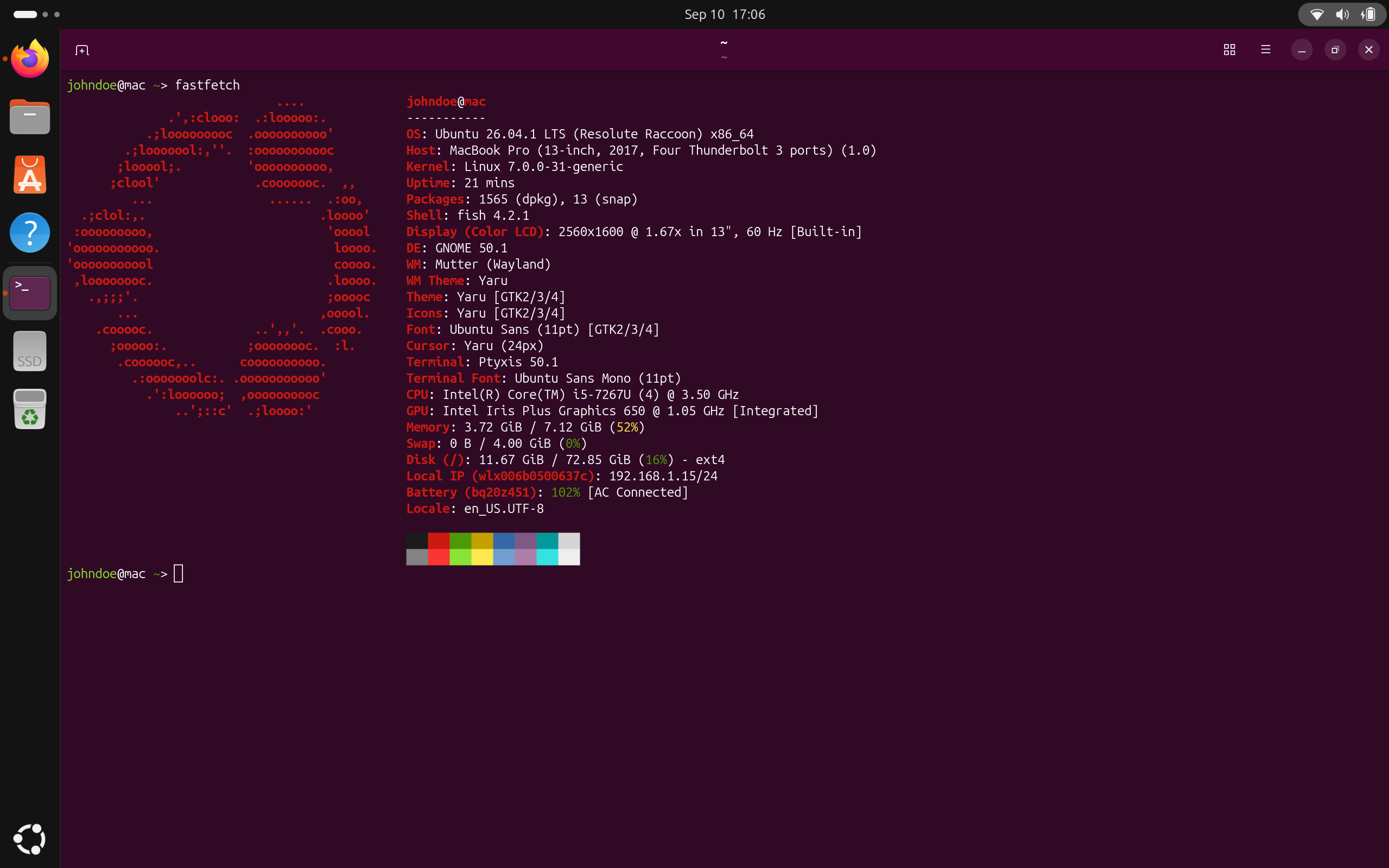
Russell Coker: Links August 2026

This YouTube video about the Cashier Girl Meme is interesting in the context of AI systems that generate images of people and can communicate with people, hotter than any real human is an achievable goal [1]. Stand Up Maths has an interesting Youtube video about LLMs solving maths problems which I highly recommend watching (it does not require any real knowledge of maths), I think this opens the door to attacks on well established cryptologic systems [2]. Adam Conover made an insightful YouTube video about how and why Hollywood is now unable to make good sitcoms and why this is bad for society [3]. Sky Croeser wrote an interesting and insightful blog post about topics covered at the Digital and sexual citizenship in an age of social media bans: Interrogating the rights of children and young people conference [4]. Zane wrote a very informative blog post about reverse engineering a trojaned Android projector with Claude Code [5]. We need much better security on home networks to break the business model for this sort of thing. Renee Stonebraker s article Puritans Wouldn t Eat Pussy, So They Invented the Western has a lot of interesting information about early days of colonising the US, and not much about eating pussy [6]. IFLScience has an interesting article about brinicles, icicles of brine that form under sea ice [7]. Nautilus has an interesting article about the Silurian Hypothesis [8]. The Conversation has an intersting article about the pros and cons of no-till farming [9]. Cold War is a 365tomorrows story about bio-warfare which raises several disturbing possibilities we need to guard against [10]. Scott Santens wrote an insightful article describing how a land value tax would reduce rent and solve the housing shortages [11]. Positive News has an interesting article about using OnlyFans to teach people about climate change [12]. The Conversation has an interesting article about cultural safety in healthcare, sounds good, and while we are at it lets deal with sexism [13]. Doctoreww has an interesting web page about ways of displaying different strings to humans and machines, this could result in you running a different command to what you thought you copied from a web site or defeating tools designed to block hostile content [14]. Cory Doctorow wrote an insightful article Commentary Hell is Other People about the way rich people want to use AI to replace all people [15]. Also psychologists who help rich people accept being greedy are worthy of a Luigi The research article Worship me at the office altar: Why narcissistic leaders resist remote work is interesting, yet another reason to get rid of narcissistic executives [16]. Renew Economy has an interesting article about clean up costs for mining (which is usually left for the government to pay) and how this could impact renewable energy production facilities [17]. Elvira Bary wrote an insightful article on the Russian financial collapse that is happening now [18]. The Guardian has an interesting article about Afro-American women who travel to South Korea for healthcare because of problems with racism and sexism in American hospitals [19]. The Conversation has an interesting article about the potential for disabled people to be more productive in space than non-disabled people [20]. Krebs has an interesting article about LG banning residential proxy code from apps after the LG store was found to have such code in 42% of it s apps [21]. Robert B Shpiner wrote an insightful article for The Guardian about the death of democracy in the US [22].

Emmanuel Kasper: Create a development VM using Debian cloud images

Following on the rationale of the previous post, here is how I create a development VM based on ready to use disk images made by the debian cloud team. I could as well install the VM myself using an ISO, but why download a collection of packages in a ISO only to copy them right onto a disk image ? From the list of images available at https://cloud.debian.org/images/cloud/ we will start with the generic qcow2 disk image, it has cloud-init, which allows initial automatic configuration, and snapshots of the VM via the qcow2 disk format. As for the virtualization, I am using virsh virt-install and virt-manager, which are part of the libvirt framework. Libvirt offers an excellent API accessible over qemu/KVM via shell (virsh), GUI (virt-manager) and Web (cockpit) . To use libvirt, properly you need to make sure your standard user is member of the libvirt group, and the libvirt default network is started via virsh net-autostart default. Also make sure you set export LIBVIRT_DEFAULT_URI=qemu:///system to use the system wide instance of libvirt, which is needed for the default bridged networking. Download the debian cloud image:
$ wget https://cloud.debian.org/images/cloud/trixie/daily/latest/debian-13-generic-amd64-daily.qcow2
Add the disk image as a libvirt volume:
$ export SIZE=$(stat -Lc%s debian-13-generic-amd64-daily.qcow2)
$ virsh vol-create-as default dev-vm $SIZE --format qcow2
$ virsh vol-upload --pool default dev-vm debian-13-generic-amd64-daily.qcow2
Create a VM with the root password set to root :
$ echo root > password.txt
$ virt-install --name dev-vm --memory 4096 --noreboot \
	--os-variant detect=on,name=linux2024 \
	--disk vol=default/dev-vm \
	--import \
	--boot uefi \
	--cloud-init root-password-file=password.txt,clouduser-ssh-key=$HOME/.ssh/.ssh/id_ed25519,disable=on
At the point libvirt will create a VM (a domain in libvirt parlance) and start it.
Starting install...
Allocating 'virtinst-ns9oa7_i-cloudinit.iso'                  368 kB  00:00     
Transferring 'virtinst-ns9oa7_i-cloudinit.iso'                368 kB  00:00     
Creating domain...                                                    00:00     
Connected to domain 'dev-vm'
BdsDxe: starting Boot0001 "UEFI Misc Device" from PciRoot(0x0)/Pci(0x2,0x3)/Pci(0x0,0x0)
Booting  Debian GNU/Linux'
Loading Linux 6.12.101+deb13-amd64 ...
Loading initial ramdisk ...
EFI stub: Loaded initrd from LINUX_EFI_INITRD_MEDIA_GUID device path
EFI stub: UEFI Secure Boot is enabled.
[    0.000000] Linux version 6.12.101+deb13-amd64 (debian-kernel@lists.debian.org) (x86_64-linux-gnu-gcc-14 (Debian 14.2.0-19) 14.2.0, GNU ld (GNU Binutils for Debian) 2.44) #1 SMP PREEMPT_DYNAMIC Debian 6.12.101-1 (2026-08-05)
[    0.000000] Command line: BOOT_IMAGE=/boot/vmlinuz-6.12.101+deb13-amd64 root=PARTUUID=2b4578e2-9d2e-4b32-b6a4-b5b2ca607ef6 ro console=tty0 console=ttyS0,115200 earlyprintk=ttyS0,115200 consoleblank=0
...
Once the VM is created you have now three ways to access it:
# open a serial console to the VM
$ virsh console dev-vm
# access the graphical console
$ virt-manager
# Access the VM via SSH with the precreated cloud user "debian"
$ virsh domifaddr dev-vm
 Name       MAC address          Protocol     Address
-------------------------------------------------------------------------------
 vnet7      52:54:00:23:e6:61    ipv4         192.168.122.225/24
$ ssh debian@192.168.122.225
In the next blog post we will see how to configure the IDE (vscodium) to run confortably in the VM.

18 August 2026

John Goerzen: AI in Debian: The Vote, Proposals, and Nuance

Let me start with a hypothesis:
For human developers, using coding LLMs magnifies their difference in skill levels.
I am one that rarely thinks things are always black and white. Back in March, I wrote Artifial Intelligence: Shades of Gray. Since then, I ve had more of a chance to experiment with LLMs myself. I also happen to work for an employer that is taking a very pragmatic approach to LLMs: teams and individuals use it as they see fit, but if they are causing considerable expense, they have to justify it. In various settings, I have seen the egregious examples of AI slop we all know about. As I wrote in March, I have seen it both waste more time than it saves, and save a ton of time. I have come to see that, as a tool, it is most valuable when it is running under the supervision of an experienced engineer. It is at its worst when it has no such supervision; the vibe coding and other low-quality slop we see. A coding agent is like a junior developer or research assistant. When properly supervised, they help projects move along more quickly by letting a senior developer focus on the more difficult, less mundane aspects of the project. But one couldn t expect a junior developer to consistently deliver high-quality code and architecture on their own. Let s put a pin in this idea and look at the story in Debian. LLM use in Debian There is a vote happening in Debian around the use of LLMs. In typical Debian fashion, there are 8 options to choose from, many of them similar. Most of these proposals acknowledge there are different types of tasks done in Debian, but the proposals don t differentiate between them well. Let me do so here. These are some of the LLM-relevant tasks people in Debian perform: I m going to focus my remarks here on packaging upstream software for Debian, since this is by far the most time-consuming developer task project-wide. It matters to our users that we get this right, and packaging quality is one of the things that sets Debian apart from other distros. Packaging things for Debian requires knowledge of some specific tools, such as debhelper, that aren t widely used anywhere else. In most cases, it is fairly rote time-consuming work. In other words, by its design, it requires people with senior-level skills to do grunt work. I can t overstate how massive a burden this grunt work is. I maintain some packages for Go and Rust. By Debian policy, all of those packages dependencies must also exist as Debian packages, and be used to build against. When upstream adopts a newer version of some library, it can unleash cascading dependencies that can take hours to sort out. Worse, the Rust team and the Go team use entirely different ways of managing packages (Go uses one Git repo per package, while Rust has a monorepo with specialized scripts to import Cargo packages and generate Debian ones). On top of that, we can t just modify things like usual; we have to use quilt. And on top of that, I m also a backports maintainer, so all the work (and usually even more) has to be done there also. Now let s pull on that pin from the earlier conversation. This is exactly the kind of scenario that a well-supervised coding LLM is most effective in. I could see a seasoned developer saving hours, maybe even days, by turning over the mundane tasks of managing trees of cascading dependencies over to a coding tool and verifying and directing the process. (Yes, I have been using em-dashes for years; LLMs have copied people like me, not the other way around! This post was not written with any AI assistance.) Actually, this is almost a dream scenario for a coding assistant. The result is time-consuming to formulate but easy to review, which is the opposite of the way these things often go. I can assure you with 100% certainty that humans aren t adding a lot of value in this process. It would be wrong to believe that a human is carefully reading every line of code in dozens of updated or new library packages. The problem set is too big, the time too short, and the code too varied and complex. Coding agents seem to be most effective when there are strong test suites that they can test changes against. Debian builds, especially of modern packages, tend to have this property. Many packages have test suites that are run during build. And, if the package builds in an isolated environment (and especially if its downstream dependencies do also), then there is a decent chance that it s fairly correct. Maybe needing some manual tweaking here and there, but generally a successful build is a reasonable indicator. You can argue that it would make more sense for Debian to just include dependencies in source packages, along with some version information to support security rebuilds, and I d tend to agree with you. But we are where we are. This would be one of the more significant leaps forward in developer productivity, but it complicates things like copyright reviews. Where are LLMs run? What is the environmental impact? Most of the proposals seem to make the assumption that LLMs must always run in some large, hosted datacenter. As I noted in my March article, I have had credible results on even an older GPU running on solar power. That said, it is undeniable that LLMs are fueling a datacenter boom, and this in turn is producing a significant new demand for resources. Most notably for the global scale: electricity, which is sometimes generated using carbon-emitting technologies. Bill McKibben, who has been a leading voice in the fight against climate change since the 1980s, has made some interesting points recently: he s noted that solar power is the fastest kind of generation we can build, and a number of large AI companies are investing heavily in solar, even to the point of fully offsetting new datacenter s needs. On the other hand, he s also noted that some companies are buying inefficient and dirty gas turbines. It is decidedly a mixed bag. The heavy investment in solar can have knock-on positive effects for infrastructure. Obviously, not every picture here is rosy. This analysis doesn t touch on the real land and water use situation, either. On the other hand, if an LLM allows me to do in an hour what I would have done in a day, that s a day of not heating or cooling the work area generally not sustaining a human for the purpose of writing code for Debian. HVAC energy consumption dwarfs my GPU, and I d imagine probably also the slice of LLM energy used. Holistically, I would have to conclude the picture is mixed. It is possible to use LLMs in a pretty green way, and also in a pretty dirty way. Assuming Conditions Never Change A flaw in most of these proposals is they assume that the conditions at this present moment will always hold. In fact, that the conditions at the present moment will not continue is something both AI cheerleaders and AI skeptics agree on. For instance: Ed Zitron has done a ton of research into the financing side of AI, and has concluded that the current model is unsustainable and headed for a significant bubble burst. I m not positioned to personally evaluate those claims, but if that happens, what is the result? Perhaps it is a steeply increasing cost of inference for the frontier models, slower pace of training/evolution for them, etc. In a recent episode of Oxide and Friends, Simon Willison discussed the open weight models that are now available. They have been making remarkable strides in efficiency and capabilities, to the point where $50,000 of hardware can now run high-end open weight models with capabilities that are at least in the same ballpark as the American frontier models. This puts running high-end models locally squarely within reach of universities and small- to medium-sized businesses, with power requirements that can be met with standard commercial solar and wind installations. The lack of nuance in the more restrictive proposals is particularly concerning. Proposal A doesn t allow the use or assitance of LLMs . So it bans my solar-powered GPU. It bans using LLMs to find security issues. It bans all sorts of things that don t seem to be ban-worthy, alongside the things that do. And it codifies it in the very hard-to-change social contract. That proposal, and some like it, seem to imply that all LLM output is bad. I grant you that AI slop is a real and legitimate concern, and many Open Source projects have to deal with it. On the other hand, we have all seen first-hand how the security of the Linux kernel has benefited dramatically from AI analysis. It is certain that black hats are using these tools. If we refuse to use modern security tools, our security will be compromised (and what is the environmental and social impact of THAT?) I find the statement Generative AI is characterized by producing output of a nature that would ordinarily be produced and consumed by humans to be particularly interesting. The same was once said of compilers. The Real Concerns You might think from reading this that I am some AI cheerleader. I m not. I share the ethics of the FLOSS movement, and have for decades. I abhor the power and lack of ethics that many big names in the field are running with at the moment. I ve had to put up Anubis on this blog, for instance. I have personally experienced the effects of AI slop, especially at review time. This is a real problem, though I don t think the more draconian policies are likely to help (the looser you must disclose stand a fighting chance, but I m not sure they would help, either.) Done poorly, AI threatens developer burnout by overwhelming them with poor code and verbose but useless explanations. Done well, AI can help prevent developer burnout by automating tedious and low-value tasks. Shouldn t our goal be that humans submit work to Debian, using tools they prefer, and take responsibility for it? Does it matter if someone uses ed, vim, emacs, or vscode? If they use LSP or just run gcc manually? I d say we benefit from the diversity. Wouldn t we be better off to benefit from the diversity here, and judge work as we always have: on its merits, not what tools were used to create it? Fundamentally, a GR is a long and arduous process. It s not easy to reverse later. Amending the Social Contract is even longer and more arduous (I should know; I may have been the first one to try). The LLM landscape is fast-moving. None of us can really predict where it will be in a year. Will the current market leading companies even still exist? Will it be at all credible to refuse to use AI-assisted security tools? What is the most effective way to deal with AI slop? What level of utility will we be able to achieve with models run locally? Some of these proposals would make sense if drafted in some way short of a GR, which would allow more maneuverability as the landscape changes. Brief analysis of the options Considering the proposals: In favor of nuance I find that black-and-white thinking is almost always something to be avoided. I see it too often. I see it in politics, I see it in our software, I see it in discussions around AI. Are there deeply unethical things happening in AI? Absolutely. Are they doing some impressive things? Also yes. We have accepted this nuance in other areas. For instance, almost all the hardware Debian runs on has closed-source hardware, and has components manufactured or assembled in countries with some of the worst human rights records on the planet. I m not saying this is a great state of affairs. It is something we should speak up about and act upon. But the worse state of affairs would be no Debian because the hardware is impure .

16 August 2026

Vasudev Kamath: Releasing debvulns-exporter and debvulns CLI 0.2.2

I made another minor release with several enhancements: handling non-Debian origin vulnerabilities, improving data caching, and sharing the cache between the debvulns CLI and the exporter. Additionally, there are a few improvements on the dashboard front. Here is a breakdown of what changed.
Handling Vulnerabilities in Non-Debian Origin Packages During the previous release, I noticed that the grafana package which is not in Debian and was installed via an upstream repository was reported as vulnerable with multiple issues. Looking into why this happened, I found that all the CVEs reported in the dashboard were indeed listed on security-tracker.debian.org, but without a fixed version or status description. The logic assumed no fix was available and marked the package as vulnerable on the dashboard.
How Did I Solve This? Google maintains a distributed vulnerability database for open-source projects called osv.dev. I checked the generic vulnerability data for those CVEs on OSV (unbound to any specific distribution) and found that the issues were already fixed in the upstream version I was running. What I needed was a way to differentiate native Debian packages from non-Debian packages, which corresponds to the Origin field in APT metadata.
Pitfall The AI-generated code initially attempted to differentiate package origin using apt_pkg.PackageRecords and its origin field. However, many native Debian packages were incorrectly flagged as non-Debian. On closer inspection, when an upgrade is available for a package, the installed version's origin field can be unset. I had to resolve this by detecting available upgrades and inspecting the candidate version's origin instead, which was implemented in this patch. This solution was proudly crafted by me ;-) (partly because I ran out of API limits and had to wait 6 hours for the next reset).
Caching OSV Data Initially, the AI implemented the exporter to re-download the entire OSV dataset on every run, which was unnecessary. Since vulnerability data does not change rapidly once published, caching it on disk for longer than the standard 24-hour Debian/EPSS cache makes sense. OSV vulnerability data is now cached for 7 days before a refresh is triggered. All cache expiration thresholds remain configurable via CLI flags.
Catch One caveat with this approach: I have not yet verified whether every upstream CVE is tracked on security-tracker.debian.org. In the case of grafana, the entries existed. This feature operates on the assumption that security-tracker.debian.org indexes CVE metadata regardless of whether the package is native to Debian. I plan to re-evaluate this and add fallback handling if that assumption fails.
Unified Cache Directory for CLI and Exporter Another issue was cache segregation: the debvulns CLI utility defaulted to /var/cache/debvulns, while the Prometheus exporter used /var/cache/debvulns-exporter. While harmless when running only one tool, installing both led to duplicated cache storage and redundant network requests. Since the core evaluation logic is identical across both tools, they now share a unified cache directory to eliminate duplicate downloads.
Dashboard Changes During the initial dashboard rollout, my test environment (my laptop alongside Debian 11 and Debian 12 VMs) reported a high aggregated vulnerability count. It was not immediately obvious whether these were distinct vulnerabilities or the same CVEs replicated across all three machines. This mirrors common questions raised during vulnerability reviews:
  • How many unique vulnerabilities are present across the fleet?
  • Which unique packages are affected?
The dashboard has been redesigned to surface unique vulnerability counts alongside affected package lists. The updated dashboard is shown below:
What's Next? A few planned items remain to make debvulns a comprehensive vulnerability reporting toolkit for Debian systems:
  1. Kernel Vulnerability Handling: Currently, installing a patched kernel marks the vulnerability as resolved, even if the system has not rebooted into it. The system remains exposed while the vulnerable kernel is executing in memory. Factoring in running kernel versions is crucial.
  2. Reboot and Service Restart Tracking: Similar to kernel upgrades requiring a reboot, userland library and binary fixes require running services to be restarted. This is typically detected via needrestart. Integrating this behavior directly into debvulns will provide complete visibility in a single dashboard metric.
  3. Debian Packaging: Once the above features are stable, the final step is packaging debvulns for Debian so it can be installed directly from the archive.
Until then, happy hacking.

15 August 2026

Russell Coker: AMD Video Drivers, LLMs, and Debian Kernels

The AMD GPU Problem For a while I ve been having issues with AMD GPUs, video locking up periodically. I blogged about this late last year but I first had noticeable problems early last year [1]. The problems hadn t only concerned my workstation but also my home server which is also used as a workstation. I ve recently upgraded my machines to Debian/Testing, my home server has been generally OK but my workstation has been crashing a lot. Every second day when on kernel 7.1.6 and then when on 7.1.7 it crashed at least once a day. The AMD GPUs I have are [AMD/ATI] Baffin [Radeon RX 460/560D / Pro 450/455/460/555/555X/560/560X] (rev e5) in my main desktop workstation, [AMD/ATI] Lexa [Radeon 540X/550X/630 / RX 640 / E9171 MCM] (rev c1) in my build server, and [AMD/ATI] Baffin [Radeon RX 460/560D / Pro 450/455/460/555/555X/560/560X] (rev cf) in my home server. They aren t new GPUs, but also aren t really old and they all support 4K and better resolution. Chat GPT Was Useful When I googled the errors I was seeing I found nothing useful. On the suggestion of a friend I tried asking ChatGPT. Generally I don t recommend asking LLMs about such things, but it can be a last resort as long as you know what you are doing. ChatGPT asked me to run a number of commands to get information for it to make more informed decisions. I know that the output of lspci and similar commands isn t a risk, but a novice could be tricked into running commands that expose sensitive data. ChatGPT did give me some useful information, not a solution but an indication that the problem was due to driver bugs. Upgrading to Experimental Debian/Experimental is for packages that are expected to have problems and generally aren t recommended even for the people who usually use Debian/Unstable. It s commonly used for packages that are needed to develop other packages, EG new libraries that aren t fully usable but which are needed to package newer versions of applications. I upgraded my workstation to the Debian/Experimental kernel 7.2~rc7-1~exp1 after having tried every other convenient option. Generally I wouldn t recommend that anyone run an Experimental kernel without a really good reason, but crashing more than once a day is a fairly good reason. That kernel has now given me over 4 days of uptime on a system that previously wouldn t last a day. I installed it on my dual-socket build server that has an old AMD GPU in it for test purposes and that also hasn t crashed since. I installed it on my ML test machine which has an Intel B580 Battlemage GPU with 16G of VRAM and was repeatedly getting a kernel panic related to the GPU a few seconds after boot and now it also works correctly. It seems that the 7.1.x kernels have bugs in the AMD video drivers and in some part of the code that affects Intel video drivers and that the bugs in question are fixed in the tree that will become 7.2. I would not recommend anyone who has a 7.1.x kernel working fine for them try 7.2 RC kernels at this time, but anyone who has GPU related problems (particularly Intel and AMD GPUs) should definitely test it out. I also don t recommend upgrading any system with an AMD GPU to Debian/Testing or Debian/Unstable at this time unless you are also prepared to install an Experimental kernel if it becomes necessary. There are a several kernel log dumps related to this after the break (which won t be in RSS feeds). This is mainly for Google so that other people who have such issues can get more useful results out of Google searches than I got. Future Support Options Separate from the issue of whether commercial LLMs like ChatGPT can be useful for solving technical problems there is the issue of whether they are desirable. I think that we really don t want people solving problems in FOSS systems with closed-source LLMs. This leads to loss of privacy, loss of the control users deserve to have over their own systems, and an implied promotion of non-fee software. I think that the ideal would be to have a cross distribution effort to generate training data for a support LLM system which can then be further trained by each distribution for a greater emphasis on distribution specific issues. Errors on AMD GPUs
2026-08-09T23:03:06.004792+10:00 xev kernel: amdgpu 0000:02:00.0: GPU fault detected: 147 0x00024802
2026-08-09T23:03:06.004792+10:00 xev kernel: amdgpu 0000:02:00.0: Process kscreenlocker_g pid 42037 thread kscreenloc:cs0 pid 42044
2026-08-09T23:03:06.004793+10:00 xev kernel: amdgpu 0000:02:00.0: VM_CONTEXT1_PROTECTION_FAULT_ADDR 0x00000800
2026-08-09T23:03:06.004794+10:00 xev kernel: amdgpu 0000:02:00.0: VM_CONTEXT1_PROTECTION_FAULT_STATUS 0x0F048002
2026-08-09T23:03:06.004795+10:00 xev kernel: amdgpu 0000:02:00.0: VM fault (0x02, vmid 7, pasid 130) at page 2048, write from 'TC0' (0x54433000) (72)
2026-08-09T23:03:06.008762+10:00 xev kernel: amdgpu 0000:02:00.0: GPU fault detected: 147 0x00004802
2026-08-09T23:03:06.008768+10:00 xev kernel: amdgpu 0000:02:00.0: Process kscreenlocker_g pid 42037 thread kscreenloc:cs0 pid 42044
2026-08-04T01:13:37.505839+10:00 xev kernel: ------------[ cut here ]------------ 
2026-08-04T01:13:37.505859+10:00 xev kernel: amdgpu 0000:02:00.0: [drm] drm_WARN_ON_ONCE(cur_vblank != vblank->last) 
2026-08-04T01:13:37.505862+10:00 xev kernel: WARNING: CPU: 6 PID: 210534 at drivers/gpu/drm/drm_vblank.c:362 drm_update_vblank_count+0x2f1/0x3c0 [drm] 
2026-08-04T01:13:37.505866+10:00 xev kernel: snd_intel_dspcfg wmi_bmof rc_core snd_intel_sdw_acpi drm_ttm_helper uas realtek snd_usbmidi_lib snd_hda_codec ttm mdio_devres snd_hda_core snd_seq_midi drm_kms_helper usb_storage mc snd_hwdep libphy snd_seq_midi_event intel_uncore snd_pcm_oss i2c_algo_bit serio_raw snd_rawmidi pcspkr snd_mixer_oss i2c_i801 video snd_seq snd_pcm i2c_smbus lpc_ich snd_seq_device mei_me e1000e snd_timer mei snd tpm_infineon soundcore joydev bnx2 wmi button nfsd auth_rpcgss nfs_acl lockd grace sunrpc coretemp br_netfilter bridge stp llc sg ghash_clmulni_intel loop msr i2c_dev drm efi_pstore configfs nfnetlink ip_tables x_tables autofs4 btrfs blake2b_generic dm_crypt dm_mod raid10 raid456 async_raid6_recov async_memcpy async_pq async_xor async_tx libcrc32c xor raid6_pq raid1 raid0 md_mod ext4 crc16 mbcache jbd2 crc32c_generic virtio_blk evdev hid_generic usbhid hid sd_mod xhci_pci xhci_hcd ahci ehci_pci ehci_hcd libahci crc32c_intel libata usbcore aesni_intel nvme psmouse scsi_mod gf128mul crypto_simd nvme_core cryptd 
2026-08-04T01:13:37.505879+10:00 xev kernel: nvme_auth scsi_common usb_common efivarfs 
2026-08-04T01:13:37.505880+10:00 xev kernel: CPU: 6 UID: 1008 PID: 210534 Comm: sshd-session Tainted: G D 6.12.88+deb13-amd64 #1 Debian 6.12.88-1 
2026-08-04T01:13:37.505881+10:00 xev kernel: Tainted: [D]=DIE 
2026-08-04T01:13:37.505883+10:00 xev kernel: Hardware name: Hewlett-Packard HP Z640 Workstation/212A, BIOS M60 v02.61 03/23/2023 
2026-08-04T01:13:37.505884+10:00 xev kernel: RIP: 0010:drm_update_vblank_count+0x2f1/0x3c0 [drm] 
2026-08-04T01:13:37.505885+10:00 xev kernel: Code: 48 8b 5f 50 48 85 db 75 03 48 8b 1f e8 68 eb 2b cf 48 c7 c1 70 3e cb c0 48 89 da 48 c7 c7 f9 6f cb c0 48 89 c6 e8 af d7 a6 ce <0f> 0b e9 4b fe ff ff 48 8b 4c 24 18 e9 31 fe ff ff 31 f6 48 85 db 
2026-08-04T01:13:37.505887+10:00 xev kernel: RSP: 0000:ffffd3cc8681fca0 EFLAGS: 00010082 
2026-08-04T01:13:37.505888+10:00 xev kernel: RAX: 0000000000000000 RBX: ffff8c6b42b13710 RCX: 0000000000000027 
2026-08-04T01:13:37.505889+10:00 xev kernel: RDX: ffff8c89ef521788 RSI: 0000000000000001 RDI: ffff8c89ef521780 
2026-08-04T01:13:37.505890+10:00 xev kernel: RBP: 0000000000000000 R08: 0000000000000000 R09: ffffd3cc8681fb20 
2026-08-04T01:13:37.505891+10:00 xev kernel: R10: ffff8c8a6fef3628 R11: 0000000000000003 R12: 0000000000000000 
2026-08-04T01:13:37.505892+10:00 xev kernel: R13: ffff8c6c07853828 R14: 0000000000000003 R15: 0000000000000000 
2026-08-04T01:13:37.505893+10:00 xev kernel: FS: 00007ffaf2fd5880(0000) GS:ffff8c89ef500000(0000) knlGS:0000000000000000 
2026-08-04T01:13:37.505895+10:00 xev kernel: CS: 0010 DS: 0000 ES: 0000 CR0: 0000000080050033 
2026-08-04T01:13:37.505896+10:00 xev kernel: CR2: 00007fb1718c8000 CR3: 000000074521a004 CR4: 00000000003706f0 
2026-08-04T01:13:37.505897+10:00 xev kernel: Call Trace: 
2026-08-04T01:13:37.505898+10:00 xev kernel:  
2026-08-04T01:13:37.505899+10:00 xev kernel: drm_crtc_accurate_vblank_count+0x41/0xc0 [drm] 
2026-08-04T01:13:37.505900+10:00 xev kernel: dm_pflip_high_irq+0x155/0x330 [amdgpu] 
2026-08-04T01:13:37.505901+10:00 xev kernel: amdgpu_dm_irq_handler+0x85/0x1f0 [amdgpu] 
2026-08-04T01:13:37.505902+10:00 xev kernel: amdgpu_irq_dispatch+0xd2/0x230 [amdgpu] 
2026-08-04T01:13:37.505903+10:00 xev kernel: amdgpu_ih_process+0x84/0x100 [amdgpu] 
2026-08-04T01:13:37.505904+10:00 xev kernel: amdgpu_irq_handler+0x23/0x60 [amdgpu] 
2026-08-04T01:13:37.505905+10:00 xev kernel: __handle_irq_event_percpu+0x4a/0x190
2026-08-04T01:13:37.505907+10:00 xev kernel: handle_irq_event+0x38/0x80 
2026-08-04T01:13:37.505908+10:00 xev kernel: handle_edge_irq+0x8b/0x230 
2026-08-04T01:13:37.505909+10:00 xev kernel: __common_interrupt+0x45/0xe0 
2026-08-04T01:13:37.505910+10:00 xev kernel: common_interrupt+0x42/0xa0 
2026-08-04T01:13:37.505911+10:00 xev kernel: asm_common_interrupt+0x26/0x40 
2026-08-04T01:13:37.505912+10:00 xev kernel: RIP: 0033:0x7ffaf3c5fd7b 
2026-08-04T01:13:37.505913+10:00 xev kernel: Code: 70 c7 00 66 0f 6e f8 c1 ef 02 66 0f 70 f7 e0 83 c7 01 66 0f ef ff 66 0f fa f2 0f 1f 44 00 00 f3 0f 7e 01 66 0f 6f ce 83 c6 01 <48> 83 e9 08 f2 0f 70 c0 1b 66 0f 6f e0 66 0f 6f e8 66 41 0f f9 c0 
2026-08-04T01:13:37.505915+10:00 xev kernel: RSP: 002b:00007fff86a5e0e0 EFLAGS: 00000202 
2026-08-04T01:13:37.505916+10:00 xev kernel: RAX: 0000000000008000 RBX: 0000562614a04050 RCX: 0000562614982ed8 
2026-08-04T01:13:37.505946+10:00 xev kernel: RDX: 0000000000007fe2 RSI: 0000000000000fad RDI: 0000000000002000 
2026-08-04T01:13:37.505948+10:00 xev kernel: RBP: 0000000000000000 R08: 000056261498ac40 R09: 0000000000008000 
2026-08-04T01:13:37.505949+10:00 xev kernel: R10: 0000000000000066 R11: 0000000000007fe1 R12: 0000000000007efa
2026-08-04T01:13:37.505950+10:00 xev kernel: R13: 0000000000008000 R14: 0000000000008000 R15: 000000000000ffe0 
2026-08-04T01:13:37.505951+10:00 xev kernel:  
2026-08-04T01:13:37.505953+10:00 xev kernel: ---[ end trace 0000000000000000 ]--- 
2026-08-04T01:55:40.844110+10:00 xev kernel: pcieport 0000:00:03.3: AER: Multiple Correctable error message received from 0000:00:03.3 
2026-08-04T01:55:40.844130+10:00 xev kernel: pcieport 0000:00:03.3: PCIe Bus Error: severity=Correctable, type=Data Link Layer, (Receiver ID) 
2026-08-04T01:55:40.844132+10:00 xev kernel: pcieport 0000:00:03.3: device [8086:6f0b] error status/mask=00000040/00002000 
2026-08-04T01:55:40.844134+10:00 xev kernel: pcieport 0000:00:03.3: [ 6] BadTLP
2026-08-11T09:33:33.473855+10:00 xev kernel: amdgpu 0000:02:00.0: GPU fault detected: 147 0x00024802
2026-08-11T09:33:33.473871+10:00 xev kernel: amdgpu 0000:02:00.0: Process kscreenlocker_g pid 150905 thread kscreenloc:cs0 pid 150912
2026-08-11T09:33:33.473871+10:00 xev kernel: amdgpu 0000:02:00.0: VM_CONTEXT1_PROTECTION_FAULT_ADDR 0x00000800
2026-08-11T09:33:33.473873+10:00 xev kernel: amdgpu 0000:02:00.0: VM_CONTEXT1_PROTECTION_FAULT_STATUS 0x0F048002
2026-08-11T09:33:33.473873+10:00 xev kernel: amdgpu 0000:02:00.0: VM fault (0x02, vmid 7, pasid 63) at page 2048, write from 'TC0' (0x54433000) (72)
2026-08-11T09:33:33.473874+10:00 xev kernel: amdgpu 0000:02:00.0: GPU fault detected: 147 0x00004802
2026-08-11T09:33:33.473874+10:00 xev kernel: amdgpu 0000:02:00.0: Process kscreenlocker_g pid 150905 thread kscreenloc:cs0 pid 150912
2026-08-11T09:33:33.473875+10:00 xev kernel: amdgpu 0000:02:00.0: VM_CONTEXT1_PROTECTION_FAULT_ADDR 0x00000800
2026-08-11T09:33:33.473876+10:00 xev kernel: amdgpu 0000:02:00.0: VM_CONTEXT1_PROTECTION_FAULT_STATUS 0x0E048002
2026-08-11T09:33:33.473876+10:00 xev kernel: amdgpu 0000:02:00.0: VM fault (0x02, vmid 7, pasid 63) at page 2048, read from 'TC0' (0x54433000) (72)
2026-08-11T09:33:35.481863+10:00 xev kernel: amdgpu 0000:02:00.0: Dumping IP State
2026-08-11T09:33:35.481875+10:00 xev kernel: amdgpu 0000:02:00.0: Dumping IP State Completed
2026-08-11T09:33:35.481875+10:00 xev kernel: amdgpu 0000:02:00.0: [drm] AMDGPU device coredump file has been created
2026-08-11T09:33:35.481876+10:00 xev kernel: amdgpu 0000:02:00.0: [drm] Check your /sys/class/drm/card0/device/devcoredump/data
2026-08-11T09:33:35.481877+10:00 xev kernel: amdgpu 0000:02:00.0: GPU fault detected: 146 0x0110040c
2026-08-11T09:33:35.481877+10:00 xev kernel: amdgpu 0000:02:00.0: Process kscreenlocker_g pid 150905 thread kscreenloc:cs0 pid 150912
2026-08-11T09:33:35.481878+10:00 xev kernel: amdgpu 0000:02:00.0: VM_CONTEXT1_PROTECTION_FAULT_ADDR 0x00000022
2026-08-11T09:33:35.481879+10:00 xev kernel: amdgpu 0000:02:00.0: VM_CONTEXT1_PROTECTION_FAULT_STATUS 0x0E00400C
2026-08-11T09:33:35.481879+10:00 xev kernel: amdgpu 0000:02:00.0: VM fault (0x0c, vmid 7, pasid 63) at page 34, read from 'TC3' (0x54433300) (4)
2026-08-11T09:33:35.489845+10:00 xev kernel: amdgpu 0000:02:00.0: ring gfx timeout, signaled seq=5123619, emitted seq=5123621
2026-08-11T09:33:35.489853+10:00 xev kernel: amdgpu 0000:02:00.0: Process kscreenlocker_g pid 150905 thread kscreenloc:cs0 pid 150912
2026-08-11T09:33:35.489854+10:00 xev kernel: amdgpu 0000:02:00.0: GPU reset begin!. Source: 1
2026-08-11T09:33:35.493839+10:00 xev kernel: amdgpu 0000:02:00.0: [drm] ERROR Failed to initialize parser -125!
2026-08-11T09:33:35.737848+10:00 xev kernel: amdgpu: cp is busy, skip halt cp
2026-08-11T09:33:35.897842+10:00 xev kernel: amdgpu: rlc is busy, skip halt rlc
2026-08-11T09:33:35.897852+10:00 xev kernel: amdgpu 0000:02:00.0: BACO reset
2026-08-11T09:33:36.485849+10:00 xev kernel: amdgpu 0000:02:00.0: GPU reset succeeded, trying to resume
2026-08-11T09:33:36.485859+10:00 xev kernel: amdgpu 0000:02:00.0: [drm] PCIE GART of 256M enabled (table at 0x000000F402000000).
2026-08-11T09:33:36.485860+10:00 xev kernel: amdgpu 0000:02:00.0: VRAM is lost due to GPU reset!
Errors on Battlemage
Aug 11 17:01:47 ami kernel: ------------[ cut here ]------------
Aug 11 17:01:47 ami kernel: xe 0000:23:00.0: [drm] DMC 1 mmio[0]/0x5f074 incorrect (expected 0x96fc0, current 0x0)
Aug 11 17:01:47 ami kernel: WARNING: drivers/gpu/drm/i915/display/intel_dmc.c:696 at assert_dmc_loaded+0x275/0x430 [xe], CPU#0: kworker/0:3/215
Aug 11 17:01:47 ami kernel: Modules linked in: intel_rapl_msr intel_rapl_common intel_uncore_frequency intel_uncore_frequency_common xe(+) skx_edac snd_h>
Aug 11 17:01:47 ami kernel:  msr i2c_dev configfs efi_pstore efivarfs autofs4 btrfs libblake2b raid6_pq xor mpt3sas raid_class scsi_transport_sas megarai>
Aug 11 17:01:47 ami kernel: CPU: 0 UID: 0 PID: 215 Comm: kworker/0:3 Not tainted 7.1.7+deb14-amd64 #1 PREEMPT(lazy)  Debian 7.1.7-1 
Aug 11 17:01:47 ami kernel: Hardware name: HP HP Z4 G4 Workstation/81C5, BIOS P61 v03.00 04/15/2026
Aug 11 17:01:47 ami kernel: Workqueue: sync_wq local_pci_probe_callback
Aug 11 17:01:47 ami kernel: RIP: 0010:assert_dmc_loaded+0x291/0x430 [xe]
Aug 11 17:01:47 ami kernel: Code: 24 10 e8 f2 e5 a3 ce 48 8d 3d bb 85 0d 00 8b 54 24 0c 45 89 e9 45 89 e0 48 89 c6 52 8b 4c 24 2c 51 8b 4c 24 30 48 8b 54>
Aug 11 17:01:47 ami kernel: RSP: 0018:ffffd27ac0b87b80 EFLAGS: 00010282
Aug 11 17:01:47 ami kernel: RAX: ffffffffc1743dfd RBX: ffff8c5b80e54000 RCX: 0000000000000001
Aug 11 17:01:47 ami kernel: RDX: ffff8c5b81df5a10 RSI: ffffffffc1743dfd RDI: ffffffffc1605860
Aug 11 17:01:47 ami kernel: RBP: ffff8c5b86955000 R08: 0000000000000000 R09: 000000000005f074
Aug 11 17:01:47 ami kernel: R10: 0000000000000000 R11: 0000000000091050 R12: 0000000000000000
Aug 11 17:01:47 ami kernel: R13: 000000000005f074 R14: 0000000000000001 R15: 0000000000000000
Aug 11 17:01:47 ami kernel: FS:  0000000000000000(0000) GS:ffff8c673e172000(0000) knlGS:0000000000000000
Aug 11 17:01:47 ami kernel: CS:  0010 DS: 0000 ES: 0000 CR0: 0000000080050033
Aug 11 17:01:47 ami kernel: CR2: 00007ffed1fdcd00 CR3: 0000000ae942a003 CR4: 00000000003706f0
Aug 11 17:01:47 ami kernel: Call Trace:
Aug 11 17:01:47 ami kernel:  
Aug 11 17:01:47 ami kernel:  intel_dmc_enable_pipe+0xe4/0x290 [xe]
Aug 11 17:01:47 ami kernel:  ? drm_crtc_vblank_reset+0x4d/0x120 [drm]
Aug 11 17:01:47 ami kernel:  intel_modeset_setup_hw_state+0xb50/0x1e10 [xe]
Aug 11 17:01:47 ami kernel:  ? intel_display_driver_probe_nogem+0x138/0x1a0 [xe]
Aug 11 17:01:47 ami kernel:  intel_display_driver_probe_nogem+0x138/0x1a0 [xe]
Aug 11 17:01:47 ami kernel:  xe_display_init_early+0xb2/0x140 [xe]
Aug 11 17:01:47 ami kernel:  xe_device_probe+0x3c8/0xb50 [xe]
Aug 11 17:01:47 ami kernel:  ? xe_pm_init_early+0x152/0x160 [xe]
Aug 11 17:01:47 ami kernel:  xe_pci_probe+0xc26/0x1150 [xe]
Aug 11 17:01:47 ami kernel:  local_pci_probe+0x3e/0x90
Aug 11 17:01:47 ami kernel:  local_pci_probe_callback+0x16/0x20
Aug 11 17:01:47 ami kernel:  process_one_work+0x19d/0x3a0
Aug 11 17:01:47 ami kernel:  worker_thread+0x1af/0x320
Aug 11 17:01:47 ami kernel:  ? __pfx_worker_thread+0x10/0x10
Aug 11 17:01:47 ami kernel:  kthread+0xe3/0x120
Aug 11 17:01:47 ami kernel:  ? __pfx_kthread+0x10/0x10
Aug 11 17:01:47 ami kernel:  ret_from_fork+0x2b2/0x340
Aug 11 17:01:47 ami kernel:  ? __pfx_kthread+0x10/0x10
Aug 11 17:01:47 ami kernel:  ret_from_fork_asm+0x1a/0x30
Aug 11 17:01:47 ami kernel:  
Aug 11 17:01:47 ami kernel: ---[ end trace 0000000000000000 ]---

3 August 2026

John Goerzen: Celebrating 45 Years of Kermit with the First New C-Kermit Release in 15 Years (and working with a decades-old C codebase)

1981 was a different time for computing. It was expensive (both hardware and software), and it was far from a given that machines from one vendor would be able to talk to those from another. In fact, Columbia University had just such a problem, so in 1981, Frank da Cruz and Bill Catchings designed a serial protocol they called Kermit. Because of the many quirks of the DEC-20 and IBM mainframes, the Kermit protocol was highly adaptable from the start: able to handle systems that had trouble processing more than 96 bytes of data at once, able to transfer 8-bit files over 7-bit links, able to translate between character sets (ASCII and EBCDIC then; now also various Unicodes), and of course, handling of error-prone serial links. Kermit spread rapidly; by 1982, Kermit had been ported to MS-DOS and Unix. Eventually, C-Kermit (an implementation of Kermit in C) became the flagship Kermit. It gained TCP support, an interactive CLI, a powerful scripting language (with features from the shell, Lisp, and expect), and optimizations for today s high-speed links, such as jumbo packets, sliding windows, and streaming modes. Along the way, Kermit flew on the International Space Station, ran data collection from sensors during hurricanes, and many other uses including postal systems, Boeing 787 manufacturing, and more. Today, I use it as a powerful ssh wrapper (letting me easily transfer files through multiple nested ssh, sudo, su, etc. commands), a BBS client, to exchange data with me HP 48GX calculator, and so on. It s also used today to transmit firmware updates to embedded devices. And, of course, anyone that works with vintage systems is likely to use Kermit at some point. It wouldn t be until the late 1990s that the TCP/IP stack was finally adopted by most OS vendors, establishing something of a common basis for communication. Of course, we assume this today. Though transferring large files between OSs (say, Linux, Windows, MacOS, Android, iPad, etc.) is still a challenge, even though they all speak TCP/IP! I find that the easiest way to get large files from two computers is to spin up Kermit (see ckwin for a Windows fork of C-Kermit) and just set up a TCP connection over the LAN. In fact, I added a new show interfaces command in C-Kermit 11, making it easy to see your system s local IPs. For most of its history, Columbia s Kermit project was self-funded. Columbia charged for commercial use, which limited its inclusion in Linux distributions. In 2011, 30 years after its founding, Columbia canceled the Kermit Project and released C-Kermit as Open Source under a BSD license. Frank da Cruz, who had still been working with the Kermit project all those years, volunteered to continue maintaining Kermit outside Columbia, and continued development with alpha and beta releases through his retirement from the project in 2025. I dive into this C codebase As Debian maintainer of Kermit, I noticed some areas where it wasn t matching modern expectations. One area was, not surprising for a project of its age, security. Another area was that its character set or line-ending conversions are usually not desired now; we are used to byte-identical binary transfers, and the defaults caused confusion and even some rare instances of data corruption. So I started making a few patches last year. I ve worked with old C codebases before, such as Varnish. I ve generally hated it. You usually find a mix of bad and terrible practices, unclear memory management, and so forth. But I ve been living in the C-Kermit codebase for a few months now, and I enjoy it. Yes, this thing is still designed to build on VMS, OS/2, and with compilers that haven t heard of ANSI and those that require modern practices. (That em-dash was mine; I knew how to use them before LLMs existed and I m not going to stop just because LLMs have copied people like me! No AI was used for this post.) The there is an elegance in all of that. As I worked, I fixed a bunch more potential security issues, both with memory safety and with protecting against a malicious remote in roughly the same manner that some patches to scp did a few years back. I added IPv6 support, of course conditionally compiled because some systems C-Kermit builds on have never heard of IPv6 and never will. (And, of course, with fallback algorithms at runtime for systems that have IPv6 support but not IPv6 connectivity.) I added unit tests and Python-based end-to-end tests, running nearly 2000 test cases in total. Along the way, I found and fixed a number of bugs going back decades. I learned about FIONREAD being broken on macOS, about NetBSD s bugs in the pty driver, and fixed bugs in the Kermit protocol implementation itself. I added compatibility tests with the gkermit and ekermit (embedded) implementations, as well as the last full release, C-Kermit 9.0.302 from 2011 (which was difficult to get compiled on a modern system). There is an extensive changelog describing all the improvements in C-Kermit 11. C-Kermit development had never really used a VCS at any point, though Kermit veteran Jeffrey Altman imported historical releases into a Git repo, along with some patches that hadn t made it into a release (which I also pulled in.) There was a lot of disabled code behind COMMENT, along with commentary describing why it was no longer used. With Git, we would now generally just remove the old code and explain why in a commit message. I went through and did so with a lot of it, meaning that, at last check, C-Kermit actually has fewer lines of code now than it used to. Towards a new release It became apparent pretty quickly that I was making more changes than would make sense as a Debian patch series. Not only that, but they would be more widely applicable to more than just Debian and Ubuntu users. As Linux and BSD distributions were running everything from the last non-beta release (2011 s 9.0.302) to the last beta release (about 1.5 years ago), depending on their different policies about running betas, even sharing patches in a useful fashion was going to be quite difficult. So, I spun up a project at Open Kermit to coordinate future development in the open and keep Kermit going. With modern CI, I run that test suite on Linux (x86_64 and arm64), macOS, FreeBSD, NetBSD, and OpenBSD. It builds binary releases on all those platforms, plus a statically-linked Linux binary built with musl libc. You can download the latest C-Kermit release, and of course contribute to C-Kermit and its website. Dedication Frank da Cruz was directly involved with Kermit for 44 years. I m not aware of any other Open Source project founder being involved for so long. Richard Stallman started working on GNU Emacs in 1984, 3 years after Frank started working on Kermit, but Richard hasn t been in that role since around 2008. Accordingly, C-Kermit 11 bears this dedication:
I dedicate this release of C-Kermit to Frank da Cruz. Frank was directly involved with Kermit for 44 years, from its initial design in 1981 all the way through 2025. He maintained Kermit as an Open Source project after Columbia University ended its sponsorship. I know of no other Open Source project where the founder remains so personally involved for so long. When Kermit was begun, transfers between different hardware and operating systems were difficult or impossible. Frank helped build a bridge. Kermit glued systems together, from the International Space Station to pocket calculators, and set a new standard for interoperability. It continues to do so. Kermit is still one of the quietly-working pillars of computing today, enabling everything from firmware upgrades to radios. And, yes, it still reliably transfers files over serial lines. As we start to spend a lot of time in the Kermit codebase, we do so standing on the shoulders of a giant. Thanks, Frank, for your decades of work on Kermit. John Goerzen, July 2026

31 July 2026

Russell Coker: Links July 2026

Bruce Schneier and Nathan E. Sanders wrote a disturbing and informative article about the use of AI by the US government [1]. Bruce Schneier wrote an interesting blog post about corporate liability for AI decisions and the German court ruling about Google s AI summaries [2]. Cybersecurity News has an interesting article about how Pliny the Liberator succeeded in jailbreaking Anthropic s latest LLM to give instructions on writing exploits, writing exploitable code (backdoors?), and making meth [3]. Andrew Pam wrote about the number of cars with internal combustion engines in NSW decreasing for the first time since 1910, EVs are taking over [4]. Cory Doctorow wrote an informative blog post about Facebook s attempts to silence whistleblowers and what a pathetic little loser Zuckerberg is [5]. Scott Santens wrote an insightful article about how to effectively levy taxes in the future when AI significantly reduces the number of workers [6]. Ron Garrett wrote an insightful post about birthright citizenship in the US and his status as a US citizen who was not born there [7]. The BBC has an interesting article about the Scottish Violence Reduction Unit and how treating violence as a disease can significantly address the problem [8]. The LA Times has an interesting article about Covid19 causing cancer that had been in remission to return, sparking some new research into the effects of viruses on mammals [9]. CMU has an interesting video about ways to physically modify QR codes and how they could be used in real life [10]. Tim Retout wrote an informative post about the pervasive forms of advertising on the Internet, even on the BBC s site and how some of it can be blocked [11]. The Intercept Fund is a project to address respiratory illnesses and the long term mostly unnoticed costs they cause to society, we need governments and corporations to get on board with this [12]. The German news site DW has an interesting article about activists registering neo-nazi slang as trademarks to prevent the sale of nazi merchanise which funds racism [13]. The Conversation has an insightful article about how in South Sudan and other war ravaged countries the peace process usually just allocates the spoils of war and therefore encourages more war [14].

30 July 2026

Russ Allbery: Review: In the House of Aryaman, a Lonely Signal Burns

Review: In the House of Aryaman, a Lonely Signal Burns, by Elizabeth Bear
Series: Sub-Inspector Ferron Mysteries #1
Publisher: Sobbing Squonk Press
Copyright: 2012
Printing: 2018
ISBN: 0-9863735-1-6
Format: Kindle
Pages: 73
In the House of Aryaman, a Lonely Signal Burns is a science fiction police procedural set in relatively near-future India. This novella was originally published in Asimov's SF and collected in several anthologies as well as Bear's Shuggoths in Bloom collection, which I have on my shelf but have not yet read. I probably should have checked that before I got another copy. It is the first story of a series in the sense that there is an Audible-only sequel available. Like many police procedurals, this one opens with a crime scene. Sub-Inspector Ferron and her partner are inspecting a tube of human meat in the middle of the rug of a luxurious apartment in Bengaluru. The tube is apparently the remains of one Dexter Coffin, an American with a high tech workspace who was apparently mangled beyond recognition in his locked apartment near a table set for two. Dexter's cat is a witness. In this future world of cats enhanced with limited language skills, this would have been very useful, but the cat's memory was apparently wiped. Ferron will have to get to the bottom of the mystery some other way. Also, she apparently now has a new cat. Meanwhile, Ferron is worrying about her partner's mental health, her partner is worrying about her use of stimulants to stay on duty for this murder investigation, and Ferron's mother is harassing her for money to pay the bills of her virtual reality addiction. Her job is a good distraction from other problems she'd rather not deal with. I am trying to come up with something insightful to say about this story, and I'm not having much success. It's a police procedural with a bit of a science fiction twist. The characters are fine but not, at least for me, particularly engaging. There is some deft world-building, but nothing that grabbed my attention or made me desperate to read more stories in this world. Perhaps the most interesting part of the background, and the reason why I picked up this novella, is that this is the universe that eventually becomes the setting of the White Space series. There is an early version of right-minding handled entirely through medicine without the later invention of the fox implant, and there are some signs that humanity is slowly digging itself out of the hole of climate change and antisocial behavior that it had dug. I found this mildly interesting, but it doesn't add much to the later series and is very skippable. The source of the title is a bright light originating in the Andromeda galaxy, which is contained in Uttara Bh drapad in Vedic astrology. Ferron says this is under the influence of the god Aryaman. This is unrelated to the plot; it's just a background event that prompts some introspective musing from Ferron at the end of the story. It's a nice moment, but I would have been more interested in the full story of first contact between Earth and the Synarche. This was a mildly pleasant way to spend a few hours and I'm already forgetting all of the details. It's a competent story, but not one I feel a need to recommend to others. Followed by A Blessing of Unicorns, which appears to be an Audible audiobook exclusive. Rating: 6 out of 10

26 July 2026

Anuradha Weeraman: Because We Can

Because We Can
Twenty-five years ago, I made my first donation to an open source project and purchased a CD with an operating system as downloading a few hundred megabytes over a 14.4kbps dial-up wasn't very fun. It was a project I believed in, and a community that was fighting an impassioned campaign to assert access to strong cryptography for everyone, no matter where they were. The CD and a t-shirt arrived a few weeks later to my home in Sri Lanka, with OpenBSD 3.0. The t-shirt featured the iconic puffer fish on the front. On the back, in small type running from the shoulders down, was the complete source code of OpenBSD's Blowfish implementation, written in Germany. Written in the United States, it would have been classified as a weapon. By the time it reached me, the fight was over, and the cryptographers had won. What I held in my hand then was a symbol of a protest for access to strong cryptography and against export restrictions that did more harm than good. Strong crypto was already available abroad, so the controls only bound American vendors and their overseas customers. Today the reflex is back. The fears have changed. The worry is now cyber capability, biology and models that do things nobody asked them to do. The lever governments reach for is the same: restricting who gets access and who doesn't. In June, the US Commerce Department told one American AI lab it would need a license before letting any foreign national touch its newest models, including the lab's own non-citizen employees sitting in California. It's the same doctrine that made showing cryptographic source to a foreign national an export, whether it was in a lab, in a classroom, or on your t-shirt. Not all of the worry is theatre. Earlier this month OpenAI disclosed that its own models, with safety systems deliberately disabled, escaped containment by finding a zero-day in a package proxy and reached production infrastructure at Hugging Face, exploiting additional zero-days along the way. Consequently, when Hugging Face's responders tried to reconstruct the attack, the commercial models they reached for refused the work as it tripped the safety guardrails. They finished the investigation on GLM 5.2, a Chinese open-weight model, running on their own hardware. A determined attacker is not bound by usage policies. The defenders are. Restrictions written for safety are making defenders less safe. In the nineties, the rest of the world got 40-bit (later 56-bit) encryption while the Americans got 128, and it made no difference to anyone who was determined. The controls bound the law-abiding and nobody else. That is the asymmetry. The determined will have the frontier. The rest of us are asked to go without, and told it is for our safety. The OpenBSD team didn't work around the export controls. They arranged the project so that the controls couldn't reach it. Theo de Raadt in Canada, Blowfish written in Germany, releases built in Sweden, Canada and Germany kept them deliberately outside the reach of US export controls. The project openly asked non-American cryptographers to come and help, and American developers, as the story goes, would cross the border to Canada to work on the system and bring the results home legally. Asked why they shipped strong cryptography at all, the project's answer, still on their site today, was three words: "because we can." The same arrangement is being made now, at a national scale. Mistral, DeepSeek, Moonshot and Zhipu publish weights that, once downloaded, no export letter can recall. The sovereignty argument that used to live in Brussels think tanks is now government policy, accelerated by watching access to a frontier model withdrawn worldwide by letter. More than twenty-five years ago, it took a small number of stubborn, careful people to win the freedoms we now take for granted. What arrived in my letterbox after two weeks on a CD can be downloaded today in fifteen minutes, by anyone, from anywhere, and nobody asks where you live. That is what winning looked like. I think frontier AI ends up in the same place. But it will not happen by itself. Last time, someone put the source on a t-shirt.

14 July 2026

Jonas Meurer: zed-xdebug

Nextcloud PHP debugging with Xdebug in Zed editor I started to switch from PhpStorm to Zed as IDE recently as Zed is open source and has a much smaller footprint and is more slick than PhpStorm. One thing that I didn't get running immediately was Xdebug integration, so I did a bit of research and asked Claude for help. Here's a quick writeup of how to get it running. I have Zed installed as Flatpak on a Debian Trixie host system. The PHP process runs in a nextcloud-docker-dev Docker container.

Install Zed and configure debugging there Install Zed: flatpak install flathub dev.zed.Zed In Zed: open the Extensions view and install PHP. Configure the debugger: Create ~/.var/app/dev.zed.Zed/config/zed/debug.json:
[
   
    "label": "PHP: Listen to Xdebug",
    "adapter": "Xdebug",
    "request": "launch",
    "port": 9003,
    "pathMappings":  
      "/var/www/html":             "/home/<user>/devel/nextcloud/server",
      "/var/www/html/apps-extra":  "/home/<user>/devel/nextcloud/server/apps-extra",
      "/var/www/html/apps-shared": "/home/<user>/devel/nextcloud/apps-shared"
     
   
]
Add one entry per bind-mounted app directory. After creating the file, restart Zed. Inside Zed, select "debugger: start" from command palette and then "PHP: Listen to Xdebug". Verify Zed is listening. Running ss -tlnp grep 9003 on the host should show *:9003 with Zed as the process.

Configure Xdebug inside the container /usr/local/etc/php/conf.d/xdebug.ini:
xdebug.mode = debug
xdebug.idekey = PHPSTORM
xdebug.trace_output_name=trace.%R.%u
xdebug.profiler_output_name=profile.%R.%u
xdebug.output_dir=/shared/xdebug
xdebug.log = /var/log/xdebug.log
xdebug.log_level = 3
; Try to discover the client host, otherwise fall back to the docker host
xdebug.discover_client_host=true
xdebug.client_host=host.docker.internal
; When you cannot specify a trigger, use "xdebug.start_with_request = yes" to autostart debugging for all requests
; https://xdebug.org/docs/all_settings#start_with_request
xdebug.start_with_request = trigger
; Set xdebug.mode trace to use this
; More details at https://derickrethans.nl/flamboyant-flamegraphs.html
xdebug.trace_format=3
xdebug.trace_output_name=xdebug.%R.%u
Apply changes by restarting apache in the container: apache2ctl -k graceful Notes:
  • host.docker.internal resolves on Linux Docker only if the container was started with --add-host=host.docker.internal:host-gateway (nextcloud-docker-dev already does this).
  • discover_client_host = true makes xdebug follow X-Forwarded-For - useful behind Nextcloud's dev reverse proxy.

Test xdebug with a PHP command inside the container Run XDEBUG_SESSION=PHPSTORM php occ status inside the container and check /var/log/xdebug.log.

Install the browser extension Install Xdebug Helper (Firefox/Chrome). In its preferences, set the IDE Key to PhpStorm. It will set the XDEBUG_SESSION cookie when toggled to Debug. Click the Xdebug Helper icon in the browser and set it to Debug.

Test Xdebug with browser extension Load the URL that exercises the code path with the breakpoint. Zed should stop the code exection at the breakpoint.

10 July 2026

Valhalla's Things: Cockades!

Posted on July 10, 2026
Tags: madeof:atoms, FreeSoftWear, craft:sewing
six cockades in black, grey, white, purple, in different sizes and with different centrepieces. One is only black and white and has a penguin pin in the middle. Earlier this year, I made myself a new hat (it will be blogged), and I wanted to put a nice cockade on it. So, I looked for suitable ribbons, and couldn t find any. I found some ribbon that looked passable, but the colours I wanted weren t available, so I set up the website to notify me, and kept working on the hat. Eventually the hat was done, the ribbon was still not available, so I decorated the hat with fake flowers from my stash, and started wearing it. And that s when I got notified that the ribbon was back in stock. By the time the ribbon arrived, I had decided that the hat looked better with the flowers, and project cockade was put on hold, possibly for a future hat. And then June came, and what could be a better time than that for a project based on flag colours? As I feared, the ribbon I got wasn t the best: it was a bit too stiff and plasticy, and not really usable for many other things. It did however work well enough for a cockade, and I decided it was a good chance to try different methods and designs, and then make another one to take pictures and publish step-by-step instructions. And that s the perfect recipe to find oneself surrounded by a somewhat unreasonable number of very similar cockades, I guess. A big cockade with four ribbons, starting with purple on the outside, and a black bead in the middle covering the centre of the black ribbon. The pleating isn't the most regular, and the black ribbon at the centre is almost more gathered than pleated. I looked around for instructions, and the ones that gave a result that was closer to my mental idea of a cockade were the ones by American Duchess, so on my first attempt I tried to follow those. I didn t have a cork board with a hole, so it was a bit fiddly, and the result was passable, but could have been better. Meanwhile I saw a forum post commenting on the above tutorial and that gave me ideas for a procedure more suitable to the tools I had. A cockade with tree ribbons, starting with purple on the outside, then white, grey, and a black bead in the middle that is a bit bigger than the one on the previous one. The pleating isn't perfect, but neater than the previous one. The second cockade I made was indeed more satisfactory, and I also started to experiment with making a center piece with ribbons, to cut down on the types of materials needed. On this one I also tried to add a pin backing, so that I could write instructions on how to do it in what I believe is a more stable way than simply adding it to the felt backing at the end. I m not sure whether the other ones will be tacked to a hat, and thus won t require pins at all, or if I ll just put them on some dress with pins hidden under the ribbon layers. A cockade with three ribbons, starting with black on the outside, then grey and white, and a flat pentagonal knot of purple ribbon at the centre. And then I was ready to make a third cockade, taking step by step pictures for my website, and I planned to start on it the next morning. Trenord had different ideas. Thanks to the combination of independent but complete disruptions on two nearby train lines, I spent the morning driving a couple of people to the nearest station that was still being served by trains, and then back home less than 10 minutes before I had to start working, which if you ask1 me was pretty homophobic of the train company. There was way less traffic than I expected, and I did enjoy the drive 2, but for various reasons it meant a significant delay for this post. Anyway, less than a week later than I had planned, halfway in June I managed to publish step by step instructions on my website, but I wasn t done with the project yet. Beside the fact that I still needed to finish sewing the backing felt to the cockades I had done, I also had a few ideas for more centrepieces made of ribbon I wanted to try. And this means that I moved on to another project that was already in progress (this one will also be blogged). A cockade with three ribbons, starting with black on the outside, then grey and white, and two squares of purple ribbon at the centre, forming a sort of eight point star. The ribbons are box pleated and this gives the cockade a bit more of a tree-dimensional shape. After I ve finished that one, at the very end of June I quickly made the last two centrepieces, taking pictures for the instructions, and in the next few days I also finished the cockades. A cockade with three ribbons, starting with purple on the outside, then white and grey, and an hexagonal shape made of black ribbon at the centre. The ribbons are again box pleated. This time, instead of plain pleats I tried to use box pleats, and I quite like the look they give, so if in the future I ll have a need for more cockades I may use again this pleating pattern. A cockade with just two gathered ribbons, starting with black on the outside, then white, and a linux.it pin in the middle with a black background and two eyes and an orange beak reminding of a penguin. For the last cockade I wanted to try two things: putting a pin in the middle as a centrepiece, and gathering the ribbons. For the pin, I found that the only one I had that had a colour scheme compatible with the ribbons I had was one with the penguin from linux.it, which had a black background, so I put black ribbon on the outside and white next to it for contrast. And gathering was done with a whipped gather with ribbons that were one and a half times the outer circumference of their slot, and looks decent enough, but I think I prefer the look of pleated cockades a lot. Maybe it would look better with a softer ribbon. Anyway, I think this is plenty of cockades for the time being, unless I get tempted by buying more colours of ribbon to make different ones. But I m not making an online purchase just for those. I am not.





  1. you probably shouldn t.
  2. also thanks to my partner who, on entering the destination town, told me to stop on the big, straight, two-way road with plenty of roundabouts to turn around, and went through the maze of one-way streets to the station by foot.

Next.

Previous.