Search Results: "dod"

27 April 2023

Jonathan McDowell: Repurposing my C.H.I.P.

Way back at DebConf16 Gunnar managed to arrange for a number of Next Thing Co. C.H.I.P. boards to be distributed to those who were interested. I was lucky enough to be amongst those who received one, but I have to confess after some initial experimentation it ended up sitting in its box unused. The reasons for that were varied; partly about not being quite sure what best to do with it, partly due to a number of limitations it had, partly because NTC sadly went insolvent and there was less momentum around the hardware. I ve always meant to go back to it, poking it every now and then but never completing a project. I m finally almost there, and I figure I should write some of it up. TL;DR: My C.H.I.P. is currently running a mainline Linux 6.3 kernel with only a few DTS patches, an upstream u-boot v2022.1 with a couple of minor patches and an unmodified Debian bullseye armhf userspace.

Storage The main issue with the C.H.I.P. is that it uses MLC NAND, in particular mine has an 8MB H27QCG8T2E5R. That ended up unsupported in Linux, with the UBIFS folk disallowing operation on MLC devices. There s been subsequent work to enable an SLC emulation mode which makes the device more reliable at the cost of losing capacity by pairing up writes/reads in cells (AFAICT). Some of this hit for the H27UCG8T2ETR in 5.16 kernels, but I definitely did some experimentation with 5.17 without having much success. I should maybe go back and try again, but I ended up going a different route. It turned out that BytePorter had documented how to add a microSD slot to the NTC C.H.I.P., using just a microSD to full SD card adapter. Every microSD card I buy seems to come with one of these, so I had plenty lying around to test with. I started with ensuring the kernel could see it ok (by modifying the device tree), but once that was all confirmed I went further and built a more modern u-boot that talked to the SD card, and defaulted to booting off it. That meant no more relying on the internal NAND at all! I do see some flakiness with the SD card, which is possibly down to the dodgy way it s hooked up (I should probably do a basic PCB layout with JLCPCB instead). That s mostly been mitigated by forcing it into 1-bit mode instead of 4-bit mode (I tried lowering the frequency too, but that didn t make a difference). The problem manifests as:
sunxi-mmc 1c11000.mmc: data error, sending stop command
and then all storage access freezing (existing logins still work, if the program you re trying to run is in cache). I can t find a conclusive software solution to this; I m pretty sure it s the hardware, but I don t understand why the recovery doesn t generally work.

Random power offs After I had storage working I d see random hangs or power offs. It wasn t quite clear what was going on. So I started trying to work out how to find out the CPU temperature, in case it was overheating. It turns out the temperature sensor on the R8 is part of the touchscreen driver, and I d taken my usual approach of turning off all the drivers I didn t think I d need. Enabling it (CONFIG_TOUCHSCREEN_SUN4I) gave temperature readings and seemed to help somewhat with stability, though not completely. Next I ended up looking at the AXP209 PMIC. There were various scripts still installed (I d started out with the NTC Debian install and slowly upgraded it to bullseye while stripping away the obvious pieces I didn t need) and a start-up script called enable-no-limit. This turned out to not be running (some sort of expectation of i2c-dev being loaded and another failing check), but looking at the script and the data sheet revealed the issue. The AXP209 can cope with 3 power sources; an external DC source, a Li-battery, and finally a USB port. I was powering my board via the USB port, using a charger rated for 2A. It turns out that the AXP209 defaults to limiting USB current to 900mA, and that with wifi active and the CPU busy the C.H.I.P. can rise above that. At which point the AXP shuts everything down. Armed with that info I was able to understand what the power scripts were doing and which bit I needed - i2cset -f -y 0 0x34 0x30 0x03 to set no limit and disable the auto-power off. Additionally I also discovered that the AXP209 had a built in temperature sensor as well, so I added support for that via iio-hwmon.

WiFi WiFi on the C.H.I.P. is provided by an RTL8723BS SDIO attached device. It s terrible (and not just here, I had an x86 based device with one where it also sucked). Thankfully there s a driver in staging in the kernel these days, but I ve still found it can fall out with my house setup, end up connecting to a further away AP which then results in lots of retries, dropped frames and CPU consumption. Nailing it to the AP on the other side of the wall from where it is helps. I haven t done any serious testing with the Bluetooth other than checking it s detected and can scan ok.

Patches I patched u-boot v2022.01 (which shows you how long ago I was trying this out) with the following to enable boot from external SD:
u-boot C.H.I.P. external SD patch
diff --git a/arch/arm/dts/sun5i-r8-chip.dts b/arch/arm/dts/sun5i-r8-chip.dts
index 879a4b0f3b..1cb3a754d6 100644
--- a/arch/arm/dts/sun5i-r8-chip.dts
+++ b/arch/arm/dts/sun5i-r8-chip.dts
@@ -84,6 +84,13 @@
 		reset-gpios = <&pio 2 19 GPIO_ACTIVE_LOW>; /* PC19 */
 	 ;
 
+	mmc2_pins_e: mmc2@0  
+		pins = "PE4", "PE5", "PE6", "PE7", "PE8", "PE9";
+		function = "mmc2";
+		drive-strength = <30>;
+		bias-pull-up;
+	 ;
+
 	onewire  
 		compatible = "w1-gpio";
 		gpios = <&pio 3 2 GPIO_ACTIVE_HIGH>; /* PD2 */
@@ -175,6 +182,16 @@
 	status = "okay";
  ;
 
+&mmc2  
+	pinctrl-names = "default";
+	pinctrl-0 = <&mmc2_pins_e>;
+	vmmc-supply = <&reg_vcc3v3>;
+	vqmmc-supply = <&reg_vcc3v3>;
+	bus-width = <4>;
+	broken-cd;
+	status = "okay";
+ ;
+
 &ohci0  
 	status = "okay";
  ;
diff --git a/arch/arm/include/asm/arch-sunxi/gpio.h b/arch/arm/include/asm/arch-sunxi/gpio.h
index f3ab1aea0e..c0dfd85a6c 100644
--- a/arch/arm/include/asm/arch-sunxi/gpio.h
+++ b/arch/arm/include/asm/arch-sunxi/gpio.h
@@ -167,6 +167,7 @@ enum sunxi_gpio_number  
 
 #define SUN8I_GPE_TWI2		3
 #define SUN50I_GPE_TWI2		3
+#define SUNXI_GPE_SDC2		4
 
 #define SUNXI_GPF_SDC0		2
 #define SUNXI_GPF_UART0		4
diff --git a/board/sunxi/board.c b/board/sunxi/board.c
index fdbcd40269..f538cb7e20 100644
--- a/board/sunxi/board.c
+++ b/board/sunxi/board.c
@@ -433,9 +433,9 @@ static void mmc_pinmux_setup(int sdc)
 			sunxi_gpio_set_drv(pin, 2);
 		 
 #elif defined(CONFIG_MACH_SUN5I)
-		/* SDC2: PC6-PC15 */
-		for (pin = SUNXI_GPC(6); pin <= SUNXI_GPC(15); pin++)  
-			sunxi_gpio_set_cfgpin(pin, SUNXI_GPC_SDC2);
+		/* SDC2: PE4-PE9 */
+		for (pin = SUNXI_GPE(4); pin <= SUNXI_GPE(9); pin++)  
+			sunxi_gpio_set_cfgpin(pin, SUNXI_GPE_SDC2);
 			sunxi_gpio_set_pull(pin, SUNXI_GPIO_PULL_UP);
 			sunxi_gpio_set_drv(pin, 2);
 		 

I ve sent some patches for the kernel device tree upstream - there s an outstanding issue with the Bluetooth wake GPIO causing the serial port not to probe(!) that I need to resolve before sending a v2, but what s there works for me. The only remaining piece is patch to enable the external SD for Linux; I don t think it s appropriate to send upstream but it s fairly basic. This limits the bus to 1 bit rather than the 4 bits it s capable of, as mentioned above.
Linux C.H.I.P. external SD DTS patch diff diff --git a/arch/arm/boot/dts/sun5i-r8-chip.dts b/arch/arm/boot/dts/sun5i-r8-chip.dts index fd37bd1f3920..2b5aa4952620 100644 --- a/arch/arm/boot/dts/sun5i-r8-chip.dts +++ b/arch/arm/boot/dts/sun5i-r8-chip.dts @@ -163,6 +163,17 @@ &mmc0 status = "okay"; ; +&mmc2 + pinctrl-names = "default"; + pinctrl-0 = <&mmc2_4bit_pe_pins>; + vmmc-supply = <&reg_vcc3v3>; + vqmmc-supply = <&reg_vcc3v3>; + bus-width = <1>; + non-removable; + disable-wp; + status = "okay"; + ; + &ohci0 status = "okay"; ;

As for what I m doing with it, I think that ll have to be a separate post.

Simon Josefsson: A Security Device Threat Model: The Substitution Attack

I d like to describe and discuss a threat model for computational devices. This is generic but we will narrow it down to security-related devices. For example, portable hardware dongles used for OpenPGP/OpenSSH keys, FIDO/U2F, OATH HOTP/TOTP, PIV, payment cards, wallets etc and more permanently attached devices like a Hardware Security Module (HSM), a TPM-chip, or the hybrid variant of a mostly permanently-inserted but removable hardware security dongles. Our context is cryptographic hardware engineering, and the purpose of the threat model is to serve as as a thought experiment for how to build and design security devices that offer better protection. The threat model is related to the Evil maid attack. Our focus is to improve security for the end-user rather than the traditional focus to improve security for the organization that provides the token to the end-user, or to improve security for the site that the end-user is authenticating to. This is a critical but often under-appreciated distinction, and leads to surprising recommendations related to onboard key generation, randomness etc below.

The Substitution Attack
An attacker is able to substitute any component of the device (hardware or software) at any time for any period of time.
Your takeaway should be that devices should be designed to mitigate harmful consequences if any component of the device (hardware or software) is substituted for a malicious component for some period of time, at any time, during the lifespan of that component. Some designs protect better against this attack than other designs, and the threat model can be used to understand which designs are really bad, and which are less so.

Terminology The threat model involves at least one device that is well-behaving and one that is not, and we call these Good Device and Bad Device respectively. The bad device may be the same physical device as the good key, but with some minor software modification or a minor component replaced, but could also be a completely separate physical device. We don t care about that distinction, we just care if a particular device has a malicious component in it or not. I ll use terms like security device , device , hardware key , security co-processor etc interchangeably. From an engineering point of view, malicious here includes unintentional behavior such as software or hardware bugs. It is not possible to differentiate an intentionally malicious device from a well-designed device with a critical bug. Don t attribute to malice what can be adequately explained by stupidity, but don t na vely attribute to stupidity what may be deniable malicious.

What is some period of time ? Some period of time can be any length of time: seconds, minutes, days, weeks, etc. It may also occur at any time: During manufacturing, during transportation to the user, after first usage by the user, or after a couple of months usage by the user. Note that we intentionally consider time-of-manufacturing as a vulnerable phase. Even further, the substitution may occur multiple times. So the Good Key may be replaced with a Bad Key by the attacker for one day, then returned, and later this repeats a month later.

What is harmful consequences ? Since a security key has a fairly well-confined scope and purpose, we can get a fairly good exhaustive list of things that could go wrong. Harmful consequences include:
  • Attacker learns any secret keys stored on a Good Key.
  • Attacker causes user to trust a public generated by a Bad Key.
  • Attacker is able to sign something using a Good Key.
  • Attacker learns the PIN code used to unlock a Good Key.
  • Attacker learns data that is decrypted by a Good Key.

Thin vs Deep solutions One approach to mitigate many issues arising from device substitution is to have the host (or remote site) require that the device prove that it is the intended unique device before it continues to talk to it. This require an authentication/authorization protocol, which usually involves unique device identity and out-of-band trust anchors. Such trust anchors is often problematic, since a common use-case for security device is to connect it to a host that has never seen the device before. A weaker approach is to have the device prove that it merely belongs to a class of genuine devices from a trusted manufacturer, usually by providing a signature generated by a device-specific private key signed by the device manufacturer. This is weaker since then the user cannot differentiate two different good devices. In both cases, the host (or remote site) would stop talking to the device if it cannot prove that it is the intended key, or at least belongs to a class of known trusted genuine devices. Upon scrutiny, this solution is still vulnerable to a substitution attack, just earlier in the manufacturing chain: how can the process that injects the per-device or per-class identities/secrets know that it is putting them into a good key rather than a malicious device? Consider also the consequences if the cryptographic keys that guarantee that a device is genuine leaks. The model of the thin solution is similar to the old approach to network firewalls: have a filtering firewall that only lets through intended traffic, and then run completely insecure protocols internally such as telnet. The networking world has evolved, and now we have defense in depth: even within strongly firewall ed networks, it is prudent to run for example SSH with publickey-based user authentication even on locally physical trusted networks. This approach requires more thought and adds complexity, since each level has to provide some security checking. I m arguing we need similar defense-in-depth for security devices. Security key designs cannot simply dodge this problem by assuming it is working in a friendly environment where component substitution never occur.

Example: Device authentication using PIN codes To see how this threat model can be applied to reason about security key designs, let s consider a common design. Many security keys uses PIN codes to unlock private key operations, for example on OpenPGP cards that lacks built-in PIN-entry functionality. The software on the computer just sends a PIN code to the device, and the device allows private-key operations if the PIN code was correct. Let s apply the substitution threat model to this design: the attacker replaces the intended good key with a malicious device that saves a copy of the PIN code presented to it, and then gives out error messages. Once the user has entered the PIN code and gotten an error message, presumably temporarily giving up and doing other things, the attacker replaces the device back again. The attacker has learnt the PIN code, and can later use this to perform private-key operations on the good device. This means a good design involves not sending PIN codes in clear, but use a stronger authentication protocol that allows the card to know that the PIN was correct without learning the PIN. This is implemented optionally for many OpenPGP cards today as the key-derivation-function extension. That should be mandatory, and users should not use setups that sends device authentication in the clear, and ultimately security devices should not even include support for that. Compare how I build Gnuk on my PGP card with the kdf_do=required option.

Example: Onboard non-predictable key-generation Many devices offer both onboard key-generation, for example OpenPGP cards that generate a Ed25519 key internally on the devices, or externally where the device imports an externally generated cryptographic key. Let s apply the subsitution threat model to this design: the user wishes to generate a key and trust the public key that came out of that process. The attacker substitutes the device for a malicious device during key-generation, imports the private key into a good device and gives that back to the user. Most of the time except during key generation the user uses a good device but still the attacker succeeded in having the user trust a public key which the attacker knows the private key for. The substitution may be a software modification, and the method to leak the private key to the attacker may be out-of-band signalling. This means a good design never generates key on-board, but imports them from a user-controllable environment. That approach should be mandatory, and users should not use setups that generates private keys on-board, and ultimately security devices should not even include support for that.

Example: Non-predictable randomness-generation Many devices claims to generate random data, often with elaborate design documents explaining how good the randomness is. Let s apply the substitution threat model to this design: the attacker replaces the intended good key with a malicious design that generates (for the attacker) predictable randomness. The user will never be able to detect the difference since the random output is, well, random, and typically not distinguishable from weak randomness. The user cannot know if any cryptographic keys generated by a generator was faulty or not. This means a good design never generates non-predictable randomness on the device. That approach should be mandatory, and users should not use setups that generates non-predictable randomness on the device, and ideally devices should not have this functionality.

Case-Study: Tillitis I have warmed up a bit for this. Tillitis is a new security device with interesting properties, and core to its operation is the Compound Device Identifier (CDI), essentially your Ed25519 private key (used for SSH etc) is derived from the CDI that is computed like this:
cdi = blake2s(UDS, blake2s(device_app), USS)
Let s apply the substitution threat model to this design: Consider someone replacing the Tillitis key with a malicious key during postal delivery of the key to the user, and the replacement device is identical with the real Tillitis key but implements the following key derivation function:
cdi = weakprng(UDS , weakprng(device_app), USS)
Where weakprng is a compromised algorithm that is predictable for the attacker, but still appears random. Everything will work correctly, but the attacker will be able to learn the secrets used by the user, and the user will typically not be able to tell the difference since the CDI is secret and the Ed25519 public key is not self-verifiable.

Conclusion Remember that it is impossible to fully protect against this attack, that s why it is merely a thought experiment, intended to be used during design of these devices. Consider an attacker that never gives you access to a good key and as a user you only ever use a malicious device. There is no way to have good security in this situation. This is not hypothetical, many well-funded organizations do what they can to derive people from having access to trustworthy security devices. Philosophically it does not seem possible to tell if these organizations have succeeded 100% already and there are only bad security devices around where further resistance is futile, but to end on an optimistic note let s assume that there is a non-negligible chance that they haven t succeeded. In these situations, this threat model becomes useful to improve the situation by identifying less good designs, and that s why the design mantra of mitigate harmful consequences is crucial as a takeaway from this. Let s improve the design of security devices that further the security of its users!

10 December 2022

Russ Allbery: Review: Trust

Review: Trust, by Mary Sisson
Series: Trang #2
Publisher: Mary Sisson
Copyright: 2012
Printing: December 2013
ASIN: B0087KQDQ0
Format: Kindle
Pages: 375
Trust is a direct sequel to Trang and should not be read out of order. Both the primary and secondary plot deal with the consequences of the ending of Trang and thus spoil it heavily. After a dodgy and unethical debriefing under mental probe (which took far too long to become relevant to the story) Philippe Trang is back at work as the human diplomat to a space station full of aliens in intergalactic space. At first, interspecies relations have not changed much, but soon Philippe will be drawn farther into the consequences of Trang's dramatic conclusion than he would have expected. And there are other complications: a new group of Special Forces soldiers, an extremely grumpy alien who disapproves of his species' current culture, and the continuing incomprehensible behavior of the Magic Man. I was hoping this series would be a hidden gem of diplomatic SF, a subgenre that I want to exist. Unfortunately, this entry takes a strong turn towards more conventional territory: a Star Trek plot. One of the merits of the first novel is that Trang, and the humans in general, didn't have much power. Humans were meeting aliens as equals or inferiors, and both sides were attempting to understand. Although the humans became central to the plot (probably unavoidable when they're the protagonists), it was somewhat by accident. I was hoping Sisson would lean into that setup, stress the equal footing, and focus on the complex diplomacy. Instead, Trust puts Trang in a position of considerable authority over one of the alien races. Like most Star Trek plots, this book is primarily about mapping strange alien behavior onto human morality to solve the problem of the week. As an entry in that genre, it's... okay. I still like Trang as a character, Sisson does an adequate job showing how weird aliens can be (although mostly by jumbling together extremes of human behavior instead of finding something truly alien), and the opinions of the aliens continue to matter. But I feel like this series is sliding towards making the humans central to everything, and I was not enthused by a plot that requires Trang sort out complex political problems for an entire alien race he knows next to nothing about. This book also adds more viewpoints, giving us several chapters from the perspective of one of Trang's escort soldiers and one from one of the aliens. I liked the alien perspective; it was probably the best chapter of the book. Seeing the human characters from an external perspective was amusing, and I liked how both the humans and the aliens surprised and confused each other. That said, it also felt like a bit of a cheat to tell the reader about the cultural forces at play that Trang was missing. I already thought Trang was being exceptionally dim about the alien gifts he was given, pocketing them without attempting to understand them and then never studying them later. Being shown more things he should have tried to figure out didn't help. You're a diplomat in an extended first contact situation: please have some basic curiosity about what's going on and talk it over with the people around you, rather than treating aliens like children. The soldier perspective adds a secondary plot that was okay but a bit silly, and I'm not sure why Sisson needed to introduce a second perspective to tell it. I think the same secondary plot would have been more interesting if she'd stuck with Trang's perspective and forced him to reconstruct what had been happening when he wasn't paying attention. As is, the plot relied too much on people being stupid and not talking to each other. There was nothing seriously wrong with this book, but it's also not fulfilling the potential of the first book of the series. It felt like okay self-published science fiction; that's not nothing, but there are a lot of books like that, and I wanted diplomatic science fiction that goes somewhere different. I may give the third book a chance, but I'm feeling less enthused now. Followed by Tribulations. Rating: 6 out of 10

1 March 2022

Utkarsh Gupta: FOSS Activites in February 2022

Here s my (twenty-ninth) monthly but brief update about the activities I ve done in the F/L/OSS world.

Debian
This was my 38th month of actively contributing to Debian. I became a DM in late March 2019 and a DD on Christmas 19! \o/ I had been sick this month, so most of the time I spent away from system, recovering, et al, and also went through the huge backlog that I had, which is starting to get smaller. :D Anyway, I did the following stuff in Debian:

Uploads and bug fixes:
  • at (3.4.4-1) - Adding a DEP8 test for the package, fixing bug #985421.

Other $things:
  • Mentoring for newcomers.
  • Moderation of -project mailing list.

Ubuntu
This was my 13th month of actively contributing to Ubuntu. Now that I joined Canonical to work on Ubuntu full-time, there s a bunch of things I do! \o/ I mostly worked on different things, I guess. I was too lazy to maintain a list of things I worked on so there s no concrete list atm. Maybe I ll get back to this section later or will start to list stuff from the fall, as I was doing before. :D

Debian (E)LTS
Debian Long Term Support (LTS) is a project to extend the lifetime of all Debian stable releases to (at least) 5 years. Debian LTS is not handled by the Debian security team, but by a separate group of volunteers and companies interested in making it a success. And Debian Extended LTS (ELTS) is its sister project, extending support to the Jessie release (+2 years after LTS support). This was my twenty-ninth month as a Debian LTS and eighteenth month as a Debian ELTS paid contributor.
Whilst I was assigned 42.75 hours for LTS and 45.25 hours for ELTS, I could only work a little due to being sick and so I spent 15.75 hours on LTS and 9.25 hours on ELTS and worked on the following things:

LTS CVE Fixes and Announcements:

ELTS CVE Fixes and Announcements:

Other (E)LTS Work:

Debian LTS Survey I ve spent 10 hours on the LTS survey on the following bits:
(and 5 hours of the last month that I m going to invoice this month)
  • Put most of the content in the instance according to the question type.
  • Been going back and forth updating the status of the survey on the issue.
  • Trying to find a way to send to DDs - discussing with DPL, Raphael, and other people on the issue itself.
  • Completing the last bits to start the survey for the paid contributors, at least. Talking to Jeremiah about this.

Until next time.
:wq for today.

17 May 2021

Dominique Dumont: Important bug fix for OpenSsh cme config editor

The new release of Config::Model::OpenSsh fixes a bugs that impacted experienced users: the order of Hosts or Match sections is now preserved when writing back ~/.ssh/config file. Why does this matter ? Well, the beginning of ssh_config man page mentions that For each parameter, the first obtained value will be used. and Since the first obtained value for each parameter is used, more host-specific declarations should be given near the beginning of the file, and general defaults at the end. . Looks like I missed these statements when I designed the model for OpenSsh configuration: the Host section was written back in a neat, but wrong, alphabetical order. This does not matter except when there an overlap between the specifications of the Host (or Match) sections like in the example below:
Host foo.company.com
Port 22
Host *.company.com
Port 10022
With this example, ssh connection to foo.company.com is done using port 22 and connection to bar.company.com with port 10022. If the Host sections are written back in reverse order:
Host *.company.com
Port 10022
Host foo.company.com
Port 22
Then, ssh would be happy to use the first matching section for foo.company.com , i.e. *.company.com and would use the wrong port (10022) This is now fixed with Config::Model::OpenSsh 2.8.4.3 which is available on cpan and in Debian/experimental. While I was at it, I ve also updated Managing OpenSsh configuration with cme wiki page. All the best

25 April 2021

Dominique Dumont: An improved GUI for cme and Config::Model

I ve finally found the time to improve the GUI of my pet project: cme (aka Config::Model). Several years ago, I stumbled on a usability problem on the GUI. Some configuration (like OpenSsh or Systemd) feature a lot of configuration parameters. Which means that the GUI displays all these parameters, so finding a specfic parameter might be challenging:
To workaround this problem, I ve added a Filter widget in 2018 which did more or less the job, but it suffered from several bugs which made its behavior confusing. This is now fixed. The Filter widget is now working in a more consistent way. In the example below, I ve typed IdentityFile (1) in the Filter widget to show the identityFile used for various hosts (2):
Which is quite good, but some hosts use the default identity file so no value show up in the GUI. You can then click on hide empty value checkbox to show only the hosts that use a specific identity file:
I hope that this new behavior of the Filter box will make this project more useful. The improved GUI was released with Config::Model::TkUI 1.374. This new version is available on CPAN and on Debian/experimental). It will be released on Debian/unstable once the next Debian version is out. All the best

11 April 2021

Vishal Gupta: Sikkim 101 for Backpackers

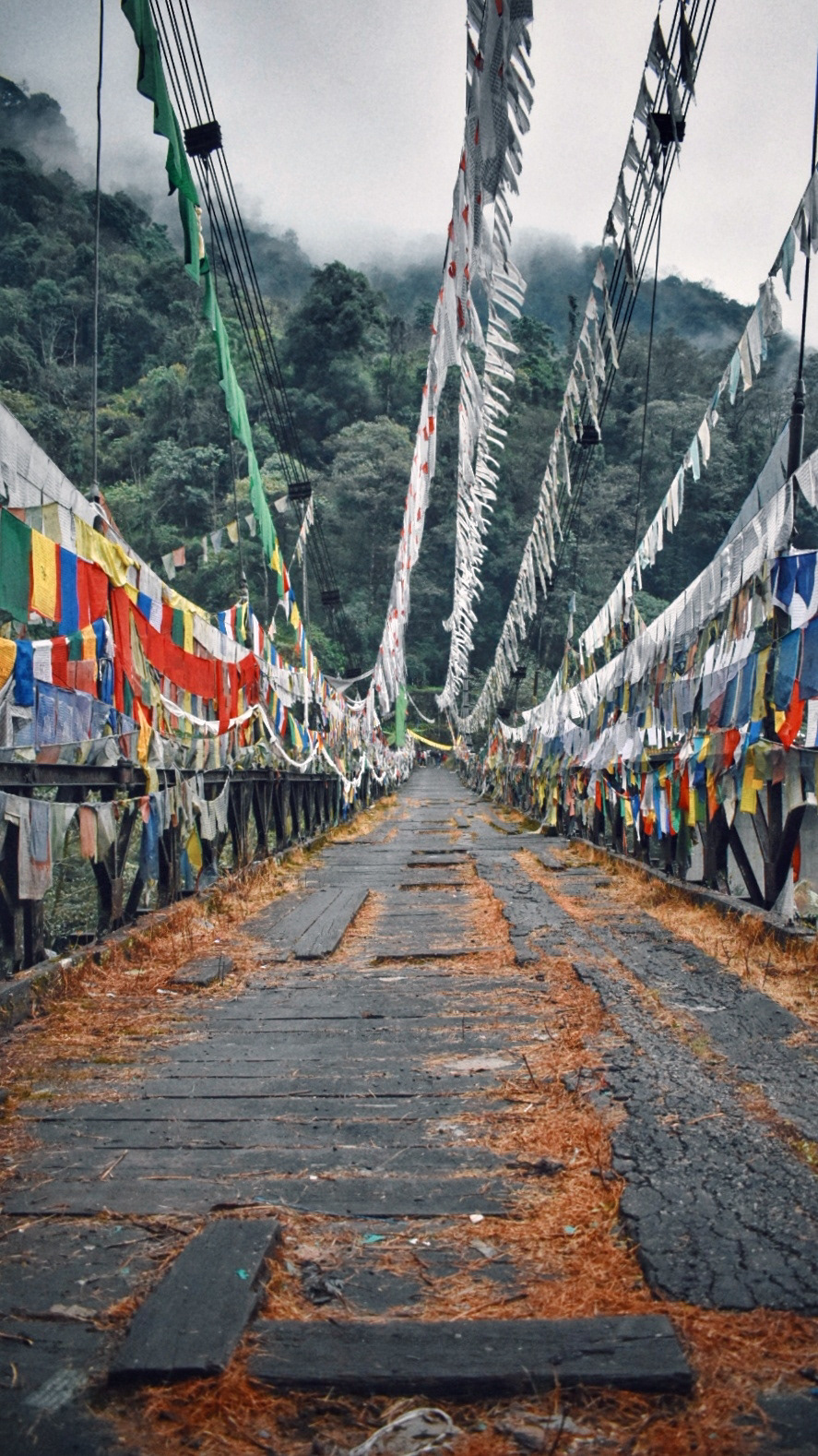
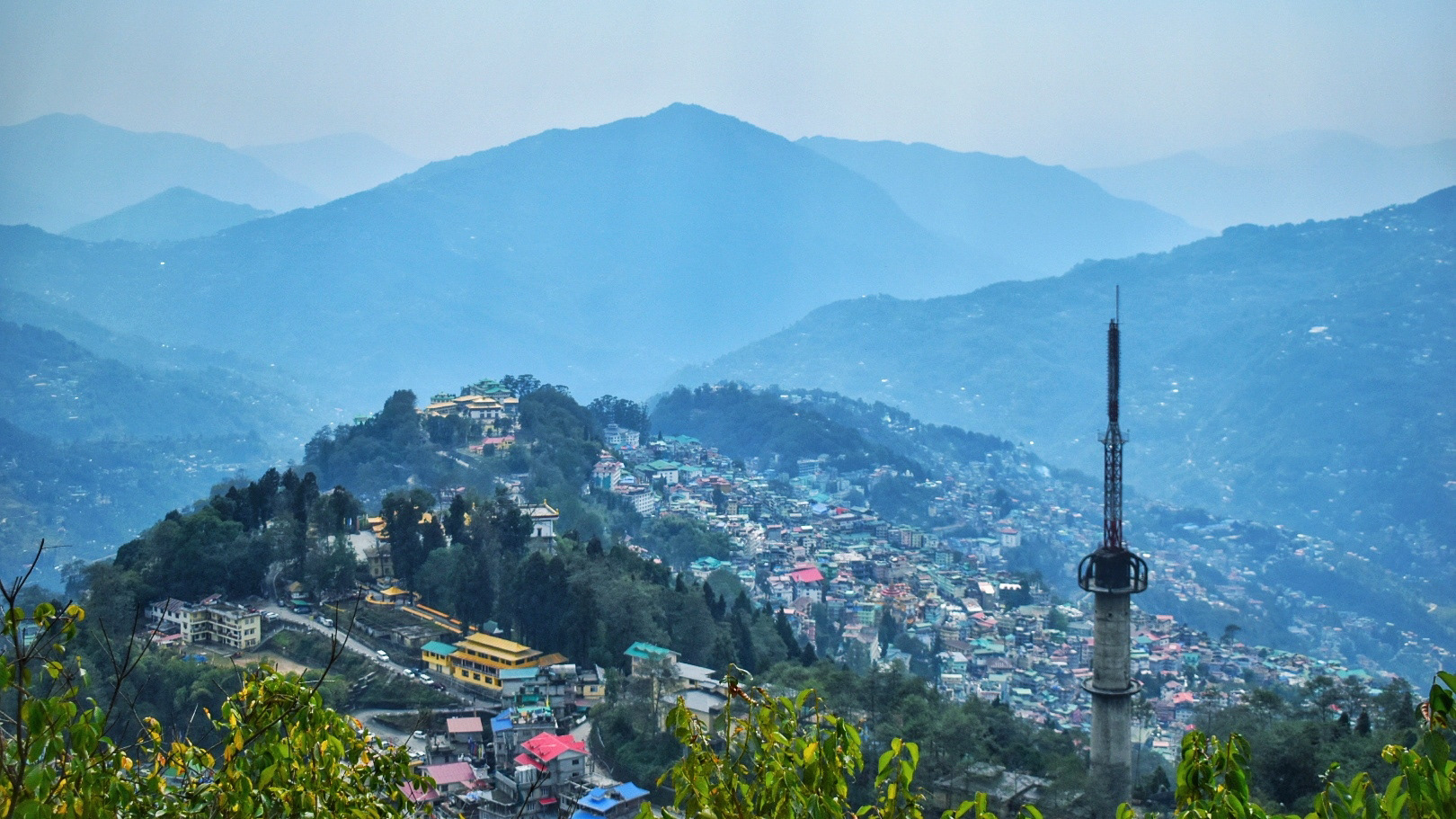
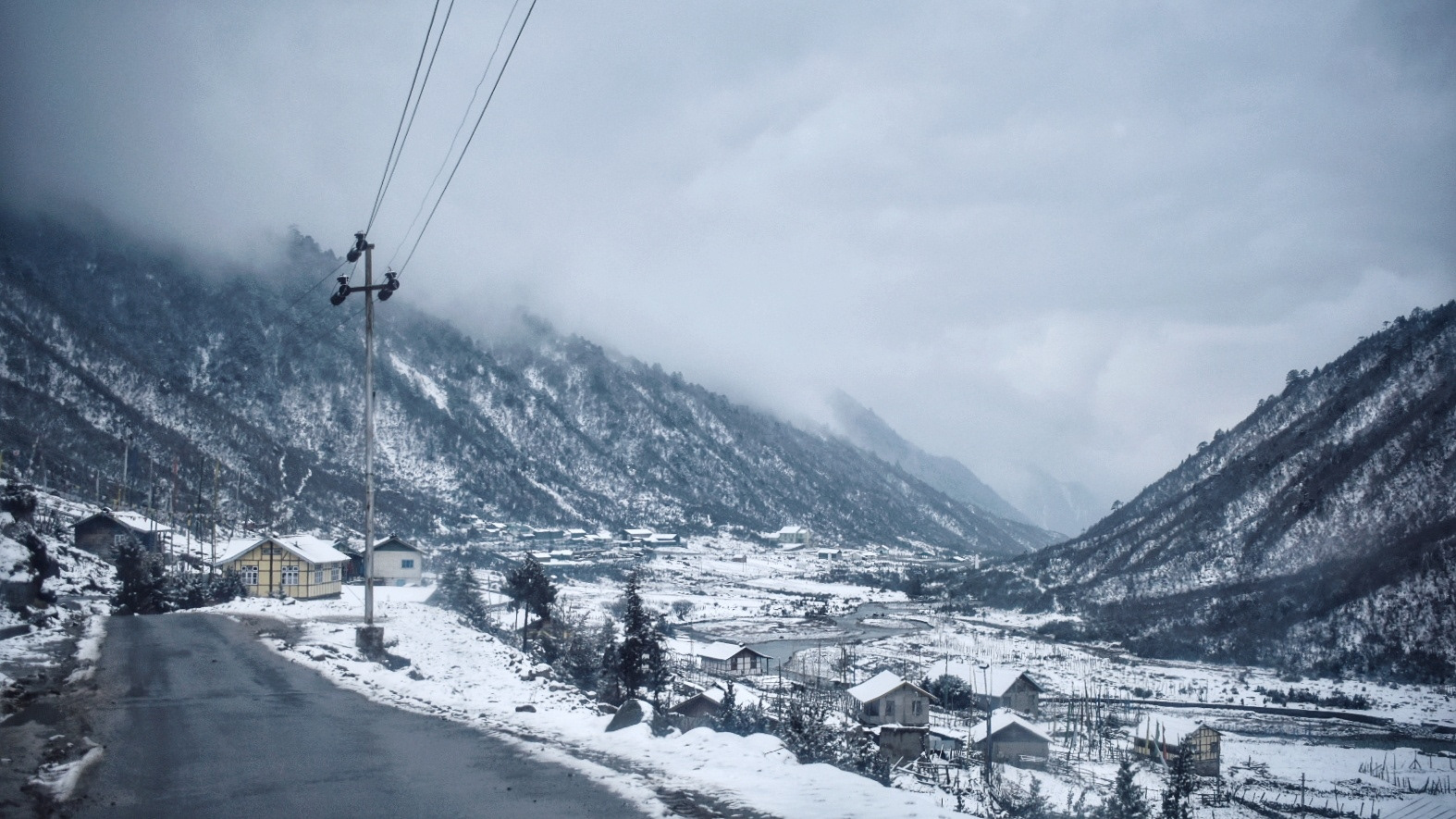
Host to Kanchenjunga, the world s third-highest mountain peak and the endangered Red Panda, Sikkim is a state in northeastern India. Nestled between Nepal, Tibet (China), Bhutan and West Bengal (India), the state offers a smorgasbord of cultures and cuisines. That said, it s hardly surprising that the old spice route meanders through western Sikkim, connecting Lhasa with the ports of Bengal. Although the latter could also be attributed to cardamom (kali elaichi), a perennial herb native to Sikkim, which the state is the second-largest producer of, globally. Lastly, having been to and lived in India, all my life, I can confidently say Sikkim is one of the cleanest & safest regions in India, making it ideal for first-time backpackers.

Brief History
  • 17th century: The Kingdom of Sikkim is founded by the Namgyal dynasty and ruled by Buddhist priest-kings known as the Chogyal.
  • 1890: Sikkim becomes a princely state of British India.
  • 1947: Sikkim continues its protectorate status with the Union of India, post-Indian-independence.
  • 1973: Anti-royalist riots take place in front of the Chogyal's palace, by Nepalis seeking greater representation.
  • 1975: Referendum leads to the deposition of the monarchy and Sikkim joins India as its 22nd state.
Languages
  • Official: English, Nepali, Sikkimese/Bhotia and Lepcha
  • Though Hindi and Nepali share the same script (Devanagari), they are not mutually intelligible. Yet, most people in Sikkim can understand and speak Hindi.
Ethnicity
  • Nepalis: Migrated in large numbers (from Nepal) and soon became the dominant community
  • Bhutias: People of Tibetan origin. Major inhabitants in Northern Sikkim.
  • Lepchas: Original inhabitants of Sikkim

Food
  • Tibetan/Nepali dishes (mostly consumed during winter)
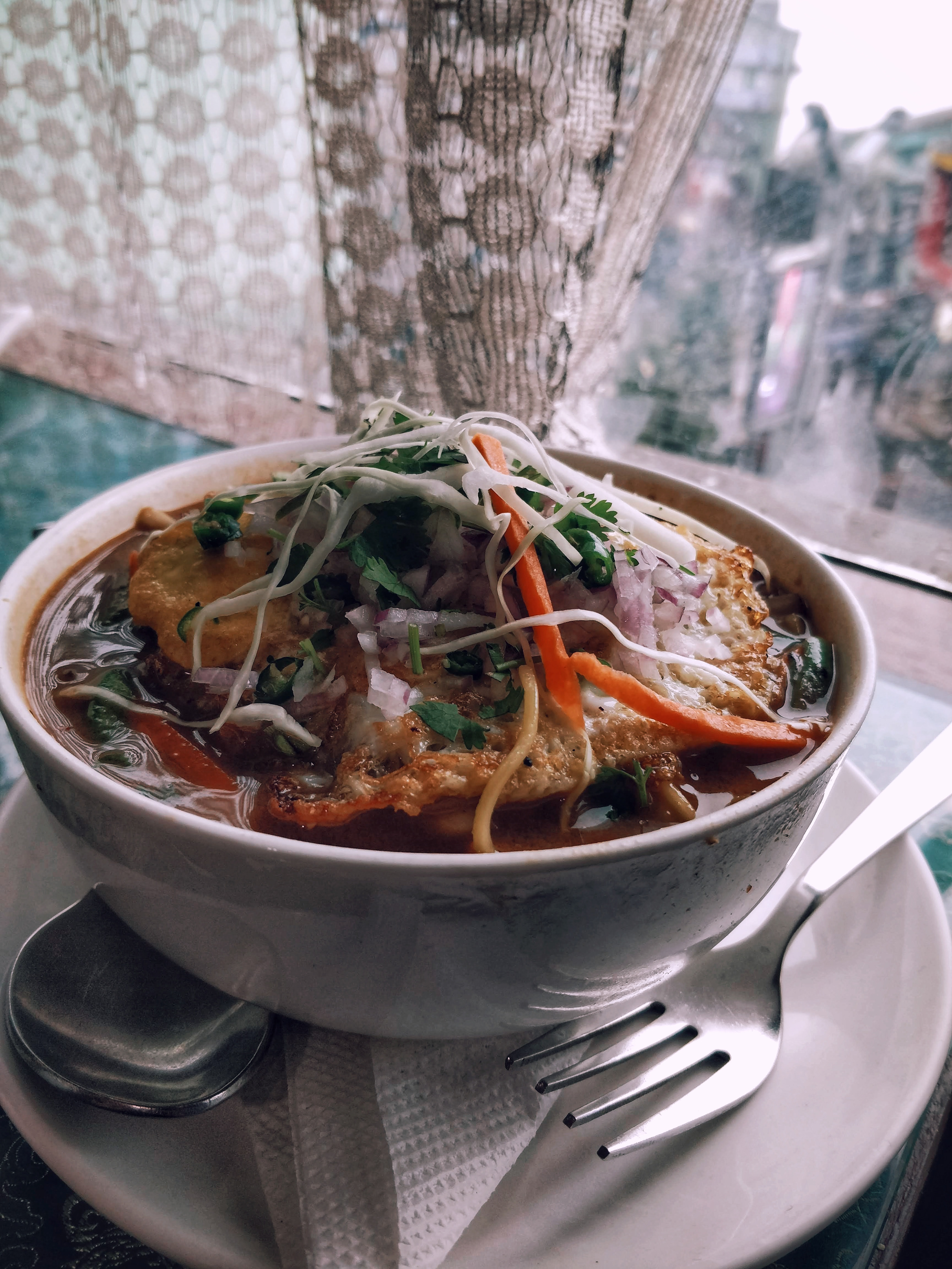
    • Thukpa: Noodle soup, rich in spices and vegetables. Usually contains some form of meat. Common variations: Thenthuk and Gyathuk
    • Momos: Steamed or fried dumplings, usually with a meat filling.
    • Saadheko: Spicy marinated chicken salad.
    • Gundruk Soup: A soup made from Gundruk, a fermented leafy green vegetable.
    • Sinki : A fermented radish tap-root product, traditionally consumed as a base for soup and as a pickle. Eerily similar to Kimchi.
  • While pork and beef are pretty common, finding vegetarian dishes is equally easy.
  • Staple: Dal-Bhat with Subzi. Rice is a lot more common than wheat (rice) possibly due to greater carb content and proximity to West Bengal, India s largest producer of Rice.
  • Good places to eat in Gangtok
    • Hamro Bhansa Ghar, Nimtho (Nepali)
    • Taste of Tibet
    • Dragon Wok (Chinese & Japanese)

Buddhism in Sikkim
  • Bayul Demojong (Sikkim), is the most sacred Land in the Himalayas as per the belief of the Northern Buddhists and various religious texts.
  • Sikkim was blessed by Guru Padmasambhava, the great Buddhist saint who visited Sikkim in the 8th century and consecrated the land.
  • However, Buddhism is said to have reached Sikkim only in the 17th century with the arrival of three Tibetan monks viz. Rigdzin Goedki Demthruchen, Mon Kathok Sonam Gyaltshen & Rigdzin Legden Je at Yuksom. Together, they established a Buddhist monastery.
  • In 1642 they crowned Phuntsog Namgyal as the first monarch of Sikkim and gave him the title of Chogyal, or Dharma Raja.
  • The faith became popular through its royal patronage and soon many villages had their own monastery.
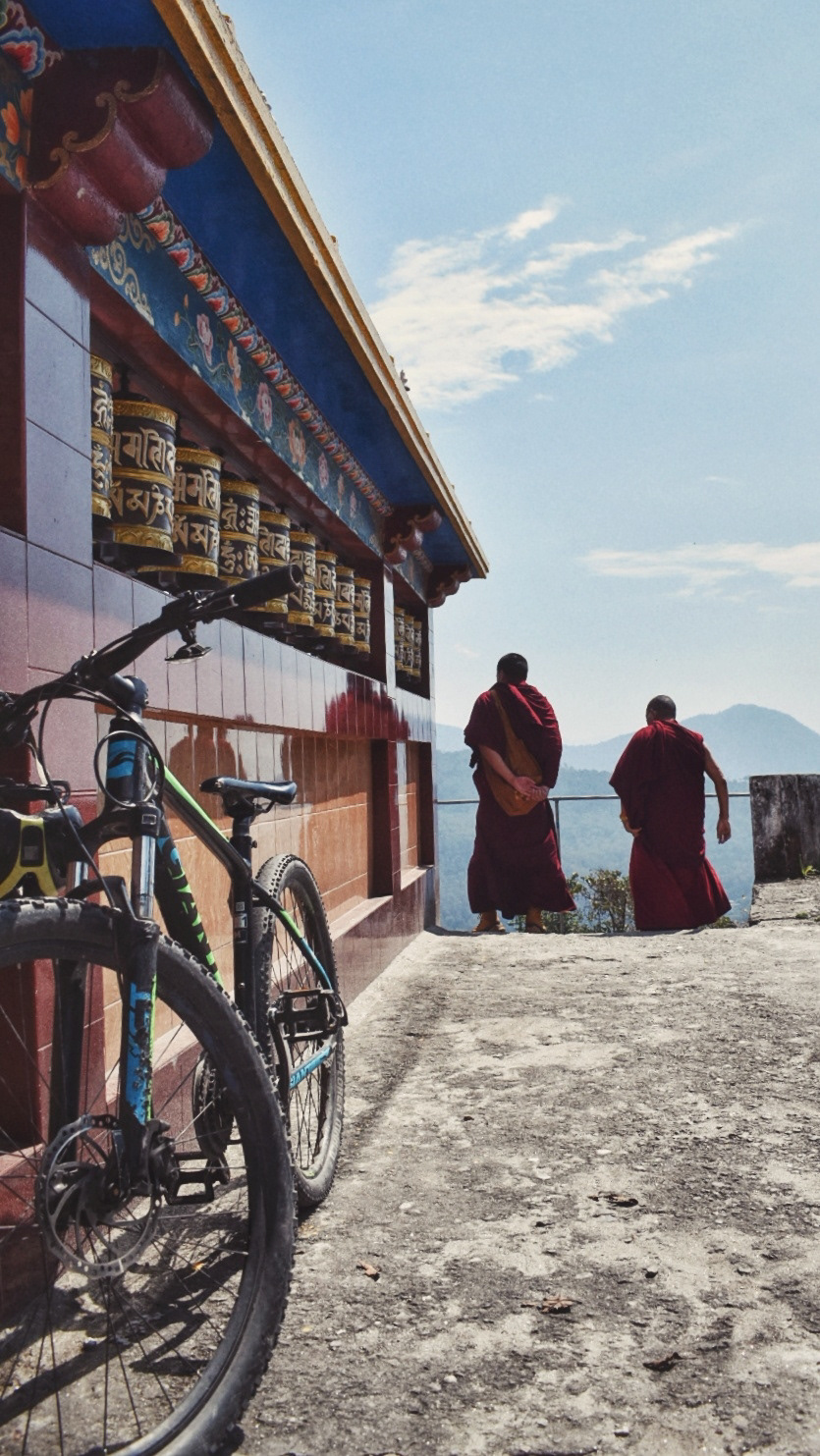
  • Today Sikkim has over 200 monasteries.

Major monasteries
  • Rumtek Monastery, 20Km from Gangtok
  • Lingdum/Ranka Monastery, 17Km from Gangtok
  • Phodong Monastery, 28Km from Gangtok
  • Ralang Monastery, 10Km from Ravangla
  • Tsuklakhang Monastery, Royal Palace, Gangtok
  • Enchey Monastery, Gangtok
  • Tashiding Monastery, 35Km from Ravangla


Reaching Sikkim
  • Gangtok, being the capital, is easiest to reach amongst other regions, by public transport and shared cabs.
  • By Air:
    • Pakyong (PYG) :
      • Nearest airport from Gangtok (about 1 hour away)
      • Tabletop airport
      • Reserved cabs cost around INR 1200.
      • As of Apr 2021, the only flights to PYG are from IGI (Delhi) and CCU (Kolkata).
    • Bagdogra (IXB) :
      • About 20 minutes from Siliguri and 4 hours from Gangtok.
      • Larger airport with flights to most major Indian cities.
      • Reserved cabs cost about INR 3000. Shared cabs cost about INR 350.
  • By Train:
    • New Jalpaiguri (NJP) :
      • About 20 minutes from Siliguri and 4 hours from Gangtok.
      • Reserved cabs cost about INR 3000. Shared cabs from INR 350.
  • By Road:
    • NH10 connects Siliguri to Gangtok
    • If you can t find buses plying to Gangtok directly, reach Siliguri and then take a cab to Gangtok.
  • Sikkim Nationalised Transport Div. also runs hourly buses between Siliguri and Gangtok and daily buses on other common routes. They re cheaper than shared cabs.
  • Wizzride also operates shared cabs between Siliguri/Bagdogra/NJP, Gangtok and Darjeeling. They cost about the same as shared cabs but pack in half as many people in luxury cars (Innova, Xylo, etc.) and are hence more comfortable.

Gangtok
  • Time needed: 1D/1N
  • Places to visit:
    • Hanuman Tok
    • Ganesh Tok
    • Tashi View Point [6,800ft]
    • MG Marg
    • Sikkim Zoo
    • Gangtok Ropeway
    • Enchey Monastery
    • Tsuklakhang Palace & Monastery
  • Hostels: Tagalong Backpackers (would strongly recommend), Zostel Gangtok
  • Places to chill: Travel Cafe, Caf Live & Loud and Gangtok Groove
  • Places to shop: Lal Market and MG Marg

Getting Around
  • Taxis operate on a reserved or shared basis. In case of the latter, you can pool with other commuters your taxis will pick up and drop en-route.
  • Naturally shared taxis only operate on popular routes. The easiest way to get around Gangtok is to catch a shared cab from MG Marg.
  • Reserved taxis for Gangtok sightseeing cost around INR 1000-1500, depending upon the spots you d like to see
  • Key taxi/bus stands :
    • Deorali stand: For Darjeeling, Siliguri, Kalimpong
    • Vajra stand: For North & East Sikkim (Tsomgo Lake & Nathula)
    • Rumtek taxi: For Ravangla, Pelling, Namchi, Geyzing, Jorethang and Singtam.
Exploring Gangtok on an MTB

North Sikkim
  • The easiest & most economical way to explore North Sikkim is the 3D/2N package offered by shared-cab drivers.
  • This includes food, permits, cab rides and accommodation (1N in Lachen and 1N in Lachung)
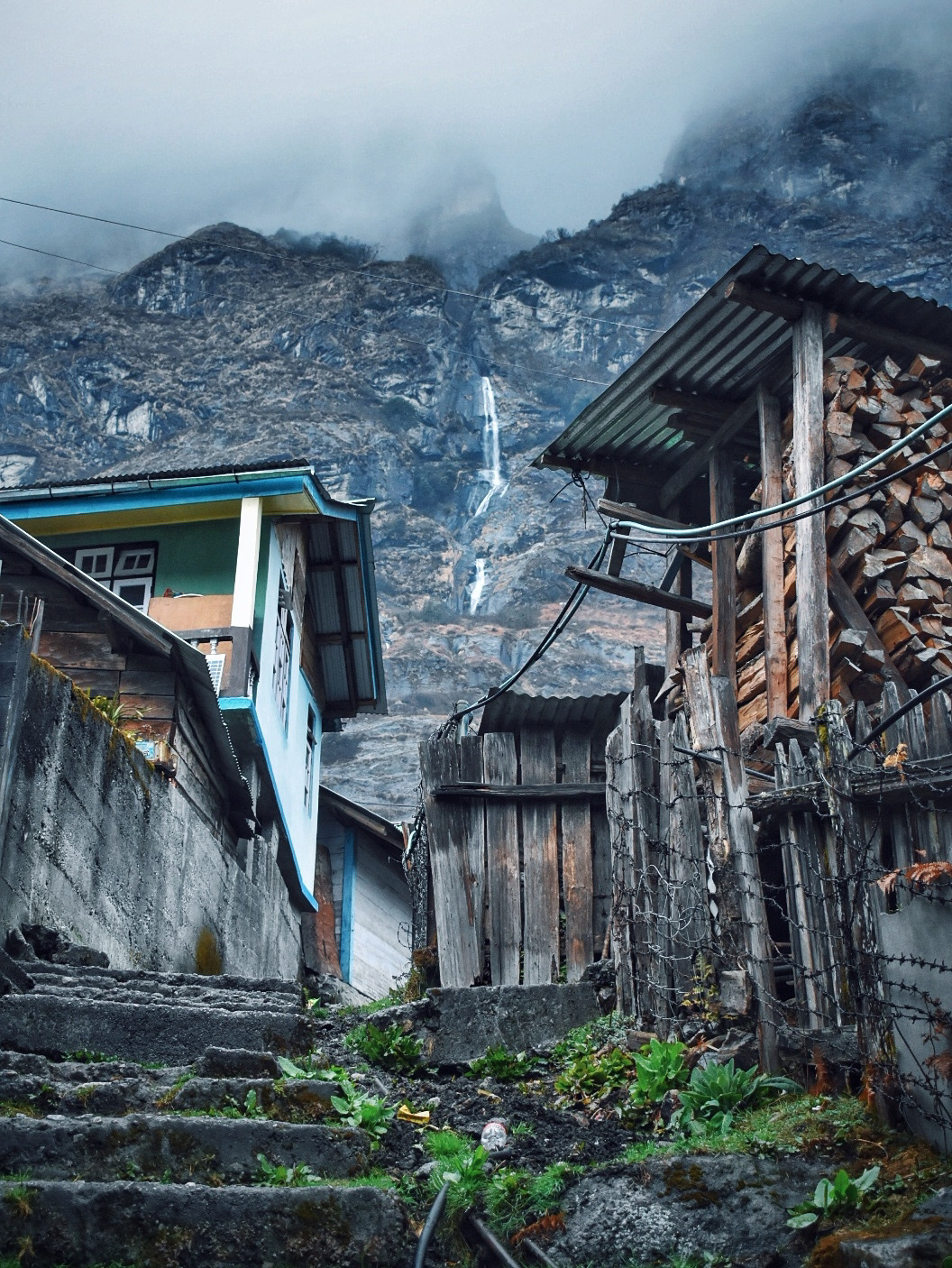
  • The accommodation on both nights are at homestays with bare necessities, so keep your hopes low.
  • In the spirit of sustainable tourism, you ll be asked to discard single-use plastic bottles, so please carry a bottle that you can refill along the way.
  • Zero Point and Gurdongmer Lake are snow-capped throughout the year
3D/2N Shared-cab Package Itinerary
  • Day 1
    • Gangtok (10am) - Chungthang - Lachung (stay)
  • Day 2
    • Pre-lunch : Lachung (6am) - Yumthang Valley [12,139ft] - Zero Point - Lachung [15,300ft]
    • Post-lunch : Lachung - Chungthang - Lachen (stay)
  • Day 3
    • Pre-lunch : Lachen (5am) - Kala Patthar - Gurdongmer Lake [16,910ft] - Lachen
    • Post-lunch : Lachen - Chungthang - Gangtok (7pm)
  • This itinerary is idealistic and depends on the level of snowfall.
  • Some drivers might switch up Day 2 and 3 itineraries by visiting Lachen and then Lachung, depending upon the weather.
  • Areas beyond Lachen & Lachung are heavily militarized since the Indo-China border is only a few miles away.

East Sikkim

Zuluk and Silk Route
  • Time needed: 2D/1N
  • Zuluk [9,400ft] is a small hamlet with an excellent view of the eastern Himalayan range including the Kanchenjunga.
  • Was once a transit point to the historic Silk Route from Tibet (Lhasa) to India (West Bengal).
  • The drive from Gangtok to Zuluk takes at least four hours. Hence, it makes sense to spend the night at a homestay and space out your trip to Zuluk

Tsomgo Lake and Nathula
  • Time Needed : 1D
  • A Protected Area Permit is required to visit these places, due to their proximity to the Chinese border
  • Tsomgo/Chhangu Lake [12,313ft]
    • Glacial lake, 40 km from Gangtok.
    • Remains frozen during the winter season.
    • You can also ride on the back of a Yak for INR 300
  • Baba Mandir
    • An old temple dedicated to Baba Harbhajan Singh, a Sepoy in the 23rd Regiment, who died in 1962 near the Nathu La during Indo China war.
  • Nathula Pass [14,450ft]
    • Located on the Indo-Tibetan border crossing of the Old Silk Route, it is one of the three open trading posts between India and China.
    • Plays a key role in the Sino-Indian Trade and also serves as an official Border Personnel Meeting(BPM) Point.
    • May get cordoned off by the Indian Army in event of heavy snowfall or for other security reasons.


West Sikkim
  • Time needed: 3N/1N
  • Hostels at Pelling : Mochilerro Ostillo

Itinerary

Day 1: Gangtok - Ravangla - Pelling
  • Leave Gangtok early, for Ravangla through the Temi Tea Estate route.
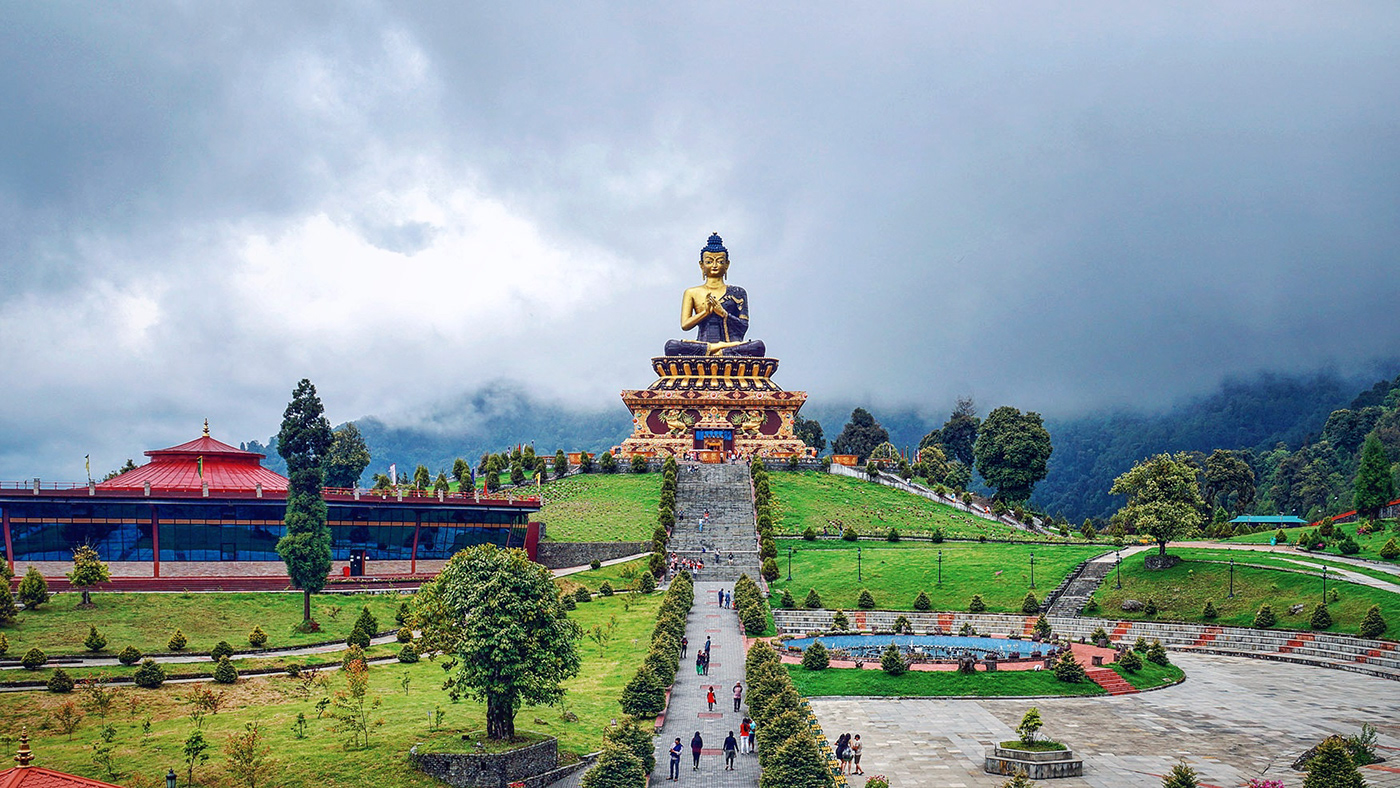
  • Spend some time at the tea garden and then visit Buddha Park at Ravangla
  • Head to Pelling from Ravangla

Day 2: Pelling sightseeing
  • Hire a cab and visit Skywalk, Pemayangtse Monastery, Rabdentse Ruins, Kecheopalri Lake, Kanchenjunga Falls.

Day 3: Pelling - Gangtok/Siliguri
  • Wake up early to catch a glimpse of Kanchenjunga at the Pelling Helipad around sunrise
  • Head back to Gangtok on a shared-cab
  • You could take a bus/taxi back to Siliguri if Pelling is your last stop.

Darjeeling
  • In my opinion, Darjeeling is lovely for a two-day detour on your way back to Bagdogra/Siliguri and not any longer (unless you re a Bengali couple on a honeymoon)
  • Once a part of Sikkim, Darjeeling was ceded to the East India Company after a series of wars, with Sikkim briefly receiving a grant from EIC for gifting Darjeeling to the latter
  • Post-independence, Darjeeling was merged with the state of West Bengal.

Itinerary

Day 1 :
  • Take a cab from Gangtok to Darjeeling (shared-cabs cost INR 300 per seat)
  • Reach Darjeeling by noon and check in to your Hostel. I stayed at Hideout.
  • Spend the evening visiting either a monastery (or the Batasia Loop), Nehru Road and Mall Road.
  • Grab dinner at Glenary whilst listening to live music.

Day 2:
  • Wake up early to catch the sunrise and a glimpse of Kanchenjunga at Tiger Hill. Since Tiger Hill is 10km from Darjeeling and requires a permit, book your taxi in advance.
  • Alternatively, if you don t want to get up at 4am or shell out INR1500 on the cab to Tiger Hill, walk to the Kanchenjunga View Point down Mall Road
  • Next, queue up outside Keventers for breakfast with a view in a century-old cafe
  • Get a cab at Gandhi Road and visit a tea garden (Happy Valley is the closest) and the Ropeway. I was lucky to meet 6 other backpackers at my hostel and we ended up pooling the cab at INR 200 per person, with INR 1400 being on the expensive side, but you could bargain.
  • Get lunch, buy some tea at Golden Tips, pack your bags and hop on a shared-cab back to Siliguri. It took us about 4hrs to reach Siliguri, with an hour to spare before my train.
  • If you ve still got time on your hands, then check out the Peace Pagoda and the Darjeeling Himalayan Railway (Toy Train). At INR 1500, I found the latter to be too expensive and skipped it.


Tips and hacks
  • Download offline maps, especially when you re exploring Northern Sikkim.
  • Food and booze are the cheapest in Gangtok. Stash up before heading to other regions.
  • Keep your Aadhar/Passport handy since you need permits to travel to North & East Sikkim.
  • In rural areas and some cafes, you may get to try Rhododendron Wine, made from Rhododendron arboreum a.k.a Gurans. Its production is a little hush-hush since the flower is considered holy and is also the National Flower of Nepal.
  • If you don t want to invest in a new jacket, boots or a pair of gloves, you can always rent them at nominal rates from your hotel or little stores around tourist sites.
  • Check the weather of a region before heading there. Low visibility and precipitation can quite literally dampen your experience.
  • Keep your itinerary flexible to accommodate for rest and impromptu plans.
  • Shops and restaurants close by 8pm in Sikkim and Darjeeling. Plan for the same.

Carry
  • a couple of extra pairs of socks (woollen, if possible)
  • a pair of slippers to wear indoors
  • a reusable water bottle
  • an umbrella
  • a power bank
  • a couple of tablets of Diamox. Helps deal with altitude sickness
  • extra clothes and wet bags since you may not get a chance to wash/dry your clothes
  • a few passport size photographs

Shared-cab hacks
  • Intercity rides can be exhausting. If you can afford it, pay for an additional seat.
  • Call shotgun on the drives beyond Lachen and Lachung. The views are breathtaking.
  • Return cabs tend to be cheaper (WB cabs travelling from SK and vice-versa)

Cost
  • My median daily expenditure (back when I went to Sikkim in early March 2021) was INR 1350.
  • This includes stay (bunk bed), food, wine and transit (shared cabs)
  • In my defence, I splurged on food, wine and extra seats in shared cabs, but if you re on a budget, you could easily get by on INR 1 - 1.2k per day.
  • For a 9-day trip, I ended up shelling out nearly INR 15k, including 2AC trains to & from Kolkata
  • Note : Summer (March to May) and Autumn (October to December) are peak seasons, and thereby more expensive to travel around.

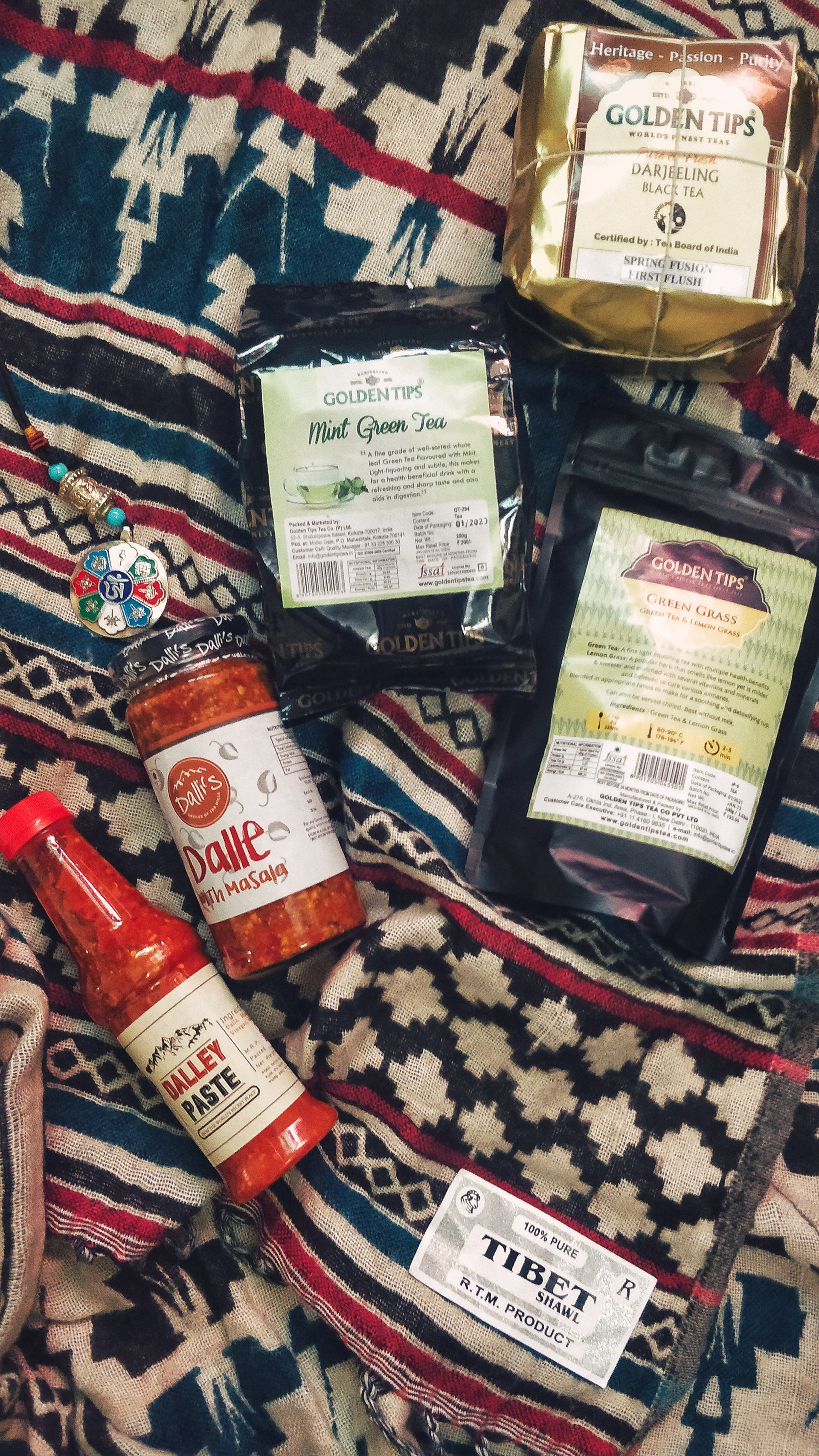
Souvenirs and things you should buy

Buddhist souvenirs :
  • Colourful Prayer Flags (great for tying on bikes or behind car windshields)
  • Miniature Prayer/Mani Wheels
  • Lucky Charms, Pendants and Key Chains
  • Cham Dance masks and robes
  • Singing Bowls
  • Common symbols: Om mani padme hum, Ashtamangala, Zodiac signs

Handicrafts & Handlooms
  • Tibetan Yak Wool shawls, scarfs and carpets
  • Sikkimese Ceramic cups
  • Thangka Paintings

Edibles
  • Darjeeling Tea (usually brewed and not boiled)
  • Wine (Arucha Peach & Rhododendron)
  • Dalle Khursani (Chilli) Paste and Pickle

Header Icon made by Freepik from www.flaticon.com is licensed by CC 3.0 BY

2 March 2021

Russ Allbery: Review: The Lion, the Witch and the Wardrobe

Review: The Lion, the Witch and the Wardrobe, by C.S. Lewis
Illustrator: Pauline Baynes
Series: Chronicles of Narnia #1
Publisher: Collier Books
Copyright: 1950
Printing: 1978
ISBN: 0-02-044220-3
Format: Mass market
Pages: 186
Although it's been more than 20 years since I last read it, I believe I have read The Lion, the Witch and the Wardrobe more times than any other book. The count is certainly in double digits. As you might guess, I also have strong opinions about it, some of which are unorthodox, and I've been threatening to write this review for years. It seemed a fitting choice for my 1000th review. There is quite a lot that can and has been said about this book and this series, and this review is already going to be much too long, so I'm only going to say a fraction of it. I'm going to focus on my personal reactions as someone raised a white evangelical Christian but no longer part of that faith, and the role this book played in my religion. I'm not going to talk much about some of its flaws, particularly Lewis's treatment of race and gender. This is not because I don't agree they're there, but only that I don't have much to say that isn't covered far better in other places. Unlike my other reviews, this one will contain major spoilers. If you have managed to remain unspoiled for a 70-year-old novel that spawned multiple movies and became part of the shared culture of evangelical Christianity, and want to stay that way, I'll warn you in ALL CAPS when it's time to go. But first, a few non-spoiler notes. First, reading order. Most modern publications of The Chronicles of Narnia will list The Magician's Nephew as the first book. This follows internal chronological order and is at C.S. Lewis's request. However, I think Lewis was wrong. You should read this series in original publication order, starting with The Lion, the Witch and the Wardrobe (which I'm going to abbreviate as TLtWatW like everyone else who writes about it). I will caveat this by saying that I have a bias towards reading books in the order an author wrote them because I like seeing the development of the author's view of their work, and I love books that jump back in time and fill in background, so your experience may vary. But the problem I see with the revised publication order is that The Magician's Nephew explains the origins of Narnia and, thus, many of the odd mysteries of TLtWatW that Lewis intended to be mysterious. Reading it first damages both books, like watching a slow-motion how-to video for a magic trick before ever seeing it performed. The reader is not primed to care about the things The Magician's Nephew is explaining, which makes it less interesting. And the bits of unexpected magic and mystery in TLtWatW that give it so much charm (and which it needs, given the thinness of the plot) are already explained away and lose appeal because of it. I have read this series repeatedly in both internal chronological order and in original publication order. I have even read it in strict chronological order, wherein one pauses halfway through the last chapter of TLtWatW to read The Horse and His Boy before returning. I think original publication order is the best. (The Horse and His Boy is a side story and it doesn't matter that much where you read it as long as you read it after TLtWatW. For this re-read, I will follow original publication order and read it fifth.) Second, allegory. The common understanding of TLtWatW is that it's a Christian allegory for children, often provoking irritated reactions from readers who enjoyed the story on its own terms and later discovered all of the religion beneath it. I think this view partly misunderstands how Lewis thought about the world and there is a more interesting way of looking at the book. I'm not as dogmatic about this as I used to be; if you want to read it as an allegory, there are plenty of carefully crafted parallels to the gospels to support that reading. But here's my pitch for a different reading. To C.S. Lewis, the redemption of the world through the death of Jesus Christ is as foundational a part of reality as gravity. He spent much of his life writing about religion and Christianity in both fiction and non-fiction, and this was the sort of thing he constantly thought about. If somewhere there is another group of sentient creatures, Lewis's theology says that they must fit into that narrative in some way. Either they would have to be unfallen and thus not need redemption (roughly the position taken by The Space Trilogy), or they would need their own version of redemption. So yes, there are close parallels in Narnia to events of the Christian Bible, but I think they can be read as speculating how Christian salvation would play out in a separate creation with talking animals, rather than an attempt to disguise Christianity in an allegory for children. It's a subtle difference, but I think Narnia more an answer to "how would Christ appear in this fantasy world?" than to "how do I get children interested in the themes of Christianity?", although certainly both are in play. Put more bluntly, where other people see allegory, I see the further adventures of Jesus Christ as an anthropomorphic lion, which in my opinion is an altogether more delightful way to read the books. So much for the preamble; on to the book. The Pevensie kids, Peter, Susan, Edmund, and Lucy, have been evacuated to a huge old house in the country due to the air raids (setting this book during World War II, something that is passed over with barely a mention and not a hint of trauma in a way that a modern book would never do). While exploring this house, which despite the scant description is still stuck in my mind as the canonical huge country home, Lucy steps into a wardrobe because she wants to feel the fur of the coats. Much to her surprise, the wardrobe appears not to have a back, and she finds herself eventually stepping into a snow-covered pine forest where she meets a Fawn named Mr. Tumnus by an unlikely lamp-post. MAJOR SPOILERS BELOW, so if you don't want to see those, here's your cue to stop reading. Two things surprised me when re-reading TLtWatW. The first, which I remember surprising me every time I read it, is how far into this (very short) book one has to go before the plot kicks into gear. It's not until "What Happened After Dinner" more than a third in that we learn much of substance about Narnia, and not until "The Spell Begins to Break" halfway through the book that things start to happen. The early chapters are concerned primarily with the unreliability of the wardrobe portal, with a couple of early and brief excursions by Edmund and Lucy, and with Edmund being absolutely awful to Lucy. The second thing that surprised me is how little of what happens is driven by the kids. The second half of TLtWatW is about the fight between Aslan and the White Witch, but this fight was not set off by the children and their decisions don't shape it in any significant way. They're primarily bystanders; the few times they take action, it's either off-camera or they're told explicitly what to do. The arguable exception is Edmund, who provides the justification for the final conflict, but he functions more as plot device than as a character with much agency. When that is combined with how much of the story is also on rails via its need to recapitulate part of the gospels (more on that in a moment), it makes the plot feel astonishingly thin and simple. Edmund is the one protagonist who gets to make some decisions, all of them bad. As a kid, I hated reading these parts because Edmund is an ass, the White Witch is obviously evil, and everyone knows not to eat the food. Re-reading now, I have more appreciation for how Lewis shows Edmund's slide into treachery. He starts teasing Lucy because he thinks it's funny (even though it's not), has a moment when he realizes he was wrong and almost apologizes, but then decides to blame his discomfort on the victim. From that point, he is caught, with some help from the White Witch's magic, in a spiral of doubling down on his previous cruelty and then feeling unfairly attacked. Breaking the cycle is beyond him because it would require admitting just how badly he behaved and, worse, that he was wrong and his little sister was right. He instead tries to justify himself by spreading poisonous bits of doubt, and looks for reasons to believe the friends of the other children are untrustworthy. It's simplistic, to be sure, but it's such a good model of how people slide into believing conspiracy theories and joining hate groups. The Republican Party is currently drowning in Edmunds. That said, Lewis does one disturbing thing with Edmund that leaped out on re-reading. Everyone in this book has a reaction when Aslan's name is mentioned. For the other three kids, that reaction is awe or delight. For Edmund, it's mysterious horror. I know where Lewis is getting this from, but this is a nasty theological trap. One of the problems that religion should confront directly is criticism that questions the moral foundations of that religion. If one postulates that those who have thrown in with some version of the Devil have an instinctual revulsion for God, it's a free intellectual dodge. Valid moral criticism can be hand-waved away as Edmund's horrified reaction to Aslan: a sign of Edmund's guilt, rather than a possible flaw to consider seriously. It's also, needless to say, not the effect you would expect from a god who wants universal salvation! But this is only an odd side note, and once Edmund is rescued it's never mentioned again. This brings us to Aslan himself, the Great Lion, and to the heart of why I think this book and series are so popular. In reinterpreting Christianity for the world of Narnia, Lewis created a far more satisfying and relatable god than Jesus Christ, particularly for kids. I'm not sure I can describe, for someone who didn't grow up in that faith, how central the idea of a personal relationship with Jesus is to evangelical Christianity. It's more than a theological principle; it's the standard by which one's faith is judged. And it is very difficult for a kid to mentally bootstrap themselves into a feeling of a personal relationship with a radical preacher from 2000 years ago who spoke in gnomic parables about subtle points of adult theology. It's hard enough for adults with theological training to understand what that phrase is intended to mean. For kids, you may as well tell them they have a personal relationship with Aristotle. But a giant, awe-inspiring lion with understanding eyes, a roar like thunder, and a warm mane that you can bury your fingers into? A lion who sacrifices himself for your brother, who can be comforted and who comforts you in turn, and who makes a glorious surprise return? That's the kind of god with which one can imagine having a personal relationship. Aslan felt physical and embodied and present in the imagination in a way that Jesus never did. I am certain I was not the only Christian kid for whom Aslan was much more viscerally real than Jesus, and who had a tendency to mentally substitute Aslan for Jesus in most thoughts about religion. I am getting ahead of myself a bit because this is a review of TLtWatW and not of the whole series, and Aslan in this book is still a partly unformed idea. He's much more mundanely present here than he is later, more of a field general than a god, and there are some bits that are just wrong (like him clapping his paws together). But the scenes with Susan and Lucy, the night at the Stone Table and the rescue of the statues afterwards, remain my absolute favorite parts of this book and some of the best bits of the whole series. They strike just the right balance of sadness, awe, despair, and delight. The image of a lion also lets Lewis show joy in a relatable way. Aslan plays, he runs, he wrestles with the kids, he thrills in the victory over evil just as much as Susan and Lucy do, and he is clearly having the time of his life turning people back to flesh from stone. The combination of translation, different conventions, and historical distance means the Bible has none of this for the modern reader, and while people have tried to layer it on with Bible stories for kids, none of them (and I read a lot of them) capture anything close to the sheer joy of this story. The trade-off Lewis makes for that immediacy is that Aslan is a wonderful god, but TLtWatW has very little religion. Lewis can have his characters interact with Aslan directly, which reduces the need for abstract theology and difficult questions of how to know God's will. But even when theology is unavoidable, this book doesn't ask for the type of belief that Christianity demands. For example, there is a crucifixion parallel, because in Lewis's world view there would have to be. That means Lewis has to deal with substitutionary atonement (the belief that Christ died for the sins of the world), which is one of the hardest parts of Christianity to justify. How he does this is fascinating. The Narnian equivalent is the Deep Magic, which says that the lives of all traitors belong to the White Witch. If she is ever denied a life, Narnia will be destroyed by fire and water. The Witch demands Edmund's life, which sets up Aslan to volunteer to be sacrificed in Edmund's place. This triggers the Deeper Magic that she did not know about, freeing Narnia from her power. You may have noticed the card that Lewis is palming, and to give him credit, so do the kids, leading to this exchange when the White Witch is still demanding Edmund:
"Oh, Aslan!" whispered Susan in the Lion's ear, "can't we I mean, you won't, will you? Can't we do something about the Deep Magic? Isn't there something you can work against it?" "Work against the Emperor's magic?" said Aslan, turning to her with something like a frown on his face. And nobody ever made that suggestion to him again.
The problem with substitutionary atonement is why would a supposedly benevolent god create such a morally abhorrent rule in the first place? And Lewis totally punts. Susan is simply not allowed to ask the question. Lewis does try to tackle this problem elsewhere in his apologetics for adults (without, in my opinion, much success). But here it's just a part of the laws of this universe, which all of the characters, including Aslan, have to work within. That leads to another interesting point of theology, which is that if you didn't already know about the Christian doctrine of the trinity, you would never guess it from this book. The Emperor-Beyond-the-Sea and Aslan are clearly separate characters, with Aslan below the Emperor in the pantheon. This makes rules like the above work out more smoothly than they do in Christianity because Aslan is bound by the Emperor's rules and the Emperor is inscrutable and not present in the story. (The Holy Spirit is Deity Not-appearing-in-this-book, but to be fair to Lewis, that's largely true of the Bible as well.) What all this means is that Aslan's death is presented straightforwardly as a magic spell. It works because Aslan has the deepest understanding of the fixed laws of the Emperor's magic, and it looks nothing like what we normally think of as religion. Faith is not that important in this book because Aslan is physically present, so it doesn't require any faith for the children to believe he exists. (The Beavers, who believed in him from prophecy without having seen him, are another matter, but this book never talks about that.) The structure of religion is therefore remarkably absent despite the story's Christian parallels. All that's expected of the kids is the normal moral virtues of loyalty and courage and opposition to cruelty. I have read this book so many times that I've scrutinized every word, so I have to resist the temptation to dig into every nook and cranny: the beautiful description of spring, the weird insertion of Lilith as Adam's first wife, how the controversial appearance of Santa Claus in this book reveals Lewis's love of Platonic ideals... the list is endless, and the review is already much longer than normal. But I never get to talk about book endings in reviews, so one more indulgence. The best thing that can be said about the ending of TLtWatW is that it is partly redeemed by the start of Prince Caspian. Other than that, the last chapter of this book has always been one of my least favorite parts of The Chronicles of Narnia. For those who haven't read it (and who by this point clearly don't mind spoilers), the four kids are immediately and improbably crowned Kings and Queens of Narnia. Apparently, to answer the Professor from earlier in the book, ruling magical kingdoms is what they were teaching in those schools? They then spend years in Narnia, never apparently giving a second thought to their parents (you know, the ones who are caught up in World War II, which prompted the evacuation of the kids to the country in the first place). This, for some reason, leaves them talking like medieval literature, which may be moderately funny if you read their dialogue in silly voices to a five-year-old and is otherwise kind of tedious. Finally, in a hunt for the white stag, they stumble across the wardrobe and tumble back into their own world, where they are children again and not a moment has passed. I will give Lewis credit for not doing a full reset and having the kids not remember anything, which is possibly my least favorite trope in fiction. But this is almost as bad. If the kids returned immediately, that would make sense. If they stayed in Narnia until they died, that arguably would also make sense (their poor parents!). But growing up in Narnia and then returning as if nothing happened doesn't work. Do they remember all of their skills? How do you readjust to going to school after you've lived a life as a medieval Queen? Do they remember any of their friends after fifteen years in Narnia? Argh. It's a very "adventures are over, now time for bed" sort of ending, although the next book does try to patch some of this up. As a single book taken on its own terms, TLtWatW is weirdly slight, disjointed, and hits almost none of the beats that one would expect from a children's novel. What saves it is a sense of delight and joy that suffuses the descriptions of Narnia, even when locked in endless winter, and Aslan. The plot is full of holes, the role of the children in that plot makes no sense, and Santa Claus literally shows up in the middle of the story to hand out plot devices and make an incredibly sexist statement about war. And yet, I memorized every gift the children received as a kid, I can still feel the coziness of the Beaver's home while Mr. Beaver is explaining prophecy, and the night at the Stone Table remains ten times more emotionally effective for me than the description of the analogous event in the Bible. And, of course, there's Aslan.
"Safe?" said Mr. Beaver. "Don't you hear what Mrs. Beaver tells you? Who said anything about safe? 'Course he isn't safe. But he's good. He's the king, I tell you."
Aslan is not a tame lion, to use the phrase that echos through this series. That, I think, is the key to the god that I find the most memorable in all of fantasy literature, even in this awkward, flawed, and decidedly strange introduction. Followed by Prince Caspian, in which the children return to a much-changed Narnia. Lewis has gotten most of the obligatory cosmological beats out of the way in this book, so subsequent books can tell more conventional stories. Rating: 7 out of 10

26 February 2021

Ritesh Raj Sarraf: Wayland KDE X11

KDE Impressions These days, I often hear a lot about Wayland. And how much of effort is being put into it; not just by the Embedded world but also the usual Desktop systems, namely KDE and GNOME. In recent past, I switched back to KDE and have been (very) happy about the switch. Even though the KDE 4 (and initial KDE 5) debacle had burnt many, coming back to a usable KDE desktop is always a delight. It makes me feel home with the elegance, while at the same time the flexibility, it provides. It feels so nice to draft this blog article from Kwrite + VI Input Mode Thanks to the great work of the Debian KDE Team, but Norbert Preining in particular, who has helped bring very up-to-date KDE packages into Debian. Right now, I m on a Plamsa 5.21.1 desktop, which is recent by all standards.

Wayland Almost all the places in the Linux world these days are busy with integrating Wayland as the primary display service. Not sure what the current status on the GNOME side is but I definitely keep trying KDE + Wayland with every release. I keep trying with every release because it still is not prime for daily use. And it makes me get back to X11, no matter how dated some may call. Fact is, X11 still shines to me as an end-user. Glitches with Wayland still are (Based on this week s test on Plasma 5.21.1):
  • Horrible performance compared to X11
  • Very crashy, especially when hotplugging secondary display. Plasma would just crash. X11 is very resilient to such things, part of the reason I can think is the age of the codebase.
  • Many many applications still need to be fixed for Wayland. Or Wayland needs to accomodate them in some way. XWayland does not really feel like the answer.
And while KDE keeps insisting users to switch to Wayland, as that s where all the new enhancements and fixes are put in, someone like me still needs to stick to X11 for the time being. So to get my shiny new LG 27" 4K Monitor (3840x2160 60.00*+) to work without too much glitch, I had to live with an alias:
$ alias   grep xrandr
alias rrs_xrandr_lg='xrandr --output DP-1 --mode 3840x2160 --scale .75x.75'
18:31                    

Plasma 5.21 On the brighter side, the Plasma 5.21.1 release brings some nice enhancements in other areas.
  • I m now able to make use of tighter integration with systemd/cgroups, with better organization and management of processes overall.
  • The new Plasma theme, Breeze Twilight, is a good blend of Light + Dark.
I also appreciate the work put in by Michail Vourlakos. The KDE project is lucky to have a developer/designer like him. His vision and work into the KDE desktop is well beyond a writing by me.
$ usystemctl status plasma-plasmashell.service 
  plasma-plasmashell.service - KDE Plasma Workspace
     Loaded: loaded (/usr/lib/systemd/user/plasma-plasmashell.service; enabled; vendor preset: enabled)
     Active: active (running) since Fri 2021-02-26 18:34:23 IST; 13s ago
   Main PID: 501806 (plasmashell)
      Tasks: 21 (limit: 18821)
     Memory: 759.8M
        CPU: 13.706s
     CGroup: /user.slice/user-1000.slice/user@1000.service/session.slice/plasma-plasmashell.service
              501806 /usr/bin/plasmashell --no-respawn
             
Feb 26 18:35:00 priyasi plasmashell[501806]: qml: recreating buttons
Feb 26 18:35:21 priyasi plasmashell[501806]: qml: recreating buttons
Feb 26 18:35:49 priyasi plasmashell[501806]: qml: recreating buttons
Feb 26 18:35:57 priyasi plasmashell[501806]: qml: recreating buttons
18:36                  

OBS - Open Build Service I should also thank the OpenSUSE folks for the OBS work. It has enabled the close equivalent (or better, in my experience) of PPAs for Debian. And that is what has enabled developers like Norbert to easily and quickly be able to deliver the entire KDE suite.

OBS - Some detail Christian asked for some more details on the OBS side of things, of my view. I m updating this article with it because the comment system may not always be reliable and I hate losing content. Having been using OBS myself, and also others in the Debian community who are making use of it, I surely think we as project should consider making use of OBS. Given that OBS is Free Software, it is a perfect fit for Debian. Gitlab is another example of what we ve made available in Debian. OBS is divided into multiple parts
  • OBS Server
  • OBS DoD service
  • OBS Publisher
  • OBS Workers
  • OBS Warden
  • OBS Rep Server
For every Debian release I care about, I add an OBS project per release. So I have OBS projects for: Sid, Bullseye, Buster, Jessie. Now, say you have a package, foo . You prep your package and enable all the releases that you want to build the package for. So the same package gets built, in separate clean environments, for every release I mentioned as an example above. You don t have to manually trigger the build for every release/every architcture. You should add the release (as projects) in OBS, set their supported architectures, and then add those enabled release projets as bits to your package. Every build involves:
  • Creating a new chroot for each build
  • Building the package
Builds can be scattered across multiple hosts, known as workers in OBS terminology. Your workers are independent machine entities, supporting different architectures. The machines can be Bare-Metal ones, VMs, even containers. So this allows for very nice scale-in and scale-out. There may be auto-scaling too but that is something worth investigating. Think of things like cross architecture builds. Let s assume the cloud vendors decide to donate resources to the Debian project. We could enable OBS worker instances on the respective clouds (different architectures) and plug them into the master OBS instance that Debian hosts. Fully distributed. Similarly, big hardware vendors willing to donate compute resources could house them in their premises and Debian could just easily establish a connection to them. All of this just a TCP connection away. So when I look at the features of OBS, from the point of view of Debian, I like it more. Extensibility won t be an issue. Supporting a new Debian release would just be a matter of bootstrapping the Debian release as a project in OBS, and then all done. The single effort of setting of the target release project is a one time job, and then all can leverage it. The PPA was a long craved feature missing in Debian, in my opinion. OBS allows to not just fulfil that gap but also extend it in a very easy way. Andrew Lee had put in a nice video presentation about the same @ Debconf 20

17 January 2021

Enrico Zini: OpenStreetMap maps links

Some interesting renderings of OpenStreetMap data: If you want to print out local maps, MyOSMatic is a service to generate maps of cities using OpenStreetMap data. The generated maps are available in PNG, PDF and SVG formats and are ready to be printed. On a terminal? Sure: MapSCII is a Braille & ASCII world map renderer for the console: telnet mapscii.me and explore the map with the mouse, keyboard arrows, and a and z to zoom, c to switch to block character mode, q to quit. Alternatively you can fly over it, and you might have to dodge the rare map editing bug, or have fun landing on it: A typo created a 212-story monolith in Microsoft Flight Simulator

10 January 2021

Iustin Pop: Dealing with evil ads

Background I usually don t mind ads, as not as they not very intrusive. I get that the current media model is basically ad-funded, and that unless I want to pay $1/month or so to 50 web sites, I have to accept ads, so I don t run an ad-blocker. Sure, sometimes are annoying (hey YT, mid-roll ads are borderline), but I ve also seen many good ads, as in interesting or funny even. Well, I don t think I ever bought anything as direct result from ads, so I don t know how useful ads are for the companies, but hey, what do I care. Except there a few ad networks that run what I would say are basically revolting ads. Things I don t want to ever accidentally see while eating, or things that are really make you go WTF? Maybe you know them, maybe you don t, but I guess there are people who don t know how to clean their ears, or people for whom a fast 7 day weight loss routine actually works. Thankfully, most of the time I don t browse sites which use this networks, but randomly they do leak to even sites I do browse. If I m not very stressed already, I can ignore them, otherwise they really, really annoy me. Case in point, I was on Slashdot, and because I was logged on and recently had mod points, the right side column had a check-box disable ads . That sidebar had some relatively meaningful ads, like a VPN subscription (not that I would use it, but it is a tech thing), or even a book about Kali Linux, etc. etc. So I click the disable ads , and the right column goes away. I scroll down happily, only to be met, at the bottom, by the best way to clean your ear , the most 50 useless planes ever built (which had a drawing of something that was for sure never ever built outside of in movies), you won t believe how this child actor looks today , etc.

Solving the problem The above really, really pissed me off, so I went to search how to block ad network . To my surprise, the fix was not that simple, for standard users at least.

Method 1: hosts file The hosts file is reasonable as it is relatively cross-platform (Linux and Windows and Mac, I think), but how the heck do you edit hosts on your phone? And furthermore, it has some significant downsides. First, /etc/hosts lists individual hosts, so for an entire ad network, the example I had had two screens of host names. This is really unmaintainable, since rotating host names, or having a gazillion of them is trivial. Second, it cannot return negative answers. I.e. you have to give each of those hosts a valid IPv4/IPv6, and have something either reply with 404 or another 4xx response, or not listen on port 80/443. Too annoying. And finally, it s a client-side solution, so one would have to replicate it across all clients in a home, and keep it in sync.

Method 2: ad-blockers I dislike ad-blockers on principle, since they need wide permissions on all pages, but it is a recommended solution. However, to my surprise, one finds threads saying ad-blocker foo has whitelisted ad network bar, at which point you re WTF? Why do I use an ad-blocker if they get paid by the lowest of the ad networks to show the ads? And again, it s a client-side solution, and one would have to deploy it across N clients, and keep them in sync, etc.

Method 3: HTTP proxy blocking To my surprise, I didn t find this mentioned in a quick internet search. Well, HTTP proxies have long gone the way of the dodo due to HTTPs everywhere , and while one can still use them even with HTTPS, it s not that convenient:
  • you need to tunnel all traffic through them, which might result in bottlenecks (especially for media playing/maybe video-conference/etc.).
  • or even worse, there might be protocol issues/incompatibilities due to 100% tunneling.
  • running a proxy opens up some potential security issues on the internal network, so you need to harden the proxy as well, and maintain it.
  • you need to configure all clients to know about the proxy (via DHCP or manually), which might or might not work well, since it s client-dependent.
  • you can only block at CONNECT level (host name), and you have to build up regexes for the host name.
On the good side, the actual blocking configuration is centralised, and the only distributed configuration is pointing the clients through the proxy. While I used to run a proxy back in HTTP times, the gains were significant back them (media elements caching, downloads caching, all with a slow pipe, etc.), but today is not worth it, so I ve stopped and won t bring a proxy back just for this.

Method 4: DNS resolver filtering After thinking through all the options, I thought - hey, a caching/recursive DNS resolver is what most people with a local network run, right? How difficult is to block at resolver level? and oh my, it is so trivial, for some resolvers at least. And yes, I didn t know about this a week ago

Response Policy Zones Now, of course, there is a standard for this, called Response Policy Zone, and which is supported across multiple resolvers. There are many tutorials on how to use RPZs to configure things, some of them quite detailed - e.g. this one, or a simple/more straightforward one here. The upstream BIND documentation also explains things quite well here, so you can go that route as well. It looks a bit hairy for me thought, but it works, and since it is a standard, it can be more easily deployed. There are many discussions on the internet about how to configure RPZs, how to not even resolve the names (if you re going to return something explicitly/statically), etc. so there are docs, but again it seems a bit overdone.

Resolver hooks There s another way too, if your resolver allows scripting. For example, the PowerDNS resolver allow Lua scripting, and has a relatively simple API at least, to me it looks way, way simpler than the RPZ equivalent. After 20 minutes of reading the docs, I ended up with this, IMO trivial, solution (in a file named e.g. rules.lua):
ads = newDS()
ads:add( 'evilads.com', 'evilads.well-known-cdn.com', 'moreads.net' )

function preresolve(dq)
  if ads:check(dq.qname) then
    dq.rcode = pdns.NXDOMAIN
    return true;
  end
  return false;
end
and that s it. Well, enable it/load the file in the configuration, but nothing else. Syntax is pretty straightforward, matching by suffix here, and if you need more complex stuff, you can of course do it; it s just Lua and a simple API. I don t see any immediate equivalent in Bind, so there s that, but if you can use PowerDNS, then the above solution seems simple for simple cases, and could be extended if needed (not sure in which cases). The only other thing one needs to do is to serve the local/custom resolver to all clients, whether desktop or mobile, and that s it. DNS server is bread-and-butter in DHCP, so better support than proxy, and once the host name has been (mis)resolved, nothing is involved anymore in the communication path. True, your name server might get higher CPU usage, but for home network, this should not be a problem. Can this filtering method (either RPZ or hooks) be worked around by ad networks? Sure, like anything. But changing the base domain is not fun. DNSSEC might break it (note Bind RPZ can be configure to ignore DNSSEC), but I m more worried about DNS-over-HTTPS, which I thought initially it s done for the user, but now I m not so sure anymore. Not being in control even of your own DNS resolver seems evil , but what do I know.

Combined authoritative + recursive solution This solution was provided by Guillem Jover, who uses unbound, which is a combined authoritative name server and recursive resolver in one, and dnsmasq (which is even more things, I think):
For my LANs I use unbound, and then block this kind of thing in /etc/unbound/unbound.conf.d/block.conf, with stuff like:
server:
 local-zone: adsite.example.com refuse
But then for things that are mobile, and might get out of the LAN, such as laptops, I also block with dnsmasq in /etc/dnsmasq.d/block.conf, with stuff like:
 address=/adsite.example.com/
I still use ublock-origin to block stuff at the browser level, though, for yet an extra layer of noise suppression. :)
Thanks for the info!

Happy browsing! 10 lines of Lua, and now for sure I m going to get even fatter without the this natural method will melt your belly fat in 7 days information. Or I will just throw away banana peels without knowing what I could do with hem. After a few days, I asked myself but ads are not so bad, why did I and then realised that yes, ads are not so bad anymore. And Slashdot actually loads faster So, happy browsing!

27 December 2020

Russ Allbery: Review: King of the Murgos

Review: King of the Murgos, by David Eddings
Series: The Malloreon #2
Publisher: Del Rey
Copyright: April 1988
Printing: November 1991
ISBN: 0-345-35880-5
Format: Mass market
Pages: 403
This is the second book of the Malloreon, which in turn is a sequel trilogy to The Belgariad. You could start here, since Eddings does a good job at summarizing previous volumes, but I'm not sure why you'd want to. This is the sort of book that gives epic fantasy series a bad name. After a lot of action in Guardians of the West, our band of heroes has been mostly assembled. They set out after the villain through the novel strategy of exploring the parts of the world map we have not yet seen. By the end of 400 pages of traveling they... are on the trail of the villain while exploring parts of the world map we have not yet seen. What I'm saying is that you'd better be really enjoying Silk's nose twitching and Belgarath being grumpy at Polgara, because that's about all you get. The protagonists collect a few important plot coupons and set up some emotional conflicts whose resolutions are already telegraphed, and that's about it. After wasting a bunch of time getting to and wandering around Nyissa, all of which felt pointless except for one moment of Errand doing something nifty (often the best parts of this series), the band of heroes ventures into enemy territory as foreshadowed by the title. The structure of Eddings's series is basically Suikoden (collect all the protagonists), so as one might expect the point of this excursion is to pick up another protagonist. In the process, we get to see a bit more of the Murgos than we have before. I've commented before that Eddings takes racial essentialism to such an absurd degree that these books start feeling like animal fairy tales, which is why I'm willing to tolerate all of the stereotyping. It's Planet of Hats except with fantasy countries. That tolerance is stretched rather thin when it comes to the bad guys, since the congruence with real-life racism and dehumanization of enemies is a bit too strong. Eddings dodges this mostly by not putting many of the bad guys in the page, but in King of the Murgos he has a golden opportunity to undercut his racial structure and surprise the reader. What if one of the Murgos is a protagonist and is vital to the series plot? I won't spoil what Eddings actually does, but if you imagine the stupidest and most obvious way to avoid having to acknowledge his fantasy races are not uniform, you probably just guessed the big reveal in this book. It's sadly not surprising, since Eddings is all in on his racial construction of this fantasy world, but it's still disgusting. The main reason why I decided to re-read this series, which is notorious for being a re-run of the Belgariad, is because I think what Eddings does here with prophecy, the voice in Garion's head, and the meddling of the seers is hilarious. The plot is openly on rails to the point that the characters actively grumble about it. I find that oddly entertaining, a bit like watching a Twitch streamer play an RPG. In this installment, Errand does something random in the middle of a Murgo temple, Garion gets a level-up chime, the prophecy gets very smug about how well things are going, and no one knows why. It's an absolute delight, and I don't know of any other series that isn't pure parody that would be willing to use that as a plot element. Sadly, King of the Murgos has only one or two enjoyable moments like that, a whole lot of frankly boring map exploration, some truly egregious racist claptrap, and no plot development worth speaking of. I probably should have skipped this one when re-reading this series. Followed by Demon Lord of Karanda. Rating: 4 out of 10

23 December 2020

Jonathan McDowell: Rooting the Tesco Hudl

Tesco Hudl I have an original Tesco Hudl - a Rockchip RK3188 based Android tablet. It s somewhat long in the tooth and mine is running Android 4.2.2 (Jelly Bean). As a first step in trying to get it updated a bit I decided to root it and have a poke about. There are plenty of guides for this, but they mostly involve downloading Android apps that look dodgy or don t exist any more. Thankfully the bootloader is unlocked, so I did it the hard (manual) way from a Debian 10 (Buster) box. I doubt this is useful to many folk, but I thought I d write it up. As you d expect follow this at your own risk; there is the potential to brick the Hudl. First, enable developer mode on the Hudl (so we can adb in). Open the Settings app, scroll down to the bottom and click About Tablet , scroll down to the bottom and tap Build number 7 times, at which point it will tell you You are now a developer! . Go back to the main settings menu and just above About Tablet there will now be a Developer options entry. Click it, then make sure the box beside USB debugging is ticked. Now you need to install the appropriate tools on your Debian box. That should be:
$ sudo apt install adb rkflashtool
We also need to download a suitable su tool. I lazily went for the prebuilt SuperSU Root:
$ mkdir hudl-root
$ cd hudl-root
$ wget https://supersuroot.org/downloads/SuperSU-v2.79-201612051815.zip
$ unzip SuperSU-v2.79-201612051815.zip
2.82 is the latest version but has problems on Jelly Bean; the device will end up not properly booting. Hook the Hudl up to your machine with a suitable USB cable and you ll now be able to get a shell on it:
$ adb shell
* daemon not running; starting now at tcp:5037
* daemon started successfully
shell@android:/ $
Ctrl-D will quit the shell and return you back to the local prompt. Next step is to reboot into the Rockchip bootloader, and use that to download the system partition (just over 1G in size)
$ adb reboot bootloader
$ sudo rkflashtool r system > system.img
rkflashtool: info: rkflashtool v5.2
rkflashtool: info: Detected RK3188...
rkflashtool: info: interface claimed
rkflashtool: info: working with partition: system
rkflashtool: info: found offset: 0x00142000
rkflashtool: info: found size: 0x00200000
rkflashtool: info: reading flash memory at offset 0x00341fe0... Done!
We now have a system.img file which represents the system partition of the device. We can mount that and copy over the su binary and SuperSU apk.
$ sudo mount -o loop system.img /mnt
$ sudo cp common/Superuser.apk /mnt/app/
$ sudo cp armv7/su /mnt/xbin/
$ sudo chmod +sx /mnt/xbin/su
$ sudo umount /mnt
Finally we can write this image back to the device, reboot and once the reboot has completed use adb to connect and su to root. SuperSU might pop up a dialog on the tablet asking you to ok the action (and possibly indicate it needs to do a fixup of the installation):
$ sudo rkflashtool w system < system.img
$ sudo rkflashtool b
$ adb shell
shell@android:/ $ su -
root@android:/ #

15 December 2020

Russell Coker: Phone Plan Comparison 2020

It s been over 6 years since my last post comparing 3G data plans in Australia. I m currently using Aldi Mobile [1]. They have a $15 package which gives 3G of data and unlimited calls and SMS in Australia for 30 days, and a $25 package that gives 20G of data and unlimited international calls to 15 unspecified countries (presumably the US and much of the EU). It s on the Telstra network so has good access all around Australia. I m on the grandfathered $20 per 30 days plan which gives me more than 3G of data (not sure how much but I need more than 3G) while costing less than the current offer of $25.
Telco Cost Data Network Calling
Aldi $15/30 days 3G Telstra Unlimited National
Aldi $25/30 days 20G Telstra Unlimited International
Dodo [2] $5/month none Optus Unlimited National + Unlimited International SMS
Moose [3] $8.80/month 1G Optus 300min national calls + Unlimited National SMS
AmaySIM [4] $10/month 2G Optus Unlimited National
Kogan [5] $135/year 100G Vodafone Unlimited National
Kogan $180/year 180G Vodafone Unlimited National
Dodo $20/month 12G Optus Unlimited National + Unlimited International SMS + 100mins International talk
In the above table I put Aldi at the top because Telstra has the best network. If you want to use a mobile phone anywhere in Australia then Telstra is the best choice. If you only care about city areas then the other networks are usually good enough. The rest of the services are in order of price, cheapest first. For every service I only mentioned the offerings that are price competitive. I didn t list the offerings that are larger than these. There are offerings of 300G/year or more, but most people don t need them. Every service in this table has more expensive offerings with more data. Please inform me in the comments of any services I missed.

5 October 2020

Russ Allbery: California general election

As normal, probably of direct interest only to California residents and apologies to everyone else since my hand-rolled blog software doesn't do cut tags. I'm only going to cover propositions, since the state-wide elections aren't very interesting and I both don't have strong opinions about the local elections and would guess that almost no one cares. See the voter guide for the full details on each proposition. Propositions 16 through 19 were put on the ballot by the legislature and thus were written as well as our regular laws. The remaining propositions are initiatives, which means I default to voting against them because they're usually poorly-written crap. Proposition 14: NO. I reluctantly supported the original proposition to fund stem cell research with state bonds because it was in the middle of the George W. Bush administration and his weird obsession with ending stem cell research. It seemed worth the cost to maintain the research, and I don't regret doing this. But since then we've reached a compromise on ongoing research, and this proposition looks a lot more like pork spending than investment. I am in favor of government support of basic research, but I think that's best done by a single grant institution that can pursue a coherent agenda. The federal government, when sane, does a decent job of this, and the California agency created by the previous proposition looks dodgy. The support for this proposition also comes primarily from research institutions that benefit from it. On top of that, there are way higher priorities right now for public investment than a very specific and limited type of medical research that isn't even the most important type of medical research to do right now. There is nothing magic about stem cells other than the fact that they make a certain type of Republican lose their minds. It's time to stop funding this specific research specially and roll it into general basic research funding. Proposition 15: YES. Yes to anything that repeals Proposition 13 in whole or in part. Repealing it for commercial and industrial real estate is a good first step. A rare exception in my general rule to vote against initiatives. Proposition 16: YES. Reverses a bad law to outlaw affirmative action in California. I am in favor of actual reparations, so I am of course in favor of this, which is far, far more mild. Proposition 17: YES. Restores voting rights to felons after completion of their sentence. I think it's inexcusable that any US citizen cannot vote, including people who are currently incarcerated, so of course I'm in favor of this more mild measure. (You may notice a theme.) When we say everyone should be able to vote, that should mean literally everyone. Proposition 18: YES. Allows 17-year-olds to vote in California (but not federal) elections in some specific circumstances. I'm generally in favor of lowering the voting age, and this seems inoffensive. (And the arguments against it are stupid.) Proposition 19: YES. This is a complicated legislative compromise around property tax that strengthens property tax limits for seniors moving within California while removing exemptions against increases for inherited real estate not used as a primary home. Some progressives are opposed to this because it doesn't go far enough and increases exemptions for seniors. I agree that those exemptions aren't needed and shouldn't be added, but closing the inheritance loophole is huge and worth this compromise. It's a tepid improvement for the somewhat better, but it's still worth approving (and was written by the legislature, so it's somewhat better written than the typical initiative). Proposition 20: NO. Another pile of "anyone who has ever committed a crime deserves to be treated as subhuman" bullshit. Typical harsher sentences and harsher parole nonsense. No to everything like this, always. Proposition 21: YES. This is my other exception of voting for an initiative, and that's because the California state legislature is completely incapable of dealing with any housing problem. This is a proposition that overhauls an ill-conceived state-wide restriction on how rent control can be handled. The problem with rent control is that a sane solution to housing problems in this state requires both rent control and massive new construction, and we only get the former and not the latter because the NIMBYism is endemic. (There's a pile of NIMBY crap on my local ballot this year.) I would much rather be approving those things together, because either of them alone makes things worse for a lot of people. So yes, the opponents of this proposition are right: it will make the housing crisis worse, because everyone refuses to deal with the supply side. That said, we need rent control as part of a humane solution, and the current state-wide rules are bad. For example, they disallow rent control on every property newer than a certain date that's forever fixed. This initiative replaces that with a much saner 15-year rolling window for maximizing profit, which is a better balance. I hate voting for this because the legislature should have done their job and passed comprehensive housing reform. But since they didn't, this is part of what they should have passed, and I'll vote for it. Particularly since it's opposed by all the huge commercial landlords. Proposition 22: NO. The "exclude Uber and Lyft from labor law" proposition, which is just as bullshit as it sounds. They're spending all of their venture capital spamming the crap out of everyone in the state to try to get this passed by lying about it. Just stunningly evil companies. If your business model requires exploiting labor, get a better business model. Proposition 23: NO. So, this is another mess. It appears to be part of some unionization fight between dialysis clinic employees and the for-profit dialysis clinics. I hate everything about this situation, starting from the fact that we have such a thing as for-profit dialysis clinics, which is a crime against humanity. But this proposition requires some very dodgy things, such as having a doctor on staff at every clinic for... reasons? This is very reminiscent of the bullshit laws about abortion clinics, which are designed to make it more expensive to operate a clinic for no justifiable reason. I'm happy to believe there is a bit more justification here, but this sort of regulation is tricky and should be done by the legislature in a normal law-making process. Medical regulation by initiative is just a horrible idea in every way. So while I am doubtless politically on the side of the proponents of the proposition, this is the wrong tool. Take it to the legislature. Proposition 24: NO. A deceptively-written supposed consumer privacy law written by tech companies that actually weakens consumer privacy in some critical ways that are profitable for them. No thanks, without even getting to the point that this sort of thing shouldn't be done by initiative. Proposition 25: YES. Yes, we should eliminate cash bail, which is essentially imprisoning people for being poor. No, this doesn't create a system of government profiling; judges already set bail and can revoke bail for flight risks. (This is not legislation by initiative; the state government already passed this law, but we have a dumb law that lets people oppose legislative action via initiative, so we have to vote to approve the law that our representatives already passed and that should have already gone into effect.)

27 May 2020

Russ Allbery: Review: Middlegame

Review: Middlegame, by Seanan McGuire
Publisher: Tor
Copyright: May 2019
ISBN: 1-250-19551-9
Format: Kindle
Pages: 528
Roger and Dodger are cuckoo children, alchemical constructs created by other alchemical constructs masquerading as humans. They are halves of the primal force of the universe, the Doctrine of Ethos (which is not what the Doctrine of Ethos is, but that is one of my lesser problems with this book), divided into language and math and kept separate to properly mature. In this case, separate means being adopted by families on opposite coasts of the United States, ignorant of each other's existence and closely monitored by agents Reed controls. None of that prevents Roger and Dodger from becoming each other's invisible friends at the age of seven, effortlessly communicating psychically even though they've never met. That could have been the start of an enjoyable story that hearkened back to an earlier age of science fiction: the secret science experiments discover that they have more power than their creators expected, form a clandestine alliance, and fight back against the people who are trying to control them. I have fond memories of Escape to Witch Mountain and would have happily read that book. Unfortunately, that isn't the story McGuire wanted to tell. The story she told involves ripping Roger and Dodger apart, breaking Dodger, and turning Roger into an abusive asshole. Whooboy, where to start. This book made me very angry, in a way that I would not have been if it didn't contain the bones of a much better novel. Four of them, to be precise: four other books that would have felt less gratuitously cruel and less apparently oblivious to just how bad Roger's behavior is. There are some things to like. One of them is that the structure of this book is clever. I can't tell you how it's clever because the structure doesn't become clear until more than halfway through and it completely changes the story in a way that would be a massive spoiler. But it's an interesting spin on an old idea, one that gave Roger and Dodger a type of agency in the story that has far-ranging implications. I enjoyed thinking about it. That leads me to another element I liked: Erin. She makes only fleeting appearances until well into the story, but I thought she competed with Dodger for being the best character of the book. The second of the better novels I saw in the bones of Middlegame was the same story told from Erin's perspective. I found myself guessing at her motives and paying close attention to hints that led to a story with a much different emotional tone. Viewing the ending of the book through her eyes instead of Roger and Dodger's puts it in a different, more complicated, and more thought-provoking light. Unfortunately, she's not McGuire's protagonist. She instead is one of the monsters of this book, which leads to my first, although not my strongest, complaint. It felt like McGuire was trying too hard to write horror, packing Middlegame with the visuals of horror movies without the underlying structure required to make them effective. I'm not a fan of horror personally, so to some extent I'm grateful that the horrific elements were ineffective, but it makes for some frustratingly bad writing. For example, one of the longest horror scenes in the book features Erin, and should be a defining moment for the character. Unfortunately, it's so heavy on visuals and so focused on what McGuire wants the reader to be thinking that it doesn't show any of the psychology underlying Erin's decisions. The camera is pointed the wrong way; all the interesting storytelling work, moral complexity, and world-building darkness is happening in the character we don't get to see. And, on top of that, McGuire overuses foreshadowing so much that it robs the scene of suspense and terror. Again, I'm partly grateful, since I don't read books for suspense and terror, but it means the scene does only a fraction of the work it could. This problem of trying too hard extends to the writing. McGuire has a bit of a tendency in all of her books to overdo the descriptions, but is usually saved by narrative momentum. Unfortunately, that's not true here, and her prose often seems overwrought. She also resorts to this style of description, which never fails to irritate me:
The thought has barely formed when a different shape looms over him, grinning widely enough to show every tooth in its head. They are even, white, and perfect, and yet he somehow can't stop himself from thinking there's something wrong with them, that they're mismatched, that this assortment of teeth was never meant to share a single jaw, a single terrible smile.
This isn't effective. This is telling the reader how they're supposed to feel about the thing you're describing, without doing the work of writing a description that makes them feel that way. (Also, you may see what I mean by overwrought.) That leads me to my next complaint: the villains. My problem is not so much with Leigh, who I thought was an adequate monster, if a bit single-note. There's some thought and depth behind her arguments with Reed, a few hints of her own motives that were more convincing for not being fully shown. The descriptions of how dangerous she is were reasonably effective. She's a good villain for this type of dark fantasy story where the world is dangerous and full of terrors (and reminded me of some of the villains from McGuire's October Daye series). Reed, though, is a storytelling train wreck. The Big Bad of the novel is the least interesting character in it. He is a stuffed tailcoat full of malicious incompetence who is only dangerous because the author proclaims him to be. It only adds insult to injury that he kills off a far more nuanced and creative villain before the novel starts, replacing her ambiguous goals with Snidely Whiplash mustache-twirling. The reader has to suffer through extended scenes focused on him as he brags, monologues, and obsesses over his eventual victory without an ounce of nuance or subtlety. Worse is the dynamic between him and Leigh, which is only one symptom of the problem with Middlegame that made me the most angry: the degree to this book oozes patriarchy. Every man in this book, including the supposed hero, orders around the women, who are forced in various ways to obey. This is the most obvious between Leigh and Reed, but it's the most toxic, if generally more subtle, between Roger and Dodger. Dodger is great. I had absolutely no trouble identifying with and rooting for her as a character. The nasty things that McGuire does to her over the course of the book (and wow does that never let up) made me like her more when she tenaciously refuses to give up. Dodger is the math component of the Doctrine of Ethos, and early in the book I thought McGuire handled that well, particularly given how difficult it is to write a preternatural genius. Towards the end of this book, her math sadly turns into a very non-mathematical magic (more on this in a moment), but her character holds all the way through. It felt like she carved her personality out of this story through sheer force of will and clung to it despite the plot. I wanted to rescue her from this novel and put her into a better book, such as the one in which her college friends (who are great; McGuire is very good at female friendships when she writes them) stage an intervention, kick a few people out of her life, and convince her to trust them. Unfortunately, Dodger is, by authorial fiat, half of a bound pair, and the other half of that pair is Roger, who is the sort of nice guy everyone likes and thinks is sweet and charming until he turns into an emotional trap door right when you need him the most and dumps you into the ocean to drown. And then somehow makes you do all the work of helping him feel better about his betrayal. The most egregious (and most patriarchal) thing Roger does in this book is late in the book and a fairly substantial spoiler, so I can't rant about that properly. But even before that, Roger keeps doing the the same damn emotional abandonment trick, and the book is heavily invested into justifying it and making excuses for him. Excuses that, I should note, are not made for Dodger; her failings are due to her mistakes and weaknesses, whereas Roger's are natural reactions to outside forces. I got very, very tired of this, and I'm upset by how little awareness the narrative voice showed for how dysfunctional and abusive this relationship is. The solution is always for Dodger to reunite with Roger; it's built into the structure of the story. I have a weakness for the soul-bound pair, in part from reading a lot of Mercedes Lackey at an impressionable age, but one of the dangerous pitfalls of the concept is that the characters then have to have an almost flawless relationship. If not, it can turn abusive very quickly, since the characters by definition cannot leave each other. It's essentially coercive, so as soon as the relationship shows a dark side, the author needs to be extremely careful. McGuire was not. There is an attempted partial patch, late in the book, for the patriarchal structure. One of the characters complains about it, and another says that the gender of the language and math pairs is random and went either way in other pairs. Given that both of the pairs that we meet in this story have the same male-dominant gender dynamic, what I took from this is that McGuire realized there was a problem but wasn't able to fix it. (I'm also reminded of David R. Henry's old line that it's never a good sign when the characters start complaining about the plot.) The structural problems are all the more frustrating because I think there were ways out of them. Roger is supposedly the embodiment of language, not that you'd be able to tell from most scenes in this novel. For reasons that I do not understand, McGuire expressed that as a love of words: lexicography, translation, and synonyms. This makes no sense to me. Those are some of the more structured and rules-based (and hence mathematical) parts of language. If Roger had instead been focused on stories collecting them, telling them, and understanding why and how they're told he would have had a clearer contrast with Dodger. More importantly, it would have solved the plot problem that McGuire solved with a nasty bit of patriarchy. So much could have been done with Dodger building a structure of math around Roger's story-based expansion of the possible, and it would have grounded Dodger's mathematics in something more interesting than symbolic magic. To me, it's such an obvious lost opportunity. I'm still upset about this book. McGuire does a lovely bit of world-building with Asphodel Baker, what little we see of her. I found the hidden alchemical war against her work by L. Frank Baum delightful, and enjoyed every excerpt from the fictional Over the Woodward Wall scattered throughout Middlegame. But a problem with inventing a fictional book to excerpt in a real novel is that the reader may decide that the fictional book sounds a lot better than the book they're reading, and start wishing they could just read that book instead. That was certainly the case for me. I'm sad that Over the Woodward Wall doesn't exist, and am mostly infuriated by Middlegame. Dodger and Erin deserved to live in a better book. Should you want to read this anyway (and I do know people who liked it), serious content warning for self-harm. Rating: 4 out of 10

4 September 2017

Dominique Dumont: cme: some read-write backend features are being deprecated

Hello Config::Model and cme read and write configuration data with a set of backend classes, like Config::Model::Backend::IniFile. These classes are managed by Config::Model::BackendMgr. Well, that s the simplified view. Actually, the backend manager can handle several different backends to read and write data: read backends are tried until one of them succeeds to read configuration data. And write backend cen be different from the read backend, thus offering the possibility to migrare from one format to another. This feature came at the beginning of the project, back in 2005. This felt like a good idea to let user migrate from one data format to another. More than 10 years later, this feature has never been used and is handled by a bunch of messy code that hampers further evolution of the backend classes. So, without further ado, I m going to deprecate the following features in order to simplify the backend manager: Unless someone objects, actual removal of these feature will be done in the next few months, after a quite short deprecation period. All the best
Tagged: cme, config-model, Config::Model, configuration

11 April 2017

Riku Voipio: Deploying OBS

Open Build Service from SuSE is web service building deb/rpm packages. It has recently been added to Debian, so finally there is relatively easy way to set up PPA style repositories in Debian. Relative as in "there is a learning curve, but nowhere near the complexity of replicating Debian's internal infrastructure". OBS will give you both repositories and build infrastructure with a clickety web UI and command line client (osc) to manage. See Hectors blog for quickstart instructions. Things to learned while setting up OBSMe coming from Debian background, and OBS coming from SuSE/RPM world, there are some quirks that can take by surprise. Well done packagingUsually web services are a tough fit for Distros. The cascade of weird dependencies and build systems where the only practical way to build an "open source" web service is by replicating the upstream CI scripts. Not in case of OBS. Being done by distro people shows. OBS does automatic rebuilds of reverse dependenciesAka automatic binNMUs when you update a library. This however means you need lots of build power around. OBS has it's own dependency resolver on the server that recalculate what packages need rebuilding when - workers just get a list of packages to install for build-depends. This a major divergence from Debian, where sbuild handles dependencies client side. The OBS dependency handler doesn't handle virtual packages* / alternative build-deps like Debian - you may have to add a specific "Prefer: foo-dev" into the OBS project config to solve alternative choices. OBS server and worker do http requests in both directionsOn startup workers connect to OBS server, open a TCP port and wait requests coming OBS. Having connections both directions is a bit of hassle firewall-wise. On the bright side, no need to setup uploads via FTP here.. Signing repositories is complicatedWith Debian 9.0 making signed repositories pretty much mandatory, OBS makes signing rather complicated. obs-signd isn't included in Debian, since it depends on gnupg patch that hasn't been upstreamed. Fortunately I found a workaround. OBS signs release files with /usr/bin/sign -d /path/to/release. Where replacing the obs-signd provided sign command your own script is easy ;) Git integration is rather bolted-on than integratedOBS provides a method to integrate with git using services. - There is no clickety UI to link to git repo, instead you make an xml file called _service with osc. There is no way to have debian/ tree in git. The upstream community is friendlyIncluding the happiest thanks from an upstream I've seen recently. SummaryAll in all rather satisfied with OBS. If you have a home-grown jenkins etc based solution for building DEB/RPM packages, you should definitely consider OBS. For simpler uses, no need to install OBS yourself, openSUSE public OBS will happily build Debian packages for you. *How useful are virtual packages anymore? "foo-defaults" packages seem to be the go-to solution for most real usecases anyways.

1 April 2017

Paul Wise: FLOSS Activities March 2017

Changes

Issues

Review

Administration
  • Debian systems: apply a patch to userdir-ldap, ask a local admin to reset a dead powerpc buildd, remove dead SH4 porterboxen from LDAP, fix perms on www.d.o OC static mirror, report false positives in an an automated abuse report, redirect 1 student to FAQs/support/DebianEdu, redirect 1 event organiser to partners/trademark/merchandise/DPL, redirect 1 guest account seeker to NM, redirect 1 @debian.org desirer to NM, redirect 1 email bounce to a changes@db.d.o user, redirect 2 people to the listmasters, redirect 1 person to Debian Pure Blends, redirect 1 user to a service admin and redirect 2 users to support
  • Debian packages site: deploy my ports/cruft changes
  • Debian wiki: poke at HP page history and advise a contributor, whitelist 13 email address, whitelist 1 domain, check out history of a banned IP, direct 1 hoster to DebConf17 sponsors team, direct 1 user to OpenStack packaging, direct 1 user to InstallingDebianOn and h-node.org, direct 2 users to different ways to help Debian and direct 1 emeritus DD on repository wiki page reorganisation
  • Debian QA: fix an issue with the PTS news, remove some debugging cruft I left behind, fix the usertags on a QA bug and deploy some code fixes
  • Debian mentors: security upgrades and service restarts
  • Openmoko: security upgrades and reboots

Communication

Sponsors The valgrind backport, samba and libthrift-perl bug reports were sponsored by my employer. All other work was done on a volunteer basis.

28 March 2017

Axel Beckert: Maintaining Debian Packages of Perl Modules with dh-dist-zilla

Maintaining Debian packages of Perl modules usually can be done with the common git-buildpackage (aka gbp) workflow with its three git branches master (or debian), upstream and pristine-tar: This also works more or less fine for Perl modules, where the Debian package maintainer is also the upstream developer. In that case mostly the upstream branch is used (and then maybe called master while the Debian packaging branch is then called debian). But the files needed for a proper so called CPAN distribution of a Perl module often contain redundant information (version numbers, required modules, etc.) which needs to be maintained. And for that, many people prefer Don t Repeat Yourself (DRY) as a principle. Dist::Zilla One nice and common tool for that is Dist::Zilla or short dzil. It generates most redundant but required data out of a central source, e.g. Dist::Zilla s dist.ini or the contained .pm files, etc. dzil build creates tar ball which contains all files necessary by CPAN. But now we have a dilemma: Debian expects those generated files inside the upstream branch while the files are only generated from other files in that branch. There are multiple solutions, but all of them involve committing generated files to the git repository: librun-parts-perl aka Run::Parts (a Perl wrapper around and a pure-perl implementation of Debian s run-parts tool) was initially maintained in the latter way. But especially in cases where we just need a Perl module packaged as .deb without uploading it to CPAN (e.g. project-internal modules), this is a tedious workflow and overkill. It would be much nicer if debhelper would just call dzil to generate all the stuff it needs to build the package. dh-dist-zilla Well, you can do that now, at least with Debian Jessie. This is what dh-dist-zilla does: It is a debhelper sequence plugin which calls dzil build and dzil clean in the right moment and takes care that all dh_auto_* commands look in the directory with the generated files instead of the rather clean project root directory. To use dh-dist-zilla, you just need to add a build-dependency on it and the Dist::Zilla plugins you use, and add --with dist-zilla to your minimal dh-style debian/rules file:
#!/usr/bin/make -f
%:
	dh $@ --with dist-zilla
That s it. With regards to workflow and git branches, you may still want to use separate branches for upstream work and debian work, and you may want to continue to use pristine-tar, but you don t have to commit generated files to git anymore and you can maintain a clean master branch with nearly no redundancy. And if you need to generate to final upstream tar ball for you debian package, just call dh get-orig-source or maybe easier to use with tab completion dh_dist_zilla_origtar. This is how the librun-parts-perl package is maintained nowadays. There s otherwise not much difference to the old, classically maintained versions. More DRY Next step in the DRY evolution is to reduce redundancies between upstream (Dist::Zilla based) packaging and the Debian packaging. There are a few tools available, partially brand new, partially not yet packaged: I wouldn t be surprised if there s more to come in this area. P.S.: I actually started this blog posting in September 2014 and never finished it until now. Had to kick out some already outdated again stuff, but also could add some more recent things.

Next.

Previous.