In December 2024, I went on a trip through four countries - Singapore, Malaysia, Brunei, and Vietnam - with my friend Badri. This post covers our experiences in Singapore.
I took an IndiGo flight from Delhi to Singapore, with a layover in Chennai. At the Chennai airport, I was joined by Badri. We had an early morning flight from Chennai that would land in Singapore in the afternoon. Within 48 hours of our scheduled arrival in Singapore, we submitted an arrival card online. At immigration, we simply needed to scan our passports at the gates, which opened automatically to let us through, and then give our address to an official nearby. The process was quick and smooth, but it unfortunately meant that we didn t get our passports stamped by Singapore.
Before I left the airport, I wanted to visit the nature-themed park with a fountain I saw in pictures online. It is called Jewel Changi, and it took quite some walking to get there. After reaching the park, we saw a fountain that could be seen from all the levels. We roamed around for a couple of hours, then proceeded to the airport metro station to get to our hotel.
A shot of Jewel Changi. Photo by Ravi Dwivedi. Released under the CC-BY-SA 4.0.
There were four ATMs on the way to the metro station, but none of them provided us with any cash. This was the first country (outside India, of course!) where my card didn t work at ATMs.
To use the metro, one can tap the EZ-Link card or bank cards at the AFC gates to get in. You cannot buy tickets using cash. Before boarding the metro, I used my credit card to get Badri an EZ-Link card from a vending machine. It was 10 Singapore dollars ( 630) - 5 for the card, and 5 for the balance. I had planned to use my Visa credit card to pay for my own fare. I was relieved to see that my card worked, and I passed through the AFC gates.
We had booked our stay at a hostel named Campbell s Inn, which was the cheapest we could find in Singapore. It was 1500 per night for dorm beds. The hostel was located in Little India. While Little India has an eponymous metro station, the one closest to our hostel was Rochor.
On the way to the hostel, we found out that our booking had been canceled.
We had booked from the Hostelworld website, opting to pay the deposit in advance and to pay the balance amount in person upon reaching. However, Hostelworld still tried to charge Badri s card again before our arrival. When the unauthorized charge failed, they sent an automatic message saying we tried to charge and to contact them soon to avoid cancellation, which we couldn t do as we were in the plane.
Despite this, we went to the hostel to check the status of our booking.
The trip from the airport to Rochor required a couple of transfers. It was 2 Singapore dollars (approx. 130) and took approximately an hour.
Upon reaching the hostel, we were informed that our booking had indeed been canceled, and were not given any reason for the cancelation. Furthermore, no beds were available at the hostel for us to book on the spot.
We decided to roam around and look for accommodation at other hostels in the area. Soon, we found a hostel by the name of Snooze Inn, which had two beds available. It was 36 Singapore dollars per person (around 2300) for a dormitory bed. Snooze Inn advertised supporting RuPay cards and UPI. Some other places in that area did the same. We paid using my card. We checked in and slept for a couple of hours after taking a shower.
By the time we woke up, it was dark. We met Praveen s friend Sabeel to get my FLX1 phone. We also went to Mustafa Center nearby to exchange Indian rupees for Singapore dollars. Mustafa Center also had a shopping center with shops selling electronic items and souvenirs, among other things. When we were dropping off Sabeel at a bus stop, we discovered that the bus stops in Singapore had a digital board mentioning the bus routes for the stop and the number of minutes each bus was going to take.
In addition to an organized bus system, Singapore had good pedestrian infrastructure. There were traffic lights and zebra crossings for pedestrians to cross the roads. Unlike in Indian cities, rules were being followed. Cars would stop for pedestrians at unmanaged zebra crossings; pedestrians would in turn wait for their crossing signal to turn green before attempting to walk across. Therefore, walking in Singapore was easy.
Traffic rules were taken so seriously in Singapore I (as a pedestrian) was afraid of unintentionally breaking them, which could get me in trouble, as breaking rules is dealt with heavy fines in the country. For example, crossing roads without using a marked crossing (while being within 50 meters of it) - also known as jaywalking - is an offence in Singapore.
Moreover, the streets were litter-free, and cleanliness seemed like an obsession.
After exploring Mustafa Center, we went to a nearby 7-Eleven to top up Badri s EZ-Link card. He gave 20 Singapore dollars for the recharge, which credited the card by 19.40 Singapore dollars (0.6 dollars being the recharge fee).
When I was planning this trip, I discovered that the World Chess Championship match was being held in Singapore. I seized the opportunity and bought a ticket in advance. The next day - the 5th of December - I went to watch the 9th game between Gukesh Dommaraju of India and Ding Liren of China. The venue was a hotel on Sentosa Island, and the ticket was 70 Singapore dollars, which was around 4000 at the time.
We checked out from our hostel in the morning, as we were planning to stay with Badri s aunt that night. We had breakfast at a place in Little India. Then we took a couple of buses, followed by a walk to Sentosa Island. Paying the fare for the buses was similar to the metro - I tapped my credit card in the bus, while Badri tapped his EZ-Link card. We also had to tap it while getting off.
If you are tapping your credit card to use public transport in Singapore, keep in mind that the total amount of all the trips taken on a day is deducted at the end. This makes it hard to determine the cost of individual trips. For example, I could take a bus and get off after tapping my card, but I would have no way to determine how much this journey cost.
When you tap in, the maximum fare amount gets deducted. When you tap out, the balance amount gets refunded (if it s a shorter journey than the maximum fare one). So, there is incentive for passengers not to get off without tapping out. Going by your card statement, it looks like all that happens virtually, and only one statement comes in at the end. Maybe this combining only happens for international cards.
We got off the bus a kilometer away from Sentosa Island and walked the rest of the way. We went on the Sentosa Boardwalk, which is itself a tourist attraction. I was using Organic Maps to navigate to the hotel Resorts World Sentosa, but Organic Maps route led us through an amusement park. I tried asking the locals (people working in shops) for directions, but it was a Chinese-speaking region, and they didn t understand English. Fortunately, we managed to find a local who helped us with the directions.
A shot of Sentosa Boardwalk. Photo by Ravi Dwivedi. Released under the CC-BY-SA 4.0.
Following the directions, we somehow ended up having to walk on a road which did not have pedestrian paths. Singapore is a country with strict laws, so we did not want to walk on that road. Avoiding that road led us to the Michael Hotel. There was a person standing at the entrance, and I asked him for directions to Resorts World Sentosa. The person told me that the bus (which was standing at the entrance) would drop me there! The bus was a free service for getting to Resorts World Sentosa. Here I parted ways with Badri, who went to his aunt s place.
I got to the Resorts Sentosa and showed my ticket to get in. There were two zones inside - the first was a room with a glass wall separating the audience and the players. This was the room to watch the game physically, and resembled a zoo or an aquarium. :) The room was also a silent room, which means talking or making noise was prohibited. Audiences were only allowed to have mobile phones for the first 30 minutes of the game - since I arrived late, I could not bring my phone inside that room.
The other zone was outside this room. It had a big TV on which the game was being broadcast along with commentary by David Howell and Jovanka Houska - the official FIDE commentators for the event. If you don t already know, FIDE is the authoritative international chess body.
I spent most of the time outside that silent room, giving me an opportunity to socialize. A lot of people were from Singapore. I saw there were many Indians there as well. Moreover, I had a good time with Vasudevan, a journalist from Tamil Nadu who was covering the match. He also asked questions to Gukesh during the post-match conference. His questions were in Tamil to lift Gukesh s spirits, as Gukesh is a Tamil speaker.
Tea and coffee were free for the audience. I also bought a T-shirt from their stall as a souvenir.
After the game, I took a shuttle bus from Resorts World Sentosa to a metro station, then travelled to Pasir Ris by metro, where Badri was staying with his aunt. I thought of getting something to eat, but could not find any caf s or restaurants while I was walking from the Pasir Ris metro station to my destination, and was positively starving when I got there.
Badri s aunt s place was an apartment in a gated community. On the gate was a security guard who asked me the address of the apartment. Upon entering, there were many buildings. To enter the building, you need to dial the number of the apartment you want to go to and speak to them. I had seen that in the TV show Seinfeld, where Jerry s friends used to dial Jerry to get into his building.
I was afraid they might not have anything to eat because I told them I was planning to get something on the way. This was fortunately not the case, and I was relieved to not have to sleep with an empty stomach.
Badri s uncle gave us an idea of how safe Singapore is. He said that even if you forget your laptop in a public space, you can go back the next day to find it right there in the same spot. I also learned that owning cars was discouraged in Singapore - the government imposes a high registration fee on them, while also making public transport easy to use and affordable. I also found out that 7-Eleven was not that popular among residents in Singapore, unlike in Malaysia or Thailand.
The next day was our third and final day in Singapore. We had a bus in the evening to Johor Bahru in Malaysia. We got up early, had breakfast, and checked out from Badri s aunt s home. A store by the name of Cat Socrates was our first stop for the day, as Badri wanted to buy some stationery. The plan was to take the metro, followed by the bus. So we got to Pasir Ris metro station. Next to the metro station was a mall. In the mall, Badri found an ATM where our cards worked, and we got some Singapore dollars.
It was noon when we reached the stationery shop mentioned above. We had to walk a kilometer from the place where the bus dropped us. It was a hot, sunny day in Singapore, so walking was not comfortable. We had to go through residential areas in Singapore. We saw some non-touristy parts of Singapore.
After we were done with the stationery shop, we went to a hawker center to get lunch. Hawker centers are unique to Singapore. They have a lot of shops that sell local food at cheap prices. It is similar to a food court. However, unlike the food courts in malls, hawker centers are open-air and can get quite hot.
This is the hawker center we went to. Photo by Ravi Dwivedi. Released under the CC-BY-SA 4.0.
To have something, you just need to buy it from one of the shops and find a table. After you are done, you need to put your tray in the tray-collecting spots. I had a kaya toast with chai, since there weren t many vegetarian options. I also bought a persimmon from a nearby fruit vendor. On the other hand, Badri sampled some local non-vegetarian dishes.
Table littering at the hawker center was prohibited by law. Photo by Ravi Dwivedi. Released under the CC-BY-SA 4.0.
Next, we took a metro to Raffles Place, as we wanted to visit Merlion, the icon of Singapore. It is a statue having the head of a lion and the body of a fish. While getting through the AFC gates, my card was declined. Therefore, I had to buy an EZ-Link card, which I had been avoiding because the card itself costs 5 Singapore dollars.
From the Raffles Place metro station, we walked to Merlion. The place also gave a nice view of Marina Bay Sands. It was filled with tourists clicking pictures, and we also did the same.
Merlion from behind, giving a good view of Marina Bay Sands. Photo by Ravi Dwivedi. Released under the CC-BY-SA 4.0.
After this, we went to the bus stop to catch our bus to the border city of Johor Bahru, Malaysia. The bus was more than an hour late, and we worried that we had missed the bus. I asked an Indian woman at the stop who also planned to take the same bus, and she told us that the bus was late. Finally, our bus arrived, and we set off for Johor Bahru.
Before I finish, let me give you an idea of my expenditure. Singapore is an expensive country, and I realized that expenses could go up pretty quickly. Overall, my stay in Singapore for 3 days and 2 nights was approx. 5500 rupees. That too, when we stayed one night at Badri s aunt s place (so we didn t have to pay for accomodation for one of the nights) and didn t have to pay for a couple of meals. This amount doesn t include the ticket for the chess game, but includes the costs of getting there. If you are in Singapore, it is likely you will pay a visit to Sentosa Island anyway.
Stay tuned for our experiences in Malaysia!
Credits: Thanks to Dione, Sahil, Badri and Contrapunctus for reviewing the draft. Thanks to Bhe for spotting a duplicate sentence.
I use sway as window manager on my main machine. As I prefer dark mode, I looked for a way to enable dark mode everywhere.
For GTK-based this is fairly straightforward: Just install whatever theme you prefer, and apply it.
However, QT-based applications on a non-QT based desktop will look
It appears that the fragile masculinity tech evangelists have identified Debian as a community with boundaries which exclude them from abusing its members and they re so angry about it! In response to posts such as this, and inspired by Dr. Conway s piece, I ve composed a poem which, hopefully, correctly addresses the feelings of that crowd.
The Very Model of a Patriot Online
I am the very model of a modern patriot online,
My keyboard is my rifle and my noble cause is so divine.
I didn't learn my knowledge in a dusty college lecture hall,
But from the chans where bitter anonymity enthralls us all.
I spend a dozen hours every day upon my sacred quest,
To put the globo-homo narrative completely to the test.
My arguments are peer-reviewed by fellas in the comments section,
Which proves my every thesis is the model of complete perfection.
I m steeped in righteous anger that the libs call 'white fragility,'
For mocking their new pronouns and their lack of masculinity.
I m master of the epic troll, the comeback, and the searing snark,
A digital guerrilla who is fighting battles in the dark.
I know the secret symbols and the dog-whistles historical,
From Pepe the Frog to  Let s Go Brandon,  in order categorical;
In short, for fighting culture wars with rhetoric rhetorical,
I am the very model of a patriot polemical.
***
I stand for true expression, for the comics and the edgy clown,
Whose satire is too based for all the fragile folks in town.
They say my speech is 'violence' while my spirit they are trampling,
The way they try to silence me is really quite a startling sampling
Of 1984, which I've not read but thoroughly understand,
Is all about the tyranny that's gripping this once-blessed land.
My humor is a weapon, it s a razor-bladed, sharp critique,
(Though sensitive elites will call my masterpiece a form of  hate speech ).
They cannot comprehend my need for freedom from all consequence,
They call it 'hate,' I call it 'jokes,' they just don't have a lick of sense.
So when they call me  bigot  for the spicy memes I post pro bono,
I tell them their the ones who're cancelled, I'm the victim here, you know!
Then I can write a screed against the globalist cabal, you see,
And tell you every detail of their vile conspiracy.
In short, when I use logic that is flexible and personal,
I am the very model of a patriot controversial.
***
I'm very well acquainted with the scientific method, too,
It's watching lengthy YouTube vids until my face is turning blue.
I trust the heartfelt testimony of a tearful, blonde ex-nurse,
But what a paid fact-checker says has no effect and is perverse.
A PhD is proof that you've been brainwashed by the leftist mob,
While my own research on a meme is how I really do my job.
I know that masks will suffocate and vaccines are a devil's brew,
I learned it from a podcast host who used to sell brain-boosting goo.
He scorns the lamestream media, the CNNs and all the rest,
Whose biased reporting I've put fully to a rigorous test
By only reading headlines and confirming what I already knew,
Then posting my analysis for other patriots to view.
With every "study" that they cite from sources I can't stand to hear,
My own profound conclusions become ever more precisely clear.
In short, when I've debunked the experts with a confident "Says who?!",
I am the very model of a researcher who sees right through you.
***
But all these culture wars are just a sleight-of-hand, a clever feint,
To hide the stolen ballots and to cover up the moral taint
Of D.C. pizza parlors and of shipping crates from Wayfair, it s true,
It's all connected in a plot against the likes of me and you!
I've analyzed the satellite photography and watermarks,
I understand the secret drops, the cryptic Qs, the coded sparks.
The  habbening  is coming, friends, just give it two more weeks or three,
When all the traitors face the trials for their wicked treachery.
They say that nothing happened and the dates have all gone past, you see,
But that's just disinformation from the globalist enemy!
Their moving goalposts constantly, a tactic that is plain to see,
To wear us down and make us doubt the coming, final victory!
My mind can see the patterns that a simple sheep could never find,
The hidden puppet-masters who are poisoning our heart and mind.
In short, when I link drag queens to the price of gas and child-trafficking,
I am the very model of a patriot whose brain is quickening!
***
My pickup truck's a testament to everything that I hold dear,
With vinyl decals saying things the liberals all hate and fear.
The Gadsden flag is waving next to one that's blue and starkly thin,
To show my deep respect for law, except the feds who're steeped in sin.
There's Punisher and Molon Labe, so that everybody knows
I'm not someone to trifle with when push to final shoving goes.
I've got my tactical assault gear sitting ready in the den,
Awaiting for the signal to restore our land with my fellow men.
I practice clearing rooms at home when my mom goes out to the store,
A modern Minuteman who's ready for a civil war.
The neighbors give me funny looks, I see them whisper and take note,
They'll see what's what when I'm the one who's guarding checkpoints by their throat.
I am a peaceful man, of course, but I am also pre-prepared,
To neutralize the threats of which the average citizen's unscared.
In short, when my whole identity's a brand of tactical accessory,
You'll say a better warrior has never graced a Cabela's registry.
***
They say I have to tolerate a man who thinks he is a dame,
While feminists and immigrants are putting out my vital flame!
There taking all the jobs from us and giving them to folks who kneel,
And "woke HR" says my best jokes are things I'm not allowed to feel!
An Alpha Male is what I am, a lion, though I'm in this cubicle,
My life's frustrations can be traced to policies Talmudical.
They lecture me on privilege, I, who have to pay my bills and rent!
While they give handouts to the lazy, worthless, and incompetent!
My grandad fought the Nazis! Now I have to press a key for  one
To get a call-rep I can't understand beneath the blazing sun
Of global, corporate tyranny that's crushing out the very soul
Of men like me, who've lost their rightful, natural, and just control!
So yes, I am resentful! And I'm angry! And I'm right to be!
They've stolen all my heritage and my masculinity!
In short, when my own failures are somebody else's evil plot,
I am the very model of the truest patriot we've got!
***
There putting chips inside of you! Their spraying things up in the sky!
They want to make you EAT THE BUGS and watch your very spirit die!
The towers for the 5G are a mind-control delivery tool!
To keep you docile while the children suffer in a grooming school!
The WEF, and Gates, and Soros have a plan they call the 'Great Reset,'
You'll own no property and you'll be happy, or you'll be in debt
To social credit overlords who'll track your every single deed!
There sterilizing you with plastics that they've hidden in the feed!
The world is flat! The moon is fake! The dinosaurs were just a lie!
And every major tragedy's a hoax with actors paid to cry!
I'M NOT INSANE! I SEE THE TRUTH! MY EYES ARE OPEN! CAN'T YOU SEE?!
YOU'RE ALL ASLEEP! YOU'RE COWARDS! YOU'RE AFRAID OF BEING TRULY FREE!
My heart is beating faster now, my breath is short, my vision's blurred,
From all the shocking truth that's in each single, solitary word!
I've sacrificed my life and friends to bring this message to the light, so...
You'd better listen to me now with all your concentrated might, ho!
***
For my heroic struggle, though it's cosmic and it's biblical,
Is waged inside the comments of a post that's algorithm-ical.
And still for all my knowledge that's both tactical and practical,
My mom just wants the rent I owe and says I'm being dramatical.
Posted on July 25, 2025
Tags: madeof:atoms, craft:sewing, FreeSoftWear
I might be slightly insane? Or am I going to prove something about the
nature and accessibility of sewing and MYOG1 as a hobby?
I love my modular backpack, but it has a very modern look that is
maybe not the best thing when otherwise dressed in historybounding
dress, and it s also a bit bigger than I planned or needed it to be.
So, when one of the shops I buy from had some waterproof cotton
canvas on sale I failed my saving throw against temptations and bought
a few meters, with the intent to make myself a backpack in a different
style.
It needs to be a backpack, because my back doesn t like asymmetrical
bags2, and as far as I know 19th century backpacks
weren t the most comfortable things, so I decided to go for a vaguely
timeless roll top model that has the added advantage not to require a
lot of hardware for the closure, just a few D-rings.
Leather straps would look cool, but also require some tools that I still
don t have, so I decided to look for some cotton webbing, and when I
finally found some in 25 mm and 50 mm width I could finally start
on the project.
Except for one thing: thread. As much as I believe that regular n 50
cotton thread got a bad reputation from sellers who decided to cut
quality in favour of profit, it is not up to the task of sewing a
backpack. Nor that I d use regular sew-all poly thread either.
I do have some of the thread I used for my other backpack, which would
have been strong enough, but it s also in black, which isn t exactly the
look I was aiming for on the natural / ecru colour of both the canvas
and the webbing. I also misremembered it as only being available in that
colour (it isn t), so I wasn t tempted into doing a full online order of
technical materials just for that.
On the other hand, I did have in my stash some strong thread I could
trust for this job, in natural / ecru. There was only one problem: it
was 33 2 Tex linen, and not suitable for the sewing machine. You
can t handsew a backpack.
Or can you? Of course it s going to be much slower, but I m still in a
situation where I have more time and space for handsewing than I have
for machine sewing. And as for strength, my perception is that for the
same stitch length an handsewn backstitch is stronger than a machine
lockstitch, or at least it is more effort to unpick (and thus harder to
accidentally unravel if the thread breaks).
And so I tried.
And it worked.
Having to backstitch everything instead of being able to use a running
backstitch of course meant that it was slower than other sewing
projects, and any time there were more than two layers of fabric I had
to use the stabbing motion rather than the sewing one, which is even
slower, but other than a few places with many layers of both fabric and
webbing it wasn t hard.
And to be fair, the seams were fewer and shorter than other sewing
projects, and with the usual interruptions and uneven time availability
it was done in less than a month, which is somewhat typical for one of
my handsewn projects.
It may have been because of the pattern, but I think it s relevant that
it was also easier than other backpacks I ve made, with significantly
less cursing, even when doing seams that would have been quite fiddly
when sewn by machine.
I have to admit that now I m tempted to plan another backpack using the
same pattern or a slight variation, sewn by machine in a different
fabric, to see the difference in the time it takes and to check if the
changes I think would make it easier to sew by machine are actually
the right thing to do. But maybe I ll wait a bit, other projects are in
the queue.
The pattern is as usual online,
released as #FreeSoftWear.
Having used it for a while, I have to say that it is just the right size
to fit all the things I usually carry,
The fact that it only opens from the top means that finding things that
have fallen to the very bottom involves a bit of rummaging, but not
having to change a zipper every few years when (not if) it breaks is
also very nice, so I m not sure which shape of backpack I prefer.
The soft back of course is an issue when the backpack is filled with
small items, but the molle webbing is there exactly because I have plans
to solve it, beside the trivial put something flat towards the back .
As an object, I m happy with the result. As a project, it was way more
than successful, exceeding all expectations, especially for something
somewhat experimental like this one was.
Make Your Own Gear, i.e. sewing or otherwise constructing
outdoorish equipment.
at least not if I fill them with stuff as I usually
do with my backpack :D
Off-and-on over the last several weeks, I've been spending time trying to learn/understand YubiKeys better, especially from the perspective of ECDSA and signing.
I had a good mental model for how "slots" work (canonically referenced by their hexadecimal names such as 9C), but found that it had a gap related to "objects"; while closing that, I was annoyed that the main reference table for this gap lives primarily in either a PDF or insideseveralimplementations, so I figured I should create the reference I want to see in the world, but that it would also be useful to write down some of my understanding for my own (and maybe others') future reference.
So, to that end, I'm going to start with a bit ( ) of background information, with the heavy caveat that this only applies to "PIV" ("FIPS 201") usage of YubiKeys, and that I only actually care about ECDSA, although I've been reassured that it's the same for at least RSA (anything outside this is firmly Here Be Not Tianon; "gl hf dd").
(Incidentally, learning all this helped me actually appreciate the simplicity of cloud-based KMS solutions, which was an unexpected side effect. )
At a really high level, ECDSA is like many other (asymmetric) cryptographic solutions you've got a public key and a private key, the private key can be used to "sign" data (tiny amounts of data, in fact, like P-256 can only reasonably sign 256 bits of data, which is where cryptographic hashes like SHA256 come in as secure analogues for larger data in small bit sizes), and the public key can then be used to verify that the data was indeed signed by the private key, and only someone with the private key could've done so. There's some complex math and RNGs involved, but none of that's actually relevant to this post, so find that information elsewhere.
Unfortunately, this is where things go off the rails: PIV is X.509 ("x509") heavy, and there's no X.509 in the na ve view of my use case.
In a YubiKey (or any other PIV-signing-supporting smart card? do they actually have competitors in this specific niche? ), a given "slot" can hold one single private key. There are ~24 slots which can hold a private key and be used for signing, although "Slot 9c" is officially designated as the "Digital Signature" slot and is encouraged for signing purposes.
One of the biggest gotchas is that with pure-PIV (and older YubiKey firmware ) the public key for a given slot is only available at the time the key is generated, and the whole point of the device in the first place is that the private key is never, ever available from it (all cryptographic operations happen inside the device), so if you don't save that public key when you first ask the device to generate a private key in a particular slot, the public key is lost forever (asterisk).
$# generate a new ECDSA P-256 key in "slot 9c" ("Digital Signature")$# WARNING: THIS WILL GLEEFULLY WIPE SLOT 9C WITHOUT PROMPTING$yubico-piv-tool --slot 9c --algorithm ECCP256 --action generate
-----BEGIN PUBLIC KEY-----
MFkwEwYHKoZIzj0CAQYIKoZIzj0DAQcDQgAEtGoWRGyjjUlJFXpu8BL6Rnx8jjKR
5+Mzl2Vepgor+k7N9q7ppOtSMWefjFVR0SEPmXqXINNsCi6LpLtNEigIRg==
-----END PUBLIC KEY-----
Successfully generated a new private key.
$# this is the only time/place we (officially) get this public key
With that background, now let's get to the second aspect of "slots" and how X.509 fits. For every aforementioned slot, there is a corresponding "object" (read: place to store arbitrary data) which is corresponding only by convention. For all these "key" slots the (again, by convention) corresponding "object" is explicitly supposed to be an X.509 certificate (see also the PDF reference linked above).
It turns out this is a useful and topical place to store that public key we need to keep handy! It's also an interesting place to shove additional details about what the key in a given slot is being used for, if that's your thing. Converting the raw public key into a (likely self-signed) X.509 certificate is an exercise for the reader, but if you want to follow the conventions, you need some way to convert a given "slot" to the corresponding "object", and that is the lookup table I wish existed in more forms.
So, without further ado, here is the anti-climax:
Slot
Object
Description
0x9A
0x5FC105
X.509 Certificate for PIV Authentication
0x9E
0x5FC101
X.509 Certificate for Card Authentication
0x9C
0x5FC10A
X.509 Certificate for Digital Signature
0x9D
0x5FC10B
X.509 Certificate for Key Management
0x82
0x5FC10D
Retired X.509 Certificate for Key Management 1
0x83
0x5FC10E
Retired X.509 Certificate for Key Management 2
0x84
0x5FC10F
Retired X.509 Certificate for Key Management 3
0x85
0x5FC110
Retired X.509 Certificate for Key Management 4
0x86
0x5FC111
Retired X.509 Certificate for Key Management 5
0x87
0x5FC112
Retired X.509 Certificate for Key Management 6
0x88
0x5FC113
Retired X.509 Certificate for Key Management 7
0x89
0x5FC114
Retired X.509 Certificate for Key Management 8
0x8A
0x5FC115
Retired X.509 Certificate for Key Management 9
0x8B
0x5FC116
Retired X.509 Certificate for Key Management 10
0x8C
0x5FC117
Retired X.509 Certificate for Key Management 11
0x8D
0x5FC118
Retired X.509 Certificate for Key Management 12
0x8E
0x5FC119
Retired X.509 Certificate for Key Management 13
0x8F
0x5FC11A
Retired X.509 Certificate for Key Management 14
0x90
0x5FC11B
Retired X.509 Certificate for Key Management 15
0x91
0x5FC11C
Retired X.509 Certificate for Key Management 16
0x92
0x5FC11D
Retired X.509 Certificate for Key Management 17
0x93
0x5FC11E
Retired X.509 Certificate for Key Management 18
0x94
0x5FC11F
Retired X.509 Certificate for Key Management 19
0x95
0x5FC120
Retired X.509 Certificate for Key Management 20
See also "piv-objects.json" for a machine-readable copy of this data.
(Major thanks to paultag and jongzipjohnson for helping me learn and generally putting up with me, but especially dealing with my live-stream-of-thoughts while I stumble through the dark. )
Posted on April 28, 2025
Tags: madeof:atoms, craft:sewing
Years ago I made myself a quick dressing gown from a white fleece IKEA
throw and often wore it in the morning between waking up and changing
into day clothes.
One day I want to make myself a fancy victorian wrapper, to use in its
place, but that s still in the early planning stage, and will require
quite some work.
Then last autumn I discovered that the taxes I owed to the local lord (who
provides protection from mice and other small animals) included not just
a certain amount of kibbles, but also some warm textiles, and the
dressing gown (which at this time was definitely no longer pristine) had
to go.
For a while I had to do without a dressing gown, but then in the second
half of this winter I had some time for a quick machine sewing
project. I could not tackle the big victorian thing, but I still had a
second POLARVIDE throw from IKEA (this time in a more sensible dark
grey) I had bought with sewing intents.
The fabric in a throw isn t that much, so I needed something pretty
efficient, and rather than winging it as I had done the first time I
decided I wanted to try the Modular Jacket from A Year of Zero Waste
Sewing (which
I had bought in the zine instalments: the jacket is in the March
issue).
After some measuring and decision taking, I found that I could fit most
of the pieces and get a decent length, but I had no room for the collar,
and probably not for the belt nor the pockets, but I cut all of the main
pieces. I had a possible idea for a contrasting collar, but I decided to
start sewing the main pieces and decide later, before committing to
cutting the other fabric.
As I was assembling the jacket I decided that as a dressing gown I could
do without the collar, and noticed that with the fraying-free plastic
fleece I didn t really need the front facings, so I cut those in half
lengthwise, pieced them together, and used them as binding to finish the
front end.
Since I didn t have enough fabric for the belt I also skipped the belt
loops, but I have been wearing this with random belts and I don t feel
the need for them anyway. I ve also been thinking about adding a button
just above the bust and use that to keep it closed, but I m still not
100% sure about it.
Another thing I still need to do is to go through the few scraps of
fleece that are left and see if I can piece together a serviceable
pocket or two.
Because of the size of the fabric, I ended up having quite long sleeves:
I m happy with them because they mean that I can cover my hands when
it s cold, or fold them back to make a nice cuff.
If I ll make a real jacket with this patter I ll have to take this in
consideration, and either make the sleeves shorter or finish the seam in
a way that looks nice when folded back.
Will I make a real jacket? I m not sure, it s not really my style of
outer garment, but as a dressing gown it has already been used quite a
bit (as in, almost every morning since I ve made it :) ) and will
continue to be used until too worn to be useful, and that s a good
thing.
Eight months ago I came up my rocky driveway in an electric car, with the
back full of solar panel mounting rails. I didn't know how I'd manage to
keep it charged. I got the car earlier than planned, with my
offgrid solar upgrade only beginning. There's no
nearby EV charger, and winter was coming, less solar power every day.
Still, it was the right time to take a leap to offgid EV life.
My existing 1 kilowatt solar array could charge the car only 5 miles on a
good day. Here's my first try at charging the car offgrid:
first feeble charging offgrid
It was not worth charging the car that way, the house battery tended to get
drained while doing that, and adding cycles to that battery is not
desirable. So that was only a proof of concept, I knew I'd need to upgrade.
My goal with the upgrade was to charge the car directly from the
sun, even when it was cloudy, using the house battery only to skate over
brief darker periods (like a thunderstorm). By mid October, I had enough
solar installed to do that (5 kilowatts).
me standing in front of solar fence
first charging from solar fence
Using this, in 2 days I charged the car up from 57% to 82%, and took off on a
celebratory road trip to Niagra Falls, where I charged the car from hydro
power from a dam my grandfather had engineered.
When I got home, it was November. Days were getting ever shorter. My solar
upgrade was only 1/3rd complete and could charge the car 30-some miles per
day, but only on a good day, and weather was getting worse. I came back
with a low state of charge (both car and me), and needed to get back to
full in time for my Thanksgiving trip at the end of the month. I decided to
limit my trips to town.
charging up gradually through the month of November
This kind of medium term planning about car travel was new to me. But not
too unusual for offgrid living. You look at the weather forecast and make
some rough plans, and get to feel connected to the natural world a bit more.
December is the real test for offgrid solar, and honestly this was a bit
rough, with a road trip planned for the end of the month. I did the usual
holiday stuff but otherwise holed up at home a bit more than I usually
would. Charging was limited and the cold made it charge less efficiently.
bleak December charging
Still, I was busy installing more solar panels, and by winter solstice, was
back to charging 30 miles on a good day.
Of course, from there out things improved. In January and February I was
able to charge up easily enough for my usual trips despite the
cold. By March the car was often getting full before I needed to go
anywhere, and I was doing long round trips without bothering to fast
charge along the way, coming home low, knowing even cloudy days would let
it charge up enough.
That brings me up to today. The car is 80% full and heading up toward 100%
for a long trip on Friday. Despite the sky being milky white today with no
visible sun, there's plenty of power to absorb, and the car charger turned
on at 11 am with the house battery already full.
My solar upgrade is only 2/3rds complete, and also I have not yet
installed my inverter upgrade, so the car can only currenly charge at 9
amps despite much more solar power often being available. So I'm looking
forward to how next December goes with my full planned solar array and
faster charging.
But first, a summer where I expect the car will mostly be charged up and
ready to go at all times, and the only car expense will be fast charging
on road trips!
By the way, the code I've written to automate offgrid charging that runs
only when there's enough solar power is
here.
And here are the charging graphs for the other months.
All told, it's charged 475 kwh offgrid, enough to drive
more than 1500 miles.
Last year I intended to write an update on my use of hledger, but that was
waylaid for various reasons and I need to revisit how (if) I'm using it, so
that's put off for longer. I do want to mention one contribution I made
upstream: a dark theme for
the UI, and some unfinished work on consistent
colours.
Consistent terminal colours are an interesting issue: the most common terminal
colour modes (8 and 256) use indexing into a palette, but the definition of the
colours is ambiguous: the 8-colour palette is formally specified by ANSI as
names (red, green, etc.); the 256-colour palette is effectively defined by
xterm (a useful chart)
but I'm not sure all terminal emulators that support it have chosen the same
colour values.
A consequence of indexed-colour is that the end-user may redefine what the
colour values are. Whether this is a good thing or a bad thing depends on
your point of view. As an end-user, it's attractive to be able to tune the
colour scheme; but as a software author, it means you have no real idea
what your users are going to see, and matters like ensuring contrast are
impossible.
Some terminals support 24-bit "true" colour, in which the colours are
specified as an RGB triplet. Using these mean the software author can
be reasonably sure all users will see the same thing (for a fungible
definition of "same"), at the cost of user configurability. However,
since it's less well supported, we start having to worry about fallback
behaviour.
In the case of hledger-ui, which provides several colour schemes, that's
probably OK, because the user configurability is achieved by choosing one of
the schemes. (or writing your own, in extremis). However, the dark theme I
contributed uses the 8-colour palette, in common with the other themes, and
my explorations into using predictable colours are unfinished.
Meta
In case you haven't noticed, I'm trying to post and one of the things
that entails is to just dump over the fence a bunch of draft notes. In
this specific case, I had a set of rough notes about NixOS and
particularly Nix, the package manager.
In this case, you can see the very birth of an article, what it looks
like before it becomes the questionable prose it is now, by looking at
the Git history of this file, particularly its birth. I have
a couple of those left, and it would be pretty easy to publish them as
is, but I feel I'd be doing others (and myself! I write for my own
documentation too after all) a disservice by not going the extra mile
on those.
So here's the long version of my experiment with Nix.
Nix
A couple friends are real fans of Nix. Just like I work with Puppet a
lot, they deploy and maintain servers (if not fleets of servers)
with NixOS and its declarative package management system. Essentially,
they use it as a configuration management system, which is pretty
awesome.
That, however, is a bit too high of a bar for me. I rarely try new
operating systems these days: I'm a Debian developer and it takes most
of my time to keep that functional. I'm not going to go around messing
with other systems as I know that would inevitably get me dragged down
into contributing into yet another free software project. I'm mature
now and know where to draw the line. Right?
So I'm just testing Nix, the package manager, on Debian, because I
learned from my friend that nixpkgs is the largest package
repository out there, a mind-boggling 100,000 at the time of
writing (with 88% of packages up to date), compared to around
40,000 in Debian (or 72,000 if you count binary packages, with 72% up
to date). I naively thought Debian was the largest, perhaps competing
with Arch, and I was wrong: Arch is larger than Debian too.
What brought me there is I wanted to run Harper, a fast
spell-checker written in Rust. The logic behind using Nix instead of
just downloading the source and running it myself is that I delegate
the work of supply-chain integrity checking to a distributor, a bit
like you trust Debian developers like myself to package things in a
sane way. I know this widens the attack surface to a third party of
course, but the rationale is that I shift cryptographic verification
to another stack than just "TLS + GitHub" (although that is somewhat
still involved) that's linked with my current chain (Debian
packages).
I have since then stopped using Harper for various reasons and
also wrapped up my Nix experiment, but felt it worthwhile to jot down
some observations on the project.
Hot take
Overall, Nix is hard to get into, with a complicated learning curve. I
have found the documentation to be a bit confusing, since there are
many ways to do certain things. I particularly tripped on "flakes"
and, frankly, incomprehensible error reporting.
It didn't help that I tried to run nixpkgs on Debian which is
technically possible, but you can tell that I'm not supposed to be
doing this. My friend who reviewed this article expressed surprised at
how easy this was, but then he only saw the finished result, not me
tearing my hair out to make this actually work.
Nix on Debian primer
So here's how I got started. First I installed the nix binary package:
apt install nix-bin
Then I had to add myself to the right group and logout/log back in to
get the rights to deploy Nix packages:
adduser anarcat nix-users
That wasn't easy to find, but is mentioned in the README.Debian
file shipped with the Debian package.
Then, I didn't write this down, but the README.Debian file above
mentions it, so I think I added a "channel" like this:
At this point, harper was installed in a ... profile? Not sure.
I had to add ~/.nix-profile/bin (a symlink to
/nix/store/sympqw0zyybxqzz6fzhv03lyivqqrq92-harper-0.10.0/bin) to my
$PATH environment for this to actually work.
Side notes on documentation
Those last two commands (nix-channel and nix-env) were hard to
figure out, which is kind of amazing because you'd think a tutorial on
Nix would feature something like this prominently. But threedifferenttutorials failed to bring me up to that basic
setup, even the README.Debian didn't spell that out clearly.
The tutorials all show me how to develop packages for Nix, not
plainly how to install Nix software. This is presumably because "I'm
doing it wrong": you shouldn't just "install a package", you should
setup an environment declaratively and tell it what you want to do.
But here's the thing: I didn't want to "do the right thing". I just
wanted to install Harper, and documentation failed to bring me to that
basic "hello world" stage. Here's what one of the tutorials suggests
as a first step, for example:
curl -L https://nixos.org/nix/install   sh
nix-shell --packages cowsay lolcat
nix-collect-garbage
... which, when you follow through, leaves you with almost precisely
nothing left installed (apart from Nix itself, setup with a nasty
"curl pipe bash". So while that works in testing Nix, you're not much
better off than when you started.
Rolling back everything
Now that I have stopped using Harper, I don't need Nix anymore, which
I'm sure my Nix friends will be sad to read about. Don't worry, I have
notes now, and can try again!
But still, I wanted to clear things out, so I did this, as root:
I think this cleared things out, but I'm not actually sure.
Side note on Nix drama
This blurb wouldn't be complete without a mention that the Nix
community has been somewhat tainted by the behavior of its founder. I
won't bother you too much with this; LWN covered it well in 2024,
and made a followup article about spinoffs and forks that's worth
reading as well.
I did want to say that everyone I have been in contact with in the Nix
community was absolutely fantastic. So I am really sad that the
behavior of a single individual can pollute a community in such a way.
As a leader, if you have all but one responsability, it's to behave
properly for people around you. It's actually really, really hard to
do that, because yes, it means you need to act differently than others
and no, you just don't get to be upset at others like you would
normally do with friends, because you're in a position of
authority.
It's a lesson I'm still learning myself, to be fair. But at least I
don't work with arms manufacturers or, if I would, I would be sure as
hell to accept the nick (or nix?) on the chin when people would get
upset, and try to make amends.
So long live the Nix people! I hope the community recovers from
that dark moment, so far it seems like it will.
And thanks for helping me test Harper!
Dear Debian community,
this is bits from DPL for February.
Ftpmaster team is seeking for new team members
In December, Scott Kitterman announced his retirement from the project.
I personally regret this, as I vividly remember his invaluable support
during the Debian Med sprint at the start of the COVID-19 pandemic. He
even took time off to ensure new packages cleared the queue in under 24
hours. I want to take this opportunity to personally thank Scott for his
contributions during that sprint and for all his work in Debian.
With one fewer FTP assistant, I am concerned about the increased
workload on the remaining team. I encourage anyone in the Debian
community who is interested to consider reaching out to the FTP masters
about joining their team.
If you're wondering about the role of the FTP masters, I'd like to share
a fellow developer's perspective:
"My read on the FTP masters is:
In truth, they are the heart of the project.
They know it.
They do a fantastic job."
I fully agree and see it as part of my role as DPL to ensure this
remains true for Debian's future.
If you're looking for a way to support Debian in a critical role where
many developers will deeply appreciate your work, consider reaching out
to the team. It's a great opportunity for any Debian Developer to
contribute to a key part of the project.
Project Status: Six Months of Bug of the Day
In my Bits from the DPL talk at DebConf24, I announced the Tiny Tasks
effort, which I intended to start with a Bug of the Day project.
Another idea was an Autopkgtest of the Day, but this has been postponed
due to limited time resources-I cannot run both projects in parallel.
The original goal was to provide small, time-bound examples for
newcomers. To put it bluntly: in terms of attracting new contributors,
it has been a failure so far. My offer to explain individual bug-fixing
commits in detail, if needed, received no response, and despite my
efforts to encourage questions, none were asked.
However, the project has several positive aspects: experienced
developers actively exchange ideas, collaborate on fixing bugs, assess
whether packages are worth fixing or should be removed, and work
together to find technical solutions for non-trivial problems.
So far, the project has been engaging and rewarding every day, bringing
new discoveries and challenges-not just technical, but also social.
Fortunately, in the vast majority of cases, I receive positive responses
and appreciation from maintainers. Even in the few instances where help
was declined, it was encouraging to see that in two cases, maintainers
used the ping as motivation to work on their packages themselves. This
reflects the dedication and high standards of maintainers, whose work is
essential to the project's success.
I once used the metaphor that this project is like wandering through a
dark basement with a lone flashlight-exploring aimlessly and discovering
a wide variety of things that have accumulated over the years. Among
them are true marvels with popcon >10,000, ingenious tools, and
delightful games that I only recently learned about. There are also some
packages whose time may have come to an end-but each of them reflects
the dedication and effort of those who maintained them, and that
deserves the utmost respect.
Leaving aside the challenge of attracting newcomers, what have we
achieved since August 1st last year?
Fixed more than one package per day, typically addressing multiple bugs.
Added and corrected numerous Homepage fields and watch files.
The most frequently patched issue was "Fails To Cross-Build From Source"
(all including patches).
Migrated several packages from cdbs/debhelper to dh.
Rewrote many d/copyright files to DEP5 format and thoroughly reviewed them.
Integrated all affected packages into Salsa and enabled Salsa CI.
Approximately half of the packages were moved to appropriate teams,
while the rest are maintained within the Debian or Salvage teams.
Regularly performed team uploads, ITS, NMUs, or QA uploads.
Filed several RoQA bugs to propose package removals where appropriate.
Reported multiple maintainers to the MIA team when necessary.
With some goodwill, you can see a slight impact on the trends.debian.net
graphs (thank you Lucas for the graphs), but I would never claim that
this project alone is responsible for the progress. What I have also
observed is the steady stream of daily uploads to the delayed queue,
demonstrating the continuous efforts of many contributors. This ongoing
work often remains unseen by most-including myself, if not for my
regular check-ins on this list. I would like to extend my sincere thanks
to everyone pushing fixes there, contributing to the overall quality and
progress of Debian's QA efforts.
If you examine the graphs for "Version Control System" and "VCS Hosting"
with the goodwill mentioned above, you might notice a positive trend
since mid-last year. The "Package Smells" category has also seen
reductions in several areas: "no git", "no DEP5 copyright", "compat <9",
and "not salsa". I'd also like to acknowledge the NMUers who have been
working hard to address the "format != 3.0" issue. Thanks to all their
efforts, this specific issue never surfaced in the Bug of the Day
effort, but their contributions deserve recognition here.
The experience I gathered in this project taught me a lot and inspired
me to some followup we should discuss at a Sprint at DebCamp this year.
Finally, if any newcomer finds this information interesting, I'd be
happy to slow down and patiently explain individual steps as needed. All
it takes is asking questions on the Matrix channel to turn this into
a "teaching by example" session.
By the way, for newcomers who are interested, I used quite a few
abbreviations-all of which are explained in the Debian Glossary.
Sneak Peek at Upcoming Conferences
I will join two conferences in March-feel free to talk to me if you spot
me there.
I can t remember exactly the joke I was making at the time in my
work s slack instance (I m sure it wasn t particularly
funny, though; and not even worth re-reading the thread to work out), but it
wound up with me writing a UEFI binary for the punchline. Not to spoil the
ending but it worked - no pesky kernel, no messing around with userland . I
guess the only part of this you really need to know for the setup here is that
it was a Severance joke,
which is some fantastic TV. If you haven t seen it, this post will seem perhaps
weirder than it actually is. I promise I haven t joined any new cults. For
those who have seen it, the payoff to my joke is that I wanted my machine to
boot directly to an image of
Kier Eagan.
As for how to do it I figured I d give the uefi
crate a shot, and see how it is to use,
since this is a low stakes way of trying it out. In general, this isn t the
sort of thing I d usually post about except this wound up being easier and
way cleaner than I thought it would be. That alone is worth sharing, in the
hopes someome comes across this in the future and feels like they, too, can
write something fun targeting the UEFI.
First thing s first gotta create a rust project (I ll leave that part to you
depending on your life choices), and to add the uefi crate to your
Cargo.toml. You can either use cargo add or add a line like this by hand:
uefi = version = "0.33", features = ["panic_handler", "alloc", "global_allocator"]
We also need to teach cargo about how to go about building for the UEFI target,
so we need to create a rust-toolchain.toml with one (or both) of the UEFI
targets we re interested in:
Unfortunately, I wasn t able to use the
image crate,
since it won t build against the uefi target. This looks like it s
because rustc had no way to compile the required floating point operations
within the image crate without hardware floating point instructions
specifically. Rust tends to punt a lot of that to libm usually, so this isnt
entirely shocking given we re nostd for a non-hardfloat target.
So-called softening requires a software floating point implementation that
the compiler can use to polyfill (feels weird to use the term polyfill here,
but I guess it s spiritually right?) the lack of hardware floating point
operations, which rust hasn t implemented for this target yet. As a result, I
changed tactics, and figured I d use ImageMagick to pre-compute the pixels
from a jpg, rather than doing it at runtime. A bit of a bummer, since I need
to do more out of band pre-processing and hardcoding, and updating the image
kinda sucks as a result but it s entirely manageable.
This will take our input file (kier.jpg), resize it to get as close to the
desired resolution as possible while maintaining aspect ration, then convert it
from a jpg to a flat array of 4 byte RGBA pixels. Critically, it s also
important to remember that the size of the kier.full.jpg file may not actually
be the requested size it will not change the aspect ratio, so be sure to
make a careful note of the resulting size of the kier.full.jpg file.
Last step with the image is to compile it into our Rust bianary, since we
don t want to struggle with trying to read this off disk, which is thankfully
real easy to do.
Remember to use the width and height from the final kier.full.jpg file as the
values for KIER_WIDTH and KIER_HEIGHT. KIER_PIXEL_SIZE is 4, since we
have 4 byte wide values for each pixel as a result of our conversion step into
RGBA. We ll only use RGB, and if we ever drop the alpha channel, we can drop
that down to 3. I don t entirely know why I kept alpha around, but I figured it
was fine. My kier.full.jpg image winds up shorter than the requested height
(which is also qemu s default resolution for me) which means we ll get a
semi-annoying black band under the image when we go to run it but it ll
work.
Anyway, now that we have our image as bytes, we can get down to work, and
write the rest of the code to handle moving bytes around from in-memory
as a flat block if pixels, and request that they be displayed using the
UEFI GOP. We ll just need to hack up a container
for the image pixels and teach it how to blit to the display.
/// RGB Image to move around. This isn't the same as an
/// image::RgbImage , but we can associate the size of
/// the image along with the flat buffer of pixels.
structRgbImage/// Size of the image as a tuple, as the
/// (width, height)
size: (usize, usize),
/// raw pixels we'll send to the display.
inner: Vec<BltPixel>,
impl RgbImage
/// Create a new RgbImage .
fnnew(width: usize, height: usize) -> Self
RgbImage
size: (width, height),
inner: vec![BltPixel::new(0, 0, 0); width * height],
/// Take our pixels and request that the UEFI GOP
/// display them for us.
fnwrite(&self, gop: &mut GraphicsOutput) -> Result
gop.blt(BltOp::BufferToVideo
buffer: &self.inner,
src: BltRegion::Full,
dest: (0, 0),
dims: self.size,
)
impl Index<(usize, usize)>for RgbImage
typeOutput= BltPixel;
fnindex(&self, idx: (usize, usize)) -> &BltPixellet (x, y) = idx;
&self.inner[y * self.size.0+ x]
impl IndexMut<(usize, usize)>for RgbImage
fnindex_mut(&mut self, idx: (usize, usize)) -> &mut BltPixel
let (x, y) = idx;
&mut self.inner[y * self.size.0+ x]
We also need to do some basic setup to get a handle to the UEFI
GOP via the UEFI crate (using
uefi::boot::get_handle_for_protocol
and
uefi::boot::open_protocol_exclusive
for the GraphicsOutput
protocol), so that we have the object we need to pass to RgbImage in order
for it to write the pixels to the display. The only trick here is that the
display on the booted system can really be any resolution so we need to do
some capping to ensure that we don t write more pixels than the display can
handle. Writing fewer than the display s maximum seems fine, though.
fnpraise() -> Result
let gop_handle = boot::get_handle_for_protocol::<GraphicsOutput>()?;
letmut gop = boot::open_protocol_exclusive::<GraphicsOutput>(gop_handle)?;
// Get the (width, height) that is the minimum of
// our image and the display we're using.
let (width, height) = gop.current_mode_info().resolution();
let (width, height) = (width.min(KIER_WIDTH), height.min(KIER_HEIGHT));
letmut buffer = RgbImage::new(width, height);
for y in0..height
for x in0..width
let idx_r = ((y * KIER_WIDTH) + x) * KIER_PIXEL_SIZE;
let pixel =&mut buffer[(x, y)];
pixel.red = KIER[idx_r];
pixel.green = KIER[idx_r +1];
pixel.blue = KIER[idx_r +2];
buffer.write(&mut gop)?;
Ok(())
Not so bad! A bit tedious we could solve some of this by turning
KIER into an RgbImage at compile-time using some clever Cow and
const tricks and implement blitting a sub-image of the image but this
will do for now. This is a joke, after all, let s not go nuts. All that s
left with our code is for us to write our main function and try and boot
the thing!
#[entry]fnmain() -> Status
uefi::helpers::init().unwrap();
praise().unwrap();
boot::stall(100_000_000);
Status::SUCCESS
If you re following along at home and so interested, the final source is over at
gist.github.com.
We can go ahead and build it using cargo (as is our tradition) by targeting
the UEFI platform.
Testing the UEFI Blob
While I can definitely get my machine to boot these blobs to test, I figured
I d save myself some time by using QEMU to test without a full boot.
If you ve not done this sort of thing before, we ll need two packages,
qemu and ovmf. It s a bit different than most invocations of qemu you
may see out there so I figured it d be worth writing this down, too.
$ doas apt install qemu-system-x86 ovmf
qemu has a nice feature where it ll create us an EFI partition as a drive and
attach it to the VM off a local directory so let s construct an EFI
partition file structure, and drop our binary into the conventional location.
If you haven t done this before, and are only interested in running this in a
VM, don t worry too much about it, a lot of it is convention and this layout
should work for you.
With all this in place, we can kick off qemu, booting it in UEFI mode using
the ovmf firmware, attaching our EFI partition directory as a drive to
our VM to boot off of.
If all goes well, soon you ll be met with the all knowing gaze of
Chosen One, Kier Eagan. The thing that really impressed me about all
this is this program worked first try it all went so boringly
normal. Truly, kudos to the uefi crate maintainers, it s incredibly
well done.
Booting a live system
Sure, we could stop here, but anyone can open up an app window and see a
picture of Kier Eagan, so I knew I needed to finish the job and boot a real
machine up with this. In order to do that, we need to format a USB stick.
BE SURE /dev/sda IS CORRECT IF YOU RE COPY AND PASTING. All my drives
are NVMe, so BE CAREFUL if you use SATA, it may very well be your
hard drive! Please do not destroy your computer over this.
$ doas fdisk /dev/sda
Welcome to fdisk (util-linux 2.40.4).
Changes will remain in memory only, until you decide to write them.
Be careful before using the write command.
Command (m for help): n
Partition type
p primary (0 primary, 0 extended, 4 free)
e extended (container for logical partitions)
Select (default p): p
Partition number (1-4, default 1):
First sector (2048-4014079, default 2048):
Last sector, +/-sectors or +/-size K,M,G,T,P  (2048-4014079, default 4014079):
Created a new partition 1 of type 'Linux' and of size 1.9 GiB.
Command (m for help): t
Selected partition 1
Hex code or alias (type L to list all): ef
Changed type of partition 'Linux' to 'EFI (FAT-12/16/32)'.
Command (m for help): w
The partition table has been altered.
Calling ioctl() to re-read partition table.
Syncing disks.
Once that looks good (depending on your flavor of udev you may or
may not need to unplug and replug your USB stick), we can go ahead
and format our new EFI partition (BE CAREFUL THAT /dev/sda IS YOUR
USB STICK) and write our EFI directory to it.
$ doas mkfs.fat /dev/sda1
$ doas mount /dev/sda1 /mnt
$ cp -r esp/efi /mnt
$ find /mnt
/mnt
/mnt/efi
/mnt/efi/boot
/mnt/efi/boot/bootx64.efi
Of course, naturally, devotion to Kier shouldn t mean backdooring your system.
Disabling Secure Boot runs counter to the Core Principals, such as Probity, and
not doing this would surely run counter to Verve, Wit and Vision. This bit does
require that you ve taken the step to enroll a
MOK and know how
to use it, right about now is when we can use sbsign to sign our UEFI binary
we want to boot from to continue enforcing Secure Boot. The details for how
this command should be run specifically is likely something you ll need to work
out depending on how you ve decided to manage your MOK.
I figured I d leave a signed copy of boot2kier at
/boot/efi/EFI/BOOT/KIER.efi on my Dell XPS 13, with Secure Boot enabled
and enforcing, just took a matter of going into my BIOS to add the right
boot option, which was no sweat. I m sure there is a way to do it using
efibootmgr, but I wasn t smart enough to do that quickly. I let er rip,
and it booted up and worked great!
It was a bit hard to get a video of my laptop, though but lucky for me, I
have a Minisforum Z83-F sitting around (which, until a few weeks ago was running
the annual http server to control my christmas tree
) so I grabbed it out of the christmas bin, wired it up to a video capture
card I have sitting around, and figured I d grab a video of me booting a
physical device off the boot2kier USB stick.
Attentive readers will notice the image of Kier is smaller then the qemu booted
system which just means our real machine has a larger GOP display
resolution than qemu, which makes sense! We could write some fancy resize code
(sounds annoying), center the image (can t be assed but should be the easy way
out here) or resize the original image (pretty hardware specific workaround).
Additionally, you can make out the image being written to the display before us
(the Minisforum logo) behind Kier, which is really cool stuff. If we were real
fancy we could write blank pixels to the display before blitting Kier, but,
again, I don t think I care to do that much work.
But now I must away
If I wanted to keep this joke going, I d likely try and find a copy of the
original
video when Helly 100%s her file
and boot into that or maybe play a terrible midi PC speaker rendition of
Kier, Chosen One, Kier after
rendering the image. I, unfortunately, don t have any friends involved with
production (yet?), so I reckon all that s out for now. I ll likely stop playing
with this the joke was done and I m only writing this post because of how
great everything was along the way.
All in all, this reminds me so much of building a homebrew kernel to boot a
system into but like, good, though, and it s a nice reminder of both how
fun this stuff can be, and how far we ve come. UEFI protocols are light-years
better than how we did it in the dark ages, and the tooling for this is SO
much more mature. Booting a custom UEFI binary is miles ahead of trying to
boot your own kernel, and I can t believe how good the uefi crate is
specifically.
Praise Kier! Kudos, to everyone involved in making this so delightful .
It s been quite the week of radio related nonsense for me, where I ve been
channelling my time and brainspace for radio into activity on air and system
refinements, not working on Debian.
POTA, Antennas and why do my toys not work?
Having had my interest piqued by
Ian at mastodon.radio, I
looked online and spotted a couple of parks within stumbling distance of my
house, that s good news! It looks like the list has been refactored and
expanded
since I last looked at it, so there are now more entities to activate and
explore.
My concerns about antennas noted last
week rumbled on. There was a
second strand to this concern too, my end fed 64:1 (or 49:1?!) transformer from
MM0OPX sits in my mind as not having worked very well in
Spain last year, and I want to get to the bottom of why. As with most things in
my life, it s probably a me problem.
I came up with a cunning plan - firstly, buy a new
mast to
replace the one I broke a few weeks back on Cat
Law.
Secondly, buy a couple of new connectors and some heatshrink to reterminate my
cable that I m sure is broken.
Spending more money on a problem never hurt anyone, right?
Come Wednesday, the new toys arrived and I figured combining everything into one
convenient night time walk and radio was a good plan.
So I walk out to the nearest park with my LoRa APRS
doofer going and see what
happens:
After circling a bit to find somewhere suitable (there appear to be construction
works in the park!) I set up my gear in 2C with frost on the ground, called CQ,
spotted and got nothing on either the end fed half wave or the cheap vertical.
As it was too late for 20m, I tried 40 and a bit of 80 using the inbuilt tuner,
but wasn t heard by stations I called or when calling independently.
I packed everything up and lora-doofered my way home, mildly deflated.
Try it at home
It still didn t sit with me that the end fed wasn t working, so come Friday night I
set it up in the back garden/woods behind the house to try and diagnose why it
wasn t working.
Up it went, I worked some Irish stations pretty effortlessly, and down
everything came. No complaints - the only things I did differently was have the
feedpoint a little higher and check my power, limiting it to 10W. The G90 can do
20W, I wonder if running at that was saturating the core in the 64:1.
At some point in the evening I stepped in some dog s shit too, and spent some
time cleaning my boots outside to avoid further tramping the smell through the
house.
Win some, lose some.
Take it to the Hills
On Friday, some of the other GM-ES Sota-ists had been out for an activity
day.
On account of me being busy in work, I couldn t go outside to play, but I
figured a weekend of activity was on the books.
Saturday - A day above the clouds
On Saturday I took myself up Tap O Noth, a
favourite of mine for some reason, and Lord Arthur s Hill.
Before I hit the hills, I took myself to the
hackerspace and printed myself a K6ARK
Winder and a guy
ring for the mast, cut string, tied
it together and wound the string on to the winder.
I also took time to buzz out my wonky coax and it showed great continuity. Hmm,
that can be continued later. I didn t quite get to crimping the radial network
of the Aliexpress whip with a 12mm stud crimp, that can also be put on the TODO
list.
Tap O Noth
Once finally out, the weather was a bit cloudy with passing snow showers, but in
between the showers I was above the clouds and the air was clear:
After a mild struggle on 2m, I set up the end fed the first hill and got to
work from the old hill fort:
The end fed worked flawlessly. Exactly as promised, switching between 7MHz, 14MHz, 21MHz
and 28MHz without a tuner was perfect, I chased hills on all the bands, and had a
great time. Apart from 40m, where there was absolutely no space due to a
contest. That wasn t such a fun time!
My fingers were bitterly cold, so on went the big gloves for the descent and I
felt like I was warm by the time I made it back to the car.
It worked so well, in fact, I took the 1/4 wave cheap vertical out my bag and
decided to brave it on the next activation.
Lord Arthur s Hill
GM5ALX has posted a .gpx to sotlas which is
shorter than the other ascent, but much sharper - I figured this would be a fun
new way to try up the hill!
It takes you right through the heart of the Littlewood Park estate, and I felt a
bit uncomfortable walking straight past the estate cottages, especially when
there were vehicles moving and active work happening. Presumably this is where
Lord Arthur lived, at the foot of his hill.
I cut through the woods to the west of the cottages, disturbing some deer and
many, many pheasants, but I met the path fairly quickly. From there it was a 2km
walk, 300m vertical ascent. Short and sharp!
At the top, I was treated to a view of the hill I had activated only an hour or
so before, which is a view that always makes me smile:
To get some height for the feedpoint, I wrapped the coax around my winder a
couple of turns and trapped it with the elastic while draping the coax over the
trig. This bought me some more height and I felt clever because of it. Maybe a
pole would be easier?
From here, I worked inter-G on 40m and had a wee pile up, eventually working 15
or so European stations on 20m. Pleased with that!
I had been considering a third hill, but home was the call in the failing light.
Back to the car I walked to find my key didn t have any battery, so out came the
Audi App and I used the Internet of Things to unlock my car. The modern world is
bizarre.
Sunday - Cloudy Head // Head in the Clouds
Sunday started off migraney, so I stayed within the confines of my house until I
felt safe driving! After some back and forth in my cloudy head, I opted for the
easier option of Ladylea Hill as I wasn t
feeling up for major physical exertion.
It was a long drive, after which I felt more wonky, but I hit the path
eventually - I run to Hibby Standard Time, a few hours to a few days behind the
rest of GM/ES. I was ready to bail if my head didn t improve, but it turns out,
fresh cold air, silence and bloodflow helped.
Ladylea Hill was incredibly quiet, a feature I really appreciated. It feels
incredibly remote, with a long winding drive down Glenbuchat, which still has
ice on the surface of the lochs and standing water.
A brooding summit crowned with grey cloud in fantastic scenery that only revealed itself
upon the clouds blowing through:
I set up at the cairn and picked up 30 contacts overall, split between 40m and
20m, with some inter-g on 40 and a couple of continental surprises. 20 had
longer skip today, so I saw Spain, Finland, Slovenia, Poland.
On teardown, I managed to snap the top segment of my brand new mast with my
cold, clumsy fingers, but thankfully sotabeams stock replacements. More money at
the problem, again.
Back to the car, no app needed, and homeward bound as the light faded.
At the end of the weekend, I find myself finally over 100 activator points and
over 400 chaser points. Somehow I ve collected more points this year already
than last year, the winter bonuses really do stack up!
Addendum - OSMAnd & Open Street Map
I ve been using OSMAnd on my iPhone quite extensively
recently, I think offline mapping is super important if you re going out to get
mildly lost in the hills. On more than one occasion, I have confidently set off
in the wrong direction in the mist, and maps have saved my bacon!
As you can download .gpx files, it s great to have them on the device and
available for guidance in case you get lost, coupled with an offline map. Plus,
as I drive around I love to have the dark red of a hill I ve walked appear on
the map in my car dash or in my hand:
This weekend I discovered it s possible to have height maps for nice 3d
maps and contours marked on the map - you just need to download some
additions for the maps. This is a really nice feature, it makes maps more
pretty and more useful when you re in the middle of nowhere.
Open Street Map also has designators for SOTA summits
here
and similar for POTA
here
GM5ALX has set to adding the summits around Scotland
here.
While the benefits aren t immediately obvious, it allows developers of mapping
applications access to more data at no extra cost, really. It helps add depth to
an already rich set of information, and allows us as radio amateurs to do more
interesting things with maps and not be shackled to Apple/Google.
Because it s open data, we can also fix things we find wrong as users. I like to
fix road surfaces after I ve been cycling as that will feed forward to route
planning through Komoot and data on my wahoo too, which can be modified with
osm maps.
In the future, it s possible to have an OSMAnd plugin highlighting local SOTA
summits or mimicking features of sotl.as but offline.
It s cool to be able to put open technologies to use like this in the field and
really is the convergence point of all my favourite things!
Another short status update of what happened on my side last
month. Mostly focused on quality of life improvements in phosh and
cleaning up and improving phoc this time around (including catching up
with wlroots git) but some improvements for other things like
phosh-osk-stub happened on the side line too.
phosh
Fix crash when switching bitween some fractional scales (MR)
Make layer surface code more flexible and fade in system modal dialogs (MR)
Allow events to override the sound feedback with custom sounds
(MR). Allows
desktop/mobile shells like phosh to honour application prefs for notifications.
udev regression affecting gmobile (Bug). Many thanks to Yu Watanabe
for providing the fix so quickly
Reviews
This is not code by me but reviews on other peoples code. The list is
incomplete, but I hope to improve on this in the upcoming
months. Thanks for the contributions!
Dark Matters is the fourth book in the science fiction semi-romance
Class 5 series. There are spoilers for all of the previous books, and
although enough is explained that you could make sense of the story
starting here, I wouldn't recommend it. As with the other books in the
series, it follows new protagonists, but the previous protagonists make an
appearance.
You will be unsurprised to hear that the Tecran kidnapped yet
another Earth woman. The repetitiveness of the setup would be more
annoying if the book took itself too seriously, but it doesn't, and so I
mostly find it entertaining. I thought Diener was going to dodge the
obvious series structure, but now I am wondering if we're going to end up
with one woman per Class 5 ship after all.
Lucy is not on a ship, however, Tecran or otherwise. She is a captive in a
military research facility on the Tecran home world. The Tecran are in
very deep trouble given the events of the previous book and have decided
that Lucy's existence is a liability. Only the intervention of some
sympathetic Tecran scientists she partly befriended during her captivity
lets her escape the facility before it's destroyed. Now she's alone, on an
alien world, being hunted by the military.
It's not entirely the fault of this book that it didn't tell the story
that I wanted to read. The setup for Dark Matters implies this book
will see the arrival of consequences for the Tecran's blatant violations
of the Sentient Beings Agreement. I was looking forward to a more
political novel about how such consequences could be administered. This is
the sort of problem that we struggle with in our politics: Collective
punishment isn't acceptable, but there have to be consequences sufficient
to ensure that a state doesn't repeat the outlawed behavior, and yet
attempting to deliver those consequences feels like occupation and can set
off worse social ruptures and even atrocities. I wasn't expecting that
deep of political analysis of what is, after all, a lighthearted SF
adventure series, but Diener has been willing to touch on hard problems.
The ethics of violence has been an ongoing theme of the series.
Alas for me, this is not what we get. The arriving cavalry, in the form of
a Class 5 and the inevitable Grih hunk to serve as the love interest du
jour, quickly become more interested in helping Lucy elude pursuers (or
escape captors) than in the delicate political situation. The conflict
between the local population is a significant story element, but only as
backdrop. Instead, this reads like a thriller or an action movie, complete
with alien predators and a cinematic set piece finale.
The political conflict between the Tecran and the United Council does
reach a conclusion of sorts, but it's not that satisfying. Perhaps some of
the political fallout will happen in future books, but here Diener
simplifies the morality of the story in the climax and dodges out of the
tricky ethical and social challenge of how to punish a sovereign nation.
One of the things I like about this series is that it takes moral
indignation seriously, but now that Diener has raised the (correct)
complication that people have strong motivations to find excuses for the
actions of their own side, I hope she can find a believable political
resolution that isn't simple brute force.
This entry in the series wasn't bad, but it didn't grab me. Lucy was fine
as a protagonist; her ability to manipulate the Tecran into making
mistakes fits the longer time she's had to study them and keeps her
distinct from the other protagonists. But the small bit of politics we do
see is unsatisfying and conveniently simplistic, and this book mostly
degenerates into generic action sequences. Bane, the Class 5 ship featured
in this story, is great when he's active, and I continue to be entertained
by the obsession the Class 5 ships have with Earth women, but he's
sidelined for too much of the story. I felt like Diener focused on the
least interesting part of the story setup.
If you've read this far, there's nothing wrong with this entry. You'll
probably want to keep reading. But it felt like a missed opportunity.
Followed in publication order by Dark Ambitions, a novella that
returns to Rose to tell a side story. The next novel is Dark Class,
in which we'll presumably see the last kidnapped Earth woman.
Rating: 6 out of 10
Another musical retrospective. If you enjoy this, I also did a 2022 and a
2023 one.
Albums
In 2024, I added 88 new albums to my collection that's a lot!
This year again, I bought the vast majority of my music on Bandcamp. To be
honest, I'm quite distraught by what's become of that website. Although it
stays a wonderful place to buy underground music, Songtradr, the new owner of
the platform, has been shown to be viciously anti-union.
Money continues to ruin the world, I guess.
Concerts
I continued to go to a lot of concerts in 2024 (25!). Over the past 3 years, I
have been going to more and more concerts, and I think I've reached my "peak".
A mean of a concert every two weeks is quite a lot :)
If you also like music and concerts, but find yourself not going to as many as
you would like, the real secret is not to be afraid to go to concerts alone.
Going with friends is always fun, but if I restricted myself to only going to
concerts in a group, I'd barely see a few each year.
Another good advice is to bring a book or something else1 to pass the
time between sets. It can often take 30-45 minutes between sets for the artists
to get their instruments ready, which can get quite boring if you just stand
there and wait.
Anyway, here are the concerts I went to in 2024:
February 22nd-23rd-24th (Montreal Madhouse
2024): Scorching Tomb, Bruiserweight, Scaramanga, Cloned Apparition, Chain
Block, Freezerburn, B ton Arm , Mil-Spec, NUKE, Friction, Reality Denied,
SOV, Deathnap, Glint, Mulch, Stigmatism, Plus Minus, Puffer, Deadbolt, Apes,
Pale Ache, Total Nada, Verify, Cross Check
March 16th: Kavinsky
April 11th: Agriculture
April 26th-27th (Oi! Fest 2024): Bishops Green, The
Partisans, Mess, Fuerza Bruta, Empire Down, Unwanted Noise, Lion's Law, The
Oppressed, Ultra Sect, Reckless Upstarts, 21 Gun Salute, Jail
May 4th: MASTER BOOT RECORD
May 16th: Wayfarer, Valdrin, Sonja
May 25th: Union Thugs
June 15th: Ultra Razzia, Over the Hill, Street Code, Mortier
September 5th-6th (Droogs Fest 2024): Skarface,
Inspecter 7, 2 Stone 2 Skank, Francb tards, Les Happycuriens, Perkele, Blanks
77, Violent Way, La Gachette, Jenny Woo
September 16th: Too Many Zoos
September 27th: The Slads, Young Blades, New Release, Mortier
October 2nd: Amorphis, Dark Tranquility, Fires in the Distance
October 7th: Jordi Savall & Hesp rion XXI, accompanied by La
Capella Reial de Catalunya
October 11th-12th (Revolution Fest 2024): Ren
Binam , Dirty Old Mat, Union Thugs, Gunh Twei, Vermine Kaos, Inner
Terrestrials, Ultra Razzia, Battery March, Uzu, One Last Thread, Years of
Lead
October 19th (Varning from Montreal XVI): Coupe Gorge, Flash,
Imploders, Young Blades, Tenaz, M torw lf
November 2nd: Kon-Fusion, Union Thugs
November 12th: Chat Pile, Agriculture, Traindodge
November 25th: Godspeed You! Black Emperor
November 27th: Zeal & Ardour, Gaerea, Zetra
December 7th: Perestro ka, Priors, White Knuckles, Tenaz
Shout out to the Gancio project and to the folks running the Montreal
instance. It continues to be a smash hit and most of the
interesting concerts end up being advertised there.
See you all in 2025!
I bought a Miyoo Mini Plus, a handheld Linux console running
OnionOS, for that express reason. So far it's been great and I've been
very happy to revisit some childhood classics.
Review: The Last Hour Between Worlds, by Melissa Caruso
Series:
The Echo Archives #1
Publisher:
Orbit
Copyright:
November 2024
ISBN:
0-316-30364-X
Format:
Kindle
Pages:
388
The Last Hour Between Worlds is urban, somewhat political high
fantasy with strong fae vibes. It is the first book of a series, but it
stands alone quite well.
Kembral Thorne is a Hound, a member of the guild that serves as guards,
investigators, and protectors. Kembral's specialty is Echo retrieval:
rescues of people and animals who have fallen through a weak spot in
reality into one of the strange, dangerous, and malleable layers called
Echoes. Kem once rescued a dog from six layers down, an almost unheard-of
feat.
Kem is also a new single mother, which means her past two months have been
spent in a sleep-deprived haze revolving exclusively around her
much-beloved infant. Dona Marjorie Swift's year-turning party is the first
time she's been out without Emmi since she gave birth, and she's only
there because her sister took the child and practically shoved her out the
door. Now, she's desperately trying to remember how to be social and
normal, which is not made easier by the unexpected presence of Rika at the
party.
Rika Nonesuch is not a Hound. She's a Cat, a member of the guild of
thieves and occasional assassins. They are the nemesis of the Hounds, but
in a stylized and formalized way in which certain courtesies are expected.
(The politics of this don't really make sense; you just have to go with
it.) Kem has complicated feelings about Rika's grace, banter, and
intoxicating perfume, feelings that she thought might be reciprocated
until Rika drugged her during an apparent date and left her buried under a
pile of garbage. She was not expecting Rika to be at this party and is
definitely not ready to have a conversation with her.
This emotional turmoil is rudely interrupted by the death of nearly
everyone at the party via an Echo poison, the appearance of a dark figure
driving a black sword into someone, and the descent of the entire party
into an Echo.
This was one of those books that kept getting better the farther into the
book I read. I was a bit leery at first because the publisher's blurb made
it sound more like horror than I prefer, but this is more the disturbing
strangeness of fae creatures than the sort of gruesomeness, disgust, or
body horror that I find off-putting. Most importantly, the point of this
book is not to torture the characters or scare the reader. It's instead
structured a bit like a murder mystery, but one whose resolution requires
working out obscure fantasy rules and hidden political agendas. One of the
currencies in the world of Echos is blood, but another is emotion,
revelation, and the stories that bring both, and Caruso focuses the story
more on that aspect than on horrifying imagery.
Rika frowned. "Resolve it? How?"
"I have no idea." I couldn't keep my frustration from leaking through.
"Might be that we have to delve deep into our own hearts to confront
the unhealed wounds we've carried with us in secret. Might be that we
have to say their names backward, or just close our eyes and they'll
go away. Echoes never make any damned sense."
Rika made a face. "We'd better not have to confront our
unhealed wounds, or I'm leaving you to die."
All of The Last Hour Between Worlds is told in the first person
from Kem's perspective, but Rika is the best character in this book. Kem
is a rather straightforward, dogged, stubborn protector; Rika is
complicated, selfish, conflicted, and considerably more dynamic. The first
obvious twist in her background I spotted so long before Kem found out
that it was a bit frustrating, but there were multiple satisfying twists
after that. As advertised in the blurb, there's a sapphic romance angle
here, but it's the sort that comes from a complicated friendship and a lot
of mutual respect rather than love at first sight. Some of their
relationship conflict is driven by misunderstanding, but the
misunderstanding happens before the novel begins, which means the reader
doesn't have to sit through the bit where one yells at the characters for
being stupid.
It helps that the characters have something concrete to do, and that
driving plot problem is multi-layered and satisfying. Each time the party
falls through a layer of reality, it's mostly reset to the start of the
book, but the word "mostly" is hiding a lot of subtlety. Given the clock
at the start of each chapter and the blurb (if one read it), the reader
can make a good guess that the plot problem will not be fully resolved
until the characters fall quite deep into the Echoes, but the story never
felt repetitive the way that some time loop stories can. As the characters
gain more understanding, the problems change, the players change, and they
have to make several excursions into the surrounding world.
This is the sort of fantasy that feels a bit like science fiction. You're
thrown into a world with a different culture and different rules that are
foreign to the reader and natural to the characters. Part of the fun of
reading is figuring out the rules, history, and backstory while watching
the characters try to solve the puzzles they're faced with.
The writing is good but not great. Characterization was good enough for a
story primarily focused on action and puzzle-solving, but it was a bit
lacking in subtlety. I think Caruso's strengths showed most in the world
design, particularly the magic system and the rules followed by the Echo
creatures. The excursions outside of the somewhat-protected house struck a
balance between eeriness and comprehensibility that reminded me of T.
Kingfisher or Sandman. The human politics were unfortunately less
successful and rested on some tired centrist cliches. Thankfully, this was
not the main point of the story.
I should also warn that there is a lot of talk about babies. Kem's entire
identity at the start of the novel, to the point of incessant monologue,
is "new mother." This is not a perspective we get very often in fantasy,
and Kem eventually finds a steadier balance between her bond with her
daughter and the other parts of her life. I think some readers will feel
very seen. But Caruso leans hard into maternal bonding. So hard. If you
don't want to read about someone who is deliriously obsessed with their
new child, you may want to skip this one.
Right after I finished this book, I thought it was amazing. Now that I've
had a few days to think about it, the lack of subtlety and the facile
human politics brought it down a notch. I'm a science fiction reader at
heart, so I loved the slow revelation of mechanics; the reader starts the
story by knowing that Kem can "blink step" but not knowing what that
means, and by the end of the story one not only knows but has opinions
about its limitations, political implications, and interactions with other
forms of magic. The Echo worlds are treated similarly, and this type of
world-building is my jam. But the cost is that the human characters,
particularly the supporting cast, don't get the same focus and therefore
are a bit straightforward and obvious. The subplot with Dona Vandelle was
particularly annoying.
Ah well. Kem and Rika's relationship did work, and it's the center of the
book.
If you like fantasy mechanics but are a bit leery of fae stories because
they feel too symbolic or arbitrary, give this a try. It's the most
satisfyingly constructed fae story that I've read in a long time. It's not
great literary fiction, but it's also not trying to be; it's a puzzle
adventure, and a well-executed one. Recommended, and I will definitely be
reading the sequel.
Content notes: Lots of violent death and other physical damage, creepy
dream worlds with implied but not explicit horror, and rather a lot of
blood.
Followed by The Last Soul Among Wolves, not yet published at the
time I wrote this review.
Rating: 8 out of 10
As I was tired of long build times, so I convinced my boss to buy me a Lenovo Legion pro 7. The reason is: this laptop has an AMD Ryzen 9 7945HX that has 16 cores (32 threads). This reduces a lot the time I have to just wait for my laptop to compile, or run unit tests, especially for big packages like Ceph, OpenVSwitch, and so on.
When buying it, I knew it would not be a good fit for Debian, as this type of laptop is aimed at gaming, and the support under Linux is rather bad. I wish Lenovo had other policies, but that is the way it is: if you re a Linux user, you re not suppose to be needing a big CPU, apparently.
Anyways, I slowly have been able to fix all issues over this year. In this blog post I ll explain how I fixed all problems, in the hope it can be useful to others. And I ll explain what the src:lenovolegionlinux package (that I now maintain in Debian) does.
Video
The laptop comes with an nVidia RTX-4080 and a Radeon. I quickly tried the radeon, but couldn t make it work with an external monitor. So I gave up on it, disabled it, and now I m using the proprietary nVidia driver from non-free. I don t like it: the nVidia card drains too much power, and I don t care at all 3D acceleration. I would have prefer an intel board, but no choice: all laptops with this kind of CPU comes with gamer s 3D card. Anyways, apart from the power issue, it works out well.
Fan control
This sounds like a non-issue, but it is a huge one. Indeed, if not controlling the fan, it is impossible to get the full potential of the CPUs that are otherwise throttling. One may end up using the laptop at a few hundred MHz instead of 5GHz+. More on this later.
Sound
It took me a really long time to figure out what to do. Indeed, while the sound card works out of the box, the issue was that my laptop came with a TI (Texas Instrument) speaker firmware that isn t on by default. I suppose the purpose is to save on power when it isn t in use. Anyways, to have sound working, one need in Debian, to run at least kernel 6.10, which means for me, running the Bookworm backport, so that there s a kernel module for the speakers. But that s not it. The speakers also need a proprietary firmware in /lib/firmware/TAS2XXX38*.bin. I was able to find that in the ti.com forum. As I tried so many packages, I wouldn t be able to tell which one was the correct one. Once that was done, the firmware needs to be initialized through the i2c interface. I could find a script that did that, which I pushed in my lenovolegionlinux package (see below).
WiFi
WiFi worked out of the box for me, just it wouldn t wake up if I closed the laptop lead. This fixed it for me in /etc/modprobe.d/rtw8852be.conf:
options rtw89_pci disable_aspm_l1=y disable_aspm_l1ss=y options rtw89_core disable_ps_mode=y
lenovolegionlinux package
I came across https://github.com/johnfanv2/LenovoLegionLinux which I packaged. The result is now 4 binary packages: lenovolegionlinux-dkms that provides the kernel module for accessing the fan control. python3-legion-linux that provides legion_cli and legion_gui, written in Python, that make it possible to control the kernel module. I often use sudo legion_gui, click on Other options and then switch the power profile from quiet to balanced. Many things on this GUI do no work for me, like the fancurve thingy, but should be working for other flavors of Legion laptops. Please feel free to contribute. There s also legiond that provides a daemon for setting-up the fan curve on wake up. And finally, I pushed my i2c speaker script to a new lenovolegionlinux-sound debian binary package that I have just uploaded today, in the hope it may be useful for others.
Conclusion
Finally, almost everything is (almost) working as expected. Just my webcam (lsusb says it s a Luxvisions Innotech Limited Integrated Camera) went dark at some point (it did work previously). It is now as if it is working, but just transmitting a black picture. If anyone knows how to fix, please tell me. Also, I only get 40 minutes of battery time if I m lucky, I hope this could be fixed. But overall, I m happy of the laptop.
Thanks to Ding Shenghao for his support of many people in the ti.com forum. Thanks to the people maintaining the LenovoLegionLinux that helped me a lot writing this Debian package.
Please try and report issue with lenovolegionlinux in Debian, and help me improving it. It is in Salsa s debian namespace in the hope that others may push contributions.
I haven't made one of these posts since... last year? Good lord. I've
therefore already read and reviewed a lot of these books.
Kemi Ashing-Giwa The Splinter in the Sky (sff)
Moniquill Blackgoose To Shape a Dragon's Breath (sff)
Ashley Herring Blake Delilah Green Doesn't Care (romance)
Ashley Herring Blake Astrid Parker Doesn't Fail (romance)
Ashley Herring Blake Iris Kelly Doesn't Date (romance)
Molly J. Bragg Scatter (sff)
Sarah Rees Breenan Long Live Evil (sff)
Michelle Browne And the Stars Will Sing (sff)
Steven Brust Lyorn (sff)
Miles Cameron Beyond the Fringe (sff)
Miles Cameron Deep Black (sff)
Haley Cass Those Who Wait (romance)
Sylvie Cathrall A Letter to the Luminous Deep (sff)
Ta-Nehisi Coates The Message (non-fiction)
Julie E. Czerneda To Each This World (sff)
Brigid Delaney Reasons Not to Worry (non-fiction)
Mar Delaney Moose Madness (sff)
Jerusalem Demsas On the Housing Crisis (non-fiction)
Michelle Diener Dark Horse (sff)
Michelle Diener Dark Deeds (sff)
Michelle Diener Dark Minds (sff)
Michelle Diener Dark Matters (sff)
Elaine Gallagher Unexploded Remnants (sff)
Bethany Jacobs These Burning Stars (sff)
Bethany Jacobs On Vicious Worlds (sff)
Micaiah Johnson Those Beyond the Wall (sff)
T. Kingfisher Paladin's Faith (sff)
T.J. Klune Somewhere Beyond the Sea (sff)
Mark Lawrence The Book That Wouldn't Burn (sff)
Mark Lawrence The Book That Broke the World (sff)
Mark Lawrence Overdue (sff)
Mark Lawrence Returns (sff collection)
Malinda Lo Last Night at the Telegraph Club (historical)
Jessie Mihalik Hunt the Stars (sff)
Samantha Mills The Wings Upon Her Back (sff)
Lyda Morehouse Welcome to Boy.net (sff)
Cal Newport Slow Productivity (non-fiction)
Naomi Novik Buried Deep and Other Stories (sff collection)
Claire O'Dell The Hound of Justice (sff)
Keanu Reeves & China Mi ville The Book of Elsewhere (sff)
Kit Rocha Beyond Temptation (sff)
Kit Rocha Beyond Jealousy (sff)
Kit Rocha Beyond Solitude (sff)
Kit Rocha Beyond Addiction (sff)
Kit Rocha Beyond Possession (sff)
Kit Rocha Beyond Innocence (sff)
Kit Rocha Beyond Ruin (sff)
Kit Rocha Beyond Ecstasy (sff)
Kit Rocha Beyond Surrender (sff)
Kit Rocha Consort of Fire (sff)
Geoff Ryman HIM (sff)
Melissa Scott Finders (sff)
Rob Wilkins Terry Pratchett: A Life with Footnotes (non-fiction)
Gabrielle Zevin Tomorrow, and Tomorrow, and Tomorrow
(mainstream)
That's a lot of books, although I think I've already read maybe a third of
them? Which is better than I usually do.
Dark Minds is the third book in the self-published Class 5
science-fiction romance series. It is a sequel to
Dark Deeds and should not be read out
of order, but as with the other books of the series, it follows new
protagonists.
Imogen, like another Earth woman before her, was kidnapped by a Class 5
for experimentation by the Tecran. She was subsequently transferred to a
research facility and has been held in cages and secret military bases for
over three months. As the story opens, she had been imprisoned in a
Tecran transport for a couple of weeks when the transport is taken by the
Krik who kill all of the Tecran crew. Next stop: another Class 5.
That same Class 5 is where the Krik are taking Camlar Kalor and his team.
Cam is a Grih investigator from the United Council, sent to look into
reports of a second Earth woman rescued from a Garmman ship. (The series
reader will recognize this as the plot of Dark Deeds.) Now he's
trapped with the crews of a bunch of other random ships in the cargo hold
of a Class 5 with Krik instead of Tecran roaming the halls, apparently at
the behest of the ship's banned AI, and a mysterious third Earth woman
already appears to be befriending it.
Imogen is the woman Fiona saw signs of in Dark Deeds. She's had a
rougher time than the protagonists of the previous two books in this
series, and she's been dropped into a less stable situation. The Class 5
she's brought to at the start of the story is far more suspicious (with
quite a lot of cause) and somewhat more hostile than the AIs we've
encountered previously. The rest of the story formula is roughly the
same, though: hunky Grih officer with a personality completely
indistinguishable from the hunky Grih officers in the previous two books,
an AI with a sketchy concept of morality that desperately needs an ally,
the Grih obsession with singing, the eventual discovery of useful armor
and weaponry that Imogen can use to surprise people, and more political
maneuvering over the Sentient Beings Agreement.
This entry in the series mostly abandons the Grih shock and horror at how
badly the Earth women have been treated. This makes sense, given how
dangerous Earth women have proven over the course of this series, and I
like that Diener is changing the political dynamics as the story develops.
I do sometimes miss that appalled anger of Dark Horse, but Dark Minds focuses more on the politics
and corridor fighting of a tense multi-sided stand-off.
I found the action more gripping in Dark Minds than in Dark
Deeds, and I liked Imogen more as a character than Fiona. She doesn't
have the delightfully calm competence of Rose from Dark Horse, but
she's a bit more hardened, a bit more canny, and is better at taking
control of situations. I also like that Diener avoids simplistically
pairing Earth women off with Class 5s. The series plot is progressing
faster than I had expected, and that gives this book a somewhat different
shape than the previous ones.
Cam is probably the least interesting of the men in this series so far and
appears to exist solely to take up the man-shaped hole in the plot. This
is not a great series for gender roles; thankfully, the romance is a small
part of the plot and largely ignorable. The story is about the women and
the AIs, and all of the women and most of the AIs of the previous books
make an appearance. It's clear they're forming an alliance whether the
Grih like it or not, and that part of the story was very satisfying.
Up to this book, this series had been all feel-good happy endings. I will
risk the small spoiler and warn that this is not true to the same degree
here, so you may not want to read this one if you want something entirely
fluffy, light, and positive (inasmuch as a series involving off-screen
experimentation on humans can be fluffy, light, and positive). That
caught me by surprise in a way I didn't entirely like, and I wish Diener
had stuck with the entirely positive tone.
Other than that, though, this was fun, light, readable entertainment.
It's not going to win any literary awards, it's formulaic, the male
protagonist comes from central casting, and the emphasis by paragraph
break is still a bit grating in places, but I will probably pick up the
next book when I'm in the mood for something light. Dark Minds is
an improvement over book two, which bodes well for the rest of the series.
Followed by Dark Matters.
Rating: 7 out of 10
 A shot of Jewel Changi. Photo by Ravi Dwivedi. Released under the CC-BY-SA 4.0.
 A shot of Sentosa Boardwalk. Photo by Ravi Dwivedi. Released under the CC-BY-SA 4.0.
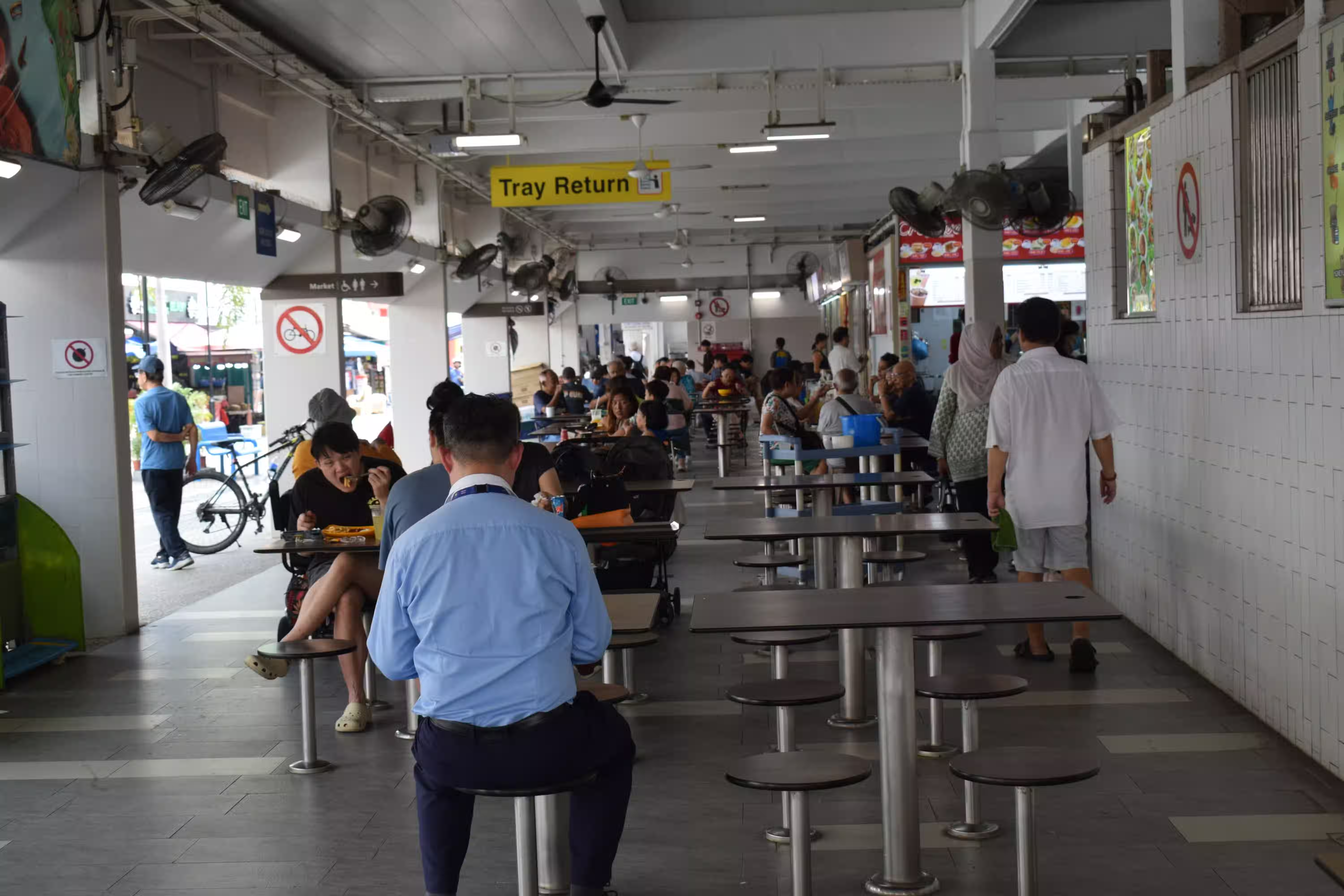 This is the hawker center we went to. Photo by Ravi Dwivedi. Released under the CC-BY-SA 4.0.
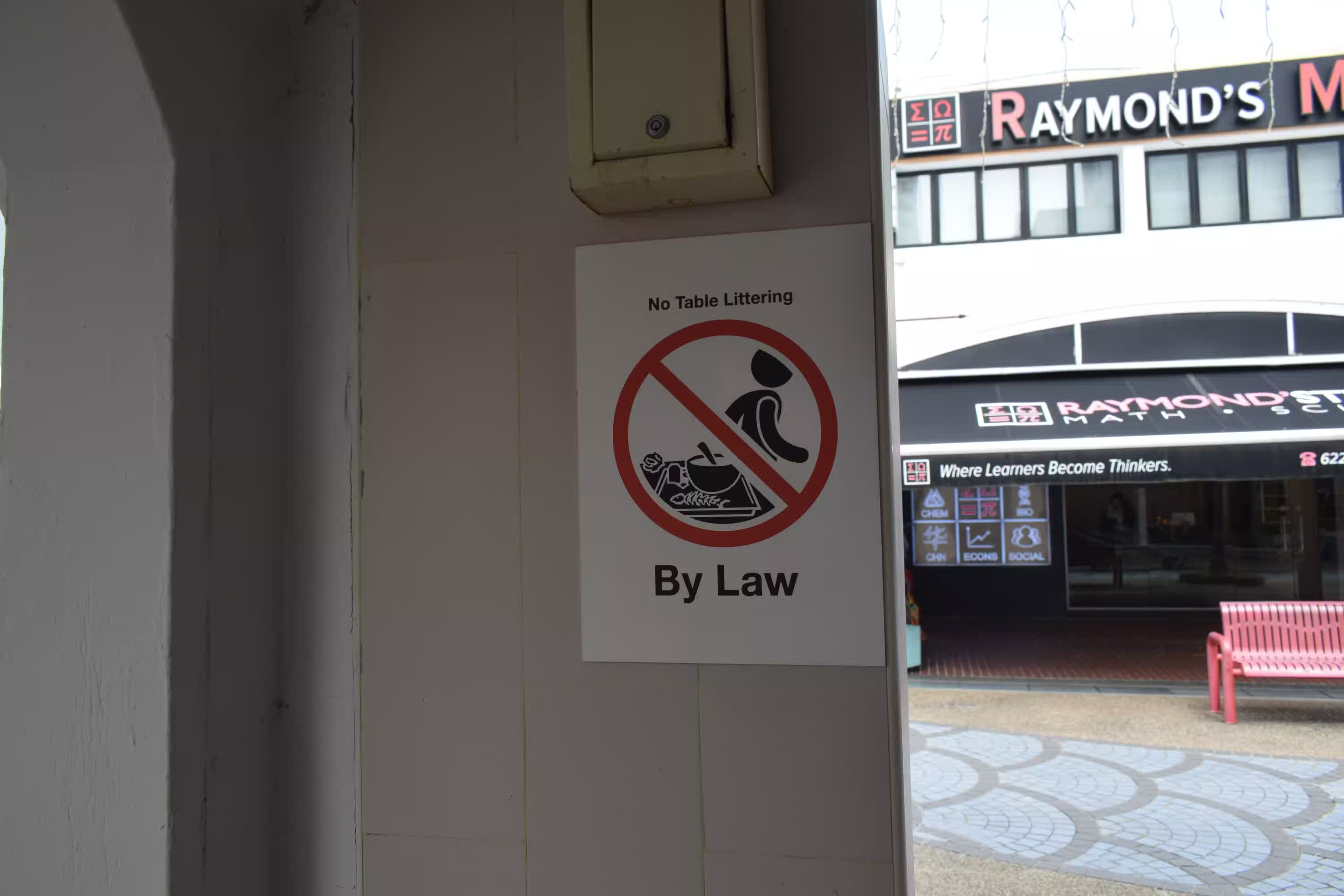 Table littering at the hawker center was prohibited by law. Photo by Ravi Dwivedi. Released under the CC-BY-SA 4.0.
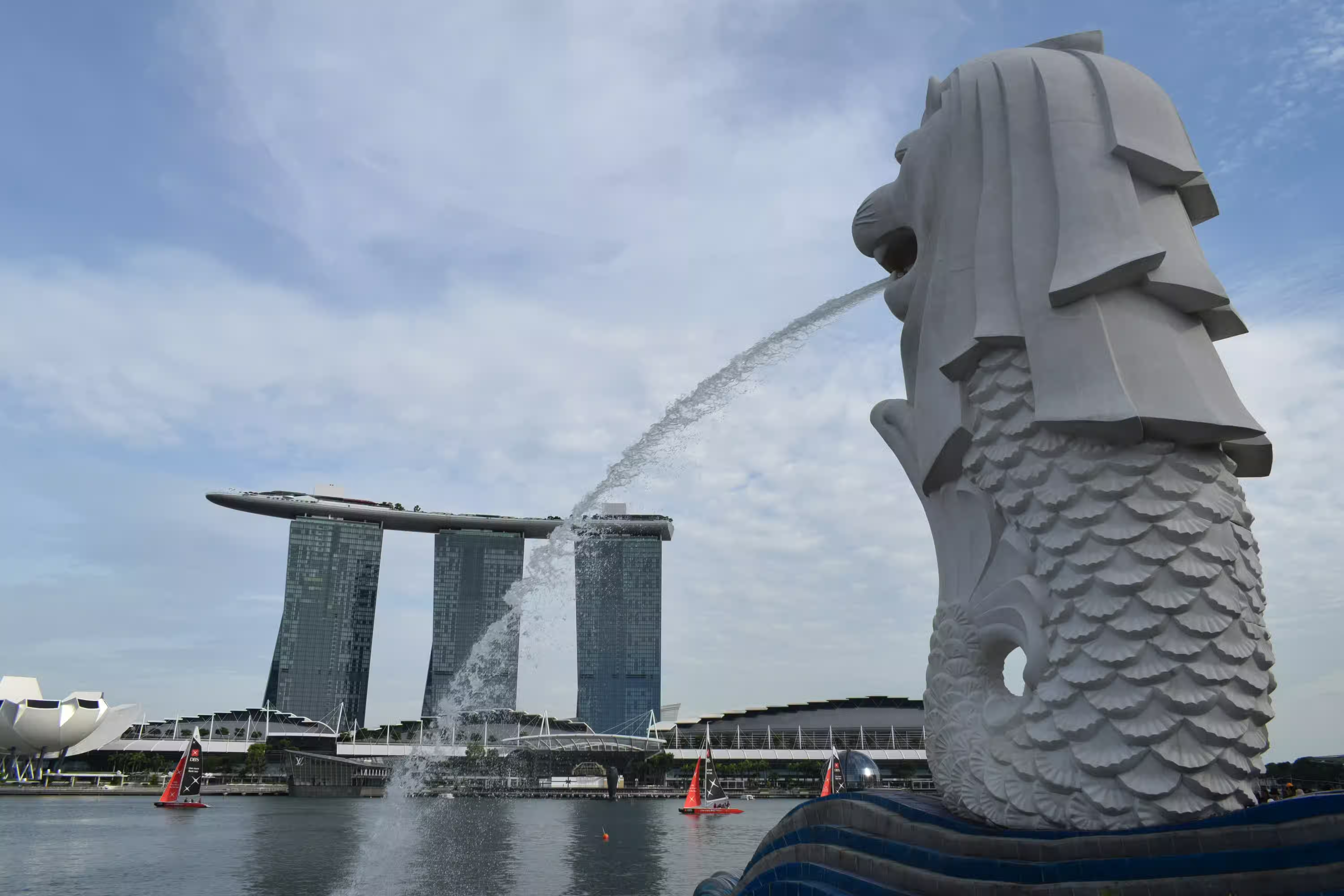 Merlion from behind, giving a good view of Marina Bay Sands. Photo by Ravi Dwivedi. Released under the CC-BY-SA 4.0.
 It appears that the fragile masculinity tech evangelists have identified Debian as a community with boundaries which exclude them from abusing its members and they re so angry about it! In response to posts such as
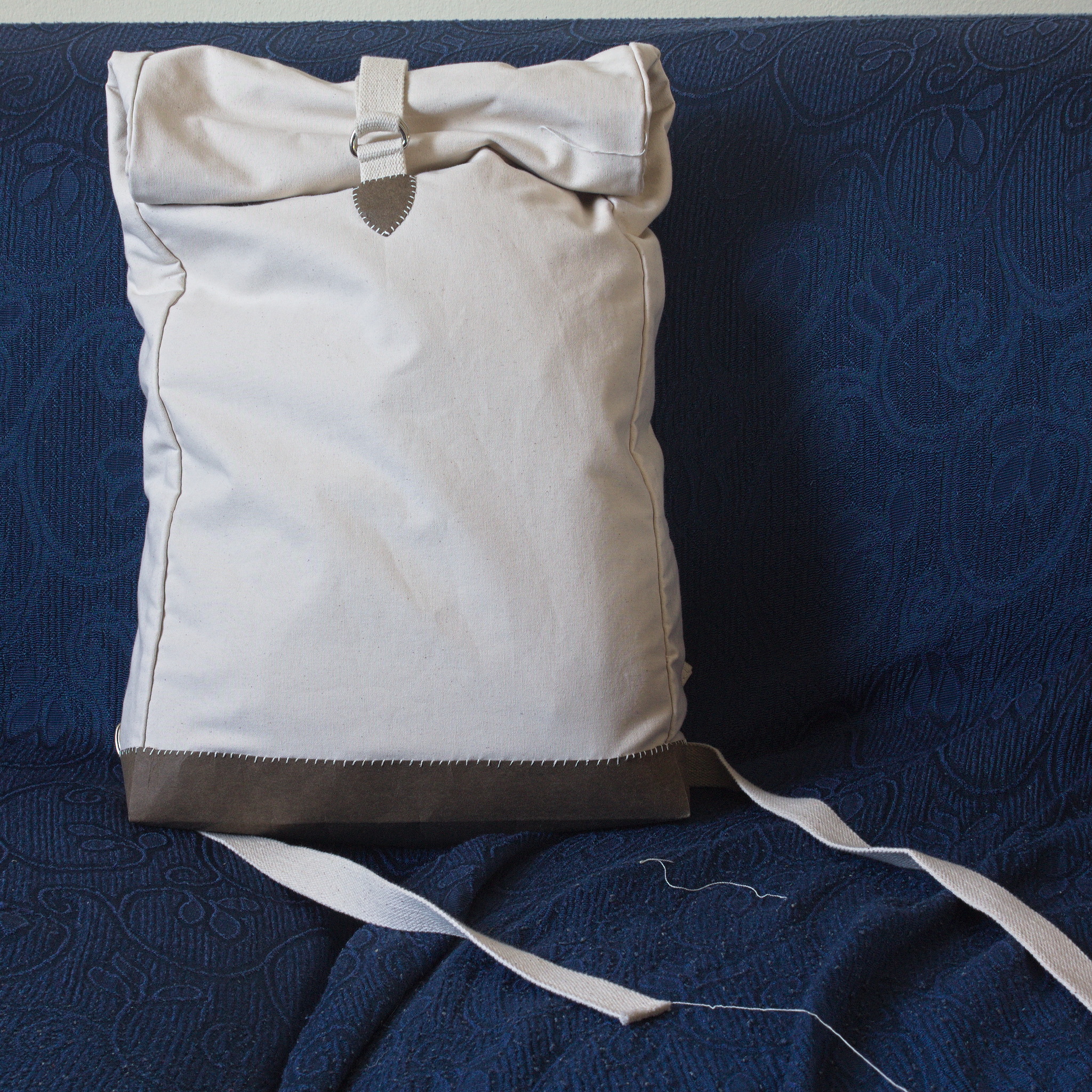 I might be slightly insane? Or am I going to prove something about the
nature and accessibility of sewing and MYOG
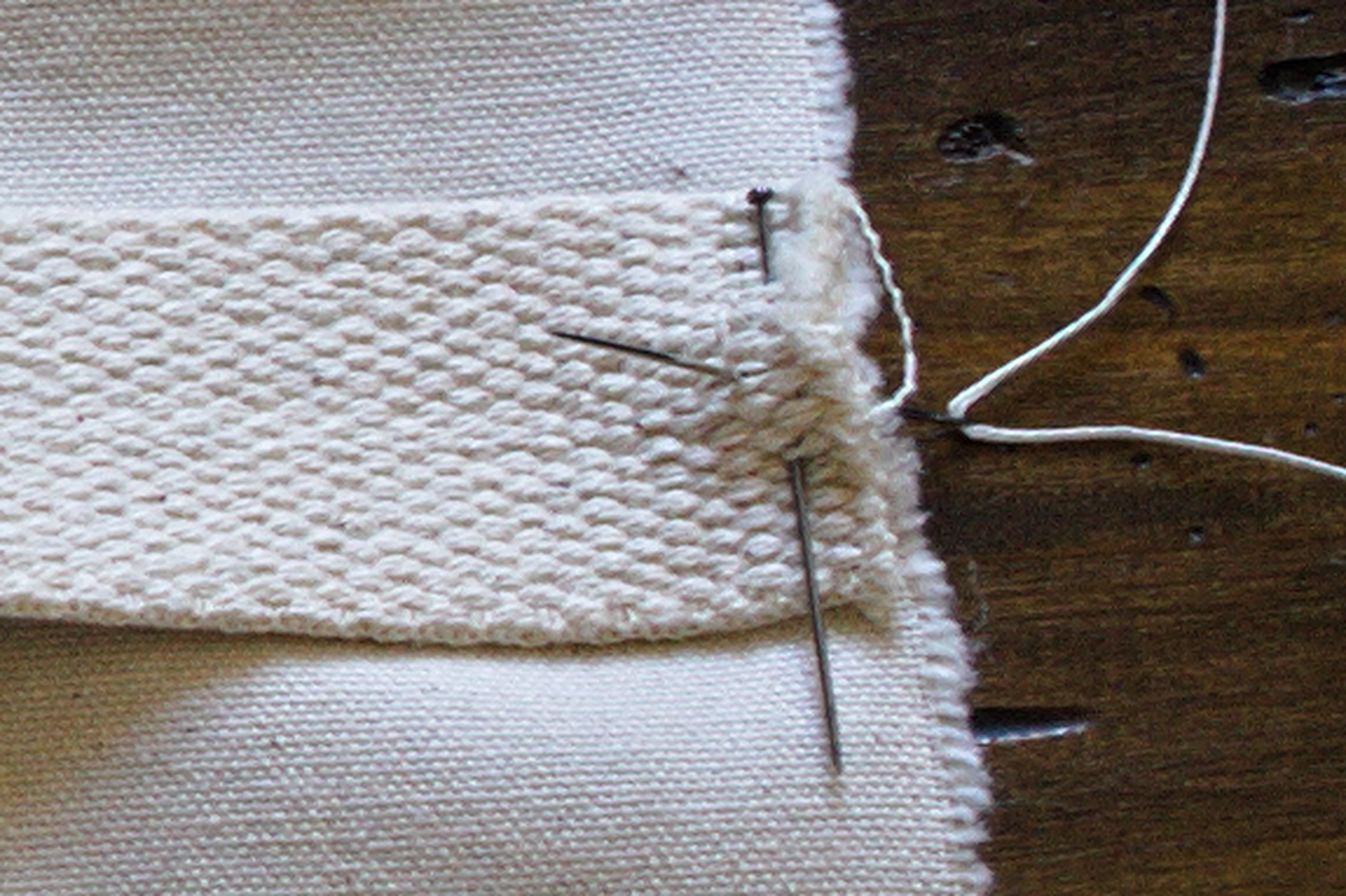 Having to backstitch everything instead of being able to use a running
backstitch of course meant that it was slower than other sewing
projects, and any time there were more than two layers of fabric I had
to use the stabbing motion rather than the sewing one, which is even
slower, but other than a few places with many layers of both fabric and
webbing it wasn t hard.
And to be fair, the seams were fewer and shorter than other sewing
projects, and with the usual interruptions and uneven time availability
it was done in less than a month, which is somewhat typical for one of
my handsewn projects.
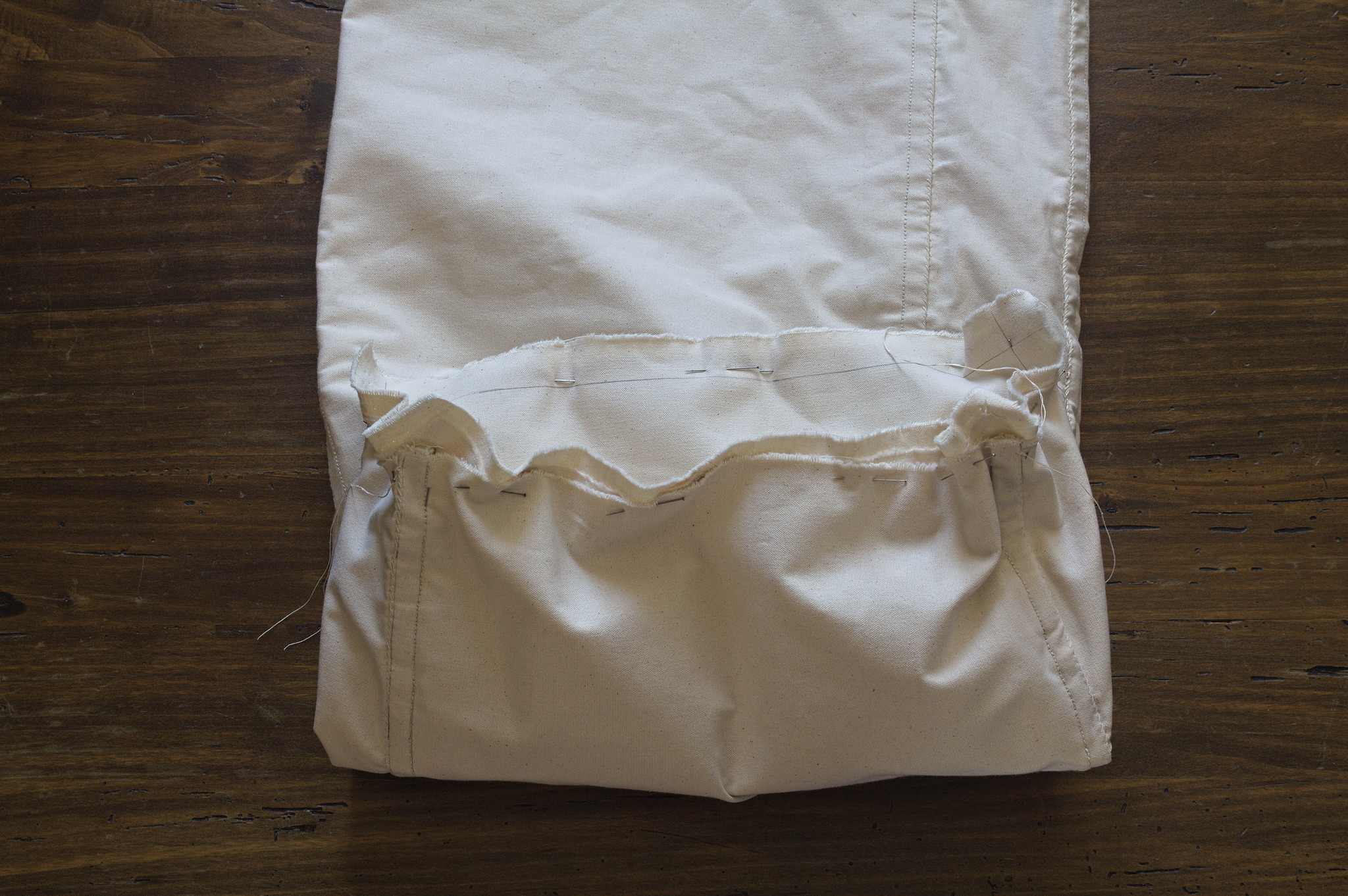 It may have been because of the pattern, but I think it s relevant that
it was also easier than other backpacks I ve made, with significantly
less cursing, even when doing seams that would have been quite fiddly
when sewn by machine.
I have to admit that now I m tempted to plan another backpack using the
same pattern or a slight variation, sewn by machine in a different
fabric, to see the difference in the time it takes and to check if the
changes I think would make it easier to sew by machine are actually
the right thing to do. But maybe I ll wait a bit, other projects are in
the queue.
The pattern is
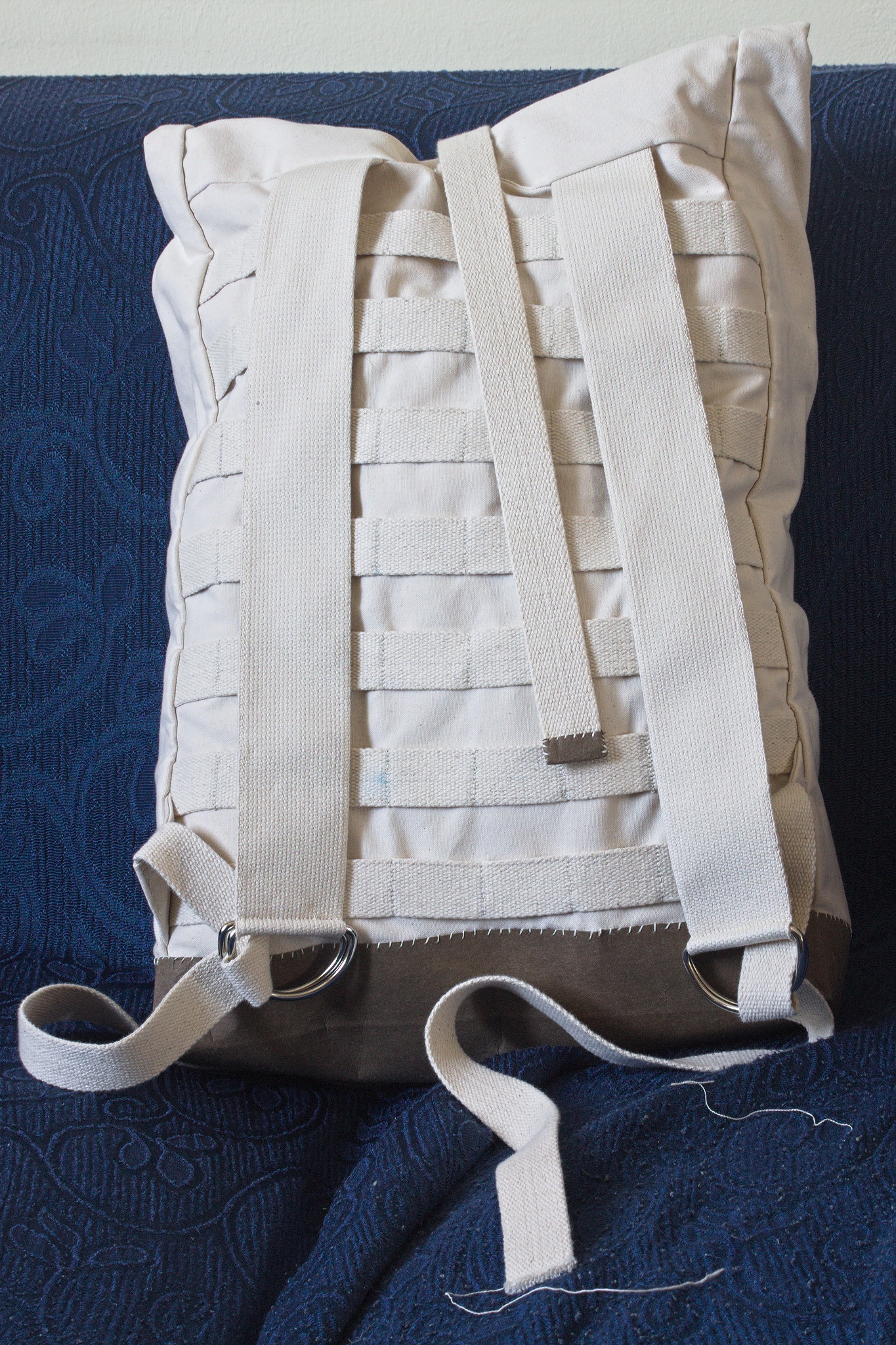 The soft back of course is an issue when the backpack is filled with
small items, but the molle webbing is there exactly because I have plans
to solve it, beside the trivial put something flat towards the back .
As an object, I m happy with the result. As a project, it was way more
than successful, exceeding all expectations, especially for something
somewhat experimental like this one was.

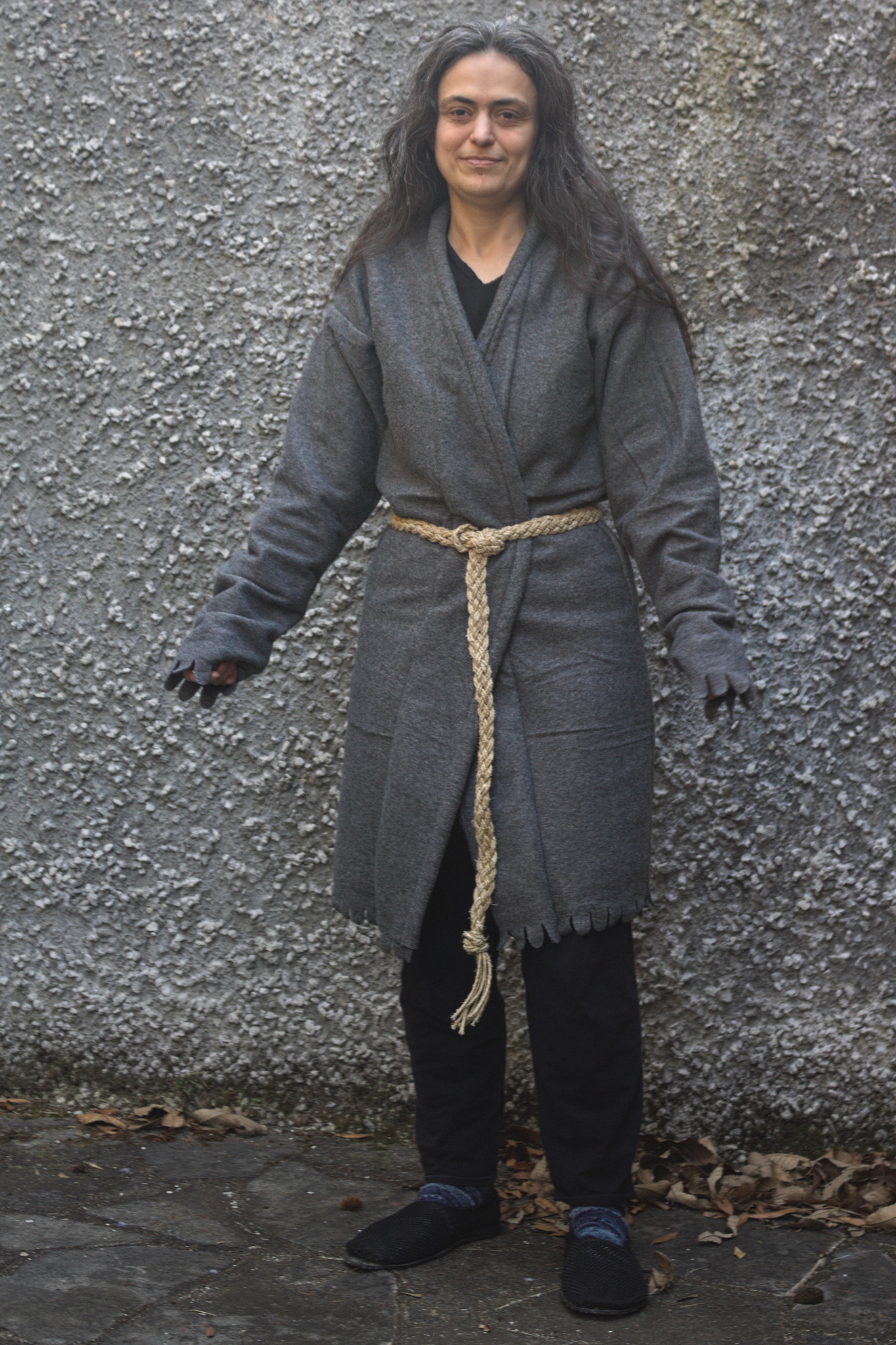 Years ago I made myself a quick dressing gown from a white fleece IKEA
throw and often wore it in the morning between waking up and changing
into day clothes.
One day I want to make myself a fancy victorian wrapper, to use in its
place, but that s still in the early planning stage, and will require
quite some work.
 Then last autumn I discovered that the taxes I owed to the local lord (who
provides protection from mice and other small animals) included not just
a certain amount of kibbles, but also some warm textiles, and the
dressing gown (which at this time was definitely no longer pristine) had
to go.
For a while I had to do without a dressing gown, but then in the second
half of this winter I had some time for a quick machine sewing
project. I could not tackle the big victorian thing, but I still had a
second POLARVIDE throw from IKEA (this time in a more sensible dark
grey) I had bought with sewing intents.
The fabric in a throw isn t that much, so I needed something pretty
efficient, and rather than winging it as I had done the first time I
decided I wanted to try the Modular Jacket from
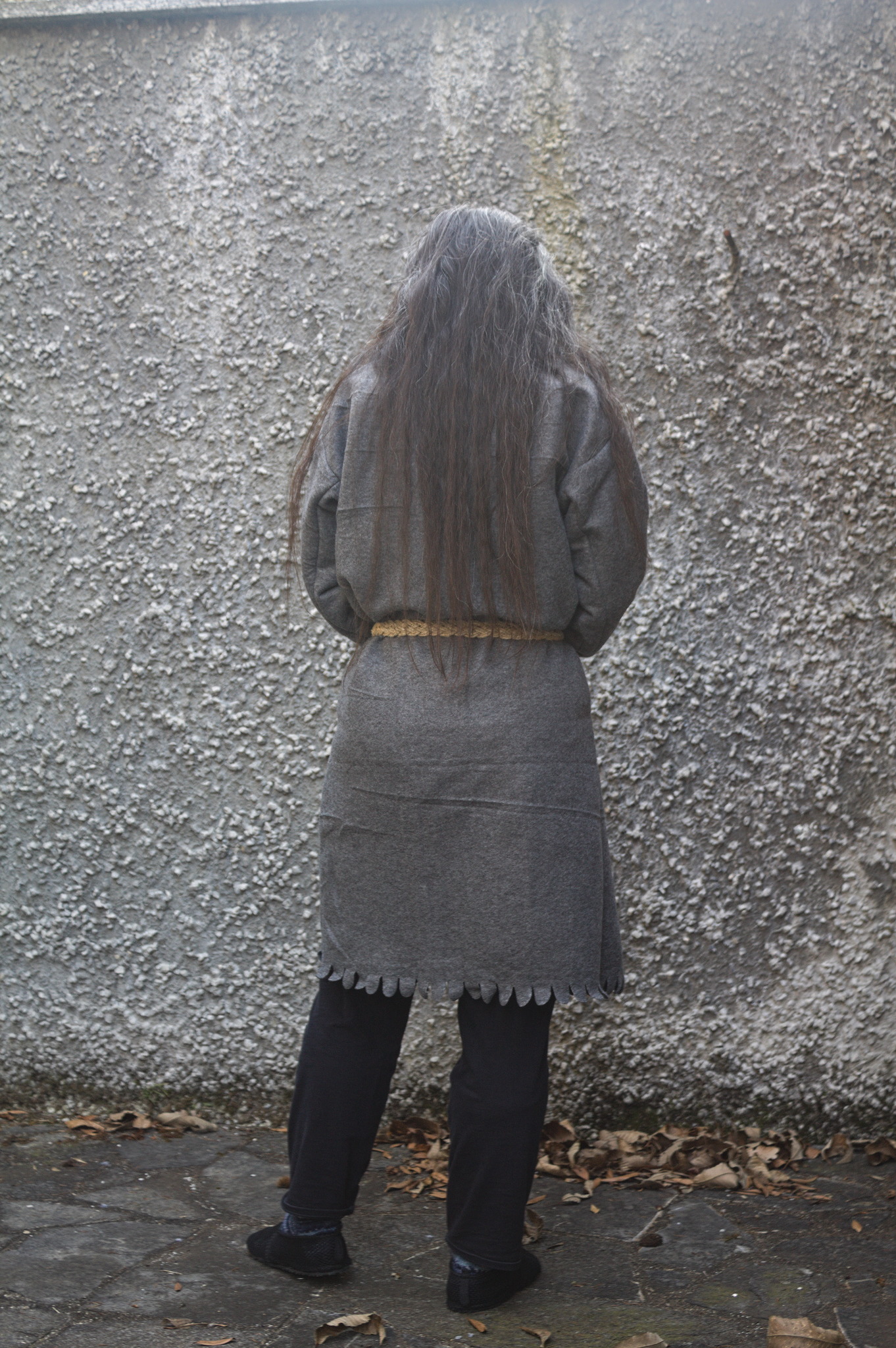 Since I didn t have enough fabric for the belt I also skipped the belt
loops, but I have been wearing this with random belts and I don t feel
the need for them anyway. I ve also been thinking about adding a button
just above the bust and use that to keep it closed, but I m still not
100% sure about it.
Another thing I still need to do is to go through the few scraps of
fleece that are left and see if I can piece together a serviceable
pocket or two.
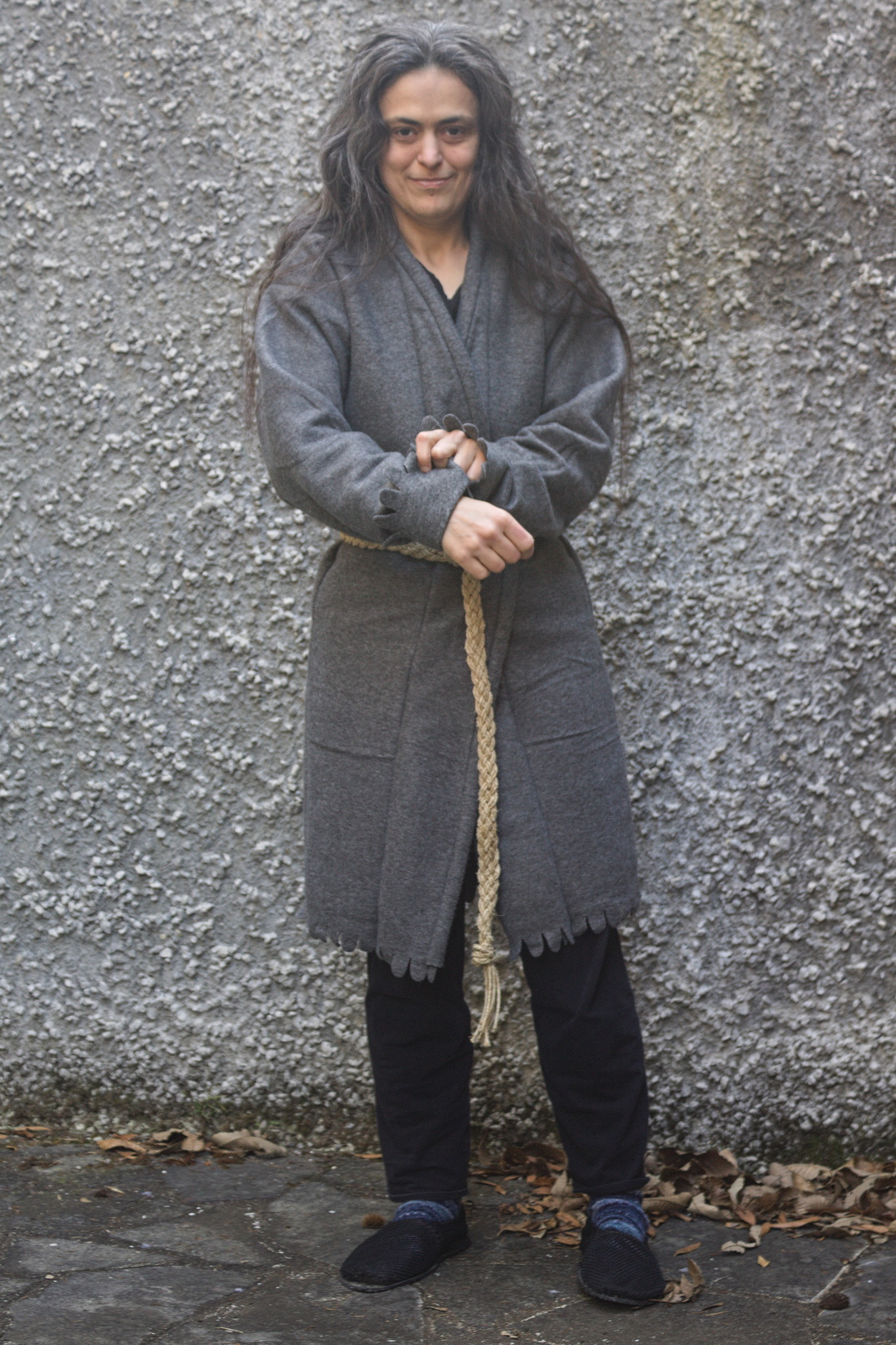 Because of the size of the fabric, I ended up having quite long sleeves:
I m happy with them because they mean that I can cover my hands when
it s cold, or fold them back to make a nice cuff.
If I ll make a real jacket with this patter I ll have to take this in
consideration, and either make the sleeves shorter or finish the seam in
a way that looks nice when folded back.
Will I make a real jacket? I m not sure, it s not really my style of
outer garment, but as a dressing gown it has already been used quite a
bit (as in, almost every morning since I ve made it :) ) and will
continue to be used until too worn to be useful, and that s a good
thing.
 Eight months ago I came up my rocky driveway in an electric car, with the
back full of solar panel mounting rails. I didn't know how I'd manage to
keep it charged. I got the car earlier than planned, with my

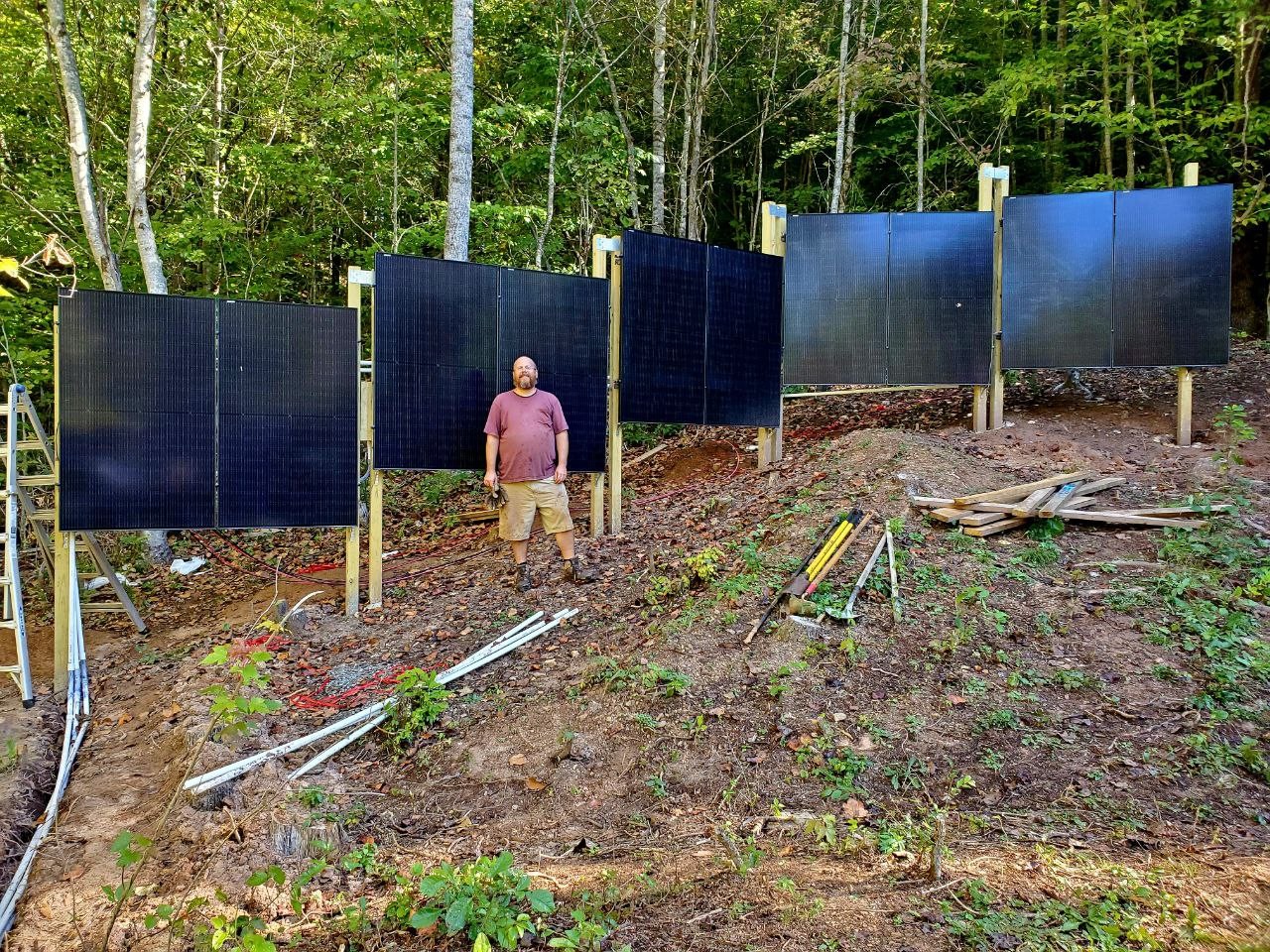
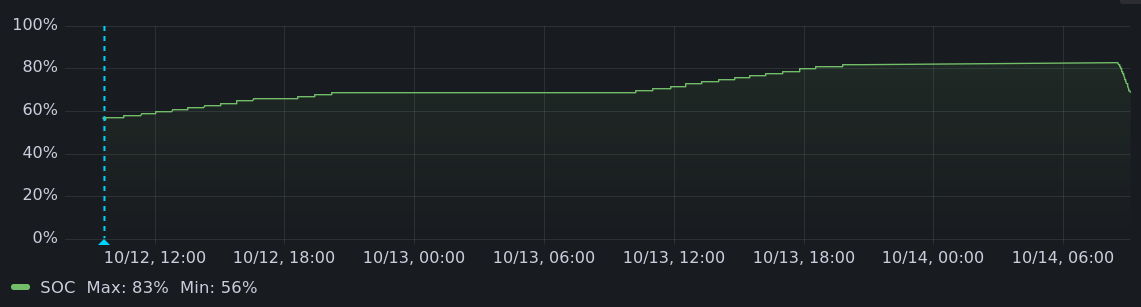
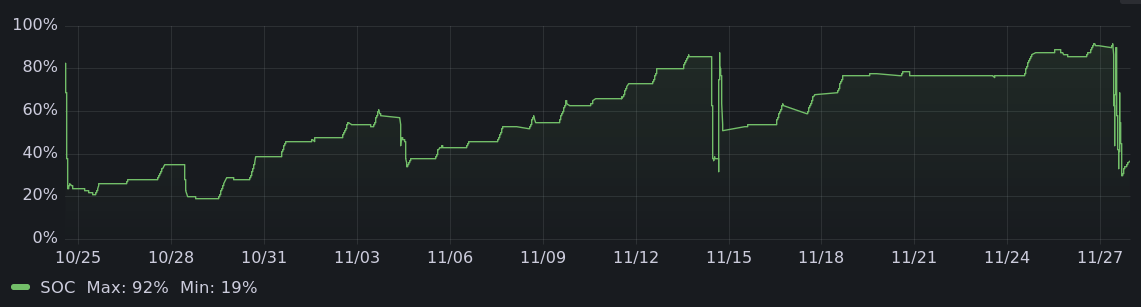
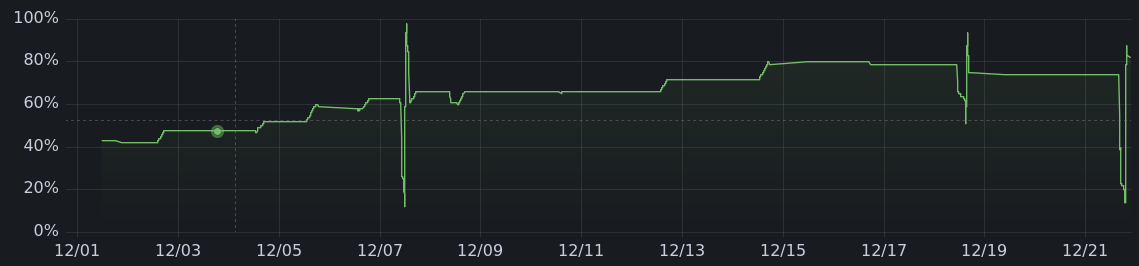
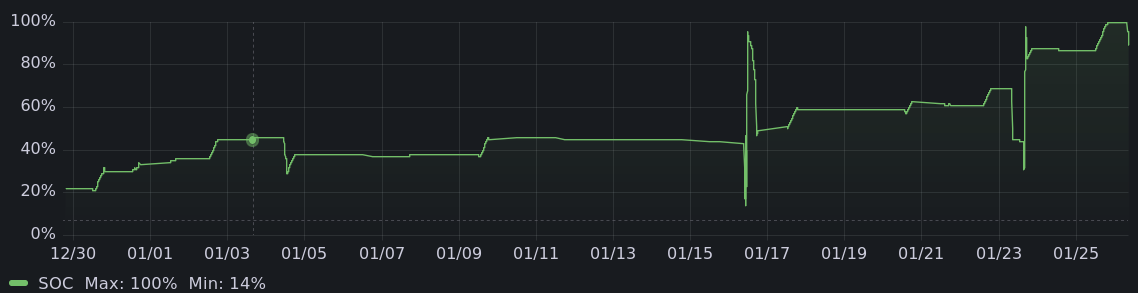
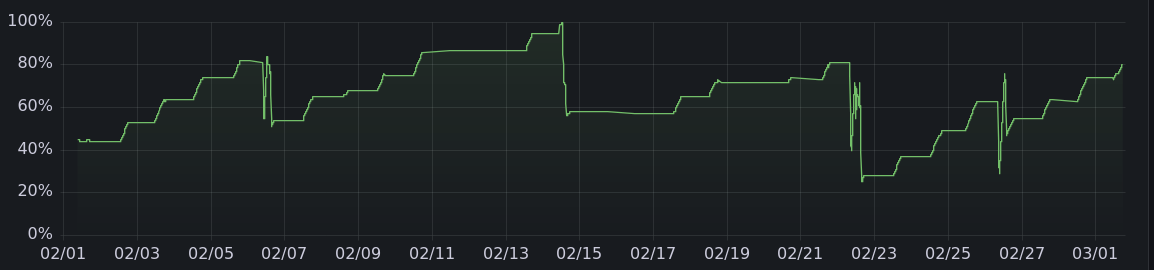
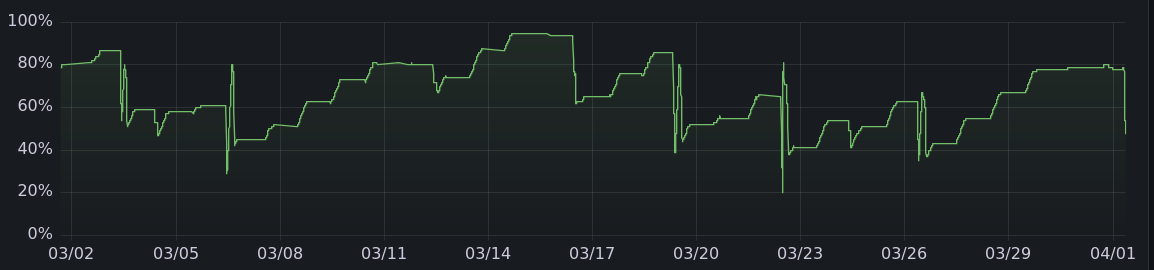
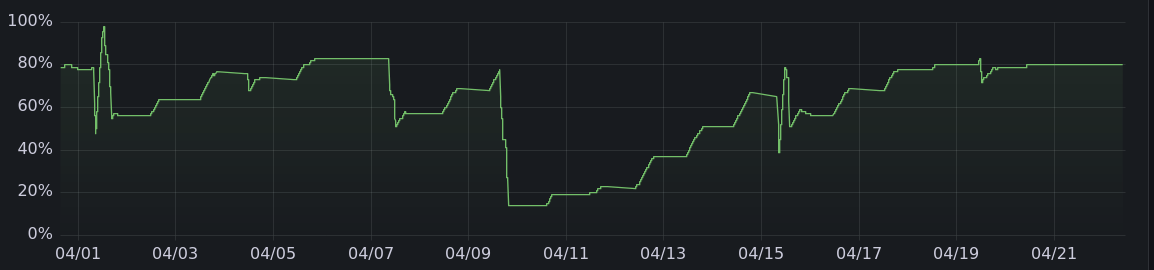
 Last year I intended to write an update on my use of
 Dear Debian community,
this is bits from DPL for February.
Ftpmaster team is seeking for new team members
In December, Scott Kitterman announced his retirement from the project.
I personally regret this, as I vividly remember his invaluable support
during the Debian Med sprint at the start of the COVID-19 pandemic. He
even took time off to ensure new packages cleared the queue in under 24
hours. I want to take this opportunity to personally thank Scott for his
contributions during that sprint and for all his work in Debian.
With one fewer FTP assistant, I am concerned about the increased
workload on the remaining team. I encourage anyone in the Debian
community who is interested to consider reaching out to the FTP masters
about joining their team.
If you're wondering about the role of the
 I can t remember exactly the joke I was making at the time in my
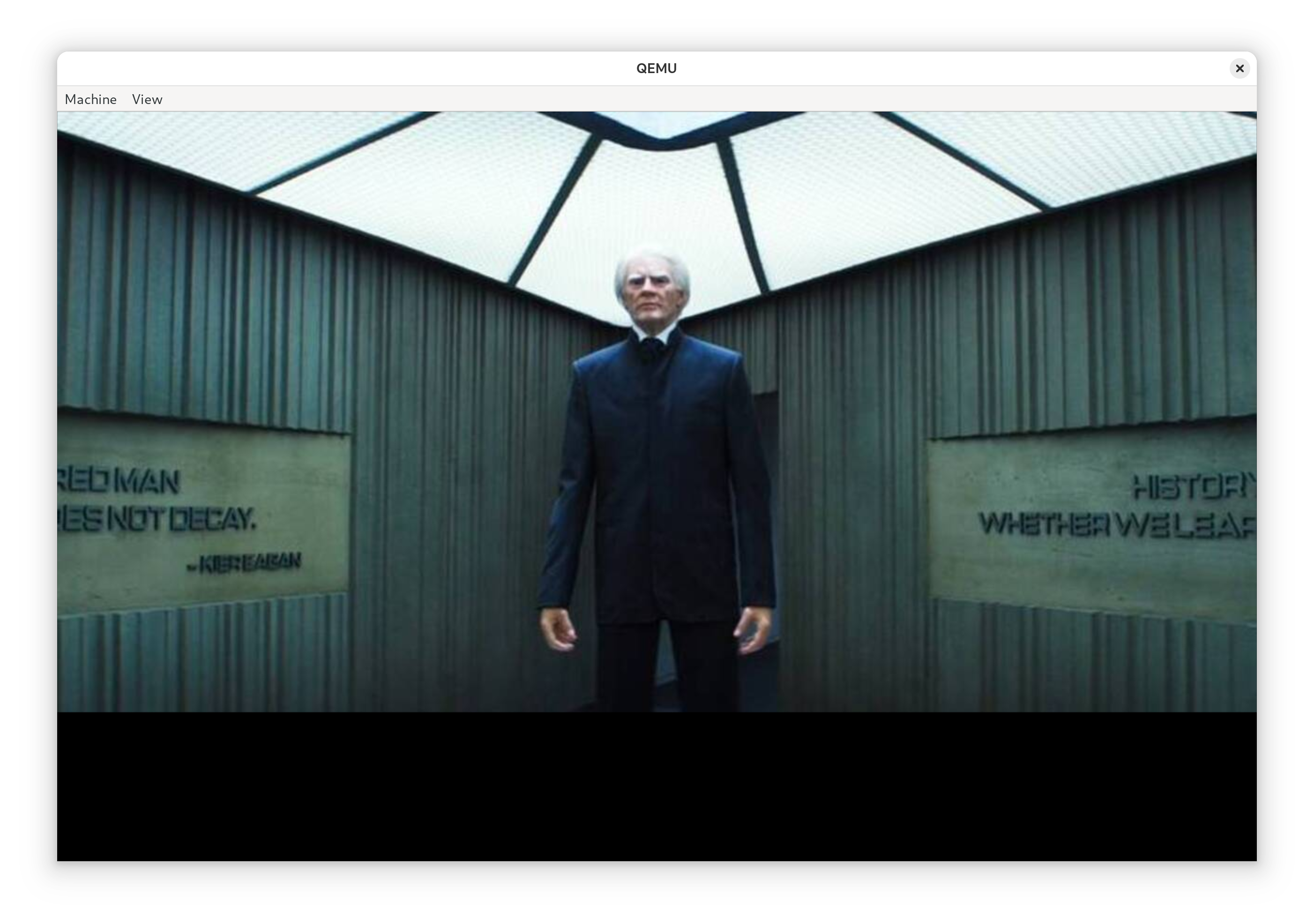

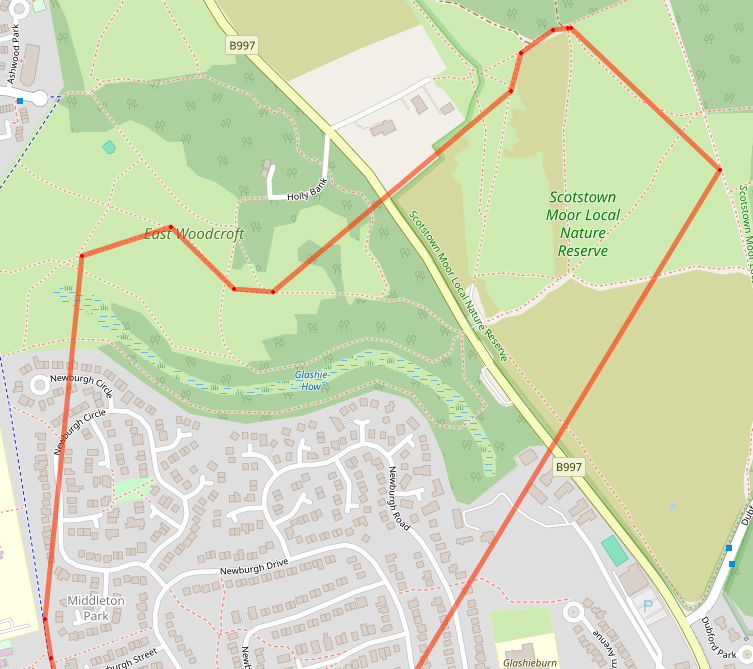 After circling a bit to find somewhere suitable (there appear to be construction
works in the park!) I set up my gear in 2C with frost on the ground, called CQ,
spotted and got nothing on either the end fed half wave or the cheap vertical.
As it was too late for 20m, I tried 40 and a bit of 80 using the inbuilt tuner,
but wasn t heard by stations I called or when calling independently.
I packed everything up and lora-doofered my way home, mildly deflated.
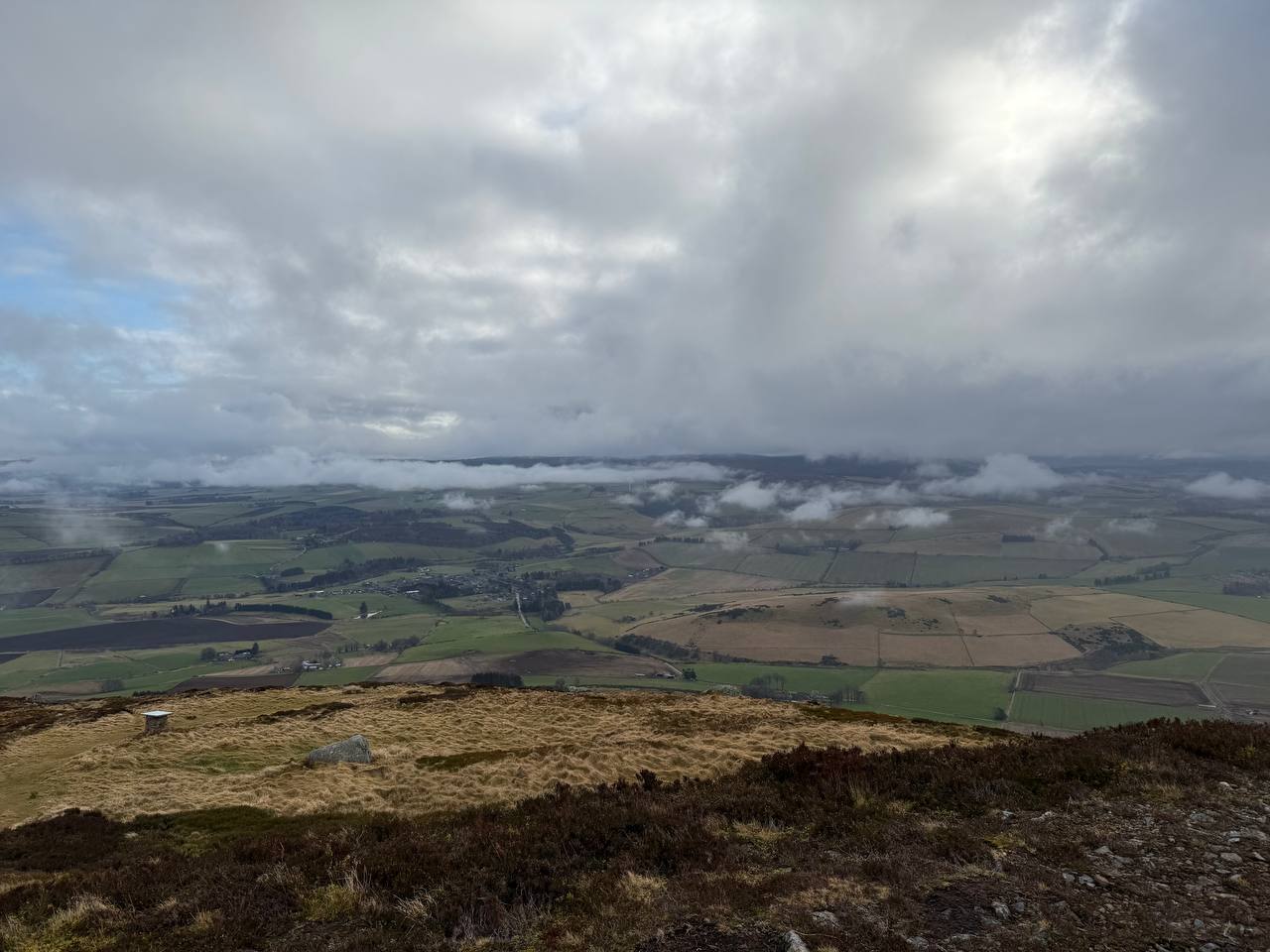 After a mild struggle on 2m, I set up the end fed the first hill and got to
work from the old hill fort:
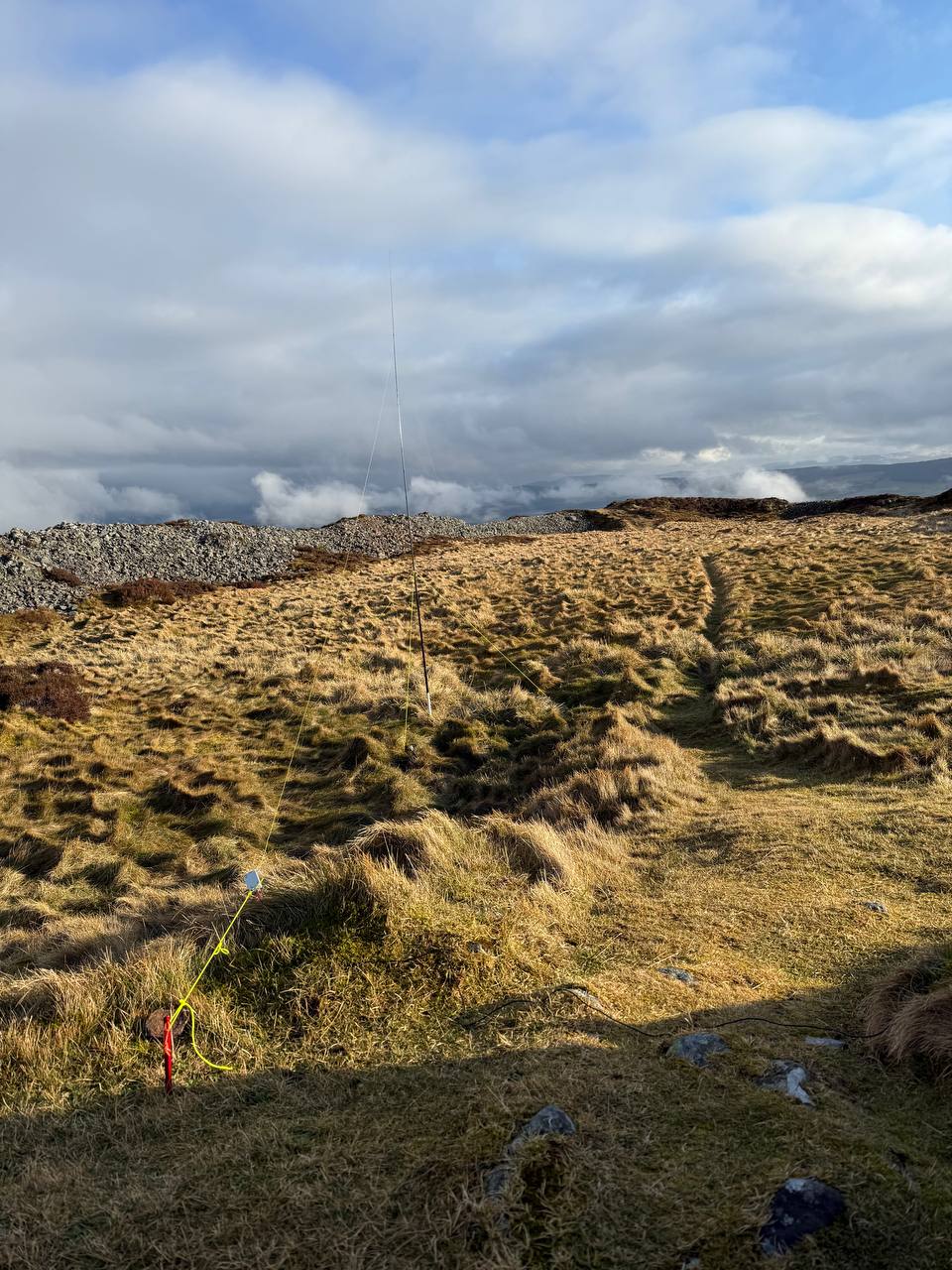 The end fed worked flawlessly. Exactly as promised, switching between 7MHz, 14MHz, 21MHz
and 28MHz without a tuner was perfect, I chased hills on all the bands, and had a
great time. Apart from 40m, where there was absolutely no space due to a
contest. That wasn t such a fun time!
My fingers were bitterly cold, so on went the big gloves for the descent and I
felt like I was warm by the time I made it back to the car.
It worked so well, in fact, I took the 1/4 wave cheap vertical out my bag and
decided to brave it on the next activation.
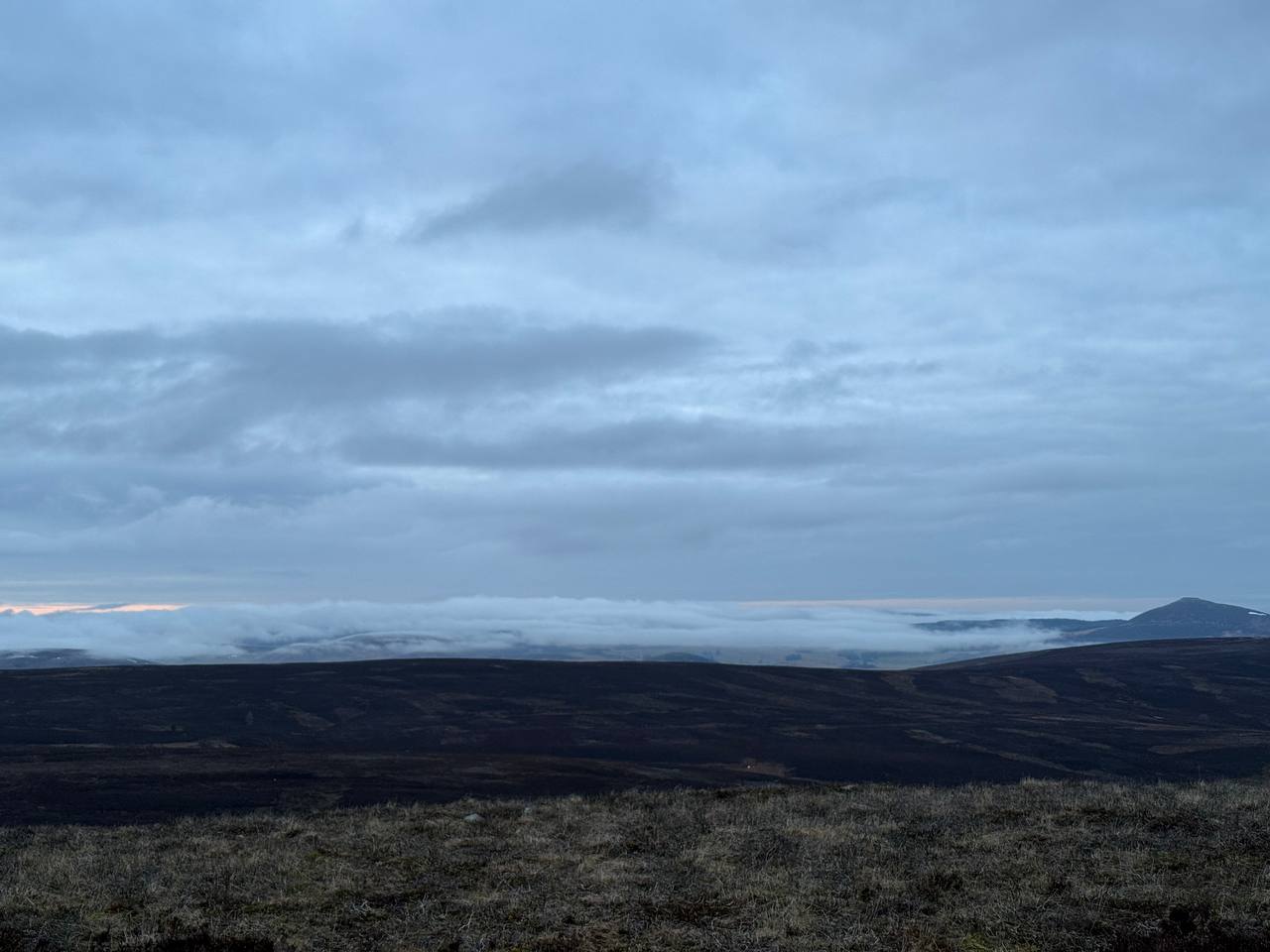 To get some height for the feedpoint, I wrapped the coax around my winder a
couple of turns and trapped it with the elastic while draping the coax over the
trig. This bought me some more height and I felt clever because of it. Maybe a
pole would be easier?
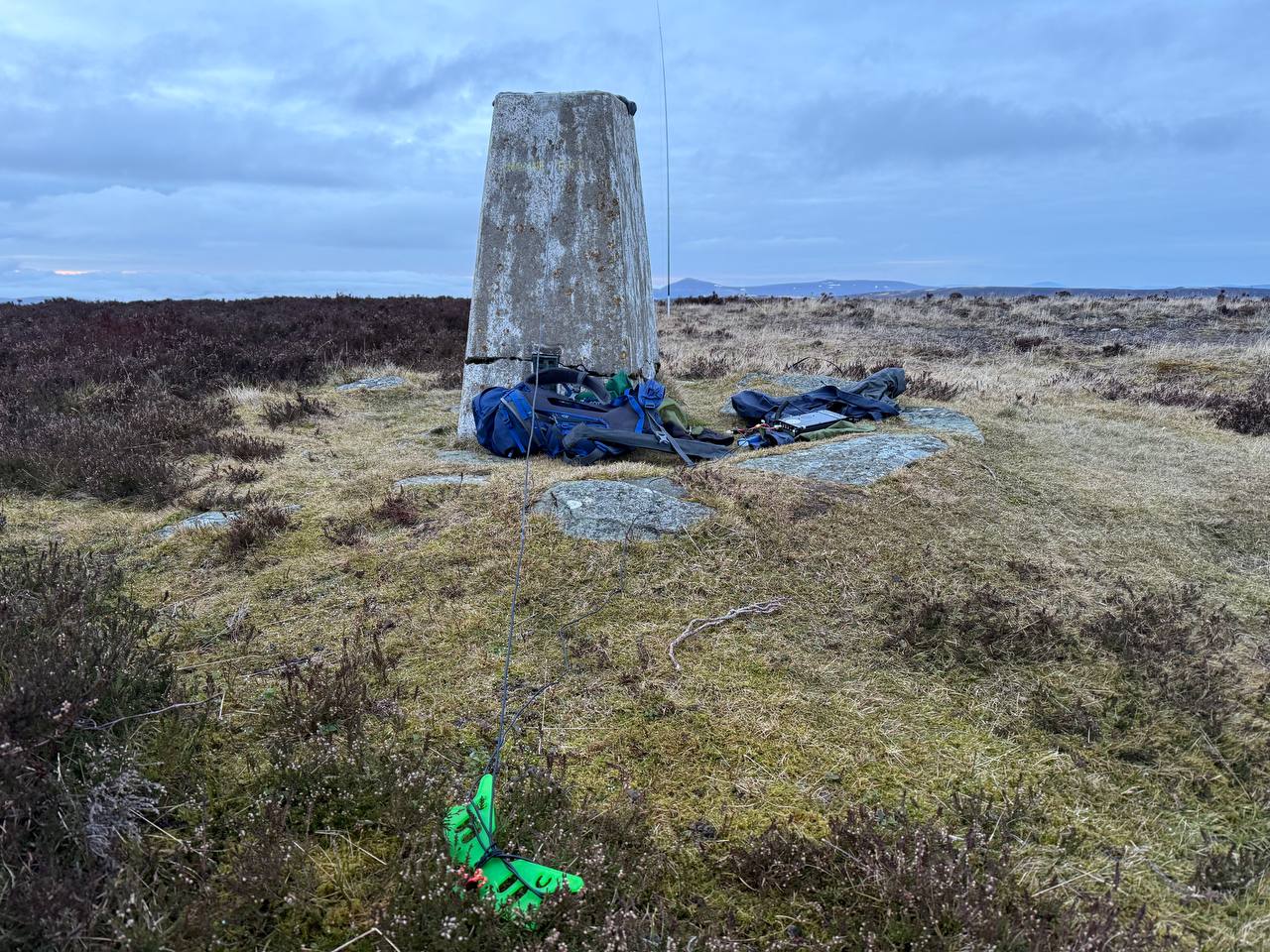 From here, I worked inter-G on 40m and had a wee pile up, eventually working 15
or so European stations on 20m. Pleased with that!
I had been considering a third hill, but home was the call in the failing light.
Back to the car I walked to find my key didn t have any battery, so out came the
Audi App and I used the Internet of Things to unlock my car. The modern world is
bizarre.
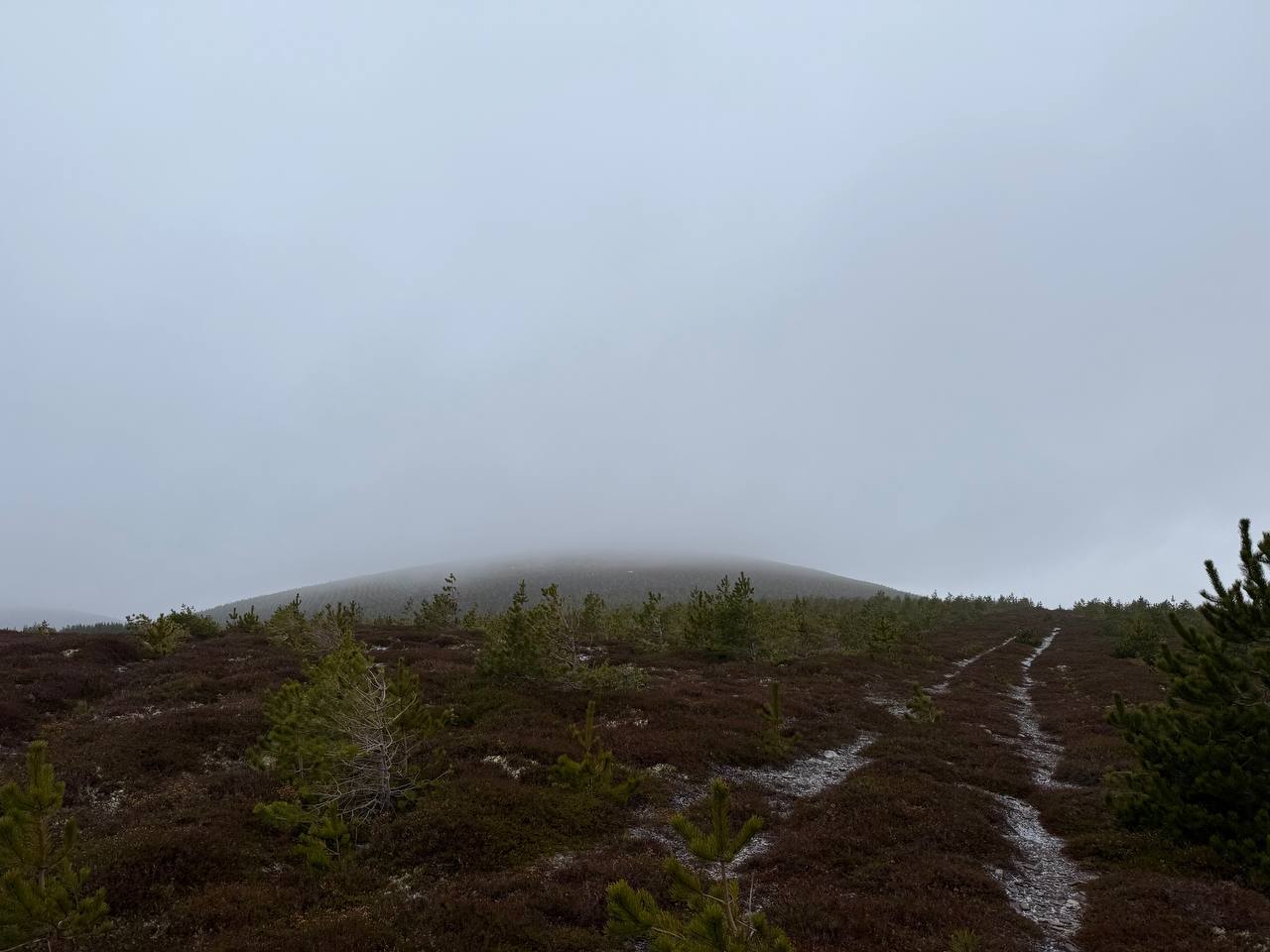
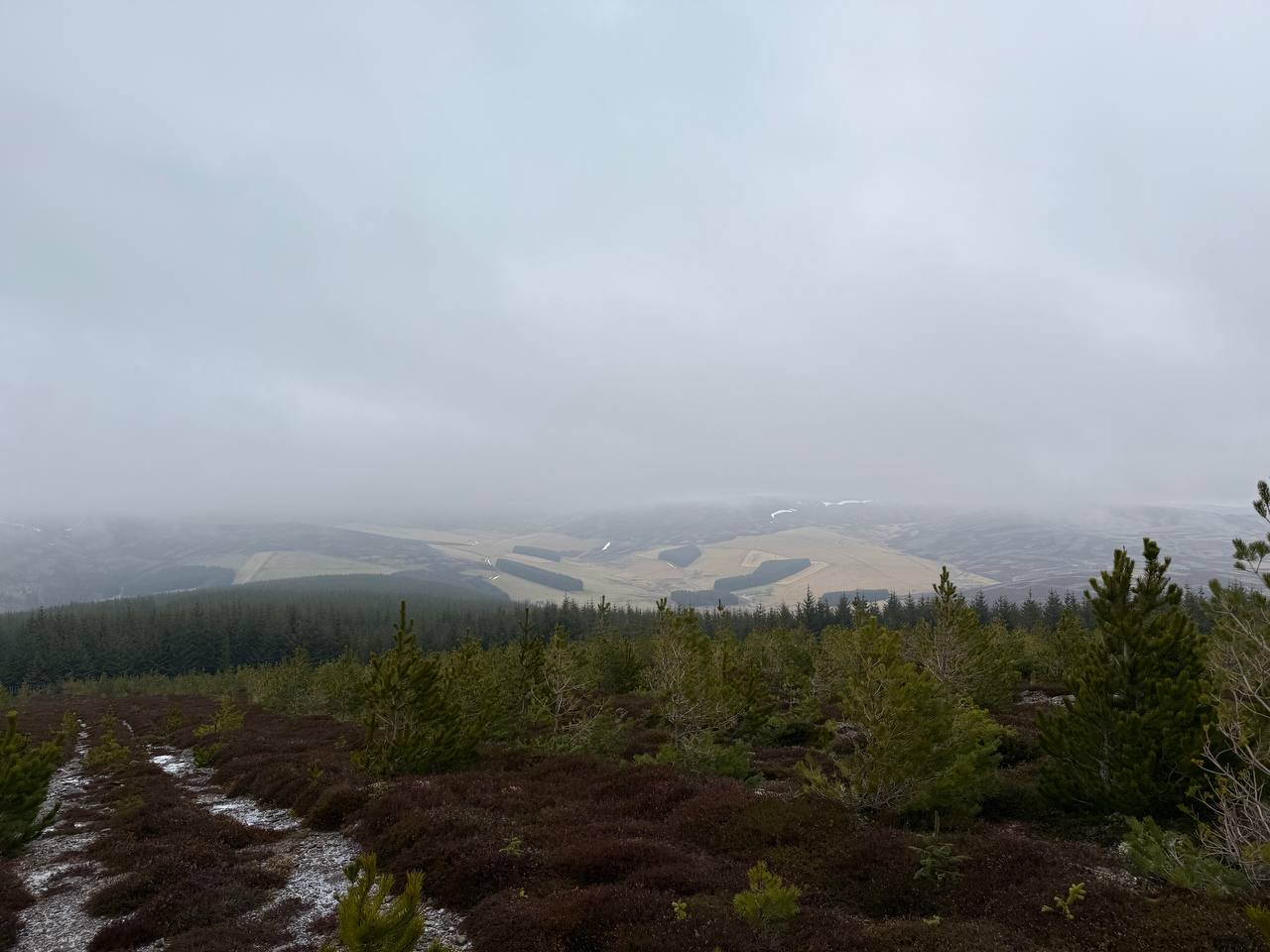 I set up at the cairn and picked up 30 contacts overall, split between 40m and
20m, with some inter-g on 40 and a couple of continental surprises. 20 had
longer skip today, so I saw Spain, Finland, Slovenia, Poland.
On teardown, I managed to snap the top segment of my brand new mast with my
cold, clumsy fingers, but thankfully sotabeams stock replacements. More money at
the problem, again.
Back to the car, no app needed, and homeward bound as the light faded.
At the end of the weekend, I find myself finally over 100 activator points and
over 400 chaser points. Somehow I ve collected more points this year already
than last year, the winter bonuses really do stack up!
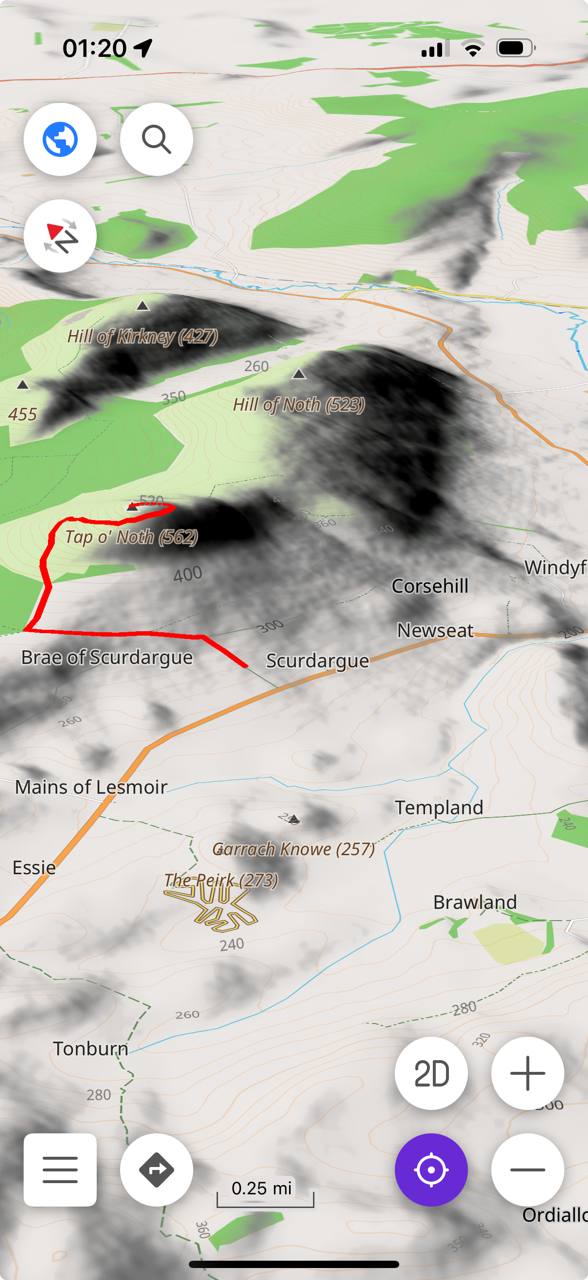 This weekend I discovered it s possible to have height maps for nice 3d
maps and contours marked on the map - you just need to download some
additions for the maps. This is a really nice feature, it makes maps more
pretty and more useful when you re in the middle of nowhere.
 Another short status update of what happened on my side last
month. Mostly focused on quality of life improvements in phosh and
cleaning up and improving phoc this time around (including catching up
with wlroots git) but some improvements for other things like
phosh-osk-stub happened on the side line too.
 Another musical retrospective. If you enjoy this, I also did a
















































 As I was tired of long build times, so I convinced my boss to buy me a Lenovo Legion pro 7. The reason is: this laptop has an AMD Ryzen 9 7945HX that has 16 cores (32 threads). This reduces a lot the time I have to just wait for my laptop to compile, or run unit tests, especially for big packages like Ceph, OpenVSwitch, and so on.
When buying it, I knew it would not be a good fit for Debian, as this type of laptop is aimed at gaming, and the support under Linux is rather bad. I wish Lenovo had other policies, but that is the way it is: if you re a Linux user, you re not suppose to be needing a big CPU, apparently.
Anyways, I slowly have been able to fix all issues over this year. In this blog post I ll explain how I fixed all problems, in the hope it can be useful to others. And I ll explain what the src:lenovolegionlinux package (that I now maintain in Debian) does.
Video
The laptop comes with an nVidia RTX-4080 and a Radeon. I quickly tried the radeon, but couldn t make it work with an external monitor. So I gave up on it, disabled it, and now I m using the proprietary nVidia driver from non-free. I don t like it: the nVidia card drains too much power, and I don t care at all 3D acceleration. I would have prefer an intel board, but no choice: all laptops with this kind of CPU comes with gamer s 3D card. Anyways, apart from the power issue, it works out well.
Fan control
This sounds like a non-issue, but it is a huge one. Indeed, if not controlling the fan, it is impossible to get the full potential of the CPUs that are otherwise throttling. One may end up using the laptop at a few hundred MHz instead of 5GHz+. More on this later.
Sound
It took me a really long time to figure out what to do. Indeed, while the sound card works out of the box, the issue was that my laptop came with a TI (Texas Instrument) speaker firmware that isn t on by default. I suppose the purpose is to save on power when it isn t in use. Anyways, to have sound working, one need in Debian, to run at least kernel 6.10, which means for me, running the Bookworm backport, so that there s a kernel module for the speakers. But that s not it. The speakers also need a proprietary firmware in /lib/firmware/TAS2XXX38*.bin. I was able to find that in the ti.com forum. As I tried so many packages, I wouldn t be able to tell which one was the correct one. Once that was done, the firmware needs to be initialized through the i2c interface. I could find a script that did that, which I pushed in my lenovolegionlinux package (see below).
WiFi
WiFi worked out of the box for me, just it wouldn t wake up if I closed the laptop lead. This fixed it for me in /etc/modprobe.d/rtw8852be.conf:
options rtw89_pci disable_aspm_l1=y disable_aspm_l1ss=y
