Search Results: "christoph"

30 June 2025

Russell Coker: Links June 2025

Jonathan McDowell wrote part 2 of his blog series about setting up a voice assistant on Debian, I look forward to reading further posts [1]. I m working on some related things for Debian that will hopefully work with this. I m testing out OpenSnitch on Trixie inspired by this blog post, it s an interesting package [2]. Valerie wrote an informative article about creating mesh networks using LORA for emergency use [3]. Interesting article about Signal and Windows Recall. That gives us some things to consider regarding ML features on Linux systems [4]. Insightful article about AI and the end of prestige [5]. We should all learn about LLMs. Jonathan Dowland wrote an informative blog post about how to manage namespaces on Linux [6]. The Consumer Rights wiki is a great resource for raising awareness of corporations exploiting their customers for computer related goods and services [7]. Interesting article about Schizophrenia and the cliff-edge function of evolution [8].

24 June 2025

Matthew Garrett: Why is there no consistent single signon API flow?

Single signon is a pretty vital part of modern enterprise security. You have users who need access to a bewildering array of services, and you want to be able to avoid the fallout of one of those services being compromised and your users having to change their passwords everywhere (because they're clearly going to be using the same password everywhere), or you want to be able to enforce some reasonable MFA policy without needing to configure it in 300 different places, or you want to be able to disable all user access in one place when someone leaves the company, or, well, all of the above. There's any number of providers for this, ranging from it being integrated with a more general app service platform (eg, Microsoft or Google) or a third party vendor (Okta, Ping, any number of bizarre companies). And, in general, they'll offer a straightforward mechanism to either issue OIDC tokens or manage SAML login flows, requiring users present whatever set of authentication mechanisms you've configured.

This is largely optimised for web authentication, which doesn't seem like a huge deal - if I'm logging into Workday then being bounced to another site for auth seems entirely reasonable. The problem is when you're trying to gate access to a non-web app, at which point consistency in login flow is usually achieved by spawning a browser and somehow managing submitting the result back to the remote server. And this makes some degree of sense - browsers are where webauthn token support tends to live, and it also ensures the user always has the same experience.

But it works poorly for CLI-based setups. There's basically two options - you can use the device code authorisation flow, where you perform authentication on what is nominally a separate machine to the one requesting it (but in this case is actually the same) and as a result end up with a straightforward mechanism to have your users socially engineered into giving Johnny Badman a valid auth token despite webauthn nominally being unphisable (as described years ago), or you reduce that risk somewhat by spawning a local server and POSTing the token back to it - which works locally but doesn't work well if you're dealing with trying to auth on a remote device. The user experience for both scenarios sucks, and it reduces a bunch of the worthwhile security properties that modern MFA supposedly gives us.

There's a third approach, which is in some ways the obviously good approach and in other ways is obviously a screaming nightmare. All the browser is doing is sending a bunch of requests to a remote service and handling the response locally. Why don't we just do the same? Okta, for instance, has an API for auth. We just need to submit the username and password to that and see what answer comes back. This is great until you enable any kind of MFA, at which point the additional authz step is something that's only supported via the browser. And basically everyone else is the same.

Of course, when we say "That's only supported via the browser", the browser is still just running some code of some form and we can figure out what it's doing and do the same. Which is how you end up scraping constants out of Javascript embedded in the API response in order to submit that data back in the appropriate way. This is all possible but it's incredibly annoying and fragile - the contract with the identity provider is that a browser is pointed at a URL, not that any of the internal implementation remains consistent.

I've done this. I've implemented code to scrape an identity provider's auth responses to extract the webauthn challenges and feed those to a local security token without using a browser. I've also written support for forwarding those challenges over the SSH agent protocol to make this work with remote systems that aren't running a GUI. This week I'm working on doing the same again, because every identity provider does all of this differently.

There's no fundamental reason all of this needs to be custom. It could be a straightforward "POST username and password, receive list of UUIDs describing MFA mechanisms, define how those MFA mechanisms work". That even gives space for custom auth factors (I'm looking at you, Okta Fastpass). But instead I'm left scraping JSON blobs out of Javascript and hoping nobody renames a field, even though I only care about extremely standard MFA mechanisms that shouldn't differ across different identity providers.

Someone, please, write a spec for this. Please don't make it be me.

comment count unavailable comments

11 June 2025

Freexian Collaborators: Debian Contributions: Updated Austin, DebConf 25 preparations continue and more! (by Anupa Ann Joseph)

Debian Contributions: 2025-05 Contributing to Debian is part of Freexian s mission. This article covers the latest achievements of Freexian and their collaborators. All of this is made possible by organizations subscribing to our Long Term Support contracts and consulting services.

Updated Austin, by Colin Watson and Helmut Grohne Austin is a frame stack sampling profiler for Python. It allows profiling Python applications without instrumenting them while losing some accuracy in the process, and is the only one of its kind presently packaged for Debian. Unfortunately, it hadn t been uploaded in a while and hence the last Python version it worked with was 3.8. We updated it to a current version and also dealt with a number of architecture-specific problems (such as unintended sign promotion, 64bit time_t fallout and strictness due to -Wformat-security ) in cooperation with upstream. With luck, it will migrate in time for trixie.

Preparing for DebConf 25, by Stefano Rivera and Santiago Ruano Rinc n DebConf 25 is quickly approaching, and the organization work doesn t stop. In May, Stefano continued supporting the different teams. Just to give a couple of examples, Stefano made changes in DebConf 25 website to make BoF and sprints submissions public, so interested people can already know if a BoF or sprint for a given subject is planned, allowing coordination with the proposer; or to enhance how statistics are made public to help the work of the local team. Santiago has participated in different tasks, including the logistics of the conference, like preparing more information about the public transportation that will be available. Santiago has also taken part in activities related to fundraising and reviewing more event proposals.

Miscellaneous contributions
  • Lucas fixed security issues in Valkey in unstable.
  • Lucas tried to help with the update of Redis to version 8 in unstable. The package hadn t been updated for a while due to licensing issues, but now upstream maintainers fixed them.
  • Lucas uploaded around 20 ruby-* packages to unstable that weren t updated for some years to make them build reproducible. Thanks to reproducible builds folks to point out those issues. Also some unblock requests (and follow-ups) were needed to make them reach trixie in time for the release.
  • Lucas is organizing a Debian Outreach session for DebConf 25, reaching out to all interns of Google Summer of Code and Outreachy programs from the last year. The session will be presented by in-person interns and also video recordings from the interns interested in participating but did not manage to attend the conference.
  • Lucas continuously works on DebConf Content team tasks. Replying to speakers, sponsors, and communicating internally with the team.
  • Carles improved po-debconf-manager: fixed bugs reported by Catalan translator, added possibility to import packages out of salsa, added using non-default project branches on salsa, polish to get ready for DebCamp.
  • Carles tested new apt in trixie and reported bugs to apt , installation-report , libqt6widget6 .
  • Carles used po-debconf-manager and imported remaining 80 packages, reviewed 20 translations, submitted (MR or bugs) 54 translations.
  • Carles prepared some topics for translation BoF in DebConf (gathered feedback, first pass on topics).
  • Helmut gave an introductory talk about the mechanics of Linux namespaces at MiniDebConf Hamburg.
  • Helmut sent 25 patches for cross compilation failures.
  • Helmut reviewed, refined and applied a patch from Jochen Sprickerhof to make the Multi-Arch hinter emit more hints for pure Python modules.
  • Helmut sat down with Christoph Berg (not affiliated with Freexian) and extended unschroot to support directory-based chroots with overlayfs. This is a feature that was lost in transitioning from sbuild s schroot backend to its unshare backend. unschroot implements the schroot API just enough to be usable with sbuild and otherwise works a lot like the unshare backend. As a result, apt.postgresql.org now performs its builds contained in a user namespace.
  • Helmut looked into a fair number of rebootstrap failures most of which related to musl or gcc-15 and imported patches or workarounds to make those builds proceed.
  • Helmut updated dumat to use sqop fixing earlier PGP verification problems thanks to Justus Winter and Neal Walfield explaining a lot of sequoia at MiniDebConf Hamburg.
  • Helmut got the previous zutils update for /usr-move wrong again and had to send another update.
  • Helmut looked into why debvm s autopkgtests were flaky and with lots of help from Paul Gevers and Michael Tokarev tracked it down to a race condition in qemu. He updated debvm to trigger the problem less often and also fixed a wrong dependency using Luca Boccassi s patch.
  • Santiago continued the switch to sbuild for Salsa CI (that was stopped for some months), and has been mainly testing linux, since it s a complex project that heavily customizes the pipeline. Santiago is preparing the changes for linux to submit a MR soon.
  • In openssh, Colin tracked down some intermittent sshd crashes to a root cause, and issued bookworm and bullseye updates for CVE-2025-32728.
  • Colin spent some time fixing up fail2ban, mainly reverting a patch that caused its tests to fail and would have banned legitimate users in some common cases.
  • Colin backported upstream fixes for CVE-2025-48383 (django-select2) and CVE-2025-47287 (python-tornado) to unstable.
  • Stefano supported video streaming and recording for 2 miniDebConfs in May: Macei and Hamburg. These had overlapping streams for one day, which is a first for us.
  • Stefano packaged the new version of python-virtualenv that includes our patches for not including the wheel for wheel.
  • Stefano got all involved parties to agree (in principle) to meet at DebConf for a mediated discussion on a dispute that was brought to the technical committee.
  • Anupa coordinated the swag purchase for DebConf 25 with Juliana and Nattie.
  • Anupa joined the publicity team meeting for discussing the upcoming events and BoF at DebConf 25.
  • Anupa worked with the publicity team to publish Bits post to welcome GSoc 2025 Interns.

6 June 2025

Reproducible Builds: Reproducible Builds in May 2025

Welcome to our 5th report from the Reproducible Builds project in 2025! Our monthly reports outline what we ve been up to over the past month, and highlight items of news from elsewhere in the increasingly-important area of software supply-chain security. If you are interested in contributing to the Reproducible Builds project, please do visit the Contribute page on our website. In this report:
  1. Security audit of Reproducible Builds tools published
  2. When good pseudorandom numbers go bad
  3. Academic articles
  4. Distribution work
  5. diffoscope and disorderfs
  6. Website updates
  7. Reproducibility testing framework
  8. Upstream patches

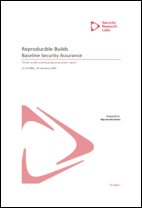
Security audit of Reproducible Builds tools published The Open Technology Fund s (OTF) security partner Security Research Labs recently an conducted audit of some specific parts of tools developed by Reproducible Builds. This form of security audit, sometimes called a whitebox audit, is a form testing in which auditors have complete knowledge of the item being tested. They auditors assessed the various codebases for resilience against hacking, with key areas including differential report formats in diffoscope, common client web attacks, command injection, privilege management, hidden modifications in the build process and attack vectors that might enable denials of service. The audit focused on three core Reproducible Builds tools: diffoscope, a Python application that unpacks archives of files and directories and transforms their binary formats into human-readable form in order to compare them; strip-nondeterminism, a Perl program that improves reproducibility by stripping out non-deterministic information such as timestamps or other elements introduced during packaging; and reprotest, a Python application that builds source code multiple times in various environments in order to to test reproducibility. OTF s announcement contains more of an overview of the audit, and the full 24-page report is available in PDF form as well.

When good pseudorandom numbers go bad Danielle Navarro published an interesting and amusing article on their blog on When good pseudorandom numbers go bad. Danielle sets the stage as follows:
[Colleagues] approached me to talk about a reproducibility issue they d been having with some R code. They d been running simulations that rely on generating samples from a multivariate normal distribution, and despite doing the prudent thing and using set.seed() to control the state of the random number generator (RNG), the results were not computationally reproducible. The same code, executed on different machines, would produce different random numbers. The numbers weren t just a little bit different in the way that we ve all wearily learned to expect when you try to force computers to do mathematics. They were painfully, brutally, catastrophically, irreproducible different. Somewhere, somehow, something broke.
Thanks to David Wheeler for posting about this article on our mailing list

Academic articles There were two scholarly articles published this month that related to reproducibility: Daniel Hugenroth and Alastair R. Beresford of the University of Cambridge in the United Kingdom and Mario Lins and Ren Mayrhofer of Johannes Kepler University in Linz, Austria published an article titled Attestable builds: compiling verifiable binaries on untrusted systems using trusted execution environments. In their paper, they:
present attestable builds, a new paradigm to provide strong source-to-binary correspondence in software artifacts. We tackle the challenge of opaque build pipelines that disconnect the trust between source code, which can be understood and audited, and the final binary artifact, which is difficult to inspect. Our system uses modern trusted execution environments (TEEs) and sandboxed build containers to provide strong guarantees that a given artifact was correctly built from a specific source code snapshot. As such it complements existing approaches like reproducible builds which typically require time-intensive modifications to existing build configurations and dependencies, and require independent parties to continuously build and verify artifacts.
The authors compare attestable builds with reproducible builds by noting an attestable build requires only minimal changes to an existing project, and offers nearly instantaneous verification of the correspondence between a given binary and the source code and build pipeline used to construct it , and proceed by determining that t he overhead (42 seconds start-up latency and 14% increase in build duration) is small in comparison to the overall build time.
Timo Pohl, Pavel Nov k, Marc Ohm and Michael Meier have published a paper called Towards Reproducibility for Software Packages in Scripting Language Ecosystems. The authors note that past research into Reproducible Builds has focused primarily on compiled languages and their ecosystems, with a further emphasis on Linux distribution packages:
However, the popular scripting language ecosystems potentially face unique issues given the systematic difference in distributed artifacts. This Systemization of Knowledge (SoK) [paper] provides an overview of existing research, aiming to highlight future directions, as well as chances to transfer existing knowledge from compiled language ecosystems. To that end, we work out key aspects in current research, systematize identified challenges for software reproducibility, and map them between the ecosystems.
Ultimately, the three authors find that the literature is sparse , focusing on few individual problems and ecosystems, and therefore identify space for more critical research.

Distribution work In Debian this month:
Hans-Christoph Steiner of the F-Droid catalogue of open source applications for the Android platform published a blog post on Making reproducible builds visible. Noting that Reproducible builds are essential in order to have trustworthy software , Hans also mentions that F-Droid has been delivering reproducible builds since 2015 . However:
There is now a Reproducibility Status link for each app on f-droid.org, listed on every app s page. Our verification server shows or based on its build results, where means our rebuilder reproduced the same APK file and means it did not. The IzzyOnDroid repository has developed a more elaborate system of badges which displays a for each rebuilder. Additionally, there is a sketch of a five-level graph to represent some aspects about which processes were run.
Hans compares the approach with projects such as Arch Linux and Debian that provide developer-facing tools to give feedback about reproducible builds, but do not display information about reproducible builds in the user-facing interfaces like the package management GUIs.
Arnout Engelen of the NixOS project has been working on reproducing the minimal installation ISO image. This month, Arnout has successfully reproduced the build of the minimal image for the 25.05 release without relying on the binary cache. Work on also reproducing the graphical installer image is ongoing.
In openSUSE news, Bernhard M. Wiedemann posted another monthly update for their work there.
Lastly in Fedora news, Jelle van der Waa opened issues tracking reproducible issues in Haskell documentation, Qt6 recording the host kernel and R packages recording the current date. The R packages can be made reproducible with packaging changes in Fedora.

diffoscope & disorderfs diffoscope is our in-depth and content-aware diff utility that can locate and diagnose reproducibility issues. This month, Chris Lamb made the following changes, including preparing and uploading versions 295, 296 and 297 to Debian:
  • Don t rely on zipdetails --walk argument being available, and only add that argument on newer versions after we test for that. [ ]
  • Review and merge support for NuGet packages from Omair Majid. [ ]
  • Update copyright years. [ ]
  • Merge support for an lzma comparator from Will Hollywood. [ ][ ]
Chris also merged an impressive changeset from Siva Mahadevan to make disorderfs more portable, especially on FreeBSD. disorderfs is our FUSE-based filesystem that deliberately introduces non-determinism into directory system calls in order to flush out reproducibility issues [ ]. This was then uploaded to Debian as version 0.6.0-1. Lastly, Vagrant Cascadian updated diffoscope in GNU Guix to version 296 [ ][ ] and 297 [ ][ ], and disorderfs to version 0.6.0 [ ][ ].

Website updates Once again, there were a number of improvements made to our website this month including:

Reproducibility testing framework The Reproducible Builds project operates a comprehensive testing framework running primarily at tests.reproducible-builds.org in order to check packages and other artifacts for reproducibility. However, Holger Levsen posted to our mailing list this month in order to bring a wider awareness to funding issues faced by the Oregon State University (OSU) Open Source Lab (OSL). As mentioned on OSL s public post, recent changes in university funding makes our current funding model no longer sustainable [and that] unless we secure $250,000 in committed funds, the OSL will shut down later this year . As Holger notes in his post to our mailing list, the Reproducible Builds project relies on hardware nodes hosted there. Nevertheless, Lance Albertson of OSL posted an update to the funding situation later in the month with broadly positive news.
Separate to this, there were various changes to the Jenkins setup this month, which is used as the backend driver of for both tests.reproducible-builds.org and reproduce.debian.net, including:
  • Migrating the central jenkins.debian.net server AMD Opteron to Intel Haswell CPUs. Thanks to IONOS for hosting this server since 2012.
  • After testing it for almost ten years, the i386 architecture has been dropped from tests.reproducible-builds.org. This is because that, with the upcoming release of Debian trixie, i386 is no longer supported as a regular architecture there will be no official kernel and no Debian installer for i386 systems. As a result, a large number of nodes hosted by Infomaniak have been retooled from i386 to amd64.
  • Another node, ionos17-amd64.debian.net, which is used for verifying packages for all.reproduce.debian.net (hosted by IONOS) has had its memory increased from 40 to 64GB, and the number of cores doubled to 32 as well. In addition, two nodes generously hosted by OSUOSL have had their memory doubled to 16GB.
  • Lastly, we have been granted access to more riscv64 architecture boards, so now we have seven such nodes, all with 16GB memory and 4 cores that are verifying packages for riscv64.reproduce.debian.net. Many thanks to PLCT Lab, ISCAS for providing those.

Outside of this, a number of smaller changes were also made by Holger Levsen:
  • reproduce.debian.net-related:
    • Only use two workers for the ppc64el architecture due to RAM size. [ ]
    • Monitor nginx_request and nginx_status with the Munin monitoring system. [ ][ ]
    • Detect various variants of network and memory errors. [ ][ ][ ][ ]
    • Add a prominent link to reproducible-builds.org. [ ]
    • Add a rebuilderd-cache-cleanup.service and run it daily via timer. [ ][ ][ ][ ][ ]
    • Be more verbose what sources are being downloaded. [ ]
    • Correctly deal with packages with an epoch in their version [ ] and deal with binNMUs versions with an epoch as well [ ][ ].
    • Document how to reschedule all other errors on all archs. [ ]
    • Misc documentation improvements. [ ][ ][ ][ ]
    • Include the $HOSTNAME variable in the rebuilderd logfiles. [ ]
    • Install the equivs package on all worker nodes. [ ][ ]
  • Jenkins nodes:
    • Permit the sudo tool to fix up permission issues. [ ][ ]
    • Document how to manage diskspace with OpenStack. [ ]
    • Ignore a number of spurious monitoring errors on riscv64, FreeBSD, etc.. [ ][ ][ ][ ]
    • Install ntpsec-ntpdate (instead of ntpdate) as the former is available on Debian trixie and bookworm. [ ][ ]
    • Use the same SSH ControlPath for all nodes. [ ]
    • Make sure the munin user uses the same SSH config as the jenkins user. [ ]
  • tests.reproducible-builds.org-related:
    • Disable testing of the i386 architecture. [ ][ ][ ][ ][ ]
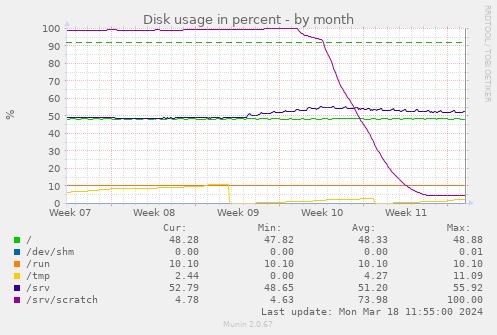
    • Document the current disk usage. [ ][ ]
    • Address some image placement now that we only test three architectures. [ ]
    • Keep track of build performance. [ ]
  • Misc:
    • Fix a (harmless) typo in the multiarch_versionskew script. [ ]
In addition, Jochen Sprickerhof made a series of changes related to reproduce.debian.net:
  • Add out of memory detection to the statistics page. [ ]
  • Reverse the sorting order on the statistics page. [ ][ ][ ][ ]
  • Improve the spacing between statistics groups. [ ]
  • Update a (hard-coded) line number in error message detection pertaining to a debrebuild line number. [ ]
  • Support Debian unstable in the rebuilder-debian.sh script. [ ] ]
  • Rely on rebuildctl to sync only arch-specific packages. [ ][ ]

Upstream patches The Reproducible Builds project detects, dissects and attempts to fix as many currently-unreproducible packages as possible. This month, we wrote a large number of such patches, including:

Finally, if you are interested in contributing to the Reproducible Builds project, please visit our Contribute page on our website. However, you can get in touch with us via:

31 May 2025

Russell Coker: Links May 2025

Christopher Biggs gave an informative Evrything Open lecture about voice recognition [1]. We need this on Debian phones. Guido wrote an informative blog post about booting a custom Android kernel on a Pixel 3a [2]. Good work in writing this up, but a pity that Google made the process so difficult. Interesting to read about an expert being a victim of a phishing attack [3]. It can happen to anyone, everyone has moments when they aren t concentrating. Interesting advice on how to leak to a journalist [4]. Brian Krebs wrote an informative article about the ways that Trump is deliberately reducing the cyber security of the US government [5]. Brian Krebs wrote an interesting article about the main smishng groups from China [6]. Louis Rossmann (who is known for high quality YouTube videos about computer repair) made an informative video about a scammy Australian company run by a child sex offender [7]. The Helmover was one of the wildest engineering projects of WW2, an over the horizon guided torpedo that could one-shot a battleship [8]. Interesting blog post about DDoSecrets and the utter failure of the company Telemessages which was used by the US government [9]. Jonathan McDowell wrote an interesting blog post about developing a free software competitor to Alexa etc, the listening hardware costs $13US per node [10]. Noema Magazine published an insightful article about Rewilding the Internet, it has some great ideas [11].

2 May 2025

Daniel Lange: Cleaning a broken GnuPG (gpg) key

I've long said that the main tools in the Open Source security space, OpenSSL and GnuPG (gpg), are broken and only a complete re-write will solve this. And that is still pending as nobody came forward with the funding. It's not a sexy topic, so it has to get really bad before it'll get better. Gpg has a UI that is close to useless. That won't substantially change with more bolted-on improvements. Now Robert J. Hansen and Daniel Kahn Gillmor had somebody add ~50k signatures (read 1, 2, 3, 4 for the g l ory details) to their keys and - oops - they say that breaks gpg. But does it? I downloaded Robert J. Hansen's key off the SKS-Keyserver network. It's a nice 45MB file when de-ascii-armored (gpg --dearmor broken_key.asc ; mv broken_key.asc.gpg broken_key.gpg). Now a friendly:
$ /usr/bin/time -v gpg --no-default-keyring --keyring ./broken_key.gpg --batch --quiet --edit-key 0x1DCBDC01B44427C7 clean save quit

pub rsa3072/0x1DCBDC01B44427C7
erzeugt: 2015-07-16 verf llt: niemals Nutzung: SC
Vertrauen: unbekannt G ltigkeit: unbekannt
sub ed25519/0xA83CAE94D3DC3873
erzeugt: 2017-04-05 verf llt: niemals Nutzung: S
sub cv25519/0xAA24CC81B8AED08B
erzeugt: 2017-04-05 verf llt: niemals Nutzung: E
sub rsa3072/0xDC0F82625FA6AADE
erzeugt: 2015-07-16 verf llt: niemals Nutzung: E
[ unbekannt ] (1). Robert J. Hansen <rjh@sixdemonbag.org>
[ unbekannt ] (2) Robert J. Hansen <rob@enigmail.net>
[ unbekannt ] (3) Robert J. Hansen <rob@hansen.engineering>

User-ID "Robert J. Hansen <rjh@sixdemonbag.org>": 49705 Signaturen entfernt
User-ID "Robert J. Hansen <rob@enigmail.net>": 49704 Signaturen entfernt
User-ID "Robert J. Hansen <rob@hansen.engineering>": 49701 Signaturen entfernt

pub rsa3072/0x1DCBDC01B44427C7
erzeugt: 2015-07-16 verf llt: niemals Nutzung: SC
Vertrauen: unbekannt G ltigkeit: unbekannt
sub ed25519/0xA83CAE94D3DC3873
erzeugt: 2017-04-05 verf llt: niemals Nutzung: S
sub cv25519/0xAA24CC81B8AED08B
erzeugt: 2017-04-05 verf llt: niemals Nutzung: E
sub rsa3072/0xDC0F82625FA6AADE
erzeugt: 2015-07-16 verf llt: niemals Nutzung: E
[ unbekannt ] (1). Robert J. Hansen <rjh@sixdemonbag.org>
[ unbekannt ] (2) Robert J. Hansen <rob@enigmail.net>
[ unbekannt ] (3) Robert J. Hansen <rob@hansen.engineering>

Command being timed: "gpg --no-default-keyring --keyring ./broken_key.gpg --batch --quiet --edit-key 0x1DCBDC01B44427C7 clean save quit"
User time (seconds): 3911.14
System time (seconds): 2442.87
Percent of CPU this job got: 99%
Elapsed (wall clock) time (h:mm:ss or m:ss): 1:45:56
Average shared text size (kbytes): 0
Average unshared data size (kbytes): 0
Average stack size (kbytes): 0
Average total size (kbytes): 0
Maximum resident set size (kbytes): 107660
Average resident set size (kbytes): 0
Major (requiring I/O) page faults: 1
Minor (reclaiming a frame) page faults: 26630
Voluntary context switches: 43
Involuntary context switches: 59439
Swaps: 0
File system inputs: 112
File system outputs: 48
Socket messages sent: 0
Socket messages received: 0
Signals delivered: 0
Page size (bytes): 4096
Exit status: 0
And the result is a nicely useable 3835 byte file of the clean public key. If you supply a keyring instead of --no-default-keyring it will also keep the non-self signatures that are useful for you (as you apparently know the signing party). So it does not break gpg. It does break things that call gpg at runtime and not asynchronously. I heard Enigmail is affected, quelle surprise. Now the main problem here is the runtime. 1h45min is just ridiculous. As Filippo Valsorda puts it:
Someone added a few thousand entries to a list that lets anyone append to it. GnuPG, software supposed to defeat state actors, suddenly takes minutes to process entries. How big is that list you ask? 17 MiB. Not GiB, 17 MiB. Like a large picture. https://dev.gnupg.org/T4592
If I were a gpg / SKS keyserver developer, I'd That way another key can only be added to the keyserver network if it contains at least one signature from a previously known strong-set key. Attacking the keyserver network would become at least non-trivial. And the web-of-trust thing may make sense again. Updates 09.07.2019 GnuPG 2.2.17 has been released with another set of quickly bolted together fixes:
   gpg: Ignore all key-signatures received from keyservers.  This
    change is required to mitigate a DoS due to keys flooded with
    faked key-signatures.  The old behaviour can be achieved by adding
    keyserver-options no-self-sigs-only,no-import-clean
    to your gpg.conf.  [#4607]
   gpg: If an imported keyblocks is too large to be stored in the
    keybox (pubring.kbx) do not error out but fallback to an import
    using the options "self-sigs-only,import-clean".  [#4591]
   gpg: New command --locate-external-key which can be used to
    refresh keys from the Web Key Directory or via other methods
    configured with --auto-key-locate.
   gpg: New import option "self-sigs-only".
   gpg: In --auto-key-retrieve prefer WKD over keyservers.  [#4595]
   dirmngr: Support the "openpgpkey" subdomain feature from
    draft-koch-openpgp-webkey-service-07. [#4590].
   dirmngr: Add an exception for the "openpgpkey" subdomain to the
    CSRF protection.  [#4603]
   dirmngr: Fix endless loop due to http errors 503 and 504.  [#4600]
   dirmngr: Fix TLS bug during redirection of HKP requests.  [#4566]
   gpgconf: Fix a race condition when killing components.  [#4577]
Bug T4607 shows that these changes are all but well thought-out. They introduce artificial limits, like 64kB for WKD-distributed keys or 5MB for local signature imports (Bug T4591) which weaken the web-of-trust further. I recommend to not run gpg 2.2.17 in production environments without extensive testing as these limits and the unverified network traffic may bite you. Do validate your upgrade with valid and broken keys that have segments (packet groups) surpassing the above mentioned limits. You may be surprised what gpg does. On the upside: you can now refresh keys (sans signatures) via WKD. So if your buddies still believe in limiting their subkey validities, you can more easily update them bypassing the SKS keyserver network. NB: I have not tested that functionality. So test before deploying. 10.08.2019 Christopher Wellons (skeeto) has released his pgp-poisoner tool. It is a go program that can add thousands of malicious signatures to a GNUpg key per second. He comments "[pgp-poisoner is] proof that such attacks are very easy to pull off. It doesn't take a nation-state actor to break the PGP ecosystem, just one person and couple evenings studying RFC 4880. This system is not robust." He also hints at the next likely attack vector, public subkeys can be bound to a primary key of choice.

28 March 2025

Freexian Collaborators: Monthly report about Debian Long Term Support, February 2025 (by Roberto C. S nchez)

Like each month, have a look at the work funded by Freexian s Debian LTS offering.

Debian LTS contributors In February, 18 contributors have been paid to work on Debian LTS, their reports are available:
  • Abhijith PA did 10.0h (out of 8.0h assigned and 6.0h from previous period), thus carrying over 4.0h to the next month.
  • Adrian Bunk did 12.0h (out of 0.0h assigned and 63.5h from previous period), thus carrying over 51.5h to the next month.
  • Andrej Shadura did 10.0h (out of 6.0h assigned and 4.0h from previous period).
  • Bastien Roucari s did 20.0h (out of 20.0h assigned).
  • Ben Hutchings did 12.0h (out of 8.0h assigned and 16.0h from previous period), thus carrying over 12.0h to the next month.
  • Chris Lamb did 18.0h (out of 18.0h assigned).
  • Daniel Leidert did 23.0h (out of 20.0h assigned and 6.0h from previous period), thus carrying over 3.0h to the next month.
  • Emilio Pozuelo Monfort did 53.0h (out of 53.0h assigned and 0.75h from previous period), thus carrying over 0.75h to the next month.
  • Guilhem Moulin did 11.0h (out of 3.25h assigned and 16.75h from previous period), thus carrying over 9.0h to the next month.
  • Jochen Sprickerhof did 27.0h (out of 30.0h assigned), thus carrying over 3.0h to the next month.
  • Lee Garrett did 11.75h (out of 9.5h assigned and 44.25h from previous period), thus carrying over 42.0h to the next month.
  • Markus Koschany did 40.0h (out of 40.0h assigned).
  • Roberto C. S nchez did 7.0h (out of 14.75h assigned and 9.25h from previous period), thus carrying over 17.0h to the next month.
  • Santiago Ruano Rinc n did 19.75h (out of 21.75h assigned and 3.25h from previous period), thus carrying over 5.25h to the next month.
  • Sean Whitton did 6.0h (out of 6.0h assigned).
  • Sylvain Beucler did 52.5h (out of 14.75h assigned and 39.0h from previous period), thus carrying over 1.25h to the next month.
  • Thorsten Alteholz did 11.0h (out of 11.0h assigned).
  • Tobias Frost did 17.0h (out of 17.0h assigned).

Evolution of the situation In February, we have released 38 DLAs.
  • Notable security updates:
    • pam-u2f, prepared by Patrick Winnertz, fixed an authentication bypass vulnerability
    • openjdk-17, prepared by Emilio Pozuelo Monfort, fixed an authorization bypass/information disclosure vulnerability
    • firefox-esr, prepared by Emilio Pozuelo Monfort, fixed several vulnerabilities
    • thunderbird, prepared by Emilio Pozuelo Monfort, fixed several vulnerabilities
    • postgresql-13, prepared by Christoph Berg, fixed an SQL injection vulnerability
    • freerdp2, prepared by Tobias Frost, fixed several vulnerabilities
    • openssh, prepared by Colin Watson, fixed a machine-in-the-middle vulnerability
LTS contributors Emilio Pozuelo Monfort and Santiago Ruano Rinc n coordinated the administrative aspects of LTS updates of postgresql-13 and pam-u2f, which were prepared by the respective maintainers, to whom we are most grateful. As has become the custom of the LTS team, work is under way on a number of package updates targeting Debian 12 (codename bookworm ) with fixes for a variety of vulnerabilities. In February, Guilhem Moulin prepared an upload of sssd, while several other updates are still in progress. Bastien Roucari s prepared an upload of krb5 for unstable as well. Given the importance of the Debian Security Tracker to the work of the LTS Team, we regularly contribute improvements to it. LTS contributor Emilio Pozuelo Monfort reviewed and merged a change to improve performance, and then dealt with unexpected issues that arose as a result. He also made improvements in the processing of CVEs which are not applicable to Debian. Looking to the future (the release of Debian 13, codename trixie , and beyond), LTS contributor Santiago Ruano Rinc n has initiated a conversation among the broader community involved in the development of Debian. The purpose of the discussion is to explore ways to improve the long term supportability of packages in Debian, specifically by focusing effort on ensuring that each Debian release contains the best supported upstream version of packages with a history of security issues.

Thanks to our sponsors Sponsors that joined recently are in bold.

18 March 2025

Matthew Garrett: Failing upwards: the Twitter encrypted DM failure

Almost two years ago, Twitter launched encrypted direct messages. I wrote about their technical implementation at the time, and to the best of my knowledge nothing has changed. The short story is that the actual encryption primitives used are entirely normal and fine - messages are encrypted using AES, and the AES keys are exchanged via NIST P-256 elliptic curve asymmetric keys. The asymmetric keys are each associated with a specific device or browser owned by a user, so when you send a message to someone you encrypt the AES key with all of their asymmetric keys and then each device or browser can decrypt the message again. As long as the keys are managed appropriately, this is infeasible to break.

But how do you know what a user's keys are? I also wrote about this last year - key distribution is a hard problem. In the Twitter DM case, you ask Twitter's server, and if Twitter wants to intercept your messages they replace your key. The documentation for the feature basically admits this - if people with guns showed up there, they could very much compromise the protection in such a way that all future messages you sent were readable. It's also impossible to prove that they're not already doing this without every user verifying that the public keys Twitter hands out to other users correspond to the private keys they hold, something that Twitter provides no mechanism to do.

This isn't the only weakness in the implementation. Twitter may not be able read the messages, but every encrypted DM is sent through exactly the same infrastructure as the unencrypted ones, so Twitter can see the time a message was sent, who it was sent to, and roughly how big it was. And because pictures and other attachments in Twitter DMs aren't sent in-line but are instead replaced with links, the implementation would encrypt the links but not the attachments - this is "solved" by simply blocking attachments in encrypted DMs. There's no forward secrecy - if a key is compromised it allows access to not only all new messages created with that key, but also all previous messages. If you log out of Twitter the keys are still stored by the browser, so if you can potentially be extracted and used to decrypt your communications. And there's no group chat support at all, which is more a functional restriction than a conceptual one.

To be fair, these are hard problems to solve! Signal solves all of them, but Signal is the product of a large number of highly skilled experts in cryptography, and even so it's taken years to achieve all of this. When Elon announced the launch of encrypted DMs he indicated that new features would be developed quickly - he's since publicly mentioned the feature a grand total of once, in which he mentioned further feature development that just didn't happen. None of the limitations mentioned in the documentation have been addressed in the 22 months since the feature was launched.

Why? Well, it turns out that the feature was developed by a total of two engineers, neither of whom is still employed at Twitter. The tech lead for the feature was Christopher Stanley, who was actually a SpaceX employee at the time. Since then he's ended up at DOGE, where he apparently set off alarms when attempting to install Starlink, and who today is apparently being appointed to the board of Fannie Mae, a government-backed mortgage company.

Anyway. Use Signal.

comment count unavailable comments

29 September 2024

Reproducible Builds: Supporter spotlight: Kees Cook on Linux kernel security

The Reproducible Builds project relies on several projects, supporters and sponsors for financial support, but they are also valued as ambassadors who spread the word about our project and the work that we do. This is the eighth installment in a series featuring the projects, companies and individuals who support the Reproducible Builds project. We started this series by featuring the Civil Infrastructure Platform project, and followed this up with a post about the Ford Foundation as well as recent ones about ARDC, the Google Open Source Security Team (GOSST), Bootstrappable Builds, the F-Droid project, David A. Wheeler and Simon Butler. Today, however, we will be talking with Kees Cook, founder of the Kernel Self-Protection Project.

Vagrant Cascadian: Could you tell me a bit about yourself? What sort of things do you work on? Kees Cook: I m a Free Software junkie living in Portland, Oregon, USA. I have been focusing on the upstream Linux kernel s protection of itself. There is a lot of support that the kernel provides userspace to defend itself, but when I first started focusing on this there was not as much attention given to the kernel protecting itself. As userspace got more hardened the kernel itself became a bigger target. Almost 9 years ago I formally announced the Kernel Self-Protection Project because the work necessary was way more than my time and expertise could do alone. So I just try to get people to help as much as possible; people who understand the ARM architecture, people who understand the memory management subsystem to help, people who understand how to make the kernel less buggy.
Vagrant: Could you describe the path that lead you to working on this sort of thing? Kees: I have always been interested in security through the aspect of exploitable flaws. I always thought it was like a magic trick to make a computer do something that it was very much not designed to do and seeing how easy it is to subvert bugs. I wanted to improve that fragility. In 2006, I started working at Canonical on Ubuntu and was mainly focusing on bringing Debian and Ubuntu up to what was the state of the art for Fedora and Gentoo s security hardening efforts. Both had really pioneered a lot of userspace hardening with compiler flags and ELF stuff and many other things for hardened binaries. On the whole, Debian had not really paid attention to it. Debian s packaging building process at the time was sort of a chaotic free-for-all as there wasn t centralized build methodology for defining things. Luckily that did slowly change over the years. In Ubuntu we had the opportunity to apply top down build rules for hardening all the packages. In 2011 Chrome OS was following along and took advantage of a bunch of the security hardening work as they were based on ebuild out of Gentoo and when they looked for someone to help out they reached out to me. We recognized the Linux kernel was pretty much the weakest link in the Chrome OS security posture and I joined them to help solve that. Their userspace was pretty well handled but the kernel had a lot of weaknesses, so focusing on hardening was the next place to go. When I compared notes with other users of the Linux kernel within Google there were a number of common concerns and desires. Chrome OS already had an upstream first requirement, so I tried to consolidate the concerns and solve them upstream. It was challenging to land anything in other kernel team repos at Google, as they (correctly) wanted to minimize their delta from upstream, so I needed to work on any major improvements entirely in upstream and had a lot of support from Google to do that. As such, my focus shifted further from working directly on Chrome OS into being entirely upstream and being more of a consultant to internal teams, helping with integration or sometimes backporting. Since the volume of needed work was so gigantic I needed to find ways to inspire other developers (both inside and outside of Google) to help. Once I had a budget I tried to get folks paid (or hired) to work on these areas when it wasn t already their job.
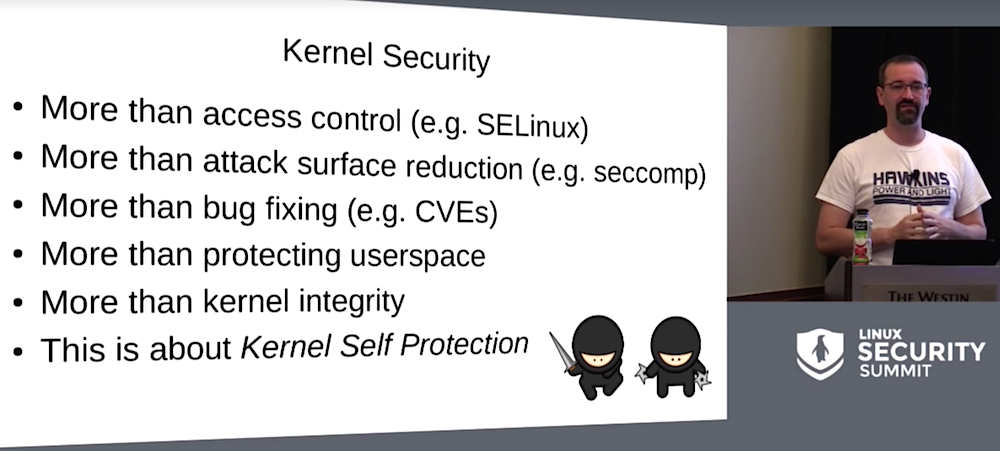
Vagrant: So my understanding of some of your recent work is basically defining undefined behavior in the language or compiler? Kees: I ve found the term undefined behavior to have a really strict meaning within the compiler community, so I have tried to redefine my goal as eliminating unexpected behavior or ambiguous language constructs . At the end of the day ambiguity leads to bugs, and bugs lead to exploitable security flaws. I ve been taking a four-pronged approach: supporting the work people are doing to get rid of ambiguity, identify new areas where ambiguity needs to be removed, actually removing that ambiguity from the C language, and then dealing with any needed refactoring in the Linux kernel source to adapt to the new constraints. None of this is particularly novel; people have recognized how dangerous some of these language constructs are for decades and decades but I think it is a combination of hard problems and a lot of refactoring that nobody has the interest/resources to do. So, we have been incrementally going after the lowest hanging fruit. One clear example in recent years was the elimination of C s implicit fall-through in switch statements. The language would just fall through between adjacent cases if a break (or other code flow directive) wasn t present. But this is ambiguous: is the code meant to fall-through, or did the author just forget a break statement? By defining the [[fallthrough]] statement, and requiring its use in Linux, all switch statements now have explicit code flow, and the entire class of bugs disappeared. During our refactoring we actually found that 1 in 10 added [[fallthrough]] statements were actually missing break statements. This was an extraordinarily common bug! So getting rid of that ambiguity is where we have been. Another area I ve been spending a bit of time on lately is looking at how defensive security work has challenges associated with metrics. How do you measure your defensive security impact? You can t say because we installed locks on the doors, 20% fewer break-ins have happened. Much of our signal is always secondary or retrospective, which is frustrating: This class of flaw was used X much over the last decade so, and if we have eliminated that class of flaw and will never see it again, what is the impact? Is the impact infinity? Attackers will just move to the next easiest thing. But it means that exploitation gets incrementally more difficult. As attack surfaces are reduced, the expense of exploitation goes up.
Vagrant: So it is hard to identify how effective this is how bad would it be if people just gave up? Kees: I think it would be pretty bad, because as we have seen, using secondary factors, the work we have done in the industry at large, not just the Linux kernel, has had an impact. What we, Microsoft, Apple, and everyone else is doing for their respective software ecosystems, has shown that the price of functional exploits in the black market has gone up. Especially for really egregious stuff like a zero-click remote code execution. If those were cheap then obviously we are not doing something right, and it becomes clear that it s trivial for anyone to attack the infrastructure that our lives depend on. But thankfully we have seen over the last two decades that prices for exploits keep going up and up into millions of dollars. I think it is important to keep working on that because, as a central piece of modern computer infrastructure, the Linux kernel has a giant target painted on it. If we give up, we have to accept that our computers are not doing what they were designed to do, which I can t accept. The safety of my grandparents shouldn t be any different from the safety of journalists, and political activists, and anyone else who might be the target of attacks. We need to be able to trust our devices otherwise why use them at all?
Vagrant: What has been your biggest success in recent years? Kees: I think with all these things I am not the only actor. Almost everything that we have been successful at has been because of a lot of people s work, and one of the big ones that has been coordinated across the ecosystem and across compilers was initializing stack variables to 0 by default. This feature was added in Clang, GCC, and MSVC across the board even though there were a lot of fears about forking the C language. The worry was that developers would come to depend on zero-initialized stack variables, but this hasn t been the case because we still warn about uninitialized variables when the compiler can figure that out. So you still still get the warnings at compile time but now you can count on the contents of your stack at run-time and we drop an entire class of uninitialized variable flaws. While the exploitation of this class has mostly been around memory content exposure, it has also been used for control flow attacks. So that was politically and technically a large challenge: convincing people it was necessary, showing its utility, and implementing it in a way that everyone would be happy with, resulting in the elimination of a large and persistent class of flaws in C.
Vagrant: In a world where things are generally Reproducible do you see ways in which that might affect your work? Kees: One of the questions I frequently get is, What version of the Linux kernel has feature $foo? If I know how things are built, I can answer with just a version number. In a Reproducible Builds scenario I can count on the compiler version, compiler flags, kernel configuration, etc. all those things are known, so I can actually answer definitively that a certain feature exists. So that is an area where Reproducible Builds affects me most directly. Indirectly, it is just being able to trust the binaries you are running are going to behave the same for the same build environment is critical for sane testing.
Vagrant: Have you used diffoscope? Kees: I have! One subset of tree-wide refactoring that we do when getting rid of ambiguous language usage in the kernel is when we have to make source level changes to satisfy some new compiler requirement but where the binary output is not expected to change at all. It is mostly about getting the compiler to understand what is happening, what is intended in the cases where the old ambiguity does actually match the new unambiguous description of what is intended. The binary shouldn t change. We have used diffoscope to compare the before and after binaries to confirm that yep, there is no change in binary .
Vagrant: You cannot just use checksums for that? Kees: For the most part, we need to only compare the text segments. We try to hold as much stable as we can, following the Reproducible Builds documentation for the kernel, but there are macros in the kernel that are sensitive to source line numbers and as a result those will change the layout of the data segment (and sometimes the text segment too). With diffoscope there s flexibility where I can exclude or include different comparisons. Sometimes I just go look at what diffoscope is doing and do that manually, because I can tweak that a little harder, but diffoscope is definitely the default. Diffoscope is awesome!
Vagrant: Where has reproducible builds affected you? Kees: One of the notable wins of reproducible builds lately was dealing with the fallout of the XZ backdoor and just being able to ask the question is my build environment running the expected code? and to be able to compare the output generated from one install that never had a vulnerable XZ and one that did have a vulnerable XZ and compare the results of what you get. That was important for kernel builds because the XZ threat actor was working to expand their influence and capabilities to include Linux kernel builds, but they didn t finish their work before they were noticed. I think what happened with Debian proving the build infrastructure was not affected is an important example of how people would have needed to verify the kernel builds too.
Vagrant: What do you want to see for the near or distant future in security work? Kees: For reproducible builds in the kernel, in the work that has been going on in the ClangBuiltLinux project, one of the driving forces of code and usability quality has been the continuous integration work. As soon as something breaks, on the kernel side, the Clang side, or something in between the two, we get a fast signal and can chase it and fix the bugs quickly. I would like to see someone with funding to maintain a reproducible kernel build CI. There have been places where there are certain architecture configurations or certain build configuration where we lose reproducibility and right now we have sort of a standard open source development feedback loop where those things get fixed but the time in between introduction and fix can be large. Getting a CI for reproducible kernels would give us the opportunity to shorten that time.
Vagrant: Well, thanks for that! Any last closing thoughts? Kees: I am a big fan of reproducible builds, thank you for all your work. The world is a safer place because of it.
Vagrant: Likewise for your work!


For more information about the Reproducible Builds project, please see our website at reproducible-builds.org. If you are interested in ensuring the ongoing security of the software that underpins our civilisation and wish to sponsor the Reproducible Builds project, please reach out to the project by emailing contact@reproducible-builds.org.

26 September 2024

Melissa Wen: Reflections on 2024 Linux Display Next Hackfest

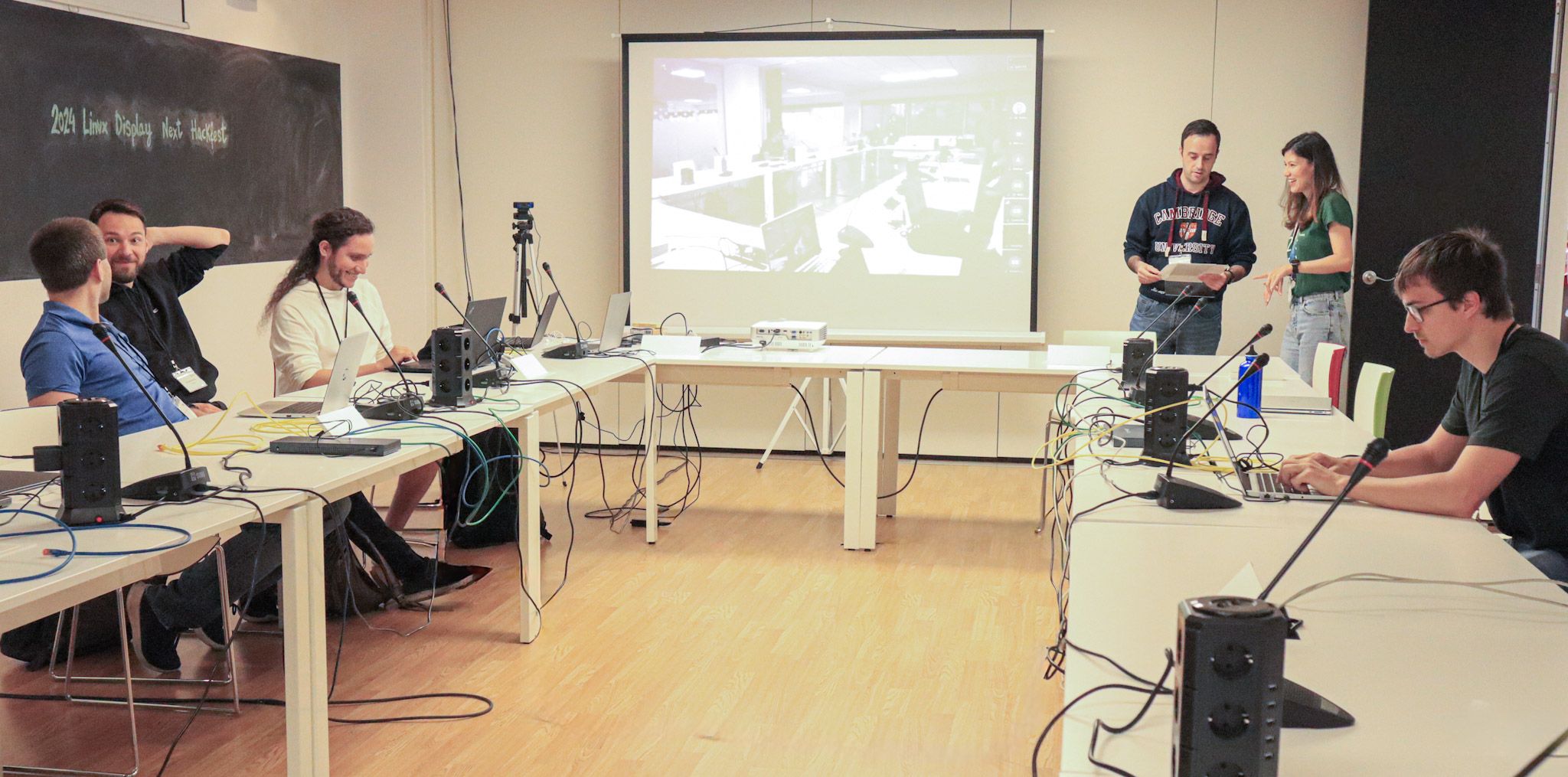
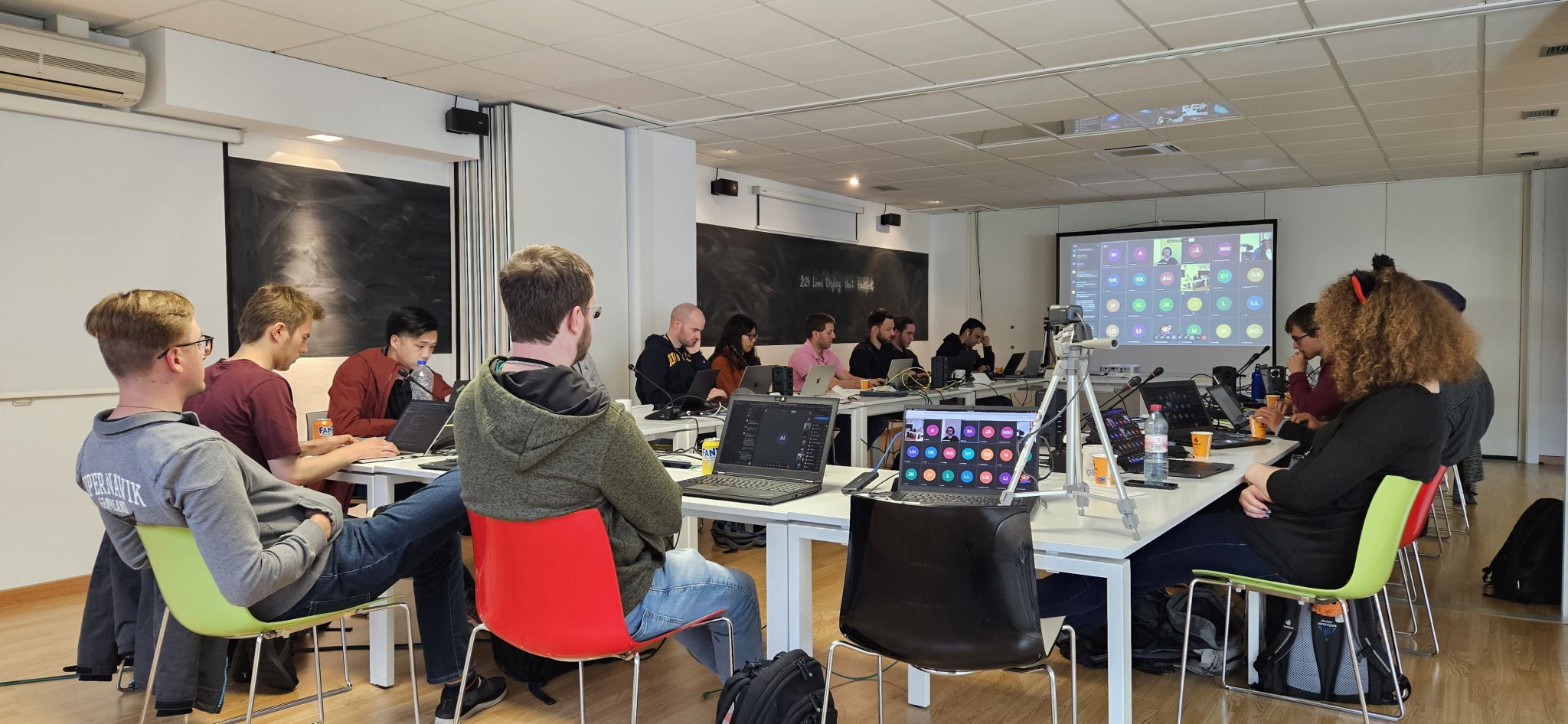
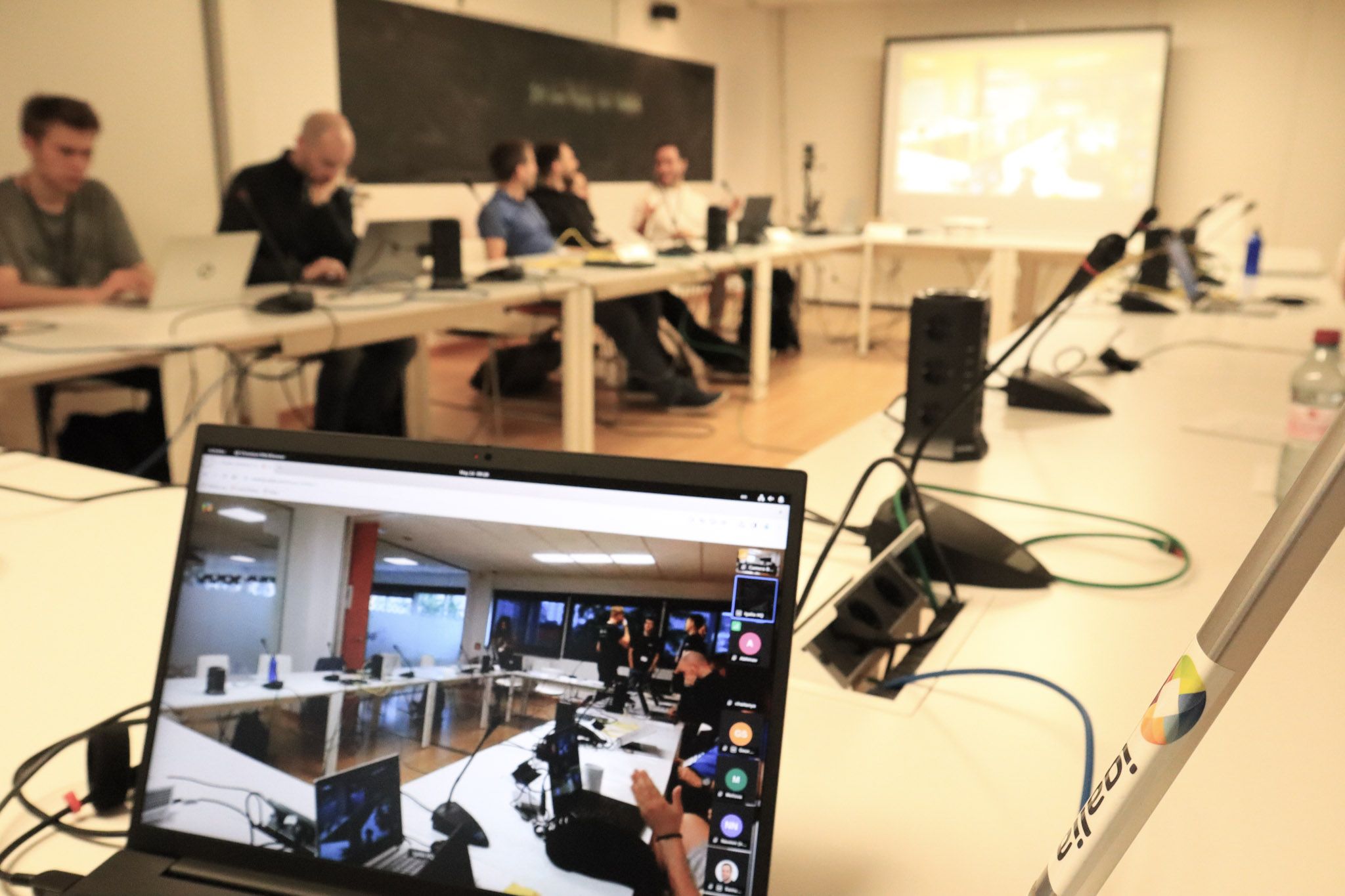
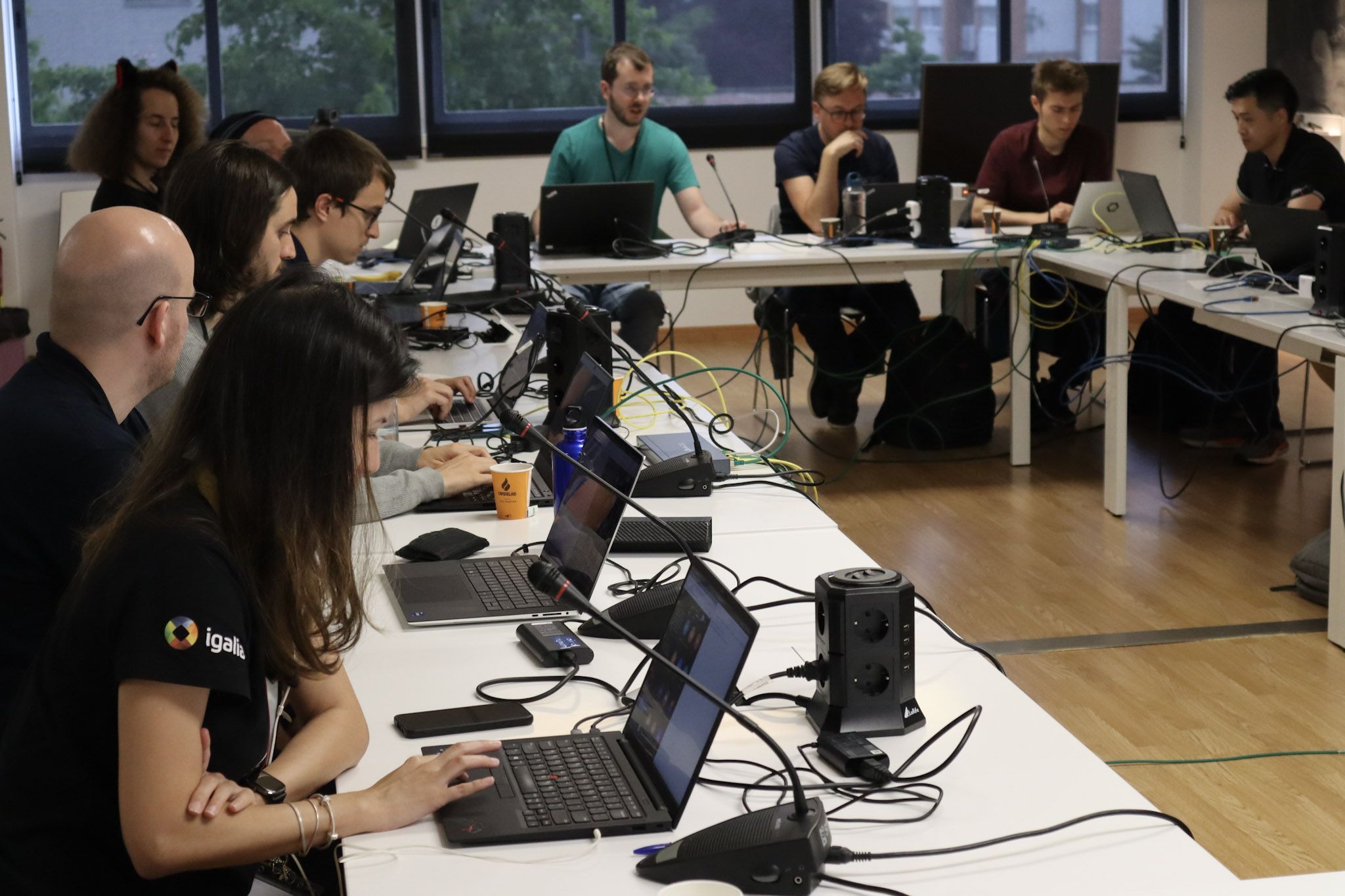
Hey everyone! The 2024 Linux Display Next hackfest concluded in May, and its outcomes continue to shape the Linux Display stack. Igalia hosted this year s event in A Coru a, Spain, bringing together leading experts in the field. Samuel Iglesias and I organized this year s edition and this blog post summarizes the experience and its fruits. One of the highlights of this year s hackfest was the wide range of backgrounds represented by our 40 participants (both on-site and remotely). Developers and experts from various companies and open-source projects came together to advance the Linux Display ecosystem. You can find the list of participants here. The event covered a broad spectrum of topics affecting the development of Linux projects, user experiences, and the future of display technologies on Linux. From cutting-edge topics to long-term discussions, you can check the event agenda here.

Organization Highlights The hackfest was marked by in-depth discussions and knowledge sharing among Linux contributors, making everyone inspired, informed, and connected to the community. Building on feedback from the previous year, we refined the unconference format to enhance participant preparation and engagement. Structured Agenda and Timeboxes: Each session had a defined scope, time limit (1h20 or 2h10), and began with an introductory talk on the topic.
  • Participant-Led Discussions: We pre-selected in-person participants to lead discussions, allowing them to prepare introductions, resources, and scope.
  • Transparent Scheduling: The schedule was shared in advance as GitHub issues, encouraging participants to review and prepare for sessions of interest.
Engaging Sessions: The hackfest featured a variety of topics, including presentations and discussions on how participants were addressing specific subjects within their companies.
  • No Breakout Rooms, No Overlaps: All participants chose to attend all sessions, eliminating the need for separate breakout rooms. We also adapted run-time schedule to keep everybody involved in the same topics.
  • Real-time Updates: We provided notifications and updates through dedicated emails and the event matrix room.
Strengthening Community Connections: The hackfest offered ample opportunities for networking among attendees.
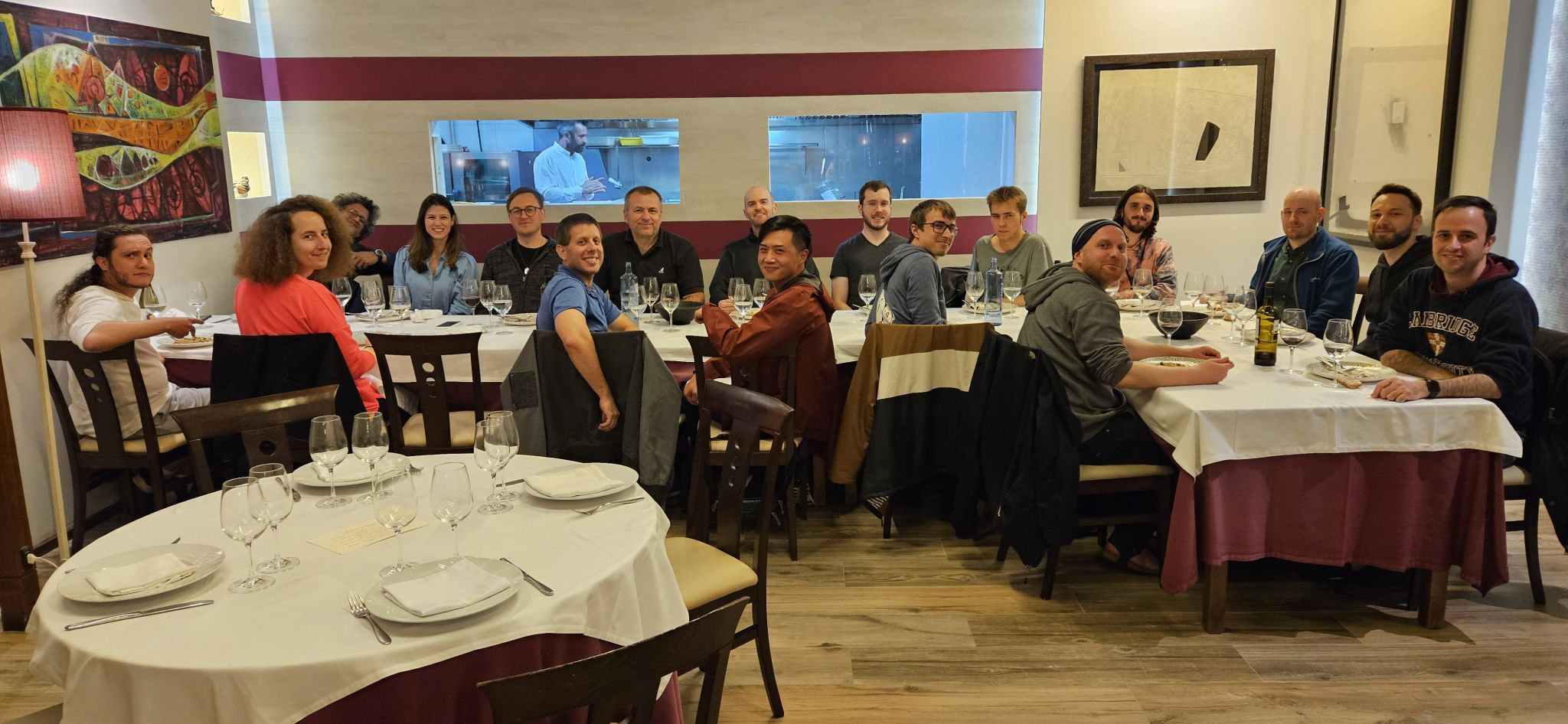
  • Social Events: Igalia sponsored coffee breaks, lunches, and a dinner at a local restaurant.
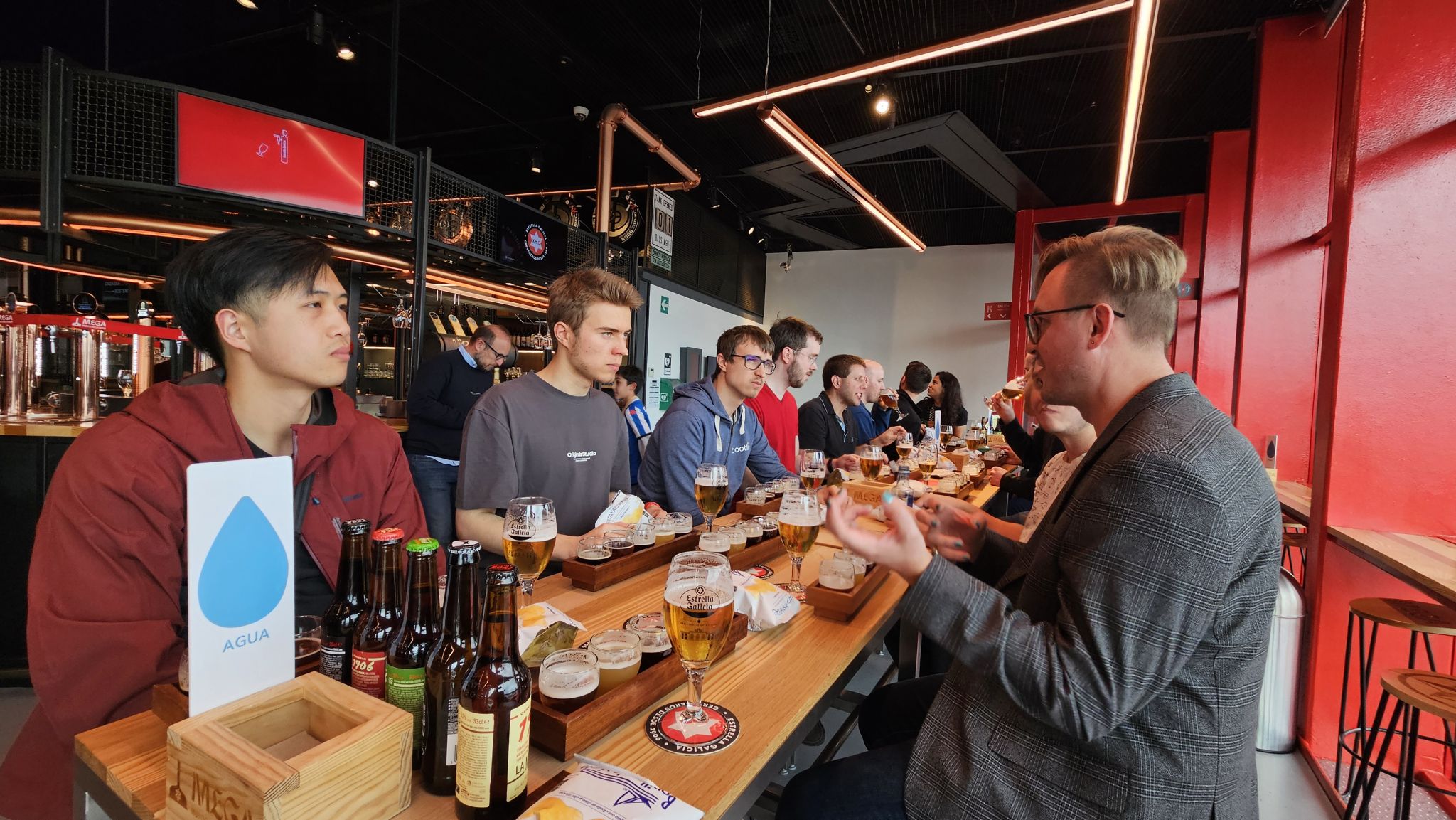
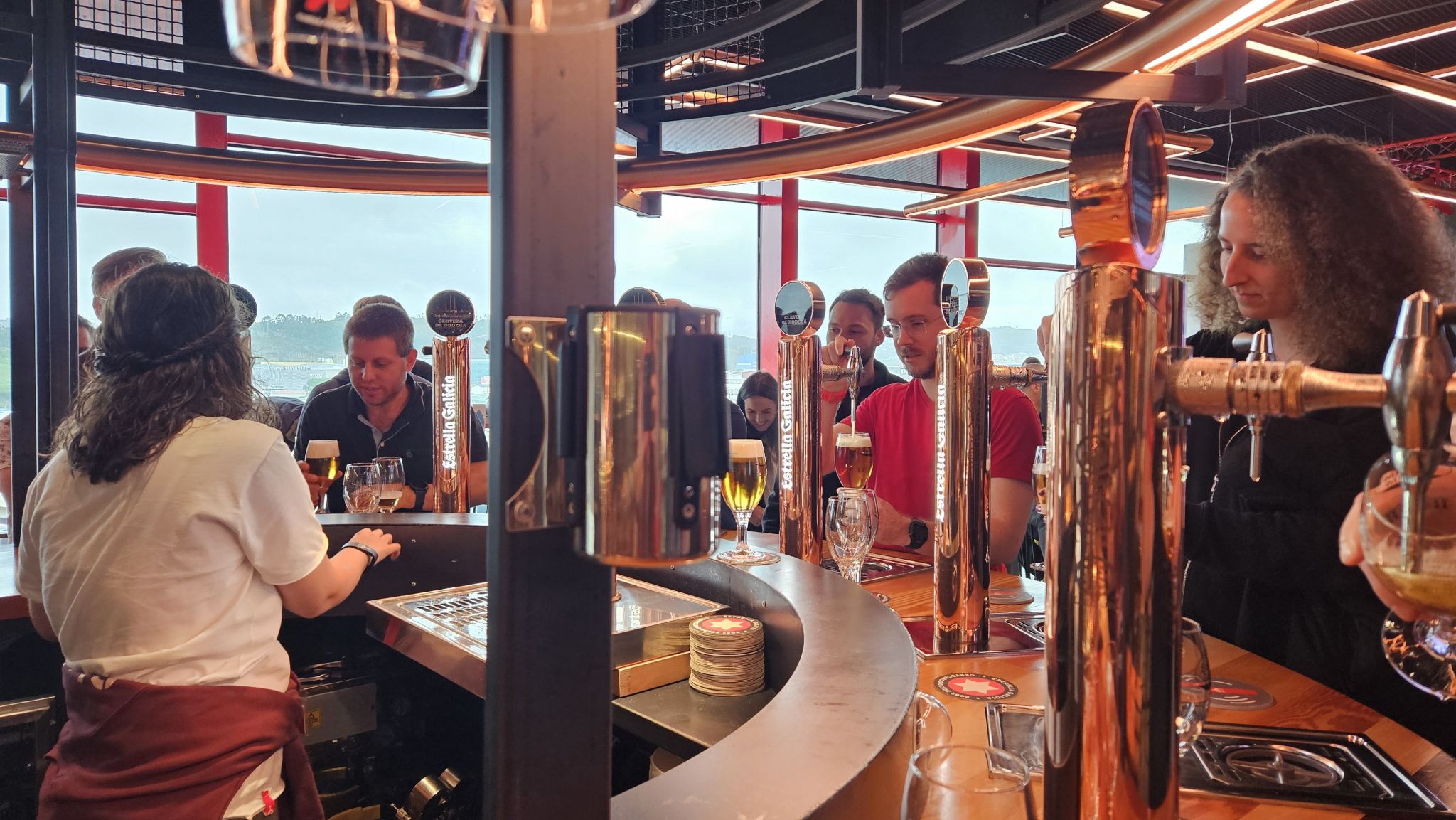
  • Museum Visit: Participants enjoyed a sponsored visit to the Museum of Estrela Galicia Beer (MEGA).

Fruitful Discussions and Follow-up The structured agenda and breaks allowed us to cover multiple topics during the hackfest. These discussions have led to new display feature development and improvements, as evidenced by patches, merge requests, and implementations in project repositories and mailing lists. With the KMS color management API taking shape, we discussed refinements and best approaches to cover the variety of color pipeline from different hardware-vendors. We are also investigating techniques for a performant SDR<->HDR content reproduction and reducing latency and power consumption when using the color blocks of the hardware.

Color Management/HDR Color Management and HDR continued to be the hottest topic of the hackfest. We had three sessions dedicated to discuss Color and HDR across Linux Display stack layers.

Color/HDR (Kernel-Level) Harry Wentland (AMD) led this session. Here, kernel Developers shared the Color Management pipeline of AMD, Intel and NVidia. We counted with diagrams and explanations from HW-vendors developers that discussed differences, constraints and paths to fit them into the KMS generic color management properties such as advertising modeset needs, IN\_FORMAT, segmented LUTs, interpolation types, etc. Developers from Qualcomm and ARM also added information regarding their hardware. Upstream work related to this session:

Color/HDR (Compositor-Level) Sebastian Wick (RedHat) led this session. It started with Sebastian s presentation covering Wayland color protocols and compositor implementation. Also, an explanation of APIs provided by Wayland and how they can be used to achieve better color management for applications and discussions around ICC profiles and color representation metadata. There was also an intensive Q&A about LittleCMS with Marti Maria. Upstream work related to this session:

Color/HDR (Use Cases and Testing) Christopher Cameron (Google) and Melissa Wen (Igalia) led this session. In contrast to the other sessions, here we focused less on implementation and more on brainstorming and reflections of real-world SDR and HDR transformations (use and validation) and gainmaps. Christopher gave a nice presentation explaining HDR gainmap images and how we should think of HDR. This presentation and Q&A were important to put participants at the same page of how to transition between SDR and HDR and somehow emulating HDR. We also discussed on the usage of a kernel background color property. Finally, we discussed a bit about Chamelium and the future of VKMS (future work and maintainership).

Power Savings vs Color/Latency Mario Limonciello (AMD) led this session. Mario gave an introductory presentation about AMD ABM (adaptive backlight management) that is similar to Intel DPST. After some discussions, we agreed on exposing a kernel property for power saving policy. This work was already merged on kernel and the userspace support is under development. Upstream work related to this session:

Strategy for video and gaming use-cases Leo Li (AMD) led this session. Miguel Casas (Google) started this session with a presentation of Overlays in Chrome/OS Video, explaining the main goal of power saving by switching off GPU for accelerated compositing and the challenges of different colorspace/HDR for video on Linux. Then Leo Li presented different strategies for video and gaming and we discussed the userspace need of more detailed feedback mechanisms to understand failures when offloading. Also, creating a debugFS interface came up as a tool for debugging and analysis.

Real-time scheduling and async KMS API Xaver Hugl (KDE/BlueSystems) led this session. Compositor developers have exposed some issues with doing real-time scheduling and async page flips. One is that the Kernel limits the lifetime of realtime threads and if a modeset takes too long, the thread will be killed and thus the compositor as well. Also, simple page flips take longer than expected and drivers should optimize them. Another issue is the lack of feedback to compositors about hardware programming time and commit deadlines (the lastest possible time to commit). This is difficult to predict from drivers, since it varies greatly with the type of properties. For example, color management updates take much longer. In this regard, we discusssed implementing a hw_done callback to timestamp when the hardware programming of the last atomic commit is complete. Also an API to pre-program color pipeline in a kind of A/B scheme. It may not be supported by all drivers, but might be useful in different ways.

VRR/Frame Limit, Display Mux, Display Control, and more and beer We also had sessions to discuss a new KMS API to mitigate headaches on VRR and Frame Limit as different brightness level at different refresh rates, abrupt changes of refresh rates, low frame rate compensation (LFC) and precise timing in VRR more. On Display Control we discussed features missing in the current KMS interface for HDR mode, atomic backlight settings, source-based tone mapping, etc. We also discussed the need of a place where compositor developers can post TODOs to be developed by KMS people. The Content-adaptive Scaling and Sharpening session focused on sharpening and scaling filters. In the Display Mux session, we discussed proposals to expose the capability of dynamic mux switching display signal between discrete and integrated GPUs. In the last session of the 2024 Display Next Hackfest, participants representing different compositors summarized current and future work and built a Linux Display wish list , which includes: improvements to VTTY and HDR switching, better dmabuf API for multi-GPU support, definition of tone mapping, blending and scaling sematics, and wayland protocols for advertising to clients which colorspaces are supported. We closed this session with a status update on feature development by compositors, including but not limited to: plane offloading (from libcamera to output) / HDR video offloading (dma-heaps) / plane-based scrolling for web pages, color management / HDR / ICC profiles support, addressing issues such as flickering when color primaries don t match, etc. After three days of intensive discussions, all in-person participants went to a guided tour at the Museum of Extrela Galicia beer (MEGA), pouring and tasting the most famous local beer.

Feedback and Future Directions Participants provided valuable feedback on the hackfest, including suggestions for future improvements.
  • Schedule and Break-time Setup: Having a pre-defined agenda and schedule provided a better balance between long discussions and mental refreshments, preventing the fatigue caused by endless discussions.
  • Action Points: Some participants recommended explicitly asking for action points at the end of each session and assigning people to follow-up tasks.
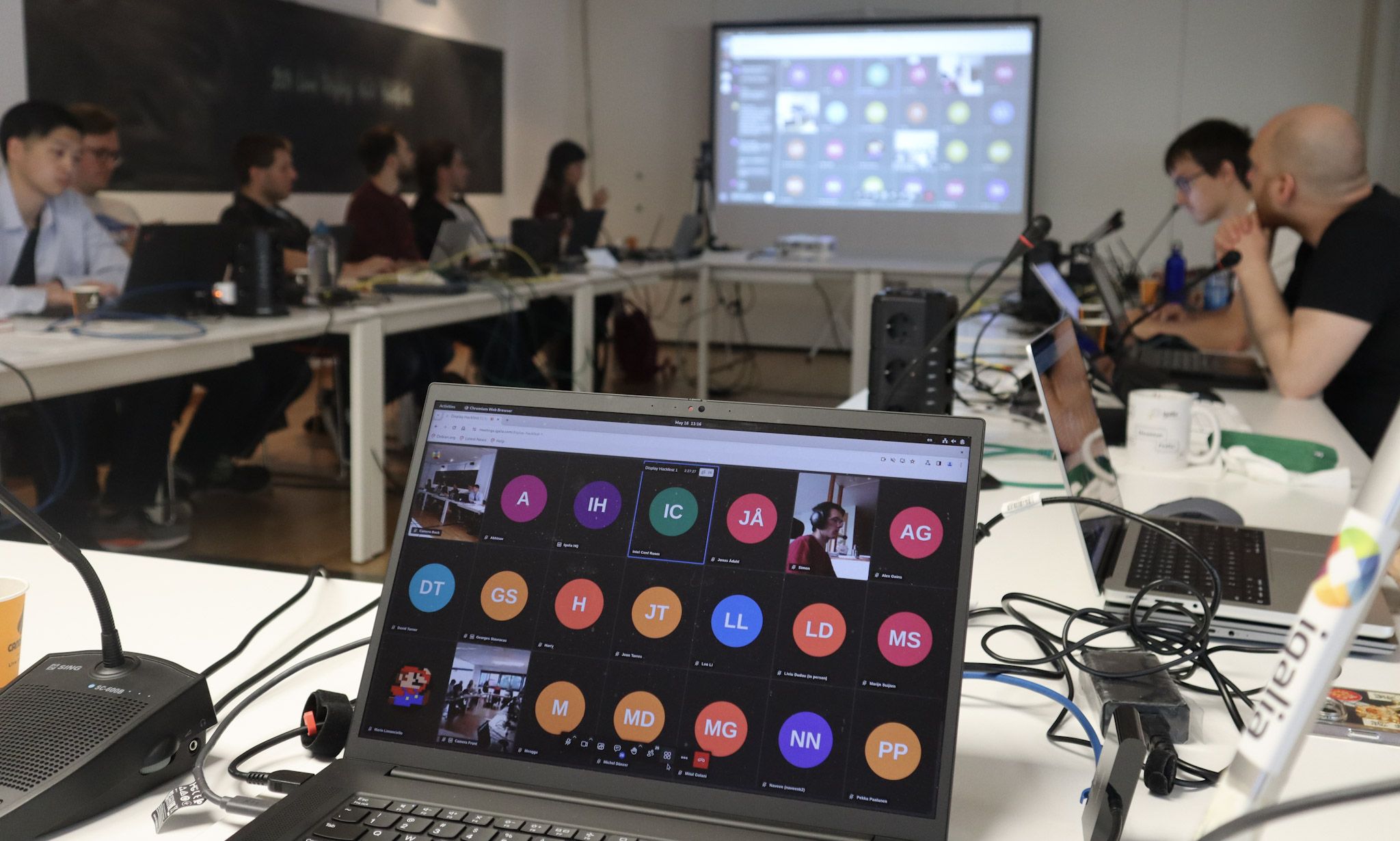
  • Remote Participation: Remote attendees appreciated the inclusive setup and opportunities to actively participate in discussions.
  • Technical Challenges: There were bandwidth and video streaming issues during some sessions due to the large number of participants.

Thank you for joining the 2024 Display Next Hackfest We can t help but thank the 40 participants, who engaged in-person or virtually on relevant discussions, for a collaborative evolution of the Linux display stack and for building an insightful agenda. A big thank you to the leaders and presenters of the nine sessions: Christopher Cameron (Google), Harry Wentland (AMD), Leo Li (AMD), Mario Limoncello (AMD), Sebastian Wick (RedHat) and Xaver Hugl (KDE/BlueSystems) for the effort in preparing the sessions, explaining the topic and guiding discussions. My acknowledge to the others in-person participants that made such an effort to travel to A Coru a: Alex Goins (NVIDIA), David Turner (Raspberry Pi), Georges Stavracas (Igalia), Joan Torres (SUSE), Liviu Dudau (Arm), Louis Chauvet (Bootlin), Robert Mader (Collabora), Tian Mengge (GravityXR), Victor Jaquez (Igalia) and Victoria Brekenfeld (System76). It was and awesome opportunity to meet you and chat face-to-face. Finally, thanks virtual participants who couldn t make it in person but organized their days to actively participate in each discussion, adding different perspectives and valuable inputs even remotely: Abhinav Kumar (Qualcomm), Chaitanya Borah (Intel), Christopher Braga (Qualcomm), Dor Askayo (Red Hat), Jiri Koten (RedHat), Jonas dahl (Red Hat), Leandro Ribeiro (Collabora), Marti Maria (Little CMS), Marijn Suijten, Mario Kleiner, Martin Stransky (Red Hat), Michel D nzer (Red Hat), Miguel Casas-Sanchez (Google), Mitulkumar Golani (Intel), Naveen Kumar (Intel), Niels De Graef (Red Hat), Pekka Paalanen (Collabora), Pichika Uday Kiran (AMD), Shashank Sharma (AMD), Sriharsha PV (AMD), Simon Ser, Uma Shankar (Intel) and Vikas Korjani (AMD). We look forward to another successful Display Next hackfest, continuing to drive innovation and improvement in the Linux display ecosystem!

25 September 2024

Melissa Wen: Reflections on 2024 Linux Display Next Hackfest

Hey everyone! The 2024 Linux Display Next hackfest concluded in May, and its outcomes continue to shape the Linux Display stack. Igalia hosted this year s event in A Coru a, Spain, bringing together leading experts in the field. Samuel Iglesias and I organized this year s edition and this blog post summarizes the experience and its fruits. One of the highlights of this year s hackfest was the wide range of backgrounds represented by our 40 participants (both on-site and remotely). Developers and experts from various companies and open-source projects came together to advance the Linux Display ecosystem. You can find the list of participants here. The event covered a broad spectrum of topics affecting the development of Linux projects, user experiences, and the future of display technologies on Linux. From cutting-edge topics to long-term discussions, you can check the event agenda here.

Organization Highlights The hackfest was marked by in-depth discussions and knowledge sharing among Linux contributors, making everyone inspired, informed, and connected to the community. Building on feedback from the previous year, we refined the unconference format to enhance participant preparation and engagement. Structured Agenda and Timeboxes: Each session had a defined scope, time limit (1h20 or 2h10), and began with an introductory talk on the topic.
  • Participant-Led Discussions: We pre-selected in-person participants to lead discussions, allowing them to prepare introductions, resources, and scope.
  • Transparent Scheduling: The schedule was shared in advance as GitHub issues, encouraging participants to review and prepare for sessions of interest.
Engaging Sessions: The hackfest featured a variety of topics, including presentations and discussions on how participants were addressing specific subjects within their companies.
  • No Breakout Rooms, No Overlaps: All participants chose to attend all sessions, eliminating the need for separate breakout rooms. We also adapted run-time schedule to keep everybody involved in the same topics.
  • Real-time Updates: We provided notifications and updates through dedicated emails and the event matrix room.
Strengthening Community Connections: The hackfest offered ample opportunities for networking among attendees.
  • Social Events: Igalia sponsored coffee breaks, lunches, and a dinner at a local restaurant.
  • Museum Visit: Participants enjoyed a sponsored visit to the Museum of Estrela Galicia Beer (MEGA).

Fruitful Discussions and Follow-up The structured agenda and breaks allowed us to cover multiple topics during the hackfest. These discussions have led to new display feature development and improvements, as evidenced by patches, merge requests, and implementations in project repositories and mailing lists. With the KMS color management API taking shape, we discussed refinements and best approaches to cover the variety of color pipeline from different hardware-vendors. We are also investigating techniques for a performant SDR<->HDR content reproduction and reducing latency and power consumption when using the color blocks of the hardware.

Color Management/HDR Color Management and HDR continued to be the hottest topic of the hackfest. We had three sessions dedicated to discuss Color and HDR across Linux Display stack layers.

Color/HDR (Kernel-Level) Harry Wentland (AMD) led this session. Here, kernel Developers shared the Color Management pipeline of AMD, Intel and NVidia. We counted with diagrams and explanations from HW-vendors developers that discussed differences, constraints and paths to fit them into the KMS generic color management properties such as advertising modeset needs, IN\_FORMAT, segmented LUTs, interpolation types, etc. Developers from Qualcomm and ARM also added information regarding their hardware. Upstream work related to this session:

Color/HDR (Compositor-Level) Sebastian Wick (RedHat) led this session. It started with Sebastian s presentation covering Wayland color protocols and compositor implementation. Also, an explanation of APIs provided by Wayland and how they can be used to achieve better color management for applications and discussions around ICC profiles and color representation metadata. There was also an intensive Q&A about LittleCMS with Marti Maria. Upstream work related to this session:

Color/HDR (Use Cases and Testing) Christopher Cameron (Google) and Melissa Wen (Igalia) led this session. In contrast to the other sessions, here we focused less on implementation and more on brainstorming and reflections of real-world SDR and HDR transformations (use and validation) and gainmaps. Christopher gave a nice presentation explaining HDR gainmap images and how we should think of HDR. This presentation and Q&A were important to put participants at the same page of how to transition between SDR and HDR and somehow emulating HDR. We also discussed on the usage of a kernel background color property. Finally, we discussed a bit about Chamelium and the future of VKMS (future work and maintainership).

Power Savings vs Color/Latency Mario Limonciello (AMD) led this session. Mario gave an introductory presentation about AMD ABM (adaptive backlight management) that is similar to Intel DPST. After some discussions, we agreed on exposing a kernel property for power saving policy. This work was already merged on kernel and the userspace support is under development. Upstream work related to this session:

Strategy for video and gaming use-cases Leo Li (AMD) led this session. Miguel Casas (Google) started this session with a presentation of Overlays in Chrome/OS Video, explaining the main goal of power saving by switching off GPU for accelerated compositing and the challenges of different colorspace/HDR for video on Linux. Then Leo Li presented different strategies for video and gaming and we discussed the userspace need of more detailed feedback mechanisms to understand failures when offloading. Also, creating a debugFS interface came up as a tool for debugging and analysis.

Real-time scheduling and async KMS API Xaver Hugl (KDE/BlueSystems) led this session. Compositor developers have exposed some issues with doing real-time scheduling and async page flips. One is that the Kernel limits the lifetime of realtime threads and if a modeset takes too long, the thread will be killed and thus the compositor as well. Also, simple page flips take longer than expected and drivers should optimize them. Another issue is the lack of feedback to compositors about hardware programming time and commit deadlines (the lastest possible time to commit). This is difficult to predict from drivers, since it varies greatly with the type of properties. For example, color management updates take much longer. In this regard, we discusssed implementing a hw_done callback to timestamp when the hardware programming of the last atomic commit is complete. Also an API to pre-program color pipeline in a kind of A/B scheme. It may not be supported by all drivers, but might be useful in different ways.

VRR/Frame Limit, Display Mux, Display Control, and more and beer We also had sessions to discuss a new KMS API to mitigate headaches on VRR and Frame Limit as different brightness level at different refresh rates, abrupt changes of refresh rates, low frame rate compensation (LFC) and precise timing in VRR more. On Display Control we discussed features missing in the current KMS interface for HDR mode, atomic backlight settings, source-based tone mapping, etc. We also discussed the need of a place where compositor developers can post TODOs to be developed by KMS people. The Content-adaptive Scaling and Sharpening session focused on sharpening and scaling filters. In the Display Mux session, we discussed proposals to expose the capability of dynamic mux switching display signal between discrete and integrated GPUs. In the last session of the 2024 Display Next Hackfest, participants representing different compositors summarized current and future work and built a Linux Display wish list , which includes: improvements to VTTY and HDR switching, better dmabuf API for multi-GPU support, definition of tone mapping, blending and scaling sematics, and wayland protocols for advertising to clients which colorspaces are supported. We closed this session with a status update on feature development by compositors, including but not limited to: plane offloading (from libcamera to output) / HDR video offloading (dma-heaps) / plane-based scrolling for web pages, color management / HDR / ICC profiles support, addressing issues such as flickering when color primaries don t match, etc. After three days of intensive discussions, all in-person participants went to a guided tour at the Museum of Extrela Galicia beer (MEGA), pouring and tasting the most famous local beer.

Feedback and Future Directions Participants provided valuable feedback on the hackfest, including suggestions for future improvements.
  • Schedule and Break-time Setup: Having a pre-defined agenda and schedule provided a better balance between long discussions and mental refreshments, preventing the fatigue caused by endless discussions.
  • Action Points: Some participants recommended explicitly asking for action points at the end of each session and assigning people to follow-up tasks.
  • Remote Participation: Remote attendees appreciated the inclusive setup and opportunities to actively participate in discussions.
  • Technical Challenges: There were bandwidth and video streaming issues during some sessions due to the large number of participants.

Thank you for joining the 2024 Display Next Hackfest We can t help but thank the 40 participants, who engaged in-person or virtually on relevant discussions, for a collaborative evolution of the Linux display stack and for building an insightful agenda. A big thank you to the leaders and presenters of the nine sessions: Christopher Cameron (Google), Harry Wentland (AMD), Leo Li (AMD), Mario Limoncello (AMD), Sebastian Wick (RedHat) and Xaver Hugl (KDE/BlueSystems) for the effort in preparing the sessions, explaining the topic and guiding discussions. My acknowledge to the others in-person participants that made such an effort to travel to A Coru a: Alex Goins (NVIDIA), David Turner (Raspberry Pi), Georges Stavracas (Igalia), Joan Torres (SUSE), Liviu Dudau (Arm), Louis Chauvet (Bootlin), Robert Mader (Collabora), Tian Mengge (GravityXR), Victor Jaquez (Igalia) and Victoria Brekenfeld (System76). It was and awesome opportunity to meet you and chat face-to-face. Finally, thanks virtual participants who couldn t make it in person but organized their days to actively participate in each discussion, adding different perspectives and valuable inputs even remotely: Abhinav Kumar (Qualcomm), Chaitanya Borah (Intel), Christopher Braga (Qualcomm), Dor Askayo, Jiri Koten (RedHat), Jonas dahl (Red Hat), Leandro Ribeiro (Collabora), Marti Maria (Little CMS), Marijn Suijten, Mario Kleiner, Martin Stransky (Red Hat), Michel D nzer (Red Hat), Miguel Casas-Sanchez (Google), Mitulkumar Golani (Intel), Naveen Kumar (Intel), Niels De Graef (Red Hat), Pekka Paalanen (Collabora), Pichika Uday Kiran (AMD), Shashank Sharma (AMD), Sriharsha PV (AMD), Simon Ser, Uma Shankar (Intel) and Vikas Korjani (AMD). We look forward to another successful Display Next hackfest, continuing to drive innovation and improvement in the Linux display ecosystem!

9 September 2024

Wouter Verhelst: NBD: Write Zeroes and Rotational

The NBD protocol has grown a number of new features over the years. Unfortunately, some of those features are not (yet?) supported by the Linux kernel. I suggested a few times over the years that the maintainer of the NBD driver in the kernel, Josef Bacik, take a look at these features, but he hasn't done so; presumably he has other priorities. As with anything in the open source world, if you want it done you must do it yourself. I'd been off and on considering to work on the kernel driver so that I could implement these new features, but I never really got anywhere. A few months ago, however, Christoph Hellwig posted a patch set that reworked a number of block device drivers in the Linux kernel to a new type of API. Since the NBD mailinglist is listed in the kernel's MAINTAINERS file, this patch series were crossposted to the NBD mailinglist, too, and when I noticed that it explicitly disabled the "rotational" flag on the NBD device, I suggested to Christoph that perhaps "we" (meaning, "he") might want to vary the decision on whether a device is rotational depending on whether the NBD server signals, through the flag that exists for that very purpose, whether the device is rotational. To which he replied "Can you send a patch". That got me down the rabbit hole, and now, for the first time in the 20+ years of being a C programmer who uses Linux exclusively, I got a patch merged into the Linux kernel... twice. So, what do these things do? The first patch adds support for the ROTATIONAL flag. If the NBD server mentions that the device is rotational, it will be treated as such, and the elevator algorithm will be used to optimize accesses to the device. For the reference implementation, you can do this by adding a line "rotational = true" to the relevant section (relating to the export where you want it to be used) of the config file. It's unlikely that this will be of much benefit in most cases (most nbd-server installations will be exporting a file on a filesystem and have the elevator algorithm implemented server side and then it doesn't matter whether the device has the rotational flag set), but it's there in case you wish to use it. The second set of patches adds support for the WRITE_ZEROES command. Most devices these days allow you to tell them "please write a N zeroes starting at this offset", which is a lot more efficient than sending over a buffer of N zeroes and asking the device to do DMA to copy buffers etc etc for just zeroes. The NBD protocol has supported its own WRITE_ZEROES command for a while now, and hooking it up was reasonably simple in the end. The only problem is that it expects length values in bytes, whereas the kernel uses it in blocks. It took me a few tries to get that right -- and then I also fixed up handling of discard messages, which required the same conversion.

21 July 2024

Mike Gabriel: Polis - a FLOSS Tool for Civic Participation -- Issues extending Polis and adjusting our Goals

Here comes the 3rd article of the 5-episode blog post series on Polis, written by Guido Berh rster, member of staff at my company Fre(i)e Software GmbH. Enjoy also this read on Guido's work on Polis,
Mike
Table of Contents of the Blog Post Series
  1. Introduction
  2. Initial evaluation and adaptation
  3. Issues extending Polis and adjusting our goals (this article)
  4. Creating (a) new frontend(s) for Polis
  5. Current status and roadmap
Polis - Issues extending Polis and adjusting our Goals After the initial implementation of limited branding support, user feedback and the involvement of an UX designer lead to the conclusion that we needed more far-reaching changes to the user interface in order to reduce visual clutter, rearrange and improve UI elements, and provide better integration with the websites in which conversations are embedded. Challenges when visualizing Data in Polis Polis visualizes groups using a spatial projection of users based on similarities in voting behavior and places them in two to five groups using a clustering algorithm. During our testing and evaluation users were rarely able to interpret the visualization and often intuitively made incorrect assumptions e.g. by associating the filled area of a group with its significance or size. After consultation with a member of the Multi-Agent Systems (MAS) Group at the University of Groningen we chose to temporarily replace the visualization offered by Polis with simple bar charts representing agreement or disagreement with statements of a group or the majority. We intend to revisit this and explore different forms of visualization at a later point in time. The different factors playing into the weight attached to statements which determine the pseuodo-random order in which they are presented for voting ( comment routing ) proved difficult to explain to stakeholders and users and the admission of the ad-hoc and heuristic nature of the used algorithm1 by Polis authors lead to the decision to temporarily remove this feature. Instead, statements should be placed into three groups, namely
  1. metadata questions,
  2. seed statements,
  3. and participant statements
Statements should then be sorted by group but in a fully randomized order within the group so that metadata questions would be presented before seed statements which would be presented before participant s statements. This simpler method was deemed sufficient for the scale of our pilot projects, however we intend to revisit this decision and explore different methods of comment routing in cooperation with our scientific partners at a later point in time. An evaluation of the requirements for implementing mandatory authentication and adding support for additional authentication methods to Polis showed that significant changes to both the administration and participation frontend were needed due to a lack of an abstraction layer or extension mechanism and the current authentication providers being hardcoded in many parts of the code base. A New Frontend is born: Particiapp Based on the implementation details of the participation frontend, the invasive nature of the changes required, and the overhead of keeping up with active upstream development it became clear that a different, more flexible approach to development was needed. This ultimately lead to the creation of Particiapp, a new Open Source project providing the building blocks and necessary abstraction layers for rapid protoyping and experimentation with different fontends which are compatible with but independent from Polis.
  1. Small, Christopher T., Bjorkegren, Michael, Erkkil , Timo, Shaw, Lynette and Megill, Colin (2021). Polis: Scaling deliberation by mapping high dimensional opinion spaces. Recerca. Revista de Pensament i An lisi, 26(2), pp. 1-26.

18 March 2024

Christoph Berg: vcswatch and git --filter

Debian is running a "vcswatch" service that keeps track of the status of all packaging repositories that have a Vcs-Git (and other VCSes) header set and shows which repos might need a package upload to push pending changes out. Naturally, this is a lot of data and the scratch partition on qa.debian.org had to be expanded several times, up to 300 GB in the last iteration. Attempts to reduce that size using shallow clones (git clone --depth=50) did not result more than a few percent of space saved. Running git gc on all repos helps a bit, but is tedious and as Debian is growing, the repos are still growing both in size and number. I ended up blocking all repos with checkouts larger than a gigabyte, and still the only cure was expanding the disk, or to lower the blocking threshold. Since we only need a tiny bit of info from the repositories, namely the content of debian/changelog and a few other files from debian/, plus the number of commits since the last tag on the packaging branch, it made sense to try to get the info without fetching a full repo clone. The question if we could grab that solely using the GitLab API at salsa.debian.org was never really answered. But then, in #1032623, G bor N meth suggested the use of git clone --filter blob:none. As things go, this sat unattended in the bug report for almost a year until the next "disk full" event made me give it a try. The blob:none filter makes git clone omit all files, fetching only commit and tree information. Any blob (file content) needed at git run time is transparently fetched from the upstream repository, and stored locally. It turned out to be a game-changer. The (largish) repositories I tried it on shrank to 1/100 of the original size. Poking around I figured we could even do better by using tree:0 as filter. This additionally omits all trees from the git clone, again only fetching the information at run time when needed. Some of the larger repos I tried it on shrank to 1/1000 of their original size. I deployed the new option on qa.debian.org and scheduled all repositories to fetch a new clone on the next scan: The initial dip from 100% to 95% is my first "what happens if we block repos > 500 MB" attempt. Over the week after that, the git filter clones reduce the overall disk consumption from almost 300 GB to 15 GB, a 1/20. Some repos shrank from GBs to below a MB. Perhaps I should make all my git clones use one of the filters.

30 November 2023

Bits from Debian: New Debian Developers and Maintainers (September and October 2023)

The following contributors got their Debian Developer accounts in the last two months: The following contributors were added as Debian Maintainers in the last two months: Congratulations!
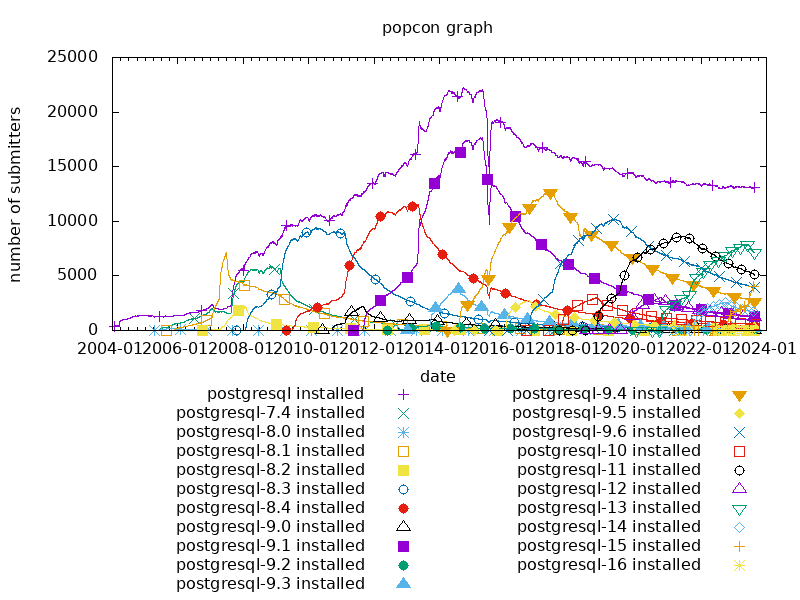
26 August 2023

Christoph Berg: PostgreSQL Popularity Contest

Back in 2015, when PostgreSQL 9.5 alpha 1 was released, I had posted the PostgreSQL data from Debian's popularity contest. 8 years and 8 PostgreSQL releases later, the graph now looks like this: Currently, the most popular PostgreSQL on Debian systems is still PostgreSQL 13 (shipped in Bullseye), followed by PostgreSQL 11 (Buster). At the time of writing, PostgreSQL 9.6 (Stretch) and PostgreSQL 15 (Bookworm) share the third place, with 15 rising quickly.

4 August 2023

Reproducible Builds: Reproducible Builds in July 2023

Welcome to the July 2023 report from the Reproducible Builds project. In our reports, we try to outline the most important things that we have been up to over the past month. As ever, if you are interested in contributing to the project, please visit the Contribute page on our website.
Marcel Fourn et al. presented at the IEEE Symposium on Security and Privacy in San Francisco, CA on The Importance and Challenges of Reproducible Builds for Software Supply Chain Security. As summarised in last month s report, the abstract of their paper begins:
The 2020 Solarwinds attack was a tipping point that caused a heightened awareness about the security of the software supply chain and in particular the large amount of trust placed in build systems. Reproducible Builds (R-Bs) provide a strong foundation to build defenses for arbitrary attacks against build systems by ensuring that given the same source code, build environment, and build instructions, bitwise-identical artifacts are created. (PDF)

Chris Lamb published an interview with Simon Butler, associate senior lecturer in the School of Informatics at the University of Sk vde, on the business adoption of Reproducible Builds. (This is actually the seventh instalment in a series featuring the projects, companies and individuals who support our project. We started this series by featuring the Civil Infrastructure Platform project, and followed this up with a post about the Ford Foundation as well as recent ones about ARDC, the Google Open Source Security Team (GOSST), Bootstrappable Builds, the F-Droid project and David A. Wheeler.) Vagrant Cascadian presented Breaking the Chains of Trusting Trust at FOSSY 2023.
Rahul Bajaj has been working with Roland Clobus on merging an overview of environment variations to our website:
I have identified 16 root causes for unreproducible builds in my empirical study, which I have linked to the corresponding documentation. The initial MR right now contains information about 10 root causes. For each root cause, I have provided a definition, a notable instance, and a workaround. However, I have only found workarounds for 5 out of the 10 root causes listed in this merge request. In the upcoming commits, I plan to add an additional 6 root causes. I kindly request you review the text for any necessary refinements, modifications, or corrections. Additionally, I would appreciate the help with documentation for the solutions/workarounds for the remaining root causes: Archive Metadata, Build ID, File System Ordering, File Permissions, and Snippet Encoding. Your input on the identified root causes for unreproducible builds would be greatly appreciated. [ ]

Just a reminder that our upcoming Reproducible Builds Summit is set to take place from October 31st November 2nd 2023 in Hamburg, Germany. Our summits are a unique gathering that brings together attendees from diverse projects, united by a shared vision of advancing the Reproducible Builds effort. During this enriching event, participants will have the opportunity to engage in discussions, establish connections and exchange ideas to drive progress in this vital field. If you re interested in joining us this year, please make sure to read the event page which has more details about the event and location.
There was more progress towards making the Go programming language ecosystem reproducible this month, including: In addition, kpcyrd posted to our mailing list to report that:
while packaging govulncheck for Arch Linux I noticed a checksum mismatch for a tar file I downloaded from go.googlesource.com. I used diffoscope to compare the .tar file I downloaded with the .tar file the build server downloaded, and noticed the timestamps are different.

In Debian, 20 reviews of Debian packages were added, 25 were updated and 25 were removed this month adding to our knowledge about identified issues. A number of issue types were updated, including marking ffile_prefix_map_passed_to_clang being fixed since Debian bullseye [ ] and adding a Debian bug tracker reference for the nondeterminism_added_by_pyqt5_pyrcc5 issue [ ]. In addition, Roland Clobus posted another detailed update of the status of reproducible Debian ISO images on our mailing list. In particular, Roland helpfully summarised that live images are looking good, and the number of (passing) automated tests is growing .
Bernhard M. Wiedemann published another monthly report about reproducibility within openSUSE.
F-Droid added 20 new reproducible apps in July, making 165 apps in total that are published with Reproducible Builds and using the upstream developer s signature. [ ]
The Sphinx documentation tool recently accepted a change to improve deterministic reproducibility of documentation. It s internal util.inspect.object_description attempts to sort collections, but this can fail. The change handles the failure case by using string-based object descriptions as a fallback deterministic sort ordering, as well as adding recursive object-description calls for list and tuple datatypes. As a result, documentation generated by Sphinx will be more likely to be automatically reproducible. Lastly in news, kpcyrd posted to our mailing list announcing a new repro-env tool:
My initial interest in reproducible builds was how do I distribute pre-compiled binaries on GitHub without people raising security concerns about them . I ve cycled back to this original problem about 5 years later and built a tool that is meant to address this. [ ]

Upstream patches The Reproducible Builds project detects, dissects and attempts to fix as many currently-unreproducible packages as possible. We endeavour to send all of our patches upstream where appropriate. This month, we wrote a large number of such patches, including:
In diffoscope development this month, versions 244, 245 and 246 were uploaded to Debian unstable by Chris Lamb, who also made the following changes:
  • Don t include the file size in image metadata. It is, at best, distracting, and it is already in the directory metadata. [ ]
  • Add compatibility with libarchive-5. [ ]
  • Mark that the test_dex::test_javap_14_differences test requires the procyon tool. [ ]
  • Initial work on DOS/MBR extraction. [ ]
  • Move to using assert_diff in the .ico and .jpeg tests. [ ]
  • Temporarily mark some Android-related as XFAIL due to Debian bugs #1040941 & #1040916. [ ]
  • Fix the test skipped reason generation in the case of a version outside of the required range. [ ]
  • Update copyright years. [ ][ ]
  • Fix try.diffoscope.org. [ ]
In addition, Gianfranco Costamagna added support for LLVM version 16. [ ]

Testing framework The Reproducible Builds project operates a comprehensive testing framework (available at tests.reproducible-builds.org) in order to check packages and other artifacts for reproducibility. In July, a number of changes were made by Holger Levsen:
  • General changes:
    • Upgrade Jenkins host to Debian bookworm now that Debian 12.1 is out. [ ][ ][ ][ ]
    • djm: improve UX when rebooting a node fails. [ ]
    • djm: reduce wait time between rebooting nodes. [ ]
  • Debian-related changes:
    • Various refactoring of the Debian scheduler. [ ][ ][ ]
    • Make Debian live builds more robust with respect to salsa.debian.org returning HTTP 502 errors. [ ][ ]
    • Use the legacy SCP protocol instead of the SFTP protocol when transfering Debian live builds. [ ][ ]
    • Speed up a number of database queries thanks, Myon! [ ][ ][ ][ ][ ]
    • Split create_meta_pkg_sets job into two (for Debian unstable and Debian testing) to half the job runtime to approximately 90 minutes. [ ][ ]
    • Split scheduler job into four separate jobs, one for each tested architecture. [ ][ ]
    • Treat more PostgreSQL errors as serious (for some jobs). [ ]
    • Re-enable automatic database documentation now that postgresql_autodoc is back in Debian bookworm. [ ]
    • Remove various hardcoding of Debian release names. [ ]
    • Drop some i386 special casing. [ ]
  • Other distributions:
    • Speed up Alpine SQL queries. [ ]
    • Adjust CSS layout for Arch Linux pages to match 3 and not 4 repos being tested. [ ]
    • Drop the community Arch Linux repo as it has now been merged into the extra repo. [ ]
    • Speed up a number of Arch-related database queries. [ ]
    • Try harder to properly cleanup after building OpenWrt packages. [ ]
    • Drop all kfreebsd-related tests now that it s officially dead. [ ]
  • System health:
    • Always ignore some well-known harmless orphan processes. [ ][ ][ ]
    • Detect another case of job failure due to Jenkins shutdown. [ ]
    • Show all non co-installable package sets on the status page. [ ]
    • Warn that some specific reboot nodes are currently false-positives. [ ]
  • Node health checks:
    • Run system and node health checks for Jenkins less frequently. [ ]
    • Try to restart any failed dpkg-db-backup [ ] and munin-node services [ ].
In addition, Vagrant Cascadian updated the paths in our automated to tests to use the same paths used by the official Debian build servers. [ ]

If you are interested in contributing to the Reproducible Builds project, please visit our Contribute page on our website. However, you can get in touch with us via:

1 August 2023

Reproducible Builds: Supporter spotlight: Simon Butler on business adoption of Reproducible Builds

The Reproducible Builds project relies on several projects, supporters and sponsors for financial support, but they are also valued as ambassadors who spread the word about our project and the work that we do. This is the seventh instalment in a series featuring the projects, companies and individuals who support the Reproducible Builds project. We started this series by featuring the Civil Infrastructure Platform project, and followed this up with a post about the Ford Foundation as well as recent ones about ARDC, the Google Open Source Security Team (GOSST), Bootstrappable Builds, the F-Droid project and David A. Wheeler. Today, however, we will be talking with Simon Butler, an associate senior lecturer in the School of Informatics at the University of Sk vde, where he undertakes research in software engineering that focuses on IoT and open source software, and contributes to the teaching of computer science to undergraduates.

Chris: For those who have not heard of it before, can you tell us more about the School of Informatics at Sk vde University? Simon: Certainly, but I may be a little long-winded. Sk vde is a city in the area between the two large lakes in southern Sweden. The city is a busy place. Sk vde is home to the regional hospital, some of Volvo s manufacturing facilities, two regiments of the Swedish defence force, a lot of businesses in the Swedish computer games industry, other tech companies and more. The University of Sk vde is relatively small. Sweden s large land area and low population density mean that regional centres such as Sk vde are important and local universities support businesses by training new staff and supporting innovation. The School of Informatics has two divisions. One focuses on teaching and researching computer games. The other division encompasses a wider range of teaching and research, including computer science, web development, computer security, network administration, data science and so on.
Chris: You recently had a open-access paper published in Software Quality Journal. Could you tell us a little bit more about it and perhaps briefly summarise its key findings? Simon: The paper is one output of a collaborative research project with six Swedish businesses that use open source software. There are two parts to the paper. The first consists of an analysis of what the group of businesses in the project know about Reproducible Builds (R-Bs), their experiences with R-Bs and their perception of the value of R-Bs to the businesses. The second part is an interview study with business practitioners and others with experience and expertise in R-Bs. We set out to try to understand the extent to which software-intensive businesses were aware of R-Bs, the technical and business reasons they were or were not using R-Bs and to document the business and technical use cases for R-Bs. The key findings were that businesses are aware of R-Bs, and some are using R-Bs as part of their day-to-day development process. Some of the uses for R-Bs we found were not previously documented. We also found that businesses understood the value R-Bs have as part of engineering and software quality processes. They are also aware of the costs of implementing R-Bs and that R-Bs are an intangible value proposition - in other words, businesses can add value through process improvement by using R-Bs. But, that, currently at least, R-Bs are not a selling point for software or products.
Chris: You performed a large number of interviews in order to prepare your paper. What was the most surprising response to you? Simon: Most surprising is a good question. Everybody I spoke to brought something new to my understanding of R-Bs, and many responses surprised me. The interviewees that surprised me most were I01 and I02 (interviews were anonymised and interviewees were assigned numeric identities). I02 described the sceptical perspective that there is a viable, pragmatic alternative to R-Bs - verifiable builds - which I was aware of before undertaking the research. The company had developed a sufficiently robust system for their needs and worked well. With a large archive of software used in production, they couldn t justify the cost of retrofitting a different solution that might only offer small advantages over the existing system. Doesn t really sound too surprising, but the interview was one of the first I did on this topic, and I was very focused on the value of, and need for, trust in a system that motivated the R-B. The solution used by the company requires trust, but they seem to have established sufficient trust for their needs by securing their build systems to the extent that they are more or less tamper-proof. The other big surprise for me was I01 s use of R-Bs to support the verification of system configuration in a system with multiple embedded components at boot time. It s such an obvious application of R-Bs, and exactly the kind of response I hoped to get from interviewees. However, it is another instance of a solution where trust is only one factor. In the first instance, the developer is using R-Bs to establish trust in the toolchain. There is also the second application that the developer can use a set of R-Bs to establish that deployed system consists of compatible components. While this might not sound too significant, there appear to be some important potential applications. One that came to mind immediately is a problem with firmware updates on nodes in IoT systems where the node needs to update quickly with limited downtime and without failure. The node also needs to be able to roll back any update proposed by a server if there are conflicts with the current configuration or if any tests on the node fail. Perhaps the chances of failure could be reduced, if a node can instead negotiate with a server to determine a safe path to migrate from its current configuration to a working configuration with the upgraded components the central system requires? Another potential application appears to be in the configuration management of AI systems, where decisions need to be explainable. A means of specifying validated configurations of training data, models and deployed systems might, perhaps, be leveraged to prevent invalid or broken configurations from being deployed in production.
Chris: One of your findings was that reproducible builds were perceived to be good engineering practice . To what extent do you believe cultural forces affect the adoption or rejection of a given technology or practice? Simon: To a large extent. People s decisions are informed by cultural norms, and business decisions are made by people acting collectively. Of course, decision-making, including assessments of risk and usefulness, is mediated by individual positions on the continuum from conformity to non-conformity, as well as individual and in-group norms. Whether a business will consider a given technology for adoption will depend on cultural forces. The decision to adopt may well be made on the grounds of cost and benefits.
Chris: Another conclusion implied by your research is that businesses are often dealing with software deployment lifespans (eg. 20+ years) that differ from widely from those of the typical hobbyist programmer. To what degree do you think this temporal mismatch is a problem for both groups? Simon: This is a fascinating question. Long-term software maintenance is a requirement in some industries because of the working lifespans of the products and legal requirements to maintain the products for a fixed period. For some other industries, it is less of a problem. Consequently, I would tend to divide developers into those who have been exposed to long-term maintenance problems and those who have not. Although, more professional than hobbyist developers will have been exposed to the problem. Nonetheless, there are areas, such as music software, where there are also long-term maintenance challenges for data formats and software.
Chris: Based on your research, what would you say are the biggest blockers for the adoption of reproducible builds within business ? And, based on this, would you have any advice or recommendations for the broader reproducible builds ecosystem? Simon: From the research, the main blocker appears to be cost. Not an absolute cost, but there is an overhead to introducing R-Bs. Businesses (and thus business managers) need to understand the business case for R-Bs. Making decision-makers in businesses aware of R-Bs and that they are valuable will take time. Advocacy at multiple levels appears to be the way forward and this is being done. I would recommend being persistent while being patient and to keep talking about reproducible builds. The work done in Linux distributions raises awareness of R-Bs amongst developers. Guix, NixOS and Software Heritage are all providing practical solutions and getting attention - I ve been seeing progressively more mentions of all three during the last couple of years. Increased awareness amongst developers should lead to more interest within companies. There is also research money being assigned to supply chain security and R-B s. The CHAINS project at KTH in Stockholm is one example of a strategic research project. There may be others that I m not aware of. The policy-level advocacy is slowly getting results in some countries, and where CISA leads, others may follow.
Chris: Was there a particular reason you alighted on the question of the adoption of reproducible builds in business? Do you think there s any truth behind the shopworn stereotype of hacker types neglecting the resources that business might be able to offer? Simon: Much of the motivation for the research came from the contrast between the visibility of R-Bs in open source projects and the relative invisibility of R-Bs in industry. Where companies are known to be using R-Bs (e.g. Google, etc.) there is no fuss, no hype. They were not selling R-Bs as a solution; instead the documentation is very matter-of-fact that R-Bs are part of a customer-facing process in their cloud solutions. An obvious question for me was that if some people use R-B s in software development, why doesn t everybody? There are limits to the tooling for some programming languages that mean R-Bs are difficult or impossible. But where creating an R-B is practical, why are they not used more widely? So, to your second question. There is another factor, which seems to be more about a lack of communication rather than neglecting opportunities. Businesses may not always be willing to discuss their development processes and innovations. Though I do think the increasing number of conferences (big and small) for software practitioners is helping to facilitate more communication and greater exchange of ideas.
Chris: Has your personal view of reproducible builds changed since before you embarked on writing this paper? Simon: Absolutely! In the early stages of the research, I was interested in questions of trust and how R-Bs were applied to resolve build and supply chain security problems. As the research developed, however, I started to see there were benefits to the use of R-Bs that were less obvious and that, in some cases, an R-B can have more than a single application.
Chris: Finally, do you have any plans to do future research touching on reproducible builds? Simon: Yes, definitely. There are a set of problems that interest me. One already mentioned is the use of reproducible builds with AI systems. Interpretable or explainable AI (XAI) is a necessity, and I think that R-Bs can be used to support traceability in the configuration and testing of both deployed systems and systems used during model training and evaluation. I would also like to return to a problem discussed briefly in the article, which is to develop a deeper understanding of the elements involved in the application of R-Bs that can be used to support reasoning about existing and potential applications of R-Bs. For example, R-Bs can be used to establish trust for different groups of individuals at different times, say, between remote developers prior to the release of software and by users after release. One question is whether when an R-B is used might be a significant factor. Another group of questions concerns the ways in which trust (of some sort) propagates among users of an R-B. There is an example in the paper of a company that rebuilds Debian reproducibly for security reasons and is then able to collaborate on software projects where software is built reproducibly with other companies that use public distributions of Debian.
Chris: Many thanks for this interview, Simon. If someone wanted to get in touch or learn more about you and your colleagues at the School of Informatics, where might they go? Thank you for the opportunity. It has been a pleasure to reflect a little more widely on the research! Personally, you can find out about my work on my official homepage and on my personal site. The software systems research group (SSRG) has a website, and the University of Sk vde s English language pages are also available. Chris: Many thanks for this interview, Simon!


For more information about the Reproducible Builds project, please see our website at reproducible-builds.org. If you are interested in ensuring the ongoing security of the software that underpins our civilisation and wish to sponsor the Reproducible Builds project, please reach out to the project by emailing contact@reproducible-builds.org.

8 February 2023

Chris Lamb: Most anticipated films of 2023

Very few highly-anticipated movies appear in January and February, as the bigger releases are timed so they can be considered for the Golden Globes in January and the Oscars in late February or early March, so film fans have the advantage of a few weeks after the New Year to collect their thoughts on the year ahead. In other words, I'm not actually late in outlining below the films I'm most looking forward to in 2023...

Barbie No, seriously! If anyone can make a good film about a doll franchise, it's probably Greta Gerwig. Not only was Little Women (2019) more than admirable, the same could be definitely said for Lady Bird (2017). More importantly, I can't help feel she was the real 'Driver' behind Frances Ha (2012), one of the better modern takes on Claudia Weill's revelatory Girlfriends (1978). Still, whenever I remember that Barbie will be a film about a billion-dollar toy and media franchise with a nettlesome history, I recall I rubbished the "Facebook film" that turned into The Social Network (2010). Anyway, the trailer for Barbie is worth watching, if only because it seems like a parody of itself.

Blitz It's difficult to overstate just how important the aerial bombing of London during World War II is crucial to understanding the British psyche, despite it being a constructed phenomenon from the outset. Without wishing to underplay the deaths of over 40,000 civilian deaths, Angus Calder pointed out in the 1990s that the modern mythology surrounding the event "did not evolve spontaneously; it was a propaganda construct directed as much at [then neutral] American opinion as at British." It will therefore be interesting to see how British Grenadian Trinidadian director Steve McQueen addresses a topic so essential to the British self-conception. (Remember the controversy in right-wing circles about the sole Indian soldier in Christopher Nolan's Dunkirk (2017)?) McQueen is perhaps best known for his 12 Years a Slave (2013), but he recently directed a six-part film anthology for the BBC which addressed the realities of post-Empire immigration to Britain, and this leads me to suspect he sees the Blitz and its surrounding mythology with a more critical perspective. But any attempt to complicate the story of World War II will be vigorously opposed in a way that will make the recent hullabaloo surrounding The Crown seem tame. All this is to say that the discourse surrounding this release may be as interesting as the film itself.

Dune, Part II Coming out of the cinema after the first part of Denis Vileneve's adaptation of Dune (2021), I was struck by the conception that it was less of a fresh adaptation of the 1965 novel by Frank Herbert than an attempt to rehabilitate David Lynch's 1984 version and in a broader sense, it was also an attempt to reestablish the primacy of cinema over streaming TV and the myriad of other distractions in our lives. I must admit I'm not a huge fan of the original novel, finding within it a certain prurience regarding hereditary military regimes and writing about them with a certain sense of glee that belies a secret admiration for them... not to mention an eyebrow-raising allegory for the Middle East. Still, Dune, Part II is going to be a fantastic spectacle.

Ferrari It'll be curious to see how this differs substantially from the recent Ford v Ferrari (2019), but given that Michael Mann's Heat (1995) so effectively re-energised the gangster/heist genre, I'm more than willing to kick the tires of this about the founder of the eponymous car manufacturer. I'm in the minority for preferring Mann's Thief (1981) over Heat, in part because the former deals in more abstract themes, so I'd have perhaps prefered to look forward to a more conceptual film from Mann over a story about one specific guy.

How Do You Live There are a few directors one can look forward to watching almost without qualification, and Hayao Miyazaki (My Neighbor Totoro, Kiki's Delivery Service, Princess Mononoke Howl's Moving Castle, etc.) is one of them. And this is especially so given that The Wind Rises (2013) was meant to be the last collaboration between Miyazaki and Studio Ghibli. Let's hope he is able to come out of retirement in another ten years.

Indiana Jones and the Dial of Destiny Given I had a strong dislike of Indiana Jones and the Kingdom of the Crystal Skull (2008), I seriously doubt I will enjoy anything this film has to show me, but with 1981's Raiders of the Lost Ark remaining one of my most treasured films (read my brief homage), I still feel a strong sense of obligation towards the Indiana Jones name, despite it feeling like the copper is being pulled out of the walls of this franchise today.

Kafka I only know Polish filmmaker Agnieszka Holland through her Spoor (2017), an adaptation of Olga Tokarczuk's 2009 eco-crime novel Drive Your Plow Over the Bones of the Dead. I wasn't an unqualified fan of Spoor (nor the book on which it is based), but I am interested in Holland's take on the life of Czech author Franz Kafka, an author enmeshed with twentieth-century art and philosophy, especially that of central Europe. Holland has mentioned she intends to tell the story "as a kind of collage," and I can hope that it is an adventurous take on the over-furrowed biopic genre. Or perhaps Gregor Samsa will awake from uneasy dreams to find himself transformed in his bed into a huge verminous biopic.

The Killer It'll be interesting to see what path David Fincher is taking today, especially after his puzzling and strangely cold Mank (2020) portraying the writing process behind Orson Welles' Citizen Kane (1941). The Killer is said to be a straight-to-Netflix thriller based on the graphic novel about a hired assassin, which makes me think of Fincher's Zodiac (2007), and, of course, Se7en (1995). I'm not as entranced by Fincher as I used to be, but any film with Michael Fassbender and Tilda Swinton (with a score by Trent Reznor) is always going to get my attention.

Killers of the Flower Moon In Killers of the Flower Moon, Martin Scorsese directs an adaptation of a book about the FBI's investigation into a conspiracy to murder Osage tribe members in the early years of the twentieth century in order to deprive them of their oil-rich land. (The only thing more quintessentially American than apple pie is a conspiracy combined with a genocide.) Separate from learning more about this disquieting chapter of American history, I'd love to discover what attracted Scorsese to this particular story: he's one of the few top-level directors who have the ability to lucidly articulate their intentions and motivations.

Napoleon It often strikes me that, despite all of his achievements and fame, it's somehow still possible to claim that Ridley Scott is relatively underrated compared to other directors working at the top level today. Besides that, though, I'm especially interested in this film, not least of all because I just read Tolstoy's War and Peace (read my recent review) and am working my way through the mind-boggling 431-minute Soviet TV adaptation, but also because several auteur filmmakers (including Stanley Kubrick) have tried to make a Napoleon epic and failed.

Oppenheimer In a way, a biopic about the scientist responsible for the atomic bomb and the Manhattan Project seems almost perfect material for Christopher Nolan. He can certainly rely on stars to queue up to be in his movies (Robert Downey Jr., Matt Damon, Kenneth Branagh, etc.), but whilst I'm certain it will be entertaining on many fronts, I fear it will fall into the well-established Nolan mould of yet another single man struggling with obsession, deception and guilt who is trying in vain to balance order and chaos in the world.

The Way of the Wind Marked by philosophical and spiritual overtones, all of Terrence Malick's films are perfumed with themes of transcendence, nature and the inevitable conflict between instinct and reason. My particular favourite is his stunning Days of Heaven (1978), but The Thin Red Line (1998) and A Hidden Life (2019) also touched me ways difficult to relate, and are one of the few films about the Second World War that don't touch off my sensitivity about them (see my remarks about Blitz above). It is therefore somewhat Malickian that his next film will be a biblical drama about the life of Jesus. Given Malick's filmography, I suspect this will be far more subdued than William Wyler's 1959 Ben-Hur and significantly more equivocal in its conviction compared to Paolo Pasolini's ardently progressive The Gospel According to St. Matthew (1964). However, little beyond that can be guessed, and the film may not even appear until 2024 or even 2025.

Zone of Interest I was mesmerised by Jonathan Glazer's Under the Skin (2013), and there is much to admire in his borderline 'revisionist gangster' film Sexy Beast (2000), so I will definitely be on the lookout for this one. The only thing making me hesitate is that Zone of Interest is based on a book by Martin Amis about a romance set inside the Auschwitz concentration camp. I haven't read the book, but Amis has something of a history in his grappling with the history of the twentieth century, and he seems to do it in a way that never sits right with me. But if Paul Verhoeven's Starship Troopers (1997) proves anything at all, it's all in the adaption.

5 February 2023

Jonathan Dowland: 2022 in reading

In 2022 I read 34 books (-19% on last year). In 2021 roughly a quarter of the books I read were written by women. I was determined to push that ratio in 2022, so I made an effort to try and only read books by women. I knew that I wouldn't manage that, but by trying to, I did get the ratio up to 58% (by page count). I'm not sure what will happen in 2023. My to-read pile has some back-pressure from books by male authors I postponed reading in 2022 (in particular new works by Christopher Priest and Adam Roberts). It's possible the ratio will swing back the other way, which would mean it would not be worth repeating the experiment. At least if the ratio is the point of the exercise. But perhaps it isn't: perhaps the useful outcome is more qualitative than quantitative. I tried to read some new (to me) authors. I really enjoyed Shirley Jackson (The Haunting of Hill House, We Have Always Lived In The Castle). I Struggled with Angela Carter's Heroes and Villains although I plan to return to her other work, in particular, The Bloody Chamber. I also got through Donna Tartt's The Secret History on the recommendation of a friend. I had to push through the first 15% or so but it turned out to be worth it.
a book cover for Shirley Jackson's 'We have always lived in the castle'
a book cover for Margaret Atwood's 'The Handmaid's Tale'
a book cover for Adam Roberts' 'The This'
a book cover for Emily St. John Mandel's 'Sea of Tranquility'

I finally read (and loved) The Handmaid's Tale, which I had never read despite loving Atwood. My top non-fiction book was The Nanny State Made Me by Stuart Maconie. I still read far more fiction than non-fiction. Or perhaps I'm not keeping track of non- fiction as well. I feel non-fiction requires a different approach to reading: not necessarily linear; it's not always important to read the whole book; it's often important to re-read sections. It might not make sense to consider them in the same bracket. My favourite novels this year were Sea of Tranquility by Emily St. John Mandel, a standalone sort-of sequel to The Glass House but in a very different genre; and The This by Adam Roberts, which was equally remarkable. The This has an interesting narrative device in the first third where a stream of tweets is presented in parallel with the main text. This works well, and does a good job of capturing the figurative river of tweet-like stuff that is woven into our lives at the moment. But I can't help but wonder how they tackle that in the audiobook.

Next.

Previous.