To start off, let me say it again: I hate light pollution. I really, really hate it. I love the night sky where you look up and see thousands of stars, and constellations besides Ursa Major. As somebody said once, You haven t lived until you ve seen your shadow by the light of the Milky Way .
But, ahem, I live in a large city, and despite my attempts using star trackers, special filters, etc. you simply can t escape it. So, whenever we go on vacation in the mountains, I m trying to think if I can do a bit of astro-photography (not that I m good at it).
Which bring me to our recent vacation up in the mountains. I was looking forward to it, until in the week before, when the weather prognosis was switching between snow, rain and overcast for the entire week. No actual day or night with clear skies, so I didn t take a tripod, I didn t take a wide lens, and put night photography out of my mind.
Vacation itself was good, especially the quietness of the place, so I usually went to be early-ish and didn t look outside. The weather was as forecasted - no new snow (but there was enough up in the mountains), but heavy clouds all the time, and the sun only showed itself for a few minutes at a time.
One night I was up a bit longer than usual, working on the laptop and being very annoyed by a buzzing sound. At first I thought maybe I was imagining it, but from time to time it was stopping briefly, so it was a real noise; I started hunting for the source. Not my laptop, not the fridge, not the TV but it was getting stronger near the window. I open the door to the balcony, and bam! Very loud noise, from the hotel nearby, where at midnight the pool was being cleaned. I look at the people doing the work, trying to estimate how long it ll be until they finish, but it was looking like a long time.
Fortunately with the door closed the noise was not bad enough to impact my sleep, so I debate getting angry or just resigned, and since it was late, I just sigh, roll my eyes not metaphorically, but actually roll my eyes and look up, and I can t believe my eyes. Completely clear sky, no trace of clouds anywhere, and stars. Lots of starts. I sit there, looking at the sky and enjoying the view, and I think to myself that it won t look that nice on the camera, for sure. Especially without a real trip, and without a fast lens.
Nevertheless, I grab my camera and just for kicks take one handheld picture. To my surprise (and almost disbelief), blurry pixels aside, the photo does look like what I was seeing, so I grab my tiny tripod that I carried along, and (with only a 24-70 zoom lens), grab a photo. And another, and another and then I realise that if I can make the composition work, and find a good shutter speed, this can turn out a good picture.
I didn t have a remote release, the tripod was not very stable and it cannot point the camera upwards (it s basically an emergency tripod), so it was quite sub-optimal; still, I try multiple shots (different compositions, different shutter speeds); they look on the camera screen and on the phone pretty good, so just for safety I take a few more, and, very happy, go to bed.
Coming back from vacation, on the large monitor, it turns out that the first 28 out of the 30 pictures were either blurry or not well focused (as I was focusing manually), and the 29th was almost OK but still not very good. Only the last, the really last picture, was technically good and also composition-wise OK. Luck? Foresight? Don t know, but it was worth deleting 28 pictures to get this one. One of my best night shots, despite being so unprepared
Stars! Lots of stars! And mountains
Of course, compared to other people s pictures, this is not special. But for me, it will be a keepsake of how a real night sky should look like.
If you want to zoom in, higher resolution on flickr.
Technically, the challenges for the picture were two-fold:
fighting the shutter speed; the light was not the problem, but rather the tripod and lack of remote release: a short shutter speed will magnify tripod issues/movement from the release (although I was using delayed release on the camera), but will prevent star trails, and a long shutter speed will do the exact opposite; in the end, at the focal length I was using, I settled on a 5 second shutter speed.
composition: due to the presence of the mountains (which I couldn t avoid by tilting the camera fully up), this was for me a difficult thing, since it s more on the artistic side, which is very subjective; in the end, this turned out fine (I think), but mostly because I took pictures from many different perspectives.
Next time when travelling by car, I ll surely take a proper tripod
Until next time, clear and dark skies
Here's yet another instance where the data processing I needed done
could be acomplished entirely in the shell, with vnlog tools.
I have some time-series data in a text table. Via some join and filter
operations, I have boiled down this table to a sequence of time
indices where something interesting happened. For instance let's say
it looks like this:
t.vnl
The Fifth Risk starts with the presidential transition. Max Stier,
the first person profiled by Lewis in this book, is the founder of the
Partnership for Public Service. That foundation helped push through laws
to provide more resources and structure for the transition of the United
States executive branch from one president to the next. The goal was to
fight wasted effort, unnecessary churn, and pointless disruption in the
face of each administration's skepticism about everyone who worked for the
previous administration.
"It's Groundhog Day," said Max. "The new people come in and
think that the previous administration and the civil service are lazy
or stupid. Then they actually get to know the place they are
managing. And when they leave, they say, 'This was a really hard job,
and those are the best people I've ever worked with.' This happens
over and over and over."
By 2016, Stier saw vast improvements, despite his frustration with other
actions of the Obama administration. He believed their transition
briefings were one of the best courses ever produced on how the federal
government works. Then that transition process ran into Donald Trump.
Or, to be more accurate, that transition did not run into Donald Trump,
because neither he nor anyone who worked for him were there. We'll never
know how good the transition information was because no one ever listened
to or read it. Meetings were never scheduled. No one showed up.
This book is not truly about the presidential transition, though, despite
its presence as a continuing theme. The Fifth Risk is, at its
heart, an examination of government work, the people who do it, why it
matters, and why you should care about it. It's a study of the surprising
and misunderstood responsibilities of the departments of the United States
federal government. And it's a series of profiles of the people who
choose this work as a career, not in the upper offices of political
appointees, but deep in the civil service, attempting to keep that system
running.
I will warn now that I am far too happy that this book exists to be
entirely objective about it. The United States desperately needs basic
education about the government at all levels, but particularly the federal
civil service. The public impression of government employees is skewed
heavily towards the small number of public-facing positions and towards
paperwork frustrations, over which the agency usually has no control
because they have been sabotaged by Congress (mostly by Republicans,
although the Democrats get involved occasionally). Mental images of who
works for the government are weirdly selective. The Coast Guard could say
"I'm from the government and I'm here to help" every day, to the immense
gratitude of the people they rescue, but Reagan was still able to use that
as a cheap applause line in his attack on government programs.
Other countries have more functional and realistic social attitudes
towards their government workers. The United States is trapped in a
politically-fueled cycle of contempt and ignorance. It has to stop. And
one way to help stop it is someone with Michael Lewis's story-telling
skills writing a different narrative.
The Fifth Risk is divided into a prologue about presidential
transitions, three main parts, and an afterword (added in current
editions) about a remarkable government worker whom you likely otherwise
would never hear about. Each of the main parts talks about a different
federal department: the Department of Energy, the Department of
Agriculture, and the Department of Commerce. In keeping with the theme of
the book, the people Lewis profiles do not do what you might expect from
the names of those departments.
Lewis's title comes from his discussion with John MacWilliams, a former
Goldman Sachs banker who quit the industry in search of more personally
meaningful work and became the chief risk officer for the Department of
Energy. Lewis asks him for the top five risks he sees, and if you know
that the DOE is responsible for safeguarding nuclear weapons, you will be
able to guess several of them: nuclear weapons accidents, North Korea, and
Iran. If you work in computer security, you may share his worry about the
safety of the electrical grid. But his fifth risk was project management.
Can the government follow through on long-term hazardous waste safety and
cleanup projects, despite constant political turnover? Can it attract new
scientists to the work of nuclear non-proliferation before everyone with
the needed skills retires? Can it continue to lay the groundwork with
basic science for innovation that we'll need in twenty or fifty years?
This is what the Department of Energy is trying to do.
Lewis's profiles of other departments are similarly illuminating. The
Department of Agriculture is responsible for food stamps, the most
effective anti-poverty program in the United States with the possible
exception of Social Security. The section on the Department of Commerce
is about weather forecasting, specifically about NOAA (the National
Oceanic and Atmospheric Administration). If you didn't know that all of
the raw data and many of the forecasts you get from weather apps and web
sites are the work of government employees, and that AccuWeather has
lobbied Congress persistently for years to prohibit the NOAA from making
their weather forecasts public so that AccuWeather can charge you more for
data your taxes already paid for, you should read this book. The story of
American contempt for government work is partly about ignorance, but it's
also partly about corporations who claim all of the credit while selling
taxpayer-funded resources back to you at absurd markups.
The afterword I'll leave for you to read for yourself, but it's the story
of Art Allen, a government employee you likely have never heard of but
whose work for the Coast Guard has saved more lives than we are able to
measure. I found it deeply moving.
If you, like I, are a regular reader of long-form journalism and watch for
new Michael Lewis essays in particular, you've probably already read long
sections of this book. By the time I sat down with it, I think I'd read
about a third in other forms on-line. But the profiles that I had already
read were so good that I was happy to read them again, and the additional
stories and elaboration around previously published material was more than
worth the cost and time investment in the full book.
It was never obvious to me that anyone would want to read what had
interested me about the United States government. Doug Stumpf, my
magazine editor for the past decade, persuaded me that, at this
strange moment in American history, others might share my enthusiasm.
I'll join Michael Lewis in thanking Doug Stumpf.
The Fifth Risk is not a proposal for how to fix government, or
politics, or polarization. It's not even truly a book about the Trump
presidency or about the transition. Lewis's goal is more basic: The
United States government is full of hard-working people who are doing good
and important work. They have effectively no public relations department.
Achievements that would result in internal and external press releases in
corporations, not to mention bonuses and promotions, go unnoticed and
uncelebrated. If you are a United States citizen, this is your government
and it does important work that you should care about. It deserves the
respect of understanding and thoughtful engagement, both from the
citizenry and from the politicians we elect.
Rating: 10 out of 10
While waiting for my priority date to become current, and with enough "quarantine time" on my hand, i just come up with a very simple Python tool to parse the USCIS Visa Bulletin to gather some data from that.
For now it only contains a single plot for the EB3 final action date; it answers a simple question: how many months ago your priority date should be if you want to file your AOS on that month. We started from FY2016, to cover the final full year of the Obama administration.
If you're interested in more classes/visas, let me know and the tool could be easily extended to cover that too. PRs are always welcome.
First of all, congratulations to all those who got us 2022 Debconf, so we will finally have a debconf in India. There is of course, lot of work to be done between now and then. For those who would be looking forward to visit India and especially Kochi I would suggest you to hear this enriching tale
I am sorry I used youtube link but it is too good a podcast not to be shared. Those who don t want youtube can use the invidio.us link for the same as shared below.
https://www.invidio.us/watch?v=BvjgKuKmnQ4
I am sure there are lot more details, questions, answers etc. but would direct them gently to Praveen, Shruti, Balasankar and the rest who are from Kochi to answer if you have any questions about that history.
National Science Day, GMRT 2020
First, as always, we are and were grateful to both NCRA as well as GMRT for taking such good care of us. Even though Akshat was not around, probably getting engaged, a few of us were there. About 6-7 from the Mozilla Nasik while the rest representing the foss community. Here is a small picture which commentrates the event
National Science Day, GMRT 2020
While there is and was a lot to share about the event. For e.g. Akshay had bought RPI- Zero as well as RPI-2 (Raspberry Pi s ) and showed some things. He had also bought up a Debian stable live drive with persistence although the glare from the sun was too much that we couldn t show it to clearly to students. This was also the case with RPI but still we shared what and how much we could. Maybe next year, we either ask them to have double screens or give us dark room so we can showcase things much better. We did try playing with contrast and all but it didn t have much of an effect . Of course in another stall few students had used RPI s as part of their projects so at times we did tell some of the newbies to go to those stalls and see and ask about those projects so they would have a much wider experience of things. The Mozilla people were pushing VR as well as Mozilla lite the browser for the mobile.
We also gossiped quite a bit. I shared about indicatelts , a third-party certificate extension although I dunno if I should file a wnpp about it or not. We didn t have a good experience of when I had put an RFP (Request for Package) which was accepted for an extension which had similar functionality which we later come to know was sharing the sites people were using the extension to call home and share both the URL and the IP Address they were using it from. Sadly, didn t leave a good taste in mouth
Delhi Riots
One thing I have been disappointed with is the lack of general awareness about things especially in the youth. We have people who didn t know that for e.g. in the Delhi riots which happened recently the law and order (Police) lies with Home Minister of India, Amit Shah. This is perhaps the only capital in the world which has its own Chief Minister but doesn t have any say on its law and order. And this has been the case for last 70 years i.e. since independance. The closest I know so far is the UK but they too changed their tune in 2012. India and especially Delhi seems to be in a time-capsule which while being dysfunctional somehow is made to work. In many ways, it s three body or a body split into three personalities which often makes governance a messy issue but that probably is a topic for another day. In fact, scroll had written a beautiful editorial that full statehood for Delhi was not only Arvind Kejriwal s call (AAP) but also something that both BJP as well as Congress had asked in the past. In fact, nothing about the policing is in AAP s power. All salaries, postings, transfers of police personnel everything is done by the Home Ministry, so if any blame has to be given it has to be given to the Home Ministry for the same.
American Capitalism and Ventilators
America had been having a history of high cost healthcare as can be seen in this edition of USA today from 2017 . The Affordable Care Act was signed as a law by President Obama in 2010 which Mr. Trump curtailed when he came into power couple of years back. An estimated 80,000 people died due to seasonal flu in 2018-19 . Similarly, anywhere between 24-63,000 have supposed to have died from Last October to February-March this year. Now if the richest country can t take care of their population which is 1/3rd of the population of this country while at the same time United States has thrice the area that India has. This I am sharing as seasonal flu also strikes the elderly as well as young children more than adults. So in one senses, the vulnerable groups overlap although from some of the recent stats, for Covid-19 even those who are 20+ are also vulnerable but that s another story altogether.
If you see the CDC graph of the seasonal flu it is clear that American health experts knew about it. One another common factor which joins both the seasonal flu and covid is both need ventilators for the most serious cases. So, in 2007 it was decided that the number of ventilators needed to be ramped up, they had approximately 62k ventilators at that point in time all over U.S. The U.S. in 2010, asked for bids and got bid from a small californian company called Newport Medic Instruments. The price of the ventilators was approximately INR 700000 at 2010 prices, while Newport said they would be able to mass-produce at INR 200000 at 2010 prices. The company got the order and they started designing the model which needed to be certified by FDA. By 2011, they got the product ready when a big company called Covidgen bought Newport Medic and shutdown the project. This was shared in a press release in 2012. The whole story was broken by New York Times again, just a few days ago which highlighted how America s capitalism rough shod over public health and put people s life unnecessarily in jeopardy. If those new-age ventilators would have been a reality then not just U.S. but India and many other countries would have bought the ventilators as every county has same/similar needs but are unable to pay the high cost which in many cases would be passed on to their citizens either as price of service, or by raising taxes or a mixture of both with public being none the wiser. Due to dearth of ventilators and specialized people to operate it and space, there is possibility that many countries including India may have to make tough choices like Italian doctors had to make as to who to give ventilator to and have the mental and emotional guilt which would be associated with the choices made.
Some science coverage about diseases in wire and other publications
Since Covid coverage broke out, the wire has been bringing variousreports of India s handling of various epidemics, mysteries, some solved, some still remaining unsolved due to lack of interest or funding or both. The Nipah virus has been amply discussed in the movie Virus (2019) which I shared in the last blog post and how easily it could have been similar to Italy in Kerala. Thankfully, only 24 people including a nurse succumbed to that outbreak as shared in the movie. I had shared about Kerala nurses professionalism when I was in hospital couple of years back. It s no wonder that their understanding of hygeine and nursing procedures are a cut above the rest hence they are sought after not just in India but world-over including US and UK and the middle-east. Another study on respitory illness was bought to my attention by my friend Pavithran.
Possibility of extended lockdown in India
There was talk in the media of extended lockdown or better put an environment is being created so that an extended lockdown can be done. This is probably in part due to a mathematical model and its derivatives shared by two Indian-origin Cambridge scholars who predict that a minimum 49 days lockdown may be necessary to flatten the covid curve about a week back.
Predictions of the outcome of the current 21-day lockdown (Source: Rajesh Singh, R. Adhikari, Cambridge University)
Alternative lockdown strategies suggested by the Cambridge model (Source: Rajesh Singh, R. Adhikari, Cambridge University)
India caving to US pressure on Hydroxychloroquine
While there has been lot of speculation in U.S. about Hydroxychloroquine as the wonder cure, last night Mr. Trump threatened India in a response to a reporter that Mr. Modi has to say no for Hydroxychloroquine and there may be retaliations.
As shared before if youtube is not your cup you can see the same on invidio.us
https://www.invidio.us/watch?v=YP-ewgoJPLw
Now while there have been several instances in the past of U.S. trying to bully India, going all the way back to 1954. In fact, in recent memory, there were sanctions on India by US under Atal Bihari Vajpayee Government (BJP) 1998 but he didn t buckle under the pressure and now we see our current PM taking down our own notification from a day ago and not just sharing Hydroxychloroquine but also Paracetemol to other countries so it would look as if India is sharing with other countries. Keep in mind, that India, Brazil haven t seen eye to eye on trade agreements of late and Paracetemol prices have risen in India. The price rise has been because the API (Active Pharmaceutical Ingredients) for the same come from China where the supply chain will take time to be fixed and we would also have to open up, although should we, should we not is another question altogether. I talk about supply chains as lean supply chains were the talk since late 90 s when the Japanese introduced Just-in-time manufacturing which lead to lean supply chains as well as lot of outsourcing as consequence. Of course, the companies saved money but at the cost of flexibility and how this model was perhaps flawed was shared by a series of articles in Economist as early as 2004 when there were lot of shocks to that model and would be exaberated since then. There have been frequent shocks to these fragile ecosystem more since 2008 after the financial meltdown and this would put more companies out of business than ever before.
The MSME sector in India had already been severely impacted first by demonetization and then by the horrendous implementation of GST whose cries can be heard from all sectors. Also the frequent changing of GST taxes has made markets jumpy and investors unsure. With judgements such as retrospective taxes, AGR (Adjusted Gross Revenue) etc. it made not only the international investors scared, but also domestic investors. The flight of the capital has been noticeable. This I had shared before when Indian Government shared about LRS report which it hasn t since then. In fact Outlook Business had an interesting article about it where incidentally it talked about localcircles, a community networking platform where you get to know of lot of things and whom I am also a member of.
At the very end I apologize for not sharing the blog post before but then I was feeling down but then I m not the only one.
Tressie McMillan Cottom is an associate professor of sociology at Virginia
Commonwealth University. I first became aware of her via retweets and
recommendations from other people I follow on Twitter, and she is indeed
one of the best writers on that site. Thick: And Other Essays is
an essay collection focused primarily on how American culture treats black
women.
I will be honest here, in part because I think much of the regular
audience for my book reviews is similar to me (white, well-off from
working in tech, and leftist but privileged) and therefore may identify
with my experience. This is the sort of book that I always want to read
and then struggle to start because I find it intimidating. It received a
huge amount of praise on release, including being named as a finalist for
the National Book Award, and that praise focused on its incisiveness, its
truth-telling, and its depth and complexity. Complex and incisive books
about racism are often hard for me to read; they're painful, depressing,
and infuriating, and I have to fight my tendency to come away from them
feeling more cynical and despairing. (Despite loving his essays, I'm
still procrastinating reading Ta-Nehisi Coates's books.) I want to learn
and understand but am not good at doing anything with the information, so
this reading can feel like homework.
If that's also your reaction, read this book. I regret having waited as
long as I did.
Thick is still, at times, painful, depressing, and infuriating.
It's also brilliantly written in a way that makes the knowledge being
conveyed easier to absorb. Rather than a relentless onslaught of bearing
witness (for which, I should stress, there is an important place), it is a
scalpel. Each essay lays open the heart of a subject in a few deft
strokes, points out important features that the reader has previously
missed, and then steps aside, leaving you alone with your thoughts to come
to terms with what you've just learned. I needed this book to be an essay
collection, with each thought just long enough to have an impact and not
so long that I became numb. It's the type of collection that demands a
pause at the end of each essay, a moment of mental readjustment, and
perhaps a paging back through the essay again to remember the sharpest
points.
The essays often start with seeds of the personal, drawing directly on
McMillan Cottom's own life to wrap context around their point. In the
first essay, "Thick," she uses advice given her younger self against
writing too many first-person essays to talk about the writing form, its
critics, and how the backlash against it has become part of systematic
discrimination because black women are not allowed to write any other sort
of authoritative essay. She then draws a distinction between her own
writing and personal essays, not because she thinks less of that genre but
because that genre does not work for her as a writer. The essays in
Thick do this repeatedly. They appear to head in one direction,
then deepen and shift with the added context of precise sociological
analysis, defying predictability and reaching a more interesting
conclusion than the reader had expected. And, despite those shifts,
McMillan Cottom never lost me in a turn. This is a book that is not only
comfortable with complexity and nuance, but helps the reader become
comfortable with that complexity as well.
The second essay, "In the Name of Beauty," is perhaps my favorite of the
book. Its spark was backlash against an essay McMillan Cottom wrote about
Miley Cyrus, but the topic of the essay wasn't what sparked the backlash.
What many black women were angry about was how I located myself in
what I'd written. I said, blithely as a matter of observable fact,
that I am unattractive. Because I am unattractive, the argument went,
I have a particular kind of experience of beauty, race, racism, and
interacting with what we might call the white gaze. I thought nothing
of it at the time I was writing it, which is unusual. I can usually
pinpoint what I have said, written, or done that will piss people off
and which people will be pissed off. I missed this one entirely.
What follows is one of the best essays on the social construction of
beauty I've ever read. It barely pauses at the typical discussion of
unrealistic beauty standards as a feminist issue, instead diving directly
into beauty as whiteness, distinguishing between beauty standards that
change with generations and the more lasting rules that instead police the
bounds between white and not white. McMillan Cottom then goes on to
explain how beauty is a form of capital, a poor and problematic one but
nonetheless one of the few forms of capital women have access to, and
therefore why black women have fought to be included in beauty despite all
of the problems with judging people by beauty standards. And the essay
deepens from there into a trenchant critique of both capitalism and white
feminism that is both precise and illuminating.
When I say that I am unattractive or ugly, I am not internalizing the
dominant culture's assessment of me. I am naming what has been done
to me. And signaling who did it. I am glad that doing so unsettles
folks, including the many white women who wrote to me with impassioned
cases for how beautiful I am. They offered me neoliberal self-help
nonsense that borders on the religious. They need me to believe
beauty is both achievable and individual, because the alternative
makes them vulnerable.
I could go on. Every essay in this book deserves similar attention. I
want to quote from all of them. These essays are about racism, feminism,
capitalism, and economics, all at the same time. They're about power, and
how it functions in society, and what it does to people. There is an
essay about Obama that contains the most concise explanation for his
appeal to white voters that I've read. There is a fascinating essay about
the difference between ethnic black and black-black in U.S. culture.
There is so much more.
We do not share much in the U.S. culture of individualism except our
delusions about meritocracy. God help my people, but I can talk to
hundreds of black folks who have been systematically separated from
their money, citizenship, and personhood and hear at least eighty
stories about how no one is to blame but themselves. That is not
about black people being black but about people being American. That
is what we do. If my work is about anything it is about making plain
precisely how prestige, money, and power structure our so-called
democratic institutions so that most of us will always fail.
I, like many other people in my profession, was always more comfortable
with the technical and scientific classes in college. I liked math and
equations and rules, dreaded essay courses, and struggled to engage with
the mandatory humanities courses. Something that I'm still learning, two
decades later, is the extent to which this was because the humanities are
harder work than the sciences and I wasn't yet up to the challenge of
learning them properly. The problems are messier and more fluid. The
context required is broader. It's harder to be clear and precise. And
disciplines like sociology deal with our everyday lived experience, which
means that we all think we're entitled to an opinion.
Books like this, which can offer me a hand up and a grounding in the
intellectual rigor while simultaneously being engaging and easy to read,
are a treasure. They help me fill in the gaps in my education and help me
recognize and appreciate the depth of thought in disciplines that don't
come as naturally to me.
This book was homework, but the good kind, the kind that exposes gaps in
my understanding, introduces topics I hadn't considered, and makes the
time fly until I come up for air, awed and thinking hard. Highly
recommended.
Rating: 9 out of 10
If you are puzzled by the indistinguishability of the active tab from inactive tabs in any of the GTK3 based terminal emulators (mate-terminal, gnome-terminal, terminator, ), you are not alone. I have been plagued by that for far too long, and finally found a working solution.
In the above screen shot you see the tabs in the upper part are hardly distinguishable, and in the lower part the active tab is clearly indicated with different colors. Searching for relevant search terms brings up a variety of suggestions, most of them not working. I finally found this one and adapted the code therein to fit my need. The solution is to edit ~/.config/gtk-3.0/gtk.css, and add the following at the end:
Here I didn t change the background color (commented above), but changed the styling of the tab title and added a frame. The above changes the tab layout for all GTk3 elements that use the notebook widget, if one wants to restrict it to a certain terminal one need to prefix each CSS selector with the correct terminal indicator, as shown in the original post.
Hope that helps.
Sent a patch for pristine-tar to allow storage of detached upstream signatures. (#871809)
Worked more on Lintian, a static analysis tool for Debian packages, reporting on various errors, omissions and quality-assurance issues to the maintainer (previous changes):
Address a number of issues in the copyright-year-in-future tag including preventing false positives in port numbers, email addresses, ISO standard numbers and street addresses (#869788), as well as "meta" or testing statements (#873323). In addition, report all violating years in a line and expand the testsuite.
Updated travis.debian.net (my hosted service for projects that host their Debian packaging on GitHub to use the Travis CI continuous integration platform for testing):
Move away from deb.debian.org; Travis appears to be using a HTTP proxy that strips SRV records. (commit)
Highlight double quotes are required for TRAVIS_DEBIAN_EXTRA_REPOSITORY. (commit)
Merged a pull request in django-slack, my library to easily post messages to the Slack group-messaging utility, where instantiation of a SlackException was failing. (#71)
Whilst anyone can inspect the source code of free software for malicious flaws, most software is distributed pre-compiled to end users.
The motivation behind the Reproducible Builds effort is to allow verification that no flaws have been introduced either maliciously or accidentally during this compilation process by promising identical results are always generated from a given source, thus allowing multiple third-parties to come to a consensus on whether a build was compromised.
I have generously been awarded a grant from the Core Infrastructure Initiative to fund my work in this area.
This month I:
Presented a status update at Debconf17 in Montr al, Canada alongside Holger Levsen, Maria Glukhova, Steven Chamberlain, Vagrant Cascadian, Valerie Young and Ximin Luo.
I worked on the following issues upstream:
glib2.0: Please make the output of gio-querymodules reproducible. (...)
Tidy diffoscope.progress and the XML comparator (commit, commit)
disorderfs
disorderfs is our FUSE-based filesystem that deliberately introduces non-determinism into directory system calls in order to flush out reproducibility issues.
4:4.0.1-5 Drop even more tests with timing issues.
4:4.0.1-6 Don't install completions to /usr/share/bash-completion/completions/debian/bash_completion/.
4:4.0.1-7 Don't let sentinel integration tests fail the build as they use too many timers to be meaningful. (#872075)
python-gflags1.5.1-3 If SOURCE_DATE_EPOCH is set, either use that as a source of current dates or the UTC-version of the file's modification time (#836004), don't call update-alternatives--remove in postrm. update debian/watch/Homepage & refresh/tidy the packaging.
bfs1.1.1-1 New upstream release, tidy autopkgtest & patches, organising the latter with Pq-Topic.
We restarted our IRC meetings, now with a monthly schedule where we meet on the first Thursday of the month at a varying time. Our next meeting will be on the first 6th of July at 17:00 UTC. At the June meeting we had the following agenda, and if you are interested there is an automated summary and full logs too.
Introductions
Feedback for the reproducible.json spec format - is that suitable for Guix and F-Droid as well? LEDE/OpenWrt? Coreboot?
writing parser + user interface for reproducible.json
Chris Lamb wrote a proof-of-concept implementation for #863622 ("apt: warn when installing packages that are not reproducible"). Try it, it's fun!
Russ worked on making the debian-policy package build reproducibly which is a good opportunity to shamelessly plug that #844431 ("debian-policy: Packages should be reproducible") is still a work in progress.
4 package reviews have been added, 6 have been updated and 25 have been removed in this week,
adding to our knowledge about identified issues.
Weekly QA work
During our reproducibility testing, FTBFS bugs have been detected and reported by:
Ressurect rpi2c-armhf-rb.debian.net (Raspberry PI 2B, broadcom bcm2836 quad-core (cortex-A7), 1GB RAM) from the dead.
Holger Levsen:
Configure the rc.local service on all build nodes to only start when the network is actually up, as configuring half of them to run in the future requires networking to determine the real current date. See Running Services After the Network is up if you want to learn more about networking with systemd. Somehow this doesnt work yet on the Ubuntu 16.05 arm64 nodes; help welcome, either on #debian-qa or #debian-reproducible.
Add rpi2c back to the armhf network.
Also add ff64a, odc2a & jtx1a to the armhf network.
Add pbuilder/schroot-setup jobs for the new nodes.
Add 10 new armhf builder jobs.
Disable all build jobs on odc2a again as haveged segfaults on 4.12~rc2, which is needed for this board & setup.
Reproducible_cleanup_nodes.sh: adapt for new build service
Make performance.html show if build jobs are down due to remote node problems and make code to count enabled jobs more robust.
reproducible_build_service: Make it cope with disabled workers.
jenkins-master-wrapper: Fail loudly if remote node is not accessable.
Increase maximum scheduling queue sizes, to adjust for faster scheduler.
New script, init_node, to initialize new build nodes (derived from refactored existing script).
Update INSTALL documentation to reflect that we're testing arm64 now too.
Misc.
This week's edition was written by Chris Lamb, Bernhard M. Wiedemann and Holger Levsen & reviewed by a bunch of Reproducible Builds folks on IRC & the mailing lists.
Reviews of unreproducible packages
35 package reviews have been added, 28 have been updated and 12 have been removed in this week,
adding to our knowledge about identified issues.
2 issue types have been added:
tests.reproducible-builds.org
Holger wrote a new systemd-based scheduling system replacing 162 constantly running Jenkins jobs which were slowing down job execution in general:
Nothing fancy really, just 370 lines of shell code in two scripts, out of these 370 lines 80 are comments and 162 are node defitions for those 162 "jobs".
Worker logs not yet as good as with Jenkins but usually we dont need realitime log viewing of specific builds. Or rather, its a waste of time to do it. (Actual package build logs remain unchanged.)
Builds are a lot faster for the fast archs, but not so much difference on armhf.
Since April 12 for i386 (and a week later for the rest), the images below are ordered with i386 on top, then amd64, armhf and arm64. Except for armhf it's pretty visible when the switch was made.
Misc.
This week's edition was written by Chris Lamb, Holver Levsen, Bernhard M. Wiedemann, Vagrant Cascadian and Maria Glukhova & reviewed by a bunch of Reproducible Builds folks on IRC & the mailing lists.
There has been a lot of noise lately about the GOP health care plan (AHCA) and the differences to the current plan (ACA or Obamacare). A lot of statistics are being misinterpreted.
The New York Times has an excellent analysis of some of this. But to pick it apart, I want to highlight a few things:
Many Republicans are touting the CBO s estimate that, some years out, premiums will be 10% lower under their plan than under the ACA. However, this carries with it a lot of misleading information.
First of all, many are spinning this as if costs would go down. That s not the case. The premiums would still rise they would just have risen less by the end of the period than under ACA. That also ignores the immediate spike and throwing millions out of the insurance marketplace altogether.
Now then, where does this 10% number come from? First of all, you have to understand the older people are substantially more expensive to the health system, and therefore more expensive to insure. ACA limited the price differential from the youngest to the oldest people, which meant that in effect some young people were subsidizing older ones on the individual market. The GOP plan removes that limit. Combined with other changes in subsidies and tax credits, this dramatically increases the cost to older people. For instance, the New York Times article cites a CBO estimate that the price an average 64-year-old earning $26,500 would need to pay after using a subsidy would increase from $1,700 under Obamacare to $14,600 under the Republican plan.
They further conclude that these exceptionally high rates would be so unaffordable to older people that the older people will simply stop buying insurance on the individual market. This means that the overall risk pool of people in that market is healthier, and therefore the average price is lower.
So, to sum up: the reason that insurance premiums under the GOP plan will rise at a slightly slower rate long-term is that the higher-risk people will be unable to afford insurance in the first place, leaving only the cheaper people to buy in.
My parents were cleaning out a bunch of books they didn't want, so I
grabbed some of the ones that looked interesting. A rather wide variety
of random stuff. Also, a few more snap purchases on the Kindle even
though I've not been actually finishing books recently. (I do have two
finished and waiting for me to write reviews, at least.) Who knows when,
if ever, I'll read these.
Mark Ames Going Postal (nonfiction)
Catherine Asaro The Misted Cliffs (sff)
Ambrose Bierce The Complete Short Stores of Ambrose Bierce
(collection)
E. William Brown Perilous Waif (sff)
Joseph Campbell A Hero with a Thousand Faces (nonfiction)
Jacqueline Carey Miranda and Caliban (sff)
Noam Chomsky 9-11 (nonfiction)
Noam Chomsky The Common Good (nonfiction)
Robert X. Cringely Accidental Empires (nonfiction)
Neil Gaiman American Gods (sff)
Neil Gaiman Norse Mythology (sff)
Stephen Gillet World Building (nonfiction)
Donald Harstad Eleven Days (mystery)
Donald Harstad Known Dead (mystery)
Donald Harstad The Big Thaw (mystery)
James Hilton Lost Horizon (mainstream)
Spencer Johnson The Precious Present (nonfiction)
Michael Lerner The Politics of Meaning (nonfiction)
C.S. Lewis The Joyful Christian (nonfiction)
Grigori Medredev The Truth about Chernobyl (nonfiction)
Tom Nadeu Seven Lean Years (nonfiction)
Barak Obama The Audacity of Hope (nonfiction)
Ed Regis Great Mambo Chicken and the Transhuman Condition
(nonfiction)
Fred Saberhagen Berserker: Blue Death (sff)
Al Sarrantonio (ed.) Redshift (sff anthology)
John Scalzi Fuzzy Nation (sff)
John Scalzi The End of All Things (sff)
Kristine Smith Rules of Conflict (sff)
Henry David Thoreau Civil Disobedience and Other Essays
(nonfiction)
Alan W. Watts The Book (nonfiction)
Peter Whybrow A Mood Apart (nonfiction)
I've already read (and reviewed) American Gods, but didn't own a
copy of it, and that seemed like a good book to have a copy of.
The Carey and Brown were snap purchases, and I picked up a couple more
Scalzi books in a recent sale.
I still remember vividly my first visit to Europe, back in 2010. I had just barely gotten off a plane in Hamburg and on to a bus to Lubeck, and struck up a conversation with a friendly, well-educated German classical musician next to me. We soon started to discuss politics and religion. Over the course of the conversation, in response to his questions, I explained I had twice voted against George W. Bush, that I opposed the war in Iraq for many reasons, that I did thought there was an ethical imperative to work to defeat climate change, that I viewed health care as an important ethical and religious issue, that I thought evolution was well-established, and that I am a Christian.
Finally, without any hint of insult intended, and rather a lot of surprise written all over his face, he said:
Wow. You re an American, and a Christian, and you re so . normal!
This, it seems to me, has a lot to do with Trump.
Ouch
It felt like a punch to the gut. The day after the election, having known that a man that appeared to stand for everything that honorable people are against won the election, like people all around the world, I was trying to make sense of how could this happen? As I ve watched since, as he stacks government with wealthy cronies with records nearly as colorful as his own, it is easy to feel even more depressed.
Based on how Trump spoke and acted, it would be easy to conclude that the deplorables won the day that he was elected by a contingent of sexists or racists ascendent in power.
But that would be too simple an explanation. This is, after all, the same country that elected Barack Obama twice. There are a many people that voted twice for a black man, and then for Trump. Why? Racism, while doubtless a factor, can t explain it all.
How Trump could happen
Russ Allbery made some excellent points recently:
[Many Americans are] hurt, and they re scared, and they feel like a lot of the United States just slammed the door in their faces.
The status quo is not working for people.
Technocratic government by political elites is not working for people. Business as usual is not working for people. Minor tweaks to increasingly arcane systems is not working for people. People are feeling lost in bureaucracy, disaffected by elections that do not present a clear alternate vision, and depressed by a slow slide into increasingly dismal circumstances.
Government is not doing what we want it to do for us. And people are getting left behind. The left in the United States (of which I m part) has for many years been very concerned about the way blacks and other racial minorities are systematically pushed to the margins of our economy, and how women are pushed out of leadership roles. Those problems are real. But the loss of jobs in the industrial heartland, the inability of a white, rural, working-class man to support his family the way his father supported him, the collapse of once-vibrant communities into poverty and despair: those problems are real too.
The status quo is not working for anyone except for a few lucky, highly-educated people on the coasts. People, honestly, like me, and like many of the other (primarily white and male) people who work in tech. We are one of the few beneficiaries of a system that is failing the vast majority of people in this country.
Russ is, of course, right. The Democrats have been either complicit in policies damaging to many, or ineffective in preventing them. They have often appeared unconcerned with the plight of people outside cities (even if that wasn t really the case). And it goes deeper.
When s the last time you visited Kansas?
I live in Kansas. The nearest paved road is about a 3-mile drive from my home. The nearest town, population 600, is a 6-mile drive. My governor whom I did not vote for cut taxes on the wealthy so much that our excellent local schools have been struggling for years. But my community is amazing, full of loving and caring people, the sort of people who you know you ll be living with for 40 years, and so you make sure you get along well with.
I have visited tourist sites in Berlin, enjoyed an opera and a Broadway show in New York, taken a train across the country to Portland, explored San Francisco. I ve enjoyed all of them. Many rural people do get out and experience the world.
I have been in so many conversations where I try to explain where I live to people that simply cannot fathom it. I have explained how the 18 acres I own is a very small amount where I am. How, yes, I do actually have electricity and Internet. How a bad traffic day is one where I have to wait for three cars to go past before turning onto the paved road. How I occasionally find a bull in my front yard, how I can walk a quarter mile and be at the creek on the edge of my property, how I can get to an airport faster than most New Yorkers and my kids can walk out the front door and play in a spot more peaceful than Central Park, and how all this is way cheaper than a studio apartment in a bad part of San Francisco.
It is rare indeed to see visitors actually traveling to Kansas as a destination. People have no concept of the fact that my mechanic would drop everything and help me get my broken-down car to the shop for no charge, that any number of neighbors or uncles would bring a tractor and come plow the snow off my 1/4-mile driveway out of sheer kindness, that people around here really care for each other in a way you don t see in a city.
There are people that I know see politics way differently than me, but I know them to be good people. They would also do anything for a person in need, no matter who they are. I may find the people that they vote for to be repugnant, but I cannot say I ve looked this person in the eyes and they are nothing but deplorable.
And so, people in rural areas feel misunderstood. And they are right.
Some perspectives on Trump
As I ve said, I do find Trump to be deplorable, but not everyone that voted for him is. How, then, do people wind up voting for him?
The New Yorker had an excellent story about a man named Mark Frisbie, owner of a welding and fab shop. The recession had been hard on his business. His wife s day-care center also closed. Health care was hard to find, and the long, slow decline had spanned politicians of every stripe. Mark and his wife supposedly did everything they were supposed to: they worked hard, were honest, were entrepreneurial, and yet he had lost his business, his family house, his health coverage, everything. He doesn t want a handout. He wants to be able to earn a living. Asked who he d vote for, he said, Is none of the above an option?
The Washington Post had another insightful article, about a professor from Madison, WI interviewing people in rural areas. She said people would often say: All the decisions are made in Madison and Milwaukee and nobody s listening to us. Nobody s paying attention, nobody s coming out here and asking us what we think. Decisions are made in the cities, and we have to abide by them. She pushed back, hard, on the idea that Trump supporters are ignorant, and added that liberals that push that line of thinking are only making the problem worse.
I would agree; seeing all the talk about universities dis-inviting speakers that don t hew to certain political views doesn t help either.
A related article talks about the lack of empathy for Trump voters.
And then we have a more recent CNN article: Where Tump support and Obamacare use soar together, explaining in great detail how it can be logical for someone to be on Obamacare but not like it. We can all argue that the Republicans may have as much to do with that as anything, but the problem exists.
And finally, a US News article makes this point:
His supporters realize he s a joke. They do not care. They know he s authoritarian, nationalist, almost un-American, and they love him anyway, because he disrupts a broken political process and beats establishment candidates who ve long ignored their interests.
When you re earning $32,000 a year and haven t had a decent vacation in over a decade, it doesn t matter who Trump appoints to the U.N., or if he poisons America s standing in the world, you just want to win again, whoever the victim, whatever the price.
According to the Republican Party, the biggest threat to rural America was Islamic terrorism. According to the Democratic Party it was gun violence. In reality it was prescription drug abuse and neither party noticed until it was too late.
Are we leaving people out?
All this reminded me of reading about Donald Knuth, the famous computer scientist and something of the father of modern computing, writing about his feelings of trepidation about sharing with his university colleagues that he was working on a project related to the Bible. I am concerned about the complaints about the PC culture , because I think it is good that people aren t making racist or anti-semitic jokes in public anymore. But, as some of these articles point out, in many circles, making fun of Christians and conservatives is still one of the accepted targets. Does that really help anything? (And as a Christian that is liberal, have all of you that aren t Christians so quickly forgotten how churches like the Episcopals blazed the way for marriage equality many years ago already?)
But they don t get a free pass
I have found a few things, however, absolutely scary. One was an article from December showing that Trump voters actually changed their views on Russia after Trump became the nominee. Another one from just today was a study on how people reacted when showed inauguration crowd photos.
NPR ran a story today as well, on how Trump is treating journalists like China does. Chilling stuff indeed.
Conclusion
So where does this leave us? Heading into uncertain times, for sure, but perhaps just maybe with a greater understanding of our neighbors.
Perhaps we will all be able to see past the rhetoric and polarization, and understand that there is something, well, normal about each other. Doing that is going to be the only way we can really take our country back.
[2016-12-19: some additions]
This is another little issue from Python packaging for Debian which I came across lately packaging the compressed NumPy based data container Bcolz.
Upstream uses setuptools-scm to determine the software s version during build time from the source code management environment the code is in.
This method is convenient for the upstream development because with that the version number doesn t need to be hard-coded, and often people just forget to update that (and other version carrying files like doc/conf.py) when a new version of a project is released.
python-setuptools just needs to be added to the setup.py to do its job, and in Bcolz the code goes like this:
The file the version number is written to is bcolz/version.py.
This file isn t in the upstream code revision nor in the tarball which was released by the upstream developers, it s always generated during build time.
In Debian there is an error if you try to build a package from a source tree which contains files which aren t to be found in the corresponding tarball, like cruft from a previous build, or if any files have changed therefore every new package should be test build also twice in a row in a non-chroot environment.
Generally there a two ways to solve this, either you add cruft to debian/clean, or you add the file resp. a matching file pattern to extend-diff-ignore in debian/source/options.
Which method is the better one could be discussed, I m generally using the clean option if something isn t in the upstream tarball, and the source/options solution if something is already in the upstream tarball, but gets changed during a build.
This is related to your preferred Git procedures, if you remove a file which is in the upstream tarball these removals have to be checked in separately, and that means everytime a new upstream tarball is released that is not very convenient.
Another option which is available is to strip certain files from the upstream tarball by putting them on the Files-Excluded in deb/copyright.
By the way, the same complex applies to egg-info/: that folder is shipped or is not shipped in the upstream tarball, and files in that folder get changed during build.
When the source code is put into a Git environment for Debian packaging, there could be problems with the version number setuptools-scm comes up with.
This setuptools extension gets the recent version from the latest Git tag when there is a version number to be found, and that s all right.
In Git environments for Debian packaging (like e.g. of the Debian Science group, the Python groups and the others) that is available, like the commonly used upstream tags have that1.
The problem is, sometimes the upstream version which Debian has2 doesn t match the original upstream version number which is wanted for version in bcolz/version.py.
For example, the suffix +ds is used if the upstream tarball has been stripped from prebuild files or embedded convenience shipments (like it s the case with the Bcolz package where c-blosc/ has been stripped because that s build for another package), of the suffix +dfsg shows that non-DFSG free software has been removed (which can t be distributed through the main archive section).
For example, the version string for Bcolz which is found after the build currently (1.1.0+ds1-1) is 1.1.0+ds1:
# coding: utf-8
# file generated by setuptools_scm
# don't change, don't track in version control
version = '1.1.0+ds1'
But that s not wanted because this version never has been released, but appears everywhere:
There are several different ways how to fix this.
The one with the crowbar (like said in German) is to patch use_scm_version out from setup.py, but if you don t provide any version in exchange the version number which is used by Setuptools then is 0.0.0.
The upstream version could be hard-coded into the patch, but then again it has not to be forgotten to update it manually by the maintainer, which is not very convenient.
Plus, setup.py could change and the patch then might need to be unfuzzed, thus more work.
Bad.
A patch could be spared by manipulating and exporting the SETUPTOOLS_SCM_PRETEND_VERSION environment variable for setuptools-scm in debian/rules, which is sometimes used when I see the returns for that string on Debian Code Search.
But how to prevent to hard code the version number, here?
The dpkg-dev package (pulled by build-essential) ships a Makefile snippet /usr/share/dpkg/pkg-info.mk which could be included into debian/rules.
It defines several variables which are useful for packaging, like DEB_SOURCE contains the source package name, they are extracted from debian/changelog.
But, DEB_VERSION_UPSTREAM which is available through that puts out the upstream version without epoch and Debian revision, but it s not getting any finer grained out of the box.
For a custom fix, a regular expression which removes the +... extensions (if present) from the bare upstream version string would be s/\+[^+]*//:
$ echo "1.1.0+ds1"   sed -e 's/\+[^+]*//'
1.1.0
$ echo "1.1.0"   sed -e 's/\+[^+]*//'
1.1.0
$ echo "1.1.0+dfsg12"   sed -e 's/\+[^+]*//'
1.1.0
With that, a custom variable VERSION_UPSTREAM could be set on the top of DEB_VERSION_UPSTREAM (from pkg-info.mk) in debian/rules:
include /usr/share/dpkg/pkg-info.mk
VERSION_UPSTREAM = $(shell echo '$(DEB_VERSION_UPSTREAM)'   sed -e 's/\+[^+]*//')
export SETUPTOOLS_SCM_PRETEND_VERSION = $(VERSION_UPSTREAM)
# coding: utf-8
# file generated by setuptools_scm
# don't change, don't track in version control
version = '1.1.0'
An addition, I ve seen that dh-python also takes care of SETUPTOOLS_SCM_PRETEND_VERSION since 2.20160609.
The environment variable is set by the Debhelper build system if python 3, -setuptools-scm is among the build-dependencies in debian/control.
The Perl code for that is in dh/pybuild.pm.
I think the version number string above comes from dh-python s pretended version, and not from any of the Git tags (which are currently debian/1.1.0+ds1-1 and upstream/1.1.0+ds1).
Proposed a change to django-enumfield (a custom field for type-safe constants) to ensure passing a string type to Enum.get returned None on error to match the documentation. (#36).
Fixed an issue in the Mopidy music player's podcast extension where the testsuite was failing tests in extreme timezones. (#40).
Proposed changes to make various upstream's reproducible:
cookiecutter, a project template generator, removing nondeterministic keyword arguments from appearing in the documentation. (#800).
pyicu, a Python wraper for the IBM Unicode library. (#27).
Integrated a number of issues raised by @piotr1212 to python-fadvise, my Python interface to posix_fadvise(2), where the API was not being applied to open file descriptors (#1) and moving the .so to a module directory (#2).
Various improvements to try.diffoscope.org, a hosted version of the diffoscope in-depth and content-aware diff utility, including introducing an HTTP API (#21), updating the SSL certificate and correcting a logic issue where errors in diffoscope itself were not being detected correctly (b0ff49). Continued thanks to Bytemark for sponsoring the hardware.
Fixed a bug in django-slack, my library to easily post messages to the Slack group-messaging utility, correcting an EncodeError exception under Python 3 (#53) and updated the minimum required version of Django to 1.7 (#54).
Various updates to tickle-me-email, my Getting Things Done-inspired email toolbox, to also match / in IMAP's LIST separators (#6) and to encode the folder list as UTF-7 (#7). Thanks to @resiak.
Clarified the documentation for travis.debian.net my hosted script to easily test and build Debian packages on the Travis CI continuous integration platform regarding how to integrate with Github (#20).
Reproducible builds
Whilst anyone can inspect the source code of free software for malicious flaws, most Linux distributions provide binary (or "compiled") packages to end users.
The motivation behind the Reproducible Builds effort is to allow verification that no flaws have been introduced either maliciously and accidentally during this compilation process by promising identical binary packages are always generated from a given source.
Toolchain issues
I submitted the following patches to fix reproducibility-related toolchain issues:
My work in the Reproducible Builds project was also covered in our weekly reports. (#67, #68, #69, #70).
Diffoscope
diffoscope is our "diff on steroids" that will not only recursively unpack archives but will transform binary formats into human-readable forms in order to compare them:
Improve the top-level navigation so that we can always get back to "home" of a package.
Give expandable elements cursor: pointer CSS styling to highlight they are clickable.
Drop various trailing underlined whitespaces after links.
Explicitly log that build was successful or not.
Various code-quality improvements, including prefering str.format over concatentation.
Miscellaneous updates to our filter-packages internal tool:
Add --random=N and --url options.
Add support for --show=comments.
Correct ordering so that --show-version runs after --filter-ftbfs.
Rename --show-ftbfs to --filter-ftbfs and --show-version to --show=version.
Created a proof-of-concept reproducible-utils package to contain commonly-used snippets aimed at developers wishing to make their packages reproducible.
Authored the patch & issued DLA 596-1 for extplorer, a web-based file manager, fixing an archive traversal exploit.
Issued DLA 598-1 for suckless-tools, fixing a segmentation fault in the slock screen locking tool.
Issued DLA 599-1 for cracklib2, a pro-active password checker library, fixing a stack-based buffer overflow when parsing large GECOS fields.
Improved the find-work internal tool adding optional colour highlighting and migrating it to Python 3.
Wrote an lts-missing-uploads tool to find mistakes where there was no correponding package in the archive after an announcement.
Added optional colour highlighting to the lts-cve-triage tool.
Uploads
redis 2:3.2.3-1 New upstream release, move to the DEP-5 debian/copyright format, ensure that we are running as root in LSB initscripts and add a README.Source regarding our local copies of redis.conf and sentinel.conf.
4.2.5-1 Take over package maintenance, completely overhauling the packaging with a new upstream version, move to virtual-mysql-server to support MariaDB, updating package names of dependencies and fix the outdated Apache configuration.
Executive summary
Since October 2015, I've been running a
FLOSS consulting company,
specialized on Debian, called DEBAMAX.
Longer version
Everything started two years ago. Back then I blogged about one of the
biggest changes in my life: trying to find the right balance between
volunteer work as a Debian Developer, and entrepreneurship as a
Freelance Debian consultant.
Big change because it meant giving up the comfort of the salaried
world, and figuring out whether working this way would be sufficient to earn
a living
I experimented for a while under a simplified status. It comes with a
number of limitations but that s a huge win compared to France s heavy
company-related administrativia. Here s what it looked like,
everything being done online:
1 registration form to begin with: wait a few days, get an
identifier from INSEE,
mention it in your invoices, there you go!
4 tax forms a year: taxes can be declared monthly or quarterly, I
went for the latter.
A number of things became quite clear after a few months:
I love this new job! Sharing my Debian knowledge with customers,
and using it to help them build/improve/stabilise their products
and their internal services feels great!
Even if I wasn't aware of that initially, it seems like I've got a
decent network already: Debian Developers, former coworkers, and
friends thought about me for their Debian-related tasks. It was
nice to hear about their needs, say yes, sign paperwork, and start working
right away!
While I'm trying really hard not to get too optimistic (achieving a
given turnover on the first year doesn't mean you're guaranteed to
do so again the following year), it seemed to go well enough for me to
consider switching from this simplified status to a full-blown
company.
Thankfully I was eligible to being accompanied by the local Chamber of
Commerce and Industry (CCI Rennes), which
provides teaching sessions for new entrepreneurs, coaching, and
meeting opportunities (accountants, lawyers, insurance companies, ).
Summer in France is traditionally rather quiet (read: almost everybody is on
vacation), so DEBAMAX officially started
operating in October 2015. Besides different administrative and
accounting duties, running this company doesn't change the way I've
been working since July 2014, so everything is fine!
As before, I won't be writing much about it through my personal blog,
except for an occasional update every other year; if you want to
follow what's happening with DEBAMAX:
Website: debamax.com in addition to the
usual company,
services, and
references sections, it features
a blog (with
RSS) where some missions are
going to be detailed (when it makes sense to share and when
customers are fine with it). Spoiler alert:
Tails is likely to be the first success
story there. ;)
Twitter: @debamax which is going
to be retweeted for a while from my personal account,
@CyrilBrulebois.
--set_all_file_dates timestring
Set mtime, atime, and ctime of all files and directories to  the
given time.
Valid  timestring  formats  are:  'Nov  8  14:51:13  CET  2007',
110814512007.13, 2007110814511300. See also --modification-date=
and man xorriso, Examples of input timestrings.
This  action  stays  delayed until mkisofs emulation ends. Up to
then it  can  be  revoked  by  --set_all_file_dates  with  empty
timestring.   In  any  case  files  which get into the ISO after
mkisofs emulation ended will not  be  affected,  unless  another
mkisofs emulation applies --set_all_file_date again.
kernel: allow reproducable builds
Similar how we fix the file times in the filesystems, fix the build time
of the kernel, and make the build number static. This should allow the
kernel build to be reproducable when combined with setting the
KERNEL\_BUILD\_USER and \_DOMAIN in case of different machines.
The reproducability only applies to non-initramfs kernels, those still
require additional changes.
Signed-off-by: Jonas Gorski <jonas.gorski@gmail.com>
Packages reviewed and fixed, and bugs filed
Patches have been submitted by:
Package reviews
28 reviews have been added, 4 have been updated and 7 have been removed in this week,
adding to our knowledge about identified issues.
Issue types have been added/updated:
schedule testing/i386 more often than unstable+experimental, in order to see the results of building with build path variation. (h01ger)
spectranaut wrote a patch for using sqlalchemy which has yet to be merged.
Our build path variation tests on testing/i386 have brought the first results: the build essential package set is now 43% unreproducible compared to "only" 26% on amd64. So another conclusion from this is probably that the build essential maintainers should merge our patches, the other is that build path variation is still a goal far way, which also can be seen "nicely" now in the general suite graph showing the impact of build path variation introduced last week. (h0lger)
Misc.
Chris started to ping old bugs with patches and no maintainer reaction so far.
This week's edition was written by Chris Lamb and Holger Levsen and reviewed by a bunch of Reproducible Builds folks on IRC.
Support appending arbitrary text in the Compose textarea to the subject via a context menu. (#4)
Avoid brittle parsing of the page and use the Javascript API instead. (diff)
Updated my Strava Enhancement Suite, a Chrome extension that improves and fixes annoyances in the web interface of the Strava cycling and running tracker:
Merge support from Jeff Schuler to support "Flyby" activity defaults. (#50)
Correctly fallback to the default value after introducing a new value. (diff)
Started work on packaging lute-tab, but upstream was unwilling to relicense to a DFSG-friendly license so the enterprise was aborted.
Updated the SSL certificate for try.diffoscope.org, a hosted version of the diffoscope in-depth and content-aware diff utility. Thanks to Bytemark for sponsoring the hardware.
Started on the slides for the Reproducible Builds talk at DebConf16.
Jeffrey Toobin is a legal analyst for CNN and The New Yorker and
plays a similar role for the intricacies of the legal system as popular
science writers play for physics. I'd previously read and reviewed his
The Nine, an excellent history of the
Rehnquist Supreme Court. The Oath is half sequel and half
extension, bringing the same analysis to the first four years of the Obama
presidency and the appointments of Sonia Sotomayor and Elena Kagan.
Sequels to popular history books that are not explicitly multi-volume
works are a tricky publishing niche. People expect them to stand alone; I
doubt it would work to tell people "read The Nine before reading
this book," and regardless, Toobin did not take that approach. But the
court profiled in The Oath only differs by two justices than that
in The Nine. There was therefore a fair bit of repetition, since
Toobin felt obligated to repeat his profiles of the five members of the
court he had already deeply analyzed in the previous book. He even retold
the story of Sandra Day O'Conner leaving the court despite it falling
outside the focus of this book. I think these 300 pages could have been
150 pages of additional material in The Nine if Toobin had started
this project later.
That said, if you enjoyed The Nine (and I very much did), this is
more of the same. Toobin picks up with Obama's inauguration ceremony and
a fascinating bit of legal trivia over the oath of office, and then
provides a detailed profile of the Roberts court and the major decisions
of the first four years of Obama's presidency. His discussion of the
nomination process and Obama's judicial philosophy rang very true
following the death of Scalia: Obama's nomination of Merrick Garland is
exactly what one would predict from Toobin's discussion. And, as with the
previous book, I discovered that I had a lot of misconceptions about both
Sotomayor and Kagan that Toobin cleared up. He does a great job showing
the complexities of the interplay between law, politics, apparently
unlikely friendships (such as Scalia and Ginsburg), and the executive and
judicial branch.
Worth particular mention is Toobin's discussion of the office of Solicitor
General of the United States. I had no idea the role it plays in Supreme
Court decisions. If I had given it any thought at all, I would have
assumed it was essentially a variation on White House Counsel crossed with
the Attorney General's office. But it's quite a bit more than that, as
Elena Kagan's profile shows. If you, like I, raised an eyebrow at Obama's
nomination of Elena Kagan to the Supreme Court from Solicitor General,
wondering if that was at all similar to Bush's nomination of Harriet
Miers, this section will be very informative. White House Counsel and
Solicitor General are very, very different positions.
However, The Oath has one major drawback that The Nine
didn't: it's partisan.
Now, Toobin is a liberal, with a clear preference towards the progressive
side of the court. This was also true in The Nine, and I don't
think that's a serious problem. Everyone writes from a particular
perspective; stating it is more honest than concealing it, and it's the
reader's responsibility to weigh multiple sides. But I thought Toobin was
largely fair to those he disagreed with in The Nine. Even Thomas
received some defense against popular misconceptions. It probably helped
that much of that book focuses on conservatives who became liberals as the
court shifted, people like Sandra Day O'Conner for whom Toobin has clear
respect. I commented in my review of the previous book that it didn't
feel quite balanced, but it felt like Toobin was trying hard to be fair.
The Oath does not give that same feeling. Toobin hates the
direction of the Roberts court, hates most of its 5-4 decisions, and
strongly disagrees with the judicial philosophies of both Roberts and
Alito. But more than that, he is clearly dubious that they even have
coherent judicial philosophies. Maybe that's a legitimate critique, maybe
it's not; regardless, I don't think he proves his case. The tone of much
of the book is disgusted and angry rather than deliberate and relentless.
Where Toobin engages with the thought process of Alito or, particularly,
Roberts, the primary focus is to disagree with it rather than explain it.
This happens to match my own emotional reaction, but I doubt it will be
persuasive to someone who doesn't already agree with Toobin, and it hurts
the quality of the history.
I suspect this would have been a better book if Toobin had waited ten
years before writing it (still covering the same time frame). Some
distance from the subject helps provide a more complete and thoughtful
history. But, of course, it likely wouldn't have sold as well.
That said, one of the themes of this book is how the conservatives on the
Roberts court are currently playing the role of radicals from the
perspective of the judicial tradition, overturning settled case law and
calling into question precedents that have been used to decide numerous
cases. The liberals, in contrast, are currently mostly playing the role
of conservatives: standing up for the principle of stare decisis,
trying to maintain consistency with past decisions, trying to minimize
disruptive change. Conservatives will argue (correctly) that this depends
on one's time frame and that they're trying to overturn radical past
decisions, but those radical decisions, whatever their merits, are now
often more than fifty years into the past. I hadn't thought about the
current Supreme Court ideological battles from that perspective and found
it eye-opening. It also ties in well with Obama's judicial philosophy as
Toobin presents it: preferring democracy, laws, and change from the ballot
box, and with little appetite for controversial court decisions. Obama is
a judicial conservative. He therefore favors the liberal wing as the
court is currently constructed, but not because he has much appetite for
pushing forward civil rights in the courts.
This is not the book The Nine was. It's repetitive if you've read
the previous book (which you should, as it's the better book of the two),
and I thought Toobin's critical balance was off. But it has a lot of
interesting things to say about Obama's approach to the law, how the
executive branch interacts with the Supreme Court, and the philosophy and
approaches of the newer justices on the court. Recommended, although not
as strongly.
Rating: 7 out of 10
 Stars! Lots of stars! And mountains

 First of all, congratulations to all those who
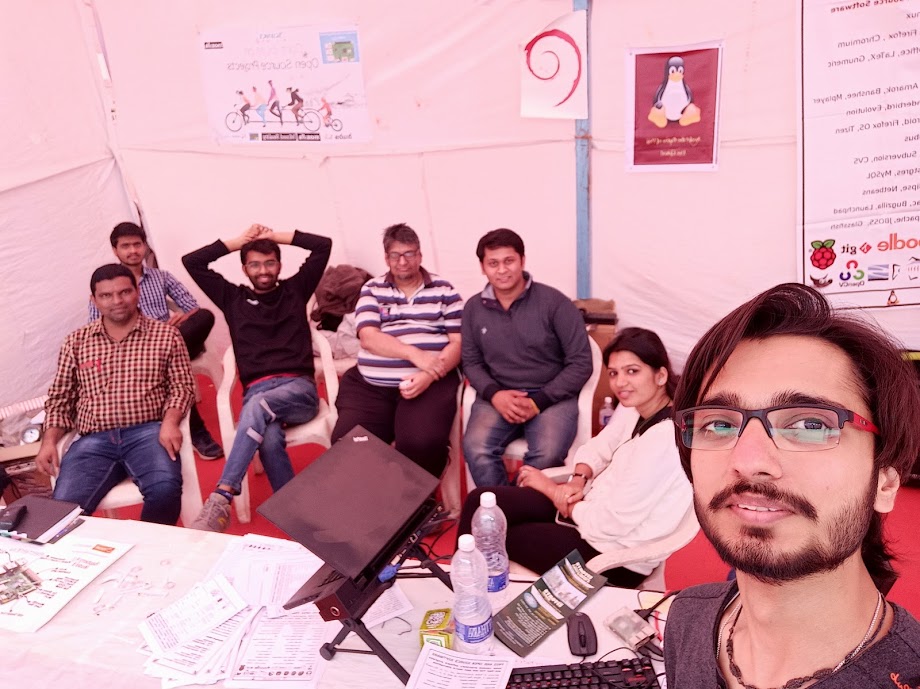
 . Of course in another stall few students had used RPI s as part of their projects so at times we did tell some of the newbies to go to those stalls and see and ask about those projects so they would have a much wider experience of things. The Mozilla people were pushing VR as well as Mozilla lite the browser for the mobile.
We also gossiped quite a bit. I shared about

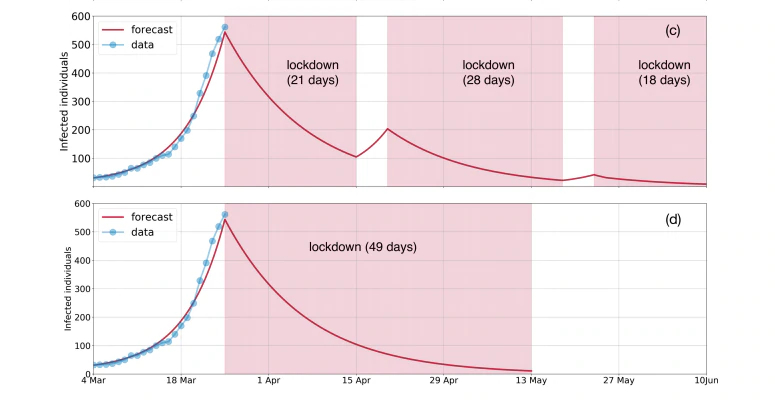
 If you are puzzled by the indistinguishability of the active tab from inactive tabs in any of the GTK3 based terminal emulators (mate-terminal, gnome-terminal, terminator, ), you are not alone. I have been plagued by that for far too long, and finally found a working solution.
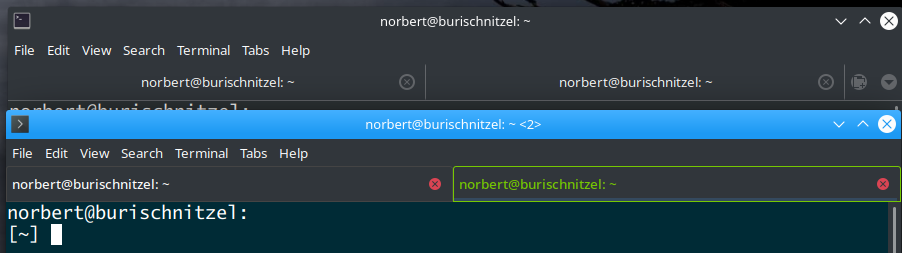 In the above screen shot you see the tabs in the upper part are hardly distinguishable, and in the lower part the active tab is clearly indicated with different colors. Searching for relevant search terms brings up a variety of suggestions, most of them not working. I finally found

 Here is my monthly update covering what I have been doing in the free software world in August 2017 (


 Executive summary
Since October 2015, I've been running a
FLOSS consulting company,
specialized on Debian, called