Search Results: "ed"

21 November 2010

Russell Coker: Ruxcon 2010

Yesterday and today I attended Ruxcon the leading technical security conference in Australia [1]. The first lecture I attended was Breaking Linux Security Protections by Andrew Griffiths. This included a good overview of many current issues with Linux security. One thing that was particularly noteworthy was his mention of SE Linux policy, he cited the policy for the FTP server as an example of policy that can be regarded as too lax but also noted the fact that to get SE Linux used the policies had to be more liberal than we might desire. There is probably scope for someone to give a good lecture about how we are forced to make uncomfortable choices between making security features stronger and making them more usable.The next lecture I attended was Breaking Virtualisation by Endrazine. It makes me wonder how long it will be before someone cracks one of the major cloud hosting services such as EC2 it s not an appealing thought.Billy Rios gave a really interesting lecture titled Will it Blend? about blended exploits. The idea is to try and find a few programs which do things that are slightly undesired (arguably not even bugs) but which when combined can result in totally cracking a system. One example was a way of tricking IE into loading a DLL from the desktop and a way of tricking Safari into saving arbitrary files to the desktop, combine them and you can push a DLL to a victim and make them load it. Learning about these things can really change the way you think about misbehaving programs!Ben Nagy gave an interesting lecture about Prospecting for Rootite . His systematic way of finding test cases that cover a large portion of the code of a large application such as MS-Word seems quite effective. Once you have test cases that cover a lot of code then you can use fuzzing to find flaws.Edward Farrell gave an informative lecture about RFID Security , I didn t really learn that much though, he confirmed my suspicions that RFID implementations generally suck.Mark Goudie gave a very informative lecture titled We ve been Hacked! What Went Wrong and Why . Mark works for Verizon and often with the US Secret Service in investigating security breaches. He presented a lot of information that I have not seen before and made some good arguments in support of companies being more proactive in protecting their systems from attack.Stephen Glass and Mark Robert gave a lecture titled Security in Public Safety Radio Systems which mainly focussed on digital radios used by the Australian police. It would be good if the police got people like them to test out new kit before ordering it in bulk, it seems that they will be using defective radios for a long time (it s not easy or cheap to replace them once they are deployed).Edward Farrell gave an interesting lecture titled Hooray for Reading: The Kindle & You about hacking the Kindle. Unfortunately they haven t worked out how to get GUI code going on a hacked Kindle yet so there are some limitations as to what can be done.I think that the most interesting lecture of the conference was This Job Makes you Paranoid by Alex Tilley of the Australian Federal Police. He gave some interesting anecdotes about real cases to illustrate his points and he advocated the police position really well. I ve attended several lectures by employees of law enforcement agencies, but none of them demonstrated anywhere near the understanding of their audience that Alex did.The last lecture I attended was Virtualisation Security State of the Union by David Jorn of Red Hat. He gave an interesting summary of some of the issues including mentioning how SE Linux is being used for confining KVM virtual machines.Ruxcon was a great conference and I definitely recommend attending it. I have to note that even though there are police attending and lecturing it s not entirely a white-hat affair. One thing that I hope they do next year is to get a bigger venue. The foyer was rather crowded and because it had a hard floor was really noisy between lectures. Space and carpet are two really important things when you have lots of people in one room!

Gunnar Wolf: This side up Finally

Can I count myself in a majority of people that feel that, while the USB standard is a great advance regarding the way we used to connect our stuff to the computer some years ago (when we used a different cable for every friggin' device we had, and we had to care about having only one parallel and two seral ports in regular configurations, and don't even get me started on port settings speed, parity, etc.), every time we hold a USB cable in our hand we feel one of the designer teams decided to play a prank on humanity by making the connector's orientation basically unguessable? By the frustration this square thingy inflinges on us (being any other decent cable used on a computer either have a visually recognizable shape or just round and thus omnidirectional) I think that the rate by which I get the connector with the correct side up (or front, or right, or whatever) is way lower than 50%. Anyway, I found that the standard does provide for a (IMO quite dubious but still better than guesswork at the port) way to distinguish which way up - Quoting from Wikipedia's entry on USB connectors:
( )The side of the connector on a USB cable or other product with the "USB Icon" (trident logo) should be "visible" to the user during the mating process.( ) Officially, the USB 2.0 specification states that the required USB Icon is to be "embossed" ("engraved" on the accompanying diagram) on the "topside" of the USB plug, which "provides easy user recognition and facilitates alignment during the mating process."
There are several caveats which make this less than ideal, some of which you already thought of, some others are in the referred article and I won't reproduce them. I am just amazed that... USB has been around for almost 15 years (and has been the most popular connection type for ~10 years). And I have never seen anybody apparently knowing this rule. This was a public service announcement in the hopes you will be happier people armed with its knowledge.

20 November 2010

Axel Beckert: Useful but Unknown Unix Tools: WebDAV client for the commandline

Ever wondered how to test or connect to a WebDAV server on the commandline? Don t want to use a bloaty GUI file manager to connect to a WebDAV server? Then use cadaver (Debian package), a WebDAV client reminiscent of the classic ftp commandline client (plus tab completion :-).
$ cadaver https://webdav.phys.ethz.ch/unixhome/abe/vortraege
Authentication required for D-PHYS on server  webdav.phys.ethz.ch':
Username: abe
Password: 
dav:/unixhome/abe/vortraege/> ls
Listing collection  /unixhome/abe/vortraege/': succeeded.
Coll:   wml                                    0  Mar 13  2007
dav:/unixhome/abe/vortraege/> quit
Connection to  webdav.phys.ethz.ch' closed.
There is also nd which works more like ncftpget/ncftpput/wget/wput, but I didn t get the current version in Debian to work with our WebDAV server. Last time I used nd was back then at ECOS times more than half a decade ago.

Julien Danjou: Elisp color manipulation routines

Last week, I spent some time implementing various color manipulation routines. The ultimate goal was to find a way to determine if a text in a certain color was readable on a background with a different color. Something I failed to do so far, despite my research in the area. However, since I think my code could be useful for other people, I've set up a tiny git repository with the routines I wrote. The funniest one to implement was CIEDE2000. I verified my code with the data given in the specifications and can assure it's correct. :-) Flattr this

Petter Reinholdtsen: Lenny->Squeeze upgrades, apt vs aptitude with the Gnome and KDE desktop

I'm still running upgrade testing of the Lenny Gnome and KDE Desktop, but have not had time to spend on reporting the status. Here is a short update based on a test I ran 20101118. I still do not know what a correct migration should look like, so I report any differences between apt and aptitude and hope someone else can see if anything should be changed. This is for Gnome: Installed using apt-get, missing with aptitude
apache2.2-bin aptdaemon at-spi baobab binfmt-support browser-plugin-gnash cheese-common cli-common cpp-4.3 cups-pk-helper dmz-cursor-theme empathy empathy-common finger freedesktop-sound-theme freeglut3 gconf-defaults-service gdm-themes gedit-plugins geoclue geoclue-hostip geoclue-localnet geoclue-manual geoclue-yahoo gnash gnash-common gnome gnome-backgrounds gnome-cards-data gnome-codec-install gnome-core gnome-desktop-environment gnome-disk-utility gnome-screenshot gnome-search-tool gnome-session-canberra gnome-spell gnome-system-log gnome-themes-extras gnome-themes-more gnome-user-share gs-common gstreamer0.10-fluendo-mp3 gstreamer0.10-tools gtk2-engines gtk2-engines-pixbuf gtk2-engines-smooth hal-info hamster-applet libapache2-mod-dnssd libapr1 libaprutil1 libaprutil1-dbd-sqlite3 libaprutil1-ldap libart2.0-cil libatspi1.0-0 libboost-date-time1.42.0 libboost-python1.42.0 libboost-thread1.42.0 libchamplain-0.4-0 libchamplain-gtk-0.4-0 libcheese-gtk18 libclutter-gtk-0.10-0 libcryptui0 libcupsys2 libdiscid0 libeel2-data libelf1 libepc-1.0-2 libepc-common libepc-ui-1.0-2 libfreerdp-plugins-standard libfreerdp0 libgail-common libgconf2.0-cil libgdata-common libgdata7 libgdl-1-common libgdu-gtk0 libgee2 libgeoclue0 libgexiv2-0 libgif4 libglade2.0-cil libglib2.0-cil libgmime2.4-cil libgnome-vfs2.0-cil libgnome2.24-cil libgnomepanel2.24-cil libgnomeprint2.2-data libgnomeprintui2.2-common libgnomevfs2-bin libgpod-common libgpod4 libgtk2.0-cil libgtkglext1 libgtksourceview-common libgtksourceview2.0-common libmono-addins-gui0.2-cil libmono-addins0.2-cil libmono-cairo2.0-cil libmono-corlib2.0-cil libmono-i18n-west2.0-cil libmono-posix2.0-cil libmono-security2.0-cil libmono-sharpzip2.84-cil libmono-system2.0-cil libmtp8 libmusicbrainz3-6 libndesk-dbus-glib1.0-cil libndesk-dbus1.0-cil libopal3.6.8 libpolkit-gtk-1-0 libpt-1.10.10-plugins-alsa libpt-1.10.10-plugins-v4l libpt2.6.7 libpython2.6 librpm1 librpmio1 libsdl1.2debian libservlet2.4-java libsrtp0 libssh-4 libtelepathy-farsight0 libtelepathy-glib0 libtidy-0.99-0 libxalan2-java libxerces2-java media-player-info mesa-utils mono-2.0-gac mono-gac mono-runtime nautilus-sendto nautilus-sendto-empathy openoffice.org-writer2latex openssl-blacklist p7zip p7zip-full pkg-config python-4suite-xml python-aptdaemon python-aptdaemon-gtk python-axiom python-beautifulsoup python-bugbuddy python-clientform python-coherence python-configobj python-crypto python-cupshelpers python-cupsutils python-eggtrayicon python-elementtree python-epsilon python-evolution python-feedparser python-gdata python-gdbm python-gst0.10 python-gtkglext1 python-gtkmozembed python-gtksourceview2 python-httplib2 python-louie python-mako python-markupsafe python-mechanize python-nevow python-notify python-opengl python-openssl python-pam python-pkg-resources python-pyasn1 python-pysqlite2 python-rdflib python-serial python-tagpy python-twisted-bin python-twisted-conch python-twisted-core python-twisted-web python-utidylib python-webkit python-xdg python-zope.interface remmina remmina-plugin-data remmina-plugin-rdp remmina-plugin-vnc rhythmbox-plugin-cdrecorder rhythmbox-plugins rpm-common rpm2cpio seahorse-plugins shotwell software-center svgalibg1 system-config-printer-udev telepathy-gabble telepathy-mission-control-5 telepathy-salut tomboy totem totem-coherence totem-mozilla totem-plugins transmission-common xdg-user-dirs xdg-user-dirs-gtk xserver-xephyr zip
Installed using apt-get, removed with aptitude
arj bluez-utils cheese dhcdbd djvulibre-desktop ekiga eog epiphany-extensions epiphany-gecko evolution-exchange fast-user-switch-applet file-roller gcalctool gconf-editor gdm gedit gedit-common gnome-app-install gnome-games gnome-games-data gnome-nettool gnome-system-tools gnome-themes gnome-utils gnome-vfs-obexftp gnome-volume-manager gnuchess gucharmap guile-1.8-libs hal libavahi-compat-libdnssd1 libavahi-core5 libavahi-ui0 libbind9-50 libbluetooth2 libcamel1.2-11 libcdio7 libcucul0 libcurl3 libdirectfb-1.0-0 libdmx1 libdvdread3 libedata-cal1.2-6 libedataserver1.2-9 libeel2-2.20 libepc-1.0-1 libepc-ui-1.0-1 libexchange-storage1.2-3 libfaad0 libgadu3 libgalago3 libgd2-noxpm libgda3-3 libgda3-common libggz2 libggzcore9 libggzmod4 libgksu1.2-0 libgksuui1.0-1 libgmyth0 libgnome-desktop-2 libgnome-pilot2 libgnomecups1.0-1 libgnomeprint2.2-0 libgnomeprintui2.2-0 libgpod3 libgraphviz4 libgtk-vnc-1.0-0 libgtkhtml2-0 libgtksourceview1.0-0 libgtksourceview2.0-0 libgucharmap6 libhesiod0 libicu38 libisccc50 libisccfg50 libiw29 libjaxp1.3-java-gcj libkpathsea4 liblircclient0 libltdl3 liblwres50 libmagick++10 libmagick10 libmalaga7 libmozjs1d libmpfr1ldbl libmtp7 libmysqlclient15off libnautilus-burn4 libneon27 libnm-glib0 libnm-util0 libopal-2.2 libosp5 libparted1.8-10 libpisock9 libpisync1 libpoppler-glib3 libpoppler3 libpt-1.10.10 libraw1394-8 libsdl1.2debian-alsa libsensors3 libsexy2 libsmbios2 libsoup2.2-8 libspeexdsp1 libssh2-1 libsuitesparse-3.1.0 libsvga1 libswfdec-0.6-90 libtalloc1 libtotem-plparser10 libtrackerclient0 libvoikko1 libxalan2-java-gcj libxerces2-java-gcj libxklavier12 libxtrap6 libxxf86misc1 libzephyr3 mysql-common rhythmbox seahorse sound-juicer swfdec-gnome system-config-printer totem-common totem-gstreamer transmission-gtk vinagre vino w3c-dtd-xhtml wodim
Installed using aptitude, missing with apt-get
gstreamer0.10-gnomevfs
Installed using aptitude, removed with apt-get
[nothing]
This is for KDE: Installed using apt-get, missing with aptitude
autopoint bomber bovo cantor cantor-backend-kalgebra cpp-4.3 dcoprss edict espeak espeak-data eyesapplet fifteenapplet finger gettext ghostscript-x git gnome-audio gnugo granatier gs-common gstreamer0.10-pulseaudio indi kaddressbook-plugins kalgebra kalzium-data kanjidic kapman kate-plugins kblocks kbreakout kbstate kde-icons-mono kdeaccessibility kdeaddons-kfile-plugins kdeadmin-kfile-plugins kdeartwork-misc kdeartwork-theme-window kdeedu kdeedu-data kdeedu-kvtml-data kdegames kdegames-card-data kdegames-mahjongg-data kdegraphics-kfile-plugins kdelirc kdemultimedia-kfile-plugins kdenetwork-kfile-plugins kdepim-kfile-plugins kdepim-kio-plugins kdessh kdetoys kdewebdev kdiamond kdnssd kfilereplace kfourinline kgeography-data kigo killbots kiriki klettres-data kmoon kmrml knewsticker-scripts kollision kpf krosspython ksirk ksmserver ksquares kstars-data ksudoku kubrick kweather libasound2-plugins libboost-python1.42.0 libcfitsio3 libconvert-binhex-perl libcrypt-ssleay-perl libdb4.6++ libdjvulibre-text libdotconf1.0 liberror-perl libespeak1 libfinance-quote-perl libgail-common libgsl0ldbl libhtml-parser-perl libhtml-tableextract-perl libhtml-tagset-perl libhtml-tree-perl libio-stringy-perl libkdeedu4 libkdegames5 libkiten4 libkpathsea5 libkrossui4 libmailtools-perl libmime-tools-perl libnews-nntpclient-perl libopenbabel3 libportaudio2 libpulse-browse0 libservlet2.4-java libspeechd2 libtiff-tools libtimedate-perl libunistring0 liburi-perl libwww-perl libxalan2-java libxerces2-java lirc luatex marble networkstatus noatun-plugins openoffice.org-writer2latex palapeli palapeli-data parley parley-data poster psutils pulseaudio pulseaudio-esound-compat pulseaudio-module-x11 pulseaudio-utils quanta-data rocs rsync speech-dispatcher step svgalibg1 texlive-binaries texlive-luatex ttf-sazanami-gothic
Installed using apt-get, removed with aptitude
amor artsbuilder atlantik atlantikdesigner blinken bluez-utils cvs dhcdbd djvulibre-desktop imlib-base imlib11 kalzium kanagram kandy kasteroids katomic kbackgammon kbattleship kblackbox kbounce kbruch kcron kdat kdemultimedia-kappfinder-data kdeprint kdict kdvi kedit keduca kenolaba kfax kfaxview kfouleggs kgeography kghostview kgoldrunner khangman khexedit kiconedit kig kimagemapeditor kitchensync kiten kjumpingcube klatin klettres klickety klines klinkstatus kmag kmahjongg kmailcvt kmenuedit kmid kmilo kmines kmousetool kmouth kmplot knetwalk kodo kolf kommander konquest kooka kpager kpat kpdf kpercentage kpilot kpoker kpovmodeler krec kregexpeditor kreversi ksame ksayit kshisen ksig ksim ksirc ksirtet ksmiletris ksnake ksokoban kspaceduel kstars ksvg ksysv kteatime ktip ktnef ktouch ktron kttsd ktuberling kturtle ktux kuickshow kverbos kview kviewshell kvoctrain kwifimanager kwin kwin4 kwordquiz kworldclock kxsldbg libakode2 libarts1-akode libarts1-audiofile libarts1-mpeglib libarts1-xine libavahi-compat-libdnssd1 libavahi-core5 libavc1394-0 libbind9-50 libbluetooth2 libboost-python1.34.1 libcucul0 libcurl3 libcvsservice0 libdirectfb-1.0-0 libdjvulibre21 libdvdread3 libfaad0 libfreebob0 libgd2-noxpm libgraphviz4 libgsmme1c2a libgtkhtml2-0 libicu38 libiec61883-0 libindex0 libisccc50 libisccfg50 libiw29 libjaxp1.3-java-gcj libk3b3 libkcal2b libkcddb1 libkdeedu3 libkdegames1 libkdepim1a libkgantt0 libkleopatra1 libkmime2 libkpathsea4 libkpimexchange1 libkpimidentities1 libkscan1 libksieve0 libktnef1 liblockdev1 libltdl3 liblwres50 libmagick10 libmimelib1c2a libmodplug0c2 libmozjs1d libmpcdec3 libmpfr1ldbl libneon27 libnm-util0 libopensync0 libpisock9 libpoppler-glib3 libpoppler-qt2 libpoppler3 libraw1394-8 librss1 libsensors3 libsmbios2 libssh2-1 libsuitesparse-3.1.0 libswfdec-0.6-90 libtalloc1 libxalan2-java-gcj libxerces2-java-gcj libxtrap6 lskat mpeglib network-manager-kde noatun pmount tex-common texlive-base texlive-common texlive-doc-base texlive-fonts-recommended tidy ttf-dustin ttf-kochi-gothic ttf-sjfonts
Installed using aptitude, missing with apt-get
dolphin kde-core kde-plasma-desktop kde-standard kde-window-manager kdeartwork kdebase kdebase-apps kdebase-workspace kdebase-workspace-bin kdebase-workspace-data kdeutils kscreensaver kscreensaver-xsavers libgle3 libkonq5 libkonq5-templates libnetpbm10 netpbm plasma-widget-folderview plasma-widget-networkmanagement xscreensaver-data-extra xscreensaver-gl xscreensaver-gl-extra xscreensaver-screensaver-bsod
Installed using aptitude, removed with apt-get
kdebase-bin konq-plugins konqueror

Jon Dowland: music players: from old to new

the iRiver music player
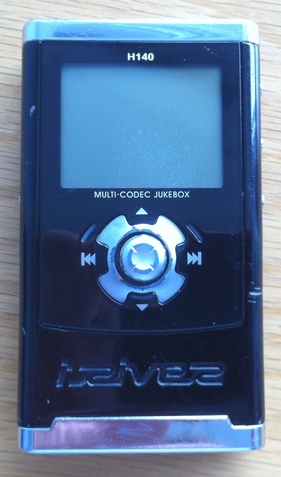
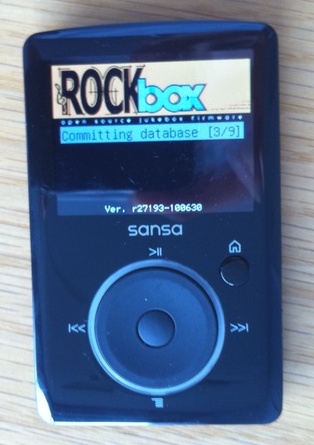
About six years ago, I spent a chunk of my very first salary on a portable music player, the iRiver H140, a relatively bulky and large hard-disk based player, with a capacity of 40G. Uniquely for music players before or since, the iRiver features both digital and analogue line ins and outs. It also has (more common) recording facilities and an FM tuner, the latter of which I used a great deal (and rules out just about all the iPods). This remarkable player has lasted nearly six years of moderate daily use. For the majority of that time, I've ran the rockbox open source firmware on the player, which has provided me with really wide codec support and excellent recording facilities. In the last month I finally had to replace the iRiver. I bought a Sansa Fuze player, featuring 8G of flash storage and a microsd expansion slot. The Fuze is also capable of running rockbox. This year, 32G microsd cards have arrived. Adding one of those brings the capacity of the new player right back up to 40G. For those who are curious: yes, a Sandisk 32G microsd does work in the Fuze, at least with rockbox, for playback. At the moment, rockbox cannot write to storage on the Fuze, so you need to either use the original firmware or an external reader/writer to manipulate the contents of the microsd. However, I am not sure how well the original firmware can handle the 32G. Whenever I boot it, I see a "refreshing your media" message which lasts longer than my patience. I will write an update once I've established further the degree of support.
the fuze player
I kept a canonical copy of my music library on a desktop computer and used rsync to keep the iRiver up-to-date. I can use almost exactly the same procedure for the new player (with some small changes to cope with the split-storage) I now have a 40G player running rockbox exactly as I had before, albeit at a fraction of the size and weight (and cost: approximately half as expensive), and with a nicer display including colours, album art, etc. They both can even play doom (although the controls are even more awkward than iPhone Doom).

Jon Dowland: Debconf 10 videos

I'm planning on transcoding some of the Debconf 10 event videos in order to watch them on my phone (and other devices). Most likely to an MPEG container, H264 codec or similar. Subject to a license check, I could stick the results up somewhere for others if there is any interest. Let me know via comment or email.

Jon Dowland: psychic

I'm in the process of setting up a mail server, which will eventually accept mail for a given domain. I am also changing name servers for said domain (to make use of zoneedit.com). So far, I have the new server accepting mail for the domain, and the new name server serving records for the domain, including an MX pointing at the new server. However, I haven't updated the domain record, so the authorative nameservers haven't changed. Despite this, somehow, spammers are already attempting to submit mail for the domain in question to the new MX server. Not only that, but it's targetted at particular users with non-obvious local parts. The new MX advertises itself as "a-sub-domain.example.org", for values of "example.org", so it's possible in theory to derive "example.org" from the banner. But unlikely. Are they psychic? Or is a spammer somehow getting notified of new MX records hosted at zoneedit (no matter whether glue records point at them)?

Jon Dowland: transition

I've just finished reading and thoroughly enjoying Transition by Iain Banks. Despite a terrible writeup in the Guardian, I found the book to concentrate just as strongly on character as world-building, but I wouldn't be surprised if a sequel was on the cards. The novel is, in part, an exploration of the many worlds theory of quantum mechanics. Or at least that's it's setting. In the UK, it has been published without the traditional 'M' infix denoting Science Fiction, although it is undeniably so: It's not even pretending to be anything else. The book reminded me of Quarantine, and to a lesser extend Permutation City, both by Greg Egan; and another book I've read recently which I can't reveal without spoiling this one.

Jon Dowland: scm

Can anyone recommend some videos to me which explain the ins-and-outs of the chef and puppet configuration management tools? I have some familiarity with configuration management, having worked on cfengine (version 2) for a few years. However I haven't managed to evaluate the newer tools effectively. The barrier to entry (setting up at least a master and a slave VM...) has been too high (or I haven't given it enough time!) If there are any good screencasts/videos that cover not just how they work but their individual advantages, that would be excellent: I have some upcoming time in which I can absorb material like that (but not the kind of time in which I could get hands-on).

Mike Hommey: Debian Mozilla team APT archive now signed

You may have been using the repository as described on a previous blog post. You may also have noticed that despite a lack of announcement, all beta releases but 4.0beta6 have been subsequently made available on that repository (moreover, within 24 hours of the upstream release). I just made a change to that repository which will most likely make your APT complain, but all the necessary instructions are given on the repository itself.

Lars Wirzenius: Packaging tutorial for Debian-Women

On Thursday, I gave a packaging tutorial for Debian-Women. The logs are now available on the Debian wiki, and also on the meetbot site. This was similar to the Ubuntu Developer Week sessions I've participated in the past. Giving these tutorials is fun. It's also a great way to share your knowledge and skills. While most of the session is going to be uni-directional, with the teacher speaking and everyone else listening, IRC is an interactive medium, so whenever there is something unclear, the students can ask questions or make comments. And that's what makes these sessions different from people just reading a web page on their own: the chance to interact with the teacher. It would be great to see other Debian people do their own sessions. There are a lot of topics, and they don't even have to be about teaching. For example, a session where the Debian kernel team answers questions from the audience might be nice. Or the X team, or the DPL, or whoever. Debian's done these things for DPL elections on several years. The election sessions are hectic and pretty stressful for the participants, but that's because they're elections, not because of the sessions themselves. Any other Debian people up to this?

Adrian von Bidder: Tool: incron

One in the obvious, now that you mention it category. The package description is good enough:
incron is an "inotify cron" system. It works like the regular cron but is driven by filesystem events instead of time events. This package provides two programs, a daemon called "incrond" (analogous to crond) and a table manipulator "incrontab" (like "crontab").
Where filesystem events is anything that is reported by inotify; see the inotify(7) manpage. I didn't test and/or use it since I stumbled on it while searching for something completely different, but it sure sounds useful. The important feature not mentioned in the package description: can it limit how often an event triggers a script execution? Reading the manpage, it doesn't appear so, but there's IN_NO_LOOP to ... disable monitoring events until the current one is completely handled (until its child process exits). Which obviously opens up all kinds of race conditions. So I guess this tool needs to be used with care. Still, I guess a good candidate is monitoring /etc/aliases to run newaliases on change.

Petter Reinholdtsen: Gnash buildbot slave and Debian kfreebsd

Answering the call from the Gnash project for buildbot slaves to test the current source, I have set up a virtual KVM machine on the Debian Edu/Skolelinux virtualization host to test the git source on Debian/Squeeze. I hope this can help the developers in getting new releases out more often. As the developers want less main-stream build platforms tested to, I have considered setting up a Debian/kfreebsd machine as well. I have also considered using the kfreebsd architecture in Debian as a file server in NUUG to get access to the 5 TB zfs volume we currently use to store DV video. Because of this, I finally got around to do a test installation of Debian/Squeeze with kfreebsd. Installation went fairly smooth, thought I noticed some visual glitches in the cdebconf dialogs (black cursor left on the screen at random locations). Have not gotten very far with the testing. Noticed cfdisk did not work, but fdisk did so it was not a fatal problem. Have to spend some more time on it to see if it is useful as a file server for NUUG. Will try to find time to set up a gnash buildbot slave on the Debian Edu/Skolelinux this weekend.

19 November 2010

Alexander Reichle-Schmehl: Some signs that you are getting old

You watch Back to the Future and suddenly notice, that you are nearer to the future, than to the present of the movie... And then you search around on the web and find out, that they nowadays make time travel movies, where past means the eighties... which was the time of your youth :( PS: Damn, what's so good about living in the future? We still don't have hover boards :(

Axel Beckert: Useful but Unknown Unix Tools: Swiss Army Knife for SMTP

Which mail server administrator hasn t tested his servers using telnet on port 25, speaking SMTP himself? And which of them made a typo and had to retype everything due to missing readline support of telnet? If you want to check SMTP over SSL aka SMTPS, you had to use openssl s_client -connect yourserver:465 . And what did you use to check TLS support on port 25? Just forget about those hassles and use swaks (Debian package), the Swiss Army Knife for SMTP. It does all the annoying stuff (using the correct syntax, typing fast enough, SSL, TLS, etc.) for you while still giving you full control over the SMTP session, especially showing you all input and output:
$ swaks -t abe@noone.org -s sym.noone.org -q RCPT
=== Trying sym.noone.org:25...
=== Connected to sym.noone.org.
<-  220 sym.noone.org ESMTP Postfix (Debian/GNU)
 -> EHLO nemo.deuxchevaux.org
<-  250-sym.noone.org
<-  250-PIPELINING
<-  250-SIZE 10240000
<-  250-ENHANCEDSTATUSCODES
<-  250 8BITMIME
 -> MAIL FROM:<abe@nemo.deuxchevaux.org>
<-  250 2.1.0 Ok
 -> RCPT TO:<abe@noone.org>
<** 450 4.2.0 <abe@nemo.deuxchevaux.org>: Sender address rejected: Greylisted, see http://postgrey.schweikert.ch/help/noone.org.html
 -> QUIT
<-  221 2.0.0 Bye
=== Connection closed with remote host.
Since the moment I discovered swaks, I never telnetted to port 25 anymore.

Tiago Bortoletto Vaz: Pidgin / Finch users x Microsoft certificate error

I still have some social life with non-geek friends who keep using MSN for instant messaging. I m currently using Finch, which is a libpurple-based IM. If you re in a similar situation, so you probably came to this post due to a certificate error message from Microsoft servers when trying to start your Finch (or Pidgin). All you need is download the following updated certificates from Pidgin website and replace them into your purple installation dir (probably in /usr/share/purple/ca-certs): http://developer.pidgin.im/viewmtn/revision/downloadfile/cd236baf6d00f3e1561a40974ce1828b793ea187/share/ca-certs/Microsoft_Secure_Server_Authority_2010.pem http://developer.pidgin.im/viewmtn/revision/downloadfile/cd236baf6d00f3e1561a40974ce1828b793ea187/share/ca-certs/Microsoft_Internet_Authority_2010.pem

Julien Viard de Galbert: Triage X Bugs of the Week 2 (TXBW2)

Hey, one more week ! Well my UDD query report 879 bugs today not a great improvement since last week if more bugs are opened than I can close, I m not going to make it alone ! The X Strike Force (still) needs you ! You can have a look at the X Strike Force Bug Closing Procedure and check XSF unstable bugs sorted by date.

Michal &#268;iha&#345;: New phpMyAdmin features - schema export

Next article highlighting some new features which will come in phpMyAdmin 3.4 is about relations export. This feature is not much known anyway, so if you have not seen it in phpMyAdmin, just try it out on our demo server or configure phpMyAdmin configuration storage in your copy. In previous versions, it was possible to export database relational schema into PDF format. The 3.4 release comes with modular system for exporting schema adding SVG, Dia, EPS or Microsoft Visio. Especially SVG and EPS are useful for embedding schema into other documents. Simple schema exported to SVG This feature was implemented by Muhammad Adnan during Google Summer of Code 2010.

Filed under: Phpmyadmin 0 comments Flattr this!

Alexander Reichle-Schmehl: Release Critical Bug report for Week 46

The bug webinterface of the Universal Debian Database currently knows about the following release critical bugs:
In Total:707
Affecting Squeeze:271
Squeeze only:71
Remaining to be fixed in Squeeze:200
Of these 200 bugs, the following tags are set:
Pending in Squeeze:12
Patched in Squeeze:36
Duplicates in Squeeze:22
Can be fixed in a security Update:17
Contrib or non-free in Squeeze:5
Otherwise fixed in Squeeze:27
Ignoring all the above (multiple tags possible), 123 bugs need to be fixed by Debian Contributors to get Debian 6.0 Squeeze released. However, with the view of the Release Managers, 157 need to be dealt with for the release to happen. Please see Interpreting the release critical bug statistics for an explanation of the different numbers.

Next.

Previous.