Search Results: "ads"

9 March 2023

Charles Plessy: If you work at Dreamhost, can you help us?

Update: thanks to the very kind involvment of the widow of our wemaster, we could provide enough private information to Dreamhost, who finally accepted to reset the password and the MFA. We have recovered evrything! Many thanks to everybody who helped us! Due to tragic circumstances, one association that I am part of, Sciencescope got locked out of its account at Dreamhost. Locked out, we can not pay the annual bill. Dreamhost contacted us about the payment, but will not let us recover the access to our account in order to pay. So they will soon close the account. Our website, mailing lists and archives, will be erased. We provided plenty of evidence that we are not scammers and that we are the legitimate owners of the account, but reviewing it is above the pay grade of the custommer support (I don't blame them) and I could not convince them to let somebody higher have a look at our case. If you work at Dreamhost and want to keep us as custommers instead of kicking us like that, please ask the support service in charge of ticket 225948648 to send the recovery URL to the secondary email adddresses (the ones you used to contact us about the bill!) in addition to the primary one (which nobody will read anymore). You can encrypt it for my Debian Developer key 73471499CC60ED9EEE805946C5BD6C8F2295D502 if you worry it gets in wrong hands. If you still have doubts I am available for calls any time. If you know somebody working at Dreamhost can you pass them the message? This would be a big, big, relief for our non-profit association.

Dirk Eddelbuettel: RcppRedis 0.2.3 on CRAN: Maintenance

A new minor release 0.2.3 of our RcppRedis package arrived on CRAN today. RcppRedis is one of several packages connecting R to the fabulous Redis in-memory datastructure store (and much more). RcppRedis does not pretend to be feature complete, but it may do some things faster than the other interfaces, and also offers an optional coupling with MessagePack binary (de)serialization via RcppMsgPack. The package has carried production loads on a trading floor for several years. This update is fairly mechanical. CRAN wants everybody off the C++11 train which is fair game given that it 2023 and most sane and lucky people are facing sane and modern compilers so this makes sense. (And I raise a toast to all those poor souls facing RHEL 7 / CentOS 7 with a compiler from many moons ago: I hear it is a vibrant job market out there so maybe time to make a switch ). As with a few of my other packages, this release simply does away with the imposition of C++11 as the package will compile just fine under C++14 or C++17 (as governed by your version of R). The detailed changes list follows.

Changes in version 0.2.3 (2023-03-08)
  • No longer set a C++ compilation standard as the default choices by R are sufficient for the package
  • Switch include to Rcpp/Rcpp which signals use of all Rcpp features including Modules

Courtesy of my CRANberries, there is also a diffstat report for this release. More information is on the RcppRedis page. If you like this or other open-source work I do, you can now sponsor me at GitHub.

This post by Dirk Eddelbuettel originated on his Thinking inside the box blog. Please report excessive re-aggregation in third-party for-profit settings.

8 March 2023

Joey Hess: the slink and a half boxed set

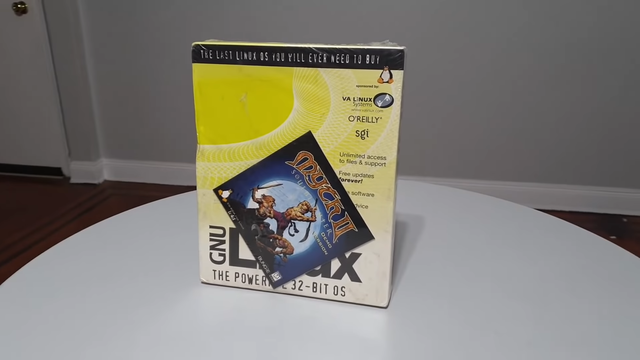
Today I stumbled upon this youtube video which takes a retrocomputing look at a product I was involved in creating in 1999. It was fascinating looking back at it, and I realized I've never written down how this boxed set of Debian "slink and a half", an unofficial Debian release, came to be. As best I can remember, the CD in that box was Debian 2.1 ("slink") with the linux kernel updated from 2.0 to 2.2. Specifically, it used VA Linux Systems's patched version of the kernel, which supported their hardware better, but also 2.2 generally supported a lot of hardware much better than 2.0. There were some other small modifications that got rolled back into Debian 2.2. I mostly remember updating the installer to support that kernel, and building CD images. Probably over the course of a few weeks. This was the first time I worked on the (old) Debian installer, and the first time I built a Debian CD. I also edited the O'Rielly book that was included in the boxed set. It was wild when pallet loads of these boxed sets showed up. I think they sold for $19.95 at Fry's, although VA Linux Systems also gave lots of them away at conferences.
Watching the video of the installation, I was struck again and again by pain points, which the video does a good job of highlighting. It was a guided tour of everything about Debian that I wanted to fix in 1999. At each pain point I remembered how we fixed it, often years later, after considerable effort. I remembered how the old installer (the boot-floppies) was mostly moribund with only a couple people able and willing to work on it at all. (The video is right to compare its partitioning with old Linux installers from the early 90's because it was a relic from that era!) I remembered designing a new Debian installer that was more modular so more people could get invested in maintaining smaller pieces of it. It was yes, a second system, and developed too slowly, but was intended to withstand the test of time. It mostly has, since it's used to this day. I remembered how partitioning got automated in new Debian installer, by a new "partman" program being contributed by someone I'd never heard of before, obsoleting some previous attempts we'd made (yay modularity). I remembered how I started the os-prober project, which lets the Debian installer add other OS's that are co-installed on the machine to the boot menu. And how that got picked up even outside of Debian, by eg Red Hat. I remembered working on tasksel soon after that project was started, and all the difficult decisions about what tasks to offer and what software it should install. I remembered how the horrible stream of questions from package after package was to deal with, and how I implemented debconf, which tidied that up, integrated it into the installer's UI, made it automatable, and let novices avoid seeing configuration that was intended for experts. And I remembered writing dpkg-reconfigure, so that those configuration choices could be revisited later. It's quite possible I would not have done most of that if VA Linux Systems had not tasked me with making this CD. The thing about releasing something imperfect into the world is you start to feel a responsibility to improve it...
The main critique in the video specific to this boxed set and not to any other Debian release of this era is that this was a single CD, while 2 CDs were needed for all of Debian at the time. And many people had only dialup internet, so would be stuck very slowly downloading any other software they needed. And likewise those free forever upgrades the box promised. Oh the irony: After starting many of those projects, I left VA Linux Systems and the lands of fast internet, and spent 4 years on dialup. Most of that stuff was developed on dialup, though I did have about a year with better internet at the end to put the finishing touches in the new installer that shipped in Debian 3.1. Yes, the dialup apt-gets were excruciatingly slow. But the upgrades were in fact, free forever.
PS: The video's description includes "it would take many years of effort (primarily from Ubuntu) that would help smooth out many of the rough end of this product". All these years later, I do continue to enjoy people involved in Ubuntu downplaying the extent that it was a reskin of my Debian installer shipped on a CD a few months before Debian could get around to shipping it. Like they say, history doesn't repeat, but it does rhyme. PPS: While researching this blog post, I found an even more obscure, and broken, Debian CD was produced by VA Linux in November 1999. Distributed for free at Comdex by the thousands, this CD lacked the Packages file that is necessary for apt-get to use it. I don't know if any versions of that CD still exist. If you find one, email me and I'll send some instructions I wrote up in 1999 to work around the problem.

Thomas Lange: Launch of new FAI project website

After more than 13 years, I've launched a new design for the FAI project web site https://fai-project.org It now uses Materialize CSS and will work much better on mobile devices. Thanks to Thorsten B lo who did the first part of converting the web pages to the new design. I hope you all enjoy the new layout. FAI

7 March 2023

Jonathan Dowland: Welcome Oblivion 10th Anniversary

I haven t done one of these for a while, and they ll be less frequent than I once planned as I m working from home less and less. I'm also trying to get back into exploring my digital music collection, and more generally engaging with digital music again.
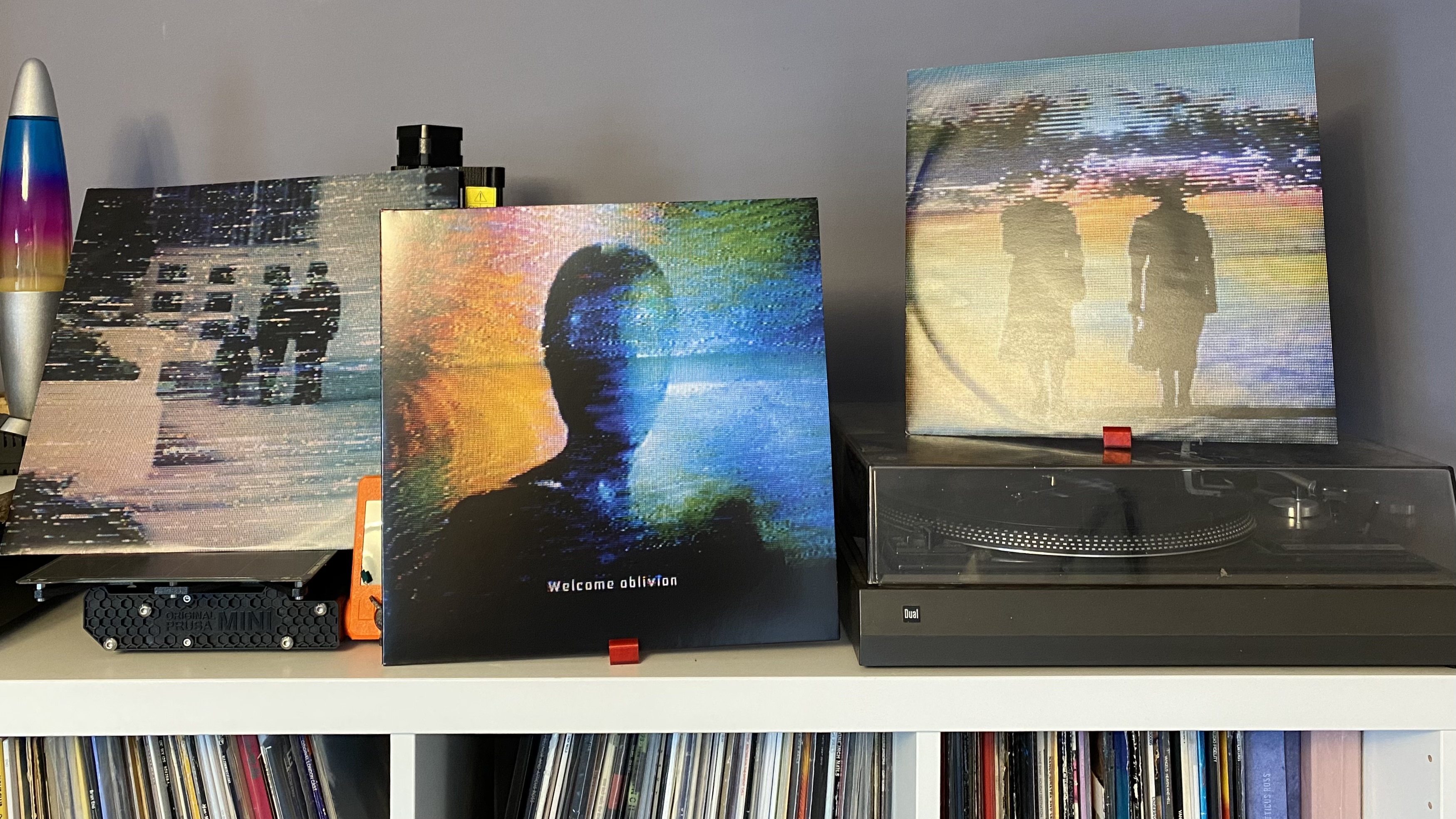
 picture of a vinyl record
It s the ten year anniversary of the first (and last) LP by How To Destroy Angels (HTDA), the side-project of Trent Reznor with his wife, his Nine Inch Nails (NIN) partner in crime Atticus Ross and visual artist (and NIN artistic director) Rob Sheridan. This album was a real pleasure. For NIN fans, it wasn't clear what the future held after the start of HTDA. But this work really stood alone, similar in some ways to NIN but sufficiently different to be fresh and exciting. In stark contrast to NIN (at the time), it was interesting to see the members of HTDA presented on an equal footing, especially Rob Sheridan, who wasn't a musician. The intent was to try and put the visual work on the same level of esteem as the musical. HTDA performed a few live shows, but none outside the US. They were apparently quite a spectacle. As an artefact, this is a gorgeous LP. The gatefold cover and all four sides of the two record sleeves are covered in unique pieces of Sheridan's glitch art. When I originally bought this I had a rather generously-sized individual office at the University, so I framed and displayed many of these pieces on my office walls. Sheridan has since written extensively on the processes and techniques he used for this style of art, and has produced many more works using the same techniques. You can see some on his website, patreon, fine art print shop or Threadless store. Late last year I treated myself to a large print of some related work, analog(Oblivion)000b, which (once the framing is done) I'm going to hang in my home office. The LP had two tracks that were not present in the CD or digital release versions of the album, although a CD was bundled in the LP which included the tracks. (The Knife did something similar with Shaking the Habitual, at around the same time). I've had some multitrack stems from this album sitting in my "for archive.org" folder for a while, so I took the opportunity of the 10th anniversary to upload them, here: https://archive.org/details/htda_multitracks

Robert McQueen: Flathub in 2023

It s been quite a few months since the most recent updates about Flathub last year. We ve been busy behind the scenes, so I d like to share what we ve been up to at Flathub and why and what s coming up from us this year. I want to focus on: Today Flathub is going strong: we offer 2,000 apps from over 1,500 collaborators on GitHub. We re averaging 700,000 app downloads a day, with 898 million HTTP requests totalling 88.3 TB served by our CDN each day (thank you Fastly!). Flatpak has, in my opinion, solved the largest technical issue which has held back the mainstream growth and acceptance of Linux on the desktop (or other personal computing devices) for the past 25 years: namely, the difficulty for app developers to publish their work in a way that makes it easy for people to discover, download (or sideload, for people in challenging connectivity environments), install and use. Flathub builds on that to help users discover the work of app developers and helps that work reach users in a timely manner. Initial results of this disintermediation are promising: even with its modest size so far, Flathub has hundreds of apps that I have never, ever heard of before and that s even considering I ve been working in the Linux desktop space for nearly 20 years and spent many of those staring at the contents of dselect (showing my age a little) or GNOME Software, attending conferences, and reading blog posts, news articles, and forums. I am also heartened to see that many of our OS distributor partners have recognised that this model is hugely complementary and additive to the indispensable work they are doing to bring the Linux desktop to end users, and that having more apps available to your users is a value-add allowing you to focus on your core offering and not a zero-sum game that should motivate infighting. Ongoing Progress Getting Flathub into its current state has been a long ongoing process. Here s what we ve been up to behind the scenes: Development Last year, we concluded our first engagement with Codethink to build features into the Flathub web app to move from a build service to an app store. That includes accounts for users and developers, payment processing via Stripe, and the ability for developers to manage upload tokens for the apps they control. In parallel, James Westman has been working on app verification and the corresponding features in flat-manager to ensure app metadata accurately reflects verification and pricing, and to provide authentication for paying users for app downloads when the developer enables it. Only verified developers will be able to make direct uploads or access payment settings for their apps. Legal So far, the GNOME Foundation has acted as an incubator and legal host for Flathub even though it s not purely a GNOME product or initiative. Distributing software to end users along with processing and forwarding payments and donations also has a different legal profile in terms of risk exposure and nonprofit compliance than the current activities of the GNOME Foundation. Consequently, we plan to establish an independent legal entity to own and operate Flathub which reduces risk for the GNOME Foundation, better reflects the independent and cross-desktop interests of Flathub, and provides flexibility in the future should we need to change the structure. We re currently in the process of reviewing legal advice to ensure we have the right structure in place before moving forward. Governance As Flathub is something we want to set outside of the existing Linux desktop and distribution space and ensure we represent and serve the widest community of Linux users and developers we ve been working on a governance model that ensures that there is transparency and trust in who is making decisions, and why. We have set up a working group with myself and Mart n Abente Lahaye from GNOME, Aleix Pol Gonzalez, Neofytos Kolokotronis, and Timoth e Ravier from KDE, and Jorge Castro flying the flag for the Flathub community. Thanks also to Neil McGovern and Nick Richards who were also more involved in the process earlier on. We don t want to get held up here creating something complex with memberships and elections, so at first we re going to come up with a simple/balanced way to appoint people into a board that makes key decisions about Flathub and iterate from there. Funding We have received one grant for 2023 of $100K from Endless Network which will go towards the infrastructure, legal, and operations costs of running Flathub and setting up the structure described above. (Full disclosure: Endless Network is the umbrella organisation which also funds my employer, Endless OS Foundation.) I am hoping to grow the available funding to $250K for this year in order to cover the next round of development on the software, prepare for higher operations costs (e.g., accounting gets more complex), and bring in a second full-time staff member in addition to Bart omiej Piotrowski to handle enquiries, reviews, documentation, and partner outreach. We re currently in discussions with NLnet about funding further software development, but have been unfortunately turned down for a grant from the Plaintext Group for this year; this Schmidt Futures project around OSS sustainability is not currently issuing grants in 2023. However, we continue to work on other funding opportunities. Remaining Barriers My personal hypothesis is that our largest remaining barrier to Linux desktop scale and impact is economic. On competing platforms mobile or desktop a developer can offer their work for sale via an app store or direct download with payment or subscription within hours of making a release. While we have taken the time to first download time down from months to days with Flathub, as a community we continue to have a challenging relationship with money. Some creators are lucky enough to have a full-time job within the FLOSS space, while a few superstar developers are able to nurture some level of financial support by investing time in building a following through streaming, Patreon, Kickstarter, or similar. However, a large proportion of us have to make do with the main payback from our labours being a stream of bug reports on GitHub interspersed with occasional conciliatory beers at FOSDEM (other beverages and events are available). The first and most obvious consequence is that if there is no financial payback for participating in developing apps for the free and open source desktop, we will lose many people in the process despite the amazing achievements of those who have brought us to where we are today. As a result, we ll have far fewer developers and apps. If we can t offer access to a growing base of users or the opportunity to offer something of monetary value to them, the reward in terms of adoption and possible payment will be very small. Developers would be forgiven for taking their time and attention elsewhere. With fewer apps, our platform has less to entice and retain prospective users. The second consequence is that this also represents a significant hurdle for diverse and inclusive participation. We essentially require that somebody is in a position of privilege and comfort that they have internet, power, time, and income not to mention childcare, etc. to spare so that they can take part. If that s not the case for somebody, we are leaving them shut out from our community before they even have a chance to start. My belief is that free and open source software represents a better way for people to access computing, and there are billions of people in the world we should hope to reach with our work. But if the mechanism for participation ensures their voices and needs are never represented in our community of creators, we are significantly less likely to understand and meet those needs. While these are my thoughts, you ll notice a strong theme to this year will be leading a consultation process to ensure that we are including, understanding and reflecting the needs of our different communities app creators, OS distributors and Linux users as I don t believe that our initiative will be successful without ensuring mutual benefit and shared success. Ultimately, no matter how beautiful, performant, or featureful the latest versions of the Plasma or GNOME desktops are, or how slick the newly rewritten installer is from your favourite distribution, all of the projects making up the Linux desktop ecosystem are subdividing between ourselves an absolutely tiny market share of the global market of personal computers. To make a bigger mark on the world, as a community, we need to get out more. What s Next? After identifying our major barriers to overcome, we ve planned a number of focused initiatives and restructuring this year: Phased Deployment We re working on deploying the work we have been doing over the past year, starting first with launching the new Flathub web experience as well as the rebrand that Jakub has been talking about on his blog. This also will finally launch the verification features so we can distinguish those apps which are uploaded by their developers. In parallel, we ll also be able to turn on the Flatpak repo subsets that enable users to select only verified and/or FLOSS apps in the Flatpak CLI or their desktop s app center UI. Consultation We would like to make sure that the voices of app creators, OS distributors, and Linux users are reflected in our plans for 2023 and beyond. We will be launching this in the form of Flathub Focus Groups at the Linux App Summit in Brno in May 2023, followed up with surveys and other opportunities for online participation. We see our role as interconnecting communities and want to be sure that we remain transparent and accountable to those we are seeking to empower with our work. Whilst we are being bold and ambitious with what we are trying to create for the Linux desktop community, we also want to make sure we provide the right forums to listen to the FLOSS community and prioritise our work accordingly. Advisory Board As we build the Flathub organisation up in 2023, we re also planning to expand its governance by creating an Advisory Board. We will establish an ongoing forum with different stakeholders around Flathub: OS vendors, hardware integrators, app developers and user representatives to help us create the Flathub that supports and promotes our mutually shared interests in a strong and healthy Linux desktop community. Direct Uploads Direct app uploads are close to ready, and they enable exciting stuff like allowing Electron apps to be built outside of flatpak-builder, or driving automatic Flathub uploads from GitHub actions or GitLab CI flows; however, we need to think a little about how we encourage these to be used. Even with its frustrations, our current Buildbot ensures that the build logs and source versions of each app on Flathub are captured, and that the apps are built on all supported architectures. (Is 2023 when we add RISC-V? Reach out if you d like to help!). If we hand upload tokens out to any developer, even if the majority of apps are open source, we will go from this relatively structured situation to something a lot more unstructured and we fear many apps will be available on only 64-bit Intel/AMD machines. My sketch here is that we need to establish some best practices around how to integrate Flathub uploads into popular CI systems, encouraging best practices so that we promote the properties of transparency and reproducibility that we don t want to lose. If anyone is a CI wizard and would like to work with us as a thought partner about how we can achieve this make it more flexible where and how build tasks can be hosted, but not lose these cross-platform and inspectability properties we d love to hear from you. Donations and Payments Once the work around legal and governance reaches a decent point, we will be in the position to move ahead with our Stripe setup and switch on the third big new feature in the Flathub web app. At present, we have already implemented support for one-off payments either as donations or a required purchase. We would like to go further than that, in line with what we were describing earlier about helping developers sustainably work on apps for our ecosystem: we would also like to enable developers to offer subscriptions. This will allow us to create a relationship between users and creators that funds ongoing work rather than what we already have. Security For Flathub to succeed, we need to make sure that as we grow, we continue to be a platform that can give users confidence in the quality and security of the apps we offer. To that end, we are planning to set up infrastructure to help ensure developers are shipping the best products they possibly can to users. For example, we d like to set up automated linting and security scanning on the Flathub back-end to help developers avoid bad practices, unnecessary sandbox permissions, outdated dependencies, etc. and to keep users informed and as secure as possible. Sponsorship Fundraising is a forever task as is running such a big and growing service. We hope that one day, we can cover our costs through some modest fees built into our payments but until we reach that point, we re going to be seeking a combination of grant funding and sponsorship to keep our roadmap moving. Our hope is very much that we can encourage different organisations that buy into our vision and will benefit from Flathub to help us support it and ensure we can deliver on our goals. If you have any suggestions of who might like to support Flathub, we would be very appreciative if you could reach out and get us in touch. Finally, Thank You! Thanks to you all for reading this far and supporting the work of Flathub, and also to our major sponsors and donors without whom Flathub could not exist: GNOME Foundation, KDE e.V., Mythic Beasts, Endless Network, Fastly, and Equinix Metal via the CNCF Community Cluster. Thanks also to the tireless work of the Freedesktop SDK community to give us the runtime platform most Flatpaks depend on, particularly Seppo Yli-Olli, Codethink and others. I wanted to also give my personal thanks to a handful of dedicated people who keep Flathub working as a service and as a community: Bart omiej Piotrowski is keeping the infrastructure working essentially single-handedly (in his spare time from keeping everything running at GNOME); Kolja Lampe and Bart built the new web app and backend API for Flathub which all of the new functionality has been built on, and Filippe LeMarchand maintains the checker bot which helps keeps all of the Flatpaks up to date. And finally, all of the submissions to Flathub are reviewed to ensure quality, consistency and security by a small dedicated team of reviewers, with a huge amount of work from Hubert Figui re and Bart to keep the submissions flowing. Thanks to everyone named or unnamed for building this vision of the future of the Linux desktop together with us. (originally posted to Flathub Discourse, head there if you have any questions or comments)

Jonathan Dowland: date warping in HLedger

My credit card and bank account rarely agree on the date for when I pay it off1. Since I added balance assertions for bank account transactions, I need the transaction in my ledger to match what the bank thinks, otherwise the balance assertions would start to fail. The skew is not normally more than a couple of days, and could be corrected by changing the date for just one of the two postings. But the skew is not very important, and altering the posting date could be used for something more useful. date warping credit card repayments My credit card bills land halfway through the month, so February's bill covers transactions between January 15th and February 14th. I pay off the bill in full each month using Direct Debit. The credit card company consider the bill paid immediately, but they don't actually draw it until the end of the month (Jan 31 in the running example). This means the payment transaction for a given month lands halfway through the period covered by the next month's bill. The credit card bill itself shows the payment date at the end of the month but presents the transaction "warped" right to the start. This is actually useful, because it means the balance is zero for the first purchase on the bill. The credit card data in CSV form has the repayment transaction at the date it occurred, not warped to the start of the period. When I import this into HLedger, the credit card account balance for each new transaction does not match the statement right up to the point of the repayment, half way through. This makes spot-checking that the imported data matches the statement a bit more awkward. So, I have started "warping" the payment transaction to the start of the billing period, just like the credit card statement does:
2022-12-31  pay credit card
  asset:bank      -500
  liabilities:credit card  ;  date:2022-12-15
I can then spot-check the transactions in HLedger after import, in particular the final one, and the final account balance, and then write a manual balance assertion when I'm finished. I'd quite like to automate the adjusted posting date, too, but I haven't figured out how to do that just yet. date warping for refunds Another thing I've found "date warping" useful is for marrying up refunds with their related purchase. Imagine I spent 200 on some shoes in late January, but returned most of them in early February:
2023-01-25  buy some shoes. hedging on the size
  liabilities:credit card      -200
  expenses:shoes
2023-02-05  return the ones that don't fit
  liabilities:credit card       150
  expenses:shoes
If I look at how much I've spent on shoes per month, it looks odd: 200 in January (although ultimately I only spent 50), and -150 in February.
Balance changes in 2023-01-01..2023-02-28:
$ hledger bal -Mt expenses:shoes
                    Jan     Feb 
================++===============
 expenses:shoes     200    -150 
----------------++---------------
                    200    -150 
By "warping" the refund's posting to the expense account to the purchase date, how much I ultimately spent on shoes is more properly reflected:
2023-02-05  return the ones that don't fit
  liabilities:credit card       150
  expenses:shoes  ; date:2023-01-25
resulting in
$ hledger bal -Mt expenses:shoes
Balance changes in 2023-01-01..2023-02-28:
                   Jan  Feb 
================++===========
 expenses:shoes     50    0 
----------------++-----------
                    50    0 
I suppose whether you'd want to do this is a matter of taste.

  1. Amazon rarely agrees with my bank on when we've paid for things either. For other reasons, Amazon is a beast to tackle in another blog post.

Dirk Eddelbuettel: RcppFastAD 0.0.1 and 0.0.2: New Package on CRAN!

James Yang and I are thrilled to announce the new CRAN package RcppFastAD which arrived at CRAN last Monday as version 0.0.1, and is as of today at version 0.0.2 with a first set of small updates. It is based on the FastAD header-only C++ library by James which provides a C++ implementation of both forward and reverse mode of automatic differentiation in an easy-to-use header library (which we wrapped here) that is both lightweight and performant. With a little of bit of Rcpp glue, it is also easy to use from R in simple C++ applications. Included in the package are three example: a simple quadratic expression evaluating x' S x for given x and S return the expression value with a gradient, a linear regression example generalising this and using the gradient to derive to arrive at the least-squares minimizing solution, as well as the well-known Black-Scholes options pricer and its important partial derivatives delta, rho, theta and vega derived via automatic differentiation. The NEWS file for these two initial releases follows.

Changes in version 0.0.2 (2023-03-05)
  • One C++ operation is protected from operating on a nullptr
  • Additional tests have been added, tests now cover all three demo / example functions
  • Return values and code for the examples linear_regression and quadratic_expression have been adjusted

Changes in version 0.0.1 (2023-02-24)
  • Initial release version and CRAN upload

Courtesy of my CRANberries, there is also a diffstat report for the most recent release. More information is available at the repository or the package page. If you like this or other open-source work I do, you can now sponsor me at GitHub.

This post by Dirk Eddelbuettel originated on his Thinking inside the box blog. Please report excessive re-aggregation in third-party for-profit settings.

4 March 2023

Matt Brown: Retrospective: Feb 2023

February ended up being a very short work month as I made a last minute decision to travel to Adelaide for the first 2 weeks of the month to help my brother with some house renovations he was undertaking. I thought I might be able to keep up with some work and my writing goals in the evenings while I was there, but days of hard manual labour are such an unfamiliar routine for me that I didn t have any energy left to make good on that intention. The majority of my time and focus for the remaining one and half weeks of the month was catching up on the consulting work that I had pushed back while in Adelaide. So while it doesn t make for a thrilling first month to look back and report on, overall I m not unhappy with what I achieved given the time available. Next month, I hope to be able to report some more exciting progress on the product development front as well.

Monthly Scoring Rubric I m evaluating each goal using a 10 point scale based on execution velocity and risk level, rather than absolute success (which is what I will look at in the annual/mid-year review). If velocity is good and risk is low or well managed the score is high, if either the velocity is low, or risk is high then the score is low. E.g:
  • 10 - perfect execution with low-risk, on track for significantly overachieving the goal.
  • 7 - good execution with low or well managed risk, highly likely to achieve the goal.
  • 5 - execution and risk are OK, should achieve the goal if all goes well.
  • 3 - execution or risk have problems, goal is at risk.
  • 0 - stalled, with no obvious path to recovery or success.

Goals

Consulting - 6/10 Goal: Execute a series of successful consulting engagements, building a reputation for myself and leaving happy customers willing to provide testimonials that support a pipeline of future opportunities.
  • I have one active local engagement assisting a software team with migrating their application from a single to multi-region architecture.
  • Two promising international engagements which were close to starting both cancelled based on newly issued company policies freezing their staffing/outsourcing budgets due to the current economic climate.
I m happy with where this is at - I hit 90% of my target hours in February (taking into account 2 weeks off) and the feedback I m receiving is positive. The main risk is the future pipeline of engagements, particularly if the cancellations indicate a new pattern. I m not overly concerned yet, as all the opportunities to date have been from direct or referred contacts in my personal network, so there s plenty of potential to more actively solicit work to create a healthier pipeline.

Product Development - 3/10 Goal: Grow my product development skill set by taking several ideas to MVP stage with customer feedback received, and launch at least one product which generates revenue and has growth potential.
  • Accelerating electrification - I continued to keep up with industry news and added some interesting reports to my reading queue, but made no significant progress towards identifying a specific product opportunity.
  • Farm management SaaS - no activity or progress at all.
  • co2mon.nz - I put significant thought and planning into how to approach a second iteration of this product. I started writing and completed 80% of a post to communicate the revised business plan, but it s not ready for publication yet, and even if it was, the real work towards it would need to actually happen to score more points here.
I had high hopes to make at least some progress in all three areas in February, but it just didn t happen due to lack of time. The good news is that since the low score here is purely execution driven, there s no new risks or blockers that will hinder much better progress here in March.

Professional Network Development - 8/10 Goal: To build a professional relationship with at least 30 new people this year. This is off to a strong start, I made 4 brand new connections and re-established contact with 9 other existing people I d not talked to for a while. I ve found the conversations energising and challenging and I m looking forward to continuing to keep this up.

Writing - 2/10 Goal: To publish a high-quality piece of writing on this site at least once a week. Well off track as already noted. I am enjoying the writing process and I continue to find it useful in developing my thoughts and forcing me to challenge my assumptions, but coupling the writing process with the thinking/planning that is a prerequisite to get those benefits definitely makes my output a lot slower than I was expecting. The slower speed, combined with the obvious time constraints of this month are not a great doubly whammy to be starting with, but I think with some planning and preparation it should have been avoidable by having a backlog of pre-written content for use in weeks where I m on holiday or otherwise busy. It s worth noting that among all the useful feedback I received, this writing target was often called out as overly ambitious, or likely to be counterproductive to producing quality writing. The feedback makes sense - for now I m not planning to change the goal (I might at my 6-month review point), but I am going to be diligent about adhering to my quality standard, which in turn means I m choosing to accept missing a weekly post here and there and taking a lower score on the goal overall. I apologise if you ve been eagerly waiting for writing that never arrived over February!

Community - 5/10 Goal: To support the growth of my local technical community by volunteering my experience and knowledge with others through activities such as mentoring, conference talks and similar.
  • I was an invited participant of the monthly KiwiSRE meet-up which was discussing SRE team models, and in particular I was able to speak to my experiences as described in an old CRE blog post on this topic.
  • I joined the program committee for SREcon23 APAC which is scheduled for mid-June in Singapore. I also submitted two talk proposals of my own (not sharing the details for now, since the review process is intended to be blind) which I m hopeful might make the grade with my fellow PC members!

Feedback As always, I d love to hear from you if you have thoughts or feedback triggered by anything I ve written above. In particular, it would be useful to know whether you find this type of report interesting to read and/or what you d like to see added/removed or changed.

3 March 2023

Louis-Philippe V ronneau: Goodbye Bullseye report from the Montreal 2023 BSP

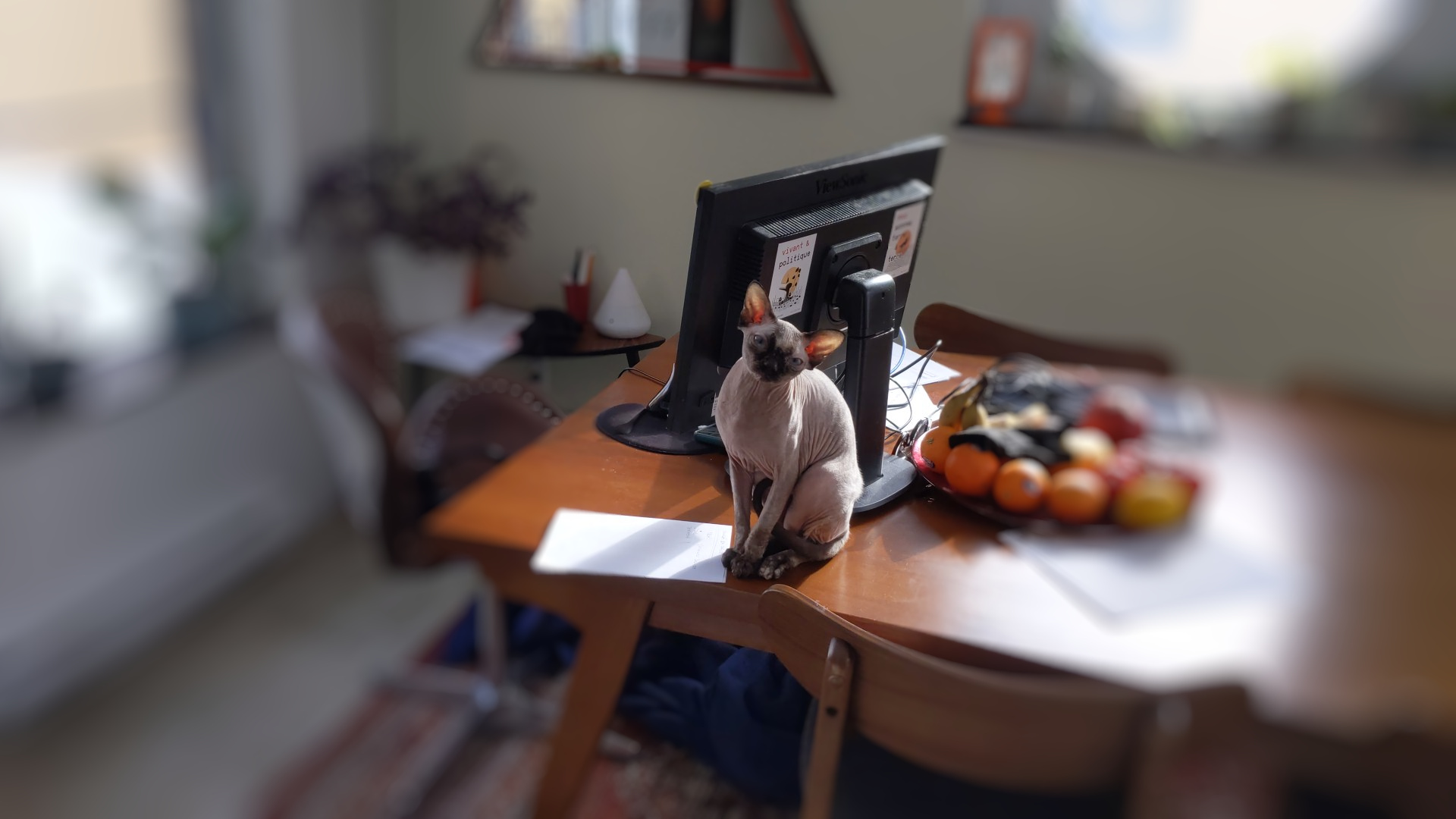
Hello World! I haven't really had time to blog here since the start of the semester, as I've been pretty busy at work1. All this to say, this report for the Bug Squashing Party we held in Montreal last weekend is a little late, sorry :) First of all, I'm pleased to announce our local community seems to be doing great and has recovered from the pandemic-induced lull. May COVID stay away from our bodies forever. This time around, a total of 9 people made it to what has become somewhat of a biennial tradition2. We worked on a grand total of 14 bugs and even managed to close some! It looks like I was too concentrated on bugs to take a picture of the event... To redeem myself, I hereby offer you a picture of a cute-but-hairless cat I met on Sunday morning: Picture of a curious sphinx cat on a table You should try to join an upcoming BSP or to organise one if you can. It's loads of fun and you'll be helping the project make the next release happen sooner! As always, thanks to Debian for granting us a budget for the food and to rent the venue. Goodbye Bullseye!

  1. Which I guess is a good thing, since it means I actually have work this semester :O
  2. See our previous BSPs in 2017, 2019 and 2021.

2 March 2023

Ben Hutchings: Debian LTS work, January/February 2023

In January I was assigned 24 hours by Freexian's Debian LTS initiative and worked 8 hours. In February I was assigned another 8 hours and worked 8 hours. I updated the linux (4.19) package to the latest stable update, but didn't upload it. I merged the latest bullseye security update into the linux-5.10 package and uploaded that.

1 March 2023

Junichi Uekawa: Got crosvm building in Debian.

Got crosvm building in Debian. Now to rebase and try to upload. Or maybe upload the version I have first and then rebase.

Debian XMPP Team: XMPP What's new in Debian 12 bookworm

On Tue 13 July 2021 there was a blog post of new XMPP related software releases which have been uploaded to Debian 11 (bullseye). Today, we will inform you about updates for the upcoming Debian release bookworm. A lot of new releases have been provided by the upstream projects. There were lot of changes to the XMPP clients like Dino, Gajim, Profanity, Poezio and others. Also the XMPP servers have been enhanced. Unfortunately, we can not provide a list of all the changes which have been done, but will try to highlight some of the changes and new features. BTW, feel free to join the Debian User Support on Jabber at xmpp:debian@conference.debian.org?join. You can find a list of 58 packages of the Debian XMPP team on the XMPP QA Page. Server Libs Others Happy chatting - keep in touch with your family and friends via Jabber / XMPP - XMPP is an open standard of the Internet Engineering Task Force (IETF) for instant messaging.

28 February 2023

Paul Wise: FLOSS Activities Feb 2023

Focus This month I didn't have any particular focus. I just worked on issues in my info bubble.

Changes

Issues

Review

Administration
  • Debian BTS: unarchive/reopen/triage bugs for reintroduced package servefile
  • Debian IRC: turn an old channel into a redirect to the right one
  • Debian wiki: unblock IP addresses, approve accounts

Communication
  • Respond to queries from Debian users and contributors on the mailing lists and IRC

Sponsors The pyemd/sptag work was sponsored. All other work was done on a volunteer basis.

Shirish Agarwal: Cutting off body parts and Lenovo

I would suggest that this blog post would be slightly unpleasant and I do wish that there was a way, a standardized way just like movies where you can put General, 14+, 16+, Adult and whatnot. so people could share without getting into trouble. I would suggest to consider this blog as for somewhat mature and perhaps disturbing.

Cutting off body parts From last couple of months or so we have been getting daily reports of either men or women killed and then being chopped into pieces and this is being normalized . During my growing up years, the only such case I remember was the 1995 Tandoor case and it jolted the conscience of the nation. But it seems lot of water has passe under the bridge. as no one seems to be shocked anymore  Also shocking are the number of heart attacks that young people are getting. Dunno the reason for either. Just saw this yesterday, The first thing to my mind was, at least she wasn t chopped. It was only latter I realized that the younger sister may have wanted to educate herself or have some other drreams, but because of some evil customs had to give hand in marriage. No outrage here for anything, not even child marriage :(. How have we become so insensitive. And it s mostly Hindus killing Hindus but still no outrage. We have been killing Muslims and Christians so that I guess is just par for the course :(. I wish I could say there is a solution but there seems to be not  Even Child abuse cases have been going up but sad to say even they are being normalised. It s only when a US agency or somebody who feels shocked, then we feel shocked otherwise we have become numb

AMD and Lenovo Lappies About couple of months ago I had made a blog post about lappies. Then Russel reached out to me on Twitter and we engaged. One thing lead to other and soon I saw on some other topic somewhere came across this
The above is a video presentation given by Mark Pearson. Sad to say it was not illuminating enough. Especially the whole boothole thing. I did see three blog posts to get some more insight. The security entry did also share some news. I also reached out to Mr. Pearson to know both the status and also to enquire if there are any new lappies without an OS that I can buy from Lenovo. Sadly, both these e-mails went unanswered. Maybe they went to spam or something else, have no clue. While other organizations did work on it, Debian was kinda side-lined. Hence the annoyance from the Debian Maintainers that the whole thing came from the left field. And this doesn t just effect Debian but all those downstream distributions that rely on Debian  . Now while it s almost a year since then and probably all has been fixed but there haven t been any instructions that I could find that tellls me if there is any new way or just the old way works. In any case, I do think bookworm release probably would have all the fixes needed. IIRC, we just entered soft freeze just couple of weeks back. I have to admit something though, I have never used secure-boot as it has been designed, partially because I always run testing, irrespective of whatever device I use. And AFAIK the whole idea of Secure Boot is to have few updates unlike Testing which is kinda a rolling release thing. While Secure Boot wants same bits, all underlying bits, in Testing it s hard to ensure that as the idea is to test new releases of software and see what works and what breaks till we send it to final release (something like Bookworm ). FWIW, currently bookworm and Testing is one and the same till Bookworm releases, and then Testing would have its own updates from the next hour/day after.

Utkarsh Gupta: FOSS Activites in February 2023

Here s my (forty-first) monthly but brief update about the activities I ve done in the F/L/OSS world.

Debian
This was my 50th month of actively contributing to Debian. I became a DM in late March 2019 and a DD on Christmas 19! \o/ There s a bunch of things I do, both, technical and non-technical. Here are the things I did this month:

Uploads

Others
  • Looked up some Release team documentation.
  • Sponsored php-font-lib and php-dompdf-svg-lib for William.
  • Granted DM rights for php-dompdf.
  • Mentoring for newcomers.
  • Reviewed micro bits for Nilesh, new uploads and changes.
  • Ruby sprints.
  • Bug work (on BTS and #debian-ruby) for rails and redmine.
  • Moderation of -project mailing list.
A huge thanks to Freexian for sponsoring my Debian work and Entrouvert for sponsoring the Redmine backports. :D

Ubuntu
This was my 25th month of actively contributing to Ubuntu. Now that I joined Canonical to work on Ubuntu full-time, there s a bunch of things I do! \o/ I mostly worked on different things, I guess. I was too lazy to maintain a list of things I worked on so there s no concrete list atm. Maybe I ll get back to this section later or will start to list stuff from the fall, as I was doing before. :D

Debian (E)LTS
Debian Long Term Support (LTS) is a project to extend the lifetime of all Debian stable releases to (at least) 5 years. Debian LTS is not handled by the Debian security team, but by a separate group of volunteers and companies interested in making it a success. And Debian Extended LTS (ELTS) is its sister project, extending support to the stretch and jessie release (+2 years after LTS support). This was my forty-first month as a Debian LTS and thirty-second month as a Debian ELTS paid contributor.
I worked for 24.25 hours for LTS and 28.50 hours for ELTS.

LTS CVE Fixes and Announcements:
  • Fixed CVE-2022-47016 for tmux and uploaded to buster via 2.8-3+deb10u1.
    But decided to not roll the DLA for the package as the CVE got rejected upstream.
  • Issued DLA 3359-1, fixing CVE-2019-13038 and CVE-2021-3639, for libapache2-mod-auth-mellon.
    For Debian 10 buster, these problems have been fixed in version 0.14.2-1+deb10u1.
  • Issued DLA 3360-1, fixing CVE-2021-30151 and CVE-2022-23837, for ruby-sidekiq.
    For Debian 10 buster, these problems have been fixed in version 5.2.3+dfsg-1+deb10u1.
  • Worked on ruby-rails-html-sanitize and added notes to the security-tracker.
    TL;DR: we need newer methods in ruby-loofah to make the patches for ruby-rails-html-sanitize backportable.
  • Started to look at other set of packages meanwhile.

ELTS CVE Fixes and Announcements:
  • Issued ELA 813-1, fixing CVE-2017-12618 and CVE-2022-25147, for apr-util.
    For Debian 8 jessie, these problems have been fixed in version 1.5.4-1+deb8u1.
    For Debian 9 stretch, these problems have been fixed in version 1.5.4-3+deb9u1.
  • Issued ELA 814-1, fixing CVE-2022-39286, for jupyter-core.
    For Debian 9 stretch, these problems have been fixed in version 4.2.1-1+deb9u1.
  • Issued ELA 815-1, fixing CVE-2022-44792 and CVE-2022-44793, for net-snmp.
    For Debian 8 jessie, these problems have been fixed in version 5.7.2.1+dfsg-1+deb8u6.
    For Debian 9 stretch, these problems have been fixed in version 5.7.3+dfsg-1.7+deb9u5.
  • Helped facilitate RabbitMQ s update queries by one of our customers.
  • Started to look at other set of packages meanwhile.

Other (E)LTS Work:
Until next time.
:wq for today.

27 February 2023

Daniel Lange: Thunderbird gpg key import

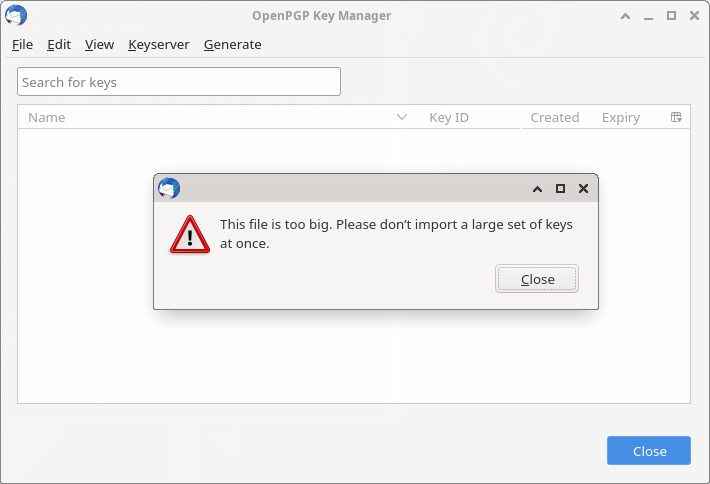
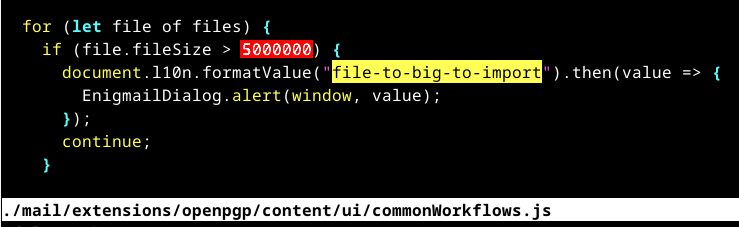
Thunderbird, srsly? 5MB (or 4.8MiB) import limit. Sure. My modest pubring (111 keys) is 18MB. The Debian keyring is 28MB. May be, just may be, add another 0 to that if statement? So, until that happens, workarounds ... Option 1: Export each pubkey into a separate file. The import dialog allows to select them all in one go. But - of course - it will ask confirmation for each. So prepare some valerian tea.
gpg --with-colons --list-public-keys grep ^pub cut -d : -f 5 xargs -I -n 1 gpg -ao .pub --export ;
Option 2: Strip all the signatures, so Thunderbird gets a smaller file to chew on. This uses pgp-clean from signing-party.
gpg --with-colons --list-public-keys grep ^pub cut -d : -f 5 xargs pgp-clean -s >> there_you_go_thunderbird.pub
Option 1 will retain the signatures on individual keys, Option 2 will not.

Daniel Lange: Getting gpg to import signatures again

The GnuPG (gpg) ecosystem has been played with a bit in 2019 by adding fake signatures en masse to well known keys. The main result is that the SKS Keyserver network based on the OCaml software of the same name is basically history. A few other keyservers have come up like Hagrid (Rust) and Hockeypuck (Go) but there seems to be no clear winner yet. In case you missed it in 2019, see my take on cleaning these polluted keys. Now the changed defaults in gpg to "mitigate" this issue are trickling down to even the conservative distributions. Debian Bullseye has self-sigs-only on gpg 2.2.27 and it looks like Debian Bookworm will get gpg 2.2.40. This would add import-clean but Daniel Kahn Gillmor patched it out. He argues correctly that this new default could delete data from good locally store pubkeys. This all ends in you getting some random combination of self-sigs-only and / or import-clean depending on which Linux distribution and version you happen to use. Better be explicit. I recommend to add:
# disable new gpg defaults
keyserver-options no-self-sigs-only
keyserver-options no-import-clean
to your ~/.gnupg/gpg.conf to make sure you can manage signatures yourself and receive them from keyservers or local imports as intended. In case you care: See info gnupg --index-search=keyserver-options for the fine documentation. Of course apt install info first to be able to read info pages. 'cause who still used them in 2023? Oh, wait...

25 February 2023

Gregor Herrmann: demo video: dpt(1) in pkg-perl-tools

in the Debian Perl Group we are maintaining a lot of packages (around 4000 at the time of writing). this also means that we are spending some time on improving our tools which allow us to handle this amount of packages in a reasonable time. many of the tools are shipped in the pkg-perl-tools package since 2013, & lots of them are scripts which are called as subcommands of the dpt(1) wrapper script. in the last years I got the impression that not all team members are aware of all the useful tools, & that some more promotion might be called for. & last week I was in the mood for creating a short demo video to showcase how I use some dpt(1) subcommands when updating a package to a new upstream release. (even though I prefer text over videos myself :)) probably not a cinematographic masterpiece but as the feedback of a few viewers has been positive, I'm posting it here as well: (direct link as planets ignore iframes )

Holger Levsen: 20230225-Debian-Reunion-Hamburg-2023

Debian Reunion Hamburg 2023 from May 23 to 30 As in the last years there will be a Debian Reunion Hamburg 2023 event taking place at the same location as previous years, from May 23rd until the 30th (with the 29th being a public holiday in Germany and elsewhere). This is just a short announcement to get the word out, that this event will happen, so you can ponder and prepare attending. The wiki page has more information and some fine folks have even already registered! Announcements on the appropriate mailinglists will follow soon. And once again, a few things still need to be sorted out, eg a call for papers and a call for sponsors. Also this year I'd like to distribute the work on more shoulders, especially dealing with accomodation (there are 34 beds available on-site), accomodation payments and finances in general. If you want to help with any of that or have questions about the event, please reach out via #debconf-hamburg on irc.oftc.net or via the debconf-hamburg mailinglist. I'm very much looking forward to meet some of you once again and getting to know some others for the first time! Yay.

Next.

Previous.