Search Results: "ag"

17 February 2010

Michal Čihař: phpMyAdmin slowly goes to Git

As can be already visible from our SourceForge.net devel page or from repository listing, there are already some Git repositories for phpMyAdmin. They are not yet being used for development, they are there just for developers to get used to new workflow. The only exception are scripts and localized_docs repositories, which were made master as of today and will not receive updates from SVN anymore. Anyway the repository should have same content as SVN (as of yesterday) so if you find any problems with that please let me know so that I can fix migration magic.

Martin F. Krafft: Privacy discussion mailing list

Dear lazyweb: I am in search of a mailing list for discussion on matters related to digital identity and privacy in the information age. Unfortunately, my (limited) searching has not unveiled results, mostly because many mailing lists have privacy agreements or somesuch, polluting the results with pointers to those. If you know such a list, or you don t but you are interested in the topic, don t hesitate to drop me a line. I will then either let you know when my search was successful, or subscribe you when I have created a list to fill the void. NP: Sola Rosa: Solarized

16 February 2010

Jan Dittberner: New hardware for my server at home

After some stability problems and an unresolvable PCI IRQ problem with my Debian server at home (Internet gateway, mail, PostgreSQL, LDAP and NFS server and test system), I decided to get a new mainboard and wireless card last week. I did some research to get hardware that is properly supported and where I can use the rest of my current components. I had So I had to find a mainboard with at least 2 DDR2 DIMM sockets, an AM2 compatible CPU socket in ATX format with SATA ports at least one IDE Port, a Gigabit ethernet port (serving NFS home directories) and at least 2 PCI slots (one for the wireless card) that is well supported by the current Debian Squeeze Linux kernel. As I had some issues with the previous board's nvidia SATA chipset I wanted to get something else that is AHCI compatible. After some research I decided to buy a Gigabyte GA-MA74GM-S2H (rev. 3.0) which is available for a good price and fits all my criteria (2 DDR2 DIMM slots, 6 SATA ports, an RTL8169 based Gigabit ethernet ports, 2 PCI slots, ...). The mainboard uses an AMD 740G + SB710 Chipset. It has an integrated graphics chipset which I don't really need because I run the machine as a headless system. As I use the server as a wireless access point I need a wireless network adapter that supports AP mode. There are not many chipsets that are properly supported in AP mode and allow good data rates so I decided to get an Atheros ath9k based card, because I don't need non-free firmware like with broadcom based cards and could find some affordable hardware. The previous was a Netgear WG311 ath5k card that had issues that it lost its connection under more than minimum load and could only be reanimated by a system reboot. I looked at the Linux Wireless pages and found out that D-Link has a matching adapter the DWL-G520. Unfortunatelly they don't tell about the used chipset (as almost all other vendors too) and write about possibly changing hardware at the product sheet. To be sure I looked at their Windows driver's .inf files and found nothing indicating that there are any non Atheros variants of the card. I also ordered two Fantec MR-35 SATA mobile racks for more comfort when one of the RAID1 discs crashes (had 2 crashes last year) and a 12" chassis fan to keep the system cool. Today the package arrived and after unpacking and putting everything together I started the system (with keyboard and a display attached) to see how it works. All hardware was automatically detected by the current Debian Squeeze system and I only had to remove the entries for the old onboard network adapter and the old wireless adapter from /etc/udev/rules.d/70-persistent-net.rules and fix the device names for the new network cards. I added a new stanza for the Intel ethernet adapter in /etc/network/interfaces and setup a set of ferm rules to have a working firewall (thanks to Formorer for the suggestion to use ferm). After this was finished everything worked fine so far and I put the machine at its normal place without keyboard and display. To verify that the stability situation had really improved, I copied some huge files over the network (both wired and wireless and in both
directions). Afterwards I did a bonnie++ benchmark to test the SATA and hard drive reliability. Everything went well and I'm happy with my investment.

Randall Donald: RFH: nvidia-graphics-drivers -- Developer needed to take on major role in packaging team

Thought I might post this here as well.

Package: wnpp
Severity: normal

Greetings,

I am placing this Request for Help as I can no longer do the majority of
the work on the NVIDIA packages. Although some people have offered time
and work over recent years, there really needs to be another Developer
or Maintainer that can take on a lot of work. Also I feel an injection
of fresh spirit would be helpful in some of the areas requiring an
overhaul. I am not stepping away, however. I just wish to reduce my role
in a way that is more comfortable and beneficial to the team and
project.

Randall Donald

Russell Coker: Would you Short-Change a Pedophile?

For some time the film industry has been running an anti-piracy campaign with slogans such as you wouldn t steal a car [1] in an attempt to draw a false analogy between downloading a movie and stealing a significant and valuable object the modern equivalent to being a horse thief . One of the many ways that such poor analogies break down is the fact that downloading a movie is not a crime, it s copyright infringement. The best analogy that I can think of for non-commercial copyright infringement is the practice of short-changing. I expect that almost everyone has at some time received less change than they deserved when buying something at a shop, the cashier aims to collect $1 or $2 from each customer and can easily double the amount of money that they take home at the end of the day. When a customer complains they just pretend to have made a mistake and although short-changing is a crime (unlike copyright infringement) it almost never results in police action. The practice is tolerated to such a degree that some people know the shops where they are likely to be short-changed, they count their change more carefully and demand the full amount but don t bother complaining to the manager! The film industry also tries to portray itself as representing struggling artists who deserve the money, it s described as a moral issue good people pay for movies while bad people download movies and steal cars. But then there s the case of Roman Polanski who is a well known movie director and child rapist [2]. I expect that most store employees would gladly palm some of the change if Roman Polanski was a customer that is of course if they weren t too busy arranging a lynch mob. So instead of you wouldn t steal a car a more reasonable statement would be you would short-change a pedophile if you weren t organising a lynch mob . Please note that murdering a criminal as part of a lynch mob is a crime (unlike making an unauthorised copy of a DVD), so I encourage people not to perform lynchings. Many important people in the movie industry have different ideas, the Wall Street Journal has an article about the petition to free Roman Polanski which demonstrates the difference between Hollywood attitudes and those of the rest of the world [3]. For them, violent crime is no big deal if the criminal is famous and the victim isn t but anything which affects their own wealth is regarded as a serious issue. Indiewire has a copy of the petition to free Roman and a list of the names of 100 people who signed it [4] (I heard that the latest count was nearer 150 but couldn t find a reference). I believe that the matter of morals is not whether someone who rapes children deserves jail time (that issue is really clear) but whether it is morally acceptable to give money to such a criminal or their supporters. I suggest that the list of signatories to the pro-rape petition be black-listed, any movie that involves any of them should not be paid for either don t see the movie or download it without paying at your own whim. If anyone knows of a web site that is being regularly updated with a list of all past and current projects involving people who signed the petition for Roman then please let me know it would be good to have a list of movies that I will never pay for. Anyone who feels morally obliged to pay something for a movie and who has a great desire to watch a movie made by Roman Polanski or his supporters could download it and then make a donation to a charity equivalent to the purchase price rumor has it that women s refuges are always short of funds. As an aside I find Wikipedia a good reference for movies that I don t plan to see, I read the plot summary on the wiki page and then have no curiosity about what happens in the movie if that isn t adequate I ask friends for spoilers or do a Google search on the movie name and spoilers .

Ana Beatriz Guerrero Lopez: Not the Debian-KDE post you were waiting for

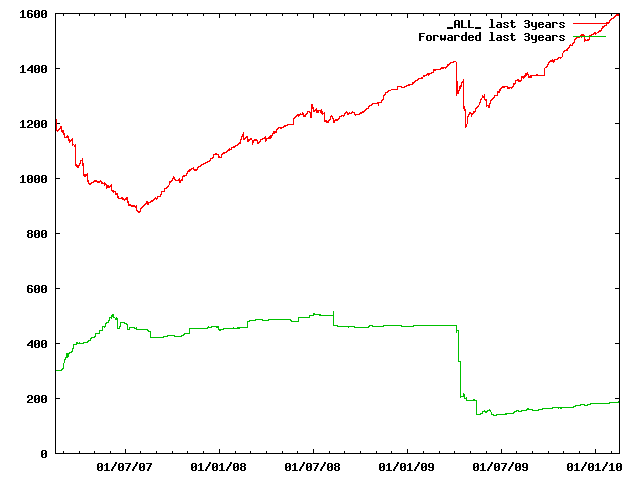
Sorry! I cannot tell you when KDE 4.4 will be uploaded to unstable. I am not working on that. My initial plan was writing about other tasks I am planning to work on and asking for your help. But I realized people would be more interested in knowing about KDE 4.4 packages. Once you know about this, I might trick you into helping in others areas ;) Debian packages for KDE 4.4 are being worked on, just slowly and of course, keeping on with the quality you are used to. There will be also some changes that have been in some people s TODO for long time. The goal is having them in very good shape for Squeeze, that will ship with some point release of 4.4. The doubt is which point release will be: 4.4.2? 4.4.3 ? The schedule for the point releases has not been made yet, so it makes a bit harder trying to predict it. In the same lines, I can not tell you when Squeeze will be released neither, it needs to be frozen first! If you want to know about the reasons of this delay, it is simple math: KDE has been growing a lot of more than the number of people working in Debian packages of KDE. I am not talking about size in lines of code in KDE, it is more the number of new dependencies that the KDE team have to take care now too: soprano, libutempter, Have you wondered why some are under the name of Debian Krap maintainers? :) And there are releases much more often than in the KDE 3 times. You might have notice not only 4.3.5 have been skipped, it also was the case with 4.2.3 or 4.1.4. This is not good or bad, it is just the same number of maintainers (or less) with more work. And what is worse with more bugs open in the Debian BTS! I think reiterated calls for not to file upstream bugs in the Debian BTS and directly in KDE bugzilla (see my blog post about this here) have helped but still we have a large amount of bugs piled through the years. This graph could give you an estimate how we tried in the past fighting against without too much success:
Number of bugs reported against KDE in Debian in the last 3 years Olivier Vitrat, we miss you :) One of the most heavy (and boring) talks that needs to be done for the KDE 4.4 packages is the copyright checking. I am not sure a total newbie can help with this, but if you have knowledge about licenses and you want to try helping, we are waiting for you. About other areas of the packaging maintenance, if you are interested in start learning and helping with future releases, you are welcome to start lurking in the #debian-qt-kde channel in OFTC and in the mailing lists. Update February 21th: 4.4.0 is for sure not being uploaded into the archive. Probably KDE SC 4.4.1 to be released 2nd March will be uploaded to unstable or experimental.

Martín Ferrari: Facebook chat

I spent a few minutes trying out the new support for using the Facebook chat with Jabber/XMPP, which is a great idea, since I hate to chat using the web interface. Sadly, it doesn't support grouping your contacts (you set a group, but it doesn't keep registered, probably they didn't implement that feature), and that make my empathy client look quite untidy... I'll keep my account setup for a while, but I guess it will not be long until I remove it and continue not chatting with Facebook. Maybe some day they can properly implement the protocol... Update: As Tobias Wich and Clifford Hansen had kindly pointed out to me, you can actually group your contacts, but only from the web interface. I've tried it and it works, but it's not really comfortable. Tags: Planet Debian

Vincent Sanders: Tempus fugit

Seems I managed to loose a month in there. Been working very hard on a project with an improbable deadline which has not left much time for anything else.

Finally brought to a standstill this weekend by something Joshua brought home (I think it was some form of micro biological warfare agent, judging by how I feel) It is incrediably hard to shrug off the lethargy of illness when you realize all you have to go back to is work.

On the plus side the project deadline is in three weeks time so whatever happens It will all be over by then! Whereupon I can take some time off, calm down and then start all over on the next project...

Yay?

Steve Kemp: I am lightened, can we drop this?

As part of some house-keeping I've been checking over my systems and ensuring they're all tickity-boo for the past couple of days. One thing that I'm getting increasingly tempted by is converting my kvm guest to a 64-bit system. I've not quite sold myself on the prospect of what will be a fair amount of downtime, but I'm 90% there. I do think that a lot of my setup needs an overhaul, for example: One possible plan is to wipe my system, and then restore data from backups. A perhaps saner approach is divide my guest into two smaller ones, and migrate services over one by one (e.g. website1, website2, .. websiteN, email, etc). For the moment I've taken a complete dump of my existing guest, and I'm running it with an IP in the 10.0.0.0/24 range on my desktop. That's at least given me a clear idea of the amount of work involved. I'm still a little unclear on how best to manage running N websites with the intention they'll each run under their own UID. I guess it comes down to having a few instances of nginx/lighttpd/apache and then proxy from *:80 to the actual back-end. Precisely which mixture of services to use is a little overwhelming. Though at some point soon I need to start enabling IPv6 support, and that changes things a little. (Not least because nginx has no IPv6 support present in the Lenny release - I've got a backported package which I run on the Debian Administration website.) It's possible I could hack mod_vhost_alias to redirect/proxy to a local port based upon the virtual hostname present in the request - that's pretty trivial and I've already done something similar for work purposes. Though something like that should presumably already exist? I would expect a map of some form:
example.org: 127.0.0.1:8080
example.net: 127.0.0.1:9090
That has to be about the minimum necessary information to make the decision; a pair of vhost name & local destination. /me googles some.. Update
OK quick update I've added local users for some of my sites, and now have them running under thttpd.
skx:/etc/thttpd# ls -ltr /home/www/   tail -n 4
drwxr-sr-x  4 s-static   s-static   4096 Jan 15 01:41 static.steve.org.uk
drwxr-sr-x  5 s-openid   s-openid   4096 Feb 16 21:31 openid.steve.org.uk
drwxr-sr-x  6 s-images   s-images   4096 Feb 16 21:52 images.steve.org.uk
drwxr-sr-x  5 s-packages s-packages 4096 Feb 16 22:03 packages.steve.org.uk
That seems to work well, with a small wrapper script to start N instances of thttpd instead of a single one. Minor issues are that I'm using mod_proxy to forward requests to the thtpd instances running upon the loopback - and it was initially logging 127.0.0.1 as the source IP. A quick patch later all is well. I'll leave it running a couple of the simple sites for the next few days and see if it kills children. If it does I'll convert the rest. Probably will aim to have nginx in front of thttpd, instead of Apache, but this way I don't have to worry about mod_rewrite rules just yet.
ObFilm: Cruel Intentions

Russell Coker: National Broadband/Porn Network

Currently we have a new National Broadband Network under construction in Australia [1]. It is going to cost $43,000,000,000 which is $5,000 per household. It is designed to deliver 100Mb/s speeds to most homes that is the homes that can currently get more than 8Mb/s through ADSL2+ or cable connections. The question is, what can we do with 100Mb/s that we can t do with 8Mb/s? It seems that ADSL2+ works pretty well for VOIP, video-conferencing, online games, and transferring CD/DVD images (with a little patience). It seems to me that the only benefit in having download speeds faster than 8Mb/s is for downloading high resolution images and video files in a small amount of time and porn surfing seems likely to be the only reason for someone being so impatient to get high resolution images! Now there are some potential technical benefits to this, FTTH will allow synchronous upload and download speeds and being able to transmit data at 100Mb/s will be a significant benefit. If the data transfer quota was reasonable then I could run my blog, my web site (including my Debian package repositories), and some other new projects from a server in my own home. Currently Internet access in Australia sucks mostly because of the cost of international bandwidth [2]. Also while Telstra was run by the awful Sol Trujillo it was trying to gain a monopoly on domestic services via it s Fiber To The Node (FTTN) scheme, it seems that one of the biggest benefits of the NBN is to prevent Telstra gaining such a monopoly but as they are going to pay the NBN CEO a $2,000,000 salary [3] it seems that some of the same mistakes are being made. In any case $43,000,000,000 is a lot of money to pay to break a monopoly, there are much cheaper ways of doing this. Now if the money was to be spent intelligently on Internet access the first area would have to be submarine cables, if the capacity of the connections between Australia and the rest of the world could be significantly increased then it would change the way the Internet is used. I have a US-based colleague who transfers more data from his mobile phone than I do through my home ADSL connection and he pays about the same amount of money as me! I think that most serious Internet users would rather have an ADSL2+ connection that is cheaper and has a larger bandwidth quota than a FTTN connection with a high transfer rate but a small quota of data that can be transferred from what I ve read about the NBN it doesn t sound like a service I would want to sign up for. Then there is the issue of servers, currently for most uses Australia is not a viable location for a server due to bandwidth costs. This decreases the job opportunities for Australian system administrators and decreases the Australian IT skills base. The next area that needs attention is wireless net access. The first issue that should be addressed is the minimum cost, the cheapest net access in Australia is via 3G because it avoids all the costs of wiring [4]. It would be good if instead of paying about $150 per annum for 3G net access there were some options for cheaper plans, maybe $60 per annum for 6G of data. In many ways the current Australian lifestyle requires Internet access, and many aspects of interaction with government organisations requires net access, so it seems that the government should make it a priority to provide cheap net access to the entire population. A 3G net access plan of $60 per annum plus a subsidised purchase plan for cheap PCs (maybe taking a Netbook from $350 to $250) should significantly decrease the number of people who can t use the Internet. 3G access (both Internet and telephony) also needs to be available in more areas. Currently Telstra has the widest coverage of any mobile phone company, but it uses a non-standard frequency which limits the availability of suitable phones and it doesn t compete on price [5]. So rural users have to pay through the nose for Telstra mobile telephony and they get a limited choice of phones. It would be really good if we had a NBN for 3G phones that covered the areas surrounding most rural population centers to compete with Telstra. If rural users could pay $60 per annum for 3G Internet access and a reasonable rate for mobile phone access (maybe a combined phone/data plan similar to those offered by Three and Virgin) then it would significantly improve the rural access to services that urban residents take for granted. The NBN plan does include providing wireless and satellite net access to the 10% of the population who will be out of range of FTTH. But I am concerned that it will provide a bare minimum of service and not an integrated voice/data service that permits using the newest features of phone OSs such as Android. In the past I ve had some commercial experience with satellite Internet access and I have not been impressed with it, the response times were very poor and fully interactive services were almost unusable. The government should aim to provide support for interactive services that facilitate business operations (including video-conferencing and remote server access via ssh, VNC, etc) to as much of the population as possible. I expect that a significant portion of the Internet using applications on smart-phones such as those running the Android OS will require fast response times, so even if a satellite version of an Android phone is ever produced it still wouldn t be as useful as the current phones. Finally the government should offer free wireless net access in all major urban areas for the purpose of accessing government services, Australian content, and Australian mirrors of foreign content. This would be a convenience feature for most people and would also be good for emergency access I shouldn t have been denied access to government services when the PSU for my ADSL modem died in the heat last week, I should have been able to take a laptop to the nearest government Wifi access point! In conclusion I think that the government should spend money on lowering the cost of Internet and mobile telephony access for everyone and granting greater access to government services. I am not aware of any evidence to suggest that the current NBN plan will do anything to achieve such aims. But it should be really good for accessing porn sites that use a CDN with an Australian presence. Update: John Hughes pointed out in an insightful comment that 100Mb/s can be used for watching TV. So this could be a ploy to try and convert Internet access into better TVs paid for by our tax money!

Tollef Fog Heen: Upgrading freedesktop.org hosts

I recently upgraded kemper.freedesktop.org to lenny. Collabora are nice enough to sponsor some of my sysadmin work for freedesktop and so making sure we are actually running a supported distribution was a good start. The actual dist-upgrade went fine, but when I rebooted with a 2.6.26 kernel, it just hung in the early boot phase. Luckily, a newer kernel worked fine. However, a newer kernel also breaks the NFS kernel server in Lenny. A short backport later, NFS was working fine, except annarchy (which NFS mounts from kemper) didn't have nfs-common installed at all, meaning it lacked mount.nfs. Ooops. Now, bugs was broken. It used an SSH tunnel from annarchy to kemper, but the startup script was nowhere to be found. I replaced it with a trivial stunnel setup which has the added advantage of reconnecting if the tunnel goes down. The ssh config had to be fixed slightly. We used to use an old and patched sshd that stored all the keys in a single file. I added a tiny script to split that again. We also had MkHomeDir in sshd's config, now replaced with pam_mkhomedir. Another interesting thing I learnt is that the iLO ssh daemon chucks you out if you try to send enviromental options to it. Like, LANG which is sent by default. Slightly confusing, but easy enough to fix once I knew what the problem was. In addition to kemper, I upgraded, but did not reboot fruit (the admin and LDAP host), due to not having the iLO password. I did not want to risk sitting there with a non-booting machine I could not fix. It's going to be rebooted at some later stage. I also did not have the iLO password for gabe, which runs mail and some other faff, so I'll have to schedule some more downtime in the near future.

Christian Perrier: Bug #570000

(you were awaiting this one, weren't you?) Ron Murray reported the Debian bug #570000 on Monday February 15th, against the gnome-keyring-daemon package. Bug #560000 was reported as of December 8th 2009. We're behind our "10,000 bugs in 2 months" pace by one week, so that's a small drop in the bug reporting rate, this time. I hope that people remember the Bug #600000 contest. Bets are closed now (the wiki page is still opened for modifications but I'll revert them if they are late bets). Being 30,000 bugs away from #600000, it's time to image when that bug could happen. The current "2 months+1 week/10,000 bugs" says it would happen around September 10th. With the "2 months/10,000 bugs" that would be August 15th, just after DebConf 10. The closest bet as of now seem to be either Miod Vallat or Kanru Chen. I probably lost already (I did bet June 30th) unless I imagine a very massive bug filing. Too bad Matt Arnold, Thomas Preudhomme, Nicolau Werneck and Odd Henriksen, you already lost!

Ingo Juergensmann: StrongSwan and L2TP/IPsec on Debian

Mac OS X and other operating systems are using L2TP/IPsec for VPN connections. I'm running StrongSwan as my IPsec stack of choice, so I wanted to setup a VPN between my Debian lenny server and OS X as my roadwarrior. There's a nice howto on nielspeen.com. Everything is fine except for one thing:

Q: I want to set up strongSwan to interoperate with Microsoft Windows using L2TP/IPsec. I'm getting the error message "NAT-Traversal: Transport mode disabled due to security concerns" which results in strongSwan sending an encrypted notification BAD_PROPOSAL_SYNTAX

A: Here is a quote from strongSwan lead developer Andreas Steffen on how to deal with this problem:
NAT-Traversal with IPsec transport mode has some inherent security risks. Since Microsoft doesn't care about this please compile strongSwan with the option

./configure --enable-nat-transport


So, there's the inherent security risk, but without --enable-nat-transport L2TP/IPsec doesn't work at all with StrongSwan on Lenny. Is there anything I can do, dear LazyWeb, to be able to use L2TP/IPsec VPN connection with OS X and Linux (StrongSwan) to have a really secure connection? Being able to use Windows as VPN roadwarrior clients is optional, but no requirement.

15 February 2010

Sandro Tosi: Migrate a Git repo to a SVN one

We often see the opposite, convert a SVN repository into a Git one and try the breeze of a DVCS, but what if you want to convert a Git repo into a SVN one?

The process is not easy (and you need a "straight" Git repo: no merge, too complex branches and so), and the result is quite raw, but you're still able to convert the main part into SVN. Here are the steps:
  1. create an empty SVN repository: svn mkdir svn://path/to/repo/project/ trunk,branches,tags
  2. clone it in a Git repo: git svn clone svn://path/to/repo/project --stdlayout . This will create a project directory, empty except for the .git information directory; master is the default Git branch created by git-svn that maps SVN trunk.
  3. add the original Git repo as a remote: git remote add origin git://uri/to/git/repo/project.git
  4. fetch from it: git fetch origin
  5. create a local branch for the remote master: git checkout -b old_master origin/master . Note that master branch is already present, so we define another one.
  6. being on old_master we rebase this branch onto master: git rebase --onto master --root . Doing this, we have "moved" all our commits from old_master to master
  7. and push all the commits into the SVN repo: git svn dcommit
It's not that elegant, but it gets it done. I'd like to know if someone is aware of a better method, also to import tags and branches, that this process doesn't do.

Gustavo Noronha Silva: WebKitGTK+, and the Page Cache

So, one of the things I get to do during work hours for Collabora is to contribute code, and do maintenance tasks for WebKitGTK+, and have been doing so since early last year, working on all kinds of things, from improving the network backend to handle the real-world web, to fixing scrolling problems, while reviewing patches from the many awesome developers who have been joining us (more on that later =D). One of the big features I have worked on this past month or so, along with Xan Lopez is the Page Cache. The page cache is a feature of web browsers that makes going back, and forward between pages in the same view very fast. It s better explained in this post, but to summarize, the idea is that instead of destroying all the work you have done since downloading the resources, and having to reparse/rebuild the structures the view uses to display the page from the cached resources, you hit pause on the page, and store the whole thing as is, and when coming back to it, you just hit play. You can see in the video two instances of Epiphany, one with the page cache enabled, one with it disabled. Easy to see which was has it enabled. Thanks to KiBi for the suggestion regarding a page that shows this easily =D. <video controls="controls" height="302" src="http://kov.eti.br/media/webkit/page-cache.ogv" width="450"></video> We initially thought we had this feature enabled, since our initialization functions (that exists since before the current maintainers were involved) did setup the number of desired pages in the cache, but during the hackfest we held in December we found out we were fooled all this time. Enabling the page cache does make going back faster, but also made lots of things become unstable and crash. Since then, we have been working on figuring out all the problems, and fixing them, using help from adventurous users of in-development software ;D. I believe we re now at a point in which I can happily declare the GTK+ port has a working page cache in trunk! If you re interested in the nasty details, bear with me! Let me go back in time a bit, and show you what problems we had. First, some background: the GTK+ port deviates a lot from the other ports when it comes to scrolling. This is because, when designing this part of the port, Holger Freyther had a very nice idea in mind: that the WebView should be a first-class citizen GTK+ scrollable widget. Meaning it would use GTK+ s adjustments for scrolling, and be able to interact with any parent scrolling widget, be it a GtkScrolledWindow, or a MokoFingerScroll. We cannot just throw away all the rest of the scrolling code in WebCore, though, that deals with all the details related to interacting with the DOM, and JavaScript code. This means our WebView contains adjustments that need to be set, and unset on our port s version of WebKit s own representation of the view, called the FrameView, to interact with it, and to get updates on the bounds of content, and such. For every load, in the non-page-cache case, a new FrameView is created, the previous one is destroyed - this means we need to set the adjustments on every load. The problem starts when you have the page cache enabled, because the code path used to do what is called commit the load of a cached page (that is, start replacing the content that is currently being displayed by the one that should now be displayed) is completely different, and we were not setting the adjustments on this new view, so we started with that. But all was not well. We were still having weird behaviour with scrollbars disappearing, and becoming the wrong size, and worse, crashes when back was hit. We then started investigating in more detail how it is that the page cache does its magic, to try and figure out the source of all evil. It turns out that when you leave a page that can be cached, the existing FrameView is no longer destroyed - it is stored as is in a CachedFrame to be restored if you go back, and a new one is created for the new page. This was having the undesired effect of having the adjustment be set in more than one FrameView at once, causing all kinds of (predictable, after we knew for real what was going on) unwanted effects. Thus, we reworked the code to make sure the adjustments are only ever set in one FrameView at once, making sure they are unset when the FrameView is being frozen, and reset when it s being restored from the page cache. Last, but not least, it was discovered that going back to a page that contained resources with data: URIs (such as Google results pages which contain a small number of image hits) also caused a crash. This was because our network backend was not storing the data: URI in the ResourceResponse objects it fed into WebCore. The page cache relies on those responses to recreate the requests it uses to artificially replay the load when restoring the page from the page cache, so we fixed that as well. What can be taken from all this? Building browsers is a lot of hard work! I can t think how we could deal with this level of complexity without the awesome testing suite of WebKit. The good news is all of those issues I talked about in this post are now covered by the automate tests that run as part of the normal buildbot cycle in our bots, so we re covered for the future, at least for these specific problems =D.

Biella Coleman: Timing Life

The Chronicle recently published a piece that drew a lot of attention on the difficulties that female academics with kids face during the first 4-7 seven years of their job when academics are expected to do nothing but produce, produce, and produce and yet because they have produced children, they can t produce all that much writing. I don t share the author s predicament in that I don t have kids. But I have had to be an (often long-distance) caretaker for the last 8 years, 4 of which I spent considerable time in PR taking over my mom s caretaker s duties. Although when it comes to female academics and kids there is a lot that can (really must) be done to facilitate a career and motherhood, when it comes to taking care of my mom, being an academic has been an odd and mixed blessing, although it did require me to play with the system self-consciously or else it would have been an early academic death. When my mom was first falling pretty ill, I was wrapping up my dissertation. Though I was ready (on paper at least) to go on the market, I did not step foot in it. I knew that if I landed a job it would be the end of seeing my mom and since she only had a few years of capacity left, I decided to 1) apply only for one postdoctoral position (that had no teaching and was in NJ making it very easy to fly home frequently) 2) if I did not land it, I would return home to spend time with her, keep on writing but not graduate. If I had started a job right after my dissertation, I would have killed my chances of churning out articles, and worse, not have seen much of my mom. I was lucky enough to land this postdoctoral fellowship, which was a life savior. I was able to get a heck of a lot of work done that I would never ever would have been able to do my first two years of teaching (kids or no kids) and I spent many months in PR as well. I always encourage graduate students to apply for these positions because the payback is enormous (with the exception of fellowships that require a ton of teaching), even if the applications are really time consuming, more so than applying for jobs. Though rarely stated in such terms, the first few years of an academic position is not unlike medical residency. It takes a brutal amount of time, not only because of the sheer time you have to work but also because there is so much new to learn and so many different responsibilities to juggle. It is exhiliarting but draining, even disorienting. But there is one important difference from our medical school counterparts (aside from the blood and guts and gore :-)): their hell continues throughout the year, while our hell diminishes during the summer when classes end and writing is supposed to dominate your attention. Also since I am not required to be here once classes ended, I am able to leave NYC and spend it back home. I would simply not be able to do this with most any other full time job (unless it involved telecommunting) and for that I am grateful I landed the job I did. Academia, despite its rat race quality, has allowed me to visit my mom throughout the year and summer. Given the importance of summers for writing it seem that departments/universities can do a lot for female faculty simply by sponsoring or helping to pay for summer day care for two years, thus offsetting some of the costs and then providing them with the space needed to write/produce.This can accompany the policy that some, though not enough schools have, which is turning off your tenure clock for the year you are pregnant, and in some cases, even giving you leave. Thankfully at NYU you can stop your clock not just for pregnancy (which they now automatically do because when it was optional some female professors were not taking it!) but also for circumstances like mine. I was given a short tenure extension, which was not easy to ask for but it is important to do so. I am extremely grateful they have this policy. Something else partially unique about caring for a parent is the perspective it affords. Although it would be a lie to say I suffer no anxieties about my job, I find it hard to get embroiled in a lot of the petty politics of academia, a perspective that clings to me, especially after having to take care of someone with Alzheimers, and especially my mom who we nicknamed the Russian Terror for her turbulent (but really fun) personality. Sitting in front of your computer to write and think about some obscure academic topic feels not only easy after those experiences but a scamish sort of privilege. My mom is now in a nursing home and I no longer have to spend time taking care of her. Instead I visit and see her and get overwhelmingly sad when I do. In one month, it will be her 2 year anniversary in a nursing home and I still have not come to grips with the situation. It strikes me as obscene and unreasonably cruel that this illness can afflict a person for years, even a decade or more. Perhaps more than anything it is the sheer massive length and persistence of this illness that makes it so hard to bear. And I am sure my work for better or for worse has acted as an emotional refuge, where I drown myself in work that I love instead of drowning in the sorrow that I often feel, making what is a difficult job far easier.

Debian News: Brief updates: Lenny 5.0.4, updates from the Release Team, Debian Edu release and DebConf registration

Russell Coker: Links February 2010

Popular Mechanics has a good article about 911 [1]. Experts in all the relevant fields were consulted to debunk popular myths. It s an old article but I hadn t read it before and learned a lot. Former CIA analyst Raw McGovern and former FBI attorney/special agent Coleen Rowley, a colleague in Veteran Intelligence Professionals for Sanity wrote an interesting article titled Why Counter-Terrorism Is in Shambles [2]. Such sanity from people who are associated with the intelligence industry is unusual. Gizmodo has an amusing and informative poster about the true risks of airline travel post 911 [3]. Reuters has an interesting article about drug smugglers using Gulfstream and 727 aircraft to smuggle cocaine from South America to Africa [4]. They claim a link to al Quaeda, but such a link seems tenuous from the evidence provided, it does seem reasonable to claim that groups who claim affiliation to al Quaeda are involved in smuggling anyone can claim anything really. An 8yo boy is on the TSA terrorism watch list , he regularly gets frisked when traveling by air [5]. His mother had a security clearance to fly on Air Force 2 when Al Gore was the Vice President, any sane security system would look at the parents rather than an 8yo child children of that age aren t going to independently become terrorists. The Dallas Observer has an interesting article by Kimberly Thorpe about how to beat debt collectors [6]. Apparently most debt collectors break the law in some way and can be sued for damages with a typical settlement of $3,500. Some debtors are suing multiple debt collectors, after one debt collector is successfully sued the debt is passed to another collector who also breaks the law. What I really like about this is that the community of people who sue debt collectors keep the industry honest and protect the majority of the population who don t have the time or interest for engaging in law suits. Read Write Web has an informative article about SourceForge being forced to deny access to people in Cuba, Iran, North Korea, Sudan and Syria [7]. A problem for free software developers is that we often don t know the location of the people we collaborate with so it s best to be as open as possible. This means that the US is not a good place to host servers, probably some part of the EU would be better. Also this sort of thing makes the field of free software development less welcoming to US citizens. Did the congress people learn nothing in high-school? They should know that someone who starts a campaign of ostracism may end up being in the small group. Google is developing a new Native Client (NaCl) system that seems to be like Microsoft ActiveX [8]. I can t imagine this doing anything that couldn t be done with Java, it seems most likely to just marginalise the less popular platforms which isn t in the best interests of Google. Kevin Kelly of the Technium wrote an interesting post about 1000 true fans [9]. The concept is that if you are doing creative work you only need 1000 dedicated fans who buy everything you sell to make a living. If you make $20 per year from each of the 1000 fans and you will earn enough to live. Make $100 per year from each of the 1000 fans and you will be earning more money than most people. The updates show that artists who try this aren t having much success yet, but the Internet population is still increasing dramatically PaxStreamline offers an innovation in commercial air-conditioning, apparently a significant amount of electricity is wasted on heating the air after chilling it excessively to remove moisture [10]. So instead of cooling it they use a liquid dessicant to extract the moisture. Ben Schwartz explains why you should never create files in H.264 or MPEG formats, unless you have a special commercial license then you (and your viewers) will all be liable for patent infringement for any type of commercial use [11]. Note that storing the data on a web site with Google adverts counts as commercial use. I wonder if all those digital cameras and mobile phones that create MPEG videos have appropriate licenses, maybe uploading a file created on your phone breaches the patent. J. K. Rowling (author of Harry Potter) gave an inspiring speech for Harvard graduates [12]. I particularly liked the following reference to her work for Amnesty International Choosing to live in narrow spaces leads to a form of mental agoraphobia, and that brings its own terrors. I think the willfully unimaginative see more monsters. They are often more afraid . Peter Eigen gave an interesting TED talk about the formation of Transparency International and the economic problems that are caused by corruption [13]. The Monthly Review has an interesting article about the failure of the US justice system [14]. The prison industrial complex has captured part of the US government, neo-liberalism is to blame. 59% of Americans agree that homosexuals ought to be able to serve in the U.S. military. But 70 percent believe that gays and lesbians ought to be able to serve in the military [15]. Apparently 11% of Americans think that gays and lesbians are better than homosexuals .

John Goerzen: Review: Linux IM Software

I ve been looking at instant messaging and chat software lately. Briefly stated, I connect to Jabber and IRC networks from at least three different computers. I don t like having to sign in and out on different machines. One of the nice features about Jabber (XMPP) is that I can have clients signing in from all over the place and it will automatically route messages to the active one. If the clients are smart enough, that is. Gajim I have been using Gajim as my primary chat client for some time now. It has a good feature set, but has had a history of being a bit buggy for me. It used to have issues when starting up: sometimes it would try to fire up two copies of itself. It still has a bug when being fired up from a terminal: if you run gajim & exit, it will simply die. You have to wait a few seconds to close the terminal you launched it from. It has also had issues with failing to reconnect properly after a dropped network connection and generating spurious resource already in use errors. Upgrades sometimes fix bugs, and sometimes introduce them. The latest one I ve been dealing with is its auto-idle support. Sometimes it will fail to recognize that I am back at the machine. Even weirder, sometimes it will set one of my accounts to available status, but not the other. So much for my complaints about Gajim; it also has some good sides. It has excellent multi-account support. You can have it present your multiple accounts as separate sections in the roster, or you can have them merged. Then, say, all your contacts in a group called Friends will be listed together, regardless of which account you use to contact them. The Jabber protocol (XMPP) permits you to connect from multiple clients. Each client specifies a numeric priority for its connection. When someone sends you a message, it will be sent to the connection with the highest priority. The obvious feature, then, is to lower your priority when you are away (or auto-away due to being idle), so that you always get IMs at the device you are actively using. Gajim supports this via letting you specify timeouts that get you into different away states, and using the advanced configuration editor, you can also set the priority that each state goes to. So, if Gajim actually recognized your idleness correctly, this would be great. I do also have AIM and MSN accounts which I use rarely. I run Jabber gateways to each of these on my server, so there is no need for me to use a multiprotocol client. That also is nice because then I can use a simple Jabber client on my phone, laptop, whatever and see all my contacts. Gajim does not support voice or video calls. Due to an apparent bug in Facebook, the latest Gajim release won t connect to Facebook servers, but there is a patch that claims to fix it. Psi Psi is another single-protocol Jabber client, and like Gajim, it runs on Linux, Windows, and MacOS. Psi has a nicer GUI than Gajim, and is more stable. It is not quite as featureful, and one huge omission is that it doesn t support dropping priority on auto-away (though it, weirdly, does support a dropped priority when you manually set yourself away). Psi doesn t support account merging, so it always shows my contacts from one account separately from those from another. I like having the option in Gajim. There is a fork of Psi known variously as psi-dev or psi-plus or Psi+. It adds that missing priority feature and some others. Unfortunately, I ve had it crash on me several times. Not only that, but the documentation, wiki, bug tracker, everything is available only in Russian. That is not very helpful to me, unfortunately. Psi+ still doesn t support account merging. Both branches of Psi support media calling. Kopete Kopete is a KDE multiprotocol instant messenger client. I gave it only about 10 minutes of time because it is far from meeting my needs. It doesn t support adjustable priorities that I can tell. It also doesn t support XMPP service discovery, which is used to do things like establish links to other chat networks using a Jabber gateway. It also has no way to access ejabberd s send message to all online users feature (which can be accessed via service discovery), which I need in emergencies at work. It does offer multimedia calls, but that s about it. Update: A comment pointed out that Kopete can do service discovery, though it is in a very non-obvious place. However, it still can t adjust priority when auto-away, so I still can t use it. Pidgin Pidgin is a multiprotocol chat client. I have been avoiding it for years, with the legitimate fear that it was jack of all trades, master of none. Last I looked at it, it had the same limitations that Kopete does. But these days, it is more capable. It supports all those XMPP features. It supports priority dropping by default, and with a plugin, you can even configure all the priority levels just like with Gajim. It also has decent, though not excellent, IRC protocol support. Pidgin supports account merging and in fact, it doesn t support any other mode. You can, for instance, tell it that a given person on IRC is the same as a given Jabber ID. That works, but it s annoying because you have to manually do it on every machine you re running Pidgin on. Worse, they used to support a view without merged accounts, but don t anymore, and they think that s a feature. Pidgin does still miss some nifty features that Gajim and Psi both have. Both of those clients will not only tell you that someone is away, but if you hover over their name, tell you how long someone has been away. (Gajim says away since , while Pidgin shows last status at . Same data either way.) Pidgin has the data to show this, but doesn t. You can manually find it in the system log if you like, but unhelpfully, it s not on the log for an individual person. Also, the Jabber protocol supports notifications while in a chat: The contact is typing , paying attention to a conversation, or closed the chat window. Psi and Gajim have configurable support for these; you can send whatever notifications your privacy preferences say. Pidgin, alas, removed that option, and again they see this as a feature. Pidgin, as a result, makes me rather nervous. They keep removing useful features. What will they remove next? It is difficult to change colors in Pidgin. It follows the Gtk theme, and there is a special plugin that will override some, but not all, Gtk options. Empathy Empathy supports neither priority dropping when away nor service discovery, so it s not usable for me. Its feature set appears sparse in general, although it has a unique desktop sharing option. Update: this section added in response to a comment. On IRC I also use IRC, and have been using Xchat for that for quite some time now. I tried IRC in Pidgin. It has OK IRC support, but not great. It can automatically identify to nickserv, but it is under-documented and doesn t support multiple IRC servers for a given network. I ve started using xchat with the bip IRC proxy, which makes connecting from multiple machines easier.

Next.

Previous.