Search Results: "rra"

10 May 2010

Romain Beauxis: Ubuntu, the firm and its employees

This post is not meant to be offensive in any way. I would just like to write down things that came to my mind recently. It all started when I was considering applying for the right to upload the package I maintain into Ubuntu. Looking at the procedure, I realized that this needs to be present during an IRC meeting at a given date online. This stopped me immediately. I am working most of my day-time and, given the time zone I am living now, this was not an option. But, since I had registered to the corresponding mailing list, I started receiving mails of other applicants that where trying to arrange things with their work and private life to be able to participate. Now, today, I stumbled upon these notes of Mark's presentation in Bruxelles, relayed by a friend that is not either working for Ubuntu. Reading it gave me a strong taste of management-oriented presentation, with all this sort of "yeah we want our product in every box next year" propaganda. Not like Steve Ballmer, fortunately, but not far perhaps. So, yeah, there is something that makes me uncomfortable with Ubuntu. I am really happy by its success and I will continue to recommend it to friends around me. However, I wonder if, in a way, Ubuntu is not a model of commercial company where a minimal core of developers are actually payed, while a second layer of developers are fan-boys that are willing to participate as if there were employees but without being actually payed, and a third layer being the open-source developers whose work is actually what makes 90% of the core of the OS. A very good illustration is at the end of the note from Mark's presentation. It reads:
Somebody asks about advertising Ubuntu, looks like there are no plans for the moment to actually advertise Ubuntu across traditional media. Mark uses the Ubuntu Manual as an example of how Ubuntu gets advertised and will reach the mainstream, Mark points out myself and the room applauds the Ubuntu Manual Project! Woohoo!
Now, guess what:
About Us We are a group of individuals trying to promote the use of Ubuntu and its variants. This is a private web site that is not connected in any official or financial way with Ubuntu, Canonical PL or Ubuntu.com. Official Ubuntu guides and downloads are freely available at www.ubuntu.com. Ubuntu is a registered trademark of Canonical PL
Source: http://ubuntumanual.org/about-us

5 May 2010

Ritesh Raj Sarraf: Debian Developer

Finally, I am proud to be officially part of one of the most successful and well organized Free/Open project, the Debian project.I would like to thank everyone who have worked with me. I would also like to thank my Advocate Giridhar and my AM Pablo. It was and is really awesome working with you guys.

1 May 2010

Sean Finney: Nouveau, Gallium3D, and Compiz on Debian

update: 20100503: It's been brought to my attention that there might have been a regression in one of the libraries, mesa, maybe, so that master might not be as reliable a reference point for this guide. so, just in case, here are the commit hashes that were used from the different projects: for the non-git-savvy: git checkout -b mybranch <hash> we now return to your regular broadcasting... A week or two ago I figured it was about time that I took the plung and tried out the latest nouveau drivers from experimental on my laptop. Unfortunately, it meant bidding adieu to compiz (apart from the bling it does actually provide some pretty damned useful features). I thought I'd give it a shot at least for a while on principal, since I've always had to think of the nvidia drivers as a necessary evil, and their lack of proper xrandr support is really, really annoying. Since then I haven't noticed any problems, apart from the following message after every suspend/resume:
[  931.213239] Uhhuh. NMI received for unknown reason 80 on CPU 0.
[  931.213240] You have some hardware problem, likely on the PCI bus.
[  931.213242] Dazed and confused, but trying to continue

No idea what's causing it, but otherwise the system is stable and functional. If anyone knows what can be done about this, I'd appreciate hearing from you. My graphics card, by the way:
01:00.0 VGA compatible controller: nVidia Corporation G72M [Quadro NVS 110M/GeForce Go 7300] (rev a1)

In the time since then, the nouveau driver has made its way into unstable, and a lot of distros (ubuntu, fedora, ...) are even using it as the default driver. So before going any further with the 3d/compiz stuff, I highly recommend that you get the packaged version working first. This will not only make sure that the basic driver works, but it will also make recovery/rollback a lot easier. Since it's all packaged in the standard repositories, it's not much harder than installing a few packages and editing a few files... so come on give it a try :) Getting the 2d driver working in Debian sid Really, this is so easy it's hardly worth writing up, but i'm running with the -v flag this morning... Make sure you don't have any reference to nvidia in /etc/modules or other places that might cause it to be automatically loaded. Then remove the proprietary glx bindings, which would otherwise interfere with the nouveau driver.
sudo apt-get remove nvidia-glx

Next, you'll need to install a kernel that includes updated drm support. Normally this would require a kernel >= 2.6.33.1, but the debian kernel maintainers have graciously backported this code to the 2.6.32-4 kernel package. note this isn't the default kernel version in testing/unstable at the time of writing so you have to explicitly install it along with the nouveau driver.
sudo apt-get install linux-image-2.6.32-4-amd64 xserver-xorg-video-nouveau

If you are already running this kernel and using the proprietary nvidia drivers, via module-assistant or otherwise, you /might/ need to uninstall them first. On my system I left them installed in the old kernel version but did not install them on the new kernel version. Required xorg configuration I don't believe that nouveau is picked by default if available at the time of writing, so you have to have the following in your xorg.conf:
sudo sh -c "cat > /etc/X11/xorg.conf" << EOF
Section "Device"
    Identifier     "nVidia Corporation G72M [Quadro NVS 110M/GeForce Go 7300]"
    Driver         "nouveau"
EndSection
EOF

This was all I needed to do, apart from rebooting into the new kernel. For those who don't want to venture outside the packaging system, this is about as far as you can go for the time being. Though really, if you're bothering to read this far along, you're probably more interested in what comes next :) Getting 3d working (without voiding your distro warranty) So I thought I'd give the 3d-accelerated gallium a go. Their wiki page certainly makes one think twice, but at this point I was seriously fiending to get my bling back (well, the compiz scale plugin, anyway) and figured it wouldn't hurt too much to try. Via google and trawling around in various forums I found a number of how-to documents for getting Gallium3d on debian/ubuntu systems, but most of them recommended doing things in a way that wasn't easily reversible and that could totally hose your system in a not-so-hypothetical worst-case scenario. It's pretty hard to roll back a make install done into /usr, for example, and subsequent package upgrades can leave your system even worse off as they will probably clobber half of what you just did, leaving the other half totally broken. And if you have a laptop which requires the gui for networking (i.e. network-manager), then fixing/rolling-back the changes is not entirely trivial, since you'd likely have to re-download the various drm/mesa/xorg packages. So enter the tried and true unix utility stow (apt-get install stow, of course). stow is a utility that lets you install software into arbitrary folders, and then manage the system-wide installation of the software via a farm of symlinks pointing at the installed location. It's probably more well known among the sysadmin crowd than the desktop user crowd, but it's incredibly useful for the task at hand as it will let us easily install multiple copies of different software in a way that's very easy to update and/or roll-back. RTFM stow(1) for more information. So, on to the juicy stuff... Install needed software, remove problematic packages, setup, etc At least on my system, I had to remove libdrm-dev to keep things from accidentally linking against it instead of the updated version that we install later on below. There's probably a way to override this with CFLAGS but I figure this is simpler.
sudo apt-get remove libdrm-dev
sudo apt-get install stow build-essential xorg-dev git-core libtool mesa-common-dev automake autoconf 
mkdir ~/nouveau

Compile a linux-2.6.34 RC kernel
cd ~/nouveau
git clone git://git.kernel.org/pub/scm/linux/kernel/git/torvalds/linux-2.6.git
cd linux-2.6
git remote add -f nouveau git://anongit.freedesktop.org/nouveau/linux-2.6
git checkout -b nouveau-master nouveau/master
make menuconfig

Enable device drivers -> staging drivers -> nouveau. Make any other changes you might want to make (I just took defaults for everything else).
make deb-pkg

The linux-firmware-free debian package ships some of the same stuff from the generated linux-firmware-image package. I decided to opt for the upstream firmware, though I'm not sure that this is necessary:
sudo apt-get remove linux-firmware-free
sudo dpkg -i ~/nouveau/linux-image*.deb ~/nouveau/linux-firmware-image*.deb
sudo update-grub

Install a copy of dri2proto
cd ~/nouveau
git clone git://anongit.freedesktop.org/xorg/proto/dri2proto
cd dri2proto
./autogen.sh --prefix=/usr/local/stow/dri2proto-20100428
sudo mkdir -p /usr/local/stow/dri2proto-20100428
sudo make install
sudo stow -d /usr/local/stow dri2proto-20100428

Install a cutting-edge version of libdrm
cd ~/nouveau
git clone git://anongit.freedesktop.org/git/mesa/drm/
cd drm
./autogen.sh --prefix=/usr/local/stow/drm-20100428 --disable-intel --disable-radeon --enable-nouveau-experimental-api
make
sudo mkdir -p /usr/local/stow/drm-20100428
sudo make install
sudo stow  -d /usr/local/stow  drm-20100428

Likewise for mesa
cd ~/nouveau
git clone git://anongit.freedesktop.org/git/mesa/mesa
cd mesa
./autogen.sh --prefix=/usr/local/stow/mesa-20100428  --enable-debug --enable-glx-tls --disable-asm --with-dri-drivers= --enable-gallium-nouveau --disable-gallium-intel --disable-gallium-radeon --disable-gallium-svga --with-state-trackers=glx,dri --with-demos=xdemos,demos,trivial,tests
make
sudo mkdir -p /usr/local/stow/mesa-20100428 
sudo make install
sudo stow -d /usr/local/stow mesa-20100428

And now the xorg driver...
cd ~/nouveau
git clone git://anongit.freedesktop.org/git/nouveau/xf86-video-nouveau/
cd xf86-video-nouveau
./autogen.sh --prefix=/usr/local/stow/xf86-video-nouveau-20100428
make
sudo mkdir -p /usr/local/stow/xf86-video-nouveau-20100428
sudo make install
sudo stow -d /usr/local/stow xf86-video-nouveau-20100428

Configuration Configure xorg to look in alternate location for xorg modules and set up DRI
sudo sh -c "cat > /etc/X11/xorg.conf" << EOF
Section "Files"
    ModulePath "/usr/local/lib/xorg/modules,/usr/lib/xorg/modules"
EndSection
Section "ServerFlags"
    Option "GlxVisuals" "all"
Endsection
Section "Device"
    Identifier     "nVidia Corporation G72M [Quadro NVS 110M/GeForce Go 7300]"
    Driver         "nouveau"
EndSection
EOF

I've /heard/ that disabling TV out is a necessity on some cards, though I haven't seen this myself:
sudo sh -c "cat > /etc/modprobe.d/nouveau.conf" << EOF
# not entirely sure this is necessary, but heard it helped with vsync
options nouveau tv_disable=1
EOF

Finally, the one thing that can not be done in /usr/local is making the nouveau DRI driver available. From what I could tell the path that mesa uses to find the DRI libraries is hard-coded (corrections welcome). Since you won't already have this file (otherwise, why would you be following along here?), just drop in a symlink to the file in /usr/local:
sudo ln -s /usr/local/lib/dri/nouveau_dri.so /usr/lib/dri/

Finally, reboot, and hope for the best :) Riding the bleeding edge: how to upgrade later on Again, stow really shows its usefullness here. Using drm as an example case, upgrading an individual component would look something like:
cd ~/nouveau/drm
git clean -dfx
git pull
today= date +%Y%m%d 
./autogen.sh --prefix=/usr/local/stow/drm-$today --disable-intel --disable-radeon --enable-nouveau-experimental-api
make
sudo mkdir -p /usr/local/stow/drm-$today
sudo make install
sudo stow -d /usr/local/stow -D drm-20100428
sudo stow -d /usr/local/stow  drm-$today

Note how the old version is still installed, so you can switch components around pretty freely. Abort! Abort!: How to roll back changes In case your system becomes totally unusable, or you've decided that you just want to go back to the safe and cozy world of what's provided by the debian packages, simply do the following: Assuming that you're using the nouveau driver from unstable, this should be all that is necessary. Conclusion Overall impression I am very, very happy with the resulting setup. I was led to believe that this whole thing was much more unstable and unusable than it actually is! While there are certainly some glitches and missing features, I feel comfortable enough using it that I don't have plans to switch back. But if I find myself in a situation where I can't use the new setup, rolling back shouldn't be a problem either. I figure I'm happy with what I have now and it will only get better. What works, at least to a "kinda works" level. What still doesn't work Further reading, references Thanks A couple shoutouts to those who helped me with this on the way: Feedback / Corrections Unforunately, I've had to disable comments for the time being due to overwhelming quantities of spam. So please drop me a line via email or on IRC (seanius on oftc/freenode).

29 April 2010

John Goerzen: Some More Gopher Data

Yesterday, I invited you to download a piece of Internet history. Today I have unearthed a bit more data to add to it. There is a new torrent with 1.5GB more data (3GB uncompressed). This includes the FTP site from boombox.micro.umn.edu/pub/gopher, which was a large collection of Gopher client and server software. Also included was ftp.unicom.com/pub/gn-tools, the old GN server, and wiretap.area.com. This last site was mirrorable via FTP, and included the UMN Gopherd .cap and .Links files, so it can be served up via PyGopherd. The full contents are available in my post to the Gopher mailing list. Incidentally, thank you to everyone that has helped seed, download, store, host, and otherwise preserve the 2007 archive. It is much appreciated. I have contacted several institutions recommended to me in comments or emails to try to arrange a stable long-term home for the data. Enjoy.

25 April 2010

Vincent Sanders: XCB programming is hard

I have been looking at writing a program with XCB today. I seem to pick projects that are an exercise in undocumented frustration.

All I wanted to do was have an x window open and be able to plot an arbitrary changeable image to it (no I am not writing yet another image viewer!). The XCB documentation seems to be a cross between "good luck with that" and some rather erratic doxygen output.

The utility libraries are rather skimpy on examples and its tiresome worrying that when you feed any of the xcb function names into Google (web or codesearch) there are very, very few hits beyond the freedesktop API docs.

My favourite has to be the xcb_image_create documentation, go on I challenge anyone to follow that logic without going and reading the sources! The answer (afaict) is that if you pass a pointer in base that pointer will be freed by xcb_image_destroy otherwise the data pointer will be used, unless the bytes value is too small in which case memory will be allocated with malloc and the passed pointer ignored.
Anyhow, I have succeeded and the result is below, mainly so I do not loose it :-)

/* XCB application drawing an updating bitmap in a window
*
* Inspired by the xcb black rectangle in a window example
*
* Copyright 2010 V. R. Sanders, released under the MIT licence
*/

/* compile with:
* gcc -Wall -lxcb-icccm -lxcb -lxcb-image -o disp disp.c
*/

#include <string.h>

#include <xcb/xcb.h>
#include <xcb/xcb_image.h>
#include <xcb/xcb_atom.h>
#include <xcb/xcb_icccm.h>
#include <stdio.h>
#include <stdlib.h>
#include <sys/types.h>

static xcb_format_t *
find_format (xcb_connection_t * c, uint8_t depth, uint8_t bpp)

const xcb_setup_t *setup = xcb_get_setup(c);
xcb_format_t *fmt = xcb_setup_pixmap_formats(setup);
xcb_format_t *fmtend = fmt + xcb_setup_pixmap_formats_length(setup);
for(; fmt != fmtend; ++fmt)
if((fmt->depth == depth) && (fmt->bits_per_pixel == bpp))
/* printf("fmt %p has pad %d depth %d, bpp %d\n",
fmt,fmt->scanline_pad, depth,bpp); */
return fmt;

return 0;


void
fillimage(unsigned char *p, int width, int height)

int i, j;
for(i=0; i < width; i++)

for(j=0; j < height; j++)

if((i < 256)&&(j < 256))

*p++=rand()%256; // blue
*p++=rand()%256; // green
*p++=rand()%256; // red
else
*p++=i%256; // blue
*p++=j%256; // green
if(i < 256)
*p++=i%256; // red
else if(j < 256)
*p++=j%256; // red
else
*p++=(256-j)%256; // red

p++; /* unused byte */


xcb_image_t *
CreateTrueColorImage(xcb_connection_t *c,
int width,
int height)

const xcb_setup_t *setup = xcb_get_setup(c);
unsigned char *image32=(unsigned char *)malloc(width*height*4);
xcb_format_t *fmt = find_format(c, 24, 32);
if (fmt == NULL)
return NULL;

fillimage(image32, width, height);

return xcb_image_create(width,
height,
XCB_IMAGE_FORMAT_Z_PIXMAP,
fmt->scanline_pad,
fmt->depth,
fmt->bits_per_pixel,
0,
setup->image_byte_order,
XCB_IMAGE_ORDER_LSB_FIRST,
image32,
width*height*4,
image32);


int
main (int argc, char **argv)

xcb_connection_t *c;
xcb_screen_t *s;
xcb_window_t w;
xcb_pixmap_t pmap;
xcb_gcontext_t gc;
xcb_generic_event_t *e;
uint32_t mask;
uint32_t values[2];
int done=0;
xcb_image_t *image;
uint8_t *image32;
xcb_expose_event_t *ee;
char *title="Hello World!";
xcb_size_hints_t *hints;

/* open connection with the server */
c = xcb_connect (NULL, NULL);

if (!c)
printf ("Cannot open display\n");
exit (1);


s = xcb_setup_roots_iterator (xcb_get_setup (c)).data;

/* printf("root depth %d\n",s->root_depth); */

/* create image */
image = CreateTrueColorImage(c, 640, 480);
if (image == NULL)
printf ("Cannot create iamge\n");
xcb_disconnect(c);
return 1;

image32 = image->data;

/* create window */
mask = XCB_CW_BACK_PIXEL XCB_CW_EVENT_MASK;
values[0] = s->white_pixel;
values[1] = XCB_EVENT_MASK_EXPOSURE
XCB_EVENT_MASK_KEY_PRESS
XCB_EVENT_MASK_BUTTON_PRESS;

w = xcb_generate_id (c);
xcb_create_window (c, XCB_COPY_FROM_PARENT, w, s->root,
10, 10, image->width, image->height, 1,
XCB_WINDOW_CLASS_INPUT_OUTPUT,
s->root_visual,
mask, values);

/* set title on window */
xcb_set_wm_name(c, w, STRING, strlen(title), title);

/* set size hits on window */
hints = xcb_alloc_size_hints();
xcb_size_hints_set_max_size(hints, image->width,image->height);
xcb_size_hints_set_min_size(hints, image->width,image->height);
xcb_set_wm_size_hints(c, w, WM_NORMAL_HINTS, hints);

/* create backing pixmap */
pmap = xcb_generate_id(c);
xcb_create_pixmap(c, 24, pmap, w, image->width, image->height);

/* create pixmap plot gc */
mask = XCB_GC_FOREGROUND XCB_GC_BACKGROUND;
values[0] = s->black_pixel;
values[1] = 0xffffff;

gc = xcb_generate_id (c);
xcb_create_gc (c, gc, pmap, mask, values);

/* put the image into the pixmap */
xcb_image_put(c, pmap, gc, image, 0, 0, 0);

/* show the window */
xcb_map_window (c, w);
xcb_flush (c);

/* event loop */
while (!done && (e = xcb_wait_for_event (c)))
switch (e->response_type)
case XCB_EXPOSE:
ee=(xcb_expose_event_t *)e;
/* printf ("expose %d,%d - %d,%d\n",
ee->x,ee->y,ee->width,ee->height); */
xcb_copy_area(c, pmap, w, gc,
ee->x,
ee->y,
ee->x,
ee->y,
ee->width,
ee->height);
xcb_flush (c);
image32+=16;
break;

case XCB_KEY_PRESS:
/* exit on keypress */
done = 1;
break;

case XCB_BUTTON_PRESS:
fillimage(image->data, image->width, image->height);
memset(image->data, 0, image32 - image->data);
xcb_image_put(c, pmap, gc, image, 0, 0, 0);
xcb_copy_area(c, pmap, w, gc, 0,0,0,0,image->width,image->height);
xcb_flush (c);
break;

free (e);


/* free pixmap */
xcb_free_pixmap(c, pmap);

/* close connection to server */
xcb_disconnect (c);

return 0;


23 April 2010

Wouter Verhelst: Touching up a video with Cinelerra

I found myself with a problem: trying to linearly edit a movie clip with a non-linear editor isn't very simple, nor is it meant to be. Case at hand: I have about 1 hour and 40 minutes of film material that was recorded with dvswitch, and which is 90% fine; but given what we wish to do with it, we really wish to remove the errors from the recording things like failed transitions, rogue camera movements, and so on. This is why we recorded the individual video streams on tape too, so that we could indeed do some retouching afterwards. Cinelerra, however, is not really made for that. If you want to create a transition, you need to have two segments of clips that are stuck together on the timeline, and the transition is then applied to the border between the two. You can create multiple video tracks, but you cannot cut from one track to another; you really have to add a clip to the timeline. Doing that has obvious issues if you have multiple video streams that were recorded on the same time and that can be time-synced on multiple tracks. You would prefer to just select one track or the other on a certain point in time, but cinelerra just doesn't do that. So the workflow that I found is the following: Add all video streams to the time line, each on a separate track. Make sure the to-be-touched-up stream is on top; when multiple tracks are in use, and the are not faded to 50% or so, cinelerra will only show the top stream in the final rendition. Synchronize the streams: first, create a rough alignment by moving them with the mouse. Then, press arrow-down until you can see the streams on a frame-by-frame basis. Now for each of your camera streams, do the following:

  1. In the 'main' stream, search a section that was filmed by the camera which we are trying to align.
  2. Hit 'l' to create a label
  3. Search for the exact same frame in the camera stream. It may help to disable playback for the 'main' stream temporarily to visually verify that the frame is the same in the compositor window.
  4. Move the cursor to that frame, and create another label.
  5. If the streams are indeed desynced, then one of the tracks will lead, and the other will follow. If the leading track is the 'main' track, arm the main track and any tracks that you have already synced before, and make sure to remember the audio tracks. If, on the other hand, this is the camera track, then only arm that camera track. At any rate, make sure to disarm the track(s) that are following.
  6. Use the control and arrow keys to select the first label. Use control, shift, and the arrow keys to select the section up to the second label.
  7. At the bottom right of the program window, you can see three entry boxes with time indexes. The first is the time index to your first label; the third the time index to your second label; an in between those, the second is the length of the interval from the first label to the second label. Set the contents of the first box to all-zeroes, to move the selection to the beginning of the time line; then press tab (to move to the second entry box) and enter (to confirm that you wish to create a selection of that length at the beginning of the timeline).
  8. Press Shift-Space to insert silence at the location of the selection. This will move the armed tracks to the right, and not touch the not armed tracks.
  9. If you did everything right, the two tracks should now be aligned. Move the cursor to the second label, and verify that this is true by disabling 'play' for the main track and any tracks in between the main track and the track you're syncing. The frame in the compositor window should not change if you re-enable the main track. If it does, use 'z' for undo, remove your labels and try again.
Once your video tracks are aligned, you need one final video track that comes all the way on top. This is an empty, 'override' track. Anything you put in this track will override the main track. This way, you do not have to cut from the main track to another camera; instead, you just copy from a camera track and paste on the override track. It is, of course, possible to paste onto the main track, but that has the disadvantage that you cannot easily undo such edits after a 'save' operation. Using a separate 'override' track does allow that. To copy from one track to another track without moving in time, use the following method:
  1. Select the region where you wish to select another camera.
  2. Arm the camera track that you wish to copy from, and make sure not to arm any other track.
  3. Hit 'c' to copy the clip at that point.
  4. Disarm the camera track, and arm the 'override' track
  5. Without moving or removing the selection, hit 'v' to paste onto the override track.
All this may be basic knowledge for people who are more flexed in nonlinear editors than me; but I couldn't find this procedure on the Internet, so I thought I'd put it out there so that the next person who tries this doesn't have to try for days on end to come up with this, as I had to do.

22 April 2010

Matthew Garrett: Looks like I picked the wrong week to give up crystal meth

One of the features of Windows 7 is that hitting windows+p will pop up a little dialog that allows you to configure your active display outputs. This is an improvement over previous versions of Windows, which would generally instead have a variety of random vendor-specific tools that would function differently, look ugly and make you cry. So, hurrah to Windows for moving into the 21st century.

Most laptops have a display switch key. This is sent in a variety of ways, generally either via the keyboard controller, via WMI or via ACPI. In Linux we take all of these events and turn them into KEY_SWITCHVIDEOMODE, making it easy to implement standardised behaviour.

This is, obviously, far too straight forward.

Microsoft, rather than introducing an input mechanism that allows all of these events to hook into the windows+p infrastructure, provide the following recommendation:

As documented in this Launchpad bug, vendors are starting to do this. It's been seen in HP and Dell machines, at least, and it's presumably going to become more widespread.

So, if your display switch button now just makes the letter "P" appear, say thanks to Microsoft. There's a range of ways we can fix this, although none of them are straightforward and those of you who currently use left-Windows-p as a keyboard shortcut are going to be sad. I would say that I feel your pain, but my current plan is to spend the immediate future getting drunk enough that I stop caring.

(The good news is that the same set of recommendations says that you can no longer put a Windows sticker on a monitor unless it has a valid and accurate EDID. The bad news is that that implies that you've previously been able to put a Windows sticker on a monitor without it having a valid and accurate EDID)

19 April 2010

MJ Ray: Samsung N150 Netbook and Ubuntu Netbook Remix

That was a pretty good weekend. I set up someone s new Samsung N150 netbook with Ubuntu Netbook Remix. If you like Windows, you might want to skip this long paragraph: the N150 came with Microsoft Windows 7 Starter. When I realised what that was, I thought it was some sort of joke. It s more like an advert for Windows than a proper operating system. They even removed the option to replace the branded backdrop image, which gives you an idea of the pettiness of that distribution. I read that Win7 Starter used to have a 3 simultaneous application limit but an update removed it because of the sheer volume of complaints and rumblings about court cases to get money back. Microsoft justify all the limits with the argument that it s optimised for low-power netbooks, but the N150 goes like stink compared to my own (7-year-old) work laptop and how much power is saved by loading the Windows logo backdrop instead of a nice picture anyway? What did that make me want to do? Well this:
Windows 7 Sins But I d read that Samsung view nuking Win7 Starter from orbit as voiding the warranty and I couldn t see anything to confirm or reject that in the paperwork, so I made it dual-boot with Ubuntu netbook remix. If it ever has to go back to the shop, I ll hide the boot menu. I had enough trouble installing it that I did contemplate get.debian.net with some of the Debian Eee PC things, but I wasn t sure what I needed and I didn t have that much time. There were two big gotchas when installing:
  1. When you switch between Ubuntu and Windows, it won t boot the first time. Second and subsequent boots are fine, but the first one just reboots immediately. I suspect this would be the same for all GNU/Linux distributions.
  2. I didn t realise that the current ndisgtk (or the underlying ndiswrapper?) couldn t use Win7 drivers. Once I downloaded some XP drivers, it worked. There are some native drivers for the rtl8192 but I didn t have time to go compiling on it yet.
After figuring those out, Ubuntu seems to work fine. Better than the Windows. I got particularly appreciative comments about the large clickable spaces on the launcher that netbook remix uses (which is what I d expect from Fitts s Law). Debian probably has a similar launcher, but I don t know what it s called yet. It looks like some Gnome window or file manager and I m a GNUstep throwback. Setting up the mobile phone for internet access was also a breeze. It s a later model than my old k608i, so it supports PANU, so after the Bluetooth pairing, it appeared in the networking menu on the top panel bar and it just worked. On Sunday, I cycled to Clevedon (7 miles away as the crow flies, but 12 by bike because of a missing river crossing). Pretty good weekend.

Russell Coker: Creating a Micro Conference

The TEDxVolcano The TED conference franchise has been extended to TEDxVolcano [1], this is a small conference that features people who are stranded by the Eyjafjallaj kull volcano in Iceland. As usual TED is an inspiration to us all, so there is obvious potential for other conferences to be organised in similar situations there s no reason why a free software conference can t be organised in Europe right now! What You Need to run a Conference If a conference will have limited attendance (EG due to a volcano preventing anyone from flying to the area) then filming everything is very important. I ve seen adverts for digital cameras that support Full HD resolution (1920*1080) for as little as $AU400. $AU600 will get you a digital camcorder that does Full HD which will offer some benefits for recording long movies (such as the ability to store the video on an external hard drive). If I was stuck in a foreign hotel with not much to do then I would be prepared to buy a digital camera or camcorder for the purpose of running such a conference (my current digital camera is 5.1MP and only has 3* optical zoom, it s a nice camera but I could do with something better. A tripod can cost up to $100, but I recently bought myself a 15cm tall tripod for $10 that would do at a pinch. Once you have high quality video you can easily upload it to something like Blip.TV. Of course you get a better result if you do some post-production work to merge images of the slides for the lecture into the video, but that is a lot of work and probably requires a camera that outputs uncompressed video for best results. The next issue is getting a venue. Different hotels cater for different parts of the market, some cater to tourists, some to business travel, some to conferences. If you want a venue at short notice you may be able to get a good deal if you find a hotel that is adversely affected, for example I m sure that there are some quite empty conference hotels in Europe right now but the tourist hotels are probably reasonably busy (why not do some tourism if you are stuck). I expect that hotels really don t want to have empty conference rooms and are prepared to offer good deals for bookings at short notice. Of course you would want to try to ensure that hotel rooms aren t too expensive in that hotel as some delegates will want to stay in the hotel which hosts the conference. The minimal staffing for a micro conference is probably two people, one for taking payment, directing people, etc, and the other to film the lectures and moderate panel discussions. Rumor has it that attending without paying is a problem at conferences, for conferences that are planned in advance corporations will try and send multiple employees on the one ticket and have them share a name-tag one issue with this is that there is a fixed quantity of food supplied and if extra people appear then everyone who paid gets less, another is that people who pay really hate to see freeloaders. The best reference I ve found for people not paying at conferences is Jon Oxer s description of how Leslie Cachia of Letac Drafting Services brazenly stole a book from him [2]. Name-tags are needed for any meeting with more than about 15 people. I m not sure how to get proper name-tags (ones that pin on to clothing and have printed names maybe the bigger hotels can add this to the conference package). But a roll of sticky labels from an office supply store is pretty cheap. Costs in Wellington Along with a few other people I considered running a small security conference immediately before or after LCA 2010, that ended up not happening but I will consider doing it in future. When considering that the general plan was to get a hotel to provide a meeting room for 10-30 people (we had no real idea of the demand). When investigating the possibilities for running a conference in Wellington I discovered that the hotel fees for a conference room can either be based on paying a fixed fee for the room plus additional expenses for each item or you can pay a fixed rate per person. It seemed that there was the potential to save a small amount of money by paying the fixed fees and avoiding some payments for things like tea/coffee service. But the amount that could be saved would be small and it would incur extra effort in managing it saving $5 per person is a good thing if you have 600 delegates, but if you have 30 then it s probably a waste of time. So it seemed best to go for one of the packages, you tell the hotel what time you want the lunch and snack breaks and how you want the tables arranged and they just do everything. The cost for this seemed to be in the range of $nz35 to $nz55 per delegate per day. There is some flexibility in room arrangement, so a room that seats 12 people in the board-room layout (tables in a rectangle facing the center) would fit 25 in the classroom layout (tables all facing the front) or 50 in the theater layout (chairs facing the front with no tables). So the hotel could accommodate changes in the size at relatively short notice (whatever their notice period for buying the food). The cost for a catered conference dinner seemed to be about $nz45 per diner. In many cases it would be possible to get a meal that is either cheaper, better, or both by going somewhere else, but that wastes time and effort. So that gave an overall conference cost of about $nz135 for a two day conference with a dinner at the end of the first day. Given that the cheapest budget rate from Wotif.com for a 3 star hotel in Wellington is currently $nz85 per night it seems that $nz135 for a two day conference including dinner is pretty cheap as the minimum accommodation cost would be $nz170. Also note that the hotels which I considered for hosting the conference had rates for their hotel rooms that were significantly greater than $nz85 per night. The hotels all offer other services such as catered cocktail parties , these would be good things for any company that wants to sponsor the conference. Different cities can have vastly different prices for hotels. But I expect that the way conference rooms are booked and managed is similar world-wide and the ratio of conference costs to hotel booking fees to also be similar. Most of the hotels that cater to conferences seem to be owned by multi-national corporations. It would probably make sense to charge delegates an extra $10 or $15 above the cost of running the conference to cover unexpected expenses. Of course it s difficult to balance wanting to charge a low rate to attract more people with wanting to avoid the risk of a financial loss. Conclusion The hard part is getting speakers. If you can get speakers and panel participants who can fill the time slots and have interesting things to say then all the other parts of organising a micro conference should be relatively easy. When the cost is less than $150 per delegate then a syndicate of a few people can easily agree to split the loss if the number of delegates turns out to be smaller than expected, a potential loss of $2000 shared among a few people shouldn t be a huge problem. Also if the conference is booked at short notice (EG because of a volcano) then the hotel shouldn t require any deposit for anything other than the food which is specially ordered (IE not the tea, coffee, etc) that limits the potential loss to something well under $100 per delegate who doesn t attend. Anyone who has enough dedication to a topic to consider running a conference should be prepared to risk a small financial loss. But based on my past observations of the generosity of conference delegates I m sure that if at the conference closing the organiser said unfortunately this conference cost more than the money you paid me, could you please put something in this hat on the way out then the response would be quite positive. Note that I am strictly considering non-profit conferences. If you want to make money by running a conference then most things are different.

14 April 2010

Andrew Pollock: [opinion] Queensland and daylight saving: the epic battle continues

I see that Queensland is making noises about daylight saving again. I personally quite like daylight saving. I think it works great in California. I remember when it was trialed in Queensland, and I enjoyed it when I lived in Canberra. I can't remember who told me why the farmers object to it so much, (no, it's not that they're worried about their curtains fading), but it was an interesting explanation: Farmers work the land, from sunrise to sunset, not the clock. The pub, however still closes at the same time. If they're now knocking off work an hour later, but the pub still closes at the same time, that's an hour less drinking. No idea how accurate that explanation is, but it makes for a good story. Anyway, the point of this post is to say that I think the idea of carving the state into two timezones is insane. It should be all or nothing.

9 April 2010

David Welton: US Exports: "The Cloud"?

An Economist special report in last week's print edition talks about how the US will need focus more on savings and exports:

A special report on America's economy: Time to rebalance I've been thinking about that for a while too, especially after the dollar's recent weakness, although it has been strengthening some, lately, apparently due to the state of Greece's finances... I think that the computing industry is, in general, well poised to take advantage of that. For instance, what could be easier to export than computing power or "Software as a Service"? All it takes is a few minutes for someone in Europe to sign up to a US-based service with a credit card. For instance, compare Linode's prices and good service with most of their European competitors (gandi.net for instance, who are good people, and you have to love that they put "no bullshit" right on their front page). Not that they don't have good service in Europe, but it's very difficult to compete on price with the dollar being significantly cheaper. With the dollar where it is right now, gandi is almost, but not quite, competitive with Linode. If you don't include taxes. If the dollar weakens again, though, things could easily tilt far in Linode's favor. Besides a weak dollar, I think it will be important for companies in a position to do so in the US to focus on "the rest of the world". The US is a big, populous country where it's very easy to forget about far-off lands. Compare my home town of Eugene, Oregon to where I live in Padova. Google Maps says that it takes 7+ hours to drive to Vancouver, Canada (which, to tell the truth, isn't all that foreign in that they speak English with an accent much closer to mine than say, Alabama or Maine). Going south, Google says it's 15+ hours just to San Diego, although I think that's optimistic myself, given traffic in California. From Padova, I can be in France in 5 hours, according to Google, 3 hours to Switzerland, 4 to Innsbruck, in Austria, less than 3 hours to the capital of Slovenia, Ljubljana, and around 3 hours to Croatia, too. And if you wanted to throw in another country, the Republic of San Marino is also less than 3 hours away, according to Google's driving time estimates. You could probably live your entire life in a place like Eugene and never really deal much with foreigners, whereas here, nearby borders are both a historic and an ever-present fact. The outcome of this is that, to some degree, people in the US have traditionally focused their businesses "inwards" until they got to a certain size. Which is, of course, a natural thing to do when you have such a big, homogenous market to deal with before you even start thinking about foreign languages, different laws, exchange rates and all the hassle those things entail. However, if exchange rates hold steady or favor the US further, and internal spending remains weaker, it appears as if it may be sensible for companies to invest some time and energy to attract clients in "the rest of the world". "Cloud" (anyone got a better term? this one's awfully vague, but I want to encompass both "computing power" like Linode or Amazon's EC2, as well as "software as a service") companies likely will have a much easier time of things: for many services, it's easy to just keep running things in the US for a while, and worry about having physical or legal infrastructure abroad later. Your service might not be quite as snappy as it may be with a local server, but it'll do, if it performs a useful function. Compare that with a more traditional business where you might have to do something like open a factory abroad, or at the very least figure out the details of how to ship physical products abroad and sell them, and do so in a way that you're somewhat insured against the large array of things that could go wrong between sending your products on their merry way, and someone buying them in Oslo, Lisbon or Prague. Since this barrier to entry is lower, it makes more sense to climb over it earlier on. As an example, Linode recently did a deal to provide VPS services from a London data center, to make their service more attractive to European customers. However, they still don't appear have marketing materials translated into various languages, and presumably they don't have support staff capable of speaking languages like Chinese, German or Russian either (well, at least not in an official capacity). This isn't to pick on them; they may have considered those things and found them too much of an expense/distraction/hassle for the time being - they certainly know their business better than I do - and that they simply are content to make do with English. Other businesses, however, may decide that a local touch is important to attracting clients. What do you need to look at to make your service more attractive to people in other countries? In no particular order:

There's certainly no lack of work there, but on the other hand, it's possible to do almost all of it from wherever you happen to be located, rather than spending lots of money and time flying around to remote corners of the globe, as is still common practice in many industries.

8 April 2010

John Goerzen: Face to Face With Destruction

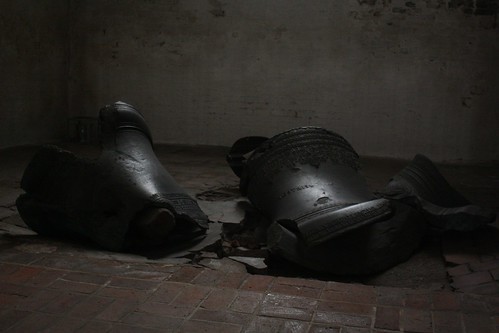
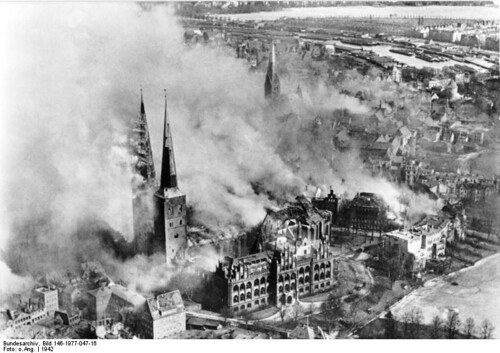
IMG_2641 Seeing these church bells in L beck wasn t easy for me. They melted and fell to the ground after an air raid in 1942, and have been left exactly as they fell. I wasn t alive in 1942, and even my parents hadn t yet been born. My grandfather was relocated by the American government because he refused to fight in the military for religious reasons. And yet, I still felt a sense of embarrassment, being an American standing there in Germany next to those bells. My country* did things like this. Why? Even if there s a war on, and whatever the other side may be doing, do we really have to bomb all their churches? Then, we went to the Dom (cathedral). It has a small gallery of photos of the destruction in 1942, and how it took 40 years to restore (though some original works are simply irreplaceable.) Burning L beck Cathedral after an air raid in 1942 I had just been walking through the beautiful Dom, and then saw pictures like that. It was very sad. I imagined the people in 1942, seeing the smoking remains of so many buildings that had been important to the town for centuries. Places where, no doubt, some of them worshiped, and their parents and grandparents had too. I imagined my sadness if a country bombed one of the churches that my ancestors helped start or build. I felt ashamed of what the democracy in which I live (and its allies) did to the Dom, to Marienkirche, and to the other churches and civilians there. Then, a few days ago, Wikileaks posted a video from an American helicopter in which our soldiers begged Come on, let us shoot! at people, most or all of which were completely unarmed. They killed a bunch of people. Then a van came to try to get the wounded to the hospital. Then the soldiers in helicopter killed those people, and wounded some children. Even if they thought their lives were in danger, I d expect to hear some quiet sadness at what they thought was a regrettable need to use force. Instead, you d hear them cheering whenever they killed someone, as if they had just won a round on some video game. They killed civilians, and considered it a fun experience and a mission accomplished. There was no sadness for knocking a man to the ground, leaving him writhing. Just jokes. There was no more care for human life here than there was 60 years ago. It saddens me that every year we celebrate our military on independence day celebrating its ability to kill, not its ability to feed. I wish that we could rather celebrate the times Americans have saved lives, whether in Berlin or in Port-au-Prince, or helped to topple dictatorships. Military power shouldn t be our first choice so often. L beck wasn t attacked for any strategic purpose; the British did it to destroy the morale of the enemy civil population , as the Americans did in Dresden or the Germans in London. In other words, those bells fell to the ground for no reason other than that they were German. People lost their lives for the same reason in Germany and in London. The British had no reason to believe that those civilians meant them any harm, that they were anything but caught between two strong powers. And the same held true in Iraq. When we went to Berlin, we walked through the replica of Checkpoint Charlie, with the big sign announcing that you are leaving the American sector. There is little positive to be said about the Cold War, but there is something the British and American military did of which I am not the least ashamed: the Berlin Airlift. Although I didn t see it, I feel a sense of the USA having been a force for good when I read about the Berlin Airlift Monument at Tempelhof, which has the names of the 70 British and American men that lost their lives in the airlift (due to accidents), above the inscription They gave their lives for the freedom of Berlin. That s the spirit I wish we d see more often in the world today: people giving their lives not just for their own security, but for strangers in need on a different continent. We Americans have been, compared to many countries in Europe, relatively sheltered from the ravages of war in our own midst. I wish that more of us would have the opportunity to gaze at fallen church bells, to wonder through a magnificent old church and then to see photos of it on fire, or to see a monument to our soldiers in a far away land. Perhaps then we could better learn from history, and see firsthand that some of our most positive contributions to the world have come in the form of coal and candy bars instead of incendiary devices. A small post script Many historic buildings or locations we saw in Germany had plaques on their exterior with a brief history, often in German and in English. I was interested to note that some (though not all) of these plaques had language such as destroyed by fire in 1942 , with no mention that the cause of the fire was a bombing. I was even more interested to note that same sort of description at several sites in Prague Castle, mentioning that the original building was lost in the fire of 1142. It was only on the third or fourth building in the Castle that we learned that the fire of 1142 was caused by a military siege of Prague Castle. * I know it was the British at L beck, but the Americans did similar things elsewhere. I also acknowledge that, at a macro level at least, the Berlin Airlift wasn t purely an altruistic act, as there were geopolitical factors in play. But I am speaking of the actions of the airmen here, who took on considerable risk to help others.

6 April 2010

Jonathan Yu: Google Summer of Code 2010

Last year, I had a great time participating in the Google Summer of Code with the Debian project. I had a neat project with some rather interesting implications for helping developers to package and maintain their work. It s still a work-in-progress, of course, as many projects in open source are, but I was able to accomplish quite a bit and am proud of my work. I learned quite a bit about coding in C, working with Debian and met some very intelligent people. My student peers were also very intelligent and great to learn from. I enjoyed meeting them virtually and discussing our various projects on the IRC channel as the summer progressed and the Summer of Code kicked into full swing. The Debian project in particular also helps arrange travel grants for students to attend the Debian Conference (this year, DebConf10 is being held in New York City!). DebConf provides a great venue to learn from other developers (both in official talks but also unofficial hacking sessions). As the social aspect is particularly important to Debian, DebConf helps people meet those with whom they are working with the most, thereby creating lifelong friendships and making open source fun. I have had several interviews for internships, and the bit of my work experience most asked about is my time doing the Google Summer of Code. I really enjoyed seeing a project go from the proposal stage, setting a reasonable timeline with my mentor, exploring the state of the art, and most importantly, developing the software. I think this is the sort of indispensible industry-type experience we often lack in our undergrad education. We might have an honours thesis or presentation, but much of the work in the Google Summer of Code actually gets used in the field. Developing software for people rather than for marks is significant in a number of ways, but most importantly it means there are real stakeholders that must be considered at all stages. Proposing brilliant new ideas is important, however, without highlighting the benefits they can have for various users, the reality is that it simply will not gain traction. Learning how to write proposals effectively is an important skill and working with my prospective mentor (at the time he later mentored my project once it was accepted) to develop mine was tremendously useful for my future endeavours. The way I see the Google Summer of Code is, in many ways, similar to an academic grant (and the stipend is about the same as well). It provides a modest salary (this year it s US$5000) but more importantly, personal contact with a mentor. Mentors are typically veterans in software development or the Debian project and act in the same role as supervisors for post-graduate work: they help monitor your progress and propose new ideas to keep you on track. The Debian Project is looking for more students and proposals. We have a list of ideas as well as application instructions available on our Wiki. As I will be going on internship starting May, I have offered to be a mentor this year. I look forward to seeing your submissions (some really interesting ones have already begun to filter in as the deadline approaches).
Filed under: Computer Science, Peer Relationships, Software Engineering Tagged: Computer Science, Debian, Google Summer of Code, Support

John Goerzen: Begin questioning my sanity NOW

It s been a long and wet winter here. We live down a dirt/sand/gravel road, and when it rains, it s difficult to get a car down the road due to mud. And impossible to get a bicycle down it. As a result, I ve only been able to ride my bicycle to work once since November, and that was in January. Last Thursday, I intended to ride in to work, but discovered my front tire wouldn t hold air. I had heard about a wonderful local bike repair shop, so I dropped off the wheel there. The owner replaced the tube and checked it out, and charged me, yes, $4 including labor and the tube. Nice. So today was my first ride of the season. I rode a total of 21.8 miles (35 km) today, which was probably unwise enough for being as out of shape as I am. It s 9.6 miles each way to work, plus I did some errands over lunch. But add to that the winds 30 MPH (48 kph) with gusts to 43 MPH (69 kph). This morning, they were weaker and also mostly at my back. This afternoon, though, they were mostly a vicious crosswind. If you ve bicycled much, you ll know that s less annoying than a headwind, but is still quite annoying and takes a lot more energy to battle than you might think. So, I am now rather sore. And the question is: will I be silly enough to do this again tomorrow? The answer to that probably depends on how late I stay up watching the Butler/Duke game tonight, as I have to get up an hour earlier on days that I bicycle to work. I found that the bicycle rack at work which, somewhat to my annoyance, was moved indoors last year has been rather disused. It is in a rather dusty and dirty part of our manufacturing shop, and there were large metal bins completely blocking the path to it, which I had to move before I could park my bike. Then, of course, it was the usual comments which I take with a smile about somebody that shows up to work wearing cycling shorts & shirt. It should be noted that I change into professional clothes at work. But my commute is too long to wear them on the way in and expect to be presentable, non-smelly, and pain-free. In any case, evidence that this may not have been the best day to start my commute: it hurts to sit at the moment.

5 April 2010

Maximilian Attems: "Little Bang" 0.94 initramfs-tools release

Heavy Ion collisions try to recreate conditions very shortly after the Big Bang. Thus the created quark gluon plasma is often the Little Bang, due to recreating this very hot conditions.
The kernel Team already uploaded the linux-2.6 Big Bang release now follows initramfs-tools with the Little Bang. ;-) Newer initramfs comes with lots of fixes and new features: Thanks for all the patches and useful input! Sorry for late release, will try to do it earlier more often and there is hope of an Ubuntu sync: view of initramfs-tools repo.
P.S.: cryptsetup needs fixup of #576488, udev can now start at a earlier stage of initramfs.

John Goerzen: Thougts about the Europe visit: Water

This is probably the only real surprising to an American post I ll be making, because it was the little thing that was most surprising. And that despite the fact that I had been warned:
Don t expect to get a glass of tap water at a restaurant or caf ; it s an unusual request that probably won t be understood or honoured. Lonely Planet Germany
Now, before I go on, I want to clarify that this post is NOT a complaint of what I saw in Germany and Prague; it s just a description of how it was surprising to these American eyes, and perhaps also a description of how the American approach such a mundane topic might be surprising to people from elsewhere. (Update: I want to clarify that I only visited 3 cities in Germany plus Prague. I don t want anybody to assume that I m making generalizations about the entire continent here, despite my title; I think the comments reflected that I didn t make this point clear enough. I lack data to draw much of any generalization at all; this is more of reporting on my experiences than anything else.) Utilitarian Water I noticed that the vast majority of toilets I saw in Germany and Prague are of the extremely water-saving variety, with an option for a small or a large flush. These toilets exist in the USA, but are still rather uncommon here. I was glad to see this attitude of conserving water. I was a bit surprised when I took a shower at our hotel in Berlin. Although that hotel was extremely environmentally-conscious in every other way including the toilets, light switches with RFID sensors and timers, etc the shower head was the most wasteful of water I had seen in quite a few years. I felt rather guilty of using so much water for a shower. But our hotel in Prague took shower heads to the next level. The shower head there was this huge square monstrosity, about a foot long on each side. I have never seen a shower head that big. It had a voracious appetite for water, too. Although it could be pointed in any direction, doing so was useless because, even at full blast, it was clearly getting not nearly enough water to propel the spray forward. It seems that this shower head needed special water-guzzling plumbing. But even without it, I felt even more guilty for showering in Prague. I suspect that I used more water for the two showers I took there than I would have over an entire week at home. I also very much suspect that this shower head would be illegal in the USA due to its water consumption. (I should note as an aside that the shower heads I saw in private homes were no different than American ones.) One thing I didn t see was lawn sprinklers. This may have been because there is less open grass in the places we visited, or perhaps because spring hadn t yet really hit. In any case, I wonder if our American habit of pumping water from deep beneath the ground, only to shoot it up in the air and spray it back on the ground again might appear a bit odd to others. Drinking Water In Restaurants We did a lot of walking in Europe, and sometimes we d have walked awhile to get to a restaurant. I really prefer water when I m thirsty, and ordered water with my meal at restaurants a few times. I stopped doing that, though. The presentation varied, but usually it went along these lines: they brought a glass bottle to the table, it cost EUR2 EUR5, and generally contained almost as much glass as water. The most impressive display of water was at a Berlin restaurant. I wanted some water, and so did Terah. So the waitress suggested we could share an EUR 4.90 bottle (0.75L). Sounds good, I guess although it s less water than you d get in a typical American bottle for one person, it seemed a lot by typical German restaurant standards. A few minutes later, our water arrived. It required the waitress to use a full tray to deliver our water and its, well, water accessories. First she carefully placed a frosted plastic water holder, precisely centered on the table between the two of us. Into this, she carefully placed the water bottle. It was, of course, made of glass, and also tall taller than most wine bottles, though containing less actual liquid. I am not yet sure of the purpose of the holder; it certainly wasn t to keep the water cold, as it was served warm. Perhaps they feared the bottle s impressive height acting as a sail and getting knocked over by a gentle breeze. In any case, next came our water glasses, which appeared to be exactly like wine glasses, but bore the logo of the company that bottled the water etched in the glass. After that, she picked the water bottle back up out of the holder, carefully opened it (it was just a regular twist-off lid), and then poured water into each of our glasses. She was careful not to have even a drop run down the side of the bottle, and filled each glass precisely 2/3 full. The glasses were, of course, positioned carefully on the table, and the bottle of water returned to its place of honor within the water bottle holder. This process consumed most of the small quantity of actual water in the bottle. I do believe that is the most elaborate presentation of a small amount of good ole H2O I have ever witnessed. It was made with the kind of care I would expect to be shown to someone that had just bought a $100 bottle of wine, not a EUR5 bottle of water. We had walked a mile (1.6 km) to get to that restaurant, and I was indeed a bit thirsty. I wasn t sure I wanted to drink all of my tiny quantity of water presented so elaborately all at once, so I had a sip of the beer I had the good sense to order along with the water. The beer, incidentally, cost roughly the same per liter as the water and was simply plonked down on the table with a complete lack of fanfare. Sadly, beer is not really very good for quenching thirst, due to its diuretic effects over time. Another surprise came at a restaurant in Prague. It appeared to have the typical prices for water, so I ordered a local Czech orange soda to drink. It, like the water, was served in a smallish glass bottle. In any case, I ordered a traditional Czech goulash to be served in a bread bowl, while Terah ordered some ribs. The waiter took our orders and menus, and returned a minute later bearing a bowl full of water and a lemon slice. This he put next to me, and announced, wash for you. My reaction was: Hmmm. This is different. (Which is why we went to Europe, after all!) What is this for? Did he think my hands looked dirty and needed to be washed before eating? Or did he think I would get them dirty while eating, and somehow fail to use my napkin? It turned out that the use of it became clear. I ate the goulash using the supplied spoon, but the bread bowl it was served in was of course edible too. It turns out it is pretty much impossible to eat a bread bowl that had contained a stew without getting your hands dirty, and the wash turned out to be quite practical and useful. It was free to wash my hands in, but I m sure would have cost EUR5 had I wanted to drink it. Drinking Water American Restaurants Some of you reading this may never have experienced water in an American restaurant, so allow me to explain. In a typical American restaurant, water is free and comes with unlimited refills. Americans generally think of water as healthy (and our doctors and government medical experts urge us to drink plenty of it), and water in a restaurant is a good way to save money while dining. It would generally be considered questionable service if your glass of water at a restaurant got less than half full, and really quite bad service if it sat empty for more than a minute or two. A waiter at an American restaurant will typically go around with a pitcher of ice water. If your large water glass isn t completely full, the waiter will pick it up and step a few steps back from the table before filling it from the pitcher. The waiter will then dump water and ice from the pitcher into it, usually overflowing the top such that some water and ice spills on the floor (so now you see the point of stepping back from the table). The glass will then be returned to your table, wet sides and all. It will be completely full, so you have to be careful not to spill when you take your first sip. The fancier or more expensive American restaurants will offer a version of this, though without the spilling on the floor part. Usually at one of these restaurants, you ll automatically get water set out for you when you arrive. This is free, and if you order another beverage, you ll still keep your water. (Though at any restaurant, it would be quite acceptable to order water along with your other beverage.) Needless to say, this water is coming from a faucet, not some glass bottle, but I m fine with that. A few American restaurants have bottled water on the menu, but I can t recall ever seeing somebody with one in a restaurant. Drinking Fountains Drinking fountains are common in the United States. They provide free tap water to anyone. You can find them near almost any public restroom, whether indoors or outdoors. You can also find them in virtually every park, along some walkways or bicycle routes, in airports and train stations, and even in museums. They re so common that I rarely even think about being able to find water in a city if I m thirsty. Often you ll find them installed in groups of two or three, with one at a lower height so as to be usable by children or adults in wheelchairs, and another at a regular height. Many indoor ones even contain integrated chillers to make the water cold (which, sadly, probably more than negate the environmental benefits of water fountains.) I saw exactly two drinking fountains in Europe, and I can say I got a drink at 100% of the drinking fountains I saw there. One was in the Hamburg airport, but notably it was at the place where you wait to have them check your passport. So you can use a drinking fountain in Hamburg, but apparently you must do so before you have officially entered Germany. The other one was in the Prague airport. It was in an out-of-the-way corner, on the lowest level, by the gates for the people that are flying out on the small planes. Which we were. Above it was a placard bearing a icon indicating that this was, in fact, a drinking fountain and how to use it. I was surprised at the need for the icon at first, but less so after I observed a man walk by, glance at the fountain, and wash his hands in it (rather than do so at a sink in the restroom 5 feet away). As a result, we were sometimes a bit thirsty in Germany. By the time we got to Leipzig, we realized what was going on and bought a Coke bottle which we could refill from the tap water in restrooms as we went along. (This we kept until it was confiscated at a museum in Prague). I didn t see many Germans carrying around bottles of water, but it was still cold, so it s possible they were but were in a coat or bag. I was left with the somewhat unwarranted conclusion that some Germans must be either always slightly dehydrated, carrying around hidden bottles of water, or paying EUR2 for a small plastic bottle of water all the time. In the USA, we do have bottled water. Among people that care about such things, there are certain people that drink only from bottled water as much as possible, and then there are other people that view bottled water as exceptionally expensive and an environmental catastrophe and avoid it as much as possible. I m part of that latter group. I ve noticed that statistics show that Germans consume more bottled water per capita than Americans do, which is not really a surprise given what I observed. Conclusions Part of the reason I wanted to go to Europe was to experience different approaches to things, and we surely did. I didn t expect it to lead to a blog post about something as mundane as water, but here it has. I ve got to say I like the overall attitude of water conservation in Germany, which seems to have gone further than it has in the USA. I also like the system of water fountains we have in the USA, which also helps the environment by reducing demand for plastic water bottles. The wash for me in Prague was just great. One of those moments where I was completely surprised (and in a good way) by something. (I m just glad the waiter spoke a bit of English, because I wouldn t have figured it out at all otherwise.) In the end, part of the fun of traveling is learning about these differences. So next time, we ll just plan on finding a bottle to carry around at the start of our trip, and then thirst won t be a problem. Perhaps I ll even try washing my hands in a drinking fountain.

4 April 2010

Russell Coker: Health and Status Monitoring via Smart Phone

Health Monitoring Eric Topol gave an interesting TED talk about wireless medical monitoring devices [1]. The potential for helping diabetics and other people who need ongoing treatment is obvious as is the potential for helping pregnant women and other people who might suddenly need medical treatment at short notice. One significant positive potential for this is integration with multiple services. For example Eric s talk showed a graph of sleep levels on a mobile phone, the deep sleep (which is apparently the most restorative) was shown in sections that were significantly less than one hour in duration. I often receive SMS messages about network problems during the night, the vast majority of them aren t that important and can be delayed without any problem. If my phone could determine that I was in deep sleep and delay sending me a NAGIOS report for up to 30 minutes then it would help me sleep while not making any significant impact on my work in repairing server problems it s not as if I would be immediately productive if woken from deep sleep anyway. Status and Attention Monitoring Eric Horvitz, Carl Kadie, Tim Paek, and David Hovel of Microsoft Research wrote an interesting paper titled Models of Attention in Computing and Communication: From Principles to Applications [2]. In that paper they describe various methods for tracking user attention and filtering messages so that the user won t be needlessly distracted by unimportant messages when they are busy. The next logical step is to integrate that with a smart phone (maybe Android would be good for this) to screen calls, unknown callers could be automatically directed to voice-mail and known good callers could be given an automated prompt as to whether they think that their call is important enough to be worth the distraction. It seems to me that combining health and status monitoring would be the sensible thing to do. If a bio-sensor array indicates that someone is more stressed than usual then decreasing their availability for phone calls would make sense. It would also be trivial to analyse calls and determine which callers are likely to cause stress and block their calls at inconvenient times. What we Need Of course there are lots of security implications in this. Having multiple networked devices tracking and collating information on health and all activity (including video-monitoring in the Microsoft model) has a lot of potential for malicious use. This is one of many reasons that we need to generally improve computer security. We also need to have free software implementations of such things. We don t want Microsoft to get a monopoly on status monitoring. Also it seems that smart Nike shoes that can work with the iPhone [3] are the leading mass-market implementation of health monitoring, everything related to health-care should be as open as possible. I m happy for Nike to make their own special products, but we need to have them work with open systems and make the data available as widely as possible. There is the real potential for people to needlessly die if health data is not available in open formats! According to the Wikipedia page Nike has been shipping products using a proprietary 2.4GHz wireless network since 2006 [4], it would be a really good hardware project to devise a way of making compatible sensors and readers. We also need some free software for monitoring the user status to avoid interrupting them. Finally we need some software to integrate all the data. Canonical s Desktop Experience team are doing some interesting work on managing desktop notifications that will be in Ubuntu Lucid [5], they appear to have some basic support for masking notifications based on priority. Please keep up the great work Canonical people, and please consider working on advanced status monitoring next!

Andreas Barth: RFH: Release Team

The next Debian release needs help. Releasing Debian is a community effort, only we together can make it happen. What needs to be done is mostly one of: If any of the above lists seem suited to you, but you are missing the required rights to do so, please don't hesitate to contact us. And if we notice someone does always the right things, we're keen ourselves to make sure we don't need touch every request unnecessarily. Whatever you do: Write about what you achived. Coordinate with others in time. Have fun!

3 April 2010

Joerg Jaspert: Fun with broken hardware

As you might have read, one of Debians slightly important machines had some hardware trouble. Before I get into more details of this story, let me say thank you to all the people who worked on this issue: - The DSA (Debian System Administrators) team, - the local admins at Brown University Computer Science department. I intentionally leave out the HP support here, I think their work in this issue was pretty suboptimal. While they do follow a certain schema, it took a bit long and the stunt with the technician not finding the replacement board and later on leaving without further notice wasn t all that great. (Update: Just to clarify this: In general we are happy with HP and the hardware and relationship and all that stuff. And usually the support works pretty well, like for all the times we had to replace broken disks.) Now, the story. This all started by us noticing something in ries kernel output telling about some trouble with the ram:
ries kernel: [168074.392016] Northbridge Error, node 0, core: -1
ries kernel: [168074.392186] K8 ECC error.
This was first noticed somewhere at the beginning of January. A DSA member then used the usual HP tools to check whats up, none of it reported an error. There wasn t much of an option left besides waiting what happens in the future. No support would do anything here. Until March we did not have any trouble. But at the 14th of March this changed, as the HP tools now found a serious error, reporting Status: DIMM is degraded for the third DIMM module. A support ticket was opened at this point and a replacement DIMM got sent out. Unfortunately the well known Mr. Murphy did look at this issue and so the wrong thing was sent out to the wrong place. Countdown continued and 10 days later the host decided to randomly lockup. And as HP servers have an Automatic Server Reset function in such cases, the whole machine rebooted. Not only once. Guess how much a filesystem likes such things when the machine is active. And for added fun a second DIMM got reported as broken, we now had DIMM #3 and #4 gone off. A certain ping-pong with HP support later we asked the local admins to take out the broken DIMMs and then also to change the order in which the remaining DIMMs are arranged. Unfortunately this did not help, the errors stayed. At this time we already turned off the services running on the machine and it mostly waited in the HP Insight Diagnostics test from HPs SmartStart CD. (And it always locked itself at 97% here). The support asked us to try another round of work on the machine, which our DSA team and the local admins did. But as it already was the 30th of March and nothing helped, our DSA got a little more direct in asking for a working solution. Like replacing the board and sending a technician to look and fix the machine. This was scheduled for the 1st of April, but turned out to not work as hoped. For some reason the technician was not able to find the board that was sent as replacement (no fault of our local admins!), so nothing happened the 1st of April except us getting a little upset. DSA communicated this to HP support, asking for escalation and finally getting this fixed. Our local admins could at last greet a HP technician on the 2nd of April then and he even had the replacement board with him, so he did his work there. He also confirmed that the two DIMMs mentioned above are faulty. For some reason he did not replace them, but left them outside of the machine. He also left the place without telling the Brown CS staff, so it wasn t the best performance he made. Fortunately the machine was in a working state again, only missing 2 of its DIMMs, 4Gb RAM. This has to be replaced by HP in the next days. When the Brown CS staff found out the technician left without notice they enabled our DSA to access the ilo of the machine again, so they could get the machine back up. Of course the first run was the HP SmartStart stuff again, running a full test. It reported no error, pheeew. There had been a few more steps in getting the settings of the ilo correct again and running a full filesystem check on it, but somewhere in the night the machine was back up and ready for us FTPMasters and Release team to get the services back. As the machine was back up in the middle of the night where I was sleeping, I did start my work somewhere this morning. At 10:25 CEST this started with a md5sum check of all files we have in our pool/ structure, ie. the Debian archive. We had 655k files to check, so it naturally took a while. Luckily we only found 32 broken files. Even better a set of them is already fixed, the rest of them is easily fixable with a set of binnmus the buildd people helpfully schedule, so not too much work involved in fixing this issue. Could have been worse. (Actually, when the first reboots happened, before the long downtime, we also had some broken logfiles, unreadable changes files and such things. But those I already fixed back then). More or less in parallel to the md5sum check we also started the queue daemons again, to let our upload queues from the other hosts forward their files to the central queue on ftp-master, tested the triggers to the new buildd peoples machine and the release team did a britney run. This took the first 5 hours (and a bit) of the process. As a second step, and we are still in this, we started the processing of the incoming queue. Turned out we have to process 10gigabytes of new uploads, in a total of 1285 uploads. This process is still running at the time I write this blog post, having processed about 1100 uploads. A good 9 til 10 hours run, but this was expected. I actually thought it will take even longer. When this is done I will go and have a manual dinstall run. That is, I will run every action a dinstall is usually doing by hand. And verify each step. Usually dinstall takes some 2 hours, manually it can take a bit more. Somewhere during this run a mirror push will also be done, a fairly huge one this time, with all those updates. When this all works I will turn on FTPMaster cronjobs after this dinstall, or at latest tomorrow morning, as usual, and service is back as usual. As far as I know the release team plans to turn on their cronjobs tomorrow morning too, so this will all be nice then. Apropos release: Please note what I wrote in my latest d-d-a mail:
As a sidenote from me: If you have a package that might be involved in
whatever transition to testing, or simply might get involved, it could
really help if you wait a day or two with the next upload, so the
release team can sort through all before you give them new trouble. If
in doubt, try mailing debian-release@lists.debian.org and ask. :)
So, thats it, enough annoyance with all those status bits here and there. I go leave you alone now. :)

30 March 2010

David Welton: Where Tcl and Tk Went Wrong

I've been pondering this subject for a while, and I think I'm finally ready to write about it.
Tcl was, for many years, my go-to language of choice. It's still near and dear to me in many ways, and I even worked on a portion of a book about it ( http://journal.dedasys.com/2009/09/15/tcl-and-the-tk-toolkit-2nd-edition ). However, examining what "went wrong" is quite interesting, if one attempts, as much as possible, a dispassionate, analytical approach that aims to gain knowledge, rather than assign blame or paper over real defects with a rose-colored vision of things. It has made me consider, and learn, about a variety of aspects of the software industry, such as economics and marketing, that I had not previously been interested in. Indeed, my thesis is that Tcl and Tk's problems primarily stem from economic and marketing (human) factors, rather than any serious defects with the technology itself. Before we go further, I want to say that Tcl is not "dying". It is still a very widely used language, with a lot of code in production, and, importantly, a healthy, diverse, and highly talented core team that is dedicated to maintaining and improving the code. That said, since its "heyday" in the late 90ies, it has not ... "thrived", I guess we can say. I would also like to state that "hindsight is 20-20" - it's easy to criticize after the fact, and not nearly so easy to do the right thing in the right moment. This was one reason why I was reticent to write this article. Let me repeat that I am writing it not out of malice or frustration (I went through a "frustrated" phase, but that's in the past), but because at this point I think it's a genuinely interesting "case history" of a the rise and gentle decline of a widely used software system, and that there is a lot to be learned. At the height of its popularity, Tcl was up there with Perl, which was the scripting language in those days. Perl, Tcl, and Python were often mentioned together. Ruby existed, but was virtually unknown outside of Japan. PHP was on the rise, but still hadn't really come into its own. Lua hadn't really carved out a niche for itself yet, either. Tcl is no longer one of the popular languages, these days, so to say it hasn't had problems is to bury one's head in the sand: it has fallen in terms of popularity. To examine what went wrong, we should probably start off with what went right: These features led to Tcl being widely used, from Cisco routers to advanced television graphics generation programs to the AOLserver web server, which was busy serving out large quantities of dynamic web pages when many of us were still fiddling around with comparatively slow and clunky CGI programs in Perl. Note also that there have been a lot of cool things to have gone into Tcl in the mean time. It has a lot of impressive features; many more than most people realize, and has had a lot of them for a while. Check out http://www.tcl.tk to learn more about the "good stuff". But that's not the point of this article... There was a healthy, active community of developers producing lots of interesting add-ons for the language, and working on the language itself. This culminated in its adoption by Sun Microsystems, which hired the language's creator, Dr. John Ousterhout, and a team of people, who added a lot of great features to the language. Quoting from Ousterhout's history of Tcl page:

The additional resources provided by Sun allowed us to make major improvements to Tcl and Tk. Scott Stanton and Ray Johnson ported Tcl and Tk to Windows and the Macintosh, so that Tcl became an outstanding cross-platform development environment; Windows quickly came to be the most common platform. Jacob Levy and Scott Stanton overhauled the I/O system and added socket support, so that Tcl could easily be used for a variety of network applications. Brian Lewis built a bytecode compiler for Tcl scripts, which provided speedups of as much as a factor of 10x. Jacob Levy implemented Safe-Tcl, a powerful security model that allows untrusted scripts to be evaluated safely. Jacob Levy and Laurent Demailly built a Tcl plugin, so that Tcl scripts can be evaluated in a Web browser, and we created Jacl and TclBlend, which allow Tcl and Java to work closely together. We added many other smaller improvements, such as dynamic loading, namespaces, time and date support, binary I/O, additional file manipulation commands, and an improved font mechanism. Unfortunately, after several years, Sun decided that they wanted to promote one and only one language. And that language was Java. So Ousterhout and many people from his team decamped to a startup that Ousterhout founded, called Scriptics, where the Tcl and Tk innovations continued:

In 1998, Scriptics made several patch releases for Tcl 8.0 to fix bugs and add small new features, such as a better support for the [incr Tcl] extension. In April 1999, Scriptics made its first major open source release, Tcl/Tk 8.1. This release added Unicode support (for internationalization), thread safety (for multi-threaded server applications), and an all-new regular expression package by Henry Spencer that included many new features as well as Unicode support.
However, as many a company based around open source was to find later, it's a tough space to be in. Scriptics changed its name to Ajuba, and was eventually sold (at a healthy profit, apparently, making it a relative dot com success story, all in all) to Interwoven, for the "B2B" technology that Ajuba had developed. Interwoven was not interested in Tcl, particularly, so, to create a system for the ongoing development and governance of the language, the "Tcl Core Team" was created. This was something of a blow to Tcl, but certainly not fatal: Perl, Python, Ruby, PHP, Lua have all had some paid corporate support, but it has by no means been constant, or included large teams. At the same time in the late 90ies, open source was really starting to take off in general. Programmers were making all kinds of progress, and had begun to make Linux into what is today the world's most widely used server platform, and laying the groundwork for the KDE and Gnome desktops. While these may still not be widely used, they are for the most part very polished systems, and leaps and bounds better than what passed for the 'Unix desktop' experience in the 90ies. One of the key bits of work that was added to Tk was to make it look pretty good on Microsoft Windows systems. This was in an time when the "enterprisey" folks were turning away from Unix in the form of AIX, Solaris, HPUX, et al. and taking up NT as the platform of choice, so it was in some ways sensible to make Tk work well there, and in any case as a cross platform GUI toolkit, it ought to work well there in any case. And, on the Unix side, Tk emulated the expensive, professional Motif look and feel that serious Unix programmers used. What could go wrong? As Gnome and KDE continued to mature, though, what would become one of Tk's major (in my opinion) marketing blunders took root. I have it on good authority, from someone who was there in the office, that the Scriptics guys working on Tcl and Tk viewed Gnome and KDE (and the Gtk and Qt toolkits) as not really worth their while. To be fair, since Tk has always been under a liberal BSD style license, the Qt toolkit has always been "off limits". Still, though, the attitude was that Tk was a standalone system, and since it ran on pretty much any Unix system, it didn't need to bother with Gnome or KDE. Gradually, though, as more and more people used Gnome and KDE exclusively on Linux, the Tk look and feel began to look more and more antiquated, a relic from the 1990ies when Motif (which has since pretty much disappeared) was king. Tk applications started to really stand out by not looking at all like the rest of the operating system. And, while Linux may not be responsible for a vast portion of the world's desktops, it is widely used by developers, who were turned off by the increasingly creaky look of the Tk applications they saw. Tk is and was actually a fairly flexible system, and it would have been possible to tweak the look and feel to make it look a bit better on Linux, without even doing any major work. Maybe not perfect, but certainly better looking. Nothing happened, though. Another problem was that Tk and Tcl made it so easy to create GUIs that anyone could, and did, despite, in many cases, a complete lack of design skills. You can't particularly blame the tools for how they're used, but there was certainly a cultural problem: if you read most of the early Tcl and Tk books, and even many of the modern ones, there are hundreds of pages dedicated to exactly how to use Tk, but few to none explaining even basic user interface concepts, or even admonitions to the user to seek out that knowledge prior to attempting a serious GUI program. The end result is that a lot of Tk programs, besides just looking "old fashioned" had fairly poor user interfaces because they were made by programmers who did not have a UI/design culture. Contrast that with Gnome and KDE, which have made a point of focusing on how to make a good GUI for their systems, complete with guidelines about how applications should behave. It may have taken them some time to get things right, but they have done a lot to try and instill a culture of creating high quality, well-integrated GUI's that are consistent with the system where they run. Lately, there has been a lot of work to update the Tk look and feel, and it has finally started to bear fruit. However, in terms of marketing, the damage has already been done: the image of "old, crufty Tk" has been firmly planted in countless developers' minds, and no amount of facts are going to displace it in the near future. Another problem Tcl faced, as it grew, was the tug-of-war between those wishing to see it small, light, and easy to distribute embedded within some other program, and those wishing it to become a "full-fledged" programming language, with lots of tools for solving every day programs. Unfortunately, that tug of war seems to have left it somewhere in the middle. Lua is probably more popular these days as an embedded language, because it is very small, and very fast, and doesn't have as much "baggage" as Tcl. Meaning, of course, that it doesn't do as much as Tcl either, but for a system where one merely wishes to embed a scripting language, without much 'extra stuff', Tcl's extra functionality is perhaps a burden rather than a bonus. On the other hand, while Perl was happily chugging along with their CPAN system for distributing code, giving users easy access to a huge array of add-on functionality, and Python was building up a "batteries included" distribution, that included a lot of very useful software straight out of the box. Tcl, on the other hand, chose to keep the core distribution smallish, and only lately has got some semblance of a packaging and distribution system, that is, however, run by ActiveState, and is (at least according to a cursory glance at the Tcl'ers wiki), not even fully open source. The lack of a good distribution mechanism, and, in the meantime, eschewing a larger, batteries-included main distribution left Tcl users with a language that, out of the box, did significantly less than the competition. Technically, a Python style "big" distribution would not have been all that difficult, so once again, I think this is a marketing problem: a failure of the Tcl Core Team to observe the "market", assess what users needed, and act on it in a timely manner. Somewhat related to the large Tcl vs small Tcl issue was one particular extension, or extensions to the language that was noticeably absent: a system for writing "object oriented" code. Tcl, at heart, will never be an OO language through and through, like Ruby or Smalltalk, but that doesn't mean that an OO system for it is not a useful way of organizing larger Tcl systems. Indeed, Tcl's syntax is flexible enough that it's possible to write an OO system in Tcl itself, or, optimizing for speed, utilizing the extensive C API in order to create new commands. Over the years, a number of such systems have arisen, the most well-known being "Incr Tcl" (a play on the incr command, which is akin to += 1 in languages like C). However, none of these extensions was ever included with the standard Tcl distribution or somehow "blessed" as the official OO system for Tcl. This meant that a newcomer to Tcl wishing to organize their code according to OO principles had to pick a system to use from several competing options. And of course, newcomers are the least able to judge a complex feature like that in a language, making it a doubly stressful choice. Furthermore, even experienced Tcl programmers who wanted to share their code could not utilize an OO system if they wanted their code to work with just standard Tcl. Also, if their code had a dependancy on some OO system, it would require the user to download not only the extension in question, but the OO system it was built on, which, naturally, might conflict with whatever OO system the user had already selected! As of Tcl 8.6, thanks to the work of Donal Fellows, Tcl is finally integrating the building blocks of an OO system in the core itself, but this effort is probably something like 10 years too late. Some other more or less minor things that have taken too long to get integrated in the Tcl or Tk distributions include the PNG format (still not there in a production release of Tcl), a readline-based command line (Tkcon is nice, but not a replacement for simply being able to type "tclsh" and get a nice, functional shell like Python, Ruby and most other languages have. This could easily lead to a bad first experience for someone trying out Tcl). Tcl also took too long to integrate a first-class hash type (accessed with the 'dict' command), which only appeared in 8.5. Its "arrays" aren't bad, but don't quite have the full power of a hash table as dict implements them. Once again, the code to do these things was/is out there, it has just been a matter of integrating it into Tcl and Tk, which has been a slow process. One actual technical problem that Tcl faces is the concept that all values must be representable as a string. This is more or less ok for things like lists, hash tables or numbers, but is problematic when the user wishes to represent a value that simply isn't a string. A basic example is a file handle, which at the C API level is a FILE*. How does Tcl get around this? It keeps an internal hash table with a Tcl-script accessible string, such as "file5" that points to a FILE * value that is used internally by file commands. This works pretty well, but there is a big "but": since you can compose a string like "file5" at any time, that must be able to access the actual file pointer, you can't do any sort of "garbage collection" to determine when to clean things up automatically. Other languages have explicit references to resources, so the program "knows" when a resource is no longer referenced by the rest of the program, and can clean it up. Therefore, the programmer must explicity free any resources referenced this way. This explanation is simplifying things somewhat, but it is something I view as a technical problem with Tcl. If you've been following along, you've noticed a lot of "these days" and "recently". That's because Tcl is still very actively developed, with a lot of new ideas going into it. However, if you look at the release dates, it seems that after Ajuba was sold off, and Ousterhout pretty much abandoned an active role in the language for good, placing it in the hands of the Tcl Core Team, there was a lull in the momentum, with Tcl 8.5 taking 5 years to be released. This is actually, in my opinion, an interesting phenomenon in languages: you risk hitting some kind of local maximum when your language is popular enough to have a lot of users who will be angry if things are changed or accidentally broken in the course of big upheavals. So you have to slow down, go carefully, and not rock the boat too much. On the other hand, there is an opportunity cost in that newer languages with less to lose can race ahead of you, adding all kinds of cool and handy new things, or simply fix and remove "broken" features. Erlang is another system that has, in my opinion, suffered from this problem to some degree, but this article is long enough already! Once again, though, not really a technical issue, but a problem with how the code was managed (and not an easy one to solve, at that). A Tcl failure that I was personally involved with was the web infrastructure. What went on to become Apache Rivet was one of the first open source Apache/Tcl projects, and was actually quite a nice system: it was significantly faster than PHP, and of course made use of Tcl, which at the time had a large library of existing code, and could be easily repurposed for projects outside the web (or the other way around: non-web code could be brought in to a web-based project). One thing I ought to have done differently with the Apache Rivet project was listen to the wise advice of Damon Courtney, my "partner in crime" on the project, who wanted to see Apache Rivet have a fairly "fat" distribution with lots of useful goodies. Rails and Django, these days, have shown that that's a sensible approach, rather than relying on lots of little extensions that the user has to go around and collect. The code was out there, I should have helped make Rivet do more "out of the box". A problem that is and it isn't: the syntax. Tcl's syntax is amazingly flexible. Since everything is a command, you can write new commands in Tcl itself - and that goes for control structures, too! For instance, Tcl has a "while" command, but no "do ... while". It's very easy to implement that in Tcl itself. You simply can't do that in most "everyday" languages. However, this comes at something of a "cost". The syntax, for your average programmer who doesn't want to go too far out of their comfort zone, is perhaps a little bit further afield from the C family of languages than they would prefer. Still though, a "human" problem, rather than a technical one. Perhaps, sadly, the message is that you'd better not "scare" people when introducing a new language, by showing people something that doesn't look at least a little bit familiar. Conclusions? First and foremost, that, gradually, Tcl and Tk continue to be improved. However, if one visits developer forums, there are also a lot of negatives associated with the Tcl and Tk "brands", and I am not sure if it will be possible to rectify that. So what can we learn from the rise and subsequent "stagnation" of Tcl?

Next.

Previous.