Search Results: "bod"

5 August 2014

Simon Josefsson: Replicant 4.2 0002 and NFC on I9300

I m using Replicant on my Samsung SIII (i9300) phone (see my earlier posts). During my vacation the Replicant project released version 4.2-0002 as a minor update to their initial 4.2 release. I didn t anticipate any significant differences, so I followed the installation instructions but instead of wipe data/factory reset I chose wipe cache partition and rebooted. Everything appeared to work fine, but I soon discovered that NFC was not working. Using adb logcat I could get some error messages:
E/NFC-HCI ( 7022): HCI Timeout - Exception raised - Force restart of NFC service
F/libc    ( 7022): Fatal signal 11 (SIGSEGV) at 0xdeadbaad (code=1), thread 7046 (message)
I/DEBUG   ( 1900): *** *** *** *** *** *** *** *** *** *** *** *** *** *** *** ***
I/DEBUG   ( 1900): Build fingerprint: 'samsung/m0xx/m0:4.1.1/JRO03C/I9300XXDLIB:user/release-keys'
I/DEBUG   ( 1900): Revision: '12'
I/DEBUG   ( 1900): pid: 7022, tid: 7046, name: message  >>> com.android.nfc <<<
The phone would loop trying to start NFC and having the NFC sub-system die over and over. Talking on #replicant channel, paulk quickly realized and fixed the bug. I had to rebuild the images to get things to work, so I took the time to create a new virtual machine based on Debian 7.5 for building Replicant on. As a side note, the only thing not covered by Replicant build dependency documentation was that I needed the Debian xmllint package to avoid a build failure and the Debian xsltproc package to avoid a error message being printed in the beginning of every build. Soon I had my own fresh images and installed them and NFC was working again, after installing the non-free libpn544_fw.so file. During this, I noticed that there are multiple libpn544_fw.so files floating around. I have the following files:
version string source
libpn544_fw_C3_1_26_SP.so internet
libpn544_fw_C3_1_34_SP.so stock ROM on S3 bought in Sweden during 2013 and 2014 (two phones)
libpn544_fw_C3_1_39_SP.so internet
(For reference the md5sum's of these files are 682e50666effa919d557688c276edc48, b9364ba59de1947d4588f588229bae20 and 18b4e634d357849edbe139b04c939593 respectively.) If you do not have any of these files available as /vendor/firmware/libpn544_fw.so you will get the following error message:
I/NfcService( 2488): Enabling NFC
D/NFCJNI  ( 2488): Start Initialization
E/NFC-HCI ( 2488): Could not open /system/vendor/firmware/libpn544_fw.so or /system/lib/libpn544_fw.so
E/NFCJNI  ( 2488): phLibNfc_Mgt_Initialize() returned 0x00ff[NFCSTATUS_FAILED]
E/NFC-HCI ( 2488): Could not open /system/vendor/firmware/libpn544_fw.so or /system/lib/libpn544_fw.so
W/NFCJNI  ( 2488): Firmware update FAILED
E/NFC-HCI ( 2488): Could not open /system/vendor/firmware/libpn544_fw.so or /system/lib/libpn544_fw.so
W/NFCJNI  ( 2488): Firmware update FAILED
E/NFC-HCI ( 2488): Could not open /system/vendor/firmware/libpn544_fw.so or /system/lib/libpn544_fw.so
W/NFCJNI  ( 2488): Firmware update FAILED
E/NFCJNI  ( 2488): Unable to update firmware, giving up
D/NFCJNI  ( 2488): phLibNfc_Mgt_UnConfigureDriver() returned 0x0000[NFCSTATUS_SUCCESS]
D/NFCJNI  ( 2488): Terminating client thread...
W/NfcService( 2488): Error enabling NFC
Using the first (26) file or the last (39) file does not appear to be working on my phone, I get the following error messages. Note that the line starting with 'NFC capabilities' has 'Rev = 34' in it, possibly indicating that I need the version 34 file.
I/NfcService( 5735): Enabling NFC
D/NFCJNI  ( 5735): Start Initialization
D/NFCJNI  ( 5735): NFC capabilities: HAL = 8150100, FW = b10122, HW = 620003, Model = 12, HCI = 1, Full_FW = 1, Rev = 34, FW Update Info = 8
D/NFCJNI  ( 5735): Download new Firmware
W/NFCJNI  ( 5735): Firmware update FAILED
D/NFCJNI  ( 5735): Download new Firmware
W/NFCJNI  ( 5735): Firmware update FAILED
D/NFCJNI  ( 5735): Download new Firmware
W/NFCJNI  ( 5735): Firmware update FAILED
E/NFCJNI  ( 5735): Unable to update firmware, giving up
D/NFCJNI  ( 5735): phLibNfc_Mgt_UnConfigureDriver() returned 0x0000[NFCSTATUS_SUCCESS]
D/NFCJNI  ( 5735): Terminating client thread...
W/NfcService( 5735): Error enabling NFC
Loading the 34 works fine.
I/NfcService( 2501): Enabling NFC
D/NFCJNI  ( 2501): Start Initialization
D/NFCJNI  ( 2501): NFC capabilities: HAL = 8150100, FW = b10122, HW = 620003, Model = 12, HCI = 1, Full_FW = 1, Rev = 34, FW Update Info = 0
D/NFCJNI  ( 2501): phLibNfc_SE_GetSecureElementList()
D/NFCJNI  ( 2501): 
D/NFCJNI  ( 2501): > Number of Secure Element(s) : 1
D/NFCJNI  ( 2501): phLibNfc_SE_GetSecureElementList(): SMX detected, handle=0xabcdef
D/NFCJNI  ( 2501): phLibNfc_SE_SetMode() returned 0x000d[NFCSTATUS_PENDING]
I/NFCJNI  ( 2501): NFC Initialized
D/NdefPushServer( 2501): start, thread = null
D/NdefPushServer( 2501): starting new server thread
D/NdefPushServer( 2501): about create LLCP service socket
D/NdefPushServer( 2501): created LLCP service socket
D/NdefPushServer( 2501): about to accept
D/NfcService( 2501): NFC-EE OFF
D/NfcService( 2501): NFC-C ON
What is interesting is, that my other S3 running CyanogenMod does not have the libpn544_fw.so file but still NFC works. The messages are:
I/NfcService( 2619): Enabling NFC
D/NFCJNI  ( 2619): Start Initialization
E/NFC-HCI ( 2619): Could not open /system/vendor/firmware/libpn544_fw.so or /system/lib/libpn544_fw.so
W/NFC     ( 2619): Firmware image not available: this device might be running old NFC firmware!
D/NFCJNI  ( 2619): NFC capabilities: HAL = 8150100, FW = b10122, HW = 620003, Model = 12, HCI = 1, Full_FW = 1, Rev = 34, FW Update Info = 0
D/NFCJNI  ( 2619): phLibNfc_SE_GetSecureElementList()
D/NFCJNI  ( 2619): 
D/NFCJNI  ( 2619): > Number of Secure Element(s) : 1
D/NFCJNI  ( 2619): phLibNfc_SE_GetSecureElementList(): SMX detected, handle=0xabcdef
D/NFCJNI  ( 2619): phLibNfc_SE_SetMode() returned 0x000d[NFCSTATUS_PENDING]
I/NFCJNI  ( 2619): NFC Initialized
D/NdefPushServer( 2619): start, thread = null
D/NdefPushServer( 2619): starting new server thread
D/NdefPushServer( 2619): about create LLCP service socket
D/NdefPushServer( 2619): created LLCP service socket
D/NdefPushServer( 2619): about to accept
D/NfcService( 2619): NFC-EE OFF
D/NfcService( 2619): NFC-C ON
Diffing the two NFC-relevant repositories between Replicant (external_libnfc-nxp and packages_apps_nfc) and CyanogenMod (android_external_libnfc-nxp and android_packages_apps_Nfc) I found a commit in Replicant that changes a soft-fail on missing firmware to a hard-fail. I manually reverted that patch in my build tree, and rebuilt and booted a new image. Enabling NFC now prints this on my Replicant phone:
I/NfcService( 2508): Enabling NFC
D/NFCJNI  ( 2508): Start Initialization
E/NFC-HCI ( 2508): Could not open /system/vendor/firmware/libpn544_fw.so or /system/lib/libpn544_fw.so
W/NFC     ( 2508): Firmware image not available: this device might be running old NFC firmware!
D/NFCJNI  ( 2508): NFC capabilities: HAL = 8150100, FW = b10122, HW = 620003, Model = 12, HCI = 1, Full_FW = 1, Rev = 34, FW Update Info = 0
D/NFCJNI  ( 2508): phLibNfc_SE_GetSecureElementList()
D/NFCJNI  ( 2508): 
D/NFCJNI  ( 2508): > Number of Secure Element(s) : 1
D/NFCJNI  ( 2508): phLibNfc_SE_GetSecureElementList(): SMX detected, handle=0xabcdef
D/NFCJNI  ( 2508): phLibNfc_SE_SetMode() returned 0x000d[NFCSTATUS_PENDING]
I/NFCJNI  ( 2508): NFC Initialized
D/NdefPushServer( 2508): start, thread = null
D/NdefPushServer( 2508): starting new server thread
D/NdefPushServer( 2508): about create LLCP service socket
D/NdefPushServer( 2508): created LLCP service socket
D/NdefPushServer( 2508): about to accept
D/NfcService( 2508): NFC-EE OFF
D/NfcService( 2508): NFC-C ON
And NFC works! At least YubiKey NEO with the Yubico Authenticator app. One less non-free blob on my phone. I have double-checked that power-cycling the phone (even removing battery for a while) does not affect anything, so it seems the NFC chip has firmware loaded from the factory. Question remains why that commit was added. Is it necessary on some other phone? I have no idea, other than if the patch is reverted, S3 owners will have NFC working with Replicant without non-free software added. Alternatively, make the patch apply only on the platform where it was needed, or even to all non-S3 builds. flattr this!

Steve Kemp: Free (orange) SMS alerts

In the past I used to pay for an email->SMS gateway, which was used to alert me about some urgent things. That was nice because it was bi-directional, and at one point I could restart particular services via sending SMS messages. These days I get it for free, and for my own reference here is how you get to receive free SMS alerts via Orange, which is my mobile phone company. If you don't use Orange/EE this will probably not help you. The first step is to register an Orange email-account, which can be done here: Once you've done that you'll have an email address of the form example@orange.net, which is kinda-sorta linked to your mobile number. You'll sign in and be shown something that looks like webmail from the early 90s. The thing that makes this interesting is that you can look in the left-hand menu and see a link called "SMS Alerts". Visit it. That will let you do things like set the number of SMSs you wish to receive a month (I chose "1000"), and the hours during which delivery will be made (I chose "All the time"). Anyway if you go through this dance you'll end up with an email address example@orange.net, and when an email arrives at that destination an SMS will be sent to your phone. The content of the SMS will be the subject of the mail, truncated if necessary, so you can send a hello message to yourself like this:
echo "nop"   mail -s "Hello, urgent message is present" username@orange.net
Delivery seems pretty reliable, and I've scheduled the mailbox to be purged every week, to avoid it getting full:
Hostnamepop.orange.net
UsernameYour mobile number
PasswordYour password
If you wished to send mail from this you can use smtp.orange.net, but I pity the fool who used their mobile phone company for their primary email address.

4 August 2014

Ian Donnelly: New Release: Elektra 0.8.7

Hi Everybody! I am very proud to inform you all that Elektra has just shipped a new release, version 0.8.7, with many great features and fixes! First of all, I want to let you all know that a lot of work from my Google Summer of Code Project has made its way into this release. Elektra now includes support for a three way merge of KeySets! A special and sincere thanks goes out to Felix Berlakovich for helping me test this new merge feature and adding some great features to allow for different merge strategies and dealing with meta keys. You can try out the new merge features using the kdb merge command or by using the Elektra API. There is still work to be done with Merging and improving documentation (also look for some posts on this blog soon about the feature). Additionally, thanks to Felix, we have technical previews for some new plug-ins. The new plug-ins are keytometa and ini. In short the keytometa plugin allows to convert normal keys to meta keys during the get operation and reverting this conversion during the set operation. The ini plugin is basically a rewrite of the simpleini plugin and makes use of the inih library. Also there have been many improvements made to the glob plug-in. He even found some time to add a new script for bash tab completion which is located under scripts/kdb-bash-completion. To use it on debian just copy it to /etc/bash_completion.d/ and make sure it is executable. Moreover, we fixed a lot of things with this newest release. Pino Toscano has been working on fixing up the Debian packages for Elektra but he has also fixed many other things along the way including fixing a lot of spelling errors, simplifying the RPATH setting, improvements to respecting $HOME and $TMPDIR, and improvements to some test cases. The kdb tool now does a better job of checking for subfolders that aren t allow and it now makes sure to output warnings before errors so errors can more easily be seen. We have also improved some tests for kdb tool and some plugins as well as fixed compiler warnings on clang and gcc 4.9. We also made some fixes to kdb import and export for some storage plugins and fixed some bugs so that kdb run_all now works flawlessly. There have also been a few tweaks to the API for this release, specifically in the C++ bindings. There is now a delMeta() function for C++. The reason for this is that contrary to the C API, calling

key.setMeta("metaname", NULL)

does not delete the metadata, but stores the value 0 . Additionally, we changed the arguments for isBelow, isDirectBelow, and isBelowSame for the C++ binding to be easier to understand and be more natural to use. Before this change, the C++ binding closely mirrored the C API which lead to an unintuitive behaviour. Before the change the API did the following:

Key ( user/config/key/below ).isBelow (Key ( user/config )) == false
Key ( user/config/key/below ).isBelow (Key ( user/config/key/below/deeper )) == true

That is because the first argument in the C API is the object itself in the C++ API.
The attribute of being below the key in question (the object) refers to the second key in the C API.
While this makes some sense for the C API, it definitely does not for the C++ API. Now the API behaves as follows (as intuitively expected):

Key ( user/config/key/below ).isBelow (Key ( user/config )) == true
Key ( user/config/key/below ).isBelow (Key ( user/config/key/below/deeper )) == false

We even had time for a bunch of documentation changes. We now have a tutorial for contextual values to GitHub so developers can start using contextual values with Elektra. We also included a specification for metadata and a better specification for contracts. There is even a little bit of extra news to share. We now use GitHub for active development of Elektra. We have adopted its issue tracker for issues. Also, now pull requests automatically get built by the server to see if the merge would brake the build and whether it passes all the tests. We are also in the process of updating a lot of our documentation and READMEs to use Markdown so they can be viewed easily on GitHub. Also, Raffael Pancheri has been making really great progress on a qt-gui for Elektra. There is still work to be done but it looks great and is coming along nicely. You can download the release now from Markus site: http://www.markus-raab.org/ftp/elektra/releases/elektra-0.8.7.tar.gz size: 1566800
md5sum: 4996df62942791373b192c793d912b4c
sha1: 00887cc8edb3dea1bc110f69ea64f6b700c29402
sha256: 698ebd41d540eb0c6427c17c13a6a0f03eef94655fbd40655c9b42d612ea1c9b Also there are packages already ready for some distributions: There is a lot of ongoing work to fix the Debian packages and I will post about it on this blog when they are good to go! Enjoy the new release!
-Ian S. Donnelly

Konstantinos Margaritis: SIMD book, "Sponsored by ARM"!

Ok, took a while but I got the final word about this and can announce that the sponsor who donated 500 EUR to the Indiegogo campaign was ARM itself! I have to thank my friends at ARM@Cambridge and especially Dr Monika Biddulph, General Manager, Partner Enablement Group at ARM. When the book goes to print you can be sure it will include "Sponsored by ARM" somewhere! :) Also a friendly reminder that even if the campaign is over, I still welcome the support in the form of preorders/sponsorships.

Russ Allbery: Review: Parasite

Review: Parasite, by Mira Grant
Series: Parasitology #1
Publisher: Orbit
Copyright: October 2013
ISBN: 0-316-21893-6
Format: Kindle
Pages: 504
It's 2027, and a company named Symbogen has revolutionized medicine and health. They manufacture a genetically-engineered parasite based on a tapeworm that can stabilize and protect the health of just about anyone. It can synthesize medication, fix chronic medical problems, and be adapted to different conditions. (Yes, I know biological systems don't work this way. That's not going to be the only suspension of disbelief problem.) This has made Symbogen one of the most powerful corporations in the country, aided by the skill at marketing and self-promotion shown by one of the founders. Sal, the protagonist of the novel, is one of Symbogen's most famous success stories. Sally was the victim of a horrible car crash that put her into an apparently irreversible coma. But as her family was debating whether to turn off life support, she woke up. She had no memory of her previous life at all, and had to relearn fine motor control, reading, and many other skills. She was essentially a new person. But she was alive; her symbiont had saved her. When the story proper starts, Sal is still a ward of her parents. She has generally adult skills despite still struggling with reading, but she still has occasional attacks and is under intensive monitoring by Symbogen. That means periodic mandatory appointments with Symbogen, which she hates, but she's otherwise started building a life for herself: a job in an animal shelter, an interest in exotic predatory plants, and, most notably, a boyfriend. There are things about her life she doesn't like, and she wants to be free of Symbogen, but she doesn't have a bad life. But then a mysterious illness begins sweeping through the population, causing people to go blank, apparently lose their minds, and then start attacking those near them. Some of you have doubtless already figured out the key plot revelation. It's not hard; even if you didn't from the summary, you will probably figure it out shortly into the book. And therein lies a large problem with this novel: it's hopelessly predictable. Creepy evil corporation that supposedly has your best interests at heart, check. Plucky mad scientist opposition who understands exactly what's going on, check. Well-meaning but heavy-handed government agents who try to get involved but mostly make everything worse, check. (Although it's unusual to have those agents as part of the protagonist's family, and I thought that added some additional depth.) Mostly clueless protagonist sucked into the plot and becoming critical to its resolution, check. Very few readers are going to be surprised by this story. This is not, by itself, a fatal flaw. Predictable story structures can carry satisfying variations, or introduce the reader to enjoyable characters. And I think Grant manages both here. Seanan McGuire, both as herself and under her Mira Grant pseudonym, tends to write damaged and struggling characters. Both her Newsflesh and October Daye series feature protagonists that have been hurt badly, but are coping and muddling through in their own ways. In Parasite, I think she takes a more daring and intriguing approach: a protagonist that other people in the story perceive as damaged and struggling, but who actually isn't. Sal is not a badly injured Sally, and she's quite a bit healthier than those around her think she is. Her thought processes don't work quite the same as those around her, but that's not because she's hurt. That's because she's a different person. This makes Parasite partly a novel about identity, about Sal claiming ownership of her own life. Grant drags this out longer than I wish she had, but I liked the idea. In Sal, she strikes a good balance between gratitude and genuine affection for her family and the need to become her own person unconstrained by other people's expectations. As with the Newsflesh series, Grant uses quotes and excerpts from interviews to fill in the world background: a few at the start of each chapter, and more around each part boundary. I like this technique, and Grant uses it well. By the end of the book, the Rolling Stone interview with the head of Symbogen has added a lot of insight into how Symbogen manages its public relations. Grant also throws in a few of her trademark dangerously off-beat characters: hyper-competent, wise-cracking, but eerily skewed. I loved those in Blackout and I loved Tansy and Dr. Cale here. (Adam was much less successful.) A whole book from Tansy's perspective wouldn't work, since she needs Sal as a straight woman, but I thought she stole every scene she was in. However, I agree wholeheartedly with Tansy on another point: Sal is remarkably, irritatingly dim about what is apparently intended to be the critical revelation of the book. I won't state it outright; given its significant presence in the final scene, apparently it is intended to be a spoiler. But I figured it out about 50 pages into the book. Grant telegraphs this revelation heavily, and Tansy considers it painfully obvious (with quite a bit of justification). But Sal doesn't figure it out for the entire book, ignores all the signs, and is apparently willfully blind. In a book written from the first-person perspective by an otherwise-reliable narrator, this is highly annoying. It significantly undermined my enjoyment of the book. I spent much of the novel ahead of the narrator in my understanding of the plot and waiting, in vain, for her to get on with it already. That unfortunately makes Parasite a mixed bag. I really liked many of the characters, and I think Grant did some interesting things with family dynamics and with claiming one's own identity. But this is undermined by a very predictable plot, the protagonist deciding to be dumber than a sack of hammers about a critical plot point, and some rather dubious world logic. (For example, why is Sal terrified of bad driving? It makes sense as a post-traumatic stress reaction... except it's a critical point to her characterization that she never went through that stress.) Sometimes I wanted to like this book and sometimes I wanted to shake it, and sometimes I felt both reactions at the same time. I like Grant's writing and characterization well enough that I will probably read the sequel, but this is more like the later books in the Newsflesh series than it is like the spectacular Feed. Worth reading, at least for me, but it could have been better. Rating: 7 out of 10

3 August 2014

Holger Levsen: 20140803-torbrowser-launcher

About torbrowser-launcher in all current Debian distros plus some thoughts and scripts for running it more securely So, torbrowser-launcher 0.1.2-1 is now in sid (only that version has the script examples discussed below), and 0.1.1-2(~bpo70+1) are in jessie and wheezy-backports. Originally Jacob Appelbaum packaged torbrowser-launcher, then Ulrike Uhlig stepped in and fixed some major bugs, I sponsored her uploads and somehow the idea emerged to team maintain the package, so pkg-anonymity-tools was founded. So far it's only used for having a mailing list which is used for the Maintainer: field of the torbrowser-launcher package. But we invite all maintainers of anonymity related packages to join the team! Currently there ain't even a Debian teams wiki page about it (it would be great if YOU could fix that!), so that will probably be the next thing that will happen. As for version control we intend to use the collab-maint project on alioth. So joining the team is not done by joining the alioth project (technically you can do this, but it's rather pointless), but rather by putting the pkg-anonymity-tools mailing list into the Maintainer: field of your package (and you and other people into the Uploaders: field) and subscribing to that very mailing list. Once more packages are maintained that way we'll need to see whether we'll need more mailing lists (eg one specific for commit notifications) or if we rely on client side filtering only or what else should be done. The example scripts (available in /usr/share/doc/torbrowser-launcher/examples in the package from sid or in git) show how to run torbrowser-launcher, confined with AppArmor, in Xephyr (a virtual Xserver running on another Xserver) as another user. This, using AppArmor and Xephyr, shall have two effects: Does that really help? Feedback welcome. Full quote of /usr/share/doc/torbrowser-launcher/examples/README:
torbrowser-launcher launcher scripts
====================================
These scripts are intended to run torbrowser-launcher (and thus torbrowser) as
another user in an Xephyr window server running inside your normal Xorg
session.
They assume the following packages are installed:
- torbrowser-launcher
- apparmor
- xserver-xephyr, awesome
- sudo, slay, psmisc
AppArmor should be enabled, but doesn't have to. I followed the HowTo from
https://wiki.debian.org/AppArmor, which can be summed up as just adding one
parameter to the kernel to enable it, followed by a reboot.
Using Apparmor has the advantage that the browser process cannot most of the
filesystem, eg saving downloads only works in ~/.torbrowser/tbb/x86_64/tor-browser_en-US/Desktop/
On wheezy, I'm using backports for torbrowser-launcher and apparmor.
The scripts assume they have been copied to /usr/local/bin/ and that there is
a user called "foo" (for running the actuall torbrowser(-launcher) process,
and that the current user has sudo rights for the following commands:
- sudo -i -u foo /usr/local/bin/tbb-l-wrapper
- sudo slay foo
There are two scripts, tbb-in-xephyr and tbb-l-wrapper. Only tbb-in-xephyr is
to be called directly and will result in torbrowser running in Xephyr.
Known problems:
---------------
- dbus is not started, so some input methods won't work. (Personally I don't
  want/need dbus though, so I'm awaiting a solution to
  https://trac.torproject.org/projects/tor/ticket/10014)
- not everybody likes awesome as the window manager being used ;)
Ideas, questions and ToDo:
--------------------------
- maybe all of this functionality could be integrated into.
  torbrowser-launcher itself, just writing this in shell was so easy.
- or for the time being, merge these two scripts into one, doing both,
  depending on how its called. Also make them run from everywhere.
- run this in an unprivileged LXC container, which is also apparmor confined.
- (when) does this double confinement make sense?
- use a more sensible named default user (instead of foo).
- there should really be an option, so torbrowser-launcher doesn't detach
  itself, so that this "while;ps fax grep" hack can go away.
- ship an usable sudoers.d example too.
- support for more users / instances
Feedback welcome, especially accompanied by patches! 

1 August 2014

Rapha&#235;l Hertzog: My Free Software Activities in July 2014

This is my monthly summary of my free software related activities. If you re among the people who made a donation to support my work (548.59 , thanks everybody!), then you can learn how I spent your money. Otherwise it s just an interesting status update on my various projects. Distro Tracker Now that tracker.debian.org is live, people reported bugs (on the new tracker.debian.org pseudo-package that I requested) faster than I could fix them. Still I spent many, many hours on this project, reviewing submitted patches (thanks to Christophe Siraut, Joseph Herlant, Dimitri John Ledkov, Vincent Bernat, James McCoy, Andrew Starr-Bochicchio who all submitted some patches!), fixing bugs, making sure the code works with Django 1.7, and started the same with Python 3. I added a tox.ini so that I can easily run the test suite in all 4 supported environments (created by tox as virtualenv with the combinations of Django 1.6/1.7 and Python 2.7/3.4). Over the month, the git repository has seen 73 commits, we fixed 16 bugs and other issues that were only reported over IRC in #debian-qa. With the help of Enrico Zini and Martin Zobel, we enabled the possibility to login via sso.debian.org (Debian s official SSO) so that Debian developers don t even have to explicitly create their account. As usual more help is needed and I ll gladly answer your questions and review your patches. Misc packaging work Publican. I pushed a new upstream release of publican and dropped a useless build-dependency that was plagued by a difficult to fix RC bug (#749357 for the curious, I tried to investigate but it needs major work for make 4.x compatibility). GNOME 3.12. With gnome-shell 3.12 hitting unstable, I had to update gnome-shell-timer (and filed an upstream ticket at the same time), a GNOME Shell extension to start some run-down counters. Django 1.7. I packaged python-django 1.7 release candidate 1 in experimental (found a small bug, submitted a ticket with a patch that got quickly merged) and filed 85 bugs against all the reverse dependencies to ask their maintainers to test their package with Django 1.7 (that we want to upload before the freeze obviously). We identified a pain point in upgrade for packages using South and tried to discuss it with upstream, but after closer investigation, none of the packages are really affected. But the problem can hit administrators of non-packaged Django applications. Misc stuff. I filed a few bugs (#754282 against git-import-orig uscan, #756319 against wnpp to see if someone would be willing to package loomio), reviewed an updated package for django-ratelimit in #755611, made a non-maintainer upload of mairix (without prior notice) to update the package to a new upstream release and bring it to modern packaging norms (Mako failed to make an upload in 4 years so I just went ahead and did what I would have done if it were mine). Kali work resulting in Debian contributions Kali wants to switch from being based on stable to being based on testing so I did try to setup britney to manage a new kali-rolling repository and encountered some problems that I reported to debian-release. Niels Thykier has been very helpful and even managed to improve britney thanks to the very specific problem that the kali setup triggered. Since we use reprepro, I did write some Python wrapper to transform the HeidiResult file in a set of reprepro commands but at the same time I filed #756399 to request proper support of heidi files in reprepro. While analyzing britney s excuses file, I also noticed that the Kali mirrors contains many source packages that are useless because they only concern architectures that we don t host (and I filed #756523 against reprepro). While trying to build a live image of kali-rolling, I noticed that libdb5.1 and db5.1-util were still marked as priority standard when in fact Debian already switched to db5.3 and thus should only be optional (I filed #756623 against ftp.debian.org). When doing some upgrade tests from kali (wheezy based) to kali-rolling (jessie based) I noticed some problems that were also affecting Debian Jessie. I filed #756629 against libfile-fcntllock-perl (with a patch), and also #756618 against texlive-base (missing Replaces header). I also pinged Colin Watson on #734946 because I got a spurious base-passwd prompt during upgrade (that was triggered because schroot copied my unstable s /etc/passwd file in the kali chroot and the package noticed a difference on the shell of all system users). Thanks See you next month for a new summary of my activities.

One comment Liked this article? Click here. My blog is Flattr-enabled.

Ian Donnelly: How-To: Write a Plug-In (Part 1, The Basics)

Hi Everybody! For the first part of my Plug-In tutorial, I am going to cover the basic overview of an elektra plug-in. This post just explains the basic format and functions of an Elektra plug-in, specifically a storage plug-in (this will be the focus of my tutorial). All plug-ins use the same basic interface. This interface consists of five basic functions, elektraPluginOpen, elektraPluginGet, elektraPluginSet, elektraPluginError, and elektraPluginClose. The developer replaces Plugin with the name of their plugin. So in the case of my plugin, the names of these functions would be elektraLineOpen(), elektraLineGet(), elektraLineSet(), elektraLineError(), and elektraLineClose(). Additionally, there is one more function called ELEKTRA_PLUGIN_EXPORT(plugin), where once again Plugin should be replaced with the name of the plug-in, this time in lower-case. So for my line plugin this function would be ELEKTRA_PLUGIN_EXPORT(line). The KDB relies on the first five functions for interacting with configuration files stored in the key database. Calls for kdbGet() and kdbClose() will call the functions elektraPluginGet() and elektraPluginClose() respectively for the plugin that was used to mount the configuration data. kdbSet() calls elektraPluginSet() but also elektraPluginError() when an error occurs. elektraPluginOpen() is called before the first call to elektraPluginGet() or elektraPluginSet(). These functions serve different purposes that allow the plug-in to work: Most simply put: most plug-ins consist of five major functions, elektraPluginOpen(), elektraPluginClose(), elektraPluginGet(), elektraPluginSet(), and ELEKTRA_EXPORT_PLUGIN(Plugin). Because remembering all these functions can be cumbersome, we provide a skeleton plugin in order to easily create a new plugin. The skeleton plugin is called template and a new plugin can be created by calling the copy-template script. For example for my plugin I called

../../scripts/copy-template line

from within the plugins directory. Afterwards two important things are left to be done:
  1. remove all functions (and their exports) from the plugin that are not needed. For example not every plugin actually makes use of the elektraPluginOpen() function.
  2. provide a basic contract as described above
After these two steps your plugin is ready to be compiled, installed and mounted for the first time. Have a look at the mount tutorial for details on howto do this. So Part 1 of the tutorial covers the implementation details for a plug-in. Next up will be Part 2, which will cover the theory behind contracts in Elektra as well as how to implement them. Sincerely,
Ian S. Donnelly

Gunnar Wolf: Wow. Just rejected an editorial offer...

Yes, I've been bragging about the Operating Systems book all over... Today, a colleague handed me a phone call from somebody at Editorial Patria, a well known educational editorial in Mexico. They are looking for material similar to what I wrote, but need the material to be enfocado a competencias Focused on skills, a pedagogic fashion. I was more than interested, of course. As it currently stands, I am very happy that our book is being used already at three universities in three countries (by the different authors) and have heard other people saying they would recommend it, and of course I'm interested in making our work have as big an impact as possible. Of course, we'd have to modify several aspects of the book to cater to the skills focus... But it would be great to have the book available at commercial bookstores. After all, university editions are never as widely circulated as commercial ones. I had just one hard request to accept this: Our work must be distributed under a free licensing. Explicitly allow book photocopies and electronic distribution (didn't get into the "and modification" part, but I would eventually get there ;-) ) And... Of course, the negotiation immediately fell down. Editorials, this person says, live from selling individual books. She says she was turned down by another university professor and for another subject this same week. So, yes, I took the opportunity to explain things as I (and the people that think as I do Fortunately, not so few) see them. Yes, of course, editorials have to make a living. But text books are often photocopied as it is. Who buys a book? Whoever needs it. On one hand, if somebody will be using a book throughout a semester and it's reasonably priced (say, up to 3 cost of photocopies), they will probably buy it because it just works better (it is more comfortable to use and nicer to read). If a teacher likes the explanation for a particular topic, it should be completely legal for him to distribute photocopies (or digital copies) of the specific material And quite probably, among the students, more than one will end up appreciating the material enough to go look for the book in the library. And, as I have done throughout my life, if I read (in copies, electronically or in a library) a book I like... Quite probably I will go buy it. So... Of course, she insisted it was against their corporate policy. I insisted on my explanation. I hope they meet many stubborn teachers refusing to distribute books under a non-free licensing. I hope I contributed to making a dent in an industry that must change. Yes, a very very small dent, but one that helps them break free from their obsolete mindset ;-) (But yes, I don't know how long I will regret not being part of their very nice catalog of science and engineering books) ;-) )

31 July 2014

Steve Kemp: luonnos viesti - 31 hein kuu 2014

Yesterday I spent a while looking at the Debian code search site, an enormously useful service allowing you to search the code contained in the Debian archives. The end result was three trivial bug reports:
#756565 - lives
Insecure usage of temporary files. A CVE-identifier should be requested.
#756566 - libxml-dt-perl
Insecure usage of temporary files. A CVE-identifier has been requested by Salvatore Bonaccorso, and will be added to my security log once allocated.
756600 - xcfa
Insecure usage of temporary files. A CVE-identifier should be requested.
Finding these bugs was a simple matter of using the code-search to look for patterns like "system.*>.*%2Ftmp". Perhaps tomorrow somebody else would like to have a go at looking for backtick-related operations (" "), or the usage of popen. Tomorrow I will personally be swimming in a loch, which is more fun than wading in code..

30 July 2014

Konstantinos Margaritis: SIMD book, update 3! Addition/Subtraction mostly finished

Finally. Apologies for the delay, but it's been a busy month. This time I will hold true to my word and upload a PDF for people to see (attached to this page). So, what's new? Here is a list of things done: * Finished ALL addition/subtraction related instructions for all engines and major derivatives (SSE*/AVX, VMX/VSX, NEON/armv8 NEON). With diagrams (these were the reasons it has taken so long).
* Reorganized the structure (split the book into Parts I/II, the instruction index will be in Part II, Part I will carry the design analysis of each SIMD engine.
* Added an TOC/index.
* So far, with just Addition/Subtraction Chapter and the rest empty sections, it has reached 175 pages (B5, again I'm not fixed on the size, it might actually change)! My estimate is that the whole book will surpass 800 pages with everything included. TODO:

29 July 2014

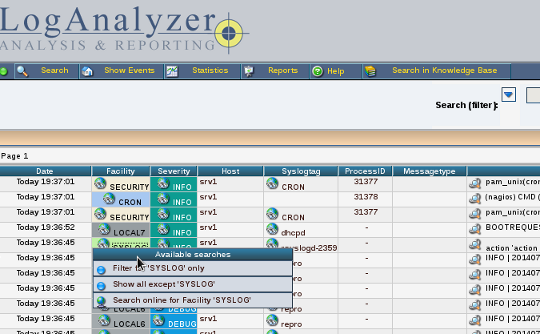
Daniel Pocock: Pruning Syslog entries from MongoDB

I previously announced the availability of rsyslog+MongoDB+LogAnalyzer in Debian wheezy-backports. This latest rsyslog with MongoDB storage support is also available for Ubuntu and Fedora users in one way or another. Just one thing was missing: a flexible way to prune the database. LogAnalyzer provides a very basic pruning script that simply purges all records over a certain age. The script hasn't been adapted to work within the package layout. It is written in PHP, which may not be ideal for people who don't actually want LogAnalyzer on their Syslog/MongoDB host. Now there is a convenient solution: I've just contributed a very trivial Python script for selectively pruning the records. Thanks to Python syntax and the PyMongo client, it is extremely concise: in fact, here is the full script:
#!/usr/bin/python
import syslog
import datetime
from pymongo import Connection
# It assumes we use the default database name 'logs' and collection 'syslog'
# in the rsyslog configuration.
with Connection() as client:
    db = client.logs
    table = db.syslog
    #print "Initial count: %d" % table.count()
    today = datetime.datetime.today()
    # remove ANY record older than 5 weeks except mail.info
    t = today - datetime.timedelta(weeks=5)
    table.remove( "time":  "$lt": t  , "syslog_fac":   "$ne" : syslog.LOG_MAIL  )
    # remove any debug record older than 7 days
    t = today - datetime.timedelta(days=7)
    table.remove( "time":  "$lt": t  , "syslog_sever": syslog.LOG_DEBUG )
    #print "Final count: %d" % table.count()
Just put it in /usr/local/bin and run it daily from cron. Customization Just adapt the table.remove statements as required. See the PyMongo tutorial for a very basic introduction to the query syntax and full details in the MongoDB query operator reference for creating more elaborate pruning rules. Potential improvements
  • Indexing the columns used in the queries
  • Logging progress and stats to Syslog

LogAnalyzer using a database backend such as MongoDB is very easy to set up and much faster than working with text-based log files

Christian Perrier: Developers per country (July 2014)

This is time again for my annual report about the number of developers per country. This is now the sixth edition of this report. Former editions: So, here we are with the July 2014 version, sorted by the ratio of *active* developers per million population for each country.
Act: number of active developers
Dev: total number of developers
A/M: number of active devels per million pop.
D/M: number of devels per million pop.
2009: rank in 2009
2010: rank in 2010
2011: rank in 2011 (June)
2012: rank in 2012 (June)
2013: rank in 2012 (July)
2014: rank now
Code Name Population Act Dev Dev Act/Million Dev/Million 2009 2010 June 2011 June 2012 July 2013 July 2014
fi Finland 5259250 19 31 3,61 5,89 1 1 1 1 1 1
ie Ireland 4670976 13 17 2,78 3,64 13 9 6 2 2 2
nz New Zealand 4331600 11 15 2,54 3,46 4 3 5 7 7 3 *
mq Martinique 396404 1 1 2,52 2,52

3 4 4 4
se Sweden 9088728 22 37 2,42 4,07 3 6 7 5 5 5
ch Switzerland 7870134 19 29 2,41 3,68 2 2 2 3 3 6 *
no Norway 4973029 11 14 2,21 2,82 5 4 4 6 6 7 *
at Austria 8217280 18 29 2,19 3,53 6 8 10 10 10 8 *
de Germany 81471834 164 235 2,01 2,88 7 7 9 9 8 9 *
lu Luxemburg 503302 1 1 1,99 1,99 8 5 8 8 9 10 *
fr France 65350000 101 131 1,55 2 12 12 11 11 11 11
au Australia 22607571 32 60 1,42 2,65 9 10 12 12 12 12
be Belgium 11071483 14 17 1,26 1,54 10 11 13 13 13 13
uk United-Kingdom 62698362 77 118 1,23 1,88 14 14 14 14 14 14
nl Netherlands 16728091 18 40 1,08 2,39 11 13 15 15 15 15
ca Canada 33476688 34 63 1,02 1,88 15 15 17 16 16 16
dk Denmark 5529888 5 10 0,9 1,81 17 17 16 17 17 17
es Spain 46754784 34 56 0,73 1,2 16 16 19 18 18 18
it Italy 59464644 36 52 0,61 0,87 23 22 22 19 19 19
hu Hungary 10076062 6 12 0,6 1,19 18 25 26 20 24 20 *
cz Czech Rep 10190213 6 6 0,59 0,59 21 20 21 21 20 21 *
us USA 313232044 175 382 0,56 1,22 19 21 25 24 22 22
il Israel 7740900 4 6 0,52 0,78 24 24 24 25 23 23
hr Croatia 4290612 2 2 0,47 0,47 20 18 18 26 25 24 *
lv Latvia 2204708 1 1 0,45 0,45 26 26 27 27 26 25 *
bg Bulgaria 7364570 3 3 0,41 0,41 25 23 23 23 27 26 *
sg Singapore 5183700 2 2 0,39 0,39


33 33 27 *
uy Uruguay 3477778 1 2 0,29 0,58 22 27 28 28 28 28
pl Poland 38441588 11 15 0,29 0,39 29 29 30 30 30 29 *
jp Japan 127078679 36 52 0,28 0,41 30 28 29 29 29 30 *
lt Lithuania 3535547 1 1 0,28 0,28 28 19 20 22 21 31 *
gr Greece 10787690 3 4 0,28 0,37 33 38 34 35 35 32 *
cr Costa Rica 4301712 1 1 0,23 0,23 31 30 31 31 31 33 *
by Belarus 9577552 2 2 0,21 0,21 35 36 39 39 32 34 *
ar Argentina 40677348 8 10 0,2 0,25 34 33 35 32 37 35 *
pt Portugal 10561614 2 4 0,19 0,38 27 32 32 34 34 36 *
sk Slovakia 5477038 1 1 0,18 0,18 32 31 33 36 36 37 *
rs Serbia 7186862 1 1 0,14 0,14


38 38
tw Taiwan 23040040 3 3 0,13 0,13 37 34 37 37 39 39
br Brazil 192376496 18 21 0,09 0,11 36 35 38 38 40 40
cu Cuba 11241161 1 1 0,09 0,09
38 41 41 41 41
co Colombia 45566856 4 5 0,09 0,11 41 44 46 47 46 42 *
kr South Korea 48754657 4 6 0,08 0,12 39 39 42 42 42 43 *
gt Guatemala 13824463 1 1 0,07 0,07


43 44 *
ec Ecuador 15007343 1 1 0,07 0,07
40 43 43 45 45
cl Chile 16746491 1 2 0,06 0,12 42 41 44 44 47 46 *
za South Africa 50590000 3 10 0,06 0,2 38 48 48 48 48 47 *
ru Russia 143030106 8 9 0,06 0,06 43 42 47 45 49 48 *
mg Madagascar 21281844 1 1 0,05 0,05 44 37 40 40 50 49 *
ro Romania 21904551 1 2 0,05 0,09 45 43 45 46 51 50 *
ve Venezuela 28047938 1 1 0,04 0,04 40 45 50 49 44 51 *
my Malaysia 28250000 1 1 0,04 0,04

49 50 52 52
pe Peru 29907003 1 1 0,03 0,03 46 46 51 51 53 53
tr Turkey 74724269 2 2 0,03 0,03 47 47 52 52 54 54
ua Ukraine 45134707 1 1 0,02 0,02 48 53 58 59 55 55
th Thailand 66720153 1 2 0,01 0,03 50 50 54 54 56 56
eg Egypt 80081093 1 3 0,01 0,04 51 51 55 55 57 57
mx Mexico 112336538 1 1 0,01 0,01 49 49 53 53 58 58
cn China 1344413526 10 14 0,01 0,01 53 53 57 56 59 59
in India 1210193422 8 9 0,01 0,01 52 52 56 57 60 60
sv El Salvador 7066403 0 1 0 0,14

36 58 61 61


969 1561 62,08%


A few interesting facts:

Christian Perrier: [life] Running update July 26th 2014

Dog, long time since I blogged about my running activities. Apparently, I didn't since.....I posted a summary for 2013. So, well, that will be a long update as many things happened during the first half of 2014 when it comes at running, for me. January: I was recovering from a fatigue fracture injury inherited from last races in 2013. As a consequence, I resumed running only on Jan 7th. Therefore I cancelled my participation to the "Semi Raid 28", an night orienteering raid of about 50-60km in southern neighbourhood of Paris. Instead, I actually offerred my help to organizers in collecting orienteering signs after the race (the longest one : 120km). So, I ended up spending over 24 hours running in woods and hunting down hidden signs with the same information than runners. My only advantage was that I was able to use my car to go from one point to another. Still, I ended up running over 70km in many small parts, often alone in the dark woods with my headlamp, on very muddy areas...and collecting nearly 80 huge signs. February: Everything was going well and I for instance ran a great half-marathon in Bullion (south of Paris) in 1h3821" (great for a quite hilly race)....until I twisted my left ankle while running back from work. A quite severe twist, though no bone damage, thankfully. I had to stop running, again, for 3 years. Biking to/from work was the replacement activity.... March: I resumed running on March 10th, one week before a quite difficult trail race in my neighbourhood (30km "only" but up to 800 meters positive climb). That race was a preparation (and a test after the injury) for my 3rd participation to "Paris Ecotrail", a 80km trail race in woods of the South-West area of Paris, ending in the Eiffel Tower area. Indeed, both went very well, though I was very careful with my ankle. I finally broke my record at Ecotrail, finishing the race in 9h08 (to be compared to 9h36 last year and 11h15 the year before). April: Paris marathon was scheduled one week after Ecotrail. Everybody will tell you that running a marathon one week after a 80km race is kinda crazy.....which is why I made it..:-). That was my 3rd Paris marathon and my 12th marathon overall. However, this year, no record in sight. The challenge was running the marathon....dressed as SpongeBob (you know me, right?). I actually had great fun doing that and was happy to get zillions of cheering all over the race, from the crowd. I finally completed the race in 4h30, which is, after all, not that far from the time of my very first marathon (4h12). The only drawback was that the succession of quite very long distance runs made my left knee suffer as it never happened before. As a consequence, I (again) had to stop running for nearly one month before we found that I was quite sensitive to pronation, which the succession of long and slow races made worse. May: so finally afterthese (very) long weeks, I could gradually resume running, which finally culminated in mid-May with the 50km race "trail des Cerfs", in the Rambouillet Forest, closed to our place. This quite long but not too difficult trail race ("only" 800 meters positive climb overall) was completed in 5h16, which was completely unexpected, given the low training during the previous weeks. June: no race during that month. The entire month was focused on preparing the Montagn'hard race of July 5th: so several training sessions with a lot of climbing either by running or by fast walking (nordic style) as well as downhill run training (always important for moutain trail). July: the second "big peak" of my 2014 season was scheduled for July 5th: "La Montagn'hard", a moutain trail race close to Les Contamines in the neighbourhood of Chamonix, the french moutaineering Mekkah. "Only" 60 kilometers....but close to 5000 meters positive climb. Montagn'hard is among the thoughest moutain trail races in France and therefore a "must do" for trail runners. This race week-end includes also a 105km ultra-race, which is often said to be as hard, even maybe harder, than the very famous "Ultra Trail du Mont-Blanc" trail in Chamonix. Still, for my second only season in moutain trail running, I decided to be "wise" and stick with the "medium" version (after all, my experience, as of now with moutain trails were only two quite "short" ones). Needless to say, it has indeed been a GREAT race. The environment is wonderful ("Miage" side of the Mont-Blanc range), the race goes through great place (Col de Tricot, noticeably) and I made a great result by finishing80th out of 325+ runners, in 12h18, while my target time was around 13 hours. This is where I am now. Nearly one month after Montagn'hard, I'm deeply training for my next Big Goal: The "Sur la Trace des Ducs de Savoie" or "TDS", one of the 4 races of the Ultra Trail du Mont-Blanc week, in end August (during DebConf): 120km, nearly 7500m positive climp, between Courmayeur and Chamonix, through several passes, up to 2600m height. Yet another challenge: my first "over 24h" race, with a full night out in the moutains. You'll certainly hear again from me about that...:-)

28 July 2014

Daniel Pocock: Secure that Dictaphone

2014 has been a big year for dictaphones so far. First, it was France and the secret recordings made by Patrick Buisson during the reign of President Sarkozy. Then, a US court ordered the release of the confidential Boston College tapes, part of an oral history project. Originally, each participant had agreed their recording would only be released after their death. Sinn Fein leader Gerry Adams was arrested and questioned over a period of 100 hours and released without charge. Now Australia is taking its turn. In #dictagate down under, a senior political correspondent from a respected newspaper recorded (most likely with consent) some off-the-record comments of former conservative leader Ted Baillieu. Unfortunately, this journalist misplaced the dictaphone at the state conference of Baillieu's arch-rivals, the ALP. A scandal quickly errupted. Secure recording technology There is no question that electronic voice recordings can be helpful for people, including journalists, researchers, call centers and many other purposes. However, the ease with which they can now be distributed is only dawning on people. Twenty years ago, you would need to get the assistance of a radio or TV producer to disseminate such recordings so widely. Today there is email and social media. The Baillieu tapes were emailed directly to 400 people in a matter of minutes. Just as technology brings new problems, it also brings solutions. Encryption is one of them. Is encryption worthwhile? Coverage of the Snowden revelations has revealed that many popular security technologies are not one hundred percent safe. In each of these dictaphone cases, however, NSA-level expertise was not a factor. Even the most simplistic encryption would have caused endless frustration to the offenders who distributed the Baillieu tape. How can anybody be sure encryption is reliable? Part of the problem is education. Everybody using the technology needs to be aware of the basic concepts, for example, public key cryptography. Another big question mark is back doors. There is ongoing criticism of Apple iPhone/iPod devices and the many ways that their encryption can be easily disabled by Apple engineers and presumably many former staff, security personnel and others. The message is clear: proprietary, closed-source solutions should be avoided. Free and open source technologies are the alternative. If a company does not give you the source code, how can anybody independently audit their code for security? With encryption software, what use is it if nobody has verified it? What are the options? However, given that the majority of people don't have a PhD in computer science or mathematics, are there convenient ways to get started with encryption? Reading is a good start. The Code Book by Simon Singh (author of other popular science books like Fermat's Last Theorem) is very accessible, not classified and assumes no formal training in mathematics. Even for people who do know these topics inside out, it is a good book to share with friends and family. The Guardian Project (no connection with Guardian Media of Edward Snowden fame) aims to provide a secure and easy to use selection of apps for pocket devices. This project has practical applications in business, journalism and politics alike. How should a secure dictaphone app work? Dictaphone users typically need to take their dictaphones in the field, so there is a risk of losing it or having it stolen. A strong security solution in this situation may involve creating an RSA key pair on a home/office computer, keeping the private key on the home computer and putting the public key on the dictaphone device. Configured this way, the dictaphone will not be able to play back any of the recordings itself - the user will always have to copy them to the computer for decryption.

27 July 2014

Christian Perrier: [life] Running update July 26th 2014

Dog, long time since I blogged about my running activities. Apparently, I didn't since...... So, well, that will be a long update as many things happened during the first half of 2014 when it comes at running, for me. January: I was recovering from a fatigue fracture injury inherited from last races in 2013. As a consequence, I resumed running only on Jan 7th. Therefore I cancelled my participation to the "Semi Raid 28", an night orienteering raid of about 50-60km in southern neighbourhood of Paris. Instead, I actually offerred my help to organizers in collecting orienteering signs after the race (the longest one : 120km). So, I ended up spending over 24 hours running in woods and hunting down hidden signs with the same information than runners. My only advantage was that I was able to use my car to go from one point to another. Still, I ended up running over 70km in many small parts, often alone in the dark woods with my headlamp, on very muddy areas...and collecting nearly 80 huge signs. February: Everything was going well and I for instance ran a great half-marathon in Bullion (south of Paris) in 1h3821" (great for a quite hilly race)....until I twisted my left ankle while running back from work. A quite severe twist, though no bone damage, thankfully. I had to stop running, again, for 3 years. Biking to/from work was the replacement activity.... March: I resumed running on March 10th, one week before a quite difficult trail race in my neighbourhood (30km "only" but up to 800 meters positive climb). That race was a preparation (and a test after the injury) for my 3rd participation to "Paris Ecotrail", a 80km trail race in woods of the South-West area of Paris, ending in the Eiffel Tower area. Indeed, both went very well, though I was very careful with my ankle. I finally broke my record at Ecotrail, finishing the race in 9h08 (to be compared to 9h36 last year and 11h15 the year before). April: Paris marathon was scheduled one week after Ecotrail. Everybody will tell you that running a marathon one week after a 80km race is kinda crazy.....which is why I made it..:-). That was my 3rd Paris marathon and my 12th marathon overall. However, this year, no record in sight. The challenge was running the marathon....dressed as SpongeBob (you know me, right?). I actually had great fun doing that and was happy to get zillions of cheering all over the race, from the crowd. I finally completed the race in 4h30, which is, after all, not that far from the time of my very first marathon (4h12). The only drawback was that the succession of quite very long distance runs made my left knee suffer as it never happened before. As a consequence, I (again) had to stop running for nearly one month before we found that I was quite sensitive to pronation, which the succession of long and slow races made worse. May: so finally afterthese (very) long weeks, I could gradually resume running, which finally culminated in mid-May with the 50km race "trail des Cerfs", in the Rambouillet Forest, closed to our place. This quite long but not too difficult trail race ("only" 800 meters positive climb overall) was completed in 5h16, which was completely unexpected, given the low training during the previous weeks. June: no race during that month. The entire month was focused on preparing the Montagn'hard race of July 5th: so several training sessions with a lot of climbing either by running or by fast walking (nordic style) as well as downhill run training (always important for moutain trail). July: the second "big peak" of my 2014 season was scheduled for July 5th: "La Montagn'hard", a moutain trail race close to Les Contamines in the neighbourhood of Chamonix, the french moutaineering Mekkah. "Only" 60 kilometers....but close to 5000 meters positive climb. Montagn'hard is among the thoughest moutain trail races in France and therefore a "must do" for trail runners. This race week-end includes also a 105km ultra-race, which is often said to be as hard, even maybe harder, than the very famous "Ultra Trail du Mont-Blanc" trail in Chamonix. Still, for my second only season in moutain trail running, I decided to be "wise" and stick with the "medium" version (after all, my experience, as of now with moutain trails were only two quite "short" ones). Needless to say, it has indeed been a GREAT race. The environment is wonderful ("Miage" side of the Mont-Blanc range), the race goes through great place (Col de Tricot, noticeably) and I made a great result by finishing80th out of 3250+ runners, in 12h18, while my target time was around 13 hours. This is where I am now. Nearly one month after Montagn'hard, I'm deeply training for my next Big Goal: The "Sur la Trace des Ducs de Savoie" or "TDS", one of the 4 races of the Ultra Trail du Mont-Blanc week, in end August (during DebConf): 120km, nearly 7500m positive climp, between Courmayeur and Chamonix, through several passes, up to 2600m height. Yet another challenge: my first "over 24h" race, with a full night out in the moutains. You'll certainly hear again from me about that...:-)

Christian Perrier: Developers per country (July 2014)

This is time again for my annual report about the number of developers per country. This is now the sixth edition of this report. Former editions: So, here we are with the July 2014 version, sorted by the ratio of *active* developers per million population for each country.

Act: number of active developers
Dev: total number of developers
A/M: number of active devels per million pop.
D/M: number of devels per million pop.
2009: rank in 2009
2010: rank in 2010
2011: rank in 2011 (June)
2012: rank in 2012 (June)
2013: rank in 2012 (July)
2014: rank now
Code Name Population Act Dev Dev Act/Million Dev/Million 2009 2010 June 2011 June 2012 July 2013 July 2014
fi Finland 5259250 19 31 3,61 5,89 1 1 1 1 1 1
ie Ireland 4670976 13 17 2,78 3,64 13 9 6 2 2 2
nz New Zealand 4331600 11 15 2,54 3,46 4 3 5 7 7 3 *
mq Martinique 396404 1 1 2,52 2,52

3 4 4 4
se Sweden 9088728 22 37 2,42 4,07 3 6 7 5 5 5
ch Switzerland 7870134 19 29 2,41 3,68 2 2 2 3 3 6 *
no Norway 4973029 11 14 2,21 2,82 5 4 4 6 6 7 *
at Austria 8217280 18 29 2,19 3,53 6 8 10 10 10 8 *
de Germany 81471834 164 235 2,01 2,88 7 7 9 9 8 9 *
lu Luxemburg 503302 1 1 1,99 1,99 8 5 8 8 9 10 *
fr France 65350000 101 131 1,55 2 12 12 11 11 11 11
au Australia 22607571 32 60 1,42 2,65 9 10 12 12 12 12
be Belgium 11071483 14 17 1,26 1,54 10 11 13 13 13 13
uk United-Kingdom 62698362 77 118 1,23 1,88 14 14 14 14 14 14
nl Netherlands 16728091 18 40 1,08 2,39 11 13 15 15 15 15
ca Canada 33476688 34 63 1,02 1,88 15 15 17 16 16 16
dk Denmark 5529888 5 10 0,9 1,81 17 17 16 17 17 17
es Spain 46754784 34 56 0,73 1,2 16 16 19 18 18 18
it Italy 59464644 36 52 0,61 0,87 23 22 22 19 19 19
hu Hungary 10076062 6 12 0,6 1,19 18 25 26 20 24 20 *
cz Czech Rep 10190213 6 6 0,59 0,59 21 20 21 21 20 21 *
us USA 313232044 175 382 0,56 1,22 19 21 25 24 22 22
il Israel 7740900 4 6 0,52 0,78 24 24 24 25 23 23
hr Croatia 4290612 2 2 0,47 0,47 20 18 18 26 25 24 *
lv Latvia 2204708 1 1 0,45 0,45 26 26 27 27 26 25 *
bg Bulgaria 7364570 3 3 0,41 0,41 25 23 23 23 27 26 *
sg Singapore 5183700 2 2 0,39 0,39


33 33 27 *
uy Uruguay 3477778 1 2 0,29 0,58 22 27 28 28 28 28
pl Poland 38441588 11 15 0,29 0,39 29 29 30 30 30 29 *
jp Japan 127078679 36 52 0,28 0,41 30 28 29 29 29 30 *
lt Lithuania 3535547 1 1 0,28 0,28 28 19 20 22 21 31 *
gr Greece 10787690 3 4 0,28 0,37 33 38 34 35 35 32 *
cr Costa Rica 4301712 1 1 0,23 0,23 31 30 31 31 31 33 *
by Belarus 9577552 2 2 0,21 0,21 35 36 39 39 32 34 *
ar Argentina 40677348 8 10 0,2 0,25 34 33 35 32 37 35 *
pt Portugal 10561614 2 4 0,19 0,38 27 32 32 34 34 36 *
sk Slovakia 5477038 1 1 0,18 0,18 32 31 33 36 36 37 *
rs Serbia 7186862 1 1 0,14 0,14


38 38
tw Taiwan 23040040 3 3 0,13 0,13 37 34 37 37 39 39
br Brazil 192376496 18 21 0,09 0,11 36 35 38 38 40 40
cu Cuba 11241161 1 1 0,09 0,09
38 41 41 41 41
co Colombia 45566856 4 5 0,09 0,11 41 44 46 47 46 42 *
kr South Korea 48754657 4 6 0,08 0,12 39 39 42 42 42 43 *
gt Guatemala 13824463 1 1 0,07 0,07


43 44 *
ec Ecuador 15007343 1 1 0,07 0,07
40 43 43 45 45
cl Chile 16746491 1 2 0,06 0,12 42 41 44 44 47 46 *
za South Africa 50590000 3 10 0,06 0,2 38 48 48 48 48 47 *
ru Russia 143030106 8 9 0,06 0,06 43 42 47 45 49 48 *
mg Madagascar 21281844 1 1 0,05 0,05 44 37 40 40 50 49 *
ro Romania 21904551 1 2 0,05 0,09 45 43 45 46 51 50 *
ve Venezuela 28047938 1 1 0,04 0,04 40 45 50 49 44 51 *
my Malaysia 28250000 1 1 0,04 0,04

49 50 52 52
pe Peru 29907003 1 1 0,03 0,03 46 46 51 51 53 53
tr Turkey 74724269 2 2 0,03 0,03 47 47 52 52 54 54
ua Ukraine 45134707 1 1 0,02 0,02 48 53 58 59 55 55
th Thailand 66720153 1 2 0,01 0,03 50 50 54 54 56 56
eg Egypt 80081093 1 3 0,01 0,04 51 51 55 55 57 57
mx Mexico 112336538 1 1 0,01 0,01 49 49 53 53 58 58
cn China 1344413526 10 14 0,01 0,01 53 53 57 56 59 59
in India 1210193422 8 9 0,01 0,01 52 52 56 57 60 60
sv El Salvador 7066403 0 1 0 0,14

36 58 61 61


969 1561 62,08%


A few interesting facts:

24 July 2014

Matthew Palmer: First Step with Clojure: Terror

$ sudo apt-get install -y leiningen
[...]
$ lein new scratch
[...]
$ cd scratch
$ lein repl
Downloading: org/clojure/clojure/1.3.0/clojure-1.3.0.pom from repository central at http://repo1.maven.org/maven2
Transferring 5K from central
Downloading: org/sonatype/oss/oss-parent/5/oss-parent-5.pom from repository central at http://repo1.maven.org/maven2
Transferring 4K from central
Downloading: org/clojure/clojure/1.3.0/clojure-1.3.0.jar from repository central at http://repo1.maven.org/maven2
Transferring 3311K from central
[...]
Wait what? lein downloads some random JARs from a website over HTTP1, with, as far as far I can tell, no verification that what I m asking for is what I m getting (has nobody ever heard of Man-in-the-Middle attacks in Maven land?). It downloads a .sha1 file to (presumably) do integrity checking, but that s no safety net if I can serve you a dodgy .jar, I can serve you an equally-dodgy .sha1 file, too (also, SHA256 is where all the cool kids are at these days). Finally, jarsigner tells me that there s no signature on the .jar itself, either. It gets better, though. The repo1.maven.org site is served by the fastly.net2 pseudo-CDN3, which adds another set of points in the chain which can be subverted to hijack and spoof traffic. More routers, more DNS zones, and more servers. I ve seen Debian take a kicking more than once because packages aren t individually signed, or because packages aren t served over HTTPS. But at least Debian s packages can be verified by chaining to a signature made by a well-known, widely-distributed key, signed by two Debian Developers with very well-connected keys. This repository, on the other hand oy gevalt. There are OpenPGP (GPG) signatures available for each package (tack .asc onto the end of the .jar URL), but no attempt was made to download the signatures for the .jar I downloaded. Even if the signature was downloaded and checked, there s no way for me (or anyone) to trust the signature the signature was made by a key that s signed by one other key, which itself has no signatures. If I were an attacker, it wouldn t be hard for me to replace that key chain with one of my own devising. Even ignoring everyone living behind a government- or company-run intercepting proxy, and everyone using public wifi, it s pretty well common knowledge by now (thanks to Edward Snowden) that playing silly-buggers with Internet traffic isn t hard to do, and there s no shortage of evidence that it is, in fact, done on a routine basis by all manner of people. Serving up executable code to a large number of people, in that threat environment, with no way for them to have any reasonable assurance that code is trustworthy, is very disappointing. Please, for the good of the Internet, improve your act, Maven. Putting HTTPS on your distribution would be a bare minimum. There are attacks on SSL, sure, but they re a lot harder to pull off than sitting on public wifi hijacking TCP connections. Far better would be to start mandating signatures, requiring signature checks to pass, and having all signatures chain to a well-known, widely-trusted, and properly secured trust root. Signing all keys that are allowed to upload to maven.org with a maven.org distribution root key (itself kept in hardware and only used offline), and then verifying that all signatures chain to that key, wouldn t be insanely difficult, and would greatly improve the security of the software supply chain. Sure, it wouldn t be perfect, but don t make the perfect the enemy of the good. Cost-effective improvements are possible here. Yes, security is hard. But you don t get to ignore it just because of that, when you re creating an attractive nuisance for anyone who wants to own up a whole passel of machines by slipping some dodgy code into a widely-used package.
  1. To add insult to injury, it appears to ignore my http_proxy environment variable, and the repo1.maven.org server returns plain-text error responses with Content-Type: text/xml. But at this point, that s just icing on the shit cake.
  2. At one point in the past, my then-employer (a hosting provider) blocked Fastly s caching servers from their network because they took down a customer site with a massive number of requests to a single resource, and the incoming request traffic was indistinguishable from a botnet-sourced DDoS attack. The requests were coming from IP space registered to a number of different ISPs, with no distinguishing rDNS (184-106-82-243.static.cloud-ips.com doesn t help me to distinguish between I m a professionally-run distributed proxy and I m a pwned box here to hammer your site into the ground ).
  3. Pretty much all of the new breed of so-called CDNs aren t actually pro-actively distributing content, they re just proxies. That isn t a bad thing, per se, but I rather dislike the far-too-common practice of installing varnish (and perhaps mod_pagespeed, if they re providing advanced capabilities) on a couple of AWS instances, and hanging out your shingle as a CDN. I prefer a bit of truth in my advertising.

23 July 2014

Andrew Pollock: [tech] Going solar

With electricity prices in Australia seeming to be only going up, and solar being surprisingly cheap, I decided it was a no-brainer to invest in a solar installation to reduce my ongoing electricity bills. It also paves the way for getting an electric car in the future. I'm also a greenie, so having some renewable energy happening gives me the warm and fuzzies. So today I got solar installed. I've gone for a 2 kWh system, consisting of 8 250 watt Seraphim panels (I'm not entirely sure which model) and an Aurora UNO-2.0-I-OUTD inverter. It was totally a case of decision fatigue when it came to shopping around. Everyone claims the particular panels they want to sell at the best. It's pretty much impossible to make a decent assessment of their claims. In the end, I went with the Seraphim panels because they scored well on the PHOTON tests. That said, I've had other solar companies tell me the PHOTON tests aren't indicative of Australian conditions. It's hard to know who to believe. In the end, I chose Seraphim because of the PHOTON test results, and they're also apparently one of the few panels that pass the Thresher test, which tests for durability. The harder choice was the inverter. I'm told that yield varies wildly by inverter, and narrowed it down to Aurora or SunnyBoy. Jason's got a SunnyBoy, and the appeal with it was that it supported Bluetooth for data gathering, although I don't much care for the aesthetics of it. Then I learned that there was a WiFi card coming out soon for the Aurora inverter, and that struck me as better than Bluetooth, so I went with the Aurora inverter. I discovered at the eleventh hour that the model of Aurora inverter that was going to be supplied wasn't supported by the WiFi card, but was able to switch models to the one that was. I'm glad I did, because the newer model looks really nice on the wall. The whole system was up at running just in time to catch the setting sun, so I'm looking forward to seeing it in action tomorrow. Apparently the next step is Energex has to come out to replace my analog power meter with a digital one. I'm grateful that I was able to get Body Corporate approval to use some of the roof. Being on the top floor helped make the installation more feasible too, I think.

21 July 2014

Daniel Pocock: Australia can't criticize Putin while competing with him

While much of the world is watching the tragedy of MH17 and contemplating the grim fate of 298 deceased passengers sealed into a refrigerated freight train in the middle of a war zone, Australia (with 28 victims on that train) has more than just theoretical skeletons in the closet too. At this moment, some 153 Tamil refugees, fleeing the same type of instability that brought a horrible death to the passengers of MH17, have been locked up in the hull of a customs ship on the high seas. Windowless cabins and a supply of food not fit for a dog are part of the Government's strategy to brutalize these people for simply trying to avoid the risk of enhanced imprisonment(TM) in their own country. Under international protocol for rescue at sea and political asylum, these people should be taken to the nearest port and given a humanitarian visa on arrival. Australia, however, is trying to lie and cheat their way out of these international obligations while squealing like a stuck pig about the plight of Australians in the hands of Putin. If Prime Minister Tony Abbott wants to encourage Putin to co-operate with the international community, shouldn't he try to lead by example? How can Australians be safe abroad if our country systematically abuses foreigners in their time of need?

Next.

Previous.