Search Results: "bab"

27 July 2015

Michael Stapelberg: dh-make-golang: creating Debian packages from Go packages

Recently, the pkg-go team has been quite busy, uploading dozens of Go library packages in order to be able to package gcsfuse (a user-space file system for interacting with Google Cloud Storage) and InfluxDB (an open-source distributed time series database). Packaging Go library packages (!) is a fairly repetitive process, so before starting my work on the dependencies for gcsfuse, I started writing a tool called dh-make-golang. Just like dh-make itself, the goal is to automatically create (almost) an entire Debian package. As I worked my way through the dependencies of gcsfuse, I refined how the tool works, and now I believe it s good enough for a first release. To demonstrate how the tool works, let s assume we want to package the Go library github.com/jacobsa/ratelimit:
midna /tmp $ dh-make-golang github.com/jacobsa/ratelimit
2015/07/25 18:25:39 Downloading "github.com/jacobsa/ratelimit/..."
2015/07/25 18:25:53 Determining upstream version number
2015/07/25 18:25:53 Package version is "0.0~git20150723.0.2ca5e0c"
2015/07/25 18:25:53 Determining dependencies
2015/07/25 18:25:55 
2015/07/25 18:25:55 Packaging successfully created in /tmp/golang-github-jacobsa-ratelimit
2015/07/25 18:25:55 
2015/07/25 18:25:55 Resolve all TODOs in itp-golang-github-jacobsa-ratelimit.txt, then email it out:
2015/07/25 18:25:55     sendmail -t -f < itp-golang-github-jacobsa-ratelimit.txt
2015/07/25 18:25:55 
2015/07/25 18:25:55 Resolve all the TODOs in debian/, find them using:
2015/07/25 18:25:55     grep -r TODO debian
2015/07/25 18:25:55 
2015/07/25 18:25:55 To build the package, commit the packaging and use gbp buildpackage:
2015/07/25 18:25:55     git add debian && git commit -a -m 'Initial packaging'
2015/07/25 18:25:55     gbp buildpackage --git-pbuilder
2015/07/25 18:25:55 
2015/07/25 18:25:55 To create the packaging git repository on alioth, use:
2015/07/25 18:25:55     ssh git.debian.org "/git/pkg-go/setup-repository golang-github-jacobsa-ratelimit 'Packaging for golang-github-jacobsa-ratelimit'"
2015/07/25 18:25:55 
2015/07/25 18:25:55 Once you are happy with your packaging, push it to alioth using:
2015/07/25 18:25:55     git push git+ssh://git.debian.org/git/pkg-go/packages/golang-github-jacobsa-ratelimit.git --tags master pristine-tar upstream
The ITP is often the most labor-intensive part of the packaging process, because any number of auto-detected values might be wrong: the repository owner might not be the Upstream Author , the repository might not have a short description, the long description might need some adjustments or the license might not be auto-detected.
midna /tmp $ cat itp-golang-github-jacobsa-ratelimit.txt
From: "Michael Stapelberg" <stapelberg AT debian.org>
To: submit@bugs.debian.org
Subject: ITP: golang-github-jacobsa-ratelimit -- Go package for rate limiting
Content-Type: text/plain; charset=utf-8
Content-Transfer-Encoding: 8bit
Package: wnpp
Severity: wishlist
Owner: Michael Stapelberg <stapelberg AT debian.org>
* Package name    : golang-github-jacobsa-ratelimit
  Version         : 0.0~git20150723.0.2ca5e0c-1
  Upstream Author : Aaron Jacobs
* URL             : https://github.com/jacobsa/ratelimit
* License         : Apache-2.0
  Programming Lang: Go
  Description     : Go package for rate limiting
 GoDoc (https://godoc.org/github.com/jacobsa/ratelimit)
 .
 This package contains code for dealing with rate limiting. See the
 reference (http://godoc.org/github.com/jacobsa/ratelimit) for more info.
TODO: perhaps reasoning
midna /tmp $
After filling in all the TODOs in the file, let s mail it out and get a sense of what else still needs to be done:
midna /tmp $ sendmail -t -f < itp-golang-github-jacobsa-ratelimit.txt
midna /tmp $ cd golang-github-jacobsa-ratelimit
midna /tmp/golang-github-jacobsa-ratelimit master $ grep -r TODO debian
debian/changelog:  * Initial release (Closes: TODO) 
midna /tmp/golang-github-jacobsa-ratelimit master $
After filling in these TODOs as well, let s have a final look at what we re about to build:
midna /tmp/golang-github-jacobsa-ratelimit master $ head -100 debian/**/*
==> debian/changelog <==                            
golang-github-jacobsa-ratelimit (0.0~git20150723.0.2ca5e0c-1) unstable; urgency=medium
  * Initial release (Closes: #793646)
 -- Michael Stapelberg <stapelberg@debian.org>  Sat, 25 Jul 2015 23:26:34 +0200
==> debian/compat <==
9
==> debian/control <==
Source: golang-github-jacobsa-ratelimit
Section: devel
Priority: extra
Maintainer: pkg-go <pkg-go-maintainers@lists.alioth.debian.org>
Uploaders: Michael Stapelberg <stapelberg@debian.org>
Build-Depends: debhelper (>= 9),
               dh-golang,
               golang-go,
               golang-github-jacobsa-gcloud-dev,
               golang-github-jacobsa-oglematchers-dev,
               golang-github-jacobsa-ogletest-dev,
               golang-github-jacobsa-syncutil-dev,
               golang-golang-x-net-dev
Standards-Version: 3.9.6
Homepage: https://github.com/jacobsa/ratelimit
Vcs-Browser: http://anonscm.debian.org/gitweb/?p=pkg-go/packages/golang-github-jacobsa-ratelimit.git;a=summary
Vcs-Git: git://anonscm.debian.org/pkg-go/packages/golang-github-jacobsa-ratelimit.git
Package: golang-github-jacobsa-ratelimit-dev
Architecture: all
Depends: $ shlibs:Depends ,
         $ misc:Depends ,
         golang-go,
         golang-github-jacobsa-gcloud-dev,
         golang-github-jacobsa-oglematchers-dev,
         golang-github-jacobsa-ogletest-dev,
         golang-github-jacobsa-syncutil-dev,
         golang-golang-x-net-dev
Built-Using: $ misc:Built-Using 
Description: Go package for rate limiting
 This package contains code for dealing with rate limiting. See the
 reference (http://godoc.org/github.com/jacobsa/ratelimit) for more info.
==> debian/copyright <==
Format: http://www.debian.org/doc/packaging-manuals/copyright-format/1.0/
Upstream-Name: ratelimit
Source: https://github.com/jacobsa/ratelimit
Files: *
Copyright: 2015 Aaron Jacobs
License: Apache-2.0
Files: debian/*
Copyright: 2015 Michael Stapelberg <stapelberg@debian.org>
License: Apache-2.0
Comment: Debian packaging is licensed under the same terms as upstream
License: Apache-2.0
 Licensed under the Apache License, Version 2.0 (the "License");
 you may not use this file except in compliance with the License.
 You may obtain a copy of the License at
 .
 http://www.apache.org/licenses/LICENSE-2.0
 .
 Unless required by applicable law or agreed to in writing, software
 distributed under the License is distributed on an "AS IS" BASIS,
 WITHOUT WARRANTIES OR CONDITIONS OF ANY KIND, either express or implied.
 See the License for the specific language governing permissions and
 limitations under the License.
 .
 On Debian systems, the complete text of the Apache version 2.0 license
 can be found in "/usr/share/common-licenses/Apache-2.0".
==> debian/gbp.conf <==
[DEFAULT]
pristine-tar = True
==> debian/rules <==
#!/usr/bin/make -f
export DH_GOPKG := github.com/jacobsa/ratelimit
%:
	dh $@ --buildsystem=golang --with=golang
==> debian/source <==
head: error reading  debian/source : Is a directory
==> debian/source/format <==
3.0 (quilt)
midna /tmp/golang-github-jacobsa-ratelimit master $
Okay, then. Let s give it a shot and see if it builds:
midna /tmp/golang-github-jacobsa-ratelimit master $ git add debian && git commit -a -m 'Initial packaging'
[master 48f4c25] Initial packaging                                                      
 7 files changed, 75 insertions(+)
 create mode 100644 debian/changelog
 create mode 100644 debian/compat
 create mode 100644 debian/control
 create mode 100644 debian/copyright
 create mode 100644 debian/gbp.conf
 create mode 100755 debian/rules
 create mode 100644 debian/source/format
midna /tmp/golang-github-jacobsa-ratelimit master $ gbp buildpackage --git-pbuilder
[ ]
midna /tmp/golang-github-jacobsa-ratelimit master $ lintian ../golang-github-jacobsa-ratelimit_0.0\~git20150723.0.2ca5e0c-1_amd64.changes
I: golang-github-jacobsa-ratelimit source: debian-watch-file-is-missing
P: golang-github-jacobsa-ratelimit-dev: no-upstream-changelog
I: golang-github-jacobsa-ratelimit-dev: extended-description-is-probably-too-short
midna /tmp/golang-github-jacobsa-ratelimit master $
This package just built (as it should!), but occasionally one might need to disable a test and file an upstream bug about it. So, let s push this package to pkg-go and upload it:
midna /tmp/golang-github-jacobsa-ratelimit master $ ssh git.debian.org "/git/pkg-go/setup-repository golang-github-jacobsa-ratelimit 'Packaging for golang-github-jacobsa-ratelimit'"
Initialized empty shared Git repository in /srv/git.debian.org/git/pkg-go/packages/golang-github-jacobsa-ratelimit.git/
HEAD is now at ea6b1c5 add mrconfig for dh-make-golang
[master c5be5a1] add mrconfig for golang-github-jacobsa-ratelimit
 1 file changed, 3 insertions(+)
To /git/pkg-go/meta.git
   ea6b1c5..c5be5a1  master -> master
midna /tmp/golang-github-jacobsa-ratelimit master $ git push git+ssh://git.debian.org/git/pkg-go/packages/golang-github-jacobsa-ratelimit.git --tags master pristine-tar upstream
Counting objects: 31, done.
Delta compression using up to 8 threads.
Compressing objects: 100% (25/25), done.
Writing objects: 100% (31/31), 18.38 KiB   0 bytes/s, done.
Total 31 (delta 2), reused 0 (delta 0)
To git+ssh://git.debian.org/git/pkg-go/packages/golang-github-jacobsa-ratelimit.git
 * [new branch]      master -> master
 * [new branch]      pristine-tar -> pristine-tar
 * [new branch]      upstream -> upstream
 * [new tag]         upstream/0.0_git20150723.0.2ca5e0c -> upstream/0.0_git20150723.0.2ca5e0c
midna /tmp/golang-github-jacobsa-ratelimit master $ cd ..
midna /tmp $ debsign golang-github-jacobsa-ratelimit_0.0\~git20150723.0.2ca5e0c-1_amd64.changes
[ ]
midna /tmp $ dput golang-github-jacobsa-ratelimit_0.0\~git20150723.0.2ca5e0c-1_amd64.changes   
Uploading golang-github-jacobsa-ratelimit using ftp to ftp-master (host: ftp.upload.debian.org; directory: /pub/UploadQueue/)
[ ]
Uploading golang-github-jacobsa-ratelimit_0.0~git20150723.0.2ca5e0c-1.dsc
Uploading golang-github-jacobsa-ratelimit_0.0~git20150723.0.2ca5e0c.orig.tar.bz2
Uploading golang-github-jacobsa-ratelimit_0.0~git20150723.0.2ca5e0c-1.debian.tar.xz
Uploading golang-github-jacobsa-ratelimit-dev_0.0~git20150723.0.2ca5e0c-1_all.deb
Uploading golang-github-jacobsa-ratelimit_0.0~git20150723.0.2ca5e0c-1_amd64.changes
midna /tmp $ cd golang-github-jacobsa-ratelimit 
midna /tmp/golang-github-jacobsa-ratelimit master $ git tag debian/0.0_git20150723.0.2ca5e0c-1
midna /tmp/golang-github-jacobsa-ratelimit master $ git push git+ssh://git.debian.org/git/pkg-go/packages/golang-github-jacobsa-ratelimit.git --tags master pristine-tar upstream
Total 0 (delta 0), reused 0 (delta 0)
To git+ssh://git.debian.org/git/pkg-go/packages/golang-github-jacobsa-ratelimit.git
 * [new tag]         debian/0.0_git20150723.0.2ca5e0c-1 -> debian/0.0_git20150723.0.2ca5e0c-1
midna /tmp/golang-github-jacobsa-ratelimit master $
Thanks for reading this far, and I hope dh-make-golang makes your life a tiny bit easier. As dh-make-golang just entered Debian unstable, you can install it using apt-get install dh-make-golang. If you have any feedback, I m eager to hear it.

26 July 2015

Lunar: Reproducible builds: week 12 in Stretch cycle

What happened in the reproducible builds effort this week: Toolchain fixes Eric Dorlan uploaded automake-1.15/1:1.15-2 which makes the output of mdate-sh deterministic. Original patch by Reiner Herrmann. Kenneth J. Pronovici uploaded epydoc/3.0.1+dfsg-8 which now honors SOURCE_DATE_EPOCH. Original patch by Reiner Herrmann. Chris Lamb submitted a patch to dh-python to make the order of the generated maintainer scripts deterministic. Chris also offered a fix for a source of non-determinism in dpkg-shlibdeps when packages have alternative dependencies. Dhole provided a patch to add support for SOURCE_DATE_EPOCH to gettext. Packages fixed The following 78 packages became reproducible in our setup due to changes in their build dependencies: chemical-mime-data, clojure-contrib, cobertura-maven-plugin, cpm, davical, debian-security-support, dfc, diction, dvdwizard, galternatives, gentlyweb-utils, gifticlib, gmtkbabel, gnuplot-mode, gplanarity, gpodder, gtg-trace, gyoto, highlight.js, htp, ibus-table, impressive, jags, jansi-native, jnr-constants, jthread, jwm, khronos-api, latex-coffee-stains, latex-make, latex2rtf, latexdiff, libcrcutil, libdc0, libdc1394-22, libidn2-0, libint, libjava-jdbc-clojure, libkryo-java, libphone-ui-shr, libpicocontainer-java, libraw1394, librostlab-blast, librostlab, libshevek, libstxxl, libtools-logging-clojure, libtools-macro-clojure, litl, londonlaw, ltsp, macsyfinder, mapnik, maven-compiler-plugin, mc, microdc2, miniupnpd, monajat, navit, pdmenu, pirl, plm, scikit-learn, snp-sites, sra-sdk, sunpinyin, tilda, vdr-plugin-dvd, vdr-plugin-epgsearch, vdr-plugin-remote, vdr-plugin-spider, vdr-plugin-streamdev, vdr-plugin-sudoku, vdr-plugin-xineliboutput, veromix, voxbo, xaos, xbae. The following packages became reproducible after getting fixed: Some uploads fixed some reproducibility issues but not all of them: Patches submitted which have not made their way to the archive yet: reproducible.debian.net The statistics on the main page of reproducible.debian.net are now updated every five minutes. A random unreviewed package is suggested in the look at a package form on every build. (h01ger) A new package set based new on the Core Internet Infrastructure census has been added. (h01ger) Testing of FreeBSD has started, though no results yet. More details have been posted to the freebsd-hackers mailing list. The build is run on a new virtual machine running FreeBSD 10.1 with 3 cores and 6 GB of RAM, also sponsored by Profitbricks. strip-nondeterminism development Andrew Ayer released version 0.009 of strip-nondeterminism. The new version will strip locales from Javadoc, include the name of files causing errors, and ignore unhandled (but rare) zip64 archives. debbindiff development Lunar continued its major refactoring to enhance code reuse and pave the way to fuzzy-matching and parallel processing. Most file comparators have now been converted to the new class hierarchy. In order to support for archive formats, work has started on packaging Python bindings for libarchive. While getting support for more archive formats with a common interface is very nice, libarchive is a stream oriented library and might have bad performance with how debbindiff currently works. Time will tell if better solutions need to be found. Documentation update Lunar started a Reproducible builds HOWTO intended to explain the different aspects of making software build reproducibly to the different audiences that might have to get involved like software authors, producers of binary packages, and distributors. Package reviews 17 obsolete reviews have been removed, 212 added and 46 updated this week. 15 new bugs for packages failing to build from sources have been reported by Chris West (Faux), and Mattia Rizzolo. Presentations Lunar presented Debian efforts and some recipes on making software build reproducibly at Libre Software Meeting 2015. Slides and a video recording are available. Misc. h01ger, dkg, and Lunar attended a Core Infrastructure Initiative meeting. The progress and tools mode for the Debian efforts were shown. Several discussions also helped getting a better understanding of the needs of other free software projects regarding reproducible builds. The idea of a global append only log, similar to the logs used for Certificate Transparency, came up on multiple occasions. Using such append only logs for keeping records of sources and build results has gotten the name Binary Transparency Logs . They would at least help identifying a compromised software signing key. Whether the benefits in using such logs justify the costs need more research.

23 July 2015

Daniel Pocock: Recording live events like a pro (part 1: audio)

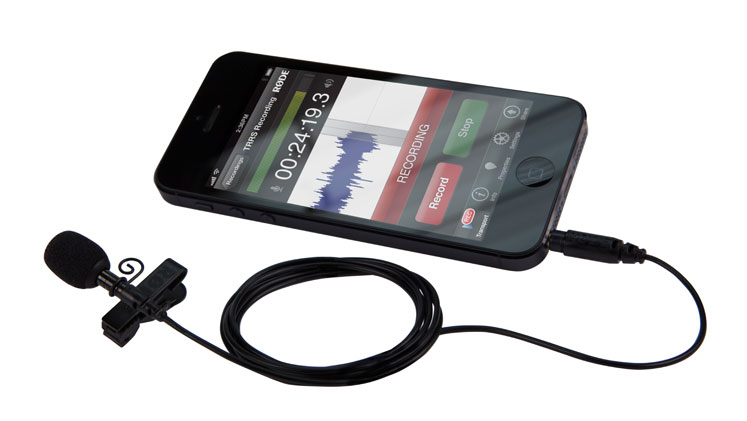
Whether it is a technical talk at a conference, a political rally or a budget-conscious wedding, many people now have most of the technology they need to record it and post-process the recording themselves. For most events, audio is an essential part of the recording. There are exceptions: if you take many short clips from a wedding and mix them together you could leave out the audio and just dub the couple's favourite song over it all. For a video of a conference presentation, though, the the speaker's voice is essential. These days, it is relatively easy to get extremely high quality audio using a lapel microphone attached to a smartphone. Lets have a closer look at the details. Using a lavalier / lapel microphone Full wireless microphone kits with microphone, transmitter and receiver are usually $US500 or more. The lavalier / lapel microphone by itself, however, is relatively cheap, under $US100. The lapel microphone is usually an omnidirectional microphone that will pick up the voices of everybody within a couple of meters of the person wearing it. It is useful for a speaker at an event, some types of interviews where the participants are at a table together and it may be suitable for a wedding, although you may want to remember to remove it from clothing during the photos. There are two key features you need when using such a microphone with a smartphone:

  • TRRS connector (this is the type of socket most phones and many laptops have today)
  • Microphone impedance should be at least 1k (that is one kilo Ohm) or the phone may not recognize when it is connected
Many leading microphone vendors have released lapel mics with these two features aimed specifically at smartphone users. I have personally been testing the Rode smartLav+ Choice of phone There are almost 10,000 varieties of smartphone just running Android, as well as iPhones, Blackberries and others. It is not practical for most people to test them all and compare audio recording quality. It is probably best to test the phone you have and ask some friends if you can make test recordings with their phones too for comparison. You may not hear any difference but if one of the phones has a poor recording quality you will hopefully notice that and exclude it from further consideration. A particularly important issue is being able to disable AGC in the phone. Android has a standard API for disabling AGC but not all phones or Android variations respect this instruction. I have personally had positive experiences recording audio with a Samsung Galaxy Note III. Choice of recording app Most Android distributions have at least one pre-installed sound recording app. Look more closely and you will find not all apps are the same. For example, some of the apps have aggressive compression settings that compromise recording quality. Others don't work when you turn off the screen of your phone and put it in your pocket. I've even tried a few that were crashing intermittently. The app I found most successful so far has been Diktofon, which is available on both F-Droid and Google Play. Diktofon has been designed not just for recording, but it also has some specific features for transcribing audio (currently only supporting Estonian) and organizing and indexing the text. I haven't used those features myself but they don't appear to cause any inconvenience for people who simply want to use it as a stable recording app. As the app is completely free software, you can modify the source code if necessary. I recently contributed patches enabling 48kHz recording and disabling AGC. At the moment, the version with these fixes has just been released and appears in F-Droid but not yet uploaded to Google Play. The fixes are in version 0.9.83 and you need to go into the settings to make sure AGC is disabled and set the 48kHz sample rate. Whatever app you choose, the following settings are recommended:
  • 16 bit or greater sample size
  • 48kHz sample rate
  • Disable AGC
  • WAV file format
Whatever app you choose, test it thoroughly with your phone and microphone. Make sure it works even when you turn off the screen and put it in your pocket while wearing the lapel mic for an hour. Observe the battery usage. Gotchas Now lets say you are recording a wedding and the groom has that smartphone in his pocket and the mic on his collar somewhere. What is the probability that some telemarketer calls just as the couple are exchanging vows? What is the impact on the recording? Maybe some apps will automatically put the phone in silent mode when recording. More likely, you need to remember this yourself. These are things that are well worth testing though. Also keep in mind the need to have sufficient storage space and to check whether the app you use is writing to your SD card or internal memory. The battery is another consideration. In a large event where smartphones are being used instead of wireless microphones, possibly for many talks in parallel, install a monitoring app like Ganglia on the phones to detect and alert if any phone has weak wifi signal, low battery or a lack of memory. Live broadcasts and streaming Some time ago I tested RTP multicasting from Lumicall on Android. This type of app would enable a complete wireless microphone setup with live streaming to the internet at a fraction of the cost of a traditional wireless microphone kit. This type of live broadcast could also be done with WebRTC on the Firefox app. Conclusion If you research the topic thoroughly and spend some time practicing and testing your equipment, you can make great audio recordings with a smartphone and an inexpensive lapel microphone. In subsequent blogs, I'll look at tips for recording video and doing post-production with free software.

20 July 2015

Matthew Garrett: Your Ubuntu-based container image is probably a copyright violation

Update: A Canonical employee responded here, but doesn't appear to actually contradict anything I say below.

I wrote about Canonical's Ubuntu IP policy here, but primarily in terms of its broader impact, but I mentioned a few specific cases. People seem to have picked up on the case of container images (especially Docker ones), so here's an unambiguous statement:

If you generate a container image that is not a 100% unmodified version of Ubuntu (ie, you have not removed or added anything), Canonical insist that you must ask them for permission to distribute it. The only alternative is to rebuild every binary package you wish to ship[1], removing all trademarks in the process. As I mentioned in my original post, the IP policy does not merely require you to remove trademarks that would cause infringement, it requires you to remove all trademarks - a strict reading would require you to remove every instance of the word "ubuntu" from the packages.

If you want to contact Canonical to request permission, you can do so here. Or you could just derive from Debian instead.

[1] Other than ones whose license explicitly grants permission to redistribute binaries and which do not permit any additional restrictions to be imposed upon the license grants - so any GPLed material is fine

comment count unavailable comments

18 July 2015

Niels Thykier: Performance tuning of lintian

For quite a while, Lintian has been able to create performance logs (--perf-debug --perf-output perf.log) that help diagnose where lintian spends most of its runtime. I decided to make lintian output these logs on lintian.debian.org to help us spot performance issues, though I have not been very good at analysing them regularly. At the beginning of the month, I finally got around to look a bit into one of them. My findings on IRC triggered Mattia Rizzolo to create this following graph. It shows the accumulated runtime of each check/collection measured in seconds. Find these findings, we set out to solve some of the issues. This lead to the following changes in 2.5.33 (in no particular order): Legend: S: run single threaded (1:1 performance improvement). P: run in parallel. Overall, I doubt the changes will give a revolutionary change in speed, but it should improve the 3rd, 4th and 5th slowest parts in Lintian. Beyond runtime performance, we got a few memory optimisations in the pipeline for Lintian 2.5.34: Combined these 6 commits reduce memory consumption in caches by ~33% compared to 2.5.33, when lintian processes itself. In absolute numbers, we are talking about a drop from 12.53MB to 8.48MB. The mileages can certainly vary depending on the package (mscgen only saw an ~25% improvement). Nevertheless, I was happy to list #715035 as being closed in 2.5.34. :)
Filed under: Debian, Lintian

14 July 2015

Sven Hoexter: some more thoughts on DHE usage

I looked a bit more into the possible arguments to keep DHE alive once you support ECDHE and you only expect traffic from endusers with a real browser (machine2machine traffic with access from obscure libraries is a different matter). From the SSL Labs checks we can deduce the following components that support DHE but do not support ECDHE: Windows XP does not support forward secrecy at all, and all other browsers beside IE (except for the first Chrome releases) bring their own TLS implementation. A very interesting data point is the cipher usage graphing provided by Wikimedia you can find on this dashboard. Currently I see roughly 4% of connections to be negotiated with some variant of a DHE cipher. That is after all not much, so I'm tempted to disable DHE for HTTPS where I've working ECDHE support soon. I'd first like to gather some stats from the BigIPs which I'm babysitting but that unfortunately is not that easy. As far as I can tell the only option is to insert a header a via an iRule and log the header on a backend system. Or you can setup HSL and log directly from the iRule.

12 July 2015

Lunar: Reproducible builds: week 11 in Stretch cycle

Debian is undertaking a huge effort to develop a reproducible builds system. I'd like to thank you for that. This could be Debian's most important project, with how badly computer security has been going.

PerniciousPunk in Reddit's Ask me anything! to Neil McGovern, DPL. What happened in the reproducible builds effort this week: Toolchain fixes More tools are getting patched to use the value of the SOURCE_DATE_EPOCH environment variable as the current time:

In the reproducible experimental toolchain which have been uploaded: Johannes Schauer followed up on making sbuild build path deterministic with several ideas. Packages fixed The following 311 packages became reproducible due to changes in their build dependencies : 4ti2, alot, angband, appstream-glib, argvalidate, armada-backlight, ascii, ask, astroquery, atheist, aubio, autorevision, awesome-extra, bibtool, boot-info-script, bpython, brian, btrfs-tools, bugs-everywhere, capnproto, cbm, ccfits, cddlib, cflow, cfourcc, cgit, chaussette, checkbox-ng, cinnamon-settings-daemon, clfswm, clipper, compton, cppcheck, crmsh, cupt, cutechess, d-itg, dahdi-tools, dapl, darnwdl, dbusada, debian-security-support, debomatic, dime, dipy, dnsruby, doctrine, drmips, dsc-statistics, dune-common, dune-istl, dune-localfunctions, easytag, ent, epr-api, esajpip, eyed3, fastjet, fatresize, fflas-ffpack, flann, flex, flint, fltk1.3, fonts-dustin, fonts-play, fonts-uralic, freecontact, freedoom, gap-guava, gap-scscp, genometools, geogebra, git-reintegrate, git-remote-bzr, git-remote-hg, gitmagic, givaro, gnash, gocr, gorm.app, gprbuild, grapefruit, greed, gtkspellmm, gummiboot, gyp, heat-cfntools, herold, htp, httpfs2, i3status, imagetooth, imapcopy, imaprowl, irker, jansson, jmapviewer, jsdoc-toolkit, jwm, katarakt, khronos-opencl-man, khronos-opengl-man4, lastpass-cli, lava-coordinator, lava-tool, lavapdu, letterize, lhapdf, libam7xxx, libburn, libccrtp, libclaw, libcommoncpp2, libdaemon, libdbusmenu-qt, libdc0, libevhtp, libexosip2, libfreenect, libgwenhywfar, libhmsbeagle, libitpp, libldm, libmodbus, libmtp, libmwaw, libnfo, libpam-abl, libphysfs, libplayer, libqb, libsecret, libserial, libsidplayfp, libtime-y2038-perl, libxr, lift, linbox, linthesia, livestreamer, lizardfs, lmdb, log4c, logbook, lrslib, lvtk, m-tx, mailman-api, matroxset, miniupnpd, mknbi, monkeysign, mpi4py, mpmath, mpqc, mpris-remote, musicbrainzngs, network-manager, nifticlib, obfsproxy, ogre-1.9, opal, openchange, opensc, packaging-tutorial, padevchooser, pajeng, paprefs, pavumeter, pcl, pdmenu, pepper, perroquet, pgrouting, pixz, pngcheck, po4a, powerline, probabel, profitbricks-client, prosody, pstreams, pyacidobasic, pyepr, pymilter, pytest, python-amqp, python-apt, python-carrot, python-django, python-ethtool, python-mock, python-odf, python-pathtools, python-pskc, python-psutil, python-pypump, python-repoze.tm2, python-repoze.what, qdjango, qpid-proton, qsapecng, radare2, reclass, repsnapper, resource-agents, rgain, rttool, ruby-aggregate, ruby-albino, ruby-archive-tar-minitar, ruby-bcat, ruby-blankslate, ruby-coffee-script, ruby-colored, ruby-dbd-mysql, ruby-dbd-odbc, ruby-dbd-pg, ruby-dbd-sqlite3, ruby-dbi, ruby-dirty-memoize, ruby-encryptor, ruby-erubis, ruby-fast-xs, ruby-fusefs, ruby-gd, ruby-git, ruby-globalhotkeys, ruby-god, ruby-hike, ruby-hmac, ruby-integration, ruby-jnunemaker-matchy, ruby-memoize, ruby-merb-core, ruby-merb-haml, ruby-merb-helpers, ruby-metaid, ruby-mina, ruby-net-irc, ruby-net-netrc, ruby-odbc, ruby-ole, ruby-packet, ruby-parseconfig, ruby-platform, ruby-plist, ruby-popen4, ruby-rchardet, ruby-romkan, ruby-ronn, ruby-rubyforge, ruby-rubytorrent, ruby-samuel, ruby-shoulda-matchers, ruby-sourcify, ruby-test-spec, ruby-validatable, ruby-wirble, ruby-xml-simple, ruby-zoom, rumor, rurple-ng, ryu, sam2p, scikit-learn, serd, shellex, shorewall-doc, shunit2, simbody, simplejson, smcroute, soqt, sord, spacezero, spamassassin-heatu, spamprobe, sphinxcontrib-youtube, splitpatch, sratom, stompserver, syncevolution, tgt, ticgit, tinyproxy, tor, tox, transmissionrpc, tweeper, udpcast, units-filter, viennacl, visp, vite, vmfs-tools, waffle, waitress, wavtool-pl, webkit2pdf, wfmath, wit, wreport, x11proto-input, xbae, xdg-utils, xdotool, xsystem35, yapsy, yaz. Please note that some packages in the above list are falsely reproducible. In the experimental toolchain, debhelper exported TZ=UTC and this made packages capturing the current date (without the time) reproducible in the current test environment. The following packages became reproducible after getting fixed: Ben Hutchings upstreamed several patches to fix Linux reproducibility issues which were quickly merged. Some uploads fixed some reproducibility issues but not all of them: Uploads that should fix packages not in main: Patches submitted which have not made their way to the archive yet: reproducible.debian.net A new package set has been added for lua maintainers. (h01ger) tracker.debian.org now only shows reproducibility issues for unstable. Holger and Mattia worked on several bugfixes and enhancements: finished initial test setup for NetBSD, rewriting more shell scripts in Python, saving UDD requests, and more debbindiff development Reiner Herrmann fixed text comparison of files with different encoding. Documentation update Juan Picca added to the commands needed for a local test chroot installation of the locales-all package. Package reviews 286 obsolete reviews have been removed, 278 added and 243 updated this week. 43 new bugs for packages failing to build from sources have been filled by Chris West (Faux), Mattia Rizzolo, and h01ger. The following new issues have been added: timestamps_in_manpages_generated_by_ronn, timestamps_in_documentation_generated_by_org_mode, and timestamps_in_pdf_generated_by_matplotlib. Misc. Reiner Herrmann has submitted patches for OpenWrt. Chris Lamb cleaned up some code and removed cruft in the misc.git repository. Mattia Rizzolo updated the prebuilder script to match what is currently done on reproducible.debian.net.

10 July 2015

Chris Lamb: Where's the principled opposition to the "WhatsApp ban"?

The Independent reports that David Cameron wishes to ban the instant messaging application WhatsApp due its use of end-to-end encryption. That we might merely be pawns in manoeuvring for some future political compromise (or merely susceptible to cheap clickbait) should be cause for some concern, but what should worry us more is that if it takes scare stories about WhatsApp for our culture to awaken on the issues of privacy and civil liberties, then the central argument against surveillance was lost a long time ago. However, the situation worsens once you analyse the disapproval in more detail. One is immediately struck by a predominant narrative of technical considerations; a ban would be "unworkable" or "impractical". A robust defence of personal liberty or a warning about the insidious nature of chilling effects? Perhaps a prescient John Locke quote to underscore the case? No. An encryption ban would "cause security problems." The argument proceeds in a tediously predictable fashion: it was already difficult to keep track whether one should ipso facto be in favour of measures that benefit the economy, but we are suddenly co-opted as technocrats to consider the "damage" it could to do the recovery or the impact on a now-victimised financial sector. The coup-de-gr ce finally appeals to our already inflated self-regard and narcissism: someone could "steal your identity." Perhaps even more disappointing is the reaction from more technically-minded circles who, frankly, should know better. Here, they give the outward impression of metaphorically stockpiling copies of the GnuPG source code in their bunkers, perhaps believing the shallow techno-utopianist worldview that all social and cultural problems can probably be solved with Twitter and a JavaScript intepreter. The tragedy here is that I suspect that this isn't what the vast majority of people really believe. Given a hypothetical ban that could, somehow, bypass all of the stated concerns, I'm pretty upbeat and confident that most people would remain uncomfortable with it on some level. So what, exactly, does it take for us to oppose this kind of intervention on enduring principled grounds instead of transient and circumventable practical ones? Is the problem just a lack of vocabulary to discuss these issues on a social scale? A lack of courage? Whilst it's certainly easier to dissect illiberal measures on technical merit than to make an impassioned case for abstract freedoms, every time we gleefully cackle "it won't work" we are, in essence, conceding the central argument to the authoritarian and the censorious. If one is right but for the wrong reasons, were we even right to begin with?

Gunnar Wolf: Finishing the course on "Free Software and Open Standards"

A couple of months ago, I was invited to give the starting course for the Masters degree in Free Software in the Universidad Andina Sim n Bol var university. UASB is a multinational university, with campuses in (at least) Ecuador, Chile, Bolivia and Colombia; I was doubtful at first regarding the seriousness of this proposal and the viability of the program, but time made my doubts disappear. Bolivia is going through an interesting process, as they have one of the strongest worded government mandates for migration to free software for the public administration in the next couple of years; this migration has prompted the interest of many professionals in the country. In particular, we have over 40 registered people for this Masters degree. Studying a Masters degree is a long-term commitment which signifies a big time investment, and although many of the student are quite new to the idea of free software, they are willing to spend this time (and money, as the university is privately owned and charges for its enrollment). I gave this class together with Alejandro Miranda (a.k.a. @pooka), as we have a very good pair-teaching dynamics; we had already given many conferences together, but this is the first time we had the opportunity to share a whole course and the experience was very good. We have read the students' logs, and many of them clearly agree with this. I had to skip two of the (ten) lessons, as I travelled from Mexico to Argentina halfway through it (of course, we brought the babies to meet my wife's family and friends!), so we had also the honor of having Esteban Lima fill in for those sessions. I am very happy and grateful that the University took care to record our presentations and intend to record and put online all of the classes; as we were the first in the program, there were some understandable hiccups and some sessions were lost, but most are available. Here they are, in case you are interested in refering to them:
Topic Video (my server) Video (Youtube)
Introduction to free software Watch Watch
History Watch Watch
Free culture N/A N/A
The effects of free software Watch Watch
Free software and open standards related to technologic soverignity Watch Watch
The free software ecosystem Watch Watch
Free software implementation in Bolivia Watch Watch
Introduction to intelectual property: Copyright, patents, trademarks, etc. Watch Watch
Who is "the community" and why do we speak about it? Watch Watch
Current status and challenges for the movement N/A N/A
We have yet another video file (which I have not fully followed through) titled ADSIB - Migration plan. It can also be downloaded from my server or watched online at Youtube. All in all: This was a great opportunity and a joy to do. I think the material we used and developed fit well what was expected from us, and we had fun giving somewhat heterodox readings on our movement.

6 July 2015

Matthew Garrett: Anti Evil Maid 2 Turbo Edition

The Evil Maid attack has been discussed for some time - in short, it's the idea that most security mechanisms on your laptop can be subverted if an attacker is able to gain physical access to your system (for instance, by pretending to be the maid in a hotel). Most disk encryption systems will fall prey to the attacker replacing the initial boot code of your system with something that records and then exfiltrates your decryption passphrase the next time you type it, at which point the attacker can simply steal your laptop the next day and get hold of all your data.

There are a couple of ways to protect against this, and they both involve the TPM. Trusted Platform Modules are small cryptographic devices on the system motherboard[1]. They have a bunch of Platform Configuration Registers (PCRs) that are cleared on power cycle but otherwise have slightly strange write semantics - attempting to write a new value to a PCR will append the new value to the existing value, take the SHA-1 of that and then store this SHA-1 in the register. During a normal boot, each stage of the boot process will take a SHA-1 of the next stage of the boot process and push that into the TPM, a process called "measurement". Each component is measured into a separate PCR - PCR0 contains the SHA-1 of the firmware itself, PCR1 contains the SHA-1 of the firmware configuration, PCR2 contains the SHA-1 of any option ROMs, PCR5 contains the SHA-1 of the bootloader and so on.

If any component is modified, the previous component will come up with a different measurement and the PCR value will be different, Because you can't directly modify PCR values[2], this modified code will only be able to set the PCR back to the "correct" value if it's able to generate a sequence of writes that will hash back to that value. SHA-1 isn't yet sufficiently broken for that to be practical, so we can probably ignore that. The neat bit here is that you can then use the TPM to encrypt small quantities of data[3] and ask it to only decrypt that data if the PCR values match. If you change the PCR values (by modifying the firmware, bootloader, kernel and so on), the TPM will refuse to decrypt the material.

Bitlocker uses this to encrypt the disk encryption key with the TPM. If the boot process has been tampered with, the TPM will refuse to hand over the key and your disk remains encrypted. This is an effective technical mechanism for protecting against people taking images of your hard drive, but it does have one fairly significant issue - in the default mode, your disk is decrypted automatically. You can add a password, but the obvious attack is then to modify the boot process such that a fake password prompt is presented and the malware exfiltrates the data. The TPM won't hand over the secret, so the malware flashes up a message saying that the system must be rebooted in order to finish installing updates, removes itself and leaves anyone except the most paranoid of users with the impression that nothing bad just happened. It's an improvement over the state of the art, but it's not a perfect one.

Joanna Rutkowska came up with the idea of Anti Evil Maid. This can take two slightly different forms. In both, a secret phrase is generated and encrypted with the TPM. In the first form, this is then stored on a USB stick. If the user suspects that their system has been tampered with, they boot from the USB stick. If the PCR values are good, the secret will be successfully decrypted and printed on the screen. The user verifies that the secret phrase is correct and reboots, satisfied that their system hasn't been tampered with. The downside to this approach is that most boots will not perform this verification, and so you rely on the user being able to make a reasonable judgement about whether it's necessary on a specific boot.

The second approach is to do this on every boot. The obvious problem here is that in this case an attacker simply boots your system, copies down the secret, modifies your system and simply prints the correct secret. To avoid this, the TPM can have a password set. If the user fails to enter the correct password, the TPM will refuse to decrypt the data. This can be attacked in a similar way to Bitlocker, but can be avoided with sufficient training: if the system reboots without the user seeing the secret, the user must assume that their system has been compromised and that an attacker now has a copy of their TPM password.

This isn't entirely great from a usability perspective. I think I've come up with something slightly nicer, and certainly more Web 2.0[4]. Anti Evil Maid relies on having a static secret because expecting a user to remember a dynamic one is pretty unreasonable. But most security conscious people rely on dynamic secret generation daily - it's the basis of most two factor authentication systems. TOTP is an algorithm that takes a seed, the time of day and some reasonably clever calculations and comes up with (usually) a six digit number. The secret is known by the device that you're authenticating against, and also by some other device that you possess (typically a phone). You type in the value that your phone gives you, the remote site confirms that it's the value it expected and you've just proven that you possess the secret. Because the secret depends on the time of day, someone copying that value won't be able to use it later.

But instead of using your phone to identify yourself to a remote computer, we can use the same technique to ensure that your computer possesses the same secret as your phone. If the PCR states are valid, the computer will be able to decrypt the TOTP secret and calculate the current value. This can then be printed on the screen and the user can compare it against their phone. If the values match, the PCR values are valid. If not, the system has been compromised. Because the value changes over time, merely booting your computer gives your attacker nothing - printing an old value won't fool the user[5]. This allows verification to be a normal part of every boot, without forcing the user to type in an additional password.

I've written a prototype implementation of this and uploaded it here. Do pay attention to the list of limitations - without a bootloader that measures your kernel and initrd, you're still open to compromise. Adding TPM support to grub is on my list of things to do. There are also various potential issues like an attacker being able to use external DMA-capable devices to obtain the secret, especially since most Linux distributions still ship kernels that don't enable the IOMMU by default. And, of course, if your firmware is inherently untrustworthy there's multiple ways it can subvert this all. So treat this very much like a research project rather than something you can depend on right now. There's a fair amount of work to do to turn this into a meaningful improvement in security.

[1] I wrote about them in more detail here, including a discussion of whether they can be used for general purpose DRM (answer: not really)

[2] In theory, anyway. In practice, TPMs are embedded devices running their own firmware, so who knows what bugs they're hiding.

[3] On the order of 128 bytes or so. If you want to encrypt larger things with a TPM, the usual way to do it is to generate an AES key, encrypt your material with that and then encrypt the AES key with the TPM.

[4] Is that even a thing these days? What do we say instead?

[5] Assuming that the user is sufficiently diligent in checking the value, anyway

comment count unavailable comments

Russ Allbery: INN 2.5.5

(This release has actually been ready for a while, but there were a few technical difficulties with getting it copied up to the right places, and then I got very distracted by various life stuff.) This is the first new release of INN in about a year, and hopefully the last in the 2.5.x series. A beta release of INN 2.6.0 will be announced shortly (probably tomorrow). As is typical for bug-fix releases, this release rolls up a bunch of small bug fixes that have been made over the past year. The most notable changes include new inn.conf parameters to fine-tune the SSL/TLS configuration for nnrpd (generally to tighten it over the OpenSSL defaults), a few new flags to various utilities, multiple improvements to pullnews, and support for properly stopping cnfsstat and innwatch if INN is started and then quickly stopped. As always, thanks to Julien LIE for preparing this release and doing most of the maintenance work on INN! You can get the latest version from the official ISC download page or from my personal INN pages. The latter also has links to the full changelog and the other INN documentation.

3 July 2015

Norbert Preining: Debian/TeX Live 2015.20150703-1

The first upload of new packages after TeX Live 2015 hit unstable. Against my expectations, the bugs didn t come in in the thousands, more or less there were only some fixes necessary in the binary package, which lead to a few updates over the last week. This upload fixes an RC bug (missing replaces), and also takes a step further in the Debianization of the packages: I finally removed texconfig and texlinks programs, as they are not useful on Debian, and should actually not be used. Debian - TeX Live 2015 Besides a few other fixes, of course there was the usual chore of package updates. Updated packages babel-french, biblatex-fiwi, biblatex-opcit-booktitle, c90, chemformula, chemgreek, cjkutils, ctex, curve2e, dozenal, eledmac, elements, enotez, garuda-c90, koma-script, l3build, latex, leadsheets, norasi-c90, pkuthss, poemscol, pstricks, pst-solides3d, siunitx, termmenu, texlive-scripts, tudscr, upmethodology, xindy. New packages arabi-add, br-lex. Enjoy.


2 July 2015

Antonio Terceiro: Upgrades to Jessie, Ruby 2.2 transition, and chef update

Last month I started to track all the small Debian-related things that I do. My initial motivation was to be concious about how often I spend short periods of time working on Debian. Sometimes it s during lunch breaks, weekends, first thing in the morning before regular work, after I am done for the day with regular work, or even during regular work, since I do have the chance of doing Debian work as part of my regular work occasionally. Now that I have this information, I need to do something with it. So this is probably the first of monthly updates I will post about my Debian work. Hopefully it won t be the last. Upgrades to Jessie I (finally) upgraded my two servers to Jessie. The first one, my home server, is a Utilite which is a quite nice ARM box. It is silent and consumes very little power. The only problem I had with it is that the vendor-provided kernel is too old, so I couldn t upgrade udev, and therefore couldn t switch to systemd. I had to force systemv for now, until I can manage to upgrade the kernel and configure uboot to properly boot the official Debian kernel. On my VPS things are way better. I was able to upgrade nicely, and it is now running a stock Jessie system. fixed https on ci.debian.net pabs had let me know on IRC of an issue with the TLS certificate for ci.debian.net, which took me a few iterations to get right. It was missing the intermediate certificates, and is now fixed. You can now enjoy Debian CI under https . Ruby 2.2 transition I was able to start the Ruby 2.2 transition, which has the goal of switch to Ruby 2.2 on unstable. The first step was updating ruby-defaults adding support to build Ruby packgaes for both Ruby 2.1 and Ruby 2.2. This was followed by updates to gem2deb (0.18, 0.18.1, 0.18.2, and 0.18.3) and rubygems-integration . At this point, after a few rebuild requests only 50 out of 137 packages need to be looked at; some of them just use the default Ruby, so a rebuild once we switch the default will be enough to make it use Ruby 2.2, while others, specially Ruby libraries, will still need porting work or other fixes. Updated the Chef stack Bringing chef to the very latest upstream release into unstable was quite some work. I had to update: In the middle I also had to package a new dependency, ruby-ffi-yajl, which was very quickly ACCEPTED thanks to the awesome work of the ftp-master team. Random bits

Lars Wirzenius: Obnam 1.10 released (backup software)

I have just released version 1.10 of Obnam, my backup program. See the website at http://obnam.org for details on what it does. The new version is available from git (see http://git.liw.fi) and as Debian packages from http://code.liw.fi/debian, and uploaded to Debian, hopefully soon in unstable. The NEWS file extract below gives the highlights of what's new in this version. Version 1.10, released 2015-07-01 Major bug fixes: Minor new features: Minor fixes:

1 July 2015

Christian Perrier: [LIFE] Running activities

Hello dear readers, It has been quite some time since I blogged on Planet Debian,so today, I just want to give some news to fellow Debian pals. My involvment in Debian is still there. I'm probably less visible nowadays, but I'm still actively working on some packages, monotiring some i18n activities and doing work on D-I. But, as you know, running has taken precedence nowadays and is still becoming a growing part of my life (along with my family, of course). This year, I had a first "summit" running the "Vulcain" trail race in French "Massif Central" (mountains in Central France), which was 80km and 3000m positive climb race. It was run mostly in snow and with quite bad weather conditions, a good training for more difficult races. I completed it in about more than 12 hours, for a race that finally had less than 60% finishers. Later on, most races were preparation races for the summer moutain races : I mostly ran three 50km trail races in the Paris and neighbourhood area. All of them were very good results with a good feeling. Some were run along with friends from the Kikourou.net web community, where I am now very active. My training was also strongly increased wrt former years (yes that *is* possible), peaking at more than 500km during May, where I was mostly on holidays all month long (lucky man). And now, the first Great Great Thing of the year is coming : La Montagn'hard, 110 kilometers, about 9000 meters positive climb, around Les Contamines, close to Mont-Blanc in French Alps. That is a Big One, indeed. Technically more difficult than the TDS race I ran last August, during DebConf (120km, but "only" 7000 meters climb). Montagn'hard is indeed known as one of the most difficult moutain trail races in France. I plan to complete it in about 29 hours....but that can indeed be 30, 32 or even 35, who knows what can happen? Given the very high temperatures over Europe this week (they'll peak at about 38 C on Saturday in the Alps), that will be an incredibly difficult challenge and we expect about only 40% finishers. A live tracking will be available for thos who care at http://chrono.geofp.com/montagnhard2015/v3/. Wish me luck ! Next challenge will be end of August, with the "Echappee Belle" race : 144km and 10.000 meters positive climb, still in French Alps (Belledonne range, this time). About 48 hours, or even up to 55, two nights out.....harder and hopefully better, faster, stronger...:-)

28 June 2015

Ben Armstrong: Bluff Trail Early Summer 2015

Here s a photo journal of a walk I just completed around the Pot Lake loop of the Bluff Wilderness Hiking Trail. Hope you enjoy it! I was dissatisfied with my initial post, so have reduced the size to improve load time, changed the gallery software and have rewritten many of the captions. [slb_group]
My favourite stunted tamarack, clinging to the rocks.Click this photo to start the slideshow.
The Bluff Wilderness Hiking Trail is a series of four loops. Today I ll tackle only the first in order to get as many pictures as possible, and because when hiking solo, I prefer to stay on the more heavily traveled part. In late summer, I ll probably do all four loops with my friend Ryan again. Meanwhile, I ll stay in shape coming out here when I can for shorter walks. The trail starts here. Right away, even before heading between the marker stones, there s a pretty view of Cranberry Lake off to the right. Pink lady slippers have been plentiful this year! All along the trail, you can find hundreds, if not thousands of these. Boardwalks provide dry passage across the boggy bits. The pitcher plants are thriving, too. The vines with tiny, round leaves are wintergreen. Tasty! I ve not seen anything larger than a deer out here. Roots and rocks are a recurring theme. Many feet beating down on the first loop have packed the earth hard and have exposed more roots than you ll see deeper into the trail system where fewer hikers travel. Step carefully. Sheep laurel is an eye-catcher. To me, they look like little, pink jewels. Yellow markers clearly mark the Pot Lake loop. At crucial junctures there are some signs to point you the right way. If you re looking only at your feet, you may see black circles marked with arrows on some of the rocks, also pointing the way. The vegetation varies from scraggly and clinging to the rocks, to lush and green. The path is wet in parts. Nothing impassible, though. On the first loop in particular, and even within only the first kilometre, there are some pretty stunning views of the lake. Very quickly, you ll find yourself perched up top on the rocks. On this stretch, you need to hop a bit from one rock to the next. Just as quickly as you ascended, you descend back down to the lake again. A good place to stop and have a snack. The start of the first loop, itself. I chide myself for not having discovered this trail until about 2007, even though we moved out here in 2005. It s a treasure we re indebted to the WRWEO for preserving. Leave some comments in the box, if you like. You ll find these maps along the way to track your progress. Remember to follow proper trail etiquette. A particularly steep climb! Despite the best trail maintenance efforts, water still goes where it wants! Good to have boots. Another steep climb. This tree is chattering at me. Raising quite a racket. What s in the hole? I patiently wait with my camera to get a good shot of the tree s occupants. Mother woodpecker, feeding her babies! As the feeding continues, the chirping intensifies! Up on top of a big rock with a view over the lake is another favourite stopping place for a snack. The view at my snack break rock. I never get tired of it. There are some pretty big boulders. Next time I ll bring a friend to stand under it for scale. Another terrific view. A stream just before the first portage. This portage connects Cranberry Lake with Pot Lake. The portage is clearly marked. The Pot Lake end of the portage. One of several upturned trees, with the roots now forming a wall along one side of the trail. The spiral of the roots mimics the spiral split in this boulder which you can walk all of the way into until you reach the centre. Rocks and trees and trees and rocks White pine catkins. Suddenly the close forest opens up into a wide view all around. My favourite stunted tamarack, clinging to the rocks. Last year s cones. This year s aren t out yet on this tree. I love the tamarack s delicate new needles. These blueberries have a head start. Can t wait until it s time to harvest them. Nearly at the top of the Pot Lake loop. This is Pot Lake, itself. I was struck by this one little blighted berry, showing a blush of distress-induced colour amongst the green ones. Another view, nearly at the top. A sign beneath the map: Rare Plant Species: Mountain Sandwort Arenaria groenlandica. Use caution and stay on designated trails. Avoid disturbing habitat. Finally, the top. A map to mark your progress. Apparently the Mountain Sandwort, right at the base of the sign. The mountain sandwort is a pretty, delicate little thing. After passing the sign, the view from the top over Cranberry Lake, indeed both lakes, is a reward worth climbing all of the way up to see. Some other hiker has left a cairn. The descent is not too steep at first. The approach down to the back side of Pot Lake from the top is marked by exposed bedrock and scrubby plants. Finally back to some cover, which is welcome on hotter days. A ferny fairyland. It s not all abrupt ups and downs. Here s an easy, winding stretch of trail. Cinnamon ferns. Ambling along. Rounding the end of Pot Lake. Not very long after reaching the lake, the path climbs several metres up above it. There are some nice, rootless bits on this side of the loop, giving your ankles and knees a break. This guy seemed extremely agitated to see me. A new tamarack cone! Did I mention I like tamaracks? The steep descent back to Cranberry Lake again. Finally back where the loop starts.
[/slb_group]

Russell Coker: RAID Pain

One of my clients has a NAS device. Last week they tried to do what should have been a routine RAID operation, they added a new larger disk as a hot-spare and told the RAID array to replace one of the active disks with the hot-spare. The aim was to replace the disks one at a time to grow the array. But one of the other disks had an error during the rebuild and things fell apart. I was called in after the NAS had been rebooted when it was refusing to recognise the RAID. The first thing that occurred to me is that maybe RAID-5 isn t a good choice for the RAID. While it s theoretically possible for a RAID rebuild to not fail in such a situation (the data that couldn t be read from the disk with an error could have been regenerated from the disk that was being replaced) it seems that the RAID implementation in question couldn t do it. As the NAS is running Linux I presume that at least older versions of Linux have the same problem. Of course if you have a RAID array that has 7 disks running RAID-6 with a hot-spare then you only get the capacity of 4 disks. But RAID-6 with no hot-spare should be at least as reliable as RAID-5 with a hot-spare. Whenever you recover from disk problems the first thing you want to do is to make a read-only copy of the data. Then you can t make things worse. This is a problem when you are dealing with 7 disks, fortunately they were only 3TB disks and only each had 2TB in use. So I found some space on a ZFS pool and bought a few 6TB disks which I formatted as BTRFS filesystems. For this task I only wanted filesystems that support snapshots so I could work on snapshots not on the original copy. I expect that at some future time I will be called in when an array of 6+ disks of the largest available size fails. This will be a more difficult problem to solve as I don t own any system that can handle so many disks. I copied a few of the disks to a ZFS filesystem on a Dell PowerEdge T110 running kernel 3.2.68. Unfortunately that system seems to have a problem with USB, when copying from 4 disks at once each disk was reading about 10MB/s and when copying from 3 disks each disk was reading about 13MB/s. It seems that the system has an aggregate USB bandwidth of 40MB/s slightly greater than USB 2.0 speed. This made the process take longer than expected. One of the disks had a read error, this was presumably the cause of the original RAID failure. dd has the option conv=noerror to make it continue after a read error. This initially seemed good but the resulting file was smaller than the source partition. It seems that conv=noerror doesn t seek the output file to maintain input and output alignment. If I had a hard drive filled with plain ASCII that MIGHT even be useful, but for a filesystem image it s worse than useless. The only option was to repeatedly run dd with matching skip and seek options incrementing by 1K until it had passed the section with errors. for n in /dev/loop[0-6] ; do echo $n ; mdadm examine -v -v scan $n grep Events ; done Once I had all the images I had to assemble them. The Linux Software RAID didn t like the array because not all the devices had the same event count. The way Linux Software RAID (and probably most RAID implementations) work is that each member of the array has an event counter that is incremented when disks are added, removed, and when data is written. If there is an error then after a reboot only disks with matching event counts will be used. The above command shows the Events count for all the disks. Fortunately different event numbers aren t going to stop us. After assembling the array (which failed to run) I ran mdadm -R /dev/md1 which kicked some members out. I then added them back manually and forced the array to run. Unfortunately attempts to write to the array failed (presumably due to mismatched event counts). Now my next problem is that I can make a 10TB degraded RAID-5 array which is read-only but I can t mount the XFS filesystem because XFS wants to replay the journal. So my next step is to buy another 2*6TB disks to make a RAID-0 array to contain an image of that XFS filesystem. Finally backups are a really good thing

24 June 2015

Norbert Preining: TeX Live Manager News June 2015

TeX Live 2015 has been released, and normal operation with daily updates has started. During the freeze time and afterwards I have made a few changes to the TeX Live Manager (tlmgr) that I want to highlight here. texlive-tlmgr The main changes are better error and return code handling (which should be hardly visible for the users), and more more informative output of the tlmgr info action, incorporating more data from the TeX Catalogue. Error handling With a program that started as an experiment that has grown into the central configuration and management program, there are lots of old code pieces that did not do proper error signaling via return values. That meant that the return value of a tlmgr run didn t have any meaning, mostly because it was 0 (success) most of the times. I have now tried to do proper return code handling throughout the tlmgr code base, that is the tlmgr.pl and the necessary Perl modules. While this should not be a user visible changes, it turned out that the MacOS TeX Live Utility by Adam Maxwell (btw, a great program, it would be nice to have something similar written for Unix replacing the bit clumsy tlmgr gui), got broken for paper configuration, due to forgotten return value fixes in the TLPaper.pm module. That is fixed now in our repository. All in all we do hope that the return value of a tlmgr run now gives proper information about success or error. I might add a bit more semantics by returning bit-values in case of errors, but this is in early stages of thinking. TeX Catalogue data in tlmgr info Since more or less the very beginning we incorporated information from the TeX Catalogue into our database. In particular did we carry over the license information, version, CTAN directory, and date of last change of information in the Catalogue. ctan-page-asana-mathRecently (or not so recently, I actually don t know), CTAN has enriched their package view with more information, in particular a list of topics, and a list of related packages. Take for example the Asana-math package. It s CTAN page now displays besides the previously available information also a list of topics and a list of related packages. The topic index can also be browsed directly when searching for a specific package. I have now added functionality in the TeX Live Manager that tlmgr info also prints out the topic names and related packages. In the case of Asana Math fonts, that would look like:
$ tlmgr info Asana-Math
package:     Asana-Math
category:    Package
shortdesc:   A font to typeset maths in Xe(La)TeX and Lua(La)TeX.
longdesc:    The Asana-Math font is an OpenType font that includes almost all mathematical Unicode symbols and it can be used to typeset mathematical text with any software that can understand the MATH OpenType table (e.g., XeTeX 0.997 and Microsoft Word 2007). The font is beta software. Typesetting support for use with LaTeX is provided by the fontspec and unicode-math packages.
installed:   Yes
revision:    37556
sizes:       doc: 9k, run: 1177k
relocatable: No
cat-version: 000.955
cat-date:    2015-06-02 20:04:19 +0200
cat-license: ofl
cat-topics:  font font-maths font-otf font-ttf
cat-related: stix xits
collection:  collection-fontsextra
GUIs could use the topic names and related packages to link directly to the CTAN page. At the moment the related packages are named according to CTAN standards, which are a bit different from what we use in TeX Live. I am not sure whether I will change that, or ship out both names. We will see.
The changes are currently in testing, see section about Test version here, and will be pushed out in due time, probably in the next week. As usual, in case of any problems or bugs, please contact us at the TeX Live mailing list. Enjoy.

23 June 2015

Russell Coker: One Android Phone Per Child

I was asked for advice on whether children should have access to smart phones, it s an issue that many people are discussing and seems worthy of a blog post. Claimed Problems with Smart Phones The first thing that I think people should read is this XKCD post with quotes about the demise of letter writing from 99+ years ago [1]. Given the lack of evidence cited by people who oppose phone use I think we should consider to what extent the current concerns about smart phone use are just reactions to changes in society. I ve done some web searching for reasons that people give for opposing smart phone use by kids and addressed the issues below. Some people claim that children shouldn t get a phone when they are so young that it will just be a toy. That s interesting given the dramatic increase in the amount of money spent on toys for children in recent times. It s particularly interesting when parents buy game consoles for their children but refuse mobile phone toys (I know someone who did this). I think this is more of a social issue regarding what is a suitable toy than any real objection to phones used as toys. Obviously the educational potential of a mobile phone is much greater than that of a game console. It s often claimed that kids should spend their time reading books instead of using phones. When visiting libraries I ve observed kids using phones to store lists of books that they want to read, this seems to discredit that theory. Also some libraries have Android and iOS apps for searching their catalogs. There are a variety of apps for reading eBooks, some of which have access to many free books but I don t expect many people to read novels on a phone. Cyber-bullying is the subject of a lot of anxiety in the media. At least with cyber-bullying there s an electronic trail, anyone who suspects that their child is being cyber-bullied can check that while old-fashioned bullying is more difficult to track down. Also while cyber-bullying can happen faster on smart phones the victim can also be harassed on a PC. I don t think that waiting to use a PC and learn what nasty thing people are saying about you is going to be much better than getting an instant notification on a smart phone. It seems to me that the main disadvantage of smart phones in regard to cyber-bullying is that it s easier for a child to participate in bullying if they have such a device. As most parents don t seem concerned that their child might be a bully (unfortunately many parents think it s a good thing) this doesn t seem like a logical objection. Fear of missing out (FOMO) is claimed to be a problem, apparently if a child has a phone then they will want to take it to bed with them and that would be a bad thing. But parents could have a policy about when phones may be used and insist that a phone not be taken into the bedroom. If it s impossible for a child to own a phone without taking it to bed then the parents are probably dealing with other problems. I m not convinced that a phone in bed is necessarily a bad thing anyway, a phone can be used as an alarm clock and instant-message notifications can be turned off at night. When I was young I used to wait until my parents were asleep before getting out of bed to use my PC, so if smart-phones were available when I was young it wouldn t have changed my night-time computer use. Some people complain that kids might use phones to play games too much or talk to their friends too much. What do people expect kids to do? In recent times the fear of abduction has led to children doing playing outside a lot less, it used to be that 6yos would play with other kids in their street and 9yos would be allowed to walk to the local park. Now people aren t allowing 14yo kids walk to the nearest park alone. Playing games and socialising with other kids has to be done over the Internet because kids aren t often allowed out of the house. Play and socialising are important learning experiences that have to happen online if they can t happen offline. Apps can be expensive. But it s optional to sign up for a credit card with the Google Play store and the range of free apps is really good. Also the default configuration of the app store is to require a password entry before every purchase. Finally it is possible to give kids pre-paid credit cards and let them pay for their own stuff, such pre-paid cards are sold at Australian post offices and I m sure that most first-world countries have similar facilities. Electronic communication is claimed to be somehow different and lesser than old-fashioned communication. I presume that people made the same claims about the telephone when it first became popular. The only real difference between email and posted letters is that email tends to be shorter because the reply time is smaller, you can reply to any questions in the same day not wait a week for a response so it makes sense to expect questions rather than covering all possibilities in the first email. If it s a good thing to have longer forms of communication then a smart phone with a big screen would be a better option than a feature phone , and if face to face communication is preferred then a smart phone with video-call access would be the way to go (better even than old fashioned telephony). Real Problems with Smart Phones The majority opinion among everyone who matters (parents, teachers, and police) seems to be that crime at school isn t important. Many crimes that would result in jail sentences if committed by adults receive either no punishment or something trivial (such as lunchtime detention) if committed by school kids. Introducing items that are both intrinsically valuable and which have personal value due to the data storage into a typical school environment is probably going to increase the amount of crime. The best options to deal with this problem are to prevent kids from taking phones to school or to home-school kids. Fixing the crime problem at typical schools isn t a viable option. Bills can potentially be unexpectedly large due to kids inability to restrain their usage and telcos deliberately making their plans tricky to profit from excess usage fees. The solution is to only use pre-paid plans, fortunately many companies offer good deals for pre-paid use. In Australia Aldi sells pre-paid credit in $15 increments that lasts a year [2]. So it s possible to pay $15 per year for a child s phone use, have them use Wifi for data access and pay from their own money if they make excessive calls. For older kids who need data access when they aren t at home or near their parents there are other pre-paid phone companies that offer good deals, I ve previously compared prices of telcos in Australia, some of those telcos should do [3]. It s expensive to buy phones. The solution to this is to not buy new phones for kids, give them an old phone that was used by an older relative or buy an old phone on ebay. Also let kids petition wealthy relatives for a phone as a birthday present. If grandparents want to buy the latest smart-phone for a 7yo then there s no reason to stop them IMHO (this isn t a hypothetical situation). Kids can be irresponsible and lose or break their phone. But the way kids learn to act responsibly is by practice. If they break a good phone and get a lesser phone as a replacement or have to keep using a broken phone then it s a learning experience. A friend s son head-butted his phone and cracked the screen he used it for 6 months after that, I think he learned from that experience. I think that kids should learn to be responsible with a phone several years before they are allowed to get a learner s permit to drive a car on public roads, which means that they should have their own phone when they are 12. I ve seen an article about a school finding that tablets didn t work as well as laptops which was touted as news. Laptops or desktop PCs obviously work best for typing. Tablets are for situations where a laptop isn t convenient and when the usage involves mostly reading/watching, I ve seen school kids using tablets on excursions which seems like a good use of them. Phones are even less suited to writing than tablets. This isn t a problem for phone use, you just need to use the right device for each task. Phones vs Tablets Some people think that a tablet is somehow different from a phone. I ve just read an article by a parent who proudly described their policy of buying feature phones for their children and tablets for them to do homework etc. Really a phone is just a smaller tablet, once you have decided to buy a tablet the choice to buy a smart phone is just about whether you want a smaller version of what you have already got. The iPad doesn t appear to be able to make phone calls (but it supports many different VOIP and video-conferencing apps) so that could technically be described as a difference. AFAIK all Android tablets that support 3G networking also support making and receiving phone calls if you have a SIM installed. It is awkward to use a tablet to make phone calls but most usage of a modern phone is as an ultra portable computer not as a telephone. The phone vs tablet issue doesn t seem to be about the capabilities of the device. It s about how portable the device should be and the image of the device. I think that if a tablet is good then a more portable computing device can only be better (at least when you need greater portability). Recently I ve been carrying a 10 tablet around a lot for work, sometimes a tablet will do for emergency work when a phone is too small and a laptop is too heavy. Even though tablets are thin and light it s still inconvenient to carry, the issue of size and weight is a greater problem for kids. 7 tablets are a lot smaller and lighter, but that s getting close to a 5 phone. Benefits of Smart Phones Using a smart phone is good for teaching children dexterity. It can also be used for teaching art in situations where more traditional art forms such as finger painting aren t possible (I have met a professional artist who has used a Samsung Galaxy Note phone for creating art work). There is a huge range of educational apps for smart phones. The Wikireader (that I reviewed 4 years ago) [4] has obvious educational benefits. But a phone with Internet access (either 3G or Wifi) gives Wikipedia access including all pictures and is a better fit for most pockets. There are lots of educational web sites and random web sites that can be used for education (Googling the answer to random questions). When it comes to preparing kids for the real world or the work environment people often claim that kids need to use Microsoft software because most companies do (regardless of the fact that most companies will be using radically different versions of MS software by the time current school kids graduate from university). In my typical work environment I m expected to be able to find the answer to all sorts of random work-related questions at any time and I think that many careers have similar expectations. Being able to quickly look things up on a phone is a real work skill, and a skill that s going to last a lot longer than knowing today s version of MS-Office. There are a variety of apps for tracking phones. There are non-creepy ways of using such apps for monitoring kids. Also with two-way monitoring kids will know when their parents are about to collect them from an event and can stay inside until their parents are in the area. This combined with the phone/SMS functionality that is available on feature-phones provides some benefits for child safety. iOS vs Android Rumour has it that iOS is better than Android for kids diagnosed with Low Functioning Autism. There are apparently apps that help non-verbal kids communicate with icons and for arranging schedules for kids who have difficulty with changes to plans. I don t know anyone who has a LFA child so I haven t had any reason to investigate such things. Anyone can visit an Apple store and a Samsung Experience store as they have phones and tablets you can use to test out the apps (at least the ones with free versions). As an aside the money the Australian government provides to assist Autistic children can be used to purchase a phone or tablet if a registered therapist signs a document declaring that it has a therapeutic benefit. I think that Android devices are generally better for educational purposes than iOS devices because Android is a less restrictive platform. On an Android device you can install apps downloaded from a web site or from a 3rd party app download service. Even if you stick to the Google Play store there s a wider range of apps to choose from because Google is apparently less restrictive. Android devices usually allow installation of a replacement OS. The Nexus devices are always unlocked and have a wide range of alternate OS images and the other commonly used devices can usually have an alternate OS installed. This allows kids who have the interest and technical skill to extensively customise their device and learn all about it s operation. iOS devices are designed to be sealed against the user. Admittedly there probably aren t many kids with the skill and desire to replace the OS on their phone, but I think it s good to have option. Android phones have a range of sizes and features while Apple only makes a few devices at any time and there s usually only a couple of different phones on sale. iPhones are also a lot smaller than most Android phones, according to my previous estimates of hand size the iPhone 5 would be a good tablet for a 3yo or good for side-grasp phone use for a 10yo [5]. The main benefits of a phone are for things other than making phone calls so generally the biggest phone that will fit in a pocket is the best choice. The tiny iPhones don t seem very suitable. Also buying one of each is a viable option. Conclusion I think that mobile phone ownership is good for almost all kids even from a very young age (there are many reports of kids learning to use phones and tablets before they learn to read). There are no real down-sides that I can find. I think that Android devices are generally a better option than iOS devices. But in the case of special needs kids there may be advantages to iOS.

22 June 2015

Niels Thykier: Introducing dak auto-decruft

Debian now have over 22 000 source packages and 45 500 binary packages. To counter that, the FTP masters and I have created a dak tool to automatically remove packages from unstable! This is also much more efficient than only removing them from testing! :) The primary goal of the auto-decrufter is to remove a regular manual work flow from the FTP masters. Namely, the removal of the common cases of cruft, such as Not Built from Source (NBS) and Newer Version In Unstable (NVIU). With the auto-decrufter in place, such cruft will be automatically removed when there are no reverse dependencies left on any architecture and nothing Build-Depends on it any more. Despite the implication in the opening of this post, this will in fact not substantially reduce the numbers of packages in unstable. :) Nevertheless, it is still very useful for the FTP masters, the release team and packaging Debian contributors. The reason why the release team benefits greatly from this tool, is that almost every transition generates one piece of NBS -cruft. Said piece of cruft currently must be removed from unstable before the transition can progress into its final phase. Until recently that removal has been 100% manual and done by the FTP masters. The restrictions on auto-decrufter means that we will still need manual decrufts. Notably, the release team will often complete transitions even when some reverse dependencies remain on non-release architectures. Nevertheless, it is definitely an improvement. Omelettes and eggs: As an old saying goes You cannot make an omelette without breaking eggs . Less so when the only test suite is production. So here are some of the broken eggs caused by implementation of the auto-decrufter: Of the 3, the boolean inversion was no doubt the worst. By the time we had it fixed, at least 50 (unique) binary packages had lost their override . Fortunately, it was possible to locate these issues using a database query and they have now been fixed. Before I write any more non-trivial patches for dak, I will probably invest some time setting up a basic test framework for dak first.
Filed under: Debian, Release-Team

Next.

Previous.