Search Results: "agi"

7 July 2016

Ben Hutchings: Debian LTS work, June 2016

I was assigned another 15 hours of work by Freexian's Debian LTS initiative and carried over 5 from last month. I worked a total of 19 hours, carrying over 1. I spent a week in the Front Desk role and triaged many new security issues for wheezy. I prepared the Linux 3.2.81 stable update, sent it out for review and finally released it. I then rebased the wheezy-security branch on top of that and added some later security fixes that were not yet suitable for a kernel.org update. I uploaded to wheezy-security and issued DLA-516-1. I started working on the next Linux stable updates (3.2.82 and the next wheezy LTS update) and on an update for imagemagick, but haven't uploaded anything for them yet.

Markus Koschany: My Free Software Activities in June 2016

My monthly report covers what I have been doing for Debian. I write it for Debian s Long Term Support sponsors but also for the wider free software community in the hope that it might inspire people to get more involved with Debian or free software in general. Debian Android Debian Games Debian Java Debian LTS This was my fifth month as a paid contributor and I have been paid to work 19,75 hours on Debian LTS. In that time I did the following: QA uploads

6 July 2016

Bits from Debian: Debian Perl Sprint 2016

Six members of the Debian Perl team met in Zurich over the weekend from May 19 to May 22 to continue the development around perl for Stretch and to work on QA across 3000+ packages. The participants had a good time, met friends from local groups and even found some geocaches. Obviously, the sprint was productive this time too: The full report was posted to the relevant Debian mailing lists. The participants would like to thank the ETH Zurich for hosting us, and all donors to the Debian project who helped to cover a large part of our expenses.

Daniel Pocock: Avoiding SMS vendor lock-in with SMPP

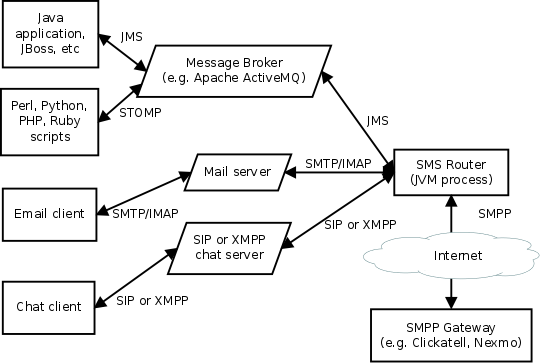
There is increasing demand for SMS notifications about monitoring alerts, trading notifications, flight delays and other events. Various companies are offering SMS transmission services to meet this demand and many of them aggressively pushing their own proprietary interfaces to the SMS world rather than using the more open and widely supported SMPP. There is good reason for this: if users write lots of of scripts to access the REST API of an SMS service, the users won't be able to change their service provider without having to change all their code. Well, that is good if you are an SMPP vendor but not if you are their customer. If an SMS gateway company goes out of business or has a system meltdown, the customers linked to their REST API will have a much bigger effort to migrate to a new provider than those using SMPP. The HTTP REST APIs offered by many vendors hide some details of the SMS protocol and payload. At first glance, this may feel easier. In fact, this leads to unpredictable results when delivering messages to users in different countries and different character sets/languages. It is better to start with SMPP from the beginning and avoid discovering those pitfalls later. The SMS Router free/open source software project helps overcome the SMPP learning curve by using APIs you are already familiar with. More troublesome for large organizations, some of the REST APIs offered by SMS gateways want to make callbacks to your own servers: this means your servers need public IP addresses accessible from the Internet. In some organizations that can take months to organize. SMPP works over one or more outgoing TCP connections initiated from your own server(s) and doesn't require any callback connections from the SMPP gateway. SMS Router lets SMS users have the best of both worlds: the flexibility of linking to any provider who supports SMPP and the convenience of putting messages into the system using any of the transports supported by an Apache Camel component. Popular examples include camel-jms (JMS) for Java and J2EE users, STOMP for scripting languages, camel-mail (SMTP and IMAP) for email integration and camel-sip (SIP) or camel-xmpp (XMPP) for chat/instant messaging systems. If you really want to, you can also create your own in-house HTTP REST API too using camel-restlet for internal applications. In all these cases, SMS Router always uses standard SMPP to reach any gateway of your choice. Architecture overview SMS Router is based on Apache Camel. Multiple instances can be operated in parallel for clustering, load balancing and high availability. It can be monitored using JMX solutions such as JMXetric. The SMPP support is based on the camel-smpp component which is in turn based on the jSMPP library, which comprehensively implements the SMPP protocol in Java. camel-smpp can be used with minimal configuration but for those who want to, many SMPP features can be tweaked on a per-message basis using various headers. The SMPP gateway settings can be configured and changed at will using the sms-router.properties file. The process doesn't require any other files or databases at runtime. The SMS Router is ready-to-run with one queue for sending messages and another queue for incoming messages. The routing logic can be customized by editing the RouteBuilder class to use other Camel components or any of Camel's wide range of functions for inspecting, modifying and routing messages. For example, you can extend it to failover to multiple SMPP gateways using Camel's load-balancer pattern. SMS Router based projects are already used successfully in production, for example, the user registration mechanism for the Lumicall secure VoIP app for Android. Getting started See the README for instructions. Feel free to ask questions about this project on the Camel users mailing list. Disclaimer SMS is not considered secure, the SMS Router developers and telecommunications industry experts discourage the use of this technology for two-factor authentication. Please see the longer disclaimer in the README file and my earlier blog about SMS logins: an illusion of security. The bottom line: if your application is important enough to need two-factor authentication, do it correctly using smart cards or tokens. There are many popular free software projects based on these full cryptographic solutions, for example, the oath-toolkit and dynalogin.

3 July 2016

Iustin Pop: A relaxation week

A (forced) relaxation week This was an interesting week, much more so than I expected. The start of the week was the usual: on Monday a run, although at an easier pace after Sunday's longer indoor bike ride, on Tuesday a 30Km outside bike ride (flat, on road, with a mountain bike so not fast at all). On Wednesday however, I had a planned "intervention" at my dentist bone reconstruction (or regeneration, not sure what the right term is for the implantation of scaffolding). The dentist told me I won't be allowed to do sports, especially in the first few days after the procedure, so I knew I will have to take it easy; easy bike rides are fine, but not anything more (e.g. especially not running). The procedure went well and after that I went to work (the dentist looked at me in a funny way when I mentioned I'm not going home but instead back to work). There was a bit of pain a couple of hours after the local anaesthesia went away, but the painkillers did work, so I was able to function somewhat OK. Laughing was the only thing that caused pain, so I tried to be very serious; didn't work well On Thursday morning however, I did feel funny and when I looked into the mirror, I got a shock. The affected side of my face was heavily swollen, and I was feeling as bad as I looked. I had a followup checkup at the dentist, so I went there, and they told me Oh, this is normal. Bone reconstruction is much more difficult on the body as opposed to extraction, since the body actually has to rebuild stuff, instead of just healing the wound. And yes, you should just go back home and take the day off! . OK, logically that explanation makes sense, but my dental extraction had a very predictable pain/recovery curve (spike right at the extraction, plateau for that day, then slow recovery that went to faster recovery after a few days). This procedure was very different, with the first day easy, and the second day much worse. The dentist continued Oh, and by the way, expect this to be worse in the morning, as the body can work all night; also, this should go away by itself over the weekend, so let's meet again on Monday. At this point I realised than I'm not allowed to do sports is not by doctor's orders, but rather my condition doesn't allow me to do sport . Sad panda Friday was even worse; my face was swollen in a different way, such that I looked even more like a monster from the Witcher games. I had to stay at home again, not being able to do much, as the painkillers I got were mostly ineffective. From my usual ~10K steps a day (or more if I run), my Friday was a paltry sub-2K step day. The only thing I was able to do was watch anime. I found Log Horizon to be a pretty interesting anime, much more so than what the synopsis said; the ramification on politics and how to interaction between the two cultures unfolded was much more in-depth than I presumed. Didn't finish it yet, so this is a partial but very strong recommendation for it. Besides watching stuff, I also went to the shop to buy some food, which turned out to be an excuse for "junk food foraging!". The pain took my willpower away and instead of the planned and short grocery list, I found myself with lots of chocolate and ice cream on my hands. Funny how the brain works On Saturday I was a bit better; the swelling went partially away, so if you squinted you could pretend I look my normal-ugly, not the monster-ugly from before. I was able to go outside of the house, do some shopping, etc. so I was able to go back to a ~9K steps day. I also stopped taking painkillers since anyway they weren't of much help, and kept myself entertained with movies and other stuff (cough cough Grim Dawn , since it's a mindless click-kill-loot-repeat ARPG that one can play even when only partially functional). Today (Sunday) was swelling was slightly worse; however, I was feeling well enough to try to go back on the bike trainer (the first three days of "no sports" were over), and planned to do a slow/relaxing one hour Zwift ride. Right, as all the people who ever tried this, it works as long as only fast people overtake you (since you can't catch them anyway), or as long as you don't get to sprint sections. I did slightly improve my Watopia 300m sprint personal record (29.20s 28.29s), which was good enough. After the first lap I took it easier as in had to, since I was not really in shape. I was in any case very glad about ending my 4 days long break from sports! So, my dentist was right indeed. The swelling did by and large clear up over the weekend (although I'll have to see how tomorrow will be), and was also right about how much more difficult this was. On one hand makes sense (growing bone does sound complex), on the other hand, I couldn't imagine that the body works so hard that it puts you out. The dentist was however slightly wrong with the you should not do any strenuous activity, especially in the first three days ; they should have said, ha ha, you'll be flat out for the first days, take it easy and enjoy the painkillers instead. Looking forward now to get back into my regular routine; relaxation is good, but only when done by choice like most things in life

Joey Hess: Hacker Holler

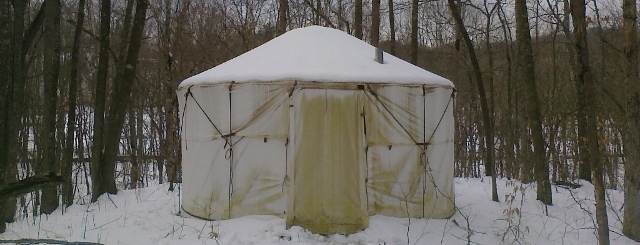
A quiet place in which to get away and code is all I was looking for when I moved here. I found much more, but that's still the essence of the place. On returning home from the beach, I've just learned that after several years renting this house, I will soon have to leave, or buy it. The house is an EarthShip, tucked away in its own private holler (as we say here in the Appalachian Mtns of Tennessee), below a mountain that is National Forest, two miles down back roads from a river. A wonderful place to relax and code, but developing only free software for twenty years doesn't quite stretch to being able to afford buying this kind of place. But, I got to thinking of times friends were able to visit me here. Grilling over wood fires with friends from Debian. Steep hikes and river swims. Sharing dialup bandwidth between our Linux laptops. A bunch of us discussing Haskell in the living room at midnight. And too, I've many times talked about the place with someone who got a gleam in their eye, imagining themselves living there. And then there's my Yurt, my relief valve before I moved here. And a great spot I like to visit on an old logging road above a creek. Could we put all this together somehow? Might a handful of my friends be able to contribute somewhere in the range of $10 thousand to buy in? Interested? Want more details? Have ideas?
Visit the Hacker Holler website and get in touch. (Limited to folks I've met in person or spent a lot of time online with.)

Petter Reinholdtsen: How to use the Signal app if you only have a land line (ie no mobile phone)

For a while now, I have wanted to test the Signal app, as it is said to provide end to end encrypted communication and several of my friends and family are already using it. As I by choice do not own a mobile phone, this proved to be harder than expected. And I wanted to have the source of the client and know that it was the code used on my machine. But yesterday I managed to get it working. I used the Github source, compared it to the source in the Signal Chrome app available from the Chrome web store, applied patches to use the production Signal servers, started the app and asked for the hidden "register without a smart phone" form. Here is the recipe how I did it. First, I fetched the Signal desktop source from Github, using
git clone https://github.com/WhisperSystems/Signal-Desktop.git
Next, I patched the source to use the production servers, to be able to talk to other Signal users:
cat <<EOF   patch -p0
diff -ur ./js/background.js userdata/Default/Extensions/bikioccmkafdpakkkcpdbppfkghcmihk/0.15.0_0/js/background.js
--- ./js/background.js  2016-06-29 13:43:15.630344628 +0200
+++ userdata/Default/Extensions/bikioccmkafdpakkkcpdbppfkghcmihk/0.15.0_0/js/background.js    2016-06-29 14:06:29.530300934 +0200
@@ -47,8 +47,8 @@
          );
      );
 
-    var SERVER_URL = 'https://textsecure-service-staging.whispersystems.org';
-    var ATTACHMENT_SERVER_URL = 'https://whispersystems-textsecure-attachments-staging.s3.amazonaws.com';
+    var SERVER_URL = 'https://textsecure-service-ca.whispersystems.org:4433';
+    var ATTACHMENT_SERVER_URL = 'https://whispersystems-textsecure-attachments.s3.amazonaws.com';
     var messageReceiver;
     window.getSocketStatus = function()  
         if (messageReceiver)  
diff -ur ./js/expire.js userdata/Default/Extensions/bikioccmkafdpakkkcpdbppfkghcmihk/0.15.0_0/js/expire.js
--- ./js/expire.js      2016-06-29 13:43:15.630344628 +0200
+++ userdata/Default/Extensions/bikioccmkafdpakkkcpdbppfkghcmihk/0.15.0_0/js/expire.js2016-06-29 14:06:29.530300934 +0200
@@ -1,6 +1,6 @@
 ;(function()  
     'use strict';
-    var BUILD_EXPIRATION = 0;
+    var BUILD_EXPIRATION = 1474492690000;
 
     window.extension = window.extension    ;
 
EOF
The first part is changing the servers, and the second is updating an expiration timestamp. This timestamp need to be updated regularly. It is set 90 days in the future by the build process (Gruntfile.js). The value is seconds since 1970 times 1000, as far as I can tell. Based on a tip and good help from the #nuug IRC channel, I wrote a script to launch Signal in Chromium.
#!/bin/sh
cd $(dirname $0)
mkdir -p userdata
exec chromium \
  --proxy-server="socks://localhost:9050" \
  --user-data-dir= pwd /userdata --load-and-launch-app= pwd 
The script start the app and configure Chromium to use the Tor SOCKS5 proxy to make sure those controlling the Signal servers (today Amazon and Whisper Systems) as well as those listening on the lines will have a harder time location my laptop based on the Signal connections if they use source IP address. When the script starts, one need to follow the instructions under "Standalone Registration" in the CONTRIBUTING.md file in the git repository. I right clicked on the Signal window to get up the Chromium debugging tool, visited the 'Console' tab and wrote 'extension.install("standalone")' on the console prompt to get the registration form. Then I entered by land line phone number and pressed 'Call'. 5 seconds later the phone rang and a robot voice repeated the verification code three times. After entering the number into the verification code field in the form, I could start using Signal from my laptop. As far as I can tell, The Signal app will leak who is talking to whom and thus who know who to those controlling the central server, but such leakage is hard to avoid with a centrally controlled server setup. It is something to keep in mind when using Signal - the content of your chats are harder to intercept, but the meta data exposing your contact network is available to people you do not know. So better than many options, but not great. And sadly the usage is connected to my land line, thus allowing those controlling the server to associate it to my home and person. I would prefer it if only those I knew could tell who I was on Signal. There are options avoiding such information leakage, but most of my friends are not using them, so I am stuck with Signal for now.

2 July 2016

Jonathan Carter: So, that was DebCamp16!

Picture: Adrian Frith

University of Cape Town, host location to DebConf 16. Picture: Adrian Frith

What an amazingly quick week that was Our bid to host DebConf in Cape Town was accepted nearly 15 months ago. And before that, the bid itself was a big collective effort from our team. So it s almost surreal that the first half of the two weeks of DebCamp/DebConf is now over. Things have been going really well. The few problems we ve had so far were too small to even mention. It s a few degrees colder than it usually is this time of the year and there s already snow on the mountains, so Cape Town is currently quite chilly.
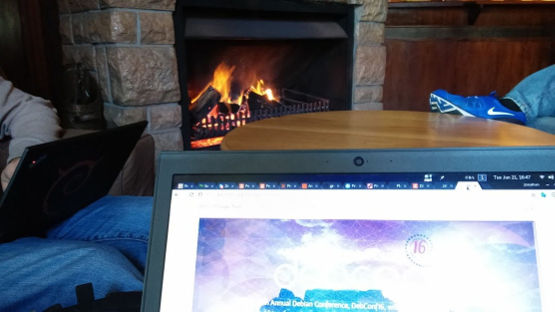
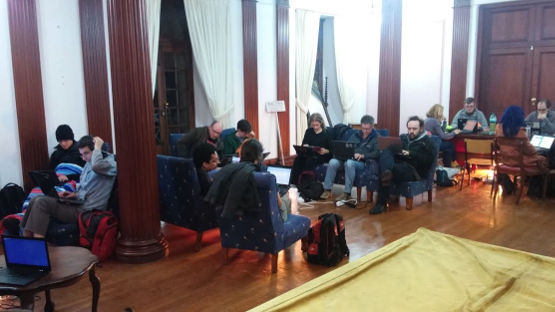
Hacking by the fire at the sports club

Gathering some heat by the fire at the sports club while catching up to the world the day before it all started.

All Kinds of Quality Time I really enjoyed working with the video team last year, but this year there was just 0 time for that. Working on the orga team means dealing with a constant torrent of small tasks, which is good in its own way because you get to deal with a wide variety of Debian people you might not usually get to interact with, but video team problems are more fun and interesting. Next year I hope to do a lot more video work again. If you re at DebConf over the next week, I can highly recommend that you get involved!
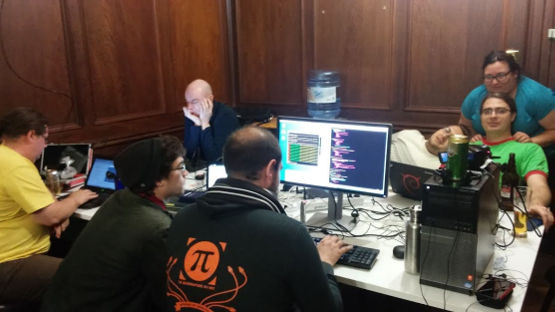
Video team hacking away at problems

Video team members hacking away at problems late at night during DebCamp

The first time I met Debian folk was early in 2004. I worked at the Shuttleworth Foundation as Open Source Technical Co-ordinator at the time, and Mark Shuttleworth had them over for one of the early Ubuntu sprints in Canonical s early days. I was so intimidated by them back then that I could hardly even manage to speak to them. I was already a big free software fan before working there, but little did I even dream to think that I would one day be involved in a project like Ubuntu or Debian. My manager back then encouraged me to go talk to them and get involved and become a Debian Developer and joked that I should become highvoltage@debian.org. I guess that was when the initial seeds got planted and since then I ve met many great people all over the world who have even became friends during UDS, DebConf, BTS and other hackfests where Debianites hang out. It gave me a really nice warm feeling to have all these amazing, talented and really friendly people from all over coming together in this little corner of the world to work together on projects that I think are really important.
Finding a warm space to work in the Happy Feet hack lab

Finding a warm space to work in the Happy Feet hack lab

Oh the Chicken Back at DebConf12, someone (I don t remember the exact history) brought a rubber chicken to DebConf who was simply called Pollito ( chicken in Spanish). Since then the chicken has grown into somewhat of a mascot for DebConf. Back in 2012 I already imagined that if we would ever host a DebConf, I d make a little of picture book story about Pollito. Last year after DC15, when bringing Pollito over, I created a little story called Pollito s first trip to Africa . I was recovering from flu while putting that together and didn t spend much time on it, but it turned out to be somewhat of a hit. I was surprised to see it in the #debconf topic ever since I posted it :) We gave a tour of the campus on the first and second days and it was quite time consuming and there was no way we could do it every day for the rest of DebCamp, so on the 2nd day I smacked together a new rush job called Pollito s Guide to DC16 . The idea was that newcommers could use it as a visual guide and rely on others who have been there for a while if they get stuck. I wish I had the time to make it a lot nicer, but I think the general idea is good and next year we can have a much nicer one that might not be quite as Pollito focused.
Pollito's Guide to DC16

Pollito s Guide to DC16

Debian Maintainer After all these years, I finally sat down and applied to become a Debian Maintainer, and the application was successful (approved yesterday \o/). Now just for the wait until my key is uploaded to the keyring. I haven t yet had time to properly process this but I think once the DebConf dust settles and I had some time to recover, I will be ecstatic. Some actual DebCampy work Everywhere I go, I see people installing a bunch of GNOME extensions on their Debian GNOME desktops shortly after installation using http://extensions.gnome.org/ (I noticed this even at DebCamp!). A few months ago I thought that it s really about time someone package up some of the really popular ones. So I started to put together some basic packaging for AIMS Desktop around a month ago. During the last few days of DebCamp, things were going well enough with the organisational tasks that I had some time to do some actual packaging work and improve these so that they re ready for upload to the Debian archives. The little DebCamp time I had ended up being my very own little extension fest :) I worked on the following packages which are ready for upload: I worked on the following packages which still need minor work, might be able to get them in uploadable state by the end of DebConf: The actual packaging of GNOME extensions is actually pretty trivial. It s mostly source-only JavaScript with some CSS and translations and maybe some gsettings schemas and dialogs. Or at least, it would be pretty trivial, but many extensions are without licenses, contain embedded code (often JavaScript) from other projects, or have no usable form of upstream tarball, to name a few of the problems. So I ve been contacting the upstream authors of these packages where there have been problems, and for the most part they ve been friendly and pretty quick to address the problems. So that s it, for now. I couldn t possibly sum up the last week and everything that lead up to it in a single blog post. All I can really say is thank you for letting me be a part of this very special project!

1 July 2016

Elena 'valhalla' Grandi: Busy/idle status indicator

Busy/idle status indicator


About one year ago, during my first http://debconf15.debconf.org/, I've felt the need for some way to tell people whether I was busy on my laptop doing stuff that required concentration or just passing some time between talks etc. and available for interruptions, socialization or context switches.

One easily available method of course would have been to ping me on IRC (and then probably go on chatting on it while being in the same room, of course :) ), but I wanted to try something that allowed for less planning and worked even in places with less connectivity.

My first idea was a base laptop sticker with two statuses and then a removable one used to cover the wrong status and point to the correct one, and I still think it would be nice, but having it printed is probably going to be somewhat expensive, so I shelved the project for the time being.

Immagine/foto

Lately, however, I've been playing with hexagonal stickers https://terinjokes.github.io/StickerConstructorSpec/ and decided to design something on this topic, whith the result in the figure above, with the hacking sticker being my first choice, and the concentrating alternative probably useful while surrounded by people who may misunderstand the term hacking .

While idly looking around for sticker printing prices I realized that it didn't necessarly have to be a sticker and started to consider alternatives.

One format I'm trying is inspired by "do not disturb" door signs: I've used some laminating pouches I already had around which are slightly bigger than credit-card format (but credit-card size would also work of course ) and cut a notch so that they can be attached to the open lid of a laptop.

Immagine/fotoImmagine/foto

They seem to fit well on my laptop lid, and apart from a bad tendency to attract every bit of lint in a radius of a few meters the form factor looks good. I'll try to use them at the next conference to see if they actually work for their intended purpose.

SVG sources (and a PDF) are available on my website http://www.trueelena.org/computers/projects/busy_idle_indicator.html under the CC-BY-SA license.

Rapha&#235;l Hertzog: My Free Software Activities in June 2016

My monthly report covers a large part of what I have been doing in the free software world. I write it for my donators (thanks to them!) but also for the wider Debian community because it can give ideas to newcomers and it s one of the best ways to find volunteers to work with me on projects that matter to me. Debian packaging Django and Python. I uploaded Django 1.9.7 and filed an upstream ticket (#26755) for a failure seen in its DEP-8 tests. I packaged/sponsored python-django-modeltranslation and python-paypal. I opened a pull request on model-translation to fix failing tests in the Debian package build. I packaged a new python-django-jsonfield (1.0.0), filed a bug and discovered some regression in its PostgreSQL support. I helped on the upstream ticket and I have been granted commit rights. I used this opportunity to do some bug triage and push a few fixes. I also discussed the future of the module and ended up starting a discussion on Django s developer list about the possibility to add a JSONField to the core. CppUTest. I uploaded a new upstream version (3.8) with more than a year of work. I found out that make install does not install a required header so I opened a ticket with a patch. The package ended up not compiling on quite a few architectures so I opened a ticket and prepared a fix for some of those failures with the help of the upstream developers. I also added a DEP-8 tests after having uploaded a broken (untested) package systemd support in net-snmp and postfix. I worked on adding native systemd service units to net-snmp (#782243) and postfix (#715188). In both cases, the maintainers have not been very reactive so far so I uploaded my changes as delayed NMU. pkg-security team. The team that I started quietly a few months ago is now growing, both with new members and new packages. I created the required Teams/pkg-security wiki page. I sponsored xprobe, hydra, made an upload of medusa to merge Kali changes into Debian (and at the same time submitting the patch to upstream). fontconfig. After having read Jonathan McDowell s analysis of a bug that I experienced multiple times (and that many Kali users had too), I opened bug #828037 to get it fixed once for all. Unfortunately, nothing happened yet. DebConf 16 I spent some time to prepare the 2 talks and the BoF that I will give/manage in Cape Town next week: Distro Tracker I continued to mentor Vladimir Likic who managed to finish his first patch. He is now working on documentation for new contributors based on his recent experience. I enhanced the tox configuration to run tests with Django 1.8 LTS with fatal warnings (python -Werror) so as to ensure that I m not relying on any deprecated feature and so that I can be sure that the codebase will work on the next Django LTS release (1.11). Thanks to this, I did discover quite a few places where I have been using deprecated API and I fixed them all (the JSONField update to 1.0.0 I mentionned above was precisely to fix such a warning). I also fixed a few more issues with folded mail headers that you can t inject back in a new Message object and with messages lacking the subject field. All those have been caught through real (spam) email generating exceptions wich are then mailed to me. Kali related work I uploaded a new live-boot (5.20160608) to Debian to fix a bug where the boot process was blocking on some timeout. I forwarded a Kali bug against libatk-wrapper-java (#827741) which turned out to be an OpenJDK bug. I filed #827749 against reprepro to request a way to remove selected internal file references. This is required if you want to be able to make a file disappear and if that file is part of a snapshot that you want to keep despite this. But in truth, my real need is to be able to replace the .orig.tar.gz used by Kali by the orig.tar.gz used by Debian those conflicts break the mirroring/import script. Salt I have been using salt to deploy a new service, and I developed patches for a few issues in salt formulas. I also created a new letsencrypt-sh formula to manage TLS certificates with the letsencrypt.sh ACME client. Thanks See you next month for a new summary of my activities.

No comment Liked this article? Click here. My blog is Flattr-enabled.

Paul Wise: DebCamp16 day 7

Usual spam reporting. Review wiki RecentChanges. Provide feedback for the staging site of the new codebase for screenshots.d.n. Redirect bugs-search.d.o complaint to the BTS maintainers. Point out pastebinit already supports fpaste.org. Polish chromium-bsu, make a new upstream release to fix Debian RC bug #822711. Upload screenshot of chromium-bsu menu. Notify chromium-bsu package maintainers in other distros (hug whohas). Avoid checking WAV files for spelling errors in cats. Make the old PTS download i18n data over https. File #829092 to get the per-package i18n data to use https for links. Point someone on mentors to the Debian PHP group wiki page.

30 June 2016

Chris Lamb: Free software activities in June 2016

Here is my monthly update covering a large part of what I have been doing in the free software world (previously):
Debian My work in the Reproducible Builds project was covered in our weekly reports. (#58, #59 & #60)
Debian LTS

This month I have been paid to work 18 hours on Debian Long Term Support (LTS). In that time I did the following:
  • "Frontdesk" duties, triaging CVEs, etc.
  • Extended the lts-cve-triage.py script to ignore packages that are not subject to Long Term Support.

  • Issued DLA 512-1 for mantis fixing an XSS vulnerability.
  • Issued DLA 513-1 for nspr correcting a buffer overflow in a sprintf utility.
  • Issued DLA 515-1 for libav patching a memory corruption issue.
  • Issued DLA 524-1 for squidguard fixing a reflected cross-site scripting vulnerability.
  • Issued DLA 525-1 for gimp correcting a use-after-free vulnerability in the channel and layer properties parsing process.

Uploads
  • redis (2:3.2.1-1) New upstream bugfix release, plus subsequent upload to the backports repository.
  • python-django (1.10~beta1-1) New upstream experimental release.
  • libfiu (0.94-5) Misc packaging updates.


RC bugs

I also filed 170 FTBFS bugs against a7xpg, acepack, android-platform-dalvik, android-platform-frameworks-base, android-platform-system-extras, android-platform-tools-base, apache-directory-api, aplpy, appstream-generator, arc-gui-clients, assertj-core, astroml, bamf, breathe, buildbot, cached-property, calf, celery-haystack, charmtimetracker, clapack, cmake, commons-javaflow, dataquay, dbi, django-celery, django-celery-transactions, django-classy-tags, django-compat, django-countries, django-floppyforms, django-hijack, django-localflavor, django-markupfield, django-model-utils, django-nose, django-pipeline, django-polymorphic, django-recurrence, django-sekizai, django-sitetree, django-stronghold, django-taggit, dune-functions, elementtidy, epic4-help, fcopulae, fextremes, fnonlinear, foreign, fort77, fregression, gap-alnuth, gcin, gdb-avr, ggcov, git-repair, glance, gnome-twitch, gnustep-gui, golang-github-audriusbutkevicius-go-nat-pmp, golang-github-gosimple-slug, gprbuild, grafana, grantlee5, graphite-api, guacamole-server, ido, jless, jodreports, jreen, kdeedu-data, kdewebdev, kwalify, libarray-refelem-perl, libdbusmenu, libdebian-package-html-perl, libdevice-modem-perl, libindicator, liblrdf, libmail-milter-perl, libopenraw, libvisca, linuxdcpp, lme4, marble, mgcv, mini-buildd, mu-cade, mvtnorm, nose, octave-epstk, onioncircuits, opencolorio, parsec47, phantomjs, php-guzzlehttp-ringphp, pjproject, pokerth, prayer, pyevolve, pyinfra, python-asdf, python-ceilometermiddleware, python-django-bootstrap-form, python-django-compressor, python-django-contact-form, python-django-debug-toolbar, python-django-extensions, python-django-feincms, python-django-formtools, python-django-jsonfield, python-django-mptt, python-django-openstack-auth, python-django-pyscss, python-django-registration, python-django-tagging, python-django-treebeard, python-geopandas, python-hdf5storage, python-hypothesis, python-jingo, python-libarchive-c, python-mhash, python-oauth2client, python-proliantutils, python-pytc, python-restless, python-tidylib, python-websockets, pyvows, qct, qgo, qmidinet, quodlibet, r-cran-gss, r-cran-runit, r-cran-sn, r-cran-stabledist, r-cran-xml, rgl, rglpk, rkt, rodbc, ruby-devise-two-factor, ruby-json-schema, ruby-puppet-syntax, ruby-rspec-puppet, ruby-state-machine, ruby-xmlparser, ryu, sbd, scanlogd, signond, slpvm, sogo, sphinx-argparse, squirrel3, sugar-jukebox-activity, sugar-log-activity, systemd, tiles, tkrplot, twill, ucommon, urca, v4l-utils, view3dscene, xqilla, youtube-dl & zope.interface.

FTP Team

As a Debian FTP assistant I ACCEPTed 186 packages: akonadi4, alljoyn-core-1509, alljoyn-core-1604, alljoyn-gateway-1504, alljoyn-services-1504, alljoyn-services-1509, alljoyn-thin-client-1504, alljoyn-thin-client-1509, alljoyn-thin-client-1604, apertium-arg, apertium-arg-cat, apertium-eo-fr, apertium-es-it, apertium-eu-en, apertium-hbs, apertium-hin, apertium-isl, apertium-kaz, apertium-spa, apertium-spa-arg, apertium-tat, apertium-urd, arc-theme, argus-clients, ariba, beast-mcmc, binwalk, bottleneck, colorfultabs, dh-runit, django-modeltranslation, dq, dublin-traceroute, duktape, edk2, emacs-pdf-tools, eris, erlang-p1-oauth2, erlang-p1-sqlite3, erlang-p1-xmlrpc, faba-icon-theme, firefox-branding-iceweasel, golang-1.6, golang-defaults, golang-github-aelsabbahy-gonetstat, golang-github-howeyc-gopass, golang-github-oleiade-reflections, golang-websocket, google-android-m2repository-installer, googler, goto-chg-el, gr-radar, growl-for-linux, guvcview, haskell-open-browser, ipe, labplot, libalt-alien-ffi-system-perl, libanyevent-fcgi-perl, libcds-savot-java, libclass-ehierarchy-perl, libconfig-properties-perl, libffi-checklib-perl, libffi-platypus-perl, libhtml-element-library-perl, liblwp-authen-oauth2-perl, libmediawiki-dumpfile-perl, libmessage-passing-zeromq-perl, libmoosex-types-portnumber-perl, libmpack, libnet-ip-xs-perl, libperl-osnames-perl, libpodofo, libprogress-any-perl, libqtpas, librdkafka, libreoffice, libretro-beetle-pce-fast, libretro-beetle-psx, libretro-beetle-vb, libretro-beetle-wswan, libretro-bsnes-mercury, libretro-mupen64plus, libservicelog, libtemplate-plugin-datetime-perl, libtext-metaphone-perl, libtins, libzmq-ffi-perl, licensecheck, link-grammar, linux, linux-signed, lua-busted, magics++, mkalias, moka-icon-theme, neutron-vpnaas, newlisp, node-absolute-path, node-ejs, node-errs, node-has-flag, node-lodash-compat, node-strip-ansi, numba, numix-icon-theme, nvidia-graphics-drivers, nvidia-graphics-drivers-legacy-304xx, nvidia-graphics-drivers-legacy-340xx, obs-studio, opencv, pacapt, pgbackrest, postgis, powermock, primer3, profile-sync-daemon, pyeapi, pypandoc, pyssim, python-cutadapt, python-cymruwhois, python-fisx, python-formencode, python-hkdf, python-model-mommy, python-nanomsg, python-offtrac, python-social-auth, python-twiggy, python-vagrant, python-watcherclient, python-xkcd, pywps, r-bioc-deseq2, r-bioc-dnacopy, r-bioc-ensembldb, r-bioc-geneplotter, r-cran-adegenet, r-cran-adephylo, r-cran-distory, r-cran-fields, r-cran-future, r-cran-globals, r-cran-htmlwidgets, r-cran-listenv, r-cran-mlbench, r-cran-mlmrev, r-cran-pheatmap, r-cran-pscbs, r-cran-r.cache, refind, relatorio, reprotest, ring, ros-ros-comm, ruby-acts-as-tree, ruby-chronic-duration, ruby-flot-rails, ruby-numerizer, ruby-u2f, selenium-firefoxdriver, simgrid, skiboot, smtpping, snap-confine, snapd, sniffles, sollya, spin, subuser, superlu, swauth, swift-plugin-s3, syncthing, systemd-bootchart, tdiary-theme, texttable, tidy-html5, toxiproxy, twinkle, vmtk, wait-for-it, watcher, wcslib & xapian-core.

Russell Coker: Coalitions

In Australia we are about to have a federal election, so we inevitably have a lot of stupid commentary and propaganda about politics. One thing that always annoys me is the claim that we shouldn t have small parties. We have two large parties, Liberal (right-wing, somewhat between the Democrats and Republicans in the US) and Labor which is somewhat similar to Democrats in the US. In the US the first past the post voting system means that votes for smaller parties usually don t affect the outcome. In Australia we have Instant Runoff Voting (sometimes known as The Australian Ballot ) which has the side effect of encouraging votes for small parties. The Liberal party almost never wins enough seats to make government on it s own, it forms a coalition with the National party. Election campaigns are often based on the term The Coalition being used to describe a Liberal-National coalition and the expected result if The Coalition wins the election is that the leader of the Liberal party will be Prime Minister and the leader of the National party will be the Deputy Prime Minister. Liberal party representatives and supporters often try to convince people that they shouldn t vote for small parties and that small parties are somehow undemocratic , seemingly unaware of the irony of advocating for The Coalition but opposing the idea of a coalition. If the Liberal and Labor parties wanted to form a coalition they could do so in any election where no party has a clear majority, and do it without even needing the National party. Some people claim that it s best to have the major parties take turns in having full control of the government without having to make a deal with smaller parties and independent candidates but that s obviously a bogus claim. The reason we have Labor allying with the Greens and independents is that the Liberal party opposes them at every turn and the Liberal party has a lot of unpalatable policies that make alliances difficult. One thing that would be a good development in Australian politics is to have the National party actually represent rural voters rather than big corporations. Liberal policies on mining are always opposed to the best interests of farmers and the Liberal policies on trade aren t much better. If The Coalition wins the election then the National party could insist on a better deal for farmers in exchange for their continued support of Liberal policies. If Labor wins more seats than The Coalition but not enough to win government directly then a National-Labor coalition is something that could work. I think that the traditional interest of Labor in representing workers and the National party in representing farmers have significant overlap. The people who whinge about a possible Green-Labor alliance should explain why they aren t advocating a National-Labor alliance. I think that the Labor party would rather make a deal with the National party, it s just a question of whether the National party is going to do what it takes to help farmers. They could make the position of Deputy Prime Minister part of the deal so the leader of the National party won t miss out.

29 June 2016

Michal &#268;iha&#345;: PHP shapefile library

Since quite a long time phpMyAdmin had embedded the bfShapeFiles library for import of geospatial data. Over the time we had to apply fixes to it to stay compatible with newer PHP versions, but there was really no development. Unfortunately, as it seems to be only usable PHP library which can read and write ESRI shapefiles. With recent switch of phpMyAdmin to dependency handling using Composer I wondered if we should get rid of the last embedded PHP library, which was this one - bfShapeFiles. As I couldn't find alive library which would work well for us, I resisted that for quite long, until pull request to improve it came in. At that point I've realized that it's probably better to separate it and start to improve it outside our codebase. That's when phpmyadmin/shapefile was started. The code is based on bfShapeFiles, applies all fixes which were used in phpMyAdmin and adds improvements from the pull request. On top of that it has brand new testsuite (the coverage is still much lower than I'd like to have) and while writing the tests several parsing issues have been discovered and fixed. Anyway you can now get the source from GitHub or install using Composer from Packagist. PS: While fixing parser bugs I've looked at other parsers as well to see how they handle some situations unclear in the specs and I had to fix Python pyshp on the way as well :-).

Filed under: Debian English phpMyAdmin 0 comments

28 June 2016

Reproducible builds folks: First steps towards getting containers working

Author: ceridwen The 0.1 alpha release of reprotest has been accepted into Debian unstable and is available for install at packages.debian.org or through apt. I've been working on redesigning reprotest so that it runs commands through autopkgtest's adt_testbed interface. For the most part, I needed to replace explicit calls to Python standard library functions for copying files and directories with calls to adt_testbed.Testbed.command() with copyup and copydown, and to use Testbed.execute() and Testbed.check_exec() to run commands instead of subprocess. To test reprotest on the actual containers requires having containers constructed for this purpose. autopkgtest has a test that builds a minimal chroot. I considered doing something like this approach or using BusyBox. However, I have a Python script that mocks a build process, which requires having Python available in the container, and while I looked into busybox-python and MicroPython to keep the footprint small, I decided that for now this would take too much work and decided to go straight to the autopkgtest recommendations for building containers, mk-sbuild and vmdebootstrap. (I also ended up discovering a bug in debootstrap.) This means that to get the tests run requires some manual setup at the moment. In the long run, I'd like to improve that, but it's not an immediate priority. While working on adding tests for the other containers supported by autopkgtest, I also converted to py.test so that I could use fixtures and parametrization to run the Cartesian product of each variation with each container. With tests written, I started trying to verify that my new code worked. One problem I encountered while trying to debug was that I wasn't getting full error output. In VirtSubproc.check_exec(), execute_timeout() acts something like a Popen() call:
(status, out, err) = execute_timeout(None, timeout, real_argv,
                                     stdout=stdout, stderr=subprocess.PIPE)
if status:
    bomb("%s%s failed (exit status %d)" %
         ((downp and "(down) " or ""), argv, status))
if err:
    bomb("%s unexpectedly produced stderr output  %s'" %
         (argv, err))
The problem with this is that if the call returns a non-zero exit code, which is typical for program failures, stderr doesn't get included in the error message. I changed the first if-block to:
if status:
    bomb("%s%s failed (exit status %d)\n%s" %
         ((downp and "(down) " or ""), argv, status, err))
Another example is that autopkgtest calls schroot with the --quiet flag, which in one case was making schroot fail without any output due to a misconfiguration. I'm still trying to find and eliminate more places where errors are silenced. autopkgtest was designed to be installed with Debian's packaging system, which handles arbitrary files and directory layouts. Unfortunately, setuptools is completely different in a way that doesn't work well with autopkgtest's design. (I'm sure this is partly because setuptools has to support all the different major OSes that run Python, including Windows.) As I discussed last week, autopkgtest has Python scripts in virt/ that are executed by subprocess calls in adt_testbed. Because these scripts import files from lib/, there needs to be an __init__.py in virt/ to make it into a package and a sys.path hack in each script to allow it to find modules in lib/. Unfortunately, setuptools will not install this structure. First, setuptools will not install any file without a .py extension into a package. Theoretically, this is fixable, the files in virt/ are Python scripts so I could rename them. (Theoretically, there's supposed to be some workaround involving MANIFEST.in or package_data in setup.py, but I have yet to find any documentation or explanation giving a method for installing non-Python files inside a Python package.) Second, however, setuptools does not preserve the executable bit when installing package files. The obvious workaround, changing the subprocess calls so that they invoke python virt/foo.py rather than virt/foo.py requires changing all the internal calls in the autopkgtest code, which I'm loathe to do for fear of breaking it. (It's not clear to me I can easily find all of the calls, for starters.) There are about three solutions to this I see at the moment, all of them difficult. The first involves using either the scripts keyword or console_scripts entry point in setup.py, as explained here. The scripts keyword is supposed to preserve the executable bit according to this StackExchange question, but I haven't verified this myself, and like everything to do with setuptools I don't trust anything anyone says about it without testing it myself. It also has the disadvantage of dumping them all into the common scripts directory. Using console_scripts involves rewriting all of them to have an executable function I can refer to in setup.py. I worry that this would be both fragile and break existing expectations in the rest of the autopkgtest code, but it might be the best solution. The third solution involves refactoring of all the autopkgtest code to import the code in the scripts rather than running it through subprocess calls. I'm reluctant to do this because I think it's almost certain to break things that will require significant work to fix. Getting setuptools to install the autopkgtest code correctly is one blocker for the next release. Another is that autopkgtest's handling of errors during the build process involves closing the adt_testbed.Testbed so it won't take further commands. Unfortunately, this handling runs before any cleanup code I write to run outside it, which means that at the moment errors during the build will result in things like disorderfs being left mounted. The last release blocker is that adt_testbed doesn't have any way to set a working directory when running commands. For instance, the virt/schroot script always calls schroot with --directory=/. I thought about trying to use absolute paths, but decided this was unintuitive and impractical. For the user, this would mean that instead of running something simple like make in the correct directory, they would have to run make --file=/absolute/path/to/Makefile or something similar, making all paths absolute. I worry that some build scripts wouldn't handle this correctly, either: for instance, running python setup.py from a different directory can have different effects because Python's path is initialized to contain the current directory. Changing this is going to require going deeper into the autopkgtest code than I'd hoped. I intend to try to resolve these three issues over the next week and then prepare the next release, though how much progress I make depends on how thorny they turn out to be.

27 June 2016

Bits from Debian: DebConf16 schedule available

DebConf16 will be held this and next week in Cape Town, South Africa, and we're happy to announce that the schedule is already available. Of course, it is still possible for some minor changes to happen! The DebCamp Sprints already started on 23 June 2016. DebConf will open on Saturday, 2 July 2016 with the Open Festival, where events of interest to a wider audience are offered, ranging from topics specific to Debian to a wider appreciation of the open and maker movements (and not just IT-related). Hackers, makers, hobbyists and other interested parties are invited to share their activities with DebConf attendees and the public at the University of Cape Town, whether in form of workshops, lightning talks, install parties, art exhibition or posters. Additionally, a Job Fair will take place on Saturday, and its job wall will be available throughout DebConf. The full schedule of the Debian Conference thorough the week is published. After the Open Festival, the conference will continue with more than 85 talks and BoFs (informal gatherings and discussions within Debian teams), including not only software development and packaging but also areas like translation, documentation, artwork, testing, specialized derivatives, maintenance of the community infrastructure, and other. There will also be also a plethora of social events, such as our traditional cheese and wine party, our group photo and our day trip. DebConf talks will be broadcast live on the Internet when possible, and videos of the talks will be published on the web along with the presentation slides. DebConf is committed to a safe and welcome environment for all participants. See the DebConf Code of Conduct and the Debian Code of Conduct for more details on this. Debian thanks the commitment of numerous sponsors to support DebConf16, particularly our Platinum Sponsor Hewlett Packard Enterprise. About Hewlett Packard Enterprise Hewlett Packard Enterprise actively participates in open source. Thousands of developers across the company are focused on open source projects, and HPE sponsors and supports the open source community in a number of ways, including: contributing code, sponsoring foundations and projects, providing active leadership, and participating in various committees.

Paul Tagliamonte: Hello, Sense!

A while back, I saw a Kickstarter for one of the most well designed and pretty sleep trackers on the market. I fell in love with it, and it has stuck with me since. A few months ago, I finally got my hands on one and started to track my data. Naturally, I now want to store this new data with the rest of the data I have on myself in my own databases. I went in search of an API, but I found that the Sense API hasn't been published yet, and is being worked on by the team. Here's hoping it'll land soon! After some subdomain guessing, I hit on api.hello.is. So, naturally, I went to take a quick look at their Android app and network traffic, lo and behold, there was a pretty nicely designed API. This API is clearly an internal API, and as such, it's something that should not be considered stable. However, I'm OK with a fragile API, so I've published a quick and dirty API wrapper for the Sense API to my GitHub.. I've published it because I've found it useful, but I can't promise the world, (since I'm not a member of the Sense team at Hello!), so here are a few ground rules of this wrapper: This module is currently Python 3 only. If someone really needs Python 2 support, I'm open to minimally invasive patches to the codebase using six to support Python 2.7. Working with the API: First, let's go ahead and log in using python -m sense.
$ python -m sense
Sense OAuth Client ID: xxxxxxxx-xxxx-xxxx-xxxx-xxxxxxxxxxxx
Sense OAuth Client Secret: xxxxxxxx-xxxx-xxxx-xxxx-xxxxxxxxxxxx
Sense email: paultag@gmail.com
Sense password: 
Attempting to log into Sense's API
Success!
Attempting to query the Sense API
The humidity is **just right**.
The air quality is **just right**.
The light level is **just right**.
It's **pretty hot** in here.
The noise level is **just right**.
Success!
Now, let's see if we can pull up information on my Sense:
>>> from sense import Sense
>>> sense = Sense()
>>> sense.devices()
 'senses': [ 'id': 'xxxxxxxxxxxxxxxx', 'firmware_version': '11a1', 'last_updated': 1466991060000, 'state': 'NORMAL', 'wifi_info':  'rssi': 0, 'ssid': 'Pretty Fly for a WiFi (2.4 GhZ)', 'condition': 'GOOD', 'last_updated': 1462927722000 , 'color': 'BLACK' ], 'pills': [ 'id': 'xxxxxxxxxxxxxxxx', 'firmware_version': '2', 'last_updated': 1466990339000, 'battery_level': 87, 'color': 'BLUE', 'state': 'NORMAL' ] 
Neat! Pretty cool. Look, you can even see my WiFi AP! Let's try some more and pull some trends out.
>>> values = [x.get("value") for x in sense.room_sensors()["humidity"]][:10]
>>> min(values)
45.73904
>>> max(values)
45.985928
>>> 
I plan to keep maintaining it as long as it's needed, so I welcome co-maintainers, and I'd love to see what people build with it! So far, I'm using it to dump my room data into InfluxDB, pulling information on my room into Grafana. Hopefully more to come! Happy hacking!

26 June 2016

Iustin Pop: Random things of the week - brexit and the pretzel

Random things of the week In no particular order (mostly). Coming back from the US, it was easier dealing with the jet-lag this time; doing sports in the morning or at noon and eating light on the evening helps a lot. The big thing of the week, that has everybody talking, is of course brexit. My thoughts, as written before on a facebook comment: Direct democracy doesn't really work if it's done once in a blue moon. Wikipedia says there have been thirteen referendums in UK since 1975, but most of them (10) on devolution issues in individual countries, and only three were UK-wide referendums (quoting from the above page): the first on membership of the European Economic Community in 1975, the second on adopting the Alternative vote system in parliamentary elections in 2011, and the third one is the current one. Which means that a referendum is done every 13 years or so. At this frequency, people are not a) used to inform themselves on the actual issues, b) believing that your vote actually will change things, and most likely c) not taking the "direct-democracy" aspect seriously (thinking beyond the issue at hand and how will it play together with all the rest of the political decisions). The result is what we've seen, leave politicians already backpedalling on issues, and confusion that yes, leave votes actually counted. My prognosis for what's going to happen: We'll see what happens though. Reading comments on various websites still make me cringe at how small some people think: "independence" from the EU when the real issue is EU versus the other big blocks US, China, in the future India; and "versus" not necessarily in a conflict sense, but simply as negotiating power, economic treaties, etc. Back to more down-to-earth things: this week was quite a good week for me. Including commutes, my calendar turned out quite nice: Week calendar The downside was that most of those were short runs or bike sessions. My runs are now usually 6.5K, and I'll try to keep to that for a few weeks, in order to be sure that bone and ligaments have adjusted, and hopefully keep injuries away. On the bike front, the only significant thing was that I did as well the Zwift Canyon Ultimate Pretzel Mission, on the last day of the contest (today): 73.5Km in total, 3h:27m. I've done 60K rides on Zwift before, so the first 60K were OK, but the last ~5K were really hard. Legs felt like logs of wood, I was only pushing very weak output by the end although I did hydrate and fuel up during the ride. But, I was proud of the fact that on the last sprint (about 2K before the end of the ride), I had ~34s, compared to my all-time best of 29.2s. Was not bad after ~3h20m of riding and 1300 virtual meters of ascent. Strava also tells me I got 31 PRs on various segments, but that's because I rode on some parts of Watopia that I never rode before (mostly the reverse ones). Overall, stats for this week: ~160Km in total (virtual and real, biking and running), ~9 hours spent doing sports. Still much lower than the amount of time I was playing computer games, so it's a net win Have a nice start of the week everyone, and keep doing what moves you forward!

Niels Thykier: Anti-declarative packaging top 15 build-helpers inserting maintscripts

Debian packages can run arbitrary code via maintainer scripts (sometimes shortened into maintscripts ) during installation/removal etc. While they certainly have their use cases, their failure modes causes exciting bugs like fails to install or the dreaded fails to remove . They also have other undesirable effects such as: Accordingly, I think we should aim for a more declarative packaging style. To help facilitate this, I have implemented 3 tracking tags in Lintian. With these, we were able to learn that 73.5% of all packages do not have any of these scripts. But I can now also produce a list of helpers that insert the most maintainer script snippets. The current top 15 is:
  1. dhpython with 3775 instances
    • This is an umbrella for all helpers using dh-python s python module, see #827774.
  2. dh_installmenu with 1861 instances
  3. dh_makeshlibs with 1396 remaining instances
  4. dh_installinit with 1224 instances
  5. dh_python2 with 1168 instances
  6. dh_installdebconf with 772 instances
  7. dh_installdeb with 754 instances
    • These are the dpkg-maintscript-helper snippets for rm_conffile , mv_conffile etc. Hopefully in the near future, dpkg will support these directly.
  8. dh_systemd_enable with 447 instances
  9. dh_installemacsen with 179 instances
  10. dh_icons with 165 instances
  11. dh_installtex with 137 instances
  12. dh_apache2 with 117 instances
  13. dh_installudev with 98 instances
  14. dh_installxfonts with 87 instances
  15. dh_systemd_start with 79 instances
With this list, it seems to me that some obvious focus areas would be: Eventually we will also have to dig through all the manual maintainer scripts. But I think we got plenty to start with.:) [1] For some, circular dependencies in itself is an issue. I can certainly appreciate them as being suboptimal, but most of the issues we have are probably caused by insufficient tooling rather than a theoretical issue (that is, if we remove all postinst scripts).
Filed under: Debhelper, Debian, Lintian

24 June 2016

Joey Hess: twenty years of free software -- part 5 pristine-tar

I've written retrospectively about pristine-tar before, when I stopped maintaining it. So, I'll quote part of that here:
[...] a little bit about the reason I wrote pristine-tar in the
first place. There were two reasons:
1. I was once in a talk where someone mentioned that Ubuntu had/was
   developing something that involved regenerating orig tarballs
   from version control.
   I asked the obvious question: How could that possibly be done
   technically? 
   The (slightly hung over) presenter did not have a satesfactory
   response, so my curiosity was piqued to find a way to do it.
   (I later heard that Ubuntu has been using pristine-tar..)
2. Sometimes code can be subversive. It can change people's perspective
   on a topic, nudging discourse in a different direction. It can even
   point out absurdities in the way things are done. I may or may not
   have accomplished the subversive part of my goals with pristine-tar.
Code can also escape its original intention. Many current uses of
pristine-tar fall into that category. So it seems likely that some
people will want it to continue to work even if it's met the two goals
above already.
For me, the best part of building pristine-tar was finding an answer to the question "How could that possibly be done technically?" It was also pretty cool to be able to use every tarball in Debian as the test suite for pristine-tar. I'm afraid I kind of left Debian in the lurch when I stopped maintaining pristine-tar. "Debian has probably hundreds, if not thousands of git repositories using pristine-tar. We all rely now on an unmaintained, orphaned, and buggy piece of software." -- Norbert Preining So I was relieved when it finally got a new maintainer just recently. Still, I don't expect I'll ever use pristine-tar again. It's the only software I've built in the past ten years that I can say that about. Next: twenty years of free software -- part 6 moreutils

Next.

Previous.