Search Results: "ag"

19 March 2010

Jon Dowland: the world we live in

Sometimes the world we live in amazes me. Rentokil falsify scientific studies that show an alarming number of bugs and pests on public transport. Ben Goldacre calls them out, and fellow marketing people defend the practice as a sound marketing tool. On the other side of the globe, Viacom sue Youtube for breach of the Digital Millenium Copyright Act, specifically for not doing an adequate job of preventing their copyright material from being shared via the site. At the same time, Viacom hired at least 18 marketing agencies to upload its content to Youtube. They even went as far as to apply post-production techniques to make the videos look illegally sourced.

MJ Ray: Co-ops at the North Somerset Initiative

On Wednesday, I went to a meeting of the Business Initiative for North Somerset for Cooperatives-SW (our regional cooperative cooperative). It was the first time anyone from the cooperative and mutual sector was present.

platform
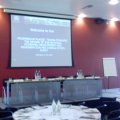
Conference Bank of England The first speaker was Geoff Harding from the Bank of England, who talked through topics in their agents summary and related news. One interesting graph showed a steep rise in the percentage of household income being saved. Answers to questions suggested that more of that goes to mutuals and building societies, but they find it difficult to be competitive while the banks are keen to increase their balances. There was mention of employment hoarding businesses short-time working, redeploying or shutting down temporarily to keep trained workers under contract, rather than make them redundant and rehire later. People from both the Federation of Small Businesses and the Hoteliers Association made strong comments about the banks claiming to government that they are willing to lend, but still offering deeply unattractive depth-of-recession rates and terms. If the regional agents get details of such cases, they pass them to the central bank. South West Regional Development Agency The second main speaker was Ann O Driscoll, who covers business development for the West of England (what many people call CUBA Councils that Used to Be Avon). She introduced their four strategic priorities:-

  1. Low Carbon Economy apparenly our region has good wind, wave and solar experience. However, Vestas were mentioned and I know that when Vestas closed the UK s only wind turbine blade factories in August 2009, the RDAs were criticised for not acting against the subsidy-chasing, socially irresponsible conduct of Vestas and related companies continue to worry workers. If Vestas is one of the praised companies, I wonder whether we re attracting sustainable work to the region. On a related note, North Somerset Council and NS Enterprise Agency are organising a Climate Change forum on 1st April, but it s at Cadbury House Hotel, which is awkward to get to except by car: no footpath to the door, a mile-and-a-half walk along a busy road from a train station, bad roads for biking, wheelbending speedhumps on the drive, I can t remember if there is bicycle parking and its website doesn t say
  2. Successful Businesses SWRDA funds our rather poor Business Link service. Does someone in the South West have some good news about Business Link? If so, please leave a comment on this article.
  3. Prosperous Places intervention in areas like south Bristol or central Weston.
  4. United Approach co-ordinating with other regional groups.
The main activities introduced were: The questions were fascinating, except for mine. The best one was probably about the forthcoming election and the Conservatives pledge to shut down the RDAs and Business Links. The answer was that much of the work will still need to be done somehow, so it s more a question of who will do it, rather than what the name on the door says. So I don t think axing RDAs is going to achieve more than shuffling people between organisations. When allowed to ask a question, I got too excited and ranted a bit about how the Co-operative Group s co-operative enterprise hub is doing work that Business Link should have been funding, but the RDA doesn t understand social enterprise and treats it as a ghetto service. I ll try to take that up in a more coherent form later. Overview I think Cooperatives-SW were invited to the North Somerset Initiative largely because of pressure from software.coop for co-ops to be represented better in the Local Strategic Partnership, which has treated us badly. NSI holds one of the three business places on the partnership board, with the other two being held by NSEA and Bristol International Airport. I think it s a bit off that a private company and an enterprise agency are both represented by other groups and also have their own board seats while co-ops don t even have a collective seat, so that pressure for a representative organisation for co-operatives and mutuals to have a board place (in line with national government guidance) should continue, useful though the NSI meetings seem to be. The other thing which would really help is some funding for co-operative business development specialists to work in North Somerset at strategic tasks like this, instead of it being left to ordinary workers from other sectors. I don t know where that funding will come from and until then, I ll continue to try my best. We need to make sure that local strategy at least does no harm to the sector.

Andrew Pollock: [tech] How to get GPG to sign with multiple keys

I spent way too much time trying to figure out how to get GnuPG to sign a file with multiple keys. It's not at all obvious from the man page, but you can use the -u option multiple times, with each key ID that you want to use.

René Mayorga: MiniDebConf Panam 2010

Finally, after almost 6 months of planing, this event is coming and will be start tomorrow, this is really great, There was a first attempt, and an idea to do a local(central-america based) Debian gathering on 2007 IIRC, now it will happen :) (almost 3 years later and at the same country). There was a lot of things that actually change since the fitst attempt, now Central-america has a more strong FLOSS Community, and now this event is possible, and it will happen this weekend yay! I really need to say thanks to Anto, Mauro Rosero, David, Caro and Gunnar, but I realize that doing all the orga stuffs was hard, I was quite involved since January, and I really say that you need a lot of work and energy to make a small event like this happen, but right now while I still sitting at home trying to finish to prepare my talks I realize that there was a lot of hard work put on this from everyone, and I m really happy to attend this gathering, also I hope that this event do something good on the local FLOSS people, since we have quite nice people here, but they are afraid to contribute, this is the chance to work together and push a bit to get more contributors from central-america.

Dirk Eddelbuettel: R Project selected for the Google Summer of Code 2010

Earlier today, Google announced the list of accepted mentor organizations for the Google Summer of Code 2010 (GSoC 2010). And we are happy to report that the R Project is once again a participating organization (and now for the third straight year) joining a rather august group of open source projects from around the globe. An R Wiki page had been created and serves as the central point of reference for the R Project and the GSoC 2010. It contains a list of project ideas, currently counting eleven and spanning everything from research-oriented topics (such as spatial statistics or automatic differentiation) to R community-support (regarding CRAN statistics and the CRANtastic site) to extensions (NoSQL, RPy2 data interfaces, Rserve browser integration) and more. I also just created a mailing list gsoc-r@googlegroups.com where prospective students and mentors can exchange ideas and discuss. As for other details, the Google Summer of Code 2010 site has most of the answers, and we will try to keep R-related information on the aforementioned R Wiki page.

18 March 2010

Debian News: Debian selected for the Google Summer of Code 2010

Debian has been selected as a mentor organization for the Google Summer of Code 2010.

Whether your are a Debian Developer or a Student, this might be a good time to:

Remember that the sooner we get project ideas and personal proposals, the longer we can work on them to make them into great summer projects!

You can read more about the Google Summer of Code in their website. Also, if you are interested in participating, it is very important checking the program time line.

Obey Arthur Liu

Clint Adams: BSPs and Triage and squeeze

Some people want Debian 6.0 (codename "squeeze") to be released sometime this year. Personally I think there is some kitsch value in releasing it during DebCamp or DebConf, and there is something to be said for doing it just beforehand so that everyone can break unstable into insanity while rolling around on the quad under the hot August sun. Some people want it to happen sooner, possibly as soon as possible. Irrespective of your preferences, or if you care at all, we will repeat the time-honored mantra: it will be released when it's ready. Readiness is somewhat of a subjective measure, but we typically do not consider a potential release ready when the RC bug count is high. There are a lot of RC bugs right now. Typically these are fixed at some point by their maintainers. There are also some self-motivated individuals who enjoy fixing these bugs themselves, and this practice predates the RCBW initiative, though perhaps not to the same level of combined intensity and endurance. Then there are bug-squashing parties, or BSPs. A BSP can be held virtually which means that a bunch of people get together online and say that they are having a party, or it can be at a designated physical space. I attended one of the latter type not too long ago. This BSP was targeted specifically to newbies or people who might feel that they are unqualified to help squash bugs, but wished to learn how to contribute. Some group and one-on-one mentoring occurred, in areas of how packages are put together, how to patch things, how to submit patches to the BTS, how to reproduce bugs, and other more problem-specific topics. I really don't know how successful this endeavor was since getting metrics on the effectiveness of teaching has been a historically difficult problem. On the other hand, we did spend a fair amount of time actually squashing bugs, which is a bit easier to assess. One problem we had was that some people liked to be loud and distracting and demand unreasonable amounts of attention for topics that had nothing to do with bugs, Debian, or free software, but we made progress regardless. Marc Brockschmidt thinks we need more BSPs and more focus on bug triage. Bug triage can be very demotivating and many people dislike doing it. BSPs seem to have powers of motivation through group camaraderie or friendly competition, so I would agree that it's worth experimenting with.

Joachim Breitner: libnss-gw-name: A stable name for your gateway

I often find myself running /sbin/route to get the IP address of the current gateway, especially when using a wireless LAN while traveling. For example, if the Internet does not work I usually ping the local gateway to see where the connectivity problem lies. I also need the IP if I want to access the routers configuration web interface. This is somewhat tedious, so I wrote libnss-gw-name, and now:
$ sudo apt-get install libnss-gw-name
[...]
$ ping gateway.current
PING gateway.current (172.20.239.1) 56(84) bytes of data.
64 bytes from hhicalvin.stud.uni-karlsruhe.de (172.20.239.1): icmp_seq=1 ttl=64 time=2.16 ms
64 bytes from hhicalvin.stud.uni-karlsruhe.de (172.20.239.1): icmp_seq=2 ttl=64 time=1.48 ms
64 bytes from hhicalvin.stud.uni-karlsruhe.de (172.20.239.1): icmp_seq=3 ttl=64 time=2.73 ms
^C
--- gateway.current ping statistics ---
3 packets transmitted, 3 received, 0% packet loss, time 2003ms
rtt min/avg/max/mdev = 1.482/2.129/2.739/0.513 ms
Once libnss-gw-name is installed, it hooks into the system s Name Service Switch, which is, among other things, responsible for resolving hostnames to ip addresses. It will only react on the name gateway.current , checking the system s routing table and returning the IP address of the current default gateway. It s a pretty simple and small tool, but it could well prove very handy to the power user. I uploaded libnss-gw-name to Debian sid, you can download the source code or access the git repository. Update: Changed the name to gateway.localhost, as that is within a reserved top-level-domain.

David Paleino: JOSM/1.5 svn3094 in sid

For those of you fans of OpenStreetMap, I just uploaded JOSM 3094 to Sid. I had to heavily patch this version, to disable OAuth support. Yes, you won't be able to use it with the Debian package. The reason is simple: supporting OAuth requires a set of packages not yet available in Debian. I've filed ITPs, and blocked bugs appropriately, but it'll take some time until the full chain is available. In the meanwhile, enjoy! Go in the streets and map the world!

David Watson: 7 Day Photo Challenge - Day 6

Really ran short on time today, which I think is reflected in todays image. In the end I just played around using the contents of my pockets. Home From Work I think I'd better start planning for tomorrow.

C.J. Adams-Collier: IronRuby on OS X

We had a visitor on #ironruby today asking for help getting IR running on his mac. I gave him the following directions, and they seemed to work aside from one glitch. I tested them on my wife s mac, and it worked for me, too. Install Mono You can grab the Mono .dmg from go-mono.com. This will install the framework and put the required programs (mono, xbuild) in your PATH. Fetch the IronRuby source Since Jim Deville likes macs, I m sure more recent versions will work, but this is the one we ve recently packaged up for Debian and tested on Ubuntu. If you want to be certain that the IronRuby code you write on Debian works on OS X, then you should probably build from the same version of the source. You should probably also install version 2.4.3 of Mono, but that may be more effort than it s worth ;) http://github.com/mletterle/ironruby/tarball/20090805+git.e6b28d27 Unpack the tarball Open up a terminal and unpack the thing you just downloaded:

$ mkdir ~/src/
$ cd ~/src/
$ tar xfz ~/Desktop/mletterle-ironruby-e6b28d2.tar.gz
$ cd mletterle-ironruby-e6b28d2/
Build IronRuby At this point, you should be able to build the IronRuby assemblies using xbuild. I don t recommend using rake, as it has some dependencies, and I m not a fan of dependencies.

$ xbuild /p:TreatWarningsAsErrors=false Merlin/Main/Languages/Ruby/Ruby.sln
<snip/>
Build succeeded.
	 2817 Warning(s)
	 0 Error(s)
Time Elapsed 00:00:28.8378230
Run the IronRuby interactive interpreter Our guest mentioned that he was using a terminal with a white background. Do note that the font color of the interactive interpreter (aka Read-Eval-Print Loop or REPL) is white, so if you re using a white background, you might want to change it. IIRC, there is a way to change the font color using a configuration setting. Figuring it out is left as an exercise for the reader.

$ mono Merlin/Main/Bin/Debug/ir.exe
IronRuby 0.9.0.0 on 2.6.3 (tarball Wed Mar 10 18:18:12 MST 2010)
Copyright (c) Microsoft Corporation. All rights reserved.
>>> 1+2
=> 3
>>> exit()
Extra credit: IronPython The tarball you downloaded also included the source to IronPython. The procedure to build/run IronPython is pretty similar to IronRuby. Build IronPython Unlike IronRuby s .sln, this version of IronPython s .sln does not have a default configuration parameter, so we need to specify it with the /p:Configuration=Debug argument.

$ xbuild /p:TreatWarningsAsErrors=false /p:Configuration=Debug Merlin/Main/Languages/IronPython/IronPython.sln
<snip/>
	 69 Warning(s)
	 0 Error(s)
Time Elapsed 00:00:38.8057450
Run the IronPython interactive interpreter IronPython has a REPL interface like IronRuby s. Or is it the other way around? Anyway, here s an example.

$ mono .//Merlin/Main/Bin/Debug/ipy.exe
IronPython 2.6 Beta 2 DEBUG (2.6.0.20) on .NET 2.0.50727.1433
Type "help", "copyright", "credits" or "license" for more information.
>>> 1+2
3
>>> ^D

Alexander Reichle-Schmehl: [CeBIT] Video of my kFreeBSD talk online

For those, who couldn't attend my talk about Debian GNU/kFreeBSD, but where interested in the topic: I just got the news, that the video of my talk is now available in Linux magazines video archive. Other videos from this years CeBIT Open Source Forum are also available. PS: Oh, and the talk was held in German. If you don't understand that, you can at least take a look at Axel Beckert's slided, which are also available in English.

Russell Coker: Maintaining Screen Output

In my post about getting started with KVM I noted the fact that I had problems keeping screen output after the program exits [1]. The following snippet of shell code demonstrates the solution I ve discovered for this problem. It determines whether SCREEN is the parent process of the shell script and if so it sleeps for 60 seconds before exiting so I can see the KVM error messages. The other option is for the script to call exec bash to give me a new shell in the same window. Note that if I start a screen session and then run my KVM script I don t want it to do anything special on exit as I will return to the command-line in the same window. If I run exec kvm-unstable or have a system boot script run start-stop-daemon -S -c USER --exec /usr/bin/screen -- -S kvm-unstable -d -m /usr/local/bin/kvm-unstable then on exit I will be able to see what happened. #!/bin/bash
set -e
kvm ETC echo KVM gave an error return code
COUNT=$(ps aux grep $PPID grep SCREEN wc -l)
if [ "$COUNT" = "1" ]; then
echo "screen is the parent"
sleep 60
else
echo no screen
fi Update: Thanks to John for the Slee for suggesting the following:
#!/bin/bash
set -e
kvm ETC echo KVM gave an error return code
if grep -q SCREEN /proc/$PPID/cmdline ; then
echo "screen is the parent"
sleep 60
else
echo no screen
fi

Neil Williams: Possibilities for Emdebian Crush

Crush 2.0 was abandoned last year when the freeze for Debian Squeeze was still scheduled to start at the end of 2009. Even with the expected delays in the timetable for the Debian release, there never was going to be enough time to get Crush 2.0 released with the resources available. Subsequent Crush releases have always been planned, only the release of Crush 2.0 alongside Debian 6.0 (Squeeze) was abandoned.

However, Emdebian Grip has developed nicely and Grip 2.0 is going to be a significant advance over Grip 1.0 - lots more packages, lots of bugs fixed for smoother installations, multistrap support, etc.

The success of Grip has led to a slim chance of working out something for Emdebian Crush. The current state of cross-building / multiarch in Debian means that cross-building more than a handful of packages is simply unrealistic with the resources available within Emdebian. Instead, Crush will be based on Grip for 2.0 and subsequent releases, until things settle out.

Packages that are in Grip and which are designed upstream for embedded situations will simply be made accessible in Crush without further changes. Cross-building packages like this results in binaries that are all but identical to the Grip equivalent. (There is a massive difference between adapting a package for Crush and designing the package from scratch for embedded use. Emdebian is not taking on that task.)

The changes that Crush will make are being calculated, using a shortlist of packages that are (typically) not designed for embedded use but which support a long, long string of --enable-foo options in the build system - most of which Crush can change into --disable-foo. This results in fewer dependencies for the resulting binary packages so that things like LDAP can be removed. The packages themselves are being selected on the basis of what was released in Crush 1.0 for compatibility reasons. The source packages and the resulting binary packages will be renamed (busybox-crush etc.) and suitable Provides: Replaces: and Conflicts: deployed, allowing mixing of Grip and Crush packages on one device.

Other changes are then based around replacing coreutils with a reconfigured busybox and removing perl completely. Wrapper scripts, helpers and other changes will try to stitch the gaps.

It's a chance, a bit slim but a chance nonetheless. The plan offers a possibility, a worthwhile experiment. If it works, Emdebian Crush 2.0 could be a reality on seven architectures and with 2,000 packages available, released alongside Debian 6.0 (Squeeze). If it fails, people will just have to wait for multiarch to settle out and Crush 3.0, due for release alongside Debian 7.0 (Squeeze+1). In the meantime, there's always Emdebian Grip.

Andrew Pollock: [life] The saga of the kitchen remodel continues

Well, it's been a month since the initial demolition started It's nearly finished. We had a slight bit of scope creep in that we decided to redo the floor now as well. This was brought on by the fact that the new cabinets didn't quite meet up with the footprint of the old ones, on one side, leaving maybe a 5 centimetre gap between the new cabinets and the floor. I wasn't a fan of having to haul the fridge and stove back into the living room again at some point in the future (the fridge is too big for the doorway and needs to have its doors removed) so it seemed like the best thing was to do it while everything else was being done. Fortunately, it hasn't blown out the overall time of the work, as we're still waiting for the counter tops to be cut or manufactured or something. The ETA for them to be installed is Friday or Monday. So in the meantime we got just the kitchen floor tiled. The plan is to replace all of the floating wooden floor with tiles, but just not right now. To do the rest would involve faffing around with the downstairs bathroom, and pulling out the washer and dryer, as well as the hot water heater. Doing that now, on top of having all of the kitchen stuff in the living room just gives me the heebie jeebies, so the compromise is to keep the existing flooring for the rest of downstairs, and just buy enough tiles to cover it later. Maybe at Christmas time, if we go back to Australia, we'll get it done then while we're not around to be disrupted. When they ripped up the floor in the kitchen, some huge cracks in the slab were immediately apparent, so they had to put down some DITRA as a foundation to prevent the tiles cracking as a result of the slab expanding and contracting. The tiling should be finished by tomorrow I hope, and then we have to let the grout cure for 72 hours before we seal it. The one small delay we've had was due to a miscommunication with the kitchen company: we'd never ordered any handles for the cabinets and drawers, so they only got ordered after the cabinet installation was completed. Had we had them on hand, we could have started occupying the cabinets and drawers already, which would have reduced the chaos in the living room a bit. Oh well. Blow-by-blow photos of the work so far (I'm lacking photos of the cabinets with the doors on) are here.

Andrew Pollock: [life/americania] We've officially left our mark on the US

We received our US census form the other day. Sarah's already filled it out, but I wanted to look at it before we mailed it back, just out of curiosity. I'm astounded at how incredibly basic it is. Literally all it asks is name, age, date of birth and race. It's somewhat laughable how you're either "white", or one of a bazillion other racial ethnicities. They don't seem to be interested that I'm Australian. Or if I were a white Samoan, for example. I can only remember having filled out one Australian census since I moved out of home, which was the 2001 census. I missed the 2006 census since I was living in the US. The US census seems to be a 10 year affair, compared to Australia's 5 years. "Census night" was always a big deal in Australia. You were supposed to fill out the form on that particular date, for whoever was in that particular dwelling. So you really didn't want to be out visiting friends that night. The US census form claims to care about the state of affairs on April 1, but it also says to mail it back immediately. It seems to only care about "full-time residents", so the whole visitor problem doesn't seem to exist over here. Wikipedia tells me that the 2006 Australia Census had 60 questions, all compulsory, except for the questions about religion. I'm still gobsmacked by how small an amount of data the US tries to collect. I just quickly reviewed the 2001 Australia Census form, and I'm rather amazed at how many questions it asked. I remember there being a meme at the time of the 2001 census to put down "Jedi" as your religion, with the word on the street being that if enough people said that was their religion, it would become officially recognised as one.

Ben Hutchings: Debian Linux packages: the 'Big Bang' release

Max Attems uploaded a new version of the Linux kernel package (linux-2.6) today. This includes the last major changes to the package before Debian 6.0 'squeeze', which led me to label it the 'Big Bang' release:

Tore S. Bekkedal: Agitprop

As you may know: When developing black-and-white film, you periodically have to shake the tank for the chemistry to be effective, normally every 30 seconds. This is called agitation, and it s quite boring. I wanted to create a device which you can prop the film tank onto, which agitates the film according to a preset continuous, 30 sec, 60 sec, etc with a little LCD display or similar which, when turned on, would print a random selection of Soviet propaganda phrases. I wonder if it isn t too much effort for a single pun, but I m not sure it is.

17 March 2010

Chris Lamb: Per-channel BTS bot filtering

Just a short announcement that my Debian BTS IRC bot which hangs out on #debian-devel-changes can now spam your favourite subproject's channel with specific bug activity and uploads. Filtering is done with a regular expression tested against the package name. /msg me with your (channel, regex) tuples (in Python re format, please).

Gustavo Noronha Silva: WebKitGTK+ 1.1.90 is out!

We re coming close to GNOME 2.30 release date, and we are getting ready to branch a stable release off of WebKit s svn trunk in preparation for that. The idea of the stable branch is to try to maintain, and improve stability, with no additional features going in. Speaking of features, though, if you ve been paying attention you will have noticed WebKitGTK+ has come a long way, now. We came from not having basic features such as download support or openning links in new tabs, a more-or-less working HTML5 media implementation, and very few or missing in action developers to a thriving project, that gets more, and more attention, and contributors every day, with advanced features available, and rocking HTML5 media support that leaves little to be desired. It s been just over one year since we started rolling mostly bi-weekly releases, each adding more awesome features. There are still many issues, and we are not always equipped as a team to handle all the specifics of the engine ourselves, but I am really happy with the progress we ve made, and really thankful for the support my employer Collabora has given all the way for this to happen, including the early work on plugins, and many other things before my time as a contributor. When I switched to using Epiphany with the WebKit backend as my default browser back in January 2009, that meant having to deal with a whole lot of misbehaviour, and work-around a lot of painful brokeness. These days I enjoy a snappy, functional browser that makes me happy. If you haven t done so yet, go download, and test the newest Epiphany, with the latest WebKitGTK+, and help us make the GNOME 2.30 s web browser rock even more!

Next.

Previous.