Search Results: "rra"

12 June 2010

Russell Coker: Defense in Depth and Sudo

My blog post about logging in as root and whether sudo provides any benefit [1] got some interest on Redit. In the Reddit comments on my post [2] there are a lot of strange things. One interesting comment was to suggest that logging in as non-root provided defense in depth . The NSA is credited with inventing the term Defense in Depth as applied to the computer industry, they have a PDF that gives an overview of the concept [3]. It seems that Defense in Depth is all about having multiple different layers of security, firewalls, IDS/IPS, passwords, PKI, etc. Entering the same password twice (once to login and once to run sudo which seems to be a fairly typical configuration of sudo) hardly seems to count. Can using sudo provide Defense in Depth benefits? With a typical configuration the use of sudo provides no real protection. The user either enters their own password or the root password to gain full root access, in either case the attacker can exploit their session and get the password. A session exploit can be easily arranged by creating a shell function or alias that makes sudo run something else (such as using netcat to send the password out over the network). One way of making this sort of attack more difficult is to make root own the user home directory, files such as ~/.login that are used by the user shell, the ~/.ssh directory and the ~/.ssh/authorized_keys file. This way a hostile party can t change the configuration, so a successful attack has to involve a long running process that uses ptrace to intercept the shell and divert an attempt to run sudo. If the non-root user is prevented from using ptrace then things start to become a little more difficult for the attacker. In some quick tests I was able to capture about half the data through messing with /proc/X/fd/0 and /proc/X/fd/1 for a target process, but it seems that it would be difficult to get an entire password that way. To disable ptrace you could compile a kernel without ptrace support, use a SE Linux policy that prevents prevent ptrace access for the sessions in question, or make the user s shell SETGID. If the root account and the account used for su or sudo use different authentication methods, where the options include ssh authorized keys, password, and security token (maybe both password and token for the root account) then it does seem that it would provide some Defense in Depth benefits. sudo can be used to only permit executing certain commands. While this is a real security benefit it doesn t allow full sysadmin work, merely delegating some portions of operations to people who don t have full sysadmin rights. As someone needs to have full access to fix any problem that might occur on the machine someone needs to have access to run any command as root. So while sudo is great for providing limited administrative access to certain junior people, it s not going to stop an attack on a member of the sysadmin team. Conclusion In a typical sudo configuration the non-root account is configured in a default Unix manner (with the user having ownership of their home directory). The user who logs in to that account controls it s environment through .login and other scripts, so sudo doesn t gain anything. In a typical configuration ptrace is enabled so even if the critical environment files can t be modified by a hostile party they can get the same result through ptrace. Admittedly using a SETGID shell is not going to be difficult to implement after you have changed the ownership of the home directory. If you have a configuration where ptrace is not available and the non-root user can t modify their own profile files then it starts to become difficult for an attacker. If root authentication requires using a security token such that every login uses a different code and the code expires rapidly then it becomes even more difficult for an attacker. But for all configurations that are close to the default for every OS that I ve ever used none of these conditions hold. Also none of those conditions held for any of the systems I ve been employed to use which were configured to require su or sudo for root access. As it seems that most sudo configurations don t provide any extra security, and that auditing the actions of the sysadmin can be better done in other ways (such as the Bash 4.1 syslog feature) [4] it seems that for the vast majority of systems sudo doesn t provide a benefit. The fact that sudo could provide a benefit if configured in a way that is quite different to all the defaults and the ways that it is typically used is worth noting. I m not going to argue with anyone who wants to configure their systems in such a manner and who believes that they need to do so. But anyone who thinks that sudo is the only way to go because the Ubuntu default configuration does it really needs to investigate the issues. Remember that blind faith in the security choices of other people can be a security problem.

7 June 2010

John Goerzen: Boys

Yesterday afternoon, it was nice outside. Terah, Jacob, Oliver, and I went outside. I had my camera to take photos while Jacob and Oliver mostly played. We did try to pose them a bit, but the overall plan was to just take some photos of them doing their own thing. So I wound up taking 824 photos. Hurray for digital cameras. We narrowed that down to a few of our favorites, which you can view as a slideshow. I ll highlight few of those below. IMG_3926.JPG
Jacob walking down the drive way, gazing at all the beans coming up off in the distance IMG_3910.JPG
Hmm, Oliver, let me see too IMG_3823.JPG
Running is fun! IMG_3818.JPG
Peek-a-boo IMG_3802.JPG
Goerzen s Law of Child Photography: If you attempt to get them to pose, a minimum of one boy will have a weird expression at any given time. IMG_3763.JPG
Also, chances are good that a cat will sneak in and also do something. IMG_3710.JPG
My imagined conversation for this one: Here Oliver, this is how you use a piece of bark. Quiet, I m trying to eat this grass. IMG_3718.JPG
Oliver decides that grass stuck on his teeth isn t fun IMG_3684.JPG
No explanation for this one. IMG_3644.JPG
Classic brothers. Jacob is using a piece of bark to mess around in some dirt, while Oliver quietly learns how to do it. He never said it, but I can easily imagine him saying, Here Oliver, here s what you do with bark: you dig up dirt like this! It s funny! IMG_3619.JPG
BONZAI!!! IMG_3580.JPG
Guess I better watch where I point that camera IMG_3477.JPG
Here kitty get ready for some more petting *thwack* Strangely the cat seemed to love it. Our other cat avoids Oliver. IMG_3404.JPG
Jacob deriving a great deal of joy from telling us that his shirt says big SPIDER . He came up with that joke himself and thought it was hilarious. IMG_3366.JPG
This is one of a few photos of Jacob wearing a suit that I once wore. IMG_3292.JPG
It s hard to stand still when the hammock has a great train whistle on it. IMG_3241.JPG
I have no idea what he s planning here. But really, I think I should be afraid. IMG_3191.JPG
It s a fridge door. Yay?

Martín Ferrari: Python WTF

Lately, I have recurring WTF moments when working with Python. I'm still more or less a novice in Python, as I started to use it in my day job last year, so sometimes it could be blamed to ignorance. Today I was writing some code that takes any file descriptor as argument, and thought it could be nice to accept also objects that represent one. But it seems there is no common ancestor to file objects and socket objects, for example. In Perl, I'd just check for IO::Handle. Then, I wrote code to check if a passed argument was a socket, or a file descriptor to one, with some obvious check: isinstance(s, socket.socket). WRONG, when you create sockets with socketpair, they are of an undocumented type which is not a descendant of socket, nor of SocketType! (There is a patch for this since 2007) In general, I have found a lack of any reasonable object hierarchy, and many inconsistencies in the low-level interfaces, which is a pity, because Python is in general quite tidy. Comparing with Perl is unavoidable, and I would have expected that Python had learnt more from it. Another thing that amazes me is the lack of anything like CPAN, which is one of the reasons Perl was so successful. The cheese factory doesn't come close, as you need to publish your files somewhere else, there is no automated testing, no automatically generated documentation, or anything that requires access to the source code. In Perl-land, many people loathe the venerable MakeMaker, and some of the alternatives are ugly as hell. The Python equivalent (or so) to Makemaker, distutils, looks to me like a bad joke: advanced customisation is black magic (if possible at all), and doesn't provide absolutely basic things like running your unit tests! After fighting with it for some days, I decided to go back writing my own Makefile and calling distutils just to build and install. Tags: Planet Debian, Planet Lugfi, Programaci n

6 June 2010

Martín Ferrari: Loi 1901

After one year in France, there's still something I cannot completely understand; I don't know if it is something common in Europe, or a artifact of the French law, or if it is just that French people like to do things so formally all the time... I was taking a look at the website of the local LUG, and was amazed that they have association loi de 1901 status, an administration council with 11 members, statute, and written bylaws. Also, to be a part of the association, you need to send a paper form and at least 10. According to the Wikipedia page , an association loi de 1901 is just a non-profit organisation, and it has that status even if it is not registered. But it seems that is not mandatory to have any of the hierarchical structure, written rules and the such! So it seems that any group of more than 10 that gets together to do something go through all this trouble when it is not needed, there should be some explanation for all this... Tags: Planet Debian, Planet Lugfi, Francia

5 June 2010

Russell Coker: Bugs in Google Chrome

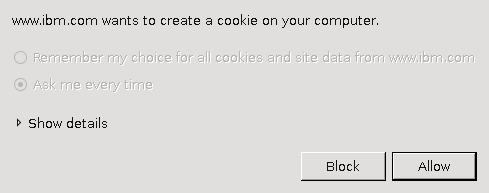
I m currently running google-chrome-beta version 5.0.375.55-r47796 on Debian/Unstable. It s the fastest web browser I ve used in recent times it s the first time that I ve run a browser that feels faster than my recollection of running IBM WebExplorer for OS/2 on a 486-66 system! It has a good feature set, and it s the only browser I ve used that in a typical configuration will make proper use of the screen space by not having a permanent status bar at the bottom of the sceen and by having tabs in the title-bar. But it s not perfect, here is a list of some bugs: Chrome Titlebar when maximisedChrome Titlebar when not maximisedRight of Chrome Titlebar when not maximised Above are three partial screen captures of Chrome, the first is when maximised and the second is when the window isn t maximised. Notice the extra vertical space above the tab in the title bar in the second picture. The third picture shows the right side of the titlebar and you can see a space below the three buttons where you can drag the window around no matter how many tabs you open that space below the three buttons is reserved. If the Chrome developers had removed the extra vertical space in the titlebar and reserved slightly more horizontal space then you would be able to drag the window around. While an anonymous commentator made a good point that the extra vertical space can be used to drag the window around when the maximum number of tabs are open, it seems that there are other ways of achieving that goal without wasting ~18 vertical pixels. Doing so would be a lot less ugly than what they did with finding text in the page. When I visit a web site that uses cookies from an Incognito Window (which means that cookies etc aren t stored) there is no option to say allow all cookies . This is really annoying when you get to a web site such as the IBM one which stores 5 cookies when you first load the page and then at least one new cookie write for every page you visit. Given that cookie data will be discarded as soon as the window is closed it seems like a good idea to have an option to allow all cookies for Incognito Windows even if all cookies aren t allowed for regular windows. Blocking all cookies would be OK too, anything but having to click on Block or Allow multiple times for each page load. The J and K keys don t work in a view of Venus version 0~bzr95-2+lenny1 (the latest version in Debian/Lenny). I once had a situation where I entered a . at the end of a domain name (which is quite legal there is always an implied dot) and Chrome then wouldn t take note of my request to accept all cookies from the domain. I haven t been able to reproduce that bug, but I have noticed that it stores the settings for whether cookies should be stored separately for domains that end in . , so www.cnn.com. is different from www.cnn.com . Iceweasel seems to just quietly strip the trailing dot. Of course this is better than Konqueror which won t even load a URL with a dot at the end. Chrome can be relied on to restore all windows rapidly after a crash, unlike Iceweasel which restores them at it s normal load speed (slow) and Konqueror which doesn t tend to restore windows. This is good as it does seem to crash regularly. In a response to my post about Chrome and SE Linux [1] Ben Hutchings pointed out that the --no-sandbox option to chrome disables the creation of a PID namespace and therefore makes debugging a lot easier, if I get a lot of spare time I ll try and track down some of the Chrome SEGVs. The JavaScript compiler is either buggy or it s not buggy in situations where people expect IE bugs. When using the Dell Australia web site I can t always order all options. When trying to order a Dell R300 1RU server with hot-plug disks in a hardware RAID array it seems impossible to get all the necessary jumpers which is a precondition to completing the order fortunately I only wanted to blog about how cheap Dell servers are so I don t actually need to complete an order. Dell s web site is also difficult in Iceweasel on occasion, so it s obviously more demanding than most sites. It might be a good test site for people who work on browsers as it s both demanding and important. When I select a URL to be opened in a new window (or when JavaScript does this) then the new tab is opened with about:blank listed as the URL. If the URL is for a PDF file (or something else that is to be downloaded) then the URL entry field is never updated to give the real URL. I believe that this is wrong, either the new tab shouldn t be opened or it should have the correct URL on display there is no benefit with a tab open to show nothing but about:blank in the URL entry field. Also if a URL takes some time to load then it may keep about:blank in the URL entry field for some time. This means that if you use the middle mouse button to rapidly open a few new tabs you won t be able to see what is to be loaded in each one. Sometimes I have several tabs loading and I m happy to close some unimportant ones if they are slow but some are worth waiting for. Overall that s not too bad. I can use Dell s site in Iceweasel, so the only critical bug is the cookies issue in Incognito Windows which makes the Incognito feature almost unusable for some sites.
4 June 2010

Colin Watson: Hacking on grub2

Various people observed in a long thread on debian-devel that the grub2 package was in a bit of a mess in terms of its release-critical bug count, and Jordi and Stefano both got in touch with me directly to gently point out that I probably ought to be doing something about it as one of the co-maintainers. Actually, I don't think grub2 was in quite as bad a state as its 18 RC bugs suggested. Of course every boot loader failure is critical to the person affected by it, not to mention that GRUB 2 offers more complex functionality than any other boot loader (e.g. LVM and RAID), and so it tends to accumulate RC bugs at rather a high rate. That said, we'd been neglecting its bug list for some time; Robert and Felix have both been taking some time off, Jordi mostly only cared about PowerPC and can't do that any more due to hardware failure, and I hadn't been able to pick up the slack. Most of my projects at work for the next while involve GRUB in one way or another, so I decided it was a perfectly reasonable use of work time to do something about this; I was going to need fully up-to-date snapshots anyway, and practically all the Debian grub2 bugs affect Ubuntu too. Thus, with the exception of some other little things like releasing the first Maverick alpha, I've spent pretty much the last week and a half solidly trying to get the grub2 package back into shape, with four uploads so far. The RC issues that remain are: If we can fix that lot, or even just the ones that are reasonably well-understood, I think we'll be in reasonable shape. I'd also like to make grub-mkconfig a bit more robust in the event that the root filesystem isn't one that GRUB understands (#561855, #562672), and I'd quite like to write some more documentation. On the upside, progress has been good. We have multiple terminal support thanks to a new upstream snapshot (#506707), update-grub runs much faster (#508834, #574088), we have DM-RAID support with a following wind (#579919), the new scheme with symlinks under /dev/mapper/ works (#550704), we have basic support for btrfs / as long as you have something GRUB understands properly on /boot (#540786), we have full info documentation covering all the user-adjustable settings in /etc/default/grub, and a host of other smaller fixes. I'm hoping we can keep this up. If you'd like to help, contact me, especially if there's something particular that isn't being handled that you think you could work on. GRUB 2 is actually quite a pleasant codebase to work on once you get used to its layout; it's certainly much easier to fix bugs in than GRUB Legacy ever was, as far as I'm concerned. Thanks to tools like grub-probe and grub-fstest, it's very often possible to fix problems without needing to reboot for anything other than a final sanity check (although KVM certainly helps), and you can often debug very substantial bits of the boot loader - the bits that actually go wrong - using standard tools such as strace and gdb. Upstream is helpful and I've been able to get many of the problems above fixed directly there. If you have a sound knowledge of C and a decent level of understanding of the environment a boot loader needs to operate in - or for that matter specialist knowledge of interesting device types - then you should be able to find something to do.

1 June 2010

Debian News: New Debian Developers (May 2010)

The following developers got their Debian accounts in the last month: Congratulations!

31 May 2010

Dirk Eddelbuettel: JPM Chase Corporate Challenge 2010

It's Memorial Day weekend so it was time for the Chicago's JP Morgan Chase Corporate Challenge on Thursday. The weather was glorious, the usual 20-some thousand runners participated and a good time was had. Work had arranged for a nice tent, food, music --- and a bunch of people showed up and enjoyed it. Nice one. This time we all got chip-timing via a small (rfid ?) strip tagged to back of the bib number. Which is handy as I managed to not stop my time by hand correctly. Given that I am still nursing a sore Achilles tendon and don't train well or much, the time of 23:51 (or 6:48 min/mile) was ok compared to the other seven previous times I have run this.

Gunnar Wolf: Update: A correspondingly pleasant dinner

Update: A correspondingly pleasant dinner
And just to round off my last post (and of course, following a completely non-technical thematic), what is the logical consequence of feeling introspective and blogging just before preparing dinner? Of course Dinner gets prepared with sharing it in mind. The dish ends up even looking as if meant to be served! So this was it: One of my simplest and still favorite dishes: Tostadas. But, yes, these are heterodox tostadas, as they share the basic tostadiness (a hard, roasted and cracky toasted corn tortilla with a soft leguminous layer to give it some consistency, and with... stuff on top. Yes, stuff is sometimes too generic, but that's the beauty of it). What did I come up with? In the strict order with which they were approached at feeding time, and described bottom to top:
  1. Closest to traditional, top left: Mashed beans, bits of panela cheese with little bits of chipotle and soybean-based vegetarian chorizo
  2. Something I have only seen in Guatemala, and which I intend to take a better look at next time I'm there (top right): Mashed frijoles, , cochinita pibil (canned, shame on me, and frankly lacking in taste), grated beet (betabel/remolacha/betarraga/whatnot), grated cabbage
  3. The heterodoxiest of them all, and the idea that led me to the others (center): Mashed lima/fava beans (according to Google habas), cochinita pibil, nopales, and a hint of habanero sauce.
Yum! [update] On a completely unrelated notice, but not worth opening a third post in a row... Some minutes after I published the earlier post, I got a visit to http://gwolf.org/blog/pleasant-perception-changes?utm_source=twitterfeed&utm_medium=twitter. Now, it beats me: I don't use twitter. I don't even care about twitter. And were my message so deep somebody just twitted (twat it?) right away, I still find the time lapse too short. Who's auto-twitting me? Maybe a planet or other such aggregator?

27 May 2010

Matt Zimmerman: Rethinking the Ubuntu Developer Summit

This is a repost from the ubuntu-devel mailing list, where there is probably some discussion happening by now. After each UDS, the organizers evaluate the event and consider how it could be further improved in the future. As a result of this process, the format of UDS has evolved considerably, as it has grown from a smallish informal gathering to a highly structured matrix of hundreds of 45-to-60-minute sessions with sophisticated audiovisual facilities. If you participated in UDS 10.10 (locally or online), you have hopefully already completed the online survey, which is an important part of this evaluation process. A survey can t tell the whole story, though, so I would also like to start a more free-form discussion here among Ubuntu developers as well. I have some thoughts I d like to share, and I m interested in your perspectives as well. Purpose The core purpose of UDS has always been to help Ubuntu developers to explore, refine and share their plans for the subsequent release. It has expanded over the years to include all kinds of contributors, not only developers, but the principle remains the same. We arrive at UDS with goals, desires and ideas, and leave with a plan of action which guides our work for the rest of the cycle. The status quo UDS looks like this: This screenshot is only 1600 1200, so there are another 5 columns off the right edge of the screen for a total of 18 rooms. With 7 time slots per day over 5 days, there are over 500 blocks in the schedule grid. 9 tracks are scattered over the grid. We produce hundreds of blueprints representing projects we would like to work on. It is an impressive achievement to pull this event together every six months, and the organizers work very hard at it. We accomplish a great deal at every UDS, and should feel good about that. We must also constantly evaluate how well it is working, and make adjustments to accommodate growth and change in the project. How did we get here? (this is all from memory, but it should be sufficiently accurate to have this discussion) In the beginning, before it was even called UDS, we worked from a rough agenda, adding items as they came up, and ticking them off as we finished talking about them. Ad hoc methods worked pretty well at this scale. As the event grew, and we held more and more discussions in parallel, it was hard to keep track of who was where, and we started to run into contention. Ubuntu and Launchpad were planning their upcoming work together at the same time. One group would be discussing topic A, and find that they needed the participation of person X, who was already involved in another discussion on topic B. The A group would either block, or go ahead without the benefit of person X, neither of which was seen to be very effective. By the end of the week, everyone was mentally and physically exhausted, and many were ill. As a result, we decided to adopt a schedule grid, and ensure that nobody was expected to be in two places at once. Our productivity depended on getting precisely the right people face to face to tackle the technical challenges we faced. This meant deciding in advance who should be present in each session, and laying out the schedule to satisfy these constraints. New sessions were being added all the time, so the UDS organizers would stay up late at night during the event, creating the schedule grid for the next day. In the morning, over breakfast, everyone would tell them about errors, and request revisions to the schedule. Revisions to the schedule were painful, because we had to re-check all of the constraints by hand. So, in the geek spirit, we developed a program which would read in the constraints and generate an error-free schedule. The UDS organizers ran this at the end of each day during the event, checked it over, and posted it. In the morning, over breakfast, everyone would tell them about constraints they hadn t been aware of, and request revisions to the schedule. Revisions to the schedule were painful, because a single changed constraint would completely rearrange the schedule. People found themselves running all over the place to different rooms throughout the day, as they were scheduled into many different meetings back-to-back. At around this point, UDS had become too big, and had too many constraints, to plan on the fly (unconference style). We resolved to plan more in advance, and agree on the scheduling constraints ahead of time. We divided the event into tracks, and placed each track in its own room. Most participants could stay in one place throughout the day, taking part in a series of related meetings except where they were specifically needed in an adjacent track. We created the schedule through a combination of manual and automatic methods, so that scheduling constraints could be checked quickly, but a human could decide how to resolve conflicts. There was time to review the schedule before the start of the event, to identify and fix problems. Revisions to the schedule during the event were fewer and less painful. We added keynote presentations, to provide opportunities to communicate important information to everyone, and ease back into meetings after lunch. Everyone was still exhausted and/or ill, and tiredness took its toll on the quality of discussion, particularly toward the end of the week. Concerns were raised that people weren t participating enough, and might stay on in the same room passively when they might be better able to contribute to a different session happening elsewhere. As a result, the schedule was randomly rearranged so that related sessions would not be held in the same room, and everyone would get up and move at the end of each hour. This brings us roughly to where things stand today. Problems with the status quo
  1. UDS is big and complex. Creating and maintaining the schedule is a lot of work in itself, and this large format requires a large venue, which in turn requires more planning and logistical work (not to mention cost). This is only worthwhile if we get proportionally more benefit out of the event itself.
  2. UDS produces many more blueprints than we need for a cycle. While some of these represent an explicit decision not to pursue a project, most of them are set aside simply because we can t fit them in. We have the capacity to implement over 100 blueprints per cycle, but we have *thousands* of blueprints registered today. We finished less than half of the blueprints we registered for 10.04. This means that we re spending a lot of time at UDS talking about things which can t get done that cycle (and may never get done).
  3. UDS is (still) exhausting. While we should work hard, and a level of intensity helps to energize us, I think it s a bit too much. Sessions later in the week are substantially more sluggish than early on, and don t get the full benefit of the minds we ve brought together. I believe that such an intense format does not suit the type of work being done at the event, which should be more creative and energetic.
  4. The format of UDS is optimized for short discussions (as many as we can fit into the grid). This is good for many technical decisions, but does not lend itself as well to generating new ideas, deeply exploring a topic, building broad consensus or tackling big picture issues facing the project. These deeper problems sometimes require more time. They also benefit tremendously from face-to-face interaction, so UDS is our best opportunity to work on them, and we should take advantage of it.
  5. UDS sessions aim for the minimum level of participation necessary, so that we can carry on many sessions in parallel: we ask, who do we need in order to discuss this topic? This is appropriate for many meetings. However, some would benefit greatly from broader participation, especially from multiple teams. We don t always know in advance where a transformative idea will come from, and having more points of view represented would be valuable for many UDS topics.
  6. UDS only happens once per cycle, but design and planning need to continue throughout the cycle. We can t design everything up front, and there is a lot of information we don t have at the beginning. We should aim to use our time at UDS to greatest effect, but also make time to continue this work during the development cycle. design a little, build a little, test a little, fly a little
Proposals
  1. Concentrate on the projects we can complete in the upcoming cycle. If we aren t going to have time to implement something until the next cycle, the blueprint can usually be deferred to the next cycle as well. By producing only moderately more blueprints than we need, we can reduce the complexity of the event, avoid waste, prepare better, and put most of our energy into the blueprints we intend to use in the near future.
  2. Group related sessions into clusters, and work on them together, with a similar group of people. By switching context less often, we can more easily stay engaged, get less fatigued, and make meaningful connections between related topics.
  3. Organize for cross-team participation, rather than dividing teams into tracks. A given session may relate to a Desktop Edition feature, but depends on contributions from more than just the Desktop Team. There is a lot of design going on at UDS outside of the Design track. By working together to achieve common goals, we can more easily anticipate problems, benefit from diverse points of view, and help each other more throughout the cycle.
  4. Build in opportunities to work on deeper problems, during longer blocks of time. As a platform, Ubuntu exists within a complex ecosystem, and we need to spend time together understanding where we are and where we are going. As a project, we have grown rapidly, and need to regularly evaluate how we are working and how we can improve. This means considering more than just blueprints, and sometimes taking more than an hour to cover a topic.

Vincent Sanders: Ex Phone

I went to the Linux Plumbers Conference (LPC) last year (which was very interesting and productive). While I was there Qualcomm were in attendance giving out penguin mints and running a competition. The lucky winners of this draw were to receive an ADP1 Android phone. So I dutifully filled in the entry form, handed it in and thought no more about it.

In the break after attending a particularly interesting workshop on the last day of the conference several other people congratulated me on winning the Qualcomm draw, this was the first I knew about it! I went in search of the nice people from Qualcomm and sure enough they handed over an ADP1 after getting a couple of photos.

Once I returned home I switched to using ADP1 as my phone and started experimenting with Android kernel stuff. Then one day the Wi-Fi stopped working which while odd could be overcome by repeatedly unloading and reloading the driver until it worked once more. Then one day the USB stopped working, no more ADB, no more console, no more debugging, no more hacking.

Then one day it turned itself off and never came back. I have been forced to return to using a hand me down, very kindly given to me by Daniel Silverstone. Alas it is not a smart phone of any kind and my finances do not allow for me to spend the money to replace it.

I have repeatedly tried to contact Qualcomm open source to see if there is any kind of warranty I might be able to use to get the phone repaired alas all the contact addresses I have are now simply returning SMTP errors.

So this is pretty much a tale without a happy ending, unless anyone out there knows the right people to contact? Perhaps someone at Google maybe? I only revisit the subject at all because of the recent announcement of an Android 2.1 based edition for these devices which reminded me I like to play with these things.

25 May 2010

Matt Zimmerman: The behavioral economics of free software

People who use and promote free software cite various reasons for their choice, but do those reasons tell the whole story? If, as a community, we want free software to continue to grow in popularity, especially in the mainstream, we should understand better the true reasons for choosing it especially our own. Some believe that it offers higher quality, that the availability of source code results in a better product with higher reliability. Although it s difficult to do an apples-to-apples comparison of software, there are certainly instances where free software components have been judged superior to their proprietary counterparts. I m not aware of any comprehensive analysis of the general case, though, and there is plenty of anecdotal evidence on both sides of the debate. Others prefer it for humanitarian reasons, because it s better for society or brings us closer to the world we want to live in. These are more difficult to analyze objectively, as they are closely linked to the individual, their circumstances and their belief system. For developers, a popular reason is the possibility of modifying the software to suit their needs, as enshrined in the Free Software Foundation s freedom 1. This is reasonable enough, though the practical value of this opportunity will vary greatly depending on the software and circumstances. The list goes on: cost savings, educational benefits, universal availability, social rewards, etc. The wealth of evidence of cognitive bias indicates that we should not take these preferences at face value. Not only are human choices seldom rational, they are rarely well understood even by the human themselves. When asked to explain our preferences, we often have a ready answer indeed, we may never run out of reasons but they may not withstand analysis. We have many different ways of fooling ourselves with regard to our own past decisions and held beliefs, as well as those of others. Behavioral economics explores the way in which our irrational behavior affects economies, and the results are curious and subtle. For example, the riddle of experience versus memory (TED video), or the several examples in The Marketplace of Perception (Harvard Magazine article). I think it would be illuminating to examine free software through this lens, and consider that the vagaries of human perception may have a very strong influence on our choices. Some questions for thought: If you re aware of any studies along these lines, I would be interested to read about them.

John Goerzen: Free-Range Kids: A Parental Rant

There s a lot of unreasonable panic out there these days. Parents that don t want to let their kids even walk to the mailbox because of an irrational fear of abduction. (Children are more likely to die falling out of bed than be abducted, and before anyone panics, that s also exceptionally rare.) A woman that let her 11-year-old travel unaccompanied on the NYC subway he d been riding all his life unleashed a huge controversy. And there s also this maddening tendency for some parents to be so worried about wounding their children s self-esteem that they never want to say they ve done something wrong, and be so positive to them. Recent studies, as well as common sense, suggest that both attitudes are rather harmful. Terah and I are believers in letting children have cheap mistakes . If I see Jacob running through the kitchen about to trip over a toy he left out, I probably won t say anything. Him crashing to the floor after running on it won t even hurt him enough that he ll cry, but it will probably be far more effective at teaching safety than 20 days worth of me saying no running in the kitchen. Of course, we ll provide comfort for him when he s sad and be there to support him, but also give him more and more freedom to succeed or fail as he grows. This starts even younger. When he first started feeding himself, he got into this habit of throwing food on the floor. We had some natural consequences as a result. If his supper landed on the floor, then he would be all done eating. (Note: Jacob was always on the heavy side at that age anyway.) He couldn t reach his supper on the floor, and we weren t going to keep bending over to pick it up for him. Fixed that problem pretty quickly at least until he learned that he could wait until he was pretty full before throwing his food down on the floor (at which point we added a brief time-out). Or how about our reaction when he has mistakes. When he breaks something, whether accidentally or on purpose, we don t give him some sort of affirmation like Oh, that s OK, we can fix it or good try; you ll do better next time. It is NOT OK to rip the pull-up flaps out of a book or to stomp on those peas you dropped on the floor, and there will be predictable and reasonable consequences for doing so. As a result, when he does a good job, it ll mean more. He, at 3, has started sounding out letters, knows his alphabet, and can count to about 15 in English and about 3 in German. And those are things we give him a good job about. Two of the best things we can do for our children are: 1) be honest about their successes and failures; and 2) give them room to succeed and room to fail, so they can learn from both while the consequences mean a skinned knee or broken toy instead of a broken rib or foreclosure on a mortgage. The Free Range Kids FAQ makes excellent reading, and discusses how many of today s parents grew up enjoying this kind of freedom, and for various reasons are too scared to allow their children that today. Rather sad, really, especially given that today s world is safer.

24 May 2010

Asheesh Laroia: Kat and Asheesh, on identity

Six months ago, I was talking with Kat. We were talking about talking. On imperfection Kat wrote:

<mindspillage> I think I have to be very very comfortable around someone to be able to be imperfect around them.
<mindspillage> (at least, without feeling horribly embarrassed about it)
<mindspillage> More so if what I'm doing is part of my identity.
It's safe to be bad at dancing, she explained; she doesn't consider herself a good dancer, so nothing's at risk. On flames I had recently written about diversity in free software. Kat showed me a piece she had written, but not yet published, on a similar topic. I thought she should simply publish the piece as-is. Instead, she worried:
<mindspillage> I feel like I have a hard time getting across what I think without coming across as antagonistic.
I've felt the same way. Years ago, I told my friend Venkatesh that had sent a flame to a mailing list we're both on. He retorted that my flames lack flame. So then I thought about why I might feel I've written a flame, even when no one else felt that way. I wrote to Kat:
<paulproteus> Expressing oneself is a frustrating experience.
<paulproteus> It may seem like you're taking this out on other people.
<paulproteus> In fact, you're just frustrated.
<paulproteus> And fighting (successfully) your own urges to just be quiet.
<paulproteus> So at the end you'll feel like you fought a battle, and that seems like you wrote something that others would feel is antagonistic.
Maybe for Kat's writing and my "flames", there was some sort of antagonistic process in which we fought ourselves. That fight doesn't have a lot to do with the resulting text, so it's invisible to the reader. I think this process might leave us vulnerable in another way: if our urges to stay quiet come from a sense of isolation, and we manage to stay quiet about that feeling, no one will sympathize with us. We'll appear to be healthy, active participants in a conversation where we express ourselves. Other people with a similar "process" for self-expression won't get a chance to empathize. (This is why I'm interested in putting together a Debian for Shy People caucus. I hope my Debconf proposal for a Birds of a Feather session is accepted!) On finding a way out We concluded on a happy note:
<mindspillage> I haven't been answering Wikimedia mail for a while. Then I figured out that I don't have to use my real name, so I don't have to answer as someone with responsibility, I can just be some random volunteer.
<mindspillage> Most of it is silly and trivial. But sometimes I am really able to address someone's concern or change someone's mind, and I forget how good that feels.
<mindspillage> (There are some real jerks too.)
<mindspillage> I got someone who was being snarky to apologize for being so rude. That was kind of awesome. Sometimes it doesn't take very much to make me happy.
P.S. A note from the archives Apparently, for me, speaking French is exempt from the above restrictions.

19 May 2010

Mart&iacute;n Ferrari: Je ne veux pas travailler

That's a phrase I fully adhere to (I don't want to work), but that's not the point. There's a catchy song that I like a lot, it's sung in French and sounds like an old song (most places say it's an Edith Piaf's song). The chorus goes "Je ne veux pas travailler, je ne veux pas d jeuner...", and one would imagine that that's indeed the title. But nothing of this is true, once again the Internets is full of fail. The band who performs the song is called Pink Martini, two of them are the authors of it, and they are from Oregon. It was recorded in 1997 (some audio filters did the magic), and it's called "Sympathique". It also seems that it was a big success, but probably not in my part of the world. I thought that somebody should set this straight somewhere, as I couldn't find anybody speaking of this confusion. Having settled that, I invite you to listen to this wonderful song, and sing along that you don't wanna work (forget about the rest of the lyrics, it's a love song :-)). Tags: Planet Debian, Planet Lugfi, M sica

John Goerzen: Time to learn a new language

I have something of an informal goal of learning a new programming language every few years. It s not so much a goal as it is something of a discomfort. There are so many programming languages out there, with so many niches and approaches to problems, that I get uncomfortable with my lack of knowledge of some of them after awhile. This tends to happen every few years. The last major language I learned was Haskell, which I started working with in 2004. I still enjoy Haskell and don t see anything displacing it as my primary day-to-day workhorse. Yet there are some languages that I d like to learn. I have an interest in cross-platform languages; one of my few annoyances with Haskell is that it can t (at least with production quality) be compiled into something like Java bytecode or something else that isn t architecture-dependent. I have long had a soft spot for functional languages. I haven t had such a soft spot for static type checking, but Haskell s type inference changed that for me. Also I have an interest in writing Android apps, which means some sort of Java tie-in would be needed. Here are my current candidates: Of some particular interest to me is that Haskell has interpreters for Scheme, Lua, and JavaScript as well as code generators for some of these languages (though not generic Haskell-to-foo compilers). Languages not in the running because I already know them include: OCaml, POSIX shell, Python, Perl, Java, C, C++, Pascal, BASIC, Common Lisp, Prolog, SQL. Languages I have no interest in learning right now include Ruby (not different enough from what I already know plus bad experiences with it), any assembly, anything steeped in the Microsoft monoculture (C#, VB, etc.), or anything that is hard to work with outside of an Emacs or vim environment. (If your language requires or strongly encourages me to use your IDE or proprietary compiler, I m not interested that means you, flash.) Brief Reivews of Languages I Have Used To give you a bit of an idea of where I m coming from:

15 May 2010

Christian Perrier: [life] Running update

I didn't write much about running stuff since my update about Paris marathon. The main point was, in general, to gradually resume running activities, after the marathon peak. Which I actually didn't respect at all, as usual..:-)... I already wrote that my "training program" is mostly made of "run as you feel, with no strongly hardcoded program". So, the week-end after the marathon, I ran 11km on Saturday, followed by an half-marathon (alone) on Sunday which I completed in 1h53'31", very close to my 1h51'31" PB for a "half-marathon alone on trails" run. Definitely not what is generally recommended, but, eh, this is how I was feeling... Then, I could continue during the following weeks with my normal program made of 1 or 2 small runs (between 8 and 14km) at lunch time on weekdays, 1 small 10 or 11 km trail run (on this circuit or a longer variant), and a "long" run on Sunday mornings. The long run usually goes from 15km up to 25km. Now, 6 weeks after the marathon, I'll run a 20km trail named Le Trail des Cerfs ("deer trail"), that starts in my neighbourhood and goes through my beloved Rambouillet Forest. I could have chosen the 35K or even 50K race, but preferred being less ambitious with the distance and rather focus and ahieving what will be my first official trail race. I don't expect much differences with the weekly runs, indeed, as most of these are already done in trails, fields and woods with very few paved roads. My goal for this race is 1h45. Later on, I still have the plan to run a full marathon alone, probably on May 31st. This time, contrary to last year where I ran one by going through a very wide loop in Rambouillet Forest, I'll do 4 loops mostly in the city of Maurepas, on flat roads, with possible pit stops at my home (so, no camel back bag, but more focus on good performance). I plan to target 3h55 if the heat is not too high. Further plans are less precise. I'm not sure I'll be able to run the Sur les Traces du Loup trail in La Ville aux Clercs, 2 hours away from our place. That would mean arranging a small week-end there with Elizabeth. Still, that really looks like a great race, with a start at 18:00 to enjoy the end of the day during the longest days of the year. Also, the race and the barbecue that follows appear to be very friendly events in a small French village. On the other hand, the autumn marathon is decided. This will be the Seine et Eure Marathon, a "small (600 runners) marathon very close to our family house in the Seine valley. The race is one of the flatest marathons in France and has the reputation of leading to great times. That will be on October 17th. Target for me: 3h45 (unless I see changes happening util then).

13 May 2010

Aigars Mahinovs: Hacker Neo caught in Latvia

A scandal has been brewing in Latvia over the last half year and yesterday the activity spiked shocking the media and some IT people in the country. I ll go back and explain what happened first, what is happening now and why this could have a heavy impact on IT and journalists in Latvia. At the end of last year, there were rumours that the IT system of Latvia s Internal Revenue System was hacked and millions of documents had been downloaded by multiple organizations. Shortly thereafter more details on the glaring security hole became public (after it was closed). There is a full electronic interface to give all reports to the IRS electronically (at http://eds.vid.gov.lv) and as part of that system you could also view and export monthly report summaries about your organization into XML and PDF files. After the system checked that you are authorized to access the report, you were redirected to the URL to actually download the report by report ID (as a single param in a GET request). Unfortunately, report IDs were predicable and the script that gave the reports for download did not check if you were authorized to get that report. It did not even check if were logged into the system. There were suspicions that the authorization was disabled on purpose to allow to leak data on purpose, but apparently it was an error of forgetting to disable debug code in production environment. The error was discovered only because the firewall administrator noticed an unexplained stable increase of traffic, especially during night hours when typically the traffic fully stopped. Apparently a single hacker (who later identified himself as Neo to the press) discovered the flaw and wrote a script to just try all possible report ids and get as much data out as possible. This had been going on for months, before someone noticed. After the flaw was discovered and a bit of time passed, Neo made his first move he published the list of top salaries in a governmental company, that clearly showed that the top leadership of this company failed to cut their salary by 40%, like everyone elses during harsh budget cuts of 2009. He stripped the names and ids of the specific employees, but named the company which made it pretty easy to figure out who was who. The society was outraged that the top managers in a government owned company failed to comply with the strict pay cut that everyone else in government had to endure. But after a few weeks the outrage subsided and no action followed from the government or law enforcement. Neo continued to release documents detailing salaries of top managers in different Latvian government companies. And each time after short outrage, nothing happened. Neo gave an interview where he said that he was disappointed in the passivity of the Latvian people in face of such blatant injustices. After a few month Neo went silent, promising to return before parliamentary elections this fall. However, this week a new development shocked everyone in the middle of the night two police SWAT teams went into action: one detained Ilm rs Poik ns, a researcher in artificial intelligence at the University of Latvia s Computer Science department and another raided the home of a Latvian TV journalist Ilze Nagle who interviewed Neo. Poik ns confessed of being Neo the next day and was released (with travel restrictions, pending trial) today. Politicians reacted immediately opposition demanded the resignation of the Interior Minister over such blatant disregard of freedom of press and another politician (who is also a famous lawyer) Aleksejs Loskutovs volunteered to defend Neo pro-bono (on Twitter, no less). Almost all Latvian online media have the arrest of Neo and the raid on the home of a journalist as main stories of the day. As a legal titbit, we also know that Neo is being charged with breaking statutes 145 and and 244p2 of the criminal law. Statute 145 is hard to find applicable in this situation as talks about actions done by people authorized (..) to access [private] information . Statute 244p2 will also be hard to pin down as it mentions influencing system resources of (an IT system) and if such action caused severe harm . It looks like the first part talks about at least a DoS attack (which did not happen in this case) and also there was no measurable harm from these leaks. Also Neo was careful to strip all personally identifying information (such as names, social security numbers and addresses of the employees in question), so it will be hard to pin him on that. Also no actual breaking or other modification of an IT system occurred. And no specialized software was used beyond a trivial script such as :

for i in range(0,7000000):
    wget('https://eds.vid.gov.lv/getRep.aspx?id='+str(i))
A lot of commentators on the Internet likened the situation to walking trough an unlocked door and stealing something. I think that analogy is very incorrect there was no door, and nothing went missing after the action. I came up with a different analogy there was this corridor with a lot of doors in IRS, locked steel doors. You were instructed to go to a room with a specified number and given a key to that room to unlock it and see your secret info. However, that corridor opened out to the street on one end, oh and also the walls of the rooms with all the secrets were transparent. So Neo walked into the corridor, looked at some of the secrets, wrote them down (to remember them better) and then went out and discussed the worst examples abuses of power he saw. In the end IRS had to learn their lesson if you have to put naked photos of yourself on the Internet (or something equally embarrassing), then make damn sure you password protect that, but if you don t then don t cry that someone hacked you and stole you pictures. What other people think:
http://freespeechlatvia.blogspot.com/2010/05/neo-released-under-restrictions.html We ll see how the story develops soon.

11 May 2010

Ritesh Raj Sarraf: tomoyo for debian

Just uploaded tomoyo-tools and is waiting in the NEW queue.Thanks to Moritz Muehlenhoff, tomoyo kernel support should be available in Debian with kernel 2.6.32-13 and above.What is Tomoyo ?

Description: Lightweight and easy-use Mandatory Access Control for Linux
TOMOYO Linux is Lightweight and Usable Mandatory Access Control with
- "automatic policy configuring" feature by "LEARNING mode"
- administrators friendly policy language
- no need libselinux nor userland program modifications
.
TOMOYO Linux consists of patches to Linux kernel and administrative
utilities, and this package contains its audit daemon and tools.

Description: Lightweight and easy-use Mandatory Access Control for Linux

TOMOYO Linux is Lightweight and Usable Mandatory Access Control with

- "automatic policy configuring" feature by "LEARNING mode"

- administrators friendly policy language

- no need libselinux nor userland program modifications .

TOMOYO Linux consists of patches to Linux kernel and administrative utilities, and this package contains its audit daemon and tools.

Ritesh Raj Sarraf: apt-offline 0.9.8

I just uploaded apt-offline version 0.9.8 to sid. Hopefully this is the one that would be part of squeeze. For those who still arent aware of apt-offline, it is an Offline Package Manager for apt.I wrote a small howto that can give more details about it.

Next.

Previous.