Search Results: "jan"

29 January 2007

Jan Wagner: BIOS Bootsplash for Thinkpad (T41)

BootsplashOn thinkwiki.org I found 2 articles how to get rid of the IBM BIOS Bootsplash and your own working. One for Windows and one for Linux.

At first, you need 1ruj35us.exe or newer. With
# cabextract -F "*.IMG" 1ruj35us.exe
you will get a “1RUJ35US.IMG”, which is a floppy image. Next you need to create a 16 color 640×480 BMP and save it as “/tmp/logo.bmp”. Now we need to mount the floppy, let the “logo.bmp” take place there and generate a “logo.mod”:
# mkdir /tmp/floppy
# mount -o loop,umask=000 /tmp/1RUJ35US.IMG /tmp/floppy
# cp /tmp/logo.bmp /tmp/floppy/ && cd /tmp/floppy/
# wine prepare.exe logo.scr
# cd && umount /tmp/floppy/
If you don’t have wine, but a running windows in place, use Virtual Floppy Drive like described in the Windows instruction to get the picture on the disk image.
Now you only need to burn a CD(-RW) with “1RUJ35US.IMG” as boot image. This can be easily done with k3b or on console:
# mkisofs -b 1RUJ35US.IMG 1RUJ35US.IMG  cdrecord dev=<device> -
You only need to boot your Thinkpad from CD(-RW) by pressing F12 on boot and flashing new firmware with customer image. You are done! My bootsplash image can be found here, an ‘unbranded’ one here. , ,

24 January 2007

Enrico Zini: package-managers

Improving package managers I noticed two posts on improving package managers none of which mentions Debtags. Daniel Burrows mentions various issues: David Nusinov mentions that the ideal package manager should look like Google, where you search for things using just a simple one line text entry and pick from the results what you want to install. I should probably do a bit of recap of things that have been going on. I'll go through that list again:
  • The current sections in Synaptic are useless
Agreed. This used to be a bug about this, which has been closed by Debtags more than one year ago. We now have much more useful category data for about 73% of the archive (including experimental), but what we lack is software using it. Here's a quick trick to try:
  1. install debtags, and this gives you an easy to read text file in /var/lib/debtags/package-tags.
  2. from that file, pick packages that have the tags role::program, scope::application and interface::x11.
  3. display the results, and use the tags works-with::* and use::* to navigate the results.
There is a python-debian package in experimental that has a debtags module you could play with. Why is that that so far noone has written a simple package manager just for gamers, which uses only the game::* tags? Do you think Debtags gives you too many tags? Then check out: To summarise so far, we not only do have better categories, but also a number of cool algorithms to use them, and some interface prototypes as well. Just don't expect me to write a package manager as well: that's a job that so far I decided to leave to someone else. adept gave it a try, with positive results.
  • there are better keyword search technologies than strstr()
Indeed, Xapian for example. I use it as part of the backend of the Debtags smart search, and here's our Xapian-powered normal keyword based package search interface which does stemming, indexing and all you want to ask from a serious full text index. In that page you don't see all the nice features of Xapian, but only the ones that I needed for my Debtags evil plans. Have a look at the documentation and give it a try. Here is a way to see Xapian's similarity matching in action:
  1. go to the Go tagging! page
  2. click on a random untagged package
  3. the system gives you a rather relevant selection of tags
  4. look at it again: the package was untagged: how could the web engine possibly figure those tags out?
What is happening under the scenes is that:
  1. I ask Xapian: "what packages are similar to this one?".
  2. I aggregate the tags of the resulting packages.
  3. I rank the tags by how many resulting packages have them.
While we are on this topic, why don't we decide that we maintain a Xapian index of our package descriptions in, for example, /var/lib/apt/fulltext/, so that various applications can share it? Indeed. Anyone would like to implement this little "popcon" tool? Having the data easily accessible locally can encourage people to use them. The Debtags Go tagging! page already uses popcon data to show the most common untagged packages at the top, with double reason: it shows packages that more people are likely to know (and therefore likely to categorise) and it pushes for the most common packages to be tagged more urgently. Indeed. Anyone volunteers to implement a prototype? The full unaggregated (but anonymised) popcon data are accessible to every Debian Developer on the host gluck.debian.org in the directory /org/popcon.debian.org/popcon-mail/all-popcon-results. Ideally one can do many interesting things with this concept: besides tag suggestions, one could identify the packages that are most representative of an installed system, and also offer negative suggestions like: "people who have packages like yours usually don't have this package: would you like to remove it?". There is more than all this that could be done. Recently, almost by accident, I had the idea of querying packages by example, like pointing to a file and find packages that can work with it. I've asked Jeroen to have Mole collect info on all files that could possibly get installed in /usr/lib/mime/packages/ (as suggested by Bernhard R. Link), to see if that prototype can be made more accurate. Query by similarity would be nice: I don't like this program, but what else do we have that does the same job? This is best implemented using Debtags data, since it directly maps to semantic properties. Note that you don't have to show a single tag to the user to implement this kind of interface. Do we have a way to point at the X window of an application and get the name of the package that installed it? Wouldn't it be about time to have it? Why don't we have a system updater utility that shows the Debian weather? Why aren't more people playing with semantic web? But more generally, the problem with package managers is that we seem to be irrationally compulsive in wanting to make the one and only big easy and complete interface for everyone. Other more reasonable people would tell you that if you have two very different kinds of users you may want to consider having two different user interfaces. Ubuntu for example installs by default 3 package manager interfaces: Synaptic; the thing that you access from the application menu to add applications to it; and the update manager. Does it sound like a waste? To me it makes lots of sense. We have lots of interesting, usable metadata; we have algorithms; we have prototypes; we have ideas for lots of cool, implementable features. The question is, are we able to write applications that just combines what is needed from all this treasure to provide the right interface(s) for our base(s) of users? Even if my English in 2004 wasn't easy to understand, a read here might still be useful. There is so much really cool stuff to be written, just within reach.

Martin F. Krafft: A good interface for selection?

I am working on a script to help me switch mail profiles from within vim, because mutt's profile abilities are seriously limited (even with muttprofile). The script will have three modes: manual, menu, and auto. In manual mode, you tell it something like switch-profile debian and it converts an existing mail to use my Debian profile. In menu mode, it displays a menu of available profiles, and in auto mode uses heuristics defined by the profiles to determine which one to use. My problem at the moment is menu mode. What I want is a good selection interface that (a) works over most any terminal, and (b) allows quick and dependable keyboard-driven selection. So far, I've had multiple ideas:
  1. A simple shell script that would assign [0-9a-z] to the profiles and then expect me to press one of the letters to select the profile I want (also see ssft). I don't particularly like this because if I added a profile to the presumably alphabetically sorted list, I'd have to relearn which keys to press when doing quick (subconscious) selection.
  2. debconf, which comes with multiple interfaces, but doesn't really seem made for the task. In the end, it would probably end up giving the same experience as (1) above.
  3. A method which I've implemented in the script (run it with the --menu option), which is reminiscent of "autocomplete". I need to add arrow selection and I have to figure out how to actually access $result from outside the while loop (this method doesn't work, because I need stdout for the interface and I have not managed to figure out using file descriptors 3 and above), but I already like it very much, although it seems rather brittle so far.
Do you have any other ideas? Or do you know of a tool/library I could use for this? I'd much rather have this work without having to install a separate package, but there's also no point in reinventing the wheel. PS: I am using POSIX shell for this even though Perl or Python would be much better suited, simply because it's faster and available everywhere. NP: Man on Fire / Habitat Update: Jan Hudec points me to Vim's console-menus and now makes me ponder whether I want a vim-only solution, or one that could be used by friends of other editors too. And Simon Huggins is trying to get me to use htag, which I'll have to check out.

23 January 2007

MJ Ray: So, what happened at Cooperatives SW?

I left home a bit late and rushed to the train stop, but the journey was easy after that. There was quite a good turnout at the meeting: Chris (chair), Alex (clerk), Paul (treasurer), Brian (secretary), Malcolm, Paul, Andrew and myself IIRC. Continuing: A promo leaflet is on hold until after funding is sorted out; No mutuals responded to a funding request letter; The reply to the BASIS grant bid is expected some time in January; The database update is waiting on Plymco as far as I could tell. Financial: the clerking contract went about 700 quid over budget last year and has been reduced to a skeleton service until funds are sorted out again. Donations from the Coop Group and Midcounties were forecast but aren't in the bank yet. AGM: the aim is to return to more of an event next year. Holding it in October should hopefully avoid the transport and weather problems of the 2006 event. Fund-raising: Chris to draft a bid for the cooperation fund to try to secure enough money for a support worker. The priorities would be clerking and event organisation, with possibly marketing, communication and news-production tasks. Numbers to come from the support tracker that Alex has been using. Need some sort of corporation to apply. Alex, Brian and myself to assist. 12 February deadline. Reply expected in March. Future work: newsletter deferred to mid-March. News items to Alex. Paul (I think) mentioned that some Healthy Eating Partnerships seem to be promoting their box schemes as 'Food Coops' when they are not cooperatives at all. We need to contact partnerships and find out which is doing what. Alex handed out a few Principle Six speed-networking packs. Interesting idea. Paul mentioned Cornwall Switch which will find the best green energy supplier for you (even if you're not in Cornwall). Next meeting 16 April 2007.

Holger Levsen: SLUG meeting

Yesterday I attended the Sydney Linux User Group january meeting and gave a talk about the DebConf video-team and the differences in our setups compared to LCA2007 (slides available now, video soon).

It was good to see a bunch of people from LCA again and the 2nd talk about slack, googles internal maintainance tool which was just freed, was also quite interesting. For me there was nothing really new, as slack works quite similar as FAI, the interesting part was to compare them :)

Unfortunatly I didn't see the report about googles summer of code, as it was held in parallel. But you can't have icecream with fries :-)

Fortunatly I also could attend the Sydney linuxchix meeting before the SLUG meeting, where a good introduction to Ruby on Rails was given.

Relocating to Melbourne now - cheers and thanks to everyone in Sydney contributing to the good times I had here! :-)

22 January 2007

MJ Ray: Tipping point with a few comments

Blog for Choice Day - January 22, 2007
This doesn't affect me directly (not in the US and not female) but it surprised me: WTF is Bush doing on this?

Jan Wagner: completely d^Hgone

Today it happen, what I know it would happen some day. My grandfather is not in this world anymore.
I don’t know, if there is anything other, where he could be now and unfortunatly it seems we aren’t experience it until we are in the same situation.
It’s hard for me to write whats going on in my head… If it was okay for my grandfather to leave us, it’s also for me, but I will miss him. It makes me distraught that I’m so far away since 5 years now and wasn’t able to visit my family more often. See you again, where ever you are! ,

Matt Brown: Open Moko


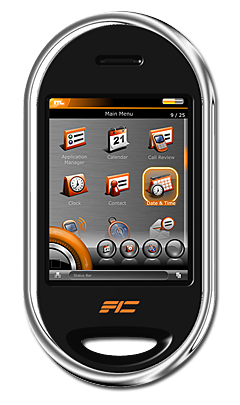
Taiwanese phone manufacturer FIC, recently announced the timeline for the release of the FIC Neo1973 smart phone. It’s shaping up to be a very cool device. The phone is nice to look at, has a completely open software stack via the OpenMoko project and at US$350 it’s actually relatively cheap! Feature wise the Neo1973 is relatively similar to the iPhone, right down to using a touchscreen for the user interface. It will be interesting to see how many of the people who have been complaining about the restrictive and walled-garden iPhone model migrate over to the OpenMoko platform. The Neo1973 will work with any GSM cellular network in the world (as opposed to only Cingular in the states, and other apple partners elsewhere) and will allow you to run essentially any application that you want on the phone itself. The contrast in approach between Apple and FIC is stark, and I hope that FIC wins out in the end, although it will no doubt be an uphill battle for them to get anywhere near the mindshare that Apple receives. The one feature that really drew my eye to the Neo1973 is the built-in GPS chipset. For a while now I’ve been looking for a device that would allow me to reveal my current location (possibly obfuscated to a certain radius) to selected family and friends. Once the source code is released in a week or two I imagine that it won’t be long before someone (maybe me…) whips up an application to make this possible. Here’s hoping that the phone lives up to the expectations set for it and that I can come up with a suitable excuse to purchase one when they become available in early March! Update: Found a linuxdevices.com post with some good technical detail on the hardware

21 January 2007

Daniel Baumann: Re: Package Maintenance

My last entry is maybe not so well understandable. In a mail between Alberto Gonzalez Iniesta and me, he put it in much better words than I could:
	Date: Sun, 21 Jan 2007 14:05:29 +0100
	From: Alberto Gonzalez Iniesta <agi@inittab.org>
	To: Daniel Baumann <daniel@debian.org>
	Subject: Re: [late]Thanks for your work
	On Sun, Jan 21, 2007 at 01:08:48PM +0100, Daniel Baumann wrote:
	> Hi agi,
	>
	> the orphaning of some packages wasn't ment as a signal to get 'please
	> thank me' or so, nevertheless, thanks for your mail.
	I know it wasn't meant to be that. But I really appreciate the work of
	some DDs, specially those that do their job, mind their businesses AND
	don't make of it a power position. Those hundreds of DDs or the like,
	that simply like this as is, and don't make of it a power struggle or a
	cabal thing. And you are one of them, as others I could name are.
	> I was taking care about 2 to 5 hours every day and nearly all of the
	> weekends to keep my packages in shape. All I got from this is rants
	> withouth any concrete background like 'look at him, he has so much
	> packages, they can't be good. They must be crap, it's impossible for one
	> person'. Also, some people in Debian do have a problem when people do
	> more than they do themself, and they're hating the others for that.
	Yep, that's what I meant. Those that are looking for competition... In
	a free software community. Morons.
	> Now, I'm just tired of that and went down from ~150 to ~100 packages. I
	> think, I did not point that out very clearly.
However, I am not going MIA now. I still care about my packages, but for a smaller number of them (reducing them in a second orphaning round down to ~50 in a few weeks). And don't worry, there will be no more entries about this topic from me. Thanks Alberto and the few others who replied.

Junichi Uekawa: Recoding with ffmpeg with Debian / MacBook / built-in iSight.

I've tried recording, and it worked.My command-line looked like this: ffmpeg -ad /dev/dsp1 -vd "/dev/video0"-vcodec mpeg4 -s 320x240 -r 25 -y test2.avi.You need to customize the '-ad' option, to select which device to use for sound capturing; I used my gamepad-mouse device, but you would usually want to use something else.It's nice to see myself moving around and talking.

Jan Wagner: Music and Debian

Today I found a way to combine consuming my favorite Radio Station and using my favorite System Distribution.

On working hours and most of the time at home I’m listening to Frisky Radio, founded by Faisal Sultan. But I’m missing it the 3 hours per day, when I’m traveling between work and home town. I did realize, Frisky Radios provides podcasts, but only one per week and the download history isn’t such long. Some days later, I thought stream ripping could be nice. So I did run:
$ apt-cache search stream ripper
goobox - CD player and ripper for GNOME
kstreamripper - kde frontend for streamripper
streamripper - download online streams into audio files
tunapie - Lists audio and video streams from Shoutcast and Icecast
My decision was to use streamripper in combination with screen.
Streamripper can provide a relay server, where you can listen to and save bandwidth and decide, what should happen with already existing tracks. This all seems very nice and I’ll see how lovely it will work together with my player, which name I will not mention in this context. ,

Daniel Burrows: Via C7: it goes fast AND slow!

The low-powered system I assembled recently is based on a Via Epia board and a C7 CPU. I spent quite a bit of time when I was setting it up trying to get the C7's speed stepping to work. I loaded a number of cpufreq modules without luck; crawling around on the Web only led me to discussions about how the C7 couldn't be speed-stepped in Linux and maybe the centrino cpufreq driver would work.

Well, yesterday I randomly searched again -- and poof! There was a discussion from early January about how maybe the ACPI cpufreq driver would work. I loaded it, set up powernowd, and was rewarded with


daniel@jeeves:~$ cat /proc/cpuinfo
processor : 0
vendor_id : CentaurHauls
cpu family : 6
model : 10
model name : VIA Esther processor 1200MHz
stepping : 9
cpu MHz : 400.000


Sweet. Now all I need is for the Debian kernel folks to package a version with a vt1211 lmsensors driver so I can shut down or slow the fans, and I'll be all set. (I could probably hack it in myself, but according to what I've read on the Web, the next kernel release will have a working driver)

[UPDATE: I disabled cpufreq after only a day or so, because Linux got horribly crashy with CPU scaling turned on. Hopefully the kernel will be fixed sometime in the future :-/ ]

20 January 2007

Evan Prodromou: 30 Niv se CCXV

I just got the Free Your Phone announcement from the OpenMoKo announce list. Looks like they'll have preview versions of the new Linux-based, Open Source phone platform available Feb 11, generally available March 11, and ready for public distribution September 11 (!). FIC is under a lot of pressure to make this product the Open Source answer to the iPhone, and I think they have a very good story. At this point I think the success of the platform is going to depend on three things. First, FIC's execution in getting developer versions out the door and ready to use. If the OpenMoKo platform stays vapourware for much past the first part of 2007, it won't be able to capitalize on the iPhone hype and current excitement. Second, FIC is going to have to resist the temptation to hold back parts of the OS or the application stack as proprietary software. Credibility in the Free Software fanatic community is going to be key for its first wave of usage, and "free enough" isn't going to be good enough for this product. A good cautionary case would be Trolltech's Qtopia. Trolltech's reputation for holding back parts of its stack has probably been the main reason this platform hasn't been taken up by Linux aficionados. Third, and perhaps most importantly, support from more hardware vendors. "Open Source" is sometimes a synonym for "second source" -- it gives customers and developers the security of knowing that the success of a platform is not tied to the success of a particular company. OpenMoKo can take the Free Software niche in the smartphone OS market -- making a place among Symbian, Pocket PC, and Palm OS that appeals to hackers. I think if they can get the hackers, they can get the kind of UI quality and application availability that will get the rest of the population interested. Firefox is an example of an Open Source project that has done this recently. All in all, I think FIC has a lot of challenges ahead -- mostly internal. But I also think that if this is played right, OpenMoKo or something like it could change smartphones the way Linux and the *BSD family have changed servers. tags:

Hillary's In News bulletin: Hillary's In. She's in to win. She's in to win the Big Spin. She's in up to her chin. She's in and so is her twin. She's in with a grin and a tin of aspirin. Hillary's in by the skin of her shin. She's in with the thin fin of an elfin dolphin. So it begins. tags:

19 January 2007

Enrico Zini: tagminer

Cute things one could do with debtags While answering to a long message in the debtags-devel mailing list I accidentally put together the pieces of a fun idea. This is the bit of message I was answering:
  • It would be very useful if the means for indicating the supported
    data formats was more comprehensive. This could mean a lot of
    expanding in the "works-with-format" section of the vocabulary, which
    doesn't even include formats such as gif or mpg at the moment. I don't
    know how feasible it is to alter underlying debtags functionality, but
    perhaps it would be the easiest to make "works-with-format" a special
    case tag which allows for formats not listed in the vocabulary.
This is my answer:
Good point. The idea has popped up in the past to list supported mime types among the package metadata, so that one could point to a file and get a list of all the packages that can work with it. I'm not sure it's a good idea to encode mime types in debtags and I'd like to see something ad-hoc for it. In the meantime works-with-format is the best we can do, but we should limit it to the most common formats.
This is the fun idea: if works-with-format is the best we can do, what can we do with it? Earlier today I worked on resurrecting some old code of mine to expand Zack's ls2rss with Dublin Core metadata extracted from the files. The mime type scanner was ready for action. Some imports:
import sys
# Requires python-extractor, python-magic, python-apt
# and an unreleased python-debtags from http://bzr.debian.org/bzr/pkg-python-debian/trunk/
import extractor
import magic
from debian_bundle import debtags
import re
from optparse import OptionParser
import apt
A tenative mapping between mime types and debtags tags:
mime_map = (
        ( r'text/html\b', ("works-with::text","works-with-format::html") ),
        ( r'text/plain\b', ("works-with::text","works-with-format::plaintext") ),
        ( r'text/troff\b', ("works-with::text", "works-with-format::man") ),
        ( r'image/', ("works-with::image",) ),
        ( r'image/jpeg\b', ("works-with::image:raster","works-with-format::jpg") ),
        ( r'image/png\b', ("works-with::image:raster","works-with-format::png") ),
        ( r'application/pdf\b', ("works-with::text","works-with-format::pdf")),
        ( r'application/postscript\b', ("works-with::text","works-with-format::postscript")),
        ( r'application/x-iso9660\b', ('works-with-format::iso9660',)),
        ( r'application/zip\b', ('works-with::archive', 'works-with-format::zip')),
        ( r'application/x-tar\b', ('works-with::archive', 'works-with-format::tar')),
        ( r'audio/', ("works-with::audio",) ),
        ( r'audio/mpeg\b', ("works-with-format::mp3",) ),
        ( r'audio/x-wav\b', ("works-with-format::wav",) ),
        ( r'message/rfc822\b', ("works-with::mail",) ),
        ( r'video/', ("works-with::video",)),
        ( r'application/x-debian-package\b', ("works-with::software:package",)),
        ( r'application/vnd.oasis.opendocument.text\b', ("works-with::text",)),
        ( r'application/vnd.oasis.opendocument.graphics\b', ("works-with::image:vector",)),
        ( r'application/vnd.oasis.opendocument.spreadsheet\b', ("works-with::spreadsheet",)),
        ( r'application/vnd.sun.xml.base\b', ("works-with::db",)),
        ( r'application/rtf\b', ("works-with::text",)),
        ( r'application/x-dbm\b', ("works-with::db",)),
)
Code that does its best to extract a mime type:
extractor = extractor.Extractor()
magic = magic.open(magic.MAGIC_MIME)
magic.load()
def mimetype(fname):
    keys = extractor.extract(fname)
    xkeys =  
    for k, v in keys:
        if xkeys.has_key(k):
            xkeys[k].append(v)
        else:
            xkeys[k] = [v]
    namemagic =  magic.file(fname)
    contentmagic = magic.buffer(file(fname, "r").read(4096))
    return xkeys.has_key("mimetype") and xkeys['mimetype'][0] or contentmagic or namemagic
Command line parser:
parser = OptionParser(usage="usage: %prog [options] filename",
        version="%prog "+ VERSION,
        description="search Debian packages that can handle a given file")
parser.add_option("--tagdb", default="/var/lib/debtags/package-tags", help="Tag database to use (default: %default)")
parser.add_option("--action", default=None, help="Show the packages that allow the given action on the file (default: %default)")
(options, args) = parser.parse_args()
if len(args) == 0:
    parser.error("Please provide the name of a file to scan")
And here starts the fun: first we load the debtags data:
# Read full database 
fullcoll = debtags.DB()
tagFilter = re.compile(r"^special::.+$ ^.+::TODO$")
fullcoll.read(open(options.tagdb, "r"), lambda x: not tagFilter.match(x))
Then we scan the mime type and look up tags in the mime_map above:
type = mimetype(args[0])
#print >>sys.stderr, "Mime type:", type
found = set()
for match, tags in mime_map:
    match = re.compile(match)
    if match.match(type):
        for t in tags:
            found.add(t)
if len(found) == 0:
    print >>sys.stderr, "Unhandled mime type:", type
else:
If the user only gave the file name, let's show what Debian can do with that file:
    if options.action == None:
        print "Debtags query:", " && ".join(found)
        query = found.copy()
        query.add("role::program")
        subcoll = fullcoll.filterPackagesTags(lambda pt: query.issubset(pt[1]))
        uses = map(lambda x:x[5:], filter(lambda x:x.startswith("use::"), subcoll.iterTags()))
        print "Available actions:", ", ".join(uses)
If the user picked one of the available actions, let's show the packages that do it:
    else:
        aptCache = apt.Cache()
        query = found.copy()
        query.add("role::program")
        query.add("use::"+options.action)
        print "Debtags query:", " && ".join(query)
        subcoll = fullcoll.filterPackagesTags(lambda pt: query.issubset(pt[1]))
        for i in subcoll.iterPackages():
            aptpkg = aptCache[i]
            desc = aptpkg.rawDescription.split("\n")[0]
            print i, "-", desc
\o/ The morale of the story:

Uwe Hermann: Second Life client GPL'd - two weeks later...

A nice recent example of the benefits of open-sourcing software is Second Life, the well-known online virtual world. The Second Life client was released under the terms of the GNU GPL (version 2) roughly two weeks ago. Since then a lot of community activity has been observed: Most of these things (and others I might have forgotten) would certainly not have happened with the closed-source client anytime soon...

18 January 2007

Erich Schubert: A major storm is heading our way, according to weather forecasts

This is the first time I can remember, that the university is recommending to not hold lectures and go home early. They are expecting the ministerials to formally close the university, like they did with schools at noon. This will be the strongest storm we've had in years, apparently (well, others have been similarly strong I think, but not as big). It's now 15:18, and when I look out of the window it's still surprisingly quiet. The trees are moving, but only slightly. But it's the wind protected side of the building. The university warning email said that they expect public transport - and Munich has a huge public transport system - to stop service at 18:00 "the latest". Guess I won't be able to go dancing tonight then. It would start at 19:00, and I need about 30-40 Minutes by subway to go there. I guess they will shut down subway to make sure noone gets stuck in the tunnels if there is a power loss. Such huge storms are a threat to power supply. [Update: 21:08 you can tell now it's a storm, but it's not bad here. But all train traffic is stopped in bavaria, grounding a few hundred people who didn't make it home in time. They've been taken care of. In Munich, busses and the subway are supposedly still in service. I went to go dancing, but there was a note on the door it's closed tonight; same for the karate training of a friend. From what I heard in the radio there were only few fatalities so far and limited damage, but we havn't reached the peak of the hurricane yet. Few reports of blackouts in some small towns. Schools remain closed tomorrow.] [Update: 19. Jan, noon - trains apparently still aren't back to schedule everywhere, but the system is recovering. Not many major damages reported in the media and not many fatalities. It's still windy. IMHO it was "typically german" how we handled the hurricane, urging people to stay at home and not risk much...]

Jesus Climent: For those who care about electronic music in Helsinki.

The date: Friday, 19th of Jan.
The time: starting at around 21.00
The place: Olivers 21 (in Annankatu 21)
The who: DJ Mooch Vs. resident DJ
The what: Electronic music, starting with chillhouse and grooving towards progressive and electro house.
The why: because i/you can. And because i/you want it. ;)

Evan Prodromou: 27 Niv se CCXV

The snow we got a couple of days ago hasn't abated here in Montreal. We had a cold snap right after the snowfall, so temperatures have been around -20C for the last couple of days. Last night Maj had her French classes at the Montreal YMCA, and Micaela had spent the day seeing art museums and visiting bookstores downtown. (She's a poetry nut -- loves finding books by Canadian poets, francophone and anglophone, that she can't get at home in Melbourne.) So Amita and I went to meet her about halfway from our local Metro station, at the Pizzad lic on Ave Mont Royal. I covered Amita in about 10 layers of clothing, then put her on her little purple sled and dragged her up towards Mont Royal. She kept wanting to get up and walk herself ("Up!" is her newest and most insistent word), but when she was standing she wouldn't walk at all. So it was a long time getting to the restaurant. When we got there, Micaela was leaning against the front door shivering. Apparently Pizzad lic is out of business (bummer!). A graver cause for concern, however, was Amita's face: the parts showing around her scarf were tomato red from the cold. Gah! We rushed her home (crying all the way), and when I got her undressed she had a red stripe across the middle of her face like the people in those frozen pizza ads. I bathed her cheeks in cold water, and then gave her a hot bath, and by the time she was out she was calm and regular-colored. We got pizza delivered at home, which she enjoyed a lot. No permanent damage, as far as I can tell, except to my self-confidence as a competent parent. When Maj got home later that night, she reminded me that for extremely cold weather you have to put Vaseline on babies' cheeks to protect their delicate skin from the cold. Amita and I went to Loblaw's this morning to do some grocery shopping (in the car), which was a much more reasonable experience. Tonight for dinner I made pat chinois, a plate with baked mashed potatoes and ground beef known to English-speakers as shepherd's pie. (I make it with mushrooms and veggie beef.) Here in Quebec it's called "Chinese casserole", for unknown reasons. The best guess is that French Canadian lumberjacks worked at sites in the USA where it was common to have Chinese immigrant cooks. Confronted with a potato dish they didn't recognize, they assumed it was a meal from the cooks' home country. I don't know if this origin is true or not, but it sure is a good story. Anyways, it's good stick-to-your-ribs food, which you need on a night like this. When it gets down to -28C (as it will tonight), you need a lot of carbs running your internal furnace for you. tags:

Piknic lectronik The good snow we're having means that one of my favourite events of the year is going to be white and cold and fluffy and fun. For the last few years, Piknic lectronik, the group that produces weekend outdoor parties on le Ste H l ne on the site of Expo 67, has done a single, crazy outdoor party in the dead of winter. This year, the party, called "Igloofest", is happening in the Vieux Port on the Quai Jacques Cartier. It's going to be two nights, January 19-20 (that's 29-30 Niv se for you aficionados of the French Revolutionary Calendar), from 5 to 11PM. We're going out on Friday night -- our pals from Ninjatune are part of the party, and our friend DJ Ghost Beard is on that evening. It should be a great time; I'm really looking forward to dancing in the snow and having vin chaud afterwards. tags:

BarCampMontreal II: Camp Harder Just got the news from my blogroll: Sylvain Carle notes that the second BarCampMontreal will take place April 28th. That's going to be close for us; we'll be at the Wikitravel Get-together in Puerto Rico up until the 22nd. And we plan to fly there from Miami. But, hey: stranger things have happened. Our BarCamp last year was an absolute blast (see my follow-up on Journal/1 Brumaire CCXV); lots of fun people doing interesting things in fun ways, and then talking about it. I'd really like to be there for this next one. tags:

Louisianne I'm happy to see that in an alternative history universe called Ill Bethisad, the French Revolutionary Calendar is used in the North American francophone nation of Louisianne. On the downside, my city of Ville-Marie is in the royalist enclave of New Francy, which uses the boring old calendar. Ill Bethisad is an impressive alternative-history project, and the wiki format seems to really be conducive to its further development. Great idea, and nice to see the ol' FRC included. tags:

Baby Lessig Congrats to Lawrence Lessig and family on the birth of a new son. tags:

Dirk Eddelbuettel: New ip

In the middle of last night, Comcast once again decided to move 'us' (and presumably gazillion others) to a new IP address. In the process we moved from the 24.14.* subnet back to 67.174.*.*.* subnet. For once, I didn't seem to have blogged about the last chance but it feels like the previous assignment had held up forever, i.e. a couple of months. Thanks to the good and quick dns service at Gandi, my two domains eddelbuettel.com and quantian.org were again visible within minutes of me finally noticing the chance this morning. Sorry for any service interruptions in the meantime.

17 January 2007

MJ Ray: SPI: Communications 2

Even less surprisingly, my request that the Software in the Public Interest board try to repair SPI's member communications was postponed. The request was submitted before the December 2006 meeting and now won't be heard until February at soonest. SPI president Bdale Garbee apologised. At least the Spanish resolution was decided (referred to board 2005-11, resolved 2007-01). Meanwhile, on the mailing lists, SPI board member Ian Jackson flamed me again and proposed a resolution which adds lots of red tape, unnecessarily links submissions to announcements and ignores SPI's email and web problems. On the previous post, Bruce Byfield commented:
"I'm sure my bias creeps into many stories, no matter how fair I try to be, but I really don't have much of an opinion on the domain name issue. My main interest is that it's newsworthy. Under these circumstances, I have a hard time seeing how I could have much of a different view from anyone."
I agree. It's hard to see how the newsforge article could have been much different. Is it newsworthy that SPI's board continued voting without discussion at yesterday's (2007-01-16) meeting? No-one wants meetings to last hours, but it's essential that the board put something of their views into the official proceedings. Votes should not be totally set in advance. Otherwise, how can SPI members oversee? How can they make a well-informed decision whether or not to re-elect a member? Now members have to hope they are on the right mailing lists (open or closed) at the right time because the public record is so incomplete.

Next.

Previous.