Search Results: "ag"

8 April 2010

Jan Hauke Rahm: 1st german Mini Debconf: it s official

Hi everyone, the usual channels already provided it: we are planning a Mini Debconf in Germany Berlin to be more precise. Yay! So, how is it gonna be? Well, there is the LinuxTag in Berlin which is held every year; this year s calendars show it on June 9th to 12th. As the location is the fairground and room is available, we found setting up a Mini Debconf right in the middle of it to be a good idea. The Mini Debconf will thus take place on June 10th and 11th. The night in between will of course be used, too. The hacklab we re planning will be open from the start until the bitter end without breaks. That of course is only fun if we re there to do something. :-) I sincerely hope that we re in freeze by then and the Bug Squashing Party in the hacklab will do all the best to Make Things Happen[TM]. I m also very pleased to see the german debianforum.de trying to participate. We should sort things out soon. This is a great opportunity for both of us to connect and learn from each other. Well, that s it for now from my side. For more details, in particular on how to help, see our wiki on debconf.org. You ll hear more soon!

Torsten Werner: Designing a web page for Debian


Some days ago I wanted to create a page that displays your override bugs against the virtual package ftp.debian.org in a way that allows simple copy pasting the dak command from it. The functionality should be similar to the existing removals page. The result of my work can be seen at http://ftp-master.debian.org/~twerner/override.html. I could not find a HTML/CSS template that looks like an official Debian page - what a pity. That is why I have stripped down the existing removal page and tried to make it more appealing. Finding two colors that suit the background color of our title was another challenge. I hope you like it.

Please don't tell me that my page is using Javascript. It is 2010.

Neil Williams: Emdebian and Google Summer of Code 2010

I've put up a proposal for the Debian part of the Google Summer of Code 2010 and this proposal is based on previous work with edos-debcheck for Emdebian Grip. It started from a simple mailing list post.

Even without formally announcing the proposal, I've already got a potential student!

Stefano Zacchiroli: campaigning woes

lots of votes! In principle, I just meant to blog saying that I've really enjoyed campaigning this year: thanks to the other candidates and to all the people who asked questions. (... and kudos to a couple of who-know-who-you-are-persons which have managed to ask very inflammable questions with a lot of tact) But given that a blog post that way would have been too empty for my standards, here are a couple of extra random remarks:
  1. I believe that the campaigning summary on my DPL 2010 page is now complete
  2. One week into the voting period, we seem to have quite more votes than last year: we've just passed the 200 ballot thresholds, whereas last year the very same threshold got passed only after the second call for votes (which corresponds to steep increases in most Debian votes). Considering that the number of potential voters is lower this year (i.e. a bit more than 1'000 vs a bit less than 900), this might well be the first year after a while, in which the percentage of voters increases (which I consider to be a good indicator of interest, no matter what).

Gunnar Wolf: Caffeinated cats

After being away from home for almost two weeks (and, due to unforseen circumstances, having the longest time away from my mailbox I can recall in almost 15 years), last Monday I met with Pooka and Caro, originally just for lunch, but it evolved into an evening-long work session on the SECO3 project (which I continued long into the night But I'm drifting into offtopicness). Caro is now living again in Costa Rica, and to prove it, she brought us two delicious-smelling bags of coffee. Now, I know my cats like the smell of coffee, I know specially Santa loves to completely put her head inside my coffee cup and lick what's left of my espresso's foam But this was really surprising. It was not until today, three days later, I had the heart of bringing my coffee to the office where I'll enjoy it. It is so aromatic that Chupchic and Santa seemed to be taking turns to keep me from claiming the bag At all times, either (or both!) of them layed on top of my precious. It was not until today, when I gave them their breakfast, I was able to take the (still warm) bag of coffee and bring it to work.

John Goerzen: Face to Face With Destruction

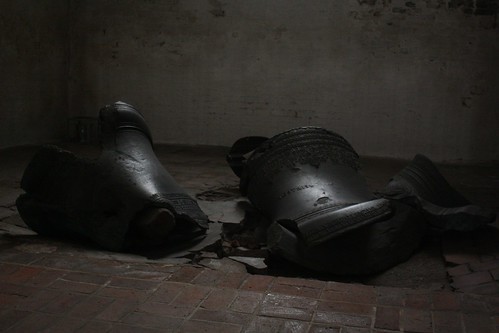
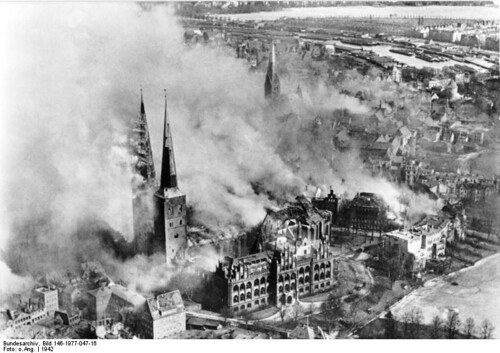
IMG_2641 Seeing these church bells in L beck wasn t easy for me. They melted and fell to the ground after an air raid in 1942, and have been left exactly as they fell. I wasn t alive in 1942, and even my parents hadn t yet been born. My grandfather was relocated by the American government because he refused to fight in the military for religious reasons. And yet, I still felt a sense of embarrassment, being an American standing there in Germany next to those bells. My country* did things like this. Why? Even if there s a war on, and whatever the other side may be doing, do we really have to bomb all their churches? Then, we went to the Dom (cathedral). It has a small gallery of photos of the destruction in 1942, and how it took 40 years to restore (though some original works are simply irreplaceable.) Burning L beck Cathedral after an air raid in 1942 I had just been walking through the beautiful Dom, and then saw pictures like that. It was very sad. I imagined the people in 1942, seeing the smoking remains of so many buildings that had been important to the town for centuries. Places where, no doubt, some of them worshiped, and their parents and grandparents had too. I imagined my sadness if a country bombed one of the churches that my ancestors helped start or build. I felt ashamed of what the democracy in which I live (and its allies) did to the Dom, to Marienkirche, and to the other churches and civilians there. Then, a few days ago, Wikileaks posted a video from an American helicopter in which our soldiers begged Come on, let us shoot! at people, most or all of which were completely unarmed. They killed a bunch of people. Then a van came to try to get the wounded to the hospital. Then the soldiers in helicopter killed those people, and wounded some children. Even if they thought their lives were in danger, I d expect to hear some quiet sadness at what they thought was a regrettable need to use force. Instead, you d hear them cheering whenever they killed someone, as if they had just won a round on some video game. They killed civilians, and considered it a fun experience and a mission accomplished. There was no sadness for knocking a man to the ground, leaving him writhing. Just jokes. There was no more care for human life here than there was 60 years ago. It saddens me that every year we celebrate our military on independence day celebrating its ability to kill, not its ability to feed. I wish that we could rather celebrate the times Americans have saved lives, whether in Berlin or in Port-au-Prince, or helped to topple dictatorships. Military power shouldn t be our first choice so often. L beck wasn t attacked for any strategic purpose; the British did it to destroy the morale of the enemy civil population , as the Americans did in Dresden or the Germans in London. In other words, those bells fell to the ground for no reason other than that they were German. People lost their lives for the same reason in Germany and in London. The British had no reason to believe that those civilians meant them any harm, that they were anything but caught between two strong powers. And the same held true in Iraq. When we went to Berlin, we walked through the replica of Checkpoint Charlie, with the big sign announcing that you are leaving the American sector. There is little positive to be said about the Cold War, but there is something the British and American military did of which I am not the least ashamed: the Berlin Airlift. Although I didn t see it, I feel a sense of the USA having been a force for good when I read about the Berlin Airlift Monument at Tempelhof, which has the names of the 70 British and American men that lost their lives in the airlift (due to accidents), above the inscription They gave their lives for the freedom of Berlin. That s the spirit I wish we d see more often in the world today: people giving their lives not just for their own security, but for strangers in need on a different continent. We Americans have been, compared to many countries in Europe, relatively sheltered from the ravages of war in our own midst. I wish that more of us would have the opportunity to gaze at fallen church bells, to wonder through a magnificent old church and then to see photos of it on fire, or to see a monument to our soldiers in a far away land. Perhaps then we could better learn from history, and see firsthand that some of our most positive contributions to the world have come in the form of coal and candy bars instead of incendiary devices. A small post script Many historic buildings or locations we saw in Germany had plaques on their exterior with a brief history, often in German and in English. I was interested to note that some (though not all) of these plaques had language such as destroyed by fire in 1942 , with no mention that the cause of the fire was a bombing. I was even more interested to note that same sort of description at several sites in Prague Castle, mentioning that the original building was lost in the fire of 1142. It was only on the third or fourth building in the Castle that we learned that the fire of 1142 was caused by a military siege of Prague Castle. * I know it was the British at L beck, but the Americans did similar things elsewhere. I also acknowledge that, at a macro level at least, the Berlin Airlift wasn t purely an altruistic act, as there were geopolitical factors in play. But I am speaking of the actions of the airmen here, who took on considerable risk to help others.

Dirk Eddelbuettel: Video of UCLA / LA RUG talk on R and C++ integration

Thanks to the efforts of the tireless R User Group organizers Szilard Pafka (in Los Angeles, recording the talk) and Drew Conway (in New York, converting and organising hosting), there is now a video and slide combo of my recent talk about Rcpp and RInside at UCLA and the Los Angeles R Users Group. Thanks also to David Smith (at the REvolutions blog) and Drew Conway (at his blog) for spreading the word about the presentation video and slides -- quite a few folks have come to my presentations page to get them.

7 April 2010

Kees Cook: Debian maintainer scripts diagrams

Since the Debian Women Wiki is on hiatus, I found myself without the handy Maintainer Scripts diagrams today. So, I recovered it from Google s cache, and put it up on the main Debian wiki: MaintainerScripts. I used a great tool to go from HTML back to MoinMoin syntax: html2wiki

Romain Beauxis: [Security] Mediawiki 1.15.3

The Wikimedia fundation has just released a new security update for mediawiki. Unfortunately, I will have no time to prepare updated packages before next week. Hence, any interested contributor is welcome to propose/upload a fixed package. Additionally, there is a patch available. You may use it to update your installation while the package is being prepared..

Biella Coleman: Nameless, Freak, Phreak

So I tend to focus on the cultural present but during grad school it was hammered into my brain that to understand the contemporary moment, history matters, a lot.. The problem with hacking and related activities is that the history is a bit sparse and fragmented. Recently I have been working on a piece that examines some of the aesthetics similarities between phrakers, underground hackers, and trollers and it sort of hit me that I had no idea when the term phreak or freak came into being. So I dropped a note to Phil Lapsely who is writing (finally) a proper history of phreaking and he was thoughtful enough to pen down a genealogy of the term.

Jos? Parrella: Follow-up on Debian Sid on the Acer Aspire 1420P

Last year I got my hands on an Acer Aspire 1420P. It s now running Debian GNU/Linux unstable, and I m transitioning from my older Thinkpad T400. Of course, it won t install and work flawlessly out of the box, so here are my notes. Ethernet Use a recent kernel, say, 2.6.32 (2.6.32-3-686 in Debian, for example), since the Atheros GigaEthernet card won t work in older kernels without patching (e.g., you get a link but can t actually send packets). My lspci reports the Ethernet controller as Attansic Technology Corp. Device 1063 (1969:1063) which uses the atl1c kernel driver. Wi-Fi The Wi-Fi card, an Intel WiFi Link 100, which my pci-utils report as 8086:0083, needs a recent firmware-iwlwifi (or a recent firmware for that card, if you don t use the package) which I also took from sid. Tablet touchscreen It works with the evtouch driver, but you ll need to apply a patch to xf86-input-evtouch (0.8.8 is both in sid and lucid) and calibrate the tablet. It seems like the screen rotation does not generate an ACPI event, but if you attach a button with the xrandr rotation, you don t need nothing else for evtouch to catch up. Screen s multitouch, but software doesn t support it yet. Things that work Integrated Intel Mobile graphics chipset, Huawei integrated HSDPA modem (shows up as ttyUSBn), audio, wireless provided you have firmware, webcam, ACPI events for almost everything (lid rotation doesn t seem to work), function keys it s all working nicely. This model has a Core 2 Duo U2300 processor and 2 GB. RAM.

Joey Hess: the neverending game

(While I have a lot big stuff going on in my life right now, I don't feel most of it's suitable for blogging. So here's a bit of insignificant fluff.) I have this nethack game that won't end. I started it before Christmas, and got much, much deeper into the dungeon than I've ever managed before. Taunted Jerry with it as we hung out over the holidays; he repeatedly losing while I quested and cleared out the castle, and genocided liches to get through the valley of the dead, and generally just kept building up a character that wouldn't quit. Yeoj the Student of Metals St:18/06 Dx:18 Co:18 In:16 Wi:18 Ch:14 Lawful Dlvl:42 $:0 HP:138(138) Pw:29(147) AC:-15 Xp:20/5196103 T:66175 Hungry Burdened I should mention: I mostly don't play nethack often, only swinging back around to give it another try every year or two. So for many years I'd play a few games that quickly ended in Yet Another Stupid Death, and occasionally feel proud when I got as far as Minetown or the Oracle. Recently, though, I've started focusing on Monks, and gotten rather good at playing them in the early game. So, this is my first character who got through the early game, completed the quest, and went well into the late-game. I know where that vibrating square is, I have plenty of wishes to round out my kit. So it would be an ascention candidate, except my chances of doing that on the first try are ... slim. And, do I want to? The descriptions of what I'd need to do to even try seem a bit tedious. So, unsure if he wants to ascend, and fearing YASD, my monk sits in his recently aquired tower at level 42 of the dungeon. For months. And so I can't play nethack. The character I'm role playing has decided to opt out of the game. (Oops, I meant to leave real life out of this, but it's somehow snuck back in there.) Meanwhile, this Dungeon Crawl Stone Soup that @Play keeps talking about looks interesting... (previously previously)

6 April 2010

Sune Vuorela: Debian Qt/KDE Maintainers bugs

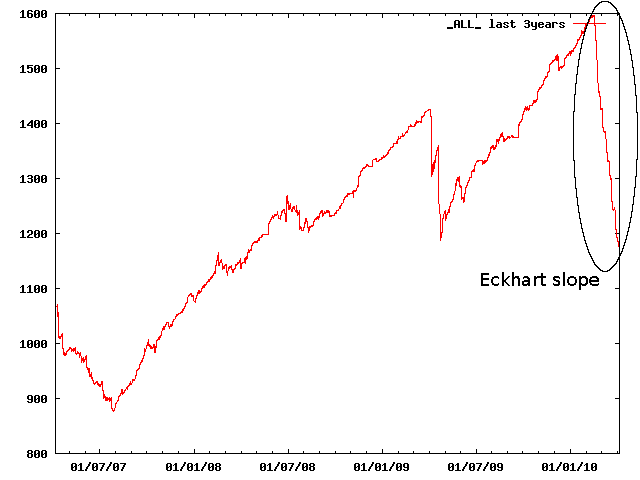
A while ago, something happened to the bugs reported against KDE in debian. It is best illustrated like this: eckhart slope I ve chosen to name it Eckhart slope. Thanks. For full graphs, see http://alioth.debian.org/~pusling-guest/pkg-kde-buggraphs/

Uwe Hermann: Miro 3.0 released, Debian package available

Miro 3.0 Yep, the new major release, Miro 3.0, of the cross-platform Internet RSS audio/video aggregator and player has been released. Please check the release notes and the feature list for details. Overall more than 139 issues have been fixed since the last 2.x series release. The most notable changes are probably the dropping of xine support upstream (gstreamer is used now for all video/audio on Linux) and the introduction of subtitle support. I have uploaded a new Miro 3.0 Debian package to unstable recently (which have been a delayed a bit due to Debian server issues), by now it should be available from most mirrors. Let me know if there are any issues...

Sylvestre Ledru: Update of the linear algebra libraries in Debian

In the numerical computing world, the cornerstones libraries are BLAS and LAPACK. They have been used in most of the numerical software for decades (like Scilab, R, numpy, OpenOffice with calc, etc). During that time, many implementations appeared to improve the performances taking advantages of clusters, multicore, SEE 1,2,3,4 , various levels of cache...
Between the reference BLAS (refblas) to an optimized one like ATLAS or MKL (Math Kernel Library by Intel - non-free), it is not rare to have a 15 factor. In Debian, we use by default the reference implementation of BLAS (168 reverse dependencies) and LAPACK (178 reverse dependencies). If the results are usually bad, they are pretty easy to use. What is hard to use, is switch between highly optimized libraries.
For now, the main one in the archive is ATLAS. ATLAS build process will launch many computations to know what will work best on the architecture. Results are usually excellent. 1) Upload of a refactoring of the ATLAS package.
I have been working on this for a while and after 19 uploads into Debian Experimental and I am happy (and kind of relief) to upload into debian unstable the release 3.8.3 of ATLAS. The new key elements in this release are: Note that, as before, all prebuilt binaries of ATLAS will be always slower than if you built them on the target architecture (but using Debian binary packages will save a few kilograms of Uranium). And one of most important feature is the capability to switch to any ATLAS implementation. 2) Switch between the different implementation
The problem in Debian (and Ubuntu) was that it was hard to switch between the ref BLAS/LAPACK and the optimized libraries. The user has to play with the LD_LIBRARY_PATH to use the various optimized packages and since there is no convention between the various distribution, the upstream developer has to develop crappy tricks to handle such things. It is why I implemented the following proposal: Handle different versions of BLAS and LAPACK. The main idea is to use the update-alternatives system to allow a quick and easy switch. For example:
# update-alternatives --config libblas.so.3gf 
There are 3 choices for the alternative libblas.so.3gf (providing /usr/lib/libblas.so.3gf).
  Selection    Path                                           Priority   Status
------------------------------------------------------------
* 0            /usr/lib/atlas-core2sse3/atlas/libblas.so.3gf   55        auto mode
  1            /usr/lib/atlas-base/atlas/libblas.so.3gf        35        manual mode
  2            /usr/lib/atlas-core2sse3/atlas/libblas.so.3gf   55        manual mode
  3            /usr/lib/libblas/libblas.so.3gf                 10        manual mode
# update-alternatives --config liblapack.so.3gf
There are 3 choices for the alternative liblapack.so.3gf (providing /usr/lib/liblapack.so.3gf).
  Selection    Path                                             Priority   Status
------------------------------------------------------------
* 0            /usr/lib/atlas-core2sse3/atlas/liblapack.so.3gf   55        auto mode
  1            /usr/lib/atlas-base/atlas/liblapack.so.3gf        35        manual mode
  2            /usr/lib/atlas-core2sse3/atlas/liblapack.so.3gf   55        manual mode
  3            /usr/lib/lapack/liblapack.so.3gf                  10        manual mode
Thanks to this, it is just trivial to switch from one to the other... Conclusion:
I just pushed the changes into Debian unstable for blas, lapack and atlas.
I have been testing a lot these deep modifications and I fixed all the problems that I found. However, in case I missed something, please report a bug...

Jonathan Yu: Google Summer of Code 2010

Last year, I had a great time participating in the Google Summer of Code with the Debian project. I had a neat project with some rather interesting implications for helping developers to package and maintain their work. It s still a work-in-progress, of course, as many projects in open source are, but I was able to accomplish quite a bit and am proud of my work. I learned quite a bit about coding in C, working with Debian and met some very intelligent people. My student peers were also very intelligent and great to learn from. I enjoyed meeting them virtually and discussing our various projects on the IRC channel as the summer progressed and the Summer of Code kicked into full swing. The Debian project in particular also helps arrange travel grants for students to attend the Debian Conference (this year, DebConf10 is being held in New York City!). DebConf provides a great venue to learn from other developers (both in official talks but also unofficial hacking sessions). As the social aspect is particularly important to Debian, DebConf helps people meet those with whom they are working with the most, thereby creating lifelong friendships and making open source fun. I have had several interviews for internships, and the bit of my work experience most asked about is my time doing the Google Summer of Code. I really enjoyed seeing a project go from the proposal stage, setting a reasonable timeline with my mentor, exploring the state of the art, and most importantly, developing the software. I think this is the sort of indispensible industry-type experience we often lack in our undergrad education. We might have an honours thesis or presentation, but much of the work in the Google Summer of Code actually gets used in the field. Developing software for people rather than for marks is significant in a number of ways, but most importantly it means there are real stakeholders that must be considered at all stages. Proposing brilliant new ideas is important, however, without highlighting the benefits they can have for various users, the reality is that it simply will not gain traction. Learning how to write proposals effectively is an important skill and working with my prospective mentor (at the time he later mentored my project once it was accepted) to develop mine was tremendously useful for my future endeavours. The way I see the Google Summer of Code is, in many ways, similar to an academic grant (and the stipend is about the same as well). It provides a modest salary (this year it s US$5000) but more importantly, personal contact with a mentor. Mentors are typically veterans in software development or the Debian project and act in the same role as supervisors for post-graduate work: they help monitor your progress and propose new ideas to keep you on track. The Debian Project is looking for more students and proposals. We have a list of ideas as well as application instructions available on our Wiki. As I will be going on internship starting May, I have offered to be a mentor this year. I look forward to seeing your submissions (some really interesting ones have already begun to filter in as the deadline approaches).
Filed under: Computer Science, Peer Relationships, Software Engineering Tagged: Computer Science, Debian, Google Summer of Code, Support

Michael Prokop: Remote Console feature through Java applet failing?

I m working for a customer who s using IBM blades. Remote access isn t limited to e.g. SoL but also possible through a Remote Console feature using a Java applet. After migrating one of my 32bit systems to a fresh 64bit system I suddenly couldn t use this Remote Console feature any longer. The error message was (leaving it for search engines and help other affected users):
load: class vnc.VncViewer.class not found.
java.lang.ClassNotFoundException: vnc.VncViewer.class
	at sun.plugin2.applet.Applet2ClassLoader.findClass(Applet2ClassLoader.java:152)
	at java.lang.ClassLoader.loadClass(ClassLoader.java:303)
	at java.lang.ClassLoader.loadClass(ClassLoader.java:248)
	at sun.plugin2.applet.Plugin2ClassLoader.loadCode(Plugin2ClassLoader.java:447)
	at sun.plugin2.applet.Plugin2Manager.createApplet(Plugin2Manager.java:2880)
	at sun.plugin2.applet.Plugin2Manager$AppletExecutionRunnable.run(Plugin2Manager.java:1397)
	at java.lang.Thread.run(Thread.java:619)
Caused by: java.net.ConnectException: Network is unreachable
	at java.net.PlainSocketImpl.socketConnect(Native Method)
	at java.net.PlainSocketImpl.doConnect(PlainSocketImpl.java:333)
	at java.net.PlainSocketImpl.connectToAddress(PlainSocketImpl.java:195)
	at java.net.PlainSocketImpl.connect(PlainSocketImpl.java:182)
	at java.net.SocksSocketImpl.connect(SocksSocketImpl.java:366)
	at java.net.Socket.connect(Socket.java:525)
	at sun.net.NetworkClient.doConnect(NetworkClient.java:161)
	at sun.net.www.http.HttpClient.openServer(HttpClient.java:394)
	at sun.net.www.http.HttpClient.openServer(HttpClient.java:529)
	at sun.net.www.http.HttpClient.<init>(HttpClient.java:233)
	at sun.net.www.http.HttpClient.New(HttpClient.java:306)
	at sun.net.www.http.HttpClient.New(HttpClient.java:323)
	at sun.net.www.protocol.http.HttpURLConnection.getNewHttpClient(HttpURLConnection.java:860)
	at sun.net.www.protocol.http.HttpURLConnection.plainConnect(HttpURLConnection.java:801)
	at sun.net.www.protocol.http.HttpURLConnection.connect(HttpURLConnection.java:726)
	at sun.net.www.protocol.http.HttpURLConnection.getInputStream(HttpURLConnection.java:1049)
	at java.net.HttpURLConnection.getResponseCode(HttpURLConnection.java:373)
	at sun.plugin2.applet.Applet2ClassLoader.getBytes(Applet2ClassLoader.java:458)
	at sun.plugin2.applet.Applet2ClassLoader.access$000(Applet2ClassLoader.java:46)
	at sun.plugin2.applet.Applet2ClassLoader$1.run(Applet2ClassLoader.java:126)
	at java.security.AccessController.doPrivileged(Native Method)
	at sun.plugin2.applet.Applet2ClassLoader.findClass(Applet2ClassLoader.java:123)
	... 6 more
Exception: java.lang.ClassNotFoundException: vnc.VncViewer.class
The error message might not be obvious at a glance and that s why I m writing about it actually. It s NOT the:
load: class vnc.VncViewer.class not found.
why it s failing but instead the real reason for the failure is the:
java.net.ConnectException: Network is unreachable
As you can read in Debian s Bug Tracking System in bug #560044:
Netbase has recently introduced the sysctl-setting
net.ipv6.bindv6only=1 in /etc/sysctl.d/bindv6only.conf and this setting will probably be the default in squeeze. This setting breaks networking in java, and any traffic will always
result in a java.net.SocketException: Network is unreachable .
To quote /etc/sysctl.d/bindv6only.conf:
When disabled, IPv6 sockets will also be able to send and receive IPv4 traffic with addresses in the form ::ffff:192.0.2.1 and daemons listening on IPv6 sockets will also accept IPv4 connections. When IPV6_V6ONLY is enabled, daemons interested in both IPv4 and IPv6 connections must open two listening sockets.
To work around this issue you can either execute the Java process through "java -Djava.net.preferIPv4Stack=true" or to change the IPv6 behaviour system wide execute "sysctl -w net.ipv6.bindv6only=0". To make this setting permanent across reboots adjust the setting inside /etc/sysctl.d/bindv6only.conf. After applying this workaround the Remote Console should work again.

David Welton: Upcoming Conferences: "Better Software" and "Whymca"

One of the things I missed when we lived in Innsbruck was interacting with other "computer people". Back here in Italy, I have more friends and connections, and of course speak the language fluently. I sent in a few proposals for talks at several conferences this year, and they were both accepted. I'll be speaking at the Better Software conference in Florence in early May, about the economics of software and open source businesses. Later on in May, I'll be at Whymca, a conference dedicated to mobile development, to give a presentation about Hecl. That one's in Milan, which isn't as nice as Florence, but it should be a very interesting conference! I'm looking forward to both of them a lot, as there are a series of interesting talks that I'm looking forward to seeing, and a number of sharp programmers who I haven't seen in a while who I am looking forward to catching up with. I think I have some discount codes or something along those lines to hand out, for Better Software, so if you're interested, write me an email.

Sylvestre Ledru: Back from the dead

I know, my blog is pretty much dead. Not much time to blog on my various travels.
However, I am going to try to resurrect it for Debian and Scilab. My next messages related to Debian will be also published on Debian Planet.

Next.

Previous.