Search Results: "ag"

23 May 2010

Marco Túlio Gontijo e Silva: Playing with criterion

As a part of my Google Summer of Code project, I should take a look at criterion, a benchmark library for Haskell. As I d have to use it, and it seems to be a useful library for a lot of people, I packaged it to Debian, with all its dependencies. The haskell-criterion package is waiting on the NEW queue. Ok, so now I had to test it with something. I came up with a test related to my reading about the Haskell execution model. I noticed that I never have played with multi-threaded Haskell code to achieve better performance, but only to make things that should be in parallel work. So I thought this was a good oportunity to try both. I wrote this code: import Control.Applicative ((<$>), (<*>))
import Control.Concurrent.MVar (newEmptyMVar, putMVar, takeMVar)
import Control.Exception (evaluate)
import Criterion.Main (Benchmark, bench, bgroup, defaultMain, whnf, whnfIO)
import GHC.Conc (forkIO, par)
import System.Environment (getArgs) value :: Int
value = 32 threadsL :: [Int]
threadsL = [1, 2, 3, 4, 8, 16, 32, 64] main :: IO ()
main
= defaultMain
[bgroup "fib" $ [bench "fib" $ whnf fib value]
, bgroup "pfib" $ map pbench threadsL
, bgroup "ifib" $ map ibench threadsL] pbench :: Int -> Benchmark
pbench i = bench (show i) $ whnf (pfib i) value ibench :: Int -> Benchmark
ibench i = bench (show i) $ whnfIO $ ifib i value fib :: Int -> Int
fib n
n < 2 = n
otherwise = fib (n 1) + fib (n 2) pfib :: Int -> Int -> Int
pfib threads n
n < 2 = n
threads < 2 = fib n
otherwise = par n1 $ seq n2 $ n1 + n2
where
n1 = pfib (threads 1) $ n 1
n2 = fib $ n 2 ifib :: Int -> Int -> IO Int
ifib threads n
n < 2 = evaluate n
threads < 2 = evaluate $ fib n
otherwise
= do
f1 <- newEmptyMVar
f2 <- newEmptyMVar
forkIO $ ifib (threads 1) (n 1) >>= putMVar f1
(+) <$> evaluate (fib $ n 2) <*> takeMVar f1 My point is to benchmark the na ve implementation of the Fibonacci function. I ve done three implementations:
fib
which is the simple sequential algorithm
pfib
which call par threads times
ifib
which call forkIO trheads times
I have chosen the value to be found to 32, because it took long enought to make the algorithms show a difference, and short enough to allow me to wait for the benchmarks. I built with:
ghc --make -threaded fib
And runned with:
./fib --summary=fib.csv +RTS -N
The results were surprising for me:
Name,Mean,MeanLB,MeanUB,Stddev,StddevLB,StddevUB
"fib/fib",1.7197746428132055,1.5104790505051613,2.031735854971409,1.2921598378638277,0.9514102096387,1.7188536150257019
"pfib/1",1.246479478704929,1.1805571945786482,1.3496261318802836,0.41570319371618925,0.29446316107198395,0.5823241217769125
"pfib/2",0.709402781355381,0.6850755818963056,0.7553855475068096,0.1650893842889147,0.10136189180677138,0.26853312094492815
"pfib/3",0.6876571162819864,0.6694172366738321,0.7332831247925761,0.136836636420341,5.5142145935712775e-2,0.2581805596992922
"pfib/4",0.6940202649712561,0.6684220250725745,0.746035416948795,0.17779646229098522,9.15862482237111e-2,0.2804203635281818
"pfib/8",0.5887631162285805,0.5625207790017128,0.637939236986637,0.17967127569396815,0.10516397607491562,0.2680488710546616
"pfib/16",0.6578513725876809,0.6107277926087382,0.7372924216866497,0.3070809683902726,0.20679305873839168,0.44571891526087154
"pfib/32",0.8900135167717932,0.8123333438515664,0.9942556460976597,0.45942103747727,0.36818132854060703,0.6233813540278427
"pfib/64",0.6894888337731359,0.6386897596001626,0.7766118057847021,0.33329115700425754,0.22490082647959764,0.5323965317477072
"ifib/1",1.3290104445099833,1.2501559790253634,1.4700443919777875,0.5277373265779313,0.35208278898795436,0.9179652474421286
"ifib/2",0.7626163347840308,0.7239342554688452,0.8381309326767921,0.26785654248385327,0.1679981089775395,0.44853454282169086
"ifib/3",0.7440206035256386,0.6907905062317847,0.8396386941552162,0.3549675945489581,0.22865300516283724,0.536883746220313
"ifib/4",0.6503480085015301,0.6130640967965126,0.711405030119419,0.239522235814317,0.1712396398224678,0.3616636557596486
"ifib/8",0.6300301631569865,0.6085795434594155,0.699028070795536,0.17776228649867923,6.103918021418795e-2,0.39508078831864085
"ifib/16",0.6735970553040505,0.6393461784005164,0.7405966480851172,0.2366561170051713,0.13725890735483465,0.38273830961617655
"ifib/32",0.6162510784745214,0.5983195599198344,0.6736035832047466,0.14678572822644564,5.335959472427259e-2,0.3231734735693349
"ifib/64",0.7217859562516212,0.6820346101403237,0.7857911285042766,0.2534368199920431,0.18073576275895306,0.37636526159654315
I m only analyzing the first column. How come pfib/1 and ifib/1, that is, pfib and ifib called with just one thread, got faster than fib/fib? All they do is calling fib! There s certainly something wrong here. So I reran the tests in a single user environment (recovery-mode on GRUB). And also learned that I should not trust blindly these results in my usual user environment. The new tests were also surprising:
Name,Mean,MeanLB,MeanUB,Stddev,StddevLB,StddevUB
"fib/fib",0.4979443445852824,0.4978961411169597,0.49802434593949996,3.1186229071682967e-4,2.1763919616793833e-4,4.8569259617552764e-4
"pfib/1",0.4980979338339395,0.4980578795126507,0.49816361099992496,2.58930038115918e-4,1.7011790805380493e-4,4.0161943492611696e-4
"pfib/2",0.30187882572923386,0.3018276229551859,0.3019332328489849,2.7088498930449747e-4,2.3482715228451473e-4,3.21989842698397e-4
"pfib/3",0.3025411692312786,0.3024852743795938,0.3026018276861736,2.975260476849551e-4,2.6907713057828055e-4,3.3200184242397705e-4
"pfib/4",0.3045588889769145,0.3024707928350993,0.31463312775407504,2.0236423610294995e-2,3.5108499279216634e-4,4.8255009076253054e-2
"pfib/8",0.27702674538408,0.27158569247041425,0.2846977105787821,3.2790225595837955e-2,2.5215205278321072e-2,4.6554023411818295e-2
"pfib/16",0.26909642369065967,0.2650135436705178,0.2758063927343913,2.615724515115467e-2,1.8039283932648264e-2,4.0956608339390285e-2
"pfib/32",0.2726816359213419,0.26952718407426557,0.27636309534822184,1.7444576031246224e-2,1.4227057669027803e-2,2.2935079362453085e-2
"pfib/64",0.28010295302186694,0.27646669537339885,0.28658743054185587,2.4301648337333875e-2,1.3360828345387364e-2,3.9546300072208655e-2
"ifib/1",0.4984497705153056,0.4984218493155071,0.4984962406805583,1.8040276986757106e-4,1.242720342516858e-4,2.870577387900989e-4
"ifib/2",0.3603615990332194,0.34868544012818997,0.3741170039824078,6.496311767153333e-2,5.652406802832432e-2,7.448312251646773e-2
"ifib/3",0.31676718384538366,0.3109451881102153,0.32481522709642136,3.4887028192202074e-2,2.744363202200484e-2,4.8060797483303504e-2
"ifib/4",0.31541500956330976,0.30635046393190096,0.32643843323503213,5.109215651574664e-2,4.339074296796736e-2,5.995395740457435e-2
"ifib/8",0.32055945069108693,0.3132960501364299,0.3302640953711101,4.2886292109838166e-2,3.422708481199234e-2,5.4196317284934535e-2
"ifib/16",0.32268204123292654,0.31607536703859057,0.33141186625276287,3.858016286486453e-2,3.0959817731033304e-2,4.801572113400926e-2
"ifib/32",0.32020341069017116,0.3151469627073833,0.32664997250352584,2.92266723352992e-2,2.3352577028246314e-2,3.5913110786596904e-2
"ifib/64",0.3183670273474284,0.3136345234564373,0.3248856058767864,2.834147907711714e-2,2.1803978149062524e-2,3.8088053144371074e-2
I didn t thought the improvement in performance on a single-user would be so dramatic. The execution of the program in a single-user environment used 41% of the time to run in my usual environment. About the comparative results, they were more close to what I d expect than the old ones. fib/fib, pfib/1 and ifib/1 had a very similar execution time. What surprised me was that I was expecting to have the best result in the benchmarks with 2 threads, since I ran the tests in a Core 2 Duo T5750 @ 2.00 GHz with 2 cores. But in pfib the execution time has reduced from 4 threads to 8, and in ifib, from 2 to 3. I can t think of where these improvements come from. Unfortunately the creation of charts is currently broken in GHC 6.12, so no graphics by now.

Thorsten Glaser: Cancelling bash, retrieving a command, mksh rules :

In response to a planet.d.o series (mentioned in #grml on IRC) of postings: In a sensible shell, Esc+# not only pushes it back but also re-enables the command. Try it out: l s Esc # Cursor-Up Esc #
tg@blau:~ $ #ls
tg@blau:~ $ ls
The command sticks in the history, and is not immediately shown in the next interactive input line, which I consider a plus in most use cases. Anyway, try mksh (just a-g i it), there are a lot of goodies. I found out about Ctrl-O only a year or so ago myself I wonder why schizo didn t write about how to do it in posh tho

22 May 2010

Marco d'Itri: Less widely known features of iproute

While iproute (AKA ip(8)) nowadays has become the ultimate Linux network configuration tool, it is also poorly documented: many features are not documented in the man page or even in the built-in help. With this post I would like to raise the attention to some of its more recent features which are not getting the attention they deserve. And remember: every time you use ifconfig(8), Cthulhu eats a kitten. Please, think of the kittens. VLANs management
ip link add link eth0 type vlan name eth0.2 id 2
ip link add link eth0 type vlan name myvlan2 id 2 loose_binding on
ip link add foo type vlan help
This replaces the obsolete vconfig(8) program and adds new features. The loose_binding flag stops the VLAN interface from tracking the line protocol status of the underlying device. Creation of dummy interfaces
ip link add mydummy type dummy
The only way to create more dummy interfaces after the dummy module has been loaded used to be loading it again with a different name, and they were all named dummyN. Since module-init-tools does not support anymore loading the same module multiple times, iproute fully replaced this method. Ethernet in GRE tunnels
ip link add mygretun type gretap remote 192.0.2.1
ip link add foo type gretap help
A practical way to remotely bridge two Ethernet networks. The IP MTU is reduced of the expected 20 (IP) + 4 (GRE) + 14 (Ethernet II) bytes. L2TPv3 static tunnels See Documentation/networking/l2tp.txt for details, this requires kernels >= 2.6.34.

Rog rio Brito: Changing Some Configuration from Defaults

Two of my most frequently used tools are, hands down, Emacs and bash. Having a pleasant configuration of one s toolbox is necessary for long-term productivity. However, newer versions of the programs (any programs) don t always have good, comfortable defaults. That is the case with Emacs 23 and bash 4. With Emacs 23, by default, the scratch buffer shows some text that, if you want to quickly enter text to be saved, has to be deleted. This can be tolerated for some invocations of the editor. But at some point, it gets on one s nerves. Luckily, Emacs is so fully customizable that this is not a problem, unless you have to hunt down the right knobs and you are an e-lisp illiterate. That is my case. After reading an admittedly small amount of documentation, some good lines that ought to be put into one s .emacs file are:
(setq inhibit-startup-echo-area-message "rbrito")
(setq initial-scratch-message nil); show an empty scratch buffer
(setq inhibit-startup-message t); remove splash screen
Another line that may make things more comfortable (especially if you, like me, use Emacs s dired as a filemanager to navigate your folders):
(defalias 'yes-or-no-p 'y-or-n-p)
But configuring Emacs is not always that hard. Seeing a change of behaviour with your shell is scarier. When bash 4 was released, one thing that got implemented is the echo of some characters from the terminal to the screen. In practice and with my usage pattern, this meant that whenever I was typing a command line, changed my mind and pressed C-c, I got a ^C printed on the screen, usually overwriting one or two characters of what I had typed. And this prevented me from automatically copying and pasting the command that I had typed. Looking for an answer to that was much harder than to see how to change a parameter on Emacs: every search that I tried on Google with the words bash and Ctrl-C or some variants of that eventually lead me to how do I trap a Ctrl-C on my shell script? . Decided to see what changed, I read the documentation of readline. It didn t help, because I was reading something from version 5. I, then, downloaded the source code and started looking for SIGINT. Then, perusing the code (and the changelog), I saw that with bash 4 and readline 6, a new configuration option was introduced: the echo-control-characters option of readline. Of course, after knowing this, stopping the undesired behaviour was a simple matter of inserting set echo-control-characters off in my .inputrc and think about how much time I spent with that uncomfortable behaviour in some of my preferred tools. As an addendum to the previous paragraphs (written on February of this year, but only now published), the Debian package of Emacs 23.2, the newest version as of this writing, comes with some configuration that makes it ignore the settings that are used with fontconfig. I did not spend any time trying to see the cause of the problem, but adding a simple
Emacs*font:			Mono
to my .Xdefaults file did the trick and restored back the ability to use DejaVu Sans Mono at the right size on my system.

Petter Reinholdtsen: More flexible firmware handling in debian-installer

After a long break from debian-installer development, I finally found time today to return to the project. Having to spend less time working dependency based boot in debian, as it is almost complete now, definitely helped freeing some time. A while back, I ran into a problem while working on Debian Edu. We include some firmware packages on the Debian Edu CDs, those needed to get disk and network controllers working. Without having these firmware packages available during installation, it is impossible to install Debian Edu on the given machine, and because our target group are non-technical people, asking them to provide firmware packages on an external medium is a support pain. Initially, I expected it to be enough to include the firmware packages on the CD to get debian-installer to find and use them. This proved to be wrong. Next, I hoped it was enough to symlink the relevant firmware packages to some useful location on the CD (tried /cdrom/ and /cdrom/firmware/). This also proved to not work, and at this point I found time to look at the debian-installer code to figure out what was going to work. The firmware loading code is in the hw-detect package, and a closer look revealed that it would only look for firmware packages outside the installation media, so the CD was never checked for firmware packages. It would only check USB sticks, floppies and other "external" media devices. Today I changed it to also look in the /cdrom/firmware/ directory on the mounted CD or DVD, which should solve the problem I ran into with Debian edu. I also changed it to look in /firmware/, to make sure the installer also find firmware provided in the initrd when booting the installer via PXE, to allow us to provide the same feature in the PXE setup included in Debian Edu. To make sure firmware deb packages with a license questions are not activated without asking if the license is accepted, I extended hw-detect to look for preinst scripts in the firmware packages, and run these before activating the firmware during installation. The license question is asked using debconf in the preinst, so this should solve the issue for the firmware packages I have looked at so far. If you want to discuss the details of these features, please contact us on debian-boot@lists.debian.org.

Wouter Verhelst: Help!

Yes, there is something like an 'RFH', or 'Request For Help', in the WNPP in Debian, but I thought I'd go through this blog, first, since I believe many more people who will feel inclined to help here will read this blog. I've been maintaining the beid packages in Debian since, eh, quite a while now; and while it's not always been the package that I have spent the most time on, it's not a package that I want to give up. However, in recent times, I've had issues with the code. I've not really been able to get the 3.5.2 release to compile properly as a package, which means that for the moment, squeeze is still stuck with a 2.x release. This is a problem, since that old release isn't supported anymore upstream, and what's worse, it does not support newer-issued eID cards. So if your card is less than about two or three years old, you can't even use it anymore. For this reason, the beid packages really, really should be updated before squeeze releases. I've been trying to spend some time doing so, but real life kept intervening. And I haven't even been able to start looking for the 3.5.3 code that I'd heard rumours would exist. So, this is a request for help. If you want a more recent beid package to appear in Debian (and, by extension, Ubuntu) any time soon, and you can spare some extra time on maintaining a somewhat convoluted package, you'd be an ideal candidate for comaintainer of this package. You don't need to have any experience working on Debian, but you do need experience with build systems and Makefiles. If you don't have any experience in working on Debian, but would like to learn, this might be an interesting opportunity. If you do have experience working on Debian and are as interested as me in getting this to be up-to-date in the next Debian release, your help would be very much appreciated. Even if you only have time for a little while and would like me to take over once everything is going fine again, that's helpful. At any rate, if you want to help, contact me at wouter@debian.org. We'll work out the specifics then. Thanks in advance,
Russell Coker: A School IP Project

The music industry seems fairly aggressive in taking legal action against children when they break the licence terms of copyright material. I think it would be good to teach children about how the IP industry really works. It seems to me that you could have a school project that involves an entire year level (maybe 100 students depending on the size of the school) each of whom can produce copyright material (everything they do in art and English classes would be suitable as a start). Then they could register their work (make digital photographs and then store them in a school database that records the entry date) and sue anyone who infringes their work. Every student would receive licence fees for their work, but if they are sued for infringement they would have to pay all revenue plus damages. Other students could work as lawyers and take a portion of the proceeds of any successful law suit, and finally some students could run recording companies and spend their time hunting for infringing work for the purpose of launching legal action. In terms of the licence fees paid, this could be done by just allocating a fixed value per item to each student as a way to get the system running without regard to the fact that some students just aren t able to create good art. It could however have a large portion of the value coming from what other students choose to spend, every student gets to spend $10 per week on art and they can choose from the database what they want to buy copies of. The most popular art could then be printed on every notice-board in the school as an incentive for students to vote with their play-money for something that they don t mind seeing all the time. It s obvious that popularity would be a significant factor in the success of some artists, but that s OK, a casual review of the chart topping music reveals that it s quite obviously not created by the world s best musicians so it seems that rewarding popularity rather than skill just adds some realism. One possibility would be to allow the students to elect representatives to create their own IP laws. It would be interesting to see how the IP laws voted on by representatives of the students (who are all in some way involved with the process of creating, buying, selling, and distributing artistic products) differ from those which we have foisted upon us in the real-world. Also an interesting possibility would be to allow corruption in the election process and observe how the results differ from year levels where corruption is not permitted. I expect that teaching children how political corruption works would be a little controversial, but it s nothing that they can t learn from reading news reports about what the entertainment industry is really doing. Really being a corrupt politician for a school project shouldn t be as bad as playing a murderer in a school play! Naturally this couldn t be done with real money, but giving higher marks at the end of the year to the students who accumulate the most play money would be quite reasonable. I don t think that there would be a problem with giving higher marks to a student who succeeded through political corruption as long as they gave a good written report of how they did so and the implications for society. Please note that I am not suggesting this for a subject that is used for university entrance, I think it would be a good project for years 8-10 which in Australia have no relevance to university entrance. So the marks would just be letters on a bit of paper that might make parents happy or unhappy and otherwise mean nothing. I anticipate responses from people who believe that educating children about how the world works is not appropriate for a school. Such people are never going to convince me, but if anyone thinks that they can make a good point to convince some of the readers then I encourage them to write it up in the comments section if it s short or on their own blog if it s longer.

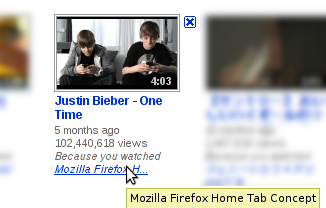
Mike Hommey: Recommended for You

There is a part on the Youtube home page which recommends some videos based on what you already watched. I m still trying to understand what kind of link there can be.

21 May 2010

John Goerzen: Bicycling in Rain and Mud

I recently posted here about bicycling in the mud and rain, and got some good suggestions (and also on the icebike mailing list). I eventually decided to replace my current bike (Trek 7.3FX) with a Specialized Tricross Sport Triple. As I mentioned in the bike store, it seems odd to spend this kind of money on a bike only to ride it through mud and sand. Another customer overheard and said, It sure does but don t worry, it ll be fine! But on the other hand, I figure that it is probably realistic for me to ride it around 3600 miles (5793 km) per year. At that rate, it will pay for itself in reduced car costs in about a year. I picked it up last Friday, and on Saturday moved my accessories (headlight mount, tail light, water bottle cage, etc.) to it. The Bontrager Back Rack I from the 7.3FX did not fit well, so I ordered the Specialized Tricross Rack Set, which did fit well (I m not using the front rack though). This has been a wet week. I rode Thursday when it had stopped raining about 20 minutes before I left in the morning, and we got more rain in the afternoon. Although both the Tricross and the 7.3FX have 700 32C tires, even the factory tires on the Tricross performed far better in mud than the 7.3FX ever did and I can still go much more wide if I feel it necessary. Actually, somewhat to my surprise, I didn t really have a problem with kicking up mud; my enemy turned out to be kicking up sand. It didn t really damage anything, and I had to try not to cringe as I saw the sand hitting the chain, etc. I rinse it off when I get to my destination, and clean/lubricate the chain frequently in these conditions. I haven t yet been on the bike during an active rain, but from what I ve done so far, I think it will be fine. So at this point, there s very little that will prevent me from riding.

Robert McQueen: VP8 rumblings

As you all know by now, exciting moves from Google on the WebM project have lead to them open-sourcing On2 s VP8 codec to provide a freely available video codec for HTML5 content. Collabora Multimedia worked with Entropy Wave to add support to GStreamer for the new codec from day 1, and I was really happy yesterday to update my Debian system and get the support installed locally too. Thanks to our and Igalia s fine work on GStreamer HTML5 support in WebKitGTK+, Gustavo Noronha found it worked out of the box with Epiphany too. Predictably, the MPEG-LA aren t too pleased with this, and are no doubt winding up their PR and industry allies at the moment, as well as this opening a new front on the Apple vs Google ongoing platform battle. But if your business model is collecting money through what is essentially a protection racket and spreading FUD about patent litigation, the VP8 license implicitly creating a zero-cost zero-revenue patent pool is not going to be good news for you (from the department of Google deleting your business model). The question is now whether the allure of Google s content will win over against the legal chest pounding of the patent trolls, and whether they start flipping switches to make YouTube only serve up WebM content after a while. Also in amazing and incredible news, Collabora s Telepathy/GStreamer/GNOME/Debian/general R&D guru and staunch Web 2.0 holdout Sjoerd Simons has actually now got a blog after a mere 3 years of us suggesting it to him since he joined Collabora as an intern. He s been hacking on some RTP payloader elements for VP8 so we can use it for video calling on the free desktop. All very exciting stuff, especially in conjunction with Muji (multi-user video calls over XMPP) support heading into Telepathy thanks to NLNet s ongoing support.

Gustavo Noronha Silva: Google s pacman doodle in Epiphany/Midori?

Google has had a very nice idea today, to celebrate Pacman s aniversary: they made their logo become a playable HTML5 pacman. If you re wondering why your WebKitGTK+ browser is not being able to play the game here s why: Google is doing User-Agent sniffing and denying you the fun, sending a static image that you can click to perform a search instead of the game. If you make Epiphany or Midori identify themselves as Chrome or Firefox, the game will work. I really don t get this User Agent sniffing bullshit coming from Google. If you go to gconf-editor, and under epiphany->general set the user_agent key to Mozilla/5.0 (X11; U; Linux; en-gb; rv:1.9.0.2) Gecko/2008092313 Firefox/3.8 it works. I m starting to seriously consider User Agent spoofing for *.google.com as a quirk on WebKitGTK+. Lame. Update: as a protest, I m making blog.kov.eti.br and kov.eti.br say Chrome/Chromium are not supported, by doing User Agent sniffing.
Update2: it s been pointed out to me that the game is not HTML5 - it s actually smart usage of divs, and flash *urgh* for the audio

Gerfried Fuchs: Ich + Ich

My SO did had an extremely good idea for my birthday this year: We went to a concert of Ich + Ich. We both were a bit sceptical beforehand but actually we were both in agreement about that it was one of the finest concerts we have been to. I want thus to share some of the great songs of the band with you: Enjoy!

20 May 2010

Bernd Zeimetz: merkaartor - countdown to 0.16

As announced on the Merkaartor mailing lists, version 0.16 is planned to be released on 6th June. Therefore I've uploaded a git snapshot to experimental today. Please give it a try and report all problems, either to the Debian BTS or directly in the upstream bug tracker. Merkaartor 0.16 screenshot Version 0.16 will contain a lot of new features and various bugfixes and enhancements. For me the most important additions are support for Walking Papers and support for OpenStreetBugs. Also Merkaartor uses libgps now, so it is able to connect to recent versions of gpsd. With thanks to Chris Browet, the upstream author of Merkaartor, the next version of gpsd will ship with libQgpsmm, a C++/QT library to connect to gpsd. It should be possible to compile libQgpsmm under most platforms which are supported by QT4, including windows. Merkaartor will use libQgpsmm when available, so even Windows users will be able to use a remote gpsd instance.

Martin Zobel-Helas: Brainstorming for DMUP 2.0

Now that we have released the slightly updated version of Debian's Machine Usage Policy (DMUP), I am thinking about a major rework for the next version. Maybe we should even start with a completely new text for it. I am currently doing a bit of brainstorming about how the new version could look.

Here are some of my ideas (completely unsorted):


Please note that this brain dump is my very personal opinion and does not reflect the opinion of the complete DSA team.

I would like to see a discussion on what the new DMUP should look like. Even though the final decision on which paragraphs make it into DMUP should stay with DSA, I think the Debian community should be involved in the evolution of this document.

Even though i am not attending DebConf10 (actually I think no one from DSA will make it), it might be a good idea if the conference could be used to do some further brainstorming. Maybe having a BoF on DMUP 2.0 might be a good idea.

Gustavo Noronha Silva: WebKitGTK+ and WebM

So you probably heard about WebM, right? It s the awesome new media format being pushed by Google and a large number of partners, including Collabora, following the release of the VP8 video codec free of royalties and patents, along with a Free Software implementation. It turns out that if you are a user or developer of applications that use the GStreamer framework, you can start taking advantage of all that freedom right away! Collabora Multimedia has developed, along with Entropy Wave GStreamer support for the new format, and the code has already landed in the public repositories, and is already being packaged for some distributions. I just couldn t wait the few days it will take for the support to be properly landed in Debian unstable, so I went ahead and downloaded all of the current packages from the pkg-gstreamer svn repository, built everything after having the libvpx-dev package installed, and went straight to a rather unknown, small video site called Youtube with my GStreamer-powered WebKitGTK+-based browser, Epiphany!:
Youtube showing a webm video in Epiphany
If you re running Debian unstable, or any of the other distributions which will be lucky to get the new codecs, and support packages soon, you should be able to get this working out of the box real soon now. Check the tips on WebM s web site on how to find WebM videos on youtube.

Michal &#268;iha&#345;: Playing with numbers and social networks

I'we just launched website (well it's quite pretentious name for few pages), which shows debts for politics when they were in government in Czech Republic. We're still not in situation like in Greece, but it can quite easily happen that we would be in few years and it's good to show some numbers describing what was happening in past. It took just few hours of coding yesterday evening using Django. Domain has been registered and it is online now. While doing such thing, I decided to make more fun for me and publish the link just on social networks (Identi.ca, Twitter, Facebook, LinkedIn) and follow if (and how) the link will spread. So no, you will not find link in this blog post :-).

Aigars Mahinovs: So, what is Microsoft Azure and how it compares to Amazon s AWS

We had a Microsoft salesperson stop at our offices today to tell people about wonders of cloud computing and Microsoft s Azure will save us all. The following is a short and non-exhaustive list of what Azure does not do according to their own experts: The Microsoft presenter also repeatedly engaged in shady tactics when presenting his information: So to summarize, Microsoft has build a cloud of Windows-like machines which can run your programs (as long as they are in .Net or Silverlight) and which does not have even a third of the features of such de-facto market leader as Amazon AWS. They try giving away their product for free and only get 14k applications in 6+ months. Note: Amazon has at least 300 000 public applications and God only knows how many more private ones. They will grow, due to companies locked-into Microsoft s way of thinking buying into their marketing, but if you have a head on your shoulders, you should avoid it as a trap, which it actually is. All that can be done on Azure, can also be done on Amazon. The opposite is not always true. In addition, if you will want have a mixed environment with both Windows and Linux servers, you will not be able to deploy Linux servers to Azure (or they will be very slow) and you ll have to put your Linux servers into Amazon (or another) cloud and pay double traffic fees for every byte of traffic between your own servers. Microsoft Azure prices are exactly the same as Amazon EC2 prices with Windows instances. However on Amazon you actually get fully capable Windows Server instances. And if you don t need Windows, you can get a much better price on Amazon. The only companies that can safely use Azure are companies that only have Windows servers AND plan to only have Windows servers for the foreseeable future. Knowing how dominant Linux is in the server market and how many Windows-only shops actually have a few Linux servers in the back room, there is very little future for Azure, until they wise up and make Linux instances first class citizens in their cloud. If not because their customers need them, then because their customers think that they at least might need them in the future. Update: Amazon now released a Reduced Redundancy storage for S3 that provides the exacts same level of storage guarantees that regular Microsoft Azure SLA (99.9%) for two thirds of the price, and also Amazons now explicitly says that their regular S3 is Designed for 99.999999999% Durability , which is worlds above what Microsoft provides. Now in this case Amazon again is cheaper than MS. Also Amazon bandwidth prices are 33% lower compared to Azure. In Azia the difference is simply staggering (0.45$ vs 0.19$ per Gb).

Dirk Eddelbuettel: RcppArmadillo 0.2.0 (and 0.2.1)

With the Rcpp 0.8.0 release on Monday, Romain, Doug and I were able to follow-up with a new RcppArmadillo release. RcppArmadillo uses Rcpp (and a few dozen lines of 'glue') to provide a transparent interface from R to Conrad Sanderson's impressive Armadillo library for linear algebra. This new release offers a number of key improvements: While we had tested this quite rigourously, the combination of some last minute changes that were meant to be stylistic-only, some troubles with the tests and builds at CRAN that were not apparent in all our tests (hint: do not yet use dynamic help features referencing other packages even if you have a Depends: on them) and an upcoming travel deadline meant that we missed a gotcha on Windows---so release 0.2.1 had to follow a few hours after the short-lived 0.2.0. More information is on the RcppArmadillo page. Questions, comments etc should go to the rcpp-devel mailing list off the R-Forge page.

19 May 2010

Dominique Dumont: Improve config upgrade Ep 02 Minimal model for OpenSsh s sshd_config

Hello Currently Config::Model can upgrade /etc/ssh/sshd_config file because Sshd model is complete. All 80 parameters mentioned in sshd_config man pages are described there. The whole model (including doc is about 1000 lines long). If one just want configuration upgrade capability, requiring a complete model is too much work. The aim of this GSoC project is to find a way to provide upgrades at a reasonable cost. Ep 01 focused on what feature was missing from Config::Model to provide a model that could handle unknown parameters in most cases to enable upgrades without a complete model. This covered the use case of an unmaintained model facing software evolution. Now, let s go on with the OpenSsh example and let s see what would be the minimal model that would enable upgrades from older sshd_config version to a more recent one. (Note that this blog is based on upgrade requirements mentioned in sshd_config man page). This will cover the use case of a maintained model targeted for upgrades. From last blog, we know that this minimal model must feature: Let s tackle the structure of this minimal model by re-using the current model structure. We will need 2 classes:
  1. Sshd: to handle all leaf parameters a the the Match parameter
  2. Sshd::MatchElement: to handle parameters within a Match block
Sshd::MatchElement will need to handle unknown leaf parameters (exceptd Match parameters), so its declaration should be like: 'Sshd::MatchElement' =>
accept =>
match_not => '/Match/i'' ,
type => 'leaf',
value_type => 'string'


Note that there s no element declaration. The accept structure means that Config::Model will accept any parameter that does not contain match in its name and will handle it as a string parameter. (Note that this feature is not yet implemented in Config::Model) Now, we must declare the main class: Sshd. It will feature the a wider accept statement and element declarations for the following parameters: Here we go: Any unknown parameter will be accepted by Sshd configuration class: accept =>
type => 'leaf',
value_type => 'string'
,
Here are the element that require a special treatment: Match just refer to the class declared above
Match =>
type => 'hash',
index_type => 'uniline',
cargo =>
type => 'node',
config_class_name => 'Sshd::MatchElement'
,
KeepAlive is the obsolete parameter. Parameter with status 'deprecated' are handled by Config::Model but will not be written back in the configuration file. Hence re-using the deprecated information elsewhere is more than recommended.
KeepAlive =>
type => 'leaf',
value_type => 'enum',
status => 'deprecated',
choice => [ 'no', 'yes' ]
,
Here's the new parameter. It's value is computed from KeepAlive.
TCPKeepAlive =>
type => 'leaf',
value_type => 'enum',
choice => [ 'no', 'yes' ],
migrate_from =>
formula => '$keep_alive',
variables => keep_alive => '- KeepAlive'
,
,
Now that we have the model, we must figure out how to read and write value with minimal coding efforts. Due to the mismatch between the syntax of the file (flat structure) and the actual structure (special Match parameter), a dumb parser/writer cannot be used. A parser that takes into account Match is required. Either dedicated Perl code (like the parser/writer delivered with Config::Model::OpenSsh) or use Augeas and its sshd lenses. In summary, we ve seen that the model required to perform upgrades is about 30 lines instead of the 1000 lines required for a complete model. On the other hand, the syntax of sshd_config makes the parser and writer harder to write. But, normally, this parser/writer should not evolve during the life of OpenSsh project. Now the question that I cannot answer is: Can a packager handle the extra work to maintain this minimal model ? Feedback is welcome here ;-) Next episode will study how upgrades based on Config::Model can be applied on files with other syntaxes. All the best

Daniel Kahn Gillmor: NYC SYEP still requires Microsoft Software

A year ago, i wrote about how New York City's Summer Youth Employment Program (SYEP) requires the use of Internet Explorer to apply online (and it even appears to require IE just to download the PDF of the application!) Sadly, the situation has not changed, a year later. Today, I'm writing to Dan Garodnick, Chair of The City Council's Committee on Technology (and the rest of the committee members), Carole Post, Commissioner of DoITT (the city's Department of Information Technology and Telecommunications), and Jeanne B. Mullgrav, Commissioner of DYCD (the Department of Youth and Community Development, which runs SYEP). Here's what i wrote:
For the last two years at least, the DYCD's Summer Youth Employment Program
(SYEP) has been only available to users of Internet Explorer:
 https://application.nycsyep.com/
Internet Explorer (IE) is only made by Microsoft, and is only available for
people running Microsoft operating systems.  Users of other operating systems,
such as GNU/Linux, Macintosh, or others cannot access the SYEP application
process.  Even users of Windows who care about their online security or simply
desire a different web browsing experience might prefer to avoid Internet
Explorer.
Not only is the online form inaccessible from browsers other than IE, even
retrieving a copy of the PDF to print out and fill in manually is unavailable
for web browsers other than IE.
What is the city's policy is on access to government sites?  Is it city policy
to mandate a single vendor's software for access to city resources?  Should NYC
youth be required to purchase software from Microsoft to be able to apply
for the Summer Youth Employment Program?
The sort of data collection needed by such an application is a mainstay of the
standards-based web, and has been so for over 15 years now.  There is no reason
to require particular client on an open platform.  I can point you toward
resources who would be happy to help you make the system functional for users
of *any* web browser, if you like.
I raised this issue over a year ago (see nyc.gov correspondence #1-1-473378926,
and a public weblog posted around the same time [0]), and got no effective
remedy.  It's worrisome to see that this is still a problem.
Please let me know what you plan to do to address the situation.
Regards,
	--dkg
[0] https://www.debian-administration.org/users/dkg/weblog/47
Feel free to send your own message to the folks above (especially helps if you live in or near NYC) Finally, Carole Post, the head of DoITT will also be present at a panel tonight in Soho, which i'm unfortunately be unable to attend. If you go there, you might ask her about the situation.Tags: policy

Next.

Previous.