Thank you for your feedback regarding the security of our platform. We are constantly reviewing these processes and regard our members security as paramount, whilst ensuring our processes are navigable to the majority of the UK. We have had the platform professionally penetration tested but your email demonstrates an excellent understanding of the challenges and we would welcome your suggestions on our options of improving the password reset process. We will be extending our SSL certificate to the publicly accessible website and please be assured that this is held on a different architecture to that of the Member application.This is very promising!
Is there a way to access a MySQL database over the network from PHP and be confident that This function does nothing unless OpenSSL support is enabled.Given that debian MySQL packages don't use OpenSSL because of licensing incompatibilities with the GPL, i'm left wondering if packages built against yaSSL support this feature. And i'm more than a little bit leery that i have no way of telling whether my configuration request succeeded, or whether this function just happily did nothing because the interpreter got re-built with the wrong flags. Shouldn't the function fail explicitly if it cannot meet the user's request? Meanwhile, the PDO bindings for MySQL apparently don't support SSL connections at all. What's going on here? Does no one use MySQL over the network via PHP? Given the number of LAMP-driven data centers, this seems pretty unlikely. Do PHP+MySQL users just not care about privacy or integrity of their data? Or (please let this be the case) have i just somehow missed the obvious documentation? Tags: mysql, php, question, security, ssl, tls
Next week is over and it's time to show another picture. Today I've decided for indoors photo, what is something I usually don't take, but here it is.
Filed under: English Photography 0 comments Flattr this!
I've been nagged for a while (by Wookey mainly) about the unhelpfulness of dpkg-checkbuilddeps when it outputs the versions and alternatives alongside the package names which are missing, making it harder to pass the list to the package manager. apt-get build-dep isn't particular helpful either - it doesn't look at the modified package at all.$ cupt-experimental -s -R remove kdepimlibs-kio-plugins kdebase-workspace+
Building the package cache...
Initializing package resolver and worker...
Scheduling requested actions...
Resolving possible unmet dependencies...
E: unable to resolve dependencies, because of:
plasma-widgets-workspace 4:4.4.5-8 depends on 'plasma-dataengines-workspace (= 4:4.4.5-8)' -> no solutions
plasma-dataengines-workspace 4:4.4.4-1 depends on 'kdepim-runtime' -> removed plasma-dataengines-workspace
kdepim-runtime 4:4.4.3-1 depends on 'kdepimlibs-kio-plugins' -> removed kdepim-runtime
plasma-desktop 4:4.4.5-8 depends on 'plasma-widgets-workspace (= 4:4.4.5-8)' -> installed plasma-widgets-workspace 4:4.4.5-8
kdebase-workspace-bin 4:4.4.5-8 depends on 'plasma-desktop (= 4:4.4.5-8) plasma-netbook (= 4:4.4.5-8)' -> installed plasma-desktop 4:4.4.5-8
kdebase-workspace 4:4.4.5-8 depends on 'kdebase-workspace-bin (>= 4:4.4.5-8)' -> installed kdebase-workspace-bin 4:4.4.5-8
plasma-dataengines-workspace 4:4.4.5-8 depends on 'kdepim-runtime' -> no solutions
kdepim-runtime 4:4.4.3-1 depends on 'kdepimlibs-kio-plugins' -> removed kdepim-runtime
plasma-widgets-workspace 4:4.4.5-8 depends on 'plasma-dataengines-workspace (= 4:4.4.5-8)' -> installed plasma-dataengines-workspace 4:4.4.5-8
plasma-netbook 4:4.4.5-8 depends on 'plasma-widgets-workspace (= 4:4.4.5-8)' -> installed plasma-widgets-workspace 4:4.4.5-8
kdebase-workspace-bin 4:4.4.5-8 depends on 'plasma-desktop (= 4:4.4.5-8) plasma-netbook (= 4:4.4.5-8)' -> installed plasma-netbook 4:4.4.5-8
kdebase-workspace 4:4.4.5-8 depends on 'kdebase-workspace-bin (>= 4:4.4.5-8)' -> installed kdebase-workspace-bin 4:4.4.5-8
E: error performing command 'remove'
Since the last post, few things did happen. Basically, it's
still not the right time for Debian users to upgrade to Xfce 4.8.
We eventually managed to upload the whole desktop part (except the
xfce metapackage) to experimental and we did upload some of the
goodies too. Licensing issues have been solved so the concerned
packages have been uploaded, and we're right now waiting on the
three packages sitting in NEW.

Bradley Kuhn writes about
the phrase "open
core".
In summary, avoid that phrase and use clearer, unambiguous terms
instead.
He also touches upon the practice of projects requiring
copyright assignment before accepting contributions. Like
Bradley, I dislike the practice.
If a corporation requires me to assign copyright to them,
so that they have power to change the license, I need to be paid
in a currency that helps me pay rent. The only reason they need
the power to change the license is to make the code proprietary,
for the purpose of extorting users for money. If they get money,
I want money.
On the other hand, if I don't assign them copyright, I have a
bit of power myself, and I can use that to keep them honest. If
enough people do that, the corporation would have to rewrite all
the code to make sure they have copyright on all of it, and can
license it in a proprietary way.
There's another kind of copyright assignment, which the FSF
uses: the FSF gets copyright, but the contract with them guarantees
that they'll not violate the freedom of the code. In return,
the contributor gets relieved from the burden of having to
deal with license violators, and can rely on the FSF to do that
instead. This is an acceptable bargain to me, even though I haven't
contributed enough to GNU projects to do a copyright assignment.
There may be other entities than the FSF doing the same thing.
I have not seen any others, though, so on the whole I consider
copyright assignment as a way to trick me. With the exception
of the FSF, copyright assignment smells dishonest to me.
debian directory, some the whole source. And in the latter category, some prefer the source tree to be patched with Debian changes, while others prefer to keep it unpatched and exclusively use debian/patches.
It turns out the former and the latter don t work so well in one specific case that any package may hit some day ; and that day, you realize how wrong you were not tracking the entire patched source. That happened to me recently, though instead of actually going forward and switch to tracking the patched source, I cheated and simply ditched the patch, because I didn t strictly need it.
In all fairness, this is not only a case against not tracking patched source, but also a case of the 3.0 (quilt) source format being cumbersome.
In my specific case, I cherry picked an upstream patch modifying and adding some test cases related to a cherry-picked fix. One of the added test cases was a UTF-16 file. UTF-16 files can t be diff ed nor patch ed except in the git patch format, but quilt doesn t use nor support that. The solution around this limitation of 3.0 (quilt) format is to include the plain modified file in the Debian tarball, and add its path to debian/source/include-binaries.
On the VCS side of things, it means you have to modify the file in the source directory, and fill debian/source/include-binaries accordingly. Wait. Modify the file in the source directory ? But the other files aren t ! They re tracked by patches !
So here you are, with all of your modifications exclusively in debian/patches except one.
My trip to the Bay Area is coming to the end. It has been surprisingly productive. Here's some things I have done in the nearly two weeks I have been here:
mksh-current has just gained an
experimental recursive parser for command substitutions, fixing
RedHat
BZ#496791 and decades-old complaints about the pdksh codebase,
compared to AT&T ksh93. (GNU bash could also do the example, but not
some other things mksh(1) parses fine now.)
This means that things like the following work now.
# POSIX, should always work echo $(case 1 in (1) echo yes;; (2) echo no;; esac) # POSIX optional, works now in mksh, works in GNU bash echo $(case 1 in 1) echo yes;; 2) echo no;; esac) # GNU bash seems to choke on comments ending with backslash # a comment with " ' \ x=$( echo yes # a comment with " ' \ ) # No non-recursive COMSUB parser can pass all of the above # tests and these below at the same time (some extensions) echo $(typeset -i10 x=16#20; echo $x) echo $(typeset -Uui16 x=16#$(id -u) ) . echo $(c=1; d=1 typeset -Uui16 a=36#foo; c=2 typeset -Uui16 b=36 #foo; d=2 echo $a $b $c $d) # the # is especially tricky, that s why the above cases
Next on my TODO is the complete rewrite of the read built-in command, as well as its documentation. I think that the (reduced) goals for mksh R40 will have been met by then, except porting to LynxOS and MPE, but we re working on it, and re-testing Syllable and Plan 9). Of course, a release implies testing on a lot of the supposedly supported platforms, so it won t be out immediately . Though, associative arrays have been removed from the R40 goals, so that I can at least get a new release out. Note that Debian and OpenSuSE Buildservice users have been provided with somewhat well-tested mksh-current snapshots for a while already, and Gentoo users can use the live ebuild ; there s always compiling from source too
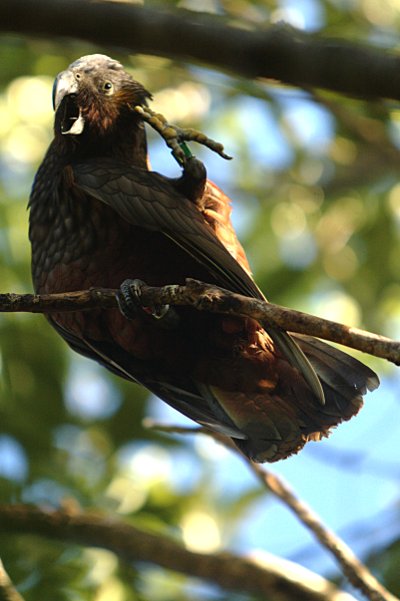
I took this picture seven months ago. I have only just today gotten
around to culling photos from that day, and this one stood out.
Spend millions visiting space TWICE, take Amazon referal money from non profit... priceless!
var editor = theeditor();
var contents = $("<div id='specialwrapperthing'>" + editor.getData() + "</div>");
.... hack away with jQuery ....
editor.setData(contents.html());
Basically, you just wrap up what the editor hands you in terms of the data, hack away on it, and then put the HTML back into the editor.
Next.