Vincent Fourmond: Version 3.1 of QSoas is out
The new version of QSoas has just been released ! It brings in a host of new features, as the releases before, but maybe the most important change is the following...
Binary images now freely available !
Starting from now, all the binary images for the new versions of QSoas will freely available from the download page. You can download the precompiled versions of QSoas for MacOS or windows. So now, you have no reason anymore not to try !
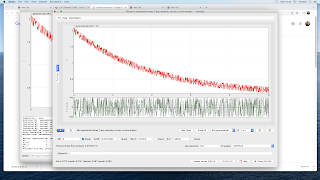
My aim with making the binaries freely available is also to simplify the release process for me and therefore increase the rate at which new versions are released. Improvements to the fit interface Some work went into improving the fit interface, in particular for the handling of fit trajectories when doing parameter space exploration, for difficult fits with many parameters and many local minima. The fit window now features real menus, along with tab a way to display the terminal (see the menus and the tabs selection on the image).
 Individual fits have also been improved, with, among others, the possibility to easily simulate voltammograms with the
QSoas is a powerful open source data analysis program that focuses on flexibility and powerful fitting capacities. It is released under the GNU General Public License. It is described in Fourmond, Anal. Chem., 2016, 88 (10), pp 5050 5052. Current version is 3.1. You can download its source code or precompiled versions for MacOS and Windows there. Alternatively, you can clone from the GitHub repository.
My aim with making the binaries freely available is also to simplify the release process for me and therefore increase the rate at which new versions are released. Improvements to the fit interface Some work went into improving the fit interface, in particular for the handling of fit trajectories when doing parameter space exploration, for difficult fits with many parameters and many local minima. The fit window now features real menus, along with tab a way to display the terminal (see the menus and the tabs selection on the image).

kinetic-system fits, and the handling of Marcus-Hush-Chidsey (or Marcus "distribution of states") kinetics for electron transfers.
Column and row names
This release greatly improves the handling of column and row names, including commands to easily modify them, the possibility to use Ruby formulas to change them, and a much better way read and write them to data files. Mastering the use of column names (and to a lesser extent, row names) can greatly simplify data handling, especially when dealing with files with a large number of columns.
Complex numbers
Version 3.1 brings in support for formulas handling complex numbers. Although it is not possible to store complex numbers directly into datasets, it is easy to separate them in real and imaginary parts to your liking.
Scripting improvement
Two important improvements for scripting are included in version 3.1. The first is the possibility to define virtual files inside a script file, which makes it easy to define subfunctionsto run using commands like run-for-each. The second is the possibility to define
variablesto be reused later (like the script arguments) using the new command let. There are a lot of other new features, improvements and so on, look for the full list there. About QSoas
QSoas is a powerful open source data analysis program that focuses on flexibility and powerful fitting capacities. It is released under the GNU General Public License. It is described in Fourmond, Anal. Chem., 2016, 88 (10), pp 5050 5052. Current version is 3.1. You can download its source code or precompiled versions for MacOS and Windows there. Alternatively, you can clone from the GitHub repository.
 Updates
Back in April I wrote about
 This post describes how I ve put together a simple static content server for
kubernetes clusters using a Pod with a persistent volume and multiple
containers: an sftp server to manage contents, a web server to publish them
with optional access control and another one to run scripts which need access
to the volume filesystem.
The sftp server runs using


 In

 Years ago, it was customary that some of us stated publicly the way we
think in time of Debian General Resolutions (GRs). And even if we
didn t, vote lists were open (except when voting for people,
i.e. when electing a DPL), so if interested we could understand what
our different peers thought.
This is the first vote, though, where a Debian vote is protected under
 In June I travelled to see Nine Inch Nails perform two nights at the








 Being able to SSH into remote machines and do work there is great. Using hardware security tokens for 2FA is also great. But trying to use them both at the same time doesn't work super well, because if you hit a WebAuthn request on the remote machine it doesn't matter how much you mash your token - it's not going to work.

 I today released version

 More ICFP-inspired experiments using the
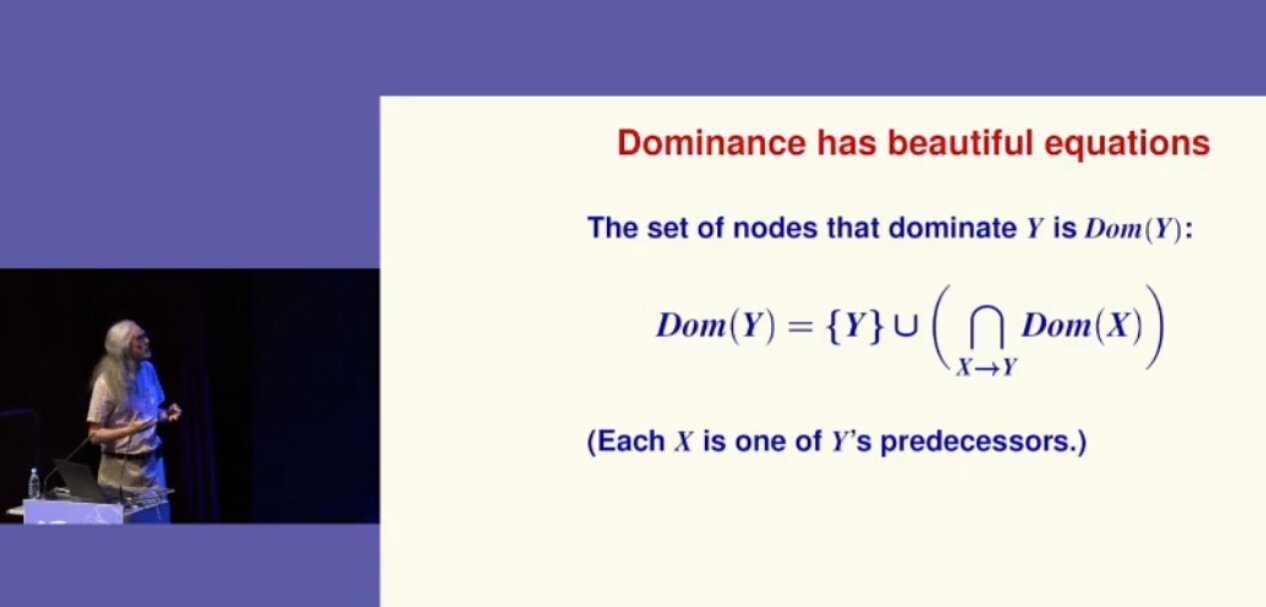 Norman Ramsey shows a formula