Search Results: "pa"

22 June 2024

Abhijith PA: abhijithpa.me to abhijithpa.in

I let go my domain abhijithpa.me. It was getting expensive and I don t fancy that anymore. I never actually purchased this domain but came with a package offer. I then kept it for couple of years. I have now bought a new domain abhijithpa.in and pointed everything to it. So if you are seeing abhijithpa.me with lot of contents, that is no me. Its either domain squatters or someone impersonating me.

Russ Allbery: Review: And the Stars Will Sing

Review: And the Stars Will Sing, by Michelle Browne
Series: The Meaning Wars #1
Publisher: Michelle Browne
Copyright: 2012, 2021
Printing: 2021
ASIN: B0075G7GEA
Format: Kindle
Pages: 85
And the Stars Will Sing is a self-published science fiction novella, the first of a (currently) five book series. I believe it may be Browne's first publication, although I don't have a good data source to confirm. Crystal Weiss is a new graduate from Mars, about to leave the solar system to her first job assignment: installation of a permanent wormhole in the vicinity of Messier 14. Her expertise is the placement calculations. The heavy mathematical lifting is of course done by computers, but humans have to do the mapping and some of the guidance. And the Stars Will Sing is an epistolary novel, told in the form of her letters to her friend Sarah. I feel bad when I stumble across a book like this. I want to stick with my habit of writing a review of each book I read, but it's one thing to pan a bad book by a famous author and another thing to pick on a self-published novella that I read due to some recommendation or mention whose details I've forgotten. Worse, I think this wasn't even the recommended book; I looked up the author, saw that the first of a series was on sale, and thought "oh, hey, I like epistolary novels and I'm in the mood for some queer space opera." This book didn't seem that queer (there is a secondary lesbian relationship but the main relationship seemed rather conventional), but I'll get to the romance in a moment. I was not the reader for this book. There's a reason why most of the books I read are from traditional publishers; I'm too critical of a reader for a lot of early self-published work. It's not that I dislike self-publishing as a concept many self-published books are excellent and the large publishers have numerous problems but publishers enforce a quality bar. Inconsistently, unfairly, and by rejecting a lot of good work, but still, they do. I'm fairly sure traditional publishers would have passed on this book; the quality of the writing isn't there yet. (It's certainly a better book than I could have written! But that's why I'm writing my reviews over in my quiet corner of the Internet and not selling fiction to other people.) The early chapters aren't too bad, although they have a choppy, cliched style that more writing experience usually smoothes out. The later chapters have more dialogue, enough that I started wondering how Crystal could remember that much dialogue verbatim to put into a letter, and it's not good. All of the characters talk roughly the same (even the aliens), the dialogue felt even more cliched than the rest of the writing, and I started getting distracted by the speech tags. Crystal comes across as very young, impulsive, and a drama magnet who likes being all up in her coworkers' business. None of these are objective flaws in the book, but I could tell early on that I was going to find her annoying. She has a heavily-foreshadowed enemies-to-lovers thing with one of her male coworkers. Her constant complaining about him at the start of the story was bad enough, but the real problem is that in the very few places where he has more personality than plastic lawn furniture, he's being obnoxious to Crystal. I'm used to being puzzled by a protagonist's choice in love interests, but this one felt less like an odd personality choice and more a lack of writing skill. Even if the relationship is being set up for failure (not true by the end of this book), you've got to help me understand what the protagonist saw in him or was getting out of the relationship. The plot was so predictable that it ironically surprised me. I was sure that some sort of twist or complication was coming, but no. I will give Browne some credit for writing a slightly more realistic character reaction to violence than most SF authors, but there was nothing in the plot to hold my interest. The world-building was generic science fiction with aliens. It had a few glimmers of promise, but there was some sort of psychic hand-waving involved in siting wormholes that didn't work for me and the plot climax made no sense to me whatsoever. This is the kind of bad book that I don't want to hold against the writer. Twelve years later and with numerous other novels and novellas under her belt, her writing is probably much better. I do think this book would have benefited from an editor telling her it wasn't good enough for publication yet, but that's not how the Kindle self-publishing world works. Mostly, this is my fault: I half-followed a recommendation into an area of publishing that I know from past experience I should avoid without a solid review from an equally critical reader. Followed by The Stolen, a two-story collection. Rating: 3 out of 10

21 June 2024

Dirk Eddelbuettel: nanotime 0.3.9 on CRAN: Bugfix

A quick bug fix release 0.3.9 for our nanotime package is now on CRAN, following up on the 0.3.8 release made this week. nanotime relies on the RcppCCTZ package (as well as the RcppDate package for additional C++ operations) and offers efficient high(er) resolution time parsing and formatting up to nanosecond resolution, using the bit64 package for the actual integer64 arithmetic. Initially implemented using the S3 system, it has benefitted greatly from a rigorous refactoring by Leonardo who not only rejigged nanotime internals in S4 but also added new S4 types for periods, intervals and durations. The 0.3.8 release added a accurate parameter for POSIXct conversions, and it turns out that this did not test as expected on arm64 so we disabled the test on that platform. The NEWS snippet below has the full details.

Changes in version 0.3.9 (2024-06-21)
  • Condition two tests to not run on arm64 (Dirk in #129 fixing #128)

Thanks to my CRANberries, there is a diffstat report for this release. More details and examples are at the nanotime page; code, issue tickets etc at the GitHub repository and all documentation is provided at the nanotime documentation site. If you like this or other open-source work I do, you can sponsor me at GitHub.

This post by Dirk Eddelbuettel originated on his Thinking inside the box blog. Please report excessive re-aggregation in third-party for-profit settings.

Bits from Debian: Recherche d'un th me pour Trixie, la prochaine version de Debian

Chaque dition de Debian b n ficie d'un nouveau th me brillant visible sur l' cran d'amor age, l' cran de connexion et, de la fa on la plus vidente, sur le fond d' cran. Debian pr voit de publier Trixie, sa prochaine version, durant l'ann e venir. Et, comme toujours, nous avons besoin de vous pour cr er son th me ! Vous avez l'occasion de concevoir un th me qui inspirera des milliers de personnes quand ils travaillent sur leur machine Debian. Pour disposer des d tails les plus r cents, veuillez vous r f rer la page du wiki. Nous voudrions profiter de cette occasion pour remercier Juliette Taka Belin pour avoir cr le th me Emerald pour Bookworm. La date limite pour les propositions est le 19 septembre 2024. Le th me est habituellement choisi en se basant sur ce qui para t le plus : Si vous souhaitez disposer plus d'informations, veuillez utiliser la liste de diffusion Debian Desktop.

Bits from Debian: Looking for the artwork for Trixie the next Debian release

Each release of Debian has a shiny new theme, which is visible on the boot screen, the login screen and, most prominently, on the desktop wallpaper. Debian plans to release Trixie, the next release, next year. As ever, we need your help in creating its theme! You have the opportunity to design a theme that will inspire thousands of people while working in their Debian systems. For the most up to date details, please refer to the wiki. We would also like to take this opportunity to thank Juliette Taka Belin for doing the Emerald theme for bookworm. The deadlines for submissions is: 2024-09-19 The artwork is usually picked based on which themes look the most: If you'd like more information or details, please post to the Debian Desktop mailing list.

Gunnar Wolf: A new RISC-V toy... requiring almost no tinkering

Shortly before coming back from Argentina, I got news of a very interesting set of little machines, the MilkV Duo. The specs looked really interesting and fun to play with, particularly those of the bigger model, Milk-V DUO S Some of the highlights: Milk-V Duo S Naturally, for close to only US$12 (plus shipping) for the configuration I wanted I bought one, and got it delivered in early May. The little box sat on my desk for close to six weeks until I had time to start tinkering with it I must say I am surprised. Not only the little bugger delivers what it promises, but it is way more mature than what I expected: It can be used right away without much tinkering with! I mean, I have played with it for less than an hour by now, and I ve even managed to get (almost) regular Debian working. Milk-V distributes a simple, 58.9MB compressed Linux image, based on Buildroot, a simple Linux image generator mostly used for embedded applications, as well as its source tree. I thought that would be a good starting point to work on setting up a minimal Debian filesystem, as I did with the CuBox-i4Pro ten years ago, and maybe even to grow towards a more official solution, akin to what we currently have for the Raspberry Pi family Until I discovered what looks like a friendly and very active online community of Milk-V users! I haven t yet engaged in it, but I stumbled across a thread announcing the availability of Debian images for the Milk-V family. And yes, it feels like a very normal Debian system. /etc/apt/sources.list does point to a third-party repository, but it s for only four packages, all related to pinmux controlfor CVITEK chips. It does feel like a completely normal Debian system! It is not as snappy and fast to load as Buildroot, but given Debian s generality, that s completely as expected. Even the wireless network, one of the usual pain points, works just out of the box! The Debian images can be built or downloaded from this Git repository. In case you wonder how is this system booting or what hardware it detects, I captured two boot logs:

20 June 2024

C.J. Collier: Signed NVIDIA drivers on Google Cloud Dataproc 2.2

Hello folks, I ve been working this year on better integrating NVIDIA hardware with the Google Cloud Dataproc product (Hadoop on Google Cloud) running the default cluster node image. We have an open bug[1] in the initialization-actions repo regarding creation failures upon enabling secure boot. This is because with secure boot, kernel driver code has its signature verified before insmod places the symbols into kernel memory. The verification process involves reading trust root certificates from EFI variables, and validating that the signatures on the kernel driver either a) were made directly by one of the certificates in the boot sector or b) were made by certificates which chain up to one of them. This means that Dataproc disk images must have a certificate installed into them. My work on the internals will likely start producing images which have certificates from Google in them. In the meantime, however, our users are left without a mechanism to have both secure boot enabled and install out-of-tree kernel modules such as the NVIDIA GPU drivers. To that end, I ve got PR #83[2] open with the GoogleCloudDataproc/custom-images github repository. This PR introduces a new argument to the custom image creation script, trusted-cert , the argument of which is the path to a DER-encoded certificate to be included in the certificate database in the EFI variables of the disk s boot sector. I ve written up the instructions on creating a custom image with a trusted certificate here: https://github.com/cjac/custom-images/blob/secure-boot-custom-image/examples/secure-boot/README.md Here is a set of commands that can be used to create a Dataproc custom image with certificate installed to the EFI s db variable. You can run these commands from the root directory of a checkout such as this:

git clone https://github.com/cjac/custom-images.git --branch secure-boot-custom-image --single-branch
pushd custom-images
PROJECT_ID=your-project-here
PROJECT_NUMBER=your-project-nnnn-here
my_bucket=your-bucket-here
custom_image_zone=your-zone-here
gcloud projects add-iam-policy-binding $ PROJECT_ID  \
        --member=serviceAccount:$ PROJECT_NUMBER -compute@developer.gserviceaccount.com \
        --role=roles/secretmanager.secretAccessor
gcloud config set project $ PROJECT_ID 
gcloud auth login
eval $(bash examples/secure-boot/create-key-pair.sh)
metadata="public_secret_name=$ public_secret_name "
metadata="$ metadata ,private_secret_name=$ private_secret_name "
metadata="$ metadata ,secret_project=$ secret_project "
metadata="$ metadata ,secret_version=$ secret_version "
#dataproc_version=2.1-debian11
dataproc_version=2.2-debian12
#customization_script=examples/secure-boot/install-nvidia-driver-debian11.sh
customization_script=examples/secure-boot/install-nvidia-driver-debian12.sh
#image_name="nvidia-open-kernel-bullseye-$(date +%F)"
image_name="nvidia-open-kernel-bookworm-$(date +%F)"
disk_size_gb="50"
python generate_custom_image.py \
    --image-name $ image_name  \
    --dataproc-version $ dataproc_version  \
    --trusted-cert "tls/db.der" \
    --customization-script $ customization_script  \
    --metadata "$ metadata " \
    --zone "$ custom_image_zone " \
    --disk-size "$ disk_size_gb " \
    --no-smoke-test \
    --gcs-bucket "$ my_bucket "
popd
I d love to hear your feedback! [1] https://github.com/GoogleCloudDataproc/initialization-actions/issues/1058
[2] https://github.com/GoogleCloudDataproc/custom-images/pull/83

Daniel Lange: Fixing esptool read_flash above 2MB on some cheap ESP32 boards

esptool, the Espressif SoC serial bootloader utility, tends to dislike cheap Flash chips attached to the various incarnations of the ESP32 chip family. And it seems to dislike them even more when running esptool on Linux than on other OSs. The common error mode is seeing it break at the 2MB barrier when trying to dump (esptool read_flash) a 4MB flash configuration.
esptool -p /dev/ttyUSB0 -b 921600 read_flash 0 0x400000 flash_dump.bin
will fail with
esptool.py v4.7.0
Serial port /dev/ttyUSB0
Connecting....
Detecting chip type... ESP32
Chip is ESP32-D0WD-V3 (revision v3.1)
Features: WiFi, BT, Dual Core, 240MHz, VRef calibration in efuse, Coding Scheme None
Crystal is 40MHz
[..]
Detected flash size: 4MB
[..]
2097152 (50 %)
A fatal error occurred: Failed to read flash block (result was 01090000: CRC or checksum was invalid)
typically at the 2MB barrier. I found the solution in a rather unrelated esptool Github issue: Create an esptool.cfg file in the project directory (from where you will run esptool):
[esptool]
timeout = 30
max_timeout = 240
erase_write_timeout_per_mb = 40
mem_end_rom_timeout = 0.2
serial_write_timeout = 10
The timeout = 30 is the setting that fixed reading flash memory via esptool read_flash for me. When your esptool.cfg is read, esptool will tell you so in its second line of output:
$ esptool flash_id
esptool.py v4.7.0
Loaded custom configuration from /home/dl/[..]/Embedded_dev/ESP-32_Wemos/esptool.cfg
Found 1 serial ports
Serial port /dev/ttyUSB0
Connecting......
[..]
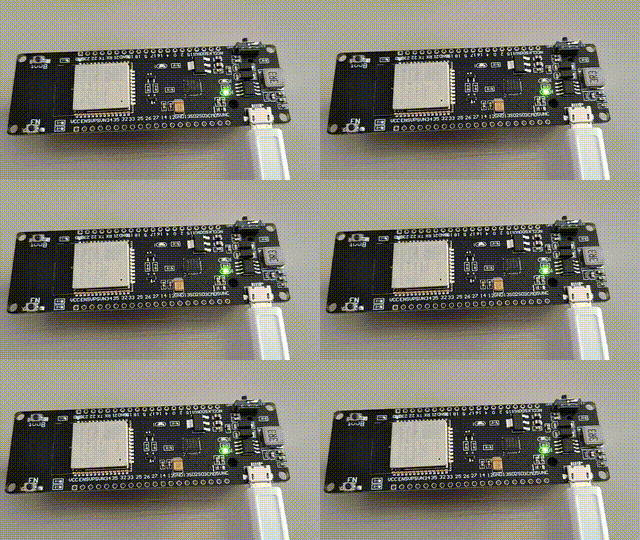
Animated GIF of an ESP32 board Thank you Radim Karnis and wibbit from the Github issue linked above.

19 June 2024

Dirk Eddelbuettel: nanotime 0.3.8 on CRAN: More Maintenance

Leonardo and I are happy to annunce that a new version 0.3.8 of our nanotime package arrived on CRAN today. It is the first release in over 1 1/2 years. nanotime relies on the RcppCCTZ package (as well as the RcppDate package for additional C++ operations) and offers efficient high(er) resolution time parsing and formatting up to nanosecond resolution, using the bit64 package for the actual integer64 arithmetic. Initially implemented using the S3 system, it has benefitted greatly from a rigorous refactoring by Leonardo who not only rejigged nanotime internals in S4 but also added new S4 types for periods, intervals and durations. This release responds to a number of enhancements including a new paramter accurate for POSIXct to nanotime conversions, a vector date converter, a switch to double return value when durations objects are dividded as well as a small battery of CRAN requests for changes and updates. This started with a move away from the now non-API function SET_S4_OBJECT which has been replaced by use of Rf_asS4. We also no longer need a custom compiler flag on Windows (where for some reasons nobody understands or remembers, bitfields are not packed) to small enhancements of manual page formatting and last-but-not-least avoidance of some new UBSAN warnings. The NEWS snippet has the full details.

Changes in version 0.3.8 (2024-06-19)
  • Time format documentation now has a reference to RcppCCTZ
  • The package no longer sets a default C++ compilation standard of C++11 (Dirk initially in #114, and later switched to C++17)
  • New accurate parameter for conversion from POSIXct to nanotime (Davor Josipovic and Leonardo in #116 closing #115)
  • The as.Date() function is now vectorized and can take a TZ argument (Leonardo and Dirk in #119 closing #118)
  • Use of internal function SET_S4_OBJECT has been replaced by API function Rf_asS4 (Leonardo in #121 closing #120)
  • An nanoduration / nanoduration expression now returns a double (Leonardo in #122 closing #117)
  • Bitfield calculations no longer require an Windows-only compiler switch (Leonardo in #124)
  • A simple manual page format nag involving has been addressed (Dirk in #126 fixing #125)
  • An set of tests tickling an UBSAN issue via Rcpp code no longer run unless CI is set (Dirk in #127 fixing #123)

Thanks to my CRANberries, there is a diffstat report for this release. More details and examples are at the nanotime page; code, issue tickets etc at the GitHub repository and all documentation is provided at the nanotime documentation site. If you like this or other open-source work I do, you can sponsor me at GitHub.

This post by Dirk Eddelbuettel originated on his Thinking inside the box blog. Please report excessive re-aggregation in third-party for-profit settings.

Sahil Dhiman: First Iteration of My Free Software Mirror

As I m gearing towards setting up a Free Software download mirror in India, it occurred to me that I haven t chronicled the work and motivation behind setting up the original mirror in the first place. Also, seems like it would be good to document stuff here for observing the progression, as the mirror is going multi-country now. Right now, my existing mirror i.e., mirrors.de.sahilister.net (was mirrors.sahilister.in), is hosted in Germany and serves traffic for Termux, NomadBSD, Blender, BlendOS and GIMP. For a while in between, it hosted OSMC project mirror as well. To explain what is a Free Software download mirror thing is first, I ll quote myself from work blog -
As most Free Software doesn t have commercial backing and require heavy downloads, the concept of software download mirrors helps take the traffic load off of the primary server, leading to geographical redundancy, higher availability and faster download in general.
So whenever someone wants to download a particular (mirrored) software and click download, upstream redirects the download to one of the mirror server which is geographical (or in other parameters) nearby to the user, leading to faster downloads and load sharing amongst all mirrors. Since the time I got into Linux and servers, I always wanted to help the community somehow, and mirroring seemed to be the most obvious thing. India seems to be a country which has traditionally seen less number of public download mirrors. IITB, TiFR, and some of the public institutions used to host them for popular Linux and Free Softwares, but they seem to be diminishing these days. In the last months of 2021, I started using Termux and saw that it had only a few mirrors (back then). I tried getting a high capacity, high bandwidth node in budget but it was hard in India in 2021-22. So after much deliberation, I decided to go where it s available and chose a German hosting provider with the thought of adding India node when conditions are favorable (thankfully that happened, and India node is live too now.). Termux required only 29 GB of storage, so went ahead and started mirroring it. I raised this issue in Termux s GitHub repository in January 2022. This blog post chronicles the start of the mirror. Termux has high request counts from a mirror point of view. Each Termux client, usually checks every mirror in selected group for availability before randomly selecting one for download (only other case is when client has explicitly selected a single mirror using termux-repo-change). The mirror started getting thousands of requests daily due to this but only a small percentage would actually get my mirror in selection, so download traffic was lower. Similar thing happened with OSMC too (which I started mirroring later). With this start, I started exploring various project that would be benefit from additional mirrors. Public information from Academic Computer Club in Ume s mirror and Freedif s mirror stats helped to figure out storage and bandwidth requirements for potential projects. Fun fact, Academic Computer Club in Ume (which is one of the prominent Debian, Ubuntu etc.) mirror, now has 200 Gbits/s uplink to the internet through SUNET. Later, I migrated to a different provider for better speeds and added LibreSpeed test on the mirror server. Those were fun times. Between OSMC, Termux and LibreSpeed, I was getting almost 1.2 millions hits/day on the server at its peak, crossing for the first time a TB/day traffic number. Next came Blender, which took the longest time to set up of around 9 10 months. Blender had a push-trigger requirement for rsync from upstream that took quite some back and forth. It now contributes the most amount of traffic on the mirror. On release days, mirror does more than 3 TB/day and normal days, it hovers around 2 TB/day. Gimp project is the latest addition. At one time, the mirror traffic touched 4.97 TB/day traffic number. That s when I decided on dropping LibreSpeed server to solely focus on mirroring for now, keeping the bandwidth allotment for serving downloads only. The mirror projects selection grew organically. I used to reach out many projects discussing the need of for additional mirrors. Some projects outright denied mirroring request as Germany already has a good academic mirrors boosting 20-25 Gbits/s speeds from FTP era, which seems fair. Finding the niche was essential to only add softwares, which would truly benefit from additional capacity. There were months when nothing much would happen with the mirror, rsync would continue to update the mirror while nginx would keep on serving the traffic. Nowadays, the mirror pushes around 70 TB/month. I occasionally check logs, vnstat, add new security stuff here and there and pay the bills. It now saturates the Gigabit link sometimes and goes beyond that, peaking around 1.42 Gbits/s (the hosting provider seems to be upping their game). The plan is to upgrade the link to better speeds. vnstat yearly
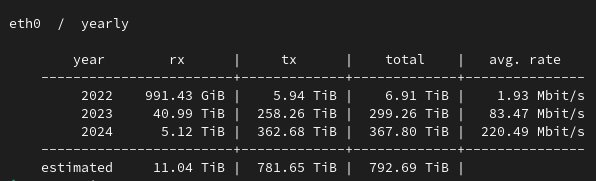
Yearly traffic stats (through vnstat -y )
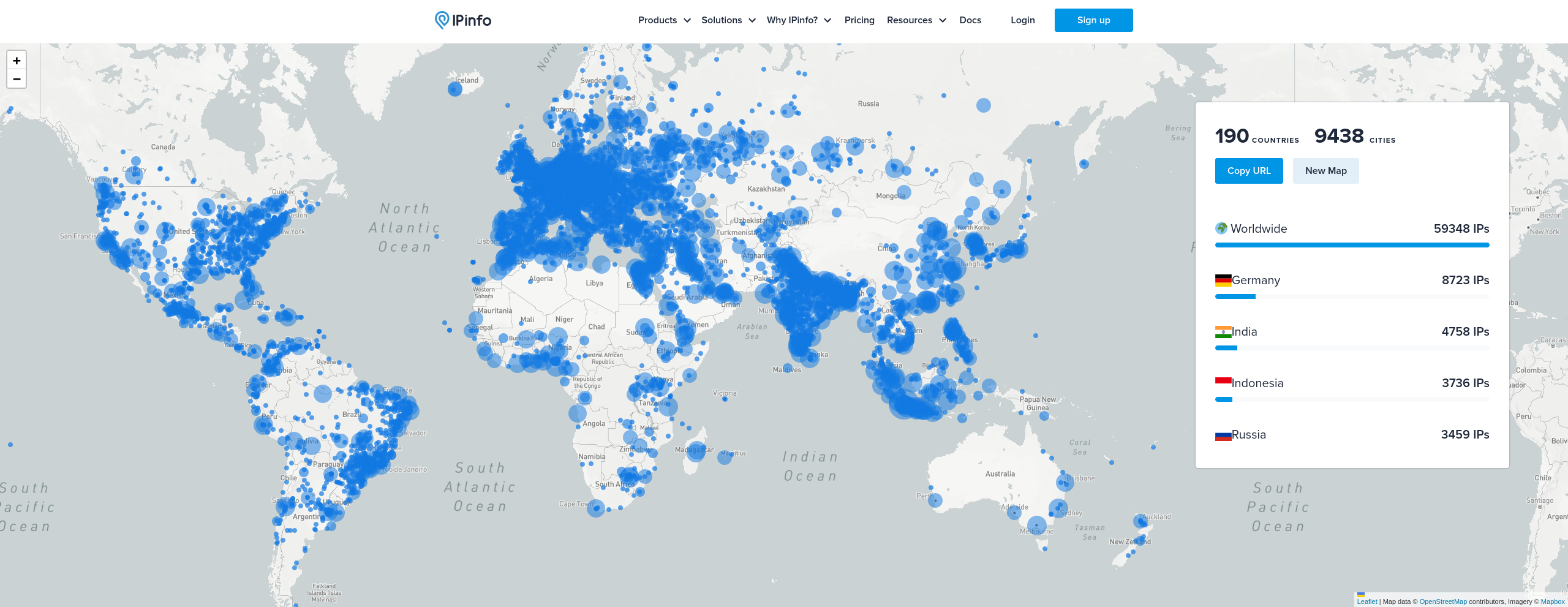
On the way, learned quite a few things like - GeoIP Map of Clients from Yesterday Access Logs
GeoIP Map of Clients from Yesterday's Access Logs. Click to enlarge
Generated from IPinfo.io
In hindsight, the statistics look amazing, hundreds of TBs of traffic served from the mirror, month after month. That does show that there s still an appetite for public mirrors in time of commercially donated CDNs and GitHub. The world could have done with one less mirror, but it saved some time, lessened the burden for others, while providing redundancy and traffic localization with one additional mirror. And it s fun for someone like me who s into infrastructure that powers the Internet. Now, I ll try focusing and expanding the India mirror, which in itself started pushing almost half a TB/day. Long live Free Software and public download mirrors.

14 June 2024

Paul Tagliamonte: Reverse Engineering a Restaurant Pager system

It s been a while since I played with something new been stuck in a bit of a rut with radios recently - working on refining and debugging stuff I mostly understand for the time being. The other day, I was out getting some food and I idly wondered how the restaurant pager system worked. Idle curiosity gave way to the realization that I, in fact, likely had the means and ability to answer this question, so I bought the first set of the most popular looking restaurant pagers I could find on eBay, figuring it d be a fun multi-week adventure.

Order up! I wound up buying a Retekess brand TD-158 Restaurant Pager System (they looked like ones I d seen before and seemed to be low-cost and popular), and quickly after, had a pack of 10 pagers and a base station in-hand. The manual stated that the radios operated at 433 MHz (cool! can do! Love a good ISM band device), and after taking an inital read through the manual for tips on the PHY, I picked out a few interesting things. First is that the base station ID was limited to 0-999, which is weird because it means the limiting factor is likely the base-10 display on the base station, not the protocol we need enough bits to store 999 at least 10 bits. Nothing else seemed to catch my eye, so I figured may as well jump right to it. Not being the type to mess with success, I did exactly the same thing as I did in my christmas tree post, and took a capture at 433.92MHz since it was in the middle of the band, and immediately got deja-vu. Not only was the signal at 433.92MHz, but throwing the packet into inspectrum gave me the identical plot of the OOK encoding scheme. Not just similar identical. The only major difference was the baud rate and bit structure of the packets, and the only minor difference was the existence of what I think is a wakeup preamble packet (of all zeros), rather than a preamble symbol that lasted longer than usual PHY symbol (which makes this pager system a bit easier to work with than my tree, IMHO). Getting down to work, I took some measurements to determine what the symbol duration was over the course of a few packets, I was able to determine the symbol rate was somewhere around 858 microseconds (0.000858 seconds per symbol), which is a weird number, but maybe I m slightly off or there s some larger math I m missing that makes this number satisfyingly round (internal low cost crystal clock or something? I assume this is some hardware constrait with the pager?) Anyway, good enough. Moving along, let s try our hand at a demod let s just assume it s all the same as the chrismas tree post and demod ones and zeros the same way here. That gives us 26 bits:

00001101110000001010001000
Now, I know we need at least 10 bits for the base station ID, some number of bits for the pager ID, and some bits for the command. This was a capture of me hitting call from a base station ID of 55 to a pager with the ID of 10, so let s blindly look for 10 bit chunks with the numbers we re looking for:
0000110111 0000001010 001000
Jeez. First try. 10 bits for the base station ID (55 in binary is 0000110111), 10 bits for the pager ID (10 in binary is 0000001010), which leaves us with 6 bits for a command (and maybe something else too?) which is 8 here. Great, cool, let s work off that being the case and revisit it if we hit bugs. Besides our data packet, there s also a preamble packet that I ll add in, in case it s used for signal detection or wakeup or something which is fairly easy to do since it s the same packet structure as the above, just all zeros. Very kind of them to leave it with the same number of bits and encoding scheme it s nice that it can live outside the PHY. Once I got here, I wrote a quick and dirty modulator, and was able to ring up pagers! Unmitigated success and good news only downside was that it took me a single night, and not the multi-week adventure I was looking for. Well, let s finish the job and document what we ve found for the sake of completeness.

Boxing everything up My best guess on the packet structure is as follows:
base id
argument
command
For a call or F2 operation, the argument is the Pager s ID code, but for other commands it s a value or an enum, depending. Here s a table of my by-hand demodulation of all the packet types the base station produces:
Type Cmd Id Description
Call8Call the pager identified by the id in argument
Off60Request any pagers on the charger power off when power is removed, argument is all zero
F240Program a pager to the specified Pager ID (in argument) and base station
F344Set the reminder duration in seconds specified in argument
F448Set the pager's beep mode to the one in argument (0 is disabled, 1 is slow, 2 is medium, 3 is fast)
F552Set the pager's vibration mode to the one in argument (0 is disabled, 1 is enabled)

Kitchen s closed for the night I m not going to be publishing this code since I can t think of a good use anyone would have for this besides folks using a low cost SDR and annoying local resturants; but there s enough here for folks who find this interesting to try modulating this protocol on their own hardware if they want to buy their own pack of pagers and give it a shot, which I do encourage! It s fun! Radios are great, and this is a good protocol to hack with it s really nice. All in all, this wasn t the multi-week adventure I was looking for, this was still a great exercise and a fun reminder that I ve come a far way from when I ve started. It felt a lot like cheating since I was able to infer a lot about the PHY because I d seen it before, but it was still a great time. I may grab a few more restaurant pagers and see if I can find one with a more exotic PHY to emulate next. I mean why not, I ve already got the thermal printer libraries working

Matthew Palmer: Information Security: "We Can Do It, We Just Choose Not To"

Whenever a large corporation disgorges the personal information of millions of people onto the Internet, there is a standard playbook that is followed. Security is our top priority . Passwords were hashed . No credit card numbers were disclosed . record scratch Let s talk about that last one a bit.

A Case Study This post could have been written any time in the past well, decade or so, really. But the trigger for my sitting down and writing this post is the recent breach of wallet-finding and criminal-harassment-enablement platform Tile. As reported by Engadget, a statement attributed to Life360 CEO Chris Hulls says
The potentially impacted data consists of information such as names, addresses, email addresses, phone numbers, and Tile device identification numbers.
But don t worry though; even though your home address is now public information
It does not include more sensitive information, such as credit card numbers
Aaaaaand here is where I get salty.

Why Credit Card Numbers Don t Matter Describing credit card numbers as more sensitive information is somewhere between disingenuous and a flat-out lie. It was probably included in the statement because it s part of the standard playbook. Why is it part of the playbook, though? Not being a disaster comms specialist, I can t say for sure, but my hunch is that the post-breach playbook includes this line because (a) credit cards are less commonly breached these days (more on that later), and (b) it s a way to insinuate that all your financial data is safe, no need to worry without having to say that (because that statement would absolutely be a lie). The thing that not nearly enough people realise about credit card numbers is:
  1. The credit card holder is not usually liable for most fraud done via credit card numbers; and
  2. In terms of actual, long-term damage to individuals, credit card fraud barely rates a mention. Identity fraud, Business Email Compromise, extortion, and all manner of other unpleasantness is far more damaging to individuals.

Why Credit Card Numbers Do Matter Losing credit card numbers in a data breach is a huge deal but not for the users of the breached platform. Instead, it s a problem for the company that got breached. See, going back some years now, there was a wave of huge credit card data breaches. If you ve been around a while, names like Target and Heartland will bring back some memories. Because these breaches cost issuing banks and card brands a lot of money, the Payment Card Industry Security Standards Council (PCI-SSC) and the rest of the ecosystem went full goblin mode. Now, if you lose credit card numbers in bulk, it will cost you big. Massive fines for breaches (typically levied by the card brands via the acquiring bank), increased transaction fees, and even the Credit Card Death Penalty (being banned from charging credit cards), are all very big sticks.

Now Comes the Finding Out In news that should not be surprising, when there are actual consequences for failing to do something, companies take the problem seriously. Which is why no credit card numbers were disclosed is such an interesting statement. Consider why no credit card numbers were disclosed. It s not that credit card numbers aren t valuable to criminals because they are. Instead, it s because the company took steps to properly secure the credit card data. Next, you ll start to consider why, if the credit card numbers were secured, why wasn t the personal information that did get disclosed similarly secured? Information that is far more damaging to the individuals to whom that information relates than credit card numbers. The only logical answer is that it wasn t deemed financially beneficial to the company to secure that data. The consequences of disclosure for that information isn t felt by the company which was breached. Instead, it s felt by the individuals who have to spend weeks of their life cleaning up from identity fraud committed against them. It s felt by the victim of intimate partner violence whose new address is found in a data dump, letting their ex find them again. Until there are real, actual consequences for the companies which hemorrhage our personal data (preferably ones that have percentage of global revenue at the end), data breaches will continue to happen. Not because they re inevitable because as credit card numbers show, data can be secured but because there s no incentive for companies to prevent our personal data from being handed over to whoever comes along.

Support my Salt My salty takes are powered by refreshing beverages. If you d like to see more of the same, buy me one.

13 June 2024

Russ Allbery: Security review of tag2upload

For some time now, Debian has been discussing a possible enhancement to the way that Debian packages are uploaded to the archive. The basic idea is to allow a package upload to be triggered by pushing a signed tag, with some structured metadata, to Salsa, the instance of GitLab that Debian provides for packaging repositories. This would allow Debian package maintainers to use a more typical Git-first workflow, where releases are triggered by Git tags and the release artifacts are built in a clean CI environment, while still enforcing the existing Debian rules about who is allowed to upload packages. As part of that effort, I recently completed a detailed security review of the tag2upload design. I sent it to debian-vote as part of the ongoing discussion, but have also posted it at the link above to give it a more permanent home. This security review may be revised based on the discussion if people point out things that I missed.

Sergio Durigan Junior: The Pagure Debian package is now orphan

As promised in the last post, I have now orphaned the Pagure Debian package. Here s the full text I posted on the BTS:
After several years, I finally decided to orphan pagure :-(. I haven t been using it as my personal forge anymore, and unfortunately upstream development slowed down quite a bit after the main author and maintainer stopped contributing regularly to the project. But that is not to say that upstream is dead; they are still working towards preparing the next release. Pagure is a big package with several components and an extensive list of build dependencies (and an even bigger testsuite which I never managed to make fully work on Debian). It is not for the faint of heart, and most of the time is usually spent fixing its (build) dependencies so that it doesn t get removed from testing. If I may, I would like to leave some suggestions for a future maintainer.
  • I never had the time to write dep8 tests, mainly because setting up the software is not trivial. It would be great if the package had more Debian-centric testing.
  • Speaking of the hurdles to setting up Pagure, I believe the package installation could be made a bit more automated using debconf. I don t see a way to fully automate it (look at d/README.Debian), but there is certainly room for improvement.
I also left a brief TODO list inside d/README.source; feel free to tackle any item there! I wish the next maintainer can have as much fun with the package as I did when I first made it for Debian! Thank you,
That s it. It was good while it lasted, but I needed to feel myself unburdened so that I don t have that constant feeling of I should be properly maintaining this package . If you feel like you d like to give it a try at maintaining Pagure, now is the time!

12 June 2024

Matthew Garrett: SSH agent extensions as an arbitrary RPC mechanism

A while back, I wrote about using the SSH agent protocol to satisfy WebAuthn requests. The main problem with this approach is that it required starting the SSH agent with a special argument and also involved being a little too friendly with the implementation - things worked because I could provide an arbitrary public key and the implementation never validated that, but it would be legitimate for it to start doing so and then break everything. And it also only worked for keys stored on tokens that ssh supports - there was no way to extend this to other keystores on the client (such as the Secure Enclave on Macs, or TPM-backed keys on PCs). I wanted a better solution.

It turns out that it was far easier than I expected. The ssh agent protocol is documented here, and the interesting part is the extension support extension mechanism. Basically, you can declare an extension and then just tunnel whatever you want over it. As before, my goto was the go ssh agent package which conveniently implements both the client and server side of this. Implementing the local agent is trivial - look up SSH_AUTH_SOCK, connect to it, create a new agent client that can communicate with that by calling NewClient, and then implement the ExtendedAgent interface, create a new socket, and call ServeAgent against that. Most of the ExtendedAgent functions should simply call through to the original agent, with the exception of Extension(). Just add a case statement against extensionType, define some reasonably namespaced extension, and you're done.

Now you need to use this agent. You probably don't want to use this for arbitrary hosts (agent forwarding should only be enabled for remote systems you trust, not arbitrary machines you connect to - if you enabled agent forwarding for github and github got compromised, github would be able to use any private keys loaded into your agent, and you probably don't want that). So the right approach is to add a Host entry to the ssh config with a ForwardAgent stanza pointing at the socket you created in your new agent. This way the configured subset of remote hosts will automatically talk to this new custom agent, while forwarding for anything else will still be at the user's discretion.

For the remote end things are even easier. Look up SSH_AUTH_SOCK and call NewClient as before, and then simply call client.Extension(). Whatever you stick in the contents argument will simply end up being received at the client end. You now have a communication channel between a the remote system and the local client, and what you do with that is up to you. I'm using it to allow a remote system to obtain auth tokens from Okta and forward WebAuthn challenges that can either be satisfied via a local WebAuthn token or by passing the query off to Mac TouchID, but there's fundamentally no constraints whatsoever on what can be done here.

(If you want to do this on Windows and still have everything work with existing clients you'll need to take this into account - Windows didn't really do Unix sockets until recently so everything there is awful)

comment count unavailable comments

Freexian Collaborators: Monthly report about Debian Long Term Support, May 2024 (by Roberto C. S nchez)

Like each month, have a look at the work funded by Freexian s Debian LTS offering.

Debian LTS contributors In May, 17 contributors have been paid to work on Debian LTS, their reports are available:
  • Adrian Bunk did 34.25h (out of 24.0h assigned and 22.0h from previous period), thus carrying over 11.75h to the next month.
  • Bastien Roucari s did 20.0h (out of 20.0h assigned).
  • Ben Hutchings did 16.0h (out of 24.0h assigned), thus carrying over 8.0h to the next month.
  • Chris Lamb did 18.0h (out of 18.0h assigned).
  • Daniel Leidert did 8.0h (out of 10.0h assigned), thus carrying over 2.0h to the next month.
  • Emilio Pozuelo Monfort did 35.5h (out of 46.0h assigned), thus carrying over 10.5h to the next month.
  • Guilhem Moulin did 13.0h (out of 14.75h assigned and 5.25h from previous period), thus carrying over 7.0h to the next month.
  • Lee Garrett did 11.0h (out of 37.25h assigned and 8.75h from previous period), thus carrying over 35.0h to the next month.
  • Lucas Kanashiro did 10.0h (out of 20.0h assigned), thus carrying over 10.0h to the next month.
  • Markus Koschany did 40.0h (out of 40.0h assigned).
  • Ola Lundqvist did 6.5h (out of 22.5h assigned and 1.5h from previous period), thus carrying over 17.5h to the next month.
  • Roberto C. S nchez did 7.75h (out of 11.0h assigned and 1.0h from previous period), thus carrying over 4.25h to the next month.
  • Santiago Ruano Rinc n did 8.0h (out of 16.0h assigned), thus carrying over 8.0h to the next month.
  • Sean Whitton did 5.5h (out of 5.5h assigned and 0.5h from previous period), thus carrying over 0.5h to the next month.
  • Sylvain Beucler did 10.5h (out of 0.75h assigned and 45.25h from previous period), thus carrying over 35.5h to the next month.
  • Thorsten Alteholz did 14.0h (out of 14.0h assigned).
  • Tobias Frost did 7.75h (out of 10.0h assigned and 2.0h from previous period), thus carrying over 4.25h to the next month.

Evolution of the situation In May, we have released 20 DLAs. Notable security updates in May included:
  • apache2: multiple vulnerabilities which may result in HTTP response splitting, denial of service, or authorization bypass (by Bastien Roucari s, in collaboration with apache2 maintainer Yadd)
  • bind9: two vulnerabilities, called KeyTrap and NSEC3, which may result in denial of service (by Santiago Ruano Rinc n)
  • python-pymysql: potential SQL injection attack (by Chris Lamb)
The aforementioned apache2 was prepared by its Debian maintainer Yadd. This update also involved work on the package test suite in buster, which contributor Bastien Roucari s then forwarded to the apache2 package in unstable. More importantly, a regression in fossil was reported, and Bastien prepared a fix for it. Bastien coordinated the upload of both packages to minimize the introduction of regressions. Contributor Daniel Leidert also prepared an upload of runc to Debian 11 in order fix a number of CVEs still affecting that package. Finally, contributor Thorsten Alteholz prepared uploads for qtbase-opensource-src, libjwt, and libmicrohttpd in Debian 11. Note that Debian 11 will pass into the LTS phase of support in August and these updates will improve the state and long-term supportability of Debian 11. Debian 10 is presently in its final month of LTS support (as announced on the debian-lts-announce mailing list, support will end on June 30th), after which no new security updates will be made available on security.debian.org. However, Freexian and its team of paid Debian contributors will continue to maintain Debian 10 going forward for the customers of the Extended LTS offer. Subscribe right away if you sill have Debian 10 which must be kept secure (and which cannot yet be upgraded).

Thanks to our sponsors Sponsors that joined recently are in bold.

9 June 2024

Debian Brasil: Debian Day Brasil - chamada de organizadores(as)

No dia 16 agosto comemorado o anivers rio do Projeto Debian, e todos os anos comunidades ao redor do mundo organizam encontros para celebrar esta data. Chamado de Debian Day (Dia do Debian), o evento sempre conta com uma quantidade expressiva de comunidadades brasileiras organizando atividades nas suas cidades no dia 16 (ou no s bado mais pr ximo). Em 2024 o Debian Day celebrar os 31 anos do Projeto Debian e o dia 16 de agosto ser numa sexta-feira, por isso provavelmente a maioria das comunidades organizar o suas atividades no s bado, dia 17. Estamos fazendo uma chamada de organizadores(as) para o Debian Day em 2024. A ideia reunir, em um grupo no telegram, as pessoas interessadas em coordenar as atividades das suas comunidades locais para trocar experi ncias, ajudar os(as) novatos(as), e discutir a possibilidade do Projeto Debian ajudar financeiramente as comunidades. O Debian Day na sua cidade pode ser desde um encontro em uma pizzaria/bar/restaurante para promover a reuni o das pessoas, at um evento mais amplo com palestras/oficinas. Ent o n o existe obrigatoriedade sobre como deve ser o encontro, tudo depende do que voc e a sua comunidade querem e podem fazer. Existe a possibilidade de solicitarmos ao l der do projeto Debian para reembolsar algumas despesas. Por exemplo, para produzir adesivos, pagar as pizzas, encomendar um bolo, etc. Venha fazer parte do grupo Debian Day BR no telegram e discutir as ideias: https://t.me/debian_day_br Se voc topa esse desafio e vai organizar um Debina Day na sua cidade, n o deixe de adicionar a sua cidade com as informa es necess rias aqui. Debian Day 2024

Debian Brasil: Debian Day Brasil 2024 - chamada de organizadores(as)

No dia 16 agosto comemorado o anivers rio do Projeto Debian, e todos os anos comunidades ao redor do mundo organizam encontros para celebrar esta data. Chamado de Debian Day (Dia do Debian), o evento sempre conta com uma quantidade expressiva de comunidadades brasileiras organizando atividades nas suas cidades no dia 16 (ou no s bado mais pr ximo). Em 2024 o Debian Day celebrar os 31 anos do Projeto Debian e o dia 16 de agosto ser numa sexta-feira, por isso provavelmente a maioria das comunidades organizar o suas atividades no s bado, dia 17. Estamos fazendo uma chamada de organizadores(as) para o Debian Day em 2024. A ideia reunir, em um grupo no telegram, as pessoas interessadas em coordenar as atividades das suas comunidades locais para trocar experi ncias, ajudar os(as) novatos(as), e discutir a possibilidade do Projeto Debian ajudar financeiramente as comunidades. O Debian Day na sua cidade pode ser desde um encontro em uma pizzaria/bar/restaurante para promover a reuni o das pessoas, at um evento mais amplo com palestras/oficinas. Ent o n o existe obrigatoriedade sobre como deve ser o encontro, tudo depende do que voc e a sua comunidade querem e podem fazer. Existe a possibilidade de solicitarmos ao l der do projeto Debian para reembolsar algumas despesas. Por exemplo, para produzir adesivos, pagar as pizzas, encomendar um bolo, etc. Venha fazer parte do grupo Debian Day BR no telegram e discutir as ideias: https://t.me/debian_day_br Se voc topa esse desafio e vai organizar um Debina Day na sua cidade, n o deixe de adicionar a sua cidade com as informa es necess rias aqui. Veja na wiki do Debian quais grupos est o ativos e como entrar em contato com eles. Algumas cidades ou estados possuem grupos de telegram pr prios. Se a sua cidade n o estiver l , voc pode liderar a cria o do seu grupo local :-) Debian Day 2024

Next.

Previous.