Search Results: "az"

31 January 2014

Andrew Pollock: [life] Day 4, Brazilian jiu jitsu, Science Friday and the Lunar New Year

I want Zoe to do one "extra curricular" activity per term this year. Something dance-related, something gymnastics-related and maybe some other form of sport (I'm thinking soccer). My girlfriend and I were wandering through Westfield Carindale on Saturday, and we happened upon a guy from Infinity Martial Arts touting his wares. I thought I'd suss it out, and they had an introductory offer where the sign-up fee and uniform fee were significantly reduced, and they had a pretty flexible timetable. They were just starting up their East Brisbane location, and the close proximity to home along with the reduced price sealed the deal. Long-term, I'd like for Zoe to learn Tae Kwon Do, for self-defense, but BJJ seemed as good as anything to get her introduced to the idea of martial arts. The class for 2-4 year olds was billed as "Fun and Fitness 4 Kids" so it's really a combination of listening to the instructor, some basic gymnastics-style stuff and a little bit of martial arts. We biked over this morning (going up Hawthorne Road is a slog) and got there in about 15 minutes via the direct route. It's in the upstairs of a gym in the middle of an industrial area, but it was pretty easily accessible by bike. They're still waiting on some of the equipment, so the space was a little spartan. It was just Zoe and I and a mother of two not quite 2 year old twin girls taking a trial class. First up, we got her uniform, and she looked so cute. There were pants and a jacket and a belt. I'm going to have to video the instructor tying up the belt next week so I can learn how to do it the right way. The class started with the kids standing on these flat coloured circles ("mushrooms") and effectively playing "Simon Says" ("instructor says") without being caught out. It was a pretty sneaky way of doing a bunch of warm up exercises like rotating the knees and ankles. Zoe did very well, but there were a few that she just point blank refused to do. Next the instructor set up a bunch of "stations" around the room. The first station involved me crouching in a fetal position with a football and Zoe had to try and tip me over to get the football. That was a load of fun. The next station was a few steps and foam-filled vinyl ramp, and Zoe just had to do a somersault down that. The next station was pretty much the same but taller, and Zoe had to do a "sausage roll" on her side down that. The next station was just a small exercise ball and Zoe had to do some "donkey kicks" on it. The final station involved me waving a couple of cut-off pool noodles at arm's length, and Zoe had to run in covering her head and give me a bear hug. We did a few rotations of these stations. It was heaps of fun. Next, the instructor got a whole bunch of ball pit balls of different colours, and scattered them over the floor, and put a basket at each end of the room. The kids were then instructed to retrieve specific colours as fast as possible. Zoe started out trying to get as many as possible in her arms before returning to the basket, but the idea was to do it one ball at a time. A lot of running back and forth. Finally, we did some actual BJJ (I think). It was called the "sleeping crocodile hold" or something like that. I had to lie on my back, and Zoe had to sneak up to me from my side and grapple me with one arm behind my head and the other around my waist and a knee in my side. I have no interest in Zoe learning mixed martial arts, but this class was so much fun. I was feeling a bit tired this morning before we headed out, but by the end of it I was so pumped. It was just the right combination of daddy/daughter rough and tumble, with a bit of gymnastics and following instruction. I'm pretty certain Zoe enjoyed it. I liked that the instructor stopped for a water break between each activity, so the kids were kept well hydrated throughout. We took the "scenic route" home, because we had no particular time constraints. It was more like 25 minutes and involved the Norman Park Greenway. I was so glad we went that way. It was a beautiful ride that I didn't know existed. Very indirect, it involved going through Woolloongabba, Coorparoo and Norman Park, around the back of Coorparoo State High School along the side of Norman Creek. It was semi-wetland conditions.The only part that was a bit annoying was where Norman Avenue met Wynnum Road. It was quite steep and the green light didn't last very long. I had wanted to do story time at Bulimba Library at 10:30am on Fridays, but I'd rather bike home via the Norman Park Greenway instead, because it's a nice ride. I've since decided that I'll just use the story time at the library during wet weather, when we'd be driving to BJJ anyway, and be able to make it to the library in time after class. I've also got to figure out where I'm going to fit doing some Science into the schedule. Fridays are going to be busy I think. I managed to get Zoe down for a nap by a bit after 12:30pm today. She was pretty knackered after the class (as was I from biking home) so I let her watch a bit of TV while I prepared lunch. She was funny, she saw how sweaty I was when we got home, and suggested I take a shower while she watch some TV. I was a bit unprepared for my first Science Friday, though. I'd been considering going to the Sir Thomas Brisbane Planetarium after BJJ, but I discovered it's closed until February 7 for maintenance and an upgrade, so that cunning plan was thwarted. I used her nap time to order 365 Science Experiments and 50 Dangerous Things (you Should Let Your Children Do). I should get plenty of inspiration out of those two. After she woke up, we did the old "vinegar and sodium bicarbonate" trick as our science experiment. I've finally got a use for my Google Labs Founders' Award lab coat. I need to try and find some child-sized safety glasses. The adult ones barely stay on her little nose. After that, we went for a walk to our local toy store to see if they sold child-sized safety glasses (they didn't) and then Zoe watched a little bit of TV and then we walked to the CityCat to go to Teneriffe to catch a bus to Chinatown. I couldn't have timed it better if I tried. Just as we got to Chinatown, they started doing a thing with the Chinese dragons, and I hoisted Zoe up on my shoulders so she could watch. I wasn't sure how she was going to take it, with all the noise from the drums and the dragons themselves, but she was enthralled. We watched other acts and then my girlfriend joined us, and we went to a Chinese restaurant for dinner. I bought Zoe these training chopsticks a while ago, and she's taken to them like a duck to water. I brought them with us so she could use them at the restaurant, and she ate the biggest dinner I've ever seen her eat. After dinner, we caught the tail end of a procession and had some ice cream. We were starting to leave, and there was another dragon, and Zoe was brave enough to go and touch it on her own, for good luck. We then made our way back to the bus. By the time the bus arrived and got us back to Teneriffe, and a CityCat finally arrived, it was very late, but Zoe was pretty good the whole time. It was probably the latest night she's ever had with me while we've been out on the go, and she only got a bit ratty once we were home. It didn't help that she'd forgotten that she'd put Cowie in a cupboard this morning and we burned some more time tracking her down. Today was a fantastic (and very full) day. I enjoyed it a lot, and I think Zoe did too. Fortunately, Fridays won't always be this full on.

29 January 2014

Russ Allbery: C TAP Harness 3.0

This is my test harness and C and shell library for writing test suites using the Test Anything Protocol (also used by Perl). The changes in this release aren't that major, but I changed one API in a non-backward-compatible way, so I bumped the major revision. That change is to test_cleanup_register, whose callback functions now take two arguments instead of one. The first, as before, indicates whether the test case succeeded or failed. The second is now true if the callback is running in the primary process (the one in which plan or plan_lazy was called), and false otherwise. Callback functions are now called for all processes, not just the primary one. This allows cleanup of per-process resources, like memory, in the child processes, which allows for easier valgrind analysis. Also in this release, the test harness was modified to reopen standard input to /dev/null when running a set of tests from a list, rather than inheriting standard input from the test driver. The test harness also now cleans up all extraneous copies of open file descriptors used during the setup of standard input, output, and error to avoid leaking harmless but noticeable file descriptors to tests. You can get the latest release from the C TAP Harness distribution page.

26 January 2014

Neil Williams: Home server rack

The uses of this particular rack I ll cover in future entries this is about how I made the rack itself, with help from friends (Steve McIntyre & Andy Simpkins). A common theme is making allowances for using dev kit boards ready-to-rack ARM servers are not here yet. My aim was to have 4, possibly 6 ARM dev kit boards running services from home, so there was no need for a standard 42U rack, a 9U rack is enough. Hence:
Wall Mounted 9U 450mm deep 19 inch rack enclosure glass door To run various other services around the house (firewall, file server etc.), a microserver was also necessary:
HP 704941-421 ProLiant Micro Server (AMD Turion II Neo N54L 2.2GHz, 2GB RAM, 250GB HDD, 2 Core, 7th Generation) I chose to mount that on a bookcase beneath the wall mounted rack as it kept all the cables at the bottom of the rack itself. The microserver needed a second gigabit network card fitted to cope with being a firewall as well, if you do the same, ensure you find a suitable card with a low profile bracket. Some are described as being low profile but do not package the low profile bracket, only a low profile card and a full height bracket.
Intel EXPI9301CTBLK PRO1000 Network Card note the low profile bracket in the pack. The first of the dev kit requirements is the lack of boards which can be racked, so shelves are going to be needed, leading on to something to stop the boards wandering across the shelf when the cables are adjusted velcro pads in my case. Second requirement is that dev kit boards are notorious for not rebooting cleanly. Nothing to do with the image being run, the board just doesn t cut power or doesn t come back after cutting power. Sometimes this is down to early revisions of the board, sometimes the board pulls enough power through the USB serial converter to remain alive, whatever the cause, it won t reboot without user involvement. So a PDU becomes necessary remotely controllable. New units tend to be expensive and/or only suitable for larger racks, I managed to find an older 8 port APC unit, something like: (Don t be surprised if that becomes a dead link search for APC Smart Slot Master Switch Power Distribution Unit). Talking of power, I m looking to use SATA drives with these boards and the boards themselves come with a variety of wall wart plugs or USB cables, so a number of IEC sockets are needed not the usual plugs:
Power cable IEC C14 plug 13A socket 25 cm or, for devices which genuinely need 2A to boot (use the 1A for attached SATA or leave empty):

Black Universal 3.1A 15W 5V Dual USB Rapid Mains Charger Plug Check the power output rating of the USB plugs used to connect to the mains as well many are 1A or less. Keep the right plug for the right board.
Power is going to also be a problem if, like me, you want to run SATA drives off boards which support SATA. The lack of a standard case means that ATX power is awkward, so check out some cheap SATA enclosures to get a SATA connector with USB power. I am using these enclosures (prices seem to have risen since I obtained them):

Startech 2.5 inch eSATA USB External Hard Drive Enclosure for SATA HDD Along with these:
eSATA to SATA Serial External Shielded Cable 1m because the iMx53 boards have SATA connectors but the enclosure exports eSATA. Whilst this might seem awkward, the merit of having both eSATA and simple USB power on one enclosure is not to be under-estimated. (Avoid the stiffer black cables space will get tight inside the rack.) Naturally, a 2.5 inch SATA drive is going to be needed for each enclosure, I m using HDD but SSD is also an option. Also, consider simple 2 or 3 way fused adaptors so that the board and the SATA drive can be powered from a single PDU port, this makes rebooting much simpler if the board needs a power supply with integrated plug instead of over USB. Now to the networking (2 x 8 port was cheaper than 1 x 16):
Netgear GS108 8-port Gigabit Ethernet Unmanaged Switch Don t forget the cat5 cables too you ll want lots of short cables, 1m or shorter inside the rack and a few longer ones going to the microserver and wall socket. I used 8x1m. Naturally, on the floor below your rack you are going to put a UPS, so the PDU power then needs to be converted to draw from the UPS via IEC plugs instead of standard mains. I decided to use a 6 gang extension 1m cable with an IEC plug it was the only bit of wiring I had to do and even those are available ready-made if you want to do it that way. Depending on the board, you may need your own serial to USB converters, you ll certainly need some powered USB hubs. I m using a wall mounted 9U rack, so I also needed a masonry drill and 4 heavy duty masonry M8 bolts. The rack comes with a mounting plate which needs to be bolted to the wall but nothing else is included. This step is much easier with someone else to take the weight of the rack as it is guided into the brackets on the mounting plate the bracket may need a little persuasion to allow for the bolt heads to not get in the way during mounting. Once mounted, the holes in the back of the rack allow for plenty of room, it s just getting to that point. The rack has side panels which latch out easily, providing easy maintenance. The glass door can be easily reversed to open from the opposite side. However, the key in the glass door is largely useless. The expectation is that the units in the rack are attached at the front but the dev boards on shelves are not going to be protected by a key in the front door. The key therefore ends up being little more than a handle for the glass door. OK. If you ve got this far, it s a case of putting things together:
Economy Cage Nut Tool 19 inch racking for cagenut extraction Yes, you really do want one. Fine, do without the premium one, but the economy one will save you a lot of (physical) pain. At this stage, it becomes clear that the normal 19 inch server rack shelves don t leave a lot of room at the back of the rack for the cables and there are a lot of cables. Each board has power, USB serial connection and network. The SATA has power too. The PDU has a power lead and you ll need network switches too. The network switches need power and an uplink cable. I positioned the supports in the rack as far forward as possible and attached the shelves to give enough room for the PDU on the base of the rack, the network switches resting on top and the extension bar (with the heavier, stiffer cables) at the back. (I need to bring my shelves another 1 or 2 positions further forward as there is barely enough room for one cable between the shelf and the back of the rack and that makes moving boards around harder than it needs to be.) The PDU defaults to enabling all ports at startup, so connect to it over telnet and turn off the ports before connecting things and sorting out the network interface to what the rest of the lab needs. (I m using a 10. range and the PDU was originally set to use 192.168.1.) That s about it as far as the hardware setup is concerned. Just time to label up each board, note down which PDU port does which device, which serial to USB converter is on which device on the microserver and check the power my initial problem with one board was traced to the inability of the board to power SATA off the on-board USB port even when using the provided 2A power supply. That meant adding a standard mains adaptor to feed both the SATA power and the board power off the one PDU port there is little point powering off the board but not the SATA, or vice versa. I haven t totalled up the expenditure but the biggest expenses were the microserver and the wall mounted rack but don t underestimate how much it will cost to buy 6 IEC plugs, various USB serial converters and how much you may spend on peripheral items. There is quite a lot of room on the 2 shelves for more boards, what will limit the deployment in this rack is space for the cables, especially power. The shorter the power cables, the easier it will be to maintain the devices in the rack. It might be worth looking at a 12U rack, if only to give plenty of space for cables. Once I ve got the software working, I ll describe what this rack will be doing it s got something to do with Debian, ARM, Linux and tests but you ve probably already guessed that much

25 January 2014

Russell Coker: Links January 2014

Fast Coexist has an interesting article about the art that Simon Beck creates by walking in snow [1]. If you are an artist you can create art in any way, even by walking in patterns in the snow. Russ Altman gave an interesting TED talk about using DNA testing before prescribing drugs [2]. I was surprised by the amount of variation in effects of codeine based on genetics, presumably many other drugs have a similar range. Helen Epstein wrote an interesting article about Dr. Sara Josephine Baker who revolutionised child care and saved the lives of a huge number of children [3]. Her tenacity is inspiring. Also it s interesting to note that the US Republican party was awful even before the Southern Strategy . The part about some doctors opposing child care because it s the will of God for children to die and keep them in employment is chilling. Jonathan Weiler wrote an insightful article about the problems with American journalism in defending the government [4]. He criticises the media for paying more attention to policing decorum than to content. Tobias Buckell wrote an interesting post about the so-called socialised health-care in the US [5]. He suggests that Ronald Reagan socialised health-care by preventing hospitals from dumping dying people on the street. I guess if doing nothing for people until they have a medical emergency counts as socialised health-care then the US has it. Kelvin Thomson MP made some insightful comments about climate change, the recent heat-wave in Australia, and renewable energy [6]. Iwan Baan gave an interesting TED talk about ways that people have built cheap homes in unexpected places [7], lots of good pictures. Racialicious has an interesting article by Arturo R. Garc a about research into the effects of concussion and the way the NFL in the US tried to prevent Dr. Bennet Omalu publicising the results of his research [8]. Stani (Jan Schmidt) wrote an interesting post about how they won a competition to design a commemerative Dutch 5 Euro coin [9]. The coin design is really good (a candidate for the geekiest coin ever), I want one! Seriously if anyone knows how to get one at a reasonable price (IE close to face value for circulated or not unreasonably expensive for uncirculated) then please let me know. When writing about Edward Snowden, Nathan says Imagine how great a country would be if if it were governed entirely by people who Dick Cheney would call Traitor [10]. That s so right, that might make the US a country I d be prepared to live in. Andrew Solomon gave an interesting TED talk Love No Matter What about raising different children [11]. Aditi Shankardass gave an interesting TED talk about using an ECG to analyse people diagnosed wit severe Autism and other developmental disorders [12]. Apparently some severe cases of Autism have a root cause that can be treated with anti-seizure medication. George Monbiot wrote an insightful article about the way that Bono and Bob Geldoff promote G8 government intervention in Africa and steal air-time that might be given to allow Africans to represent themselves in public debates [13]. Daniel Pocock wrote an informative article about racism in Australian politics and how it is bad for job-seekers and the economy (in addition to being horribly wrong) [14]. Aeon Magazine has an interesting article by Anne Buchanan about the difference between scientists and farmers [15]. She has some interesting points about the way that the lack of general knowledge impacts research, but misses the point that in most fields of study there is a huge problem of people not knowing about recent developments in their own field. I don t think it s a pipe dream to be well educated in humanities and science, but I guess that depends on the definition of well educated . Brian Cox gave an interesting TED talk titled Why We Need the Explorers about the benefits of scientific research [16]. Yupu Zhang, Abhishek Rajimwale, Andrea C. Arpaci-Dusseau, and Remzi H. Arpaci-Dusseau from the University of Wisconsin-Madison wrote an interesting paper about ZFS corruption in the face of disk and memory errors [17]. One thing to note is that turning off atime can reduce the probability of a memory error leading to corrupt data being written to disk, run zfs set atime=off tank to fix this. The comedian Solomon Georgio celebrated Martin Luther King day by tweeting I love you to racists [18]. It s an interesting approach and appears to have worked well.

22 January 2014

Erich Schubert: The init wars

The init wars have recently caught a lot of media attention (e.g. heise, prolinux, phoronix). However, one detail that is often overlooked: Debian is debating over the default, while all of them are already supported to a large extend, actually. Most likely, at least two of them will be made mandatory to support IMHO.
The discussion seems to be quite heated, with lots of people trying to evangelize for their preferred system. This actually only highlights that we need to support more than one, as Debian has always been about choice. This may mean some extra work for the debian-installer developers, because choosing the init system at install time (instead of switching later) will be much easier. More often than not, when switching from one init system to another you will have to perform a hard reset.
If you want to learn about the options, please go to the formal discussion page, which does a good job at presenting the positions in a neutral way.
Here is my subjective view of the init systems:
  • SysV init is the current default, and thus deserves to be mentioned first. It is slow, because it is based on a huge series of shell scripts. It can often be fragile, but at the same time it is very transparent. For a UNIX system administrator, SysV init is probably the preferred choice. You only reboot your servers every year anyway.
  • upstart seems to be a typical Canonical project. It solves a great deal of problems, but apparently isn't good enough at it for everybody, and they fail at including anyone in their efforts. Other examples of these fails include Unity and Mir, where they also announced the project as-is, instead of trying to get other supporters on board early (AFAICT). The key problem to widespread upstart acceptance seems to be the Canonical Contributor License Agreement that many would-be contributors are unwilling to accept. The only alternative would be to fork upstart completely, to make it independent of Canonical. (Note that upstart nevertheless is GPL, which is why it can be used by Debian just fine. The CLA only makes getting patches and enhancements included in the official version hard.)
  • systemd is the rising star in the init world. It probably has the best set of features, and it has started to incorporate/replace a number of existing projects such as ConsoleKit. I.e. it not only manages services, but also user sessions. It can be loosely tied to the GNOME project which has started to rely on it more and more (much to the unhappyness of Canonical, who used to be a key player for GNOME; note that officially, GNOME chose to not depend on systemd, yet I see this as the only reliable combination to get a complete GNOME system running, and since "systemd can eventually replace gnome-session" I foresee this tie to become closer). As the main drawback, systemd as is will (apparently) only work with the Linux kernel, whereas Debian has to also support kFreeBSD, NetBSD, Hurd and the OpenSolaris kernels (some aren't officially supported by Debian, but by separate projects).
So my take: I believe the only reasonable default is systemd. It has the most active development community and widest set of features. But as it cannot support all architectures, we need mandatory support for an alternative init system, probably SysV. Getting both working reliably will be a pain, in particular since more and more projects (e.g. GNOME) tie themselves closely to systemd, and would then become Linux-only or require major patches.
I have tried only systemd on a number of machines, and unfortunately I cannot report it as "prime time ready" yet. You do have the occasional upgrade problems and incompatibilities, as it is quite invasive. From screensavers activating during movies to double suspends, to being unable to shutdown my system when logged in (systemd would treat the login manager as separate session, and not being the sole user it would not allow me to shut down), I have seen quite a lot of annoyances happen. This is an obvious consequence of the active development on systemd. This means that we should make the decision early, because we will need a lot of time to resolve all these bugs for the release.
There are more disruptions coming on the way. Nobody seems to have talked about kDBUS yet, the integration of an IPC mechanism like DBUS into the Linux kernel. It IMHO has a good chance of making it into the Linux kernel rather soon, and I wouldn't be surprised if it became mandatory for systemd soon after. Which then implies that only a recent kernel (say, mid-2014) version might be fully supported by systemd soon.
I would also like to see less GNOME influence in systemd. I have pretty much given up on the GNOME community, which is moving into a UI direction that I hate: they seem to only care about tablet and mobile phones for dumb users, and slowly turn GNOME into an android UI; selling black background as major UI improvements. I feel that the key GNOME development community does not care about developers and desktop users like me anymore (but dream of being the next Android), and therefore I have abandoned GNOME and switched to XFCE.
I don't give upstart much of a chance. Of course there are some Debian developers already involved in its development (employed by Canonical), so this will cause some frustration. But so far, upstart is largely an Ubuntu-only solution. And just like Mir, I don't see much future in it; instead I foresee Ubuntu going systemd within a few years, because it will want to get all the latest GNOME features. Ubuntu relies on GNOME, and apparently GNOME already has chosen systemd over upstart (even though this is "officially" denied).
Sticking with SysV is obviously the easiest choice, but it does not make a lot of sense to me technically. It's okay for servers, but more and more desktop applications will start to rely on systemd. For legacy reasons, I would however like to retain good SysV support for at least 5-10 more years.

But what is the real problem? After all, this is a long overdue decision.
  • There is too much advocacy and evangelism, from either side. The CTTE isn't really left alone to do a technical decision, but instead the main factors have become of political nature, unfortunately. You have all kinds of companies (such as Spotify) weigh in on the debate, too.
  • The tone has become quite aggressive and emotional, unfortunately. I can already foresee some comments on this blog post "you are a liar, because GNOME is now spelled Gnome!!1!".
  • Media attention. This upcoming decision has been picked up by various Linux media already, increasing the pressure on everybody.
  • Last but not least, the impact will be major. Debian is one of the largest distributions, last but not least used by Ubuntu and Steam, amongst others. Debian preferring one over the other will be a slap in somebodys face, unfortunately.
So how to solve it? Let the CTTE do their discussions, and stop flooding them with mails trying to influence them. There has been so much influencing going on, it may even backfire. I'm confident they will find a reasonable decision, or they'll decide to poll all the DDs. If you want to influence the outcome provide patches to anything that doesn't yet fully support your init system of choice! I'm sure there are hundreds of packages which do neither have upstart nor systemd support yet (as is, I currently have 27 init.d scripts launched by systemd, for example). IMHO, nothing is more convincing than have things just work, and of course, contributing code. We are in open source development, and the one thing that gets you sympathy in the community is to contribute code to someone elses project. For example, contribute full integrated power-management support into XFCE, if you include power management functionality.
As is, I have apparently 7 packages installed with upstart support, and 25 with systemd support. So either, everybody is crazy about systemd, or they have the better record of getting their scripts accepted upstream. (Note that this straw poll is biased - with systemd, the benefits of not using "legacy" init.d script may just be larger).

21 January 2014

John Goerzen: Married!

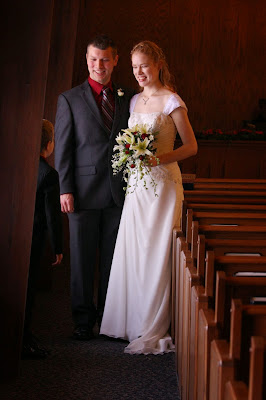
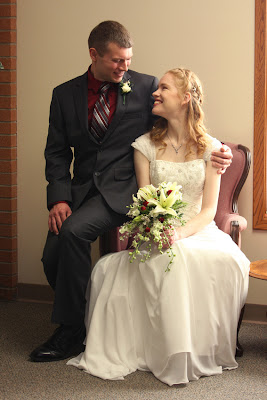
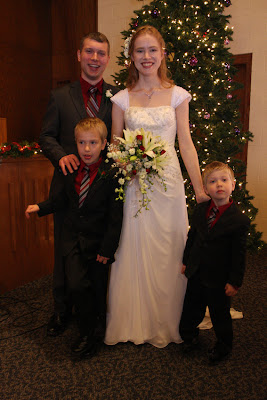
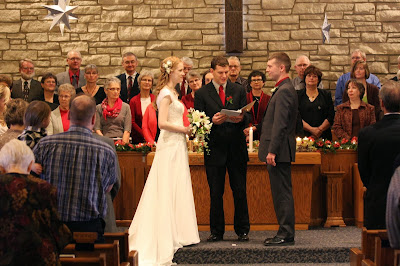
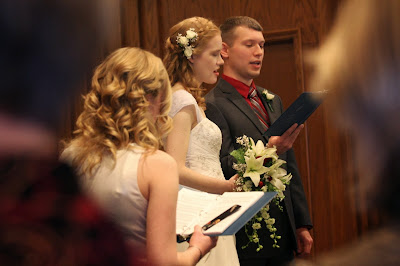
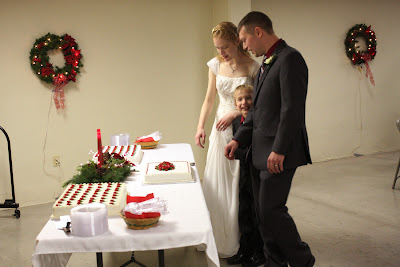
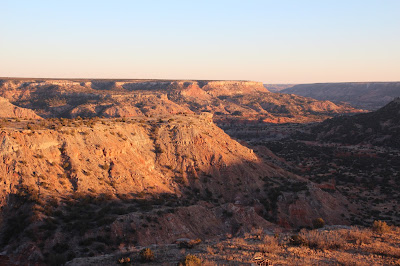
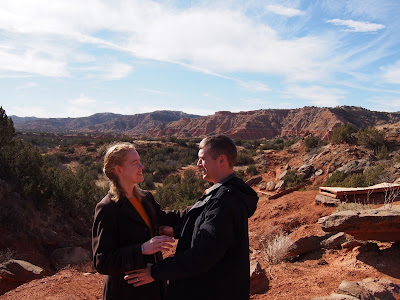
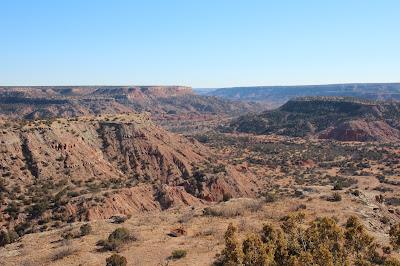
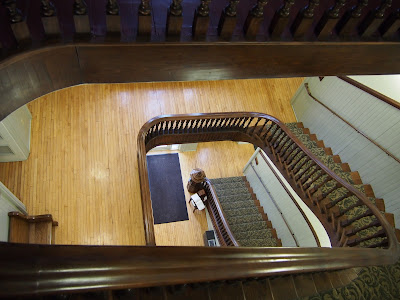
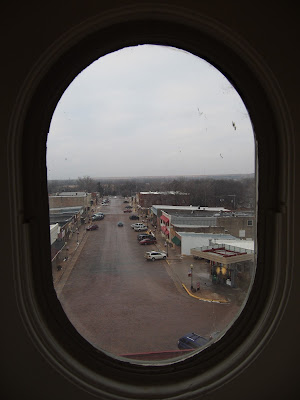
One week before the wedding, to Laura: Mono won t just clear up right away. One week before the wedding, to me: That s going to need stitches. Yes, not long before the wedding, Laura had come down with mononucleosis and I had cut into my finger with a very sharp knife while cutting bread requiring a trip to the emergency room to get stitches. Two days before we got married, instead of moving furniture, I was getting stitches out of my finger. It wasn t the kind of week we had planned. But it was the happiest, most amazing occasion I could have ever imagined. As I wrote last month, I am richly blessed indeed. Our wedding was three days after Christmas. The church was still decorated for Christmas, with the tree in on corner, glittering stars suspended in mid-air on cables from the walls, wreaths and candles in the windows, and it was a joy-filled day. Before the ceremony, we took pictures the only part of the day Jacob and Oliver weren t thrilled with. Nevertheless, we got some fun ones. Laura and I seem to know quite a few pastors between us and not just because Laura is a pastor. My brother officiated with the wedding vows, his wife with scripture and a prayer of blessing, and the church s pastor gave the message. Laura and I wrote in our wedding program, Music has long been a thread running through both our lives. We have enjoyed singing together, playing piano and pennywhistle duets, attending concerts, and even exploring old hymnals. Music is also one of the best ways to have a conversation even a conversation with God. We wrote a page in the program about each of the hymns that were a part of the wedding, and why we picked them. The combined church choirs of my home church and Laura s church sang John Rutter s beautiful arrangement of For the Beauty of the Earth (click here to listen to a different choir). Hearing For the beauty of each hour , For the joy of human love , and Lord of all, to thee we raise this our joyful hymn of praise was perfect for the day. It was with such great happiness that we walked out of the sanctuary, a married couple, to the sound of the congregation singing Joy to the World! Jacob and Oliver were so very excited on our wedding day. They happily explored the church while waiting for things to happen. We had them help us light our unity candle, and they were pleased with that. Jacob loved his suit, which made him look just like me. And they were, of course, delighted with the cake and in the middle of it all. For our honeymoon, we managed to get two weeks of vacation, and spent about half of it at home. We had looked at various options for retreats in the country, but eventually concluded that our house is a retreat in the country, so might as well enjoy it at home. We also went to the Palo Duro Canyon area near Amarillo in the Texas panhandle, staying in a small B&B in Canyon, TX. Palo Duro is the second-largest canyon in North America, and quite colorful year-round. What a beautiful place to go for our honeymoon! By the time we got there, Laura was getting past mono, and we went for hikes in the canyon on two different days hiking a total of 10 miles, including a hike up the side of the canyon. After we got back home, on the last weekday of our honeymoon, we went back to the Flint Hills of Kansas, to some of the same places we had spent our third date. We climbed the windy staircase at the Chase County Courthouse, the oldest courthouse still in use in Kansas. And peered out its famous oval window. We found the last remnant of the old ghost town of Elk, ate at the same restaurant we had that day. It brought back wonderful memories, and it was a good day in itself. Because even though it was a gold, drizzly, overcast day in January, this time, we were married. And this year, Thanksgiving is all year.

18 January 2014

James Bromberger: Linux.conf.au 2014: LCA TV

The radio silence here on my blog has been not from lack of activity, but the inverse. Linux.conf.au chewed up the few remaining spare cycles I have had recently (after family and work), but not from organising the conference (been there, got the T-Shirt and the bag). So, let s do a run through of what has happened LCA2014 Perth has come and gone in pretty smooth fashion. A remarkable effort from the likes of the Perth crew of Luke, Paul, Euan, Leon, Jason, Michael, and a slew of volunteers who stepped up not to mention our interstate firends of Steve and Erin, Matthew, James I, Tim the Streaming guy and others, and our pro organisers at Manhattan Events. It was a reasonably smooth ride: the UWA campus was beautiful, the leacture theatres were workable, and the Octogon Theatre was at its best when filled with just shy of 500 like minded people and an accomplished person gracing the stage. What was impressive (to me, at least) was the effort of the AV team (which I was on the extreme edges of); videos of keynotes hit the Linux Australia mirror within hours of the event. Recording and live streaming of all keynotes and sessions happend almost flawlessly. Leon had built a reasonably robust video capture management system (eventstreamer on github) to ensure that people fresh to DVswitch had nothing break so bad it didn t automatically fix itself and all of this was monitored from the Operations Room (called the TAVNOC, which would have been the AV NOC, but somehow a loose reference to the UWA Tavern the Tav crept in there). Some 167 videos were made and uploaded most of this was also mirrored on campus before th end of the conference so attendees could load up their laptops with plenty of content for the return trip home. Euan s quick Blender work meant there was a nice intro and outro graphic, and Leon s scripting ensured that Zookeepr, the LCA conference manegment software, was the source of truth in getting all videos processed and tagged correctly. I was scheduled (and did give) a presentation at LCA 2014 about Debian on Amazon Web Services (on Thursday), and attended as many of the sessions as possible, but my good friend Michael Davies (LCA 2004 chair, and chair of the LCA Papers Committee for a good many years) had another role for this year. We wanted to capture some of the hallway track of Linux.conf.au that is missed in all the videos of presentations. And thus was born LCA TV. LCA TV consisted of the video equipment for an additional stream mixer host, cameras, cables and switches, hooking into the same streaming framework as the rest of the sessions. We took over a corner of the registration room (UWA Undercroft), brought in a few stage lights, a couch, coffee table, seat, some extra mics, and aimed to fill the session gaps with informal chats with some of the people at Linux.conf.au speakers, attendees, volunteers alike. And come they did. One or two interviews didn t succeed (this was an experiment), but in the end, we ve got over 20 interviews with some interesting people. These streamed out live to the people watching LCA from afar; those unable to make it to Perth in early January; but they were recorded too and we can start to watch them (see below) I was also lucky enough to mix the video for the three keynotes as well as the opening and closing, with very capable crew around the Octogon Theatre. As the curtain came down, and the 2014 crew took to the stage to be congratulated by the attendees, I couldn t help but feel a little bit proud and a touch nostalgic memories from 11 years earlier when LCA 2003 came to a close in the very same venue. So, before we head into the viewing season for LCA TV, let me thank all the volunteers who organised, the AV volunteers, the Registration volunteers, the UWA team who helped with Octogon, Networking, awesome CB Radios hooked up to the UWA repeated that worked all the way to the airport. Thanks to the Speakers who submitted proposals. The Speakers who were accepted, made the journey and took to the stage. The people who attended. The sponsors who help make this happen. All of the above helps share the knowledge, and ultimately, move the community forward. But my thanks to Luke and Paul for agreeing to stand there in the middle of all this madness and hive of semi structured activity that just worked. Please remember this was experimental; the noise was the buzz of the conference going on around us. There was pretty much only one person on the AV kit my thanks to Andrew Cooks who I ll dub as our sound editor, vision director, floor manager, and anything else. So who did we interview? One or two talks did not work, so appologies to those that are missing. Here s the playlist to start you off! Enjoy.

17 January 2014

Rog rio Brito: Developing for Android with Debian

I have just enrolled in a MOOC to learn about programming with Android. There are many tutorials and reports of people using Linux for the development of the apps out there, but, unfortunately, many of them are outdated or contain misleading information. You will find bazillion instructions out there telling you to install JDK6. (Even the instructions in the MOOCs say so, and Google says that it is the only supported version of Java). Even more than that, some of them will tell you that you should not use OpenJDK, but use Oracle's JDK instead. So, if you have a pure amd64 system and you try to install the x86-64 version of Google's Android Developer Tools (ADT), you are going to have a surprise: you will have all sorts of programs telling you that you have file not found, even though the required binaries are there. (This is, of course, besides install openjdk-7-jdk, if you wish to use the integrated Eclipse environment). Turns out that the so-called 64-bit ADT/SDK actually has many 32-bit executables(!) and they aren't statically linked. Inspecting them, I needed the following packages:
    gcc-4.8-base:i386
    libc6-i686:i386
    libc6:i386
    libgcc1:i386
    libstdc++6:i386
    zlib1g:i386
It is worth observing that: Given the above, and given that the version of the GCC libraries can vary a lot, it is perhaps better to simply do something like:
apt-get install libstdc++6:i386 zlib1g:i386
Although not necessary, since you are using an amd64 machine, your computer already supports many more recent instructions that will be used if you install the package libc6-i686:i386. To avoid the emulator from spitting out error messages related to libGL.so, install libgl1-mesa-dev (note: not i386 here). This way, you will be able to run the embedded QEMU with full KVM acceleration if you pass the options -qemu -m 1024 -enable-kvm on Eclipse's "Run > Run Configurations... > Target > Additional Emulator Command Line Options". After that, you are probably good to go.

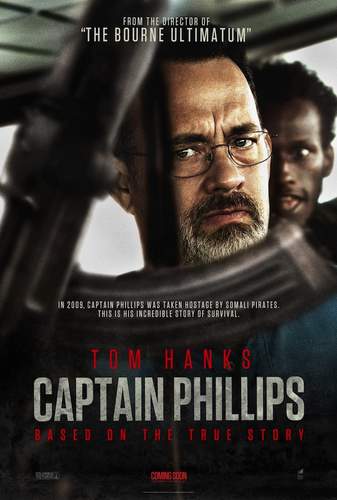
Chris Lamb: Captain Phillips: Pontius Pirate

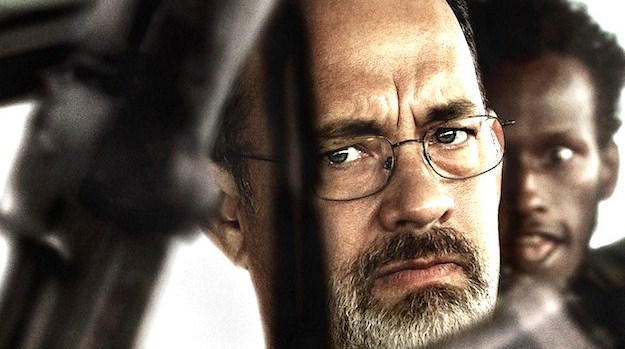
https://chris-lamb.co.uk/wp-content/2014/phillips_b.jpg Somalia's chief exports appear to be morally-ambiguous Salon articles about piracy and sophomoric evidence against libertarianism. However, it is the former topic that Captain Phillips concerns itself with, inspired by the hijacking of the Maersk Alabama container ship in 2009. What is truth? In the end, Captain Phillips does not rise above Pontius Pilate in providing an answer, but it certainly tries using more refined instruments than irony or leaden sarcasm. This motif pervades the film. Obviously, it is based on a "true story" and brings aboard that baggage, but it also permeates the plot in a much deeper sense. For example, Phillips and the US Navy lie almost compulsively to the pirates, whilst the pirates only really lie once (where they put Phillips in greater danger). Notice further that Phillips only starts to tell the truth when he thinks all hope is lost. These telling observations become even more fascinating when you realise that they must be based on the testimony of the, well, liars. Clearly, deception is a weapon to be monopolised and there are few limits on what good guys can or should lie about if they believe they can save lives.
https://chris-lamb.co.uk/wp-content/2014/phillips_c.jpg

Even Phillip's nickname ("Irish") is a falsehood he straight-up admits he is an American citizen.

Futhermore, there is an utterly disarming epilogue where Phillips is being treated for shock by clinical efficient medical staff. Not only will this scuttle any "blanket around the shoulders" clich but is probably a highly accurate portrayal of what actually happens post-trauma. This echoes the kind of truth Werner Herzog aims for in his filmmaking as well his guilt-inducing duality between uncomfortable lingering and compulsive viewing. Lastly, a starter for a meta-discussion: can a film based on real-world events even be "spoilered"? Hearing headlines on the radio before you read your newspaper hardly robs you of a literary journey... Captain Phillips does have some quotidian problems. Firstly, the only tool for ratcheting up tension is for the Somalians to launch verbal broadsides at the Americans, with each compromise somehow escalating the situation. This technique is effective but well before the climatic rescue scene where it is really needed it has been subject to the most extreme diminishing returns. (I cannot be the first to notice the "Africans festooned with guns shouting incomphensively" trope I hope it is based on a Babel-esque mechanism of disorientation from miscommunication rather than anything more unsavoury.)
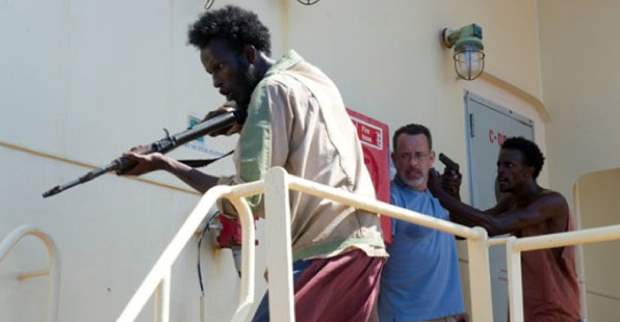
https://chris-lamb.co.uk/wp-content/2014/phillips_a.jpg

The racist idea that Africans prefer an AK-47 rotated about the Z-axis is socially constructed.

Secondly, the US Navy acts like a teacher with an Ofsted inspector observing quietly from the corner of the classroom; far too well-behaved it suspends belief, with no post-kill gloating or even the tiniest of post-arrest congratulations. Whilst nobody wants to see the Navy overreact badly to other military branches getting all the glory, nobody wants to see a suspiciously bland recruitment vehicle either. Paradoxically, this hermetic treatment made me unduly fascinated by them as if they were part of some military "uncanny valley". Two quick observations:
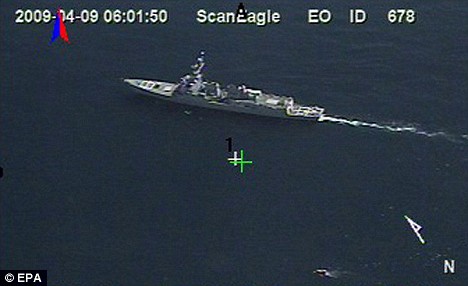
https://chris-lamb.co.uk/wp-content/2014/phillips_d.jpg

The drone footage: I'd love to write an essay about how Call of Duty might have influenced (or even be) cinema.

Finally, despite the title, the film is actually about two captains; the skillful liar Phillips and ... well, that's the real problem. Whilst Captain Muse is certainly no caricatured Hook, we are offered little depth beyond a "You're not just a fisherman" faux-revelation that leads nowhere. I was left inventing reasons for his akrasia so that he made any sense whatsoever. One could charitably argue that the film attempts to stay objective on Muse, but the inability for the film to take any obvious ethical stance actually seems to confuse and then compromise the narrative. What deeper truth is actually being revealed? Is this film or documentary? Worse still, the moral vacuum is invariably filled by the viewer's existing political outlook: are Somali pirates victims of circumstance who are forced into (alas, regrettable) swashbuckling adventures to pacify plank-threatening warlords? Or are they violent and dangerous criminals who habour an irrational resentment against the West, flimsily represented by material goods in shipping containers? Your improvised answer to this Rorschach test will always sit more haphazardly in the film than any pre-constructed treatment ever could. 6/10

Chris Lamb: Review: Captain Phillips (2013)

https://chris-lamb.co.uk/wp-content/2014/phillips_b.jpg Somalia's chief exports appear to be morally-ambiguous Salon articles about piracy and sophomoric evidence against libertarianism. However, it is the former topic that Captain Phillips concerns itself with, inspired by the hijacking of the Maersk Alabama container ship in 2009. What is truth? In the end, Captain Phillips does not rise above Pontius Pilate in providing an answer, but it certainly tries using more refined instruments than irony or leaden sarcasm. This motif pervades the film. Obviously, it is based on a "true story" and brings aboard all that well-travelled baggage, but it also permeates the plot in a much deeper sense. For example, Phillips and the US Navy lie almost compulsively to the pirates, whilst the pirates only really lie once where they put Phillips in greater danger. Notice further that Phillips only starts to tell the truth when he thinks all hope is lost. These telling observations become even more fascinating when you realise that they must be based on the testimony of the, well, liars. Clearly, deception is a weapon to be monopolised and there are few limits on what good guys can or should lie about if they believe they can save lives.
https://chris-lamb.co.uk/wp-content/2014/phillips_c.jpg

Even Phillip's nickname ("Irish") is a falsehood he straight-up admits he is an American citizen.

Lastly, there is an utterly disarming epilogue where Phillips is being treated for shock by clinical efficient medical staff. Not only will it scuttle any "blanket around the shoulders" clich but is probably a highly accurate portrayal of what actually happens post-trauma. This echoes the kind of truth Werner Herzog often aims for in his filmmaking as well his guilt-inducing duality between uncomfortable lingering and compulsive viewing. Another angle worthy of discussion: can a film based on real-world events even be "spoilered"? Hearing headlines on the before you read the newspaper hardly robs you of a literary journey... Captain Phillips does have some quotidian problems. Firstly, the only tool for ratcheting up tension is for the Somalians to launch verbal broadsides at the Americans, with each compromise somehow escalating the situation further. This technique is genuinely effective but well before the climatic rescue scene where it is really needed it has been subject to the most extreme diminishing returns. (I cannot be the first to notice the "Africans festooned with guns shouting incomphensively" trope I hope it is based on a Babel-esque mechanism of disorientation and miscommunication rather than anything, frankly, unsavoury.)
https://chris-lamb.co.uk/wp-content/2014/phillips_a.jpg

The racist idea that Africans prefer a AK-47 rotated about the Z-axis is socially constructed.

Secondly, the US Navy acts like a teacher with an Ofsted inspector observing quietly from the corner of the classroom; far too well-behaved it suspends belief, with no post-kill gloating or even the tiniest of post-arrest congratulations. Whilst nobody wants to see the Navy overreact badly to other military branches getting all the glory, nobody wants to see a suspiciously bland recruitment vehicle either. Paradoxically, this hermetic treatment made me unduly fascinated by them, as if they were part of some military "uncanny valley". Two quick observations:
https://chris-lamb.co.uk/wp-content/2014/phillips_d.jpg

The drone footage: I'd love to read (or write) an essay about how Call of Duty might have influenced cinema.

Finally, despite the title, the film is actually about two captains; the skillful liar Phillips and ... well, that's the real problem. Whilst Captain Muse is certainly no caricatured Hook, we are offered little depth beyond a "You're not just a fisherman" faux-revelation that leads nowhere. I was left inventing reasons for his akrasia so that he made any sense whatsoever. One could charitably argue that the film attempts to stay objective on Muse, but the inability for the film to take any obvious ethical stance actually seems to confuse and then compromise the narrative. What deeper truth is actually being revealed? Is this film or documentary? Worse still, the moral vacuum is invariably filled by the viewer's existing political outlook: are Somali pirates victims of circumstance who are forced into (alas, regrettable) swashbuckling adventures to pacify plank-threatening warlords? Or are they violent and dangerous criminals who habour an irrational resentment against the West, flimsily represented by material goods in shipping containers? Your improvised answer to this Rorschach test will always sit more haphazardly in the film than any pre-constructed treatment ever could. 6/10

Steve Kemp: So I found a job.

Just to recap my life since December:
I had worked with Bytemark for seven years and left for reasons which made sense. I started working for "big corp" with a job that on-paper sounded good, but ultimately turned out to be a poor fit for my tastes. I spent a month trying to decide "Is this bad, or is this just not what I'm used to?", because I was aware that there would obviously be big differences as well as little ones. At the point I realized some of the niggles could be fixed but most couldn't then I resigned, rather than prolong the initial probationary training period - because I knew I wouldn't stay, and it seemed unfair and misleading to stay for the full duration of the probationary period knowing full well I'd leave the moment it concluded - and the notice period switched from seven days to one month.
A couple of people were kind enough to get in touch and discuss potential offers, both locally, remotely in the UK, and from abroad (the latter surprised me, but pleased me too). I spent a couple of days "contracting", by which I really mean doing a few favours for friends, some of whom paid me in Amazon vouchers, and some of whom paid me in beer.
e.g. I tweaked the upcoming death Knight site to handle 3000 simultaneous HTTP connections, then I upgraded some servers from Squeeze to Wheezy for some other folk.
That aside I've largely been idle for about 10 days and have now picked the company to work for - so I'm going to be a contractor with a day-rate for an American firm for the next couple of months. If that goes well then I'll become a full-time employee, hopefully.

16 January 2014

Andrew Pollock: [life] And now for something completely different...

After 8 years, February 6 will be my last day with Google. The hardest pill to swallow with the end of my marriage was the reduction in my time with Zoe. It was one thing to lose my wife, but to lose 50% of my daughter as well has been, and will continue to be, a struggle for me. 2014 is the last year before Zoe starts in Prep (Queensland's school grade before "one"). This is my last opportunity to be able to have a big chunk of time with her before she gets swallowed up by the school system. It's ridiculous to be sticking her in full-time long day care if I have an alternative. And I do have an alternative. I'm in the fortunate financial position of not having a mortgage, or any debt to speak of, and a modest amount of savings. I shall be Daddy Day Care. It had always been my career goal in life to be a stay at home Dad. I'd wanted to have another child and be the one to stay at home and look after the kids, and allow Sarah to resume her career. Obviously none of that worked out, but there's no reason why I can't be a stay at home Dad for at least this year. Zoe's at a wonderful age now. We can have a lot of fun together this year. She's going to be in a 5 day a fortnight Kindergarten program (Monday, Tuesday and every other Wednesday) between 8:20am to 2:30pm, so I'm planning on using one of those days for Debian contributions, one of those days for exploring some of the crazy startup ideas I have rattling around in my head, and every second Wednesday to keep the home tidy. It's going to be a fun, different year for Zoe and I, and I'm so looking forward to it. I'm planning on doing lots of activities from Play at Home Mom, doing lots of baking and we'll be doing Science Friday's. If anyone knows where I can get a toddler-sized lab coat, drop me a line. I'm hoping I can make time to write up our activities for posterity as well.

11 January 2014

Debian Sysadmin Team: Peter Palfrader: The Debian DNS universe

Abstract I recently moved our primary nameserver from orff.debian.org, which is an aging blade in Greece, to a VM on one of our ganeti clusters. In the process, I rediscovered a lot about our DNS infrastructure. In this post, I will describe the many sources of information and how they all come together.

Introduction The Domain Name System is the hierarchical database and query protocol that is in use on the Internet today to map hostnames to IP addresses, to map the reverse thereof, to lookup relevant servers for certain services such as mail, and a gazillion other things. Management and authority in the DNS is split into different zones, subtrees of the global tree of domain names. Debian currently has a bit over a score of zones. The two most prominents clearly are debian.org and debian.net. The rest is made up of debian domains in various other top level domains and reverse zones, which are utilized in IP address to hostname mappings.

Types and sources of information The data we put into DNS comes from a wide range of different systems:
  • Classical zonefiles maintained in git. This represents the core of our domain data. It maps services like blends.debian.org to static.debian.org or specifies the servers responsible for accepting mail to @debian.org addresses. It also is where all the ftp.CC.debian.org entries are kept and maintained together with the mirror team.
  • Information about debian.org hosts, such as master, is maintained in Debian's userdir LDAP, queryable using LDAP1.
    • This includes first and foremost the host's IP addresses (v4 and v6).
    • Additionally, we store the server responsible for receiving a host's mail in LDAP (mXRecord LDAP attribute, DNS MX record type).
    • LDAP also has some specs on computers, which we put into each host's HINFO record, mainly because we can and we are old-school.
    • Last but not least, LDAP also has each host's public ssh key, which we extract into SSHFP records for DNS.
  • LDAP also has per-user information. Users of debian infrastructure can attach limited DNS elements as dnsZoneEntry attributes to their user2.
  • The auto-dns system (more on that below).
  • Our puppet also is a source of DNS information. Currently it generates only the TLSA records that enable clients to securely authenticate certificates used for mail and HTTPS, similar to how SSHFP works for authenticating ssh host keys.

Debian's auto-dns and geo setup We try to provide the best service we can. As such, our goal is that, for instance, user access to www or bugs should always work. These services are, thus, provided by more than one machine on the Internet. However, HTTP did not specify a requirement for clients to re-try a different server if one of those in a set is unavailable. This means for us that when a host goes down, it needs to be removed from the corresponding DNS entry. Ideally, the world wouldn't have to wait for one of us to notice and react before they can have their service in a working manner. Our solution for this is our auto-dns setup. We maintain a list of hosts that are providing a service. We monitor them closely. Whenever a server goes away or comes back we automatically rebuild the zone that contains the element. This setup also lets us reboot servers cleanly since one of the things we monitor is "is there a shutdown running", we can, simply by issuing a shutdown -r 30 kernel-update, de-rotate the machine in question from DNS. Once the host is back it'll automatically get re-added to the round-robin zone entry. The auto-dns system produces two kinds of output:
  • In service-mode it generates a file with just the address records for a specific service. This snippet is then included in its zone using a standard bind $INCLUDE directive. Services that work like this include bugs and static (service definition for static).
  • In zone-mode, auto-dns produces zonefiles. For each service it produces a set of zonefiles, one for each out of a set of different geographic regions. These individual zonefiles are then transferred using rsync to our GEO-IP enabled nameservers. This enables us to give users a list of security mirrors closer to them and thus hopefully faster for them.

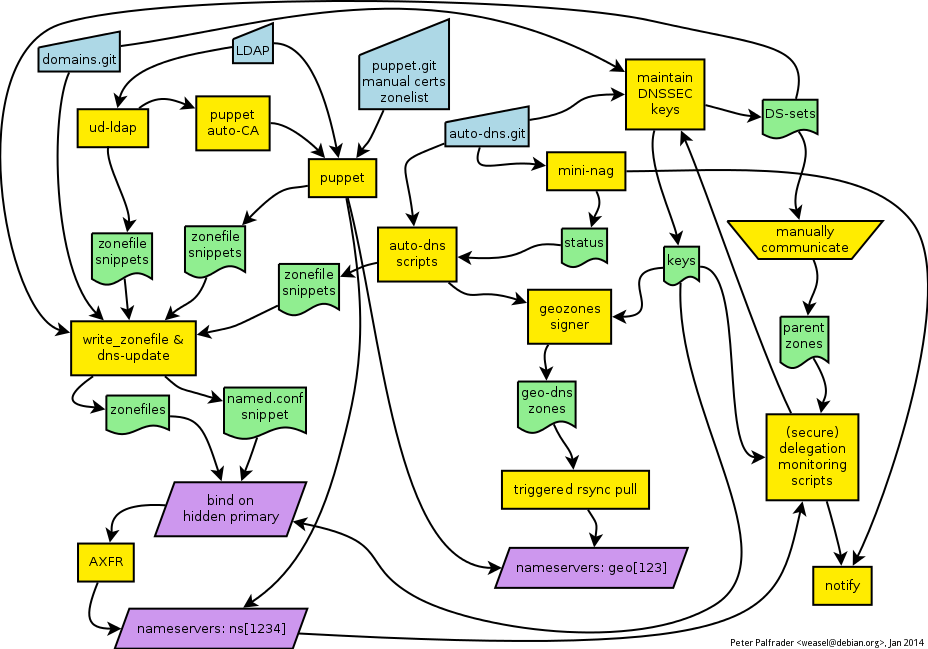
Tying it all together The Debian DNS Rube Goldberg Machine. Figure 1: The Debian DNS Rube Goldberg Machine. Once all the individual pieces of source information have been collected, the dns-update and write_zonefile scripts from our dns-helpers repository take over the job of building complete zonefiles and a bind configuration snippet. Bind then loads the zones and notifies its secondaries. For geozones, the zonefiles are already produced by auto-dns' build-zones and those are pulled from the geo nameservers via rsync over ssh, after an ssh trigger.

and also DNSSEC All of our zones are signed using DNSSEC. We have a script in dns-helpers that produces, for all zones, a set of rolling signing keys. For the normal zones, bind 9.9 takes care of signing them in-process before serving the zones to its secondaries. For our geo-zones we sign them in the classical dnssec-signzone way before shipping them. The secure delegation status (DS set in parent matches DNSKEY in child) is monitored by a set of nagios tests, from both [dsa-nagios] and dns-helpers. Of these, manage-dnssec-keys has a dual job: not only will it warn us if an expiring key is still in the DSset, it can also prevent it from getting expired by issuing timly updates of the keys metadata.

Relevant Git repositories -- Peter Palfrader

  1. ldapsearch -h db.debian.org -x -ZZ -b dc=debian,dc=org -LLL 'host=master'
  2. ldapsearch -h db.debian.org -x -ZZ -b dc=debian,dc=org -LLL 'dnsZoneEntry=*' dnsZoneEntry

9 January 2014

Jo Shields: Here Ye, Here Ye

Valve Software s Steam is the number one digital game distribution service, with more than 65 million registered accounts. Steam runs on Windows, Mac OS, and Linux x86/amd64 computers, and provides access to several thousand games, at varying price points an enormous growth from less than a dozen games for Windows only about a decade ago. Valve s latest endeavour has been to bring their storefront into the living room, with a three-pronged attack: a new game controller, a programme of licensed x86 consoles to plug into the family TV, and an OS to run on the Steam Machines to tie it all together. December saw the first public release of their SteamOS which, as it turns out, is basically just a preconfigured desktop Linux. Specifically, it s a Debian Wheezy derivative, comprising a subset of 502 source packages from Wheezy; 8 of Valve s own source packages; and 51 source packages which have been either patched compared to Wheezy, backported from post-Wheezy, or both. For example, the compiler used by default is gcc-4.7 (rather than Wheezy s 4.6) and the libc version postdates Wheezy too. Valve s official instructions and installer release concerned quite a few people who had planned to try SteamOS on an older PC, by mandating a large (500GB) hard disk and a PC with UEFI firmware. Very quickly a number of instructions started appearing from people trying to fix what people felt were real issues specifically provision for BIOS-based computers, and installation from optical media. After being assured that redistribution of derivatives of SteamOS were entirely authorized (and, in fact, encouraged) I decided to produce my own variant, calling upon my own experience with debian-installer modification from past and present jobs, as well as calling upon the skills and experience of the UK Debian community as needed. The end result is Ye Olde SteamOSe. SteamOS on VMware Workstation 10 This weekend saw the third release of Ye Olde SteamOSe, a derivative designed to greatly widen the pool of computers capable of running Valve s OS. And unlike the first two releases, the public response this time has been crazy. Like, totally crazy. Combined score across several subreddits totals about 1700. 7 pages of Google search results. Hundreds of tweets. Mentions in dozens of blogs around the world. Coverage on the Linux Action Show. Unilaterally added to Softpedia s list of distributions. Almost 2000 views of a video installation walkthrough I posted on YouTube. Crazy. Sadly the idea to try and track visitors to the page didn t occur to me until long after the initial rush subsided, but 1000 visitors on Tuesday for a news story which landed on Sunday is still pretty hot in my book. It s also interesting to observe the demographics of site visitors the #1 referrer on Tuesday was Dutch PC site Tweakers.net, and StumbleUpon outranks reddit for referrals. About 66% of visitors interested in installing my Debian Wheezy derivative derivative came using Windows (20% using Linux), which suggests there s a lot of potential Linux users out amongst the Windows gamer masses. So what s the purpose of this self-congratulatory blog post? Just dick-waving? Well, there s an element of that (I m only human), but I think it might be nice to alert the audience on Planet Debian/Ubuntu, many of whom are not big gamers, to the next big thing in embedded Linux except this time a real GNU/X.org/sysVinit distribution, not some NIH thing like Android. So now you know!

8 January 2014

Gunnar Wolf: [review] Packt's Instant Haml

Packt Publishing sent me Krzysztof Niki ski's Instant Haml to do a short blog review... Thing is, and those who read me know, I cannot write short reviews ;-) So lets see how this goes. Packt's Instant series First, as for the format this book follows and the series it fits in: They are very short books. I was the tech reviewer for their Instant Debian Build a Web Server , and when I opened it for the first time, I thought I had received only the first chapter. This series' motto is Short Fast Focused so, yes, the books are ~50 pages long, with ample margins and many big screenshots. I told the editors I was quite unsure about the value this kind of publications add, as they are very similar to online tutorials, but given they have so many books in this series (printed and electronic), there must be a market for them. They surely know their business better than me! There is one other detail regarding the publisher I'll stick in this section, although it is not specific to their Instant series: I do most of my reading in my Kindle. Packt seems to have chosen to specify a very small font for their texts. Besides the two books mentioned, I also have their Object Oriented JavaScript book. For all of the other books I read, I use the smallest font setting. Packt books in mobi format (what they present as Amazon format in their web site) are basically illegible without bumping up the font size through the roof. As I understand it, publishers should use industry-wide default sizes, and let the reader adjust their reading experience. Yes, books of technical nature (such as Packt's) often benefit from having more displayed information than what an ebook reader normally shows... But that's for me to decide! And no, this is not a Kindle-specific glitch: I also get a similar experience when opening it from Calibre. And as for the book... I am a long-time Haml convert/fan; I packaged its Ruby implementation for Debian (and should update it soon :-/ as new versions have appeared), the corresponding Emacs Lisp mode, and I use it for basically all of my static HTML sites and Ruby-based Web systems. Haml is a great templating language, meant to make dynamic HTML generation leaner and easier. It is a clean and elegant technology, and can clearly sell itself. And the project webpage has very good documentation, ranging from a short tutorial and a full API documentation for people to contribute to the project. The first part of this book, of course, covers the "why is Haml so great?" part, presenting the basic equivalences with HTML. In my opinion, the book could be structured a bit differently and would generate a stronger following. Why? Because, even given that Haml is greatly benefited from its Ruby integration and has many hooks to be tightly integrated in a Rails workflow, it can also be used by people who don't want to do Ruby. I have some static websites that are just a bunch of Haml files, compiled by a very simple Makefile and calling the haml command from the shell. I think there would be some value in presenting this invocation before learning how to call it from the Gems environment (i.e. bundle install). Using Haml as a standalone tool is only presented almost as an appendix ("Using HAML outside of Rails" section). Even more so if the author presents four different static-site solutions (probably more non-programmer-friendly than my trusty Makefile). Oh, and this little section uses the (old? obsolete?) uppercase HAML notation for the project's name instead of the now-standard Haml. Dirty screenshots About the screenshots presented in this first section (and I refer mainly to the scaffolding examples), they are meant to show how easy things are, but have an important stylistic mistake: Terminals with transparency might look cool (I hate using them, but then again I'm a very boring person when it comes to my computer habits ;-) ), but transparencies have no place in a book (be it printed or e-book), as the images appear very uncrisp. In the Kindle, they just seemed dirty Now that I'm browsing the PDF from my desktop, I see that the screenshot in "Step 1" has a photo of Earth from space behind the terminal, and even worse, in "Step 2" it is shown over a Web page detailing the installation! These elements are just distracting, and the text would be much cleaerer if it were presented typeset just as a regular code fragment. Opening many of those screenshots in the Kindle was plain useless. Editor integration It is perfectly clear from this text that the author strongly prefers Sublime Text, sometimes uses TextMate, and has just heard reports that Haml has some support in Vim, Rubymine, Emacs and Coda. Of course, devoting a full page (as it is for the first case) for each editor would be out of proportion for this size of book... I just felt the imbalance too big, specially given that most editors will sport approximately the same feature set. Text redundancy If the Instant series is about making short books, I would expect them to be loaded with easy to follow content (as they are), but free of repetition. I felt, however, a large chunk of step 1 of the "Quick start" chapter to be repeated with the the first section of the "Top 6 features" chapter. Yes, the second one adds some depth, but very little. Still, in the later parts of this "Top 6 features" chapter, a more thorough explanation could be used for the Filters, Multiline attributes/code/strings and helpers and extensions sections. It seems the author was on a hurry trying to get it finished, as it is barely explained Explaining a bit more deeply would surely benefit readers. Wrapping up Reading my review, I'm mostly talking about negative issues. IMO, the book is not excellent, but it is clearly not bad. Specially given it fits very well the format for which it was designed. There are many items that could be fixed, and I hope some of them can be fixed (i.e. the screenshots) before the book goes to print If I understand Packt's page correctly, it is currently only available as ebook, contrary to most of the Instant series' titles.

Steve Kemp: Interesting times

In November I resigned from Bytemark. In December I started working for a local company, here in Edinburgh, in a real office (rather than working from home). Unfortunately today I resigned from that new job, meaning I'm currently unemployed. I plan to take a 1-2 week vacation, then look for another job as a matter of some urgency. (I can live off savings for the next half-year, or so, if I need to, but I'd go crazy if I had nothing to do for that long.) It is unfortunate to have to resign from a new job after only five-six weeks, but much more honest to do so now than pretend everything was OK and do it at the point I'd passed my probationary period (of three months). The people were lovely, the office was lovely, the coffee machine was excellent, the work was interesting, but the nature of a large corporate job with the associated beaurocracy made it a less good fit for me than it looked on paper. I shall pretend that the next week or two of down-time is our honeymoon ;)

6 January 2014

Steve Kemp: A beginning is a very delicate time.

Recently I wrote about docker, after a brief diversion into using runit for service management, I then wrote about it some more. I'm currently setting up a new PXE-boot environment which uses docker for serving DHCP and TFTPD, which is my first "real" usage of any note. It is fun, although I now discover I'm not alone in using docker for this purpose. Otherwise life is good, and my blog-spam detection service recently broke through the 11 million-rejected-comment barrier. The Wordpress Plugin is seeing a fair amount of use, which is encouraging - but more reviews would be nice ;) I could write about work, I've not done that since changing job, but I'm waiting for something disruptive to happen first.. ObQuote: Dune. (film)

4 January 2014

Andrew Pollock: [life] My daughter, the future Olympic swimmer

I'm not a strong swimmer, and never have been. I was never confident in the water as a child. In my teenage years, I had some skin issues that I was very self-conscious about. Going to a boy's school where I was already bullied, I didn't want to add material, so I avoided swimming. To this day, I can barely swim 50 metres freestyle. To think I once had aspirations of getting into the police, which required a bronze medallion. As as result of my atrocious swimming abilities, it's been very important to me that Zoe be able to swim well. Purely for her own personal safety if nothing more. She's been doing "swim classes" of various sorts since she's been 6 months old. In the US, they were group parent/child water familiarisation classes. When we moved back to Australia and turned three, she was eligible to start doing small-group instructor-led classes with Hampton Swim School. It felt like such an milestone just to no longer have to be in the pool with Zoe. I was initially quite skeptical of Hampton's methods, compared with what I'd observed at the Betty Wright Swim School (which subsequently had to close due to aging facilities). Having seen how well Zoe's swimming has progressed in 3 quarters of classes is just amazing. The last few times I've taken Zoe to a public pool for some non-class swim time, her confidence in the water has been fantastic. I've bought some "sinkies", toys that sink to the bottom, and she'll happily dive down to the bottom to retrieve them (with assistance from me getting down there). Today, to escape the 40 plus degree heat, I took her to the Sleeman Sports Centre, because they have a really cool slide, and the whole thing's indoors. Zoe was confidently swimming between me and the side of the pool in water that was over her head, repeatedly. So to have her go from being fine in the water as long as she was being held, to actively asking me to go further back from the wall, in under a year has been really excellent progress. She's also "diving" in off the side (it's more like a bad belly flop, but she has brilliant form at the start, with her hands over her head). We got to the pool today around 10:30am, and it turned out the slide didn't open until 1pm, so we decided to stick around for lunch and wait until the slide opened. To kill time after lunch, we went to the 50 metre pool, where some other kids were taking turns to jump in off the starting blocks. Fearless Zoe wanted to have a go too. This was seriously deep water. It was really inspiring watching this tiny little girl climb up onto the starting blocks of the 1982 Commonwealth Games 50 metre pool and "dive" into the water, flounder over to me, who was furiously treading water in the middle of the lane, and then flounder over to the side, climb out unassisted and do it all over again. It was a seriously "proud father" moment, while I was trying not to drown myself in the middle of the lane. I wish I'd had someone there with a camera to capture the moment. I have great hopes for the future of her swimming, and I think she's ready to go up a level in her swim class.

1 January 2014

Christian Perrier: [life] [running] 2013 summary

Yet another yearly summary of my running activities. As I already explained, now running took precedence over free software activities as you'll notice below... So, what happened on that front in 2013 for running bubulle? I finally managed to run 4603 km during the year, which is 1700km more than 2012. Definitively an explosion as I actually ran over 12.5km every day. I added to this 206km with my moutain bike, all of them achieved during December while I was (and still am) suffering from an injury (fatigue fracture). These 4603km were covered in 458 hours, so a bit over 19 days running and very very slightly over 10km/h. It seems that my favourite race type choice is obvious, here: I'm, by very far, privileging, trail races, either in the country or forests in my neighbourhood....or in moutains. As a result, also, the combined positive climb is faily high, too. Though harder to estimate than distance and time, I end up with about 72,900 meters positive climb (to be compared to last year's 33,000 meters...:-)). Clearly, my summer in moutains made the difference, here.... The longest time period without running, this year, has been 3 days. That's really insane...:-). Particularly when one notices that I happened to run *every day* during 40 consecutive days at one moment, between August and September. Who says that running is indeed a full part of my life? To be honest, I actually didn't run since December 11th (while writing this on January 1st) because of my tibia injury...but I did bike, so that's still some kind of sports, right? Indeed, there have been 282 days in this year where I ran (or biked) at least once. Last year was 205 so....drug addiction is still increasing. Most active month: November with 471km. Less active month: February with 334km (which is indeed more than 2012 most active month..:-)) This year was also a year of records: I ran 14 official races during the year : How about next^W this year? Well, my season's peaks are currently being secured: No marathon as of now...:-). Or, indeed one (Paris in April), but more for fun : I hope to complete it in....less than 5 hours...but still in Spongebob Squarepants suit. You may want to watch TV on April 6th..:-) As I wrote last year : all this of course is assuming that no injury comes up. I currently need to recover from the current one, though it doesn't seem as bad as it seemed a few weeks ago. We'll see on January 1st 2015...:-)

28 December 2013

Richard Hartmann: Release Critical Bug report for Week 52

I had been pondering to do an end-of-year bug stat post. Niels Thykier forced my hand, so here goes :) The UDD bugs interface currently knows about the following release critical bugs: Graphical overview of bug stats thanks to azhag:

Next.

Previous.