Search Results: "ed"

17 March 2011

DebConf team: DebConf6 Blog - Live from Mexico, Oaxtepec, first day down here (Posted by Joerg Jaspert)

So, this should be the first blog post of the DebConf6 Live Blog , run by the DebConf6 Organizers, which appears on Planet Debian. Lets start with some pictures: I have put up some pictures from my flight (the food :) ), and then from today here in Oaxtepec online. You can find them at our gallery, below the DebConf6 album. Everyone else who takes picture: Feel free to register at the gallery, and then send a little mail to gallery-admins@debconf.org, then you can put all your pictures also online there. On the network side - well, we dont have network up in the Vacational Centre yet, Im sitting in a Internet Cafe down in the town, where some locals are building up Wifi Stuff to get Net to our events place. Lets see how that works out. For the rest: Its a very nice place, really.

Michael Prokop: Grml User Survey 2011 the results

The results of the Grml User Survey 2011 are available. I strongly recommend any open source project to run such a survey. Besides gathering really interesting feedback it s motivating for developers to read what people think about your product. Interesting facts for Planet Debian readers: With a leading 86% our users are Debian users. Further quoting:
Also just a short overview but it seems that the most important reasons for using Grml are:
* Based on Debian
* Command-line interface
* Ships all necessary command-line tools
* Zsh
I personally consider the survey a big success for the Grml project. Thanks to all participants for your feedback.

16 March 2011

John Goerzen: A Proud Dad

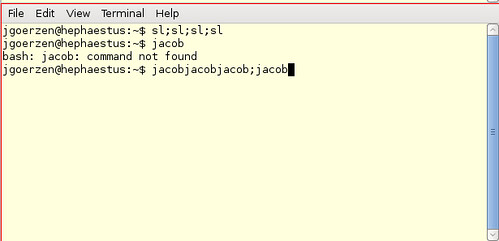
I saw this on my computer screen the other day, and I ve got to say it really warmed my heart. I ll explain below if it doesn t provoke that reaction for you. Evidence a 4-year-old has been using my computer So here s why that made me happy. Well for one, it was the first time Jacob had left stuff on my computer that I found later. And of course he left his name there. But moreover, he s learning a bit about the Unix shell. sl is a command that displays an animated steam locomotive. I taught him how to use the semicolon to combine commands. So he has realized that he can combine calls to sl with the semicolon to get a series of a LOT of steam trains all at once. And was very excited about this discovery. Also he likes how error messages start with the word bash .

Lars Wirzenius: QR codes for backup?

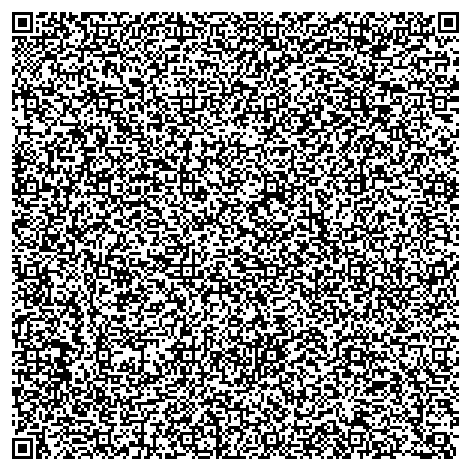
This is probably an idea obvious to everyone, and probably someone's already implemented this, but just in case they haven't, I'll throw this idea out there for someone to hack on. QR codes are two-dimensional bar codes. You can take arbitrary data and encode it into a barcode, which you can then print out. Later, you can scan it in and decode the barcode, and get the original data back. barcode-1.png Given that printed paper is fairly durable and unlikely to go suddenly bad, like hard disks do, this can be used for backups. I did a quick experiment. I put 2000 bytes per barcode and printed it out in various sizes: 10, 20, 30, and 70 mm squares. Then I scanned them in. The 70 mm one was the only one that could be decoded, the others were too small and smudged. It should be possible to fit 12 squares of just under 70 mm on an A4 sized page. That's 24000 bytes of raw data. What could you fit in that space? Or several pages of that? It's not dense enough for storing large amounts of data (images, audio, video), but there's a number of important things that are not so large. Perhaps secret keys, or your Revelation keyring file? For ease of use, it would be good to have a tool to take arbitrary binary data, compress it if possible, divide it into chunks of suitable size, number each chunk, and output a PDF with all the QR codes laid out optimally, ready for printing.

Matt Zimmerman: DEX: Debian and its derivatives, getting things done together

Since I resumed active status in Debian, I ve been thinking about how to bridge the gap between Debian and its derivatives*. I ve spoken at length with Zack, the attendees of the Derivatives BoF at DebConf 10, and the fine folks at the Derivatives Front Desk about the technical and social issues affecting derivative projects, and could probably write a very thorough series of blog posts on the subject. Instead, Zack and I decided to try doing something about it: we have begun a project to test out a new approach to the problem. Introducing DEX DEX is all about action: merging patches, fixing bugs, crunching data, whatever is necessary to get changes from derivatives into Debian proper. DEX doesn t try to change the way any existing project works, but adds a fast path for getting code from one place to another. DEX is a joint task force where developers from Debian and its derivatives work together on this common goal. As a pilot project, we ve established an Ubuntu DEX Team focused on merging code from Ubuntu into Debian. With members from both projects, we hope to be able to resolve blockage anywhere in the pipeline. Whatever needs to get done in order to merge an Ubuntu patch, someone in the Ubuntu DEX team will know what to do. If we get good results with Ubuntu, we hope that other derivatives will follow. With thanks to David Paleino, we re excited that the Utnubu project is merging into DEX as it aligns well with their goals. I m very grateful to have Colin Watson and James Westby signed up to contribute as well. Our first project is simple: turn this list green. This is an archive of quite old patches from Ubuntu, most of which have probably been merged already or made obsolete, but they pre-date any kind of tracking system so they need to be verified. Once that s done, we ll move on to a new project with a new todo list. If you want to see Debian benefit from technical work done in derivatives, DEX is a chance for you to act together to make it happen. If you work on a derivative and want to carry a smaller delta, come and join us. I m sure we ll learn a lot from this experience. * There are many instances of great cooperation between Debian and derivative distributions, including joint package maintenance teams, and some derivatives are even part of the Debian project. Nonetheless, there are areas were most people I ve spoken to agree that we need to do better. This is what I ve referred to as the gap .

Thorsten Glaser: HOWTO OpenID Delegate with Launchpad Login Service

Rhonda suggested I document how to use the LLS (Launchpad Login Service their implementation of an OpenID provider) as Delegate, which basically means, you can put something up on your webpage, which can be a simple static (X)HTML page like mine (a /index.htm is especially nice, a /~user/index.htm works too), and use its URI and not https://launchpad.net/~me to login. For example, this often hides the LLS from view e.g. in blog comments, such as those where Canonical is being criticised but it s also yours, easier to type and to change if you switch service providers. The basic idea is to go to your Launchpad user page and view its page source. Look for openid relation links in the header on Rhonda s the value we re looking for is cyLQbcp , and you see it several times.

Now you put this on your web page:

	<!-- begin: OpenID delegation to LP -->
	 <link rel="openid.server" href="https://login.launchpad.net/+openid" />
	 <link rel="openid.delegate" href="https://login.launchpad.net/+id/cyLQbcp" />
	 <link rel="openid2.provider" href="https://login.launchpad.net/+openid" />
	 <link rel="openid2.local_id" href="https://login.launchpad.net/+id/cyLQbcp" />
	<!-- end: OpenID delegation -->
 

Of course, insert your, not Rhonda s, ID. Do note that we don t copy the X-XRDS-Location tag (that breaks things for some unknown reason), but otherwise, what we insert on our page is pretty much a copy of the info on the user page (maybe it s a Delegate page, too?). As usual, try at your own risk, bug Canonical if it breaks. It works with AO3, Gerrit Code Review, and others though (interestingly enough, better in Lynx than GUI browsers because I stay logged in across Lynx sessions (and just have to confirm sending my information to the accessing site), whereas I have to re-login to the LLS in every GUI browser session). As with the LLS generally, to access a site which is not recognised is expected and worked on with low urgency (mostly cosmetical, I think).

Gerfried Fuchs: Games Team IRC Meeting

As Paul Wise already blogged, there is going to be a IRC meeting of the Debian/Ubuntu Games Team on the upcoming friday night. It will be held at 18th of March at 21:00 UTC in #debian-games on irc.oftc.net, so if you are interested in bringing the Games Team up to pace again, want to join and wonder how you could help, please attend. The agenda isn't final yet, the doodle poll about it is still open, if you want to put your preferences in.

/debian permanent link Comments: 0 Flattr this

Alexander Reichle-Schmehl: Video of the Linux New Media Award Ceremony online

I've just been told, that the video of the Linux New Media Award Ceremony (you might remember that Debian won in two categories) is now available online. Update: To watch that video without a proprietary plugin, you can download the video and watch with xine or some other free media player. Thanks to Rhonda for the hint! My (German) interview with RadioTux is also available online.

Gintautas Miliauskas: Google Munich

It looks like I have made it through most of the hurdles of the Google hiring process, and I should be starting my new job at Google's Munich office soon. Now I just need to haul my stuff to Munich and get the paperwork done. It sure looks like this is going to be a very interesting year.

Daniel Kahn Gillmor: CryptLib and the OpenSSL License

I spent part of today looking at packaging Peter Gutmann's CryptLib for debian. My conclusion: it may not be worth my time. One of the main reasons i wanted to package it for debian is because i would like to see more OpenPGP-compliant free software available to debian users and developers, particularly if the code is GPL-compatible. Cryptlib makes it quite clear that it intends to be GPL-compatible:
cryptlib is distributed under a dual license that allows free, open-source use under a GPL-compatible license and closed-source use under a standard commercial license.
However, a significant portion of the cryptlib codebase (particularly within the bn/ and crypt/ directories) appears to derive directly from OpenSSL, and it retains Eric Young's copyright and licensing. This licensing retains the so-called "advertising clause" that is generally acknowledged to be deliberately incompatible with the GPL. (A common counterargument for this incompatibility is that OpenSSL should be considered a "System Library" for GPL'ed tools that link against it; whether or not you believe this for tools linked against OpenSSL, this counterargument clearly does not hold for a project that embeds and ships OpenSSL code directly, as CryptLib does) This does not mean that CryptLib is not free software (it is!), nor does it mean that you cannot link it against GPL'ed code (you can!). However, you probably can't distribute the results of linking CryptLib against any GPL'ed code, because the GPL is incompatible with the OpenSSL license. The un-distributability of derived GPL-covered works makes the CryptLib package much less appealing to me, since i want to be able to write distributable code that links against useful libraries, and many of the libaries i care about happen to be under the GPL. I also note that Peter Gutmann and CryptLib Security Software (apparently some sort of company set up to distribute CryptLib) may be in violation of Eric Young's License, which states:
 * 3. All advertising materials mentioning features or use of this software
 *    must display the following acknowledgement:
 *    "This product includes cryptographic software written by
 *     Eric Young (eay@cryptsoft.com)"
 *    The word 'cryptographic' can be left out if the rouines from the library
 *    being used are not cryptographic related :-).
A Google search for Eric Young's name on cryptlib.com yields no hits. I do find his name on page 340 of the Cryptlib manual, but that hardly seems like it covers "All advertising materials mentioning features or use of this software". I suppose it's also possible that CryptLib has negotiated an alternate license with Eric Young that I simply don't know about. In summary: i think CryptLib could go into debian, but its incorporation of OpenSSL-licensed code makes it less useful than i was hoping it would be. I have a few other concerns about the package after looking it over in more detail. I suspect these are fixable one way or another, but i haven't sorted them out yet. I'm not sure i'll spend the time to do so based on the licensing issues i sorted out above. But in case anyone feels inspired, the other concerns i see are:
embedded code copies
In addition to embedded (and slightly-modified) copies of bn/ and crypt/ from OpenSSL, CryptLib contains an embedded copy of zlib. Debian has good reasons for wanting to avoid embedded code copies. I've got it CryptLib building against the system copy of zlib, but the bits copied from OpenSSL seem to be more heavily patched, which might complicate relying on the system version.
executable stack
lintian reports shlib-with-executable-stack for the library after it is built. I don't fully understand what this means or how to fix it, but i suspect it derives from the following set of object files that also have an executable stack:
0 dkg@pip:~/src/cryptlib/cryptlib$ for foo in $(find . -iname '*.o'); do
>  if ! readelf -S "$foo"   grep -q .note.GNU-stack ; then
>   echo "$foo"
>  fi
> done
./shared-obj/desenc.o
./shared-obj/rc5enc.o
./shared-obj/md5asm.o
./shared-obj/castenc.o
./shared-obj/bfenc.o
./shared-obj/rmdasm.o
./shared-obj/sha1asm.o
./shared-obj/bn_asm.o
./shared-obj/rc4enc.o
0 dkg@pip:~/src/cryptlib/cryptlib$ 
They probably all need to be fixed, unless there's a good reason for them to be that way (in which case they need to be documented).
non-PIC code
lintian reports shlib-with-non-pic-code on the library after it is built. I don't fully understand what this means, or how to resolve it cleanly, but i imagine this is just a question of sorting out the details.
Anyone interested in using my packaging attempts as a jumping off point can start with:
git clone git://lair.fifthhorseman.net/~dkg/cryptlib
Oh, and please correct me about anything in this post; I'd be especially happy to hear that my analysis of the licensing issues above is wrong :) Tags: cryptlib, gpl, licensing, openssl

Paul Wise: Debian/Ubuntu games team meeting

The Debian/Ubuntu games team has been less active over the past few years, so we are having an IRC meeting at the end of the week as part of an attempt to revive the team a bit. Some of you might have seen the announcement in the Debian Misc Developer News issue 26. So if you have an interest in gaming and Debian/Ubuntu, please join us on the IRC channel. Gamers and lurkers welcome, come one come all! The agenda for the meeting is not yet finalised so if you would like to influence it please take a look at the poll. The primary focus of the meeting looks like it will be reviving the team and looking forward to our goals for Debian wheezy.

15 March 2011

David Welton: Coming Soon: Easy Kindle Publishing with LiberWriter.com

The Kindle isn't the most beautiful device out there - it's not "beautiful", the keyboard takes away some elegance, but I'm absolutely smitten with mine. I like to read, a lot, and being able to instantly beam books to my house is just fantastic. Kindles and other devices like them are also changing the world of publishing, going from the known world of physical books that can't be easily copied to another information good like movies or songs with something of an uncertain future. Yet they're also opening up many possibilities: thanks to Amazon's Kindle Direct Publishing program, it just got very easy to publish books to a platform that a lot of people regularly search for good things to read. Once upon a time, "vanity publishing" was something done by those who simply wanted to see their names in print, but couldn't actually find a publisher, and thus carried some stigma. Now, though, why not publish something you've always wanted to? Granted, without an editor, and publisher to promote your work, you probably won't become rich or famous, but many people write for the enjoyment of doing so. And who knows... there are already several cases of people publishing directly to the Kindle and making a decent income at it. Indeed, I have several things I'm thinking of writing about that clicked when I found the Kindle publishing program. Maybe now it's time to dust off some ideas I've had and start working on them a little bit at a time. Then, of course, my geeky side took over and I started wondering how the mechanics of it actually work. Messily, it turns out: the preferred format for Kindle authoring is variant of HTML that's not at all what we're used to in these days of ever more potent CSS. The good side of it is that books mostly come out looking the same on the Kindle, and the end user can control how they want to visualize them. The bad side of the system utilized is that there are a lot of tips and tricks and little things to know about the whole process that can be annoying even for someone who knows HTML pretty well. For someone who just wants to write stuff and not worry about it, and who perhaps is not very familiar with HTML, the whole thing can be a huge mess and very frustrating. Which of course looks like an interesting challenge. I set out to work on LiberWriter.com several weeks ago, and it should be ready within the next week or two. In short, it's a system that lets you concentrate on writing and, as much as possible, tries to get out of your way in order to let you concentrate on your content. It is also targeted very specifically at the Kindle (for the time being at least), so as to really focus on making things work on that platform. For instance, it can automatically generate a table of contents, a noted pain point in writing for the Kindle. I have a number of other ideas up my sleeve too, that I'm excited to work on. I'm also definitely abandoning the "let's release it for free, for fun, and see if I can find a way to make money later" model of many past projects, and treating it like a business. I think the price I have in mind is very competitive, if you look at, for instance, conversion services that take word and spit out Kindle-specific HTML. Anyway, have a look at the site and sign up if you're interested: as soon as it's ready, I'll email and let you know. There'll be a somewhat limited trial version so that you can play around with it and see if you like it before buying the full version.

Michal &#268;iha&#345;: GPL violation - getting more sources

It has been some time since I updated information about Gammu usage in proprietary software, so here it comes (see other posts tagged with gpl for more information). I still have troubles to explain Anwsoft what they are supposed to release. The good news is that they are still communicating and even providing some updated sources (see git repository), unfortunately they still construct fake projects rather than providing real sources of the application. Anyway if anybody is interested in digging in the sources and finding bits which might be interesting for porting to current Gammu code base, please go ahead, I probably won't have time for that in near future.

Filed under: English Gammu Gpl 3 comments Flattr this!

Mark Brown: ASoC updates in 2.6.38

Linux 2.6.38 was just released, with another big update to ASoC including:

Josselin Mouette: Copyright assignment is killing the free in free software

A few weeks ago, at work, we were looking for a solution to a tricky printing problem: how to manage, in a centralized infrastructure, a large number of locations, worstations and printers? One of the consultants working for us came up with a great idea. With only a 20-line patch to CUPS, workstations would be able to find which printers are on the same location. 20 lines of code, instead of a complex virtualisation solution? This is exactly the kind of reasons why we use free software: when there s something wrong, you can fix it. When you need something more, you can code it. Now, many others could benefit of such an improvement, and we don t want to maintain a forked version of CUPS, so we forwarded it upstream, who looked interested. But upstream now being Apple, they requested a stupid copyright assignment agreement. I will leave to the reader s imagination the complexity of getting such a document signed in a Fortune 500 company with no business with Apple. This will, of course, not happen - and if the decision was mine, the answer would have been a clear No. No, because I want to improve free software, not to contribute to Apple s proprietary version. No, because copyleft is about giving as much as you take. How many contributions are being left out of CUPS because of this stupid copyright assignment? It looks to me that such software is doomed to remain crippled as long as companies like Apple are in charge of their maintenance. There is free software. And there is free software by Apple. And Oracle. And Canonical.

Michal &#268;iha&#345;: phpMyAdmin translation status

Last weekend we've released phpMyAdmin 3.4.0-beta4, hopefully last beta and there are still lot of translations missing. The only new complete translation compared to last week is German, so we now have 13 translations at 100%: There are still lot of translations which would need some love, for example: I'm happy that not only translation status is improving, but some translators also reviewed older translations, so that it is more consistent. The great work in this area was done in Russian. And of course there is still great ongoing effort on Urdu translation. You can help make translation to your language better! If your language is missing just let me know (either in comments or by email).

Filed under: English Phpmyadmin 0 comments Flattr this!

Sam Hartman: Moonshooting Jabber

Last fall, Moonshot was steaming forward. We ran into some non-technical obstacles and progress on the implementation was disturbingly quite from the end of October through February. That changed: the code was released February 25. Since then, the project has picked up the momentum of last fall. There s a new developers corner with helpful links for participating in the project, obtaining the code, and preparing for our upcoming Second Moonshot Meeting. Standards work in the ABFAB working group has been making steady progress the entire time. The jabber chat room has been quite active. Developers have been working in three time zones. Whenever In get up there s likely to be interesting progress awaiting me and new things to work on in the chat logs. Today was no exception. Luke moonshooted jabber. This is exciting: it s the first tim our code has been used to authenticate some real application instead of a test service. Other discussion from the chat room not reflected in e-mail is equally exciting. He has Moonshot working with OpenSSH in controlled environments. It appears to require some updates to the OpenSSH GSS-API support. Now is a really great time to get involved in Moonshot. We hope to see you on our lists and in our chat. With last night s news, we need to think towards eating our own dogfood and using Moonshot to authenticate to our own Jabber server and to authenticate to our repository for commits. Right now, there are some security issues with the code (lack of EAP channel binding) that might make that undesirable. However in a very small number of weeks or months I expect we will be there!

Jo Shields: TWIDed.

Hear me ramble about Mono on This Week In Debian for a half-hour! Go on, hear me! [MP3][Ogg]

Colin Watson: Wubi bug 693671

I spent most of last week working on Ubuntu bug 693671 ("wubi install will not boot - phase 2 stops with: Try (hd0,0): NTFS5"), which was quite a challenge to debug since it involved digging into parts of the Wubi boot process I'd never really touched before. Since I don't think much of this is very well-documented, I'd like to spend a bit of time explaining what was involved, in the hope that it will help other developers in the future. Wubi is a system for installing Ubuntu into a file in a Windows filesystem, so that it doesn't require separate partitions and can be uninstalled like any other Windows application. The purpose of this is to make it easy for Windows users to try out Ubuntu without the need to worry about repartitioning, before they commit to a full installation. Wubi started out as an external project, and initially patched the installer on the fly to do all the rather unconventional things it needed to do; we integrated it into Ubuntu 8.04 LTS, which involved turning these patches into proper installer facilities that could be accessed using preseeding, so that Wubi only needs to handle the Windows user interface and other Windows-specific tasks. Anyone familiar with a GNU/Linux system's boot process will immediately see that this isn't as simple as it sounds. Of course, ntfs-3g is a pretty solid piece of software so we can handle the Windows filesystem without too much trouble, and loopback mounts are well-understood so we can just have the initramfs loop-mount the root filesystem. Where are you going to get the kernel and initramfs from, though? Well, we used to copy them out to the NTFS filesystem so that GRUB could read them, but this was overly complicated and error-prone. When we switched to GRUB 2, we could instead use its built-in loopback facilities, and we were able to simplify this. So all was more or less well, except for the elephant in the room. How are you going to load GRUB? In a Wubi installation, NTLDR (or BOOTMGR in Windows Vista and newer) still owns the boot process. Ubuntu is added as a boot menu option using BCDEdit. You might then think that you can just have the Windows boot loader chain-load GRUB. Unfortunately, NTLDR only loads 16 sectors - 8192 bytes - from disk. GRUB won't fit in that: the smallest core.img you can generate at the moment is over 18 kilobytes. Thus, you need something that is small enough to be loaded by NTLDR, but that is intelligent enough to understand NTFS to the point where it can find a particular file in the root directory of a filesystem, load boot loader code from it, and jump to that. The answer for this was GRUB4DOS. Most of GRUB4DOS is based on GRUB Legacy, which is not of much interest to us any more, but it includes an assembly-language program called GRLDR that supports doing this very thing for FAT, NTFS, and ext2. In Wubi, we build GRLDR as wubildr.mbr, and build a specially-configured GRUB core image as wubildr. Now, the messages shown in the bug report suggested a failure either within GRLDR or very early in GRUB. The first thing I did was to remember that GRLDR has been integrated into the grub-extras ntldr-img module suitable for use with GRUB 2, so I tried building wubildr.mbr from that; no change, but this gave me a modern baseline to work on. OK; now to try QEMU (you can use tricks like qemu -hda /dev/sda if you're very careful not to do anything that might involve writing to the host filesystem from within the guest, such as recursively booting your host OS ... [update: Tollef Fog Heen and Zygmunt Krynicki both point out that you can use the -snapshot option to make this safer]). No go; it hung somewhere in the middle of NTLDR. Still, I could at least insert debug statements, copy the built wubildr.mbr over to my test machine, and reboot for each test, although it would be slow and tedious. Couldn't I? Well, yes, I mostly could, but that 8192-byte limit came back to bite me, along with an internal 2048-byte limit that GRLDR allocates for its NTFS bootstrap code. There were only a few spare bytes. Something like this would more or less fit, to print a single mark character at various points so that I could see how far it was getting:
	pushal
	xorw	%bx, %bx	/* video page 0 */
	movw	$0x0e4d, %ax	/* print 'M' */
	int	$0x10
	popal
In a few places, if I removed some code I didn't need on my test machine (say, CHS compatibility), I could even fit in cheap and nasty code to print a single register in hex (as long as you didn't mind 'A' to 'F' actually being ':' to '?' in ASCII; and note that this is real-mode code, so the loop counter is %cx not %ecx):
	/* print %edx in dumbed-down hex */
	pushal
	xorw	%bx, %bx
	movb	$0xe, %ah
	movw	$8, %cx
1:
	roll	$4, %edx
	movb	%dl, %al
	andb	$0xf, %al
	int	$0x10
	loop	1b
	popal
After a considerable amount of work tracking down problems by bisection like this, I also observed that GRLDR's NTFS code bears quite a bit of resemblance in its logical flow to GRUB 2's NTFS module, and indeed the same person wrote much of both. Since I knew that the latter worked, I could use it to relieve my brain of trying to understand assembly code logic directly, and could compare the two to look for discrepancies. I did find a few of these, and corrected a simple one. Testing at this point suggested that the boot process was getting as far as GRUB but still wasn't printing anything. I removed some Ubuntu patches which quieten down GRUB's startup: still nothing - so I switched my attentions to grub-core/kern/i386/pc/startup.S, which contains the first code executed from GRUB's core image. Code before the first call to real_to_prot (which switches the processor into protected mode) succeeded, while code after that point failed. Even more mysteriously, code added to real_to_prot before the actual switch to protected mode failed too. Now I was clearly getting somewhere interesting, but what was going on? What I really wanted was to be able to single-step, or at least see what was at the memory location it was supposed to be jumping to. Around this point I was venting on IRC, and somebody asked if it was reproducible in QEMU. Although I'd tried that already, I went back and tried again. Ubuntu's qemu is actually built from qemu-kvm, and if I used qemu -no-kvm then it worked much better. Excellent! Now I could use GDB:
(gdb) target remote   qemu -gdb stdio -no-kvm -hda /dev/sda
This let me run until the point when NTLDR was about to hand over control, then interrupt and set a breakpoint at 0x8200 (the entry point of startup.S). This revealed that the address that should have been real_to_prot was in fact garbage. I set a breakpoint at 0x7c00 (GRLDR's entry point) and stepped all the way through to ensure it was doing the right thing. In the process it was helpful to know that GDB and QEMU don't handle real mode very well between them. Useful tricks here were: Single-stepping showed that GRLDR was loading the entirety of wubildr correctly and jumping to it. The first instruction it jumped to wasn't in startup.S, though, and then I remembered that we prefix the core image with grub-core/boot/i386/pc/lnxboot.S. Stepping through this required a clear head since it copies itself around and changes segment registers a few times. The interesting part was at real_code_2, where it copies a sector of the kernel to the target load address, and then checks a known offset to find out whether the "kernel" is in fact GRUB rather than a Linux kernel. I checked that offset by hand, and there was the smoking gun. GRUB recently acquired Reed-Solomon error correction on its core image, to allow it to recover from other software writing over sectors in the boot track. This moved the magic number lnxboot.S was checking somewhat further into the core image, after the first sector. lnxboot.S couldn't find it because it hadn't copied it yet! A bit of adjustment and all was well again. The lesson for me from all of this has been to try hard to get an interactive debugger working. Really hard. It's worth quite a bit of up-front effort if it saves you from killing neurons stepping through pages of code by hand. I think the real-mode debugging tricks I picked up should be useful for working on GRUB in the future.

14 March 2011

Erich Schubert: GNOME3 in Debian experimental - python and dconf

As GNOME3 slowly enters Debian experimental, things become a bit ... experimental.
The file manager can be set to still draw icons on the desktop, but that doesn't entirely work yet (it will also open folders as desktop then...)
One machine had lost the keyboard settings. I could not set the fonts I wanted...
There is a tool called dconf-editor that will allow you to manually tweak some settings such as the fonts. But it doesn't seem to have support for value lists yet - and the keyboard mappings setting is a string list.
So here's sample python code to modify such a value:
from gi.repository import Gio
s = Gio.Settings.new("org.gnome.libgnomekbd.keyboard")
s.set_strv("layouts", ["de"])
Update: you could also install the optional libglib2.0-bin and use the gsettings command.

Next.

Previous.