Search Results: "rra"

2 September 2010

Vincent Sanders: You shall go to the ball!

Contrary to my last post I was able to attend the Debian UK BBQ at the weekend. My wonderful wife ditched me at Portsmouth station with permission to go play with my friends ;-)

Perhaps a bit more explanation is warranted about that last statement! We travelled back from France last Saturday. We were on the 12:15 (CET) ferry so had to be awake and on the road for the five hour France drive at "oh my gosh its early" time. The crossing to Portsmouth was slow as it was very choppy and we were leaving the Port at 15:30 at which point Melodie was good enough to let me go play with my friends while she drove home.

I did have the "fun" of doing the Portsmouth->London->Cambridge trip on UK public transport but it went pretty smoothly. Walking from Cambridge station to the BBQ location was a bit dumb, next time I am taking a cab!

The BBQ was excellent fun and big thanks for Steve for holding it again. Its always fun to meet the usual suspects. We also got to set a new occupancy record at Steves house Saturday night and discovered that certain members of Debian UK snore rather loudly (I think at one point we could measure it on the Richter scale).

Back home now of course. Work is the same as when I left so no change there and the Boys first day back at school seems to have gone smoothly too.

Evgeni Golov: The joy and pain of WordPress

As you may not have noticed, I migrated my site to WordPress some time ago as I did not want to maintain the old piece of crap I wrote myself when I was young ;)
Today I want to tell you a story of the development of a plugin for WordPress. As the title says, it s much about joy and pain and I think I should start with the pain :) WordPress is written in PHP, so are the plugins for it. And PHP is REAL pain (but there is no decent blogging software for Django or Zope that would fit all my needs). It is especially pain when you work with Python every day. What the heck are those curly braces and dollar signs and $this-> ? That s just not the way Guido indented it ;)
Additionally my last contacts with PHP were some time back in 2008 when I hacked on SysCP, which today result in commits like this:
-        if (is_int($new_instance['max_items'])) $instance['max_items'] = $new_instance['max_items'];
+        if (ctype_digit($new_instance['max_items'])) $instance['max_items'] = $new_instance['max_items'];
But I have to admit that the WordPress API is pretty good. Not very well documented (the wiki pages at codex.wordpress.org are sometimes outdated), so you have to read the source and google a bit, but when you found the needed sources, it s pretty straight forward.
My plan was to write a simple widget, displaying my Twitter and identi.ca timelines. Yes, both together, not one widget per service. The reason for this is the fact that I mostly post via identi.ca and the messages get synced over to Twitter and only the local replies and retweets/redents differ.
The basic WordPress widget would look like this (source: http://codex.wordpress.org/Widget_API#Developing_Widgets_on_2.8.2B):
class My_Widget extends WP_Widget  
	function My_Widget()  
		// widget actual processes
	 
	function form($instance)  
		// outputs the options form on admin
	 
	function update($new_instance, $old_instance)  
		// processes widget options to be saved
	 
	function widget($args, $instance)  
		// outputs the content of the widget
	 
 
register_widget('My_Widget');
One only has to modify the widget() function and here you go. From some other Twitter plugin I knew that I only had to include rss.php and call fetch_rss(url) for every feed URL to get the timelines as an array via MagPie. But when looking at rss.php, you notice the deprecation message in the header, saying one should use SimplePie now. Some google later I knew that I had to include feed.php and call fetch_feed(url) to get a SimplePie object representing the feed contents. But SimplePie is even cooler: I can call fetch_feed(array(url1, url2)) and get a merged feed, containing both.
Now I added a duplicate filter to elliminate the messages posted to both, twitter AND identi.ca and my widget was ready. You can find the result on http://github.com/evgeni/wp-statusnet-widget and soon on http://wordpress.org/extend/plugins/statusnet-widget/ :)

1 September 2010

Gunnar Wolf: Cycling, cycling everywhere!

I have been wanting to post for several days already, at least since this last Sunday. I have repeatedly bragged about taking part in the Ciclot n: The last Sunday every month, the city's government closes to automotive transit a ~33Km circuit, for cyclists to enjoy. And by cyclists, I mean people from all expertise ranges Well, the very elite bikers will not take part of such a massive thing, but there are people pedalling a couple of blocks, people taking their small kids to drive a bit, and I recognized an amazingly large proportion of people doing the whole route. Well, this last Sunday one lap was not enough for me I did two laps, ~65Km. (oh, and just for keeping the complaint current: After all, SportsTracker did release a version of thier software for the N95... But it requires Flash for using the webpage at all. I have several pointers at other applications... but am time-starved right now to start reviewing :-/ ) Anyway, I decided to do this double ciclot n in order to train for next week. If you are anywhere near Mexico City, you are invited - this is meant to be a large group ride, and looks very fun! Doble Marat n Ciclista Urbano del Bicentenario We are two weeks away from the 200 year conmemoration of the beginning of the Independence War in Mexico. A group of cyclists came up with the idea to organize a Double Marathon to celebrate! 84Km of biking in Mexico City: For some reason, the distance numbers in that map were made... in miles :-P Anyway, the planned route will be:
  1. Jardin de los periodistas ilustres (Delegaci n Venustiano Carranza)
  2. Aeropuerto Internacional de la Ciudad de M xico
  3. Circuito Bicentenario ( antes circuito interior )
  4. Monumento a La Raza - Hospital La Raza
  5. R o San Joaquin
  6. Viaducto Bicentenario ( carril confinado sin interrumpir la circulacion )
  7. Torres de Sat lite 50 aniversario
  8. Presidencia municipal de Tlalnepantla
  9. Presidencia municipal de Naucalpan
  10. Anillo Periferico Sur
  11. Secretar a de la Defensa
  12. Bosque de Chapultepec 1 y 2 secci n
  13. Segundo Piso del Distrito Federal
  14. Ciudad Universitaria patrimonio cultural de la humanidad
  15. Insurgentes Sur
  16. Miguel ngel de Quevedo
  17. Calzada de Tlapan
  18. Z calo centro historico del distrito federal
  19. Calle 16 de septiembre fin del recorrido
It looks very fun. Besides, although it is not that flat, it is one of the flattest long distance routes you will ever have. The toughest part will be IMO the Northern part of Circuito Bicentenario and possibly some bits of Perif rico towards Naucalpan. Then, a long flat stretch, with one long but not steep way up in Segundo Piso (near Las Flores), and a little stretch towards Ciudad Universitaria. Other than that, it looks very doable if you are in a moderately decent condition. And taking part in such a thing is very very worthy! As a final note... This same Sunday, it has been somewhat publicized the first D a Nacional de la Bicicleta (Bycicling National Day) will be held all over the country, kickstarting the National Cycling Crusade. Sounds nice, right? Even impressive? Yeah, but... If you look at the published information (in the page I just linked), you will see several cities are opening cyclist circuits. For one day only, which means, it does not build awareness among the population on how easy, how convenient and how fun it is to use the bicycle as means of transportation. And not only that The cyclist routes clearly make a point that cycling is a good way, at most, to have fun... But not a general habit we should all embrace. Lets see, as an example, the distances offered (only for the cities quoting route length): ...And so it goes. As you can see, several very important cities (i.e. Monterrey, Chilpancingo, Cuernavaca) put only a 2km route. 2Km by bike is... Nothing. 2Km is done at a leisurely pace in less than 15 minutes (I often sustain 20Km/h, which would mean 2Km in 6 minutes). And, in this short sample (the linked page has the information for several other states, but the pattern holds), most states are only making this in the largest city or two, completely forgetting the bulk of their territories. In my opinion, this "effort" was done backwardsly, and ends up delivering the exact opposite message to what should be done.

31 August 2010

Jordi Mallach: De mar a mar, hiking across the Pyrenees

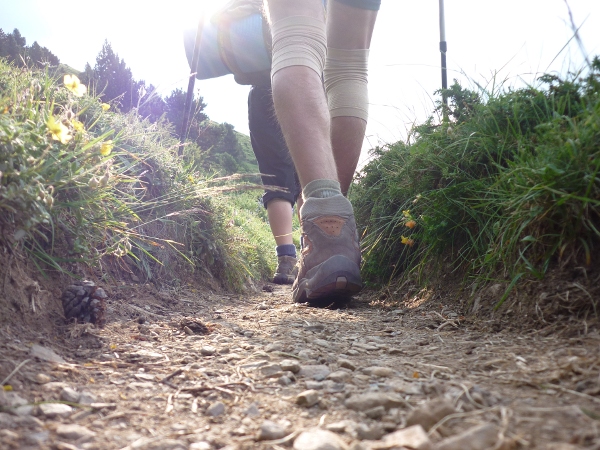
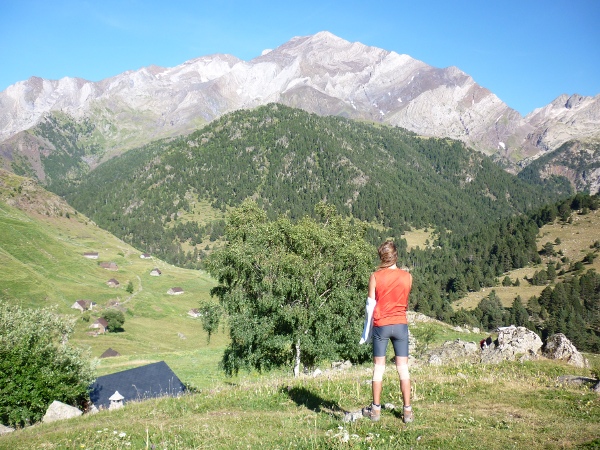
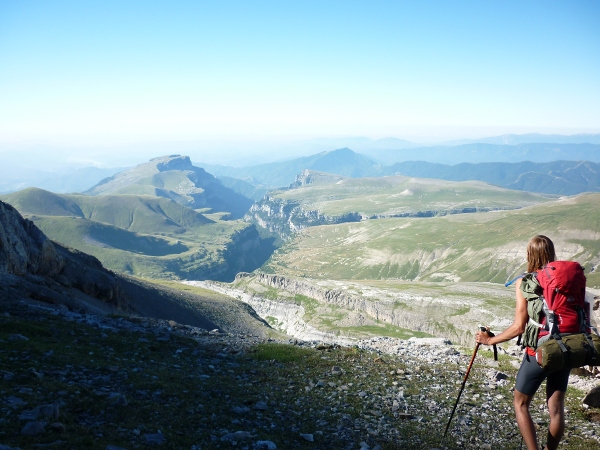
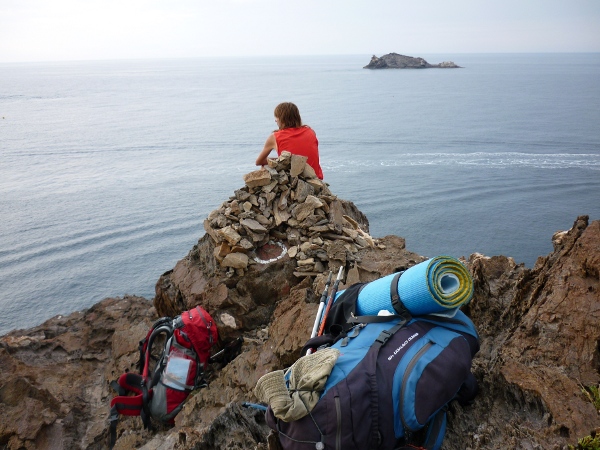
Two weeks ago, Maria and I completed one of our dreams when we arrived in Cap de Creus, where the Pyrenean range sinks in the Mediterranean. To get there, we walked hundreds of kilometres during a month, crossed dozens of steep valleys and enjoyed one of the richest experiences of our lives.

We managed to complete this challenge without facing major problems or pains, and after the first five our six days, our legs seemed to have gotten used to the daily effort and it started to be easier and easier. Our morale kept growing as days passed and we advanced east. When I started walking on a cold and rainy morning in Hondarribia, after barely no rest in the night bus to Ir n, I thought for myself that it was improbable that we'd manage to get anywhere near Catalunya, that one of us would get injuried way before, or we'd just give up and go for the easy beach vacation in the Basque Country.


Biad s refuge, under Posets But we didn't, and after a somewhat painful start, with our boots soaking wet during the stages that crossed the enchanting Selva de Irati which ended up with me getting the biggest blister I've ever seen, we started to walk farther every day, extending the stages when we felt strong after reaching their official end. When we crossed from Nafarroa to Aragonese territory, the mental wall that I had built over the toughest stages in our quest started to fall apart. Days later, we found ourselves climbing down to Pineta, leaving Ordesa behind and enjoying a feeling that our adventure could not go better. The weather had been perfect for over a week and our legs and back were strong to go all over the way to the sea.


Ca n de A isclo, on our way to Pineta When we finally saw that huge blue stain on the horizon, the day before getting to the last mark, we got really excited. We had made it, but as we walked towards the cape, happiness slowly got mixed with melancholy. An unforgettable adventure was about to end, and we didn't want to face our return to the city and our routines. It had been many days surrounded only by awesome landscapes, and living without watches, with only sunlight and weariness marking the time to get in our sleeping bags.


At the very last red and white mark of our journey We've had plenty of time to meet great people. Starting with the Navarrian brothers we met in the early stage, which provided us with a good pace to follow while our leg muscles were still building up; or Kike and Ana, who drove from Pamplona to visit us during the first Aragonese stages (thanks for the supplies!). Tom s and Roger, young hikers from Matar , surprised us with their maturity and experience as mountaineers; we had the pleasure to join forces during four days, walking a really cool variant through the Infiernos and Collado del Letrero which avoided going through the ghost city of Panticosa. Roger and Tom s, we really hope to meet you soon! Andreu, Manel, Ghandi and Ga la visited us at the Vall de N ria and were unlucky to suffer a frightening hail and thunder storm when they left our shelter on their way back to their car. Thanks! All of you have been a very special part of our experience!

This adventure through GR 11 has been incredibly positive for us for several reasons. We've learned a lot about ourselves and strengthened our relation, and now I know how powerful drive can be; to get somewhere, no matter how far, it's really easy if you just believe you can do it and desire to get there. Maria and I are proud of what we've done, and no wonder we're looking for new challenges. An obvious one would be repeating this experience, going through the French side of the Pyrenees, but for now, the Corsican GR 20 seems the most appealing. We'll see, next summer!

Iustin Pop: Spooky harddrive

For a couple of weeks, one of the harddrives in my server has started to behave strangely. The RAID controller has started first reporting some drive timeouts (daily, when the drive runs a short or long smart test), and now it even kicks it out of the (RAID1) array. And yet, during normal operation, there's no read error or write error that I can trigger, and there are no reallocated sectors (according to smart). The only time when I can reproduce the error is: What happens when both these conditions are met? The the SMART query is taking ages (as in ~20-30 seconds). This might cause some such high delays that the drive itself will report a timeout error (if any I/O takes place at the same time), and log an error in its internal error log. Another harddrive (identical brand): ~3s for SMART query during selftest and I/O load, no issues whatsoever. For this harddrive, smartctl -a reads a while, and then:
Error SMART Error Self-Test Log Read failed: Input/output error
Smartctl: SMART Self Test Log Read Failed
 
real    0m39.029s
The timeout above also has generated lots of errors in the drive's error log. I don't know how to read these properly, but in any case they don't seem too scary:
Error 144 occurred at disk power-on lifetime: 13552 hours (564 days + 16 hours)
  When the command that caused the error occurred, the device was doing SMART Offline or Self-test.
  After command completion occurred, registers were:
  ER ST SC SN CL CH DH
  -- -- -- -- -- -- --
  10 51 00 80 ae 39 40
  Commands leading to the command that caused the error were:
  CR FR SC SN CL CH DH DC   Powered_Up_Time  Command/Feature_Name
  -- -- -- -- -- -- -- --  ----------------  --------------------
  61 80 70 80 ae 39 1c 08  41d+08:07:45.052  WRITE FPDMA QUEUED
  b0 d0 01 00 4f c2 00 08  41d+08:07:45.038  SMART READ DATA
  ec 00 01 00 00 00 00 08  41d+08:07:44.958  IDENTIFY DEVICE
  2f 00 01 10 00 00 00 08  41d+08:07:44.957  READ LOG EXT
  61 80 70 80 ae 39 1c 08  41d+08:07:37.960  WRITE FPDMA QUEUED
For some of the errors, all preceding commands are WRITE FPDMA QUEUED, but all are during a "SMART Offline or Self-test" phase. When a self-test is not being done, reading all the SMART data (smartctl -a) is very very quick, taking half a second. The only thing I can think of is that the drive's own area for storing SMART data is unhealthy, and reading it takes time, and a concurrent SMART test and I/O load makes it hard for the drive to do so. But again, I can't trigger any real I/O error, nor at the beginning of the drive neither at the end, so This also happens when the drives is connected to a plain SATA port, skipping the RAID controller, so it's not just the controller playing games on me. I'm really confused now. Given my previous experience, this drive will die, should already have died, and yet, no I/O errors, just some timeouts. Do I just need to wait a couple more weeks?

30 August 2010

Tim Retout: Hacking

Here in the UK we've had a bank holiday weekend. Usually I would have gone to Cambridge for the Debian BBQ, but this year I joined forces with Thomas Adam for some SmoothWall Express on Debian hacking. There are several challenges involved in moving the SWE3 code from its native distribution to Debian; this weekend we worked around some of the permissions problems. On SWE3, the web server and most of the service daemons run as the user 'nobody'. This means that the web server can write out configuration files as the same user as everything else; it can also read the system log files. When the web interface needs to run a privileged action (like setting firewall rules), it sends a command to 'smoothd', which is a daemon running as root. (Admin ssh access is always directly as the root user.) However, web servers in Debian tend to run as user 'www-data', which does not have permission to read log files. Similarly, writing out configuration files as that user would mean that any cgi script (not just ones in the swe3 package) could modify them. I would prefer to run the swe3 cgi scripts as a separate user, and grant this user permission to view logs etc. This debian-webapps thread makes it sound very easy, but if you want to do that with cgi scripts rather than fastcgi, I think you have to run a separate web server for each user. On Sunday afternoon, in a dramatic display of corner-cutting, I gave up on that approach and added www-data to the 'adm' and 'proxy' groups in the postinst. Thomas heroically patched all the cgis to call the "config writers" via smoothd, although I'm wondering whether some careful use of the chgrp command in the postinst might be better than running that code as root. Another hack: in order to actually start a firewall, we needed to know which network card is the "RED" interface, in SWE3 terms; i.e. which one is meant to be the public-facing network device. It's also nice to know which one is "GREEN". So two debconf questions and some hardcoded magic numbers later, we have a basic firewall init script. Lovely. Oh, and at some point I removed the htaccess file, so any user on your network can mess with your firewall. Should probably fix that. Today I started some awful scripts which use Simple-CDD to build an iso containing all the packages we want. We are going to need to extend the networking configuration in the installer to set up multiple network cards. Then we need to figure out a nicer way of assigning IP addresses to devices; unlike on the proprietary version of the product, there seems to be no web configuration of network settings in Express. I've not figured all of this out yet. So, in summary: we are deliberately trading some technical debt in order to quickly produce an initial release that might interest people. (But please note the disclaimer of warranty in the README file in that directory.) And in other news, I've been working at Smoothwall Ltd. for just over one year. Hmm. So this is what they call 'experience'.

Martín Ferrari: Some LaTeX stuff

The last few weeks I have been using LaTex a lot, to write the final report for my master's course. During that period I found a couple of LaTeX goodies that might be interesting to share: the memoir class, gnuplot integration, and some stuff to help preparing cover pages. The memoir class is a kind of all-in-one package. It is meant to be used in place of the book and report classes, but it can also replace simpler environments, such as article. It provides many ready-to-use templates, and loads of commands to easily customize them. It seems to be specially tailored for dead-tree publication, dedicating an entire chapter in the manual to page layout. It also aims at removing the usual cruft you have to add into any medium sized project, it is macro-compatible with: abstract, appendix, array, booktabs, ccaption, chngcntr, chngpage, dcolumn, delarray, enumerate, epigraph, framed, ifmtarg, ifpdf, index, makeidx, moreverb, needspace, newfile, nextpage, parskip, patchcmd, setspace, shortvrb, showidx, tabularx, titleref , titling, tocbibind, tocloft, verbatim, and verse. Furthermore, it provides functionality equivalent to the following packages: crop, fancyhdr, geometry, sidecap, subfigure, titlesec. In the end, you have a project that only needs a couple of packages, and a few customisation commands, which is nice and also eases distribution. Other nice thing I have found is that there is not one, but many ways of merging gnuplot graphs into your text while having LaTeX typeset all the labels. There is some LaTeX packages aimed at this, but I have more success using a special gnuplot terminal. Again, there is more than one option: eepic, epslatex, latex, lua, mp, pslatex, pstex, pstricks, texdraw, and tpic. While I could not try them all, I tried a few and the easiest and prettiest was epslatex. This terminal creates two files: a EPS file, as would have been created with the usual postscript terminal, except that it does not contain any text; and a LaTeX snippet meant to be included with \input foo . Finally, I could generate graphs that match the rest of the document! To end this post, a couple of things about creating the dreaded cover page. First, a suggestion: don't fret too much about finding a ready-made template, once you understood the basics of how to insert arbitrary spaces around text, it is quite easy to roll your own cover! Having said that, the memoir manual has some sample cover pages that can be useful to use as a base, and there is another really useful resource I have found: titlepages.pdf, a collection of 40 sample title pages with source code for you to choose. Tags: Planet Debian, Planet Lugfi, latex

29 August 2010

Luca Bruno: Too many gurus spoil the plug

Being a rather patient and peaceful guy, I acknowledge that perfection is a difficult goal and I rarely rant publicly about troubles I ve stumbled upon.
Today however, I feel I have to wholeheartedly agree with Bernd about Guruplug: it has been a waste of money. I received mine in May, with the order placed and payed in February. First thing noticed is the issue with the power supply: I really think they forgot QA testing on these machines, as my PSU (and many others, just skim through the official forum) blew up just an hour after power-up. I wasn t lucky enough to admire over-heating and internal (mis-)cooling, as it went immediately through GlobalScale sales department for a RMA under warranty. And then I waited for GlobalScale, for an actually working unit. And still I am, it s almost September now. Patiently waiting (hoping, I d say) for some answers. I m not sure who to blame here, Marvell, GlobalScale or both, for this issues with regards to QA, design and sales. But I m quite sure the final result has been already perfectly described: a major fail.

27 August 2010

Colin Watson: Windows applications making GRUB 2 unbootable

If you find that running Windows makes a GRUB 2-based system unbootable (Debian bug, Ubuntu bug), then I'd like to hear from you. This is a bug in which some proprietary Windows-based software overwrites particular sectors in the gap between the master boot record and the first partition, sometimes called the "embedding area". GRUB Legacy and GRUB 2 both normally use this part of the disk to store one of their key components: GRUB Legacy calls this component Stage 1.5, while GRUB 2 calls it the core image (comparison). However, Stage 1.5 is less useful than the core image (for example, the latter provides a rescue shell which can be used to recover from some problems), and is therefore rather smaller: somewhere around 10KB vs. 24KB for the common case of ext[234] on plain block devices. It seems that the Windows-based software writes to a sector which is after the end of Stage 1.5, but before the end of the core image. This is why the problem appears to be new with GRUB 2. At least some occurrences of this are with software which writes a signature to the embedding area which hangs around even after uninstallation (even with one of those tools that tracks everything the installation process did and reverses it, I gather), so that you cannot uninstall and reinstall the application to defeat a trial period. This seems like a fine example of an antifeature, especially given its destructive consequences for free software, and is in general a poor piece of engineering; what happens if multiple such programs want to use the same sector, I wonder? They clearly aren't doing much checking that the sector is unused, not that that's really possible anyway. While I do not normally think that GRUB should go to any great lengths to accommodate proprietary software, this is a case where we need to defend ourselves against the predatory practices of some companies making us look bad: a relatively small number of people do enough detective work to realise that it's the fault of a particular Windows application, but many more simply blame our operating system because it won't start any more. I believe that it may be possible to assemble a collection of signatures of such software, and arrange to avoid the disk sectors they have stolen. Indeed, I have a first draft of the necessary code. This is not a particularly pleasant solution, but it seems to be the most practical way around the problem; I'm hoping that several of the programs at fault are using common "licence manager" code or something like that, so that we can address most of the problems with a relatively small number of signatures. In order to do this, I need to hear from as many people as possible who are affected by this problem. If you suffer from this problem, then please do the following: I hope that this will help me to assemble enough information to fix this bug at least for most people, and of course if you provide this information then I can make sure to fix your particular version of this problem. Thanks in advance!

Richard Darst: DebConf budgeting for a single conference

My last post discussed the year-to-year budgeting of DebConf. This post discusses what makes budgeting difficult within one particular DebConf. Since every DebConf is unique in its arrangements, the particular difficulties always vary year-to-year. For example, DebConf10 was easy in that Software in the Public Interest was in the same country so that we had easy access to bank accounts, but more difficult venue payment logistics. I'll use DebConf10 as an example below.
For DebConf10, we get our venue "for free" thanks to the support of the Columbia Computer Science department. However, we had to pay for guard costs after building hours, and custodial costs. For custodial costs at least, we had to go through many layers of bureaucracy, and people kept insisting it would be more than they quoted. (It ended up being about half, since DebConf attendees were so responsible!)DebConf sponsors many attendees. This means that all their food and accommodation costs are paid by us. We have sponsored registration and reconfirmation deadlines to set a maximum of the number of people we have to sponsor, but people are continually dropping out and it's hard to know just how many people to reserve for. Sponsored people won't always eat every meal with us, and usually won't decide until the day before - so figuring out food amounts is hard, too. Furthermore, we have unsponsored people who will want food and accommodations (paying themselves) which we must somehow plan for.Different venues operate on different payment rules. This year, CU Housing was fairly strict on asking for attendee counts and room assignments two weeks in advance. Then, as time gets closer, they got more flexible, and in the end told us that they will, in fact, only charge based on number of people actually attending - a huge win for us. Similarly with CU Dining, we had to go through great lengths to make sure that we would pay only for meals we ate. At CU, food had to be paid in advance, but accommodation and other costs are paid afterwards.We have to guess how much will be spent on miscellaneous supplies once DebConf starts. We have to then decide how much to spend on extras such as the day trip or conference dinner, and how to sponsor those, if possible.Debian (and thus DebConf) has money held in trust in many currencies in different accounts. Different sponsors will pay to different currencies, depending on what is convenient for them. This means that we need to consider fluctuating currency conversion rates, and decide if and when to transfer money. In general, DebConf hasn't transfer money just to make sure the DebConf-tagged money gets spent first. Some surpluses are best left in other countries to help pay future travel sponsorship since it is expensive to move money out of the country. Some conferences may result in a net movement of money from USA to Europe (more donors in one, more expenses in the other), some the other way around.Travel sponsorship is in the form of reimbursement. These can take many months to have the documentation received from attendees and the reimbursements all sent out, and thus finalizing the budget and surplus for next year.The overall principle we've tried to stick to is plan for a balanced budget in the worst case scenario, and then be happy when it ends up better than that.
At the DebConf&Debian BOF, someone mentioned how budgeting for any (free software) conference is hard. I think that's certainly true. Some of the registration fluctuations could be made easier by being less flexible, but DebConf wants to serve our attendees even if it is a bit of extra work for us. Each DebConf will have its own ways budgeting is difficult, but things have always work out, and usually with a bigger surplus than we were expecting.Tags: debconf

25 August 2010

Eddy Petrișor: [content:lang:ro] I wrote to my representative

This post concerns Romanian politics, internal affairs and improper direction of public funding for new hideous churches in spite of education, culture, health, technic development and old monuments. Thus I will write this in Romanian. Curious foreigners can try to read the text via Google's translation.


Din cauz c suntem n secolul XXI i consider c e o prostie imens s b g m bani n biserici n detrimentul educa iei, culturii, s n t ii, dezvolt rii tehnice i a vechilor monumente, iar politicul din Rom nia pare dornic s dea bani cultelor, am ajuns la concluzia c este cazul s -i scriu reprezntantului meu (teoretic) n Parlament, Deputatul Florin Iordache. Am aflat de ce colegiu apar in uit ndu-m aici i apoi n lista oficial cu deputa ii.


I-am trimis textul de mai jos:

M numesc Petri or Eddy i sunt unul dintre cei pe care i reprezenta i n Parlamentul Rom niei. Este pentru prima dat c nd scriu unui parlamentar care m reprezint n conducerea statului rom n i o fac pentru a-mi exprima n mod clar i r spicat ideile i opinia n ceea ce prive te subiectul pe care l voi discuta mai jos. Am 30 de ani, sunt programator, am muncit i mi-am pl tit taxele de c nd am fost angajat, din anul 4 de facultate p n n prezent, adic de vreo 6-7 ani. Nu, acest mesaj nu este un strig t de ajutor, nu a tept pomeni, nu am milogit niciodat , mereu am muncit de i v d c pentru unii parazitismul fiscal a devenit un mod de via . Din acest motiv sunt revoltat.

Sunt revoltat pentru c :
- de i pl tesc taxe i impozite care ajung la peste 60% din venitul brut, nu primesc n schimb nici un fel de servicii, nici un fel de infrastructur , nici un fel de respect, nici un fel de eficien
- de i lucrez de ceva timp, am observat c pe unde am lucrat competen a i performa a erau o necesitate; n aparatul de stat nu este cazul
- de i sunt destui ca mine care pl tesc taxe i impozite, vocile noastre sunt ignorate i banii no tri sunt arunca i pe fereastr de cei ce administreaz fondurile colectate.

Domnule deputat sunt revoltat c de 15 ani de zile dispar n medie aproximativ 4 coli zilnic i apare, tot n medie, o biseric la fiecare 2 zile, iar asta se nt mpl cu accep iunea aparatului politic. Spitalul din Caracal, ca orice alt spital din Rom nia, e prost dotat, nu exist personal suficient, nu are fonduri pentru medica ie pentru pacien i, pe scurt, este un dezastru care e pe cale s se nt mple. i cu toate astea, banii se duc spre biserici. Se fac dona ii de coli i terenuri c tre biseric , n mod ilegal i abuziv chiar n jude ul Olt.

Ultima perioad n care religia a condus lumea s-a numit Evul Mediu i cred c orice om care a tr it m car 5 ani n secolul XXI poate s observe c nu religia ne-a adus mari beneficii, ci tiin a i tehnologia. n Evul Mediu tratamentul se f cea prin s nger ri , t ieri sub limb , scoaterea argintului viu i tot felul de alte supersti ii f r nici un efect pozitiv sau chair cu efecte negative.

ntre timp umanitatea a progresat i am descoperit medicina, curentul electric, am explorat universul, am aterizat pe Lun , am pus zeci de sateli i artificiali pe orbit , am aflat foarte multe despre univers i lumea care ne nconjoar , am inventat noi materiale (plasticul, p nzele impermeabile, kevlarul), am investigat lumea f r idei preconcepute dup metoda tiin ific , iar lucrul acesta ne-a mbun t it via a n toate aspectele ei. Sperant de via a crescut de la aproximativ 30-40 de ani n Evul Mediu, la 70-80 de ani n prezent, totul datorit tiin ei aplicate. Datorit tehnologiei i tiin ei pot s v scriu aceste cuvinte i tiu c vor ajunge la dumneavoastr , nu datorit unor incanta ii sau ritualuri, nu datorit telepatiei, de i mediul sta de transmisie se apropie foarte mult de ceea ce define te ca fiind telepatie :-) . Cu toate astea, unii consider c religia trebuie finan at pentru c e religie, nici m car pentru c ar avea programe sociale, contribu ii cuantificabile reale, nu, doar pentru c este religie.


Am citit foarte multe articole din pres , articole bine documentate, i am senza ia c tr iesc ntr-o lume incon tient c nd v d cum banii care ar trebui s ajung n drumuri, coli, spitale, cercetare, medicamente, programe sociale cu real impact, ajung n noi i noi biserici de beton n timp ce monumentele istorice, bisericile din lemn, m n stirile cu adev rat valoroase sunt l sate n paragin . Asist cu o senza ie de dezgust continuu la felul n care ne batem joc de cei ce ne salveaz vie ile, medicii, de cei ce ar trebui s ne fac educa ia, profesorii, de cei ce ne sting casele dac iau foc, pompierii, i, de felul n care ridic m misticismul religios la rang de virtute. Este de-a dreptul jignitor i aberant ca alfabetizarea tiin ific n secolul XXI s fie at t de joas nc t s avem 42% din popula ie care cred c Terra este centrul universului, s avem oameni care cred c astrologia este tiin ific , s NU avem nici m car o universitate n top 500 n lume, este jignitor s fim n permanen n coada tuturor clasamentelor pozitive i n fruntea tuturor celor negative.

Recent money.ro a publicat un articol n care esitma foarte conservator c averea Bisericii Ortodoxe Rom ne se nv rte la peste 3 miliarde de euro, are scutiri de impozite, are zeci de afaceri i cu toate acestea, statul continu s scuteasc cultele de impozite, ba chiar le ofer bani ntr-una. La o asemenea avere nu cred c mai poate fi vorba de necesitatea finan rii de c tre stat. Oamenii pot decide s doneze direct c tre bisericile lor bani i nici nu mai implic pierderile inerente ce apar datorit administr rii fondurilor de c tre stat.


Statul nu este un organ aparte, statul trebuie s munceasc pentru mine, cet eanul, iar eu sunt mpotriva acestui tip de batjocorire i napoiere voluntar a noastr ndreptat mpotriva noastr . Alexandru Ioan Cuza a secularizat averile m n stirilor nchinate celor de la muntele Athos, deci unor ter i extreni rii, a a cum afl m din scrierile istoricului A.D. Xenopol, deci nu exist nici o obliga ie a statului s finan eze o institu ie anacronistic :

A.D. Xenopol Domnia lui Cuza Vod Vol.I , CAP. VIII. AI doile minister Cogalniceanu Secularizarea , pagina 291:
Nu vom atinge de c t mprejur rile care au condus la redob ndirea averilor, ajunse n st p nirea c lug rilor str ini, ating nd chestiunea nchin rei m n stirilor p n ntene c tre acele din R s rit, numai ntru c t va fi de nevoie, spre a n alege m sura seculariz rei nsu i.


Din aceste motive i multe altele, deoarece sunte i i reprezentantul meu n Parlamentul Rom niei, v cer ca s vota i pentru proiectul de lege ini iat de domnul Prigoan n ceea ce prive te t ierea finan rii personalui clerical de c tre stat i c t i a altor legi care ar putea duce la eliminarea privilegiilor pe care le au cultele, n condi iile n care singurul motiv real i corect pentru care o entitate ar putea beneficia de scutiri de taxe sau privilegii fiscale sunt doar cele ce nu urm resc interesul financiar i, totodat , au un impact social cuantificabil n mod clar.


Dac dori i, a fi bucuros s v r spund la eventualele ntreb ri sau neclarit i n ceea ce am scris, dac este nevoie.

V mul umesc anticipat!


L-am trimis joi, nc n-am primit r spuns de nici un fel. Pasul doi e s sun. M car s nnebuneasc dac tot sunt nesim i i. A a c , pute i afla de ce colegiu apar ine i i apoi pute i identifica pe cel/cea ce v reprezint n Parlament. Scrie i-le, suna i-i, a venit momentul m car s se enerveze, dac nu s - i fac m car o poleial de datorie.

24 August 2010

Marco d'Itri: Spammers and their inventiveness

This fragment of code was extracted from a direct-to-MX PHP spam cannon installed on a customer server. Yes, it contains a real DNS stub resolver written in PHP (which abuses the promiscuous cache of a local large ISP).
function dns_get_list($dns,$domains,$type=1)
 
        $sockets=array();
        foreach ($domains as $d=>$domain)
         
                $dns_packet = chr(0).chr($d).
                                chr(1).chr(0).
                                chr(0).chr(1).
                                chr(0).chr(0).
                                chr(0).chr(0).
                                chr(0).chr(0);
                $dns_packet_len=12;
                list($qname_len,$qname)=make_QNAME($domain);
                $dns_packet .= $qname.
                                chr(0).chr($type).
                                chr(0).chr(1);
                $dns_packet_len+=$qname_len+4;
                $sockets[$d]=fsockopen("udp://$dns", 53);
                fwrite($sockets[$d],$dns_packet,$dns_packet_len);
         
        foreach ($domains as $d=>$domain) socket_set_timeout($sockets[$d],3);
        $result=array();
        foreach ($domains as $d=>$domain)
         
[...]

23 August 2010

Richard Darst: What is the DebConf team?

Now that I've mentioned the general timeline of a DebConf, let's talk about the "global team", "local team", and decision processes.Who is the "global team"? Basically, it is the active people on the debconf-team IRC channel and mailing list. Anyone can contribute, but we know who is who. Those with the most moral authority tend to be those who have organized a past DebConf or been involved for many years, and their opinions always have a high weight. Many of them are still around.So then how are decisions made? It's a combination of consensus-based and "whoever want to, do it". We discuss ideas based on what experienced people have seen work/not work, what new people want to try, and perhaps most importantly, who can make it happen. (this is where you fit in). There aren't necessarily leaders picked beforehand, instead leaders develop themselves. Overall, this is similar to any other team in Debian.There aren't formal gatekeepers who can veto anything, but if someone sees a problem, they should speak up and get critical mass of people to fix things. Those who hold the money (SPI, FFIS, the DPL) of course will monitor our processes and would intervene if someone started going off course.Typical global team tasks are fundraising, travel sponsorship selection, talks, registration.The local team starts out as the winning bid team. They started out figuring out local logistics for their venue, and up until arrival, they are the ones who are handling the local tasks (venue, food, accommodation, entertainment, day trip, Debian Day outreach). They should keep the global team updated on their status and what they are arranging, so that the experienced ones on the global team can give feedback. Global people will, of course, get involved here where they see fit and can help.The local team shouldn't exist in isolation though, anyone local is highly encouraged to get involved in "global team" tasks. The more coordination and bi-directional help we have, the better.It isn't the job of the local team to put on all of DebConf themselves. They aren't selected and left with free reign, they should integrate with and understand the history of DebConf, and then work on whatever improvements they want, whether they are local or global.
So in short, there are the names "global team" and "local team", but really, it's all one big Debian team. Those who are interested work and make things happen through a consensus-driven process. Things aren't always perfect: we have conflict, disorganization, leadership turn-over, lack of volunteers, lack of time, all the usual things that happen in volunteer organizations. I think most people want to work towards this ideal, and we hope that this series of posts will help us to improve. Most importantly, when you see something you'd like to work on, you can get involved.Tags: debconf

Patrick Schoenfeld: Gnomad = Gnome + Xmonad

Since I started using Linux I've used several window managers. I felt used to blackbox and fluxbox and eventually used enlightenment and some others in the past, but nowadays its been a while since I became the user of an Desktop Environment. I'm using GNOME because it provides what I need and I don't need to spend an hour to configure it before it suits my needs. After all I'm lazy.
With respect to the fact that I'm quiet satisfied with GNOME, there is one feature I were always missing.
Because I spend much time with tiling and arranging windows on my desktops I noticed that I could need
a tiling feature. Something which was already a feature back in Windows 3.11.
GNOME/metacity does not have this features and given that a wishlist bug about this is open since almost
7 years
its unlikley that this will ever change. There are separate tools, which I recently learned about that can assist me with this. For example the perl script 'wumwum'. But this seems to be the wrong solution to a real problem. Additional wumwum does not work properly with metacity and so I'd need to another WM anyway, which lead to the point where I started thinking about integrating a true tiling wm into GNOME... once again.

First, I looked into awesome, which is a window manager I used some time ago.
But documentation about configuring it is basically an API documentation, with no obvious entry point.
It seems to be the best to study the whole API just to set some simple settings (e.g. a padding for the GNOME panel and some always-floating applications). I even thought about learning LUA, because it seems like a language which is quick and easy to learn, but honestly if I need to study a programming language and a whole API documentation just to configure a window manager then IMHO there is something conceptionally wrong with that piece of software.
After all I came to Xmonad. This window manager is using Haskell and I fear I need to learn this language as well if I want to configure weird things. But the wanted scenario is well documented and documentation for more common configuration settings exists all over the place so that I don't
really feel inclined to learn more then needed.
Remember? I'm lazy.

Now I'm feeling quiet happy with this combination. It didn't cost me much time to get used to the most basic keyboard shortcuts or setting the whole thing up. GNOME and Xmonad work together like a dream team. I feel more productive now. As an additional plus I reinstalled the vimperator firefox plugin, because with my new desktop environment I more often use the keyboard for ordinary tasks like switching between apps or desks and I felt beeing able to quickly operate firefox with the keyboard, too, would be a plus. Well, it is.

22 August 2010

Martín Ferrari: vimdot

If the Debian package of the day website were still alive, I would post this there. Since I still have the backups lying in my harddrive waiting to be restored in some other place, I'll post here. In the graphviz package there is a neat shell script called vimdot that will open vim and a X window showing your progress with the drawing, updated each time you save. Simple but really useful, probably not much people know it exists. Tags: Planet Debian, Planet Lugfi, tips

19 August 2010

Eddy Petrișor: OpenLDAP and Active Directory - authentication issues

At some point I had to debug an issue with some code I worked on in the past. It was using OpenLDAP to connect to an Active Directory server to get some information. At some point I got a report that the authentication failed with an ugly error.

Username is stored. Authenticating as domain\user.
Enter password:
ldap_search_ext: Operations error (1)
additional info: 00000000: LdapErr: DSID-0C090627, comment: In order to perform this operation a successful bind must be completed on the connection., data 0, vece

I looked for the meaning of that error and after some staring at different possible explanations, I ended up on a page dealing with some python-ldap code. My code was in C, but it was clear it was the underlying library issuing the error message, so I looked at what it said:
Normally, this error indicates that you're attempting to bind anonymously, which Active Directory (sensibly) doesn't allow by default. We were supplying credentials to bind, though, and changing the base DN on the search to a sub-OU was all that was necessary to get the search to work. It turns out that python-ldap was binding anonymously, so the error was only sort of a red herring.
This was really strange because the authentication was actually done, as it was obvious from the messages and the traffic (analyzed with wireshark). Later in that post there were some hints that indicated that parts of the data might be stored on another server and the suggested fix was to instruct the library not to try chase referrals.
ldap.set_option(ldap.OPT_REFERRALS, 0)
I tried to see what was going on with our server using a ldapsearch command and at the end of the output there were some referrals specified.

[..]
# search reference
# refldap://ForestDnsZones.domeniu.ro/DC=ForestDnsZones,DC=domeniu,DC=ro

# search reference
# refldap://DomainDnsZones.domeniu.ro/DC=DomainDnsZones,DC=domeniu,DC=ro

# search reference
# refldap://domeniu.ro/CN=Configuration,DC=domeniu,DC=ro

# search result

# numResponses: 5
# numEntries: 1
# numReferences: 3
Bingo! So, after looking at the man page, I added this bit of code:

+ /* do not chase referrals */
+ if (ldap_set_option (ld,LDAP_OPT_REFERRALS,LDAP_OPT_OFF)!=LDAP_SUCCESS)
+ ldap_perror(ld,"ldap_set_option");
+ return NULL;
+
+

And then it worked. I hope this helps others that might be in the same situation as I was.

18 August 2010

Jonathan Wiltshire: Home, James

Since I didn t actually come home from Debconf, but instead took a further week s holiday and lazed around by the beach, I haven t sat down to write anything about it yet. Most importantly, I should say thank you to Joey Hess, Steve McIntyre and Stefano Zacchiroli for arranging the Debconf Newbies programme, without which I would have been stuck at work watching the videos again (though this does have the advantage of seeing three talks at once). Every year I am astounded at the generosity of certain companies who sponsor the conference, since I ve experienced for myself the difficulty of trying to put a corporate price on free software even more so to specifically sponsor newbies, who by definition probably aren t as active in ways that interest sponsors than more established developers. Right up to the day I flew I was nervous (as in any social situation) at meeting so many new people in one go, on my own, and long way from home after all, it s not really easy to back out and go home after that But in fact, everybody I met was warm and friendly, and very supportive in all sorts of ways. I got to see and hear many talks; in the first two days alone: And of course social events, like Cheese and Wine, Keysigning (handy for putting faces to names), many nights in the third hacklab, a day trip to Coney Island, a privileged viewing of the most nerdy organ in the world, and a trip up the Empire State building: The campus was ideally suited to such a conference, and apart from the mugginess we had excellent weather. I discovered that I rather enjoy watching baseball and that one should repeat the application of sunblock after paddling. But what I enjoyed most of all was being in the same area as so many eminent Debian people, and being so inspired by them to be even more involved technically and socially. I hope to see you all again soon!
Comments<script type="text/javascript"> var flattr_wp_ver = '0.9.11'; var flattr_uid = '32970'; var flattr_url = 'http://www.jwiltshire.org.uk/content'; var flattr_lng = 'en_GB'; var flattr_cat = 'text'; var flattr_tag = 'blog,wordpress,rss,feed'; var flattr_btn = 'large'; var flattr_tle = 'jwiltshire.org.uk'; var flattr_dsc = 'The public face of jwiltshire'; </script> <script src="http://api.flattr.com/button/load.js?v=0.2" type="text/javascript"></script> flattr this!

12 August 2010

Steve Kemp: Sanity testing drives

Recently I came across a situation where moving a lot of data around on a machine with a 3Ware RAID card ultimately killed the machine. To test the hardware in advance for this requires a test of both: The former can be done with badblocks, etc. The latter requires a simple tool to create a bunch of huge files with "random" contents, then later verify they have the contents you expected. With that in mind:
dt --files=1000  --size=100M [--no-delete --delete]
This: Adding "--no-delete" and "--files=100000" allows you to continue testing until your drive is full and you've tested every part of the filesystem. Trivial toy, or possibly useful to sanity-check a filesystem? You decide. Or just:
hg clone http://dt.repository.steve.org.uk/
(dt == disk test) ObQuote: "Stand back boy! This calls for divine intervention! " - "Brain Dead"

11 August 2010

Joerg Jaspert: Flight "fun"

I am currently sitting somewhere around Gate A2 at Singapore Airport, waiting for my connection flight. Not my original planned one. Not the one I got first rebooked to I was in Taiwan the last 3 weeks, having had about the best time ever. The plan for the flight back was pretty simple. Today, that is Tuesday 10th August, I take the Singapore Airlines flight from Taipei to Singapore, leaving Taipei at 1810h, arrival Singapore 22:35h. I wait a little time and then board the flight from Singapore to Frankfurt, leaving at 23:50h and touchdown in Frankfurt at 06:30h. So far so easy. So far not working at all. The flight from Taipei had technical problems (they later said problems with the computer of the engines ) and was delayed by a bit more than an hour. Not enough time to get the connection flight. So the ground staff in Taipei arranged a flight for me leaving Singapore at 13:50h the next day, Hotel and Taxi and such things to be organized by Singapore ground staff. Fine fine, so over to Singapore. Got here at 23:35h, left airplane at 23:45h. Definitely not working for the original connection, so the rebooking sounded good, When I left the airplane there was ground staff waiting for me, with the information that they got another reschedule done for me. I am now supposed to fly via Zurich, getting another connection from there to Frankfurt. So over to the transfer desk to get them to handle my luggage and actually get me a usable seat. Fine fine, all worked. Leaving the transfer desk, heading over to the gate (boarding meant to start at 00:10h, so not much time left), I have the pleasure to listen to an announcement: The flight to Zurich is delayed by approximately 2 hours. Oh fun, the planned connection flight in Zurich leaves about 2 hours after the planned arrival of this flight. Back to the transfer desk, asking whats up. Simple solution, I m supposed to fly to Zurich and contact the transfer desk there, it will deal with it. Lets see what happens and if I ever get back home. :) Nice side detail - I am now supposedly getting onto an A380. Lets see if this thing is really as great as they always say. Update: Now I am home. When we started in Singapore the Flight captain announced we have good weather helping us and will end up with being only 40 minutes late in Z rich. Wellwell, I think he just used up much more gas than usual, flying faster, but whatever, it worked out, 40 minutes late it was. (I cant believe always seeing 70mph of head wind being good ). So then I had to wait at that airport. And I must say: It sucks. Taipei airport - free wifi, just some funny redirections in browser before it works. Singapore - contact a staff member of the airport, get a code, works for 6 hours, fine. Z rich - the suckers want me to pay. A lot. Useless crapshit. Way to expensive. Bad service there. The next flight then finally got me to my flights destination, Frankfurt. Had to walk through half the airport to get to the luggage, but there it actually came out first. So fine. Train home after a short visit at my work was easy, and I think I will fall asleep soonish. Ohmy. Wish I would have stayed in Taipei

10 August 2010

Asheesh Laroia: "Debian for Shy People": What's next

What do you do when you have a technical question that you're embarrassed to ask? The first Sunday of Debconf, I led a birds of a feather (BoF) session called Debian for Shy People. The conference team scheduled it on "Debian Day," a pre-conference day that was open to the public and still had plenty of Debian Developers in attendance. I just uploaded the slides to the "Penta" page for the talk. I led it because of my own experience. In 2004 or so, I saw Debian as the cool kids' club, that awesome project that I wished I could be a part of. By 2006, I managed to get over myself, read the New Maintainer's Guide, and find a way to get involved. As of mid 2009, I am a full-blown Debian Developer. I have real ultimate power. But I sometimes do still feel hesitation akin to "Imposter Syndrome". (A bunch of people at Debconf didn't really believe I'm "shy," since I asked a lot of questions at the conference. At core, I don't naturally believe that the things I say are worth hearing, but I patch over this hesitation. Sometimes I speak too much, and then I feel ashamed of burdening everyone. But anyway, this is about Debconf not, me -- so moving on....) In the past year of being a Developer, one thing I've seen is that other contributors ask me privately for help. Rather than blast the public lists like debian-mentors, they email or IRC private-message me, or SMS me, or find me at a Linux Users Group event. I'm lucky to know these people, and they're lucky to have me as a safe person to ask questions of. Moreover, Debian is better because these people could move past their confusion to make a technical contribution. I began the BoF session by talking about when someone asked me for help. Then I asked, "How many of you have someone you can ask embarrassing questions of?" Of the forty people crammed into Schapiro 414, two people' raised their hands. One person put it plainly, "I don't know anyone else who does Debian." It reminded me of a fact that Karen discovered when she was doing market research for us at OpenHatch: the vast majority of free software programmers know zero other people who do free software. I had seen the figure; we even used it in a talk to try and convince venture capitalists to fund OpenHatch last year. But I didn't really feel it until I heard it from a room full of Debian contributors. I structured the BoF in two parts: First, I talked in front of some slides to set the tone properly, and then we enjoyed open discussion. As I was preparing thoes slides, Daniel Morais asked me, "What's the point of having the session? Why not just come up with some ideas, implement them, and not bother also talking about it at the conference?" I had considered this; I decided I wasn't self-confident enough to start implementing ideas without talking to people to make sure I wasn't the only one who saw a problem. But I discovered another benefit of giving the talk: people who want to make Debian more welcoming knew to reach out to me. So here are some thoughts that came from our discussion (and later discussions during the conference): I set up an Etherpad document on cjb's OpenEtherpad.org. This is what we learned together: One idea I had before the BoF was to create a discussion area that was safe for all questions, even if they seem silly. We talked for a while about what name that would take, if it were to become a new IRC channel. We reached something of a conclusion, but in the conference that followed Emmet Hickory offered to help make the debian-mentors IRC channel friendlyer. I think that's the best direction to take things, so the next step is for him and me to write up what we want and send a note to the debian-mentors email list explaining our vision. In the Etherpad document, people discussed the idea of doing Debian discussion over XMPP (also known as Google Talk, also known as Jabber). We weren't sure how such a place would get critical mass; someone briefly mentioned the idea of an IRC/XMPP gateway. I actually think this discussion is along a very reeasonable path, namely discovering what discussion method(s) Debian contributors want to use. (That might explain why I'm now an admin on forums.debian.net.) We also briefly discussed the idea of an anonymous question-answering service. I realize now that I'm not going to be able to have time to run that, but I still think it'd be a really cool idea. Biella would remind me that Debian is already successful at bringing in new contributors. I agree! As a free software project, we have an enormous number of participants. This is a really good thing, and we're clearly doing something right. The purpose of this talk was to figure out how to make contributing to Debian less stressful for those who participate. Truly, a "Debian for Shy People" effort isn't about shy people. It's about the moments of self-doubt we all have in which we don't know what to do and are too embarrassed to ask. I think that if the project more friendly, we can find more participants, make better use of our current ones, and see improvements to our diversity. Whew, that was long. What do you think of all this?

Next.

Previous.