Julian Andres Klode: Nokia/Intel/Google/Canonical openness and professionality in MeeGo, Android, Ubuntu
MeeGo (Nokia/Intel): Openness does not seem to be very important for Nokia and Intel. They develop their stuff behind closed doors and then do a large code drop (once dropped, stuff gets developed in the open). In terms of professionality, it does not look much better: If you look at the meego-dev mailing list, you feel like you are in some kind of a kindergarten for open source developers Things like HTML emails and top-posting appear to be completely normal for them, they don t even follow the basic rules for emails and they also appear to ignore any advice on this topic. Oh, and writing a platform in GTK+ while pushing Qt as the supported toolset is not a good idea.
Android (Google): The situation with Android appears to be even worse. Google keeps an internal development tree and the only time the public sees changes is when a new release is coming and Google does a new code drop. Such a behavior is not acceptable.
Ubuntu (Canonical): Canonical does an outstanding job on openness. Canonical employees develop their software completely in the open, and there are no big code drops. They basically have no competitive advantage and allow you to use their work for your own project before they use it themselves. Canonical employees basically behave like normal free software developers doing stuff in his free time, the only exception being that they are paid for it. Most Canonical employees also know how to behave on mailing lists and do not post HTML emails or do top-posting. There are of course also other people: The design process of the Ubuntu font on the other hand is a disaster, with the font being created using proprietary software running on Windows; for a free software company, that s not acceptable (such persons should probably not be hired at all). Furthermore, the quality of Ubuntu packages is often bad when compared to the quality of a Debian package (especially in terms of API documentation of Canonical-created software); a result of vastly different development cycles and different priorities.
On a scale from 0 to 15 (15 being the best), Nokia/Intel receive 5 points ( D in U.S. grades), Google receives 3 points ( F in U.S. grades), and Canonical receives 12 points ( B in U.S. grades). Please note that those grades only apply for the named projects, the companies may behave better or worse in other projects.
Final tips for the companies:
Filed under: General, Ubuntu


- Nokia/Intel: Teach your employees how to behave in email discussions.
- Nokia/Intel/Google: Don t do big code drops, develop in the open. If someone else can create something awesome using your work before you can, you are on the right way. Competitive Advantage must not exist.
- Canonical: Fire those who used Windows to create the Ubuntu font and restart using free tools.
- All: Document your code.
Filed under: General, Ubuntu
 The


 The cloth is woven, so the tailors are busy collecting measurements. If you've ordered a kilt or whatever, and have not yet sent in your dimensions & money you need to do that within about 24 hours if you're hoping to get something in time for DebConf.We seem to have got about 20 yards more than we ordered (weaving's more of an art than a science) so if you've only just realised that you want a kilt, skirt, whatever, in glorious
 Bug-Squashing-Party in Munich
We are



 Currently I own and use an iPhone 3G. I bought it almost two years ago, when the local phone provider LMT started offering the iPhone legally. I had a pretty good experience with it most of the time, but now it is showing its age:

 )
So at this point my plan is: get my iPhone repaired and get a promotion or a project where I can justify a company-paid HTC Desire and then hope that Nokia/Intel really get their stuff together and make MeeGo a great smartphone platform over the next year or two.
Update: Got my iPhone 3G back from the warranty . It is in quotes because they just gave me a new iPhone 3G. The battery lasts for 3 days of minimal use and it has not crashed yet. The recovery process was a pain again caused by iTunes: iTunes refused to restore my backup onto the new phone, because my backup was made on a iOS 4.0, while the new phone I got from the warranty has 3.1.3 on it. So I had to set this phone as a new phone, initialise it, make a backup, upgrade to 4.0, restore from the (empty) backup, then reset the phone to factory settings again and only then I could start restoring data from my original (pre-warranty) backup and start copying my data on to the device. All in all it took nearly 3 hours if iTunes doing something and almost a dozen reboots of the phone. Almost half of that time was spent doing completely unnecessary steps to work around the fact that iTunes is braindead.
I ll continue using my iPhone for now, keeping my eyes on the newest Android phones and also waiting for the long-promised first MeeGo phone from Nokia.
 check-deps.sh
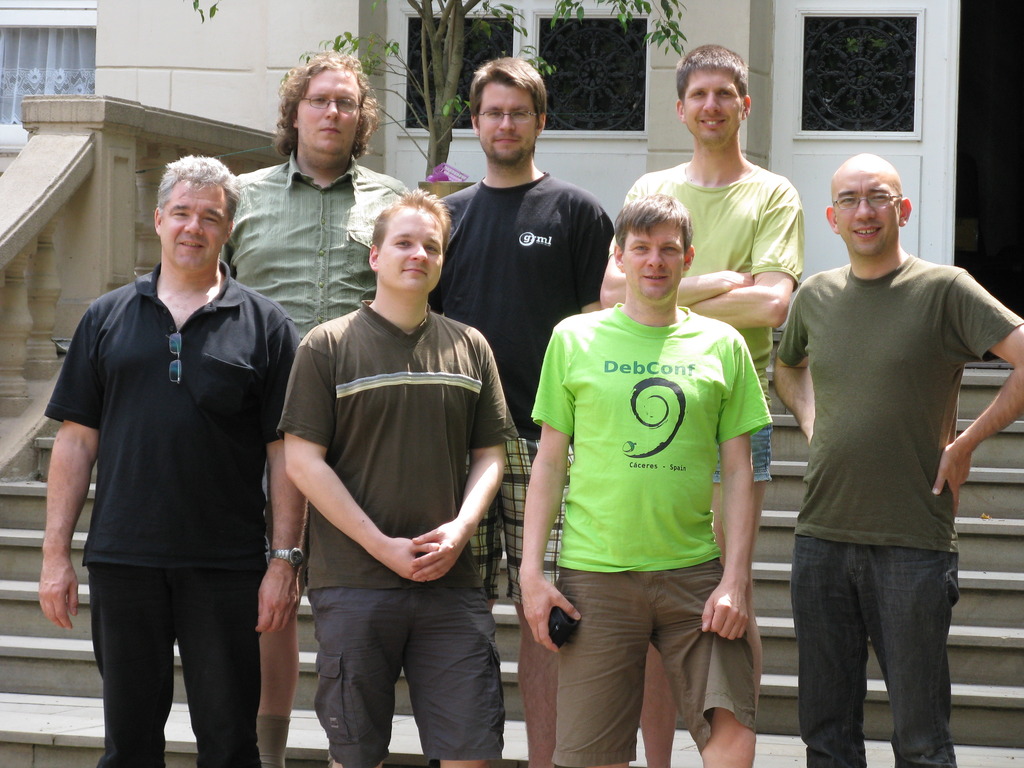
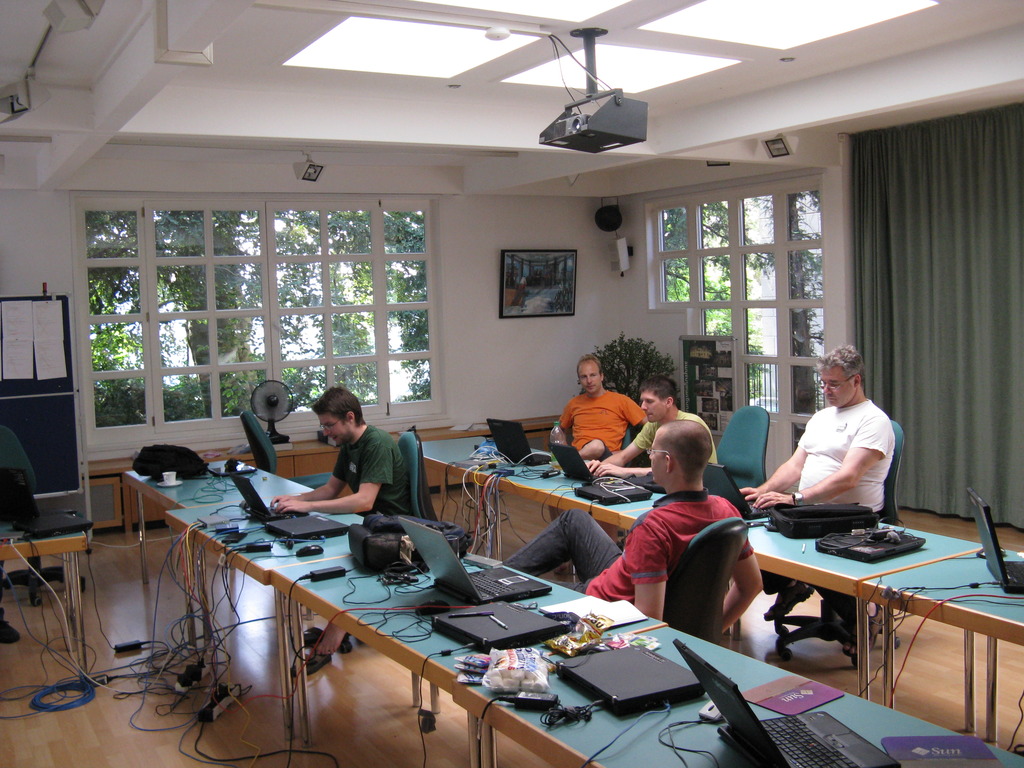
 Last weekend (2010-07-02 2010-07-04) nine people met at the FAI developer workshop at
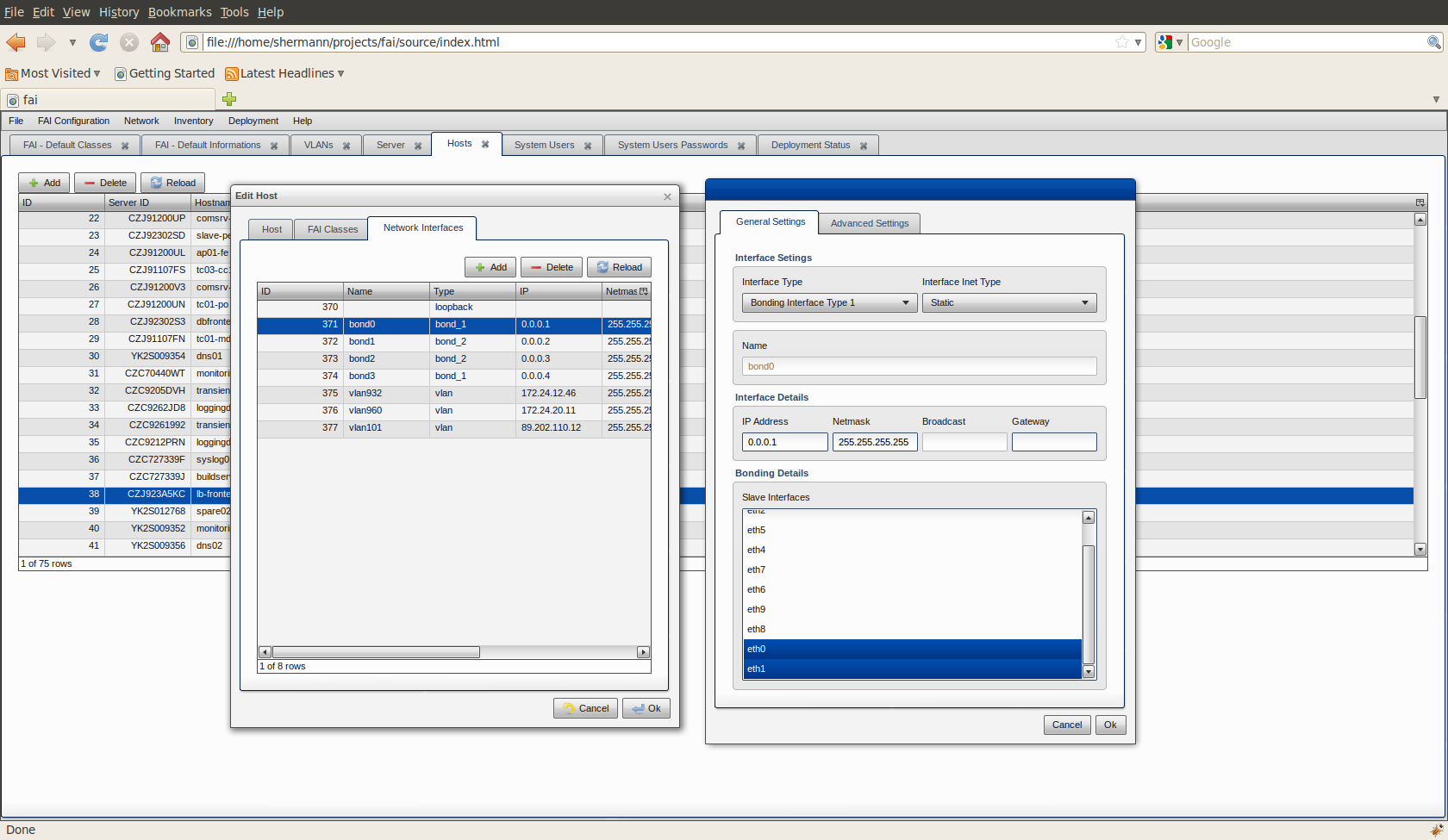
 ), managing ~25 machines with less than 20 FAI classes. He s not using
 On Sunday we continued with discussions and development.
Our work-log of the weekend:


 This Monday I was again at concert of
 Some time ago, someone posted to a development mailing list about
a piece of code, Cc:ing some people who had modified the code in
recent past. Within hours, the original author replied to complain
about not being Cc'd.
Several thoughts went through my mind:
 A few years ago, when I was still a member of the Jozef Pauly
ensemble from Ekeren, at some point I took over maintaining their
website. One of the things I did was converting it to drupal, mainly
because that would allow other members of the ensemble to help
maintaining it.
Of course, such things do not happen automatically; and had I spent
some more time on the project, it might've actually worked. But I
didn't, so it didn't. Oh well.
One of the main issues with the site as I set it up, was that I
hadn't really done a very good job integrating everything. The standard
drupal 5 theme looked pretty good, I thought. Slap on a few modules, and
done. Unfortunately, I skipped a bit of testing, and as a result, the
site didn't really function the way it should've. When this became
apparent, I didn't have the time to properly fix it.
During the last few years that I was a member of the ensemble,
someone else stepped up to help maintain it. I told him that one of the
things that I wanted to do was to upgrade the site to Drupal 6, so as to
make i18n a bit easier. But some of the modules which weren't in drupal
core made this somewhat harder than needed, and I didn't have the time
to investigate in-depth what the issues were.
In the end, I set up a secondary site on a different vhost on the
same server that ran drupal6, and gave that guy admin rights there to
help convert things to the new site. I planned to lead the effort to
make things work; but when I came back not so much later, it turned out
that he'd done a very good job already, and that it was probably a good
idea to let him finish.
This took much, much longer than expected; but eventually,
he's finalized the setup, and it's now live (since a few weeks) on
 I m a Debian developer since 1998 and have been
 I still responded to a few questions and elaborated on my goals and was promptly accepted even if I made it clear that my technical contributions will continue to be done within Debian.
A few minutes later I was added to the

