Search Results: "nic"

10 May 2021

Russell Coker: Echo Chambers vs Epistemic Bubbles

C Thi Nguyen wrote an interesting article about the difficulty of escaping from Echo Chambers and also mentions Epistemic Bubbles [1]. An Echo Chamber is a group of people who reinforce the same ideas and who often preemptively strike against opposing ideas (for example the right wing denigrating mainstream media to prevent their followers from straying from their approved message). An Epistemic Bubble is a group of people who just happen to not have contact with certain different ideas. When reading that article I wondered about what bubbles I and the people I associate with may be in. One obvious issue is that I have little communication with people who don t write in English and also little communication with people who are poor. So people who are poor and who can t write in English (which means significant portions of the population of India and Africa) are out of communication range for me. There are many situations that are claimed to be bubbles such as white people who are claimed to be innocent of racial issues because they only associate with other white people and men in the IT industry who are claimed to be innocent of sexism because they don t associate with women in the IT industry. But I think they are more of an echo chamber issue, if a white American doesn t access any of the variety of English language media produced by Afro Americans and realise that there s a racial problem it s because they don t want to see it and deliberately avoid looking at evidence. If a man in the IT industry doesn t access any of the media produced by women in tech and realise there are problems with sexism then it s because they don t want to see it. When is it OK to Reject a Group? The Ad Hominem Wikipedia page has a good analysis of different types of Ad Hominem arguments [2]. But the criteria for refuting a point in a debate are very different to the criteria used to determine which sources you should trust when learning about a topic. For example it s theoretically possible for someone to be good at computer science while also thinking the world is flat. In a debate about some aspect of computer programming it would be a fallacious Ad Hominem argument to say you think the Earth is flat therefore you can t program a computer . But if you do a Google search for information on computer programming and one of the results is from earthisflat.com then it would probably save time to skip reading that one. If only one person supports an idea then it s quite likely to be wrong. Good ideas tend to be supported by multiple people and for any good idea you will find a supporter who doesn t appear to have any ideas that are obviously wrong. One of the problems we have as a society now is determining the quality of data (ideas, claims about facts, opinions, communication/spam, etc). When humans have to do that it takes time and energy. Shortcuts can make things easier. Some shortcuts I use are that mainstream media articles are usually more reliable than social media posts (even posts by my friends) and that certain media outlets are untrustworthy (like Breitbart). The next step is that anyone who cites a bad site like Breitbart as factual (rather than just an indication of what some extremists believe) is unreliable. For most questions that you might search for on the Internet there is a virtually endless supply of answers, the challenge is not finding an answer but finding a correct answer. So eliminating answers that are unlikely to be correct is an important part of the search. If someone is citing references to support their argument and they can only cite fringe or extremist sites then I won t be convinced. Now someone could turn that argument around and claim that a site I reference such as the New York Times is wrong. If I find that my ideas were based on a claim that can only be found on the NYT then I will reconsider the issue. While I think that the NYT is generally accurate they are capable of making mistakes and if they are the sole source for claims that go against other claims then I will be hesitant to accept such claims. Newspapers often have exclusive articles based on their own research, but such articles always inspire investigation from other newspapers so other articles appear either supporting or questioning the claims in the exclusive. Saving Time When Interacting With Members of Echo Chambers Convincing a member of a cult or echo chamber of anything is not likely. When in discussions with them the focus should be on the audience and on avoiding wasting much time while also not giving them the impression that you agree with them. A common thing that members of echo chambers say is I don t have time to read about that when you ask if they have read a research paper or a news article. I don t have time to listen to people who can t or won t learn before speaking, there just isn t any value in that. Also if someone has a list of memes that takes more than 15 minutes to recite then they have obviously got time for reading things, just not reading outside their echo chamber. Conversations with members of echo chambers seem to be state free. They make a claim and you reject it, but regardless of the logical flaws you point out or the counter evidence you cite they make the same claim again the next time you speak to them. This seems to be evidence supporting the claim that evangelism is not about converting other people but alienating cult members from the wider society [3] (the original Quora text seems unavailable so I ve linked to a Reddit copy). Pointing out that they had made a claim previously and didn t address the issues you had with it seems effective, such discussions seem to be more about performance so you want to perform your part quickly and efficiently. Be aware of false claims about etiquette. It s generally regarded as polite not to disagree much with someone who invites you to your home or who has done some favour for you, but that is no reason for tolerating an unwanted lecture about their echo chamber. Anyone who tries to create a situation where it seems rude of you not to listen to them saying things that they know will offend you is being rude, much ruder than telling them you are sick of it. Look for specific claims that can be disproven easily. The claim that the Roman Salute is different from the Hitler Salute is one example that is easy to disprove. Then they have to deal with the issue of their echo chamber being wrong about something.

5 May 2021

Junichi Uekawa: Wrote a pomodoro timer in elisp.

Wrote a pomodoro timer in elisp. Why? Because I try to keep my workflow simple, and to keep the simplicity I sometimes need to re-implement stuff. No this is a lame excuse. I have been living in emacs for the past week and felt like it. However writing elisp has been challenging, maybe because I haven't done it for a while. I noticed there's lexical-binding, but I didn't quite get it, my lambda isn't getting the function parameter in scope.

4 May 2021

Benjamin Mako Hill: NSF CAREER Award

In exciting professional news, it was recently announced that I got an National Science Foundation CAREER award! The CAREER is the US NSF s most prestigious award for early-career faculty. In addition to the recognition, the award involves a bunch of money for me to put toward my research over the next 5 years. The Department of Communication at the University of Washington has put up a very nice web page announcing the thing. It s all very exciting and a huge honor. I m very humbled. The grant will support a bunch of new research to develop and test a theory about the relationship between governance and online community lifecycles. If you ve been reading this blog for a while, you ll know that I ve been involved in a bunch of research to describe how peer production communities tend to follow common patterns of growth and decline as well as a studies that show that many open communities become increasingly closed in ways that deter lots of the kinds contributions that made the communities successful in the first place. Over the last few years, I ve worked with Aaron Shaw to develop the outlines of an explanation for why many communities because increasingly closed over time in ways that hurt their ability to integrate contributions from newcomers. Over the course of the work on the CAREER, I ll be continuing that project with Aaron and I ll also be working to test that explanation empirically and to develop new strategies about what online communities can do as a result. In addition to supporting research, the grant will support a bunch of new outreach and community building within the Community Data Science Collective. In particular, I m planning to use the grant to do a better job of building relationships with community participants, community managers, and others in the platforms we study. I m also hoping to use the resources to help the CDSC do a better job of sharing our stuff out in ways that are useful as well doing a better job of listening and learning from the communities that our research seeks to inform. There are many to thank. The proposed work was the direct research of the work I did as the Center for Advanced Studies in the Behavioral Sciences at Stanford where I got to spend the 2018-2019 academic year in Claude Shannon s old office and talking through these ideas with an incredible range of other scholars over lunch every day. It s also the product of years of conversations with Aaron Shaw and Yochai Benkler. The proposal itself reflects the excellent work of the whole CDSC who did the work that made the award possible and provided me with detailed feedback on the proposal itself.

3 May 2021

Russ Allbery: Review: The Voyage of the Dawn Treader

Review: The Voyage of the Dawn Treader, by C.S. Lewis
Illustrator: Pauline Baynes
Series: Chronicles of Narnia #3
Publisher: Collier Books
Copyright: 1952
Printing: 1978
ISBN: 0-02-044260-2
Format: Mass market
Pages: 216
There was a boy named Eustace Clarence Scrubb and he almost deserved it.
The Voyage of the Dawn Treader is the third Narnia book in original publication order (see my review of The Lion, the Witch and the Wardrobe for more about reading order). You could arguably start reading here; there are a lot of references to the previous books, but mostly as background material, and I don't think any of it is vital. If you wanted to sample a single Narnia book to see if you'd get along with the series, this is the one I'd recommend. Since I was a kid, The Voyage of the Dawn Treader has held the spot of my favorite of the series. I'm happy to report that it still holds up. Apart from one bit that didn't age well (more on that below), this is the book where the story and the world-building come together, in part because Lewis picks a plot shape that works with what he wants to write about. The younger two Pevensie children, Edmund and Lucy, are spending the summer with Uncle Harold and Aunt Alberta because their parents are in America. That means spending the summer with their cousin Eustace. C.S. Lewis had strong opinions about child-raising that crop up here and there in his books, and Harold and Alberta are his example of everything he dislikes: caricatured progressive, "scientific" parents who don't believe in fiction or mess or vices. Eustace therefore starts the book as a terror, a whiny bully who has only read boring practical books and is constantly scoffing at the Pevensies and making fun of their stories of Narnia. He is therefore entirely unprepared when the painting of a ship in the guest bedroom turns into a portal to the Narnia and dumps the three children into the middle of the ocean. Thankfully, they're in the middle of the ocean near the ship in the painting. That ship is the Dawn Treader, and onboard is Caspian from the previous book, now king of Narnia. He has (improbably) sorted things out in his kingdom and is now on a sea voyage to find seven honorable Telmarine lords who left Narnia while his uncle was usurping the throne. They're already days away from land, headed towards the Lone Islands and, beyond that, into uncharted seas. MAJOR SPOILERS BELOW. Obviously, Eustace gets a redemption arc, which is roughly the first half of this book. It's not a bad arc, but I am always happy when it's over. Lewis tries so hard to make Eustace insufferable that it becomes tedious. As an indoor kid who would not consider being dumped on a primitive sailing ship to be a grand adventure, I wanted to have more sympathy for him than the book would allow. The other problem with Eustace's initial character is that Lewis wants it to stem from "modern" parenting and not reading the right sort of books, but I don't buy it. I've known kids whose parents didn't believe in fiction, and they didn't act anything like this (and kids pick up a lot more via osmosis regardless of parenting than Lewis seems to realize). What Eustace acts like instead is an entitled, arrogant rich kid who is used to the world revolving around him, and it's fascinating to me how Lewis ignores class to focus on educational philosophy. The best part of Eustace's story is Reepicheep, which is just setup for Reepicheep becoming the best part of The Voyage of the Dawn Treader. Reepicheep, the leader of Narnia's talking mice, first appears in Prince Caspian, but there he's mostly played for laughs: the absurdly brave and dashing mouse who rushes into every fight he sees. In this book, he comes into his own as the courage and occasionally the moral conscience of the party. Caspian wants to explore and to find the lords of his past, the Pevensie kids want to have a sea adventure, and Eustace is in this book to have a redemption arc, but Reepicheep is the driving force at the heart of the voyage. He's going to Aslan's country beyond the sea, armed with a nursemaid's song about his destiny and a determination to be his best and most honorable self every step of the way, and nothing is going to stop him. Eustace, of course, takes an immediate dislike to a talking rodent. Reepicheep, in return, is the least interested of anyone on the ship in tolerating Eustace's obnoxious behavior and would be quite happy to duel him. But when Eustace is turned into a dragon, Reepicheep is the one who spends hours with him, telling him stories and ensuring he's not alone. It's beautifully handled, and my only complaint is that Lewis doesn't do enough with the Eustace and Reepicheep friendship (or indeed with Eustace at all) for the rest of the book. After Eustace's restoration and a few other relatively short incidents comes the second long section of the book and the part that didn't age well: the island of the Dufflepuds. It's a shame because the setup is wonderful: a cultivated island in the middle of nowhere with no one in sight, mysterious pounding sounds and voices, the fun of trying to figure out just what these invisible creatures could possibly be, and of course Lucy's foray into the second floor of a house, braving the lair of a magician to find and read one of the best books of magic in fantasy. Everything about how Lewis sets this scene is so well done. The kids are coming from an encounter with a sea serpent and a horrifically dangerous magic island and land on this scene of eerily normal domesticity. The most dangerous excursion is Lucy going upstairs in a brightly lit house with soft carpet in the middle of the day. And yet it's incredibly tense because Lewis knows exactly how to put you in Lucy's head, right down to having to stand with her back to an open door to read the book. And that book! The pages only turn forward, the spells are beautifully illustrated, and the sense of temptation is palpable. Lucy reading the eavesdropping spell is one of the more memorable bits in this series, at least for me, and makes a surprisingly subtle moral point about the practical reasons why invading other people's privacy is unwise and can just make you miserable. And then, when Lucy reads the visibility spell that was her goal, there's this exchange, which is pure C.S. Lewis:
"Oh Aslan," said she, "it was kind of you to come." "I have been here all the time," said he, "but you have just made me visible." "Aslan!" said Lucy almost a little reproachfully. "Don't make fun of me. As if anything I could do would make you visible!" "It did," said Aslan. "Did you think I wouldn't obey my own rules?"
I love the subtlety of what's happening here: the way that Lucy is much more powerful than she thinks she is, but only because Aslan decided to make the rules that way and chooses to follow his own rules, making himself vulnerable in a fascinating way. The best part is that Lewis never belabors points like this; the characters immediately move on to talk about other things, and no one feels obligated to explain. But, unfortunately, along with the explanation of the thumping and the magician, we learn that the Dufflepuds are (remarkably dim-witted) dwarfs, the magician is their guardian (put there by Aslan, no less!), he transformed them into rather absurd shapes that they hate, and all of this is played for laughs. Once you notice that these are sentient creatures being treated essentially like pets (and physically transformed against their will), the level of paternalistic colonialism going on here is very off-putting. It's even worse that the Dufflepuds are memorably funny (washing dishes before dinner to save time afterwards!) and are arguably too dim to manage on their own, because Lewis made the authorial choice to write them that way. The "white man's burden" feeling is very strong. And Lewis could have made other choices! Coriakin the magician is a fascinating and somewhat morally ambiguous character. We learn later in the book that he's a star and his presence on the island is a punishment of sorts, leading to one of my other favorite bits of theology in this book:
"My son," said Ramandu, "it is not for you, a son of Adam, to know what faults a star can commit."
Lewis could have kept most of the setup, kept the delightfully silly things the Dufflepuds believe, changed who was responsible for their transformation, and given Coriakin a less authoritarian role, and the story would have been so much stronger for it. After this, the story gets stranger and wilder, and it's in the last part that I think the true magic of this book lies. The entirety of The Voyage of the Dawn Treader is a progression from a relatively mundane sea voyage to something more awe-inspiring. The last few chapters are a tour de force of wonder: rejuvenating stars, sunbirds, the Witch's stone knife, undersea kingdoms, a sea of lilies, a wall of water, the cliffs of Aslan's country, and the literal end of the world. Lewis does it without much conflict, with sparse description in a very few pages, and with beautifully memorable touches like the quality of the light and the hush that falls over the ship. This is the part of Narnia that I point to and wonder why I don't see more emulation (although I should note that it is arguably an immram). Tolkien-style fantasy, with dwarfs and elves and magic rings and great battles, is everywhere, but I can't think of many examples of this sense of awe and discovery without great battles and detailed explanations. Or of characters like Reepicheep, who gets one of the best lines of the series:
"My own plans are made. While I can, I sail east in the Dawn Treader. When she fails me, I paddle east in my coracle. When she sinks, I shall swim east with my four paws. And when I can swim no longer, if I have not reached Aslan's country, or shot over the edge of the world in some vast cataract, I shall sink with my nose to the sunrise and Peepiceek shall be the head of the talking mice in Narnia."
The last section of The Voyage of the Dawn Treader is one of my favorite endings of any book precisely because it's so different than the typical ending of a novel. The final return to England is always a bit disappointing in this series, but it's very short and is preceded by so much wonder that I don't mind. Aslan does appear to the kids as a lamb at the very end of the world, making Lewis's intended Christian context a bit more obvious, but even that isn't belabored, just left there for those who recognize the symbolism to notice. I was curious during this re-read to understand why The Voyage of the Dawn Treader is so much better than the first two books in the series. I think it's primarily due to two things: pacing, and a story structure that's better aligned with what Lewis wants to write about. For pacing, both The Lion, the Witch and the Wardrobe and Prince Caspian have surprisingly long setups for short books. In The Voyage of the Dawn Treader, by contrast, it takes only 35 pages to get the kids in Narnia, introduce all the characters, tour the ship, learn why Caspian is off on a sea voyage, establish where this book fits in the Narnian timeline, and have the kids be captured by slavers. None of the Narnia books are exactly slow, but Dawn Treader is the first book of the series that feels like it knows exactly where it's going and isn't wasting time getting there. The other structural success of this book is that it's a semi-episodic adventure, which means Lewis can stop trying to write about battles and political changes whose details he's clearly not interested in and instead focus wholeheartedly on sense-of-wonder exploration. The island-hopping structure lets Lewis play with ideas and drop them before they wear out their welcome. And the lack of major historical events also means that Aslan doesn't have to come in to resolve everything and instead can play the role of guardian angel. I think The Voyage of the Dawn Treader has the most compelling portrayal of Aslan in the series. He doesn't make decisions for the kids or tell them directly what to do the way he did in the previous two books. Instead, he shows up whenever they're about to make a dreadful mistake and does just enough to get them to make a better decision. Some readers may find this takes too much of the tension out of the book, but I have always appreciated it. It lets nervous child readers enjoy the adventures while knowing that Aslan will keep anything too bad from happening. He plays the role of a protective but non-interfering parent in a genre that usually doesn't have parents because they would intervene to prevent adventures. I enjoyed this book just as much as I remembered enjoying it during my childhood re-reads. Still the best book of the series. This, as with both The Lion, the Witch and the Wardrobe and Prince Caspian, was originally intended to be the last book of the series. That, of course, turned out to not be the case, and The Voyage of the Dawn Treader is followed (in both chronological and original publication order) by The Silver Chair. Rating: 9 out of 10

Junichi Uekawa: First email from my new machine.

First email from my new machine. I didn't have my desktop Debian machine for a long time and now I have one set up. I rewrote my procmail/formail recipe, especially the part where I wrote complex shell script to generate my folder rules. I rewrote that 4 lines of shell script in 200 lines of Go, with unit tests. The part that took the longest time was finding out how to write unit tests in Go, and how to properly use go.mod to be able to import packages from subdirectories. I guess that's part of the fun.

1 May 2021

Ingo Juergensmann: The Fediverse What About Resources?

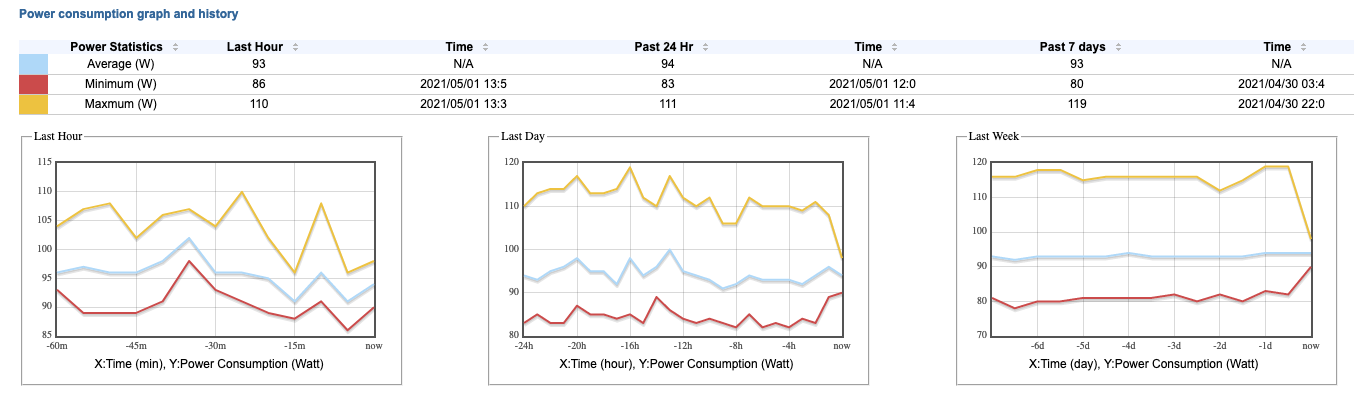
Today ist May, 1st. In about two weeks on May, 15th WhatsApp will put their changed Terms of Service into action and when you don t accept their rules you won t be able to use WhatsApp any longer. Early this year there was already a strong movement away from WhatsApp towards other solutions. Mainly to Signal, but also some other services like the Fediverse gained some new users. And also XMPP got their fair share of new users. So, what to do about the WhatsApp ToS change then? Shall we go all to Signal? Surely not. Signal is another vendor lock-in silo. It s centralistic and recent development plans want to implement some crypto payment system. Even Bruce Schneier thinks that this is a bad idea. Other alternatives often named include Matrix/Element or XMPP. Today, Don di Dislessia in the (german) Fediverse asked about power consumption of the Fediverse incl. Matrix and XMPP and how much renewable energy is being used. Of course this is no easy answer to this question, but I tried my best at least for my own server. Here are my findings and conclusions Power
screenshot showing power consumption of serverscreenshot showing power consumption of server

Currently my server in the colocation is using about 93W in average with 6c Xeon E5-2630L, 128 GB RAM, 4x 2 TB WD Red + 1 Samsung 960pro NVMe. The server is 7 years old. When I started with that server the power consumption was about 75W, but back then there were far less users on the server. So, 20W more over the past year Users I m running my Friendica node on Nerdica.net since 2013. Over the years it became one of the largest Friendica servers in the Fediverse, for some time it was the largest one. It has currently like 700 total users and 180 monthly active users. My Mastodon instance on Nerdculture.de has about 1000 total users and about 300 monthly active users. Since last year I also run a Matrix-Synapse server. Although I invited my family I m in fact the only active user on that server and have joined some channels. My XMPP server is even older than my Friendica node. For long time I had like maybe 20 users. Now I setup a new website and added some domains like hookipa.net and xmpp.social the user count increased and currently I have like 130 users on those two domains and maybe like 50 monthly active users. Also note that all my Friendica and Mastodon users can use XMPP with their accounts, but won t be counted the same way as on native users on ejabberd, because the auth backend is different. So, let s assume I do have like 2000 total users and 500 monthly active users. CPU, Database Sizes and Disk I/O Let s have a look about how many resources are being used by those users. Database Sizes: CPU times according to xentop: Friendica does use the largest database and causes most disk I/O on NVMe, but it s difficult to differentiate between the load between the web apps on the webserver. So, let s have a quick look on an simple metric: Number of lines in webserver logfile: These metrics correlate to some degree with the database I/O load, at least for Friendica. If you take into account the number of users, things look quite different. Conclusion Overall, and my personal impression, is that Matrix is really bad in regards of resource usage. Given that I m the only active user it uses exceptionally many resources. When you also consider that Matrix is using a distributed database for its chat rooms, you can assume that the resource usage is multiplied across the network, making things even worse. Friendica is using a large database and many disk accesses, but has a fairly large user base, so it seems ok, but of course should be improved. Mastodon seems to be quite good, considering the database size, the number of log lines and the user count. XMPP turns out to be the most efficient contestant in this comparison: it uses much less CPU cycles and database disk I/O. Of course, Mastdon/Friendica are different services than XMPP or Matrix. So, coming back to the initial question about alternatives to WhatsApp, the answer for me is: you should prefer XMPP over Matrix alone for reasons of saving resources and thus reducing power consumption. Less power consumption also means a smaller ecological footprint and fewer CO2 emissions for your communication with your family and friends. XMPP is surely not the perfect replacement for WhatsApp, but I think it is the best thing to recommend. As said above, I don t think that Signal is an viable option. It s just another proprierary silo with all the problems that come with it. Matrix is a resource hog and not a messenger but a MS Teams replacement. Element as the main Matrix client is laggy and not multi-account/multi-server capable. Other Matrix clients do support multiple accounts but are not as feature-complete as Element. In the end the Matrix ecosystem will suffer from the same issues as XMPP did already a decade ago. But XMPP has learned to deal with it. Also XMPP is proceeding fast in the last years and it has solved many problems many people are still complaining about. Sure, there still some open issues. The situation on IOS is still not as good as on Android with Conversations, but it is fairly close to it. There are many efforts to improve XMPP. There is Quicksy IM, which is a service that will use your phone number as Jabber ID/JID and is thus comparable to Signal which uses phone numbers as well as unique identifier. But Quicksy is compatible with XMPP standards. Snikket is another new XMPP ecosystem aiming at smaller groups hosting their own server by simply installing a Docker container and setup some basic SRV records in the DNS. Or there is Mailcow, a Docker based mailserver setup that added XMPP server in their setup as well, so you can have the same mail and XMPP address. Snikket even got EU based funding for implementing XMPP Account Portability which also will improve the decentralization even further. Additionally XMPP helps vaccination in Canada and USA with vaxbot by Monal. Be smart and use ecofriendly infrastructure.

30 April 2021

Junichi Uekawa: May.

May. Told my son about the months in English. The numbers are straightforward but couldn't remember what the other ones are. He was amused when I told him Septem is seven in Latin, and September is the ninth month. Octo, novem, decem are similar.

Paul Wise: FLOSS Activities April 2021

Focus This month I didn't have any particular focus. I just worked on issues in my info bubble.

Changes

Issues

Review

Administration
  • Debian: restart service killed by OOM killer, revert mirror redirection
  • Debian wiki: unblock IP addresses, approve accounts

Communication

Sponsors The flower/sptag work was sponsored by my employer. All other work was done on a volunteer basis.

Bastian Venthur: Getting the Function keys of a Keychron working on Linux

Having destroyed the third Cherry Stream keyboard in 4 years, I wanted to try a more substantial keyboard for a change. After some research I decided that I want a mechanical, wired, tenkeyless keyboard without any fancy LEDs. At the end I settled for a Keychron C1 with red switches. It meets all requirements, looks very nice and the price is reasonable. Surprise! After the keyboard was delivered, I connected it to my Debian machine and was unpleasantly surprised to notice that the Function-keys did not work at all. The keyboard shares the Multimedia keys with the F-keys and you have an fn key that supposedly switches between the two modes, like you re used to on a laptop. On Linux, however you cannot access the F-keys at all: pressing fn + F1 or F1 makes no difference, you ll always get the Multimedia key. Switching the keyboard between Windows and Mac mode makes no difference either, in both modes the F-keys are not accessible. Apparently Keychron is aware of the problem, because the quick start manual tells you:
We have a Linux user group on facebook. Please search Keychron Linux Group on facebook. So you can better experience with our keyboard.
Customer support at its finest! So at this point you should probably just send the keyboard back, get the refund and buy a proper one with functioning F-keys. The fix Test if this command fixes the issue and enables the Fn + F-key-combos:
# as root:
echo 2 > /sys/module/hid_apple/parameters/fnmode
Depending on the mode the keyboard is in, you should now be able to use the F-keys by simply pressing them, and the Multimedia keys by pressing fn + F-key (or the other way round). To switch the default mode of the F-keys to Function- or Multimedia-mode, press and hold fn + X + L for 4 seconds. If everything works as expected, you can make the change permanent by creating the file /etc/modprobe.d/hid_apple.conf and adding the line:
options hid_apple fnmode=2
This works regardless if the keyboard is in Windows- or Mac-mode, and that might hint at the problem: in both cases the Linux thinks you re connecting a Mac keyboard. The rant Although the fix was not very hard to find and apply, this experience still leaves a foul taste. I naively assumed the problem of having a properly functioning keyboard that simply works when you plug it in, has been thoroughly solved by 2021. To make it worse, I assume Keychron must be aware of the problem because the other Keychron models have the same issue! But instead of fixing it on their end, they forward you to a facebook community and expect you to somehow fix it yourself. So dear Keychron, you do make really beautiful keyboards! But before you release your next model with the same bug, maybe invest a bit on fixing the basics? I see that your keyboards support firmware updates for Windows and Mac maybe you can talk to the folks over at the Linux Vendor Firmware Service and support Linux as well? Maybe you can even fix this annoying bug for the keyboards you ve already sold? I found it really cute that you sent different keycaps for Windows and Mac setups a few disappointed Linux users might accept an apology in form of a Linux cap

Raphaël Hertzog: Freexian s report about Debian Long Term Support, March 2021

A Debian LTS logo
Like each month, have a look at the work funded by Freexian s Debian LTS offering. Debian project funding In March, we put aside 3225 EUR to fund Debian projects but sadly nobody picked up anything, so this one of the many reasons Raphael posted as series of blog posts titled Challenging times for Freexian , posted in 4 parts on the last two days of March and the first two of April. [Part one, two, three and four] So we re still looking forward to receive more projects from various Debian teams! Learn more about the rationale behind this initiative in this article! Debian LTS contributors In March, 11 contributors have been paid to work on Debian LTS, their reports are available: Evolution of the situation In March we released 28 DLAs and held our second LTS team meeting for 2021 on IRC, with the next public IRC meeting coming up at the end of May. At that meeting Holger announced that after 2.5 years he wanted to step back from his role helping Rapha l in coordinating/managing the LTS team. We would like to thank Holger for his continuous work on Debian LTS (which goes back to 2014) and are happy to report that we already found a successor which we will introduce in the upcoming April report from Freexian. Finally, we would like to remark once again that we are constantly looking for new contributors. For a last time, please contact Holger if you are interested! The security tracker currently lists 42 packages with a known CVE and the dla-needed.txt file has 28 packages needing an update. We are also pleased to report that we got 4 new sponsors over the last 2 months : thanks to sipgate GmbH, OVH US LLC, Tilburg University and Observatoire des Sciences de l Univers de Grenoble ! Thanks to our sponsors Sponsors that joined recently are in bold.

29 April 2021

Anton Gladky: 2021/04, FLOSS activity

LTS This is my second month of working for LTS. I was assigned 12 hrs and worked all of them.

Released DLAs
  1. DLA 2619-1 python3.5_3.5.3-1+deb9u4 CVE-2021-23336 introduced an API-change. It was hard decision to upload this fix, because it can potentially break user s code, if they code uses semicolon as separator. Another option is not to fix it at all, leaving the security issue open. Not the best solution. Also I have fixed the failing autopkgtest, which was introduced in one of latest CVE fixes. CI-pipelines on salsa.d.o are helping now to detect such mistakes.
  2. DLA 2628-1 python2.7_2.7.13-2+deb9u5 CVE-2021-23336 introduced an API-change, same as for python3.5. But the backporting was much harder because python3->2 is not always easy.

CI-pipelines I try to setup for all LTS-packages which I touch CI-pipelines on salsa.d.o. Setting up pipelines for python3.5 and python2.7 was much harder as for other packages. Failing autopkgtests and some other issues. Though it takes at the beginning more time to setup, I believe it improves package quality.

LTS-Meeting I attended the Debian LTS team Jitsi-meeting.

Junichi Uekawa: Setting wake-on-lan in Debian way.

Setting wake-on-lan in Debian way. There's several ways that your network interfaces can be configured. The Debian way is to use ifup/ifdown. Make sure your network is configured with it by checking ifquery. nmcli d and networkctl list are NM and systemd equivalents of commands. After you know which one is managing your device you can go ahead and set up WoL configuration appropriately. Default Debian installation would probably start with a ifup/ifdown config.

Junichi Uekawa: Surrounding a region with Emacs lisp.

Surrounding a region with Emacs lisp. I wanted to surround a region with HTML tags and here's what I learnt today. Specifying "r" in interactive gives two numbers, begin and end. When I want to obtain multiple kinds of values in interactive, I can use newlines to delimit. set-marker is an api to keep a marker at relative position even after edits, API needs making make-marker to create an empty marker first, and seems like the number of markers affects editing speed so the API is made to allow reuse of markers. After I got these going I could now write.

28 April 2021

Antoine Beaupr : Building a status page service with Hugo

The Tor Project now has a status page which shows the state of our major services. You can check status.torprojet.org for news about major outages in Tor services, including v3 and v2 onion services, directory authorities, our website (torproject.org), and the check.torproject.org tool. The status page also displays outages related to Tor internal services, like our GitLab instance. This post documents why we launched status.torproject.org, how the service was built, and how it works.

Why a status page The first step in setting up a service page was to realize we needed one in the first place. I surveyed internal users at the end of 2020 to see what could be improved, and one of the suggestions that came up was to "document downtimes of one hour or longer" and generally improve communications around monitoring. The latter is still on the sysadmin roadmap, but a status page seemed like a good solution for the former. We already have two monitoring tools in the sysadmin team: Icinga (a fork of Nagios) and Prometheus, with Grafana dashboards. But those are hard to understand for users. Worse, they also tend to generate false positives, and don't clearly show users which issues are critical. In the end, a manually curated dashboard provides important usability benefits over an automated system, and all major organisations have one.

Picking the right tool It wasn't my first foray in status page design. In another life, I had setup a status page using a tool called Cachet. That was already a great improvement over the previous solutions, which were to use first a wiki and then a blog to post updates. But Cachet is a complex Laravel app, which also requires a web browser to update. It generally requires more maintenance than what we'd like, needing silly things like a SQL database and PHP web server. So when I found cstate, I was pretty excited. It's basically a theme for the Hugo static site generator, which means that it's a set of HTML, CSS, and a sprinkle of Javascript. And being based on Hugo means that the site is generated from a set of Markdown files and the result is just plain HTML that can be hosted on any web server on the planet.

Deployment At first, I wanted to deploy the site through GitLab CI, but at that time we didn't have GitLab pages set up. Even though we do have GitLab pages set up now, it's not (yet) integrated with our mirroring infrastructure. So, for now, the source is hosted and built in our legacy git and Jenkins services. It is nice to have the content hosted in a git repository: sysadmins can just edit Markdown in the git repository and push to deploy changes, no web browser required. And it's trivial to setup a local environment to preview changes:
hugo serve --baseUrl=http://localhost/
firefox https://localhost:1313/
Only the sysadmin team and gitolite administrators have access to the repository, at this stage, but that could be improved if necessary. Merge requests can also be issued on the GitLab repository and then pushed by authorized personnel later on, naturally.

Availability One of the concerns I have is that the site is hosted inside our normal mirror infrastructure. Naturally, if an outage occurs there, the site goes down. But I figured it's a bridge we'll cross when we get there. Because it's so easy to build the site from scratch, it's actually trivial to host a copy of the site on any GitLab server, thanks to the .gitlab-ci.yml file shipped (but not currently used) in the repository. If push comes to shove, we can just publish the site elsewhere and point DNS there. And, of course, if DNS fails us, then we're in trouble, but that's the situation anyway: we can always register a new domain name for the status page when we need to. It doesn't seem like a priority at the moment. Comments and feedback are welcome!
This article was first published on the Tor Project Blog.

Jonathan McDowell: DeskPi Pro update

I wrote previously about my DeskPi Pro + 8GB Pi 4 setup. My main complaint at the time was the fact one of the forward facing USB ports broke off early on in my testing. For day to day use that hasn t been a problem, but it did mar the whole experience. Last week I received an unexpected email telling me The new updated PCB Board for your DeskPi order was shipped. . Apparently this was due to problems with identifying SSDs and WiFi/HDMI issues. I wasn t quite sure how much of the internals they d be replacing, so I was pleasantly surprised when it turned out to be most of them; including the PCB with the broken USB port on my device. DeskPi Pro replacement PCB They also provided a set of feet allowing for vertical mounting of the device, which was a nice touch. The USB/SATA bridge chip in use has changed; the original was:
usb 2-1: New USB device found, idVendor=152d, idProduct=0562, bcdDevice= 1.09
usb 2-1: New USB device strings: Mfr=1, Product=2, SerialNumber=3
usb 2-1: Product: RPi_SSD
usb 2-1: Manufacturer: 52Pi
usb 2-1: SerialNumber: DD5641988389F
and the new one is:
usb 2-1: New USB device found, idVendor=174c, idProduct=1153, bcdDevice= 0.01
usb 2-1: New USB device strings: Mfr=2, Product=3, SerialNumber=1
usb 2-1: Product: AS2115
usb 2-1: Manufacturer: ASMedia
usb 2-1: SerialNumber: 00000000000000000000
That s a move from a JMicron 6Gb/s bridge to an ASMedia 3Gb/s bridge. It seems there are compatibility issues with the JMicron that mean the downgrade is the preferred choice. I haven t retried the original SSD I wanted to use (that wasn t detected), but I did wonder if this might have resolved that issue too. Replacing the PCB was easier than the original install; everything was provided pre-assembled and I just had to unscrew the Pi4 and slot it out, then screw it into the new PCB assembly. Everything booted fine without the need for any configuration tweaks. Nice and dull. I ve tried plugging things into the new USB ports and they seem ok so far as well. However I also then ended up pulling in a new backports kernel from Debian (upgrading from 5.9 to 5.10) which resulted in a failure to boot. The kernel and initramfs were loaded fine, but no login prompt ever appeared. Some digging led to the discovery that a change in boot ordering meant USB was not being enabled. The solution is to add reset_raspberrypi to the /etc/initramfs-tools/modules file - that way this module is available in the initramfs, the appropriate pre-USB reset can happen and everything works just fine again. The other niggle with the new kernel was a regular set of errors in the kernel log:
mmc1: Timeout waiting for hardware cmd interrupt.
mmc1: sdhci: ============ SDHCI REGISTER DUMP ===========
and a set of registers afterwards, roughly every 10s or so. This seems to be fallout from an increase in the core clock due to the VC4 driver now being enabled, the fact I have no SD card in the device and a lack of working card-detect line for the MicroSD slot. There s a GitHub issue but I solved it by removing the sdhci_iproc for now - I m not using the wifi so loss of MMC isn t a problem. Credit to DeskPi for how they handled this. I didn t have to do anything and didn t even realise anything was happening until I got the email with my tracking number and a description of what they were sending out in it. Delivery took less than a week. This is a great example of how to handle a product issue - no effort required on the part of the customer.

Martin Michlmayr: Research on FOSS foundations

I worked on research on FOSS foundations and published two reports: Growing Open Source Projects with a Stable Foundation This primer covers non-technical aspects that the majority of projects will have to consider at some point. It also explains how FOSS foundations can help projects grow and succeed. This primer explains: You can download Growing Open Source Projects with a Stable Foundation. Research report The research report describes the findings of the research and aims to help understand the operations and challenges FOSS foundations face. This report covers topics such as: You can download the research report. Acknowledgments This research was sponsored by Ford Foundation and Alfred P. Sloan Foundation. The research was part of their Critical Digital Infrastructure Research initiative, which investigates the role of open source in digital infrastructure.

Russell Coker: Links April 2021

Dr Justin Lehmiller s blog post comparing his official (academic style) and real biographies is interesting [1]. Also the rest of his blog is interesting too, he works at the Kinsey Institute so you know he s good. Media Matters has an interesting article on the spread of vaccine misinformation on Instagram [2]. John Goerzen wrote a long post summarising some of the many ways of having a decentralised Internet [3]. One problem he didn t address is how to choose between them, I could spend months of work to setup a fraction of those services. Erasmo Acosta wrote an interesting medium article Could Something as Pedestrian as the Mitochondria Unlock the Mystery of the Great Silence? [4]. I don t know enough about biology to determine how plausible this is. But it is a worry, I hope that humans will meet extra-terrestrial intelligences at some future time. Meredith Haggerty wrote an insightful Medium article about the love vs money aspects of romantic comedies [5]. Changes in viewer demographics would be one factor that makes lead actors in romantic movies significantly less wealthy in recent times. Informative article about ZIP compression and the history of compression in general [6]. Vice has an insightful article about one way of taking over SMS access of phones without affecting voice call or data access [7]. With this method the victom won t notice that they are having their sservice interfered with until it s way too late. They also explain the chain of problems in the US telecommunications industry that led to this. I wonder what s happening in this regard in other parts of the world. The clown code of ethics (8 Commandments) is interesting [8]. Sam Hartman wrote an insightful blog post about the problems with RMS and how to deal with him [9]. Also Sam Whitton has an interesting take on this [10]. Another insightful post is by Selam G about RMS long history of bad behavior and the way universities are run [11]. Cory Doctorow wrote an insightful article for Locus about free markets with a focus on DRM on audio books [12]. We need legislative changes to fix this!

Junichi Uekawa: Swapping caps and control in X11.

Swapping caps and control in X11. The configuration is at /etc/default/keyboard, and both virtual console and X11 use that configuration in Debian. For systemd users, systemd-localed.service can be used to configure using localectl(1) command, and Debian systemd has been patched to update /etc/default/keyboard (managed by keyboard-configuration package). Not sure where I find a documentation for this. systemd for Debian is patched with debian/patches/debian/Use-Debian-specific-config-files.patch to change /etc/X11/xorg.conf.d/00-keyboard.conf to /etc/default/keyboard.

26 April 2021

Vishal Gupta: Ramblings // On Sikkim and Backpacking

What I loved the most about Sikkim can t be captured on cameras. It can t be taped since it would be intrusive and it can t be replicated because it s unique and impromptu. It could be described, as I attempt to, but more importantly, it s something that you simply have to experience to know. Now I first heard about this from a friend who claimed he d been offered free rides and Tropicanas by locals after finishing the Ladakh Marathon. And then I found Ronnie s song, whose chorus goes : Dil hai pahadi, thoda anadi. Par duniya ke maya mein phasta nahi (My heart belongs to the mountains. Although a little childish, it doesn t get hindered by materialism). While the song refers his life in Manali, I think this holds true for most Himalayan states. Maybe it s the pleasant weather, the proximity to nature, the sense of safety from Indian Army being round the corner, independence from material pleasures that aren t available in remote areas or the absence of the pollution, commercialisation, & cutthroat-ness of cities, I don t know, there s just something that makes people in the mountains a lot kinder, more generous, more open and just more alive. Sikkimese people, are honestly some of the nicest people I ve ever met. The blend of Lepchas, Bhutias and the humility and the truthfulness Buddhism ingrains in its disciples is one that ll make you fall in love with Sikkim (assuming the views, the snow, the fab weather and food, leave you pining for more). As a product of Indian parenting, I ve always been taught to be wary of the unknown and to stick to the safer, more-travelled path but to be honest, I enjoy bonding with strangers. To me, each person is a storybook waiting to be flipped open with the right questions and the further I get from home, the wilder the stories get. Besides there s something oddly magical about two arbitrary curvilinear lines briefly running parallel until they diverge to move on to their respective paths. And I think our society has been so busy drawing lines and spreading hate that we forget that in the end, we re all just lines on the universe s infinite canvas. So the next time you travel, and you re in a taxi, a hostel, a bar, a supermarket, or on a long walk to a monastery (that you re secretly wishing is open despite a lockdown), strike up a conversation with a stranger. Small-talk can go a long way.
Header icon made by Freepik from www.flaticon.com

25 April 2021

Junichi Uekawa: wake on lan.

wake on lan. I have not been able to get wake on lan working. I wonder if poweroff command is powering off the system too much and losing power on the ethernet too. Do I need to suspend?

Next.

Previous.