Russ Allbery: Review: Because Internet
| Publisher: | Riverhead Books |
| Copyright: | 2019 |
| ISBN: | 0-7352-1095-0 |
| Format: | Kindle |
| Pages: | 276 |
| Publisher: | Riverhead Books |
| Copyright: | 2019 |
| ISBN: | 0-7352-1095-0 |
| Format: | Kindle |
| Pages: | 276 |
163. This version includes the following changes:
[ Chris Lamb ]
* Bug fixes & new features:
- Normalise "ret" to "retq" in objdump output to support multiple versions
of obdump(1). (Closes: #976760, reproducible-builds/diffoscope#227)
- Don't show progress indicators when running zstd(1).
(Closes: reproducible-builds/diffoscope#226)
- Move the slightly-confusing behaviour of loading an "existing diff" if a
single file is passed to diffoscope to the new --load-existing-diff
command.
* Output improvements:
- Use pprint.pformat in the JSON comparator to serialise the differences
from jsondiff to make the output render better.
- Correct tense in --debug log output.
* Code quality:
* Don't use an old-style "super" call.
- Rewrite the filter routine for post-processing output from readelf(1).
- Update my copyright years.
- Remove unncessary PEP 263 encoding lines (replaced via PEP 3120).
- Use "minimal" instead of "basic" as a variable name to match the
underlying package name.
- Add comment regarding Java tests for diffoscope contributors who are not
using Debian. (Re: reproducible-builds/diffoscope!58)
* Debian packaging:
- Update debian/copyright to match copyright notices in source-tree.
(Closes: reproducible-builds/diffoscope#224)
- Ensure the new "diffoscope-minimal" package has a different short
description from the main "diffoscope" one.
[ Jean-Romain Garnier ]
* Add tests for OpenJDK 14.
[ Conrad Ratschan ]
* Add comparator for "legacy" uboot uImage files.
(MR: reproducible-builds/diffoscope!69)
In previous decades, the journalistic mission was to report the news as it actually happened, with fairness, balance, and integrity. However, capitalistic motives associated with journalism have forced much of today s television news to look to the spectacular, the stirring, and the controversial as news stories. It s no longer a race to break the story first or get the facts right. Instead, it s to acquire good ratings in order to get advertisers, so that profits soar. News programming uses a hierarchy of if it bleeds, it leads. Fear-based news programming has two aims. The first is to grab the viewer s attention. In the news media, this is called the teaser. The second aim is to persuade the viewer that the solution for reducing the identified fear will be in the news story. If a teaser asks, What s in your tap water that YOU need to know about? a viewer will likely tune in to get the up-to-date information to ensure safety.You ve probably seen fear-based messages a lot on Facebook. They will highlight messages to liberals about being afraid of what Trump is doing, and to conservatives about being afraid of what Biden is doing. They may or may not even intentionally be doing this; it is their algorithm predicts that those would maximize time and engagement for certain people, so that s what they see. Fear leads to controversy It s not just fear, though. Social media also loves controversy. There s nothing that makes people really want to stay on Facebook like anger. See something controversial and you ll see hundreds or thousands of people are there arguing about it and in the process, giving Facebook their attention. A quick Internet search will show you numerous articles on how marketing companes can leverage controvery to get attention and engagement with their campaigns. Consequences of maximizing fear and controversy What does it mean to society at large and to you personally that large companies make a lot of money by maximizing fear and controversy? The most obvious way is it leads to less common ground. If the posts and reactions that show common ground are never seen because they don t drive engagement, it poisons the well; left and right hate each other with ever more vigor a profitable outcome to Facebook, but a poisonous one to all of us. I have had several friendships lost because I a liberal in agreement with these friends on political matters still talk to Trump voters. On the other side, we ve seen people storm the Michigan statehouse with weapons. How did that level of disagreement and even fear behind it get so firmly embedded in our society? Surely the fact that social media shows us things designed to stimulate fear and anger must play a role. What does it do to our ability to have empathy for, and understand, others? The Facebook groups I ve been in for like-minded people have largely been flooded with memes calling the President rump and other things clearly designed to make people angry or fearful. It s a worthless experience, and not just that, but it s a harmful experience. When our major media TV and social networks all are optimizing for fear, anger, and controvesry, we have a society beholden to fear, anger, and controvesy. In my next installment, I m going to talk about what to do about this, including the decentralized social networks of the Fediverse that are specifically designed to put you back in charge of your attention. Update 2020-12-16: There are two followup articles for this: how to join the Fediverse and non-creepy technology purchasing and gifting guides. The latter references the FSF s page on software manipulation towards addiction, which is particularly relevant to this topic.
It s the end of CentOS as we know it Earlier this week, the CentOS project announced the shift to CentOS stream. In a nutshell, this means that they will discontinue being a close clone of RHEL along with security updates, and instead it will serve as a development branch of RHEL. As you can probably imagine (or gleam from the comments in that post I referenced), a lot of people are unhappy about this. One particular quote got my attention this morning while catching up on this week s edition of Linux Weekly News, under the distributions quotes section:
I have been doing this for 17 years and CentOS is basically my life s work. This was (for me personally) a heart wrenching decision. However, i see no other decision as a possibility. If there was, it would have been made.Johnny HughesI feel really sorry for this person and can empathize, I ve been in similar situations in my life before where I ve poured all my love and energy into something and then due to some corporate or organisational decisions (and usually poor ones), the project got discontinued and all that work that went into it vanishes into the ether. Also, 17 years is really long to be contributing to any one project so I can imagine that this must have been especially gutting.
Throw me a freakin bone here I m also somewhat skeptical of how successful CentOS Stream will really be in any form of a community project. It seems that Red Hat is expecting that volunteers should contribute to their product development for free, and then when these contributors actually want to use that resulting product, they re expected to pay a corporate subscription fee to do so. This seems like a very lop-sided relationship to me, and I m not sure it will be sustainable in the long term. In Red Hat s announcement of CentOS Stream, they kind of throw the community a bone by saying In the first half of 2021, we plan to introduce low- or no-cost programs for a variety of use cases - it seems likely that this will just be for experimental purposes similar to the Windows Insider program and won t be of much use for production users at all. Red Hat does point out that their Universal Base Image (UBI) is free to use and that users could just use that on any system in a container, but this doesn t add much comfort to the individuals and organisations who have contributed huge amounts of time and effort to CentOS over the years who rely on a stable, general-purpose Linux system that can be installed on bare metal.
Way forward for CentOS users Where to from here? I suppose CentOS users could start coughing up for RHEL subscriptions. For many CentOS use cases that won t make much sense. They could move to another distribution, or fork/restart CentOS. The latter is already happening. One of the original founders of the CentOS project, Gregory Kurtzer, is now working on Rocky Linux, which aims to be a new free system built from the RHEL sources. Some people from Red Hat and Canonical are often a bit surprised or skeptical when I point out to them that binary licenses are also important. This whole saga is yet another data point, but it proves that yet again. If Red Hat had from the beginning released RHEL with free sources and unobfuscated patches, then none of this would ve been necessary in the first place. And while I wish Rocky Linux all the success it aims to achieve, I do not think that working for free on a system that ultimately supports Red Hat s selfish eco-system is really productive or helpful. The fact is, Debian is already a free enterprise-scale system already used by huge organisations like Google and many others, which has stable releases, LTS support and ELTS offerings from external organisations if someone really needs it. And while RHEL clones have come and gone through the years, Debian s mission and contract to its users is something that stays consistent and I believe Debian and its ideals will be around for as long as people need Unixy operating systems to run anywhere (i.e. a very long time). While we sometimes fall short of some of our technical goals in Debian, and while we don t always agree on everything, we do tend to make great long-term progress, and usually in the right direction. We ve proved that our method of building a system together is sustainable, that we can do so reliably and timely and that we can collectively support it. From there on it can only get even better when we join forces and work together, because when either individuals or organisations contribute to Debian, they can use the end result for both private or commercial purposes without having to pay any fee or be encumbered by legal gotchas. Don t get caught by greedy corporate motivations that will result in you losing years of your life s work for absolutely no good reason. Make your time and effort count and either contribute to Debian or give your employees time to do so on company time. Many already do and reap the rewards of this, and don t look back. While Debian is a very container and virtualization friendly system, we ve managed to remain a good general-purpose operating system that manages to span use cases so vast that I d have to use a blog post longer than this one just to cover them. And while learning a whole new set of package build chain, package manager and new organisational culture and so on can be uhm, really rocky at the start, I d say that it s a good investment with Debian and unlikely to be time that you ll ever felt was wasted. As Debian project leader, I m personally available to help answer any questions that someone might have if they are interested in coming over to Debian. Feel free to mail leader_AT_debian.org (replace _AT_ with @) or find me on the oftc IRC network with the nick highvoltage. I believe that together, we can make Debian the de facto free enterprise system, and that it would be to the benefit of all its corporate users, instead of tilting all the benefit to just one or two corporations who certainly don t have your best interests in mind.
Update 11/12/20 Came across this article on the wire which tells how everybody s rights, not just the farmer s rights are being shod over. I think it depicts correctly the signs of time to come. While arguing on SM, also came to know about Article 300 (1), thanks to Sachin Kumar which shows multiple instances where Government was sued because somebody was working in official capacity and did mistakes, malafide or otherwise and it was the state who was made to pay.
FWIW, today farmers from Maharashtra, my state arrived at Delhi border where they were also kept at bay. I did come across an infographic which shows how the various states have fared. Most tellingly, is the state of Bihar. It was in 2006 (one of the most backward states) where APMC was taken off. While others have tried to paint a flattering picture of Bihar, they have failed to share that in the interim 15 odd years, there hasn t been any sort of infrastructure created for farmers which is the reason it is still the lowest earner. These are the last available figures we have about the farmer s income. From 2014 to 2020 there hasn t been any update.
Situation Assessment Survey of Agricultural Household 2013 Copyright GOI,
This concludes just one portion of the bill. I will take other parts of the bill. I may dwell on some other parts as and when I have the time. A cartoon which depicts the current issue
I stand with farmers Copyright Sanitary Panels
Too much Democracy copyright Satish Acharya
Too much democracy Illustration and Copyright Alok
Sterlite protest 13 dead, 100 injured Copyright Business Standard too much democracy
Erosion of Democracy V-dem institute Copyright The Hindu Web Team
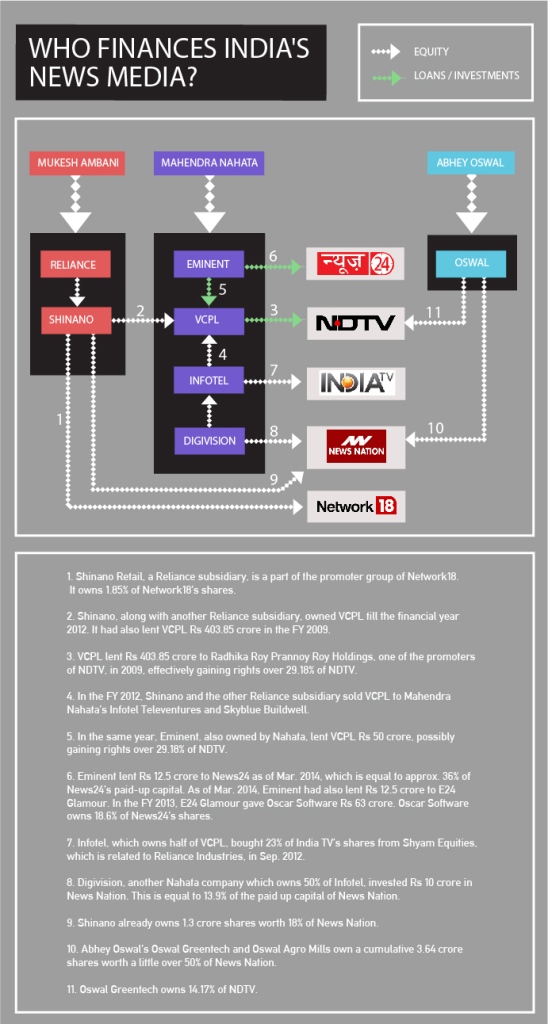
India media ownership 2016 Copyright Caravan
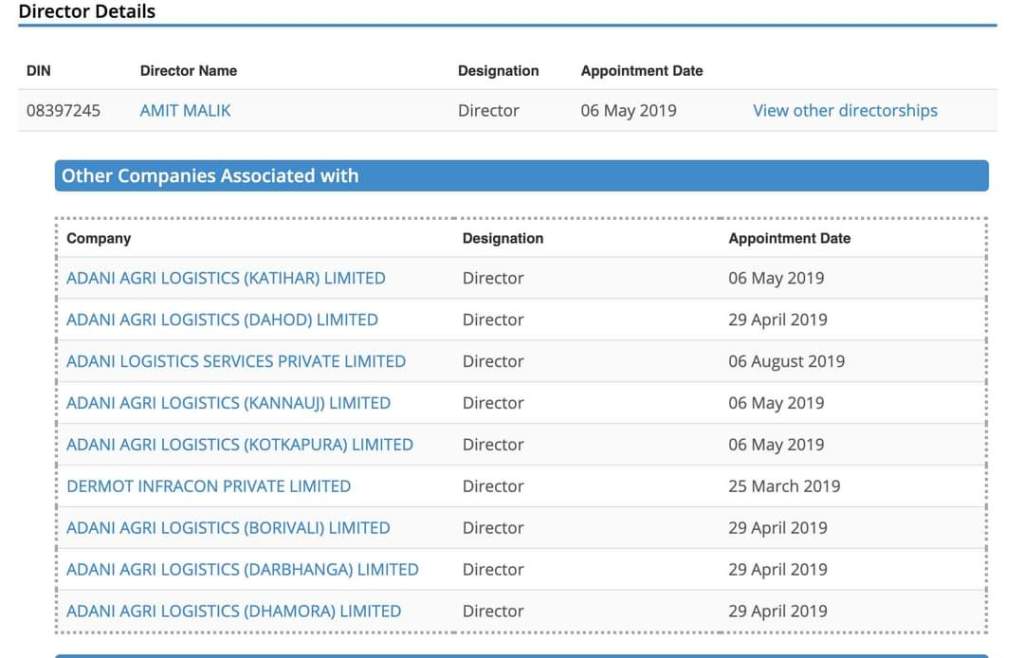
Akarshan Uppal Reporter, IBN24 Copyright IBN24 
TL;DR: Some mildly tricky tricks allow you to select subgoals by name, like in Isabelle. This leads to more readable proofs, and proofs that are more robust against changes.
Lemma star_app: forall T (s1 s2 : list T) (re : reg_exp T),
s1 =~ Star re ->
s2 =~ Star re ->
s1 ++ s2 =~ Star re.
Proof.
intros T s1 s2 re H1.
remember (Star re) as re'.
generalize dependent s2.
induction H1.
- (* MEmpty *) discriminate.
- (* MChar *) discriminate.
- (* MApp *) discriminate.
- (* MUnionL *) discriminate.
- (* MUnionR *) discriminate.
- (* MStar0 *)
injection Heqre' as Heqre''. intros s H. apply H.
- (* MStarApp *)
injection Heqre' as Heqre''.
intros s3 H1. rewrite <- app_assoc.
apply MStarApp.
+ apply H1_.
+ apply IHexp_match2.
* rewrite Heqre''. reflexivity.
* apply H1.
Qed.
This is a very typical example for a proof by induction over an inductively defined relation (in this case, the relations s =~ re which indicates that the string s matches the regular expression re): After some preparation, the invocation of a tactic like induction (could also be inversion or others) creates a number of new goals, one of for each rule of the relation. Then the modern(!) Coq user uses proof bullets to focus the goals, one after another, in order, to solve them.
We can see from this example that proof bullets (which were a big improvement) are not quite satisfactory, and the author of this proof felt the need to annotate each subproof with the case it corresponds to.
But these are mere comments! This is unsatisfactory, as there is nothing keeping them correct as my proof changes. And anyone who came to Coq from Isabelle is just flabbergasted that the state of art in Coq is still at that level
So, wouldn t it be great if
MEmpty)Require Import NamedCases.case <name>, , as follows:
Reserved Notation "s =~ re" (at level 80).
Inductive exp_match T : list T -> reg_exp T -> Prop :=
MEmpty:
case empty,
[] =~ EmptyStr
MChar:
case char,
forall x,
[x] =~ (Char x)
MApp:
case app,
forall s1 re1 s2 re2
(H1 : s1 =~ re1)
(H2 : s2 =~ re2),
(s1 ++ s2) =~ (App re1 re2)
MUnionL:
case union_l,
forall s1 re1 re2
(H1 : s1 =~ re1),
s1 =~ (Union re1 re2)
MUnionR:
case union_r,
forall re1 s2 re2
(H2 : s2 =~ re2),
s2 =~ (Union re1 re2)
MStar0:
case star0,
forall re,
[] =~ (Star re)
MStarApp:
case star_app,
forall s1 s2 re
(H1 : s1 =~ re)
(H2 : s2 =~ (Star re)),
(s1 ++ s2) =~ (Star re)
where "s =~ re" := (exp_match s re).
This is the definition from the Software Foundations book; only the case <name>, lines are added. ; name_cases to name the cases, and then I can use the relatively new named goal focusing feature ([name]: , which I suggested two years ago, and was implemented by Th o Zimmermann) to focus a specific case:
Lemma star_app2: forall T (s1 s2 : list T) (re : reg_exp T),
s1 =~ Star re ->
s2 =~ Star re ->
s1 ++ s2 =~ Star re.
Proof.
intros T s1 s2 re H1.
remember (Star re) as re'.
generalize dependent s2.
induction H1; name_cases.
[empty]:
discriminate.
[char]:
discriminate.
[app]:
discriminate.
[unionL]:
discriminate.
[unionR]:
discriminate.
[star0]:
injection Heqre' as Heqre''. intros s H. apply H.
[starApp]:
injection Heqre' as Heqre''.
intros s3 H1. rewrite <- app_assoc.
apply MStarApp; clear_names.
+ apply H1_.
+ apply IHexp_match2.
* rewrite Heqre''. reflexivity.
* apply H1.
Qed.
The comments have turned into actual names! ; try discriminate after the induction. This means there are suddenly only two goals left. With bullets, the first bullet would now suddenly focus a different goal, and my proof script would likely fail somewhere. With named goals, I get a helpful error message No such goal: empty and I can t even enter the first subproof. So let me delete these goals and, just to show off, focus the remaining goals in the wrong order:
Lemma star_app: forall T (s1 s2 : list T) (re : reg_exp T),
s1 =~ Star re ->
s2 =~ Star re ->
s1 ++ s2 =~ Star re.
Proof.
intros T s1 s2 re H1.
remember (Star re) as re'.
generalize dependent s2.
induction H1; name_cases; try discriminate.
[starApp]:
injection Heqre' as Heqre''.
intros s3 H1. rewrite <- app_assoc.
apply MStarApp; clear_names.
+ apply H1_.
+ apply IHexp_match2.
* rewrite Heqre''. reflexivity.
* apply H1.
[star0]:
injection Heqre' as Heqre''. intros s H. apply H.
Qed.
I did not explain the clear_names tactic yet that I had to use after apply MStarApp. What I am showing here is a hack, and it shows these case names are extra hypothesis (of a trivially true type CaseName), and this tactic gets rid of it.
Inductive Palindrome T : list T -> Prop :=
EmptyPalin:
case emptyP,
Palindrome []
SingletonPalin:
case singletonP,
forall x,
Palindrome [x]
GrowPalin:
case growP,
forall l x,
Palindrome l -> Palindrome ([x] ++ l ++ [x])
.
Lemma palindrome_star_of_two:
forall T (s : list T) x y,
Palindrome s -> s =~ Star (App (Char x) (Char y)) ->
s = [] \/ x = y.
Proof.
intros T s x y HPalin HRe.
induction HPalin; inversion HRe; name_cases.
At this point we have four open goals. Can you tell why there are four, and which ones they are?
Luckily, Show Existentials will tell us their names (and Coq 8.13 will just show them in the proof state window). These names not only help us focus the goal in a reliable way; they even assist us in understanding what goal we have to deal with. For example, the last goal arose from the GrowP rule and the StarApp rule. Neat!
[emptyP_star0]:
left. reflexivity.
[emptyP_starApp]:
left. reflexivity.
[singletonP_starApp]:
inversion HRe; clear HRe.
inversion H5; clear H5.
inversion H10; clear H10.
inversion H11; clear H11.
subst.
inversion H3.
[growP_starApp]:
admit. (* I did not complete the proof *)
induction tactic would just do the right thing here. I hope eventually this will be the case, and this section will just be curiosity but until, it may actually be helpful.
CaseName, and a hypothesis name : CaseName indicates that this goal arose from the that case.
Inductive CaseName := CaseNameI.
With this, we can write StarApp: forall (starApp : CaseName), to name this case.Notation "'case' x , t" := (forall x : CaseName , t) (at level 200).
This allows us to use the syntax you saw above.CaseName assumptions when using the introduction forms, I wrote these tactics:
Ltac clear_names := try exact CaseNameI.
Ltac named_constructor := constructor; [ exact CaseNameI idtac .. ].
Ltac named_econstructor := econstructor; [ exact CaseNameI idtac .. ].name_cases. What it does is relatively simple:
For each subgoal: Take all hypotheses of type CaseName, concatenate their names, change the name of the current goal to that, and clear these hypotheses
Unfortunately, my grasp of Coq tactic programming is rather rudimentary, and the only way I manged to solve this is a horrible monster of Ltac2, including hand-rolled imperative implementations of string concatenation and a little nested Ltac1 tactic within. You have been warned:
From Ltac2 Require Import Ltac2.
From Ltac2 Require Option.
Set Default Proof Mode "Classic".
Ltac name_cases := ltac2:(
(* Horribly manual string manipulations. Does this mean I should
go to the Ocaml level?
*)
let strcpy s1 s2 o :=
let rec go := fun n =>
match Int.lt n (String.length s2) with
true => String.set s1 (Int.add o n) (String.get s2 n); go (Int.add n 1)
false => ()
end
in go 0
in
let concat := fun s1 s2 =>
let l := Int.add (Int.add (String.length s1) (String.length s2)) 1 in
let s := String.make l (Char.of_int 95) in
strcpy s s1 0;
strcpy s s2 (Int.add (String.length s1) 1);
s
in
Control.enter (let rec go () :=
lazy_match! goal with
[ h1 : CaseName, h2 : CaseName - _ ] =>
(* Multiple case names? Combine them (and recurse) *)
let h := concat (Ident.to_string h1) (Ident.to_string h2) in
Std.clear [h1; h2];
let h := Option.get (Ident.of_string h) in
assert ($h := CaseNameI);
go ()
[ _ : CaseName - _ ] =>
(* A single case name? Set current goal name accordingly. *)
ltac1:(
(* How to do this in ltac2? *)
lazymatch goal with
[ H : CaseName - _ ] => refine ?[H]; clear H
end
)
[ - _ ] =>
Control.backtrack_tactic_failure "Did not find any CaseName hypotheses"
end
in go)
).
If someone feels like re-implementing this in a way that is more presentable, I ll be happy to update this code (and learn something along the way
This time a year ago, I visited Toronto, Canada for my first (and hopefully not
last) time, for the Red Hat Java team's face-to-face meetings. The hotel we were
staying in was right next to Nathan Phillip's Square, which is an open-air Ice
Rink for the winter months. I love Ice Skating and rarely took opportunities to
do it (even before Covid-19) so I decided to take full advantage of the locality.
Skating was free, but boot rental was not, so I bought some new skates. That
meant an interesting problem getting them home on the plane.
I think I got out there about 5 times over 5 days. It was busy during the day
and very quiet at other times. 8am worked pretty well.
My local Ice Rink has been intermittently open
over the year as and when the Lockdown rules have allowed it, but the
combination of cold air, indoor circulation and strenuous activity seem to me
to be very unsafe, so I won't risk it. In Newcastle, the Centre for Life
usually puts an outdoor rink on around Christmas, which is very expensive to
skate on. Unfortunately they've decided against it this year.
Toronto was great for more than just Ice Skating! I had a fantastic time meeting
my team members; good food, good drink (especially Ice Wine); The CN Tower; a
funky music instrument shop, and the first Teenage Engineering OP-1 I've ever
seen in the flesh; not much Maple syrup, which surprised me. Good coffee. A
comfortable-feeling city.
It'll probably be a long while before I travel for work (or anything else) quite
like this again. I'm glad to have made the most of it, whilst I could!
Welcome to the 31th post in the rapturously rampant R recommendations series, or R4 for short. This post will once again feature Docker for use with R.
Earlier this week, I received a note from CRAN about how my RcppTOML package was no longer building with the (as of right now of course unreleased) version 11 of the GNU C++ compiler, i.e. g++-11. And very kindly even included a hint about the likely fix (which was of course correct). CRAN, and one of its maintainers in particular, is extremely forward-looking in terms of toolchain changes. A year ago we were asked to updated possible use of global variables in C code as gcc-10 tightened the rules. This changes is a C++ one, and a fairly simple one of simply being more explicit with include headers. Previous g++ release had done the same.
The question now was about the least painful way to get g++-11 onto my machine, with the least amount of side-effects. Regular readers of this blog will know where this is headed, but even use of Docker requires binaries. A look at g++-11 within packages.debian.org comes up empty. No Debian means no Ubuntu. But there is a PPA for Ubuntu with toolchain builds we have used before. And voil there we have it: within the PPA for Ubuntu Toolchain repository is the volatile packages PPA with both g++-10 and g++-11. Here Ubuntu 20.10 works with g++-10, but g++-11 requires Ubuntu 21.04. Docker containers are there for either. So with the preliminaries sorted out, the key steps are fairly straightforward:
ubuntu:21.04 to be able to install g++-11 latersoftware-properties-common package to be able to add a PPAsudo add-apt-repository ppa:ubuntu-toolchain-r/volatile command to add the volatile packages PPAg++-11 (along with, for good measure) gcc-11 and gfortran-11update-alternative (a clever Debian/Ubuntu command) to make version 11 the defaultR itself (via r-base-core) which we simply take from the distro as 21.04 is by construction very recentRcpp via the r-cran-rcpp binary which covers all dependencies for the package in questionrocker/r-edge with tags latest and gcc-11), and you can download it from Docker Hub. With that the proof of the (now fixed and uploaded) package building becomes as easy as
edd@rob:~/git/rcpptoml(master)$ docker run --rm -ti -v $PWD:/mnt -w /mnt rocker/r-edge:gcc-11 g++ --version
g++ (Ubuntu 11-20201128-0ubuntu2) 11.0.0 20201128 (experimental) [master revision fb6b29c85c4:a331ca6194a:e87559d202d90e614315203f38f9aa2f5881d36e]
Copyright (C) 2020 Free Software Foundation, Inc.
This is free software; see the source for copying conditions. There is NO
warranty; not even for MERCHANTABILITY or FITNESS FOR A PARTICULAR PURPOSE.
edd@rob:~/git/rcpptoml(master)$
edd@rob:~/git/rcpptoml(master)$ docker run --rm -ti -v $PWD:/mnt -w /mnt rocker/r-edge:gcc-11 R CMD INSTALL RcppTOML_0.1.7.tar.gz
* installing to library /usr/local/lib/R/site-library
* installing *source* package RcppTOML ...
** using staged installation
** libs
g++ -std=gnu++11 -I"/usr/share/R/include" -DNDEBUG -I../inst/include/ -DCPPTOML_USE_MAP -I'/usr/lib/R/site-library/Rcpp/include' -fpic -g -O2 -fdebug-prefix-map=/build/r-base-Fuvi9C/r-base-4.0.3=. -fstack-protector-strong -Wformat -Werror=format-security -Wdate-time -D_FORTIFY_SOURCE=2 -g -c RcppExports.cpp -o RcppExports.o
g++ -std=gnu++11 -I"/usr/share/R/include" -DNDEBUG -I../inst/include/ -DCPPTOML_USE_MAP -I'/usr/lib/R/site-library/Rcpp/include' -fpic -g -O2 -fdebug-prefix-map=/build/r-base-Fuvi9C/r-base-4.0.3=. -fstack-protector-strong -Wformat -Werror=format-security -Wdate-time -D_FORTIFY_SOURCE=2 -g -c parse.cpp -o parse.o
g++ -std=gnu++11 -shared -L/usr/lib/R/lib -Wl,-Bsymbolic-functions -Wl,-z,relro -o RcppTOML.so RcppExports.o parse.o -L/usr/lib/R/lib -lR
installing to /usr/local/lib/R/site-library/00LOCK-RcppTOML/00new/RcppTOML/libs
** R
** inst
** byte-compile and prepare package for lazy loading
** help
*** installing help indices
** building package indices
** testing if installed package can be loaded from temporary location
** checking absolute paths in shared objects and dynamic libraries
** testing if installed package can be loaded from final location
** testing if installed package keeps a record of temporary installation path
* DONE (RcppTOML)
edd@rob:~/git/rcpptoml(master)$ gcc-11 (and g++-11 and gfortran-11) as well as a recipe for building similar containers with newer clang version will help other developers.
If you like this or other open-source work I do, you can sponsor me at GitHub.
This post by Dirk Eddelbuettel originated on his Thinking inside the box blog. Please report excessive re-aggregation in third-party for-profit settings.
The Linux Foundation has published its annual report today. LWN calls it glossy and yeah, boy, it is shiny.

So shiny that people that work in the publishing industry immediately see this has been produced with the Adobe toolchain which - unfortunately - is one of the big suites of software not yet available for Linux.
Checking the PDF file metadata reveals the keywords "open source, open standards, open hardware, open data". That is what the Linux Foundation is about. Good stuff.
The PDF producer meta data for the annual report PDF has been set to "Linux kernel 0.12.1 for Workgroups" and the PDF creator meta data element to "Sharp Zaurus XR-5000 (Maemo5) Edition". Somebody thought to better hide the real data and had some tongue-in-cheek ideas. Kudos.
But nicer would have been to use Open Source software to produce the report, not?
Running strings 2020-Linux-Foundation-Annual-Report_113020.pdf grep Adobe wc -l gives us 1229 lines and confirms the suspicion of the toolchain.

A stale /Title (Annual Report 2020) /Producer (macOS Version 10.15.7 \(Build 19H15\) Quartz PDFContext) has been forgotten in the document to tell us about the platform.
So, ladies and gentlemen, the Linux Foundation 2020 annual report has been produced on a Mac.
Running Adobe Creative Cloud on MacOS Catalina 10.15.7.
Which is proprietary software. Its kernel (and some userland pieces) are based on BSD. Not Linux.
Continue reading "No dog food today - the Linux Foundation annual report"
A new RcppTOML release arrived on CRAN earlier today evening. RcppTOML brings TOML to R.
TOML is a file format that is most suitable for configurations, as it is meant to be edited by humans but read by computers. It emphasizes strong readability for humans while at the same time supporting strong typing as well as immediate and clear error reports. On small typos you get parse errors, rather than silently corrupted garbage. Much preferable to any and all of XML, JSON or YAML though sadly these may be too ubiquitous now. TOML has been making inroads with projects such as the Hugo static blog compiler, or the Cargo system of Crates (aka packages ) for the Rust language.
CRAN had sent us a note that the package no longer compiled under the [unreleased, of course, never change, BDR ;-) ] g++-11 compiler, but were kind enough to hint that it was only lacking an #include <limits>. These things happen: newer compilers are generally more strict, and that is generally a good things. (Last year this time we prepped code for the more stringent view on global variables under gcc-10. Earlier g++ version had similar demands to clarify include headers.) I set up a simple Docker contain with on Ubuntu 21.04 with g++-11, R, and Rcpp to build the package and make this change (which was of course also PR ed upstream at cpptoml), plus some other small ones that update the package since the last release roughly 18 months ago. We also switched CI use to the r-ci setup I should blog about a little more, removed a bashism and updated a few URLs. The bulleted list of changes in this version follows.
Courtesy of my CRANberries, there is a diffstat report for this release. More information is on the RcppTOML page page. Please use the GitHub issue tracker for issues and bugreports. If you like this or other open-source work I do, you can sponsor me at GitHub.Changes in version 0.1.7 (2020-12-01)
- Add
#include <limits>to header file, also contributed upstream, to permit compilation under the (unreleased)g++-11.- Switch the simple
cleanupscript tosh.- Switch CI use to
r-cifor focal and bspm.- Update several TOML URLs to
https://toml.io/en/.
This post by Dirk Eddelbuettel originated on his Thinking inside the box blog. Please report excessive re-aggregation in third-party for-profit settings.
I have recently become an OpenJDK Author. Practically this means I can query
the Java Bug Database directly, and I can author
Mercurial for committing to the relevant OpenJDK project myself, rather than
needing sponsors in both cases.
A small milestone but one I'm proud of! Thanks to my team members who have
encouraged me and helped me by sponsoring and reviewing my work so far.
Next step, Committer!
Stick figure by Sanitary Panels on SC
| Publisher: | Red Wombat Tea Company |
| Copyright: | 2013 |
| ASIN: | B00G9GSEXO |
| Format: | Kindle |
| Pages: | 140 |
Sings-to-Trees had hair the color of sunlight and ashes, delicately pointed ears, and eyes the translucent green of new leaves. His shirt was off, he had the sort of tanned muscle acquired from years of healthy outdoor living, and you could have sharpened a sword on his cheekbones. He was saved from being a young maiden's fantasy unless she was a very peculiar young maiden by the fact that he was buried up to the shoulder in the unpleasant end of a heavily pregnant unicorn.Sings-to-Trees is the sort of elf who lives by himself, has a healthy appreciation for what nursing wild animals involves, and does it anyway because he truly loves animals. Despite that, he was not entirely prepared to deal with a skeleton deer with a broken limb, or at least with the implications of injured skeleton deer who are attracted by magical disturbances showing up in his yard. As one might expect, Sings-to-Trees and the goblins run into each other while having to sort out some problems that are even more dangerous than the war the goblins were unexpectedly removed from. But the point of this novella is not a deep or complex plot. It pushes together a bunch of delightfully weird and occasionally grumpy characters, throws a challenge at them, and gives them space to act like fundamentally decent people working within their constraints and preconceptions. It is, in other words, an excellent vehicle for Ursula Vernon (writing as T. Kingfisher) to describe exasperated good-heartedness and stubbornly determined decency.
Sings-to-Trees gazed off in the middle distance with a vague, pleasant expression, the way that most people do when present at other people's minor domestic disputes, and after a moment, the stag had stopped rattling, and the doe had turned back and rested her chin trustingly on Sings-to-Trees' shoulder. This would have been a touching gesture, if her chin hadn't been made of painfully pointy blades of bone. It was like being snuggled by an affectionate plow.It's not a book you read for the twists and revelations (the resolution is a bit of an anti-climax). It's strength is in the side moments of characterization, in the author's light-hearted style, and in descriptions like the above. Sings-to-Trees is among my favorite characters in all of Vernon's books, surpassed only by gnoles and a few characters in Digger. The Kingfisher books I've read recently have involved humans and magic and romance and more standard fantasy plots. This book is from seven years ago and reminds me more of Digger. There is less expected plot machinery, more random asides, more narrator presence, inhuman characters, no romance, and a lot more focus on characters deciding moment to moment how to tackle the problem directly in front of them. I wouldn't call it a children's book (all of the characters are adults), but it has a bit of that simplicity and descriptive focus. If you like Kingfisher in descriptive mode, or enjoy Vernon's descriptions of D&D campaigns on Twitter, you are probably going to like this. If you don't, you may not. I thought it was slight but perfect for my mood at the time. Rating: 7 out of 10
Currently, the Government procures rice in vast quantities and the farmers are assured at least some basic income, in the states of Punjab and Haryana
Procurement of Rice by Various States
Statistica Chart of differences between Republicans and Democrats
PTI News, Nov 27, 2020 Next.