Search Results: "will"

25 June 2006

Benjamin Seidenberg: Coffee is for wimps

It’s 3:51 in the morning and I am already awake and showered. In about 30 minutes or so, I leave for the airport, for a flight to NY, where I will meet my tour group and fly to Israel. Back in 3 weeks. Email me if you need me, I’ll respond if I have a chance. I will hopefully put pictures up at http://www.dlgeek.net/israel during the trip, but no promises.

Alexander Wirt: Froscon 2006 Day I

Its sunday morning and I'm trying to get back into life with some coffeine. I had a really nice time yesterday, the Froscon was excellent organized, even WLAN worked all the time. I had to talks yesterday, one about backports.org and one about spam. The first one had 5 persons or so, but most of them were developers and they were really interested so it really nice. In the spam talk were round about 30-40 persons and we had some very good discussions, so that I ran out of time at last. The feedback of both talks was very positive.
In the evening I managed the KSP, which went mostly well, even if I was too tired to organize it the way I normally prefer to do.
TODO: create some video/animation about how KSPs work. (any volunteers?)

I organized to get some pretzels that looked like debian swirls, Sven Guckes has some pictures of it.

Social Event was also pretty nice, much Wheat Bear and Food :-).


Thanks to all who made this happen and I really hope that it will happen next year too.
And now I'll get prepared for day II.

Small Comment:
Madduck asked me about taking the slides online, here

24 June 2006

Jose Carlos Garcia Sogo: AverTV Volar chipset

While looking for a driver for my new DVB-T device I decided to open it, as I was suspecting this was a very different device from other AverMedia products. What I have found is that it uses this three chips: I took some photos. So it seems that this device is using quite different (and new) technology than older AverTV DVB-T USB 2.0 device, and it is not supported for now in v4l-dvb drivers (mt2060 tuner is, but DibCom 7700P is not). So I think that a new implementation for this DibCom chip will be needed, as it will be different from DibCom 3000 brancd. Basically we should request info to AverMedia about this chip so a new driver can be developed.

Christian Perrier: Adopting CRM114 for filtering spam

Last week, I finally becamed annoyed enough by the huge amount of spam I receive, mostly on my @debian.org address. So, I decided that my current anti-spam measures (SpamAssassin running on my home server, which receives all my mail, as well as my laptop, which collects it) are probably not enough. In the same time, I was seeing a few people talking about CRM114 in various occasions. It seemed easy to setup enough for me to try doing somethign with it (I usually give up on stuff that requires too much effort....). Installing it on my laptop was fairly easy, as a Debian package exists for it. Using it through procmail recipes required some documentation reading, but no more than 1 hour. The most important part has been training it. I did so for about one week by feeding undetected spam to it and teach it that it is actually spam...and of course doing the opposite with false positives on ham. One week later, I feel safe enough to actually filter all mails detected by CRM114 as spam to a dedicated mailbox, which I of course will have to investigate once a day to sort out remaining false positives. But now, my incoming mailbox is clean again and it really seems that the time I invested in learning CRM114 and teaching it about spam/ham will very quickly be worth it. In short, just try it: there are chances that you won't regret it. PS: of course, things would probably be better if Debian mail machines were using some measures similar to those finally adopted on Alioth with the help of Pierre Habouzit (RBL+greylisting, IIRC). Old debate in the project....let's hope it will happen some day if nothing I'm unaware of does prevent it.

Arnaud Fontaine: SoC: design of wotomae

These days, i have worked a lot for the SoC in order to define the design of the web and mail interfaces, helped by Raphael Hertzog. Everything has been committed to the arch repository of the project. Now, i will post news about the progress of the SoC on my blog and on the soc-coordination mailing list. Web interface I have begun by the tree of the web interface. One of the feature of wotomae is to be editable by everybody. However, we must have an administrator's group for a tracker (for mass bug filling or the blacklist). I have worked with Raphael for writing mockups intended to give an outline of the web interface, and especially to detail the features of the most important pages. It is possible to define custom fields (upstream version...) where the datas are given using the mail interface by external scripts or by the user if it can be done easily. It is also possible to define visual preferences on custom fields. The implementation of the web interface will be written with Turbogears, which has interesting features, like : Finally, I chose ZODB. Because the accounts database has to be share with other interface, which won't necessary use python, a secure XML-RPC API will be written for accessing the accounts' datas. Mail interface The goal is to obtain a flexible interface, allowing to make some tasks easier. At the moment, these commandes have been defined (some examples are availabe on the wiki): Any comments about the design are obviously welcome.

23 June 2006

Erich Schubert: SELinux policy module linking fixes posted

Fixes for the SELinux toolchain were posted to the mailing list today by Joshua Brindle, that should enable proper module linking finally. If they work as expected, we could finally build the polic into modules and just link those modules needed. Right now, a complete policy is several megabytes big. But only few users will have both postfix, exim and sendmail installed etc. Thank you.

Erich Schubert: The truth why Microsoft delays its products all the time

... because it keeps on renaming them. Which means they have to review their Sourcecode to replace all the occurences of the product name, and then they have to fix the resulting bugs again. Latest name changes: WinFX becomes .NIET Framework 3.0, Antigen becomes Forefront. I wonder what the new name of the Internet Explorer will be, once it's released. Maybe "Windows Live Explorer"? Or is maybe Microsoft introducing it's previous try in setting up a brand - "Microsoft Passport Explorer"? Or will it be "Microsoft Live Passwort.NET Explorer"? I wonder what Vista will be called once it's released? How about "Duke Nukem Forever"? The funny thing is that Microsoft lost track of its product names itself - ther are two different products named Microsoft Live Search.

Ross Burton: GStreamer Bounty

I'm willing to start a bounty for someone to fix/port/implement the required pieces of GStreamer so that Sound Juicer can rip a whole CD, fully tagged (all tags SJ writes must be correctly encoded), to MPEG4 AAC (as used natively by iTunes). A requirement is that a music player that support MPEG4 files can see the tags without any extra work: the primary test for this will be importing the ripped files into iTunes. I think there are many people out there who would like this to happen, so I want to arrange a group bounty. Bounty County looked promising but I have to specify how much the bounty is up front, I can't just let the fund grow as people donate what they can. The Bounties section on Launchpad has the same limitation. Does anyone know a reputable site for managing donations like this, or should I just get register a new email address on PayPal and get people to donate there? Also to gauge how much interest there is in this, can anyone who would consider donating leave a comment? NP: Vertigo, Groove Armada

Wouter Verhelst: Choir concert

I had been in a choir called "Cantilene" since the age of sixteen. Since this was a youth choir, however, I was kindly asked to leave when I hit 26, now two years ago. Unfortunately, that left me in the cold, as Cantilene was part of the c-koren family which did not really have a choir that appealed to me, with hours that would allow me to attend rehearsals. This has changed now; since a few months, the C-koren have a new member choir called "Caljent " (which is supposedly a spanish word meaning "warmth" or some such—I'm sure Spanish people will correct me if I'm wrong;-P ), and we will give our first small concert next week's friday, at 20:30, in the "Sint Lambertuskerk" (church of Saint Lambert) of Ekeren, my home town. Everyone who can make it is welcome to be there...

Carlos Villegas: Background and LSB compliance (SoC 2006)

Yesterday I tried another hotspot: networking on the background. In the Sarge networking script it is pretty easy to run in the background. Just have to add an ampersand after the line:
ifup -a
Couldn't be easier I guess. Well, there is the problem that the message "done." will appear afterwards at some random place out of context. Now, the sid version of the script is much nicer and seems to be LSB compliant!!! Grand! Well, the problem comes as "ifup -a" is inside an IF statement such that sending to the background makes no sense. So maybe it could be sent to the background in a new shell and send a message like "Configuring network interfaces...done".
Well, as my intention was just to test the boot speed I removed the IF statement. There was no change on time! That is not what should happen. I'll have to double check. The results and scripts are available here
Finally, I tried removed discover from the scripts as udev is already doing the same job. This change was motivated by a comment from Marco D'Itri. Also in this case I noticed no change on the boot time. This should be hardware dependent.

Clint Adams: In this parable, which member of the d-i team is which?

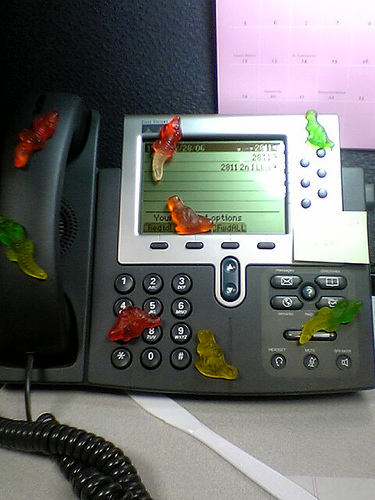
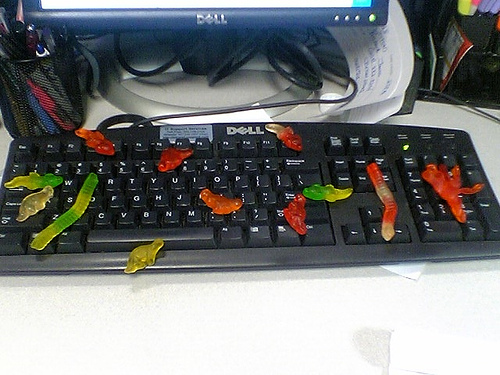
In the Year of the Mezcal, a prophecy was fulfilled. Don Gusano de Az car sired a critter the likes of which the world had never seen. This mahdi could not dispense honey, milk, orange juice, or ghee from his fingers. In point of fact, he had no fingers. What he had was the burning desire to liberate his brethren from the iron yoke of the She-Beast. He set up a vast terrorist network, the likes of which the world had seen many times over, for it was basically just a phone tree, a couple of code phrases, and a bunch of dullards. Then, having forged his legacy, he perished, suffering a series of strokes brought on by being forced to watch an episode of Full House . His minions bided their time until the coming of the Summer Solstice, and though they did not know how to say it in Portuguese, they eagerly sprang into action. [dialing phone] With daring and finesse, they commandeered an IP phone. [talking on phone] After 45 minutes of trying to add value, they failed to bring it to the table, since one major oversight was that they lacked any capacity to generate speech. H las ! cried the one that wasn't translucent at all, and he did so silently. [typing on keyboard] Cleverly devising a backup strategem, they rushed to a computer to send some emails. Unfortunately, Outlook crashed on them six times, and then they were, like, totally diverted by a fascinating exchange between two guys named BJ and William. By the time they managed. To send their first email. Which they typed like this. Because the little guy on the period key. Had a tick. It was too late. [STD transmission] Oh, you poor, foolish things! If only you had used free software, she wouldn't be giving you oral herpes right now.

John Goerzen: Now I'm a little annoyed at HP

So, a little while ago, I wrote about why I like HP. This week, I'm starting to be annoyed at them.

My employer just bought nearly $100,000 worth of HP hardware. We get a new MSA1500cs Fibre Channel SAN (with redundant controllers, FC switches, disks, etc), a new blade enclosure system, three blades to start with (all of them, at minimum, dual dual-core Opterons with 4GB RAM, and some considerably more), a rack to put all this in, etc.

So we're starting to set all this stuff up. I've got Debian installed on an NFS root for testing the blades and how they interact with the SAN.

The blades have an integrated dual-port QLogic QLA2312 Fibre Channel adapter. The Linux kernel has a built-in driver for this (qla2xxx), which detects it and, so far at least, works fine. We want to run kernel 2.6.17 because it's the first version where XFS has decent semantics for write ordering to prevent corruption after a power failure. Plus we want at least a 2.6.16.x kernel because we want to run the latest Xen 3.0 on these blades. (Live migration of virtual servers from blade to blade -- this will be great.)

But we learn that HP does not support the kernel qla2xxx driver. HP does not say WHY they don't support it, just that their own driver is the only one that they support.

After plowing through several annoying scripts to get to their driver, I realize why it fails to install: it is OLD. At BEST, 2.6.14 is the most recent kernel it would even compile against (release date: October 2005), and I think the most recent version it supports is more like 2.6.8 (almost TWO YEARS OLD now). They reference a whole bunch of kernel symbols and macros that were removed somewhere between 2.6.8 and 2.6.17.

I sent a ticket to HP support. Their first request was to run their system information gathering tool and send them the results. Fine, that's reasonable. I did so. Next they say, gee, you're running Debian, and we don't support that.

Argh.... If they tried to compile it against 2.6.17.1 on RedHat or SuSE, they'd get the exact same problem. I told them what symbols they were erroneously using, and a simple grep would have showed them that.

Besides, how many customers are going to be pleased with no upgrade path available for 2 years? I wouldn't want our kernel version to be held hostage to HP's slow driver development process.

Sigh.

Edd Dumbill: Illustrated Rails, smart folks and publication

It's been a fun day today, the pre-conference warm up day for RailsConf.Over breakfast with Surj Patel and Matt Biddulph, we got to talking about debuggers and poking around inside Rails applications. With Rails being so new, I was intrigued in what happens when you hand a Rails application over to somebody. Does all the Rails magic help or hinder their ability to understand what's going on?What kind of ways are there, beyond documentation (which nobody writes), to communicate the workings of a Rails app? We thought that what might help would be some kind of graphical illustration of the flow of control, linked to a source viewer, that showed requests being processed. Rails is built in a convenient way for instrumentation and introspection, by virtue of the aggressive use of DSLs and Ruby's language features. Based on these, are there tools we can write to help people understand what a Rails application is doing?
I've not yet had enough experience of either handing off, or being handed, mature Rails apps to say for sure what's needed. But it's going to be a problem we all face when Rails sneaks further into the system. Java's redeeming quality in the enterprise is that it's damn hard to write anything one might consider idiomatic. As a consequence, there are predictable ways in which one can approach code written by somebody else, all other factors being equal. Will Rails idioms cause trouble for long-term maintainability?
Lunchtime included an interesting exchange with Rich Kilmer. Rich used to work for DARPA on RDF and OWL stuff, and has apparently written all manner of interesting Ruby code that processes RDF. It's a crime I'd not come across his work before, but it's all open sourced in the Semitar project. The project web page looks modest, but if Rich's description is anything to go by, it sounds a wonderfully appropriate way to approach programming for the semantic web.Finally, I notice that, as the day finishes, IBM developerWorks have published my Introduction to Rails for DB2 developers.RailsConf proper starts tomorrow. 

22 June 2006

Jesus Climent: Bye drupal. Hi, wordpress.

I moved to wordpress. I dont have neither the time nor the patience to upgrade drupal from 4.5.8 (the existing version on sid) to 4.7.x, the upstream version which was released some time ago. From 4.5 to 4.7 there is no upgrade path, so the Debian package that eventually needs to be uploaded has to provide an easy way to get there. But even the 4.5 -> 4.6 -> 4.7 path ended up in posts from the front page which were not in the RSS feed originally being posted without content to planets around the word. So, since I already host a couple of other wordpress services in my machine, decided to move to wordpress and will put the old database for historical reasons somewhere.

Steve Kemp: All that you feel is tranquillity

Ugh. I’d forgotten how annoying it is to reinstall existing systems. I’ve spent close to two hours reinstalling my “backup” PC. (This is the machine which used to be my primary desktop, now it mostly exists to host backups of my websites, and the primary machine which replaced it.) The intention was to reinstall so that I could setup a clean system with no desktop packages, and switch to using LVM. The machine hosts several Xen instances which are used to provide services such as DHCP + Debian package building. Backing up the data was easy, the Sarge installer is a pleasure to use, and I even remembered to copy all my SSH host keys. So why the pain? Well the machine is running Sid. (Will stick to Etch when it is available I think), and several packages which had been running happily for months such as apt-cacher were temporarily uninstallable. In the case of apt-cacher I was able to use approx instead - so that wasn’t a huge deal. But one thing tripping me up is sound. It was my main desktop system and had sound working fine. Now I have alsa setup, all the mixer volumes up to the max, and yet nothing. XMMS is playing happily - but absolutely no sound coming out. Apart from checking the mixer settings I can’t think of what else to do. Not a huge deal but it is a minor irritation since sometimes people come over and want a machine to use for surfing, etc, and I like to give them a standard desktop with links to my MP3 share, etc. Still all the main services are back up and running, GDM is available remotely via VNC, the logged in desktop is also shared via x11vnc, and the backups are starting to trickle back in. The current partition scheme looks something like this:
/dev/hda1                         on / type ext3 (rw,errors=remount-ro)
/dev/mapper/vol-home     on /home type ext3 (rw,noatime)
/dev/mapper/vol-backups on /backups type ext3 (rw,noatime)
Then I have a couple of xen domains:
	
skx@itchy:~$ sudo xm list
Name                              ID Mem(MiB) VCPUs State  Time(s)
Domain-0                           0      873     2 r-----   230.8
builder.my.flat                    1      128     1 -b----    39.8
dhcpdns.my.flat                  1       96      1 -b----    39.8
skx@itchy:~$
Now time to find food, and water my plants.

Uwe Hermann: 1000

Yesterday I managed to

Ben Armstrong: Work around GTK+ open type ahead find

Typeahead find in gvim’s GTK+ open dialog box is driving me bananas, but today I discovered a trick I hadn’t seen before that will help work around it with a bit of relearning. For those who aren’t familiar with the problem, John Goerzen describes how painful this feature is for large directories. Just imagine, then, having to regularly deal with large directories on particularly slow, remote filesystems. Argh. Unusable! The trick I came up with to work around the problem is to first enter the path incorrectly and then fix it afterwards. Type a blank first, then the whole filepath, then [Home] to return to the beginning of the line, and finally [Delete] to fix the path, and [Enter] to open the file. It still takes an awfully long time for gvim to read the file, but it’s a great improvement over either trying to type the filename blind, or waiting for each directory to be scanned. Ultimately, these files should be moved off the remote filesystem and into subversion, but there are cross-platform compatibility issues that prevent me from doing this at this time (OpenVMS + Linux + win32). I’m still looking for a real solution. In the comments to John’s post, someone suggested there is a gconf setting that controls this, but so far I haven’t been able to find it. So for now, I’ll have to live with this hack.

Carlos Villegas: First hotspots tried (SoC 2006)

Debian sid was installed and the installation log can be found here. There is a link to a list of the packages installed with the distribution update from etch and the resulting init scripts. Besides, bootcharts and other resources will be available in this section.
Using the same sid installation, from the hotspots yesterday I tried to load the hwclock on the background with a 2 seconds reduction in the boot time. The bootcharts and scripts are availabe here as well.
Finally, depmod is not used any more in sid's module-init-tools and this is one of the hotspots. This was removed as a result from a discussion started by Margarita Manterola in debian-devel. Just by adding it again from an old script, the 2 second reduction from hwclock was lost.

21 June 2006

Michael Janssen: Refilling Laser Printer Cartridges

I have the pleasure to have a laser printer at home, which works great and is wonderful for printing everything from research papers to read to envelopes for sending. [info]ceilingsarecool uses it for taking things for proofing and research. While it was a slight trouble to set up with my Linux server, but works great now. Unfortunately while it was cheap as hell after rebate, the starter cartridge that it came with only prints off about 1,000 pages. Recently it started printing very light and shaking the cartridge wasn't working anymore, so I started looking for new toner. I found out quickly that one new toner cartridge costs as much as the whole printer itself, but my searches also turned up another option: refilling the cartridge that I have already. I figured I would take the chance, because it cost around $20 compared to the $80-90 for a new cartridge.

Yesterday I got the toner in the mail - it comes in a very small bottle with a small diagram and a little topper funnel. The process was fairly easy and straightforward. All I needed for tools that didn't come in the package was a Phillips and flathead screwdriver. The steps which I had to take:


  1. Setup the area - I put newspaper down all around the area I was planning to do the work. I didn't need that much space and I was very clean and didn't spill, but I still got toner on the paper I put down.

  2. Remove the side of the cartridge - this was indicated to me on the diagram that came with the new toner. There was one little clip which I had to push in in order to get the side off, and I had to pry the side off slowly with a flathead.

  3. Remove the toner plug - the toner plug was under the side panel I pried off in the last step, and also took a little coaxing with my small flathead. Starting at this step, I also put on a set of latex gloves so I wouldn't get toner all over my fingers.

  4. Open the toner - Open the top of the cap (mine came in a little bottle) and remove the safety seal (like on pill bottles). This got a little messy on my fingers to get all of the safety seal off. I also screwed the plastic funnel thing on.

  5. Pour the toner into the cartridge - If your cartridge is really empty it's not a problem to turn it over so you can put the bottle in at a 45 degree angle and then turn both the cartridge and toner bottle so that the toner is pouring out. I had to tap the bottle a little and shake them (while still together) to get the toner into the cartridge

  6. Put the plug and side back on - replace the plug and screw the side of the cartridge back on.

  7. Shake the cartridge to settle the toner - shake it about 3-4 times, while it's still over the paper. Some of the small dust-like particles came off for me when I shook the cartridge

  8. Clean up - throw away the toner bottle and the newspaper


I was thrilled to put the cartridge back into my printer and find that it printed just as good as before. Unfortunately this doesn't work forever - eventually the fusing barrel will wear out and start producing some of those other laser printer problems like lines and repeating patterns. Everything that I have read suggests that one cartridge of mechanical parts will work for about 10,000 pages. That means that I have about 2 more refills before this one runs out. Saving $50-70 every couple of months will make a big difference in the long run. I suspect that some of the toner cartridges that you can buy on line are "re-manufactured" much like this one, or possibly slightly more complicated (replacing a drum that's broken) so they might not work for as many refills as a new one.

Ross Burton: VGA Out on T40p

Dear Lazyway... Next week I'm giving a presentation at GUADEC and would like to avoid embarrassing last-minute configuring of X by setting up VGA out on my laptop before I leave. This is harder than it sounds as I don't actually own any monitors any more. If anyone out there has the VGA port working on a Thinkpad T40p (or similar) in clone mode, with GL acceleration, hopefully with automatic down-scaling to 1024x768, then can you please mail me your xorg.conf. I have S-video out sort-of working but it's not downscaling the image and I've lost GL acceleration, which is a great pain. Note: any comments about how I'm evil for using a non-free driver will be ignored. NP: g tis Byrjun, Sigur R s

Next.

Previous.