Search Results: "ema"

2 May 2020

Jonathan Carter: Free Software Activities for 2020-04

Debian project leader This month contained the first week and a half or so of my term as Debian Project Leader. So far my focus has been getting up to speed and keeping the gears turning with day to day DPL tasks. The updates listed here will also be available on the DPL blog, where I aim to make more frequent updates. During May, Debian Brazil will host Debian talks throughout the month which they will stream to their YouTube channel. You can find the schedule in this git repository, most of the talks will be in Portuguese, but on the 4th of May at 21:00 UTC, I ll be covering some Debian project topics for an hour or so and take some questions if there s time left. 2020-04-19: Handover session with Sam, our outgoing DPL. We covered a lot of questions I had and main areas that the DPL works in. Thanks to Sam for having taken the time to do this. 2020-04-21: First day of term! Thank you to everybody who showed support and have offered to help! 2020-04-21: Request feedback from the trademark team on an ongoing trademark dispute. 2020-04-21: Join the GNOME Advisory Board as a representative from Debian. 2020-04-21: Reply on an ongoing community conflict issue. 2020-04-21: Update Debian project summary for SPI annual report. 2020-04-21: Received a great e-mail introduction from Debian France and followed up on that. 2020-04-21: Posted Bits from the new DPL to debian-devel-announce. 2020-04-22: Became Debian s OSI Affilliate representative. 2020-04-22: Reply to a bunch of media inquiries for interviews, will do them later when initial priorities are on track. 2020-04-23: Resign as Debian FTP team trainee and mailing list moderator. In both these areas there are enough people taking care of it and I intend to maximise available time for DPL and technical areas in the project. 2020-04-25: Review outgoing mail for trademark team. 2020-04-25: Answer some questions in preparation for DAM/Front Desk delegation updates. 2020-04-26: Initiated wiki documentation for delegation updates process. 2020-04-27: Update delegation for the Debian Front Desk team. 2020-04-29: Schedule video call with Debian treasurer team. 2020-04-29: OSI affiliate call. Learned about some Open Source projects including OpenDev, OpenSourceMatters, FOSS Responders and Democracy Labs.

Debian Social Work on the Debian Social project is progressing, we plan to start a separate blog syndicated to Planet Debian that contains progress and status updates. I ve been terrible at tracking the work we ve been doing on this, so for now, here are some micro updates:

MiniDebConf Online In the DebConf video team, we ve been wondering whether we have all the tools required to successfully host a DebConf (or even a mini DebConf) entirely online. There s really just one way to know for sure, so we re going to host MiniDebConf Online from 28 May to 31 May. The first two days will be an online MiniDebCamp, where we can try to hold online spints, meetings and general chit-chat. The last two days will be for talks and lightnight talks, with BoFs likely to take place throughout the 4 days (this will probably be decided once we have a content team). Announcements should go out within the next week, in the meantime, save the dates.

Debian package uploads 2020-04-07: Upload package flask-autoindex (0.6.6-1) to Debian unstable. 2020-04-07: Upload package gamemode (1.5.1-1) to Debian unstable. 2020-04-08: Accept MR#2 for live-tasks (add usbutils to live-task-standard). 2020-04-08: Upload package live-tasks (11.0.2) to Debian unstable (Closes: #955526, #944578, #942837, #942834). 2020-04-08: Close live-config bug #655198 (Only affects squeeze which is no longer supported). 2020-04-08: Upload package live-config (11.0.1) to Debian unstable. 2020-04-08: Upload package calamares (3.2.22-1) to Debian unstable. 2020-04-15: Upload package xabacus (8.2.6-1) to Debian unstable. 2020-04-16: Merge MR#1 for gnome-shell-extension-dashtodock (new upstream release). 2020-04-16: Upload package gnome-shell-extension-dashtodock (67+git20200225-1) to Debian unstable. 2020-04-16: Merge MR#1 for gnome-shell-extension-hard-disk-led (fix some lintian issues). 2020-04-16: Merge MR#1 for gnome-shell-extension-system-monitor (fix some lintian issues). 2020-04-17: Upload package calamares (3.2.23-1) to Debian unstable. 2020-04-17: Upload package catimg (2.6.0-1) to Debian unstable (Closes: #956150). 2020-04-17: Upload package fabulous (0.3.0+dfsg1-7) to Debian unstable (Closes: #952242). 2020-04-17: Upload package gnome-shell-extension-system-monitor (38+git20200414-32cc79e-1) to Debian unstable (Closes: #956656, #956171). 2020-04-17: Upload package gnome-shell-extension-arc-menu (45-1) to Debian unstable (Closes: #956168). 2020-04-18: Upload package toot (0.26.0-1) to Debian unstable. 2020-04-23: Update packaging for gnome-shell-extension-tilix-shortcut, upstream section needs some additional work before release is possible. 2020-04-23: Upload package xabacus (8.2.7-1) to Debian unstable. 2020-04-27: Upload package gnome-shell-extension-dash-to-panel (37-1) to Debian unstable (Closes: #956162, #954978). 2020-04-27: Upload package gnome-shell-extension-dash-to-panel (37-2) to Debian unstable. 2020-04-27: Upload package gnome-shell-extension-dashtodock (68-1) to Debian unstable. 2020-04-30: Merge MR#8 for gamemode (add symbol files) (Closes: #952425). 2020-04-30: Merge MR#9 for gamemode (reduce number of -dev packages generated). 2020-04-30: Merge MR#10 for gamemode (deal better with upgrades on a buggy version). 2020-04-30: Manually merge changes from MR#11 for gamemode (packaging fixes). 2020-04-30: Upload package gamemode (1.5.1-2) to Debian unstable.

Sylvain Beucler: Debian LTS and ELTS - April 2020

Debian LTS Logo Here is my transparent report for my work on the Debian Long Term Support (LTS) and Debian Extended Long Term Support (ELTS), which extend the security support for past Debian releases, as a paid contributor. In April, the monthly sponsored hours were split evenly among contributors depending on their max availability - I was assigned 28.75h for LTS (out of 30 max; all done) and 7.75h for ELTS (out of 20 max; I did 2.75). Escalation procedures were (internally) documented with a focus on discussing issues with team coordinator(s) first. Debian LTS had its first team meeting through IRC and lots of workflow question were discussed. This should help discuss questions that are a bit hard to bring up, and ensure everybody participates. There were lots of topics and it was a bit rushed, but this is something we want to repeat monthly now, possibly with audio/video in a couple months. Remarks from last month's report were discussed, strengthening the Front-Desk role. 10% of the global funding is now reserved for infrastructure work. What kind of work, and who (LTS or external) will do the work, will be discussed further. A fellow DD suggested (in a private conversation) that LTS may be taking time from the Debian Security team, due to additional commits to review. Conversely, this is another opportunity to mention all the global, non-LTS-specific work that LTS provides, which I usually highlight in my reports, and maybe I should be even more ;) ELTS - Wheezy LTS - Jessie Documentation/Scripts

30 April 2020

Chris Lamb: Free software activities in April 2020

Here is my monthly update covering what I have been doing in the free software world during April 2020 (previous month's report). Looking it over prior to publishing, I am surprised how much I got done this month I felt that I was not only failing to do all the extra things I had planned, but I was doing far less than normal. But let us go easy on ourselves; nobody is nailing this. In addition, I did more hacking on the Lintian static analysis tool for Debian packages:
Reproducible builds One of the original promises of open source software is that distributed peer review and transparency of process results in enhanced end-user security. However, whilst anyone may inspect the source code of free and open source software for malicious flaws, almost all software today is distributed as pre-compiled binaries. This allows nefarious third-parties to compromise systems by injecting malicious code into ostensibly secure software during the various compilation and distribution processes. The motivation behind the Reproducible Builds effort is to ensure no flaws have been introduced during this compilation process by promising identical results are always generated from a given source, thus allowing multiple third-parties to come to a consensus on whether a build was compromised. The initiative is proud to be a member project of the Software Freedom Conservancy, a not-for-profit 501(c)(3) charity focused on ethical technology and user freedom. Conservancy acts as a corporate umbrella allowing projects to operate as non-profit initiatives without managing their own corporate structure. If you like the work of the Conservancy or the Reproducible Builds project, please consider becoming an official supporter. Elsewhere in our tooling, I made the following changes to diffoscope, our in-depth and content-aware diff utility that can locate and diagnose reproducibility issues, including preparing and uploading versions 139, 140, 141 and 142 to Debian: Lastly, I made a large number of changes to our website and documentation in the following categories:
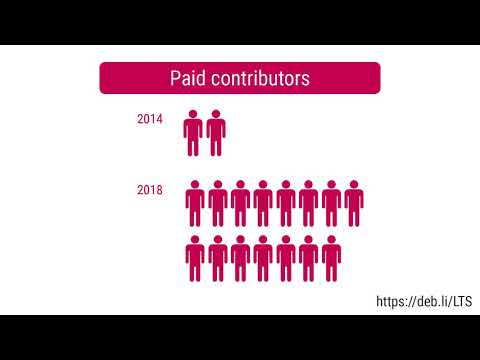
Debian LTS This month I have contributed 18 hours to Debian Long Term Support (LTS) and 7 hours on its sister Extended LTS project. You can find out more about the project via the following video:
Debian I only filed three bugs in April, including one against snapshot.debian.org to report that a Content-Type HTTP header is missing when downloading .deb files (#956471) and to report build failures in the macs & ruby-enumerable-statistics packages:

Mike Gabriel: My Work on Debian LTS (April 2020)

Due to sickness I was not able to complete my 8 hours of work on Debian LTS as planned. I only worked 1.5 hours this month, moving the remaining 6.5 hours over to May. LTS Other security related work for Debian

29 April 2020

Craig Small: Sending data in a signal

The well-known kill system call has been around for decades and is used to send a signal to another process. The most common use is to terminate or kill another process by sending the KILL or TERM signal but it can be used for a form of IPC, usually around giving the other process a kick to do something. One thing that isn t as well known is besides sending a signal to a process, you can send some data to it. This can either be an integer or a pointer and uses similar semantics to the known kill and signal handler. I came across this when there was a merge request for procps. The main changes are using sigqueue instead of kill in the sender and using a signal action not a signal handler in the receiver. To illustrate this feature, I have a small set of programs called sender and receiver that will pass an integer between them. The Sender The sender program is extremely simple, use a random(ish) from time masked to two bytes, put it in the required union and send the lot to sendqueue.
# include <signal.h>
# include <stdlib.h>
# include <stdio.h>
# include <time.h>
int main(int argc, char **argv)
 
    union sigval sigval;
    pid_t pid;
    if (argc < 2   (pid = atoi(argv[1])) < 0)
	return EXIT_FAILURE;
    sigval.sival_int = time(NULL) &amp; 0xff;
    printf("sender: sending %d to PID %d\n",
        sigval.sival_int, pid);
    sigqueue(pid, SIGUSR1, sigval);
    return EXIT_SUCCESS;
 
The key lines are 13 and 16 where the random (ish) integer is stored in the sigval union and then sent to the other process with the sigqueue. The receiver The receiver just sets up the signal handler, sends its PID (so I know what to tell the sender) and sits in a sleeping loop.
# include <stdio.h>
# include <stdlib.h>
# include <sys/types.h>
# include <unistd.h>
# include <signal.h>
void signal_handler(int signum, siginfo_t *siginfo, void *ucontext)
 
    if (signum != SIGUSR1) return;
    if (siginfo->si_code != SI_QUEUE) return;
    printf("receiver: Got value %d\n",
	    siginfo->si_int);
 
int main(int argc, char **argv)
 
    pid_t pid = getpid();
    struct sigaction signal_action;
    printf("receiver: PID is %d\n", pid);
    signal_action.sa_sigaction = signal_handler;
    sigemptyset (&amp;signal_action.sa_mask);
    signal_action.sa_flags = SA_SIGINFO;
    sigaction(SIGUSR1, &amp;signal_action, NULL);
    while(1) sleep(100);
    return EXIT_SUCCESS;
 
Lines 16-26 setup the signal handler. The main difference here is SA_SIGINFO used for the signal flags and sigaction references a sa_sigaction function rather than sa_handler. We need to use a different function because the sigaction only is passed the signal number but we need more information, including the integer that the sender process stored in sigval. Lines 7-14 are the signal handler function itself. It first checks that the receiver process got the correct signal (SIGUSR1 in this case) and that we got this signal from sigqueue because the type is SI_QUEUE. Checking the type of signal is important because different signals give you different data. For example, if you signalled this process with kill then si_int is undefined. The result As a proof of concept, the results are not terribly exciting. We see the sender say what it will be sending and the receiver saying it got it. It was useful to get some results, especially when things went wrong.
$ ./receiver &amp;
[1] 370216
receiver: PID is 370216
$ ./sender 370216
sender: sending 133 to (gdPID 370216
receiver: Got value 133
Gotchas While testing the two process there was two gotchas I encountered. GDB and the siginfo structure The sigaction manual page shows a simple siginfo_t structure, however when looking at what is passed to the signal handler, it s much more complicated.
(gdb) p *siginfo
$2 =  si_signo = 10, si_errno = 0, si_code = -1, __pad0 = 0, _sifields =  _pad =  371539, 1000, 11, 32766, 0 <repeats 24 times> , _kill =  si_pid = 371539, si_uid = 1000 , _timer =  si_tid = 371539, 
      si_overrun = 1000, si_sigval =  sival_int = 11, sival_ptr = 0x7ffe0000000b , _rt =  si_pid = 371539, si_uid = 1000, si_sigval =  sival_int = 11, sival_ptr = 0x7ffe0000000b , _sigchld =  
      si_pid = 371539, si_uid = 1000, si_status = 11, si_utime = 0, si_stime = 0 , _sigfault =  si_addr = 0x3e80005ab53, si_addr_lsb = 11, _bounds =  _addr_bnd =  _lower = 0x0, _upper = 0x0 , _pkey = 0 , 
    _sigpoll =  si_band = 4294967667539, si_fd = 11 , _sigsys =  _call_addr = 0x3e80005ab53, _syscall = 11, _arch = 32766 
(gdb) p siginfo->_sifields._rt.si_sigval.sival_int
$3 = 11
So the integer is stored in a union in a structure in a structure. Much harder to find than just simply sival_int. The pointer is just a pointer So perhaps sending an integer is not enough. The sigval is a union with an integer and a pointer. Could a string be sent instead? I changed line 13 of the sender so it used a string instead of an integer.
    sigval.sival_ptr = "Hello, World!"
The receiver needed a minor adjustment to print out the string. I tried this and the receiver segmentation faulted. What was going on? The issue is the set of system calls does a simple passing of the values. So if the sender sends a pointer to a string located at 0x1234567 then the receiver will have a pointer to the same location. When the receiver tries to dereference the sival_ptr, it is pointing to memory that is not owned by it but by another process (the sender) so it segmentation faults. The solution would be to use shared memory between the processes. The signal queue would then use the pointer to the shared memory and, in theory, all would be well.

26 April 2020

Enrico Zini: Some Italian women

Artemisia Gentileschi - Wikipedia
art history people archive.org
Artemisia Lomi or Artemisia Gentileschi (US: / d nt l ski, -ti -/, Italian: [arte mi zja d enti leski]; July 8, 1593 c. 1656) was an Italian Baroque painter, now considered one of the most accomplished seventeenth-century artists working in the dramatic style of Caravaggio. In an era when women had few opportunities to pursue artistic training or work as professional artists, Artemisia was the first woman to become a member of the Accademia di Arte del Disegno in Florence and had an international clientele.
Maria Pellegrina Amoretti (1756 1787), was an Italian lawyer. She is referred to as the first woman to graduate in law in Italy, and the third woman to earn a degree.
Laura Maria Caterina Bassi (October 1711 20 February 1778) was an Italian physicist and academic. She received a doctoral degree in Philosophy from the University of Bologna in May 1732. She was the first woman to earn a professorship in physics at a university. She is recognized as the first woman in the world to be appointed a university chair in a scientific field of studies. Bassi contributed immensely to the field of science while also helping to spread the study of Newtonian mechanics through Italy.
Maria Gaetana Agnesi (UK: / n je zi/ an-YAY-zee,[1] US: / n -/ ahn-,[2][3] Italian: [ma ri a ae ta na a zi, - e z-];[4] 16 May 1718 9 January 1799) was an Italian mathematician, philosopher, theologian, and humanitarian. She was the first woman to write a mathematics handbook and the first woman appointed as a mathematics professor at a university.[5]
Elena Lucrezia Cornaro Piscopia (US: /k r n ro p sko pi /,[4] Italian: [ lena lu kr ttsja kor na ro pi sk pja]) or Elena Lucrezia Corner (Italian: [kor n r]; 5 June 1646 26 July 1684), also known in English as Helen Cornaro, was a Venetian philosopher of noble descent who in 1678 became one of the first women to receive an academic degree from a university, and the first to receive a Doctor of Philosophy degree.
Maria Tecla Artemisia Montessori (/ m nt s ri/ MON-tiss-OR-ee, Italian: [ma ri a montes s ri]; August 31, 1870 May 6, 1952) was an Italian physician and educator best known for the philosophy of education that bears her name, and her writing on scientific pedagogy. At an early age, Montessori broke gender barriers and expectations when she enrolled in classes at an all-boys technical school, with hopes of becoming an engineer. She soon had a change of heart and began medical school at the Sapienza University of Rome, where she graduated with honors in 1896. Her educational method is still in use today in many public and private schools throughout the world.
Rita Levi-Montalcini OMRI OMCA (US: / le vi mo nt l t i ni, l v-, li vi m nt l -/, Italian: [ ri ta l vi montal t i ni]; 22 April 1909 30 December 2012) was an Italian Nobel laureate, honored for her work in neurobiology. She was awarded the 1986 Nobel Prize in Physiology or Medicine jointly with colleague Stanley Cohen for the discovery of nerve growth factor (NGF). From 2001 until her death, she also served in the Italian Senate as a Senator for Life. This honor was given due to her significant scientific contributions. On 22 April 2009, she became the first Nobel laureate ever to reach the age of 100, and the event was feted with a party at Rome's City Hall. At the time of her death, she was the oldest living Nobel laureate.
Margherita Hack Knight Grand Cross OMRI (Italian: [mar e ri ta (h)ak]; 12 June 1922 29 June 2013) was an Italian astrophysicist and scientific disseminator. The asteroid 8558 Hack, discovered in 1995, was named in her honour.
Samantha Cristoforetti (Italian pronunciation: [sa manta kristofo retti]; born 26 April 1977, in Milan) is an Italian European Space Agency astronaut, former Italian Air Force pilot and engineer. She holds the record for the longest uninterrupted spaceflight by a European astronaut (199 days, 16 hours), and until June 2017 held the record for the longest single space flight by a woman until this was broken by Peggy Whitson and later by Christina Koch. She is also the first Italian woman in space. Samantha Cristoforetti is also known as the first person who brewed an espresso in space.

Russ Allbery: Review: The Last Goodbye

Review: The Last Goodbye, by Matt Potter
Publisher: Silvertail
Copyright: 2014-2016
Printing: 2016
ISBN: 1-909269-42-5
Format: Kindle
Pages: 308
In the contested space between the interested amateur and the trained expert lies the enthusiast. A topic has, for often inexplicable reasons, caught fire in their thoughts and become a mild obsession. They may not have formal training or systematic conceptual grounding beneath their interest, but they partly make up for that lack with sustained fascination. They research widely and obscurely about their particular focus, develop novel theories, see distinctions and classifications that few others would bother to investigate, and present their discoveries to anyone who will stand still long enough. And occasionally, when that interest happens to coincide with writing skill, they produce some surprisingly excellent essays or books. Matt Potter's enthusiasm is resignation letters.
Every damaging resignation letter, every cornered truth attack, every out-of-control speech by a former friend, is more than just an inconvenience, to be countered with positive spin and internal memos: it's an open challenge to the official version of the story, the perfectly controlled brand. They are breaks in an otherwise perfectly planned, smoothly executed narrative of the powerful. Holes in the program code. A rare, irresistible chance to hack into history's shiny, unstoppable operation.
The Last Goodbye: A History of the World in Resignation Letters is not, in truth, a history of the world. It is, first and foremost, a taxonomy, because there are types of resignation letters. The opening chapter, the truth bomb, is the type that one would expect upon discovering that someone wrote a book on the topic (that wasn't advice on how to write a good one). But there are other types, less heavy on the fireworks but just as fascinating. The unquotable expert construction. The knife in the back. The incoherent scream of rage. But also the surprisingly gentle and graceful conclusion.
It is the question that the letters themselves try in vain to answer, over and over again even as they explain, analyse, protest and bear witness to a million other details. The question is: Why? All the forces in the universe stack up against unburdening ourselves in a resignation letter. Professionally, it can be suicide. In practical terms, it is often self-defeating. Self-help books coach against unleashing its force; colleagues and confidantes urge caution, self-restraint. And yet we do it, and damn the consequences. We have no choice but to speak in sorrow, love, grief, cold anger, thirst for revenge, wounded pride, the pain of injustice, loyalty, pangs of regret, throes of vengeful madness, deluded righteousness, panic, black distress, isolation, ecstasies of martyrdom, and a million other shades of human extremity we need to say our piece even as we leave the stage.
The risk of the enthusiast's book is that the lack of structural grounding can leave the conclusions unsupported. A fair critique of this book is that it contains a lot of amateur sociology. Potter has a journalist's eye for motive and narrative, but some of his conclusions may not be warranted. But he compensates for the lack of rigor with, well, enthusiasm. Potter is fascinated by resignation letters and the insight they offer, and that fascination is irresistibly contagious. It's probably obvious that the chapters on truth bombs, fuck yous, and knives in the back have visceral appeal. The resignation letter as a force of truth-telling, as the revenge of a disregarded peon, as a crack in the alliance between the powerful that may let some truth shine through, is what got me to buy this book. And Potter doesn't disappoint; he quotes from both famous and nearly unknown examples, dissects the writing and the intent, and gives us a ringside seat to a few effective acts of revenge. That's not the best part of this book, though. The chapter that I will remember the longest is Potter's dissection of the constructed resignation letter. The carefully drafted public relations statement, the bland formality, the attempt to make a news story disappear. The conversation-ender. It's a truism that any area of human endeavor involves more expertise than those who have only observed it from the outside will realize, but I had never thought to apply that principle to the ghost-written resignation letter. The careful non-apology, the declaration that one has "become a distraction," the tell-tale phrasing of "spending more time with my family" is offensive in its bland dishonesty. But Potter shows that the blandness is expertly constructed to destroy quotability. Those statements are nearly impossible to remember or report on because they have been built that way: nouns carefully separated from verbs, all force dissipated by circuities and modifiers, and subtle grammatical errors introduced to discourage written news from including direct quotes. Potter's journalism background shines here because he can describe the effect on news reporting. He walks the reader through the construction to reveal that the writing is not incompetent but instead is skillfully bad in a way that causes one's attention to skitter off of it. The letter vanishes into its own vagueness. The goal is to smother the story in such mediocrity that it becomes forgettable. And it works. I've written several resignation letters of my own. Somewhat unusually, I've even sent several of them, although (as Potter says is typical) fewer than I've written. I've even written (and sent) the sort of resignation letter that every career advisor will say to never send. Potter's discussion of the motives and thought process behind those letters rang true for me. It's a raw and very human moment, one is never in as much control of it as one wishes, the cracks and emotions break through in the writing, and often those letters are trying to do far too many things at the same time. But it's also a moment in which one can say something important and have others listen, which can be weirdly challenging to do in the normal course of a job. Potter ends this book beautifully by looking at resignation letters that break or transcend the mold of most of the others he's examined: letters where the author seems to have found some peace and internal understanding and expresses that simply and straightforwardly. I found this surprisingly touching after the emotional roller-coaster of the rest of the book, and a lovely note on which to end. This is a great book. Potter has a good eye for language and the emotion encoded in it, a bracing preference for the common worker or employee over the manager or politician, and the skill to produce some memorable turns of phrase. Most importantly, he has the enthusiast's love of the topic. Even if you don't care about resignation letters going in, it will be hard to avoid some fascination with them by the end of this book. Recommended. This book was originally published as F*ck You and Goodbye in the UK. Rating: 8 out of 10

25 April 2020

Julian Andres Klode: An - EPYC - Focal Upgrade

Ubuntu Focal Fossa 20.04 was released two days ago, so I took the opportunity yesterday and this morning to upgrade my VPS from Ubuntu 18.04 to 20.04. The VPS provides: I rebooted one more time than necessary, though, as my cloud provider Hetzner recently started offering 2nd generation EPYC instances which I upgraded to from my Skylake Xeon based instance. I switched from the CX21 for 5.83 /mo to the CPX11 for 4.15 /mo. This involved a RAM downgrade - from 4GB to 2GB, but that s fine, the maximum usage I saw was about 1.3 GB when running dose-distcheck (running hourly); and it s good for everyone that AMD is giving Intel some good competition, I think. Anyway, to get back to the distribution upgrade - it was fairly boring. I started yesterday by taking a copy of the server and launching it locally in a lxd container, and then tested the upgrade in there; to make sure I m prepared for the real thing :) I got a confusing prompt from postfix as to which site I m operating (which is a normal prompt, but I don t know why I see it on an upgrade); and a few config files I had changed locally. As the server is managed by ansible, I just installed the distribution config files and dropped my changes (setting DPkg::Options "--force-confnew"; ;" in apt.conf), and then after the upgrade, ran ansible to redeploy the changes (after checking what changes it would do and adjusting a few things). There are two remaining flaws:
  1. I run rspamd from the upstream repository, and that s not built for focal yet. So I m still using the bionic binary, and have to keep bionic s icu 60 and libhyperscan4 around for it. This is still preventing CI of the ansible config from passing for focal, because it won t have the needed bionic packages around.
  2. I run weechat from the upstream repository, and apt can t tell the versions apart. Well, it can for the repositories, because they have Size fields - but status does not. Hence, it merges the installed version with the first repository it sees. What happens is that it installs from weechat.org, but then it believes the installed version is from archive.ubuntu.com and replaces it each dist-upgrade. I worked around it by moving the weechat.org repo to the front of sources.list, so that the it gets merged with that instead of the archive.ubuntu.com one, as it should be, but that s a bit ugly.
I also should start the migration to EC certificates for TLS, and 0-RTT handshakes, so that the initial visit experience is faster. I guess I ll have to move away from certbot for that, but I have not investigated this recently.

24 April 2020

Fran ois Marier: Disabling mail sending from your domain

I noticed that I was receiving some bounced email notifications from a domain I own (cloud.geek.nz) to host my blog. These notifications were all for spam messages spoofing the From address since I do not use that domain for email. I decided to try setting a strict DMARC policy to see if DMARC-using mail servers (e.g. GMail) would then drop these spoofed emails without notifying me about it. I started by setting this initial DMARC policy in DNS in order to monitor the change:
@ TXT v=spf1 -all
_dmarc TXT v=DMARC1; p=none; ruf=mailto:dmarc@fmarier.org; sp=none; aspf=s; fo=0:1:d:s;
Then I waited three weeks without receiving anything before updating the relevant DNS records to this final DMARC policy:
@ TXT v=spf1 -all
_dmarc TXT v=DMARC1; p=reject; sp=reject; aspf=s;
This policy states that nobody is allowed to send emails for this domain and that any incoming email claiming to be from this domain should be silently rejected. I haven't noticed any bounce notifications for messages spoofing this domain in a while, so maybe it's working?

20 April 2020

Norbert Preining: Gaming: What Remains of Edith Finch

I never thought I could finish a game which is completely linear, has hardly any interaction necessary, hardly any riddles, no fighting. What Remains of Edith Finch taught be differently. And it is amazing.

A friend recently pointed me at a blog about casual games, and surprisingly I found two games I have played on the list: Firewatch and The Witness. One of the other games on the list was What Remains of Edith Finch. This games was lurking in my Steam library for quite some time, and I realized I actually started playing it long ago, but only for a few minutes, before having given up, back then. What a failure I realized! The games plays completely in the now deserted house of the family Finch. The youngest member of the family returns with a key to the house and uncovers the stories of her family. This is about all that is happening in the game. And it is so well done that I couldn t stop playing (wouldn t it be for my daughter interrupting me), and leaves you with the feeling to replay as soon as possible. The graphics are very well done, beautiful scenery, lots of love to details. The story progresses by walking (completely linearly) through the house, and text fragments appearing around you, telling part of the story, small hints, little secrets, everything that makes up a tangible set of family memories.


Exploring the house filled with locked rooms sealed as shrines for the deceased members of the family, Edith uncovers one by one the final moments of her family members, a family seemingly cursed. In these stories the player dives into the world and playing the role of the family members, re-living events of the past.
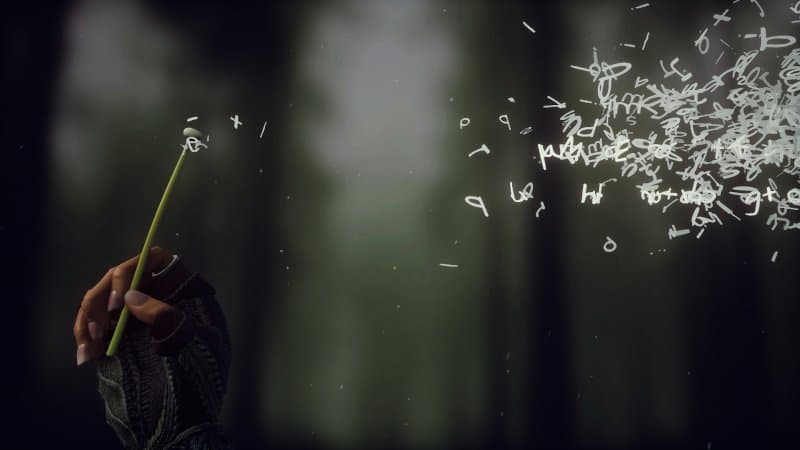
As I wrote in the beginning don t expect fights, don t expect riddles, but be prepared for an emotional roller coaster, for a deep dive into a well written family history with lots of weird twists. An absolute great game with a playing time of around 2h.

19 April 2020

Russ Allbery: Review: Beyond the Galaxy

Review: Beyond the Galaxy, by Ethan Siegel
Publisher: World Scientific
Copyright: 2016
ISBN: 981-4667-16-1
Format: Kindle
Pages: 370
In the preface of this book, Ethan Siegel recounts his experience as a new college professor in 2009, thrilled to learn that he would be teaching the college's introductory astronomy class. The only disappointment was that he could not find a textbook that described astronomy the way that he wanted to teach it. Siegel did not want to simply describe the current astronomical understanding. He wanted to start at the beginning and tell a story. What questions did we start with? How did we answer them? What new questions did those answers provoke? I enjoyed Sabine Hossenfelder's Lost in Math, but I'm even happier that she included in it a recommendation of Beyond the Galaxy as a good introduction to modern astronomy. I am completely in agreement with Siegel: Astronomy is interesting however it is described, but the best presentation for the interested lay person who does not intend to become a professional astronomy is chronological. (I feel the same way about physics and mathematics.) The narrative structure of scientific discovery draws me in every time. It's so satisfying to see our knowledge growing, breakthrough by breakthrough, only to meet the next puzzling inconsistency. It also is a natural fit for bringing someone up to speed on a field, since the history of the field starts with simpler questions and problems, and the complications of later discoveries build on the gaps left by earlier theories. Siegel tells that story well. Beyond the Galaxy starts with observations of seasonal changes in the path of the Sun through the sky and phases of the moon, quickly moves on to Eratosthenes's calculation of the circumference of the Earth, and continues at pace through early astronomy. The first chapter brings the reader up to the start of the 20th century, after which Siegel slows down and spends the remaining 10 chapters on the last 100 years: special and general relativity, the expansion of the universe, the Big Bang, dark matter, dark energy, the inflationary period, and more. For me, this was perfect. The story of early astronomy and the fight over the heliocentric model of the universe is worth telling, but it's been told many times before and features prominently in history books outside of science classes. The weight of material in this book matched my interest: What new developments have there been after general relativity and the Big Bang theory? What inconsistencies are dark matter and dark energy explaining? What is the inflationary period and how did it modify the Big Bang theory? (My half-formed impression of this part of astronomy from news articles turned out to be almost entirely wrong.) And how do we know all of this? The question of how we know as much as we do about the early origins of the universe turned out to be far more interesting than I had realized. It's one of those pieces of science where, when given only the conclusions, it's hard to imagine how our theories could be as complete as they are. Siegel is a bit repetitive in how he talks about theory development and occasionally skims over the details to avoid getting too deep into techniques and math, but he does a great job explaining the predictions of a theory, the design of experiments to prove or disprove those predictions, and the implications for the boundaries of what we know. This is the first time someone has explained the theorized origin of matter-antimatter asymmetry in sufficient detail that I was able to understand and internalize it. Dark matter and dark energy are the current topics of astronomy that get the most press, and the coverage of both is very good here. I was particularly fascinated by the link between dark matter and the superstructures of the universe that we've discovered. Astronomy does scale in a way that no other science can manage, and the scale of structure we've discovered and been able to map has gone up considerably since the last time I refreshed my astronomical knowledge. If you're looking for a math-light, comprehensive introduction to modern astronomy, I can wholeheartedly recommend this book. That goes double if you, like me, prefer a chronological view of scientific discovery so that you can understand what questions people were trying to answer and how our understanding changed over time. One note on format: Astronomy being what it is, this book is very heavy on pictures. It is not at all suitable for a dedicated ebook reader. The Kindle tries, but the combination of a small screen and black and white e-ink fail miserably. I switched to reading on a tablet, and that was a far better experience. The Kindle app still struggles to put the figures next to the text that discusses them, but that's a typesetting problem that I often have with physical books as well. If you don't have a tablet and you aren't willing to read on a computer screen, you probably want a physical copy of this one (which, sadly, means academic textbook pricing). Rating: 8 out of 10

17 April 2020

Daniel Kahn Gillmor: Tech-assisted Contact-Tracing against the COVID-19 pandemic

Today at the ACLU, we released a whitepaper discussing how to evaluate some novel cryptographic schemes that are being considered to provide technology-assisted contact-tracing in the face of the COVID-19 pandemic. The document offers guidelines for thinking about potential schemes like this, and what kinds of safeguards we need to expect and demand from these systems so that we might try to address the (hopefully temporary) crisis of the pandemic without also creating a permanent crisis for civil liberties. The proposals that we're seeing (including PACT, DP^3T, TCN, and the Apple/Google proposal) work in pretty similar ways, and the challenges and tradeoffs there are remarkably similar to Internet protocol design decisions. Only now in addition to bytes and packets and questions of efficiency, privacy, and control, we're also dealing directly with risk of physical harm (who gets sick?), society-wide allocation of scarce and critical resources (who gets tested? who gets treatment?), and potentially serious means of exercising powerful social control (who gets forced into quarantine?). My ACLU colleague Jon Callas and i will be doing a Reddit AMA in r/Coronavirus tomorrow starting at 2020-04-17T19:00:00Z (that's 3pm Friday in TZ=America/New_York) about this very topic, if that's the kind of thing you're into.

16 April 2020

Rapha&#235;l Hertzog: Freexian s report about Debian Long Term Support, March 2020

A Debian LTS logo Like each month, here comes a report about the work of paid contributors to Debian LTS. Individual reports In March, 252 work hours have been dispatched among 14 paid contributors. Their reports are available: Evolution of the situation March was a strange month for many people all over the globe. Here we ll just express our hopes that you are and will be well! LTS gained a new contributor in March, Anton Gladky, however he then decided to become active later this year. Similarly Hugo Lefeuvre notified us that he ll be inactive in April. In case you missed it (or missed to act), please read this post about keeping Debian 8 Jessie alive for longer than 5 years. If you expect to have Debian 8 servers/devices running after June 30th 2020, and would like to have security updates for them, please get in touch with Freexian. Hurry up: the end of Jessie LTS is coming in less than three months! The security tracker currently lists 25 packages with a known CVE and the dla-needed.txt file has 23 packages needing an update. Thanks to our sponsors New sponsors are in bold.

No comment Liked this article? Click here. My blog is Flattr-enabled.

15 April 2020

Antoine Beaupr : OpenDKIM configuration to send debian.org email

Debian.org added support for DKIM in 2020. To configure this on my side, I had to do the following, on top of my email configuration.
  1. add this line to /etc/opendkim/signing.table:
    *@debian.org marcos-debian.anarcat.user
    
  2. add this line to /etc/opendkim/key.table:
    marcos-debian.anarcat.user debian.org:marcos-debian.anarcat.user:/etc/opendkim/keys/marcos-debian.anarcat.user.private
    
    Yes, that's quite a mouthful! That magic selector is long in that way because it needs a special syntax (specifically the .anarcat.user suffix) for Debian to be happy. The -debian string is to tell me where the key is published. The marcos prefix is to remind me where the private is used.
  3. generate the key with:
    opendkim-genkey --directory=/etc/opendkim/keys/ --selector=marcos-debian.anarcat.user --domain=debian.org --verbose
    
    This creates the DNS record in /etc/opendkim/keys/marcos-debian.anarcat.user.txt (alongside the private key in .key).
  4. restart OpenDKIM:
    service opendkim restart
    
    The DNS record will look something like this:
    marcos-debian.anarcat.user._domainkey   IN  TXT ( "v=DKIM1; h=sha256; k=rsa; "
    "p=MIIBIjANBgkqhkiG9w0BAQEFAAOCAQ8AMIIBCgKCAQEAtKzBK2f8vg5yV307WAOatOhypQt3ANQ95iDaewkVehmx42lZ6b4PzA1k5DkIarxjkk+7m6oSpx5H3egrUSLMirUiMGsIb5XVGBPFmKZhDVmC7F5G1SV7SRqqKZYrXTufRRSne1eEtA31xpMP0B32f6v6lkoIZwS07yQ7DDbwA9MHfyb6MkgAvDwNJ45H4cOcdlCt0AnTSVndcl"
    "pci5/2o/oKD05J9hxFTtlEblrhDXWRQR7pmthN8qg4WaNI4WszbB3Or4eBCxhUdvAt2NF9c9eYLQGf0jfRsbOcjSfeus0e2fpsKW7JMvFzX8+O5pWfSpRpdPatOt80yy0eqpm1uQIDAQAB" )  ; ----- DKIM key marcos-debian.anarcat.user for debian.org
    
  5. The "p=MIIB..." string needs to be joined together, without the quotes and the p=, and sent in a signed email to changes@db.debian.org:
    -----BEGIN PGP SIGNED MESSAGE-----
    dkimPubKey: marcos.anarcat.user MIIB[...]
    -----BEGIN PGP SIGNATURE-----
    [...]
    
  6. Wait a few minutes for DNS to propagate. You can check if they have with:
    host -t TXT marcos-debian.anarcat.user._domainkey.debian.org nsp.dnsnode.net
    
    (nsp.dnsnode.net being one of the NS records of the debian.org zone.)
If all goes well, the tests should pass when sending from your server as anarcat@debian.org.

Testing Test messages can be sent to dkimvalidator, mail-tester.com or check-auth@verifier.port25.com. Those tools will run Spamassassin on the received emails and report the results. What you are looking for is:
  • -0.1 DKIM_VALID: Message has at least one valid DKIM or DK signature
  • -0.1 DKIM_VALID_AU: Message has a valid DKIM or DK signature from author's domain
  • -0.1 DKIM_VALID_EF: Message has a valid DKIM or DK signature from envelope-from domain
If one of those is missing, then you are doing something wrong and your "spamminess" score will be worse. The latter is especially tricky as it validates the "Envelope From", which is the MAIL FROM: header as sent by the originating MTA, which you see as from=<> in the postfix lost. The following will happen anyways, as soon as you have a signature, that's normal:
  • 0.1 DKIM_SIGNED: Message has a DKIM or DK signature, not necessarily valid
And this might happen if you have a ADSP record but do not correctly sign the message with a domain field that matches the record:
  • 1.1 DKIM_ADSP_ALL No valid author signature, domain signs all mail
That's bad and will affect your spam core badly. I fixed that issue by using a wildcard key in the key table:
--- a/opendkim/key.table
+++ b/opendkim/key.table
@@ -1 +1 @@
-marcos anarc.at:marcos:/etc/opendkim/keys/marcos.private
+marcos %:marcos:/etc/opendkim/keys/marcos.private

References This is a copy of a subset of my more complete email configuration.

14 April 2020

Emmanuel Kasper: Recommended keyboard settings for Productivity and Usability, for European Programmers

TLDR: setxkbmap -layout us -variant altgr-intl and become a happier programmer.
The case for QWERTY for European ProgrammersIf you re working on Unix / Linux, or C based programming languages, it can make sense to switch to the qwerty(us) keyboard layout. Why ?
Unix, C, Perl, Java, and most of programming languages have been conceived on QWERTY keyboards.
So when the designers choose special characters to use for the language synthax, they simply choose what was easy to access on their own keyboard. This has been historically documented for the vi editor.

To give an example, using an Unix shell you have to type the dot . and slash / symbols quite often to navigate the filesystem. The two keys producing these symbols, are nicely aligned on a QWERTY layout and do not require a key combination to be entered. So you can quickly enter something like ../.. using a single hand.
Now using a QWERTZ layout, like in Germany / Austria, you have the . symbol easily accessible, but you need to combine two keys ( Shift + 7 ) to get a / .
And if you are a poor soul using an AZERTY layout, to get the . and / symbol you need each time a key combo.
The need of key combos is bad not only for speed (multiple keys to lookup) but also for usability, as you have to stretch your fingers to reach the key if using a single hand, provoking repetitive strain injury. You might be smiling but this is commonly known amongst Emacs Users, due to the prominent use of commands using Ctrl and Alt combos, and led to the creation of an Emacs Ergonomic wiki.

This goes as well for many symbol commonly used in programming languages, think for instance about the semicolon ; for terminating a statement, the [ , and ] symbols for defining an array, and the backslash \ for escaping.
All these keys are accessible via a single keypress on qwerty and require key combos on qwertz and azerty. No wonder Linux, Minix and BSD were invented on non-azerty layouts: in France we were still busy typing the path to the source code, when in other parts of the world people already had the file open in their editor.
You don t need to throw away your existing keyboards when learning the qwerty (us) layout: for a couple of euros, you can find on ebay alternate keys stickers to put on your laptop.
Accessing keys with diacritics with the AltGr International variantNow if you want to switch to a qwerty keyboard layout, and you re French or German, you might wonder how to access the characters with diacritics, the and of French and and of German.
Fortunately there is a very clever keyboard variant for the us layout who uses the AltGr key, to make all these keys accessible, just hiding them behind the AltGr key.
Need ? that s just AltGr + e away. Needs ? That s just AltGr + , Needs ? AltGr +p
See the coolness of that ? You can type all international diacritics in an easy way, and there are even keyboard stickers for that too.

Now how to access to this layout of wonder ?
You can configure the layout and variant in Xorg, in debian/ubuntu that would be entering in /etc/default/keyboard
XKBLAYOUT="us"
XKBVARIANT="altgr-intl"
After restarting the X server, you can check that the settings have been applied with
setxkbmap -print -verbose 10
If using Gnome, you can also set the keyboard layout and variant by changing the schema org.gnome.desktop-inputsources, which will override the desktop-agnostic settings of /etc/default/keyboard.
For this you can either call
dconf write /org/gnome/desktop/input-sources/sources "[('xkb', 'us+altgr-intl')]"
or navigate with the gui tool dconf-settings to org.gnome.desktop-inputsources and set the value there.

If you want to further improve your keyboard layout, you can also have a look at swapping Ctrl and Alt, as described here (French language article) Happy hacking !

13 April 2020

Giovanni Mascellani: DKIM for Debian Developers

What is DKIM? DKIM (DomainKeys Identified Mail), as Wikipedia puts it, "is an email authentication method designed to detect forged sender addresses in emails (email spoofing), a technique often used in phishing and email spam". More prosaically, one of the reasons email spam is so abundant is that, given a certain email message, there is no simple way to know for certain who sent it and how reputable they are. So even if people having addresses @debian.org are very nice and well-behaving, any random spammer can easily send emails from whatever@debian.org, and even if you trust people from @debian.org you cannot easily configure your antispam filter to just accept all emails from @debian.org, because spammers would get in too. Since nearly ten years DKIM is there to help you. If you send an email from @debian.org with DKIM, it will have a header like this:
DKIM-Signature: v=1; a=rsa-sha256; c=simple/simple; d=debian.org;
    s=vps.gio.user; t=1586779391;
    bh=B6tckJy2cynGjNRdm3lhFDrp0tD7fF8hS4x0FCfLADo=;
    h=From:Subject:To:Date:From;
    b=H4EDlATxVm7XNqPy2x7IqCchBUz1SxFtUSstB23BAsdyTKJIohM0O4RRWhrQX+pqE
     prPVhzcfNALMwlfExNE69940Q6pMCuYsoxNQjU7Jl/UX1q6PGqdVSO+mKv/aEI+N49
     vvYNgPJNLaAFnYqbWCPI8mNskLHLe2VFYjSjE4GJFOxl9o2Gpe9f5035FYPJ/hnqBF
     XPnZq7Osd9UtBrBq8agEooTCZHbNFSyiXdS0qp1ts7HAo/rfrBfbQSk39fOOQ5GbjV
     6FehkN4GAXFNoFnjfmjrVDJC6hvA8m0tJHbmZrNQS0ljG/SyffW4OTlzFzu4jOmDNi
     UHLnEgT07eucw==
The field d=debian.org is the domain this email claims to be from and the fields bh= and b= are a cryptographic public key signature certifying this fact. How do I check that the email is actually from @debian.org? I use the selector s=vps.gio.user to fetch the public key via DNS, and then use the public key to verify the signature.
$ host -t TXT vps.gio.user._domainkey.debian.org
vps.gio.user._domainkey.debian.org descriptive text "v=DKIM1; k=rsa; s=email; h=sha256; p=" "MIIBIjANBgkqhkiG9w0BAQEFAAOCAQ8AMIIBCgKCAQEAsM/W/kxtKWT58Eak0cfm/ntvurfbkkvugrG2jfvSMnHHkFyfJ34Xvn/HhQPLwX1QsjhuLV+tW+BQtxY7jxSABCee6nHQRBrpDej1t86ubw3CSrxcg1mzJI5BbL8un0cwYoBtUvhCYAZKarv1W2otCGs43L0s" "GtEqqtmYN/hIVVm4FcqeYS1cYrZxDsjPzCEocpYBhqHh1MTeUEddVmPHKZswzvllaWF0mgIXrfDNAE0LiX39aFKWtgvflrYFKiL4hCDnBcP2Mr71TVblfDY0wEdAEbGEJqHR1SxvWyn0UU1ZL4vTcylB/KJuV2gMhznOjbnQ6cjAhr2JYpweTYzz3wIDAQAB"
There it is! Debian declares in its DNS record that that key is authorized to sign outbound email from @debian.org. The spammer hopefully does not have access to Debian's DKIM keys, and they cannot sign emails. Many large and small email services have already deployed DKIM since years, while most @debian.org emails still do not use it. Why not? Because people send @debian.org emails from many different servers. Basically, every DD used their @debian.org address sends email from their own mail server, and those mail servers (fortunately) do not have access to Debian's DNS record to install their DKIM keys. Well, that was true until yesterday! :-) A few weeks ago I poked DSA asking to allow any Debian Developer to install their DKIM keys, so that DDs could use DKIM to sign their emails and hopefully reduce the amount of spam sent from @debian.org. They have done it (thank you DSA very much, especially adsb), and now it is possible to use it! How do I configure it? I will not write here a full DKIM tutorial, there are many around. You have to use opendkim-genkey to generate a key and then configure your mail server to use opendkim to digitally sign outbound email. There are a few Debian-specific things you have to care about, though. First the have to choose a selector, which is a string used to distinguish many DKIM keys belonging to the same domain. Debian allows you to installa a key whose selector is <something>.<uid>.user, where <uid> is your Debian uid (this is done both for namespacing reasons and for exposing who might be abusing the system). So check carefully that your selector has this form. Then you cannot edit directly Debian's DNS record. But you can use the email-LDAP gateway on db.debian.org to install your key in a way similar to how entries in debian.net are handled (see the updated documentation). Specifically, suppose that opendkim-genkey generated the following thing for selector vps.gio.user and domain debian.org:
vps.gio.user._domainkey IN  TXT ( "v=DKIM1; h=sha256; k=rsa; "
      "p=MIIBIjANBgkqhkiG9w0BAQEFAAOCAQ8AMIIBCgKCAQEAsM/W/kxtKWT58Eak0cfm/ntvurfbkkvugrG2jfvSMnHHkFyfJ34Xvn/HhQPLwX1QsjhuLV+tW+BQtxY7jxSABCee6nHQRBrpDej1t86ubw3CSrxcg1mzJI5BbL8un0cwYoBtUvhCYAZKarv1W2otCGs43L0sGtEqqtmYN/hIVVm4FcqeYS1cYrZxDsjPzCEocpYBhqHh1MTeUE"
      "ddVmPHKZswzvllaWF0mgIXrfDNAE0LiX39aFKWtgvflrYFKiL4hCDnBcP2Mr71TVblfDY0wEdAEbGEJqHR1SxvWyn0UU1ZL4vTcylB/KJuV2gMhznOjbnQ6cjAhr2JYpweTYzz3wIDAQAB" )  ; ----- DKIM key vps.gio.user for debian.org
Then you have to carefully copy the content of the p= field (without being fooled by it being split between different strings) and construct a request of the form:
dkimPubKey: vps.gio.user MIIBIjANBgkqhkiG9w0BAQEFAAOCAQ8AMIIBCgKCAQEAsM/W/kxtKWT58Eak0cfm/ntvurfbkkvugrG2jfvSMnHHkFyfJ34Xvn/HhQPLwX1QsjhuLV+tW+BQtxY7jxSABCee6nHQRBrpDej1t86ubw3CSrxcg1mzJI5BbL8un0cwYoBtUvhCYAZKarv1W2otCGs43L0sGtEqqtmYN/hIVVm4FcqeYS1cYrZxDsjPzCEocpYBhqHh1MTeUEddVmPHKZswzvllaWF0mgIXrfDNAE0LiX39aFKWtgvflrYFKiL4hCDnBcP2Mr71TVblfDY0wEdAEbGEJqHR1SxvWyn0UU1ZL4vTcylB/KJuV2gMhznOjbnQ6cjAhr2JYpweTYzz3wIDAQAB
and then send it GPG-signed to changes@db.debian.org:
echo 'dkimPubKey: vps.gio.user blahblahblah'   gpg --clearsign   mail changes@db.debian.org
Then use host -t TXT vps.gio.user._domainkey.debian.org to chech the key gets published (it will probably take some minutes/hours, I don't know). Once it is published, you can enable DKIM in you mail server and your email will be signed. Congratulations, you will not look like a spammer any more! You can send an email to check-auth@verifier.port25.com to check that your setup is correct. They will reply with a report, including the success of DKIM test. Notice that currently Debian's setup only allows you to use RSA DKIM keys and doesn't allow you to set other DKIM fields (but you probably won't need to set them). EDIT DSA made an official announcement about DKIM support, which you might want to check out as well, together with its links. EDIT 2 Now ed25519 keys are supported, the syntax for specifying keys on LDAP is a little bit more flexible and you can also insert CNAME records. See the official documentation for the updated details. So we have solved our problems with spam? Ha, no! DKIM is only a small step. Useful, also because it enable other steps to be taken in the future, but small. In particular, DKIM enables you to say: "This particular email actually comes from @debian.org", but doesn't tell anybody what to do with emails that are not signed. A third-party mail server might wonder whether @debian.org emails are actually supposed to be signed or not. There is another standard for dealing with that, which is called DMARD, and I believe that Debian should eventually use it, but not now: the problem is that currently virtually no email from @debian.org is signed with DKIM, so if DMARC was enabled other mail servers would start to nuke all @debian.org emails, except those which are already signed, a minority. If people and services sending emails from @debian.org will start configuring DKIM on their servers, which is now possible, it will eventually come a time when DMARC can be enabled, and spammers will find themselves unable to send forged @debian.org emails. We are not there yet, but todays we are a little step closer than yesterday. Also, notice that having DKIM on @debian.org only counters spam pretending to be from @debian.org, but there is much more. The policy on what to accept is mostly independent on that on what you send. However, knowing that @debian.org emails have DKIM and DMARC would mean that we can set our spam filters to be more aggressive in general, but whitelist official Debian Developers and services. And the same can be done for other domains using DKIM and DMARC. Finally, notice that some incompatibilities between DKIM and mailing lists are known, and do not have a definitive answer yet. Basically, most mailing list engines modify either the body of the headers in forwarded emails, which means that DKIM does not validate any more. There are many proposed solutions, possibly none completely satisfying, but since spam is not very satisfying as well, something will have to be worked out. I wrote a lot already, though, so I wont't discuss this here.

Shirish Agarwal: Migrant worker woes and many other stories

I was gonna use this blog post to share about the migrant worker woes as there has been multiple stories doing the rounds. For e.g. a story which caught the idea of few people but most of us, i.e. middle-class people are so much into our own thing that we care a fig leaf about what happens to migrants. This should not be a story coming from a humane society but it seems India is no different than any other country of the world and in not a good way. Allow me to share
Or for those who don t like youtube, here s an alternative link https://www.invidio.us/watch?v=JGEgZq_1jmc Now the above two editorial shares two stories, one of Trump retaliatory threat to India in the Q&A of the journalist. In fact, Trump has upped the ante on visa sanctions as India buckled so easily under pressure. There have been other stories doing the rounds how people who have illnesses who need HCQ in India are either dying or are close to death because of unavailability of HCQ in the medicine shop. There have been reports in Pune as well as South Mumbai (one of the poshest localities in Mumbai/Bombay) that medicine shops are running empty or emptier. There have been so many stories on that, with reporters going to shops and asking owners of the medicine shops and shop-owners being clueless. I think the best article which vividly describes the Government of India (GOI) response to the pandemic is the free-to-read article shared by Arundhati Roy in Financial Times. It has reduced so much of my work or sharing that it s unbelievable. And she has shared it with pictures and all so I can share other aspects of how the pandemic has been affecting India and bringing the worst out in the Government in its our of need. In fact, not surprisingly though, apparently there was also a pro-Israel similar thing which happened in Africa too . As India has too few friends now globally, hence it decided to give a free pass to them.

Government of India, news agencies and paid News One of the attempts the state tried to do, although very late IMHO is that it tried to reach out to the opposition i.e. Congress party and the others. Mrs. Sonia Gandhi, who is the Congress president asked that the Government should not run any of its ads on private television channels for a period of two years. There had been plenty of articles, both by medianama and others who have alleged that at least from the last 6 odd years, Government ads. comprise of almost 50-60% advertising budget of a channel advertising budget. This has been discussed also in medianama s roundtable on online content which happened few months back. While an edited version is out there on YT, this was full two day s event which happened across two different cities.
or the alternative to youtube https://www.invidio.us/watch?v=c1PhWR1-Urs It was as if the roundtable discussions were not enough, Mrs. Gandhi clarion call was answered by News Broadcaster s Association (NBA) and this is what they had to say
News Broadcasters Association reply to Mrs. Gandhi
To put it simply, NBA deplored the suggestion by Mrs. Gandhi and even called the economy in recession and all they had were the Government s own advertising budget to justify their existence. The statements in themselves are highly pregnant and reveal both the relationship that the media, print or mainstream news channels have with the Government of India. Now if you see that, doesn t it make sense that media always slants the story from the Government s perspective rather than remaining neutral. If my bread basket were on the onus of me siding with the Govt. that is what most sane persons would do, otherwise they would resign and leave which many reporters who had a conscience did. Interestingly enough, the NBA statement didn t just end there but also used the word recession , this is the term that Government of India (GOI) hates and has in turn has been maintaining the word, terminology slowdown . While from a layman s perspective the two terms may seem to be similar, if India has indeed been in recession then the tools and the decisions that should have been taken by GOI should have been much different than what they took. Interestingly, enough GOI has refrained from saying anything on the matter which only reveals their own interests in the matter. Also if an association head is making the statement, it is more than likely that he consulted a lawyer or two and used application of mind while drafting the response. In other words, or put more simply, this was a very carefully drafted letter because they know that tomorrow the opposition party may come into power so they don t want to upset the power dynamics too much.

Privacy issues arising due to the Pandemic On the same Financial Times, two stories which dealt with the possible privacy violations due to the Pandemic have been doing the rounds. The first one, by Yuval Noah Harari is more exploratory by nature and makes some very good points without going far too deep into specific instances of recent times but rather goes into history and past instances where Governments have used the pandemics to exert more control over their populace and drive their agenda. I especially liked the last few lines which he shared in his op-ed Even if the current administration eventually changes tack and comes up with a global plan of action, few would follow a leader who never takes responsibility, who never admits mistakes, and who routinely takes all the credit for himself while leaving all the blame to others. Yuval Noah Harari . The whole statement could right fit onto the American President which he was talking about while at the same time, fits right into the current Indian Prime Minister, Boris Johnson of UK and perhaps Jair Bolsanaro of Brazil. All these three-four individuals have in common is that most of them belong to right-wing and hence cater only to the rich industrialist s agenda. While I don t know about Jair Bolsanaro much, at least three out of four had to turn to socialism and had to give some bailout packages to the public at large, even though continuing to undermine their own actions. More on this probably a bit down the line. The second story shared by Nic Fildes and Javier Espinoza who broke the story of various surveillance attempts and the privacy concerns that people have. Even the Indian PMO has asked this data and because there was no protest by the civil society, a token protest was done by COAI (Cellular Operator Association of India) but beyond that nothing, I am guessing because the civil society didn t make much noise as everybody is busy with their own concerns of safety and things going on, it s possible that such data may have gone to the Government. There is not much new here that people who had been working on the privacy issues know, it s just how easy Governments are finding to do it. The part of informed consent is really a misnomer . Governments lie all the time, for e.g. in the UK, did the leave party and people take informed consent, no they pushed their own agenda. This is and will be similar in many countries of the world.

False Socialism by RW parties In at least the three countries I have observing, simply due to available time, that lot of false promises are being made by our leaders and more often than not, the bailouts will be given to already rich industrialists. An op-ed by Vivek Kaul, who initially went by his handle which means somebody who is educated but unemployed. While Vivek has been one-man army in revealing most of the Government s mischiefs especially as fudging numbers are concerned among other things, there have been others too. As far as the US is concerned, an e-zine called free press (literally) has been sharing Trump s hollowness and proclamations for U.S. . Far more interestingly, I found New York times investigated and found a cache of e-mails starting from early January, which they are calling Red Dawn . The cache is undeniable proof that medical personnel in the U.S. were very much concerned since January 2020 but it was only after other countries started lock-down that U.S. had to follow suit. I am sure Indian medical professionals may have done similar mail exchanges but we will never know as the Indian media isn t independent enough.

Domestic violence and Patriarchy There have been numerous reports of domestic violence against women going up, in fact two prominent publications have shared pieces about how domestic violence has gone up in India since the lockdown but the mainstream press is busy with its own tropes, the reasons already stated above. In fact, interestingly enough, most women can t wear loose fitting clothes inside the house because of the near ones being there 24 7 . This was being shared as India is going through summer where heat waves are common and most families do not have access to A/C s and rely on either a fan or just ventilation to help them out. I can t write more about this as simply I m not a woman so I haven t had to face the pressures that they have to every day. Interestingly though, there was a piece shared by arre. Interestingly, also arre whose content I have shared a few times on my blog has gone from light, funny to be much darker and more serious tone. Whether this is due to the times we live in is something that a social scientist or a social anthropologist may look into in the times to come. One of the good things though, there hasn t been any grid failures as no industrial activity is happening (at all). In fact SEB s (State Electricity Boards) has shown a de-growth in electricity uptake as no industrial activity has been taken. While they haven t reduced any prices (which they ideally should have) as everybody is suffering.

Loot and price rise Again, don t think it is an Indian issue but perhaps may be the same globally. Because of broken supply chains, there are both real and artificial shortages happening which is leading to reasonable and unreasonable price hikes in the market. Fresh veggies which were normally between INR 10/- to INR 20/- for 250 gm have reached INR 40/- 50/- and even above. Many of the things that we have to become depend upon are not there anymore. The shortage of plastic bottles being case in point.
Aryan Plastic bottle
This and many others like these pictures have been shared on social media but it seems the Government is busy doing something else. The only thing we know for sure is that the lock-down period is only gonna increase, no word about PPE s (Personal Protection Equipment) or face masks or anything else. While India has ordered some, those orders are being diverted to US or EU. In fact, many doctors who have asked for the same have been arrested, sacked or suspended for asking such inconvenient questions, although whether in BJP ruled states or otherwise. In fact, the Centre has suspended MPLADS funds , members of parliament get funds which they can use to provide relief work or whatever they think the money is best to spend upon.

Conditions of Labor in the Pandemic Another sort of depressing story has been how the Supreme Court CJI Justice SA Bobde has made statements and refrained from playing any role in directing the Center to provide relief to the daily wage laborers. In fact, Mr. Bobde made statements such as why they need salaries if they are getting food. This was shared by barandbench, a site curated by lawyers and reporters alike. Both livelaw as well as barandbench have worked to enhance people s awareness about the legal happenings in our High Courts and Supreme Court. And while sadly, they cannot cover all, they at least do attempt to cover a bit of what s hot atm. The Chief Justice who draws a salary of INR 250,000 per month besides other perks is perhaps unaware or doesn t care about fate of millions of casual workers, 400 460 million workers who will face abject poverty and by extension even if there are 4 members of the family so probably 1.2 billion people will fall below the poverty line. Three, four major sectors are going to be severely impacted, namely Agriculture, Construction and then MSME (Micro, small and medium enterprises) which cover everything from autos, industrial components, FMCG, electronics, you name it, it s done by the MSME sector. We know that the Rabi crop, even though it was gonna be a bumper crop this year will rot away in the fields. Even the Kharif crop whose window for sowing is at the most 2-3 weeks will not be able to get it done in time. In fact, with the extended lockdown of another 21 days, people will probably return home after 2 months by which time they would have nothing to do there as well as here in the cities. Another good report was done by the wire, the mainstream media has already left the station.

Ministry of Public Health There was an article penned by Dr. Edmond Fernandes which he published last year. The low salary along with the complexities that Indian doctors are and may face in the near future are just mind-boggling.

The Loss Losses have already started pouring in. Just today Air Deccan has ceased all its operations. I had loved Mr. Gopinath s airline which was started in the early 2000 s. While I won t bore you with the history, most of it can be seen from simplify Deccan . This I believe is just the start and it s only after the few months after the lock-down has been lifted would we really know the true extent of losses everywhere. And the more lenghthier the lockdown, the more difficult it would be businesses to ramp back. People have already diagnosed at the very least 15-20 sectors of the economy which would be hit and another similar or more number of sectors which will have first and second-order of losses and ramp-downs. While some guesses are being made, many are wildly optimistic and many are wildly pessimistic, as shared we would only know the results when the lockdown is opened up.

Predictions for the future While things are very much in the air, some predictions can be made or rationally deduced. For instance, investments made in automation and IT would remain and perhaps even accelerate a little. Logistics models would need to be re-worked and maybe, just maybe there would be talk and action in making local supply chains a bit more robust. Financing is going to be a huge issue for at least 6 months to a year. Infrastructure projects which require huge amount of cash upfront will either have to be re-worked or delayed, how they will affect projects like Pune Metro and other such projects only time will tell.

Raghuram Rajan Raghuram Rajan was recently asked if he would come back and let bygones be bygones. Raghuram in his own roundabout way said no. He is right now with Chicago Booth doing the work that he always love. Why would he leave that and be right in the middle of the messes other people have made. He probably gets more money, more freedom and probably has a class full of potential future economists. Immigration Control, Conferences and thought experiment There are so many clueless people out there, who don t know why it takes so long for any visa to be processed. From what little I know, it is to verify who you say you are and you have valid reason to enter the country. The people from home ministry verify credentials, as well as probably check with lists of known criminals and their networks world-wide. They probably have programs for such scenarios and are part and parcel of their everyday work. The same applies to immigration control at Airports. there has been a huge gap at immigration counters and the numbers of passengers who were flying internationally to and fro from India. While in India, we call them as Ministry of Home Affairs, in U.S. it s Department of Homeland security, other countries using similar jargons. Now even before this pandemic happened, the number of people who are supposed to do border control and check people was way less and there have been scenes of Air rage especially in Indian airports after people came after a long-distance flight. Now there are couple of thought experiments, just day before yesterday scientists discovered six new coronaviruses in bats and scientists in Iceland found 40 odd mutations of the virus on people. Now are countries going to ban people from Iceland as in time the icelandic people probably would have anti-bodies on all the forty odd mutations. Now if and when they come in contact onto others who have not, what would happen ? And this is not specifically about one space or ethnicity or whatever, microbes and viruses have been longer on earth than we have. In our greed we have made viruses resistant to antibiotics. While Mr. Trump says as he discovered it today, this has been known to the medical fraternity since tht 1950 s. CDC s own chart shows it. We cannot live in fear of a virus, the only way we can beat it is by understanding it and using science. Jon Cohen shared some of the incredible ways science is looking to beat this thing
or as again an alternative to youtube https://www.invidio.us/watch?v=MPVG_n3w_vM One of the most troubling question is how the differently-abled communities which don t have media coverage at the best of times, haven t had any media coverage at all during the pandemic. What are their stories and what they are experiencing ? How are they coping ? Are there anyways we could help each other ? By not having those stories, we perhaps have left them more vulnerable than we intend. And what does that speak about us, as people or as a community or a society ?

Silver Linings While there is not a lot to be positive about, one interesting project I came about is openbreath.tech . This is an idea, venture started by IISER (Indian Institute of Science Education and Research) , IUCAA (Inter-University Centre for Astronomy and Astrophysics). They are collaborating with octogeneraian Capt (Retd) Rustom Barucha from Barucha Instrumentation and Control, besides IndoGenius, New Delhi, and King s College, London. The first two institutes are from my home town, Pune. While I don t know much of the specifics of this idea other than that there is an existing Barucha ventilator which they hope to open-source and make it easier for people to produce their own. While I have more questions than answers at this point, this is something hopefully to watch out for in the coming days and weeks. The other jolly bit of good news has come from Punjab where after several decades, people in Northern Punjab are finally able to see the Himalayas or the Himalayan mountain range.
Dhauladhar range Northern Punjab Copyright CNN.Com
There you have it, What I have covered is barely scratching the surface. As a large section of the media only focuses on one narrative, other stories and narratives are lost. Be safe, till later.

12 April 2020

Enrico Zini: Some inventors links

Cleopatra the Alchemist - Wikipedia
history people archive.org
Cleopatra the Alchemist who likely lived during the 3rd century AD, was a Greek alchemist, author, and philosopher. She experimented with practical alchemy but is also credited as one of the four female alchemists that could produce the Philosopher's stone. Some writers consider her to be the inventor of the alembic, a distillation apparatus.
Hedy Lamarr (/ he di/), born Hedwig Eva Maria Kiesler (November 9, 1914[a] January 19, 2000), was an Austrian-born American film actress and inventor who was posthumously inducted into the National Inventors Hall of Fame.[1]
Radia Joy Perlman (born December 18, 1951) is an American computer programmer and network engineer. She is most famous for her invention of the spanning-tree protocol (STP), which is fundamental to the operation of network bridges, while working for Digital Equipment Corporation. She also made large contributions to many other areas of network design and standardization, such as link-state routing protocols.
Stephanie Louise Kwolek (July 31, 1923 June 18, 2014) was an American chemist who is known for inventing Kevlar. She was of Polish heritage and her career at the DuPont company spanned more than 40 years.[1] She discovered the first of a family of synthetic fibres of exceptional strength and stiffness: poly-paraphenylene terephthalamide.
This page aims to list inventions and discoveries in which women played a major role.

11 April 2020

Fran ois Marier: Using Gogo WiFi on Linux

Gogo, the WiFi provider for airlines like Air Canada, is not available to Linux users even though it advertises "access using any Wi-Fi enabled laptop, tablet or smartphone". It is however possible to work-around this restriction by faking your browser user agent. I tried the User-Agent Switcher for Chrome extension on Chrome and Brave but it didn't work for some reason. What did work was using Firefox and adding the following prefs in about:config to spoof its user agent to Chrome for Windows:
general.useragent.override=Mozilla/5.0 (Windows NT 10.0; Win64; x64) AppleWebKit/537.36 (KHTML, like Gecko) Chrome/79.0.3945.117 Safari/537.36
general.useragent.updates.enabled=false
privacy.resistFingerprinting=false
The last two prefs are necessary in order for the hidden general.useragent.override pref to not be ignored.

Opt out of mandatory arbitration As an aside, the Gogo terms of service automatically enroll you into mandatory arbitration unless you opt out by sending an email to customercare@gogoair.com within 30 days of using their service. You may want to create an email template for this so that you can fire off a quick email to them as soon as you connect. I will probably write a script for it next time I use this service.

Joey Hess: lemons

Lemon is one of my things. I homegrow meyer lemons and mostly eat them whole. My mom makes me lemon meringue pie on my birthday. I thought I knew how much work that must be. Gorgeous whole lemon-meringue pie Well, that was harder than anticipated, and so worth it. Glad my mom was there on jitsi to give moral support while I hand whisked the egg whites and cursed. I also got a homemade mask whose quarantimer expired just in time. But all I really want want for my birthday, this April 11th 2020, is for the coronavirus to have peaked today. I mean, having a pandemic peak on your birthday is sour, but it's better than the alternative. Please give me that gift. Stay home. Even when some are saying it's over, watch the graphs. Don't go visit even just one person, even on their birthday. I think you can do it. Yes? Joey in a rainbow tie-die mask, holding a thumb up. Lemon-meringue pie slice
Next.

Previous.