Search Results: "beh"

12 February 2013

John Goerzen: Catching the mudball

Dad, can I bring my mudball inside? Jacob Ooo, dad, I need a mudball too! Oliver You d have to have been there to see how excited Jacob was about his mudball. We had been out hiking down by the creek a day after a rain, and he, well, made a mudball and carried it around with him. I m not used to finding mud all that exciting. To me, mud is something that my car can get stuck in, that my boots can drag into the house, that needs to be suppressed by a little gravel on top. But to Jacob, he was holding a ball of excitement, of adventure, of discovery. And Oliver wanted in on the fun! Jacob wasn t thinking about consequences of bringing a mudball indoors, because he didn t need to. He wasn t visualizing the damage it could cause, the time of cleaning it up, or even the fact that a mudball doesn t really stay a mudball permanently. He just wanted to carry his ball of excitement with him. Being a parent means being a teacher, an example, and a leader. It is fine for Jacob to not think about the consequences of bringing a mudball into the house at age 6, but part of my duty as a parent is to make sure he thinks about consequences by the time he gets behind the wheel of a car. As we grow up, we are shown, taught, and prodded into thinking about consequences of our choices: getting good grades in school, thinking about the impression the clothes we wear to a job interview might leave, worrying about what people think about us when we talk in front of a group. We take on real responsibilities when we leave childhood, and the consequences of our actions become more significant. But where s the off switch? Shouldn t there be a way for us to wonder about bringing the mudball indoors, too? There was a time in our lives when we didn t care one bit about whether we were wearing fashionable clothes, making a good impression, or doing things the right way. After being in the mindset of taking careful responsibility over life for so many years, it s hard to re-discover that earlier time. A colleague forwarded a little speech about Thanksgiving. It contained, Those who live in thanksgiving daily have a way of opening their eyes and seeing the wonders and beauties of this world as though seeing them for the first time. This is something children know how to do, and we adults have often forgotten, because we are too busy worrying about dirty floors and stained curtains to see the potential for fun in mud. I am convinced that, just as important as being responsible, is learning how to let go, to let our hearts feel peace and joy as if a child. We can t open our eyes and see the wonders of this world if we re too busy worrying about convincing someone else to vote for our preferred candidate, about saying things perfectly, about being right. There s beauty in that daily commute in a car or subway. Look around, and you might see kids with their noses pressed to the window, even if it s mostly black tunnel outside. There s wonder in that business flight, in the mud, in the doctor s office waiting room. When I see people using insults in a discussion thread on the Internet, I am saddened, because it means they have lost sight of the wonder of being able to communicate with and understand a person thousands of miles away, instantly, and are more worried about their position looking good, or are unable to see the beauty in a person that thinks differently. I once had this conversation with Jacob in an airplane, probably surrounded by people impatiently waiting to turn on their electronic devices:
Jacob, we are in the air! Woooooooow! Jacob, we re flying! Dad, I don t know that I ve ever been a butterfly before!
I hope we can all find ways to be a butterfly more often.

Martin Pitt: umockdev: record and mock hardware for debugging and testing

What is this? umockdev is a set of tools and a library to mock hardware devices for programs that handle Linux hardware devices. It also provides tools to record the properties and behaviour of particular devices, and to run a program or test suite under a test bed with the previously recorded devices loaded. This allows developers of software like gphoto or libmtp to receive these records in bug reports and recreate the problem on their system without having access to the affected hardware, as well as writing regression tests for those that do not need any particular privileges and thus are capable of running in standard make check. After working on it for several weeks and lots of rumbling on G+, it s now useful and documented enough for the first release 0.1! Component overview umockdev consists of the following parts: Example: Record and replay PtP/MTP USB devices So how do you use umockdev? For the debug a problem use case you usually don t want to write a program that uses libumockdev, but just use the command line tools. Let s capture some runs from libmtp tools, and replay them in a mock environment: Example: using the library to fake a battery If you want to write regression tests, it s usually more flexible to use the library instead of calling everything through umockdev-run. As a simple example, let s pretend we want to write tests for upower. Batteries, and power supplies in general, are simple devices in the sense that userspace programs such as upower only communicate with them through sysfs and uevents. No /dev nor ioctls are necessary. docs/examples/ has two example programs how to use libumockdev to create a fake battery device, change it to low charge, sending an uevent, and running upower on a local test system D-BUS in the testbed, with watching what happens with upower --monitor-detail. battery.c shows how to do that with plain GObject in C, battery.py is the equivalent program in Python that uses the GI binding. You can just run the latter like this:
  umockdev-wrapper python3 docs/examples/battery.py
and you will see that upowerd (which runs on a temporary local system D-BUS in the test bed) will report a single battery with 75% charge, which gets down to 2.5% a second later. The gist of it is that you create a test bed with
  UMockdevTestbed *testbed = umockdev_testbed_new ();
and add a device with certain sysfs attributes and udev properties with
    gchar *sys_bat = umockdev_testbed_add_device (
            testbed, "power_supply", "fakeBAT0", NULL,
            /* attributes */
            "type", "Battery",
            "present", "1",
            "status", "Discharging",
            "energy_full", "60000000",
            "energy_full_design", "80000000",
            "energy_now", "48000000",
            "voltage_now", "12000000",
            NULL,
            /* properties */
            "POWER_SUPPLY_ONLINE", "1",
            NULL);
You can then e. g. change an attribute and synthesize a change uevent with
  umockdev_testbed_set_attribute (testbed, sys_bat, "energy_now", "1500000");
  umockdev_testbed_uevent (testbed, sys_bat, "change");
With Python or other introspected languages, or in Vala it works the same way, except that it looks a bit leaner due to proper object semantics. Packages I have a packaging branch for Ubuntu and a recipe to do daily builds with the latest upstream code into my daily builds PPA (for 12.10 and raring). I will soon upload it to Raring proper, too. What s next? The current set of features should already get you quite far for a range of devices. I d love to get feedback from you if you use this for anything useful, in particular how to improve the API, the command line tools, or the text dump format. I m not really happy with the split between umockdev (sys/dev) and ioctl files and the relatively complicated CLI syntax of umockdev-record, so any suggestion is welcome. One use case that I have for myself is to extend the coverage of ioctls for input devices such as touch screens and wacom tablets, so that we can write some tests for gnome-settings-daemon plugins. I also want to find a way to pass ioctls back to the test suite/calling program instead of having to handle them all in the preload library, which would make it a lot more flexible. However, due to the nature of the ioctl ABI this is not easy. Where to go to The code is hosted on github in the umockdev project; this started out as a systemd branch to add this functionality to libudev, but after a discussion with Kay we decided to keep it separate. But I kept it in git anyway, given how popular it is today. For the bzr lovers, Launchpad has an import at lp:umockdev. Release tarballs will be on Launchpad as well. Please file bugs and enhancement requests in the git hub tracker. Finally, if you have questions or want to discuss something, you can always find me on IRC (pitti on Freenode or GNOME). Thanks for your attention and happy testing!

10 February 2013

Richard Hartmann: Cables

Leaving for Finland in less than 5 hours and my GPS keeps acting up, external disks refuse to be mounted, and copying data off of SD cards results in I/O errors... The SD card I/O errors are apparently caused by my still-half-broken ThinkPad X201 which never got fixed properly. To be specific, the internal card reader is acting up. But to get back to the GPS and my external drives... I had feared my ThinkPad was in its death throes when I decided to try another cable. Lo and behold, everything (other than my built-in SD card reader) started to work all of a sudden. This is the third time I've had issues with random USB cables. For Micro USB I decided to only use ones that came packaged with a phone or similar as those tend to be high quality. If anyone has a suggestion about where to source high-quality Mini USB cables after returning from Finland, please let me know.

6 February 2013

Thomas Goirand: Openstack Folsom fully uploaded to Experimental

It s been a long time I wanted to blog about my recent work on the Openstack packaging. I finally can find a bit of time to do it. For those who don t know yet Openstack, it s a fairly recent (less than 3 years) cloud computing suite, which is becoming quite huge. If you plan on deploying a private cloud, you should definitively have a look into it. When the Openstack project started, I immediately was interested. I started packaging the Cactus release (that is, the 3rd version of Openstack), created the Alioth group (at the exact moment when Alioth was migrated to new hardware which added some fun so lucky I was!), and began to work on the Debian version (Openstack used to be an Ubuntu only project). After some success in integrating some Debian specific patches into the Ubuntu packages, I left it a bit aside, and skipped completely the Diablo release (which was never uploaded in Debian). Then, I worked a bit on the Essex release before the freeze of Wheezy last June, together with other DDs (big up to Julien, Loic, Ghe, Sileth!). I (re-)started serious packaging work for Openstack just right after Folsom (eg: version 2012.2) was released early last October. I literally worked days and nights on it, in order to provide more automation so that it could become more easy to install. Indeed, it used to be very complicated and painful, with lots of manual tasks to perform on the shell. It s hopefully a lot easier now, with most of the manual boring shell work replaced by debconf and scripts. But I m sure there s more that can be done still. After 4 months of effort, I finally pressed the red button and uploaded everything at once to Debian Experimental since Openstack Essex (version 2012.1) is in Wheezy, I can t of course upload to SID unless Wheezy is out -. This represent 32 sources packages in total (some of them are already uploaded and approved by the FTP masters: sorry to give you so much more work guys ), and 104 binary packages (and counting ). So this isn t exactly small And I already have some fixes for what s currently waiting in the NEW queue: CVE fixes, missing build-depends which we ve found using the Jenkins server of eNovance who sponsors the packaging work, etc. I probably will post again here to announce when Folsom is completely approved by the FTP masters and reaches Debian experimental. In the mean while, it s available on GPLHost non-official repositories (see the howto linked bellow). If you would like to test the latest Openstack release (called Folsom, or 2012.2, if you are following well ), you can read the quite verbose howto I wrote here: https://wiki.debian.org/OpenStackHowto/Folsom If you do test it (don t be afraid, it s not that hard ), I will be very happy to hear from you, and receive any feedback / critics you may have. Note that I would strongly recommend to use the Folsom release, rather than what is currently in Wheezy, for many reasons which would be too long to list in this blog post (let me still drop a few reasons here: less bugs, more automations and it s more easy to install). Now, Openstack is a constantly evolving software, with so many companies and developers involved. I don t think my work on this beast will ever be finished. But it doesn t mater, as it s been quite some fun, and I will enjoy to do more. The next release of Openstack is schedule for next April (they release at the same time as Ubuntu). I hope to be able to join the Portland summit, and see all the persons I have worked with over IRC and mailing list. This time, I hope to be able to release Openstack packages at the same time as the upstream source code is released (Debian packages have historically been lagging a few months behind). The pre-version is by the way already in Alioth. Last, a (private) message for our famous cheese-master: please wait until everything leaves the NEW queue before bugging everyone with translations. We probably should have a serious talk about how to make it less redundant, easier to translate, and probably find a way to avoid duplication of messages across all packages.

Raphael Geissert: A bashism a week: short-circuiting tests

The test/[ command is home to several bashisms, but as I believe I have demonstrated: incompatible behaviour is to be expected.

The "-a" and "-o" binary logical operators are no exception, even if documented by the Debian Policy Manual.

One feature of writing something like the following code, is that upon success of the first command, the second won't be executed: it will be short-circuited.
[ -e /dev/urandom ]   [ -e /dev/random ]

Now, using the "-a" or "-o" bashisms even in shell interpreters that support them can result in unexpected behaviour: some interpreters will short-circuit the second test, others won't.

For example, bash doesn't short-circuit:
$ strace bash -c '[ -e /dev/urandom -o -e /dev/random ]' 2>&1 grep /dev
stat64("/dev/urandom", ...) = 0
stat64("/dev/random", ...) = 0
Neither does dash:
$ strace dash -c '[ -e /dev/urandom -o -e /dev/random ]' 2>&1 grep /dev
stat64("/dev/urandom", ...) = 0
stat64("/dev/random", ...) = 0
But posh does:
$ strace posh -c '[ -e /dev/urandom -o -e /dev/random ]' 2>&1 grep /dev
stat64("/dev/urandom", ...) = 0
And so does pdksh:
$ strace pdksh -c '[ -e /dev/urandom -o -e /dev/random ]' 2>&1 grep /dev
stat64("/dev/urandom", ...) = 0

output of strace redacted for brevity

So even in Debian, where the feature can be expected to be implemented, its semantics are not very well defined. So much for using this bashism... better avoid it.

Remember, if you rely on any non-standard behaviour or feature make sure you document it and, if feasible, check for it at run-time.

5 February 2013

Antoine Beaupr : Why I don't like Pulseaudio

(This rant was originally part of the live streaming series, but I moved it to a separate article because people got stuck on it instead of responding to the actual subject of the article.) Before I get flamed for attacking Pulseaudio (PA), let's just settle this: I don't like it. I think PA is over-engineered and tries to do too many things at once. I used to (until just now) systematically purge pulseaudio-related packages from my system, mainly because PA has this awful tendency of automatically starting and staying around eternally, which wouldn't be so bad except PA has also the bad habit of hogging the audio device exclusively, which makes regular programs like mplayer, ogg123 fail to simply play audio, unless they go through the PA straight-jacket. (Update: this seems to be a bit better in newer versions of PA, where the audio device is released when sound is not being played. Thanks Philipp Kern for the correction.) In the GNU/Linux audio stack, we already have another system that supports multiple accesses: ALSA itself, so I believe that PA should at least behave nicely to other apps, and it seems I am always having problems with that. (The fact that ALSA itself is over-engineered is also telling of the poor state of the audio stack in GNU/Linux.) The other beef I have with PA is the Not Invented Here syndrome: instead of extending existing tools like ALSA or Jack, people just figured they could do everything better and start from scratch. So now we just have one more "standard" way of playing audio, good job Lennart.

4 February 2013

Michal Čihař: FOSDEM 2013 summary (Saturday)

FOSDEM 2013 is over and it's time to look what interesting I have seen there on Saturday. First of all the most important for me is to meet people. As usual, I came with SUSE folks, but it's not that unusual to meet people from company where you work :-). I've met some current and former phpMyAdmin developers and surprisingly I've met few Weblate users or people who consider using it on their project. This gave me some important feedback and one of first thing you will see in near future is remade Weblate website to give more information about some of it's unique features. As for the talks, I think I've managed to visit quite lot of them. How we made the Jenkins community explained some ways Jenkins has used to build good community - mostly focused on extensibility of the code and having everything as an extension, but with some focus on social things as well (and important thing that with Git people are not that motivated to join the team). Better software through user research was about various way to gather information of what your users hate on the software. It was pretty interesting, though many of that can not easily be used on small scale free software product. OSS code goes in and never comes out talk focused about licensing issues of various software as a service platforms. As I've never used Amazon cloud or such, it was quite surprising how these behave in relation to GPL and actually made me thing more about AGPL and attend related panel discussion later. An Integrated Localization Environment is Mozilla approach to online translation, quite different than anything we have before, but mostly for reasons which were explained later on Sunday talk on l20n. Maybe reverse ordering of these would make it easier to understand the motivation. Scale your Jenkins build pipeline automatically to minimize test time was not that useful as I thought - increasing test speed by buying EC2 instances and pushing part of the work to them is not something what will help me in near future. Trends in Open Source Security explained what is going on in distributions security, mostly focused on Redhat (but touching Debian as well). It has some interesting thoughts about sharing the information between vendors, so let's see if it will really work in future. QML s many faces showed some other ways to use QML besides using QtQuick. Some uses were quite interesting, though I'm not really fan of creating yet another buildsystem based on it. Panel Discussion: GNU Affero General Public License, version 3 was last thing I've visited on Sunday and it was really interesting to listen all that opinions on AGPL. Still I was not confirmed to consider switching to this license.

Filed under: Debian English Phpmyadmin Suse Weblate 0 comments Flattr this!

Riku Voipio: On behalf of aarch64 porters

Public service announcementWhen porting GNU/Linux applications to a new architecture, such as 64-Bit ARM, one gets familiar with the following error message:

checking build system type... x86_64-pc-linux-gnu
checking host system type... Invalid configuration aarch64-oe-linux': machine aarch64-oe' not recognized
configure: error: /bin/sh config.sub aarch64-oe-linux failed
This in itself is trivial to fix - run autoreconf or just copy in new versions of config.sub and config.guess. However, when bootstrapping a distribution of 12000+ packages, this becomes quickly tiresome. Thus we have a small request:

If you are an upstream of a software that uses autoconf - Please run autoreconf against autotools-dev 20120210.1 or later, and make a release of your software. Aarch64 porters will be grateful as updated software trickles down to distributions. This was the most discussed point during my FOSDEM talk "Porting applications to 64-Bit ARM".

2 February 2013

Russ Allbery: First 2013 Powell's haul

I lost my will roll against placing another book order a couple of weeks ago. There are just too many people writing too many fascinating things that I want to read! Elizabeth Bear Shoggoths in Bloom (collection)
David Graeber Debt: The First 5,000 Years (non-fiction)
Eric Hobsbawm The Age of Revolution 1789 1848 (non-fiction)
China Mi ville Kraken (sff)
John McPhee Annals of the Former World (non-fiction)
C.E. Murphy The Queen's Bastard (sff)
C.E. Murphy The Pretender's Crown (sff)
Steven Pinker Words and Rules (non-fiction)
David Roodman Due Diligence (non-fiction)
Rebecca Skloot The Immortal Life of Henrietta Lacks (non-fiction)
Richard G. Wilkinson & Kate Pickett The Spirit Level (non-fiction)
Fumi Yoshinaga oku: The Inner Chambers #1 (graphic novel) As you can see, mostly non-fiction. Which is, of course, the type of book that takes the longest to read. I'm so smart about managing a backlog. The Pinker was recommended by one of my favorite Teaching Company courses (Myths, Lies, and Half-Truths of Language Usage by John McWhorter), and I was interested enough in linguistics to want to read something a bit more intensive. John McPhee's Annals of the Former World is about geology, something I've wanted to know more about for a while, and won the Pulitzer for general non-fiction. It's also huge. It might take me a while to get to that. Of the fiction, I read the first Murphy a long time back, but it was a borrowed copy, and I want to re-read it before reading the second volume in the duology. I remember really enjoying it, but don't remember anything about what happened. oku is manga that won the Tiptree award, so that sounded too interesting to pass up. And since I own just about everything else Elizabeth Bear has published, I figured I should keep the streak alive, even if I'm a bit behind on reading it.

30 January 2013

Raphael Geissert: A bashism a week: sleep

To delay execution of some commands in a shell script, the sleep command comes handy.
Even though many shells do not provide it as a built-in and the GNU sleep command is used, there are a couple of things to note:


This of course is regarding what is required by POSIX:2001; it only requires the sleep command to take an unsigned integer. FreeBSD's sleep command does accept fractions of seconds, for example.

Remember, if you rely on any non-standard behaviour or feature make sure you document it and, if feasible, check for it at run-time.

In this case, since the sleep command is not required to be a built-in, it does not matter what shell you specify in your script's shebang. Moreover, calling /bin/sleep doesn't guarantee you anything. The exception is if you specify a shell that has its own sleep built-in, then you could probably rely on it.

The easiest replacement for suffixes is calculating the desired amount of time in seconds. As for the second case, you may want to reconsider your use of a shell script.

29 January 2013

Jonathan Carter: Ubuntu Developer Summit for 13.04 (Raring)

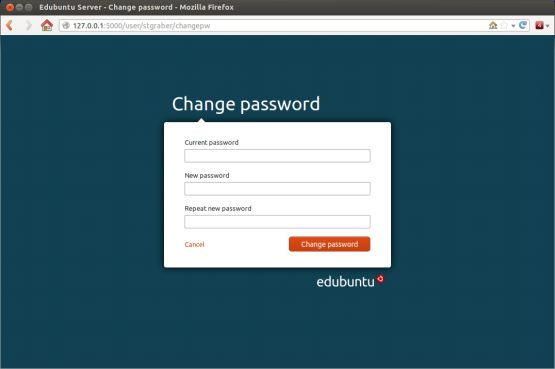
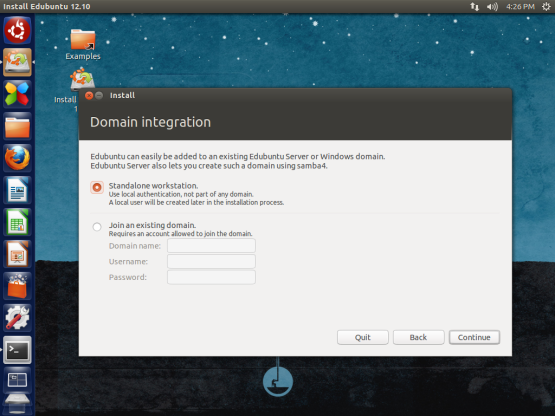
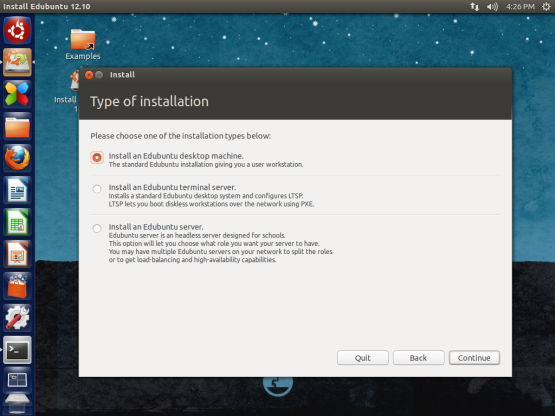
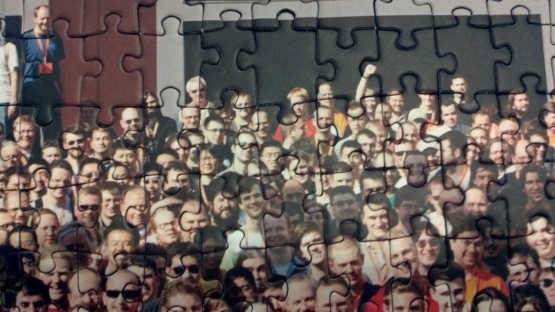
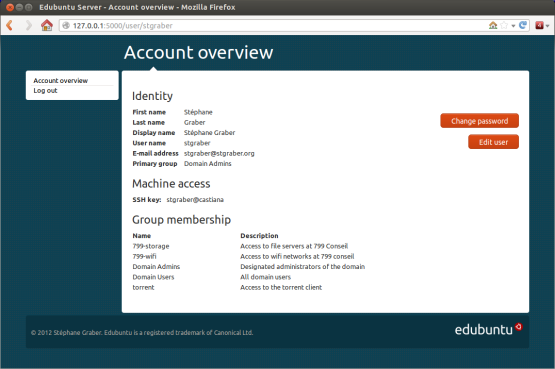
The War on Time Whoosh! I ve been incredibly quiet on my blog for the last 2-3 months. It s been a crazy time but I ll catch up and explain everything over the next few entries. Firstly, I d like to get out a few details about the last Ubuntu Developer Summit that took place in Copenhagen, Denmark in October. I m usually really good at getting my blog post out by the end of UDS or a day or two after, but this time it just flew by so incredibly fast for me that I couldn t keep up. It was a bit shorter than usual at 4 days, as apposed to the usual 5. The reason I heard for that was that people commented in previous post-UDS surveys that 5 days were too long, which is especially understandable for Canonical staff who are often in sprints (away from home) for the week before the UDS as well. I think the shorter period works well, it might need a bit more fine-tuning, I think the summary session at the end wasn t that useful because, like me, there wasn t enough time for people to process the vast amount of data generated during UDS and give nice summaries on it. Overall, it was a great get-together of people who care about Ubuntu and also many areas of interest outside of Ubuntu. Copenhagen, Denmark I didn t take many photos this UDS, my camera is broken and only takes blurry pics (not my fault I swear!). So I just ended up taking a few pictures with my phone. Go tag yourself on Google+ if you were there. One of the first interesting things I saw when arriving in Copenhagen was the hotel we stayed in. The origami-like design reminded me of the design of the Quantal Quetzel logo that is used for the current stable Ubuntu release. 2012-10-28_05-50-14_21 quantal The Road ahead for Edubuntu to 14.04 and beyond St phane previously posted about the vision we share for Edubuntu 14.04 and beyond, this was what was mostly discussed during UDS and how we ll approach those goals for the 13.04 release. This release will mostly focus on the Edubuntu Server aspect. If everything works out, you will be able to use the standard Edubuntu DVD to also install an Edubuntu Server system that will act as a Linux container host as well as an Active Directory compatible directory server using Samba 4. The catch with Samba 4 is that it doesn t have many administration tools for Linux yet. St phane has started work on a web interface for Edubuntu server that looks quite nice already. I m supposed to do some CSS work on it, but I have to say it looks really nice already, it s based on the MAAS service theme and St phane did some colour changes and fixes on it already. edu-server-account edu-server-password From the Edubuntu installer, you ll be able to choose whether this machine should act as a domain server, or whether you would like to join an existing domain. Since Edubuntu Server is highly compatible with Microsoft Active Directory, the installer will connect to it regardless of whether it s a Windows Domain or Edubuntu Domain. This should make it really easy for administrators in schools with mixed environments and where complete infrastructure migrations are planned. Authentication Options Choosing machine role You will be able to connect to the same domain whether you re using Edubuntu on thin clients, desktops or tablets and everything is controllable using the Epoptes administration tool. Many people are asking whether this is planned for Ubuntu / Ubuntu Server as well, since this could be incredibly useful in other organisations who have a domain infrastructure. It s currently meant to be easily rebrandable and the aim is to have it available as a general solution for Ubuntu once all the pieces work together. Empowering Ubuntu Flavours This cycle, Ubuntu is making some changes to the release schedule. One of the biggest changes made this cycle is that the alpha and beta releases are being dropped for the main Ubunut product. This session was about establishing how much divergence and changes the Ubuntu Flavours (Ubuntu Studio, Mythbuntu, Kubuntu, Lubuntu and Edubuntu) could have from the main release cycle. Edubuntu and Kubuntu decided to be a bit more conservative and maintain the snapshot releases. For Edubuntu it has certainly helped so far in identifying and finding some early bugs and I m already glad that we did that. Mythbuntu is also a notable exception since it will now only do LTS releases. We re tempted to change Edubuntu s official policy that the LTS releases are the main releases and treat the releases in between more like technology previews for the next LTS. It s already not such a far stretch from the truth, but we ll need to properly review and communicate that at some point. Valve at UDS and Steam for Linux One of the first plenaries was from Valve where Drew Bliss talked about Steam on Linux. Steam is one of the most popular publishing and distribution systems for games and up until recently it has only been available on Windows and Mac. Valve (the company behind Steam and many popular games such as Half Life and Portal) are actively working on porting games to run natively on Linux as well. Some people have asked me what I think about it, since the system is essentially using a free software platform to promote a lot of non-free software. My views on this is pretty simple, I think it s an overwhelmingly good thing for Linux desktop adoption and it s been proven to be a good thing for people who don t even play games. Since the announcement from Valve, Nvidia has already doubled perfomance in many cases for its Linux drivers. AMD, who have been slacking on Linux support the last few years have beefed up their support drastically with the announcement of new drivers that were released earlier this month. This new collection of AMD drivers also adds support for a range of cards where the drivers were completely discontinued, giving new life to many older laptops and machines which would be destined for the dumpster otherwise. This benefits not only gamers, but everyone from an average office worker who wants snappy office suite performance and fast web browsing to designers who work with graphics, videos and computer aided design. Also, it means that many home users who prefer Linux-based systems would no longer need to dual-boot to Windows or OS X for their games. While Steam will actively be promoting non-free software, it more than makes up for that by the enablement it does for the free software eco-system. I think anyone who disagrees with that is somewhat of a purist and should be more willing to make compromises in order to make progress. Ubuntu Release Changes Last week, there was a lot of media noise stating that Ubuntu will no longer do releases and will become a rolling release except for the LTS releases. This is certainly not the case, at least not any time soon. One meme that I ve noticed increasingly over the last UDSs was that there s an increasing desire to improve the LTS releases and using the usual Ubuntu releases more and more for experimentation purposes. I think there s more and more consensus that the current 6 month cycle isn t really optimal and that there must be a better way to get Ubuntu to the masses, it s just the details of what the better way is that leaves a lot to be figured out. There s a desire between developers to provide better support (better SRUs and backports) for the LTS releases to make it easier for people to stick with it and still have access to new features and hardware support. Having less versions between LTS releases will certainly make that easier. In my opinion it will probably take at least another 2 cycles worth of looking at all the factors from different angles and getting feedback from all the stakeholders before a good plan will have formed for the future of Ubuntu releases. I m glad to see that there is so much enthusiastic discussion around this and I m eager to see how Ubuntu s releases will continue to evolve. Lightning Talks Lightning talks are a lot like punk-rock songs. When it s good, it s really, really amazingly good and fun. When it s bad, at least it will be over soon :) Unfortunately, since it s been a few months since the UDS, I can t remember all the details of the lightning talks, but one thing that I find worth mentioning is that they re not just awesome for the topic they aim to produce (for example, the one lightning talks session I attended was on the topic of Tests in your software ), but since they are more demo-like than presentation-like, you get to learn a lot of neat tricks and cool things that you didn t know before. Every few minutes someone would do something and I d hear someone say something like Awesome! I didn t know you could do that with apt-daemon! . It s fun and educational and I hope lightning talks will continue to be a tradition at future UDSs. Social Stefano Rivera (fellow MOTU, Debianista, Capetonian, Clugger) wins the prize for person I ve seen in the most countries in one year. In 2012, I saw him in Cape Town for Scaleconf, Managua during Debconf, Oakland for a previous UDS and Copenhagen for this UDS. Sometimes when I look at silly little statistics like that I realise what a great adventure the year was! Between the meet n greet, an evening of lightning talks and the closing party (which was viking themed and pretty awesome) there was just one free evening left. I used it to gather with the Debian folk who were at UDS. It was great to see how many Debian people were attending, I think we had around a dozen or so people at the dinner and there were even more who couldn t make it since they work for Canonical or Linaro and had to attend team dinners the same evening. It was as usual, great to put some more faces to names and get to know some people better. It was also great to have a UDS with many strong technical community folk present who is willing to engage in discussion. There were still a few people who felt missing but it was less than at some previous UDSs. I also discovered my face on a few puzzles! They were a *great* idea, I saw a few people come and go to work on them during the week, they seem to have acted as good menial activities for people to fix their brains when they got fried during sessions :) 2012-10-31_14-32-28_374 Overall, this was a good and punchy UDS. I ll probably not make the next one in Oakland due to many changes in my life currently taking place (although I will remotely participate), but will probably make the one later this year, especially if it s in Europe. I ll also make a point of live-blogging a bit more, it s just so hard remembering all the details a few months after the fact. Thanks to everyone who contributed their piece in making it a great week!

Michal Čihař: phpMyAdmin 3.5.6 for Ubuntu and Debian

Finally, phpMyAdmin packages for Debian and Ubuntu do not lag much behind upstream. Today, I've prepared packages for yesterday released bug fix release 3.5.6. For Debian users, the package should be soon available in experimental (sorry no uploads to unstable during freeze). Ubuntu users, can use my phpMyAdmin PPA. After dozens of comments and no help offered, I've still decided to be nice to Ubuntu users and adjusted the package so that it should work on Lucid as well. The downside is that, unlike in Debian, the package includes bundled copy of many PHP and javascript libraries. PS: As soon as Debian is not frozen or 4.0 is officially released, I will start uploading 4.0 to experimental. My current bet is that 4.0 release will come earlier.

Filed under: Debian English Phpmyadmin 0 comments Flattr this!

27 January 2013

Jan Wagner: Fixing muninlite for up interfaces without link

Usually I'm monitoring stuff with Icinga (Nagios in the past). But for my small network, I primary needed monitoring of bandwidth. In our commercial environment we are using a closed source software for accounting traffic. There is also a license for testing purpose with a reduced number of sensors available. But I'm neither running windows in this network nor feeling happy with this. Cacti is a bit bloated for this small network and zabbix is (caused by what?) removed in wheezy, beside that I'm not getting the concept behind it. So I thought I could give munin a try and on the first view it doesn't look so bad. Monitoring my half dozens openwrt devices works like a charm by installing muninlite just the package. One central part of the network is a QNAP TS-459 Pro+, hosting a BackupPC and TimeMachine service, proving SMB/AFS data store and running SqueezeBox Server for another half dozen streaming devices. Unfortunately there is no optware package to provide a munin node. So I just copied the shell script of muninlite and the xinet config over from an openwrt device. At first it looked not bad, but than munin wasn't able to collect the data. After a while I realized, that munin was failing when collecting the network informations. A look into the muninlite script revealed that it was failing when trying to discover the interface speed of eth1 via ethtool. In my setup the QNAP is just connected with with one network interface, the second one is unconnected. Unfortunately all network interfaces on QNAP devices are up and therefore listed in /proc/net/dev where muninlite is discovering the network interfaces:

[~] # grep '^ *\(ppp\ eth\ wlan\ ath\ ra\ ipsec\ tap\ br-\)\([^:]\)\ 1,\ :' /proc/net/dev   cut -f1 -d:   sed 's/ //g
> s/\-/_/g'
eth1
eth0
Let's look into it:
[~] # ethtool eth0  grep Speed:
    Speed: 1000Mb/s
[~] # ethtool eth0  grep "Link detected:"
    Link detected: yes
[~] # ethtool eth1  grep Speed:
    Speed: Unknown! (65535)
[~] # ethtool eth1  grep "Link detected:"
    Link detected: no
Maybe you see .. the interface eth1 is up but has no link, so there is no speed negotiated and muninlite is failing. Thus I hacked the scripted and now it's working like a charme.
<notextile><figure class="code"><figcaption> (muninlite_fix-unused-up_interface.diff) download</figcaption>
1
2
3
4
5
6
7
8
9
10
11
12
13
14
15
16
17
18
19
20
21
22
23
24
25
26
27
28
29
30
31
32
33
34
35
36
37
38
39
40
41
42
43
44
45
46
47
48
49
50
51
--- /opt/sbin/munin-node.orig	2013-01-27 15:13:51.869007214 +0100
+++ /opt/sbin/munin-node	2013-01-27 16:11:20.536006950 +0100
@@ -133,7 +133,7 @@
   if [ -n "$(which ethtool)" ]; then
 	if [ -x "$(which ethtool)" ]; then
   		if ethtool $1   grep -q Speed; then
-    			MAX=$(($(ethtool $1   grep Speed   sed -e 's/[[:space:]]\ 1,\ / /g' -e 's/^ //' -e 's/M.*//'   cut -d\  -f2) * 1000000))
+    			MAX=$(($(ethtool $1   grep Speed   sed -e 's/[[:space:]]\ 1,\ / /g' -e 's/^ //' -e 's/M.*//'   sed -e 's/Unknown\!/0/'   cut -d\  -f2) * 1000000))
     			echo "up.max $MAX"
     			echo "down.max $MAX"
 		fi
@@ -535,19 +535,31 @@
     for INTER in $(grep '^ *\(ppp\ eth\ wlan\ ath\ ra\ ipsec\ tap\ br-\)\([^:]\)\ 1,\ :' /proc/net/dev   cut -f1 -d:   sed 's/ //g
 s/\-/_/g');
     do
-      INTERRES=$(echo $INTER   sed 's/\./VLAN/')
-      RES="$RES if_$INTERRES"
-      eval "fetch_if_$ INTERRES ()   fetch_if $INTER $@;  ;"
-      eval "config_if_$ INTERRES ()   config_if $INTER $@;  ;"
+      if [ -n "$(which ethtool)" ]; then
+        if [ -x "$(which ethtool)" ]; then
+          if [ -n "$(ethtool $INTER   grep 'Link detected: yes')" ]; then
+            INTERRES=$(echo $INTER   sed 's/\./VLAN/')
+            RES="$RES if_$INTERRES"
+            eval "fetch_if_$ INTERRES ()   fetch_if $INTER $@;  ;"
+            eval "config_if_$ INTERRES ()   config_if $INTER $@;  ;"
+          fi
+        fi
+      fi
     done
   elif [ "$PLUG" = "if_err_" ]; then
     for INTER in $(grep '^ *\(ppp\ eth\ wlan\ ath\ ra\ ipsec\ tap\ br-\)\([^:]\)\ 1,\ :' /proc/net/dev   cut -f1 -d:   sed 's/ //g
 s/\-/_/g');
     do
-      INTERRES=$(echo $INTER   sed 's/\./VLAN/')
-      RES="$RES if_err_$INTERRES"
-      eval "fetch_if_err_$ INTERRES ()   fetch_if_err $INTER $@;  ;"
-      eval "config_if_err_$ INTERRES ()   config_if_err $INTER $@;  ;"
+      if [ -n "$(which ethtool)" ]; then
+        if [ -x "$(which ethtool)" ]; then
+          if [ -n "$(ethtool $INTER   grep 'Link detected: yes')" ]; then
+            INTERRES=$(echo $INTER   sed 's/\./VLAN/')
+            RES="$RES if_err_$INTERRES"
+            eval "fetch_if_err_$ INTERRES ()   fetch_if_err $INTER $@;  ;"
+            eval "config_if_err_$ INTERRES ()   config_if_err $INTER $@;  ;"
+          fi
+        fi
+      fi
     done
   elif [ "$PLUG" = "netstat" ]; then
     if netstat -s >/dev/null 2>&1; then
</figure></notextile>

26 January 2013

Vipin Nair: Final Project (1/N): Introducing Simple Realtime Notification Service

I am building a realtime notification system as my final semester project. The end product is a simple API that can be used by third party to push real time notification to client applications running on multiple platforms that include browsers and devices. Ideally, if your device can connect to the internet, it should be able to receive notifications. The non functional system requirements are pretty ambitious with scalability, availability and latency guarantees being the most important. Maybe little too ambitious for someone like me but then I will learn a lot in this process and its more fun when its challenging. To address the scalability issues, we ll have to distribute the system. A single system will not scale beyond a point and we need to be able to distribute the load over nodes effectively to be able to serve clients while maintaining the quality of service guarantees. With distribution comes a whole lot of other problems like latency, coordination and handling failures. We have a theorem that officially states that you cannot have the pie and eat it too; its called the CAP theorem. It says that you cannot have have a system that is Consistent, Available and Partition tolerant at the same time (Partition tolerance here refers to the ability of a system to continue operating in the event of partial failures). You can have any two but not all three in varying degrees. In a way this is good because you do not go chasing the holy grail because you know it doesn t exist. CAP Twelve Years Later: How the Rules Have Changed is a good read for some sensible advice when applying CAP theorem to real world scenarios. Reading Notes on Distributed Systems for Young Bloods by Jeff Hodges is highly recommended for anyone starting to work on distributed systems. All the commons assumptions that you may have when you are building a distributed system is wrong, so wrong that it is sort of standardized now under the title Fallacies of Distributed Computing. A more detailed article is available here. I will be using concepts as given in the Amazon Dynamo paper to make the system highly available. This one is big and will a get a blog post of its own. The notification service that I am building at its core is a Publish/Subscribe system with soft real time guarantees. Right now I am clueless about how to deal with latency guarantees but I hope to figure it out soon. Websockets will be the application layer protocol that ll be used to push to browsers and for the trasport layer protocol I hear the MQTT protocol fits to a T. More on this later. I will updating my blog as the project progresses, documenting all the design decisions and the rationale behind them. The code will be available online. This is not something new and I am aware of tools that can do this. While I will try to improve on what already exists, the point is, as mentioned earlier, to learn something new and build what will be considered good software. I have never attended a distributed systems theory class, so I am reading up on that as well. Vector clocks are really cool, if you ask me. If you think this is too big, to be accomplished by a single student programmer in a semester s worth of effort, I wouldn t deny that but then when you pick the right tools for a job, things become a lot more easier and you can afford to be ambitious. Erlang for the win! Feel free to comment on what I am building as I may be potentially unaware of a lot of things I should be knowing. I could use all your suggestions/advice to make things better.

Eddy Petri&#537;or: (Serial) console flooded with kernel messages?

(If you want to ignore the explanations and see how to stop the Linux kernel from flooding the console with low importance messages, go straight to the bottom of the article, is the small bit at end with larger font.)

After connecting to the serial console on my Linksys WRT160NL router I was faced with the problem that the console was flooded with all sorts of messages such as:
DROP IN=eth1 OUT= SRC=X.Y.Z.W DST=255.255.255.255 PROTO=UDP SPT=58488 DPT=2008 LEN=26
DROP IN=eth1 OUT= SRC=X.Y.Z.U DST=178.156.183.255 PROTO=UDP SPT=137 DPT=137 LEN=58
DROP IN=eth1 OUT= SRC=X.Y.Z.W DST=255.255.255.255 PROTO=UDP SPT=58488 DPT=2008 LEN=26
ACCEPT IN=br0 OUT=eth1 SRC=a.b.c.d DST=69.171.246.16 PROTO=TCP SPT=3651 DPT=443
DROP IN=eth1 OUT= SRC=X.Y.Z.U DST=178.156.183.255 PROTO=UDP SPT=137 DPT=137 LEN=58
DROP IN=eth1 OUT= SRC=X.Y.Z.W DST=255.255.255.255 PROTO=UDP SPT=58488 DPT=2008 LEN=26
DROP IN=eth1 OUT= SRC=178.156.183.146 DST=255.255.255.255 PROTO=UDP SPT=17500 DPT=17500 LEN=120
DROP IN=eth1 OUT= SRC=178.156.183.146 DST=178.156.183.255 PROTO=UDP SPT=17500 DPT=17500 LEN=120
DROP IN=eth1 OUT= SRC=178.156.183.146 DST=255.255.255.255 PROTO=UDP SPT=17500 DPT=17500 LEN=120
DROP IN=eth1 OUT= SRC=X.Y.Z.W DST=255.255.255.255 PROTO=UDP SPT=58488 DPT=2008 LEN=26
DROP IN=eth1 OUT= SRC=178.156.177.142 DST=255.255.255.255 PROTO=UDP SPT=17500 DPT=17500 LEN=153

The serial console was working, but it was impossible to do anything practical in these conditions. I tried looking on the net for 'linux stop console flooding' and similar terms, but didn't get too far, except the fact the problem was the loglevel.

Here is the explanation of what this means (quote from Documentation/kernel-parameters.txt):

        loglevel=       All Kernel Messages with a loglevel smaller than the
                        console loglevel will be printed to the console. It can
                        also be changed with klogd or other programs. The
                        loglevels are defined as follows:
                        0 (KERN_EMERG)          system is unusable
                        1 (KERN_ALERT)          action must be taken immediately
                        2 (KERN_CRIT)           critical conditions
                        3 (KERN_ERR)            error conditions
                        4 (KERN_WARNING)        warning conditions
                        5 (KERN_NOTICE)         normal but significant condition
                        6 (KERN_INFO)           informational
                        7 (KERN_DEBUG)          debug-level messages


This was enough to go through my local git tree of the kernel in the Documentation directory and grep for loglevel. This brought me to this interesting bit from Documentation/sysctl/kernel.txt
==============================================================
printk:
The four values in printk denote: console_loglevel,
default_message_loglevel, minimum_console_loglevel and
default_console_loglevel respectively.
These values influence printk() behavior when printing or
logging error messages. See 'man 2 syslog' for more info on
the different loglevels.
- console_loglevel: messages with a higher priority than
  this will be printed to the console
- default_message_loglevel: messages without an explicit priority
  will be printed with this priority
- minimum_console_loglevel: minimum (highest) value to which
  console_loglevel can be set
- default_console_loglevel: default value for console_loglevel
==============================================================

So I ran 'cat /proc/sys/kernel/printk' and got (I managed to read it through the flood of messages from the firewall):

7       4       1       7
According to the explanations above, that meant that console_loglevel was too, so to fix it I ran:
echo '2 4 1 7' > /proc/sys/kernel/printk
And, behold, the serial console was usable.

25 January 2013

Josselin Mouette: So(lusOS) I herd U liek mudslingingz?

After this announcement about the future of GNOME in Debian, I received several requests to look at SolusOS and their Consort fork of GNOME. On the paper, this doesn t look like a too bad idea, since they only forked gnome-panel and metacity, the two key components that are no longer maintained upstream. Still, starting a plain fork at the very moment when the former maintainer decided to give the key to anyone who wanted to, looked like a very destructive way of acting. Even if the fork gains momentum (which remains speculative), the amount of effort to rename packages makes you think twice before such a switch. I decided to go talk about it with them on IRC nevertheless. Mind you, they work on a GNOME fork and a Debian derivative, but deliberately use their own IRC server (you ll soon understand why). Just in case you would want to cooperate with SolusOS, you d have to use their infrastructure. It is an euphemism to say that the conversation didn t go well. This could have ended there, but thankfully for your already widening eyes, Ikey (the charming person I had the opportunity to discuss with) made the log public, in an attempt at public shaming that would soon gather his followers, chanting out loud how the revolutionary SolusOS would quickly replace every other Linux distribution. (As a side note, of the hundreds of such claims that were made public in the last 10 years, only one came true, and it was from a billionnaire who hired dozens of developers. Just saying.) Then you can understand why the specific IRC server: it is to K-line people who don t behave with enough deference to Ikey, because kickban is not enough. This log and the claims made in the comments look very ironical, if only for presenting a person working in a team of 10+ on the most popular desktop on one of the most popular desktop distributions, as a beggar. Even more ironical when it is the person who spent the most time on making GNOME Classic available and working nicely for wheezy. So when a dozen kids go chanting that Consort is so much better than GNOME and will replace it, while it just re-does the work I already did, let me at least smile. So what is SolusOS, after all? If you want to see where this story is going, there s a place that tells you: the consortium and consort-panel repositories. Here you will find interesting things: I ve stopped looking there. We re facing an ego issue, but not something that can improve the desktop for our users. In the end, I m sorry for those who genuinely thought we could do better by sharing some maintenance load with SolusOS, but it doesn t look like a big loss anyway.

Johannes Schauer: Bootstrappable Debian - New Milestone

This post is about the port bootstrap build ordering tool (naming suggestions welcome) which was started as a Debian Google Summer of Code project in 2012 and continued to be developed afterwards. Sources are available through gitorious. In the end of November 2012, I managed to put down an approximation algorithm to the feedback arc set problem which allowed to break the dependency graph into a directed acyclic graph with only few removed build dependencies. I wrote about this effort on our mailinglist but didnt mention it here because it was still too much of a proof-of-concept. Later, in January 2013, I mentioned the result of this algorithm in an email wookey and me wrote to debian-devel mailinglist. Many things happened since November 2012:
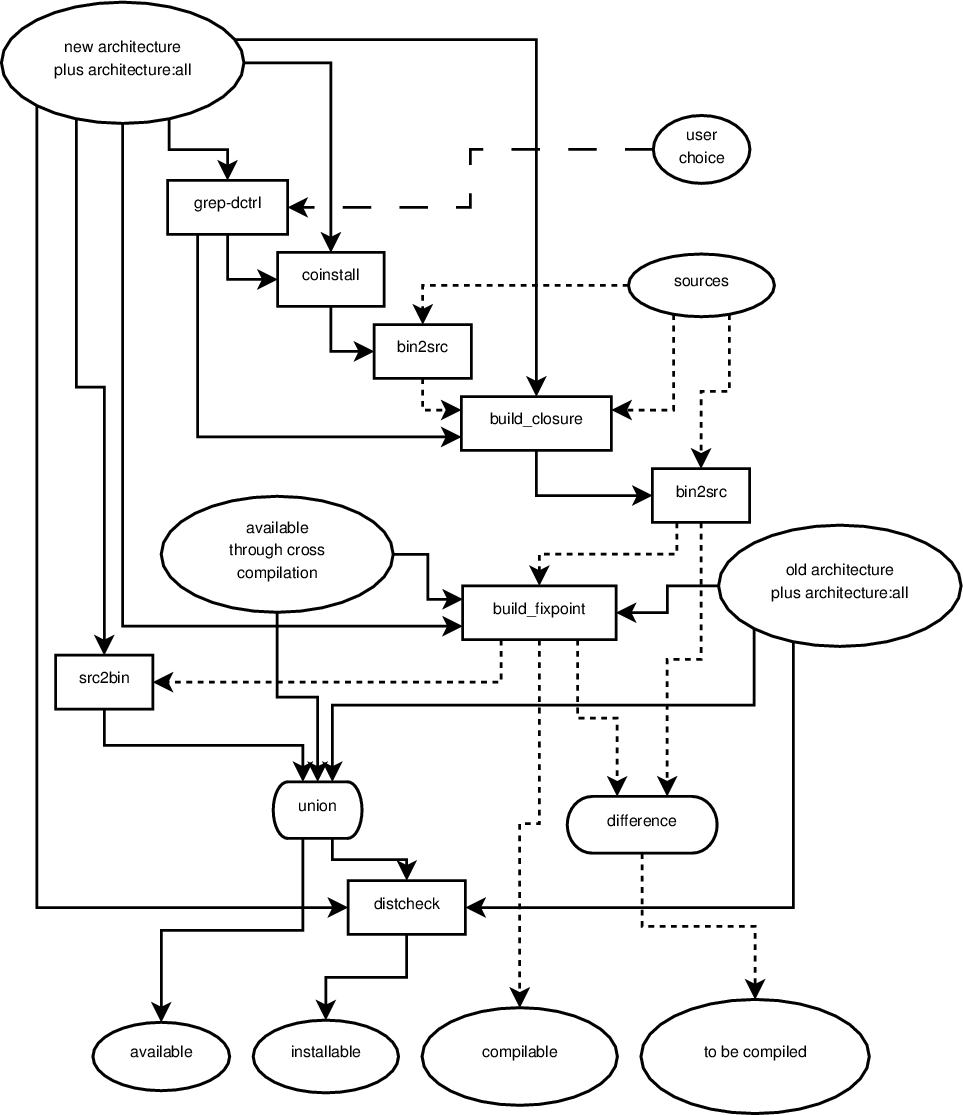
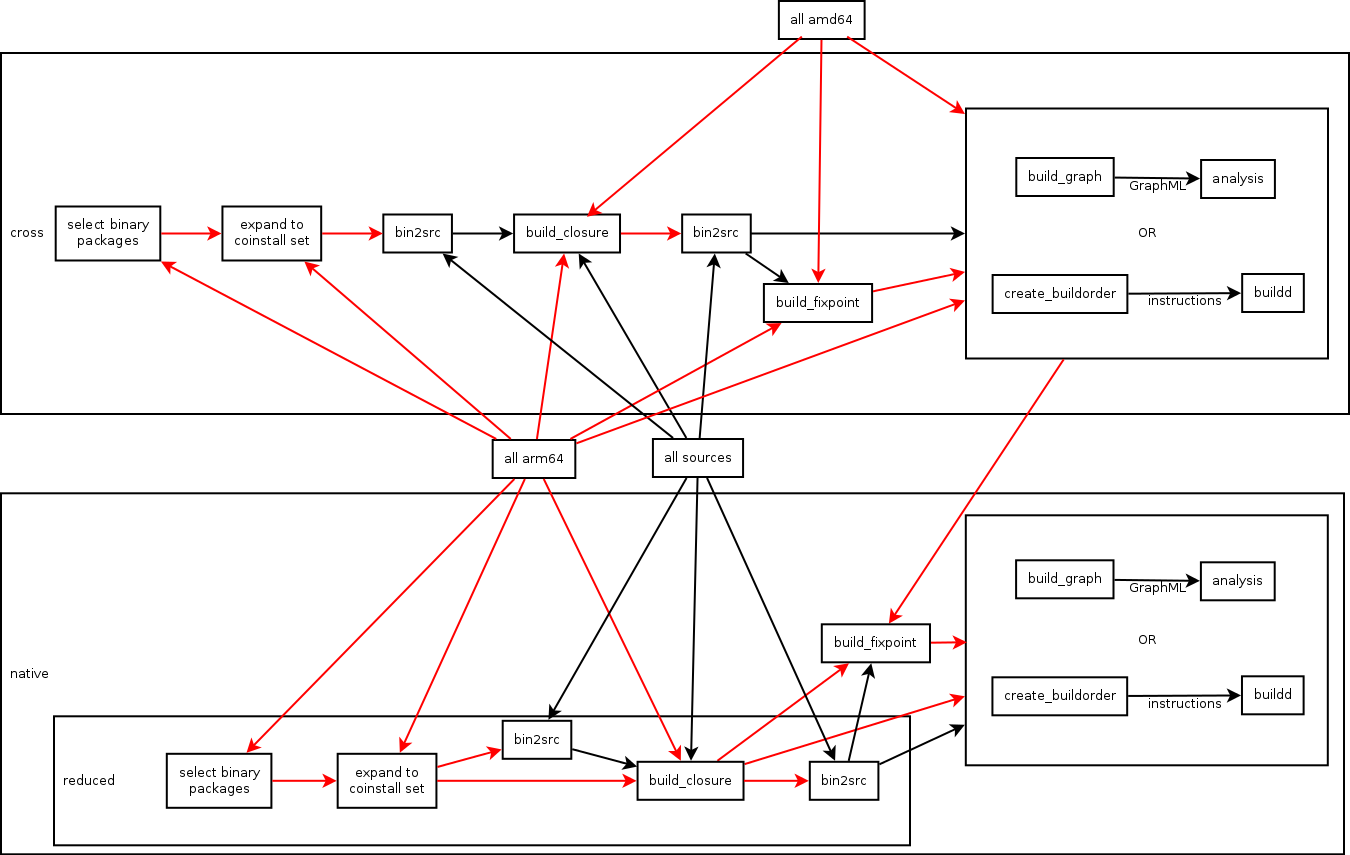
Processing pipeline instead of monolithic tools The tools I developed so far tried to accomplish everything by themselves, reusing functionality implemented in a central library. Therefor, if one wanted to try out even trivial new things, it mostly meant to hack some OCaml code. Pietro Abate suggested to instead develop smaller tools which could work independently of each other, would only execute one algorithm each and could easily be connected together in different ways to achieve different effects. This switch is now done and all functionality from the old tools is moved into a new toolset. The exchange format between the tools is either plain text files in deb822 control format (Packages/Sources files) or a dependency graph. The dependency graph is currently marshalled by OCaml but future versions should work with just passing a GraphML (an XML graph format) representation around. This new way of doing things seems close to the UNIX philosophy (each program does one thing well, data is stored as text, every program is a filter). For example the deb822 control output can easily be manipulated using grep-dctrl(1) and there exist many tools which can read, analyze and manipulate GraphML. It is a big improvement over the old, monolithic tools which did not allow to manipulate any intermediate result by external, existing tools. Currently, a shell script (native.sh) will execute all tools in a meaningful order, connecting them together correctly. The same tools will be used for a future cross.sh but they will be connected differently. I wrote about a first proposal of what the individual tools should do and how they should be connected in this email from which I also linked a confusing overview of the pipeline. This overview has recently been improved to be even more confusing and the current version of the lower half (the native part) now looks like this: native reduced Solid arrows represent a flow of binary packages, dottend arrows represent a flow of source packages, ovals represent a set of packages, boxes with rounded corners represent set operations, rectangular boxes represent filters. There is only one input to a filter, which is the arrow connected to the top of the box. Outgoing arrows from the bottom represent the filtered input. Ingoing arrows to either side are arguments to the filter and control how the filter behaves depending on the algorithm. I will explain this better once the pipeline proved to be less in flux. The pipeline is currently executed like this by native.sh.

Two new ways to break dependency cycles have been discovered So far, we knew of three ways to formally break dependency cycles:
  • remove build dependencies through build profiles
  • find out that the build dependency is only used to build arch:all packages and therefor put it into Build-Depends-Indep
  • cross compile some source packages
Two new methods can be added to the above:

Dependency graph definition changed Back in September when I was visiting irill, Pietro found a flaw in how the dependency graph used to be generated. He supplied a new definition of the dependency graph which does away with the problem he found. After fixing some small issues with his code, I changed all the existing algorithms to use the new graph definition. The old graph is as of today removed from the repository. Thanks to Pietro for supplying the new graph definition - I must still admit that my OCaml foo is not strong enough to have come up with his code.

Added complexity for profile built source packages As mentioned in the introduction, wookey and me addressed the debian-devel list with a proposal on necessary changes for an automated bootstrapping of Debian. During the discussiong, two important things came up which are to be considered by the dependency graph algorithms:
  • profile built source packages may not create all binary packages
  • profile built source packages may need additional build dependencies
Both things make it necessary to alter the dependency graph during the generation of a feedback arc set and feedback vertex set beyond the simple removal of edges. Luckily, the developed approximation algorithms can be extended to support such changes in the graph.

Different feedback arc set algorithms The initially developed feedback arc set algorithm is well suited to discover build dependency edges which should be dropped. It performs far worse when creating the final build order because it only considers edges by itself and not how many edges of a source package can be dropped by profile building it. The adjusted algorithm for generating a build order is more of a feedback vertex set algorithm because instead of greedily finding the edge with most cycles through it, it greedily finds the source package which would break most cycles if it was profile built.

Generating a build order with less profile built source packages After implementing all the features above I now feel more confident to publish the current status of the tools to a wider audience. The following test shows a run of the aforementioned ./native.sh shell script. Its final output is a list of source packages which have to be profile built and a build order. Using the resulting build order, starting from a minimal build system (essential:yes, build-essential and debhelper), all source packages will be compiled which are needed to compile all binary packages in the system. The result will therefor be a list of source and binary packages which fulfill the following property:
  • all binary packages can be built from the available source packages
  • all source packages can be built with the available binary packages
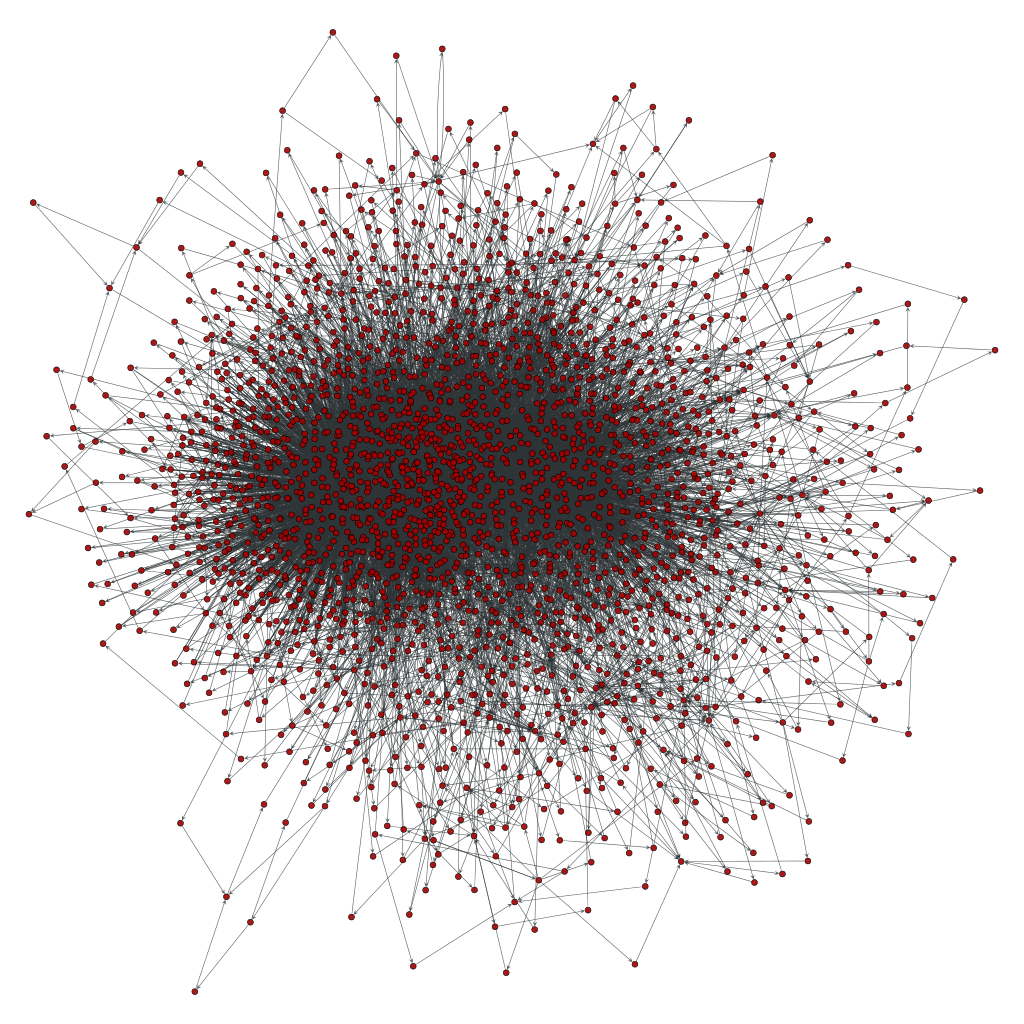
I called this a "reduceded distribution" in earlier posts. The interesting property of this specific selection is, that it contains the biggest problem set of Debian when bootstrapping it: a 900 to 1000 nodes big strongly connected component. Here is a visualization of the problem: hideous mess Source packages do not yet come with build profiles and the cross build situation can not yet be analyzed, so the following assumptions were made: The last point is about 14 build dependencies which were decided to be broken by the feedback arc set algorithm but for which other data sources did not indicate that they are actually breakable. Those 14 are dynamically generated by native.sh. If above assumptions should not be too far from the actual situation, then not more than 73 source packages have to be modified to bootstrap a reduced distribution. This reduced distribution even includes dependency-wise "big" packages like webkit, metacity, iceweasel, network-manager, tracker, gnome-panel, evolution-data-server, kde-runtime, libav and nautilus. By changing one line in native.sh one could easily develop a build order which generates gnome-desktop or really any given (meta-)package selection. All of native.sh takes only 80 seconds to execute on my system (Core i5, 2.5 GHz, singlethreaded). Here is the final build order which creates 2044 binary packages from 613 source packages.
  1. nspr, libio-pty-perl, libmcrypt, unzip, libdbi-perl, cdparanoia, libelf, c-ares, liblocale-gettext-perl, libibverbs, numactl, ilmbase, tbb, check, libogg, libatomic-ops, libnl($), orc($), libaio, tcl8.4, kmod, libgsm, lame, opencore-amr, tcl8.5, exuberant-ctags, mhash, libtext-iconv-perl, libutempter, pciutils, gperf, hspell, recode, tcp-wrappers, fdupes, chrpath, libbsd, zip, procps, wireless-tools, cpufrequtils, ed, libjpeg8, hesiod, pax, less, dietlibc, netkit-telnet, psmisc, docbook-to-man, libhtml-parser-perl, libonig, opensp($), libterm-size-perl, linux86, libxmltok, db-defaults, java-common, sharutils, libgpg-error, hardening-wrapper, cvsps, p11-kit, libyaml, diffstat, m4
  2. openexr, enca, help2man, speex, libvorbis, libid3tag, patch, openjade1.3, openjade, expat, fakeroot, libgcrypt11($), ustr, sysvinit, netcat, libirman, html2text, libmad, pth, clucene-core, libdaemon($), texinfo, popt, net-tools, tar, libsigsegv, gmp, patchutils($), dirac, cunit, bridge-utils, expect, libgc, nettle, elfutils, jade, bison
  3. sed, indent, findutils, fastjar, cpio, chicken, bzip2, aspell, realpath, dctrl-tools, rsync, ctdb, pkg-config($), libarchive, gpgme1.0, exempi, pump, re2c, klibc, gzip, gawk, flex-old, original-awk, mawk, libtasn1-3($), flex($), libtool
  4. libcap2, mksh, readline6, libcdio, libpipeline, libcroco, schroedinger, desktop-file-utils, eina, fribidi, libusb, binfmt-support, silgraphite2.0, atk1.0($), perl, gnutls26($), netcat-openbsd, ossp-uuid, gsl, libnfnetlink, sg3-utils, jbigkit, lua5.1, unixodbc, sqlite, wayland, radvd, open-iscsi, libpcap, linux-atm, gdbm, id3lib3.8.3, vo-aacenc, vo-amrwbenc, fam, faad2, hunspell, dpkg, tslib, libart-lgpl, libidl, dh-exec, giflib, openslp-dfsg, ppl($), xutils-dev, blcr, bc, time, libdatrie, libpthread-stubs, guile-1.8, libev, attr, libsigc++-2.0, pixman, libpng, libssh2, sqlite3, acpica-unix, acl, a52dec
  5. json-c, cloog-ppl, libverto, glibmm2.4, rtmpdump, libdbd-sqlite3-perl, nss, freetds, slang2, libpciaccess, iptables, e2fsprogs, libnetfilter-conntrack, bash, libthai, python2.6($), libice($), libpaper, libfontenc($), libxau, libxdmcp($), openldap($), cyrus-sasl2($), openssl, python2.7($)
  6. psutils, libevent, stunnel4, libnet-ssleay-perl, libffi, readline5, file, libvoikko, gamin, libieee1284, build-essential, libcap-ng($), lcms($), keyutils, libxml2, libxml++2.6, gcc-4.6($), binutils, dbus($), libsm($), libxslt, doxygen($)
  7. liblqr, rarian, xmlto, policykit-1($), libxml-parser-perl, tdb, devscripts, eet, libasyncns, libusbx, icu, linux, libmng, shadow, xmlstarlet, tidy, gavl, flac, dbus-glib($), libxcb, apr, krb5, alsa-lib
  8. usbutils, enchant, neon27, uw-imap, libsndfile, yasm, xcb-util, gconf($), shared-mime-info($), audiofile, ijs($), jbig2dec, libx11($)
  9. esound, freetype, libxkbfile, xvidcore, xcb-util-image, udev($), libxfixes, libxext($), libxt, libxrender
  10. tk8.4, startup-notification, libatasmart, fontconfig, libxp, libdmx, libvdpau, libdrm, libxres, directfb, libxv, libxxf86dga, libxxf86vm, pcsc-lite, libxss, libxcomposite, libxcursor, libxdamage, libxi($), libxinerama, libxrandr, libxmu($), libxpm, libxfont($)
  11. xfonts-utils, libxvmc, xauth, libxtst($), libxaw($)
  12. pmake, corosync, x11-xserver-utils, x11-xkb-utils, coreutils, xft, nas, cairo
  13. libedit, cairomm, tk8.5, openais, pango1.0($)
  14. ocaml, blt, ruby1.8, firebird2.5, heimdal, lvm2($)
  15. cvs($), python-stdlib-extensions, parted, llvm-2.9, ruby1.9.1, findlib, qt4-x11($)
  16. xen, mesa, audit($), avahi($)
  17. x11-utils, xorg-server, freeglut, libva
  18. jasper, tiff3, python3.2($)
  19. openjpeg, qt-assistant-compat, v4l-utils, qca2, jinja2, markupsafe, lcms2, sip4, imlib2, netpbm-free, cracklib2, cups($), postgresql-9.1
  20. py3cairo, pycairo, pam, libgnomecups, gobject-introspection($)
  21. gdk-pixbuf, libgnomeprint, gnome-menus, gsettings-desktop-schemas, pangomm, consolekit, vala-0.16($), colord($), atkmm1.6
  22. libgee, gtk+3.0($), gtk+2.0($)
  23. gtkmm2.4, poppler($), openssh, libglade2, libiodbc2, gcr($), libwmf, systemd($), gcj-4.7, java-atk-wrapper($)
  24. torque, ecj($), vala-0.14, gnome-keyring($), gcc-defaults, gnome-vfs($)
  25. libidn, libgnome-keyring($), openmpi
  26. mpi-defaults, dnsmasq, wget, lynx-cur, ghostscript, curl
  27. fftw3, gnupg, libquvi, xmlrpc-c, raptor, liboauth, groff, fftw, boost1.49, apt
  28. boost-defaults, libsamplerate, cmake, python-apt
  29. qjson, qtzeitgeist, libssh, qimageblitz, pkg-kde-tools, libical, dwarves-dfsg, automoc, attica, yajl, source-highlight, pygobject, pygobject-2, mysql-5.5($)
  30. libdbd-mysql-perl, polkit-qt-1, libdbusmenu-qt, raptor2, dbus-python, apr-util
  31. rasqal, serf, subversion($), apache2
  32. git, redland
  33. xz-utils, util-linux, rpm, man-db, make-dfsg, libvisual, cryptsetup, libgd2, gstreamer0.10
  34. mscgen, texlive-bin
  35. dvipng, luatex
  36. libconfig, transfig, augeas, blas, libcaca, autogen, libdbi, linuxdoc-tools, gdb, gpm
  37. ncurses, python-numpy($), rrdtool, w3m, iproute, gcc-4.7, libtheora($), gcc-4.4
  38. libraw1394, base-passwd, lm-sensors, netcf, eglibc, gst-plugins-base0.10
  39. libiec61883, qtwebkit, libvirt, libdc1394-22, net-snmp, jack-audio-connection-kit($), bluez
  40. redhat-cluster, gvfs($), pulseaudio($)
  41. phonon, libsdl1.2, openjdk-6($)
  42. phonon-backend-gstreamer($), gettext, libbluray, db, swi-prolog, qdbm, swig2.0($)
  43. highlight, libselinux, talloc, libhdate, libftdi, libplist, python-qt4, libprelude, libsemanage, php5
  44. samba, usbmuxd, libvpx, lirc, bsdmainutils, libiptcdata, libgtop2, libgsf, telepathy-glib, libwnck3, libnotify, libunique3, gnome-desktop3, gmime, glib2.0, json-glib, libgnomecanvas, libcanberra, orbit2, udisks, d-conf, libgusb
  45. libgnomeprintui, libimobiledevice, nautilus($), libbonobo, librsvg
  46. evas, wxwidgets2.8, upower, gnome-disk-utility, libgnome
  47. ecore, libbonoboui
  48. libgnomeui
  49. graphviz
  50. exiv2, libexif, lapack, soprano, libnl3, dbus-c++
  51. atlas, libffado, graphicsmagick, libgphoto2, network-manager
  52. pygtk, jackd2, sane-backends, djvulibre
  53. libav($), gpac($), ntrack, python-imaging, imagemagick, dia
  54. x264($), matplotlib, iceweasel
  55. strigi, opencv, libproxy($), ffms2
  56. kde4libs, frei0r, glib-networking
  57. kde-baseapps, kate, libsoup2.4
  58. geoclue, kde-runtime, totem-pl-parser, libgweather, librest, libgdata
  59. webkit
  60. zenity, gnome-online-accounts
  61. metacity, evolution-data-server
  62. gnome-panel
  63. tracker
The final recompilation of profile built source packages is omitted. Source packages marked with a ($) are selected to be profile built. All source packages listed in the same line can be built in parallel as they do not depend upon each other. This order looks convincing as it first compiles a multitude of source packages which have no or only few build dependencies lacking. Later steps allow fewer source packages to be compiled in parallel. The amount of needed build dependencies is highest in the source packages that are built last.

Neil Williams: Hard drive death

My 1Tb laptop drive started misbehaving a few weeks ago, just spending a lot of time spinning when it should have been reading frequently changed files (like the browser cache). I was tempted to blame the browser at that point as no other packages appeared affected.

Wednesday night, a routine package upgrade on unstable brought in a bunch of qt4 updates which I wanted and a virtual box update that I didn't see much point in delaying ... 15 minutes later I couldn't work out why the virtualbox dkms task was still running, spotted it spinning in depmod and found some alarming messages in dmesg about short reads and errors reading from the hard drive. Hmm. The hard drive was out of control at this point, it quickly became apparent that no disc access was going to be possible and I couldn't get to a terminal to kill the current tasks, so I killed the power. The fsck which followed reboot showed more of the errors I'd seen in dmesg and fell back to the manual intervention stage. A few hours of confirming attempts to fix the errors, fsck finally finished. A short amount of usage showed that although fsck had finished, the drive was not happy and was starting to give short reads on other parts of the filesystem, resulting in ~40% of the filesystem appearing to be read-only when the rest was read-write. Somehow, I didn't think this was a welcome feature as the areas affected appeared to be quite random.

The drive in question was a replacement for the original 300Gb drive supplied with the ThinkPad, so a quick bit of switching of drives into a caddy and I could rsync my data off the large drive onto the smaller one. The rsync itself took a lot longer than it should have done because it got lots of short reads too. (Principally in /lib/modules/3.2.0-4/ and in the browser cache directories which had been the original symptom as well as most other places where one could have expected processes to have open files when the drive failed).

Now the 1Tb drive was a pig to fit into the Thinkpad originally because it was too big for the bay but I fitted it anyway. Yes, that was probably a mistake. It certainly meant that in order to fit it I had to not put the drive into the useful caddy provided by Lenovo which makes removal of the drive simple. Indeed the drive was wedged into the bay so tightly that it wasn't going to come out with normal levels of persuasion. This probably contributed to the failure of the drive, so live and learn.

With help from Andy Simpkins (it's always handy to have a hardware engineer on hand at times like this), the keyboard was lifted out, the case was dismantled and just enough room was made to get a screwdriver in behind the sata drive and lever it out of the bay. OK, rebuild laptop, put replacement drive into the caddy (because the smaller capacity drive is also a lot smaller in height than the 1Tb and therefore has plenty of clearance between it and the bay) and move on to the software recovery stage.

Hint: if this happens again, before turning off the broken system for the last time, just remember to download a recent Debian ISO to a USB stick - it saves having to ask someone else or find another machine to do the download. (Thanks Andy...)

OK, so after the usual complaints on reboot that there was no operating system, F12 got the boot order menu up and I was in Debian Installer Rescue Mode. Reinstalling grub failed initially for a few reasons:

  1. I'd deliberately not copied /dev /proc and /sys from the old harddrive but I'd also forgotten to create empty ones on the new drive...
  2. /etc/fstab helpfully referred to / as a UUID which no longer applied, so that had to be edited
  3. grub was confused and couldn't find the root filesystem

A few iterations later, I had a working /dev directory inside the /target chroot, bind mounted from the /dev outside the chroot, I was able to mount proc and sys, so grub was finally happy to reinstall itself and then update the initramfs setup for the new drive.

Reboot, another fsck, all appeared well. I was able to login via the terminal but not in X. Hmmm. Stop xdm, startx manually from the terminal, problems with /tmp/ - permission denied. Oops. Yes, it does help to create /tmp with the right permissions....

The final stage was to complete the dpkg --configure -a from the original failure. I've yet to reinstall the 3.2.0-4 kernel, so I'm back on 3.2.0-3 but that's OK.

So now I'm back on the original drive, albeit temporarily without any swap whatsoever (because I didn't partition the replacement drive to create /dev/sda5 before doing the copy) and now I remember the second reason I wanted to replace the original drive with the 1Tb drive - the original drive is as NOISY as hell. The whole edge of the laptop vibrates constantly, to the point that I can feel the vibration under the keys as I type. It's not that the drive is loose in the bay, it's just a constant vibration.

But, I have kept all my data and I have a usable laptop for the BSP this weekend. I will be looking at an SSD drive to replace this one though and having also found my old Acer laptop with power supply, I can now reference this entry when I transfer the system a second time.

24 January 2013

Benjamin Mako Hill: Aaron Swartz

I moved to Boston in 2005 at the same time that Aaron Swartz did and we were introduced by a mutual friend. Aaron was one of my first friends in Boston and we became close. When Aaron moved to San Francisco, I moved into his apartment in Somerville where he kept a room for a year or so. Mika and I still live there. His old posters remain on our walls and his old books remain on our shelves. Aaron s brothers Ben and Noah both lived with us and remain close friends. I have spent hours (days?) reading and thinking about Aaron over the last two weeks. It has been disorienting but beautiful to read the descriptions of, and commentaries on, Aaron s life. Although I suspect I may never feel ready, there are several things I want to say about Aaron s death, about Aaron s work, and about what Aaron means to me. 1. Aaron s Death The reaction to Aaron s death has been overwhelming and inspirational. At some point in the near future I plan to join some of the important campaigns already being waged in his name. There are many attempts to understand why Aaron died and many attempts to prevent it from happening to others in the future. Unfortunately, I am familiar with the process of soul-searching and second-guessing that happens when a friend commits suicide. I m sure that every one of his friends has asked themselves, as I have, What could I have done differently? I don t know the answer, but I do know this: Aaron was facing the real risk of losing half his life to prison. But even if one believed that he was only facing the likely loss of ten percent or even one percent of his life I wish that we all, and I wish that I in particular, had reacted with the passion, time, anger, activity, and volume proportional to how we have reacted in the last two weeks when he lost the whole thing. 2. Aaron s Work Of course, Aaron and I worked on related projects and I followed his work. And despite all the incredible things that have been said about Aaron, I feel that Aaron s work was more focused, more ambitious, more transformative, more innovative, and more reckless (in a positive sense) than the outpour online suggests. Although discussion of Aaron has focused his successes, achievements, and victories, the work that inspired me most was not the projects that were most popular or successful. Much of Aaron s work was deeply, and as it turned out overly, ambitious. His best projects were self-conscious attempts to transform knowledge production, organization, and dissemination. Although he moved from project to project, his work was consistently focused on bringing semantic-web concepts and technologies to peer production, to the movement for free culture, and to progressive political activism and on the meta-politics necessary to remove barriers to this work. For example, Aaron created an online collaborative encyclopedia project called the TheInfoNetwork (TIN) several years before Wikipedia was started. I talked to Aaron at length about that project for a research project I am working on. Aaron s work was years ahead of its time; in 2000, TIN embraced more of the Wikimedia Foundation s current goals and principles than Wikipedia did when it was launched. While Wikipedia sought to create a free reference work online, Aaron s effort sought to find out what a reference work online could look like. It turned out to be too ambitious, perhaps, but it taught many, including myself, an enormous amount in that process. When I met Aaron, he was in the process starting a company, Infogami, that was trying to chase many of TIN s goals. Infogami was conceived of as a wiki aware of the structure of data. The model was both simple and profound. Years later, Wikimedia Deutschland s WikiData project is beginning to bring some of these ideas to the mainstream. Infogami merged with Reddit as equal halves of a company with a shared technological foundation based on some of Aaron s other work. But when Reddit took off, Infogami was rarely mentioned, even by Aaron. I think that is too bad. Reddit got traction because it made the most popular stuff more visible; Reddit is popular, fundamentally, because popular things are popular. But popular is not necessary positive. For that reason, Reddit never struck me as either surprising or transformative. But what started as Aaron s half the company, on the other hand, aimed to create a powerful form of democratized information production and dissemination. And although Infogami didn t take off, the ideas and code behind the project found life at the heart of Open Library and will continue to influence and inspire countless other projects. I believe that Infogami s lessons and legacy will undergird a generation of transformative peer production technologies in a way that the Reddit website important as it is will not. 3. What Aaron Means to Me A lot of what has been written about Aaron speaks to his intelligence, his curiosity, his generosity, his ethics and his drive. Although I recognize all these qualities in the Aaron I knew, I ve felt alienated by how abstract some of the discussion of Aaron has been my memories are of particularities.
I remember the time Aaron was hospitalized and I spent two hours on the phone going through my bookshelves arguing with him about the virtues of the books in my library as we tried to decide which books I would bring him. I remember Aaron confronting Peter Singer intellectual founder of the modern animal rights movement at the Boston Vegetarian Food Festival to ask if humans had a moral obligation to stop animals from killing each other. I lurked behind, embarrassed about the question but curious to hear the answer. (Singer sighed and said yes sort of and complemented Aaron on the enormous Marxist commentary he was carrying.) I remember 1-800-INTERNET.com. I remember talking with Aaron about whether being wealthy could be ethical. I argued it could not but Aaron argued uncharacteristically I thought that it could. Aaron told Mika she should slap him if he ever became wealthy. The very next day, it was announced that his company had been acquired and that Aaron was a millionaire. I remember the standing bets I had with Aaron and how he would email me every time news reports favored his claims (but never when they did not). And I remember that I won t hear from him again.
Aaron was a friend and inspiration. I miss him deeply and I am very sad.

23 January 2013

Michal &#268;iha&#345;: Weblate 1.4

Weblate 1.4 has been released today. It comes with lot of improvements, especially in configurability, admin interface and usability. Full list of changes for 1.4: You can find more information about Weblate on it's website, the code is hosted on Github. If you are curious how it looks, you can try it out on demo server. You can login there with demo account using demo password or register your own user. Ready to run appliances will be soon available in SUSE Studio Gallery. Weblate is also being used https://l10n.cihar.com/ as official translating service for phpMyAdmin, Gammu, Weblate itself and others. If you are free software project which would like to use Weblate, I'm happy to help you with set up or even host Weblate for you (this will be decided case by case as my hosting space is limited).

Filed under: English Phpmyadmin Suse Weblate 0 comments Flattr this!

Next.

Previous.