Search Results: "bab"

14 January 2016

Vincent Sanders: Ampere was the Newton of Electricity.

I think Maxwell was probably right, certainly the unit of current Ampere gives his name to has been a concern of mine recently.

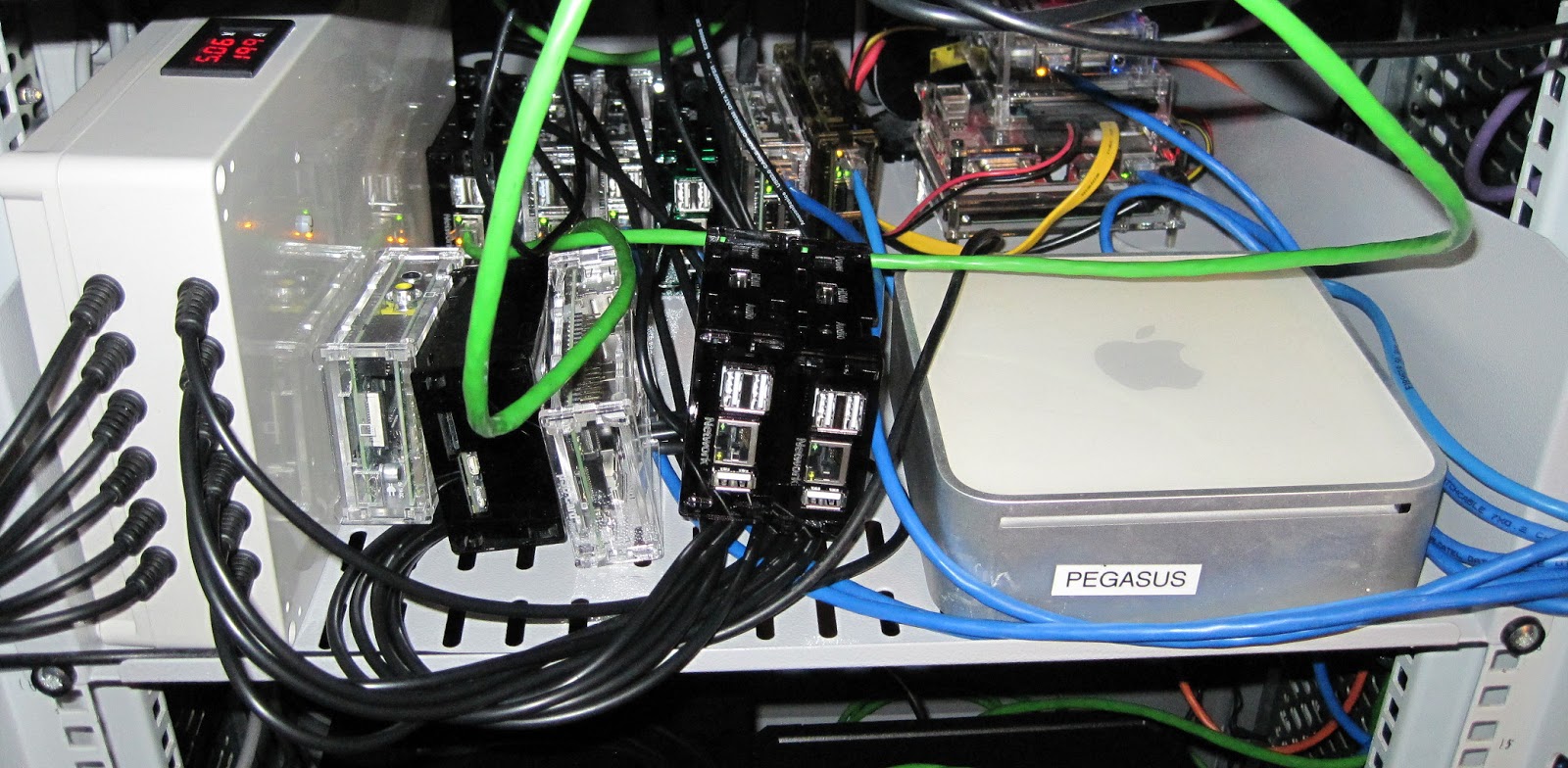
Regular readers may have possibly noticed my unhealthy obsession with single board computers. I have recently rehomed all the systems into my rack which threw up a small issue of powering them all. I had been using an ad-hoc selection of USB wall warts and adapters but this ended up needing nine mains sockets and short of purchasing a very expensive PDU for the rack would have needed a lot of space.

Additionally having nine separate convertors from mains AC to low voltage DC was consuming over 60Watts for 20W of load! The majority of these supplies were simply delivering 5V either via micro USB or DC barrel jack.

Initially I considered using a ten port powered USB hub but this seemed expensive as I was not going to use the data connections, it also had a limit of 5W per port and some of my systems could potentially use more power than that so I decided to build my own supply.

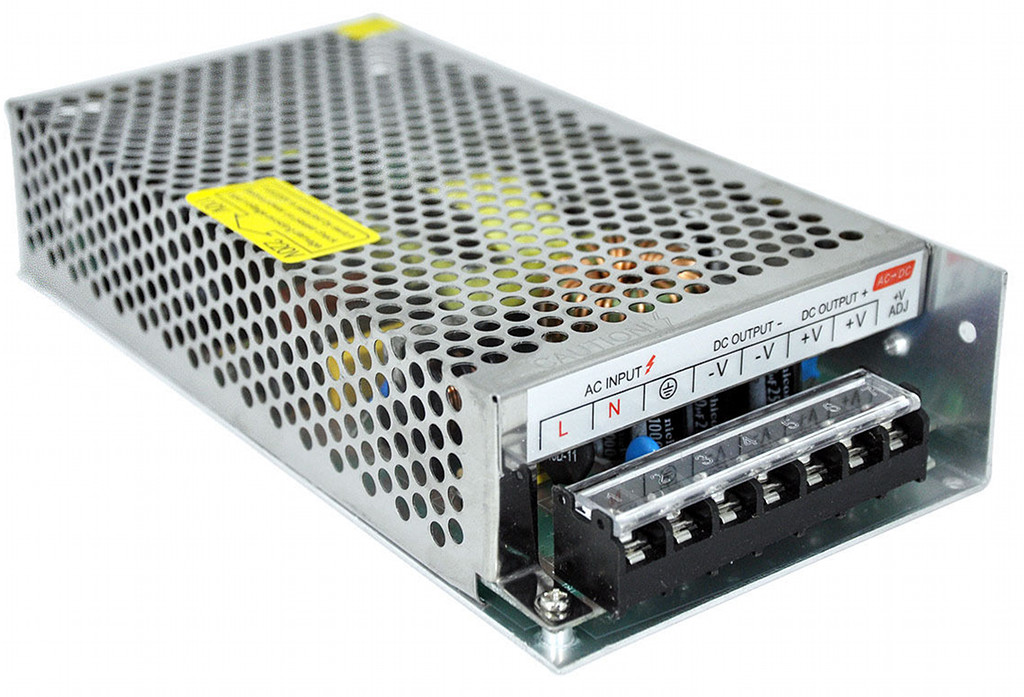
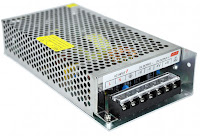
PSU module from ebay
A quick look on ebay revealed that a 150W (30A at 5V) switching supply could be had from a UK vendor for 9.99 which seemed about right. An enclosure, fused and switched IEC inlet, ammeter/voltmeter with shunt and suitable cables were acquired for another 15

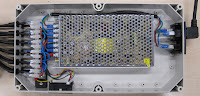
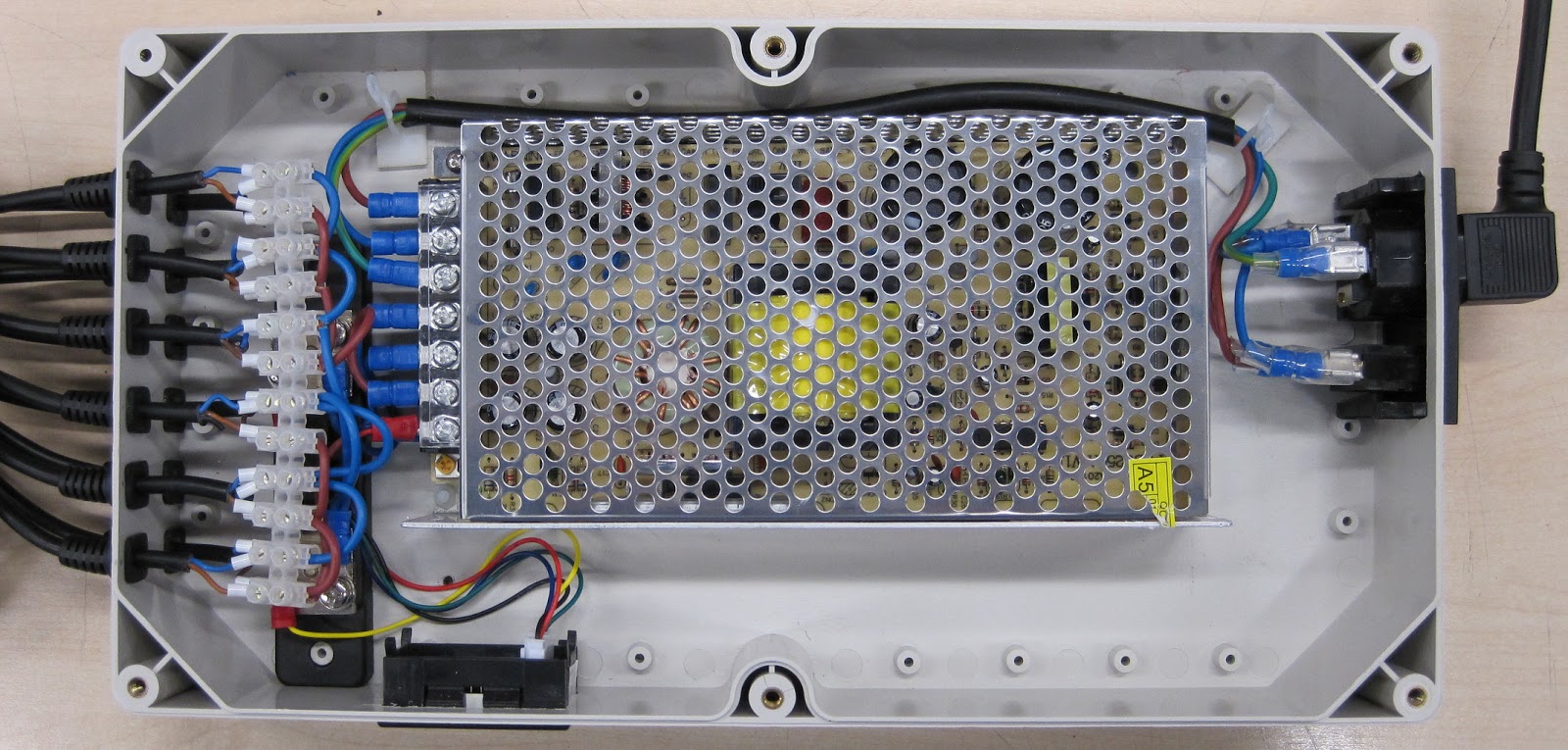
Top view of the supply all wired up
A little careful drilling and cutting of the enclosure made openings for the inlets, cables and display. These were then wired together with crimped and insulated spade and ring connectors. I wanted this build to be safe and reliable so care was taken to get the neatest layout I could manage with good separation between the low and high voltage cabling.

Completed supply with all twelve outputs wired up
The result is a neat supply with twelve outputs which i can easily extend to eighteen if needed. I was pleasantly surprised to discover that even with twelve SBC connected generating 20W load the power drawn by the supply was 25W or about 80% efficiency instead of the 33% previously achieved.

The inbuilt meter allows me to easily see the load on the supply which so far has not risen above 5A even at peak draw, despite the cubitruck and BananaPi having spinning rust hard drives attached, so there is plenty of room for my SBC addiction to grow (I already pledged for a Pine64).

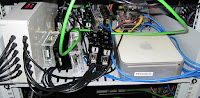
Supply installed in the rack with some of the SBC connected
Overall I am pleased with how this turned out and while there are no detailed design files for this project it should be easy to follow if you want to repeat it. One note of caution though, this project has mains wiring and while I am confident in my own capabilities dealing with potentially lethal voltages I cannot be responsible for anyone else so caveat emptor!

11 January 2016

Thadeu Lima de Souza Cascardo: GNU on Smartphones (part II)

Some time ago, I wrote how to get GNU on a smartphone. This is going to be a long discussion on why and how we should work on more operating systems for more devices. On Android So, why should we bother if we already have Android, some might ask? If it's just because of some binary blobs, one could just use Replicant, right? Well, one of the problems is that Android development is done in hiding, and pushed downstream when a new version is launched. There is no community behind that anyone can join. Replicant ends up either following it or staying behind. It could do a fork and have its own innovations. And I am all for it. But the lack of manpower for supporting devices and keeping up with the latest versions and security fixes already takes most of the time for the one or two developers involved. Also, Android has a huge modularity problem, that I will discuss further below. But it's hard to replace many components in the system, unless you replace them all. And that also causes the problem that applications can hardly share extra components. I would rather see Debian running on my devices and supporting good environments and frameworks for all kinds of devices, like phones, tablets, TVs, cars, etc. It's developed by a community I can join, it allows a diverse set of frameworks and environments, and it's much easier to replace single components on such a system. On Copyleft Hardware I get it. Hardware is not free or libre. Its design is. I love the concept of copyleft hardware, where one applies the copyleft principles to a hardware design. Also, there is the concept of Hardware that Respects Your Freedom, that is, one that allows you to use it with only free software. Note that RYF hardware is not necessarily copyleft hardware. In fact, most of the time, the original vendor has not helped at all, and it required reverse engineering efforts by other people to be able to run free software on those systems. My point here is that we should not prevent people from running free software on hardware that does not RYF or that is not copyleft. We should continue the efforts of reverse engineering and of pushing hardware vendors to not only ship free software for their hardware, but also release their design under free licenses. But in the meantime, we need to make free software flourish in the plethora of devices on the hands of so many people around the world. On Diversity I won't go into details on this post about two things. One topic I love is retrocomputing and how Linux supported so many devices, and how many free or quasi-free operating systems ran on so many of them in the past. I could mention ucLinux, Familiar, PDAs, Palmtops, Motorolas, etc. But I will leave it to another time and go from Openmoko and Maemo forward. The other topic is application scalability. Even Debian with so many software available does not ship all free software there is available. And it doesn't support all third-party services out there. How can we solve that? It has to do with platforms, protocols, open protocols, etc. I will not go into that today. Because I believe that either way, it's healthy for our society to have diversity. I believe we should have other operating systems available for our devices. Even if application developers will not develop for all of them. That is already the case today. There are other ways to fix that, when that needs fixing. Sometimes, it's sufficient that you can have your own operating system on your device, that you can customize it, enhance it and share it with friends. And also, that would allow for innovation. It would make possible that some other operating system would have enough market share on some other niche. Other than Android and iOS, for example. But that requires that we can support that operating system on different devices. And that is the scalability that I want to talk about. How to support more devices with less effort. Options But before I go into that, let me write more about the alternatives we have out there. And some of the history around it. Openmoko Openmoko developed a set of devices that had some free design. And it has some free operating systems running on top. The community developed a lot of their own as well. Debian could (still can) run on it. There is SHR, which uses FSO, a mobile middleware based on D-Bus. It even spawned other devices to be developed, like GTA04, a successor board, that can be shipped inside a Neo Freerunner case. Maemo, Moblin, Meego and Tizen I remember the announcement of Nokia N770. During FISL in 2005, I even criticized a lot, because it shipped with proprietary drivers. And applications. But it was the first time we heard of Maemo. It was based on Debian and GNOME. The GNOME Mobile initiative was born from that, I believe, but died later on. But with the launch of N900, and later events, like the merge of Moblin with Maemo, to create Meego, we all had an operating system that was based on community developed components, that had some community participation, and was much more like the systems we were used to. You could run gcc on N900. You could install Das U-Boot and have other operating systems running there. But Nokia has gone a different path. Intel has started Tizen with Samsung. There is so much legacy there, that could still be developed upon. I am just sad that Jolla decided to put proprietary layers on top of that, to create SailfishOS. But we still have Mer, Nemo. But it looks like Cordia is gone. At least, (http://cordiahd.org) seems to have been registered by a domain seller. Not to forget, Neo900, a project to upgrade the board, in the same vein as GTA04. FirefoxOS and Ubuntu What can I say about FirefoxOS and Ubuntu Phone? In summary, I think we need more than Web, and Canonical has a history of not being too community oriented as we'd like. I won't go too much here in what I think about the Web as a platform. But I think we need a system that has more options for platforms. I haven't participated in projects directed by Mozilla either, so I can't say much about that. Ubuntu Phone should be a system more like what we are used to. But Canonical is going to set the directions to the project, it's not a community project. Nonetheless, I think they add to the diversity, and users should be able to try them, or their free parts or versions. But there are challenges there, that I think need to be discussed. So, both of these systems are based on Android. They don't use Dalvik or the application framework. But they use what is below that, which means device drivers in userspaces, like RIL, for the modem drivers, and EGL, for graphics drivers. The reason they do that is to build on top of all the existing vendor support for Android. If a SOC and phone vendor already supports Android, there should be not much needed to do to support FirefoxOS or Ubuntu Phone. In practice, this has not benefited the users or the projects. Porting should be as simple as getting a generic FirefoxOS or Ubuntu Phone image and run it on top of your Android or CyanogenMod port. Porting usually requires doing all the same work as porting Android. Even though one should be able to take advantage of existing ports, it still requires doing a lot of integration work and building an entire image, most of the time, including the upper layers, that should be equal in all devices. This process should require at most creating a new image based on other images and loading it on the device. I will discuss more about this below. I can't forget to mention the Matchstick TV project. It is based on FirefoxOS. I think it would have much more changes to succeed if it was easier for testers to have images available for all of their gadgets capable of running some form of Android. Replicant And then we have Replicant. It has a lot of the problems Android has. Even so, it's a tremendously important project. First, it offers a free version of Android, removing all proprietary pieces. This is very good for the community. But more than that, it tries to free the devices beyond that. What the project has been done is reverse engineer some of the pieces, mostly the modem drivers. That allows other projects to build upon that work, and support those modems. Without that, there is no telephony or celullar data available on any of these devices. Not without proprietary software, that is. They also have been working on free bootloaders, which is another important step for a completely free system. Next steps There are many challenges here, but I believe we should work on a set of steps that make it more palatable and produce intermediary results that can be used by users and other projects. One of the goals should be good modularity. The ability to replace some pieces with the least trouble necessary. The update of a single framework library should be just a package install, instead of building the entire framework again. If there is ABI breakage, users should still be able to have access to binaries (and accompanying source code) and only need to update the library and its reverse dependencies. If one layer does not have these properties, at least it should be possible to update this big chunk without interfering with the other layers. One example is FirefoxOS and Ubuntu Phone. Even if there is a big image with all system userspace and middleware, the porting, install and upgrade process should allow the user to keep the applications and to leverage porting already done by similar projects. Heck, these two projects should be able to share porting efforts without any trouble. So what follows is a quick discussion on Android builds, then suggestions on how to approach some of the challenges. On Android build The big problem with Android build is its non-modularity. You need to build the world and more to get a single image in the end. Instead of packages that could be built independently, that generated modular package images, that could be bundled in a single system image. Better yet would be the ability to pick only those components that matter. Certainly, portability would be just as interesting, being able to build certain components on top a GNU system with GNU libc. At times, it seems like this is done by design, to make it difficult for "fragmentation" and competition. Basically, making it difficult to exercise the freedom to modify the software and share your modifications with others. Imagine the possibilities of being able to: There are some dangers in promoting the use of Android like this. Since it promotes proprietary drivers, relying on such layers instead of better community oriented layers means giving an advantage to the first. So, the best plan would be to replace those layers, when they are used, for things like ofono and Wayland, for example. But, in the meantime, making it easier for users to experiment with FirefoxOS, Ubuntu Phone, Matchstick TV, Replicant on other devices, without resorting to building the entire Android system, would be a very nice thing. It is possible that there are some challenges with respect to API and ABI. That these layers are too intermingled that some changes present in one port would prevent FirefoxOS to run on top of it without changes in either of the layers. I can't confirm that is the case, but can't deny the possibility. Rooting One of the challenges we have that may have trouble in scaling is rooting devices. Unfortunately, most of the devices are owned by the vendor or carrier, not the user. The user is prevented from replacing software components in the system, by removing its permissions from replacing most of the files in the filesystem, or writing to block devices, or change boot parameters or write to the storage devices. Fortunately, there are many documents, guides, howtos, and whatnots out there instructing on how to root a lot of devices. In some cases, it depends on software bugs that can be patched by the users as instructed by vendors. Certainly, favoring devices that are built to allow rooting, hacking, etc, is a good thing. But we should still help those users out there who do not have such devices, and allow them to run free software on them. Booting Then, comes booting, which is a large discussion on its own, and also related to rooting, or how to allow users to replace their software. First, we have the topic of bootloaders, which are usually not free, and embedded in the chip, not on external storage. So, there are those pieces of the bootloader which we can replace more easily and those that we are not, because they would require changing a piece of ROM, for example. Das U-Boot would be one of the preferred options for a system. It supports a lot of hardware platforms out there, a lot of storage devices and filesystems, network booting, USB and serial booting, and a lot of other things. Porting is not an easy task, but it is possible. Meanwhile, using the bootloaders that ship with the system, when possible, would allow a path where other pieces of the system would be free. One of the challenges here is building single images that could boot everywhere. The lack of a single ARM boot environment is a curse and a blessing. It makes it hard to have this single boot image, but, on the other hand, it has allowed so much of the information for such systems to be free, to be embedded in copyleft software, instead of having blobs executed by our free systems, like ACPI encourages. Device trees have pushed this portability issue from the kernel to the bootloaders. Possibily encouraging vendors to now hide and copyright this information in the form of proprietary device trees. But it has made it easier for single images. In practice, we still need to see a lot of devices out there supporting this single kernel scenario. And this mechanism only brings us the possibility of a single kernel. We still need to ship bootable images that have pieces of bootloaders that are not as portable. This has caused lots of operating systems out there to be built for a single board. Or to support just a small set of boards. I struggle with the concept. Why are we not able to mix device-specific pieces with generic pieces and get a resulting image that will boot on our choice of board? Why does every project need to do all the porting work again, repeating the efforts? Or have one entier ISO image for every supported board? Check how Geexbox does it, for an example. Fortunately, I see Debian going in a good direction. Here, one can see how it instructs the user to combine a system-dependent part with a system-independent part. Installation Which brings us to the installation challenge. We should make this easy and also customizable by the user. Every project might have its own method, and that is part of the diversity that we should allow. The great challenge here is handling rooting and booting for the user. But it's also possible to leave that as separate efforts, as it would be nice to have good installers as we have in the desktop and server environments. Linux Linux is one of the most ported kernels out there. Of course, it would be healthy to the diversity I propose that other kernels and systems out there should work on those mobile devices. NetBSD, for example, has a reputation of being very portable and ported to many platforms. And GNU runs on many of them, either together with the original systems, or as the main system on top of other kernels, as proven by the Debian GNU/kFreeBSD port, which uses GNU libc. But, though I would love to see HURD running directly on those devices, Linux and its derivatives are already running on them. Easier to tackle is to get Linux-libre running on those systems. But though this looks like one of the easier tasks at hand, it is not. If you run a derivative version from Linux, provided by the vendor, things should go smooth. But most of the time, the vendor does not provide patches upstream, and leave their fork to rot, if you are lucky, in the earlier 3.x series. And some times, there is not even source code available. There are vendors out there who do not respect the GPL and that is one of the reasons why GPL enforcement is important. I take this opportunity to call attention to the work of Software Freedom Conservancy and its current efforts to raise funds to continue their work. Running an existing binary version of Linux on your device with a free userspace is part of the strategy of replacing pieces one at a time while allowing for good diversity and reaching more users. Drivers Then we have the matter of drivers. And in this case, it's not only Linux drivers, but drivers running in userspace. Though others exist, there are two important and common cases, which are modem and graphics drivers, both of which are usually provided by Android frameworks, and that other systems try to leverage, instead of using alternatives that are more community friendly. In the case of modem drivers, Android uses its RIL. Besides not using a Radio or Modem at all, there are two strategies for free versions. One is using free versions of the drivers for RIL. That's what Replicant does, because, well, it uses the other Android subsystems after all. The other one is using a system that is developed by the community. ofono is one that, even though it's an Intel iniative, looks more community governed or open to community participation than any Android subsystem ever was. As for Graphics, Canonical even built its Mir project with the goal of being able to use Android GPU drivers. Luckily, there has been a lot of reverse engineering efforts out there for a lot of those GPUs shipped with ARM SoCs. Then, we can use Mesa, Wayland and X.org. Other option, until then, is just using a framebuffer driver, possibly one that does not need any initialization, depending on one done by the bootloader, for example. Middleware and Shells Plasma Active, that I just found out now is Plasma Mobile, looks like a great system. Built by folks behind KDE, we can expect great freedom to come from it. Unfortunately, it suffers from what we have been discussing here, which is lack of good device support, or shipping images that run on top of single devices, without leveraging the porting that has come before of other systems. Fortunately, that is just what I want to accomplish with this effort. FSO, that I mentioned before, is a good middleware, that we should try to run on top of these devices. Running GNOME or Unity shell, and use rpm or deb based systems, that's all part of the plan on diversity. You could use systemd, or System V init systems, whatever gives you the kicks. It's not an easy task, since there are so many new things on these new kinds of devices. Besides touch, there is telephony, which as I mentioned, would be a good task for ofono. As for TV sets or dongles, I would love to see OpenFlint, created by the Matchstick TV guys, flourish out there and allow me to flint stuff from my mobile phone running Debian into my TV dongle running Debian. Project So, is there a project out there you can start contributing to? Well, I pointed out a lot of them. All of them make part of this plan. Contributing to reverse engineering GPUs, or to Plasma Mobile, ofono, GNOME, Linux-libre, bootloaders, Debian, and so many other projects. My plans are to contribute in the scope of Debian and make sure it works well on top of semi-liberated devices, and make sure there is a nice user interface and good applications when using either GNOME or Plasma. Integrating ofono is a good next step, but I am running ahead of myself. Right now, I don't think there is need for an integrated effort. If you think otherwise, please let me know. If you are doing something in this direction, I would love to know. Paul Wise reminded me to point out to the Debian Mobile, where I will probably contribute any documentation and other relevant results. Thanks There are some many people to thank, but I would like to remember Ian Murdock, who created Debian, one of the projects who inspires me the most. I think the best way to handle his passing is to celebrate what he has helped create, and move forward, taking more free software to more people in an easy and modular way. I have been wanting to write something like this for a long time, so I thank Chris Webber for inspiring me on doing it.
10 January 2016

Juliana Louback: NLP: Viterbi Named-Entity Tagger

During my MSc program, I was lucky to squeeze into Michael Collin s NLP class. We used his Coursera course as part of the program, which I d highly recommend. Recently I decided to review my NLP studies and I believe the best way to learn or relearn a subject is to teach it. This is one in a series of 4 posts with a walk-through of the algorithms we implemented during the course. I ll provide links to my code hosted on Github. Disclaimer: Before taking this NLP course, the only thing I knew about Python was that it s the one without curly brackets . I learned Python on the go while implementing these algorithms. So if I did anything against Python code conventions or flat-out heinous, I apologize and thank you in advance for your understanding. Feel free to write and let me know.

The Concept To quote Wikipedia, Named-entity recognition (I ve always known it as tagging) is a subtask of information extraction that seeks to locate and classify elements in text into predefined categories such as the names of persons, organizations, locations, expressions of times, quanitites, monetary values, percentages, etc. For example, the algorithm receives as input some text Bill Gates founded Microsoft in 1975. and outputs Bill Gates[person] founded Microsoft[organization] in 1975[date]. Off the top of my head, some useful applications are document matching (ex. a document containing Gates[person] may not be on the same topic as one containing gates[object]) and query searches. I m sure there are lots more, if you check out Collin s Coursera course he may discuss this in greater depth.

The Requirements Development data: The file ner_dev.dat provided by prof. Michael Collins has a series of sentences separated by an empty line, one word per line. Training data: The file ner_train.dat provided by prof. Michael Collins has a series of sentences separated by an empty line, one word and tag per line, speparated by a space. Word-tag count data: The file ner.counts has the format [count] [type of tag] [label] [word]. The tags used are RARE, O, I-MISC, I-PER, I-ORG, I-LOC, B-MISC, B-PER, B-ORG, B-LOC. The tag O means it s not an NE. This file is generated by count_freqs.py, a script provided by prof. Michael Collins. Run count_freqs.py on the training data ner_train.dat

The Algorithm Python code: viterbi.py Usage: python viterbi.py ner.counts ngram.counts [input_file] > [output_file] Summary: The Viterbi algorithm finds the maximum probability path for a series of observations, based on emission and transition probabilities. In a Markov Process, emission is the probability of an output given a state and transition is the probability of transitioning to the state given the previous states. In our case, the emission parameter e(x y) = the probability of the word being x given you attributed tag y. If your training data had 100 counts of person tags, one of which is the word London (I know a guy who named his kid London), e( London person ) = 0.01. Now with 50 counts of location tags, 5 of which are London , e( London location ) = 0.1 which clearly trumps 0.01. The transition parameter q(yi yi-1, yi-2) = the probability of putting tag y in position i given it s two previous tags. This is calculated by Count(trigram)/Count(bigram). For each word in the development data, he Viterbi algorithm will associate a score for a word-tag combo based on the emission and transition parameters it obtained from the training data. It does this for every possible tag and sees which is more likely. Clearly this won t be 100% correct as natural language is unpredictable, but you should get pretty high accuracy. Optional Preprocessing Re-label words in training data with frequency < 5 as RARE - This isn t required, but useful. Re-run count_freqs.py if used. Python code: label_rare.py Usage: python label_rare.py [input_file] Pseudocode:
  1. Uses Python Counter to obtain word counts in [input_file]; removes all word-count pairs with count < 5, store remaining pairs in a dictionary named rare_words.
  2. Iterates through each line in [input file], checks if word is in rare words dictionary, if so, replaces word with RARE.
Step 1. Get Count(y) and Count(x~y) Python code: emission_counts.py Pseudocode:
  1. Iterate through each line in ner.counts file and store each word-label-count combo in a dictionary count_xy and update the dictionary of count_y. For example count_xy[Peter][I-PER] returns the number of times the word Peter was labeled I-PER in the training data and count_y[I-PER] the total number of I-PER tags. The dictionary count_y contains 8 items, one for each label ( RARE , O, I-MISC, I-PER, I-ORG, I-LOC, B-MISC, B-PER, B-ORG, B-LOC);
  2. Return count_xy, count_y
Step 2. Get bigram and trigram counts Python code: transition_counts.py Pseudocode:
  1. Iterate through each line in the n-gram_counts file
  2. If the line contains 2-GRAM add an item to the bigram_counts dictionary using the bigram (two space-separated labels following the tag type 2-gram ) as key, count as value. This dictionary will contain Count(yi-2,yi-1).
  3. If the line contains 3-GRAM , add an item to the trigram_counts dictionary using the trigram as key, count as value. This dictionary will contain Count(yi-2, yi-1, yi).
  4. Return dictionaries of bigram and trigram counts.
Step 3. Viterbi (For each line in the [input_file]):
  1. If the word was seen in training data (present in the count_xy dictionary), for each of the possible labels for the word:
  2. Calculate emission = count_xy[word][label] / float(count_y[label]
  3. Calculate transition = trigram_counts[trigram])/float(bigram_counts[bigram] Note: yi-2 = *, yi-1 = * for the first round
  4. Set probability = emission x transition
  5. Update max(probability) and arg max if needed. 2 If the word was not seen in the training data:
  6. Calculate emission = count xy[RARE][label] / float(count y[label].
  7. Calculate q(yi yi-1, yi-2) = trigram counts[trigram])/float(bigram counts[bigram]. Note: yi-2 = , yi-1 = for the first round
  8. Set probability = emission transition
  9. Update max(probability) if needed, arg max = RARE
  10. Write arg max and log(max(probability)) to output file.
  11. Update yi-2, yi-1.
  12. Update yi-2, yi-1.
Evaluation Prof. Michael Collins provided an evaluation script eval_ne_tagger.py to verify the output of your Viterbi implementation. Usage: python eval_ne_tagger.py ner_dev.key [output_file]

8 January 2016

Alessio Treglia: OpenStack: a .deb guy on (the) board

The elections for the new OpenStack board are coming closer
and this time the Open Source community has a great
opportunity of representation: Giuseppe Patern is standing as a candidate for the board.

Although Giuseppe is considered by HP and Forrester Research
among the top talented consultants in the world,
Gippa (as he s largely known in the industry) is still one of us ,
a nerd that grew up with a keyboard on his hands.
As he s one of the candidates of the OpenStack board,
Fabio Marzocca wishing to know more has interviewed him.

[FM] The hard question. You re a techie. Why the hell are you running for the board?

[GP] This is indeed a good question It all started as a challenge from some clients and friends that are working in the OpenStack project. The truth is that the board and most of the management of the foundation are from vendors. I m not questioning here if they do a good job or not, it is very likely that they tend to protect their own interests. In my opinion it lacks some community spirit that have fostered Linux development such as Debian and Ubuntu. That s why I m running for it, to bring the community where it should be.

[FM] Back to Debian and Ubuntu, could you tell us your story with Linux?

[GP] I discovered Linux in 1994, but only in 1996 things were serious. By the time I just finished high school and I applied for a job in a local Internet Service Provider. At 15 years I was well known in the local community as I was installing and maintaining several BBSes, so it wasn t hard to get the job. I can say it was love at first sight. I started with Slackware (was the first distro), but I moved into redhat first and then debian. When I was working for the IBM Linux Technology Center, I was in charge of helping porting Linux to PowerPC and backporting LVM to make it similar to AIX. Sun was also a good playground as they acquired Cobalt, a hardware appliance based on debian. Then I shifted more towards Enterprise Linux adoption with 6 years in RedHat and then I went to Canonical. I was happy to go back to Debian and Ubuntu community, because I still believe that Ubuntu Developer Summits (UDS) were the real spirit of a Linux community.

[FM] Another hard question. We know you re somehow involved in the rebellion of Devuan.org. What is your opinion about systemd?

[GP] Let me tell you that it s not totally black/white and let s see the two sides here. Something like systemd was indeed needed. Each distro has its own way of init ing the system and for a package maintainer or commercial software maker, maintaining different init behaviour is insane. And as an init replacement it totally makes sense. However, IMHO systemd went too far away, incorporating into its code something that should not happen. A DHCP client into an init system, seriously? I doubt it was in the spirit of the Unix and Linux system
However, in the real world of pets vs cattle , where application matters more than systems, having a systemd as it is, doesn t change that much.

[FM] OpenStack was incubated in Ubuntu and the roots are quite clear. Is there something else that you would like to see from Debian and Ubuntu in OpenStack?

[GP] Stability, if I can name just one. Currently OpenStack is released every 6 months, which was probably the best choice to speed up the development. However, this is now becoming a weakness, as enterprise customers can t upgrade their critical infrastructures every 6 months. Traditionally Debian is maniacally focused on given a bullet-proof distribution, this is something that in my opinion is missing from OpenStack.

[FM] Gippa, tell us just 2 or 3 topics you will bring to action in case of election

[GP] I d like to introduce an OpenStack LTS process, following the Ubuntu approach: while releasing every 6 months is fair enough for development and testing environments, having a stable release every 2-3 years can give enterprise customers the peace of mind they need while running production environments.
I d also love to see a consolidation of the core (Nova/Neutron/Cinder/Swift): vendors and developers are introducing new features and projects while I d love to see for example- a more stable and scalable Neutron and a more stable connection to Oslo (in particular rabbitmq).
In general, I would encourage more attention to who is actually deploying, integrating and using OpenStack every day. I would also try to foster the ecosystem of ISVs in order to release and certify their software for OpenStack. And last but not least- to see interoperation between regional datacenters: I dream of a world where companies in a given territory can work together , and this is only possible through standards. I hope that OpenStack can represent this standard.

[FM] When are the elections and how can we vote?

[GP] Individual Member Director elections for the 2016 Board will be held online from Monday January 11, 2016 to Friday January 15, 2016. More informations on the website.

Norbert Preining: Fighting with IPv6

During the last weeks I finally got my hands dirty with IPv6. A comment on my blog and an email informed me that my server (hosting this blog) is not reachable via IPv6, albeit it has an IPv6 address. That said, I tried to get that running and fell into several holes, due to firewalls, my home provider not doing IPv6, and not the least due to my own ignorance of IPv6. ipv6-pain Fortunately, with the help of some good souls and the technical support I finally got IPv6 connectivity on both my server, as well as at home, up. Server So my server is still running wheezy, which is a bit old, but upgrading with lots of hand-installed stuff is a bit a pain. The network interface was configured via a static IPv4 address, and no traces of IPv6 for now. Simple minded as I am, I assumed that this is the problem and started playing around with all kind of IPv6 configurations in the interfaces file, from using dhcp, and static configuration. The static configuration somehow worked out, but I never got a proper default route set. So I was really puzzled. In addition, at home I don t have IPv6, my provider is not distributing IPv6, so I couldn t test it (but on this a bit later). Fortunately, the good soul from the Netherland Filip B., did a lot of testing and also send permanent suggestions and analysis of the IPv6 situation, I am very much indebted to him. Anyway, his last advice about the problem with the default route was contacting the technical support of my provider, who within a very short time sent me an answer which made it clear to me: My firewall was blocking some ports that are necessary for IPv6 route autonegotiation. As firewall I use ferm, kind of a meta iptables language. In my server s setup the firewall blocks most of the ip traffic outside the expected servers, as well as does rate limit checks on ssh connections (those script kiddies). And while I have had some of the icmpv6 types allowed, it seemed that was insufficient. The solution at the end was to open icmpv6-type s 1-4, 133-137, 141, 142, 148, 149, as well as 130-132 from link-local adresses (fe80::/10). After having changed my ferm.conf, even removing everything related to IPv6 from the interfaces file and rebooting finally provided the server with an IPv6 address and a proper route. Wow, first step done. For Apache, fortunately I am doing already wildcard definitions, so no change was necessary and voil , the server is reachable via IPv6. Home As already mentioned, my provider at home does not provide IPv6 addresses. In addition, the DNS server of the provider is also very, well, peculiar about resolving IPv6 (i.e., AAAA records). Trying to get the AAAA record for ipv6.google.com works without a problem:
$ host -t AAAA ipv6.google.com
ipv6.google.com is an alias for ipv6.l.google.com.
ipv6.l.google.com has IPv6 address 2404:6800:4002:803::1003
but trying this with my own server, or for that matter any other server, resulted in no answer (preining.info has no AAAA record). Well, that didn t help. Despite these problems, I tried to get an IPv6 address via 6-in-4 tunneling (tunnelbroker), but that didn t work either, probably due to some reverse lookup and the fact that between the world and me there is a cable modem and a wlan router that all on top of the slightly funny infrastructure here in Japan, where you have to rent lines from NTT, but use a different company as Internet provider. I finally found the solution that worked for me, and that is installing miredo, available in Debian. Installation of the package, and starting the miredo service with systemctl start miredo (or /etc/init.d/miredo start) gave me in an instant a working IPv6 connectivity. ping6 worked on IPv6 addresses. Still, I couldn t fix the DNS lookup problem, so for the time being I have added IPv6 addresses for my own server in /etc/hosts, and by using the SixOrNot Firefox plugin I can actually check that it works. Conclusion It is 2016, and we are still far from end-to-end IPv6, and I have to admit that also my IPv6 knowledge is quite meager, and that I only recently have started to grasp some understanding. The good point was that Debian wheezy already works out of the box with IPv6 (if one is not as clumsy as me and blocks the necessary ports), including web servers and mail servers. I have also contacted my provider (AsahiNet) in the hope that they can update their DNS server, and learned that they are planning to roll out IPv6 addresses in the near future whatever that might mean in Japan, maybe next century?

7 January 2016

Zlatan Todori : Merry Christmas

Today it is Christmas here (Serbs are majority Orthodox and so is my family). While I am not religious, it has a great tradition here and probably the only day when majority of family gathers on one place. I also today remember my Debian family and want to express love to it. I will try this year to dedicate much more time to Debian and hope I keep this pace going on for many years (lifetime?) to come. Cheers to all and happy hacking.

Michal &#268;iha&#345;: Weekly phpMyAdmin contributions 15/52-53

Okay, this report is not weekly and is a bit late, but anyway here comes report covering last two weeks in 2015. As you might expect there were some days off, but still quite some work has been done. I've focused on encoding conversions and usage of mb_* functions. One of results was cleanup PR and some opened questions. The PR is already merged meanwhile and we will probably make again the mbstring dependency options. Rest was pretty much just bug fixing. Fixed issues:

Filed under: English phpMyAdmin 0 comments

6 January 2016

Stig Sandbeck Mathisen: Thoughts on Puppet 4 related packages

It s been a while since I ve looked at the puppet 4 packaging. During this time, a lot of things have happened.

puppet Puppet 4 is out. I ve done some packaging tests, and they are promising.

puppet-agent Puppet Labs released puppet-agent recently, with instructions. It looks like an umbrella project for building and bundling puppet, facter, augeas, ruby, and everything else to install on puppet managed nodes. It downloads a lot of software over HTTP or git, and verifies at least some of it with md5 checksums. I don t think this is needed for Debian.

puppet-server This really needs packaging. There are probably lots of dependencies not packaged yet. I am not familiar with any of the build tools.

puppetdb Needs packaging. There are probably lots of dependencies not packaged yet. I am not familiar with any of the build tools.

vim-puppet This has moved outside the puppet repository. Both puppetlabs and rodjek have vim modes for puppet. I ve grown very fond of rodjek s vim-puppet.

puppet-el This has moved outside the puppet repository. Both puppetlabs and lunaryorn have emacs modes for puppet.

puppet modules There are a lot of puppet modules in the team VCS.

Steinar H. Gunderson: IPv6 non-alternatives: DJB's article, 13 years later

With the world passing 10% IPv6 penetration over the weekend, we see the same old debates coming up again; people claiming IPv6 will never happen (despite several years now of exponential growth!), and that if they had only designed it differently, it would have been all over by now. In particular, people like to point to a 2002 3 article by D. J. Bernstein, complete with rants about how Google would never set up useless IPv6 addresses (and then they did that in 2007 I was involved). It's difficult to understand exactly what the article proposes since it's heavy on calling people idiots and light on actual implementation details (as opposed to when DJB's gotten involved in other fields; e.g. thanks to him we now have elliptical curve crypto that doesn't suck, even if the reference implementation was sort of a pain to build), but I will try to go through it nevertheless and show how I cannot find any way it would work well in practice. One thing first, though: Sorry, guys, the ship has sailed. Whatever genius solution DJB may have thought up that I'm missing, and whatever IPv6's shortcomings (they're certainly there), IPv6 is what we have. By now, you can not expect anything else to arise and take over the momentum; we will either live with IPv6 or die with IPv4. So, let's see what DJB says. As far as I can see, his primary call is for a version of IPv6 where the address space is an extension of the IPv4 space. For sake of discussion, let's call that IPv4+ , although it would share a number of properties with IPv6. In particular, his proposal requires changing the OS and other software on every single end host out there, just as IPv6; he readily admits that and outlines how it's done in rough terms (change all structs, change all configuration files, change all databases, change all OS APIs, etc.). From what I can see, he also readily admits that IPv4 and IPv4+ hosts cannot talk to each other, or more clearly, we cannot start using the extended address space before almost everybody has IPv4+ capable software. (E.g., quote: Once these software upgrades have been done on practically every Internet computer, we'll have reached the magic moment: people can start relying on public IPv6 addresses as replacements for public IPv4 addresses. ) So, exactly how does the IPv4 address space fit into the IPv4+ address space? The article doesn't really say anything about this, but I can imagine only two strategies: Build the IPv4+ space around the IPv4 space (ie., the IPv4 space occupies a little corner of the IPv4+ space, similar to how v4-mapped addresses are used within software but not on the wire today, to let applications do unified treatment of IPv4 addresses as a sort of special IPv6 address), or build it as a hierarchical extension. Let's look at the former first; one IPv4 address gives you one IPv4+ addresses. Somehow this seems to give you all the disadvantages of IPv4 and all the disadvantages of IPv6. The ISP is not supposed to give you any more IPv4+ addresses (or at least DJB doesn't want to contact his ISP about more also saying that the fact that automatic address distribution does not change his argument), so if you have one, you're stuck with one. So you still need NAT. (DJB talks about proxies , but I guess that the way things evolved, this either actually means NAT, or it talks about the practice of application-level proxies such as Squid or SOCKS proxies to reach the Internet, which really isn't commonplace anymore, so I'll assume for the sake of discussion it means NAT.) However, we already do NAT. The IPv4 crunch happened despite ubiquitous NAT everywhere; we're actually pretty empty. So we will need to hand out IPv4+ addresses at the very least to new deployments, and also probably reconfigure every site that wants to expand and is out of IPv4 addresses. ( Site here could mean any organizational unit, such as if your neighborhood gets too many new subscribers for your ISP's local addressing scheme to have enough addresses for you.) A much more difficult problem is that we now need to route these addresses on the wire. Ironically, the least clear part of DJB's plan is step 1, saying we will extend the format of IP packets to allow 16-byte addresses ; how exactly will this happen? For this scheme, I can only assume some sort of IPv4 option that says the stuff in the dstaddr field is just the start and doesn't make sense as an IPv4 address on its own; here are the remaining 12 bytes to complete the IPv4+ address . But now your routers need to understand that format, so you cannot do with only upgrading the end hosts; you also need to upgrade every single router out there, not just the end hosts. (Note that many of these do routing in hardware, so you can't just upgrade the software and call it a day.) And until that's done, you're exactly in the same situation as with IPv4/IPv6 today; it's incompatible. I do believe this option is what DJB talks about. However, I fail to see exactly how it is much better than the IPv6 we got ourselves into; you still need to upgrade all software on the planet and all routers on the planet. The benefit is supposedly that a company or user that doesn't care can just keep doing nothing, but they do need to care, since they need to upgrade 100% of their stuff to understand IPv4+ before we can start even deploying it alongside IPv4 (in contrast with IPv6, where we now have lots of experience in running production networks). The single benefit is that they won't have to renumber until they need to grow, at which point they need to anyway. However, let me also discuss the other possible interpretation, namely that of the IPv4+ address space being an extension of IPv4, ie. if you have 1.2.3.4 in IPv4, you have 1.2.3.4.x.x.x.x or similar in IPv4+. (DJB's article mentions 128-bit addresses and not 64-bit, though; we'll get to that in a moment.) People keep bringing this up, too; it's occasionally been called BangIP (probably jokingly, as in this April Fool's joke) due to the similarity with how explicit mail routing would work before SMTP became commonplace. I'll use that name, even though others have been proposed. The main advantage of BangIP is that you can keep your Internet core routing infrastructure. One way or the other, they will keep seeing IPv4 addresses and IPv4 packets; you need no new peering arrangements etc.. The exact details are unclear, though; I've seen people suggest GRE tunneling, ignoring problems they have through NAT, and I've seen suggestions of IPv4 options for source/destination addresses, also ignoring that someting as innocious as setting the ECN bits has been known to break middleboxes left and right. But let's assume you can pull that off, because your middlebox will almost certainly need to be the point that decapsulates BangIP anyway and converts it to IPv4 on the inside, presumably with a 10.0.0.0/8 address space so that your internal routing can keep using IPv4 without an IPv4+ forklift upgrade. (Note that you now lose the supposed security benefit of NAT, by the way, although you could probably encrypt the address.) Of course, your hosts will need to support IPv4+ still, and you will need some way of communicating that you are on the inside of the BangIP boundary. And you will need to know what the inside is, so that when you communicate on this side, you'll send IPv4 and not IPv4+. (For a home network with no routing, you could probably even just do IPv4+ on the inside, although I can imagine complications.) But like I wrote above, experience has shown us that 32 extra bits isn't enough. One layer of NAT isn't doing it, we need two. You could imagine the inter-block routability of BangIP helping a fair bit here (e.g., a company with too many machines for 10.0.0.0/8 could probably easily get more addresses for more external IPv4 addresses, yielding 10.0.0.0/8 blocks), but ultimately, it is a problem that you chop the Internet off in two distinct halves that work very differently. My ISP will probably want to use BangIP for itself, meaning I'm on the outside of the core; how many of those extra bits will they allocate for me? Any at all? Having multiple levels of bang sounds like pain; effectively we're creating a variable-length address. Does anyone ever want that? From experience, when we're creating protocols with variable-length addresses, people just tend to use the maximum level anyway, so why not design it with 128-bit to begin with? (The original IP protocol proposals actually had variable-length addresses, by the way.) So we can create our 32/96 BangIP , where the first 32 bits are for the existing public Internet, and then every IPv4 address gives you a 2^96 addresses to play with. (In a sense, it reminds me of 6to4, which never worked very well and is now thankfully dead.) However, this makes the inside/outside-core problem even worse. I now need two very different wire protocols coexisting on the Internet; IPv4+ (which looks like regular IPv4 to the core) for the core, and a sort of IPv4+-for-the-outside (similar to IPv6) outside it. If I build a company network, I need to make sure all of my routers are IPv4+-for-the-outside and talk that, while if I build the Internet core, I need to make sure all of my connections are IPv4 since I have no guarantee that I will be routable on the Internet otherwise. Furthermore, I have a fixed prefix that I cannot really get out of, defined by my IPv4 address(es). This is called hierarchical routing , and the IPv6 world gave it up relatively early despite it sounding like a great idea at first, because it makes multihoming a complete pain: If I have an address 1.2.3.4 from ISP A and 5.6.7.8 from ISP B, which one do I use as the first 32 bits of my IPv4+ network if I want it routable on the public Internet? You could argue that the solution for me is to get an IPv4 PI netblock (supposedly a /24, since we're not changing the Internet core), but we're already out of those, which is why we started this thing to begin with. Furthermore, if the IPv4/IPv4+ boundary is above my immediate connection to the Internet (say, ISP A doesn't have an IPv4 address, just IPv4+), I'm pretty hosed; I cannot announce an IPv4 netblock in BGP. The fact that the Internet runs on largely the same protocol everywhere is a very nice thing; in contrast, what is described here really would be a mess! So, well. I honestly don't think it's as easy to just do extension instead of alternative when it comes to the address spaces. We'll just need to deal with the pain and realize that upgrading the equipment and software is the larger part of the job anyway, and we'll need to do that no matter what solution we go with. Congrats on reaching 10%! Now get to work with the remaining 90%.

Gunnar Wolf: Starting work / call for help: Debianizing Drupal 8

I have helped maintain Drupal 7.x in Debian for several years (and am now the leading maintainer). During this last year, I got a small article published in the Drupal Watchdog, where I stated:
What About Drupal 8? Now... With all the hype set in the future, it might seem striking that throughout this article I only talked about Drupal 7. This is because Debian seeks to ship only production ready software: as of this writing, Drupal 8 is still in beta. Not too long ago, we still saw internal reorganizations of its directory structure. Once Drupal 8 is released, of course, we will take care to package it. And although Drupal 8 will not be a part of Debian 8, it will be offered through the Backports archive, following all of Debian's security and stability requirements.
Time passes, and I have to take care of following what I promise. Drupal 8 was released on November 18, so I must get my act together and put it in shape for Debian! So, prompted by a mail by a fellow Debian Developer, I pushed today to Alioth the (very little) work I have so far done to this effect; every DD can now step in and help (and I guess DMs and other non-formally-affiliated contributors, but I frankly haven't really read how you can be a part of collab-maint). So, what has been done? What needs to be done? Although the code bases are massively different, I took the (un?)wise step to base off the Drupal7 packaging, and start solving Lintian problems and installation woes. So far, I have an install that looks sane (but has not yet been tested), but has lots of Lintian warnings and errors. The errors are mostly of missing sources, as Drupal8 inlines many unrelated projects (fortunately documented and frozen to known-good versions) in it; there are two possible courses of action:
  1. Prefered way: Find which already made Debian package provides each of them, remove from the binary package, declare dependency.
  2. Pragmatic way: As the compatibility must sometimes be to a specific version level, just provide the needed sources in debian/missing-sources
We can, of course, first go pragmatic and later start reviewing what can be safely depended upon. But for this, we need people with better PHP experience than me (which is not much to talk about). This cleanup will correspond with cleaning up the extra license file Lintian warnings, as there is one for each such project Of course, documenting each such license in debian/copyright is also a must. Anyway, there is quite a bit of work to do. And later, we have to check that things work reliably. And also, quite probably, adapt any bits of dh-make-drupal to work with v8 as well as v7 (and I am not sure if I already deprecated v6, quite probably I have). So... If you are interested in working on this, please contact me directly. If we get more than a handful, building a proper packaging team might be in place, otherwise we can just go on working as part of collab-maint. I am very short on time, so any extra hands will be most helpful!

4 January 2016

John Goerzen: Hiking a mountain with Ian Murdock

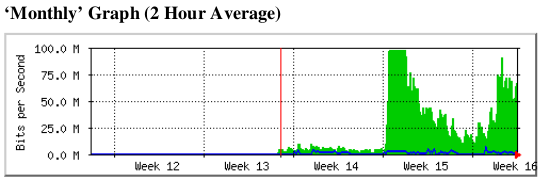
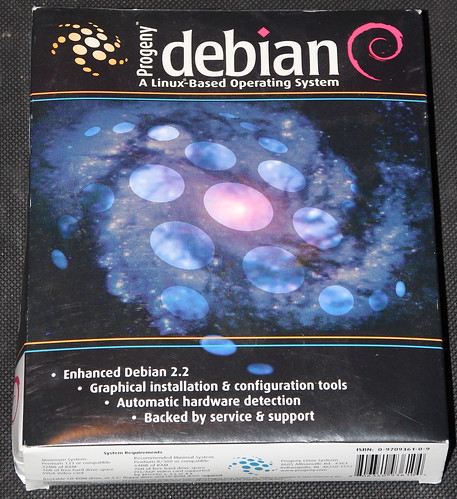
Would you like to hike a mountain? That question caught me by surprise. It was early in 2000, and I had flown to Tucson for a job interview. Ian Murdock was starting a new company, Progeny, and I was being interviewed for their first hire. Well, I thought, hiking will be fun. So we rode a bus or something to the top of the mountain and then hiked down. Our hike was full of well, everything. Ian talked about Tucson and the mountains, about his time as the Debian project leader, about his college days. I asked about the plants and such we were walking past. We talked about the plans for Progeny, my background, how I might fit in. It was part interview, part hike, part two geeks chatting. Ian had no HR telling him you can t go hiking down a mountain with a job candidate, as I m sure HR would have. And I am glad of it, because even 16 years later, that is still by far the best time I ever had at a job interview, despite the fact that it ruined the only pair of shoes I had brought along I had foolishly brought dress shoes for a, well, job interview. I guess it worked, too, because I was hired. Ian wanted to start up the company in Indianapolis, so over the next little while there was the busy work of moving myself and setting up an office. I remember those early days Ian and I went computer shopping at a local shop more than once to get the first workstations and servers for the company. Somehow he had found a deal on some office space in a high-rent office building. I still remember the puzzlement on the faces of accountants and lawyers dressed up in suits riding in the elevators with us in our shorts and sandals, or tie-die, next to them. Progeny s story was to be a complicated one. We set out to rock the world. We didn t. We didn t set out to make lasting friendships, but we often did. We set out to accomplish great things, and we did some of that, too. We experienced a full range of emotions there elation when we got hardware auto-detection working well or when our downloads looked very popular, despair when our funding didn t come through as we had hoped, being lost when our strategy had to change multiple times. And, as is the case everywhere, none of us were perfect. I still remember the excitement after we published our first release on the Internet. Our little server that could got pegged at 100Mb of outbound bandwidth (that was something for a small company in those days.) The moment must have meant something, because I still have the mrtg chart from that day on my computer, 15 years later. Progeny's Bandwidth Chart We made a good Linux distribution, an excellent Debian derivative, but commercial success did not flow from it. In the succeeding months, Ian and the company tried hard to find a strategy that would stick and make our big break. But that never happened. We had several rounds of layoffs when hoped-for funding never materialized. Ian eventually lost control of the company, and despite a few years of Itanium contract work after I left, closed for good. Looking back, Progeny was life compressed. During the good times, we had joy, sense of accomplishment, a sense of purpose at doing something well that was worth doing. I had what was my dream job back then: working on Debian as I loved to do, making the world a better place through Free Software, and getting paid to do it. And during the bad times, different people at Progeny experienced anger, cynicism, apathy, sorrow for the loss of our friends or plans, or simply a feeling to soldier on. All of the emotions, good or bad, were warranted in their own way. Bruce Byfield, one of my co-workers at Progeny, recently wrote a wonderful memoriam of Ian. He wrote, More than anything, he wanted to repeat his accomplishment with Debian, and, naturally he wondered if he could live up to his own expectations of himself. That, I think, was Ian s personal tragedy that he had succeeded early in life, and nothing else he did with his life could quite measure up to his expectations and memories. Ian was not the only one to have some guilt over Progeny. I, for years, wondered if I should have done more for the company, could have saved things by doing something more, or different. But I always came back to the conclusion I had at the time: that there was nothing I could do a terribly sad realization. In the years since, I watched Ubuntu take the mantle of easy-to-install Debian derivative. I saw them reprise some of the ideas we had, and even some of our mistakes. But by that time, Progeny was so thoroughly forgotten that I doubt they even realized they were doing it. I had long looked at our work at Progeny as a failure. Our main goal was never accomplished, our big product never sold many copies, our company eventually shuttered, our rock-the-world plan crumpled and forgotten. And by those traditional measurements, you could say it was a failure. But I have come to learn in the years since that success is a lot more that those things. Success is also about finding meaning and purpose through our work. As a programmer, success is nailing that algorithm that lets the application scale 10x more than before, or solving that difficult problem. As a manager, success is helping team members thrive, watching pieces come together on projects that no one person could ever do themselves. And as a person, success comes from learning from our experiences, and especially our mistakes. As J. Michael Straczynski wrote in a Babylon 5 episode, loosely paraphrased: Maybe this experience will be a good lesson. Too bad it was so painful, but there ain t no other kind. The thing about Progeny is this Ian built a group of people that wanted to change the world for the better. We gave it our all. And there s nothing wrong with that. Progeny did change the world. As us Progeny alumni have scattered around the country, we benefit from the lessons we learned there. And many of us were different , sort of out of place before Progeny, and there we found others that loved C compilers, bootloaders, and GPL licenses just as much as we did. We belonged, not just online but in life, and we went on to pull confidence and skill out of our experience at Progeny and use them in all sorts of ways over the years. And so did Ian. Who could have imagined the founder of Debian and Progeny would one day lead the cause of an old-guard Unix turning Open Source? I run ZFS on my Debian system today, and Ian is partly responsible for that and his time at Progeny is too. So I can remember Ian, and Progeny, as a success. And I leave you with a photo of my best memento from the time there: an original unopened boxed copy of Progeny Linux. IMG_6197_v1

3 January 2016

Niels Thykier: Tor enabled MTA

As I posted earlier, I have migrated to use tor on my machine. Though I had a couple of unsolved issues back then. One of them being my Mail Transport Agent (MTA) did not support tor. A regular user might not have a lot of use for a MTA on their laptop. However, it is needed for a lot of Debian development scripts (bts, mass-bug, nmudiff), if they are to file/manipulate bugs for you. I have some requirements for my MTA I also have some non-requirements: Originally, I used postfix, which supported most of these requirements. Except: Per suggestion of Jakub Wilk, I tried msmtp, which turned out do what I wanted. The only feature I will probably miss is having a local queue, which can be rate limited. But all in all, I am quite happy with it so far. :)
Filed under: Debian

2 January 2016

Niels Thykier: dput change-all-of-debian.changes

Lucas Nussbaum recently did a blog post called Debian is still changing . I found it a very welcome continuation of his previous blog post on the same topic. I find the graphs very interesting and was very happy to learn that he included relative graphs this time. Now I can with relatively ease say that 69% of all Debian packages are using a dh-style build (source). We have another 15% using classic debhelper, which means that at least 84% of all packages uses debhelper directly. Assuming all CDBS based packages rely on the debhelper class , we are at 99%! The latter is certainly an assumption, although I suspect it is probably pretty accurate[1]. Now, it is very cute to have world dominance , but that is not my primary interest in these numbers. Instead, we can use these numbers to determine that: Such as automatic dbgsym packages, indexable build-id from dbg(sym) packages via Packages files[2], and replacing maintscripts with ldconfig triggers. All of these changes happen to be changes that could be trivially deployed with very little risk and very high efficiency[3]. Notably, none of them required a compat bump (or a new debhelper tool). Of course, I do not intend to say that every change can (or should) be deployed via debhelper and much less into an existing dh_cmd -tool. Notably, dh_strip is reaching its breaking point for content. And if we were to require a compat bump for your change, we can now at least see the adoption rate via lintian. :) Nevertheless, it is nice to know that (politics aside) there is some agility in the Debian build system! :) [1] I would very much love to see numbers to (dis)prove my assumption about CDBS + debhelper. In fact, an absolute number of packages not using debhelper (indirectly) in Debian would be very intriguing. [2] New fields by default end up the Packages file. See e.g. the Packages.xz file on the debug mirror or your apt-cache via:
apt-cache show mscgen-dbgsym   grep ^Build-Ids
The latter assumes that you have the debug mirror in your sources list. [3] Efficiency here being features people rarely override/disable.
Filed under: Debhelper, Debian

1 January 2016

Russ Allbery: 2015 Book Reading in Review

2015 was another very busy year, but one of stabilization, rebuilding, and recovery. I got through the ramp-up period with my new job, found a better role inside the company for my personal talents and preferences, and ended the year on a professional high note. I also moved, to a place I like much better. It was a year for taking things as they come, focusing on priorities, letting other things slip, and being realistic about how much I can do. All of that, plus quite a lot of company, a business trip, and a few other unexpected distractions, meant less reading than I would have preferred. However, I did catch up completely on review writing, which is another happy sign of stabilization. Reviews came in spotty bursts, but they did come. The only explicit reading goal I'm making for 2016 is to read more than I did in 2015. I'm still working out the best priorities and schedule for me, and finding the best work/life balance points, so a predictable reading schedule will have to wait a while longer. The below statistics are confined to the books I reviewed in 2015, but thanks to significant catch-up work, I've only read one book that I have not yet reviewed (and I finished that one on December 31st). That book will be counted in 2016. Once again, the year saw two 10 out of 10 books, and once again, my favorite book of the year was written by Ann Leckie. The conclusion of the Imperial Radch trilogy, Ancillary Mercy, is as good or better than the start. The second book of the trilogy, Ancillary Sword, was also among my 2015 reviews and got 9 out of 10. I highly recommend the entire trilogy, beginning with Ancillary Justice (my book of the year in 2014), to anyone who hasn't read it. The second 10 out of 10 was non-fiction: Randall Munroe's What If? collection, featuring some material from the web site feature that accompanies xkcd and some original material. These are longer essays exploring interesting bits of science, math, and guesswork in the context of hypothetical questions that usually become surprisingly destructive. As the review says, try a few samples from the web site and see if this is your thing. I loved it. Despite my continuing low reading totals, this was a year full of fiction stand-outs. Becky Chambers's The Long Way to a Small, Angry Planet was the surprise of the year for me: a heart-warming, delightful story of chosen family. Jo Walton's My Real Children was less of a surprise because I already knew she is an excellent writer, but it was probably the best-written book I read all year. In turns sad, thoughtful, and determined, it's slice-of-life fiction so good that it overcame my normal dislike of that subject matter. Other fiction highlights are parts of series: the first two Steerswomen books by Rosemary Kirstein (The Steerswoman and The Outskirter's Secret), which dance between fantasy and scientific discovery, and Seanan McGuire's One Salt Sea, the best of all the October Daye books I've read. In non-fiction, the other book that stands out is Jenny Lawson's Let's Pretend This Never Happened. This combination of memoir and stand-up comedy in book form is one of the funniest things I've read, and it mixes that humor with self-awareness and generous openness. It's a book about being a little crazy and a lot anxious, finding ways to cope by laughing at yourself, and inviting the rest of the world to join in. Finally, Sydney Padua's The Thrilling Adventures of Lovelace and Babbage straddles the line between fiction and non-fiction, but certainly deserves a place in the year-end round-up. Full of great art, humor, steampunk, footnotes galore, and numerous forms of geekery, it's a collection I've been waiting for since Padua's very occasional comic got its moment of Internet fame. The full analysis includes some additional personal reading statistics, probably only of interest to me.

Russ Allbery: Review: One Salt Sea

Review: One Salt Sea, by Seanan McGuire
Series: October Daye #5
Publisher: DAW
Copyright: September 2011
ISBN: 1-101-54760-X
Format: Kindle
Pages: 368
This is the fifth book of the October Daye series. It's the best book of the series to date, at least in my opinion, but this is a series with a substantial cast and political complications. You could probably start here and work out things on the fly, since each story is largely self-contained, but much of the emotional resonance would be lost. As expected for this series, Toby's life doesn't have much time to stabilize after the events of Late Eclipses. This time, though, the initial threat is less personal and more political. The children of the rulers of the Duchy of Saltmist have been kidnapped, and war between Saltmist and the Kingdom of the Mists (Toby's home) is very near. All that stands in the way of horrible casualties, of fae that can scarce afford more death, is Toby's desperate detective work. Toby's confidence and belief in her own abilities has been growing steadily throughout this series. One of my favorite themes in fiction is someone who doesn't really believe in themselves but tries anyway, because they couldn't live with themselves if they didn't, and discovers they're more capable than they thought. In this series, I think that works best when Toby is less scared and more angry, which is very true in One Salt Sea. That's one reason why I liked this book better than either An Artificial Night or Late Eclipses. Another is that I love the politics and the depth of world-building and lore that McGuire brings to this series, and One Salt Sea is a showcase of both. We get the Undersea Duchy of Saltmist, which comes from both different traditions and different fae than the series so far. We get a plot that combines political maneuvering with a more traditional detective story than the last few books. We get more hidden traditions, past alliances and enmity that Toby didn't know about, and further development of Toby's own abilities. She has to tug hard on some threads, move between levels of the fae world, and draw on her network for uniquely fae forms of forensic analysis. I thoroughly enjoyed it, particularly the rocks. (You'll know what I mean when you get to that part.) But the best thing about this book, by far, is the Luidaeg. I've mentioned in reviews of previous books that the Luidaeg is my favorite character of the series. One Salt Sea just cements that. This is the deepest that the Luidaeg has been involved in a story: she gives Toby her mission at the start, substantial help along the way, and is deeply involved in the ending. We even learn some of her own background, and some of her own worries and pain. (And foreshadowing that there's more of this to come, which I'm eagerly looking forward to.) She's moved from a strange ally through a cautious friend to some combination of aunt and mother to Toby, while always staying her irascible and occasionally painful self. The bits with her in this book are the best so far, and there are a lot of them. It's a delightful reading experience. McGuire also uses this story to clear up a plot element that's been lingering since the first book of the series, but that never worked emotionally for me. (I'm talking about this indirectly since it's a significant spoiler.) It's a great resolution, one with heft and emotion and hard choices and pain, and largely makes up for the showing rather than telling that we've gotten in the previous books, while also (at least I suspect) graciously shuffling that plot out of the way in future books. It's a good bit of series work and personal growth for Toby, and I think frees the series to focus on the bits I enjoy the most. The ending of One Salt Sea hurts, but it's a good hurt, full of hard choices made well, bravery, and sacrifice. The best moments of this series have always had that, but I think this book is the most successful delivery of the whole package to date. This has always been a solid urban fantasy series, but I think it's getting better as it goes along. One major reason is that McGuire doesn't seem to be running out of world-building oomph. In a lot of urban fantasy, particularly the werewolf and vampire sort, I feel like the lore gets thinner, more rehashed, and more mundane as the series ages. But McGuire is still introducing new elements, showing existing elements from new directions and in new light, and has been slowly building major puzzles around Toby's life and abilities that intrigue me. And, even more rare, the eventual revelations usually live up to the preceding tension. It's certainly a recipe to keep me reading. Followed by Ashes of Honor. Rating: 9 out of 10

28 December 2015

Carl Chenet: Parse your rss feed and post to Twitter with feed2tweet

What s more important today for a website than relaying your new blog posts to the social networks, especially Twitter ? Lots of unmaintained or unreliable third-parties web services offer this feature. I tried and was really disappointed using them. Feed2tweet, forked from rss2twitter, now offer a self-hosted, documented, easy-to-read Python application to automatically transfer the new posts in your RSS feed to the social network Twitter. Have a look at the official documentation on Readthedocs in order to install, configure and use Feed2tweet. It is as easy as creating a Twitter app, then writing a feed2tweet.ini file with the following lines:
[twitter]
consumer_key=ml9jaiBnf3pmU9uIrKNIxAr3v
consumer_secret=8Cmljklzerkhfer4hlj3ljl2hfvc123rezrfsdctpokaelzerp
access_token=213416590-jgJnrJG5gz132nzerl5zerwi0ahmnwkfJFN9nr3j
access_token_secret=3janlPMqDKlunJ4Hnr90k2bnfk3jfnwkFjeriFZERj32Z
  • Une erreur est survenue ; le flux est probablement indisponible. Veuillez r essayer plus tard.
uri: https://www.mycoolwebsite.com/rss [hashtaglist] several_words_hashtags_list: severalwordshashtaglist.txt
Then just launch feed2tweet:
$ feed2tweet -c /path/to/feed2tweet.ini
The first version 0.1 is now available from Github. If it helps you, Github stars are appreciated :)

27 December 2015

Steve Kemp: Some things are universal?

I don't often do retrospectives, but this year has been an unusual one for me, as I moved to Finland almost six months ago. The topic has come up in conversation a lot over the past few months, so when people ask me what I think I can give some simple answers without too much thought. Here's a brief summary. There are some obvious changes:

The Traffic
The traffic drives on the right-hand side of the roads, which took a bit of getting used to, but isn't a huge surprise as I've travelled in Europe in the past. There aren't so many countries that drive on the left after all so most people probably wouldn't even notice this as odd. When it comes to traffic one thing nice about Helsinki is that most junctions are "zebra crossings". Sure they don't have flashing lights, but they have shaded areas, and pedestrians have right of way. As for transport the city of Helsinki has local trains, trams, buses and taxis. The trams and buses all use the same card for payment so transport is integrated very well. I buy a time-based card, spending about 50 for a month of unlimited travel. If you prefer you may add euros to your card and pay for distinct journeys - but that works out more expensive if you travel twice, or more, a day.
The Money
Finland uses the Euro these days, having switched from the Finnish markka in 2002. Enough said. Costs are largely in line with what I'd expect: Cigarettes are cheap, beer is expensive. Some things are very expensive, some things are very cheap. Largely the expensive things are those that are imported. It is a very small country after all.
The Language
Finnish is .. complex. But I've not struggled too much. Mostly I can buy what I want without difficulty. There are weird exceptions though for example I went out to buy soup one day and had to return carrying only shame and disappointment: I can't read the language on the tins and what I thought was soup turned out to be a can of chopped tomatoes. Food is good though, and available easily (!!). The only significant surprise when it comes to shopping is that loose goods must be weighed yourself. You pick up a bunch of bananas, take it to the scales, press the button that has a picture of a banana on it, and it prints out a label you attach to them - at the till the cashier will scan the label and charge you. If you forget, or don't know how to do it they'll tut and complain. In daily life I use two phrases frequently and they are sufficient for communcation:
  • "minua haluan ... kahvi kakku olut"
    • "I want ... coffee cake beer".
  • "kiitos"
    • "Thanks"
Usually people speak to me in English, which is a little annoying as it means I'm not learning as much as I could. But that said over the past few months I've had proper conversations entirely in Finnish with shop-keepers, and similar. So I'm getting better.
The Culture
Finnish people are friendly, but terse. That's the reputation. The Finnish people are alcoholics, and have high rates of suicide. Also the reputation. Finally we know that the Finnish people consume more coffee than the rest of the world. All those things are true, but they're not enough by far to describe the people. Obviously they're all different, and we have a lot of people from other parts of the world here too - Russians, Asians, Somalians. So culture is complex .. but markedly different than in the UK. I could write more about this, but I think for the moment I'll just draw a line under culture and say that I'm enjoying the interactions with people here, and while many things are slightly "off", it's not bad. Just different. Also saunas are fun. I've never had any qualms about being naked with strangers, so I don't really understand why Americans, and others, find this so difficult/surprising. But yeah, saunas are great. Things that Finland is known for internationally: The invention of the molotov cocktail, rally-driving, hockey, world's strongest man, Moomins, Tom of Finland, Salmiakki.
The Weather
Not too hot. Not too cold. But that's largely because I'm one of those "hot" people who doesn't really get cold even at the best of times. My ideal temperatures are about 13 C. My wife prefers 15 C, or more. We don't fight any more. Mostly. Winter is apparently full of snow, but this year has been poor. We had the first snowfall yesterday, here in Helsinki, and we woke this morning a blanket of snow about two inches high. It looks pretty. The biggest thing about weather in Finland is the constant darkness in winter, and the constant sun in Summer. In Summer there were like 22 hours of sunlight a day which made sleeping hard when we moved into our flat - with no curtains. In winter it feels like there is 20 minutes of sunlight a day. It's not that bad here in the south, although I think it is something like five hours and less in the north. I've never had any real issues with depression, or similar: People have good days and bad days, I'd generally be "OK" or "great". In the darkness? I've been grumpy at colleagues, I've made bad choices, I've lapsed attention. I'm not sure I can blame it on the weather, or my reaction to the weather, but I know I've not been as "happy" as I "should". It requires effort to be enthusiastic in a way I've never experienced before. Thankfully once I (slowly) realized this I took action and I think I'm good now. Unlike the UK the buildings here are relatively modern. I think that's the biggest contributing factor to how houses are "warm". Houses have all been built in the last 50-100 years, so you have proper insulation. Even though it might be very very cold outdoors indoors you can be naked without heating. Try that in the UK and you might freeze in some of the older leakier houses! You do have to laugh, though, when people point out "the oldest pub" in the city though. Where I come from if I pub isn't 500+ years old you wouldn't give it a seconds thought - places like The Golden Fleece, etc.
I could write more. I probably should. But it has been an interesting year, and although there are things I miss about the UK, and Edinburgh specifically, I have no regrets. I'm glad I came. What triggered this post? I said "Some things are universal" to my wife, when I saw a child riding a bicycle they'd obviously just received for Christmas. Her reaction "No Finnish person would buy a bicycle at Christmas - they'd expect too much snow!". So perhaps it was another immigrant family. Christmas bicycles universal, or not, it doesn't really matter.

Russ Allbery: Review: The Outskirter's Secret

Review: The Outskirter's Secret, by Rosemary Kirstein
Series: Steerswomen #2
Publisher: Del Rey
Copyright: 1992, 2001
Printing: 2001
ISBN: 0-345-46105-3
Format: Trade paperback
Pages: 389
This is a direct sequel to The Steerswoman, and I don't recommend starting here. I read this novel as part of The Steerswoman's Road omnibus, which is the edition reflected in the metadata (except for the page count, which is just this novel). There are a few plot constructs that occur depressingly often in SFF and almost always annoy me. One is books where nearly all of the book is just a journey from one place to another, without much interesting landscape along the way. Subtract additional points if the land is hostile and there are constant worries about food. Another is illness, or being unable to trust one's senses, or, worse, both. Somehow, this book manages to do both of those things and was still thoroughly enjoyable. This is exceptionally rare. After the conclusions reached in the previous book, Rowan and Bel are even more determined to reach the origin of the jewels on Bel's belt and gather more information. This means travel into the Outskirts, where Rowan has never been (and where people from the Inner Land almost never go). It also means close contact with Bel's people, who have an entirely different set of social rituals and who are notoriously prickly. Nearly all of The Outskirter's Secret is travel through the Outskirts while navigating Outskirter society, politics, and customs. It's anthropological fiction of a sort, particularly given the inquisitive and analytical mindset that Rowan brings to anything new. Anthropological SFF is another one of those things that normally leaves me cold, but which totally worked for me in this book. I rarely remember being this engaged in, or caring this much about, the customs and traditions of an invented and relatively primitive culture. Partly this is because Rowan's mindset continues to be fascinating and contagious. I kind of want to compare this series to Neal Stephenson's Anathem, but where Stephenson's novel was about the practice of organized science, the Steerswomen series is about the individual scholar and scientist. This could go badly in the hands of a lesser author, but Kirstein brilliantly balances analysis and theories with Rowan's child-like wonder in learning, peculiar and determined ethics, and emotional growth. She isn't a disinterested observer or an engineer with a wrench. She lets the world change her, works hard at finding her place and her own strength, and engages with it emotionally as much as she does intellectually. She's a wonderfully compelling character. Another significant factor to this book's success is the slow and deliberate way Kirstein mixes world-building revelations with the day-to-day struggles of the characters. There's much more to that than just the target of Rowan's investigations, and far more complexity and significance to the Outskirters than showed in first appearances. The world is also set up in a way that lets the readers guess various details before the characters, with their more limited knowledge, can work out: another tricky technique that Kirstein gets almost perfect. I never wanted to shake the characters for being dumb; usually, both Rowan and Bel leap to correct conclusions just shortly after the reader, and long before the reader is tired of following their thought processes. There was only one bit of world-building that took Rowan most of the book to figure out despite being obvious to me early in this novel, and I think that one was fair. She didn't have anywhere near enough information to work it out. Bel continues to be wonderful in numerous ways. But even better, Kirstein introduces us to Bel's people and highlights both similarities and differences. It's an excellent job of building a complex culture that feels human: varied, tradition-laden, practical, but also well-adapted to their environment and situation, and far more sophisticated than they might appear. I'm normally a hard sell for this sort of thing, but Kirstein got me thoroughly invested. One scene late in this novel where a tribe welcomes a newcomer is masterful and probably my favorite single moment of the series so far. Once again, unfortunately, the conclusion is a bit less than satisfying. The characters come away knowing more, planning more, but still with numerous unanswered questions. This is not a series that's in a hurry to get to major plot payoffs. Instead, it's a series that takes a close look at the cultures, relationships, emotions, and lives that it touches, and describes them in deft and engaging ways. The Outskirter's Secret is even better than The Steerswoman. Recommended. I bought the third and fourth books while only a little ways into this one and am eager to read them. Followed by The Lost Steersman. Rating: 9 out of 10

26 December 2015

Norbert Preining: Debian/TeX Live 2015.20151226-1

Before I disappear into the Japanese winter holidays, here the Christmas update of all TeX Live packages. Nothing spectacular here, just the usual bunch of updates of loads of packages. There is a bug with respect to a file move from one package to another, will be fixed in an upload soon. Debian - TeX Live 2015 Updated packages apnum, appendix, archaeologie, babel, babel-french, babel-greek, babel-hungarian, bangorcsthesis, beamer-verona, bhcexam, bibarts, bidi, bxjscls, chemfig, commado, comprehensive, context, cslatex, csplain, ctanify, doclicense, dvips, ejpecp, exsheets, fbb, fibeamer, fithesis, fontools, francais-bst, gitinfo2, glossaries, gnuplottex, greek-fontenc, hyph-utf8, indextools, ksp-thesis, l3build, l3experimental, l3kernel, l3packages, latexcourse-rug, lollipop, lstbayes, lualibs, luaotfload, luatexja, luatexko, luatodonotes, make4ht, mcf2graph, media9, mex, mfirstuc, mhchem, mptopdf, nameauth, nevelok, newtx, nicetext, nucleardata, ocgx2, pageslts, petri-nets, phonrule, pkuthss, powerdot, proofread, proposal, pst-labo, pst-solides3d, reledmac, sapthesis, serbian-lig, showlabels, t2, tcolorbox, tempora, testhyphens, tetex, tex4ebook, tex4ht, texlive-scripts, texsis, thuthesis, toptesi, tudscr, ucharcat, versonotes, xcharter, xepersian, xifthen, xindy, xint. New packages beamertheme-detlevcm, beamertheme-metropolis, beamertheme-phnompenh, beamer-verona, bitpattern, carbohydrates, delimseasy, drawmatrix, einfuehrung2, ellipse, ffslides, gitlog, greektonoi, ksp-thesis, longfbox, options, simpler-wick, unicode-data. Enjoy.
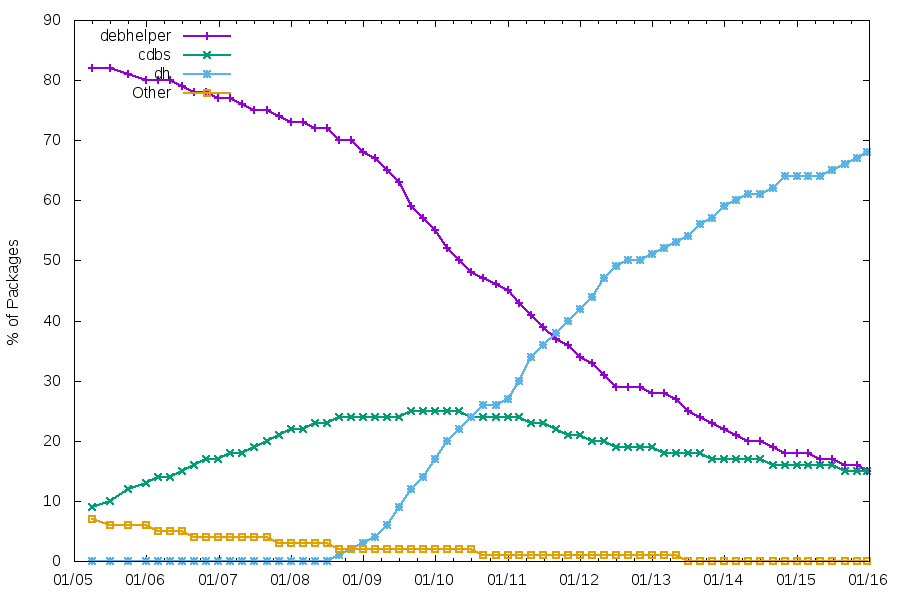
Russ Allbery: Review: The Steerswoman

Review: The Steerswoman, by Rosemary Kirstein
Series: Steerswomen #1
Publisher: Del Rey
Copyright: 1989, 2003
Printing: 2003
ISBN: 0-345-46105-3
Format: Trade paperback
Pages: 264
I read this novel as part of The Steerswoman's Road omnibus, which is the edition reflected in the metadata (except for the page count, which is just this novel). Rowan is a steerswoman, a member of an order of traveling scholars in a world of generally medieval customs. This is a world of small villages and town blacksmiths, of swords, sailing ships, and lots of walking. Steerswomen (the order does include some men, but only rarely; the gender balance is left delightfully unexplained and unremarked) mostly travel routes through the Inner Lands until they decide to retire and do research and study. Sometimes, though, they get on the trail of something unexplained, and are driven to explain it. That's the case for Rowan at the start of this book: she's run across several peculiar flat jewels. No one seems to know what they are, their pattern of distribution is odd, and they're discovered in some decidedly strange places, such as embedded deep in a tree. It's a puzzle, and Rowan is determined to understand it. The Steerswoman opens with Rowan investigating a jewel owned by an innkeeper, and a chance meeting in his inn with an Outskirter who wears a whole belt of the same jewels. The Outskirters are nomadic tribes from the far west known for their prickly attitude, their ability in warfare, and their occasional raids. Those who live in the Inner Lands consider them barbarians. But Bel is curious, thoughtful, and happy to tell Rowan of the origin of her belt: her father found a huge number of the jewels embedded in the side of a cliff, far into the Outskirts. Rowan is immediately tempted to go there, but she has to report to the Archives first. Much to her surprise, Bel asks to accompany her. And then wizards start trying to kill them. The steerswomen are Kirstein's best bit of world-building and the anchor around which the rest of the story is told. Steerswomen have to answer all questions they're asked, truthfully. In return, they can ask a question of anyone and have to be answered truthfully. If anyone refuses to answer, or tells a deliberate lie, they're placed under the steerswomen's ban, and no steerswoman will answer their questions. This is woven deep into the culture of the Inner Lands... except for the wizards, who refuse to explain what they're doing or how to anyone, are under the ban, and don't care. They protect cities from dragons, build magical lighting, and occasionally start wars with other wizards in which numerous people die. They're effectively the rulers of this world insofar as it has rulers, and they're apparently quite interested in Rowan's search for these unexplained jewels. Rowan is a wonderful character. At the start of the book, she's the only steerswoman that the reader knows, so much of her early behavior is also world-building, showing us steerswomen. But as the story develops, we meet other steerswomen and Rowan develops into her own character: innocent in a way, but determined, ethical, and with a very deep store of self-knowledge and inner contemplation. I found the middle part of the book somewhat frustrating for the same reasons Rowan did. The ending lets her shine, in her own way, and it's deeply satisfying. The Steerswoman does pick up a third character along the way, a young boy named Will who hopes to become a wizard's apprentice, and to whom I never warmed. Part of the problem was structural: he's very suspicious of characters that the reader knows are entirely honorable. This is a difficult tone to pull off without irritating me, and Kirstein doesn't quite manage. She also shifts the story to the Will's perspective from time to time, and I never found his viewpoint very interesting. I warmed to him a bit by the climax, but I still don't think he added much to the story. Bel, though... Bel competes with Rowan as best character of this book. The other characters all have roles to play: Rowan is the steerswoman, integral to the world-building, and Will exemplifies another corner of the analytical process so central to this book and represents the appeal of the wizards. But Bel is just herself: irreverent, curious, loyal, dangerous, decisive, and adventurous. Rowan is the heart of the book and the primary protagonist, but I think Bel is its soul. I haven't said too much about the themes of this book, intentionally. Kirstein is doing something very interesting and subtle with the reader's expectations of a medieval world with wizards, and I think it's better experienced without spoilers. But it's also a character-driven story, a story of unlikely friendship between two very different women, and a story about the value of being true to yourself even when it's exceptionally dangerous. Rowan delighted me immediately, Bel grew on me over the course of the story, and the rough patches in the middle of the book faded in comparison to an excellent ending. Unfortunately, this is only part of a story. There is a climax, and we do know what the jewels are by the end of the book. But the journey has raised many more questions, most of which are not solved. The world has become far more complicated. Rowan has a lot left to learn and investigate. I recommend the omnibus, or getting the ebooks from Amazon where you can quickly get more, because you'll probably want to immediately start the second book. Followed by The Outskirter's Secret. Rating: 8 out of 10

Next.

Previous.