Search Results: "ana"

1 January 2021

Dmitry Shachnev: A review of endianness bugs in Qt, and how they were fixed

As you may know, I am Qt 5 maintainer in Debian. Maintaning Qt means not only bumping the version each time a new version is released, but also making sure Qt builds successfully on all architectures that are supported in Debian (and for some submodules, the automatic tests pass). An important sort of build failures are endianness specific failures. Most widely used architectures (x86_64, aarch64) are little endian. However, Debian officially supports one big endian architecture (s390x), and unofficially a few more ports are provided, such as ppc64 and sparc64. Unfortunately, Qt upstream does not have any big endian machine in their CI system, so endianness issues get noticed only when the packages fail to build on our build daemons. In the last years I have discovered and fixed some such issues in various parts of Qt, so I decided to write a post to illustrate how to write really cross-platform C/C++ code. Issue 1: the WebP image format handler (code review) The relevant code snippet is:
if (srcImage.format() != QImage::Format_ARGB32)
    srcImage = srcImage.convertToFormat(QImage::Format_ARGB32);
// ...
if (!WebPPictureImportBGRA(&picture, srcImage.bits(), srcImage.bytesPerLine()))  
    // ...
 
The code here is serializing the images into QImage::Format_ARGB32 format, and then passing the bytes into WebP s import function. With this format, the image is stored using a 32-bit ARGB format (0xAARRGGBB). This means that the bytes will be 0xBB, 0xGG, 0xRR, 0xAA or little endian and 0xAA, 0xRR, 0xGG, 0xBB on big endian. However, WebPPictureImportBGRA expects the first format on all architectures. The fix was to use QImage::Format_RGBA8888. As the QImage documentation says, with this format the order of the colors is the same on any architecture if read as bytes 0xRR, 0xGG, 0xBB, 0xAA. Issue 2: qimage_converter_map structure (code review) The code seems to already support big endian. But maybe you can spot the error?
#if Q_BYTE_ORDER == Q_LITTLE_ENDIAN
        0,
        convert_ARGB_to_ARGB_PM,
#else
        0,
        0
#endif
It is the missing comma! It is present in the little endian block, but not in the big endian one. This was fixed trivially. Issue 3: QHandle, part of Qt 3D module (code review) QHandle class uses a union that is declared as follows:
struct Data  
    quint32 m_index : IndexBits;
    quint32 m_counter : CounterBits;
    quint32 m_unused : 2;
 ;
union  
    Data d;
    quint32 m_handle;
 ;
The sizes are declared such as IndexBits + CounterBits + 2 is always equal to 32 (four bytes). Then we have a constructor that sets the values of Data struct:
QHandle(quint32 i, quint32 count)
 
    d.m_index = i;
    d.m_counter = count;
    d.m_unused = 0;
 
The value of m_handle will be different depending on endianness! So the test that was expecting a particular value with given constructor arguments was failing. I fixed it by using the following macro:
#if Q_BYTE_ORDER == Q_BIG_ENDIAN
#define GET_EXPECTED_HANDLE(qHandle) ((qHandle.index() << (qHandle.CounterBits + 2)) + (qHandle.counter() << 2))
#else /* Q_LITTLE_ENDIAN */
#define GET_EXPECTED_HANDLE(qHandle) (qHandle.index() + (qHandle.counter() << qHandle.IndexBits))
#endif
Issue 4: QML compiler (code review) The QML compiler used a helper class named LEUInt32 (based on QLEInteger) that always stored the numbers in little endian internally. This class can be safely mixed with native quint32 on little endian systems, but not on big endian. Usually the compiler would warn about type mismatch, but here the code used reinterpret_cast, such as:
quint32 *objectTable = reinterpret_cast<quint32*>(data + qmlUnit->offsetToObjects);
So this was not noticed on build time, but the compiler was crashing. The fix was trivial again, replacing quint32 with QLEUInt32. Issue 5: QModbusPdu, part of Qt Serial Bus module (code review) The code snippet is simple:
QModbusPdu::FunctionCode code = QModbusPdu::Invalid;
if (stream.readRawData((char *) (&code), sizeof(quint8)) != sizeof(quint8))
    return stream;
QModbusPdu::FunctionCode is an enum, so code is a multi-byte value (even if only one byte is significant). However, (char *) (&code) returns a pointer to the first byte of it. It is the needed byte on little endian systems, but it is the wrong byte on big endian ones! The correct fix was using a temporary one-byte variable:
quint8 codeByte = 0;
if (stream.readRawData((char *) (&codeByte), sizeof(quint8)) != sizeof(quint8))
    return stream;
QModbusPdu::FunctionCode code = (QModbusPdu::FunctionCode) codeByte;
Issue 6: qt_is_ascii (code review) This function, as the name says, checks whether a string is ASCII. It does that by splitting the string into 4-byte chunks:
while (ptr + 4 <= end)  
    quint32 data = qFromUnaligned<quint32>(ptr);
    if (data &= 0x80808080U)  
        uint idx = qCountTrailingZeroBits(data);
        ptr += idx / 8;
        return false;
     
    ptr += 4;
 
idx / 8 is the number of trailing zero bytes. However, the bytes which are trailing on little endian are actually leading on big endian! So we can use qCountLeadingZeroBits there. Issue 7: the bundled copy of tinycbor (upstream pull request) Similar to issue 5, the code was reading into the wrong byte:
if (bytesNeeded <= 2)  
    read_bytes_unchecked(it, &it->extra, 1, bytesNeeded);
    if (bytesNeeded == 2)
        it->extra = cbor_ntohs(it->extra);
 
extra has type uint16_t, so it has two bytes. When we need only one byte, we read into the wrong byte, so the resulting number is 256 times higher on big endian than it should be. Adding a temporary one-byte variable fixed it. Issue 8: perfparser, part of Qt Creator (code review) Here it is not trivial to find the issue just looking at the code:
qint32 dataStreamVersion = qToLittleEndian(QDataStream::Qt_DefaultCompiledVersion);
However the linker was producing an error:
undefined reference to QDataStream::Version qbswap(QDataStream::Version)'
On little endian systems, qToLittleEndian is a no-op, but on big endian systems, it is a template function defined for some known types. But it turns out we need to explicitly convert enum values to a simple type, so the fix was passing qint32(QDataStream::Qt_DefaultCompiledVersion) to that function. Issue 9: Qt Personal Information Management (code review) The code in test was trying to represent a number as a sequence of bytes, using reinterpret_cast:
static inline QContactId makeId(const QString &managerName, uint id)
 
    return QContactId(QStringLiteral("qtcontacts:basic%1:").arg(managerName), QByteArray(reinterpret_cast<const char *>(&id), sizeof(uint)));
 
The order of bytes will be different on little endian and big endian systems! The fix was adding this line to the beginning of the function:
id = qToLittleEndian(id);
This will cause the bytes to be reversed on big endian systems. What remains unfixed There are still some bugs, which require deeper investigation, for example: P.S. We are looking for new people to help with maintaining Qt 6. Join our team if you want to do some fun work like described above!

Russ Allbery: Review: A Wizard's Guide to Defensive Baking

Review: A Wizard's Guide to Defensive Baking, by T. Kingfisher
Publisher: Red Wombat Studio
Copyright: July 2020
ASIN: B08CJ86Y1W
Format: Kindle
Pages: 287
Mona is fourteen, an orphan, and works in the bakery owned by her Aunt Tabitha. She's also a magicker, although a very minor one. She can tell bread to do things, like bake properly or slice itself, and can make gingerbread men dance. Also, there's Bob, her sourdough starter, into whom she put a bit too much panicked magic when she was ten. Her magic is a useful small talent for a baker, but nothing all that exceptional. The dead body she finds in the kitchen when opening the bakery is certainly exceptional. A Wizard's Guide to Defensive Baking starts as a minor murder mystery. There are constables and sweet buns and Mona is accused of murder by an officious inquisitor, which was rather terrifying, but everything seems like it will work out and get back to normal. Except it won't, because someone is murdering magickers and the authorities who are supposed to be helping Mona don't appear to be on her side. This is a very Ursula Vernon sort of book. (T. Kingfisher is the pseudonym that Vernon uses when not writing children's books.) The protagonist is brave, scared, and stubborn, the first-person narration has a stream-of-consciousness feel and an undercurrent of constant curiosity, and the story has a strong "this is awful but moping about it won't help so we may as well get on with it" energy. It is (as you might guess from the age of the protagonist) pitched a bit younger than Vernon's other recent Kingfisher work. If I had to classify it, I'd call it young adult possibly edging into middle grade. It's also a book about creative use of magic powers. If you're the sort of person who liked analyzing an apparently unimpressive superpower and thinking up all the creative ways in which it could be quite powerful, well, that's a lot of the plot here. Vernon sticks to the rules of the game: Mona can only affect bread and dough and maybe icing in tiny ways if she tries very hard (but it gives her a headache). But there are a lot of creative ways that one can use dough and cookies, particularly once you get some help. The other interesting and unusual thing about this book is its attitude towards authorities and heroism. Authorities who try to do good and authorities who are evil and corrupt are both common in fantasy. Authorities who let themselves get caught up in a tangle of small decisions and minor fears until they become ineffective are not quite as common, and usually fantasy dispenses with that sort of power by calling it weak and inviting the heroes to take over. This book does not go in that direction at all. It's startling and thought-provoking to see a fantasy novel treat Mona's elevation into unwanted heroism as an indefensible societal failure that is not excused by gratitude. This more than any other story element made this feel like a 2020 book. I won't spoil the ending, but it caught me by surprise, was extremely moving, and further broadens that questioning of what heroism is and why we celebrate it. This is not a book full of complex plotting or moral ambiguity. The villain is awful, the threat he provokes is rather thoroughly dehumanized, and the plot is a reasonably straightforward sequence of events. One reads this book for Mona's flustered first-person voice, Vernon's humor and no-nonsense morality, and the creative exploration of the limits of what one can do with bread magic and a seriously irritated sourdough starter. And the thoughtfulness about heroism, and the recognition that heroism comes with an impact that the rest of society doesn't want to think about. To be clear, that thoughtfulness doesn't go beyond questioning here. This is still a heroism book. But it made me want to read the fantasy novel in which people work collectively to remake a society so that it won't need to have heroes again. I think whether you like Vernon's previous Kingfisher books, particularly the more young adult ones, will strongly predict whether you like A Wizard's Guide to Defensive Baking. If you like her protagonists, recommended. Rating: 7 out of 10

Keith Packard: kgames

Reviving Very Old X Code I've taken the week between Christmas and New Year's off this year. I didn't really have anything serious planned, just taking a break from the usual routine. As often happens, I got sucked into doing a project when I received this simple bug report Debian Bug #974011
I have been researching old terminal and X games recently, and realized
that much of the code from 'xmille' originated from the terminal game
'mille', which is part of bsdgames.
...
[The copyright and license information] has been stripped out of all
code in the xmille distribution.  Also, none of the included materials
give credit to the original author, Ken Arnold.
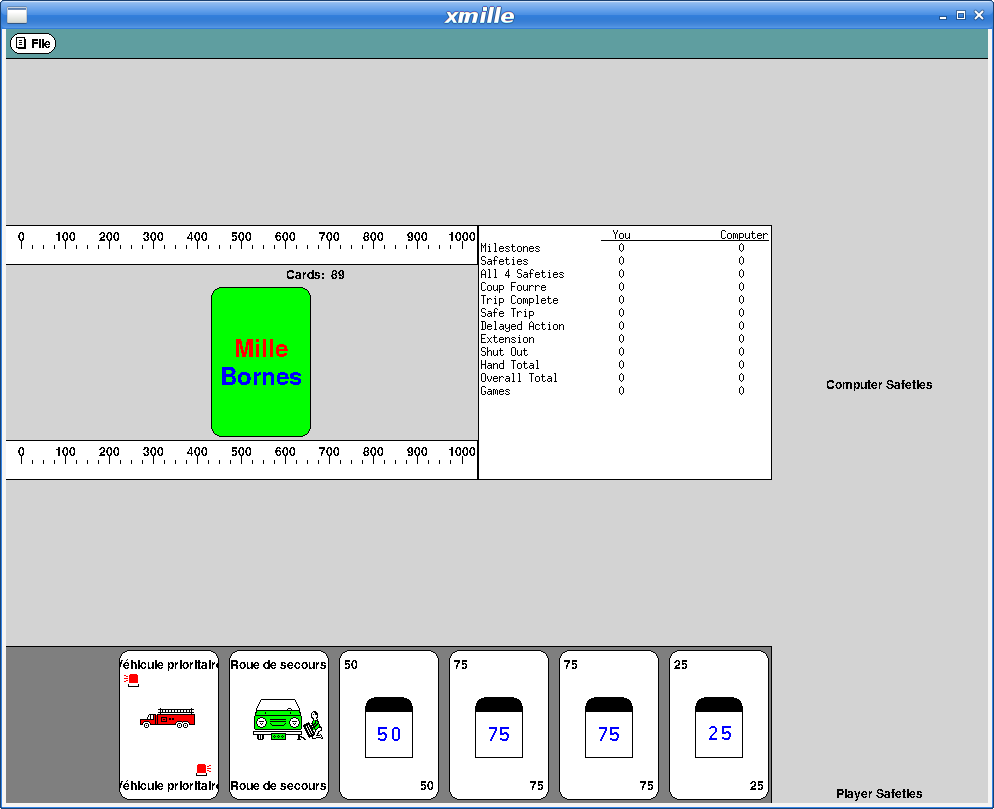
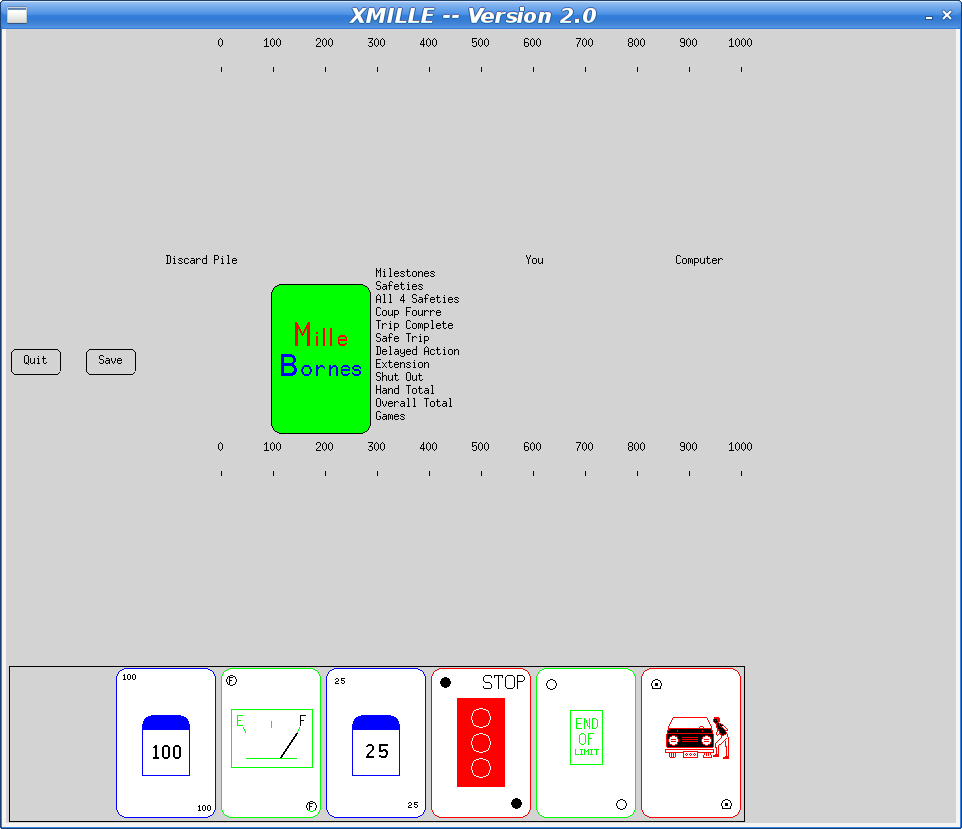
The reason the 'xmille' source is missing copyright and license information from the 'mille' files is that they were copied in before that information was added upstream. Xmille forked from Mille around 1987 or so. I wrote the UI parts for the system I had at the time, which was running X10R4. A very basic port to X11 was done at some point, and that's what Debian has in the archive today. At some point in the 90s, I ported Xmille to the Athena widget set, including several custom widgets in an Xaw extension library, Xkw. It's a lot better than the version in Debian, including displaying the cards correctly (the Debian version has some pretty bad color issues). Here's what the current Debian version looks like: Fixing The Bug To fix the missing copyright and license information, I imported the mille source code into the "latest" Xaw-based version. The updated mille code had a number of bug fixes and improvements, along with the copyright information. That should have been sufficient to resolve the issue and I could have constructed a suitable source package from whatever bits were needed and and uploaded that as a replacement 'xmille' package. However, at some later point, I had actually merged xmille into a larger package, 'kgames', which also included a number of other games, including Reversi, Dominoes, Cribbage and ten Solitaire/Patience variants. (as an aside, those last ten games formed the basis for my Patience Palm Pilot application, which seems to have inspired an Android App of the same name...) So began my yak shaving holiday. Building Kgames in 2020 Ok, so getting this old source code running should be easy, right? It's just a bunch of C code designed in the 80s and 90s to work on VAXen and their kin. How hard could it be?
  1. Everything was a 32-bit computer back then; pointers and ints were both 32 bits, so you could cast them with wild abandon and cause no problems. Today, testing revealed segfaults in some corners of the code.
  2. It's K&R C code. Remember that the first version of ANSI-C didn't come out until 1989, and it was years later that we could reliably expect to find an ANSI compiler with a random Unix box.
  3. It's X11 code. Fortunately (?), X11 hasn't changed since these applications were written, so at least that part still works just fine. Imagine trying to build Windows or Mac OS code from the early 90's on a modern OS...
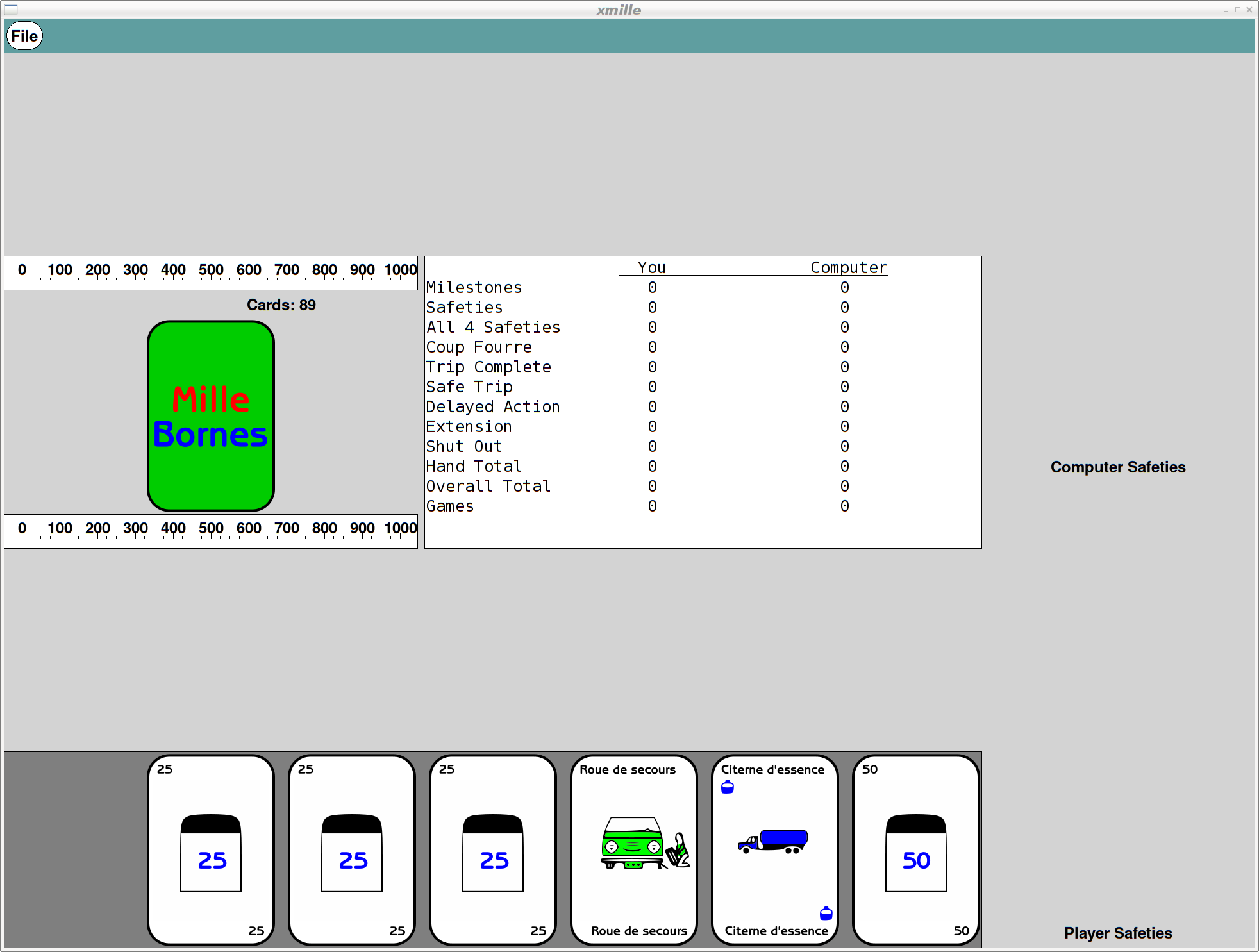
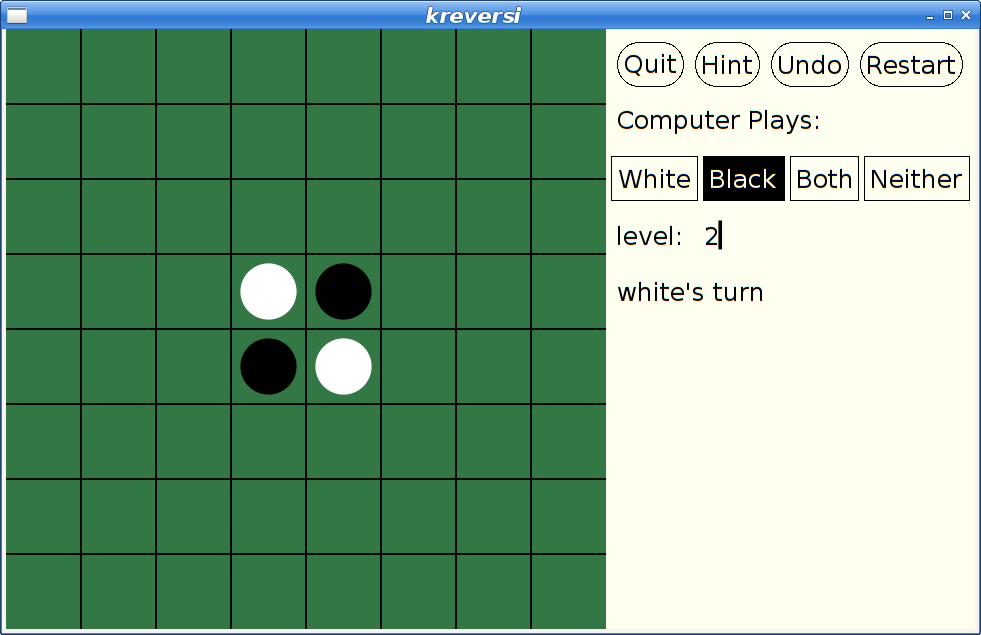
I decided to dig in and add prototypes everywhere; that found a lot of pointer/int casting issues, as well as several lurking bugs where the code was just plain broken. After a day or so, I had things building and running and was no longer hitting crashes. Kgames 1.0 uploaded to Debian New Queue With that done, I decided I could at least upload the working bits to the Debian archive and close the bug reported above. kgames 1.0-2 may eventually get into unstable, presumably once the Debian FTP team realizes just how important fixing this bug is. Or something. Here's what xmille looks like in this version: And here's my favorite solitaire variant too: But They Look So Old Yeah, Xaw applications have a rustic appearance which may appeal to some, but for people with higher resolution monitors and well seasoned eyesight, squinting at the tiny images and text makes it difficult to enjoy these games today. How hard could it be to update them to use larger cards and scalable fonts? Xkw version 2.0 I decided to dig in and start hacking the code, starting by adding new widgets to the Xkw library that used cairo for drawing instead of core X calls. Fortunately, the needs of the games were pretty limited, so I only needed to implement a handful of widgets: The other Xkw widgets all got their rendering switched to using cairo, plus using double buffering to make updates look better. SVG Playing Cards Looking on wikimedia, I found a page referencing a large number of playing cards in SVG form That led me to Adrian Kennard's playing card web site that let me customize and download a deck of cards, licensed using the CC0 Public Domain license. With these cards, I set about rewriting the Xkw playing card widget, stripping out three different versions of bitmap playing cards and replacing them with just these new SVG versions. SVG Xmille Cards Ok, so getting regular playing cards was good, but the original goal was to update Xmille, and that has cards hand drawn by me. I could just use those images, import them into cairo and let it scale them to suit on the screen. I decided to experiment with inkscape's bitmap tracing code to see what it could do with them. First, I had to get them into a format that inkscape could parse. That turned out to be a bit tricky; the original format is as a set of X bitmap layers; each layer painting a single color. I ended up hacking the Xmille source code to generate the images using X, then fetching them with XGetImage and walking them to construct XPM format files which could then be fed into the portable bitmap tools to create PNG files that inkscape could handle. The resulting images have a certain charm: I did replace the text in the images to make it readable, otherwise these are untouched from what inkscape generated. The Results Remember that all of these are applications built using the venerable X toolkit; there are still some non-antialiased graphics visible as the shaped buttons use the X Shape extension. But, all rendering is now done with cairo, so it's all anti-aliased and all scalable. Here's what Xmille looks like after the upgrades: And here's spider: Once kgames 1.0 reaches Debian unstable, I'll upload these new versions.

31 December 2020

Chris Lamb: Free software activities in December 2020

Here is my monthly update covering what I have been doing in the free software world during December 2020 (previous month):

Reproducible Builds One of the original promises of open source software is that distributed peer review and transparency of process results in enhanced end-user security. However, whilst anyone may inspect the source code of free and open source software for malicious flaws, almost all software today is distributed as pre-compiled binaries. This allows nefarious third-parties to compromise systems by injecting malicious code into ostensibly secure software during the various compilation and distribution processes. The motivation behind the Reproducible Builds effort is to ensure no flaws have been introduced during this compilation process by promising identical results are always generated from a given source, thus allowing multiple third-parties to come to a consensus on whether a build was compromised. This month, I: I also made the following changes to diffoscope, our in-depth and content-aware diff utility that can locate and diagnose reproducibility issues, including releasing version 163:

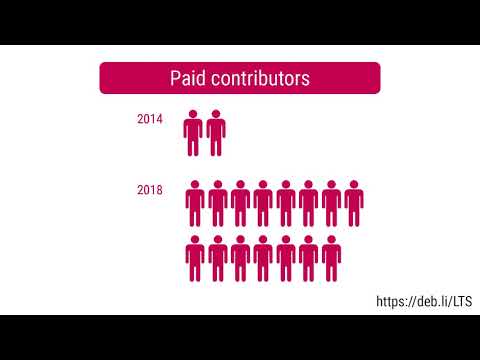
Debian Uploads I also sponsored an upload of adminer (4.7.8-2) on behalf of Alexandre Rossi and performed two QA uploads of sendfile (2.1b.20080616-7 and 2.1b.20080616-8) to make the build the build reproducible (#776938) and to fix a number of other unrelated issues. Debian LTS This month I have worked 18 hours on Debian Long Term Support (LTS) and 12 hours on its sister Extended LTS project. You can find out more about the Debian LTS project via the following video:

Daniel Kahn Gillmor: New OpenPGP certificate for dkg, 2021

dkg's 2021 OpenPGP transition As 2021 begins, I'm changing to a new OpenPGP certificate. I did a similar transition two years ago, and a fair amount has changed since then. You might know my old OpenPGP certificate as:
pub   ed25519 2019-01-19 [C] [expires: 2021-01-18]
      C4BC2DDB38CCE96485EBE9C2F20691179038E5C6
uid          Daniel Kahn Gillmor <dkg@fifthhorseman.net>
uid          Daniel Kahn Gillmor <dkg@debian.org>
My new OpenPGP certificate is:
pub   ed25519 2020-12-27 [C] [expires: 2023-12-24]
      C29F8A0C01F35E34D816AA5CE092EB3A5CA10DBA
uid           [ unknown] Daniel Kahn Gillmor
uid           [ unknown] <dkg@debian.org>
uid           [ unknown] <dkg@fifthhorseman.net>
You can find a signed transition statement if you're into that sort of thing. If you're interested in the rationale for why I'm making this transition, read on.

Dangers of Offline Primary Secret Keys There are several reasons for transitioning, but one i simply couldn't argue with was my own technical failure. I put the primary secret key into offline storage some time ago for "safety", and used ext4's filesystem-level encryption layered on top of dm-crypt for additional security. But either the tools changed out from under me, or there were failures on the storage medium, or I've failed to remember my passphrase correctly, because I am unable to regain access to the cleartext of the secret key. In particular, I find myself unable to use e4crypt add_key with the passphrase I know to get a usable working directory. I confess I still find e4crypt pretty difficult to use and I don't use it often, so the problem may entirely be user error (either now, or two years ago when I did the initial setup). Anyway, lesson learned: don't use cryptosystems that you're not comfortable with to encrypt data that you care about recovering. This is a lesson I'm pretty sure I've learned before, sigh, but it's a good reminder.

Split User IDs I'm trying to split out my User IDs again -- this way if you know me by e-mail address, you don't have to think/worry about certifying my name, and if you know me by name, you don't have to think/worry about certifying my e-mail address. I think that's simpler and more sensible. It's also nice because e-mail address-only User IDs can be used effectively in contexts like Autocrypt, which I think are increasingly important if we want to have usable encrypted e-mail. Last time around I initially tried split User IDs but rolled them back and I think most of the bugs I discovered then have been fixed.

Certificate Flooding Another reason for making a transition to a new certificate is that my older certificate is one of the ones that was "flooded" on the SKS keyserver network last year, which was one of the final straws for that teetering project. Transitioning to a new certificate lets that old flooded cert expire and people can just simply move on from it, ideally deleting it from their local keyrings. Hopefully as a community we can move on from SKS to key distribution mechanisms like WKD, Autocrypt, DANE, and keys.openpgp.org, all of which address some of the known problems with keyserver abuse.

Trying New Tools Finally, I'm also interested in thinking about how key and certificate management might be handled in different ways. While I'm reasonably competent in handling GnuPG, the larger OpenPGP community (which I'm a part of) has done a lot of thinking and a lot of work about how people can use OpenPGP. I'm particularly happy with the collaborative work that has gone into the Stateless OpenPGP CLI (aka sop), which helps to generate a powerful interoperability test suite. While sop doesn't offer the level of certificate management I'd need to use it to manage this new certificate in full, I wish something like it would! Starting from a fresh certificate and actually using it helps me to think through what I might actually need from a tool that is roughly as straightforward and opinionated as sop is. If you're a software developer who might use or implement OpenPGP, or a protocol designer, and you haven't played around with any of the various implementations of sop yet, I recommend taking a look. And feedback on the specification is always welcome, too, including ideas for new functionality (maybe even like certificate management).

Next Steps If you're the kind of person who's into making OpenPGP certifications, feel free to check in with me via whatever channels you're used to using to verify that this transition is legit. If you think it is, and you're comfortable, please send me (e-mail is probably best) your certifications over the new certficate. I'll keep on working to make OpenPGP more usable and acceptable. Hopefully, 2021 will be a better year ahead for all of us.

Russ Allbery: Review: Billion Dollar Loser

Review: Billion Dollar Loser, by Reeves Wiedeman
Publisher: Little, Brown and Company
Copyright: October 2020
ISBN: 0-316-46134-2
Format: Kindle
Pages: 315
WeWork was founded in 2010 by Adam Neumann and Miguel McKelvey as a successor company to their similar 2008 GreenDesk business. (Adam's wife Rebekah is now presented as a co-founder. This seems dubious in Wiedeman's account, although Rebekah's role in the company is murky, ever-changing, and hard to pin down.) Its business model in reality was to provide turn-key, pre-furnished and stocked co-working and small office space to individuals and businesses on flexible, short-term leases. Its business model in Neumann's speeches and dreams, and represented by the later renaming of the company to the We Corporation, was nothing less than to transform the way people worked, learned, and lived. Through aggressive, money-losing expansion, WeWork grew rapidly to over 500 locations in 29 countries and became the largest office tenant in New York City. Based primarily on massive financial support from Masayoshi Son, CEO of Japanese holding company SoftBank, WeWork's private valuation rose to $47 billion. In 2019, the company attempted to go public, but its IPO collapsed, in part due to deeper analysis of the company's books. Neumann was forced out of the company (with an individual payout valued at $1.7 billion), the IPO was withdrawn, SoftBank wrote down 90% of their investment in the company and took control of it, and WeWork laid off more than 20% of its workforce. This book is a detailed history of WeWork's rise and fall, joining a genre that includes The Smartest Guys in the Room (Enron), Bad Blood (Theranos), and Super Pumped (Uber). I believe it's the first full book on WeWork, although it was preceded by several long-form stories, including "The I In We" by Wiedeman for New York magazine. As the first history, it's a somewhat incomplete cut: litigation between Neumann and WeWork is still pending, WeWork staggered into 2020 and a world-wide pandemic that made cramped open-plan offices an epidemiological disaster, and there will doubtless be new revelations yet to come. The discovery process of lawsuits tends to be good for journalists. But despite being the first out of the gate, Billion Dollar Loser reaches a satisfying conclusion with the ouster of Neumann, who had defined WeWork both internally and externally. I'm fascinated by stories of failed venture capital start-ups in general, but the specific question about WeWork that interested me, and to which Wiedeman provides a partial answer, is why so many people gave Neumann money in the first place. Explaining that question requires a digression into why I thought WeWork's valuation was absurd. The basic problem WeWork had when justifying its sky-high valuation is competition. WeWork didn't own real estate; it rented properties from landlords with long-term leases and then re-rented them with short-term leases. If its business was so successful, why wouldn't the landlords cut out the middle man, do what WeWork was doing directly, and pocket all the profit? Or why wouldn't some other company simply copy WeWork and drive the profit margins down? Normally with startups the answer revolves around something proprietary: an app, a server technology, patents, a secret manufacturing technique, etc. But nothing WeWork was doing was different from what innumerable tech companies and partner landlords had been doing with their office space for a decade, and none of it was secret. There are two decent answers to that question. One is simple outsourcing: landlords like being passive rent collectors, so an opportunity to pay someone else to do the market research on office layouts, arrange all the remodeling, adapt to changing desires for how office space should be equipped and stocked, advertise for short-term tenants, and deal with the tenant churn is attractive. The landlord can sit back and pocket the stable long-term rent. The second answer is related: WeWork is essentially doing rental arbitrage between long-term and short-term rents and thus is taking on most of the risk of a commercial real estate downturn. If no one is renting office space, WeWork is still on the hook for the long-term rent. The landlord is outsourcing risk, at least unless WeWork goes bankrupt. (One infuriating tidbit from this book is that Neumann's explicit and often-stated goal was to make WeWork so large that its bankruptcy would be sufficiently devastating to the real estate industry that it would get a bailout.) There's a legitimate business here. But that business looks like a quietly profitable real estate company that builds very efficient systems for managing short-term leases, remodeling buildings, and handling the supply chain of stocking an office. That looks nothing like WeWork's business, has nothing to do with transforming the world of work, and certainly doesn't warrant sky-high valuations. WeWork didn't build an efficient anything. It relied on weekend labor from underpaid employees and an IT person who was still in high school. And WeWork actively resisted being called a real estate company and claimed it was a tech company or a lifestyle company on the basis of essentially nothing. Wiedeman seems almost as baffled by this as I am, but it's clear from the history he tells that part of the funding answer is the Ponzi scheme of start-up investing. People gave Neumann money because other people had previously given Neumann money, and the earlier investors cashed out at the expense of the later ones. Like any Ponzi scheme, it looks like a great investment until it doesn't, and then the last sucker is left holding the bag. That sucker was Masayoshi Son, who in Wiedeman's telling is an astonishingly casual and undisciplined investor who trusted knee-jerk personal reactions to founders over business model analysis and historically (mostly) got away with it by getting extremely lucky. (I now want to read one of these books about SoftBank, since both this book and Super Pumped make it look like a company that makes numerous wild gambles for the flimsiest of reasons, pushes for completely unsustainable growth, and relies on the sheer volume of investments catching some lucky jackpots and cashing out in IPOs. Unfortunately, the only book currently available seems to be a fawning hagiography of Son.) On one hand, the IPO process worked properly this time. The sheer madness of WeWork's valuation scared off enough institutional investors that it collapsed. On the other hand, it's startling how close it came to success. If WeWork had kept the Ponzi scheme going a bit longer, the last sucker could have been the general investing public. Another interesting question that Billion Dollar Loser answers is how Neumann got enough money to start his rapid growth strategy. The answer appears to be the oldest and most obvious explanation: He made friends with rich people. The initial connections appear to have been through his sister, Adi Neumann, who is a model and hosted parties in her New York apartment (and also started dating a Rothschild heir). Adam met his wealthy wife Rebekah, cousin to actress and "wellness" scam marketer Gwyneth Paltrow, via a connection at a party. He built social connections with other parts of the New York real estate scene and tapped them for investment money. The strong impression one gets from the book is that all of these people have way more money than sense and we should raise their taxes. It won't come as a surprise that Adam and Rebekah Neumann are good friends of Jared Kushner and Ivanka Trump. Those are the questions I was the most curious about, but there's much more here. Wiedeman's style is nearly straight chronological reporting with little analysis, but the story is so wild and absurd that it doesn't need much embellishment. Neumann is obviously a megalomaniac whose delusions of grandeur got worse and worse as WeWork was apparently succeeding. Rebekah Neumann is if anything even less in touch with reality than he is, although in her case that appears to stem from having so much money that reality is an inconvenient speed bump. Miguel McKelvey, Neumann's co-founder, is an odd and interesting side note to the story; he appears to have balanced Adam out a bit in the early going but then wisely started to cash out and pocket his winnings while letting Adam dominate the stage. There are some places where I don't think Wiedeman pushed hard enough, and which cut against the view of Neumann as a true believer in his impossible growth vision. Neumann took several investment opportunities to cash out large amounts of his stock even while WeWork employees were being underpaid and told their stock options would make up for it. He clearly used WeWork as a personal piggy bank on multiple occasions. And Wiedeman documents but doesn't, at least in my opinion, make nearly enough of Neumann's self-dealing: buying real estate that WeWork then rented as a tenant, or paying himself for a license for the name We Holdings (although there at least he later returned the money). I think a good argument could be made that Neumann was embezzling from WeWork, at least morally if not legally, and I wish Wiedeman would have pressed harder on that point. But that aside, this is a great first history of the company, told in a clean, readable, and engaging style, and with a lot more detail here than I've touched on (such as Rebekah Neumann's WeGrow school). It's not as good as Bad Blood (what is), but it's a respectable entry in the corporate collapse genre. If you like this sort of thing, recommended. Rating: 7 out of 10

30 December 2020

Russ Allbery: Review: The House in the Cerulean Sea

Review: The House in the Cerulean Sea, by TJ Klune
Publisher: Tor
Copyright: March 2020
ISBN: 1-250-21732-6
Format: Kindle
Pages: 398
Linus Baker is a case worker for the Department in Charge of Magical Youth. His job is to evaluate the orphanages to which children with magical powers are sent and ensure those children are treated properly. This must be done properly, with professional care and detachment and careful documentation so that his superiors can make the correct choices. Linus has no ambition or desire to be anything other than a case worker. He does his job meticulously by the book, namely the DICOMY Rules and Regulations, which he studies religiously. Linus is therefore caught entirely by surprise when he is summoned without explanation to the offices of Extremely Upper Management on the intimidating 5th floor. That summons turns out to be a new assignment for which Extremely Upper Management believes Linus to be ideal: an orphanage on an island far from the city, home to some highly unusual (and, in one case, disturbing) children and a headmaster who is as odd as his charges. Management is correct about Linus up to a point. He is a bureaucrat and a stickler for rules. However, Extremely Upper Management did not account for the possibility that Linus does the work that he does because he cares deeply about children, or that, if the two come into conflict, the children might matter more than the rules. The House in the Cerulean Sea is the sort of book that tells you exactly what it's doing, assures you that you'll enjoy it anyway, and then you actually do. The plot developments are obvious well in advance, the tugs on the heart-strings are telegraphed and obvious, and there are very few surprises. But the story is told with such charm and feeling that I at least didn't mind at all, and indeed would have been furious at the author if he hadn't delivered the expected ending. This is not the book to read if you want to delve deep into the implications of the world-building. It follows children's book logic in several important places: intentions matter more than institutional structure, sincerity is persuasive, and courage is rewarded. A few reviews compare it to Nineteen Eighty-Four, but this is wildly misleading beyond a few trappings of the setting. The internal logic of the book is closer to a cross between Good Omens and Dr. Seuss. It's a "good people are rewarded" sort of book and wears that on its sleeve. One of the things that Klune does extremely well is subtlety of characterization despite the relative lack of subtlety in the plot. Linus starts the book as a caricature whose life is nearly a blank canvas, and by the end of the book he feels like someone you know. Klune pulls this off less by filling in the canvas than by making careful use of all that negative space to put emotional weight and depth behind a few telling details like Linus's pyjamas, records, and cat. He also does an exceptional job with the mannerisms and habits of speech of both Linus and the headmaster of the orphanage. To say much more would be a spoiler; suffice it to say that Klune captures an interaction style that I have rarely seen in novels and certainly not in a fantasy novel of this type, and does it so well that I was strongly reminded of people I've known. Anyone who knows me is unlikely to be surprised that my favorite character in the book is Zoe, the sarcastic and fiercely protective sprite who owns the island on which the orphanage is located, but almost all of the characters are wonderful. One or two of the children are a bit one-note, but the group dynamics make up for that, and the suspicious, thoughtful, and respectful interplay between the three adults is beautifully done. My only real complaints on the characterization front are that some of the confrontations in the nearby village felt a bit strained, and I think Helen got short shrift and could have been fleshed out some more. I will say that the motives of the villains never made much sense, but they didn't have to; they're essentially monsters in Linus's story, and they do enough to serve that purpose. I now want to read the story of how Zoe and the headmaster met, although I'm not sure Klune is the right person to write it, and I'm not sure he left enough emotional space for another novel. Sometimes I want to read a positive, hopeful book in which people learn and grow and good things happen to good people, one where the author is unapologetically manipulating my emotions and I don't care because I want these people to be happy. If you feel the same way, I cannot recommend this book highly enough. It's lovely. Rating: 9 out of 10

29 December 2020

Joey Hess: Withrawing github-backup

I am no longer maintaining github-backup. I'll contine hosting its website and git repo for the time being, but it needs a new maintainer if it's going to survive. I don't really think it needs to survive. If the farce of youtube-dl being removed from github, thus losing access to all its issues and pull requests, taught us anything, it's that having that happen does not make many people reconsider their dependence on github. (Not even youtube-dl it turns out, which is back on there.) Clearly people don't generally have any interest in backing that stuff up. As far as the git repositories on Github, they are getting archived very effectively by softwareheritage.org which vaccumes up all git repositories from Github. Which points to a problem, because the same can't be said for git repositories not hosted on Github. There's a form to submit them but the submissions often get hung up needing manual review, and it doesn't seem to pull in new commits actively if at all, based on the few git repositories I've had archived there so far. That seems like something it might be worth building some software to manage. But it's also just another case of Github's mass bending reality around it; the average Github user doesn't care about this and still gets archived; the average self-hosting git user may care about this slightly more, but most won't get archived, even if that software did get built.

Shirish Agarwal: Inequality in Indian Education

Farmer on-going protests Before I start with the education system in India which I have talked about many times in the past, first let me share couple of pieces about the farmer movement which is still at Sanghu Delhi border.
<Manjeet Kaur,62 at farmer protest with her friends.
The above picture became somewhat viral as it showed Manjeet Kaur, who drove down from Patiala, Punjab to Sanghu border along with her friends to take part in the on-going protests. The picture not only shares how the women are part and parcel of this protest but also they are independently taking part in the protest. The other were two articles I read today, first was an article in tribune which questions that if the policy worked, why it didn t work in the state of Bihar. The other by a young law student who had to go from Chandigarh to Delhi with family for some work and her experience with the ongoing protest. In fact, an interesting observation was made by the CJI in the many suits against farmer protests in the SC. This makes for much more interesting read when you see an RTI query filed by Saket Gokhale to NHAI , a Central Govt. agency which is supposed to be independent and asks if they had filed an FIR and asked compensation from Haryana State and Haryana State Police which had dug up National Highway 44 and if any permission was asked for the same from NHAI. And NHAI unable to take any action for the same. If this isn t shameful, I dunno what is
Saket Gokhale s RTI query on digging up NH44
NHAI response to Saket Gokhale s query.
Sadly, the way the response has been worded makes it impossible for NHAI to discharge its own responsibilities and this becomes a precedent for other states now that know that NHAI is vulnerable. A pretty sad turn on events. Indian Education can t go online There was a recent article on scroll which shared how Indian education can t go online as only a few have computers with decent netlink speeds as well as other factors which are needed for online education. But there are also many things that the article doesn t take into account which actually make the task more difficult and raise the boundary more. Now in most schools and colleges, the number of students to teacher ratio could be anywhere between 70-150 or even more. In the last few years, a lot of schools have been closed down by various Governments, including and not limited to the ruling Govt. They have in fact intensified closures of public schools wherever their Govt. has been in power. Closing to 5000+ schools in one state in a year is a dramatic shift and such has been happening time and again. In fact, the rising costs of Indian education has made many to leave Indian shores and do studies abroad. And once they do their masters or whatever, the chances of them coming back to India become more and more remote. In India the costs have been becoming so bad that NBFC s have started products targeting the same. How NBFC and Banks have (both public and private) have fared with respect to Indian consumers needs its own blog post but one word to describe it is bad . But as shared above, needs its own blog post. Coming to the Indian context though, what has not been captured in that article is that the responsibility of making new content also raises huge barriers for teachers. My own experience in teacher s trainings for ICT usage has shown that most teachers do not know and use internet effectively both to sustain their own curiosity as well as their students. Part of which is whether you are private employee or a public school teacher, the teacher is not paid enough. I have had multiple conversations with friends over the years who are teachers who shared that they get 50% salary in-hand while they sign for 100%. This is more in the case or private schools though. In Govt. schools, the teachers apart from their regular administrative duties apart from teaching duties are also unpaid labor for Govt. policy. Take the recent covid crisis, it was the teachers who for months together went from door-to-door asking if they had a covid patient. This was all over India. Even for voter registration, census, polio and various other immunization efforts, the teachers are roped in. So apart from that, they somehow have to figure out how to make ends meet and also boost student morale. Hence the attention is only limited to the first couple of benches rather than the whole as a 45-minute to an hr. session is just not enough to go through a class of 70-150 school students giving individual attention. And this is when for most teachers, teaching is a means to an end and not the end itself. I am going to take one example of science and sort of break-it-down in multiple steps and how I would have approached that topic for say the 5th-6th standard students in say a public school in Pune and especially if Covid would not have been an issue so you have face-to-face meetup. There was recent news about a mysterious radio signal which came from one of our closest galactic neighbors Proxima Centauri. Now let s say there was a class I was teaching/sharing which I had shared before and there already is trust formed. So before coming to the news, I would tell the students about frequency and more generally the notation of why we like to measure things and how we measure things. There is so much beautiful history which could be acted and enacted which can show and remains in mind why measurement is needed. Once that is understood, discussed and an underpinning is established, we could move to human perception or the lack of it. We know that humans have lots of limits in almost everything, whether it is talking, touching, hearing, all of our five senses are pretty limited with what we know of spectrum available in the immediate family kingdom as well as in the Universe. I would start with how far can a person throw his voice and be heard without using any other means. There does come a point where they need to use anything from a megaphone to a loudspeaker and what it actually does. The other thing I would then talk is about the radio and ask the students to find more about the internals of a radio. If possible to bring an old radio to school where it could be disassembled. After they are familiar with some names of the electronic components and what they do, take them to the electronics market where they try to source all the things needed to make a radio and whatever they encounter. This would allow the students to try and do bargain shopping as well as learn from where to source things. Some might even get a copy or two of electronic projects where the shop themselves sell blueprints to hobbyists so that they can tinker. If there is a place in the school where soldering can be done, then all can try and sooner or later we come to know if something works or not. There is also possibility of talking about noise cancellation and then the topic of ITU can also be bought up and how they do frequency allocation. Last but not the least then the topic can be approached about an alien civilization and an unknown radio signal and what it means and what it can mean. Now if just one topic can give such a wide range of things to do and develop an understanding about not the subject itself but surrounding subjects as well I see no reason why teachers can t do this except they are handcuffed to lot of policy as well as real-life constraints. For e.g. I remember in my school days, we used to go out once or twice a year and that used to be either a school picnic or something similar. The only other I know is going to Mumbai for Nehru planetarium and Nehru science Centre. Unfortunately, I didn t go at that time because the school was taking students via air and the tickets were super costly at the time and that too for a 10 minute journey between the two cities. Those were different days, today you can t have a direct flight between the two cities as it doesn t make an economic sense. It makes more sense to go to Mumbai via train or bus as you will reach Mumbai in about couple of hrs. Of course, Pune does have its own planetarium at New English school and there are a few amateur astronomy clubs in Pune but nothing on the scale that what Mumbai has, but then this is getting off-topic. Now, again in an online world could this be done? Not without both the teacher and the student both spending lot of resources online and even then will be a lower understanding as both the hands-on experience as well as interacting with other students and learning from other students (aping) would be hugely limited. Even the social skills that students develop in a school setting will be rusted. My own social skills probably have weakened and rusted as I have very limited interaction with people over the past few months due to Covid fears and would be at least for the next few years till a large enough population is not vaccinated.

28 December 2020

Guido G nther: phosh overview

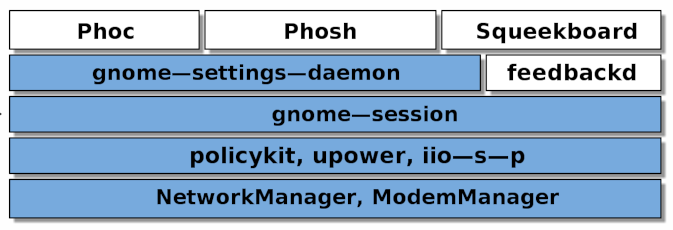
phosh is graphical shell for mobile, touch based devices like smart phones. It's the default graphical shell on Purism's Librem 5 (and that's where it came to life) but projects like postmarketOS, Mobian and Debian have picked it up putting it into use on other devices as well and contributing patches. This post is meant as a short overview how things are tied together so further posts can provide more details. A PHone SHell As mobile shell phosh provides the interface components commonly found on mobile devices to phosh's overview 2 phosh's lockscreen phosh's overview 1 It uses GObject object system and GTK to build up the user interface components. Mobile specific patterns are brought in via libhandy. Since phosh is meant to blend into GNOME as seamlessly as possible it uses the common interfaces present there via D-Bus like org.gnome.Screensaver or org.gnome.keyring.SystemPrompter and retrieves user configuration like keybindings via GSettings from preexisting schema. The components of a running graphical session roughly look like this: phosh session The blue boxes are the very same found on GNOME desktop sessions while the white ones are currently only found on phones. feedbackd is explained quickly: It's used for providing haptic or visual user feedback and makes your phone rumble and blink when applications (or the shell) want to notify the user about certain events like incoming phone calls or new messages. What about phoc and squeekboard? phoc and squeekboard Although some stacks combine the graphical shell with the display server (the component responsible for drawing applications and handling user input) this isn't the case for phosh. phosh relies on a Wayland compositor to be present for that. Keeping shell and compositor apart has some advantages like being able to restart the shell without affecting other applications but also adds the need for some additional communication between compositor and shell. This additional communication is implemented via Wayland protocols. The Wayland compositor used with phosh is called phoc for PHone Compositor. One of these additional protocols is wlr-layer-shell. It allows the shell to reserve space on the screen that is not used by other applications and allows it to draw things like the top and bottom bar or lock screen. Other protocols used by phosh (and hence implemented by phoc) are wlr-output-management to get information on and control properties of monitors or wlr-foreign-toplevel-management to get information about other windows on the display. The later is used to allow to switch between running applications. However these (and other) Wayland protocols are not implemented in phoc from scratch. phoc leverages the wlroots library for that. The library also handles many other compositor parts like interacting with the video and input hardware. The details on how phoc actually puts things up on the screen deserves a separate post. For the moment it's sufficient to note that phosh requires a Wayland compositor like phoc. We've not talked about entering text without a physical keyboard yet - phosh itself does not handle that either. squeekboard is the on screen keyboard for text (and emoji) input. It again uses Wayland protocols to talk to the Wayland compositor and it's (like phosh) a component that wants exclusive access to some areas of the screen (where the keyboard is drawn) and hence leverages the layer-shell protocol. Very roughly speaking it turns touch input in that area into text and sends that back to the compositor that then passes it back to the application that currently gets the text input. squeekboard's main author dcz has some more details here. The session So how does the graphical session in the picture above come into existence? As this is meant to be close to a regular GNOME session it's done via gnome-session that is invoked somewhat like:

phoc -E 'gnome-session --session=phosh'
So the compositor phoc is started up, launches gnome-session which then looks at phosh.session for the session's components. These are phosh, squeekboard and gnome-settings-daemon. These then either connect to already running services via D-Bus (e.g. NetworkManager, ModemManager, ...) or spawn them via D-Bus activation when required (e.g. feedbackd). Calling conventions So when talking about phosh it's good to keep several things apart: On top of that people sometimes refer to 'Phosh' as the software collection consisting of the above plus more components from GNOME (Settings, Contacs, Clocks, Weather, Evince, ...) and components that currently aren't part of GNOME but adapt to small screen sizes, use the same technologies and are needed to make a phone fun to use e.g. Geary for email, Calls for making phone calls and Chats for SMS handling. Since just overloading the term Phosh is confusing GNOME/Phosh Mobile Environment or Phosh Mobile Environment have been used to describe the above collection of software and I've contacted GNOME on how to name this properly, to not infringe on the GNOME trademark but also give proper credit and hopefully being able to move things upstream that can live upstream. That's it for a start. phosh's development documentation can be browsed here but is also available in the source code. Besides the projects mentioned above credits go to Purism for allowing me and others to work on the above and other parts related to moving Free Software on mobile Linux forward.

Russ Allbery: Review: Your Day, Your Way

Review: Your Day, Your Way, by Timothy Caulfield
Publisher: Running Press
Copyright: December 2020
ISBN: 0-7624-7248-0
Format: Kindle
Pages: 236
In case you're wondering why I would pick up a self-help book with such an uninspiring title, it's because this book was originally published in Canada with the title Relax, Damnit! Why Caulfield's US publishers would have changed that title is beyond me. Canada clearly got the better end of this deal. (I'm hoping it's not because they thought "damn" would scare someone off, but it probably is.) The topic of this book is a scientific take on all the little decisions that you may worry about throughout the day: whether to eat breakfast, how much water to drink, whether public toilet seats are risky, whether to weigh yourself, how important flossing is, and much more. Caulfield is a law professor at the University of Alberta specializing in health law and scientific ethics, but the hat he's wearing when writing this book is that of professional skeptic. I found out about this book through Dr. Jen Gunter, a connection that you won't find surprising when I mention that one of Caulfield's earlier books is titled Is Gwyneth Paltrow Wrong About Everything?. (Spoiler: yes.) Caulfield chose to organize this collection of random essays around the timeline of a single day, starting with waking up (how long should you sleep?) and morning routines (what do scientific studies say about brushing your teeth?), going through a work day (there's a chapter on multitasking and why you really shouldn't do it), and concluding with dinner (no, you can't taste the difference between most wines even if you think you can), evening routines, and sleep. This worked for me. It's still a bit arbitrary, but it's hard to organize random bits of skepticism, and this layout let Caulfield make a point about how frequently most people check their phones. (Stop doomscrolling. It makes you feel bad. Yes, I'm talking to myself.) I've now read several books, and considerably more essays, on scientific skepticism of this type. They're all a bit the same, and unless you enjoy this general genre of writing, there aren't many compelling reasons to read this specific entry. (Ben Goldacre's Bad Science is still my favorite.) I think the only tidbit that I found surprising and hadn't heard elsewhere is that the science on flossing is meh at best. The rest is the standard mix of mainstream scientific advice (don't drink raw milk, you're not going to catch something from a public toilet seat, multivitamins just give you expensive urine), advice that's scientifically correct but that I'm still not going to follow (there's no scientific reason to wash your hair daily but I still prefer how it feels), and advice to not worry about things with no evidence on either side (it doesn't matter whether you eat breakfast, ten thousand steps is a marketing gimmick, drink water when you're thirsty and don't worry about how much). Caulfield does have a particularly good debunking of the myth that angry ranting helps you calm down and feel better (it does the exact opposite), but if you're reasonably well-read on scientific trivia, nothing here will be that novel. If you don't follow scientific trivia and want a good collection of debunking essays, this book is fine. I certainly won't discourage you from reading it. Caulfield is engaging and succinct, and there's a balanced mix of odd trivia, debunking of pseudoscience, and good public health advice, all comfortably in line with what I've read elsewhere. That said, I found it striking to read this book shortly after Can't Even. I was hoping that Caulfield would tackle the larger problem of anxiety and overload that is in part created by the proliferation of arbitrary standards and rules to which we hold ourselves. He does tackle some related topics, such as our bizarre belief in the US (and apparently Canada) that it is unsafe to let children walk to school without adult supervision, but Caulfield's solutions are nearly all individual. He wants to inform the reader, he wants to show you how to analyze scientific research and notice when news articles are scaring you unnecessarily, and he wants you to become more immune to fear-mongering. Petersen's salient point in Can't Even is that many of us are burned out already and this is even more work. In order to avoid being gratuitously frightened and deceived by con artists and sensational news stories, we have to run a mental checklist of evidence evaluation and go do independent research. Sure, this works, makes you better at risk analysis, and may thus make you feel calmer, but this takes a lot of time and energy. Wasn't a point of having the news media that other people would do some of that work for you? Once again, everything that's wrong with the world becomes another chore or energy expenditure that we all have to independently make. I know, it's asking too much of a harmless book on the scientific evidence behind daily life decisions to make a political point about individual versus collective effort. But it's hard to shake the feeling that asking individuals to try harder to ignore intentionally deceptive and well-funded propaganda campaigns doesn't scale. Not everyone enjoys skepticism as a hobby, and there's only so much individual energy to go around. Relax, Damnit! is good advice as far as it goes. But I'm more in the mood for the books that look at who is making us so anxious in the first place and how we can (collectively) get them to stop. I don't know what that looks like (there are obvious free speech concerns), but we need reliable sources of information that don't make us anxious. Rating: 6 out of 10

26 December 2020

Sandro Tosi: Gmail and tracker.debian.org: add a label to team emails

Recently the Python Team started the migration from Alioth mailing list to a tracker.debian.org team.Alioth mailing list, being a real ml, included a List-Id header, which is handled by Gmail natively and which you can use to create a filter based on it.Tracker.d.o instead uses a custom header, X-Distro-Tracker-Team, and Gmail doesn't allow to create filters on custom headers. But there's a solution: Google Apps Scripts.

1. Apps script and its configuration

To create a new apps script, click "New project" from the scripts dashboard: this will open a code editor, so now cut and paste this code (change the label name to match the one you want to use, and the header too if you're going to use this for another team):

function tagPythonTeamEmails()  

// search for all recent threads (hours is the smallest interval searchable)
var threads = GmailApp.search("newer_than:1h");
// this is the label i want to apply to the messages
var label = GmailApp.getUserLabelByName("Debian_Python_Pkgs"); // <-- EDIT THIS

for (var i = 0; i < threads.length; i++)

// get all messages in a given thread
var messages = threads[i].getMessages();

// for each message in the thread
for (var j = 0; j < messages.length; j++)
var message = messages[j];
// needed to have access to the full email: headers + body
var email = message.getRawContent();
// this is the header i want to check for: if present, add label and archive
if (email.indexOf("X-Distro-Tracker-Team: python") > -1) // <-- EDIT THIS
threads[i].addLabel(label);
threads[i].moveToArchive();


(This code is largely inspired by this StackOverflow answer.)

Given we're going to perform changes to the emails, we need to add extra permissions to the script; first we need to toggle the option "View > Show manifest file" which will show the appsscript.json file. Once done, edit it and update the scope of the script to include:

  "oauthScopes": [
...
"https://www.googleapis.com/auth/gmail.readonly",
"https://www.googleapis.com/auth/gmail.modify"
],

These new permission will be granted when we deploy the script, which we can actually do right now: from the editor window click on "Publish > Deploy from manifest..." and then "Install add-on"; it will make the app script available to operate on Gmail by opening the usual Google grants authorization popup.

2. Schedule the app script execution

Unlike filters defined on the web UI, apps scripts are not triggered every time a mail is received (there's a pub-sub mechanism, but it doesn't look like it would work for this), so if we want to execute periodically the new script, we need to create a time-driven trigger.

The simplest way is probably from the script editor (but you can also follow this doc): "View > Current project's triggers" and then "Add trigger" from there. For my specific use-case i set:

  • event source = time-driven
  • type of time based trigger = minutes timer
  • minute interval = 5 minutes
  • Failure notification settings = notify me immediately
it's not great that you have to wait 5 minutes for getting proper labels, and while it's true you can schedule the trigger for every minute, there are further considerations for that, discussed below.

3. Additional information

Be aware of quotas and limitations for Apps scripts; in particular the "Triggers total runtime" set to "90 min / day" is what led me to set the trigger every 510 mins.

Use the scripts dashboard (doc) to monitor the script execution logs, in the "My Executions" section, and specifically the "Duration" column: the script execution time depends exclusively on the number of emails to process at every execution, so fine-tune the trigger time to stay within your quota.

The newer_than search operator doesn't allow a granularity smaller than hours (although that's not even documented), so that means we're going to scan multiple times the same emails.

UPDATE (2020-12-26): I've already had to bump from every 5 to every 10 minutes, as otherwise i'd get Exception: Service invoked too many times for one day: gmail. (remember the quota!)

Sandro Tosi: QNAP firmware 4.5.1.1465: disable ssh management menu

as a good boy i just upgraded my QNAP NAS to the latest available firmware, 4.5.1.1465, but after the reboot there's an ugly surprise awaiting for meonce i ssh'd into the box to do my stuff, instead of a familiar bash prompt i'm greeted by a management menu that allows me to perform some basic management tasks or quit it and go back to the shell. i dont really need this menu (in particular because i have automations that regularly ssh into the box and they are not meant to be interactive).to disable it: edit /etc/profile and comment the line "[[ "admin" = "$USER" ]] && /sbin/qts-console-mgmt -f" (you can judge me later for sshing as root)UPDATE (2020-12-26): as pointed out in the comments, and discovered now after an upgrade, the menu comes back up after because /etc/profile is a system file for QNAP so gets replaced/updated by them often

John Goerzen: When You Think You re At the End, You re At the Beginning

Often when you think you re at the end of something, you re at the beginning of something else. Fred Rogers
This is sunrise over Kansas. Or maybe sunset. I m not going to tell you this time, because it doesn t matter all that much. I love that it (if you don t over-analyze it) could be either, and also that it looks like the land in the distance fades to a blue ocean. Is it sunrise or sunset? What is at the horizon? I don t think it really matters, in the presence of such natural beauty. Rural Kansas, 2015

Russ Allbery: Review: The Biggest Bluff

Review: The Biggest Bluff, by Maria Konnikova
Publisher: Penguin Press
Copyright: 2020
ISBN: 0-525-52263-8
Format: Kindle
Pages: 335
After a particularly unlucky year for her family, Maria Konnikova was reading about the balance between luck and control in life and discovered, to her surprise, that John von Neumann, one of the foundational thinkers of computer science, was fascinated by poker. He found most card games boring because they relied on luck. Poker, however, he thought was the perfect balance between luck and skill: enough skill to make its effect undeniable, but enough luck that one could not control the game fully regardless of skill. Konnikova decided on a research project: spend one year learning No Limit Texas Hold'em from one of the best poker players in the world, with a goal of competing in the World Series of Poker. She had studied the description-experience gap during her doctoral research in psychology and wanted to see if the experience of randomness in poker would teach her something the description of the randomness of life could not. Before starting this project, she didn't know the basic rules and had never watched a game. Erik Seidel agreed to mentor her, and The Biggest Bluff is her account of that experience. This book is simultaneously frustrating and fascinating in ways that I don't think can be untangled without making it a far different book. Fitting, I suppose, for a book about how our brains entangle luck and skill. First, if you're looking for a book about poker play, this is not one. Konnikova rarely talks about specific hands or tournaments in more detail than her overall trajectory. That was a disappointment. In the few places she does describe some of her betting decisions, analysis of the other players, and tournament strategy, her accounts are engrossing and suspenseful. I would have happily read a book chronicling her poker tournaments and the decisions she made, but this is not that book. What The Biggest Bluff is instead is a psychological and philosophical examination of the process of learning poker. Konnikova uses her experiences as launching points into philosophical digressions. Even the lessons that have limited surface utility outside of poker, such as learning to suppress body language to avoid giving away information, turn into digressions about interpersonal dynamics and personality types. There are interesting tidbits here, but I've read a lot of popular psychology and was more interested in the poker. My frequent reading experience was impatiently waiting for Konnikova to finish lecturing and get back to her narrative. What Konnikova does do though, at a level that I haven't seen before before in a book of this type, is be brutally honest about her mistakes and her learning process. And I do mean brutally: The book opens with her throwing up in a casino bathroom. (This is not a fun book to read if you don't like reading about stress reactions and medical problems. There aren't many of them, but they're... memorable.) Konnikova knows and can explain the psychological state she's trying to reach, but still finds it hard to do in the moment. Correctly reacting to probabilities, cutting losses, and neither being too over-confident or too scared is very hard. Most books of this type elide over the repeated failures in a sort of training montage, which makes the process look easier than it feels. Konnikova tries to realistically show the setbacks and failures, and I think succeeds. That relentless introspection and critical honesty is the best part of this book, but I think it's also behind the stream of consciousness digressions about psychology and philosophy. It's a true portrayal of how Konnikova makes sense of the world. A more polished and streamlined book about the poker would have been more dramatically engrossing, but it might have lost the deep examination of how she combines poker with her knowledge of psychology to change her thinking. The one place where I think that self-reflection may fall a bit short, which I want to mention because I thought it was a missed opportunity, is around knowledge of hand probabilities. Konnikova makes a point, early in the book, of not approaching poker through the memorization and mathematics route and instead trying to find a play style that focuses on analyzing the other players and controlling her own emotions. This is a good hook, but by the end of the book it's not entirely true. The point that I think she was trying to make is that her edge against other poker players at her same level comes more from psychology than from calculation of precise odds in rare situations. This is true. But by the time she reaches high levels of play, she is using statistical simulators, practice tools, and intensive study just like any professional poker player. There is a minimum level of pure knowledge and memorization required that cannot be avoided. It's clear from the few things she says about this that those tools became more interesting to her as she became better at poker, and I wish she would have dug more into why and how that happened. How much of her newfound ability to make decisions and stick to a plan comes from emotional changes, and how much from that background store of confident knowledge? Or maybe those are different ways of looking at the same change? I did appreciate Konnikova's explicit acknowledgment at the end of the book that poker did not, in the end, provide some deep insight into the balance of luck and skill in real life. Learning poker instead gave Konnikova more personal ability to make a plan for the things that she can control and let go of the things she can't. I'm glad that worked for her, but since reading this book I have noticed former poker players who think life is more knowable than it is. Poker combines random chance with psychological play against other people, but it does so in a way and to an extent that is quantifiable. You can make the correct play and still lose a hand, but you can also know when this has happened. When you're used to analyzing the world through that frame and real life fails to provide that certainty, it's tempting to impose it anyway and insist your simplified models are more accurate because they're more comprehensible. But poker is a game, not a model; being more predictable and more constrained than real life is part of what makes it fun. The skill that Konnikova learned from it has a potential downside that she doesn't talk about. I'm not sure how to sum up this book. Konnikova's internal analysis and honesty is truly admirable and illuminating, but it left me wanting to read a different book that was more focused on poker narration. I know there are lots of those books out there, but I doubt they would be written with Konnikova's self-awareness and lack of ego. However, they would probably also lack the moments that made me cringe or that were deeply uncomfortable to read. My feelings are mixed. But if you want popular psychology wrapped around a deeply honest account of the process of learning poker, I suspect this book is one of a kind. Rating: 7 out of 10

25 December 2020

Russ Allbery: DocKnot 4.00

This release of my static site generator and software release management tool is finally at a point where I'm happy with some of the interface and think that piece may be stable for a while. This release converts the package metadata format from JSON to YAML and cleans up a bunch of organizational errors I made when I designed it originally. That also means that the entire metadata is now in a single file, docs/docknot.yaml by convention, instead of needing a whole directory of files. (This comes with the minor drawback that one edits Markdown in text blocks in YAML, which has somewhat less editor support, but it works fine for me.) There's a whole other blog post in how I've now tried many different markup formats, including TOML, and have decided YAML is the best one around if you want humans to be able to write it. (JSON or Protobuf is probably best if you only care about information exchange between software.) The short version is that YAML is way too large of a language and very painful to fully implement, but everything else fails to deal with one or more hard problems: nested structure, multi-line text, comments, or not requiring tedious quoting of everything. I'll be converting other software I maintain over to YAML with time. This release also drops support for pointing the bug reporting address at the CPAN RT instance, since that's going away early in 2021. I will need to do new releases of all my Perl modules to point them at a different bug tracker. Also in this release are some fixes for word wrapping and verbatim paragraph detection, some improved markup in generated README.md files, and other minor fixes. As of this release, I'm now uploading the Debian packages to Debian proper as well. I'm not sure if anyone else will ever use this software, but since I'm going to be doing more automatic generation of files in source releases using it, it's properly part of the build toolchain for the software I maintain. You can get the latest version from the DocKnot distribution page.

Sandro Tosi: Devils: Massimo Ruggiero's apartment building

If you enjoyed watching Devils, like me, and if you tend to obsess over tiny details that have absolutely nothing to do with the story being told, like me, and you lived in that general area, like me, then you may be curious of the location of Massimo's apartment.In several shots we can see views of both The Gherkin and the north side of Canary Wharf, so that means the building is in and around E1/E2/E3 zip codes. But London is huge, and while yes i tried to just browse Google Maps for clues, that didn't produce any result.The final clue is revealed in the 9th episode, at minute 20:10, and precisely with this shot:
at the bottom left we can see the entrance sign for Tobacco Dock, located at:So right there, just off to the right from the entrance, it's the apartment building: Park Vista Tower.The exact apartment number, i don't know, it's probably somewhere on the door or on the door frame, which can probably be seen one of the times when Sofia or others come to visit Massimo, but since that happened mid 9th episode, i'm not gonna go back to find that clue

24 December 2020

Russ Allbery: control-archive 1.9.0

This is the software used to manage the archive of control messages and the Netnews active and newsgroups files at ftp.isc.org. This release switches to gpg1 in order to support older keys and produces better diagnostics when the X-PGP-Sig header is invalid because it's missing the useless version field. It also includes various hierarchy metadata updates, including adding rocksolid.*, removing dictator.* at its maintainer's request, and updating the fr.* key. You can get the latest release from the control-archive distribution page.

23 December 2020

Sven Hoexter: Jenkins dynamically parameterized pipelins for terraform execution

Jenkins in the Ops space is in general already painful. Lately the deprecation of the multiple-scms plugin caused some headache, becaue we relied heavily on it to generate pipelines in a Seedjob based on structure inside secondary repositories. We kind of started from scratch now and ship parameterized pipelines defined in Jenkinsfiles in those secondary repositories. Basically that is the way it should be, you store the pipeline definition along with code you'd like to execute. In our case that is mostly terraform and ansible. Problem Directory structure is roughly "stage" -> "project" -> "service". We'd like to have one job pipeline per project, which dynamically reads all service folder names and offers those as available parameters. A service folder is the smallest entity we manage with terraform in a separate state file. Now Jenkins pipelines are by intention limited, but you can add some groovy at will if you whitelist the usage in Jenkins. You have to click through some security though to make it work. Jenkinsfile This is basically a commented version of the Jenkinsfile we copy now around as a template, to be manually adjusted per project.
// Syntax: https://jenkins.io/doc/book/pipeline/syntax/
// project name as we use it in the folder structure and job name
def TfProject = "myproject-I-dev"
// directory relative to the repo checkout inside the jenkins workspace
def jobDirectory = "terraform/dev/$ TfProject "
// informational string to describe the stage or project
def stageEnvDescription = "DEV"
/* Attention please if you rebuild the Jenkins instance consider the following:
- You've to run this job at least *thrice*. It first has to checkout the
repository, then you've to add permisions for the groovy part, and on
the third run you can gather the list of available terraform folder.
- As a safeguard the first first folder name is always the invalid string
"choose-one". That prevents accidential execution of a random project.
- If you add new terraform folder you've to run the "choose-one" dummy rollout so
the dynamic parameters pick up the new folder. */
/* Here we hardcode the path to the correct job workspace on the jenkins host, and
   discover the service folder list. We have to filter it slightly to avoid temporary folders created by Jenkins (like @tmp folders). */
List tffolder = new File("/var/lib/jenkins/jobs/terraform $ TfProject /workspace/$ jobDirectory ").listFiles().findAll   it.isDirectory() && it.name ==~ /(?i)[a-z0-9_-]+/  .sort()
/* ensure the "choose-one" dummy entry is always the first in the list, otherwise
   initial executions might execute something. By default the first parameter is
   used if none is selected */
tffolder.add(0,"choose-one")
pipeline  
    agent any
    /* Show a choice parameter with the service directory list we stored
       above in the variable tffolder */
    parameters  
        choice(name: "TFFOLDER", choices: tffolder)
     
    // Configure logrotation and coloring.
    options  
        buildDiscarder(logRotator(daysToKeepStr: "30", numToKeepStr: "100"))
        ansiColor("xterm")
     
    // Set some variables for terraform to pick up the right service account.
    environment  
        GOOGLE_CLOUD_KEYFILE_JSON = '/var/lib/jenkins/cicd.json'
        GOOGLE_APPLICATION_CREDENTIALS = '/var/lib/jenkins/cicd.json'
     
stages  
    stage('TF Plan')  
    /* Make sure on every stage that we only execute if the
       choice parameter is not the dummy one. Ensures we
       can run the pipeline smoothly for re-reading the
       service directories. */
    when   expression   params.TFFOLDER != "choose-one"    
    steps  
        /* Initialize terraform and generate a plan in the selected
           service folder. */
        dir("$ params.TFFOLDER ")  
        sh 'terraform init -no-color -upgrade=true'
        sh 'terraform plan -no-color -out myplan'
         
        // Read in the repo name we act on for informational output.
        script  
            remoteRepo = sh(returnStdout: true, script: 'git remote get-url origin').trim()
         
        echo "INFO: job *$ JOB_NAME * in *$ params.TFFOLDER * on branch *$ GIT_BRANCH * of repo *$ remoteRepo *"
     
     
    stage('TF Apply')  
    /* Run terraform apply only after manual acknowledgement, we have to
       make sure that the when     condition is actually evaluated before
       the input. Default is input before when. */
    when  
        beforeInput true
        expression   params.TFFOLDER != "choose-one"  
     
    input  
        message "Cowboy would you really like to run **$ JOB_NAME ** in **$ params.TFFOLDER **"
        ok "Apply $ JOB_NAME  to $ stageEnvDescription "
     
    steps  
        dir("$ params.TFFOLDER ")  
        sh 'terraform apply -no-color -input=false myplan'


    post  
            failure  
                // You can also alert to noisy chat platforms on failures if you like.
                echo "job failed"
             
         
job-dsl side of the story Having all those when conditions in the pipeline stages above allows us to create a dependency between successful Seedjob executions and just let that trigger the execution of the pipeline jobs. This is important because the Seedjob execution itself will reset all pipeline jobs, so your dynamic parameters are gone. By making sure we can re-execute the job, and doing that automatically, we still have up to date parameterized pipelines, whenever the Seedjob ran successfully. The job-dsl script looks like this:
import javaposse.jobdsl.dsl.DslScriptLoader;
import javaposse.jobdsl.plugin.JenkinsJobManagement;
import javaposse.jobdsl.plugin.ExecuteDslScripts;
def params = [
    // Defaults are repo: mycorp/admin, branch: master, jenkinsFilename: Jenkinsfile
    pipelineJobs: [
        [name: 'terraform myproject-I-dev', jenkinsFilename: 'terraform/dev/myproject-I-dev/Jenkinsfile', upstream: 'Seedjob'],
        [name: 'terraform myproject-I-prod', jenkinsFilename: 'terraform/prod/myproject-I-prod/Jenkinsfile', upstream: 'Seedjob'],
    ],
]
params.pipelineJobs.each   job ->
    pipelineJob(job.name)  
        definition  
            cpsScm  
                // assume admin and branch master as a default, look for Jenkinsfile
                def repo = job.repo ?: 'mycorp/admin'
                def branch = job.branch ?: 'master'
                def jenkinsFilename = job.jenkinsFilename ?: 'Jenkinsfile'
                scm  
                    git("ssh://git@github.com/$ repo .git", branch)
                 
                scriptPath(jenkinsFilename)
             
         
        properties  
            pipelineTriggers  
                triggers  
                    if(job.upstream)  
                        upstream  
                            upstreamProjects("$ job.upstream ")
                            threshold('SUCCESS')


Disadvantages There are still a bunch of disadvantages you've to consider Jenkins Rebuilds are Painful In general we rebuild our Jenkins instances quite frequently. With the approach outlined here in place, you've to allow the groovy script execution after the first Seedjob execution, and then go through at least another round of run the job, allow permissions, run the job, until it's finally all up and running. Copy around Jenkinsfile Whenever you create a new project you've to copy around Jenkinsfiles for each and every stage and modify the variables at the top accordingly. Keep the Seedjob definitions and Jenkinsfile in Sync You not only have to copy the Jenkinsfile around, but you also have to keep the variables and names in sync with what you define for the Seedjob. Sadly the pipeline env-vars are not available outside of the pipeline when we execute the groovy parts. Kudos This setup was crafted with a lot of help by Michael and Eric.

Russ Allbery: Review: Anti-Social

Review: Anti-Social, by Nick Pettigrew
Publisher: Century
Copyright: 2020
ISBN: 1-4735-7639-3
Format: Kindle
Pages: 375
Nick Pettigrew was an anti-social behavior officer for council housing for over a decade. This book is a diary of one year in the life of that job. According to the author, the dates, names, and some of the identifying details have been changed but not exaggerated. While it's hard to verify that, and I'm sure a few of the stories have been tweaked to make better narratives, it has a messiness and chaos of half-resolved drama mixed with mundane office tedium that makes it ring true. The subject matter requires some explanation for US readers. Council housing is the UK's version of what the US would call public housing or "the projects," although it's a far larger percentage of the housing stock in the UK than it is in the US. These are buildings built by the government and run by local governments or non-profits to provide housing to working class and poor people at reduced cost compared to the private market. As in the US, new council housing construction has dropped off dramatically; as in the US, a bunch of it has been privatized, although in the UK the Right to Buy law at least sells the housing to the people living in it, as opposed to slumlords. The 1998 UK Crime and Disorder Act collects under anti-social behavior a bunch of low-grade irritations that in the US would fall under public nuisance laws, noise ordinances, and other vague misdemeanors like "creating a public disturbance": essentially, all the irritating and obnoxious things that people subject their neighbors to, but which fall short of obvious criminal behavior like theft or assault. As Pettigrew puts it:
"I just don't want to hear the word 'cunt' shouted repeatedly at 3am every night any more. I don't think that's unreasonable."
That law required the organizations managing council estates to have a procedure to deal with anti-social behavior, and thus the job of an anti-social behavior officer was created. In the US, these sorts of problems are dealt with by the local police, which is a little like trying to get rid of a raccoon by running it over with a balky, thirty-year-old car. The best outcome is that the raccoon gets freaked out by your efforts to get the car to start and leaves. The worst outcome is that you accidentally run over your neighbor's kid while aiming for the raccoon. Either way, neither you nor the car nor your neighbors are going to be happy about the process. An anti-social behavior officer is someone with some authority to do things like install cameras, tell people who don't live somewhere that they need to stop coming there, and start eviction proceedings, but who doesn't carry guns, can't arrest people, and enforces those rules when necessary via court proceedings or calling the police. In other words, it's one of the types of alternative responders whose job is to solve problems rather than stop crimes that we've been talking about in the United States. And although Pettigrew is quite grumpy and cynical about his job (for very understandable reasons explained in this book), my takeaway from another country with even worse problems is that the system sort of works. It's underfunded and poorly managed and nebulous and sometimes very sad, but it also achieves some of what it sets out to do, and you can see the outlines of a better system beneath it. My favorite thing about this book is that it forces the reader to grapple with the actual job in all its messiness, rather than our ideals of what we want the job to be. For example, if you're going to hire a bunch of people to do this job, you need some way to figure out whether they're any good at it, but it's not obvious how to measure success.
One infuriating KPI we're measured on is the final question a resident is asked once their case is closed: "Are you happy with the outcome of your case?" Because unless you evict the problem neighbor within a fortnight, erect a security wall around the complainant's house manned by armed guards, and bake them a cake, the answer will almost certainly be no.
Pettigrew has a background in comedy so he's sarcastically funny rather than strident or didactic, which for me was just the tone I needed to enjoy reading this enough to think deeply about it. The thing that most surprised me, even though it probably shouldn't, was just how many of the problems Pettigrew had to deal with stemmed from drugs. My guess is that a good 75% of the issues he described were a direct result of someone dealing drugs, growing drugs, stealing things to buy drugs, throwing parties with druggie friends, doing bizarre and dangerous things because they were on drugs, not taking care of their property because they were too busy doing drugs, or letting their property be taken over by other people doing or selling drugs. It's just never-ending. The case load is clearly made worse by chronic understaffing and underfunding, and spending more money on giving people more assistance is part of any reasonable solution, but so is reducing the demand. If the pattern of complaints in the US is at all similar (and I bet it is), it's no wonder that the police perceive drugs as central to their job. Pettigrew talks about this at some length in the epilogue, and I think one of his conclusions is worth quoting here:
Years of interacting with class A drug users has shown me that they really don't want to be out hustling to make enough money for their next score of diluted heroin. They want to sit at home, take drugs and when those drugs wear off, take some more. You may view this as a wasted life, and you may well be right, but here's the thing: they are going to do this anyway, whether we decide to criminalize them or not. If, after a lengthy period of honest, mature drug education across the country via schools, further education, government advertising and so on, class A drugs were made legally available on prescription to adults via pharmacies, the vast majority of users would pick up their prescriptions, go home, take their drugs and leave everyone else alone. They couldn't be arsed to break into your car if they didn't have to.
The decriminalization argument is a lot larger than the space of this book review, so I won't get into it further, except to say that if you think that conclusion sounds unreasonable or dangerous or destructive to society, consider reading this book. One of the things that becomes obvious from Pettigrew's diary of incidents is that most people just want to feel safe, and a truly stunning amount of crime and anti-social behavior that makes them feel not safe is a direct or indirect result of people trying to get drugs or to get money to get drugs. The other pattern that's obvious from this book (and obvious from most writing by anyone involved in the justice system) is that the system doesn't really work.
The best way to describe going to court is that it's like paying a visit to a run-down hospital where nobody gets better.
Some of that is because it's not set up to solve problems, and a lot of that is because solving problems is a lot more expensive than we want to admit and we don't want to pony up the resources. I'm probably making this book sound hopelessly depressing, but it's not. It's angry and cynical, but it's also very funny (particularly if you like sarcasm), extremely quotable, insightful, and deeply empathetic. There are people trying their best to help other people despite a system that doesn't reward them for doing so, and surprisingly often they manage to do so. The path to helping more people isn't even that difficult to find. The epilogue of this book is full of solid and straightforward ideas that don't require some novel insight into humanity, just a bunch of hard work. And, while reading about the work of helping people and being exasperated by people, you'll also get to laugh at the bits of office nonsense that are universal.
The old form for monthly one-to-ones used to have two questions "What did you do over the last month?" and "What do you plan to do in the next month?" and my line manager at the time seemed unimpressed when I answered "my job" to both.
I loved this book. It was one of my favorite random finds of the year, and, at least judging from how difficult it is to find in Amazon search results, it's not gotten enough attention in the United States. Highly recommended. Rating: 9 out of 10

Next.

Previous.